

RECONCILIATION ACTION PLAN
FEBRUARY 2026 – FEBRUARY 2027



At St Hilda’s School we recognise and acknowledge the Kombumerri people of the Ngarahngwal and Yugambeh Language Groups of the Mibiny Nation as the Traditional Custodians of the Land on which we play, learn and grow. St Hilda’s School’s vision for reconciliation is to create a welcoming and inviting learning environment which is respectful and accepting of all cultures and acknowledges the true histories of the local area. We educate and assist all students, staff and School Council Members and promote inclusive practices and embed these into our environment and curriculum. We respectfully include Aboriginal and Torres Strait Islander cultures, perspectives and contributions into our practice and curriculum holistically, respecting histories and continued traditions. We continue to build awareness and stronger relationships with the local Aboriginal and Torres Strait Islander community.

Kaiala, Jingeri Nyunga (Hello Sun)
Kaiala, Jingeri Chagun (Hello Earth)
Kaiala, Jingeri Tullei (Hello Trees)
Kaiala, Jingeri Jimbelung (Hello Friends)
Numulla Kombumerri Jara (Embrace Kombumerri Country)
We acknowledge all First Peoples of the land on which we live, walk and work. We honour them and their Ancestors for their survival, continued traditions and spiritual connection to, and caring of country, land, sky, water and sea. We pay respect to their Elders past present, and future, and continue to support their right to self-determination. In particular, we pay respect to the Traditional Owners, the Kombumerri People of the Ngarahngwal and Yugambeh language groups of the Mibiny nation.
Chair - Lisa Cleverly
Jacqueline Gutchen
May Mackenzie
Agnes Matysek
Mahalia Noah
Maria Taylor-Walker
K’Sharnae Clancy
Kyah Cubby
Ella Salam
Willow Salam
Chan Welfare
Katherine Holmes
Paula Humphries
Georgia James
Paul Alcorn
Justine Bishop
Majda Benzenati
Jed Hogan
Alma Loreaux
Peter McCosker
Oriane Monet
Lisa Roper
Danielle TownsendSaw
Matthew Unsworth
Jaron Winter
Summer Hodge
Kym Basoka
Julie Jorritsma
Pete Shaw
Naomi Armstrong
Alice Neldner
Danielle Wruck
Head of Athena
Middle School Student
Middle School Student
Middle School Student
Middle School Student
Middle School Student
Senior School Student
Senior School Student
Senior School Student
Senior School Student
Head of Junior School
Deputy Head of Junior School
Teacher/Junior School
Head of JS Teaching and Learning
Teacher/Middle and Senior School
Deputy Head of Middle and Senior School
Head of St Hilda’s Learning Institute
Teacher/Middle and Senior School
Head of Learning and Teaching
Teacher/Middle and Senior School
Teacher/Middle and Senior School
Head of Middle and Senior School
Teacher/Middle and Senior School
Teacher/Middle and Senior School
Teacher/Middle and Senior School
Parent
Marketing Manager
Deputy Principal – People and Culture
Deputy Principal – Middle and Senior
School Operations
Chaplain
Connected Community/Student
Engagement Co-ordinator
Director of Business Operations
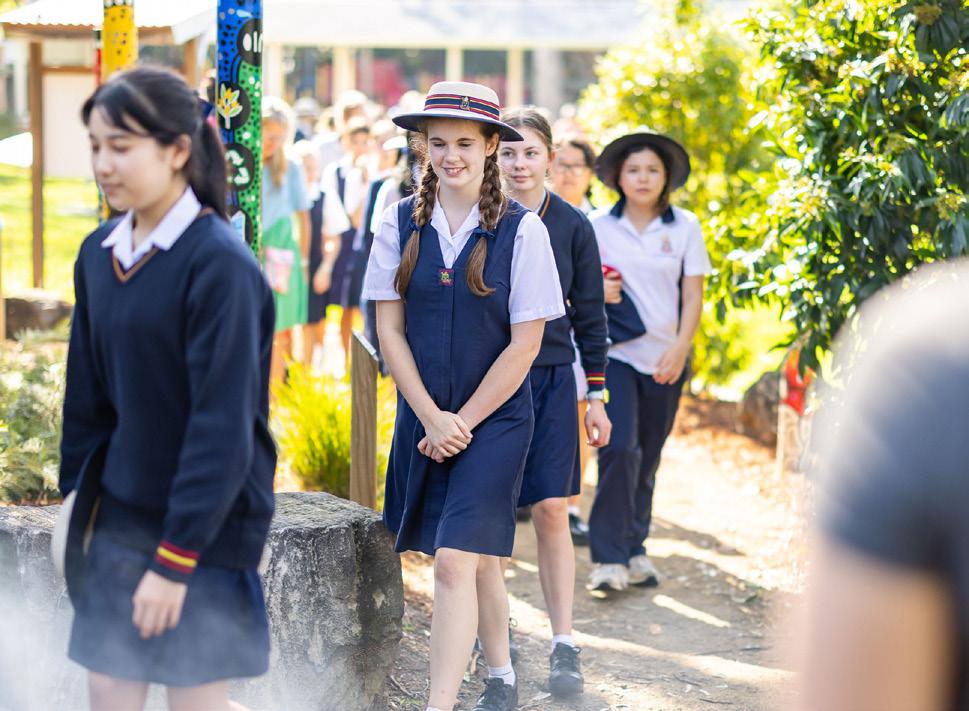
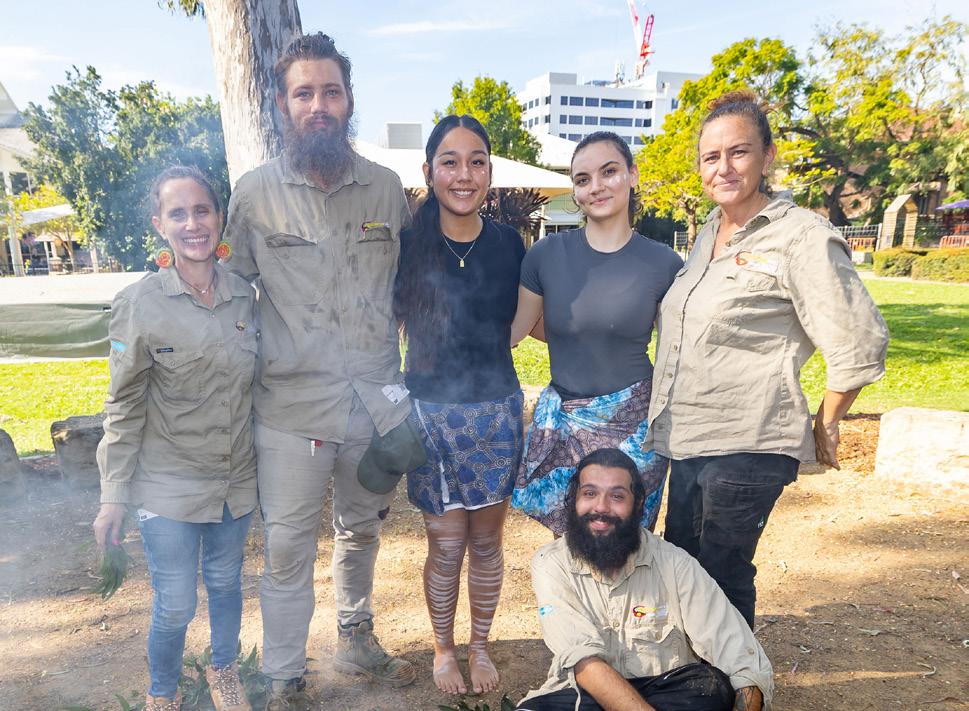
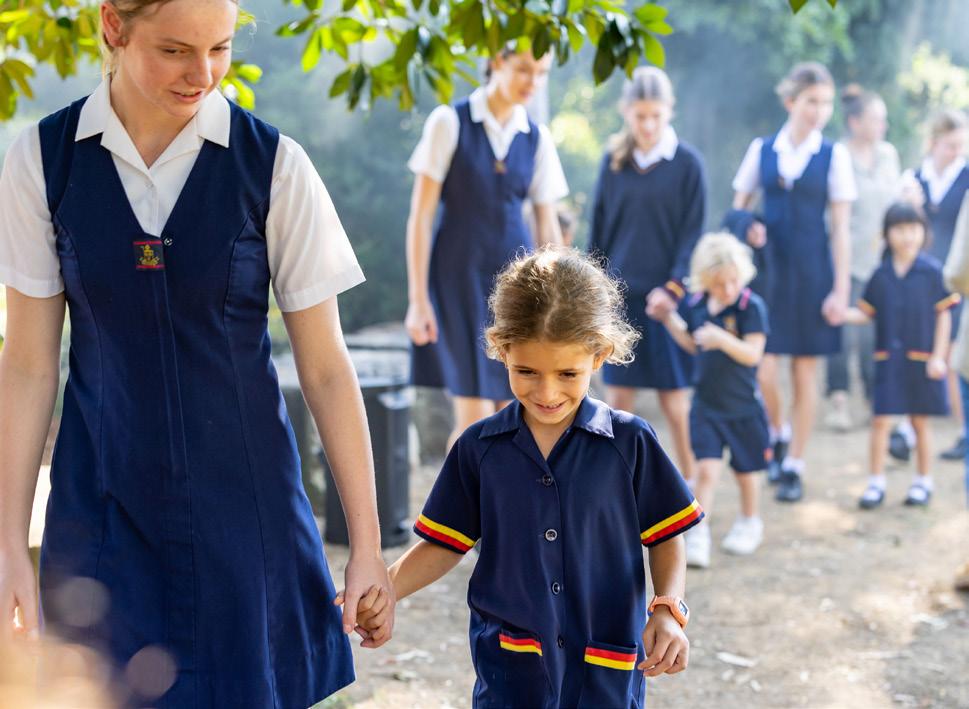
Aboriginal and Torres Strait Islander People in the classroom
We are committed to engaging Aboriginal and Torres Strait Islander people in our learning activities. Having Aboriginal and Torres Strait Islander voices in learning environments is vital when teaching about Aboriginal and Torres Strait Islander histories and cultures.
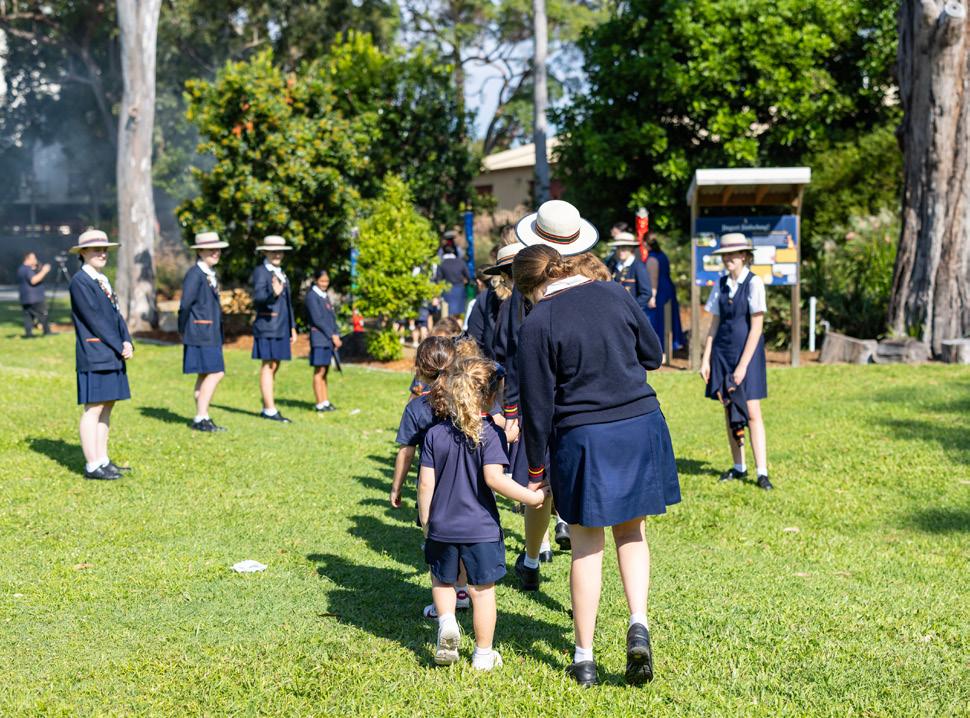
Continue opportunities for local Elders and Traditional Owners to come into classes to share culture and knowledge in Junior School.
Continue opportunities for local Elders and Traditional Owners to come into classes to share culture and knowledge in Middle and Senior School.
Continue opportunities for local Elders and Traditional Owners to come into the Boarding House to share culture and knowledge with our Boarding Students.
Opportunities for Aboriginal and Torres Strait Islander Students and Children
We commit to providing opportunities for our Aboriginal and Torres Strait Islander students to celebrate their cultural identities. These opportunities positively impact the wellbeing of Aboriginal and Torres Islander students and children, and create shared pride for Aboriginal and Torres Strait Islander cultures, contributions, identities and histories in the wider school community
Establish stronger connections with Yalari and Indigenous Old Girls with the outlook to bring these Old Girls in as mentors.
Continue to provide opportunities for Aboriginal and Torres Strait Islander students to participate in activities in the community that reinforce their cultural identity and pride. Activities include The ASC Indigenous Academic Challenge, ASC Indigenous Symposium, ASC Aboriginal Games.
Provide opportunities for Aboriginal and Torres Strait Islander students to share culture within the school community. Activities include ASC Aboriginal Games.
Organise a RAP Morning Tea each term inviting local Elders and Traditional Owners, aboriginal and Torres Strait Islander students and their families and the ASC Director of Indigenous Education.
Aboriginal and Torres Strait Islander Representation on Committees.
Elders and Traditional Owners Share Histories and Cultures.
We commit to inviting Aboriginal and Torres Strait Islander staff, parents/carers and community members to be active representatives on our service’s committees. We commit to ensuring Aboriginal and Torres Strait Islander perspectives inform decision making processes by respecting the experiences and knowledge that Aboriginal and Torres Strait Islander peoples can bring to our committees.
We are committed to forging a meaningful and ongoing relationship with local Aboriginal and Torres Strait Islander Elders, and people recognised in their community as Traditional Owners. We hope this relationship can be of mutual benefit, and that our local Elders and Traditional Owners will feel safe, and confident, to share their historical and cultural knowledge with our staff, students, and children.
Continue to encourage involvement of Aboriginal and Torres Strait Islander students on the RAP Committee.
Consult with local Aboriginal and Torres Strait Islander Peoples when drafting our RAP.
Cultural Responsiveness for Staff.
Reconciliation Projects
Staff are supported to reflect on and build their cultural responsiveness to improve their practice and best support the needs of Aboriginal and Torres Strait Islander students. Staff are provided with a range of opportunities to build their knowledge and understanding of their own positionality and Aboriginal and Torres Strait Islander perspectives, contributions and cultures.
Our school will collaborate on projects that visibly and authentically embed Aboriginal and Torres Strait Islander histories and cultures in learning programs and the physical environment. Through this culture of collaboration across the service and with the community, we commit to creating an environment where young people, educators and community members acknowledge, respect and experience connection to the First Australians.
Continue to invite Aboriginal and Torres Strait Islander Elders and Traditional Owners to share their histories and cultures with Junior School students.
Continue to invite Aboriginal and Torres Strait Islander Elders and Traditional Owners to share their histories and cultures with Middle and Senior School students.
Continue annual staff professional development sessions on Aboriginal and Torres Strait Islander Culture, histories, perspective and Ways of Knowing and Being for all school staff.
Conduct professional development for staff on Cultural Safety.
Invite staff to attend ASC Round Table events and host one during the year.
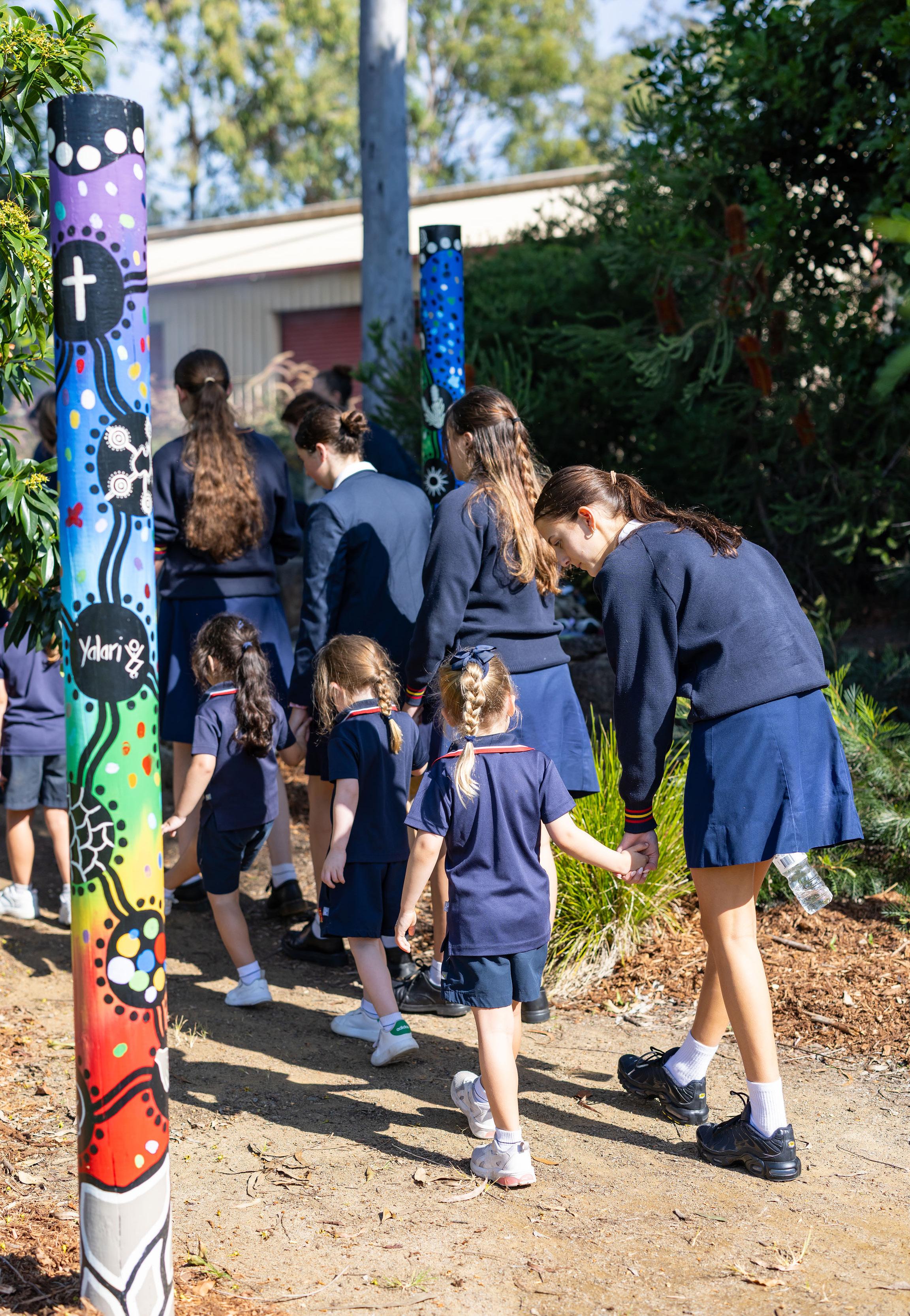
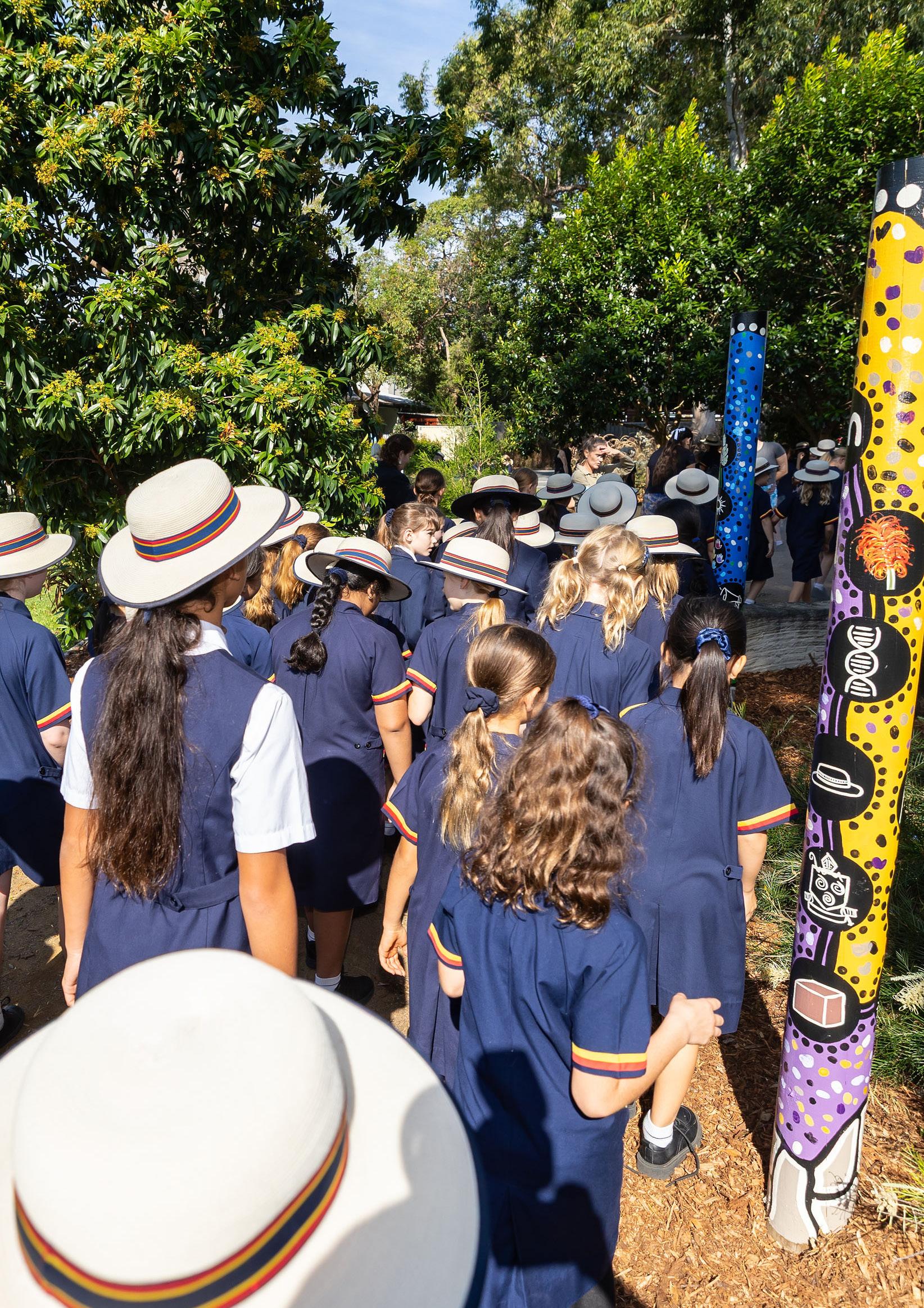
Continue to include signage around the school in Yugambeh Language.
Commission Aboriginal and Torres Strait Islander art works to be displayed in the school.
Continue to educate the school community about the Bushtucker Garden and the significance of plants in this garden.
Investigate whether there was a specific Yugambeh name for the area where the school now stands in order to officially name the Bushtucker Garden.
Organise and conduct an Aboriginal Cultural Tour for Junior, Middle and Senor School students and evaluate the opportunity and impact. Allow students to share their experience and learnings from the tour with other students and the community.
Welcome to Country Where appropriate, significant events at our school commence with a Welcome to Country. Protocols for welcoming visitors to Country have been a part of Aboriginal and Torres Strait Islander cultures for thousands of years. By incorporating these protocols into formal events and important occasions, we recognise Aboriginal and Torres Strait Islander peoples as the First Australians and Custodians of their Land.
Celebrate National Reconciliation Week
Our school community celebrates National Reconciliation Week (NRW) which is held from 27 May to 3 June each year by talking about reconciliation in the classroom and around the school and celebrating with the community. NRW is a time for all Australians to learn about our shared histories, cultures, and achievements and to explore how each of us can join the national reconciliation effort.
Invite local Elder or Leader to conduct a Welcome to Country at the beginning of each term, during NAIDOC Week and the Indigenous Round of QG Sport.
Whole school to learn the National Anthem in Yugambeh and perform it at significant events.
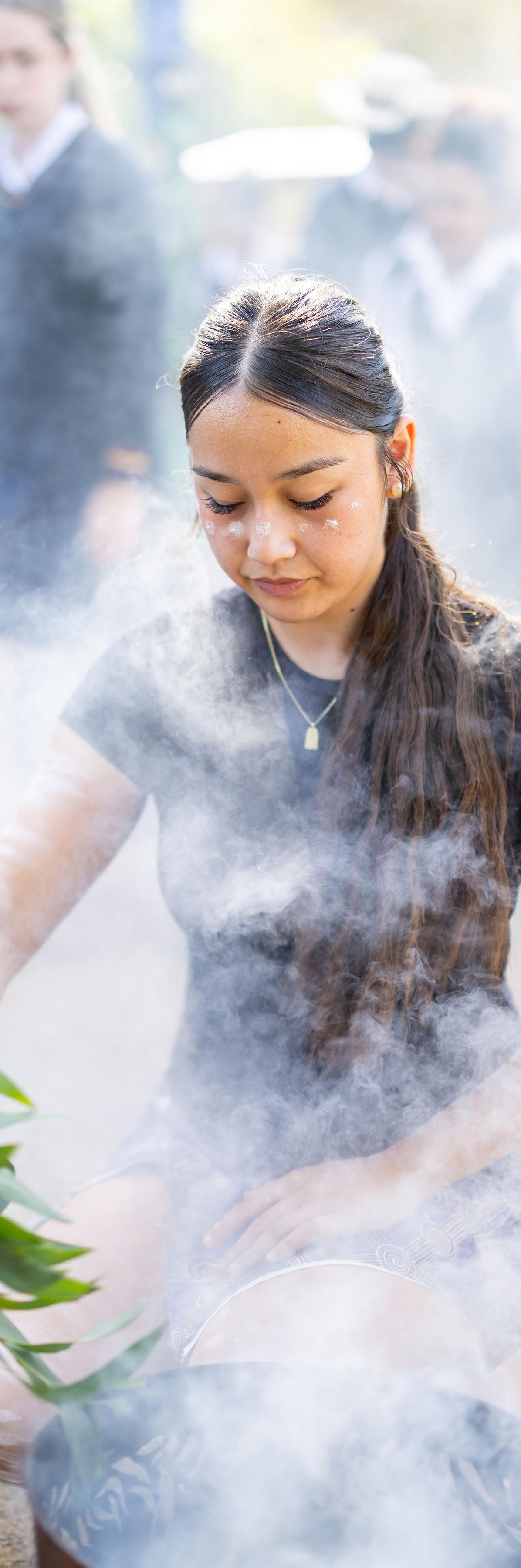
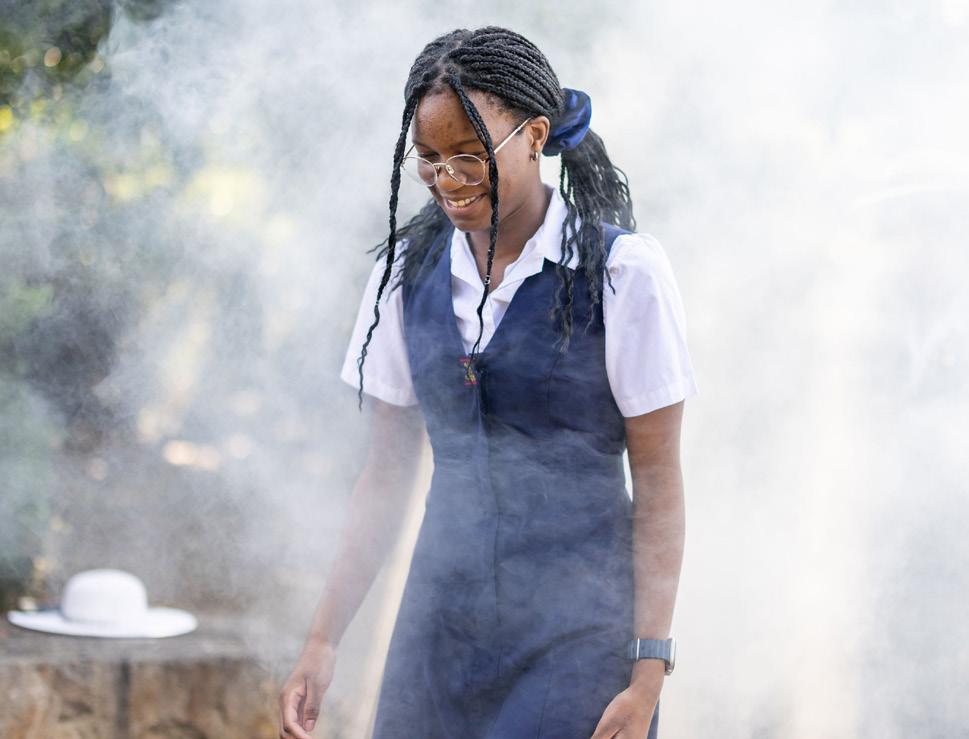
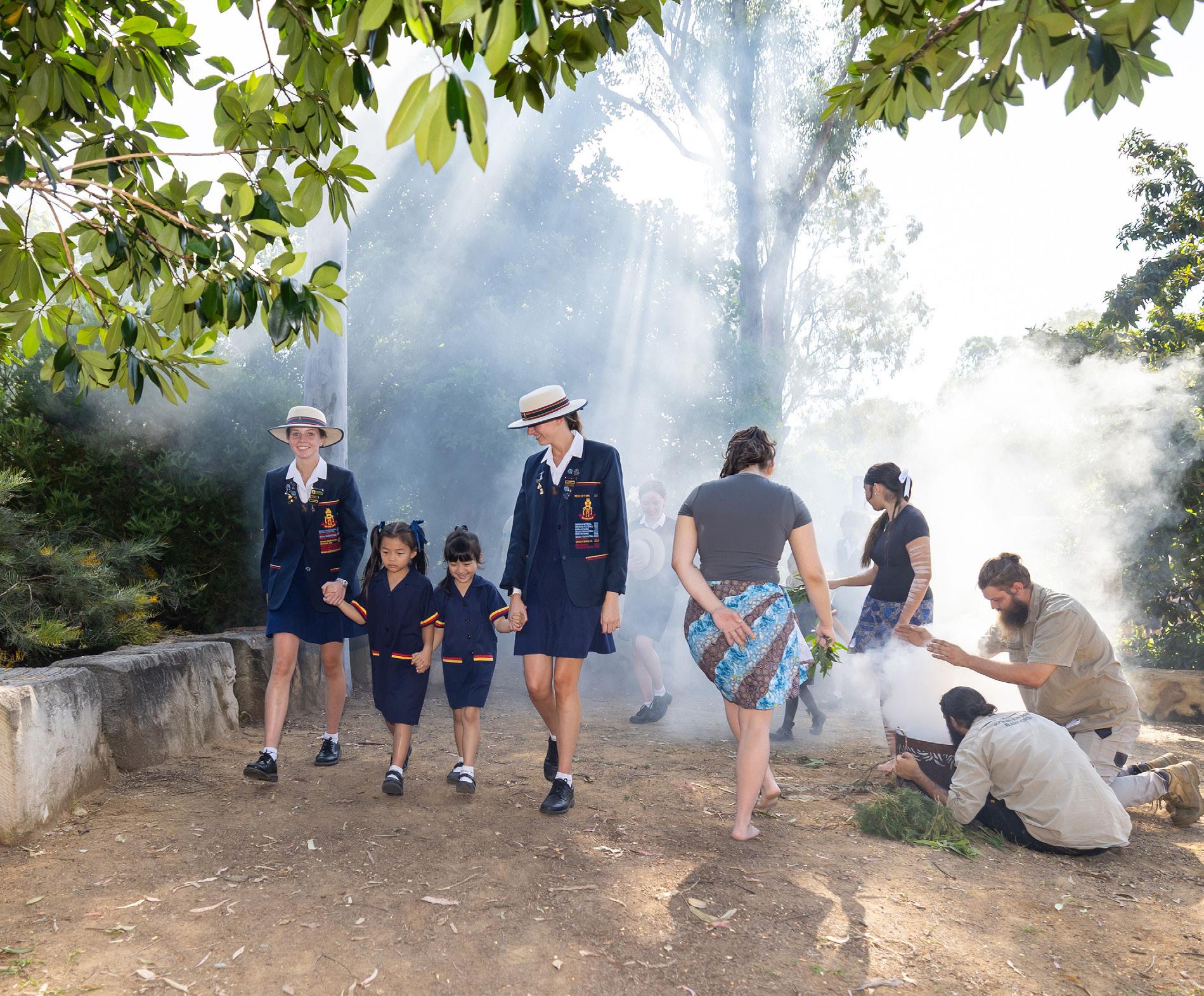
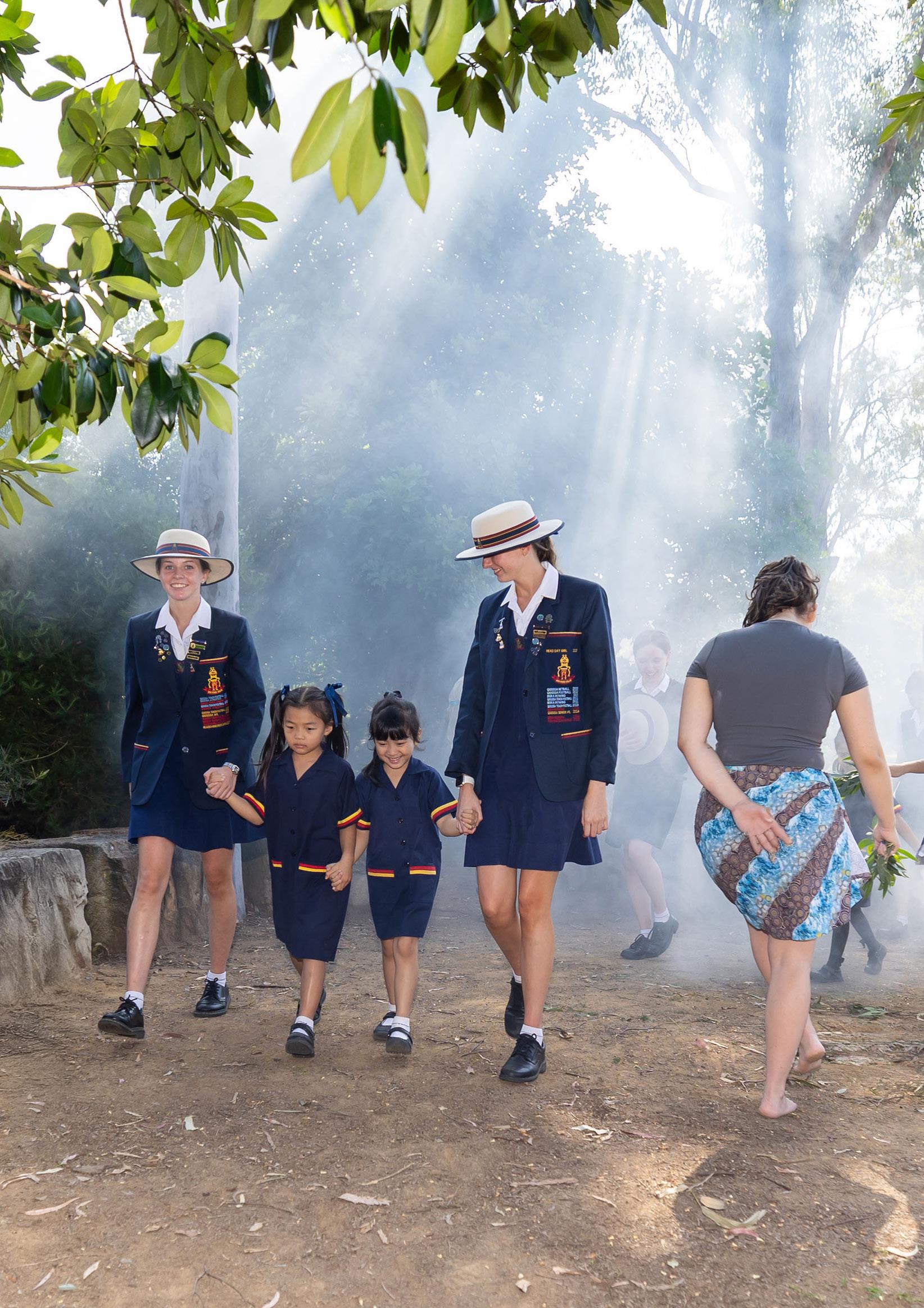
Celebrate National Reconciliation Week with a whole school service incorporating a Welcome to Country and Smoking Ceremony.
Plan a week of activities for students in Junior School including activities, displays, resources for teachers and communications to families and staff for National Reconciliation Week.
Plan a week of activities for students in Middle and Senior School including activities, displays, resources for teachers and communications to families and staff for National Reconciliation Week.
Create Stakeholder List
Build Relationships with Community
We will develop and maintain a stakeholder list that reflects our current and future working relationships with members of the community who are committed to working collaboratively to drive reconciliation initiatives.
We commit to building relationships with our local Aboriginal and Torres Strait Islander community that are built on mutual respect, trust and inclusiveness. We value these relationships and their role in helping to create opportunities for Aboriginal and Torres Strait Islander and non-Indigenous staff, students, children and community members.
Cultural Our everyday program will have ways for children and students to learn about Aboriginal and Torres Strait Islander perspectives, contributions and cultures, in and outside the classroom. We will include cultural responsiveness principles our children have learned in the ethos of our classrooms and across our service.
Continue to develop the list of Aboriginal and Torres Strait Islander Elders, Traditional Owners and Contacts to support activities of the RAP and distribute to school staff through the RAP newsletters, Ammonite and inclusion in the Middle and Senior School Teacher Planner.
Investigate Aboriginal and Torres Strait Islander sites for staff and students to visit.
Reconciliation Network
We commit to establishing or joining formal external reconciliation networks to mutually support and collaborate progress reconciliation initiatives.
Continue to invite Aboriginal and Torres Strait Islander Elders and traditional Owners to share their histories and cultures with students.
Continue to develop opportunities for Middle and Senior School students to participate in excursions to Indigenous sites and programs in the community.
Continue to develop opportunities for Junior School students to participate in excursions to Indigenous sites and programs in the community.
Continue to liaise with the Diocese and Anglican Schools’ Commission to build a working relationship with their Director of Indigenous Education.
Teach about Reconciliation Our school community is committed to learning about reconciliation in Australia. Having an understanding of the concept, history and progress of reconciliation is an important part of continuing the reconciliation journey. This understanding also helps to strengthen engagement with our school’s RAP by positioning it within the broader story of reconciliation in Australia.
Explore Current Affairs and Issues We are committed to raising awareness of current affairs and issues in the public domain that are of particular significance to Aboriginal
Continue to celebrate Harmony Week across the school in a co-ordinated approach liaising with student interest groups such as Amnesty International and Cultural Captains culminating in a whole school recognition in Harmony Day. Celebrate NAIDOC Week across the school in a co-ordinated approach.
Middle and Senior School to continue to recognise the significant events of Harmony Week, National Sorry Day, National Reconciliation Week, Mabo Day, NAIDOC Week, World Indigenous Day and Coming of the Light (Floral Friday) to educate students and the school community.
Junior School to continue to recognise the significant events of Harmony Week, National Sorry Day, National Reconciliation Week, NAIDOC Week, Indigenous Literacy Day and Coming of the Light (Floral Friday) to educate students and the school community.
Acknowledgement of Country Our school recognises the continuing connection of Aboriginal and Torres Strait Islander peoples to the Country on which we live, work, learn and grow. All staff and students have the opportunity to show respect to Traditional Owners and Custodians by regularly conducting an Acknowledgement of Country at meetings and events throughout the year.
Visibly Demonstrate Respect for Aboriginal and Torres Strait Islander Cultures
We commit to demonstrating our respect for Aboriginal and Torres Strait Islander histories and cultures in the physical environment of our school. We understand that making our respect visible in the learning environment through the incorporation of meaningful, relevant, and culturally appropriate art, artefacts and symbolism reinforces our work toward reconciliation. It also makes our intentions and actions clear to our students, parents, and the broader community.
Develop a permanent physical Acknowledgement of Country in a prominent place at the entrance to the school as part of the Master Planning Program of the school.
Continue to educate the school community about the significance of the Acknowledgement to Country. Make resources available to all staff on Ammonite and in Teacher Planners.
Continue Aboriginal and Torres Strait Islander themed displays in the Junior and Senior School Libraries.
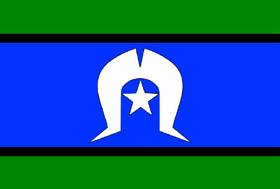
Aboriginal and Torres Strait Islander Flags
Our school flies or displays the Aboriginal and Torres Strait Islander flags as a demonstration of our pride and respect for the histories, cultures, and contributions of Australia’s First Peoples. Flying or displaying the flags promotes a sense of community partnership and a commitment toward reconciliation.
Physical Acknowledgement of Country
Take Action Against Racism
Our school proudly commits to displaying a physical Acknowledgement of Country as a way of showing awareness of, and respect for, the Aboriginal or Torres Strait Islander Traditional Owners and Custodians of the land on which our school is located.
Racism can have serious negative consequences for the people who experience it, for those who witness it, and for wider society. When racism is properly understood it is easier to overcome. We commit to building awareness of what racism is, the impacts of racism and how to respond effectively when it occurs through an antiracism strategy tailored to the needs of our school.
Continue to roll out the purchase of desk top flags for areas across the school and educate the school community on the meaning of the Australian, Aboriginal and Torres Strait Islander flags.
Develop a physical Acknowledgement of Country in a prominent place at the entrance to the school as part of the Master Planning Program of the School.
Ongoing discussions and education of staff and students surrounding racism and impact of racism in the school and community.
Embed Cross-Curriculum Priority
All staff from across the school are supported to understand and embed Aboriginal and Torres Strait Islander Histories and Cultures in the curriculum. Teachers will consider the cross-curriculum priority when developing units, lesson plans and resources in all learning areas and across all year levels.
Continue to purchase resources to support curriculum delivery of Aboriginal and Torres Strait Islander Histories and Cultures in Junior School including books by Indigenous illustrators and authors and language.
Continue to purchase resources to support curriculum delivery of Aboriginal and Torres Strait Islander Histories and Cultures in Middle and Senior School including books by Indigenous illustrators and authors and language.
Curriculum Planning
Embedding Aboriginal and Torres Strait Islander histories and cultures in curriculum planning, development and evaluation processes is a key and ongoing consideration across all year levels and learning areas. Curriculum documents have or will be audited to identify the extent to which Aboriginal and Torres Strait Islander histories, cultures and contributions are already embedded, and to identify opportunities for strengthening the representation of this content in the curriculum.
Continue to seek professional development opportunities for staff members on Aboriginal and Torres Strait Islander histories, cultures, perspectives and issues to build cultural responsiveness and to inform curriculum planning or school processes.
Inclusive Policies
Staff Engagement with the RAP
All staff in our school are aware of policies that refer specifically to improving educational outcomes for Aboriginal and Torres Strait Islander people and increasing knowledge of, and respect for, Aboriginal and Torres Strait Islander histories and cultures in Australia. We have a plan in place to ensure all staff comply with these policies in their daily practice. Our internal policies have been, or will be, amended to ensure they are also inclusive of Aboriginal and Torres Strait Islander peoples and increase knowledge of Aboriginal and Torres Strait Islander histories and cultures in Australia.
Commitment to the Reconciliation Action Plan (RAP) from all staff is essential for developing a RAP that is implemented in a meaningful and sustainable way. All staff will be involved in the ongoing development and implementation of our RAP through educator development opportunities facilitated by the RAP Working Group.
Continue to maintain periodic reviews of policies to ensure inclusiveness.
RAP Budget Allocation
We have set aside dedicated funds from within our budget to procure relevant goods and services that strengthen the sustainability of our RAP Actions. Staff are aware that it is important to consider remuneration for people who have been involved in RAP initiatives out of respect for the time and resources that they have contributed.
Incorporate Aboriginal and Torres Strait Islander histories, cultures and perspectives as a discussion item at regular whole School staff meetings, year level meetings and faculty meetings.
Provide staff, School Council and the Diocese with updates on the progress of implementing the school RAP.
Continue to allocate a specific RAP budget area within the school budget.
Employment Strategy
Celebrate RAP Success
We commit to the development and implementation of an Aboriginal and Torres Strait Islander employment strategy. This will assist in attracting Aboriginal and Torres Strait Islander candidates to vacancies, as well as supporting current Aboriginal and Torres Strait Islander employees
We are committed to reflecting on the progress made in the growth of knowledge and pride in Aboriginal and Torres Strait Islander histories, cultures, and contributions in our school. We will track the progress of our RAP, continually revisit our commitments, and celebrate our achievements, while generating new ideas to develop and sustain our RAP into the future.
Aboriginal and Torres Strait Islander Languages
We commit to providing students and children with a deeper knowledge and understanding of Aboriginal and Torres Strait Islander cultures and identities by learning about Aboriginal and Torres Strait Islander languages. We acknowledge the importance of language maintenance and revitalisation efforts and will provide students and children with opportunities to learn – or learn about – the First Language of their local area.
Employ an Indigenous Liaison Officer who has a connection with the school to support Aboriginal and Torres Strait Islander students and the implementation of the RAP.
Members of the RAP Committee to attend and present the school RAP to School Council and Parent Support Groups.
Revisit the RAP Reflection Survey.
Educate students and staff of the diversity of Aboriginal and Torres Strait Islander languages and display the Aboriginal and Torres Strait Islander Language Maps around the school.
Introduce basic Yugambeh greetings and words to staff and students across the school.

ST HILDA’S SCHOOL
52 HIGH STREET, SOUTHPORT, QLD, 4215
(07) 5532 4922
The Corporation of the Synod of the Diocese of Brisbane trading as St Hilda’s School
Registered CRICOS No 00510M