PHOTO:
Oscar Ortiz Morales y Xiomara Cano Suayero (Cuba) Reconfiguring the Work of Teachers During and After the Pandemic.
Stalín Vargas (Ecuador)
Teacher-Mothers During Lockdown: Exploited and Overworked.
Lucía Rivera Ferreiro, Roberto González Villarreal y Marcelino Guerra Mendoza (Mexico)
Teaching Conditions on the Return to Face-to-face Classes.
Marlene Escobar Hernández (Mexico) Listening to Students About Changes to Teaching and School Organization Since the COVID-19 Pandemic: A Shared Approach Between Countries.
Gloria Indira Aguirre Escobar y María Trejos Montero (Honduras, Costa Rica)

Editorial Committee
María Trejos (Costa Rica)
María de la Luz Arriaga (Mexico)
Andrée Gacoin (Canada)
Edgar Isch López (Ecuador)
Miguel Duhalde (Argentina)
Sara Unda (Mexico)
John Ávila (Colombia)
Roberto Leher (Brazil)
Mauro Jarquin (Mexico)
Editorial Director: Steve Stewart
Editor: María de Jesús Ramos Casiano
English Copy Editor: Ruth Leckie
Layout and Design: Tomás Licea
To read previous issues of Intercambio, visit: www.idea-network.ca www.revistaintercambio.org
more about IDEA: www.idea-network.ca
Follow us on Facebook: Idea Network- Red SEPA
Contact us at: idea-redsepa@outlook.com
We wish to thank:
•Sara Unda and María de la Luz Arriaga, for coordinating this issue of Intercambio
(United States)
• The British Columbia Teacher’s Federation (BCTF) for their support in publishing Intercambio
Intercambio is a publication of the Initiative for Democratic Education in the Americas (IDEA), a hemispheric alliance of social and labour organizations that cooperate to defend and enhance public education.
(Translated by Almudena Esperanza Antiman Ramos)
The COVID 19 pandemic disrupted the lives of our societies on a worldwide scale, triggering new forms of interaction and organization of communities. One of the most affected sectors is education, particularly in regard to the work of teachers and the structure of schools.
Teachers greatly intensified the use of Information and Communication Technologies (ICT) losing, in many cases, control of their work. Teaching work also became more precarious. In addition to general instability and low pay were the lengthening of work hours, the multiplication of tasks, the intensification of physical exhaustion, and the disappearance of the distinction between teaching work and personal life at home. The health of education communities, teachers and students, were negatively affected by the stress of facing an unknown disease in uncertainty, confinement, and ruptured social contact.
Unions was also affected, making the collective defence of education workers more difficult. In the context of the Covid 19 pandemic, we recognize a before and an after in the conditions
in which teachers carried out their work, and the structure of life at schools and communities. The IDEA Network presents in this issue of Intercambio the results of investigations done by teacher-researchers from Cuba, Ecuador, and Mexico; and accounts of lived experiences in the collective work of educators from Costa Rica, Honduras, El Salvador and Mexico.
We begin with the contribution from Cuban teachers Oscar Ortiz and Xiomara Cano who analyze their experience. While there are parallels with the rest of America, Cuban educators have the singular experience of the creation of health brigades made up of secondary and post-secondary education teachers and students, tasked with identifying and reporting possible outbreaks or symptoms of COVID-19 in their communities. These brigades helped reduce the speed at which the epidemic spread. They also highlight the challenges faced by Cuban teachers and by students in returning to the new normal.
Stalin Vargas speaks to the overexploitation that Ecuadorian teachers experienced while
working from home in a virtual capacity. The Ecuadorian education ministry required teachers to extend their working hours while also reducing monthly salaries by 8.33% under the argument that “the classes are being performed virtually.” Vargas also highlights the challenges experienced in the return to in-person classes as fear of the pandemic eased.
Lucía Rivera, Roberto González, and Marcelino Guerra place at the centre of their analysis, the impact of the pandemic and the confinement on Mexican women teacher-mothers. These women taught remote classes from the home, tended their students’ needs and the demands of the education system, while also providing care to their own at-home children. These teachers developed diverse strategies to sustain the way of life in their own families. In this context, care is understood as a political problem, since caring is a process requiring collective efforts that encompass the broad range of everyday life, including education and its modalities.
Marlene Escobar reflects upon teachers’ work following the return of in-person classes after the declaration of the COVID-19 sanitary emergency. With great detail, the article shows us the volume of responsibilities bestowed on public primary school teachers in Mexico upon the return to in-person classes, post-confinement. Some of these responsibilities had already been performed by teachers for some time, but new ones surfaced during the pandemic, and others emerged from the tumult that characterized the accelerated pace of teaching that accompanied the return to in-person classes.
Gloria Indira Aguirre and María Trejos, in collaboration with teachers from Chiapas-Mexi-
co, Honduras, El Salvador, and Costa Rica, offer us a collective reflection from communities and the perspective of students on the conditions of teaching work and school reorganization experienced during and after the pandemic. These include the challenges raised by the use of Information and Communications Technology to navigate new circumstances, and how the existing inequality and social, cultural, and economic vulnerabilities were visualized. They point out that the pandemic contributed to the immobilization of the teachers’ movement and opened space for the implementation of reforms that impact public education and legitimize the interests of the dominating classes.
Additionally, due to its significance, we present an article from teacher Jackson Potter, Vice President of the Chicago Teachers’ Union (CTU), that describes the experience of building a strategy of transformation where a union is organized to serve workers but is also immersed in communities and defences of public education as a social right. The CTU’s fight succeeded in changing their city forever and has served as an inspiration that mobilizes grassroots educators throughout the USA.
We close with the declaration of the Mexican Section of the Trination Coalition in Defence of Public Education in support of their government’s new free textbooks. The new texts are the object of an ultra conservative right-wing offensive, that is active in all of America and the world under the guise of “parents rights.”. These reactionary forces not only reject, but also burn and destroy books to prevent their delivery to millions of Mexican children and youth whose right to education is violated.
Oscar Ortiz Morales, Xiomara Cano Suayero1
Translated by Wendy Santizo
Introduction
The Covid-19 pandemic disrupted all aspects of life on the planet. Many economic and social activities were halted or suffered a serious recession and in different countries an increased death rate, a rise in unemployment and the fight for financial support for workers were notable.
Cuba was already facing a complex economic and social situation when the recession brought about by
1. Oscar Ortiz Morales, MSc., Assistant Professor, Faculty of Stomatology, UCMH. Member of the ESTRADO Network. roman22@nauta.cu ID ORCID: https:// orcid.org/0000-0001-9319-7161
Xiomara Cano Suayero. MSC. Assistant Professor. Member of the ESTRADO Network. Cuba.xsuayero@nauta.cu ID ORCID: https://orcid.org/0000-0002-3809-2030
the pandemic began, caused by a series of internal and external factors including the restrictive policies of successive United States governments and the introduction of measures that closed the possibility of financing the country through remittances or obtaining credit and making payments in the main global currency, which is the US dollar.
Inside the country, in March 2020 a series of measures known as An Update to the Cuban Model of Economic and Social Development was being implemented. It had among its objectives removing obstacles from the economic management model that had been impeding society for decades and preventing sustainable development and an improvement in the standard of living for workers and their families. (Murillo, Jorge. 2015)
In the case of education, a major blow came with the need to close schools and post-secondary institutions and the lockdown of thousands of students and teachers. The alternative was to implement distance learning systems through education platforms, which will be analyzed further on (Cubaeduca, 2021).
In terms of wages, teachers benefited from laws approved by the Ministry of Labour and Social Security (MTTS) which guarantee the full payment of salaries for the realization of remote work and other approaches detailed below.
Strategies for facing the pandemic in Cuba included the conversion of many schools and some universities into Isolation Centres (Infomed. 2021). These centres began to receive thousands of patients with mild symptoms of the illness, others suspected of being infected due to their symptomatology and those who tested positive on rapid or antigen tests. This drastically changed the life of the many teachers who were called to work in these isolation centres in support of medical personnel. Among their tasks we can mention the following:
•Cleaningschools.Withinredzonesorotherareas of isolation centres.
•Laundry services and distribution of medical garments in different clinical areas.
• Work in exterior areas to maintain cleanliness and order.
• Work in warehouses, workers' cafeterias, or administrative areas.
Ascanbeseen,theworkdescribedisfardifferent to thatusuallycarriedoutbyteachers.Insomecaseswork contracts were modified, through memorandums, to clarifywhichactivitieswouldbecarriedoutbyteachers. Across the country, over a thousand isolation centres remainedopen,andinsomecasesteachingstaff carried out these functions for over a year.
Along with the teachers present in the centres, thousands of students worked as volunteers. These
were university students since K-12 students remained at home.
Teachers and university students were also called out to work in the hospitals, where patients testing positive were being transferred and the risk of contracting Covid-19, due to direct contact with patients, was greater. In 2020, teachers who worked in healthcare services received a dose of the meningococcal vaccine, which proved to be efficient in increasing protection against viral diseases.
Later, in 2021 they received three doses of the Abdala vaccine, one of the vaccines certified by the Cuban regulating authority and currently sold in countries such as Vietnam, Venezuela, Nicaragua, Iran and Mexico. At the beginning of 2022 a campaign to administer booster shots for teaching staff and healthcare workers was initiated.
Teachers who were 60 years or older at the start of the pandemic remained at home, under adjusted remote work contracts, and received the corresponding vaccine doses. In October 2021 they received two flu shots. All these actions guaranteed adequate levels of protection and contributed to teachers' well being during and after the pandemic.
Another part of the teaching staff was reassigned to community work in their respective healthcare districts. Around the polyclinics, participatory research was organized, that included brigades composed of university and senior high-school students who traveled with teachers to each one of the neighbourhood blocks, from Monday to Sunday at first and then from Monday to Saturday, visiting homes, inquiring on the state of health of people and monitoring the existence of respiratory symptomatology. This information was processed and provided to doctors in the different healthcare districts at polyclinics, at the municipal, provincial and national levels.
While it is true that in this work the risk of contracting the illness was smaller, the complexity of the tasks, the unfamiliarity for some and the general fear of becoming infected have meant a state of permanent
stress which has left its mark on the psychological state of our students and teachers.
It is still too early to assess the effects that these may have produced in the psyche of some participants during this work. Henceforth, it will be up to specialists to evaluate and suggest programs for professional rehabilitation where necessary.
To establish remote education projects at every level, different platforms were designed and extended. In some cases they were already being implemented, and in others new tools appeared.
In general education conducted by the Ministry of Education (MINED), the platform CUBAEDUCA acquired new features. This already existed as a compliment to face-to-face learning. During the pandemic an agreement was reached with the Ministry of Information
and Communication which guaranteed connectivity without cost to students and teachers, including the use of cell phones as terminals.
This platform contains all the programs, contents, and resources for all levels of education; elementary (from 1st to 6th grades), secondary and pre-university, as well as teacher training, were guaranteed their respective spaces (Cubaeduca. 2021).
In parallel, the education channel program continued and was extended. This is a Cuban project, which for decades has supported the learning process through the well-known teleclasses and training for teachers in service. On this occasion the collection of programs was expanded. Considering that in 2022 the analog blackout was to take place for the western region of the island, work was already being prepared on the Multivision channel so that educational programming could be seen on this platform. Meanwhile, work is being carried out to provide all schools in the western region with
digital televisions assembled by the national electronic industry. This last action should help to improve teachers' working conditions and comfort (ICRT. 2021).
Educational programming during the pandemic has reached very specific sectors such as art education, which in other periods had received less attention due to a reduced number of students in comparison to general education. The quality of these spaces has been praised by users who have enjoyed the classes which are pedagogically designed to reach both a specialized audience and the population in general.
Higher education was incorporated into the Virtual Surroundings for Teaching and Learning (EVEA) platform which is on the Moodle system and has been implemented in the country for some time. From EVEA all Cuban post-secondary education institutions can be accessed without cost, for pre as well as postgraduate levels. The implementation of this platform signified an expansion in teacher training, as it had not previously been used in such a wide manner as it is now (Evea. cu. 2021).
The main difficulties reported by students and parents is that, in spite of the free access guaranteed by the ministries of education and higher education and with the Cuban Telecommunications Company S.A. (ETECSA) in charge of the technical support for telecommunications in Cuba, there are a number of homes without smartphones for children to use as frequently as the remote learning process required.
We recognized the need for teachers to know exactly who these students are, so that they could receive learning materials through alternative methods (use of flash memory drives, computer youth club, support from neighbouring families etc.). Most important was to determine that once the new school year began, these students would receive individualized attention to guarantee they could catch up with the content missed, and a period of 8 to 10 weeks was established to consolidate the material provided digitally. (Mined. 2021)
For rural areas with difficult access to connectivity and for the "zones of silence", greater access to radio
programming was created although TV channels and platforms for remote learning prevail. Even though there are only a few of these zones, within them are students and teachers who ensure that a qualified workforce is being trained which will, in the future, result in people remaining in the area to work and live and contribute to the sustainability of production plans for the rural and mountain regions.
Medical education, from certified workers to medical technicians to university and postgraduate levels, increased the use of the multi-platform INFOMED.
INFOMED provides the Virtual Health Classroom (AVS). From there, students and professors can access programs and contents for different courses. During the pandemic, the majority of teaching medical personnel was in the polyclinics, and teachers areas in the health centres were used so that students could receive important information in their laptops, study and respond to homework through email at the libraries or cell phones. Many complaints were received in regards to the functionality of this mode of study and evaluation, but several courses were developed using this method. (AVS.2021).
The methodologies of each university defined the courses that could be imparted remotely, including their evaluation. The majority of students received and passed the courses, and those who could not continue their studies were presented with alternative methods and individualized attention to facilitate their learning of the subjects..
The main difficulties faced by teachers have been:
•The complexities of adapting to remote work and complementing it with community work.
•The use of cell phones to clarify questions when students, on occasion, did not respect the set schedules and responding to them was scattered throughout the day.
•Not enough protective equipment; latex gloves and hand sanitizer were sometimes scarce.
Regarding the challenges faced in the teaching work during the pandemic, teachers all agreed that these meant their stepping into new roles and an increased in-
fluence by parents. This is probably the distinctive mark of everything that has occurred during the pandemic: a stronger link between teachers and families, above all in general education. Parents got more involved in the remote learning process, recognizing that they had to review the material their children were studying as educational programming through television demanded a more active supervision of their children, a task that was previously carried out by teachers in the schools and now fell on parents and tutors.
It is concerning that in those homes where parents could not be actively involved, children could not take full advantage of the benefits offered by each platform and had to wait until face-to-face courses began once again, in order to assess the impact in their learning of these skills (Riquenes, Cutiño, Odalis. et al. 2021).
In the context of the new normal, important challenges await students, teachers, families and school administrations, to be undertaken with great effort and sustained work to breach the gaps left behind. We must
not fool ourselves - there are homes where, given the dysfunctional environment, following up on students’ learningprocesshasnotbeendoneanditwillbeupto education workers to fill those empty spaces.
We will now look at the main aspects of the Salary Reform that came into effect on January 1st, 2021 and substantially modified remuneration for general and teaching work (MTSS, 2021). Before that date, teachers' wages were very low, barely covering their basicneeds.Inotherstudiesthathavebeenmadepublic, themaindissatisfactionofworkerswastheinsufficient levelofsalariesanditsdiscrepancywiththecurrentcost of living in our society (Trabajadores, 2021).
This wage reform meant an increase of four and five times in a public sector worker's salary, including teachers.Forexample,anAuxiliaryuniversityprofessor with a masters degree was previously earning ₱840
pesos, and now earns: ₱5,800 or ₱5,600 pesos, dependingonthedifferent aspects of the work covered in their new work contract.
work in the post-pandemic era
Some trends are as follows:
•The return to the new normal involves a gradual economic, social and public healthcare recovery, which cannot meet every expectation in regards to a new era and a full life.
• Thereturnofthousandsofstudentsandteachers to face-to-face classes puts pressure on public transport and food services, which had been reduced due to months of closures and limited functioning. Combining demand and the need for punctuality with an understanding of the difficultiesisabasicconditiongoing forward.
•Adapting to face-to-face classes, after months of remote learning and the use of platforms, will be a gradual and complex process. Authorities advise that there will be a need to maintain the use of some of the platforms,giventheirbenefitstothe learning-teachingprocess.
• Teachers' work will intensify and diversify Attention to students who could not follow the rhythm of remote classes requires particular sensitivity since it concerns children and youth in vulnerable conditions whose greatest need will be emotional support.
•School administrators must also consider teaching staff who have suffered stress and burnout during the pandemic; multiple negative effects can be manifested in a teacher’s personality. Some will requirespecializedpsychological attention.
·Teaching where outbreaks of the disease have reducedbutnotdisappearedmeansacertainriskthat can only be mitigated if teachers become strong advocates of hygiene and sanitary measures.
• Harnessingthebenefitsofthelearningplatforms, as well as renewing the work with students, entails reinforcing links between students, families andtutors
so as not to lose the benefit of increased involvement by families and tutors in students' learning.
We have looked at the main challenges faced by teachers during the long period of the pandemic. Some took on tasks unrelated to their profession but with an important social content and, in this way, a decent salary was guaranteed for their work in the interest of the common good.
The salary reform introduced in Cuba in January 2021 brought benefits for all workers, including teachers, but the inflationary spiral has prevented this reform from improving the satisfaction level of teachers'.
The events of July 2021 have left a profound mark on the population. We must learn from what took place, and revisiting the causes and consequences is an ongoing role for teachers.
The post-pandemic period is shaping up to be a future of uncertainty and hope, where teachers will be present in the school trenches, training the Cubans of the future and for which the active participation of all society and families, in particular, is necessary.
Murillo, Jorge. Marino. Intervention on the fiftieth anniversary of the 1st Economic Plan in Cuba. Economy and Development. Year XLV. Vol.151. n. 1. January June 2014. P.6 - 11.
Odriozola Guitart. Silvia. Triana Cordoví. Juan. Strategy for development and economic growth in Cuba. Two faces of the same coin. Economy and development.. Year XV. Vol. 153. Special edition. 2015. P. 14 – 29
Riccono, Guido, Perrota, Daniela, Naidorf, Judith. Opening remarks of the special edition of Cuban magazine on higher education. September December 2014 and January April 2015. P. 4 – 9.
Cuba. Ministry of Labour and Social Security. www. mtss.cu. Resolutions on labour reform. December 2020 and January 2021.
Cuba. Ministry of Economy and Planning. www.
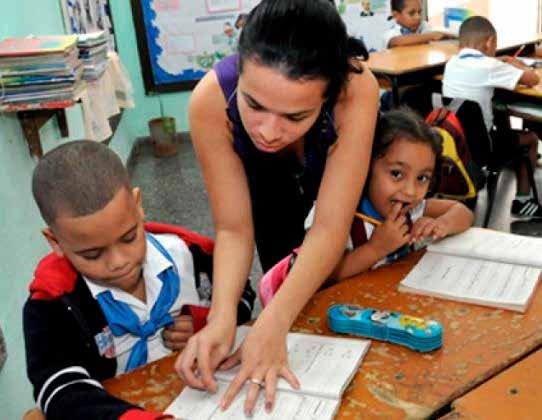
PHOTO: EDUCATION-IN-CUBA.
mep.cu. Resolutions on Economic Plan. 2020 and 2021.
Cuba. Cuban Communist Party (PCC). Documents from the 8th Congress of the PCC. www.cubadebate. cu. November 2021.
Cuba. Public Health Ministry. www.minsap.cu. Covid-19. Information on the behaviour of the pandemic in Cuba. January November 2021.
Cuba. Ministry of Education. www.mined.cu. Remote education platforms. Cubaeduca. October November 2021.
Cuba. Ministry of Higher Education. www.mes.cu. Remote education platform. www.evea.cu. November 2021.
Cuba. Public Health Ministry. Platform INFOMED. www.ifomed.sld.cu. Platform of Virtual Healthcare
Platform. www.avs.sld.cu. November 2021.
Riquenes, Cutiño, Odalis, et al. May consumerism notconsumeus.Screenofdiscord,IIandfinal, in RebelliousYouthNewspaper,Sunday,August27,2021.P.4.
NewspaperTrabajadores.OrganoftheCubanWorkers' Central. Monday, November 22, 2021. p. 6.
Granma. Official organ of the Cuban Communist Party. November 19, 2021. P.4
Díaz Canel, Miguel. Televised intervention, July 11, 2021, broadcast and published in Cubadebate on July 11, 2021.
Con Filo. Television program of the informational editor and Cubadebate, directed to counter misinformation disseminated about Cuba in social media and other global media. Cuban Television. Thursday, November18,2021
Translated from the Spanish by Wendy Santizo
The COVID-19 pandemic led to a transformation in teachers' work in Ecuador through the development of digital platforms by the education community (students, parents and teachers). Some students were able to use WhatsApp, Teams, Zoom and other digital platforms to continue their work. Students who did not have access to the internet had the option to meet with teachers face-to-face and use information centres to pick up their learning guides and do their assignments. However, thousands of students could not continue studying, including cases of entire families who were forced to migrate to other cities in the country.
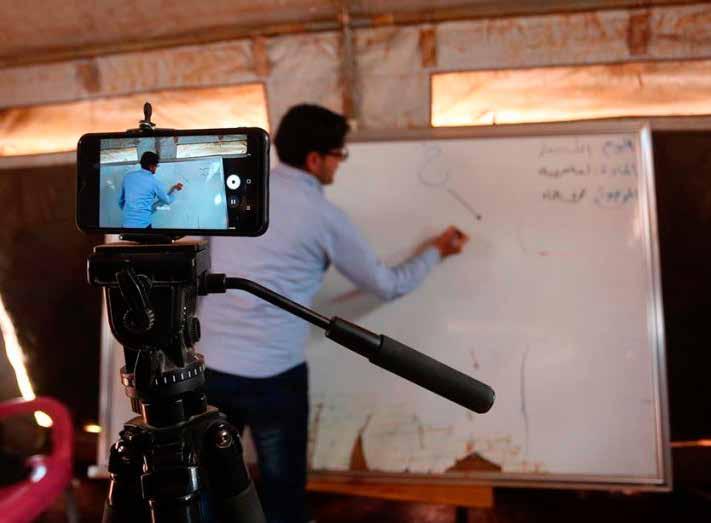
Teachers turned their homes into digital classrooms. They worked up to 16 hours a day, since they had to
1. Professor, Ex-President of the National Educators’ Union of Ecuador – une, Co-founder of the IDEANetwork.
communicate with students and parents, review homework, plan lessons and participate in meetings with other teachers in their schools, assist online training and take snapshots of the classes to send to the school’s principal and to the School District as proof of the work carried out.
A significant change was the participation of families in the education process, particularly parents, grandparents and older siblings. At home they developed the role of education assistants, receiving online classes next to their children, grandchildren or brothers and sisters and actively participating in homework. Ultimately, homes took on a greater commitment to children's education.
The Ministry of Education designed the Education Plan “Learning together at home”, where worksheets and learning guides were created, as well as student portfolios and evaluations. These materials were developed by bureaucrats in the Ministry of Education who did not
take into account the reality of the schools or teachers who had to adapt each one to their own contexts.
Teachers had to invest in the internet, data plans and computers as well as working a greater number of hours. The government of President Lenin Moreno said that “education will have special treatment; since classes are developed virtually, only one hour will be reduced” which meant “ an impact of 8.33% in the monthlysalary”(Moreno2020),andthusthereduction of teachers' wages. Their work devalued through the reduction of the total payroll, the resources were then redirected to paying the external debt to comply with the International Monetary Fund.
The numbers in the education system show that 90,000 studentsstoppedattendingschoolduringthepandemic
(El Universo, 2021). For the 2023-2024 school year 53,346 students did not register in the Costa region. According to National Police reports, 1,326 students left the classroom to join criminal gangs. Police "state that children and adolescents were recruited by criminal gangs to commit contract killings and robberies" (Primicias, 2023). Due to the criminalization of youth, information provided by the National Police must be read with caution, as we consider this demonstrates a social issue of increased violence in the country and is an expression of the particular exclusion and inequality affecting youth.
Upon the return to classes the first action by teachers was to get back to teaching so students could access educational contents which were not fully covered during the pandemic. The majority of students could
not recall basic operations and presented difficulties in reading comprehension.
There was a strong impact in the Ecuadorian education system. According to surveys carried out by the Ministry of Education and UNICEF, in homes that maintained education online, 70% claim that they learned less (UNICEF, 2022). This was even worse for those students who returned to class but had not stayed connected during the pandemic.
Ecuadorian teachers had to resort to two hunger strikes to attain the approval of a series of reforms to the Organic Law of Intercultural Education (LOEI) that would improve the quality of education and the living conditions of educators. Among the reforms to the LOEI we find provisions to protect children and adolescents, assigning specific tasks to the Departments of Student Counseling (DECE) that must function in every public school. It also lays out the investment of 6% of the GDP for early, basic and secondary education; ensures free
connectivity for the education community; guarantees an inclusive, quality education for which multidisciplinary teams must be created, to advise and accompany teachers, students and families; equalizes teachers wages with those of the public sector (only teachers had not had to access pay equity since 2017) and reintegrates teachers who were disconnected during the pandemic.
The Ministry of Education did not understand the new reality in education and is currently breaching the law by not assigning the costs needed to increase the DECEs in the schools, once again placing the workload on teachers and forcing them to remain in schools eight working hours. They are also putting up obstacles to teachers' access to pay equity (11,000 teachers are excluded).
The challenge for Ecuadorian teachers is to reinvolve families in the educational process. What occurred during the pandemic was important; in the post-pandemic period activities such as reading together as a family
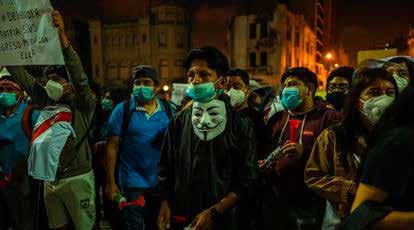
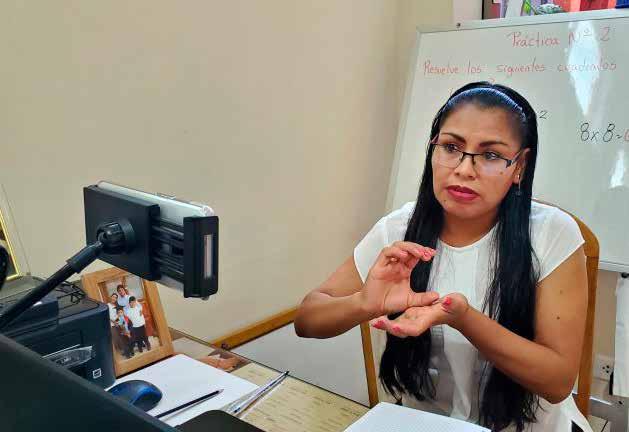
PHOTO: SUTEP
can contribute to the proper functioning of school governance. In the new school scenario, it is vital to count on the support of parents in the educational process, above all by monitoring their educational representatives and participating in the discussion regarding the future of education.
At this moment in time, teachers have a special role to play as they assume their work as part of the process of transformation that our society requires. Schools must stay connected to the community and teachers must assume their commitment to liberation and not just a welfare model of education.
Teachers must reinvent themselves. Yes, there's a need to increase training in the use of new technologies, but it's also also important to develop pedagogical tasks that take into account the active participation of students and encourage critical and
questioning thinking. Here we find ourselves with a dilemma - educators must either assert and sustain the capitalist system or contribute to the liberating process of the peoples. It is time that teachers strengthen their unity, organization and struggle in order to contribute to the liberation of the workers, youth and peoples of Ecuador.
El Universo (2021). The pandemic in Ecuador provokes more than 90,000 school dropouts. June 16, 2021. Moreno, Lenin (2020). Moreno announces six measures; cuts back USD 4,000M in public spending. Diario El Comercio, May 19, 2020, Quito.
Primicias (2023). At least 1,326 children left the classroom to join criminal gangs, according to Police. June 14, 2023.
UNICEF (2022). Recovering learning after two years of pandemic. Quito.
Lucía Rivera Ferreiro* Roberto
González Villarreal* Marcelino Guerra Mendoza*
Translated from the Spanish by Carl Rosenberg
Summary
This essay documents the way in which female teachers with at least an underage daughter or son pursued remote classes and met the demands of the educational system, alongside providing care1, direct or indirect, for their children, developing various strategies to make
*Full-time professors in the Doctoral Program in Socio-Educational Process Policy and the Masters Program in Educational Development of the National Pedagogical University, Ajusco, Mexico City.
1.Caregiving is understood as a political problem, placing emphasis on its vital character for the support of the polis, that is, life
a living for their own families. As a methodical device, interviews were conducted with Mexican teachers of preschool, primary and secondary education residing in Mexico City, Morelos, Oaxaca, Veracruz and the State of Mexico, both from the public and private sectors.
One of the most relevant findings, in the case of female teachers of private schools, is that their salaries were reduced from the start of lockdown for an
in a common territory. In this sense, caregiving is a necessarily collective process that embraces a broad scope of daily life, including education in all its forms.
indefinite period. Another aspect common to female teachers of public and private schools was the blurring of the limits of paid work, with the argument that “in a pandemic, there are no rights.” The extensiveness and intensification of the workday, joined with that of unpaid domestic work which increased notoriously due to confinement and infection of teachers’ own family members, had considerable impacts on their physical and mental health.
During the seventeen months that the schools remained closed to prevent the mobility of approximately thirty million Mexican girls, boys and youths, teachers who are mothers confronted a situation similar to that of other women, including economic insecurity and domestic violence.
At the same time, unlike other women, their environment and habitual working conditions changed abruptly in various ways. Their living room or other rooms became cages, opening their personal spaces to public scrutiny. They received various messages and instructions until late at night; carried out a large number of new tasks and activities related to the use of technology, they saw the need to establish different kinds of relations and forms of family organization; they activated or constructed support networks to be able to overcome their situation.
The purpose of this text is to document the way in which female teachers with at least an underage daughter or son carried out remote classes and met the demands of the educational system at the same time as they developed strategies to provide the necessary care for the maintenance of life for their own families.
From a common-sense perspective, caregiving is understood as attention to the basic needs of others who are dependent, such as underage children, persons with a disability, and older adults with a chronic illness. This widespread perspective turns out to be limited in understanding the crisis of caregiving which became clear during the pandemic, in addition to reaffirming
the position of those who consider that this problem belongs to the realm of private life.
We start by considering caregiving as a political problem, emphasizing its vital character for the sustenance of the polis; this implies conceiving it as a collective process present in the broad field of spheres which embrace the common life; we all need others to care for us, and at the same time we all have the capacity to do our part. Assuming this posture implies recognizing our vulnerability as a species. As Esquivel, Faur and Jelin point out, no one can survive without being cared for.
Historically, caregiving has been assigned to women, taking for granted that this differential assignation of responsibilities from men has to do with “natural” feminine dispositions, when in reality it obeys stereotypes and cultural guidelines that have become traditional, rooted in the definition of systems of rights and responsibilities proper to the last century (Faur and Pereyra, 2018), on which society is organized.
Studies that take notice of often unique educational experiences and forms of participation of mothers in education (Arenas, 2000) are scarce. In the case of women who are teachers and mothers at the same time, it is not known how they cope with the double working day that they carry out in itself, sacrificing their rest time, leisure, study, social life and political participation, at the cost of their health and emotional stability, which in turn negatively affects the provision of care of others (Palacin, 2018).
The purpose of this text is to document the way in which teachers who are mothers took charge of the remote teaching of their students and helped their own children, at the same time taking charge of providing the care necessary for family support during the pandemic lockdown.
As a methodical device, use was made of semistructured interviews of teachers of preschool, primary and secondary education, both of the public and private sector. The analysis was carried out along two major axes: teaching and caregiving.
Some information regarding femaleMexican teachers.
According to the National Survey of Occupation and Employment (ENOE) of the last quarter of 2019, out of 1,19,7778 persons who work as teachers in basic education, 71 out of every 100 are women By educatio-nal levels, in preschool, 94.2% are women; in primary school, 2 out of every 3 (66.8%) and in secondary, 57 of every 100 (56.8%).
Onewouldexpectthatwomen’saccesstopositions in the upper hierarchy would correspond to their numerical superiority, but this is not so. On the national level, 54.9% of the directors of primary education are men (INEE2 , 2019); in secondary education, only 28 of every 100 women occupy executive posts.
Regarding their pay conditions, female preschool and primary teachers who work regular workdays in public schools receive a salary of around eight thousand pesos for a schedule of 25 hours a week, coveringatimetableof 8 A.M. to 12:30 P.M.
Their participation in teachers’ unions has taken place in conditions of subordination, even in the sections of the so-called democratic teachers current Historically they have been the vertebral column of the teachers’ struggles, and form an active part of mobilizations, preparing food for the entire contingent, taking turns in the schools and encampments which they take part in organizing. During the long days of protest against the government’s educational reform of 2013 during the presidency of Enrique Peña Nieto, support for the resistancewaspossiblethankstothisfemalepresence.
“Wewomenhavealwaysbeentakingpartasactivists, but we have had few opportunities to obtain posts of leadership. There is a lot of machismo, but we are key participantsinsectionalassemblies…”(Martinez,2013).
Nevertheless, this sector has lacked the recognition that it deserves on the part of union leadership, headed generallybymaleteachers.
2 Instituto Nacional para la Evaluación de la Educación (Nation-al Institute for Evaluation of Education).
The vicissitudes of teaching and caregiving during lockdown.
In the pre-pandemic era, female teachers covered a double workload. Nevertheless, there was a clear time-space division between paid and unpaid work; even so, in teaching in general, it has become the custom to take work home.
During lockdown, remote teaching, fulfilling various responsibilities of administrative and pedagogical management; and at the same time providing necessary care to sustain the life of their own families, constituted a challenge in itself. On this all teachers interviewed were agreed.
Without any kind of support on the part of the education system, the teachers’ unions or owners of private schools, female teachers divided their time and energy over four major groups of tasks, the majority of them carried out simultaneously:
a) Activities before, during and after remote classes, such as: planning, searching for, and selecting attractive material on the internet, or preparing videos and other resources of their own.
b)Various work responsibilities, some already well known, others completely new: creating various kinds of reports on a weekly basis; being present at virtual meetings which generally take place outside the regular work schedule; helping parents of students’ families to explain to them tasks and difficulties of various kinds; preparing attendance reports and records of homework handed in by students; posting evidence of work done to institutional platforms or sending it by e-mail.
c)Activities of self-training, such as undertaking post-graduate studies online, workshops or courses with the goals of technological qualification, whether as an obligation or voluntarily, according to the needs brought about by lockdown.
d) Indirect and direct caregiving. Among the first are cleaning the house, washing clothes, shopping, cooking; the second includes feeding their children, other family members, and even pets, as well as helping their own children do their homework.
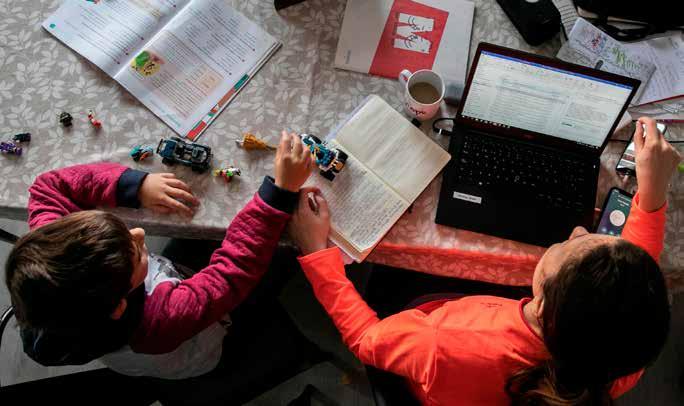
In the case of the teachers at private schools, it was found that all activities were carried out in the face of a salary reduction of between 30% and 50% as a condition to keep one ’ s job, without it being made clear in return when and how this reduction would be recovered.
During the suspension of in-person classes, which it is worth remembering were prolonged for almost a year and a half, women who were teachers and also mothers began the workday at around six in the morning and ended it in the late hours of the night. In addition, they were forced to radically modify their routines, giving up their personal spaces, carrying out a variety of new activities and tasks, and found themselves forced to establish different relations and forms of family life.
In the same space, often reduced, they devised va-rious strategies to teach students, utilizing their own resources, fastening cardboard to the walls of the kit-chen, listening to their students or colleagues in virtual meetings while they cooked and tried at the same time to stay busy and calm for their own children,especiallyif they were very young
They also evaluated and handed in grades under strong institutional and family pressure, filled out forms and reports; responded to messages at any hour of the day, cleared up difficulties of parents or triedtosupportstudentsontechnologicalsubjectsthat theythemselveshad only recently learned.
The activities of teaching and the work of caregiving have intensified considerably. Consequently, the time of leisure and rest has been reduced drastically. The female teachers interviewed spoke of feeling exhausted owing to the mental load which the fulfillment of a double workday in exceptional conditions represents. The tension was increasing in the face of an educational system which hastened, exerted pressure, and constantly demanded the fulfillment of quotas and the handing in of reports and evidence of work carried out.
Public scrutiny fell on them, the vigilance of a society which in pandemic circumstances revived the smear campaign against educators judging all the teachers—female and male--equally. Some parents said, “They don’t do anything, they only as-
-sign homework which they don’t check and they just calmly collect their salaries”
Intheinterviewscarriedout,theexistenceisrecognizedofemotionaldisorderscausedbytheimpossibility ofreconcilingtheirworkwithcaringfortheirchildren, in spite of all the efforts which they have made. This situation constituted a source of guilt and internal conflicts regarding what is considered as a neglect of their social function as women: prioritizing teaching of their students and responding to the demands of schoolauthorities,aboveattentiontotheirownchildren.
When not relying on other kinds of support, they resortedtothefamiliarnetworkstodealwithdomestic andworkdemands;theirmothers,sistersorneighbours cared for their children while they gave classes. One can say that this contributed to deepening familiarization of caregiving, and especially its feminization, thus reaffirming the separation between teaching as part of public life and caregiving as part of private life, when in reality this separation was simple and simply impossible to sustain, unless someone assumed part of the domestic workload, which was rarely possible.
The government strategy to manage the pandemic sidestepped the need for caregiving of a distinct kind on the part of the population. Consequently, the absence of collective responses to deal with a common problem did no more than reproduce and deepen the variousinequalitiesinherentinthemodelofeconomic andsocialorganizationwhichresultsindomesticwork and caregiving falling back on women. For example, thedeclarationofPresidentLópezObrador,whoatthe startofthelockdowndeclared,“ThetraditioninMexico isthatdaughtersaremoreoftenthosewhocareforthe parents,wemenaremoredetached,butthedaughters are always available” (Redaccion AP, 2020, June 25).
Itisworthrememberingthatduringthelockdown, the schools and day-care centres closed their doors; furthermore,theteacher-motherssawthemselvesforced to search for a way to comply with the activities pro-
per to their paid work along with carrying out unpaid domestic work. The specific policies or government supports, as well as measures of protection on the part of the unions to reduce the difficulties of teaching and caregiving simultaneously, were nonexistent.
With a salary cutback imposed on the backs of the teachers—in the case of teachers of private schools— female teachers took charge of buying computer equipment and contracting internet services with their own resources. To teach, they created videos, prepared special materials, and communicated directly with the parents, covering exhausting work days. And when for some reason they needed to be absent from meetings and virtual classes to take care of their children, there was no lack of those who responded: working at home, there are no rights.
The limits of time and space that separate salaried work at home and family existence were erased. The educational system took the home by surprise, appropriating all the life spaces of female teachers that generally pass by outside the school, such as maternity.
Teachers who are mothers shared their privacy with that of the students, and vice versa. They gained the confidence of the youngest, those who for the first time attended “school” without being there; they overcame the limits interposed by the screens. They discovered how their students lived, they encountered difficult situations, generally hidden when they taught in person, they felt impotent to stop the family aggressions which unexpectedly passed in front of their eyes; they did what was possible to prevent other students from witnessing ill-treatment and blows and hearing bad words.
Nevertheless, for the Secretariat of Public Education (SEP) and wide segments of society, the teachers received their salary punctually, and in return did not do enough, they did nothing!, when in reality, they kept alive the pedagogic link and protected the life of their students at the cost of neglecting their own children.
The most important lesson that we can take from the testimonies brought forward by the teacher-mothers is that, during the lockdown, in the midst of uncertainty,
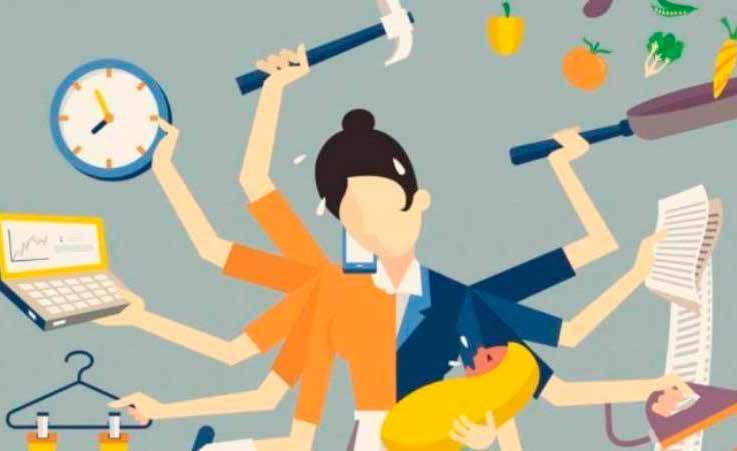
the fear of contagion and the very instability of the pandemic, they taught while caregiving and gave care while they taught.
This puts in doubt the insistence on placing caregiving and teaching as part of different systems, where on one hand the institutions which form part of the educational system are defined as “formal education” which is occupied by teaching, and on the other “informal” education which is occupied by all the other spaces and experiences which are “only caregiving” (Redondo y Antelo, 2017).
This reminds us that caregiving should not be a question of heroic women, but principally, a commitment and shared responsibility. Social organization of caregiving must change, transform, break with the current model to redistribute responsibilities. But this will be impossible while the workload of caregiving is seen as a personal problem and not a social one.
Teaching to provide care and caregiving while one teaches—this is what education involves in these turbulent times of destruction and death; female teachers are called to play a crucial role in this transformation.
Arenas,Gloria(2000)“Lasmadresenlaeducación,
una voz siempre presente pero, ¿reconocida?” en: Santos Guerra, Miguel Angel (coordinador) El harén peda-gógico. España, Graó, pp. 103-117.
Esquivel, V.; Faur, E.; Jelin, E. (2012) Las lógicas del cuidado infantil. Entre las familias, el Estado y el mercado. Buenos aires, IDES
Faur,E.yPereyra,F.(2018)“Gramáticasdelcuidado” en: Piovani, J. y Salvia, A. (coords.) La Argentina en el siglo XXI. Cómo somos, vivimos y convivimos en una sociedad desigual. Encuesta Nacional sobre la Estructura Social. Buenos Aires: Siglo XXI.
Martínez, San Juana (8 de septiembre de 2013) Las maestrasdeOaxaca,almadelaresistenciaenelzócalo. En: La Jornada, recuperado de https://www.jornada. com.mx/2013/09/08/politica/006n1pol
Palacín,I.(2018)Pedagogíadeloscuidados.Aportes para su construcción. España, Fundación InteRed. Redacción Animal Político (2020, junio 25) El feminismo quiere cambiar rol de las mujeres pero por tradiciónlashijascuidanmásalospadres:AMLO.Recuperadode:https://www.animalpolitico.com/2020/06/ amlo-feminismo-cambiar-rol-mujeres-padres
Redondo, P.; Antelo E. (2017) Encrucijadas entre cuidaryeducar.Debatesyexperiencias.BuenosAires, Homo Sapiens.
Marlene Escobar Hernández*
Translated by Flor Montero
Summary
This article is the result of a desire to reflect on working conditions upon the return to face-to-face classes in the public elementary school system. After the declaration of a health emergency due to the COVID-19 pandemic, schools were closed as a measure to prevent contagion. Teaching requires the deployment of intellectual and physical capacities in order to implement strategies and tools in a successive and simultaneous manner, in specific spaces and material conditions, so as to meet the demands of the job (González, 2012). Given all that, it is important to discuss what public elementary school teachers do and under what conditions they perform on returning to face-to-face teaching.
*Bachelor´s Degree in Educational Administration, Master´s Degree in Educational Development from UPN Ajusco, Mexico City.
The volume of responsibilities required of public elementary school teachers upon returning to the physical classroom after the lockdown will be explained in detail. Some of them are long-standing expectations, others arose during the pandemic, and still others have emerged in the heat of the accelerated work pace that characterizes the teaching profession.
Background: teaching during the COVID-19 pandemic
The accumulation of responsibilities required of public elementary teachers in Mexico dates back at least a couple of decades. But these have never been more relevant than now, due to the excessive time required to carry them out, the spaces where they are performed and the number of resources that teachers have to devote to carrying them out.
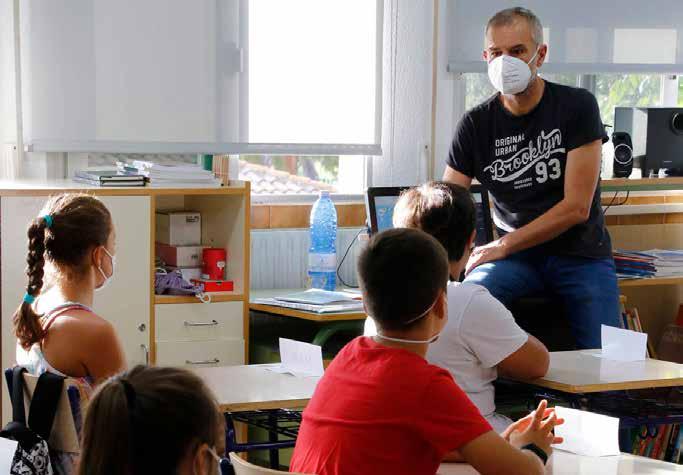
The declaration of a health emergency due to the COVID-19 pandemic suddenly triggered the need for distance education programs. Educational authorities set up the Aprende en casa program, a remote teaching strategy supported by television and radio shows, offered for teachers and students to continue with the school cycle. The worldwide pandemic took all and sundry by surprise. Educational authorities had no protocols for remote teaching, and teachers were not prepared to do their work from home. Even so, the message was clear: to guarantee the right to education (SEP, 2020).
Every week, teachers used to hand in their class lesson plans to the corresponding staff. But this was interrupted and the teachers were forced to redraft everything for each individual student, adapting them to their context and particular needs. They had to plan for a completely different scenario that was outside of their control - the family space of each student. Accordingly,
it was also necessary to find ways of communicating with families, one of which would be via social media. WhatsApp groups were created where tutors or parents were added, and this was the most used means of communication. Teachers would send information and receive evidence of the work done by the students via the app. They would send the parents instructions as clearly as possible, and had to be available in case of questions. The working hours included days off and vacations, and it no longer mattered if it was day or night. Once the activities had been done, the students sent teachers photos or video recordings as evidence of their work and progression through the school cycle. Since many homes did not have access to the Internet and/or computers, teachers would leave activity booklets at stationery stores near the school where parents could pick them up. Given the conditions of many students, teachers sometimes had to deliver the booklets from
house to house. For the smaller number of families who did have access to the Internet and computers, teachers had to use PowerPoint presentations, videos or design virtual classrooms and other fun activities.
Administrative activities would just not stop. They included a never-ending stream of answering emails, filling out forms and questionnaires, recording activities and assignments, sending information, and answering WhatsApp messages practically every day and at any time.
The work of the School Technical Councils (CTE) did not stop either. It had to be carried out remotely with many difficulties. Not all teachers had computers and/or internet access at the beginning although after a few months of lockdown, they were forced to go into debt to acquire these work tools.
All matters pertaining to professional development continued online. Teachers needed to know platforms such as Google Classroom, Zoom, Meet in order to complete online training courses. Once the courses were completed, each teacher obtained and sent the corresponding certificates to the school's management.
In summary, the problems of the lockdown in the educational sector seemed to be resolved, at least by the educational authorities in Mexico, with the implementation of the Aprende en casa program. But what we have seen here suggests that it was really the deployment of other strategies and actions by teachers which sustained the teaching process even in adverse, diverse and complex conditions, such as those that occurred during the lockdown that lasted for more than two years.
In a context marked by uncertainty, desperation, fear, stress, concern for their students and exhaustion, teachers had to constantly prove that they were working, so the workday would practically extend all day, every day with no rest. The constant requests for information, attendance at courses and Technical Council sessions, the systematization and sending of evidence was suffocating.
The return to face-to-face learning, school year 2022-2023
The pandemic demonstrated the vulnerability of Mexico's educational system as well as, although there is an attempt to deny it, further evidencing the importance of teachers. Without them, it simply would not have been possible to teach millions of students.
Once back at school, teachers seem to find themselves in a familiar scenario - more change and even more responsibilities.
Before continuing it is important to emphasize that some of the tasks and activities that will be described had been performed by teachers for at least fifteen years. Some had become much more specialized, requiring the mastery of methodologies, knowledge, techniques and strategies. And in other cases, they were completely new.
Teachers had to start working on August 22, 2022, one week before the beginning of the 2022-2023 school year. During the Technical School Council (CTE) sessions, the Intensive Continuing Education Workshop for New Study Plans and Programs for Teachers was unexpectedly added.
During the week of August 22-26, the objectives and goals of each school were reviewed, studied, proposed and analyzed. The teachers were in charge of preparing the school's annual planning; supported by the Guidelines for each session of the Intensive Technical School Council. They would carry out the activities set forth in said document and would record the agreements reached in the corresponding logbook. According to the needs, the work of each session would be carried out individually or in groups.
It is important to mention that during the school year, there would be eight CTE and Continuing Education Workshop sessions. For each one of them, teachers would have previously reviewed the contents, videos and document proposals. Each session would have its own proposals for activities such as questionnaires, group activities, reflections, sharing successful experiences, etc., which would be formalized and subsequently sent to the corresponding authorities.
Simultaneously, the sessions of the Intensive Workshop on Continuing Education for Teachers would be held. Understood as a space for dialogue, reflection, design, proposal, exchange of experiences and analysis of the new educational plans and programs (SEP, 2022-2023), the workshop was closely linked to the construction of the School Program for Continuous Improvement (PEMC) and the synthetic and analytical programs.
To carry out the PEMC, teachers reviewed and restructured the school's problems. They organized and systematized information. The needs assessment of the school and its students were created with the intention of proposing objectives to address previously defined priorities. Regarding the synthetic and analytical programs, the starting point was to recognize and focus on the areas of learning , their articulating axes by subject, phase and school grade and the contents that would be integrated in the co-design of the plans and programs. Due to the constant changes in the design of the new 2022 plans and programs, it was necessary to go back and rethink everything - the process demanded it.
At the beginning of the school year, teachers prepared an analysis of the students’ needs and established appropriate strategies. For students who were behind, and with the prior consent of the parents, booklets with content review and activities were designed, elaborated and printed. These activities were carried out during physical education or computer classes, that is, for a maximum of two hours per week.
In regular work, lesson planning is understood as an instrument for systematizing didactic-pedagogical activities; the pre-class preparation, the establishment of contents, the definition of activities, the resources needed to carry them out and the strategies for evaluating learning. It is worth mentioning that this instrument used to be, and still is, prepared by teachers who spend time and resources outside their working hours at the school. They used to be delivered monthly and now they are delivered weekly, either to managerial or administrative personnel, and in some cases schools request that they be sent to the school's institutional mail.
The design and printing of various materials is another of the activities carried out by teachers outside working hours. They have been -and still are- in charge of finding or designing additional activities to those included in the free textbooks. With no support other than a few pesos every two weeks, teachers continued allocating part of their salaries to pay for printing not only activities for class work, but also for exams.
In terms of classroom activities, teachers regularly prepare a class schedule that facilitates the weekly distribution of subject areas. As far as the teaching and learning process is concerned, the dynamics in the classroom would follow this schedule.
During two periods (the first of approximately two hours and the second of one hour, since, on designated days, the students have to take either physical education, computer or English classes), the teachers explain the contents in detail, ask questions, authorize trips to the restroom, correct mistakes, grade papers, maintain order, pay attention to the students' participation and report any incident in the logbook.
Before starting the classroom activities, teachers read a short story and then dictated ten words. They took active breaks every 45 minutes and for another 5 minutes, they would do breathing or stretching exercises.
If the classroom has the necessary technology, they prepare a presentation at home, using Information and Communication Technologies (ICTs). To do so, it is necessary to search, select and structure information. Once this is done, they create and save the file in a storage device and integrate the presentation into the class work.
The incorporation of students with disabilities into what we could call regular classes entails the development of differentiated planning to allow students to perform activities during their time at school. Teachers do this without appropriate training for working with students with disabilities, given the type of training that teachers usually receive.
Recently, complementary programs have emerged that seek to prevent crime and the use and consumption
of drugs or devices that are harmful to health as well as actions to care for the environment. When these programs are incorporated into the schools, teachers will be required to find the time to include new content and carry out and document prevention and awareness activities.
In terms of school organization, teachers were required to participate in various committees, commissions and teams:
• To produce the mural newspaper to commemorate important dates, there are those who buy materials, others look for, design and bring cardboards with information about the event. But they all clean and decorate the space destined for the exhibition of the content.
•To organize school events, teachers raise funds, buy supplies and bring them to the school, decorate the doors of the classrooms and other spaces, coordinate the way in which the spaces will be distributed and define participation schedules. They invent and rehearse choreographies prior to the event with the students and in special cases such as children's day, they would also prepare gifts.
•The school cooperative (store), is in charge of defining, purchasing and distributing the food and beverages to be sold. In addition, the teachers keep accounts of incoming and outgoing goods, recording, preparing and submitting a report of the resources obtained to the management.
The Ministry of Public Education, SEP (2023), through the National Council for Social Participation in Education, CONAPASE, will determine the responsibilities of teachers in the execution of various actions.
• Civil protection and school safety committee: Teachers should evaluate and prepare the safety project, as well as a directory of parents to maintain communication in case of an emergency. They are also in charge of carrying out drills and managing the training of school staff in prevention matters.
•Reading and learning improvement committee: Teachers will be responsible for defining and implementing the reading project; and integrating a school library.
•Healthy eating committee and school cafeterias: Teachers will promote healthy lifestyles and eating habits through the dissemination of information on food groups and how to combine them for a balanced diet.
•Committee for Coexistence and the Discouragement of Practices that Generate Violence: Teachers must elaborate and develop coexistence projects to promote the learning of values.
•Committee for the care of the environment and cleanliness of the school to promote the responsible use of school materials, water and electricity.
• School infrastructure committee to come up with an inventory of the physical conditions of the building and furniture. They should prepare a list of parents with knowledge in different areas related to the maintenance of facilities, coordinate actions for cleaning and painting school façades, and looking after green spaces (SEP, 2023).
•To facilitate students’ arrival and departure, teachers are responsible for supervising all actions, and of reporting any incident; if a student has not left the school, they are in charge of the protocol to locate a family member so that they may come and pick up the student as soon as possible.
Other activities that are the teachers’ responsibility: organizing and coordinating the civic ceremony held on Mondays, as often as necessary. For this, the teacher in charge will prepare the program and the important events of the week in advance, in coordination with the committee in charge of elaborating the mural newspaper. They will assign students to memorize and present the information on the day in question, prepare the sound equipment, give indications and if necessary, announcements. This meeting should not exceed 30 minutes; during the civic event the flag is honored and the national anthem is sung.
It is the responsibility of teachers to keep parents informed. This entails the preparation of files with the general and contact information of the students. In that binder, they keep records of the grades of activities, evaluations and work done in class or at home, and of
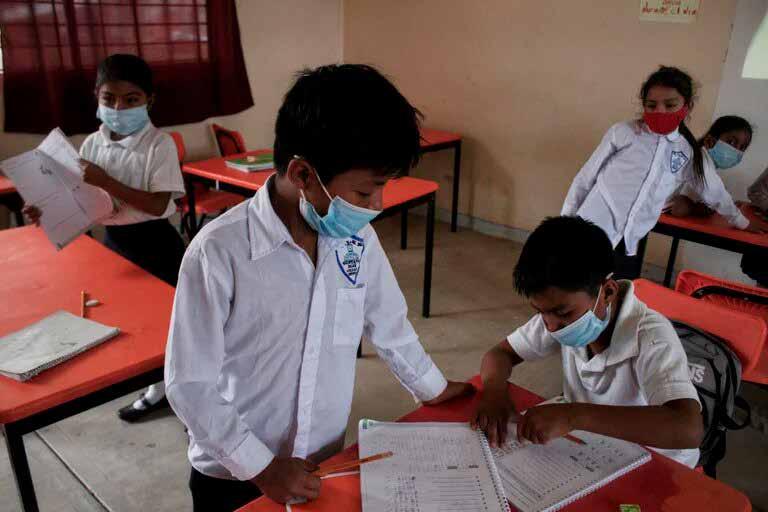
any incident that occurs. Teachers inform the person who picks up the student about any situation and, if necessary, an appointment may be made to talk with the parents during the time when the students are in physical education or computer class. The agreements established during the meeting will be recorded in a document signed by those involved, which is filed in the student's folder.
As for the report card meeting, the teachers are in charge of reorganizing the space inside the classrooms, preparing a brief speech to report on the group's progress and other corresponding matters, distributing and collecting the report cards, answering questions or comments, and voting on certain special activities or commemorative events.
Currently, in case of an illness that prevents the student from attending school, teachers prepare and give the parents a guide with the contents and activities that are being discussed in class so that the student can do the work at home. Subsequently, teachers will review and evaluate the homework.
What is very evident is the addition of responsibilities, tasks and activities to the teaching job description. The return to schools has allowed education authorities to demand more actions beyond the act of teaching. Working hours were extended during the pandemic and conditions seem to suggest that they will continue increasing. However, official working hours continue to be periods of five hours per day, twenty-five hours per week (AEFCM, 2020). During their time at the school, teachers perform a simultaneity of tasks regarding teaching, discipline, order, systematization of information, attention to parents, organization and supervision of events. And the list goes on.
Throughout this article, I've attempted to describe teaching work and its conditions, based on the accumulation of responsibilities, tasks and activities during the pandemic and afterwards, upon the return to on-site classes. These conditions, both in time and space, translate into an increase in the intensity with
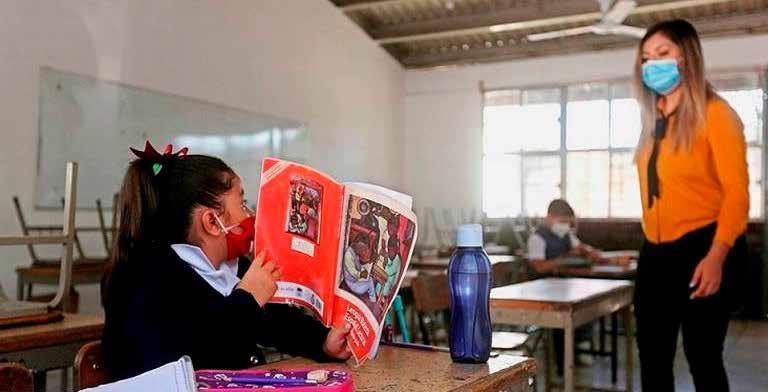
which these tasks must be carried out, in addition to having to perform multiple functions: teacher, counselor, caregiver, psychologist, social worker, etc.
During the pandemic, and for some time now, teachers have piled-up new responsibilities, but they have also lost the right to a private life, to rest and leisure. Before the declaration of the health emergency that led to the lockdown, it was already difficult to speak of a fixed schedule for teachers.
The performance of work-related tasks and activities in spaces away from school has become a constant; the specificity with which work arrangements must be executed and the mastery of strategies and tools for their achievement are increasingly demanding and exhausting. The flexibilization of schedules and the intensification and diversification of responsibilities make it fair to say that teachers are suffering from overexploitation.
At the same time, teachers allocate part of their salaries for the purchase of materials, printing of copies, and ongoing decoration of spaces, as well as for the creation of the gifts they give their students. During the pandemic, they adapted spaces in order to attend to work issues, quickly learned to use and manage ICTs and allocated resources to buy equipment and pay for Internet access.
Federal Education Authority in Mexico City (2020). Catalog and tabulator of basic education teaching staff in force as of 2020.
González, H. (2012). Introduction to the analysis of the work process in educational work. Notes from a seminar on teaching work. SUTEBA. https://www. suteba.org.ar/download/seminario-sobre-trabajo-docente-mdulo-ii-43986.pdf
SEP. (2020). Bulletin 98. Aprende en Casa program is based on free textbooks: SEP. https://www.gob.mx/ sep/articulos/boletin-no-98-se-sustenta-el-programa-aprende-en-casa-en-los-libros-de-texto-gratuitos-sep?state=published
SEP. (2022-2023). Intensive Workshop on Continuing Education for Teachers. Ciclo Escolar 2022-2023: SEP. https://educacionbasica.sep.gob.mx/wp-content/ uploads/2022/12/Taller-Intensivo-de-Formacion-Continua-para-Docentes.pdf
SEP. (2023). School Participation Councils. Comités de Participación Escolar: SEP. http://consejosescolares.sep.gob.mx/es/conapase/Comites_de_Participacion_Social
Translated by Flor Montero
Summary
This article analyzes the reshaping of teaching work and school reorganization during and after the COVID 19 pandemic from a student perspective. With the challenges of new pedagogical practices in the classroom, where ICTs and other means of creation have forced teachers to deal with drastic changes, it is necessary to question and reinvent pedagogical mediation as a bridgeofinteractionbetweenschoolsandeducational communities.
1. This article is the result of a collaboration and of a testimonial nature. A group of teachers from Mexico, Honduras, El Salvador and Costa Rica took a closer look at how the student population experiences and interprets the transformations in teaching work and school organization. A qualitative, cross-sectional and descriptive methodology was used, making use of focus group and drawing techniques. A comic book for primary and secondary education was also used as a tool to explore and gain insight into the feelings, knowledge and experiences of the selected student population.
At this time, the gaps created by inequity and the social, cultural and economic vulnerability that we suffer and that deeply affects education became even more visible. The pandemic was the ideal scenario in which to demobilize teachers and social movements and to promote reforms, through health and safety protocols, where fear was used as a device to immobilize all popular action. These reforms affect public education insofar as they legitimize the interests of the ruling classes.
2. Coordinators and co-authors Gloria Indira Aguirre Escobar, teacher of Secondary and post-secondary education and researcher at the Francisco Morazán National Pedagogical University (UPNFM) of Honduras; María Trejos Montero, retired teacher and researcher, Costa Rica, together with the coauthorship team of teachers from Mexico, El Salvador, Honduras and Costa Rica (their contact details are attached at the end of the article).
This article synthesizes valuable testimonies that are part of a shared exploration with elementary and middle school students from nine educational communities in four countries: Chiapas, Mexico; Chalatenango, El Salvador; Yoro and Gracias a Dios, Honduras and Guanacaste, Puntarenas and San José, Costa Rica. We worked with 100 primary school students (between 9 and 12 years old) and 150 middle school students (between 12 and 19 years old).
The local knowledge of the indigenous peoples of Bajo Chirripó and Salitre (communities in Costa Rica) and Kaukira (Miskito community in Honduras) were essential to the process. Context and reading in and with the world constitute a central axis, according to Paulo Freire, from a popular education approach and to Vygotsky (1994), who conceives the notion of experience as an indivisible unit in which both the environment in which the person lives and what they experience are represented; that is, personal and situational characteristics.
The findings are organized by the three dimensions that weave through this process: socio-affective, cognitive and experiential, through the design and use of a cartoon as an instrument to encourage communication and to capture the thoughts of the characters through discourses that contribute to the contextualization using a process of visual analogy. (Linares González, 2016).
There were two major sub-themes: the first moment of the pandemic (distance and virtual education, lockdown) and the second moment after the pandemic (return to face-to-face classes), using the three transversal dimensions mentioned above.
We proceed to a description of the results/responses of students from both educational levels, using quotations from them and from the teachers involved, respecting the principle of confidentiality.
At the elementary or basic education level (second year), students belonged to a school that works un-
der the multigrade modality in the state of Chiapas in Mexico and to four schools in Costa Rica.3 At the middle or secondary education level, students came from schools in the department of Chalatenango in El Salvador; in Yoro and Gracias a Dios in Honduras and in Guanacaste, Puntarenas and San José in Costa Rica.
Although there are some differences in the countries regarding the delimitation of middle school or secondary education, for the purposes of this study we assume that it includes the seventh, eighth, ninth, tenth, eleventh and twelfth grades, depending on the nature of the program and educational system.
"I
don't want to be away from my friends again."
(High School Student)
During the lockdown, without socio-cultural or geographic distinction, the students emphasized negative feelings (sadness, anger, frustration, helplessness) due to the obligation to remain indoors. They even made analogies to the feeling of "confinement" and "prohibition". They also expressed difficulty in adapting to online study and, in terms of school performance, a considerable number of them indicated that they did not learn anything or had a limited understanding of the contents. In addition were the excessive tasks issued by the Ministries or Secretariats of Education. There are common indicators linked to an increase in the assignment of daily household chores with a gender bias, since more girls than boys reported on this situation. However, the lockdown also encouraged some aspects of personal development since they considered it was favourable for self-reflection on their personality, interests and life projects. It promoted reflection on
3. Chiapas, México: School; El Salvador: Instituto Nacional Concepción Quezaltepeque; Honduras: Centro Básico República de Argentina, Kaukira e Instituto Perla de Ulua; Costa Rica: Liceo Rural Palmera, Escuela de Cebror de Salitre, Liceo Académico de Salitre, Escuela Nieborowsky, Escuela Rafael Vargas Quirós, Instituto de Guanacaste in Liberia.
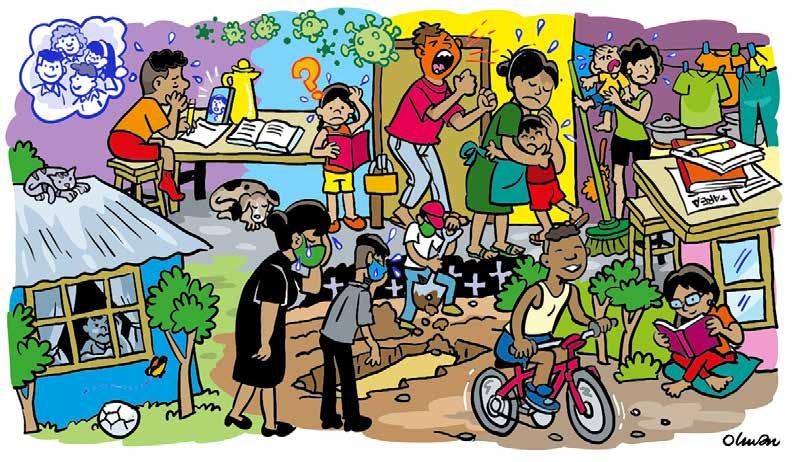
aspects of the socio-affective dimension and the field of subjectivities.
"Learning to play soccer indoors."
(Elementary School Student)
Generally speaking, the family environment was redefined by satisfaction in having more time to share with relatives and develop new experiences. Some students affirm that they made good use of the right to leisure and recreation, since they learned to ride a bicycle, practice other skills or read. Thus, they developed skills while becoming aware of the complex situation of confinement they experienced:
"When my mom got mad, she would lock me in the room. and I discovered that I am a girl with many qualities."
(High School Student)
It is important to look back and contrast the pandemic period with the present time in order to reflect on the different ways in which their lives were affected by having to face unexpected changes in the family environment (deaths, separation and violence in a scenario of unemployment and worsening poverty rates). It is also significant to recognize how attitudes of resilience emerged -without ignoring the limits and ambiguities of this notion- in this difficult context.
"We learned to live together better within the family...To be able to stay at home longer and value them more since many people lost family members."
(Elementary School Students)
The information obtained shows that this scenario of profound change has generated the need to analyze and reframe the value of family coexistence and its individuals. There is also a need to identify and face emerging realities from the return to face-to-face clas-
ses: experiencing new forms of coexistence between peers and teachers, adapting to reconfigurations of pedagogical mediation when technology is immersed in the education process and incorporating practices that could not be developed with virtuality.
The accumulation of experiences that the students highlight show that, on the one hand, they would not want to live another pandemic, as it implicitly and explicitly limited their development in a phase of transition from childhood to adolescence. On the other hand, they all suggest that interpersonal relationships are the most significant aspect of the school environment, minimizing the importance of cognitive aspects, with the exception of students from two rural schools.
Lessons learned from collective learning
Education is going through difficulties to be expected of outdated educational policies that are far removed from the specificities and living conditions of educational communities, especially as this human right is infringed upon. These problems were seen in the overall pandemic crisis which took place amidst the onslaught of the dismantling and privatization of public services.
The choice of the comic book as an instrument to collect information in a playful and friendly way proved to be a wise one. It helped to have a closer approach to the student population, in conjunction with WhatsApp interviews and focus group spaces and opened up the possibility of continuing to incorporate student voices into teachers' debates, within a narrative where a diversity of analogies emerged as a result of sharing experiences among particular geographies:
"...the cartoon, it also helped me to rethink not only the didactic use as a tool...to collect information about the emotional and psychological state and knowledge of the girls and boys, but also to implement it in future classes and to more deeply scrutinize how the students are doing at an emotional level."
(Elementary school teacher)
It also provided spaces to reflect on how the new forms of teaching and school reorganization from the pandemic to the present day are affecting their lives. All of the above, then, becomes a reference for teachers, students and their families to participate as sociocultural subjects in the task of reinventing themselves, unlearning, relearning and creating an educational experience that is dialogic, inclusive, horizontal, and with ongoing reciprocity. In other words, it was critical and transformative:
"I thought that the lockdown meant that students had had a very bad time in every sense of the word but by using the comic book and a conversation, I learned that they valued this period, they took advantage of these conditions of solitude to be with themselves, they even said: "I learned that being alone is a prize...I learned to be with me...I began to listen to myself and to know myself better..."
(High school professor).4
The students’ perspectives allow us to see their experiences of the social rupture caused by the pandemic and by state policies that are incongruent with the socio-cultural and economic demands of the countries.
"...it was very difficult to be secluded within four walls and live all day with the family, since they live in a rural area with a lot of freedom to go out without any danger."
(Teacher)
However, there is a paradox in that in rural areas, wheretherewascommunityorganizationtotakecareof eachother'sfamilies,infectionratesweremuchlower. The teachers emphasize how important it is to take the realities of the students as a vital point of reference for discerning, innovating and designing pedagogical
4. Here “teacher” is used for a elementary school teacher and “professor” is understood to be a secondary education teacher.
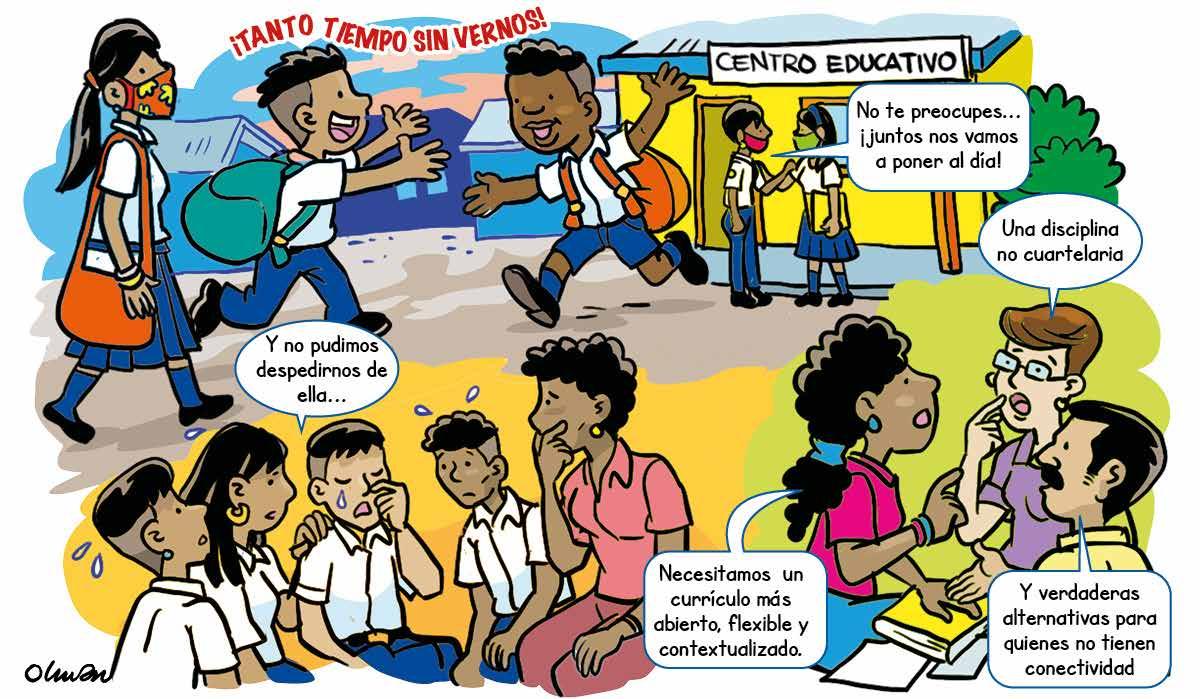
practices. Schools must be open to the affections and other aspects of subjectivity in addition to objective criteria.
"In itself, education should be an element of transformation, problematizing and not normalizing... giving young people the tools to question, analyze, synthesize and propose solutions to different problems".
(Teacher)
They also emphasize the importance of an open, flexible and contextualized curriculum that responds to the integral needs of students and educational communities.
"Unlike the materials that come from the official curriculum, it has greatly helped me to implement a
methodology that promotes more active and critical students in the face of their real community panorama. Also, to implement a discipline that is not punitive, but based on awareness and committed to benefiting the community."
(Teacher)
Making education a scenario for social transformation requires profound changes in curricular, administrative and pedagogical matters, where each school must have interdisciplinary teams to help teachers and attend to the particular needs of students. This is a need that is even more pressing in view of the pandemic where unemployment rates, school exclusion, instability and emotional and sexual violence against children and women of different ages were on the rise:
"...we need social work, psychological support, counseling and other services in each educational center, because many young people returned to school with many losses, with big scars and they need guidance to deal with this grief and to know how to handle social situations caused by the pandemic, in order to prevent and recover their overall health. As teachers we make an effort, but we cannot solve all these problems."
(Teacher)
The teacher will always be essential in any emancipatory educational process that transgresses hegemonic ways of doing and thinking about education.
"The teacher will always be indispensable within a profoundly human pedagogy that fosters a diversity of common bonds between peers, between students and teachers, with the environment and within the family and community. We are betting on that integrality of the human being, something savage neoliberalism is stripping us of."
(Professor)
The revitalization of ancestral practices of family and community care that allow resilience to develop in the face of phenomena like the COVID-19 pandemic is an essential part of a new educational paradigm and social reality, in a growing state of vulnerability, exacerbated by the pandemic.
"In many indigenous communities there were deaths, mainly of older people, unfortunately those who have the great wisdom of the original peoples."
(Professor)
In conclusion, there have been many lessons as a result of the drastic changes in the area of pedagogical mediation, where students and their families had to cope in a critical and creative way, where autonomy was strengthened in the face of the challenges caused
by distance education, in dire socioeconomic and cultural conditions such as a lack of access to the internet, essential devices and basic conditions for a dignified life. These lessons can be brought to the current moment of returning to in-person education, and we must analyze them together with students and their families and incorporate them as endogenous strategies against the attitudes and practice of education imposed from the capital.
"...some of the children say that they learned to organize their own time and studies, although they lacked a lot of human contact, especially with their classmates."
(Teacher)
Although there is evidence of a significant number of points of convergence between the perceptions of students from both educational levels, there are criteria that are distinguished by the realities of each region and by the characteristics of the students represented in the collective systematization.
"I felt grateful to continue studying to achieve my dream and my goal.... I was able to go back to school, greet my classmates and teachers."
(High school student)
This article is the product of a collective work with the following teachers: Marco Antonio Hernández Moreno (Chiapas, Mexico); Samanta Núñez and Jordy Echeverría (El Progreso, Yoro and Puerto Lempira, Gracias a Dios, Honduras); Javier Sibrián Recinos (Chalatenango, El Salvador); Laura Arias Cabrera, Irene Arguedas Cordero, Sara Soto Elizondo and Conny Mendieta Mendieta (Guanacaste, Chirripó,Osa,Tibás,CostaRica).
References
ANDES JUNE 21 (2019). Diagnosis Impact of the Pandemic COVID-19 in educational communities.
Non Sexist and Inclusive Pedagogical Proposal (PNSI).
Balcazar, F. E. (2003). Participatory action research (pAR): Conceptual aspects and implementation difficulties. Fundamentos en Humanidades, 59-77.
González, Linares, Eduardo, E., Monroy, G., & Isabel, A.(2016). Employment of comics to reinforce higher level learning at UPIBI-IPN. RIDE. Iberoamerican Journal for Educational Research and Development, 7, 1-14.
González, Linares, Eduardo, E., Monroy, G., & Isabel, A.(2016). Employment of comics to reinforce higher
level learning at UPIBI-IPN. RIDE. Iberoamerican Journal for Educational Research and Development, 7, 1-14.
Solís, A., Hernández Rodríguez, M., Moncada Godoy, R., Chinchilla Chinchilla, G. E., & Borjas Carrasco, B. (2020). Great Achievements in Teaching, Great Challenges in Learning. Los Padres de Familia opinan respecto a la Educación hondureña en el contexto del COVID 19.
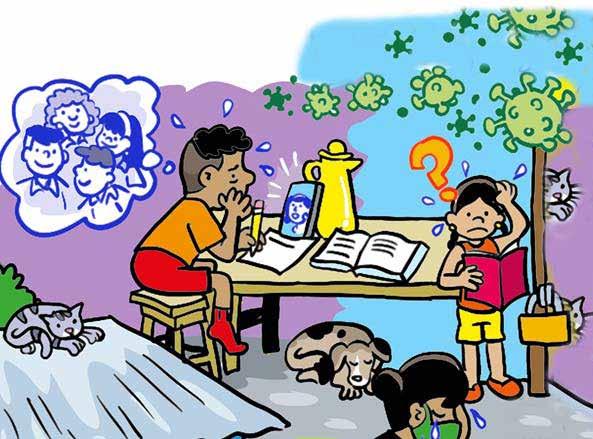
of Rankand-File
The Caucus of Rank-and-File Educators (CORE) was formed in 2008 when a group of educators and union members came together to transform the Chicago Teachers Union. What they built would end up changing the city—and the country—forever.
1. As a high school student in Chicago in 1995, JACKSON POTTER led a walk-out to push for equitable school funding in Illinois. He later taught at Englewood High School and was the union delegate there when the district slated the school for closure. He and Al Ramirez formed the Caucus of Rank and File Educators (CORE) in 2008 and the Grassroots Education Movement (with other community organizations) shortly after. He and future Chicago Teachers Union president Karen Lewis served together as the first co-chairs of CORE. After working as CTU’s staff coordinator for eight years, Jackson went back to teaching from 2018 to 2022 and now serves as the union’s vice president.
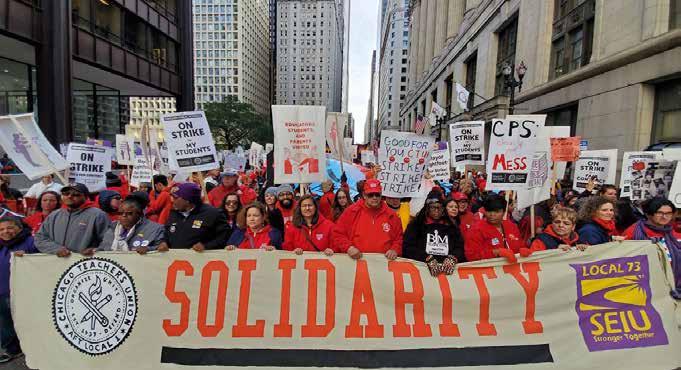
Twenty years ago, Chicago was in the process of one of the greatest — and most misguided — experiments ever attempted to reform public education in America. It was an effort to completely reshape city schools in the image of the market by emphasizing school-to-school competition, merit-based pay, and a disastrous game of survival of the fittest by closing schools that didn’t test well or meet certain criteria set by the business class. If successful, it would have reshaped Chicago in what would later become the new normal in New Orleans, where the city swapped its public schools for charters after reformers took hold following Hurricane Katrina in 2005.
Chicago mayors have since closed, reconstituted and turned-around (when all staff were fired and rehired) over 200 schools, almost exclusively in the city’s Black communities. This created incalculable harm by exacerbating violence and displacement, greatly undermining confidence in one of our most treasured public institutions. It was over the same period that Chicago Public Schools opened 193 privatized charter, military and contract schools.
In May 2008, as all of this reform was getting underway, myself and Al Ramirez, an elementary school teacher and union delegate from Irma C. Ruiz Elementary School, invited 10 members of the Chicago Teachers Union (CTU) into a spartan room inside the United Electrical Workers union hall, on the Near West Side of Chicago, to consider the state of our union. Many of those present were elected delegates at their schools like Stacy Davis Gates at Roberto Clemente Community Academy, Kenzo Shibata at Lake View High School, Jesse Sharkey, Wendy Boatman and Brian Roa at Senn High School, Jennifer Johnson at Lincoln Park High School, Jose Frausto at Enrico Tonti Elementary School, Norine Gutekanst at Whittier Dual Language School, Jay Rehak from Whitney M. Young Magnet High School, and Kyle Westbrook from Walter Payton College Preparatory High School.
We were frustrated and fed up with the CTU leadership because they did not put up any significant opposition when Mayor Richard M. Daley unleashed the first round of school closings in 2004. For years, community organizations like the Kenwood Oakland
Community Organization (KOCO) had called out city officials for the educational apartheid that anchored their efforts to close schools. The first attempt in 2004 was a plan to close 20 of 22 schools in the heart of the city’s Black communities. Many of us had spent years working internally both within our schools and citywide to cajole and encourage union officers and staff to provide organizing support and resources for rank-and-file union members, alongside community allies, to wage a fight against these existential attacks on public education. Those efforts had fits and starts but ultimately failed to generate a significant shift in strategy from the CTU. According to Ramirez, a co-founder of what would become the Caucus of Rankand-File Educators (CORE), CTU leadership “was not asleep at the wheel, they were joyriding.” Jesse Sharkey, who would later go on to lead the CTU but was then a union delegate at Senn High School, noted at the time that “if we continue down this path, we won’t have a union for much longer.” CORE would go on to hold its first public event on June 7, 2008, which featured a keynote address by Jinny Sims, president of the British Columbia Teachers’ Federation, who shared how the BCTF had won an illegal strike focused on lowering class size in 2005.
A major reason for calling that first meeting was my experience as a union delegate at a predominantly Black school that was callously closed by the district. That school, Englewood High School, was abruptly phased out (allowing existing students to graduate but not accepting any new students) by Arne Duncan, who in 2005 was then CPS CEO. Largely on our own, we organized parents, students and community members to pack school board hearings, share our experiences, and oppose the closing which we knew would destabilize the school community. None of that changed the Chicago Board of Education’s ultimate decision, but the organizing and resistance built a network of educators, parents and community advocates willing to form a new and powerful coalition. That experience launched a 15 plus year collective project to resuscitate
the CTU and accelerate the resistance to years of chronic underfunding and the bipartisan effort to close so-called underperforming public schools in the city.
The closing of Englewood was part of a program called Renaissance 2010 (Ren2010), when some of the biggest and wealthiest companies in Chicago called for closing 60-70 schools and opening up some 100 nonunion charter and contract schools. Englewood, as one of the oldest Black majority schools in the system with a storied past and graduates like Gwendolyn Brooks and Lorraine Hansberry, was a grand prize. To justify the closing, the Civic Committee of the Commercial Club of Chicago, published “Left Behind: A Report of the Education Committee,” which said there were “too few excellent teachers” and demanded “Chicago should have at least 100 charter schools, located predominantly in inner-city neighborhoods that are served today by mostly failing public schools.”
When Duncan called for the closure of Englewood, the CTU vice president at the time, Ted Dallas, told us to “get your resumes ready.” After Duncan announced Ren2010, based almost verbatim on the Civic Committee’s report, and called Englewood “a culture of failure,” the union tried to counter with a better plan to fix failing schools and remove so-called “bad” teachers. To demonstrate that commitment, the CTU brought in the former president of the Toledo Federation of Teachers, Dal Lawrence, to tell the press that we should immediately terminate 10% of the teaching workforce. Lawrence asserted that the way to improve schools was to make tougher evaluation systems and police ourselves and terminate ineffective teachers. Marilyn Stewart, the CTU president at the time, nodded approvingly. We played the video of the CTU press conference during that May 2008 meeting at the UE hall as the 10activists gathered there shook their heads in disgust.
We knew then what we know now: If workers want to shape their destiny, we must organize inside the workplaces where we have the most influence and maximize our deep connections as teachers to a broader set of social forces. That was the day we committed to form
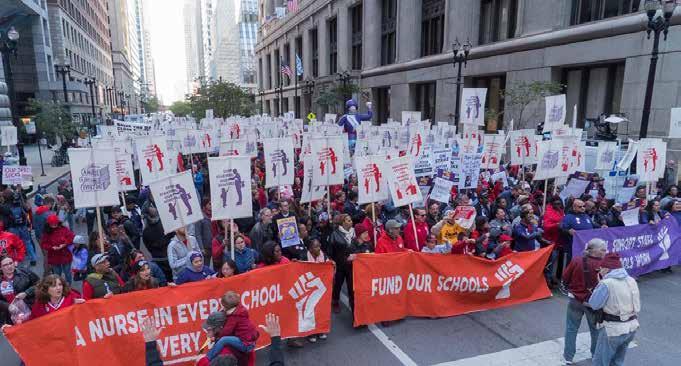
the Caucus of Rank-and-File Educators as a way to revive the CTU in the mold of a fighting and organizing union, the only thing that could meet the challenges of the moment and set us on a better path forward.
The day after CORE was formed, in order to maximize the number of organizations working to stop Ren2010, we assembled a new coalition called the Grassroots Education Movement (GEM) alongside a host of social movement organizations including KOCO, the Pilsen Alliance, Blocks Together, Action Now, Communities United, Teachers For Social Justice, Designs for Change, Logan Square Neighborhood Association, Brighton Park Neighborhood Council and Parents United for Responsible Education. We called community meetings, led book clubs based on Naomi Klein’s The Shock Doctrine: The Rise of Disaster Capitalism, conducted study groups (often attended by 40 people) on our contract, and developed a constitution for the caucus that stressed community partnerships, democracy, and growing rank-and-file power to defend public education.
We learned from experienced unionists in Los Angeles and British Columbia that we could fight and win against seemingly impossible odds. Based on their advice, we held public events that even CTU leadership was compelled to attend. In the winter of 2009, a CPS insider shared us on a secret list of more schools that
the district planned to close and enabled us to organize an event in the middle of a blizzard at Malcolm X College that 500 people attended. These residents came to speak out against the efforts to extinguish their school communities.
We also demonstrated a deep and sustained commitment to “Save our Schools” (a slogan used by GEM on banners and literature) by sleeping outside in the freezing cold to secure our place to speak out at Board of Education meetings and ensure that the public and media knew our story and could popularize a counter narrative of educator and community opposition. We sued the Chicago School Board in a pro-bono case with the Equal Employment Opportunity Commission for the racially disparate impact caused from firing a disproportionate number of Black educators at Black schools. We studied the school budget and testified at CPS budget hearings about the ways neighborhood schools were being starved while privatized and selective enrollment schools received more resources. In other words, we built a “union in the community” meeting by meeting and event after event.
These years of frenetic activity and careful planning set the stage for the CTU leadership election two years later in 2010, when legendary former CTU President Karen Lewis and our officer and executive board slate swept the incumbents out of power in a runoff election.
The results represented a sea change in the history of public education and the teacher union movement.
When Rahm Emanuel was elected mayor in 2011, the CTU’s newly elected leadership knew we would have to become strike ready and curtail his efforts to legislate away our right to strike. Emanuel led an effort that resulted in a bill that made it impossible to strike unless 75% of our existing members authorized it. He then attempted to lengthen the school day by 20% without commensurate pay or resources. This created an incentive to achieve maximum unity, a standard we easily surpassed. To add insult to injury, Emanuel attempted to eviscerate an agreement forged from 70 years of bargaining history by turning a 300-plus page contract into a 50-page document stripped of rights that educators had endured multiple strikes in the 1970s and ’80s to win. As a result, we cleared the hurdle with over 90% of members voting to authorize a strike. Emanuel continued to demonize us by claiming “Teachers got a raise, children got the shaft” in a front page article in the Chicago Sun-Times, all but ensuring that a strike would be necessary.
Today, the CTU’s 2012 strike is often referenced as the dawn of an approach to contract negotiations known as Bargaining for the Common Good (BCG). While we started with more traditional proposals for lower class sizes and increased staffing, we experimented with demands for progressive revenue, equitable use of the Tax Increment Financing program and a teacher home visit program modeled after the Saint Paul Federation of Educators. By 2015, we expanded those efforts and submitted proposals to pay $15 an hour to all school district employees, even those outside our own membership. The solidarity with the Fight for $15 campaign is one example of what Stephen Lerner, one of the founders of the BCG network and an architect of SEIU’s Justice for Janitors campaign, has argued is a necessary innovation in how unions must use their leverage to advance broader societal demands. Another example of this approach was the CTU’s demand for affordable housing for all
of Chicago’s 20,000 homeless students during our 2019 strike.
More and more unions are adopting BCG approaches as a result. In 2020, more than 4,000 janitors in Minneapolis in SEIU Local 26 led a strike that focused in large part on environmental justice demands.
“The Minneapolis janitors became the first U.S. union to go on strike for climate justice. … Local unions across the country have responded to the global pandemic by articulating demands that meet the needs of their members and the communities they live and work in,” according to a March 2020 article in The Forge by Todd E.Vachon, Gerry Hudson, Judith Le Blanc and Saket Soni. Los Angeles teachers recently settled an agreement that similarly ramps up environmental justice provisions in their new contract, following a tradition started in the education sector during the 2012 strike.”
That 2012 CTU strike encouraged teacher union locals across the nation, including those in red states without formal bargaining rights to fight back. The last decade represents the most successful organizing project that the labor movement has experienced in a generation. Community and union forces banded together and raised issues about inequitable funding, passed initiatives for progressive revenue that turned back decades of austerity that took the form of cuts to educational spending, and in some cases exposed educational apartheid in their advocacy and demands. The movement permanently disrupted the bipartisan neoliberal privatization agenda that produced record school closures, budget cuts, and the expansion of nonunion charter schools.
No fewer than 25 teacher strikes in the past 10 years were launched to roll back the ongoing attacks on public education. The strikes have injected hope and momentum into the labor movement. From Arizona to West Virginia to Minneapolis, teachers waged city-based and state-wide strikes that led to unprecedented victories in school investment, class sizes, staffing formulas, and common good demands after decades of underfunding, privatization, and demonization of
public school teachers and staff. As scholar Eric Blanc has noted, “a total of 425,000 workers struck in 2019, with a strong majority (270,000) again coming from the education sector And this number does not include the numerous examples of school districts such as Las Vegas, where unions organized credible strike threats but management avoided walkouts by granting major last-minute concessions.”
In many of these efforts, teachers won because they have run strong contract campaigns focused on what organizer and author Jane McAlevey has referred to as “structure tests,” such as trying to ramp up the number of members wearing red of Fridays, engaging in infor-mational pickets with parents, attending citywide rallies and events, all culminating in strike votes and strike action. Organizers engaged every member to take part in escalating actions that advancedaclearsetofpublicgood demands.
In 2018, numerous reports portrayed the West Virginia, Oklahoma, Arizona and Kentucky school walkouts as an extension of the new community orientation of the teacher union response to budget cuts and efforts to expand privatized school options. A renewed sense that collective action could turn the table on decades-long attacks against public education. Many activists see the CTU’s strike in 2012, and the formation of CORE in 2008, as initial flashpoints that set the course for these later actions. For example, Rebecca Garelli, a strike captain at Talcott Elementary School in 2012, went on to lead the Red for Ed statewide strike actions in Arizona years later as a science teacher. Additional evidence of CORE and CTU setting the stage was the proliferation of locals demanding a similar set of aspirational goals. Reports titled “The Schools Saint Paul Children Deser-ve” and “Schools LA Students Deserve” and “Schools Oakland Students Deserve” were all modeled after our 2012 report titled “The Schools Chicago’s Students De-serve.” Additionally, the strike created a wave of new rank-and-file teacher caucuses across the country like the Baltimore Movement of Rank-and-File Educators, the New York Movement of Rank-and-File
the Caucus of Working Educators in Philadelphia and a national network called the United Caucuses of Rank-and-File Educators (UCORE) coordinated by Labor Notes.
Most of the demands advanced by educators in red (Republican-governed) states like Kentucky, West Virginia, Oklahoma, North Carolina and Arizona went beyond the narrow con-fines of traditional bargaining and often included the needs of public school families and even other workers. Although formal collective bargaining is prohibited in West Virginia,teachersthererefusedtoendtheirstrikeuntil allofthestate’semployeesreceivedthesameraisethey had been promised. Additionally, Arizona teachers organized for a ballot initiative that would block tax cuts that had defunded their schools, while North Carolinateachers called for Medicaid expansion
In April 2023, a majority of Chicago voters opted to elect a new mayor, Brandon Johnson, an educator and CTU organizer who had been a key player in the fight against school closings and austerity. His election was a testament to the damage done by school closings and the rejection by voters of the neoliberal school agenda. For example, Emanuel’s popularity plummeted in the aftermath of his 50 school closings in 2013. As local school council co-chair of Harper High School, Clifford Fields, stated during the 2017 fight against the last round of school closings, “If these schools have to go, the mayor has to go.”
The last 20 years of education reform policy have focused on privatization and destabilization of public schools in Chicago and nationally — and Chicago hel-ped lead the way in the resistance to it. Now, with the election of a CTU member and middle school teacher as mayor of the nation’s third largest city, the Johnson administration can build on the work of CORE and the new CTU to bring forth a new era of investment and support for sustainable community school districts that foster equity over competition.
Happy 15th birthday CORE — we needed you then, we need you now — may the next 15 years bring similaradvances and victories.
Translation Ruth Leckie
In August of this year, we saw a genuine right-wing offensive against public education in Mexico, particularly against the distribution of the latest free textbooks (LTGs) for basic education (kindergarten, elementary and high school) as part of the New Mexican School model.
There were shocking scenes of book burnings, churches spoke out against distribution, governors of right-wing parties used their judicial power to prevent distribution in two northern states (Chihuahua and Coahuila) and leaders of right-wing political parties called for the removal of inclusive and sexual education
content. Television channels denounced the books as contaminated with the communist virus, inciting parents to reject the books.
The arguments put forward are the same that have been used in other regions and remind us of periods of heated political struggle promoted by ultra-right groups in countries such as Brazil, Argentina and the United States. They tell us that the new books and educational contents indoctrinate students, introduce the communist virus, attack the right of families to freedom of education, place the community, rather than the individual, at the center and are of inferior "quality".
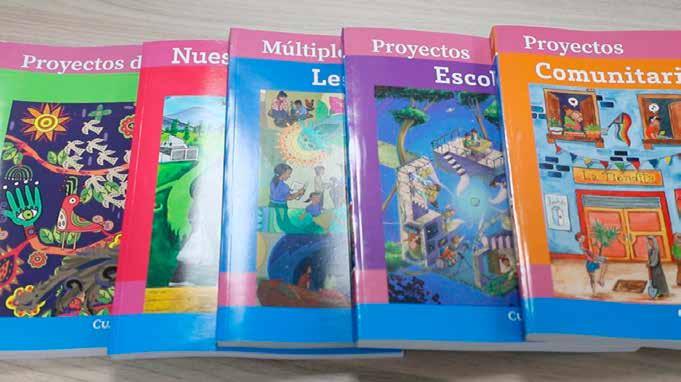
As in other countries, the current conservative crusade against LTGs in Mexico, driven by business, ultra-conservative and traditionalist sectors, is linked to a global censorship campaign against progressive content in education. This regressive political practice can be found, for example, in the Republican campaign against so-called critical race theory supported by Steve Bannon, or in the School Without a Party policy instigated by ultraconservative sectors in Brazil or in the proposals for market-based educational reform that are a fundamental pillar in the platform of presidential candidate Javier Milei in Argentina.
Although each of the main actors in this backlash maintain their own political-pedagogical projects, they have coincided in creating a de facto common front aimed at perpetuating systems of domination in education and in society.
Why this attack on public education? Education is an area of dispute in societies dominated by large financial groups because they need to impose their values in order to maintain their hegemony in the exercise of power. At the same time, workers and other democratic sectors
build elements of counter-hegemony which allow them to resist and articulate their own proposals.
The central motivation of these ultra-right-wing actors is based on: (a) preventing the introduction of new educational practices that include curricular content associated with the interests and needs of oppressed peoples and sectors (b) maintaining patterns of control over teaching work, historically associated in our countries with processes of social struggle (c) ensuring the influence of ultraconservative sectors in the design and implementation of educational policy; and (d) continuing the commercialization of the educational sector.
In the case of Mexico, these groups have chosen to deploy their reactionary policy in different areas: judicial warfare (educational lawfare); a vicious smear campaign against the new educational materials; social mobilization, initiated mainly by religious organizations, and the actions of local governments to veto the LTGs, given their "dangerous" contents.
The attack in Mexico is even more serious because it violates the constitution which, since the Mexican
Revolution, has enshrined the social right to free, public, secular, and compulsory education, and also because Mexican society has gradually transited a path of social secularization derived in part from the global cultural industry and the deployment of a popular rhetoric of secular social justice. However, these reactionaries have demonstrated the capacity to resonate with some social sectors still closely linked to non-secular perspectives of social organization, as well as with political ideologies that openly reject the fight against inequalities and the search for social justice and the common good.
While we recognize that the current government’s educational policy has not yet represented a fundamental break with neoliberalism in education, we also recognize that some of the ideas proposed in the new curricular framework (NMC) and the LTGs point towards a different educational future that places the community at the center. These are educational programs that have been worked on for years, mainly by democratic teachers and a significant number of educational communities throughout the country.
To give you an idea of what this achievement represents, official data reveals that from 1960 to 2022 7 billion free textbooks have been distributed to preschool, elementary and high school students. In the current school year, 24,930,801 students in public and private basic education schools will receive at least 5 books each. This school enrollment is almost ten times the population of the city of Chicago, four million more than that of New York and half the inhabitants of Argentina.
We defend secular, public education and free textbooks as what they are: great historical triumphs of the Mexican people and of the great struggles of teachers, students, and social organizations throughout the 20th century. We also join with the education workers of the continent in the struggle against the offensives of the right and the ultra-right which seek to strip us of rights won, and impose their racist, exclusionary values and their discourse of hate.
They shall not pass!
The future is one of freedom and social justice.
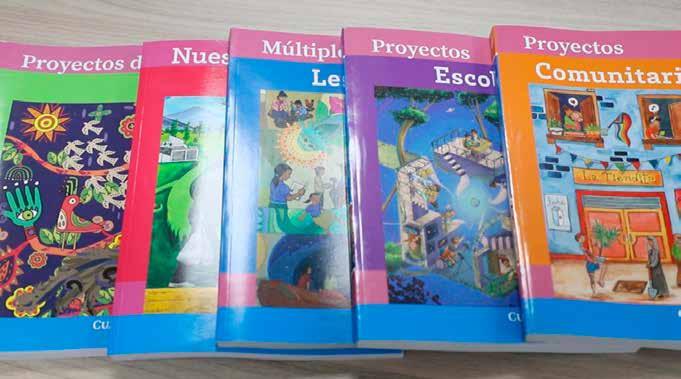
Watch forINTERCAMBIO MAGAZINE Nº 22
Public Education Policy and New Privatization Trends in Today's World
Watch forINTERCAMBIO MAGAZINE Nº22
Public education around the world has undergone importanttransformations in recent years. The Covid 19 pandemic servedas a catalyst forthe deployment of education policies meantto respondto emerging problemsandmodify education practicesto a significant extent.
Public Education Policy and New Privatization Trends in Today's World
States have defined newpoliciesineducation,and education workers’,student and social organizations have engaged inactions either for,or in resistance to,these policies. Meanwhile, the private sector has become moreactive in influencingeducation policy,especially to expand its own enterprises in this sector.
Public education around the world has undergone important transformations in recent years. The Covid 19 pandemic served as a catalyst for the deployment of education policies meant to respond to emerging problems and modify education practices to a significant extent.
Public education around the world has undergone importanttransformations in recent years. The Covid 19 pandemic servedas a catalyst forthe deployment of education policies meantto respondto emerging problemsandmodify education practicesto a significant extent.
Since the onset of the Covid 19 pandemic,governments haverestructurededucation systems, and approved new regulatory frameworks.This reconfigures theroles of the State andthe private sector in education,and teaching work has been affected by new working conditions andthe expansion of technologies intheteaching and learning process.
States have defined newpoliciesineducation,and education workers’,student and social organizations have engaged inactions either for,or in resistance to,these policies. Meanwhile, the private sector has become moreactive in influencingeducation policy,especially to expand its own enterprises in this sector.
States have defined new policies in education, and education workers’, student and social organizations have engaged in actions either for, or in resistance to, these policies. Meanwhile, the private sector has become more active in influencing education policy, especially to expand its own enterprises in this sector.
Issue#22 of IntercambioMagazine willanalyze these processes in different countries of the Americas and illustrate the state of education policies and privatization in recent times.The upcoming issue will focus on thefollowing themes:
Since the onset of the Covid 19 pandemic, governments have restructured education systems, and approved new regulatory frameworks. This reconfigures the roles of the State and the private sector in education, and teaching work has been affected by new working conditions and the expansion of technologies in the teaching and learning process.
• Education policyintroduced by governments since the onset of the Covid 19 pandemic.
Since the onset of the Covid 19 pandemic,governments haverestructurededucation systems, and approved new regulatory frameworks.This reconfigures theroles of the State andthe private sector in education,and teaching work has been affected by new working conditions andthe expansion of technologies intheteaching and learning process.
• The responses of education workers,student and social organizations to these policies.
Issue #22 of Intercambio Magazine will analyze these processes in different countries of the Americas and illustrate the state of education policies and privatization in recent times. The upcoming issue will focus on the following themes:
• Various forms of privatization in the educational field.
Issue#22 of IntercambioMagazine willanalyze these processes in different countries of the Americas and illustrate the state of education policies and privatization in recent times.The upcoming issue will focus on thefollowing themes:
• Education policy introduced by governments since the onset of the Covid 19 pandemic.
• Education policyintroduced by governments since the onset of the Covid 19 pandemic.
• The responses of education workers, student and social organizations to these policies.
Intercambio Magazine’s issueon PublicEducation Policy and New Privatization Trendsin Today's Worldcomes out in late February2024. Look for itonline at revistaintercambio.org
• The responses of education workers,student and social organizations to these policies.
• Various forms of privatization in the educational field.
• Various forms of privatization in the educational field.
Intercambio Magazine’s issue on Public Education Policy and New Privatization Trends in Today's World comes out in March 2024. Look for it online at revistaintercambio.org
Intercambio Magazine’s issueon PublicEducation Policy and New Privatization Trendsin Today's Worldcomes out in late February2024. Look for itonline at revistaintercambio.org
Revistaintercambio.org
What is IDEA?
The Initiative for Democratic Education in the Americas (IDEA) is a flexible network that brings together organizations in the Americas that share a commitment to protecting and improving public education, seen as essential to democratic development and the protection of human rights. The Network works with other civil society organizations concerned about the impact on social rights of “free” trade agreements and other transnational neoliberal policies. The idea for a hemispheric network emerged from a meeting of teachers and students in Mexico City in November 1998. IDEA’s structure was broadened and formalized at the Initiative for Democratic Education in the Americas Conference held in October 1999 in Quito, Ecuador.
What does IDEA do?
The IDEA network carries out research, establishes communication networks, publishes documents and organizes conferences and seminars related to neoliberalism, trade agreements and the defense and democratic transformation of public education. It also organizes campaigns to defend public education and the defenders of public education. The objective of these activities is to lay the groundwork for an understanding of the impact of neoliberal policies on education in the Americas and to develop alternatives to ensure inclusive, democratic and quality public education.
The objective of these activities is to lay the groundwork for an understanding of the impact of neoliberal policies on education in the Americas and to develop alternatives to ensure inclusive, democratic and quality public education.

www.revistaintercambio.org
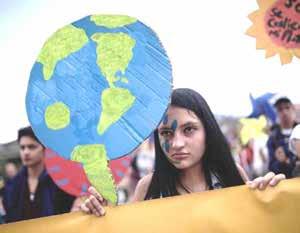
The work of IDEA is directed by a Hemispheric Coordinating Committee made up of representatives of the following organizations:
•National Union of Educators (UNE/Ecuador)
• Confederation of Education Workers of the Argentine Republic (CTERA)
•Federation of Central American Teachers’ Organizations (FOMCA)
•National Confederation of Education Workers (CNTE/Brazil)
•British Columbia Teachers’ Federation (BCTF/Canada)
•Latin American and Caribbean Students’ Organization (OCLAE)
• Trinational Coalition in Defense of Public Education, Mexican Section
Contact www.red-sepa.net idea-redsepa@resist.ca