Fortunato Morales Pastelín, Benigno Pioquinto García (Mexico)
Responding to the socio-environmental devastation of the Atoyac-Zahuapan Basin: a popular school for lifelong learning
Adriana Martínez Rodríguez (Mexico)
Through hell and high water: The climate crisis comes to Merrit, Canada-and its schools
Nick Kazanosk (Canada)
ARCAH y la educación popular. El reconocimiento del territorio, su historia y la mirada a futuro en comunidad.
Cristopher Castillo (Honduras)
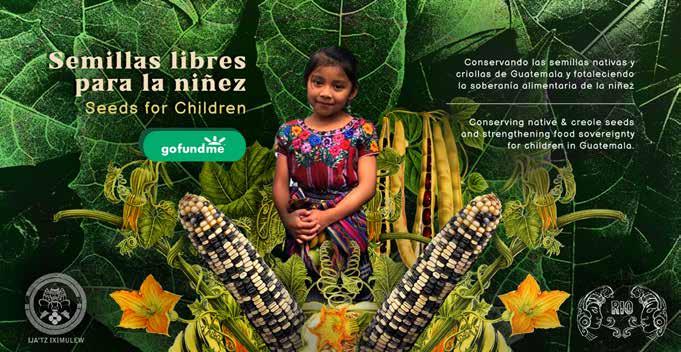
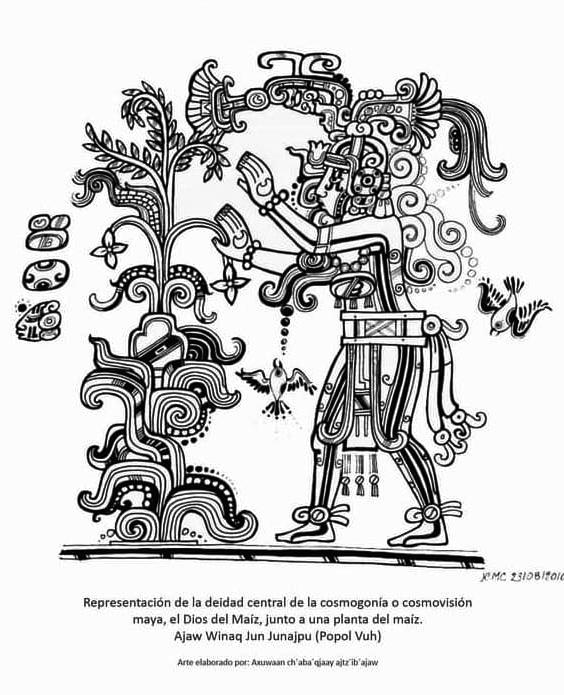
IMAGINED SEEDS: Memory and Tomorrow
Ana Laura Rojas Padgett (Guatemala)
Review:
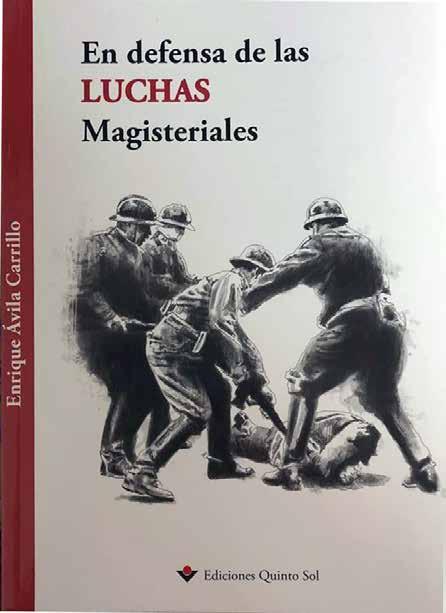
Author explores impact of teachers' struggles
Juán Álvarez Gaytán (México)
Editorial Committee
María Trejos (Costa Rica)
María de la Luz Arriaga (Mexico)
Andrée Gacoin (Canada)
Edgar Isch (Ecuador)
Larry Kuehn (Canada)
Miguel Duhalde (Argentina)
Sara Unda (Mexico)
John Ávila (Colombia)
Roberto Leher (Brazil)
Mauro Jarquin (Mexico)
Editorial director: Steve Stewart
Editor: María de Jesús Ramos Casiano
Design and training: Tomás Licea
English edition: Ruth Leckie
To learn more about the IDEA Network and to read previous issues of Intercambio, visit: www.idea-network.ca www.revistaintercambio.org
Follow us on Facebook: Idea Network- Red SEPA IDEA Network contact: IDEA-redsepa@outlook.com
Síguenos en el Facebook: Idea Network- Red SEPA
Contacto IDEA Network:
We wish to thank:
• Steve Stewart and Edgar Isch, for coordinating this issue of Intercambio.
• British Columbia Teacher’s Federation (BCTF) for their support in publishing of Intercambio.
Intercambio is a the publication of the Initiative for Democratic Education in the Americas (IDEA), a hemispheric alliance of social and labour organizations that work to defend and enhance public education.
INTRODUCCTION
The crises of climate change and ecological collapse present dual challenges for public schools throughout the Americas. As institutions working with children and youth from all sectors of society including the most vulnerable, public schools must adapt to address the direct impacts of these crises on the school community. These can range from mental health issues generated by climate anxiety, ecological grief, depression, and outright terror at the enormity of the crises, to physical threats such as displacement, forced migration, deadly heat waves, malnutrition, lack of potable water and poor air quality from wildfires.
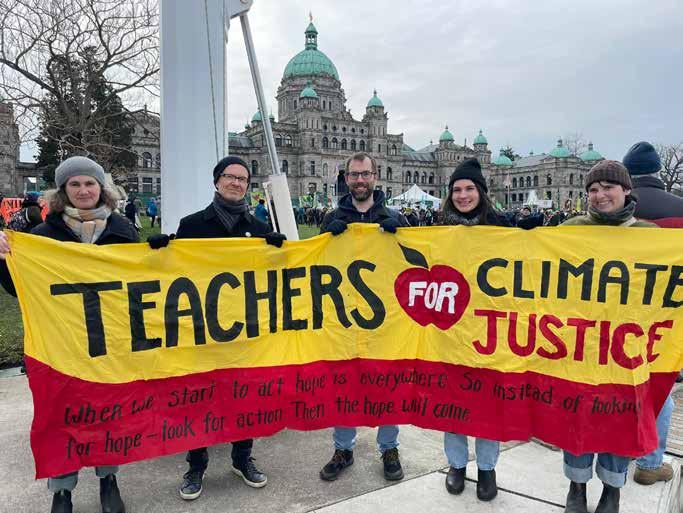
But, as the primary public institution for social reproduction, public schools must also equip new generations with the skills and analytical tools they need to address the crises that threaten them. Nurturing technical skills for constructing a new zero carbon economy are an important part of this, but alone they are not enough. Students must develop the analytical thinking needed to assess and recognize the roots of the ecological and climate crises, and the organizing skills and hope that enable them to mobilize collectively to demand changes that address the roots and the symptoms of the crisis.
This issue of Intercambio Magazine explores the public education we need to build an active citizenry with thinking and skills that empower them to address the crises. It outlines obstacles that must be overcome to make these changes in public education, and explores some concrete examples in different parts of the Americas where community and schools come together to defend the earth.
Ecuadoran environmental professor Angela Zambrano begins by exploring the kind of public school needed to address the ecological crisis. She outlines the characteristics of an educational paradigm that implies responsible attitudes and aptitudes with nature, which go beyond romanticism about protecting the environment through volunteer work. Zambrano proposes an eco-pedagogy that teaches, through critical thinking, the fundamental relationship between nature and human beings within it.
In a similar direction we find the article by Brazilian theorist and labour activist Roberto Leher, who argues that the rupture between nature and society is derived from the contradictions of capitalism. Leher discusses challenges of ecological education in a national context in which climate change and the environment issues have been recast by the resurgent populist far-right as part of the “culture war.” In Brazil and other countries of the Americas the populist right’s influence in public education must be overcome to fully address ecological crises through a collective struggle for the preservation of life on the planet.
On climate change’s physical impact on school communities, we find a concrete experience in the students and teachers of the city of Merritt in the western Canadian province of British Columbia, whose homes and public schools were inundated when unprecedented flooding swept through large areas of the province. High school teacher Nick Kazanoski, author of this chronicle, also describes a less visible aspect that affected students following the floods - climate anxiety in young people who see their future threatened.
Coinciding with this concern and analyzing it from a broader perspective, Canadian health science professors Gina Martin and Kiffer Card describe the effects of climate change on student’s mental health. They consider the repercussions the new reality has on children and youth and call for concrete action to address them that should be available to all educational institutions. It should be noted that in public education the means to address students’ mental health are often very limited and are inadequate in the face of increased manifestations of climate anxiety and ecological grief within school communities.
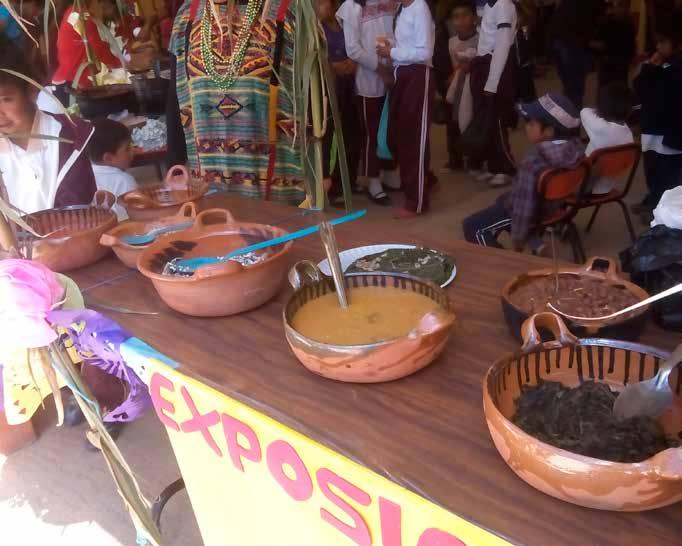
Indigenous education, in the revitalization of traditional knowledge, offers a richness of experience to students that can all help address the environmental crisis. In the face of challenges generated by the tensions between ago-industry and traditional indigenous agriculture, Mazatec teachers Fortunato Morales P. and Benigno Pioquinto García analyze "The relationship between traditional Mazatec foods and Indigenous Schools" in Oaxaca, Mexico. Responding to specific ecological problems through an education imbued with interculturality and environmental commitment demonstrates the strengths of a versatile public education that adapts teaching and curricula to the needs and cosmovision of the communities it serves.
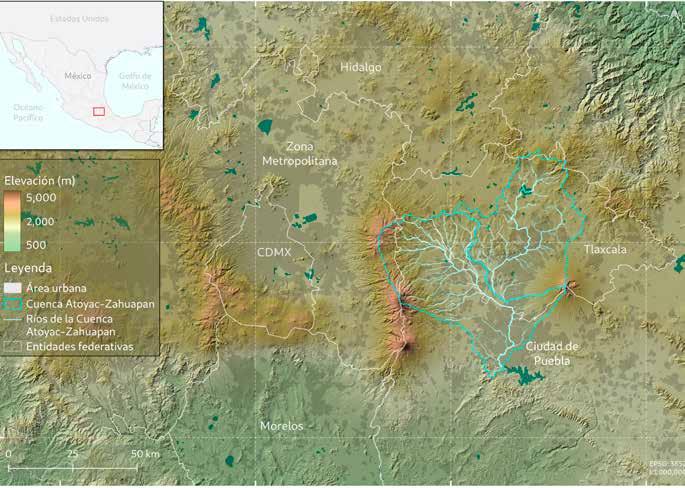
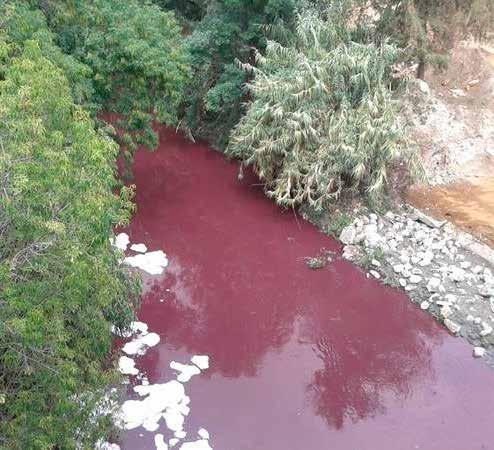
Among other concrete experiences, we have the contribution of Adriana Martínez Rodríguez who describes a community school of ongoing training in the face of the socio-environmental devastation of the Atoyac – Zahuapan Basin in Mexico. The school was created with the aim of strengthening the community social subject to confront the pollution of the basin and those responsible. It disrupts the idea of schools being only for children and adolescents, to incorporate the community and the territory as a whole.
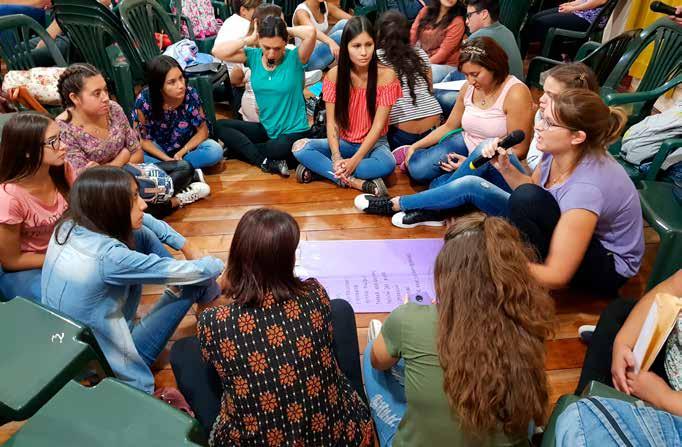
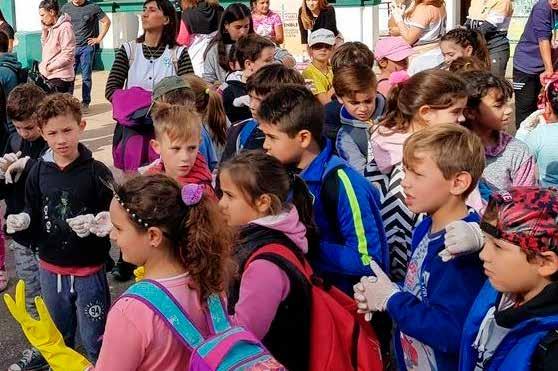
"The Argentine Free Courses on Food Sovereignty and the Peoples’ Right to Food", comes to us from teacher-researchers Graciela Mandolini, Melina Vanesa Gay and Claudia Nigro. They present the experiences of the Free Courses of Food Sovereignty, a program jointly operated by the Agro-technical college "Libertador General San Martín" in Santa Fé, Argentina and the Faculty of Veterinary Sciences of the National University of Rosario. The program connects research on food sovereignty with public elementary schools, farmers markets, and popular organizations, leading to the construction of an educational community and social action with an important impact.
From Guatemala, community organizer Ana Laura Rojas explains the experience of Native Seed Recovery through School Gardens. It is another example of how traditional knowledge in combination with action in public schools can help address the challenges that capitalism’s rupture with nature on a global scale presents to communities and how, from the local level, alternatives can be found.
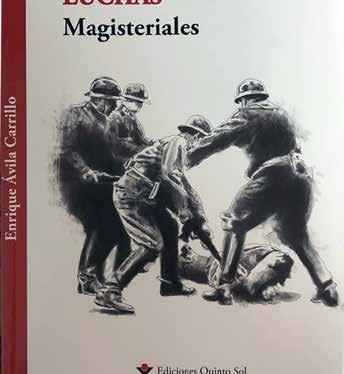
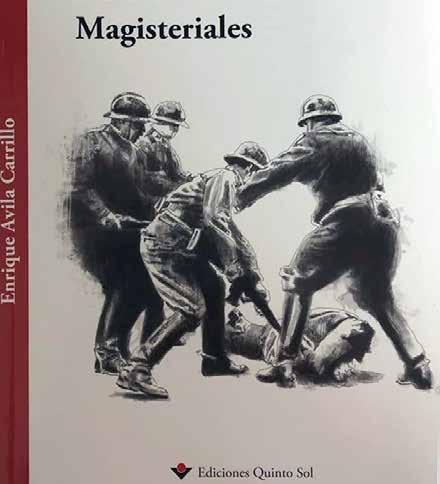
Finally, in our literary section, we present the Juan Fernando Álvarez Gaytán’s review of the recently published "In defense of teachers' struggles" by Enríque Álvarez Carrillo. Alvarez Gaytan describes Álvarez Carrillo’s critique of attempts by mainstream media to discredit the Mexico’s influential independent teachers' movement, which has often served as an important referent for struggles to defend public education and teaching-learning conditions throughout the Americas.
We trust that this set of articles will be welcomed by the readers of Intercambio Magazine and that it demonstrates the importance of dreams and the necessity of transforming them into reality from, by and for public education. The right to education is deeply linked to other human rights and those of nature, and we must defend them if humanity and other living things are to have a future.
What kind of public school do we need to confront the ecological crisis? Public schools and environmental responsibility
Ángela Zambrano Carranza*
Summary
In the context of the ecological crisis manifesting itself through climate change, loss of biodiversity and a lack of water that is safe for human consumption - all caused by the dynamics of capitalist economic growth and development that separate nature and humanity - what type of public school is needed to confront the ecological crisis? We need to create a new educational paradigm that involves attitudes and aptitudes that are responsible for and sensitive to nature and that go beyond romantic ideas of saving the environment through volunteering. In other words, it is necessary to develop an eco-pedagogy that teaches, through critical thinking, the fundamental relationship between nature and human beings.
* Central University of Ecuador. E-mail: ecoangela@yahoo.com
Introduction
In recent decades the global environmental crisis has reached alarming and unprecedented levels, already placing us on the verge of the sixth mass extinction of life on this planet. The causes are mainly human activity and development models which assume no commitment to environmental responsibility despite the unsustainable use of natural resources and the abrupt changes caused to the Earth’s natural systems. In this context, it is urgent for the educational community to come up with new ideas and actions which contribute to preventing ecological collapse from the perspective of joint responsibility and environmental justice. Public schools have a fundamental role in this scenario. They must shape individuals who are responsible for their surroundings, critical of decisions taken by those who govern them and proactive in practices of responsible
consumption. It is incumbent on all actors to train themselves in environmental citizenship, everyday science, political ecology and critical and emerging epistemology in order to contain the ecological crisis. The traditional educational system cannot provide these tools; therefore, it is a matter of finding new avenues for analysis and critical reflection by conscious and responsible educational communities. From within the field of education, we seek to break down ideas of hegemonic and economic development, looking for alternative ways to emerge from the various manifestations of the crisis, among them the environmental crisis.
The ecological crisis in our time
In 1869 the German biologist Ernst Haeckel coined the term “ecology,” defining it as the study of interdependence and interaction between live organisms and their surroundings. Today this science embraces not only the natural world but also culture and society, which has led ecologists to conceive it as a joining of sciences acting in an interdisciplinary manner and concerned with the study of human actions with and within the environment.
The harmonious relationship which must exist between the elements of the ecosystems and the planet’s capacity to self-regulate has been seriously disturbed, to such an extent that we are speaking of a genuine ecological crisis which puts life on this planet at risk. For Crevarok (2006, p. 238) “the frontier between the human and natural worlds is production, that is to say, the conscious transformation of nature for human ends.” This production entails an irrational consumption of natural resources and services which prevent the fulfilment of ecological processes, in turn provoking the degradation of nature. It is undeniable that the ecological crisis has capitalism as one of its central causes and as its growth is sustained, the crisis also grows, putting all forms of life at risk of extinction. The massive sixth extinction is driven by humans and has already been initiated by the metabolic rupture between society and nature which the capitalist system has provoked.
To preserve the future of the planet’s species and achieve equity in access to and benefits of natural goods, without compromising that capacity for future generations, requires that capitalism be defeated and replaced by a society that thinks and acts in an ecological manner. This means also eliminating the persistence of private property and hoarding of resources in a few hands. It is the responsibility of government authorities and world leaders to opt for models of sustainable production. Transnational businesses must also commit themselves to the application of eco-friendly and socially responsible systems.
We agree with Crespo, J. et al (2018, p. 12) when they point out that “there is currently an over-determination of the social over the natural … the great human metropolis needs to satisfy its needs created and recreated by consumption and break the harmony that exists between open spaces and habitable spaces.” We certainly do not need everything that industries and businesses produce. They create artificial needs, which entail an exacerbated exploitation of resources, generalized contamination of the environment and magnification of environmental problems. “To understand capitalism, it is crucial to understand it as a framework of relations and not as the sum of elements which come together by accident” (Crespo, J. et al, 2018).
As is evident, the ecological crisis constitutes one of the effects of capitalism, with symptoms such as climate change, loss of biodiversity, scarcity of fresh and secure water for human consumption, the transformation of fragile ecosystems into degraded spaces and the acidification of oceans, among others. Hence, the urgent need to change behavioral patterns and to take up the defiant stance of transforming extractivist behaviors through values and actions that are environmentally friendly.
The technological revolution has accelerated globalization, which in the social realm has provoked profound gaps and inequalities between nations and peoples. In the same way, capitalist production predominates at the cost of the planet’s limited resources and the appropriation of the work force.
Education and environmental training
Without forgetting that responsibilities are differentiated, without a doubt all inhabitants of the planet have a role in caring for our enormous house, the planet on which we live. Some of the solutions have to do with our way of thinking, valuing, and acting in our surroundings. We require a new way of seeing the world, of understanding it and of valuing it--a paradigm shift in order to live on a planet finite in natural resources.
Traditionally we have spoken of the need to develop strategies for environmental education (EE). Molina, J (2019) concludes in his article that:
“In the investigations presented, the difficulty of promoting a genuine environmental consciousness through EE is evident, and this is due to the weak notion regarding this theme that still prevails on the part of practicing teachers, who maintain a traditional, decontextualized, anthropocentric conception (p. 107).”
This conclusion is convincing, and one must not lose sight of it when considering environmental edu-
cational proposals. A mixture of voluntarism and romanticism prevails, with supplementary activities that try to show that the school is concerned with the state of the environment.
What’s needed is a new paradigm with a different educational process, which means adopting responsible attitudes and aptitudes about nature with a focus on joint social and planetary responsibility. Schools have the responsibility of promoting an environmental sensibility leading to an ecological consciousness and of developing an eco-pedagogy for teaching and learning which is critical of the relations that human beings establish with our natural environment.
It is necessary to emphasize that not all educational systems have assumed or will assume this responsibility. In some educational systems there persists—in the words of Paulo Friere—a banking model of education; others, by contrast, promote greater extraction and the beneficial use of natural resources, in which nature constitutes a deposit of resources to be exploited in the name of development and for the benefit of a few sectors.
PHOTO: "ENVIRONMENTAL EDUCATION IN PUBLIC SCHOOLS". SEMARNAT
Public education must opt for eco-pedagogy, which promotes care for life in all its manifestations and searches for the best conditions—with justice and equity— for all the present and future inhabitants of the planet. A pedagogy which seeks profound changes in social, economic, cultural and environmental structures, in which human beings stop being the centre of the world and start to value in an integral way everything that surrounds them – to value our great house.
We must ask ourselves then: what kind of public school do we need to confront the ecological crisis? How do we rebuild the public school? The answers can be many, but first we require individual and collective decisions to act. We speak of rebuilding because public schools need to re-evaluate, recreate and re-think themselves and to recover from so much manipulation and abandonment. We need schools that recover and live out the principles of equality, justice and co-existence in diversity. Defending the public sphere implies a profound awareness of collectivity and the free exercise of rights.
From this perspective, the public school must commit itself to the development of an eco-pedagogy with a curriculum different from the traditional one. A curriculum in which ethical principles of protecting life are given priority and which trains and educates for a
sustainable present and future. A curriculum which brings a contra-hegemonic educational approach that is sensitive and responsible to the environment.
Strategies of intervention must involve all aspects of education; that is, curriculum development, teacher training and the application of methodical strategies for situated learning. One point of departure would be to interpret the immediate environment, with both a local and global perspective, to then propose alternative responses of prevention and solution in the face of the environmental crisis.
Because of this, the educational stakes go beyond preserving natural resources. It is essential that we search for a balance between the social and the environmental which can shape human existence in harmonious relation with other living organisms and the environments in which they develop. Let us remember that many cultures see elements of nature as living, such as the soil, water, mountains or species which have constituted genuine deities in various cosmovisions.
We do not propose a divorce between the technological and humanistic spheres. On the contrary, it is necessary to reflect on the limits entailed by an economic model which imposes unsustainable lifestyles, provokes
PHOTO: LA REGIÓN, NEWSPAPER OF THE JUDICIAL DISTRICT OF LORETO
artificially created needs and irrational consumerism and which carries out the super-exploitation of resources and general environmental contamination. Education to protect the environment, together with critical pedagogy, must question the order of things, the system which threatens life.
Curricular contents and objectives must contextualize the reality of the area where members of the educational community live and recognize the territory as the dynamic space where life, with all its interactions, is developed and adapted to current problems with a vision for preventing others. Embracing one of the approaches of the UN Decade of Education for Sustainable Development, it is a matter of teaching-learning to transform and transform ourselves intentionally and continually.
Teacher training will be oriented toward solid training in environmental material and an understanding of ecosystems, with innovative methodologies which help to interpret and value the environment. This will further sensitivity and environmental consciousness in the educational community as well as develop skills to act responsibly in daily life.
In summary, public schools must develop an eco-pedagogy, in which the centre of attention is life, the
Earth, our home. They must promote an education which understands that ecological processes sustain life on the planet and that social processes can affect them in an irremediable manner. It is a matter of urgently promoting a mode of environmental citizen education.
References
Crevarok, C. (2006). Capitalism and the “ecological crisis”. Marxist approaches. Revista “Luchas de Clases”. No. 6. pp. 235-246. Argentina. https://www.ips.org.ar/ wp-content/uploads/2011/03/El-capitalismo-y-la-crisis-ecol%C3%B3gica.pdf
Crespo, J. et al. (2018). Ecomarxism: Myth or reality in the open society. Revista Espacios. Vol. 39 (Nº 09). p. 12. https://www.revistaespacios.com/a18v39n09/ a18v39n09p12.pdf
Llorente, M.A. (2017). What is the public school? Colección: Recursos educativos. Serie: El diario de la Educación. Ediciones Octaedro. Barcelona.
Molina, J.T. (Enero-Junio de 2019). Defining environmental education in the face of the ecological crisis. Revista Gestión y Desarrollo Libre, 4(7), (97-111). https://revistas.unilibre.edu.co/index.php/gestion_libre/ article/view/8134/7277
Public education, socio-environmental crises and challenges in the culture wars
Sumary:
The article argues that the serious socio-environmental crisis expresses a metabolic rupture between nature and society arising from the contradictions of capitalism. It discusses educational challenges in a context in which the far-right has inserted climate and environmental issues into the culture wars. It highlights denialism in Brazil as an agenda of the Bolsonaro government (2019-2022) and of the far-right, directed at education, culture, science and socio-environmental problems. It outlines lines of action so that the educational field can contribute to the reversal of environmental crises and catastrophes through a collective struggle for the preservation of life on the planet.
Keywords: Culture war, public education, metabolic rupture, climate change. Basic and post-secondary public education are being challenged on an unprecedented scale by the successive socio-environmental catastrophes that highlight a serious metabolic rupture between humanity and nature (Foster, 2020; Saito, 2021). The contradictions of the accumulation of capital are generating ecological crises and catastrophes that affect the entire planet and especially the Earth’s critical zone, the area identified as the one with the greatest impact on global climate change1.
* Roberto Leher, Full Professor, PhD, in the Faculty of Education and of the Postgraduate Program in Education of the Federal University of Rio de Janeiro (UFRJ). CNPq Researcher and Scientist of FAPERJ. He works in the Collective of Studies in Marxism and Education - COLEMARX. Roberto is a collaborator with the Florestan Fernandes National School, and former Rector of the UFRJ (July 2015 to July 2019) Orcid: http://orcid.org/00000002- 5063-8753. Email: leher.roberto@gmail.com; robertoleher@fe.ufrj.br.
Roberto Leher*
Powerful ideological and economic obstacles impede efforts to prevent the acceleration of catastrophes. Climate deniers attack researchers and their institutions, claiming conspiracy theories and accusing them of acting in a politicized way to the detriment of the “real” scientific evidence that, against all scientific studies, exempts human factors from any responsibility for climate change2. The main target of the deniers is the Intergovernmental Panel on Climate Change (IPCC), created to consolidate the results of scientific studies published in the most important international journals, interpret them and issue assessments on the climate health of the Earth.
In Brazil, former President Jair Bolsonaro (20192022) was an exponent of scientific denialism in the service of predatory economic interests. He encouraged mining companies, cattle ranchers and soy producers to deforest the Amazon region, including indigenous territories, resulting in a true policy of genocide –deaths from malnutrition, Covid-19 and executions of indigenous leaders and defenders by professional killers. Peoples like the Yanomamis are under severe threats that endanger their survival. To camouflage the denunciations made by human rights defenders, Bolsonaro undertook a fierce crusade against universities and public scientific research institutes and he discredited environmental protection agencies and indigenous peoples defense agencies (Leher, 2021). Under his government, research as well as teaching and learning on environmental issues came to constitute the core theater of operations of the culture wars (Alexander, 2018).
1. Berwyn, B. (2023, January 18). One of the world’s coldest places is now the warmest it’s been in 1,000 years, scientists say. Inside Climate News. Retrieved from https://insideclimatenews. org/news/18012023/greenland-ice-sheet-global-warming/?utm_ source=InsideClimate%2BNews&utm_campaign=b8dbae5dd0-EMAIL_CAMPAIGN_2023_01_21_05_00&utm_medium=email&utm_term=0_29c928ffb5-b8dbae5dd0-330155310
2. MOLION, L. C. (2019, March 9). Por uma agenda climática baseada em evidências e nos interesses reais da sociedade. Carta aberta ao ministro do Meio Ambiente, Ricardo de Aquino Salles. Notícias Agrícolas. Retrieved from https://www.no-
Socio-environmental problems and culture war: education under pressure
To face the socio-environmental crisis that threatens life on Earth, profound changes in educational systems will be necessary. These changes are a nightmare for the far-right, for predatory economic sectors, for financial operators and for austerity advocates. Interest groups, extremist factions, religious groups and far-right think tanks have captured the political potential of socio-environmental issues and inserted the issue into the theater of operations of the culture wars. To dispel their nightmares, they spread mistrust in science, public education, teachers and scientists, as well as in socio-environmental movements.
The production of this mistrust is part of the strategy of powerful private hegemonic apparatuses that have been waging a cultural war against the liberating and emancipatory values of the Enlightenment. Think tanks, like the Heritage Foundation and Heartland Institute, have built international networks among corporate interests, conservative-leaning media outlets and pseudoscientists to convey to the public the false idea that there are “two sides” to the climate change debate. Through complex “platforms, algorithms, and contents”, social media takes on an active role to recinforce the beliefs and opinions that nourish denialism.
Censorship of books, curricular changes and the banning of topics such as critical race theory make up the daily life of many countries. The epicenter of this irrationalist onslaught is located in the far-right in the United States which then radiates to several countries. In Brazil, the Bolsonaro government spread the School Without Parties agenda that rewrote the curricular contents based on denialism while religious fundamentalists propagated the so-called morality agenda (such as gender ideology). The core of this narrative says that science and education are under the influence
of cultural Marxism and of values that are hostile to Western, Christian civilization. Climatism (a derogatory way of refering to environmental studies) would be an expression of this.
Educators who defend the environmental agenda are also under strong pressure. The far-right works to ban academic freedom, the academic authority of teachers, democratic public schools, libraries, universities and collective movements that defend el buen vivir, or the good way of living. Moreover, educators live under the stress of responding to the challenges of this historic moment. Due to the magnitude, urgency and hardships of the challenges faced with the aforementioned metabolic rupture that threatens the survival of humanity, profound and complex changes need to happen in education and currrently no favorable correlation of forces exists to achieve this. In terms of social struggles, it will be necessary to organize and raise the consciousness of the working class in all its expressions and beyond national borders as advocated by the Initiative for Democratic Education in the Americas (IDEA Netowrk). This is not a dispute that can be resolved on the basis of the best arguments, even if these are crucial.
There are powerful and organized bourgeois factions that act to move this topic to the technical realm as if, with better technologies, everything could return to the new normal. It is true that new technologies can correct environmental problems, but that will not correct metabolic ruptures. Such beliefs, despite their proclaimed good intentions, obscure the causes of metabolic ruptures in order to delay structural changes to the production and circulation of capital. The debate on the Green New Deal, outlined by Naomi Klein (2020), allows us to highlight part of this problem.
Anti-systemic educational agendas
Only knowledge produced and circulated in educational and science and technology institutions will be able to make socio-environmental problems thinkable through new epistemological perspectives that enable other prisms for investigation, understanding and subjective
internalization of the meaning of these metabolic ruptures for the future of life on the planet. In place of the sterile utilitarian competencies defended by business entities that dispute the social function of public education, debates on curriculum will have to transcend the rigid divisions between the natural sciences and the human and social sciences, without, however, erasing their particularities. Mathematics, physics, chemistry, geophysics, climatology and biology and other disciplines need to be freed from the chains that bind them to the positivism and utilitarianism required by capital and that prohibit the connection of these sciences with the social life and problems of the peoples.
Even at the epistemological level, socio-environmental problems involve interculturality, the accumulated knowledge of indigenous peoples and peasants, and of other collective subjects, about ecosystems, biomes and, specifically, about crops, biodiversity and the expressions (and consequences) of metabolic rupture (socio-environmental crises and catastrophes, such as global warming). Consideration of interculturality requires dialogical methodologies, symbolic interactions and true listening about how such socio-environmental problems are perceived, known and transformed by subjects.
It is not enough to “demonstrate” that science has produced knowledge that confirms the extent of environmental catastrophes. There are millions of deniers who refuse to accept the contributions of science and instead trust the information provided by social networks or fundamentalist religious agents. Therefore, it is not enough to “deliver packages of knowledge” that, although recognized by the scientific field, are dellivered in a dogmatic, unilateral way, ignoring the common sense of students and their families.
This critical perspective on positivism demonstrates that the serious ecological crisis cannot be faced only with behavioral changes by separate individuals regarding the use of energy, water resources, etc. The pedagogy based on individualism that underlies standardized assessments, rankings and a meritocracy devoid of
merit, is unable to contribute to the transformation of schools and universities into pulsating and lively centers of knowledge. Socio-environmental challenges require collective action, based on values of active solidarity, cooperation and the formation of a political will capable of facing the contradictions created by capitalism.
In contrast to pedagogies based on the logic of austerity and the consequent managerialism that depoliticizes and technocratizes education, students must experience science so that cracks are opened in the denialist thinking which is engrained in various social groups. It is important to continue to fight for schools to be institutions in which theories, methods, forms of validation, the history of science errors in science
and practical activities are dialogically contextualized.
Education and the scientific field need to systematically problematize the production and circulation of commodities that, under capitalist imperatives – an alienating form dominated by exchange-value and not by use-value –, produce metabolic ruptures. There is a geoeconomy that allows us to hierarchize the main centers of destruction of the planet. IPCC 3 studies highlight the human causes. The destruction of biomes (in the Brazilian case, especially the Amazon and Cerrado), the emission of gases, the geographical
[3] Climate change 2022: Impacts, adaptation and vulnerability. IPCC. (n.d.). Retrieved from https://www.ipcc.ch/report/ar6/wg2/
IMAGE: PIXABAY, TAKEN FROM THE NEWSPAPER "EL PAÍS".
inequality of the use of natural resources and energy, energy matrices, the contamination of soil, water and food through pesticides and brutal extractivism necessarily lead us to the sociometabolic forms of capital in today’s capitalism. It is imperative that pedagogy work with perspectives committed to understanding and explaining the determinants of phenomena, aiming to ensure that new generations can combat the causes of socio-environmental crises and catastrophes.
Schools are already suffering the consequences of metabolic rupture and environmental and ecological crises. More than a billion students experienced the hardships of the Covid-19 pandemic in 2020 and 2021 (which is still ongoing, but with better protection from vaccines). Millions of students are affected by climate catastrophes, such as changes in isotherms (extreme cold, heat waves, storms, droughts and floods), arboviruses and hunger due to crop losses. It is impossible to dissociate them from sociometabolic ruptures and socio-environmental problems. The urgency and opportunities of such problems are real imperatives.
Faacing these immense problems and socio-environmental disasters reaches to the core of public education and involves a deep level of sharing knowledge that can provide the conditions to develop inventive, creative imaginations, which are open to the historical time and social protagonism of students. It collides with the rigid core of reactionary thought spread by the far-right. Political pedagogy is abhorred by the right for its critical perspective on possessive individualism and the belief that the family is the sole center of gravity of human sociability. Right-wing extremists argue that it is up to the private realm to define curriculum, values, readings, interpretations about the origin of life and evolution and the “correct” forms of affective, sexual, religious, patriarchal relationships, etc. The so-called moral agenda, one of the central aspects of the culture wars, is a strategy by the far-right with which to enter school spaces and the private life
of families, reaching hundreds of millions of people around the world. Once nestled in families, the path to denialist agendas is open.
The succession of events that create ecological catastrophes requires new theoretical references, epistemologies and collective effort of interdisciplinary research that is open to intercultural approaches. Public education, to be in tune with the challenges for humanity, has the challenge of changing its curricula and pedagogical practices so that the new generations can understand and explain the nature of socio-environmental crises. Considering the urgency for collective action in the face of the problems, political pedagogy is both a stimulus and a gesture of trust in the capacity of human beings to forge alternatives.
References
Alexander, J. C. (2018). Vociferando contra O iluminismo: A Ideologia de Steve bannon. Sociologia & Antropologia, 8(3), 1009–1023. https://doi.org/10.1590/2238-38752018v8310
Foster, J. B. (2020, June 13). Marx e a Ruptura no metabolismo Universal da Natureza. Esquerda Online. Retrieved January 15, 2023, from https://esquerdaonline. com.br/2020/06/13/marx-e-a-ruptura-no-metabolismo-universal-da-natureza/
Klein, N. (2020, May 2). Naomi Klein on climate change, the green new deal, and determination. Current Affairs. Retrieved from https://www.currentaffairs. org/2020/05/naomi-klein-on-climate-change-the-greennew-deal-and-determination
Leher, R. (2021). Educação e Ciência após 2018: neoliberalismo extremo e guerra cultural. 40a Reunião Nacional Da ANPEd, (ISSN: 2447-2808). Retrieved December 15, 2022, from http://anais.anped.org.br/sites/ default/files/gt11-trabalho_encomendado_40rn.pdf.
SAITO, K. O. H. E. I. (2021). O ecossocialismo de karl marx;capitalismo, natureza e a Critica Inacabada a Economia Politica. BOITEMPO EDITORIAL.
Climate change and mental health1
Gina
Climate change is a critical threat to the health and well-being of every person on the planet. The air we breathe, the water we drink, the food we eat, and the places in which we shelter will all be affected by climate change. Indeed, due to climate change, people across Canada are exposed to new vector-borne diseases (such as those spread through ticks and mosquitoes), stress and injury from extreme weather events, and greater risk for respiratory illnesses as a result of forest fires and reduced air quality.4
With all of this in mind, it’s perfectly normal to be worried about climate change. Until recently, the impact
[1] An earlier version of this article appeared in the June 2022 is of Teacher magazine.
[2] Assistant Professor, Faculty of Health Disciplines, Athabasca University
[3] Assistant Professor, Faculty of Health Sciences, Simon Fraser University and Director, Mental Health and Climate Change Alliance
[4] World Health Organization, “Climate change and health,” 2021, www.who.int/newsroom/fact-sheets/detail/climatechange-and-health.
of climate change on mental health has been overshadowed by threats to the physical security of individuals and communities. However, counsellors, psychologists, therapists, social workers, policymakers, researchers, educators, and health care providers are beginning to wake up to the impacts that climate change is having on our emotional, cognitive, and psychological well-being. For example, the Canadian Association of Physicians for the Environment has released a Climate Change Toolkit for Health Professionals.5
Similarly, in 2017, the American Psychiatric Association (APA), with Climate for Health and ecoAmerica, published their official report outlining the variety of ways that climate change is chipping away at our mental health. Their report highlights direct effects of anxiety on a host of mental health outcomes, including depression, stress, substance use, loss of identity, relationship strain,
[5] Canadian Association of Physicians for the Environment, “Climate Change Toolkit for Health Professionals,” 2019, cape.ca/wp-content/uploads/2019/05/Climate-ChangeToolkit-for-Health-Professionals-Updated-April-2019-2.pdf.
Martin 2 and Kiffer Card 3
EFE/EPA/HEDAYATULLAH AMID/FILE
grief, and post-traumatic stress. People are increasingly experiencing loss of identity and hopelessness as their communities face increasingly dismal outlooks because of climate change.
The impacts of climate change are three-fold:
• Mental health issues that arise from the direct impacts of intensifying acute weather events, such as floods, storms, heat waves, and fires.
• Mental health issues that arise because of indirect impacts of social and economic challenges, such as forced migration and reduced food security.
• Mental health issues that arise from an awareness of climate change and the threat it poses to the planet and the future of humanity. This awareness can cause feelings of anxiety, sadness, and dread—even when people are not directly or indirectly affected by climate-related changes to the environment.
Across Canada, evidence shows that climate change is having impacts on mental health and well-being. For example, the Mental Health and Climate Change Allian-
ce recently published a study showing that the June 2021 North American heat dome caused a 13% increase in average levels6 of climate anxiety among people living in the Canadian province of British Columbia, where over 600 people 7 and millions of animals died from the heat wave. Experiencing some worry or anxiety about the climate8 crisis is a rational response that can be functional in signaling an oncoming threat that motivates action. But for some, an awareness of climate change and its consequences may be overwhelming and interfere with an individual’s ability to function.9
[6] A. Bratu, et al., “The 2021 Western North America Heat Dome Increased Climate Change Anxiety Among British Columbians: Results from A Natural Experiment,” The Journal of Climate Change and Health, 2022,100116.
[7] General, P. S. and S. (2022, June 7). Ministers’ statement on 619 lives lost during 2021 heat dome | BC Gov News. News.gov. bc.ca. https://news.gov.bc.ca/releases/2022PSSG0035-000911
[8] The Unprecedented Pacific Northwest Heatwave of June 2021. (2022, April 26). Www.researchsquare.com. https://www. researchsquare.com/article/rs-1520351/v1
9. G. Martin, et al., “The impact of climate change awareness
Impacts on children and youth
Children and youth are more susceptible to the health impacts of climate change.10 This increased vulnerability arises both from their psychological development and dependence on adults, and because they are often not empowered by their communities to manage the threats of climate change. Further, children and youth are increasingly exposed to information about climate change. In fact, between 2007 to 2017 media coverage of climate change has increased by 78%.11 As a result, teachers are called upon to play an increasingly important role in educating children and youth, to help them better understand climate change and climaterelated information.
Supporting children and youth
Helping youth manage their emotions and reactions to climate change is important to their healthy development. This is especially true given that climate change and worries about climate change may influence
on children’s mental well-being and negative emotions–a scoping review,” Child and Adolescent Mental Health, 27(1), 2022, p. 59–72.
10. Ibid
11. K. Hayes, et al., “Climate change and mental health: Risks, impacts and priority actions,” International Journal of Mental Health Systems, 12, 2018, p. 1–12.
children and youth’s behaviours, limit their ability to function, and influence the decisions they make about life.12 More work is needed to supply evidence on how to best support children and youth mental health as they face the climate crisis.13 However, there are some ways that you can support children and youth today.
Taking action
First, because children and youth will experience the greatest consequences of climate change, adults must honour their duties and responsibilities to protect the environment for future generations.14 This may come in many forms, including calls for pro-environmental policies at the local, provincial, national, and international levels; making changes to personal behaviours
12. S. Clayton, et al., “Mental Health and Our Changing Climate: Impacts, Implications, and Guidance,” American Psychological Association, Washington DC, 2017, www.apa. org/news/ press/releases/2017/03/mental-health-climate.pdf.
13. . G. Martin, et al., “The impact of climate change awareness on children’s mental well-being and negative emotions–a scoping review,” Child and Adolescent Mental Health, 27(1), 2022, p. 59–72.
14. J. Nguyen, “Intergenerational Justice and the Paris Agreement,” E-International Relations, 2020, www.e-ir. info/2020/05/11/intergenerational-justice-and-the-parisagreement/. A. Sanson, et al.,“Responding to the impacts of the
IMAGE: INFOBAE
that affect climate change (such as biking, walking, or taking the bus rather than driving your car); and starting climate friendly initiatives at your school (such as food waste reduction programs).
Listening to concerns
The concerns that children and youth experience are founded in the undeniable scientific evidence that climate change is happening and that it will have dramatic impacts on individuals now and in the future. It is important not to dismiss their concerns but rather support them in building self-efficacy (the belief that they can contribute) and collective efficacy (that through working together, people can make a difference) to build hope that is rooted in reality. It may be helpful to highlight other points in history when large societal shifts took place through collective action (such as women’s suffrage).15
Empowering their intentions
It is important that children and youth feel empowered to engage in healthy coping behaviours and to undertake activities that are within their spheres of influence. These actions can help them develop a sense of purpose, control, and security. Children and youth are powerful messengers for climate justice. For example, children and youth have led large demonstrations and school strikes all over the globe (such as the Fridays for Future movement). In some countries, children and youth have also filed lawsuits against governments for their inaction related to climate change. For many children and youth, taking action may aid in alleviating some of the mental health issues that stem from the climate crisis.16 However, it is important that children and youth are supported in ways that prevent burnout or feelings of being overwhelmed. Adults can help youth by sharing responsibility for climate action and facilitating healthy coping strategies.
PHOTO: FAD YOUTH FOUNDATION
15. A. Sanson, et al.,“Responding to the impacts of the climate crisis on children and youth,” Child Development Perspectives, 13(4), 2019, p. 201–207. 16. Ibid
Argentina’s open education programs for Food Sovereignty and the Peoples’ Right to Food
Graciela Mandolini1
Melina Vanesa Gay2
Claudia Nigro3
Sumary
This article describes the establishment of the Open Education Programs for Food Sovereignty at the “Libertador General San Martín” Agrotechnical School and in the Faculty of Veterinarian Sciences at the National University of Rosario. Their development makes concrete the academic proposal of the cátedras libres
1. Lic. Prof. Specialist Graciela Ester Mandolini. Co-founder and Academic Coordinator of the Open Program of Food Sovereignty of the National University of Rosario, and Director of its Agrotechnical School of Casilda. She is a Regent and Professor of the Higher Institute of Faculty No. 1 “Manuel Leiva” of Casilda. She is Secretary of Culture of AMSAFE (Teachers Association of Santa Fe). She is a licenciada in education, a Professor of Natural Sciences, and has carried out specializations in Environmental Education for Sustainable Development, Educational Research,
(open education programs) from both epistemological and methodological perspectives. We work conceptually with ideas such as food sovereignty and security, environmental education, and Latin American environmental thought, with particular emphasis on specific actions that strengthen ties with other open education programs and affinity groups, empower networks and
Methodology of Scientific Research, Management and Leadership of the Educational System and its Institutions. She is a member of the Environmental team of the “Marina Vilte” School (ctera).
2. Master Med. Vet. Melina Vanesa Gay is Veterinary Doctor and Master in Public Health. She is a Co-founder and Academic Coordinator of the Open Program of Food Sovereignty of the National University of Rosario for the Faculty of Veterinary Sciences. She is an Adjunct Professor of the Program of Public Health
deepen ties between institutions, organizations and social movements which work on these issues through a national and international network.
Key words: Networks—Open Programs—Affinity Spaces4—Food Sovereignty and Security—Environmental Education—Latin American Environmenta Thought.
Introduction
We live in an historic moment of enormous complexity with many extremely grave crises including the threat of nuclear war, climate change, various pandemics affecting people’s health, a great economic depression and an unprecedented racist counteroffensive. We are very concerned by these crises of the environment, climate, ecology, energy, health and food which together constitute what many thinkers in our Abya Yala5 characterize as a “crisis of civilization,” a crisis which raises for discussion the conceptions of life and models of production, distribution and consumption which, based on neo-extractivist practices, have put on the agenda the threat of an environmental disaster which could make our planet collapse.
The Confederation of Education Workers of the Argentine Republic (ctera) has for over 20 years expressed the need to rethink ourselves as education workers and to redefine our practices from the perspective of human rights. These human rights include the right to
of the Faculty of Veterinary Sciences of the National University of Rosario. Magíster en Salud Pública. Cofundadora y Coordinadora Académica de la Cátedra Libre de Soberanía Alimentaria de la unr por la Facultad de Cs. Veterinarias. Profesora Adjunta de la Cátedra de Salud Pública de la Facultad de Cs. Veterinarias de la Universidad Nacional de Rosario.
3. Veterinary Doctor Specialist Claudia Alejandra Nigro is a Veterinary Doctor and Specialist in Animal Health, and a Co-Founder of and Teacher at the Open Program of Food Sovereignty of the National University of Rosario. She is a Founder and Academic Coordinator of the Fauna Silvestre Open Program of the Faculty of Veterinary Sciences of the National University of Rosario, an Associate Professor of the Fauna Silvestre Program of Veterinary Medicine, Management and Conservation of the Faculty of Veterinary Sciences of the National University of Rosario, and a member of the Platform of Environmental Studies and Sustainability (PEAS) of the National University of Rosario.
education and to an environmental education which has as its foundation a definition of environmental rights and their connection to the human right to adequate nourishment.
This article attempts to share the evolution of the spaces which have been created in some public institutions, labour organizations, and social movements: the Open Education Programs for Food Sovereignty (CaLiSAs)6. It seems pertinent to describe the academic proposal of open education programs as much from an epistemological as a methodological perspective.
In recent years, we have seen an explosion of information which gives the disheartening statistics on the food crisis: 925 million people suffer from malnutrition, and the greater part of them live from subsistence agriculture, unable to decide what to eat or how to produce it. This makes it essential to reflect on notions such as food sovereignty and security, environmental education, and Latin American environmental thought, with particular emphasis on specific actions that strengthen ties with other open education programs and affinity groups, strengthen collective work and deepen relations between the various groups through a national and international network in which actions, perspectives, ideas and inspiring proposals converge and interchange in an emancipatory way, maintaining the self-identified nuances of each territory.
As a result of national meetings of the CaLiSAs and affinity groups carried out in recent years, many reports,
4. “Affinity spaces” refers to spaces which are not necessarily within open education programs, or even within the university sphere, but which deal with the same issues. They may be forums, seminars, workshops, social movements, assemblies, taking place within a community, a municipality, a neighbourhood organization, etc. (Translator’s note.)
5. Abya Yala, which in the Kuna language means «land in its full maturity» or «land of vital blood», is the name used by the Native American Guna people who inhabit the geographic region called the Darién Gap, between what is now northwest Colombia and southeast Panama, to refer to the American continent since pre-Columbian times. The term is now used by Indigenous movements across the American continent. (Translator’s note.).
6. Cátedras Libres de Soberania Alimentaria. (Translator’s note.)
records and conclusions have been prepared. We think it is important to share some of this information in the following paragraphs as we begin this article. We cannot ignore the current context of growing tension - environmental, climatic, health and energy-related, ecological, economic and social - which plagues the entire world and further exacerbates the limitations and hunger of peoples.
We find ourselves in a food and environmental emergency on a national scale. The current reality takes us back to scenarios which were thought to have been overcome some time ago. Previously we talked about the quantity and quality of foods of nutritional value with the necessary daily intake having been established in places where food assistance was given. Today we find ourselves discussing the possibility of accessing basic nutrition. Even though this reality affects everyone, we understand that it is mainly a violation of a national law, 26.061, which has as its objective the protection of the
rights of children and adolescents. The right to healthy, secure and sovereign nourishment and to a healthy environment is a basic right which must be guaranteed. This law must be seen as a tool in the struggle for food sovereignty, which is essentially a struggle for life.
“We understand that the environment is related directly to food quality and to peoples’ living well and we are aware of the environmental disaster caused by food production, whether it be by intensive agriculture dependent on chemical pesticides and the uncontrolled use of antibiotics and hormonal disruptors or the extractivism which various industries exercise over natural resources. For this reason, we must call for a global health and food alert across the countries of our America, where the health of our peoples is put at risk daily with carcinogenic, teratogenic, immunological and endocrinological impacts that are irreversibly affecting planetary biodiversity” (National Meeting of CaLiSAs, 2019).
Food and globalization
In the era of globalization, an historic moment in which food has been produced as never before, the question arises of why we continue speaking of food scarcity and hunger. Hunger is the denial of the most basic and essential of human rights - the right to nourishment. One of the key concepts needed to understand the complexity of food and food policies is “globalization,” understood as a system of networks in which commerce, investment by transnational corporations, financial trends, the movement of people and the circulation of information which links various societies are organized. It is at the same time the space of power within which dominant groups establish, in every historical period, the rules of the game which articulate the global system (Ferrer, 2004). This rebranded globalization involves different variables, mainly: economies, finance, international commerce, politics, culture, society and ecology. However, it is the first two which have given momentum to the system.
Globalization emerged after the Second World War, and since its inception this system has created great crises over the years. The existence of a “global food system” began to take shape when the largest organization related to food, the Food and Agriculture Organization of the United Nations (FAO), legitimized this model. In 2001, for the first time, the development of an agricultural food system was conceived as the goal, which opened the way for a system of oligopolies, or the control of food production concentrated in the hands of a few multinational businesses.
In the preamble to its constitution, the FAO makes it explicit that its member states will promote general well-being, both individual and collective, in order to raise the level of nutrition and the life of peoples, to improve both the yield of production and distribution, as well as the conditions of the rural population, and to contribute thereby to the expansion of the global economy and free humanity from hunger. Raj Patel in 2008, cited by Claudio Tomas (2011), indicates that “this system is fragile owing to the size of its ecological
footprint, the resources required to sustain it, and the exploitation which it requires …. It is systematically vulnerable, and its vulnerability is found close to the surface of our daily lives: all that is needed to expose it is a slight shake of the system, such as a shortage of petroleum.”
Food Security and Food Sovereignty
Both these concepts originate in the idea of the human right to food. When we speak of food security, it reflects a need for reparation or compensation in response to the consequences of the world food system, and when we refer to food sovereignty, we are proposing an alternative and complementary way of managing and satisfying food needs.
Food security supposes that: all persons must always have physical and economic access to sufficient food for an active and healthy life. The Interamerican Institute for Cooperation on Agriculture (IICA), whose goals are to promote and support efforts of member states to achieve agricultural development and the well-being of rural populations, understands food security as “… the existence of conditions which make it possible for human beings to have physical and economic access, and in a socially acceptable manner, to a secure and nutritional diet, in accordance with the cultural preferences which allow them to satisfy their food needs and live in a productive and healthy manner.” (IICA, 2009, p.1)
For its part, the notion of food sovereignty arose from civil society efforts in the nineties, the product of various political confrontations and as a proposal to counteract the destructive industrial capitalist model which, even today, continues to provoke hunger, inequality and environmental, energy and food crises, in other words, a “crisis of civilization.”
In 1996, this concept appeared globally at the time of the World Food Summit organized by the FAO in Rome. It was backed by the political strategy, discourse and actions of organizations and movements throughout the world. At this event, which we could call a “counter-summit,” 1,200 organizations from 69 countries
participated. One of the important organizations was the Via Campesina movement which promotes a campesino model based on sustainable agriculture and production, far removed from the hegemonic agro-export model implemented in Argentina and other countries of the Southern Cone.
This movement defined food sovereignty as “the right of persons to produce in an autonomous form healthy, nutritious, climate-friendly and culturally appropriate food, utilizing local resources through agroecological means, mainly to care for the local food needs of their communities. It is necessary even to guarantee food security and sustainability on the planet.” Under this concept, the production and consumption of food is guaranteed according to the needs of communities, giving priority to production for local and domestic consumption, and confirming the right of peoples to choose what to eat and how to produce it.
The organizations which promote food sovereignty demand the exclusion of food and agriculture from commercial agreements such as those of the World Trade Organization (WTO), and from regional trade agreements. They argue that uncontrolled deregulation of business leads farmers to lose strength and
is, furthermore, the main obstacle to local economic development and to food sovereignty (Curti, et al, 2009). According to the academic Myram Kurganoff de Gorban, an undisputed national and international authority on nutrition and veteran of the struggle to create an equitable food system, “…with the idea of Food Sovereignty, they began to gather and unify global calls and demands such as access to dignified work on the land, the care of the environment, and the recovery of food and production as a human right (…) this is one of the most powerful social movements today” (Gorban, 2009).
They seek to break with the agricultural model imposed by the WTO and add the idea of food security, which the FAO also proposed, demanding that food must be available and accessible to everyone (although in this formulation it is not so important its origin and under what conditions it is produced).
To sum up, food security is supported and valued by various international organizations. This is aligned with the conception of the UN as promoting a path of “civilized” development” which does not oppose the currents of the market, since it allows for regional cultural integration among peoples (Niemeyer and
PHOTO: CALISAS FILE
Scholz, 2008). These writers also postulate that food security, unlike food sovereignty, would guarantee a production qualitatively sufficient for safe foods, without considering local cultural aspects such as: what, who, where and on what scale. They maintain that it is directed toward eradicating hunger in the short term, over and above a sustainable prospect of self-sufficiency.
On the other hand, food sovereignty is a concept in full transformation, and it would be a mistake to think that returning to traditional systems of production would mean returning to prehistory and undoing knowledge already acquired. What this movement truly proposes is a reflection on the fact that it is not the same to be fed by industry as by people who work the earth, conscious of their work.
As described above, it is essential today to develop work on food sovereignty and security and to supply and ensure the methods and tools that communities consider necessary to do so. This is the task which the Open Education Programs for Food Sovereignty are undertaking.
The Network of Open Education Programs for Food Sovereignty in Argentina
Argentina’s Network of Open Education Programs for Food Sovereignty (CaLiSas) and affinity collectives comprises almost a hundred groups, which shows uninterrupted growth since 2003 when the first program was created at the National University of La Plata. Some are found in different academic entities in the country’s public universities, while others belong to organizations and social movements in Argentina, Paraguay and Uruguay, but all are aware of the network’s interdisciplinary character. Alongside this network, social organizations, unions, family farmers, agrotechnical schools, and various collectives also work together. Those involved bring their own realities, enriching these spaces with a multiplicity of perspectives and a plurality of opinions. The natural, human, and formal sciences, as well as those that provide legal and public policy frameworks, are fundamental to this approach to food sovereignty
when added to indigenous and ancestral knowledge.
The idea of creating open education programs to deal with extracurricular content has its origins in the University Reform of 1918, in which “open teaching” and “open attendance” were spoken of—ideas which complement each other and constitute the basis of the rights to teaching and learning.
The CaLiSA at the National University of Rosario, in accordance with the goals of 2017 for the “Libertador General San Martín” Agrotechnical School and the Faculty of Veterinarian Sciences, is linked to the Network of CaLiSAs and affinity collectives. It is important to note that model is unique in South America, given that it envisions the interaction between an agrotechnical pre-university school, the Agrotechnical School of Casilda, and a faculty, that of the Veterinarian Sciences, thus working at both the pre-university and the university level.
Of the CaLiSAs from which we have obtained data through our survey, 93% work with social movements. Many of these extracurricular groups deal with the same issues as the popular organizations which are so important for food sovereignty. All of the CaLiSAs surveyed join with movements and organizations related to food production, the defense of the environment, Indigenous peoples, student centres and various university communities such as community services, popular libraries, dining halls, and community gardens.
Additionally, different networks (of business, professionals, of CaLiSAs) have joined this Network and some of them work on the legal aspects related to developing food sovereignty practices. Cooperatives, fairs, working groups, agricultural forums, assemblies, and social and union movements are also getting involved.
The survey we conducted investigated the perceptions of those who created and founded the Open Education Programs for Food Sovereignty. The research took as a reference point the statements of members of the programs in the heart of public universities of Argentina. Among the concepts and responses which emerged repeatedly, when respondents were asked to
express with three words what these spaces represent, the following terms were especially noticeable: “nutrition,” “building collectively,” “exchange of knowledge,” “public policies and the law.”
For their creators, the CaLiSAs represent the possibility of achieving access to healthy food and nutrition through collective construction; a meeting place that multiplies and forms collaborative networks that transform knowledge and territories. They emphasize the recovery and exchange of knowledge and experience. They promote discussion on the right to life, to the environment, and to healthy food as well as the right to create or to improve the design of public policies sensitive to the needs of the members of these communities.
Survey responses from key actors in these spaces show that, among the main issues dealt with in the various CaLiSAs, “agroecology”, or sustainable farming, occupies a leading role and appears consistently in all the programs. Another of the themes dealt with is “nourishment as a human right which highlights the need for nutrition and a nourishing food culture.” This is accompanied by perspectives on a “social and popular economy” as a development strategy: popular markets, accompanying social movements, short supply chains,
local rootedness, among others. There are also issues related to “health,” the practices of “Good Living,” and the “environmental perspective” which highlights the impact of pollution from various factors on the health of our peoples, a consequence of agroindustry and the intensive agro-export model based on commodity production by transnational corporations.
It is interesting to emphasize that “gender focus” appears as an issue dealt with by many of the CaLiSas, as is “ecofeminism.” In addition, the struggles of women for food sovereignty are reclaimed, recognized and valued.
Finally, it is worth mentioning the “University Extension,” as a proposal undertaken by various CaLiSAs relating to their links with various social actors and the social role of university professionals. As was mentioned earlier, many of the CaLiSAs were created as projects or initiatives of university extension since that is how it has been possible to access, in many cases, the financing necessary for the activities they want to carry out. Furthermore, it is precisely through actions in this field that participation in these areas has been encouraged and knowledge constructed by means of the dialogue of learning both with and in communities.
PHOTO: CALISAS FILE
Some reflections and conclusions
The CaLiSAs understand, given the “one health” approach which emerged over a decade ago through an alliance between the World Health Organization (WHO), the Food and Agriculture Organization of the United Nations (FAO), and the World Organization for Animal Health (OIE), that the environment is related directly to the well-being of peoples. Therefore, it is essential to think and create reality from within public universities; viable alternatives, solidarity actions and sustainable options for food production. The main characteristics of this concept are their collaborative, multidisciplinary and multisectoral nature which allow them to approach the threats to health in the interface between human beings, animals and the environment on the regional, national and international level. Their purpose is to promote coordination and collaboration between the various structures that govern programs of human, animal, plant and environmental health in order to confront current and future challenges. In addition, of the greatest concern are the risks that affect the systems on which society depends - health, agriculture, livestock, and the environment (OPS, 2011). It is also necessary to consider food sovereignty as a strategy of struggle against hunger. The natural, human and formal sciences, together with those that guarantee legal and public political frameworks, added to Indigenous and ancestral wisdom, are fundamental to the integral approach to food sovereignty. The programs which make up the CaLiSaS Network propose to open spaces of dialogue for the educational community and the population in general, taking up some of the perspectives of environmental education in the context of Latin American environmental thought and outlining a dialogical construction of learning, knowledge, thoughts, reflections and ideas. In short, the CaLiSAs are a space of meeting and discussion, with the possibility of making concrete the challenge of re-thinking ourselves as a species and of re-inventing ourselves whenever possible or necessary. Within communities this can mean participating in Living Well, facilitating
reflection on extremely complex concepts such as food sovereignty, or simply getting a little closer to one of the most basic rights of the human species: the right to healthy, safe, flavourful and “sovereign” food.
We know that the dominant agro-industrial model is ecocidal, because it generates significant and irreparable damage to the environment and the ecosystems which many human populations depend on for their own subsistence. It is genocide because it submits peoples, mainly those affected by toxic chemicals, to conditions of life which are making them sick and killing them. It also violates every one of our human rights: the right to life, the right to physical integrity, the right to live in a healthy environment, the right to health, the right to adequate nutrition, the right to water, the right to not be forcibly displaced; we are becoming environmental refugees in our own lands.
All the negative consequences of the dominant agro-industry which, for us, constitute violations of human rights amount to mere side effects for the current economic model. The environmental, social and public health costs, among others, are not seen in the price of goods and services obtained through this system, and it is the community which pays for the hidden costs. It is an inefficient, harmful, destructive, and absolutely unsustainable system.
Because of this, it is fundamental that we claim the collective right to food sovereignty, freely defining our own practices, strategies and policies of production, distribution and consumption which allow effective access to healthy, safe, secure and flavourful food for all.
In view of the above, the CaLiSAs see a real need to create a curriculum sensitive to these proposals. We must review, examine, demystify, unlearn and ask ourselves again - what education do we want, for whom, how, why, what to undertake, articulate, weave and link.
We live in an Argentina in which the agricultural frontier advances dizzily over highly fragile ecosystems, displacing Indigenous inhabitants and generating ephemeral wealth for some and misery and social exclusion for many, constituting an unprecedented environmental
conflict which challenges the design of cities and the shaping of rural space, strains agricultural production and the health of peoples and causes many other environmental issues which are systematically made invisible. It is essential to rely on subjects who educate themselves and can educate others in the construction of forms of knowledge that are genuinely alternative, environmentally and socially sustainable, just and rooted in solidarity.
Contemporary thinkers and activists point out that we are facing an upheaval which requires a paradigm shift that returns us to a civilization based on a planetary awareness of being part of an earthly family and an understanding that our health is rooted in ecological interconnection, diversity, regeneration and harmony (Shiva, 2020). Considering this, we need to design a new navigation map. This will only be possible if we manage to work together to find ways to reimagine centres of learning that are defined by the need to contribute to the construction of collective knowing and are nourished by the support of institutions and other social spaces. In this way, workers of the land, of education and of culture will be able to “sentipensar”7 in dialogue with these forms of knowing based on and redefined in an emancipatory key.
References
• Curti, B. M. (2011). Análisis de las políticas públicas regionales en materia de Seguridad y Soberanía Alimentaria. En Spiaggi, Desarrollo Rural, Soberanía y Seguridad Alimentaria (págs. 13-54). Rosario: UNR Editora.
• FAO. (1996). Cumbre mundial sobre la alimentación. Roma: FAO.
• FAO. (2001). Cuestiones éticas en los sectores de la alimentación y la agricultura. Roma: FAO.
• Ferrer, A. (2004). La economía argentina. Buenos Aires: Fondo de Cultura Económica.
• Galano, C. y otros (2002). Manifiesto por la vida: por una ética para la sustentabilidad. Ambiente & Sociedade, (10), 149-162. Recuperado de http://www. scielo.br/pdf/asoc/n10/16893.pdf
• Gorban, M. (2009). “Seguridad y Soberanía Alimentaria”. Buenos Aires: Cártago.
• Niemeyer A. F. y Scholz, V. (2008). Soberanía Alimentaria y Seguridad Alimentaria: ¿Conceptos complementarios? Río Branco: Publicado en la XLVI Congreso de la Sociedad Brasileña de Economía, Admisistración y Sociología Rural.
• Nigro, C. Gay, M, Mandolini G. (2021). Diálogos Soberanos. La CaliSA en tiempos de pandemia. Rosario: UNR Editora. Libro Digital PDF.
• Shiva, V. (2020). Vandana Shiva sobre el coronavirus: de los bosques a nuestras granjas, a nuestro microbioma intestinal. En JIVAD Blog de Vandana Shiva – 18 de marzo de 2020.
• OPS. Una Salud: un enfoque integral para abordar las amenazas para la salud en la interfaz entre los seres humanos, los animales y el medioambiente. CD59/9 20 de julio del 2021 https://www.paho.org/es/ documentos/cd599
• Tomás, C. (2011). Conceptualización, diagnóstico, relevamiento y propuestas. Hacia un enfoque integrador en materia de Seguridad y Soberanía alimentaria. En C. Díaz, Desarrollo rural, soberanía y seguridad alimentaria. (págs. 130-167). Rosario: UNR Editora.
• Verzeñassi, D. y Vallini, A. (2019). Transformaciones en los modos de enfermar y morir en la región agroindustrial de Argentina. Rosario: INSSa.
• Zamorano, A. (2020). El rol de las mujeres en la Soberanía Alimentaria. Rosario: INSSa.
7. “Sentipensar” is a Spanish verb composed of the verbs “feel” (sentir) and “think” (pensar). It means both to think with feeling and feel with thinking. (Translator›s note.)
Traditional Mazatec Food and Indigenous Education Schools
Summary
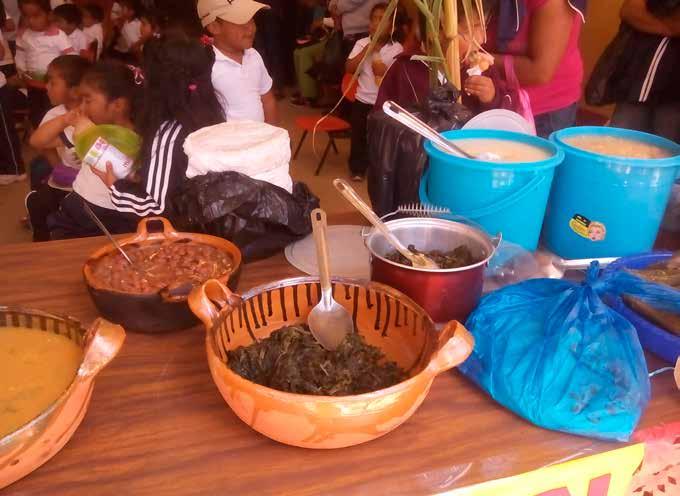
This article describes an approach taken in schools, classrooms and in the community to raise awareness of the impacts of the production and consumption of chatarra products3, or junk food, products on our health and that of the environment. Our intention in this article is to show how some Indigenous Education schools, located in the Sierra Mazateca Flores Magón highland in the state of Oaxaca, are seeking to implement the Plan for the Transformation of Education in Oaxaca (PTEO)4, and the Basic Document for the Education of Indigenous Peoples.
[1] Degree in Secondary Education in the area of Mathematics from the Escuela Normal Superior del Estado de Puebla. He is currently the commissioned director of the Centro de Educación Preescolar Indígena Unitario Vicente Guerrero in Eloxochitlán de Flores Magón, Oaxaca. moralespast@hotmail.com
[2] Degree in Indigenous Primary Education from Universidad Pedagógica Nacional Unit 211 Tehuacan, Puebla; currently teaching at Narciso Mendoza Multigrade Bilingual Primary School in Eloxochitlán de Flores Magón, Oaxaca. Benig_13@hotmail.com
3. Chatarra products are those widely available commercial products that provide no nutritional value to people, but rather damage
Climate change and environmental deterioration threaten human existence, as we have been painfully experiencing as of late. We are faced with the challenge of finding solutions in our everyday activities, starting with the daily work of a farmer, a housewife or a student; hence the importance of owning and valuing the natural world around us.
Since 1994, through a thorough analysis of our teaching work, we agreed to recover the social practices of our community life and to carry out dialogical analysis activities within the classroom. In this case, our work was with the Indigenous Primary and Kindergarten Schools of the Sierra Mazateca in the state of Oaxaca.
the health, causing cavities, indigestion, obesity and malnutrition, among other health issues.
[4] Plan for the Transformation of Education in Oaxaca. The PTEO came out of an agreement at the Education Congress in Oaxaca representing Oaxacan teachers at 11 levels of education. This agreement consists of three programs and two systems and attempts to counteract the negative effects that traditional schools have had on communities and on people. Key issues include climate change, violence and the loss of values.
With the active participation of the school community, we were able to identify problems and strategic themes with special attention paid to our nutrition. These later become topics for study in the classroom as we recognized the milpa, the corn field, as the basis of Mazateca agriculture, highlighted the damage caused by the consumption of chatarra products and thought about how we could have an influence on reducing consumerism.
We have worked arduously, inside and outside the classroom and the school, through a series of foundational activities, ranging from the design of didactic materials and the construction of daily activities to the reconstruction and recovery of traditional ancestral recipes and the staging of gastronomic and corn demonstrations.
It was not an easy task, as it implied a broad recognition of the work of teachers and parents. A consultation was carried out to learn the viewpoints of the actors involved in the educational process, and to reach a consensus on the importance of contextualizing classroom work to improve the students’ learning.
PHOTO: FORTUNATO MORALES
In 2016, The Escuelas Unitarias Collective was first created, and over the course of several meetings, we analyzed our teaching work. We came up with the following outline, to work with community issues in the classrooms:
It is also important to mention that the program is open, which means that the educator is responsible for establishing the order in which the competencies will be addressed at their level. They are also free to select the topics or problems that interest the students to encourage their learning, as long as they are relevant to the linguistic and sociocultural context and to the competencies to be developed (2011 Preschool Program, p. 15).
Contextualizing community life
Over the course of several years, we have classified community events into themes and sub-themes. Based on that, we design the activities for each educational
level and grade, adapting them to the current curriculum. We never lose sight of the competencies desired at graduation and the expected outcomes that students must achieve throughout a school year and the different grades that make up an educational level.
It took great effort to get to where we are now. The process of building and rebuilding something that is not written is not simple at all. It requires connecting the context in which the school is embedded with the school’s daily activities. A pedagogy of conceptual, procedural and attitudinal analysis that addresses real problems is required.
Themes are developed throughout the school terms, according to the seasonal rhythms of the community. They are complemented with civic, cultural and social activities. The calendar of themes is not fixed, since it is updated yearly according to the conditions and needs of the students, and parents’ opinions are always included.
PHOTO: FORTUNATO MORALES
Creation and development of school activities
Once the parents are onboard and we have defined the possible themes according to the context and community life, it is now time for the teacher to use their technical skills to design didactic activities with the use of tools such as software, drawing, design and even presentation skills.
Activities are designed considering the degree of difficulty for each level and according to the community context. For instance, when studying the topic of the milpa and its products, the first graders would color the image of a corn field, the second graders would also order sets of milpas from 1 to 4, cut out the numbers and paste them where they correspond and the third graders would also write the word “milpa” after each number, in Spanish as well as in Mazatec, aside from putting the word together in a movable alphabet.
Since we have never received education and/or training regarding the design of school activities, it is not an easy task. We improvise with the tools at our disposal, and we resort to what we have learned on our own after years of teaching.
Conclusions
Currently, excessive consumption of food that is not favorable to our health is a very serious problem in our society. The lack of awareness and poor nutritional choices of our people have made the development of children, especially in our indigenous communities, very deficient. Because of the importance of and concern around this issue, it became necessary to raise awareness and to have an ongoing conversation with parents about the need to consume our own healthy products. It is important that teachers increase the quality and effectiveness of education on this matter. Starting from the first levels of preschool education, they need to promote an understanding of and respect for Mother Nature. It is important to instill in children knowledge,
skills, habits, values and capabilities that will stay with them.
References
Program of Study 2011 Teachers Guide, Basic Education Preschool, SEP, Mexico.
Basic Document for the Education of Indigenous Peoples, Dirección de Educación Indígena, Oaxaca, 2011.
Resources
MORALES PASTELIN, FORTUNATO (31 de octubre de 2019). Contamos del 1 al 10 en la lengua mazateca de Eloxochitlán de Flores Magón, Oaxaca [Archivo de Vídeo]. Youtube. https://www.youtube.com/watch?v=AWIXCyqcioM
Ibid. (21 de febrero de 2021). “Ko tjin mani” imprimible para ilustrar los números en la lengua mazateca de Eloxochitlán, Oaxaca [Archivo de Vídeo]. Youtube. https://www.youtube.com/watch?v=r5HA7OEcPIw
Ibid. (8 de noviembre de 2020). LOS NÚMEROS DEL 1 AL 10 EN LA LENGUA MAZATECA DE ELOXOCHITLÁN DE FLORES MAGÓN, OAXACA [Archivo de Vídeo]. Youtube. https://www.youtube.com/watch?v=tS16uN8dqWg
Ibid. (21 de febrero de 2021). Kianga bichja nijin [Archivo de Vídeo]. Youtube. https://www.youtube. com/watch?v=_wwZXq_H26w
Ibid. (15 de octubre de 2018). VIDEO DEL COLECTIVO DE ESCUELAS UNITARIAS [Archivo de Vídeo]. Youtube. https://www.youtube.com/watch?v=lgTrdoNDfWA
Ibid. (13 de marzo de 2018). [Contando del 1 al 3] [Imagen]. https://www.facebook. com/photo.php?fbid=1823871390979475&set=pb.100000698965049.-2207520000..&type=3
Ibid. (24 de marzo). [Niños contando del 1 al 10] [Imagen]. https://www.facebook. com/photo.php?fbid=4110732755626649&set=pb.100000698965049.-2207520000..&type=3
Responding to the socio-environmental devastation of the Atoyac - Zahuapan Basin: a popular school for lifelong learning
Adriana Martínez Rodríguez1
“Among all of us, we know everything”. Huichol proverb
Summary:
In 2021, during the covid-19 pandemic, communities, community-based organizations and supportive academics in the Mexican state of Tlaxcala met virtually in a Constituent Assembly which resulted in the Popular-Community Training School “Presbíteros Rubén and Juan García Muñoz”. Its objective was determined during the assembly: to strengthen the social subject in the community to guarantee effective, committed and long-term intervention in order to transform the reality of the Atoyac-Zahuapan Basin which has been affected
for more than five decades by the pollution of its rivers, soil, air and food and the progressive deterioration of the health of its population. This article will address the causes that led to the school’s creation, its objectives, the needs to which it will respond and the challenges that lie ahead to face the socio-environmental crisis that afflicts this region and the population that inhabits and travels through it.
[1] Professor, School of Economics, UNAM. Contact: ayhanam@tuta.io.
Key words : socio-environmental crisis, school, communities, justice, advocacy
The socio-environmental crisis in the AtoyacZahuapan sub-basin
The Upper Atoyac basin, better known as the Atoyac-Zahuapan basin, is located in the states of Puebla and Tlaxcala, in central Mexico. It is home to 3.1 million people, making it the fourth largest metropolitan area in the country, out of which 909,000 live in Tlaxcala, making up 71.4% of the total state population (INEGI, 2020a). In addition, near its rivers the Atoyac (which emerges from the Iztaccihuatl and Popocatepetl volcanoes) and the Zahuapan (which starts in the north of the state of Tlaxcala), there are more than twenty
thousand manufacturing companies of different industries, of which 44.4% (9,068) operate in Tlaxcala (INEGI, 2020b) (see Map 1).
The industrial development of the watershed, which began in the 1960s with the construction of the Mexico-Puebla highway and the arrival of the Volkswagen assembly plant, was made possible by factors such as the abundant availability of water and a labor force displaced from their farmlands, the change from agricultural to urban and industrial land use and the environmental deregulation prevailing in Mexico, especially since the imposition of the neoliberal model. Consequently, trafficking of women and girls for sexual exploitation also proliferated in the basin, a process of community dissolution was set off and industrial pollution spread
SOURCE: PREPARED BY SAMUEL ROSADO, BASED ON DATA FROM INEGI (2020).
due to the discharge of untreated (or insufficiently treated) wastewater into the rivers, causing one of the worst health crises in Mexico (CNDH, 2017). Today it is considered a Region of Sanitary and Environmental Emergency (RESA).
For more than 20 years the men, and especially the women, from the communities of Tlaxcala, organized as the Coordinadora por un Atoyac con Vida (CAV), have demanded official recognition of the socio-environmental devastation and a forceful response that would lead to the comprehensive restoration of the watershed. They have been accompanied in this work by the Human Rights and Local Development Center Fray Julián Garcés (CFJG) and supported by scientists and academics from different universities. Faced with the negligence and complicity of the governments in office, they have also denounced the lack of sincerity and of political will to address the problem. They have warned about the consequences of this environmental crisis and the violation of the human right to a dignified life of the women and girls who are victims or potential victims of the trafficking networks.
After resorting to international ethical tribunals, they filed a complaint before the National Human Rights Commission (CNDH) and developed a Community Proposal for the Integral restoration of the Atoyac-Zahuapan Basin and the reparation of damages to the communities, among other actions. In 2021, they decided that part of the struggle should include self-education. It was necessary to respond to their reality and strengthen themselves as social subjects to build the common good.
Popular-Community School “Presbíteros Rubén y Juán García Muñoz”: objectives and challenges
A complex problem such as the socio-environmental devastation of an entire watershed requires equally complex proposals. Complexity implies patience, collective work at different levels and, above all, honesty in admitting that sometimes it is necessary to respond
differently. Conventional education plans are destined to fail as a possible instrument to confront the global ecological crisis when school programs and their contents are designed without social participation, when they are homogeneous without considering the diverse local realities and when plans are imposed top down and not shared horizontally. The aim ought to be to train subjects to solve problems. Nevertheless, education itself is a tool for rethinking, reformulating and reworking ways of making life possible, the enjoyment of rights and the full development of people’s capacities possible.
For many years, communities and their knowledge, practices, experiences and forms of organization have been excluded from educational spaces and decision-making processes. Meanwhile, the problems that afflict the Atoyac-Zahuapan watershed demand that all those involved acquire not only new knowledge, but also new methods to articulate ways to defend it. For this reason, in March and April 2021 a constitutive assembly was held.
[...] community groups, allied civil organizations and academia, with the aim of discussing the founding of a popular training school, to have a self-managed and permanent space, where we could learn what we need based on what we have done for many years: fighting for the dignity of women and the care of our common home (CFJG, 2022: 113)2
This permanent popular training school could not be created in any other way than through a collective decision and therefore, in assembly, it was determined that its fundamental objective is to strengthen the community social actor “as a subject of action to guarantee effective, committed and long-term intervention in the transformation of the reality of the watershed, where women can live free of violence and no one gets sick or dies from pollution” (CFJG, 2022:113).[2] The need
2. In those same assemblies, the name was chosen by consensus: Popular-Community Training School “Presbiteros Rubén and Juan García Muñoz” in honor of two pillars of the community who always encouraged the struggle for justice and the care of the Common Home. Both passed away in 2020.
for a dialogue space amongst researchers, communities (and even authorities who have a legitimate desire to contribute to the solution of these problems) was made visible. To achieve the objective, it is essential to share knowledge of training and scientific, technical and political production. Only in this way will it be possible for community members to participate in research and decision-making processes, while local, traditional, technical and cultural knowledge is recovered, valued, used and disseminated.
The integral restoration of the Atoyac-Zahuapan watershed requires not only strong and effective action by the state to repair the socio-environmental damage, but also the participation of communities through educational and pedagogical proposals that accompany the process. Although the Popular Community School is a project outside the educational system, the truth is that to ensure the effective, collective and trust-based participation of all the different local, regional and/or national political actors, it is essential that self-management be included as part of the curricula of any official project. Developing a critical awareness of reality that allows participants to identify and always seek justice and the common good is one of the guiding principles of this Community School, but it should also be one of the guiding principles of any educational program. In this way, the collective interests of communities can be asserted in decision-making spaces, in the development of proposals for solutions and in intra-community debates in which men and women participate equitably.
Two years after the constitutive assembly, the Popular Community School was able to incorporate dozens of people from the communities and several academics from the most important universities in Mexico, such as UNAM, Chapingo, Iberoamericana, Autónoma de Tlaxacala, among others. Initially, they organized a preliminary stage with the purpose of promoting the integration of participants. It was also meant to establish short, medium and long-term objectives and develop an analysis that would allow them to define strategies and elaborate the contents of the next phase: the per-
manent collective training. The hope, in addition to being its guiding principle, is that the school will provide its members with the tools to participate actively and effectively in the restoration of their watershed so that they can consolidate themselves as social subjects with a voice and a vote. This does not guarantee that it will be enough, however. Just as the context demanded an educational space, national problems require that similar proposals be integrated into public education systems with the participation of students, parents, teachers and communities.
Conclusions: building the school that is needed
The Popular-Community Training School “Presbiteros Rubén and Juan García Muñoz” was created out of the need to strengthen the struggle of the Tlaxcala communities seeking the integral restoration of the Atoyac-Zahuapan basin and to prevent the trafficking of women and girls for sexual exploitation. For twenty years they have publicly denounced the socio-environmental crisis that has made them sick, has taken the lives of friends and family members and has repeatedly violated their collective and individual right to live a life full of possibilities. Faced with silence from institutions that ignore while pretending to listen, the communities took over the responsibility of preparing themselves to be agents of change: the school has become as a space for self-training, coexistence and collective instruction to respond to a reality that threatens to undermine the essential conditions of human life. But this alternative cannot be reproduced with a vertical structure in which its members have no voice and no vote. To change the reality that threatens, this school must start from the collective principle that guides, as the Wixárika (Huichol) people say: only among all of us do we know everything.
References:
National Human Rights Commission (2017). Recommendation 10/2017 on the violation of the human rights
to a healthy environment, clean water and access to information, in relation to the contamination of the Atoyac and Xochiac rivers and their tributaries; to the detriment of those who inhabit and transit in the municipalities of San Martín Texmelucan and Huejotzingo, in the state of Puebla; and in the municipalities of Tepetitla de Lardizábal, Nativitas and Ixtacuixtla de Mariano de Matamoros, in the state of Tlaxcala. Mexico City: National Human Rights Commission. Available at: https://www.cndh.org.mx/sites/default/files/doc/ Recomendaciones/2017/Rec_2017_010.pdf.
Centro Fray Julián Garcés Derechos Humanos y Desarrollo Local, A. C. (2022). Fire of collective hope. 20 years building the common good. Tlaxcala: Centro Fray Julián Garcés. Available at: https://www.centrofrayjuliangarces.org.mx/wp-content/uploads/2022/05/2022Informe-CFJG-XX-ANOS-Final.pdf.
National Institute of Geography and Statistics (inegi) (2020a). Results of the 2020 Population and Housing Census. Available at: https://censo2020.mx/. -- (2020b). National Statistical Directory of Economic Units 2020. Available at: https://www.inegi.org. mx/app/mapa/denue/.
PHOTO: "RÍO ATOYAC" BNAMERICAS
Through hell and high water: The climate crisis comes to Merritt, Canada —and its Schools
Nick Kazanoski 1
In November 2021, only months after an unprecedented heat wave killed hundreds in the Canadian province of British Columbia (BC), massive floods inundated significant portions of the territory. The following account is from a teacher from the BC interior town of Merritt, which was largely submerged and cut off from the rest of the province during the floods.
An earlier version of this article originally appeared in “Teacher,” a publication of the British Columbia Teachers’ Federation)
I woke at 4:00 a.m. to police banging on our door telling us that we need to evacuate. The Coldwater River, 200 metres from our house, had reached the top of the dike. We began packing some clothes and food, connected our travel trailer to our truck, and 20 minutes later we were leaving; the river had breached the dike and was halfway up our truck tires. –
Josée
Warren, teacher, Merritt Secondary School
[1] Nick Kzanoski is a public school teacher in the city of Merritt, British Columbia, Canada.
This was the reality for thousands of Merritt residents on Monday, November 15, 2021. Merritt Secondary School, Merritt Central Elementary School, and Diamond Vale Elementary School all flooded, with Merritt Central taking on the most water and suffering the most damage. Schools on higher ground were safe from flooding, but one, École Collettville, was cut off from the rest of the city because of bridge washout and sewage line damage.
The Coldwater River had never seen that volume of water moving down it in recorded history. By 9:00 a.m. Merritt city officials declared an evacuation order for all of Merritt because homes were flooded, bridges were unstable or washed away, water was unsafe to consume, and the sewer system had been compromised. Residents were instructed to take 72 hours’ worth of supplies, report to Emergency Support Services, and evacuate to the nearby cities of Kamloops or Kelowna. The main highway was closed because of washouts, so nobody could access the Lower Mainland (a coastal region where the province’s larger cities and services are located).
Within a couple of days, school staff checked in with administration and learned of major damage to some of our schools. It was clear that we would not be back in Merritt after 72 hours. Then teachers began doing what teachers do: worrying about the welfare of our students and colleagues. By the end of November, many teachers were in contact with students and families and consoling each other, offering support ranging from educational resources to food and supplies. Flood waters ravaged the homes of hundreds of our students and colleagues.
About 10 days after the flood, people with homes on high ground unaffected by the flood waters were granted access back into the city. But thousands of other residents were told it was unsafe to return. Some houses required extensive repairs, while others had suffered irreparable damage and were uninhabitable. It became abundantly clear to teachers from Merritt’s schools that things were not going back to normal anytime soon. We were not permitted access into the buildings to gather supplies or
check on damage until early December. School board officials had to creatively rethink how education was going to be delivered.
Three weeks after the flood, some schools resumed varying degrees of instructional programming for students. Two unaffected schools were able to welcome back their staff and students—if those staff and students had homes to which they could return. It was really difficult to contact some students’ families, because their lives had been turned upside down and they had lost their homes. Some were cut off from the community because bridges or whole sections of highway had been washed away by a raging river. “We lost everything, we had to run for our lives,” said one parent whose son would not return to school as we tried to resume some educational programming. “School is not a priority right now. Our priority is survival: finding a place to live and food and clothing.”
Thankfully, the school board continued to pay contract teachers, Teachers on Calls, Education Assistants, and all support staff throughout the school closures and allowed staff to prioritize home rebuilding and family over employment responsibilities. We were all affected and the only way to get through it was to work together, support each other, and help each other. Many teachers and other colleagues came out to assist flood victims. Strangers came out to help strangers. A colossal amount of mud came down the Coldwater River and entered homes, but community spirit was strong. People showed up at affected houses and started shoveling heavy mud, moving destroyed furniture, piling heaps of destroyed possessions at the roadside, pulling out drywall and flooring, and helping to console devastated families.
It took four weeks until a member of the provincial government came to Merritt to survey the devastation. When the Canadian Prime Minister came to BC to survey flood damage, he only visited the Fraser Valley (a fertile farming region near the BC Coast that was inundated in the flooding), ignoring BC’s Interior. These delayed actions and inactions really frustrated people in Merrit. We realized that citizens of rural communities
need to be prepared to help each other and work together without expecting immediate government assistance. Eventually, military personnel were deployed to bolster temporary dikes.
All the while, donations from people all over Canada poured in to help affected families and individuals. Several teacher unions sent donations to the Nicola Valley Teachers’ Union (which represents teachers in Merritt and surrounding areas), totaling thousands of dollars. The generosity of other locals helped many of our members with immediate costs related to devastated homes.
At the heart of our devastated community, the Nicola Valley Food Bank accepted monetary donations, food, and supplies from around the country to help our local citizens, many of whom relied on this generosity as they had been left with nothing. These community supports were important for Merritt locals, but also people from
the town of Lytton who had sheltered in Merritt. Just six months before the catastrophic flooding, an extreme heat wave swept over the region, bringing the temperature close to 50°C and contributing to widespread wildfires that burned Lytton and other local areas. Many Lytton evacuees relocated to Merritt until the flood forced them to evacuate for a second time in less than a year.
Following the winter break at the end of December, school board management made arrangements for all students and staff to be back in buildings. Students and staff were split among three locations because some school sites are still unsafe for occupation. The logistics of transporting people in so many directions became a challenge for our bus driving staff, but they took it in stride and worked hard to keep students safe and going to all the right places. Many teachers travelled daily between locations, carrying with them the supplies needed to deliver education to students.
After spring break in March 2022 students at most schools were able to return to their respective buildings to resume instruction. Unfortunately, Merritt Central Elementary staff and students remained displaced because of the nature of the extensive damage to their school and could not return to their school building until the new school year began in September, 2022.
So, what have we learned from all of this? Nature is powerful and swift, and we humans are at its mercy. The November 15, 2021, flood far exceeded the City of Merritt’s 200- year floodplain limit map. Nobody expected a flood of this magnitude to hit Merritt, inflict this much damage, and create so much trauma. Climate events of this magnitude are staggeringly powerful and should cause us to re-evaluate how we live and how we affect our natural world. Humans have inflicted untold damage on the world’s ecosystems, precipitating extreme disasters. Our footprint is everywhere as we cut down forests, pollute waters, invade pristine wild places, and burn fossil fuels that alter the chemistry of the atmosphere.
Being displaced from home is traumatizing, especially when one’s home has been partially or fully destroyed. The whole city was evacuated for a few weeks, but some people were still displaced five months later, living in hotels or with family or friends. Upon returning to school after the winter break, some students and staff had to deal with the rigours of academic expectations combined with rebuilding their homes, replacing lost possessions, and relying on the generosity of others for food and clothing.
Trauma takes a toll on people, often seriously affecting their ability to function and behave as expected, but we endured. Routine is essential during traumatic experiences. School provides a safe place for children to be, whether they are in Kindergarten or Grade 12. Displaced children need stability and caring adults to be there for them and their families.
Even though many of our students and staff have been teaching and learning in facilities that were not
their normal places of education, and even transferring between locations at midday, the care and attention that staff showed for students and for each other is remarkable. Educators are tenacious. Despite devastating and traumatic events, we adapted. Our school board secured alternate facilities and educational resources for all students while our teaching and support staff provided quality education and assistance for our students wherever they were placed.
As one Merritt Secondary School staff member, Melissa Pinyon, stated, “I see so much resilience, but I also see tired students and tired staff. I see everyone showing up even when they feel like there isn’t much more to give. I see people coming together and making adjustments to support those who need it the most. I see the big wins and small wins are all celebrated the same, small steps back to whatever normal looks like. Everyone shows up, and for that I’m thankful.” We care for each other.
This experience has demonstrated that humans respond with compassion and care in emergencies. In the words of another colleague, Amanda Lamothe, “Through all this, I’ve learned to always be kind. Chances are people are going through hell or high waters in their daily lives. All we can do is be kind.”
A flood is not something I wish for anybody to experience. The flood has profoundly affected Merritt as a city and has taken a serious toll on education, but we have persevered with support from neighbouring communities, many Canadians far and wide. We have demonstrated that education goes beyond foundational academic skills. Our school system is a crucial component of a well-functioning, healthy society that provides stability for children and social and emotional wellness for many.
As the climate crisis worsens, the role of schools in helping students cope with climate anxiety and trauma from climate events will only grow. We have a responsibility to our natural world and our children to respond expeditiously to climate impacts to mitigate future disasters.
El reconocimiento del territorio, su historia y la mirada a futuro en comunidad: semilla para la construcción de conocimiento desde arcah
Cristopher Castillo1
La Alternativa de Reivindicación Comunitaria y Ambientalista de Honduras (arcah), es un espacio de articulación de comunidades que se dedica a la defensa de los bienes comunes de la naturaleza, la soberanía, los derechos humanos y, a construir pensamiento político colectivo comunitario dirigido a desmontar el sistema capitalista de opresión y a sus acompañantes: coloniaje, racismo y patriarcado.
La arcah considera fundamental la articulación entre las luchas y su pensamiento de rebeldía y cuestionamiento ante la realidad. Así, ha logrado forjar procesos importantes y de incidencia en Honduras, logrando posicionar narrativas anti-neoliberales en zonas urbanas, donde se considera que la infertilidad política es muy marcada, puesto que la hegemonía del pensamiento y la información están cooptadas por la mancuerna mediático-militar.
1. Coordinador de Alternativa de Reivindicación Comunitaria y Ambientalista de Hondura- ARCAH.
La organización, fundada un 17 de mayo del 2017, ha sumado en sus páginas de historia, la lucha y enfrentamiento a grandes proyectos extractivos de contaminación y de ciudades privadas en Honduras; lo cual en un contexto de dictadura o narcodictadura más bien, significó conllevar riesgos altos y la materialización de los mismos, desde amenazas, intentos de asesinato y criminalización.
En su corto tiempo de incursión en la resistencia hondureña, arcah ha logrado frenar procesos de expansión extractiva y de destrucción del bosque, sin renunciar a su sentido de colectividad y propuesta decolonial y contracultural.
La organización surge, en un contexto de auge de una dictadura instalada, que a lo largo de casi 12 años, convirtió a Honduras en uno de los países mas peligroso del mundo para la defensa ambiental, y con mayor hostilidad contra la comunidad lgtb, lo cual repercutió mucho en arcah debido a su carácter de
membresía diversa. Con una dictadura de extrema derecha instalada, los valores de la modernidad colonial se hicieron resaltar, por lo que conceptos de opresión como el adulto-centrismo llegaron a imponerse contra la joven coordinación de arcah.
La propuesta de individualismo del capitalismo, acompañado de un feroz plan de desarticulación del movimiento social por parte de la dictadura, orilló a la joven organización a endurecer su apuesta por juntarse con diversos espacios.
La opacidad en la verdad y la alienación del conocimento
ARCAH fue creciendo cada vez más como una voz de denuncia que visibiliza la situación de las comunidades, que no se detuvo en la exposición de temas ambientales y su vinculación con toda la estructura de dominación. Uno de los ejes que se abordó fue la falta de acceso a la información pública, por supuesto, producto de la aprobación de una Ley de Clasificación de Documentos Públicos, que opacaba toda posibilidad de que el pueblo se enterara de su propia realidad de manera concreta.
La dificultad para conocer un verdadero contexto institucional en Honduras, cada vez más recrudecida, y las opciones de denuncia cada vez se inundaron más de pretextos para no dar curso a cualquier queja de la ciudadanía. A su vez, el sistema educativo en Honduras se deterioró al punto de alcanzar muy bajos índices de calidad mientras se fortalecía la propuesta de educación privada en todos los niveles, llegando su influencia al ámbito universitario. La propuesta neoliberal de la reducción del Estado y ensanchamiento del sector privado llegó a la salud y educación, pero no sólo en la lógica de acumulación de capital, sino en llevar a la sociedad, y en especial a la juventud hondureña, a un umbral de cada vez menos conocimiento.
Esto coincidió con la llegada y auge de grandes plataformas de dominación del pensamiento en el mundo, desde Facebook hasta Tik Tok, todas encaminadas a distraer y promover contenidos chatarra. Ante este panorama, el silencio no era una opción.
¿Cómo defender a los territorios sin sentirse parte de ellos? La dictadura no solo robó dinero, sino que robó identidad y sentido de colectividad, donde el conocimiento se occidentalizó con mucho rigor, y las aspiraciones de vida se volvieron aún más clasistas. Es por eso que en medio de ese panorama arcah apostó por realizar investigaciones y publicarlas, adjuntando a sus denuncias pruebas que en sus portadas contenían la palabra “confidencial”. Esto marcó un antes y un después para algunas luchas, puesto que hasta ese momento era imposible denunciar con pruebas concretas.
Al mismo tiempo, lejos de la agenda de los talleres de la ong y la cooperación internacional, arcah inició un proceso de autoformación política, donde se debatía constantemente sobre posturas filosóficas para construir colectivamente lo que hoy en día es la organización.
El abordaje del conocimiento en arcah se basa en: el derecho a saber; el derecho a saber que voy a saber; el derecho a decidir si quiero saber; la responsabilidad de compartir lo que sé, el deber de cuestionar lo que sé y de construir otro saber.
La construcción de conocimiento en arcah inicia con el reconocimiento del territorio, su historia y la mirada a futuro, el autoconocimiento individual y como otredades y la caracterización más fidedigna de los enemigos a los que enfrentamos. Todo eso permite a la organización tener sus propios conocimientos frente al Estado, generar estrategias eficaces y solidificar la propuesta política.
Ahora arcah suma una nueva apuesta, la constitución de territorios libres de capitalismo, soberanía alimentaria y comuna, donde actualmente se construye la sede de la organización.
IMAGINED SEEDS. Memory and Tomorrow
Ana Laura Rojas Padgett1
“The seed was planted thousands of years ago in the heart of all the tribes on the face of the Earth, ever since gatherers first observed plants renewing themselves with each season; curiosity took its time before placing a seed in the soil and the history of humanity changed forever... (Rojas, Story of the Organic Integration Network).
In the human imagination the seed took on meaning as the being that contains all the creative information of the universe. In the Mayan culture, the seed symbolizes the beginning of time, the regeneration of the earth and rebirth after death, just as occurs in the sacred corn cycle. For Mayan peoples, the seed represents fertility and love.
Four colours of corn: red, black, white and yellow. In ancestral knowledge these colours symbolize the skin colour of all humans that inhabit the Earth, as well as the four cardinal directions on which the universe rests. Mayan people, before planting their crops, celebrate a ceremony to bless the seeds. Thanks is given to the land, and the Creator is asked for abundant harvests so that life may continue.
Since the arrival of Europeans to Abya Yala, the imposition of western thinking has meant a rejection of the knowledge of the original peoples. The stigmatization and devaluing of ancestral knowledge has had a profound impact on the education system which has replaced the original organizing principles of complementarity, reciprocity, community and diversity with a logic of competition, domination and hierarchical control.
1. Organizations: Organic Integration Network Collective and Ija´tz Iximulew Collective.
E-mail: rio.mediosindependientesgmail.com
We are facing a situation where the final onslaught of capitalism has been institutionalized, with globalized
legislation for the control and ownership of seeds, land, water and natural resources. The logic of exploitation and the profitability of the market prevails, standardizing ways of thinking.
Human relations have been reduced to relations of utility and exploitation, driving us to an environmental situation that is progressive, degenerative and irreversible. Clearly, the need to change the model of agricultural production is not only an ideological issue but one of common sense.
Hand in hand with indigenous peoples, spiritual guides, campesinos, midwives, knowledge keepers and defenders of life, the seed of diverse resistance has been cultivated in the fields of our lands, nourishing our lives around the fire. This is how the project “Planting Seeds” came about.
Planting Seeds
We understand that breaking our connection with Mother Earth, and with our own bodies, inevitably dehumanizes us. According to UNICEF, chronic child malnutrition has affected one out of every two children in Guatemala for many years. At the same time power dynamics and land distribution place these Maya, Ga-
rifuna, Xinca and Mestizo lands among some of the most unequal in the world.
Adding to the crisis are high rates of corruption that promote private and corporate interests in order to control the means of life. They exploit Mother Earth, subjugating the people into one more piece of machinery with which to award themselves material wealth.
Through a collective effort and under consultation with grandmothers and grandfathers, guardians of the seeds from all regions of Iximulew (Guatemala) and organizations that work for food sovereignty, the “6th Gathering and Exchange of Knowledge and Seeds” of the Seeds of Freedom Network was organized in Guatemala. We promoted a process to articulate efforts where we can identify problems, generate dialogue around possible solutions and coordinate actions to strengthen a network at the national and Latin-American level.
As a collective we created a project called “Native seed banks and school gardens to strengthen food sovereignty in high-risk communities”. The proposal is to accompany efforts to guarantee the use and recovery of traditional seeds and strengthen food sovereignty, as well as to recover forests and important water sources. So, we began a process for community participation
in territorial planning with a restorative and inclusive vision in the departments of Peten, Sacatepequez, Solola and Chimaltenango.
Both the focus and our plans had to change given the occurrence of the pandemic in 2020. We focused on establishing an alternative market to solve the food shortage with local production and cooperative and family enterprises. That same year we suffered the impacts of hurricanes Eta and Iota which affected thousands of families and resulted in serious losses. The response from the government to the loss of crops was to distribute GMO seeds, many of which failed, further exacerbating the urgent need for food and sustainability. We then began to manage funds to provide food, native seeds and basic necessities to communities in the department of Peten, which is located in the largest watershed in Mesoamerica and where floods ruined crops, adding to the expansion of palm oil production that had already displaced many communities.
This initiative links us with other valuable projects being developed under similar objectives, among them: Qachuu Aloom, Senacri, Imap, La Redsag, Reisa, Colectivo Tecomates, Regeneración Internacional. Our participation in and support for projects that generate community autonomy is vital if we are to develop emotions, knowledge and practices that dismantle capitalist and colonial logic.
Establishing school gardens is a pedagogical tool with which to approach environmental issues, struggles and social issues and even mathematics. It is interdisciplinary.
Education about the human right to food must be strengthened in schools. One of our objectives is to engage schools, as well as parents, in working to improve school meals. The government should invest in culturally appropriate school meals sourced from family agriculture. Unfortunately, this principle is violated due to due to the interests of corrupt groups and the influence of the food industry in the central and local governments.
Working in schools with parents allows us to monitor what conditions communities are living in and
where there are high rates of malnutrition. We focus on and adapt to circumstances such as the pandemic, the expansion of palm oil and climate change.
In the communities in Peten, we work with valuable, well-organized groups of women who are willing to continue raising awareness and sharing knowledge, as well as sharing native and traditional seeds.
We want to make people see this as an urgent cause. We need to work together to face the complex situation we are living in Guatemala where poverty rates, inflation and forced displacement are intensifying. We have focused primarily on Peten because, being such a remote and inaccessible region, it is often forgotten. Even the United Nations, which has programs for food safety and sovereignty in various places, continues to exclude Peten despite the expansion of monoculture and loss of seeds and access to land in this region.
The invitation is open for you to join us in planting the seed of life.
In defense of teachers’ struggles Book Review
Ávila Carrillo, E. (2019). Ediciones Quinto Sol. ISBN: 978-968-66620-44-2, 296 pages. Language: Spanish
The teachers’ movement in Mexico has been attacked by the media in a smear campaign that seeks to denigrate its social leadership. Additionally, educational policies of the last 30 years have tried to instill the idea that any person, of any profession and without pedagogical preparation, can be a teacher. Thus, under the apocryphal conception that teachers’ organizations are a group of vested interests, their profession and struggle have been vilified.
In his book En defensa de las luchas magisteriales” (In Defense of Teachers’ Struggles), Enrique Avila Carrillo takes on the task of defending the legitimacy of the teachers’ struggle. Although the author acknowledges that this is a quasi-narrative work, it has a historical-ar-
gumentative value, since it draws on valuable books, articles, journalistic notes and pamphlets.
Our author begins his journey in a newly independent Mexico (1821), a propitious time for teachers since there was academic freedom, and they could seek social transformation and fight against political control. Although the cases that are described correspond to urban teachers who commit themselves to the social cause -think perhaps of a Miguel Hidalgo or a José María Morelos, who developed their thinking in Valladolid2, for Avila Carrillo the traits of a teacher who is committed to the social cause are inherently those of a rural teacher. The hardships they suffer are connected to their humble, campesino origins, something he sees reflected in the twenty-first century communities
2 Priests, initiators of the Mexican Independence, who fought against the Spanish colony.
Juan Fernando Álvarez Gaytán1
where he does his work. It is against this background that some of the first teacher conflicts referred to in the book begin to appear: teachers are watched over “in the fulfillment of their programs, (...) so that they would not teach anything against (...) good customs” (p. 19). This would mark the beginning of the disputes between teachers and those in power.
Once teachers began to question the social order, ideas of freedom and liberation would constantly appear in the various perspectives of the teaching profession. Thus, for example, professors such as Vidal Alcocer3 put progressive projects into practice such as those of the utopian socialists. These counter-hegemonic proposals allowed teachers to denounce exploitation and demand greater social spending and job creation. At the same time, there were glimpses of the social value of a teacher, as when Benito Juárez4 in 1861 ordered that small towns ought to have a teacher. With the rise of secularism, teachers began to demand social justice in their communities, in the light of the inequities experienced during the Porfirio era5 and with their now secular perspective.
The development and expansion of the teacher training college system, or Escuelas Normalistas6, managed to combine the pedagogical aspirations of teachers, within an epistemological framework that distanced itself from religion, with a foundation that offered the first components of a job that was becoming professionalized. Thus, teachers added one more ingredient to their demands: the salary issue. Through teacher training, based on the principles of freedom, justice and democracy, the ideological battle provided a basis for economic demands. These demands subsequently encountered positivist education, through the utopian socialism
3 Mexican educator (1801-1860).
4 President of Mexico from 1858 to 1872, whose origin was indigenous.
5 Period of dictatorship of Porfirio Díaz Mori (1877-1880; 18841911).
6 “The first Normal School, in the strict sense of its formative planning, was established in 1885 in the capital of Veracruz. Its director was Enrique C. Rébsamen” (p. 30).
that Plotino Constantino Rhodakanaty7 or Julio López Chávez8 promoted, with the aim of improving material living conditions. However, teachers’ organizations at the end of the 19th century could only form as mutual or cooperative organizations and not as a union per se. The main difficulty was how to organize within a vast territory and, additionally, how to overcome the obstacle of trying to reconcile anarcho-syndicalist and Marxist perspectives, among others.
According to the book, at the beginning of the 20th century Mexican teachers had good pedagogical training. It was a golden age, both for its legacy of great teachers as well as their disciples who continued the work. However, salaries did not correspond to their theoretical, practical and methodological experience9. Wages were arbitrary and precarious. At the same time, the figure of the School Inspector appeared. This was a bureaucratic agent who worked close to teachers and who influenced organizational practices. The excellent pedagogical era was tarnished by the ideas of people who avoided horizontal teacher organizations10. Labor improvements could only be achieved through the program of the Mexican Liberal Party, since not even F. I. Madero considered them11. All in all, the role of the teacher at the dawn of the Mexican Revolution (1910) was characterized by values such as social justice, social commitment and democracy.
In this context, the role of normal schools in social demands became stronger, with their participation in proposals for a Modern School and with the teachers who debated Art. 3° of the Constitution in 1917. However, “the salary and benefit requirements that (...) they demanded were overlooked” (p. 65). The commitment to emancipatory ideals was not abandoned by teachers
7. (1828-1890) was a Greek socialist and anarchist, activist of the peasant movement in Mexico during the 19th century.
8. (¿?-1868) socialist peasant, disciple of P. C. Rhodakanaty.
9. Remember E. C. Rébsamen, C. A. Carrillo, E. Castañeda Núñez, A. Castellanos, L. Aguirre Espina, among others.
10. Think of G. Torres Quintero and J. Sierra Méndez.
11. President of Mexico from 1911 to 1913.
who, despite their lack of economic recognition, tried to create the Socialist Normal School or rationalist schools in an attempt to establish another social order12. The repression of demonstrations, such as the one dismantled in 1919 by V. Carranza, contrasted with the official discourse that saw the normal schools and rural education as the fundamental instrument for the new Mexican education system. The rural teacher who transformed his reality, including his own living conditions and those of his community, is the forerunner of the contemporary dissident teacher. Thus, by the time of Cardenas13, it was common for teachers to follow the causes of the people and to raise awareness and promote progress. Being a rural teacher was synonymous with practicing popular education. With the Cultural Missions14, the germination of teacher unionism began.
Teachers’ organizations such as the Federación Nacional de Maestros in 1926 began to flourish throughout the country, but the sectarianism in all of them -generally constitutionalist, anarchist and Marxist- destroyed any attempts at unification. Organizations such as the Confederación Nacional de Organizaciones Magisteriales (cnom) pioneered the role of mere subordinates before the government. Even at the height of the Cardenas period, there were accusations of corporativism against teachers, who focused their demands solely on salary and job security. This persisted until the government of M. Avila Camacho15, before the complete corporatization of the profession with the creation of the National Union of Education Workers (snte) in 1943. Corporatist unionism in the snte was achieved through the collection of union dues and practices that discouraged activism, so that, in addition to the earlier demands, the demand
12 President of Mexico from 1917 to 1920.
13 Presidential period (1934-1940) of L. Cárdenas del Río.
14 “This consisted of sending teachers to the countryside to teach Spanish (...), who also learned to add, subtract, multiply and divide (...) The teachers who responded to the ministry’s call were known as ‘missionaries’ (...), organizing rural schools in each region, which had to be able to respond to the characteristics of the territory” (pp. 70-71).
15 President of Mexico from 1940 to 1946.
for democratic unions emerged with the creation of the snte. From then on, the so-called charrismo (yellow unionism), that is, “corrupt, pro-business leaders and (...) who apply a collaborationist policy with the government” (p. 106) spread within the snte, setting the stage for the teachers’ struggles against the leadership of the official union.
In October 1948, Section 9 of Mexico City was the first to organize outside the snte, demanding salary increases and participation in the union. From then on, there would be ongoing denunciation of the obstacles that the snte would always put in the way to discourage teachers’ resistance as well as of the tricks they played to place those teachers most loyal to the dictates of the state as heads of committees. Because of this, there were attempts to form covert organizations, such as the Frente Nacional de Unificación Magisterial (FNUM) in 1951 or Acción Revolucionaria Sindical (ARS) in 1954. But more important was the creation of a space that would be crucial for dissident teachers. These were the assemblies, which would bring democracy and communication among teachers, families and the communities. Through figures such as Othón Salazar16 and his Union Executive Committee, later consolidated in the Teachers’ Revolutionary Movement (MRM), these connections and common actions would serve as an incentive to nurture strikes in the Ministry of Public Education (SEP), with the support of parents. As a result, several leaders ended up in the Lecumberri17 prison, while others received administrative punishments such as dismissals and changes of location.
Neither the governments of Presidents A. López Mateos18 or G. Díaz Ordaz19 listened to the demands of the teachers. Therefore, the followers of Othon Salazar had to create new forms of organization and protest,
16. Mexican trade unionist (1924-2008), who actively fought against the lack of transparency of the SNTE leadership and collaborated in the MRM.
17. Space that served as a penitentiary from 1900 to 1976.
18. Period from 1958 to 1964.
19. Period from 1964 to 1970.
such as the Committees of Struggle, always following the ethics of an “educator who knows himself to be part of the people” (p. 136). Faced with the growing discontent of teachers who did not identify with the snte union leadership, a group of thugs called Vanguardia Revolucionaria was formed that, through privileges to teachers, tried to prevent the emergence of a union force that would go beyond corporativism, namely, the Coordinadora Nacional de los Trabajadores de la Educación (cnte). Its purpose was promoting unity, while expressing “the feelings of many excluded sectors of society” (p. 148). Under the banner of democratization and wage improvements, the cnte started defining a radical strategy that had been repressed for years: mobilization and political action. As an organization close to the people, from the very beginning the cnte sought to overcome pure unionism and include the most important social demands coming from the parents in their communities. The author of the book tries to show that, contrary to what had happened with the snte, the cnte has become a mass movement that carries forward the diversity of social discontent.
With its particular tactic of “mobilization-negotiation-mobilization” (p. 164), the cnte provided an alternative to usual teachers’ organizations, staying constantly connected to social fronts as an example of its social commitment. Even though from the start it has not been recognized by the National Executive Committee of the snte or the government, it has been
an alternative20 in the fight against sold-out unions, or charrismo. The existing demands have emerged historically. They were: (1) professional recognition, (2) better working conditions and (3) union democracy. However, in the initial context of neoliberalism, considering Latin American philosophy and pedagogy, the CNTE included yet another element to its demands: (4) an alternative educational project. It should be added that, in the opinion of our author, a fundamental success in the strategy of the teachers’ struggle will be to declare themselves outside of any political party, as a way to avoid corporativism.
All these characteristics are seen throughout the history of the cnte, from its founding in 1979, through the different stages of struggle, such as the teachers’ spring (strike in 1989), the struggle against the Alliance for Quality Education (ACE) (mobilizations and protests in 2008), to the resistance against the Education Reform of President E. Peña Nieto in 201321. These teachers’ struggles have as common denominators: criticizing the snte’s verticalism, denouncing the precariousness of teaching work and promoting education that contributes to the achievement of a different way of life. Each of these experiences has come with successes and mistakes, which have guided the definition of the principles of the cnte and its political programs, as well as the practice of self-criticism, in order to avoid traditional unionism.
The book presents the teachers’ struggle as the illumination of an ethic that seeks to be close to the people,
20. The National Executive Committee is the union leadership body of the SNTE, in many cases denounced for representing spaces of corporativism and corruption. 21. Period from 2012 to 2018.
based on democratic ideas and always in solidarity with other resistance fronts. It is a struggle that has more recently incorporated pedagogy, through a program that is rooted in the community and that generates transformative values, without ignoring the validity of normal schools. Although it is true that this book tells the story of how teachers have vindicated their rights, it does so within the framework of the broader social struggle.
Avila Carrillo’s work is perhaps of nostalgic interest for those veteran teachers, if the expression is allowed, who strongly identify with the teachers’ struggles. However, it is also an excellent treasure chest for younger teachers who question their social and educational reality, and who will use their good eyes -the same that are required for the tiny print of the book- to strengthen
presents, in our opinion, the most complete history so far of the teachers’ resistance in Mexico. It presents the political character of education, and it also shows the subaltern trait of those who fight against capitalism, in labor terms, and against its interference in the definition of the education Mexico needs. Whether for scholars of the social movement or for the militants themselves, reading this book will inform the future- a time that is open to change.
Bibliography:
Ávila Carrillo, E. (2019). In defense of teachers’ struggles. Mexico City: Quinto Sol.
What is IDEA?
The Initiative for Democratic Education in the Americas (IDEA) is a flexible network that brings together organizations in the Americas that share a commitment to protecting and improving public education, seen as essential to democratic development and the protection of human rights.
The Network works with other civil society organizations concerned about the impact on social rights of “free” trade agreements and other transnational neoliberal policies. The idea for a hemispheric network emerged from a meeting of teachers and students in Mexico City in November 1998. IDEA’s structure was broadened and formalized at the Initiative for Democratic Education in the Americas Conference held in October 1999 in Quito, Ecuador.
What does IDEA do?
The IDEA network carries out research, establishes communication networks, publishes documents and organizes conferences and seminars related to neoliberalism, trade agreements and the defense and democratic transformation of public education. It also organizes campaigns to defend public education and the defenders of public education.
The objective of these activities is to lay the groundwork for an understanding of the impact of neoliberal policies on education in the Americas and to develop alternatives to ensure inclusive, democratic and quality public education.
Coordinating Committee
The work of IDEA is directed by a Hemispheric Coordinating Committee made up of representatives of the following organizations:
• National Union of Educators (UNE/Ecuador)
• Confederation of Education Workers of the Argentine Republic (CTERA)
• Federation of Central American Teachers’ Organizations (FOMCA)
• National Confederation of Education Workers (CNTE/Brazil)
• British Columbia Teachers’ Federation (BCTF/Canada)
• Latin American and Caribbean Students’ Organization (OCLAE)
• Trinational Coalition in Defense of Public Education, Mexican Section