Stetson University College of Law
Annual


March 4-7, 2026, Clearwater Beach, Florida
Post-Conference Workshops: Sunday, March 8
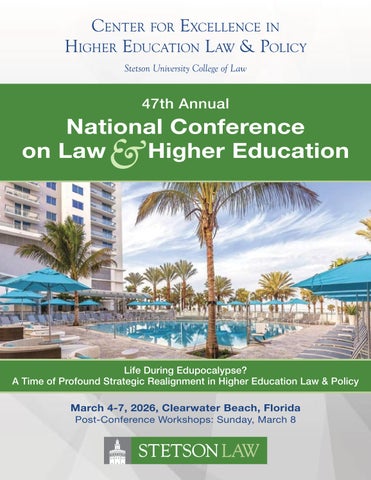
Stetson University College of Law
Annual
March 4-7, 2026, Clearwater Beach, Florida
Post-Conference Workshops: Sunday, March 8
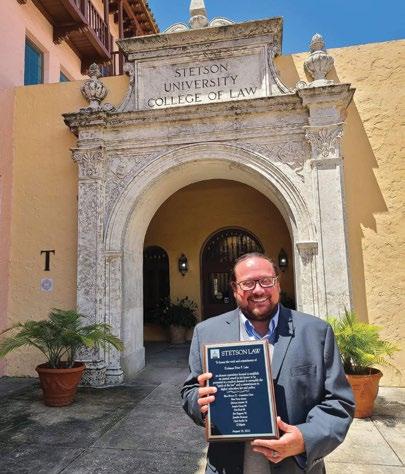
In Fall 2022 the Stetson Law community celebrated the full endowment of the Peter F. Lake “Spirit of the Law” Endowed Annual Award.
Each year, the award will be given to a Stetson Law student who has dedicated time and service to the advancement of higher education law and policy and who has exemplified the “spirit of the law” by promoting development of character, competence, and access to the law.
Nearly a dozen alumni and other members of the higher education community helped endow the award.
Among key contributors was alumnus and speaker at this year’s conference, Jim Haggerty, J.D. ’92, who has known and worked with Professor Lake for many years. He said naming a scholarship after Lake is the perfect way to recognize his contributions.
“Professor Lake epitomizes everything that is good about Stetson Law—that unique combination of the academic and the practical,” Haggerty said of Lake. “He thinks about both what the law is and what it should be. His reputation in higher education circles is well-deserved.”
The first ever Peter F. Lake “Spirit of the Law” Award was awarded to former Center Fellow Hannah MacDonald at the 46th Annual National Conference on Law & Higher Education in 2025.
Interested members of the higher education community can contribute a gift to this fund by visiting the Stetson Law donation page and specifying that they’d like to give to the Peter F. Lake “Spirit of the Law” Award.
Registration Desk
The registration desk will be open during the following times for check-in and materials pickup:
Wednesday 5:30 p.m. – 8:00 p.m.
Thursday-Saturday 7:30 a.m. – 5:00 p.m.
Sunday 7:30 a.m. – 12:30 p.m.
You will only sign in once to pick up your materials and name badge for the entire conference.
Those attending the post-conference session on Sunday, March 8 (separate registration required), will need to check in on the third floor conference level near Sandpiper I/II. Check in begins at 7:30 a.m. on Sunday, March 8.
Name Badge
Attendees—wear your name badge to all sessions and conference events. Name badges are required for admittance to all conference events. Badges are available for pickup at registration.
Conference Leadership


Peter Lake Conference Chair Professor of Law
Charles A. Dana Chair and Director Center for Excellence in Higher Education Law and Policy
Adam Hark Honorary Co-chair
Legal Counsel, Maxient LLC
Jennifer Lake Center Coordinator
Center for Excellence in Higher Education Law & Policy

100 Coronado Drive, Clearwater Beach, Florida 33767 (727) 401-3600 | wyndhamgrandclearwater.com
Hotel Amenities
• Concierge
• 24-hour room service
• Fitness center with weightlifting equipment, outdoor heated pool, and spa
• High-speed internet access, copy service, wake-up calls, dry cleaning, laundry/valet, hospitality room, multilingual staff, and 24-hour security
Things to do in the area (less than 20 miles away)
• Pier 60 and Beach Walk Promenade
• Clearwater Beach Marina
• Clearwater Marine Aquarium
• Ruth Eckerd Hall (Clearwater)
• Westfield Countryside Mall (Clearwater)
• Tarpon Springs Sponge Docks (Tarpon Springs)
• The Dali Museum and Chihuly Collection (St. Petersburg)
Visit visitstpeteclearwater.com for additional information
Stetson University College of Law | stetson.edu/law
Stetson University College of Law, Florida’s first law school, has prepared lawyers and leaders since 1900. Today, Stetson leads the nation in blending legal doctrine with practical training, evidenced by its top-ranked programs in advocacy and legal writing. Through our academically rigorous curriculum and commitment to social responsibility, Stetson lawyers are ethical advocates ready to succeed in the legal profession.
WEDNESDAY, MARCH 4
5:30 p.m. – 8:00 p.m. | Welcome: Meet Your Fellow Attendees, Speakers, and Conference Hosts (Hotel Lobby)
5:30 p.m. – 8:00 p.m. | Registration (Dunes Foyer)
THURSDAY, MARCH 5
7:30 a.m. – 5:00 p.m. | Registration (Dunes Foyer)
8:00 a.m. – 9:00 a.m. | Continental Breakfast (Dunes Foyer)
9:00 a.m. – 10:15 a.m. (Pelican)
New Attendee Orientation: Welcome to the Beach!
Presenters: Jahanna Azarian and Timothy Kessler-Cleary
The Annual National Conference on Law & Higher Education hosted by Stetson University’s Center for Excellence in Higher Education Law and Policy is an experience like no other. We bring together professionals from a variety of focus areas who share common goals. Join conference veterans Jahanna Azarian and Tim Kessler-Cleary for a “crash course” on how to optimize your experience at the conference and get tips for navigating the robust series of workshops and presentations offered at this year’s event. You will also have the opportunity to get to know fellow new attendees and expand your professional network.
9:00 a.m. – 10:15 a.m. (Sandpiper)
Are Your Conduct Proceedings a Defense or Exposure to Civil Liability?
Presenters: Toby Eveland and Micah Kamrass
This presentation will discuss case studies from various jurisdictions as to how a university’s student conduct and disciplinary proceedings against Greek Letter Organizations have been both a defense and an exposure to potential liability in civil litigation involving allegations of hazing, sexual misconduct, and First Amendment infringements.
9:00 a.m. – 10:15 a.m. (Dunes IV/V)
Title IX Litigation Update
Presenters: Kristina Hartman and Jacob Sapp
Join Jacob Sapp and Kristina Hartman for the Conference’s popular presentation on Title IX Litigation updates. This session will provide an overview of Title IX’s recent evolution in the federal courts and administration and prioritize practical takeaways from recent litigation and OCR resolutions. This presentation is for student affairs professionals, investigators, decisionmakers, and counsel seeking updates on how the state of law may impact your campus.
9:00 a.m. – 10:15 a.m. (Dunes I/II)
Crisis Management and the Court of Public Opinion
Presenter: Jim Haggerty
Campus protests. Security incidents. Laws and regulations. Cybercrime and ransomware attacks. Higher education institutions face a variety of issues and crises… and very often institutions are unprepared. In this session, author, crisis communications consultant, and Stetson Law graduate James Haggerty will lay out best practices in crisis communications—the structure and leadership essential to responding effectively to all types of sensitive issues and events.
10:15 a.m. – 10:30 a.m. TRANSITION BREAK
10:30 a.m. – 11:45 a.m. (Sandpiper)
FERPA Workshop Part 1—Hot Topics
Presenter: Melissa Carleton
What is new in the world of FERPA? This session will provide a legal update including recent cases, a “wish list” of regulatory fixes, and a peek into what the public is saying about student confidentiality.
10:30 a.m. – 11:45 a.m. (Egret)
The New Norm? The Varying States of Academic Freedom Across the Regions
Presenters: Carmen Johnson and Glen Stewart
Not all Academic Freedom is created equal. How much freedom is dependent on what region or state where one is teaching. While teaching core material such as English, mathematics, history, and the sciences has been and is pretty much standard curriculum, how one can teach those subjects is highly restricted in some areas. This is especially true due to our current political climate. Broadly stated, the different regions have a distinct historical development. The North was based on industry and production; the South and Midwest were focused on agriculture. The Midwest was also the crossroads. The West and Westcoast were based on the vast expansion of open land, the Pacific seacoast, and, of course, gold!
The education climate today, based on this historical perspective, creates uncertainty in Academic Freedom. The session facilitators will discuss some of the distinctions.
10:30 a.m. – 11:45 a.m. (Dunes IV/V)
I’m Supposed to Fix This??? Title VI Investigations in 2026 and Beyond
Presenters: Brigid Harrington and Micah Kamrass
In the absence of federal rules, the industry standards for Title VI compliance have been evolving rapidly. This session will examine how federal guidance and resolutions, as well as judicial opinions, shaped the way institutions conducted Title VI investigations over the past several years, with a particular focus on challenges associated with allegations related to protests, anti-Semitism, and anti-Palestinian conduct. The session facilitators will also assess language from court decisions that may be limiting Title VI’s reach, and how this could influence the future of Title VI compliance.
10:30 a.m. – 11:45 a.m. (Dunes I/II)
Supporting Students Experiencing Pregnancy and Related Conditions
Presenter: Andrea Stagg
Since 1975, the Title IX regulations have required institutions to prohibit discrimination on the basis of pregnancy and related conditions. The Department of Education occasionally issues guidance reminding students of their rights, including the right to reasonable modifications or adjustments and to leaves of absences.
Join Andrea Stagg to learn more about the Title IX requirements surrounding pregnancy and related conditions, including the current expectations and historical rules. Topics will include recent OCR enforcement, intersecting laws that schools must navigate (for students and employees), and best practices in establishing policies and protocols to support students.
11:45 a.m. – 1:30 p.m. (Dunes III/IV/V) WELCOME LUNCHEON AND KEYNOTE
Opening Remarks: Conference Chair Peter Lake and Conference Honorary Co-Chair Adam Hark
Keynote Speaker: Jonathan Fansmith, American Council on Education (ACE)
1:30 p.m. – 1:45 p.m. TRANSITION BREAK
1:45 p.m. – 3:00 p.m. (Sandpiper) FERPA Workshop Part 2 Crisis Management
Presenter: Melissa Carleton
How good a FERPA issue spotter are you? Do you think you can keep your institution compliant with FERPA during an unfolding situation? This session will process through a hypothetical that blends campus protests, athlete compensation, Title IX, and problematic faculty behavior to test your Confidentiality Quotient!
1:45 p.m. – 3:00 p.m. (Dunes I/II) Campus Speech 101
Presenters: Tyler Coward, Michelle Deutchman, and Neal Hutchens
This session will feature the nation’s leading law and policy voices on many issues connected with Academic Freedom, First Amendment, Free Speech, Free Expression and Association. Session panelists will offer a primer for individuals wanting to learn more about or seeking a refresher on some of the fundamentals of campus speech law including time, place, and manner rules. If you need a session that provides basic information on free speech, this is the one to attend. Other free speech-related sessions will delve right into recent free speech issues without the introductory information offered in this session.
1:45 p.m. – 3:00 p.m. (Egret)
When the End is Just the Beginning: Ongoing Monitoring as a Result of a Settlement with the Government
Presenters: Emma Hempel and Andrea Stagg
This session will explore the ongoing monitoring requirements for institutions that enter into resolution agreements or settlements with the federal government after an investigation. The facilitators will review what is written on paper in these agreements, but also discuss the practical application and implication of such monitoring.
1:45 p.m. – 3:00 p.m. (Pelican)
Accreditation Overhaul: Implications for Higher Ed
Presenters: John Przypyszny and Patricia Salkin
Increasingly, accreditation is viewed as the missing piece of the puzzle in the effort to reform higher education in this country. This session will provide an overview of the current role of accreditation in the regulatory triad, and discuss the recent changes being initiated by the Trump administration, states, and others that would make fundamental changes to the U.S. system of accreditation. This session will also examine issues such as the role of accreditation as a Title IV gatekeeper, the relationship between accreditation and institutional autonomy, and how efforts to reform accreditation could impact colleges and universities.
1:45 p.m. – 3:00 p.m. (Dunes IV/V)
The Current State of Title VI: DEI, Anti-Semitism, and Speech
Presenters: Rob Derdiger, Toby Eveland, and Brigid Harrington
This session will address the recent twin enforcement objectives of Title VI: DEI and combatting antisemitism. The session panelists will review how allegations of antisemitism continue to lead universities into settlement agreements with the federal government, and terms of those settlements related to DEI. They will also discuss guidance, including the July 2025 DOJ memo, and any steps that institutions are taking to comply, or assess risks of non-compliance. Finally, the session panelists will review recent court decisions that suggest ways that Title VI enforcement may be limited in the future.
3:00 p.m. – 3:15 p.m. TRANSITION BREAK
3:15 p.m. – 4:30 p.m. (Dunes IV/V)
Inside the Beltway: Navigating the Uncertain Legal, Regulatory, and Policy Landscape in Higher Education
Presenters: John Przypyszny and Jonathan Tarnow
This session will review major legal, regulatory, and policy activities at the federal level impacting higher education over the past year— including the status of executive orders, the efforts to dismantle the U.S. Department of Education, administration investigations and resulting settlements with colleges and universities—as well as rulemakings, guidance, and federal court cases pertinent to Department regulations, and updates regarding accreditation.
3:15 p.m. – 4:30 p.m. (Pelican)
LGBQIA+ and Trans Rights in Higher Education: Navigating Legal Shifts During the Edupocalypse
Presenters: Jahanna Azarian and Blaze Bowers
Rapid changes in federal and state law have created deep uncertainty for colleges and universities seeking to support LGBQIA+ and transgender students, faculty, and staff. This session will provide a clear, practical overview of the evolving legal landscape—including key Supreme Court and appellate developments—and will examine how these shifts impact Title IX, employment, campus climate, and student services. Attendees will examine best-case, intermediate, and worst-case trajectories and gain insight into key considerations for compliance, risk management, and inclusive institutional practice.
3:15 p.m. – 4:30 p.m. (Egret)
Surprise! How to Handle the Unexpected Through the Student Affairs and Legal Counsel Lens
Presenters: Kristina Hartman and Shaka Sydnor
Didn’t have that campus challenge on your bingo card? Today’s higher education administrators are required to expect the unexpected on campus. The Dean of Students and Legal Counsel Offices are often at the forefront of a “surprise” and frequently collaborate to navigate any given crisis. Join Kristina Hartman and Shaka Sydnor for this interactive session as they go through a variety of scenarios that leave higher education administrators wondering, “What to do next?” Scenarios will include campus protests, active state legislatures/officials, student deaths, complex records requests, and more.
3:15 p.m. – 4:30 p.m (Dunes I/II)
Hot Topics in Campus Speech
Presenters: Tyler Coward, Michelle Deutchman, and Neal Hutchens
Free speech issues continue as important and high-profile topics on college and university campuses and in the national conversation. In this session, a trio of leading law and policy experts will weigh in on hot-topic free speech issues that institutions continue to navigate. Topics will include: the speech rights of employees and when institutions may regulate such speech—even outside of work; issues connected to time, place, and manner restrictions and free speech; and issues involving institutional neutrality.
3:15 p.m. – 4:30 p.m. (Sandpiper)
Rethinking College Adjudication Systems: Establishing and Expanding Alternative Dispute Resolution Offices
Presenters: Melissa Carleton and Nathan Perry
Informal Resolution (IR) was formally established as an option for Title IX proceedings under the 2020 Regulations. Despite its origins, there is no reason for Informal Resolution—or other forms of noninvestigatory adjudication—to be restricted solely to the Title IX domain. By prioritizing dialogue, collaboration, and empathy, these alternative approaches offer a more holistic and sustainable means of resolving conflicts within educational institutions.
Informal Resolution can provide a multitude of benefits to a campus community, but incorporating IR processes into existing systems can
be complex and daunting. Institutions must consider staffing, training, scope of practice, and many other issues before opening up IR as a policy option.
This presentation will review multiple options and models for establishing IR offices and policies, related or independent of Title IX. Participants will have opportunities to engage in small group discussion about process applicability to their own campuses and will also be able to work through several topical hypotheticals that lend themselves to non-investigative resolution options. Participants will also receive handouts to take back to their campuses to assist with long-term planning and decision-making regarding office initiation and expansion.
4:45 p.m. – 5:45 p.m. (Dunes Foyer)
RECEPTION
Enjoy complimentary beer, wine, and snacks while visiting with our conference sponsors, speakers, and fellow attendees.
FRIDAY, MARCH 6
7:30 a.m. – 5:00 p.m. | Registration (Dunes Foyer)
8:00 a.m. – 9:00 a.m. | Continental Breakfast (Dunes Foyer)
Please note: The Stetson Law Review 2026 Symposium will take place in Dunes III starting at 8:45 AM. A separate registration is required to attend the Symposium.
9:00 a.m. – 10:15 a.m. (Dunes I/II)
Mitigation to Avoid High-Risk Employment Litigation
Presenters: Susan Deniker, Oren Griffin, and Daniel Kaufman
Employment law issues in higher education are complex and create significant risk exposure to institutions. This session will address some key high-risk areas currently facing college campuses, such as retaliation, DEI, tenure, investigations, ADA, and speech and protest issues. We will focus on practices and tools to mitigate litigation, reputational, and other risks to help institutions reduce their exposure and focus on their core missions.
9:00 a.m. – 10:15 a.m. (Pelican)
Disability Law Update
Presenter: Laura Rothstein
This overview session will briefly review the array of current issues in disability law. Focused attention will be given to academic accommodations (both modification of policies and auxiliary aids and services); documentation of disability to obtain accommodations; postCovid issues (attendance and presence; masking; vaccine mandates); and professional education (law and health care professions) and their issues of character and fitness and connection to licensing.
9:00 a.m. – 10:15 a.m. (Sandpiper)
The Playbook for Working with Your Athletics Department
Presenters: Scott Bearby, Ian Oakley, and Shannan Stamper Your athletics department has many issues unique to its student
athletes, facilities, and personnel. But, it also must operate consistently with university policies, contractual obligations, and school mission. Campus legal counsel advising an athletics department and other leaders and decision-makers must navigate several dimensions of compliance—and know when they have to act in harmony and when one dimension takes priority. Panelists University of Kentucky deputy general counsel, Shannan Stamper, Lehigh University assistant general counsel, Ian Oakley, and NCAA chief legal officer, Scott Bearby, will provide their playbook for being effective counsel on athletics issues.
9:00 a.m. – 11:45 a.m. (Dunes IV/V )
HALF-DAY Title IX Investigator Training with Certificate
Presenters: Blaze Bowers and Jennifer Hammat
This session is intended for Title IX coordinators, investigators, and any administrators who will be called upon to conduct a Title IX investigation (or for those to whom the Title IX coordinator reports). The training facilitators will cover how to prepare outreach documents, investigation interview orders, how to gather “the universe of information,” and how to navigate regulatory mandates. Additionally, the session facilitators will discuss the importance of framing and constructing a solid investigation report to provide the decision-maker with all that they need to have a compliant and successful hearing. A certificate of completion will be emailed to those attending the full training (sign in required).
10:15 a.m. – 10:30 a.m. TRANSITION BREAK
10:30 a.m. – 11:45 a.m. (Dunes I/II)
This is NOT Legal Advice! Operational Insights from Counsel
Panelists: Eric Butler, Guilherme Costa, Daniel Kaufman, and William Thro
Moderator/Contributor: Patricia Salkin
Join this panel of both in-house and outside counsel to gain their best operational insights into working in the current legal and regulatory compliance era. What are some things attorneys representing higher education institutions want YOU to know? What are some things you would like to know to help you work more effectively with counsel?
10:30 a.m. – 11:45 a.m. (Pelican)
Digital Access
Presenter: Laura Rothstein
This session will focus on the Department of Justice Title II Web Accessibility regulations that take effect on April 24, 2026 (affecting state and local public institutions). Private institutions are subject to ADA Title III and Section 504 expectations for digital access for their websites. This session will address how various departments and programs should be prepared and how leaders at institutions can best prepare for these new requirements. Implications of not complying will be discussed. Particular focus will be given to the role that faculty members have in ensuring that their course content is in an accessible format.
10:30 a.m. – 11:45 a.m. (Sandpiper)
Brace for Impact: Navigating the New Frontiers of Risk in Higher Ed
Presenters: Frank Cella, Susan Deniker, Hoda Hussein, and Cynthia Vitters
Higher education stands at a critical crossroads, confronting an unprecedented convergence of complex, costly, and rapidly evolving risks that threaten to reshape campuses nationwide. Join attorney Susan Deniker and leading experts from Deloitte (Cynthia Vitters), Marsh (Frank Cella), and United Educators (Hoda Hussein) as they illuminate the high-stakes challenges redefining the landscape— and reveal the strategic imperatives institutions must adopt to stay resilient and ahead of the curve.
This dynamic session dives deep into the most pressing liability trends, the accelerating force of social inflation, intensifying regulatory and compliance demands, emerging environmental hazards like per- and polyfluoroalkyl substances (PFAS), and the surge of cyber threats fueled by artificial intelligence. Beyond diagnosis, our panel will unpack how shifting expectations from boards and stakeholders are driving new governance and risk management paradigms.
Attendees will gain actionable insights into building institutional resilience through data-driven decision-making, enhanced governance frameworks, robust controls, and innovative riskfinancing solutions. Prepare to leave equipped with a clear roadmap to empower leadership, legal counsel, and risk managers to anticipate, adapt, and thrive amid the volatility transforming higher education today.
10:30 a.m. – 11:45 a.m. (Egret)
Professional Resiliency and Post-Traumatic Growth: Moving Beyond Litigation Fatigue in Higher Education
Presenters: Brent Ericson and Adam Jussel
Higher education professionals face unprecedented crises, including litigation, that generate profound stress, self-doubt, and, possibly, psychological trauma. This presentation examines the psychological, emotional, and professional impacts of such threats on student affairs practitioners, with particular focus on how deeply caring professionals navigate systems and processes.
Beyond traditional resilience frameworks that focus on “bouncing back,” the session facilitators will focus on systematic recovery and the concept of post-traumatic growth (PTG)—the possibility of emerging from challenges with greater personal strength, deeper professional relationships, enhanced clarity of purpose, and fundamentally new capabilities. The session facilitators will present practical tools for leaders to transform crisis response from reactive survival to proactive growth.
Participants will learn concrete practices for building psychological safety, fostering peer support, leading through adversity, maintaining values alignment under pressure, and creating the conditions where experiences—however painful—can catalyze profound professional development, rather than career-ending burnout.
11:45 a.m. – 1:30 p.m. (Dunes I/II/III/IV/V)
AWARDS LUNCHEON AND KEYNOTE
William A. Kaplin Award, Facilitator Award, and Peter F. Lake “Spirit of the Law” Award Presentation: Conference Honorary Co-Chair Adam Hark and Chair of the Center for Excellence in Higher Education Law & Policy Conference Awards Committee Blaze Bowers
Keynote Speaker: Skye Perryman, Democracy Forward
1:30 p.m. – 1:45 p.m. TRANSITION BREAK
1:45 p.m. – 3:00 p.m. (Dunes I/II)
Emerging Issues in College Sports
Presenters: Scott Bearby, Jim Haggerty, and George McClellan
The world of intercollegiate athletics remains unsettled, with issues of student-athlete status, the first year of the House injunction, school and third-party NIL, sports wagering, and governance making news every day. Join NCAA Chief Legal Officer Scott Bearby, attorney and communications consultant Jim Haggerty of PRCG | Sports, and Professor George McClellan as they review the latest changes from the legal, higher education, and public perception perspectives.
1:45 p.m. – 3:00 p.m. (Dunes IV/V)
The Current State and Future of the U.S. Department of Education
Presenters: Jim Moore and Debora Osgood
Some members of Congress have introduced a bill to eliminate the Department of Education (ED) and President Trump issued an executive order in 2025 for the same purpose. However, this is not the first time ED has been under attack. Almost as soon as the Carter Administration created the Department, the Reagan Administration aimed to nix it. But that effort in the 1980s failed to pass in Congress.
In practical terms, can ED be eliminated totally? Could some programs survive and shift to other agencies? Who would monitor institutional compliance obligations with regulations like Title IX? What about student aid or other financial assistance to schools?
Join Debora Osgood, former National Enforcement Director for the U.S. Department of Education’s Office for Civil Rights, and Jim Moore, former Senior Advisor for Clery Act Compliance and Campus Safety Operations at the U.S. Department of Education, to explore the implications of the dismantling of ED on the field and your work.
1:45 p.m. – 3:00 p.m. (Pelican)
Immigration in Transition: What Colleges and Universities Need to Know About Today’s Changing Regulatory Landscape
Presenter: Aaron Blumberg
As higher education institutions navigate their dual roles—as both employers and academic communities—they face an increasingly
complex immigration landscape. This presentation will examine the latest federal policy shifts affecting student F and J visa holders, postdoctoral researchers, faculty, and campus administrators.
We will explore the growing vulnerability of immigrant populations such as DACA (Deferred Action for Childhood Arrivals) and TPS (Temporary Protected Status) holders, assess the current status of DACA, and analyze how these developments intersect with institutional responsibilities and student support frameworks. Particular attention will be given to recent regulatory changes, including the end of Duration of Status (D/S), the new $100,000 H-1B fee, and the heightened risks and delays associated with international travel and visa processing.
We will also look ahead to anticipated policy and enforcement trends and discuss what institutions should prepare for as government scrutiny and compliance expectations continue to rise. The goal of this session is to offer a clear, candid assessment of how shifting regulations, executive actions, and increased enforcement priorities are impacting both the student experience and the employmentbased immigration lifecycle on campus, ultimately equipping higher education leaders with the insight needed to respond effectively and support their international communities.
1:45 p.m. – 3:00 p.m. (Egret)
It’s Not Court: What You Say in Title IX Proceedings Can and Might Be Used Against You
Presenters: Blaze Bowers and Kimberly Lau
As Title IX investigations continue to draw heightened scrutiny, students at colleges and universities face growing exposure to defamation claims brought by both accused parties alleging reputational harm and complainants confronting retaliatory or harmful speech. This session explores the evolving intersection of defamation law and Title IX, examining how such claims arise during campus disciplinary processes and how institutions can respond effectively, while preserving fairness and freedom of expression. Through recent case law, real-world examples, and practical guidance from legal and Title IX perspectives, panelists will share strategies for addressing campus defamation and administrative solutions that protect parties and community members. Attendees will leave with actionable tools to navigate reputational issues, strengthen Title IX and conduct practices, and uphold institutional integrity.
1:45 p.m. – 3:00 p.m. (Sandpiper)
The State of Executive Orders Affecting Higher Education
Presenter: Jeffrey Sun
This session delivers a survey of the key Executive Orders (EOs), which have impacted higher education, from the current presidential administration. The coverage will be presented into three operational frameworks to guide lawyers and campus leaders. First, the EOs have redefined civil rights. We will analyze the statutory conflicts and litigation risks arising from the executive reinterpretation of sex under Title IX, the revocation of disparate impact theory under Title VI, and new mandates regarding antisemitism and transgender participation in athletics. Second, the EOs raise new conditions of federal funds. We will dissect the aggressive use of Spending Clause authority to regulate research via the Gold Standard Science requirements,
DOGE cost-efficiency audits, and heightened foreign influence transparency. Third, the EOs illustrate the reshaping of institutional autonomy and governance. We will assess the Administrative Procedure Act (APA) implications including directives to derecognize accreditors that enforce DEI standards and the preemption issues surrounding the dismantling of diversity infrastructure. The goal of this session is to equip legal and campus practitioners with a roadmap for navigating within the EOs and the college mission.
3:00 p.m. – 3:15 p.m. TRANSITION BREAK
3:15 p.m. – 4:30 p.m. (Dunes I/II)
LET’S MAKE A DEAL? Grants and Compacts: Entering Financial Arrangements with the Federal Government in the New Regulatory State Presenters: Seth Gilbertson and Robert Kelchen
This session will examine the rapidly evolving legal, regulatory, and compliance landscape governing college and university contracting with the federal government. Focusing on government grants and cooperative agreements, the speakers will explore emerging challenges in grant application strategy, shifting federal priorities, heightened regulatory oversight, and increasingly complex and controversial compliance obligations under the current administration. Drawing on case studies, enforcement trends, and recent policy developments, speakers will provide practical guidance on navigating the grant lifecycle and aligning institutional practices with a more assertive and less predictable federal funding and enforcement regime.
3:15 p.m. – 4:30 p.m. (Dunes IV/V)
The Clery Act and the Risk-Compliance Continuum: From Islands to Archipelago
Presenters: Jonathan Kassa and Jim Moore
Learn how to use the Clery Act as a practical framework to reduce institutional risk and support leadership goals. This session explores proactive strategies for building sustainable compliance programs that protect lives and deliver real ROI through smarter administrative practices. Session participants will:
• Understand the Clery Act as a commonsense framework to more effectively and efficiently manage institutional risk.
• Learn about development of proactive systemic modeling of the Clery Act to drive institutional executive leadership goals for risk management and protection of lives.
• Comprehend the dynamic return on investment from the proper implementation of administrative capability to organically develop and sustain effective compliance.
• Gain detailed information and guidance including the Stop Hazing Act, Protection of Minors Act, and the nexus of Title IX and the Clery Act.
3:15 p.m. – 4:30 p.m. (Pelican)
AI and Intellectual Property in Higher Education: From Risk Management to Institutional Strategy
Presenter: Jacob Rooksby
Early institutional responses to generative AI have focused on risk: plagiarism, copyright infringement, and compliance failures. But AI now presents strategic IP questions that go well beyond enforcement. This session asks how universities should approach ownership, authorship, and attribution in AI-assisted work as matters of institutional identity and values. Topics include faculty and student IP rights, AI-assisted scholarship, academic publishing, and the role of policy design in aligning innovation with mission. Attendees will leave with a framework for moving beyond reactive policies toward principled, forward-looking approaches.
3:15 p.m. – 5:00 p.m. (Sandpiper)
Workshop: Title IX Policy Review
Presenters: Carole Goddard and April Woodward
Developing and maintaining effective Title IX policies and procedures is essential for promoting equity, ensuring compliance, and building trust within your educational community. This interactive workshop provides participants with the tools, frameworks, and practical guidance needed to create policies and procedures that align with current federal regulations and institutional values.
Whether you are revising existing documents or drafting new ones, this session will help you move from policy concepts to practical implementation. Participants will leave with actionable templates, writing resources, and confidence in crafting Title IX policies and procedures that are comprehensive, fair, and consistent.
To receive 1:1 support, bring your policy with you to this workshop, which is intended for Title IX Coordinators, HR professionals, student affairs leaders, compliance officers, and administrators responsible for policy development and implementation.

SATURDAY, MARCH 7
7:30 a.m. – 5:00 p.m. | Registration (Dunes Foyer)
8:00 a.m. – 9:00 a.m. | Continental Breakfast (Dunes Foyer)
9:00 a.m. – 10:15 a.m. (Dunes I/II) Academic Freedom and the Contours of Campus Speech Law
Presenter: Frederick Lawrence
The contours of campus speech law involve issues of both free expression and academic freedom. Academic freedom and free expression are best conceptualized as distinct rights. Whereas the general right of free expression is individualistic and egalitarian, the specific right of academic freedom is communitarian and meritocratic. The general right of free expression protects the right of all citizens to express themselves about a broad range of subjects. It requires content and viewpoint neutrality in “the marketplace of ideas.” The specific right of academic freedom primarily protects the right of a limited group of people within universities to pursue and convey their expert knowledge. It does not extend to content or viewpoints that fail to meet academic standards as determined by faculty peers.
This session will explore the distinctions between free expression and academic freedom, particularly under the First Amendment, and will consider such topics as:
• Whether the right of academic freedom belongs to individual faculty members, the academic institution in which they serve, or both.
• The constitutional employee-speech doctrine for faculty at public institutions.
• The protections offered by academic freedom for expert speech that bears directly on matters of state or university policy.
• Non-constitutional doctrines affecting faculty at private colleges and universities.
• Whether students are, and should be, entitled to academic freedom.
9:00 a.m. – 10:15 a.m. (Dunes IV/V)
PART 1 of 3—Civil Rights Bootcamp: Building a Core Foundation for Title VI, IX, and Equity Compliance in the Edupocalypse Era
Presenters: Emma Hempel and Jody Shipper
The first session of this Bootcamp focuses on providing practical guidance about the scope of Title VI, Title VII and Title IX, where they intersect, where they conflict, and how to determine the correct path forward for addressing complaints and concerns. Jody and Emma, Grand River Solutions and equity practice experts, will guide participants through a discussion of the nuances of how to ensure your policy addresses the elements of each, properly differentiates the required elements, and the framework to use when conducting your analysis.
9:00 a.m. – 10:15 a.m. (Pelican)
The Elements of Good Governance
Presenters: R. Barbara Gitenstein and Cheryl Stanton
In the complex landscape of higher education, good governance requires engagement of at least three important stakeholder groups: the board of trustees/regents/visitors etc., the administration, and the faculty (some forward-thinking institutions include students and staff as important voices, as well. Each of these entities should appreciate and honor not only its own role and responsibility, but that of the other entities, as well. There must be shared understanding, effective communication, and respectful engagement between and among these groups and they all should recognize their responsibility is to the institution and its mission, not only to their stakeholder group. This session will examine the roles and responsibilities of these key players, discuss best practices, and identify emerging board trends.
9:00 a.m. – 10:15 a.m. (Sandpiper)
The Restoration Court: Understanding SCOTUS in the Time of Trump
Presenters: Susan Deniker and William Thro
Recent U.S. Supreme Court decisions signal a departure from precedential deference and interpretation of constitutional rights in the current world context and a conscious movement toward restoration of original interpretation of the Constitution as Cass Sunstein has indicated. Many of these decisions redefining federal and administrative power, civil rights, and individual rights have been significantly impactful on higher education institutions. This session will include a review of relevant recent Court decisions and cases to be decided in the current term and discussion of what they mean for your campus.
10:15 a.m. – 10:30 a.m. TRANSITION BREAK
10:30 a.m. – 11:45 a.m. (Dunes I/II)
Free Expression on Campus: Beyond the Law
Presenters: Brent Ericson, Neal Hutchens and Michele Toppe
Adhering to legal standards is only part of what should define how institutions respond to free speech and expression issues. This session will provide participants with ideas and strategies to take back to their own campuses about how to extend the work of free expression beyond legal rules. A key topic of emphasis will be the role of free expression teams that help speakers and observers understand campus policies and practices connected to free speech. Such teams can help prevent escalation of tensions and provide a buffer before using more assertive management strategies, such as involving campus police. The session will also consider how to build learning communities around topics connected to free expression for multiple stakeholders, such as students, faculty and staff members, board members, and parents.
10:30 a.m. – 11:45 a.m. (Dunes IV/V)
PART 2 of 3—Civil Rights Bootcamp: Building a Core Foundation for Title VI, IX, and Equity Compliance in the Edupocalypse Era
Presenters: Emma Hempel and Jody Shipper
During this second session of the Bootcamp, participants will learn how to set their offices up for success. Jody and Emma will discuss how offices can be structured, best practices in aligning office structures with your policies and processes, how to identify and work with campus stakeholders, and gathering and sharing data (who can see what data), so that the office can meet its compliance obligations. They will finish by starting a discussion of the report and resolution process, which will continue into the third session of the Bootcamp.
10:30 a.m. – 11:45 a.m. (Pelican)
Shared Governance in Troubled Times
Panelists: R. Barbara Gitenstein, John Kroger, and Shannan Stamper
Moderator/Contributor: Patricia Salkin
The landscape for higher education in the United States in 2026 is a troubled one. The public is questioning the value proposition of the enterprise and one of the frequent objects of criticism is the concept of shared governance. Is shared governance foundational to academic freedom and good institutional governance? While there are legitimate points of criticism, specifically the failure to come to expeditious decision-making, is the suggestion that shared governance should be discarded wrongheaded? Does good shared governance (i.e., recognizing that governance is in fact shared and that it is proactive, not reactive) assure sound thinking and planning for a healthy future for institutions? And is “shared” even the proper name for how university governance actually works today?
10:30 a.m. – 11:45 a.m. (Sandpiper)
AI and Higher Education: What You Need to Know Now
Presenters: Kirsten Davis and F. Paul Greene
In the span of just a few years, artificial intelligence, and more specifically generative artificial intelligence, have altered the higher education landscape materially. From AI integration to AI detection, to ethical AI usage and proper AI governance, the issues facing higher education institutions arising from AI are complex and growing. In this discussion, you will hear from an internal AI expert and external AI counsel on how to navigate these waters, including in relation to internal law departments. The discussion will address AI risks and rewards, AI governance issues, AI ethics, as well as practical considerations an institution may encounter in its daily use of AI. Participants will leave with a better understanding of the ethical AI landscape and actionable recommendations on how to manage AI risk.
11:45 a.m. – 1:30 p.m. (Dunes III/IV/V)
LUNCH SESSION: CRYSTAL BALL PANEL
Remarks: Provost Elizabeth Skomp, Stetson University
Crystal Ball Panelists: Frank Cella, Denise Greathouse, Peter Lake, Frederick Lawrence, Thomas Major, Jr., Rick Seltzer, Jody Shipper, Charity Stutzman, William Thro, and Michele Toppe
Crystal Ball Panel Moderator: Honorary Conference Co-Chair Adam Hark
Join our panel of visionaries as they take a mostly serious, but sometimes fun, look into the future of higher education law and policy. There may be an appearance from futurist “Whammo-the Magnificent,” although in the future nothing is certain.
1:30 p.m. – 1:45 p.m. TRANSITION BREAK
1:45 p.m. – 3:00 p.m. (Dunes I/II)
Responding to Government Overreach: Turning Threats into Opportunities
Presenter: Frederick Lawrence
The past year has witnessed an unprecedented level of tension between the government (federal and some states) and the higher education sector. This tension has taken the form of threatened and actual cuts in federal funding, unilateral changes in the formula for indirect cost reimbursement, and state and federal directives that affect curricular and other decisions, just to name a few. Over the course of the year, colleges and universities found various ways to respond to this government overreach into higher education. This session will explore some of the ways in which government threats were turned into opportunities for strategic responses, including:
• The convening of higher education leaders that produced the influential Call for Constructive Engagement.
• Advocacy related to the Compact for Academic Excellence proposed by the administration on October 1st to nine institutions and subsequently offered to all colleges and universities nationwide.
• Higher Education’s Compact with America issued by Phi Beta Kappa and the AAC&U outlining seven enduring principles as to the value of higher education: opportunity, affordability, excellence, freedom, security, partnership, and prosperity.
1:45 p.m. – 3:00 p.m. (Dunes IV/V)
PART 3 of 3—Civil Rights Bootcamp: Building a Core Foundation for Title VI, IX, and Equity Compliance in the Edupocalypse Era
Presenters: Emma Hempel and Jody Shipper
During the final session of the Bootcamp, participants will continue exploring promising practices, approaches, and procedures for responding to reports of all forms of discrimination and harassment complaints, whether Title VI, Title VII, Title IX, or simply unprofessional workplace misconduct. Through interactive activities, Jody and Emma will establish a framework for conducting initial intakes, overseeing investigations, adjudication, and appeals.
Participants will leave with practical tools and shared strategies they can apply within their own institutions. The facilitators will provide actionable approaches for streamlining and aligning equity response processes by embracing the best aspects of the various legal requirements.
1:45 p.m. – 3:00 p.m. (Pelican)
Where Standing Stands: The Current Law Around Bias Response
Presenter: Adam Hark
In March 2025, the U.S. Supreme Court declined for the second time in under a year to take up constitutional questions around campus bias response teams. Critical dissents and an evolving circuit split have followed, wherein the precise balance of student rights and institutional interests may well come down to location. This presentation will explore the jurisprudence on this issue— technically a mere question of legal standing, but really much more—identifying and analyzing, as the courts have, key elements of bias response practices in higher education and if and how those may infringe on student rights. To the extent possible, the presentation aims to better equip attendees to anticipate how their own institutional practices might measure up if one day scrutinized in a courtroom.
1:45 p.m. – 3:00 p.m. (Egret)
Mergers, Acquisitions and Change of Control
Presenters: Nathan Adams IV and Aaron Brosnan
Mergers, acquisitions, and changes of control are now common in higher education. This panel explores the trends, opportunities, and pitfalls. Transactions require the parties to navigate a variety of operational, employment, financial aid, finance, and governance challenges. The panelists will discuss the responsibilities and roles of officers and directors in the charged atmosphere in which they must make decisions caused by regulators, lenders, bondholders, staff, students, alumni, and donors. Additionally, Nathan and Aaron will address and offer tips regarding the tasks that must be managed simultaneously, such as contract negotiations, regulator and accreditor demands, public disclosures, endowment fund considerations, and litigation threats.
3:00 p.m. – 3:15 p.m. TRANSITION BREAK
3:15 p.m. – 4:30 p.m. (Dunes IV/V)
The Importance of Case Management During the Edupocalypse
Presenters: Emma Hempel and Andrea Stagg
Join Andrea Stagg and Emma Hempel, Grand River Solutions legal and practice experts, for a session on building trust in Title IX and Equity processes. Regulations and guidance come and go, but some best practices remain the same. Learn about approaches to build and maintain trust with the campus community, including through training, strategic messaging, transparency in case management for parties and advisors, and purposeful data collection and analysis.
3:15 p.m. – 4:30 p.m. (Dunes I/II)
Inside the (Virtual) Hearing Room: Perspectives and Best Practices from a Decision-Maker and Advisor
Presenters: Patricia Hamill and Amanda Norris Ames
Title IX hearings are among the most complex components of institutional response to sexual misconduct allegations. Yet, the perspectives of those who participate in these hearings—hearing officers, advisors, and parties—are often siloed. This session brings together two seasoned practitioners: one a frequent Title IX hearing officer and the other a frequent advisor to parties. Together, they will offer a 360-degree view of the hearing process, providing practical guidance grounded in real-world experience.
The presenters will walk attendees through the lifecycle of a hearing, beginning with preparation and case file review, continuing through the live hearing itself, and concluding with thorough and compliant written determinations. Topics will include many common challenges in the hearing process, such as strategies for helping hearing officers/panels and parties prepare effectively, maintaining fairness and neutrality during the hearing, managing the dynamics of live cross-examination, and writing clear, defensible decisions.
Participants will leave with actionable tools to strengthen their institutional practices, enhance hearing fairness and efficiency, and improve outcomes for all involved. Designed for coordinators, decision-makers, and advisors alike, this session will demystify the hearing process from every seat in the room—empowering practitioners to approach hearings with greater confidence, clarity, and compassion.
3:15 p.m. – 4:30 p.m. (Pelican)
Redefining the Future-Ready Institution: Personalization, Outcomes, and the New Student Experience
Presenter: Charity Stutzman
Declining enrollment, shifting perceptions of institutional value, and mounting regulatory pressures have propelled higher education into a transformative era. In addition, trends found in national data suggest notable changes in the student profile. These shifts and external factors compel leaders to make intentional decisions about the role they serve and how they operate. They hold significance in redefining the student experience and the mission and mandate for institutions of higher education, positioning both for sustainable success.
This session will present ground-breaking insights into three critical considerations for future-ready institutions:
1. The shifts in behavior and individual motivators for today’s college students.
2. The role of AI as a tool to support the evolution of programs, services, and outreach strategies.
3. The responsibility to provide highly personalized, high-quality experiences with direct link to graduate outcomes and earnings.
As students navigate the collegiate experience, institutions must be prepared to rethink the learning environment to ensure relevance for today’s students, accountability for student skill development and career outcomes, and integration of AI and technology as core components of the future-ready landscape.
3:15 p.m. – 4:30 p.m. (Egret)
What Have You Got to Say? Publishing in Scholarly and Practitioner Publications
Presenters: Neal Hutchens and Claudine McCarthy
From journal articles to op-eds, writing for publication can provide an avenue for advancing professionally, while focusing on topics of importance to you. In this session, participants will engage with presenters who have expertise in writing and editing for academic and practitioner publications. The session is especially geared toward professionals who would like to dip their writing quills into developing articles for either type of publication for the first time. Topics covered will include: identifying topics you would like to write about and potential publications where you can submit your work, weighing the pros and cons of working with co-authors, and reflecting on how writing for publications can differ from other types of professional writing. The session will also consider topics related to sharing your expertise with members of the media, or in settings like conferences.


SUNDAY, MARCH 8
Post Conference Workshops
Separate Registration Required
7:30 a.m. – 12:30 p.m. | Registration (Third Floor Foyer)
8:00 a.m. – 9:00 a.m. | Breakfast (Third Floor Foyer)
9:00 a.m. – 11:45 a.m. (Pelican)
Beyond the Fallout: Investigative Report Writing for Edupocalyptic Survival
Presenter: Jody Shipper
Preparing a thorough investigation report that will satisfy demanding parties, vexatious attorneys, persnickety advisors, and the occasional ill-informed judge is harder than ever. Whether you are just starting out, or consider yourself a seasoned pro, do not miss this chance to learn from Jody Shipper and work through some of today’s trickiest investigation issues: Title IX twists, Title VI snarls, Title VII snafus, and the myriad ways in which these and other statutes overlap and, occasionally, conflict. Together you will work through some real-world hypos with Jody, and then participants will have the chance to work through their most challenging investigation questions.
9:00 a.m. – 10:15 a.m. (Sandpiper)
Equity in Inquiry: Creating Neuroinclusive Campus Grievance Procedures
Presenter: Laura Anthony
Statistics suggest that up to 20% of the population includes individuals who have a neurodiverse condition that impacts how they process, recall, and communicate information. And since campus grievance procedures often fail to account for such impacts, neurodivergent participants can struggle when navigating these procedures. In this session, Laura Anthony will discuss the most common forms of neurodivergence, including ADHD and Autism, and share how institutions can improve policies, refine practices and make grievance procedures, like Title IX investigations and hearings, more inclusive.
Laura will address common myths and biases regarding neurodiversity, offer insight into the growing body of research regarding credibility assessments, and provide practical suggestions for structuring investigations and hearings to produce the most reliable evidence.
She will also provide insight into how conflict can be particularly challenging for neurodivergent individuals who often process emotions, interpret communication, and respond to tension in different ways. For dispute resolution professionals, like mediators, restorative justice practitioners and informal resolution facilitators, it’s important to understand these differences and how traditional practices can create barriers to resolution. This training offers insight into how to eliminate these barriers, implement inclusive practices that account for diverse thinking and communication styles and achieve better solutions for all parties.
Nathan Adams IV, Partner, Holland & Knight LLP
Laura Anthony, Chair, Education Practice Group, INCompliance Consulting; Partner, Bricker Graydon Wyatt, LLP
Jahanna Azarian, Regional Director of Client Relations and Engagement, Grand River Solutions
Scott Bearby, Senior Vice President of Legal Affairs and Hearing Operations, and Chief Legal Officer, NCAA
Aaron Blumberg, Partner, Fragomen, Del Rey, Bernsen & Loewy, LLP
Blaze Bowers, Assistant Vice President & Title IX/EEO Coordinator, Drexel University
Aaron Brosnan, Senior Associate, Hogan Lovells
Eric Butler, Of Counsel, Bricker Graydon Wyatt, LLP
Melissa Carleton, Vice President of Higher Education, INCompliance Consulting; Partner and Higher Education Chair, Bricker Graydon Wyatt, LLP
Frank Cella, Managing Director, Education Industry Leader, Marsh USA, Inc.
Guilherme Costa, Vice President, General Counsel, and Secretary of the Corporation, Bentley University
Tyler Coward, Lead Counsel, Government Affairs, FIRE Foundation
Kirsten Davis, Professor of Law, Stetson University College of Law
Susan Llewellyn Deniker, Member/Executive Committee, Steptoe & Johnson PLLC
Rob Derdiger, CEO, Alpha Epsilon Pi Fraternity
Michelle Deutchman, Executive Director, University of California’s National Center for Free Speech and Civic Engagement
Brent Ericson, Assistant Dean of Students, George Mason University
Toby Eveland, Chicago Managing Partner, Manley Burke, LPA
Jonathan Fansmith, Senior Vice President, Government Relations and National Engagement, American Council on Education
Seth Gilbertson, Chief Counsel, University at Buffalo
R. Barbara Gitenstein, President Emerita, The College of New Jersey
Carole Goddard, Partner, Edgewater Higher Education Solutions
Denise Greathouse, Partner, Michael Best & Friedrich LLP
F. Paul Greene, Chair, Artificial Intelligence and New Technologies Practice Group, Harter Secrest & Emery LLP
Oren Griffin, Dean, The University of Tulsa College of Law
James Haggerty, President and CEO, PRCG Haggerty LLC and PRCG Sports
Patricia Hamill, Member, Clark Hill
Jennifer Hammat, National Trainer and Consultant in Higher Education Compliance & Title IX, Hammat Consulting
Adam Hark, Legal Counsel, Maxient LLC
Brigid Harrington, Senior Attorney, Hunton Andrews Kurth LLP
Kristina Hartman, Associate University Legal Counsel, Virginia Tech
Emma Hempel, Regional Director of Client Relations and Engagement, Grand River Solutions
Hoda Hussein, Senior Risk Management Consultant, United Educators
Neal Hutchens, University Research Professor, University of Kentucky
Carmen Johnson, Executive Officer for Institutional Inclusive Excellence, Stetson University
Adam Jussel, Managing Director, Student Affairs, University of British Columbia
Micah Kamrass, Partner, Manley Burke, LPA
Jonathan Kassa, Senior Executive Consultant, CriticalArc Consulting
Daniel Kaufman, Partner, Michael Best & Friedrich LLP
Robert Kelchen, Professor and Department Head, University of Tennessee, Knoxville
Timothy Kessler-Cleary, Director of Student Affairs, Florida State University, Panama City
John Kroger, President and CEO, Rodel Institute
Peter F. Lake, Professor of Law, Charles A. Dana Chair and Director, Center for Excellence in Higher Education Law and Policy, Stetson University College of Law
Kimberly Lau, Principal, Chair of Title IX and Education Practice Group, Offit Kurman
Frederick M. Lawrence, Distinguished Lecturer, Georgetown Law Center; Secretary and CEO, Phi Beta Kappa Society
Thomas Major, Jr., Associate General Counsel, Lumina Foundation
Claudine McCarthy, Editor, Student Affairs Today; College Athletics and the Law; Campus Legal Advisor
George McClellan, Professor of Higher Education, University of Mississippi
Jim Moore, Senior Consultant, CriticalArc Consulting
Amanda Norris Ames, Managing Director, Aleta Law
Ian Oakley, Assistant General Counsel, Lehigh University
Debora Osgood, Shareholder, Hogan Marren Babbo & Rose
Nathan Perry, Manager, Mongoose Consulting Group, LLC
Skye Perryman, President and CEO, Democracy Forward
John Przypyszny, Partner, Head of Higher Education Team, Faegre Drinker Biddle & Reath LLP
Jacob Rooksby, Smithmoore P. Myers Dean, Gonzaga University School of Law
Laura Rothstein, Emerita Professor of Law and Distinguished University Scholar, University of Louisville, Louis D. Brandeis School of Law
Patricia Salkin, Senior VP of Academic Affairs, Provost, Graduate and Professional Divisions and Professor of Law, Touro University
Jacob Sapp, Attorney, Woolsey Morcom
Rick Seltzer, Senior Writer, The Chronicle of Higher Education
Jody Shipper, Co-Founder & Managing Director, Grand River Solutions
Elizabeth Skomp, Provost, Vice President of Academic Affairs, and Professor of World Languages and Cultures (Russian), Stetson University
Andrea Stagg, Director of Consulting Services, Grand River Solutions
Shannan Stamper, Deputy General Counsel for Academics, Finance, Students, and Athletics, University of Kentucky
Cheryl Stanton, Of Counsel, Steptoe & Johnson PLLC
Glen Stewart, Program Attorney, National Judicial College; Professor, University of Nevada Reno
Charity Stutzman, Senior Director, Higher Education Strategy, Vector Solutions
Jeffrey Sun, Professor & Gradie R. & Mary D. Rowntree Endowed Chair, University of Louisville; Counsel, Manley Burke LLP
Shaka Sydnor, Assistant Vice Provost & Dean of Students, University of Cincinnati
Jonathan Tarnow, Partner, Faegre Drinker Biddle & Reath, LLP
William “Bill” Thro, General Counsel, University of Kentucky
Michele Toppe, Consultant and Former Vice Provost for Student Affairs, Portland State University
Cynthia Vitters, Managing Director, Deloitte & Touche LLP
April Woodward, Partner, Edgewater Higher Education Solutions


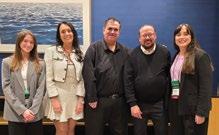

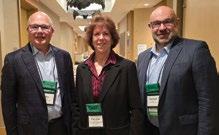
MANY THANKS TO OUR CONFERENCE SPONSORS!
SPONSORS


















Save the dates for future conferences!
Wyndham Grand Clearwater Beach
March 3-7, 2027
March 1-5, 2028
(727) 562-7793 | higheredcenter@law.stetson.edu
stetson.edu/law/highered