Tea Shack News
Compiled by the Workforce for the Workforce

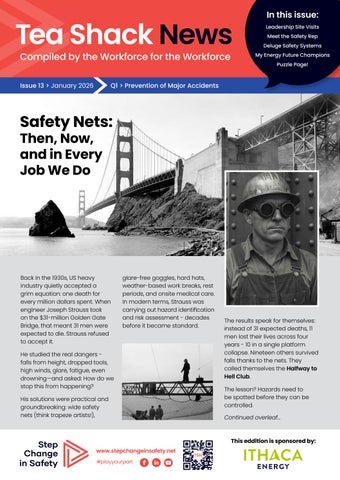
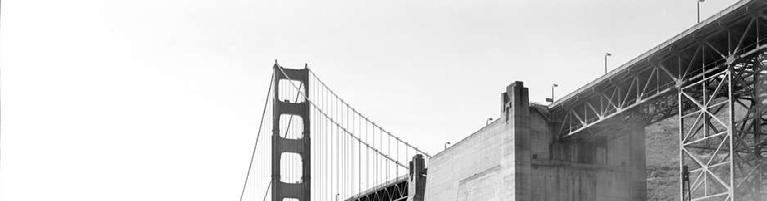
Back in the 1930s, US heavy industry quietly accepted a grim equation: one death for every million dollars spent. When engineer Joseph Strauss took on the $31-million Golden Gate Bridge, that meant 31 men were expected to die. Strauss refused to accept it.
He studied the real dangersfalls from height, dropped tools, high winds, glare, fatigue, even drowning—and asked: How do we stop this from happening?
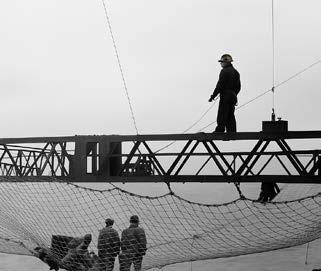
His solutions were practical and groundbreaking: wide safety nets (think trapeze artists!),
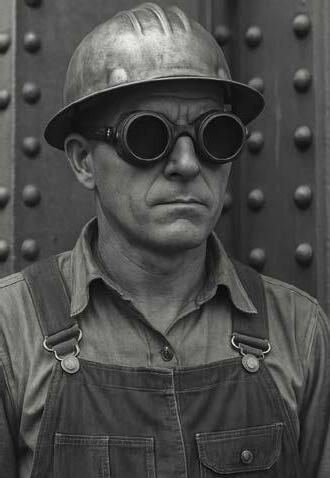
glare-free goggles, hard hats, weather-based work breaks, rest periods, and onsite medical care. In modern terms, Strauss was carrying out hazard identification and risk assessment - decades before it became standard. The results speak for themselves: instead of 31 expected deaths, 11 men lost their lives across four years - 10 in a single platform collapse. Nineteen others survived falls thanks to the nets. They called themselves the Halfway to Hell Club
The lesson? Hazards need to be spotted before they can be controlled.
Continued overleaf...

The tragic fatality in the UK oil & gas sector in November 2025 was felt deeply across our community. Our thoughts remain with the individual’s family, friends, colleagues, and all those affected.
It is a stark reminder of why the work we do matters. Every conversation, every observation, and every intervention counts. By speaking up, learning from experience and supporting each other, we can all play our part in ensuring everyone goes home safe.
Industry data shows that incidents often occur because:
Poor hazard spotting and risk assessment. When risks feel “normal,” site visits can be rushed or assessments copied from other permits without checking the real conditions.
The team isn’t clear on roles. Everyone must know the hazards, barriers, and their responsibility to check for new risks—nearby work, weather, changing ground, or unclear tasks.
Underestimating everyday risks. Even walking to and from the worksite can become dangerous if attention slips.
Deviating from the permitted task. What seems like a “helpful shortcut” at the time can create serious hazards for the team.
Perform 360° scans before and during work, use dynamic risk assessments throughout the task, and if anything changes, stop and reassess. Always spot hazards, protect your team, and keep the promise that everyone goes home safe.
Strauss built a net to catch his men. Today, our net is built from awareness, action, and accountability.
As part of our Q1 resources, check out the short film on hazard spotting and risk assessments— featuring the trailblazing work of Joseph Strauss.
Ithaca Energy are sponsoring Step Change in Safety’s Q1 Theme: Prevention of Major Accidents, highlighting the importance to us all of effective Process Safety Leadership. This follows on from the report on this topic issued by the Health and Safety Executive in February 2025.
Recent key industry improvements include the development of process safety improvement plans to ensure the safe operation of the sites you work on. While working offshore you have the opportunity to see where and how equipment operates, you can see and understand what is not working, and you can directly influence process safety performance. Ask questions to understand risk areas, identify complacency or if there are any Cumulative Risk impacts that need to be addressed. You have a real opportunity to make sure standards don’t slip, and to highlight improvements.
Ithaca will be presenting at the SCiS Quarterly Lunch & Learn on 5 March. We will cover the topic of Major Accident Hazard prevention and will be pleased to present how this topic can be viewed from within our operations in 2026.
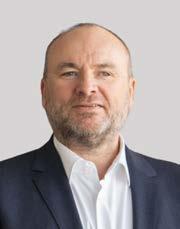
Author: Craig Wiggins, CEO SCiS
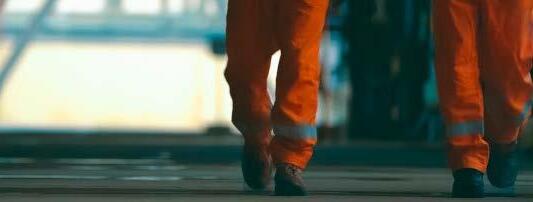
Leadership engagement visits have been part of the Boots on for Safety approach for many years, and they remain one of the most important ways leaders can stay connected to the reality of work. In the 2023 and 2024 Process Safety Leadership & Workforce Surveys, many of you gave clear feedback on how these visits could be more meaningful.
As a result, the Workforce Engagement Support Team (WEST) has revamped the guidance, and the new version will be launched at the OEUK HSE Conference on 25 February 2026.
The updated guidance focuses on what a quality leadership site visit should look like, with practical support in areas such as:
Site Induction
Major Hazard Awareness
Control of Work
Health and Wellbeing
Human Factors
Workforce Engagement
It also includes straightforward tips for leaders - most importantly, taking the time to listen, understand what people need, and recognise how we can each play our part in making sure everyone goes home safe.
We’ve already carried out pilot visits with several member companies, and the feedback has been very positive. Those visits have highlighted some important improvement areas, and we’re working with those teams as they develop their plans.
There are many more visits lined up for 2026. If you’d like to take part or find out more, please get in touch - we’re here to support you.
For me, leaders getting out to site, seeing the work firsthand, and building clear plans with the people who actually do the job is vital if we want the proactive safety culture we talk so much about.
I’m really looking forward to the 2026 Leadership Engagement Visit Programme, and I hope to share more of what we learn throughout the year in Tea Shack News.
Take care and look after each other.
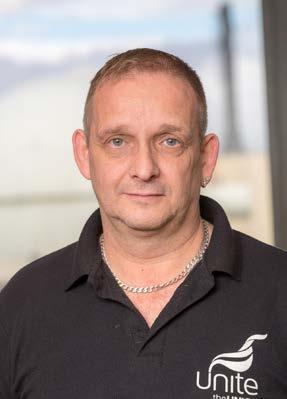
Describe your job role
My role as full-time Safety Rep is as the title suggests is still a Safety Rep, but normally that would be additional responsibility added to your day job , in my role my primary task is being a Safety Rep.
At the Dounreay Site we have approximately 50 Safety Reps spread across the site in various roles. As a full time Safety Rep I am the direct point of contact between Management, SEPA (Scottish Environmental protection Agency), ONR (Office for Nuclear Regulation) and the NDA (Nuclear Decommissioning Authority).
I co-ordinate meetings, arrange safety rep training, plant inspections, and carry out investigations into safety events.
I also support the site with my background in lifting and I train staff in the wearing of airline suits for working in highly contaminated areas.
But most importantly I am always available for anyone to come to me with any concerns.
Job Full Time Safety Rep
NRS (Nuclear Restoration Services Dounreay), a wholly owned subsidiary of Nuclear Decommissioning Authority (NDA)
How long have you worked in the oil and gas industry?
My work history is spread over the Nuclear industry and Oil & Gas. In the early 80s I came to the Dounreay site and worked and trained as a Rigger. I left Dounreay early 90s to join oil & gas where I worked as a rigger on various platforms including Brent Delta, Piper Bravo, Claymore Alpha and Ninian Central. I returned to the Nuclear sector in the late 90s when I joined the MOD site at Vulcan Naval Reactor Test establishment as a Rigger on the Reactor refuel / defuel.
I returned to Dounreay in early 00s where I worked as a Chargehand then Supervisor on various decommissioning projects until finally becoming a full time Safety Rep.
When did you become a Safety Rep and why did you want to become one.?
I have been a Safety Rep throughout my career, main reason my father was a Safety Rep and he encouraged me. I was always interested in health and safety, but as Safety Seps have legal rights you’re given an opportunity for your concerns to be listened to. As a Union appointed Safety Rep you also have the option to take various training courses in health and safety that would not normally be available to you.
What do you consider the main functions of a Safety Rep?
Main function of being a Safety Rep is to be a point of contact between the shop floor and management. Raise concerns from the workforce but always try and bring possible solutions rather than just issues. Being able to understand and empathise with anyone that comes with a concern.
Why do you think your Company joining Step Change in Safety made sense?
Having worked in both oil & gas and the nuclear sectors, I feel I am in a good position to compare how similar both industries are. We both have all the very similar hazards, lifting operations, working at height, confined space, chemicals, mental health, wellbeing the list goes on and on, even radiation. I firmly believe we can share our experiences to benefit us all.
What in your opinion makes a good Safety Rep?
Fundamentally, I believe a Safety Rep must be approachable. It’s important they build relationships with staff and management, have the trust of their colleagues and the confidence to challenge senior management on any concerns raised. Keeping up to speed on changes in legislation is important. Ultimately the workforce need know, if I go to this Safety Rep with a concern, they will follow it through.
In any high-hazard industry, it is vital that our people, process, and plant safety barriers function as expected in a real emergency.
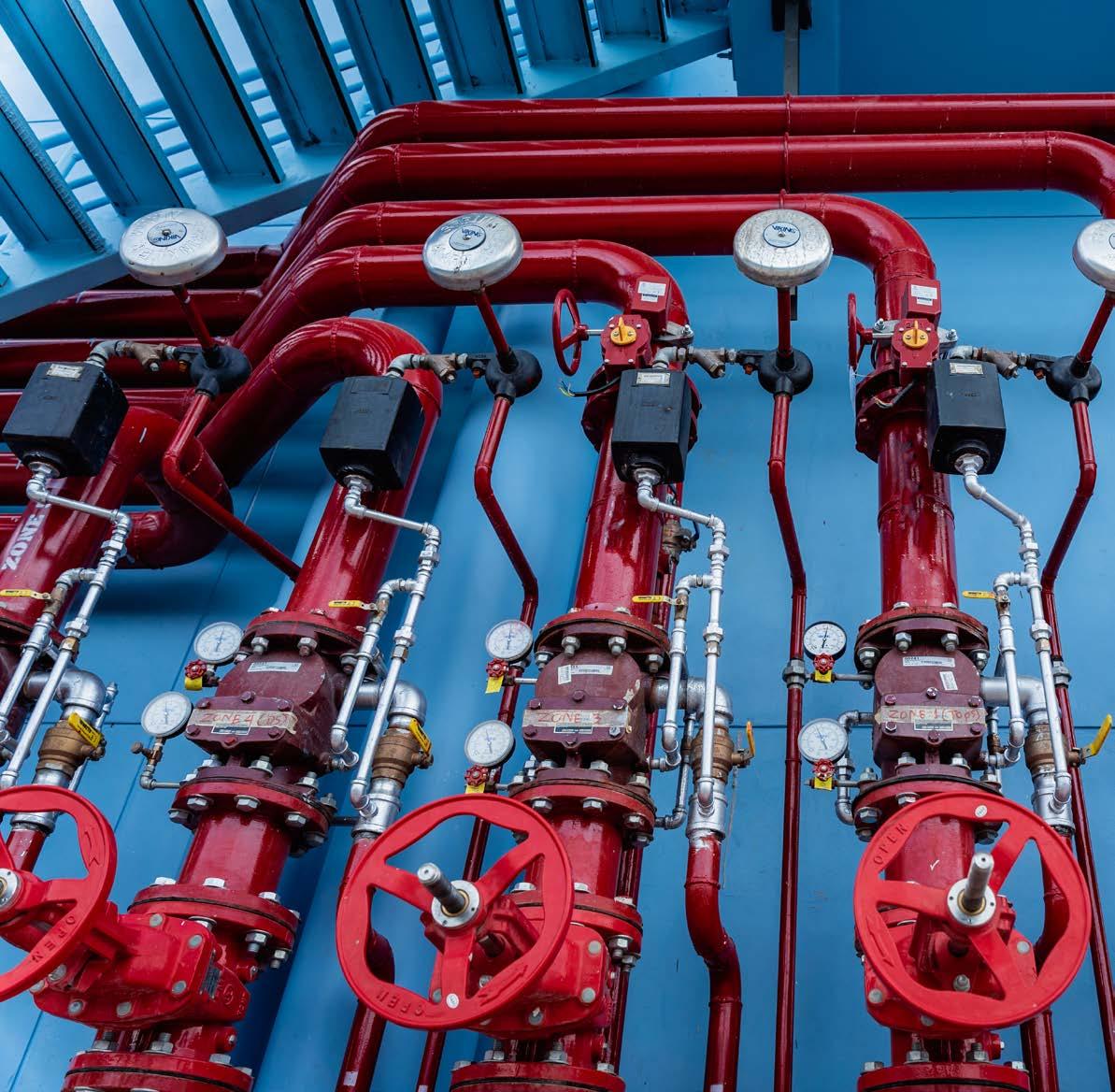
Over the last few years, issues have come to light involving carbon steel deluge systems, where corrosion products and marine growth have blocked deluge nozzles when systems were initiated during testing.
In some cases, the nozzles were cleaned, the system retested, and a pass achieved. While this restores compliance at that point in time, it does not provide assurance that the system will continue to perform if the root causes are not addressed. These include material selection, dead legs, and hypochlorite systems not functioning as intended - all contributing to corrosion and marine growth causing blockage.
The Health and Safety Executive has taken regulatory action and issued a revised Active Fire Protection Inspection Guide. At Step Change in Safety, we issued
a High Value Learning across industry and held sharing and learning events to ensure the issue was openly discussed, fully understood and, most importantly, learned from.
This increased focus has helped drive awareness at the front line.
Over the past 12 months, our E-Obs (electronic observation system) has recorded a significant increase in safety observations raised by the workforce relating to deluge systems. This reflects greater understanding of the issue and supports early identification, reporting, and resolution as a preventative measure.
In summary, when a safety system fails a performance test, fixing the immediate fault is not enough. We must ask: Will this system pass next week or next year? If the answer is uncertain, further analysis, escalation, and immediate mitigation are required, with senior leadership made aware of the risk so they
Craig Wiggins CEO, Step Change in Safety
can respond in the correct manner.
As someone said to me many years ago, “If it does not look right, it probably isn’t.”
Step Change in Safety has existing learning packs that explain how safety barriers are designed, maintained, and relied upon in an emergency. They remain relevant today and can be used to spark team discussions, toolbox talks, or leadership conversations.
Pack 1: Major Accident Hazard Identification and Risk Analysis
Pack 2: Bowties and Safety & Environmental Critical Elements
Pack 3: Barrier Maintenance, Assurance and Verification
Pack 4: Own Your Barrier
The Major Accident Hazard Awareness Workgroup has helped the industry learn from incidents by improving understanding of major accident hazards and how everyone can play their part in managing barriers and reduce risks.
Analysis by the workgroup of recent incidents shows that many are linked to how work is planned, led, and carried out day
to day - including human and organisational factors. How work is organised, how decisions are made, and how procedures are applied in practice all play a part.
To reflect this learning, the workgroup is evolving into the Operational Excellence Workgroup, with a broader focus on everyday operational performance, not just major events.
The workgroup is developing a three-year roadmap to support more consistent approaches across the industry. While this is still early days, the intent is clear: to improve safety and operational performance by focusing on how work is really done - the systems, decisions, and behaviours that sit behind safe and reliable operations.



In the last edition of Tea Shack News, we introduced the new industry weight limit policy, with a phased rollout beginning in November 2025 and full implementation from November 2026. Now, the priority is making sure everyone has the support and resources they need to prepare.
The policy is rooted in safety, following concerns that Search & Rescue winches cannot safely accommodate personnel weighing over 124kg (clothed, excluding survival suits). While the limits themselves are clear, how individuals reach and maintain a safe weight will look different for everyone - and that’s where the right support makes a real difference.
Weight is often a sensitive and personal subject, but it also links directly to health, wellbeing, and safety. Managing weight isn’t just about meeting a limit; it can bring wider benefits too. Losing even a small amount (around 5–10%) can improve blood pressure and cholesterol, support breathing and sleep, reduce strain on joints, and increase overall energy levels. It can also lower the risk of preventable conditions such as heart disease and diabetes.
• Introduction & Awareness 1st November 2025 – 31st Jan 2026
• Transition Phase 1st Feb 2026 – 31st Oct 2026
• Mandatory Implementation 1st November 2026
There’s no single solution and no expectation of quick fixes. Lasting change comes from building healthy habits that can be maintained over time. Eating well, staying active, and making small, realistic adjustments that fit around work and life are far more effective than short-term measures. The aim is progress, not perfection.
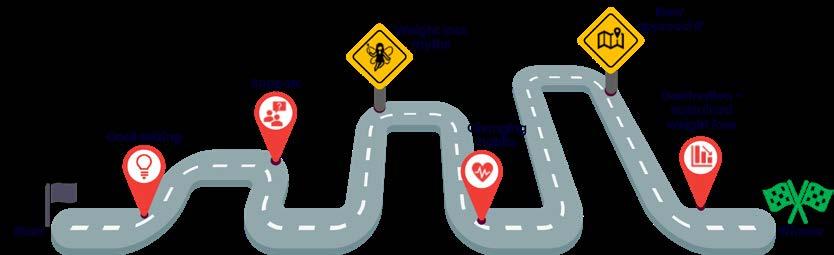
To support this, Step Change in Safety has developed an interactive Weight Loss Journey roadmap. It brings together guidance, tools, and trusted signposting to help people understand where they are now and explore practical next steps - whether that’s learning more, making lifestyle changes, or seeking additional support.
This is about giving people options and time, not applying pressure. Engaging early with the support available helps keep choices open and allows individuals to move at a pace that works for them.
Further information on the policy itself is available via OEUK’s Safe Weight Limit Policy.
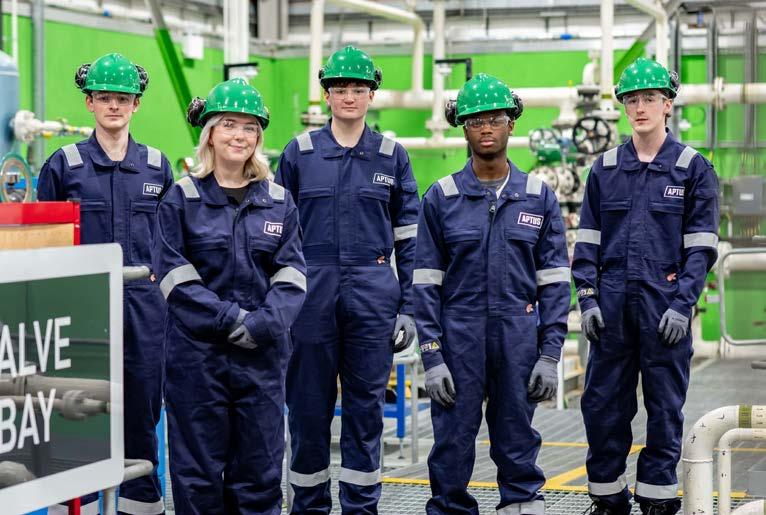
Young professionals across the UK and Europe still have extra time to apply for the 2026 My Energy Future Champions programme, with the application deadline extended.
Powered by OPITO, My Energy Future launched the global Champions initiative to spotlight the next generation of energy professionals and challenge outdated perceptions of the sector. The programme shares real stories from those already working across energy, highlighting the diversity of routes, roles and opportunities shaping the industry’s future.
As the region accelerates towards

Step Change in Safety, together with the Marine Safety Forum and Mental Health in Energy, is supporting CALM’s free Mental Health Awareness Training, available to everyone across the energy industry.
The online course takes around
Net Zero and new technologies continue to emerge, demand for skilled and passionate people is growing rapidly. The 2026 Champions will help showcase the UK and Europe’s leadership in energy transition, while inspiring young people, career changers and future talent to consider careers in energy.
Champions will begin their voluntary roles in Q1 2026, acting as ambassadors across digital platforms and in-person events. By sharing their own career journeys, they help bridge the gap between perception and reality, demonstrating that the energy sector is innovative, inclusive and full of long-term potential.
Champions are being recruited globally from the UK/Europe, North America, the Middle East & Africa, Asia-Pacific and South America, with diversity across gender, background, job role, company size and energy discipline central to the programme.
Young Professional Champions are typically under 30, with 2–3 years’ experience, and are working in, training for or apprenticing within the energy sector. They should be confident communicators, comfortable using social media, creating content, attending events and sharing their story. Enthusiasm, authenticity and openness matter more than job title.
Hazel Lince, VP of Strategic Partnerships for OPITO UK/Europe, says, “Extending the deadline gives more young professionals the chance to step forward and share their story and help shape the future of energy.”
To register your interest as an individual, or to find out more about supporting the programme as an employer, visit: https://www.myenergyfuture. global/my-energy-futurechampions/
60 minutes, is easy to access, and provides practical guidance on recognising mental health challenges, starting supportive conversations, and knowing where to get help. A certificate is provided on completion.
SCiS 2025 Wellbeing Survey Report highlighted that stigma, isolation, shift patterns, and uncertainty about support continues to affect many people across our industry.
This training is a simple, practical way to build awareness, reduce stigma, and help create a more supportive working environmentwherever you are.
Whether for yourself or to better support others, we encourage everyone to take part.
Find out more and complete the training here >

1. What is the smallest country in the world by land area?
2. Which planet in our solar system is known as the Red Planet?
3. What year did the first iPhone launch?
4. Which UK city is known as the Steel City?
5. What is the name of the world’s longest river?
6. Who painted the famous artwork The Starry Night?
7. In cooking, what herb is traditionally paired with lamb?
8. How many players are on the pitch for one football team during a match?
9. What is the chemical symbol for gold?
10. Which country hosted the 2012 Summer Olympics?
4. Physical or procedural measure to prevent or mitigate a hazard (7)
6. Acronym for an enclosed lifeboat (6)
7. Process of review after an incident (13) 10. The ‘C’ in CMAPP (9)
How YOU can be involved and contribute (SCIS) (4,4,4)
1. Document demonstrating arrangements for identifying and managing risk(6,4)
2. Control of Work Document (6)
3. The place we exist in (11)
5. Power tool, or practice for an event (5)
8. He has square pants (9)
9. Safety Environment Critical (8)
11. UK Authority overseeing offshore safety compliance (4)