Understanding Green Infrastructure
by STEM Illustrated
by STEM Illustrated
Written by Ananya Chopra ’27
Illustrated by Madeleine Tsai ’29
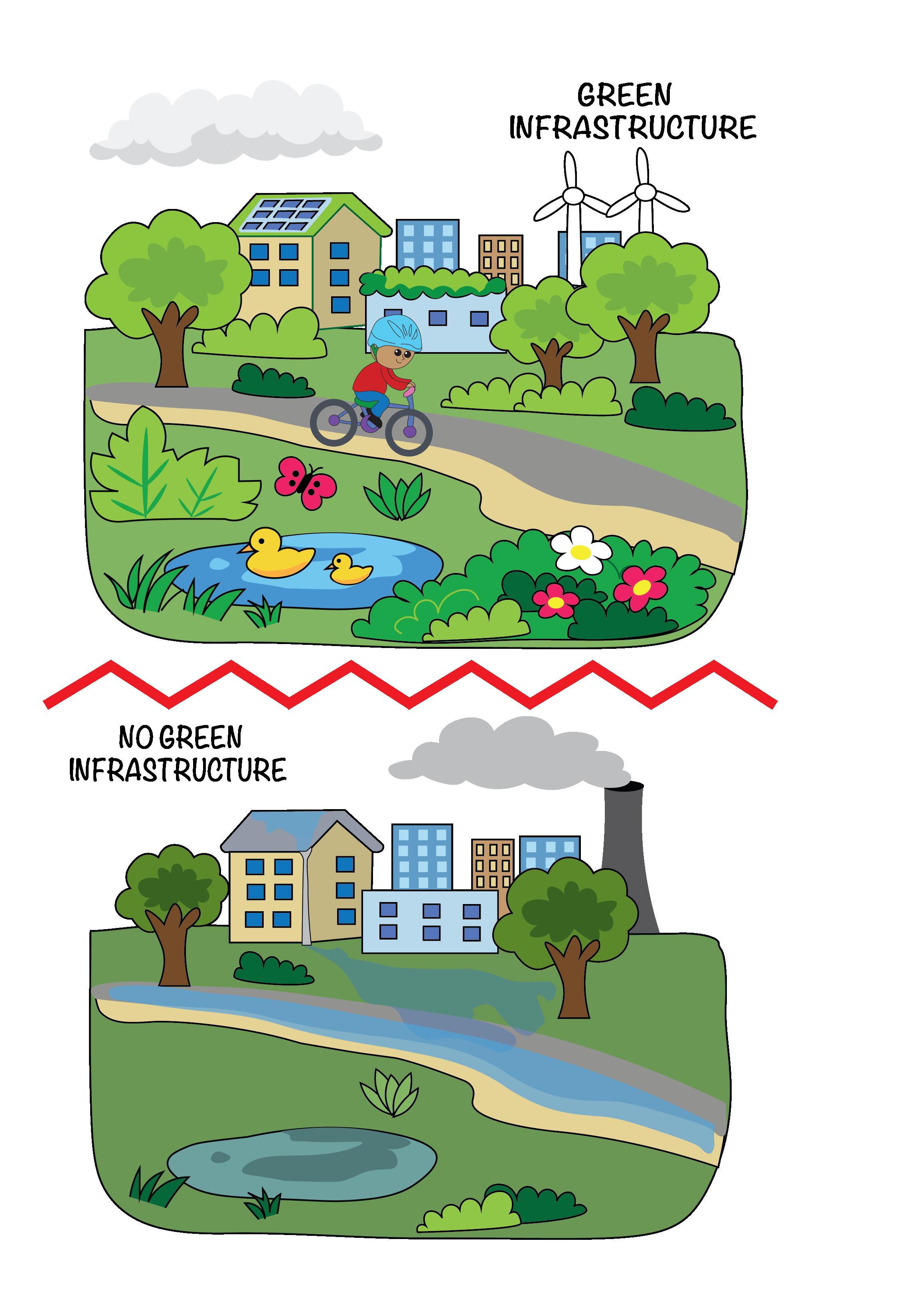
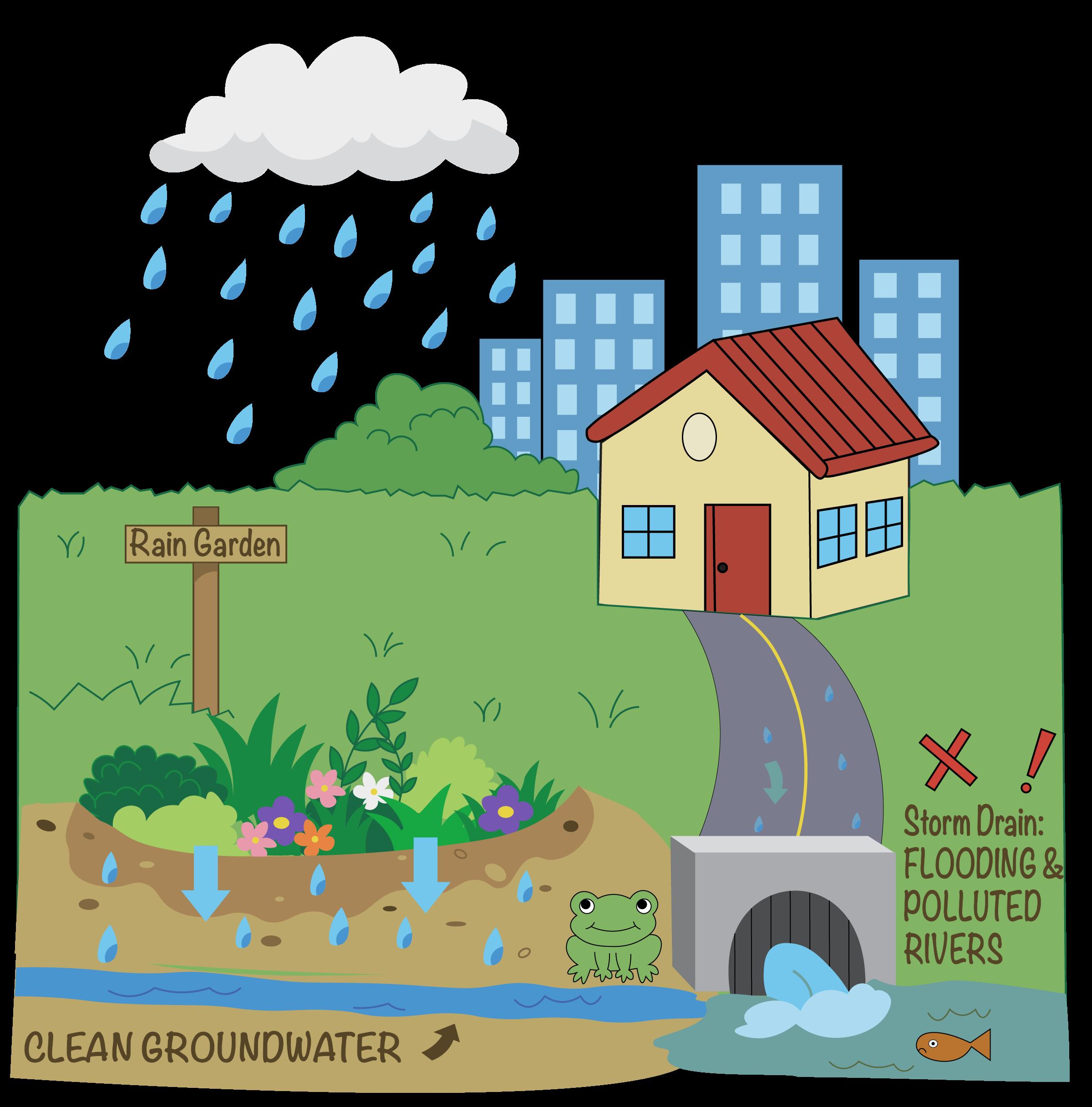
Green infrastructure is a way of designing cities that works with nature instead of against it. It uses plants, soils, and natural systems to manage rainwater, reduce flooding, and keep the environment healthy.
For example, rain gardens, a popular feature of green infrastructure, helps absorb rainwater into the ground rather than letting it flow into streets and drains. Since rainwater runoff often carries industrial pollutants, the construction of rain gardens reduces water contamination, protecting rivers and lakes. Green infrastructure also cools cities, improves air quality, and provides homes for plants and animals. By imitating how nature interacts with water and energy, green infrastructure helps make communities cleaner and more sustainable for people and wildlife.
Written by Soumya Nakka ’26
Illustrated by Soumya Nakka ’26
Climate change is a shift in weather patterns driven by both natural and human activity. Whether it be through solar variation or burning fossil fuels, this process ultimately leads to a rise in global temperatures. Often, this warming melts land-based water structures like glaciers and ice, causing sea levels to rise. Additionally, when the air gets warmer, it can hold more water vapor. When high levels of atmospheric water vapor condense, rainfalls are heavier. High temperatures also lead to dry soil and lack of water. As a result of these changes, cities become more susceptible to disasters such as floods, droughts, storms, and even a heightened spread of tropical diseases. These events can displace large amounts of people, compromise living necessities, and degrade key infrastructure.
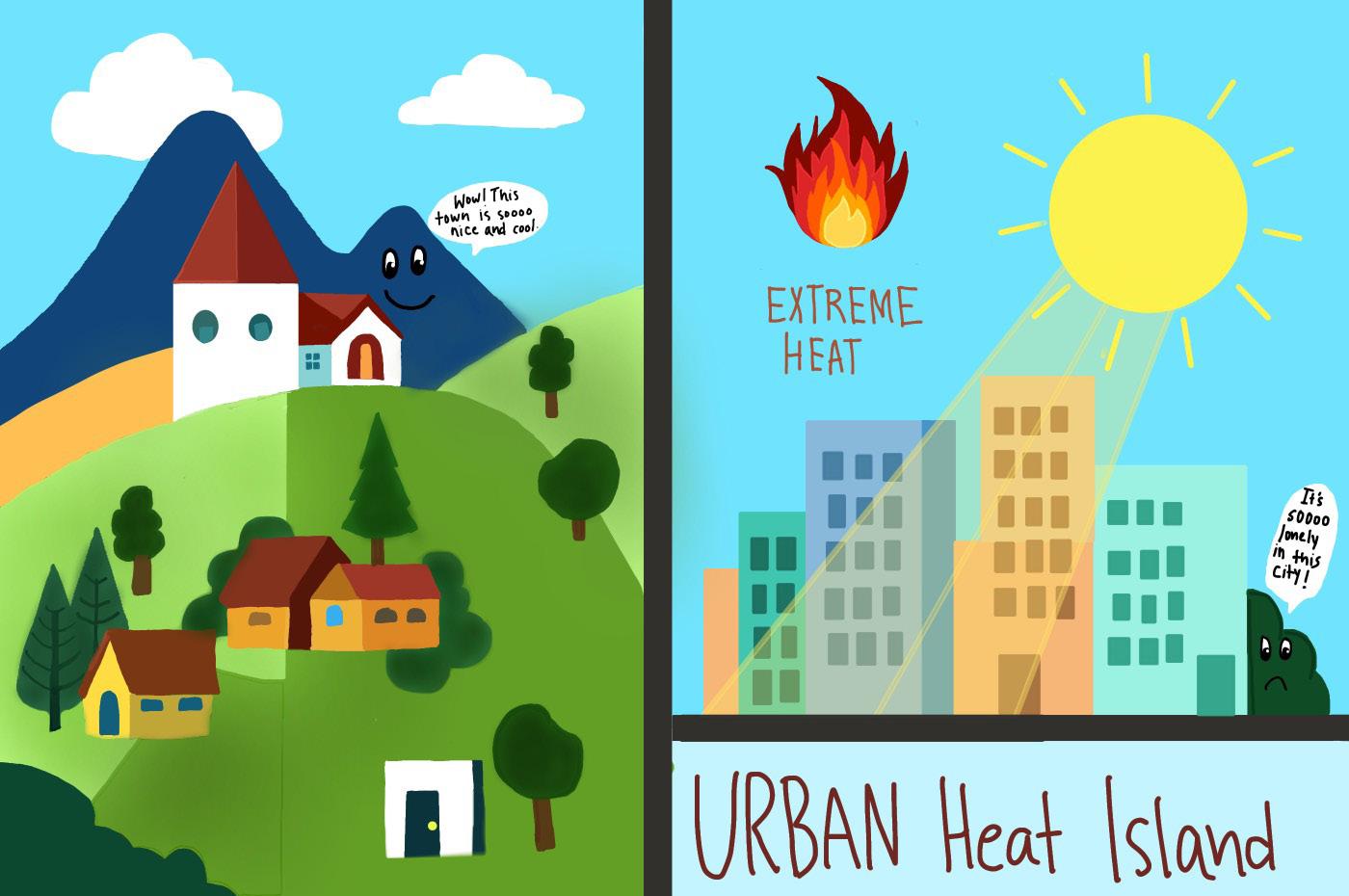
An urban heat island occurs when a populated city experiences warmer temperatures compared to nearby rural towns. While small towns have more vegetation and greens that can store water and facilitate evapotranspiration—the transportation of water from the Earth’s surface to the atmosphere, cities are covered in buildings, streets, and public complexes that have no natural cooling system. Because of this, heat waves caused by climate change are more intense in urban heat islands. These extreme periods of warm weather cause heat exhaustion, heat strokes, and even heart attacks, posing serious risks to civilians.
Written by Soumya Nakka ’26
Illustrated by Madeleine Tsai ’29
Fortunately, green infrastructure provides strategies that can alleviate these issues. One example of green infrastructure is increased trees and vegetation in urban areas. Plants keep the air cool with evapotranspiration, a process where they absorb water from their roots and evaporate it through their leaves. Trees also provide shade for buildings, decreasing the need for air conditioning and thus reducing fossil fuel emissions. Furthermore, eco-friendly features such as permeable pavements and rain gardens allow for rain retention, mit- igating floods. Simply put, storm water is captured and slowly released by these mechanisms to reduce runoff and over- flows into cities, highlighting the applicabil- ity of green infrastructure.
Written by Julian Szatmary ’29
Illustrated by Rory Laubach ’27
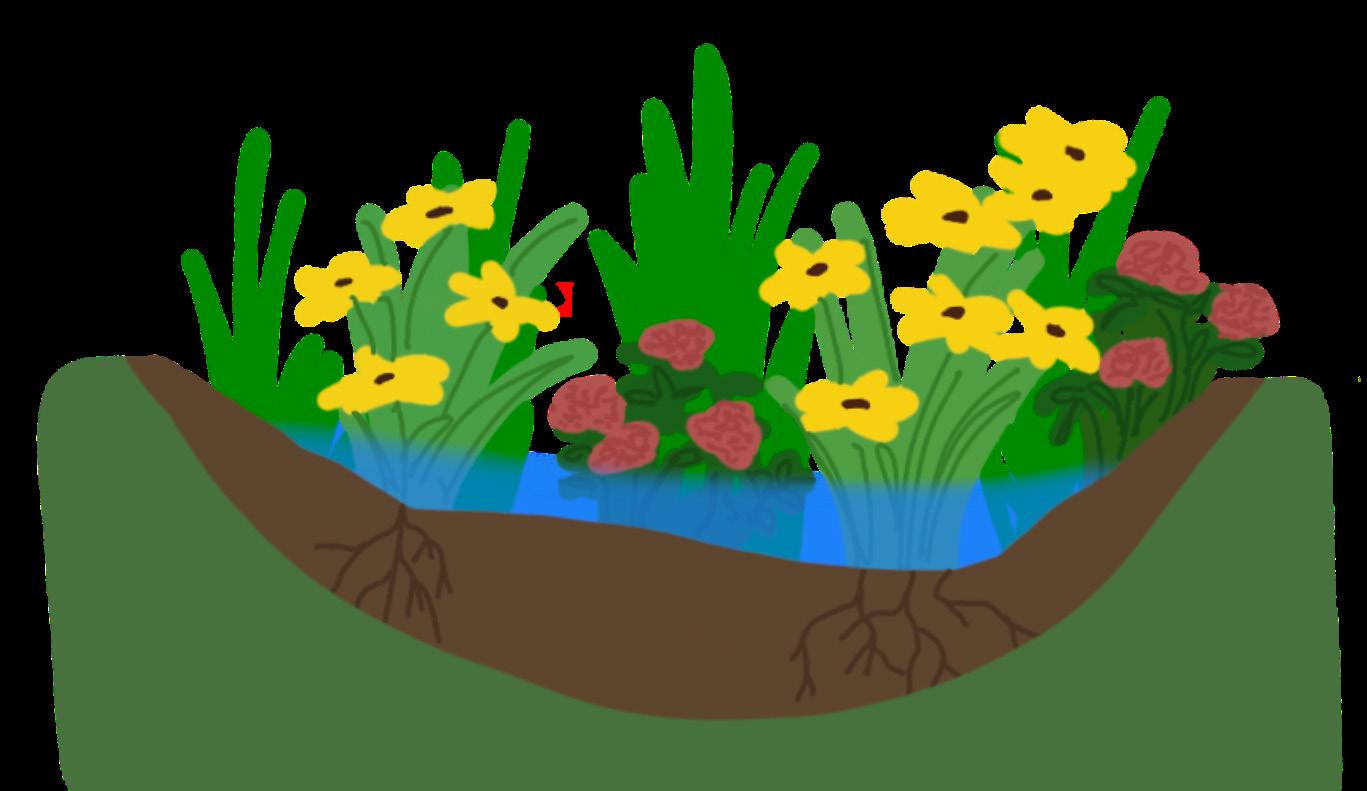
Rain gardens are basins filled with soil and deep-rooted native plants that can be placed throughout cities or even in one’s own backyard. These gardens act like sponges, soaking up rainwater and letting it slowly filtrate into the ground instead of flowing over man-made infrastructure that picks up pollutants before entering and littering local streams. Rain gardens have been implemented in cities such as Vancouver and Cambridge where they are replacing typical curbs
Green roofs, or “living walls,” are another type of green infrastructure. These are walls or roofs that are covered with plants. They are built with a waterproof membrane to prevent water from seeping in the wall or building it is attached to. The roof also consists of several layers of filtration to prevent soil from washing away and maintaining just enough water for the plants to thrive. These structures not only act as natural insulation, thereby reducing the cost of heating, but also provide water retention during
storms, mitigating the overflowing of water in sewers. Green roofs have been implemented in Basel, Switzerland, where it is a legal requirement for all new flat-roofed buildings to have a green roof.

While green roofs and rain gardens are some of the most popular types of green infrastructure, other examples such as permeable pavement, stormwater parks (recreational parks also designed to capture and treat stormwater), and bioswales (landscaped trenches that serve as a sustainable alternative to concrete storm drains) are also being built around the world. New types of green infrastructure are invented every day, and each one gets us one step closer to creating a cleaner tomorrow.
Together, these systems help manage water naturally and create healthier, greener places to live.
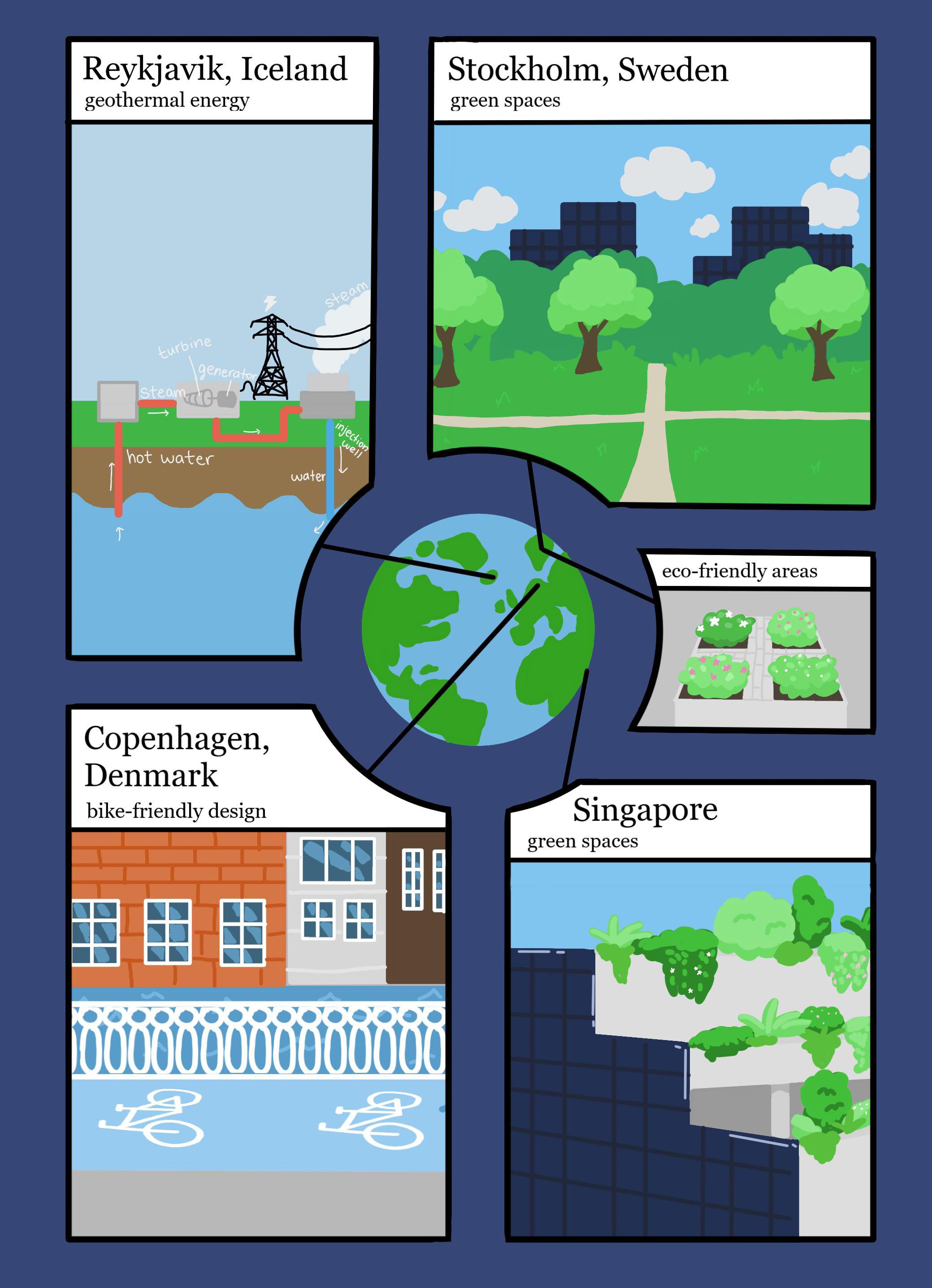
Many cities around the world have implemented green infrastructure in their designs. Green spaces, such as parks, gardens, and nature reserves, are among the most effective forms of green infrastructure, which increase biodiversity and reduce heat.
Singapore and Stockholm, Sweden, are both known for their hundreds of miles of green spaces, which take up over 50% of their lands. In Stockholm, urban development projects are transforming former industrial sites into eco-friendly residential areas, providing new solutions for a sustainable future.
Copenhagen, Denmark, is a very bike-friendly city, allowing over half of its residents to commute by bicycle.
Many cities have also started to use greener energy resources instead of fossil fuels to reduce air pollution. Reykjavik, Iceland, gets most of its power from geothermal energy gathered from underground volcanic activity, and the city is on track to become free of fossil fuels by 2050.

Written
by Elena Shen ’29 and Madeleine Tsai ’29
Illustrated by Elena Shen ’29
Hoping to become more environmentally friendly, other cities are following these examples by integrating green spaces, sustainable transportation, and green energy into residents’ daily life.
In order to make your own city more green, you can build and lobby for small-scale green infrastructure, such as rain gardens, planter boxes, permeable pavements, and downspout disconnection within your community. In addition, you can write to your local government about implementing these features in city design. Advocating for green infrastructure through raising awareness and educating your community on watershed issues and existing infrastructure plans can also help inspire those around you to take action and work towards a more sustainable living environment!
Environmental Science Brochure
Editor-in-Chief: Madisen Kim ’27
STEM Illustrated is The Lawrenceville School’s student-run international science graphics publication, transforming complex science concepts into engaging graphics. We create and distribute our graphic chapters internationally to foster and promote STEM education for children worldwide. For more information, please visit our website: https://www.lvillestemillustrated.com/