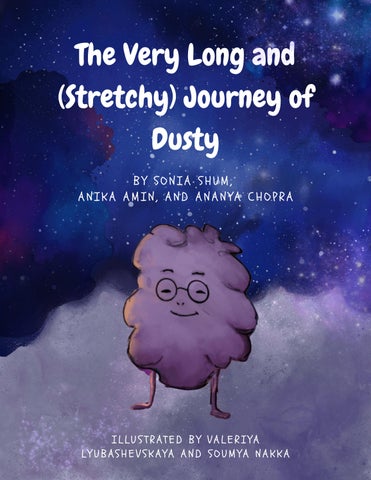
The Very Long (Stretchy) Journey of Dusty
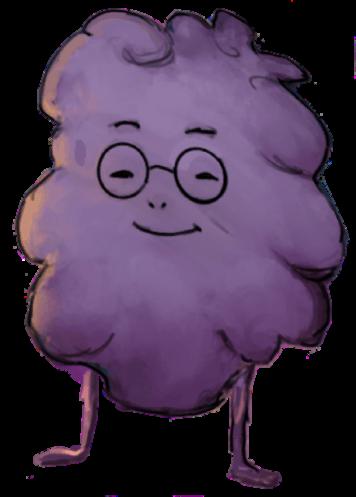
Dusty drifted into a huge, colorful cloud of gas and dust, swirling and glowing with light
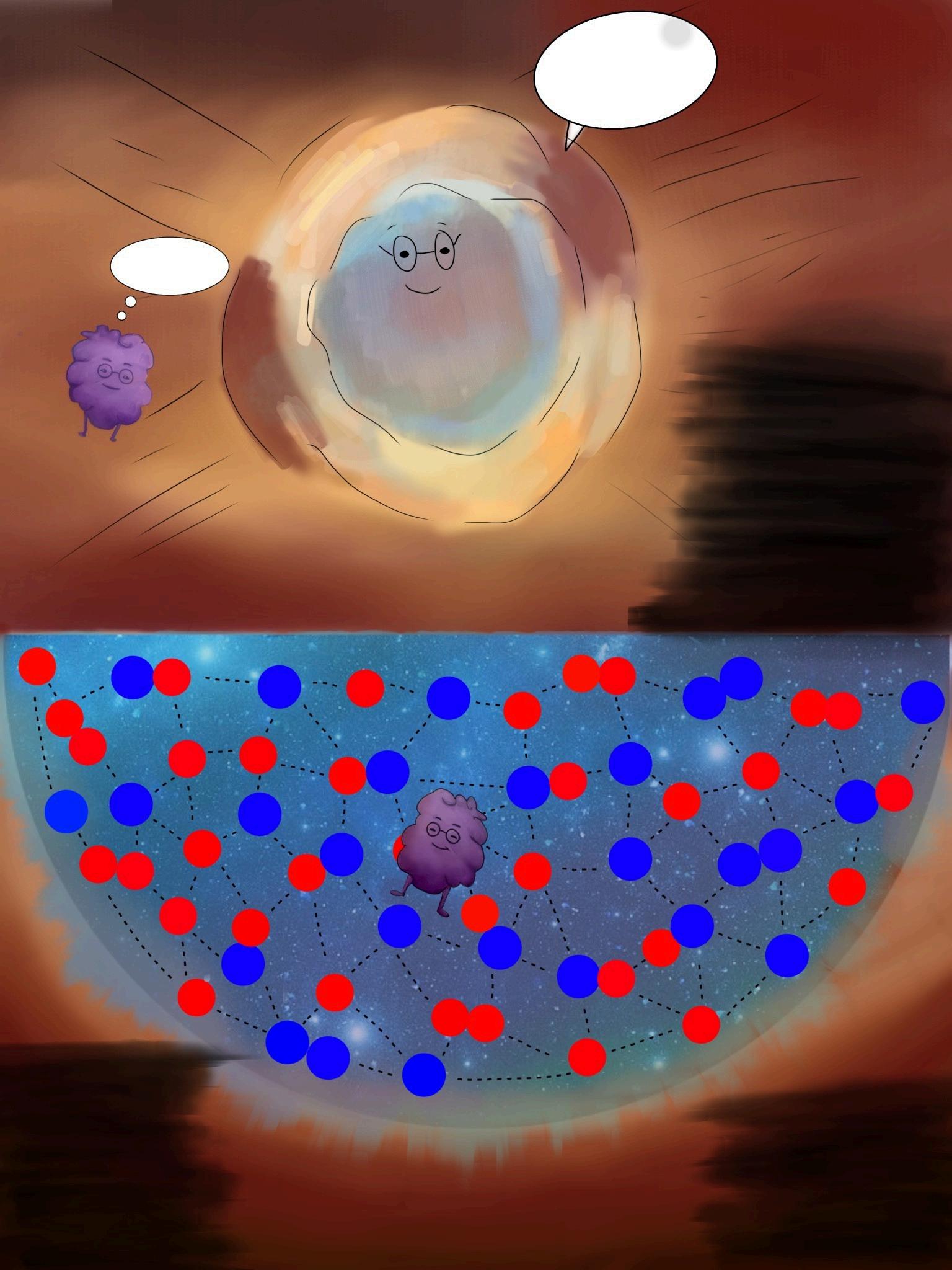

A nursery? For stars?
It wasn’t empty like the rest of space
The gas was mostly hydrogen and helium, the lightest elements in the universe.
“Welcome!” whooshed a warm, echoing voice “I’m a star nursery” Dusty blinked A nursery? For stars?
As Dusty drifted deeper into the cloud, it bumped into other dust specks and tiny gas particles They stuck together like magnets
Then more and more particles joined. The tiny particles clung together by invisible forces.
GRAVITY – nature’s pulling power – was at work, pulling everything together
The cloud slowly squeezed tighter and tighter. What once felt soft and airy was becoming denser and warmer. Dusty embraced the pull and held on. Something big was about to happen.
Atoms can crash together, fuse, and transfer energy through heat, making colorful light!
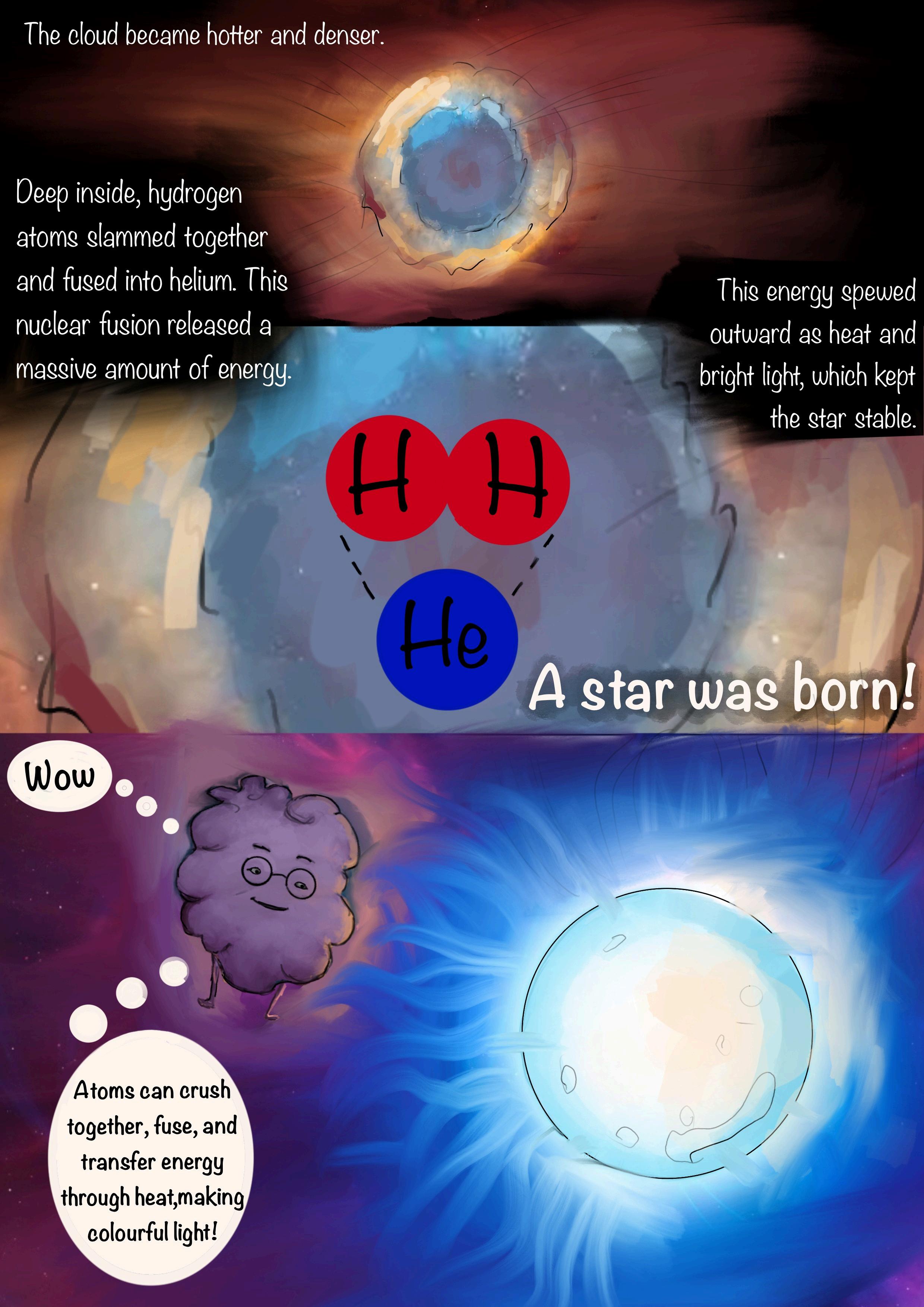
Dusty zoomed around the glowing star, feeling warm and sparkly
Many billions of years later, the star ran out of fuel.
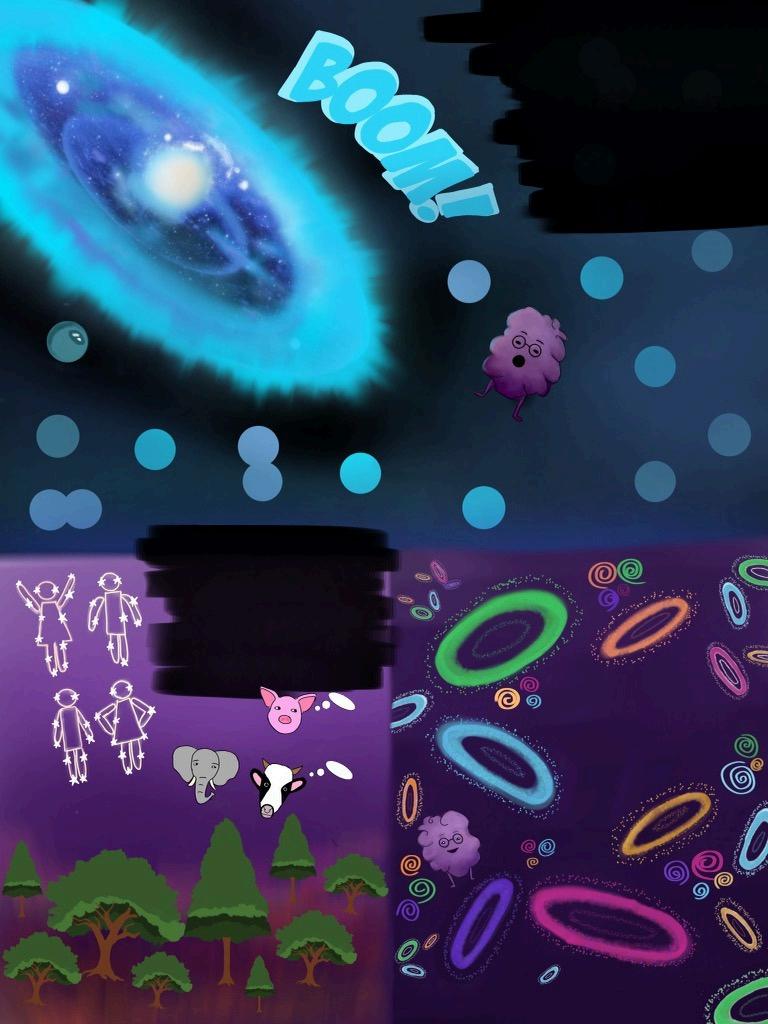
These elements spread through space, mixing with other elements to become trees, animals, and humans. Dusty, ejected from the star with other atoms, now drifted through space again.
Fusion slowed down, and gravity won. Suddenly BOOM! The star exploded in a giant supernova. It was the biggest firework Dusty had ever seen. The explosion made new, heavier elements like carbon, oxygen, and iron
It came across lots of galaxies There are approximately 2 trillion of them in the universe!
Some were like spirals, some were blobs, and some were stretched like noodles.
Gravity kept everything spinning together
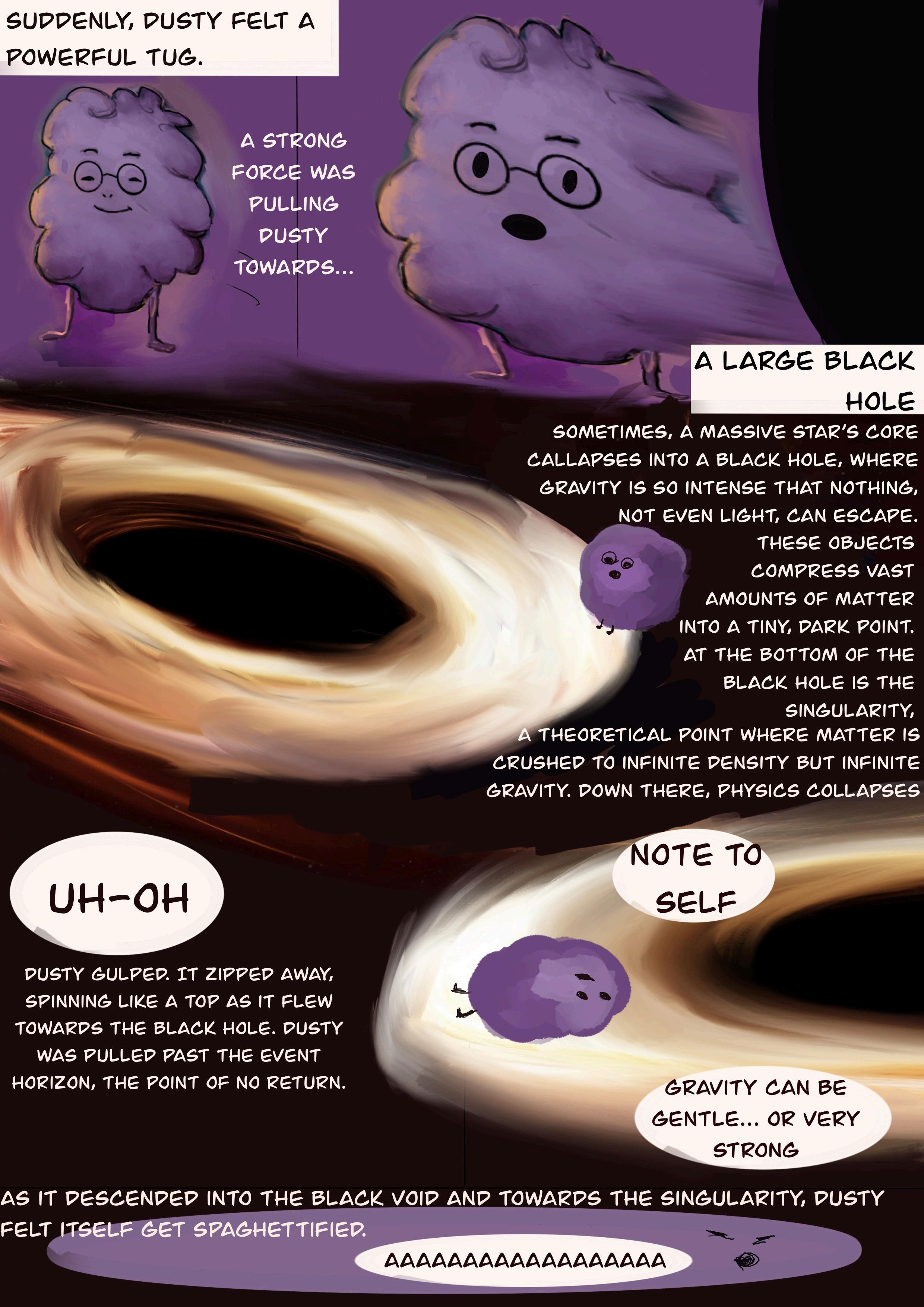
Don’t worry. Dusty is okay. It is
still
peacefully existing somewhere. Or still screaming. We can never fully understand the ways of the universe.
FUN FACT:
Every atom in your body was once part of a star—just like Dusty.
The Science behind dusty
This story follows real cosmic processes:
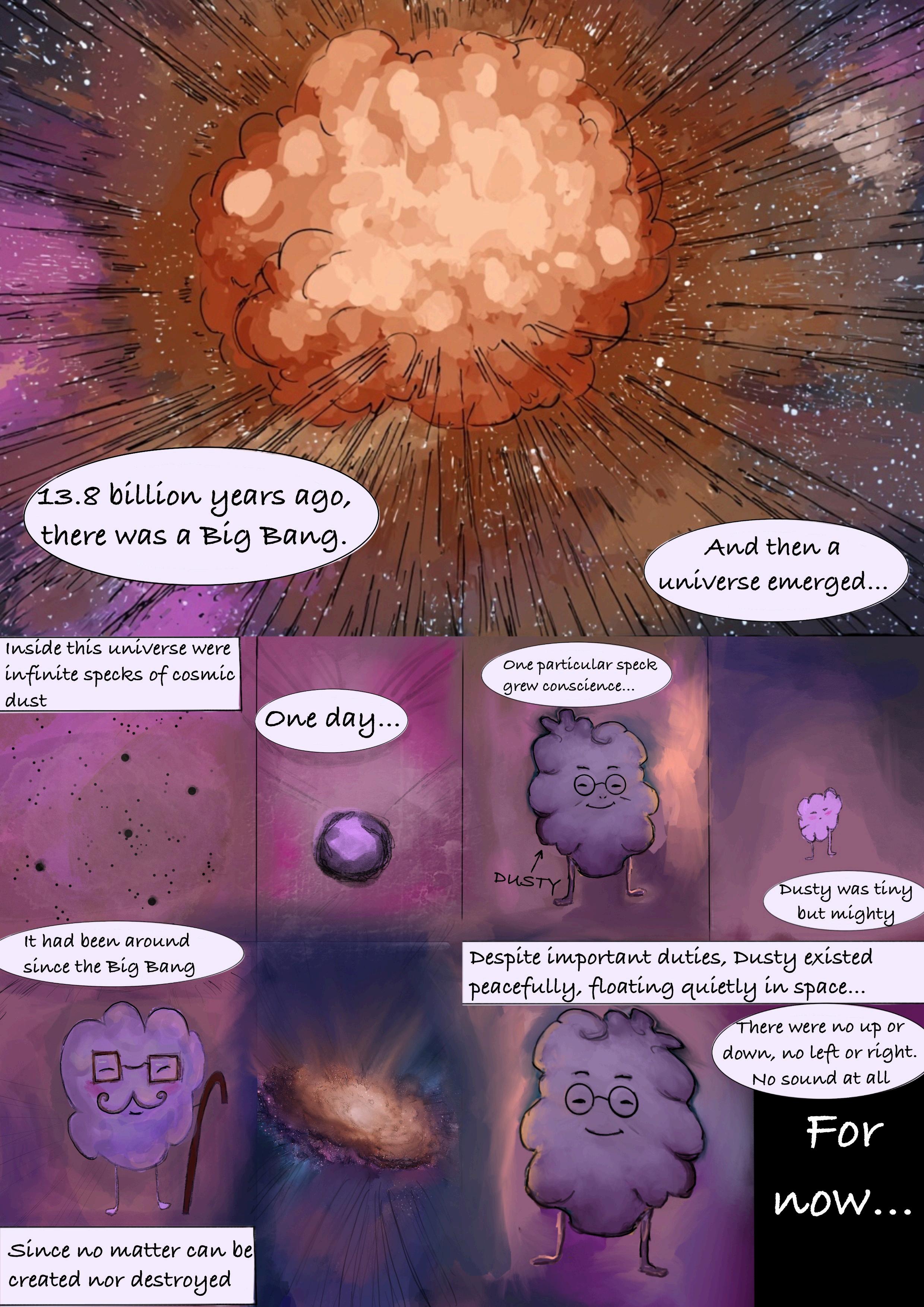
• The Big Bang created the universe ~13.8 billion years ago
• Gas & dust in stellar nurseries form stars as gravity pulls them together
• Nuclear fusion powers stars by fusing hydrogen into helium
• Supernovae create heavy elements like carbon and oxygen
• Black holes form when massive stars collapse under extreme gravity