
WELCOME TO UT DESIGN
1 Who We Are
Get to know our department and why we do what we do.
2 What We Offer
Learn what we offer through our program focus and degree plans.
3
Our Leadership
Meet the creative leaders overseeing our department.
4
Our Faculty
Meet the creative faculty in our department.
5
The Center Faculty
Meet the creative faculty in The Center for Integrated Design.
WHY WE DO
WHAT WE DO
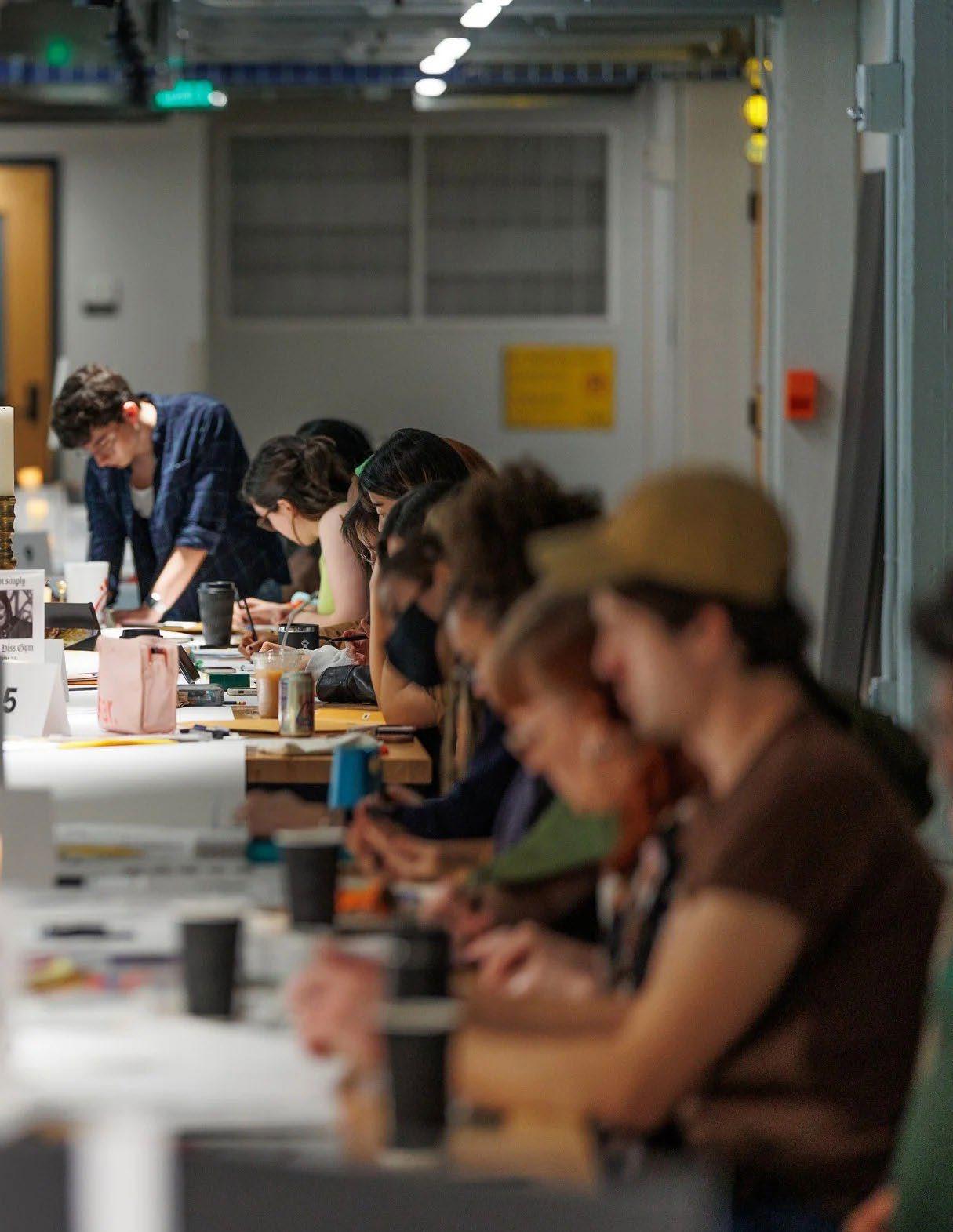
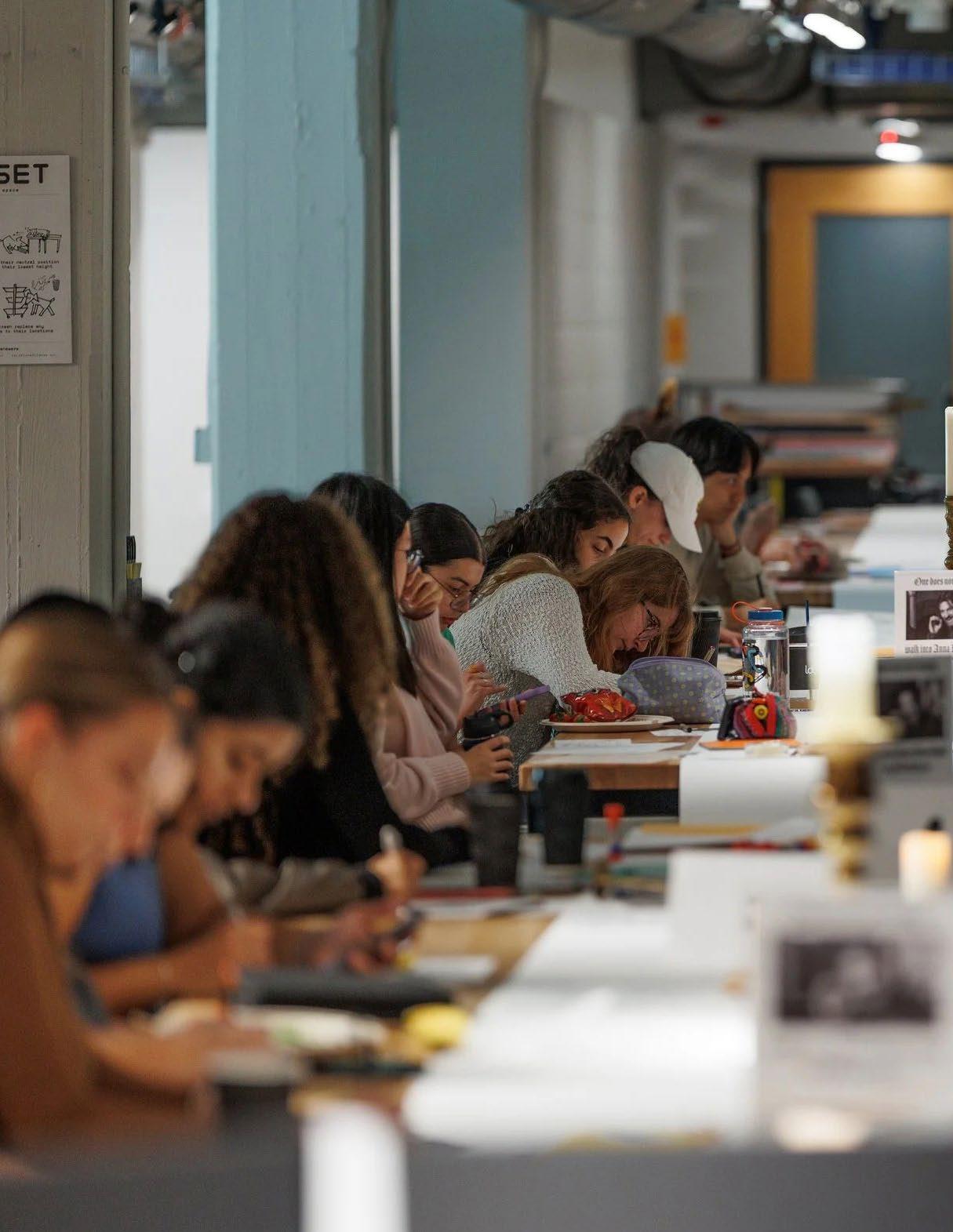
The School of Design and Creative Technologies is driven by critical thinking, fueled by creativity and craft, and obsessed with emerging technologies. It’s the embodiment of our future-forward program and the catalyst for how our students’ passions become rewarding professions. We’re building a diverse and inclusive community of inspired thinkers, makers, and innovators ready to change the world.
WE BELIEVE IN...
An Industry-Focused Approach
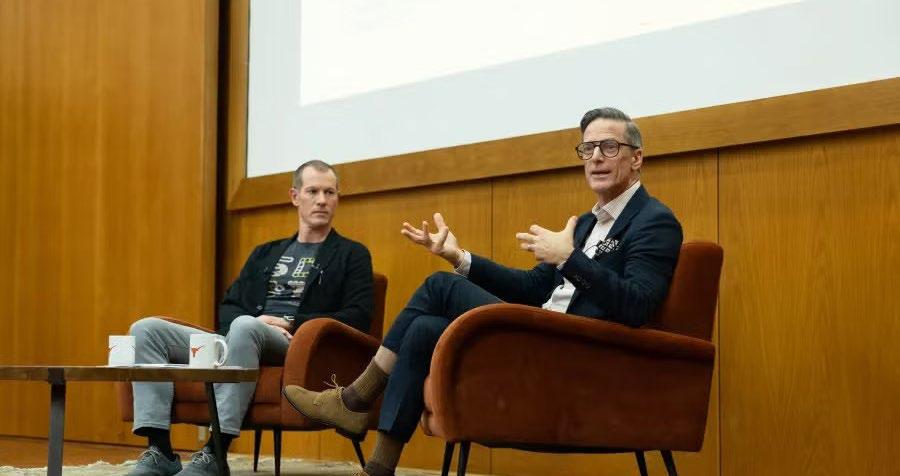
Innovative coursework that includes collaborations with our partners in the arts, tech, healthcare, business, and non-profit sectors to equip students for their future careers.
Cultivating Creative Community
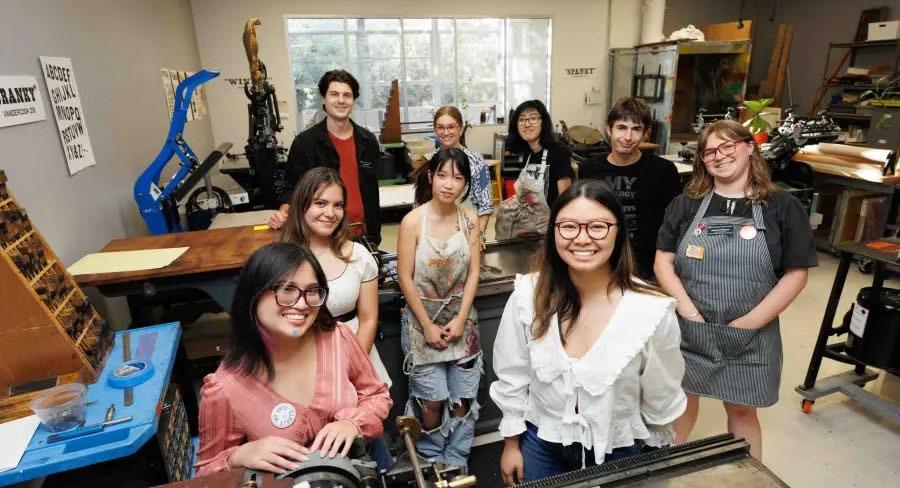
We foster a culture of belonging, inclusivity, and equity in our school to initiate positive change in our industries, society, and beyond.
Interdisciplinary Experiential Learning
We enhance learning with experiences built on collaboration, exploration, research, and experimentation across creative fields teaching adaptability and leadership skills to thrive in an ever-changing world.


Support from UT Campus to Career
We are part of a top Tier One research university embedded in a vibrant creative community deep in the heart of Austin, Texas ready to support your journey as a student and alum.

DEPARTMENT

OF DESIGN
The Department of Design offers a transformative educational experience that turns your creative talents and curiosity for the world into a fulfilling profession. You’ll explore new ways to engage with the most exciting and urgent issues of our time and experience firsthand the power of design to affect positive change. Our program focuses on attaining the highest degree of design craftsmanship in order to apply that craft to the work that means the most to you.
PROGRAM
FOCUS
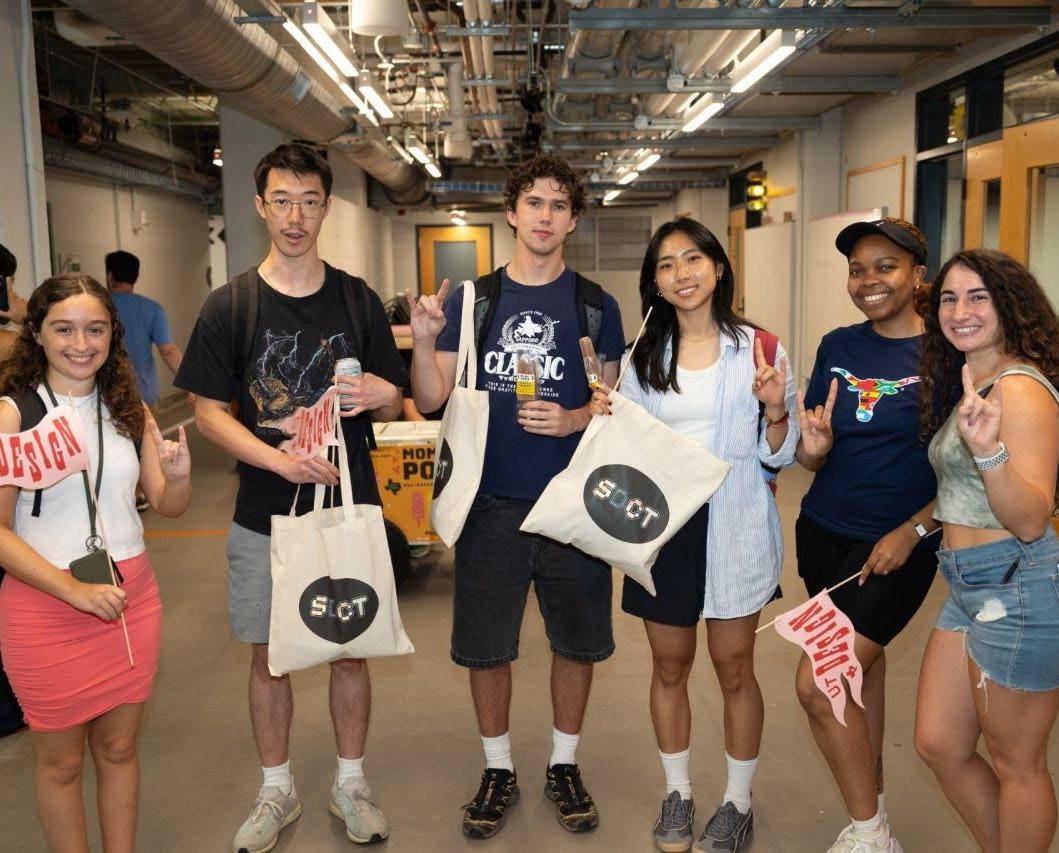
Project-Based Coursework
Expand your own design practice, experiment with new tools in our creative labs, and hone your craft while building a portfolio of work.
Industry-Oriented Approach
Curriculum is designed alongside industry partners like argodesign and Gensler, who work with us as advisors, instructors, and guest speakers to provide real-world experience opportunities.
Experiential Learning
Explore the relationship between design disciplines as you collaborate with peers, engage in research, craft solutions, and acquire the leadership skills to thrive in an ever-changing world.
Specializations
Create course groupings within the major to align with your career goals and deepen your knowledge across 5 core areas: Graphic Design, Industrial Design, Interaction Design, Design Research, and Design History.

BFA & BA DESIGN
Our undergraduate degrees in Design offer students a rich, multi-faceted educational experience that develops collaborative problem solvers skilled in research, strategy, and craft to innovate for the future. The coursework and mentorship from faculty will help shape your creative process and immerse you in various aspects of design to create graphics, objects, interactions, systems, products, and services for people. You’ll learn to push past obvious solutions and design open-ended solutions with creative confidence.
Design students engage in graphic design, industrial design, and interaction design to solve challenges in health and wellbeing, sustainability, social justice, inclusion and accessibility, education, and technology to create a better future.
MFA in
DESIGN
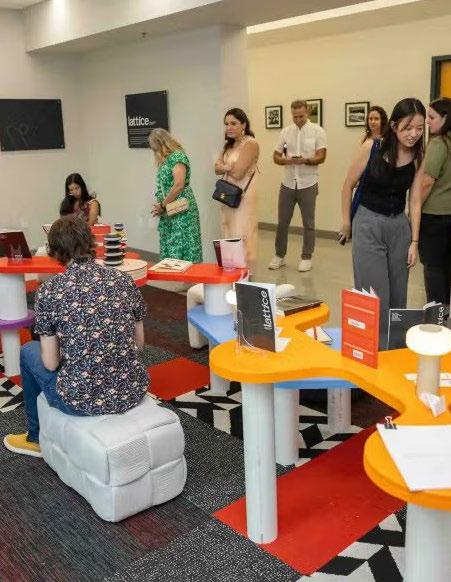
The M.F.A. in Design at The University of Texas at Austin is a full-time, on-campus, 21-month graduate program for highly motivated, intellectually curious designers. In this program, you’ll develop a design process to creatively solve complex 21st-century challenges from health and wellbeing to social justice, sustainability, education, and more. Our rigorous studio and project-based courses are taught by award-winning design practitioners who emphasize design-led research, critical inquiry, prototyping, and advanced making skills to help you gain real-world experience that can be applied to a variety of global contexts.


MA in DESIGN
Focused
in Health
Reimagine Health Through Design
We believe in the power of design to solve the most challenging problems in health. The Design focused on Health Master’s program is a first-of-its-kind collaboration between the College of Fine Art’s School of Design and Creative Technologies and Dell Medical School at The University of Texas at Austin.
In this rigorous 10-month graduate program, you’ll work side-by-side with a diverse group of individuals whose backgrounds may include healthcare, design, education, business, art, engineering, and UT Dell Medical students, passionate about solving complex health issues enabling all people to live well. You’ll learn why human-centered design is a powerful tool for producing innovative solutions to immediate challenges in the health space, and equally, for imagining possible futures. The frameworks, research techniques, business acumen, and design methodologies you’ll acquire equip you with the skills to reinvent a sector facing unprecedented complexity.
CENTER FOR INTEGRATED
DESIGN
Design-Based Learning for All
The Center for Integrated Design (The Center) connects students from all majors across The University of Texas at Austin in collaborative, design-based learning experiences. By taking courses through The Center, you’ll have the opportunity to work alongside a diverse group of students and expert design faculty as you explore design as a powerful and effective methodology for solving realworld challenges. You’ll learn how to frame problems, study human behavior, and creatively apply insights to drive positive change in your chosen industry and the world.
The School of Design and Creative Technologies, the McCombs School of Business, the School of Information, the Cockrell School of Engineering, the School of Architecture, and the Department of Computer Science at UT Austin partnered together to create this interdisciplinary curriculum open to all students from any major to build essential critical thinking skills for the 21st century.
Tasheka Arceneaux-Sutton
Associate Professor, Design

Jon Freach
Co-Head of Undergraduate Programs Associate Professor of Practice, Design

Hernandez Communications Manager


Ellen Birch Graduate Outreach Coordinator
Tamie Glass

Faculty Director, M.A in Design focused on Health Associate Professor, Design

Assistant Professor of Practice, Design Director, Center for Integrated Design
OUR LEADERS
Gabrielle
DiMitri Higgenbotham
Jamil Hooper
Industry Relations Manager

Monica Penick
Associate Chair, Design
Associate Professor, Design Visiting Scholar Researcher, Harry Ransom Center Foxworth Centennial Fellow

Julie Schell
Assistant Vice Provost of Academic Technology and Director of the Office of Academic Technology Executive Director for Instructional Continuity, Innovation, and Accreditation Assistant Professor of Practice, Design OnRamps Advisor

Karol
Murlak

Chair, Department of Design

Assistant Professor of Practice, Design Associate Director, Center for Integrated Design
Keila Z. Pérez Quiñones






MEET OUR DESIGN












FACULTY





Jeanette Abbink
Lecturer, Design
Jeanette Abbink is a graphic and editorial designer who recently relocated from Brooklyn to Austin. Under the auspices of her studio, Rational Beauty, she has created award-winning editorial design for such magazines as Dwell (where she was the founding creative director), American Craft, and Pan and the Dream, and books for publishers including Rizzoli, Aperture, Abrams, Monacelli, and Clarkson Potter (where Questlove’s Something to Food About: Exploring Creativity with Innovative Chefs, won an AIGA Fifty Books of the Year Award). For several years, she has also taught publication design at Parsons School of Design, The New School.
Rational Beauty’s recent projects include book and magazine design: Perfect Strangers: New York City Street Photography by Melissa O’Shaughnessy (Aperture 2019), Blue Violet by Cig Harvey (Monacelli 2021), and Pan and The Dream, Supernatural, issue No 5 (Pan and The Dream 2021).
Jeanette co-authored and designed 3-D Typography with Emily CM Anderson, a book showcasing the work of 100 designers and artists who fashion typefaces out of everything from moss to human skin (Mark Batty, 2010).
Tasheka ArceneauxSutton
Associate Professor, Design
Tasheka Arceneaux-Sutton is an educator, graphic designer, imagemaker, and writer. She is an Associate Professor of Graphic Design and Creative Technologies and a faculty in the M.F.A. program in Graphic Design at Vermont College of Fine Arts. She is the founder of Blacvoice Design, a studio specializing in branding, electronic media, identity, illustration, and publication design. Typography has a strong presence in her work—hand-lettering, typesetting, and deconstructing type through analog and digital processes.
Tasheka’s research focuses on discovering Black people omitted from the graphic design history canon. She’s interested in the visual representation of Black people in the media and popular culture, primarily through the lens of stereotypes. Her essay, “A Black Renaissance Woman: Louise E. Jefferson,” is in Baseline Shift: Untold Stories of Women in Graphic Design History. Her review of Race by Design: How Visual Culture Shapes America appeared in the journal Design in Culture. Her essay, “The Type Behind the Name,” in Documenting the Nameplate, is forthcoming in 2022. She is coauthor of Black Design in America, which will be released in the fall of 2023.
Tasheka holds an M.F.A. in graphic design from California College of the Arts and a BA in English Writing from Loyola University New Orleans.
Kevin Auer Lecturer, Design
Auer began his craft as an apprentice letterpress printer and bookbinder and has worked in the book arts for more than 25 years. He was the co-founder of Wolfe Editions, a commercial print shop in Portland, Maine, specializing in limited edition print work.
He has worked as a conservator of medieval manuscripts at the Walters Art Museum in Baltimore, Maryland and rare books at the Harry Ransom Center, and currently teaches studio classes with a focus on book structures and print media. Auer held previous positions at the Maryland Institute College of Art and The University of Houston, Victoria.
Auer holds a B.A. in Asian Studies from Connecticut College. He earned his master’s degree in US History from The University of Texas at Austin. He additionally holds a Certificate in Book and Paper Conservation from The University of Texas.
Kate Canales
Professor of Practice, Design
Fellow of Marguerite Fairchild Centennial Professorship
Kate Canales is a Professor of Practice at UT’s School of Design and Creative Technologies. In this role she oversees strategy, operations, governance, curriculum and experience design for all four design degrees (B.A., B.F.A., M.A. and M.F.A.) as well as the Center for Integrated Design, which offers design coursework to hundreds of non-design majors each year. She joined UT in the summer of 2018.
Under Kate’s leadership, the department has focused on expanding student access to design education and expanding the department’s definition of design work through partnerships, hiring, and new curriculum. Beginning in 2020, Kate guided a radical shift in undergraduate admissions guidelines, eliminating the elitist and outdated portfolio requirement, an effort aimed at diversifying the student body both demographically and disciplinarily. She has shepherded the development and implementation of the groundbreaking M.A. in Design focused on Health – a bold partnership with UT’s Dell Medical School. Additionally, the renewal of the M.F.A. in Design – spearheaded by Kate after a two-year hiatus in the program – now takes full advantage of the larger University of Texas context by asking students to develop thesis work in collaboration with another discipline on campus. All of this has been possible by the joint effort and hard work of the
incredible faculty and staff in the Department of Design.
Prior to UT, Kate founded and led the pioneering M.A. in Design and Innovation (MADI) at SMU’s Lyle School of Engineering. This program’s blueprint drew heavily from Kate’s experiences as a professional designer – first at IDEO and later at frog, both internationally renowned design firms – as well as the expertise of the team she assembled at SMU, which included maker education, engineering, architecture, student services and design thinking experts.
Kate’s creative practice and curiosity center around the places where design and human behavior influence one another. What does design compel (or allow) us to do? And how can our actions and emotions inform better design? She teaches classes in design research, prototyping, and experience design.
Kate holds a BS in Mechanical Engineering from Stanford University. She is a Texas native who enjoys hiking, knitting, weaving, sketching, and travel. She and her husband have two kids and two dogs, and together run a happy, slightly chaotic household in central Austin.
Kate Catterall
Associate Professor, Design
Fellow of Ruth Head
Centennial Professorship
Kate Catterall is a designer and educator who was graduated from the Glasgow School of Art in Scotland with a terminal degree in transdisciplinary design. She is currently a design researcher and practitioner in Austin, Texas.
Initially trained in the materials and methods of the industrial age as a silversmith, product and furniture designer, she started her career designing one-off products and environments for the luxury market in the United Kingdom. Catterall has lived in the United States since 1993 undertaking a broad range of projects through which she explored the history, form and cultural relevance of design in her new country. Her research currently focuses on the ethical dilemmas faced by designers (and society) as the far-reaching consequences of the design act and the broader role of the designer in culture are reassessed. Through experimental interventions she frames design as a central form of cultural production and a practice that reaches well beyond commercial application; exploring the potential of designed artifacts as polemical tools capable of transforming actions, lifestyles and opinions.
Michael Ray Charles
Professor, Design
E.W. Doty Professorship in Fine Arts
Frank C. Erwin, Jr. Centennial Professorship in Fine Arts
Charles is a contemporary American painter whose work explores historic African American stereotypes from the Antebellum South, appropriating images from advertising and pop culture to expose the underlying racism prevalent in contemporary culture. His work, (Forever Free) Ideas, Languages and Conversations, was commissioned by Landmarks in 2015 and is on view in the Gordon-White Building. He joins the college from the University of Houston.
Brooke Davis Lecturer, Design
Brooke M Davis Design is an Artist, Designer, and Professor. Born in 1976, Davis was raised in Houston, TX. She attended College for Creative Studies in Detroit, MI from 1994-1999 where she gained a BFA in Photography. Davis however realized she had a love for building objects and making furniture. This lead her to RISD in Providence, RI, from 1999-2001 where she briefly attended as a grad student in the Furniture Design and the Industrial Design Programs. She left and soon enrolled at Purdue University in West Lafayette, IN and earned her Masters Degree in Industrial Design. This is where her love of Industrial Design processes, digital tools, and furniture design were embraced and nurtured as she pursued her graduate thesis on “Utilizing industrial processes and digital tools to create unique furniture design.”
Davis then went on to teach Industrial Design at University of Louisiana, LA (2005-2009), and at Appalachian State University, NC (2009-2010). In 2010, she moved to Austin, TX to start Make+Shift atx- an Industrial Design consulting firm that specializes in developing ideas into products. She continued to teach at The Art Institute of Austin (2013-2012). Since 2018, she has been utilizing her diverse background in design to teach studio courses ranging from design thinking processes to 3D form development at St. Edwards’s University and The University of Texas.
Jon Freach
Co-Head of Undergraduate
Associate Professor of Practice, Design
Jon Freach has a 30-year background in design. Currently, he is an Associate Professor of Practice at The University of Texas at Austin School of Design and Creative Technologies and the Center for Integrated Design.
Jon is also a founding professor at the Austin Center for Design (ac4d) and has taught and lectured about design and innovation at a number of universities including Harvard Business School, The University of Texas McCombs School of Business, Southern Methodist University, and CEDIM (Centro de Estudios Superiores de Diseño) in Monterrey, Mexico.
Jon has published widely in the design and business communities and speaks on the subject of design methods and design research. His articles have appeared in Fast Company, The Atlantic, Interactions Magazine, Design Mind, SDCT’s Journal of Design and Creative Technologies, and Bloomberg Cities Network.
Jon holds a Bachelor of Fine Arts in Graphic Design from The State University of New York at Fredonia and a certificate in User-Centered Design from UCLA’s Extensions Program. Programs
Jon also works with Bloomberg Philanthropies providing design coaching and direction for cities in the Bloomberg-Harvard City Innovation Program and the Global Mayors Challenge. Since 2018 he has worked with the cities of Lincoln, NE developing an autonomous vehicle system to decrease congestion; Durham, NC prototyping incentivization strategies to increase public transit ridership; Tulsa, OK to improve staff morale in their Animal Welfare Center; Arlington, TX integrating mental health and wellbeing services between city and county agencies; Oklahoma City, OK increasing community amongst seniors in the COVID pandemic; and New Orleans, LA re-establishing trust with residents by explaining how things work in their city.
From 2008-2018, Jon was a Principal Designer and Executive Director of Design Research at frog, one of the world’s largest design agencies, where he provided project consultation, organizational leadership, and mentorship to a global community of design, strategy, and technology staff.
Gray Garmon
Associate Professor of Practice, Design
Gray Garmon is an Assistant Professor of Practice in the School of Design and Creative Technologies at The University of Texas at Austin. Garmon holds a Bachelor of Science in Architectural Studies from The University of Texas at Austin and a Master of Architecture from the University of Pennsylvania, where he received the American Institute of Architects (AIA) Henry Adams Medal and was a University of Pennsylvania Social Impact Fellow. Before arriving at UT in 2018, Garmon served in Peace Corps Ghana and was a faculty member and co-founder of the Master of Arts in Design and Innovation program at Southern Methodist University.
Garmon practices human-centered design (HCD): a problem-solving approach widely used in industry, governments, schools and NGOs. HCD puts people first, using qualitative research methods to understand the human contexts, behaviors, emotions and motivations that can lead to better design solutions. His recent design work includes advising the Aga Khan Foundation on a global HCD toolkit that was honored with a Fast Company Innovation by Design Award, being a Designer-inResidence with the Design Science Studio at the Buckminster Fuller Institute, and a National Endowment for the Arts-funded interactive art project called the WonderPhone.
At UT, he teaches human-centered design courses to B.A., B.F.A., M.A., and M.F.A. students in Design, as well as design courses from across campus through the Design Strategies “Bridging Disciplines” certificate program.
Tamie Glass
Faculty Director, M.A in Design
focused on Health
Associate Professor, Design
Tamie Glass is a distinguished educator, designer, and author. Before joining the School of Design and Creative Technologies as the inaugural faculty director of the MA in Design focused on Health program, Tamie was a tenured faculty member and the director of the Interior Design program at the University of Texas School of Architecture.
Tamie launched her international career at Daimler in Germany, where she designed corporate identity projects for the Mercedes-Benz brand. She also gained several years of experience in London working with top firms, including Virgile and Stone and Conran and Partners. Her professional practice spans creating high-end hospitality and retail environments throughout the EU and Asia, as well as healthcare, wellness, corporate, and residential spaces in the US. Additionally, Tamie has facilitated numerous design thinking workshops for non-designers and served as a design consultant to other campus units, including holding positions as visiting directors at the Dell Medical School’s Design Institute for Health and the Blanton Museum of Art.
Tamie’s teaching and research focus on designing for human behavior. Her book, Prompt: Socially Engaging Objects and Environments, was awarded the Interior Design Educators Council’s book of the year for 2020. Most recently, Tamie
was awarded the 2025 Joel Polsky Prize from the American Society of Interior Designers Foundation for her co-edited publication People and Spaces: Experience, Ethics, and Intent.
Tamie Glass received her education at the University of Oregon, where she earned a Master’s in Interior Architecture, and also holds a Bachelor of Environmental Design from Texas A&M University. She is an avid collaborator and advocate for human-centered design, and a recipient of the prestigious Luminary Award, given by ASID, for advancing the interior design profession through a career of outstanding education, advocacy, and research. The University of Texas System has also recognized Tamie with a Regents’ Outstanding Teaching Award.
Carma Gorman
Associate Professor, Design
Carma Gorman (B.A., Carleton College, 1991; M.A. and Ph.D., University of California, Berkeley, 1994 and 1998) is an Associate Professor in the School of Design and Creative Technologies at The University of Texas at Austin. She arrived at UT in 2013, after fifteen years on the faculty at Southern Illinois University Carbondale. She regularly teaches courses on the history of industrial design, the history of graphic design, design theory and criticism, color theory, and research and writing.
A specialist in the history of US industrial design, Gorman edited the widely assigned primary-source anthology The Industrial Design Reader (2003); has published over two dozen articles and reviews in leading academic journals in the fields of design history, design, and American studies; and coauthored the 150-page+ annotated bibliography Decentering Whiteness in Design History. She is currently completing a book manuscript that reveals how the USA’s idiosyncratic laws, regulations, and standards have shaped the distinctive national character of American industrial design since the 1840s.
Gorman has served as president of the Design Studies Forum; worked for a decade as lead reviews editor and associate editor of the journal Design and Culture; served a fouryear term on the board of directors of the College Art Association (aka CAA); chaired CAA’s Committee on Design; and has owned and moderated the designstudiesforum-l
list for more than twenty years, since founding it in 2001. At UT, she has served as an elected member of the university’s Faculty Council, Faculty Council executive committee, and SDCT executive committee; as program head of the former Design Division; and on a half dozen other university-level committees, subcommittees, and task forces. She received the College of Fine Arts Distinguished Service Award in 2019.
Kelcey Gray
Co-Head of Undergraduate Programs, Design
Associate Professor of Practice, Design
In early childhood Kelcey was diagnosed with a severe allergy to Comic Sans. Her fate was sealed. What was she going to do, become an insurance adjuster? No, not she. She turned her affliction into a strength and became a mercenary in the battle against subpar aesthetics and mediocre branding, gently guiding clients away from amateur font choices and forcefully applying elegant kerning. But one does not become a design dynamo overnight. Mrs. Gray, a perpetual studentturned-teacher, honed her skill set through a number of educational avenues and collaborative models, completing an MFA in Graphic Design at the Maryland Institute College of Art in Baltimore.
Throughout her career she has won several industry awards and been featured in publications like AIGA’s Eye on Design, Fast Co., Communication Arts, Gestalten Books, Fonts in Use, Graphic, UnderConsideration, STA 100, the Library of Congress, and “Type on Screen.” Additionally, she has exhibited and spoken about her work both nationally at Typographics NYC and internationally at London Design Week.
Her appetite for both food and design is prodigious. Fueled by granola, dried mangos, and tortilla chips, she possesses an impressive reserve of energy for such a pintsized vessel. She was once told she was “energetic, but not in that annoying way” by someone who clearly meant well but was not very good at giving compliments. If you can get her to stop snacking long enough to offer advice, she will likely tell you “Be nice” and “Make luck.” certificate program.
Michael Henderson
Adjunct Professor and Visiting
Lecturer, Center for Integrated Design
Michael Henderson holds the position of visiting lecturer at The University of Texas at Austin’s School of Design and Creative Technologies. He has developed two courses, Relationship Design and Design for Artificial Intelligence, as part of his academic contributions. Beyond academia, Michael is the founder and managing director of Actionable Conversations, a global firm specializing in leadership, consensus-building, and organizational development. His firm has collaborated with notable entities such as The University of Texas at Austin, the U.S. Department of State, Department of Commerce, Ford Motor Company, Nomi Health, and the Austin City Government.
He was named 2025 National Urban Fellow and given a full merit-based scholarship to study Public Policy & Management at Georgetown University Currently Michael services as Special Advisor to the Director of the Houston Health Department.
Driven by his fervor for innovation, fostering public-private partnerships, international business, and building consensus, Michael has been actively involved in various leadership roles. He has served on the Board of Leadership Austin and currently holds a board position at the Lyndon Baines Johnson Presidential Library and Museum, Future Forum. Michael has curated programs focusing on artificial intelligence, international relations, and good governance. Most recently, he
received a fellowship with Advantage Capital focusing on private equity, impact investing, and community development finance He generously volunteers his time to facilitate strategy and design workshops with General Assembly and engages in outreach efforts to support the unhoused population in Austin.
Michael’s professional work also revolves around engaging millennials in entrepreneurship by leveraging technology, business strategy, design, and trust. This focus has earned him fellowships from the federal government, enabling him to contribute to community building in various countries including Kenya, Singapore, Oman, Chad, Germany, Russia, Colombia, and Pakistan. Additionally, he has been awarded the State Department reciprocal exchange and grant four times.
His ability to transcend geographical, racial, and socioeconomic barriers, allows him to adeptly tackle intricate problems.
Michael holds a terminal degree from Georgetown University and Bachelor of Arts from Howard University, as well as language certificates in Mandarin Chinese and Arabic from Middlebury College and Amideast respectively. In his free time, he enjoys swimming, bike riding, gardening, and exploring hiking trails with his friends.
DiMitri Higginbotham
Assistant Professor of Practice,
Design
Director, Center for Integrated Design
Higginbotham is an educator and human-centered design specialist with a background in music education and M.A. in Design and Innovation from Southern Methodist University. He joins the college from Good Shepherd Episcopal School in Dallas, where he helped to incorporate maker education and design thinking into the school’s curriculum and facilitated design thinking sprints for the school’s board, faculty and staff as they re-imagined collaborative spaces on campus. In his previous role as a senior teaching lab manager and program manager for the Caruth Institute for Engineering Education at Southern Methodist University, he managed a mobile maker space, helped develop curriculum for the Lyle School Summer Engineering Camps and facilitated professional development opportunities around maker education and design thinking for teachers and school administrators.
Carley Law
Lecturer, Design
Carley Law, neé Cullen, is a graphic designer, educator, and letterpress printer. She received a MA and MFA in Graphic Design from the University of Iowa with a secondary area emphasis in Printmaking. Carley also holds a Graduate Certificate in Book Arts and Book Technologies from the University of Iowa Center for the Book (UICB).
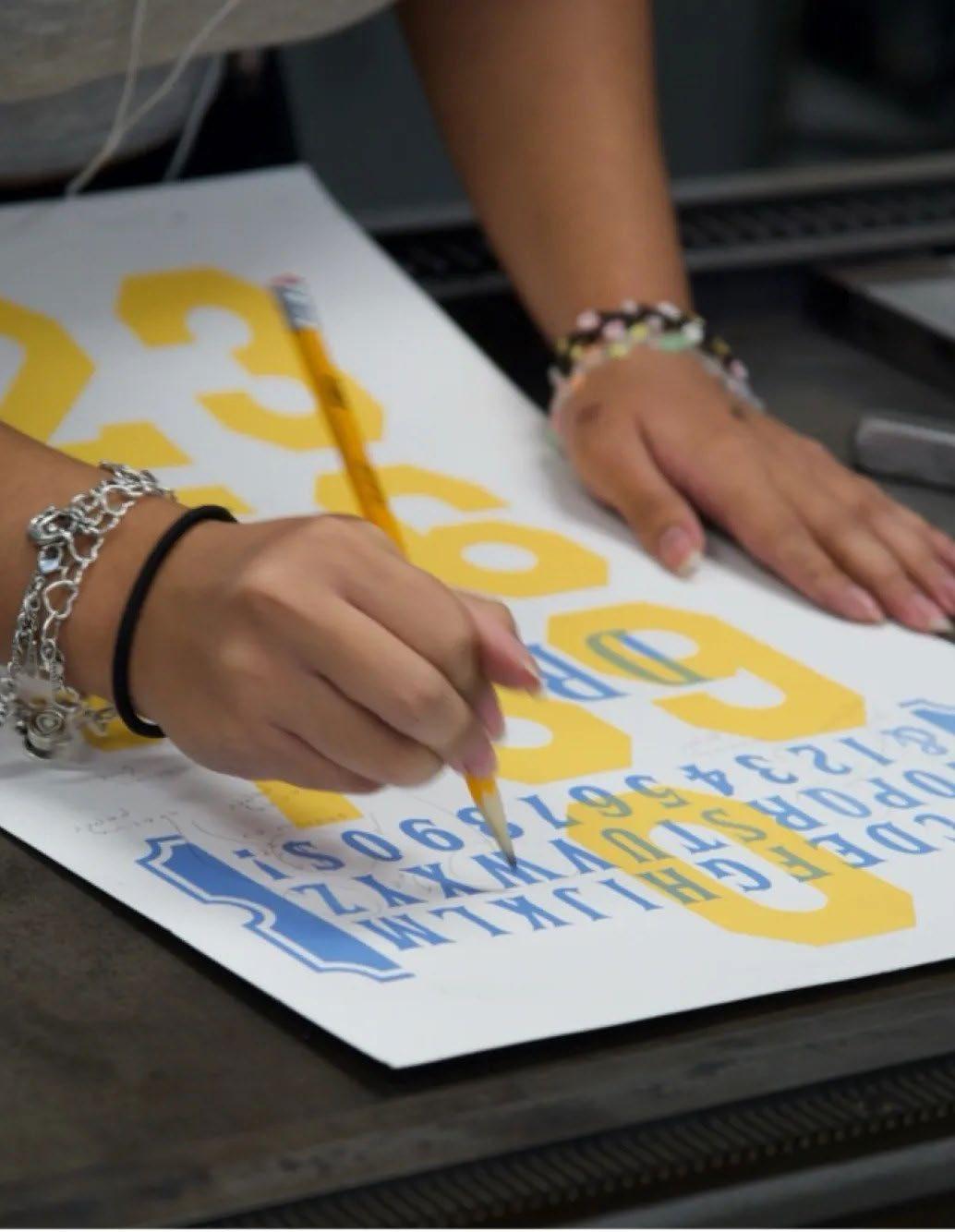
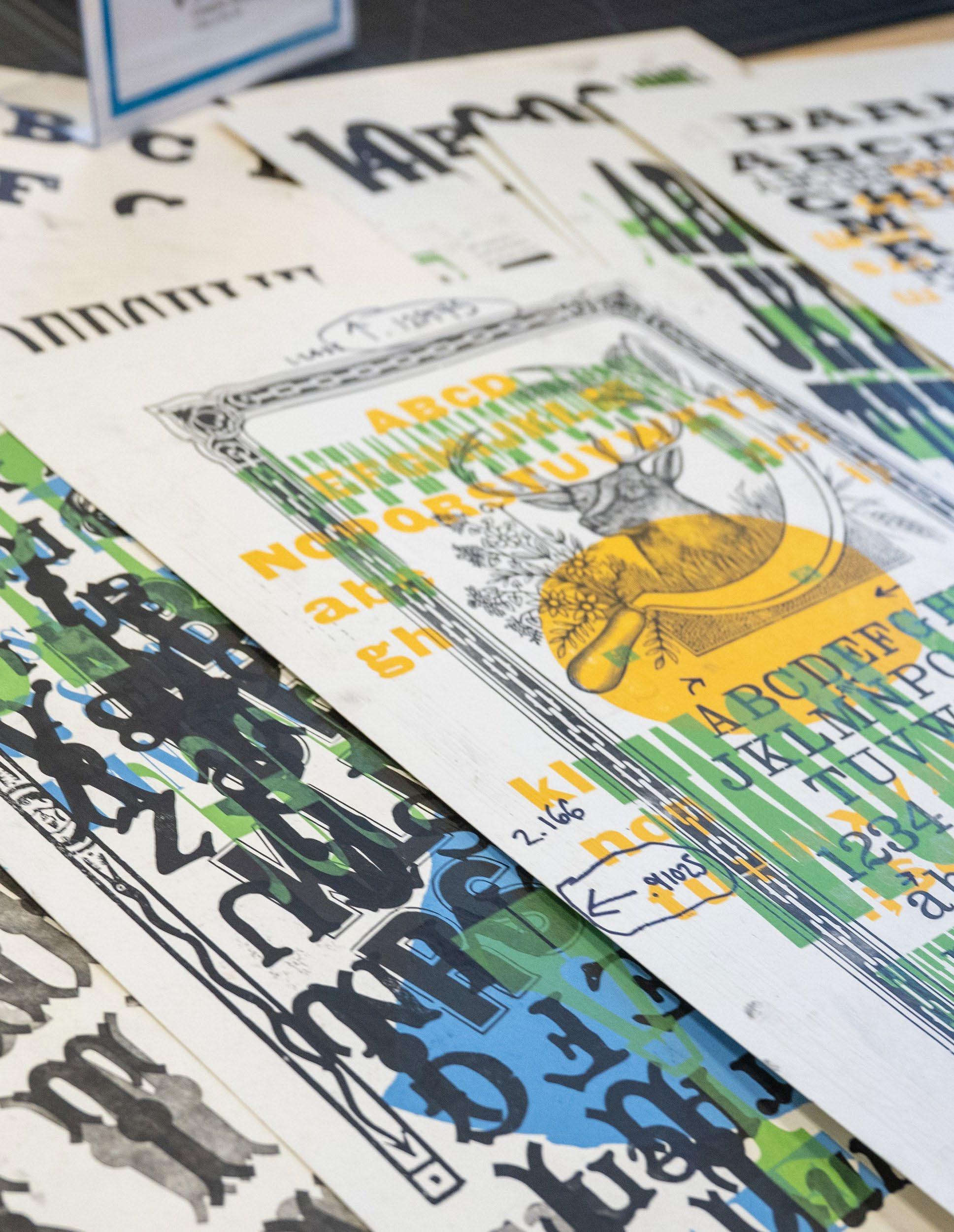
Carley’s academic research combines analog print and digital technologies in graphic design courses to improve student learning outcomes. This research informs the structure of her curricula and assignments. Her course projects emphasize the creative process and how that process informs project deliverables. Students use hands-on creating practices: they begin working on paper, then move to digital spaces and softwares, and then bring those projects back into the physical world using historical and modern production tools. Coursework in her classes integrate the Rob Roy Kelly American Wood Type Collection to enrich student comprehension of typography, grid structures, page layout, historical image-making techniques, and graphic design principles.
Graphic design and letterpress printing are the foundation of Carley’s creative research practice. Carley’s current body of work applies design principles, type, printmaking methods, modern fabrication
equipment, and design software to establish a visual language system. The application of color, type, patterns, and rhythm communicate emotions stored within the body. These communication systems are installed in physical and digital spaces.
Carley is perpetually growing her letterpress printing practice. She teaches skill-specific workshops privately and publicly at print shops across the nation. Her professional portfolio ranges from conceptual art, zines, posters, literary broadsides, business cards, to stationery suites for select clients.
Karol Murlak
Chair, Department of Design
Karol Murlak is a designer, researcher and educator specializing in design for research and science. His practice centers around creation and application of materials.
He has been working with institutions and companies in Europe and America, including Martinelli Luce, the Museum of Food and Drink and The New York State Department of Environmental Conservation.
He has designed over fifty projects creating innovative materials, products, furniture, exhibitions, and public installations. His work ranges in scale and complexity — from patented technology of expanding wood and devices bringing relief for patients with spine and foot conditions to musical installations showcased in the world’s busiest locations.
His projects have been presented at exhibitions in New York; Washington, DC; London; Milan; Berlin; Brussels, Frankfurt; Dresden; Budapest; Prague; Bucharest; Sofia; Ljubljana; Warsaw; São Paulo; Brasilia; Rio de Janeiro; and Toyama. He won recognized design awards and competitions such as the Design by… Competition, the Sanitec Koło Prize, and the Design Competition for the City of Łódź.
Interdisciplinary research teams that he co-led have received multi-million dollar research and development grants from the National Science Foundation and the European Research Council. His scientific articles have been published in
journals such as “Craft Research”, “European Journal of Wood and Wood Products”, and “Formy”.
He graduated from the Spatial Design program in Falmouth College of Art in Great Britain. He also holds a doctoral degree in design and a master’s degree in interior architecture both from the Academy of Fine Arts in Warsaw, Poland.
Monica Penick
Associate
Chair, Design
Associate Professor, Design
Visiting Scholar Researcher, Harry Ransom Center
Foxworth Centennial Fellow
Monica Penick is a design historian, researcher, educator and storyteller who is interested in helping our next generation of designers change the world through good design. She teaches Design Theory and Criticism, Design Research Methods, and Design History. Initially trained in the field of cultural history and classical studies at Stanford University (where she earned a dual Bachelor’s degree with Honors), Penick came to the University of Texas at Austin to study architecture and Historic Preservation. She worked in the public and private sectors as a consultant (where her focus was research and design advocacy) before returning to graduate studies at UT, where she earned her doctorate in architectural history with a focus on American design.
Penick’s research and publications have ranged from an investigation of the image and meaning of modern design as created by the American media, to an examination of the relationship between politics, nationalism, regionalism, cultural identity, and design. Her research has been supported by fellowships from the Andrew W. Mellon Foundation and the American Council of Learned Societies (ACLS), the American Association of University Women (AAUW), and the University of Wisconsin-Madison (where she was
an Assistant Professor from 20122017).
Penick’s recent book, Tastemaker: Elizabeth Gordon, House Beautiful, and the Postwar American Home (Yale University Press, 2017), has been described by the noted historian Alice Friedman as “a game changer in both architectural history and design studies.” Tastemaker tells the story of House Beautiful magazine’s crusading editor-in-chief Gordon, who decisively shaped American taste for modern design. The book – as with much of Penick’s work -- offers an engaging narrative that expands our knowledge of design history and its critical players, assesses the power of popular media, and reflects more broadly on the culture of design and the politics of consumption and identity. Monica’s current research interests include visual communication and exhibition design, and she is currently cocurating a design exhibition for the Harry Ransom Center with Christopher Long (UT School of Architecture).
José Perez
Assistant Professor of Practice, Design
Keila Z. Pérez
Quiñones
Assistant Professor of Practice,
Design
Associate Director, Center for Integrated Design
Keila Zarí Pérez Quiñones holds a MA in Design for Play from the Design School Kolding in Denmark, and a BFA from the School of Fine Arts and Design in Puerto Rico. She specializes in play, social design and participation, and experiments with methods for learning through play to reimagine design education and practices for collective learning. The practical knowledge gained from her experience as a facilitator and designer working internationally in Denmark, Jordan, and Puerto Rico—focused on play, social impact, citizen participation, and the UN Sustainable Development Goals—is central to her work.
She joined the University of Texas at Austin in January 2024, where she teaches Play–design Lab, Participatory Design, Material Explorations, Capstone and Individual Design Projects.
Cathryn Ploehn
Assistant Professor of Practice, Design
Cathryn Ploehn (she/her) is an interaction designer and lecturer interested in embodied, feminist, and ecological modes of creating – and (re)enchanting – data visualizations. She holds an MDes from Carnegie Mellon University.
Bonnie Reese
Lecturer, M.A. in Design focused on Health
Bonnie is a seasoned design leader who brings a deep background in experience strategy, qualitative research, and facilitation methodologies to drive innovation and impact. With nine years at frog design, six years at Gensler, and four years consulting independently, she has worked on numerous projects across the globe in a range of industries, with a strong focus on healthcare. Her experience spans both product and service design, with projects ranging from systems and products for healthy eating to motivational systems for community health workers in Rwanda.
While at Gensler, Bonnie worked at the nexus of digital and the built environment, tackling projects that included Dell Med’s early master planning efforts, the activation of public spaces in city centers, workplace well-being post-COVID, and research that envisioned the future of the data economy. In addition to her design strategy work, she taught a graduate-level design course at McCombs Business School at the University of Texas for three years and now teaches the capstone course for the Design in Health Master’s program at UT. Bonnie serves on the board of the Institute for Diversity and Civic Life and enjoys entertaining, swimming, ceramics, and traveling to far-flung locales.
Henry Smith
Assistant Fabrication Manager
Lecturer, Design
Henry Smith makes and teaches the making of images, objects, and experiences, largely based around the premise of print. As an educator, Smith seeks to bridge new and old technologies to design the structures of a holistic creative education.
Since 2019, Smith has served as the caretaker of the Rob Roy Kelly American Wood Type Collection, an archive of 19th century wood letterpress type. The collection is a diverse and dynamic record of design history, which students and faculty utilize in their studies. The archive is still living and evolving, energized and re-contextualized by its continued use. The RRK is a core part of Smith’s research and practice, informing almost every corner of his work, in both personal and commercial spaces.
Smith was born and raised in the Midwest. He received a Bachelor of Fine Arts degree in Studio Art from The University of Texas at Austin in 2017.
Wen (Vivian) Ye
Assistant Professor of Practice, Design
Wen (Vivian) Ye (M.F.A, University of California–Davis; M.F.A, Marangoni Institute, Italy) is currently an Assistant Professor of Practice at the University of Texas at Austin. She specializes in teaching design thinking, as well as foundational to advanced-level design studio courses. Vivian brings extensive industry experience to her academic role, having worked as a fashion designer at VERO MODA and a global fashion buyer for Armani. Her research interests center on user experience, empathy-driven design, and the transformative potential of technology in wearable design.
Vivian is passionate about cross-disciplinary collaboration and plays a key role in several interdisciplinary research projects. She serves as an educational material designer for National Science Foundation (NSF) projects focused on enhancing transportation and power systems’ efficiency and sustainability through electric vehicles and clean energy solutions.





MEET THE CENTER




FACULTY



Myan Alijets Durell Coleman
Lecturer, Center for Integrated Design
Myan Aljets is a creative director at a startup based in Austin, TX with a background in UX/UI, industrial design and brand development. She has spent the last ten years at a variety of companies, from early stage and teenage startups to agencies and consultancies to one of the largest companies in the world. (She has literally tried almost everything.) Her past clients include E! Entertainment, WWE, 7-Eleven, and Will.I.Am. With her experience at IBM, she aspires to bring her unique point of view to the world of Design Thinking as a Lecturer in the Center for Integrated Design at The University of Texas at Austin.
Born in St. Cloud, MN and raised in Houston, TX, she earned her Bachelor of Science in Industrial Design from the Gerald D. Hines School of Architecture at University of Houston and studied for a short time at Parsons School of Design. She has called Austin her home for 10 years with her brilliant husband and 2-year-old wild child.
She believes in: well-crafted objects, handwritten notes, a good pair of power pants, Jean-Pierre Jeunet, daytime napping on Sundays, film photography, the magic of Freddie Mercury, Popeye’s fried chicken and bold red lips.
Lecturer, Center for Integrated Design
Durell Coleman is the namesake founder and CEO of DC Design, a social impact design firm with a mission to eliminate multigenerational poverty in the United States. Using a blend of Design Thinking and Systems Thinking, he and his team assist nonprofits, foundations, and governments in defining community needs, developing strategies, and designing solutions for some of America’s most pressing social challenges. In his journey as a designer, Durell has worked to redesign aspects of the foster care system, develop new approaches to criminal justice reform, reimagine healthcare service models, create apps that connect communities, and develop new educational models for the 21st century. His work has led to reductions in mass incarceration, homelessness, economic inequality, Black infant mortality and more. Trained in mechanical engineering (B.S) and sustainable design (M.S.), he is a two-time alumnus of Stanford University and its famous Institute of Design (the Stanford d.school).
As an educator, Durell regularly teaches Design Thinking, social impact design, innovation, entrepreneurship and leadership at the Stanford Institute of Design, the Stanford Graduate School of Business and University of Texas at Austin. He has taught design thinking to refugees designing solutions to challenges in refugee camps, school leaders seeking to redesign the culture of their school, students seeking to create a more inclusive campus, and corporate executives from Sony, Oracle,
and Santander. His original research is the basis for the 5 Systems of Black Inequality video series. He is an expert in multi-stakeholder, humancentered design; has been awarded the Jefferson Award for Public Service as a result of his work; and is one of the subjects of the PBS documentary: “Extreme by Design,” which is used as a design thinking teaching aid all over the world.
Scott Evans
Assistant Professor of Practice, Cockrell School of Engineering
Director III, Cockrell School of Engineering
R. Scott Evans, Ph.D., is the Director of Texas Inventionworks (TIW) in the Cockrell School of Engineering at The University of Texas at Austin. TIW is a program that includes product development, innovative curriculum, partnerships with many colleges across campus and facilities for building almost anything. Dr. Evans has designed and built products and manufacturing processes in many industry sectors, created R&D programs, founded materials science startups, served as an innovation consultant to engineering companies in several countries and developed graduate-level technology commercialization courses. Dr. Evans studied mechanical engineering at The University of Arizona, The Georgia Institute of Technology (researching MEMS devices) and The University of Texas (researching additive manufacturing) earning a B.S., M.S. and Ph.D. respectively.
Jon Freach
Co-Head of Undergraduate
Programs
Associate Professor of Practice, Design
Jon Freach has a 30-year background in design. Currently, he is an Associate Professor of Practice at The University of Texas at Austin School of Design and Creative Technologies and the Center for Integrated Design.
Jon also works with Bloomberg Philanthropies providing design coaching and direction for cities in the Bloomberg-Harvard City Innovation Program and the Global Mayors Challenge. Since 2018 he has worked with the cities of Lincoln, NE developing an autonomous vehicle system to decrease congestion; Durham, NC prototyping incentivization strategies to increase public transit ridership; Tulsa, OK to improve staff morale in their Animal Welfare Center; Arlington, TX integrating mental health and wellbeing services between city and county agencies; Oklahoma City, OK increasing community amongst seniors in the COVID pandemic; and New Orleans, LA re-establishing trust with residents by explaining how things work in their city.
From 2008-2018, Jon was a Principal Designer and Executive Director of Design Research at frog, one of the world’s largest design agencies, where he provided project consultation, organizational leadership, and mentorship to a global community of design, strategy, and technology staff.
Jon is also a founding professor at the Austin Center for Design (ac4d) and has taught and lectured about design and innovation at a number of universities including Harvard Business School, The University of Texas McCombs School of Business, Southern Methodist University, and CEDIM (Centro de Estudios Superiores de Diseño) in Monterrey, Mexico.
Jon has published widely in the design and business communities and speaks on the subject of design methods and design research. His articles have appeared in Fast Company, The Atlantic, Interactions Magazine, Design Mind, SDCT’s Journal of Design and Creative Technologies, and Bloomberg Cities Network.
Jon holds a Bachelor of Fine Arts in Graphic Design from The State University of New York at Fredonia and a certificate in User-Centered Design from UCLA’s Extensions Program.
Gray Garmon
Associate Professor of Practice, Design
Gray Garmon is an Assistant Professor of Practice in the School of Design and Creative Technologies at The University of Texas at Austin. Garmon holds a Bachelor of Science in Architectural Studies from The University of Texas at Austin and a Master of Architecture from the University of Pennsylvania, where he received the American Institute of Architects (AIA) Henry Adams Medal and was a University of Pennsylvania Social Impact Fellow. Before arriving at UT in 2018, Garmon served in Peace Corps Ghana and was a faculty member and co-founder of the Master of Arts in Design and Innovation program at Southern Methodist University.
Garmon practices human-centered design (HCD): a problem-solving approach widely used in industry, governments, schools and NGOs. HCD puts people first, using qualitative research methods to understand the human contexts, behaviors, emotions and motivations that can lead to better design solutions. His recent design work includes advising the Aga Khan Foundation on a global HCD toolkit that was honored with a Fast Company Innovation by Design Award, being a Designer-inResidence with the Design Science Studio at the Buckminster Fuller Institute, and a National Endowment for the Arts-funded interactive art project called the WonderPhone.
At UT, he teaches human-centered design courses to B.A., B.F.A., M.A., and M.F.A. students in Design, as well as design courses from across campus through the Design Strategies “Bridging Disciplines” certificate program.
Michael Henderson
Adjunct Professor and Visiting
Lecturer, Center for Integrated Design
Michael Henderson holds the position of visiting lecturer at The University of Texas at Austin’s School of Design and Creative Technologies. He has developed two courses, Relationship Design and Design for Artificial Intelligence, as part of his academic contributions. Beyond academia, Michael is the founder and managing director of Actionable Conversations, a global firm specializing in leadership, consensus-building, and organizational development. His firm has collaborated with notable entities such as The University of Texas at Austin, the U.S. Department of State, Department of Commerce, Ford Motor Company, Nomi Health, and the Austin City Government.
He was named 2025 National Urban Fellow and given a full merit-based scholarship to study Public Policy & Management at Georgetown University Currently Michael services as Special Advisor to the Director of the Houston Health Department.
Driven by his fervor for innovation, fostering public-private partnerships, international business, and building consensus, Michael has been actively involved in various leadership roles. He has served on the Board of Leadership Austin and currently holds a board position at the Lyndon Baines Johnson Presidential Library and Museum, Future Forum. Michael has curated programs focusing on artificial intelligence, international relations, and good governance. Most recently, he
received a fellowship with Advantage Capital focusing on private equity, impact investing, and community development finance He generously volunteers his time to facilitate strategy and design workshops with General Assembly and engages in outreach efforts to support the unhoused population in Austin.
Michael’s professional work also revolves around engaging millennials in entrepreneurship by leveraging technology, business strategy, design, and trust. This focus has earned him fellowships from the federal government, enabling him to contribute to community building in various countries including Kenya, Singapore, Oman, Chad, Germany, Russia, Colombia, and Pakistan. Additionally, he has been awarded the State Department reciprocal exchange and grant four times.
His ability to transcend geographical, racial, and socioeconomic barriers, allows him to adeptly tackle intricate problems.
Michael holds a terminal degree from Georgetown University and Bachelor of Arts from Howard University, as well as language certificates in Mandarin Chinese and Arabic from Middlebury College and Amideast respectively. In his free time, he enjoys swimming, bike riding, gardening, and exploring hiking trails with his friends.
DiMitri Higginbotham
Assistant Professor of Practice,
Design
Director, Center for Integrated Design
Higginbotham is an educator and human-centered design specialist with a background in music education and M.A. in Design and Innovation from Southern Methodist University. He joins the college from Good Shepherd Episcopal School in Dallas, where he helped to incorporate maker education and design thinking into the school’s curriculum and facilitated design thinking sprints for the school’s board, faculty and staff as they re-imagined collaborative spaces on campus. In his previous role as a senior teaching lab manager and program manager for the Caruth Institute for Engineering Education at Southern Methodist University, he managed a mobile maker space, helped develop curriculum for the Lyle School Summer Engineering Camps and facilitated professional development opportunities around maker education and design thinking for teachers and school administrators.
Kathryn Marinaro
Lecturer, Center for Integrated Design
An author and award-winning Creative Director, Kathryn Marinaro’s mission is to empower and enable people to make. She currently does this by leading teams to imagine and design experiences and software at argodesign, a product design and innovation agency in Austin, TX. She is the author of Prototyping for Designers (O’Reilly) and is an international speaker, presenting talks and workshops on design thinking and prototyping at conferences including SXSW, UX Lisbon, O’Reilly Design, and MakerCon SF.
Joe Meersman
Lecturer, Center for Integrated Design
Joe Meersman is the Sr. Director of Design at Intapp. Previously, Joe worked at IBM, where he led teams of designers in the delivery of cognitive-enabled applications and services across the Cloud and Watson portfolios. As part of IBM Design’s core team, he has educated over 1000 non-designers in design thinking and activated practitioners working on product teams across the globe. Before joining IBM, he delivered user experiences for Razorfish, Motorola, Herman Miller, Walgreens, State Farm, Belk, Veolia, Highmark, Polycom, Covidien, MSA, Allstate, Follett, Samsung, and Chrysler. He lives in Austin with his wife, two children, and a Great Pyrenees.
Karol Murlak
Chair, Department of Design
Karol Murlak is a designer, researcher and educator specializing in design for research and science. His practice centers around creation and application of materials.
He has been working with institutions and companies in Europe and America, including Martinelli Luce, the Museum of Food and Drink and The New York State Department of Environmental Conservation.
He has designed over fifty projects creating innovative materials, products, furniture, exhibitions, and public installations. His work ranges in scale and complexity — from patented technology of expanding wood and devices bringing relief for patients with spine and foot conditions to musical installations showcased in the world’s busiest locations.
His projects have been presented at exhibitions in New York; Washington, DC; London; Milan; Berlin; Brussels, Frankfurt; Dresden; Budapest; Prague; Bucharest; Sofia; Ljubljana; Warsaw; São Paulo; Brasilia; Rio de Janeiro; and Toyama. He won recognized design awards and competitions such as the Design by… Competition, the Sanitec Koło Prize, and the Design Competition for the City of Łódź.
Interdisciplinary research teams that he co-led have received multi-million dollar research and development grants from the National Science Foundation and the European Research Council. His scientific articles have been published in
journals such as “Craft Research”, “European Journal of Wood and Wood Products”, and “Formy”.
He graduated from the Spatial Design program in Falmouth College of Art in Great Britain. He also holds a doctoral degree in design and a master’s degree in interior architecture both from the Academy of Fine Arts in Warsaw, Poland.
Keila Z. Pérez
Quiñones
Assistant Professor of Practice,
Design
Associate Director, Center for Integrated Design
Keila Zarí Pérez Quiñones holds a MA in Design for Play from the Design School Kolding in Denmark, and a BFA from the School of Fine Arts and Design in Puerto Rico. She specializes in play, social design and participation, and experiments with methods for learning through play to reimagine design education and practices for collective learning. The practical knowledge gained from her experience as a facilitator and designer working internationally in Denmark, Jordan, and Puerto Rico—focused on play, social impact, citizen participation, and the UN Sustainable Development Goals—is central to her work.
She joined the University of Texas at Austin in January 2024, where she teaches Play–design Lab, Participatory Design, Material Explorations, Capstone and Individual Design Projects.
Jacob Rader
Lecturer, Center for Integrated Design
Jacob Rader is a designer and maker exploring simple human ideas to tackle the world’s wicked problems. He leads research and design projects that inform strategy, product, and policy decision-making. In addition to teaching at the Center for Integrated Design at UT Austin, Jacob supports organizations operating across the healthcare and social support spaces.
Throughout his career, Jacob has had the privilege of applying a humancentric approach to projects as varied as the design of multimodal interactions for mixed reality technologies to farming and financial tools for Myanmar’s working class. He’s helped envision a more compassionate way for veterans to apply for benefits and a first-of-itskind educational platform for firstgeneration college students.
Previously, he was an integrated design lead for the Design Institute for Health, a radical collaboration between Dell Medical School and the College of Fine Arts at The University of Texas at Austin.
David Richard
Lecturer, Center for Integrated Design
I love to design things -- including designing and leading teams that design things.
Libby Riddell
Lecturer, Center for Integrated Design
Libby graduated from The University of Texas at Austin with an M.F.A. in Design and has a B.S. in Interior Design from The Ohio State University. Throughout her experiences as a student and professional, she has explored design research, brand strategy, and social impact design as it applies to the built environment. Her graduate thesis focused on design-related harm and design ethics, highlighting the vital role of designers in society. Her accolades include GDUSA 2023 Student to Watch, VMSD Redefining Retail Studio (1st Place), and COFA Graduate Fellowship Recruitment Scholarship.
Farzana Sedillo
Lecturer, Center for Integrated Design
Farzana Sedillo’s journey began at NASA, where the vastness of space ignited her passion for precision and strategic thinking. Today, she channels that passion into forging the future of digital defense as a Program Director at IBM Security Design. Orchestrating complex initiatives across the globe, she leads with a potent combination of technical expertise and visionary leadership, safeguarding critical assets in an ever-evolving landscape of threats.
But for Farzana, cybersecurity isn’t just about building walls; it’s about fostering collaboration. She believes in empowering diverse teams, igniting a global flame of vigilance through open communication, shared expertise, and a relentless pursuit of innovation. Whether mentoring junior design practitioners or building a network of global security champions, Farzana thrives on seeing potential blossom and collective wisdom become an impenetrable shield.
Farzana is a frequent speaker at industry conferences, sharing insights on data-driven strategies and building a culture of user experience. From multiple Grace Hopper Celebrations to the TEXATA Data Analytics Summit, she relishes the opportunity to engage with like-minded professionals, sparking dialogue, and shaping the future of our interconnected world.
Farzana’s ambition doesn’t stop at securing the present. She is constantly seeking innovative projects where her strategic vision and collaborative spirit can bolster the frontline of digital defense. She is driven by the challenge of tackling complex landscapes, building bridges of trust across diverse teams, and forging a future where innovation becomes our most potent weapon against tomorrow’s threats.
Scott Keoni Shigeoka
Lecturer, Center for Integrated Design
Scott Keoni Shigeoka (they/he) is a curiosity expert, storyteller and creative consultant. Scott’s forthcoming book SEEK: How Curiosity Can Transform Your Life and Change the World was sold to Grand Central Publishing Balance (Hachette Book Group) in a major deal, after a multi-publisher bidding war, and will be released November 2023. For the past fifteen years, Scott has worked with creative agencies, social enterprises, nonprofits, philanthropic funders, acclaimed artists and communities. He previously held leadership positions at the design firm IDEO, at a private foundation, and at an edtech startup that was acquired in 2012. Their work has been featured in The New York Times, Rolling Stone, Variety, TIME and other outlets.
Scott started their storytelling career as a music writer for The Washington Post. He serves as the senior advisor of Good Energy, an initiative in Hollywood amplifying climate stories in mainstream TV and film. Scott is on faculty at The University of Texas at Austin teaching groundbreaking courses on curiosity, creativity and healing. They have also taught undergraduate and graduate courses at the University of Pennsylvania and the University of California Berkeley. Born/raised in Hawai‘i, Scott currently lives in the California Mojave Desert. Their favorite word is ‘komorebi’ (木漏れ日), which means the sunlight that washes between the leaves of a tree.
Sarida Soldz
Lecturer, Center for Integrated Design
Sarita is a leadership coach and lecturer passionate about uplifting individuals, communities, and humanity to pursue higher goals. After creating career and life transformation for herself, she leverages curiosity and courage to help others achieve their full potential.
Currently serving as a Career Education Designer at UT Austin McCombs School of Business, Sarita has led innovative initiatives that have significantly increased staff and student engagement and outcomes. Additionally, Sarita recently cofounded Thriving Cultures, LLC, where she consults and coaches entrepreneurs in developing learning organizations.
With more than 20 years in marketing and new product development, Sarita has made highimpact contributions at companies such as Ashland Inc., Valvoline, The Coca-Cola Company, and KimberlyClark. Several products she launched remain at the top in their categories. Recognized for her creative vision, Sarita received the Global Women’s Leadership Forum “Illumination Award” and the pinnacle Chairman’s Award for Leadership while at Ashland/Valvoline. She holds an MBA from Northwestern University’s Kellogg School of Management and a BS from the University of Virginia’s McIntire School of Commerce.
Outside of work, her interests include workout recovery, which encompasses infrared saunas and ice plunges, where she has honed her mindfulness and meditation skills.
Julia Winston
Lecturer, Center for Integrated Design
Julia Winston (she/her) is a master facilitator of human connection in the workplace and beyond. As a business consultant and executive coach, Julia uses her design and facilitation skills to guide leaders and teams through transformative experiences that unlock individual and organizational potential. As the co-creator and host of the Refamulating podcast, Julia invites us all to expand our collective understanding of what makes a family in today’s world. With 20 years of experience as a facilitator and more than a decade as an entrepreneur and executive, Julia has led culture and community-building initiatives for a diverse range of groups, from startups and software businesses to nonprofits and universities, as well as private equity and wealth management firms.
A leader in her field, Julia trains and teaches facilitation and experience design to fellow practitioners worldwide. Drawing on her years as a yoga and meditation teacher, she employs mindfulness-based tools to push people into their stretch zones for personal and professional growth. A creative at heart, Julia founded The Rainbow Letters to share stories of LGBTQIA+ families worldwide through letter writing, and the Facilitator Forum podcast to spotlight diverse facilitators across industries. Julia and her team successfully launched the first season
of Refamulating in spring/summer 2024 and are enthusiastically preparing to release a second season in November 2024.
We’re building a diverse and inclusive community of inspired thinkers, makers, and innovators