St Edward's College is a member of the Edmund Rice Education Australia (EREA) national network of schools. It is governed by Edmund Rice Education Australia NSW College Ltd. The Trustees of Edmund Rice Education Australia has responsibility for St Edward’s and other Christian Brothers’ schools across Australia.
The Annual College Report provides parents and the wider school community with fair, accurate and objective information about various aspects of College performance and development. Prior to publishing this report the College reviews its achievement of College development priorities and sets its priorities for the year to come, all of which is included in the report.
This report is a legislative requirement under the Education Amendment (Non-Government Schools Registration) Act 2004.
The information in this report is complemented by other College publications such as the College prospectus and newsletters. The prospectus is distributed to parents when asking about enrolment and the newsletters are available on the College website www.stedwards.nsw.edu.au
It is with gratitude and confidence that I commend the 2025 Annual Report for St Edward’s College, on behalf of Edmund Rice Education Australia NSW Colleges Ltd, the governing body for our seven EREA schools across Greater Sydney, Wollongong and Gosford.
Throughout 2025, St Edward’s College has continued to live the charism of Blessed Edmund Rice, grounded in the four Touchstones of Liberating Education, Gospel Spirituality, Inclusive Community, and Justice and Solidarity. These touchstones remain the foundation upon which our schools educate young people to grow fully in their humanity, to act with compassion and integrity, and to contribute meaningfully to a socially just and sustainable world.
Across our EREA NSW network, we have witnessed strong enrolments, vibrant learning communities and an unwavering commitment to student wellbeing and excellence. St Edward’s College continues to offer rich academic, pastoral, co-curricular and faith formation experiences that place each student at the centre of decision-making. In an educational landscape marked by rapid change, public scrutiny and increasing complexity, St Edward’s College remains a distinctive community where relationships matter deeply and where young people are known, valued and challenged to be their best.
The St Edward’s College educators continue to demonstrate outstanding professionalism, dedication and care. Their commitment to high-quality teaching and learning, alongside deep pastoral concern for each student, enables our schools to respond thoughtfully to the diverse needs of young people in today’s world. I thank Mr Mark Bonicci and the Senior Leadership team for their wisdom, courage and collaborative leadership, and the teaching and support staff for the generosity they bring to their vocation each day.
Central to our identity is a commitment to justice and service. Students have engaged in meaningful social justice initiatives, often exceeding required service expectations and responding with compassion to the needs of others. These experiences shape young people who are curious, reflective and hopeful, with a growing awareness of their responsibility to act for the common good.
I extend my sincere thanks to the St Edward’s College parents and families for their partnership and trust, to the School Advisory Council and EREA NSW Board members for
their governance and stewardship, and to the Old Boys whose ongoing connection reflects the enduring impact of an Edmund Rice education. Most importantly, I thank our St Edward’s College students. Their energy, generosity of spirit and willingness to embrace opportunity continue to inspire all of us who serve in EREA schools.
As we look to the future, St Edward’s College remains committed to continual improvement, thoughtful engagement in educational dialogue, and the creation of learning environments where every young person can flourish. This Annual Report reflects the collective efforts of our community and the shared belief that education is a powerful force for transformation.
I commend this report to you and thank you for your ongoing support of St Edward’s College.
Maura Manning CEO / Director of NSW Colleges
Edmund Rice Education Australia NSW Colleges Ltd
It is my great pleasure to present the College Advisory Council’s Report for 2025. This report highlights the key areas in which the Advisory Council has been involved, including both discussions and decisions throughout the year.
The year commenced with a beautiful Opening Mass, where the College community gathered not only to celebrate the beginning of another year of learning and friendship, but also to reflect on the importance of the College Touchstones and their central role in all aspects of school life.
At the beginning of the year, all stakeholders were introduced to the new 2025–2029 Strategic Plan and its intended impact on future decision-making. This plan aims to further enhance all areas of school life, enrich learning experiences, and support every student in striving for their personal best. Together with the College Aspiration Statement, it stands as a testament to the deep reflection, dedication, and professionalism of the staff at St Edward’s.
In February 2025, an evening was held bringing together the NSW EREA Board members, the seven Principals from NSW EREA schools, and the Chairs of each school’s Advisory Council. This gathering provided an opportunity to share a meal and review strategic plans for EREA and its Colleges for 2025 and beyond. It was a highly productive and valuable occasion, ensuring alignment and collaboration in planning for the future of each school.
The year also began with a celebration of the outstanding achievements of the HSC Class of 2024. St Edward’s was once again among the leading schools on the Central Coast and the highest-achieving Catholic College in the region. The College’s strategic commitment to evidence-based, contemporary approaches to boys’ education continues to deliver impressive results, with academic outcomes improving year on year. The Advisory Council commends the College for its professional and forward-thinking approach to teaching and learning setting clear goals, implementing effective strategies, and nurturing each student to reach his full potential.
These achievements are further supported by the College’s careful review of its educational practices. The Advisory Council particularly applauds the College’s commitment to avoiding a “one-size-fits-all” approach to teaching. Initiatives such as the Bungaree Project for gifted students, along with the introduction of a dedicated Year 7 class supporting students who require additional assistance in accessing learning, demonstrate that inclusion remains a
priority. Every student is valued and supported to succeed through strong and respectful relationships with both teachers and peers.
Throughout the year, significant progress has also been made in enhancing communication across the College community. The COMPASS platform has been streamlined to improve accessibility for both students and parents. We commend the College on its ongoing efforts to ensure more consistent and meaningful feedback to parents from 2026 onwards. This has been complemented by the launch of the new College website, which is more user-friendly and better reflects a contemporary 2025 approach. Additionally, the introduction of a Parent Advisory Committee has provided a valuable forum for open discussion and the sharing of information between the College and its parent community. The College Executive has demonstrated a genuine commitment to prioritising communication as a key driver of continuous improvement.
Student voice remains a cornerstone of College culture. The student leadership program empowers young men to contribute actively to College life. Through regular participation in College-based and nationally recognised surveys, students provide valuable feedback that helps shape their educational experience. These surveys consistently highlight students’ appreciation for their teachers and their deep respect for the College Touchstones. The enthusiasm shown by students who seek leadership opportunities, engage in social justice initiatives, and demonstrate pride in their school community is highly commendable.
The College has also continued to invest in the development of its facilities to create the best possible learning environment. Additional classrooms have been renovated, and the Advisory Council has observed the College’s diligent pursuit of government grants to support the ongoing development of facilities and educational pathways. These initiatives cater for students pursuing both university pathways and vocational education and training. In 2025, planning has progressed for a new Construction Compound and the refurbishment of the Industrial Kitchen, both of which will further enhance learning opportunities. These developments are made possible through the strong financial stewardship of the College leadership, whose careful planning ensures continued growth and sustainability.
The Advisory Council has been consistently impressed by the presentations delivered at meetings, which highlight the many initiatives and projects taking place across the College. These ensure that the Council remains well-informed and engaged. The outstanding work in the ministry areas continues to be particularly noteworthy, including programs such as the Waterford Project, the Sacramental Program, and the initiatives undertaken through Beyond
Borders. These programs are vital in ensuring that the mission of EREA is lived out in meaningful ways.
The success outlined in this report is reflected in the College’s strong and growing enrolments, as well as its excellent reputation within the Central Coast community. St Edward’s Catholic College continues to be held in high regard.
Finally, I extend my sincere thanks to all Advisory Council members, who generously volunteer their time and expertise in support of the College. Their commitment and willingness to contribute ensure that St Edward’s continues to thrive as a highly respected and successful educational institution. I would also like to particularly thank Mr Bonnici and Mrs Connor for their organisation of meetings and for providing detailed and transparent information, enabling the Council to have a meaningful and informed impact.
I also congratulate the entire College community - staff, students, and parents -on another year of outstanding academic, cultural, and sporting achievements. We look forward with confidence to a successful 2026.
Debra Boyd Advisory Council Chairperson
A reflection on the 2025 Academic Year
This Annual Report provides a comprehensive reflection on the 2025 academic year at St Edward’s College. It captures the significant achievements, programs and experiences that have shaped the life of the College community, drawing on the contributions of students, staff and families.
Guided by the Touchstones of Edmund Rice Education, St Edward’s continues to offer a holistic educational experience that prioritises academic excellence, student wellbeing, leadership development and a deep commitment to service. Throughout 2025, the College has remained focused on forming young men who are not only capable learners, but also people of integrity, faith and compassion, prepared to make a meaningful contribution to society.
The 2025 academic year has demonstrated St Edward’s strong commitment to a Liberating Education - one that challenges, supports and empowers all students to achieve their personal best while developing independence and confidence as learners.
A key highlight of the year was the outstanding HSC results, with a high number of Band 5 and Band 6 outcomes placing the College among the leading schools on the Central Coast. These results reflect a sustained focus on high-quality teaching, rigorous academic expectations and a culture of continuous improvement.
Student learning was further strengthened through structured processes including Learning Conferences, Interim Reports, Semester Reports and End-of-Year Reports, all of which encouraged students to reflect on their performance, set clear goals and take responsibility for their learning. These processes have been instrumental in fostering student agency and strengthening partnerships between students, teachers and families.
The College continued to expand experiential learning opportunities to ensure relevance and engagement. The Year 10 Work Experience Program provided students with practical exposure to the workforce, developing workplace skills, confidence and career awareness. Programs such as The North Challenge allowed students to work collaboratively to analyse
and propose solutions to real-world issues, including housing affordability, promoting critical thinking and innovation.
Creative and applied learning opportunities were further enriched through initiatives such as Doco in a Day, which enabled students to explore global issues through film production, and the Performing Arts Night, which celebrated student achievement in music and performance while fostering creativity, discipline and teamwork.
Leadership development was intentionally embedded within the learning environment. Students engaged in a wide range of leadership opportunities including:
• The Prefect Leadership Team, providing service-based leadership across the College
• Year Group Leaders, promoting student voice and peer engagement
• Academic mentoring programs, where senior students supported younger learners
• Leadership roles within sport, performing arts and co-curricular activities, including team captains and ensemble leaders
These experiences allowed students to develop vital skills in communication, collaboration and responsibility, preparing them for leadership beyond the College environment
The spiritual life of St Edward’s College remains central to its identity, fostering the development of young men who are grounded in faith and guided by Gospel values.
Throughout 2025, the College community participated in significant liturgical celebrations, including the Easter Liturgy, Feast of Blessed Edmund Rice, Graduation Mass and Christmas Liturgy. These moments provided opportunities for reflection, prayer and thanksgiving, reinforcing the College’s Catholic identity and shared sense of purpose.
A cornerstone of spiritual formation is the College’s retreat program, which offers students a developmental journey across the senior years. The Year 10 Retreat focused on relationships, personal values and decision-making, encouraging students to reflect on the importance of respect, integrity and responsibility in their interactions with others.
The Year 12 Retreat provided a significant opportunity for reflection as students approached the completion of their schooling. This retreat encouraged students to consider their identity, future direction and the values that will guide them beyond school.
The Year 11 Street Retreat offered a powerful experiential dimension to spiritual formation. Through engagement with community organisations and individuals experiencing hardship, students encountered the realities of social disadvantage firsthand. This experience fostered empathy, compassion and a deeper understanding of the call to serve others.
Across all these experiences, students were encouraged to see spirituality as something lived -expressed through relationships, actions and a commitment to caring for others.
St Edward’s College continues to foster an Inclusive Community in which every individual is known, valued and supported.
Strong partnerships with families have remained a central focus throughout 2025. Learning Conferences, regular communication and engagement through the Parent Advisory Committee have strengthened collaboration between home and school, ensuring a shared approach to student wellbeing and learning. The ongoing development of the College website reflects a commitment to improving communication, accessibility and engagement with the wider community.
Student wellbeing has been a key priority. Initiatives such as R U OK? Week promoted awareness of mental health and encouraged students to support one another through open and respectful conversations. These initiatives contributed to a culture of care, empathy and mutual support across the College.
Co-curricular activities played a vital role in fostering inclusion and belonging. Students participated in a wide range of activities including sporting teams, performing arts groups and community events, which encouraged teamwork, collaboration and shared pride in the College. These experiences provided opportunities for students to connect across year levels, build relationships and develop a strong sense of identity within the College.
Student leadership also contributed significantly to the inclusive community culture. Prefects and student leaders played an active role in organising events, leading assemblies and supporting peers, demonstrating leadership through service.
Key events such as the Year 12 Formal, performing arts showcases and College celebrations strengthened the sense of community and belonging, providing opportunities for students and families to come together and celebrate shared achievements.
Participation in Edmund Rice Education Beyond Borders further enriched the community, promoting cultural awareness, global understanding and a sense of interconnectedness.
The Touchstone of Justice and Solidarity is deeply embedded in the life of the College, shaping students to be compassionate, socially aware and committed to making a difference.
A key focus in 2025 was the continued development of service-learning programs, which provide meaningful opportunities for students to engage with their communities. The Waterford Service-Learning Program remained central, encouraging students to participate in service activities and reflect on their experiences in light of issues of justice and responsibility.
Through this program, students contributed to:
• Local charities and outreach initiatives
• Parish and community-based service activities
• Fundraising and awareness campaigns
• College-based service and leadership initiatives
These experiences were designed not only to support the community, but also to develop students’ understanding of empathy, responsibility and ethical leadership.
The Year 11 Street Retreat further reinforced these principles, providing students with direct exposure to issues of homelessness, inequality and social disadvantage. This program challenged students to critically reflect on their role in responding to injustice.
The observance of Reconciliation Week was a significant moment in the College calendar. Students engaged in learning, reflection and dialogue focused on truth, respect and the importance of reconciliation with Aboriginal and Torres Strait Islander peoples. This initiative strengthened students’ understanding of social justice within an Australian context.
Students also developed skills in advocacy and awareness through initiatives such as Doco in a Day, where they explored and presented global issues through film. Participation in The North Challenge further extended this engagement, encouraging students to consider practical responses to societal challenges.
Leadership in justice and service continued to grow, with students increasingly taking initiative in organising and leading service activities, awareness campaigns and community projects.
Through these experiences, students were encouraged to move beyond awareness to action, embodying the Edmund Rice charism through service, empathy and a commitment to justice.
Conclusion
The 2025 academic year has been one of significant achievement, growth and connection for the St Edward’s College community.
The outstanding academic outcomes, combined with a strong emphasis on leadership, spiritual formation, community engagement and service learning, reflect the College’s commitment to providing a holistic and transformative education.
Across all Touchstones, St Edward’s continues to form young men who are intellectually capable, spiritually grounded and socially responsible. The experiences of 2025 have equipped students not only with knowledge and skills, but with the values and dispositions necessary to contribute positively to their communities.
With gratitude for the contributions of students, staff and families, the College looks forward with confidence to the future, continuing its mission to form “Eddies men” who lead with integrity, compassion and purpose.
Mark Bonnici College Principal
St Edward's College, founded in 1953, was established to address the lack of secondary boys' Catholic schools between Chatswood and Newcastle. Originally owned by the Christian Brothers and since 2008 under the Trusteeship of Edmund Rice Education Australia, the college serves the cause of Catholic education in the Central Coast region of New South Wales. In 2010, the first lay Principal was appointed, marking a significant milestone in the college's history.
St Edward's College is an Independent Catholic boys' college that follows the educational philosophy of Edmund Rice, the founder of the Congregation of Christian Brothers. The college aims to develop the whole person through spiritual, academic, cultural, and physical pursuits, producing 'educated Christian gentlemen'. The college's crest, featuring symbols of faith, endurance, and knowledge, encapsulates its mission.
Situated on a picturesque nine-hectare site on the shores of Caroline Bay, St Edward's College has grown from a modest student population of 72 in 1953 to over 1000 enrolments in 2025. The college caters to boys from Year 7 to Year 12 and offers extensive facilities, including three multi-purpose ovals, a state-of-the-art Shanahan Learning Centre, specialised technology and art facilities, dedicated music facilities, computer laboratories, a Trade Training Centre, and a purpose-built food technology room. The college is wellserved by public transport, ensuring convenient commuting for students and staff.
The College Advisory Council, mandated by EREA NSW Colleges Ltd., advises and assists the Principal in maintaining the governance of the College. It consists of the Principal and nine members representing the school community and operates sub-committees in Mission and Identity, Finance, Marketing and Promotion, WH&S and Compliance, and Strategic Planning.
St Edward’s College is committed to providing a Liberating Education based on Gospel Spirituality within an Inclusive Community, committed to Justice and Solidarity. As a Catholic school in the Edmund Rice tradition, the college aspires to be faithful to the four
touchstones outlined in the Charter for Catholic Schools in the Edmund Rice Tradition. These touchstones guide the college in making the Gospel a living reality in its community, educating for liberation and possibility.
Educating for Justice, Peace, and Advocacy –Reconciliation and Aboriginal and Torres Strait Island Education
In 2025, the College enacted a comprehensive approach to promoting respect and responsibility, aligned with the EREA Touchstones of Gospel Spirituality, Inclusive Community, Justice and Solidarity, and Liberating Education. Students were provided with sustained opportunities to translate values into action through formation, service, and culturally responsive learning.
The Touchstone of Justice and Solidarity was enacted through authentic service experiences, most notably the College’s ongoing partnership with Coast Shelter across all terms. Students demonstrated responsibility through regular service, developing empathy, dignity, and a commitment to the common good. Additional initiatives such as the College Sleepout, Waterford Working Bee, and social justice immersion experiences including “Doco in a Day” further strengthened student understanding of social inequity and their role in contributing to a more just society.
The Touchstone of Inclusive Community was advanced through a strong focus on Aboriginal and Torres Strait Islander education and reconciliation. The College maintained an active Reconciliation Action Plan through RAP Committee engagement and participation in the Central Coast Reconciliation Week Gathering. Students engaged in rich cultural learning experiences including Walking Songlines and an Aboriginal Studies On Country excursion. Importantly, local Elder Tim Selwyn worked alongside First Nations students to strengthen cultural identity, fostering respect, pride, and connection to Country. The College further embedded this commitment through the inclusion of Aboriginal Studies as an elective subject in Years 9 and 10, ensuring all students have the opportunity to develop deep cultural understanding and respect.
The Touchstone of Liberating Education was reflected in opportunities for students to engage critically with global and intercultural perspectives. Initiatives such as the EREA Global Classroom and the College Cultural Festival, incorporating experiences such as Chinese
calligraphy, Brazilian drumming, and martial arts, enabled students to develop respect for diversity and to act responsibly within a global community.
Finally, the Touchstone of Gospel Spirituality was evident in the College’s commitment to forming students as compassionate and ethical young people who act with integrity. Staff formation and advocacy professional learning through EREA initiatives supported a consistent whole-school approach, ensuring that respect and responsibility were explicitly taught and modelled. This commitment was further strengthened through the inclusion of Acknowledgement of Country and Aboriginal spirituality within staff and student liturgies, fostering reverence for First Nations perspectives, deepening spiritual awareness, and reinforcing a culture of respect grounded in faith, tradition, and connection to Country.
Through these integrated initiatives, the College fostered a culture where respect is demonstrated through inclusion and understanding, and responsibility is enacted through service, advocacy, and daily interactions within the school and wider community.
Decrease in NAS — positive trend, especially as the state saw an increase. Decline in Exceeding consistent with state.
Increase in Exceeding — encouraging, though still trailing state growth. Significant rise in NAS — concerning, as the state remained stable.
Growth trends align with the state. Shift toward Developing band — fewer students in Exceeding.
Fewer in Exceeding — opposite to state’s upward trend. Reduction in NAS — positive, especially as the state saw an increase.
Growth consistent with state. Slight shift from Strong to Developing. Much less in NAS compared to state. Stable — steady progress.
NAS = Needs Additional Support · Band order: NAS / Developing / Strong / Exceeding
Students in the Needs Additional Support band consistently showed the highest rates of significant growth across all five domains. Every student in this band made significant growth in Reading, Writing and Numeracy (100%), with similarly strong results in Grammar and
Punctuation (71.4%) and Spelling (66.7%). This is an encouraging finding, suggesting that students with the greatest learning needs are responding well to current teaching approaches and support programs.
Reading produced the strongest overall growth picture across all proficiency bands. All Needs Additional Support students showed significant growth, as did 61.8% of Developing students and 48.7% of Strong students. This broad-based growth across multiple bands indicates that the literacy initiatives introduced in 2025, particularly the Stage 4 Core literacy program and the Year 8 reading focus, are having a positive impact beyond just the lowestachieving students.
Spelling presents a more mixed picture. While growth trends broadly align with the state, the Exceeding band recorded the lowest significant growth rate of any band across any domain at just 22.2%. This suggests that students already performing at the highest level in Spelling are not being sufficiently extended, and that targeted enrichment opportunities for highachieving students in this domain should be considered for 2026.
Grammar and Punctuation is the area of greatest concern in terms of growth patterns. The Exceeding band recorded a 60% rate of negative growth, meaning the majority of students who were performing at the highest level actually declined. The Strong band also showed 37.7% negative growth. These results, combined with the decline in the Exceeding percentage visible in the proficiency band data, suggest that grammar and punctuation skills at the higher end are not being consolidated or extended effectively and require direct attention in 2026 planning.
Minimum Standards testing in Reading and Numeracy was administered to all eligible senior students. Numeracy and Reading pass rates were 100%. A subset of students who did not initially achieve the Writing standard have been identified for targeted intervention and will continued to be supported in 2026
PAT Reading and Mathematics were administered to all students in Years 7 to 10 in 2024 and 2025. Growth is measured as the change in scale score between the two testing periods. Students are recorded as making progress or no progress based on their scale score movement.
• All year levels showed positive average growth in both Reading and Mathematics
• Year 8 Reading recorded the strongest average growth (+3.67 scale score points); 67.6% of Year 8 students made progress
• Year 9 Mathematics recorded the strongest average Maths growth (+2.01 scale score points)
• Year 10 Mathematics growth was near zero (+0.19), with just over half of students showing no progress
• Across Reading, between 51% and 68% of students made measurable progress depending on year level
• Across Mathematics, between 50% and 58% of students made measurable progress depending on year level
• NAPLAN Reading: decrease in NAS at both Year 7 and Year 9
• NAPLAN Grammar and Punctuation: NAS reduced at both year levels
• NAPLAN Numeracy: much less NAS than state; stable performance
• PAT Reading Year 8: strongest average growth (+3.67 scale score points)
• PAT Maths Year 9: strongest average growth (+2.01 scale score points)
• HSC Numeracy Minimum Standards: pass rates strong
• NAPLAN: 100% of Needs Support students showed significant Reading growth
• NAPLAN Writing: significant rise in NAS at both year levels — primary 2026 focus
• NAPLAN Grammar: Exceeding declining, opposite to state’s upward trend
• NAPLAN Spelling: shift toward Developing; fewer students in Exceeding
• PAT Maths Year 10: near-zero average growth — requires investigation
• PAT: approx 30–40% of students show no measurable progress across year levels
• HSC Writing Minimum Standards: follow-up intervention needed
Priority Action
Writing — Stages 4 and 5
Grammar and Punctuation
HSC Minimum Standards
PAT Intervention
Explicit writing program targeting sentence structure, vocabulary and text type conventions to be trialled in all Core Classes
Extend Stage 4 program into Stage 5 to address declining Exceeding band results
Ensure early identification and support pathways
Target students showing no measurable PAT progress with data-informed intervention groupings. Students and families to be informed of progress
The Career Pathways Transition Program at St Edward’s College are designed to empower students with the knowledge, skills, values, and dispositions required to make confident and informed decisions about their education and future careers. Through these programs, students are supported to actively plan and engage in their future working lives.
Conversation around work, continues to emphasise that success in today’s evolving labour market depends on both formal qualifications and transferable skills. In response, our curriculum prioritises the development of essential skills such as problem-solving, communication, financial literacy, critical and creative thinking, collaboration, digital capability, and presentation skills capabilities that are critical across a wide range of career pathways.
At St Edward’s College, these skills are intentionally embedded and developed through a combination of high-quality teaching and learning practices across all subject areas, complemented by authentic workplace learning experiences. Our Careers and Vocational Education & Training (VET) Leader plays a pivotal role in guiding students through their career development journey, delivering explicit career education as part of PDHPE programs in Years 9 and 10. This targeted support assists students to successfully transition from school into diverse post-school pathways, including university, college, TAFE, apprenticeships, traineeships, and employment.
The College’s comprehensive Career Pathways Program offers a broad range of opportunities to support students and families. These include parent information workshops, one-on-one career guidance interviews, access to online career planning tools, subject selection support, and job readiness assistance. Students are also engaged in personalised career planning activities, self-assessment tools to identify interests and strengths, TAFE taster programs, structured work experience and placement opportunities, and industryfocused learning experiences. In addition, the College hosts presentations and information sessions delivered by tertiary institutions, employers, group training organisations, and TAFE representatives, ensuring students are well-informed and supported as they plan their future pathways.
Year 12: 111 students in the year group at the conclusion of the HSC in 2025
- University: 50%
- TAFE: 2%
- Apprenticeships / Traineeships: 6%
- Employment: 11%
- GAP Year: 20%
- ADF: 1%
- Other/unknown: 10%
Year 11: 129 students in the year group at the start of 2025
- St Edward’s College (Year 12): 80%
- Employment/ Apprenticeship: 12%
- Other school: 5%
- TAFE: 3%
Year 10: 200 students in the year group at the start of 2025
- St Edward’s College (Year 11): 78.5%
- Employment/ Apprenticeship: 13.5%
- Other school: 7.5%
- TAFE: 0.5%
In 2025, St Edward’s College staff engaged in a wide range of internal and external professional learning opportunities. A total of $47,963 was invested in staff development across the year.
Teaching staff participated in 270 professional learning events, comprising:
• 112 external events, including leadership workshops and participation in EREA conferences and interstate immersions
• 93 internal or online professional learning sessions
• 78 collaborative planning sessions conducted on-site at the College
These opportunities reflect a strong commitment to both individual professional growth and collaborative practice.
A key priority for the College continues to be staff training in Youth Mental Health and Wellbeing. As part of a three-year initiative, all teaching staff are undertaking a two-day Mental Health First Aid course, delivered by accredited facilitators from Mental Health First Aid Australia.
In 2025, this program was further extended to include administration and learning support staff, reinforcing the College’s commitment to ensuring that all students are supported by staff trained in mental health awareness and response.
All staff completed mandatory online compliance training through Complispace, covering:
• Child Safeguarding
• Student Duty of Care
• Work Health and Safety
• EREA Code of Conduct
• Modern Slavery
• Privacy
In addition, staff maintained their CPR and First Aid certifications, ensuring ongoing readiness to respond to student health and safety needs.
As of 2025, the teaching staff at St Edward’s College included:
• 81 Proficient Teachers
• 1 teacher who achieved Proficient Teacher Accreditation during the year
• 3 teachers with Conditional Accreditation
• 2 teachers with Provisional Accreditation
The College continues to provide robust internal and external professional learning opportunities to support teachers in meeting the NESA requirement of 100 hours of professional development over a five-year cycle, ensuring ongoing accreditation and the maintenance of high professional standards.
Workforce composition, including Aboriginal and Torres Strait Islander peoples
In 2025, the College had 81 teaching staff which included a total of 76 full time and 5 part time teaching staff. In addition, the College employed a total of 42 non-teaching staff. As evidenced in the following table, all teaching staff have a teaching qualification from a higher education institution within Australia and have attained the necessary standard of competence as determined by the Minister of Education.
1 Teacher education qualifications from a higher education institution within Australia or as recognised within the National Office of Overseas Skills Recognition (AEI-NOOSR) guidelines
2 A bachelor’s degree from a higher education institution within Australia or one recognised within the AEI-NOOSR guidelines but lack formal teacher education qualifications
0
3 Staff of Aboriginal and Torres Strait Islander heritage 3
Student attendance rates for each Year level and the whole school
The average attendance rate for boys at the St Edward’s campus from Year 7 to Year 12 during the 2025 school year was 93 4%. This varied from year group to year group as indicated in the table below.
Attendance Rate by College Year Group
The rate at the St Edward’s campus was on average with the attendance rates of recent years (2024, 91.4% 2023, 89%, 2022, 89.01%, 2021, 94.3%, 2020 93.3%, 2019 91.85%, 2018 93.5, 2017 93.5%, 2016 94.8%, 2015 93.5%, 2014 94.2%, 2013 93.1%, 2012, 93.8% in 2011 93.5%).
NOTE: The College implemented a transition to the COMPASS student information system in 2025, enhancing the accuracy, consistency, and timeliness of attendance monitoring. This system has strengthened processes for recording and tracking student attendance, enabling more effective data analysis, improved communication with families, and earlier identification of attendance concerns. As a result, the College has been able to respond in a more timely and targeted manner to support student engagement and meet legislative requirements under the NSW Education Act.
Description of how the school manages non - attendance
St Edward’s initiates a range of strategies to restore and maintain regular school attendance. These include:
• Sound attendance monitoring practices and regular follow-up of unexplained absences by contacting parents promptly. Early SMS and telephone contact with parents are a means of achieving this.
• Resolution of attendance difficulties may require a range of additional school-based strategies including:
o Student and parent interviews
o Reviewing the appropriateness of the student’s educational program
o Development of a school-based attendance improvement plan
o Referral to the school counsellor or outside agency
o Support from school-based personnel
If a range of school-based interventions has been unsuccessful, support may be requested by referring individual cases of unsatisfactory attendance to the EREA Director of Regional Support Eastern Region, who then advises the Catholic Education Commission, NSW. The CEC, NSW manages the process of informing NSW Department of Education and Communities (DEC). Police officers are authorised to act as attendance officers under Section 122 of the Education Act (1990).
The retention rate tracks individual students at two points in their schooling – the end of Year 10 and the end of Year 12 – thereby considering the number of boys in the Year 12 group who left the school between the end of Year 10 and the HSC exams.
Year 10 to Year 12 Transition No of Students enrolled
Year 10, 2025 (December) 170
Year 12, 2025 (December) 115
St Edward’s initiates a range of strategies to restore and maintain regular school attendance. These include:
• Sound attendance monitoring practices and regular follow-up of unexplained absences by contacting parents promptly. Early SMS and telephone contact with parents are a means of achieving this.
• Resolution of attendance difficulties may require a range of additional school-based strategies including:
Student and parent interviews
Reviewing the appropriateness of the student’s educational program
Development of a school-based attendance improvement plan
Referral to the school counsellor or outside agency
Support from school-based personnel
If a range of school-based interventions has been unsuccessful, support may be requested by referring individual cases of unsatisfactory attendance to the EREA Director of Regional Support Eastern Region, who then advises the Catholic Education Commission, NSW. The CEC, NSW manages the process of informing NSW Department of Education and Communities (DEC). Police officers are authorised to act as attendance officers under Section 122 of the Education Act (1990).
Links to publicly available policies - Key Policies | St Edward's College Gosford - St Edward's College Gosford
Description of parent, student, and teacher satisfaction
In 2025, St Edward’s College gathered feedback from parents/carers, students and staff through the MMG stakeholder surveys to evaluate satisfaction with teaching and learning, wellbeing, communication, and school culture. Overall satisfaction remained strong, providing a base for improvement.
Parents/carers reported very high satisfaction with their son’s education (83%), above the MMG parent benchmark (+1 percentage point), and a Key Areas index of 81/100 (MMG 80/100). Parent advocacy was high (NPS +33). Priority improvement themes included more timely, specific academic feedback, progress communication, and greater transparency around bullying responses.
Students reported high overall satisfaction with their time at the College (76%) and a Key Areas index of 71/100 (equal to MMG). Student satisfaction was strongest in relationships with
teachers and pastoral leadership; however, senior student advocacy requires attention (Year 12 NPS −17). Bullying was identified as a priority, with 44% of students rating it a serious/moderate problem (MMG 36%), particularly in Years 10–12. Students also highlighted stress and assessment load, student voice, and amenities especially toilets/change areas and wellbeing supports for seniors.
Staff reported very high satisfaction as employees (80%) with School Aspects at 76/100 (equal to MMG) and Staff Aspects at 73/100 (−1 point vs MMG). Staff priorities included strengthening academic rigour and consistency (with many indicating “too little” emphasis on achievement), improving communication workflows (including Compass usability), and refining behaviour management and anti bullying practices. Staff perceptions of bullying (46% serious/moderate; MMG 28%) reinforce the need for sustained action.
These results will inform the 2026 Annual Improvement Plan, focusing on learning feedback and rigour, whole school behaviour and anti bullying actions, improved communication and student voice, and upgrades to student amenities, aligned with EREA NSW priorities.
Summary of financial information, including income and expenditure:

Revenue Commonwealth Government Grants
Revenue State Government Grants
Revenue Student Fees & Levies
Revenue Other Income
Graphs showing recurrent/capital income and expenditure:

Expenses Salaries & Wages & Superannuation
Expenses Non Salary Expenses
Expenses Depreciation
The table below represents the distribution of grades in each subject studied until the end of Year 10 in 2025. The ‘State Average’ grade includes all students in NSW i.e. both boys and girls.
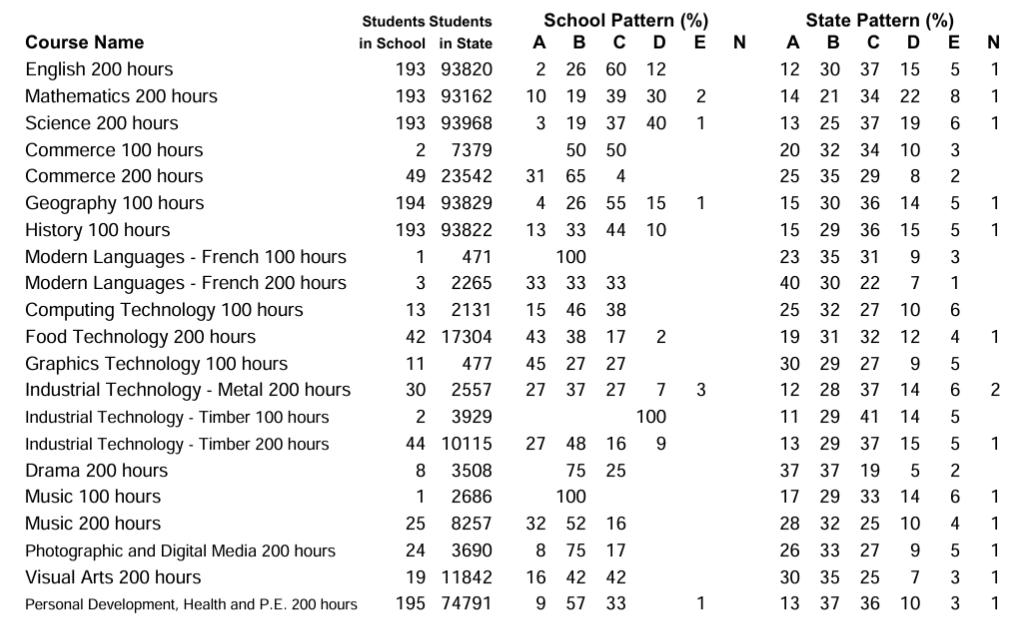
The School Vs State Grading Pattern Comparison table below represents the distribution of grades in each subject studied until the end of the Preliminary year in 2025. The ‘State Average’ grade includes all students in NSW i.e. both boys and girls.
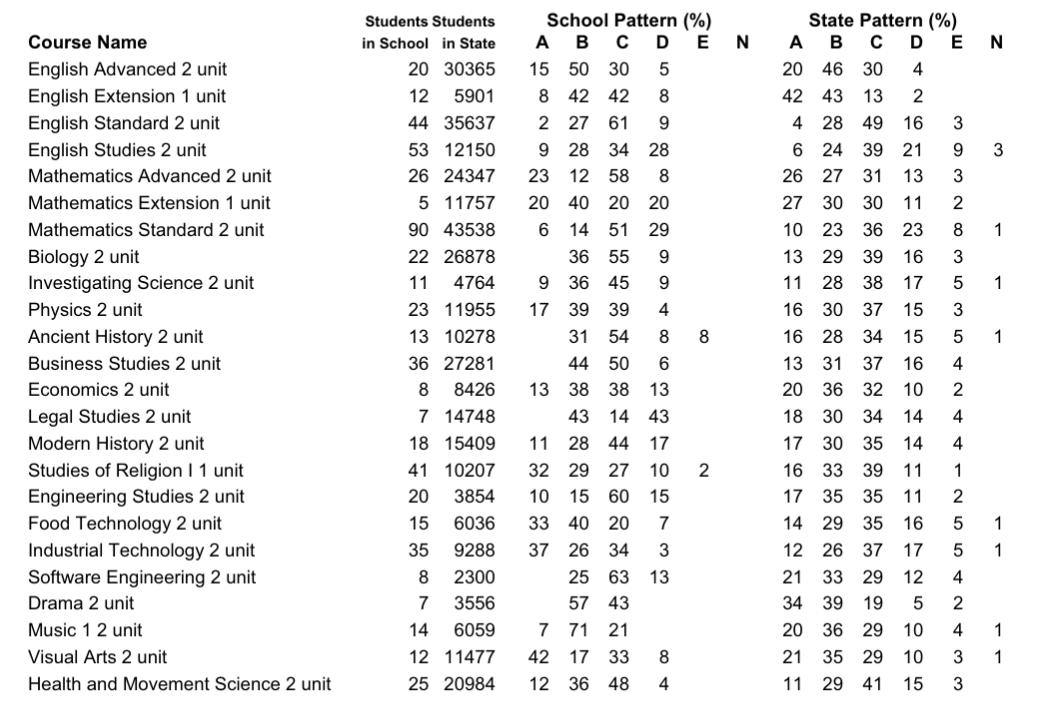
The marks in the table below are out of 100 unless otherwise indicated. The average marks for the whole of NSW (‘State Average’) include marks from both boys and girls. When comparing the marks, it is important to know that girls achieve better results in virtually all HSC courses – hence the ‘State Average’ marks reported below will be higher than the average marks that boys across NSW obtain.