A Queensland-based agricultural innovator has achieved an Australian first, developing the nation’s only fully traceable, uncontaminated oat supply grown and processed entirely on home soil.
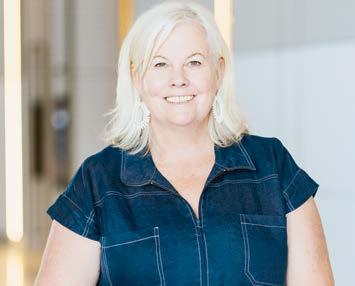
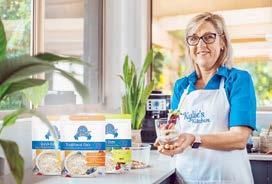
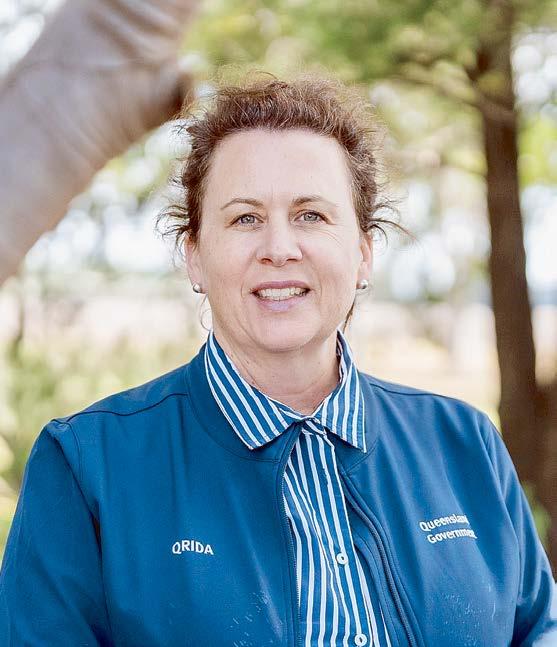
Kylie Martin, who was raised in Central Queensland farming communities, founded GF Oats Australia in 2009 after struggling to source safe oat products for her gluten-sensitive children.
Through that journey, Mrs Martin uncovered significant shortcomings in Australia’s food system, including a reliance on imported oats, widespread cross-contamination and labelling restrictions that prevent oats from being classified as “gluten-free” despite meeting international standards.
‘Our own Kuwait’
Eromanga, a tiny outback town in western Queensland, is being positioned as a critical hub for Australia’s fuel security.
While the town recently began refining the first barrels from the new Taroom Trough, local leaders argue the true solution lies in the underutilised Cooper Basin.
Quilpie Shire Council Mayor Ben Hall is advocating for the removal of regulatory barriers - specifically the Lake Eyre Basin environmental protections - that currently restrict oil extraction.
Despite having a 40-year record of safe pro-
duction and a refinery capable of easing the national fuel crisis, legislative limits have forced the facility to operate at reduced capacity.
Dubbed the “Kuwait of Australia”, the region boasts significant proven reserves and established infrastructure.
Proponents argue that increasing local production would not only bolster sovereign energy capability and reduce volatile import reliance but also provide essential economic resilience for Western Queensland communities currently facing “economic unsustainability.”
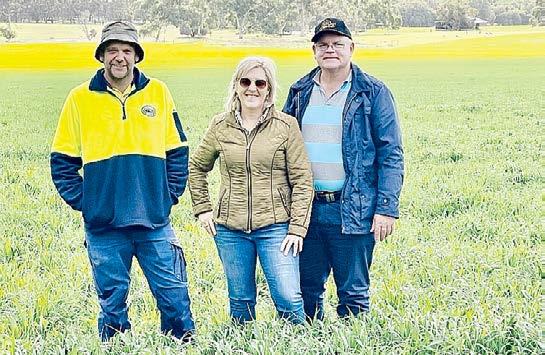
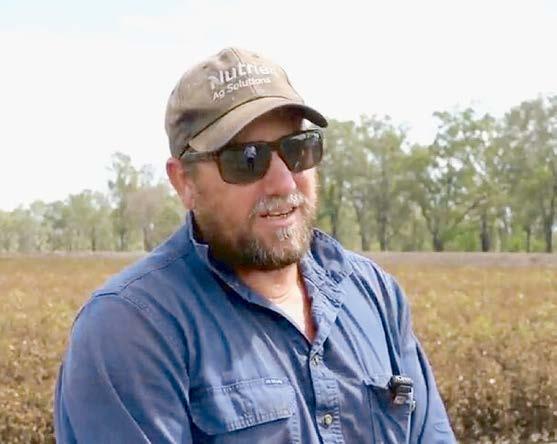
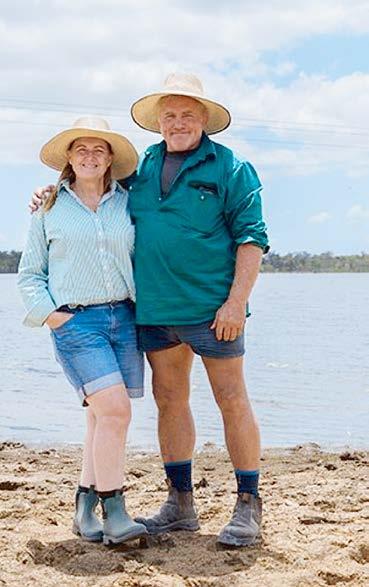
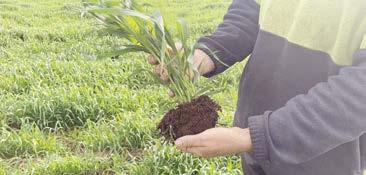
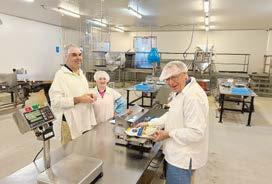
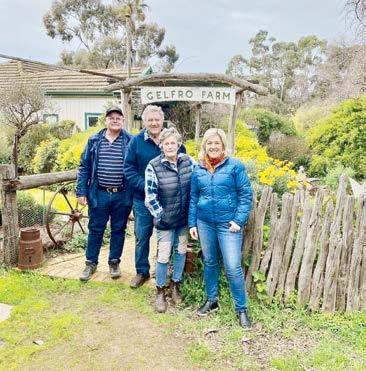
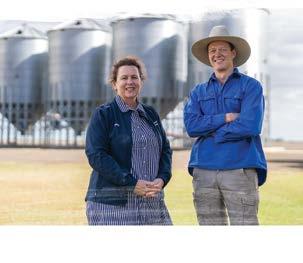
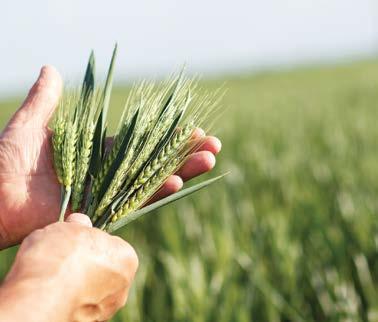
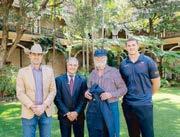
Farmer Kim Rintoul, Kylie Martin, who founded GF Oats Australia in 2009, and Garry McGeorge in a field of oats. (Supplied)
Address: 154-156 Haly Street
Kingaroy 4610
Telephone: 07 4182 0450
Website: QueenslandFarmerToday.com.au
CONTACT US
Editorial:
Email: newsdesk@QueenslandFarmerToday.com.au
Advertising:
Email: advertising@QueenslandFarmerToday.com.au
Classifieds:
Phone: 07 4182 0450 or 1300 666 808
Email: sales@networkclassifieds.com.au
EDITORIAL
Fiona Gowers Editor
E: fiona.gowers@QueenslandFarmerToday.com.au
Breanna Lloyd Journalist
E: breanna.lloyd@QueenslandFarmerToday.com.au
ADVERTISING
Jane Lowe Sales & Marketing
E: jane.lowe@QueenslandFarmerToday.com.au
P: 0408 488 609
Jodie Williams Sales & Marketing
E: jodie.williams@WesternDownsToday.com.au
P: 0401 377 140
Jemma Wilson Sales & Marketing
E: jemma.wilson@BurnettToday.com.au
P: 07 4182 0458
Gayle Hopes Sales & Marketing
E: gayle.hopes@TodayNewsGroup.com.au
Queensland Farmer Today is published monthly and part of the Today News Group. Published by South Burnett Today Pty Ltd ACN 641 796 349.
Publisher: Damian Morgan
Managing Director: Daniel Pelcl. All material is copyright to South Burnett Today Pty Ltd.
Eromanga looms as our own Kuwait
By Fiona Gowers
A renewed push to unlock oil reserves in western Queensland is gaining momentum, with the tiny outback town of Eromanga emerging as a potential cornerstone of Australia’s future fuel security.
Home to fewer than 50 residents, Eromanga, 108 kilometres west of Quilpie, is uniquely positioned with both proven oil reserves and an operational refinery, a rare combination that industry and local leaders say could help ease pressure on the nation’s fuel supply chain.
The opportunity has come into sharper focus following the Queensland Government’s announcement that the first barrels of oil from the Taroom Trough - Australia’s first new oil field in 50 years - have been sent to Eromanga for refining into diesel.
While welcoming the milestone, Quilpie Shire Council Mayor Ben Hall said attention must now turn to unlocking the far larger and more established reserves in the Cooper Basin.
“For more than 40 years, this region has quietly delivered oil production without environmental incident - a track record that stands up under any level of scrutiny,” Cr Hall said. “Our oil is so pure that it is used primarily for underground mining due to its low emission.
“We’re only about 1000km from Brisbane and, despite sitting on the very outer edge of the Lake Eyre Basin, which covers a huge 1.2 million square kilometres, our region is bound by the Regional Planning Interests (Lake Eyre Basin) Amendment Regulation 2024, which currently restricts any further oil extraction from the Cooper Basin.
“We have a phenomenal record of safe oil delivery over four decades - and gas production for over 60 years - geologically we’re a very stable region. There is an incredibly strong argument for increasing production on-site at Eromanga for local refining.
“This would allow us to help ease the current fuel supply crisis. We’re calling for the Cooper Basin to be front and centre in the national discussion on local fuel supply.”
The Eromanga refinery, operated by Inland Oil Refinery since 1986, has long been viewed as a strategically important but underutilised asset. While major East Coast refineries near Brisbane can produce up to 1250 barrels a day, Eromanga currently produces about 635 barrels a day, generating 10.25 megalitres of diesel annually, a figure constrained by regulatory limits.
With Queensland accelerating development in the Taroom Trough, existing infrastructure in Eromanga is now being recast as critical to boosting domestic fuel production. However, Cr Hall said the current focus on Taroom overlooked the scale of resources already proven in the Cooper Basin.
“There is a real opportunity here to refine more product locally, particularly given the volume of oil sitting in the Cooper Basin,” he said.
“We have been called the ‘Kuwait of Australia’ and, when you consider what we’re sitting on, that’s not overstating the oil reserves that can be safely accessed in our region.
“At a time when global fuel markets remain volatile, it makes sense to maximise what we have onshore and close to where it’s needed.
The Taroom Trough has low capacity, with only a handful of wells operating, while the Cooper Basin has hundreds of wells with known capacity and commercial infrastructure already established by Santos and BHP.
“Local production, rather than transporting oil on the Warrego Highway to Eromanga, would also relieve pressure on road infrastructure, which increased large freight movements from Taroom will negatively impact.”
Cr Hall said the council’s advocacy for the region’s resources had been ongoing for years, long before fuel security became a national concern.
“Yeah, we’ve been advocating for it. I’m a new mayor, well, I’m 18 months in and I’m a new councillor so it was my predecessor’s campaign also before that,” he said.
“We have been advocating for the resources in our region and their importance not only to our economy, which is what we were advocating for, but also the broader economy of Australia, it now turns out.
“Our advocation of these resources has really fallen on deaf ears previously. You know, ‘the against’ always get a lot more wind than ‘the fors’.”
He said the region had long held significant untapped potential, but policy settings had limited its development.
“The resources there are foundational and our leaders in the late 80s/ early 90s had enough vision to put a refinery here all those years ago, forecasting the prospect of the oil coming in, only to see it suffer in recent years as a result of legislation that locks the oil away from it,” Cr Hall said.
“So, you know, seeing a refinery in the middle of nowhere starving for oil when there is reportedly plenty of oil at foot seems, you know, it just shows us the direction we’ve gone in potentially as a nation.”
He pointed to the impact of the Regional Planning Interests (Lake Eyre Basin) Amendment Regulation 2024 as a key constraint, arguing it had limited supply to the point where the refinery had struggled to operate at capacity.
“The refinery was only operating three days a week because it was unable to get enough oil from the region,” he said.
“That was due to legislation locking up the river and lake air basins under the Western River Alliance. It was a very, you know, in my opinion, a very narrow view of a window based on the environment and the impact in that frame. And I think this highlights a broader economic impact that the resources have and our sovereign vulnerability that we obviously have.”
The council is now calling for a review of both state and federal policy settings, including the Regional Planning Interests regulation and the Environment Protection and Biodiversity Conservation Act 1999, to better balance environmental protections with economic and energy security outcomes.
Cr Hall said the stakes extended beyond local jobs and investment, warning that regional com-
munities were being pushed toward economic unsustainability.
“We’ve been out here battling it for our economic resilience and for our communities, you know, like economic resilience, but also just, you know, that sort of thing on our own,” he said.
“I think for far too long, Western Queensland has been the dumping ground of goodwill. We’ve got millions of acres of carbon farming covering our land, which has caused some reduction in our production on the primary industry side of things. We’ve got 200 kilometres of redundant rail line that we travel on to our nearest town to the east, Charleville. We’ve got legislation pulling down our resources sector and, you know, it’s painting us into an economic corner of unsustainability. As a region, we can no longer endure it.”
Despite the challenges, he believes the timing is right to elevate the issue nationally.
“Look, I think it’s just an opportunistic time for us to bring it to a high level,” he said.
With growing scrutiny on Australia’s fuel supply chains and increasing demand for sovereign capability, proponents argue Eromanga’s combination of infrastructure, proven reserves and geographic position could play a pivotal role, if regulatory barriers are addressed.
“The next logical step is to ensure the Cooper Basin and greater Lake Eyre Basin isn’t constrained from helping Australia at this time of crisis,” Cr Hall said.
“Discussions are already underway regarding potential expansion at the Eromanga refinery to help scale up domestic production. The other part of the equation should be to allow access to oil reserves in the Cooper Basin.
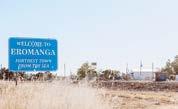
“Eromanga is well-known as the home of Australia’s biggest dinosaur and for being the furthest from the sea in Australia. We’d love to see it equally well known for being at the centre of
nation’s fuel future.”
the
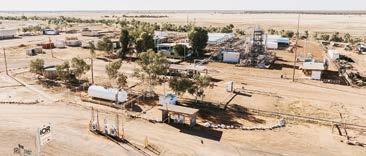
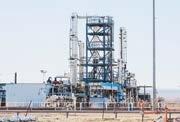
Quilpie Shire Mayor Ben Hall said oil reserves in the Cooper Basin could potentially be processed locally at the Eromanga refinery. (Quilpie Shire Council)
Billions of dollars worth of oil are believed to be held within the region.
Eromanga has the furthest service station from the sea.
The tiny outback town of Eromanga is positioning itself as a contributor to Australia’s fuel security with its rare mix of significant oil reserves and local refining capacity.
The first barrels of oil from the Taroom Trough have been transported to Eromanga for refining into diesel, the Queensland Government has announced.
Toolkit falls short: Inquiry
By Fiona Gowers
A major independent inquiry has found the Northern Basin Toolkit has fallen well short of its intended environmental outcomes, raising concerns across the agricultural sector about the effectiveness of Basin Plan delivery.
The $160 million package of infrastructure projects and policy reforms was introduced following the 2016 Northern Basin Review, led by the Murray–Darling Basin Authority, which reduced the northern Basin’s water recovery target from 390 to 320 gigalitres per year.
The remaining 70 gigalitres was left in consumptive use on the condition that governments would deliver equivalent environmental benefits through complementary measures.
However, the inquiry - led by Troy Grant, the Inspector-General of Water Compliance, under the Water Act 2007 - found those commitments were not met, with infrastructure delivery, in particular, falling significantly short.
Drawing on more than 12,000 documents, submissions, field visits and interviews with senior officials, the review found that while policy settings largely progressed, major infrastructure projects failed to deliver expected outcomes.
“Even ardent defenders of this program’s implementation would have conceded that delivery has been slow, fragmented and, in some cases, lacking transparency,” Mr Grant said.
Key projects highlighted include the NSW Reconnecting the Northern Basin initiative, which delivered just 64 kilometres of fish passage compared to an original 2135-kilometre target.
The Gwydir Constraints project, despite more than $37 million in funding, has yet to secure any land purchases or flow easements, while Queensland’s Bifurcation Weirs project did not progress beyond feasibility.
The report also pointed to structural issues in how Basin programs are delivered: the Australian Government is responsible for funding but
relies on state governments for implementation - a model the inquiry found lacked clear accountability.
“Allowing delivery to be quietly scaled back undermines confidence in the Basin Plan,” Mr Grant said.
The inquiry makes seven recommendations aimed at improving delivery of remaining commitments ahead of the December 2026 deadline, alongside 11 key lessons for future programs.
Central to these is the need to tie funding to measurable outcomes rather than planning milestones and to ensure any reduction in water recovery targets is backed by demonstrated results.
“Complementary measures have a role to play in delivering positive environmental outcomes in the Murray–Darling Basin,” Mr Grant said.
“However, they require excellence in design and implementation, which was too often missing in the Northern Basin Toolkit.”
rent review of the Basin Plan, with implications for both environmental management and water availability for irrigated agriculture across the northern Basin.
Fact File
• This is the first inquiry conducted by the IGWC and the most extensive independent examination this office has undertaken to date.
• Major infrastructure projects under the Northern Basin Toolkit program were not delivered as intended, representing a missed opportunity to improve the environment.
• The program was structurally flawed: too many projects, insufficient funding and an absence of meaningful incentives for delivery – and these difficulties were not clearly communicated publicly.
. 60 R 42 ...........................$5500 35 SL -32....................................$5000
- 70 - 28................................$965
65R R28.............................$1400
x 28 Tractor (12)...............$930
x 28 Industrial................$1045
x 38 38 (16).......................$1250
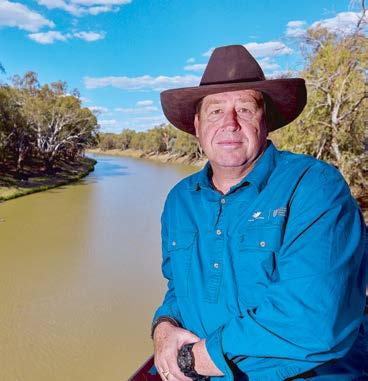
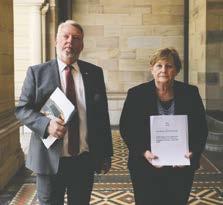
The Inspector-General of Water Compliance (IGWC) Troy Grant.
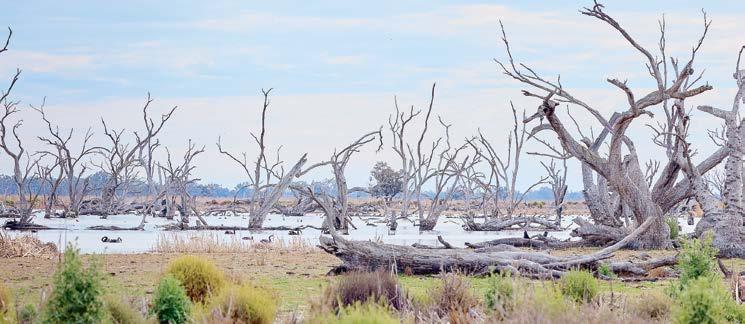
The Macquarie Marshes, located in the northern Murray-Darling Basin, are one of Australia’s most significant inland, semi-permanent wetlands, known for supporting large waterbird breeding colonies. These Ramsar-listed marshes receive water from the Macquarie River and are vital for ecological health, supporting 77 waterbird species and endangered species such as the Australasian bittern. (Supplied)
Floods decimate CQ crops
By Fiona Gowers
Widespread flooding across Central Queensland has delivered a devastating blow to the region’s cotton industry, with Theodore grower Kirk Anderson describing crop losses and damage to farm infrastructure.
Standing on his property as floodwaters receded, Mr Anderson said the speed and scale of the event left little time to respond.
“It was late at night,” Mr Anderson said. “We came down actually right where we’re standing now and the water has basically breached these levy banks. So, it was really fast at that point. And yeah, at that point it was just filling up with water.
“Look, we’ve probably put 90 per cent of the cost into this crop to harvest it right now. So yeah, we’ve lost about 90pc of our expense for the year with no income coming.
“Obviously, there’s a huge cash flow problem now going forward. Not only that, we’ve got to outlay more money now to try and get these fields into production for next year.
“So, going forward, things are going to be tight, especially with fuel prices rising, and yeah, it hurts.”
Beyond the immediate crop losses, Mr Anderson said the floodwaters had caused extensive structural damage across his operation.
“Well, like I say, the speed of this flood that came down hit everything at once, a couple of creeks merged in the same spot, so it affected every bank and every road, and the water flowed into every head drain and every headland area.
“So, due to the damage, every paddock requires major earthworks to be irrigated.
“We’ve just got to try and chew off bites that we can handle, I suppose, and get a certain amount of area into production next year to try and counteract what happened this year.
“I just hope it will get better, but I don’t know. It’s harder than it’s ever been. We’ve been here since 1995 and my father has been growing cotton here since 1978.”
Queensland Minister for Primary Industries Tony Perrett, who visited the region in the wake of the floods, said the scale of the damage reinforced the need for strong government support.
“The Crisafulli Government backs its primary producers in good times and bad, which is why we are advocating strongly for them with the Federal Government to make sure the assistance meets the need.
“I’ve come to the region to hear directly from flood-ravaged farmers about the impact and what’s required to support them to get back to production.
“My heart goes out to these producers who not only have to carry the financial and emotional impact, but need to find the resolve to pick up and pivot quickly to meet other planting windows and plan their long-term recovery.
“The Crisafulli Government set an ambitious target to grow the value of primary production to $30 billion by 2030, and while seasons like these will test the industry, we are not stepping away from our vision for the sector.”
In response to the disaster, additional flood assistance has been activated for affected communities and producers across Central
Queensland.
Flood hardship assistance is now available to more residents in Gladstone, while primary producer support has been activated for both Gladstone and Banana Shire following torrential downpours.
Eligible residents can access grants to cover the costs of emergency essentials, while impacted farmers can apply for a range of financial assistance measures including grants, concessional loans and freight subsidies.
Assistance is being delivered by the Australian and Queensland Governments under the joint Commonwealth-state Disaster Recovery Funding Arrangements.
Under the package, primary producers in the Gladstone and Banana local government areas who have experienced flood damage can access loans up to $2 million, grants up to $75,000 and freight subsidies up to $5000.
Loans are designed to support immediate recovery and ongoing operational costs, while grants can assist with clean-up and the rein-
statement of farm infrastructure.
Freight subsidies are available for the transport of fodder, livestock, fencing, machinery and other essential materials.
Support is also being extended to households, with personal hardship assistance payments of $180 for individuals and up to $900 for families of five or more to help cover essential items such as food, clothing and medicine.
Federal Minister for Emergency Management Kristy McBain said the assistance would help flood-affected communities begin the recovery process.
“For residents grappling with the impacts of these floods, this financial assistance will help them recover sooner,” Minister McBain said.
“Hardship grants can help pay for groceries and replacement clothes, but also allow uninsured, low-income Queenslanders to reconnect services, replace damaged whitegoods, or carry out repairs to a flooded home.
“We’re also acutely aware of the challenges being faced by Queensland primary producers
DELIVEREDDANIEL’SLAW
right now, which is why we’re offering a range of disaster support measures to help with recovery and to keep businesses afloat.”
Queensland Minister for Disaster Recovery Ann Leahy said the government remained focused on delivering timely support to affected regions.
“Our sleeves are rolled up and we remain focused on our mission of delivering for Queensland, whatever the weather,” Minister Leahy said.
“We will continue to work with impacted councils to identify where assistance is needed and make sure it’s promptly activated.
“Anyone needing urgent disaster support can call the Queensland Community Recovery Hotline around the clock on 1800 173 349. We have officers ready to respond.”
For Central Queensland’s cotton growers, however, the road to recovery is expected to be long and costly, many now face the dual challenge of rebuilding damaged infrastructure while preparing for future planting seasons.
Theodore cotton grower Kirk Anderson describes crop losses and flood damage to farm his infrastructure. (Supplied)
Fact File
• Dawson Valley cotton farmer Kirk Anderson planted 950 hectares this season. About 350ha have been completely lost, with a further 250ha expected to experience significant yield and quality reductions. The impact was heightened as the crop was harvest ready.
• DPI disaster surveys have been submitted from Local Government Areas, Banana, Bundaberg, Gympie, North Burnett, South Burnett, Western Downs, Gladstone, Fraser Coast and Central Highlands.
• These initial self-reported surveys show: Fences impacted: 1400km, private roads impacted: 600km and livestock reported deceased: 500.
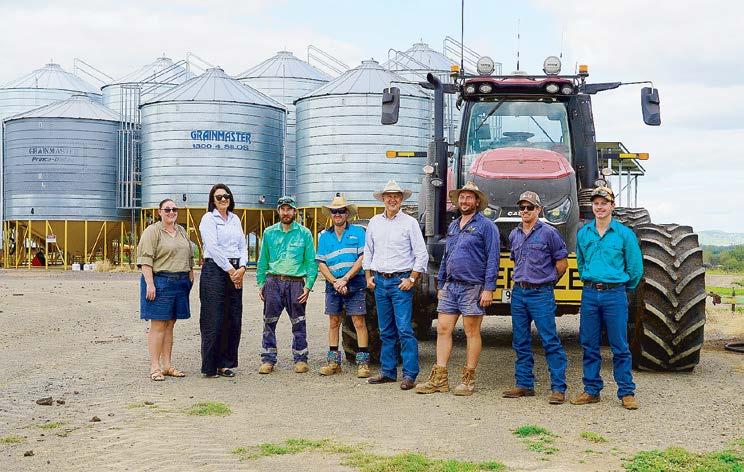
Queensland Minister for Primary Industries Tony Perrett visited Central Queensland after the floods. He is pictured in Biloela (fifth from left) with Krystal Muller, Cotton Australia regional manager for the Dawson Valley Renee Surawski, Nick Behrendorff, Scott Muller, Ben Luck, Scott Grange and Heath Grange. Krystal and Scott Muller hosted the visit on their family farm.
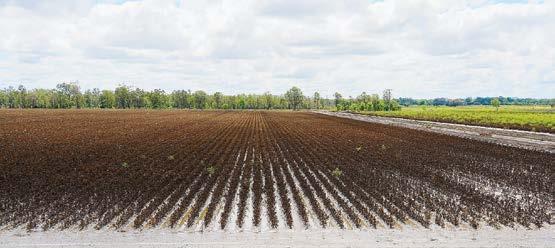
Flooded cotton in Central Queensland.
From childhood passion to a national purpose...
is the only charity of its kind in Australia solely focused on helping graziers replenish livestock post-crisis, whether due to floods, bushfires, drought or disease.
Rebuilding after disaster
By Fiona Gowers
“My love for cattle began when I was just five years old.”
For Nathalie Grassi, that early memory - meeting a friend’s dairy cow in her backyard on a hot summer evening - planted a seed that would one day grow into a charity dedicated to helping Australian farmers rebuild after disaster.
Having lived in Australia since 1973, Nathalie has always felt deeply connected to the land, its farmers and the resilience of rural communities.
Over the years, she has watched droughts, floods, bushfires and disease devastate farming families across the country.
“I have always wanted to help our farmers in any way I could,” she says. “Seeing the impact of
these events affected me on a very personal level.”
During the 1990 Nyngan floods, she wanted to travel to help but was told the town already had enough volunteers.
In 2018, she finally found a way to contribute, travelling to Quilpie to assist with the Burrumbuttock Hay Run, preparing first aid kits for farming families.
“It was incredible to see so many people coming together for one purpose, to help farmers stay on their land.”
But it was the 2019 floods in Quilpie, which caused catastrophic livestock losses, that became the turning point.
“I knew I needed to do more.”
That Easter, Nathalie travelled to Quilpie to witness the recovery first hand. Sitting in a local
BUNDABERG CLEARING SALE
A/C: Estate of Glenn Robertson Saturday 9th May 9.30am 1097 Moorlands Road Bundaberg NO RESERVE, NO BUYERS PREMIUM
TRACTORS: 2016 Case Maxxum 140 4wd air cab 140hp 2500hrs, Kubota 7040 with front loader 4wd rops 3807hrs, Case 75 JXM with front loader 4wd rops 75hp 538hrs, Case W36 loader, Ford tractor weights.
HAY EQUIPMENT: 2021 Massey Ferguson 1840 bailer, 2024 Pottinger 3507T mower/conditioner, 2024 Massey Ferguson RK702 TR-SDX tandem rotary rake, 3x hay trailers, McCormick bail grab, 3 x New Holland 471 bale elevators, International 511 combine seeder. Super 56 Ruler Bar Rake.
FORKLIFT/MOWER: Kubota Z422 zero turn mower 100hrs, Komatsu 2.5ton forklift with side shift.
IMPLEMENTS: 24 plate wheeled o sets 28”discs adjustable, Agro 7 tyne heavy ripper, 7ft slasher with rear wheel, Howard 100inch rotary with crumble roller, Hooper 7ft back blade, John Shearer 9m cultivator, 3meter h/d box blade (as new), 13 tyne cultivator with harrows, bag lifter, 3pt link post hole digger, 4 wheel rake, 4 row mark out bar, multiweeder, P&H trash incorporator, 1 ton fert bin on 11/4 tynes, John Deere 4 furrow square plough, Hodge 5 furrow disc plough, AR 4 furrow square plough, Hodge 3 row cultivator, 10ft rubber tyre roller, cotton king, Super 56 roller bar rake, Dizzy 6ft frail mower, rear forks, cultivator, scarifier.
SPRAYING/IRRIGATION: Avokah 410 irrigator with hose, Agrolead 1000lt 3pt link spay unit with 12mt boom, 600lt 3pt link boom spray with ervan legs, Catterin Pompe CP170K spray pump (new), irrigator guns and fittings.
VINTAGE ENGINES: Blackstone 10hp on transport, Austral engine.
WORKSHOP: Panbrake folder 2.4mt, hydraulic press, CIG 330amp welder, Migmate 345 welder, CIG 220amp, Unimig Plasma cutter, 30CFM air compressor, hand tools, electric tools, benches, tool boxes, steel drop saw, bench grinders, workshop fan, vices, fittings, trolley jack, battery charger, saws, parts, and more……..
MISCELLANEOUS: 1998 Landcruiser wagon GXV V8 (loads of extras), Saga class1 remote control boat (new), 12volt car fridge, assorted steel (gal box & pipe), sheet metal, tynes, blades, spray guns, Hodge cast implement seat, 7x5 box trailer, Prisma 125 socket welder, truck tyres, rollers, stands, pipe bender, and lots more.
OUTSIDE VENDORS: (Note: outside vendors will have a reserve)
pub, she shared an idea with the publicans - an idea that would soon become Adopt-A-Beast.
The concept was simple but powerful: instead of short-term aid, why not help farmers replenish livestock and restart breeding programs after a crisis?
Adopt-A-Beast began operations in Gracemere before moving to Rockhampton, always supporting local businesses during fundraising events.
What followed was a steep learning curve, with endless paperwork, regulatory processes and navigating charity registration.
Approval through the Australian Charities and Not-for-profits Commission (ACNC) took more than two years.
“It wasn’t easy,” Nathalie admits. “This was my first time starting a charity. Mistakes were made, but I learned from every one of them.”
Today, Adopt-A-Beast is the only charity of its kind in Australia solely focused on helping farmers replenish livestock post-crisis - whether due to floods, bushfires, drought, or disease.
The process ensures dignity and transparency. Farmers apply for assistance, attend their local saleyard with their stock agent once approved and the invoice is paid directly by the charity.
No funds pass through the farmer’s hands.
“Rather than providing direct financial aid, we work closely with livestock brokers to purchase animals on behalf of the farmers,” Nathalie explains.
“This ensures that all funds raised are used specifically for restocking, with no direct exchange of money to farmers.
“We can’t replace an entire herd but we can provide a few head of cattle to help restart breeding. That can make all the difference in helping families stay on their land.”
Adopt-A-Beast receives no government funding.
Every dollar raised comes from volunteers selling locally made merchandise and running community events including Mother’s Day, Father’s Day and Christmas raffles, Rockynats fundraising and an annual garage sale.
The organisation now operates online raffles, a quarterly newsletter and an Ambassador Program, with a growing digital presence.
In its first six years, Adopt-A-Beast has already assisted farmers, with current support extending to Gympie and Stonehenge.
Nathalie’s long-term vision is national expansion.
“This has been my dream from the beginning,” she says. “I set a 10-year goal. We have four years left - and I believe we can make it happen.”
For Nathalie, it all comes back to that childhood moment and a lifelong respect for Australia’s rural backbone.
“Ourfarmersareresilient.Theyjustneedsomeone to stand beside them when times are tough.”
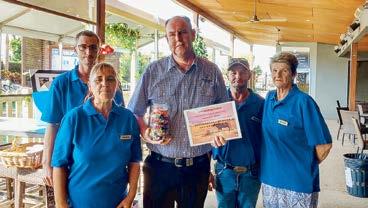
The Adopt-A-Beast team began operations in Gracemere before moving to Rockhampton. It always supports local businesses during fundraising events. (Supplied)
Adopt-A-Beast
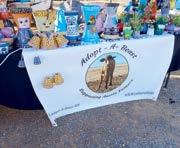
Adopt-A-Beast holds market stalls to help raise money.
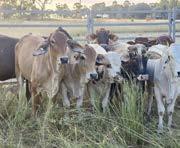
Adopt-A-Beast bought these heifers for a member of the Adopt-A-Beast family.
Adopt-A-Beast’s first Christmas Raffle at the Gracemere Hotel in 2021. Adopt-A-Beast founder Nathalie Grassi is pictured front left.
Rebates on for tags gear
By Julian Lehnert
The Queensland Government has committed $6.3 million to a second helping of financial assistance aimed at increasing the use of electronic identification tags in sheep and goats ahead of a looming deadline.
Queensland’s Department of Primary Industries greenlit the funding package on 30 March, offering 75-cent discounts on approved ear tags and leg bands as well as 50 per cent rebates on equipment and registration costs for producers, saleyards, processors, agents and show subchambers.
Electronic identification or eID tags contain a microchip and are used to mark and track livestock at registered addresses.
The movements of tagged livestock as well as other identifying information are logged in a national database, with the Queensland Government saying the system helps to “improve biosecurity through accurate and timely tracking.”
All sheep and goats born on or after 1 January 2025 must already be fitted with an eID device before they are allowed to leave the property they were born at.
The scheme will go on to cover all sheep and goats regardless of age from 1 January 2027 - less than a year from now.
To increase the use of eID devices by producers, Queensland’s government already ran a financial assistance scheme back in 2024 and 2025, but found few producers made use of the rebates.
A review of the rebate scheme recommended a second round of funding, which officially began on 30 March 2026.
Under the new $6.344 million funding scheme, registered ‘biosecurity entitites’ can access $0.75 rebates on sheep and goat eID devices at time of sale without having to make an application.
Eligible buyers must still fill out an approved National Livestock Identification System device order form ahead of the purchase, however.
Approved tags and applicators are available from Allflex Australia, Datamars, Enduro Tags, Leader Products Co and Shearwell Australia.
The rebates will be in place until June 2027 or until funding runs out.
A shorter rebate scheme will also cover the costs of registering one’s property under the eID program, as well as reduce expenses incurred by certain groups in purchasing eID readers and other equipment.
Until 30 September, Queensland sheep and goat producers will see 50 per cent of their property identification code application fees slashed, up to a maximum of $1,600 per applicant.
Small saleyards will be able to access up to $2,500 in financial aid for purchasing NLISapproved readers and equipment, while larger yards can apply for as much as $65,000.
Rebates of up to $2,500, $10,000 and $85,000 are also up for grabs by small, medium and large sheep and goat processors, respectively.
Lastly, Queensland livestock agents and ag show sub-chambers can access up to $1,600 in rebates under the scheme.
The Department of Primary Industries stated applicants will receive confirmations of their successful application within 30 days.
“We’re providing more assistance to help ease the financial burden and ensure the sheep and goat industry can adopt eID,” said DPI’s directorgeneral for biosecurity, Dr Rachel Chay.
Once in place, Queensland’s sheep and goat eID program will bring the state in line with Victoria, New South Wales, Western Australia and South Australia, which have all either announced or already implemented their own livestock tagging schemes.
“We’re working closely with industry stakeholders to ensure the rollout of eID is smooth and effective, and that producers have access to the resources and support they need to succeed,” Dr Chay said of Queensland’s eID program.
By 2027 all Queensland-born sheep and goats must be fitted with an electronic identification tag. To increase the use of the technology by farmers ahead of the deadline, the Queensland Government has launched a $6.3m rebate scheme. (Supplied)
Crisafulli calling for action
By Sophie Mossman
As oil exploration continues in the Taroom Trough, Queensland Premier David Crisafulli is calling on Prime Minister Anthony Albanese to back the project.
It is becoming more evident that, as the war in Iran and the subsequent fuel crisis drag on, Australia, once a self-sufficient nation, is now highly dependent on imports and, as a consequence, highly exposed to global supply disruptions.
Currently, around a dozen test wells have been drilled in the Taroom Trough, and are pumping liquid condensate, a light crude oil that can be easily refined into petrol, diesel and jet fuel.
While the oil being extracted from the Taroom Trough shows promise, the results are yet to come, which will inform the Queensland Government on the next steps to take.
While on the Karl Stefanovic Show recently, Mr Crisafulli said that the Federal Government needs to ‘get the hell out of the way’ and ‘give the information’ about Australia’s fuel.
“There’s a massive opportunity to do what we used to in this country - control our own destiny and our sovereignty; I’ve been speaking about
energy capability for many years but I’ve been acting on it the minute we got into (office),” Mr Crisafulli said.
“We’ve got a lot happening, we’re just not firmly of the view that if we cannot find ways to say no to things, that this can be a great country and a great State.
“(The Australian Government) know what’s been contracted, they know what’s coming, and I reckon if they told Australians, people would make far better decisions than when they’re sec-
ond-guessing themselves.”
However, the new changes to the Environmental Protection and Biodiversity Conservation (EPBC) Act, passed in late 2025, have the potential to add unnecessary layers of complexity and delays to major projects within the national interest, like the Taroom Trough.
Maranoa MP David Littleproud said it will ‘be a test for the Australian Government to show how serious they are about Australia’s sovereign security into the future’.
“The Albanese government has already set a precedent by providing a shortened environmental approval process for the Tarong West wind farm - the same should be applied to the Taroom Trough,” Mr Littleproud said.
“Nothing is more important to the National interest than shoring up our future by enabling the production of our own fuel and investing in our sovereign capabilities.”
For farmers, access to diesel and fertiliser is essential to their business and their livelihood and are already rationing fuel and debating whether or not to plant their crops.
If the pressures that we are seeing, including and not limited to ever-increasing production
costs and supply disruptions, continue, this could lead to farmers producing less food and fibre.
Ultimately, this will impact farmers’ viability and profitability, which will put up the price of fresh produce and be felt by everyday consumers more than ever.
Regardless of their size, if family farms are taken out of the equation, Australia will starve.
AgForce Queensland Chief Executive Niki Ford said the Australian Government needs to recognise agriculture as essential to national security and food supply, and provide genuine consultation with landholders within the area.
“The proposed streamlining of approvals under the EPBC reforms will not be realised until bilateral agreements with the states and territories are finalised,” Ms Ford said.
“In the interim, we have not yet seen evidence of clear, workable fast-track pathways for timecritical activities like agriculture or essential regional infrastructure.
“This is not just an industry issue - it’s about ensuring Australia can produce food, sustain regional communities and manage future shocks.”
Queensland Premier David Crisafulli is calling on Anthony Albanese to back the Taroom Trough project. (File)
Queesland Premier David Crisafulli. (Jono Searle/ AAP)
To
Neighbour to the rescue
By LifeFlight
It took only seconds for Queensland farmer Clive Weier to lose his arm in an auger, and a split-second reaction from his neighbour to save his life.
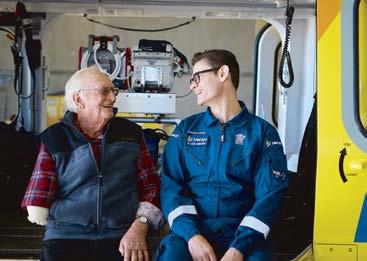
LifeFlightCriticalCareDoctorDanielBundock recently caught up with Clive at the Toowoomba base.
He told the grateful 89-year-old that his neighbour’s quick-thinking just over a year ago was lifechanging.
“In an emergency, every second counts,” Dr Bundock told Clive. “I’ve seen life and limb altered by bystanders who knew what to do.”
Graham Terry was helping his mate clean oats from the auger header – something Clive had done hundreds of times before without incident. Clive’s hand suddenly got stuck in the machine.
“I clamped my hands around his arm,” Graham said. “Clive’s son Leigh called Triple Zero (000) and we put a torniquet on. We reassured him, he was going to be okay. I couldn’t do anything to stop the pain; I could only stop the bleeding.”
Dr Bundock told Clive that he would have done exactly the same thing if he’d been first on the scene.
“What Clive’s son and neighbour did saved his life, undisputably,” Dr Bundock said.
“I suppose that’s why we have the First Minutes Matter program, the first minutes do matter.
“When we arrive on scene to a trauma case, we bring a skillset, we bring blood, we bring equipment, but most of the time we are bringing a knowledge and appreciation that doing the basics properly is the thing that saves a patient’s life.
“They had good knowledge of early trauma principles and knew to apply direct pressure to stop his hemorrhage.
“Clive’s neighbour put two hands around his upper limb and compressed as hard as he could.
“Clive’s a pretty lucky man. He’s lucky because of where the injury was, he’s lucky because of the type of injury he had but he’s also lucky because the people around him had knowledge of the basic principles of trauma care.
“Their ability to think clearly in that minute and step up when they were needed is why Clive’s back on the farm today.”
Dr Bundock intubated Clive at the edge of his paddock and looked past Clive’s feet as the sun set over his Mondure property.
“Clive’s clearly a resilient man,” Dr Bundock said. “I met him on probably the worst day of his life, and he said to me: ‘I’ve had a shit of a day’.
“You’d be surprised at the incredible resilience of people. They just seem to want to get back up always. They have this eternal optimism that everything’s going to be okay and that they’ll find a way forward.”
Clive recently celebrated his 89th birthday and has gone from being right-handed to embracing a ‘she’ll be right’ attitude using just his left hand.
“I don’t know whether I was in shock, but I had one idea, I wasn’t going to pass out, I never passed out,” Clive said.
“I woke up and thought, ‘well – I’ve got to move on. I can’t bury my head in the sand and
think I can’t do this and I can’t do that. I’ve got to think positive and I’ve got to get on with my life. It’s happened. It’s history. There’s nothing I can do about it’.”
“I had to learn how to boil the kettle, I had to learn to do some toast, I had to learn to butter it and put my Vegemite on. I can dress myself; I can put my boots on. I can get up and feed my chooks and collect my eggs. I can drive my ute.”
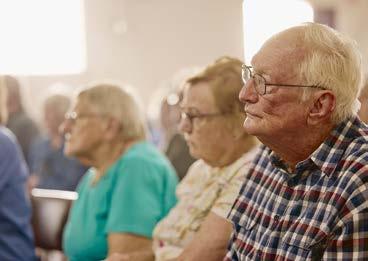
Clive was so grateful that good trauma knowledge saved his life, he organised a First Minutes Matter workshop for the Mondure community and said his community is keen to attend a workshop every two years.
Dr Bundock, who also works in a hospital emergency department, said people who call re-
gional and rural Queensland home need to invest in learning live-saving skills.
“These people work around heavy machinery and animals that can be untamed and accept the dangers and risk that come with that,” Dr Bundock said.
“With that risk, comes a responsibility to yourself and other people who live in your community.
“We are trained to be calm in those moments, but calmness comes from a skillset that you know that you have.
“And people in the community can develop a skillset as well by attending courses, thinking about trauma care, and learning how to use equipment and the basic principles of it.
“When you’re not helpless, when you can do something about it, that gives you a sense of relaxation.”
Dr Bundock said seeing Clive looking so well was a real highlight.
“Doctors are people too,” Dr Bundock said. “We carry a bag of patients around in our heads our entire lives. You want to know that they’re doing well.”
Clive said getting to shake Dan’s hand, was unexpected.
“To shake hands with Dan from LifeFlight, I can’t believe it,” he said. “It was special – it was.
“It was unreal what LifeFlight’s done for me. I really appreciated it. I think without LifeFlight I wouldn’t be here.”
Mondure farmer Clive Weier thanks LifeFlight Critical Care Doctor Daniel Bundock for saving his life. (Supplied)
Clive Weier encouraged Mondure locals to attend the free First Minutes Matter workshop.
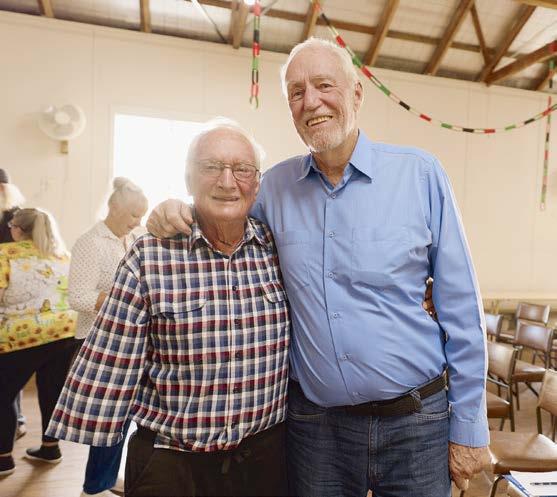
Clive Weier and his neighbour Graham Terry who saved his life before professional help arrived.
The LifeFlight helicopter landed on Clive’s driveway close to the auger.
Clive and his daughters thank LifeFlight doctor Daniel Bundock.
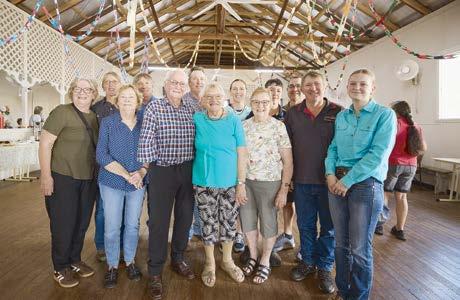
Clive’s family attended the Mondure First Minutes Matter
First Minutes Matter course is practical.
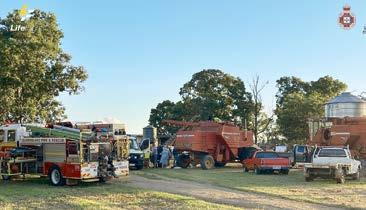
The Queensland Fire Department freed Clive from the auger.
The LifeFlight helicopter landed on Clive’s driveway close to the auger.
Industry pays tribute to Ian Burnett after fatal farm tragedy.
‘A leader and a mentor’
By Fiona Gowers
The small Central Queensland community of Emerald has farewelled respected cotton grower Ian Burnett and his seven-year-old grandson Noah, following a tragic accident that shocked Australia’s agricultural sector.
Family, friends and members of the wider farming community gathered to honour the pair, remembering the legacy they have left.
A third-generation farmer, Mr Burnett was widely regarded as a leader and a mentor within the broader agricultural sector.
He spent decades building a highly regarded farming operation after moving to Emerald in the early 1980s, where he began growing cotton in 1983.
Over time, the enterprise diversified into grain and beef production, reflecting both the challenges and opportunities of farming in Central Queensland.
His contribution to the cotton industry, in particular, was significant.
Mr Burnett’s grandson Noah - described as a bright and energetic young boy - shared his grandfather’s love of the outdoors and farming life.
Those who spoke at the service reflected on the special bond between the two, who were often seen together in the paddock.
The pair died in a tragic incident on the family farm, an event that has prompted renewed discussion around safety on agricultural properties.
While farms are workplaces they are also homes for many families and the incident is a sobering reminder of the risks that can exist in dayto-day operations.
Speakers at the funeral paid tribute to Mr Burnett’s lifelong contribution to agriculture, high-
Wider Australian cotton family is heartbroken, Ian
By Adam Kay, Cotton Australia CEO
The entire Australian cotton family is heartbroken by the tragic loss of Ian Burnett and his much-loved grandson.
Ian was more than a respected cotton grower – he was a leader, a mentor and a quiet powerhouse of Australian agriculture.
To lose him so suddenly, alongside his young grandson, is a tragedy that has shaken the agricultural community in Queensland, particularly all those who know the family.
A third-generation farmer, Ian dedicated his life to the land. He has been growing cotton since moving to Emerald from Clermont in 1983 and since then has played a pivotal role in establishing and strengthening cotton production in Central Queensland.
Ian’s influence reached far beyond the farm gate.
Over more than four decades, he gave tirelessly to industry organisations including Central Highlands Cotton Growers Association, AgForce Queensland, National Farmers Federa-
tion and numerous local and regional boards.
He was passionate about his local community and was a member of Rotary, the Rural Fire Brigade and had been actively involved in fundraising for the Royal Flying Doctor Service (RFDS) in Emerald.
His efforts were instrumental in securing funding for the construction of a new patient transfer facility at Emerald Airport.
Ian was never one to seek recognition, yet his leadership was widely felt and deeply respected.
At the heart of everything Ian did was family. He was immensely proud that his sons, including Cotton Australia’s immediate past Chair Nigel Burnett and current CRDC Director Ross Burnett, were continuing the farming legacy he worked so hard to build.
On behalf of Cotton Australia, I extend our deepest sympathy to Ian’s family, friends, colleagues and the wider Emerald and cottongrowing communities.
Ian leaves behind a legacy of leadership, service and integrity and he will be deeply missed.
lighting his passion for cotton production and his role in supporting the next generation.
Friends said he took great pride in sharing his knowledge with younger producers and ensuring his family remained connected to the land.
Noah, meanwhile, was remembered for his curiosity, kindness and enthusiasm, with mourners reflecting on how deeply he was loved by his family and the joy he brought to those around him.
The service drew strong support from across the agricultural sector, including representatives from industry organisations, local producers and community groups.
Many spoke of the profound impact the tragedy has had, not only on those closest to the family but across rural Queensland more broadly.
In the wake of the incident, industry voices have reiterated the importance of ongoing safety
awareness on farms, particularly where children are involved.
Agriculture remains one of Australia’s most vital industries, but also one of its most hazardous, with machinery, vehicles and environmental conditions presenting constant risks.
For the Emerald community, however, the focus has remained firmly on supporting the Burnett family and remembering two lives lost far too soon.
As mourners gathered to say their final farewell to Mr Burnett and Noah, the overwhelming message was one of unity, resilience and carevalues deeply embedded in rural Australia.
Together, their loss leaves a lasting void in both their family and the broader agricultural community, but their memory will endure in the paddocks, relationships and traditions they helped to shape.
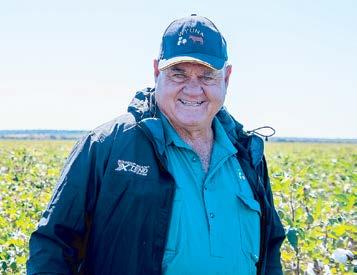
Ian Burnett had grown cotton since moving to Emerald from Clermont in 1983 and had since played a pivotal role in establishing and strengthening cotton production in Central Queensland.
(Cotton Australia)
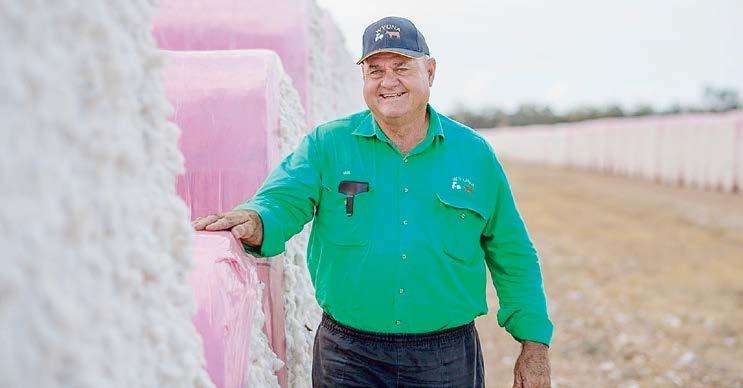
Ian Burnett is pictured on “Wyuna”, his family’s farm near Emerald. (AgForce Qld)
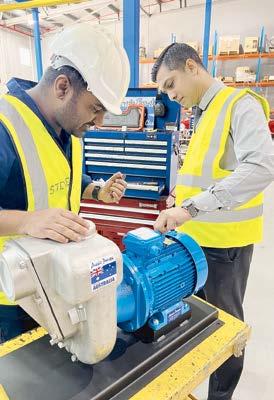
Australian Pump has been a key supporter of Australian agriculture activities for the last 30 years.
During that time, they worked farmers from horticulture to dairy, beef cattle, to wool, and everything in between.
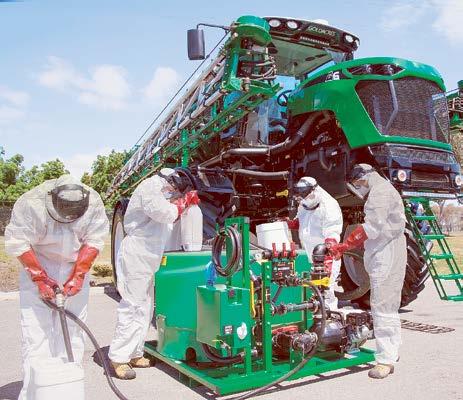
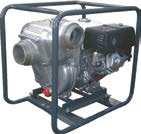
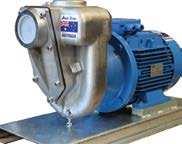
Here, John Hales, Aussie Pump’s Chief Engineer, stretches the boundaries of ambition by moving into production of 316 stainless steel pumps for those corrosive applications in agriculture.
FERTILISER….DON’T WASTE A DROP
With the spectre of fertiliser shortages hanging over agriculture’s head, it’s nice to see our Prime Minister taking extreme efforts to not only provide fuel security but also to ensure farmers get the fertiliser they need for this year’s cropping!
Fertilisers are generally speaking corrosive and don’t relate well to cast iron or aluminium pumps.
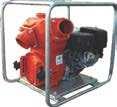
That is why Aussie developed their ‘Aussie Smart Pump’, a 30% glass filled polyester model made to a recipe, compliments of the US government’s NASA space program.
In 2” or 3” configuration, they have flows up to 1,010 litres per minute and pressures as high as 52 psi!.
The pumps are world famous for their ability to deal with corrosive liquids including seawater, ag chemicals or fertilizers.
Many of Aussie’s customers use them for batching fertilizer.
The Smart pumps with 316 stainless steel fasteners can be driven by Yanmar diesel, Honda petrol engine, or single or three phase electric motor.
“We build them in a wide range of variations as we know there are complications of handling fertilizer that are beyond our understanding.
We also build the Smart Pumps with hydraulic drive.
This option is popular with wide boom sprayers. Helping farmers to get the best out of their pumps is what it’s all about!” says Aussie Pumps Chief Engineer John Hales.
Hales and the Aussie Pump team are happy to provide free advice to facilitate the best possible solutions for handling fertilisers.
AUSSIE GOES 316 STAINLESS
A number of farmers with big sprayers are particularly conscious of the need to refill fast, to cut costs on time and the amount of fuel being used.
Aussie started looking at 316 stainless steel self-priming centrifugal transfer pumps for high volume pumping. They already have a major presence in agricultural applications from sugar mills to piggeries, abattoirs to meat processors.
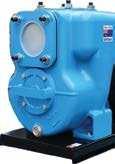
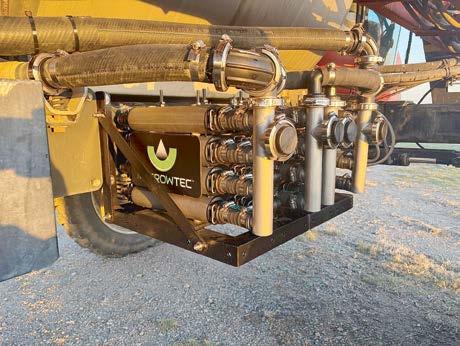
These pumps have a tremendous ability to deal with corrosive applications. Aussie have recently introduced a 3” 316 cast stainless steel pump that can be driven by hydraulic motor, diesel engine or electric motor.
All part of their Aussie GMP range, the impeller is 316 stainless steel, mechanical seals are tungsten carbide and elastomers can be supplied in Viton. Best of all the body is stainless steel as well.
Their B3XR-A/X pump with body and impeller cast in 316 at 2900 rpm provides a flow of 1500 lpm.
BIG 4” PUMPS ON THE WAY
Aussie’s B4XR-A/X/W has a 4” 316 SS body and impeller capable of pumping 2,100 lpm. Imagine that in terms of fast filling a sprayer.
These pumps are already popular in the construction industry in their cast iron configuration. Apart from high flow, they also have high head capability.
The B4XR-A with suitable power, has a vertical head capability of over 30 metres. These stainless-steel pumps are doing great service in milk processing, even handling difficult liquids including molasses.
These pumps will change the way people think about transporting fertilizers and other corrosive liquids. A self-priming centrifugal pump is a gift and leaves behind the old conventional end suction pumps.
South Australia’s drought was tragic and yet many plans to divert water from Queensland or NSW to western Victoria and South Australia are largely ignored by governments.
How can we ignore the opportunity to reap the benefits of expanding crop and grain production to feed the world when millions of people in South Sudan are starving?
Further information is available from aussiepumps.com.au or authorised distributors.
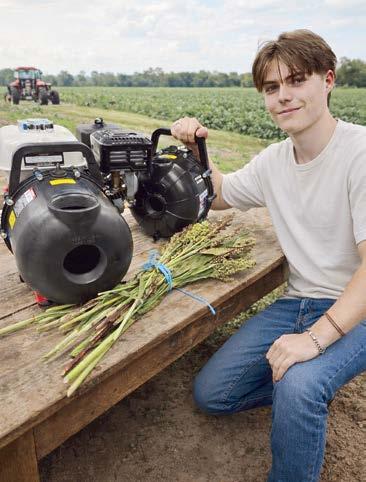
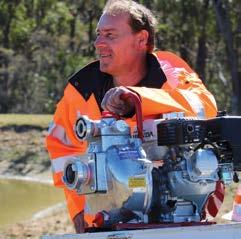
Banjo Lorenz knows Aussie Smart Pumps are ideal for liquid fertilizer handling.
Aussie Pumps SS self-priming pumps are a gift for autumn farmers. (Supplied)
Goldacres Batchmate using Aussie Smart pumps.
Month-long food festival
By Fiona Gowers
An hour from Brisbane and the Gold Coast, the Scenic Rim is known for its stunning landscapes, dedicated producers, exceptional local food and genuine country hospitality.
But it’s the region’s lively calendar of festivals, trails and community events that truly sets it apart.
From blooming sunflower fields and open farm gates to arts trails, food celebrations and delightfully quirky traditions, the Scenic Rim delivers a full schedule of events year-round.
Scenic Rim Farm Gate Trails | 26 July
A firm favourite on the regional calendar, the Scenic Rim Farm Gate Trails invite farmers, growers, winemakers, brewers, distillers and artisan producers to open their gates for a day that celebrates the origins of great food.
Visitors can journey from property to property, meet the people behind the produce, taste outstanding local flavours and gain a genuine understanding of how food is grown and crafted in the region.
Most head home with satisfied appetites, a car full of fresh produce and a deeper respect for the farming community.
Just over an hour from Brisbane and the Gold Coast, it’s an easy day trip or a perfect excuse to make a weekend of it.
Both trails operate from 9am to 3pm.
Kalbar Sunflower Festival | 3 May
For a few dazzling days each year, farmland near Kalbar bursts into colour as more than a million sunflowers come into bloom.
The Kalbar Sunflower Festival gives visitors the chance to wander through towering golden fields, capture unforgettable photos and enjoy a relaxed country atmosphere.
Alongside the flowers, there’s live music, local food, market stalls and activities for all ages, making it a vibrant and memorable day out.
Tamborine Mountain Arts Trail | May
Tamborine Mountain has long been a hub for creativity and the Tamborine Mountain Arts Trail offers a unique opportunity to step inside that world.
Over three inspiring days, artists including painters, sculptors, photographers and ceramicists open their studios to the public.
Visitors can experience the creative process up close, exhibitions, workshops, artist talks and live demonstrations deliver far more than a typical gallery visit.
Scenic Rim Eat Local Month | June
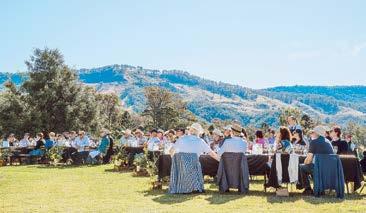
More than a single event, Eat Local Month is a month-long celebration of the region’s rich food culture.
Each June, the Scenic Rim showcases the farmers, chefs and producers who make it one of Australia’s leading culinary destinations.
Guests can enjoy long lunches in breathtaking locations, cooking classes, farm tours, tastings, workshops and family-friendly activities.
From lavender fields to mountaintop dining, every experience highlights seasonal produce and the people behind it.
Farmers’ markets, campfire feasts and paddock-to-plate events offer even more ways to connect with the region’s food story.
Winter Harvest Festival | 27 June
The centrepiece of Eat Local Month, the Winter Harvest Festival is a major celebration of local produce and farming life.
Held in Kalbar, the event brings together producers from across the region for a lively day filled with food, music and community spirit.
Visitors can shop from more than 60 stalls offering fresh produce, meats, cheeses and craft beverages, enjoy ready-to-eat meals, watch cooking demonstrations and listen to live entertainment.
A highlight for many is the iconic Tractor Pull competition, where teams compete for both pride and bragging rights.
Scenic Rim Clydesdale Spectacular | 11–14
June
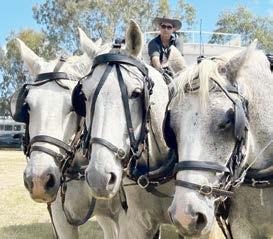
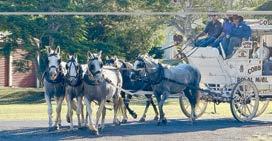
Held in Beaudesert, the Scenic Rim Clydesdale Spectacular showcases the beauty and strength
of the Clydesdale horse while celebrating the region’s agricultural roots.
Competitors and enthusiasts travel from across the country to see these impressive animals in action, from showring performances to carriage displays.
The event also honours Scottish heritage, with pipe bands, kilts, caber tossing and whip-cracking competitions creating a festive highland feel.
Traditional trades such as blacksmithing and wheelwrighting, along with food, craft beer and family activities, complete the experience.
Scenic Rim Farming Expo | 12–13 June
Whether you’re involved in agriculture or simply interested in rural life, the Scenic Rim Farming Expo offers something for everyone.
Held in Harrisville, the two-day event high-
lights innovation in farming, sustainability and regional living while connecting producers, experts and the wider community.
Visitors can explore demonstrations, meet industry professionals, discover career pathways and gain insight into the future of agriculture. Springtime on the Mountain | 25–27
September
Presented by the Tamborine Mountain Garden Club, Springtime on the Mountain is a muchloved open garden event featuring some of the area’s most beautiful private gardens.
Across three days, visitors can stroll through colourful landscapes filled with spring blooms, guided by a detailed trail map.
It’s also a perfect opportunity to explore the mountain’s cafes, galleries and boutique shops along the way.
Tamborine Mountain Scarecrow Festival | 23–25 October
Tamborine Mountain is famous for its natural beauty and village charm but, in October, it takes on a more playful personality.
During the Tamborine Mountain Scarecrow Festival, hundreds of creative scarecrows appear across roadsides, gardens and paddocks, forming a whimsical outdoor trail. From fun to fantastical, past designs have included everything from mermaids and ballroom dancers to motorbike gangs and giant spiders, each one showcases local creativity and humour.
Kalbar Hay Bale Trail and Country Day | 17 October
Few events capture rural imagination quite like the Kalbar Hay Bale Trail.
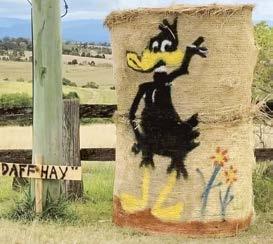
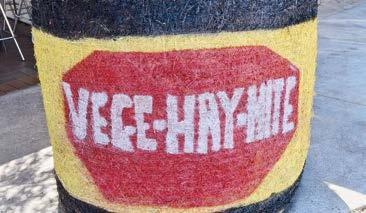
In the weeks leading up to the event, locals transform hay bales into inventive sculptures scattered throughout the town and surrounding district.
Past highlights include Mick-hay and Minhay Mouse, Kentuck-Hay Fried Chicken and the memorable Kalbar J-hay-l.
The festivities culminate in Kalbar Country Day, when the main street comes alive with more than 140 market stalls, fresh produce, handmade goods and live entertainment, offering a full day of community spirit and country hospitality.
Scenic Rim Eat Local Month, 2025. (Dallas Loves Photography)
The Kalbar Sunflower Festival is on 3 May.
Local produce at the Scenic Rim Farm Shop at the Scenic Rim Farm Gate Trails.
Mike Tyler, Shelby Ackerman and Miss Tommy at The Overflow Estate at the 2023 Scenic Rim Farm Gate Trail. (Dallas Loves Photography)
Scenic Rim Hay Bale Trail.
Scenic Rim Hay Bale Trail.Scenic
Helping secure the future
By Fiona Gowers
Along the backroads at the gateway to the Whitsundays, William and Sharron Pratt are taking a proactive approach to secure the long-term future of their mixed farming enterprise.
Operating on the outskirts of Proserpine, the Pratts participated in the Farm Business Analysis Assistance program - delivered by the Queensland Rural and Industry Development Authority (QRIDA) - to set their business up for success.
“The last couple of years, I thought I’d come in and bring William’s admin side into the 21st century,” Sharron said.
“The previous business manager exposed us to QRIDA and I saw all of the opportunities to better your farm across succession planning, sustainability loans and drought preparedness.
“It’s a long process, but with using QRIDA’s Farm Business Analysis Assistance, we can get things done a little bit quicker.”
The free, no-obligation report has provided the couple with a comprehensive overview of their cattle and cane operation, allowing them to map out financial scenarios over the next decade.
“It’s good to have it all down on paper and run through all the options financially over the next 10 years,” William said. “It was so much better than doing it in your head.”
Working with independent consultants from BDO, the Pratts developed forecasts through to 2035, identifying short, medium and long-term goals for the business.
“It gives you a bit of peace of mind because
you know where you are at,” Sharron said.
The detailed planning has also strengthened their position with lenders.
“The bank manager loved it,” William said. “And if you’ve got a project you want to do, it shows you straight away where you’re going to end up in 10 years.”
For the Pratts, planning is also about preparing the next generation. Their adult children are already part of the conversation, with the expectation they will one day return to take over the family operation.
“They can see that they’re actually creating and building something more that hopefully will be intergenerational for decades to come,” Sharron said.
QRIDA farm debt restructure officer manager Daniel Elder said the program was designed to give producers clarity and confidence.
“The Farm Business Analysis Assistance program is an eight-week process by which we review your historical financial position and look at your prospects going forward,” he said.
“Producers receive guidance from an independent provider who assesses the business and delivers an impartial report with recommendations.”
The program is open to existing, past and aspiring primary producers looking to strengthen their operations, explore succession pathways or consider diversification options.
For the Pratts, the message is simple.
“Failing to plan is planning to fail,” Sharron said.
Building capability through initiatives: From QFF chief
By QFF CEO Jo Sheppard
Queensland’s agriculture sector is no stranger to disruption. Floods, storms, and other natural hazards continue to test farm businesses, impacting productivity, infrastructure, and longterm viability.
With the ongoing global supply disruptions stemming from the conflict in the Middle East, primary producers are facing increasingly complex and compounding challenges to farm viability, particularly in relation to fuel and fertiliser.
Primary producers are encouraged to contact their peak industry body to report challenges stemming from these supply issues.
The Queensland Farmers’ Federation (QFF) is working with our peak body members, industry partners and government to strengthen preparedness through a range of practical, on-ground initiatives.
A key focus is the Farm Business Resilience Program, which supports producers to consider and assess risk across their entire operation, from water security and input costs through to financial planning and long-term sustainability. Through the program, producers develop a tailored Farm Business Resilience Plan, helping identify priorities, strengthen decision-making and position their business to access funding and investment opportunities.
For instance, Darling Downs cotton growers who participated in the program developed a plan that led to investments which are already improving water use efficiency and reducing costs.
QFF is also building capability through initiatives such as Crisis Communications Training, innovative parametric crop insurance programs and UQ HailNet.
These projects equip producers with practical tools to manage high-risk situations and improve access to real-time, on-farm weather data to better mitigate financial and business risks.
In conjunction with the programs, QFF continues to advocate for stronger long-term policy settings to support drought preparedness and disaster recovery.
This included backing national frameworks such as the National Drought Agreement and Future Drought Fund and encouraging greater investment in preparedness measures that support farm viability and faster recovery following disaster and weather events.
Together, these initiatives reflect a broader shift from reacting to events, to preparing for them.
Producers can learn more about these programs and how to get involved with QFF’s risk, recovery and resilience team by visiting our website at www.qff.org.au
Queensland Farmers’ Federation CEO Jo Sheppardd. (Supplied)
Willam and Sharron Pratt operate a mixed farming enterprise on the outskirts of Proserpine. (Supplied)
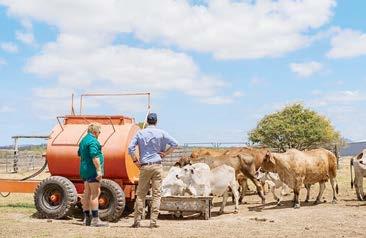
William and Dan at the molasses trough.
Paddock-bred
By Jane Lowe
Denis and Therese Roberts of AAA Speckle Park
have built their breeding program around a clear and disciplined objective — producing structurally sound, commercially relevant cattle capable of thriving in Queensland’s demanding production environments.
Operating under central Queensland conditions that continually test fertility, constitution and durability, the AAA Speckle Park herd is underpinned by strong maternal performance and proven bloodlines. The program draws on recognised genetics including Prairie Hill Fancy Pants 93J, Notta-Pho Finish 54P, Notta Frontline 303X, Stardust and Codiak Putnam females, providing the depth and consistency commercial producers look for when selecting herd sires.
Phenotype remains a cornerstone of the AAA breeding philosophy. Denis Roberts believes that while performance figures and data have their place, visual appraisal and structural integrity remain essential when making selection decisions.
“The biggest change we’ve made is breeding a slightly larger-framed bull,” Denis said. “Many of our clients are running larger-framed cows, and by increasing frame and capacity we’re seeing fewer injuries and better working longevity in the paddock.”
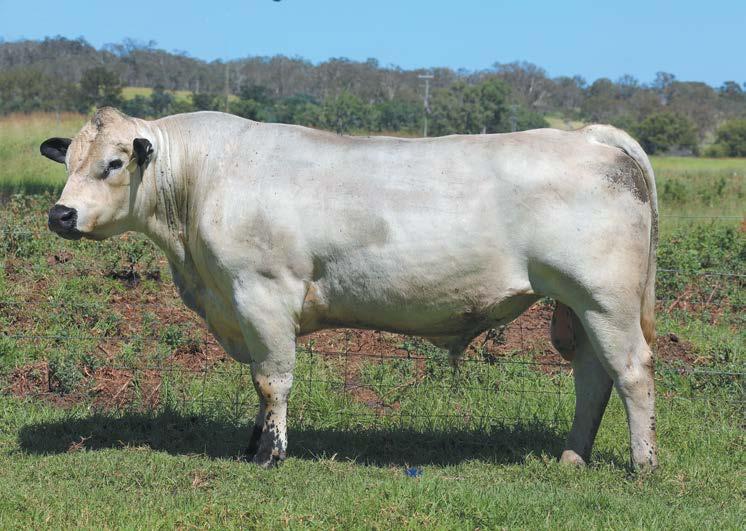
Current sale bulls weigh between 750 and 800 kilograms off grass only, and importantly, have never been fed grain rations. Instead, the bulls are developed under a pivot system on a diverse pasture mix of lucerne, chicory, plantain, oats and barley.
This varied forage base delivers balanced nutrition and natural vitamins, producing bulls with adequate cover without excessive fat. Denis said one of the most common pieces of feedback from
commercial producers is the risk of overfed bulls breaking down once exposed to real commercial workloads.
“That’s another reason we offer bulls straight from the paddock,” he said. “They’re fit, athletic and ready to go to work as soon as they arrive at their new property.”
Temperament is also non-negotiable within the AAA program, with the majority of bulls scoring between 0 and 2. Any animal falling outside those margins is removed from the breeding pool.
Calving ease remains a priority, with birthweights commercially acceptable. Heifer calves average 30–36 kilograms, while bull calves average 32–38 kilograms, ensuring vigour without increasing calving difficulty.
While Estimated Breeding Values (EBVs) are becoming increasingly utilised within the Speckle Park breed, Denis believes they should support, not replace, practical stockmanship.
“The old cattleman casting his eye over the bulls he is buying has never disappeared,” he
said. “EBVs are a valuable tool, but they should back up what you see.”
With EBV depth and accuracy still developing across the breed, AAA Speckle Park continues to focus on breeding balanced, functional cattle that combine phenotype, performance and practicality.
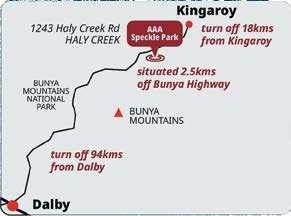
AAA Speckle Park will host an open day on Saturday, May 30, from 10am till 2pm with a timed online auction running from Friday, June 6, and concluding Saturday, June 7.
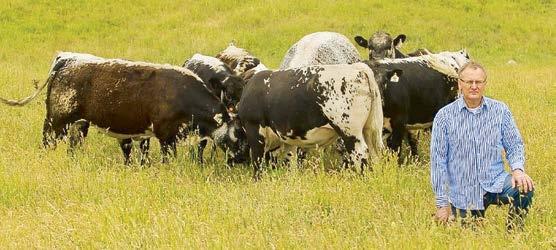
Denis Roberts with his herd of Bulls. (Supplied)
Built from the ground up
By Fiona Gowers
Remote Queensland cattle producer Angie Nisbet is still processing the moment her name was announced as the 2026 Queensland AgriFutures Rural Women’s Award winner.
“It’s very exciting, busy, nerve-wracking, all those things,” she said. “But, we’re taking it dayby-day.”
For Angie, the recognition is not just a personal milestone, it is the continuation of a deeply personal journey that has grown into a national movement focused on improving sun safety across agricultural communities.
From a simple idea to a national movement Angie, a fifth-generation beef producer and mother of three from north-west Queensland, co-founded FarmHer Hands alongside her sister Shona Larkin after personal experiences highlighted the risks of sun exposure.
Shona was diagnosed with stage two melanoma at just 31, while Angie’s best friend lost her life to skin cancer. But, the idea’s origins stretch back even further, to Angie’s early days working as a jillaroo.
“I remember as an 18, 19-year old girl, I was told my hands had become rough and I think I was surprised by the abruptness of that comment,” she recalled. “So, that’s when I sort of started looking into gloves.”
What followed was years of trial and errorwearing everything from cotton gloves to fishing gloves - before a turning point arrived during a casual conversation.
“We were out in the paddock one day and Shona’s gloves… were very torn and tattered and ripped,” Angie said. “We came in for a coffee and she just said, ‘Oh, you know, I just wish there was something else’.”
“I said, ‘Oh, well, we could always look into just making our own’.”
That offhand comment quickly turned into action. Within weeks, the sisters were researching manufacturers, sketching designs at the kitchen table and developing prototypes.
By December 1, 2023, FarmHer Hands had officially launched.
What began as a personal response has since evolved into a growing business designing UPF50+ sun-protection gloves tailored specifically for rural women, men and children - while also raising awareness about the risks of working long hours under the Australian sun. Built from the ground up From the outset, the sisters were determined to create a product that truly met the needs of people working in agriculture.
“We took a bit of inspiration from what we had already been wearing,” Angie said. “If we had a wishlist, what could we add to, what could we change?”
The result was a glove that combined lightweight, quick-drying UPF50+ material with improved durability and practical design features, including reinforced palms and easy pull-off tabs.
Despite now supplying customers across Australia, the business remains hands-on in every sense. Manufacturing is coordinated with a team in China, while everything else - from marketing and customer service to packing orders - is managed by the sisters themselves.
“We didn’t want to lose that,” Angie said. “It’s really important as a small rural business that we are very invested in what that looks like.
“I just know from our own personal experience, when you’re just treated like another number, it’s really difficult to feel like you’re supported and understood.”
Growth has largely been organic, driven through social media platforms such as Instagram and Facebook, with demand coming in waves.
“At the moment orders are just flowing through very regularly and they’re consistent, which is great,” she said. “But you know, sometimes there’s some quiet days and then other days… you can’t keep up with it.”
Importantly, the sisters built the business with sustainability in mind, funding it themselves and focusing on long-term viability rather than rapid expansion.
“We didn’t want to be this business that sticks around for 18 months and folds because it’s too
hard,” Angie said. “We wanted longevity, we wanted sustainability.”
That approach is paying off, with the business now financially independent and supporting itself.
A growing audience beyond agriculture
While around 90 per cent of customers are from rural and agricultural backgrounds, the reach of FarmHer Hands is expanding.
“We get these fabulous people like lawn mowing businesses from the Sunshine Coast, agronomists, truck drivers… a lot of flower farm pickers,” Angie said.
What began as a niche product for women in agriculture is now resonating across a broader network of outdoor workers, many of whom face similar challenges when it comes to sun expo-
sure.
“You picture a person in ag and there’s jeans, boots, a work shirt and hat,” she said. “And yet needing gloves was so glaringly obvious, it was like that saying, ‘You can’t see the forest for the trees.’”
Changing the conversation on health in agriculture
Central to Angie’s work is a desire to shift attitudes toward health in the agricultural sector, particularly regarding prevention.
“People working on the land spend long hours outdoors under some of the country’s harshest conditions, often in remote environments, and don’t always have the same access to health services as those in metropolitan areas,” Angie said.
“That makes prevention critical. By raising
awareness and normalising conversations about skin health, we can support better outcomes for today’s agricultural workforce and help protect future generations growing up on the land.”
FarmHer Hands is now expanding beyond products, with plans to develop school and workplace education resources, establish new retail partnerships and launch an online platform to make preventative skin care more accessible in rural areas.
Recognition and what comes next Angie accepted the award at a ceremony attended by Fiona Simpson, Minister for Women and Women’s Economic Security.
The AgriFutures Rural Women’s Award, supported by Westpac, is regarded as Australia’s leading program recognising the innovation and leadership of women in rural industries.
As the 2026 Queensland winner, Angie receives a $15,000 grant to further develop her initiative and will undertake professional development, before representing the state at the national awards in Canberra later this year.
For Angie, however, the recognition goes beyond funding or accolades.
“It’s really hard to put into words,” she said. “I think it just maybe validates what we’re doing and there’s a need.”
AgriFutures Australia managing director Brianna Casey said the award celebrated women turning lived experience into meaningful change.
“Angie’s work shows how a deep personal experience can lead to meaningful change for entire communities,” Ms Casey said.
Maxine Austin, Westpac Regional General Manager Northern Queensland, Regional and Agribusiness, echoed that sentiment.
“Westpac is proud to support the AgriFutures Rural Women’s Award, and the women making a difference in rural industries and communities,” Ms Austin said.
“Angie’s leadership through FarmHer Hands demonstrates the impact of purpose-driven ideas grounded in real experience.”
As she looks ahead to the national stage, Angie remains grounded in the same motivation that sparked the idea in the first place, protecting the people who spend their lives working under Australia’s vast and unforgiving skies.
Angie Nisbet, a fifth-generation beef producer and mother of three from north-west Queensland, co-founded FarmHer Hands alongside her sister Shona Larkin after personal experiences highlighted the risks of sun exposure. (Lindy Hick Photography)
Remote Queensland cattle producer Angie Nisbet is the 2026 Queensland AgriFutures Rural Women’s Award winner.
Innovator achieves an Australian first ...
Traceable gluten-safe oats
By Fiona Gowers
A Queensland-based agricultural innovator has achieved an Australian first, developing the nation’s only fully traceable, uncontaminated oat supply grown and processed entirely on home soil.
Kylie Martin, who was raised in Central Queensland farming communities, founded GF Oats Australia in 2009 after struggling to source safe oat products for her gluten-sensitive children.
Through that journey, Mrs Martin uncovered significant shortcomings in Australia’s food system, including a reliance on imported oats, widespread cross-contamination and labelling restrictions that prevent oats from being classified as “gluten-free” despite meeting international standards.
In 2022, GF Oats reached a major milestone, transitioning its supply chain from imported American crops to Australian-grown production, creating the country’s first homegrown glutensafe oats.
“While pure oats are naturally free from gluten contamination, contamination occurs when they are grown and packaged in the same fields and factories as wheat, barley and rye that contain gluten,” Mrs Martin said.
“I did not want to continue importing pure oats, I just knew we could do it here.
“So, rather than accept what was on offer, which to be honest was far below par, I figured I’d simply create a new supply chain from scratch - from produce to packaging - and keep it all on Aussie grounds.”
Partnering with farmers in Wandering, Western Australia, Mrs Martin developed strict growing, handling and processing protocols to match international standards to eliminate cross-contamination, creating oats that are safe for coeliacs and the gluten-intolerant community.
“Kim, our farmer, was the key to helping us achieve an Australian first, as one of biggest goals was to grow on home soil,” Mrs Martin said.
“As he was already supplying oats to local coeliacs by demand, he knew the purity of product required to meet local food standards from seed to plate and was acutely aware of the health ramifications for those with such food sensitivities.
“Growing for us meant following the global oats protocol, which is about growing in exclusion zones and on paddocks that haven’t grown wheat, rye or barley for over three years.
“As our Wandering farmers only grew oats and legumes, their fields, trucks and headers were clean of contaminants.
“And, as their rotational season had legumes in the field, they put nitrogen into the ground naturally making our oat crops rich in nutrients.”
Yet once the oats are harvested, the Ag-queen insists this is where the process creates an even broader and more inclusive impact.
“The oats travel in dedicated trucks to Queensland and arrive at a purpose-built packaging warehouse in Toowoomba, which provides employment opportunities specifically for people with intellectual disabilities.
“It’s run by disability service provider, En-
deavour Foundation who are celebrating 75 years this year and, I have to say, they run an awesome model - not just for people with disabilities, but also for business owners like myself.
“Because it’s local I get to pop in from time to time and check in on the packages and I can’t help but smile.
“The team at Endeavour love their work and are always full of smiles, but they’re equally pas-
sionate about details – I’ve watched the oats being weighted and it’s done with absolute precision.”
According to Greg McCluand, Endeavour Foundation’s executive general manager for work, up to 40 employees with a disability work on the GF Oats job, which in 2025 processed nearly 81,500 kgs of oats, with strict processes followed to ensure the integrity of the product.
“Our production team are masters at their work and following protocol,” Mr McCluand said.
“They’ll openly reprimand even me if I’ve ever stepped in the wrong spot in their warehouse –I’ve certainly learned, it’s better to leave it to be experts!
“This project is such a wonderful opportunity for our employees to learn more about food safety, while consciously ensuring their safety and the safety of others.
“Like all of the products we package, the GF Oats product is taken incredibly seriously by our team; we can’t afford the crossover of allergens, so we take every precaution before, during and after each pack day.”
To ensure the product’s integrity, before the oats are processed the team undertakes a full, documented allergen cleanse of the production area, including all equipment, surfaces and weighing stations, in line with strict food safety protocols.
“At Endeavour Foundation, Toowoomba Site our packaging services focus on food-grade products, from small batch runs through to larger-volume production, while maintaining consistency, traceability and product integrity.”
Once the oats are packaged at Endeavour Foundation Toowoomba site, they’re sent on to be commercially bagged then sent straight to retail.
“We also manufacture our oats into muesli lines and biscuits, which still can’t be labelled gluten free.
“However, they are all processed in facilities that meet gluten free standards to ensure there is no cross contamination.”
After years navigating regulatory hurdles and building trust with growers, GF Oats remains the only Australian company producing uncontaminated oats from Australian paddocks that meet international purity protocols, previously only available through imports.
“This is just the start to my GF commitment,” Mrs Martin said.
“And I’m so excited to be at the forefront of creating gluten-safe products, ‘for Australians by Australians’ ... but I have to say, ‘grown by Australians for the world’ sounds pretty good too!”
The Endeavour Foundation’s Stuart, Olivia and Ross.
The Endeavour Foundation’s Christopher and Kylie with manager Anne Grawich pictured middle.
Kylie Martin, who was raised in Central Queensland farming communities, has achieved an Australian first, developing the nation’s only fully traceable, uncontaminated oats supply.
Kylie Martin holds her Bircher muesli.
Gelfro Farm organic farmers Garry McGeorge, Rob Battley, Anne Battley and Kylie Martin. (Supplied)
Dan Gall joins MagrowTec
MagrowTec has bolstered its footprint across northern New South Wales and Queensland with the appointment of experienced agronomist Dan Gall as territory manager.
Based in Goondiwindi, Mr Gall brings 18 years of agronomy experience to the role, along with a strong technical skillset shaped by his early career as a diesel mechanic.
His practical understanding of farm machinery, combined with extensive time in broadacre agronomy, has given him firsthand insight into
the challenges growers face, particularly concerning spray drift.
“Drift is massive for growers and in cotton, 2,4-D drift is a big issue. Working in broadacre agronomy, I’d hear the same concerns over and over,” Dan said.
“With more dryland cotton going in, growers are trying to control fleabane right next to cotton crops and it’s almost impossible without the risk of drift.”
Mr Gall said MagrowTec’s patented droplet control technology stood out as a practical and effective solution to these challenges, and he is eager to work with producers across a range of industries.
“I’m looking forward to meeting growers across different sectors, from horticulture to sugarcane, and understanding their challenges,” he said.
MagrowTec sales director for Australia and New Zealand, James Turtle, said the appoint-
ment would enhance the company’s ability to deliver tailored, on-the-ground support to growers across the region.
“Dan understands both the machinery and the management decisions behind every spray pass. That makes him the right person to help growers reduce drift, improve efficacy and get the most out of their applications,” he said.
“We’re so happy to welcome Dan to the team as we continue to expand our presence across Northern NSW and Queensland.”
Nominations open for Queensland Landcare Awards
Nominations are now officially open for the 2026 Queensland Landcare Awards.
The awards celebrate the everyday Queenslanders who are restoring bushland, protecting waterways, improving soils, caring for coastlines and looking after the environment in their own local communities.
Whether it’s a volunteer group regenerating a creek, a farming family trialling sustainable practices, a school introducing children to landcare, or a First Nations organisation caring for Country, the Queensland Landcare Awards shine a spotlight on the people making real change on the ground.
The Queensland Landcare Awards are a prestigious biennial state program which recognises individuals, groups and organisations who are making outstanding contributions to caring for the environment.
In 2024 Monto’s Burnham family won the Australian Government Climate Innovation Award for their sustainable farming practices including ecological agriculture and soil carbon sequestration.
Carly and Grant Burnham and their four children Lily, Ruby, Knox and Quad are organic beef producers at their property Bonnie Doone, which is west of Monto in the North Burnett.
The Queensland Landcare Awards feature a diverse range of categories, spanning all ages and areas of interest, including:
• Australian Government Landcare Innovation Award
• Australian Government Sustainable Agriculture Landcare Award
• Australian Government Individual Landcarer Award
• Australian Government Community Partnerships Landcare Award
Coastcare Award
First Nations Landcare Collaboration
Lily
Knox
MagrowTec has appointed experienced agronomist Dan Gall to the role of northern NSW and Queensland territory manager. He is based in Goondiwindi.
MagrowTec develops retrofit technology that improves spray coverage, canopy penetration and reduces off-target drift. Designed to work with a wide range of machinery, its solutions help growers get the most out of their spraying operations while protecting crops and the environment. (Supplied)
Show Boer Goats results
By Jane Lowe
The Toowoomba Royal Show goat competition a showcase of agricultural excellence, drawing top breeders and high-quality livestock from across the Darling Downs and beyond.
This annual event highlights the diversity of the industry, featuring everything from Dairy Goats and fiber-rich Angoras to the Miniature breeds.
The success of the section is made possible through the dedicated support of local partners like Rural Steel, whose sponsorship continues to providing a platform for exhibitors to display their best stock while educating the public on the vital role goats play in the region’s rural economy. For a full copy of the 2026 People First Bank Toowoomba Royal Show Goat results go to https://www.toowoombashow.com.au/royalshow/results-table/
Class and exhibitor
• 6001 (A) Doe Kid 4 to 12 months Double K 3
Double K Willow 1st
• 6001 (A) Doe Kid 4 to 12 months Gundi 4 Gundi
Wonda 2nd
• 6001 (A) Doe Kid 4 to 12 months Sundown 6
Sundown Kitchin 3rd
• 6001 (B) Doe Kid 4 to 12 months Gundi 11 Gun-
di Wanetta 1st
• 6001 (B) Doe Kid 4 to 12 months Double K 10
Double K Way 2nd
• 6001 (B) Doe Kid 4 to 12 months Southern X 12
Southern X Greta 3rd
• 6001 (C) Doe Kid 4 to 12 months Gundi 16 Gun-
di Winslet 1st
• 6001 (C) Doe Kid 4 to 12 months Double K 14
Double K Weenie 2nd
• 6001 (C) Doe Kid 4 to 12 months Double K 15
Double K Wenegade 3rd
• CHAMPION JUNIOR STANDARD DOE - Gundi Wanetta
• RES CHAMPION JUNIOR STANDARD DOEDouble K Way
Class and exhibitor
• 6002 (A) Doe 12 to 24 months Gundi 23 Gundi Vodka 1st
• 6002 (A) Doe 12 to 24 months Double K 19 Micathel Elodie 2nd
• 6002 (A) Doe 12 to 24 months Sundown 22 Sundown Tomlins 3rd
• 6002 (B) Doe 12 to 24 months Gundi 26 Gundi Vanessa 1st
• 6002 (B) Doe 12 to 24 months Gundi 27 Gundi Violet 2nd
• 6002 (B) Doe 12 to 24 months Double K 25 Double K Voney 3rd
• 6003 Doe 24 to 36 months Kooringal Valley 31 Yarrabee FU3854 1st
• 6003 Doe 24 to 36 months Southern X 32 Southern X Emily 2nd
• 6003 Doe 24 to 36 months Gundi 33 Gundi Ursula 3rd
• 6004 Doe 36 months & over Gundi 38 Gundi Tamara 1st
• 6004 Doe 36 months & over Kooringal Valley 35 Kooringal Valley Giani 2nd
• 6004 Doe 36 months & over Kooringal Valley 37 Kooringal Valley Yasmin 3rd
• CHAMPION SENIOR STANDARD DOE - Gundi Vanessa
• RES CHAMPION SENIOR STANDARD DOEGundi Violet
• GRAND CHAMPION STANDARD DOEGundi Vanessa
•12’-3.6M-MESH-$140
•14’-4.2M-MESH-$160
•10’-3M-5BARLIGHT-$140
•12’-3.6M-5BARLIGHT-$160
•14’-4.2M-5BARLIGHT-$190
•12’-3.6M-5BARHEAVY-$180
•14’-4.2M-5BARHEAVY-$210
•165CM-5’6”BLACK-HEAVY-$7.50
•
The Foxes
Ben KirstyDeb Cec
Boer Goat champions lined up with the judges and their exhibits. (Jane Lowe: 548596)
The Toowoomba Royal Show goat competition a showcase of agricultural excellence, drawing top breeders and high-quality livestock from across the Darling Downs and beyond. (548596)
Incredible show outcomes
By Jane Lowe
Eleven exhibitors with about 150 of the region’s best sheep on site.
The Australian Stud Sheep Breeders’ Association (ASSBA) came into existence in 1925 and in the past 101 years its members have achieved some incredible things in the Australian stud sheep industry.
• Champion Pair of Ewes - Millennium Border Leisters
• Lorna Jane Memorial Trophy, Champion Pen Ram & Ewe - Sovereign Poll Dorsets.
• Supreme Sheep of Show, Fred Bebbington Memorial Trophy -.Sovereign Poll Dorsets
• Supreme Breeders’ Group - Sovereign Poll Dorsets Samantha McConnell, Green Memorial Shield for Most Successful School was won by Calvary Christian College.
The Queensland Meat Sheep Young Judges state final was held at Toowoomba Royal Show April 2026.
Congratulations to Zoe Vidins who was named Champion Young Judge and James Buchan was awarded Reserve Champion and Third was Emma Haupt.
Zoe will now compete in the 2027 National Final at Perth.
The 2026 National Finals will be held at Ekka with Hannah Haupt representing Qld.
Andrew, Jack, Charlotte, and Amanda Vernon with Judge Charlotte Cain and the Interbreed Champion Ram for Toowoomba Royal Show 2026. (548589)
Chris and Brent Ruby, Sovereign Poll Dorsets, with the Interbreed Champion Pair of Rams. (548589)
Judge Charlotte Cain with Brent Rubie, Sovereign Poll Dorsets, holding the trophies for Champion Ewe of the Show and presenter Maria King. (548589)
The Interbreed Champion Ewe for 2026 with owner Chris Rubie, Sovereign Poll Dorsets, Judge Charlotte Cain, Victoria. (Jane Lowe: 548589)
Great crowd at the Australian Sheep Breeders Association held at the Toowoomba Royal Show 2026. (548589)
Interbreed Ram was won by Andrew & Amanda Vernon, Averland Suffolks Mt Hallen via Esk. (548589)
Chris Ruby with Judge Charlotte Cain and Brent Ruby and the Lorna Jane Memorial Trophy, Grand Champion pair of Ram and Ewe from Sovereign Poll Dorsets. (548589)
QLD State Meat Sheep results @ Toowoomba Royal Show
Behind the Dorper breed
By Jane Lowe
Dorper sheep originated in South Africa in the 1930s-1940s, developed by the Department of Agriculture by crossing Dorset Horn rams with Blackhead Persian ewes.
They were specifically bred for arid regions to produce fast-growing, high-quality meat carcasses with little maintenance
The goal was to create a hardy, mutton-sheep breed capable of thriving under extensive, harsh conditions while producing a quality carcass.
The name “Dorper” is a combination of the first syllables of its parent breeds: Dorset Horn and Blackhead Persian.
The Blackhead Persian is a fat-tailed breed of domestic sheep from Africa.
The sheep is originally from Somalia and a direct descendant of the Somali sheep.
The breed is also a type of hair sheep, meaning they do not grow wool and tolerate heat better than wooled breeds and are raised primarily for meat
This beautiful breed of sheep has many unique and defining characteristics.
Their coat patterns are spectacular, they have a very short tail, a large dewlap under their throats and prominent chest and they store excess fat on their rumps.
Persian sheep were imported via embryos into Australia in the mid to late 1990 and they quickly spread due to their adaptability.
Persian sheep are a small compact breed. Their short attractive hair coat does not require shearing but is shed each year.
They can lamb every 8 months and they are exceptional mothers.
They are a naturally placid breed and respond extremely well to regular handling and
Australian Stud Sheep Breeders Association Queensland Branch Australian Stud Sheep Association Queensland Branch
Congratulations to all those who exhibited at the ASSBA State Meat Sheep Show 2026 to all those who exhibited at the ASSBA State Meat 2026 in Toowoomba and our generous sponsors in sponsors Westerham Concrete PBA Feeds, Elders, Queensland Electrical Solutions & ASSBA Westerham Concrete PBA Electrical Solutions & ASSBA.
Come and see our members at FarmFest Site LS42.
All ASSBA studs are Brucellosis accredited. This advertisement proudly was sponsored by
Sovereign Poll Dorset Stud, Warwick. Averlane Genetics Su olk & Dorset Down Stud, Mt Hallen.
Millennium Poll Dorset, Border Leicester & Corriedale Stud, Mt Whitestone. Best Of British Shropshire Stud, Glenlyon.
become very tame. Persian sheep are wonderful for hobby farmers. They are small, calm and naturally polled.
They do not require shearing and have short tails so no docking required. They do not climb up fences or trees so are
perfect for grazing in orchards and vineyards. They enjoy woody weeds as well as pasture and are perfect cross grazing companions for horses.
Samantha McConnell, Green Memorial Shield for Most Successful School- Calvary Christian College. (548591)
Cienna Neave and Harry Johnston handlers for Eisentrager Dorpers, Rosenthal Heights, holding the champion Persian Ram & Ewe. (Jane Lowe: 548591)
Samantha McConnell-Green Memorial Trophy 2026 Stud Meat Sheep School competition was won by Calvary Christian College and is represented by Lucy Florey and presented by Sandra Green (Samantha’s Mum) and J. (548591)
Men don’t talk face to face, they talk shoulder to shoulder
Crows Nest Men’s Shed becomes a lifeline for High Country community
All shoulder to shoulder
By Fiona Gowers
In the tight-knit High Country community of Crows Nest, a simple idea sparked during a local meeting has grown into one of the region’s most valuable social lifelines for men.
The Crows Nest and District Men’s Shed, established in 2018, has steadily evolved from a small gathering of 10 men into a thriving hub of more than 50 members, an impressive figure in a town of just over 2200 people.
Secretary Ron Anderson recalls the humble beginnings.
“Probably towards the end of 2017, a local man who went to another shed thought it was time for a shed in Crows Nest,” he said.
“He called a meeting, which a few of us attended, and we decided, ‘Yes let’s do it’. Our first official meeting was on 31st January, 2018 and attracted 10 men.”
From that initial meeting, momentum quickly built. By the end of the first year, membership had grown to 18. Today, it sits at about 52 and represents a significant cross-section of the local male population.
Finding a home for the group was an early priority and the Crows Nest Showgrounds provided a starting point.
However, before long, the shed outgrew its original space.
“We found our premises fairly quickly at the showgrounds and, within two years, we’d run out of space so then we started planning to build a new shed,” Mr Anderson said.
With support from the local council and a successful federal government grant application, the group secured land and funding to bring their vision to life.
By February 2023, they had officially moved into a purpose-built facility, much of it constructed by the members themselves.
“We actually did all of the fitting out of the new shed,” Mr Anderson said. “The only things we didn’t do were the shed erection, concrete, electrical, tiling and plumbing work.
“Yes, we did just about everything ourselves.”
That hands-on approach remains at the heart of the shed’s identity. Inside, members work across a range of projects - from metal fabrication to woodwork, upholstery and furniture restoration - sharing skills and learning from one another.
“We made an access way for a fellow who’s confined to a wheelchair,” Mr Anderson said.
“We do lots of things here such as restoring old furniture and we make all sorts of things for people in our craft area.”
But, beyond the tools and projects, it is the shed’s role in supporting the wider community that stands out.
The group regularly helps locals in need, often in practical and life-changing ways.
“A fellow who lived in Crows Nest and had a stroke was confined to his room,” Mr Anderson said.
“We had previously been given an electric mobility scooter, so we reconditioned it and gave it to him. So, that gave him his mobility. He could finally get out and get around town.
“Also, we donated an electric chair to another resident who was having difficulties.”
Their contribution extends to local organisations and events, reinforcing the shed’s role as a cornerstone of community life.
“We’ve done jobs for different organisations such as the Toowoomba regional Council,” Mr Anderson said.
“They have a breakfast for their staff maybe once a year. And for the past few years we’ve been asked to cater for it in the community centre.”
Also, when the Kath Dickson Toy Library was eager to launch a mobile Toy Library to deliver educational toys to communities across the region, the Men’s Shed played a vital role by fitting out the interior of the Toy Van.
Fundraising is also a key part of keeping the shed running. Monthly sausage sizzles at local markets and participation in community raffles help cover operational costs.
“We hold a sausage sale every month at our markets as a fundraiser to continue our work,” Mr Anderson said.
“And, the local hotel has a raffle every Friday night, which is shared among six community groups. So, we get to run our own raffle there every six weeks.”
In some cases, the shed’s reputation for quality work has even seen it support local businesses.
“One local company was so snowed under with work that they asked us to do something they would normally handle themselves.
It costs a significant amount of money just to stay open, so these extra jobs and fundraising activities help to pay the bills.”
The shed operates twice a week, opening its doors on Monday and Wednesday mornings. While the hours may be limited, the impact is anything but.
At its core, the Men’s Shed movement is built
on the concept of “shoulder to shoulder” - men working alongside each other, forming connections without the pressure of formal conversation.
For Mr Anderson, that philosophy is clearly reflected in Crows Nest.
“I think generally people do (get a lot of the men’s shed). It’s a place to come and be with other fellows.”
Mental health, particularly in rural and regional areas, remains a significant issue and the shed provides a subtle but powerful support network.
“Just having someone to talk to, not even about feelings, but just having someone to talk to. It does make a difference.”
The membership spans a wide age range, highlighting the shed’s broad appeal. While most members are older, younger men are also beginning to engage.
“Well, we do have a couple of younger
members. Our youngest member at the moment is just 39 years of age and our oldest member is turning 90 this year.”
For many, including Mr Anderson himself, the benefits are deeply personal.
“Oh yes, I have made some very good friends through it,” he said.
In an agricultural region where identity is often closely tied to work on the land, spaces like the Crows Nest Men’s Shed play an increasingly important role, particularly for those transitioning out of full-time farming or adjusting to changing circumstances.
They provide purpose, routine and connection, elements that are just as critical to wellbeing as any on-farm success.
From its modest beginnings to its current role as a vibrant community hub, the
what
be achieved when local people
together with a shared vision.
Crows Nest and District Men’s Shed stands as a testament to
can
come
The Crows Nest and District Men’s Shed played a vital role in fitting out the interior of the Toy Van. (Ron Anderson)
Members of the Crows Nest and District Men’s Shed. President Dennis Brown is 12th from left in the second row and secretary Ron Anderson is seventh from right in the front row. (Supplied)
Crows Nest and District Men’s Shed member Russell Page works on the wood lathe. (Ron Anderson)
Richard Dana is presented with the electric wheelchair by Ross Stolz. (Supplied)
Shed’s colourful history
The structure that now houses the Wallumbilla Men’s Shed has a rich legacy rooted in the Chadford community.
Its story began in 1952, when it was constructed as the Chadford Hall by John Howard and Freddie Limpus.
The build was a gruelling labour of love; John Howard famously recalled the coldest winter he ever endured was spent out at the Chadford Reserve while raising the hall.
Much of the timber used in construction was donated by Arthur Allen and transported to Wallumbilla by Authur Klien and Byron Mansfield.
The timber was milled by Dick Thompsett at the Wallumbilla Sawmill, anchoring building’s foundation to the region.
For years, the hall stood near the Chadford School and the local tennis courts, serving as the heartbeat of the district.
It was the site of local dances, polling booths, the Wallumbilla Girl Guides club house and the SES Wallumbilla branch.
One of the most enduring legends of the hall involves a particularly lopsided election.
Rumour has it that out of 46 local votes cast, 45 went to the Country Party, while a single, solitary vote was cast for Labor.
To this day, the identity of that lone Labor voter remains a mystery; a topic of conversation that has lasted decades.
Ownership of the hall eventually transitioned to the Bendemere Shire Council, leading to its relocation to the Wallumbilla Showgrounds.
The move was a true community effort.
Tibby Chant managed the transport of the
Take agribusiness to next level
By Toowoomba and Surat Basin Enterprise
Take your Western Downs business to the next level by planning for the future with the AgriEmerging Markets Program.
The AgriEmerging Markets Program is now open for Western Downs food and agribusinesses to express their interest in being a part of this year’s cohort.
Toowoomba and Surat Basin Enterprise (TSBE) Agribusiness Development Manager, Anna Geddes said the AgriEmerging Markets Program helped agribusinesses to grow their knowledge and position businesses for market growth.
“The program delivers practical insights, expert guidance and real commercial outcomes,” Ms Geddes said.
“If you want to prepare you agribusiness for 2030 and beyond as well as build your capability to meet ESG, Net Zero and future market demands, this program is for you!”
“We tailor the program to support agribusinesses to grow stronger and smarter through workshops, expert coaching and study tours.
“The only investment you need to make in the course is your time.”
2025 AgriEmerging Markets Program participant and Rocking Chair Ranch owner, Sarina Gale said the program had created a fundamental positive shift in the direction of our business.
“It’s helped us develop clarity around our plans. There were topics and discussion that we had that I didn’t even know our business needed to be prepared for,” Ms Gale said.
“At the end of the program we were feeling informed and prepared. Our business is on a huge upward spiral and we want our business to be bigger and better for the next generation.”
To apply for the AgriEmerging Markets Program, please visit TSBE’s website at tsbe.com. au Th AgriEmerging Markets Program is delivered by Toowoomba and Surat Basin Enterprise and supported by Shell QGC.
2025 AgriEmerging Markets
Program participant and Rocking Chair Ranch owners, Sarina and Andrew Gale. (Supplied)
building and Ian “Digger” Houston, a local member of the men’s shed, took on the heavy task of digging out the new stumps.
In 2016, the building began its newest chapter. The old Chadford Hall was officially repurposed, becoming the home of the Wallumbilla
Men’s Shed, ensuring the structure continues to serve as a place for camaraderie, storytelling, and community spirit.
Wallumbilla locals Charley, Ricky, Joe, Lyle, Tony, Neville and Kerry at the Men’s Shed. (Supplied)
Australian owned and made
By Jane Lowe
As the demands of modern farming continue to evolve, Eastern Spreaders remains committed to supplying practical, high-performance equipment that delivers real results in Australian conditions.
Proudly Australian owned and operated, Eastern Spreaders represents a strong lineup of proven agricultural machinery brands designed to improve efficiency, productivity, and reliability on farm.
One of the standout products in the Eastern Spreaders range is the Marshall Multispread towbehind spreader, a machine that has become a trusted choice for fertiliser application across the country. With more than 11,000 machines now in use in agricultural operations throughout Australia, Marshall Multispread has earned its place as the number one selling all-purpose fertiliser spreader on the market. Designed for consistent spreading performance and built to handle demanding workloads, the Multispread continues to set the benchmark for modern fertiliser management.
EasternSpreadersisalsoproudtosupplyRENN
Roller Mills, a highly respected name in grain processing machinery. With over 60 years of proven performance, RENN Roller Mills are engineered to deliver high output, consistent rolling quality, and long-term durability. At the heart of every RENN Roller Mill is its precision-machined 16-inch diameter rolls, providing more grain rolling area per revolution than many mills with smaller rolls. This allows producers to process more grain per hour with less horsepower, saving time, fuel, and operating costs.
RENN’s advanced centrifugally-poured chillcast roll technology further enhances durability while offering improved serviceability through removable shafts and end plates. This design reduces downtime and ensures longer working life—an
important advantage when reliable feed preparation is essential.
Completing the offering is the impressive range of NDE Co Feed Mixers, built with stepped floors on dual and triple auger systems for unmatched mixing performance. Known for their aggressive knife design, heavy-duty construction, and efficient unloading, these mixers are designed
to maximise feeding time and minimise maintenance. With models available for both small and large-scale operations, NDE Co provides reliable ration preparation with consistent results.
Eastern Spreaders also supplies the Degelman BioSpreader, a heavy-duty manure and compost spreader designed to tackle harsh conditions while delivering uniform, wide coverage. With spreading
capability up to 50 feet wide and rapid unloading through a live floor system, the BioSpreader offers durability, versatility, and outstanding value for producers seeking performance without compromise. With trusted brands, durable machinery, and a commitment to Australian producers, Eastern Spreaders continues to deliver equipment solutions that work as hard as you do.
Steve Freeman owner of Eastern Spreaders Is looking forward to greeting everyone again this year at their stand. (548862)
Talk loans, grants, growth
Primary producers looking to establish or improve their farm business should add a visit to the Queensland Rural and Industry Development Authority (QRIDA) site to their FarmFest 2026 to-do list.
QRIDA’s Regional Area Manager for the Darling Downs, Kate Dunk, encourages primary producers to stop by QRIDA’s site at Pavilion ASI29 inside the AgSmart Connect Hub at the Toowoomba event from 2 to 4 June to find out about the range of financial assistance available from QRIDA.
“Whether you’re interested in finding out more about QRIDA’s concessional loans and grants, you’d like some help determining your eligibility for our range of assistance or assistance completing your QRIDA application, drop by QRIDA’s site for a chat with myself or one of our other representatives,” Kate said.
Jondaryan crop farmer Felix Ringleben received a QRIDA First Start Loan to help purchase his first rural property, when he was 28 years-old.
“I first came in contact with Kate, our Regional Area Manager, through this loan application process and I’ve been able to see her multiple times at FarmFest and a few other events,” Felix said.
Kate says the concessional loan helps aspiring primary producers like Felix enter the agricultural industry.
“A QRIDA First Start Loan offers up to $2 million to assist people who haven’t owned a viable primary production operation, but who are super keen and want to get into primary production viably,” she said.
Felix is showing the next generation of primary producers what is possible with the Queensland Government financial assistance he has received.
“My advice to other young farmers like myself who are trying to establish themselves would be to give it a go and make the most of the great services and help that QRIDA can offer,” Felix said.
For more information about QRIDA’s financial assistance programs, visit qrida.qld.gov. au, and stop by QRIDA’s site at Pavilion ASI29 inside the AgSmart Connect Hub at FarmFest 2026.
Meet with QRIDA Regional Area Manager for the Darling Downs, Kate Dunk, at FarmFest 2026 to discuss how QRIDA’s range of loans and grants could help you secure the future of your primary production enterprise. (Supplied)
Kewpie Stockfeeds is set to make a strong showing at this year’s FarmFest, showcasing its broad range of products and services to producers across the region.
The South Burnett-based manufacturer will exhibit from Tuesday 2 to Thursday 4 June 2026 at Kingsthorpe Park, Toowoomba (Site LS24), using the event as an opportunity to connect with both new and long-standing customers.
Well regarded throughout Queensland and New South Wales, Kewpie Stockfeeds has earned a reputation for producing quality poultry feed, piggery feed and custom mineral mixes designed to meet the demands of modern farming systems.
Supported by a network of 62 resellers, the company has built a strong supply footprint, ensuring its products remain accessible to producers across a wide geographic area.
FarmFest will also provide the chance for Kewpie to promote its expanding rural merchandise range, including animal parasite treatments and essential supplies for primary producers and hobby farmers.
Visitors to the Kewpie site can enjoy daily lucky draws, with feed and merchandise available for purchase on-site.The popular “Barry the Bull” photo competition will also return, encouraging attendees to like, tag and share their FarmFest experience on Facebook to boost community engagement.
Kewpie’s experienced sales team, representing both its stockfeed and steel divisions, will be on hand throughout the event to offer advice and answer questions.
Featured products include Kewpie Dry Lick, a urea-free cattle supplement; Kewpie RumieFeed, a flexible two-part liquid supplement for cattle grazing mature pastures; and Kewpie Layer
Super-Mix Grower
Consisting of a blend of grains, animal + veg. proteins, minerals, vitamins, amino acids & mycotoxin inhibitors. Feed ad-lib continuously or to market specifications, as a complete feed to grower pigs from 12 weeks of age to market This product contains restricted animal material. DO NOT FEED TO CATTLE, SHEEP, GOATS, DEER OR OTHER RUMINANTS.
Kewpie Dry Lick
FEATURES
• Available in small bags for convenience - (bulk deliveries also available – enquiries welcome)
• Formulated with quality ingredients
• DOES NOT CONTAIN UREA –for safety
• A mycotoxin binder is added for extra security
• Vitamins & minerals added for improved health
• Can be mixed with molasses or fed out dry
RUMIFEED
• Unique Rumifeed feed system
• Two part Sweet & Sour feed system
• Rain-safe
• Balance of protein, energy and minerals
• Ingredients are held in solution
• Molasses based
• Flows at temperatures as low as -10°C
• Contains Flavomycin to improve fibre digestion
Call the Kewpie Sales Team on (07) 4164 9000 for more information
Mash, suitable for poultry ranging from backyard flocks to exhibition birds.
Kewpie’s presence at FarmFest reflects its
ongoing commitment to supporting resellers, strengthening industry connections and delivering practical nutrition solutions for Australian producers.
Come and see us at the FarmFest Site LS24. (Supplied)
Rice Cooker Matcha Soufflé
Ingredients:
· 4 eggs
· 250g cream cheesecut into cubes and softened
Method:
1. Start by lightly greasing the base and sides of the rice cooker inner pot with butter. Depending on the condition of your rice cooker pot, you may also want to line the base with baking paper.
2. Take your 4 eggs and separate the yolks from the whites. Keeping both.
3. Place the softened cream cheese and milk into a large heatproof bowl. Heat in the microwave for one minute and mix with a whisk. If the cheese is still a bit firm, heat a little more in the microwave. You should have a smooth creamy consistency. Allow to cool slightly
· ½ cup milk
· 3 tbsp caster sugar
· 2 tbsp lemon juice
· 1 tbsp matcha powder
for a few minutes.
4. Now add the 3 tbsp caster sugar, lemon juice, and matcha powder to the cream cheese mix and whisk to combine. Add the egg yolks and mix again. Sift in the plain flour and corn flour, and combine well.
5. In a separate bowl, whisk the egg whites until soft peaks forma hand mixer or stand mixer works well here. Gradually add in a 1/4 cup caster sugar while continuing to beat the egg whites. The mix will become nice and glossy. Carefully fold the egg white and sugar mix into the matcha cream cheese mix. It is very
· ¼ cup plain flour
· 2 tbsp corn flour
· ¼ cup caster sugar
· Butter to grease rice cooker pot
important to gently fold, not whisk it together. This ensures the air is not knocked out of the egg whites.
6. Pour the mixture into the prepared rice cooker inner pot and press start.
7. Once cooked, open the lid. Leave the warm cake in the rice cooker and cool slowly. Once the cake has cooled, turn it out onto a plate (remove baking paper if used).
8. Lightly dust with matcha powder and serve.
Note:
· Don’t skip the sifting part - if you do, your mix will end up very lumpy.
Sweet Potato, Halloumi & Corn Fritters
Prep time: 25 mins
Serves: 4
Ingredients:
· 1 medium sweet potato, peeled & grated
· 200g halloumi, grated
· 1 cup corn kernels
· 3 spring onions, sliced
· 2 eggs
· ½ cup wholemeal flour (or GF flour)
· 1 tsp smoked paprika
· ½ tsp salt
· ½ tsp pepper
· Olive oil for frying
Creamy Avo–Herb Sauce
· 1 avocado
· ¼ cup Greek yoghurt (or coconut yoghurt)
· 1 tbsp lemon juice
· 2 tbsp parsley
· 1 tbsp dill
· 1 garlic clove, crushed
· Salt & pepper
Method:
1. Mix sweet potato, halloumi, corn, spring onion, eggs, flour, and seasonings.
2. Heat olive oil and cook spoonfuls of the mixture for 3–4 minutes on each side until golden.
3. Blend the sauce ingredients until creamy.
4. Serve fritters with the sauce + a poached egg on top!
Recipe courtesy of Australian Eggs
Recipe courtesy of Australian Eggs
GOOMERI PUMPKIN FESTIVAL.COM.AU
Kilkivan is ‘Horse Central’
By Erle Levey
It’s a celebration of horses … recognition of the role these magnificent animals play in our lives.
The way in which they have helped in development of the land, and how they fit into society today.
More than 400 horses and riders had registered to make their way down Kilkivan’s main street at the weekend of April 10-12 for the 40th anniversary of the Great Horse Ride.
It was the focal point of a three-day festival highlighting the relationship between horse and rider.
Instigated in 1986, the ride was to celebrate the opening of the National Trail two years later as part of Australia’s Bicentenary celebrations.
Kilkivan has played a vital role in the development of the trail that runs 5330km from Cooktown in Far North Queensland to Healesville in Victoria.
The festival showed how horses play a part in many roles - from work horses pulling wagons, carts and coaches to those used for helping herd, work or drive domestic animals.
Then there is the beauty as well as challenge of riding through the Australian bush with others sharing the passion.
The ability to move through the landscape at your own pace - enjoy the fresh air, the sunshine, the breeze, the shade from the trees. To be able to stop and boil a billy on a campfire, enjoy a cuppa and fresh-baked scones or damper, amongst the birds and native animals.
Riders came from throughout South-east Queensland for the weekend that included an anniversary of the Thornside Ride from the Webb Brotehrs property at Widgee that inaugurated the tradition.
Three more rides on Friday and Saturday culminated in the traditional parade down the Main Street and out to the showgrounds.
A morning tea on Saturday saw those with a long history of involvement in the Great Horse Ride gather to rekindle friendships and take in the way in which the event has developed.
Among them were David Lahiff, the former mayor and councillor of what was then the Kilkivan Shire, who supported Cr Fabian Webb in his initiative to create such an event.
Ray Currie came to Kilkivan in 1986 as the CEO of the shire council, the year the horse ride was initiated.
He served 22 years as the CEO until Kilkivan amalgamated as Gympie Regional Council in 2008, together with Cooloola Shire and part of Tiaro Shire.
Ray has still lived in Kilkivan ever since.
“I’ve lived here for 40 years and council was involved in the first ride because Fabian set it up, along with David.
“They were both councillors and the ride came about because of them.’’
Ray came to Kilkivan Shire Council from Childers, but originally was from a little town out west … Isisford, just south of Longreach.
Mike Webb, who was a former councillor and among the original founding members of the ride, went on to be a Great Horse Ride president.
The event started when Widgee grazier and former Kilkivan Shire councillor, the late Fabian Webb came up with the idea.
Mike Webb now lives at Ellesmere in the South Burnett and has business interests in North Queensland as well as Canberra.
His cousin Marius Webb wrote the song Who Put The Roo In The Stew that shot the Webb Brothers to fame.
Fabian, Marius and Berard grew up on Thornside Station, a 5000-acre property at Upper Widgee.
The Gympie Music Muster owes its genesis to the family. In 1982 it grew from a plan to celebrate both the centenary of the Webb family’s selection of property by George Slater Webb in 1882, combined with celebrating their 25 years in the country music industry and their 1982 Golden Guitar Award for their song.
Kilkivan is one of the few towns actually situated on the National Trail.
Fabian Webb wanted people of all ages and riding ability, from all walks of life, to get involved with a recreational ride through the scenic country around Kilkivan.
The Queensland opening of the National Trail was incorporated into the ride and the legendary late R.M. Williams was among those who participated.
Mike Webb still does a bit of mustering and follows horse events.
Mike, David and Ray agreed they were both surprised and delighted to see the growth of the Great Horse Ride over 40 years.
They were impressed by the diversity of horsebased events - from barrel racing to ranch sorting. There is also the pursuits associated with rural life such as working dog demonstrations, heavy horse displays, camp-oven cooking, bush ballads and poetry, and the youth talent quest.
“To see such a good turnout, it’s amazing,’’ David Lahiff said. “We not expect it to be even half this size.
“A big amount of work has been done. They sort of verified the program and have included so many other things.
“The committee done a marvellous job.’’
Mike Webb agreed: “I didn’t think that it could get to be something like this.
“Good on them for revitalising it.
“I spend a bit of time in Canberra and one day I was riding down when I met a lady on the trail. She was from Cooma but has been keeping track of the Great Horse Ride since the ‘90s - she knew about it as an iconic event.’’
The Thornside Ride on Saturday saw 34 participants crossing the ranges from Widgee to Kilkivan and past Hanging Rock Creek.
There were 154 taking part in the Mudlo Trail ride on Friday, through the ranges to the north of Kilkivan.
The Wongella ride on Saturday morning saw 81 head out through the historic Wongella property, that was the home of William Greer McKewen and family until the mid 1950s.
Riders congregated at the showgrounds at 1.30pm Saturday for the Running Creek Trail, before being joined by others in buggies and carriages for the Great Ride at 4pm.
LEADING FROM THE FRONT
The Fifth Light Horse Regiment, Gympie Troop,
again highlighted the role horses have played in Australia’s history, predominantly through the campaigns during the Great War of 1914-18.
As well as leading the main street parade the Allan Chapman, Shirley Chapman, Jim Boyle and Paul Keating also performed a series of demonstrations on Saturday morning in the campdraft arena, showing the skills of both horse and rider.
Shirley Chapman has been involved in the Light horse for a quarter of a century, to keep the history alive and the memory of those who sacrificed so much in serving the country.
“I was secretary for 22 years and in the Light horse a couple of years before that.
“It means keeping the history of the Light horse alive. My father Roy McFarlane joined for World War Two.
“He was born in Townsville, but never saw action as a light horseman because after he joined it became a motorised regiment.
“What those men and boys went through, they deserve the respect and recognition.’’
Jim Boyle’s grandfather was in the Light horse and was deployed to Egypt in World War One.
His is father was a prisoner in Changi after the fall of Singapore in World War Two.
Jim joined the Gympie Troop in 1993 to keep the tradition alive and honour those who served.
“I had a mate that I worked with. He tried for a few years to convince me to join but I had a block of land out of Goomboorian.
“I said that when I sell that then I would join. As soon as I sold it he was onto me, so I thought I can’t say ‘no.’
“I just love the connection with the horses and still do a bit of mustering.’’
LOT OF LIFE IN OLD ENGINES
Ralph Richardson of the Gympie and District Historic Machinery Club had an intriguing working stationary engine as part of the club’s display.
The Rider-Ericsson hot air engine is a 19th-
century closed-cycle engine designed primarily for pumping water.
Developed by John Ericsson and marketed by the Rider-Ericsson Engine Company, it utilised a hot-and-cold cylinder system to displace heated air, expanding and contracting it to produce power, commonly fueled by coal, wood, or gas.
An American company in the late 1800s early 1900s, it was used on farms and in the basement of high-rise buildings to pump water up to a header tank, Ralph said.
“I had a smaller one that came out of a Rockhampton hotel. They put it in the kitchen and used it to pump hot water to the upstairs rooms.
“This one came from Western Queensland. A friend rescued it from a farm.
“It was broken and missing a few pieces but in hindsight there may have been more than one (pump) out there.
“He came one day and said: ‘I’ve given up, if you want to have a go.’
“We’ve spent many hours putting this one back together again. Rebuilding it, doing some welding up the top there.’’
With an engineering background in telecommunication installations throughout Australia, India and New Zealand, Ralph persevered. He didn’t have the drawings for pump but had a small model, and then had to round the numbers up to expand it out to make the size.
“You only have to make a millimetre error and the whole thing will not to work.
“So I went back to basics, worked on the linkages and got it to run perfectly at 120 RPM.
“Then there was a mishap. The pin came out of the pump and broke it in half so when we put it together again.
“We had to go back to square one but the second time round was a lot harder than the first.
“Whatever I change now will not improve it any more than whatever it is.’’
Continued page 37
About 400 horses and riders took part in the 40th anniversary of the Kilkivan Great Horse Ride. (546482)
Farrier Tim Jackson. (546482)Jim Boyle and Paul Keating of the Fifth Light Horse Regiment, Gympie Troop. (546482)
Mike Webb. (546482)
Angus Bull Sale
Heavy muscle, easy calving
By Jane Lowe
The Alumy Creek Angus 36th Annual Bull Sale goes ahead at 1pm Friday 29 May 2026 with a top draft of 60 performance recorded Stud Angus Bulls on offer from Colin Keevers, Lisa Martin and family. The sale is held on property at “Coldawinda” Tenterfield and interfaces with AuctionsPlus with catalogue listing and videos of all the bulls available to view online.
“This year we again have a great selection of slick coated, easy calving, big growth, heavy muscled polled black Angus bulls. They show terrific polled black Angus type plus superior carcase marbling, muscle, and maternal value. As usual much of the draft is also suitable for use over heifers or cows, with many of the bulls have elite calving ease with curve bending top growth and carcase weight values for heavy profitable offspring.” he said.
“Bull buyers consistently report how our bulls have great temperament, are very easy to work with and having been raised fit and Tenterfield tough, how well they perform out in the paddock, holding their condition across diverse Qld environments,” said Colin.
“Alumy Creek bulls excel in producing a polled black flatback animal that has great performance and an easy finish carcase across flexible market options. They feed out well and meet the specs easily.
This year’s draft includes some of the 1st Australian sons of new season well-muscled and carcase curve bending growth proven sires EZAR Step Up and VT Statesman, long bodied deep ribbed bulls that will impress.
We are also excited to offer some of the 1st Australian sons of the $500K all-rounder Connealy Craftsman, the leading US sire for the past 2 years with over 12,000 progeny.
“We are very pleased to again offer sons of Mogck Entice that provide big volume thick Angus type in a long bodied moderate frame with top fertility, docility and added high value carcase profit,” said Mr Keevers.
We have appealing calving ease, big growth sons of Woodhill Patent, LT Revered and LT Converse that present added carcase value plus positive fats for easy finish progeny from your heifers. Several sons of the proven calving ease and high maternal and carcase value sire the $200K Hoffman Thedford will also be on offer.
As per usual, all the bulls in the sale draft are freeze brand ID, DNA genomics tested and sire verified, as well as vaccinated, tested PI negative fully health tested and performance recorded. “They are quality paddock reared bulls that will add profit to your herd. If you like shape and liveweight growth as well as high marbling and added muscle be sure to come check this draft out,” said Colin.
Lot 2 Alumy Creek Statesman V096. (Supplied)
Lot 3 Alumy Creek Step Up V079.Lot Statesman V067.
“Bull inspections are available by appointment at Coldawinda,’ said Colin. “Simply reach out to me or the agents Elders Stud Stock or George and Fuhrmann, Warwick Qld to arrange a time”.
For catalogues, sale information and enquiries, contact Colin or Lisa on 0429 431 900. Visit www.alumycreekangus.com.au or AngusAustra-
lia for more information.
Joint agents are George & Fuhrmann Warwick (Matt Grayson 0419 686 540 / Darren Perkins 0428
Members of the Queensland Police mounted unit. (546482)
Jack Nowland and Maddie Pitstock of Goomeri presented heavy horse displays with Madeegan Carson, an 11-year-old Clydesdale gelding. (546482)
Ray Currie, Mike Webb and David Lahiff ... all members of the Kilkivan Shire Council in 1986. (546482)
About 400 horses and riders took part in the 40th anniversary of the Kilkivan Great Horse Ride. (546482)
Davanta Livery Stables’ Cobb & Co Coach. (546482)Brendan Cobb & Co coach. (546482)
Paul Keating saddles up for the Lighthorse display. (546482)
The Running Creek ride on Saturday afternoon. (546482)
Jim Boyle of The Fifth Light Horse Regiment, Gympie Troop demonstrates a charge with sword drawn. (546482)
The stand-off ... working dogs display at Kilkivan. (546482)
Ralph Richardson with his restored RiderEricsson hot air engine used for pumping water. (546482)
Kilkivan is ‘Horse Central’
newsdesk@queenslandfarmertoday.com.au
all your classified and advertising enquiries, contact our team.
Jane Lowe 0408 488 609
E: jane.lowe@queenslandfarmertoday.com.au
Daniel Pelcl 0408 956 830
E: daniel.pelcl@burnetttoday.com.au
Sharon Jones
P: 07 4182 0451
E: sharon.jones@burnetttoday.com.au
40,000 readership per month
Inserted into the following newspapers:
• South Burnett Today
• Central & North Burnett Today
• Warwick Today
• Stanthorpe Today
• Leader Today
• Jimboomba Today
• Beaudesert Times
• Emerald Today
• CQ Today
• Goondiwindi Argus
Also available from the follow outlets:
• Hartleys Newsexpress Toowoomba
• Roma Sale Yards
• Warwick Sale Yards
• Highfields News & Post
• Pittsworth Newsagency
• News Extra Central City
• Dalby Saleyards
• The Barn, Oakey
• Crows Nest Newsagency
• CQLX Gracemere,
• Longreach saleyards
• Emerald saleyards
• Meringandan Produce
• Goombungee Newsagency
From page 34
Bill Moore and David Lahiff. (546482)
Ralph Richardson with his restored Rider-Ericsson hot air engine used for pumping water. (546482)
Tea and scones: Mike Webb and Ray Currie at the morning tea for Kilkivan identities. (546482)
Shirley and Allan Chapman, with Jim Boyle of the Fifth Lighthorse Regiment Gympie Troop. (546482)
Jack Nowland and Maddie Pitstock of Goomeri presented heavy horse displays with Madeegan Carson, an 11-year-old Clydesdale gelding. (546482)
Cattle results are still high
Cattle report Report Date: 22/04/2026
Saleyard: Casino
Casino penned 1764 very mixed cattle down 336 from last sale. The regular buyers attended to a cheaper market mostly weight and quality generated. Weaner steers under 200kgs were dearer 110c to 356c/kg to background similar feeders cheaper 240c to 390c/kg. Processor heifer veal 168c to 200c/kg. Background weaner steers to 280kgs slipped 19c/kg 180c to 458c/kg. Background heifers were down 17c/kg 162c to 394c/kg. Vealer heifers to 280kgs lost 9c/kg 220c to 316c/ kg. Medium yearling steers to feed gained 21c/ kg 334c to 428c/kg similar heifers dearer 330c to 370c/kg. Processor heifers to 280kgs 270c to 308c/ kg. Heavy grown steers to process 308c to 380c/kg similar heifers 240c to 327c/kg. Light cows to the paddock 88c to 260c/kg. Medium cows to process 150c to 255c/kg. Heavy cows down 10c/kg 260c to 320c/kg. Heavy bulls gained 6c to 21c/kg 314c to 360c/kg. Stephen Adams MLA
Report Date: 22/04/2026
Saleyard: Dalby
With numbers easing slightly Dalby Agents yarded 8,213 head including 473 head from Western QLD, 683 head from NSW and the balance from the local supply area. The yarding consisted of over 2,200 cows. All the regular buyers attending and active with the market easier. Yearling steers 200 to 280kg sold from 280c to 524c/kg for the better types to restockers. Yearling steers 280 to 330kg topped at 496c to average 432c/kg to restockers. Yearling steers 330 to 400kg made from 280c for the plainer types to 428c/kg to Lot Feeders. Yearling steers 400 to 480kg sold from 418c to 458c/kg to Lot feeders. Yearling heifers under 200kg sold to 238c/kg for the better pens. Yearling heifers 200 to 280kg made from 210c to 370c/kg to restockers. Yearling heifers 280 to 330kg sold to 360c to Lot Feeders, 384c to restockers and 304c/ kg to processors. Yearling heifers 330 to 400kg to 428c to Lot Feeders and 430c/kg to restockers. Yearling heifers 400 to 480kg sold to 314c to processors and 430c/kg to Lot feeders. Yearling heifers over 480kg made to 398c/kg to processors. Grown steers 400 to 500kg sold from 328c to 478c/kg to Lot feeders. Grown steers 500 to 600kg from 320c to 460c/kg to Lot feeders. Bullocks over 600kg up to 414c/kg to processors. Grown heifers over 540kg sold to 410c to restockers and 398c/ kg to processors. A large number of cows penned with the 3 score cows selling to 339c to average 315c/kg. The 2 score cows 400 to 520kg made from 146c to 261c/kg to processors. The plainer type cows back to the paddock made from 150c to 236c/kg. Bulls over 600kg to 380c/kg processors. Market Reporter David Friend.
Report Date: 21/04/2026
Saleyard: Gunnedah
7800 cattle were Scanned in Gunnedah 600 more then the previous week. It was a fair quality yarding where once again cows made up a large percentage. Prime cattle were limited but sought after. Most major buyers were active for a much cheaper overall market. Prime cattle to the trade made from 340c to 430c/kg. Yearling steers to feed were up to 40c cheaper they made from 380c to 468c to average 443c/kg. The heifers ranged
between 368c and 428c/kg. Young cattle to the restocker were also considerably cheaper the steers made from 265c to 488c to average 437c/kg the heifers topped at 420c/kg. Limited numbers of prime grown cattle were on offer and made to 420c/kg. The cow market was cheaper across the board with the light condition cows more affected. 2 score cows to the processor made from 142c to 280c/kg. 3 score cows made from 280c to 325c/ kg. Prime heavy weight cows made from 300c to 345c/kg. Cows going back to the paddock made from 150c to 324c and bulls topped at 350c/kg. Hamish Hosegood.
Report Date: 21/04/2026
Saleyard: Roma Store
The weather deteriorating Roma Agents yarded 8,707 head. Cattle were drawn from NSW, Western QLD and the NT. All the regular buyers attending and operating selectively. The market patchy in the beginning then stabilised as the sale progressed. Yearling steers under 200kg to 482c/kg to restockers. Yearling steers 200 to 280kg sold from 354c to 512c/kg to restockers. Yearling steers 280 to 330kg made to 518c to average 465c/ kg to restockers. Yearling steers 330 to 400kg selling from 320c to 516c/kg to Lot Feeders. Yearling steers 400 to 480kg made to 460c/kg to restockers. Yearling steers over 480kg to 410c to processors and 488c/kg to Lot Feeders. Yearling heifers under 200kg topping 332c/kg to restockers. Yearling heifers 200 to 280kg sold from 250c to 366c/kg to restockers. Yearling heifers 280 to 330kg made to 370c to lot Feeders and 394c/kg to restockers. Yearling heifers 330 to 400kg selling from 328c to 356c/kg to Lot feeders. Yearling heifers 400 to 480kg made to 334c to processors and 400c/kg to
Lot feeders. Grown steers 400 to 500kg to 516c/kg to lot feeders. Grown steers 500 to 600kg to 444c/ kg to Lot feeders. Bullocks over 600kg to 404c/kg to processors. Grown heifers over 540kg to 380c/ kg to processors. The cow numbers increased to almost 1,800 head which included a large offering of score 1 and 2 cows back to the paddock. The 3 score cows over 520kg topped 335c to average 316c/kg to processors. The 2 score cows 400 to 520kg made from 240 to 255c/kg and the score 1 cows from 110c to 178c/kg. Bulls over 600kg to 394c/kg. Market reporter David Friend Report Date: 21/04/2026
Saleyard: Warwick
The supply of stock at Warwick remained close to last sale with 2,457 head penned. The yarding contained large numbers of cows and feeder cattle and with vendors choosing to wean into the saleyards extra numbers of weaner yearlings were penned. All the usual buyers attended with cows selling to easier trends with bullocks dearer and restocker yearling heifers selling to improved prices. Light weight yearling steers to restockers sold from 300c to 450c/kg. Yearling steers over 280kg to background sold from 350c to 405c/ kg.Yearling steers to feed for the domestic market sold to 430c/kg. Heavy yearling steers to feed sold to 443c with those to processors at 378c to 439c/kg. Yearling heifers in the 200-280kg range to restockers sold from 270c to 350c/kg. Medium weight yearling heifers to feed sold from 320c to 388c with those to the wholesale meat trade at 334c to 398c/kg. Heavy yearling heifers to processors sold from 368c to 414/kg. Grown steers to processors sold from 390c to 420c/kg. Grown heifers to processors sold from 300c to 394c/
kg. Medium weight plain conditioned cows to restockers sold from 172c to 306c with those to processors at 210c to 296c/kg. Heavy score 2 cows to processors sold from 240c to 290c/kg. Good heavy cows to processors sold from 302c to 331c/ kg. Light weight bulls to feed sold from 280c to 364c/kg. Heavy bulls to processors sold from 340c to 380c/kg. Market Reporter Errol Luck. Sheep report Report Date: 22/04/2026
Saleyard: Warwick
The supply of stock at Warwick increased to 1,914 lambs and 1,187 grown sheep. The increased numbers of trade lambs combined with the absence of a local wholesaler resulted prices easing from $7 to $12/head however lambs to processors sold to dearer trends. Hoggets and mutton lines also sold to dearer trends with young store lambs selling to strong demand from restockers. Young lambs in the 12-16kg range to restockers sold from $60 to $129/head. Young lambs over 16kg to restockers sold from $121 to $148/head. Older lambs in the 18-20kg range to the butcher trade sold from $160 to $190/head. Lambs to the wholesale meat trade sold from $173 to $240/ head. Lambs to processors sold from $198 to $276 with the best heavy lambs at $340/head. Hoggets to processors sold from $152 to $251/head. Merino ewes to restockers sold from $108 to $122/ head. Light weight ewes to processors sold from $99 to $124/head. Heavy ewes to processors sold from $146 to $275/head. Wethers to processors sold from $184 to $280/head. Ram lambs to the butcher trade sold from $165 to $220/head. Meat rams sold from $140 to $190/head. Market Reporter Errol Luck.
Grant Daniel and Long St George livestock agent Anthony Hyland with LFJ Price’s.
Blaze rep blazer
Former Queensland Reds player Peter Fleming last year lost everything in a house fire in Einasleigh, 380km west of Townsville, in North Queensland.
Among the items destroyed was his prized rugby blazer, awarded for his selection as an Australian Schoolboys forward on the 1969 tour to South Africa, as well as his 1972 appearance in the back row for Queensland.
Member for Traeger Robbie Katter learned of the loss while chatting with Mr Fleming on the porch of the Einasleigh Hotel when “checking in” on residents in his electorate following the fire.
That conversation prompted Mr Katter to contact the Queensland Rugby Union, which in turn worked with partner Ringers Western to organise replacements.
The result was a formal presentation at Par-
liament House in Brisbane this week, where the 73-year-old received a new blue blazer bearing the QRU emblem, courtesy of Ringers Western co-founder Matteo Salerno.
He also received a new honour cap as Reds player number 868, presented by current Reds lock Josh Canham.
“I met Peter in Einasleigh, a beautiful little place in the middle of nowhere and he told me how he lost all of his worldly possessions,” Mr Katter said.
“He said, ‘The one thing that really gets to me is losing my representative blazer.’ The QRU and Ringers Western came to the rescue and here we are today.”
Mr Fleming said he was deeply appreciative of the gesture following the losses he endured in the fire.
“I’m very grateful,” he said.
“The house, car, quad bike, old jerseys, everything . . . it all went in the fire.”
Despite the hardship, Mr Fleming remained upbeat about the replacement blazer ahead of local events.
“I’m (now) right for Fashions on the Field!”
Mr Fleming was a boarder at Marist College Ashgrove when selected for the inaugural Australian Schoolboys tour to South Africa, where he was billeted in Pretoria by then prime minister John Vorster.
He later played first grade for Brothers Rugby Club in 1972 alongside internationals Chris Handy, David Dunworth, Dick Cocks and Jeff McLean.
Ringers Western co-founder Matteo Salerno, Member for Traeger Robbie Katter, Peter Fleming and Queensland Reds lock Josh Canham at Parliament House in Brisbane.
Member for Traeger Robbie Katter presents Peter Fleming with a new blue blazer bearing the QRU emblem. (Supplied)