JUJUBES JEWEL


“With

Picure: Dianne Martin

“With
Initially in Australia for a six-month working holiday, Greg Lewis has chosen to stay in Sunraysia to work in agriculture and raise his family.
Matt Elliott
SUNRAYSIA’s summer harvest attracts travellers on working holidays from all over the world, particularly Europe.
These workers perform a vital service for regional communities.
Willing to tough it out in the hot sun for their 88 days, enjoy the river lifestyle and, if they’re lucky, save a bit of cash before departing for further Aussie adventures.
English-born Greg Lewis is an exception, choosing to stay and build a life in the area.
The sports-mad Mr Lewis grew up in Shropshire in the West Midlands, before crossing the border to complete a Sports and Exercise Science degree at Cardiff Metropolitan University in Wales.
“I first came to Australia after I graduated from university in 2012,” he said.
“Initially I was here on a six-month trip so I could get to know some relatives and then explore the country.”
“I started with the Costa Group in Robinvale during grape harvest, which I enjoyed, before spending time travelling up the east coast.”
Mr Lewis initially planned to return home and pursue a career in sports analytics, with an ultimate dream of working alongside his Premier League football and test cricket idols.
However, upon arrival, he quickly demonstrated a work ethic and aptitude that appealed to his employers, while enjoying farm life in Australia much more than he had back home.
“In 2014 I moved over to work for Olam Orchards, living in Robinvale and working in Wemen.”
“My experience of farming in the UK was a traditional family farm where my dad spent many hours working on his own getting everything done that needed to be done,” he said.
“This was not an attractive career for me. However, agribusiness and corporate farming has a very different feel as the intensity requires large teams and the scale allows for specialisation and analytics that can’t be afforded on a family farm.”
This love of a collaborative working environment, combined with his rapidly developing understanding of emerging farming technology, proved to be the right fit for Mr Lewis, who didn’t need much convincing when asked to stay in Sunraysia long-term.
“The lifestyle here is fantastic with weather conducive to spending plenty of time outdoors year-round, playing sports and spending plenty

Greg
of time enjoying the river.”
A talented cricketer and football player, Mr Lewis was quick to sign up for the Mildura West Cricket Club and Three Colours Soccer Club, quickly establishing himself as a key A grade player in both pursuits.
Then, after a few years of working hard out in the fields and having fun with his mates on the field, he found love and quickly made the choice to become a permanent resident.
“I met Emily in 2017. She was born and raised in Mildura. Having her family around, and a great social circle around us as we start our own family, is really important to us,” he said.
Ms Lewis is currently on maternity leave from her position as senior accountant at Agromillora in Irymple. Their beautiful daughter Isabella is three months old.
Firmly established at Olam, Mr Lewis chose to advance his prospects by completing a Graduate Certificate in Agribusiness at Marcus Oldham College in Geelong, which he completed in 2019.
This helped him to develop his understanding of global agriculture, as well as technical skills that could be practically applied to local conditions.
“I completed the course online with great support from my employer. I studied financial analysis, systems analysis and contemporary








global agriculture subjects. I aim to complete my Masters in the future to further develop my understanding as I progress in my career towards operations and general management positions,” he said.
In his current role as an Operations Analyst, Mr Lewis is responsible for the key role of weather forecasting for all farms in the Olam Group.
“We go as far north as Hillston near Griffith on the New South Wales side of the border and south to Nyah near Swan Hill. It’s vital that these predictions are accurate, as waterlogged soil is bad news for almonds.”
Mr Lewis identified access to water as the key difference between farming in the UK and Australia, although he said the lack of rainfall in the Mallee was not always a detriment to almond growth.
“The most significant difference is irrigation vs drainage. In the UK, the focus is on drainage away from wet areas due to the abundant rainfall. Whereas here irrigation is the major source of water for our crop. The infrastructure and technology required to do this with accuracy gives a completely different appearance to the farms.
“The desert-like conditions of extreme summer heat and icy-cold winter mornings certainly present a challenge, but it is this unusual combination that creates the perfect climate for almonds.
“The soil profile ranges greatly from the Mallee sand dunes into the more loamy fringes of the Murray floodplains and this variation requires some very precise irrigation practices to ensure that our trees get as even a water and fertiliser supply as possible.”
Mr Lewis said that Sunraysia’s generally agreeable conditions, combined with its ideal location and access to a secure water source, made him optimistic about the future of almond farming in the region.
“There are a couple of major advantages that I see, the first being our alternate seasons to most other almond producing regions in the northern hemisphere. The second being our proximity to Asia as our major export market,” he said.
“The Murray River also provides high security water, which is an invaluable asset to have for irrigated horticulture.”
As he masters the art and science of Agribusiness, Mr Lewis spoke optimistically of the opportunities for others to follow a similar path.
“There’s so much opportunity for growth in the industry but not everyone is prepared to




do the work. Twelve hours a day isn’t for everyone. Many of our skilled workforce, such as our agronomists, have been recruited from overseas, including New Zealand and South Africa.
“The thing that stands out most about our local community and especially those involved in horticulture is the multicultural workforce. There are so many people excited about the opportunities available to them by working hard in our local horticulture industry.
“This has had a great impact on my own leadership style, as I see the value of learning what motivates individuals to come to work and work hard each day.”
Mr Lewis said these were opportunities that could be taken up by locals, if they were so inclined.
“A lot of people don’t realise that Olam is one of the largest employers in the region. Young Aussies sometimes want to come back and work on the farm but they need to be aware of the changes in the industry and the types of skills that will be valuable in the future.
“The biggest change we are seeing to the way in which we farm is autonomy and the Internet of Things (IoT) technology. There is great opportunity in collecting data from our trees and adjusting our practices to increase our yield.”
Mr Lewis said Olam currently employed eight people to operate 16 ground-based remotecontrol sprayers.
“Automation will be key in the future of agriculture as we continue to see challenges in our workforce. Olam Orchards Australia continues to work towards our sustainability goals for water, pollinators, energy and community in particular.”
One young local who has taken up an opportunity is Sean Pain, who is responsible for supporting the information technology infrastructure at Olam.
Raised in Irymple and educated at Mildura Senior College, Mr Pain moved away to complete his Software Engineering degree at Deakin University in Melbourne.
He could have followed the path of many young Mildurians and opted to stay in the state’s capital.
However, with his partner Tiana also working locally, Mr Pain said he was glad to have gained employment in a growing industry, working with innovative technology.
“I was never going to be a farmer. I was always going to work in IT. Now I get to stay close to home, which is perfect for me,” he said.





Sam James
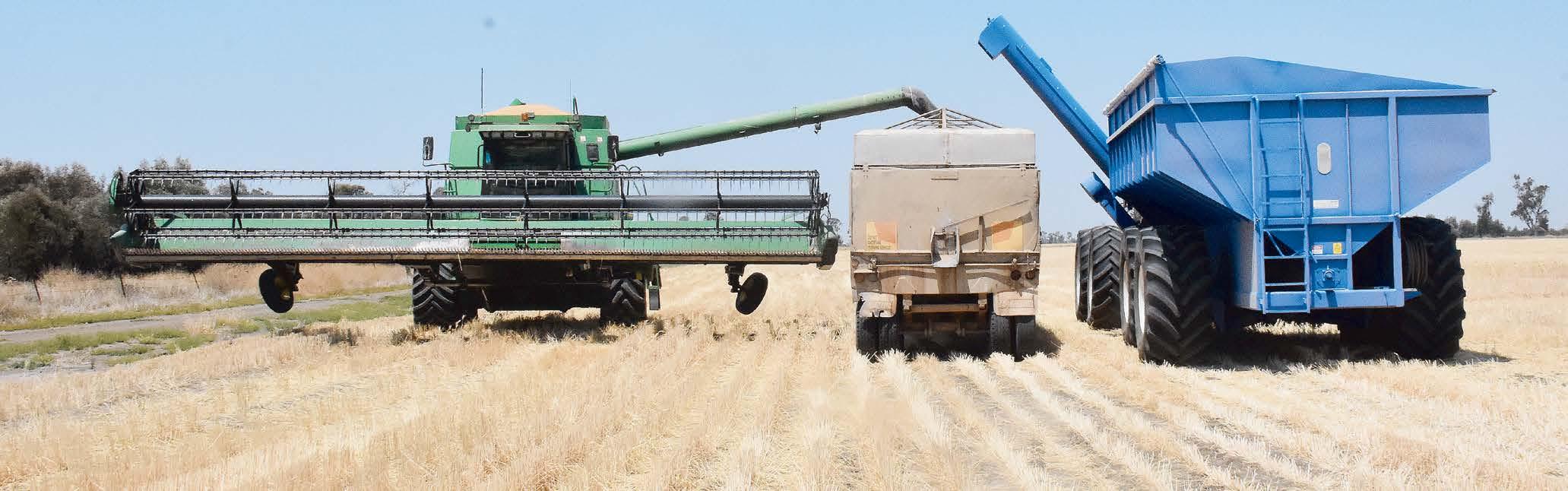
BARLEY prices are supported as drought speculation builds, with growers holding onto grain for livestock feed.
The Bureau of Meteorology January drought statement showed below-average rainfall for much of Victoria and New South Wales in the last 36 months, a decline of some water storages in the eastern and southern states up to 50 per cent to this time last year, and lower than average streamflow at many sites across south-eastern Australia.
The long-range forecast for March to June forecasted autumn rainfall would likely be below average for parts of southern Australia.
In addition to a lack of rain, Walpeup Research andHopetounAirportrecordedthenewVictorian temperature record of 48.9 degrees on 27 January, with Pooncarie reaching 49.7 degrees on the same day.
Temperatures, both maximum and minimum, are expected to remain above average through to June.
BOM indicated root zone soil moisture deficits had expanded and intensified, with much of the Mallee and Riverina recording below and very much below average levels in January.
FlexiGrain regional manager Sam Grieve said drought was front of mind for growers heading into March.
“Livestock prices are very good at the moment which is creating a lot of demand for feed in particular, and it’s expected to remain robust going forward,” he said.
“With BOM speculating on El Niño in the outlook, there is the possibility of drought and a lot of mouths that are going to need feeding, which supports barley prices.
“Growers are concerned with the low subsoil moisture,theirgrossmarginsareunderthepump, and they are working out what they can grow this season, and a lack of subsoil moisture heightens their risk.
“They need rain sooner than later.”
The potential for substantial rain in parts of Victoria next week brings with it the hope for a change.
“We’ve had a long dry spell since November, it’s been hot, and the BOM outlook says that could continue, so rain next week would be very welcome,” Mr Grieve said.
Barley outlook: Supported
STRONG export demand and good local feedlot margins are supporting Australian barley values.

Global:
Reuters are reporting that Chinese buyers have been buying one million tonnes of Australian barley a month since December, about double the volumes exported last year.
Global supplies are tightening with declining availability of EU and Black Sea export stock.
Local:
Numbersof cattleandlambsinfeedlotsremains very strong, underpinning good local demand.
Strong livestock prices and possibly the BOM’s seasonal weather outlook is encouraging growers to hold barley stocks as a possible drought hedge.
To watch:
A widespread and early break to the season may seelocalfeeddemandease,pressuringlocalprices.
Wheat market under pressure from global supply
FLEXGRAIN regional manager Sam Grieve has indicated that while the barley market is maintaining a higher demand than supply, the wheat market is saturated.
Wheat outlook: bearish
Ample supplies both globally and locally weigh onmarketswithnonewcropproductionissueson the radar at the moment.
Global
The Indian government has recently approved the export of 2.5 million metric tonnes of wheat adding to burdensome global export stocks.
The USDA is forecasting record Argentine wheat export pace.
Initial reports suggest the French winter wheat crop is off to a good start.
Local developments:
The strengthening Australian dollar is making Australian grain exports less competitive and pressuring export margins.
There’s trade speculation of large stockpiles of unsold grain remaining on-farm across eastern Australia.
Slow grower selling in eastern Australia is supporting local prices above export parity.
To watch:
Unusually warm northern hemisphere weather has broken winter crop dormancy in many regions.
Any potential winterkill events may drive short covering amongst investment funds.
This may trigger short-term volatility in futures markets and opportunities for growers to hedge. Without a global crop production issue, local prices could soften further should local growers become active sellers of old crop.


Peter Bannan
THEY look like tiny apples, taste like a crisp pear and carry more vitamin C than an orange.
And in the red dirt of Koraleigh, they are quietly reshaping one family’s farming future.





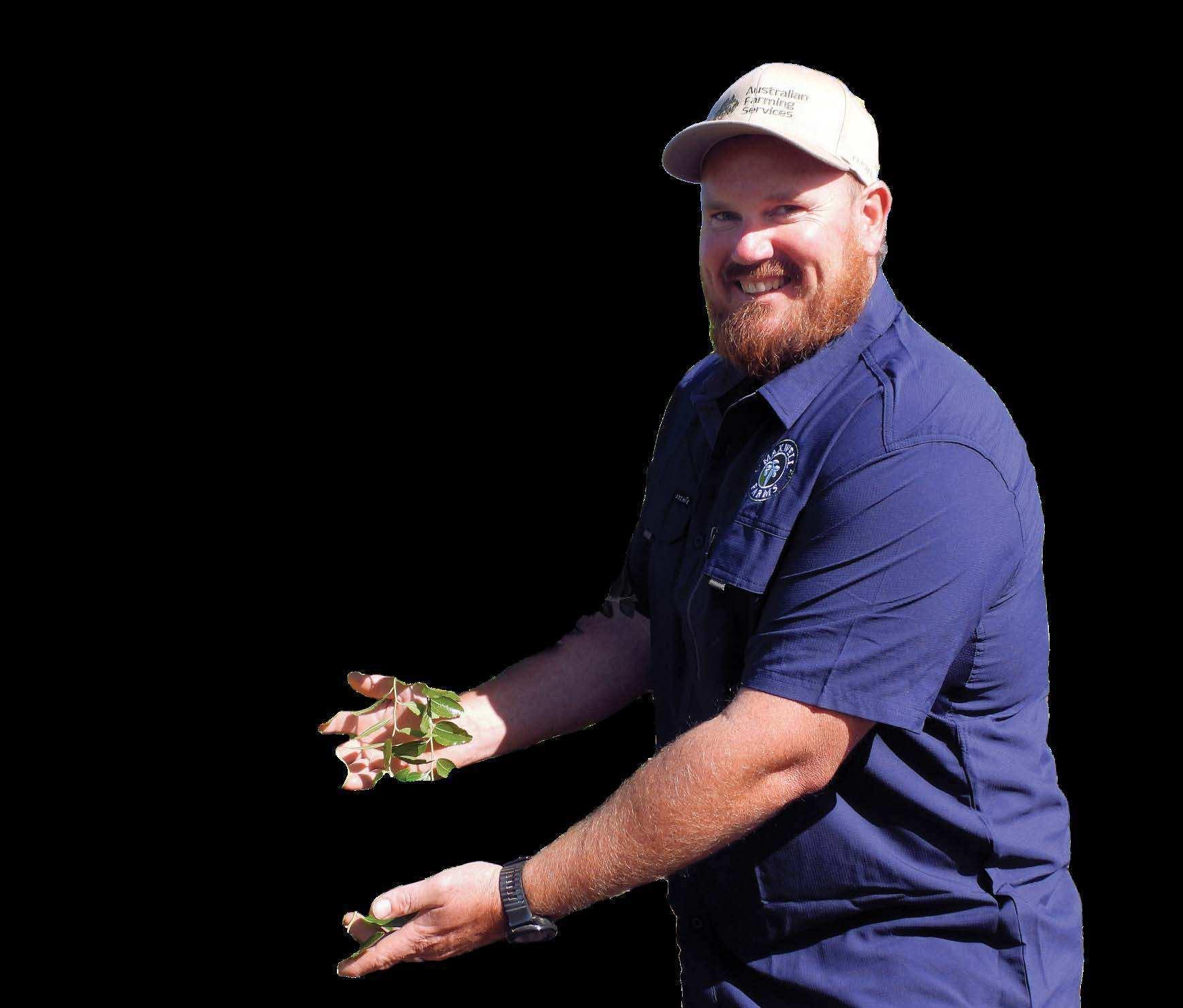
Under the banner of Maxwell Farms, Robert and Brenda Maxwell, alongside their sons Riley and Cooper, are carving out a niche in one of Australia’s least understood crops: jujubes.
The Maxwells planted 3300 jujube trees - two main varieties of Chico and Li - in what he describes as a calculated gamble.
“It was one of those things where the price was good. There was sort of no one else doing them,” Mr Maxwell said.
“I’ve got a mate in Robinvale that’s put some in as well and he sort of told me, jump on these while the going’s good. No one’s growing them around here, so we’ll give them a go.”
Originally, the plan was far bigger.
“We were going to plant 10,000. We pulled the pin on them because at a standstill at the moment there’s a bit of an oversupply.”
The jujubes were never meant to be the end game. They were intended to bankroll another long-term investment.
“The plan was to get those jujubes in the ground and help fund us setting up a pecan farm,” he said.
“So we’ve got pecans in as well. The jujubes, we sort of looked at them as a bit of a cash crop, because in the first year you get a crop back off them.”
That early return was appealing, but the hidden cost was labour.
“It’s just the labour intensive stuff that we didn’t really budget for and work out. But yeah, just trying to grow them and get some cash flow coming back in to help set up our pecans.”
Mr Maxwell had no prior experience with jujubes. He has worked in horticulture for years, growing other nut trees, but this was new territory.
“You’replanting a tree that no one knows anything about. There’s no exact fertiliser program. There’s no spraying program for them. That’s all new.
“You’re flying off the seat of your pants trying to work out, this has popped up, we need to spray this.
“What sort of fertiliser requirements they need. Same with water. We’re still learning.”
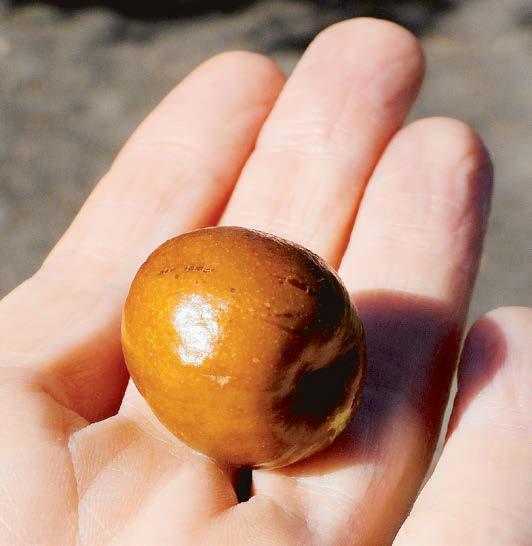
The trees are planted under a super high-density system, kept under two metres tall to reduce labour costs and make picking easier. All fruit is handpicked.
“They’re similar to an apple. If you drop it or bump it, you’ll dent it. You can’t actually tell from the outside until they sit there and they’ll get little dents all over them.”
The trees come out of dormancy in late September or early October. Flowering begins in November and continues through to March.
“They just continuously flower and continuously put fruit on,” Mr Maxwell said.
Young trees, now two and three years old, have struggled to reach their potential.
Mr Maxwell hopes to eventually harvest 10 to 12 tonnes from the current planting, but extreme heat has taken its toll.
“I think the extreme heatwave that we had knocked a fair bit of fruit off,” he said.
Fruit fly has also been a serious challenge.
“Fruit fly absolutely love them, because there’s nothing else really ripening at that time around March, April. So we’re sort of the last thing to ripen,”
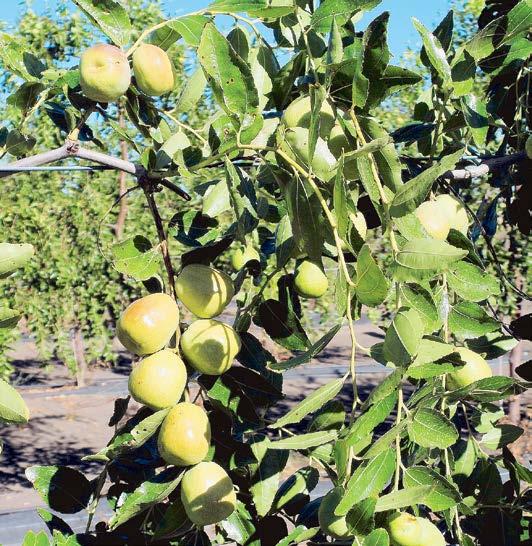
Mr Maxwell said.
“2023 and 2024 were pretty bad. All the early stuff that ripened up, we basically picked it onto the ground.”
Irrigation is carefully managed using moisture probes to maintain what Mr Maxwell calls a “happy medium”.
“They’re a high root sucker tree. You could go through over five times a year knocking off root suckers.”
In the Mallee summer, the trees cope well, though Mr Maxwell said their youth means they are still finding their balance between early and late fruit set.
Beyond production, marketing has proven just as complex.
The fruit is largely Asian dominant. When eaten fresh it is called a jujube. When dried, it becomes a Chinese red date, widely used in soups and teas.
“A lot of the Asian countries have been eating it for quite a number of years and they know all about it and they love them,” Mr Maxwell said.
“I think once the Aussies work out their health benefits and how good they are, because the research I’ve done, they’re actually a superfood, once people get onto them, I think they’ll take off.”
Jujube fruit is low in calories but rich in fiber, vitamins, and minerals, with more vitamin C than an orange per weight.
Market timing is everything. Early in the season, prices can sit around $12 a kilogram, dropping to $6 by the end.
Queenslandfruit enters the market earlier and can fetch $20 to $30 a kilogram due to strong demand.
“There’s huge demand for them at the start. Then all of a sudden they’re all flooding in and the price comes down,” Mr Maxwell said.
Mr Maxwell moves fruit through Melbourne market with the help of an agent contact, but also sells locally and directly from the farm.
“We advertise on Facebook, just letting everyone know in the area that we’ve got jujubes. We do a couple of local markets. We normally have a little thing printed out so people can see the health benefits and what they are, because no one knows what they are,” Mr Maxwell said.
As numbers increase and the crop ripens, most fruit heads to Melbourne due to limited local
demand.
Grading remains another work in progress. Mr Maxwell sorts fruit into four sizes, from small to extra large, but says there is no established standard.
Despite a surge in plantings around Mildura, with some growers expanding from 3000 or 4000 trees to 10,000 as prices rose, there is little formal support.
In his own district, he knows of only one other grower with similar numbers.
For the Maxwells, one of the most rewarding parts has been the reaction from customers.
“Whenyoucangotosomeoneandsay,I’mgrowing jujubes, and they’re just like, what’s that? And then you can go on a tangent and tell them what they are, what they do and how they grow,” Mr Maxwell said.
He prefers eating them fresh, though one small planting of the honey jar variety stands out.
“It’s the sweetest variety, but it’s also the smallest. When you dry them, they’re unbelievably sweet,” Mr Maxwell said.
Sweet and crunchy when fresh, the honey jar has a classic jujube flavour and crispness with a blue gum honey flavour.
This smaller, round jujube fruit is said to develop a unique caramel apple flavour as it dries. The variety is a heavy producer and harvest can be extended with multiple pickings.
With expansion space almost exhausted as pecans filltheremainingblocks,thenextmovemaydepend on future land purchases and market signals.
“If the opportunity arises once we buy our next farm, there’s potential there that it could go all jujubes or it could go all pecans,” Mr Maxwell said.
For now, Mr Maxwell juggles the family venture while managing a 1600 hectare almond farm, keeping the Maxwell Farms Facebook page ticking over when time allows.
“It doesn’t get updated as much as I’d like. But when you’re managing a 1600 hectare almond farm as well as trying to grow jujubes on the side, you get pretty busy,” he said.
In a district known for citrus, almonds and grapes, the small, glossy fruit hanging beneath two metre trees stands out as something different.
Whether jujubes remain a niche curiosity or become the Mallee’s next breakout crop, Maxwell Farms has already staked its claim on unfamiliar ground.















Peter Bannan
THEVictorianFarmersFederationhascalledonthe State Government to make strategic investments in agriculture, saying smarter policy and targeted funding in seven priority areas could supercharge the industry and strengthen Victoria’s economic future.
In its submission ahead of the Victorian State Budget in May, the federation outlined key areas it says require urgent attention to unlock growth and secure agriculture’s long-term contribution to the state.
The VFF is seeking support to ensure efficient transport and freight networks, protection of productive farmland, equitable access to healthcare, transport and childcare in rural communities, stronger pest control and biosecurity, drought preparedness and water
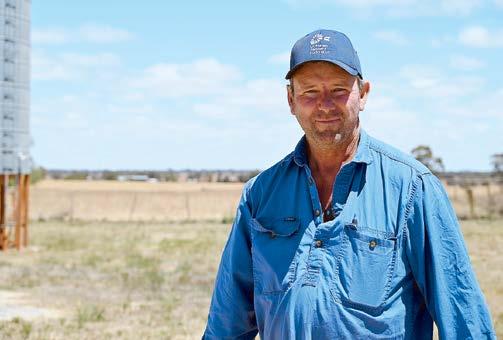
VFF president Brett Hosking says the Victorian Government has a “golden opportunity” to invest in the sector’s future. Picture: File
security, productivity enhancing investment in skills, infrastructure and innovation, and tougher protections against rural crime.
VFF president Brett Hosking said the Victorian Government had a “golden opportunity” to invest in the sector’s future.
“There’s no overstating how big the opportunity for growth is. Victoria has the land, skills, infrastructure foundations and global reputation to significantly increase production, create thousands of jobs and generate billions of dollars in additional export revenue,” Mr Hosking said.
He said agriculture was already a major 22 billion dollar industry that indirectly employed more than 150,000 people across the state.
“We’re a major 22 billion dollar industry that indirectly employs more than 150,000 people. Imagine what that could be with some forward thinking initiative and a genuine commitment for the future,” Mr Hosking said.
“We just need the government to invest and tweak policy in the right places and Victorian farmers will do the rest.”
MrHoskingsaidtheindustrymustberecognised as a critical sector capable of helping propel

Victoria out of debt and towards prosperity.
“Time and time again our industry has proven there’s no better investment than our industry when it comes to economic returns and future growth,” he said.
He argued the federation’s proposals would deliver benefits extending well beyond farm businesses.
“What we’re calling for delivers benefits far beyond the farm gate. Efficient freight networks strengthen exporters and regional economies; water infrastructure protects food security for all Victorians; and skills programs secure the future workforce for the state’s largest manufacturing sector,” Mr Hosking said.
“We’re asking for the State Government to invest for the future and back us in for the betterment of all Victorians.”
EVERY farmer deserves to come home safely at the end of the day.
That is the message at the heart of a new statewide campaign urging Victorian farmers to see safety not as a burden, but as an investment in their lives, their livelihoods and the long-term strength of their businesses.
Deputy Premier and Minister for WorkSafe and the TAC Ben Carroll this week launched the “Safety – it does more than keep you safe” campaign, a $2.8 million initiative highlighting how simple safety improvements can make farms safer, more efficient and more sustainable. The campaign, running across regional television, radio, print, outdoor, digital and social media, features real Victorian farmers sharing their own experiences and practical steps they have taken to reduce risks on their properties.
The push comes as agriculture workers continue to be over represented in workplace fatalities.
While the industry accounts for about two per cent of Victoria’s workforce, it regularly makes up around 10 per cent of annual workplace deaths.
Since 2021, there have been 38 work related fatalities in Victoria’s agriculture industry, including five last year and three so far this year. The majority involved tractors, and many victims were aged 65 and older.
In the same period, WorkSafe accepted 2932 injury claims from workers in the industry.
Farm vehicles such as tractors, quad bikes and trucks account for almost half of all agriculture related deaths. Livestock incidents remain another leading cause.
“It’s tragic to see farmers continuing to be overrepresented in workplace fatalities,” Mr Carroll said.
“This campaign is about sharing the tangible benefits of simple safety improvements. I encourage those in the industry to look out for each other and share safety advice, knowledge and learnings, because it can make a difference.”
WorkSafe chief health and safety officer Sam Jenkin said age adds another layer of risk, particularly when working with cattle and heavy machinery.
“We understand farming is not really something you retire from and many farmers are active well into their 70s and 80s, which is something to be proud of when experience is so valuable,” Mr Jenkin said.
“But it’s important to pause every so often and think about what safety measures are in place and where you might benefit from some extra help,” he said.
“We want you safe and sticking around as long as possible to pass on your legacy of skills, knowledge and experience to the next generation.”
WorkSafe provides practical, industry designed guidance to help farmers identify risks and make meaningful improvements. Its safety resources are co designed with industry experts and are consistently reviewed and updated in line with good practice.
around this.”
UNPICKED crops, decimated rural communities and higher supermarket prices are among the consequences that could unfold if One Nation’s anti-immigration policy were to be implemented, farmers and experts have warned.
At a federal level, One Nation has committed to: cutting working visas by hundreds of thousands, deporting illegal migrants in the tens of thousands, and stopping cheap foreign labour.
Dr Laurie Berg is an Associate Professor of Law at the University of Technology Sydney, and director of the Migrant Justice Institute.
She said there was no way to cut working holidayvisas,thePacificAustraliaLabourMobility scheme, or deport undocumented migrants without essentially paralysing the horticultural labour market.
“Thehorticulturesectorisalmostentirelydriven by the work of backpackers, Pacific Islanders, and undocumented migrants,” she said.
“Deporting undocumented migrants in large numbers and cutting those other schemes will increase the cost of fruit and vegetables in supermarkets.”
Dr Berg’s concerns were shared by farmer Peta Thornton, a co-owner of Woorinen based peach and nectarine producer Temba Orchards.
Multicultural workers make up around 80 per cent of Temba Orchard’s workforce, and Ms Thornton said she would be “extremely concerned” if One Nation’s populist immigration policies were implemented.
“We are significantly relying on international visa holders and multicultural communities to pick and pack our produce,” she said.
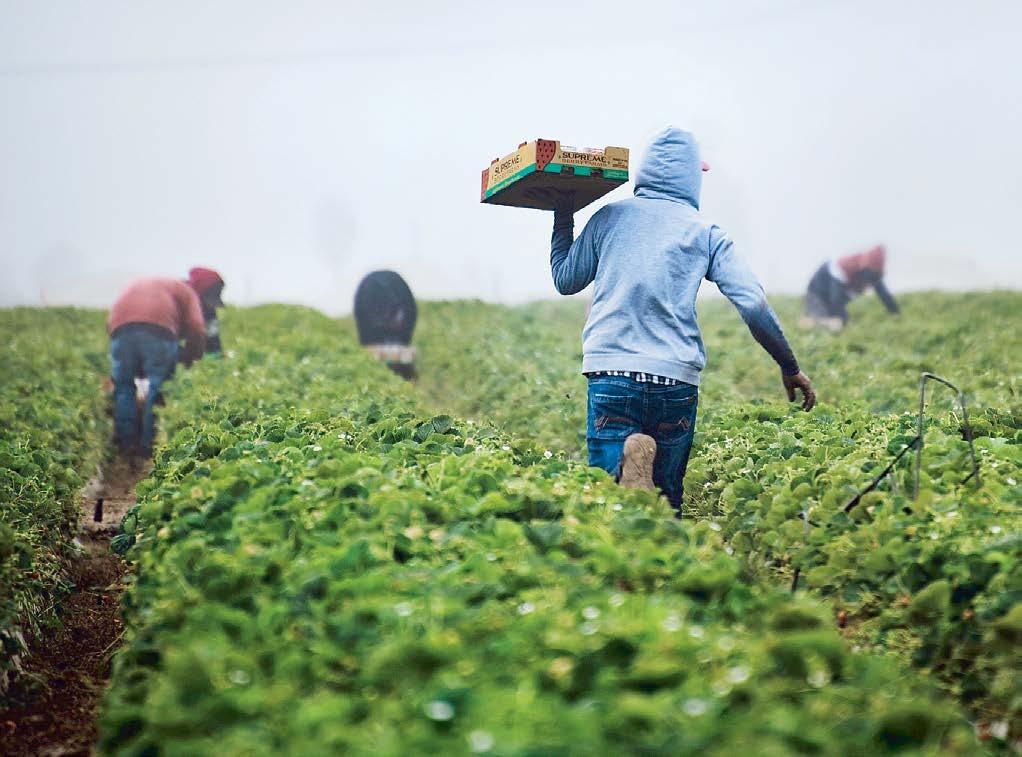
“And it would not just be the horticulture sector which is affected, but regional communities more broadly: in healthcare, logistics and small businesses.”
One Nation’s Victoria branch president Warren Pickering denied his party’s immigration policy was at odds with rural Australia’s reliance on

Heaslip Brothers (Retirement) Plant & Equipment Clearing Sale Old Calder Highway Trinita Road via Ouyen Vic. Case 485 Steiger 2008 tractor *Case 290 Magnum 2013 tractor *Rogator 1254 S/P100’sprayer*Case2388Header,1999,rebuiltmotor*GasonCropperTopper 35’ *Simplicity 9000 seeder cart *NH 62’ folding direct drill bar, floating hitch *HB 45’ stubble master chisel plough *Davey AFM 200 series 54’ floating hitch cultivator *Kelly 60’ prickle chain w/- seed box *Sunflower 50’ blade plough w/- Sunflower rotary harrows *Famson 45’ tubulator, 8” belt *Freighter 38’ dual axle trailer w/- 3-bin grouper, 23’, 18t cap. *Goldacre 100’ ground glider boom *7,000 lt. poly water transfer tank *Chemical hopper induction unit *Trimble AG GPS receiver *Heavy duty 22’ folding (grader board) D-6 dozer blade *Allfarm 50’ cultivator bar *Caterpillar 1975 D5 bulldozer, w/- 12’ wide stick rake / blade *MF 1560 round baler *McCormick 6-2 combine, 14’ *Shearer Sovereign 16 & 18 plate disc plough *Loxton 13’ cut slasher *Tepari Racewell sheep handler *Combi Clamp sheep handler *Mobile sheep loading ramp *Magnus 20 panel mobile sheep yards *Fuel trailer, heavy duty w/- 500 gal. steel fuel tank *Bedford 1979 4-WD diesel tipper tray truck.
Sale Commencing: Friday 27th February @ 9.00am
Sale Closing: Clock countdown: Wednesday 4th March @ 3.00pm Clearing sale conducted online via the Auctions Plus platform. *No Buyers Premium.
For full details, descriptions and photos search: McKean
migrant workers.
“I think we’ve got a lot of migrants in this country that aren’t working, and that’s entirely problematic,” Mr Pickering said.
“Now, if we could either get those (people) working or allow the visas for those that actually do pick fruit to be looked at, then there’s ways
However, a Department of Home Affairs’ 2024-25 migration trend report, found migrant unemployment rates were lower than that of the Australian-born population.
Dr Berg also pointed to the fact that much of the work undertaken by migrant workers was considered undesirable by Australian-born residents.
“There has been lots of research conducted, and I think employers in regional areas and unions know there are almost no Australians working in the horticulture sector,” she said.
Concerns have also been raised about whether populations in towns such as Robinvale could be targeted by One Nation’s policy of deporting undocumented non-citizens, who local leaders have described as “the engine room of the community”.
Dr Makiko Nishitani is a senior lecturer of Anthropology at La Trobe University, and has spent years researching migrant workers in the Sunraysia region.
“The Victorian Farmers Federation’s survey in 2019 showed that 71 per cent of growers in Sunraysia believed they were likely to have undocumented workers,” she said.
“I think the policy overlooks the reality of Australia’s agricultural sector.
“UndocumentedworkersIspoketoallexpressed pride in how they contribute to the horticulture economy in Sunraysia.”
MsThorntonsaidasyoungerpeoplerelocatedto cities and seaboards, rural areas could be crippled without migrants to fill critical labour shortages.
“I find it really distasteful – the blaming of migrants – and very much simplifying a lot of issueswehavetoworkthroughtogether,”shesaid.




with COLIN FREE
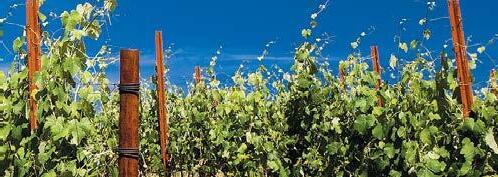
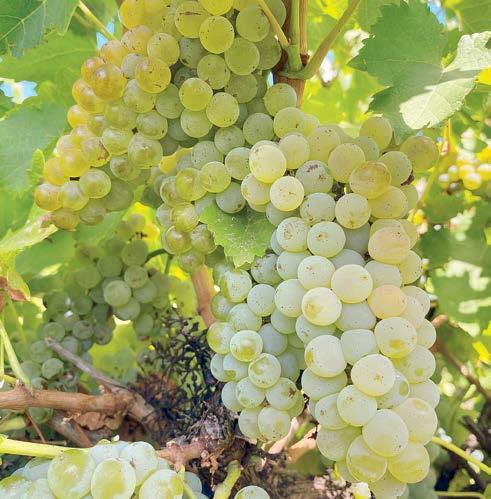
HARVEST has begun with our first loads of Chardonnay and Pinot Grigio.
Reports of lower yields following the ongoing heat are common, although with the worldwide oversupply of wine, this is generally not causing wineries to go out chasing extra fruit.


Like many others, I’m unsure whether more of this year’s fruit will be lost to the ground or carried through to the wine bin.
Record low prices are being offered this year for uncontracted fruit, but that and the prospects of even dearer water next year will see many vineyards removed.
There is a genuine concern for quite a few of our fellow wine growers, make the effort to reach out to them, many are now looking at perfect fruit on their vines that is without a home, talk to your mates more.
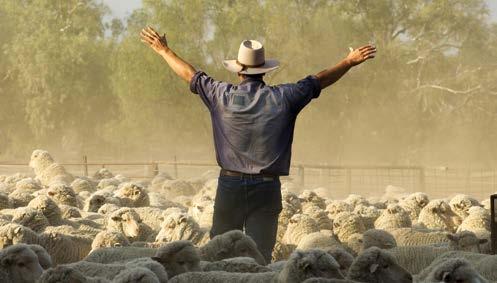
With the grape job looking a bit average this season, I’ve found myself dabbling in cattle and sheep work, and it’s surprisingly straightforward.
From time to time, hungry stock wander through wayward fences and into our vines.





Rounding them up has become an unexpected side task.
People often joke about needing a bigger boat; in my case, a bigger freezer might be the more practical upgrade.
The snails vanished during the recent heatwave, and I assumed they’d all been cooked.
However, when I ducked into the shed fridge for a cold drink, I discovered everything had been cleared out - and there they were, about 5000 snails lined up, smiling and enjoying the cool conditions.







AGRICULTURE Victoria is inviting farm business owners and managers to take part in a free online business program designed to help them better manage the risks that come with a variable climate.
Project Leader Kit Duncan-Jones said the program supported farmers to build on their existing knowledge and skills, strengthening their businesses for the long term.
Running on Wednesdays from 25 February for six weeks, the online program is open to livestock, grains and mixed farmers, as well as horticulturalists and apiarists.
Mr Duncan-Jones said past participants finished with new practical tools and renewed confidence in managing their farm businesses. Participants will develop their skills to prepare for and manage risk, adapt to change and set clear business goals.
The program is suitable for new and young farmers, along with those who have many years of experience.
Delivered over five interactive sessions, it covers key management topics including risk identification, strategic planning, financial management, climate risk, natural resource management, workforce management, succession planning, farm safety and business planning.
As part of the program, farmers are encouraged to develop a farm business plan, with the option of a one-on-one review session with an experienced farm management consultant.
Mr Duncan-Jones said delivering the program online meant farmers could join from anywhere in the state, without the time commitment of travel.
“If you’re a farmer looking to strengthen your farm business, build resilience to drought and climate variability, and set your farm up for long-term success, this program is for you.”


Those interested can register by completing the short survey at: https://forms.office.com/r/ zaZikVpmM9













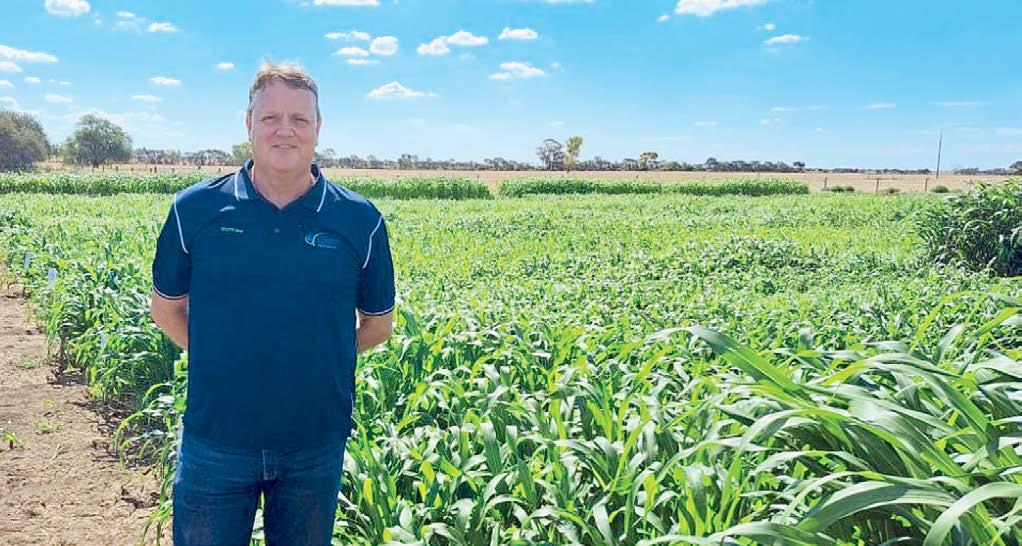
IFN general manager Matthew O’Farrell says his organisation’s priority this year is delivering research which reflects real farming systems in the region. Picture: Supplied
MAKING informed winter cropping decisions –based on detailed local research – is what is driving the 2026 Irrigation Farmers Network (IFN) Winter Variety Trials Research Results Discussion Day in early March.
IFN general manager Matthew O’Farrell said local irrigators across the region were being encouraged to base those decisions on local evidence and proven success.
Mr O’Farrell said the event’s focus on findings from the 2025 Winter Irrigated Variety Trials and related research would provide growers with practical insights to help lift yields, manage input costs and improve whole-farm profitability.
“Our organisation’s priority this year is delivering independent actionable research for real world farming systems in the region,“ he said.
“Growers are making high-stakes decisions while having to operate on increasingly tight margins.
“They need information that’s relevant to their specific soils, their water and their systems – not just generic data from somewhere else.
“The quality and relevance of IFN’s work recently helpedsecurefundingfromtheGrainsResearchand
DevelopmentCorporationtoleadatwo-yearproject focused on improving faba bean performance, particularly around yield and crop lodging.
“This is an area where growers have told us they want better, more targeted agronomy advice.
“Which is why this project will bring together strong grower demand, solid funding and the capability within IFN to deliver meaningful outcomes.”
Mr O’Farrell said the upcoming discussion day would cover variety performance from the 2025 trials, soil health findings from the C4 Milk Project, long-term legume trial results, and RiskWise nitrogen insights following faba bean crops.
He said this session was “all about showing the data, having the conversation and helping growers make confident decisions for the coming season”.
The IFN Winter Variety Trials Research Results Discussion Day will be held on Thursday, 5 March, from 9.30am to 12 noon at Cadell on the Murray, 325 Perricoota Road, Moama. Morning tea and lunch will be provided.
Attendance is free, with RSVP required by 24 February for catering purposes.
THE Ricegrowers’ Association has welcomed the start of a 12-week consultation on the Murray–Darling Basin Plan Review.
RGApresidentPeterHerrmannsaidindustry would take the time to consider the options and ideas posed in the paper, but welcomed the recognition that after 15 years, a different approach was needed.
“Our industry and the communities we support have long been saying the focus must beonoutcomes,notjustrecoveryvolumes,and at first glance it seems that may now be being recognised,” Mr Herrmann said. He noted that water reform pre-dates the Basin Plan, and environmental recovery now totalled around 3100GL, delivering a significant portfolio of water to manage, but at a cost to industry and communities.
“We have long called for a shift to integrated catchment management and communitysupported solutions.”
RGA executive director Graeme Kruger said the acknowledgement that flow patterns, rather than recovery volumes, may be the appropriate future risk-mitigation approach in the key rice-growing valleys reinforced the
fact that the “just add water” approach was now outdated.
He said since water reform began, the irrigationsectorhaddoneitspartfortheBasin Plan - improving water use efficiencies, selling entitlements to the Government and working with Environmental Water Holders - yet successive governments had failed to deliver against their obligations such as constraints management, infrastructure upgrades and finalising the SDL Adjustment Mechanism projects.
Mr Kruger said it was unfortunate the discussion paper still assumed further water recovery of close to 750GL without acknowledging the impact on communities and industries that have already seen significant adjustment in the name of the Basin Plan.
“It is time we shifted the focus from water recovery - which has largely been done - to water management and environmental outcomes.”
The RGA is encouraging everyone with an interestinthefutureof theBasintoparticipate in the consultation and make a submission.



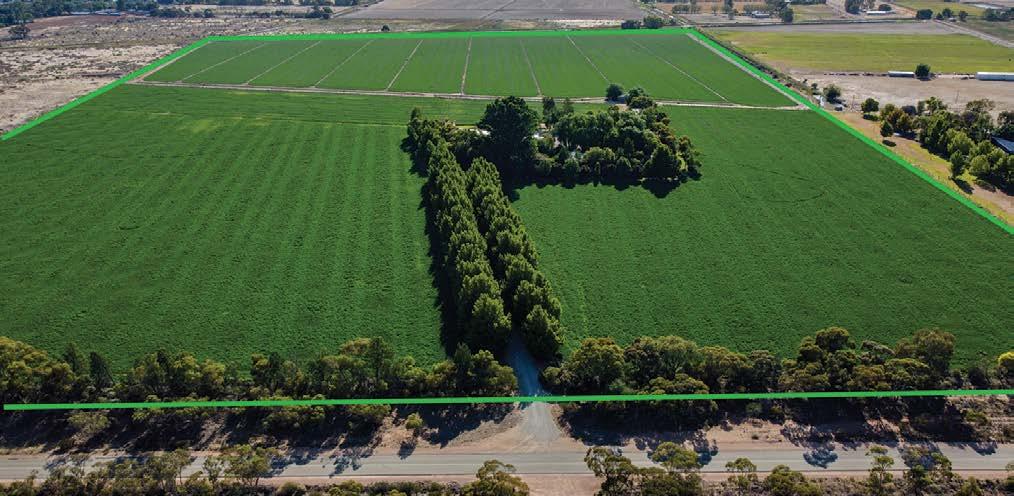
By Expression of Interest
120 Hectares (294 acres)
Prime Productive Irrigation
81 Back Boga Road, Swan Hill, Vic
• 4.5kms to Swan Hill post office
• 155 Acres under Pivots (3 sites)
• 37 acres under overhead sprinklers
• 46 acres Border check
• 3-bedroom Homestead, established gardens
• 3 X Machinery Shed
• Chemical Shed
• 3 x Hayshed
• Workshop
• 2 x Electric Pumps (10-inch outlet)
• 2 Stand Woolshed
• Sheepyards
• Full recycle system
• 3 megalitres of Water
Expression of Interest to selling agent by Tuesday March 10th, 2026, by 10am
Terms: 10% deposit on signing, balance 60/90 days with immediate working possession
Agents’ comments: Immaculate set up which presents very well, Just turn the key and go. Beautiful established gardens, only a stone throw from town. Opportunity to purchase equipment. (W.I.W.O.)

Agent Joe O’Reilly M 0427 329 911 joreilly@brcagents.com.au


Dryland Cropping
Quambatook District
1426 Acres/ 577 Hectares
To be offered as a whole or 2 separate lots
Lot 1. “Parkers” C/A 1a &1b Sec.1, Parish of Budgerum East 450 acres, Barley Stubble
Lot 2. “Keatings” C/A 11,12a,12c & 27 Sec.1, Parish of Quambatook 976 acres, Wheat stubble
Pipeline water connected
Excellent chemical and fertilizer history.
Lease by Tender closing 12pm, Tuesday 3rd March 2026
To BR&C Agents 209 Karinie Street, Swan Hill Vic.
Terms: 3 years with 6 monthly payments
Please contact selling Agent for a tender form.
Agent Joe O’Reilly
M 0427 329 911 joreilly@brcagents.com.au

Swan Hill District
320 acres / 129.5 hectares
Prime Productive Cropping
C/A 57 Parish of Castle Donnington
Rising Mallee Loam
Pipeline connected
Oat Stubble
Excellent Chemical History
15km South/West of Swan Hill
Good fencing
Expression of Interest to selling agent by Tuesday 10th March 2026, by 10am
Terms: 10% deposit on signing, balance 60/90 days with immediate working possession
Agent Joe O’Reilly M 0427 329 911 joreilly@brcagents.com.au
Quambatook District 567 Acres/229 Hectares
Known as “Freds” C/A 1&2 Parish of Budgerum East
2kms from Quambatook and Grain Receival Operation
Avoca River frontage
Divided into 2 paddocks
Barley stubble
Excellent chemical and fertilizer history
Terms: 10% deposit balance 60/90 days
Immediate working right on signing
Sale by expression of interest closing 12pm, Tuesday 3rd March 2026
To BR&C Agents 209 Karinie Street Swan Hill Vic.
Agent Joe O’Reilly
M 0427 329 911 joreilly@brcagents.com.au
Sam James
DECORATIVE shrubs, trees and ground cover propagated, grafted and grown in Nyah have been designed to withstand harsh Mallee conditions.
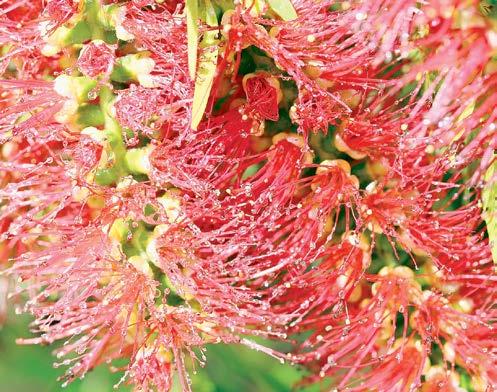
The centrepiece of the Calder Nurseries Australia collection is the Dam Red, or callistemon vemanalis, a chance hybrid of two bottlebrush varieties.
Over the last 10 years, permaculturist Russell Calder has watched the original Dam Red develop into what he called a fairly special plant.
“It flowers twice per year in the spring and summer, so it is in flower pretty much year-round except winter, which is unusual for callistemons,” he said.
“The red flowers are massive to the point the
foliage is almost completely obscured.
“It’s suitable for many purposes, as a feature or hedging, and has maintained its own size since reaching just over two metres high with a spread of one to two metres with no pruning, apart from taking cuttings.”
Mr Calder has honed his grafting technique over 35 years to make his favourite varieties suitable to the Mallee climate.
“I have always liked the Robyn Gordon grevillea but it doesn’t grow well here, it needs silky oak or grevillea robusta roots to survive,” he said.
“Not only do you get the benefit of purchasing plants with lower carbon miles and freight costs, we’re also able to grow a broad range of plants you wouldn’t otherwise be able to, that are more suited to our climate and are hardened off to survive.”
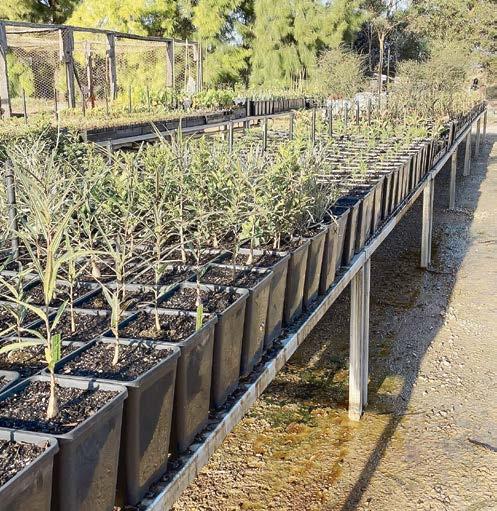
Seed stock made it through the heatwave unscathed. Picture: Supplied
STRONG roots and fibrous stems have proven hardy resistance to excessive heat, and saved a young nursery from devastating losses.
Permaculturist Russell Calder did not lose a single plant through the January heatwave, which he attributed to high carbon and humus content in his soil, along with significant investment in automatic watering infrastructure.
His latest venture into seedling cultivation, utilising his flagship organic worm casting fertiliser, Stimulator, has helped him understand the benefits of complex organic matter in the lifespan of plants.
“It was amazing really, those seedlings were out in the weather, they weren’t covered, and we haven’t lost a single one - they weren’t even stressed,” he said.
“I don’t like to think about it but normally in that heat I would expect to lose 25 to 50 per cent of my
Mr Calder has also acquired critically endangered Wollemi pines which he plans to propagate for sale.
With low-impact and organic principles driving the Calder projects, the nursery was designed to maximise resources and reduce waste.
The nursery stock is a combination of grafted and propagated seedlings, with the mother stock planted in returned IBCs filled with nutrientdense spent soil from the Stimulator worm beds for sturdy cuttings.
The seed stock is planted into square pots as opposed to round, so there are fewer gaps between the pots where they are laid out for watering under the automatic sprinkler system.
Calder Nurseries Australia seedlings are now available for purchase at Rhimahden Nursery, Swan Hill.
stock and for 100 per cent to show some detrimental effect like leaf burn or dieback, but there was no sign of stress.
“It’s the benefits of automatic watering, certainly, but the main thing was regular applications of Stimulator before the heat.
“It encourages the plant to produce fibrous fruits, so the nutrients and moisture are drawn into the plant more effectively, without which they can’t draw in enough and you’re going to lose plants.
“As we are still in the early stages of the Calder Nurseries project, surviving the heatwave made the difference between success and failure.”
The nursery has more drought-resistant native seedlings, as well as less durable conifer and Japanese maple seedlings which remained unaffected, defying expectations.
“It’s taken me 26 years as a chemically trained greenkeeper to completely understand how and why Stimulator encourages such hardy growth, but I’ve always known the complex microbiology
developed through the process of composting manure before feeding it to our earth worms is beneficial for the soil and the plant,” Mr Calder said.
“Stimulator in its dehydrated state is 25 per cent carbon and 25 per cent humus, which is the resultant part of a complete organic breakdown - it’s what plants have evolved to live on over four billion years of recycling nutrients.
“Humus and carbon under normal conditions can take centuries to form, but we’ve inadvertently come across a way of speeding up that process with composting and with the macro and microorganisms in the worm beds, and they have played a much bigger role in the process than I initially gave them credit for.
“Carbon doesn’t produce as much of the visual effects of large bushy leaf growth that you would expect from a nitrogen fertiliser like urea, but it develops strong roots and rich soil that can withstand stress.”




By Almonds Australia chief executive Tim Jackson

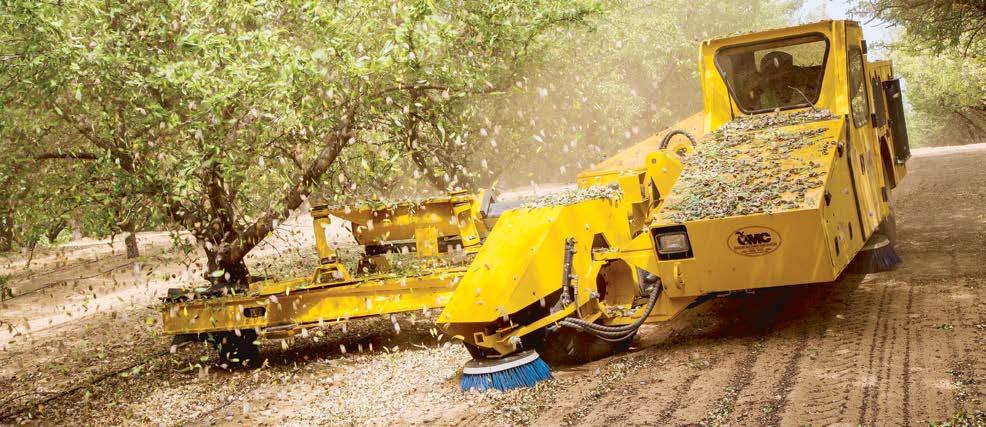
THE almond harvest is underway and 2026 could produce Australia’s largest almond crop.
Nationally it’s estimated that almost 167 thousand tonnes will be harvested this year.
That’s a seven per cent increase on the actual intake for 2025.
There are several factors that are contributing to a big crop this year.
The conditions leading up to harvest have been favourable.
Growersarehopingthedryconditionscontinue so the almonds can be shaken from the trees and collectedwithouttoomanydelayscausedbyrain.
In addition to the good growing conditions this season, there’s also been renewed interest in almonds from horticulturalists in Sunraysia, the Riverina and Riverland, with some making
the switch away from crops that are no longer delivering the financial returns they once did.
It’s also timely to recognise the workforce that assists with the almond harvest.
While our industry is highly mechanised, staff are still needed to operate the shakers, sweepers, conditioners and pick-ups.
In Robinvale alone, couples with caravans have travelled from Tasmania, Queensland and South Australia to be involved.
They’ll be in town for at least the next three months.
While some are completing their first harvest, others have been returning for several years.
Theydescribetheircontractingteamasafamily and look forward to working together each year.
We also have backpackers eagerly looking for almondharvestingjobs,asworkinginagriculture is one way they can extend their stay in Australia.
Once the crop is harvested it will then make its way to processors who have the job of hulling, shelling and marketing what has been grown.
International demand for Australian almonds is still very strong and this was evident at trade shows in Delhi and Dubai in late January.
Our current focus overseas has involved highlighting the versatility and health benefits of almonds.
China remains our biggest market, followed by India and Türkiye.
Premiums for inshell product have led to sales for this product outstripping kernel for the second year in a row.
India and China purchase more than 90 per cent of the world’s almond inshell.
CONCERNS are mounting over the effectiveness of The Murray-Darling Basin Plan Review, with key stakeholders concerned about the use of artificial intelligence.
Questions have emerged around the use of artificial intelligence to assess public submissions, prompting leading advocacy body, the Murray Regional Strategy Group, to hand-deliver a letter of concerntoMurray–DarlingBasinAuthoritychief executive Andrew McConville.
MRSGchairGeoffMoarsaidtheletterhighlighted these concerns.
“Our members invest significant time, expertise, and resources into preparing evidence-based submissions, and we value a consultation process that reflects this effort,“ Mr Moar said.
“We wish to raise a concern regarding the Terms and Conditions requiring submitters to agree to theuseof artificialintelligence(AI)toevaluateand summarise submissions.”
He said submissions to the Basin Plan Review drew on complex hydrological, agricultural, economic and community-level information, as well as personal experience, and stressed that such material required contextual understanding and subject-matter expertise that AI tools could not reliably replicate.
“MRSG has already observed AI generated summaries in previous MDBA processes, specifically the 2025 Basin Plan Evaluation Questions, which contained factual errors and misinterpretations. This experience has reduced community confidence in AI-based assessment,”
Mr Moar said.
The MRSG letter noted the Terms and Conditions did not explain what AI systems would be used, how they were trained, or how bias would be managed.
Mr Moar said without this transparency, submitters could not reasonably consent to AIdriven evaluation.
“MRSG is particularly concerned that AI models trained primarily on MDBA generated environmental material may default to an

environmental first interpretation of evidence, unintentionally minimising or dismissing informationrelatingtoproductivity,foodandfibre output, or regional socioeconomic impacts.
“This creates a real risk that submissions offering balanced, practical, onground perspectives will be misrepresented or undervalued in the review process.”
MrMoaremphasisedthatcommunityconfidence required a human-led review.
“Given the significance of the Basin Plan Review and the effort required to prepare submissions, MRSG expects that all submissions will be read and evaluated by qualified human reviewers,” Mr Moar said.
In its letter, the Murray Regional Strategy Group urges the Murray–Darling Basin Authority to guarantee that all submissions will be read and assessed by human experts, with any AI-generated summaries checked by humans before they are used. The group also calls for full transparency around the AI systems and safeguards employed, and asks that submitters be allowed to opt out of AI-based processing without penalty.
“These steps would help restore confidence in the integrity of the consultation process and ensure that Basin communities’ contributions are accurately understood and genuinely considered,” Mr Moar said.



Every farming family faces big questions about the future - who takes over, how to retire, and how to keep the farm strong for the next generation.
We work directly with families to make these conversations easier, guiding you through succession, transition, and retirement planning with practical advice and structured meetings that get results. You’ll deal one-on-one with a local small business owner, helping keep advice practical, personal, and costeffective.
We also assist eligible farming families with applications and ongoing support under the Australian Government Farm Household Allowance scheme. If you are approved for the Farm Household Allowance (FHA) you may be entitled to the following:
• a fortnightly payment for up to 4 years in each specific 10 year period
• activity supplements up to a lifetime limit of $10,000 to pay for activities to help improve your financial position
Contact: North West Succession, Farm
with PAUL BETHUNE
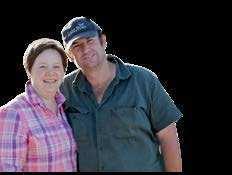
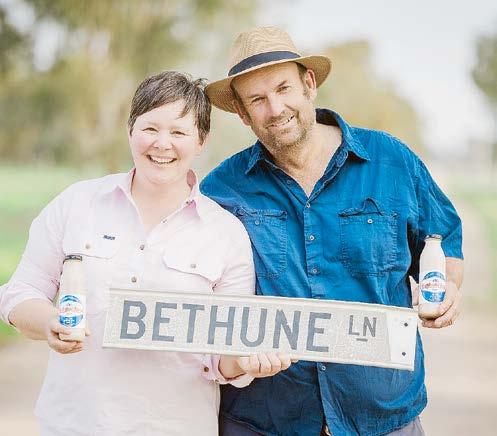
WE appear to be bogged down in a rut, with the commissioning of our new plant.
I was super frustrated a couple of months ago - at the spanner throwing, losing my mind level.
When you’re a farmer you can sort of set your own pace, drive progress but now, I am waiting on the right people to come and tinker and then sign me off.
Theboilinglikeafrogphasehaspassedandwhat will be, will be.
I know in a few months I’ll never think about it again.
All the construction, electrical and plumbing
MEAT and Livestock Australia (MLA) in partnership with industry peak bodies, has secured a grant from the National Foundation for Australia-China Relations to deliver a major new initiative designed to deepen engagement between Australian and Chinese cattle and red meat industry stakeholders.
The funding will support two major exchanges: an inbound delegation of emerging and established Chinese red meat industry leaders to Australia, followed by an outbound visit by Australian peak industry bodies to
has been finished for a couple of months.
Dairy Food Safety Victoria has been and given us the go-ahead, and we are just waiting on a couple of final gauges to be replaced, a bit of general fine tuning, a couple of test runs and hey presto.
There has been nothing I can do to speed this up.
Forquitesometimenow,I’vebeenentirelyatthe mercy of others.
The contractors are great - just busy and hard to get. It’s a quiet time at the dairy - the calm before the storm.
We have around 650 cows to calve in late March early April, so they have gone on maternity leave and are having a holiday at the moment.
The farm team has been cleaning and preparing the calf sheds and paddocks so that once things ramp up and we’re getting 20 calves a day, we can focus solely on the cows and calves.
Water pricing is currently around $450 per megalitre,whichisn’tsurprising,butitdoesmean we’ll have to cut back on most of our cropping. We’ll likely retreat to maintaining pasture only on the main milking area.
China.
Activities will culminate in the inaugural Australia China Livestock and Red Meat Industry Cooperation Forum, which will lay the groundwork for a potential industry-toindustry Memorandum of Understanding on issues of mutual benefit.
The project is supported by the National Foundation for Australia China Relations and aligns with the Foundation’s mission to strengthen engagement between Australia and China in support of Australia’s national interests.
MLA Managing Director Michael Crowley said the grant represented a significant opportunity to build on the long standing and successful trade relationship between Australia and China, and to further strengthen cooperation across the red meat and livestock sectors.
Tohelpmanagethat,wewillstartirrigatingafew weekslater,inthemiddleof Marchratherthanthe end of February.
The reality is that under the current water market, we’ve become opportunistic farmerswhen water is cheap, we go all in, and when it’s expensive, we tighten our footprint and minimise
“China remains one of Australia’s most important markets for red meat, and this grant enables MLA and our industry partners to strengthen the relationships and technical dialogue that underpin long-term market access and commercial opportunity,” Mr Crowley said.
“This support from the National Foundation for Australia-China Relations is vital in helping MLA build capability, deepen cooperation and foster a more resilient, trusted and collaborative cattle and red meat industry relationship.”
CEO of the National Foundation for AustraliaChina Relations, Gary Cowan, welcomed the project’s contribution to strengthening bilateral industry engagement.
“Greater cooperation in the red meat industry will help strengthen the foundations of an
risk.
In the long-term as water continues to move towards higher economic value uses, managing that risk will be more important than ever.
The disc seeder is getting a birthday, with new discs and upgraded bearings and will be in the paddock sowing pasture within the fortnight.
The 40ft Kelly chain will start running around this week preparing paddocks, and the digger is poking about cleaning drains and channels preparing for the start of the irrigation season. By the end of the week, we’ll have spread around 3000 tonnes of nature’s gold - better known as dried cow manure - along with a good dose of chicken manure.
Mybiggestconcernisnotwaterpricing,thefarm or the factory.
The greater issue is some of my children are now starting to beat me often at pool and table tennis, I thought I had a few more years as lord of my own lunchbox.
They say a father’s greatest joy is when a child surpasses them - I can confirm that is a load of bollocks!
important trade market and forge lasting connections. The Foundation is pleased to support high quality programs that bring together emerging and established leaders from Australia and China, which will help build more confident engagement with China and advance Australia’s economic resilience,” Mr Cowan said.
“The initiative will bring together peak bodies, researchers, producers and government linked technical agencies across both countries, creating structured industry dialogue on areas such as biosecurity, meat standards, genetics, feed systems and supply chain optimisation.”
The National Foundation for AustraliaChina Relations is an Australian Government initiative that promotes and coordinates enhanced cooperation between Australia and China in support of Australia’s national interests.
with Matt Rowlands
SHEEP and cattle prices have strengthened across the region, with strong competition from buyers and improving market outlook shaping confidence in the market.
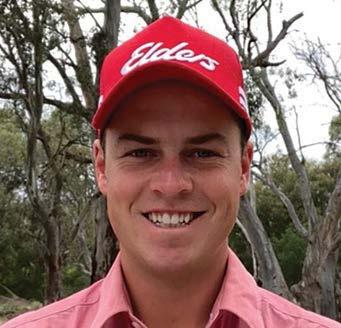
Matt Rowlands, livestock agent with Elders, said numbers at the latest weekly sheep sales remained steady, with about 14,000 sheep and lambs yarded at Ouyen and just over 10,000 at Swan Hill.
“Pretty similar constant numbers coming through the market,” Mr Rowlands said.
Both centres offered moderate to good quality stock that appealed to the majority of buyers.
Although two buyers were absent across the sales, Mr Rowlands said it made little difference to the overall result.
Prices were generally $5 to $10 a head better than expected.
Heavy export lambs were in reasonable supply, with two processors competing strongly for suitable lines. Crossbred grain fed lambs topped at $390, with most heavy lambs selling between $350 and $380.
Mr Rowlands said finish was the key factor separating the best results.
“What stood those lambs apart to really hit between $10.60 to $10.80 a kilo was the finish on the lambs,” he said.
“It’s still showing us that you can have weight in your lambs, but if they’re not properly finished and presented exceptionally well, you’re probably off the pace by 30 to 50 cents a kilo.
“Where you’ve got really well-presented lambs that have properly finished and got the cover and skins right, they’re receiving extra support.”
Trade lambs were in shorter supply in terms of quality, but those that met buyer demand sold from $280 to $320.
Merino lambs sold to a top of $330. Mr Rowlands said strong gains in the skin market were adding significant value, particularly for lambs carrying 30 millimetre skins.
“You can really price in those skins,” he said. “We’ve seen big jumps in the skin market. Those skins are worth anywhere from $12 to $15.”
Merino lambs were selling either side of $10 a kilogram.
Dorper lambs also performed well, again with finish dictating price. Most sold between $280 and $350.

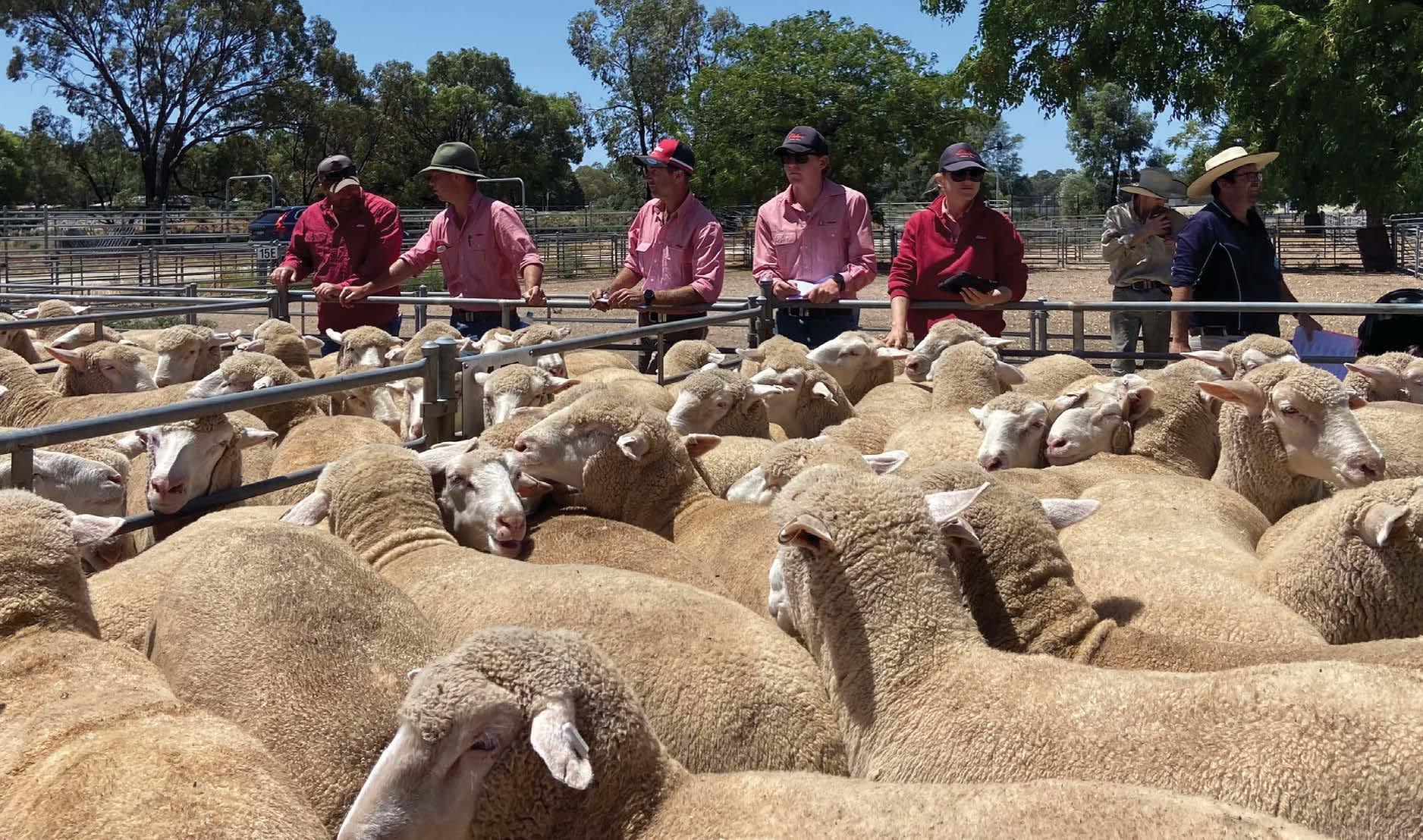

Elders team preparing to sell, standing in front of heavy export lambs that topped the sale at $390.
Lighter weight “bag” lambs ranged from $220 to $240.
The store lamb market remains highly competitive, driven in part by new contracts emerging for April, May and June.
“We’re just seeing quite a lot of motivation from people to step into lambs to feed on into the winter time,” Mr Rowlands said.
Buyers looking to secure lambs to carry through winter are paying between $180 and $240 to $250, depending on quality. However, Mr Rowlands warned availability of later drop lambs could tighten in coming weeks.
“If anyone’s wanting to secure some lambs, I’d suggest that now in the next four to five weeks is probably the go time before we see really limited numbers,” he said.
In the cattle market, conditions remain strong and stable.
The first cattle market of the year was held a fortnight ago, and about 900 head were yarded at Swan Hill this week. Mr Rowlands said the market was expected to remain firm.
While numbers have lifted slightly due to
ongoing weaner sales in the east and south, northern sale yards continue to yard larger than usual numbers as dry conditions and water shortages affect parts of the north and northeast.
Some lighter weight calves are coming onto the market after being early weaned, as producers look to ease pressure on cows amid limited feed.
However, improving seasonal conditions further north are creating opportunity.
Mr Rowlands said significant rain across far northern New South Wales, the Western Division and well into Queensland was likely to boost feed availability over autumn.
“It’s probably an extremely good opportunity to reach out and put some female store cattle away if anyone’s thinking about trading into winter and spring,” he said.
“In my opinion, Angus heifers would be something to seriously consider as we move forward.”
With positive seasonal signs emerging along the northern eastern seaboard and steady supply levels, Mr Rowlands said the cattle market remained in a stable and confident position.
Proven Performance Collective is proud to present PPC Merino Wether Trail in 2026
Are you a passionate Merino Breeder? Are you looking for more feedback on your livestock production? Want to be part of the next chapter in the Merino industry and create mwore competition for your livestock?
If you are interested in taking part in a modern and exciting trial that’s shaped by producers for producers, please get in touch. Numbers are limited.
Contact Matt Rowlands 0447 818 304



Warnings Information at www.bom.gov.au/vic/warnings or Ph: 1300 659 210 (local call cost)
Hill
recommended 9:40am - 5:30pm
Mallee
Sunny. Light winds becoming northwest to southwesterly 15 to 20 km/h during the afternoon then tending southeast to southwesterly during the evening.
Saturday. Sunny morning. The chance of a storm near the New South Wales border in the afternoon. Winds southerly 15 to 20 km/h becoming light during the morning.
Victoria
Patchy morning fog on and south of the divide, clearing to a mostly sunny and dry day. A warn to hot day with maximum temperatures above average. Light and variable winds, tending moderate west to southwesterlies in the evening. Saturday. Possible light isolated showers south of the divide, otherwise dry and mostly sunny in the north. A warm to hot day with maximum temperatures above average. Light and variable winds with afternoon sea breezes.
7:05am8:14pm10:44am10:03pm 7:06am8:13pm11:53am10:35pm 7:07am8:12pm1:05pm11:12pm 7:08am8:10pm2:17pm11:57pm 7:08am8:09pm3:28pmNil

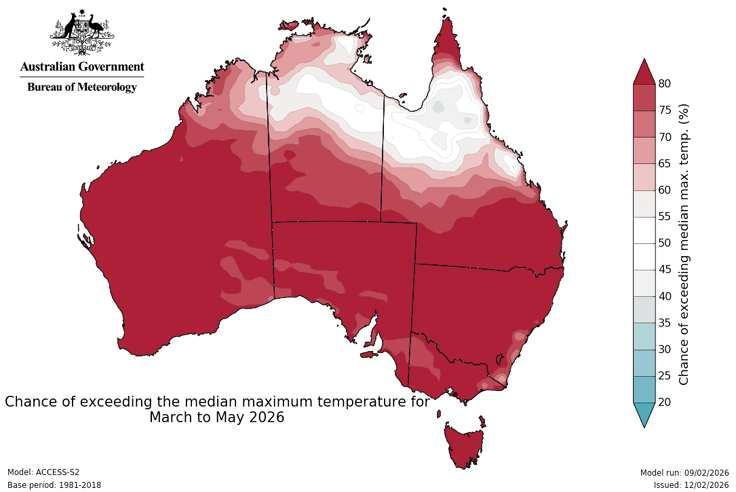
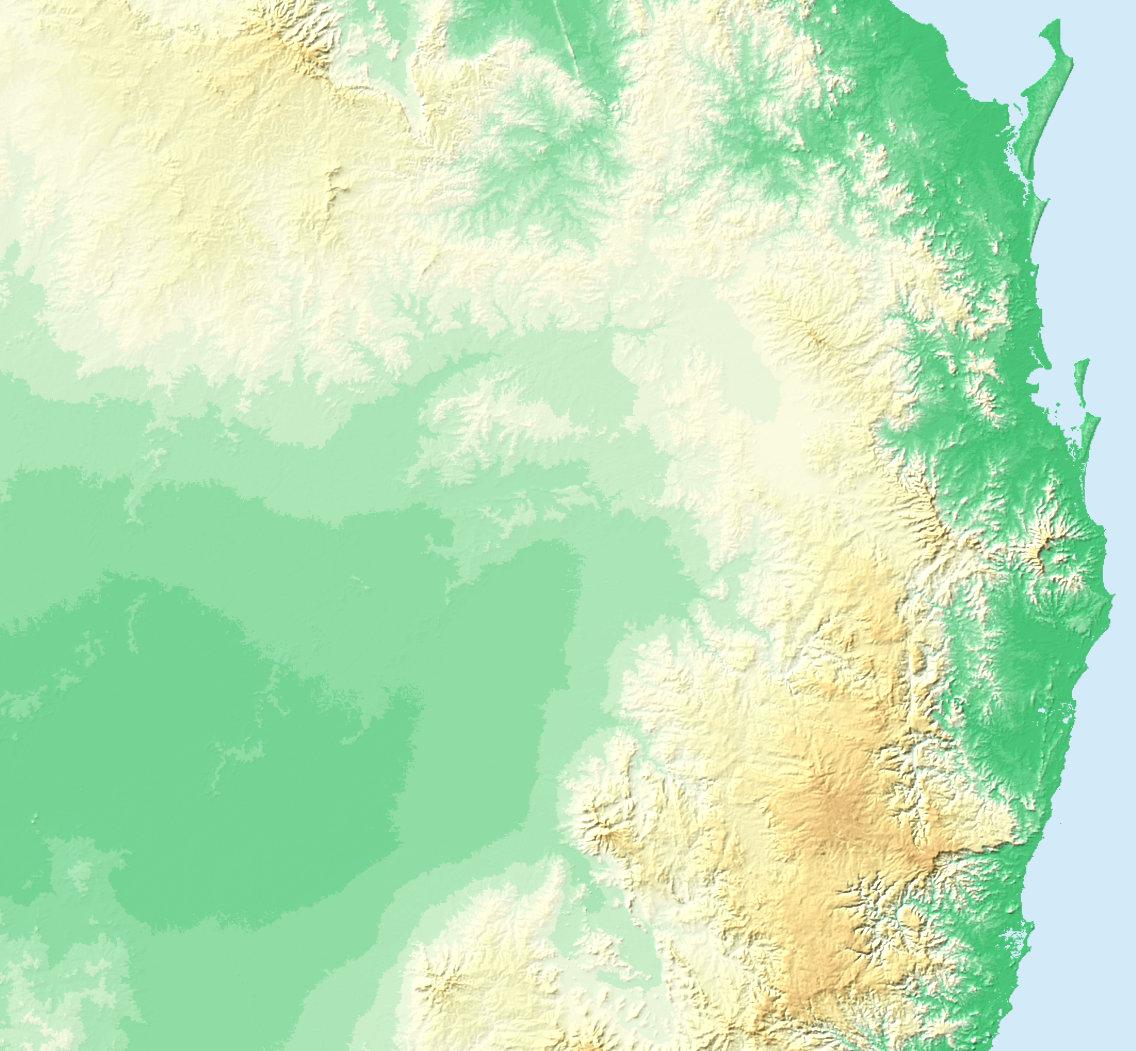
Chances of exceeding median maximum temperature.
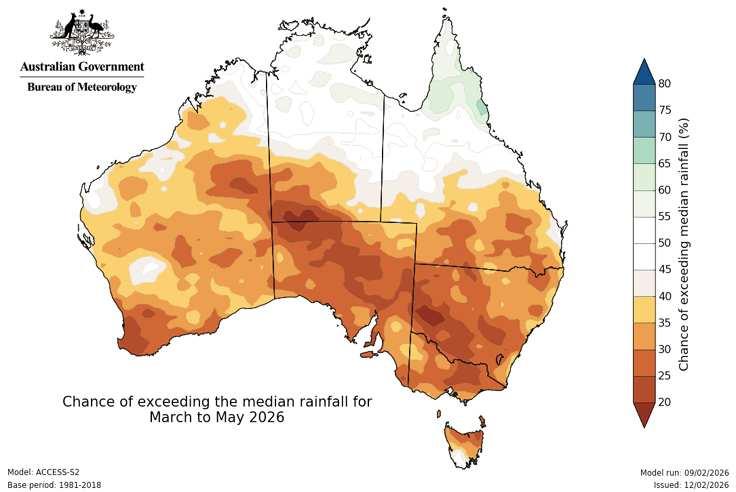
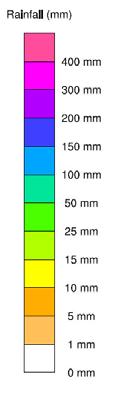
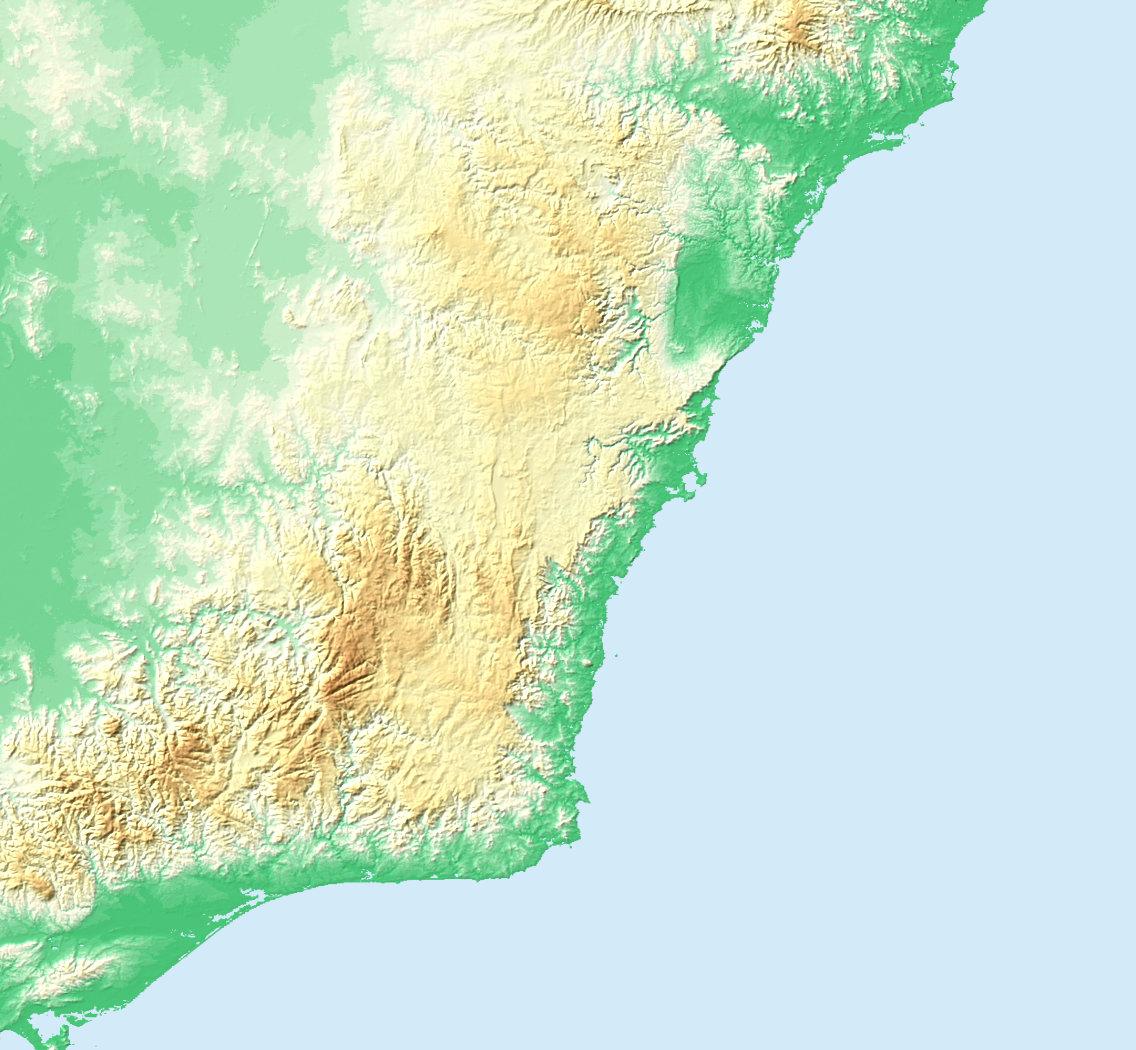
Chances of exceeding median rainfall.
Commonwealth of Australia 2026 www.bom.gov.au Issued February 18, 2026









As we enter a period of increased water market volatility, driven by persistent dry conditions, increased buyer demand, and depleting storage levels, Southern basin irrigators are now bracing themselves for low allocations for the 2026/27 season.
Alternative water products are gaining traction among water users in the Southern Basin. Options such as Next Season Forward Allocations, Permanent Entitlement Leases, and Carryover Capacity are becoming increasingly sought after as tools to mitigate risk and provide some stability in an otherwise unpredictable environment.
These products represent a shift from reactive spot-market trading to more proactive, forwardthinking strategies. In the current climate, where temporary allocation prices have spiked due to high demand and limited supply, relying solely on last-minute purchases can expose water users to significant financial risks. By contrast, alternative products allow water users to lock in requirements aheadoftime,offeringabufferagainstthevolatility.
Next Season Forward Allocations: Looking furtherahead,thisproductallowsyoutopurchase guaranteed allocations for the upcoming 2026/27 season with minimal initial outlay. This is particularly valuable amid climate projections of a strong El Niño influence on the horizon. By securing water early, you can plan and budget with greater confidence. This product generally comesatahigherpricecomparedtothetraditional spot market, due to the premium placed on certainty.
Permanent Entitlement Leases: For those seeking multi-year stability, leases provide access
to water entitlements over an extended period, often spanning 3–5 years. They’re ideal for larger operations or those with high water dependency. It is important to note that entitlement leases rely on seasonal allocations, which can be impacted indryyears,soit’swisetodiversifyyourapproach. However, leases can prevent purchasing disruptions and help manage cash flow by spreading costs over time.
Thatsaid,it’simportanttoconsideryourbusiness’s unique risk appetite. These products aren’t
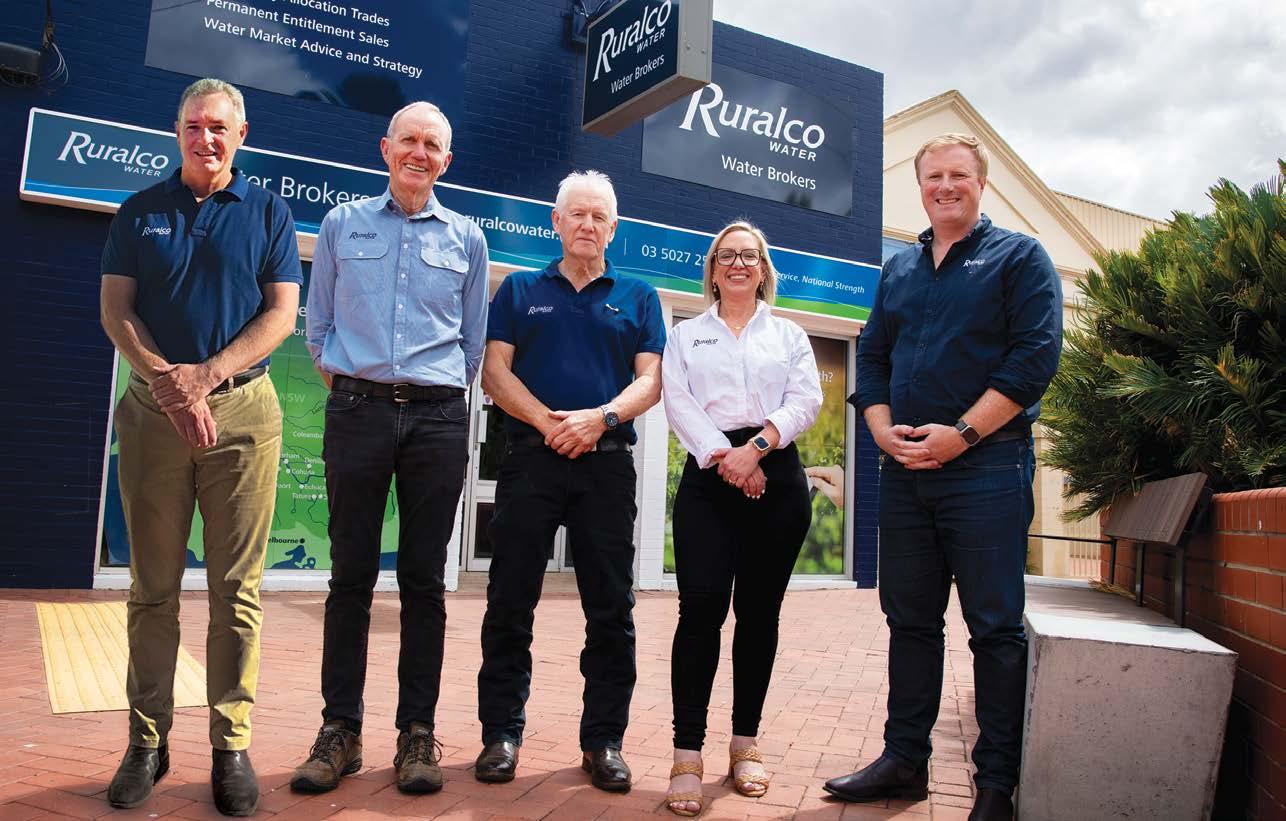
without drawbacks, particularly if seasonal conditions change and spot market prices soften. However, in a landscape where relying on hope is no longer a viable strategy, many irrigators are already using them to complement carryover planning, ensuring water security across seasons. If you’re looking to manage risk and secure your water needs more strategically, now is the ideal time to explore these options. Contact your local Ruralco Water broker today.

On Monday, 16 February 2026, Victorian water entitlement holders received a first-look outlook for the 2026/27 season. Northern Victorian Resource Manager Mark Bailey said, “Seasonal determinations against high-reliability water shares (HRWS) in the 2026/27 water year would depend heavily on weather and catchment conditions during winter and spring, and on the amount of carried-over unused allocation.” He noted that storage levels are at their lowest since 2020 currently 46% compared to 62% for the same time last year.
“Without an increase in the stored volumes, opening seasonal determinations in the Murray, Goulburn, Campaspe, and Loddon systems are likely to be low,” he added. For seasonal determinations to mirror 2025/26, inflows into the catchments would need to exceed current conditions; even a repeat of current inflows in 2026/27 would possibly result in seasonal





















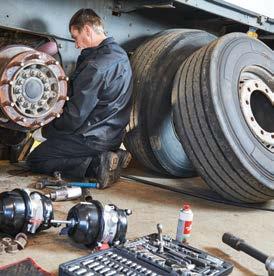
The crew at Goodyear Curlewis Street have all your commercial tyre needs covered, from truck to tractor tyres and repairs – we do it all.
Stocking the biggest range of tyres in the area at competitive prices. With our on farm service truck, we have all your on site jobs and after hours call outs covered, we will keep you on the road or in the paddock.