
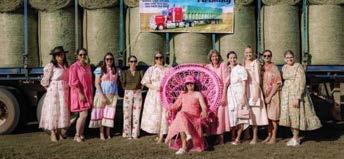




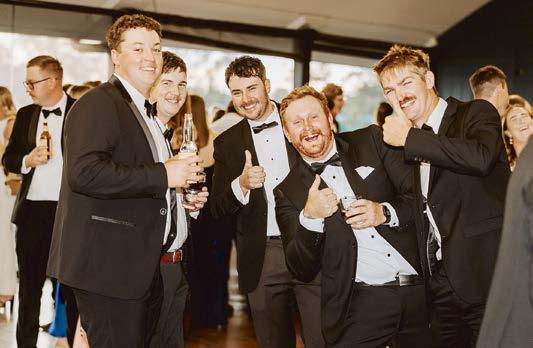
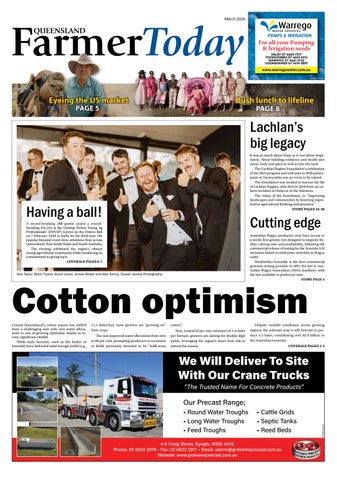
A record-breaking 388 guests raised a recordbreaking $52,332 at the Darling Downs Young Ag Professionals’ (DDYAP) Gowns on the Downs Ball on 7 February. Held in Dalby for the third time, the popular biennial event drew attendees from across Queensland, New South Wales and South Australia. The evening celebrated the region’s vibrant young agricultural community while reinforcing its commitment to giving back.
PAGES 6-7
It was as much about hope as it was about inspiration. About building resiliency and health into mind, body and spirit as well as into the land.
The Lachlan Hughes Foundation’s celebration of the 2025 program and welcome to 2026 participants at Toowoomba was an event to be valued.
The foundation was created to honour the life of Lachlan Hughes, who died in 2018 from an onfarm accident at Dulacca, in the Maranoa.
The vision of the foundation, is: “Improving landscapes and communities by fostering regenerative agricultural thinking and practices.”
PAGES 34-36
Australian Wagyu producers now have access to a world-first genetic test designed to improve fertility, calving rates and profitability, following the commercial release of testing for the Annexin A10 mutation linked to embryonic mortality in Wagyu cattle.
Weatherbys Scientific is the first commercial genomic testing provider to offer the test to Australian Wagyu Association (AWA) members, with the test available to producers now.
Central Queensland’s cotton season has shifted from a challenging start with zero water allocations to one of growing optimism, thanks to recent, significant rainfall. While early harvests, such as the Kielys’ in Emerald, have delivered solid average yields (e.g.,



Now, instead of pre-rain estimates of 4–6 bales per hectare, growers are aiming for double-digit yields, leveraging the region’s lower frost risk to extend
Despite variable conditions across growing regions, the national crop is still forecast to produce 4.4 bales, contributing over $2.9 billion to the Australian economy. COVERAGE PAGES 2-3

GOWNS ON THE DOWNS pages 6-7
PROPERTY UPDATE page 18
WOMEN IN AGRICULTURE page 22
MEN’S SHEDS page 23
LACHLAN’S LEGACY pages 34-36
RECIPES page 38
MARKET ROUND-UP page 43
SPORT pages 40, 42, 44

Address: 154-156 Haly Street
Kingaroy 4610
Telephone: 07 4182 0450
Website: QueenslandFarmerToday.com.au
CONTACT US
Editorial:
Email: newsdesk@QueenslandFarmerToday.com.au
Advertising:
Email: advertising@QueenslandFarmerToday.com.au
Classifieds:
Phone: 07 4182 0450 or 1300 666 808
Email: sales@networkclassifieds.com.au
EDITORIAL
Fiona Gowers Editor
E: fiona.gowers@QueenslandFarmerToday.com.au
Breanna Lloyd Journalist
E: breanna.lloyd@QueenslandFarmerToday.com.au
ADVERTISING
Jane Lowe Sales & Marketing
E: jane.lowe@QueenslandFarmerToday.com.au
P: 0408 488 609
Jodie Williams Sales & Marketing
E: jodie.williams@WesternDownsToday.com.au
P: 0401 377 140
Jemma Wilson Sales & Marketing
E: jemma.wilson@BurnettToday.com.au
P: 07 4182 0458
Gayle Hopes Sales & Marketing
E: gayle.hopes@TodayNewsGroup.com.au
Queensland Farmer Today is published monthly and part of the Today News Group. Published by South Burnett Today Pty Ltd ACN 641 796 349.
Publisher: Damian Morgan
Managing Director: Daniel Pelcl.
All material is copyright to South Burnett Today Pty Ltd.
All significant errors will be corrected as soon as possible. For our terms and conditions please visit QueenslanFarmerToday.com.au/terms-and-conditions/
By Fiona Gowers
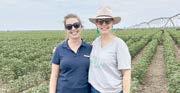
Most central Queensland cotton growers are “growing on” their crops this season hoping to significantly lift yields after recent rain and improved water allocations.
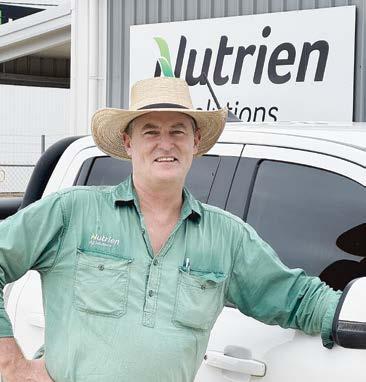
Emerald-based Nutrien agronomist Will Woolcock said only a small portion of the region’s cotton area was currently being harvested, with most producers opting to extend the season after a challenging start marked by limited irrigation water.
“It’s a very small percentage of cotton farmers who decided to pick their 2025/26 cotton crop,” Mr Woolcock said.
“Most cotton farmers have grown that crop on.”
The season began under tight water conditions, with many growers entering planting with zero allocation and relying only on small carryover volumes from the previous year.
Dam levels sat at about 23 per cent at the start of the season, forcing many producers to plant what is commonly referred to as “walk-away cotton” - crops given minimal irrigation and then left to rely largely on rainfall.
However, steady rainfall through December and January, followed by further late-January falls, triggered inflows that lifted dam storage to around 27.5 per cent and allowed water allocations to open.
The improved outlook prompted growers to recommit to their crops, pumping additional water and pushing for higher yields.
Leading into the rain, expected production on many dry-leaning fields was estimated at between four and six bales per hectare. With water now available and the season still running, optimism has strengthened considerably.
“Now that we’ve got this water and we’ve got the season still to run, we’re hoping - most people are feeling positive - that we’ll get into double digits,” Mr Woolcock said.
He said growers who committed their lower water allocations to a smaller area had achieved those figures and were aiming even higher by extending crop maturity.
Central Queensland’s climate is also working in producers’ favour.
Unlike southern cotton regions, where frost risk often dictates firm seasonal cut-off dates,
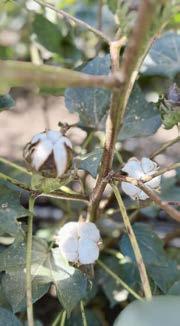
Queensland growers typically face less frost pressure, allowing crops to develop longer into late autumn before defoliation.
While uncertainty remains, Mr Woolcock said sentiment had shifted dramatically since before Christmas.
“It’s not all doom and gloom. Compared to where we were probably pre-Christmas to now, there’s a lot of hope,” he said.
He added that resilience remained one of the industry’s defining strengths, with growers adapting quickly to changing seasonal conditions in pursuit of improved returns.
Having worked as a rural reporter in most Australian jurisdictions over the past 20 years, the distinct idiosyncrasies of farmers from each state soon emerge.
It’s a broad generalisation, of course, but one built on countless paddock chats, shed interviews and roadside phone calls.
Victorians will whinge about the weather - too wet, too dry, too cold, too hotsometimes all within the same conversation.
In NSW, farmers are competitive. Their acreage has to be quoted with ruler-like precision - and they dare not mention rainfall in case their neighbour has received one drop more. I kid you not.
South Australians are precious, both with their time and the content they’re willing to share.
And, then there is Queensland. If rural personalities were crops, Queensland would be the bumper harvest! Farmers, agronomists, innovators and advocates speak openly, smile easily and share knowledge with joy.
This month in Queensland Farmer Today, cotton growers analyse yields, Wagyu breeders discuss genetics, a Men’s Shed founder reflects on community, a mental health advocate urges connection and an ag-tech consultant maps the future.
Listening to their collective enthusiasm is infectious. It reminds you that agriculture isn’t just an industry measured in tonnes and dollars, but in people who genuinely believe in what they do and, most importantly, are proud to talk about it.
- Fiona Gowers

By Fiona Gowers
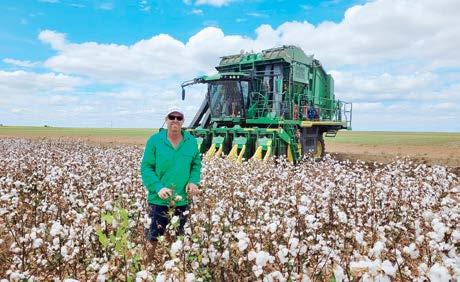
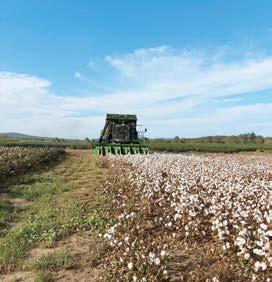
Cotton picking has quietly begun in central Queensland, with early harvests delivering solid average yields in what is shaping up as a steady season despite mixed seasonal conditions.
Emerald growers Denis and Aaron Kiely were among the first to start, moving their picker into the paddock on Wednesday, 4 February to harvest a 71-hectare crop.
“It’s definitely nice to have the picker in the field - we were certainly lucky to miss storm activity the night before,” Aaron said.
“It’s picking very clean. Overall, I’m very happy with how it’s going so far, considering the variable season we’ve had with the weather.
“It’s rewarding to see the round bales in the field.”
In a typical year the Kielys would plant about 550ha of cotton, however limited water allocations reduced this season’s area to 93 ha.
Carry-over water allowed them to grow 71ha, after 22ha were removed from the irrigation cycle earlier in the season.
Dry conditions also prompted the family to alter their watering strategy, a decision that is now
appearing to deliver results.
“It’s yielding about 11.5 bales and, even though it’s down from last year’s January pick, the crop has not received any additional in-crop nitrogen,” Aaron said.
“We had zero water allocation at the start of the season; we opted to pre-irrigate in June to fill the moisture profile in the field which enabled us to plant on the rainfall in early August.
“We then spread our water scheduling out over five irrigation cycles. We will be interested to look at the gross margins of this season’s crop.”
Recent rainfall across the Central Highlands has significantly improved water availability, with allocations lifting from zero to 89 per cent and enabling many growers to restart previously sidelined crops.
“The 22ha that we dropped from the water cycle has now restarted flowering following the rainfall and is now looking to be a successful crop,” Aaron said.
Harvest activity has also commenced in the Brisbane Valley, with more Central Highlands growers expected to begin picking earlier-planted crops in the coming weeks.
Picking in the Dawson and Callide valleys
AbuzzofprojectswillhelpboostQueensland’s bee biosecurity thanks to a new round of grants delivered by the Department of Primary Industries (DPI).
The Community Bee Innovation Fund (CBIF) provides funding for innovative projects to prepare and protect Queensland’s beekeeping and pollination-reliant industries. The list of recently awarded successful round two recipients include:
• Bee Genetics Pty Ltd
• Farmgate Honey Australia
• Townsville and District Beekeepers Association Inc
• Ipswich and West Moreton Beekeepers Association
• Berries Australia Limited
• Gold Coast Amateur Beekeepers Society Inc
• Northern Gulf Resource Management Group Ltd
DPI general manager for Plant Biosecurity and Product Integrity Mike Reid said the latest round of recipients would bring innovation to the forefront of varroa mite management.
“We are excited to see a range of initiatives launched this month that harness innovative management and monitoring tools and enhance collective knowledge for Queensland beekeepers” Mr Reid said.
“FromU-BEE-Otestingandqueengenotyping to community engagement and education such as field days, documentary short films, workshops, focus groups and mentor programs – these grants support creative solutions to varroa mite management in Queensland.”
Corinne Jordan, director of Bee Genetics, said the grant would help create real, hands-on opportunities for beekeepers to learn, connect and build resilience.
“This strengthens work we’ve been undertaking and gives us the ability to take a major step forward with genomics, testing and mite population growth monitoring,” Ms Jordan said.
“At its heart this project is about ensuring Queensland beekeepers, from hobbyists to professionals, have the skills, confidence and data they need to face varroa head-on and continue building a strong, sustainable future for our industry”.
Chief executive officer for Berries Australia Limited, Rachel Mackenzie said Berries Australia was delighted to be delivering support to growers through the grant program.
“It enables us to increase berry grower knowledge about hive health, management and pollination services, while at the same time improving beekeepers’ understanding of the berry industry and its on-farm practices,” Ms Mackenzie said.
“This grant will help us ensure Queensland berry producers can keep growing amazing berries into the future”.
Applications for the final round of the grant program are now open with applications closing on 2 March at 5pm.
Beekeeping clubs, groups, local governments, industry bodies and agricultural businesses are encouraged to apply online.
was anticipated to start in late February, while most other valleys are likely to follow in April after planting from late September to early October under warm conditions and good soil moisture.
Cotton Australia chief executive Adam Kay said weather patterns had played a major role in shaping the season so far.
“Conditions have been mostly warm and favourable, but rainfall has been uneven,” Mr Kay said.
“Some valleys have received useful storm rain, while others have remained dry, with dryland crops particularly affected.
“Water availability is emerging as a constraint in parts of New South Wales, with some irrigated crops likely to be tight for final irrigations and dryland crops increasingly reliant on late rainfall.”
Mr Kay said recent heat waves across northern New South Wales and southern Queensland would test crops in the weeks ahead and could influence final yield potential.
Despite the variability across growing regions, the national 2025-26 cotton crop is still forecast to produce about 4.4 million bales.
In northern New South Wales, irrigated crops

16.9 - 30 (14)................................$880
18.4 - 30 (14)..............................$1020
23.1 - 30 (14)..............................$1450
18.4 - 34 (14)..............................$1060
23.1 - 30 (14)..............................$1450 825 - 20 (14)................................$289
750 - 20 (8)..................................$220
900 - 20 (16) ...............................$320 1000 - 20 (16)..............................$345
1100 - R. 20 WANL....................$250 14000 x 20 (20) .........................$800
255.70R - 225.............................$225 825 R-15 (14) ...............................$320
275.70 R225 ................................$236 11R 225............................................$245
295.80 - 22.5...............................$330 30.5 - 32 (20)...........................$2350
245 - 32 (16) ................................$980 750 - 16 /RIB (8).........................$150
are showing strong retention supported by reasonable dam levels, while dryland crops face more challenging finishes where rainfall has been limited.
Southern valleys have improved with warmer conditions after a slower start, although reduced plantings and water availability remain ongoing concerns.
Queensland crops are generally well advanced, with many areas slightly ahead of last season and picking expected from late April.
In northern Australia, wet season conditions have created some uncertainty, with reduced planted area and variable establishment, but crops remain in the ground across all regions.
More than 450,000 green hectares of cotton have been planted nationally this season, predominantly in New South Wales and Queensland, with smaller areas in the Northern Territory and Western Australia.
Mr Kay said the crop is expected to contribute more than $2.9 billion to the Australian economy.
“This will flow back into the 249 rural and regional communities that directly benefit from the cotton industry, supporting local jobs and local economies.”

600 - 16 RIB (8) ..........................$125 710.70 R42.................................$3700
480.80 R50...............................$2300
480.80 R 42...............................$1830
520.85 R42.................................$2120
520.85 R42.................................$1950 710 .70 - R38 ............................$2800
800.65 R32 ...............................$3450
900 . 60 R 42 ...........................$5500 35 SL -32....................................$5000 420 - 70 - 28................................$965
710 .45 - 26.5............................$2520
65R R28.............................$1400 18.4 x 28 Tractor (12)...............$930 18.4 x 28 Industrial................$1045 18.4 x 38 38 (16).......................$1250 20.8 x 35 (14) ............................$1500

By Fiona Gowers
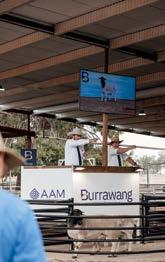
Australian Wagyu producers now have access to a world-first genetic test designed to improve fertility, calving rates and profitability, following the commercial release of testing for the Annexin A10 mutation linked to embryonic mortality in Wagyu cattle.
Weatherbys Scientific is the first commercial genomic testing provider to offer the test to Australian Wagyu Association (AWA) members, with the test available to producers now.
The development follows AWA-supported research in which DNA samples from approximately 230 Wagyu calves were provided to Professor Jon Beever at the University of Tennessee Genomics Centre for the Advancement of Agriculture to identify genetic defects causing calf loss.
Professor Beever identified the occurrence of a known mutation in Annexin A10 (Sasaki et al., 2016) in a cohort of samples and established a validation panel of positive and negative samples to allow DNA testing laboratories to prove their testing conditions for the AWA.
AWA chief executive officer Dr Matt McDonagh said the mutation, which has no impact on economically important carcase traits, has been detected in 6 per cent of the recorded Wagyu population.
“This test is really about increasing productivity and profitability by significantly improving the calving rate, particularly for high-value embryo programs,” Dr McDonagh said.
“We are pleased we can now offer this to our members as a standalone test, or as an add-on to other genotyping, and allow them to screen for the mutation prior to critical breeding decisions.
“Given the dominant maternal effect of this mutation, we recommend breeders test their youngest and highest-value females, particularly those intended for use in embryo programs where multiple progeny are expected.
“All bulls being used should also be screened so they don’t pass on the mutation to female progeny.”
Weatherbys Scientific head of research & development Paul Flynn said the company was proud to support the global Wagyu industry as the first provider to offer testing for the Annexin A10 mutation.
“We congratulate AWA for their proactive research and investment in bringing this test to market for Wagyu producers,” Mr Flynn said.
“It concords with internal development that we have been conducting and meant we could quickly validate a test for AWA members.
“We are pleased to support them and remain committed to continuing our investment in R&D to develop solutions that will ensure the Australian Wagyu Association and its members continue to be one of the global beef industry’s success stories.”
Producer perspective
Stone Axe Pastoral chief operating officer and breeding specialist Matias Saurez said the test gives Wagyu producers a practical, preventative tool to reduce embryonic losses before they occur.
Mr Saurez, who previously worked with Australian Wagyu and was involved in developing the test, said the mutation is a maternal influence de-
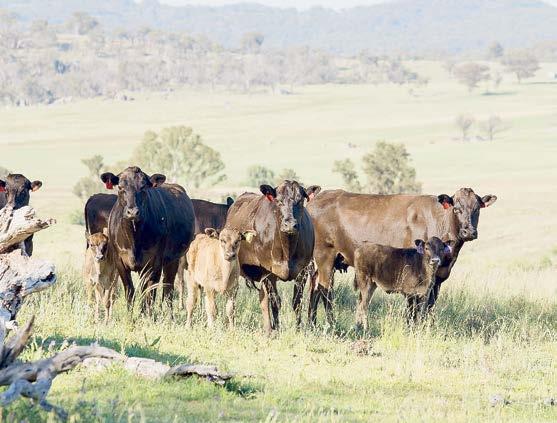
fect that affects the uterus of carrier females.
He explained the test allows producers to identify dams likely to lose embryos during gestation and make informed breeding decisions before losses occur, particularly in intensive embryo and large-scale breeding programs.
While calf loss in Wagyu is influenced by many factors — including nutrition, disease, parasites and other genetic defects — Mr Saurez said the Annexin A10 test addresses one important contributor within a complex syndrome.
He noted embryonic and pregnancy losses are a significant issue in Wagyu compared with some other breeds and that certain bloodlines are more likely to carry the mutation than others.
As a result, testing intensity may vary between herds depending on bloodline risk.
The test is easy for producers to access, requiring only a tissue or hair sample submitted through the Australian Wagyu Association.
Mr Saurez said widespread adoption of the test would allow the industry to progressively reduce the number of carrier animals and, over time, lower embryonic mortality rates across Wagyu breeding programs.


By Fiona Gowers
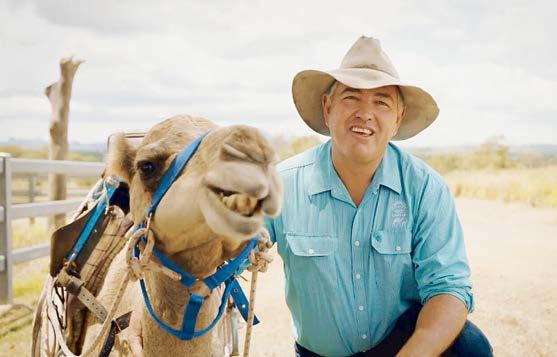
Award-winning Australian dairy innovator Summer Land Camels will soon launch a crowdfunding campaign via the OnMarket investor platform to help scale production and expand into the lucrative United States health and wellness market.
The Queensland-based company is leveraging Australia’s disease-free camel population to build a competitive position in the global alternative dairy sector, with export milk powder revenue increasing by 128 per cent over the past two years.
Founder and director Paul Martin said the money raised would support the transition from manual production to an automated, high-volume operating model.
“Summer Land Camels’ vertically integrated operations give the company end-to-end control over the supply chain,“ he said.
“We have proven our business model at a manual scale and this raise is about breaking that production ceiling.
“By investing in industrial automation and an FDA-accredited facility, we can transition to a high-volume platform to meet the massive international demand we have already identified.“
Funds raised will be used to increase production capacity, secure US dairy accreditation, strengthen brand development and establish distribution channels in the US market.
Summer Land Camels produces a range of products including fresh and frozen milk, longlife milk powder, infant formula and value-added wellness products such as skincare.
Its products have received multiple domestic and international awards for quality and innovation and are produced under strict Australian biosecurity and food safety standards.
Camel milk is gaining popularity globally due to its nutritional profile, being naturally high in protein, vitamins and minerals, A2-only, lower in fat than traditional dairy and often easier to
digest, positioning it strongly within functional food and gut-health categories.
Mr Martin said strong demand for safe and traceable nutrition was driving international interest.
“There is growing global demand for safe, functional and traceable nutrition,“ he said.
“With Australia’s disease-free camel population and our proven production capability, we believe Summer Land Camels is uniquely posi-
tioned to lead the camel milk category internationally, particularly in the US, where demand is accelerating.“
The crowdfunding campaign will be launched shortly via the OnMarket platform.

By Fiona Gowers
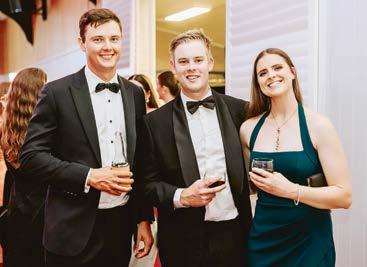
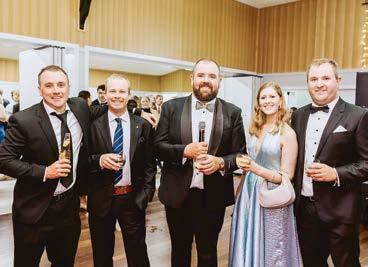
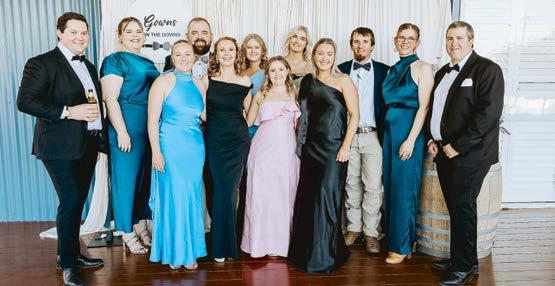
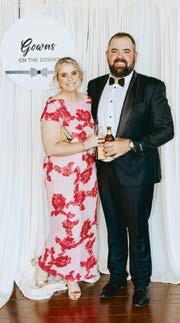
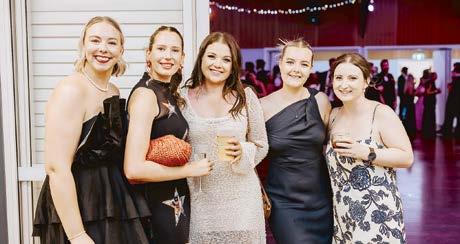
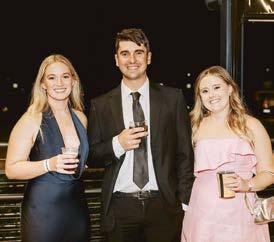
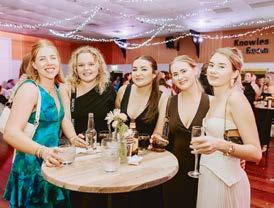
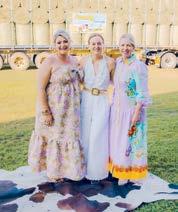
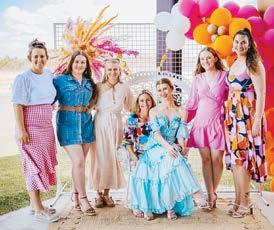
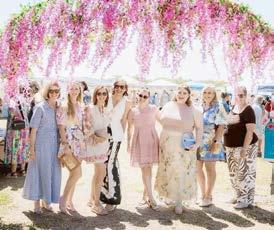
A record-breaking 388 guests raised a recordbreaking $52,030 at the Darling Downs Young Ag Professionals’ (DDYAP) Gowns on the Downs Ball on 7 February.
Held in Dalby for the third time, the popular biennial event drew attendees from across Queensland, New South Wales and South Australia.
The evening celebrated the region’s vibrant young agricultural community while reinforcing its commitment to giving back.
DDYAP president and Nutrien agronomist Angus Dalgliesh said agriculture was the common thread uniting the diverse crowd.
“They may not have been a farmer or a grazier but a lot of them work in the agricultural industry in some aspect,” Mr Dalgliesh said.
“The majority are involved in agriculture but we’ll welcome them all.
“Our ball offers the opportunity to network, build connections, create a strong community among our industry and celebrate all that is ‘young ag’ on the Downs.
“Everyone did network and they networked well. It was a really, really good event.”
Mr Dalgliesh, who has served as president for six years, described the milestone event as a proud moment for the volunteer-run committee that has steadily grown the ball since its inception.
He said the inaugural ball, held in 2022, had raised $26,400.
“Yeah, it really is an incredible feeling to have built this event to what it is today,” he said.
“And, honestly, I would be a fool to take credit for doing it all myself. I think, as president, your goal is to try and keep the committee focused as one but also working together and striving forward.”
Mr Dalgliesh credited the organisation’s social media and marketing efforts for the late surge in ticket sales, with numbers jumping dramatically in the final weeks.
“I said to the committee on the night that I was just immensely proud of the effort they put in,” he said.
“Because everyone obviously works, like we all do and it’s all voluntary, but to see it come off and have the success that we did, I think it’s something we can all be very proud of.”
Uniquely, fundraising is generated through auctions, raffles and sponsorships rather than ticket sales, ensuring strong value for attendees while maximising the charitable impact.
The $52,030 raised this year will support the Ability Agriculture Foundation, founded in 2023 by Josie Clarke, whose mission is to make agriculture a sector where everyone - regardless of ability - can thrive.
“The reason the committee liked this charity is because its focus is something that could potentially affect everyone. For example, an on-farm accident,” Mr Dalgliesh said.
Formed in 2017, the Darling Downs Young Ag Professionals began as a casual Facebook group and informal catch-ups before evolving into a respected networking platform for young people

across the region.
Today, it boasts a diverse membership committed to celebrating talent across the agricultural sector and fostering an inclusive culture.
“There is recognition of gender disparities within the agriculture industry, with acknowledgment that male-dominated perceptions still exist,” Mr Dalgliesh said.
“Efforts are being made, however, to promote inclusivity and recognise the contributions of fe-
professionals
“Younger generations are fostering an inclusive environment where gender distinctions are becoming less prominent.“
Indeed, with record attendance, significant fundraising success and a strong sense of community on display, this year’s Gowns on the Downs Ball has further cemented its place as a highlight on the
endar.




By Fiona Gowers
In the vast, open spaces of North Queensland, Jaime Best is helping rural women find a simple and safe way to say, ’I’m not okay’.
The Charters Towers local is co-founder of Rural Women Unite, a grassroots mental health movement that has just been named a finalist in the 2026 AgriFutures Australia Queensland Rural Women’s Award.
For Ms Best, while the recognition is humbling, the real reward, she says, has always been the quiet words of gratitude that happen far from the spotlight.
“Co-founder Sally Bradford and I are literally just a couple of country kids who didn’t know where to start (to launch a charity),” she laughs.
“So we thought, ’well, we’ll start with a lunch’.”
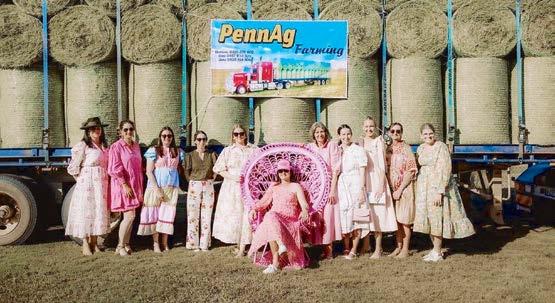
That “lunch” has since grown into one of regional Queensland’s most anticipated community events, attracting 500 women annually and raising $230,000 since 2018.
The funds go directly towards providing free, anonymous mental health support for women living in rural and remote Australia, support that is often out of reach due to distance, cost or stigma.
Ms Best’s own journey into advocacy was unplanned. Born and raised in Mudgee, NSW she grew up riding and competing horses at state and national level, her life firmly anchored in the bush.
That world shifted dramatically after a serious car accident in 2011 left her hospitalised for months and nearly cost her a leg.
“I wouldn’t say I’ve made a full recovery,” she admits. “My body just doesn’t work the way it used to.”
The physical limitations were only part of the challenge. The lifestyle she loved — cattle stations, horses, wide horizons — suddenly felt distant.
Yet, what struck her most was not the injury itself, but the silence surrounding emotional wellbeing among the people she cared about.
“We’d sit down and have a rum at the pub and talk about the weather and the cows and the horses,” she recalls. “But we never, ever talked about how we were actually doing.”
It was a realisation shared by her closest friend, Sally Bradford. The pair met years earlier on a remote cattle station near Mount Coolon and formed an unbreakable bond.
As life carried them in different directions — marriage, motherhood, recovery and relocation — they both recognised a glaring gap: rural women had strength and resilience in abundance, but very few avenues for honest mental health conversations.
So, they created one.
Formed in 2018 and now based in Charters Towers, Rural Women Unite focuses on providing practical, stigma-free support rather than simply raising awareness.
One of its most innovative initiatives is a virtual, text-based psychologist service, a lifeline designed specifically for the realities of bush living.
“In the middle of nowhere, you might not have internet or phone reception,” Ms Best explains. “But, usually, you can stand somewhere and get one bar and send a text that says, ‘Hey, I’m not okay’.”

Qualified psychologists and social workers receive that message and sessions can continue via text, email, phone or video call, allowing men, women and children to seek help in whatever way feels safest and most accessible.
The service is fully anonymous and entirely free, funded through the organisation’s fundraising efforts and carefully restricted by postcode to ensure rural and remote communities benefit directly.
To date, the program has supported more than 2000 mental health conversations, numbers that Ms Best says represent real lives, not statistics.
The annual Rural Women Unite luncheon remains the heart of the initiative.
Meticulously planned by Ms Best and Ms Bradford, the event transforms what some might dismiss as “just a bush lunch” into a vibrant celebration of community.
Local florists, decorators, caterers and small business owners are prioritised, keeping economic benefits within the region.

Trade stalls showcase handmade goods and rural enterprises, raffles feature donated items ranging from artwork to truckloads of hay and sponsorships help maximise funds directed to mental health services.
Yet, the most powerful moments often happen quietly, away from the stage.
“Every year, women pull us aside,” Ms Best says, her voice softening. “Last year, a lady who is one of the toughest women I’ve ever met told me the service had saved her life.”
Those encounters, she admits, are emotional — and deeply motivating. They also ripple outward, changing the way friendships function in rural communities. Conversations that once skirted around feelings are becoming more direct, more honest.
“I’m not scared now to say, ‘Are you actually okay’?” Ms Best says. “And if they brush it off, I’ll go, ‘Nah, I don’t think you are’.”
Despite its rapid growth, Rural Women Unite remains grounded in its original spirit: two best
friends determined to make sure no woman feels alone simply because of where she lives.
While the annual luncheon has reached capacity - and future expansion plans are quietly brewing - Best is clear that awards and recognition are not the end goal.
“To be a finalist is a huge honour,” she says. “But what I really hope is that it shines a light on the real issue — that bush communities currently do not have timely, stigma-free mental-health support.”
In towns where the nearest GP may be hours away and phone service comes and goes with the wind, that light matters.
And, thanks to the determination of two country women who refused to accept silence as the norm, thousands more voices are now being heard ... one message, one lunch and one courageous conversation at a time.
* Rural/remote women can connect with qualified professionals by sending a text or WhatsApp message to 0488 807 266.

Burnett Mary Regional Group is well and truly delivering on supporting landholders in fostering sustainable agriculture practices.
From extension support to providing valuable resources and hosting field days with standout speakers, BMRG is focussed on providing opportunity for landholders.
This is being achieved through Empowering Adaptive Graziers in the Burnett Mary, delivered by the Burnett Mary Regional Group (BMRG), part of the $6 million grazing practice change program, funded through the Queensland’s Governments Queensland Reef Water Quality Program.
Empowering Adaptive Graziers in the Burnett Mary was developed to assist graziers on their journey to grazing practice change, building landscape resilience, focussing on increasing ground cover and biomass. Adopting these strategies strengthens farm business planning and encourages a more proactive, resilient grazing region. The program has played a role in creating awareness of reef protection regulations and compliance for graziers around improving land condition.
Graziers signed up to the program last year,
many located in the South, Central and North Burnett. The interest in the program was overwhelming. This came at a time when a lot of primary producers were still feeling the impact of natural disasters, including droughts, floods and bushfires. BMRG had identified these issues by connecting with landholders, listening and understanding concerns.
Empowering Adaptive Graziers in the Burnett Mary enabled graziers to complete subsidised courses in grazing land management with RCS, natural sequence farming courses with Tarwyn Park Training, and the opportunity to attend a soil health masterclass with Internationally acclaimed agroecologist Nicole Masters. These courses supported graziers in their plans to improve landscape function, production and profitability on-farm.
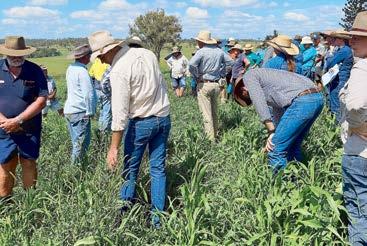
Join us for our next field day, Developing Thriving Grazing Landscapes, a complimentary catered event in Biggenden, on-farm, demonstrating ways to improve a grazing management system, hydrating the landscape and improving soil health through building plant diversity.
In 2026, BMRG is offering a 3-part Natural Capital Training Series for producers under its Climate Smart Catchments Project. The Climate Smart Catchments Project aims to remove the barriers for farmers to understand and access carbon, biodiversity and sustainability markets.
The BMRG Natural Capital training series will break down the complexity and clearly identify the pathways for natural capital on farm. The series covers the two major pathways: Access to new markets for diversifying income
streams, like carbon sequestration for carbon credits and biodiversity credits for improvements to your farm’s natural assets.
Environmental and sustainability certification frameworks and greenhouse gas emissions accounting for proving sustainability credentials and emissions reductions to





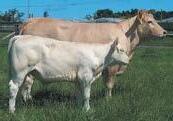
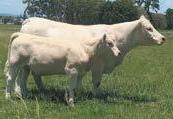
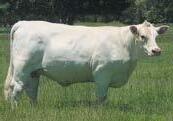
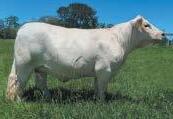
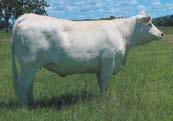
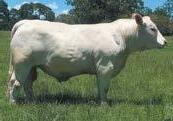
Lot 4 Jay Tees Popcorn’s Uplight (Homozygous
By Jane Lowe
Located at Cow Corner near the large roundabout on Gooding Drive on the Gold Coast, Jay Tees has been running cattle on this site since 1981. Over that time, the surrounding landscape has changed considerably; however, Jay Tees’ commitment to breeding and presenting quality cattle has remained constant.
A representative draft of this long-standing breeding program will be offered at the annual Chanelle Charolais Sale in Toowoomba on 7 March 2026. All cattle presented are quiet, wellhandled and led.
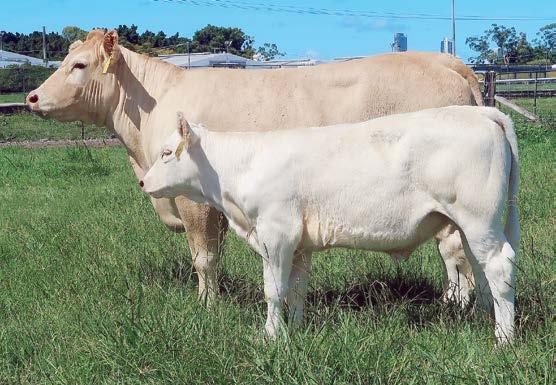
Of the females offered, seven are polled, including four homozygous polled. Both bulls are polled, with one homozygous polled, and all three calves currently on the ground are also polled. It is anticipated that three females will be offered as three-in-one packages.
The draft includes five well-grown PTIC heifers, due to calve between February and May to Jay Tees Je T’Aime, a low birthweight, full French bull renowned for producing exceptional progeny. A limited number of ANC Popcorn straws will also be available.
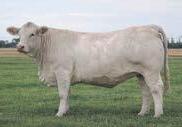
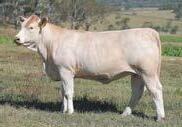
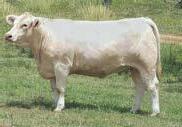
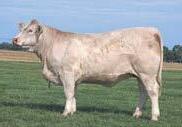
Seven entries are sired by ANC Popcorn, with their quality evident in the accompanying photographs. Owner operator Judith Turner believes this is a great lineup of females again this year.
To start the sale is Lot 1, Jay Tees U.R. Popcorn’s Red Velvet JT U8E (R/F, P.P.) D.O.B. 6/2/23 has a heifer calf at foot: Jay Tees Weaver (P) JT W11E by Je T’Aime, born 28/6/25 and is offered as a Threein-one package with the calf due 25/8/26 to ANC Umeko
Jay Tees Popcorn’s U.R. Princess of Oz JT U21F (P) D.O.B. 1/7/23 if offered with a bull calf at foot: Jay Tees X Factor (P) JT X2F by ANC Laois, born 12/1/26 Intended three-in-one package
Jay Tees Titania (AI) (P) JT T31F by Iceberg has a heifer calf at foot, Jay Tees Hustler’s Warrior Princess JT W14F (P) by Ayr Mat’s Hustler (R/F), born 5/7/25. She is running with Popcorn
Jay Tees Popcorn’s Uplight JT U40E (P.P.)and is due to calve to Je T’Aime on 24/2/26
Jay Tees Popcorn’s Tequira JT T18E (P.P.) D.O.B. 8/5/22 and is due to calve to Je T’Aime on 4/3/26
Jay Tees Popcorn’s U.R. On Time JT U20E (P.P.) and is due to calve to Je T’Aime on 2/4/26
Jay Tees Popcorn’s Underlay JT U22E (P) is due to calve to Je T’Aime
Jay Tees Unreel JT U26E by Monsieur Le Conte (FF) (P) is due to calve to Je T’Aime on 7/5/26
Two bulls will also be offered as lots Lot 74 Jay Tees Popcorn’s Viva Je Suis(PP) JT V20F a Full French Homozygous Polled and Lot 75 Jay Tees Popcorn’s Velcro ((P) JT V28E a well muscled and polled D.O.B. 24/07/2024
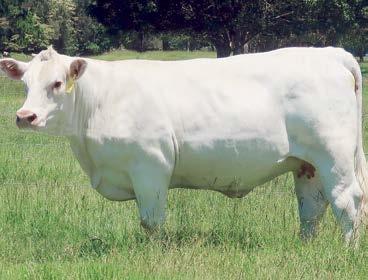
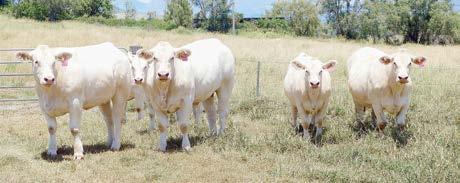
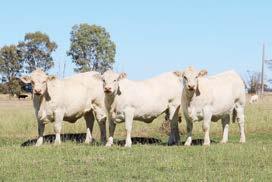
By Jane Lowe
Graham and Katrina Blanch, of Charnelle Charolais, warmly invite Charolais breeders and commercial cattle producers to the 16th Annual Charnelle Invitational Charolais Female and Genetics Sale, to be held on Saturday, 7 March 2026.
Renowned for presenting depth, quality and consistency, this year’s sale promises to be one of the strongest catalogues assembled to date.
The 2026 offering features an impressive 72 Charolais females, two bulls, 93 embryos and 579 straws of semen, sourced from 17 respected vendors across Queensland, New South Wales, Victoria and West Australia. With females suited to stud, seedstock and commercial operations alike, the catalogue has been carefully curated to
ensure there is something to suit every breeding objective and production system.
Charnelle Charolais are particularly pleased to present 33 females that have been DNA tested and confirmed as homozygous polled, reflecting the ongoing demand for polled genetics without compromising performance, phenotype or breed character. A number of the females are also halter broken, making them ideal prospects for the show ring as well as functional additions to progressive breeding programs.
Adding further interest to the sale, vendors will collectively select five finalist females through a pre-sale voting process. These finalists, proudly sponsored by Black Duck and Charnelle Charolais, will be paraded on sale morning, where an Elders-appointed over judge will award Cham-
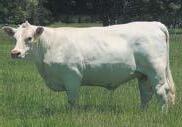
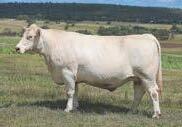
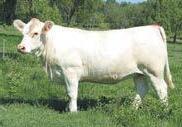


pion and Reserve Champion Female.
The embryo and semen sections are widely regarded as among the strongest ever offered at the Charnelle sale. Buyers will have access to elite Palgrove sires including Red Rock, Rockerfella, Quest, New Look, Statement and Privilege. Complementing these are leading Silverstream genetics such as Evolution, Saint Martin, Sonic, Padra and National, alongside highly sought-after sires Johnny, Robins and Blackjack. Collectively, these genetics represent the upper echelon of Charolais breeding, offering exceptional opportunity for herd advancement.
The sale will be live streamed via Stocklive Elite, with prospective buyers encouraged to familiarise themselves with the platform prior to sale day. Short-term agistment will be available to
assist with coordination around other sales, and transport to most destinations can be arranged. All animals will be cared for following the sale, though buyers are strongly advised to insure their purchases, with insurance representatives available on the day. A six-month fertility guarantee applies, providing replacement or refund should any female be deemed infertile by a veterinarian.
Demonstrating a strong commitment to the future of the industry, Charnelle Charolais will again offer Youth Members a 5 per cent rebate on all Charnelle lots, including embryos and semen.
On behalf of the Blanch family, fellow vendors and selling agents, all buyers are warmly welcomed to attend and participate in what shapes as a standout Charolais event for 2026.

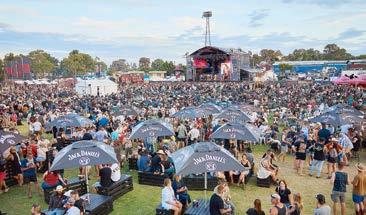
Meatstock - Australia’s one-of-a-kind music and barbecue festival - is returning to Toowoomba Showgrounds bigger and better than ever on Friday 10 and Saturday 11 April 2026.
If you’ve ever dreamed of a weekend where world-class barbecue, stomping country music, and whiteknuckle bull riding collide under wide Darling Downs skies, this is your event.
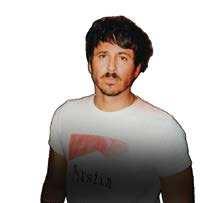
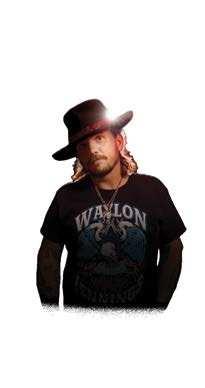
The Jack Daniel’s live stage is stacked with talent. Friday night kicks off with American powerhouse Bryan Martin alongside homegrown favourites The Wolfe Brothers, Max Jackson, Rachael Fahim, and Briana Dinsdale. Saturday raises the stakes with Morgan Evans headlining a massive bill that includes US hitmakers Chase Matthew and Austin Williams, plus Lane Pittman, Hayley Jensen, Denvah, and Abbie Ferris. With three international country acts across the weekend, this is a
huge line-up for the region and incredible value for the ticket price.
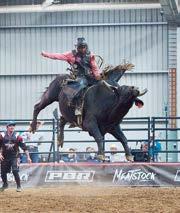
Beyond the stage, the action never stops. The PBR Bull Riding delivers the toughest eight seconds in sport — high-adrenaline, edge-of-yourseat stuff that will have the whole crowd on their feet.
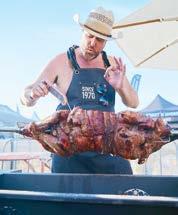
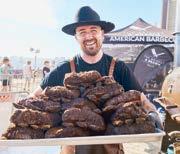
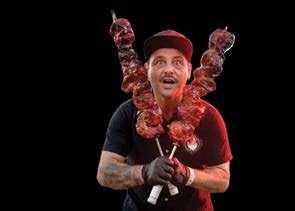
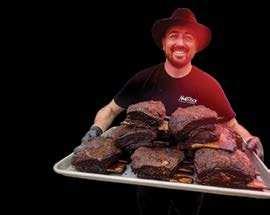
The Heat Beads BBQ Wars pit some of the best teams from around Australia against each other in a smoke-fuelled battle for protein supremacy, while the Australian Butcher Wars showcase razorsharp skills in a fast-paced showdown. Throw in the infamous Better Beer Dad Bod Contest, Beard and Mo Wars, Arm Battles, and the crowd favourite Sausage Sizzle Throwdown, and you’ve got entertainment from gate-open to lights-out literally, with an epic fire show and spectacular fireworks display lighting up the Saturday

night sky.
Accommodation is sorted no matter your style. The last on-site camping spots are still available for those who want to stay close to the action, and Toowoomba has plenty of local caravan parks, hotels, and Airbnbs to choose from. The Garden City is an easy drive from Brisbane and the surrounding regions, making it the perfect weekend getaway.
A word of warning: Saturday passes will sell out.
Adult Friday passes start from $78.50, Saturday from $96.50, and weekend passes from $159.50 a steal for a day packed with international headliners and more barbecue than you can poke a pair of tongs at. Don’t sit on your hands — get online at meatstock.com.au/toowoomba and lock in your spot before they’re gone.













By Jane Lowe
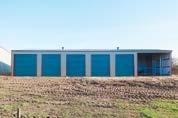
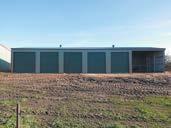
When it comes to sheds that can truly stand up to Australia’s demanding climate, True Blue Sheds continues to set the benchmark for quality, durability and custom design.
Proudly Australian owned and operated, True Blue Sheds brings more than 25 years of combined industry experience to the table, specialising in Australian-made steel sheds that are engineered for strength and built to last. Their commitment to superior products and outstanding customer service has earned them a reputation as one of Australia’s most trusted shed suppliers.
At the heart of the business is innovation. True Blue Sheds uses cutting-edge design software that allows customers to tailor a shed to their unique site conditions, local weather patterns and individual requirements. Whether designing on a computer or mobile device, customers can create a concept with confidence, knowing the experienced team will follow up to refine the design and ensure every detail is right.
Quality materials are non-negotiable. All True Blue Sheds products are constructed using 100 per cent Australian BlueScope steel for internal framing, paired with premium Colorbond and Zincalume cladding for walls and roofing. This combination ensures every shed is built to withstand Australia’s harsh conditions, from extreme heat to heavy wind and rain.
Adding further peace of mind, True Blue Sheds is ShedSafe accredited, guaranteeing all materials and construction methods meet the Australian Steel Institute’s stringent safety and engineering guidelines.
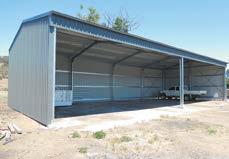
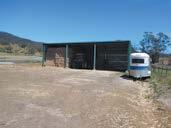
True Blue Sheds caters to a wide range of rural and commercial needs. Their farm shed solu-
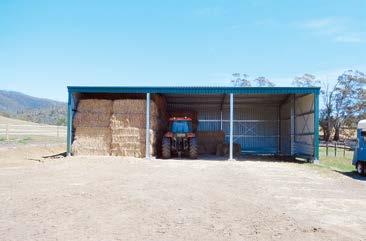
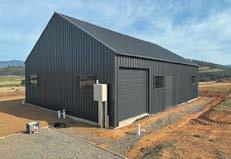
Their farm shed solutions include hay sheds, dairy sheds, open gable designs, shearing sheds and machinery storage, all fully customisable in size, style, roof pitch and colour to integrate seamlessly with existing infrastructure. (Supplied)
tions include hay sheds, dairy sheds, open gable designs, shearing sheds and machinery storage, all fully customisable in size, style, roof pitch and colour to integrate seamlessly with existing infrastructure.
The company also offers purpose-built stables and horse shelters, designed to provide safe, compliant and durable protection for horses. Using advanced design technology, standard models can be adapted to suit specific site conditions
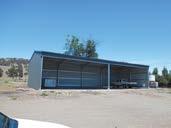
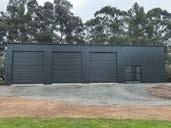
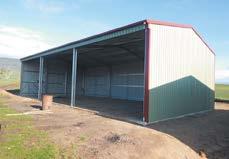
and climate extremes.
Shed kits range from 3 metres to more than 25 metres wide, with a wide selection of optional extras including awnings, insulation, skylights, vermin-proofing and internal partition walls.
From initial design through to installation, True Blue Sheds provides a comprehensive service. Customers receive free site-specific engineering, full compliance with Australian stan-
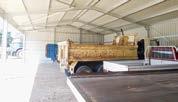
dards, and complete engineering documentation and certification for each state.
No project is too big or too small for the True Blue Sheds team. With a focus on strength, reliability and customer satisfaction, they continue to deliver shed solutions Australians can trust. For a free, no-obligation quote and to start designing your dream shed, contact True Blue Sheds today.



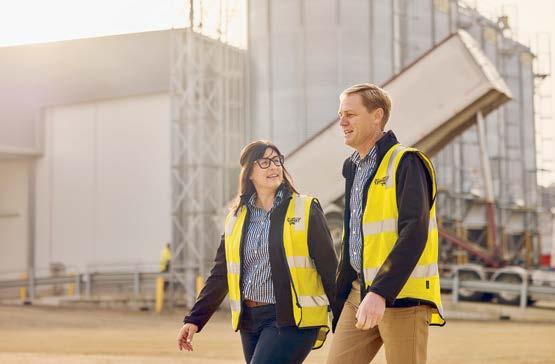
The superfine, natural, plant-based, powders produced will reduce food waste and support Australia’s nut farming industries in creating a new, high-grade product for major global food processors.
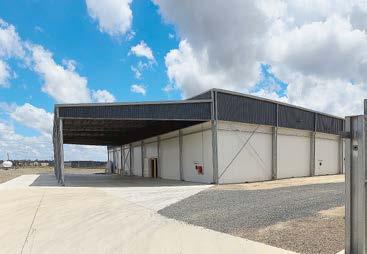
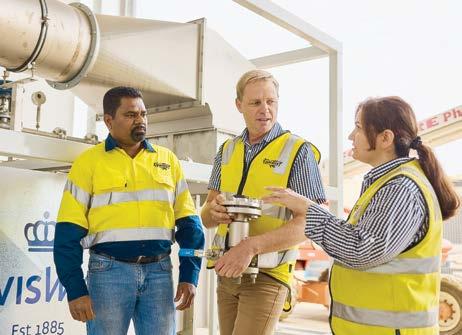
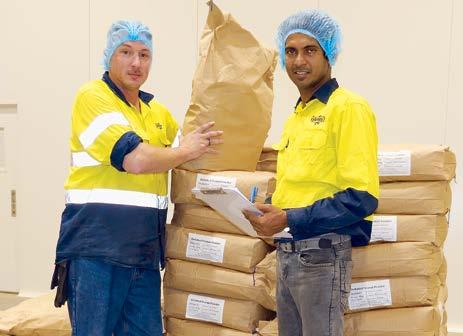
On 26 February 2026 this week suppliers, customers and business stakeholders came have come together to celebrate a dream seven years in the making – the official launch of the Plenty Foods nut powder facility, to be opened by the State member for Nanango, the Hon Deb Frecklington MP, Attorney-General, Minister for Justice and Minister for Integrity.
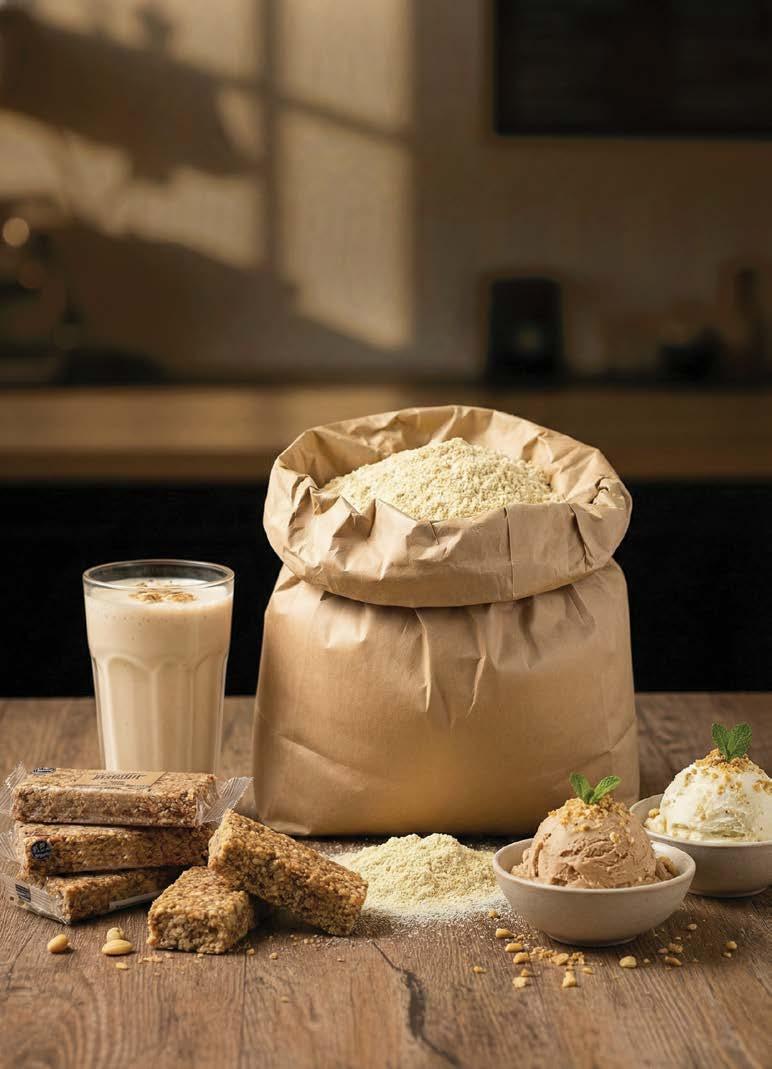
The commencement of production for this project means that food manufacturers across Australia importing almond, macadamia and peanut powders from overseas can now access a local product offering higher protein, lower fat, better flavour and improved functionality for next-generation food products. Josh Gadischke, Managing Director said, “This is the first time superfine powder technology has been applied to nut-based ingredients at commercial scale in Australia.”
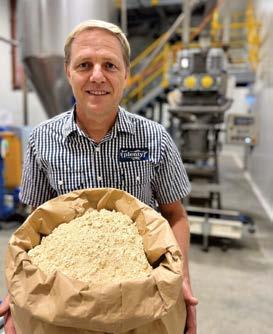
Plenty Foods, an Australian producer best known for its cold-pressed and refined specialty oils, has now commenced producing a superfine, high protein nut powder – a new range of defatted nut powders developed specifically for the food manufacturing sector. Whilst there are plans in place for almond and macadamia flour/powders, peanut is the first line in production.
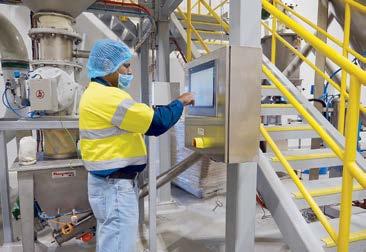
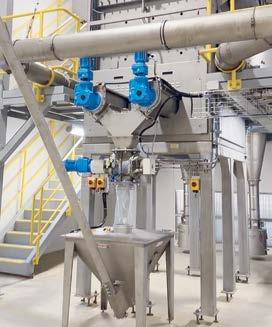
The facility, jointly funded by Plenty and the Australian and Queensland Governments, marks an Australian first, applying advanced superfine powder technology to nut-based ingredients, delivering a product that is outperforming the fat content of products currently being imported from the USA by a factor of five per cent.
Mr Gadischke mentioned, “Food manufacturers are demanding higher protein, cleaner labels and better functionality. This ingredient delivers all three using an Australian-made solution.”
Each powder is produced by gently roasting then pressing whole nuts and milling the remaining nut solids into a superfine powder, resulting in a lighter, fluffier ingredient with superior absorption and blending properties compared to standard ground nut flours.
Unlike traditional nut flours, which are higher in fat and behave more like a meal or heavy flour, Plenty’s superfine nut powders are designed to open new formulation possibilities across sports drinks and supplements, bakery, snacks and functional foods. There are also applications in gravies, sauces and coatings as well as vegan alternatives such as dairy-free ice cream.
“For decades, Plenty has specialised in extracting high-quality oils from nuts and seeds. With superfine nut powders, we’re taking that same core capability and unlocking more value from the nut, resulting in a zero-waste operation for us, and value-added products for the market,” said Josh Gadischke, Managing Director of Plenty Foods.
“Food manufacturers are under pressure to deliver cleaner labels, higher protein and better functionality. This ingredient is designed to help them do all three, using an Australian-made solution for the first time.”
FUNCTIONAL & NUTRITIONAL BENEFITS
Ben Horwood, Plenty Foods’ Sales Director says “Market response to this product has been strong, with engagement from leading players in food, beverage and nutrition manufacturing seeking high protein, plant-based ingredients that deliver both nutritional and functional advantages.
“This interest reflects a clear shift toward clean label, dairy free solutions that enable innovation across applications such as high protein nut spreads, powdered nutrition formats, functional snacks, bakery and ready to drink products. This highlights the relevance of superfine nut powders as a next generation ingredient for manufacturers developing products at scale.”
According to Plenty, the superfine nut powders offer a combination of nutritional and processing advantages, including:
• Higher protein levels (up to ~55 per cent depending on nut type)
• Reduced fat content compared to similar products
• Smooth, silky texture for improved dispersion and mouthfeel
• Vegan-friendly and all-natural, with no added ingredients
• Versatile functionality across baked goods, protein bars, extruded snacks, soups, coatings, shakes and ready-to-eat meals.
A comparative analysis shows Plenty’s defatted nut powders deliver significantly lower fat and higher protein than conventional nut flours, while enabling tighter crumb structure and improved absorption in finished products.
WHY IT MATTERS
For Australian nut growers and the horticultural sector, the launch represents a meaningful new value pathway. By converting nuts that have traditionally been regarded as a low value by-product, into a premium, export-ready ingredient, Plenty is generating additional demand and improved returns from each nut grown.
“This approach strengthens connections between growers and manufacturers, supports more resilient supply chains and maximises the value of locally grown produce” said Horwood.
“The range is underpinned by a zero-waste manufacturing model that reduces food loss, improves resource efficiency and delivers a highperformance ingredient aligned with the sustainability and provenance expectations of a modern food brand such as Plenty.
“Manufacturers and brand owners interested in exploring technical, commercial or product development opportunities are encouraged to contact us to discuss how superfine high-protein nut powders could support their next phase of innovation.”
While superfine powder technology is used
internationally for other applications such as cocoa, Plenty says its use in nut-based powders at commercial scale represents a new frontier for Australian food manufacturing.
MANUFACTURING & CREDENTIALS
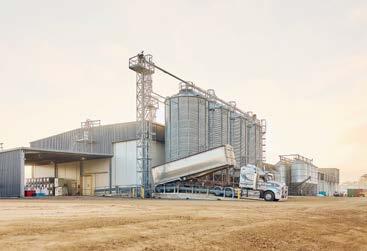
Plenty Foods has clocked up 40 years’ experience producing cold-pressed and refined oils for food, cosmetic and supplement markets, processing approximately 4,000 tonnes of nuts and seeds annually for both local and export customers.
The superfine nut powder range is produced using state-of-the-art equipment, leveraging byproducts of the oil-pressing process to create a value-added ingredient while supporting more efficient resource use.
“We already extract high-quality oils. Now we are converting what was once a lower-value byproduct into a premium food ingredient. That is smarter manufacturing, underpinning our zero waste goal.” Gadischke said. “We’ve been very ambitious with this product in terms of the quality we want to produce, but it’s also great to tick other boxes like zero waste for our facility and reducing food waste for farmers and the environment”.
“We’re investing in new technology to give manufacturers an ingredient that is more consistent from batch to batch, performs better, while supporting Australian growers and reducing reliance on imported alternatives”.
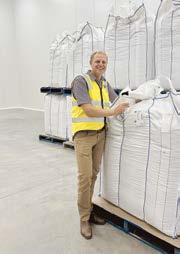
Plenty’s superfine nut powders are made in Australia using locally sourced nuts, providing food manufacturers with a domestic, traceable alternative to imported nut powders at a time of increasing supply-chain scrutiny.
“Australian made” will also ensure fresher product with a longer shelf life and lower food miles for local manufacturers.
Mr Dadischke also added, “This investment reduces reliance on imports and gives manufacturers greater confidence around provenance, freshness and consistency.”
Plenty’s superfine peanut powders are now launched, with additional varieties planned based on market demand.
Manufacturers interested in product trials or technical discussions are encouraged to contact Plenty directly for information around MOQ, sample size availability, technical datasheets.
ABOUT
Plenty Foods is a 40-year established Australianowned manufacturer specialising in cold-pressed and refined oils made from locally grown nuts and seeds. With a strong focus on quality, nutrition and innovation, Plenty supplies premium ingredients to food, cosmetic and health markets in Australia and internationally.
By Breanna Lloyd
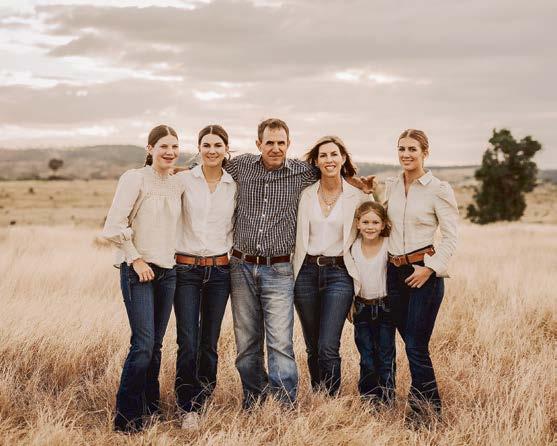
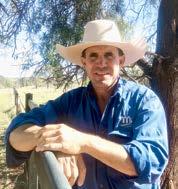
Central Queensland’s Andrew and Claire Mactaggart were named a finalist in the Beef Farmer of the Year category at The Weekly Times Coles 2025 Farmer of the Year Awards.
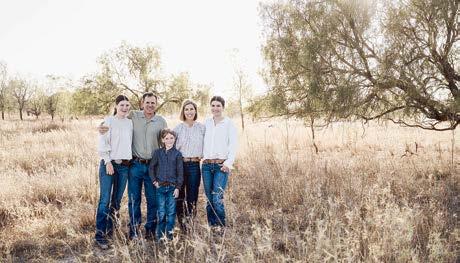
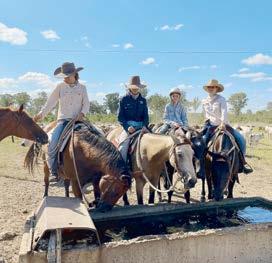
Andrew and Claire, along with their four daughters, Anna, Eliza, Sarah and Grace, manage a 33,000ha family beef enterprise across two main aggregations.
Balcomba, at Duaringa, spans 22,500ha and is primarily used for breeding, while the second property, Wirranda, near Moura, is largely dedicated to backgrounding cattle.
The couple attended the 2025 Farmer of the Year Awards ceremony on Friday, 13 February, where finalists from across Australia were recognised.
Claire said being named a finalist was a significant achievement for the entire team behind the operation.
“Being a beef category finalist means a great deal because it recognises the collective; the people who support, mentor and help develop our operation, as well as the systems we have in place,” she said.
“Being nominated as a finalist is a testament to the legacy we are creating.”
When the couple took over management of Balcomba in the late 1990s, the property operated under an extensive grazing system, with large paddocks and uneven grazing pressure.
Since then, the business has undergone a major transformation, with a strong focus on aligning stocking rates with land capability and improving pasture recovery.
“We moved from around 20 paddocks to more than 180 at Balcomba, which has given us much greater control and flexibility over pasture and herd management,” Andrew said.
“Across our properties, more than 95 per cent of the country is in rest and recovery at any one time.”
The pair said the shift had delivered measurable environmental and productivity gains, including improved groundcover, better water infiltration and increased rainfall use efficiency.
Livestock breeding being the family’s main focus, the Mactaggarts operate an open-ended composite breeding program designed for northern conditions that targets 40–50 per cent Bos indicus content alongside British and European genetics.
“Hybrid vigour has been the key to lifting fertility and resilience traits, supported by a strict culling program and shortened joining period to identify low-performing females,” Claire said.
To further expand her knowledge of the industry, Claire studied Agribusiness at the University of Queensland.
She has since written extensively about rural and regional Australia for a range of well-known publications and also served on the board of directors for Beef 2021.
Andrew said their involvement in the Northern Genomics program, in partnership with Meat and Livestock Australia, had enabled them to benchmark their herd, identify areas for improvement and compare their performance against in-
dustry averages across multiple breeds.
“As a result, we now use objective measurements, particularly for fertility traits, alongside raw data and systems-based selection,” he said.
“Having access to strong multibreed herd and industry benchmark data allows us to pinpoint what needs work and track progress over time.”
“Genomic testing evaluates traits that are difficult to measure before a bull is used,” Andrew said.
“It’s another tool providing objectivity for our systems-based selection.”
The pair say that since 2017, the results have been significant.
“Around 70 per cent of our females are now above the northern industry average for puberty, up from 47 per cent, while 84 per cent are pregnant within four months of calving, compared with 61 per cent previously,” Claire said.
“Our animal welfare and labour efficiency have also improved through a strong shift to-
wards polled genetics.
In 2017, we had a wake-up call after measuring only three per cent of poll genetics. We are now around 75 per cent in our calf crop.”
Technology also plays a central role in the operation, with tools such as Maia Grazing, Optiweigh, Cibo Labs and remote water monitoring systems helping.
“If it’s shortening the feedback loop or increasing efficiencies in a cost-effective manner, then we will use it,” Claire said.
Looking ahead, the Mactaggarts are excited to continue growing opportunities around ecosystem services and natural capital, including soil carbon and potential future markets that reward nutritional density as well as production volume.
“Succession is an ongoing consideration for evolving family farms,” Andrew said.
More information on The Weekly Times Coles 2025 Farmer of the Year finalists can be found at theweeklytimes.com.au


By Fiona Gowers
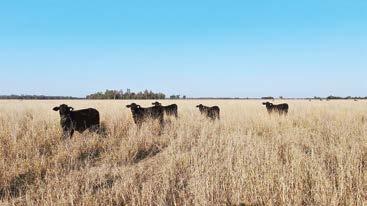
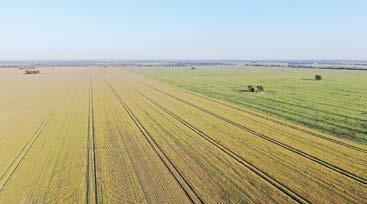
Three dryland cropping and grazing properties totalling 18,339 hectares in Queensland’s Border Rivers region have been listed for sale, representing one of the larger mixed-farming offerings in the district in recent years.
The Goodar Station Aggregation comprises Goodar (7293ha), Benelewin (6923ha) and Boogumbilla (4122ha) and is being offered either as a single aggregation or as separate assets.
The sale is being handled by JLL Agribusiness agents Chris Holgar, Clayton Smith and Geoff Warriner, with the aggregation presenting a largescale, turn-key mixed-farming opportunity combining dryland cropping and grazing.
“The diverse land and soil types across the aggregation, ranging from Brigalow Belah, black soil Coolibah flats and sandy loams, present an ideal opportunity for mixed-cropping across summer and winter crops along with livestock backgrounding and fattening,“ said Mr Smith.
Land use includes about 7570ha of dryland cropping and 8356ha of grazing, with current crops including barley, wheat, sorghum and chickpeas and historical production of canola.
Improved pastures support an estimated carrying capacity of about 3850 adult equivalents, with current operations focused on backgrounding feeder cattle for regional feedlots.
“Assets of this size are highly sought after in the Border Rivers region,” said Mr Warriner.
“Goodar Station Aggregation provides opportunity for both new market entrants and established operators to pursue scale, diversification and operational flexibility in a well-established agricultural district.”
Water security is provided by 15 kilometres of dual Weir River frontage, Uragara Creek, catchment dams and a flowing bore, supported by extensive fencing and water reticulation.
Infrastructure includes a modern 2000-head cattle yard, multiple residences, sheds, workshops and grain and fertiliser storage.
“With reliable access to domestic livestock markets, multiple nearby feedlots, grain receival sites and export routes through the Port of Brisbane, the portfolio is well positioned from a logistics perspective.” said Mr Holgar.
The aggregation is located close to Goondiwindi and within three hours of Toowoomba. A significant portion of Goodar is held under leasehold tenure, providing land tax exemptions and added appeal to offshore investors.
The properties are for sale by expression of interest, closing Thursday, 5 March at 4pm.

By Jane Lowe
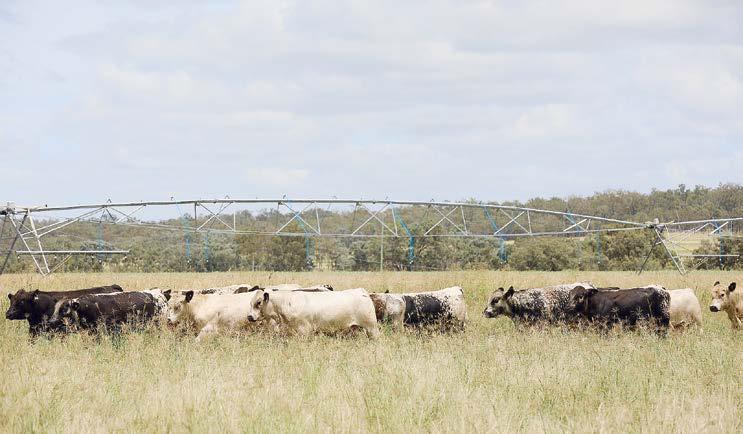
Denis and Therese Roberts of AAA Speckle Park have built their program around a simple but disciplined objective: breed structurally sound, commerciallyrelevantcattlethatthriveinQueensland’s demanding production environments.
Operating under central conditions that test fertility, constitution and durability, the AAA Speckle Park herd is underpinned by proven maternal strength and recognised bloodlines including Prairie Hill Fancy Pants 93J, Notta-Pho Finish 54P, Notta Frontline 303X, Stardust and Codiak Putnam females. These established families provide the consistency and depth that commercial producers rely upon when selecting herd sires.
Phenotype remains a cornerstone of the AAA breeding philosophy. Denis emphasises that while performance data is valuable, visual appraisal and structural integrity remain critical selection criteria.
“The biggest change we’ve made is breeding a slightly larger-framed bull,” Denis said. “Many of our clients are running larger-framed cows, and by increasing frame and capacity we’re seeing fewer injuries and better working longevity in the paddock.”
Current sale bulls weigh between 750–800 kilograms off grass only. Importantly, these bulls have never been fed grain rations. Instead, they are developed under a pivot on a diverse pasture mix of lucerne, chicory, plantain, oats and barley.
The varied forage base delivers natural vitamins and balanced nutrition, producing bulls with adequate cover but without excessive condition. Denis said one of the most common pieces
of feedback from commercial producers relates to overfed bulls breaking down under commercial workloads.
“That’s another reason we offer bulls straight from the paddock,” he said. “They’re fit, athletic and ready to go to work as soon as they arrive at their new property.”
Temperament is equally non-negotiable within the AAA program. The majority of bulls rate between 0 and 2 for temperament, with any animal falling outside those margins culled from the breeding pool.
Calving ease also remains a priority. Birthweights are commercially acceptable, with heifer calves averaging 30–36 kilograms and bull calves 32–38 kilograms — providing adequate vigour without creating calving difficulties in heifers.
While Estimated Breeding Values (EBVs) are increasingly utilised within the Speckle Park breed, Denis believes they should complement, not replace, practical stockmanship.
“The old cattleman casting his eye over the bulls he is buying has never disappeared,” he said. “EBVs are a valuable tool, but they should back up what you see.”
With EBV data within Speckle Park still developing depth and accuracy, AAA Speckle Park continues to focus on balanced, functional cattle — combining phenotype, performance and practicality for Queensland producers.













A forum in Emerald on 11 March will focus on the future of beef production in northern Australia.
Genetics Australia’s beef forum is a one-day event at the Mayfair Hotel concentrating on the genetics, reproduction and markets shaping the future of beef production in the region.
This is the first time Genetics Australia has hosted a forum in northern Australia and it will feature high-profile international speakers and leading local producers.
The program will be highlighted by Trans Ova Genetics International Business Manager P.J Budler speaking on global livestock challenges and opportunities.
Mr Budler has judged more than 100 different cattle breeds in 51 countries and in 2017 he became the first person to ever judge a national show on all six continents.
Other highlights will include Ripley Atkinson from StoneX speaking on the Australian cattle market outlook and how price risk management can assist beef producers, and Ced Wise from Wise Repro on making the most of our superior bulls, looking at the physiology of sperm cell production to ensure the use of our best genetics in AI, sexed semen, natural mating and export.
Northern Queensland farmers will also share their on-the-ground experiences.
Beef breeders Sarina Gale, Simon Close and Casey Ryan will form a producer panel to in a `tales from the paddock’ session.
Genetics Australia beef manager Damien Thomson said the forum would connect today’s breeding and management decisions with tomorrow’s commercial outcomes.
“It’s basically a collaborative information sharing day,” Mr Thomson said. “Advanced bovine reproduction is expanding in Queensland, particularly with IVF services, so it’s a good opportunity to bring new tools and information together for people.”
The forum has been tailored to the northern Australian market.
Mr Thomson said the international and national speakers would share the latest information and research insights to support informed decision making across the supply chain, while the farmer sessions would provide practical advice.
“The people who put technologies into practice are the ones who understand it the best and they can share what works and what people need to know before they get into it themselves,” he said.
The beef forum will be at the Mayfair Hotel, 7/11 Mayfair Drive, Emerald. People can book to attend the forum at https://www.trybooking. com/events/landing/1527466.
Genetics Australia is also hosting the GA 2026 Today, Tomorrow and Beyond conference in Geelong, Victoria on March 17-18 featuring local and international speakers, farmers and dairy and beef industry leaders.
Establish
Put
Invest
Addwaterpointsandwater
Implement
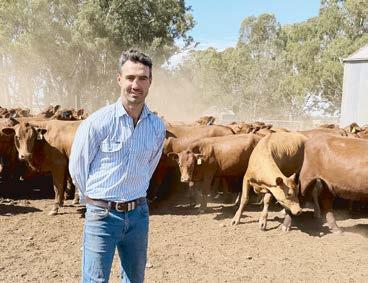
Far right: Genetics Australia beef manager Damien Thomson.
Talktoyourlocal RegionalAreaManager on1800623946orscan tofindouthowQRIDA’s FirstStartLoansorSustainability Loanscouldhelpgrowyour farmingbusiness*.

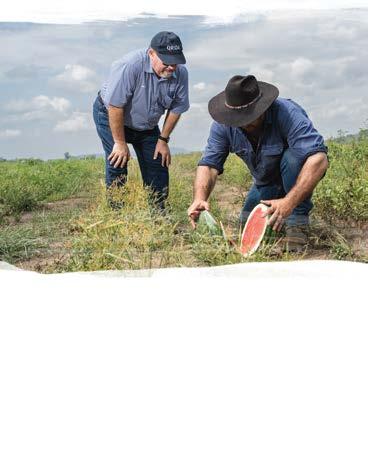
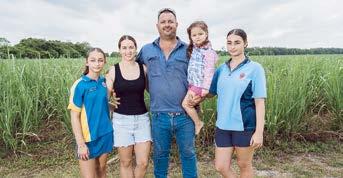
For Mathew and Sarah Di Mauro, farming is more than a business, it’s a legacy. As third and fourth generation sugarcane growers on Queensland’s Cassowary Coast, the couple are building their future growing both sugarcane and watermelons.
Over the past decade, their journey into farm ownership has been shaped by perseverance and a strong partnership with the Queensland Rural and Industry Development Authority (QRIDA), which they say helped them take their first steps toward owning land.
“I had an opportunity to grab a bit of dirt through QRIDA. Sam Spina [QRIDA Regional Area Manager for Far North Queensland] was the one who helped us out with getting that,” Mathew said.
Despite deep generational ties to agriculture, breaking into ownership was challenging, with commercial finance through traditional lenders proving difficult.
“We had a few options with other banks and we got told no, it was a big push to try and
make it happen,” Mathew said. “Sam came down over many weeks and sat down and told us where we needed to be and where to get to.”
QRIDA Regional Area Manager Sam Spina first met the couple around eight years ago as they explored pathways to ownership.
“Mathew and Sarah are on their third First Start Loan because they have been growing their business in stages, and the last stage that we helped them with was to buy their first large farm,” Sam said.
Through QRIDA’s First Start Loans, the Di Mauros moved from leasing to ownership and expanded their mixed farming operation.
QRIDA’s First Start Loan helped get us where we are today as a family,” Mathew said. That steady growth has strengthened the couple’s position, highlighting the value of on the ground support for agricultural businesses across Queensland.
For more information about QRIDA’s First Start Loans, visit qrida.qld.gov.au or call 1800 623 946.
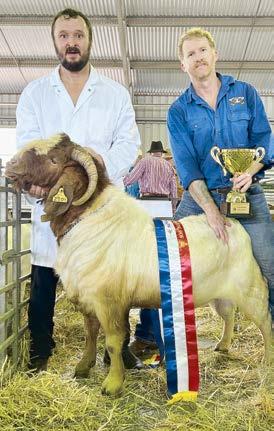
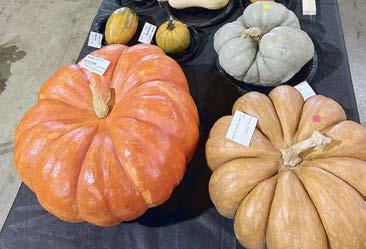
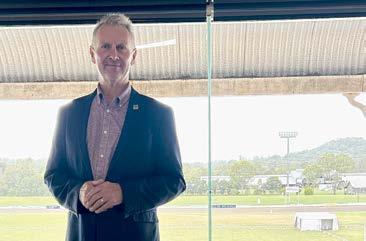
The People First Bank Toowoomba Royal Show will be held from 26 to 28 March.
Once again there is an exciting lineup of entertainment for the entire family to enjoy headlined by Bluey & Bingo, Airtime Freestyle Motocross and the Hot Wheels Stuntz Show.
Melville’s Animal Nursery make their debut in what will be the largest display of animals seen at the show.
Competition is always at the forefront of any agricultural show and this year is no exception. Dairy Cattle judging will start on Tuesday before the show gets underway and patrons are welcome to attend the judging with free admission. Stud Beef and Led Steers will be judged on all 3 days.
Almost 2000 entries have been received in the horse section with almost 550 showjumpers competing across the show.
Entries are also very strong in our pavilion exhibits particularly the photography and leatherwork.
Our small animal display of goats and sheep has also been very well supported, whilst the sheep dog trials will be contested over the 3 days.
The World and Queensland Titles will again be contested in the Woodchop Arena.
A rodeo will be held on both Friday and Saturday nights.
To assist families, we are offering half price entry to the show, all day on Thursday and free entry after 6pm. We will provide entertainment on the family stage and all the food vendors, ride operators and showbags will be trading.
For the first time the Ringers Western truck will be on site.
For further information and to purchase tickets go to www.rasq.com.au






By Fiona Gowers
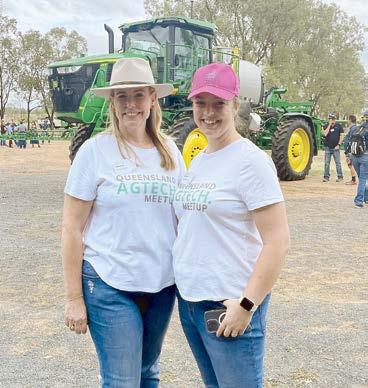
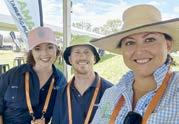
Britta Marsh never expected agriculture to become her career, let alone to be recognised as a leader within the field.
Yet the Brisbane-based AgTech consultant and ecosystem builder now finds herself named the inaugural recipient of the Liz Alexander Bursary for Leadership in AgTech and Innovation, an honour she describes as both exciting and deeply humbling.
“Thank you, I’m so excited but I have big shoes to fill. Liz was an amazing person,” Ms Marsh said.
Awarded for the first time this year, the bursary recognises emerging leaders who embody the same regional focus and collaborative spirit that defined the late Liz Alexander’s influence on Queensland’s agricultural innovation landscape.
For Ms Marsh, being the first recipient carries both pride and a sense of duty.
“I’m so incredibly honoured. I almost want to say that I see it as a little bit of a responsibility in a way,” she said.
“I see it as a responsibility to go out there and share what I know and make connections among different people, whether that’s the government, investors, ag techs, farmers and be really collaborative and help in any way I can.”
Ms Marsh’s professional path has been unconventional. Born in South Africa, she immigrated to Australia with her family at age 13 and completed her high schooling in Brisbane at Northside Christian College.
Initially, her ambitions lay far from paddocks and producers.
“Originally I actually wanted to be a doctor,” she said.
After gaining entry into a biomedical science pre-medical degree, she chose to take a gap year before committing to nearly a decade of study.
That pause changed everything. Instead of medicine, she enrolled in a business marketing degree, seeking something practical and flexible. It was during this time she discovered the power of learning through experience.
“I quickly realised that I was learning a lot more about the job on the job than I was in the classroom,” she said.
An internship soon became a full-time marketing assistant role and she ultimately completed her degree online while working.
What followed was seven years immersed in the world of technology start-ups — a space she credits with shaping her understanding of innovation, entrepreneurship and problem-solving.
Agriculture, however, still wasn’t in sight.
“I can honestly say that I never thought I would ever work in agriculture. It wasn’t even on my radar,” she said.
Her only early exposure to the sector came from childhood holidays spent on her uncle’s chicken farm in South Africa. It was a distant memory rather than a career inspiration.
The turning point came when she joined tech-
nology accelerator, Farmers2Founders, as an inhouse marketing expert, working exclusively with AgTech companies.
She was hired for her marketing expertise, not agricultural knowledge — but the experience proved transformative.
“I have been involved in ag tech ever since,” she said.
Today, Ms Marsh works as an AgTech consultant, ecosystem builder and early-stage investment associate supporting innovation across Queensland’s agricultural sector.
She has worked with more than 200 AgTech start-ups nationally, including more than 50 based in Queensland and serves on the Australian Agritech Association’s National Committee.
She is also an associate at Queensland venture capital firm 77 Partners, where she helps guide early-stage investment decisions.
Her work centres on strengthening pathways for regional, producer-led innovation — a focus that closely mirrors Liz Alexander’s legacy.
Much of Ms Marsh’s time is spent travelling beyond metropolitan centres, visiting farms, running workshops and connecting founders with producers and investors.
“The nature of ag is that it happens out in the field in the regions,” she said.
It is in these regional communities that she most strongly feels the weight of the bursary’s significance.
She frequently encounters Liz Alexander’s name during conversations about innovation and development, even before receiving the award herself.
“So my goal for the bursary is to help carry on Liz’s legacy,” she said.
Ms Marsh is also passionate about reshaping perceptions of agriculture among younger generations.
She regularly speaks at high school career days, determined to broaden students’ understanding of what modern agriculture looks like.
“I think a lot of kids - actually a lot of people,
adults even - think that agriculture is still just a farmer on a tractor,” she said.
“When,inreality,we’vegotdronesandrobotics and biotechnology and we’re manipulating things in the lab and then we’re trying it in the field.”
Her enthusiasm stems not only from technological advancement but from the people behind it.
She sees strong parallels between start-up founders and farmers, describing both as natural entrepreneurs driven to solve complex problems with limited resources.
“When I meet and talk to farmers, every single day, they are having to solve complex problems on the farm with very few resources,” she said.
The Liz Alexander Bursary, Ms Marsh believes, is more than personal recognition, it is an opportunity to amplify collaboration across government, investment and primary production.
Above all, it is a chance for her to continue the work of a woman whose influence remains deeply embedded in Queensland’s AgTech community.
By Fiona Gowers
AgTech consultant and ecosystem builder Britta Marsh has received a career boost after securing the Liz Alexander Bursary for Leadership in AgTech and Innovation.
The bursary provides Ms Marsh with $3000 to attend evokeAG 2026 in Melbourne — the Asia Pacific’s leading agrifood innovation event — as part of Team Queensland.
Ms Marsh said the award was a great honour and particularly meaningful given Liz Alexander’s lasting impact on Queensland’s AgTech community.
“Liz was a visionary and a generous supporter of people and ideas,” she said. “To be awarded a bursary in her name is incredibly humbling and I’m proud to carry that legacy forward.”
Ms Marsh was selected in recognition of her significant contributions to AgTech in Queensland, having worked with more than 200
startups nationally, including more than 50 in the state. Her work centres on helping founders validate markets, connect with producers and navigate commercialisation and early-stage investment pathways.
Department of Primary Industries AgTech innovation manager Alicia Dunbar praised Ms Marsh’s achievement and influence.
“Britta has been instrumental in building Queensland’s AgTech landscape, supporting early-stage founders with practical, producerled innovation and addressing critical gaps in investment readiness,” Ms Dunbar said. “Britta’s expertise and dedication to strengthening pathways for regional and rural innovation make her a deserving recipient of the Liz Alexander Bursary. We’re thrilled that she will represent Queensland at evokeAG 2026 and look forward to the valuable insights she will bring back to benefit the state’s agricultural industry.”
Established last year, the bursary honours
the legacy of the late Liz Alexander, an Emeraldbased innovator who played a key role in shaping Queensland’s AgTech ecosystem through initiatives including the AgFrontier program and i4Connect.
She also held board roles with Cotton Australia, Plant Health Australia and QRIDA.
Liz Alexander’s husband Doug Sands said the bursary was a fitting tribute.
“Liz was devoted to fostering innovation and leadership in Queensland’s agricultural sector,” Mr Sands said. “Britta Marsh’s passion and commitment reflect the values Liz championed. I know Liz would be proud to see Britta receiving this bursary and continuing the important work of advancing AgTech in Queensland.”
The bursary aims to empower emerging leaders while inspiring continued innovation in primary industries, supporting the state’s broader goal of lifting primary production output to $30 billion by 2030.


Men don’t talk face to face, they talk shoulder to shoulder
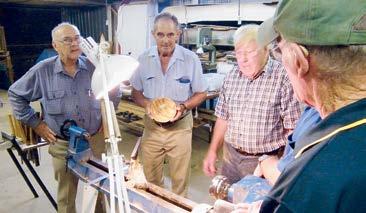
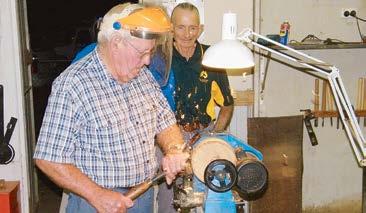
By Fiona Gowers
For 20 years, Michael Reddan has watched a simple idea grow into one of Roma’s most valued community spaces.
A place where conversation happens shoulder to shoulder, friendships are forged over cups of tea and men - who might otherwise struggle in silence - find connection, purpose and pride.
Mr Reddan has been involved with the Roma Community Men’s Shed since its beginnings in 2007, long before there was a building, a workshop or even a permanent meeting place.
At the time he was working for Queensland Health in Roma when he first heard about the growing Men’s Shed movement spreading across Australia.
“I had read about the Men’s Sheds and then I saw an article in the newspaper where people from Men’s Sheds Australia were travelling to Emerald,” he recalled. “I thought, ’You know, this is something we need to get going here’.”
With little more than enthusiasm and a phone number, Mr Reddan reached out and invited representatives to detour through Roma for a community meeting.
They agreed.
He met them at the airport, organised the gathering and helped form the first committee. From that moment, the Roma Community Men’s Shed was underway.
“It took us three years to actually get a shed going,” he said. “The advice we got though was, even though you don’t have a shed, meet regularly.”
Those early meetings, often with only eight to 10 men, laid the foundation for what would follow.
In 2010 the group finally opened in a modest double-bay shed behind Anglicare. After three months they relocated to the Roma Scout building and today they operate from their own dedicated facility beside the railway station, a visible and well-used hub of activity.
What happens inside the shed varies from day to day and member to member. While many sheds across Australia focus on metal or woodwork, Mr Reddan is quick to clarify that no two are the same.
“All sheds are different,” he said. “It depends on the members of the shed what they want to do. Some of them have musical instruments. Some of them have choirs.”
The diversity is part of a national movement that now spans more than 1000 sheds and more than 100,000 members, making it one of the largest community networks in the country.
Yet, despite the scale, the essence remains deeply personal, a place designed primarily for men to gather in a way that feels natural and comfortable.
“Women will get together and talk about their problems face to face,” Mr Reddan said. “Whereas men don’t do that. Men talk shoulder to shoulder.”
He has, however, witnessed powerful moments where the environment has allowed men to open up in ways they never expected.
“I have seen some fantastic things in the shed
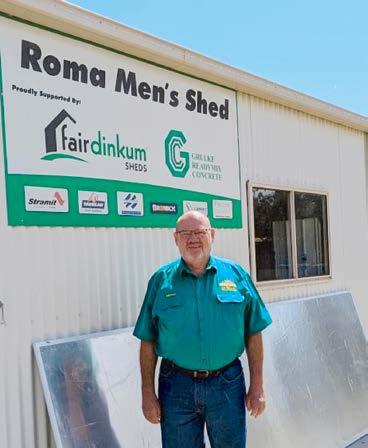
where men have felt that it’s safe that they’ve opened up and talked about things in front of all their fellow members. It’s really surprised me.”
The Roma shed opens three mornings a week, providing tools, resources and a welcoming space for projects, both large and small. Community members often bring in furniture needing repair — tables, cupboards or chairs — and the shedders happily refurbish them for minimal cost.
They are careful not to compete with local tradespeople, instead focusing on jobs others might decline.
Among the most cherished projects are the park benches now sitting proudly at Roma’s saleyards. When council upgraded the bull ring and offered the shed the salvaged hardwood timber, members transformed it into beautifully crafted seating.
“That story is good for the shed and good for the community,” Mr Reddan said. “It’s amazing,
just tying in the men’s skills, keeping them active and achieving.”
Membership is intentionally affordable — $60 a year plus a small contribution each visit to cover tea and coffee — ensuring the shed remains accessible. There is also an associate membership for those who simply want to drop in for conversation and companionship.
While the average age of members is high, attracting younger men is a priority.
The committee is currently exploring new technologies such as laser cutting and 3D printing and even opening weekends to suit different schedules. Younger members can join with a mentor, reinforcing the shed’s intergenerational spirit.
Beyond craftsmanship, the shed is increasingly focused on wellbeing. A new partnership with the Southwest Hospital and Health Service will see nurses visit monthly to provide basic health
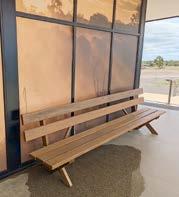
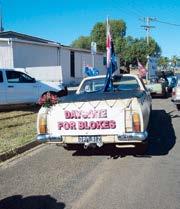
checks.
However, perhaps the most telling sign of the shed’s impact is the quiet way members look after one another. If someone hasn’t been seen for a while, another member will often check in. The camaraderie is genuine and deeply valued.
For Mr Reddan, the rewards have been both personal and collective.
“Lots of friendship and connections,” he said when asked what the shed has brought him. “And pride. I’m proud of what we’ve built.”
Mr Reddan still attends regularly, not as a founder overseeing operations, but as one of the men enjoying the space he helped create.
Sharing stories, lending a hand and continuing to nurture a community that began with a single phone call and a simple belief that Roma needed a place for men to belong.
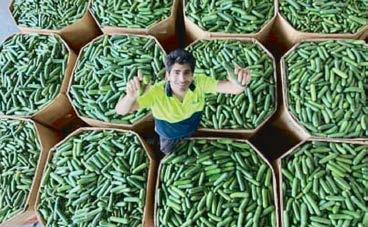







Funky Food founder Kamran Kasaei-Nejad: “We don’t need semi-trailer loads or perfect-looking produce; if it’s fresh, safe and edible, we want to hear from farmers.” (Supplied)
Funky Food is calling on farmers across Queensland and northern New South Wales to redirect surplus and cosmetically-imperfect fruit and vegetables to Australian households instead of landfill.








With rising costs in growing, harvesting and transporting food - and ongoing seasonal challenges - the Brisbane produce rescue business is seeking small to medium-sized farms who are left with produce that is difficult to sell through traditional retail channels.
This includes seasonal overflow, undersized or oversized items and fruit and vegetables that remain perfectly edible but fail to meet supermarket cosmetic standards.
Founder Kamran Kasaei-Nejad said the business was built on strong relationships with growers and a shared mission to reduce waste. “We hear it time and time again from farmers, perfectly edible produce is being rejected for reasons that have nothing to do with quality,” Mr KasaeiNejad said.
“Our model is about creating another pathway to market, helping farmers recover value from their crops while reducing waste and feeding households at the same time.”
Funky Food is inviting growers with surplus or imperfect produce who want a transparent alternative to dumping crops and who are committed to reducing food waste.
While farms within one to two hours of Brisbane are preferred, the company is open to working with more distant producers depending on logistics and volume.
Supply arrangements range from one-off loads to ongoing partnerships.
“We don’t need semi-trailer loads or perfectlooking produce,” Mr Kasaei-Nejad said. “If it’s fresh, safe and edible, we want to hear from you.”
Funky Food delivers rescued produce boxes to homes across South East Queensland, Sydney and Melbourne, often at prices up to 30 per cent lower than supermarkets.
Mr Kasaei-Nejad said growing household demand reflected both rising grocery prices and concern over food waste. “
This is about backing farmers, backing common sense, and making sure the hard work that goes into growing food doesn’t end in landfill,” he said.
Farmers interested in partnering can contact Katy Lysaught at Funky Food via email or mobile.
The Facts:
Food Waste in Australia
• End Food Waste Australia is leading the way in improving the sustainability of the Australian food system through research and evidencebased solutions.
• In Australia, about 7.7 million meals are discarded daily, with households contributing 32 per cent of that waste, costing the economy an estimated $36.6 billion annually.
The average household wastes 4kg of food each week, amounting to roughly $3000 per year.
“Reducing food waste isn’t just an environmental or economic issue — it’s a social imperative. If Australia successfully halves food waste by 2030 — an ambitious goal — FIAL estimates this could unlock $54 billion in benefits, significantly reduce emissions and ensure more food reaches those who need it most.“
Australian national food waste strategy feasibility study by Food Innovation Australia (FIAL):
• Australia wastes 7.6 million tonnes of food annually; that’s enough to fill the Melbourne Cricket Ground 10 times over.
• 70 per cent of this waste could have been avoided, representing billions of lost meals and an economic impact of $36.6 billion.
• Household waste alone costs Australians $19.3 billion per year.
• Shoppers reported saving around $63 on a produce haul, by ordering a box of “misshapen” produce.
By Jane Lowe
Rod and Lis Skene of Cecil Plains will present a powerful draft of Simmental genetics when Meldon Park Simmentals offers Lots 86 to 104 at the Black Stump Invitation Bull Sale on March 17 at the Blackall Saleyards.
The Skenes have built their program around functionality and longevity, breeding Simmental bulls suited to both commercial and stud operations across Queensland’s diverse and often challenging climatic conditions. Their objective is clear: to produce fertile, structurally sound sires capable of injecting growth, softness and genuine doing ability into a wide range of production systems.
Meldon Park runs an award-winning herd of 350 registered and recorded fertile females, with a strong concentration of poll genetics throughout the cow base. This depth of quality females underpins the consistency buyers have come to expect from the program.
This year’s Black Stump draft comprises 20 cracking” Simmental bulls displaying slick coats, natural thickness and performance. Selected for structural integrity and temperament, the offering reflects the stud’s focus on bulls that can thrive in northern environments while maintaining the capacity to finish at any age.
The Skenes place particular emphasis on fertility and efficiency, traits they believe are essential for commercial profitability. Their breeding philosophy centres on practical cattle that work in real-world conditions rather than chasing short-term trends.
“Forget the hype, go the Meldon Park type,” they say — a confident endorsement of cattle bred on performance and predictability.
Rod and Lis welcome enquiries ahead of the sale and encourage prospective buyers to contact them or GDL to discuss the offering.
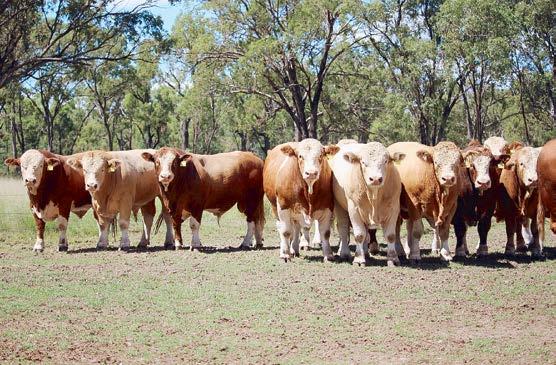
How Do You Sell Rural Products or Provide Rural Services to over 30,000 potential readers?
By advertising through a trusted rural publication, you put your products and services directly in front of more than 30,000 engaged readers who rely on them every day.
With strategic drops within Scenic Rim and Toowoomba region, Roma, Dalby, Emerald, Gracemere, and Warwick Saleyards.
Also inserting into the following TODAY newspapers.
CQ Today, Emerald Today, The Leader, Maranoa Today FassifernGuardian, Beaudesert Times, Warwick Today, Stanthorpe Today, Goondiwindi Argus, Burnett Today



A New bullying support service 13 DOLLY has been launched as polls show Aussie teens are turning to AI for emotional help.
The national anti-bullying organisation Dolly’s Dream is behind the service, which offers a confidential support line and web chat.
“If your child is being bullied, or you’re a young person experiencing bullying, you don’t have to deal with it alone,” a spokesperson said.
The service connects kids, teens and parents directly to a qualified Kids Helpline or ParentLine counsellor.
Polling released to accompany the launch suggests some young Aussies are seeking emotional support from unqualified sources like AI chatbots.
A Dolly’s Dream Instagram poll of 374 Australian parents conducted this month revealed:
• 65% said their child uses AI tools
• Of the young AI users, 92% were aged 13-20, while 3% were under 9 years old
• 26% confirmed their child used AI for help when feeling sad.
A TikTok poll conducted last week asked: ‘If you were reaching out to an organisation for support, how would you rather do it?’ The results from 96 respondents found:
• 76% prefer to chat online
• 24% would rather speak on the phone.
The head of the Dolly’s Dream charity, Sally Sweeney, said the organisation was proud to be launching their Bullying Support Line, considering the number of young people currently using
AI in Australia.
“We know that kids and teens are turning to AI for help, and while it will always give a response, AI can’t offer the safety or qualified guidance of a human counsellor,” she said.
“13 DOLLY provides that vital, real connection and that’s why we’ve created a web chat service alongside our phone line, so kids and teens can contact us anytime, in the way many are currently turning to AI. But the big difference is that when they use 13 DOLLY, they’ll actually be chatting with a qualified counsellor, who is ready to listen and trained to help.”
“Our message to kids is clear. If you’re getting bullied, please turn to a human at 13 DOLLY, not an algorithm.”
How to access support:
Call 13 DOLLY (13 36 559) or search “13 DOLLY” or visit the Dolly’s Dream website dollysdream. org.au
If your child is being bullied, or you’re a young person experiencing bullying, you don’t have to deal with it alone. The national anti-bullying organisation Dolly’s Dream today launches 13 DOLLY - a confidential support line and web chat.


Each year Biarra Valley Simmentals looks closely at the direction of our program and make considered decisions about the females we offer. This draft is one we are very proud to stand behind.
These heifers come from the core of our herd and represent the type of cattle we aim to breed — practical, functional and suited to Queensland conditions.
Running 220 predominantly registered Simmental breeders across the Brisbane Valley and South Burnett, our focus remains consistent. We select for temperament, fertility, softness, skin type, length and carcass shape, while ensuring our cattle maintain the capacity and do-ability required in commercial environments.
The females on offer are from proven cow families that continue to produce top end sale bulls and quality replacements within our own herd. They are easy doing types with depth, balance and the structure to go on and be productive cows.
We will be holding an Open Day on property at Esk on Saturday 11 April and welcome private inspections at any time. The sale will be conducted online via StockLive from 5pm–7pm (QLD time) on Monday 20 April.
We are offering generous freight rebates, along with free Queensland-wide delivery for purchases of three (3) or more lots.
Please feel free to contact Gareth Laycock on 0430 719 991 or Matt Pearce, Burnett Livestock & Realty, on 0429 271 277 for further information
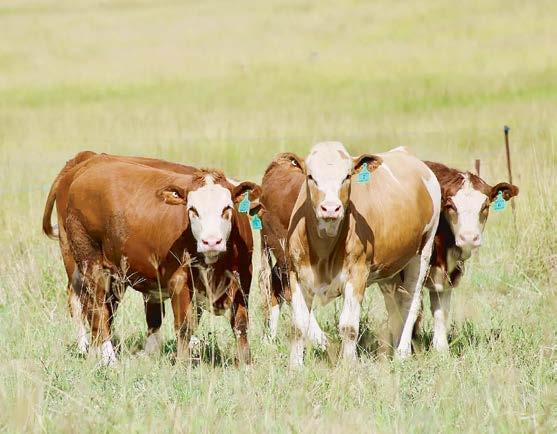
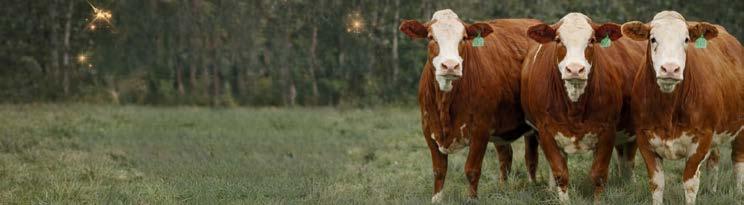




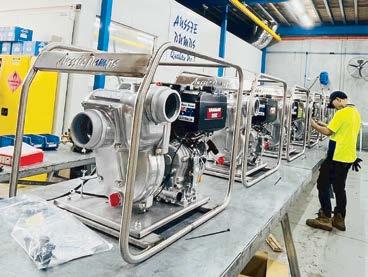

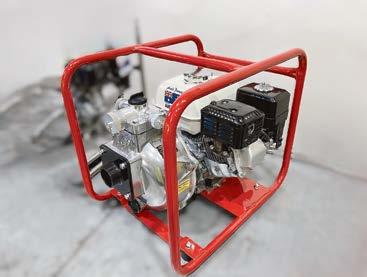
By Aussie Pumps
Australian Pump is only 30 years old, but already has made significant advances in a wide range of pump products from high pressure fire pumps to heavy duty trash pumps and even fertiliser pumps. Each of these pumps types are for particular applications for farmers.
Here, Australian Pump’s Chief Engineer John Hales, explains the work that they’ve done and the procedures that generate the high standard of products offered by this innovative Australian company!
Firefighting Pumps That Work
The Aussie Fire Chief, high-pressure fire pump has changed the way people think about firefighting equipment. Our plan was to provide better engineering and high-quality components than was available on the market at the time.
The result is superior products that perform better, last longer and are reasonably priced. It was a unique departure from the existing standards that farmers and firefighters were familiar with. The breakthrough is a series of engineering improvements that cost more but significantly aided the ability of the products for the task for which they are designed.
We also came up with big improvements on the existing designs, including a heavy-duty onepiece impeller. Considering that they now have around 220,000 Fire Chief pumps out there in the Australian market, it’s incredible to think that Aussie Pump only sell 40 impellers for spare parts a year. That gives an idea of just how strong and how robust the impellers are that we use compared to those of some others.
We use Honda engines because it’s true that they start, first time every time. Engines are properly match tested to the pumps. Thus, Aussie used a GX160 Honda engine or, GX200 6.5 hp engine to power, our Aussie Fire Chief models.
A big step forward, was the supply of two steel mount rails with anti-vibration mounts as standard.
The Fire Pump that Changed the World AUSSIE’S IMPOSTER PUMP is a surprising name for a pump. The reason it was christened as the Imposter is because it’s a single impeller fire pump based on the Aussie Fire Chief, but, capable of 90 metres maximum head. That’s something that others can’t match in a single impeller pump!
We called it The Imposter because it’s a single impeller pump that thinks it’s a twin!
The Imposter is matched by the new ‘Aussie Whopper’. A pump of another variation of the Fire Chief that has a flow of up to 480 litres per minute and heads on 65 metres. The Whopper is designed for farmers who want to move a lot of water fast over distances on their farm!
Fert Pumps Frenzy
Aussie Pumps are now working hard to build up to 2,000 fertiliser pumps for the coming season.
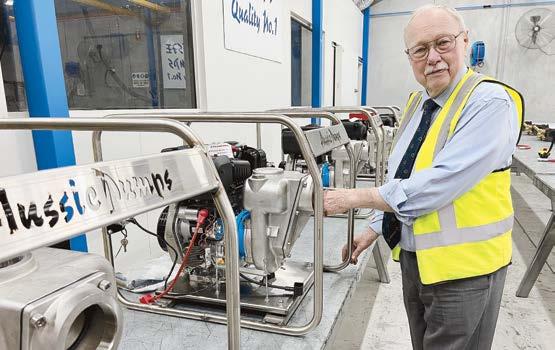
Aussie Smart Pumps are made from 30% glass-filled polyester, capable of handling a huge range of chemicals with elastomers from EPDM to Buna and Viton.
Viton is the biggest seller and Aussie is finding their 3” model, capable of up to 1,010 litres per minute, is extremely popular.
The Aussie Smart Pumps are available in 2” or 3” with a choice of either high pressure impeller or low-pressure impeller, depending on the application. The standard units are powered by Honda’s GX200 6.5 hp petrol engine. Diesel and electric motor versions are also readily available. Free Chemical Compatibility Chart
The product line was developed by Aussie Pumps for fast filling fertiliser sprayers. The pumps can handle a wide range of liquids. Models with Buna or Viton seals are completely compatible with diesel and oil substances. Seawater and brine are also pumpable as well as a wide range of insecticides and pesticides. Visit the website for more information and a chemical compatibility chart.
We are working on developing high volume
models that will move up to 1500 litres per minute. That new model, with a 13 hp electric start Honda petrol engine is mounted in a stainlesssteel frame and will be on the market before the end of Autumn.
We can also offer it with single-phase and three-phase electric motors and in hydraulic drive as well. Hydraulic drive is becoming more popular with the motor mounted on a compact pedestal with stainless-steel pump shaft.
The next new product coming to the market this year is the model RISP2. This is a 2” stainlesssteel pump powered by a 6.5 hp Honda petrol engine. The unit comes with skids and handles and it’s capable of 660 litres per minute and a 23-metre head.
People really like the stainless-steel body and the internals, volute and impeller, in polypropylene. The pump has been certified for NSF for transferring potable water (NSF/, ANSI- 61 and 372). The standard elastomer is Viton, with the seals being silicon carbide.
New 316 Stainless Steel Pumps
Aussie’s new B3XRA cast 316 stainless steel pump
is a real winner. The castings are superb and the volumes we are seeing moving through the workshop, in hydraulic and Yanmar diesel engine configuration are astonishing. The pump is capable of 1500 litres per minute flow and a maximum head of 30 metres. The best news is the heavy duty cast pumps are first world and the volume keeps going. Prices for these machines are being dramatically reduced based on the increasing popularity.
Aussies Gold Distributors
In Australia, products are supported by only topclass distributors who carry stock or spare parts and have service facilities available to support both pump and engine products. The dealers are proud of the fact that many of our pumps, including the Fire Chief and Smart Pumps, have pump ends guaranteed to be free of faulty workmanship or material for a period of five years. It’s an indication of the confidence this company has in both its products and its distribution network. Visit aussiepumps.com.au and click on Pump Smart 9 and Blaster Blitz 9 catalogues for pumps and pressure cleaners.


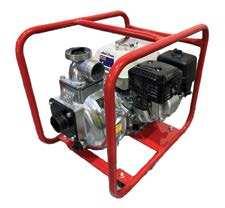

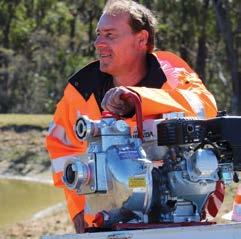
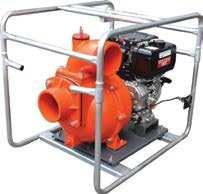




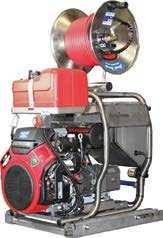

Farming, Family, Future
Australia’s next generation of agricultural leaders will take centre stage at the Agribusiness Summit 2026, a two-day event bringing together farming families, agribusiness professionals and industry leaders to explore the future of family business, succession and sustainable land management.
Held in Goondiwindi on Thursday, 12 and Friday 13 March, the Summit will combine a highimpact conference, an evening networking event and a hands-on field day, all designed to support stronger, more resilient farm businesses across generations.
Conference Day – Thursday, 12 March.
The Conference Day will focus on integrating family and business, preparing future leaders and navigating succession with clarity and confidence.
The program will be hosted by Jack Cresswell, founder and host of the Farms Advice podcast and will feature a diverse lineup of speakers sharing real-world insights from successful family enterprises and specialist advisory roles.
Confirmed speakers include:
• Karen Penfold, Four Daughters Beef – We Are Family, We Are Four Daughters Beef, sharing the story of building a brand and business as a family.
• Malinda Guest, Boundless Psychology – delivering a practical workshop on communication, equipping families and workplaces to navigate difficult conversations before crises escalate and maintain family harmony.
• The Coggan Siblings, Coggan Farms, Meandarra – a large beef, lamb and grain operation on the Western Downs, recently featured on the Humans of Agriculture podcast in the episode “Stronger Together”. Tom Coggan will speak on what the next generation can bring to the family business.
• Jim Benson, Transition Partners – an expert in family business transition and succession, having presented at Beef 2024, Jim will provide practical tips on how families can successfully navigate generational transition and how to prepare the next generation for future success.
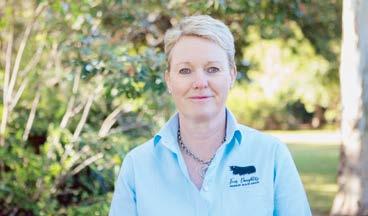
Evening Family BBQ – Thursday, 12 March
The summit will continue with an informal BBQ networking event at the Goondiwindi Race Club, providing delegates, speakers and sponsors the opportunity to connect in a relaxed setting. Guest speakers from leading family operations may also feature during the evening.
Field Day – Friday, 13 March
The field day will deliver a practical, on-farm learning experience hosted by Tom and Antoinette Archer at one of their family properties. The Archers are renown leaders in farming across the Goondiwindi region with their holistic and regenerative management practices having transformed their once tired and degraded properties into profitable and productive enterprises.
MC’d again by Jack Cresswell, the field day will include:
• AguidedfarmtourobservingtheArcher’swinter dominant pastures grown under centre pivots,
how they use the Optiweigh system to monitor growth and weights of cattle and their simplified electric fencing system to manage cattle rotations.
• Insights into the Archer’s carbon project being undertaken with CarbonLink, one of Queensland’s first carbon projects and now in its final stages.
• Leading perspectives on regenerative agriculture and natural capital.
Confirmed speakers include:
• Tom Archer, Archer Pastoral – local Goondiwindi grazier, well respected across the country for his regenerative management practices.
• Terry McCosker, CarbonLink – one of the great innovators of Australian agriculture, Terry founded CarbonLink to assist farmers in carbon sequestration and soil enhancement and thereby create a reliable future for their farm, business, community and the environment
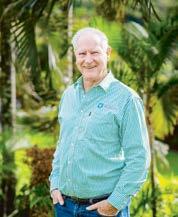
• Stuart Austin, Audacious Ag – formerly general manager of Wilmot Cattle Co and a leading Australian voice in regenerative and natural capital management.
Building Stronger Farm Businesses For The Future
Steve Wakerley, coordinator for Macintyre Ag Alliance says: “The Mac Ag Agribusiness Summit 2026 is designed for farming families, next-generation leaders, advisors and agribusiness professionals seeking practical tools, honest conversations and future-focused strategies to ensure long-term business success.”
* Tickets for the Agribusiness Summit 2026 are available now: https://events.humanitix.com/ agribusiness-summit-2026


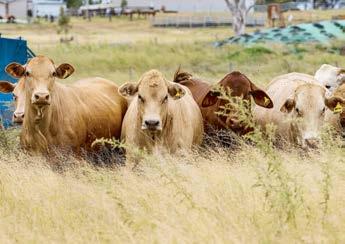
In an industry where health, growth and performance are key, being able to specify individualised dietary requirements directly from the people making feed is invaluable. (Supplied)




Maximising and maintaining the health of your animals can be a fine balance between knowledge, conditions and available pasture and feed. In an industry where health, growth and performance are key, being able to specify individualised dietary requirements directly from the people making feed is invaluable.
Kewpie Stockfeeds works with producers to develop customised feed recipes for cattle and pigs, building orders based on the nutrition requirements and supplements you need for your herd or flock. These custom diets are available in bags or in bulk.
While Kewpie Stockfeeds operates wellstocked merchandise stores in Kingaroy and Montowherelocalcustomerscangotobrowse
or pick up their rural supplies, some customers could be eligible for delivery service.
Kewpie’s regular delivery run for bagged livestock feed orders for resellers around southern Queensland and northern New South Wales offers an opportunity for customers on those routes to have their orders palletised and delivered. For anyone buying bagged poultry, cattle or pig feed and other rural merchandise supplies in quantity, it may be worth a call to Kewpie’s Sales Team to check if delivery to their location can be accommodated.
Call today on (07) 4164 9000 for more information.
By Jane Lowe Meandarra-based
seedstock producer Darren Hegarty, principal of Carabar Angus, will present a select draft of eight bulls – Lots 21 to 28 – at the upcoming Longreach Outback Invitational Bull Sale.
Carabar Angus has established a strong reputation for producing quality Angus cattle capable of meeting MSA specifications while performing under the demanding conditions of Western Queensland. The stud’s breeding objective is clear and disciplined, focusing on structural integrity, carcase merit and functional efficiency in commercial herds.
At the core of the Carabar program is a deliberate investment in elite female genetics. Foundation females, joined heifers and embryos have
been sourced from some of Australia’s leading Angus studs to build a consistent and highperforming maternal base. This emphasis on female strength underpins fertility, longevity and predictable performance across the herd.
Equally critical has been the selection of herd sires. Carabar has incorporated some of Australia’s most respected Angus bulls, complemented by carefully selected international semen lines, to ensure progeny display strong conformation, muscle expression and carcase quality. The aim is to produce bulls that reliably stamp their calves with thickness, growth and markettargeted intramuscular fat.
The stud’s breeding program centres on five key traits: structural soundness, eye muscle area, intramuscular fat (IMF), growth potential
and quiet temperament. These traits are selected not only through phenotype but also supported by performance data to deliver predictable outcomes for commercial producers.
Bred and developed in Queensland conditions, Carabar bulls are adapted to the heat, pasture variability and management systems typical of the region. Buyers at Longreach can expect well-grown, structurally correct sires with the temperament and constitution required to work across extensive operations.
Darren Hegarty said the draft represents the type of practical, performance-driven Angus genetics that underpin Carabar’s breeding philosophy – Queensland bred for Queensland conditions.
By Jane Lowe
A powerful line-up of northern genetics will headline the 2026 Elders Outback Invitational Bull Sale, set down for Wednesday, 18 March at the Western Queensland Livestock Exchange (WQLX) in Longreach. The sale will commence at 11:00am Queensland time, offering buyers the flexibility of bidding in person or online via StockLive.
This year’s catalogue features 124 performance-driven bulls representing eight breeds and composite lines, drawn from nine progres-
sive breeding operations. The offering includes 20 Shorthorn, 24 Angus, 10 Angus x Charolais x Senepol, 10 Angus x Santa Gertrudis, 15 Santa Gertrudis, 23 Charolais, six Charbray and 16 Simbrah bulls.
The diverse draft has been assembled with commercial producers firmly in mind, delivering sires suited to a wide range of production systems across Western Queensland and beyond. From British-bred calving ease and maternal strength to Euro-influenced growth and yield, as well as tropically adapted composites designed for resilience and weight-for-age per-
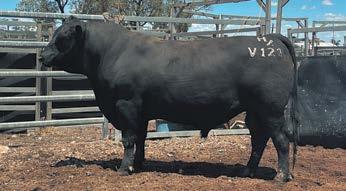
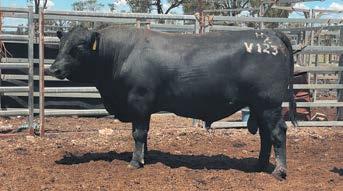

formance, the sale provides options to match varying market specifications and environmental conditions.
The Elders Outback Invitational has established a reputation for presenting structurally sound, fertility-focused bulls backed by sound data and practical performance. With Longreach positioned in the heart of Queensland’s grazing country, the sale continues to attract strong support from repeat buyers seeking reliable herd improvers.
A 2 per cent rebate is available to outside agents who attend the sale, introduce buyers
in writing 24 hours prior to the auction and settle within seven days. An Elders Insurance representative will also be in attendance, offering comprehensive and competitive livestock insurance options to safeguard purchases from the fall of the hammer.
With quality, diversity and convenience all on offer, the 2026 Elders Outback Invitational Bull Sale is shaping as a key date on the northern seedstock calendar.
Contacts: Tim Salter (0429 649 693), Andrew Meara (0427 210 634), or Cipp Murray (0477 977 982).


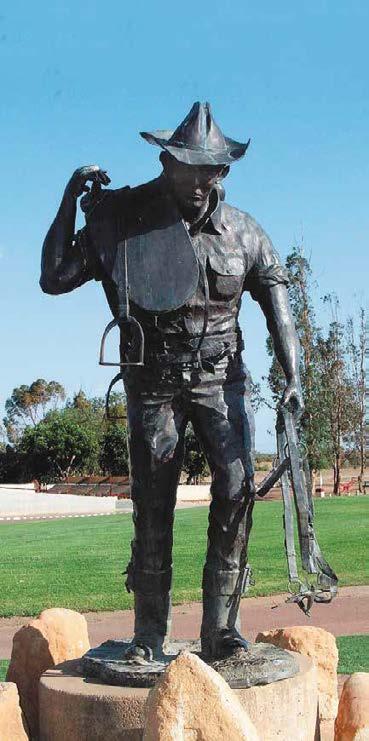

The Crisafulli Government has highlighted the impact of women across regional Queensland with the announcement of four finalists for the 2026 AgriFutures Australia Queensland Rural Women’s Award.
Minister for Primary Industries Tony Perrett congratulated Alyson Shepherd, Angie Nisbet, Jaime Best and Sam Musson, acknowledging their leadership and contributions to rural industry, agriculture and community life.
Alyson Shepherd was recognised for her work through Norma-May Honey, where she promotes ethical honey production, provides education programs for children on the autism spectrum and encourages citizen science focused on bees and their products.
Fifth-generation beef producer Angie Nisbet was named a finalist for co-founding FarmHer Hands, a company producing UPF50+ sun-protection gloves while also advocating for improved skin-care awareness in agriculture.
Jaime Best earned recognition as co-founder of Rural Women Unite, a not-for-profit organisation delivering professional mental-health sup-
port to Australians living in rural and remote areas.
Sam Musson was acknowledged for establishing Zest Element, an enterprise focused on reducing food waste by transforming surplus or imperfect fruit into powders and dried products.
The Queensland winner of the Rural Women’s Award will receive a $15,000 grant from Westpac to advance their project and will go on to represent the state at the national awards in Canberra later this year.
The remaining three finalists will each receive a $2000 grant from state sponsor Queensland Country Women’s Association in recognition of their achievements.
Mr Perrett said the award played an important role in recognising female leadership across regional communities.
“The Rural Women’s Award is a fabulous opportunity to celebrate the women who keep our rural communities thriving,” he said.
“The award is designed to empower and celebrate inclusive and courageous leadership by
women across our rural and emerging industries, businesses and communities and provides a platform to inspire and support Queensland and Australian women to further develop their skills.
“I’d like to congratulate Alyson Shepherd, Angie Nisbet, Jaime Best and Sam Musson on their achievement as being named Queensland finalists and wish them all the best of luck in the Queensland ceremony in March.”
Minister for Women and Women’s Economic Security Fiona Simpson also praised the finalists for their influence in regional Queensland.
“These women are incredible innovators and entrepreneurs,“ Ms Simpson said. “They are deserving finalists for the 2026 AgriFutures Australia Queensland Rural Women’s Award.
“It is important to recognise that women who live across rural Queensland wear many hatsphysical work, running a business, care-giving obligations and volunteering in the community.
“But, in doing so, they bring unique experience and perspective - they are resilient, resourceful, hardworking and the backbone of our communities.
“This is why the Crisafulli Government is listening to women right across Queensland - there is much we can learn from our regional women.”
AgriFutures Australia general manager workforce, communications and adoption Jennifer Galloway thanked the finalists for their dedication to strengthening rural industries nationwide.
“The four Queensland finalists of the AgriFutures Rural Women’s Award are leading with innovation, vision and determination to create meaningful change across rural Australia,” Ms Galloway said.
“They show how leadership can turn ideas into outcomes that strengthen rural industries, grow businesses and build resilient communities.
“The Award goes beyond recognition, providing women with funding, professional development and national networks to scale their ideas and deliver lasting economic, social and environmental impacts.
“By supporting these women, AgriFutures is investing in the future of rural Australia, a future shaped by bold leaders driving positive change for generations to come.”
By Fiona Gowers
Alyson Shepherd
Norma-May Honey is a values-driven business dedicated to ethical honey production, education and citizen science.
The organisation produces pure, ethicallyharvested honey products and delivers community workshops in collaboration with The Urban Bee Co.
Its Pollinator Warrior Program, inspired in part by the founder’s experience as the mother of a neurodivergent child, places stingless beehives in schools to promote pollinator education within inclusive learning environments.
Currently active at the AEIOU Foundation in Logan, the program involves more than 50 participating children and aims to connect students on the autism spectrum with nature in a calm and creative way.
In partnership with ecologist Dr Kit Prendergast, the initiative will evaluate how interactions with pollinators influence mood, focus and attention in autistic children.
The study is expected to be the first of its kind, generating insights that could benefit children across Australia while also supporting broader educational and community development initiatives linked to rural industries.
Angie Nisbet
Angie Nisbet is a fifth-generation beef producer, co-founder and mother of three from remote north-west Queensland, dedicated to creating practical solutions that protect and strengthen rural communities.
FarmHer Hands was born after her sister Shona’s stage two melanoma diagnosis and the loss of a close friend to skin cancer—moments that propelled the sisters to design UPF50+ sun protection gloves tailored for the realities of life on the land.
What began as a simple idea to fill a personal gap has evolved into a national movement championing sun safety, early intervention and stronger access to health education for people in agriculture.
Today, FarmHer Hands is expanding its impact through new school and workplace resources, retail partnerships and an online platform designed to bring preventive skincare and information to even the most isolated regions.
Angie is driven by a clear purpose: to shift the culture around health in agriculture and empower people to look after themselves.
Grounded in empathy, innovation and deep connection to rural Australia, FarmHer Hands continues to grow while supporting the people who feed the nation.
Sam Musson
Sam Musson is a Sunshine Coast–based founder and the driving force behind Zest Element, a food-innovation business transforming surplus and “wonky” produce into high-value ingredients. Working closely with growers, manufacturers and retailers, Sam is committed to reducing food waste at its source while supporting stronger, more sustainable regional supply chains. Zest Element supplies both retail and manufac-
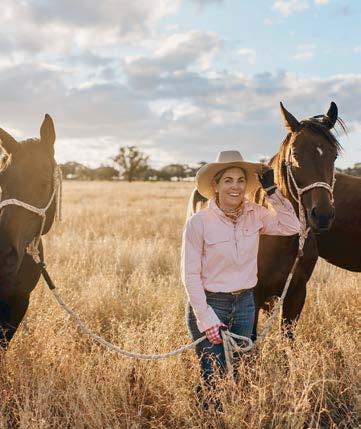
turing customers, including Matani Products (SA), OMG Decadent Donuts, Saname Collagen Waters and Soups. It will launch into Coles stores nationally from July.
Building on this momentum, Sam is now leading Harvest ResQ, an initiative designed to scale production by rescuing crops directly from farms to meet growing customer demand. Produce that would otherwise go to livestock feed or remain unharvested is repurposed into premium ingredients, creating new revenue streams for farmers and enhancing on-farm resilience. As a signatory to End Food Waste Australia and a recipient of multiple grants, Sam collaborates with growers, industry and government, including the Department of Primary Industries, to deliver practical, circular solutions that strengthen farm viability, boost regional economies and tackle food waste head-on.
Jaime Best
Jaime Best, known to many as Jum, is a passionate advocate for improving mental-health
awareness and access in rural and remote communities. Life in the bush has shaped her deep appreciation for the resilience, strength and connection of country people, while also revealing the very real isolation felt by those who struggle without nearby support. Her advocacy is grounded in lived experience, her own, and the stories entrusted to her by others navigating mental-health challenges far from services.
A life-changing car accident became a pivotal moment, inspiring Jaime to use storytelling as a way to spark understanding, build connection and offer hope.
Through community conversations, social media and grassroots initiatives, Jaime works to amplify rural voices and challenge the stigma surrounding mental health. She is the co-founder of Rural Women Unite, a not-for-profit business that began with a small group of country women determined to create change and has grown into a powerful platform for connection, awareness and advocacy across rural Australia.
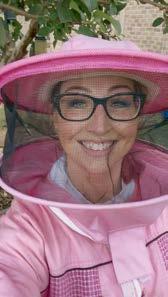
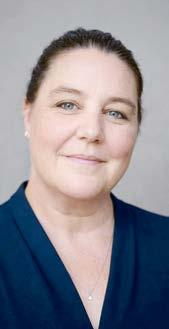

DiscoverthediversityofgardeninginQld’sbestbackyard!
Saturday11&Sunday12April
WondaiShowgrounds,2-12KentStreet,Wondai
•Saturday8amto4:30pmandSunday8amto1pm
•Admission$5perpersonperdayor$8 personperfora2daypass
•Kidsunder15FREE
•FreeparkingwithATMonsite
•NODOGSPLEASE
•Plantcloakroom&transport
•Guestspeakersonbothdays
•FREEkidsworkshopsonbothdays
•QualityStallsforallthingsGardening andLifestyle
•Plentyoffoodandrefreshments


Sponsors


JodiBiltoft0413115495
JodiBiltoft0413115495




e creation of the Lachlan Hughes Foundation to honour the life of a young farmer is making dramatic changes in the lives of others as well as the land. ERLE LEVEY was at the culmination of the year for the 2025 participants and to welcome those chosen for 2026.
It was as much about hope as it was about inspiration. About building resiliency and health into mind, body and spirit as well as into the land.
It brought forward the desire to overcome personal challenges as well as improving the biodiversity in the soil.
The intention is to have a healthy mind and outlook as well as body. To make good choices and enjoy healthy food, to find yourself in a supportive community in order to be the best version of yourself.
The Lachlan Hughes Foundation’s celebration of the 2025 program and welcome to 2026 participants at Toowoomba was an event to be valued.
The foundation was created to honour the life of Lachlan Hughes, who died in 2018 from an onfarm accident at Dulacca, in the Maranoa.
The vision of the foundation, is: “Improving landscapes and communities by fostering regenerative agricultural thinking and practices.”
Former participants and members of the foundation were at the Power Tynan office in Toowoomba to support and mentor the 2026 cohort. Members comprised Susie Marro from Mt Bolton in Victoria; Toby and Helen Gilmour of Akuna Estate, near Mudgee, NSW; Tim Lee of Beaulah at Gunnedah, NSW; Martha Lindstad of Karalee at Enngonia, north of Bourke, NSW; Trevor Rimmington and daughter Ashleigh from Lower Wonga in Queensland’s Mary Valley.
What this group of participants showed was the personal growth as well as the improvement to the land that they were farming.
The year involved deciding on a project that would benefit their property, but also provide the ability to share knowledge for other farmers who may benefit.
Lachlan’s vision and passion was to rebuild our soils and increase their sustainable productive capacity to withstand the variables of rainfall. This in turn would revitalise rural communities and improve the economic sustainability of the industry.
Lachlan Hughes always said: “It’s about putting life back into the land.’’
The initial goal of the Lachlan Hughes Foundation was to continue to develop his vision by providing an annual scholarship linking one young land manager with regenerative agriculture professionals for training and mentoring.
After three years this developed into a 12-month program for up to 10 participants from throughout Australia.
The program is outcomes focussed and includes capacity building, personal development, training and mentoring.
At this month’s celebration of the 2025 scholars, a Tree of Life award was made to one participant to enable a further year with the foundation.
This year it went to Tim Lee, a fourth-generation farmer from Gunnedah in north-central New South Wales - the service hub of the Liverpool Plains.
Tim returned from tours of duty with the Australian Defence Force in Iraq, and later Afghanistan, suffering Post-Traumatic Stress Disorder (PTSD).
Brought on by experiencing and witnessing terrifying events during these military operations, it led to depression and excessive reliance on alcohol.
Tim admits his life was a mess and he was at risk of losing the farm.
“The celebration of the 2025 program was the culmination of the past few years of hard work for me,’’ Tim said at the Lachlan Hughes Foundation dinner in Toowoomba.
“It was a matter of crawling back out from a pretty dark space.”
Looking to several support networks to help turn his life around, including a retreat in Costa Rica, gave Tim the physical and mental reset that was needed.
He turned to learning about healthy and sustainable farming instead of the more traditional methods of the past for grain production.
This included Tarwyn Park Training, permaculture with Geoff Lawton, RCS farming and grazing course, as well as regen ag field days.
Tim attributes his rehabilitation to the time he reached out to Lachlan Hughes Foundation. That gave him a sense of purpose, so much so that his neighbour has now started regenerative practices on a cotton farm.
Tim‘s project was to rehabilitate a wet area that
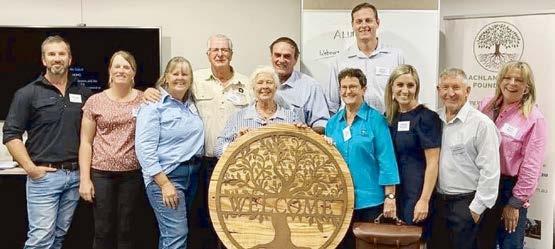
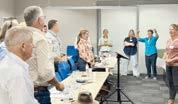

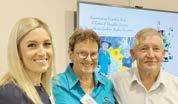
was having salinity problems due to a leaking main dam. Instead of focusing solely on the affected area, he used natural sequence farming methods to create contours and a series of small dams in the higher areas so the water would slowly flow down to the main dam. It was pumped up by solar for the cycle to start again.
The result is highly productive land carrying four head of cattle to the hectare and Tim‘s plan is to concentrate on his beef breeding program.
“The year has been a huge achievement for me moving forward, to be able to share my story and reach people that might need to hear it.
“It was incredibly hard to do - and to be that vulnerable in front of others. But it has allowed me some incredible personal growth.
“The Tree of Life award symbolises that we are intertwined and connected to all living things, to Mother Nature.
“Our health and happiness is a direct reflection of the health of all living things.
“Somewhere along the line, modern humans have forgotten to look after what supports life for us all, our soil, and ultimately our home, the Earth.’’
While presenting the changes experienced through the year Tim said he was often told: “It’s not all about the project.“
He admitted that was the easy bit. “I had some pretty loose expectations coming into this.
“I thought by completion I’d have a green sprawling oasis; however, summer in Australia had different ideas.
“I learnt that things don’t happen as quickly as humans would like with nature. It is a slow process for regeneration, but with small wins along the way I could see the way ahead.
“Regeneration isn’t just about the soil, it’s about people, and how reconnecting to the land can heal what is broken.’’
The Tree of Life ceremony was for Lachlan’s parents Philip and Adele Hughes, and his wife Anna, a chance to reflect with pride on the work their foundation is doing.
“It is inspirational to us all to see the growth in our 2025 program scholars,’’ Adele said
“These outcomes are the result of a team effort and the willingness of all involved to freely give back.
“Tim has an amazing story and the personal growth that we have observed in him is nothing short of amazing - he is a very worthy recipient of
the Tree of Life Award.’’
A LONG ROAD FROM NORWAY
Martha Lindstad grew up on a small farm in Norway but it was a community that did not pay respect to farm life.
A love of horses saw her obtain her riding license but also follow a career in journalism.
That saw her travel to the other side of the world- New Zealand at first and then Australia where she worked on cattle stations in the Pilbara region of Western Australia.
Now Martha manages a 70,000ha time-managed, cell-grazing property for Sustainable Land Management (SLM) at Enngonia - between Bourke and Cunnamulla.
Her project was to show the benefits of regenerative farming by building the soil up and improving the cover crops.
This was in a small section of a large property but resulted in much-improved weight gains in the cattle, better ground cover, and less compaction of the soil.
The project site produced more new varieties of grasses and plants than the control site.
“It proved that good grazing management is critical for nutrition in plants - you are not necessarily reliant on rainfall if your soils are functioning.’’
There was a massive difference in the brix readings in plants, indicating the levels of dissolved sugars and minerals.
The project site improved microbiology, there were more minerals, more organic carbon and organic matter.
Water infiltration improved from the start until the end of the project, the soil softened and the penetrometer went deeper down than before grazing.
“This program doesn’t just develop skills, it develops people. And that’s what it’s done for me.
“Change doesn’t happen when you’re ready, it happens when you are supported.
“This journey isn’t about becoming someone new. It’s about becoming more capable, more grounded and more willing to back yourself.
“To those of just starting the program or still finding your feet - trust the process.’’
Susie Marro from Ballarat in Victoria is continuing a family history of farming - first at Edenhope on the South Australian border and now at Mount Bolton.
She pays tribute to her father, who had a merino sheep farm as well as cross-breeds, and to her grandmother who ran a small dairy farm on her own
“My father ran two to three sheep to the acre. When he died aged 82, I planted as many poplar trees in remembrance - and used his old set of harrows for my project.
“I’m a collector of cattle. Regen farming is the future, and I want to be part of a future that is clean and green.
“Unadulterated food is the way to survive. Look after the soil, and the soil will look after you.’’
Susie wanted a deeper understanding of natural soil composition - to explore multi-species plantings and leave land in a better place.
What she learned from the program was to constantly expose yourself to hardship.
“There is no growth in a comfort zone.
“Regeneration starts with observation … observe the land, the trees and the soil. Improved soil structure retains moisture more effectively during dry periods.
“I’d be broke if I kept going the way I was. I have not had to buy hay for six months.
“There is less outlay and I run fewer cattle but they show a higher weight gain.’’
The advantages of planting multi-species is they build organic matter, Susie said. Diverse root systems and plant residues contribute to increased soil organic matter content.
A diverse mix can see legumes for nitrogen, grasses for root systems, and brassicas for minerals.
It is important to allow the roots of plants to feed others.
“Comparing multi species to single species showed a huge difference in regard to thickness of the ground cover. The single species was more sparse.
“The Lachlan Hughes Foundation is a program that has no boundaries but allows you to believe in yourself. Once you do that, you can fly.
“For the bird to fly, it has to test its wings.’’
Trevor Rimmington and his daughter Ashley Andrews from Lower Wagga in the Mary Valley took on a 200-acre property that had been conventionally grazed over the past 200 years.
It was at a time that Trevor was recovering from invasive cancer so their efforts were to immerse themselves immediately into regenerative farming. This was to rehabilitate the soil but also to provide a healthy lifestyle for Trevor and the family.
They have supplemented their income with farm animal tours featuring Highland cows as well as goats, sheep, cattle and pigs. That will expand into soil and wildlife conservation.
Their project was to fence off four plots from 10acres - next to each other then to treat them differently.
One was left as a control plot and simply had compost applied.
The others were planted with different cover crops as well as being treated with a variety of compost and manure mixes.
The results surprised both Trevor and Ashley but generally in a good way.
Microbial sprays were spread on some, but not all plots, and they all got compost.
Where there were trees and shade, when the weather started to get hot they had better crop growth.
“We will plant more trees on fence lines or install fences where the trees are,’’ Ashleigh said.
Trevor demonstrated the timeline of the project by placing rocks in a jar, then sand and finally water.
The jar was able to be filled because each layer was added in the right order.
“Look at something and try to understand why,’’ he said.
“You are what you eat. At shopping centres, do you look for a healthy alternative?
“When we start thinking, we don’t know where most of the food comes from.
“It pays now to look for a healthy alternative.’’ Trevor’sexperienceisareminderthatprograms such as this reinfoce the opportunities for learning that can be personalised for the individual.
“Regenerate yourself - whatever makes you uncomfortable is your biggest opportunity for growth.’’
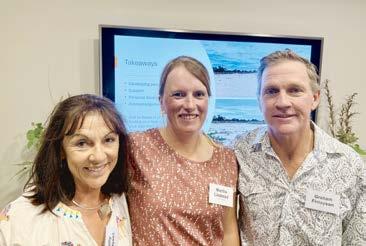
For Toby and Helen Gilmour of Akuna Estate, near Mudgee in the Central West of New South Wales, the year has seen them go from “rookies to contributors.’’
Their presentation highlighted the personal growth in their personalities - both individually and as a couple. It also showed that it pays to be open-minded in a farming life.
They came from professional backgroundsPhilip is an electrical engineer after being with the Royal New Zealand Air Force; Helen took on a number of businesses to manage after a career in haematology, focused on studying, diagnosing, and treating blood diseases.
After looking for a Seachange at Port Stephens, they sought for a Greenchange and moved to Mudgee.
Initially they were looking for six to 100 acres to establishaholidayhideawayexperienceforpeople as they had enjoyed success in that on the coast.
However, that became 200 acres of rangeland that was covered in bracken fern and timber.
Catastrophic bushfires changed the landscape dramatically but the house, sheds and infrastructure survived.
They continued to pursue holiday experiences but their attention switched to what to do with the land.
Attempts to put carbon back into the soil after the bushfires was having limited success.
They wanted to improve land at the bottom of the property by building contours and spreading the water out, Helen said.
“We became accidental farmers and realised we needed to be good stewards of the land
“It needs a lot of work. We came to fix a problem.’’
Instead, they discovered more about personal growth than microbes and soil, Toby said.
“The whole process improved a lot of our life.
“We had huge amount of imposter syndrome and were struggling to find purpose. Anyone can raise chickens and manage holiday stays.’’
During the year they changed focus with support from the Lachlan Hughes Foundation.
Philip Hughes from the Foundation, and a cattle grazier from Queensland, suggested they switch to a flower farm.
Accordingly, their first two-acre test plot has proven very successful.
By using woodchip from milled timber on the pathways and organic garden mix as well as biochar from the forest fire, they have re-energised the soil and inhibited the noxious bracken fern.
Even the chickens contribute by adding to the fertility of the soil with their manure.
Toby and Helen maintain that the year with the Hughes Foundation and their time on the property have meant more to them than the previous 35 years together.
From nine flower garden beds they intend to create 62, and that will build an income stream for the quiet part of the holiday season.
“Preparation and timing matters,’’ Toby said. “Observe and determine what the market wants.
“One year ago we didn’t know we’d be farmers, let alone flower farmers.
“Who knew we would be given advice from a cattle farmer.
“It comes down to being willing to change and take advice.’’
Lachlan Hughes Foundation scholarships for 2026 havegonetoRoyandEllaBakerfromtheShoalhaven area of NSW; Jessica Strohfeldt from the Barkly Downs in the NT; Lisa Williams and Brad Dorge from the Boyne Valley in Central Queensland; Shane and Sarah Ferriday from Hodgson, near Mitchell, Qld; Georgie Coombe and Jack Caskey from Begonia, south of Roma, Qld.
Foundation trainer and facilitator Barb Bishop, in welcoming the new participants, commented on the diversity, and the success of the program through the years.
“The people have grown ... so have I. This is a program you will engage with for years.
“In the 12-month part the course there is room for a lot change.
“It starts right now, with the opportunity to introduce yourself to a group.
“If you work as a pair or couple that makes it quite different.
“You are telling your own story yet telling one story.’’
Continued page 36
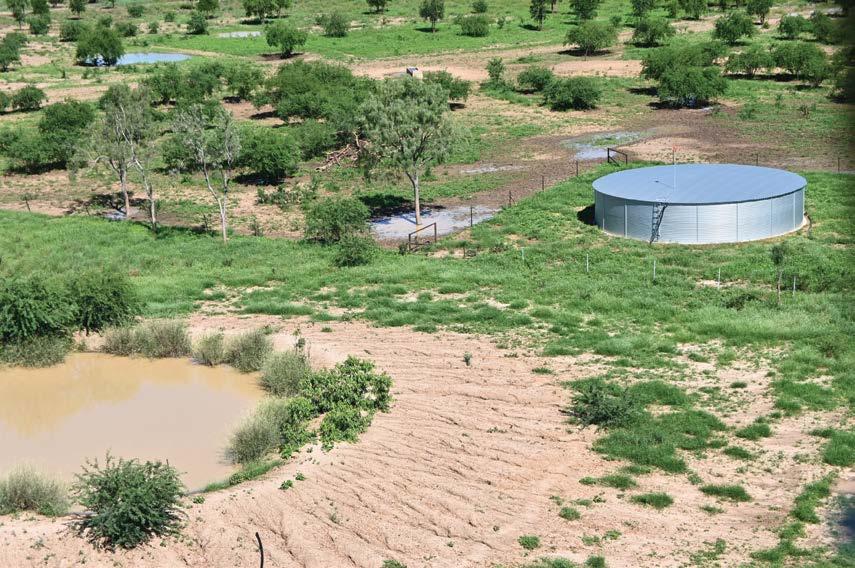
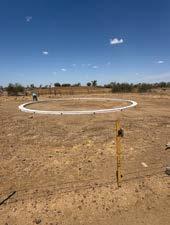
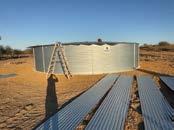
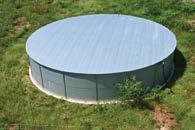
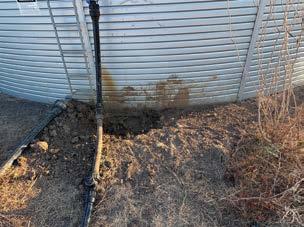
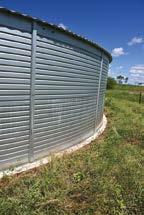
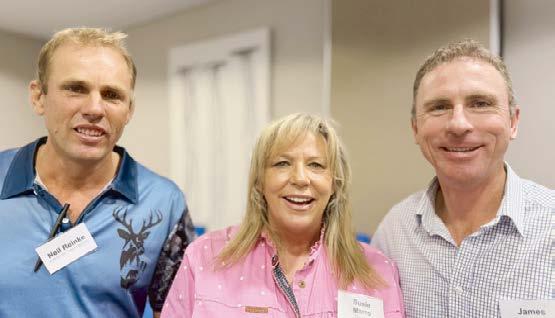


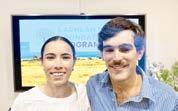
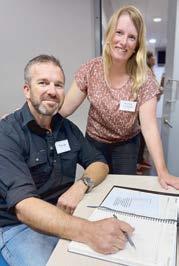
In January this year properties north of Cloncurry, in Queensland’s southern gulf region, received 700-900 millimetres of rain in just 10 days. Parts of one 207,000 hectare property, resembled more of an inland sea, than the open flat grass covered country it typically consists of.
Amongst this ocean of flood water were 20 recently installed large steel water tanks, 14 of them were positioned on a new pad system, a pad system that protects tanks from, amongst other things, erosion.
It was not only Station Manager Peter Raleigh who was keenly interested in how the steel water tanks, along with all the infrastructure, fared at the test Mother Nature had provided, but the tank installer, Jake Roberts, also.
Jake the creator of, and the one who sold Peter on investing in, Pad-Pro bases for the latest steel water tanks.
Jake Roberts lives in Cloncurry. Where he operates a rural construction and infrastructure development business. He has been installing steel water tanks for nearly five years. Prior to that he worked at Alderley station in Boulia for 11 years, where he worked his way from a
ringer to head stockman than onto managing all the day to day task across the Blacket’s family various properties.
Over this time, he has witnessed what erosion, vermin, and corrosion does to the steel tanks. Not accepting that this was just part of the course of living and working in such an extreme environment, Jake began to think of the tank pad as more than providing a solid level base for the water tank to sit on for the next 20+ years, but also as a barrier. A barrier that would not rust, be eaten by white ants, did not require heavy machinery and was easy to install.
Polyethylene, the polymer that most, smaller, water tanks are now made of, does not rust, has no interest to white ants, and can be moulded into different shapes, appeared to Jake as being part of the solution.
A conversation with Will Jones from Outback Poly Products in Mitchell, led to some designing, testing and eventually the development of Pad-Pro. A polyethylene modular base system, that when assembled acts as a retainer wall, preventing the dirt from under the tank from moving outwards and as importantly preventing wild pigs from digging around the base of
the tank, preventing run-off rain water pooling at the bottom of the tank causing rust to develop and preventing erosion of the ground the tank is sitting on.
Controlled testing of the Pad-Pro delivered promising results, and gave Jake the confidence to sell it to properties in some of the remote parts of the state, where weather conditions are extreme and ground foundations can vary from red sand to black soil. Soon enough these conditions would provide the ultimate test for the Pad-Pro.
An inspection of the tanks by, Station Manager, Peter Raleigh, after the January flooding, was quite the revelation. Not only were the tanks still in the same position, where they were installed, the ground around the base of the tanks was hardly disturbed. The investment in Pad-Pro’s had paid off in less than six months.
While the tanks without the Pad-Pro base now had their liners exposed, as the ground beneath had eroded away, making it an easy target for feral pigs to rupture.
It was a similar story at the Stanbroke Stations of Donors Hill, Warren Vale and Bloodwood, where not only had Pad-Pro been in-
stalled with newly installed steel tanks, but were also under Nu-Tank’s 10200-gallon polyethylene tanks.
Gulf Maintenance and Infrastructure Manager Ben Burns, verifying their investment in vital water infrastructure, with the addition of the Pad-Pro base, was well and truly justified.
The story, like the soil, was different, but outcome much the same, where black soil is prevalent. Notorious for being highly erodible, as it swells when wet, then significantly shrinks when dry, the tanks and their Pad-Pro bases were hardly affected at all. If anything they looked as if a Gerni had cleaned the base, leaving them looking like new.
For Jake Roberts this was validation that the idea he conceived, and turned into a sellable product, performs, even better than expected, and importantly in different soil types. Pad-Pro is a real solution to the major issues that hound the safe storage of stock water on farms, anywhere in the world.
There’s plenty of work to be done, winning over more Queensland farmers for starters. “We’ve now got some runs on the board, but there’s still a long way to go,“ says Jake.
This summer has brought severe flooding across north-west Queensland, destructive fires in Victoria and Western Australia, cyclones causing damage across parts of northern Australia, while drought continues to affect much of southern Australia. For many farmers, the impacts of these events will be felt long after the immediate damage is done.
Rural Aid is providing assistance to farmers affected by these disasters, including financial support, mental health counselling, hay, water and hands-on assistance. This support will remain available as farmers work through the long and complex process of recovery, which can take multiple seasons or years. As a charity, Rural Aid relies on the support from the community to help to provide practical assistance like hay, water, financial relief, and counselling, while also funding volunteer farm recovery events that bring real help and real hope to communities in times of adversity.
BystandingwithRuralAid,youhelpensurefarmers get the support they need, not just in times of disaster, but throughout the long journey of recovery.
“Recovery doesn’t have an end date,” said Rural Aid Chief Executive Officer John Warlters.
“Farmers and rural communities may still be dealing with damage, debt and emotional strain years after a flood, fire or drought. Donations from the community allow Rural Aid to keep supporting them for as long as it takes.”
Third-generation farmer Heather Green from Peak Hill in central west New South Wales said the hardest part is what comes after the disaster.
“The floods and droughts come and go, but it’s everything that follows,” Ms Green said.
“It’s the clean-up, the rebuilding and finding the strength to keep going year after year.”
Rural Aid is calling on Australians to support farmers through the lasting impacts of disasters and the extended recovery period that follows.
“Your support ensures we can stay beside farming families not just through disasters, but through the long road back to stability,” Mr Warlters said.
To donate today visit www.everystep.ruralaid. org.au.



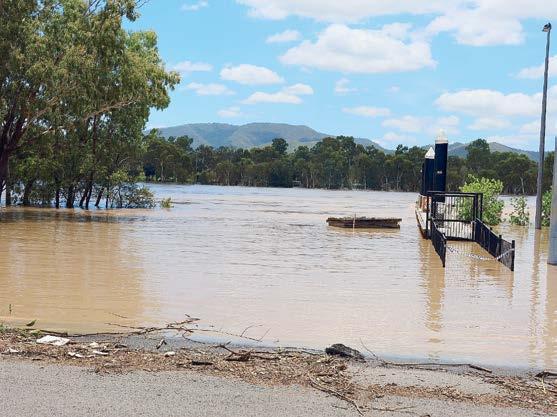
Flooding in Central Queensland in January.

















Prep time: 25 mins
Cook time: 20 mins
Serves: 6
Difficulty: Easy
Ingredients:
Green Goddess Mayonnaise
· 1 small ripe avocado, peeled, chopped
· 2 green onions, chopped
· ¼ cup flat leaf parsley leaves
Method:
· 2 tbsp lemon juice
· 2/3 cup buttermilk
· ¼ cup extra virgin olive oil
· 1 tsp Dijon mustard
· 1 hard-boiled egg, peeled Salad
· 800g baby white potatoes (see tip)
· 400g green beans and asparagus, trimmed
1. To make Avocado Goddess Mayonnaise, combine all ingredients in a blender or food processor. Blend until smooth. Season with pepper. Set aside.
2. Cook potatoes in the microwave or in a pot of boiling salted water until just tender when pierced with a skewer. Drain and cool under cold water. Drain again and allow to dry. Use a lightly oiled knife to cut into quarters.
3. Cook beans and asparagus in boiling water for about 1 minute until changed colour but still crisp. Drain and immerse in iced water.
4. Meanwhile, heat a chargrill or frying pan over a high heat. Brush tuna with oil. Sear for 1 - 2 minutes on each side (depending on thickness) for medium rare. Rest for 5 minutes before slicing.
· 400g fresh tuna steaks
· 1 tbsp olive oil
· 200g baby grape tomatoes, halved
· 1 cup whole marinated Kalamata olives
· 6 semi-hard boiled eggs, halved
· 6 small radish, halved
· 1 tbsp drained baby capers
5. To assemble salad, arrange potatoes, beans, asparagus, sliced tuna, tomatoes, olives, eggs and radish on a large serving platter in sections. Serve drizzled with some of the dressing and sprinkle with capers.
Tips:
· Dressing will in the fridge for 3 days. You can add some fresh parsley leaves or baby spinach and blend again to fresh it up.
· Add a tsp of warm water to loosen if required.
· This salad can be arranged as a salad and deconstructed.
· You can use a good-quality large can of tuna in springwater as an alternative to fresh. Flake drained tuna into large pieces.
· Use Low Gi/low carb potatoes for a heart healthy option.
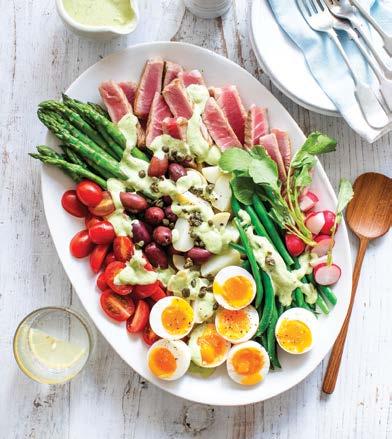
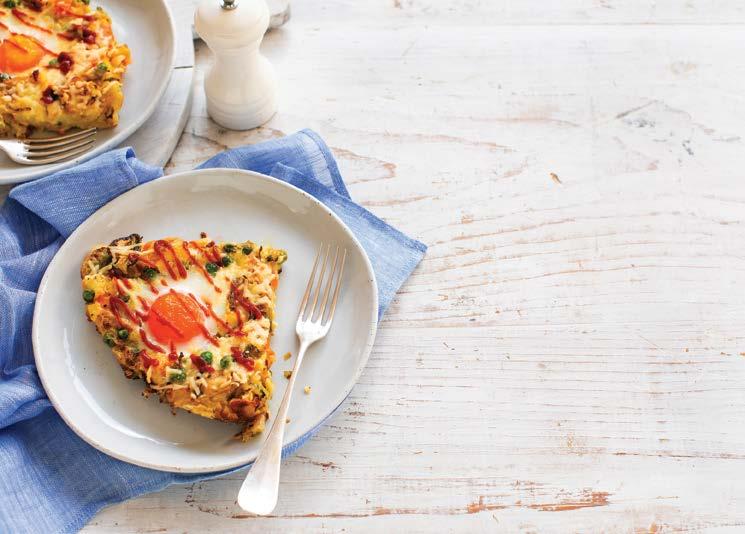
Prep time: 20 mins
Cook time: 50 mins
Serves: 4 (as a light meal)
Difficulty: Easy
Ingredients:
· 800g white potatoes, peeled, cut into 2cm dice (see tip)
· 2 small carrots, chopped
· ½ cup frozen peas
Method:
1. Boil potatoes in a large saucepan of boiling water until tender. Meanwhile, boil carrots in a separate saucepan of boiling water until tender, add peas and drain.
2. Place all vegetables in a bowl and mash roughly to break up large chunks. Set aside.
3. Heat 1 tablespoon of the oil in a 28cm, ovenproof, non-stick frying pan over medium heat. Add onion and brussels sprouts, cook stirring for 4 minutes. Let cool slightly.
4. Add beaten egg and Dijon mustard to the potato mixture and mix well. Then add the onion and sprouts mix. Gently mix through until evenly combined.
5. In the same frying pan, heat remaining tablespoon of oil and butter over medium low heat. Spoon the bubble & squeak mix into the pan spreading out evenly over the base to the edges of the frying pan. Cook, without stirring,
· 1 tbsp Dijon mustard
· 1 egg, beaten
· 2 tbsp olive oil
· 1 small onion, chopped
· 150g Brussel sprouts, thinly sliced
· 20g butter, chopped
· ¼ cup grated parmesan
· 4 small eggs
· Sriracha, to serve (optional)
for 15-20 minutes or until the base is golden brown.
6. Meanwhile, preheat oven to 180°C fan-forced.
7. Make four indents into the top of bubble and squeak with the back of a spoon. Break an egg into a bowl and carefully pour into each indent. Sprinkle with parmesan.
8. Bake in the oven for 12 minutes or until eggs are set and cheese has melted. Stand for 5 minutes before cutting into wedges. Serve drizzled with sriracha if using.
Tips:
· Bubble and squeak is traditionally using made with leftover roast vegetables from your Sunday roast. Use any of those in place of cooking vegetables.
· Lower the GI or carb by using Low GI/Low Carb potatoes such as Carisma.
· Try substituting roasted pumpkin, sweet potato or zucchini. Or replace half the potatoes with roasted swede or sweet potato.
-$3075X8 -$80 40X8 -$4075X10 -$100 40X10 -$5075X12 -$120
50X3 -$25100X6 -$80 50X5 -$30100X8 -$100
-$40100X10 -$130
PLATEHEAVY-2400X1200
1.6MM -$125 8MM-$600
2.0MM -$150 10MM-$760
3.0MM -$230 12MM-$900
4.0MM -$300 16MM-$1300
5.0MM -$380 20MM-$1600 6.0MM -$460 25MM-$2200
U-BEAM-12M
•150UB14- $500 •200UB29 - $1000
•150UB18- $650 •250UB25 - $920
•180UB16- $570 •250UB31 - $1100
•180UB18- $650 •250UB37 - $1300
•180UB22- $800 •310UB32 - $1100
•200UB18- $650 •310UB40 - $1450
•200UB22- $800 •310UB46 - $1650
•200UB25- $920 •360UB44 - $1600 STEELPLATE
•
• 2.5MM-IOWA-400MROLLS PALLETBUYS-27ROLLS-$125EA SINGLEROLLS-$135EA
PACKBUYS-93 -$90EA LOOSEBUYS -$100EA •GOATPANELGATE-$250 GATES-GALV
•10’-3M -MESH-$120
•12’-3.6M-MESH-$140
•14’-4.2M-MESH-$160
•10’-3M-5BARLIGHT-$140
•12’-3.6M-5BARLIGHT-$160
•14’-4.2M-5BARLIGHT-$190
•12’-3.6M-5BARHEAVY-$180
•14’-4.2M-5BARHEAVY-$210
•165CM-5’6”BLACK-HEAVY-$7.50

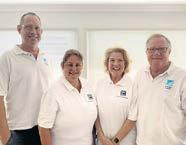
By Jeremy Cook
Allora’s growing profile as an equestrian hub could take an Olympic-sized leap under major plans to transform the showgrounds into a training venue for the 2032 games.
In March last year, the Queensland government announced Toowoomba would host equestrian competitions at the 2032 Brisbane Olympic and Paralympic Games.
The Allora Show Society is now hoping to seize on those fortunes with an ambitious project that could deliver huge economic windfalls to the small town.
Early plans propose building a brand new multifunctional stable complex capable of housing up to 60 horses, but designed to fold back and double as an event space.
Four undercover wash bays and unisex amenities are also planned within that facility under what the show society is calling stage one of their plan.
“Basically what’s going to happen is when they start developing Toowoomba, there’s not going to be any facilities for equestrian events in the Darling Downs that is to the stature of what they need,” Allora Show Society president Carol Lyall said.
“So they need a next location and Allora, with our plans, is the ideal place for Equestrian Queensland to bring those bigger events to.”
The venue would house one Olympic equestrian team in the two months before, during and one month after the games, and is being billed as a project that would deliver lasting economic benefits for Allora, home to about 1200 people, while cementing the town as an equestrian destination.
Allora is the home town of three-time Olympian Matthew Denny, who brought home a bronze medal from the Paris Games in 2024.
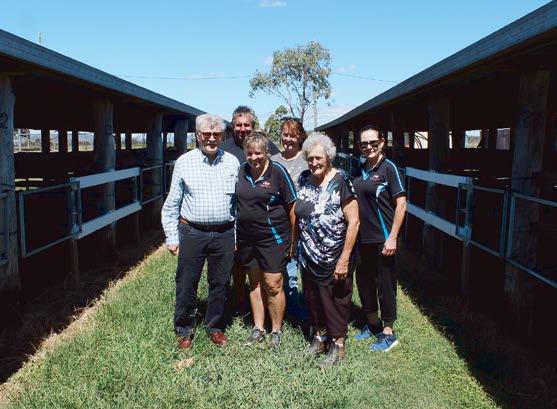
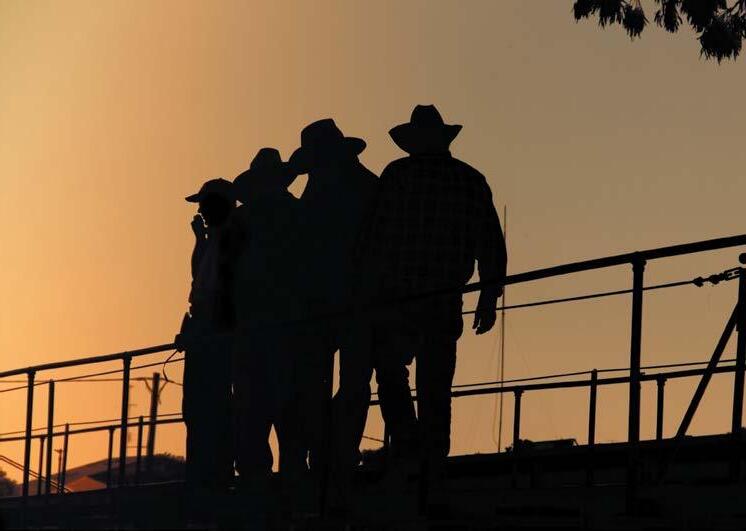
you have a story to tell,
newsdesk@queenslandfarmertoday.com.au
all your classified and advertising enquiries, contact our team.
Jane Lowe 0408 488 609
E: jane.lowe@queenslandfarmertoday.com.au
Daniel Pelcl 0408 956 830
E: daniel.pelcl@burnetttoday.com.au
Sharon Jones
P: 07 4182 0451
E: sharon.jones@burnetttoday.com.au
40,000 readership per month
Inserted into the following newspapers:
• South Burnett Today
• Central & North Burnett Today
• Warwick Today
• Stanthorpe Today
• Leader Today
• Jimboomba Today
• Beaudesert Times
• Emerald Today
• CQ Today
• Goondiwindi Argus
Also available from the follow outlets:
• Hartleys Newsexpress Toowoomba
• Roma Sale Yards
• Warwick Sale Yards
• Highfields News & Post
• Pittsworth Newsagency
• News Extra Central City
• Dalby Saleyards
• The Barn, Oakey
• Crows Nest Newsagency
• CQLX Gracemere,
• Longreach saleyards
• Emerald saleyards
• Meringandan Produce
• Goombungee Newsagency










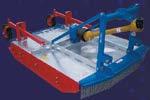














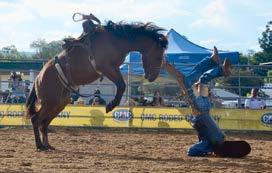
Nottodaycowboy-GoomeriNYERodeo2024.(MaddisonRichards: 452067)
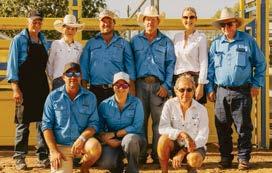
ThecommitteeresponsibleforputtingontheGoomeriNYERodeo2025. (JenniferSwanandTheCOWGIRLEdit)
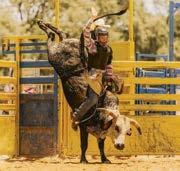
BuckingactionaplentyattheGoomeriNYE Rodeo2025.
By Maddison Richards
From the bucking action of bulls and broncs, to the talent and coordination needed for the fast paced barrel race, Goomeri New Years Eve Rodeo has been announced 2025 Rodeo of the Year.
The National Rodeo Association sees its finals held at the end of November, with any event held after this time the beginning of the new rodeo season. This is important to note, as it was the 2024 Goomeri New Year Eve Rodeo that was named 2025 Rodeo of the Year.
Committee member Kathryn Mawhinney, said it was a “pretty big honour“ to receive Rodeo of the Year, explaining it was the first time the National Rodeo Association has awarded any committee with the Rodeo of the Year award.
“We were up against a lot of other really high quality events within the NRA,“ Mrs Mawhinney said. “Super honoured and thankful to everyone that makes it happen.“
Goomeri Show Society Vice-President David Mawhinney, explained the voting process for this award.
Mr Mawhinney explained that events held in the 2025 rodeo season were presented to all National Rodeo Association members, where votes were tallied and the top three were placed before a judging panel, where the final winner was decided. The judging panel consisted of the National Rodeo Association Board of Directors.
The 2024 New Years Eve Rodeo saw 440 competitors across both the Junior rodeo and Senior Rodeo.
Moving on from this success, the committee’s 2025 New Years Eve Rodeo saw record numbers of competitors and runs of event, numbering in the 500’s, with Mrs Mawhinney saying they were on par with spectator numbers across the day, with the committee noticing that more and more people are arriving earlier in the day for the junior rodeo, and staying through the night.
Mrs Mawhinney said it feels a little bit unreal, seeing the rodeo evolve into an iconic event, especially considering Goomeri already has the iconic Pumpkin Festival.
She believes that the success of the rodeo comes from the timing of the event. It’s held during the holiday period in that relaxed time between Christmas and New Years.
It provides a relaxed atmosphere for people to come and enjoy a well run event, with rides and face painting available for the youngest of the family, making the rodeo an attractive event for the whole family.
After the rodeo action concludes for the night, the live bands and entertainment take over to welcome in the new year, with the entertainment rotating so there’s something new and fresh every year.
The New Years Eve Rodeo has been going for many years through many committees.
The first Goomeri New Years Eve rodeo was held in 2002 in the show ring, before moving to the arena in 2006.
Improvement wise, Mr Mawhinney said there’s little more they can do. The event is run on time, with great action in the arena ensuring the “crowd gets their value for money,“ with “some of the best riding you’ll see.“
“We do really well for the amount of people in the area, for the sponsors we get,“ Mr Mawhinney said. “They’re unbelievable supporters. They see this as such a good event and keep sponsoring.“
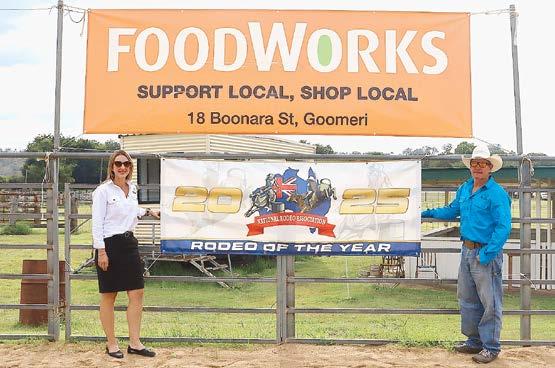
CommitteememberKathrynMawhineyandVicePresidentDavidMawhineywerehappytoacceptonbehalfofthecommittee,2025RodeooftheYear. (MaddisonRichards:534543)
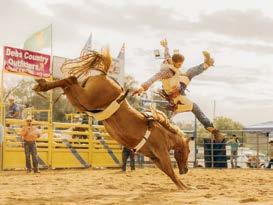
Teamworkmakesthedreamwork.
The financial success of the rodeo allows the committee to keep making improvements to the grounds.
“Sometimes people don’t see the improvements you are doing here, but there is a fair bit going on that they don’t get to see,“ Mr Mawhinney said. “It all takes time and money.“
Behind the scenes, it takes many hands working together to put on the New Year’s Eve rodeo, from the caretakers keeping up maintenance year round, to ensuring the arena is the best it can be so that the stock can perform to their best ability and put on a good showing, to sourcing sponsorship.
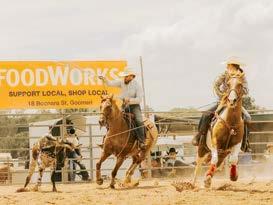
“Hours and days and weeks of administration work between the committee of sourcing sponsors, invoicing, and ordering and preparing supplies,“ Mrs Mawhinney said. “It’s hours of work, and all sorts of things that don’t get noticed on the day.“
“There’s no one person doing it all,“ she said.
“It’s lots and lots of volunteers, especially on the day.“
Both David and Kathryn Mawhinney would like to say a big shout out to all the rodeo’s sponsors and volunteers, as the rodeo couldn’t be run without their assistance.
Funforallages.
Cattle Report
Date: 18/02/2026
Saleyard: Casino
Casino penned similar numbers of 1771 mixed quality cattle with a slight increase in the cow offering. The regular buyers attended and operated to a varied market which resulted in light background weaner steers selling to cheaper trends the corresponding heifer drafts were dearer also selling to backgrounders. Weaner steers to 330kgs were dearer with a lift in quality. Cow trends resulted in positive trends for that category. Light weaner steers much cheaper 340c to 542c/kg processors 320c to 380c/kg. Medium yearling steers to feed were dearer 384c to 470c/kg and similar backgroundersalsodearer340cto370c/kg.Heavy processors slipped 24c/kg 380c to 448c/kg. Light heifer weaners to background 5c/kg dearer 336c to 448c/kg the processors cheaper 340c to 418c/ kg. Background heifers to 280kgs 368c to 400c/kg. Heavy processors 350c to 410c/kg. Heavy grown steers dearer to process 438c to 454c/kg similar heifers 14c/kg better 382c to 408c/kg. Prime heavy cows to positive trends 378c to 394c/kg and heavy three score cows gained 4c/kg 280c to 375c/kg. Heavy bulls to 4c/kg better 372c to 392c/ kg. Stephen Adams MLA Report Date: 11/02/2026
Saleyard: Charter Towers
The opening sale for the year resulted in 1305 cattle penned. Quality was mixed, with limited numbers of heavy prime bullocks and cows, however there was a good supply of feeder steers and heifers, supported by some very good quality young cattle to suit restockers. Most regular processors were in attendance but limited numbers restricted their participation, supported by regular feeders and opportunity restockers. Cattle were mostly drawn from local and coastal areas.
Most categories sold in line with other selling centres, despite the variable offering. Very good quality flatback steers to background sold to 544c, a good sample averaging 515c, similar heifers to processors made to 350c to average 336c/ kg. Yearling steers above 330kg to feed averaged 390c, selling to 410c, similar heifers made to 394c to average 358c to 371c/kg. Prime grown steers above 500kg sold from 386c to 396c, prime heifers sold from 348c to 356c/kg.
A limited number of heavy bullocks made to 382c/kg. Medium weight 3 score cows sold to 372c, averaging 348c to 366c, prime heavyweight cows made to 368c/kg. Heavy bulls to processors sold to 326c/kg.
A mixed run of cows and calves sold to $1,375 per unit.Market Reporter, Mick Kingham
Report Date: 18/02/2026
Saleyard: CQLX Gracemere
The yarding decreased by 817 head at CQLX Gracemere Sale to 2396 head, due in part to some rainfall in the draw area in the past few days. Quality and condition are continuing to improve along with the season. The usual buying panel was present for the feeder and processor interests and there were several keen restockers and backgrounders operating which helped keep the market close to last sale rates. Light weight yearling steers sold to restockers and backgrounders to top at 631c/kg and averaged from 529c to 579c/
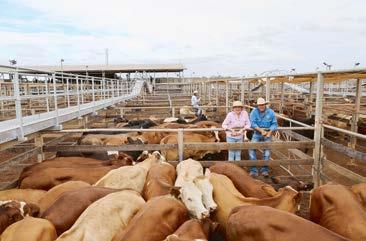
kg for the best bred pens. Medium weight yearling steers averaged 485c to 567c/kg for well-bred lines. Light weight yearling heifers made to 531c/ kg occasionally, averaging 380c to 397c/kg for decent sized samples. Medium weight pens commonly averaged 371c to 394c/kg. Grown steers to feed sold consistently, returning averages from 424c to 496c/kg. Bullocks, selling to processors averaged 437c to 439c/kg. Trade weight heifers varied a little with finish, to average 377c to 410c/ kg. Feedlot heifers averaged 400c to 420c/kg. Heavy, four score cows made to 394 to average 373c to 393c/kg. Two score cows to processors sold from 318c to 353c/kg. Heavy bulls to processors averaged 344c/kg with a top of 359c/kg. Several pens of well-bred cast for age brahman cows and calves made from $1,900 to $2,100 per unit with other good average quality lines making from$1,650 to $2,450 per unit. Reporter: Richard Thomson
Report Date: 18/02/2026
Saleyard: Dalby
Useful falls of rain across most of the supply area reduced the number of cattle at Dalby by 1,296 head to 4,590. The number of cows penned also reduced to 701 head along with 243 bulls. There was a return to a full panel of export buyers however not all were operating. A good lineup of feed and restocker operators were active in the market.Light weight yearling steers returning to the paddock improved in price by 2c to 8c/kg. Yearling steers to feed gained 20c to 30c/kg. Light weight yearling heifers to restockers lifted in price by 6c to 13c/kg. Yearling heifers to feed sold to a market over 20c/kg dearer in places. Heavy grown steers and bullocks regained some of the previous weeks losses to average 5c to 10c/kg dearer. A similar story with the cows with improvements of 5c to 6c and over 20c/kg on store condition cows to restockers.Light weight yearling steers to restockers made to 612c on a couple of occasions with most sales 520c to 541c/kg. Yearling
steers to feed for the domestic market made to 552c and averaged from 515c to 521c/kg. Heavy weight yearling steers to feed averaged 503c and made to 528c with the over 480kg classes making to 510c/kg. Light weight yearling heifers returning to the paddock made to 476c to average 419c/kg. Medium weight yearling heifers to feed averaged 426c and made to 460c/kg. The heavy weight portion made to 463c and averaged 414c/ kg. Bullocks made to 462c and averaged 443c/kg. Medium weight 2 score cows averaged 339c and made to 344c/kg. Heavy weight 3 score cows averaged 365c and the best of the cows made to 390c to average 380c/kg. Heavy weight bulls made to 410c/kg. Market Reporter, Trevor Hess.
Report Date: 10/02/2026
Saleyard: Roma Store
With not much change in the weather Roma Agents yarded 8,475 head. Cattle drawn from the normal supply district as well as NSW. All the regular buyers attending and active on most slaughter cattle. The market erratic with quality runs of steers selling to stronger market quality related. Heifers sold to solid rate and cows losing 5 to 8c/ kg on the better cows and light conditioned cows up to 15 to 20c/kg. Yearling steers under 200kg sold from 300c to 472c/kg to restockers. Yearling steers 200 to 280kg selling from 390c to 592c/kg to restockers. Yearling steers 280 to 330kg sold to 580c to average 535c/kg to restockers. Yearling steers 330 to 400kg topping 554c/kg to restockers. Yearling steers 400 to 480kg to 514c/kg to Lot Feeders. Yearling steers over 480kg sold 462c/kg to processors. Yearling heifers 200 to 280kg selling from 290c to 444c/kg to restockers. Yearling heifers 280 to 330kg sold to 440c to average 440c/ kg to restockers. Yearling heifers 330 to 400kg topping 434c/kg to Lot Feeders. Yearling heifers 400 to 480kg to 400c to Lot Feeders and 446c/kg to restockers. Yearling heifers over 480kg to 442c/ kg to processors. Grown steers 400 to 500kg sold from 430c to 478c/kg to Lot Feeders. Grown steers
500 to 600kg made to 480c/kg to processors. Bullocks over 600kg to 466c/kg to processors. Heifers over 540kg to 442c/kg to processors. Approx 1650 cows penned. The 3 score prime cows over 520kg sold to 398/kg almost 10c/kg less than the previous sale. The 2 score cows 400 to 520kg sold from 240c to 360c/kg to processors. Bulls 450 to 600kg to 430c/kg to processors. Bulls over 600kg to 410c/kg to processors. Approx 400 cows & calves penned selling from $1220/unit to $2060/unit for the better lines. Market Reporter David Friend. Report Date: 17/02/2026
Saleyard: Warwick
Warwick agents penned 1,108 cattle a reduction of 850 head. All the regular processors and feeder buyers attended along with local restockers. The yarding was dominated by heavy feeder and export lines which sold to dearer trends with only a small offering of yearlings to suit the restocker. Yearling steers in the 200-280kg range to restockers sold from 410c to 512c/kg. Yearling steers over 280kg to background sold from 420c to 502c/kg. Yearling steers to feed for the domestic market sold from 420c to 500c/kg. Heavy yearling steers to feed sold from 410c to 500c/kg with those to the wholesale meat trade at 431c to 479c/kg. Light weight yearling heifers to background sold from 346c to 422c/kg. Yearling heifers to feed sold from 350c to 422c/kg. Heavy yearling heifers to feed sold from 400c to 452c/kg with those to the wholesale meat trade topping at 472c/ kg.Bullocks to processors sold from 442c to 472c/ kg. Grown heifers to processors sold from 369c to 426c/kg. Medium weight score 2 cows to processors made 360c to average 322c/kg. Heavy score 3 cows to processors sold from 352c to 376c and averaged 364c/kg. Good heavy cows sold from 370c to 390c and averaged 377c/kg. Heavy bulls to processors averaged 382c and sold from 350c to 410c/kg. Market Reporter Errol Luck. Sheep Report Date: 18/02/2026
Saleyard: Warwick
The scatted falls of rain across the supply area reduced numbers to 1,154 lambs and 570 grown sheep at Warwick. The usual buyers attended and operated on a market similar to last week with young store lambs to restockers receiving strong competition along with those to the butcher trade. Older lambs to suit the wholesale meat trade up by $2/head with those to the processors $4 to $17/head easier.Young lambs under 12kg to restockers sold from $66 to $118/head. Young lambs in the 12-16kg range to background sold from $106 to $159/head. Young lambs over 16kg to the butcher trade sold from $135 to $184/head. Older lambs to feed sold from $167 to $210/head. Lambs in the 18-22kg range to the wholesale meat trade sold from $179 to $231/head. Trade weight lambs sold from $194 to $247/head. Heavy lambs to processors sold from $260 to $330/head. Dorper and crossbred hoggets to processors sold from $120 to $220/head. Light weight ewes to restockers gained $11 and sold from $65 to $125/ head. Ewes to processors eased by $10 and sold from $80 to $200/head. Crossbred and Dorper wethers to processors sold from $160 to $200/ head. Ram lambs to the butcher trade sold from $168 to $188/head. Rams to processors sold from $110 to $148/head. Market Reporter Errol Luck.
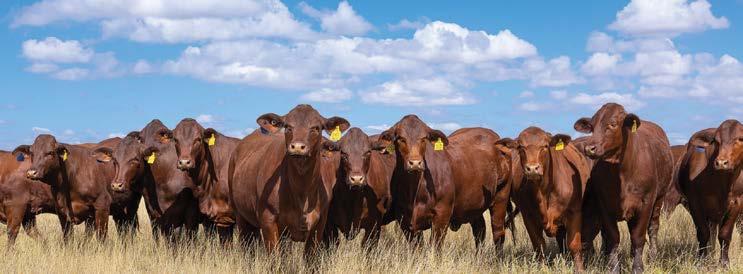

By Connor Whittaker
Desi Johnson’s journey to the Winter Olympics has followed an unconventional path, one that began on the athletics track and now leads to the ice of Italy.
A Miles’ native Johnson’s sporting foundation was forged in athletics, where she competed in the 100-metre sprint and the heptathlon.
Those events honed the explosive speed, strength and technical precision that would later define her transition to bobsleigh.
In 2023, she made the switch to the sliding sport, quickly identifying the brakeman role as a natural fit.
In bobsleigh, the opening seconds of a run are often decisive, and the brakeman is responsible
for delivering multiple high-force pushes before loading into the sled, an area where Johnson’s power and acceleration proved immediately effective.
Johnson’s speed and strength translated seamlessly to the ice, and she soon began racing internationally alongside teammate and pilot Sarah Blizzard.
Together, the pair started to build experience against the world’s best, laying the groundwork for Olympic qualification.
The breakthrough came in 2025, when Johnson emerged on the international development circuit.
She was invited to attend the first international bobsleigh and skeleton summer training camp in Prague, an important step in her progression.
The camp concluded with a push championship event, where Johnson topped the women’s field, underlining her reputation as one of the sport’s most powerful starters.
The 2025–26 season became a critical phase of Olympic qualification and international learning.
Johnson and Blizzard stepped into World Cup racing, gaining valuable starts on tracks expected to shape the sport for years to come. Johnson made her World Cup debut in Cortina d’Ampezzo on 23 November 2025, finishing 23rd in the twowoman event.
The result was significant not only as her first World Cup start, but also because it came on the Olympic track that will host the Games’ sledding events.
Momentum carried into the new year.
At the Winterberg World Cup on 5 January, the duo recorded their best World Cup result to date, placing 17th in the two-woman race.
The performance reflected improved execution across both heats.
They closed the pre-Olympic World Cup season with a 20th-place finish at St. Moritz, followed by another personal best of 15th at Altenberg.
Away from competition, Johnson has also built a strong online following by sharing insights into her training, fitness and nutrition.
Through that platform, she has helped highlight the extensive behind-the-scenes work required in a sport where athletes often manage significant logistical and financial demands throughout a full winter campaign.