





Welcome to yet another edition of the Eyre Magazine, where we shine a spotlight on the passionate and outstanding individuals and groups who make our region as great as it is.
Some are born and raised on the peninsula and enjoy its idyllic surroundings - others, like Kimba’s McKenzie family, are enchanted by it.
Trading Adelaide for Eyre Peninsula, the family speaks about their change and how they would not have it any other way.
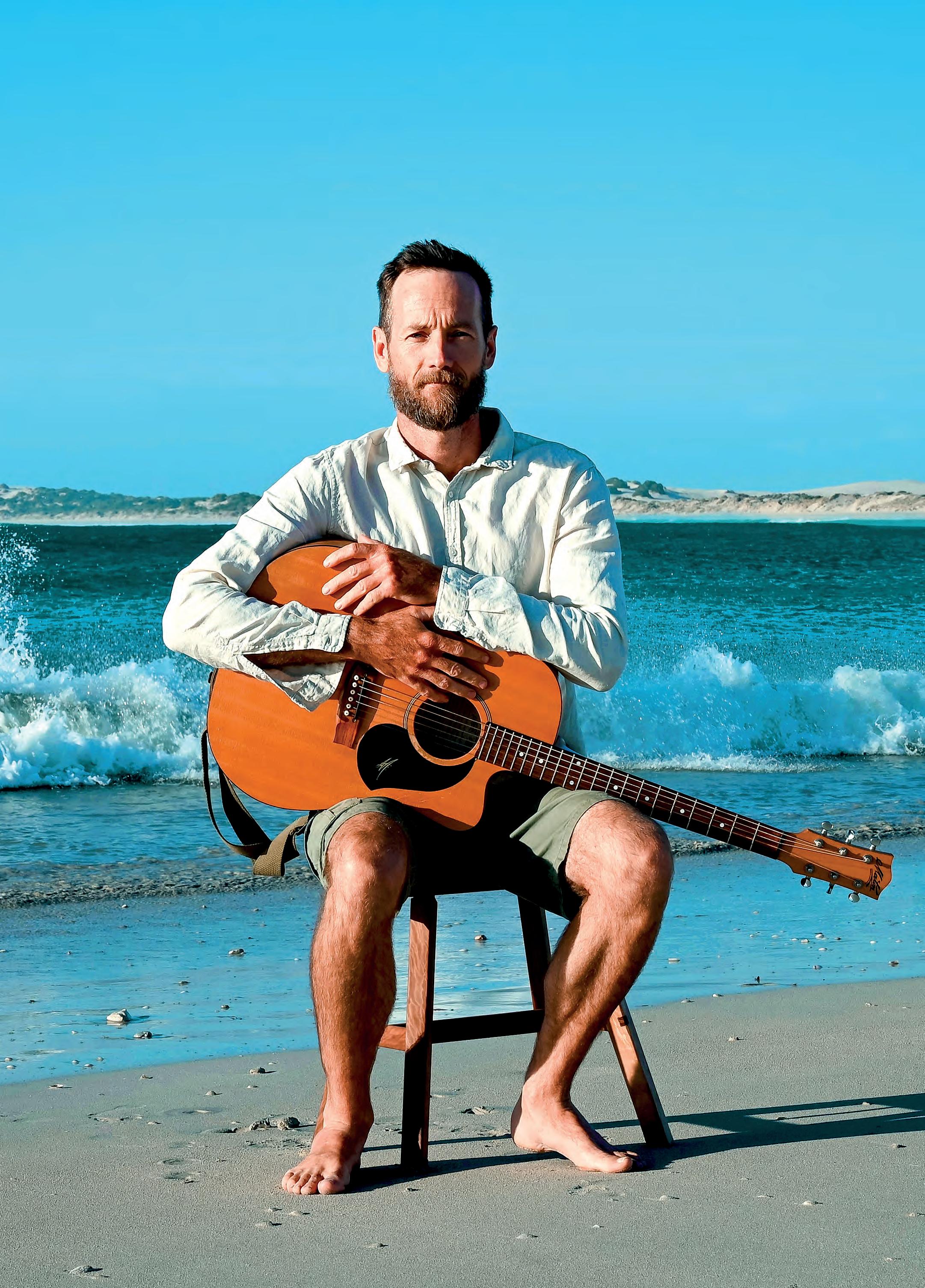
Eyre Peninsula is full of innovation and people who utilise the world around them to the best of their ability, just like Joshy Willo.
Whether with a guitar in hand, carving out a woodworking masterpiece or as an expedition guide, the Elliston resident exemplifies the can-do spirit of the region.
So too are the next generation of farmers, getting on with their work while changing perceptions.
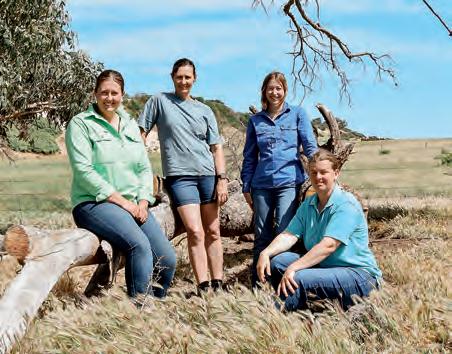
This edition delves into the lives of four females most at home on their farms.
Heading to Yeelanna, Lindy Brook
has turned an old sporting oval into a thriving operation with mulberries at its heart.
Speaking of the sporting arena, Rochelle Milnes is a jockey on the rise, claiming honours on Eyre Peninsula and further afield - and the best is yet to come.
Streaky Bay youngster Kyle Feltus is a burgeoning sporting star with a goal to succeed in mind.
Also in this edition is a look at creatives including Ceduna’s Pam Diment - a wizard with the pottery wheel - and Andy McComb, who together with his trusty hammer has been carving out stone masterpieces for decades.
We thank you for your support over the first three years of creating this magazine, which continues to go from strength to strength.
What started out as a 40-page insight into Eyre Peninsula and its people has grown to be a 72-page giant, jam-packed with great stories covering the width and breadth of the peninsula.
Happy reading!


Luca Cetta Editor


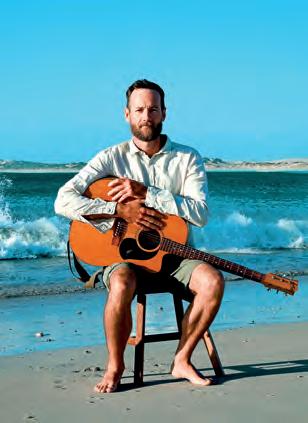

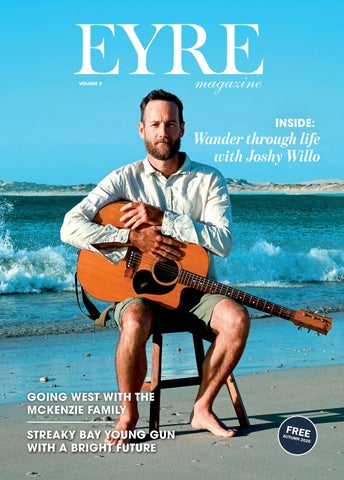
FRONT PAGE: Joshy Willo
PHOTO: Charlotte Martin
Eyre Magazine
Autumn 2026
Volume 3, Edition 1
PROJECT MANAGER: Stacey Lawrie
EDITOR: Luca Cetta
CONTRIBUTORS:
Luca Cetta
James Jacobi
Lisa Lock
Charlotte Martin
Mitchell Paterson
Bev Story
Liam Utting
Liam Wormald
PHOTOGRAPHERS:
D.A Photography
Doddlife Photography

Down to Earth Photography by Roanne Scholz
Grace King
Millie King
Robert Lang Photography
Sam Price
DESIGN:
Sanya Anand
James Manuel
Illyse Mendoza
Cassie Mower
Lisa Schulz
Aaron Walker
ADVERTISING: Stacey Lawrie
Naomi Ryan
Laura Theodore
Liam Utting
08 8682 1055
advertising@epadvocate.com.au
PUBLISHED BY: SA
Phone: 08 8682 1055




















































6-7
8-10
11-13
Familiar Faces: Peter Beard and Suzie Kenny
Gone West: A new life on solid ground
Community help saving endangered osprey 14-16
17-19
Wandering with Joshy Willo
Classic event celebrates 20 years
20-22 Days at The Mulberry Tree
23-25
Kyle’s drive to succeed
26-29 Her harvest:
30-31
Exploring the lives of women in farming
Paw-sitive nurturer
32-33 Hot Drop
34-35 Locally Eyre
36-37 What’s on
38-39 Lend me your ears
40-41
Racing through life
42-43 Pam remains fired up
44-46
Experience the wild of Baird Bay
47-50 The railway that built a region
51-53 From family vision to environmental legacy
54-55
Rock solid: Andy and Thor lay down the hammer
56-57 From the Kitchen
58-60
61-63
64-66
67-70
Pioneer woman makes big impact
Minbrie magic: The Cowell Black Jade trade
Hooked on fishing, captured by photography
Wonderful walking trails







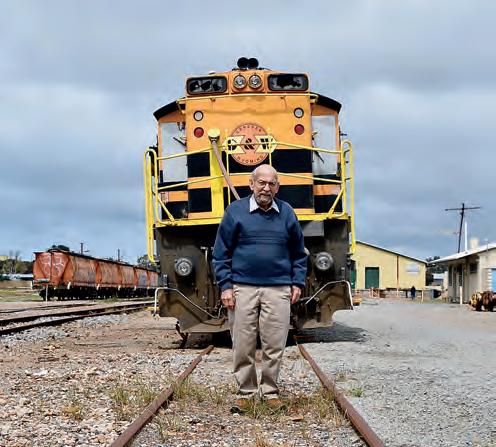
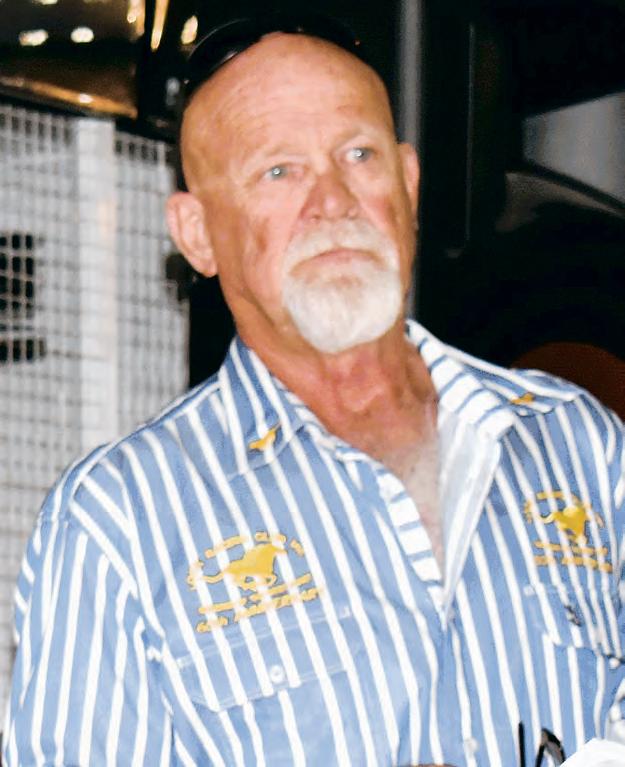
Lock’s Peter “Pedro” Beard is at home on his header, but aside from tending to the crops he is well known among racing circles as the Lock Racing Club president.
What is the best thing about volunteering as Lock Racing Club president?
A legacy was set up by our predecessors and it has been a privilege to continue that on and build upon it, improving facilities and keeping the Lock Races going for the enjoyment of the wider Eyre Peninsula Racing community and its supporters.
What is the best thing about working on your farm?
I am the third generation to live where I live and work on the farm, and proud to see my oldest son keen to continue on. Although it’s hard work and can be very challenging, the lifestyle is good. We farmers are custodians of the land who provide food for the world. There’s a simple and honest integrity in it.
What is the best thing about living and working on Eyre Peninsula?
I have lived on Eyre Peninsula for most of my life, only spending a few years away at school and then wool classing. The people are friendly on Eyre Peninsula. Everyone seems to know one another or be connected somehow. In times of crisis, we pull together to help each other out.
What three things would you take if you and the family were deserted on an island?
The sensible answer would be a food source, water, clothing and shelter. I love my beer (Southwark, of course!) and a fishing line would be pretty handy!
Do you prefer summer or winter and why?
As a farmer, I know we need both. I love the weather, being by the beach and fishing in the summer. In winter, I love the rain and football, of course! I don’t like the cold.
What is the most unique/ interesting problem that has been presented to you at work?
I don’t know if this is unique or interesting, but it is a constant challenge to survive and thrive as a farmer.
What time does your alarm go off and how does your typical morning unfold?
I don’t have an alarm. Typically, I get up and always have a coffee. I then do some stretching exercises to help with my flexibility before breakfast. After that, I go and do whatever relevant jobs need to be done. I’m pretty much retired since having two hips and two shoulders replaced.
Who would play you in a movie about your life?
Chris Hemsworth - a good Aussie bloke.
What is your idea of a perfect weekend on Eyre Peninsula?
I’d be by the beach or in the boat fishing at Streaky Bay with the family and friends.
Favourite place to eat on Eyre Peninsula?
The Boston Hotel, takeaway from The Fresh Fish Place, pizza from Shanno’s Pizza Bar.
Last movie or show you streamed or saw and was it any good?
‘The Ministry of Ungentlemanly Warfare’ and ‘Bullet Train’. Yes, I enjoyed them both and had a laugh.
Favourite musician?
I have a multitude on my playlist, to name a few: Aussie Crawl, AC/DC, Coldplay, The Killers, The Screaming Jets, Dire Straits, INXS, The Foo Fighters.
If you could do someone else’s job on Eyre Peninsula or Lock for one day, what would you be doing?
Fishing. I definitely wouldn’t be shearing anyway.

Monday - Friday 6:30am-4:00pm


What is the best thing about being a farmer?
For me it is owning a vast and diverse property that gives us opportunities in business but also to be able to immerse ourselves in the amazing beauty of our little patch of paradise.
What do you enjoy about living and working on Eyre Peninsula?
The community connection. To me the Eyre Peninsula is one big community and having relatives, friends, acquaintances in every town and everywhere in between is so great. I think it’s true that to make a difference in the world it starts at home, then transposes into communities in a way that allows individuals to showcase their skills and talents to make really positive contributions, which in turn adds to our own EP culture.
What three things would you take if you and your family were deserted on an island?
Well since the question states my family will be with me, that means I’ll have three strong, intelligent men with me, so that is a very big bonus! A fishing line, a book and something to light a fire as I’ve never had much luck rubbing two sticks together. Oh, but of course I would have scheduled an Instagram post stating “I totally planned this”.
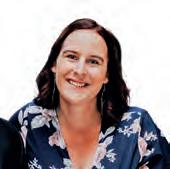
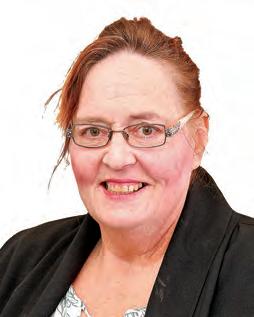
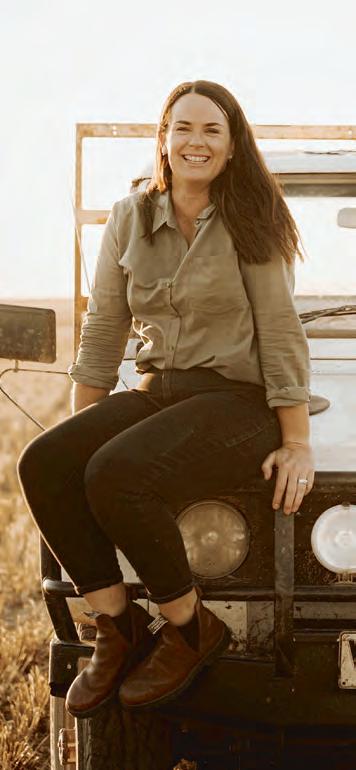
Suzie Kenny is a coach, farmer, published author, mother and proud wife from Streaky Bay, with a strong focus on family, freedom and health.
Do you prefer summer or winter and why?
I’m definitely a winter woman. I adore green grass, rain clouds (and rain), bonfires, camp ovens, vintage woolen rugs, bushwalks and watching winter storms roll over the ocean.
What is the most unique/ interesting problem that has been presented to you at work?
I’ve had such a variety of problems over the years in the different jobs that I’ve had. In my own coaching business, it never ceases to amaze me just how tough people are to strive towards overcoming their varied and complex issues and it truly is an honour to help them in their own unique journey. In my work in our farming business there have been a few times where I have had to step outside of my comfort zone and constantly through farming that we can do way more than what we may initially think, we are way smarter, stronger and more capable than we may give ourselves credit for. I’ve found on every occasion it is simply a willingness to have a go at things that will propel us towards outcomes that we may or may not have foreseen for our own lives, that’s what gives us the adventure that is worth taking! I’ll add that being able to admit that we don’t know something or are learning new skills no matter what age we are is a helpful attribute. This motto is probably what also encouraged me to start work for our excellent Member for Flinders, Sam
Telfer MP. I’ve always had an interest in politics so to be given an opportunity to work in this field is proving to be a great adventure, being able to assist people in this capacity is truly rewarding.
What time does your alarm go off and how does your typical morning unfold?
I’m not a morning person, so I set the alarm as late as possible, which is fine if my morning goes according to plan, when I have a plan. I love to juice a whole lemon, add olive oil, pop it into a fun shot glass and kick start the day.
How do you juggle family, farming, writing a book and other work?
The subtitle of my book is “the courage to lead your life with one foot in chaos and one foot in order”, and I am very conscious about always striving to stay as balanced as possible while making sure to give things a crack as much as I can. I discovered that strengthening myself helps me navigate those more difficult or chaotic times in life and I do this by trying to hit targets for my own health and wellbeing. Continual awareness of what areas of life need some attention, such as healthy eating, connection to friends or down time to decompress



and then making a conscious effort to achieve this. It is true sometimes I don’t keep all the juggling balls in the air, but I’ve learnt that perhaps it isn’t dropping the ball perhaps it’s much needed rest and time to carve out time to think properly.
Favourite place to eat on Eyre Peninsula?
I’m not a foody, I eat everything, so I never spend a lot of time and energy focusing on where or what to eat, maybe that’s because I can’t really go past a country chicken snitty and chips at our local Streaky Bay Hotel with good company. Yes, it’s the simple things.
Last movie or show you streamed or saw and was it any good?
I don’t watch movies; they are too long and I don’t see the point spending my time on something that doesn’t help my life in some way. But I’ll sit down occasionally and watch a good series, the last one I enjoyed was ‘The Diplomat’. When I do get time to watch a screen, I watch podcasts or do online learning.
Favourite musician?
I’m a big music fan, so I have such a broad range of genres on my playlist. I grew up listening to Slim Dusty and can still sing word for word all of his songs. Now Spotify Wrapped tells me: Zach Bryan, Noah Kahan, The Lumineers, Sam Fender, Ben Howard and for a golden oldie choice it would be The Cranberries. I do have such great memories of an old local band back in the day called The Pit Crew, a lot of dancing and partying was done to the music of that Streaky Bay band.
What is your idea of a perfect weekend on Eyre Peninsula?
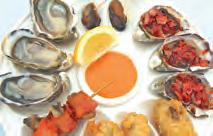
Friday night: happy hour, Saturday: a long clifftop walk taking in the wonders near Streaky Bay followed by coffee with friends. Saturday night: a cheese platter, local oysters and prawns and a champagne at the beach. Sunday: a no alarm allowed morning, then a drive to the Gawler Ranges with the family for a look, a walk and a picnic lunch, then home to throw a chop on the BBQ. I’ll not discount a good shindig though; I certainly can morph into a social butterfly when I want to.







Words: Lisa Lock
Photos: Down to Earth Photography by Roanne Scholz
After making the big move west to Eyre Peninsula, the McKenzie family is loving life in Kimba.
The trope of the sea change is one we hear often - packing it all in for a life by the water, a well-worn path to salty air and quiet adventure.
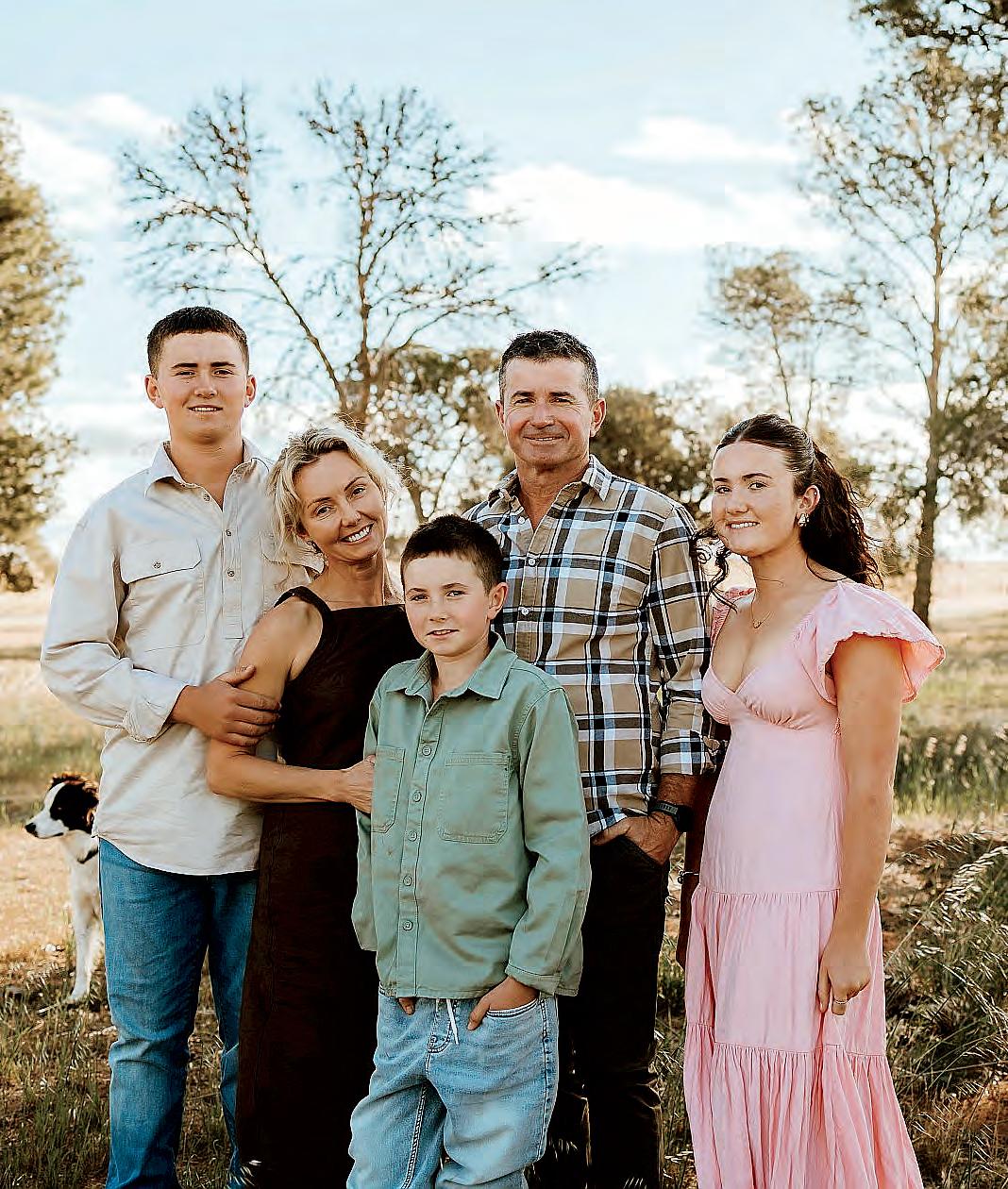
But for Glen and Monique McKenzie and their three children, 15-year-old twins Tom and Meg and 11-year-old Dan, the reverse has been just what they needed.
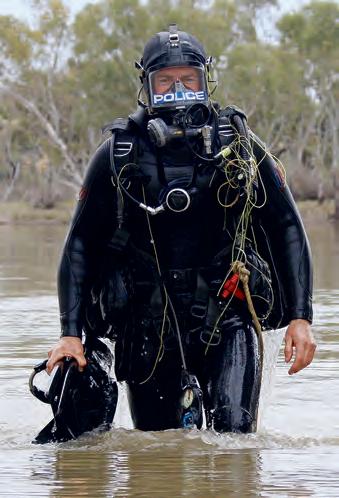
Two years ago, they traded beachside lives in Adelaide and Glen’s career in the water police for the dusty, rolling hills of Glenroy, a slice of farming land just out of Kimba, miles from the nearest coastline.
For Glen, it’s a long way from a life on and in the water to one in the paddock, but the broad smile on his face is testament to a decision well made.
“I never really joined the police force to be a police officer, as crazy as that sounds,” he says.
It was his love of diving that steered him to the police, encouraged by friends and dive buddies he served with in the Army Reserve.
One of just 15 police divers in the state, the tight-knit group were typically called in to the toughest of situations; ocean, dam, sinkhole, river, often at a time of tragedy for a family and the community around them.
Someone was lost and it was Glen and his team’s role to find them; rarely a rescue, typically a recovery.
As difficult as it was, the work was rewarding.



A new life on solid ground
“I heard Glen say to someone the other day - to find a missing body was to find peace for the family,” Monique says.
Glen agrees: “You could see what the families were going through - and as the dive supervisor you were speaking to those people - but if we could find that person then as tragic as it was, it was a sense of closure for them.”
In 21 years with the water police, there was never a ‘typical’ day for Glen.
“There were times when I went to work in the morning and came home three days later. You might have been doing some maintenance or paperwork, and next minute you’re flying to the Eyre Peninsula (for a job).”
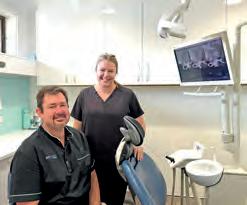
Yet after two decades the sense of adventure was wearing thin and the nature of Glen’s work, combined with Monique’s own busy career as a dental therapist and hygienist, no longer suited the young family.
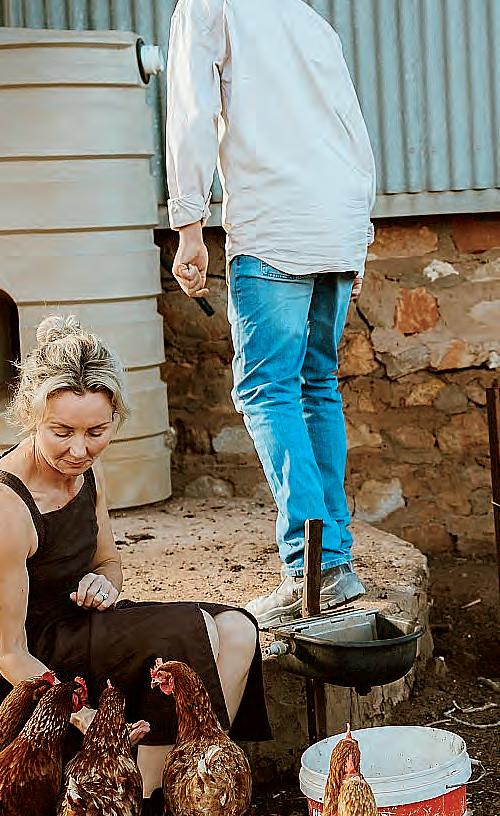
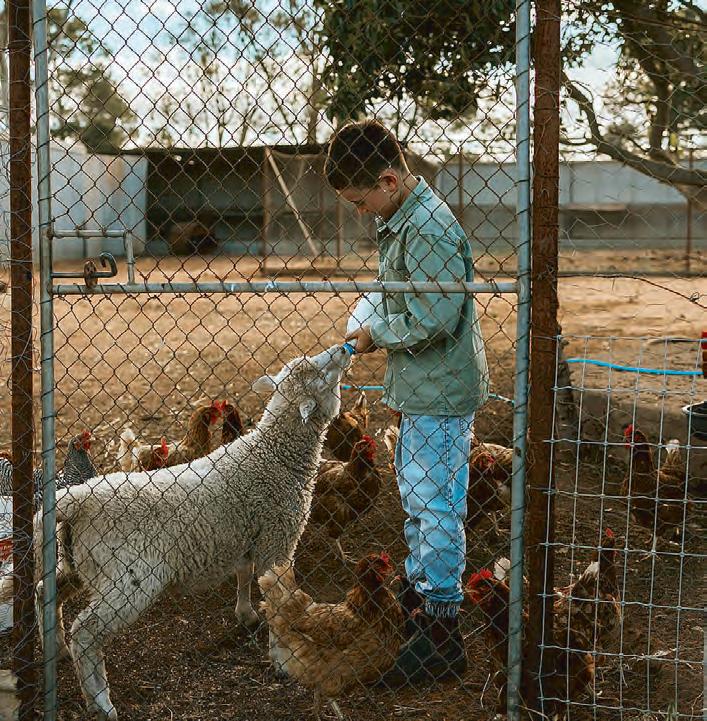
Despite growing up in the city, Glen and Monique describe their children as typical country kids.
“They love quiet spaces, open spaces,“ Monique adds.



I like to make somewhere for everyone to come home and feel good “ ”
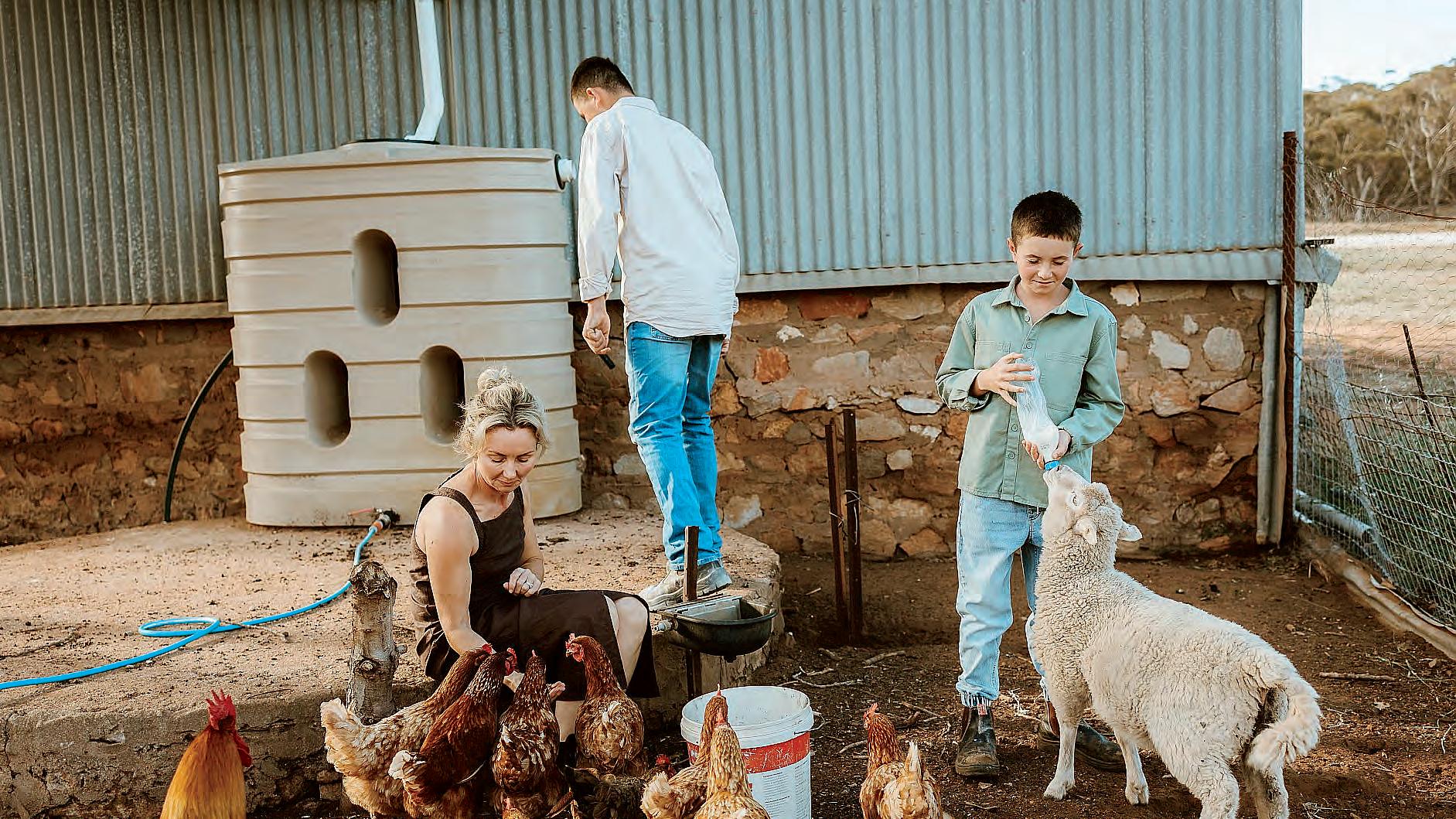
The family always had a country connection. Monique had grown up in Quorn in the Flinders Ranges, and as an adult her sister, Sarahanne, lived with her own young family near Kimba in a beautiful, if slightly tired, heritage farmhouse with a striking view over the countryside.
The McKenzies loved to visit, and Glen had worked the odd harvest with Sarahanne and husband Ben’s family farming business, Shipard Ag.
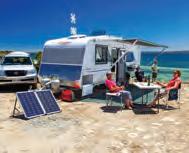
It was a caravanning trip around Australia in 2021, seeing new things and meeting new friends, that now feels like a catalyst for the young family.
They came to see that life could be different, and while the kids were eager to get home at the end of the trip to catch up with their friends, the


novelty wore off “after four or five days back at school”, Monique says.
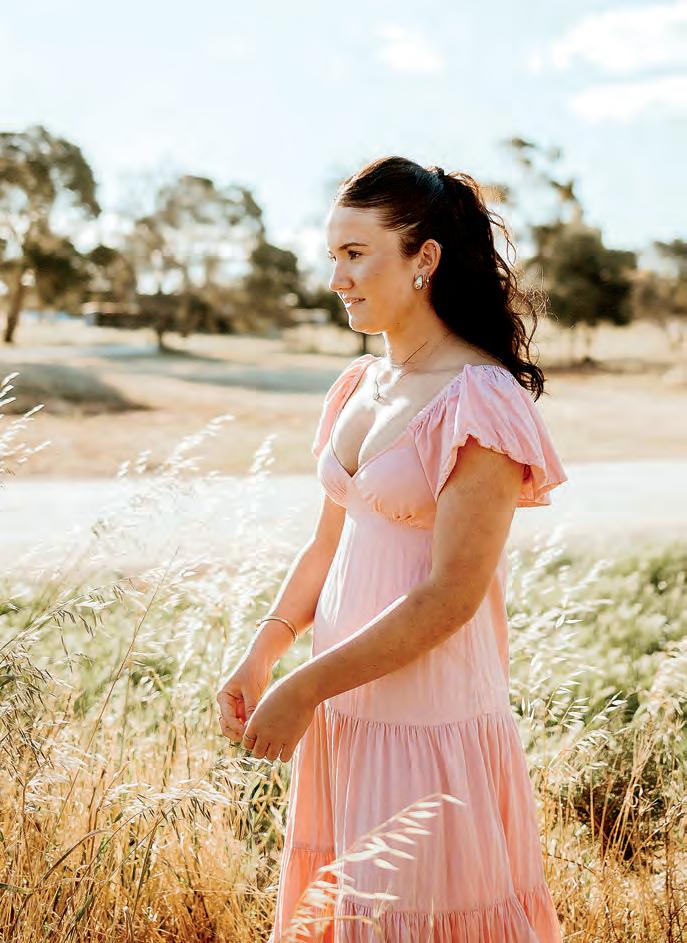
While teenage girls are often eager to leave a small town behind in favour of the big smoke, it was actually Meg who led the charge for the McKenzies to go west.
“Meg came home from school one day and said, ‘I want to go to the country. I want to go live in Kimba’.”
As it turns out, Meg had hit on something that the whole family was feeling, consciously or otherwise.
While sometimes it’s easy to push nagging thoughts to the side and immerse yourself in the daily busyness of life, Meg’s words came at just the right time to bring everyone’s feelings to the fore.
As luck would have it, at the very same time the role of police officer in Kimba became available.
Glen was quick to share the news with Monique, yet at first she could not quite believe what she was hearing.
“When he walked in and said,

there’s a position (at Kimba), I said, ‘what are you talking about?’”
“And he said, ‘the policeman in Kimba, there’s a position in Kimba’.”
She laughs as she recalls her shock. What were the chances?
Surprise quickly turned to excitement, as the family imagined just what it might be like if they took the plunge and decided to go west. It wasn’t long before the McKenzies were on the move, preparing for life as the family of a ‘small town cop’.
For Monique, there was another idea in the back of her mind.
“I’d always remembered this house, and thought about what I could do with it,” she says, looking around the heritage farmhouse that is now their home.
The idea of renovating the old farmhouse was a huge lure, and Monique and Glen spent their first few months with sleeves rolled up in a full-scale DIY, room-by-room renovation on the home Monique had imagined transforming all those years ago.
Friends and neighbours tuned in to updates on Monique’s social media accounts, waiting for before-and-afters to drop like new episodes on a renovation show as the pair tackled tasks large and small, throwing themselves into a full internal transformation on a tight budget and mostly on their own.
For Monique, the way a home feels is essential to family life.
“I like to make somewhere for everyone to come home and feel good.”
There is no doubt the duo have achieved that goal and the home they’ve created, with that beautiful view, feels like the most welcoming place in the world.
It is fair to say life looks different now. After 12 months on the job as country cop, Glen left the police force and took up the role of full-time farmer when a position came up with Shipard Ag.
And while days on the farm are never dull, the contrast to his former life is welcome.
“You see problems on the farm and they’re not ideal, but they’re not life-altering. It’s something we can work through slowly,” he says.

“It’s hard to get that adrenaline anywhere else, but I’ve moved past that. I don’t miss that now. I crave the quiet life at home.”




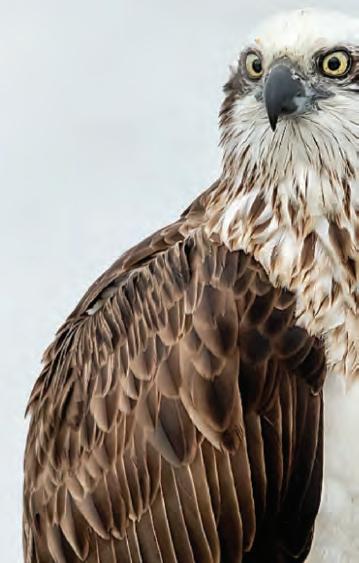
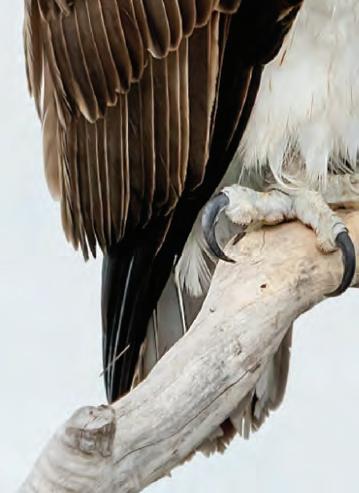



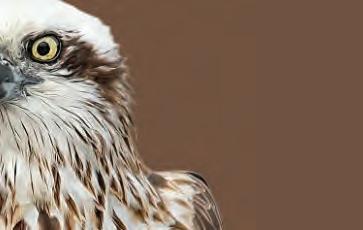

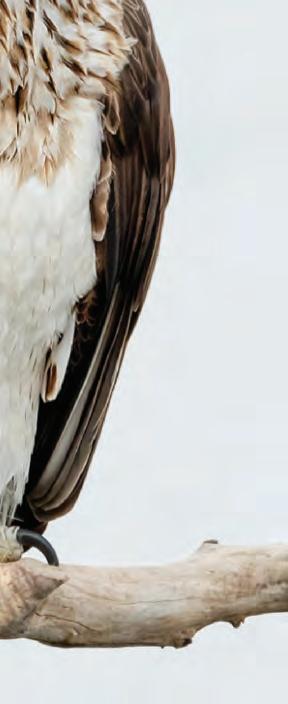
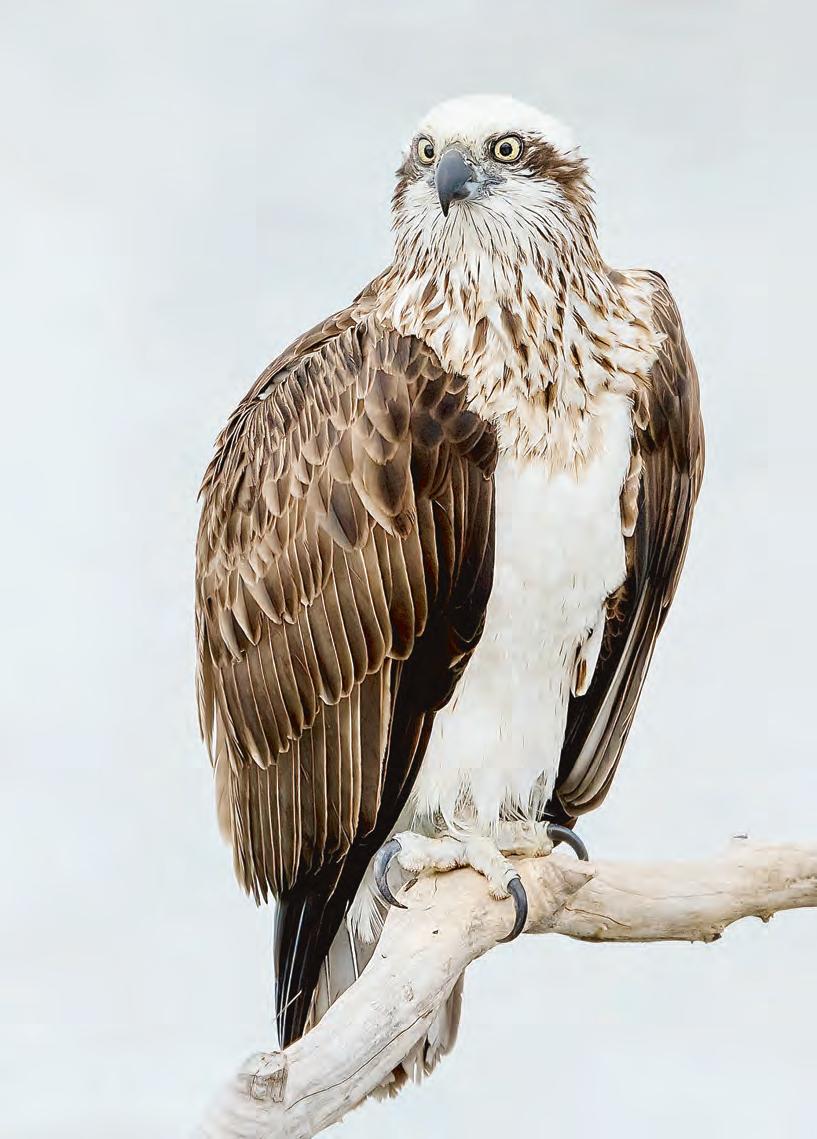
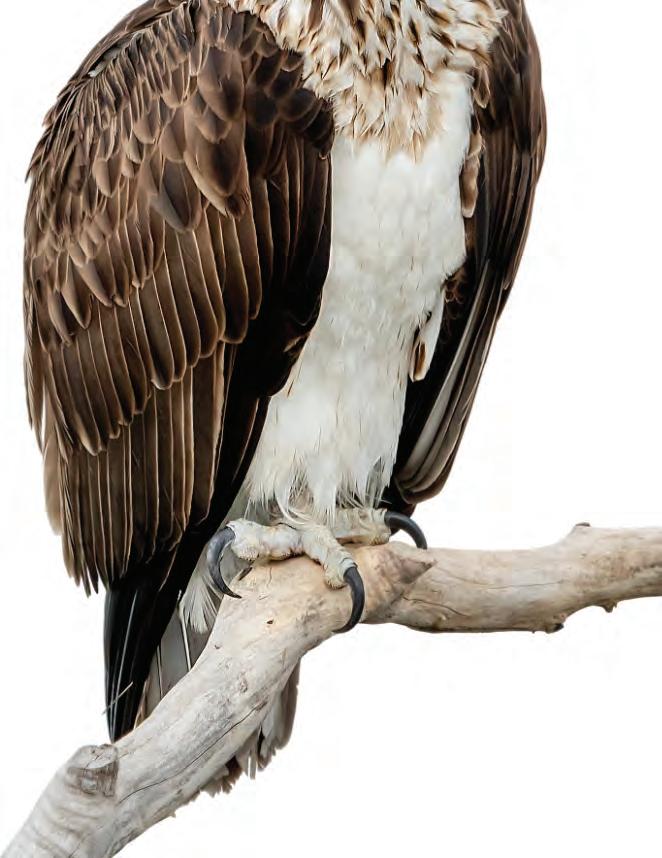
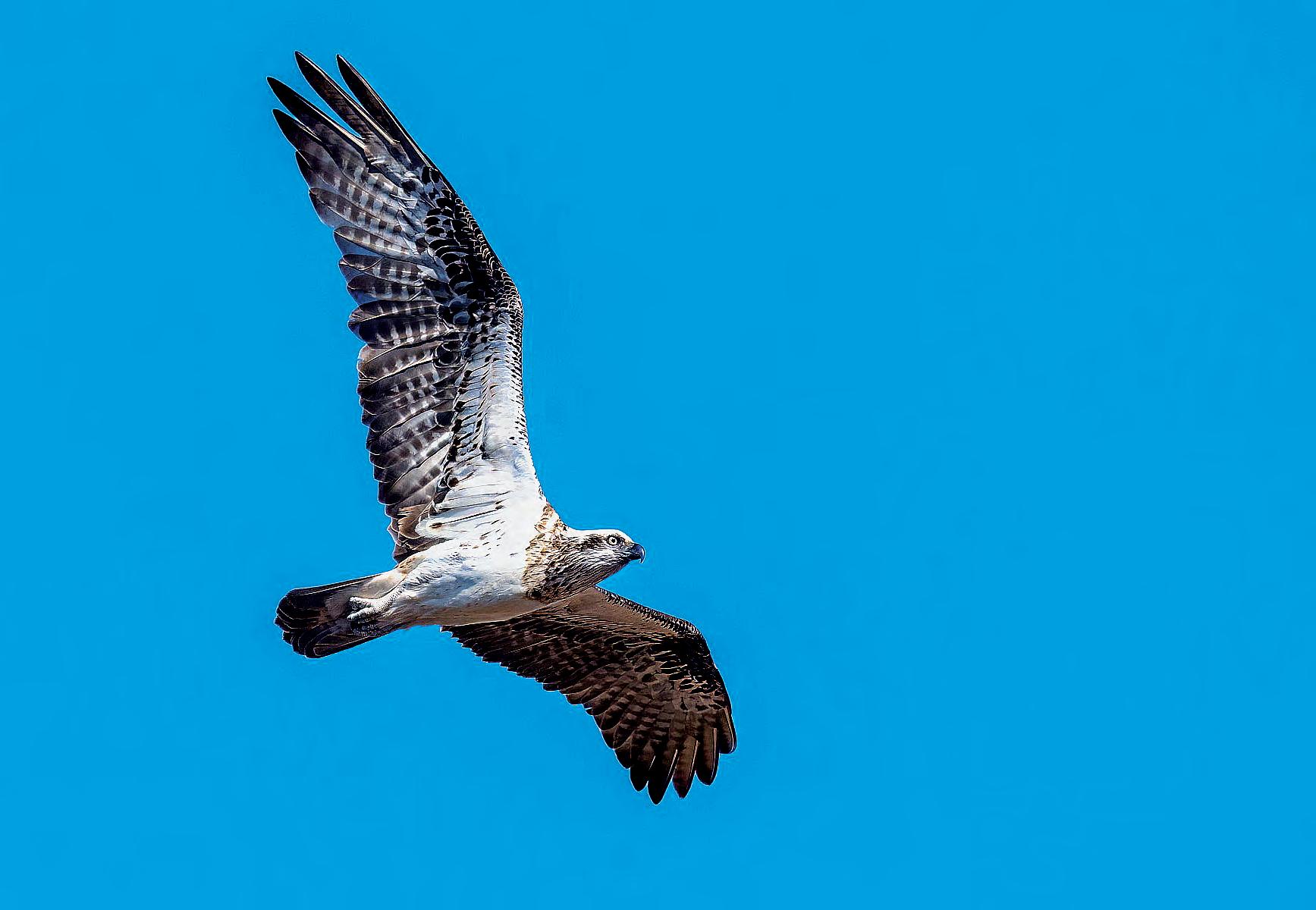
Volunteers are helping to better understand the endangered eastern osprey - with Eyre Peninsula citizen scientists keeping watch of nests and reporting sightings of birds.
Earlier this year Friends of Osprey South Australia submitted its first nest and osprey monitoring report to the Environment and Water Department.
There has been strong interest in the birds of prey - which has only grown since the first young were banded for identification, before leaving their nest on The Barge in Port Lincoln, in 2019.
In addition to bands, some fledging chicks have also had monitoring devices attached - allowing for satellite monitoring.
Friends of Osprey South Australia vice-president Fran Solly said information gained by this, as well as from interested people reporting bird sightings, was helping to increase the knowledge about the raptors.







“There are at least 26 breeding pairs of osprey on Eyre Peninsula through to the West Coast, past Fowlers Bay,” she said.
“In addition there are known individual birds that are not yet breeding.
“Indications are that the numbers are increasing but more monitoring is needed to confirm this is the case.”
A total of 34 osprey nests were monitored across SA from June 2025 through to the end of January 2026.
Fifteen of those were on Eyre Peninsula, with EP volunteers putting in about 75 hours in nest monitoring alone.
Nine fledglings of the 16 fledged chicks from monitored nests in that time came from Eyre Peninsula and the West Coast.
Two successful fledgings were recorded at each of the following nests - Cheetima Beach (nee Coorabie), Streaky Bay, Whalers Way, Lincoln National Park and one on Thistle Island.
There have been 10 nest platforms installed across Eyre Peninsula in recent years - giving the osprey more places to lay their eggs, and hopefully raise their chicks while within close proximity of the sea to search for food.
Angel Oysters put one nest in place on one of its leases at Streaky Bay in February.
In addition, Friends of Parnkalla Trail recently erected three safe perches along the Port Lincoln foreshore to provide the resident osprey with a safe place to perch.
Fran said the Parnkalla Trail perches were installed because osprey had been seen perching on a dead tree too close to Lincoln Highway, which

Born and raised in Port Lincoln, Bronte joined the real estate industry fully qualified in 2004, bringing valuable experience from a strong retail background. He is committed to achieving the best possible outcomes for his clients with extensive local market knowledge and strong negotiation skills. Bronte consistently delivers premium results across Port Lincoln and the wider Eyre Peninsula.





had posed a risk of them being hit by vehicles if they took off into the wind and crossed the road there.
“There are currently 10 platforms on EP so the focus shifted from erecting platforms to monitoring to determine if more are needed and where,” she said.
“Discussions are underway with the Elliston Area School and community to determine if there is a suitable location there to erect a platform, as there are known to be osprey in the area, who have struggled to find a nest site that is suitable.”
Another danger faced by the osprey is electrocution - and this is one area where Fran said EP residents and visitors could help out.
SA Power Networks has committed to ensuring power poles used by osprey and other birds of prey are made safe with animal guards.
Fran called for people to report any incidences of osprey seen perching on power poles to be reported - with pole number and GPS location.
“If you know of a pole that is a potential risk, accessing and filling in a form and sending it through to us at friendsofosprey@gmail.com will enable us to get it checked and made safe.“
SA Power Networks would then check the pole for safety and fit a guard if necessary.
There are two known cases of osprey electrocution in recent years - the most well known was when the first satellite tracked South Australian osprey Solly, named after Fran, was electrocuted near Streaky Bay in 2021.
Fran said more recently a large female, who was a partner to Calypso, was found electrocuted at Tulka in 2024.
“Power poles are also not safe places for them to perch so these artificial perches give them safe options and have been located where they like to forage,” Fran said.
There were five banded ospreys
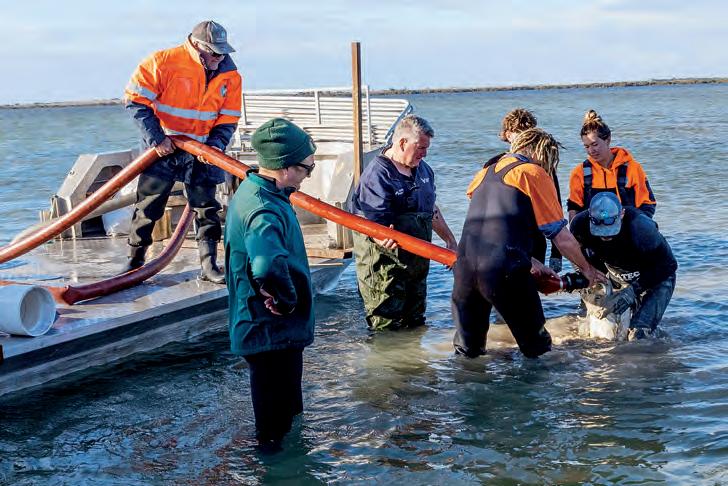
Smoky Bay oyster farmers Tony Greenshields, marine parks ranger Sam Moreley, Friends of Osprey SA’s Ian Falkenberg, Wayne Holmes, Taij Dunn, Tara Ackland and Mark Bender help to install a base for a platform under water using a water pump.
sighted on Eyre Peninsula during the most recent breeding season - June 2025 to the end of January 2026.
These are Calypso - a 2019 male hatched from the Port Lincoln Osprey Barge. He has a blue and metal band and is most often reported in the Tulka area, where he appears to have adopted the artificial nest platform but is yet to breed.
“Ervie is a 2021-hatched male from the Port Lincoln Osprey Barge and he ranges from Point Boston to the Port Lincoln wharf with occasional trips out to the national park,” Fran added.
“Bradley is a 2023 male from the Port Lincoln Osprey Barge, who has been regularly seen around the mouth of the Tod River through to Louth Bay.
“Another male, Gilliath, [is] also from the barge in 2023 and has been resident on the north shore of Port Lincoln since leaving the nest.”
Satellite tracking of some of the osprey first began in 2019 and has provided knowledge about how far some osprey travel, while others appear content to stay close to where they hatched and fledged.
Fran said a 2022-hatch male from Price, on Yorke Peninsula, has been sighted around the mangroves south of Cowell through to Port Gibbon.
“The data shows that female birds banded here tend to leave the areasome doing incredible flights many hundreds of kilometres and not always in the right direction,” Fran said.
“Some have been tracked as far north as Woomera and if/when they do make it back to the coast they are often exhausted and don’t survive.”
She said two EP-hatched male birds, Ervie and Gilliath, seemed to enjoy each other’s company.
“They roost on the wharf at night and don’t seem to be at all bothered by shipping activity,” Fran claimed.
“The Barge pair (Mum and Dad) have been together for at least 10 years and despite last year’s nest
failure it is hoped that they will return to the barge in the coming months and that 2026 will be a successful season for them.”
Osprey mate for life, unless one of the pair dies, in which case the surviving bird will continue to defend the nest and introduce a new partner.
Anecdotal evidence shows that when drilling began for the Billy Lights Point desalination plant - it coincided with nesting birds on the Osprey Barge in Port Lincoln leaving the nest.
“On 10 October 2025 the female on the Port Lincoln Osprey Barge left her eggs for an extended period of time. Prior to this the eggs had never been left untended for more than three minutes,” Fran said.
“In the coming few days she would leave her eggs more and more, eventually leaving them so long that incubation stopped.
“The eggs were tested for viability and found to have almost fully developed but deceased foetuses.”
Fran added the only known environmental change during this time was the start of drilling at Billy Lights Point for the desalination plant.
“A large crane was clearly visible from the barge and noise from the drilling could be heard in the area,” she said.
“Osprey are known to abandon eggs when there is visual and noise disturbance within a two-kilometre radius of the nest.”
She said it was too early to see what effect the algae bloom had on the osprey.
“So far Eyre Peninsula and the West Coast have been relatively clear of algae bloom around the osprey breeding territories,” Fran said.
“In other parts of the state monitors have reported observing birds have to fly further from the usual foraging locations in search of fish and there are reports from Kangaroo Island of birds eating dead fish.

























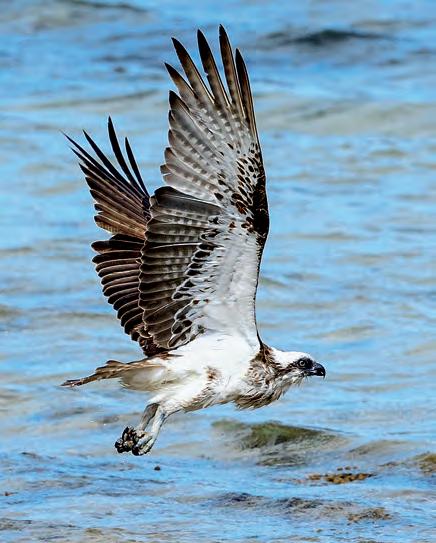
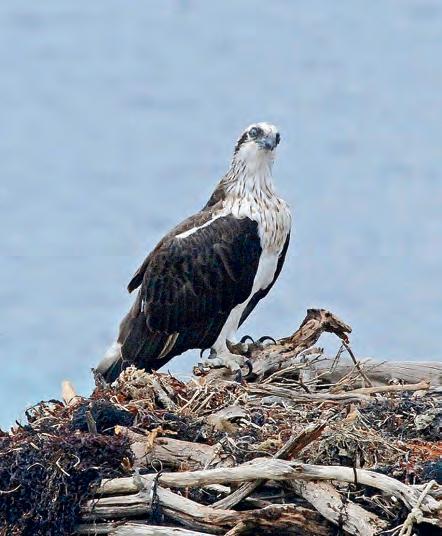
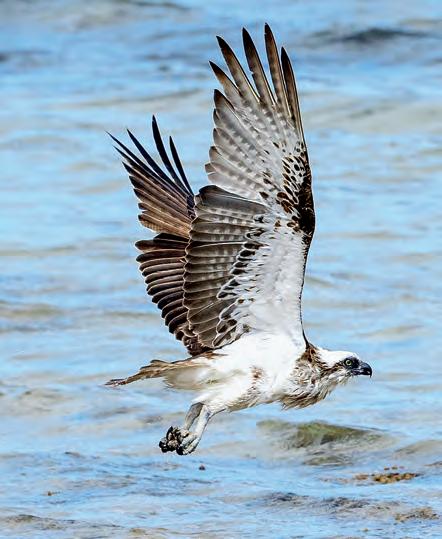
An osprey photographed at Streaky Bay.
“The long-term effects will continue to be monitored.”
Other risks to osprey come from both humans and animal and bird predators.
People driving on beaches is not an issue for osprey on EP but certainly is in at least one location of Yorke Peninsula.
Dogs running off leash can disturb osprey foraging and resting, as osprey will take flight if there are dogs running unrestrained.
Fran said dogs should be on lead on beaches for all of the birds that call the beach home.
People wanting to take photos of osprey should also give them space - especially if they are at or near the nest.
“We recommend viewing birds with a good pair of binoculars or a long camera lens (minimum 400mm),” she said.
“Osprey at the nest will leave the nest if people are too close and that opens the eggs to the risk of predation from ravens or other birds of prey. It also risks the eggs becoming too cool or too hot depending on the weather.
“If you accidentally approach a nest and see the bird fly and call, please walk away quickly so they return to their eggs or young.”
The endangered eastern osprey also has a number of predators hindering its numbers recovering.
Fran noted foxes were lethal where the birds had no choice but to nest on the ground on cliff faces.
“On Tumby Island a camera
















caught a fox take two eggs within 10 minutes,” she said.
“The birds won’t breed again that season so it’s a massive loss.”
In addition, she said ravens were a large source of disturbance to osprey.
“They attempt to take over nest sites and have been known to take eggs from the nest,” she said.
“They often work in pairs with one luring the osprey off the nest while the other prepares to take the eggs.”
Larger predators such as wedge tail or white-bellied eagles have been a problem for osprey on Kangaroo Island, but Fran said they had not been a “notable problem” on EP at this stage.
Other things EP residents and visitors could do, outside those listed above, included becoming a member of Friends of Osprey SA, report sightings of osprey to friendsofosprey.com.au/reportsighting-of-osprey or buying the book Marie’s Long Flight.
The book was written by Fran Solly and illustrated by Robyn Kilgour and tells the story of a Yorke Peninsula osprey Marie, whose satellite tracker showed her flying inland and getting lost, before successfully making her way back home.
The cost is $25, with all proceeds going to Friends of Osprey SA.
It can be bought online at clientstake2photography.com.au/ marieslongflight










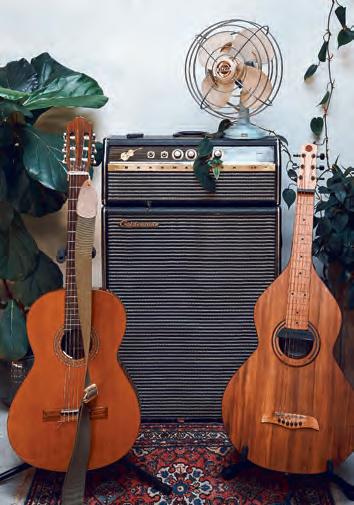
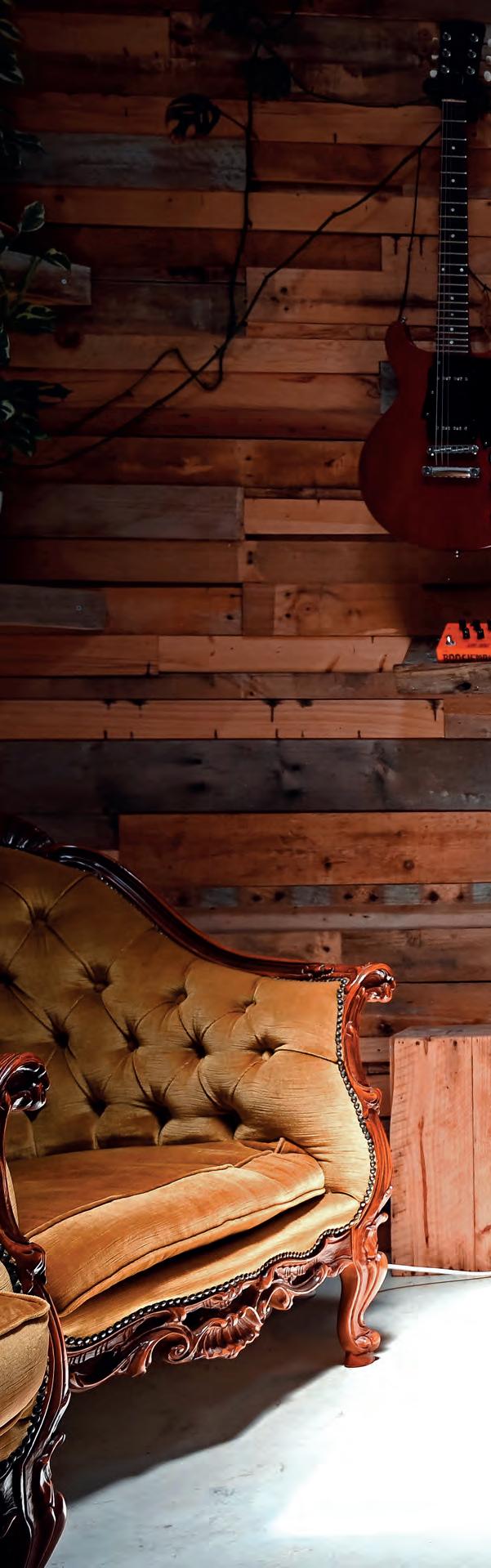
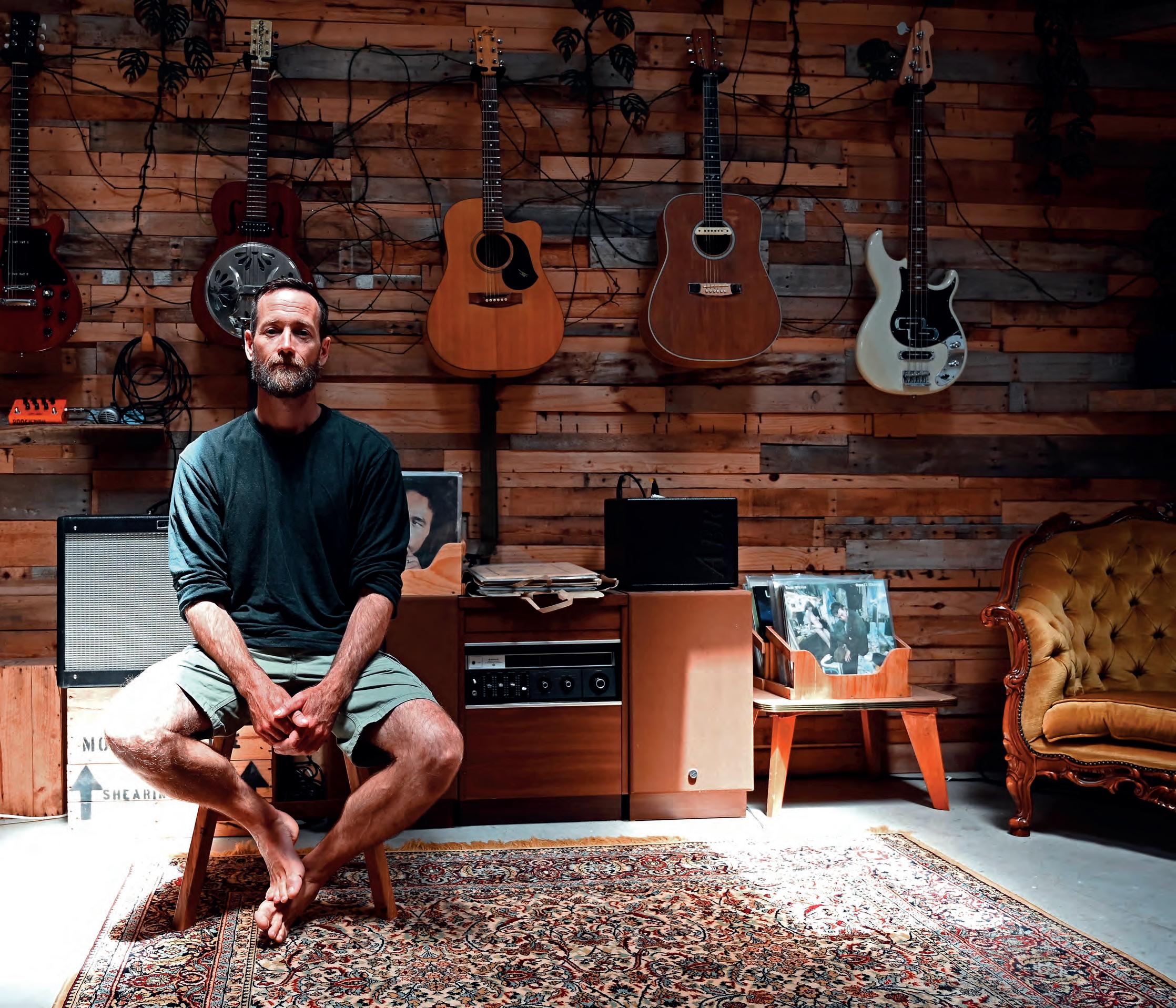
In the quiet coastal town of Elliston, down a driveway arched with mature native trees, stands a shed that is one man’s creative oasis.
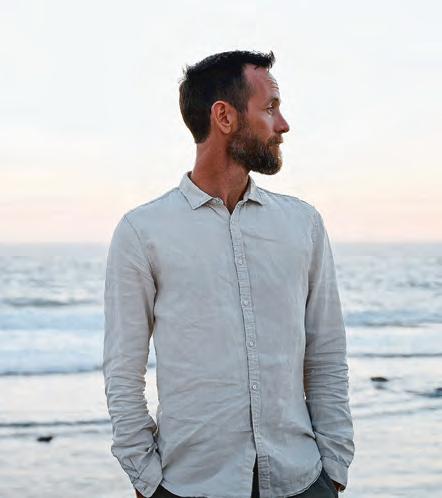
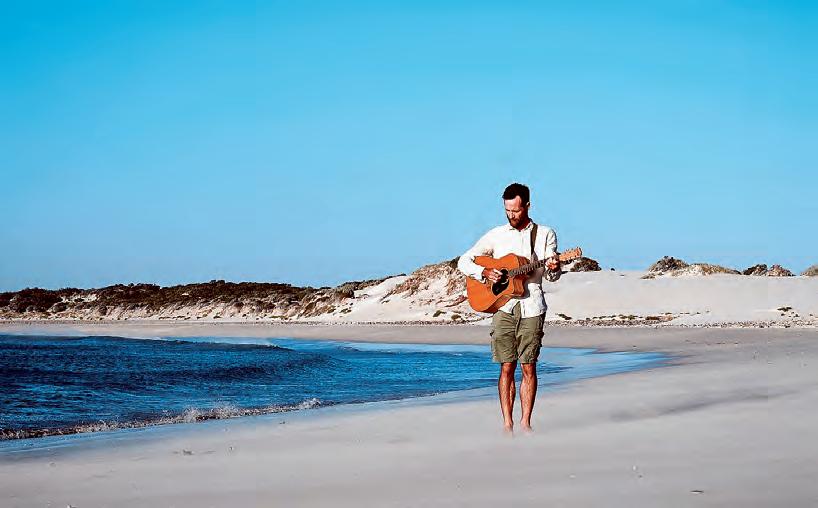
To some, Joshy Willo is the awardwinning soulful musician, to others, he is a meticulous woodworker whose creations tell stories of the scrub.
To a lucky few, he is the expedition guide who can recall the whistle of a bird like the notes of an instrument.
Joshy’s passions are varied: from music to woodwork and ecology, to stand-up paddle boarding.
If you ask him, these components don’t make up separate lives. They are all expressions of the same relentless curiosity - a curiosity to appreciate and understand the intricacies of the world, whether through a drumbeat, a grain of timber, or a bird’s call.
Joshy’s musical journey began not with a grand ambition, but as a disciplinary intervention.
“One of my first teachers, Mrs Keane, tried to curb my musical tendencies in year one or two because I was just always tapping on my desk,” he laughs.
“She thought doing some drumming lessons would stop me tapping on stuff because it was annoying.”
The plan backfired. Instead of getting it out of his system, the lessons threw petrol on the fire. Growing up in Elliston, Joshy was surrounded by music. He recalls dancing in the lounge room at the family farm to his parents’ Rolling Stones and David Bowie records - careful not to jump too hard lest the needle skip.
“I watched my mum sing in bands along with my uncles when I was young,” Joshy recalls.
“And grew up hearing stories of my Grandpa, Austin North, playing at dance halls all over the Eyre Peninsula. So I was very fortunate that my life was always musically orientated.”
By age five, he was building drum
kits out of Milo tins and kebab sticks. By 12, he was the drummer for Terrelations, playing Saturday nights at the local footy club with his uncle Terre, brother Kane and sister Nikki.
By 16 he was drumming for the One Legged Seagulls at shows up and down the West Coast.
Some of the larger shows were New Year’s Eve shows at Port Kenny Hotel with up to 700 people in attendance.
While he professes to have spent his childhood hiding behind the cymbals, a transition was brewing. During his uni years in Adelaide, Joshy began writing.
It wasn’t about ‘making it’, it was about journalling and improving his musical capabilities.
“It was mainly a personal endeavour to pull a body of work together. I was always focused on the journey,” he explains.
“Music was always important to me
Factory Outlet & Seafood Eatery ocean to table experience
well before the Triple J limelight hit me. I’d decided I would be playing music my whole life so I was more concerned with it being sustainable and treating it more like a trade, without that taking the romance out of it.
“It’s special to me and was going to be a part of my character forever, so I’ve tried to treat it as respectfully as I can. I think I had something more to say as well, had a bit more lived experiences, you know the whole heartbreak stuff.
“I found that getting it on paper is a good way to help digest.”
The songs are quite personal and there’s a vulnerability in revealing those things to the world, Joshy says.
“There was unexpected positivity that came from writing my own music.
“When you realise people can relate to it and that it is serving people in some way. It gives the music meaning and purpose - outside of yourself.
“I feel quite honoured to have people welcome my music into their lives and use it and listen to it. Done well, music can be medicine.”
Joshy says he is now always striving for that pinnacle of connection when writing a good song. “To make people feel something - to communicate something emotionally, goosebumps are the ultimate goal.”
In 2011, Joshy recorded his album ‘Moon As A Mirror’, on which he played all the instruments himself.
Friend, Matt (Macca) Wohling mixed and mastered the album.
“I had played drums in bands with Macca before and he became a regular thread in my Joshy Willo projects,” he says.
He then uploaded a few tracks to Triple J Unearthed and hopped on a plane to the United States that year.
Joshy was in San Francisco backpacking when the call camehe’d won a spot to play at a major festival in Tumby Bay.
Despite the buzz, Joshy remained rooted in Eyre Peninsula.
“I always thought if my music was good enough, then it may draw the attention it deserved, no matter where I was based,” he said.
“My focus was on honing my craft and making the best songs I could - and my inspiration mainly came from the nature I saw around me. At home

on EP, there’s plenty of inspiration.”
Staying based on Eyre Peninsula has not held back Joshy from being recognised for his musical talent; he was a semi-finalist in the 2014 International Songwriting Competition for his song Travel Diary and his music was recently curated and preserved in the National Film and Sound Archive in Canberra.






If music is Joshy’s voice, woodworking is his tactile connection to the earth.
His interest in the craft dates back to kindergarten, where his teacher, Karen Agars - to whom he dedicated his second album - allowed him to use a saw to make radios out of wood blocks.
Today, Joshy’s workshop is a sanctuary of specialised machinery, including a 140-year-old bandsaw he has restored, spiral-head thicknessers and drum sanders, all accumulated over two decades with the patience of a man playing the ‘long game’.
He doesn’t make furniture for mass consumption; he makes boxes that honour the timber.
“The boxes were almost like tributes to the timber,” says Joshy as he picks up a small creation made from a branch dropped near his home and shows the grain.
“I want knots. I want imperfections. I want nature doing its thing. In that box, you can see where grubs have eaten at it. It’s got a story to tell.”
Joshy’s philosophy is deeply ethical. He won’t touch a tree just because it’s on the land.
As a farmer, he spotted and watched ‘storm-tossed’ fallen branches while mustering, waiting for them to season naturally.
He recalls finding a fallen native apricot tree and preparing to take a branch, only to realise the fallen debris was protecting a nursery of saplings from grazing animals.
“I couldn’t take any from that tree.”
For Joshy, conscientiousness is key.
“I am careful to ensure I’m only taking what the land can give,” he explains.
“Only taking what can be sourced without disturbing the environment.
“And I think I owe the craft the respect it needs - I get satisfaction out of doing something well.”
Another thread that weaves Joshy’s passions together is his work as an expedition guide.
It began as a youngster, bug collecting with his grandma, cultivating a fascination with nature.
“It developed through fishing, through uni with ecology, animal behaviour, marine and terrestrial animal diversity subjects,” he said.
Bird watching is the most recent “filling in” of the naturalist role, which was further cemented with citizen science and a birdwatching course led by ecologist Greg Kerr.
For a musician with a finely tuned ear, birdwatching wasn’t just a hobby; it was a new way to hear the world.
“If you know the songs, you can pick up eight birds before you even see anything in the scrub,” Joshy explains.
This expertise recently took him to the Kimberleys, working as an expedition guide on coastal charters.
The role was a synthesis of his entire life’s work. He used his marine biology knowledge from his university days to talk about whales and crocodiles, his fishing skills to lead charters, and his birding knowledge to interpret the landscape for guests.
And, of course, there was the music.
At night, under the vast northern stars, Joshy would pull out his guitar.
“The rest of the jobs were new to me, so my brain was operating on all cylinders,” he says.
“But when I could fall back into the music, it felt like a comfy pair of shoes. I can do it with my eyes closed.”
Whether he is holding a drumstick, a chisel, or a pair of binoculars, Joshy is seeking the same thing - an

understanding of the “fascinatingly intricate machines” of nature and art.
For him, the journey is the craft itself.
“Every level you get to, you realise there’s more to know,” he muses.
In an increasingly over-paced world, Joshy remains ever-curious and passionate, a man who refuses to half-measure his passions, ensuring that everything he creates - be it a song, a box, or a moment in the scrub - is done with the respect it deserves.
These convictions have moved his life in many directions, and soon will see him off once again.
With immense support from his partner, Ebony, Joshy will be heading to Borneo, expanding his expedition experience even further.
Under which stars will Joshy Willo next strum his guitar?







Words: Liam Wormald
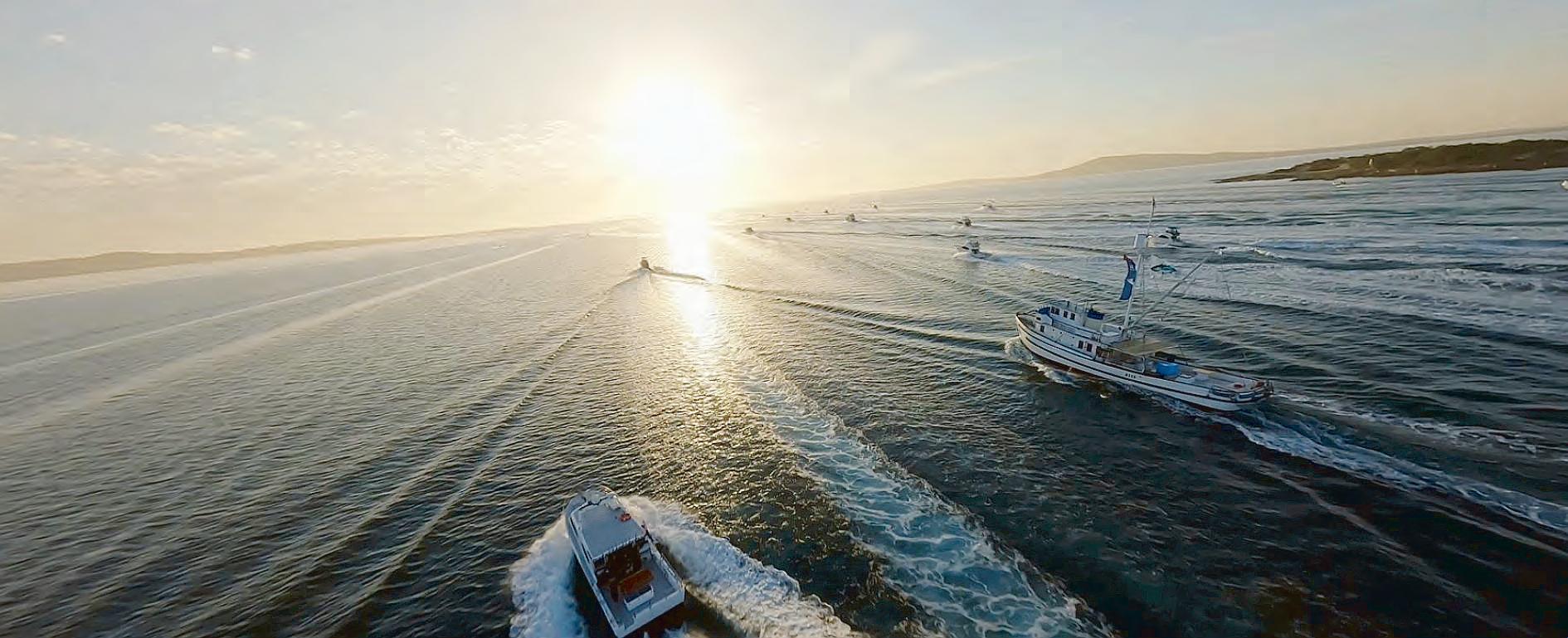
The iconic Port Lincoln Tuna Classic is one of the premier fishing competitions in the country and in 2026 celebrated a milestone 20 years.
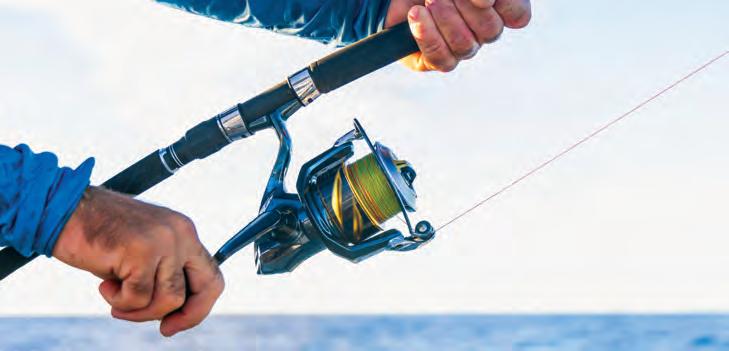
As has been the case for two decades, people from all over the world travelled to the Port Lincoln Marina this March to take part in the 10-kilogram line class catch and release Tuna Classic event.
For organisers Steve Toome and Ashley White, it has been a thrill to see the vaunted three-day event reach such a mark.
“Given the anniversary I think there was a little bit more extra hype,” Ashley said.
“There are guys that would have fished in nearly all of them, which is great.”
Ashley knows exactly what it takes
to claim competition honours, as his team headed into the 2026 edition keen to defend their dual titles of Port Lincoln Tuna Classic Champion Boat 2025 and Heaviest Fish Calcutta winners, which saw them take home a $100,800 cheque.
With every year the Tuna Classic is held Steve believes the excitement, prestige and interest around the event has risen.
“The Australia-wide anticipation for the event is unprecedented, because it’s got one of the biggest cash prizes in Australia, and targets only one species,” he said.
“Everyone who loves fishing wants to be involved in some way shape or form; they might be watching from afar following the socials or, maybe planning to purchase a big boat to enter themselves one day, or maybe they are lucky enough to be competing and want to get to Port Lincoln a week early to find out where the fish are hiding by pre-fishing beforehand.
“While many competitors are here for the event they explore the wider region too, many make it a family holiday.”
For 2026 the event included



competitors coming in from every corner of Australia, as well as London.
Steve and Ashley noted the full sweep of boats had been booked six months out from the event, but due to unforeseen circumstances some had to pull out, which allowed boats from the waiting list to take part.
The duo took over the running of the Tuna Classic in 2023 and said they quickly realised how much the event means to the wider community.
“We realised how much it means to the people competing, with the banter and build-up and for some it’s the only holiday they take each year, for others it’s the annual weekend of mateship that their souls depend on as a getaway, and then there’s the economic flow-on and how much extra activity the event brings to the local economy,” Steve said.
“From obvious places like tackle shops, fuel providers, to restaurants and hotels or accommodation, to hardware and camping, to both new vehicles or servicing, boat maintenance repairs, upgrades and groceries, even real estate. It’s a big influx of people that wouldn’t normally be here all at once.
“There’ll be partners, wives,
husbands, children, friends who all come as a supporter and not necessarily to fish, and there’s been stories of people buying houses in Port Lincoln after they have taken part in the Tuna Classic.”
Teams taking part in the event gather on the Friday night at the Marina Hotel, where organisers go through the rules and regulations, pay tribute to the forefathers who launched the Tuna Classic and remember those who have sadly passed away.
After that comes the Calcutta, which in 2026 included local legend Phil Channon as auctioneer.
“The Calcutta Auction is where the prize money comes from as each boat gets auctioned off. The way the Calcutta Auction works is simple - bid to buy the boat who may catch that heaviest fish,” Steve said.
“I’ll back myself to catch a whopper so I will bid to buy my own boat, and my mates know that, so they’ll bid me up a bit. The risk for them is low as if they end up buying my boat, but I catch the heaviest fish, I get the trophy [and] the person who bought my boat in the Calcutta will get the cash prize money - it’s pretty competitive.
“It’s that banter and mates bidding you up that increases the prize pool, and the higher the prize pool, the more money goes back to charityremembering 10 per cent of the Calcutta Prize pool goes straight to Variety - the Children’s Charity through Car MLC: the Runaway Brides.”
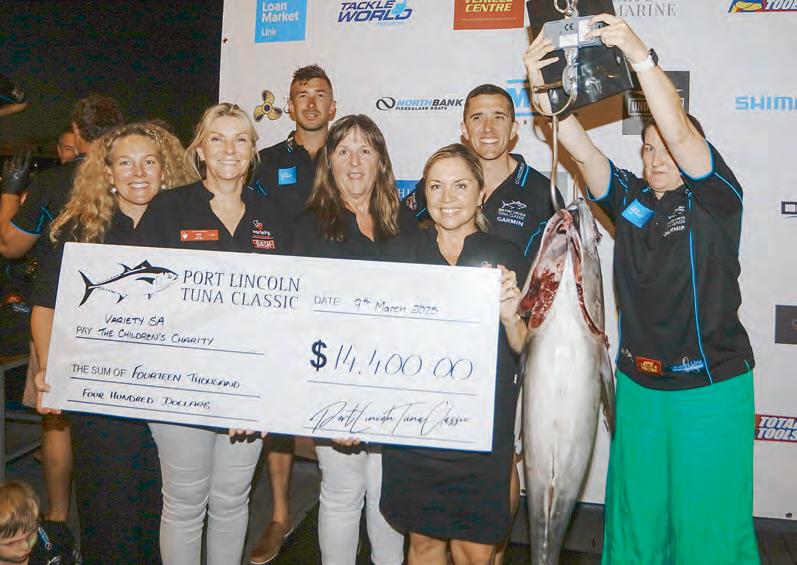
In 2025 the Calcutta saw a recordhigh prize pool of $144,400 between the 32 boats with an average selling price of $4500 per boat and $14,400 raised for children with special needs.
On top of that the Brides ran a few fundraisers last year that contributed another $5000, which made it one of the highest grossing fundraising events of their year.
Then comes Saturday.
From early morning spectators gather along the Port Lincoln Marina and Kirton Point foreshore to watch the sensational shotgun start at 8am as all the boats begin the challenge.
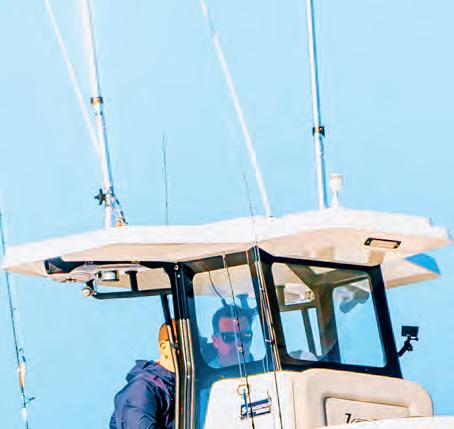
“As a competing boat captain, you’ve got an hour to safely get to your preferred fishing spot, and a couple of the faster boats get to their spot early and have a bit of time on their hands to look around, get everything ready, but there’s no lines in until 9am,” Steve said.
“The first eligible Calcutta heaviest fish catch wins a fuel voucher prize from local sponsor Eyre Fuels, which is awesome and is another top local business supporting us.
“When we are out at sea, we are keeping track of the fork length of the biggest fish throughout the two days over the radio, with it being a catch and release fishing competition at its foundation.”
The aim of the event, Steve said, was not to kill many fish - with a contender for heaviest fish required to be more than 78 centimetres from the lower jaw to the fork of the tail.
“If I caught a fish that was 88 centimetres I would let everyone know











There’s
been stories of people buying
houses in Port Lincoln after they have taken part in the Tuna Classic “ ”
over the radio that I was going to keep it, to bring it home to weigh in - then of course eat it - and one of the rules is that you can only weigh in one tuna fish per boat,” he said.
“Then if anyone catches a fish under 88 centimetres they’ve got the reason or opportunity to release it, as there’s no point killing a fish if it’s not gonna win or place second or third.”
By 6pm ‘lines in’ is called and each boat finds a safe anchorage for the night.
A few return to Port Lincoln but the majority stay at sea to reduce the travel to the fishing areas on day two.
Many boats come back to the official mothership, the Tacoma, which is hired by the Tuna Classic to put on a hot meal of meatballs, pasta, local beers from Jumpship Brewing and wines.
Competitor Matt Schultz donated the wines this year from his personal collection, something the organisers were grateful for.
“It’s always a great night as Ross Haldane - who literally grew up on the Tacoma - is a fantastic host, he and his crew of volunteers always put on a delicious spread and make sure everyone is fed, hydrated and has a great laugh,” Steve said.
Then there is ample space to roll out a swag or grab a bunk on the historic













120-ton 84-foot wooden boat, which was one of the first to commercially purse seine for tuna in Port Lincoln, and still operates poling trips and special events today.
“We hear some terrific tales of the one that got away and anglers are often helping each other out with where to go, what lure colours worked, and even ‘do you need extra lures or gear?’ It’s one heck of a supportive community who cast the competition aside for the common goal of having a great time,” Steve said.
“Then we’ve got a separate barge that has fuel for the boats that need it as well, which this year was generously donated by loyal sponsor and local business Coleman Marine owner DC.
“We’re usually anchored down at Taylors Island or Memory Cove and then first thing Sunday morning it’s the captain’s time to motor off to the fishing grounds ready for lines in again.”
At the conclusion of fishing on Sunday all the boats return to the marina.
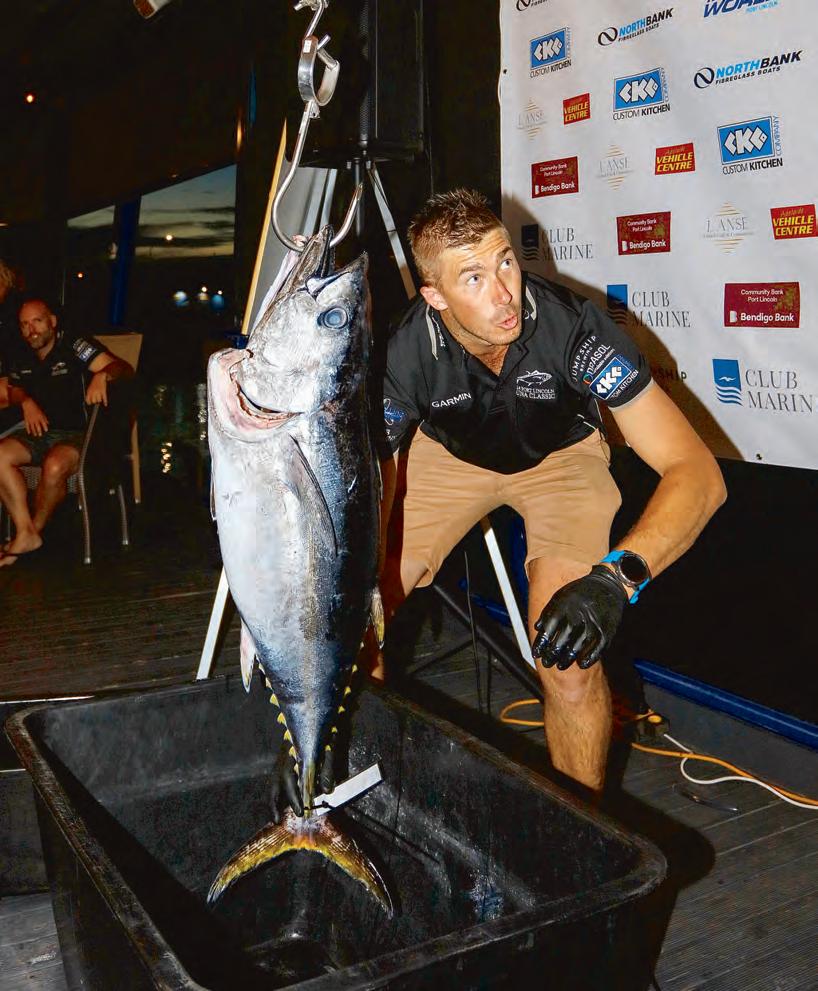
“All the heaviest fish get dropped off to the Marina Hotel and we have independent scientists as our weight masters,” Steve said.
“They check the fish for freshness to prove that it has been caught within the two days and then they’re gonna look inside the gill cavity and stomach cavity to make sure it’s all empty, so that every single fish that gets weighed is on an even playing field.
“We then ask the boats who submitted the calcutta heaviest fish contenders for a video or photo of the angler, the fish on a measuring mat, the rod and reel and lure used, plus the GPS location, all time stamped so we can prove that fish was caught within
the competition boundaries and within the time period. There is a lot of money at stake, and we want to do things right by each competitor and ourselves.”
The champion angler prize categories are widespread - from small fry, junior, female and male in both over and under eight metre boat sizes, plus overall.
“We have some amazing honour boards with names of previous champions and some perpetual trophies which get handed out and are fiercely sought after,” Steve noted.
The Ron Forster Perpetual Trophy for the Overall Champion Angler award goes to the person with the most fish individually released, while the Rolf Czabayski Perpetual Trophy is presented to the team who landed the Calcutta heaviest fish.
The most meritorious angler is awarded the Peter Teakle Perpetual Trophy, created by the late Mark Waters of Waters Sportfish Trophies as a way to celebrate the passion Peter put into the Tuna Classic over 12 years.
After the inaugural 2006 Tuna Classic Champion Boat recipient Greg Noble passed away during the year, Steve was proud to introduce a new perpetual trophy in his honour - the Greg Noble Perpetual Trophy Champion Boat - nicknamed “Why Not”, which was the name of one of the vessels which Greg owned.
For Steve, watching the weighing-in process is a highlight of the event.
“When we lift up a big tuna and then the scales start turning, the crowd gathers round, the excitement is electric, everyone there to celebrate the moment, with the angler who is often left speechless.”
After the trophy presentations both



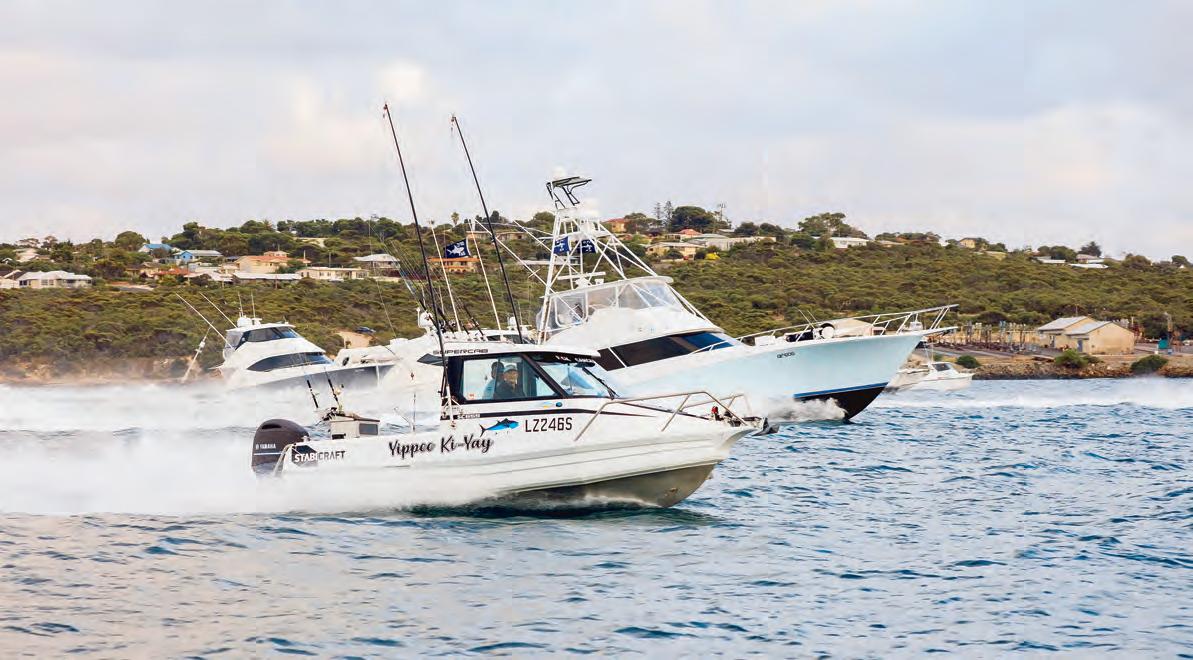
LEFT: The 2023 Tuna Classic shotgun start, with boats Yippie Ki Yay, Spartacus, No Ragrets and Risky Business.
BELOW: A donation cheque to Variety the Children’s Charity, Car MLC: The Runaway Brides. Pictured are Justine Carey, Deb White, Sandra Lukin, Simone Bertram and Justine Stokes, with Tuna Classic event organisers Ashley White and Steven Toome.








competitors and supporters celebrate the Tuna Classic in style, with wonderful food and refreshing drinks at a world class location.
During the three days the event is well supported by generous sponsors, many of whom are involved in the competition as active competitors, which brings a full circle to why the event exists, with its community and likeminded spirit of each individual who wants the best for those around them.
“Our focus on giving back is undeniable, again it’s the legends within the competition who dig deep and make the donations, they bid to buy and actively participate in other fundraising activities,” Steve said.
“We’ve got Chris Redin from Adelaide Vehicle Centre AVC who year on year donates quality wines, even artwork, to the Runaway Brides to boost their fundraisers, while the Tuna Classic itself donated rod and reel combos too, and if we can use this
event as a huge opportunity to give back to charity each year, it’s just another sense of community and support.”
Ashley said the Runaway Brides provided a lot of support throughout the three days, in addition to the 12 months leading up to the event.
“They help us run the event, from the regular committee meetings to invoicing and logistics management, to on the night capturing the calcutta bids, selling Tuna Classic merchandise and they have their fundraising auction and lucky square items,” he said.
The Port Lincoln Tuna Classic is just another reason for people across Australia to have visibility of the beautiful Eyre Peninsula region, to capture their attention and hopefully gain more visitors and competitors over time.
“After all, why not?” Steve said.









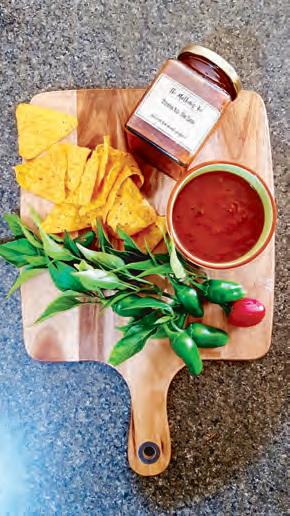
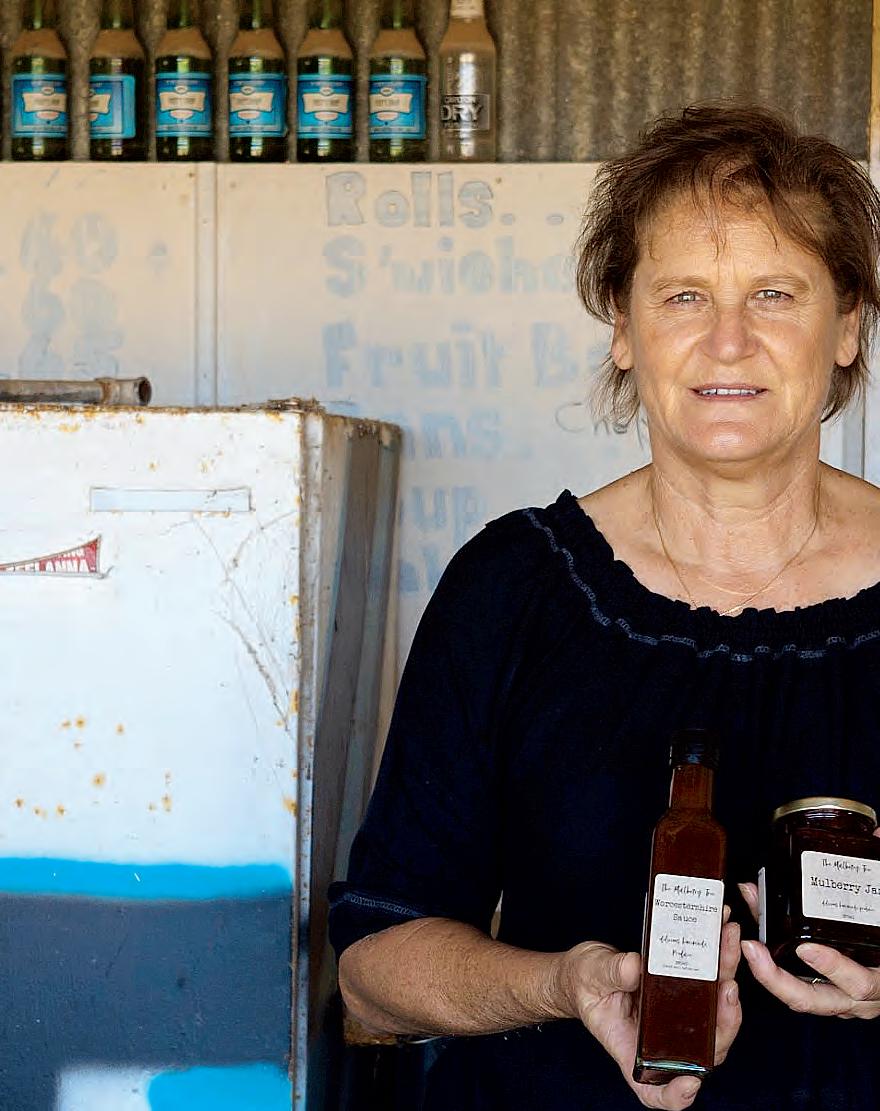
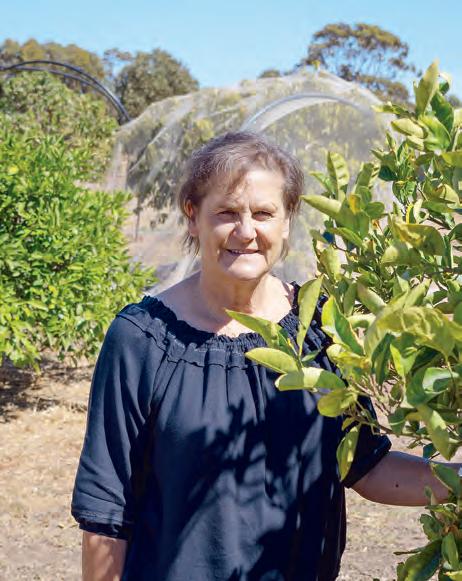
On the old Yeelanna oval, where footballers once ran out and cricket balls echoed across summer afternoons, Lindy Brook now spends her day stirring pots of mulberries and handmaking gifts.



I started doing some markets in Cummins, and it just grew from there, especially the last couple of years I “ s”




Whether it’s a group planning day, 21st or 60th celebration, a unique wine experience, gathering with the girls or a one-of-a-kind wedding reception – we cater for any event you throw at us! The Port Lincoln Hotel is the place for your next coastal function.

Today, it is all about a different kind of harvest - one measured in kilograms of fruit, jars lined neatly on shelves, and markets circled on the calendar.
Lindy, who runs The Mulberry Tree, was born in Ceduna and grew up as one of eight children on the family farm.
Gardening, preserving and sewing were simply part of life.
“When I was a kid, we had a big garden which was a fenced off area 150 metres down the road in a bit of a flat, and there were lots of fruit trees in there - grapes and apricots, you name it,” she said.
Her mother, Doreen Bergman, was the driving force.
“Mum loved gardening. I think I got it all from Mum. She loved her garden, her fruit trees and sewing,” Lindy said.
“We would have homemade apricot jam and homemade cream, as mum used to milk cows. She also sewed most of our clothes and knitted our jumpers.”
From the early days of making doll clothes in the farmhouse passage, Lindy learned to sew.
“I used to sit in the passage in the farmhouse and draw around my dolls, on newspaper, to make a pattern, and make shirts and pants and whatever else for them,” she said.
“It then progressed to Mum teaching me how to use commercial patterns to make clothes for myself, and that was how I learned to sew.”
Years later, after marrying and working alongside her husband, Ashley - who is known around the region as Dilba - in farming and agricultural contracting, the couple set their sights on a permanent base.
The Yeelanna oval had not been used for sport for years.
“I approached the council and said, ‘What are our chances of buying the land?’,” Lindy said.
“It did take us five years to actually purchase the land, because of red tape and public consultations.
“When I look back, I think, ‘Five years! Why did I keep hassling them?’, but anyway, it was worth it.”
The Brooks moved into their new home in 2010, and in 2018, The Mulberry Tree began to take shape as she started cooking using her homegrown produce.
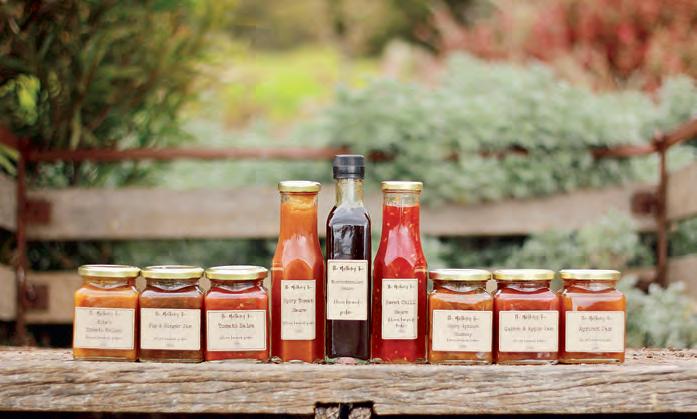
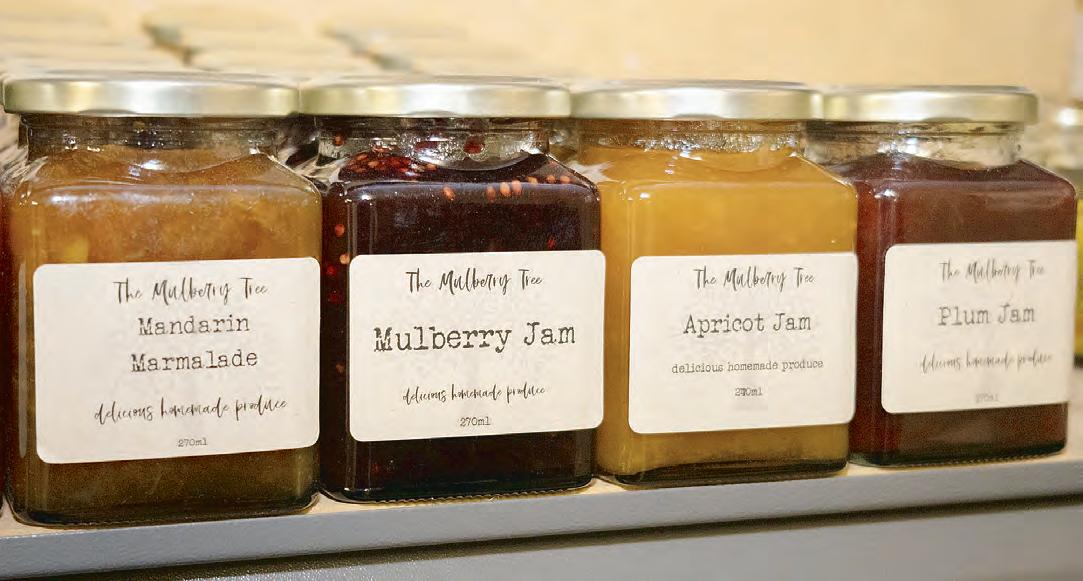
“Because I grow too much produce, I thought, well, I’ll give it a go doing the jams, relish and sauces,” she said.
Over the past eight years, The Mulberry Tree has flourished, supported by loyal customers who return season after season for Lindy’s homemade jams, relishes, sauces and handcrafted goods.
“I started doing some markets in Cummins, and it just grew from there, especially the last couple of years,” she said.
“I struggle to keep up at times, which is a good thing, I suppose.”
Her busiest months are December through to February, when the fruit ripens and the preserving begins.
“The fruit is usually ready for picking from late December through to February,” she noted.
Mulberries are the heart of the brand - and the most labour-intensive.
“The mulberries are terrible to pick. The mulberries are so small, and you have to pick so many, and you get in a complete mess,” Lindy said.
“Last year, I picked about 35 kilograms. I don’t enjoy the picking part because it just takes so long.”
Lindy said the amount of fruit she picks each year depended on the weather.
“You’ve got to rely on the weather. Some years you will have a nice lot and other years it is a bit light on.”
Fortunately, the generosity of her friends helps her through when ingredients run short.



Open from April



“Some people say, ‘I’ve got an excess of this. Do you need it?’ So that is really good, because often I do,” Lindy added
“I don’t quite produce enough for the business now. I used to, but now I have to source from other places at times.”
She freezes much of her produce to use throughout the year and cooks in six-kilogram batches.
“For me to cook something, it would take me a couple of hours by the time I prep it, get it cooked, get it to the right consistency, and jar each product up,” she said.
Markets are where the hard work pays off.
Lindy can often be found at many markets around the region.
“I go to markets in Cummins, Coffin Bay, and the Christmas markets are always good,” she said.
She also attends markets at Elliston, Streaky Bay and Tumby Bay, plus has stock at local businesses, including Workshop 26 in Kimba, Greenleaf Collective, Cummins Meat Store and 5 Loaves Bakery in Cummins and the Coffin Bay Caravan Park.
The most rewarding moments come from face-to-face interaction with customers.
“I love it when I go to a market, and

someone comes up and says, ‘Oh, I need some more of this. I just love it!’,” she said.
The handmade gifts and sewing side of the business - eco-conscious baby essentials, decor and homewaregrew naturally from leftover fabric.
“I started doing the muslin wraps, and then I always had leftover material and thought, ‘Well, what am I going to use this for?’ So it was just the natural progression to use up my leftovers to do the baby bibs.”
Lindy admitted the kitchen and sewing room are where she feels most at home.
“My husband says, ‘Don’t you get
sick of cooking?’ But no, I don’t. It’s not a chore,” she said.
“I just get in and do it. I think it’s just something extra for me to do outside of my husband’s bookkeeping. It’s my way of contributing a little bit.”
At its core, The Mulberry Tree is about authenticity - fruit grown in clay soil that cracks in summer, onions and garlic pulled from winter beds, recipes stirred slowly at the stove.
“I think people love homemade jams, relishes and sauces because they’re tastier.
“They know it’s homemade and it’s authentic.”











High
Feltus














Without the community it would have been a whole lot different
Grange Golf Club, Adelaide. It’s early February and the course is heaving under the spell of LIV Golf, the country’s most high-profile and raucous tournament.
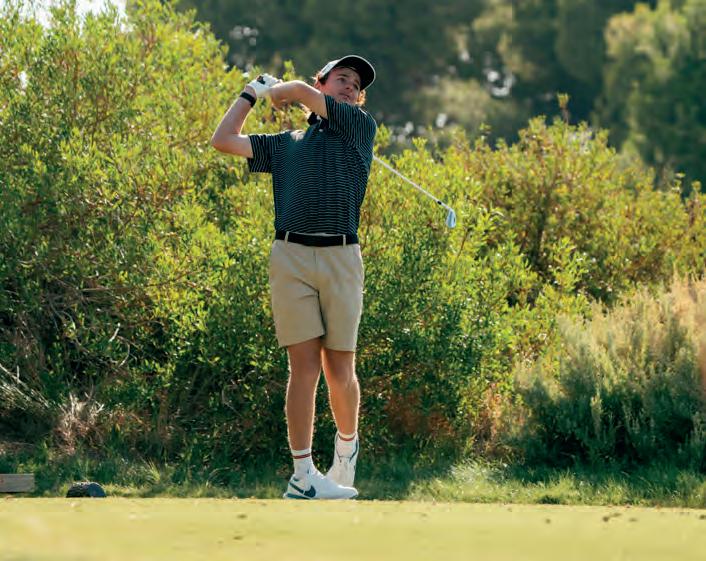
Streaky Bay teen Kyle Feltus is here. Not among the thronging crowd, but out on the chipping green, where he’s setting up a practice shot only a metre from Cam Smith, the great Aussie golfer of the generation.
An hour earlier, Kyle is sharing the driving range with Steve Smith, the legendary Australian cricketer, among other A-listers connected to golf in this country.
Kyle’s a long way from the dusty fairways of his home town on the West Coast, but these days he’s used to that.
As a reserve for this year’s Pro-Am event at LIV Golf, he’s also getting used to rubbing shoulders with the elite of his sport.
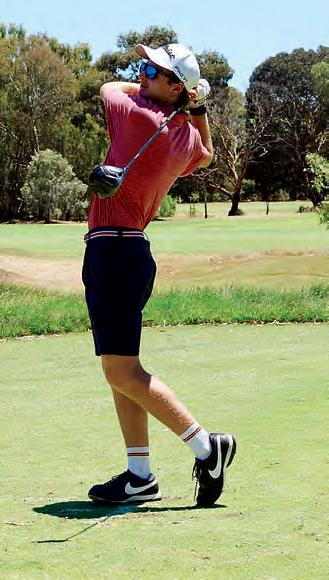
Kyle’s rise from a passionate and ambitious Streaky Bay junior to one of the state’s best golfers has been well celebrated.
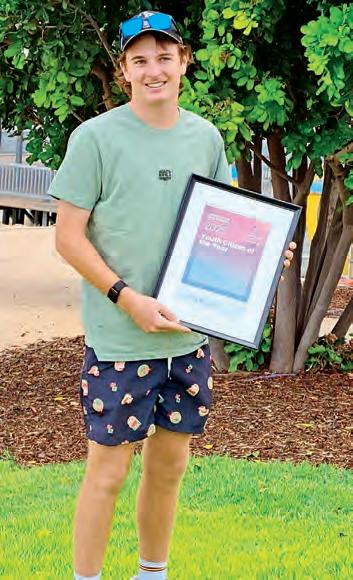
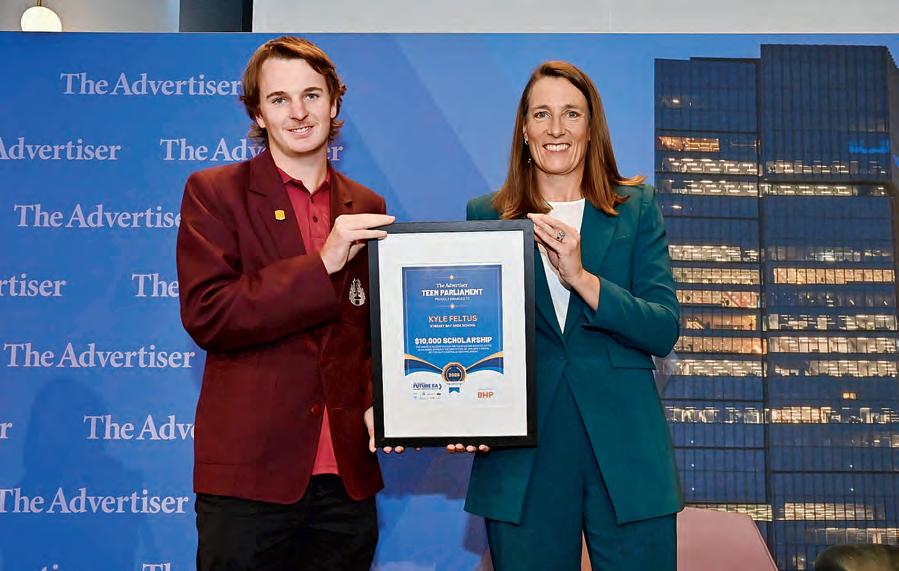
So too have his academic achievements, which of recent times include awards at Teen Parliament, being Streaky’s Young Citizen of the Year, and finishing his schooling as dux, with an ATAR of 99.15.
When the 18-year-old moved to Adelaide earlier this year to undertake a double degree in geospatial information systems and surveying at Flinders University, you could have been forgiven for thinking his golfing aspirations had perhaps slipped by the wayside.
But that just means you don’t know Kyle all that well.
“They’re still the same as they’ve
Dial-A-Tow covers all areas of South Australia with depots placed strategically throughout to offer our customers
These include but are not limited to ...Adelaide Metro, South East, Riverland, Mid North, Far North and West Coast including Ceduna, Wudinna, Port Augusta and Port Lincoln.

ever been,” says Kyle of his ambitions to play golf at the highest level.
“I still have a lot of passion for it, it’s my focus for the next couple of years, to try and improve every day, to still do the hard yards, to hit the ball as well as I can and go as far I can.
“In the background, I’ll be at uni working on becoming a surveyor as well, as a qualification to lean back on.”
While beginning his scienceintensive double degree this autumn, Kyle is also hoping his application for the state high performance golf squad is successful.
He’ll also be teeing off each weekend for Glenelg in the South Australian Pennant - the state’s highest-level tournament - which Kyle describes as golf’s equivalent to SANFL footy.
Last year, he played a crucial hand in Glenelg’s Bonnar Cup victory in the pennant system.
Now, with regular access to training facilities for the first time in his career, Kyle sees no reason why his golf won’t continue to improve.
“The biggest thing since I’ve moved over here, I’ve hit a lot more balls and had a lot more putts, simply because




there’s practice facilities,” he says.
“At home, for example - and people in Adelaide don’t really click that this is what you have to do - but if I want to hit 100 drives, I have to go and collect and try to find 100 of my balls.
“Whereas here, you go to the range, press a button, it gives you thirty or forty balls and off you go, without having to go picking them up all around the course.”
While his humble home club at Streaky may not have the cutting-edge facilities of the big smoke, Kyle knows that its rough edges shaped him into the player he is.
“A lot of Adelaide courses are nearly easier to play than home,” Kyle says.
“Adelaide courses are always in perfect condition, you struggle to get a bad lie, whereas at Streaky you often end up in a patch where grass hasn’t grown or you’re on a couple of rocks, it makes playing over here easier in the physical sense.”
Of the mental side, Kyle also knows that growing up with the unwavering support of his small Eyre Peninsula home town has contributed to the belief and fortitude he is known for on the course.
“Without the community it would have been a whole lot different, you always know that you’re not just playing for yourself, you’re representing your whole community,” he says.
“As a kid, you’re playing in these big tournaments, at big-name courses and clubs like Royal Adelaide and Glenelg and Grange - always having the Streaky community behind me, it made me handle pressure in a very different way.
“There’d be local newspaper articles and it would be up on Facebook, there’s a lot of pressure that comes from that, but over the years it has helped me build on performing under pressure, it’s made me a better golfer when it counts. The community really has just been amazing, if you come from Adelaide and one of these big clubs, that doesn’t happen.”
There is another type of EP-related pressure that has informed Kyle’s aptitude for the mental challenges that golf presents.
“When you’re coming from 700 kilometres away, driving eight hours to play golf, the hardest thing was you’d
be playing, and you’re thinking in the back of your mind, if I don’t perform well, it’s a bloody long drive home,” he says.
“Coming from the country, you mature a lot quicker, it teaches you a lot more principles, to work harder, to play smarter, to forget about a bad shot.”
Kyle’s mature outlook doesn’t end with golf but extends into all walks of his life, especially at school, where last year he was co-captain at Streaky Bay.
“You’re at school for six to seven hours a day, my philosophy was always just don’t waste it - otherwise what else are you doing there?”
Kyle’s most recent move to the city is his second crack at relocating for educational purposes, following a short-lived attempt at boarding school in Adelaide.
“I tried to go away to school at the start of year 10, I wasn’t 100 per cent keen on it and got over here and didn’t like it one bit,” he says.
“That was a challenging time, I probably wasn’t ready for Adelaide full-time then, I’d been going back and forth playing golf, but the connection you feel to home and to the community, I found it hard to leave.”
Of course, boarding without a car licence presented an issue for the golf-mad teenager.
“I felt locked up in a way, there was just no freedom, that was probably the main thing, it was a stretch to get from school to the golf club,” he says.
“I didn’t mind the boarding part, but I just didn’t have the freedom like I did at home, I’d always been able to finish school and walk up and play golf whenever I wanted.”
He also missed the relaxed teaching
style of small-town, country education.
“I found the teachers were a hell of a lot different than Streaky,” Kyle says.
“A lot of teachers at home go to footy or netball or golf on the weekends, you get to know them, but I just had no connection with the teachers in Adelaide. It was a big change.
“But I learnt a lot from that time, with all things that don’t work out, you learn from them and more opportunities come.”
Now armed with a car licence and a place to live at a family friend’s place in Happy Valley, plus a part-time job at School Sports SA, Kyle feels he is now ready for life in Adelaide and beyond.
“Who knows where I’ll be in four years’ time, but for now, I’m going to get as many opportunities under my belt and do as many things as I can, and enjoy different places and meet different people,” Kyle says.
“But whenever anyone asks me where my home club is... I’ll always say Streaky Bay.”
When you’re coming from 700 kilometres away, driving eight hours to play golf, the hardest thing was you’d be playing, and you’re thinking in the back of your mind, if I don’t perform well, it’s a bloody long drive home
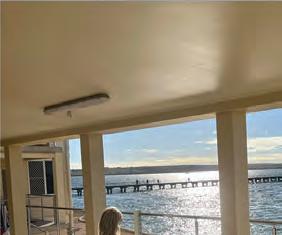
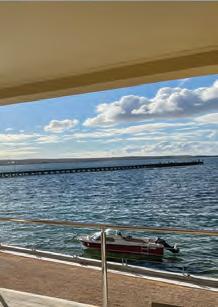
WATERFRONT APARTMENTS right in the heart of town. Just metres from the beach with stunning views. Only a 15 second walk to Becks IGA and SipnSave Wine Cellars, Drift Cafe, Bakery, OP Shop and Hairdresser. Less than 90 seconds walk to the Streaky Bay hotel and jetty
Visit the website to view pictures of each unique apartment, the availability, and to book using secure online credit card option.
(longer minimum periods may apply in peak season).
These spacious newly renovated apartments have an ideal north facing aspect, excellent privacy from the street and great wind protection. As they are located in a hidden gem of a location directly behind Becks IGA and Becks SipnSave Wine Cellars. The shared walkway and driveway for guests to the beachside and jetty view apartments is at 34 Alfred Terrace right next to Drift Cafe.





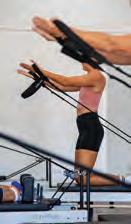
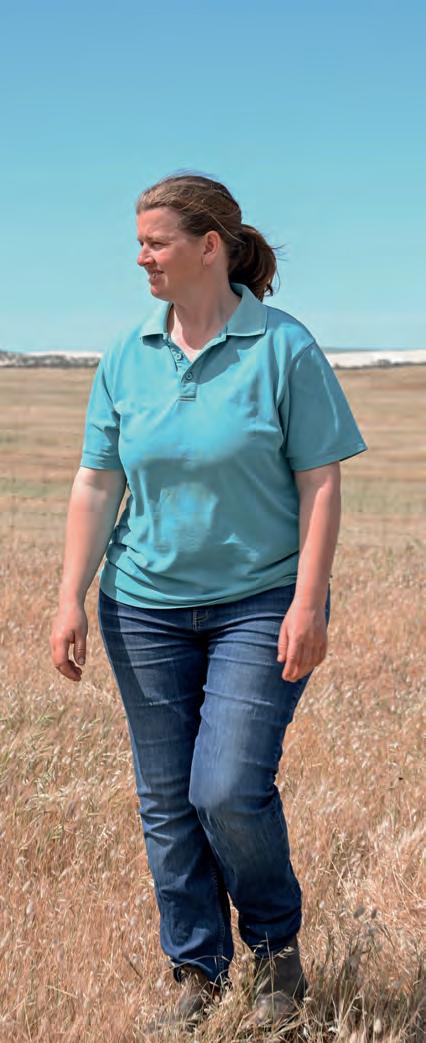
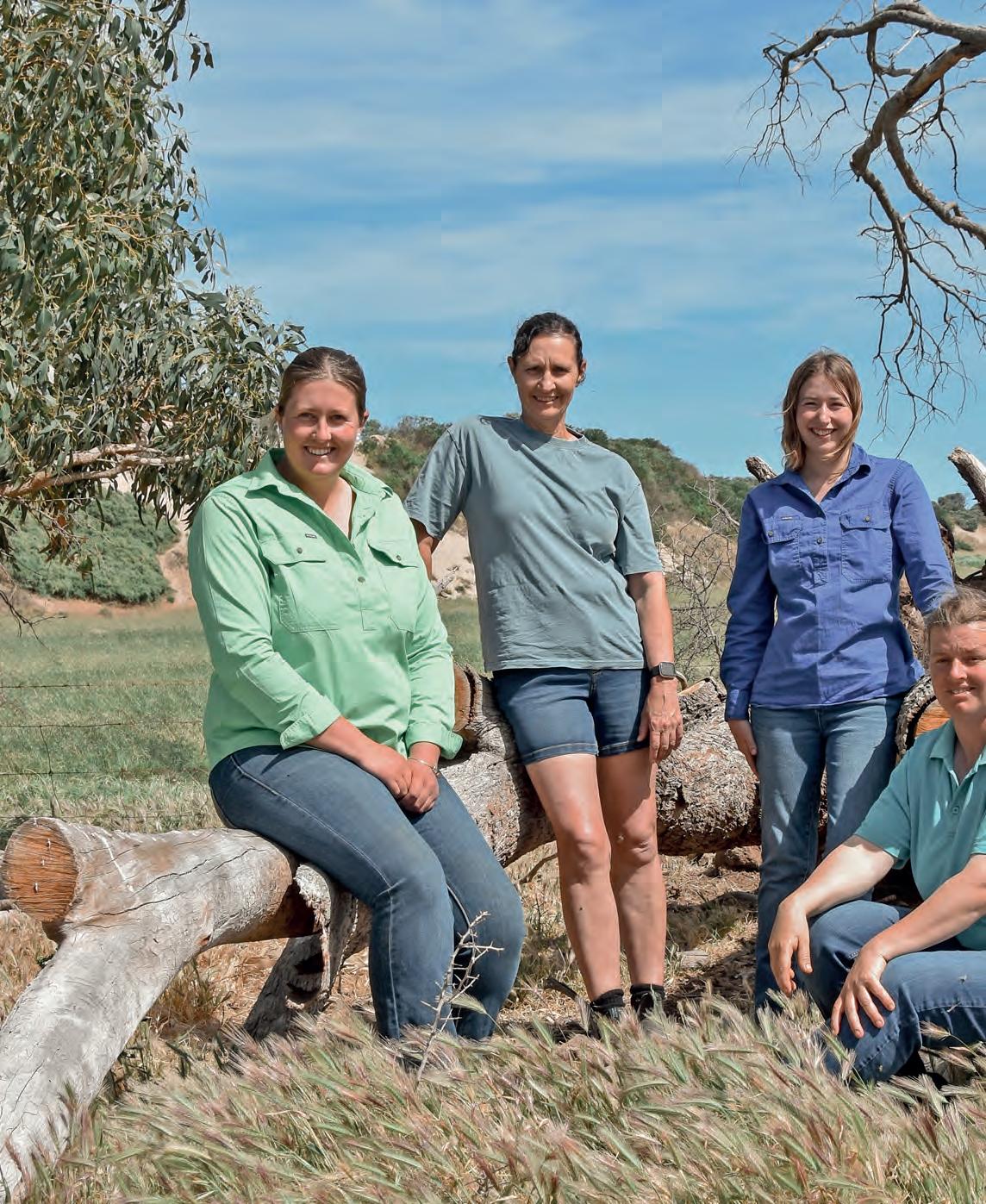
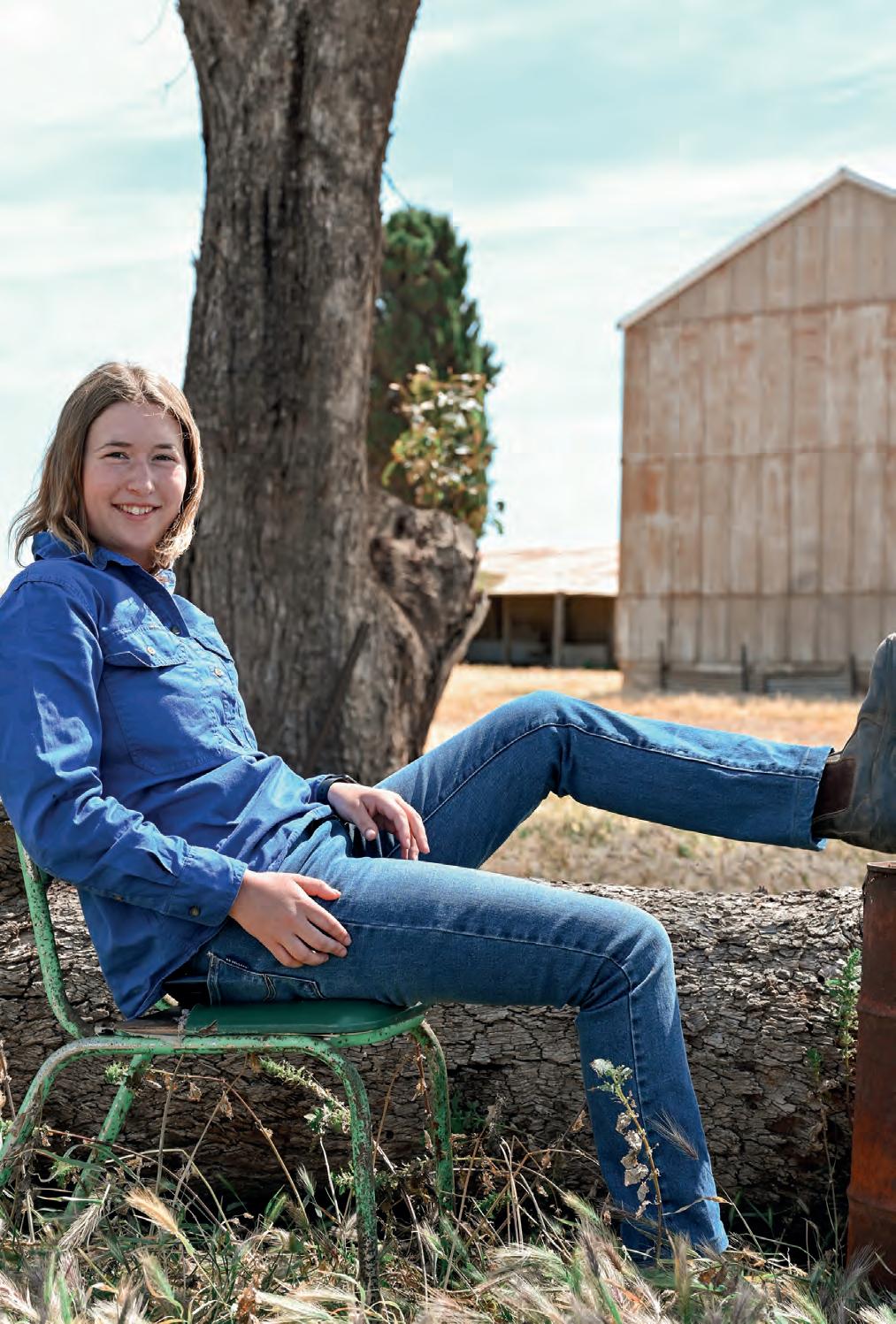
Farming has often been seen as a man’s world, but for this generation that perception is changing.






Across Eyre Peninsula and beyond, more women are stepping - or driving the tractor - into the fields of agriculture.
The change is quietly happening as a natural and welcome shift in the landscape of how farming families and communities operate.
Carolyn Mudge was born and raised on the family’s Eyre Peninsula farm, about 25 clicks outside of Wirrulla. She runs Maildaburra Hereford Beef, a poll hereford stud and beef feedlot.
She’s honest, works hard and is juggling her fair share as a single mother running a farm.
As a young girl, Carolyn always aspired to be a farmer, spending her childhood chasing her father around the paddocks soaking up as much knowledge as she could.
“It was the only thing I ever wanted to do, be a farmer,” she says.
“It was just a natural progression, something that was always going to happen.
“I don’t know whether dad just thought he should chuck me in the deep end and see if I could do it - but that’s what happened, I got my semi licence when I was 17 and have been carting grain to the silos ever since then.
“He was always a forward-thinking farmer, Dad.”
Carolyn’s brother, Darren, lives with his family on a property nearby - about a decade ago - they separated the business and now run independent farms, but they still work together when they need to.
It was a busy time for everyone, it also coincided with Carolyn’s journey to become a mother at 43.
“Seth’s an IVF baby,” Carolyn explains.
Today, Carolyn runs the farm, and her son Seth is soaking it all in, though his nine-year-old dreams are to become a paleontologist - and a farmer, which Carolyn of course supports.

Business savvy, the farm is at a point where Carolyn has recently employed a new livestock overseer, allowing her to focus on her passions in strategic planning and growth, and also aiming to give Seth the freedom to choose his own career path.
“Then he can decide later on if he wants to be a farmer,” she said.
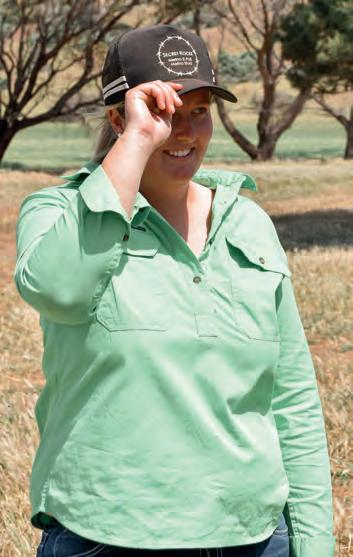
Brooke Stratford grew up on the family farm Secret Rocks just outside of Tumby Bay, and agriculture has always been a big part of her life.
She has an air of assertiveness, and a hidden layer of playfulness if you are paying attention.
“After completing year 12 I knew I wanted a hands-on career and to contribute to our family’s future,” she says.
“My year 12 research project was designing a ram stud which is where Secret Rocks Stud began in 2019.”
Brooke says there is much to enjoy about farm life; she loves getting to work outdoors and seeing the results of hard work.
“The bad is how much we rely on the weather, markets and many other conditions outside of our control,” she adds.
“Long hours, physical demands and setbacks can be disheartening.”
It is also a demanding industry for a young woman.
“Being young and female means having to prove yourself, which isn’t always easy,” she admits. Yet, Brooke views these obstacles as essential for building professional strength.
She believes these challenges teach resilience and ensure every successful outcome is hard-earned and profoundly meaningful.
For Brooke, the future of her farming career is about growth and balance.
“I want to keep building different aspects of our operation including the Secret Rocks Stud, lamb and cattle feed lotting and expanding into the pastoral region of South Australia,” she explains.




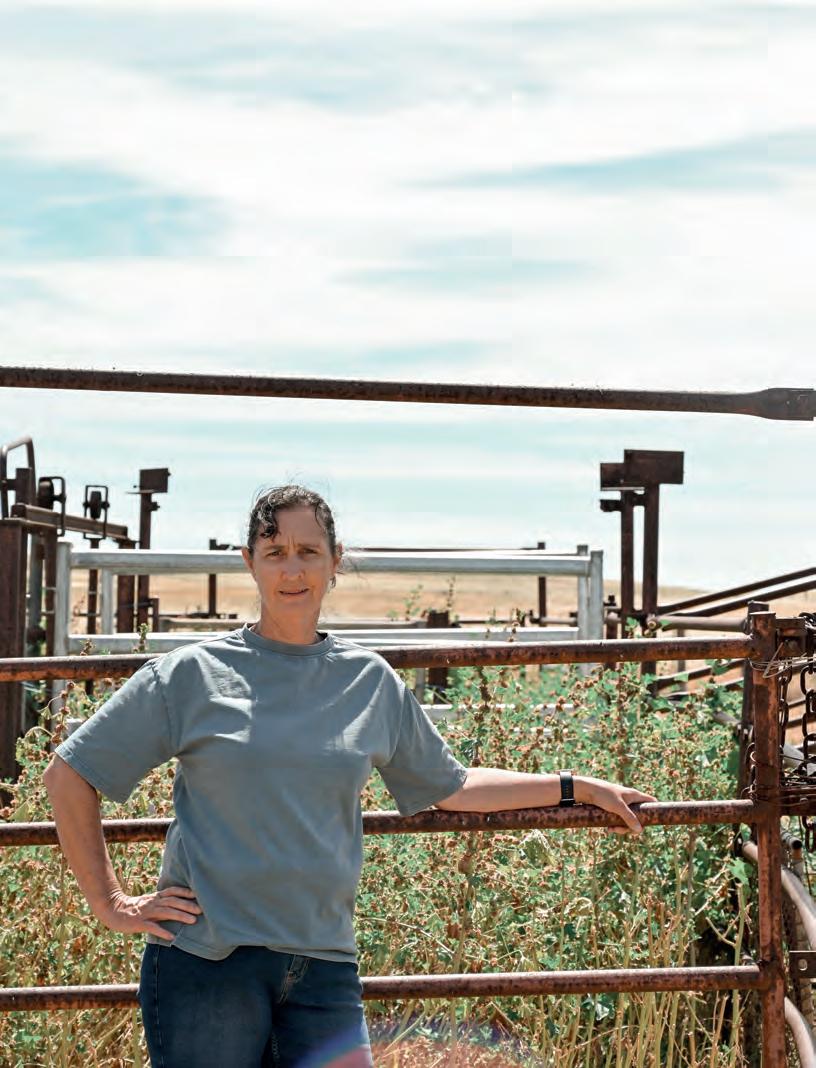
“I see the farm becoming more innovative using new technology and practices to make our business more sustainable, while still respecting the traditions that got us here.”
A third-generation farmer in Sheringa, Kimberly Wandel was always going to work on the farm. Her grandfather bought the land on which her family live and work, and Kimberly says she will do it for the rest of her life.


Kimberly would be best described as steady. She is doing the job she always wanted to do, standing in the shearing shed at her farm Glenross in Sheringa, and is comfortable and pretty easygoing.
When asked if she could have pursued her dream 50 years ago, Kimberly is aware she was born at the right time.
“The generations changed pretty much, right as I was coming into it,” she says.
And now the farmer she has become is a source of pride for her father.
“Dad said I was always interested in sheep,” she laughs.
Full-time on the farm, Kimberly gets her hands dirty doing anything that is needed.
“Cropping, fencing, sheep work,” she explains.
“We do wheat, barley and oats.”
Glenross backs onto the Sheringa sand dunes, right against the white sandhills.
A stone’s throw from the Sheringa coastline, it is a picturesque place to work - something not lost on Kimberly.
“I like fishing,” she says.
“Every chance I get - it’s good when you finish work you can whizz down there and go for a fish, fang along the beach,” she smiles.
Growing up on a farm has shaped every part of Emily Lawrie’s life. As one of three girls, she always assumed she would be the one to step into the role at her family farm in Tumby Bay.
“I’ve grown up on a farm my whole life,” she says.
“It was just something I always thought I wanted to do - I’m one of three girls so there were no other boys to take over the farm.”
Today, she works within a mixedenterprise operation, a rhythm she knows inside out.
“We are a mixed enterprise, with cropping and sheep,” she explains. “We also have a merino stud, Collandra Merinos.
“We crop wheat, barley, beans, oats and vetch.”
When asked about the highs and lows of farming, Emily pauses. Like many farmers, she finds the question difficult - the good and the bad are often two sides of the same coin.
“It’s hard to say what the good and bad really are,” she admits.
“You get your good years where it rains when you need it to, and others where it doesn’t rain at all.”
Looking ahead, she hopes the future of the farm holds steady, even as technology continues to transform the industry.
“The future of the farm to me, I hope looks similar to it does now,” she says.
“We will keep the stud going for as
long as possible - with technologies changing it makes it hard to keep up with it all.
“The cropping side of things will change a lot, I think, with technologies as they are always improving machinery in many different ways.”
Emily, like the other women shaping
the Eyre Peninsula’s farming landscape, is carrying forward a legacy in her own quiet, capable way - proving again that the next generation of farmers does not look like it once did.

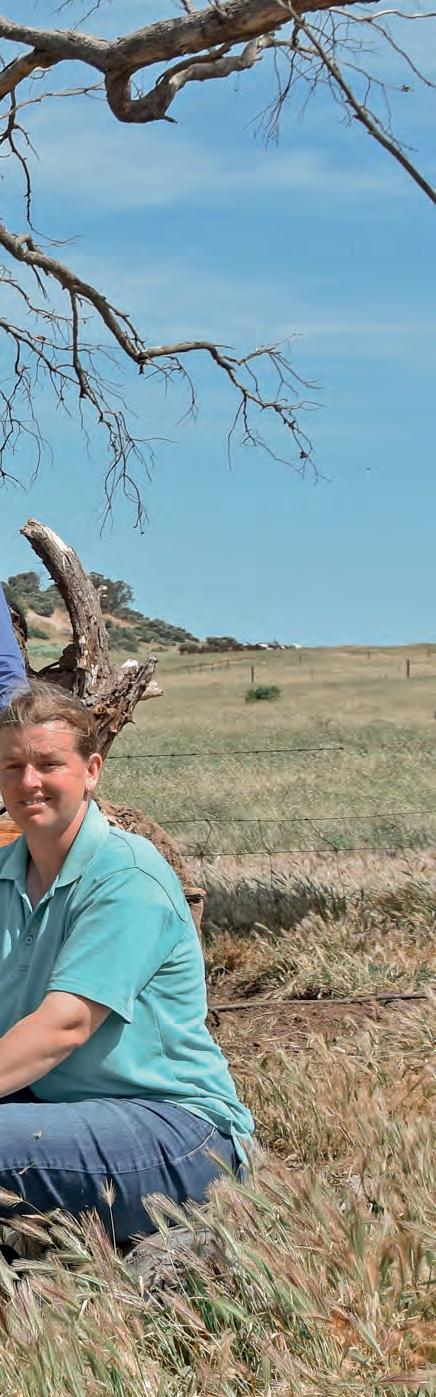
I’m one of three girls so there were no other boys to take over the farm ” “



Words: Luca Cetta
Photos: Glenroy Cavoodles
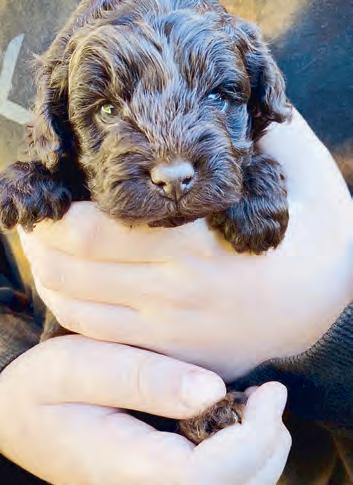
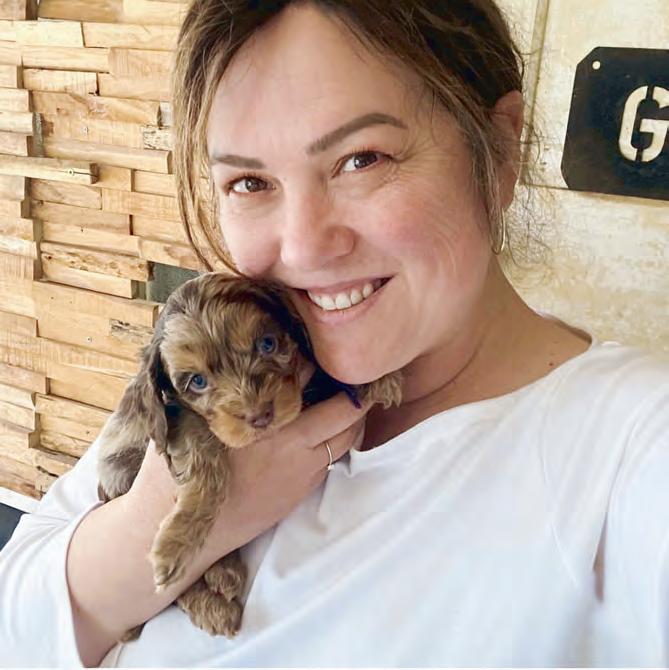
When she is not developing young minds at kindergarten, Beck Sampson is busy with her other passion: cavoodles.
The Sampson family farm at Warramboo is a usual hive of activity you would expect on an Eyre Peninsula property.
Headers roll through the vast landscape as the brown earth develops and forms until harvest comes around - signalling the culmination of another year’s hard work.
While all this is happening, the farm is home to another bustling family enterprise, run by Beck Sampson.
A preschool director by trade, Beck runs her own business - Glenroy Cavoodles - which breeds the popular dog ready to send out to new homes across the state.
When she is not nurturing the learning of children, you can find Beck - no matter the time of day or nightraising her next litter of puppies in her
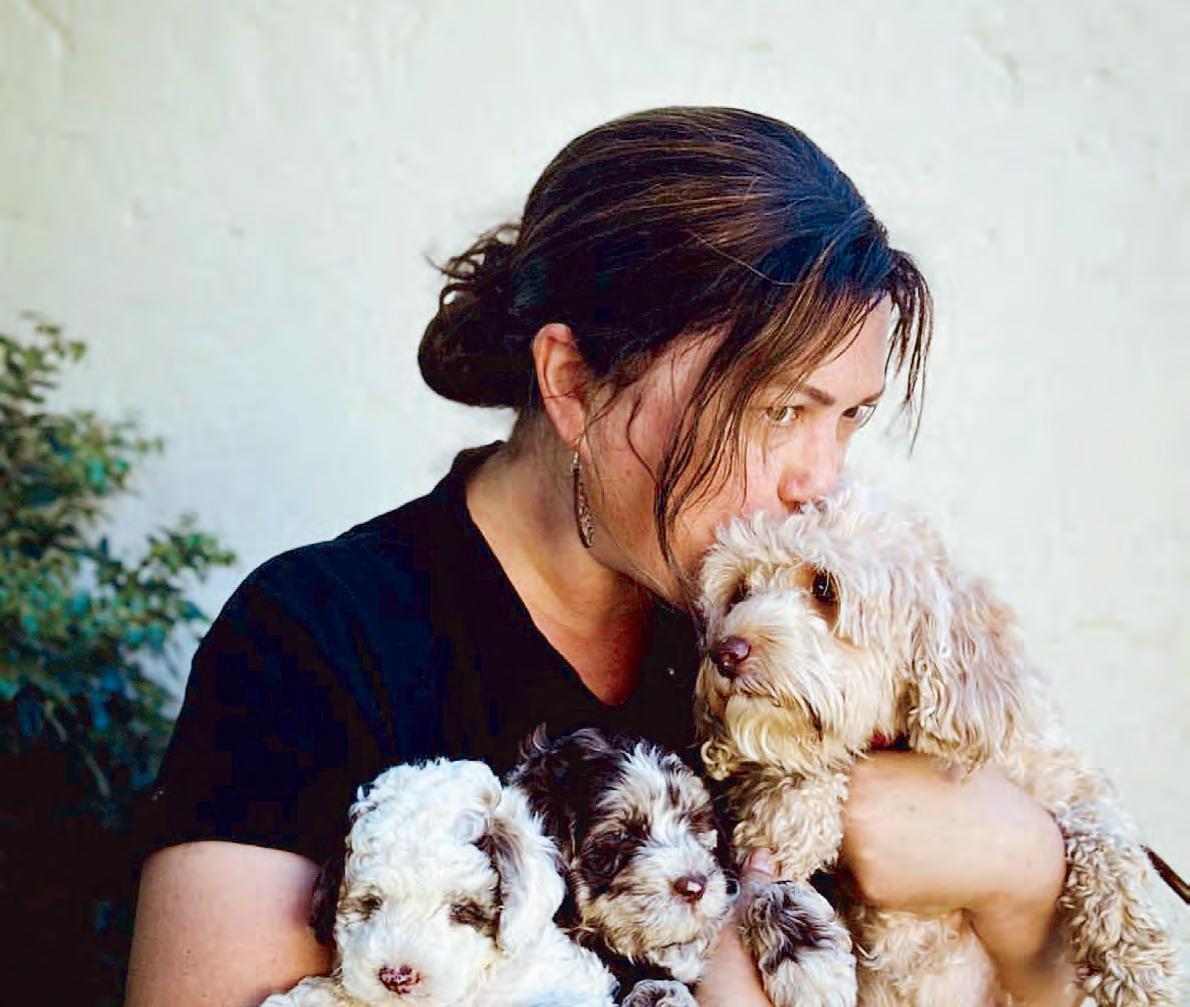

home.
What started as the purchase of a first, family, cavoodle more than a decade ago, has grown into something Beck thoroughly enjoys.
“At the time we had a kelpie and I liked how smart they are, but I wanted something that didn’t shed and we could take easily to the beach or on holidays; a Google search led me to cavoodles,” she said.
“They were quite new at the time and hard to come by.
“We bred our first litter 12 to 18 months after that.”
A teacher for more than two decades and currently the director of Wudinna RSL Memorial Kindergarten, Beck said she could apply what she did in education to Glenroy Cavoodles.
“Being a teacher myself, I am able to apply - and not apply - things I know about nurturing the development of young humans to young animals,” she noted.
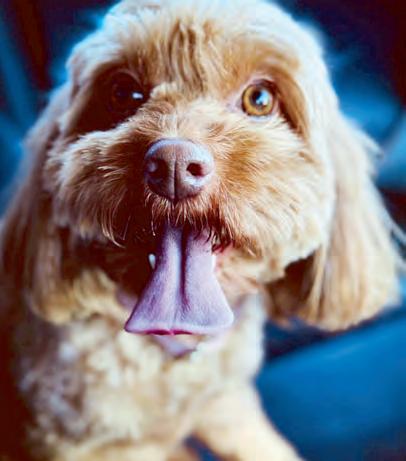
Glenroy Cavoodles breeds two sizes of cavoodles, which can range in weight from four kilograms to more than 10kg.
The puppies are raised in the family home for eight weeks - and Beck is involved in the enrichment, socialisation and training every step of the way.
Ten years as a breeder has given Beck plenty of insight into what is involved and during that time she has worked to build her breeding stock and understanding about genetics.
“I monitor the DNA of my puppies and I pick those with clear health checks and lovely temperaments to continue on my lines,” she said.
“I am aware of bringing in new genetics and the importance of diversity in my lines.














“During Covid I connected with a group of experienced cavoodle breeders. I have grown my understanding of breeding with other like-minded breeders who are great thinkers, keen to see the breed develop positively and to educate buyers on all things cavoodles“.
Beck is also involved with the Theodore Project, which is working towards a purebred cavoodle. This has meant additional health testing and evaluations, and more conformity in the breed.
“Cavoodles weren’t particularly sought after when we first started breeding, but we loved their temperament and felt they were good for people with allergies.”
Demand for cavoodles continues to grow - “I have a reasonably full wait list,” Beck said - but for her it is about finding the right family for the right puppy.
She takes pride in ensuring the right match is made.
Beck works with Rightpaw, a company founded during Covid dedicated to ensuring buying a dog is done in a simpler and safer way online.
She is one of more than a thousand verified breeders on the platform, but is proud to be the only cavoodle breeder in SA rated as “outstanding” by meeting exceptional standards across health, socialisation and customer service.
Potential dog owners can apply to be on Beck’s waiting list and can tell her what they are looking for.
Beck will gather information about the family - whether there may be allergies, children in the home or special needs that require attention - and she can work out the puppy best suited to that family.
With many of her puppies going to
homes in Adelaide, Beck sends weekly videos of a litter to new owners to get an update on how the puppy is developing and the training, enrichment and socialisation that has occurred each week.
During the first eight weeks, new owners are supported on what they may need to buy for their puppy, while they can also access online training modules and chat with Beck.
“I can do a temperament test and tell people how the puppy is developing, what its traits are,” she said.
School’s pedal prix team in 2024, while last year it raised $3000 for the Black Dog Institute by collaborating with families of its “black puppies” from Reba’s litter to pay their deposit directly to the institute.
Beck said there were characteristics which made cavoodles the “most popular breed in Australia”.
“People are attracted to their intelligence, loving nature, and the low-shed coats,” she said.
“A cavoodle is an all-round good choice.”
Glenroy Cavoodles runs a
Cavoodles weren’t particularly sought after when we first started breeding, but we loved their temperament and felt they were good for people with allergies “ ”
“I can tell them if the puppy is human-focused, confident or tenderhearted and then what type of further training and socialisation the puppy will need based on this - we can tailor the advice we give people.”
Beck said all of the puppies find wonderful homes and she prides herself on ensuring puppy homes are well educated and prepared.
“The joy of being a reputable breeder is that people come to me based on ethics and word of mouth recommendations, it means we always find really suitable homes for our puppies.”
Glenroy Cavoodles also supports local causes such as Wudinna Area


guardianship program, in which families across the state - at the moment there are about 15 - welcome a future breeding dog into their home until they reach breeding age.
At that time they return to Beck for breeding/whelping.
Recently, only three of Glenroy’s dogs were living as family pets, with the rest as guardians.
“Guardianship is win/win, the dog gets a loving home and the guardian family enjoys a high-quality cavoodle at no cost,” Beck said.
“At the same time, we maintain access to top breeding genetics without overcrowding, ensuring best welfare for our dogs and diversity in our program.”
Closer to home, Beck also gets plenty of help from her husband and kids Archie and Sadie.
In the early days, the kids were pivotal in the socialisation of the puppies.
Now that they are older, they help with other tasks such as training, clean-up, marketing and photography.
These days, the puppies still play with kids - with visits to Beck’s ‘other’ children at kindy.
“The kindy children love having the puppies come to visit,” she said.
“The last two litters have also visited the Wudinna hospital to see the residents up there, so they are meeting all walks of life and bringing joy wherever they go.”
The demands - and joys - of Glenroy Cavoodles means Beck spends plenty of time on puppy patrol.
She could be delivering puppies at all hours of the night, crate training at 11pm or toilet training at 3am - plus 6am feeds and playtime.
It can, at times, be a challenge for Beck to juggle the demands of teaching, raising puppies, farm and family life, but she said working parttime as kindy director has helped, and she was grateful for having a “supportive” family.
“It is a team effort.”
She is taking a year’s leave from kindergarten duties in 2026 with her kids at school in Adelaide, and as Beck said, the dog business was coming with her.
“We will always look out for EP applicants though, even when I am in Adelaide, and we offer an ‘EP discount’ to local families.”


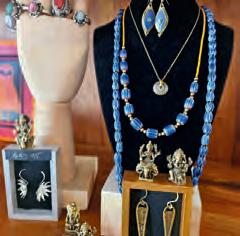











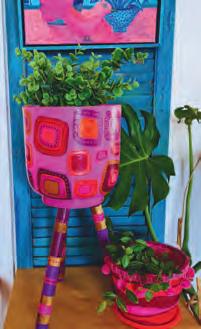









































Tunarama Lager
Jump Ship Brewing
Since 1962, the Tunarama Festival has mar ked the rhythm of summer in Port Lincoln. What began as a proud celebration of the town’s tuna fleet has evolved into one of South Australia’s most iconic coastal events. Jump Ship Brewing joined forces with the local council to craft a refreshingly light lager that captures the spirit of the festival. A toast to Port Lincoln’s past, present and future and to the community that continues to thrive by the sea. jumpshipbrewing.com.au

First Wave Gin
West Coast Distilling Co
First Wave Gin is handcrafted in small batches, showcasing locally sourced botanicals that capture the essence of Eyre Peninsula. With vibrant quandong, coastal daisybush and bright citrus, it delivers a crisp, refreshing taste perfect for a classic gin and tonic or elevating your favorite cocktails. westcoastdc.au
Salty Session Ale
Port Lincoln Brewing Co
Eyre Peninsula brewed - inspired by chasing waves at our local breaks. This crisp, coastal easy-drinker stays true to the original recipe crafted by the legends who brewed here before us. Galaxy hops bring pineapple and passionfruit vibes, balanced with a smooth malty body.
www.portlincoln.beer
Wanna Pale



Jump Ship Brewing
jumpshipbrewing.com.au

The Wanna Pale is as crisp as the dunes that inspired it! This tasty, refreshing, hoppy brew is a homage to Port Lincoln’s Wanna sand dunes. The Sleaford to Wanna four-wheel drive track across these dunes offers one of the best experiences on the EP. You can easily spend a whole day exploring, taking in some insane scenery of surf and rugged cliffs, fishing, picnicking, bird watching or spotting the wildlife from both land and sea. The feel is of crashing waves, out in the wild, grateful for where we live, invigorating, recharging.
West Coast Distilling Co

Made with Australia’s iconic native quandong, this liqueur delivers a bold balance of bright acidity and gentle sweetness. Toasted wattleseed adds warm, nutty depth, while macadamia brings a soft, rounded mouthfeel. Tart, vibrant and full of character, it showcases native Australian flavours in a clean, refreshing style. Serve chilled, over ice, or topped with soda.
westcoastdc.au
Grenache 2022
Gardner’s Vineyard
Unmistakably grenache! Aroma of ripe raspberries and grenadine; a rich, plush, flavoursome mid-palate flows through to some earthy complexity and a lick of savoury tannin. Ready to drink now, to appreciate the exuberance of youthful grenache. gardnersvineyard.com.au

Nitre Berry GinThe Endemic Collection
Coffin Bay Spirits
Hand-foraging and free-diving our untamed coastline, The Endemic Collection celebrates our most rare and seasonal botanicals from land and sea, as limited-edition releases. The Nitre Bush clings to salt-lashed coasts, its deep red fruit bursting with briny sweetness - a paradox of sea, cliff, and sand. This fleeting harvest is hand-foraged and distilled to seize its bold, raw character - a rare taste of our shoreline’s soul. Limited to 500 bottles. coffinbayspirits.com.au

Bean Me Up Scotty Cold Brew Coffee Cocktail Boston Bean Coffee Co
A rich, smooth and full bodied flavour experience, infused with the per fect blend of natural vanilla and hazelnut. Innately versatile, this cocktail is equally at home served over ice, as a base for creative mixology. Perfectly balanced and expertly blended, “Bean Me Up Scotty” caters to the discerning palate of cocktail aficionados seeking unparalleled quality and taste.
bostonbean.com.au
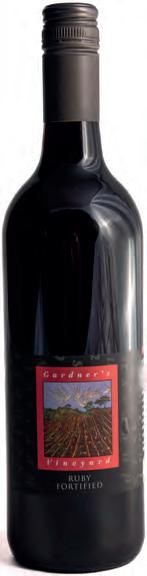
Fortified
The wine oozes the spice and red fruit characters that grenache is famous for! Bright in colour and flavour, with beautifully balanced sweetness and tannin, this wine will live in the bottle for many years - but also delicious in its youth. Enjoy it wherever and whenever you want to experience a truly unique wine style, rarely made in this fabulous part of the world. gardnersvineyard.com.au

Back Beach Gin
Streaky Bay Distillers

Made with fresh Streaky Bay quandongs, wattleseed and coastal rosemary, this gin is fresh, smooth, gentle on the palate and delicious served in a simple gimlet or with a lighter style tonic. streakybaydistillers.com.au
Honeycomb
BOSTON BAY COLLECTIVE









BOSTON BEAN COFFEE CO











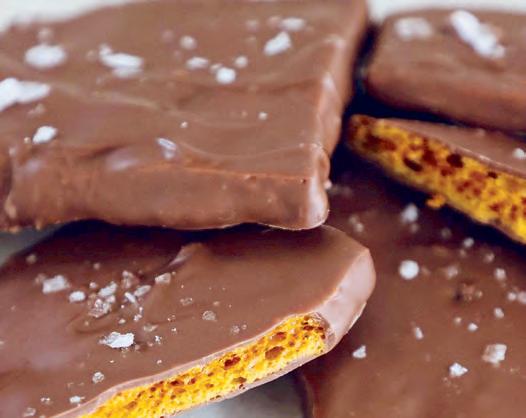













Treat yourself to a divine fusion of sweetness and crunch with an ir resistible chocolate-coated honeycomb. Made with care and attention to detail, each delectable piece encapsulates the perfect balance of airy honeycomb and rich, velvety chocolate. Imagine biting into a delicate golden honeycomb centre, enveloped in a luxurious coat of premium Belgian chocolate. bostonbaycollective.com.au



Gourmet Sea Salt SALTY EYRE 3 1 2 4 5




















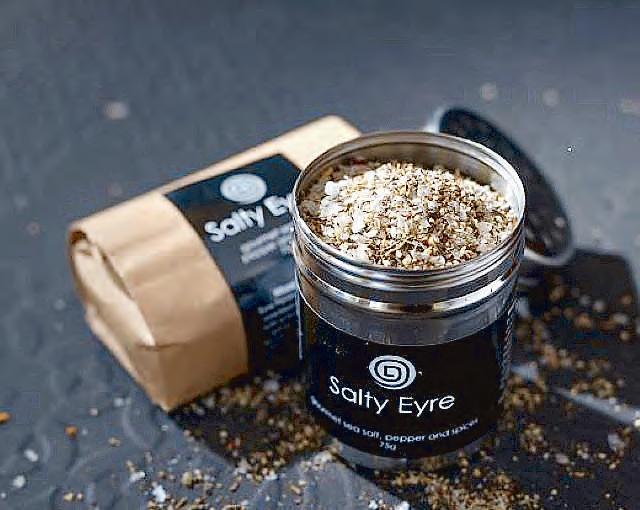













This multiple award-winning blend is full-bodied and leaves a syrupy mouthfeel. Experience the caramel, red fruits, citrus and toasted peanuts with notes of dark chocolate, plum and molasses that leaves a lingering balanced finish. bostonbean.com.au








Tuna in a Jar TACOMA PRESERVATION SOCIETY





















Salty Eyre began in 2016 by Nerissa Schuster with the iconic gour met sea salt, pepper and spices by Wizza’s Batch. Twelve months later, Nerissa’s Mums products were introduced as Pauline’s Patch. Salty Eyre uses as much Eyre Peninsula grown and sourced produce as possible. Some products are seasonal and therefore not available all year round, making Salty Eyre authentically local. @saltyeyre











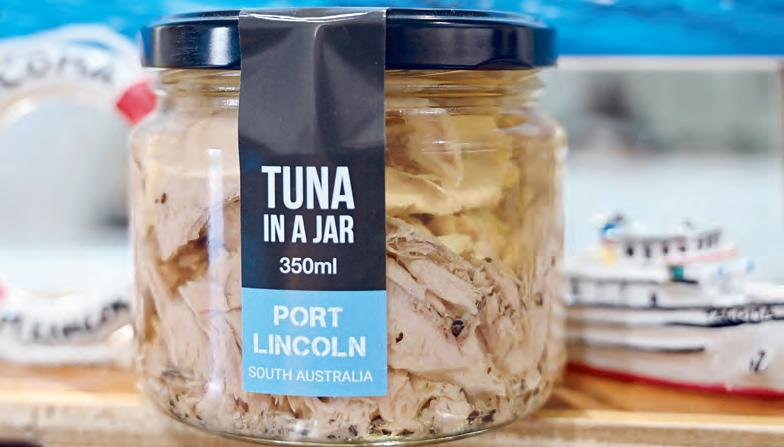









Wild tuna caught in the Great Australian Bight from the MFV Tacoma. This tuna is poled from the decks of a historic fishing vessel with the proceeds of the sales going to Tacoma Preservation Society for upkeep of the vessel from year to year. Available at Capitol Seafoods, Fresh Fish Place in Port Lincoln and direct from the boat. tacoma.org.au





EP bulk goods THE BULK FOOD SHACK

































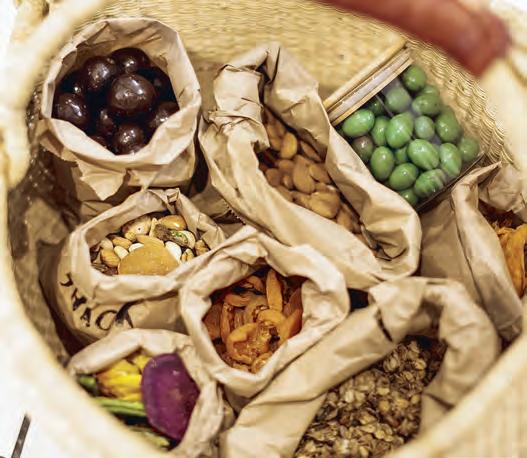













Discover wholesome pantry staples, baking essentials and lunchbox favourites. Indulge in delicious chocolate treats, plus eco-friendly household and personal care products. The Bulk Food Shack proudly stocks locally-made products supporting growers and makers on Eyre Peninsula. Buy only what you need, reduce packaging, cut down on waste, and shop with purpose. thebulkfoodshack.com.au


















Cold-pressed & handpicked










THE MULBERRY TREE









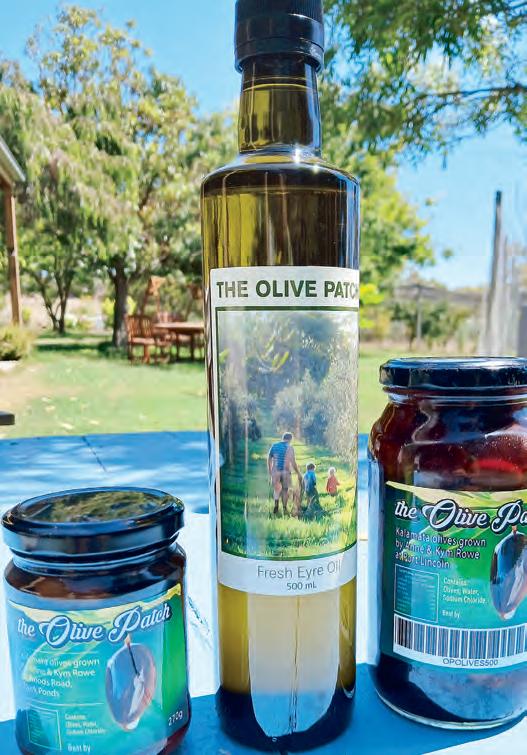















The Olive Patch on Woods Road, Duck Ponds has been providing locally grown, cold-pressed extra virgin olive oil and handpicked kalamata table olives to restaurants and hotels such as Line and Label, Boston Bay Winery and the Boston Hotel for a number of years. Oil is available at local shops, with both the oil and olives available at Lincoln Fresh Fruit and Vegetables, Port Lincoln Gourmet Box Co and Southern Ocean Express. kymrrowe@live.com
































FRESH FISH PLACE 8 6 9 10 7
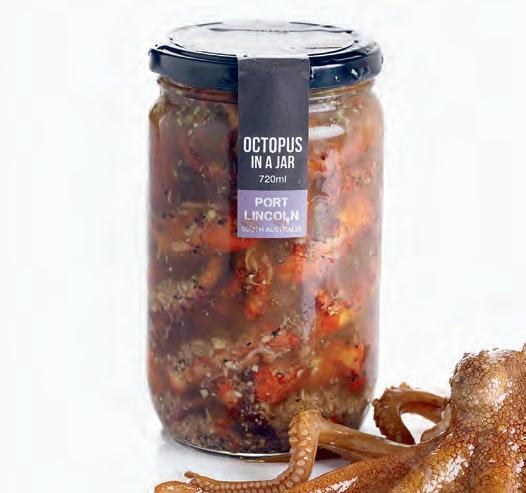







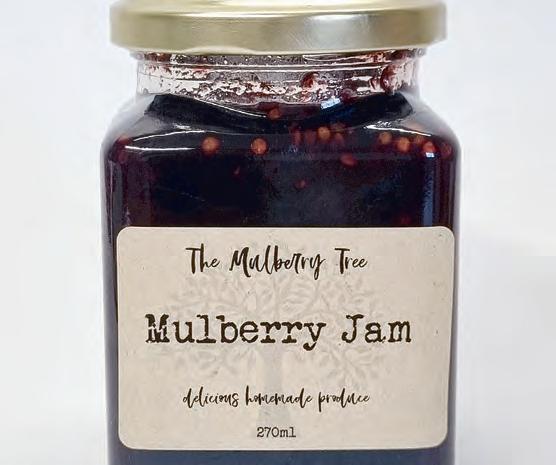
There is nothing better than homemade jam on your scones, or on toast for a sweet breakfast in bed. This mulberry jam is made with homegrown produce on Eyre Peninsula, and available for delivery Australiawide, or for pick-up at pop-up markets. epmulberrytree.com.au

















Yoghurt & Strawberry
LINCOLN GELATO CO










Tangy yoghurt gelato folded with sweet strawberry ripple for a bright, refreshing balance. Clean, fruity and naturally vibrant, it’s the second bestseller - a flavour locals love for its simplicity, freshness, and perfectly creamy finish. portlincolngelatoco. square.site















Wild-caught in the pristine, high-energy waters sur rounding Eyre Peninsula. Hand-cleaned, portioned, and slow-cooked to maintain structural integrity. Marinated in a traditional vinegar and spice infusion that enhances, rather than masks, the natural sweetness of the octopus. The octopus offers a clean, brine-forward sweetness reminiscent of the deep ocean, finished with a perfectly tender yet meaty bite. freshfishplace.com.au

















Premium Southern Bluefin
DINKO SEAFOODS

















Elevate your pantry with a range that redefines canned seafood through Australian craftsmanship and sustainable sourcing. From the pristine waters of the Great Australian Bight, Lukina Seafoods offers a curated selection of bold flavours and hand-cut quality including Lemon Pepper Bluefin Tuna and Smokey Peri Peri Tuna spread. dinkoseafoods.com.au
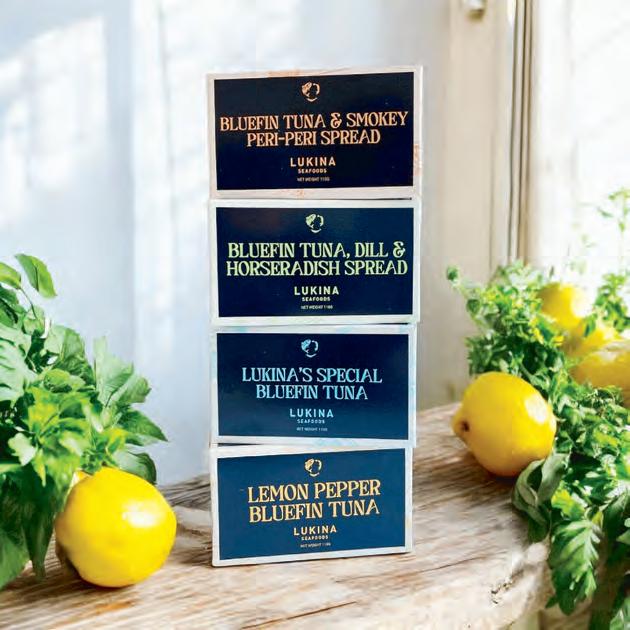
















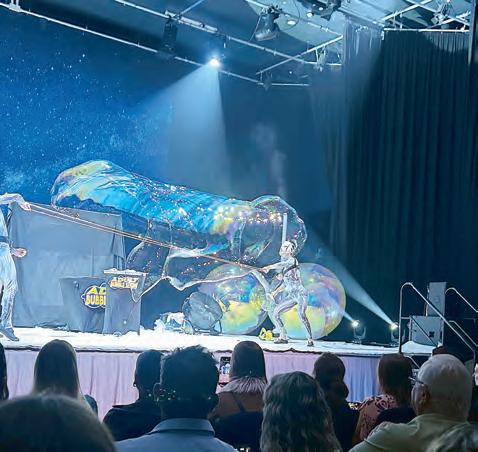
Friday 17 April - Sunday 26 April
Southern Eyre Peninsula
Get your helping of SALT this April as one of Eyre Peninsula’s most beloved festivals makes it return. Based in Port Lincoln, SALT Festival provides a platform for talented artists from across the region, in a variety of mediums.
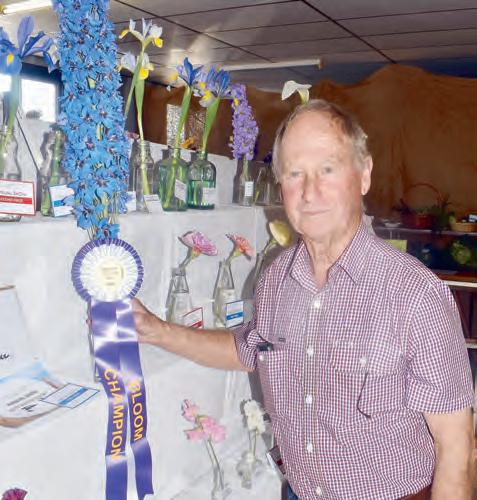
Saturday 19 September
Wudinna
From horses in action, local craft and pavilion entries, showbags, stalls, show rides, shearing and poultry, there is so much to enjoy at the Wudinna Showgrounds for Wudinna’s biggest day on the calendar.

Sunday 5
Eyre Peninsula
NAIDOC Week celebrates a milestone in 2026 through the theme of ‘50 Years of Deadly’. Eyre Peninsula communities such as Ceduna and Port Lincoln will host a packed program of events throughout the week, celebrating and recognising the rich history, culture and achievements of Indigenous peoples.
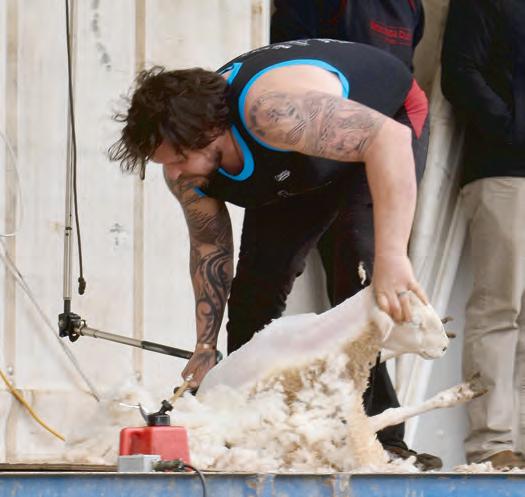
Saturday 26 September
Kimba
Enjoy the festive atmosphere of the Kimba Show, which includes all the usual pavilion sections, plus plenty for the whole family to enjoy - with kids’ activities, machinery displays, stalls and competitions.

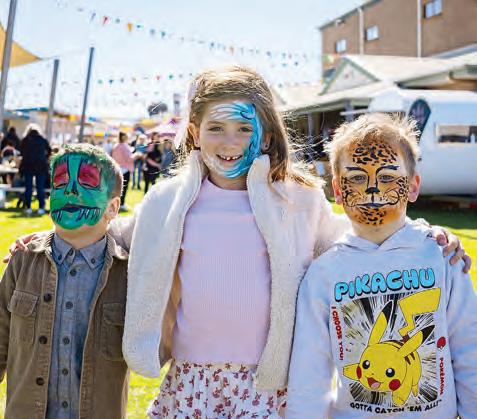
Sunday 9 August
Port Lincoln
Port Lincoln once again will host the start of show season on Eyre Peninsula. The longrunning event includes numerous competitions and exhibits, plus activities for everybody to enjoy.
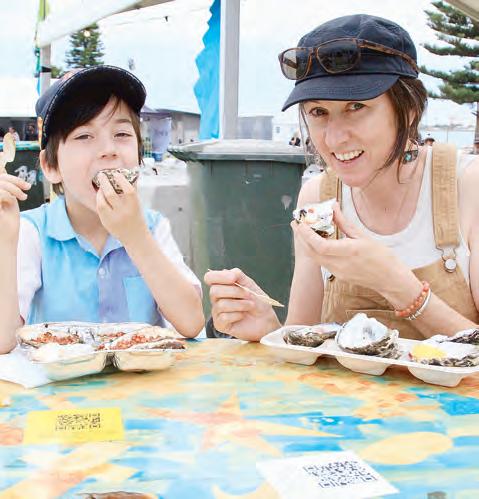
Saturday 3 October - Sunday 4 October
Ceduna
Have a shucking good time on the Ceduna foreshore for a two-day feast of sumptuous oysters and so much more. With stalls, live music, a kids’ zone and plenty of activities, Ceduna Oysterfest provides a long weekend of fun.

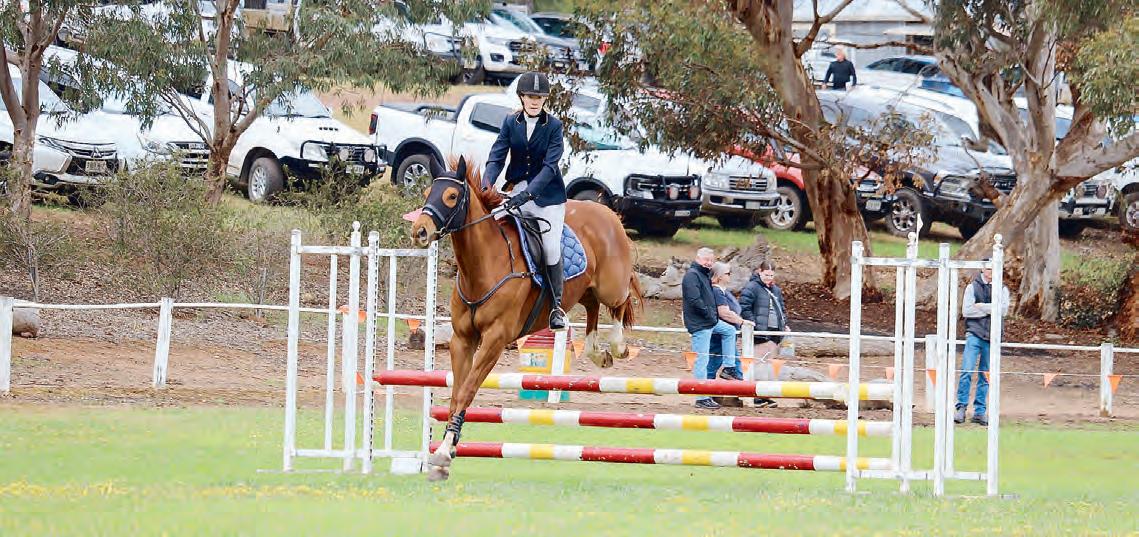
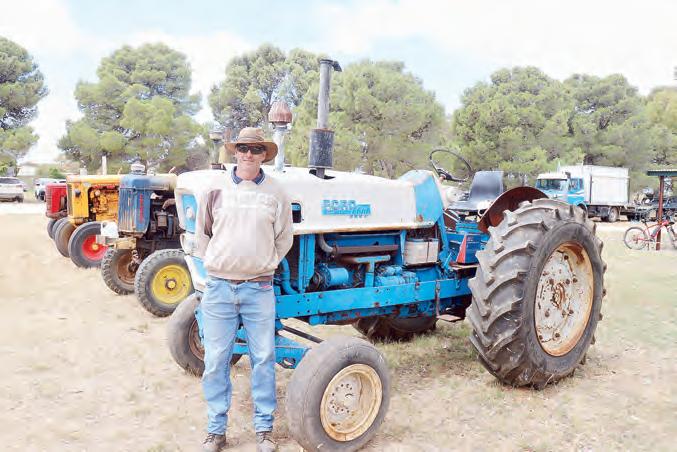
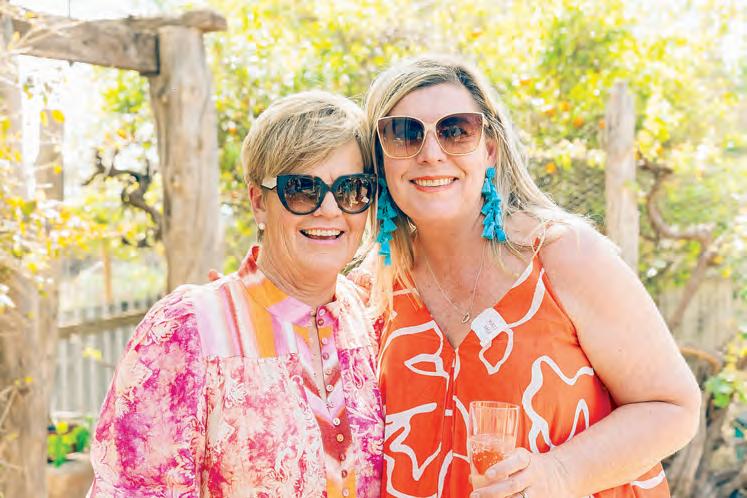
S aturday 10 October
Cummins
The Cummins Show has enthralled for more than a century, with Cummins Showground home to pavilion entries, horses, poultry and speed shearing, plus an array of activities for young and young at heart.
Thursday 15 October
Kimba
Workshop26 will host a day to celebrate women from across the region, and beyond. Rural Women’s Day aims to connect rural and regional women through community, collaboration and celebration - which the Kimba event does.
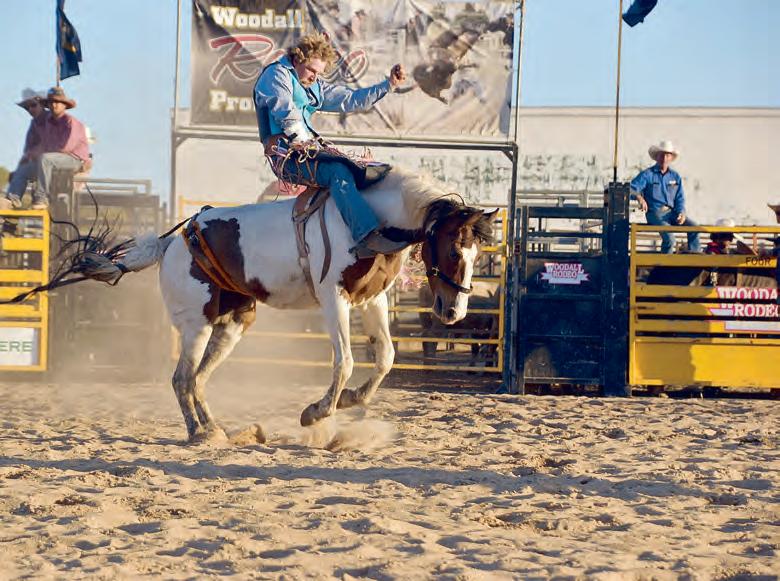
S aturday 17 October
Streaky Bay
Yee-haw! Strap in for a wild ride at Streaky Bay Racecourse as Rodeo by the Sea roars back into town. From the raging bulls to bucking broncs, you will be wowed by the great action from some of the Australian rodeo’s circuits biggest names.
Monday 5 October
Yallunda Flat
Family activities prioritising a country experience and lifestyle ensures a fantastic way to finish the October long weekend at Yallunda Flat. Kids and adults alike will be entertained throughout the day, which showcases shearing, horse events, live music and more.
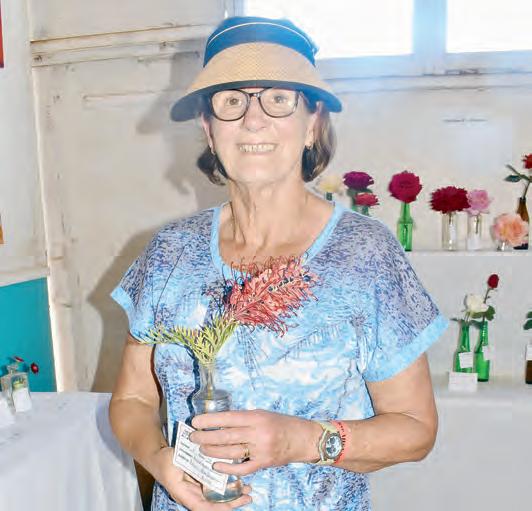
S aturday 17 October
Cleve
Show season on Eyre Peninsula finishes with a bang at Cleve. Check out the sections and exhibits from talented locals, or try your hand at riding a mechanical bull, venture down sideshow alley and take in the petting zoo.
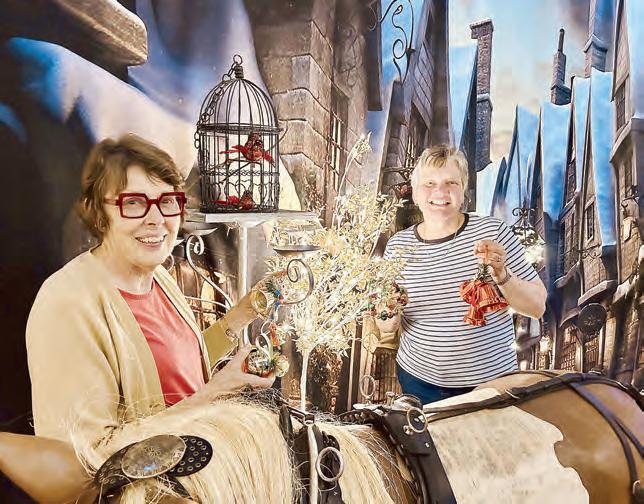
Tuesday 1 DecemberSunday 27 December
Cummins
What better way to enjoy the magical Christmas season than to visit the Cummins Community Hall during the month of December. The wonderland is sure to delight, with Father Christmas stopping by to meet the community.

S aturday 6 March, 2027
Cowell foreshore
Be blown away by a night of fireworks fun on the Cowell foreshore. In addition to a dazzling display, there will be markets and live music to enjoy at this free community event.
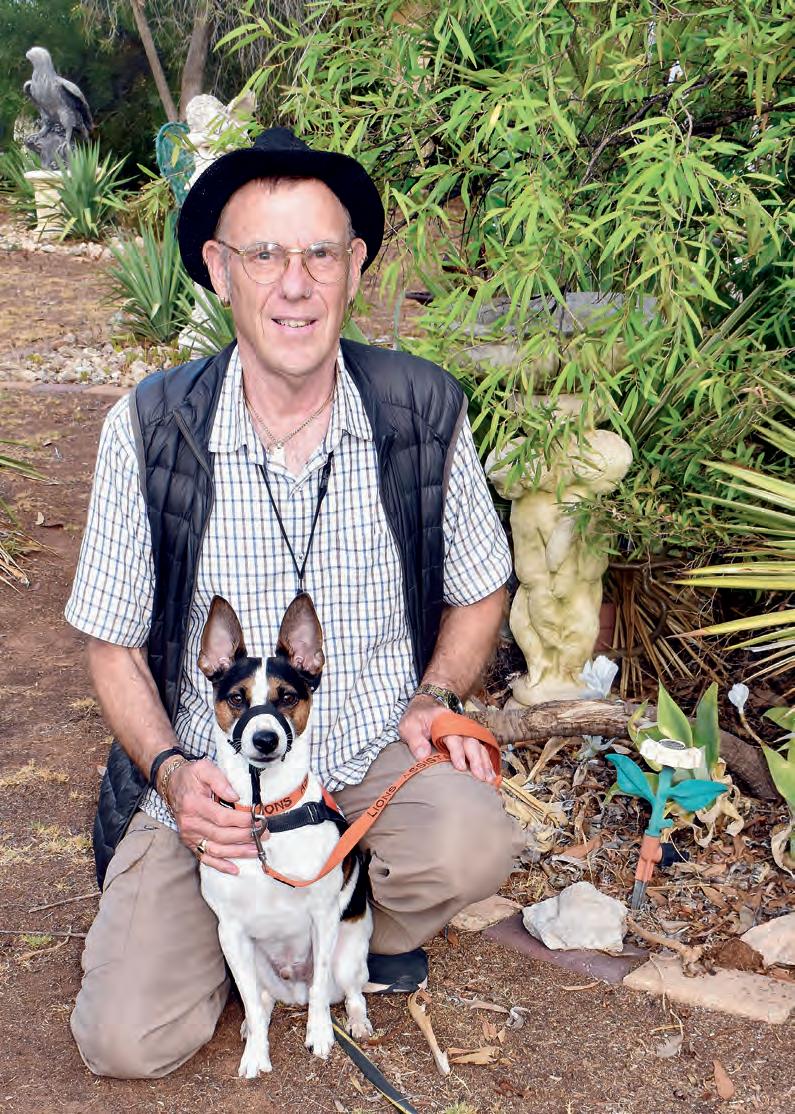
Hearing assistance dogs have become vital ears for four Eyre Peninsula people - one in Cleve, one in Cowell and two in Streaky Bay.
Cleve’s Phillip Turner is the most recent of those to receive a hearing dog, with Cleve Lions Club members and others in the community taking his dog Peter through his training sessions.
Likewise, Cowell Lions did the same for Barbara Bessant, with both her current dog Luke and her previous dog Nelly.
They also met the costs of bringing both dogs to Cowell from Adelaide.
However, that is not always the case with Streaky Bay SA Country Women’s Association members travelling to Sue Higgins’ home outside of the town to help her train her dogs, as the Streaky Bay Lions Club only reformed more recently.
However, thanks to many Lions Clubs from around Australia making donations to Lions Assistance Dogs it is able to provide the assistance dogs to Australians in need, free of charge.
The not-for-profit organisation is located in Verdun, South Australia and provides hearing assistance dogs, medical assistance dogs and psychiatric assistance dogs Australiawide.
There is usually 12 to 18 months between someone applying for an assistance dog, by the time a suitable




Lions hearing assistance dogs are life changing for people who are deaf - whether from birth, disease or as a result of an accident or injury.
dog is found.
Phillip Turner has had very limited hearing since birth but did not receive his hearing assistance dog until July 2025.
Cleve Lions members and other volunteers from the community then spent the next three months helping Phillip’s dog Peter settling in and training.
Lion Lyndon Briese said eight to 10 people were involved with training them both each week, with three to four sessions weekly.
The first task was to help teach Peter about his new home and to respond to sounds.
“We trained Peter to learn how to respond and communicate with Philip in response to a door bell, door knock, phone response, smoking and sound alarm (and) oven timer cooking finish,” Lyndon said.
“We had a good response from community helpers as well as Lions such as a door knock, a door bell or someone calling out that they were there.”
Peter needed to react to heat alarms to warn of possible fire risk.
Trainers came from Adelaide on three occasions to assess both the community and Lions’ training and guide them going forward.
The hearing assistance dogs quickly
Nestled on the beautiful shores of Murat Bay, the Ceduna Foreshore Hotel is the heart of hospitality on the far west coast of the Eyre Peninsula. With stunning beach and bay views just steps from your door, it’s the perfect coastal base for travelers exploring Ceduna, the Nullarbor and beyond. Offering comfortable accommodation ranging from standard to spacious deluxe and executive rooms, many with water views. Ceduna Foreshore Hotel caters to solo travelers, families and groups alike.
The vibrant bistro showcases Modern Australian cuisine with a focus on fresh, local seafood, alongside daily breakfast, lunch and dinner service. We’re also proud to serve delicious, barista-made coffee a local favourite whether you’re starting the day, catching up with friends, or grabbing a takeaway before heading out to explore.
become a much loved pet, but both the owner and the dog need time to learn how to work together.
Nurse Sue Higgins of Streaky Bay got her first hearing dog Lara two decades ago, after separating from her husband.
Sue said she started going deaf when she was 12 and it got progressively worse over the years.
She also has a hearing aid in her right ear and a Cochlear implant in her left to improve her hearing as much as possible.
Her impetus for getting a hearing assistance dog came from her concern that she would not hear her son Josh if he suffered an asthma attack out of her sight.
Lara was a black border collie which Lions Assistance Dogs rescued from the RSPCA in Adelaide.
Sue was devastated when she lost him to a snake bite.
“She was my true soulmate,” Sue said. Her second was a labrador cross Poppy, which she sadly lost after he took a bait.
She has had Ben for the past four or five years.
He is a tenterfield terrier, which the organisation is now breeding to have a regular supply of assistance dogs.
“I had my grandson living with me last year so he was able to alert me if he was crying,” Sue added.
Sue said she would not be able to continue her work as a nurse in Streaky Bay and Ceduna without a dog to alert her to her alarm ringing, as she was now unable to hear it herself.
She is allowed to take her dog to work with her, “but at the moment I am so busy to have time to toilet Ben”, when she works as a community nurse in Ceduna.
“I am doing a lot of community nursing and working in people’s homes”.
Sue said Ben travelled with her by plane when she was on holiday.
Her previous larger assistance dogs were assigned a free seat next to her when she travelled while the smaller Ben now sits on the floor at her feet.
A keen bowler playing in both the Thursday and Saturday bowls competitions, Ben is a frequent visitor to Streaky Bay Bowling Club.
However, she joked that he had been to more bowls clubs in Australia than most people.
A Lions’ hearing dog is essential to Cowell woman Barbara Bessant - who was born with a hereditary form of deafness.
Barbara said although she used a hearing aid that needed to be taken out for sleeping, so her dog was her only ears then.
However, even with it in, the extent of her deafness meant her hearing dog Luke was still needed.
She has used a hearing aid for 53 years and her condition has worsened, so that now Barbara is classed as legally deaf.
Barbara and her husband David Bessant moved to Cowell in 1993, but it was not until he died in 2000 that Barbara applied for a dog.
However, people cannot have a hearing dog at the same time as they have another dog, so it wasn’t until her old pet dog died that she was able to get her first assistance one.
She said that was because with more than one dog, they quickly reverted to regular dog behaviours and forgot about their hearing training.
“My first hearing dog was in 2001.”
That was a kelpie named Nelly and Barbara owned her for 16 years.
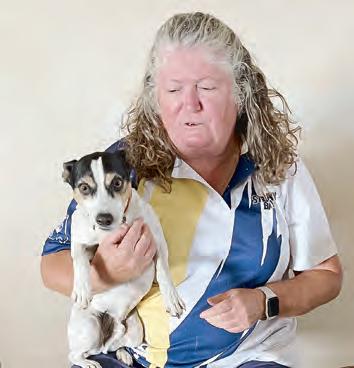
She has now had hearing dog Luke, a poodle-terrier cross, since August 2019.
“There was eight months between dogs because I had Nelly,” Barbara said.
“I was put on a waiting list, but if you have never had a hearing dog there is a wait of about three years.”
“It takes about six to eight months to train - depending on the dog.”
She said puppies went to a foster home when they were six to eightweeks-old, and returned to the training centre when they were seven to eight-months-old, depending on the dog and how much progress they had made.
Dogs then had another six or seven months’ training - including sounds specific to the owner they were going to.
These days they retire hearing dogs at 14, “because of the amount of work they do”.
Barbara said that would likely mean she would not have an assistance dog
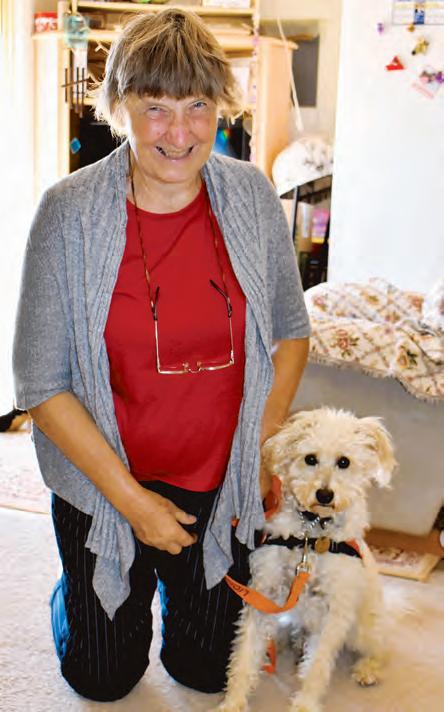
from when Luke hit that age until he passed away, as she would not rehome him with someone else as a pet.
She said she relied on Luke to alert her to many things in everyday life, including phones, someone at the door, a kettle boiling and the sound of the washing machine finishing.
Barbara has macular degeneration and should her sight get worse, she would need to get a dual purpose seeing and hearing dog.

These include but are not limited to
Metro, South East, Riverland, Mid North, Far North and West Coast including Ceduna, Wudinna, Port Augusta and Port Lincoln.


In a whirlwind couple of years in the saddle, young gun jockey Rochelle Milnes has won the Adelaide Cup and Port Lincoln Cup in 2024 and 2025, in addition to other esteemed prizes.
Rochelle grew up on a farm and rode in equestrian events nearly every weekend.
At 14 she developed enough skills with horses to start a part-time job as a stablehand, which was a fun way for her to make some pocket money before school each day.
As her dad Graham was a former jockey and her mum Karen was a trackwork rider and clerk of the local racecourse, Rochelle was engrossed in the industry from a young age.

“
School Camps and Excursions, Clubs, Weddings, Private Events, Corporate Events, Government Departments, Long Distance, Agricultural Tours & Any Of Your Ground Transport Needs.
” The bond you make is my favourite part, but the thrill of racing in general and of course winning is very enjoyable too

Words: Liam Wormald
Photos: Rising Sun Photography, Strathalbyn Hunt Club Inc, Country Racing SA, Kylie Kotz & Liam Wormald
“Not long after starting the morning work at the stables, I was offered another additional job from a friend of my mum’s to work at strapping horses on race day,” she says.
“My parents encouraged me to continue working this way whilst completing my high school education and it continued that way.
“Even after school I had no aspirations to be a jockey.”
Rochelle notes the real interest in racing began when she started work at the Adelaide yearling sales for Stable Hill Thoroughbreds aged 16.
“John Dunn flew me over for the week each year and is one of the reasons why handling horses and


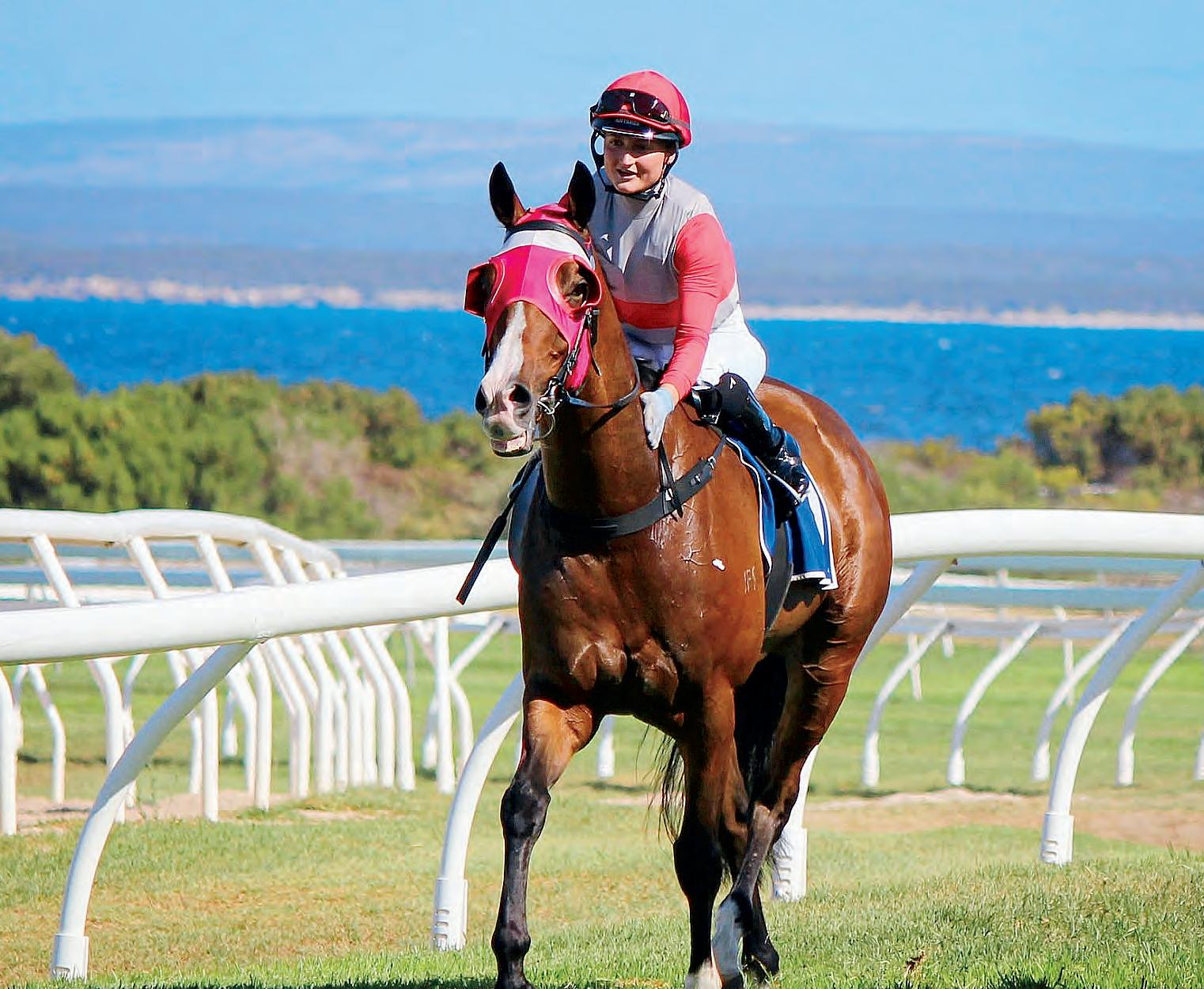

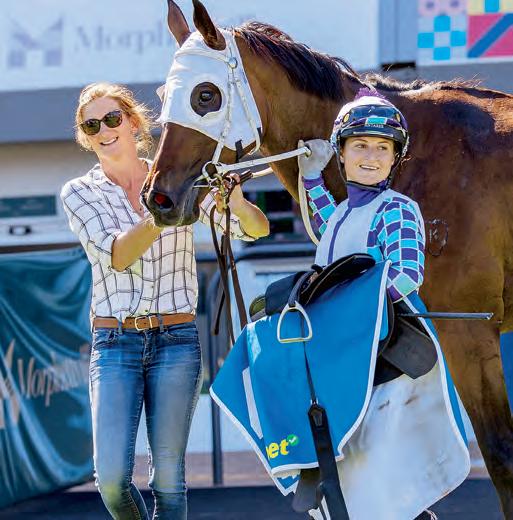
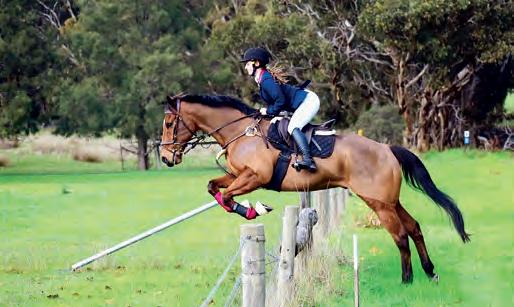
Port Lincoln’s Rochelle Milnes has already made a big mark in the sport of racing and is only just getting started.
working full-time in the Adelaide Hills as a trackwork rider was so appealing to me after finishing school,” she says.
“It took a few years and riding in a few jump outs to want to be a jockey, but this is what prompted me to head in this direction.”
Since becoming a jockey, Rochelle says she has thoroughly enjoyed forming a connection with her horses.
“The bond you make is my favourite part, but the thrill of racing in general and of course winning is very enjoyable too,” she states.
“It’s just a very rewarding job and you can travel all around Australia and even the world doing it.
“Seeing and teaching young horses

to develop their skills and put them to play on the track is terrific.”
In addition to winning the 2025 Adelaide Cup and both the 2024 and 2025 Lincoln cups, Rochelle has also triumphed at races such as the Lightning Stakes on Cicala and the Balaklava Cup.
“As far as milestones go, I’ve had a lot, such as winning my first metropolitan race on a horse called Second to Nun, who I secured four wins in a row with - including the Strathalbyn Cup,” Rochelle says.
On the last day of the 2025 season Rochelle also claimed the South Australian Metropolitan Premiership.
1/615LincolnHighway,PortLincoln (08)86843600
Withaviewalmostasdeliciousasthewinelistandtasting menu,spendyourdaysippingaward-winningwinesand diningonmouth-wateringfoodoverlookingourbackyard...
Locatedjust6kmoutsideofPortLincoln,you'llfindBoston BayWinesontheeasternhillsoverlookingBostonBay, baskinginthegloriousEyrePeninsulasunandrelishinginthe seaair.
Asanestablishedfamilybusinesswithstrong,localrootswe havepulledoutallthestops,creatinganumberofexciting andmemorablewinetastingandfoodexperiencesthat showcasewhatwedobest(producingpremiumwines)as wellascelebratingtheregion'smarvellousseafoodandlocal producewithourplattersandmenus.
Whatourcustomerssay: “Newmenuwasabsolutelyincredible!Especially recommendtheWagyuBites,prawnsandbruschetta. Couldn’taskforabetterviewandtoppedoffwithabottle ofBostonBayRiesling”
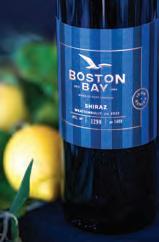
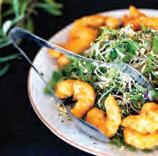
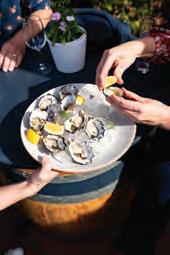
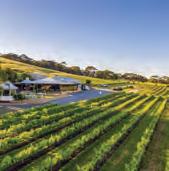
“That was incredibly tough to achieve and something I was very proud of,” she adds.
“Winning the John Letts Medal was also a huge accomplishment last year and something I had been working towards for the whole year.
“Getting to ride in my first Group One for Gai Waterhouse, although I came second to last, was amazing too.”
Winning two cups in her home town was special for Rochelle.
“I don’t often get too emotional when it comes to winning races, but I was overjoyed on both occasions and I couldn’t stop the happy tears from falling,” she notes.
“Many of my friends were in the crowd and I could hear the cheering down the straight.
“It was a feeling I’ll never forget and crossing the line first was such a relief.”
What made those victories especially memorable was the fact her dad led her horse in 2024 and her mum in 2025, plus the horse owners flew down to watch including main owner Tim Black, while trainers John Dunn and Krystal Bishop were also in attendance.
“It was wonderful to be surrounded by such support from family members, friends and people who love the races, in a place so close to my heart while doing what I love,” Rochelle recalls.
“I’ll never forget the feeling.”
Winning the Adelaide Cup gave Rochelle a surreal sense of relief.
“I didn’t sleep at all the night before and there was a lot of nerves and excitement leading up to the event, especially after the media coverage,” she says.
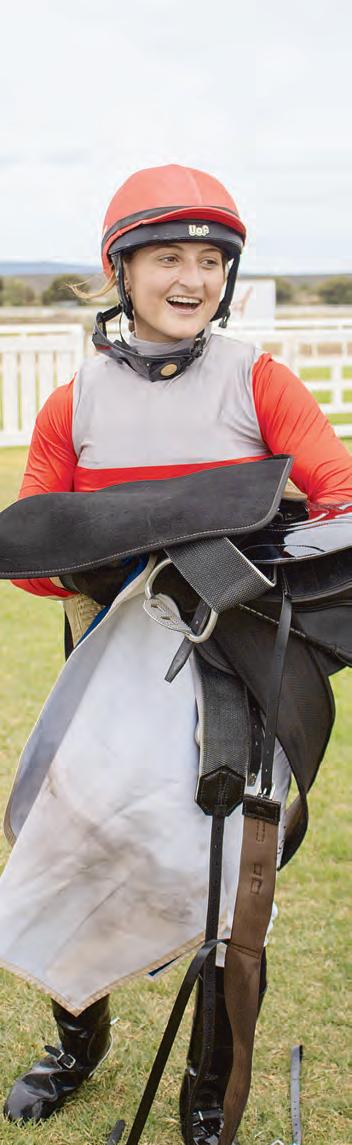
“The horse ran amazingly well from the tricky gate 12 and although I wanted to win it almost felt too good to be true at first.
“It was the most prestigious win of my career and took a few days to sink in and although there was plenty of celebrating, it was back to work in the morning.”
Most days Rochelle is up at 3am and drives either to Adelaide, Strathalbyn or Murray Bridge to do track work.
“Tuesdays are the busiest non-race day as I do grass-galloping in the morning, with the horses I work with having their last gallop in preparation for Saturday races at metropolitan level,” she explains.
“Depending on the day and the schedule I usually ride seven to 10 horses each morning for track work and then I’ll either travel or stay at the track until midday when I’ll ride in jump outs or trials.
“The weights of the horses I am riding within the next few days (54-61 kilograms) will determine if and what I can eat throughout the day and whether I go home and start to lose weight. If needed I will go exercising in sweat gear, whether that be riding my own horses or running in the gym and more often than not sweating in the hot bath before bedtime to make sure my weight is right for the upcoming race day.”
A racing career, Rochelle notes, is a 52-week commitment where holidays only come through sacrifice, injury or suspension.
“It takes a lot of planning important dates ahead and managing workload and daily schedules well,” she says.
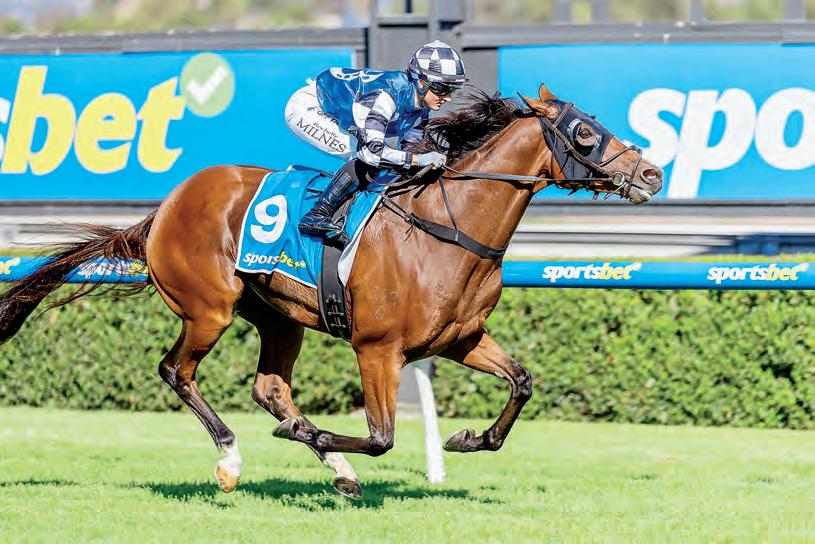
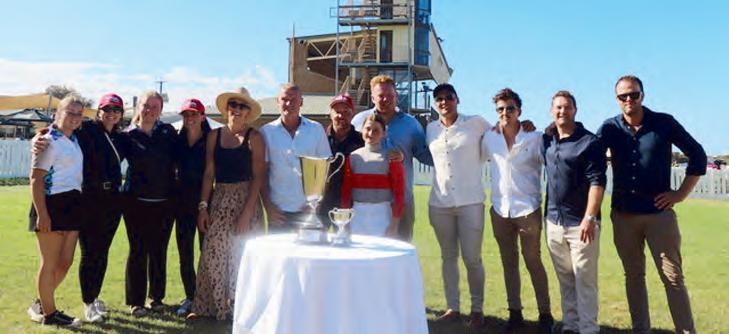
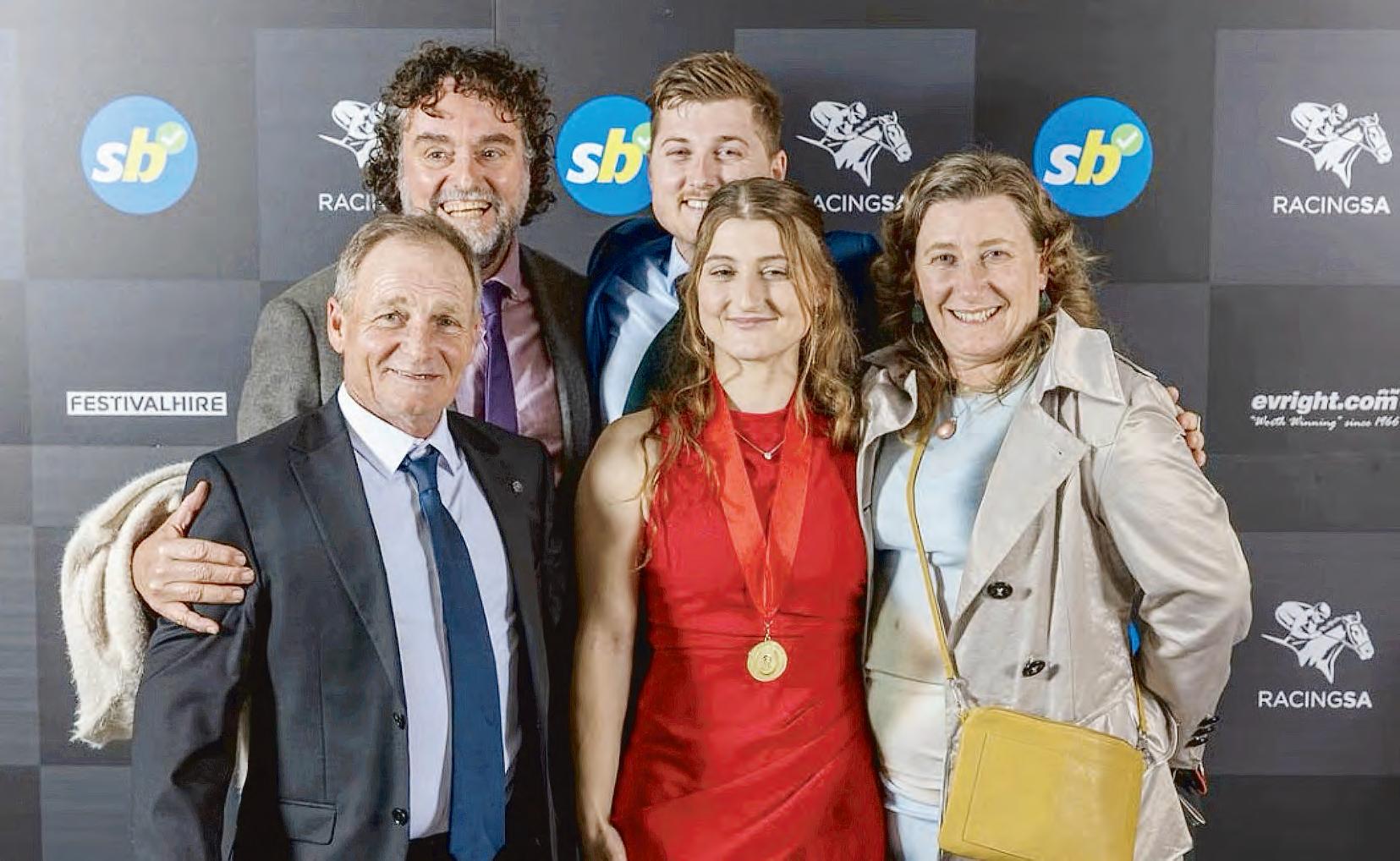
“Much of my spare time includes resting and riding my own horses when I can.
“I’m very grateful to my friends and family for being so understanding of my commitments and how they often work around me to support my social life, especially when it comes to time frames and food and drink restrictions.”
Rochelle is thankful for her family, who have been her biggest supporters through her riding journey.
“My grandparents Kevin and Margaret Warren are always taking time to watch my races on TV, while my steadfast parents, despite the risk the job brings, have always supported me and have only been a call or flight
away during both the good and bad times,” she says.
“My bosses John and Krystal are the reason I became a jockey and I think to this day are the people I have done the most races for.
“While my biggest achievements have come from the Will Clarken and Nikki O’Shea’s stable, so many others have supported me and continue to do so today.”
For Rochelle her goal is simple - to continue to ride consistently as a senior (without a claim) and win as many listed and group races as possible, while also trying to get a victory at Group One level.
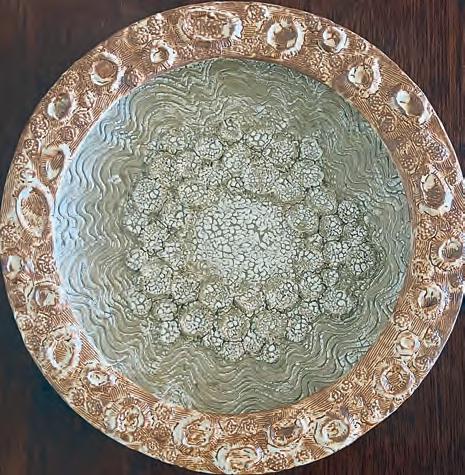
Bowl influenced by spinifex country and granite rockholes.
Pottery has come back into fashion now, there’s people doing pots everywhere... I like to mix up all my own glazes to make it very individual “ ”
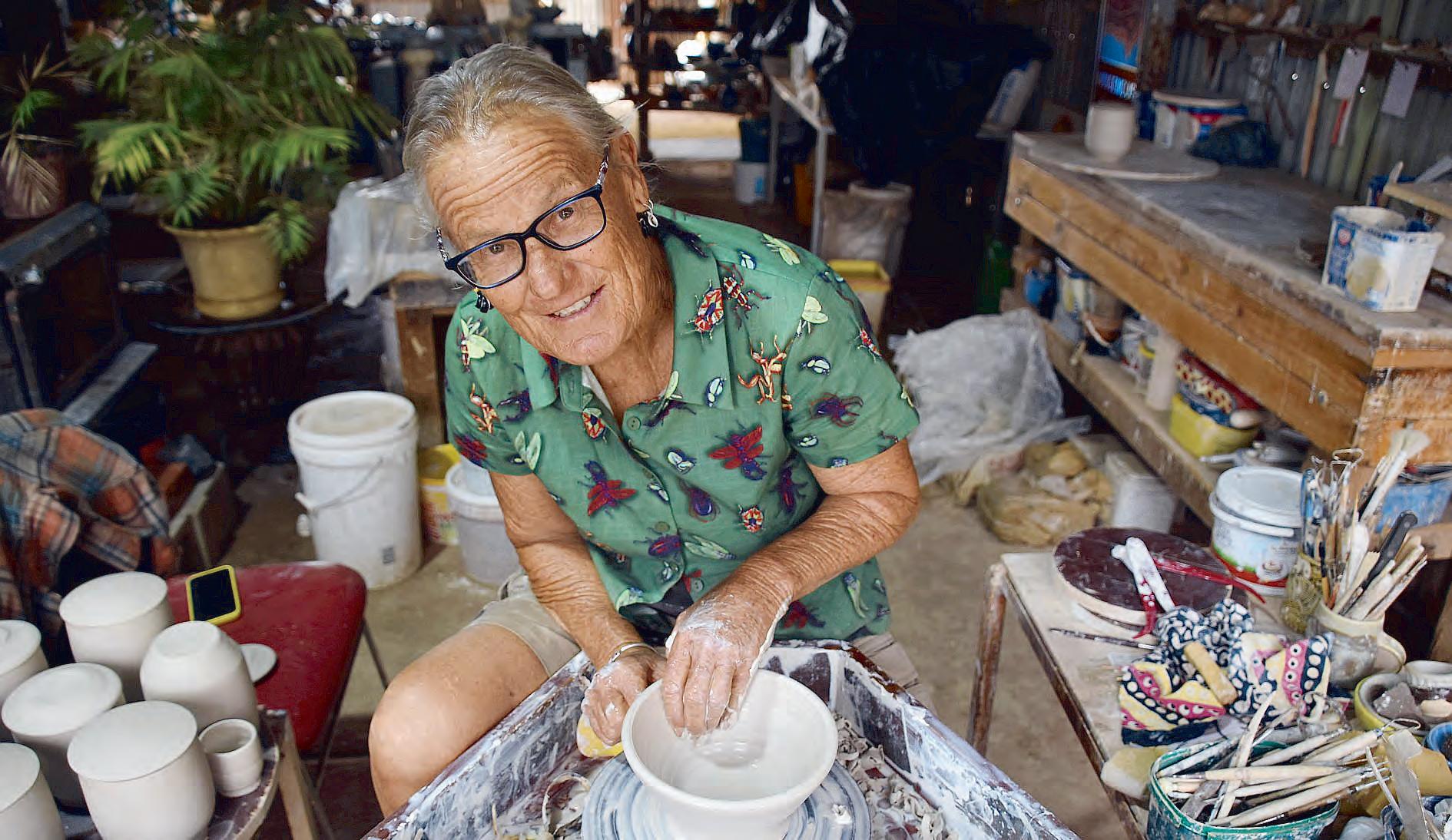
Pam Diment continues to shape clay the old-school way, using local materials, handmade glazes and more than half a century of experience to craft pottery infused with West Coast spirit.
Out back of a Ceduna farmhouse, inside an old corrugated shed salvaged from Maralinga with a dusty dirt floor, is where the magic happens for a favourite West Coast pottery artist.
Pam Diment has been handcrafting ceramic art since she was a young girl finding her way in 1970s Ceduna, where a lifelong passion for potteryand an emerging practice with a unique, earthy connection to place and country - were beginning.
The pursuit took Pam to Adelaide’s finest art school as a teenager, where she would stay and study ceramics for almost half a decade, before pottery once again set the artist on her next path - this time to the hinterland of the New South Wales north coast.
Now 70, and back at home on the West Coast for more than 30 years, Pam’s reputation as Ceduna’s most cherished ceramic artist remains, as does her passion for spinning clay.
That she continues to create from her humble, rustic shed studio - dirt floor and all - will come as no surprise to those familiar with her work, which she not only crafts by hand, but uses a kickwheel to traditionally spin her
ceramics, operates her own firings and creates her own glazes.
“As rough as my shed is, it’s a very special place. I love creating in there and coming up with ideas; sometimes you walk in there and the whole environment and energy changes, it’s hard to explain,” Pam said.
“I always call it my happy space, it’s where I create and feel really relaxed. If I could, I would spend seven days a week in there, but I usually take a break for weekends.
“Sometimes I wonder about it, because it is pretty primitive, and I see other potters around Australia and overseas, and I look at these beautiful nice studios and clean floors, but my studio has a dirt floor, it really is a bit of a classic, I love it.”
From Pam’s unique, personal and very West Coast shed come works that many people find special, if not just for their beauty, but their distinctiveness and practicality also.
“It’s seeing people use your work that is special for me, seeing people use things and knowing there’s nothing else like it, that they’re not mass produced, that you can’t go to a shop and get manufactured, perfect mugs that are the same.”
In a world where pottery has experienced a renaissance of popularity, where store-bought, shelf-ready clays and glazes are the norm, Pam remains true to her oldschool roots and learnings, such is the authenticity of her work.
Clay is the building block of her ceramic creations, which she finishes and decorates with her own glazes made from iconic Eyre Peninsula materials such as granite rock and mallee ash.
“Pottery has come back into fashion now, there’s people doing pots everywhere... I like to mix up all my own glazes to make it very individual,” she said.

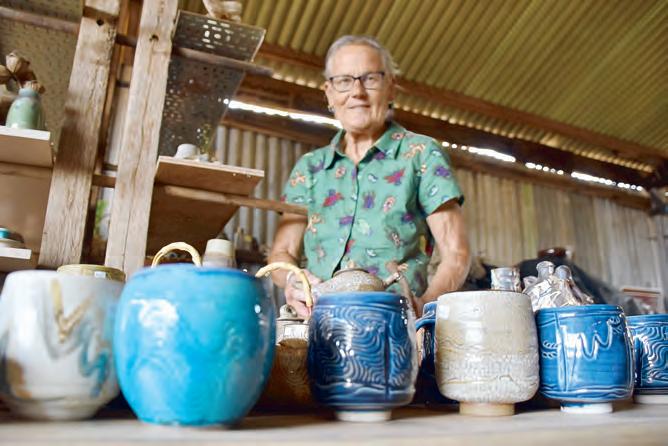
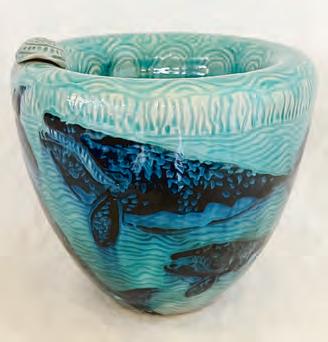
“Going through art school, we had to do glaze technology, so that gave me a good grounding in setting up and doing your own glazes, where a lot of people who are up and coming potters these days, you can buy beautiful glazes off the shelf, there’s nothing wrong with that, it’s just a different way of attacking your work.”
Pam took a break from potting between 2004 and 2014, while she managed Arts Ceduna, with a particular focus on promoting Indigenous Australia’s connection with art.
“We helped Aboriginal people expose their artwork and develop their skills, I went on many cultural trips, as far as the Serpentine Lakes, I have felt very honoured and privileged,” Pam said.
“I love teaching, I love people being empowered through their work, that’s what the art centre was all about, teaching people how to use art to empower themselves and take control of what they were creating.”
Her near lifelong career in the arts has truly come full circle, for it was Ceduna art teacher Alison Kirk who

Pam’s crackle glaze teapot, inspired by the cracks which form after rain puddles in the outback have dried up.
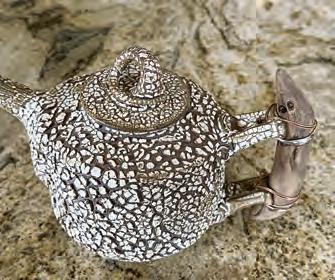
once empowered a young Pam to follow her dreams in ceramics.
“I had a really good art teacher who got me into the pottery side of it; she really saved my life in a way, because she took an interest, I loved anything art. I never knew anything about pottery or anything like that, so she got me into it, doing a really old, very basic Japanese Raku technique,” she said.
“I built a kiln out on my father’s farm while still going to school - I would fire it up with the old tea tree posts they used to build the fences out of, I used to go around scrounging all that, because there’s not a lot of wood around here. Growing up on the farm, in those days, in the 1970s, Ceduna was very isolated, you didn’t have all the technology like we have these days, I had no idea what I wanted to do.
“I was just floundering around, Alison helped me get into the South Australian School of Art in Stanley Street. I owe her a lot, sometimes people come into your life and have that really big influence, I still keep in touch with her to this day.”
April 17 – 26
Southern Eyre Peninsula
Ten days of art, innovation, creativity and culture in a program packed full of events everyone will love.
SALT Festival – book tickets now! Anything is possible!
SAVE THE DATE
SALT Festival 2027 April 16 – 25


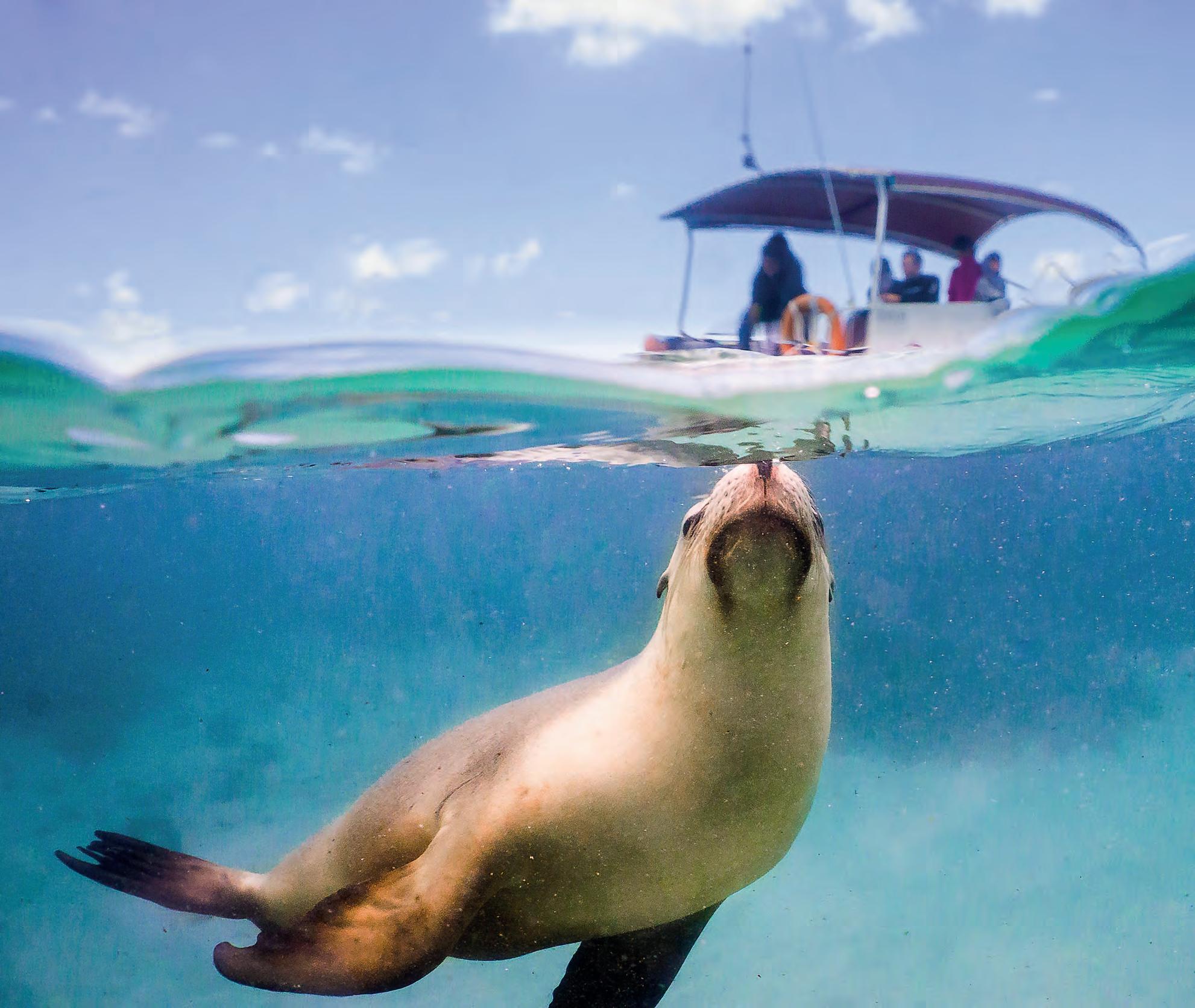
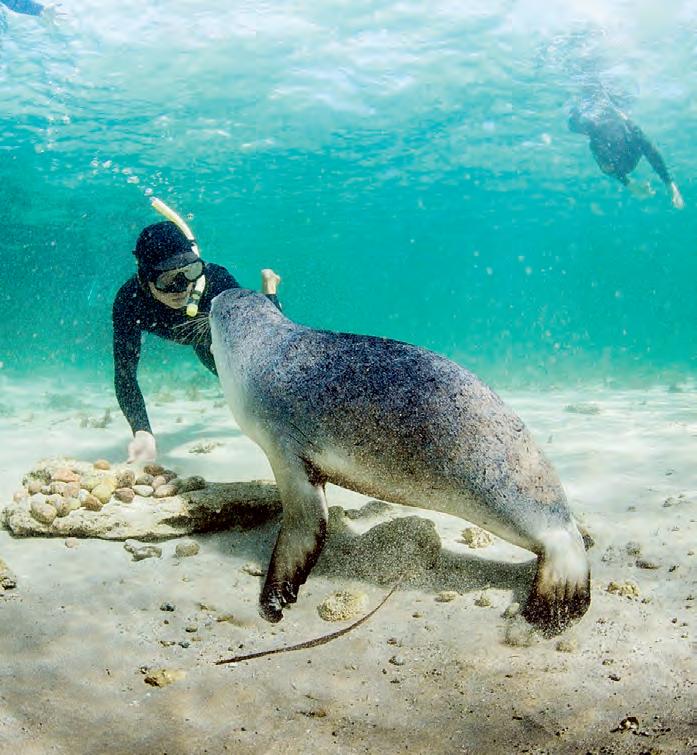
When a wild animal, in its natural habitat, chooses to interact with us on its own terms – it’s a moment in our lives unlike any other.
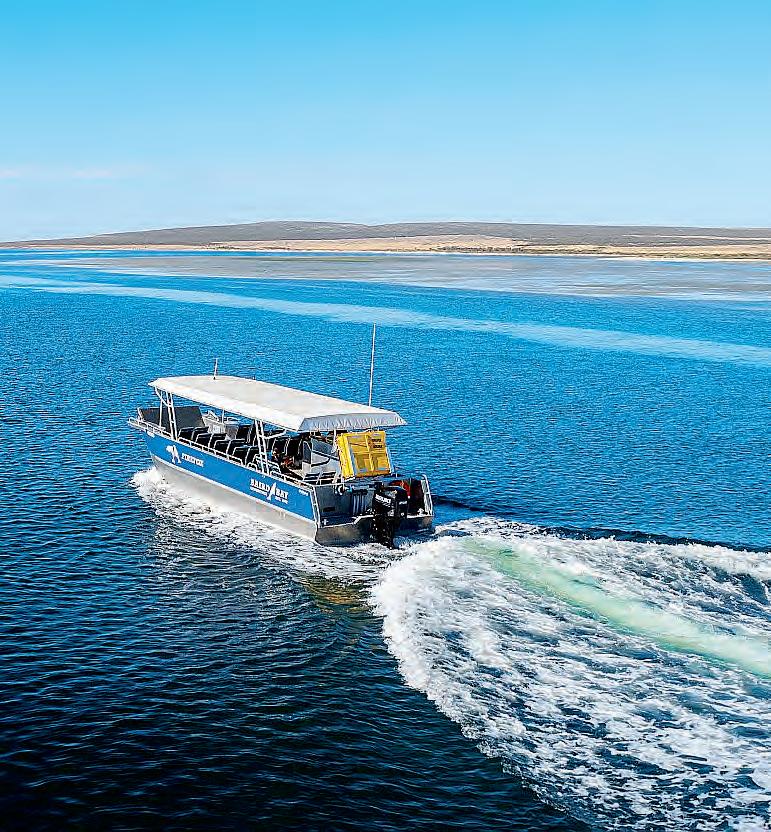

Baird Bay, on the western edge of Eyre Peninsula, is where the rugged South Australian coastline meets the shimmering turquoise of the Great Australian Bight – and it’s a special place where moments like this happen.
From October to April every year, these raw and real encounters with Australian sea lions and bottlenose dolphins are hosted by Baird Bay Experience, one of the most unique operations in the country. Respectful, lowimpact, and unforgettable, the tours never have more than 20 people on the boat out to Jones Island.


As the tour begins, we hop on board for our adventure to
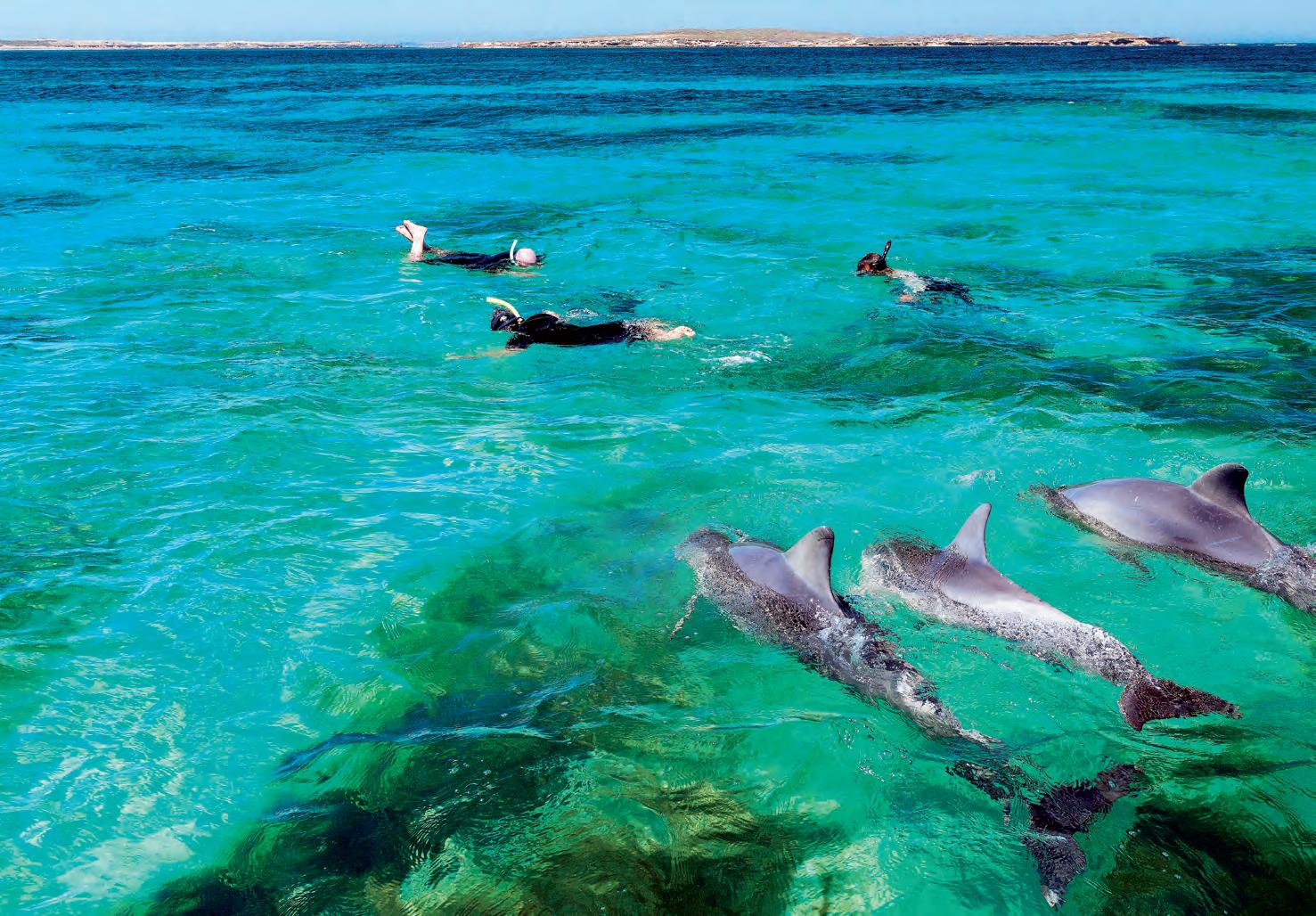
observe and interact with these mammals of the sea. On the journey, take in the coastline, the birdlife, and the endless ocean horizon. It’s not long until it is time to drop into chest-deep water; the sea lions will come to us, in their time, on their terms. Simply join their aquatic playtime in the calm and protected rock pools surrounding their home.
Sea lions love to play and, more often than not, will invite us to join in the fun. About 85 per cent of the Australian sea lion population lives in South Australia, much of that right here on Eyre Peninsula. We take it in, soak it up, and let the images imprint themselves in our minds.

A truly bucket-list experience on the Eyre Peninsula. From October to April, guests can experience one of the region’s most moving encounters: swimming alongside wild sea lions and dolphins in their natural habitat. Respectful, low-impact, and unforgettable, it’s an ocean experience found nowhere else.
Onsite, a small restaurant welcomes both guests and day visitors with a seasonal two-course lunch, celebrating local produce and regional flavours in simple, delicious ways. Bookings are essential.

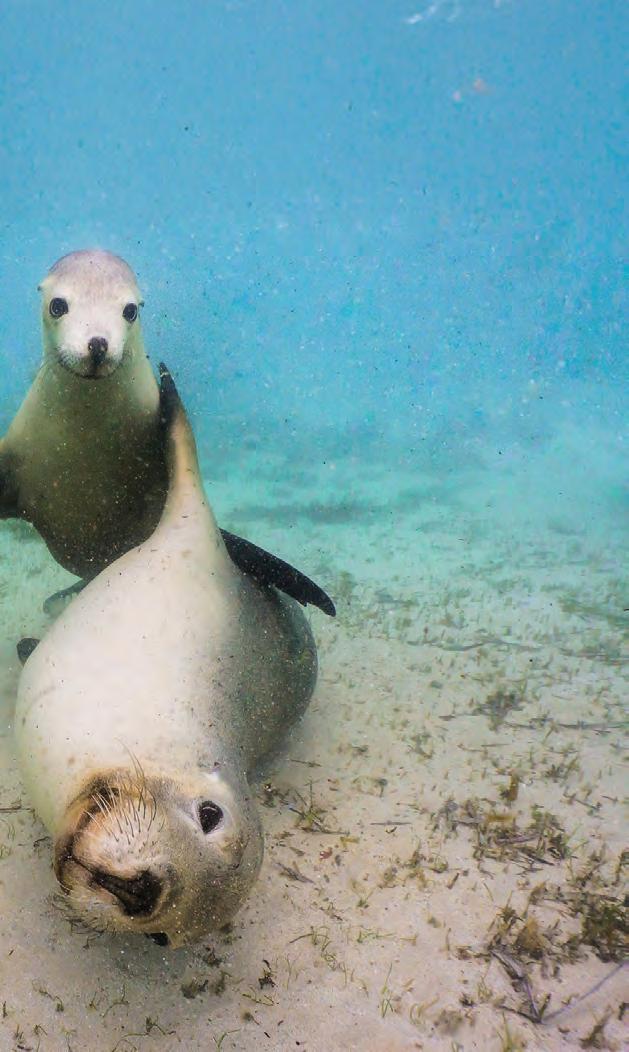
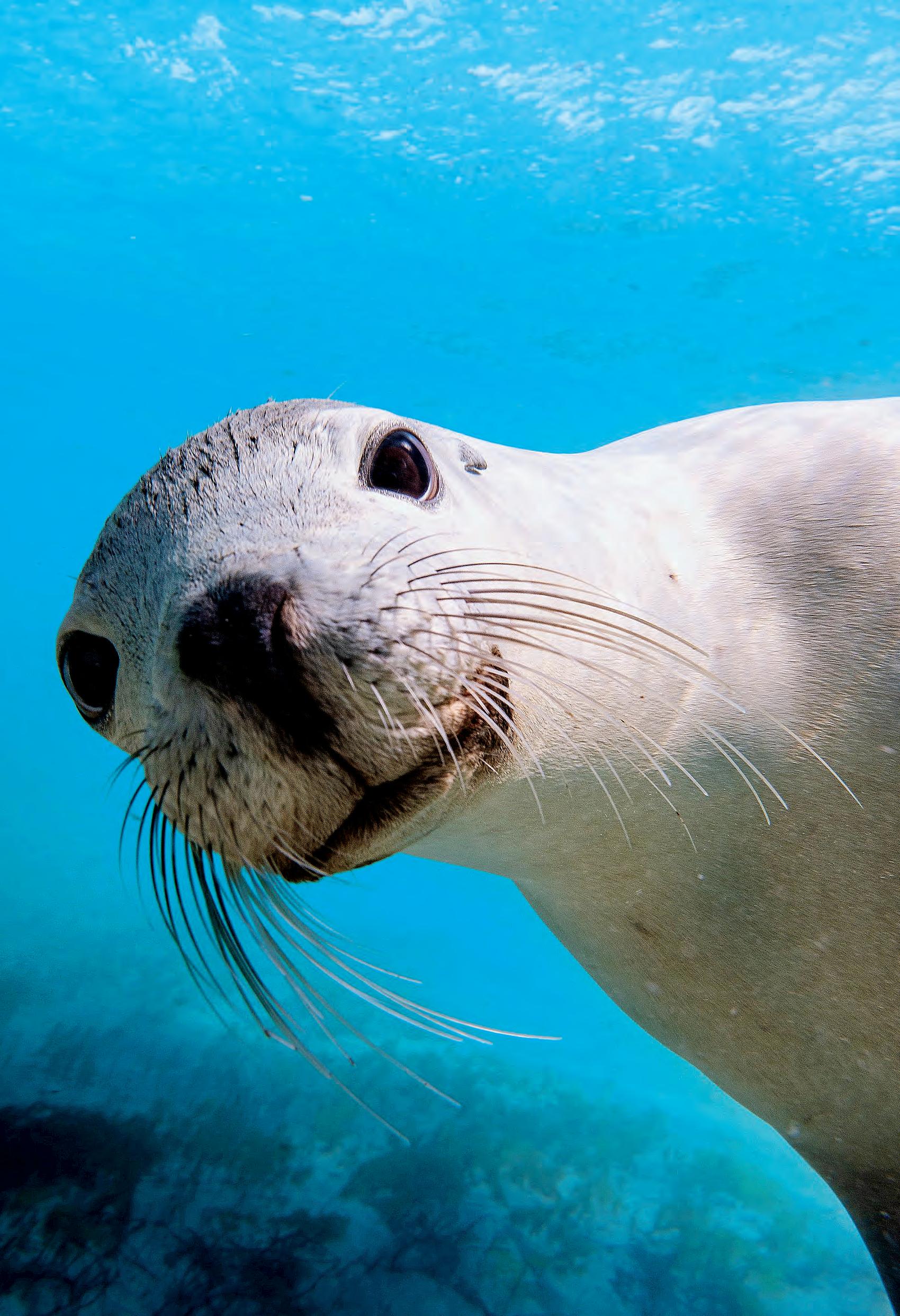
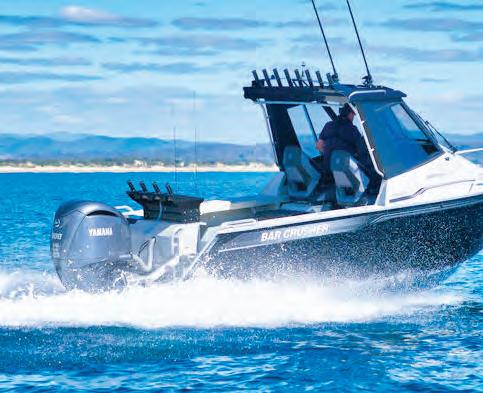
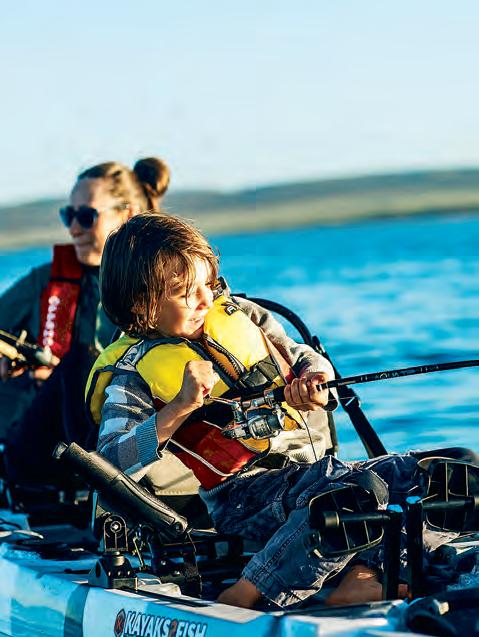
Moored at the next stop, we dip into deeper waters to swim alongside dolphins – they gracefully glide by in curiosity, and delight bubbles up from the group. Watching these creatures can feel surreal, because it seems they are watching us right back. As we snorkel beneath the surface, the light dances on every shade of blue.
We hop back onto the deck of our vessel, ready to return up the coast, invigorated and renewed. Once back on dry land, after the salt has dried on our skin, the experience transitions from sea to shore.
Guests can choose to partake in a regionally inspired lunch hosted by acclaimed chef Calvin Von Niebel. Using Eyre Peninsula’s world-famous seafood, the meal is a masterclass in local flavours, turning the day into a full sensory celebration of the region.
Digest the day with a coastal trek –there is a myriad of flora and fauna to spot on the way, uniquely Eyre Peninsula, a quintessentially coastal paradise. To truly soak in the silence of this remote region, a stay in the newly renovated Seaside Villas is a wonderful option. Designed as a peaceful retreat, these villas offer a sophisticated contrast to the dramatic environment outside. It’s the perfect place to watch the sunset over the bay, reflecting on the fact that we didn’t just see the ocean today - we were a part of it.










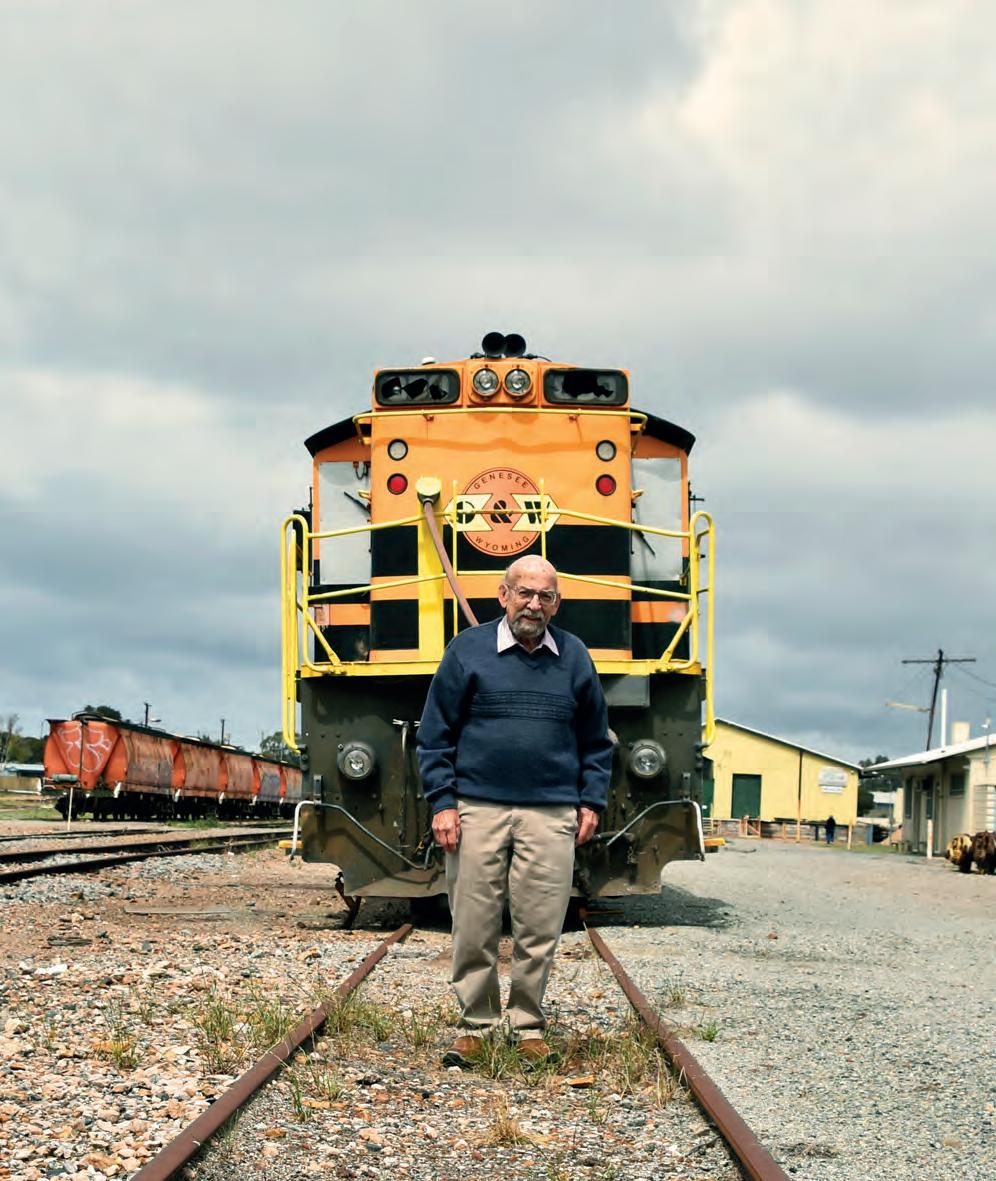





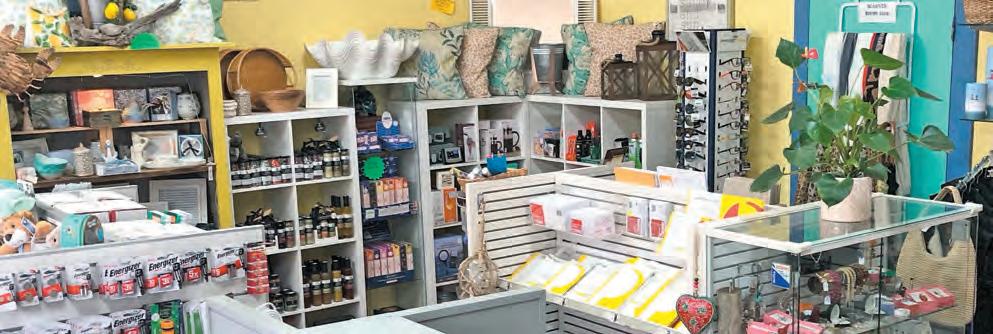
Port Lincoln Railway Museum has a comprehensive range of items detailing the history of the Eyre Peninsula Railway.
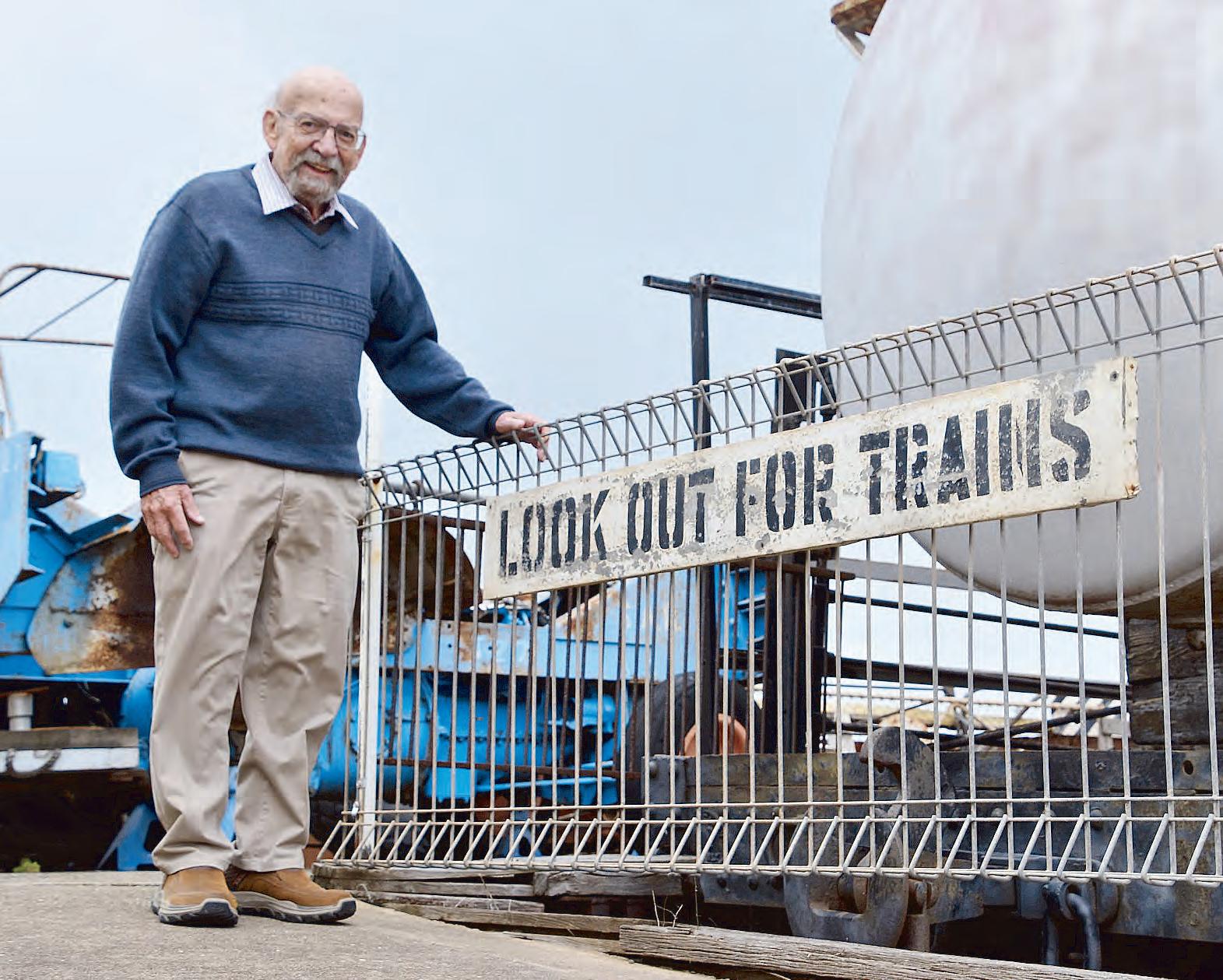
Typical of the region it inhabits, there is a certain isolation about the Eyre Peninsula Railway, but like the region itself, it has chugged along with vibrancy and character for more than a century.
Today, the railway is a shadow of its past splendor and operates in an isolated pocket in the peninsula’s west.
Its main hub in Port Lincoln and line through the heart of the region has sat unused since 2019.
From a peak of 777 kilometres, today only a 60-kilometre stretch of the narrow gauge track remains open, with the line continuing in an industrial hub.
On the West Coast, gypsum is transported from the deposit near Penong to the wharf at Thevenard, that lone stretch of the line still in use.
Another line - geographically - sits on Eyre Peninsula, with Whyalla the destination for iron taken from the nearby mines such as at Iron Knob, but its history is linked closer to the line in Port Augusta.
The EP railway does not carry with it the legacy of the famed Pichi Richi Railway between Port Augusta and Quorn, or the SteamRanger Heritage Railway operating out of the Adelaide
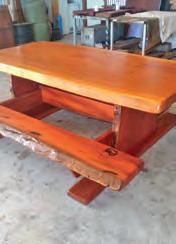
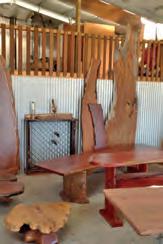
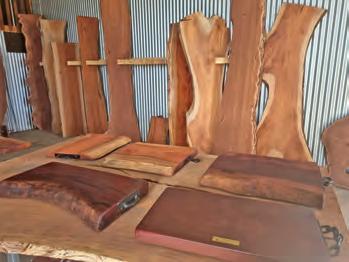
Hills and down to Victor Harbor, yet its place in Eyre Peninsula history remains a focal point.
So much so, a push has come in recent years to reopen the line and return it to former glory.
Today, Port Lincoln Railway Station is home to the Port Lincoln Railway Museum, run by the Eyre Peninsula Railway Preservation Society.
It is a love letter to a bygone era, not just for the city, but most of the region.
Overseeing the museum is preservation society president Peter Knife and a small team of volunteers.
Peter has been part of the museum team since it first opened and for the past 15 years has served as president.
Housed in a wonderful two-storey stone building - opened in 1927 to replace the original timber structure from 1908 - the museum holds a treasure trove of railway memorabilia and history, with artefacts from timetables to uniforms, photographic displays to blueprints.
In the yard is one of the prize possessions - a diesel 850 class that ran the line from the 1960s.
Walking through the railway station
today provides a whisper of what was once a busy station.
The hustle and bustle of tickets punched, of bags and parcels checked, has been replaced by quiet - and loving - reflection.
For Peter, without the railway, Eyre Peninsula would not exist in its current guise.
The development of the line from Port Lincoln, he said, laid the groundwork for the transformation from pastoral land to agricultural land.
“The railway was absolutely vital in building the region,” Peter said.
“All the inland towns on Eyre Peninsula, apart from Cleve, exist because of the railway. None of them existed prior to the coming of the railway.
“Every railway siding had towns surveyed around them. At the time, nobody knew which would develop and which wouldn’t - most never developed, some did for a while but didn’t survive, and some - like Cummins, Wudinna and Kimbathrived.”
The first stretch of line, from Port Lincoln to Cummins, opened in November 1907.
Real timber. Real craftsmanship. Real character.
Bedrock Furniture creates custom-made furniture for homes and businesses using premium Jarrah, Redgum and African Mahogany. Whether it’s a one-of-a-kind dining table, a standout bar, or handcrafted chopping boards, each piece is designed to showcase the natural beauty and durability of Australian hardwoods.
Built from the ground up just the way furniture should be.
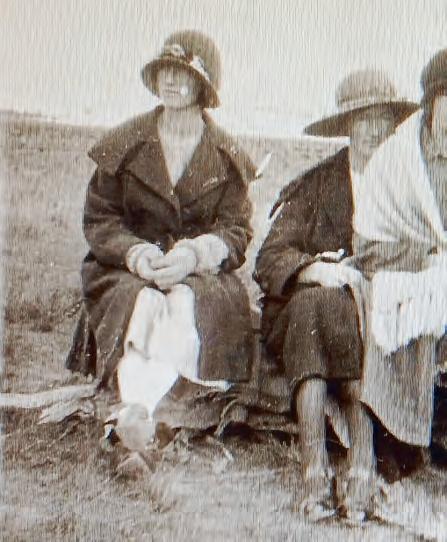
Built and operated by South Australian Railways, the creation of a railway connected this vast region and its outlying communities and farms, which were ever growing.
When, at the end of the 19th century and start of 20th century, large pastoral leases were relinquished and opened to agriculture, it required an economic means of transport to bring product to the coast.
The railway did this, and as the network grew so too did it open up EP for agriculture.
From the first journeys in 1907 up until 1968, the railway operated both passenger and goods trains.
A link to Port Augusta, and therefore to other parts of the state, never materialised, despite proposals in the 1920s and 1950s, with cost the key prohibitor.
By the mid 1920s most of what is today the Eyre Peninsula Railway was constructed, with a further ninekilometre stretch out west in 1950 bringing the line to its peak size.
In the decades to follow came a regression of the railway.
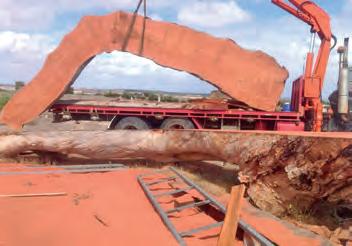

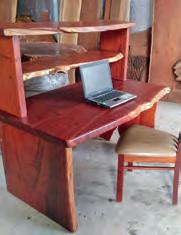
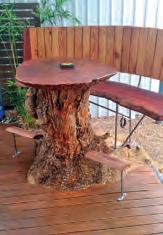
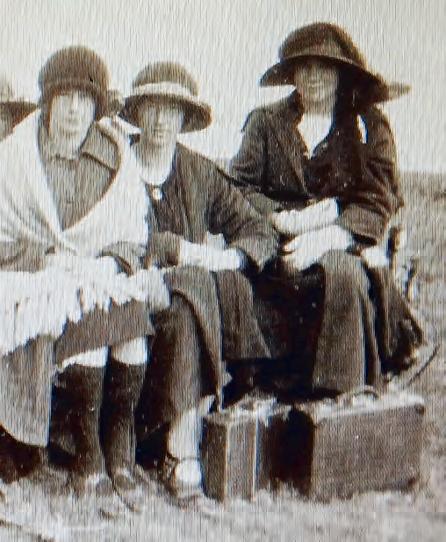
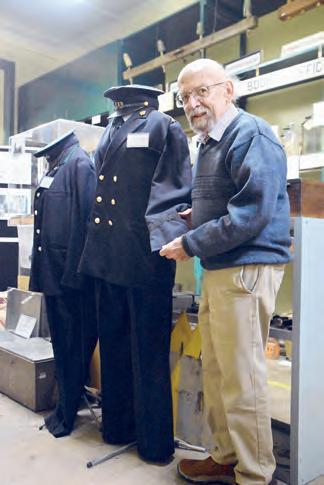
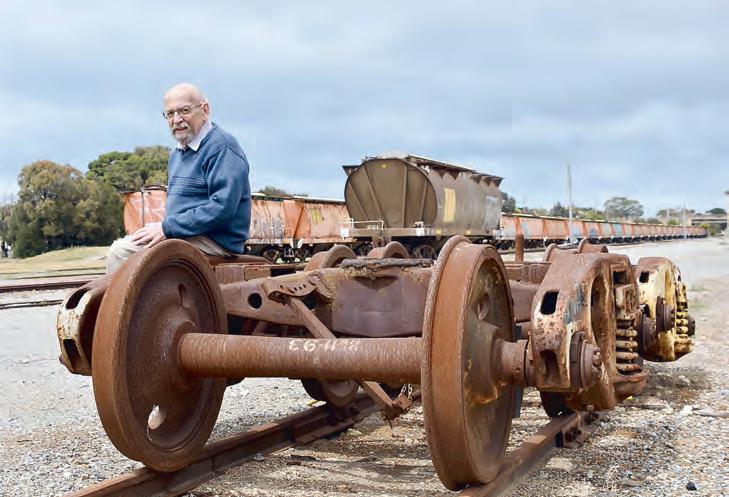
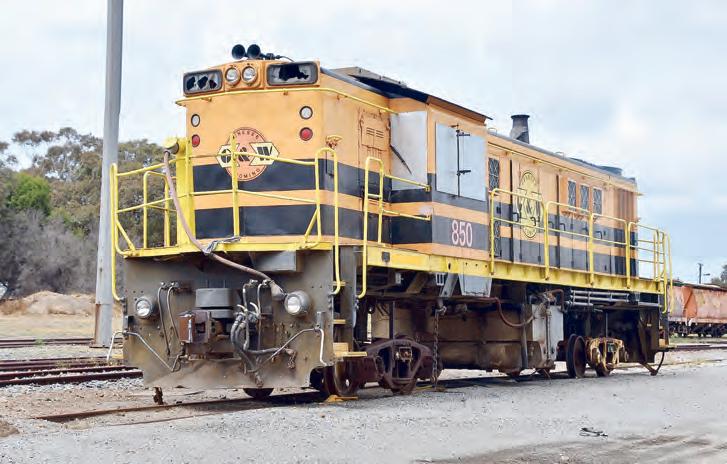

Services started to close - the Mount Hope line was shortened in 1965, with Kapinnie becoming the terminusbefore it too shut in 2002.
Part of the line bringing gypsum into Thevenard - once a loop going past Kowulka and Wandana - closed and in 1984 the Thevenard unloading facility was upgraded with a loop.
By 2018, the last grain train on the Kimba branch ran, and one year later came the shocking news Viterra would move its haulage to road transport and no longer run grain trains down to Port Lincoln.
The railway helped to build the region, but other transport modes and routes caught up, leaving rail to fall from its lofty perch.
Yet in its heyday, Peter noted, the Eyre Peninsula Railway was a “thriving” line.
In a way, its isolation was a blessing and a curse.
Being disconnected from the main SA network allowed the railway to get on with its business, often without interference - or knowledge - from Adelaide.
“It was a thriving line that was very much its own existence,” Peter said.
“The railwaymen over here lived by the motto of ‘whatever it takes, get it done’, as well as ‘whatever Adelaide doesn’t know won’t hurt them’.
“There were lots of things Adelaide didn’t like, but oh well, they were done!”
Being so far from Port Augusta - not even the Whyalla line was connected to the fellow Spencer Gulf city until 1972 - meant costs became prohibitive to attempts at joining EP with the main South Australian Railways network, and thus a direct link to Adelaide.
The state government felt there was “no need” to connect the EP network to Port Augusta for a few reasons.
“It was talked about multiple times and there were two serious investigations in parliament, but both of them came back with the same result - there was no economic justification,” Peter said.
“Part of the reason is here. Port Lincoln is the deepest natural port in SA, so there was no point in building a railway around to Adelaide and carting agricultural product there to put it on ships, when there is a better port in Port Lincoln.
“A combination of the network here, and the twice-weekly overnight boat to Port Adelaide meant transport needs were taken care of. Then bus and airline travel became more usable and common.”
For decades, passenger rail travel between Port Lincoln and other EP towns was an integral part of the service.
“Originally there was a passenger carriage or two on the back of a goods train,” Peter said.
“It took two days to get from Port
Lincoln to Ceduna. The train would stop overnight at Minnipa and people would go to the pub or boarding house, then continue the next day. In the 1930s rail cars were introduced and they were able to get through comfortably in a day.
“Rail cars handled parcels and passengers until 1968. By then decent roads were built on Eyre Peninsula and the road traffic had taken over the demand for passenger service and light freight, however rail was still needed for heavy traffic and bringing in agricultural equipment, and taking out wheat, barley, oats and everything agriculture.”
For many, Friday 31 May 2019 was a sad day.
About 500 people turned out in Cummins to farewell one of the final trains to pass through the town down to Port Lincoln, after a decision was made earlier in the year by grainhandling group Viterra to not renew its contract with Genesee and Wyoming Australia (GWA) - now known as Aurizon - for grain movement on Eyre Peninsula.
For Peter, this was a “tragedy economically”.
“Instead of having two crew on a train hauling 3000 tonnes of grain, 30 road trains each with a driver run on the road these days. And rail is more fuel efficient than road in any casefor bulk commodities, rail is by far the most sensible solution.”
Peter noted if the situation at Ceduna had been duplicated further down the line, trains may still be running today.
“At the time Viterra were not giving long-term contract renewals to the railways and that meant the railways could not justify a lot of expenditure on maintenance and upgrades, so it became a downward spiral,” he said.
“At Ceduna, the gypsum line was beginning to struggle and GRA (Gypsum Resources Australia) gave Aurizon a 10-year contract, so they could justify spending a lot of money upgrading the track.
“Viterra were saying it was not economically justifiable, but it transfers costs to taxpayers because of the impact on the roads. We noticed the impact of no rail in the first two or three years as the roads deteriorated rapidly during harvest.”
In recent years, there has been a push from Viterra to reinstate the EP line, with the matter taken to the state government.
A case study was undertaken into understanding whether there could be a future for trains in the region. This report has not yet been made public.
For Peter, it makes economic sense to go as far as Cummins and Wudinna, and potentially to Rudall, but as for a full reopening of the line, he did not see that occurring.









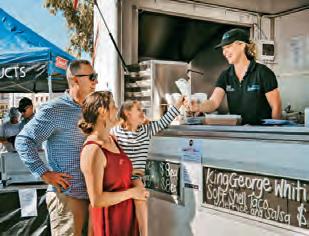





Elsewhere in South Australia, rail and history enthusiasts young and old take special journeys to towns such as Port Augusta and Victor Harbor to take a step back in time.
The Pichi Richi Railway and SteamRanger are two of the country’s best known tourist railway operations, iconic for their steam trains puffing alongside breathtaking scenery.
Asked whether such a service could be replicated out of Port Lincoln, Peter noted it was unlikely.
“The rules at the moment are that anyone who works on the tourist railways has to be qualified and certified virtually to the same level as someone running freight trains across the Nullarbor. Port Lincoln does not have enough people to have that volunteer resource available,” he said.
“A lot of the volunteer staff on other lines come from Adelaide.”
Other concerns were obtaining and running a locomotive, plus the volume of tourist traffic.
“To come to Port Lincoln you have to want to come to Port Lincoln, we are not connected like a Quorn or Victor Harbor,” Peter added.
That has not stopped the preservation society from attempting to make it a reality, even if for a short period.
Some years ago there were discussions with Pichi Richi about bringing carriages to Port Lincoln and running trains to Cummins for a few weekends.
“Pichi Richi loved the idea, GWA were in favour and they would provide a locomotive to pull the train, but GWA didn’t have passenger accreditation for this, so Pichi Richi looked into accreditation and it involved four months of volunteer railway paperwork for two weekends of approvals.”
Still, the dedicated museum team continues its passionate undertaking of keeping the railway’s flame burning.
These days the museum is open once a week, on Wednesdays, with a team of five regular volunteers, plus a few others who help with administrative and maintenance work.
Peter’s wife Margaret, the preservation society treasurer, is among them.
Those involved are in their mid 70s to 90s and the museum is calling for new volunteers to hop aboard. Just like Peter did.
writing - Peninsula Pioneer, released in 2007 - and moved to the city in 2010.
All the while, they and fellow volunteers - including Bob Prout and Trevor Hoskin, involved from the start and still active today - have focused on developing the museum.
“When it opened it was two rooms and we have gradually been able to expand,” Peter noted.
“We took over more rooms, then the freight shed, and when the line shut down we took over the crew room.
“Grants along the way have helped with equipment facilities, displays and storyboards around the museum.”
The museum welcomes about 600 people a year, but when cruise ships are around that number can swell to about 1000.
Visitors are mainly from out of town, with a sprinkling of locals, and Peter encouraged Port Lincolnites to check what the museum has to offer.
Preservation society members spread far beyond Eyre Peninsula and include people from Adelaide and interstate.
Peter and Margaret said they would love to stay on as volunteers, but were hoping for others to lead the way.
“If we had more volunteers we would love to start opening again on Sundays.”
Even if the trains do not roar into the station as they once did, that would ensure the legacy of the Eyre Peninsula Railway would continue in some capacity.
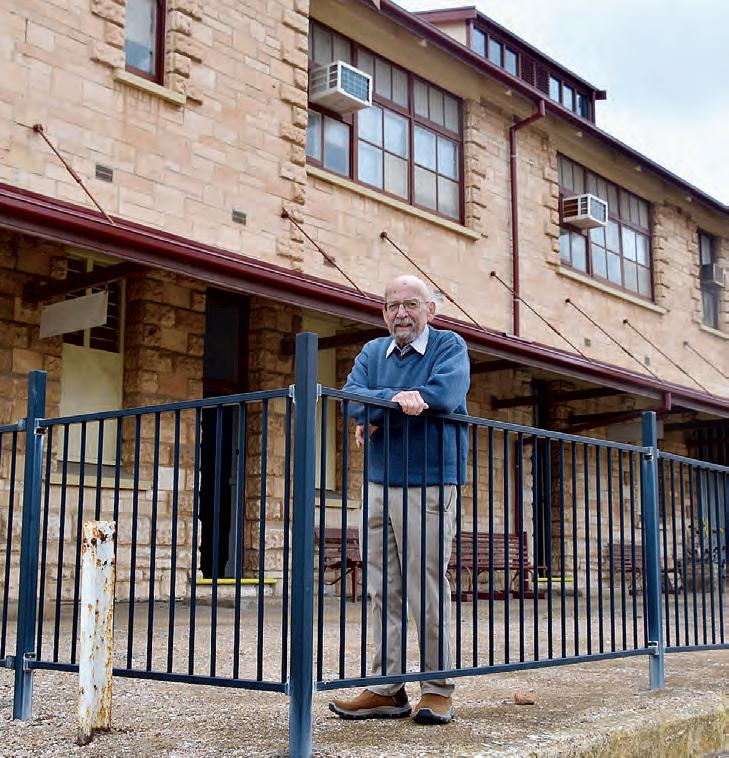


preservation socie ty , which was formed in the 1990s.
Peter and Margaret were living in New South Wales at the time and in wanting to build a model railway based on Minnipa he got in touch with pe op le on Ey re Peninsula.
Peter and Margaret became regular PtLiliitPtttd
He is a foundation member of the Port Lincoln visitors as Peter started doing research trips for a book he was
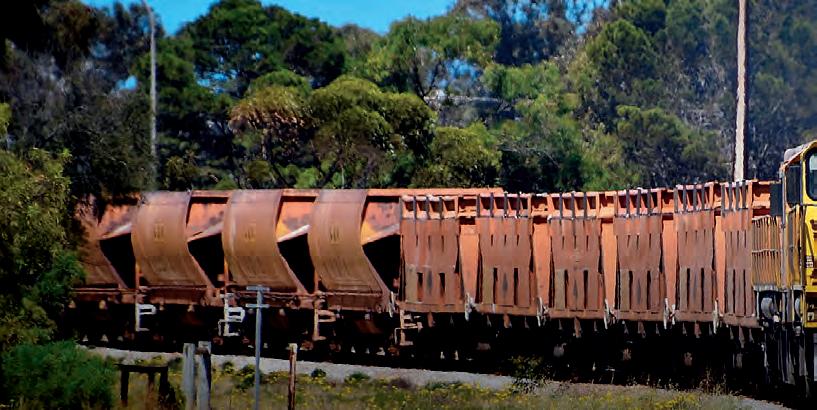
“
The railwaymen over here lived by the motto of ‘whatever it takes, get it done’, as well as ‘whatever Adelaide doesn’t know won’t hurt them’.

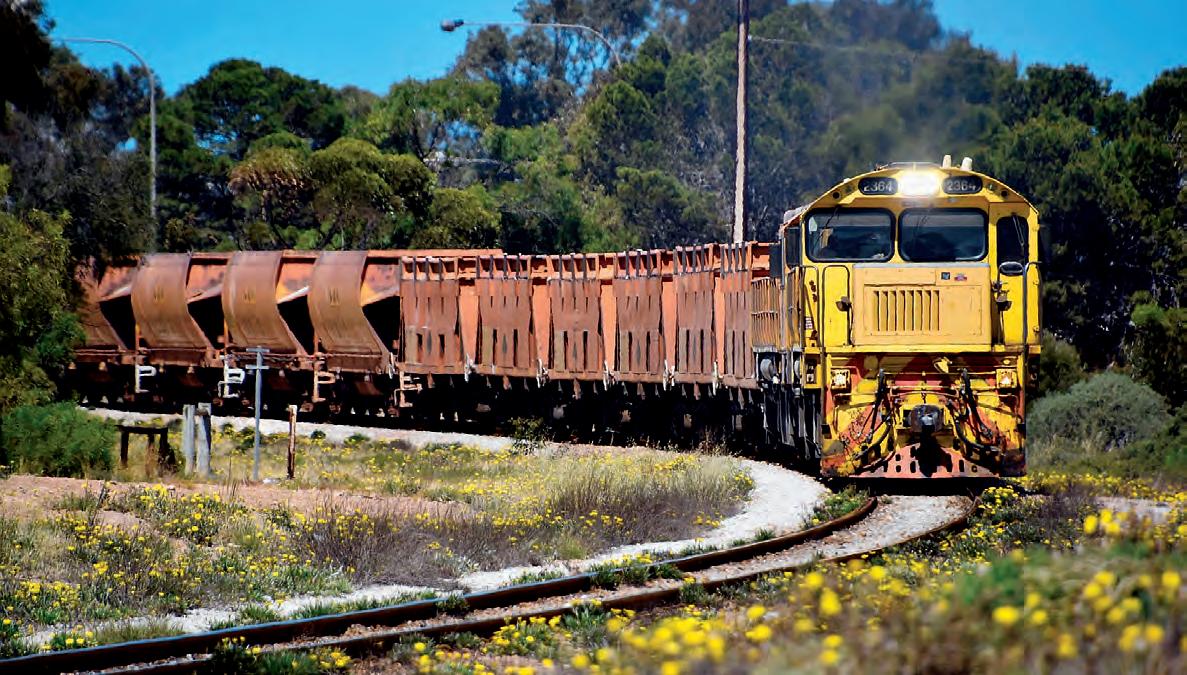
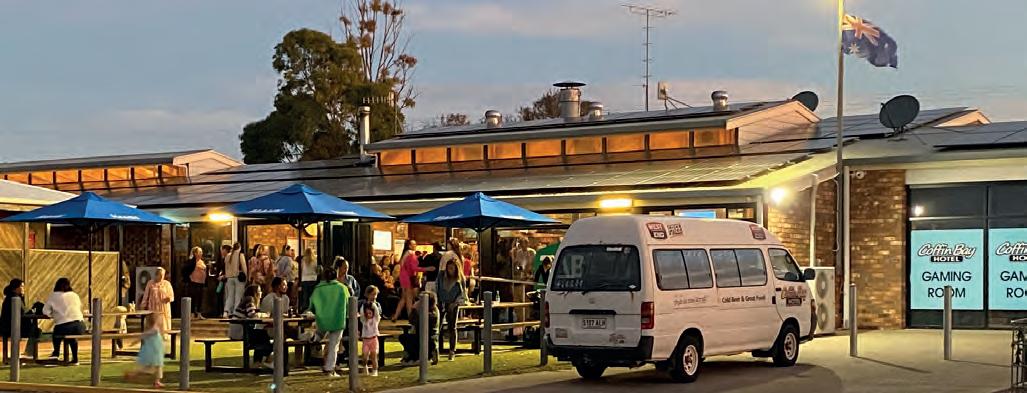
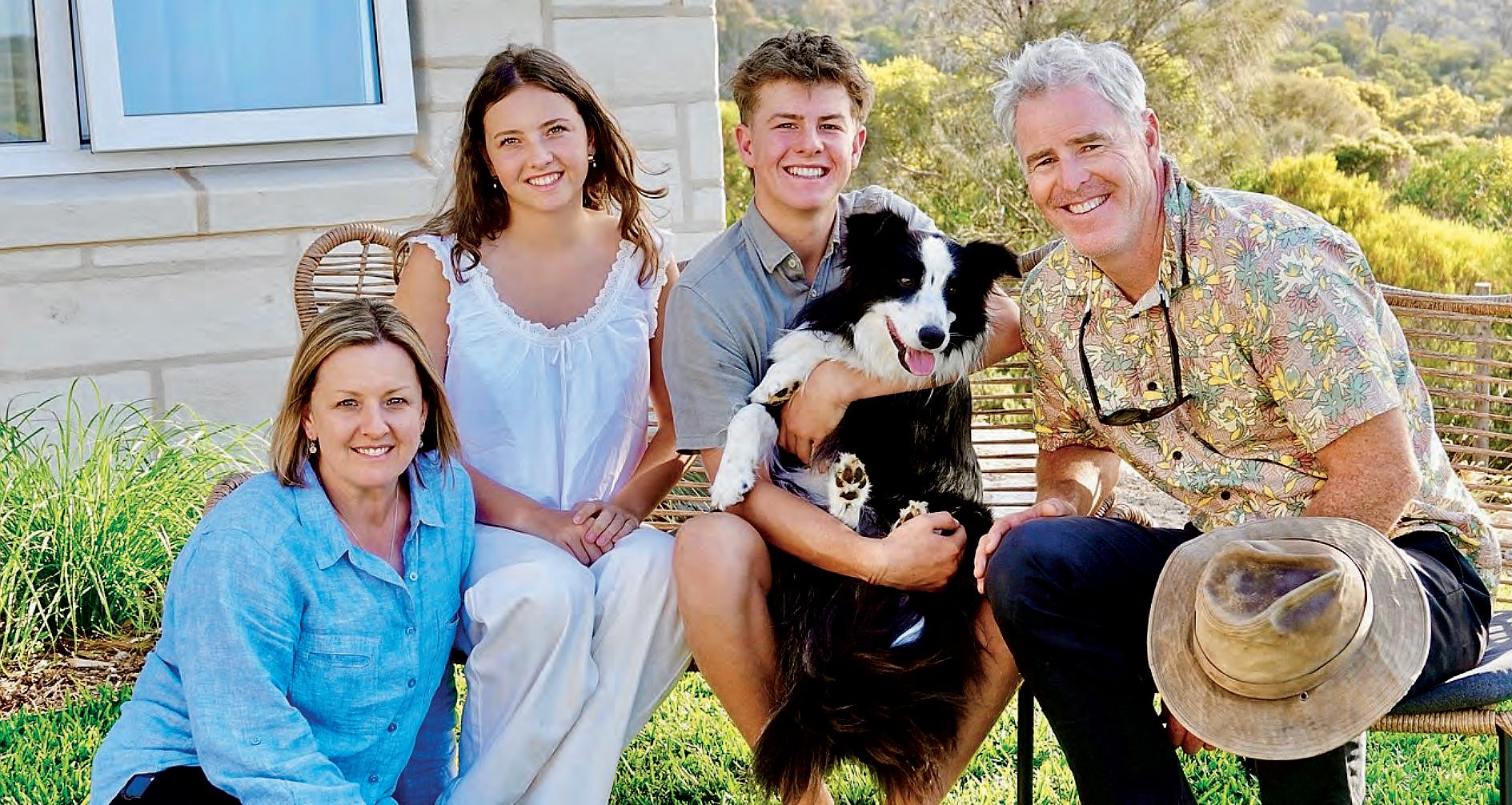





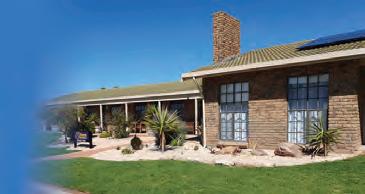

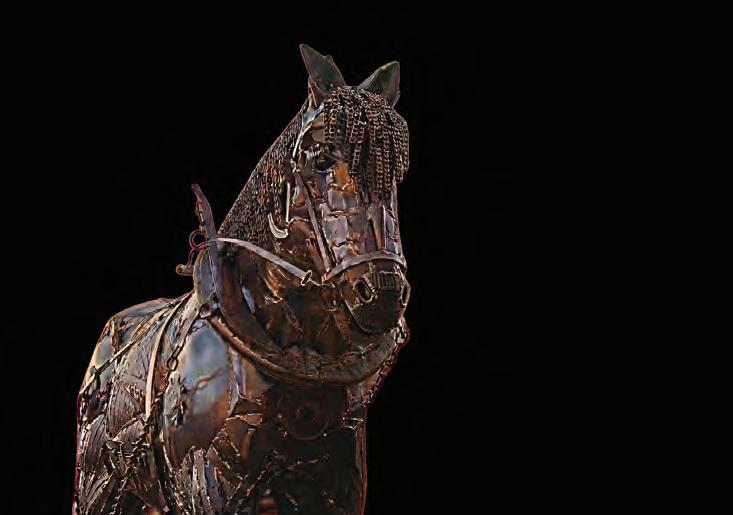



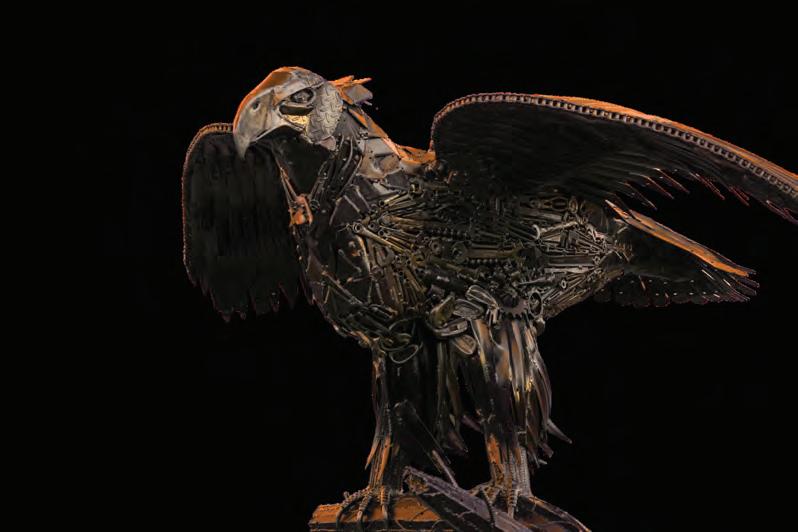
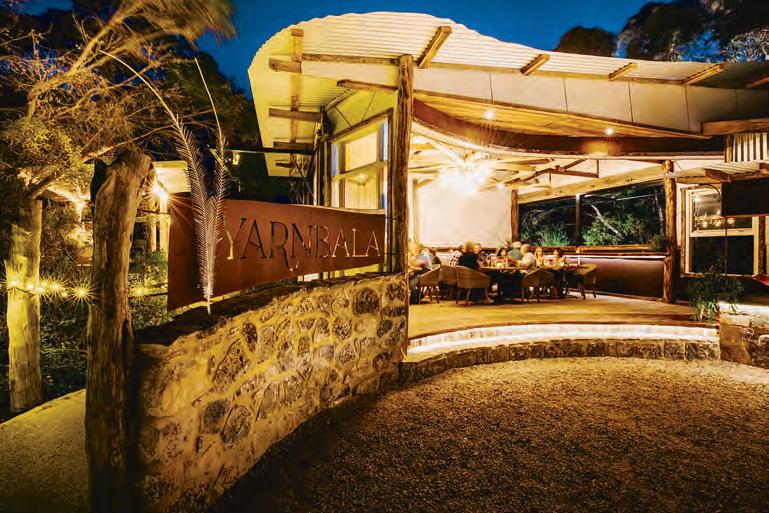
they may never have encountered before.
which welcomes a limited number of guests each year.
“It’s incredible to see the enjoyment it brings to our guests, sitting around our original campfire, walking through the native woodland and seeing species they may never have encountered before,” Kane said.
“It reconnects people to what truly matters, family, friendship and nature.”
Yarnbala’s model has quietly attracted attention across Eyre Peninsula.
Councils and regional leaders are now exploring how development can occur without compromising ecological integrity and prove that economic growth and thriving natural systems can co-exist, with Yarnbala proof this can be done.
The recent establishment of the Yarnbala Foundation marks a step forward.
Officially recognised as an environmental organisation, the foundation transforms years of dedicated, behind-the-scenes conservation work into structured, scalable impact.
“We are currently in the process of appointing a broad and diverse spectrum of directors, bringing together a wide range of skills, experience and perspectives,” Kane said.
“This leadership will strengthen the foundation’s ability to provide meaningful advocacy, strategic direction and informed input into sustainable growth and environmental protection across the region.”
The foundation’s first major initiative
is the construction of predator-proof fencing to protect Yarnbala’s Special Environmental Benefit area from feral cats and foxes.
The land has already been protected from heavy grazing from kangaroos for more than 30 years to allow native grasses, wallaby grass, spear grass and kangaroo grass to regenerate, Kane noted.
“That regeneration has created critical habitat for endangered woodland species including the diamond firetail finch and the southern emu-wren, which rely on dense native grasses for feeding and protection,” he said.
“Removing feral predators will create a true sanctuary, with a tangible, measurable conservation outcome.”
In another pioneering project, Yarnbala is implementing real-time monitoring of western pygmy possums during winter breeding months.
These largely unknown native marsupials will be able to be viewed online from anywhere in the world and as a result create awareness, contribute to research data and connect audiences directly to onground conservation.
The foundation has also identified additional land of high ecological value similar to Yarnbala that it aims to acquire.
“This land supports species recognised under the EPBC Act, including the western yellow robin, scarlet robin, Rosenberg’s goanna and brown buttonquail as just some examples,” Kane added.




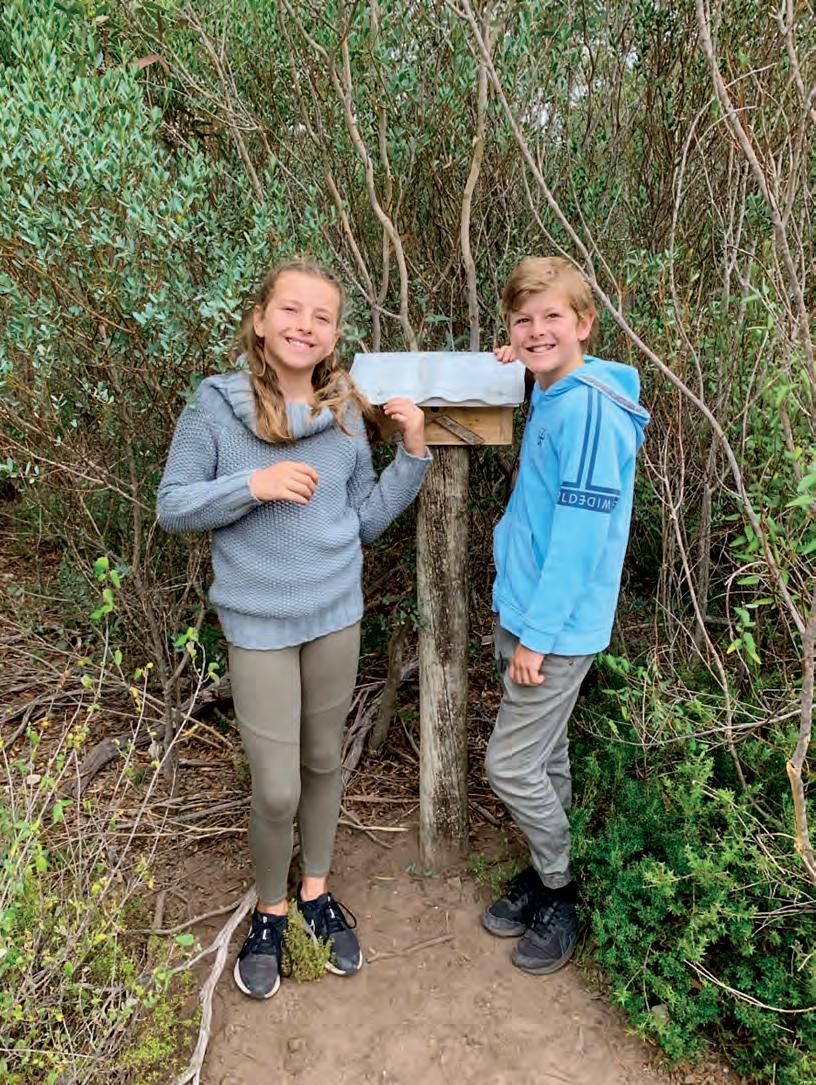
“Securing land under foundation ownership enables one of the highest levels of covenant protection, safeguarding biodiversity beyond traditional heritage agreements.”
Yarnbala also welcomes school groups of all ages from across the region and beyond, and provides hands-on environmental learning extending beyond the classroom.
“Our younger generations are our
succession plan,” Kane said.
“When children come to Yarnbala, you see an immediate connection, but more importantly, the change continues long after they leave.
“It must be one of the best classrooms in the world.”
Experiences such as ‘Wild Yarnbala’ also allow guests to forage for bushfoods, learn about the native fauna, try their hand at learning the
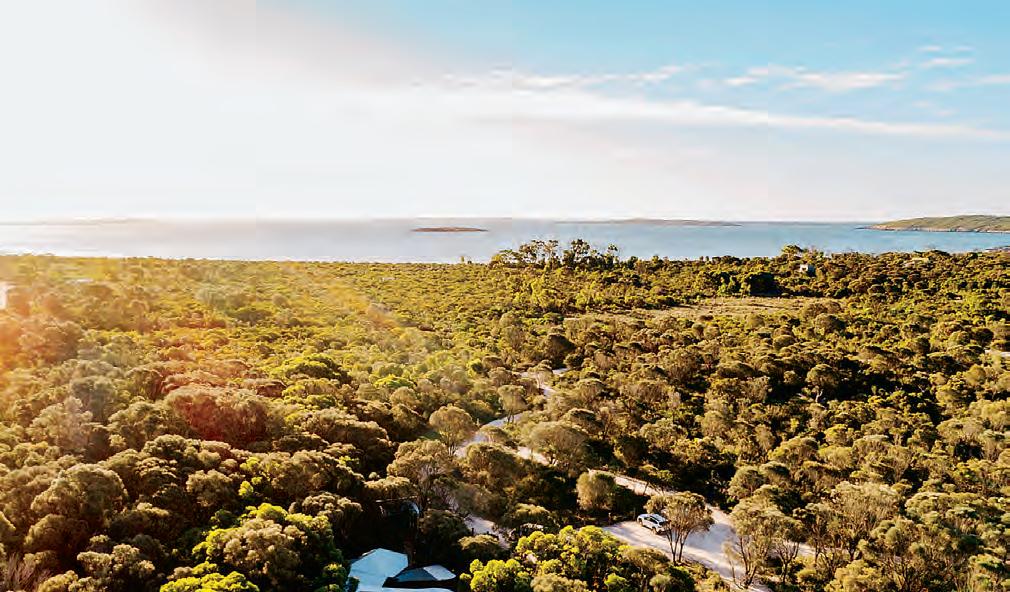
“ Removing feral predators will create a true sanctuary, with a tangible, measurable conservation outcome ”

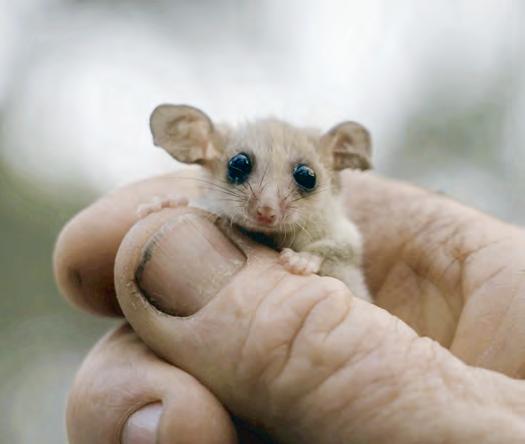
ancient art of water-divining and come winter, witness the western pygmy possums in their natural habitat.
The ‘Birds of Yarnbala’ experience, delivered by a local expert guide, showcases the region’s diverse birdlife, while the recently launched ‘Stars of Yarnbala’ brings Wirangu woman Susie Betts storytelling to the campfire, with the founder of Waldya Spirits sharing the story about the Seven Sisters and other cultural narratives in a respectful and safe setting.
“We believe the stories that are allowed to be told should be heard,” Kane said.
“They create connections to the country, to history, and to each other.”
The second stage of Yarnbala signals an exciting evolution, with the thoughtfully designed eco-cabins created for a very limited number of overnight guests.
Originally granted development approval in 2016, the two planned off-grid cabins have been carefully intended to sit lightly on the land, with one elevated on a ridge overlooking the ocean and national park while the other will be nestled discreetly within the grassy she-oak woodland.
“Guided by sustainable design
principles and powered by natural elements, these cabins will offer an immersive, understated luxury experience deeply connected to the surrounding landscape,” Kane said.
“These intimate eco-stays offer guests a rare opportunity to experience off-grid living within a critically endangered ecosystem.”
Visitors can gain firsthand insight into how the Slater family actively steward the land, from restoring native habitats to growing seasonal produce sustainably.
Each stay can be curated to include Yarnbala’s private experiences and collaborations with local businesses, which create a deeply immersive and distinctly local offering.
In May, the Slater family will represent Yarnbala at the Australian Tourism Exchange in Adelaide where they will expand awareness of this conservation-led model to national and international markets.
“We want to protect what we have left and enhance why we all live where we live,” Kane said.
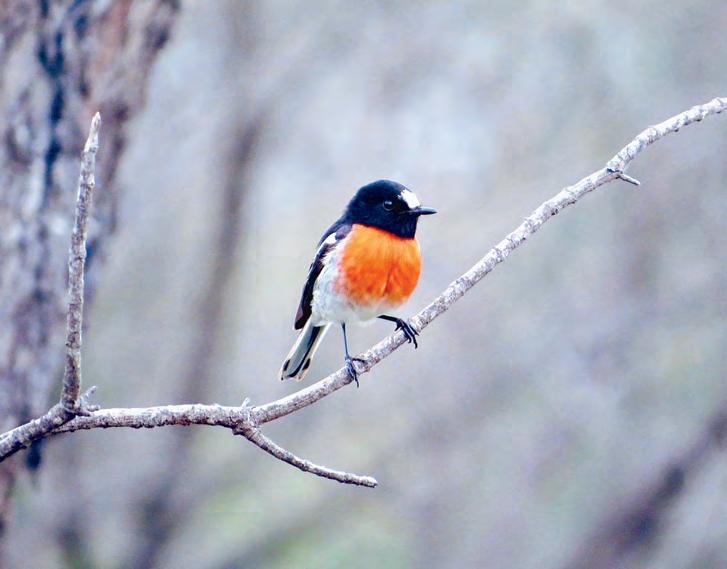
“Nature doesn’t need us, but we need it.”
“We live in one of the most ecologically diverse and safest places on earth. It’s our moral obligation to care for the ecosystems that provide safe spaces - not just for us, but for the species that depend on them for survival.

Now, Kane observed, was the time to scale the impact - to turn dedication into tangible, measurable change.








Words: James Jacobi Photos: Liz Bawden
One of the West Coast’s most admired stonemasons recently hung up his legendary rock-breaking hammer Thor, calling time on a 40-year career after carving one final piece at Sceale Bay.
Andy McComb moved to Venus Bay in the late 1980s chasing surf and fish, but when he combined a passion for stonework with building his home - now a celebrated feature of the small fishing village - a life in stonemasonry was born.
Four decades later, now that Andy has completed his final piece - a dry-stack rock wall in full view of the ocean - he has a legacy that quite literally stands proud right across Eyre Peninsula.
In the Gawler Ranges old ruins have been restored through Andy’s calloused hands, in backyards along the coast stonework pizza ovens and fire pits bring social occasions to life, while closer to home at Venus, the town entrance sign remains one his personal favourites.
The decision to retire from largescale paid work has not been an easy one for Andy and is not due to a lack of motivation, but rather a genetic eyesight issue which means the stonemason cannot drive or be as attentive to detail as he once was.
“Working with rock is a passion, I’ve enjoyed doing it, it certainly hasn’t felt like a job, but I’m legally blind now, so it’s a bit like doing brail,” he laughed.
“When you’re carving stones, they’ve got to be really close, just a little lump will stop it fitting together, so now I just rub my hand over it, and I can feel those spots that I can’t necessarily see anymore. I knew it was going to happen, as you get older most people’s eyesight deteriorates a bit, but mine’s a lot worse than other people.
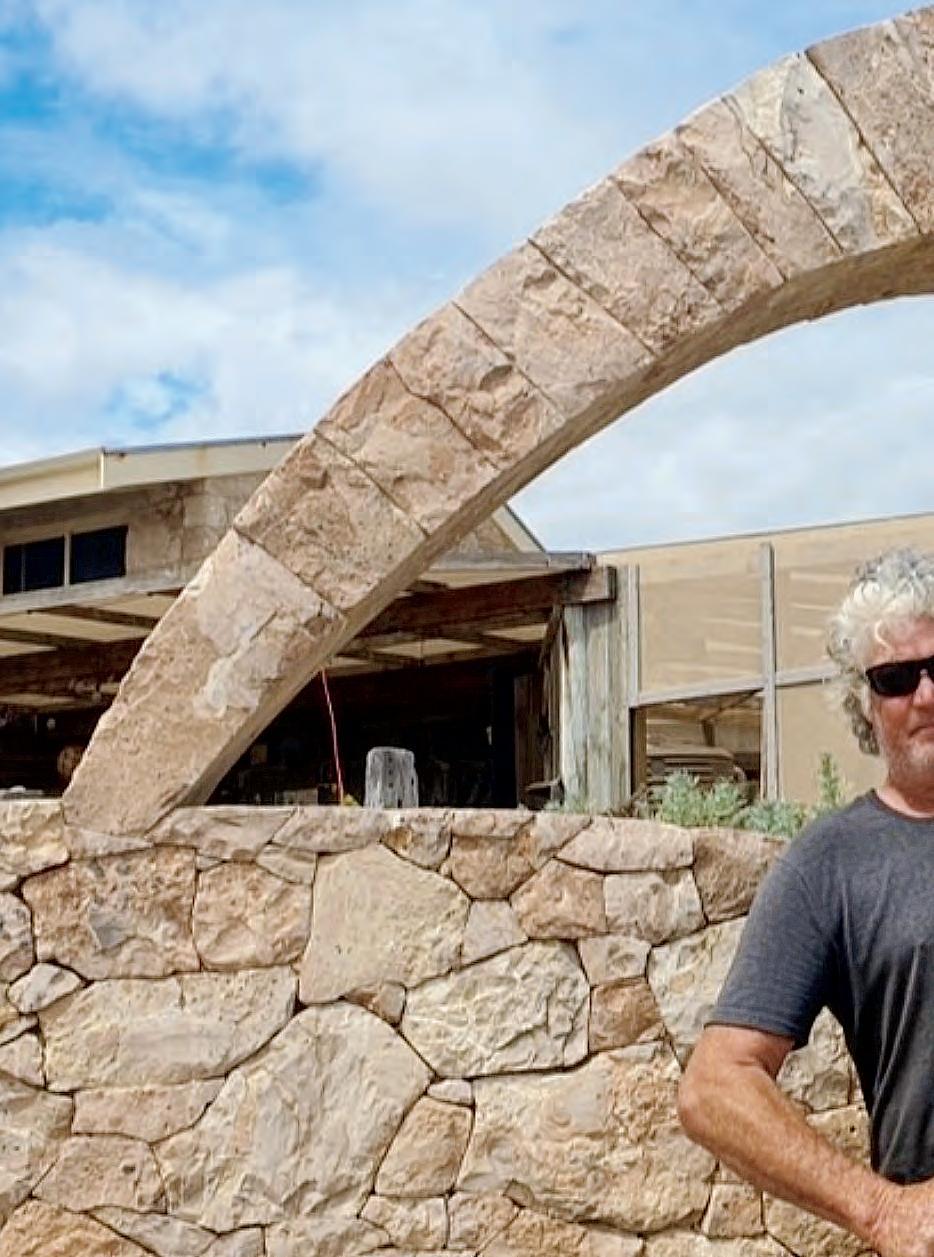


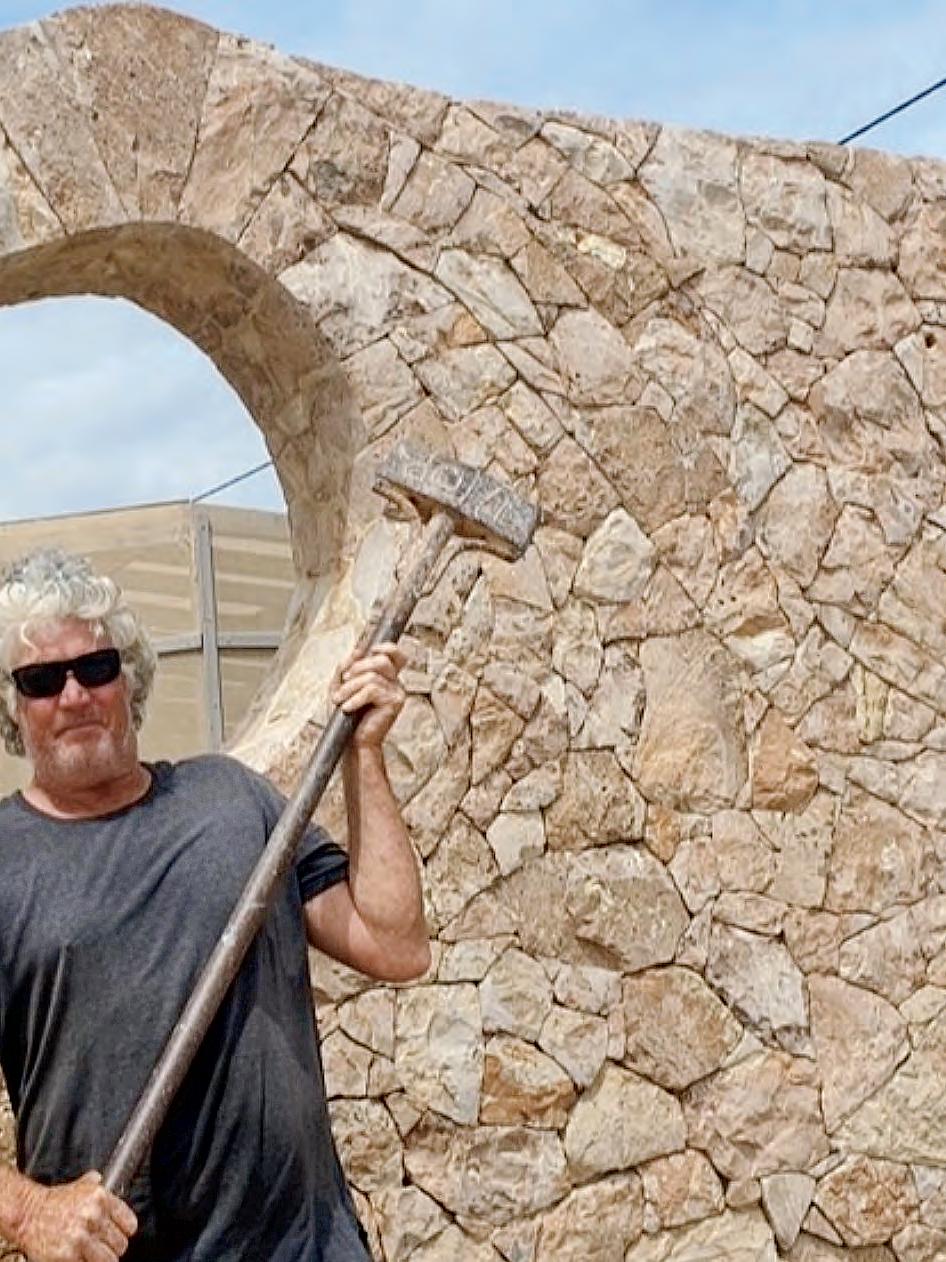

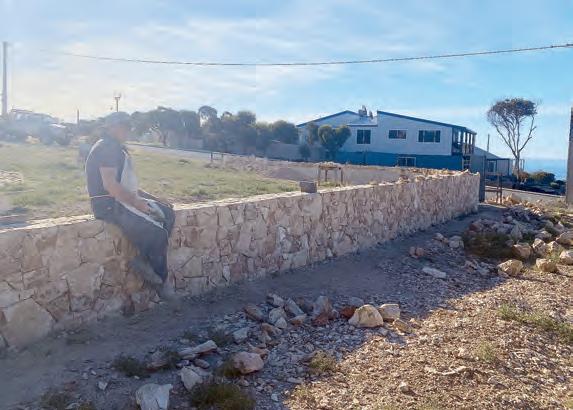
“In your heart of hearts you think, well someone’s paying you, and you’re not doing as good a job as you probably used to.”
The revered stonemason mulled over the curiosity that the finished product of his rock art was often in opposition with the “cold, hard” nature of rock itself.
“It all looks a bit sceptical when there’s boulders and stuff lying around
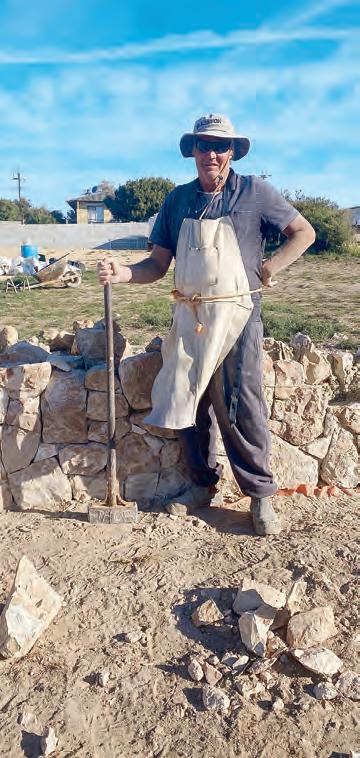
Thor... the God of Thunder. Everyone in town knows when Thor is out trying to crack big rocks “ ”
on the footpath, but in the end, people seem to describe my stonework not as cold and hard like rock, but they come up with words like beautiful, which is always a funny way to describe stonework,” he said.
“I’ve worked on lots of projects on really wealthy places, often the only thing people notice is the stonework, it’s got some sort of attraction for people, there’s certainly some

gratification in creating something people like.
“When it’s all put together, you stand back and you can’t really remember putting any particular ones in, but I find the whole thing very mesmerising.”
The 63-year-old has had one particular tool by his side for the entirety of his 40-year career, a great rock-breaking hammer known as Thor,
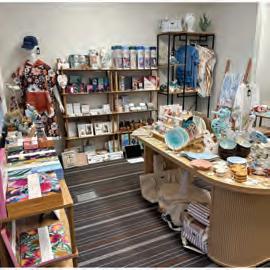
After 15 years online, our family run business is now proudly in Tumby Bay.
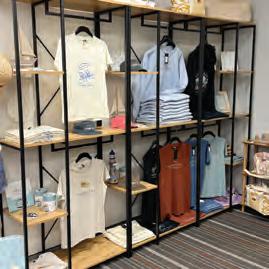
which will now only be brought down on personal projects.
“Thor... the God of Thunder. Everyone in town knows when Thor is out trying to crack big rocks,” Andy laughed.
“It’s a decent hammer, I kept breaking all the handles, so we kept making bigger and bigger handles until I could hardly lift it.
“It’s getting a bit too much for me now, a quarrymaster in Victoria gave me it when I was first starting out.”
While Thor took on a character of its own across Andy’s jobs, the timeworn tool never lost its place by his side.
“I can jackhammer the rocks, it’s certainly a fair bit easier, but you don’t get as good a variety of rock - the big hammer is the go.”
Asked what other secrets there were to the trade, he said it was all about patience, and lots of it.
“You’ve really gotta lock into the long haul. It’s pretty daunting when you’re looking at the footing and the huge pile of boulders, but it’s one by one,” he said.
“Because you’re concentrating all day, the days just fly by, you have the music going and get lost in your thoughts, suddenly it’s knock-off time and beer o’clock and then we do it all again.”
For many of his jobs, Andy has shaped each stone to fit perfectly into the jigsaw arrangement of rock he envisages.
“Ten people could use the same rock on a job, and it would end up in 10 different styles,” he said.
“You’ve gotta find the right rocks and carve them so that it fits in with the other ones around it.
“Sometimes you’ll spend a long time on a rock, and it’ll break at the last minute or get smashed, that’s pretty frustrating, and you have to start again. But the joy is at the end you’ve created something, I don’t know what it is about stonework, but people just love it.”
The stone home Andy started to build in the late 1980s became one of Venus Bay’s many attractions and continues to draw attention from mesmerised visitors.
“I guess it’s pretty unmistakable, I’m quite proud of it,” he said.
“I was selling stubby holders here at one point, I’m right on the scenic spot where everyone comes to, so I’d have people here all day, wanting to know about the house.
“So I started selling stubby holders to people, they could ask five questions and hear the story of the house.”
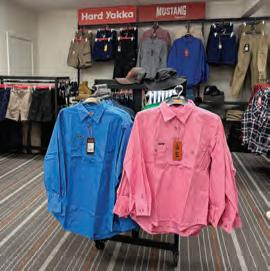
Land to Coast is your local destination for quality workwear, with custom embroidery and printing available for farms, tradies and local businesses. We can outfit your team from head to toe including caps, shirts, pants, jackets and workboots. You will also find a great range of gifts, souvenirs and Tumby Bay merchandise in store.

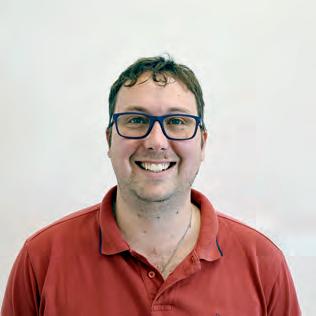
Sweet, succulent and unmistakably local, Spencer Gulf king prawns are an iconic staple of Eyre Peninsula, and they truly shine in these flavour-packed dumplings.
Wrapped in delicate pastry and filled with freshly chopped king prawns, aromatics and a hint of seasoning, they celebrate the clean, natural taste of our region’s waters.
While these dumplings can be gently steamed or simmered in a fragrant broth for a softer finish, frying delivers a golden, crispy base that perfectly complements the tender, juicy prawns inside.
It’s the ultimate contrast of textures - crunchy, silky and succulent in every bite - showcasing why Spencer Gulf King Prawns remain one of the EP’s most prized catches. This recipe makes approximately 20 dumplings.
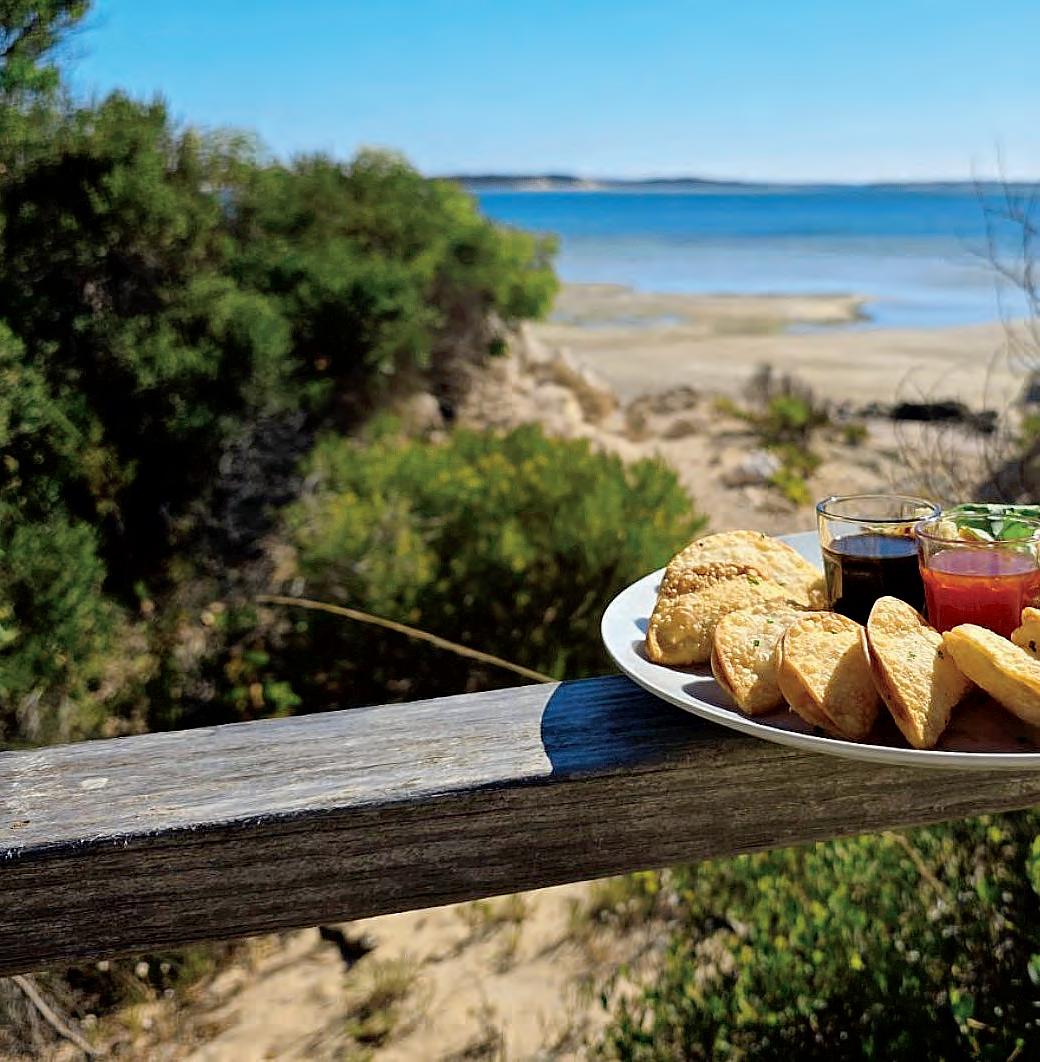



PedemonteJewellersarea bespokejeweller, specialisingindiamonds, colouredgemstones andincredibledesigncreations.
PedemonteJewellersarea manufacturingjewellerystore, wetakeprideinrestoring andrepairingjewellery.
Ifitissomethinguniqueora littlesomethingtoremember yourtriptoPortLincoln youareafter,Shaneandhis team canhandmake thatonce-in-a-lifetime pieceofjewelleryon-premises.
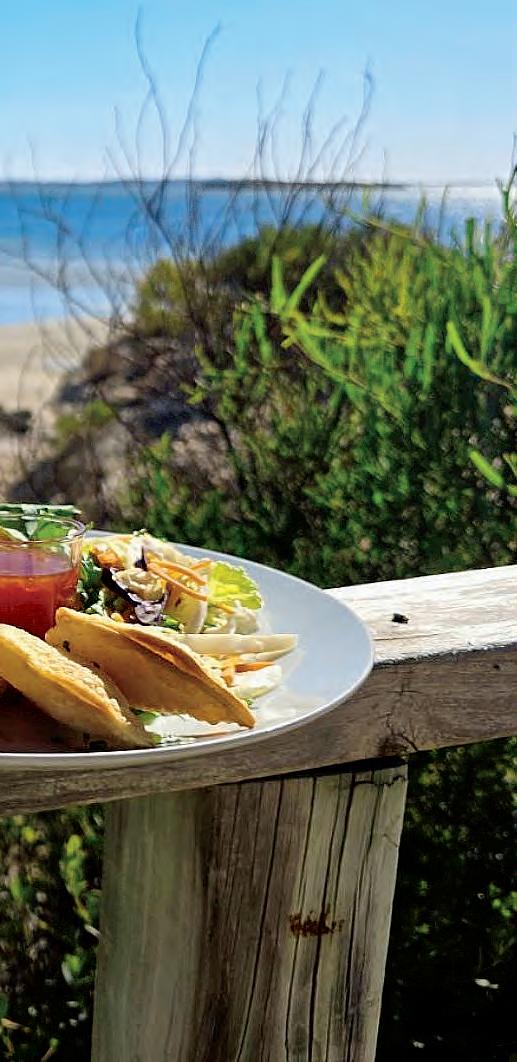
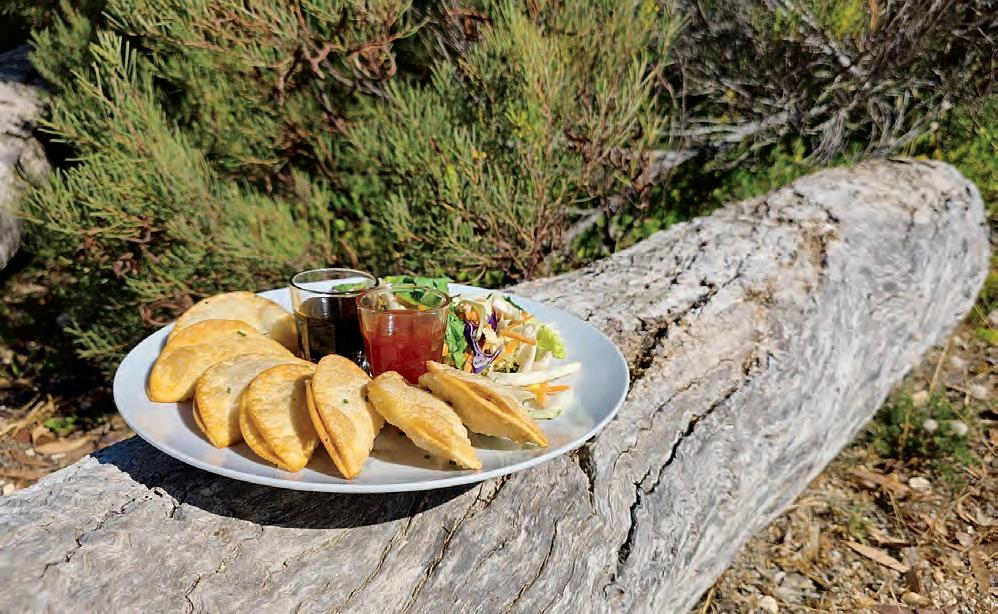
500g Spencer Gulf king prawns, peeled and roughly chopped
1 large garlic clove, finely minced
½ teaspoon freshly grated ginger
2 tablespoons fresh chives, finely chopped
20 gow gee pastry wrappers
Vegetable or canola oil, for frying
Method
1. Prepare the filling
Place the roughly chopped prawn meat into a mixing bowl. Add the minced garlic, grated ginger and chopped chives. Mix thoroughly until well combined.
2. Assemble the dumplings
Lay a gow gee pastry wrapper flat on a clean surface. Place approximately one heaped tablespoon of the prawn mixture in the centre of the wrapper.
Using a wet finger, lightly moisten the edge of one half of the pastry. Fold the wrapper in half over the filling, pressing firmly along the moistened edge to seal.
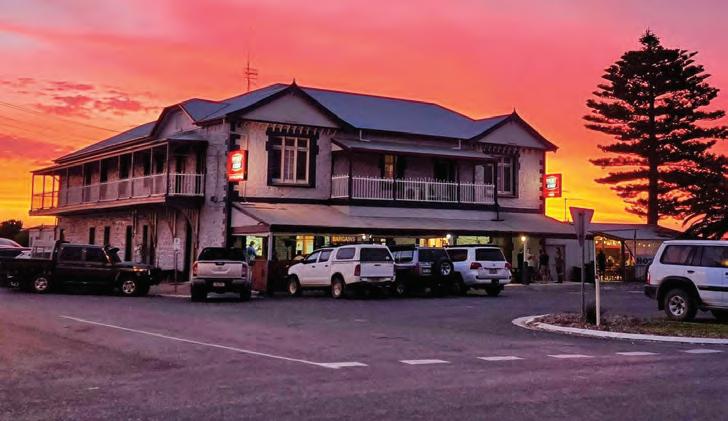



Situated across from the picturesque foreshore of Arno Bay
Under new management with newly refreshed Beer Garden available for daily use and private functions.
Open seven days from 12pm with a good selection of wines, cold beer, made to order pizzas and meals available lunch and dinner.
Ensuite motel rooms and hotel rooms available along with selfcontained camping area and caravan dump point.
Live music and events throughout the year - Follow Hotel Arno on Facebook to keep up to date or pop in and see Jules and her friendly staff for a coldy and delicious meal.
Hotel Arno
Ph: 08 8628 0001
1 Government Road, Arno Bay SA 5603
Open 7 days - From 12pm
Repeat with remaining mixture and wrappers.
3. Rest
Allow the assembled dumplings to rest for 5 minutes prior to cooking.
4. Fry
Pour 3–4 cm of vegetable or canola oil into a heavy-based pot and heat to medium temperature.
Carefully fry 2–3 dumplings at a time for 2–3 minutes, or until golden brown and crisp. Avoid overcrowding the pot.
5. Drain and serve
Remove dumplings with a slotted spoon and drain on paper towel.
Serve immediately with Asian greens, sweet chilli sauce and kecap manis for dipping.






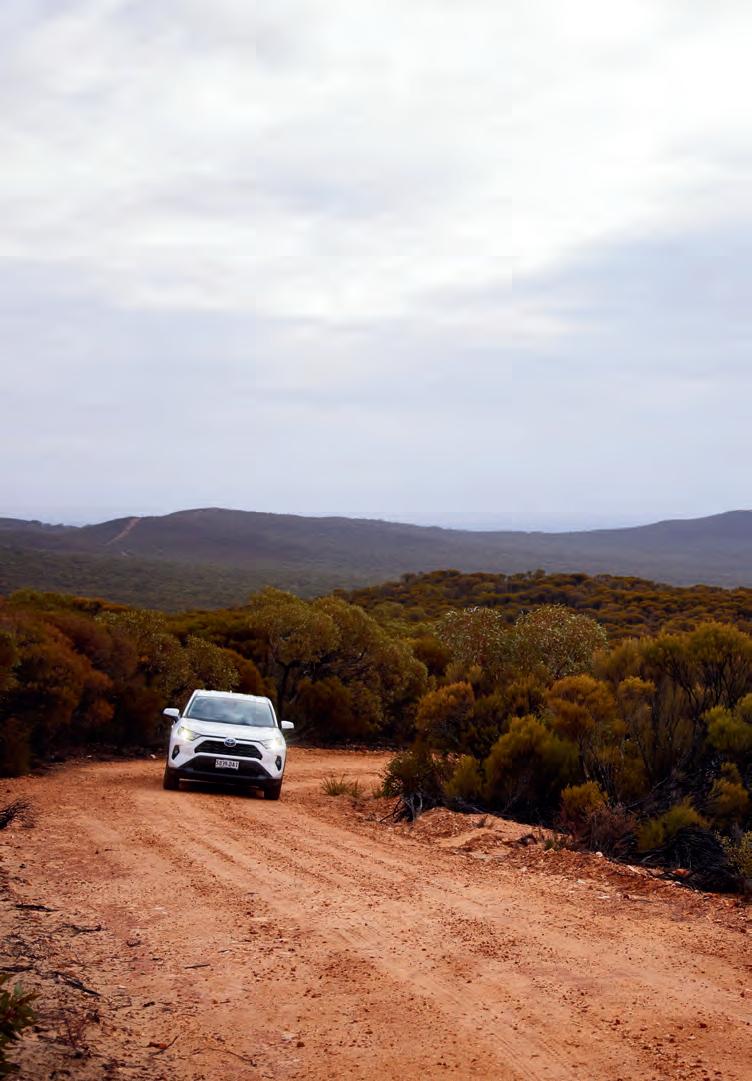


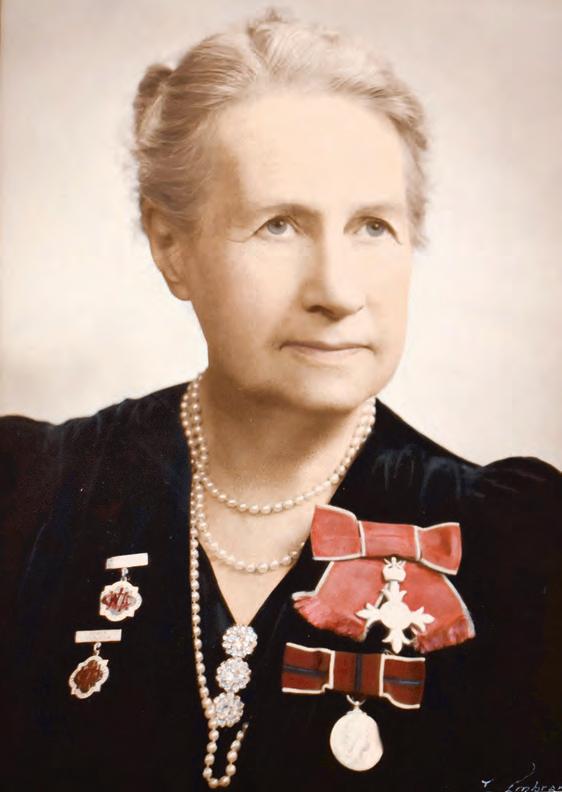
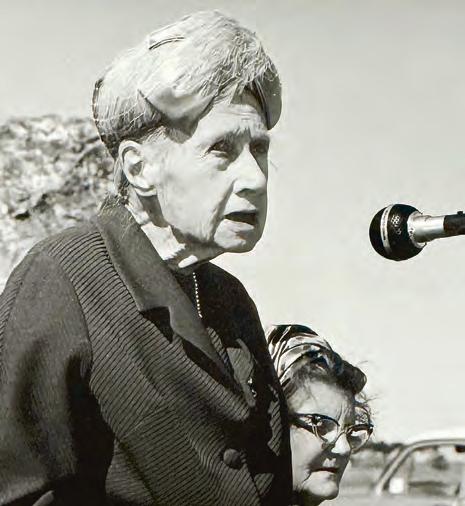
The Eyre Peninsula desalination plant’s tunnel boring machine was named Janette Octoman in January. In doing so SA Water was following a tradition dating back to the 1500s, when miners and tunnellers would pray for protection to Saint Barbara - with it now being customary to give every tunnel boring machine a woman’s name before it is used for a project. Take a step back into the past to discover more about SA Country Women’s Association (SACWA) pioneer Janette Octoman MBE.
Octoman MBE made a notable impact on SACWA with projects she initiated and was made a life member of the organisation. However, it was only part of her extraordinary contribution to the community for seven decades of her adult life.
She was born Janetta Hannum Provis on 14 November 1879 at Tumby Bay to farmer Caleb Provis from England and his South Australian-born wife
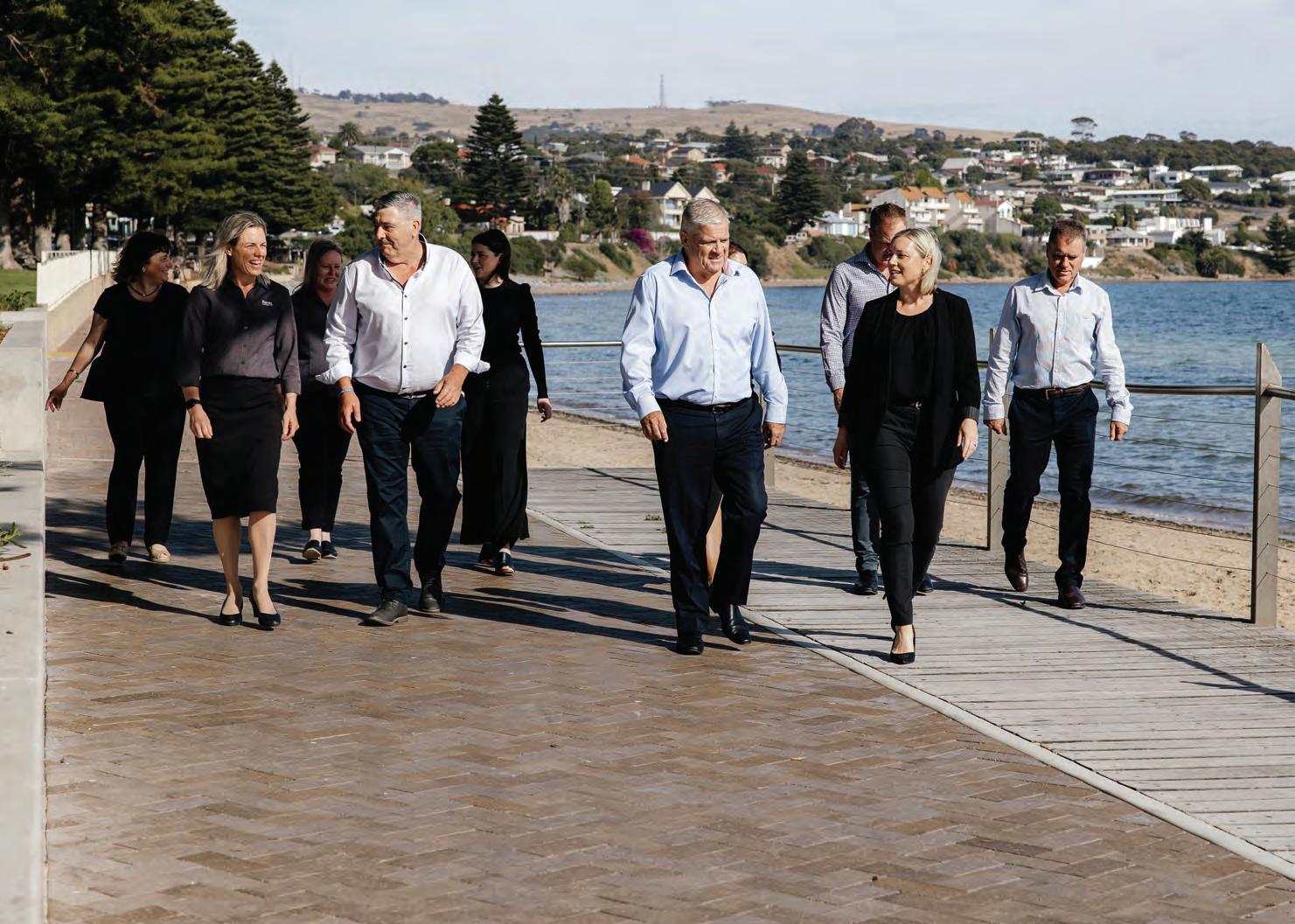
Her schooling came entirely from her grandfather Joseph Provis - a school teacher who lived with them.
Named after her mother, she was known as Janette and officially changed her name in 1940.
It was one of four name changes, as she married blacksmith Charles Mashon Ochtomann at the Tumby Bay Methodist Church on 11 April 1903.
In the post-World War I era they changed their family name to Octoman, in 1919.
The couple had four sons - Dudley (born 1904), Joseph, known as Reg (born 1906), Vivian (born 1909) and Mervyn (born 1911).
In order to ensure their boys could further their education the family moved to Marden, in Adelaide, in 1920, with Charles working as a builder and farmer.
They returned to Lipson to live in 1927 and Janette became a Justice of the Peace.
She also became deeply involved with the local Lipson and Tumby Bay communities - including the Tumby Bay Hospital Board, Lipson Show Society and Tumby Bay Mothers’ and Babies’ Health Association - later being awarded life membership of all three.
The Lipson Memorial Hall cloak rooms were opened by Janette in 1959 - after barley crops on land owned by her family and the Barraud family were donated to the hall committee.
This allowed the rooms to be opened free of debt.
She was an organist at Lipson Methodist Church - which later became the Uniting Church - for almost seven decades.
Janette had become interested in politics while living in Adelaide and was a member of the Liberal Union for the 1927 election, which was a coalition of that party and the Country Party.
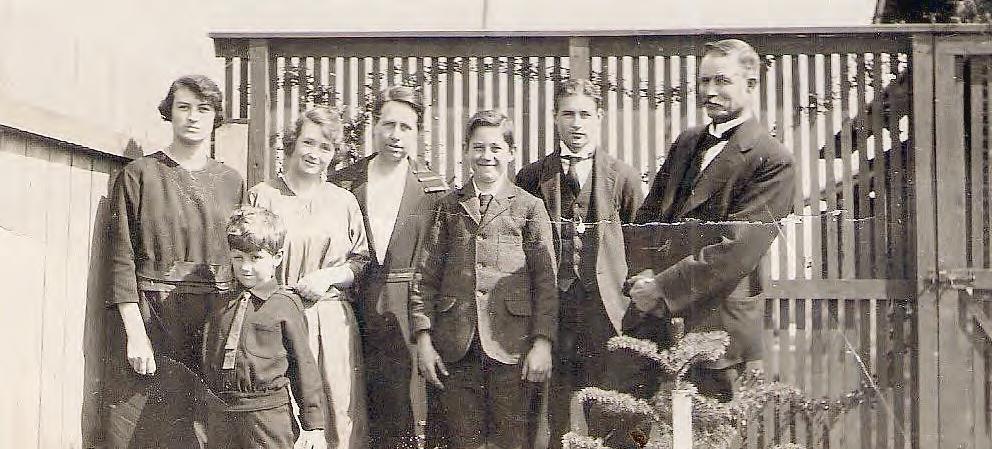
She was on the state executive in 1932 and called a meeting to form the Tumby Bay Liberal Country League in 1932.
She was its inaugural president and branch president for 28 consecutive years.
Keen to see women have a voice in parliament she attempted to be the first woman elected to the South Australian Government.
Janette sought endorsement from the Liberal and Country Party for the electorate of Flinders in 1937 - but lost out to a local farmer.
She was determined to have women’s voices heard in the parliament, but women’s suffrage had only been achieved in December 1894.
South Australia was the first state, and Australia the first country in the
world, to legislate women’s right to vote and stand for parliament.
However, she was never able to gain party preselection in several attempts - losing out to a man every time - but that did not stop her trying to enter the South Australian Parliament as an unendorsed candidate twice, plus the Australian Parliament’s senate on another occasion.
Janette’s final attempt was in 1944, when she was an unendorsed Liberal trying to enter the SA parliament.
However, it was not until 1959 - 15 years later - that the first two women were elected to the South Australian Parliament.
Janette is most widely known for her contributions to women, families and the community through the South Australian CWA.
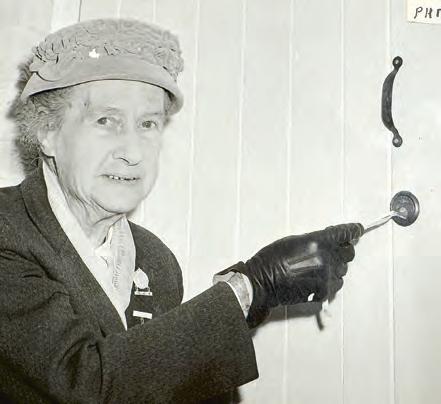


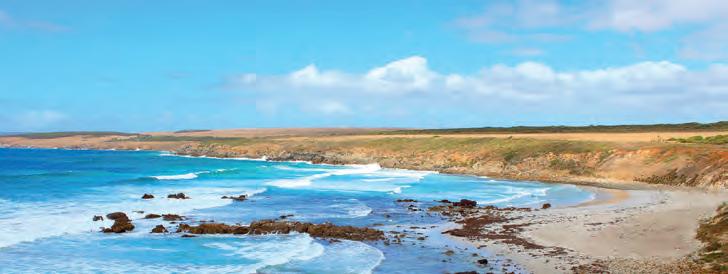





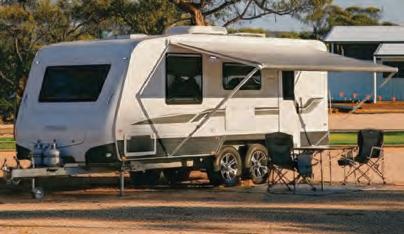




She threw herself into getting the organisation off the ground on Eyre Peninsula and was a foundation member of Tumby Bay SACWA when it formed in 1933.
The same year other EP branches were formed at Wirrulla, Ceduna, Elliston, Cummins, Port Lincoln, Cleve and Yeelanna.
More would follow in subsequent years and the majority still exist today.
Janette went on to be branch president from January to July 1937 and again from 1941 to 1946.
She was also Eyre Peninsula division president from 1937 to 1944, and group president from 1946 until 1949 - which included Far Western, Buxton and Octoman groups - the latter named in her honour to this day.
Janette travelled 1696 miles (2729 kilometres) by road and 200 miles (322km) by rail just visiting the 20 Eyre Peninsula branches in 1939.
Her contribution to CWA grew after her husband Charles died in 1949, as Janette took on the role of South Australian president from 1949 until 1952.
During those three years Janette visited each of the state’s 236 branches - at a time when travel was much more difficult than today.
That in itself was a considerable feat, made more so given she was 70 when she started that term.
It was only in 1948 that the CWA held its first kiosk at the Royal Adelaide Show, with its first SACWA conference held the week before, because of the difficulties of getting members of branches together.
The SACWA building at Dequetteville Terrace was bought in 1959 in what Janette described as “a red letter day for the CWA” as the need for a headquarters had become urgent.
In the post-World War II decade, the CWA continued a number of wartime
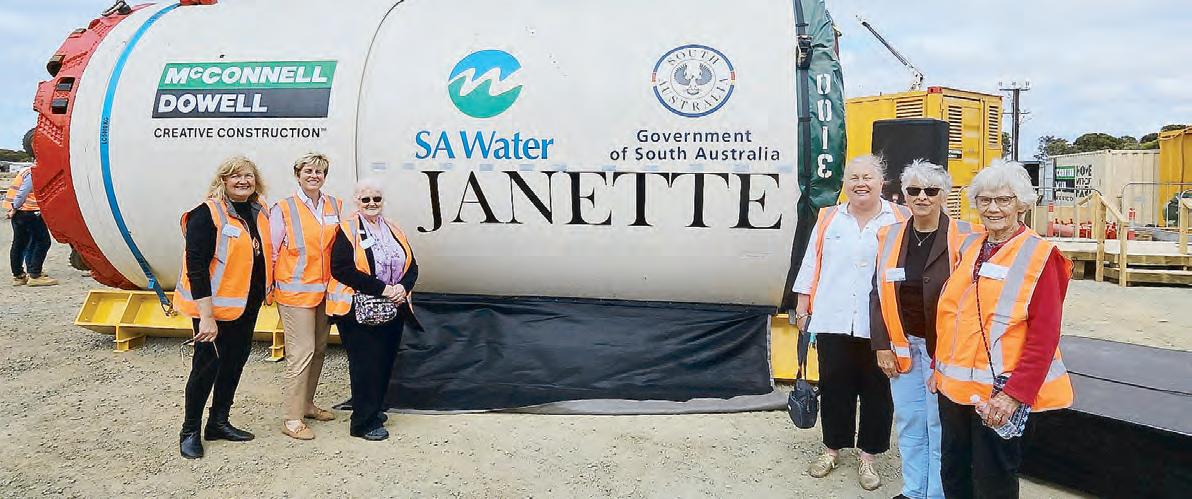
SACWA member Sandy McCallum (Tumby
activities, including collecting fat and making it into soap - with 470 cases weighing 10-and-a-half tons sent to Britain.
Janette promoted establishing CWA seaside holiday cottages and personally opened the ones at Port Lincoln in 1955 and Tumby Bay in 1957.
She was the branch member to negotiate for the land on the Tumby Bay foreshore at The Esplanade.
Janette was the instigator behind periodic three-day homemakers’ schools during her term as SACWA president from 1952 to 1955.
However, she was asked to take over as interim state president for a year from 1955 to 1956.
The CWA opened its first Home for the Aged at Clare, called Carinya, with Janette undertaking the official opening.
Her CWA involvement took her well beyond her local branch - among other things she was the South Australian CWA representative of the
Established in 1839, Elders is the most recognised brand when it comes to Agriculture in Australia. And here on the Eyre Peninsula, the team’s strength is well recognised with 6 branches scattered throughout.
A BIG part of the Elders business is REAL ESTATE and we are well represented with experienced award-winning agents at your call.
WHAT WE CAN DO FOR YOU:
• Rural Real Estate Sales and Leasing
• Residential and commercial Sales
• Property Management on the West Coast
• Appraisal for Agriculture farmland and Residential property.
Trust Elders to get the job done.
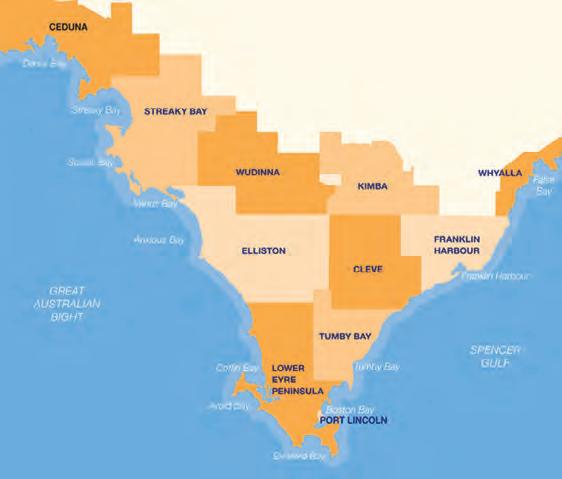
Servicing the whole of the Eyre Peninsula with branches at:
• Port Lincoln
• Cummins
• Cleve
• Wudinna
• Streaky Bay
• Ceduna
Associated Country Women of the World.
She travelled by ship to attend the International Council of Women jubilee conference, which was held in Edinburgh in July 1938.
Janette was made an honorary life member of the SA CWA in 1954.
An even greater honour was bestowed on her the same year, when she was awarded a Member of the British Empire, and presented with it at Government House in Adelaide by Queen Elizabeth II herself.
Those who remember meeting her, such as her granddaughter Robyn Octoman and Ungarra SACWA member Valmai Webb, said Janette excelled at needlework and tatting, was a keen gardener and a great cook.
She won many prizes at SACWA group days, and also at the Lipson and Royal Adelaide shows.
Janette entered several sections at the Royal Adelaide Show with up to
150 entries in a single show despite the distance she lived from there.
She lived in Adelaide for the final three years of her life but returned to Lipson to unveil a plaque named Janetta Octoman Drive in her honour at Lipson on 25 October 1970 - a few weeks before her 91st birthday.
Tumby Bay District Council, the Highways Department and CWA Octoman Group met on 26 May 1970 to organise naming the area from the township of Lipson to her nearby former home Callena, a monument stone and a plaque.
In all, 31 Octoman Group CWA members were involved in planting 165 trees along the drive.
The honour came from a Cockaleechie CWA Branch to honour her and to mark the silver jubilee of the Octoman Group.
Janette died in Adelaide on the 23 October 1971 and was buried in Lipson Cemetery.
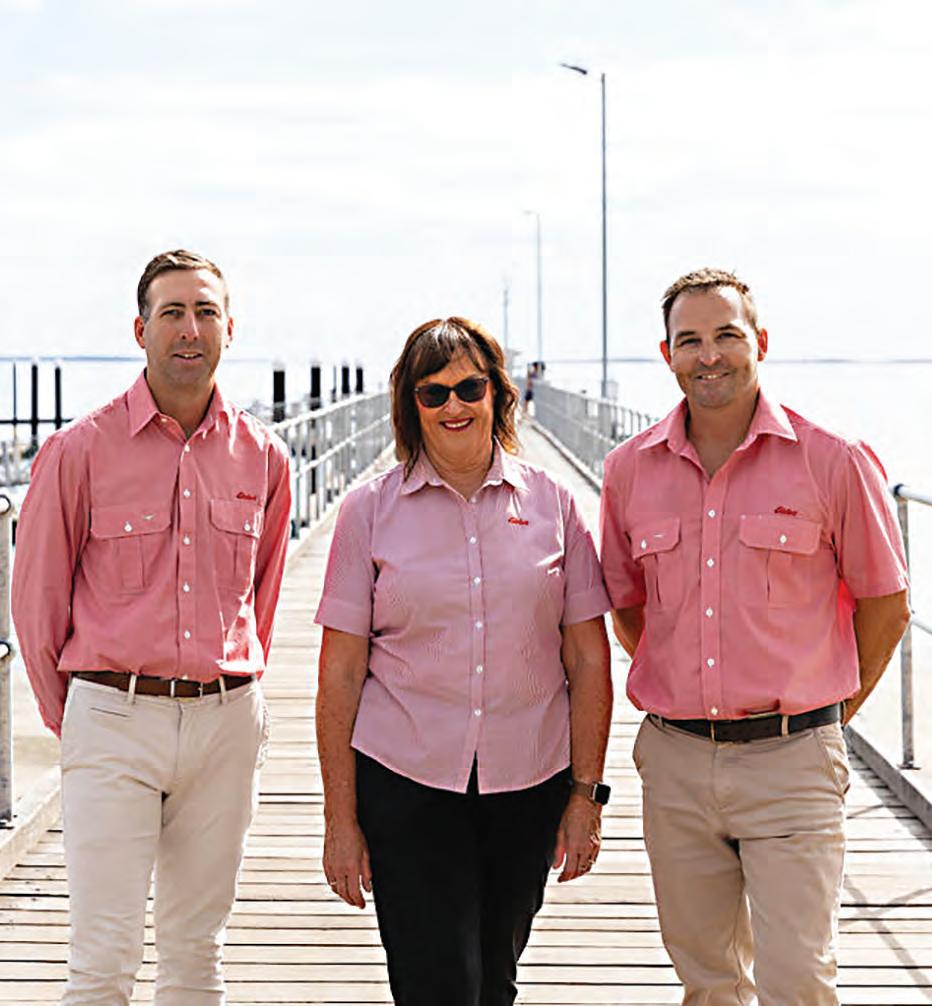
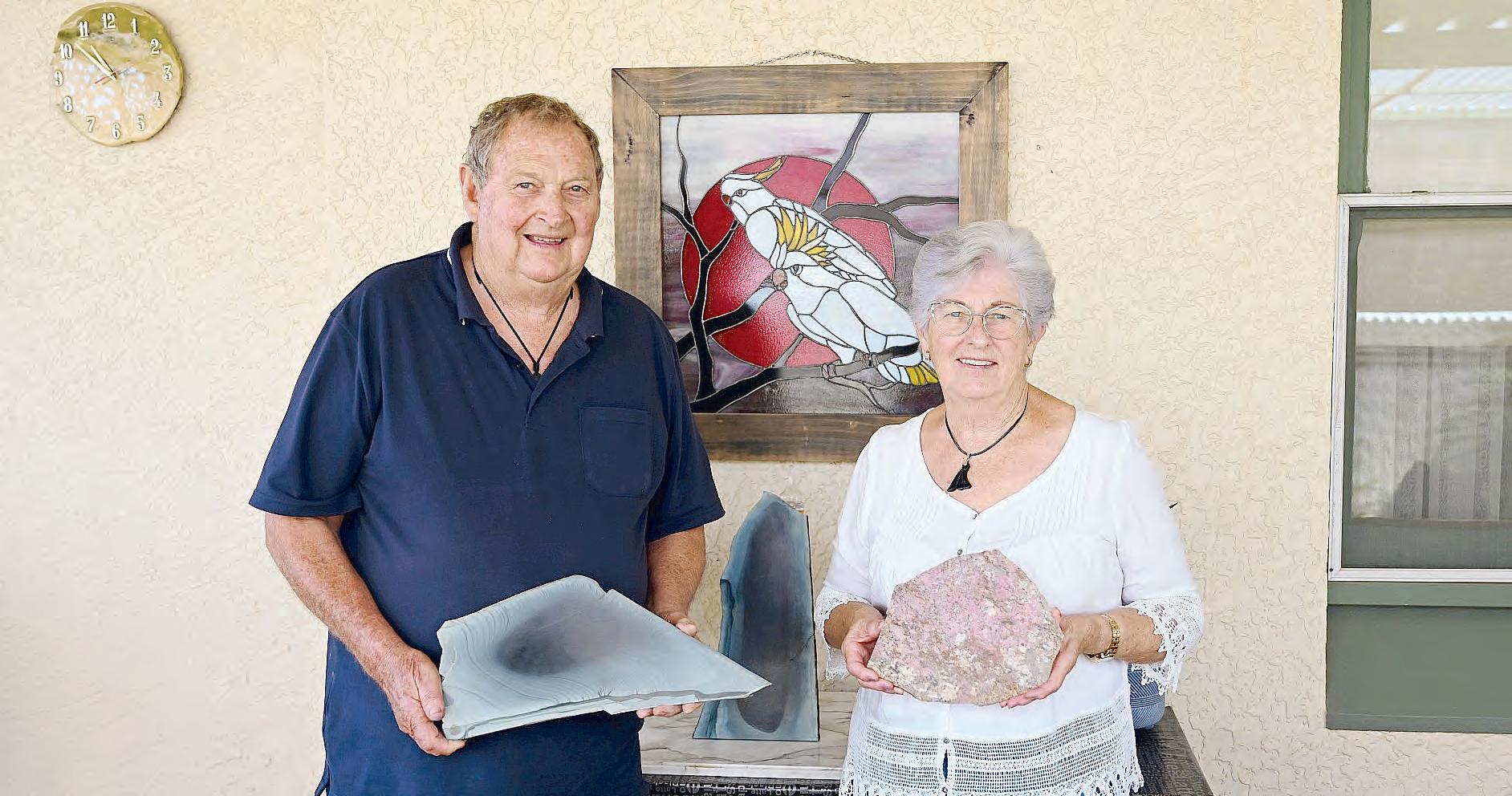











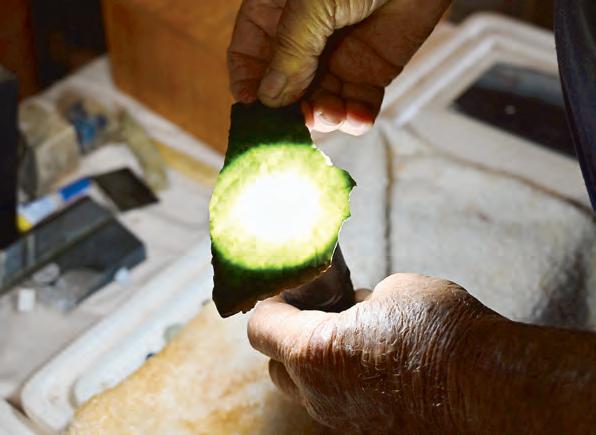
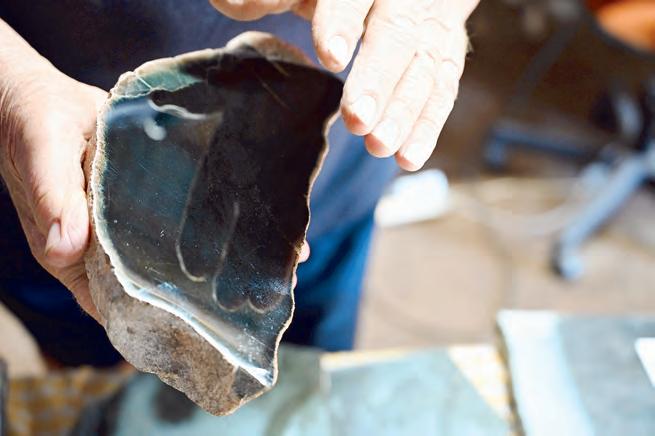
Just north of Cowell’s boat ramp, past the oyster leases and into the rugged folds of the Minbrie Ranges, one of the greatest geological anomalies on Earth was discovered.
Under limestone lies the Cowell Jade Province, the largest known deposit of black nephrite jade in the world by volume - spanning about ten square kilometres.
Nephrite jade is the toughest known natural mineral - even tougher than steel.
Yet, a thriving local jade industry is yet to be established and many Australians have never held the jade in their hands.
It was not a geologist to make this discovery, but a curious farmer named Harry Schiller in 1965.
While wandering the hills, prospecting his property, Harry picked up a nearly four-kilogram boulder. It did not look like the surrounding granite.
When Adelaide University and South Australian Museum confirmed it was high-quality nephrite, the rush for Cowell Jade began.
In 1968, Harry’s great-nephew Niel Smith joined in the jade adventure; he is now one of the last living original lease holders.
Niel farmed at Yabmana, between Cleve and Cowell, and heard about the jade through his extended Schiller family circles.
“Our family and the Schillers have always been interested in minerals and vegetation; my father was commissioner of National Parks on Eyre Peninsula, and my grandfather mined copper when he first came to the area at Calcookara, so we’ve been involved off and on throughout the years,” he said.
“I went to peg a mineral claim in
1968, and there was a company that had an exploration licence there and they would not give me permission to peg the area.
“So, I waited around and eventually in 1970 I pegged a lease of black jade and about three or four years later I took into partnership with my brother, his wife and my wife and we mined for jade in the off period - because we were both farmers. As it turned out we had the blackest jade in the whole area.”
Experts eventually mapped more than 100 separate outcrops. Geologically, this was not just a lucky find.
The jade in Cowell formed more than 1.5 billion years ago, under intense heat and pressure.
Cowell Jade exhibits a variety of colours and textures, with medium to fine-grained material showing greenish hues to black.
When raw, the black jade looks like an unassuming chunk of coal. But once a lapidary artist puts it to the wheel, a transformation occurs.
Diamond-tipped tools are usually used to cut the stones. It can also be polished to shine, the black jade as reflective as a mirror. To the touch, it is cool and eerily smooth.
Niel recalls the department of mines doing research in the area.
“Because of course it ended up being the biggest deposit of black nephrite jade in the world,” he said.
“On a Friday night when they were working from Cowell they would come out to the farm and my wife Pat would cook them a nice country meal and we’d talk minerals.”
Niel ended up helping the department to locate drill holes when it did drilling for the jade.
“They did exploration and
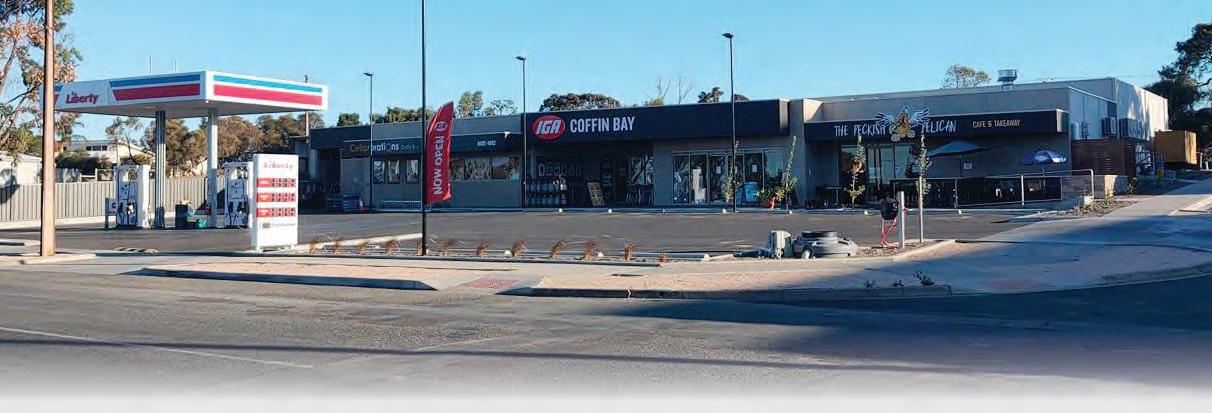







Everything you need, right here in Coffin Bay

From fresh groceries at IGA, to your favourites at Cellarbrations, and great coffee, meals and takeaway from the Peckish Pelican Café - Coffin Bay Shopping Centre has you covered.
Fuel up the car, grab your bait and ice, swap your gas bottle and tick everything off the list in one easy stop.

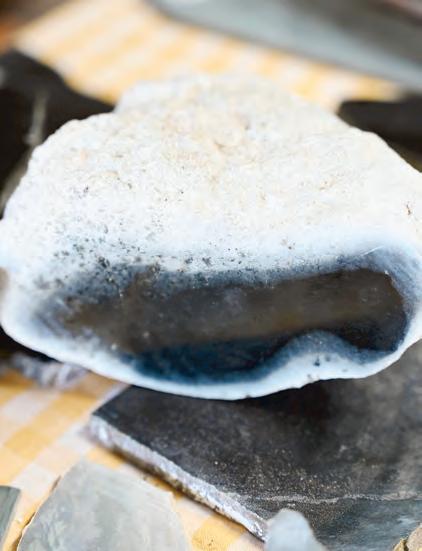
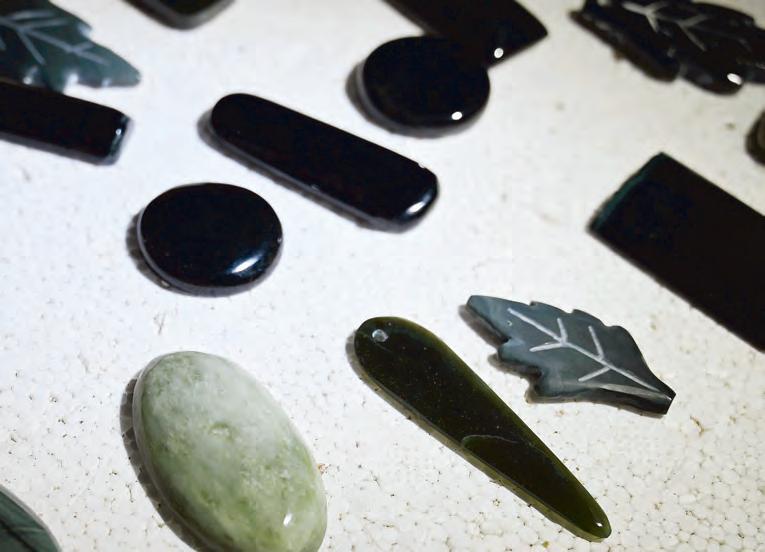
“ ” All we want is to see it get up and running and benefitting the community
documented all the lenses and pods. That went on for about three years.”
Sadly, Niel recalls the bullrush to the area becoming increasingly complicated, initiating government intervention, resulting in the closure of new peg sites.
“That was so they could stabilise the industry,” he said.
“In the meantime I found a very, very rare stone called clinozoisite, a bright pink stone, and I showed the minister - he was that taken to it he had it gazetted in the paper, threw the area open for 48 hours so I could peg the clinozoisite but when I mined it -
there was only four big boulders that were bright pink then they turned green.”
From the 1980s, the industry in the area only got more complicated, and it toppled due to corporate mismanagement.
“Luckily we had mined a reasonable amount of jade and we’re still processing and making a bit of jewellery from what’s left,” he said.
“We also sold black jade to a company in New Zealand, so if you get black jade from New Zealand it’s probably our jade - but it’s always sold as Australian jade.”
In Cowell, however, it remained a background character - a footnote in a town more famous for its seafood.
Today, there is a resurgence of interest, with some Cowell Jade commercially available in town, it can be bought locally from a business out of the Cowell post office and Cowell Craft Shop, where Niel and Pat sell their jewellery as a hobby.
On a larger scale, the Chinese market is showing interest and could present further opportunities.
Niel’s wife Pat has been along for the whole ride - she said the future of Cowell Jade was uncertain but hoped




to see it become a more prominent aspect of tourism in the town.
“All we want is to see it get up and running and benefitting the community,” she said.
“It would be a huge tourist attraction if it could be coordinated with care and professionalism.”
Cowell Black Jade is a stone of tenacity - fitting for the Eyre Peninsula locals who continue to work the land and sea.
It might be a quiet coastal town, but at its heart, is a high-quality gem that is tough, ancient and ever-alluring.

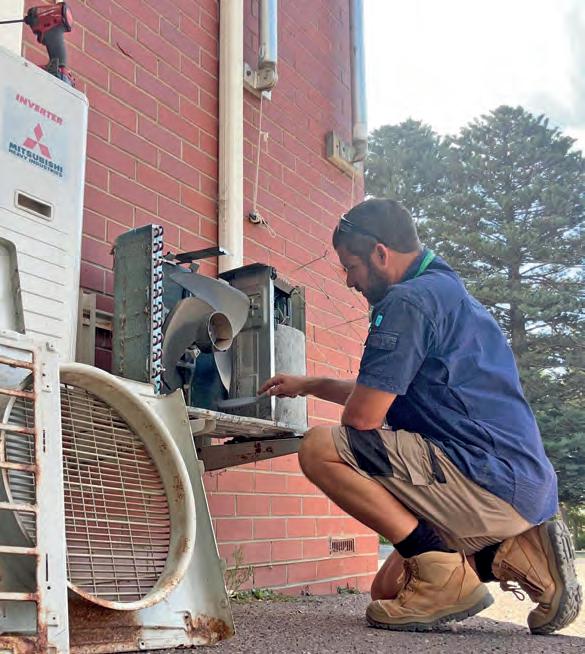



stayed in touch, a friendship that would alter the course of Jack’s life.
Born in Darlington, England, in 1948 to Bill and Marj Davies, Jack Davies’ story begins long before he ever set foot on Eyre Peninsula.
His mother served in the Women’s Royal Naval Service, spending most of her time in Ceylon (Sri Lanka), while his father flew in Bomber Command during World War II.
Among his father’s crew was an Australian, Bob Stirling from Port Neill.
The two men survived the war and
Bob returned home to Eyre Peninsula and eventually became the owner of a soldier-settler farm at Tumby Bay.
“My Dad and Bob had stayed in touch, and in 1951 Bob sponsored my family to Australia, where we spent two years at Tumby Bay before moving to Port Lincoln,” he said.
“Bob saved me from a fate worse than death - barracking for the English cricket team - by bringing us out to Australia.”
Jack grew up in Port Lincoln and
From the rolling dunes of the West Coast to the decks of prawn trawlers, Port Lincoln’s Jack Davies has lived a life shaped by the sea and the sand, and spent decades capturing its beauty through a lens.

















Experience the ultimate beachfront escape and find your little slice of paradise
Unwind in a beachfront, environment-friendly eco-pod in Eyre Peninsula’s Cowell.



















Whether you’re relaxing on the deck, enjoying a bath for two or exploring the nearby beaches, experience the ultimate beachfront escape and slice of Eyre Peninsula paradise.
Fall asleep to the sound of crashing waves in the king bed or take advantage of the in-house Kitchenette, spacious bathroom, outdoor desk, sun loungers and barbecue.
Ocean Boulevard, Port Gibbon Book online: www.ecoeyre.com.au
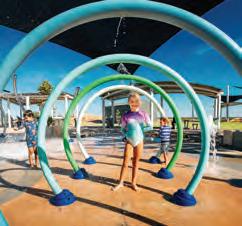
The Cowell foreshore has also been re-developed, featuring a water and skate park, basketball court and marina.
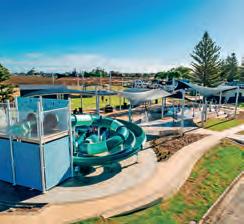

attended Port Lincoln High School before undertaking a diesel mechanic apprenticeship.
It turned out it was not what Jack wanted to be doing.
“I hated it [the apprenticeship],” he said.
“I wasn’t any good at it. My boss said, ‘You’re bloody good at pulling things to bits. It’d be nice if you’re able to put them back together.”
Fishing, however, proved a better fit.
Over the years, Jack worked various jobs before settling into prawn fishing, a career that would span 40 years across Spencer Gulf on vessels Kara George, Tourville Bay, Byron Star and Luna Sea.
When the Spencer Gulf season shortened, he filled the long breaks working for a West Australian company, Tiger Fisheries, relieving skippers out of Port Hedland and Darwin on vessels Surefire and Striker.
“I fished for scampi in the Indian Ocean and prawns in the Timor Sea and got to see places like Rowley Shoals, Scott Reef and the Kimberley Coast,” Jack said.
On one trip, he returned to Port Hedland after eight weeks fishing around the clock, only to discover there had been a plane strike.
“The only way home was by bus, and 66 hours later, I arrived in Adelaide.”
Despite the long hauls and rough weather, he relished the independence of life at sea.
“You are your own boss out on the ocean, basically. It beat being in a hot tin shed.
“It wasn’t always nice, some rough weather and some pretty ordinary things happened over the years, but most of the time it was good. Getting to see the north-west of Australia was a privilege.”
It was on one of his early fishing trips
that Jack bought a camera to record what he was seeing for the first time.
A passion was sparked.
“In the late 1970s, I would travel to the coast and take photos with a film camera,” Jack said.
“On one occasion, I was near the Sleaford dunes early one morning as the sun started to wash across a large dune, casting shadows formed by sharp edges and deeper valleys. I took a photo and was hooked on the result.”
He speaks of Eyre Peninsula with the affection of someone who has studied it closely for decades.
“From the understated beauty of the gulf coastline to the wild and magnificent spectacle of the West Coast in a big swell and all places in between, it is a special place,” he said.
“There is room to breathe with Port Lincoln’s climate being affected by the ocean that surrounds the town - no frost and sea breezes in summer.”
The dunes themselves are everchanging.
Shaped in summer by strong southeasterly sea breezes and flattened by winter rain and storms, they offer fresh textures with each season.
“For over 40 years, I have wandered around the coast, shooting the beauty of the coast and sand, being inspired by nature’s art,” he said.
“Today, I struggle a bit in the sand with my steel knees and things, but I still love doing it. It’s just the anticipation of what you can capture, and I’m still passionate about the coast of the Eyre Peninsula.
“The sand dunes can be a barren place, but you can be surprised as to what grows there. There’s often a lot of emus and kangaroos, and a thunderstorm in the sand hills can be a bit intimidating, but it can be amazing too.”
Jack also spent time there at night,




but joked he never saw any UFOs.
Family has always anchored his life in Port Lincoln.
It was where he met his wife Barb, and together they raised three sons - Nathan, Steven and Joel - who grew up surfing, diving and playing sport.
Nathan worked as a cadet journalist at the Port Lincoln Times before spending time in Sydney, Canberra and Tasmania, and later writing columns for the Sunday Mail.
Steve now runs a fishing enterprise out of Fremantle in Western Australia, while Joel lives in Port Lincoln and performs music across Eyre Peninsula.
“To this day, they make the trip back to surf, dive, see friends and enjoy the gift the West Coast keeps on giving,” Jack said.
“The pull is too strong to ignore and is now given to my grandkids Kai, Dane, Sam, Jessie and Octavia.”
After retiring from fishing, Jack began touring visitors around the coast and sandhills, sharing his knowledge of the region he loves.
Around the same time, a friend and fellow photographer, Joe Puglisi Jnr, challenged him to embrace digital photography.
“Joe is a wonderful photographer, and when he found out that I didn’t know how to convert to the computer, he offered to pass on his knowledge, and I spent many Tuesday nights in front of the computer screen learning what he knew, trying to bang it into my head. If I didn’t get it right, I didn’t get a coffee!
“It was a gift and very much appreciated.”
These days, Jack is a familiar figure around local ovals, photographing sport for the Port Lincoln Times and Eyre Peninsula Advocate.
It is a role he has fulfilled for nearly a decade.
RIGHT: One of Jack’s best sporting photos for Port Lincoln Times and Eyre Peninsula Advocate. Pictured is Boston player Marko Visic taking a spectacular mark in round six of the 2025 Port Lincoln Football League against Mallee Park.
“I know a lot of people around the ovals, and it’s always nice to take photos and have a chat with local people. The Port Lincoln Times and Eyre Peninsula Advocate reproduce the photos, and the parents and grandparents get to see their kids and grandkids.
“The nicest thing is hopefully getting a spectacular photo and meeting people.”
He believes local newspapers are vital to democracy and saw sport as the beating heart of any country town, a source of shared pride and memory.
Jack’s photography has featured in the SALT Festival, including a major opening night exhibition at Nautilus Arts Centre showcasing about 50 photographs, and he has been published in SA Life magazine.
When he is not photographing local sport or getting lost in the sand dunes, Jack assists his friend Fred with Fred’s Marina Cruises, guiding visitors around the marina on an electric boat several times a week.
“We impart knowledge of a combined 80 years of fishing experience to local and overseas visitors who love the history and beauty of Eyre Peninsula.”
For Jack, photography is ultimately about people as much as place.
“I love the characters of Port Lincoln. I love photographing them; many usually have a lot of stories on their faces.
“Once again, you’re meeting people, taking their photos and learning their story.”



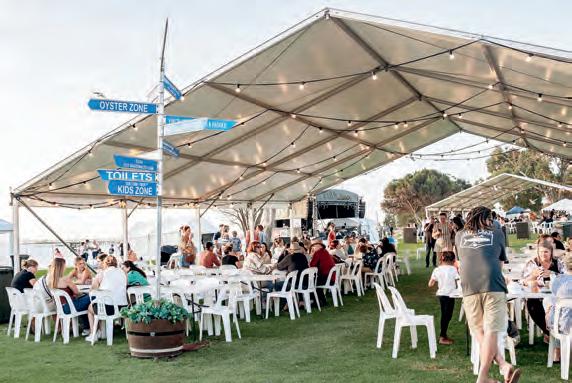



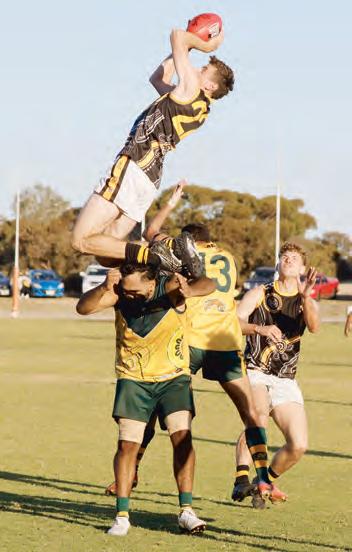





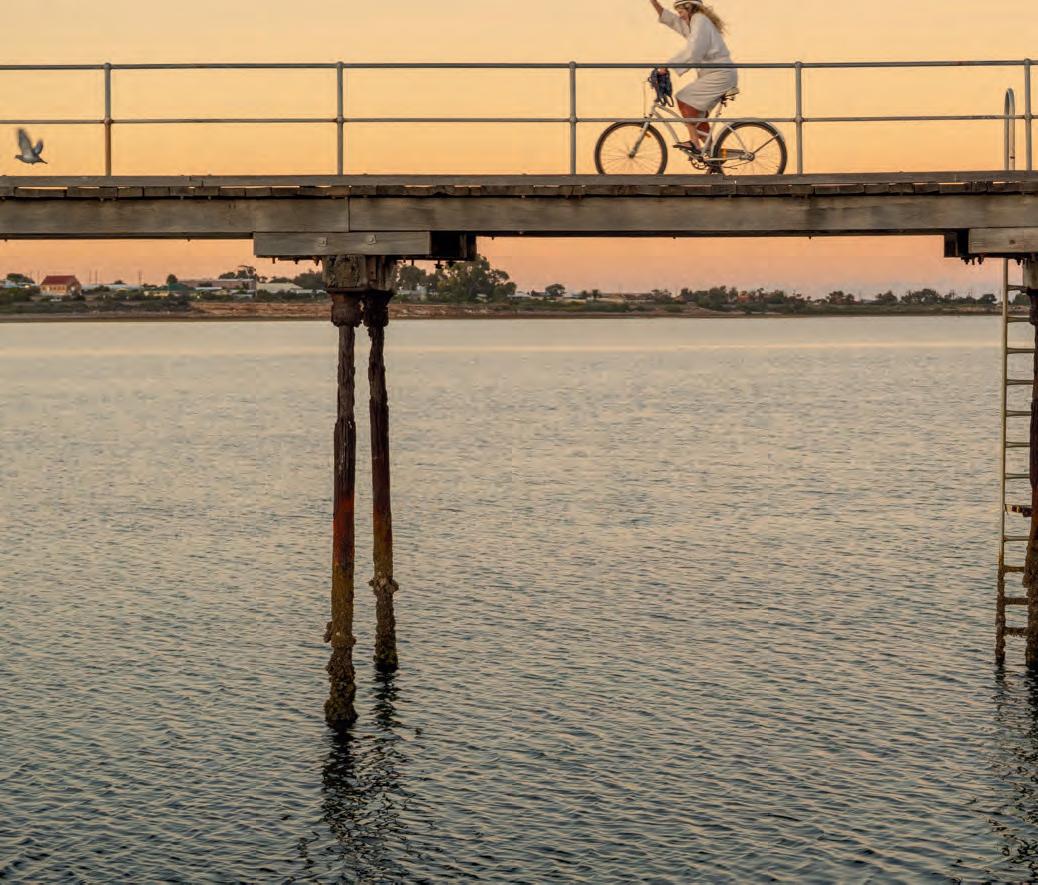
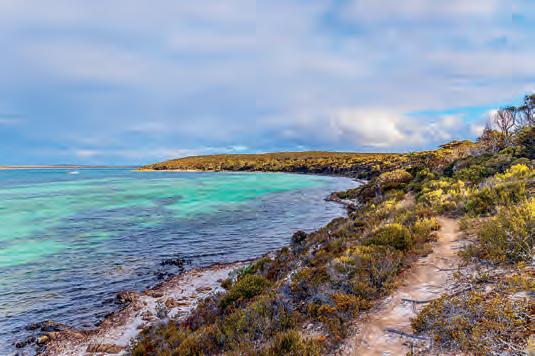
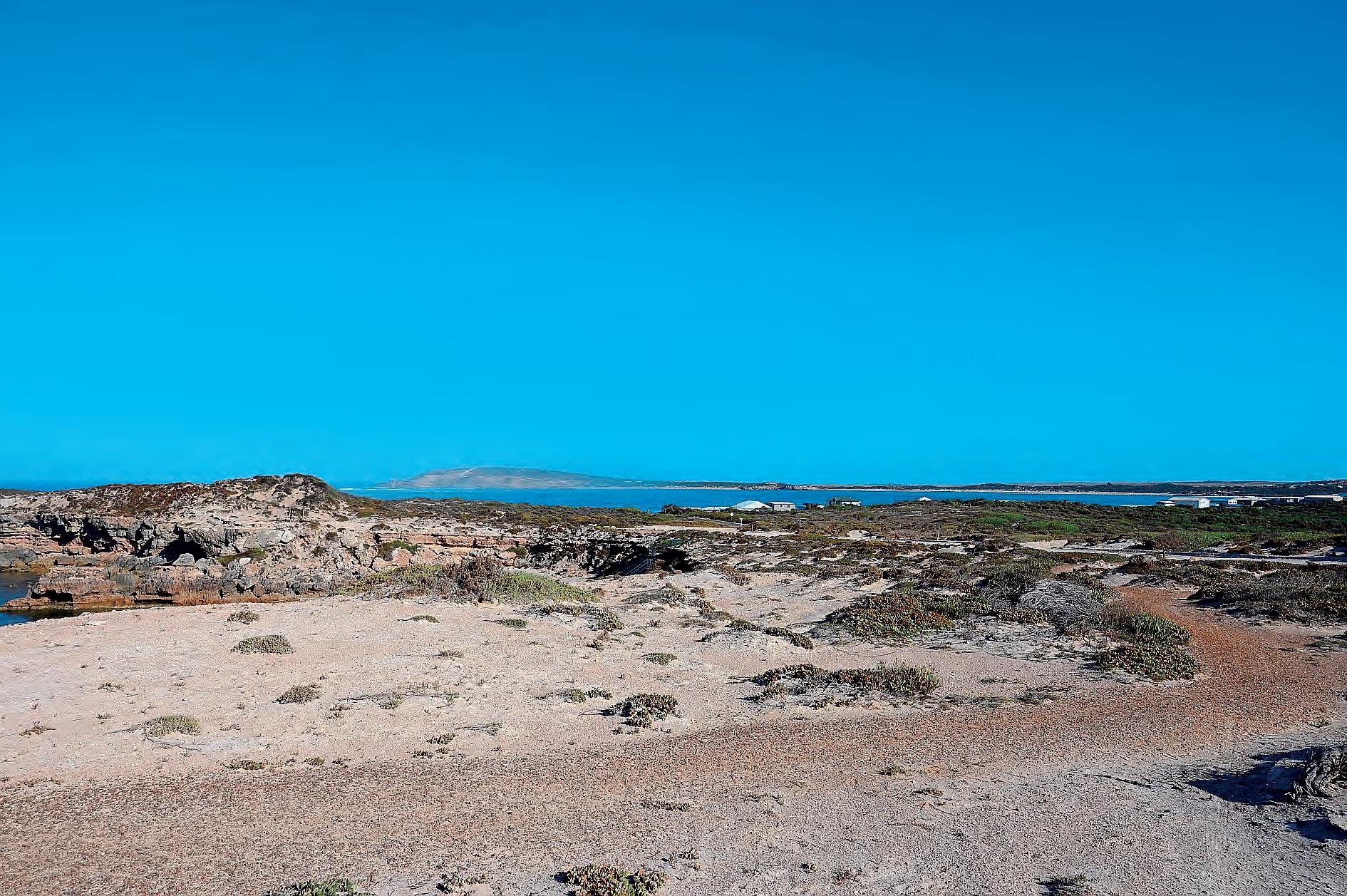
Elliston Coastal Trail
A nearly 14-kilometre walking and driving track, Elliston Coastal Trail can also be undertaken in parts, with the smaller Little Bay Trail an easier twoand-a-half kilometre trek. Featuring unique coastal artworks, commemorative monuments, beach stops and never-ending coastal views, this trail can be tailored to all.
The Investigator Trail near Port Lincoln is a walking route of about 89 kilometres through Lincoln National Park. It winds along coastline, sheltered bays, beaches, coastal heath and mallee, and can be tackled as a multi-day trek with camping or as individual day sections. It is named after HMS Investigator, the ship of explorer Matthew Flinders, who charted the region in 1802.
Parnkalla Trail
A walk that locals often traverse in small sections, the Parnkalla Trail is a great track to see the prominent sites of Eyre Peninsula’s fishing capital. From the tranquility of Shelly Beach, the docks of the marina area and the lookout in the city centre under Moreton Bay figs, this track is the go-to for the full Port Lincoln experience.
The main trail is nearly eight kilometres long, taking you through the township of Coffin Bay itself and offering Coffin Bay’s unique landscape of deep blues in the forefront of Marble Range. Stop for a taste of oysters when you need a break and be floored by the scenery at Coffin Bay Lookout.
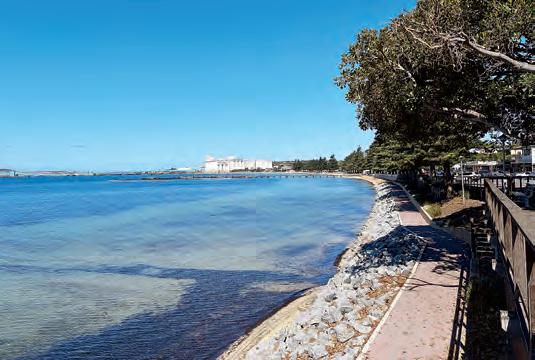
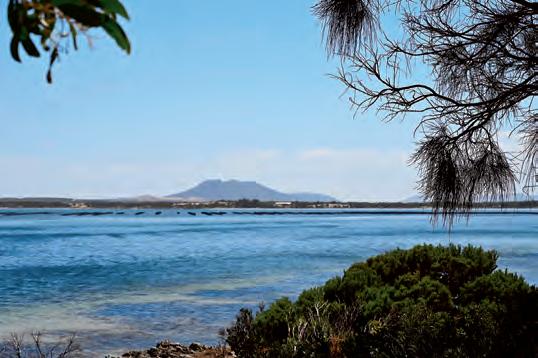
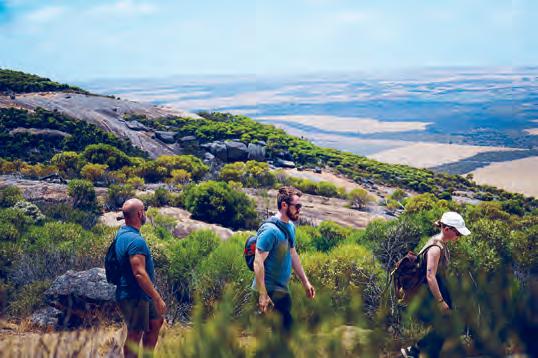
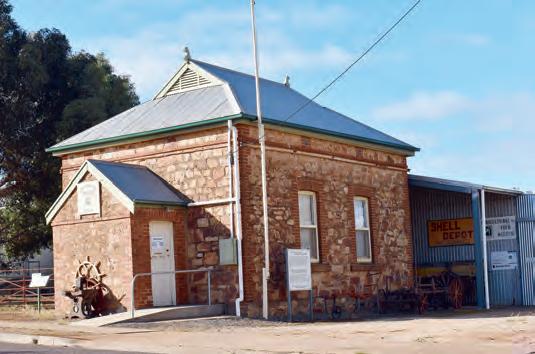
For those looking for a challenge, Carappee Hill hiking trail is steep terrain, taking about an hour to reach the summit. Nearly five kilometres round trip, this hike near Darke Peak is worth the effort to reach the highest point above sea level on Eyre Peninsula.
Grab a Cleve District Visitor guide for a map and information on the three-kilometre walking trail which highlights buildings and other areas and their significance. The walk meanders along Main Street and parts of Second, Third, Fourth and Fifth streets. It is flat and wheelchair
accessible and takes between one and two hours, however, it can also be driven in a bus or car.
The Arno Bay Estuary Boardwalk winds through pristine mangroves and samphire habitats, showcasing the diverse beauty of the local waterways and mudflats. Visitors can choose the left path for direct beach access or take the right boardwalk to meander through the area’s unique coastal ecosystem. It is only a three-kilometre round trip with wheelchair access.
This track starts at the Arno Bay boat ramp and ends at Turnbulls Beach. The track is wheelchair accessible and dogs are allowed as visitors traverse the magnificent Arno Bay coastline. It is a show of community spirit as local volunteers maintain this track.
Streaky Bay’s much-loved Moore’s Trail takes you on a winding sevenkilometre coastal journey from the town’s historic jetty out to Moore’s boat ramp, passing through a series of inlets, wetlands and scenic lookouts. Along the way keep your eyes peeled above for native birds and across the water for the occasional visit from a cheeky local seal, friendly dolphin pod or even the odd shark perusing the bay. An all-time favourite for locals and visitors alike, Moore’s Trail provides the quintessential Eyre Peninsula setting for your sunrise run, daily dog walk, evening catch up with mates or ride on the bike.
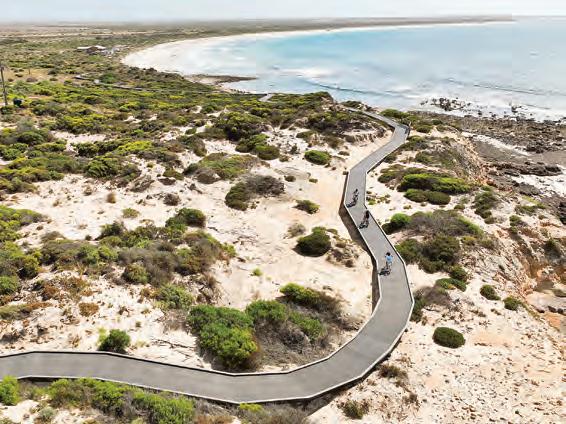
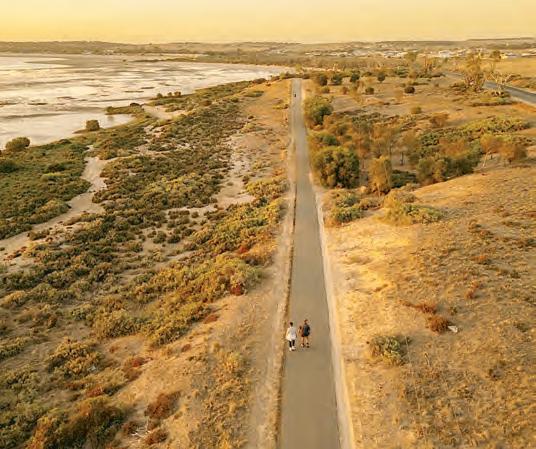
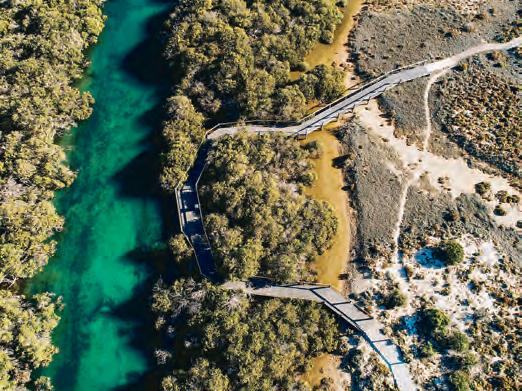
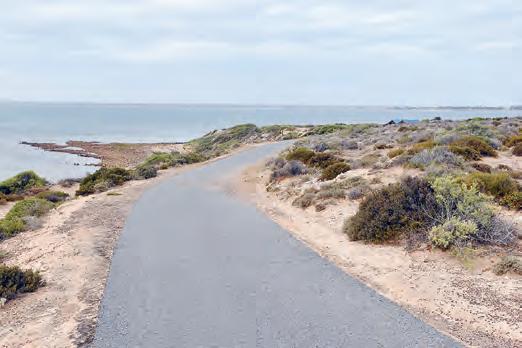
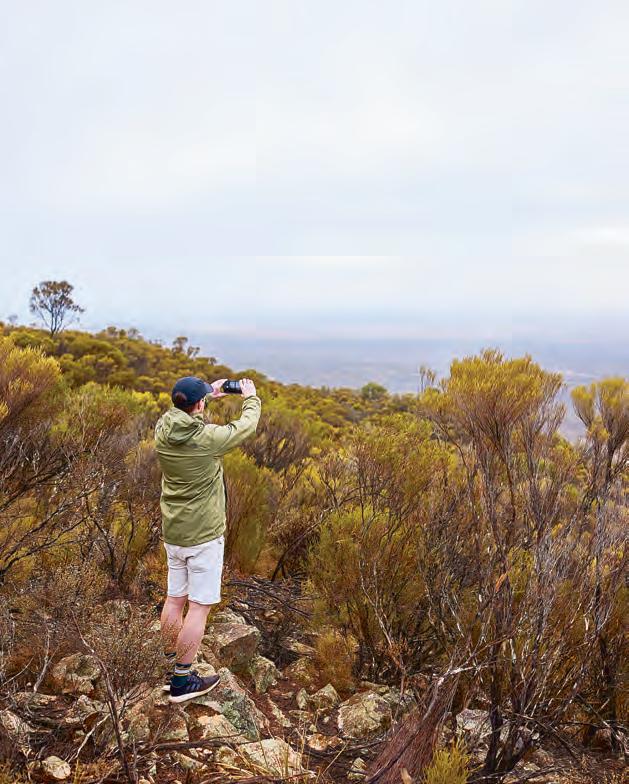
Ceduna’s Encounter Coastal Trail takes in the breathtaking Ceduna foreshore and snakes its way around to the tip of Thevenard at Pinky Point. Winding along the edge of Murat Bay, this trail is perfect for walking, running or cycling. The almost five-kilometre trail includes rest stops and interpretive signs relating to local history and culture. Pinky Point provides a great spot for photos.
Caralue Bluff Reserve spans 2200 hectares of rugged beauty, located 27 kilometres west of Kimba. Enjoy bushwalking and hill climbing as you forge your own path to the top of the bluff, where breathtaking views await. There are no marked trails or facilities and everything is completely BYO, so it is the ultimate spot for adventure seekers.
The Pioneer Trial is an easy 1.9-kilometre scenic walk around the Kimba Recreation Reserve. It starts and finishes at the recreational vehicle park’s camp kitchen and is a clearly defined gravel path.
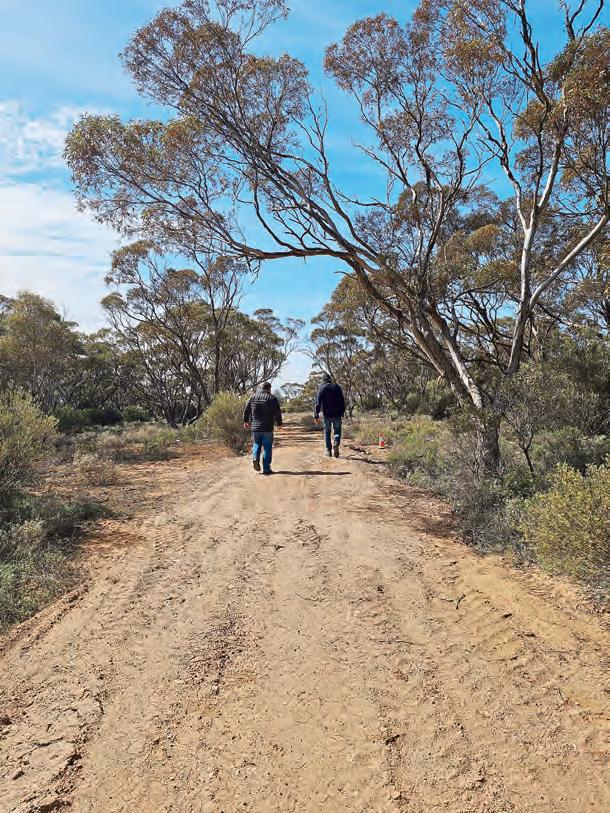
The nature trail is on the outskirts of Kimba and is a six-kilometre return walk featuring several recycled steel sculptures of native animals including an echidna, emu and wombat. Signs give information about features along it. The first two kilometres through the old Roora Water Reserve are easy walking, with the third gradually rising towards Whites Knob Lookout. The lookout provides a great view of the outskirts of Kimba as well as a unique sculpture of Edward John Eyre and his Aboriginal tracker.
Kimba Arts and Heritage Trail
The arts and heritage trail is an easy walk within Kimba township taking one through vibrant public art, local culture, and key historical landmarks, which tell of Kimba’s growth from a pioneering farming settlement to the vibrant rural community it is today. See colourful murals and sculptures reflect the spirit of the community - its landscapes, people and resilience, including the Kimba Silo Art with its breathtaking mural, the Big Galah and historic buildings.
Wudinna
Wudinna has a number of walking loops in and near the town. The Local Loop takes you on a 3.3-kilometre walk through the town, while the 3.7-kilometre Lovers Lane Loop heads through the residential area and outskirts of the town. To stretch your legs further, enjoy the 16km Wudinna to Polda trail that will take you to Polda Rock and near Mount Wudinna. On the way you will see the town’s iconic metal emu sculptures.
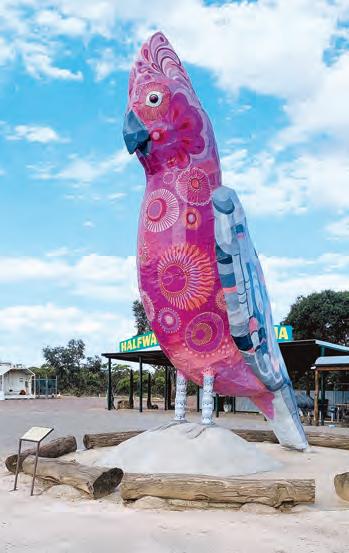
Pildappa Rock features a near-1.5kilometre walking loop around its base, showcasing the impressive granite structure. The area has been recently upgraded by Wudinna District Council, with picnic and barbecue facilities and new camping areas. It is an easy climb to the summit to see stunning panoramic views of the Gawler Ranges.
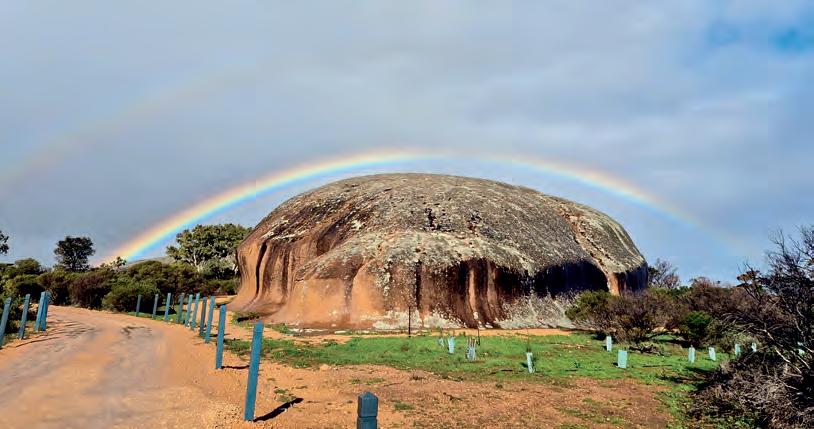
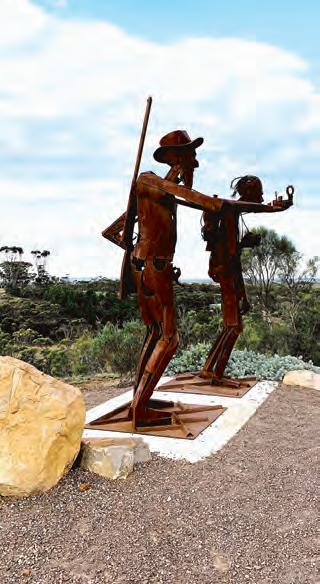
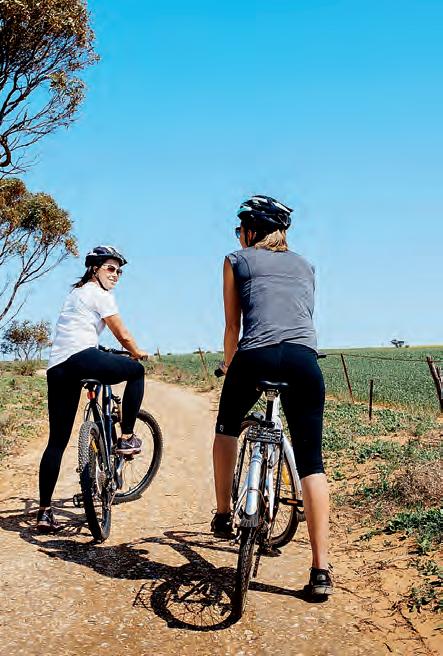
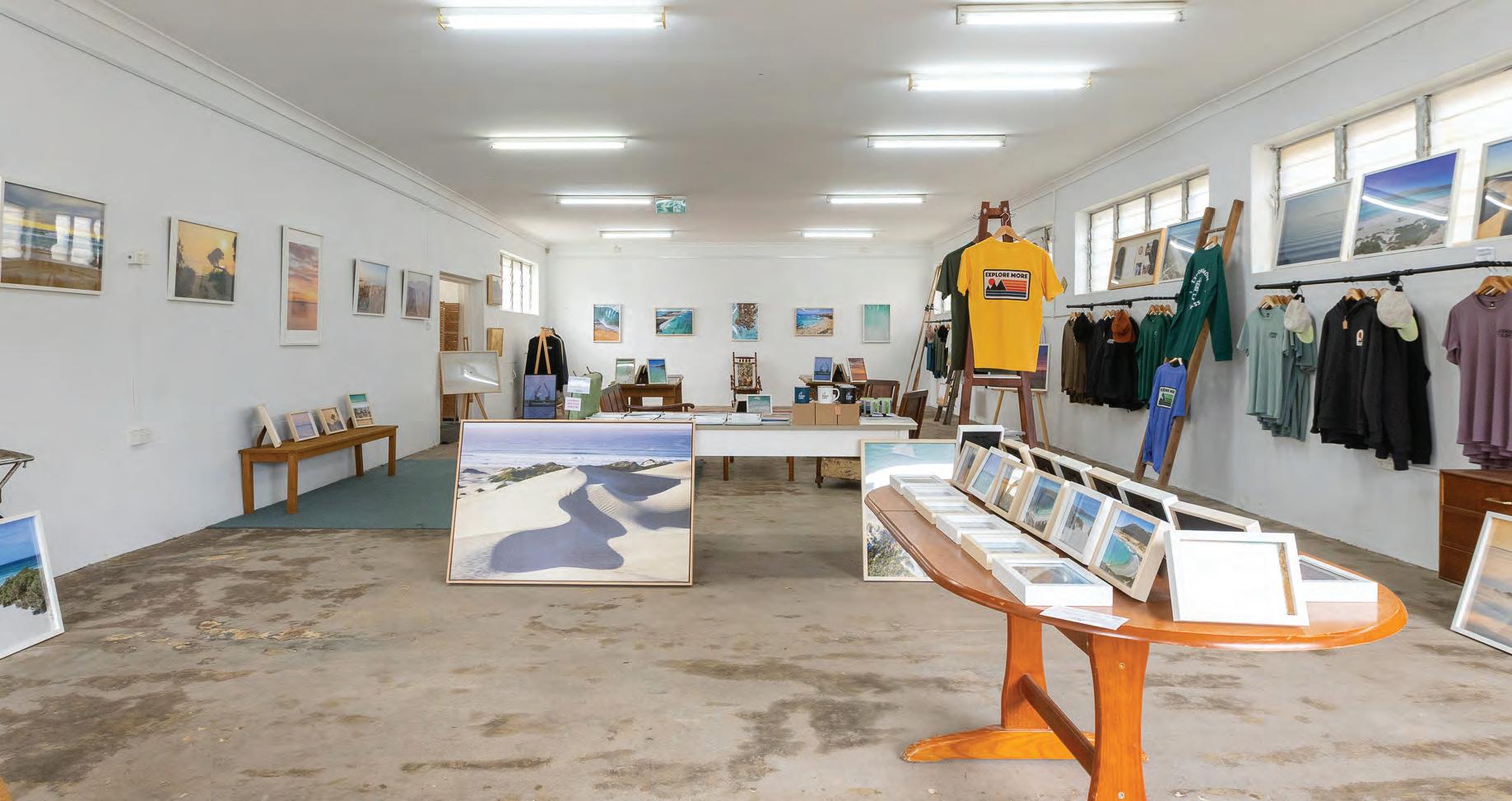



Only a short 150-metre walk, the mangrove boardwalk starts at the Cowell foreshore along to the south near the boat ramp. It sits in an enclosed tidal aquatic area and is ideal for fishing. Find out more about the species that inhabit the mangroves in the information hut.
Yeldulknie Weir and Reservoir
This circuit near Cleve is a little more than three kilometres and the trails are perfect for spotting birds and other wildlife. Visitors who use the facilities, camp or stay in their campervans, caravans or RVs are encouraged to leave a donation in the donation box which goes towards the Cleve Lions Club, who volunteer their time to maintain the area.
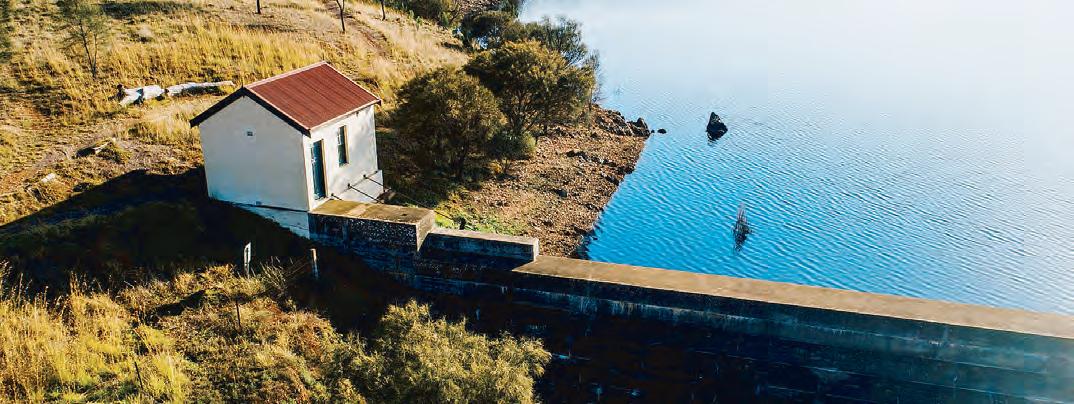
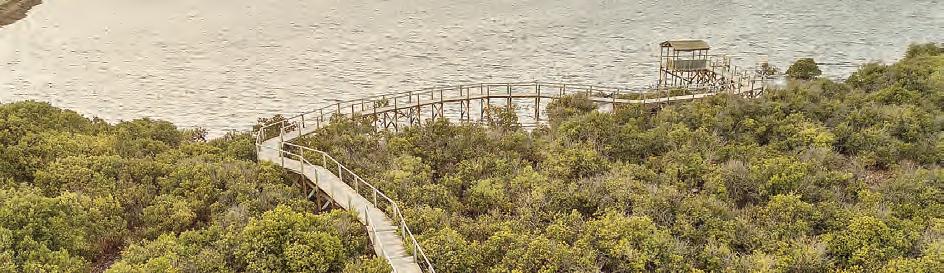
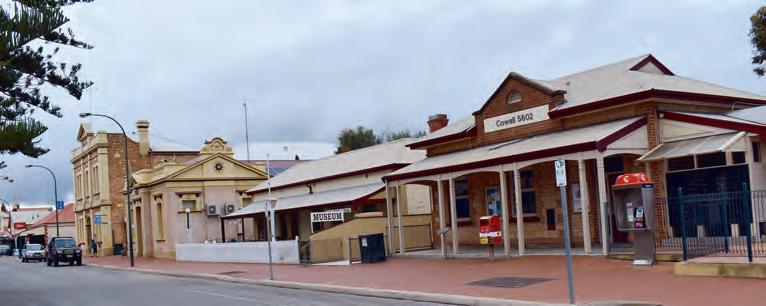



Grab a brochure from the visitor information centre in the Franklin Harbour Institute on Main Street. Start at the Lions Park on the foreshore, take a walk around Cowell and discover the origins of the original buildings on Main
Street - many built in the late 19th century or early years of the 20th century. Visit the Agricultural Museum and end with the museum at the old post and telegraph site - and house - next to the presentday post office, which was built in 1910 when the telephone exchange was introduced.



























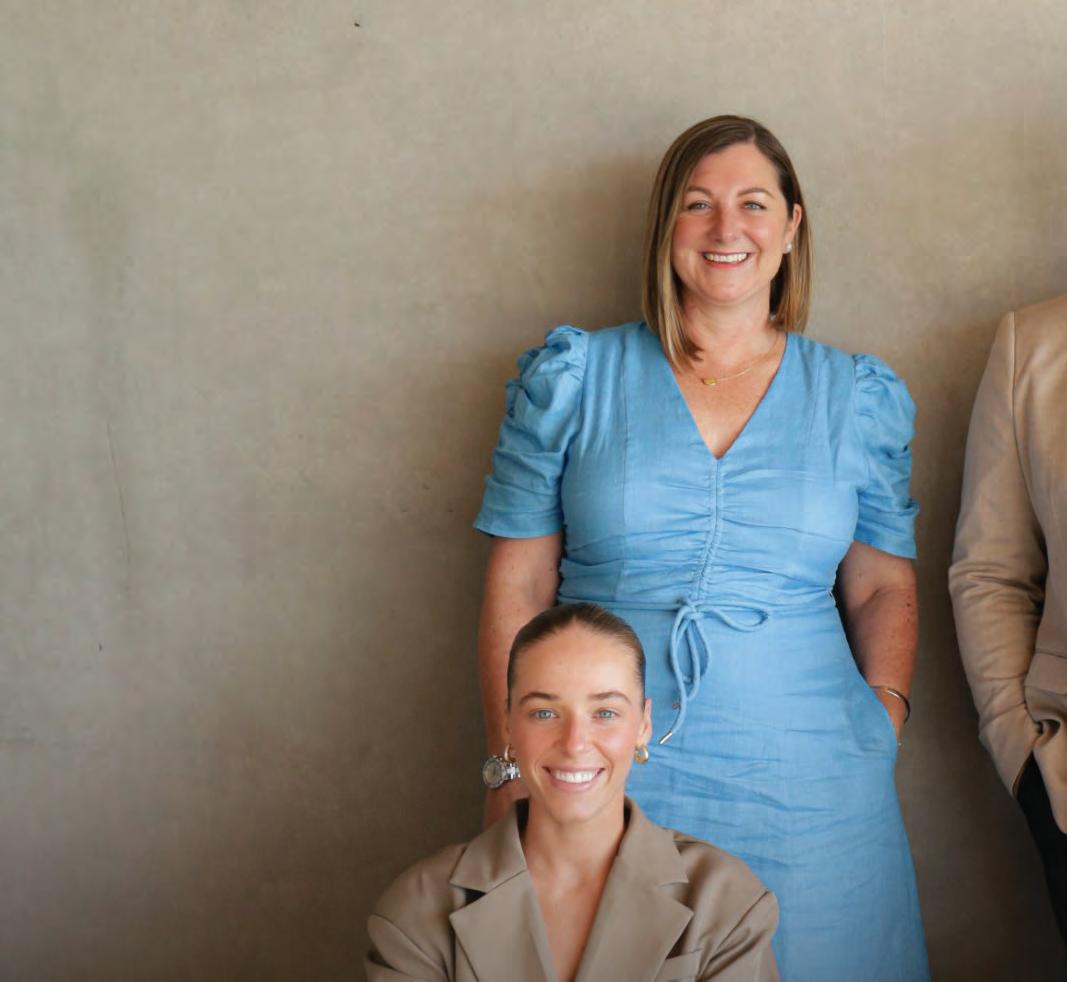

In the heart of the Eyre Peninsula, Rachel Hawkins, Corey Carbone, Jayde Whittaker, and Sophie Lloyd are redefining real estate through their shared commitment to excellence, community, and genuine client care. As key members of Harris Real Estate, their combined expertise and people-first approach continue to set a new benchmark across Port Lincoln and surrounds, delivering a seamless experience across both sales and property management.
Rachel Hawkins is a powerhouse in the industry, seamlessly blending her background in various industries with her natural ability to connect people. A selfproclaimed “community connector,” Rachel’s vast network fuels buyer activity and creates meaningful opportunities for her clients. Her results and reputation reflect her dedication to the Eyre Peninsula property market and the people within it.
Corey Carbone brings a people-first, property-second philosophy to everything he does. Holding a Bachelor of Business in

Event Management and Marketing, Corey’s adaptability and strong communication skills make him a genuine advocate for his clients. From his beginnings as Team Manager to his role as Property Consultant, he proudly represents Australia’s number one agency while delivering a fresh, attentive level of service to the Eyre Peninsula.
Jayde Whittaker is a highly regarded property manager known for her strong focus on trust, communication, and long-term relationship building. With a background in the music industry, she brings a calm, solutions-focused approach to managing investment properties and supporting landlords and tenants alike. Jayde prides herself on proactive communication, attention to detail, and protecting her clients’ assets as if they were her own, ensuring every tenancy runs smoothly and every client feels supported and confident in the process.
Sophie Lloyd rounds out the team, bringing a strong background in client relationships, customer service, and patient care from a
professional skincare clinic environment. Known for her exceptional organisation, structured approach, and forward-thinking problem solving, Sophie ensures every process runs smoothly and efficiently behind the scenes. Already making waves with clients through her calm, attentive manner and proactive support, she plays a key role in keeping the team’s operations seamless and service-driven.
RACHEL HAWKINS 0429 682 227 RACHELH@HARRISRE.COM.AU
COREY CARBONE 0427 646 720 COREYC@HARRISRE.COM.AU
JAYDE WHITTAKER 0419 765 145 JAYDEW@HARRISRE.COM.AU
SOPHIE LLOYD 8202 3500 SOPHIE.LLOYD@HARRISRE.COM.AU