‘I’m stuffing it up all the time’ DR BILLY GARVEY
It’s TV time
PEVAN AND SARAH
Rocket Park makeover IT’S A BLAST
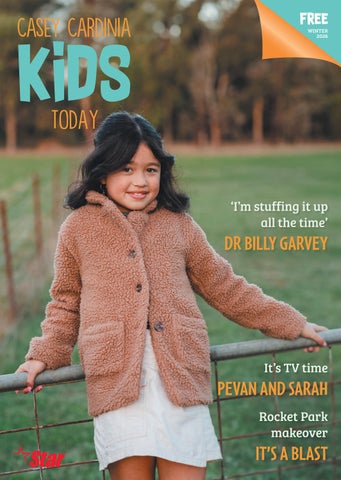
‘I’m stuffing it up all the time’ DR BILLY GARVEY
It’s TV time
PEVAN AND SARAH
Rocket Park makeover IT’S A BLAST
AS I was compiling this winter edition, I sensed a theme running through some of the stories.
There are several reminders within these pages that we are all carrying the weight of parenting.
The burden shows up differently in us all - from a caffeine dependency, to wearing food-stained trackies and a dishevelled mum bun to school drop-off, to avoiding social situations…
Most of us try to keep these struggles under wraps, but sharing them does more than lighten your own load - it gives other parents permission to do the same.
So don’t think of that venting session as complaining - you’re inviting that fellow school mum with the trantuming toddler and wrung-out expression to get her challenging morning off her chest, receive some validation, and move
Steve Biddulph: We all need somewhere all need somewhere to go to
PAGE 4
A Mindful Moment: Are we overprotecting our children - or underpreparing them?
PAGE 4
Beaconsfield mum’s crusade for protection from ‘fast, brutal’ disease from
PAGE 5
forward with her day feeling a little lighter.
Laura Parr really shines a light on this, sharing her story of falling pregnant with twins via IVF.
She felt so fortunate to be growing her family, but the rug had still been pulled out from under her in terms of what she thought motherhood would look like.
She was grateful for her village to lean on, but she was still drowning in the reality of round-the-clock feeds times two while also caring for a toddler.
Many, many things can be true at once.
Even someone with all the answers, like renowned paediatrician Dr Billy Garvey, doesn’t always get it right.
He describes his life as “chaos” and admits to regularly dropping the ball with his three children.
Mum, therapist and author Lisa Taylor reminds us that today’s parents have
more information than ever before, “but we’ve never felt worse”.
“We’ve got this pressure and this comparison and this idea that we’ve got to be perfect.”
Sami Glastonbury shares about being pregnant with her third child, grappling with an uncertain future after learning her son had a serious heart condition.
On the surface, she was adding a much-wanted third child to her family. But behind closed doors, her life was heading down an unexpected and challenging path.
So, let’s all lean in to honesty and empathy when it comes to the parents in our lives - and cut ourselves some slack, too.
Casey Cardinia Kids magazine is a Star News Group publication.
Casey Cardinia Kids will be published quarterly prior to each of the school holidays.
Casey Cardinia Kids Cnr Princes Hwy and Army Road, Pakenham, 3810 PO Box 9, Pakenham, Victoria 3810 Phone: 5945 0666 Fax: 5945 0777
Editorial Casey Neill casey.neill@starnewsgroup.com.au
Photography Rob Carew

New PNDA support for the south-east
PAGE 6
Violence on our doorstep: Ann-Marie Hermans MP
PAGE 6
E-scooter injuries surge
PAGE 7
Pevan and Sarah: From classrooms to your lounge room
PAGES 8-9
Dr Billy Garvey: “I’m stuffing it up all the time”
PAGES 10-11
Berry Street Yooralla: Support a local a child
PAGES 16-17
Input shapes play space facelift shapes facelift
PAGE 18
Get it all locally: Cardinia Lakes Shopping Centre
PAGE 18
Mercy Place Lynbrook: When caring becomes a community journey journey
PAGE 19
Casey’s winding path to community
PAGE 21

PAGE 12
ACD: Free disability support
PAGE 12
Kids in the Kitchen: Carrot cake bliss balls
PAGE 13
This playground’s a blast
PAGES 14-15
The Perfect Parent Trap: “Connection really is everything”

Centennial Living: Stamp duty savings on downsizing
PAGE 21
Tackling teen anxiety
PAGE 22
Aura Dentists: Poor sleep steals potential Poor
PAGE 22
Boosting school road safety
PAGE 23
Scrolling safety
PAGE 24
Road: Your child’s home away from home
PAGE 27
Classroom phone ban expands
PAGE 28
Tiny Trails Childcare and Kindergarten: A nurturing trail to walk
PAGE 28
Food, glorious food glorious
PAGE 29
Group Advertising Sales Manager Mandy Clark mandy.clark@starnewsgroup.com.au Phone: 5945 0608
Published by Star News Group Pty Ltd ACN 005 848 108.
Publisher/Managing Director, Paul Thomas. All material is copyright to Star News Group Pty Ltd. All significant errors will be corrected as soon as possible.


FiRST Early Learning: Home away from home
PAGE 24
St Clare’s Primary School: Nurturing holistic development
PAGE 25
Cranbourne Primary School: Support to thrive
PAGE 26
Story House Early Learning Thewlis
Pack the kids up - Phillip Island is calling calling this winter
PAGE 31
Smooth roads ahead for BIG4 Crystal Brook Tourist Park
PAGE 31
Cardinia Cultural Centre: It’s heating up at Winterfest!
PAGE 33
Step into an enchanting world: Greater Dandenong Arts
PAGE 34
“We are in the trenches”
PAGE 35
Sami gets it - hand on heart gets
PAGES 36-37
Raise Rich Kids: Cash in on money on lessons
PAGE 38
Fresh winter reads for all ages
PAGE 38









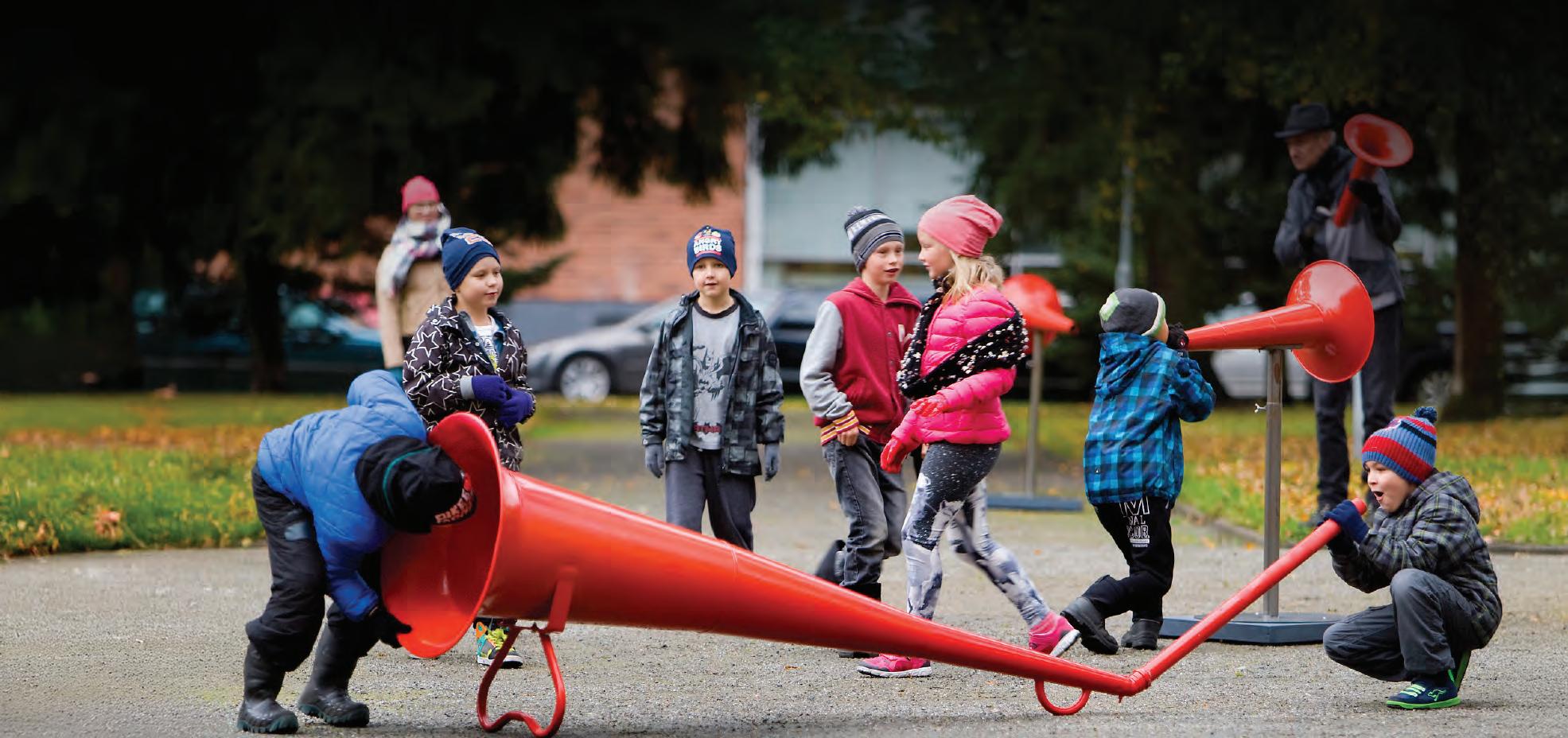
BUNJIL PLACE PLAZA
Sat 27 June, 10.00 a

Bunjil Place will come alive with 25 megaphones for kids of all ages to explore, play and discover Each megaphone has something different to hear – what will you learn?
BUNJIL PLACE STUDIO Sat 27 – Sun 28 June, 11.00 am – 11.45 am 1.00 pm – 1.45 pm
Tickets: $18 - $28, 4-10 years old
A magical and interactive theatre experience for children and families
Saltbush follows the journey of two friends and their guide as they travel across First Nations countries - through rivers, cities, deserts and the sea Through movement , sound and digital technology, children become part of the story - playing, responding and exploring throughout this immersive show
BUNJIL PLACE THEATRE
Sat 11 July, 10.00 am - 10.55 am 12.00 pm - 12.55 pm Tickets: $22 - $29, 3+ years old
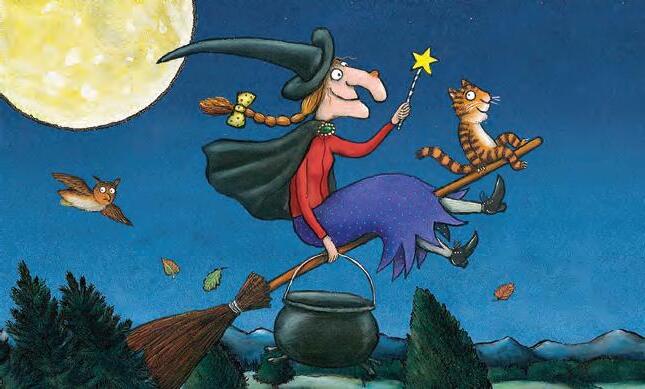
How the cat purred and how the witch grinned, as they sat When a hungry dragon appears, who will save the poor witch? And will there ever be room on the broom for everyone? The team behind The Gruffalo and The Gruffalo’s Child return with songs, laughs and scary fun

Keeping kids safe is a matter of the heart, writes STEVE BIDDULPH.
IS your house the place where the kids all like to gather? Good on you! writes Steve Biddulph.
If you’ve ever seen me on stage or in photographs on the back of books, you will notice I have terrible hair! It sticks up in all the wrong places and gives me an air of having slept in the bushes overnight. Not a good look.
So it’s little wonder that my hairdresser has become a good friend who shares the ongoing challenge of getting me to look acceptable in polite company.
Melanie (not her real name) is a mum of teenage kids and updates me on the world of parenting that only a hairdressing salon can really be across. And it’s both scary and heartwarming in equal measure.
Anxiety is ripping into so many kids, and not all families are relaxed havens for kids to come back to each afternoon or to chill with over the weekend.


So some kids end up hanging out a lot at someone else’s place - someone whose mum (and dad, hopefully) doesn’t mind the depletion on their fridge, and can be a listening ear to adolescent pain that somehow can’t be told to one’s own mum.
Sometimes it can go a step further, and teens actually run away from home. And the friendship network lights up, and a sudden text arrives, “Mum, can Darlene stay with us for a couple of nights?”
Which is both good (as it’s better than the streets) but delicate, too, since “We have to let your mum know you’re safe” has to be part of the deal.
Nine times out of ten, this cooldown time is just what is needed; the teenager gets a calmer take on it all, the parent realises that some quiet discussion beats shouting and blaming, and everyone ends up back in their own beds by the weekend. Disaster avoided.
If all we have is home and school (or for us adults, work), then somehow life doesn’t work very well.

Researchers have found that all of us need one or more ‘third places’ to hang out, where we can really unwind, be with people we CHOOSE rather than ones we have to put up with, and feel like we are a person and not a role every waking minute.
Neighbourhood houses, classes of the friendlier and more playful kind, where you can collapse in a fit of giggles halfway through downward dog. A super relaxed cafe or coffee shop where you can just be quiet and write your bestseller, or know that friends will be there. And for kids, if there isn’t something similar (for me, it was libraries), then whoever’s house has the friendliest mum.

need - conversations with adults who see their worth and understand their pain, and know it will all pass and be okay.
When I was at my most lost as a teenager, it was other people’s houses where I found peace and belonging. I think they might’ve saved my life.
When kids do bad things or have bad things happen, often it’s because they just didn’t have that safety net.
But it means not being so busy, rushed, or worried about the carpet. And that might be fun for us too.
Life is happiest when ‘just hanging out’ happens more of the time.
That is, oddly, when the most lifesupporting things can happen in the most natural way.

If your house is the house where everyone wants to go, it can be hard on the biscuit supply, but you sure as heck know your own teenager is safe, and their friends can be kept an eye on, in every sense. And what all teens



The corporate world hates it when we aren’t either earning or spending, and so that is another reason to do it as often as we can.
Anyhow, it’s time for my next haircut. Steve Biddulph was a psychologist for more than 40 years.
He is hard at work on a new book for teenagers called Anxiety Be Gone, coming out this September.




PARENTING has certainly evolved over the last decade or so, with a gentler and more emotionally aware approach becoming far more common.
Parents are doing their best to raise happy, confident, and capable children. Comforting them when they are upset, stepping in when things get hard, and trying to shield them from distress, frustration, and disappointment are
worthwhile aims.
Yet these attitudes also raise an important question: Are we protecting children so much that we are not fully preparing them for the realities of life?
There is no doubt that throughout their childhood, children will inevitably face challenges and setbacks. They will experience disappointment, anger, frustration, anxiety, and sadness.
These emotions are an integral part of growing up, and children should have the opportunity to learn from these experiences.
When children are continually sheltered from difficult experiences, they miss valuable opportunities to develop the skills needed to cope with life’s challenges. Over time, this can lead to difficulty in managing emotions, avoiding challenges, and feeling overwhelmed when faced with the
everyday stresses of life.
What children really need is support and guidance from adults, who can help them navigate through the inevitable setbacks and challenges. This is where emotional regulation becomes so important.
Children need to be taught simple mindfulness strategies, such as breathing techniques, awareness, and the benefits of pausing.
If they can learn how to respond, rather than to react without thinking, they become empowered to manage their emotions in a positive and constructive way.
If children feel able to manage their emotions themselves, they will be able to cope with the everyday stressors with confidence and resilience.
Rather than overprotecting our children and preventing them from
experiencing the ups and downs that come with being human, parents and caregivers can support and educate them.
Through helping children to become more aware of their feelings, and to understand that things will not always go their way, we are truly equipping them with the tools to grow into strong, resilient, and emotionally stable individuals.
Fiona is an experienced primary school teacher with a passion for student wellbeing.
She runs mindfulness programs to equip primary school-aged children with strategies to lead healthier and happier lives.
Find more from Fiona at mindfulness4kids.com.au or search Mindfulness 4 Kids on Instagram or Facebook.



By Afraa Kori
A bereaved Beaconsfield mother’s crusade will help protect Victorian teens from meningococcal B.

Levi Syer died from sepsis less than a day after contracting the infection last year.
“He was only 16 years old, with his whole life ahead of him,” his mum, Norliah Syer-Peterson, said.
Norliah channelled her grief into a tireless campaign to have the meningococcal B vaccine provided free of charge to all children and teens, removing the $250-plus cost as a barrier to protection.
The Royal Australian College of GPs (RACGP) and Cardinia Shire Council echoed her calls, and Levi’s devastated St Francis Xavier classmates gained more than 40,000 signatures on a Change.org petition tabled in Parliament in December.
Health Minister Harriet Shing announced in May that Year 10 students would receive free meningococcal B vaccinations from 1 January next year.
“This free vaccination program will


save lives and give parents the peace of mind that their teenager is protected from this awful disease,” she said.
RACGP Victoria chair Dr Anita Muñoz said no one had been more instrumental in this reform than Norliah.
“No one should have to experience what Norliah and her family have,” she said.
“She made it clear how fast, brutal, and unforgiving meningococcal B is, and the government has responded.”
But Dr Muñoz warned broader national action was still needed.
“Meningitis isn’t predictable, but it is preventable. Free MenB vaccinations will be lifesaving,” she said.
“It’s appropriate for an essential vaccine like MenB to be part of a national approach.
“This should be implemented as soon as possible so all babies and teens are immunised, including catch-up MenB vaccinations for those who should have received a vaccine already.”

Norliah said her fight would continue until the Pharmaceutical Benefits Advisory Committee (PBAC) recommended the vaccine for funding
under the National Immunisation Program (NIP).


Ms Shing said the State Government would also continue to advocate for this change.
Opposition Leader Jess Wilson promised that a Liberal Government would make meningococcal B vaccines free of charge for all infants aged six weeks to 12 months and offer a free ‘catch-up’ immunisation for children over 12 months and under two years old.

Year 10 students are one of the highest-risk groups for contracting meningococcal B, which kills up to 10 percent of patients and leaves up to 20 percent of survivors with brain damage, hearing loss, or learning difficulties.

RACGP said 18 cases of meningococcal disease had been reported in Victoria in the past 12 months.























PARENTS in Melbourne’s south-east now have access to a first in mental health support.
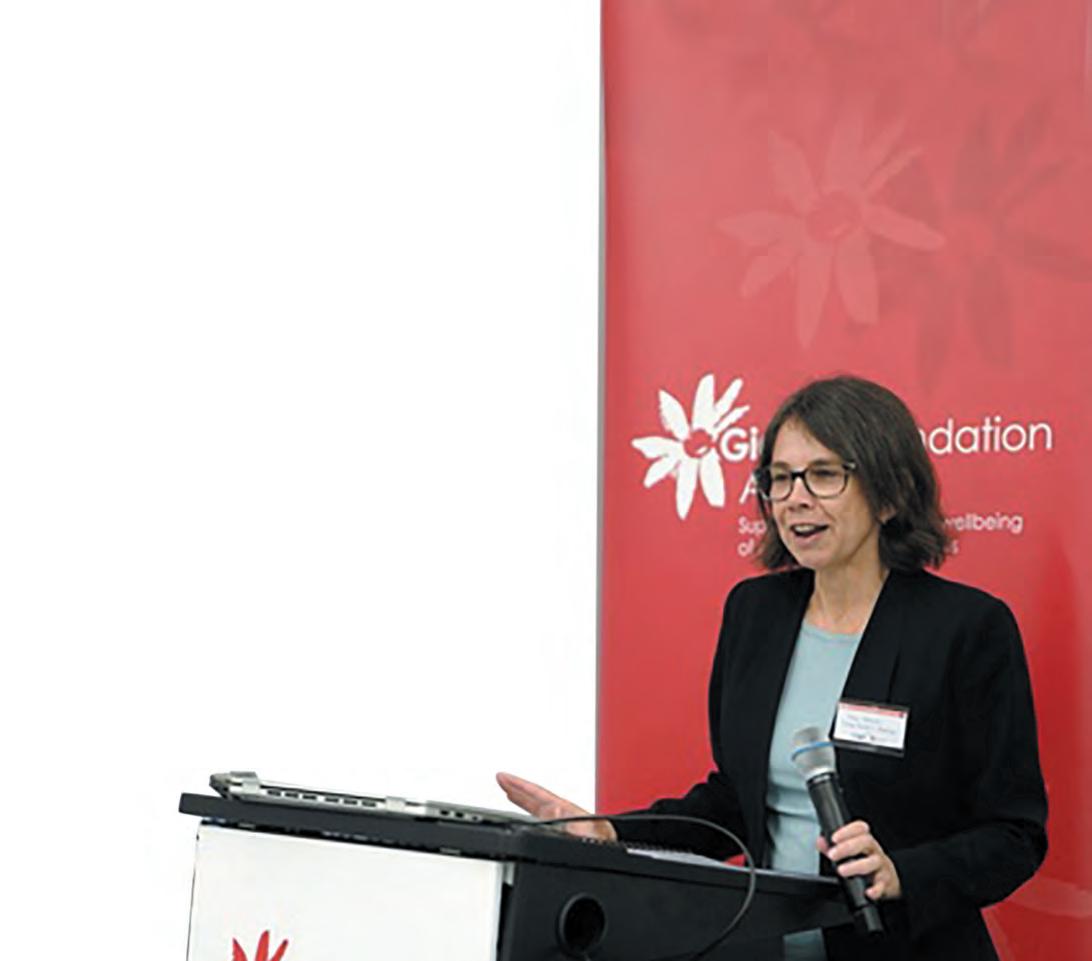
Gidget House Clayton was officially opened on 7 May within Monash Medical Centre - the first within a Victorian public hospital.
It offers bulk-billed GP-referred psychological therapy for parents navigating conception, pregnancy, and early parenthood.
PNDA affects more than 4000 parents in South-East Melbourne each year.
Monash Health CEO Professor Eugine Yafele said the partnership with Gidget would ensure more families received the mental health care and support they needed, when they needed it, closer to home.
Gidget Foundation Australia’s clinical operations executive director Karen Edwards said the non-profit was in its 25th year and had 43 houses across Australia.
“It is the first time we have integrated our services within a public hospital in Victoria,” she said.
“This model removes key barriers to care, ensuring parents can access specialised perinatal mental health support in a familiar, trusted healthcare environment.”
A recent Gidget Foundation Australia survey found a third of Victorian parents did not seek help because they believed their perinatal mental health symptoms were not severe enough.
One in four Victorian parents are unsure how to access professional perinatal mental health support.
Melbourne mum Keisha Arbor lives with ADHD and shared her experience of seeking help from Gidget at the launch.
“People often ask me now, ‘How did you not realise you had postpartum depression and anxiety?’ The best way I can explain it is this: The thoughts didn’t feel foreign to me. They felt true,” she said.
“Looking back now, one of the hardest things for me to admit was that I didn’t experience that ‘love at first sight’ moment everyone talks about after birth.
“But over time, I’ve learned to give myself grace for that.
“For me, motherhood became a slowburning love story — one that has grown deeper and stronger every single day.”

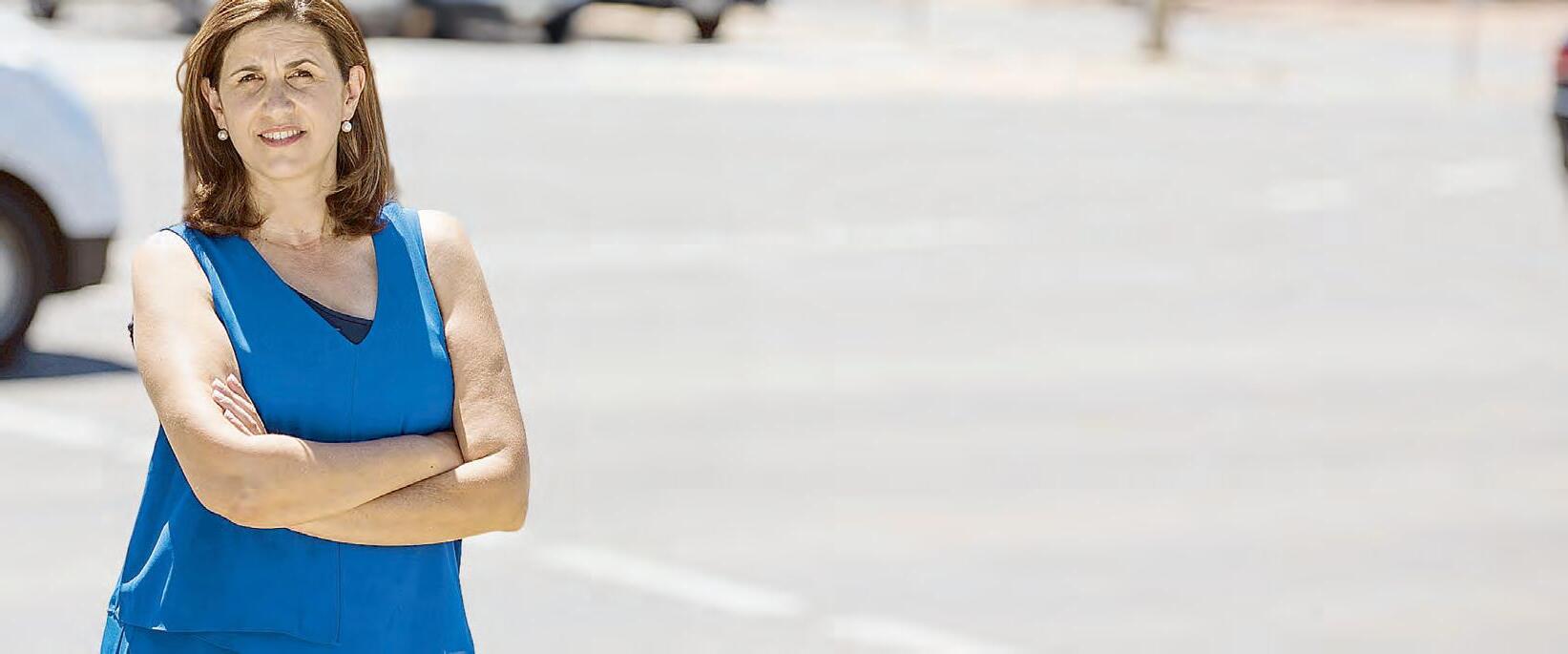

VICTORIA police in the Dandenong, Casey and Cardinia regions tracked how many family violence call-outs they received in a recent month.

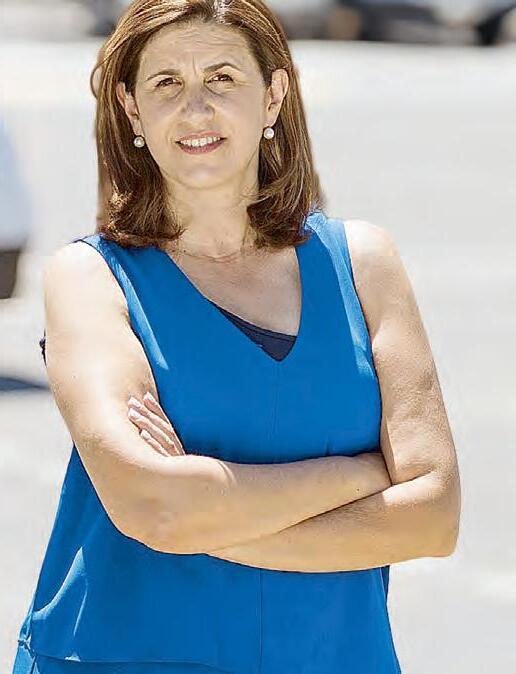
The results were staggering.
In just seven days, the team responded to 161 callouts and recorded 290 offences. That’s 23 incidents and over 40 family violence offences per day. In one incident, a man strangled his partner, threatened to kill her with a hammer, and then doused the front porch with petrol, trying to set the property on fire.
The tragedy deepens when we realise that family violence is chronically underreported. For every call that the team responded to, there are many other incidents that we will never know about.
Our police are working incredibly hard to respond to every call-out and catch perpetrators. Yet with rising family violence, increasing crime, 1500 police vacancies and 41 closed or reduced-hour stations, they are being pushed beyond breaking point.
My priority is that Victorians feel safe at home and in their communities.
For our police to adequately respond to family violence call-outs, track down offenders and keep our community safe, they need more support.
That is why the Liberals and Nationals, if elected to government in November, have made it a priority to:
Deliver 3000 more police;
Reopen police stations and restore public access; and Keep repeat offenders off the streets with tougher bail and sentencing laws.
Safety is a basic human right, and every person deserves a home free from violence.

As a local, I have seen women fleeing domestic violence with their families in their cars and young people being forced to leave their homes. Unfortunately, we do not have to look far to see this harsh


Ann-Marie Hermans South Eastern Metropolitan Region MP Shadow Assistant Minister for Community Safety

1/7 to Tue. 7/7/2026 (7 days) Wed. 8/7, Thursday. 9/7 & Fri. 10/7 - 11am to 2pm


VICTORIAN hospitals are treating a record number of children injured on e-scooters and e-bikes.
“These aren’t toys - they’re motorised vehicles capable of travelling at significant speeds,” Kidsafe Victoria CEO Sarah Sexton said.
“Families are being sold convenience and fun, but the injury data tells a very different story.
“When hospital presentations increase by more than 1500 percent in five years, that’s not a minor trend - it’s a red flag.
“We urgently need product design, marketing, retail messaging and road rules to tell the same story.
“At the moment, they don’t.”
Under Victorian law, children under 16 are not permitted to ride e-scooters.
Helmets are mandatory, speeds are capped at 20km/h, and riders cannot use footpaths.
But Kidsafe Victoria said many families remained unaware of the legal requirements, and some devices sold online exceed permitted speed limits.
The non-profit is calling for improved regulation, safety warnings, and marketing restrictions.
“Awareness is the first step to prevention,” Ms Sexton said.
Dr Adam West, paediatric emergency medicine director at Monash Health, said


emergency clinicians were seeing the consequences firsthand.
“Almost 300 children have been treated in our emergency departments in the last five years for injuries related to e-bike and e-scooter incidents,” he said.
More than 80 percent were boys, and the average age was 13.
Dr West said kids were getting injured on driveways and in backyards, as well as on roads and footpaths.
“We’re seeing a range of issues, from grazes, sprains, and broken bones
the unpaid carers who provide care
10.30AM-12.30PM
family members,children, friends, or loved ones. PH: 9704 2781




through to brain injuries and abdominal organ trauma,” he said.
New Victorian Injury Surveillance Unit data showed emergency department presentations linked to e-scooters surged by 1572 percent over the past five years, while e-bike injuries rose by 917 percent.
Nearly half of e-scooter injuries involved children aged 10 to 14, most of them boys.
Road safety charity BRAKE Driver Awareness Australia has developed
Australia’s first national school-based e-mobility education program, designed to teach students aged 11 to 15 how to ride safely, recognise hazards, and understand the risks of speed, night riding, and intoxication.
COO John Duncan said the technology and availability arrived quickly, but not the education.
“And that gap is costing young people their safety and, in some cases, their lives,” he said.
The BRAKE E-Mobility Program equips students with practical skills for riding safely: recognising hazards, managing peer pressure, understanding speed and stopping distances, and riding predictably in traffic.
The program also teaches visibility, environmental awareness, legal responsibilities, real-world consequences, and attitudes and behaviours, encouraging students to think about how their riding impacts others in shared spaces.
“During adolescence, the part of the brain that seeks reward develops faster than the part responsible for impulse control, making speed and peer approval especially thrilling in the moment,” Mr Duncan said.
“Our program helps students pause, think, and make choices that protect themselves and others.”











By Casey Neill
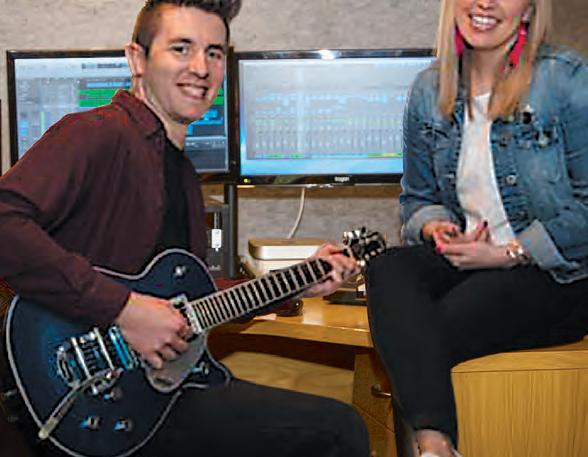
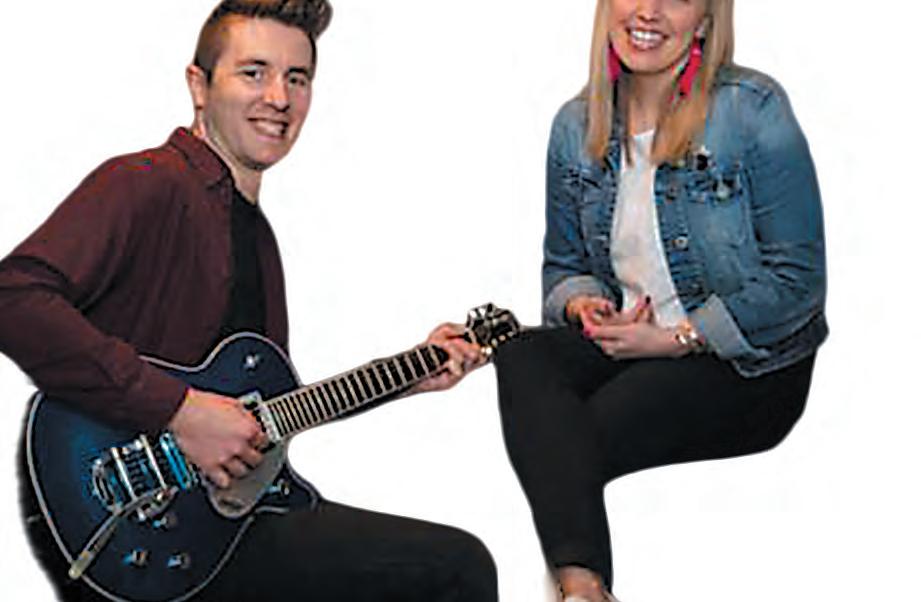
CLASSROOM favourites Pevan and Sarah are bringing their edu-tainment to Aussie loungerooms.
The duo debuted on the ABC in June, ten years after creators Sarah and Manny Kechayas began sharing their curriculumaligned music-driven content.
“Long story short, Pevan and Sarah started in the classroom,” Sarah told Kids.
“We went to music college first and got teaching degrees after that. We’re both primary school teachers.”




Sarah was teaching Prep and searching YouTube for videos to reinforce her alphabet and phonics lessons.
“Anything I could use as a hook for my lessons to get the kids engaged,” she said.
But she was overwhelmed with US-based content.
“Our accent is so vastly different and the way we teach phonics is different as well,” she said.
So Sarah started writing songs to help her students both learn and get their bodies moving.
Combining music, movement, and storytelling strengthens memory retention and deepens comprehension by engaging multiple cognitive pathways.
“I saw the impact it was having,” Sarah said.
“Music was reaching kids in a way some traditional teaching methods weren’t.
“Other teachers started asking about them, and then the parents were asking for copies.”

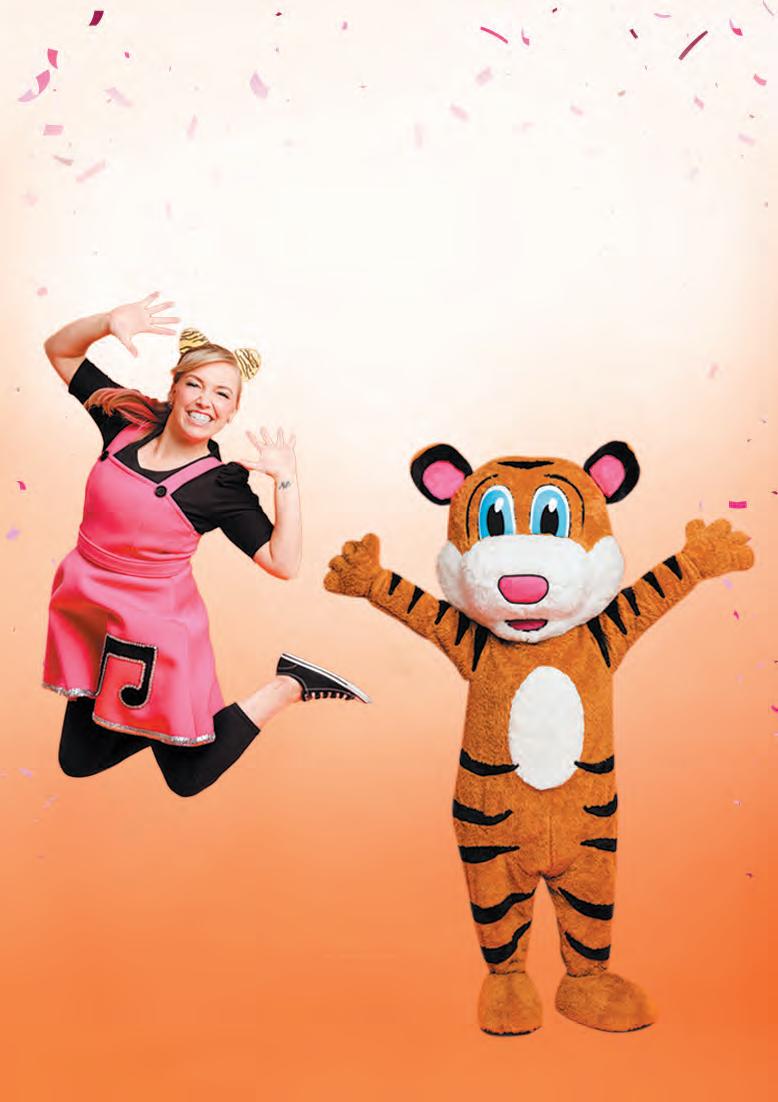
The origins of the ‘Sarah’ character are obvious, but what about bright orange tiger Pevan?
“In our classroom when I was first teaching, we had something called a cuddle buddy,” Sarah explained.
She invited the students to name the soft toy tiger that one child would take home each week, documenting their adventures and sharing them with the class.
“One little girl I’d been teaching for quite some time and was really shy, really hesitant to come to school,” Sarah said.
“She put her hand up and said ‘Pevan’.
“I said, ‘Did you mean Kevin?’ but I’ll roll with whatever’s coming out of your mouth, this is the biggest milestone!”
So Pevan it was. And why does he make y s so o man a y m miisttakakees s (IYKYYN)N)?
“WWel e l, he is i a tiger er in n a huuman wo w rld. d H He’s onl n y leear a ni ning,” Sarah a lau h ghed d






Pevan and Sarah have since amassed more than 16.6 million YouTube views and reach more than 150,000 students across Australia through their education platform Cub Club.
“I really do think our experience in the classroom has directly impacted our popularity,” Sarah said.
“I’m not in the classroom teaching anymore.
“I’ve taken a leap of faith and I’m with Pevan full time now.
“We’ve got a bunch of teachers who now work with us.
“It’s very important to us that we’re keeping up with current practice and the science of reading.”
The curriculum is their biggest lyrical inspiration, followed by suggestions from schools across the country.
“We have a really great community with the teachers who use Pevan and Sarah in the classroom,” Sarah said.
“They’re not afraid to reach out - a lot of what we’re creating is requests.”
Sarah and Manny aren’t just taking well-worn tunes and adding new words.
“We were playing ‘adult music’ for a very long time,” she said.
“We don’t actually set out to write kids’ music per se.
“We’re pulling out all the stops. We’re using all of our skills to create good music.
“We’re just gearing the lyrics age appropriately.”
And enjoying earlier bed times.
“Manny used to do gigs that would start at midnight and finish at 3am,” Sarah laughed.
“Kids’ gigs are done by midday and they’re the best because they’re so enthusiastic.
“They practice our songs every day.
“For some of these kids, this is their first experience with a live concert.
“It’s an authentic theatre experience that sometimes kids haven’t had before.”
Pevan and Sarah were on their fifth annual tour when we spoke.
“We change the show every year, but if we don’t play those hits, there’d be a riot,” Sarah laughed.
“We’re in the depths of rehearsals right now, in Lycra and sweats.
“I’ve got to remind myself, this is the hundredth time for me but this is the first time for most of the kids in that audience.
“There is no possible way that it could be anything but 110 percent energy.”
The duo hope their foray onto free-to-air television and ABC iview could create new opportunities in the literature space or even spawn an international tour, but their goal is far simpler.
“We know families are looking for content that’s both entertaining and meaningful,” Manny said.
“This is about bridging the gap between school and home and helping kids build confidence across key areas like literacy, numeracy and wellbeing, without it feeling like learning.”
Visit www.pevanandsarah.com for upcoming tour dates.
‘I’m
By Casey Neill
DR Billy Garvey is a perfectly imperfect paediatrician, informing and inspiring parents and educators across Australia.
“I’m very different from a lot of professionals,” he told Kids.
“I’m not super smart or intellectual or academic.
“I was brought up by a single mum in a rough town.
“I got kicked out of high school and stuffed up a lot.
“I got told I wouldn’t amount to anything.”
Billy’s doubters couldn’t have been more wrong.
He’s a developmental paediatrician of 25-plus years, a Churchill Fellow exploring how social media can support parenting, and the founder of social enterprise Guiding Growing Minds.
He’s written two books and co-hosts the Pop Culture Parenting podcast with Nick McCormack, using iconic ‘80s and ‘90s movies to share strategies to support kids.
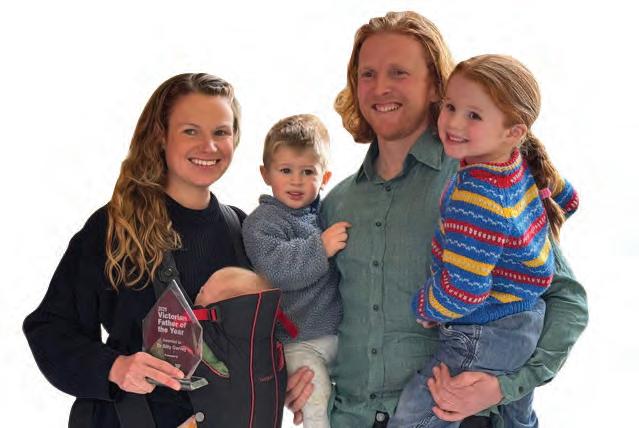
The father of three even won the 2025 Victorian Father of the Year award - but he still struggles to move his kids through transitions, just like the rest of us.
“Getting them in the car is the hardest part of my day,” he said.
“Getting them out is the second hardest part.
“I’m stuffing it up all the time.
“I live in chaos. I drop balls all the time.
“I get overwhelmed. I miss things.
“My kids also need to see me stuff it up and recover. Otherwise, when they stuff up…They need to see that healthy role modelling.
“That’s how they’ll learn how to say sorry. Just telling them to say sorry, you’re teaching them compliance, you’re not teaching them compassion.”
We spoke to Billy four weeks after he and his family moved interstate, to Newcastle.
The family spent their last few days in Melbourne in a near-empty home after packing their lives into a shipping container, Tetris-style, having shunned a wildly expensive quote for professional movers.
“You realise how little you actually need, and not having much around to do means you just interact with each other way more,” Billy said.
“It was a really good lesson for us. They just need us to play with them and be present.”
He admits, though, that he has trouble balancing time with his children with the demands of his work.
“The kids are watching us chase our passions,” he said.
“But I worry how much I’m sacrificing my kids.”
Billy’s focus is on building parents’ and educators’ confidence and capacity.
His first book, Ten Things I Wish You Knew About Your Child’s Mental Health, is designed for families on waiting lists for professional help, so they can start to understand how to help their children.
“One of the reasons that I started the whole thing was the idea that it’s three years plus to get into our clinics,” he said.
“A three-year wait for clinic is wild and it’s unacceptable.
“I don’t think the answer is shorter waitlists to see someone like me. It’s about giving knowledge to the people kids already trust – parents, teachers, community leaders.
“That’s how you change lives.”
Billy’s crusade has its roots in his childhood.
“I watched my mum,” he said.
“She worked in community services for Frankston City Council. She’d know the homeless people in Frankston. They’d come up and talk to her, and it was a big part of her identity.”
One of the many jobs Billy held during his youth was in childcare, and alongside his expulsion from high school, this work drove his desire to pursue developmental paediatrics.
His background is a big part of why parents are drawn to Billy and his advice. He said many had lost faith in institutions and government and were looking for alternative sources of information and help - oftentimes on social media.
“A lot of the polished people in this space, no one’s connecting with them,” Billy said.
“I’m lucky that I’ve never seemed polished.
“We’re in this together. You’re journeying with me, I’m journeying with you.
“Everything I do, I’m just being myself and hoping that this will land.
“I do worry that I will stuff up - but that will be true as well.”
Billy’s devotees can see him in the flesh at his Pop Culture Parenting live shows, to which he’s priced tickets to cover costs rather than turn a profit.
“We want people to come early. The community starts the moment you’re there,” he said.
“Lots of families are isolated. PCP is a safe space to reflect on that and connect with people.
“One of the best things about it is we hang back and meet people.
“If it works, we’ll just keep growing it and doing it.”
Conversely, Guiding Growing Minds is an opportunity for Billy to take a step back and share his learnings through other experts.
Ultimately, he’d love to see every new Australian parent leave hospital with a Guiding Growing Minds support pack, introducing them to concepts like attachment and co-regulation - both tied to the common stress point of infant sleep.
Even Billy “fell for” the negative commentary around co-sleeping with his first child, which he corrected for his second and third.
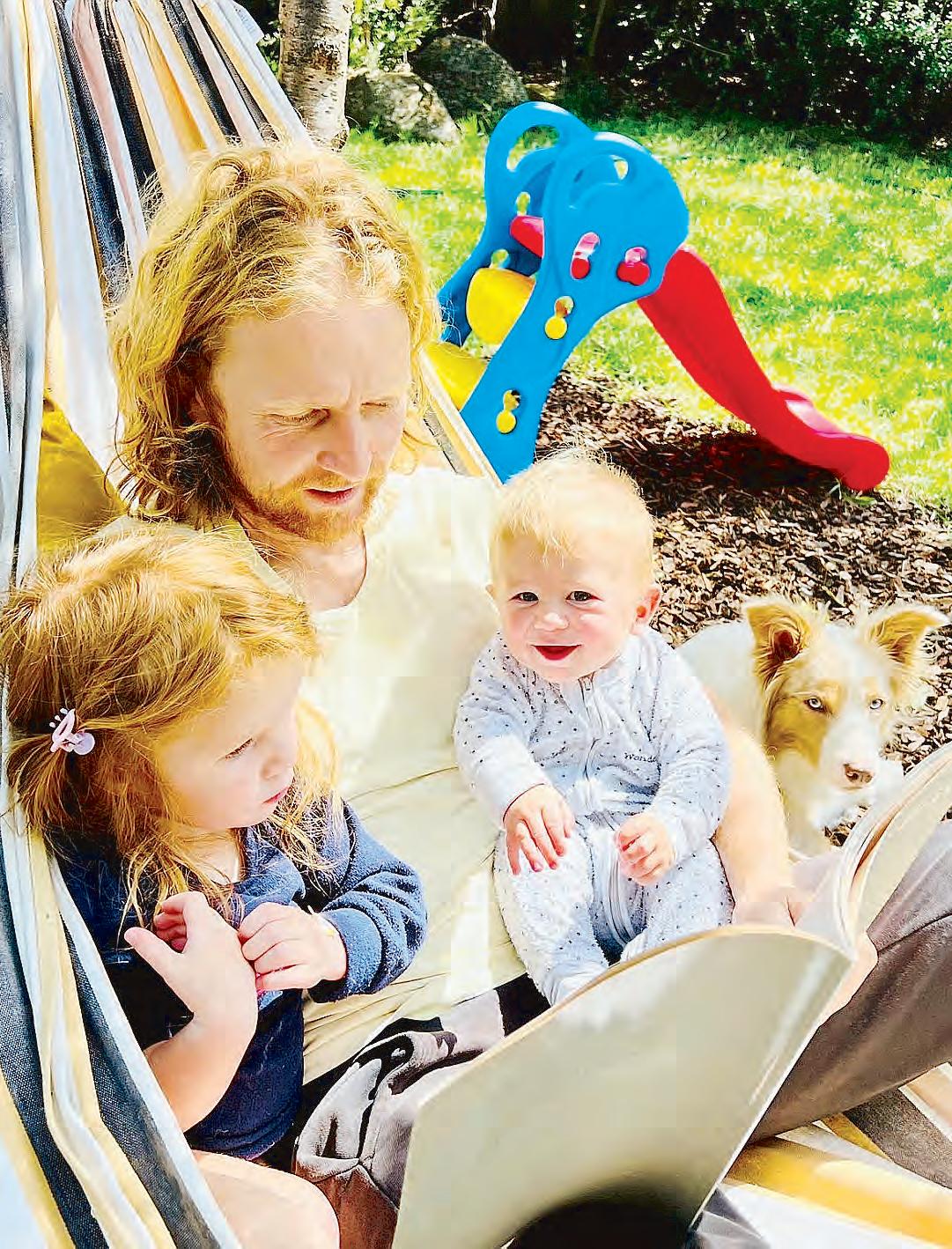
“Most of the world co-sleeps,” he said.
“This harsh parenting approach is one that we are falling for.
“It’s going to harm our kids’ future and our relationship with them.”
He feared today’s children would look back as adults and surmise that the love they received was conditional.
“You put a roof over my head and gave me food, but that’s caregiving. That’s not love,” he said.
“We’re losing our way a bit.
“Research shows that 95 percent of parents with teenagers say their teenager is unconditionally loved and supported.
“Less than 60 percent of teenagers say they feel that way.
“One of the most damaging things we can do is withdraw love when they’re not complying.”
He said many parents romanticised their own childhoods, declaring, ‘I turned out ok’.

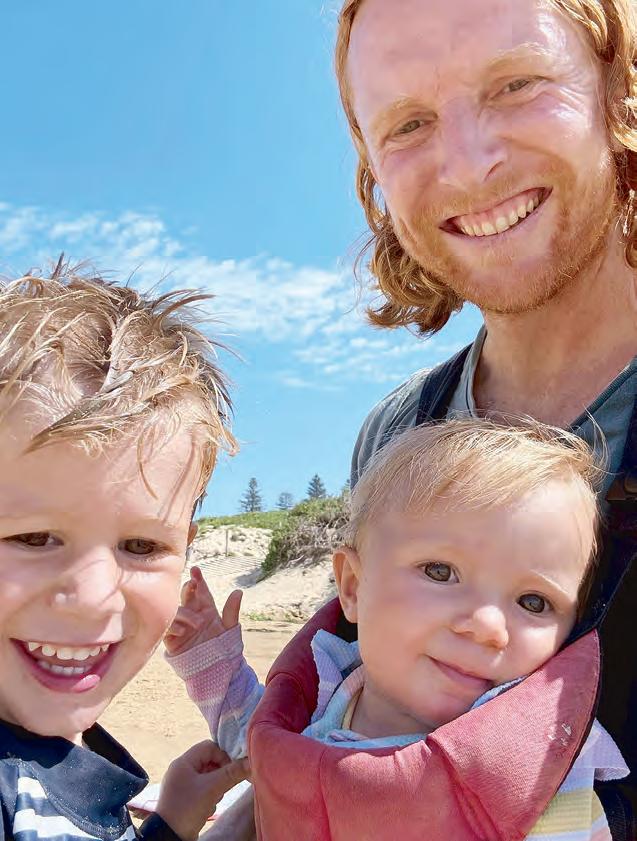
“Most of us have mental illness,” he said.
“Most of us don’t have good coping mechanisms.
“You need to sort out your mental health so you have the capacity to support this kid that you love.”
Billy said parental burnout affected a huge percentage of the workforce.
Corporate sessions targeting employers are one way he’s tackling this.
“If you can support them in their parenting journey, they’ll do better at work,” he said.
“That’s the future generation coming up.
“If you want them to be good employees, you need to support their development now.”
Tackling another societal pressure point is Billy’s second book, Ten Things I Wish You Knew About Raising Boys, which is due for release in September.



It’s a roadmap for raising boys who feel safe, seen and understood, and grow into emotionally strong, connected men.
“Twenty-five percent of Australian teenage young men said it’s necessary to use violence to oppose feminism,” he said.
“We need to challenge that.
“That’s not their destiny.
“We need to get to the root cause of it - we’re not meeting these kids’ needs when they’re younger and giving them positive role models they can connect with.
“They need to learn emotional regulation and social skills, empathy and compassion.”
Seeing patients, writing books, hosting a podcast and live shows, running a social enterprise… How on earth does Billy fit it all in?
“I don’t do very well with downtime,” he laughed.
“I can’t have a day at home with the kids. I need a morning activity and an afternoon activity.
“It’s a really good one if it gets me off my phone.”
Visit www.guidinggrowingminds. com for more information.

ARE you ready to make a lasting impact on a young life?
Berry Street urgently needs more foster carer households in the Casey and Cardinia areas to support local children.
Partner with Berry Street Yooralla and join a dedicated team committed to nurturing and empowering children and young people on their unique journeys.
As a Berry Street Yooralla foster carer, you’ll support local children and young people at a crucial moment in their lives.
As one of Victoria’s largest providers of out-of-home care, Berry Street Yooralla provides children and young people who have experienced trauma with a safe and secure place to live.
For over 145 years, they’ve supported children and young people in Victoria at whatever point in their journey that they need help.
“Childhood is a journey, but not every child has the same opportunities, which is why we need foster carers to play an empowering role in a child or young person’s life,” said Holly Ames, Berry Street Yooralla’s Southern Victoria senior manager.
“We are encouraging residents across the local area to start their foster care journey – you never know where it will take you.
“The team and I will be there to support you every step of the way, as you learn and grow in your new caring role.”
Berry Street Yooralla welcomes foster carers from diverse backgrounds, cultures, and experiences.
For more information and to start your foster care journey, visit www. berrystreet.org.au/fostercare.

ACD is the Victorian advocacy service for children with disability and their families.
The not-for-profit organisation is led by and for families of children with disability.
For more than 40 years, ACD has supported families across Victoria and advocated for children with all types of disabilities.
The team helps families gain the knowledge, skills, and confidence to advocate for their children.
It supports families with children from birth to 18 and the professionals working with them.
ACD’s free services:
■ Information resources
■ Get online fact sheets for all stages of your child’s journey.
■ We cover topics such as starting kindergarten, student support groups, your teenager and Medicare, and getting good evidence for NDIS.
■ Online workshops and peer support
■ Gain the practical skills, up-to-date information, and the confidence to better support your child.
■ ACD’s professional facilitators are parents of children with disability and understand the challenges you might be facing.
Support line
ACD’s free telephone advocacy support service helps you understand your child’s rights and advocate for your child. Its confidential and judgment-free advice can help you:
■ Prepare for meetings with childcare, school, or NDIS;
■ Find resources and information; and
■ Plan the next steps in your journey. Contact ACD via mail@acd.org.au, 9880 7000, or 1800 654 013 regional. Find more information at www.acd.org.au.






IN winter, our bodies naturally crave warmth - not just in the form of cosy jumpers and hot drinks, but through the foods we eat, too.
Traditional cultures around the world have long understood the importance of warming foods during the colder months, choosing ingredients that help support digestion, circulation, immunity, and overall wellbeing.
Winter can place extra demands on little bodies. Children are often more susceptible to coughs, colds, and seasonal bugs at this time of year, while their energy needs remain high as they continue growing, learning, and playing.
Including warming spices and nourishing whole foods in snacks and meals is a simple and delicious way to support them through the season.
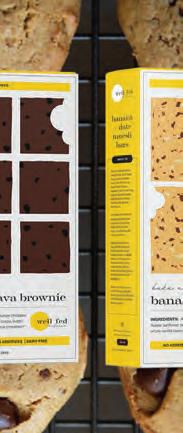
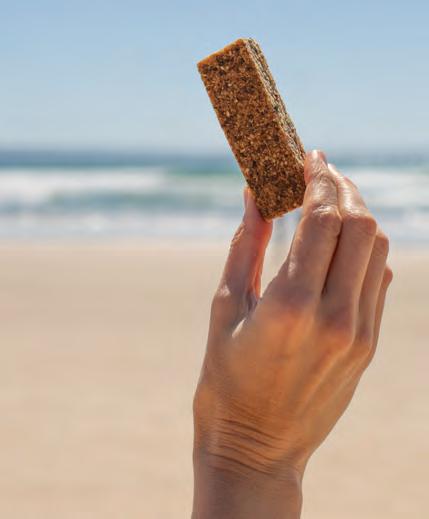
These carrot cake bliss balls are packed with ingredients that do exactly that - and fit perfectly in little hands.
Cinnamon and ginger are beautiful warming spices that may help stimulate circulation and support healthy digestion. Their naturally comforting aroma and flavour also create that familiar sense of warmth we often crave in winter.
Carrots provide beta-carotene, which the body converts into vitamin Aimportant for healthy immune function, vision, and skin.
Oats offer slow-release energy and fibre to help keep children fuller for longer and support gut health, while dates provide natural sweetness and potassium alongside energy.
Walnuts or pumpkin seeds and coconut bring nourishing fats that






support growing brains and nervous systems.
One of the loveliest things about this recipe is just how easy it is for kids to help make it - rolling, measuring, mixing and smelling the spices as they learn about seasonal foods and build kitchen confidence.
Simple, nourishing, and gently spiced, these bliss balls are a beautiful reminder that winter food can comfort and nourish at the same time.
Find more recipes at www. lucystewartnutrition.com or @ lucystewartkidsnutrition on Instagram.
Makes: 14
Prep time: 15 mins
Cool time: 30 mins
Ingredients:
■ 1 cup rolled oats
■ 8 Medjool dates, pitted
■ 1 medium carrot
■ ½ cup desiccated coconut
■ ½ cup walnuts or pumpkin seeds
■ 1 Tbsp coconut oil, melted
■ 1 tsp cinnamon
■ ½ tsp allspice
■ ¼ tsp ground ginger

■ 1 tsp vanilla extract
■ Optional: ½ cup desiccated coconut, for rolling
Instructions:
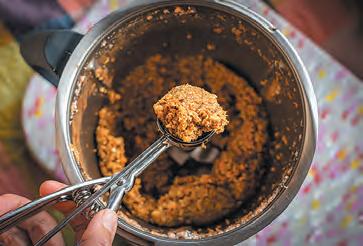
1. Peel and chop carrot into quarters, then add to a food processor and blitz until tiny pieces. Add remaining ingredients and blitz again until mixture sticks together.
2. Take tablespoons of the mixture and roll into balls.
3. Roll in extra coconut.
4. Chill in the fridge for 30 minutes, then enjoy. Store in the freezer for up to three months.








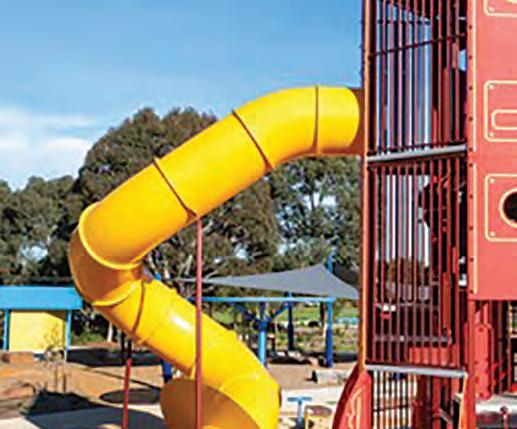


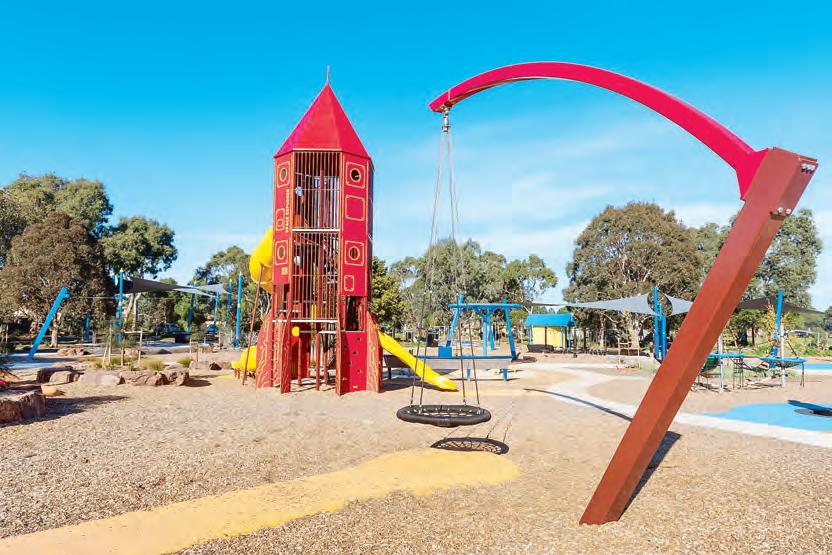
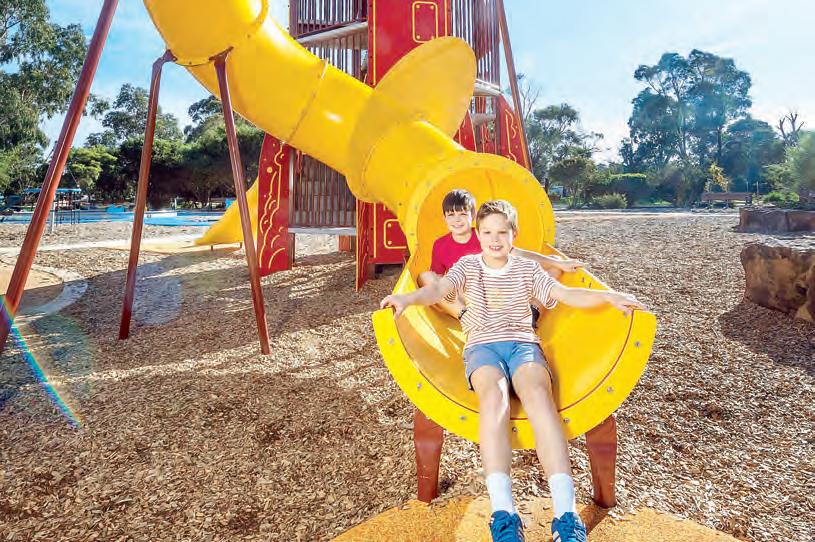
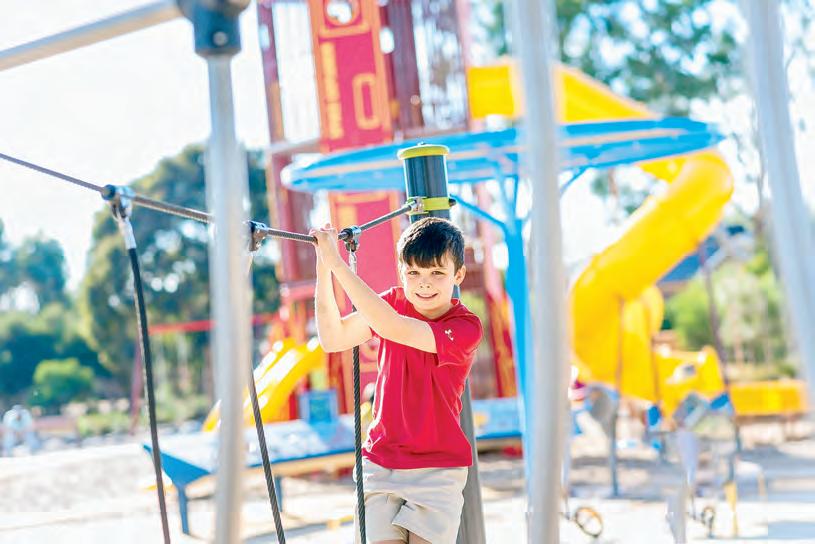
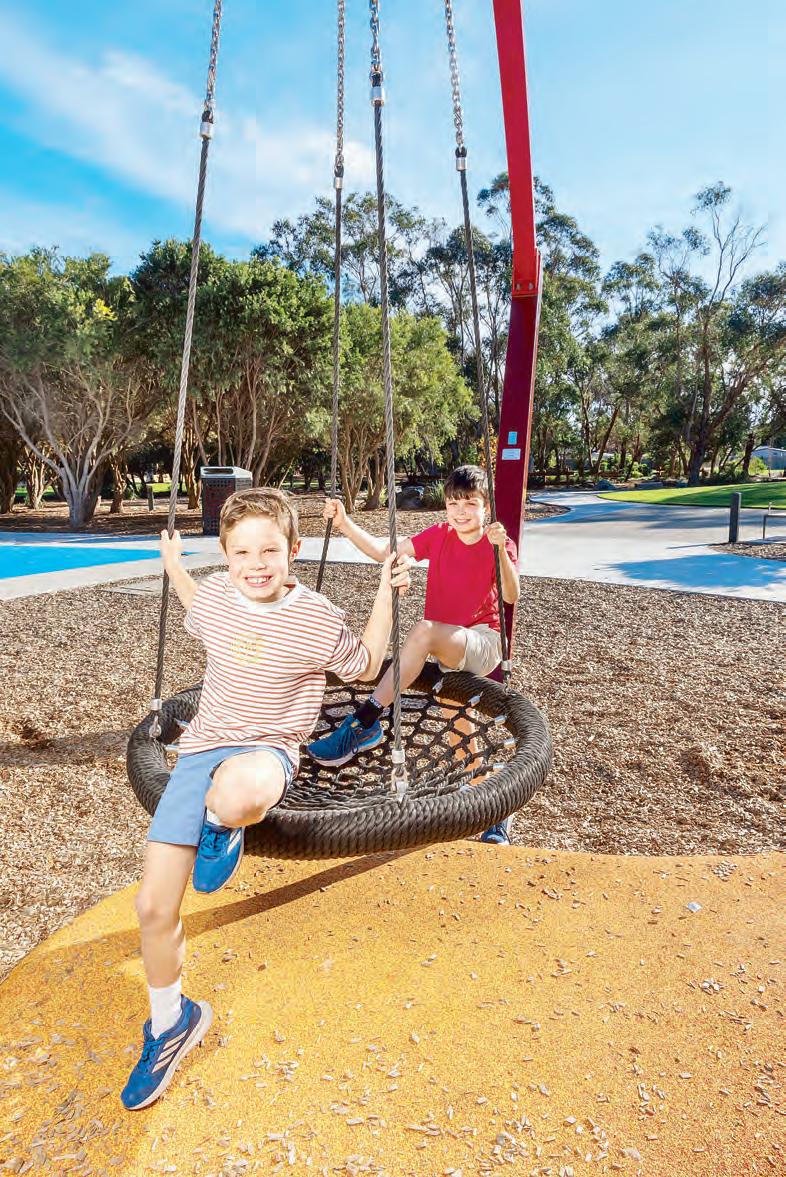
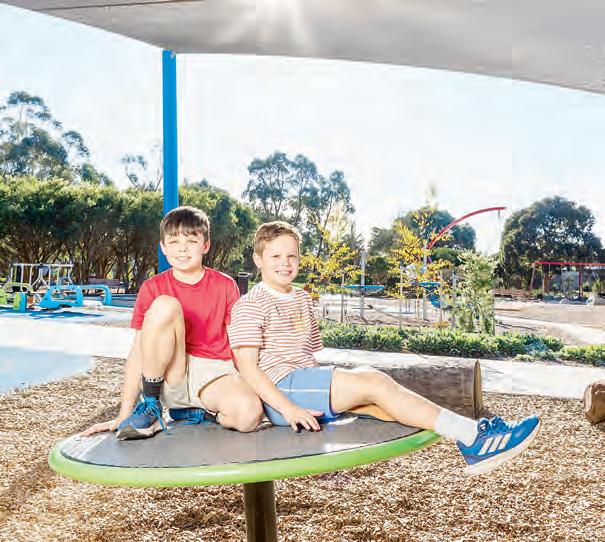
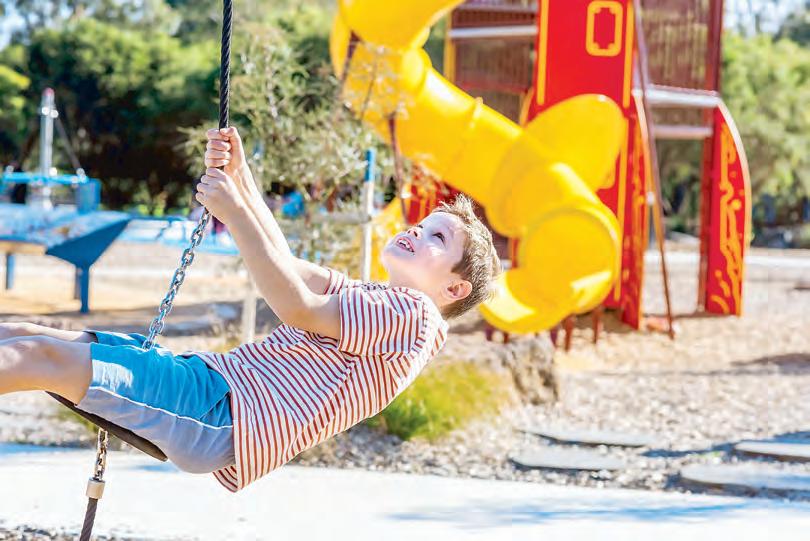
NARRE Warren’s Rocket Park has a fresh look that’s out of this world.
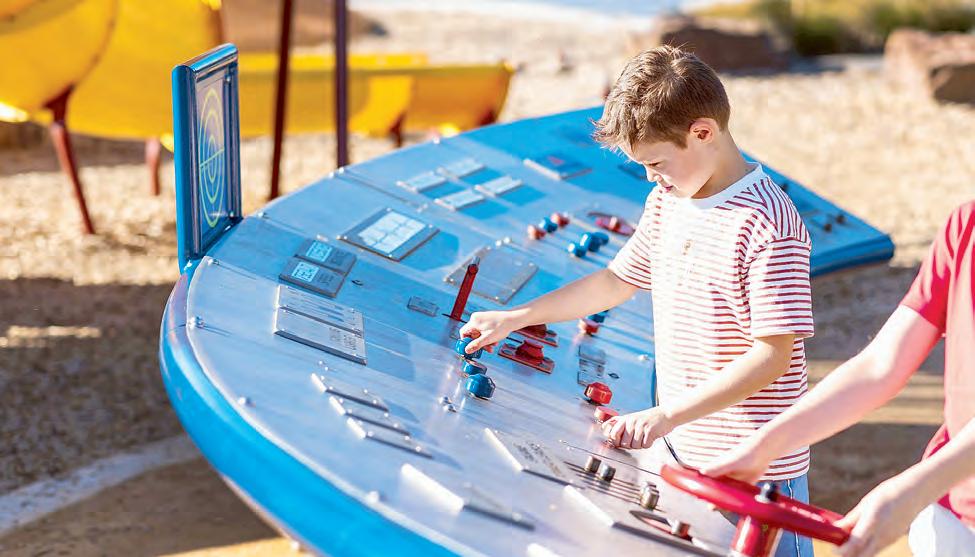
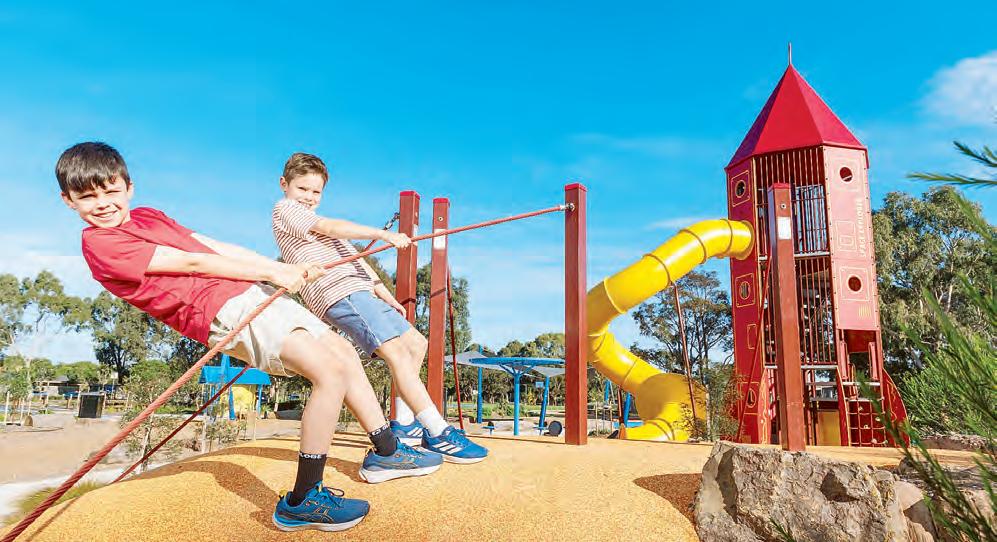
Your space-mad little can jump behind the control panel of the Ray Bastin Reserve’s signature red rocket and live out their astronautical dreams.
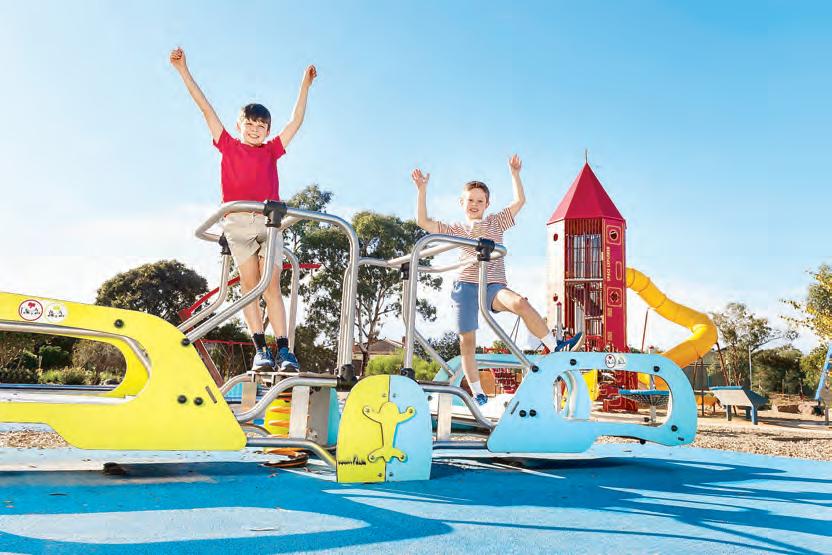
The park’s other standout piece of equipment is a set of mini cars on a circular track, so grownups will need to stretch those hamstrings ahead of their visit.
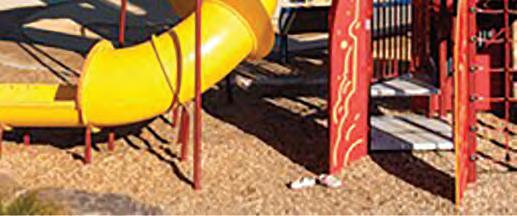
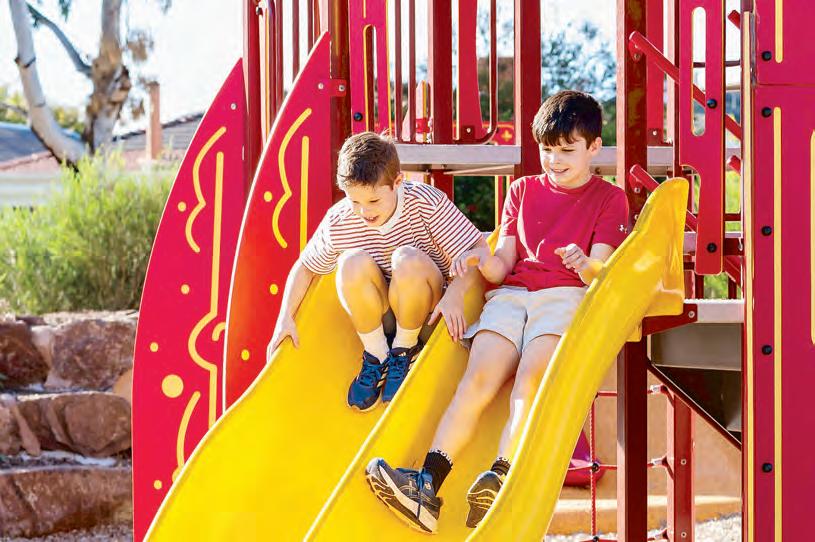
There are the usual swings, slides, and sandpit alongside mini trampolines, a flying fox, a water pump, and climbing and balancing equipment.

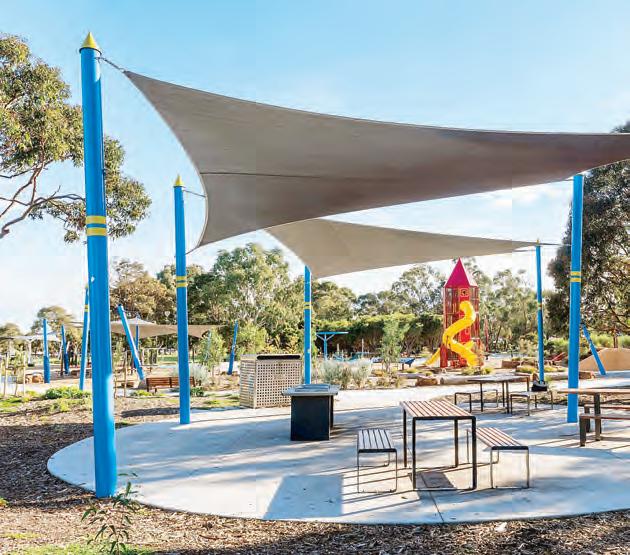
There’s space to ride bikes and scooters plus plenty of soft-fall coverage underfoot.
Toilets, tables, and barbecues round out the key facilities.
The Norfolk Drive reserve is also home to a skate park, a dirt BMX track, a basketball/netball court, walking tracks, and more, so all ages are truly covered.
Photographer Rob Carew captured Noah, 11, and Josiah, 8, putting the Rocket Park through its paces.
Let us know your favourite places to play! Follow Casey Cardinia Kids on Facebook and Instagram and slide into our DMs.
By Casey Neill
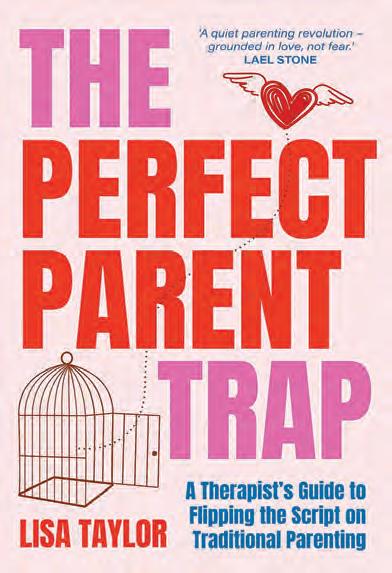
EVEN a family therapist can get caught up chasing perfection in parenting.
So Lisa Taylor drew on her 25 years of clinical experience plus raising three children to write The Perfect Parent Trap.
“I had so many parents coming to see me talking about the same thing that I had been through,” she said.
“I’m not just a therapist. I’m a mum who’s been in those moments too, when it all felt really hard.
“I wanted to be different.
“I didn’t want to be the mum who was yelling and losing control as a way to soothe myself.”
Lisa wants her book to challenge the myths of ‘good parenting’ and help parents understand and regulate their responses to their child’s behaviour.
“I hope it steadies parents in a way that they can listen to themselves,” she said.
“There’s so much outside noise that takes us away from what we really want and need, and that’s connection.
“Connection is all they want from us. They need it for their survival.
“We’ve got more information than ever before, but we’ve never felt worse.
“We’ve got this pressure and this comparison and this idea that we’ve got to be perfect.
“This book is about shifting that focus and thinking about what’s happening inside of them in those moments: Am I responding to the child in front of me or reacting to the child within me?”
Lisa coined the term ‘heart prints’ to explain this.
“Everyone is looking for connection and ways to feel loved,” she said.
“When a parent dismisses you, it leaves a little imprint on your heart.
“The ones that hurt us are the ones our children press on.
“When a child dismisses or ignores us, we react from an old wound.
“That’s where that anger and frustration come from.”
She encouraged parents to pause for a moment and take a breath in these instances.
“Get curious about what’s happening in this moment,” she said.
“Is this something that reminds me of another time? Is this something old?
“It might feel like anger, but it’s hurt.”
Once you’ve got curious, focus on the child and their needs alongside your own.
“The way we respond can change everything,” Lisa said.
“The way we respond today becomes the emotional blueprint that our children carry.”
It’s not only our children who can press on these heart prints.
We see social media, neighbours, friends with the latest parenting gadgets and wonder if we’d be better if we had that pram.
“These sorts of things are also pressing on old experiences and take away from the people we want to be in the moment,” Lisa said.
“So many parents are not able to parent the way they want to because they feel anxious and overwhelmed.”
Instead, think about what you want your family life to look like and how to stay true to that.
“When our children were little, my sisters-in-law all brought their children a clothing brand that was kind of expensive,” she said.



“I thought, ‘I’ve got to have that clothing because I have to fit in’.
“That’s my own heart print.
“When you’re pregnant, people often tell you what you should be doing.
“It’s really hard not to listen to that and not feel judged in some ways.
“We don’t know what to expect when we’re parenting.
“This is what we can do: we can learn about ourselves.”
Already deep into parenthood? It’s not too late.
“I think at any age group you could pick it up and be curious about your reactions and responses,” Lisa said.
“I’ve had a lot of grandparents pick it up, because often when grandparents take over your house, they tell you all the things you should be doing.
“The book can help them to recognise some of their own behaviours were from their own heartprints of how they were parented.
“This is like family therapy.”
Lisa said reading a book like this during her most challenging parenting periods would have felt like a relief.
“I would have had hope that I could do it differently, that I didn’t need to be yelling and controlling as much,” she said.
She had some “really amazing” conversations with her children while writing the book.
“Since the book has been published, we’ve had conversations about when I wasn’t doing my best parenting,” she said.
“We’ve been able to have some discussions about what that looks like in her own relationships.
“I want my children to be able to be as aware and curious and compassionate to themselves as possible, so they know they don’t have to be perfect parents, they don’t have to get it right.
“Connection really is everything. Connection changes behaviour.
“We learn from making mistakes.”





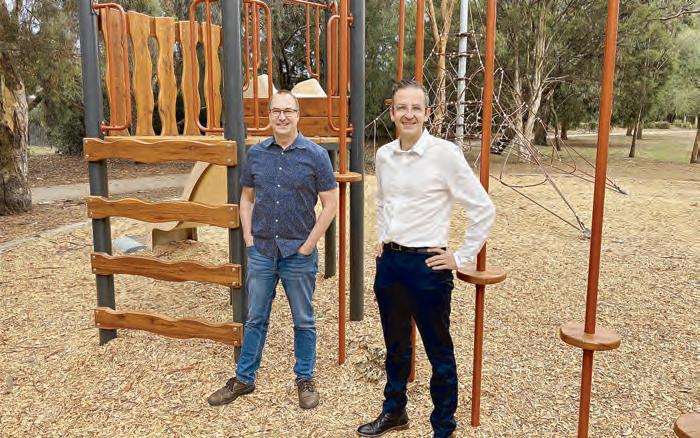
COMMUNITY feedback shaped a fresh look for the Bridgewater Boulevard Reserve playground.
The Berwick South space was upgraded through the City of Casey’s Annual Playground Renewal Program, which refreshes ageing play spaces to meet modern safety, accessibility and play standards.
Playground users told the council they valued climbing equipment,
swings, nature play and sensory elements.
City of Casey Mayor Stefan Koomen said these were incorporated into the final playground, which is accessible and enjoyable for children of different ages and abilities.
The upgraded space now includes core play features such as swings, slides, rockers and climbing structures.
THE friendliness and familiarity of your local centre makes it a great place to shop.
The food options are varied and delicious at Cardinia Lakes Shopping Centre, with delivery, takeaway and dine-in options available.
The wonderful team at Sugarcoat Nails and Beauty are well-equipped to help you feel fabulous.
Pizza Fellas has a great range of pizzas that can be ordered online so they are ready for you when you pop in to pick up your dinner.
From their delicious salads to their tasty chicken, Uncle Sam’s Charcoal Chicken is a firm favourite in the neighbourhood for a quick and healthy meal.
Cardinia Lakes Fish and Chippery has delicious burgers, along with crispy chips and tasty fish for a favourite takeaway option.
Wok to Go rounds out the takeaway options with tasty Asian dishes galore to tempt your tastebuds.
At Direct Chemist Outlet, the staff are dedicated to their customers’ well-being and will help you make the right choices about maintaining good health.
Their gift range is outstanding as well, and you’ll be able to find the perfect gift, or maybe something extra special for yourself.
Great breakfast and lunch options are on the menu at Urban Hype Cafe. Meet the friendly staff and grab something for lunch or morning tea. Call in to Fadeline Barbers at shop five for a great haircut for adults and children.
Stay up to date on what’s happening at the centre by following Cardinia Lakes Shopping Centre on Facebook.

With fabulous food stores, Direct Chemist Outlet, Tattslotto & LiqourlandCardinia Lakes Shopping Centre has everything you need for your family.
















FAMILIES come in all shapes and sizes, and sometimes the people who once cared for us need a little extra care themselves.
Many parents will know the quiet juggle of raising children while also supporting ageing parents or grandparents.
It’s a chapter of life filled with love, responsibility and big decisions.
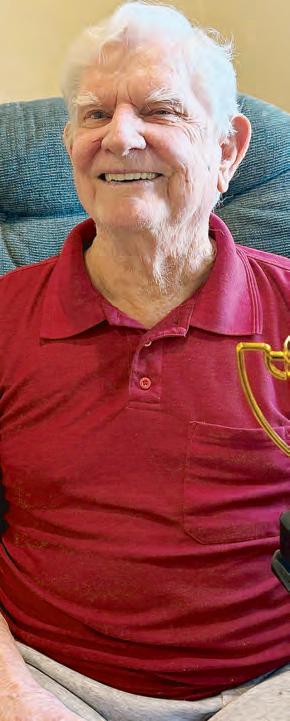
Colin’s story is one many families will recognise.
After Colin’s wife passed away, he returned to Victoria and moved in with his daughter, Paula. Like many older Australians, Colin wanted to stay connected and active, so he began attending day respite once a week.
Over two and a half years, he built friendships with staff and residents, especially Sue and Elaine, who became familiar faces in his week.
Things changed very suddenly. After an unexpected incident and a hospital stay, Colin suddenly found that his home no longer provided the safety he needed.
It’s a situation many families fear— when the need for permanent care arrives not gradually, but overnight.
Because Colin had already spent time in respite, he knew the people, the routines and the warmth of the community.
“It really makes a difference,” he said. “It makes the decision easier when you already know the place.”
He moved into the same room he’d used during respite—a small comfort during a big life change.
Over the years, Colin built a circle of close friends, including Dulcie, Shirley and Lucy.
They played games, shared stories and filled the home with laughter.
When they eventually passed, Colin felt the deep sadness that comes from losing longtime friends. He withdrew for a while, as anyone would.
But slowly and gently, new friendships formed. He now enjoys regular visits from his friend Ingrid, where fierce UNO and SkipBo battles decide who takes home the ‘trophy’ for the week.
Colin’s passions keep him busy— horse racing (never interrupt him on a Wednesday), his beloved Geelong Cats, morning trivia and music singalongs where he’s known to belt out My Way.
Seventeen years on, including respite and permanent care, Colin is still part of the same caring community. His story is a reminder that aged care isn’t just about buildings — it’s about belonging, connection and continuity.
If you’re supporting an older parent or grandparent and wondering what the next step might look like, you’re not alone.
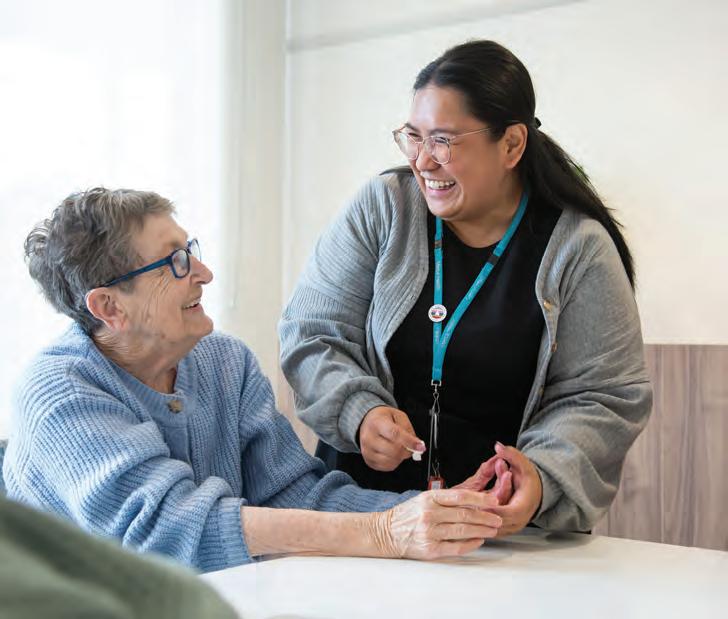
Stories like Colin’s show how the right environment can help older Australians stay connected, supported, and truly themselves.
At Mercy Place Lynbrook, families will find a warm, welcoming community where residents are known by name, supported with dignity, and encouraged to keep doing the things they love. Whether you’re exploring respite care or considering permanent care, the team is here to help your family navigate the journey with confidence and compassion.
Call 1300 164 833 for more information or visit www.mercyhealth. com.au.
















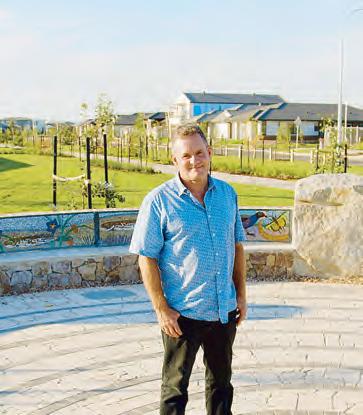
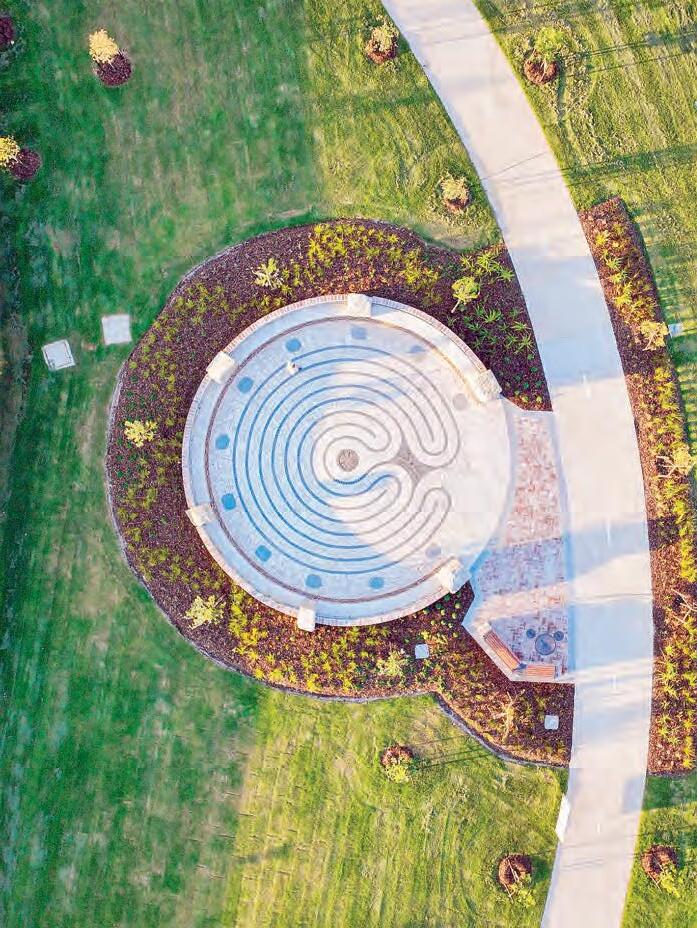
CLYDE is now home to the City of Casey’s first labyrinth.
Stockland unveiled the 160-squaremetre installation at its Evergreen community on 2 May, to coincide with World Labyrinth Day.
Unlike a maze, the labyrinth experience is intentional and meditative, inviting residents and visitors to
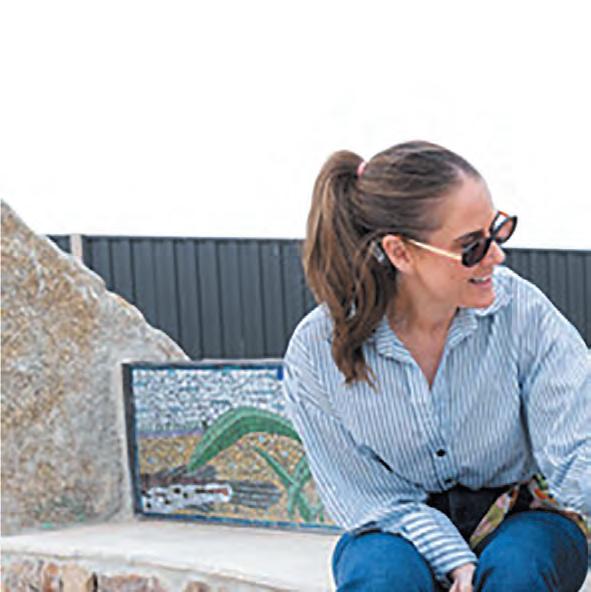
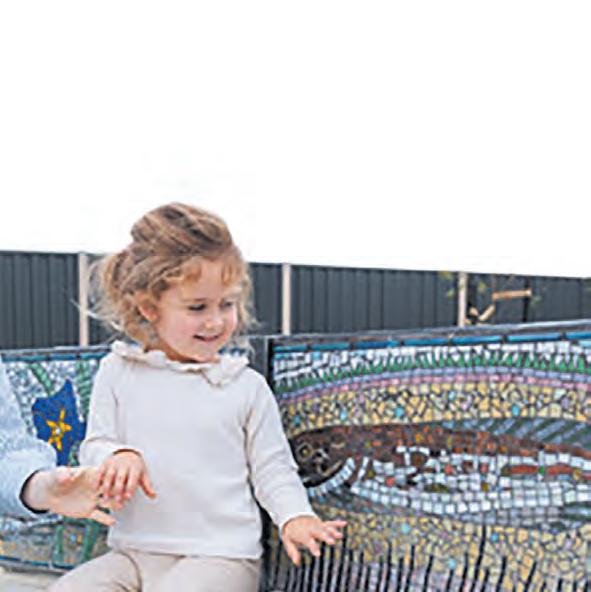
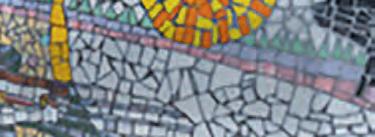
pause, reflect, and reconnect with nature. Designed and built in collaboration with Australian artist Simon Normand, it features a single, gently winding path leading to a central point and original mosaic artworks celebrating First Nations culture while recognising the Traditional Owners of the land, the Bunurong people of the Kulin Nation.
Mr Normand said the installation was designed to create a meaningful and lasting connection between people and place.
“The labyrinth is both a resting place and a gathering place, somewhere the community can come to slow down, explore, and engage with the artwork in their own way,” he said.
The labyrinth is located in Eildon Avenue, Clyde.

FOR many older Victorians, moving into a retirement village represents more than just a lifestyle change—it can unlock meaningful financial benefits, with stamp duty savings among the most tangible.
Stamp duty (officially called land transfer duty) is one of the largest upfront costs when purchasing residential property in Victoria.
However, for those downsizing into a retirement village under loan/lease type contracts, the way duty is calculated can often lead to significant savings compared with buying a traditional home at the same price.
How stamp duty works in Victoria In Victoria, land transfer duty is calculated on a sliding scale based on the purchase price (or ‘dutiable value’) of the property.
The presence of certain concessions— like principal place of residence (PPR) rates for homes up to $550,000—can reduce this amount, but above that threshold, the standard general rates apply.
Illustratively, based on current rates:
A $500,000 property attracts about $21,970 in stamp duty.
A $600,000 property attracts about $31,070.








A $750,000 property generally attracts about $40,070.
These estimates are broad guides and may vary depending on specific eligibility for concessions.
Downsizing and stamp duty savings
When retirees move into a Centennial
Living retirement village via a loan/lease contract, the upfront payment for the retirement village unit reflects a license or lease payment rather than a freehold purchase, and this means stamp duty may not be payable at the same level as a conventional property purchase.
These savings can be significant when weighed against ongoing fees like deferred management fees (DMFs)—the periodic charges many retirement villages apply when exiting.
While some prospects are wary of DMFs, the reductions in stamp duty alone may offset a portion of these costs over time, freeing up funds for lifestyle, care, or travel.
Proper financial advice is recommended to model individual circumstances accurately.
What this means for downsizers
For older Victorians considering a move into a Centennial Living retirement village, the prospect of lowering upfront costs through stamp duty savings—coupled with the lifestyle and support benefits of retirement villages—can make downsizing more financially viable.
While DMFs should always be factored into any retirement village decision, the stamp duty advantage offers a real, immediate cash-flow benefit.
Find out more about Centennial Living retirement villages by going to the website and filling in the form on the ‘contact us’ page at www.centennialliving.com.au or call 1300 098 000.
TEENS at risk of anxiety and depression need earlier intervention and more targeted support, a new study shows.
The Future Proofing Study tracked more than 6000 Australian students from Year 8 to Year 11 across more than 130 schools from 2019.
Researchers, co-led by Professor Aliza Werner-Seidler at Black Dog Institute, collected annual data on mental health, sleep, family relationships, school life, and technology use.
Professor Werner-Seidler said the research provided important guidance for policymakers, educators, and health services.
The study found that up to one-quarter of adolescents experienced persistently high or worsening depression or anxiety symptoms.
“A significant proportion of young people follow trajectories where symptoms remain high or increase during the high school years,” she said.
“Many of the factors influencing these trajectories are identifiable and, in many cases, modifiable.
“By investing in earlier support for young people, strengthening school and family environments, and ensuring services are available when young people first begin to struggle, we have a real opportunity to change the course of

mental health outcomes.”
Sleep emerged as one of the strongest predictors of wellbeing in the study.
Researchers found that 38 percent of students experienced persistent or increasing insomnia symptoms between Year 8 and Year 11, including 11 percent with clinically significant insomnia.
Students with clinically significant insomnia were four times more likely to experience high anxiety and six times more likely to experience high depression symptoms.
Black Dog Institute senior research program manager and PhD candidate Kate Maston said sleep was often overlooked in conversations about youth mental health.
“But our findings show it plays a critical role in mental health and wellbeing,” she said.
Ms Maston said the research provided a clear evidence base for strengthening sleep support across health care, schools and public policy.
“Routine screening for sleep problems in primary care, stronger sleep education in schools, and greater investment in training clinicians to treat insomnia could all help improve mental health outcomes for young people,” she said.
The study also found that exposure to adverse childhood experiences -

including family conflict, parental separation, and household mental illness - was linked to higher risks of self-harm, suicidal thoughts, and emotional distress during high school.
“Experiences in early life can shape mental health in profound ways,”
Professor WernerSeidler said.
“Supporting families and identifying young people exposed to adversity early and then providing support at this early stage, can make a significant difference to long-term outcomes.”
The research also found that a strong sense of belonging at school was associated with better mental health and wellbeing.
By Dr. Lawrence Pawar, Aura Dentists
AS a dental practice owner in Cranbourne North, I often see something invisible that steals from a child’s potential every night, and that is the silent suffocation during sleep.
It’s not a headline-grabbing issue, yet it quietly affects how children grow, think, and feel.
We live in a time when children are being diagnosed with a range of psychological and behavioural conditions at record rates. They are placed on stimulants, antidepressant medications, often in an effort to help them focus, calm down, stay on track at school.
Parents trust their doctors, and there is no doubt that those doctors truly want to help.
But too often, no one stops to ask the WHY? Why is the child struggling in the first place?
Sleep takes up a third of a child’s life, yet it’s rarely examined.
In fact, sleep studies do not get Medicare rebates yet!
When a child snores, grinds their teeth, wets the bed at night, breathes through their mouth, and wakes up tired, these can be signs that their airway, the pathway for life-giving oxygen, is being restricted during their sleep.
This is not a pseudoscience; it’s biology. Chronic airway obstruction means the brain repeatedly runs low on oxygen, impacting concentration, mood, growth, and facial development.
Unfortunately, there is no pill to solve this issue, no quick fix.


It requires effort, habit, diagnosis, treatment, and time.
As an airway-focused dentist, my role is to look beyond teeth; it’s to check how a child breathes at night.
Enlarged tonsils, tongue position, narrow mouth arches, and poor jaw development can all play a part.
Before medicating, parents should consider the most powerful tool the body has for healing and growth: quality sleep.
If your child struggles with focus, fatigue, or mood swings, start by ensuring they can breathe and sleep properly, and hold off on the pills. Your child’s future may depend on it.
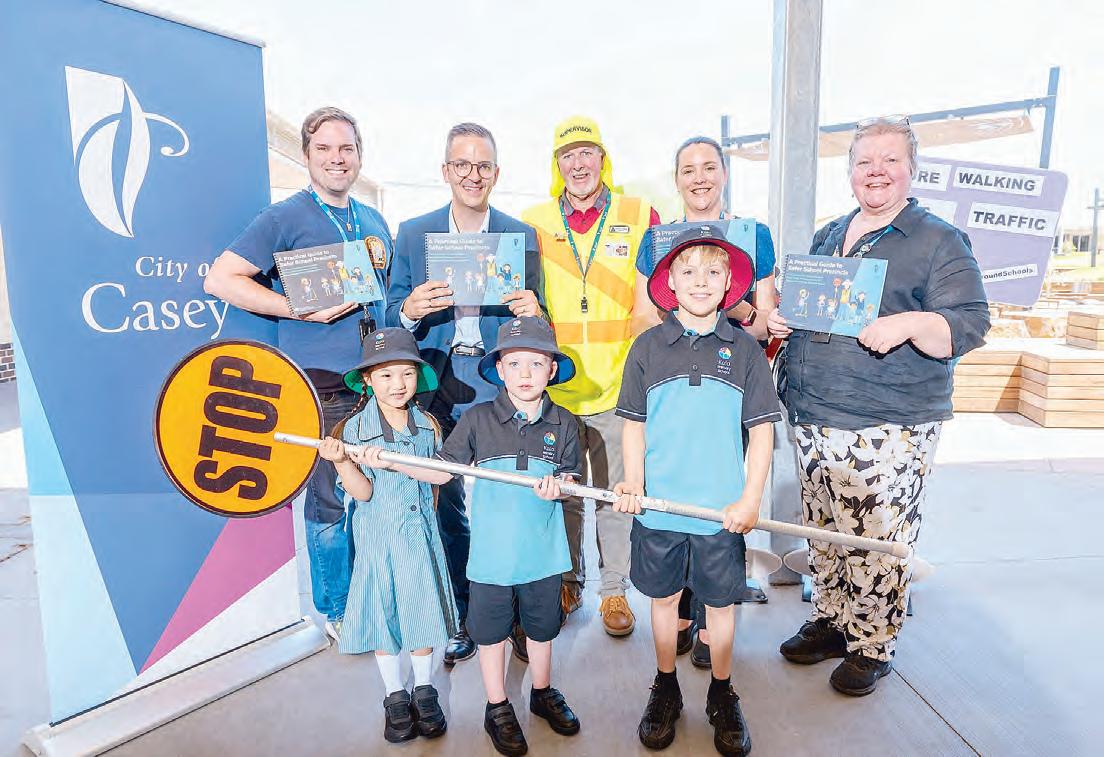
A new guide is improving safety around Casey’s ever-multiplying schools.
The City of Casey launched A Practical Guide to Safer School Precincts in January at the newly-opened Kala Primary School in Cranbourne North.
It’s aimed at reducing road trauma while promoting active travel for children, and is being rolled out to councils and communities nationally.
The guide is designed to create safer, more accessible environments around school precincts by providing: clear strategies for reducing risk in school zones by looking at ways to reduce congestion and implement safety measures; practical tools and checklists to help implement changes effectively; and case studies and examples showcasing successful initiatives.
Department of Transport research shows that in Victoria, a quarter of all child pedestrian and cyclist injuries occur within 300 metres of a school, and more than half within 600 metres.
City of Casey Mayor Stefan Koomen said the School Precinct Road Safety Framework and Program Model were the first resources of their kind in Australia.
“This initiative, which we are now sharing nationally, is helping to create safer school precincts, which in turn encourages active travel such as walking or cycling, further supporting wellbeing in the community,” he said.
“Road safety around schools is

everyone’s responsibility and, at its heart, this program is about safer streets, healthier children, and stronger communities.”
Casey has delivered the Safe Around

Schools program since 2020 to more than 100 schools. This program informed the framework and model, ensuring they were practical and implementable in any municipality, regardless of size.
The project was made possible through $250,000 from the Federal Government National Road Safety Action Grants Program.


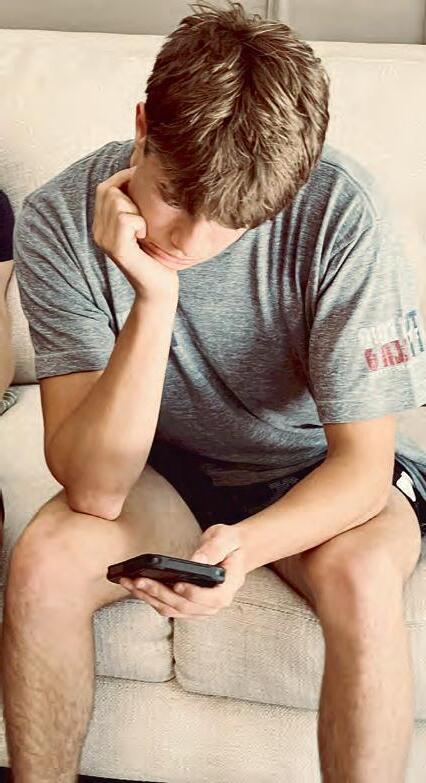
A new online hub will help secondary school students to stay safe online.
ScrollSafe offers simple, practical advice through a guide, supported by a student booklet, take-home flyer, and digital wellbeing plan to help them make positive choices.
Youth mental health non-profit Orygen developed the resources to help young people stay in control of their time online and ensure this time supports their mental health.
The resources will also help teachers to have conversations with students about social media and youth mental health.
Parents and carers will be supported with practical resources to help guide their teen’s online behaviour.
A dedicated parent hub will include information, videos, and tips on helping families to start conversations about social media, online safety, and mental health.
ScrollSafe resources build on existing wellbeing and digital literacy programs, are optional for schools, and don’t create any new requirements.


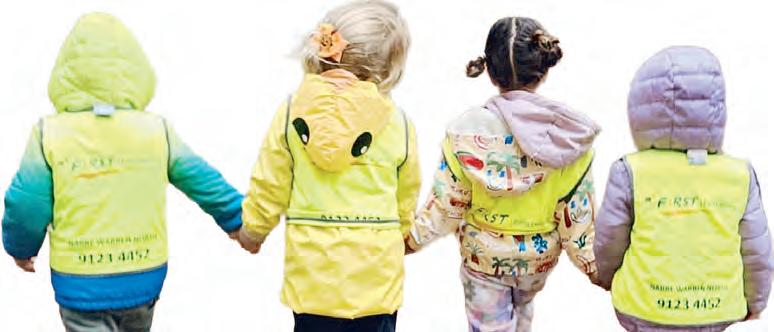
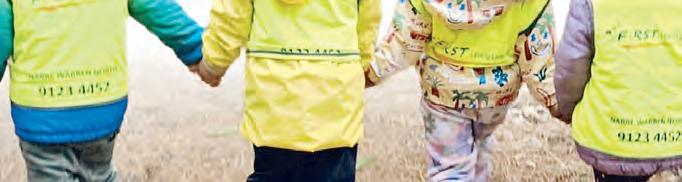
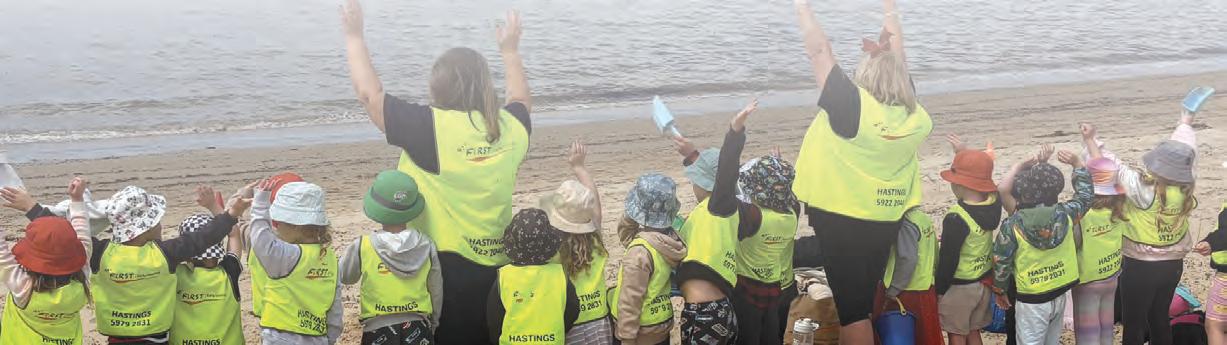
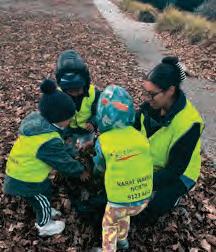
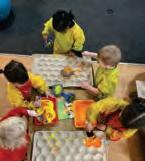
EDUCATORS at FiRST Early Learning thrive on the empowerment of children and early education. They create a safe haven for every child.
The FiRST team takes pride in families entrusting its educators with their children daily
The centre provides a home away from home and a nurturing environment that fulfills every child s safety, security, and well-being
FiRST early learning centres are inspired by the Reggio Emilia approach and philosophy, along with the vision and core values developed by FiRST’s managing directors, educators, children, and families
They’re designed to deliver an all-inclusive sanctuary for children aged six weeks to



No matter what age and ability your child is when they take their first steps into the centre, FiRST ensures that every child and family feels welcome, safe, and
five years. No matter age and your child is when first into the centre, ensures that every child and feels welcome, safe, and secure.
as an
individual and human a of needs, wants, interests, abilities, and work in
Staff understand the child as an individual and human being with a range of needs, wants, interests, abilities, and languages, and work in collaboration with families.
FiRST Early Learning is passionate about the environment as ‘the third

It provides educational, all-inclusive play-based learning environments that promote, encourage, and further develop children’s interests, ideas, theories, needs, sense of self, belonging, and becoming.
Early Learning is passionate as educator environments that and further children s needs, sense of self, and becoming














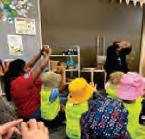

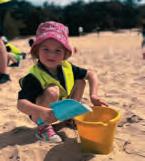
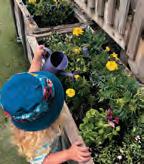
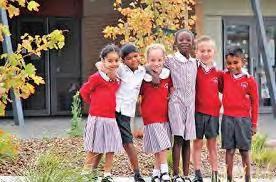
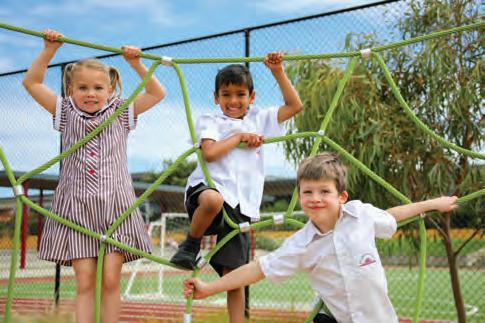
EVERY school has a motto or mission statement that outlines how each member of the community can benefit from being part of the school community.
St Clare’s Primary School, Officer, has the motto: Faith leads to courage, wisdom and compassion.
To live out this motto, all members of the St Clare’s community are asked to follow the schoolwide expectations of respect, optimism, courage, kind, and safe – ROCKS.
Students follow these in their daily actions at school by doing their job, having a go, making positive choices, seeking help when needed, modelling and practising kindness, and keeping themselves and others safe.
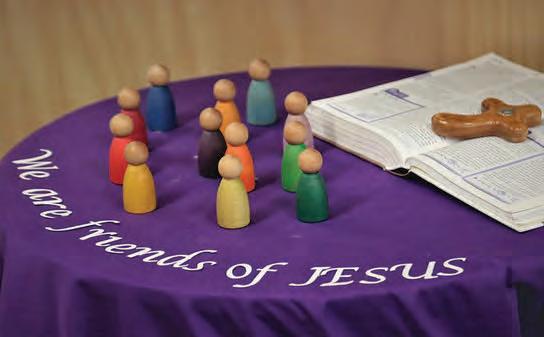
These expectations are modelled and explicitly taught and reinforced. Student awards are based on living out ROCKS and the school links these expectations to scriptures in the Bible.
The hope is that all members of the St Clare’s community will leave with the schoolwide expectations and motto instilled in their minds as they go through life.
St Clare’s looks to nurture the holistic development of each child at the school.
For the St Clare’s family, numeracy and literacy skills are core elements of education, but so is religious education – developing empathy, social justice, and a strong moral compass.
St Clare’s encourages active play and healthy bodies; understanding other cultures through learning languages; and the confidence that comes with developing creativity through the performing and visual arts.
Student achievement is measured not only by academic growth but by each child’s emotional, social, and spiritual wellbeing.
Being part of a faith-filled community instils students with a sense of identity, a feeling of belonging, and above all, a powerful sense of self-worth.
At St Clare’s, the aim is for each child to reach their potential to be a wellrounded individual within a supportive and caring learning environment.
As part of the parish of St Patrick’s in Pakenham, the school is on site with the early learning centre and the Officer campus of St Francis Xavier College. This provides a seamless transition from early childhood to secondary education with state-of-the-art facilities.
Each learning space has been designed by education award-winning architects to provide a rich environment conducive to relevant, meaningful learning. Areas are spacious and wellresourced to meet the diverse needs of all learners.
The final stage of landscape and garden works recently completed include a new playground and sports field.
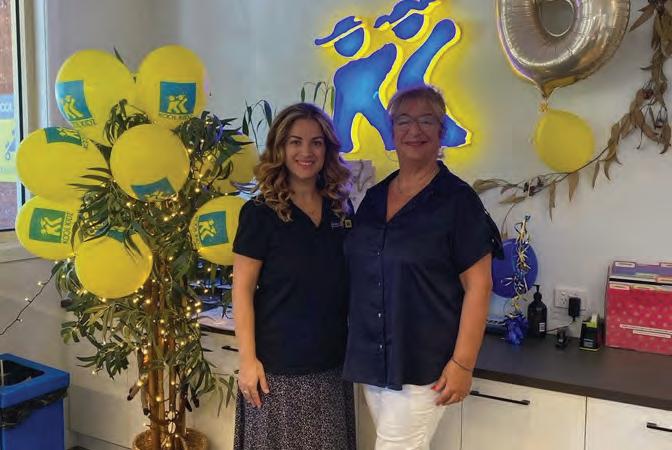
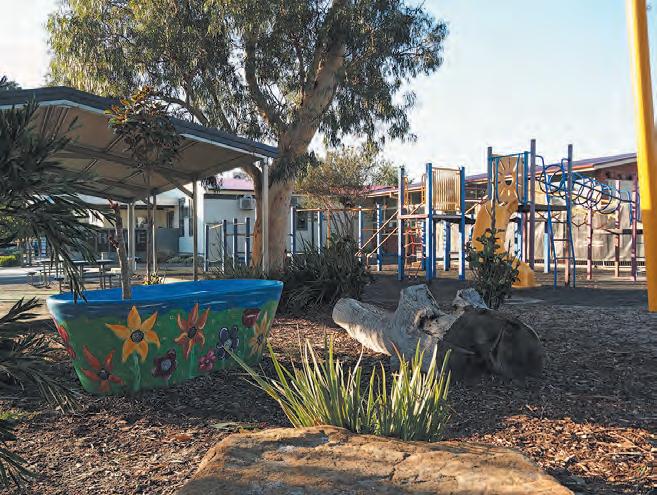
Kool Kidz Narre Warren is a mother and daughter-owned, purpose-built childcare and kindergarten facility. We provide a safe, fun, and exciting environment where children aged 6 weeks to 6 years can explore, learn, and grow.
Before your children even come to school, you, as parents, have taught them so much.
They’ve learned to listen, to ask questions, to be filled with wonder, to say thank you, to wash their hands, to pick up after themselves, and to look out for each other.
St Clare’s is now accepting enrolments for next year.
Visit www.stclaresofficer.catholic.edu. au and take a virtual tour to get a real feel for the school.
School tours are also available. Call 5940 6777 to book a time or email enrolments@stclaresofficer.catholic. edu.au.

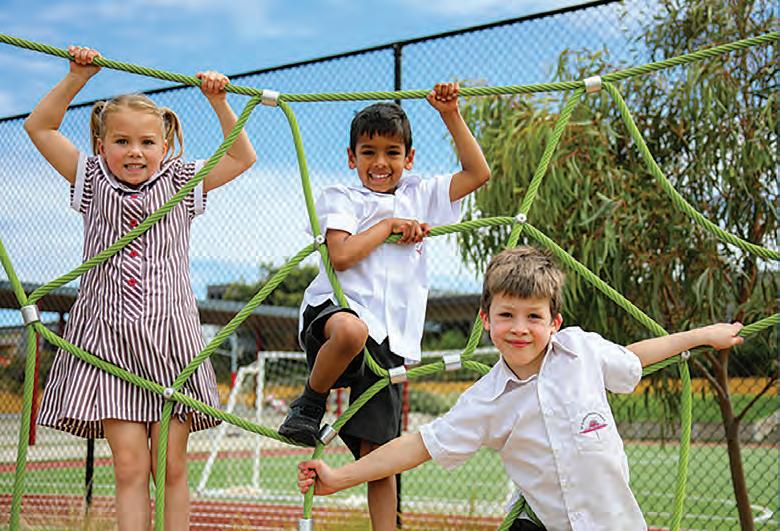
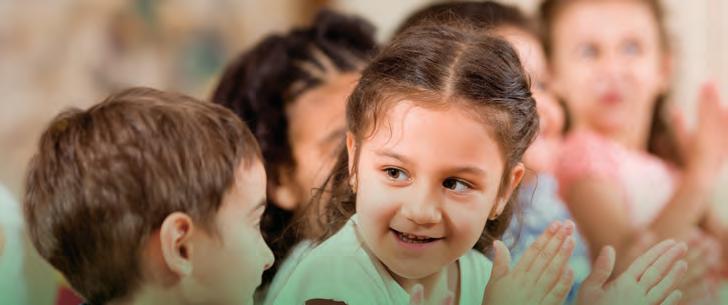

We welcome you to tour our family-owned centre and speak with Ebonie, Paige and Hayley about your child and your family’s needs. Meet our wonderful, experienced team who will share with you our quality learning environments, Government Approved 3 and 4yr-old funded Kindergarten programs, extra-curricular activities, nutritious meals, and our purposely designed playgrounds that best support children’s developmental needs.







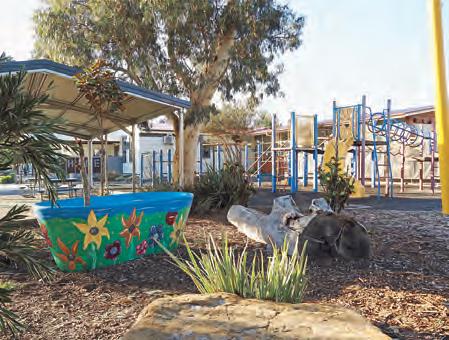
AT Cranbourne Primary School, we believe children thrive when schools combine high expectations with genuine care.
As a small school, we are proud to offer an environment where every child is known, supported, and challenged to achieve their best.
Our motto, ‘Work Hard, Be Kind, Feel Proud’, is at the heart of everything we do and reflects the culture we continue to build across our community.
We are incredibly proud that our students consistently report feeling happier, safer, and more engaged at school than most others around the state.
We believe strong wellbeing and strong learning go hand in hand.
When students feel connected, supported, and confident in their classrooms, they are more willing to challenge themselves, persevere through difficulty, and celebrate success.
Alongside this strong wellbeing focus, we are committed to delivering highquality teaching and learning experiences for every student.
Our staff work collaboratively to provide structured, explicit teaching in literacy and numeracy, while also creating engaging opportunities for creativity, leadership, problem-solving, and student voice.



We are proud of the e stroong growwth our students continue to demoonstrate, as well as the calm purpooseffuul learninng environments seen thrrougghout the e school each day.
As a smaller school with h no commposite classes, we are able to b builld d strong relationships with studdentts s and fammilies, and ensure every child d recceeives the attention and support they y need to o thrive


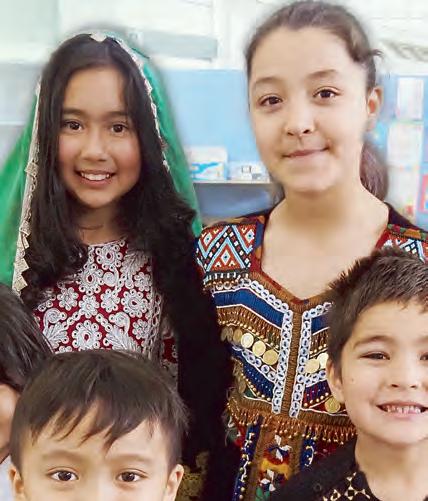

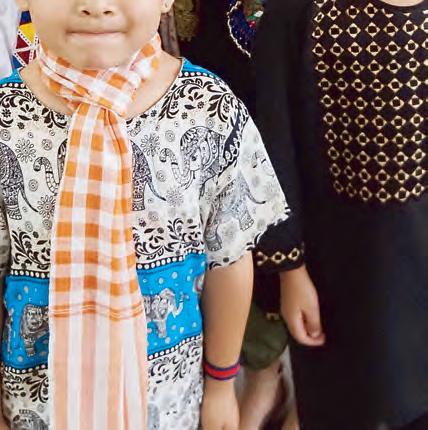

Whether in the classsrooomm, on thhe sporting field, through h the e arts, or in leadership opportunitiies, w we are committed to helping eveerry studennt grow into a confident, cappaable, and compassionate young perrsson e g


compassionate young person.
Krysten
Andrews,
Principal







AS communities continue to grow, so does the need for high-quality early childhood education that supports both children and families.
creating a home-away-from-home atmosphere for families.
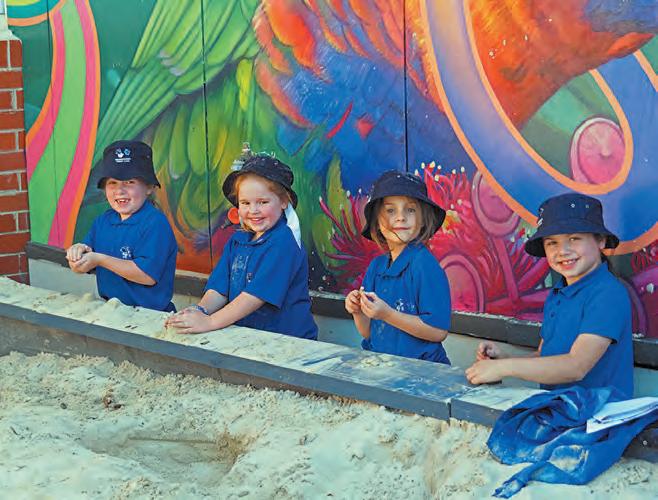
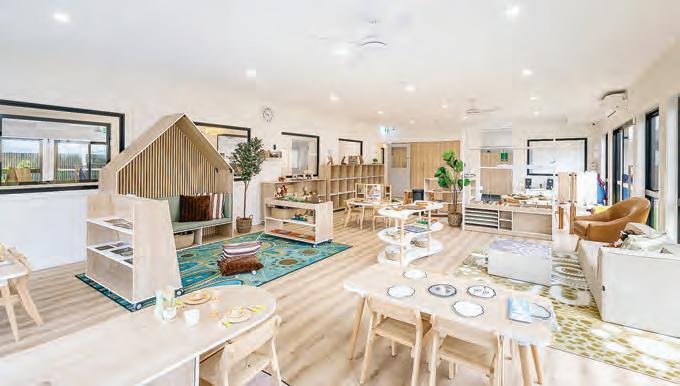
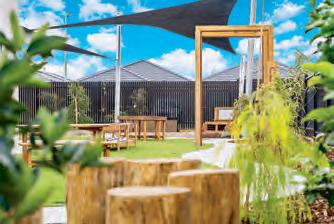
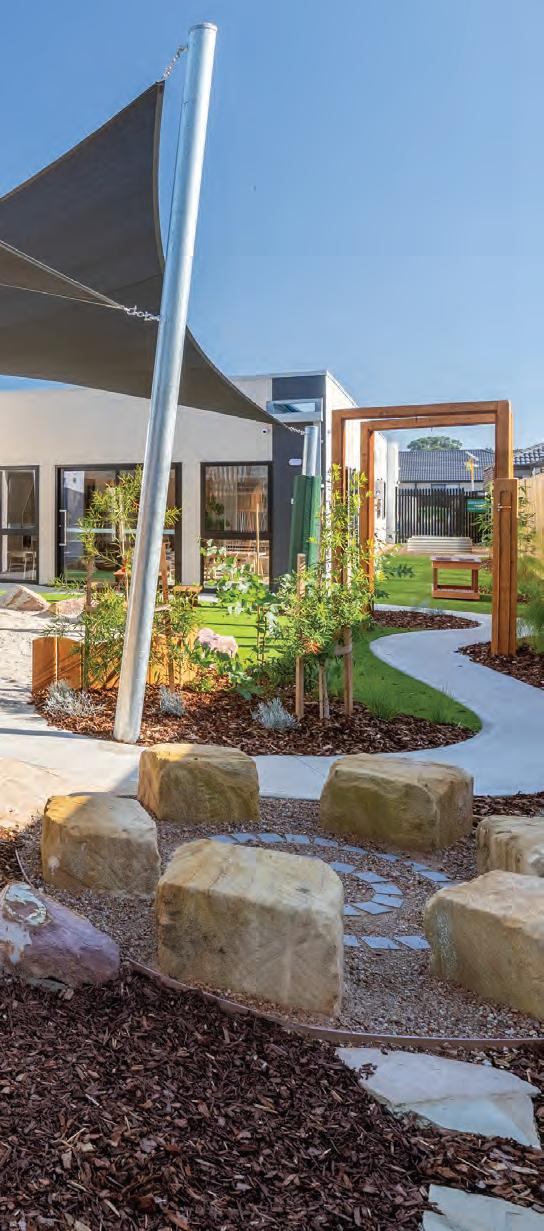
The opening of Story House Early Learning Thewlis Road marks an exciting addition to the local area, offering families a welcoming new space where children can learn, grow and feel a strong sense of belonging.
Designed with children’s curiosity and development in mind, Story House Early Learning Thewlis Road will provide an inquiry-based learning approach that encourages exploration, creativity, and confidence from an early age.
Families today are looking for more than just childcare — they are seeking environments where children are nurtured, supported and inspired by experienced educators who genuinely care about each child’s individual journey.
The new service aims to create exactly that. With thoughtfully designed learning environments, a focus on meaningful relationships and a strong connection to the local community, Thewlis Road will offer children opportunities to build important social, emotional, and educational foundations in a safe and engaging setting.
What sets Story House Early Learning Thewlis Road apart is its commitment to
The service places a strong emphasis on collaboration between educators and parents, recognising that strong partnerships help children thrive.
From play-based experiences to community engagement and personalised learning opportunities, every aspect of the service has been designed to support children’s wellbeing and development.
As more local families seek flexible, high-quality early learning options, the arrival of Story House Early Learning Thewlis Road is a welcome addition to the community.
The team looks forward to welcoming families through the doors and supporting local children as they begin their learning journey.










MOBILE phones, smartwatches, and earbuds will be banned in all Victorian schools from next year.
Premier Jacinta Allan announced new legislation to extend the device ban applied to public school classrooms in 2020 to include non-government schools from 28 January 2027.
Victoria will be the first state to legislate restrictions on wearable technology in schools.
Ms Allan said wearable devices that captured photos, video, or audio could pose risks to students and staff.
An independent evaluation found students were more focused in class and more social during breaks following the ban, and schools reported fewer critical incidents involving phones.
Expanding the ban to wearable and personal audio devices will further limit distractions in classrooms and keep students safe, Ms Allan said.
Independent Schools Victoria chief executive Rachel Holthouse said the announcement reinforced the work many independent schools were already doing, “with independent school leaders regularly reviewing the role of technology in their classrooms and broader school environments”.
Ms Holthouse said the move balanced access to electronic devices with the need
to support positive learning environments and student wellbeing.
Victorian Catholic Education Authority CEO Professor Elizabeth Labone welcomed the announcement as a measure to “enhance student engagement and learning”.
Under the legislation, mobile phones must be switched off and stored away from the first bell to the final bell.
Wearable devices must have notifications, cellular connection, and recording functions switched off, and personal audio devices must not be used during school hours.
Ms Allan said rolling out a state-wide policy would provide consistency and certainty for parents, students, and school communities.
Exceptions will apply for students who require devices to monitor health conditions.
AT Tiny Trails Childcare and Kindergarten, every step matters.
The family-owned early learning service is built on a simple belief: Childhood is a journey of discovery, and every child deserves a nurturing trail to walk along.
The Cranbourne East centre is thoughtfully designed around five distinct environments: nursery, junior toddlers, senior toddlers, pre-kindy, and kindergarten.
Each one is tailored to the developmental stage of the children inside it.

own food, building real-world life skills alongside healthy habits.



From a baby’s first bond with their educator to a kindergartener’s confident steps toward school, Tiny Trails celebrates every milestone along the way.
What sets the service apart is the detail.
An in-house chef prepares fresh, farm-to-table meals daily. Children help grow, harvest, and prepare their
Tiny Trails provides nappies, wipes, and a complimentary Tiny Trails hat and T-shirt so your child feels part of the family from day one.
And the centre is open 52 weeks a year, because real families need real reliability.
Discover wonder. Grow confidence. Find belonging. At Tiny Trails, adventure starts here.
Visit tinytrailschildcare.com.au to enquire and book a tour.


















































IF you dread hearing the phrase that starts with ‘Mum’ and ends with ‘I’m bored’ these school holidays, consider this your sign to point the car towards Phillip Island.
Beyond the famous penguins are two unforgettable wildlife experiences that deliver all the wonder, fresh air, and family magic you could want.
This is the kind of day kids will still be talking about over dinner months later.
No flashing lights. No queues for rides.
Just real, wind-in-your-hair, wildly wholesome, unscripted nature fun.
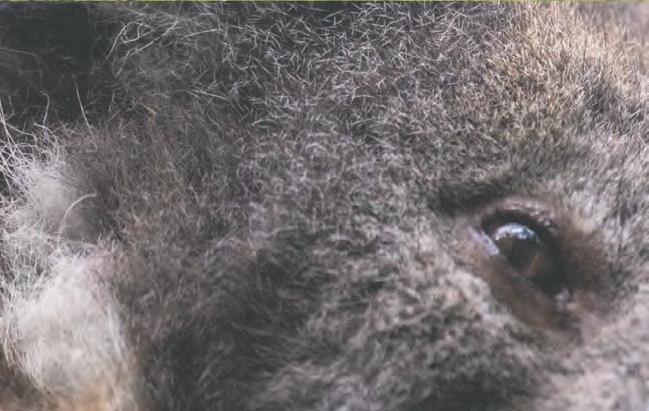
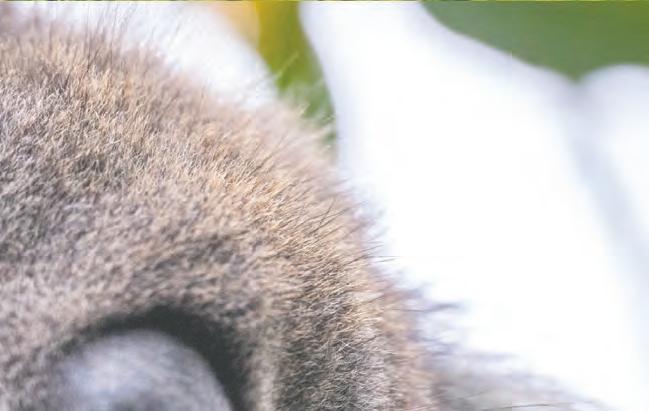
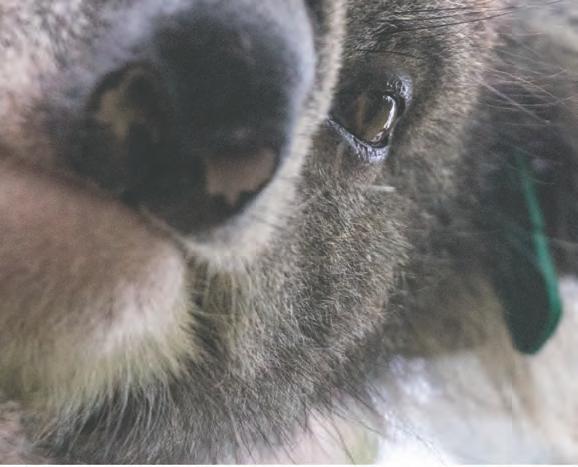
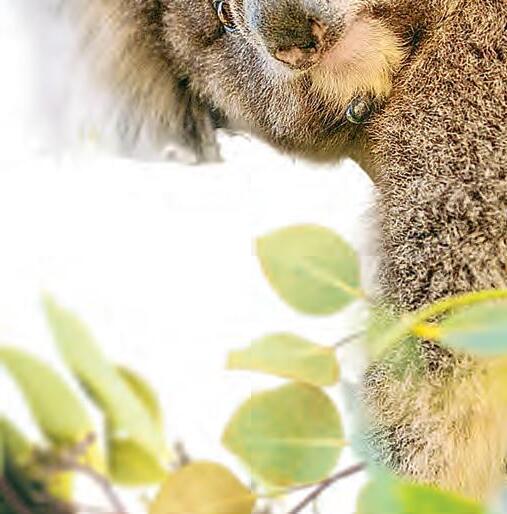
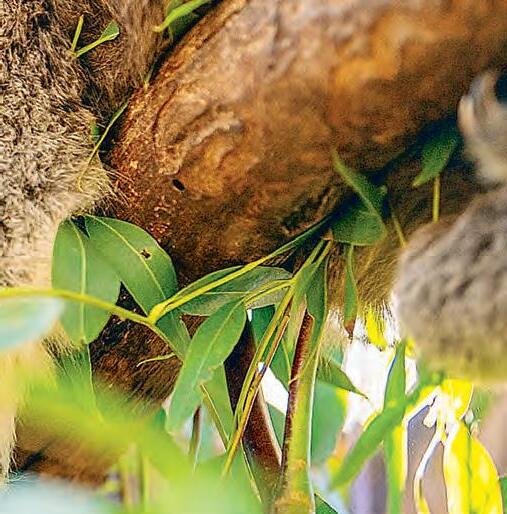
Start at the Koala Conservation Reserve, where elevated boardwalks weave quietly through the treetops, bringing you eye-to-eye with some of Australia’s sleepiest icons.

The beautifully designed semi-wild enclosures make it feel less like visiting an attraction and more like stepping gently into the koalas’ world.
And if you can, book the guided koala tour. The guides have a knack for turning these sleepy leaf-chewers into fascinating little characters, sharing stories and insights that will captivate even the most distractable family members.
Then, for the afternoon, take a short drive to Churchill Island, where free daily farm demonstrations are hands-on, easy-
going, and wonderfully nostalgic - the sort of old-fashioned farm day that gets kids outdoors, hands busy and completely delighted by the simple joy of animals and open space.
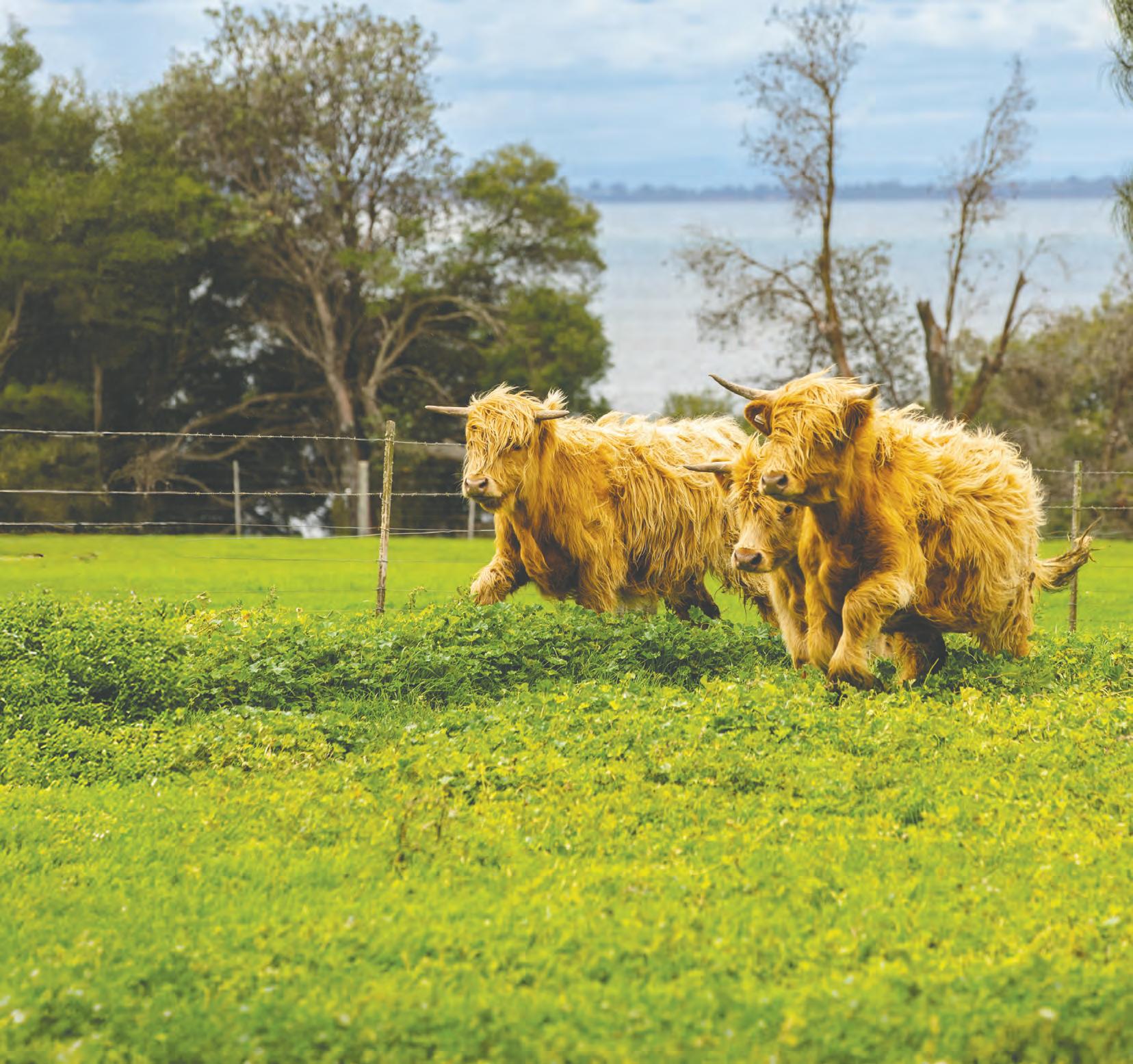
But the real showstopper? The Highland Cattle Experience.
After a wagon ride through the farm, families get the chance to feed the Highland cattle up close. With their enormous horns, shaggy coats, and surprisingly gentle personalities, they’re impossible not to fall for. The kids’ faces will say it all.
Together, these two experiences make for a genuinely easy winter holiday day out - one that somehow packs in plenty of adventure while still feeling relaxed.


And during the short blur of school holidays, that kind of memorymaking feels pretty special.
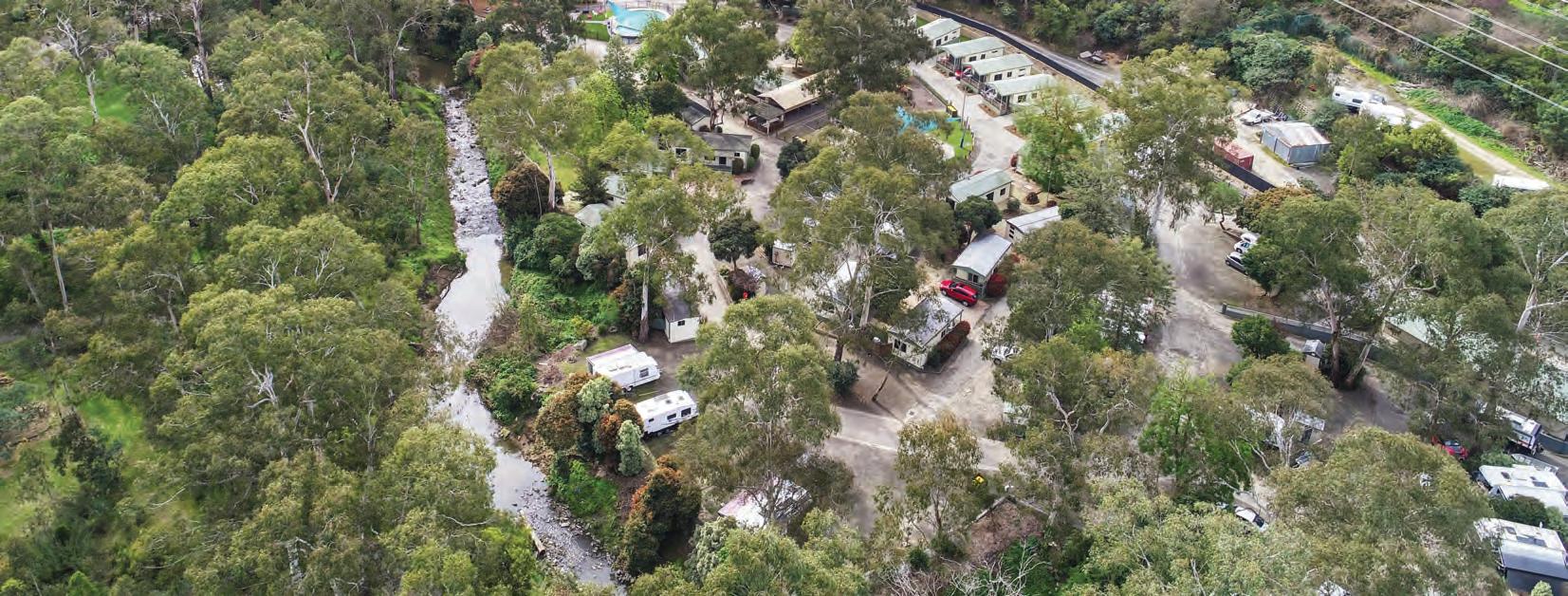
\SINCE acquiring the BIG4 Crystal Brook Tourist Park in 2022, the current owners say they have been actively listening to guest feedback.
GUESTS love the park, but the one issue consistently raised is the condition of internal roads. One review even likened them to a 4WD track!
Resurfacing the roads properly is a big expense, but after years of the park’s team tirelessly filling potholes and maintenance, along with extensive planning and preparation, the long-term solution is finally here.
“We’ve heard our guests loud and clear,” the BIG4 Crystal Brook team said.
“We’re incredibly excited that our days of patching potholes are coming to an end.”
Stage one of the resurfacing project is scheduled to commence in early July, marking the beginning of a two-stage upgrade designed to significantly improve access throughout the park.
The works will focus on the majority of access roads servicing caravan and camping sites, as well as sections within the cabin precinct.
The broader project will be completed in two phases, with stage two planned for the 2028 financial year.
Management expects stage one works to be finished in time for the spring school holidays, weather permitting, ensuring guests can enjoy improved conditions during the park’s peak season.
Most importantly, the park will remain open throughout the construction period. However, guests should expect some temporary changes, with selected cabins and sites taken offline while works are underway.
The team understands that construction can be disruptive but is working closely with contractors to minimise any inconvenience, and all noisy works will be conducted in accordance with council regulations to ensure a comfortable stay for guests.
The upgrade represents a significant investment in the park’s guest experience, which is renowned for its unique blend of bushland tranquillity and suburban convenience.
Nestled in a peaceful bushland setting in the leafy suburb of East Doncaster, the park offers visitors a quiet and welcoming escape, with the convenience of nearby amenities.
With anticipation building around the improvements, the BIG4 Crystal Brook team is encouraging locals and visitors alike to consider a stay closer to home.
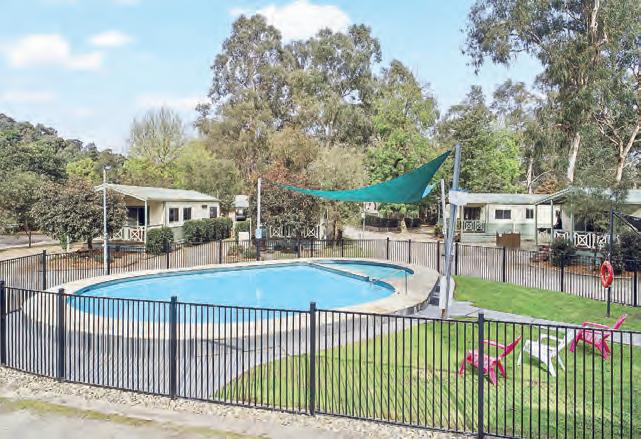
There is public transport and walking and biking trails right on the park’s doorstep, so you can save on fuel too.
The park is perfect for visiting family and friends, those who want a short break closer to home, or those who want a city stay… without feeling like they are in the city!
The BIG4 Crystal Brook team can’t wait to see the finished result. It’s the perfect time to plan a getaway and experience the rural charm and beautiful bushland setting this park is known for.
































































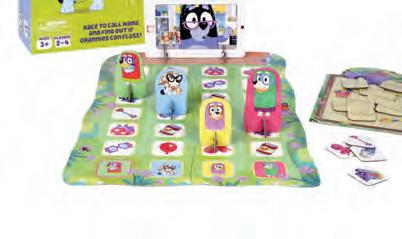












































EVERYBODY’S favourite local festival for kids and families is back these winter school holidays at CCC!
Starting on Monday 29 June and running through to Friday 10 July, Winterfest is jam-packed with free and low-cost activities to keep the kids entertained and educated.
This year’s exhibition takeover is presented by Sonicrats as they bring to life the Museum of Horrible Sounds!
This interactive installation is designed to engage families with young children to explore the world of experimental sound and music through hands-on play and guided activities.
By blending cutting-edge technology with creativity, it encourages participants of all ages to make and appreciate ‘ugly’ and ‘horrible’ sounds as genuine artistic expressions.
The exhibition will be open daily from 9am to 4pm and free to enter, with no bookings required.

In addition to the display, Sonicrats will run weekday morning activities and afternoon performances on Mondays, Wednesdays and Fridays.
Check the website for the full program and booking information.
This year, Winterfest Films are programmed on Tuesday afternoons for the younger kids, including Encanto (2021) and Up (2009).
While early Thursday evenings will be the time to drag the older kids out of the house with cult classic titles including The Princess Bride (1987) and Drop Dead Fred (1991).
Tickets to all movies are just $7 each.
Finally, on the last weekend of Winterfest, a shadow puppetry show and free workshop not to miss, Spike!
It’s a story of a stolen egg, a loner girl and the baby echidna that hatches.
Check out the full program online or in person at Cardinia Cultural Centre.

Charlie Needs Braces
Friday, 29 May
Tickets from $15

Cookin on 3 Burners
Saturday, 1 August
Tickets from $25

Local Music Bites
Friday, 19 June
Tickets from $25

Andrew Farriss
Sunday, 9 August
Tickets from $40
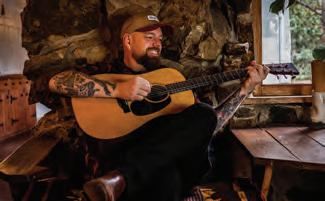
Andrew Swift
Saturday, 27 June
Tickets from $25

Nathan Cavaleri
Sunday, 16 August
Tickets from $40

Mizuki
Saturday, 11 July
Tickets from $15

LOOKING for a relaxed, family-friendly day out?
Heritage Hill Museum and Historic Gardens is a hidden gem just a short distance from the bustling Dandenong Market, making it easy to pair culture, play and a bite to eat all in one outing.
Heritage Hill offers a magical mix of nature, history, and hands-on discovery for all ages. Surrounded by beautiful Edna Walling-inspired gardens, this special place invites you to slow down and explore together.
Wander beneath the towering 150-year-old Moreton Bay fig trees, spot hidden corners in the gardens and enjoy plenty of space for little adventurers to roam.
Then step inside the charming heritage homes, where fascinating stories of the past come to life.
Keep an eye out for one of Australia’s original art deco bathrooms – a surprising favourite for curious kids and adults alike!
Free community open days offer even more reasons to visit.
On Saturday 11 July, the open day celebrates new exhibition Extraordinary Stories: Collection Highlights, featuring intriguing objects connected to people, places and events from the Greater Dandenong community.
Kids can become ‘museum detectives’ with a fun trail through the houses, searching for clues and uncovering how everyday objects can tell powerful stories.
Short curator talks provide bite-sized insights, while hands-on activities let children examine replica artefacts and discover how museums piece together the past.


Children can build their own mini museum, choosing objects that represent their own lives and stories.
It’s a playful and meaningful way to show that history isn’t just found in museums—it lives in the memories and treasures we share every day.
With history, nature and fun all in one place, Heritage Hill is the perfect family stop in the heart of Dandenong.
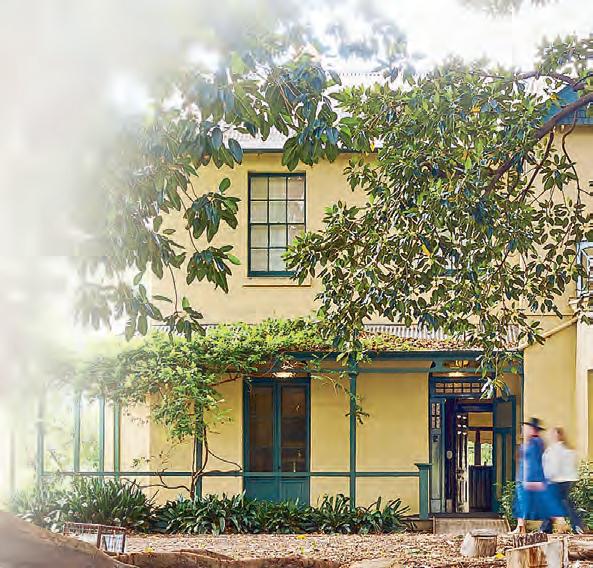

For opening hours and upcoming events visit greaterdandenong.vic.gov.au/heritage-hill.
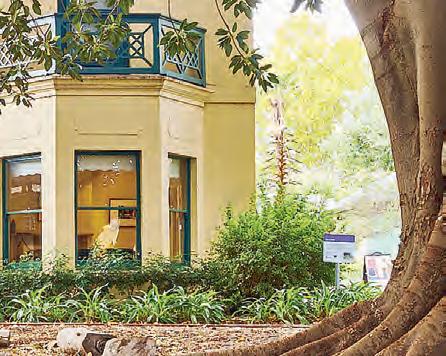

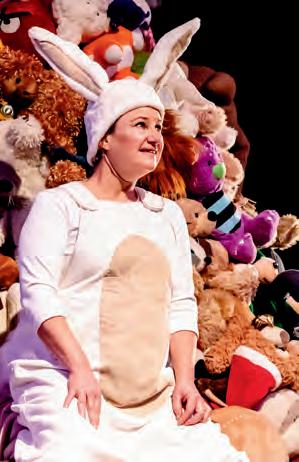

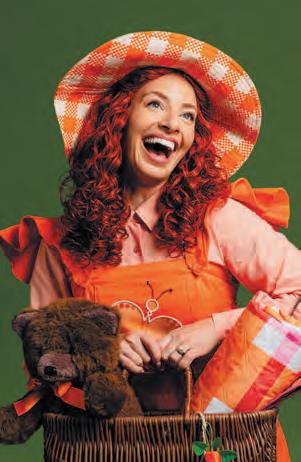









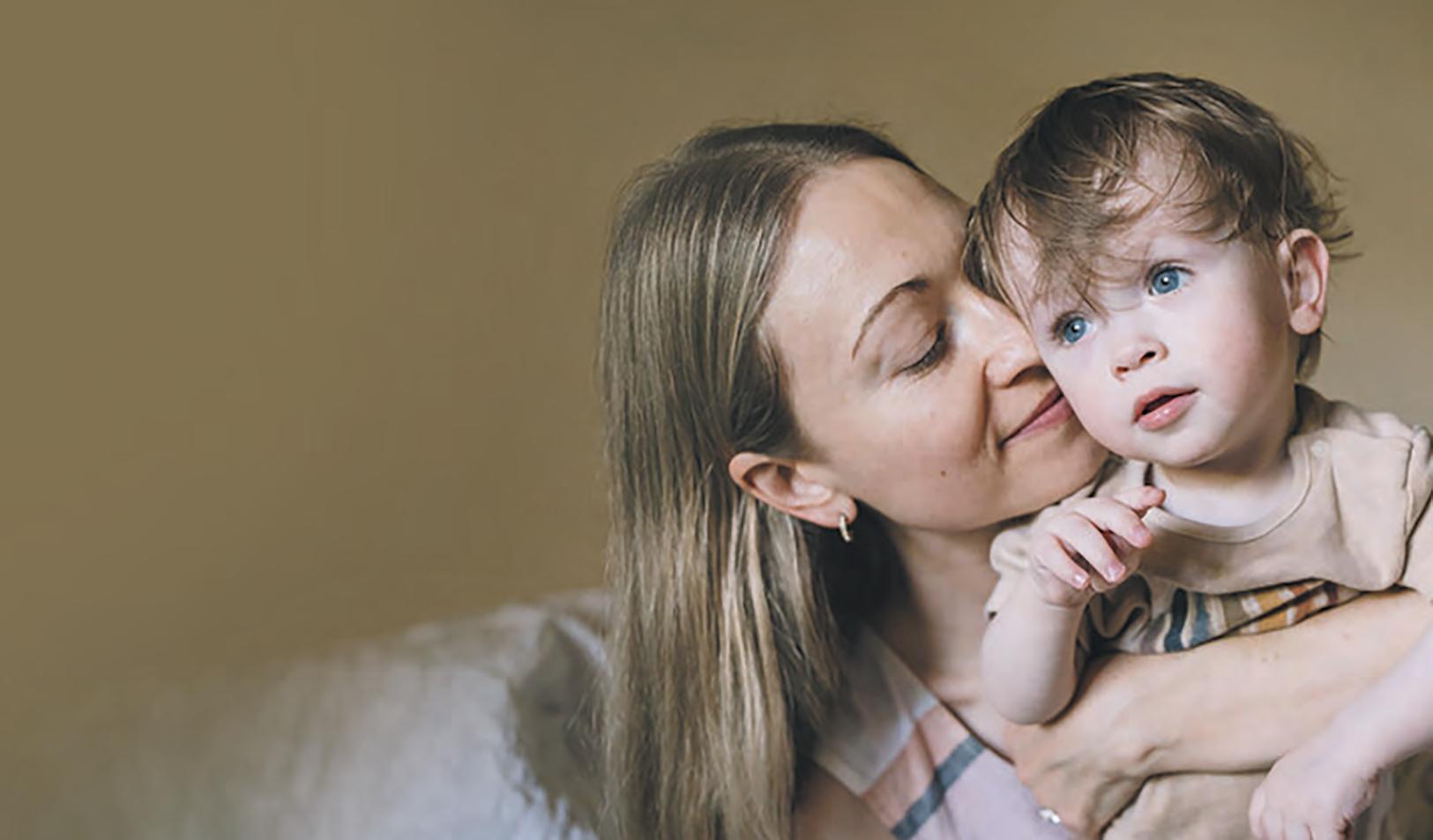
them bottles.”
By Casey Neill
WHAT happens when the vision you had for motherhood falters, leaving you grappling with guilt and gratitude?
There’s an expectation of joy when a pregnancy ultrasound reveals twins. What a blessing! Two for one!
But for Melbourne mum Laura Parr, and many other expectant parents, that’s far from their reality.
Research shows mothers of twins face substantially higher rates of anxiety and depression.
When Kids spoke to Laura, she was at home with her three children, all aged under four and a half.
“We’re still really struggling,” she said.
“We are in the trenches for a while.”
Laura and her husband always dreamed of having two children. Needing IVF to make that a reality was the first spanner in the works.
Her first embryo transfer became son Lucas.
“I had a very empowering and positive birth with my first, even though it was bloody hard,” Laura said.
The other embryo remained frozen for about two years before being implanted and splitting in two - identical twins Riley and Alex.
Laura very clearly remembers the moment she learned she was carrying twins at a dating scan seven weeks into her pregnancy.
She’d had a positive blood test but was looking forward to this scan to confirm whether her pregnancy was viable.
The ultrasound tech quickly located one embryo with a strong, healthy heartbeat.
“I cried tears of relief - it had worked,” Laura said.
“However, then he got the sonography wand and moved it across my abdomen and very quickly and clearly popped up
another embyro with another heartbeat.
“After a long, long, long time, he said, ‘Congratulations, you’re having twins’.
“We went into shock.
“We were just hoping for a healthy, viable pregnancy.
“The plan was two kids, not three.”
To top it all off, Laura’s twins were monochorionic diamniotic (MCDA) twins, meaning they shared a single placenta but had two separate amniotic sacs - a condition affecting only one in 400 sets of twins.
“They’re considered high risk,” she explained.
“There are complications around dividing the nutrients between the two of them evenly.
“The pregnancy was very challenging physically, mentally, and emotionally.
“It was very different to my first.
“I went from a boring, healthy pregnancy to a very complicated one.”
She needed fortnightly scans from week 15, which were “onerous, timeconsuming and expensive”.
“We were thousands of dollars out of pocket,” she said.
Laura delivered the boys at 34.5 weeks via caesarean when her waters spontaneously ruptured, considered “late-term prematurity”.
The twins were in special care for 19 nights after their surprise arrival.
“In the meantime, we were driving back and forth to the hospital every day, looking after a two-year-old, pumping milk around the clock, because you’re trying to pump for two,” she said.
All while recovering from a caesarean.
Laura and her husband brought the twins home and dived into non-stop feeding, “which was pretty significant”.
“I was constantly on the pump,” she said.
“They were so little, they didn’t have great suck reflexes, so we had to give
That’s seven bottles a day times two, or 98 bottles a week, plus the washing and sterilising.
“We would get some help from a grandparent, or maternal child health nurse, or a friend,” she said.
“But that was one feed out of 98.
“Each feed was taking 45 minutes to one hour. With two babies, that’s 10 to 14 hours per day.”
Laura and her husband couldn’t take a break.
“That’s the real challenge with twins,” she said.
“It’s not just twice the effort or cost, it’s twice the parents.
“We were up every feed, both of us.”
They did live with Laura’s parents for a time, while their home was being renovated.
“We couldn’t have coped without their support,” she said.
“We were drowning and they were saving us.
“Twins is just…” She takes a deep breath.
“Everything is different, everything is more complicated.
“We are privileged, and we do see the privilege of what we do have. And it’s still incredibly hard.”
They had to upgrade their car to accommodate three car seats, reconfigure their home, wrangle two babies crying simultaneously, and book double appointments at the doctor.
“Everything takes so much longer,” she said.
“Financially, it’s a lot.
“You don’t get any additional support from the government or from work in recognition that you’ve had twins.
“If we’d had them a year apart, we would have got double the leave.”
The medical complications and developmental delays that come with
premature birth need ongoing support ranging from a dietitian and paediatrician to speech and occupational therapy.
“Our boys are beautiful and they will be fine long term, we’re just dealing with a lot of complications,” Laura said.
One such complication put the family in “crisis mode”.
Riley and Alex developed a feeding aversion when they were six months old, which required them to be fed via nasal gastric tubes until they turned one.
“I wasn’t aware it was even a thing,” Laura said.
“Despite hours and hours of feeding, the boys kept dropping off their growth charts.
“They’re still small and picky eaters.
“We’re still very much in the thick of it.
“It’s beyond postnatal depression and postnatal anxiety.
“It’s trauma, what we went through and what we’re processing.
“I haven’t had the headspace to process that.
“It was only earlier last year, after they turned one, that we got some breathing space for me to go see a psychologist.
“I also feel for my husband, because as much as the talk is on women and mothers, fathers have it hard too.
“They probably don’t have as much of a support network.
“My husband has suffered deeply through this.”
Laura decided to use her trauma to help others and became a Gidget Angel for Gidget Foundation Australia, and wrote for the non-profit’s website.
“I wanted to express my story and share my experiences.”
Gidget Foundation Australia supports the mental health of expectant, new and potential parents to ensure they receive accessible, timely and specialist care.
Visit www.gidgetfoundation.org.au to access or lend support.
By Casey Neill
THE rug was pulled out from under Sami Glastonbury during her third pregnancy.
“I remember all the sound turning off around me. I can take myself back there in a second,” she said.
But the trauma of learning that her unborn son had a heart condition led the mum of three to the CEO position at charity HeartKids.
“I feel like this is my life’s purpose,” Sami said.
“I’m the first heart mum to hold this position.
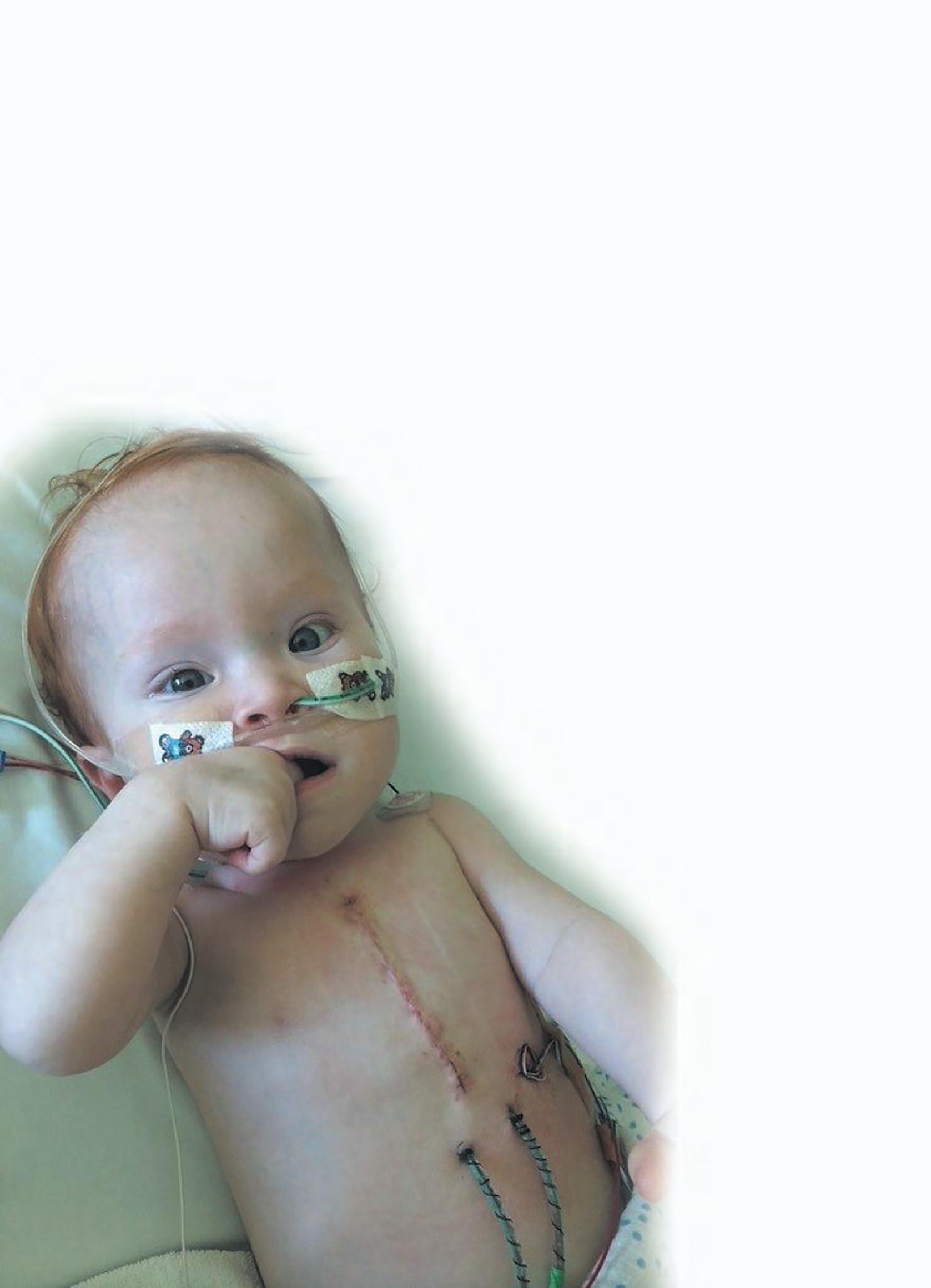
“I’ve handed my baby over and put them on a bed of ice.
“I can look heart parents and caregivers in the eye and say ‘I understand’.
“I can look state and federal parliamentarians in the eye and explain it in a way they’ve probably never heard it before.
“When you’re a parent and you go through this medical trauma and stress and anxiety, you become quite fierce in your advocacy.
“You want to ensure no one’s path is the same as yours.
“I could either sit back and feel sorry for myself, or I could actually use my voice and advocate for other people who maybe didn’t have the ability to use their voice.”
HeartKids was set up nearly 50 years ago by parents desperate for information and to meet others navigating childhood-onset heart disease (CoHD).
“We’re the most prevalent congenital birth defect in Australia,” Sami said.
“Eight babies are born every day in Australia with a heart condition.
“It’s the most common cause of death under the age of 12 months in Australia.”
HeartKids provides family support programs, teen camps, education days, and the HeartKids Helpline.
“We as an organisation have been so hyper-focused on delivering our care and our service and support,” Sami said.
“We haven’t focused our energy on advertising and marketing.
“I want the rest of Australia to understand who we are and what we do - who we are as families, and our children.”
Sami first encountered HeartKids after the 21-week scan during her pregnancy with son Frank.
“We lived in the Barossa Valley. I drove down (to Adelaide) with my eldest, who would have been three at the time. I left the other one behind with the babysitter,” she said.
“My husband flew in to meet me at the scan. It was going to be a lovely moment.
“I can still see the radiographer’s face and that she was taking far too long.
“You’ve gone down in a blissful baby bubble, then all of a sudden you have to see a specialist, book for a termination.
“I was told not to Google because there would be nothing local about survival rates.
“It’s incredibly traumatic.”
Today, parents in a similar position can safely turn to Google thanks in part to Sami, who advocated for funding and helped to develop fact sheets with clinicians.
“I was one small, small piece in that step,” she said.
A long weekend meant Sami had to wait until Tuesday for an appointment.
“With two little kids running around who still needed me to play with them, brush their teeth, make them a snack...” she said.
“I was numb but could feel my baby kicking around.
“It was like the grieving started immediately.”


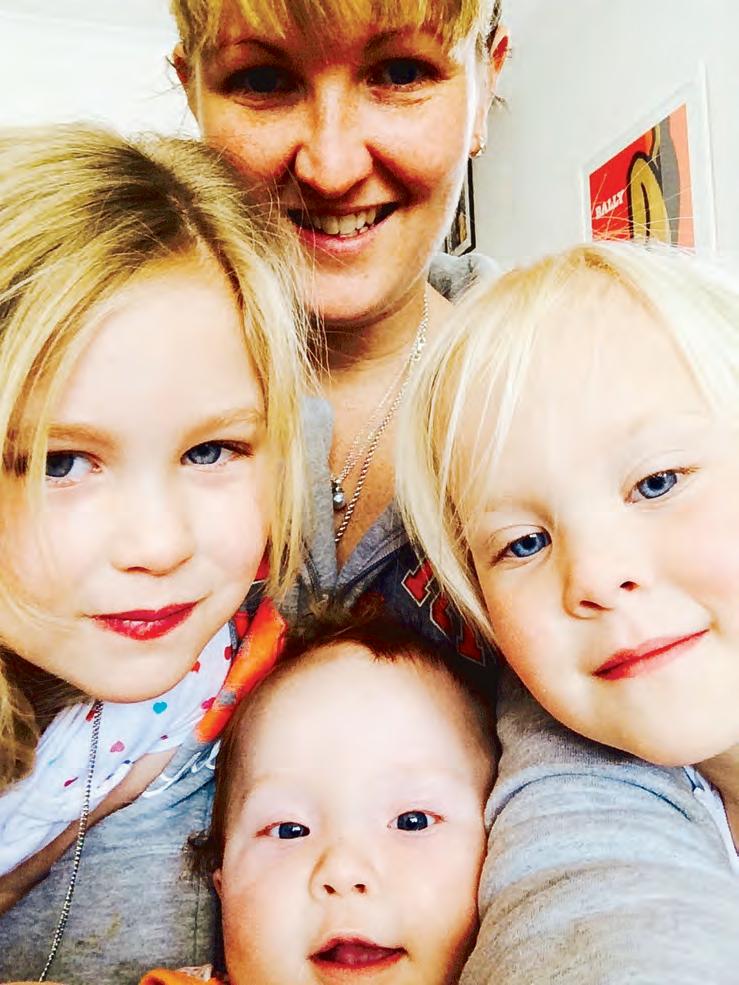


The testing included an amniocentesis.
“Frank could have had some really severe complications,” she said.
“All the vials had to be sent to America. We had to wait until the following Monday for the results.”
A theatre was booked for a medical termination “just in case”, but the tests ruled out the other syndromes and conditions often seen side by side with Frank’s heart condition.
“It was just the heart,” Sami said.
“We felt really blessed, but at the same time, we were going ‘what does open heart surgery look like?’ and ‘what do you mean heart failure?’.”
Frank had open-heart surgery as a baby to patch up two holes in his heart and replace a missing valve.
The family had to relocate to Adelaide to access specialist paediatric cardiac care.
“Frank’s needs and medical appointments and the therapy required were through the roof,” Sami said.
He’s now 12 years old and “definitely not out of the woods”. Sami still lives in constant fear.
“He’s on six-monthly checkups still,” she said.
“Frank is happy. He’s sport-obsessed, but he has challenges.”
Visit heartkids.org.au to access information or support the charity.
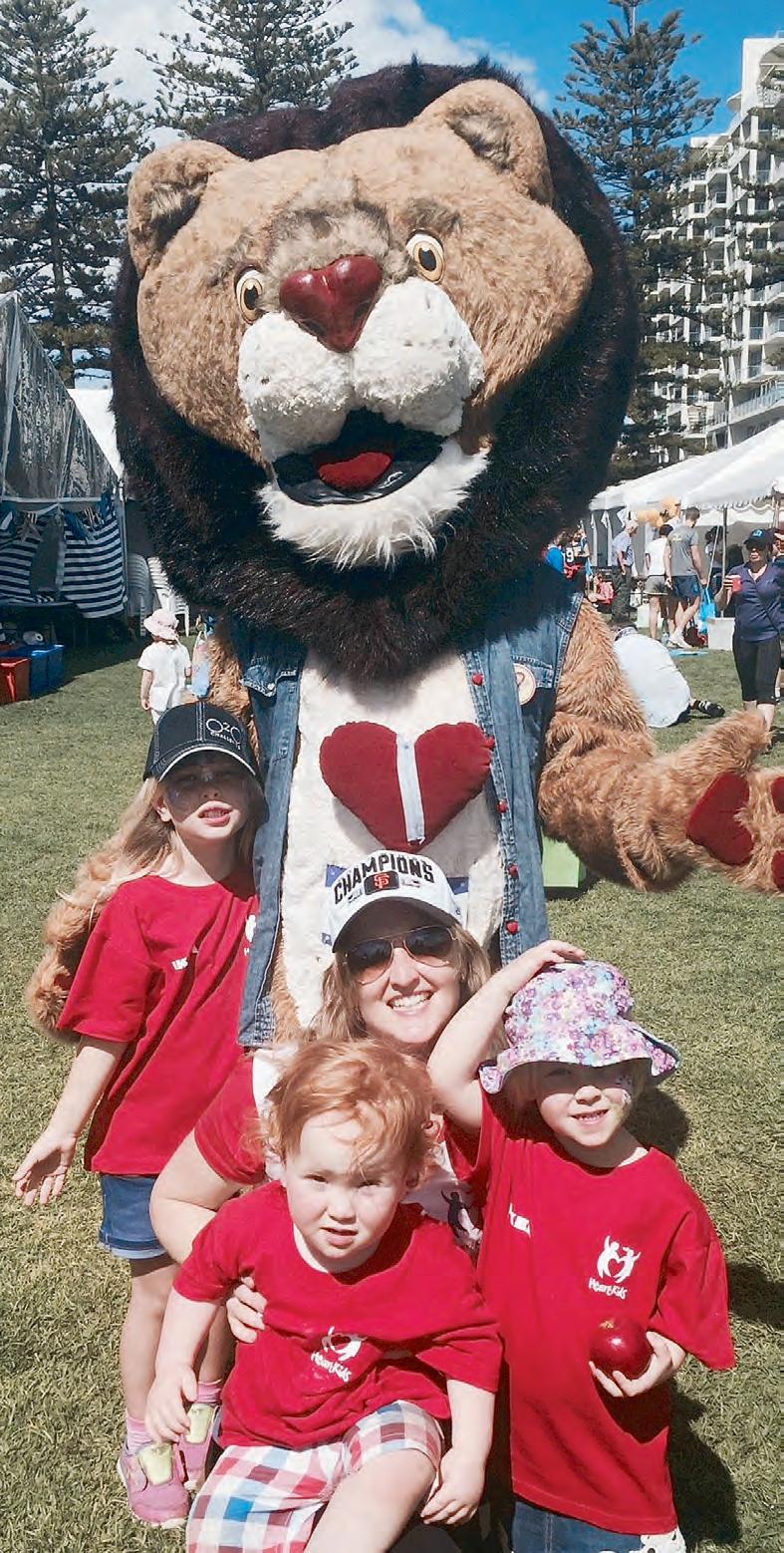
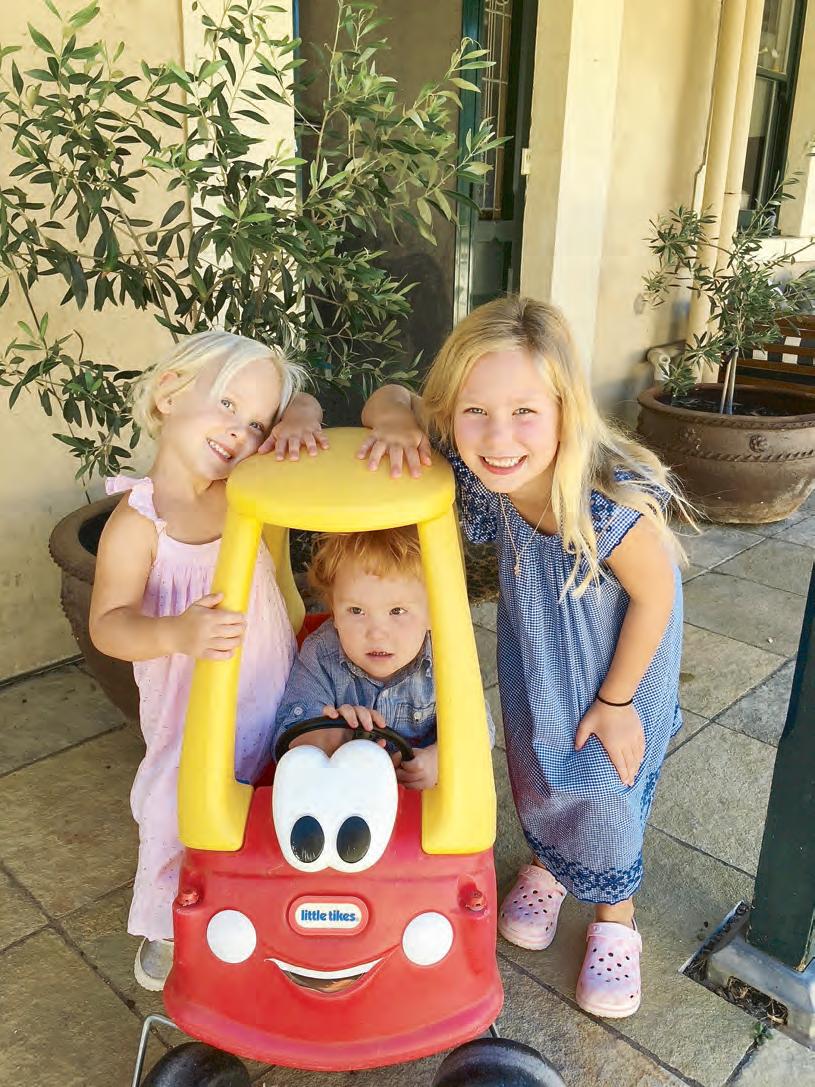
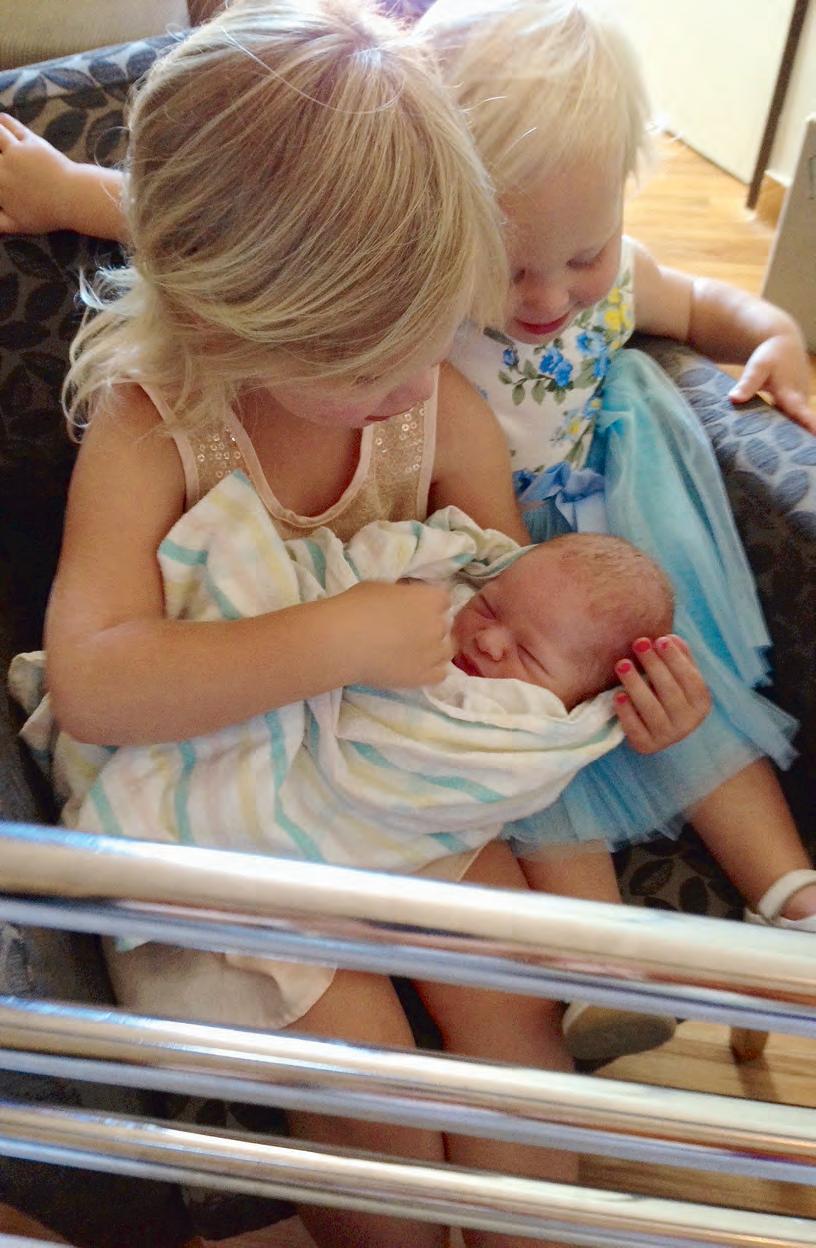
By Casey Neill
KEEPING kids in the dark about money makes finance feel “scary” and puts them on the back foot when it comes to building wealth.
Mum and finance expert Sarah Megginson says parents should speak to children as young as three about saving and spending.
“If you don’t have open and honest conversations about money with them, they’ll form their own beliefs based on the info they can cobble together,” she said.
“In childhood, I learned that money was emotional, confusing, and something that definitely caused stress… because I absorbed it from the adults in my orbit.
“One of the biggest mistakes we make as parents is to try and protect our kids by avoiding any conversations.
“It then risks becoming this big, mysterious, scary topic.”
Sarah wrote How to Raise Rich Kids: Build Lasting Wealth for Your Children to help break this taboo.
“Whatever their age, don’t be afraid to let them see you talk through decisions, save for goals, compare prices, and even talk about money stress and admit mistakes,” she said.
“My parents did an amazing job of stretching their dollars as far as possible, and my mum had incredible budgeting skills, but I watched her manage it all from a distance.

Jacinda Ardern
THE former prime minister of New Zealand delivers a guide for teens on chasing their dreams and embracing the unexpected qualities that truly make a person strong.
Based on her bestselling memoir and adapted for younger readers, Jacinda Ardern encourages readers to realise that true strength, success, and power come from embracing ourselves just as we are—imposter syndrome and all.
$26.99
Penguin


“I have other friends whose parents were comfortable or well-off, but they missed out on valuable conversations.”
But there’s a huge difference between being honest and emotionally outsourcing your stress.
“You might say something like ‘These are grown-up problems and I’ve got it sorted, I always make it work! But I’m choosing which money to spend on different bills right now, and sometimes that’s tricky’,” she said.
“The sweet spot is calm transparency that also reassures them you’re in control and they are safe.”
Sarah said social media constantly sells the appearance of success, adding another layer for parents to cut through.
“Some people earn huge incomes and seem to have a wealthy life, but they’re completely trapped financially and living week-to-week,” she said.
Kelly Brodie-Brown and Inge Daniels
GLENDA was a gibbon with a solid claim to fame; when it came to playing pickleball, she’d never lost a game.
Winning felt so wonderful it became her sole ambition.
She was obsessed with being best; she had to win every competition.
But what happens when Glenda meets a new pickleball contender?
$19.99
Scholastic Australia
“Other people live within their means and put the right habits in place to build financial freedom over decades.
“So, one of the best things parents can model is delayed gratification.
“Real wealth is usually pretty boring.
“It’s consistency, patience, investing regularly, and making calm, unemotional decisions.”
Pocket money can play a role in modelling this, and there are many ways to approach it.
“In our house we have a chore chart... where the kids earn points for their tasks, and it’s up to them to add their points to the chart,” Sarah said.
“If they forget, they don’t get paid. It teaches them a bit of accountability, and I also didn’t want to take on the admin of adding their points and managing it all!
“That set-up doesn’t suit everyone, though.
“Some parents love using an app like Spriggy.
“I know of parents who pay a set amount of pocket money with no chores attached, and others who expect their kids to do some household jobs each week without any payment.”
Once your child has that pocket money in their hot little hand…
“I’m a big fan of giving kids some freedom instead of controlling every cent, but that was

Matthew Swanson
TWELVE-YEAR-OLD Leo gets a once-in-a-lifetime opportunity to join the very first Moon colony.
He’s excited to be part of the top-secret mission, but things quickly go off the rails.
With his Dad missing and accused of desertion, Leo goes looking; but what he finds will change everything.
The extraordinary tale of a curious boy sent to live on the moon, the wondrous discoveries he makes, and the courage it takes to speak a truth no one wants to believe.
$18.99
Penguin
a real lesson for me!” Sarah said.
“I used to be way too involved and monitored their spending decisions like a hawk.
“I needed to step out and let them develop their own habits with money.
“A kid who blows their entire $20 on slime and sour worms learns a valuable lesson while the financial stakes are still wonderfully low.”
Sarah’s top tip for parents?
“As soon as your child is old enough to write their own name, take them into a bank and open a high-interest savings account,” she said.

Mohammad Awad
THIS lyrical picture book about embracing our complex emotions uses metaphors from the weather.
It showcases accepting both the highs and lows of our emotions, with a reassuring message that the dark clouds do move on and that rainbows follow storms.
Will you tell me your sorrows?
Release your mind of its worries?
Come, when you are ready, Join me on this journey.
I’ll be waiting for you … floating by the clouds.
$24.99
Penguin
Luke Newell
DUCK, it’s time to make a call. Does Duck want anything at all? Frog is determined to find the perfect thing for his very first customer, Duck.
But no matter what Frog suggests, Duck doesn’t seem content.
What a fussy Duck ... $19.99
Scholastic Australia