


















EVERY now and then, life serves you a little reminder that you’re doing an okay job as a parent.
I don’t know about you, but boy, do I need them.
These little glimmers can slide on by, so let’s make a point of grabbing hold of them and using them to build our confidence and resilience ahead of the next meltdown.
It could be a throwaway “You’re the best mum in the world,” or the look of gratitude and joy on your little one’s face when you serve up their favourite meal.
You might watch your child walk up to their crying friend to offer words of support, a hug, or a hand to hold.
Maybe you overhear them speaking with kindness and encouragement to a friend in the playground or schoolyard“You’re so good at the monkey bars!” or “I love your picture, you’re so good at drawing.”
Steve Biddulph: The middle road keeps kids safe
PAGE 4
A Mindful Moment: Mindfulness for the little ones
PAGE 4
Elisabeth Easther: Seed sprouts from fertility pain
PAGE 5
STEM kid’s YouTube mission: ‘Curiosity is the same everywhere’ PAGE 6
Easy birth certificate access in Casey PAGE 6
Baby boom health boost in Clyde North PAGE 7
Kids in the Kitchen: Pumpkin mac and cheese
PAGE 8
Focus on building your kid’s attention PAGE 9
Cardinia Lakes Shopping Centre: Get it all locally PAGE 9

Your child might try something outside their comfort zone, their bravery bolstered by your words and actions.
My daughter decided she wanted to jump from the diving boards at our local pool.
After successfully leaping from the lowest board, she told me she wanted to try the next one up.
I told her to go for it, that I knew she was capable, but reminded her that she could always change her mind once she got up there.
She tentatively climbed the steps, peered from the edge of the platform, shook her head and walked back down the steps to happily jump from the lower board.
I was so proud of her, and I let her know it.
“You listened to your body! You can always try again another day.”
Two weeks later, she strode up those
steps again, walked to the edge and jumped.
The next time I need a mood boost, I’ll replay the image of her beaming face as she swam to the pool edge.
It was a reminder that just a few words of affirmation can go a long way. My daughter jumped when she was ready, free from pressure, strengthened by my presence.
I make a lot of mistakes as a mum - I like to think we all have plenty of moments we’d like to take back and re-do, right? - so when I feel like I’ve got something right? I need to give myself a pat on the back, and so do you.
We beat ourselves up for our mistakes, so we need to applaud the little wins that will help our tiny humans grow into the best adults they can be.
Casey Cardinia Kids magazine is a Star News Group publication. Casey Cardinia Kids will be published quarterly prior to each of the school holidays.
Casey Cardinia Kids Cnr Princes Hwy and Army Road, Pakenham, 3810 PO Box 9, Pakenham, Victoria 3810 Phone: 5945 0666 Fax: 5945 0777
Editorial Casey Neill casey.neill@starnewsgroup.com.au
Photography Rob Carew Nick Sinis
Group Advertising Sales Manager Mandy Clark mandy.clark@starnewsgroup.com.au Phone: 5945 0608
Published by Star News Group Pty Ltd ACN 005 848 108.
Playground upgrades unveiled in Casey
PAGE 10
Parent help comes to an end: Ann-Marie Hermans, South Eastern Metropolitan Region MP
PAGE 10
Horses build trust, emotional safety
PAGE 11
‘It was the first time they had spoken in therapy’
PAGE 11
Officer’s new play offering PAGES 14-15
Play with art fresh from NZ at Cardinia Cultural Centre
PAGE 12
Coral reefs, puppets and planet-saving fun at Drum Theatre PAGE 13
Aura Dentists: Poor sleep steals potential PAGE 16
South East Orthodontics: Creating confident smiles
PAGE 16
Cranbourne Dental Centre: Breastfeeding and baby teeth
PAGE 17
Dental scheme knowledge gap PAGE 17
Berwick Family Osteopathy and Spinal Clinic: Support for growing bodies
PAGE 18
Ocean Kids Health: When ‘they’ll grow out of it’ doesn’t feel right
PAGE 18
Paradigm Health on Princes: Caring for Cardinia families
PAGE 19
Uniquely U Support Services: Promote emotional wellbeing
PAGE 19
Key facts missing from NIPT forms
PAGE 20
Nappy stress making kids sick
PAGE 20
ACD: Free disability support
PAGE 20
Financial Basics Foundation
PAGE 21
New classrooms open their doors PAGE 21
Road safety guide boosts school safety PAGE 21
FiRST Early Learning: A sanctuary for development
PAGE 22
Expeditions Early Learning Journey: The comfort and confidence to thrive
PAGE 23
Kool Kidz Narre Warren: Family dream comes to life
PAGE 23
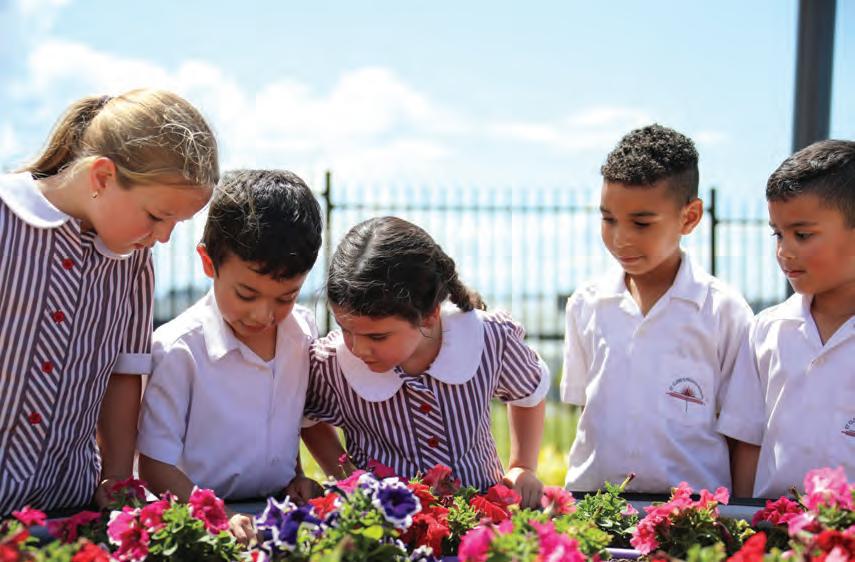
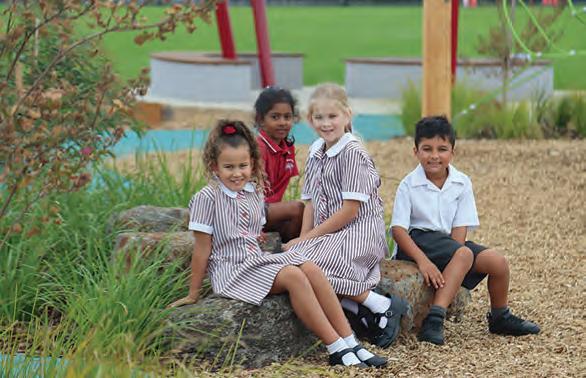
St Clare’s Primary School, Officer ROCKS
PAGE 24
Cardinia Primary School: A caring family school
PAGE 24
Food, glorious food
PAGE 25
Get your skates on - this park is fresh! PAGE 26
Publisher/Managing Director, Paul Thomas. All material is copyright to Star News
A2D Dance Studios: Find your rhythm PAGE 26
Fatherhood can trigger mental health issues
PAGE 27
Beating lunchbox battles PAGES 28-29
Cartwheeling Sally and Jumping Jack Jim
PAGE 30
Fresh autumn reads for all ages PAGE 30


Autumn at Bunjil Place opens the door to a season of colour, curiosity and creative play. From hands-on music adventures to big-screen moments and a captivating journey through The Offbeat Sari, our School Holiday Program invites families to slow down, explore and discover something new together.
22 March – 30 August
10.00 am – 5.00 pm, Tue – Fri (Closed Mondays)
10.00 am – 4.00 pm, Sat & Sun
Location: Gallery
T ickets: Free, bookings required.
A major exhibition celebrating the contemporary sari. This exhibition unravels its numerous forms, demonstrating the sari to be a metaphor for the layered and time from designers, wearers and
Presented exclusively in Victoria at Bunjil Place, The Offbeat Sari is a touring exhibition by the Design Museum, London. Conceived and curated by Priya Khanchandani.
13 – 17 April
T ime and Location:
Various, see connectedlibraries.com.au for details
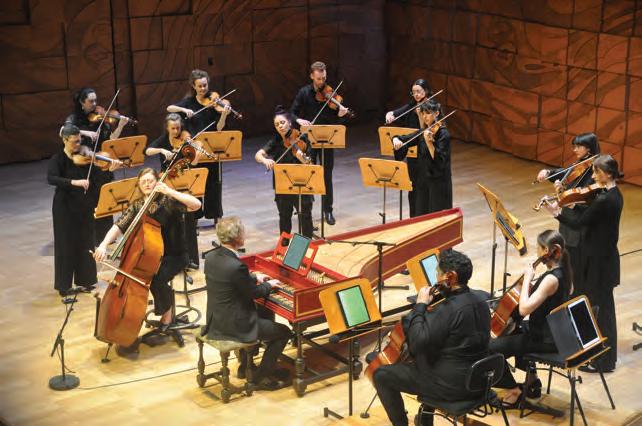
T ickets: Free, bookings required. Melbourne Chamber Orchestra’s Holiday Music P



Keeping kids safe is a matter of the heart, writes STEVE BIDDULPH.
MANY years ago, I was invited to something called a Dangerous Ideas Festival.
Held at the Sydney Opera House, it was a forum for people with new ideas - nothing REALLY dangerous - and I was on a panel and giving a keynote talk.
Alongside me was US journalist Lenore Skenazy, who had written a book called Free Range Kids.
Lenore was a witty and quite normal person who’d become famous for letting her son, aged nine, ride the New York Subway on his own and writing about it in her newspaper column.
She had been both castigated and praised in equal amounts (and this was before social media) and was even labelled ‘America’s Worst Mum’ by another columnist also seeking readers.
Really, her message was that we needed to relax more about our kids being independent and out in the world, and this is how they gain confidence and capability.
I didn’t disagree with her entirely, but thought it needed a bit of care and knowledge of your child and was very much a situational thing.
What was interesting was that on the way back from the event, I was in Circular Quay train station, and right in front of me, on this of all days, a mum wrangling a pram with a baby while holding onto her toddler’s hand, briefly let go of that little chubby hand. And the toddler somehow managed to slip between the train and the platform.
Around sixty of us on the platform screamed in unison for the train driver not to drive on, and while we shouted and pointed, a quick person ran forwards and pulled the child out of the gapthey’d become wedged and not fallen right to the track. And a moment of catastrophe was avoided.
I am on the cautious end of the parenting spectrum. I have worked with enough child sexual abuse survivors to never have sent my kids to sleepovers,
for example, and I have a watchful eye in all kinds of situations.
But I do think that kids should climb trees, graze knees, and be allowed to get bored until they discover their creativity and inventiveness. That all children should learn to deal with other kids in play situations without intervention unless real violence threatens. That risk-taking within bounds actually builds safety.
I love that after reading Raising Boys or Raising Girls, millions of dads play rough-and-tumble with their sons and daughters. I am a huge supporter of the social media delay that is now law in Australia, our wonderful e-Safety Commissioner for getting it into place, and organizations like the Heads Up Alliance that fought for this and other ways to keep kids from the sewers of the internet.
Parenthood is frightening, and we have to look after each other.
Somehow, we have to realize that the great clench we sometimes feel in our hearts around our children’s safety is often just how much we love them, and breathe and soften to let that be so.
But if we have misgivings, then they
should also be listened to.
There are people who would do our children harm, and they are sadly not rare. We live in a time when we have woken up to that, and it’s a huge improvement.
A year after the Festival of Dangerous Ideas, in the quite posh New York suburb where Lenore lives, a twelve-year-old girl was dragged into the back of a grocery store by the twenty-year-old son of the owner and murdered.
In between terrifying our children and helping them to listen to their intuition and good sense and gradually grow their zone of comfort and ability, there is a middle road. We can find that road, though we stumble off it many times.
That our child grows healthy and safe is by grace, really, and that no military forces rain death on them is something we should both be grateful for, and work to ensure is the case for every young human being, one beautiful future day.
Steve Biddulph is in his eighth decade in this world and is the author of Wild Creature Mind, New Manhood, and many other books that are in six million homes around the globe.






MANY people assume that because a young child’s focus and attention span are limited, mindfulness or meditation would be too difficult for them to grasp.
However, research has increasingly suggested that young children can benefit greatly from age-appropriate strategies.
These strategies will foster and develop emotional awareness and regulation, self-control, and a sense of calm, which

can have a profound impact on a child’s overall wellbeing.
Strong evidence shows that the early years are when a child’s social, emotional, and physical development is most vulnerable.
During this period, children experience rapid brain growth, which is fundamental for future health, learning, and behaviour.
Establishing positive habits in early childhood - before children are likely to suffer from fatigue, being time-poor, school pressures, or social media influences - can have more achievable results.
Young children are more openminded, enthusiastic, and willing to take on new experiences. Their natural curiosity and imagination will give them a greater chance of integrating mindfulness strategies into their everyday lives and of forming life-long mindful habits.



Through embedding simple mindfulness practices into everyday life, children are more able to control their own emotions and feelings, which will have a lasting impact on their overall wellbeing.
The activities will be most effective if they are kept short and simple. Practices such as deep belly breathing, drawing circles softly in the palm of their hands, gently ‘blowing out the candle’ on each finger, or taking part in a sensory experience, are all extremely effective tools to help reduce a child’s anxiety and stress levels.
Starting mindfulness and meditation at a young age is not about expecting children to sit in silence for long periods of time. It’s about providing short, simple yet engaging exercises that nurture and cultivate awareness, emotional regulation and resilience, appreciation, and connectedness.
Investing in our children’s emotional development at an early age is a highly proactive and preventative approach that can significantly reduce the need for more serious interventions later on in life, particularly during the teenage years. By equipping children from a young age with the tools to thrive with confidence, resilience and compassion, we are giving them the best possible start in life.
Fiona is an experienced primary school teacher with a passion for student wellbeing.
She runs mindfulness programs to equip primary school-aged children with strategies to help them lead healthier and happier lives.
Find more from Fiona at mindfulness4kids.com.au or search Mindfulness 4 Kids on Instagram or Facebook.





By Casey Neill
LONELINESS prompted Elisabeth Easther to craft a tale of fertility, friendship and modern womanhood.
New novel Seed is rooted in the New Zealand actress and journalist’s own journey with miscarriage and IVF.
“My own experiences formed the very kernel of Seed,” Elisabeth told Kids.
“I had two miscarriages, including one set of twins.
“Getting so close to a second child pushed me into the arms of a fertility clinic.
“After a few goes of assisted ovulation then one crack at IUI and no luck, the very effective sales team at this fertility clinic convinced us that IVF was the answer for a woman of 41, as I was then.
“From then, we were on a roller coaster that was very hard to get off.
“Sharing some of this still makes me feel self-conscious, and I am also aware I’m not just sharing my own story, which is why the more drafts I wrote, the more fictionalised aspects became, and a lot of the really visceral stuff ended up on the cutting room floor.”
The public was first introduced to Seed in the form of a play.
“I actually started the story as a novel,” Elisabeth explained.
“My son was about six, and he was with his dad for a whole week, which felt like a lifetime.
“I was single again, which was for the best, but I did feel very alone, so I wrote.
“Then I turned that early rough novel into a play because, as an actor, it felt easier to put on a play than get a novel published.

“The script quickly won the Adam Award for Best New Zealand Play, which also gave the script a good boost.
“Over various productions and tours, it did rather well and went on to have a life of its own.”
Elisabeth acknowledged that some readers would find Seed painful.
“When the play was doing the rounds, I had a few people tell me they couldn’t go as it cut too close to the bone for them at that time,” she said.
“I also had lots of people say it was good to see those lives being lived on stage, so I hope it won’t make readers’ nerves too raw.
“I also like to think it is as funny as it is moving, and it might just help to make some readers feel less alone if they are having trouble conceiving.
“But at the end of it all, it’s much more than just a story about baby making.
“I just hope readers enjoy meeting Hillary, Maggie, Shelley and Virginia and spending time in their worlds.
“There’s probably a little bit of me in each of them, and they all also do things I would never do.
“But experience-wise, Hillary’s medical adventures are most like mine.”
So which character would she choose to be friends with?
“Probably Virginia, as she’s fun and open and honest and vulnerable, although I’d totally suggest she slow down on the drinking and the vaping,” Elisabeth said.
“But she is 37 and a half in the story and I’m 55 now, so we’re at totally different stages.
“Maggie and Hillary also, I’d like to be part of their rubbish empire.
“Shelley is perfectly lovely, but I’m not sure we’d have that much in common. Sorry, Shelley!”


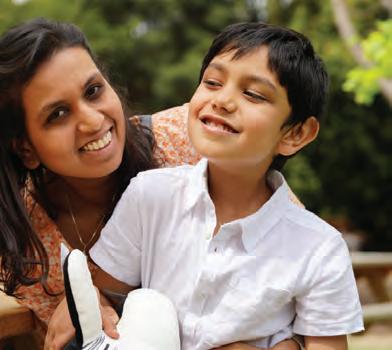


By Casey Neill
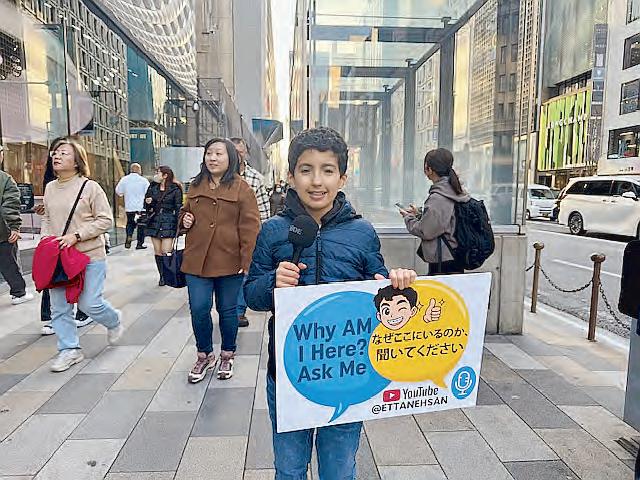
A 12-year-old YouTuber and science communicator is helping kids around the world connect with STEM.
Dubai-based Ehsan Adouane was coding by age six and successfully building apps by age nine.
“I was always curious and asked a lot of questions - sometimes too many!” he laughed.
“I remember wanting to know how numbers worked, how games were built, and why things behaved the way they did.
“Math and science felt like puzzles, and I liked the feeling of figuring something out on my own.
“The more I learned, the more curious I became.
“Taking advanced classes and learning to code showed me that STEM isn’t just about schoolwork - it’s about solving problems and creating things.
“Traveling and meeting people from different cultures also helped me see how science and technology affect real lives, which made me want to go deeper.”
Ehsan found STEM content for adults complicated and intimidating, so he took matters into his own hands, starting a YouTube channel.
“I wanted to explain ideas in a way that kids my age could understand and enjoy,” he said.
“Teaching also helps me learn better, and YouTube allows me to share curiosity, not just information, with kids around the world.
“I love realizing that curiosity is the same everywhere.
“Kids from different countries ask similar questions and get excited about the same ideas.
“One message that stayed with me was from a student who said my videos made them feel less alone for liking science. That meant a lot to me.”

Ehsan has interviewed a NASA astronaut, a Harvard professor, a theoretical physicist, a tech investor, and more.
“I wanted kids to see that people in STEM are real humans, not just names or titles,” he said.
“Many of them didn’t have a straight or easy path, and hearing their stories makes success feel more achievable.
“In one interview, a scientist talked about failing many times before succeeding.
“That really stayed with me.
“It made me understand that struggling doesn’t mean you’re bad at something - it’s often part of learning and growing.
“I still think about that when things feel difficult.”
Ehsan wants to keep learning and building things that help others learn better.


“I’m especially interested in advanced math, computer science, and AI,” he said.
“In the long term, I hope to work on technology that has a positive impact on society, while continuing to inspire curiosity through my channel.”
He encouraged other kids interested in STEM to be curious and “don’t worry about being perfect”.
“It’s okay to not understand things at first - that’s how learning works,” he said.
“Ask questions, try things out, and enjoy the process.
“If something excites you, that’s usually a good sign you should keep exploring it.
See more from Ehsan at www. youtube.com/@ ettanehsan or ettanehsan.com.


CITY of Casey parents are among the first in Victoria to trial digital birth certificates.
From February, participating parents across the Casey, Wyndham City and Mitchell Shire could add their child’s digital birth certificate to the wallet feature on the Service Victoria app.
“This means you will have access to this important document anytime, wherever you are – which is one less thing to worry about,” Government Services Minister Danny Pearson said.
“The digital birth certificate will make it quicker and easier for Victorian parents to enroll their kids into kinder.”
The digital birth certificate will be


NEW Clyde North parents now have better access to vital health services.
A new maternal and child health (MCH) consult room was officially opened at Orana Community Place in February, amid the region’s baby boom.
City of Casey Mayor Stefan Koomen said the service would ease pressure on surrounding services at Ramlegh, Manna Gum, and Smiths Lane, which are also experiencing growing demand.
“As the area grows, providing essential services like maternal and child health, and making sure they are convenient, accessible, and fit-for-purpose, is fundamental to supporting the wellbeing of our youngest residents and their families,” he said.
The new service was made possible through a partnership between the City of Casey and Balcon Developers, who offered the council the interim space.
Balcon Developers general manager Jason Shaw said a delay in permanent community infrastructure was a key challenge in establishing a strong and connected community at Orana.
“Orana Community Place is a novel way of providing a temporary facility that still meets the essential needs of community,” he said.
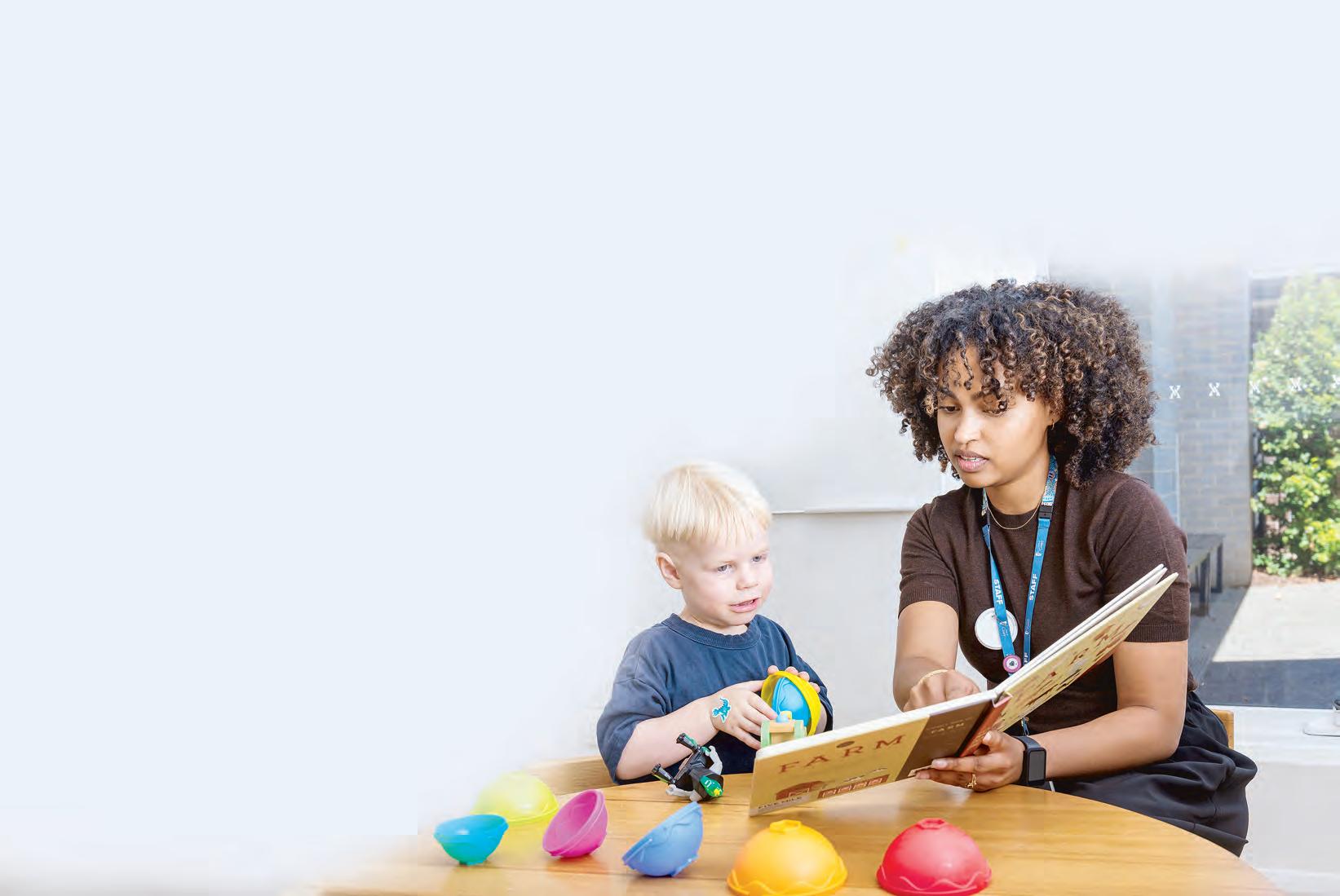



“Adding maternal and child health to the offering at Orana Community Place effectively makes it a full-service community facility – all provided on three blocks of land.
“Whilst Balcon remains focused on working with the council to deliver larger permanent facilities at Orana as soon as possible, Orana Community Place is proving to be a very successful temporary solution.”
Maternal and child health nurse
Kimberley will operate from the new consult room at 16/18
Playwright Street on Tuesdays, Wednesdays, and Fridays.
The Orana site will also host first-time parent groups and offer a welcoming space for families. Appointments can be made via the council’s website or by calling 9705 5590, Monday to Friday during business hours.












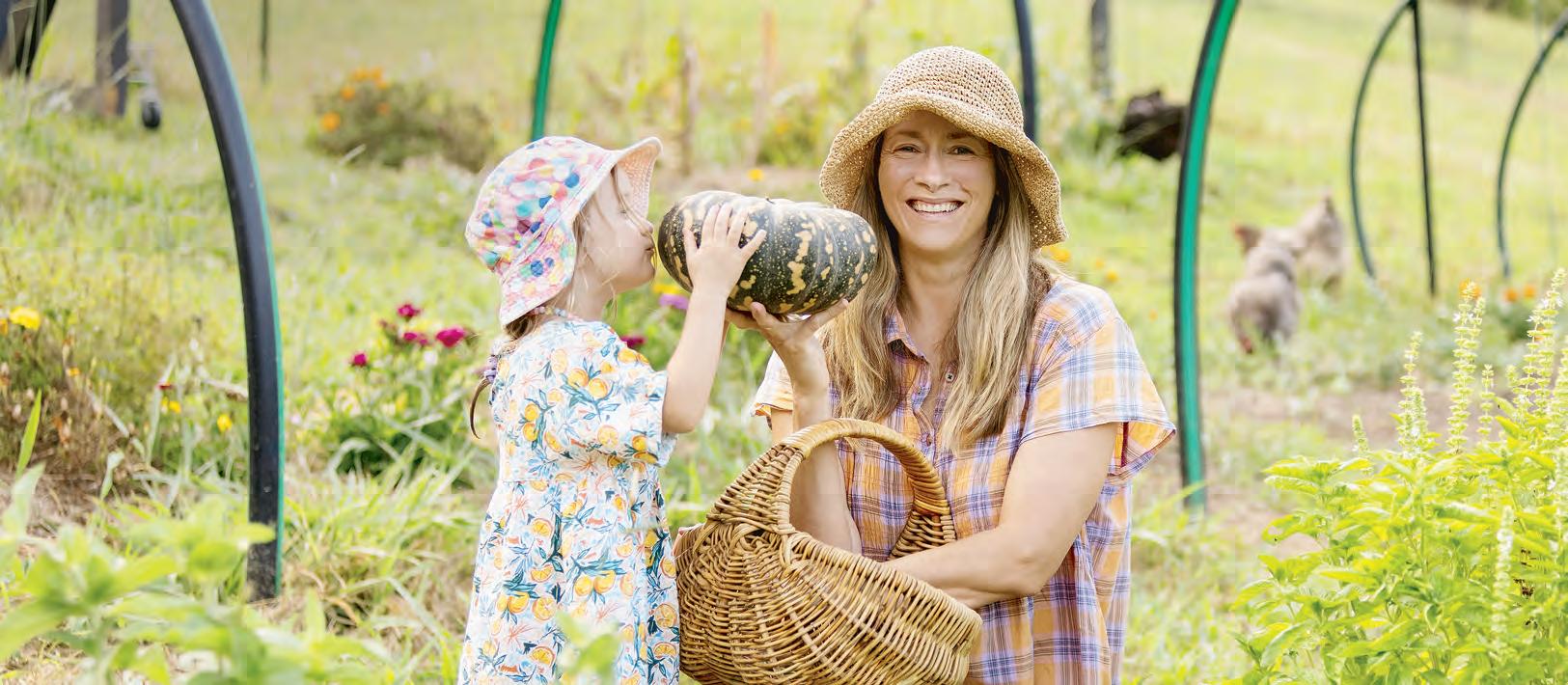





THIS year, my veggie garden had a mind of its own.
I didn’t plant pumpkins…but they popped up from our compost pile, and soon I had vines everywhere - a perfect reminder that food scraps can turn into food again.
The kids thought it was magic (and honestly, I kind of did too).
Pumpkins are one of those superstar vegetables that work just as well in sweet recipes as they do in savoury ones.
We’ve been baking pumpkin and maple bread, flipping pumpkin pancakes, and mixing pumpkin into muffins and slices.
It’s naturally sweet, creamy when cooked, and very forgiving - perfect for cooking with kids.
As the weather cools and autumn settles in, we start craving comfort food. And what says comfort more than mac and cheese?


This season, we’re giving it a little veggie boost by adding blended pumpkin to the sauce.
It makes the mac and cheese extra creamy, gently sweet, and a beautiful golden colour - without tasting like you’ve hidden vegies in there at all.
You could also add some cooked carrot and cauliflower to the sauce.
Pumpkin is packed with nutrients that are great for growing kiddos. It’s rich in beta-carotene, which the body turns into vitamin A to support eye health and immunity. It also contains fibre to keep little tummies happy, plus vitamin C and potassium for overall growth and energy.
Kids of all ages can help you prepare this one by scooping seeds from the pumpkin, washing and chopping, grating cheese, stirring pasta, and blending the sauce.
To make this recipe dairy-free, simply switch out the milk and cheese for plant-based milk, cashews, and nutritional yeast.
I love how cooking can turn an everyday meal into a learning experience, and sometimes a compost surprise into something delicious to eat. Visit www.lucystewartnutrition.com or follow @lucystewartkidsnutrition for more ideas.

Serves: 4-6
Prep time: 15 mins
Cook time: 20 mins
Ingredients:
■ 2 cups pumpkin (Jap or butternut), peeled and cubed
■ 250g pasta macaroni shells/spirals
■ 1 cup milk
■ 1 cup grated cheddar cheese
■ ¼ cup grated parmesan (optional but delicious)
■ 1 tbsp butter or olive oil
■ Optional add-ins: pinch of nutmeg, garlic powder, or paprika
Instructions:
1. Steam, roast, or boil your pumpkin until very soft.
2. Cook pasta according to packet instructions until just tender. Reserve ¼ cup of pasta water.
3. Blend together milk, butter, cheese, parmesan, and pumpkin until silky smooth. Add pasta water if needed to thin.
4. Stir sauce through pasta over low heat until creamy and glossy. Taste and adjust seasoning gently (kids don’t need much). Top with breadcrumbs and cheese and pop under the grill if you’re feeling fancy.









IS your child’s attention span getting shorter? Good news: focus is a trainable skill.
“The systems in the brain that handle attention and self-control respond really well to the right types of movement, play, and even certain kinds of games,” Dr Ryan Stevenson said.
The Bright Heart Education co-founder said the first step towards improving your child’s attention span was to rethink what ‘helping a child focus’ actually meant.
“When parents say, ‘My child can’t concentrate,’ they usually mean executive function is under strain,” he said.
“That includes working memory, impulse control, and mental flexibility.
“Those are skills you can strengthen.”
He suggested looking at a child’s daily activity mix for regular, breathraising movement; activities that forced them to wait, plan,or think ahead; and instances where they

practiced stopping themselves, like holding a karate stance or pausing before a chess move.
“As an educator, I’m less interested in whether a child can sit still for an hour,” Dr Stevenson said.
“I care more about whether their week gives their brain enough chances to move, plan, listen, wait, and try again.
“When those ingredients are there, better focus usually follows.”
Is your child impulsive, energetic, or drawn to active play? Dr Stevenson suggests signing them up for martial arts or open-skill ball sports, like karate, taekwondo, judo, tennis, table tennis, football, or basketball.
He said traditional martial arts mixed complex movements, strict rules, and respect rituals, all of which placed steady demands on attention and self-control.
“You’re essentially giving the brain dozens of reps in ‘pause before you act’ every session, it’s repeated practice in stopping, choosing, and adapting under mild pressure,” he said.
THE friendliness and familiarity of your local centre is a great place to shop.
The food options are varied and delicious at Cardinia Lakes Shopping Centre, with delivery and takeaway options still available, you can now get back to dine-in options too.
The wonderful team at Sugarcoat Nails and Beauty are well-equipped to help you feel fabulous for sandal season and to get your nails ready for Christmas and New Year celebrations.
Pizza Fellas has a great range of pizzas that can be ordered online so they are ready for you when you pop in to pick up your dinner.
From their delicious salads to their tasty chicken, Uncle Sam’s Charcoal Chicken is a firm favourite in the neighbourhood for a quick and healthy meal.
Cardinia Lakes Fish and Chippery has delicious burgers, along with crispy chips and tasty fish for a favourite takeaway option.
Wok to Go rounds out the takeaway options with tasty Asian dishes galore to tempt your tastebuds.
At Direct Chemist Outlet, the staff are dedicated to their customers’ well-being and will help you make the right choices about maintaining good health.
Their gift range is outstanding as well, and you’ll be able to find the perfect gift, or maybe something extra special for yourself.
Great breakfast and lunch options are on the menu at Urban Hype Cafe. Come and meet the friendly staff and grab something for lunch or morning tea.
Call in to the centre’s barber shop at shop five, Fadeline Barbers, for a great haircut for adults and children. Walk-ins only.
Stay up to date by following Cardinia Lakes Shopping Centre on Facebook.

“That’s exactly what so many children struggle with in the classroom.”
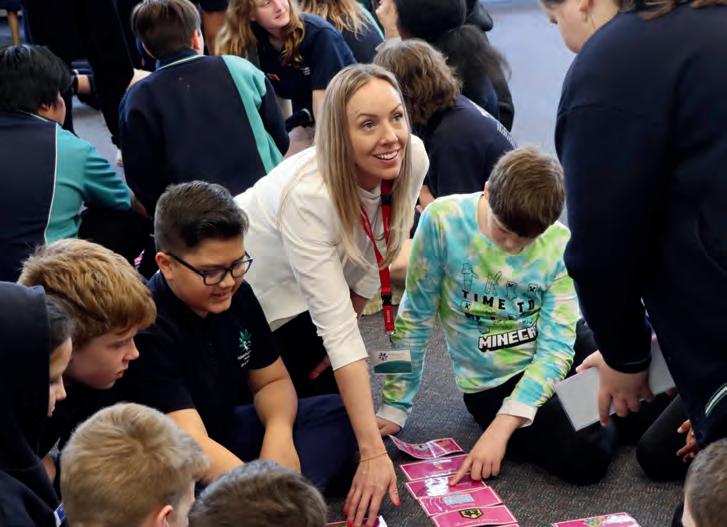
For after-school or weekend ‘quiet time’, turn to strategy and puzzle play - think chess, strategy board games, fast reaction card games, and logic puzzles.
Dr Stevenson said the key was to choose games where kids must remember rules or patterns, wait for their turn, and think a couple of moves ahead.
“From a brain perspective, a 30-minute family game of chess, Spot It!, or a strategy board game may be far better focus practice than an extra half-hour of drilling times tables,” he said.


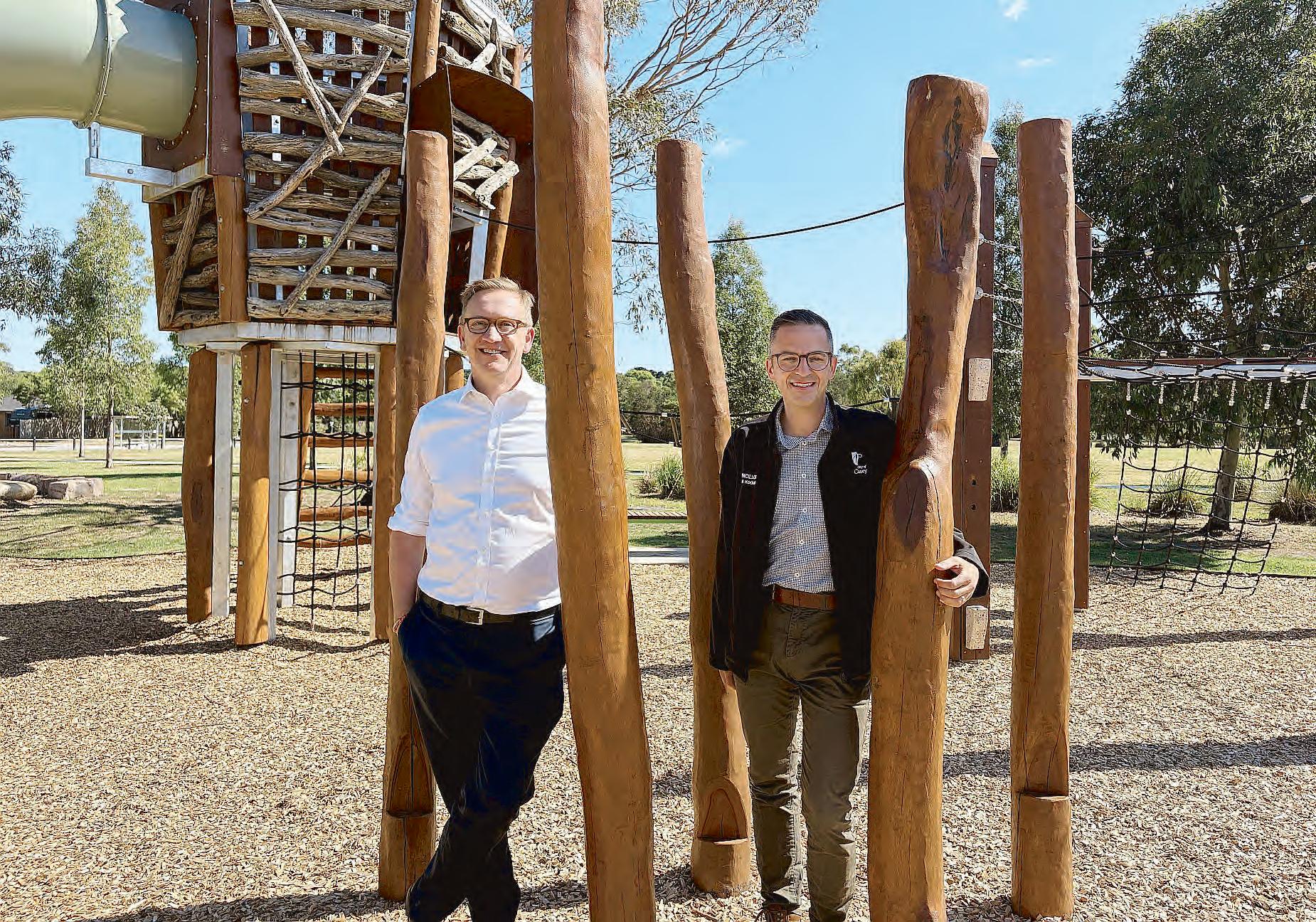
Two Casey playgrounds have a fresh look and more to offer kids of all ages - and their grown-ups.
Wood Road Reserve in Narre Warren South and Kendall Drive Reserve in Narre Warren both received funding for playground upgrades via the Federal Government’s Investing in our Communities program.
New play equipment, shelter, seating, footpaths, barbecues, fitness equipment and landscaping were part of Wood Road Reserve’s $821,000 facelift.
Kendall Drive Reserve’s $653,000 in works included a refreshed hit-up wall, new play and fitness equipment, shelter and seating, a new footpath network and landscaping.
Have you checked out these spaces post-makeover? Where are your favourite places to play? Email casey.neill@ starnewsgroup.com.au or connect with us on Instagram or Facebook.

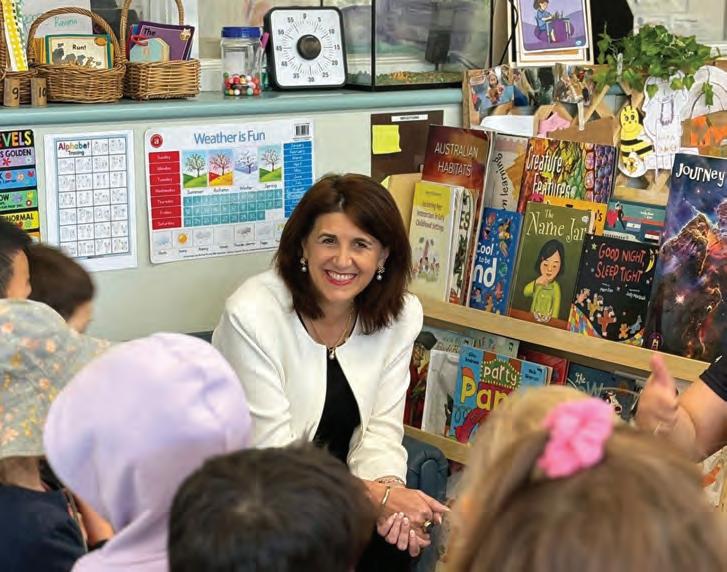



A lifeline for struggling Victorian parents has gone dark after Parentline was officially shut down late last year.
This vital helpline was a free, expert counselling service that was available from 8am to midnight, seven days a week.
It took up to 18,000 calls for help per year from parents throughout Victoria.
As a mother of four children, I know all too well that the journey of parenthood is fraught with challenges.
Every one of us reaches moments where raising a family becomes exhausting and difficult, and we would appreciate a helping hand.
That’s where Parentline came in. It provided emotional support, information, practical parenting advice and referrals to relevant services, supporting Victorian families in crisis.
Yet, as of October last year, Victoria is now the only state without this critical support line.
Parentline only costs $1.3 million per year to run – less than what the Labor government adds to its debt every hour.
But for the parents of at-risk teenagers, it provided critical early intervention support that deescalated conflict and prevented young people from ending up in the youth justice system, or worse.
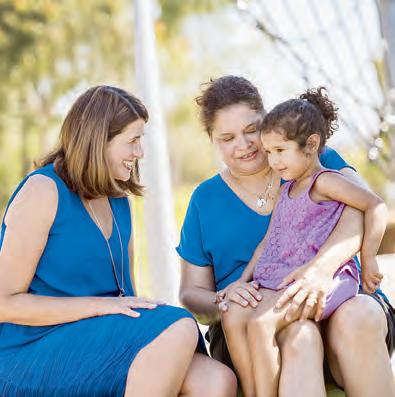

At a time when youth crime is spiraling out of control in Victoria – and we can see this on our local streets – Parentline could not be needed more.
That is why Victoria’s Liberals and Nationals are committed to restoring this vital service.
Victorian parents are raising our future generation, and they deserve a lifeline they can rely on.
Restoring Parentline isn’t just about support – it’s about giving families the helping hand they need to thrive.
EQUINE-ASSISTED therapy needs formal recognition, ethical guidelines and proper funding so it can reach more children, a new study has found.
University of South Australia social work graduate Morgyn Stacy led a study of 10 social workers and mental health practitioners delivering equine-assisted interventions (EAI) to children.
She said many children didn’t respond to sitting in a room with a therapist or clinician, which could be intimidating.
“But give them the space to be outside, to connect with a horse, and something powerful happens,” she said.
“They begin to feel safe, calm, and ready to open up.”
Morgyn said horses were highly sensitive to human emotions and body language, allowing them to mirror and respond to a child’s emotional state.
They offer a natural, non-judgemental environment, building trust and emotional safety.
The natural, open-air setting – often in paddocks surrounded by trees and wildlife – helps children feel relaxed and grounded.
“The benefits go beyond mental health,” Morgyn said.
“Children often gain confidence, improve communication skills, and build stronger emotional resilience.”
Even children who were initially afraid
of horses found strength in overcoming their fears, the research found.
Senior UniSA researcher and qualified social worker, Dr Fatin Shabbar, said EAI were particularly effective for children who had experienced trauma.
“Practitioners in the study described deeply moving examples of children bonding with horses in ways that sparked emotional breakthroughs where other therapies had failed,” she said.
But sessions can be expensive due to the cost of caring for horses and maintaining rural properties.
Unless families receive funding from bodies such as the NDIS and child protection agencies, many are forced to pay out of pocket or miss out altogether.
“Another concern is the lack of regulation in Australia,” Dr Shabbar said.
“Without clear guidelines, unqualified practitioners may offer equine-assisted services without appropriate training, which puts both children and the animals at risk.
“And those practitioners who are highly qualified still face an uphill battle to gain recognition of equine-assisted therapy as an evidence-based practice.”
The researchers said the findings were a strong call to action for professional bodies like the Australian Association of Social Workers (AASW) to provide clearer guidance and ethical standards for


By Casey Neill
SUZANNE Lee witnesses the power of equine-assisted therapy first-hand.
“One moment that has stayed with me involved a child who never spoke and avoided eye contact,” the Cardinia Equine Assisted Counselling founder and principal practitioner said.
“For weeks, they sat quietly in the paddock while Tobi, one of our small therapy pony team, grazed nearby.
“One day, Tobi walked over and stood beside this child, close enough that their shoulders touched.
“The child leaned gently into the pony and softly said, ‘You stayed.’ It was the first time they had spoken in therapy.
“Tobi became an anchor for this child to start feeling safe to communicate and express their needs.”
Suzanne said equine-assisted therapy looked very different from what many people imagined therapy to be.
“It is not horse riding, and it is not a recreational activity. People don’t come to learn to ride or to be instructed in horsemanship,” she said.
“Instead, equine-assisted therapy is a structured, therapeutic intervention that must be delivered by a qualified allied health professional or trained therapist, with appropriate clinical training and oversight.


‘The first time they spoke in therapy’
“Sessions focus on relationship, emotional safety, and supporting a person’s capacity to grow and develop in ways that feel safe and meaningful for them.
“The horses are not the therapist.
“Rather, they are carefully supported co-regulation partners who contribute to the therapeutic process under the guidance of the therapist.”
Sessions usually take place in paddocks or quiet farm spaces.
“Children, adolescents, and adults might brush a horse, walk alongside them, sit nearby and observe, or simply share space,” Suzanne said.
“Individuals are supported to make choices, listen to their bodies, and engage at their own pace.
“Horses respond naturally to how a person is feeling, often before there are words for those feelings.”
Many children who come to Suzanne have tried talk-based therapy and found it overwhelming or inaccessible.
“Some people don’t yet have the language to explain what they are feeling, while others struggle in structured, indoor environments,” she said.
“Equine and animal-assisted therapy allows people to build capacity through experience.”
Suzanne also works with a range of therapy animals, including dogs, cats,
and birds.
“Horses, however, offer something unique within a therapeutic context,” she said.
“From a neuroscience perspective, horses are highly attuned to non-verbal communication.
“As prey animals, their nervous systems are designed to notice subtle changes in body language, breathing, muscle tension, and emotional state.
“Humans - particularly those who have experienced stress or traumaoften communicate in these same non-verbal ways.
“When supported by a trained therapist, a horse’s responses can help individuals become aware of their own internal states.
“Over time, many people notice that when they slow their breathing or soften their posture, the horse relaxes too.
“This supports emotional regulation, self-awareness, and agency - not because it is taught or instructed, but because it is experienced.”
Suzanne often sees people who initially are afraid of horses find strength in moving through that fear.
“Some people begin by observing from a distance, then slowly step closer, and perhaps one day reach out to touch a horse’s mane,” she said.
“These small moments carry a lot of meaning.

“With therapeutic support, individuals learn they can approach something that feels big or uncertain and remain safe.
“This experience often strengthens confidence, trust in self, and the capacity to face challenges in other areas of life, including relationships, learning, and everyday situations.”
Suzanne came to equine-assisted therapy through her professional training and her lived experience of how powerful animals and nature can be in supporting emotional wellbeing and development.
“I am a registered counsellor and allied health professional, and I have spent many years working with children, adolescents, and adults who have experienced trauma, anxiety, neurodivergence, disability, or emotional overwhelm,” she said.
“Equine-assisted therapy requires specialist training that integrates counselling skills, trauma-informed practice, nervous system regulation, and an understanding of both human and animal welfare.
“My role is to hold the therapeutic framework, ensure emotional and physical safety, and support each person’s goals, while the horses support the process through their sensitivity and presence.”
AFTER more than two years in the works, Cardinia Cultural Centre (CCC) is finally set to hit play on the Arca Arcade: Round One exhibition from New Zealand.
While the CCC Gallery is no stranger to interactive or playful exhibitions, this one is set to ignite audiences of all ages as it pays “homage to the enduring allure and cultural significance of arcade gaming with machines that are adorned by te ao M?ori influences and styles of Aotearoa New Zealand’s eminent artists,” exhibition creator Preston McNeil explained.
Free to visit and to play, the exhibition will be open daily from 19 March to 17 May (which includes the April school holidays), 10am to 4pm.
The exhibition is also packed with additional programs, including an opening function with an artist talk by Preston McNeil on Thursday, 19 March, 6pm to 7pm.
This is a free and all-ages event.
If you fancy something a bit more hands-on, then you can’t miss the
Control Freak – Build Your Own Joystick Workshop on Saturday 16 May, 12.30pm to 3.30pm.
This is a ticketed event with limited places, so don’t miss out! Teams of two are welcome and adult supervision is required for younger participants.
Finally, what exhibition could truly celebrate arcade games without a tournament?
Sign up now for the Street Fighter II – Hyper Fighting Tournament on Sunday 17 May, 12.30pm to 3.30pm.
Don’t delay booking as this free and all-ages event is sure to book out fast!
For full details and bookings, head to cardiniaculturalcentre.com.au.
Manu Drip Fantail, 2023. (Preston McNeil and Flox)








LOOKING to mix up your schoolholiday plans with something unforgettable?
Head to Dandenong’s Drum Theatre for a joyful, eco-themed adventure brimming with comedy, creativity and marine magic.
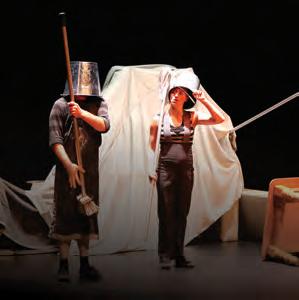
Trash with a Porpoise is a laugh-outloud kids’ comedy packed with puppets, songs and a wonderland of recycled creations.
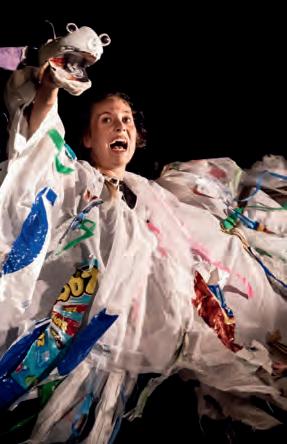
Trash with a Porpoise | Saving oceans one trash puppet at a time
The Trash Puppets team dives deep into our waterways, battling whirlpools, cracking jokes with a walrus and uncovering playful, practical ways families can care for the planet.
With a delightful cast of crabby crabs, curious sea slugs, penguins, seahorses, porpoises and even a puffer fish, young audiences (ages four to 12) will be hooked from the first splash.
Critics call it ‘a must-see’ and ‘a laugh
a minute’.
But the fun isn’t limited to the stage.
Arrive early to take part in Rainbow Reef: A Living Foyer Installation, a free hands-on craft experience where kids turn everyday ‘trash’ into a colourful underwater world.
Plastic becomes polyps, cardboard becomes coral, and bottle tops bloom into vibrant sea life. After the show, families can keep creating at interactive
craft stations, adding their handmade creatures to the growing communal reef.
Come early. Get messy. Make memories. And leave your mark on the ocean — one recycled creation at a time. Trash with Porpoise hits the Drum Theatre stage on Thursday 9 April. Visit drum.greaterdandenong.vic.gov. au/puppets for tickets and more information.









Teeny Tiny Stevies
Bluey’s Big Play The Stage Show
and 12.30am


Award Winning Venue Affordable Family Options
Treat the family to the plush red seats of the Drum Theatre
Fun Craft Activities


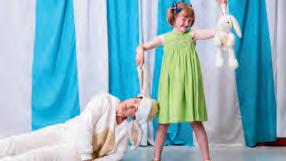
Enjoy craft workshops for the whole family at Trash With a Porpoise and Velveteen Rabbit
Food and Drinks
Get your tasty treats from the Drum Café or discover local food options in heart of Dandenong
Drum Theatre | Corner Lonsdale and Walkerstreets,Dandenong | 85711666drum.greaterdandenong.vic.gov.au
Opening hours: Monday - Friday | 10am - 4pm
Drum Theatre | Corner Lonsdale and Walker streets, Dandenong | 8571 1666 drum.greaterdandenong vic gov.a hours: - | 10 4pm





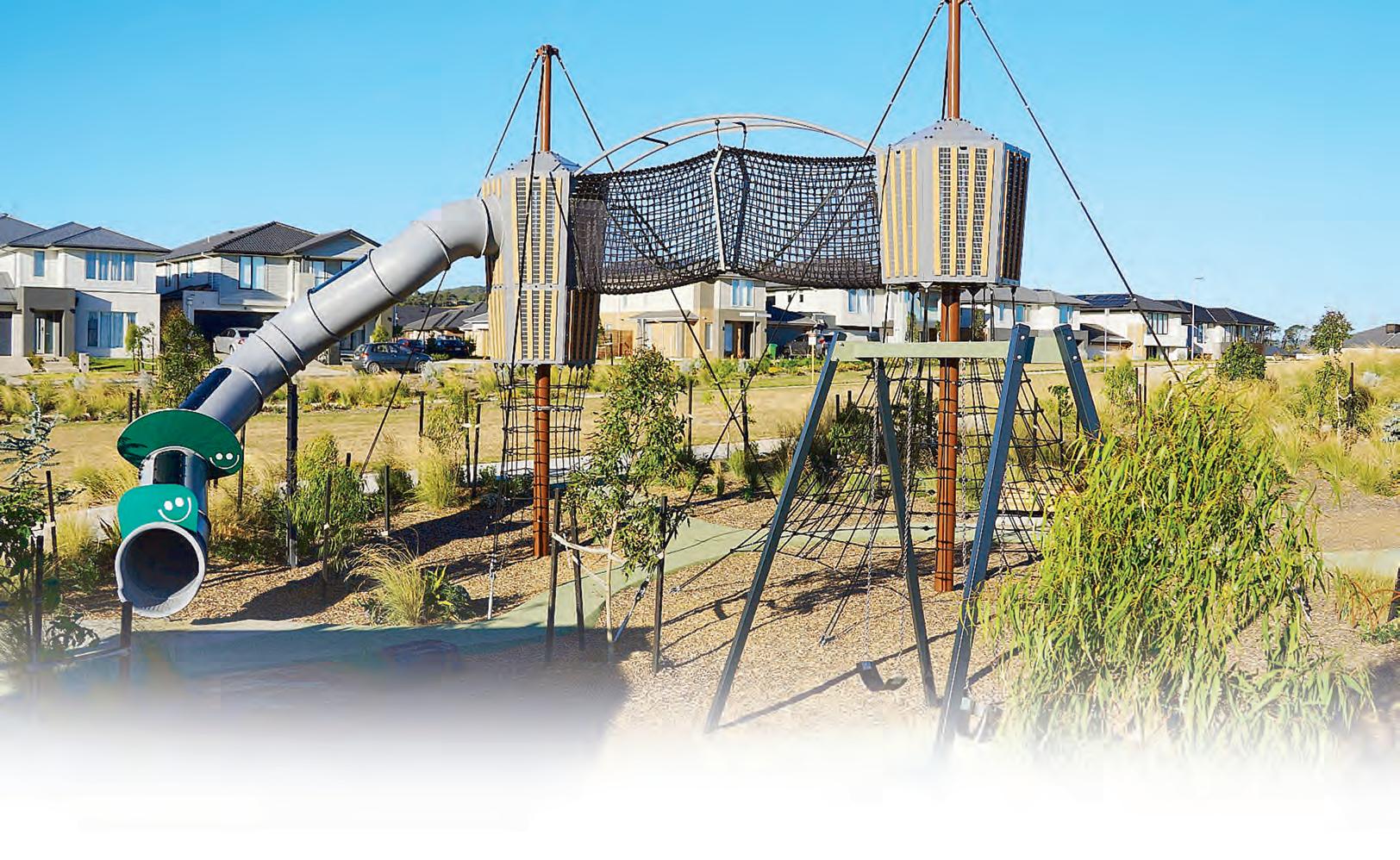
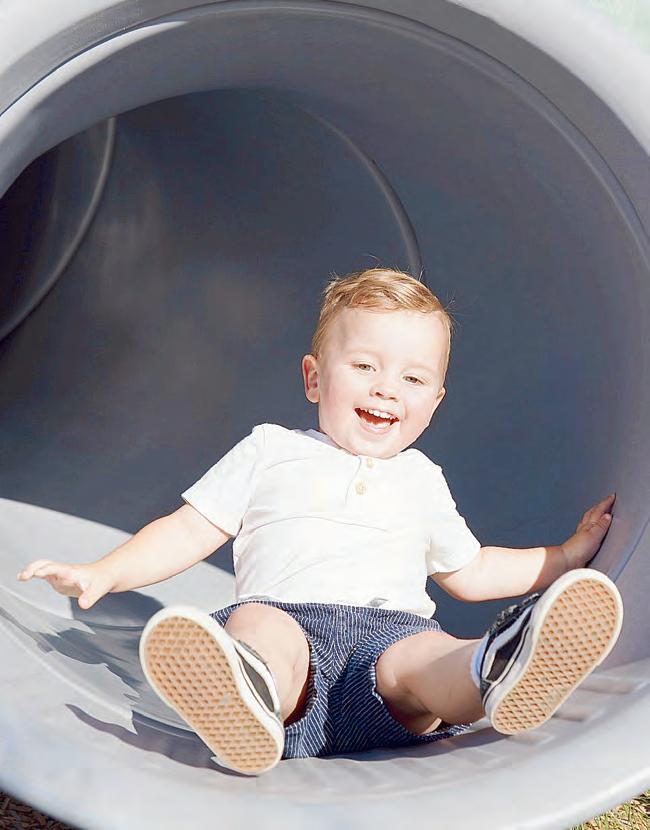
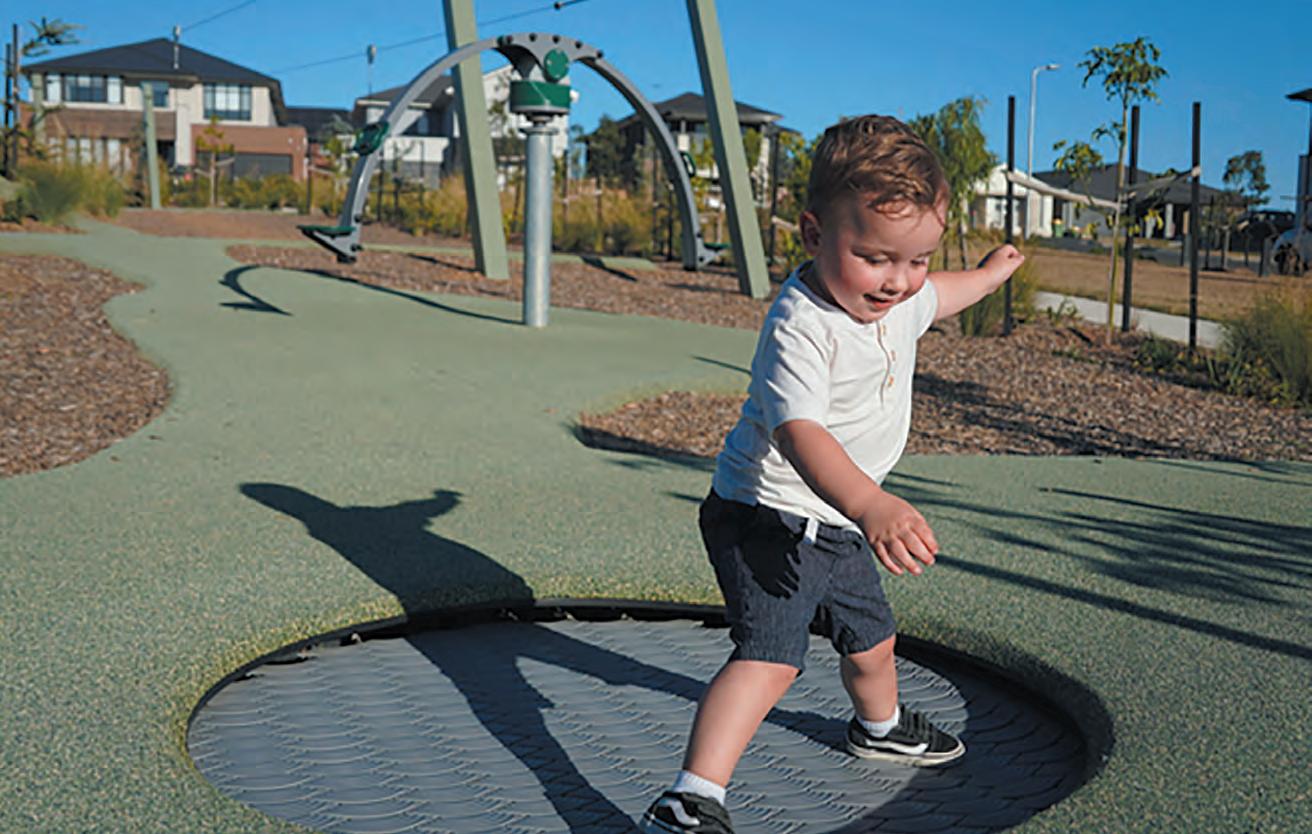
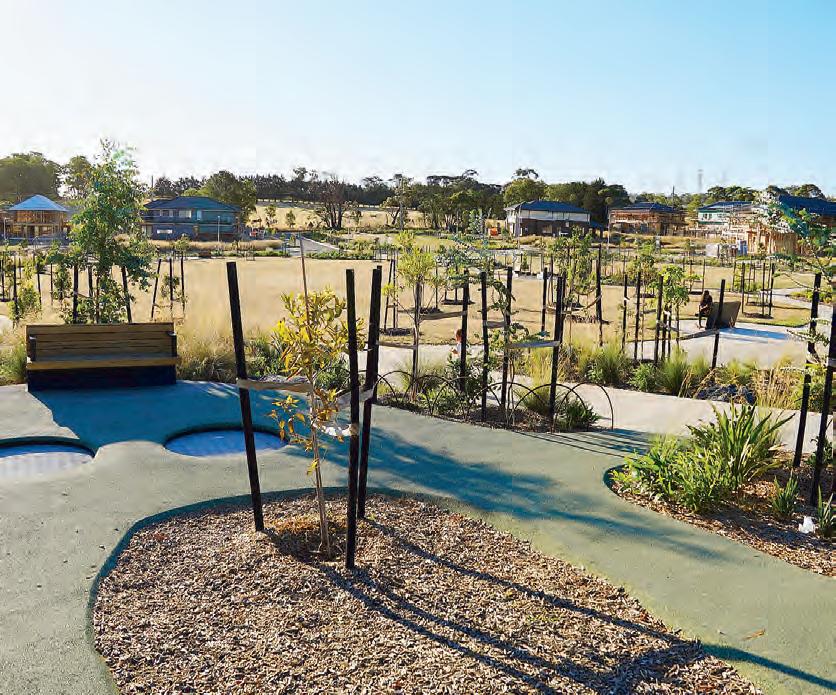
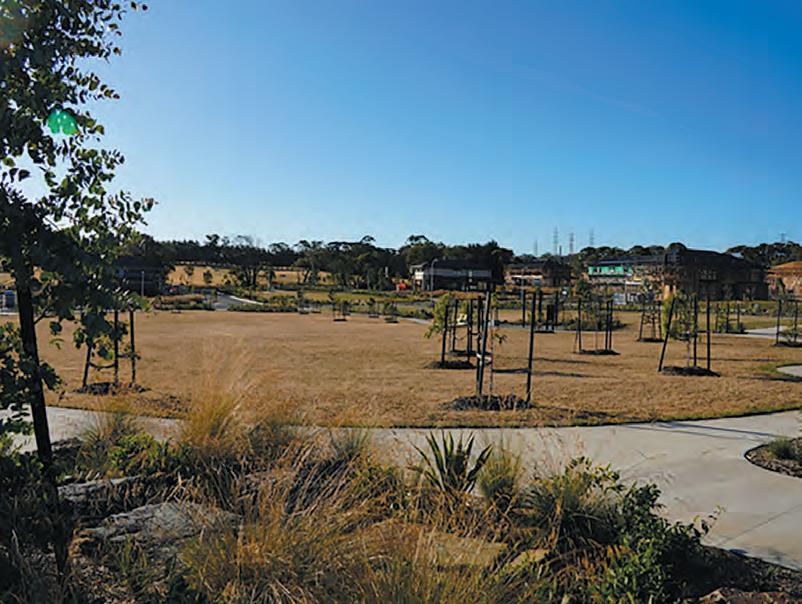
THIS new playground is proving Officer isn’t a one-trick pony when it comes to places to play.
Yes, Officer District Park is impressive, but just a few minutes away is a new addition to the Arbor estate that’s ticking a lot of playdate boxes.
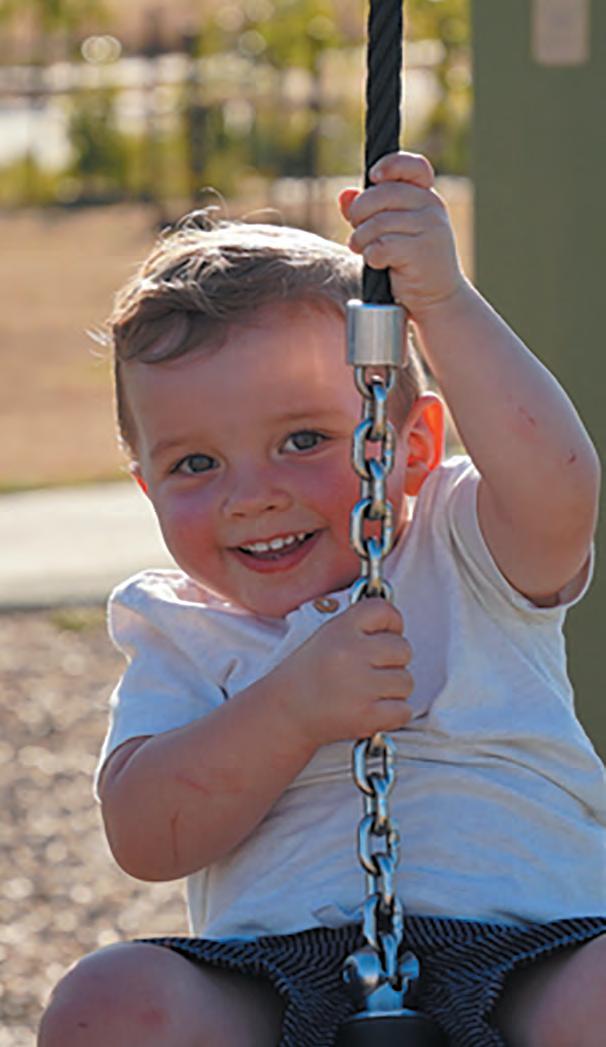
Just off Starling Road, bigger kids can tackle a large climbing structure while toddlers put mini trampolines, a seesaw, and a pint-sized slide through their paces, with plenty of soft fall rubber underfoot for inevitable stumbles.
The ever-popular flying fox and a nest
swing round out the play equipment.
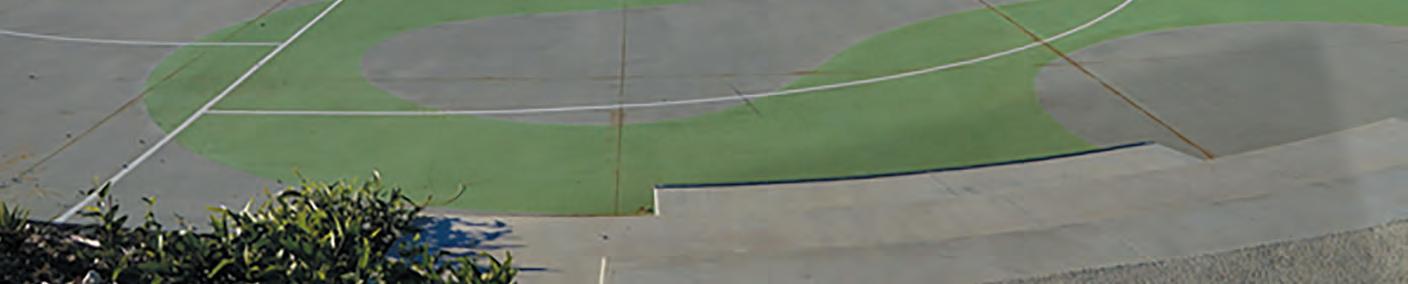
A basketball and netball ring, a fitness track featuring gym equipment, and paths for bikes and scooters provide further opportunities for all ages to get their bodies moving.


Grab a snack and seek some shade at the picnic tables, or cook up a barbecue lunch or dinner.
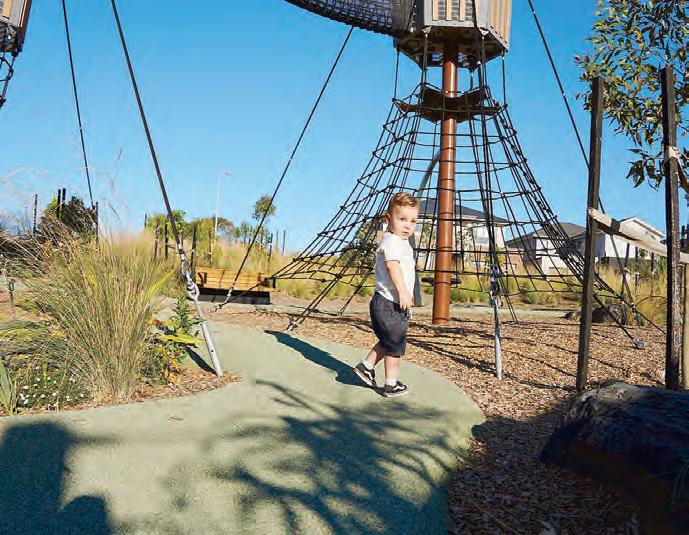
Photographer Nick Sinis captured his son putting the new space through its paces.





















By Dr. Lawrence Pawar, Aura Dentists
AS a dental practice owner in Cranbourne North, I often see something invisible that steals from a child’s potential every night, and that is the silent suffocation during sleep.


rarely examined.
In fact, sleep studies do not get Medicare rebates yet!
It’s not a headline-grabbing issue, yet it quietly affects how children grow, think, and feel.

We live in a time when children are being diagnosed with a range of psychological and behavioural conditions at record rates. They are placed on stimulants, antidepressant medications, often in an effort to help them focus, calm down, stay on track at school.
Parents trust their doctors, and there is no doubt that those doctors truly want to help.
But too often, no one stops to ask the WHY? Why is the child struggling in the first place?

Sleep takes up a third of a child’s life, yet it’s
When a child snores, grinds their teeth, wets the bed at night, breathes through their mouth, and wakes up tired, these can be signs that their airway, the pathway for life-giving oxygen, is being restricted during their sleep.
This is not a pseudoscience; it’s biology. Chronic airway obstruction means the brain repeatedly runs low on oxygen, impacting concentration, mood, growth, and facial development.
Unfortunately, there is no pill to solve this issue, no quick fix.
It requires effort, habit, diagnosis, treatment, and time.
As an airway-focused dentist, my role is to look beyond teeth; it’s to check how a child breathes at night.
Enlarged tonsils, tongue position, narrow mouth arches, and poor jaw development can all play a part.
Before medicating, parents should consider the most powerful tool the body has for healing and growth: quality sleep.
If your child struggles with focus, fatigue, or mood swings, start by ensuring they can breathe and sleep properly, and hold off on the pills.
Your child’s future may depend on it.

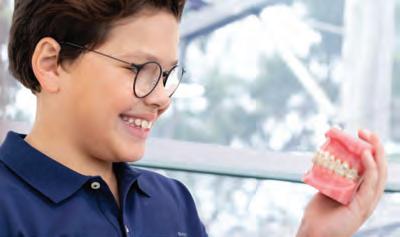
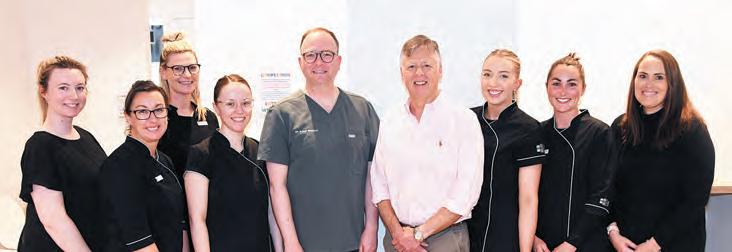
ATSouth East Orthodontics in Berwick, creating confident, healthy smiles is at the heart of everything they do.
The dedicated team understands that every child’s smile is unique, which is why they offer a personalised approach to orthodontic care for children, teens, and families across the Casey Cardinia region.
Many parents wonder when the right time is to see an orthodontist.
The experts at South East Orthodontics recommend an initial consultation around the age of seven.
At this stage, highly trained orthodontists can identify any developing issues early and guide jaw and tooth growth in the right direction.
Early intervention can make treatment simpler, more comfortable, and more effective as your child grows.
Using the latest in orthodontic technology – from modern braces to discreet clear aligners – South East Orthodontics ensures children and teens receive treatment that suits their lifestyle and needs.
Their focus on comfort, innovation, and ongoing education


means families can feel confident their child is receiving the very best care available.
Beyond straight teeth, orthodontics plays an important role in a child’s overall health.
Correct alignment can improve chewing, speech, breathing, and even self-esteem.
For many young patients, the journey to a beautiful smile also helps build confidence that lasts a lifetime.
South East Orthodontics is proud to support families in Berwick and the wider Casey Cardinia area.
With a warm and welcoming environment, they make each visit a positive experience for both children and parents.
To learn more or book a consultation, visit www.seortho.com.au.
Orthodontic Treatment for children and adults utilising the latest technologies including SureSmile, Invisalign, lingual and clear appliances. We offer flexible, interest free payment plans to make orthodontics accessible to everyone.
Strict hygiene and physical distancing policies in place.



MORE than a million children are missing out on free dental work due to misinformation, according to the Australian Dental Association.
Of the 2,595,862 children eligible for the government’s Child Dental Benefits Schedule (CDBS) in 2020-2021, just 1,003,838 children used its services.
“This leaves millions of eligible Australian families either going without dental care or paying more out of pocket than they need to, when it could so well fund a child’s first dental visit,” ADA president Dr Chris Sanzaro said.
“It’s a scheme that’s shrouded in mystery and confusion - and with over 1.5m Australian kids missing out, the government urgently needs to better promote it to ensure eligible families can access this care.”
For eligible families - typically those in receipt of Family Tax Benefit A - the CDBS provides up to $1,132 over a two-year period for dental services such as examinations, x-rays, cleaning, fissure sealing, fillings, root canals, and extractions for children aged from newborn to 17.

The survey found other reasons for not using the scheme included it not being well publicized or easily understood.
Many were unaware that the CDBS could be accessed through a private dentist, assuming it would only be available through the public dental system.
About 20 to 25 percent said they believed their child/children were eligible but were waiting for confirmation from Services Australia.
“These results point to a catalogue of confusion, misinformation, and lack of clarity around what’s in reality a good scheme that could potentially be meeting the oral health needs of nearly 2.6 million kids a year,” Dr Sanzaro said.
“We’re keen to work with the government to help clarify the basic elements of the scheme and promote it to patients and parents to ensure millions of kids are getting the dental treatment and care they need to set them up with healthy mouths early in life.”
An ADA survey of 25,000 adults found that many were under the incorrect impression that the CDBS did not cover restorative or cosmetic dental care.
IT’S natural to feel torn between wanting to breastfeed for its numerous benefits and fearing it might cause dental problems.
I’m speaking to you as both a dentist and a mother to help make you stressfree about breastfeeding and baby teeth, and their connection to your baby’s long-term dental health.
The World Health Organization (WHO) and the National Health and Medical Research Council (NHMRC), Australia, recommend exclusive breastfeeding for the first six months of life, and continued breastfeeding alongside the introduction of solid foods for at least the first year.
Benefits for baby’s oral health
■ Breast milk is rich in nutrients that support strong tooth development.
■ Breastfeeding supports proper jaw development and better tooth alignment, and limits sugar exposure compared with formula.
■ Breastfeeding stimulates saliva production, which helps wash away food particles and neutralize acids.
■ Compared with bottle-feeding, breast milk is delivered slowly and to the back of the mouth, minimizing prolonged exposure of teeth to sugars.
Potential risks
■ When the first tooth erupts: Brush daily with a soft-bristled infant toothbrush.
■ Sleep routines: After teeth appear, avoid routine feed-to-sleep and clean your baby’s mouth before bedtime.
■ Let your baby see you brushing and caring for your own teeth to build healthy habits little ones love to mimic!
Baby dental visits
■ Schedule the first dental visit by your baby’s first birthday.
■ Continue with routine checkups every six months.
■ Early visits help prevent cavities and allow prompt care for issues such as tooth eruption disorders, malocclusion, underdeveloped jaw, nursing caries, tongue-tie (ankyloglossia), and enamel hypoplasia.
Dr. Ana Iyengar, Cranbourne Dental Centre

■ Cavity risk mainly increases when feeds are frequent and continue on demand at night after teeth have erupted, especially if oral hygiene is inadequate— not from breastfeeding alone.

■ Focus on good daily oral care and avoid routine feed-to-sleep once teeth appear to keep risk low.
Protecting mum’s smile
■ Aim for about 1,000 mg of calcium daily and ask your doctor about supplements if intake is low.
Daily oral care for baby
■ From birth: Gently wipe your baby’s gums with a clean, damp cloth after feeds.








IS your child struggling to keep up with their peers?
Maybe they:
■ Seem unusually clumsy or often fall;
■ Struggle to keep pace when running, climbing, or playing sport;
■ Walk on their toes or with feet turned in or out;
■ Have trouble balancing, or catching and throwing a ball; or
■ Find bike riding or swimming harder than expected.
Parents are usually the first to notice. A hesitation. A difference. A quiet frustration.
Children develop at different rates. But when movement challenges persist, early support can make all the difference - not just physically, but socially and emotionally too.
At Ocean Kids Health, the experienced team provides both paediatric physiotherapy and paediatric exercise physiology to support babies and children in building strong, confident movement skills.
Ocean Kids Health supports children who experience:
■ Frequent tripping or clumsiness;
■ Difficulty keeping up in sport or active play;
■ Toe walking or unusual walking patterns;
■ Feet turning in or out; and
■ Sensory processing challenges affecting movement.
The team’s approach is evidencebased, practical, and child-centred.
Ocean Kids Health identifies the ‘why’ behind how your child moves, then creates an individualised plan to build strength, coordination, balance, and resilience.
Through hands-on therapy, targeted exercise, and real-world strategies for home and school, the team helps children move more efficiently - and with confidence.
Because movement isn’t just about milestones, it’s about belonging. Participation. Joy.
If something doesn’t feel quite right, trust your instincts – book an assessment today.
Help your child move, play, and thrive.
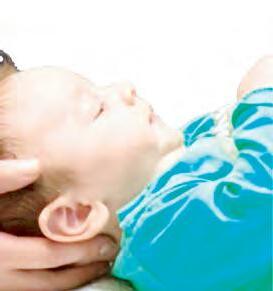
WHEN it comes to caring for growing bodies, every parent wants the best support possible — especially when something doesn’t seem quite right with a child’s comfort, movement or development.
That’s where Berwick Family Osteopathy and Spinal Clinic steps in, offering specialised paediatric osteopathy services for babies, children and adolescents from across the CaseyCardinia region.
At its core, paediatric osteopathy is a form of hands-on manual therapy that has a holistic approach.
It helps identify and address musculoskeletal stresses and strains that can affect a baby or child’s wellbeing.
From the very first days of life, babies can experience tension from their birth journey or the rapid changes that come with early development.
These strains can show up in many ways — unsettled behaviour, uncontrolled crying, feeding or sleeping challenges, head-turning preferences, arching or discomfort in prams and car seats, to name a few.
The team at Berwick Family Osteopathy takes the time to listen, observe and assess how your child moves and functions.
Trained osteopaths work collaboratively with families and other healthcare providers - including GPs, maternal-child health nurses, paediatric dentists and lactation consultants - to

ensure a full picture of your child’s health and needs is considered.
Treatment isn’t one-size-fits-all — it’s tailored to each child’s age, presentation and comfort.
Berwick Family Osteopathy performs a thorough medical examination and movement-based assessment, then provides gentle hands-on treatment techniques to encourage improved function.
Whether it’s helping a newborn baby with a head preference or feeding difficulties, a toddler with growing pains, supporting posture through school years or assisting with tension from sporting activities, the clinic approaches every case with care and expertise.
For local families looking for a way to help their child move better and feel more comfortable, Berwick Family Osteopathy and Spinal Clinic offers compassionate care designed specifically for growing bodies.


PARADIGM Health on Princes (PHOP) is proud to continue growing alongside its local community, expanding services to support the health and wellbeing of Cardinia families at every stage of life.
PHOP is delighted to welcome Dr Sai Ramisetty to its team.
Bringing enthusiasm, fresh insight and a dynamic work ethic, Dr Sai is committed to delivering thoughtful, family-focused care for children, parents and grandparents alike.
The clinic’s expanding services also include Dr Mike and Sunbird Skin Cancer Services, offering comprehensive skin cancer checks, diagnosis and treatment close to home.
PHOP’s medically led aesthetics department provides safe, professional services to support confidence and wellbeing.

UNIQUELY U Support Services is a locally owned and operated business proudly servicing the South East suburbs.
Co-owners Jane and Amy bring extensive experience in the disability sector, with a combined total of more than 20 years’ experience.
From it’s hobby farm, Uniquely U offers:
■ One-on-one therapeutic animal sessions.
■ Kids’ social groups; ■ School holiday programs; and
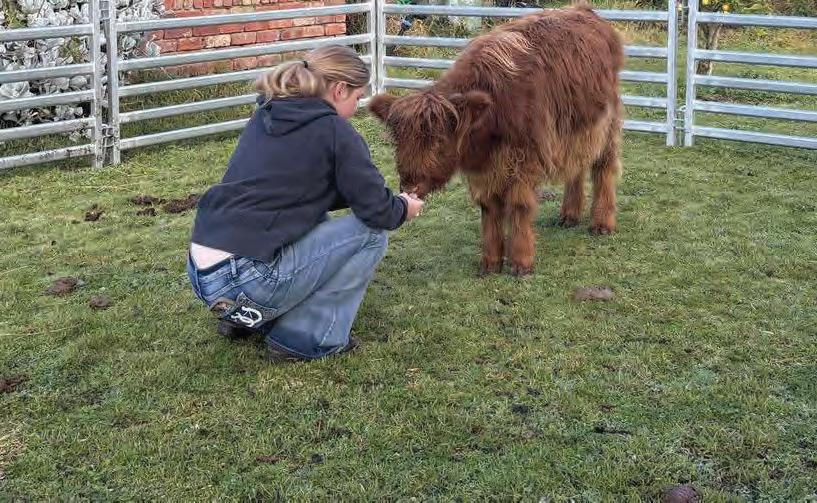
The sessions provide meaningful interaction with Uniquely U’s friendly Highland cows, horses, chickens, guinea pigs, and baby chicks, creating a calm and supportive environment that promotes emotional wellbeing. For more information, call Amy on 0478 795 970 or Jane on 0421 001 334, search Uniquely U Support Services on Facebook, or email uuss@outlook.com.au.
As always, PHOP exists to provide superb health outcomes through its dedicated and experienced team — led by Dr Chander Hrstic and Dr Dan Chomlak, who deliver outstanding personalised care, and highly experienced nursing staff, all of whom are passionate about caring for local families.
who deliver outst care, and highly staff, all of whom caring local fa




The friendly administration team is also growing, warmly welcoming Giorgina Kapaklis, who is eager to support patients and ensure every visit is a positive one.

Looking ahead, PHOP is expanding support for aged care residents and developing community-focused clinics and activities to keep local families healthy, connected and thriving.

Same-day appointments are usually available for our doctors. Contact the clinic to book an appointment on 7001 1400 or book via HOTDOC.



The a also growing, wa Giorgina Kapakli a one ahea support for aged com and activities to connect app clinic to book an Hea trusted local p lo High
Paradigm Health on Princes is your trusted local partner in lifelong family health, located at 19/445 Princes Highway, Officer, on the ground floor.




Whenitcomestocaringforgrowingbodies,everyparentwants thebestsupportpossible—especiallywhensomethingdoesn’t seemquiterightwithachild’scomfort,movementor development.That’swhereBerwickFamilyOsteopathyand SpinalClinicstepsin,offeringspecialisedpaediatricosteopathy servicesforbabies,childrenandadolescentsfromacrossthe Casey-Cardiniaregion.










FORMS for a common genetic screening test often blur the lines between commercial marketing and medical consent, a new study has found.
The authors are calling for clearer, standardised documentation and more emphasis on counselling that explores parents’ values and expectations.
The non-invasive prenatal testing (NIPT) is a blood test that analyses fragments of fetal DNA circulating in a pregnant woman’s blood.
It detects chromosomal conditions such as Down syndrome with higher accuracy than older prenatal screening tests.
But it is not publicly funded, requiring prospective parents to access the test through commercial providers and costing up to $550.
University of South Australia bioethicist Dr Hilary Bowman-Smart has led a study with researchers from Monash University and the University of Melbourne, analysing forms from seven major NIPT providers.
The researchers found ‘significant variation’ in how the forms are signed, worded, and designed, raising questions about how informed consent is achieved in prenatal care, particularly when testing is provided on a user-pays basis.
“These forms are far from standardised,” Dr Bowman-Smart said.
“Some look like simple pathology request forms, and others resemble consent documents or even marketing brochures.
“Many combine elements of all three.”

She said that most forms used words like ‘informed consent’ but often failed “to provide the essential information that parents need to make a decision in a way that’s easy to understand.”
The study found the use of technical language - such as aneuploidy, microdeletions and karyotype - is common.
But key facts - including the possibility of false positives, test limitations, or incidental findings - are missing from many forms.
“Only half of the forms explained the difference between a screening test and a diagnostic test,” Dr Bowman-Smart said.
“It’s also important for expectant parents to know that NIPT can sometimes return false-positive results.
“That’s a major gap, given this information is critical to helping expectant parents understand what the test can and can’t tell them.
“This information might be conveyed verbally by clinicians, but it’s missing from these forms.”
Dr Bowman-Smart said the NIPT forms appeared to serve multiple, sometimes conflicting functions – as medical records, administrative tools, and commercial contracts.
“Many forms include branded colours and logos, and some request credit card details or online payment confirmation, positioning the test as a consumer purchase rather than a medical procedure,” she said.
“This commercial framing can shift the dynamic between clinician and patient.
BABIES across Australia are developing serious infections because their parents are forced to reuse soiled nappies.
Dr Vincent Candrawinata has joined The Nappy Collective as an official advocate to highlight the serious and growing health impacts facing babies and young children due to nappy poverty.
“No child in Australia should be at risk of infection because their parents can’t afford something as basic as a clean nappy,” Dr Vincent said.
“As a scientist and health and wellness expert, I’ve seen firsthand how something so simple can have devastating long-term effects, from rashes and skin breakdown to infections that require hospital care.”
One in six Australian children lives in poverty. For many families, the rising cost of essentials means that nappies become an unaffordable luxury.
Many families are using nappies for far longer than recommended or washing and reusing soiled disposable nappies.
“Prolonged exposure to moisture, bacteria and waste can lead to painful nappy rash, urinary tract infections,
and fungal or bacterial skin infections,” Dr Vincent said.
“In more severe cases, children can develop open sores, cellulitis and systemic infections that may require antibiotics or hospitalisation.
“These preventable health issues are becoming increasingly common among families experiencing financial stress and are placing additional pressure on an already stretched healthcare system.”
The Nappy Collective CEO Sue Karzis said more needed to be done to address the silent health crisis impacting children who did not have a voice.
The Nappy Collective is a national Australian charity dedicated to supporting families experiencing nappy stress - the struggle to afford enough clean nappies for their babies and young children.
The organisation collects unused disposable nappies and redistributes them to families in crisis, and advocates for greater public awareness of nappy poverty and its hidden impact on child health, poverty and social equality.
For more information or to donate, visit www.thenappycollective.com.
“When a genetic test is marketed like a product, it risks making a deeply personal medical decision feel like a transaction.”
Dr Bowman-Smart said written forms should support, not replace, conversations between clinicians and patients.
“As genetic testing becomes more complex, the human element – and the time and resources to allow clinicians and prospective parents to have meaningful conversations about their prenatal testing options – is more important than ever,” she said.
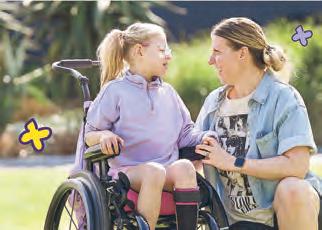
ACD is the Victorian advocacy service for children with disability and their families.
The not-for-profit organisation is led by and for families of children with disability.
For more than 40 years, ACD has supported families across Victoria and advocated for children with all types of disabilities.
The team helps families gain the knowledge, skills, and confidence to advocate for their children.
It supports families with children from birth to 18 and the professionals working with them.
ACD’s free services:
Information resources
■ Get online fact sheets for all stages of your child’s journey.
■ We cover topics such as starting kindergarten, student support groups, your teenager and Medicare, and getting good evidence for NDIS.
Online workshops and peer support
■ Gain the practical skills, up-to-date information, and the confidence to better support your child.
■ ACD’s professional facilitators are

parents of children with disability and understand the challenges you might be facing.
Support line
■ ACD’s free telephone advocacy support service helps you understand your child’s rights and advocate for your child.
■ Its confidential and judgment-free advice can help you:
■ Prepare for meetings with childcare, school, or NDIS;
■ Find resources and information; and
■ Plan the next steps in your journey. Contact ACD via mail@acd.org.au, 9880 7000, or 1800 654 013 regional. Find more information at www.acd.org.au.
By Casey Neill
SCAMS, hidden costs, and confusing finance options can make buying a first car a risky milestone.
Financial Basics Foundation aims to change that with its free MoneyIQ video series.
The not-for-profit organisation’s CEO, Katrina Samios, said buying a car was the first big financial decision many young people made.
She said online sales, scams, and a plethora of credit options made buying a car a very different experience for today’s teens than previous generations.
“Once upon a time, it was fairly simple: What car do I want? What can I afford? Go into a dealership,” she said.
Today, only 14 percent of first-time car buyers buy through dealerships.
“In this online marketplace, we have to be aware of things that young people need to look out for that many of us - as parents of teens - didn’t have to,” she said.
“We did rock up to the dealership, things were on paper.
“We highly encourage parents to do the courses or have a look at the fact sheets to get the information that they need.
“We recognise that parents should be the primary guide, mentor, and educator of their young people.
“Part of the issue is still that idea that money isn’t spoken about, so these conversations aren’t happening as frequently, as early, and as often as they should be happening in the family.
FOUR new Casey schools have welcomed their first students.
Clyde North’s Balambalam Primary and Birranga College, Cranbourne North’s Kala Primary, and Kulap Primary in Clyde all opened their doors from term one to meet increasing enrolment demand from a growing population. Their names all come from the Bunurong Boonwurrung language.
Balambalam - meaning butterfly or moth - will have places for up to 715 students from Prep to Year 6, including 65 students with disabilities.
As a supported inclusion school, it has extra accessibility features to support more students with disabilities.
Principal Danielle Heatley has 25 years of experience in teaching and leadership.
Birranga College will be able to enrol up to 550 students when the school is completed.
The school is being built in stages, with several facilities still to be completed by term two.
“All the research shows that those conversations started early and at home increase the financial literacy of young people.
“Involve your teens in financial decisions and opportunities to learn.”
Katrina said schools also needed to do more to improve financial literacy. FBF is advocating for a standalone subject covering the basics.
“Financial literacy is embedded in the Australian curriculum. It’s not standalone, it’s not compulsory,” she said.
“It’s inconsistent. If the teacher is not confident or equipped to delve into personal finance, they don’t have to.
“Kids are leaving school without having the basics of managing their finances.”
She said this fundamental knowledge was particularly important given the marketing and algorithms targeting young people today.
“Everything is designed to make them spend,” she said.
“And there’s no friction, there’s no barrier to spending anymore.
“Once upon a time, if you didn’t have the $20 in your wallet, you couldn’t spend it.
“Now, young people are engaging as consumers with digital transactions without understanding even the basics, like the different types of bank accounts.
“It’s easy to spend money.”
And easy to rack up debt thanks to ‘predatory’ buy now, pay later products.
“It is outrageous,” Katrina said.
“It’s cashless, it’s invisible.
“You think it’s free until you can’t make a repayment, until you get hit with the fees.
“You are going into debt.”
Katrina said financial literacy not only helped young people to avoid pitfalls, but be proactive about their money.
“What budgeting does is it gives you the freedom to do exactly what you want to do because you’ve planned it out,” she said.
“It’s not a restriction.
“You’re saving to thrive rather than saving to survive.”
Learn more about FBF’s resources and programs at financialbasics.org.au.
It’s only open to Year 7 students for 2026, with an additional year level to be added each year.
Birranga means feathertail glider.
Principal Nick Hamer-Smith has been teaching in government schools for 24 years and has been involved in several leadership roles, most recently as co-principal of Glen Eira College.
Kala Primary has places for up to 525 students, from Prep to Year 6.
Kala is pronounced KUH-luh and means dog.
Principal Tracy Knight was the principal at Knox Gardens Primary for 13 years and was an assistant principal at Heany Park Primary for five years.
Kulap Primary has space for up to 525 students, from Prep to Year 6.
Kulap is pronounced KOO-lup and means emu.
Principal Mati Azadzoi has more than 13 years of experience leading teams in primary and secondary schools.
Visit www.findmyschool.vic.gov.au to explore your school zone.







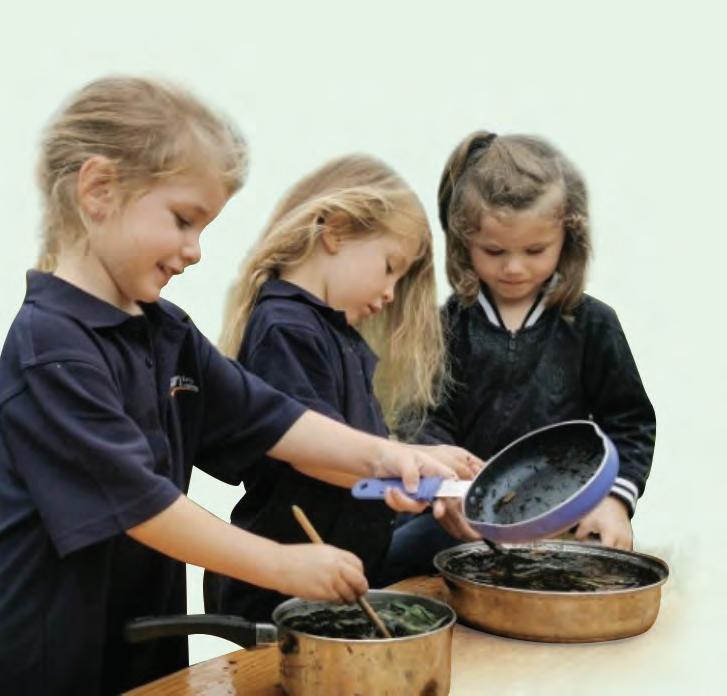

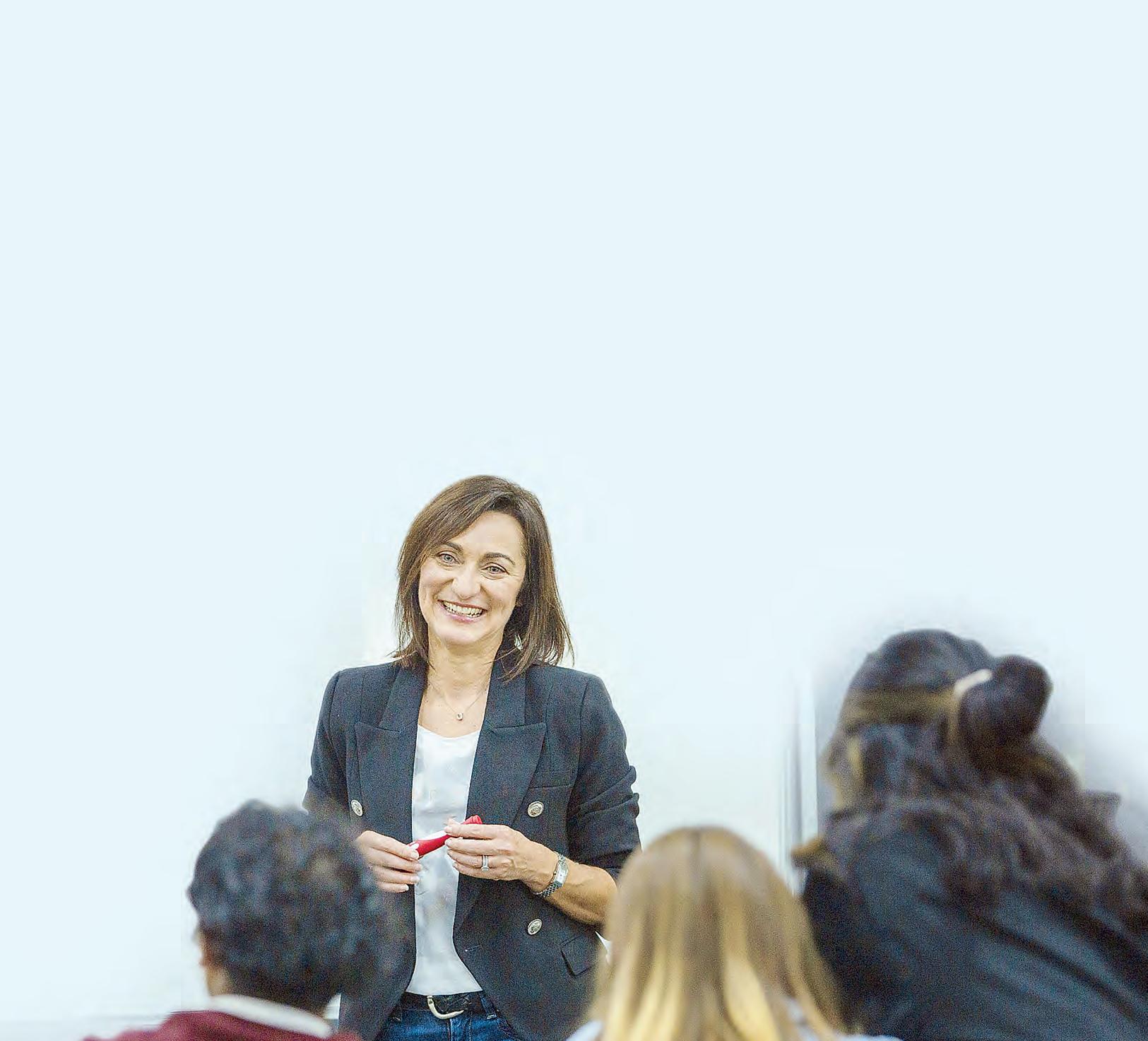
FIRST believes that all children are unique and valuable members of our society.
Every child is a capable learner, active in their own discovery and journey to foster and enhance their education and development.
FiRST educators are nurturing, dedicated, and experienced.
They create environments for every child that promote and encourage a love of learning, sense of security, wellbeing, and diversity.
Educators at FiRST Early Learning thrive on the empowerment of children and early education. They create a safe haven for every child.
The team takes pride and has a respectful understanding that
families entrust educators with their children on a daily basis.
It is with this acknowledgement that the FiRST team provides a home away from home and nurturing environment that fulfills every child’s safety, security, and wellbeing.
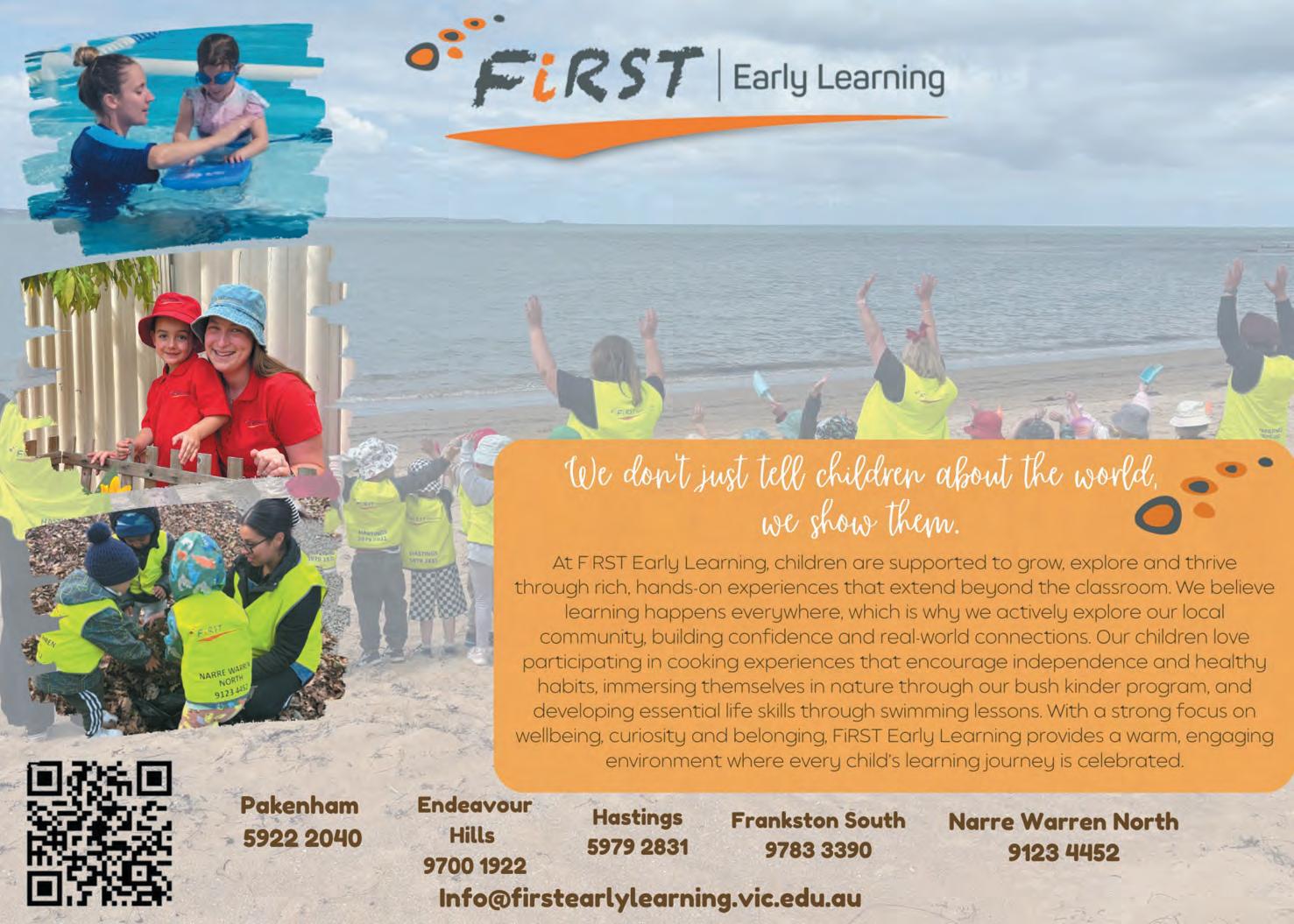
FiRST’s early learning centres across Melbourne, including in Pakenham, are carefully designed, created, and inspired by the Reggio Emilia approach and philosophy.
This sits alongside the vision and core values developed by its managing directors, educators, children, and families to deliver an all-inclusive sanctuary for children aged six weeks to five years.
Book a tour online at firstearlylearning.vic.edu.au.
CHOOSING the right early learning centre is a big decision for any family, and the Expeditions Early Learning Journey team understands just how important those early years are.
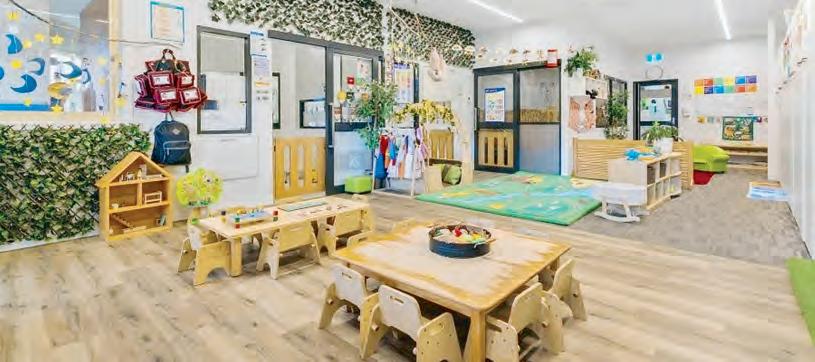
With centres in Officer and Narre Warren, the Expeditions focus is simple: creating a safe, welcoming place where children feel secure, supported and excited to learn each day.
At Expeditions ELJ Officer and Expeditions ELJ Narre Warren, safety and care come first, because the team knows children thrive when they feel comfortable and confident in their environment.
Long-standing educators are the heart of Expeditions’ centres.
Many team members have been with Expeditions for years, building strong relationships with families and watching siblings grow through its programs.
They create engaging, play-based experiences that spark curiosity and support each child’s individual learning journey.
The centres also extend learning beyond the rooms through meaningful incursions and excursions, giving children opportunities to explore new ideas, cultures and experiences in a hands-on way.

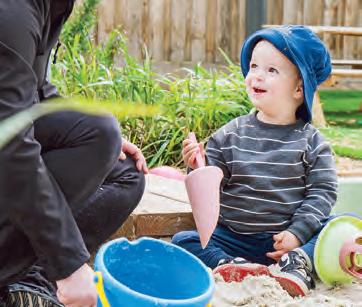

Just as importantly, the Expeditions team works closely with families and the wider community to ensure every child is supported not only academically, but socially and emotionally as well.
The Expeditions goal is to guide children toward a smooth and confident transition to primary school, equipping them with the skills, independence and love of learning they need for the future.
If you are looking for quality early learning in Officer or Narre Warren, you are warmly invited to visit, meet the Expeditions team and see its centres in action.



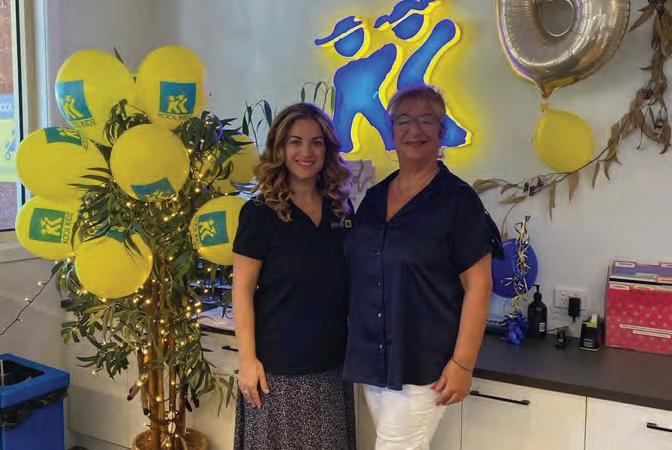
FOR mother and daughter duo Maria Dimoulas and Janette Karavatis, opening Kool Kidz Narre Warren was the fulfilment of a long-held dream.
The passionate pair officially opened the doors in February, creating a family-run early learning centre built on experience, care and community connection.
“We’re a family-run business, looking after your family,” Janette said.
Maria brings more than 15 years of experience in early childhood education, holding a degree in Early Childhood Education and a postgraduate qualification in teaching children with special needs.
Her extensive background as a kindergarten teacher across numerous centres has shaped the strong educational foundation of Kool Kidz Narre Warren.
Janette also has more than a decade of experience in childcare, sharing her mother’s passion for nurturing young minds.
The centre underwent a complete refurbishment before opening,
resulting in a light, bright and welcoming environment for local families.
Kool Kidz Narre Warren features seven thoughtfully designed classrooms, including two baby rooms, three toddler rooms and two kindergarten rooms.
Each room has access to spacious outdoor play areas, along with dedicated sleep spaces and a separate kitchen.
A standout feature is the unique Earth Room, where children enjoy lunch, incursions and special learning experiences.
The centre follows the highly regarded Kool Beginnings Curriculum and offers additional programs including Little Sports Heroes, music, yoga and cultural incursions.
With capacity for 130 children aged six weeks to six years, the centre is also deeply connected to the local community, supporting families through initiatives such as a Community Larder, children’s library and fundraising for various charities.



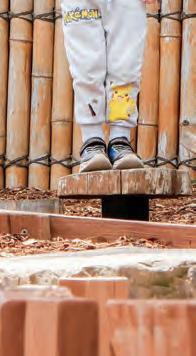
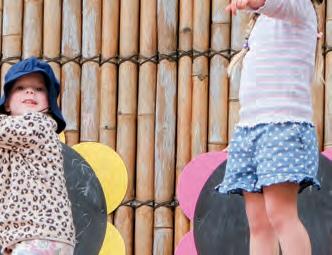
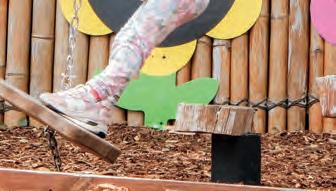



Kool Kidz Narre Warren is a mother and daughter-owned, purpose-built childcare and kindergarten facility. We provide a safe, fun, and exciting environment where children aged 6 weeks to 6 years can explore, learn, and grow.

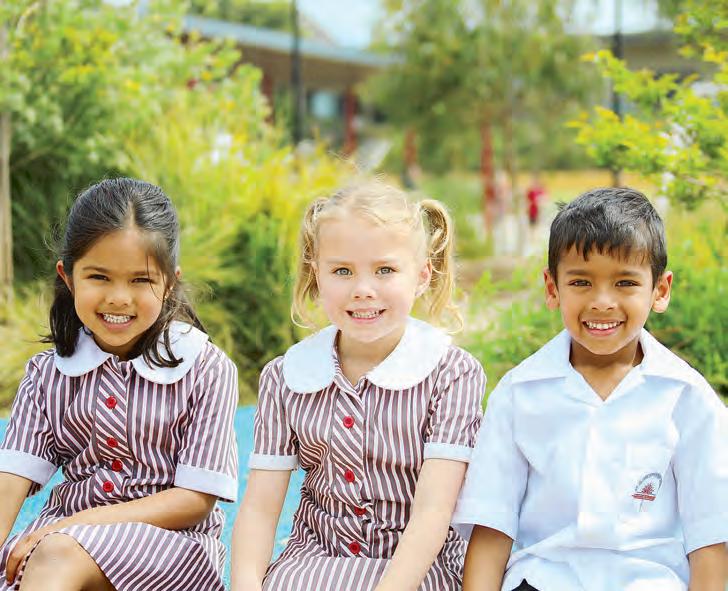
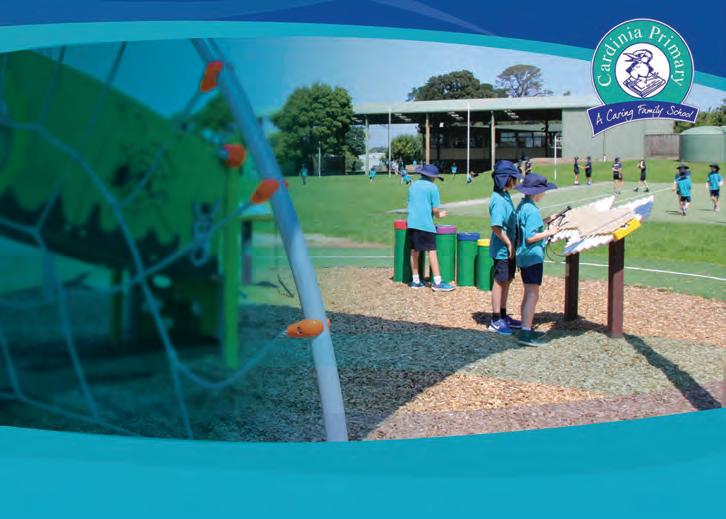
NESTLED in the heart of our growing community, not far from Officer, Clyde, and Pakenham, Cardinia Primary School is proud to be a small country school with a very big heart.
With just 180 children, we truly live our motto of being a caring family school.
At Cardinia Primary School, every child is known, valued and supported.
We believe that education is about more than academic success - it is about nurturing the whole child.
We meet every student where they are, both emotionally and academically, ensuring they feel safe, confident and ready to learn.
Our closed-plan classrooms and small class sizes allow our highly skilled and dedicated teachers to provide personalised, high-quality instruction.
EVERY school has a motto or mission statement that outlines how each member of the community can benefit from being part of the school community.
St Clare’s Primary School, Officer, has: Faith leads to courage, wisdom and compassion.
In order to live out this motto, all members of the St Clare’s community are asked to follow schoolwide expectations: respect, optimism, courage, kind and safe, or ROCKS.
Students follow these in their daily actions at school by doing their job, having a go, making positive choices, seeking help when needed, modelling and practising kindness, and keeping themselves and others safe.
At St Clare’s, these expectations are modelled and explicitly taught and reinforced in an ongoing way.
Student awards are based on living out ROCKS and the St Clare’s team links these expectations to scriptures in the Bible.
The hope is that all members of school community will leave St Clare’s with the schoolwide expectations and motto instilled in their minds as they go through life.
The St Clare’s team looks to nurture the holistic development of each child.
For the St Clare’s family, numeracy
and literacy skills are core elements of education, but so is religious education - developing empathy, social justice, and a strong moral compass.
St Clare’s encourages active play and healthy bodies; understanding other cultures through learning languages; and the confidence that comes with developing creativity through the performing and visual arts.
Student achievement is measured not only by academic growth but by each child’s emotional, social, and spiritual wellbeing.
Being part of faith-filled community instils students with a sense of identity, a feeling of belonging and above all, a powerful sense of self-worth.
At St Clare’s, the aim is to have each child reach their potential to be a well-rounded individual within a supportive and caring learning environment.
Visit www.stclaresofficer.catholic.edu. au and take a virtual tour to get a real feel for the school. In-person school tours are available and St Clare’s also invites families to its open day on Saturday 21 March, from 10am to noon. Call 5940 6777 to book.
St Clare’s is accepting enrolments for next year. Call the school or email enrolments@stclaresofficer.catholic.edu. au for more information.
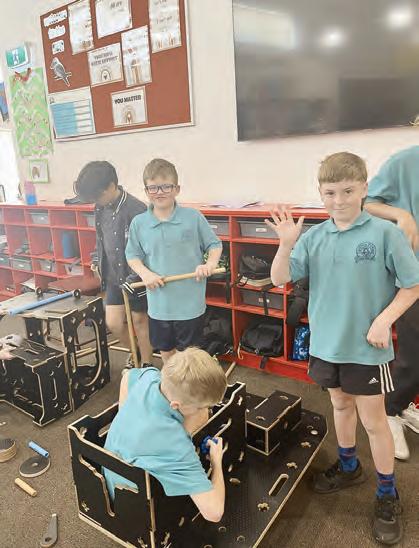
Our staff are exceptional educators who go above and beyond to deliver the very best learning opportunities for every child.
In addition to strong classroom programs, our specialist teachers enrich learning in performing arts, visual arts, Auslan and science, ensuring our students experience a broad and engaging curriculum.
We are also proud of our Eco Zone, where students develop a deep understanding of sustainability and caring for our planet. It is a space where hands-on learning brings environmental education to life and encourages students to become thoughtful, responsible global citizens.
At Cardinia Primary School, we know the social side of schooling is just as important as academic growth.
Our outdoor spaces provide experiences well beyond expectations.
Students enjoy a fitness track, outdoor exercise equipment, and musical instruments, two cubby houses, an undercover basketball court, a netball court and a muchloved gaga pit - a favourite gathering place for many of our children.
We have a Nudel Kart club and science, gardening and drama clubs. Our library is also open, so our


students have lots of choices if they want a change from being in the yard at lunch times.
Tradition and community connection are at the heart of our school culture.
Each year, families join us for our much-loved beach picnic. We celebrate Easter with a colourful bonnet parade, host a whole-school sleepover and a whole-school camp, and finish the year with a spectacular Christmas concert that brings our entire community together.
These shared experiences create memories that last a lifetime and strengthen the bonds that make our school feel like family.
We cherish family involvement and warmly welcome parents and carers to participate throughout the year. Our doors are always open, and we love showing visitors what makes our school so special.
We are also pleased to consider out-of-zone enrolments.
If you would like to experience our caring family school for yourself, we would be delighted to show you around. Please contact us to book a tour.
I look forward to meeting you.
Susan Wepster, Cardinia Primary School principal


Our Playgroup offers the perfect mix of fun and learning! Led by our qualified facilitator, Veronica, each semistructured session follows early childhood education frameworks, with free play, stories, songs, and activities that nurture confidence, connection, and developmental skills - all in a relaxed, welcoming space for families.
For children aged 0–5, accompanied by a parent or carer $99 per term Weekdays | 9:30am – 11:30am Brentwood Park Neighbourhood House
Spaces are limited – secure your spot today! (03) 8743 0671 bookings@bpnh.org.au


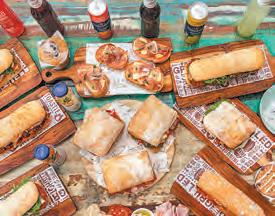








































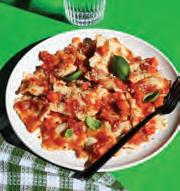
ROLL on down to Tooradin Skate Park to check out its fresh new look.
A $450,000 upgrade was unveiled in December, with new ramps, stairs, grind rails, improved fencing, seating, and landscaping making the area more welcoming for everyone.
The community guided the project through Tooradin Recreation Reserve Master Plan consultation, including a public vote on skate bowl options, and
sharing ideas at pop-up sessions and via a survey.
The skate park upgrade is the first stage of a much larger recreation reserve revitalisation, which will include refurbished football/cricket and netball pavilions with modern change amenities, and a new comm unity pavilion featuring social spaces, a kitchen, public amenities, office, and storage.
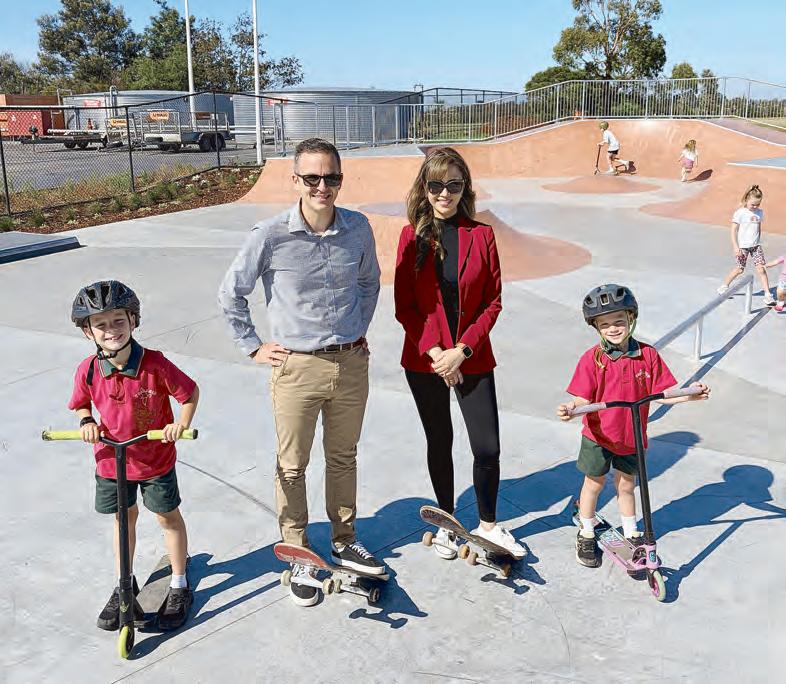
LOCATED in Narre Warren, A2D Dance Studios is a vibrant, welcoming space where dancers of all ages and abilities can shine.
Whether your child is taking their very first hip hop class or striving for the excitement of competition-level performance, A2D offers a supportive environment where everyone is encouraged to grow, build confidence and have fun.
From casual classes across all age groups to award-winning competition crews, A2D is more than just a studio –it’s a dance family.
Lifelong friendships are formed there, and every student is welcomed with open arms.
The focus is not only on developing strong technique, but also on teamwork, creativity and self-expression.
Led by director and choreographer Sabrina Duchenne, A2D is backed by elite industry experience.
Sabrina is widely recognised in the hip hop dance scene, choreographing for major competitions including the World Hip Hop Championships in Las Vegas.
Her impressive performance credits include the AFL Grand Final, Commonwealth Games and Formula One Grand Prix.
Passionate about inspiring the next generation, Sabrina has created a space where students can discover their potential and feel right at home.
At A2D, dance isn’t just a class – it’s a community.



























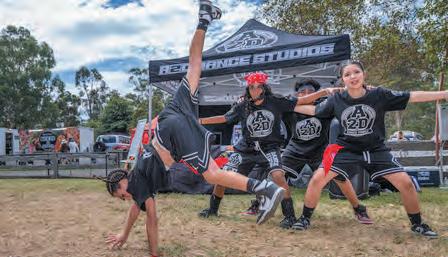


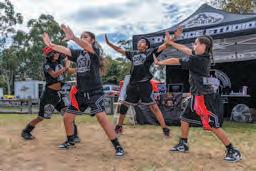
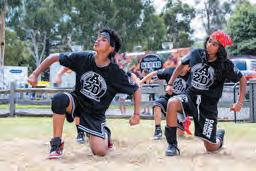

By Casey Neill
FOLLOWING the right ‘mental diet’ can help to protect new dads from anxiety and depression.
Craig Russouw, lead psychologist at Someone.health, says fatherhood can trigger mental health issues, with about one in 10 expecting or new fathers reporting anxiety and/or depression in the perinatal period.
“Fatherhood is a good time but can also be incredibly stressful,” Craig said.
“It’s a big adjustment, being a parent. It requires new coping skills.
“It can also be financially stressful. Often, dads will bear the brunt of that.
“There’s societal pressure to be stoic, strong, and keep everything together.
“From a young age, boys have been told to suck it up. They’re less likely to seek support.”
Craig said partners didn’t have as much time for each other after welcoming a baby.
“That sometimes leads to tensions and conflicts,” he said.
“Their partner’s mental health can also be a contributing factor. They might be that primary support person and they might struggle with that.”
Fathers experience hormonal changes after their partner’s pregnancy, particularly a decline in testosterone, and the lack of sleep hits hard.
“I think most parents underestimate that,” Craig said.
“They don’t know how much sleep they’re not getting.”
Mental health struggles in new dads could present as irritability, anger, low


mood, loss of interest or enjoyment in activities, fatigue and poor concentration.
“They might not have classic symptoms like crying or sadness,” Craig said.
There could be an increase in risktaking behaviour, such as alcohol or prescription drug use, withdrawal from social situations, taking sick days or working longer hours.
Craig said partners might notice changes in parenting engagement, emotional availability or warmth, sleep or appetite - even headaches or stomach issues
“Your body and your mind are very
well connected,” Craig said.
“A good diet contributes to mental wellbeing. Movement is important for mental wellbeing.
“Something that we’ve really been trying to promote is treating your mental health from a maintenance mindset, in the same way that you might treat your physical health, like through diet or exercise.”
Someone.health launched the free Mental Maintenance Manual: A Practical Guide to Men’s Mental Health.
“Something that I’m a really big advocate for is your mental diet,” Craig said.
“That’s literally what you’re consuming through an iPad, a phone, social media, the types of TV shows and movies that you watch.”
Just like the body, the mind can’t survive and thrive on ‘fast food’ alone.
Craig said good social engagement was one aspect to good mental health.
“We’re more connected now than we ever have been in human history, but I think we’re more lonely than we’ve ever been,” he said.
“Very often we’re living through these virtual worlds.”
He said the body’s dopamine reward system was bombarded when using social media.
“Afterwards, they’re feeling low, they’re feeling irritable, they’re feeling anxious,” he said.
“Often, the only way to lift that mood again is to get back online.”
Social media can also facilitate unhealthy comparisons to others’ highlight reels.
“You can consume things that are really good for you,” Craig said.
“You have to make an active attempt to curate what you see on there.”
He said men’s mental health was a growing concern in Australia.
Craig urged new dads to lean on their partner for support, and provide that support in return.
“No one’s going to understand your unique experience of parenthood better than the two of you,” he said.
“But what we’ve really been trying to get at in terms of communication lately is for blokes to get out there and get some support.”
By Casey Neill
A balanced lunchbox does more than fill your child’s tummy.
Nutritionist Julia Tellidis and baby nutrition consultant Lauren Skora say



the right lunchbox fuels learning, play, and big days at school or daycare.
“When kids have enough to eat, and their lunchbox includes a mix of carbohydrates for energy, protein for fullness, and healthy fats for staying power, they’re far better set up to focus, learn and thrive,” they said.

But even with their expertise, the mums were shocked by the pressure of packing lunches every weekday.
“Suddenly, food wasn’t just about nutrition,” they said.
“It was about time, budget, allergen restrictions, comparison, school rules, and whether your child would even touch it.
“At home, our granola sprinkles are on constant repeat. We make a double batch for breakfasts, then sprinkle them into lunchboxes as a small bite, almost like a homemade trail mix.
“We’ve also included a simple hack to turn them into granola butter, which is a delicious nut-free alternative for school environments.”
“A balance of these keeps their blood sugar stable, which is incredibly important for concentration and to keep moods in check.
“Everything else - variety, presentation, novelty - is secondary.
“A lunchbox that fuels their body and brain is already doing its job.”






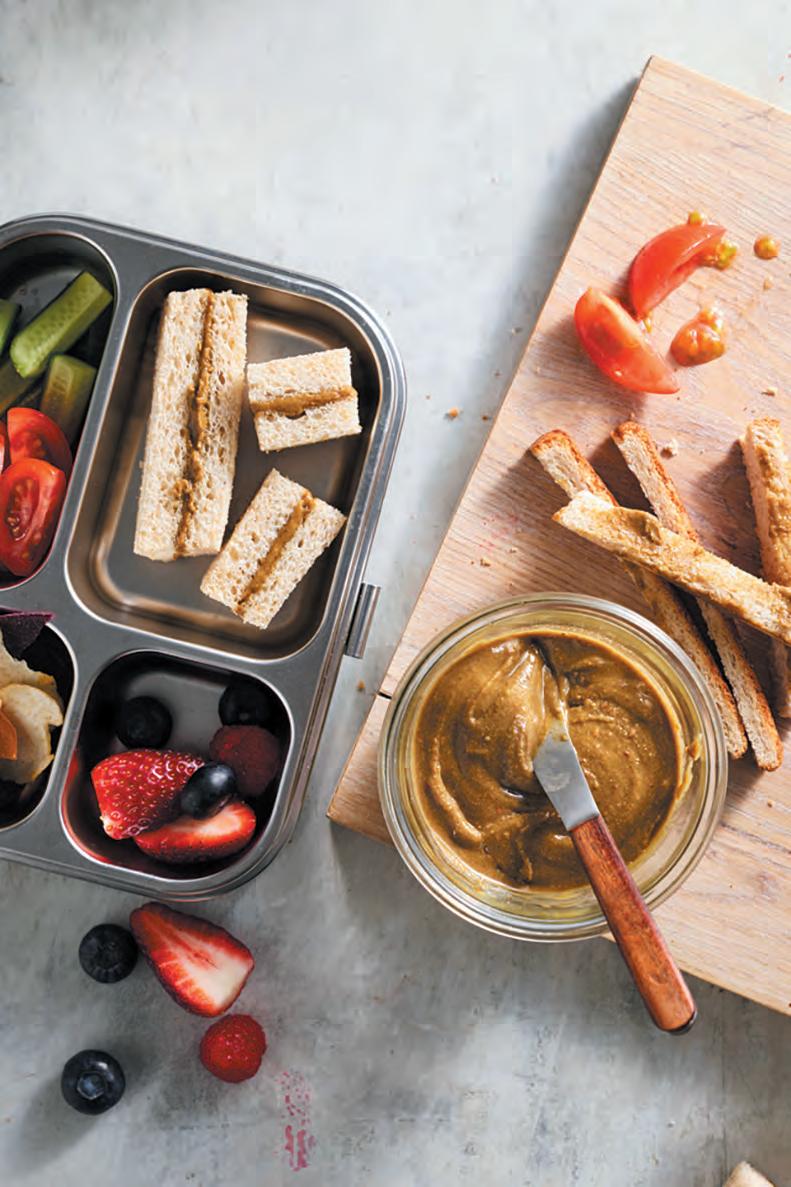
“We both had moments of standing in the kitchen thinking, ‘Why does this feel so hard?’
“That lived experience is exactly what shaped Lunchbox Bible.”
Their guide to building a balanced lunchbox was due for release on 31 March.
We first spoke to the duo in 2024 following the release of Baby Food Bible, a nutrition-packed guide to feeding not only your baby but your whole family.
Lunchbox Bible features 75 recipes and a visual library with 75 different lunchbox combos.
“Our favourites are the recipes that tick multiple boxes: freezer-friendly, nutritionally balanced, and genuinely enjoyed by both kids and adults,” Julia and Lauren said.
“They’re the ones that reduce mental load, which for parents is everything.
They also favour the pasta muffins.
“Using leftover spaghetti bolognese, you end up with a portable, kid-approved muffin that works beautifully on busy school days, both nutritionally and practically,” they said.
The monster muffins are an evolution of the monster pancakes from Baby Food Bible.
“They are jam-packed with spinach yet always devoured by our kids,” they said.
When Julia and Lauren struggle with low energy or chaotic days, they lean on simplicity:
“A straightforward sandwich or wrap, like a chia jam sandwich, paired with fruit and veg, cheese and crackers, and one reliable ‘always-eaten’ snack, such as our mookie (chickpea cookie) or choc beany balls (both of which are always stocked in our freezer). “It’s nothing fancy, but it gets eaten almost every time, and that’s the win.”

But they’re not immune to their kids bringing home an untouched lunchbox.
“It’s completely normal,” the mums said.
“Appetite can vary hugely from day to day, and things like time to eat, excitement, and classroom distractions play a big role.
“We try not to react to a single day. Instead, we look for patterns over time, talk with our kids about what worked and what didn’t, and adjust gently.
“One full lunchbox doesn’t mean failure; it’s just feedback.
“In fact, my daughter came home from her first day in a new class this week with her lunchbox almost untouched.
“She was so excited and distracted but absolutely starving once she got home.
“We re-offered the lunchbox after school, and she happily ate most of it.
“And remember: lunch is just one meal. If it’s not all eaten, that’s okay; breakfast and dinner are still part of the bigger picture.”
Julia and Lauren have also encountered the inevitable lunchbox comparison and envy.
“We talk with our kids about how
every family packs different foods, and that food isn’t a competition,” they said.
acks different foods, and a n their
“We focus on how their lunch helps them feel full, energised and ready to learn, rather than what others have.
“We also involve them in choosing what goes in their lunchbox within healthy boundaries.

an what others have. olve heir lunchbox within aries.
“When they help pick it, they feel proud of it.


“And honestly, kids notice novelty more than nutrition, so a fun dip, a homemade muffin, or a favourite fruit can feel just as exciting as packaged snacks.”

tly, notice han emade muffin, or a kaged snacks.”



Julia and Lauren’s top advice to lunchbox-packing parents is to win the week on the weekend.
uren’s hbox-packing in the week on
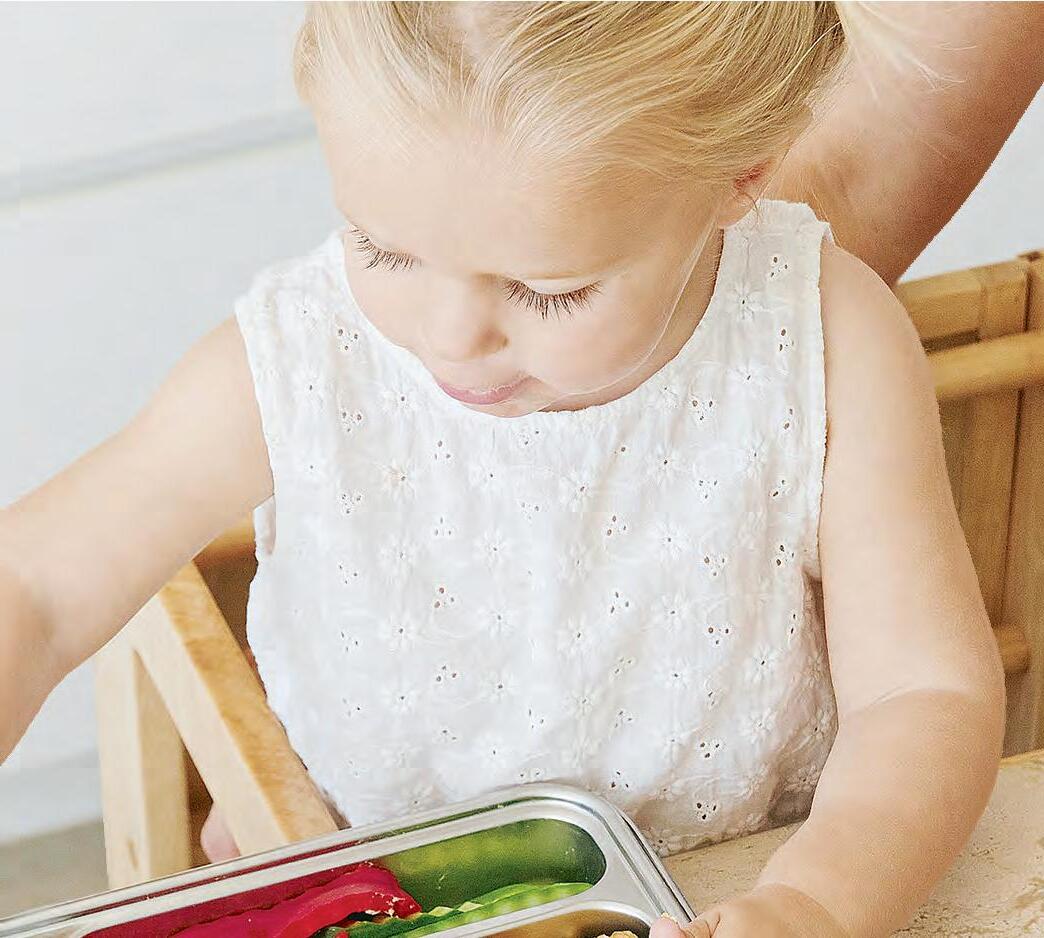



ven 15 minutes can nchboxes
“Spending even 15 minutes getting ahead can completely change how lunchboxes feel,” they said.
nd
“That might mean washing and cutting fruit and veg as soon as you get home from the shop, or making one or two freezer-friendly snacks.

e one or endly
ll pockets of prep take the eekday hboxes feel doable, not
“Those small pockets of prep take the pressure off weekday mornings, and suddenly lunchboxes feel doable, not daunting.”


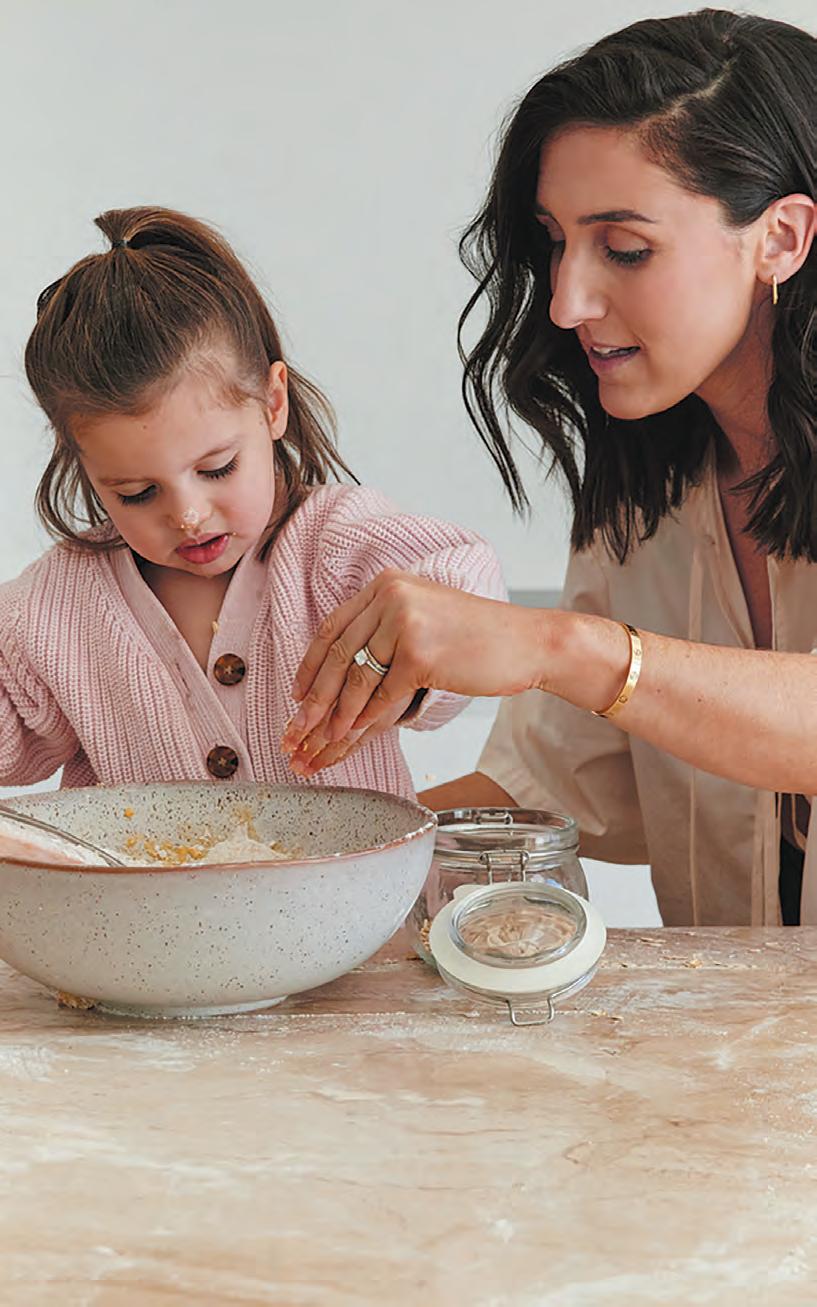





By Casey Neill
PENNY p is championing the kids wit
PENNY O’Loughlin’s latest picture book is championing the kids with ‘different’ brains and bodies.
“They’re the firefighters, the people who get up on stage, the creative thinkers. The people who dare.”
Dushani’s son Aidan “has some hyperactive behaviours”.
Ju
Jim follows two children wh how
Cartwheeling Sally and Jumping Jack Jim follows two children who just can’t sit still, no matter how hard they try. Their bodies have a mind of their own - until the time comes when their skills are needed to save the day.
Penny has shared the story at several schools, incorporating breathing exercises and chats about the book’s themes into her visits.
“I say to them, ‘If we all had the same brains and bodies, how boring would life be?’” she said.
“We thought this book would be a great way to show him that his energy can be positive and even heroic,” she said.
“It helps kids see that their differences can make them special, and it reassures parents that energy and restlessness can be channelled in positive ways.”
- until the time comes when are needed to save the

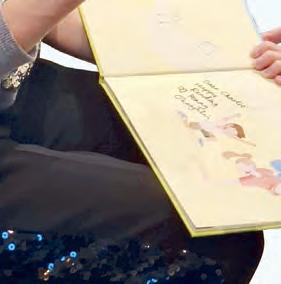
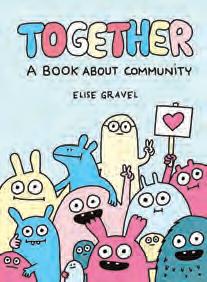
About Community
Elise Gravel
TOGETHER we are stronger. Together we can make a difference. And together we make a community.
Other people take care of us when we’re sick or hurt, teach us things, and protect us.
They help us in many ways, even if being surrounded by other people can sometimes make us feel bad or angry.
Poignant and relevant, Elise emphasises the importance of friendship, creating support systems, and how, through connection and support, we can ensure that everyone in our community is cared for and safe.
$19.99
Scholastic Canada
“I was a Cartwheeli was do said
“I was a Cartwheeling Sally. I was always upside down,” Penny said.


“There were no books about heroing these different brains and these different bodies, and having a
“Not everybody has the same brain as you and thinks the same way. Some people need to move more and can’t sit still.
“What it does affect is confidence, which affects self-worth. Self-confidence and worth are the pinnacles for learning.




Penny has two more books on the way this year: Snap and Spike, featuring a frightening-looking crocodile who struggles to make friends before finding a porcupine, and The Wonder of Walt, featuring a hypersensitive worm who teaches other insects how to communicate.



giggle boo be resonati to co around under and
“The book seems to be resonating as a way to spark conversations understanding and compassion, particularly for kids who find it hard to sit still.


“Take a moment of pause and a breath of compassion before you respond and judge.”
Mum Dushani invited Penny to speak at her son’s school after discovering Cartwheeling Sally and Jumping Jack Jim.
“Their energy and constant movement, which might usually be seen as a challenge, actually became their strength,” she said.




impuls in
“Their impulsivity and their hyperfocus give them the skills and no fear to race in.

Kelly Brodie-Brown and Tommy Doyle
MULES are sturdy creatures; they’re resilient and strong.
Mules are known for hauling heavy burdens all day long.
Mules are trusty and robust, solid, and dependable.
Mules, however, aren’t exactly known for being bendable!
Can Julie the mule soar into the spotlight? Find out in this adorably inspiring story about reaching your goals, one tumble at a time!
$19.99
Scholastic Australia
“We felt her visit would inspire the students, show them that their energy and uniqueness are valuable, and spark a love of reading and storytelling.”
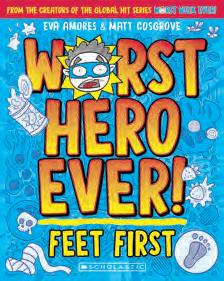
Matt Cosgrove and Eva Amores
IF you could have any superpower, what would you choose?
Super strength? Invisibility? The ability to fly? Super speed? So many superpowers to choose from.
Unfortunately Licky Ricky didn’t get to choose. He just woke up one day with the most useless, least impressive, socially unacceptable, slightly embarrassing, frankly gross, superpower of all time!
Grab your barf bags, buckle up, and brace yourself for the unbelievable but entirely true origin story of the worst hero ever!
$15.99
Scholastic Australia

Brian Gonsar and Keenan Gaybba

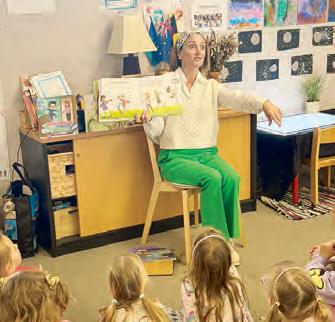

Jonathan Haidt and Catherine Price
COUNT Dracula is not your average vampire - he has a knack for baking. And it’s his brunch club’s famous bloodorange-jelly donuts that give his fellow vampires the energy source they need to live forever.
But when Transylvania experiences a mysterious jelly shortage, it allows his nemesis, Constantine, to swoop in and steal the brunch club - and the vampires’ loyalty - from Dracula. But it’s not just jelly donuts at stake. When townsfolk start to go missing, Dracula suspects Constantine has far more sinister motives lurking that could threaten everything vampires and humans have worked for.
With the help of his chef and human friend, Elena, Dracula must find a new energy source before every vampire and human turns on him and he loses his coveted brunch club forever.
$32.99
Oni Press
HOW can we live a happy and exciting life without a smartphone?
The Anxious Generation started a world-changing conversation about the effects of smartphones and social media on young people.
This book speaks directly to those young people about how they can live a life without screens.
Packed with facts, stories, and secrets that tech leaders don’t want you to know, this book will not only help kids break free from phones but also show them how they can be their most confident and adventurous selves.
$24.99
Puffin