FR SEPTEMBER 2026 6
! T U PO
EE
G N I S PAS
ES R T NO
E O TRESP E K ! G ASSING! N I S KSEPEAPSO UT! NO E R T TRESPA O N ! SSING! T U O KEEP OU EEP
RATE THE ROADS PAGE 4
AGRICULTURE EDUCATION PAGE 8 and 9
AI ON FARMS PAGE 11
AGRICULTURE TODAY
The Upper South East was the sole exception to South Australia’s otherwise booming pasture growth.
The Border Watch Address: Level 1 / 1 Commercial Street East, Mt Gambier SA 5290 Telephone: 08 8741 8170 Website: www.borderwatch.com.au Hamilton Spectator Address: 84 Gray Street, Hamilton, Vic 3300 Telephone: 03 5572 1011 Website: www.hamiltonspectator.com.au Portland Observer Address: 92 Percy Street, Portland, VIC 3305 Telephone: 03 5522 3000 Website: www.portlandobserver.com.au CONTACT US Editorial: Email: editorial@agtoday.com.au EDITORS: Elisabeth Champion E: elisabethchampion@tbwtoday.com.au Marlene Punton E: marlene.punton@portlandobserver.com.au Advertising: Email: advertising@agtoday.com.au ADVERTISING CONSULTANTS Leesa Cook E: leesa.cook@portlandobserver.com.au Sierra Laird E: sierra.laird@portlandobserver.com.au Shannon Benge E: shannon.benge@hamiltonspectator.com.au Christine Cock E: christine.cock@tbwtoday.com.au Christine Black E: christine.black@tbwtoday.com.au Josh Phelan E: josh.phelan@tbwtoday.com.au Published by SA Today Pty Ltd. ACN 644 311 937
All material is copyright to SA Today Pty Ltd. All significant errors will be corrected as soon as possible. Distribution numbers, areas and coverage are estimates only. For our terms and conditions, please visit https://borderwatch.com.au/terms-and-conditions/ 2 AG TODAY | SEPTEMBER 2026
Mixed bag for grain WHILE most of South Australia celebrated one of the strongest starts to an agricultural season in recent years, local primary producers across the South East region are navigating a far more complex picture. The latest crop and pasture report from the Department of Primary Industries and Regions (PIRSA) revealed a striking contrast between the Upper and Lower South East. The Upper South East was the sole exception to South Australia’s otherwise booming pasture growth. While other districts are swimming in feed, the Upper South East is the only region in the state where pasture cover fell below the 10year average, recording a biomass of just 378 kg/ha—a 12% deficit. In stark contrast, the Lower South East is enjoying the fruits of a stellar start. Abundant rain has pushed standing dry matter up to 665 kg/ha, representing a solid 14 per cent increase above the 10-year average. For livestock producers in the Lower South East, this has translated to minimal reliance on supplementary feeding and excellent stock condition. However, further north in the Upper South East, producers are watching their paddocks closely as winter progresses. On the cropping front, the South East is preparing to bring in a substantial harvest, with a combined 320,700 hectares sown to crops, carrying an estimated production potential of 950,150 tonnes. The cropping profiles of our two districts paint a clear picture of their distinct soil and climate types. The Upper South East has put in a massive cropping effort this season, heavily dominated by wheat, barley, and canola. It has sown 238,300 hectares with an expected production of 619,690 tonnes. This is led by wheat, with 77,600 hectares sown expected to yield 217,280 tonnes, fol-
lowed by barley covering 39,000 hectares with an estimated output of 117,000 tonnes. Canola was sown to 37,000 hectares (expected to produce 88,800 tonnes), beans took up 33,700 hectares (for an anticipated 84,250 tonnes), and a massive 33,100 hectares has been set aside for hay, with expected yields of 172,120 tonnes. Though smaller in geographical cropping area, the Lower South East continues to boast exceptional yield-per-hectare potential, particularly for high-value canola and beans. The district sowed 82,400 hectares with an expected production of 330,460 tonnes. This footprint includes wheat covering 26,200 hectares with an expected 131,000 tonnes of grain, canola dedicating 21,600 hectares with a high expected yield of 75,600 tonnes, and beans sown to 16,000 hectares, expected to produce 48,000 tonnes. There is also a substantial 27,100 hectares of hay-cutting area projected to yield 135,500 tonnes. Growers can thank a highly favorable autumn and early winter for creating excellent subsoil moisture reserves across both districts, which are among the best seen in recent years. This full moisture profile has driven rapid vegetative growth, with crops establishing early and running well ahead of normal developmental stages. However, because crops are maturing earlier than usual, they are highly vulnerable to potential frost events during the upcoming critical flowering and early grain fill stages. Furthermore, the Bureau of Meteorology’s seasonal outlook for August to October 2026 suggests that an El Niño event in the Pacific is likely to bring warmer and drier conditions to southern South Australia. As a result, PIRSA yield estimates remained conservative. The subsoil moisture is locked in, but get-
ting these crops across the finish line will depend heavily on late winter and spring rainfall. Primary Industries Minister Clare Scriven said it was very encouraging to see South Australian grain and livestock producers enjoying their strongest season in years, even in the face of global uncertainty. “Our primary producers are currently on track to enjoy their best season since 202223, and that is in no small part due to optimal weather conditions and, most importantly, their hard work keeping on top of pests, diseases and other potential pressures,” she said. “While there is still plenty for the agricultural sector to remain cautious about, the 2026-27 season is shaping up to be a welldeserved success story for many producers after what has been a challenging few years for them.” Grain Producers SA chief executive officer Brad Perry said after two incredibly difficult seasons, there was genuine optimism in grain-growing communities about the way this season was shaping up. “The rainfall has been some of the best we have seen in years and crops across much of South Australia have established exceptionally well,” he said. “The potential is certainly sitting in the paddock, but there is still a fair bit of season between what growers can see today and what ultimately goes into the silo. A kind spring will be critical to turning that potential into tonnes. “This has also been an expensive crop to grow, so a strong harvest would make an enormous difference to grain businesses that have had to absorb some very difficult seasons and are now looking for an opportunity to rebuild.” To read the full 2026-27 Crop and Pasture Report - Crop Emergence, visit pir.sa.gov.au/ crop-report.
AGRICULTURE TODAY
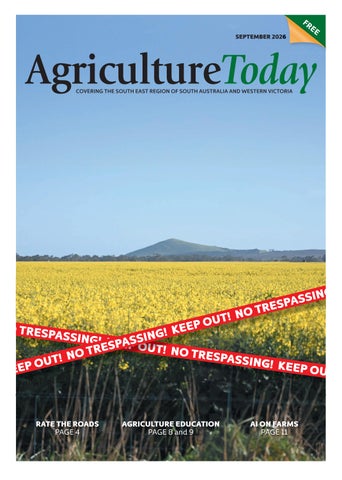
No go zone SOUTH Australian grain producers are urging tourists chasing the perfect photo among the state’s spectacular flowering canola crops to stay on the right side of the fence. Grain Producers SA (GPSA) has already received reports this season of people jumping fences and entering canola crops to take photographs as the state’s paddocks turn bright yellow. GPSA chief executive officer Brad Perry said grain producers understood the appeal of flowering canola and welcomed people enjoying the sight from public roads as well as appropriate and safe viewing locations. Yet Mr Perry warned tourists that entering a crop without permission was not acceptable. “South Australia’s flowering canola crops are an incredible sight and we completely understand why people want to stop and take a photo, particularly when you have paddocks of bright yellow stretching across the landscape,” Mr Perry said. “Our message is simple: enjoy it, photograph it and share it, but stay on the right side of the fence. “We are already hearing from grain producers who have had people jumping fences and walking into their canola crops for photographs.” He said the paddocks were not public spaces nor photo sets but were working farms with the crops being a valuable part of someone’s business. Mr Perry said people entering paddocks could damage crops and create unnecessary biosecurity or personal safety risks. “Walking through a flowering canola crop can break stems and branches and flatten plants, while people, vehicles and footwear can
potentially carry soil, weed seeds, pests or disease material from one property to another,” Mr Perry said. “Biosecurity is incredibly important to Australian agriculture and particularly to an industry that produces grain for domestic and export markets around the world. “Everyone who visits our grain growing regions has a role to play in helping protect farms from unnecessary biosecurity risks.” He said there were also genuine safety issues on working farms including machinery which may be in operation nearby. “Paddocks can contain hazards that are not obvious to visitors and growers simply don’t expect members of the public to be walking through their crops,” he said. “A fence and a closed gate are there for a reason…unless you have the landholder’s permission, please don’t enter the paddock.” Mr Perry said grain producers were proud to see visitors travelling through regional South Australia and encouraged tourists to continue enjoying the canola flowering season responsibly. “Our grain-growing regions are beautiful at this time of year, and farmers are pleased that people want to come out, spend time in our regional communities and appreciate what is growing in our paddocks,” Mr Perry said. “You can get a fantastic photograph without entering the crop. “Pull over somewhere safe, stay on public land, respect fences and private property, and leave the crop exactly as you found it. “We want people to enjoy the yellow canola landscape but just enjoy it from the other side of the fence.”
Farm events held in our local region LOCAL primary producers are gearing up for the highly anticipated Grain and Graze Field Day on Thursday, September 24, kicking off a series of three agricultural field days hosted by the MacKillop Farm Discussion Group (MFMG). Running from 9am to 1pm, this event offers a vital opportunity for farmers in the upper Limestone Coast to explore cuttingedge trial sites and gain practical, hands-on insights directly from leading agronomists and researchers. The morning field walk begins on Obst Road, Mundulla, where attendees will dive into critical vetch and barley trials. Experts including Adam Hancock and Sally Klose will lead discussions on incorporating vetch into mixed farming rotations, highlighting nitrogen impacts across grazing and termination treatments. Simultaneously, the barley trial site will focus on selecting the best varieties for integrated grain and graze systems to maximize biomass and yield on challenging sandy soils. The tour then moves to Pooginagoric for a canola establishment demonstration led by agribusiness consultant Nathaniel Modra. This trial investigates how sowing times and nitrogen application interact under varying soil moisture levels to influence crop establishment. The final stop at the Western Flat Hall features Owen Rees addressing the critical
ONLY
$30,610
1XPEHUV WDNHQ IURP VDOHV GXULQJ WKH FDOHQGDU \HDU b
LARGE & LONG
INC GST
ULTIMATE VALUE
ONLY
$29,640 INC GST
TRADIES WORKSHED
ONLY
$55,080 INC GST
Concongella, VIC, 3384 9M x 18M x 4.2M (30’ x 60’ x 14’) One bay enclosed and three bays open. Large industrial roller door with one PA door. Price listed in Zinc, Colorbond extra.
role of legumes in livestock production and nutrition. Registration is essential by Monday, September 21 to secure morning tea and lunch. Tickets cost $25 for MFMG members and $100 for non-members. Mark your calendars for this crucial regional event, with subsequent field days slated for Conmurra, Bool Lagoon and Struan in October
OF OUR BUSINESS COMES FROM REPEAT AND REFERRAL CUSTOMERS*
LARGE OPEN ENDED $48,720 INC GST 15M x 31.5M x 5.1M (50’ x 105’ x 17’)
FARMERS MATE
Sally Klose will talk at the event. (File)
15M x 36M x 5.1M (50’ x 120’ x 17’) Room to put all the gear in. Add an extra bay for $6,150.
VERSATILE FARM SHED
ONLY
$44,850 INC GST
WITH A 4.9-STAR GOOGLE RATING AND 100+ FARMER TESTIMONIALS, OUR SHEDS ARE TRUSTED ACROSS RURAL AUSTRALIA TOUGH DOUBLE PLUS
ONLY
$37,090 INC GST
AWESOME VALUE PLUS
ONLY
$37,670 INC GST
INC GST
Mitchell, QLD, 4465 18M x 27M x 5.1M (60’ x 90’ x 17’) What an awesome shed! Industrial rated. Ideal packing or machinery shed. Add an extra bay for $7,520 or 5.5M (18’) high version for $52,380.
9M x 16M x 5M (30’ x 53’ x 16’8”) Easy workspace with plenty of height for a hoist. Price in Colorbond.
SUPER INDUSTRIAL
TOUGH TRIPLE
ONLY
$97,660 INC GST
Binnaway, NSW 2395 15M x 18M x 5.1M (50’ x 60’ x 17’) Strong, robust and extendable! Open at both ends. Add an extra bay for $6,130.
ONLY
$50,930
ONLY
$22,010 INC GST
Quorn, SA, 5433 15M x 22.5M x 5.1M (50’ x 75’ x 17’) A great and versatile farm shed with three closed sides, can be easily extended.
15M x 18M x 4.5M (50’ x 60’ x 15’) Two 9M open bays. Great space for storage, protection and access. Increase height to 5.1M (17’) for $1,390.
18M x 36M x 5.6M (60’ x 120’ x 18’8”) Plus a 4.5M (15’) roof extension, large industrial roller doors and a PA door. Makes an ideal workshop or factory.
9M x 15M x 4.5M (30’ x 50’ x 15’) Open bay shed in large 5M bays for better storage (Skylights extra).
MANUFACTURING LOCATIONS: VIC: LYNDHURST, GEELONG AND ALBURY SA: NOVAR GARDENS (DELIVERY AVAILABLE TO MOST AREAS) 100% Australian steel, 100% Australian made, 100% Australian family owned High tensile bolts & class 4 fasteners, gutters & downpipes included 6LWH VSHFLF HQJLQHHULQJ KHDY\ GXW\ FRQQHFWLRQ IRRWLQJ GHVLJQ High grade industrial strength materials and design
CALL ON 1300 491 839 JOHN 0437 699 111
WEB: www.nowbuildings.com.au
REILLY 0459 259 920
JAMES 0413 104 820
Images are from the Now Buildings range, for illustration purposes only. Imperial measurements are approximate. Shed price only. WA, NT & TAS slightly extra. Prices are based on collection, delivery extra. Extras pricing in bold is applicable at the shed purchase stage only. Extensions for H[LVWLQJ VKHGV 32$ 1RZ %XLOGLQJV ZLOO QRW EH UHVSRQVLEOH WR KRQRXU WKHVH SULFHV RQFH WKH WRWDO DOORFDWLRQ KDV EHHQ VROG ( 2( 3ULFHV DUH 5HJLRQ $ 7HUUDLQ FDW 5HJ % VOLJKWO\ H[WUD &XVWRPHUV VKRXOG VHHN LQGHSHQGHQW QDQFLDO DGYLFH UHJDUGLQJ DQ\ SRWHQWLDO WD[ EHQHWV
12896210-KF37-26
THE NOW BUILDINGS ADVANTAGE
SEPTEMBER 2026 | AG TODAY 3
AGRICULTURE TODAY
Grain roads under the spotlight
REGIONAL communities are being asked to help identify South Australia’s most dangerous and deteriorated grain freight routes as Grain Producers SA (GPSA) relaunches its highly successful Worst Grain Roads campaign. The campaign invites road users across South Australia’s grain-growing regions to nominate roads that are unsafe, inefficient or in urgent need of repair. GPSA will use the nominations to develop a new list of South Australia’s Worst Grain Roads and advocate directly to the federal, state and local governments for funding to address the routes of greatest concern. The first campaign in 2022 attracted submissions for almost 60 different roads, with the Upper Yorke Road between Arthurton and Kulpara voted the state’s Worst Grain Road. After a sustained campaign to state and federal governments, the 35-kilometre stretch of road received funding for a significant upgrade. GPSA chief executive officer Brad Perry said South Australia’s grain industry depended on an extensive network of highways, arterial routes and local roads to transport grain, machinery, inputs and workers. “Every tonne of grain begins its journey to market on a road, but too many of those roads are narrow, crumbling or are simply not designed for the size and volume of modern agricultural freight,” he said. “Poor roads increase travel times, vehicle maintenance and freight costs, but the most serious concern is safety. Grain producers and truck drivers should not have to choose between taking a lengthy detour and using a road they consider dangerous. “We now want road users to tell us what has changed since 2022, which roads remain neglected, and which routes have deteriorated to the point that urgent intervention is required.” Mr Perry said GPSA was looking for specific nominations supported by local knowledge,
Grain Producers SA is relaunching its Worst Grain Roads campaign and chief executive officer Brad Perry is calling for nominations. (File)
photographs and firsthand accounts. “That evidence will allow GPSA to present governments with a clear and credible case for where future road investment should be
directed,” he said. “If there is a grain road in your district that governments cannot afford to ignore, now is the time to put it forward.”
Grain producers, truck drivers, agricultural businesses and regional community members can nominate a road at worstgrainroadssa. com.au
First virtual fencing system approved for SA use
SOUTH Australian producers will have access to new technology to improve cattle management and reduce infrastructure costs with the first virtual fencing system approved for use in the state. The state government has approved the Halter P5 virtual fencing system for sale or lease in South Australia, which can be used to virtually keep dairy and beef cattle inside a designated area. Virtual fencing was legalised in South Australia late last year through an amendment to the Animal Welfare Regulations 2012. Updates allowed manufacturers to apply to the state government for approval of their virtual fencing technology and system from early 2026. Primary Industries Minister Clare Scriven said the state government had listened to the livestock industry, who had been calling for access to this technology. “Halter is the first manufacturer to submit an application since the regulations have been in place, and this approval means they can now sell and lease their product in South Australia,” she said. “Virtual fencing offers the potential for improved pasture utilisation, reduced infrastructure costs and greater protection of environmentally sensitive areas. “It also allows for improved livestock surveillance with producers able to check on the wellbeing of their cattle and pasture conditions through real-time monitoring.” Virtual fencing can be used for cattle management only, and applications are considered against stringent approval criteria and conditions, which ensure animal welfare is at the forefront of any decisions. 4 AG TODAY | SEPTEMBER 2026
The state government has approved the Halter P5 virtual fencing system for sale or lease in South Australia. (File)
Virtual fencing uses collars capable of producing vibration, sound and electrical stimulus to contain cattle to an assigned area. The devices deliver sound cues - such as a “beep” - if near a virtual boundary and animals learn that, if they continue their direction of movement towards leaving the virtual boundary, they will receive an electrical stimulus. The stimulus is significantly weaker than the shock from a standard electric fence. The technology can support more efficient animal and pasture management and reduce
costs associated with building and maintaining internal paddock fencing. Virtual fencing can also allow more precise control over grazing areas, enabling farmers to protect sensitive areas like waterways, native vegetation and wildlife habitat. Key characteristics and approval criteria include: • Minimum age requirements for collars being placed on an animal • Training for the animals and the user • Safeguards to ensure the technology does not prevent an animal from returning
to a designated area Halter’s strategic relations lead David Nation said approval to operate in SA was a big step forward for the company. “We’re grateful to the government for listening to farmers and opening the way for virtual fencing in the state,” he said. “South Australia is a really important state for both beef and dairy farming. “We’re seeing strong interest from farmers looking for practical ways to grow and harvest more grass, increase beef production, and better manage dairy businesses.”
AGRICULTURE TODAY
Downer cows demand action AS SPRING calving gets underway, livestock producers are reminded that a cow found unable to stand could be suffering from a range of conditions, some of which require urgent treatment. Early diagnosis can improve the chances of recovery, reduce financial losses and safeguard animal welfare. ‘Downer cows’, as they are known, could be affected by physical injuries, metabolic disease or severe infections, with each requiring a different management approach. One of the more common causes of a downer cow during the calving period is calving paralysis. The condition is often associated with difficult births, particularly in heifers, when the obturator nerve, a major nerve in the lower spine, is compressed between the calf and the cow’s pelvis. Affected animals are typically bright and alert but have little or no control over one or both hind legs. Recovery depends largely on time and supportive care, although anti-inflammatory treatment may assist if given early. Calving paralysis can resemble more serious injuries, including dislocated hips and back injuries, which may occur after slips or other accidents. Cows with these injuries often continue to eat and drink normally despite being unable to rise. Consult your vet to determine the cause
Healthy mother ... cattle that don’t rise easily after calving may be subject to any number of conditions including unsuccessful treatment of milk fever.
and likelihood of recovery. Not all downer cows are suffering from injury. Metabolic disease is another common cause and is usually accompanied by additional clinical signs. Milk fever is most often seen in older, highproducing cows and is characterised by muscle tremors, weakness and unsteady movement before the animal goes down.
Grass tetany, another potentially life-threatening condition, is commonly seen during periods of stress, such as cold or wet weather, particularly on short grass-dominant pastures. Affected cattle may become excitable or aggressive before collapsing and suffering severe convulsions. Both milk fever and grass tetany require urgent treatment with appropriate calcium and magnesium therapy.
Pregnancy toxaemia, also known as acetonemia, can occur when cows do not receive enough dietary energy. Behavioural changes are often visible before the animal becomes recumbent, and cases may signal a wider nutritional problem affecting the herd. Severe infections can also leave cows unable to stand. Conditions such as mastitis and metritis may lead to toxaemia, or blood poisoning, causing affected animals to appear depressed, dehydrated and unwell. Producers are encouraged to carefully check the udder for signs of mastitis and examine recently calved cows for evidence of uterine injury. Determining why a cow is down is the first and most important step, as a successful outcome depends on prompt treatment and diligent nursing. Producers are urged to make realistic assessments. Animals with little prospect of recovery should be humanely euthanised to prevent unnecessary suffering. For cows with a reasonable chance of recovery, a dry, sheltered environment with deep bedding is essential. Animals should be positioned upright on their chest, turned regularly to prevent pressure damage, and provided with adequate feed and water. Hip clamps may assist the cow to rise but should only be used briefly. Contact your veterinarian or Agriculture Victoria veterinary staff if you need advice.
12898321-JO37-26
DR JEFF CAVE, SENIOR VETERINARY OFFICER, NORTHERN REGION
SEPTEMBER 2026 | AG TODAY 5
AGRICULTURE TODAY
Trade changes hit beef flow
THE triggering of a range of trade restrictions – primarily from China – is beginning to reshape beef flows around the world, Rabobank says in a newly-released report. The specialist agribusiness bank says the impact has been most visible in Australia, after China’s “safeguard quota” for Australian beef imports was reached in mid-June. This saw Australian beef exports to China fall 71 per cent month-over-month from May to June, with July volumes remaining similarly low, the bank’s RaboResearch division said in its Q3 Global Beef Quarterly report. Much of this Australian product has been redirected to alternative destinations, the report said, with Japan, South Korea, the United States and the Middle East all recording significant increases in Australian beef imports through June and July. Report lead author, Rabobank senior animal protein analyst Angus Gidley-Baird said Brazil is also expected to hit its Chinese beef import quota limits in the coming month, with anticipation of reduced access to China already pressuring Brazilian cattle prices lower. Mr Gidley-Baird said as Australian beef shipments to China declined following the triggering of the quota, Chinese buyers have turned to other suppliers. “Chinese imports from New Zealand rose 66 per cent year-over-year for the first six months of 2026, while volumes from Canada and Bolivia increased 104 per cent and 62 per cent respectively year-over-year for the same period,” he said. Attention is now shifting to September, Mr Gidley-Baird said, when a proposed EU suspension of Brazilian beef (and other meat) imports – due to concerns Brazil cannot demonstrate compliance with EU antimicrobial use – could “trigger another reshuffling of global trade”. “If this suspension is implemented, roughly 10,000 metric tonnes per month of Brazilian beef would need to find alternative markets, increasing competitive pressure across key importing regions,” he said. Global prices The report notes global prices had pulled back “modestly” in July from the record levels reached earlier in the year. Prices in Australia, Canada and the US declined between two and six per cent on June levels. “Improved cattle availability, growing consumer resistance to higher beef prices and trade disruptions have all contributed to weaker market sentiment,” Mr Gidley-Baird said. And further “price consolidation” is possible over the next several months, as markets adjust to changing supply and demand dy-
namics, he said. Global production The report says RaboResearch’s forecast for lower global beef production “remains firmly intact”. “While Q2 data is not yet complete, production is expected to decline across key markets, including Europe, the US, Brazil and China,” Mr Gidley-Baird said. The production downturn is expected to continue over the next 12 months, he said, with Brazil projected to post the largest volume decline. “Overall, global beef production is forecast to fall two per cent year-over-year in the calendar year to December 2026, further tightening supplies and supporting market fundamentals,” he said. Australia Australian beef production volumes, though, continue at a strong pace, the report says. “Australia’s national weekly slaughter volumes continue to track around 150,000 to 160,000 head per week, which is in line with the first half of this year,” Mr Gidley-Baird said. “And year-to-date total weekly slaughter volumes are up six per cent on the same time last year. “RaboResearch believes these ongoing elevated Australian slaughter and sale numbers are a result of a larger cattle inventory and productive cattle herd. Cattle saleyard numbers continue to be some of the highest levels in the past 10 years, 33 per cent higher than the fiveyear average.” For Australia, cattle prices remain strong, but eased in late July following a “rain-fuelled rise through May and June”, the report said. “Although El Niño has been declared, many cattle-producing areas received favourable rainfall through May and June with further falls in August. This saw cattle prices rise in June and July to the highest point for the year as producers took advantage of the better prospects for feed production,” Mr Gidley-Baird said. “Towards the end of July, though, prices started declining as the combination of the China quota and ongoing caution around seasonal conditions took the heat out of the market.” RaboResearch believes prices may ease further in coming months as some grain-fed cattle and beef volumes build in the system given reduced export numbers. “But late in Q3 and into Q4, pending seasonal conditions, the annual January 1 resetting of the China quota is expected to see some support return to the market,” Mr Gidley-Baird said.
Rabobank senior animal protein analyst Angus Gidley-Baird.
Authorities impound $30,000 in equipment
Taskforce Ironbark, a state-wide initiative led by the Conservation Regulator in partnership with Parks Victoria, has been targeting groups removing commercial quantities of trees from state forests and national parks. (Supplied) 6 AG TODAY | SEPTEMBER 2026
THE illegal removal of river red gum trees from in and around the Grampians (Gariwerd) National Park has led to the seizure of $30,000 worth of vehicles and equipment. The dramatic move came after and investigation by the Victorian Conservation Regulator, who, along with Victoria Police, executed a search warrant at a Dunkeld property on Tuesday 1 September, seizing a utility vehicle, log splitter and chainsaw equipment. The warrant followed the interception of the male occupant of the property , just days earlier, near the Grampians National Park, where Conservation Regulator Authorised Officers seized a trailer, two cubic metres of
firewood and a chainsaw. The operation follows intelligence linking the illegal removal of timber from public land in the Grampians to the sale of firewood in the Dunkeld area. It forms part of Taskforce Ironbark, a Victoria-wide initiative led by the Conservation Regulator in partnership with Parks Victoria, targeting criminal groups removing commercial quantities of trees from state forests and national parks. The investigation is ongoing. In Victoria, firewood collection from public land for personal use is only permitted in designated areas during the autumn and spring firewood collection seasons, with that season officially opened on September 1.
AGRICULTURE TODAY
Genetics for success ADVERTORIAL
FOR more than 40 years, Cashmore Oaklea has focused on breeding productive, profitable maternal sheep that perform across a wide range of Australian environments. The breeding objective remains simple: easy-care sheep that maximise returns while minimising inputs. Selection targets the traits that matter most to producers, including fertility, growth, milk production, carcass quality and resistance to internal parasites. Extensive performance recording underpins the program, with approximately 7,500 maternal lambs tagged, weighed and recorded each year. This commitment provides a strong foundation for ongoing genetic improvement and helps producers select rams suited to their breeding objectives. The strength of the program was highlighted in 2025, when Cashmore Oaklea produced 84% of all rams ranked in the top 10% nationally for growth and fertility combined on the Sheep Genetics database. This result reflects more than four decades of disciplined selection, with a continued focus on practical performance and flock profitability. The 2026 Annual Ram Sale will be held on Wednesday 30 September at 11 am AEST via AuctionsPlus, offering more than 500 elite maternal composite rams and up to 250 Nudie rams across three separate sales. Rams will be available for inspection at Oaklea, Kongorong, SA, on Thursday 24 September, and Cashmore Park, Cashmore, VIC, on Monday 28 September. These inspection days provide an opportunity to view the rams and discuss breeding requirements with the Cashmore Oaklea team.
Winemaker Michael Unwin has successfully operated his winery off-grid since 2019.
Guide to taking control of energy “On a farm, every piece of equipment has to earn its keep. Electrification should be no different,” Ms Morgan-Schmidt said. “As machinery, vehicles and energy systems change, farmers need practical information to decide which technologies can genuinely improve their operations. This guide will help farmers weigh up the costs, benefits and limitations, and take advantage of new opportunities as more of the economy moves to electricity.” Case study: Ballarat, Victoria Ballarat winemaker Michael Unwin has operated his winery off-grid since 2019, after being quoted around $40,000 simply to connect the new site to the electricity grid. He instead invested approximately $90,000 in a 6.6 kW solar system with nearly 25 kWh of usable battery storage, backed up by a diesel generator during extended periods of low sunlight. “It’s not flashy or utopian — it’s a practical system that has worked really well for the business. In six years, I’ve never run out of power,” Mr Unwin said. “We still use the diesel generator during stretches of wet, overcast weather, particularly in winter. The next practical step would be adding more solar to our large north-facing roof. Even another $5000 worth of panels could make a substantial difference, but small businesses have to make these investments when they can afford them. “More power would also open up new possibilities for the winery. I’d like to use surplus solar energy to gradually produce and store ice, which we could then use to control the temperature of fermentations. Electrification isn’t just about replacing one energy source with another — it can give regional businesses new ways to work more efficiently and creatively. “But it has to happen in manageable stages. Most working farmers and small-business owners don’t have another $50,000 sitting around, and it doesn’t always make sense to replace reliable equipment before the end of its useful life. You add what works for your business, when it stacks up.”
CASHMORE OAKLEA
OFFERING APPROXIMATELY 500 MATERNAL RAMS 250 NUDIE RAMS
SELF REPLACING PERFORMANCE MATERNALS
Ram Sale via
Wednesday 30th September @ 11am AEST Wedn We
RAM INSPECTIONS
Thursday 24th September Oaklea, SA Monday 28th September Cashmore Park VIC John Keiller, Cashmore Park 0409 804 638 Don Pegler, Oaklea 0417 851 466 Alex Lyon, Oaklea 0408 080 445
12896228-JV37-26
RISING power bills, volatile diesel prices and unreliable supply are pushing regional businesses to look for better ways to meet their energy needs. A new practical guide from RE-Alliance and Farmers for Climate Action will help farmers and other rural and regional small-business owners assess electrification options including solar, batteries, electric machinery, heating, stand-alone power systems, microgrids and energy trading. Report co-author RE-Alliance Board Director Karin Stark said the guide will help regional business owners make informed energy choices: “Across regional Australia, farms and small businesses are already finding ways to cut energy costs, reduce their exposure to diesel prices and gain more control over their power supply,” Ms Stark said. “But there is no single solution that will work for every business or every region. For some businesses, the best first step might be solar or an electric pump. For others, it could be battery storage, electric machinery or a stand-alone power system. “This guide cuts through the complexity. It explains the main options in plain English, where they work best, their benefits and limitations, and the questions people should ask before investing. “Australian regional businesses have always moved with the times. Now the times are electric.” The guide comes as the Federal Government prepares to expand the Small-scale Renewable Energy Scheme from 100 kW to 1 MW from 1 October 2026, subject to the necessary regulations being in place. The change is expected to reduce the upfront cost of eligible mid-sized solar installations by around 20 per cent. “The federal government’s decision to extend solar support to larger systems is welcome and could make solar stack up for many more farms and regional businesses,” Ms Stark said. Farmers for Climate Action CEO Verity Morgan-Schmidt said farmers were interested in technology that could make their businesses more efficient, resilient and competitive.
“Cashmore Oaklea produced 84% of the rams that are in the top 10% for both growth and fertility combined on the sheep genetics database in 2025”
www.cashmoreoaklea.com.au SEPTEMBER 2026 | AG TODAY 7
AGRICULTURE TODAY
Education & Skills Training Focus 12899393-CV37-26
Where learning meets the land ADVERTORIAL
GSC students Mae & Mackenzie put their Ag Club skills into practice, washing and preparing a sheep for showing at Sheepvention held recently.
AT Good Shepherd College, Hamilton, agriculture is more than a subject - it is a hands-on learning experience that connects students with the land, livestock and the skills needed for a future in rural industries. As a co-educational Prep-12 college, Good Shepherd offers students unique opportunities to learn across both campuses and build their knowledge and confidence as they progress through their schooling. The Senior Campus, with its fully operational farm, provides an environment where students can put classroom learning into practice and develop practical skills from an early age. Students have opportunities to work with a variety of livestock, including sheep, alpacas and cattle, through the accredited Murray Grey stud and undercover cattle yards. They can also gain experience in the working shearing shed and yards, mature orchard and extensive vegetable gardens, including glass and shade houses located close to the classrooms.
The specialised agricultural classroom, complete with change rooms and an undercover workshop, provides a dedicated space for students to develop both theoretical knowledge and practical skills. Good Shepherd College also maintains a strong relationship with Rural Industries Skills Training (RIST), located just five minutes from the College. This partnership provides further opportunities for students to experience the broader agricultural industry, with a number of the practical aspects of our agriculture courses delivered both at Good Shepherd and through RIST. Supported by a highly-skilled Agriculture teacher and agricultural assistant, our students are encouraged to explore where agriculture can take them - whether they aspire to a career in the industry or simply want to develop a deeper understanding and appreciation of the agricultural world. At Good Shepherd College, we are proud to provide pathways where learning is practical, purposeful and connected to real life.
Skills for new demands ADVERTORIAL
AGRICULTURE requires quick decisions under complex and variable conditions. Skills required to run a successful enterprise need to evolve to keep pace with this environment of rapid, ongoing change. Building knowledge capacity in your workforce is essential to ensuring continued success. For farmers, employees and people entering the industry, flexible training – blending faceto-face, workplace-based, online and virtual classrooms – provides the knowledge and confidence to meet these challenges while fitting learning around work and family commitments. RIST (Rural Industries Skill Training) supports farm workers move into supervisory roles, farm owners and managers strengthen their business skills, and people taking on greater responsibility within family farming enterprises. For livestock producers, national programs
12898311-EA37-26
8 AG TODAY | SEPTEMBER 2026
12895664-JO37-26
– Lifetime Ewe Management, Weaners for Profit and Heifers for Profit – provide knowledge which can contribute to long-term productivity and profitability. They include opportunities to examine how management practices under variable conditions can influence progeny performance across the annual reproductive cycle and throughout an animal’s lifetime. Those returning to the family farm as part of succession planning or joining a multi-generational farming business may need to broaden their understanding of the financial, administrative and management aspects or gain practical experience of running an enterprise. Training can also support people considering undertaking a career change into agriculture or those seeking to provide production advice and services to develop their ability to analyse information and apply knowledge in practical agricultural settings. RIST trainers and assessors bring industry current knowledge and practical experience to each program, supported by recognised subject matter specialists. Learning replicates real-world situations, helping participants develop confidence and practical skills they can apply on farm. Whether building a career, preparing for succession, strengthening an existing enterprise or meeting workplace safety obligations, industrycurrent, hands-on training offered by RIST can help the agricultural community build the capability needed for continued success.
AGRICULTURE TODAY
Education & Skills Training Focus 12899393-CV37-26
Nurturing academic growth ADVERTORIAL
THE Hamilton and Alexandra College is a regional co-educational school offering education from Early Learning to Year 12, with a strong commitment to nurturing students, developing academic excellence and providing exceptional opportunities. For Principal Michael Horne, who joined the College in 2023, these three pillars — nurture, academics and opportunity — are at the heart of the College experience. “We nurture students’ wellbeing, strive for academic excellence and provide exceptional opportunities. We want to broaden students’ experiences and support them to discover what they are capable of achieving,” Mr Horne said. Being a regional school is an important part of that approach. Students can access a broad range of academic, sporting, cultural and leadership opportunities while remaining connected to their families, local communities and the region they call home. “At College, students are encouraged to have multiple interests. It is common for them to be involved in the school musical, participate in the horsemanship program, play football or netball for their local club, take on a leadership role, be extended in Literature or Chemistry, and embrace our camps and experiential learning opportunities,” Mr Horne said. Getting involved is part of the College culture — and students know they will be supported.
Getting involved is part of the College culture - and students know they will be supported.
That same philosophy extends to the College’s boarding community. Boarding provides students from across the region with the
opportunity to access the full breadth of the College experience while maintaining strong connections with home.
To further support boarding families, the College operates a weekly boarding bus to and from Penola and Naracoorte, making the journey between home and school easier and helping students stay connected with their families and communities each week. Boarders are actively encouraged to participate, build friendships, gain independence, try new things and make the most of every opportunity College provides. The College’s commitment to opportunity extends well beyond the classroom. Through the Year 9 Experience, students spend a week in Melbourne and 19 days in Vietnam, building independence, confidence and a broader understanding of the world. Students can also access a range of international opportunities, including language and cultural tours, sporting tours and global learning experiences such as Yale Model United Nations. “Our commitment to students is that we will provide exceptional opportunities so that they can excel wherever their path from College leads — whether that is back down a familiar farm road, to university in Warrnambool or Melbourne, or further afield to Cambridge or Glasgow,” Mr Horne said. To learn more, visit www.hamiltoncollege. vic.edu.au. Personalised tours are available at a time convenient for families, and scholarship opportunities are available in General Excellence and Boarding.
Consider agriculture and agritech studies
STUDYING agriculture in Australia is highly job focussed and accessible. There are many career options to choose from, depending on your studies and interests. A career in agriculture could even take you across the world. You could end up travelling to different climates for research, helping farmers overcome diseases in crops and livestock, improving farm management with new technologies, or leading conservation efforts to protect endangered animals. The diverse career options across agriculture and agritech include: farmer, aquaculture farmer, agricultural scientist, conserva-
tion officer, park ranger, landscape gardener, soil scientist, viticulturalist (or grape grower, often for wine). Whether you prefer to work with plants or animals, this ag field of study is likely to involve a lot of hands-on, outdoor work. About the industries Agriculture and agritech is an essential and growing field – we depend on it for world trade, and for food security and survival. Australian farms produce around 93% of food consumed in Australia, and each farmer produces enough food to feed 600 people each year (150 in Australia and 450
overseas). As advances in agriculture and agricultural technology help solve problems and improve processes, the industry needs more skilled professionals. In 2022, 2.1% of workers in Australia had a job in agriculture, forestry and fishing – that’s around 278,500 people. That number is expected to grow by 5.1% to 294,700 by the year 2026. Check the Australian Government’s Study Australia website (https://www.studyaustralia.gov.au) and go the Agriculture and agritech section
Ag studies are usually hands-on.
Boarding at The Hamilton and Alexandra College helps students in ways they wouldn’t otherwise. Our boarders have the opportunity to build self-reliance, devote more time to their passions, make life-long friendships, and so much more.
CONFI DENCE
7R ȴQG RXW PRUH DERXW ERDUGLQJ YLVLW RXU website, www.hamiltoncollege.vic.edu.au or contact our registrar, Susie Holcombe, admissions@hamiltoncollege.vic.edu.au
lives outside your comfort zone
12895858-JD36-26
SEPTEMBER 2026 | AG TODAY 9
AGRICULTURE TODAY
Workplace obligations matter ADVERTORIAL FAMILY businesses occupy a unique space where family relationships and commercial realities intersect, often creating challenges that do not arise in more traditional workplace settings. With small and family businesses representing 97 per cent of all businesses in South Australia, understanding and managing workplace obligations within these enterprises is critical to their ongoing success. For many family businesses, employees are more than just members of the workforce. They are often family members, friends, shareholders, and the people who have helped build the business from the ground up. While these relationships can be a source of strength, they can also create employment risks when workplace arrangements are managed informally, or family members are treated differently from other employees. A common misconception is that family members can be managed differently because of the personal relationship involved. In reality, family members who work in a business are generally entitled to the same workplace rights and protections as any other employee. This includes minimum wage requirements, leave entitlements, superannuation obligations and workplace health and safety protections. While arrangements may seem straightforward within the family, failing to properly document employment terms or maintain appropriate records can expose businesses to significant legal and financial consequences. Challenges can also arise when roles and responsibilities are unclear. Family members may routinely take on additional work or operate without formal position descriptions, creating uncertainty around performance expectations, decision-making authority, and accountability. Workplace culture is another important consideration. Other employees may perceive favouritism, inconsistent treatment, or unclear reporting lines when family members are involved in the business. Over time, this can affect morale, undermine workplace cohesion, and create unnecessary tension among staff. Perhaps most importantly, employment issues involving family members can quickly become more than just workplace matters. Performance concerns, remuneration discussions, disciplinary action, and succession planning decisions can all impact relationships outside the business. Taking a proactive approach is often the best protection. Clear employment agreements, well-defined roles, consistent workplace policies and accurate record-keeping can help business owners meet their legal obligations while preserving valuable family relationships.
Mellor Olsson partner John Love.
Family businesses are built to last. Ensuring employment arrangements are managed professionally and consistently can help reduce risk, maintain workplace harmony, and support the long-term success of both the business and the family behind it.
If you operate a family business and have questions about employing family members, workplace obligations or managing employment-related issues, reach out to Mellor Olsson’s Employment and Workplace Law team. We regularly advise business owners on prac-
tical strategies to minimise risk, maintain compliance and protect both their business and family relationships. Contact Mellor Olsson Lawyers on (08) 8414 3400 or email lawyers@molawyers.com.au.
Farmers are keen to back Australian made ADVERTORIAL WHEN investing in a new shed, it’s tempting to focus on price first. But what matters most in the long run is where that shed is made and the quality behind it. As overseas imports continue to flood the market, choosing an Australian made shed has never been more important. A family business backing local manufacturing since 2008 Now Buildings is one shed company proudly backing Australian manufacturing. Family owned and operated, Now Buildings holds Australian Made certification (the green and gold logo) across its entire range of steel sheds, a commitment held since 2008. 10 AG TODAY | SEPTEMBER 2026
The certification is independently verified by the not-for-profit Australian Made organisation, confirming the shed in your paddock was genuinely manufactured here using local suppliers and materials. Why ‘made here’ matters more on the land Now Buildings works exclusively with Australian manufacturers and suppliers, partnering wherever possible with other family-owned businesses who share the same standards of accountability and longterm thinking. That matters because farm sheds don’t get an easy run: baking heat, hail, dust storms, and years housing machinery, hay and livestock. Materials engineered for Australian conditions, built to meet or exceed Australian
standards, are simply better placed to handle it than material designed and manufactured for someone else’s climate. Local manufacturing also means stronger warranties you can rely on, local customer support instead of a time-zone difference, trusted Australian workmanship, and fewer supply chain surprises, with no shipping delays or stock shortages. Cheaper isn’t always cheaper Imported sheds may look like the better deal upfront, but uncertain quality standards, patchy aftersales support, and overseas parts chasing can turn a bargain into a headache, especially when a shed needs to keep working, season after season, for decades. Supporting your own backyard Choosing Australian made also supports
Australian jobs, regional suppliers, and the wider economy, including the regional communities. For SA farmers, that’s a simple equation: buying local keeps the money, jobs and accountability closer to home, while putting up a shed genuinely built for the conditions it has to survive. The bottom line An Australian Made Now Buildings shed isn’t just steel and screws. It’s a structure designed to last generations, backed by a family business that’s put its name behind Australian manufacturing since 2008. For more information on Now Building’; range of Australian Made steel sheds, visit their website.
AGRICULTURE TODAY
Farms and artificial intelligence AEMO’s measures
OPINION
ARTIFICIAL intelligence may eventually force Australia to reconsider its dependence on wind and solar power. AI data centres require immense quantities of reliable electricity — 24 hours a day, not only when the weather permits. The immediate result could be an unprecedented expansion of windfarms, solar farms, batteries and transmission across agricultural Australia, while coal and gas remain operating longer than anticipated. If the renewable build-out proves too expensive, slow or unpopular, the longer-term result may instead be nuclear power. For farmers, the issue is not simply the area occupied. It is the effect on productivity, versatility and land value — and who pays for restoration when the infrastructure reaches the end of its life. The demands of artificial intelligence The Australian Energy Market Operator (AEMO) says about 165 data centres consumed five terawatt-hours (TWh) in the National Electricity Market during 2025–26. Its central forecast reaches 34 TWh by 2035–36 — a sevenfold increase and about 13 per cent of operational demand.[1] Population growth, electrification and industry will also lift consumption. AEMO’s central pathway suggests underlying NEM consumption could almost double by 2050.[2] Data centres cannot wait for suitable weather. Wind generates at night and generally produces more power per unit of capacity than solar, but neither source is firm. Both require excess capacity, storage, transmission and backup. The following land estimates are an author’s illustration — not AEMO’s forecast. What wind and solar can — and cannot — do Wind and solar have low operating emissions, but they are variable. Solar disappears nightly; wind can fall across several regions at once. Batteries store electricity for hours but do not cheaply cover prolonged low-wind periods. As a consequence, AEMO’s 2050 plan retains approximately 17 gigawatts of flexible gas capacity, even after an immense expansion of renewables, batteries, pumped hydro and associated transmission.[2] Solar’s impact on land Utility solar commonly requires around two hectares per megawatt.[4] Most of that envelope is committed to energy production, but its physical effects are comparatively reversible. Racking can often be driven into the ground and later removed without massive concrete foundations. Agrivoltaics can combine panels with sheep grazing, sometimes providing shade and controlling vegetation. It does not preserve every option: cropping, spraying, cultivation, resowing and large machinery become harder. A versatile paddock
Electricity demand
Now
2035–36
2050
Approximate NEM consumption
205 TWh
260 TWh
390 TWh
Data-centre consumption
5 TWh
34 TWh
About 39–40 TWh
Data centres as a share
2–3%
About 13%
About 10%
“Figures are rounded and show the scale of change. AEMO’s measures are not perfectly identical between years.”
may become essentially a dedicated sheep enclosure for the lease term. Windfarms’ impact on land Windfarms permit farming between turbines and offer attractive rent. Agreements commonly run for 25–30 years, with payments per turbine or installed capacity.[5] Historic guidance cited $3500–$5000 per megawatt annually, although agreements vary.[6] The engineering is substantial. A modern shallow foundation may approach 25 metres in diameter and use about 800 cubic metres of concrete.[7] Heavy-duty roads suit blades and cranes — not necessarily paddock shape, drainage, stock movement or farm machinery. Full removal means expensive concretebreaking, excavation and cartage. Some Australian plans remove foundations only to 0.5 or one metre below ground, leaving most concrete in place.[8] Replaced soil may support shallow pasture, but does not recreate the original profile. Long-term risks and rewards Landowners should consider the property after the lease, not only the rent. Buried concrete can restrict roots and moisture, causing perched water when wet and moisture stress when dry. Lucerne may be particularly affected. Compacted roads may continue to alter drainage and divide paddocks awkwardly after resowing. As an illustration, croppable grazing land worth $15,000 per hectare and carrying 15 dry sheep equivalents (DSE) might fall towards $10,000 if residual problems reduced capacity to 11 DSE and buyers discount for its reduced versatility. This is an order of magnitude sensitivity, not a forecast, but it shows why removing turbines and fully reinstating farmland are
not necessarily the same thing. Will it all get built? There are increasing grounds for doubt about the viability of wind and solar energy. Construction of generating capacity and power lines are currently well behind the completion rates required for government targets, while more than two-thirds of the remaining coal fleet is expected to close by 2035.[2] In The Australian, Robert Gottliebsen has questioned the transition’s cost and dependence on Snowy 2.0, whose cost has risen spectacularly amid tunnelling difficulties. [9] Aidan Morrison, Energy Program Director at the Centre for Independent Studies, argues AEMO understates the firm gas required and that coal will be needed for longer than anticipated.[10] Environmental resistance is growing. Ecologist Emma Bennett estimates Victorian turbines may kill 25,000–50,000 bats annually. Her research found that raising turbine cut-in speeds reduced mortality by 54 per cent with minimal generation loss.[11] Wildlife, landscape and transmission disputes add delay and cost and are beginning to open the public’s eyes to the dark side of wind farms. The political backdrop The federal target remains 82 per cent renewable electricity by 2030, but the political consensus has fractured. The Liberal Party abandoned the binding 2050 net-zero target in November 2025.[12] Pauline Hanson is waiting in the wings. One Nation proposes abolishing the Capacity Investment Scheme’s Commonwealth revenue floors. It also advocates nuclear power, protection of prime agricultural land and mandatory rehabilitation bonds for full site rectification on decom-
missioning.[13] Bonds matter because projects can change hands or fail before clean-up. Ending the scheme would stop new underwriting, although existing contracts may be costly to cancel. If subsidies disappeared and older projects became uneconomic, the risk of stranded or inadequately rehabilitated infrastructure would increase. Australia’s nuclear prohibition dates from the Howard government.[14] Repeal would not deliver a reactor tomorrow, but would permit proposals to be assessed. A self-reinforcing cycle is possible: first, AI raises demand; renewables spread across farmland; costs and opposition grow; coal and gas remain necessary; and support for nuclear strengthens to the point where, finally, renewables are abandoned. That may benefit farmland — but perhaps not every existing windfarm host. This poses the question: will artificial intelligence stop the renewable-energy rollout in its present form and usher in an Australian nuclear age? References 1. Australian Energy Market Operator, 2026 Electricity Statement of Opportunities: Data Centre Forecasting Overview, 2026. https://www.aemo.com.au/-/media/files/electricity/nem/planning_and_forecasting/nem_esoo/2026/2026esoo-data-centre-forecasting-overview.pdf 2. Australian Energy Market Operator, 2026 Integrated System Plan, 2026. https://www.aemo.com.au/energy-systems/majorpublications/integrated-system-plan-isp/2026-integratedsystem-plan-isp 3. Victorian Department of Transport and Planning, Kentbruck Green Power Hub Project: Inquiry and Advisory Committee Report, 8 October 2025. 4. Taylor, M., ‘A Comparative Examination of Large-Scale Solar Energy Planning Regulation in Australia’, Utrecht Law Review, vol. 18, no. 2, 2022, pp. 70–86. https://utrechtlawreview.org/articles/10.36633/ulr.814 5. Australian Energy Infrastructure Commissioner, ‘Host Landowner Matters’. https://www. aeic.gov.au/observations-and-recommendations/chapter1-host-landowner-negotiations 6. Nevetts Lawyers, ‘Wind Farm Leases’, 29 April 2019. https://nevetts.com.au/business-and-commercial-law/wind-farm-leases 7. Concrete Institute of Australia, ‘Concrete Supporting Renewables’, 25 August 2025. https://concreteinstitute.com.au/concretesupporting-renewables/ 8. Paling Yards Wind Farm, Decommissioning and Rehabilitation Plan; Worldwide Wind, ‘What Happens During Decommissioning?’ https://wwind.com.au/what-happens-during-decommissioning/ 9. Gottliebsen, R., ‘Fate of $12bn Snowy 2.0 hangs in balance as new drill tackles impassable rock’, The Australian, 25 August 2026. 10. Morrison, A., ‘Australia’s failing green-energy plan locks in coal power for another two decades’, The Australian, 31 August 2026. Morrison is Director of the Energy Program at the Centre for Independent Studies. 11. Bennett, E.M. et al., ‘Curtailment as a successful method for reducing bat mortality at a southern Australian wind farm’, Austral Ecology, vol. 47, 2022. https://onlinelibrary.wiley.com/doi/ abs/10.1111/aec.13220 12. Australian Broadcasting Corporation, ‘Liberal Party formally abandons net zero by 2050’, 13 November 2025. https://www.abc.net.au/news/2025-11-13/ liberals-ditch-net-zero-commitment/106003712 13. Pauline Hanson’s One Nation, ‘Lowering prices for households, businesses and industries’; One Nation Queensland, ‘Affordable Energy’. https://www.onenation.org.au/lowering-priceshouseholds-business-industry-australia; https://qld.onenation.org.au/energy-policy 14. Parliament of Australia, Senate Environment and communications Committee, Environment and Other Legislation Amendment (Removing Nuclear Energy Prohibitions) Bill 2022—Report, 2023. https://www. aph.gov.au/Parliamentary_Business/Committees/Senate/ Environment_and_Communications/Nuclearprohib itions/ Report/Chapter_1_-_Introduction
AUCTION- UNLESS SOLD PRIOR
FOR SALE - $20,000 (per ha)
UNDER CONTRACT
Lot 3 and 4 Old Caves Rd, Naracoorte SA
McBain Vineyard - Mc Bain Rd, Coonawarra SA
1330 Mallala Road, Korunye SA - 135.6 ha
15th Oct, 2026 at 11am at Naracoorte Football Clubrooms
Approx (57.3ha) subject to boundary realignment
Consistently producing quality livestock, cattle yards with crush and loading ramp, adjoining sheepyards, stock water is provided by two tanks serviced by a solar equipped bore and windmill, three phase power, 78.76 ha(approx)
Strong fertile soils with excellent cropping and grazing potential, sheltered site with fodder potential, or repurposing possibility to various horticulture or agriculture pursuits, the lot also has five bores
Prime landholding in major growth corridor, exceptional development and land banking opportunity, flat landscape, suitable for residential, commercial or lifestyle opportunities (stcc)
Michael Wetherall 0438 372 104 Bruce Rodda 0418 818 872
Michael Wetherall 0438 372 104
12898313-JV37-26
PATRICK MACKARNESS
Michael Wetherall 0438 372 104 Bruce Rodda 0418 818 872 SEPTEMBER 2026 | AG TODAY 11
AGRICULTURE TODAY
Tough sheep for strong farms IMPROVING the resilience and productivity of sheep in low rainfall farming systems is the focus of a new national collaborative research project. The project, called ‘Climate Resilient Sheep Systems’, is being led by Adelaide University and Murdoch University, together with researchers, farmers and industry partners from across the country. The goal is to develop practical solutions to improve the long-term resilience and sustainability of sheep and their pasture systems under drought conditions. Funded through the Federal Government’s Long-Term Trials of Drought Resilient Farming Practices Grants, the project will run until October 2030, with trials established across South Australia, Western Australia, and NSW. Adelaide University project lead Associate Professor William van Wettere said sheep production remains critical to farming systems and regional communities, particularly in low rainfall zones. “Sheep enterprises in many low rainfall regions are being increasingly challenged by drought and extreme heat,” according to Associate Professor van Wettere. “These conditions impact pasture and shrub growth, soil stability and overall feed consistency, which can then impact sheep performance, so we are exploring integrated, long-term solutions.” The project will investigate climate-resilient sheep genetics for heat and drought resilience characteristics, along with tactics to improve drought-tolerant pastures, shrubs and trees to improve feed availability, grazing landscapes and animal welfare.
“By integrating adapted sheep with more resilient feed base systems, we aim to create more stable and productive farming systems,” Associate Professor van Wettere said. “This includes improving feed consistency, creating better microclimates for livestock, and supporting overall landscape health.” A feature of the project is its focus on farmer-led research, with at least 26 regional trial sites to be established on operating farms, including eight in South Australia, 10 in Western Australia, and eight in NSW. These sites will be tailored to local conditions in collaboration with local producers and farming systems groups.
“Working closely with farmers and farming systems groups ensures the solutions we develop are practical, relevant and suited to local environments and regional conditions,” Associate Professor van Wettere said. Research sites will include trials at Adelaide University’s Roseworthy Campus and the Muresk Institute near Northam in WA, plus collaboration with ram breeders throughout the country. The trials will identify key traits that are genetically linked to heat tolerance and drought adaptation in sheep. There will also be a comparison of different fodder systems at Roseworthy. The researchers will collect detailed data across both environmental and livestock fac-
tors such as soil health, vegetation performance, animal behaviour, heat and drought tolerance and reproductive outcomes. “This project is about understanding the whole system, from soils and plants through to animal performance and genetics,” said Murdoch University project lead Professor Andrew Thompson. “By bringing all these elements together, we can identify strategies that farmers can adopt to manage climate change and make real gains in resilience and productivity. “Projects like this are critical to ensuring Australia’s low rainfall livestock systems continue to be productive into the future.”
Agriculture Today is a monthly farming publication dedicated to delivering trusted agricultural news, industry insights, and market information. Reaching more than 36,000 readers across South East South Australia and Western Districts Victoria, it connects producers, agribusinesses and rural communities throughout one of Australia’s most productive farming regions. Bookings for the next edition close Friday 2 October, 2026. To find out more please contact our team today: Leesa Cook Sierra Laird Shannon Benge Lia Slattery Christine Black Christine Cock Josh Phelan
leesa.cook@portlandobserver.com.au sierra.laird@portlandobserver.com.au shannon.benge@hamiltonspectator.com.au lia.slattery@hamiltonspectator.com.au christine.black@tbwtoday.com.au christine.cock@tbwtoday.com.au josh.phelan@tbwtoday.com.au
0427 718 172 0438 593 449 0427 747 119 03 5572 1011 08 8724 8172 0419 811 381 08 8741 8173
12881869-AM37-26
12 AG TODAY | SEPTEMBER 2026