





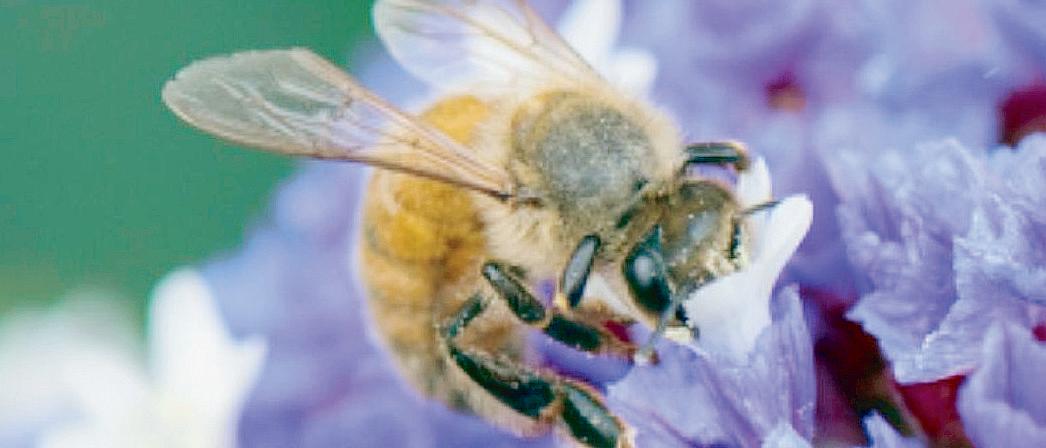
TO encourage planting of tree for bees, Rabobank’s Rabo Community Fund has partnered with bee awareness organisation, the Wheen Bee Foundation, to offer a grants program.
The program provides funding to community groups and organisations to increase vital habitat – providing spaces for bees to forage, live and breed.
The specialist food and agribusiness bank – in collaboration with the Wheen Bee Foundation – will provide grants of $500 to support the planting of bee-friendly trees in extended gardens, community-owned land, school grounds, sporting club precincts and urban corridors.
Rabobank community engagement manager Skye Ward said the Community Tree Grants program is open to not-for-profits, schools, Landcare groups, community organisations and sustainability groups.
Ms Ward said this will be the second year the Rabo Community Fund has supported the Wheen Bee Foundation, but the first in this capacity – and the Trees for Bees Community Trees Grants “aligns perfectly with the fund’s community ethos”.
With an estimated one in three mouthfuls of food pollinated by bees or insects, bees are fundamental to agricultural productivity and the food supply chain, Ms Ward said.
“And as a bank focused on supporting our client’s farming businesses, we are proud to support a grassroots program that aims to protect and nurture these essential pollinators,” she said.
THIRTY lucky primary producers have the opportunity to expand their knowledge, free of charge, at a practical workshop designed to help provide financial skills key to managing a farming business.
Hosted by the SA Rabo Client Council, the Financial Skills Workshop – which is open to all farmers, not just Rabobank clients – will be held in Naracoorte on Wednesday, 22 July.
The complimentary, interactive workshop provides hands-on guidance on understanding financial statements and banking requirements and explores topics such as taxation versus management accounting, essential business management ratios and understanding key components of a business’s financial profile.
Limited to 30 participants, the workshop will be delivered by director of Hudson Facilitation, Tony Hudson.
The Financial Skills Workshops – which provide farmers the opportunity to upskill and network – has been led and funded around Australia and New Zealand by food
and agribusiness banking specialist Rabobank, through its Rabo Client Councils.
Rabobank state manager for South Australia Peter Evans said the workshop was designed “to equip farmers with the financial skills and tools needed to help manage increasingly complex agricultural enterprises”
He said the workshop had been designed specifically for farm owners and managers, with the goal of increasing their awareness and understanding of the financial management requirements of their businesses.
“Even experienced farmers may not fully understand every aspect of financial reporting and banking requirements, or may want to further strengthen their business financial analysis skills,” he said.
Mr Evans encouraged couples and families to attend the workshop together to build a shared understanding of financial reporting.
“The sessions give farming families the chance to step away from day-to-day demands of their businesses and strengthen their financial skills together,” he said.
The Border Watch
Address: Level 1 / 1 Commercial Street East, Mt Gambier SA 5290
Telephone: 08 8741 8170
Website: www.borderwatch.com.au
Hamilton Spectator
Address: 84 Gray Street, Hamilton, Vic 3300
Telephone: 03 5572 1011
Website: www.hamiltonspectator.com.au
Portland Observer
Address: 92 Percy Street, Portland, VIC 3305
Telephone: 03 5522 3000
Website: www.portlandobserver.com.au
CONTACT US
Editorial:
Email: editorial@agtoday.com.au
EDITORS: Elisabeth Champion
E: elisabethchampion@tbwtoday.com.au
Marlene Punton
E: marlene.punton@portlandobserver.com.au
Advertising:
Email: advertising@agtoday.com.au
ADVERTISING CONSULTANTS
Leesa Cook
E: leesa.cook@portlandobserver.com.au
Sierra Laird
E: sierra.laird@portlandobserver.com.au
Shannon Benge
E: shannon.benge@hamiltonspectator.com.au
Christine Cock
E: christine.cock@tbwtoday.com.au
Christine Black
E: christine.black@tbwtoday.com.au
Josh Phelan
E: josh.phelan@tbwtoday.com.au
With a dedicated pool of funding for national and local initiatives, the Rabo Community Fund supports meaningful community projects. Since its launch in 2021, the fund has invested more than $4 million in projects to help address key agribusiness and community challenges.
Wheen Bee Foundation CEO Fiona Chambers said the Trees for Bees Community Tree Grant program is an important part of the Foundation’s efforts to create lasting habitat for Australia’s bees and strengthen local communities.
“The program is about more than planting trees. It creates real, lasting habitat for bees, while bringing people together and building a stronger understanding of the role pollinators play in our food systems and environment,” she said.
The grant applications close on Monday, 20 July 2026 at 5pm.
Grant applications can be submitted via the Wheen Bee Foundation website: https:// www.wheenbeefoundation.org.au/
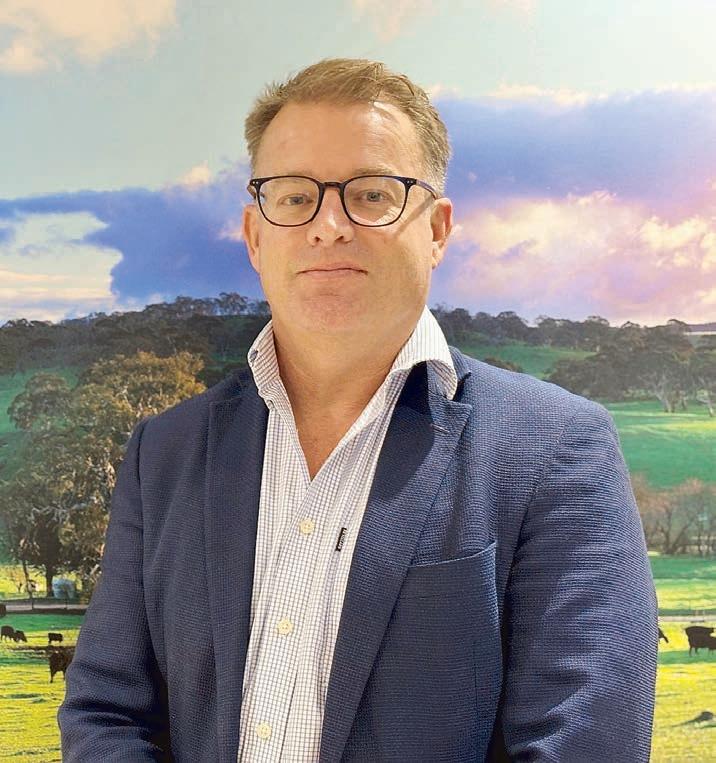


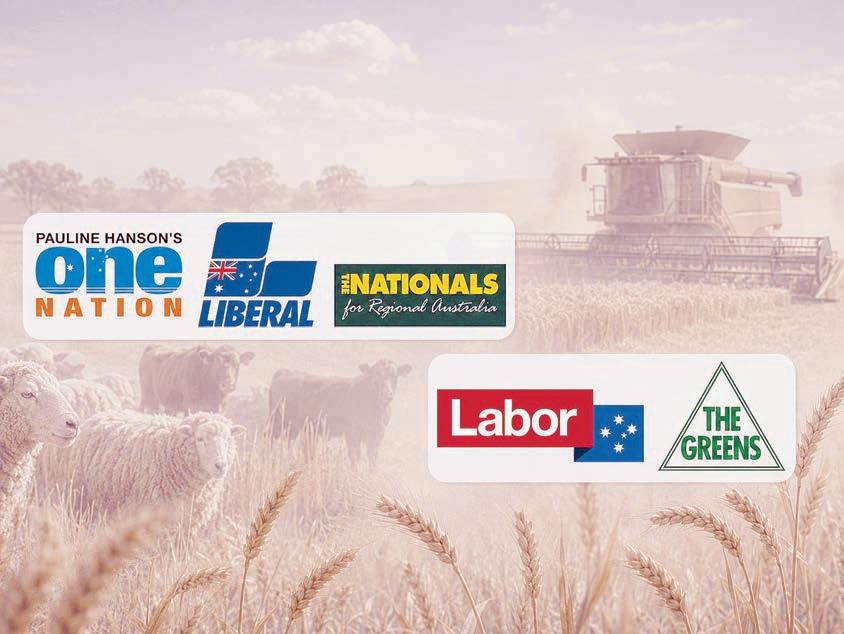
WITH the degree of political noise around Pauline Hanson’s One Nation, it is timely to compare where the federal parties now sit on agriculture.
The comparison is especially interesting between One Nation and the Coalition. There are synergies on water buybacks, live exports, foreign ownership, red tape and farmer confidence. There are also tensions, including Andrew Hastie’s public rejection of One Nation and his refusal to work politically under its influence.[1]
This article compares four groupings and six policy areas in a table. The groupings are the political parties, with the Coalition treated as a single entity. The six policy areas are foreign farmland ownership, water, climate and renewables, live exports, labour/biosecurity/productivity, and red tape/farmer confidence.
The table is not scientific. It is open to argument and re-scoring. The score measures likely alignment with mainstream production agriculture, not environmental merit, moral virtue or overall electoral appeal.
The parties are sequenced in descending total score for ease of comparison, not as a statement of political bias.
The present federal Agriculture Minister is Julie Collins, Labor member for Franklin in Tasmania, who was sworn in as Minister for Agriculture, Fisheries and Forestry on 29 July 2024.[2] Labor’s stated agricultural themes include food security, biosecurity, drought resilience, supply chains and trade, including the Government’s “Feeding Australia”
national food security process.[3] Labor also carries responsibility for the legislated end to live sheep exports by sea from 1 May 2028.[4]
The Coalition’s Shadow Minister for Agriculture, Fisheries and Forestry is Darren Chester, the Nationals member for Gippsland, whose pre-parliamentary background included journalism, marketing and work as chief of

staff to Victorian Nationals leader Peter Ryan. [5] The Greens’ agriculture spokesperson is Tasmanian Senator Peter Whish-Wilson, described by the Greens as an economist by training, with agriculture among a wider set of portfolios.[6] Greens agriculture policy emphasises sustainable agriculture, biodiversity, climate action, animal welfare and stronger



environmental regulation.[7]
One Nation does not have a clearly published formal agriculture spokesperson equivalent to the other parties however, David Farley, the new One Nation member for Farrer, is its most agriculture-credentialed federal MP.
Farley has a long agribusiness background. He has been described as moving from jackaroo and station management roles into senior agribusiness, including managing director of Colly Cotton and later chief executive of the Australian Agricultural Company.[8] AACo records show he was appointed Managing Director and CEO from 1 December 2009, he left in 2013.[9]
Farley’s earlier public position was not anti-foreign-investment. During his AACo period, he supported skilled migration and foreign investment, including Chinese investment, and argued that Australia had historically benefited from foreign capital.[10]
That contrasts with One Nation’s present policy. One Nation now proposes to ban further foreign purchase of agricultural freehold and restrict agricultural leasehold tenure to 25 years.[11] The latest ATO register shows foreign interests held 50.26 million hectares of Australian agricultural land at 30 June 2025, equal to 13.0 per cent of Australian agricultural land.[12]
Farley’s political path has also been mixed. Press reports during the Farrer campaign said he had been a Nationals member, had explored Labor, and had considered running as an independent.[13] Since entering Parliament, he has said his recent accidental vote with Greens and teal MPs on a fuel-tax-credit amendment was a mistake caused by inexperience and lack of staff.[14]
CONTINUED PAGE 4


THE H5 bird flu has made its way into South Australia with local bird watchers across South Australia and Victoria concerned
The one confirmed case of H5 bird flu in South Australia was a migratory bird.
Australia-wide, there have been six confirmed cases including four in Western Australia, and one on the coast of New South Wales.
While the bird flu has not affected poultry or the industry, concerns remained for the future of migratory and native wildlife.
According to a South Australian Primary Industry and Regional Development representative, there have been about 770 samples tested in SA with active testing since January this year.
Friends of Shorebird South East chairper-
son Jeff Campbell said he was aware the government had been working on responses to the bird flu for a number of years.
“It was always a matter of when it would happen, not if but we may still dodge a bullet here,” Mr Campbell said.
“It is a big problem but there is nothing which can really be done about it.”
He said should the bird flu spread to migratory or native birds in the region it could have “catastrophic” effects.
“We have just done another migratory bird count, we just completed our winter count on the coast and the numbers are dropping,” he said.
“They have been dropping for years steadily but if this happens there are not many birds there to be affected and that could mean we just do not get any of them anymore
in this area.”
Mr Campbell said locally it could have a “drastic effect” noting the importance birds had within the region’s ecosystem.
“Every animal is important and every species is important because often if you take one animal out of the environment it has effects on others in a chain, they are all linked and can have really bad effects if one species goes missing,” he said.
“The main thing is for people on the beach to keep an eye out for the birds which may look sick or injured and call the hotline.”
Mr Campbell also noted dog owners who walk on the beach should remain vigilant and ensure their pets were not consuming potentially infected birds.
“I was already worried about the future of birds here before this was happening but this
has made me more worried,” Mr Campbell said.
“Even our beach nesting birds are dropping down in numbers so hearing what is happening overseas is concerning.”
Minister for Primary Industries Clare Scriven now the disease has been detected in South Australia the government was acting to protect the state’s poultry and farming industries as well as its wildlife.
“Having resources such as mobile laboratories, decontamination units and rapid response units ready to go if there’s an outbreak ensures we are not reacting late, but acting early,” she said.
Those who believe they may have found a sick bird are encouraged not to touch it and to call the 24-hour Emergency Animal Disease Hotline on 1800 675 888.
FROM PAGE 3
The overall pattern is reasonably clear. One Nation scores highly on sovereignty, water, anti-regulation and protest-farmer issues. The Coalition scores nearly as strongly and has more conventional policy machinery. Labor has the machinery of government but has a farmer-confidence problem. The Greens have a coherent environmental and animal-welfare position but are least aligned with mainstream production agriculture. Many farmers would say that they are obstructive.
The meta-analysis is that rural politics is no longer simply left versus right. Increasingly, it is a contest between production agriculture, environmental regulation, national sovereignty, energy transition through renewables, and distrust of centralised decision-making.
The practical question is whether One Nation and the Coalition can cooperate politically as their agricultural positions largely overlap. Voters in rural seats could consider encouraging rural Coalition MPs and David Farley to get on the same page across the board.
They do not need to pretend there are no differences. They do need to avoid wasting common ground.
A degree of urgency might not go amiss.
References
[1] Andrew Hastie public rejection of One Nation reported in June 2026. https://www. dailytelegraph.com.au/news/nsw/seniorliberal-andrew-hastie-declares-personalwar-on-pauline-hansons-one-nation/ news-story/499584e971f0381cb41b802506 a6dd7b
[2] Julie Collins biography, Minister for Agriculture, Fisheries and Forestry. https:// minister.agriculture.gov.au/collins/biography
[3] National Food Security Strategy / Feeding Australia. https://www.agriculture.gov.au/ agriculture-land/farm-food-drought/food/ national-food-security-strategy
[4] Live sheep exports phase-out from 1 May 2028. https://www.agriculture.gov.au/biosecurity-trade/export/controlled-goods/ live-animals/livestock/live-sheep-exportsphase-out
[5] Darren Chester parliamentary biography. https://www.aph.gov.au/D_Chester_MP
[6] Peter Whish-Wilson Greens profile. https:// greens.org.au/tas/person/peter-whishwilson
[7] Australian Greens agriculture policy. https://greens.org.au/policies/agriculture
[8] David Farley profile and Farrer campaign reporting. https://www.theaustralian.com.au/nation/politics/ who-is-david-farley-the-man-who-wonfarrer-off-the-liberals-for-pauline-hansonand-one-nation/news-story/d85d4231db5760652584d211c1aa28d4
[9] AACo annual report noting appointment on 1 December 2009; ABC report on departure in 2013. https://www.abc.net.au/news/ru-
ral/2013-07-31/farley-steps-down/4855616
[10] Reporting on Farley’s earlier support for skilled migration and foreign investment. https://www.theaustralian.com. au/nation/politics/who-is-davidfarley-the-man-who-won-farreroff-the-liberals-for-pauline-hanson-and-one-nation/news-story/ d85d4231db5760652584d211c1aa28d4
[11] One Nation farming policy on foreign purchase of agricultural freehold and leasehold. https://www.onenation.org.au/ farming
[12] ATO 2024-25 foreign-owned Australian
assets report. https://www.ato.gov.au/ businesses-and-organisations/businessbulletins-newsroom/2024-25-report-offoreign-owned-australian-assets-published
[13] Guardian reporting on David Farley’s political route before Farrer. https://www. theguardian.com/australia-news/2026/ may/03/farrer-byelection-one-nationmp-dave-farley-ntwnfb
[14] Guardian reporting on Farley’s fueltax-credit voting mistake. https://www. theguardian.com/australia-news/2026/ jun/24/one-nation-pauline-hanson-fuel-
rebates-stance-ntwnfb
[15] NFF federal election scorecard media release. https://nff.org.au/media-release/ nff-federal-election-scorecard-puts-parties-under-the-microscope/ [16] NFF criticism of Greens environmentallaw proposal. https://nff.org.au/mediarelease/nff-condemns-greens-recklessproposal-on-environment-laws/
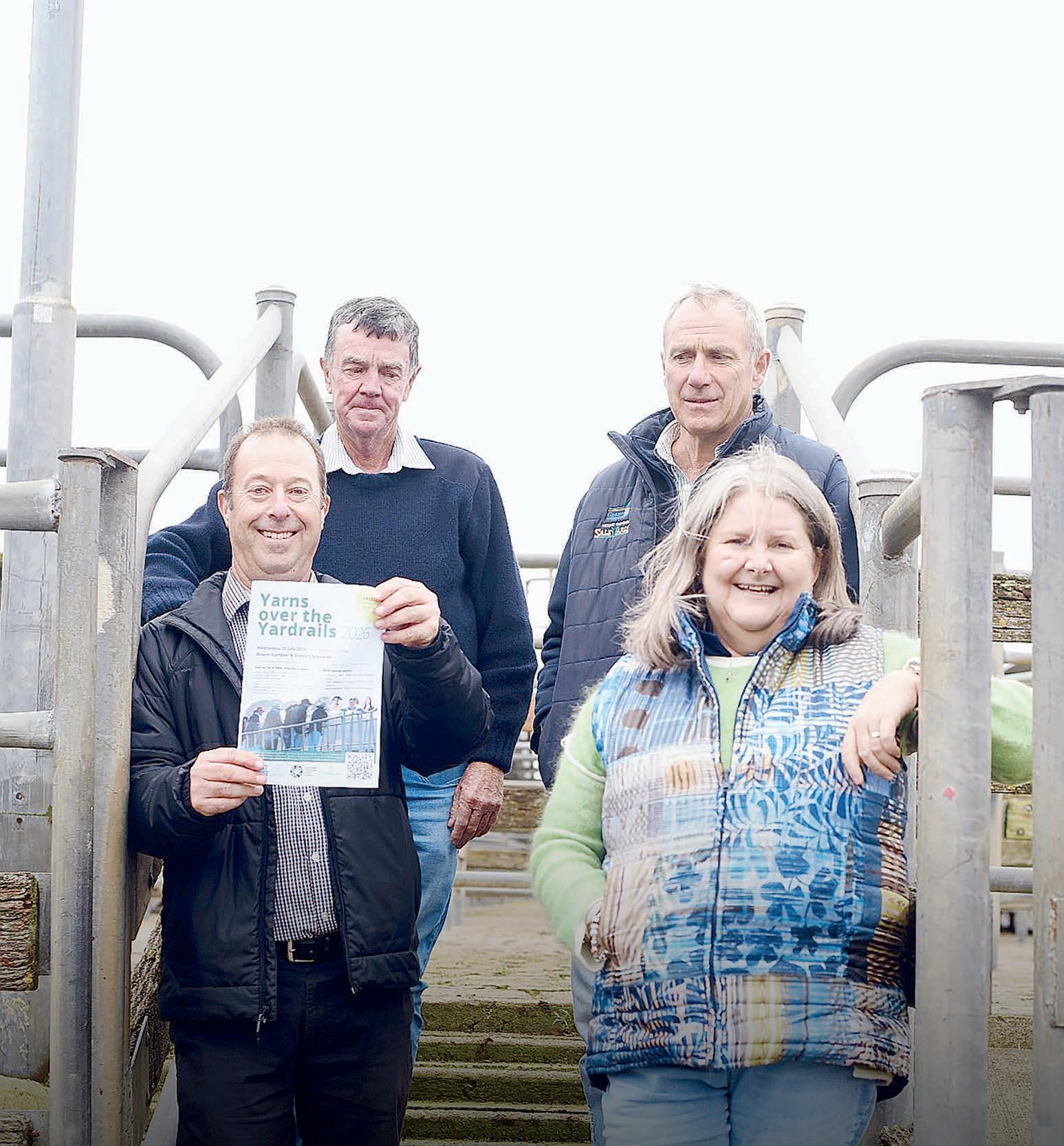
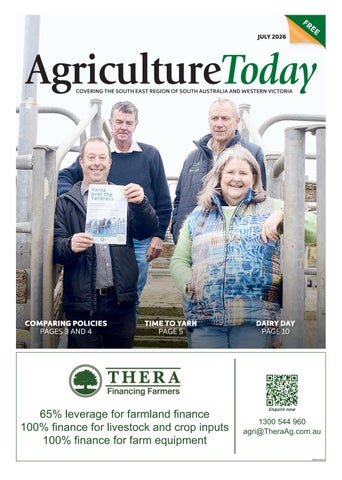
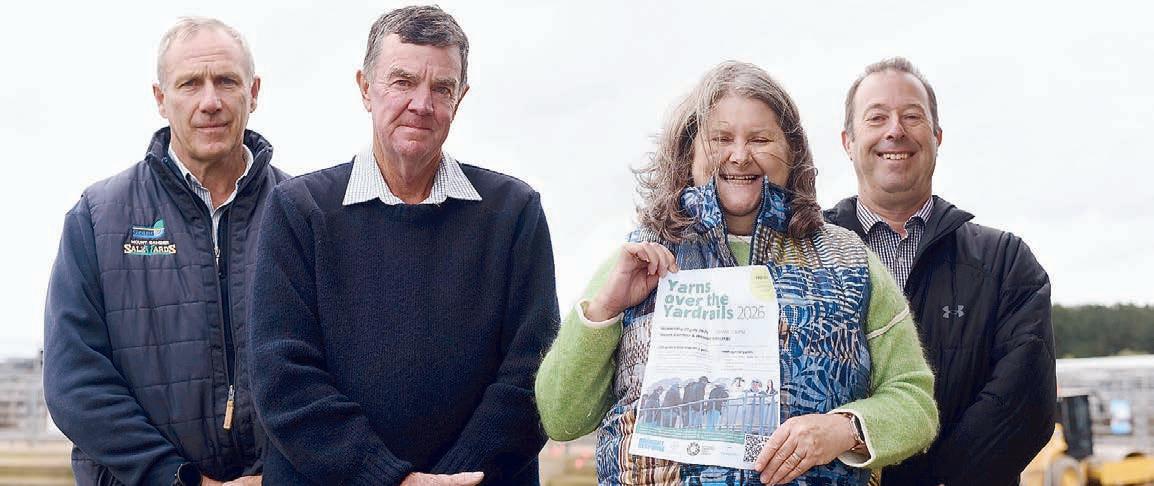
THE Southern Limestone Coast - formally the District Council of Grant - will host its second Yarns Over the Yardrail.
Held at the Mount Gambier and District Saleyards, the day will consist of talks from Marc Ryan, The Beautiful Bogan as well as Todd Woodard from Limestone Coast Sustainable Futures and Donna Jenski from DeGaris Lawyers.
Following last year’s successful event, council once again secured funds through the drought resilience grant funding.
Mount Gambier and District Saleyard committee presiding member Barry Kuhl said conversations this year would centre around those appropriate for farmers including carbon credits, succession planning as well as mental health.
“These are massive things in farming communities and things we push hard through the saleyards all the time,” Mr Kuhl said.
“We are looking forward to this once again, we are excited about it and we think they are great topics.
“We hope the community will also support it.”
Mr Kuhl said the mental health effects for farmers were “probably the same” compared to last year with every farmer facing different challenges.
“You do not know what is going on in everyone’s private life,” he said.
“Different things affect different people in different ways, something may affect someone badly but it could not affect someone else at all.”
Mr Kuhl said he hoped hosting the event
once again would give an opportunity for farmers to come along, listen, learn but also talk to others.
“The cost of fuel and what that has done to the cost of doing business at the moment has made things difficult,” he said.
“Especially those who have got higher fertilizer inputs and things like that, that has probably been stressful on their business with making decisions and things.”
He said having days focused on mental health helped by giving a space where people could get off the farm and connect.


Despite concerns in different areas of the farming industry, Mr Kuhl said there were silver linings.
“I think everyone is pretty buoyant with the stock prices and they look like they will hold for a few years,” he said.
“It is just stock numbers being down because it has rained up north now so they are looking to restock which draws a lot of cattle out of the market and increases the price.”
Mr Kuhl said despite this, numbers remained strong including wool prices.
“Wool has finally picked up after 20 years
of misery but all three [wool, cattle and sheep] have never been this good at once,” he said.
“These things make farmers want to get out of bed, it brightens their day.
“I think people are starting to realise that mental health is something you can talk about, it is not just hidden away in the back and you just have to keep working on it.”
Those wishing to attend the event can do so by contacting the Southern Limestone Coast Council before July 17.
The event will be held at the saleyards on July 21.






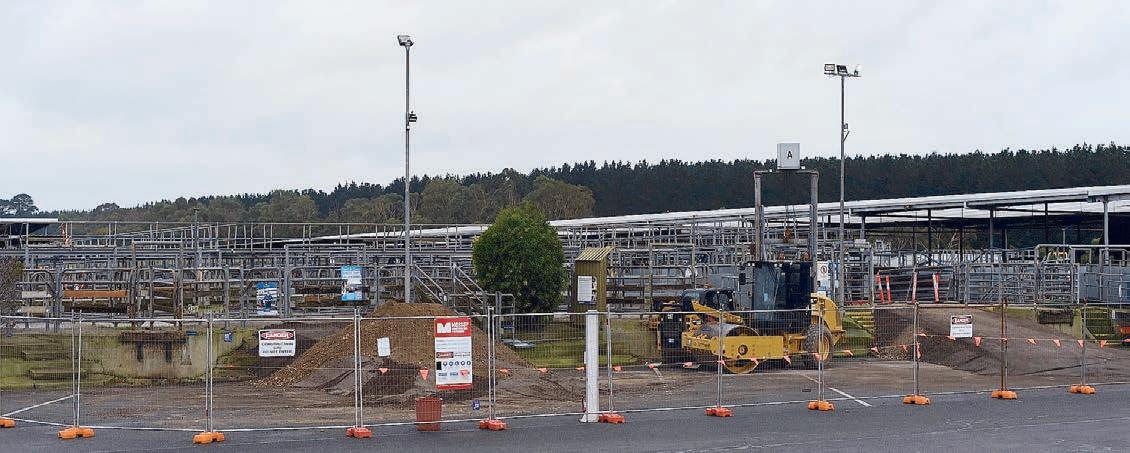
WORKS have begun at the Mount Gambier and Districts Saleyard.
The multi-million dollar investment will include soft floor cladding and further infrastructure improvements.
It comes as a joint funded project between the Southern Limestone Coast Council - formerly the District Council of Grant - and the state government.
While council was unsuccessful in securing federal government funding for the project, elected members opted for a revised version of the upgrades.
Elected members also committed to continuing its advocacy to further the project in future years.
It comes as sales at the saleyards continue strongly with wool prices also lifting.
ADVERTORIAL
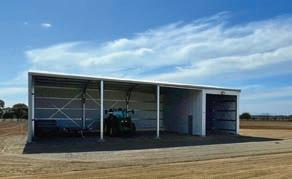
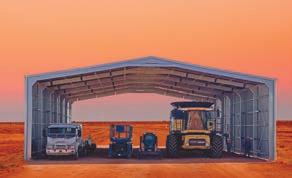
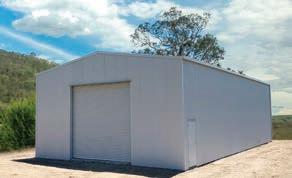
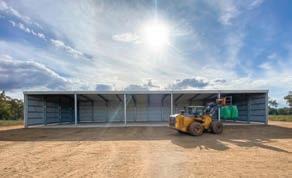
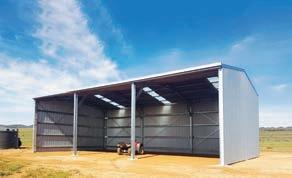
WITH the end of financial year over and many EOFY sales complete, Now Buildings are holding their EOFY Sale prices for a few more days.
Demand for locally made infrastructure has been incredibly high this year and Australian farmers and businesses are being urged to act
before industry price rises take effect.
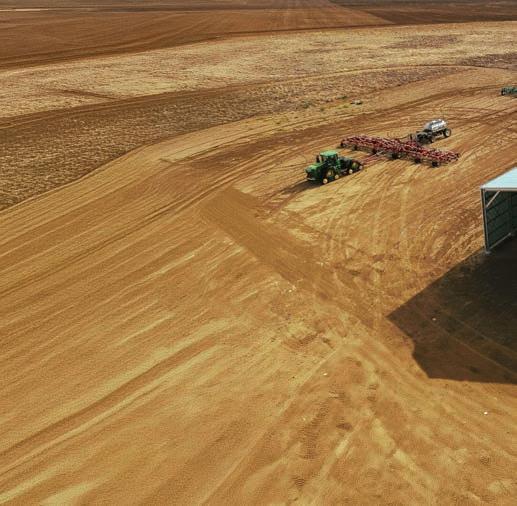
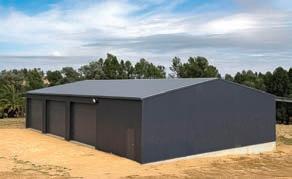
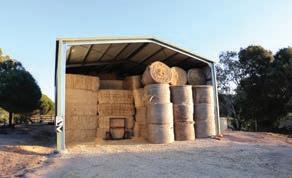
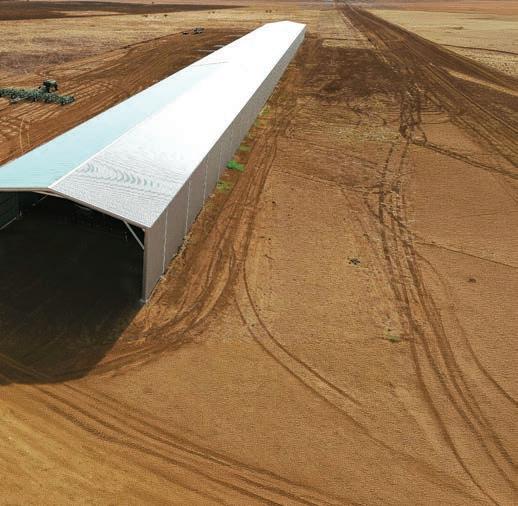
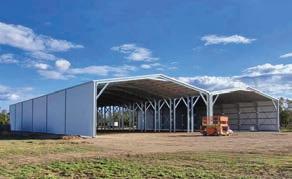
Australian shed manufacturer Now Buildings says current market conditions have created what may be the last opportunity for customers to secure pre-increase pricing on Australian made steel sheds, with major suppliers already flagging incoming cost rises across steel, freight and building components.



Escalating material costs in the construction and manufacturing sectors are expected throughout the year, with industry prices likely to increase multiple times in upcoming years.
For farmers, transport operators, small businesses and regional property owners, the timing is significant, with Now Buildings reporting a surge in enquiries as businesses move quickly to secure projects before the market shifts.
The team at Now Buildings say they have spent months negotiating with suppliers to secure current pricing allocations before increases take effect, a strategy designed to shield customers from the next round of industry adjustments.
But the company warns the opportunity is limited, with the price increase expected to take effect in the next 2-3 days.
Prices on Australian made sheds from Now Buildings will move in line with supplier increases, with projections suggesting rises could exceed 10% across parts of the sector.
Now more than ever is the time to invest in Australian manufacturing.
Now Buildings say they are proud to be family owned and operated, with their entire range of sheds certified Australian made by the not-for-profit organisation Australian Made.
At a time when imported products continue to flood the market, the distinction really matters.
Australian made products must meet strict
manufacturing and quality standards, while also supporting local jobs, regional suppliers and domestic industry capability.
For buyers, the benefits extend far beyond national pride. Locally manufactured products are designed specifically for Australian conditions, including harsh climates, engineering requirements and compliance standards.
They also typically offer more reliable supply chains, stronger warranties and easier access to customer support.
The economic impact is equally important for regional communities.
Every Australian made purchase helps support local manufacturers, transport operators, steel suppliers, tradespeople and small businesses, industries that form the backbone of many country towns.
Now Buildings says its commitment to Australian manufacturing has remained unchanged since the company was established in 2008, working exclusively with local suppliers such as Lysaght.
As uncertainty continues across global supply chains, many businesses are now reassessing the value of buying local, not just from an economic standpoint, but for reliability and longterm certainty.
For regional Australians considering a new shed, the message from industry appears increasingly straightforward:
Buy now, buy local and secure pricing before the next round of increases arrives.



PLANS are well underway for the huge Sheepvention Rural Expo 2026 event on 2 and 3 August at the Hamilton Showgrounds.
The event will be preceded by the re-introduction of the Saturday evening fashion parade that will showcase the use of wool in fashion and design.
The iconic dog trails, shearing and wool handling competitions, children’s activities and food stalls add to the atmosphere of the huge celebrations of agriculture, innovation and community spirit.
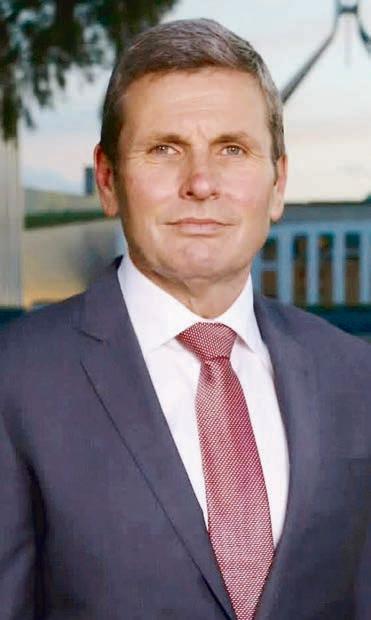
The organisers of the event, the Hamilton P&A society, in conjunction with the Schroder family, has announced decorated journalist Chris Uhlmann will be the presenter of the 4th annual Peter Schroder Lecture during Sheepvention.
Mr Uhlmann will focus his lecture on Australia’s challenges in addressing the current global energy crisis combined with meeting international obligations of emissions reduction. Specifically, he will discuss his views on how this translates to impacts, both short and long term, on regional Australia and industries such as agriculture and agribusiness.
Chris Uhlmann is a journalist who was the national political editor for both Australia’s national broadcaster the ABC and commercial network, Nine News. His three co-authored works of political fiction were adapted into the mini-series Secret City. He has written and presented documentaries including Forged in Fire on the Ukraine war and The Real Cost of Net Zero on the energy transition.
He is now a columnist with The Australian and a political contributor on Sky News. In 2008 he won a Walkley Award for broadcast interviewing and in 2017 was part of the Four
Corners team that won a Gold Quill for an investigation into Chinese Communist Party influence in Australia. In 2023, he collaborated with his artist brother, Paul, to produce the children’s book The Useless Tune.
Limited tickets for the Monday 3 August event are available.
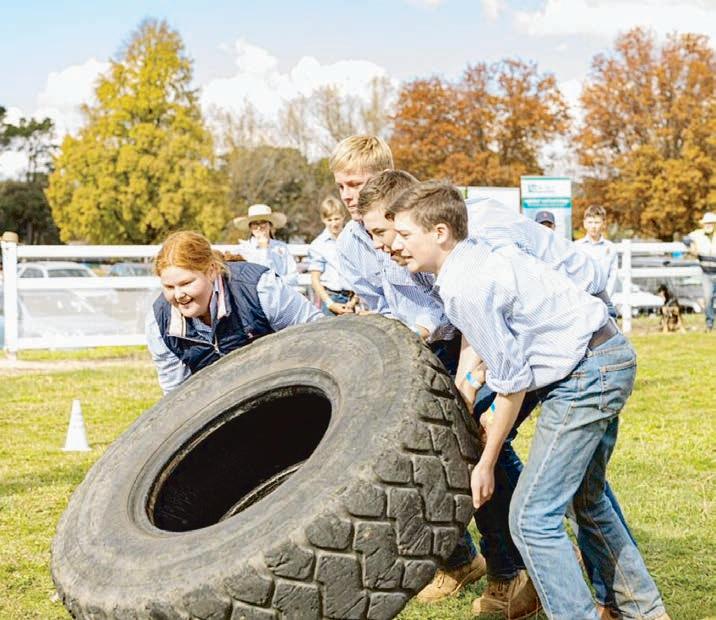
ONE of the highlights of Sheepvention 2026, on 2 and 3 August, is set to be the inaugural Young Farmer Challenge
The challenge is for teams of four young people from the agriculture industry to have some fun battling for a coveted prize that will include a $400 cash gift to be donated to the club or charity of the team’s choice.
The teams will face a series of team
tasks - perhaps moving a wool bale, a tractor tyre, or anything from animal handling to rolling swags, to first aid, and maybe a sack race.
It’s sure to be entertaining for the participants and the crowd.
The challenge could even lead winners to state and national competitions organised by Agricultural Shows of Australia (ASA).
BY JO REID
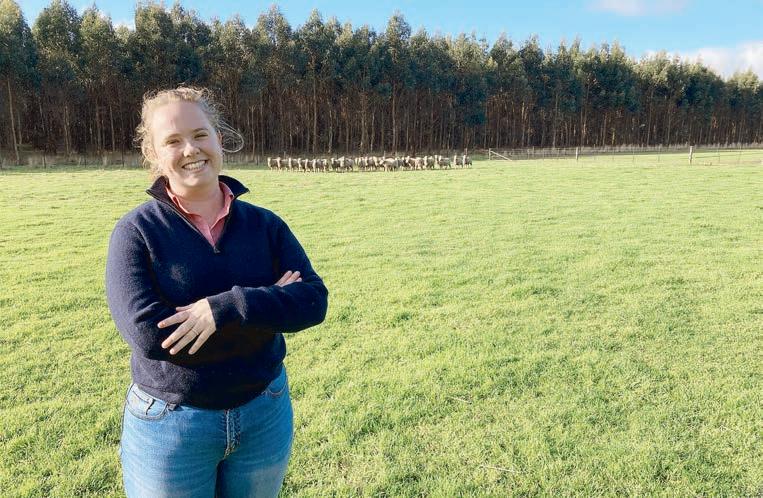
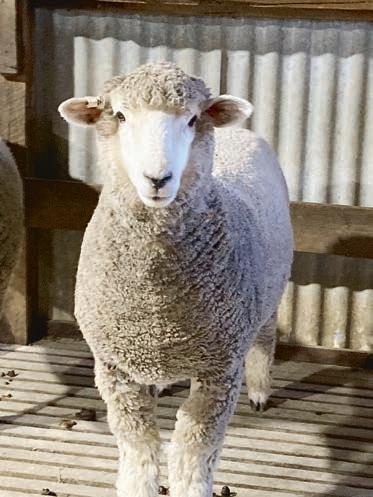
BALANCING a full-time career in the agricultural sector with a thriving sheep stud is no small feat, but for Kate Methven, it is simply a way of life. As a district wool manager for Elders across the Hamilton and Horsham areas, Ms Methven lives and breathes the wool industry. But it is outside of office hours, at her property surrounded by blue gums, where her passion project comes to life: Tuerong Valley Corriedales.
This year, that passion is perfectly timed, as the versatile Corriedale takes the spotlight as the feature breed at Sheepvention 2026.
A Lifelong Connection to the Breed
Ms Methven’s introduction to the Corriedale breed was not a strategic business decision, but rather a twist of fate during her school years.
“I got into sheep and wool through school, actually,” Ms Methven said. “The school I went to had sheep there, and they were Corriedales. It just sort of happened that way, and I stayed with them.”
Today, she and her fiance, Jamie - an Elders agronomist - run the small stud as dedicated part-time farmers. Together, they make a formidable team. Jamie works hard on maintaining the pastures to support their stocking rate and herd health, laying the groundwork for the breeding program.
The Ultimate Dual-Purpose All-Rounder
When asked what keeps her dedicated to the Corriedale, Ms Methven points to their incredible versatility and resilience. While they may not boast the ultra-fine fleece of a Merino, they offer a highly profitable balance.
Dual-Purpose Profitability: They deliver a strong combination of quality meat and valuable wool.
Maternal Instincts: Corriedales are renowned for their exceptional mothering abilities.
Environmental Resilience: Their distinctive
black hooves make them harder and more resistant to foot issues in wet environments.
“Because they have that dual-purpose aspect and are good mothers, it always makes our lives easier when they can do their job well,” she said.
Breeding for the Future with Data
At Tuerong Valley stud, breeding is far from a guessing game. The stud is invested in the science of genetics, utilising Australian Sheep Breeding Values (ASBVs) to track genotype and phenotype data.
The stud is focused on specific, measurable goals.
“Personally here with our stud, we are working to improve their growth and lower their micron,” she said.
The flock’s wool currently sits around 26 to 27 microns, but Tuerong Valley is actively working to reduce that number. To achieve this, they have introduced premium genetics from Blackwood Corriedales in Tasmania. By blending lower-micron Blackwood ewes with their broader-wool original stock, they are producing progeny that maintain traditional Corriedale characteristics—black feet, black noses, and good fleeces—while improving carcass shape and wool quality.
Celebrating Community at Sheepvention
As a member of the Sheepvention sheep show committee for the past three years, Kate is thrilled to see Corriedales as the feature breed in 2026. While she will be there showing her sheep, for her, the event is fundamentally
about connection.
“It’s quite a good community event,” she said. “It’s a lot of socialising, catching up with people that you sometimes only see once or twice a year. It brings a lot of people together.”
For those interested in seeing the results of Tuerong Valley’s data-driven breeding program firsthand, the stud is preparing for an onproperty ram sale on November 10th. Held in conjunction with Blackwood Corriedales, the sale is expected to offer approximately 40 rams, showcasing the very best of this resilient, dualpurpose breed.
Check out this year’s feature breed at Sheepvention on August 2-3.
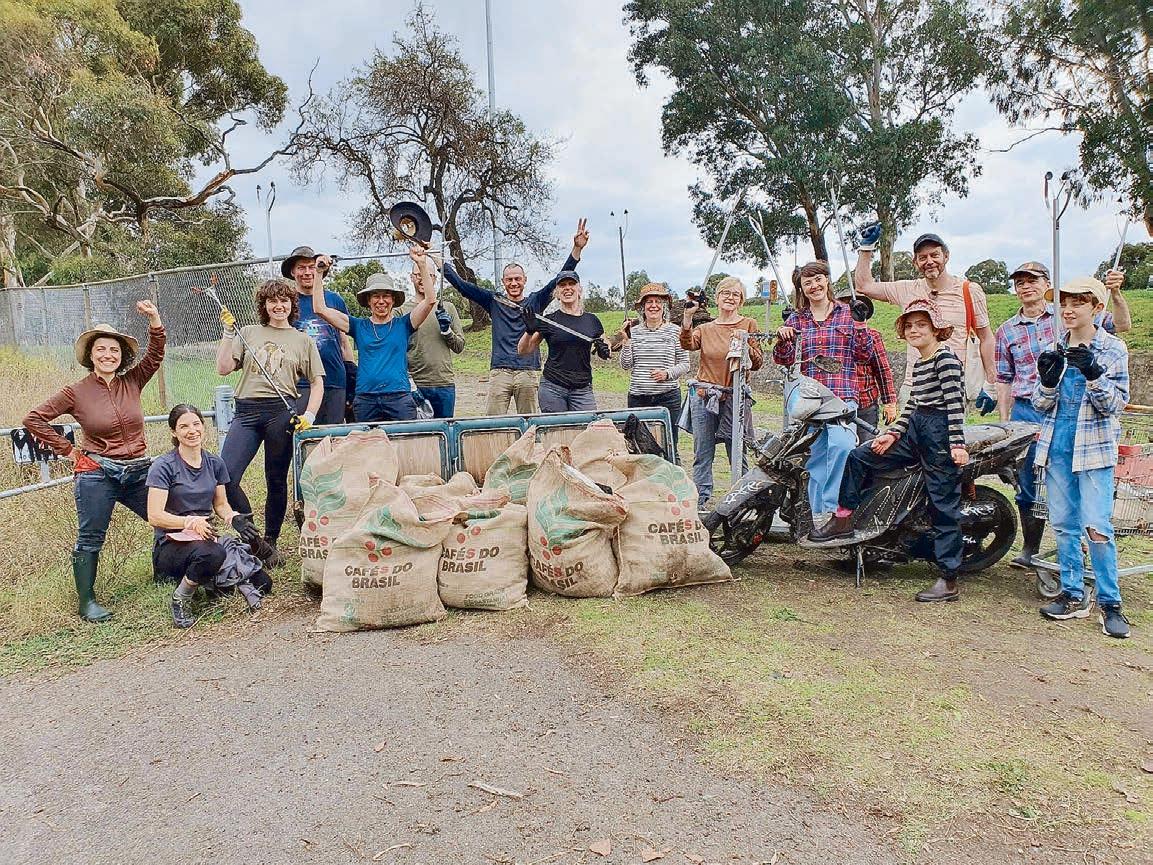
ACROSS Australia, thousands of landcarers are out in paddocks, parks, coastlines, classrooms, creeks and community spaces doing the work that protects the places and productive landscapes we all rely on. Most never ask for recognition.
With just one month remaining until nominations close for the 2026 State and Territory Landcare Awards, Landcare Australia is calling on communities to shine a light on the local people and groups making a real difference to the health of our land, water and environment.
Who in your community deserves recognition?
It could be:
A farmer improving soil health and biodiversity on their property
• A volunteer who’s spent years restoring a local reserve
• A landcare, Coastcare, bushcare or rivercare group making a difference
• A Traditional Owner or First Nations organisation caring for Country
A teacher inspiring students through environment projects
• A young person leading positive change in their community
From farmers improving soil health and productivity, to volunteers restoring native vegetation, Traditional Owners caring for Country and young people leading environmental projects, these are the kinds of everyday efforts that often happen quietly but make
a lasting difference to communities and the environment.
It might also be the neighbour who spends weekends replanting a creek line, the farmer trialling new ways to keep soil healthy, the teacher helping students grow a habitat garden, or the volunteer group that turns up month after month to restore a local reserve.
Many landcarers do this work quietly and consistently, often over many years, so a nomination is a simple but powerful way to say their work matters. The awards celebrate the people helping create a more resilient future for Australia.
Anyone can put forward a nomination — whether it’s for yourself, someone you know, or a group doing great things in your community. Nominations close Friday, 31 July 2026.
As family lawyers, one of the most distressing questions we hear from parents is what to do when the other parent stops you from seeing your children. These situations are tough on everyone involved, particularly children who are often caught in the middle.
While emotions can run high, understanding your legal position is an important first step. What you can do depends on the type of arrangement in place. Broadly, these fall into three categories: Parenting Orders, a Parenting Plan or an informal agreement.
If Parenting Orders are in place, they are legally binding. Both parents must comply and take reasonable steps to ensure the arrangements are followed. There are limited exceptions. A parent may have a reasonable excuse, for example, if they genuinely believe a child is at risk of harm. However, day to day conflict or frustration will not usually justify withholding a child.
If orders are breached, legal options include mediation, a contravention application or seeking recovery orders. The court can impose a range of consequences depending on the situation, from make-up time with the children through to penalties.
A Parenting Plan is not legally enforceable but can still be useful. It may provide evidence of what arrangements have been working. If issues arise, the arrangements can be formalised through Consent Orders.
Informal agreements offer the least protection and can quickly unravel if cooperation breaks down.
In any scenario, acting early matters. Keeping records, attempting mediation and obtaining legal advice can make a real difference, particularly for families in regional areas where access and distance can add complexity.
Mellor Olsson has a dedicated team of Family Lawyers who can assist you with the challenges that come with separation, divorce and parenting arrangements. Visit molawyers.com.au or phone 08 8414 3400.

The State and Territory Landcare Awards are often the first step towards national recognition, with winners progressing to the 2027 National Landcare Awards. But for many nominees, the greatest reward is knowing their efforts have been seen and valued by the communities they serve.
“Every community has people who turn up, get their hands dirty and keep going because they care deeply about the environment around them. All it takes is one nomination for someone to be recognised for their efforts. This isn’t just about saying thank you, a Landcare Award can help elevate people’s voices, strengthen their mission and open doors to new opportunities. Nominating is quick, free and incredibly impactful,” Dr Shane Norrish, CEO Landcare Australia said.
For more information or to nominate please go to www.landcareaustralia.org.au/awards










If there’s someone in your community who is helping protect landscapes, strengthen local connections and leave the environment in better shape for future generations, now is the time to tell their story.

AUSTRALIAN Jersey genetics are making their mark in New Zealand with more Kiwi farmers looking across the ditch to improve their herds.
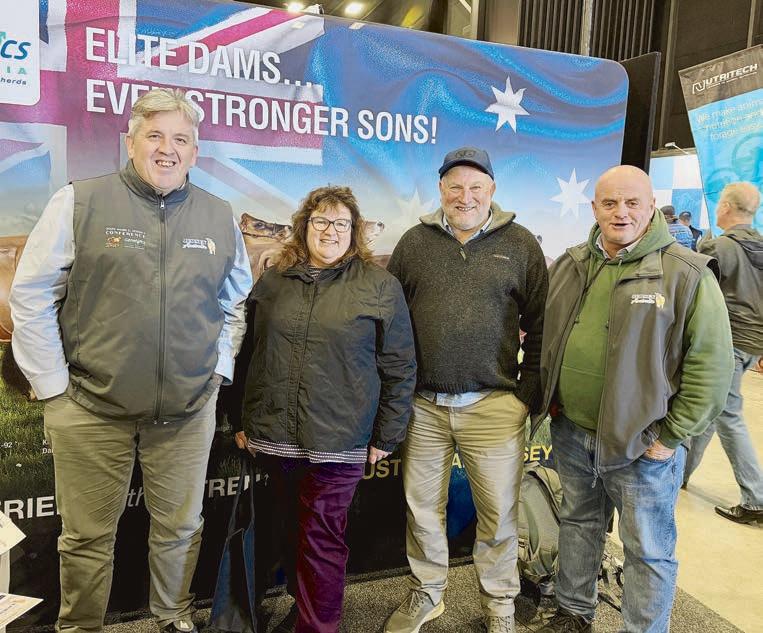
For the second consecutive year, Jersey Australia, Genetics Australia and Agri-Gene hosted a site at Mystery Creek Field Days, near Hamilton, New Zealand, in June to promote the Jersey breed.
They found that more New Zealand farmers are turning to Australian Jersey genetics in their breeding programs.
The four-day event attracted more than 130,000 people this year, making it the biggest agricultural field days in the southern hemisphere.
The interest was sparked after Australia hosted several New Zealand farmers at the World Jersey Conference tour in early 2025.
Jersey Australia general manager Glen Barrett said the Mystery Creek presence confirmed the growing popularity of Australian genetics.
“It was a very positive event and the most pleasing thing compared to the previous year was the high product recognition and the high re-use factor for local farmers,” Mr Barrett said.
“We saw strong sales last year after the World Jersey Conference and that momentum continues to build. Australian genetics are being more widely used in New Zealand and they are having an influence.”
Jersey Australia in partnership with Genetics Australia and Agri-Gene hopes to build on that momentum and plans to return to the Mystery Creek field days next year and possibly expand to a regional roadshow.
“The most positive thing we found at the World Conference was that they really like the cow we have here in Australia. That drove their
interest and their desire to increase the use of Australian genetics in their breeding programs and we want to continue to build on that.”
Genetics Australia export manager Rob Derksen said it was pleasing to see the number of farmers visiting the Australian display that
were increasing their use of Australian Jersey genetics.
“Farmers commented on the well-balanced cow they are getting by using Australian Jerseys,” Mr Derksen said.
“They liked the size of cow compared to




what they can obtain from local suppliers, the better mammary systems and they felt the Jersey breed was ideally suited to NZ farming systems given the efficiencies the breed offers.”
Mr Derksen said sales of Jersey semen from Australia had been growing year on year from top Australian Jersey bulls. “It opens up the availability of new bloodlines for Kiwi farmers from genetics tried and tested in grazing systems,” he added.
Agri-Gene general manager Chris McIlroy described the event as massive and said it was a good opportunity to showcase Australian Jerseys.
“The interest in Australia Jerseys is very strong, with both pure Jersey breeders and cross-breeders,” Mr McIlroy said.
“Australian Jerseys are backed by good cow families and they are improving the type and udder traits and the size of cows in the Kiwi herd,” he added.
“This year’s sales have grown 30 per cent over last year so we are keen to continue building opportunities in New Zealand.”
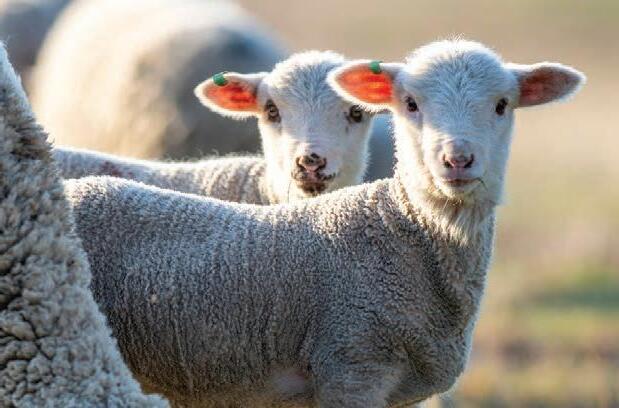
South Australian producers are making the move visual tags for sheep and goats.
If you haven’t made the switch, it’s time to get on board.
• tagged before leaving the property of birth.
• As of 1 January 2027 property.
•



• And there’s still time to take advantage of tag discounts and rebates.


















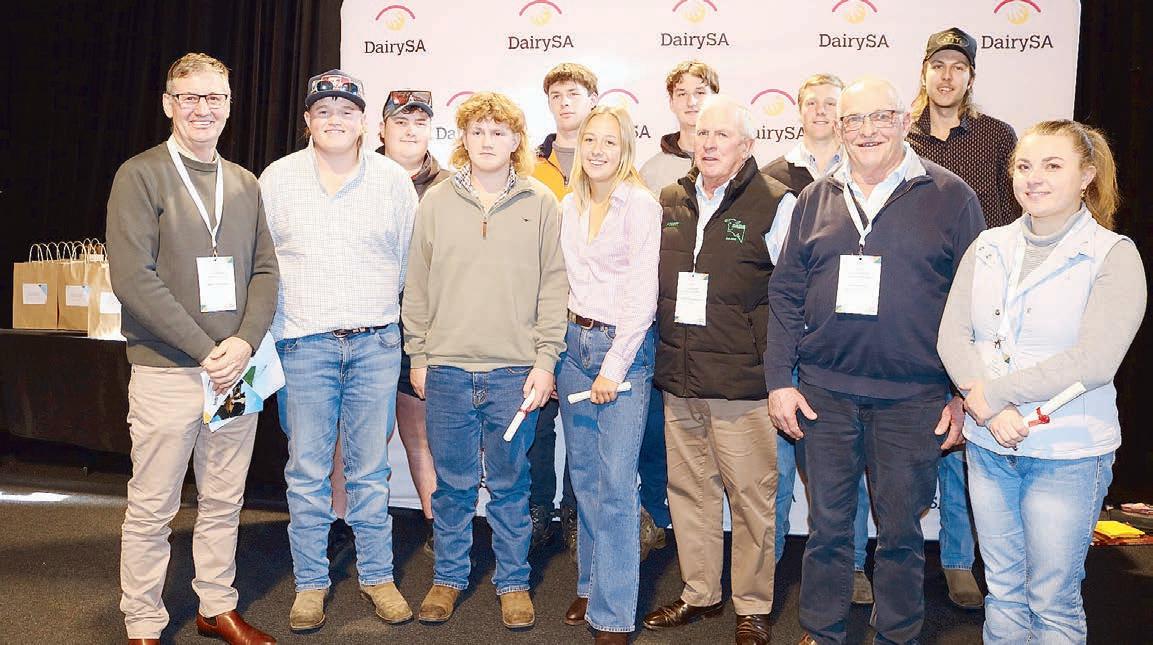
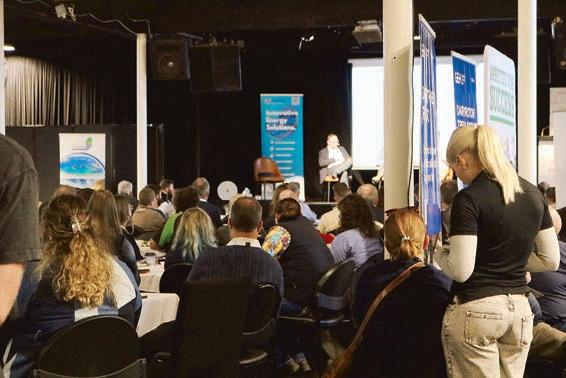
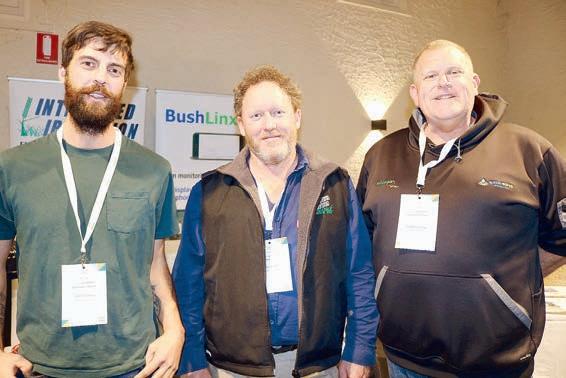
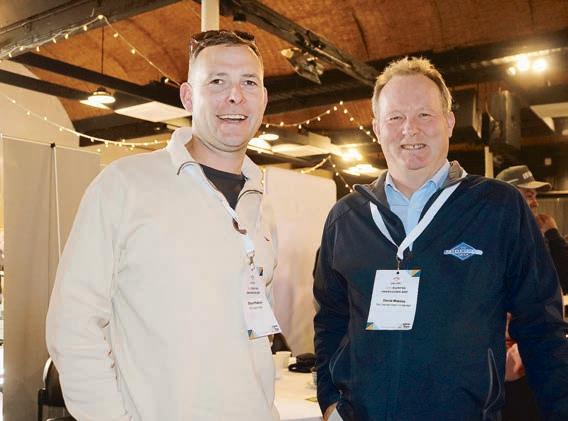
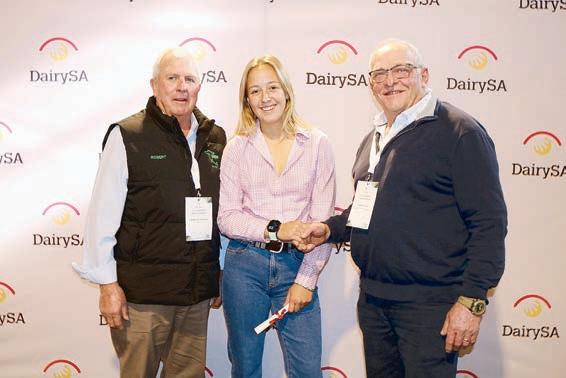
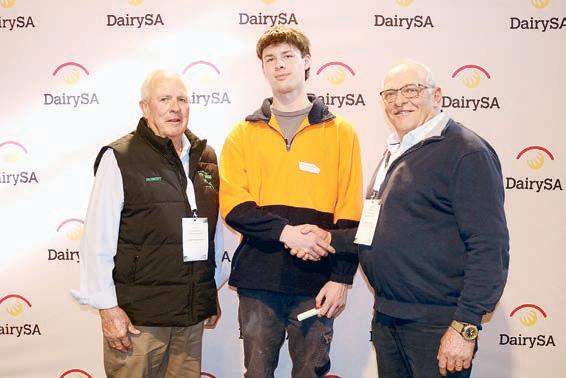
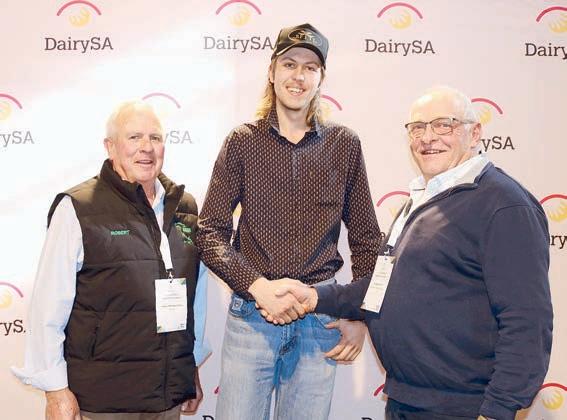
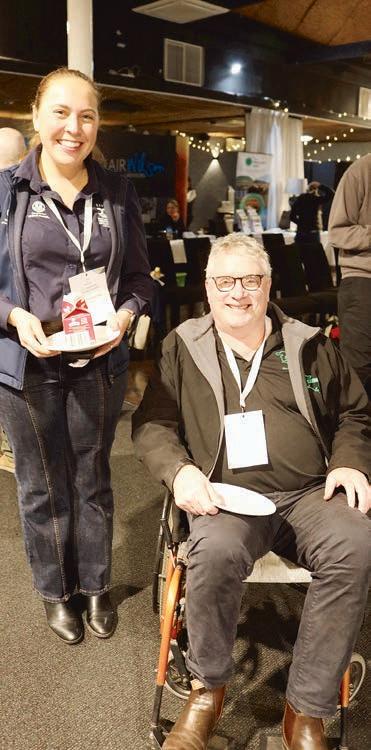
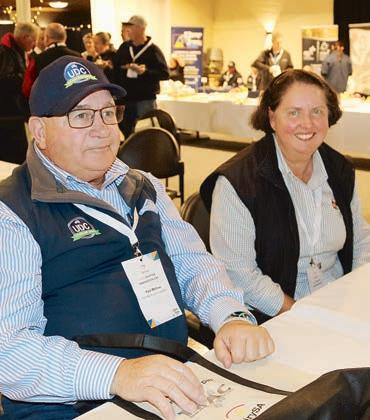
DAIRY farmers from across the region gathered at The Barn, Yahl, recently for the 2026 Dairy SA Innovation Day.
With a variety of guest speakers, stalls and information on hand, there was plenty to learn about.
Celebrated on the day were the 2026 Tafe SA graduates, who have completed Certificates of Agriculture.
Graduates were:
Certificate II in Agriculture
Eliza Beck
Jackson Bald
Declan Richardson
Jake Seidel
Jobe Harten
Kallan Price
Max Hunt
Ned Fitzgerald
Riley Lock
• Isabella Muller
• Ryan Pearson
• Thomas Shepherd
• Tyler Rothall
• Brodie Berkefeld
• Certificate III in Agriculture
• Carla Goss
• Lillie Lamb
• Elysha DeKoning
THE 2026-27 agricultural season is off to a promising start, with South Australia’s grain production projected to top nine million tonnes.
Enhanced soil moisture has encouraged expanded planting, positioning this year’s harvest to surpass the previous season as yields approach long-term averages.
According to the Department of Primary Industries and Regions (PIRSA) Crop and Pasture Report, ideal weather and soil conditions have mitigated worries regarding global supply chain disruptions affecting fertiliser and fuel.
Key findings were that seeding has progressed steadily across most districts due to excellent paddock access following early May rains, lentils remain the state’s third-largest crop, with an anticipated 12 per cent area increase over the 2025-26 period and canola interest remains stable in regions with sufficient moisture for timely planting.
In the livestock sector, recent rainfall has replenished pastures, bringing feed availability back toward typical levels.
Minister for Primary Industries and Regional Development Clare Scriven said the report was “encouraging” for farmers.
“This is an encouraging start to the season for South Australian grain and livestock producers, with early rainfall and strong planting activity helping set up many regions for the months ahead,” she said.
“It is particularly pleasing to see increased cropped area across the State and continued growth in lentil production, which reflects both producer confidence and the strength of South Australia’s agricultural sector.
“While our producers continue to face challenges, particularly in relation to weather conditions and global uncertainty, these early indicators are positive and highlight the resilience and adaptability of South Australian producers.
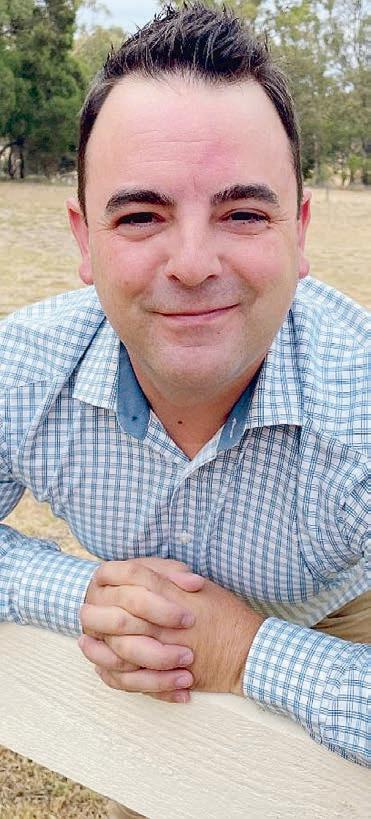
Chief executive officer of SA Grain Producer Brad Perry said welcomed the report.
“Having moisture in the profile is a significant improvement on where many growers have found themselves in recent years, but there is no doubt farmers aren’t taking anything for granted in May,” he said.
“An early nine-million-tonne forecast is encouraging, but as we know, the season still has plenty of hurdles to navigate, from rainfall and frost risk through to the continued instability of global fuel and fertiliser pressures
and lower than anticipated grain prices.
“It’s particularly pleasing to see continued confidence in lentils, which have become an increasingly important part of South Australian grain production systems.”
While these conditions aid recovery for those previously affected by drought, supplementary feeding remains necessary in certain areas to maintain stock health until pastures fully replenish.
Government initiatives have prioritised stability for the sector, including a $117 mil-
lion investment in drought support by the SA government and the availability of low-interest SA Drought Loans of up to $250,000.
Additional security has been provided through a 20-million-litre diesel reserve in the Upper Spencer Gulf and federal efforts to secure agricultural-grade urea shipments.
PIRSA’s reporting covers 14 districts, providing a comprehensive overview of regional performance, weather impacts, and feed availability to guide industry and policy decisions.







FARMERS and agricultural workers attending the Southeast Field Days in Lucindale were able to access free, practical health checks and wellbeing support through a partnership between Fat Farmers and the National Centre for Farmer Health (NCFH), highlighting the importance of bringing accessible health services directly to farming communities.
The collaboration combined face-to-face farmer Health and Lifestyle Assessments with the Fat Farmers purpose-built mobile Health Hub, offering a clean, private clinical space for farmers to complete their health checks in a comfortable and practical field day setting.
For many farmers who attended, accessing preventative health care can be difficult during busy and demanding periods on farm.
The free health checks provided an opportunity to identify early health risks, including blood pressure, cholesterol, blood glucose, and lifestyle factors, before they develop into more serious health concerns.
The NCFH Health and Lifestyle Assessments are specifically designed for farming life, with health professionals trained in the risks faced by farmers, including UV exposure, chemical handling, noise exposure, fatigue, physical strain, and long working hours.
The Fat Farmers Health Hub played a key role in supporting delivery, providing a dedicated clinical environment that helped ensure privacy, comfort, and accessibility for farmers completing their assessments at the event.
Together, the partnership strengthens access to rural health services by meeting farmers where they are, helping to reduce common barriers such as time, travel, and limited access to local health services.
Attendance at the Southeast Field Days
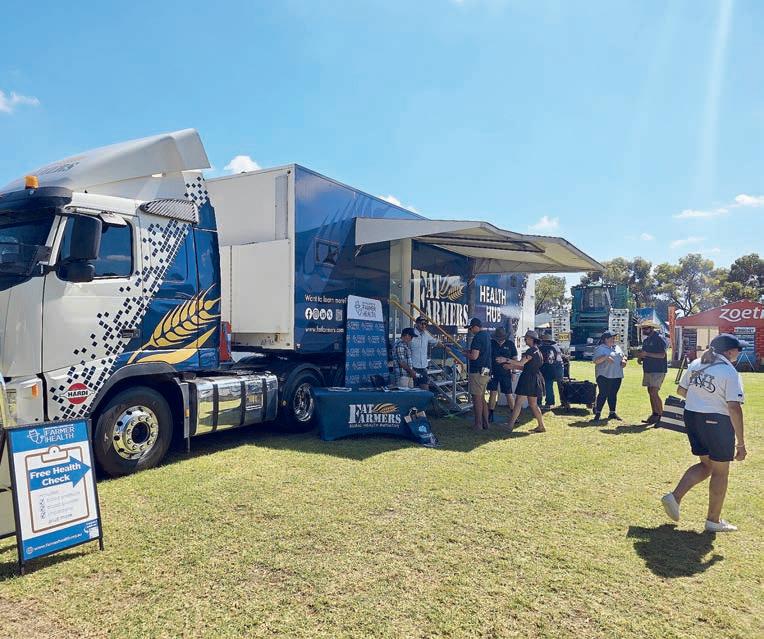
The Health Hub was set up at the South East Field Days.
was supported through funding from Department of Primary Industries and Regions (PIRSA), enabling the delivery of health checks and engagement activities directly to farmers and agricultural workers across the region.
The initiative forms part of a broader commitment to improving farmer health out-
comes across South Australia and Victoria, ensuring preventative health support is embedded within the agricultural events where farmers already gather.
Following the success of Southeast Field Days, Fat Farmers and the National Centre for Farmer Health will be partnering up again
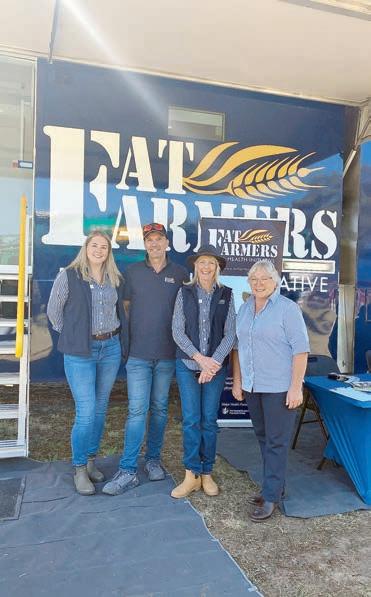
on August 2 and 3 at the Sheepvention Rural Expo in Hamilton, Victoria extending access to free on-site free health checks.
Discover more about Fat Farmers at fatfarmers.com and the National Centre for Farmer Health by visiting farmerhealth.org.au

Agriculture Today is a monthly farming publication dedic ated to delivering trusted agricultural news, industry insights, and market information. Reaching more than 36,000 readers across South East South Australia and Western Districts Victoria, it connects producers, agribusinesses and rural communities throughout one of Australia’s most productive farming regions.
The August edition will feature a special focus on Sheepvention.
Bookings for the next edition close Friday 31 July, 2026.
To find out more please contact our team today:
Leesa Cook leesa.cook@portlandobserver.com.au 0427 718 172
Sierra Laird sierra.laird@portlandobserver.com.au 0438 593 449
Shannon Benge shannon.benge@hamiltonspectator.com.au 0427 747 119
Lia Slattery lia.slattery@hamiltonspectator.com.au 03 5572 1011
Christine Black christine.black@tbwtoday.com.au 08 8724 8172
Christine Cock christine.cock@tbwtoday.com.au 0419 811 381
Josh Phelan josh.phelan@tbwtoday.com.au 08 8741 8173