JANUARY 2026 6
FARMERS CONFIDENT PAGE 2
IS FARM LAND AN INVESTMENT? PAGE 3
FR EE
DAIRY OUTLOOK STABLE PAGE 11
AGRICULTURE TODAY
Farmers reasonably confident CONFIDENCE among Victorian farmers continues to grow, with the state’s rural sentiment now at its highest point in more than four years, the latest Rabobank Rural Confidence Survey has found. While South Australian farmer confidence held relatively steady, as producers balanced improved seasonal conditions moving into harvest with tighter margins from rising input costs. Although the latest Rabobank Rural Confidence Survey, saw SA’s net confidence soften marginally from eight per cent to six per cent, nearly a third of the state’s farmers still anticipate economic conditions will improve in the coming 12 months (31 per cent, down from 37 per cent last quarter). Fewer farmers also expect conditions will worsen (26 per cent, was 29 per cent) and more now predict conditions will stay the same (37 per cent, was 30 per cent). Victoria was the only state in Australia to buck the national trend in the quarter four survey, released last month, with farmers in all other states reporting a decline in confidence. The growing sense of optimism among Victoria’s rural sector was found to be influenced by expectations of improving seasonal conditions, positive commodity prices – particularly in the livestock sectors – and international market opportunities in the year ahead. The survey, completed in November, found net rural confidence in Victoria to be sitting at 24 per cent (up from 21 per cent in the previous quarter). This is the highest level recorded in Victoria since September 2021. The largest number of farmers in the Victoria (45 per cent) were expecting farm business conditions to remain stable in the coming 12 months – up from 33 per cent with that view last quarter. The number expecting conditions to improve sat at 39 per cent – while this had declined slightly from 41 per cent with that view last quarter, it was more than outweighed by the decrease in the number with a negative view on the coming year, which fell to 15 per cent (from 20 per cent previously). The survey found expectations for a good season continue to be high – cited by 57 per cent of Victorian farmers surveyed (up from 52 per cent last quarter) – while 56 per cent remained positive about commodity prices. There was an increase in farmers expecting overseas markets/economies to have a positive impact on their businesses – cited by 21 per cent (from 19 per cent previously). In contrast, concern about drought remained high – nominated by 41 per cent of Victorian respondents (previously 40 per cent) – while rising input costs were a worry for 38 per cent (40 per cent). A total of 32 per cent of the state’s farmers reported being concerned about government interventions/policies (down slightly from 36 per cent last quarter). Rabobank state manager for Victoria and Tasmania Sally Bull said 2025 had “been a year of improvement in some areas, after a tough first half season-wise”. “Conditions have certainly improved with
Rabobank state manager for South Australia Roger Matthews.
Rabobank state manager for Victoria and Tasmania Sally Bull.
useful rain falling across parts of the state in recent months,” she said. Ms Bull said the livestock price rebound this year had also been really significant for Victorian producers. “And long may the strong prices continue, as livestock producers, who have been negatively impacted by the poor seasonal conditions, now need to replenish cash flows and build up stock numbers again,” she said. Costs a pressure The cost of doing business has emerged as a key pressure point, with nearly half of SA farmers surveyed nominating input costs as a top concern (48 per cent, up from 39 per cent quarter-on-quarter). Drought worries also remained high, nominated by 41 per cent as a reason for concern, although this eased from 45 per cent last quarter thanks to late spring rain and a mild finish for winter crops. Rabobank state manager for South Australia Roger Matthews said seasonal sentiment reflected the variety of conditions faced by farmers across the state, and ongoing caution following prolonged dry. “Farmers on the Eyre Peninsula held the most optimistic outlook for the year ahead, followed by those in the South East,” he said. “While the Eyre Peninsula had harvest well underway and were probably surprised on the upside, the considerable improvement in the season in the South East has been really late in spring and confidence is still recovering. “Meanwhile, farmers in the state’s Mid North and Yorke Peninsula regions were less optimistic, with confidence levels in negative territory. Sentiment in these areas reflects a year characterised by no effective break until after the crop was in and mediocre falls until
October which underpinned expectations of another failed year. Although conditions have now turned around with late spring rain, seasonal concerns underpinned lower confidence in the survey period. Mr Matthew said while disruptive for hay production, “late rain and a mild finish benefited many regions and reports are of a better-than-expected yield as harvest ramps up across the state”. “We’re now tracking towards a much-needed production recovery, with the state’s winter grain harvest predicted to reach 8.6 million tonnes. While this is below our five-year average, it’s 67 per cent above last year’s droughtimpacted harvest,” he said. Improved crop yields and strong livestock prices throughout the year will provide income relief for SA farmers, however, many are focusing on the other side of the ledger as they assess the impact of inflationary pressures. “Input costs are increasing across the board – not just in terms of fuel, fertiliser and chemicals, but also for labour, freight, machinery, repairs and maintenance, insurance and so on,” Mr Matthews said. Sheep confidence in SA Sheep producers were the most confident of all farmers surveyed in the state, with this sector’s net confidence rising to 35 per cent. The survey, completed last month, found grain grower confidence rebounded this quarter from net -18 per cent to one per cent, but beef producer sentiment fell from 29 per cent to zero. “This sentiment reflects what’s happening in the different sectors,” Mr Matthews said. “Sheep producers have benefited from ongoing strong lamb prices, supported by positive signals from the wool market. For grain growers, although prices have softened com-
ing into harvest, the sector is buoyed by a rebound in yields. In the beef industry, confidence appears to be correcting in line with the typical seasonal easing for all classes of cattle.” Western District confidence In Victoria, by region, the survey found Western District farmers continue to have the highest confidence levels, with a net reading of 44 per cent (was 34 per cent). A total of 55 per cent in the region are looking forward to an improved year ahead (up from 50 per cent last survey). Farmers in the High Country reported the second-highest level of confidence in the state, at a net 37 per cent (up from 33 per cent), followed by Gippsland, where rural sentiment remained stable with a net reading of 25 per cent (was 24 per cent). Mallee farmer confidence has risen to net 11 per cent, from one per cent. Central Victoria was the only region in the state to record a drop in farm sector sentiment, to net -8 per cent (from seven per cent previously). “The key livestock production regions – the Western District, Gippsland and the High Country – have received good rain in recent months,” Ms Bull said, “which has really buoyed farmers’ spirits.” By commodity, the survey found beef producers to be the most confident in the state. Net confidence in the beef sector came in at 35 per cent (up from 26 per cent in the previous quarter) with most producers expecting business conditions to either improve or to stay the same (44 per cent respectively), while only nine per cent had a pessimistic outlook on the year ahead. “In the survey, beef producers nominated good seasonal conditions and robust prices as the chief reasons for their optimism,” Ms Bull said. Despite reporting the lowest sentiment levels of all commodity groups in the state, net confidence in the grains sector has jumped to -8 per cent (from -36 per cent previously) with over half of grain growers now predicting economic conditions will stay the same (53 per cent, was 32 per cent). “Despite a very challenging growing season with minimal rain for crops, many farmers in the state have reported better than expected yields. More marginal cropping areas are harvesting average to above-average crops – which is an amazing effort and testament to improved growing techniques and agronomy practices,” Ms Bull said. Heading into summer, Ms Bull said, Victorian growers operating along the Murray River are also looking at a potentially challenging season for summer crops. “The combination of limited water allocations, high water prices and far-from-optimal conditions for establishing crops, with cool weather at the beginning of the season, have the potential to negatively impact yields. And this has resulted in a vastly-reduced area being planted to summer crops,” she said.
CONTINUED PAGE 4
PRECAST CONCRETE TO... Domestic,
Civil & Rural Precast Concrete ... Water it
Specialists
... Feed it
... Send it
12813674-KF45-25
2 AG TODAY | JANUARY 2026
12760799-AA14-25
78 Forest Street, Colac VIC 3250 - (03) 5231 5231 admin@ccpcivilprecast.com.au www.ccpcivilprecast.com.au
AGRICULTURE TODAY
Farmland as a store of value PATRICK MACKARNESS
MAINTAINING wealth can often be as hard, if not harder, than accumulating it in the first place. With this in mind, it is worth farmers taking stock of their position and asking how securely their wealth is stored. The question of value preservation — and, ideally, enhancement — is of perennial interest. However, wealth preservation and capital growth, while related, are not the same thing. Growth involves embracing risk, while capital preservation is concerned primarily with minimising it. Against this background, and in light of the boom and subsequent correction in farmland prices, it seems timely to examine how farmland has performed as a store of value compared with other asset classes. To do this, I examined farmland values across the readership area over a 33-year period using data published by the Australian Bureau of Agricultural and Resource Economics and Sciences (ABARES), beginning in 1993. The land values relate to the south-east of South Australia and southern Victoria. The alternative assets analysed were cash (represented by Reserve Bank of Australia onemonth bank bills), gold, Australian shares (via the All Ordinaries Index), and shares including reinvested dividends (the All Ordinaries Accumulation Index). For urban real estate, Sydney house prices were selected, as they have shown the strongest long-term growth of any Australian capital city and provide something of a “best-case” residential comparison. In addition, the CPI (All Groups) and a basket of rural commodities were included. The rural commodity basket is the RBA’s rural commodity price index, which tracks export prices for wool, beef and veal, wheat, barley, canola, sugar, cotton and lamb using established market indicators such as the Eastern Market Indicator for wool and the National Trade Lamb Indicator for lamb [1]. All series were indexed to a common base of 1993 = 100. The objective was to compare relative performance, not absolute dollar values. Income from assets was excluded, with two exceptions: • dividends reinvested in the All Ordinaries Accumulation Index, and • interest earned on cash holdings. In the case of cash, interest was reduced by 30 per cent to reflect income or company tax. Capital gains tax, transaction costs, rental income, property repairs and other outgoings were excluded across all asset classes. This is therefore a broad-brush comparison focused on capital preservation and growth,
Have you considered what the best option for investment?
not a guide to investment management. As the standard disclaimer goes, past performance is no guarantee of future results. The relative performance of the various asset classes is shown in the accompanying graph and table. The table also records compound annual growth rates over the 33-year period and the number of years in which capital values declined. One apparent anomaly is that the CPI series shows a single year of negative inflation. This is a statistical artefact arising from index construction rather than an actual fall in living costs. The year in question compares 1996 with 1997, when inflation slowed sharply due to falling interest rates and other cost pressures — but groceries and grog did not, in reality, become cheaper. Because 2025 has only just concluded, I have used 2024 farmland values as a proxy for 2025. This approximation likely reflects market conditions during a year following the 2024 drought. The full picture will not be clear until sales agreed late in 2025 proceed to settlement. Cash (bank bills) Cash is indispensable. It performs four functions: as a medium of exchange, a unit of account, a standard of deferred payment, and a store of value.
Several commentators have recently argued that inflation combined with relatively low interest rates has rendered money a poor store of value. Yet the results show that cash has, in fact, preserved value reasonably well. It narrowly outpaced inflation, never declined in nominal terms year-on-year, and carried negligible transaction costs or capital gains tax complications. Cash has done the wealth-preservation job — quietly and without excitement — but it has not made its holders richer. Shares Both the All Ordinaries Index and the All Ordinaries Accumulation Index increased wealth over the period, albeit with several years of capital contraction. The accumulation index significantly outperformed the price-only index, recording an average annual growth rate of 9.62 per cent compared with 5.66 per cent for the All Ordinaries Index. It also declined in one fewer year (six compared with seven), highlighting the stabilising effect of reinvested dividends. These returns, however, are before capital gains tax and brokerage costs, both of which apply to equity investment. Sydney house prices ABS data show strong long-term growth in Sydney house prices, averaging 6.68 per cent per annum over the period, with no annual de-
clines recorded in the indexed series [2]. More recently, however, high-frequency private data from CoreLogic reported a 0.1 per cent fall in Sydney house values in December 2025 [3]. Some commentators expect further softening, although elevated rents may mean overall returns remain positive. Gold Gold is perhaps the most surprising asset in the comparison. Often described as the ultimate store of wealth — as captured in J.P. Morgan’s famous observation that “gold is money; everything else is credit” [4] — it recorded the highest number of year-on-year declines of any asset in the study, falling in eight of the 33 years. Between 2023 and 2025 gold more than doubled in price, driven in large part by geopolitical shocks following the events of October 2023. Over the full period, gold returned 8.33 per cent per annum before capital gains tax and transaction costs. Gold produces no income, and its appeal has been memorably questioned by Warren Buffett, who remarked that “gold is a way of going long on fear… the gold itself doesn’t produce anything” [5]. Its recent performance suggests that gold functions more reliably as a hedge against uncertainty than as a steady store of value.
CONTINUED PAGE 4
TANK BUNDLE DEAL • 45,000L TOTAL STORAGE • FREE DELIVERY • FREE KINGS FRIDGE
Call us today
12826802-KF02-26
JANUARY 2026 | AG TODAY 3
AGRICULTURE TODAY GROWTH AND VOLATILITY OVER 33 YEARS Item
Growth p.a since 1993
No. of years with decline
All Ords Accum.
9.62%
6
Gold
8.33%
8
Farmland SA South East
8.10%
6
Farmland VIC Southern and Eastern
7.50%
6
Sydney Houses
6.68%
0
All Ordinaries
5.66%
7
Cash with 30% tax deducted
2.93%
0
CPI (All Groups Australia)
2.76%
1
Rural Commodity Prices
2.03%
13
Farmland as a store of value FROM PAGE 3 Farmland Both farmland indices display a pronounced upswing beginning around 2016, followed by turbulence after interest rate rises in 2022. Over the 33-year period, farmland returned 8.1 per cent per annum in the south-east of South Australia and 7.5 per cent in southern Victoria. Each experienced six years of capital decline. Farmland has been less volatile than gold and has delivered stronger long-term growth, while being more volatile than Sydney housing but with somewhat higher returns. Rental income, capital gains tax and transaction costs are not included here, but they apply to farmland just as they do to housing and shares.
Agricultural commodities The weakest performer in the analysis is agricultural commodities — the very products that underpin farm profitability. The RBA’s rural commodity price index underperformed both CPI and after-tax cash returns, and recorded year-on-year price declines in 13 of the 33 years. What is striking is the extent to which land values have detached from the sluggish performance of the commodities that support them. Operating costs have not fallen, and farm returns — whether actual or imputed — have not risen commensurately, as market indicators confirm. In effect, farming’s commodity engine room has been weak, even as land prices surged. In sum
It could be argued that farmland has, at times, become a way of “going long on fear”, much as Buffett characterises gold. However, the timing of the farmland boom aligns more closely with low interest rates, strong commodity prices and a run of favourable seasons, combined with farmers’ desire to expand in a market where land for lease is scarce. The wisdom of that expansion will be tested in the years ahead. At current prices, farmland may not be the first choice for storing wealth, particularly if returns remain under pressure. The lesson appears to be that farmland can serve as a good store of value provided it is not bought at the peaks. Alternatives exist, and the surprise package
in this comparison is gold, which appears to behave less like a store of wealth and more like a speculative hedge. You live and learn. References 1. Reserve Bank of Australia, Index of Commodity Prices – Sources and Weights, Rural Commodities Sub-Index. 2. Australian Bureau of Statistics, Residential Property Price Indexes: Eight Capital Cities. 3. CoreLogic (Cotality), Home Value Index, December 2025. 4. Morgan, J.P., statement to US Congress, 1912 (commonly cited). 5. Buffett, W., CNBC Squawk Box, 2011.
Farmers reasonably confident FROM PAGE 2 The survey found Victorian sheep sector confidence dropped to a net 31 per cent this quarter (from 54 per cent previously). Sheep producers nominated government intervention/policies and falling commodity prices as their chief concerns. Ms Bull noted sheepmeat prices remained high, supporting the sector. And, on another positive note for sheep producers, she said, wool prices had increased substantially in the final quarter of the year, following a long period of low prices, as lower wool supplies are starting to have an impact on the market. Confidence among Victorian dairy producers was found to have decreased slightly
this quarter to a net 22 per cent reading (from 25 per cent last survey). “A number of the milk companies have lifted farmgate milk prices for their suppliers this quarter though, which is adding to the sense of optimism in the sector,” Ms Bull said. In line with the rise in confidence across the state, investment appetite has also increased among Victoria’s farmers, with 33 per cent planning to increase investment in their farm businesses in the coming 12 months (up from 21 per cent last quarter) and 59 per cent intending to hold investment at current levels. Only eight per cent of the state’s farmers plan to decrease their level of investment (down from 12 per cent previously).
These planned investments include on-farm infrastructure which remains the highest capex – planned by 57 per cent of Victorian farmers (albeit down from 62 per cent in the previous survey) and new plant/ machinery (for 36 per cent, up from 28 per cent). In addition, 33 per cent of Victorian respondents respectively indicated they had an appetite to purchase additional livestock and adopt new technology. The state’s farmers are also increasingly optimistic about their incomes, with 45 per cent looking forward to a rise in their gross farm income (up from 38 per cent last quarter). The survey also found 33 per cent are expecting their income to remain the same,
and 21 per cent expect incomes to decrease (down slightly from 23 per cent last quarter). A comprehensive monitor of outlook and sentiment in Australian rural industries, the Rabobank Rural Confidence Survey questions an average of 700 primary producers across a wide range of commodities and geographical areas throughout Australia on a quarterly basis. The most robust study of its type in Australia, the Rabobank Rural Confidence Survey has been conducted since 2000 by an independent research organisation. The next results are scheduled for release in March 2026.
12828776-KF02-26
4 AG TODAY | JANUARY 2026
AGRICULTURE TODAY
Lamb ad takes Busy time for baling across the regions on world rating
THE highly anticipated annual summer Australian Lamb ad has been revealed, this year taking on the World’s Top 10 Happiest Countries List - from which Australia dropped out for the first ever. Australia slipped 11th on the list in March last year but Australian Lamb believes the official index doesn’t capture what really makes us happy. This year’s ad highlights the moments that encapsulates the Aussie way of life, from sausage sizzles at the hardware store, to ducking into the shops in your swimmers. Australian Lamb conducted its own research, polling real Aussies in its own national Australian Happiness Census. The results showed we’re a happy bunch, with 3 out of 4 (74 per cent) saying that we’re happy most days, or even going so far as to say always. Across the population the average score of happiness was a solid 7.3 out of 10, with Millennials leading the way (85 per cent say they are either happy most days or always). The keys to Aussie happiness include spending time outdoors, our friendly people, and our beautiful wildlife and nature. It’s no surprise that eating lamb also correlates with Aussies being happier than those who don’t. Half of Australians (49 per cent) said it should be a weekly ritual, with roast leg of lamb topping the list among happy Aussies (52 per cent), followed by chops (42 per cent) and cutlets (39 per cent).
The research also uncovered other happiness boosters: getting outdoors three to four times a week makes Aussies nearly three times more likely to feel good always, than those getting outdoors less often. Cracking a beer with anything rates at 7.5/10. Even early-morning run- clubbers get bragging rights, with 86 percent claiming happiness after their 6am jog and coffee ritual. Australians’ unique quirks and etiquette also show why the World Happiness Index may not quite ‘get’ us. For example, 41% think calling someone ‘Cupcake’ could be offensive, while ‘Mate’ or “Legend” is generally foolproof – with only 7% of Aussies considering these as no-go. These little cultural twists make us delightfully Aussie. Nathan Low, General Manager for Marketing and Insights at MLA, said, at first glance, the World Happiness Index might suggest Australians have lost their spark. “Our research tells a different story – happiness here isn’t about rankings, it’s about togetherness, shared experiences, and the simple joys that make life distinctly Aussie. Nothing brings people together like an epic lamb BBQ, and this campaign celebrates the humour, camaraderie, and unmistakable Aussie spirit that keep us smiling every day.” Watch the long-form film via the Australian Lamb YouTube page or view the content at www.australianlamb.com.au
IN the midst of hot weather, the region’s firefighters have urged residents to take extra care, with a particular focus on farm safety. And while many farmers are having a bumper hay cutting season, planning is required to avoid fires in that much-needed hay. Victorian Country Fire Authority Region 5 acting chief fire officer Tony Field last week said his major concern for farmers was the risk of haystack fires, noting that northern parts of Victoria had already battled a number of such fires and he did not want to see them replicated down south. “As baling has begun over the last month or so, we are asking farmers that if hay has been baled with moisture, it is left in paddocks to dry out before being stacked in sheds,” he said. “A chemical reaction can produce heat inside the hay and cause it to ignite. We would like that to be front of mind.” Mr Field said the CFA’s most recent callouts had involved machinery during harvesting and baling, which remained a common cause of fires. “As we move into hotter and more extreme days, we encourage farmers not to undertake those practices on high-risk days,” he said. According to Agriculture Victoria, the optimum moisture content for baling hay for conserved feed depends on bale size and density. For small rectangular bales,
Across south east South Australia and south west Victoria hay baling is in full swing. (Leesa Cook: 527781)
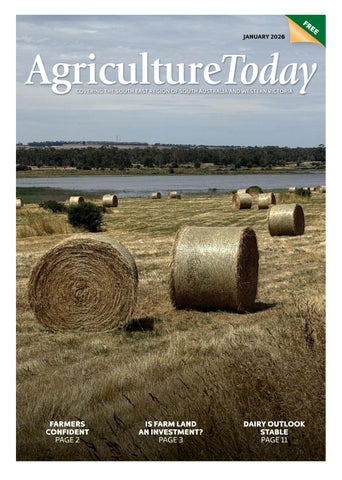
the moisture content should be no higher than 18 per cent. The upper limit for large round bales should be about 14–16 per cent and large square bales 12–14 per cent. Over 80 per cent of fires have been in the large square bales which have often been baled at the correct moisture content, but their high density doesn’t allow breathing. That is, there is no room for error with these large, very densely packed bales. * THE photo gracing our front cover was taken by LEESA COOK. It shows rolling hills with plentiful hay bales and Lake Condah in the background, in south west Victoria.
12828249-EB02-26
JANUARY 2026 | AG TODAY 5
AGRICULTURE TODAY
Grandparents matter too EVA BAILEY, PARTNER AT MELLOR OLSSON LAWYERS
ents may simply wish to preserve regular contact with their grandchildren following family separation or conflict. When determining appropriate arrangements, the Court considers a range of factors, including the child’s existing relationships, the likely impact of changes to care arrangements, the capacity of the grandparent to meet the child’s needs, and the importance of protecting the child from harm. Before going to Court, parties are generally required to attempt Family Dispute Resolution, a mediation process aimed at reaching agreement without litigation. Where agreement is reached, arrangements can often be formalised through consent orders, avoiding the stress and cost of contested proceedings. At Mellor Olsson, our Family Law Team is experienced in assisting grandparents navigate these sensitive and often complex issues. Whether you’re already caring for your grandchild, seeking contact, or needing guidance on how to secure legal recognition of your role, we’re here to support you every step of the way. Please contact our Family Law Team on 08 8414 3400 if you would like tailored advice or assistance in exploring your options.
ACROSS the community, families often rely on grandparents to provide stability, care and continuity for children - particularly during times of change or hardship. In many farming and rural communities, grandparents play a hands-on role in raising grandchildren, whether temporarily or longterm. What many may not realise is that Australian family law recognises the importance of these relationships. Under the Family Law Act 1975, grandparents are considered significant people in a child’s life and may apply for parenting orders. These orders can address where a child lives, how much time they spend with a grandparent, and who has responsibility for major long-term decisions such as education, health care and religious upbringing. As with all parenting matters, decisions are guided by what is in the child’s best interests. It is common for grandparents to step in when parents are unable or unwilling to care for their children. In these circumstances, formalising care arrangements can provide stability and give grandparents the authority needed to make day-to-day and long-term decisions for the child. In other cases, grandpar-
Partner at Mellor Olsson Lawyers Eva Bailey.
Feedlotting for farm business success
MIXED farmers are invited to an upcoming workshop series hosted by Agriculture Victoria in Piangil, starting February 2026. Agriculture Victoria Mixed Farming Development Officer, Roger Harrower said the workshops with Elders Senior Livestock Production Advisor Rob Inglis, would be ideal for any farmer contemplating setting up or restarting a sheep feedlot to improve their management of seasonal, market and business conditions. ‘We’re kicking off this series focusing on the practicalities of designing and building a feedlot and what makes it profitable,’ Mr Harrower said. ‘Farmers will explore why feedlotting sheep might suit their business, key regulations, infrastructure options, feed storage, delivery and cost. ‘The following workshops will dive deeper into specifics; workshop 2 will focus on feedlot nutrition, while workshop 3 will cover
animal welfare, marketing options and strategies to scale operations in line with seasonal and business resilience considerations,’ he said. All workshops will be held at Piangil Community Centre, 8 Beveridge Street, Piangil: Workshop 1 – Designing and building a profitable feedlot • 11 February 2026 from 9:30 am to 12:30 pm Workshop 2 – Feeding and nutrition feedlot workshop • March 2026, details to follow Workshop 3 – Beyond the feedlot: welfare, markets and integration • June 2026, details to follow. Interested farmers are encouraged to register for all 3 workshops at www.trybooking. com/DFOTE or contact Roger directly on 0407 729 024, roger.harrower@agriculture. vic.gov.au.
A chance to know more about sheep feedlotting is coming up next month.
ADVERTISEMENT
Together we can make the South West Coast an even better place to live.
12807920-EB40-25
Roma Britnell MP 6 AG TODAY | JANUARY 2026
Member for South West Coast
f,,& n ǹ £ ]J ¿ e , J ] @n ¿n£ nY, f,,& n ǹ £ ]J ¿ e e , J ] @@n ¿¿n£ nY, Ǩ Ǩ
¹,ȃ¸, An ¿n£ n¸, ,&Ǥ 7r ª ½Û 7rªË r Ç˽ ª ù " ª ½r¤ ©r ªÇ ªrª rª ©r ª ª ù OÇ ¤ù &Û ½rˤ Û¤ ª ½Á÷ ©¯Ç¯½Á÷ ¯Á ĵ ÇÇ ª Áù r½ ª Áù =ČK ª Á÷ bČ ¤ÇÁù H º rºÁù ¤Ç½r¡ö Z©ËÖ õ¬ä© éÝ £ËÙ Ù ¾¬ ¾ Ƥ éÙ ¾ ÖÙË é äÝ ä ËÄÖ ä¬ä¬ô ÖÙ¬ Ýƣ ËÅä ä éÝ äË ûƨ Z©ËÖ õ¬ä© éÝ £ËÙ Ù ¾¬ ¾ Ƥ éÙ ¾ ÖÙË é äÝ ä ËÄÖ ä¬ä¬ô ÖÙ¬ Ýƣ ËÅä ä éÝ äË ûƨ
12756916-MC14-25
94 Liebig Street, Warrnambool VIC 3280 Phone: (03) 5562 8230 roma.britnell@parliament.vic.gov.au romabritnell.com.au
AGRICULTURE TODAY
Cows are staying in the herd
AUSTRALIA’S dairy cows are staying in the herd for more than four lactations and genetics research is enabling longer productive lives. An analysis of nearly two million cows in DataGene’s latest Herd Improvement Report shows that the average herd life was 4.11 lactations in Holsteins and 4.16 lactations in Jerseys, based on research conducted by Agriculture Victoria scientist Dr Majid Khansefid. The reports shows that more than 20% of recorded cows in the national herd are in lactation five or greater. Michelle Axford, special projects for DataGene, said milk production and cow longevity are key drivers of business profitability. “A longer productive life of dairy cows is good for profitability, animal welfare, reducing emissions and cutting replacement rates,” she said. “It takes a lot of effort to get replacement heifers into the herd and that effort means money. Cows lasting longer is good because more mature cows produce more milk than younger cows. In addition, cows with a longer productive herd life means that a few less heifers are required and that reduces the cost of replacing those animals and rearing new heifers. We have less waste in the system.” Dr Axford said farmers would be pleasantly surprised to see cows surviving more than four lactations. “Most farmers would think it’s lower than that but these figures show that Australian cows are doing a good job of lasting and we want to keep improving that. Farmers understand that it’s not just about getting each cow to produce more milk, they want to improve her production over a longer period of time,” she said.
Multiple research and development activities at DataGene, DairyBio, and DairyUP are working on strategies to improve longevity. DataGene has recently released an updated Australian Breeding Value based on DairyBio research. “The updated Survival Australian Breeding Value helps farmers use genomics to select young bulls and heifers that are more likely to perform well by lasting through their first few lactations and beyond. The updated ABV identifies animals that are less likely to leave the herd due to poor fertility or mastitis in their younger years, giving farmers more culling options in later life.” With cows remaining productive in the herd for longer, farmers can choose to reduce their replacement rate. Australia’s herd replacement rate has been about 25 per cent for several years but Dr Axford believes breeding and managing cows to last longer could reduce that figure. “From profit and emissions points of view, it’s worth looking at opportunities to reduce that figure.” The report uses herd recording information from more than 1300 farmers. “We should recognise the efforts of the 1300 farmers providing this information which helps in their own management purposes and helps us to tell a bigger story,” Mrs Axford said. She added that there had been a decline in the percentage of cows enrolled in routine herd testing but the DataConnect project was working to enable seamless data exchange with on-farm software, extending DataGene’s products and services to a greater number of herds. DataGene’s Dr Michelle Axford.
E PARK HEREFOR L L I V L DS ME
Windmill replacement solar pump kit
MELVILLE POLL HEREFORDS
Inspect sale bulls during Beef Week Open Wednesday, 4th February, 2026 from 9.00am to 6.00pm Selling on property Vasey Vic Beef 40 BULLS 40 Only nd MONDAY, March 2 2026 Inspection 11.00am, Sale 1.30pm David & Olwyn Lyons (03) 5574 3236, Fax (03) 5574 3208
From $7390 inc. GST terms & conditions apply
FREE delivery of sale bulls 150kms radius of Melville Park, includes Mount Gambier, Millicent and Bordertown
Sam Tooley 0407 268 818
Sam Savin 0407 939 910 PIC 3GMHF011
12832809-EB03-26
Contact Water Dynamics Mount Gambier for more information. 233 Jubilee Hwy West | 08 7723 2600 mtgambier@waterdynamics.com.au 12820874-CV49-25
JANUARY 2026 | AG TODAY 7
AGRICULTURE TODAY
Focus on tech opportunities
Sander Nijskens is keen to see progress via new technology.
A south-west Victorian dairy consultant is encouraging famers to start using AI and learn how technology can benefit their businesses after attending a major international conference. Sander Nijskens was sponsored by DemoDAIRY Foundation to attend the 4th International Precision Dairy Farming Conference in Christchurch. He was one of more than 350 attendees from 22 countries to hear more than 100 scientific and industry presentations covering wearables, robotics, computer vision, automation, data, and more. Mr Nijskens, who grew up on his parents’ dairy farm at Terang and now lives in Geelong where he runs K2 Agri which helps ambitious dairy farmers to progress, said the conference offered practical technology opportunities and ideas from around the world that could be implemented on Australian dairy farms. “One of the big messages I got was that a lot of farmers already have technology such as collars but could get a lot more out of using that technology,” he said. “We work out return on investment on products but do we end up using all the features and benefits of the product? “I came away thinking that there are significant opportunities to get more out of technology.” Mr Nijskens encouraged farmers to start with Chat GPT. “You can use it as a sounding board to ask questions, for writing processes on farm, to analyse data or research a partic-
ular topic. Don’t take it as gospel, but people need to try it out.” He added that new technology such as Halter virtual fencing was not just about a return on investment. “A Dairy NZ study was presented on a group of early adopters of the technology and their main ticket out of it was the lifestyle benefits,” he said. “The return on investment wasn’t the biggest thing for them. “Farmers need to understand why they’re investing in technology. If it’s for lifestyle benefits, that’s fine, but be clear about what technology is going to bring to your business.” Mr Nijskens predicted farmers would be using more camera-based technology in the future and was impressed by a display on how to score the body condition of a cow by filming her. Another highlight was an AI backing gate that works out density in the cow yard and adjusts the gate opening. Mr Nijskens said it was one of the best conferences he has attended. “They had experts from all around the world and lots of choice of topics. I would definitely consider going again.” He thanked DemoDAIRY Foundation for its sponsorship and backing the mission to bring cutting-edge global knowledge home to dairy farmers in south west Victoria and across Australia.
Victoria gives virtual fencing a tick The Border Watch Address: Level 1 / 1 Commercial Street East, Mt Gambier SA 5290 Telephone: 08 8741 8170 Website: www.borderwatch.com.au Hamilton Spectator Address: 84 Gray Street, Hamilton, Vic 3300 Telephone: 03 5572 1011 Website: www.hamiltonspectator.com.au Portland Observer Address: 92 Percy Street, Portland, VIC 3305 Telephone: 03 5522 3000 Website: www.portlandobserver.com.au CONTACT US Editorial: Email: editorial@agtoday.com.au EDITORS: Elisabeth Champion E: elisabethchampion@tbwtoday.com.au Marlene Punton E: marlene.punton@portlandobserver.com.au
VICTORIAN cattle producers can now harness cutting-edge technology to guide and contain livestock without physical fences, with the Allan Labor Government approving the safe use of virtual fencing. Minister for Agriculture Ros Spence in December announced the new regulations under the Prevention of Cruelty to Animals Act 1986, giving farmers access to virtual fencing and herding technology. These new regulations come with safeguards and clear requirements, providing farmers with smarter tools to manage livestock with precision, boost productivity, and keep animal welfare a top priority. Victorian manufacturers can now apply to Agriculture Victoria for their virtual fencing technology to be approved, with the first products expected to be approved in early February 2026. The approval conditions will include requirements for record keeping and reporting.
Advertising: Email: advertising@agtoday.com.au ADVERTISING CONSULTANTS Leesa Cook E: leesa.cook@portlandobserver.com.au Sierra Laird E: sierra.laird@portlandobserver.com.au Campbell Robinson E: campbell.robinson@hamiltonspectator.com.au Christine Cock E: christine.cock@tbwtoday.com.au Christine Black E: christine.black@tbwtoday.com.au Josh Phelan E: josh.phelan@tbwtoday.com.au Published by SA Today Pty Ltd. ACN 644 311 937
All material is copyright to SA Today Pty Ltd. All significant errors will be corrected as soon as possible. Distribution numbers, areas and coverage are estimates only. For our terms and conditions, please visit https://borderwatch.com.au/terms-and-conditions/ 8 AG TODAY | JANUARY 2026
Farmers adopting this technology, which uses collars with GPS and wireless technology to control livestock without physical fences, will need to comply with certain requirements – using approved technologies, completing manufacturer training, maintaining a physical boundary fence or barrier and ensuring collars are checked regularly. The new regulations were developed following engagement with industry, manufacturers, researchers and animal welfare groups on virtual fencing to better understand the impacts of this technology on animal welfare. A demonstration of virtual fencing technology took place at Agriculture Victoria’s Ellinbank SmartFarm in Gippsland between July 2024 and May 2025 – giving famers a better understanding close to home< Ms Spence said. “We’re striking the right balance between farm productivity and animal welfare, and it’s clear that this technology provides great onfarm benefits for farmers across the state,” she said. “We’ve ensured we have appropriate safeguards in place to protect animal welfare,
*LOCAL HUSQVARNA DEALERSHIP *QUAD BIKE REPAIRS *SIDE BY SIDE REPAIRS *MOWER REPAIRS *CHAINSAW REPAIRS *SUPPLY AND FITTING OF ATV TYRES *BATTERIES FOR CARS, MOTORBIKES, LAWNMOWERS, TRUCKS, TRACTORS AND MORE *PICKUP AND DELIVERY SERVICE AVAILABLE 1817 PRINCES HIGHWAY, HEYWOOD PH: 03 5527 1032 12833268-JO02-26
Electronic collars should keep cattle in paddocks.
while enabling innovation. These new regulations and permit system provide the framework to achieve this.” Dairy cattle were fitted with solar-powered smart collars that use audio, vibration and electronic cues to contain animals within a virtual fence and guide them to areas of the farm via a mobile phone app. The system also allowed farm staff to monitor the cows’ location, health and reproductive status. The trial demonstrated how virtual fencing technology can enhance livestock management, enabling farmers to monitor animal health and location in real time. Cows adapted well to the system, with milk yields remaining consistent with expectations. Electronic collars for livestock species other than cattle can only be used when a scientific licence has been granted under the POCTA Act, and the use is approved by an Animal Ethics Committees. For more information visit, agriculture.vic. gov.au/livestock-and-animals/animal-welfare-victoria/livestock-management-and-welfare/livestock-confinement
AGRICULTURE TODAY
More drought funding given THE South Australian Government has announced another $24.5 million for the Drought Support Package as part of the MidYear Budget Review. The additional funding takes the total package to $97 million, ensuring the continued provision of assistance to those impacted by some of the worst drought conditions on record in South Australia. The On-Farm Drought Infrastructure Rebate Scheme has experienced huge demand and has supported more than 3,800 farmers. This additional funding will ensure applications can remain open until 31 January 2026. The rebate provides support to primary producers who are implementing infrastructure projects that assist with managing current drought conditions and strengthen preparedness for future droughts. Other components of the package in high demand include the Connecting Communities Events Grants, which support gatherings that encourage communities to come together, share experiences and reinforce the unity and strength of rural areas. To date, Connecting Communities Events Grants have supported more than 160 events. Many more have been locked in across the coming months, and applications for this support will also remain open until 31 January 2026. Events will continue to be held until December 2026. In addition: • More than 850 people have been directly helped by Rural Support Relief Fund Grants of $1,500 to cover essential costs like coun-
The South Australian Government has announced another $24.5 million for the Drought Support Package. (File)
cil rates, utility bills, vehicle bills and school costs. • More than 220 people have been supported financially through Commercial Motor Registration rebates, and more than 270 through Emergency Services Levy rebates. • More than 2,000 farms have received donated fodder through the Fodder Transport Drought Assistance Scheme. • The Active Clubs Program Regional Drought Relief has supported almost 650 regional sport and recreation clubs to deliver accessible and affordable opportunities for their communities to stay active, with more to be assessed. • 6,390 students from 111 schools in drought affected areas received financial support to
attend school camps and excursions totalling $846,838 in support. • We have boosted access to immediate wellbeing assistance and advice, to help people make good personal and business decisions in difficult times. • The Family and Business Support mentors have supported over 178 clients and attended 153 drought events across South Australia. For more information on the package, and to see what support is still available, visit pir. sa.gov.au/drought-support Minister for Primary Industries and Regional Development Clare Scriven said the total drought package to $97 million, the largest drought support package ever provided in
South Australia. “We have always said these grants would remain open until 31 January 2026 and this funding ensures that everyone who has asked for help, and is eligible, can be supported through to that date,” she said. “The On-Farm Drought Infrastructure Rebate Scheme has been extremely popular, providing support for farmers managing current drought conditions and also helping them to prepare for future drought events. “Despite some areas seeing welcome rainfall – and our expected grain production being likely to reach the five-year average – many are still experiencing highly challenging conditions, and this funding ensures these programs can stay open into the new year. Livestock SA Chair Gillian Fennell welcomed the additional funding to assist producers dealing with the impacts of one of the worst droughts in South Australia’s history. “Recovering from drought takes time and initiatives such as the On-farm Drought Infrastructure Rebate can assist producers manage through current conditions while also building stronger businesses for future droughts and challenging seasons,” she said. Grain Producers SA chief executive officer Brad Perry said the certainty that the On-Farm Drought Infrastructure Rebate will remain open through to January 2026 provided reassurance for grain producers who were still planning or seeking to access this support. For those grain producers in a position to co-invest, support for on-farm infrastructure can play a useful role in managing challenging seasons and improving longer-term planning for dry seasons.
A hotter, drier Murray-Darling Basin likely Droughts were projected to become more frequent, more severe, and potentially longer in duration, prolonging low-allocation periods and increasing financial exposure for irrigation enterprises. Significant regional differences emerge from the modelling. The southern connected system faces steadily declining winter inflows and growing water-availability risk, while the northern Basin faces greater extremes, complicating water security and supplementary access planning. Chief executive officer of Waterfind Tom Rooney said the reports represent the most rigorous climate science assessment of the Murray-Darling Basin we have seen. “The message is clear: the water we have relied upon in the past cannot be taken for
granted in the future,” he said. “For irrigators and water market participants, this is not a distant hypothetical scenario, with changes already underway and felt by many districts. Business-as-usual water planning will no longer suffice and it is important for growers to now look at new methods to plan and secure their water future. “”The findings underscore the need for proactive adaptation and risk-management strategies. Irrigators should be considering diversified water portfolios, strategic use of carryover, on-farm water efficiency improvements, and uptake of digital forecasting tools. Those who act now to understand their climate risk exposure and build resilience into their water strategy will be better positioned than those who wait until the next severe drought forces their hand.”
The reports highlighted that long-term average flows are projected to decline under current management settings, reinforcing the likelihood that high-reliability and more secure entitlement classes will become increasingly valuable as climate stress intensifies. Increased climatic volatility also reduces the predictability of allocations, particularly over the next decade. Management under the Basin Plan will become more complex, with climate change compounding connectivity issues, ecological requirements, and delivery constraints. This will intensify competition between consumptive and environmental demands. Waterfind prepared a detailed summary of the key findings and their implications for the water market and irrigators, which is available online.
12815798-JR45-25
NEW climate projections released by the Murray-Darling Basin Authority (MDBA) paint a stark picture: across all modelled scenarios, Australia’s food bowl will be hotter, drier, and more variable in the decades ahead. The MDBA recently released two major reports as part of the Basin Plan Review evidence base: the 2025 Murray-Darling Basin Outlook and the 2025 Sustainable Yields Project. Together, they provide the most comprehensive climate risk assessment of the Basin to date. The findings confirmed that runoff efficiency was declining across most rivers, meaning the same rainfall would produce less inflow than in the past. This structural shift would tighten consumptive supply and drive long-run pressure on water allocation markets.
One Of Australia’s Largest Wool Exporters • Specialists in Exporting & Buying all types • Competitive auction rates Consignment for direct exports
PHIL SCHULTZ 0427 686 674 Phil.S@ewexports.com.au
Head Office: Bldg 1, 34-38 Pipe Rd Laverton North 3026 (03) 8375 1571 wool@ewexports.com.au
STEVE LOMAN 0428 574 362 Kingston S.A.
FLG0260616
• Comprehensive bulk class and buying
JANUARY 2026 | AG TODAY 9
AGRICULTURE TODAY
Second varroa mite detection in SA THERE has been another detection of varroa mite, after being been found in hives at Sellicks Hill on the upper Fleurieu Peninsula, as well as the Limestone Coast late last year. A movement control has been applied to the affected apiary sites to ensure bees, hives, and associated equipment cannot be moved from the sites to allow a thorough traceback assessment, surveillance and treatment.
Keeping farmers safe MAKING sure farmers have the tools and tailored support they need to make farms safe places to live, work or visit, has a renewed focus in Victoria. The Victorian Government recently announced a $2.6 million funding agreement between WorkSafe and the Victorian Farmers Federation (VFF) to deliver the next phase of the Making Our Farms Safer project. The funding will expand the project’s dedicated safety advisory service, which delivers on-farm, in-person support to identify and help manage key risks. The project also supports farmers with a range of tools and resources that help them adopt better on-farm health and safety practices. Agriculture employs about two per cent of the Victorian workforce but is one of the State’s high-risk industries, accounting for 33 work-related deaths since 2021. In that same period, WorkSafe accepted 2,458 claims from Victorian workers seriously injured in the sector. This next phase of the Making Our Farms Safer project will have a stronger focus on high-risk areas such as cattle handling and the use of machinery including tractors and attachments, quad bikes and side-by-sides – which together account for more than a quarter of all farm injuries. As part of this funding boost, the VFF will visit hundreds of farms, organise more safety activations, presentations and events, and help provide farmers with more practical support from industry experts and peers who understand the unique realities of farm life. The partnership is part of WorkSafe’s broader strategy to build strong relationships with farmers and industry groups to help drive down injuries and fatalities in the agriculture industry. This includes the successful It’s never you until it is campaign, which shares safety success stories from farmers, highlights the crucial role of safety conversations, and challenges common ideas which contribute to unsafe practices – such as that injuries and fatalities only happen to inexperienced farmers. For more information visit worksafe. vic.gov.au/saferfarms or makingourfarmssafer.org.au 10 AG TODAY | JANUARY 2026
These detections are the second time the pest has been found in South Australia, following a detection at Pooginook in the Riverland in September. A source for the incursion is not known at this stage. Since the first detection in Australia in NSW in 2022, varroa mite is now established and spreading in NSW, Victoria, Queensland, and
the ACT. Further information, including resources for hive monitoring and details of PIRSA’s Varroa Development Officer team, is available at www.pir.sa.gov.au/varroa
Beekeepers on the eastern side of the state are bracing for the impact of varroa mite. (Supplied)
Droughts getting longer, study finds A new study, done by the University of New South Wales (UNSW) has revealed that droughts are lasting longer in Australia. The study, which tracked not only the forces that drive drought but the damage it leaves behind, showed that droughts have lasted longer in Australia in recent decades, especially in areas with the most people and farms. UNSW researchers analysed drought trends across Australia between 1911 and 2020 based on rainfall shortages and falling river and dam levels. Their analysis showed that, since 1971, the time spent under drought conditions increased across most of Australia, especially in the southeast and southwest, which are densely populated and key breadbaskets. The increasing dryness was especially felt during winter and spring, which are critical seasons for growing crops like wheat. Lead author, UNSW PhD student Matt Grant said the trend, which is expected to continue, was especially concerning because the regions where drought was more severe were also some of the most important to Australia’s economy and people’s welfare. “Across early parts of the last century, it was wetter, but we can see that pattern has reversed since the 70s,’ he said. “In recent years, we’ve had this general sense that droughts are lasting longer. Our work puts data behind the intuition and confirms it. “We expect this trend to continue, which increases water security risks for some of Australia’s major cities and rural towns and puts serious pressure on farming.” He said it’s not yet possible to say whether these conditions are caused by climate change, because Australia has historically had large variation in rainfall.
“It’s not to say that climate change isn’t influencing drought, it’s that the natural swings in Australia’s climate are so large that it may take longer for a clear signal to emerge from the noise.” The AI unravelling Australia’s drought secrets The researchers used AI to find relationships between these conditions and hundreds of official drought records of crop losses and threats to important water reservoirs in the southeast of the country. Co-author Dr Sanaa Hobeichi, who pioneered an earlier “impact-based metric” in Texas said the approach helps answer longstanding questions in drought science. “It wasn’t really understood how closely weather was reflected in actual drought impacts, but we could show they clearly mirror one another,” she said. “The model links all the steps of a drought, from a lack of rain to documented consequences.” She said the research also shed new light on some of the less visible drivers of drought. The study showed what is happening in the soil and atmosphere was usually a better indicator of drought risk than rainfall across a month. Evaporation on hot, dry days was the strongest predictor of crop failure, particularly in the driest regions like the Rangelands, which cover more than 80 per cent of Australia’s total landmass. Whether or not water levels would run low, in turn, often hinged on soil moisture, because very dry soil soaked up rain before runoff could reach rivers and dams. Dr Hobeichi said the results build on a growing body of research showing that drought risk is incredibly complex and can’t always be pre-
dicted by major weather systems like El Niño. “Different droughts have different profiles,” she says. “AI lets us understand the complex dynamics of each one.” “We used what’s called a Random Forest model, because it doesn’t just look for one simple answer, like ‘if rain is low, it’s a drought’. “It creates an enormous number of decision trees, which ask whether certain conditions have been met in terms of ocean systems, temperature or crop failure, and in complicated combinations. “At the end, it combines all these different outcomes to give you the most likely result.” She said there is growing interest in developing impact-based approaches to better manage future climate risks. “People want metrics that reflect conditions on the ground, not just anomalies in a single variable, because a lot of the risks we’re facing are cascading and compounding.” However, she says, the AI would need further research and testing to adapt it for use as a tool to assess drought risk in a hotter future. “Rainfall patterns, soil moisture and ocean drivers will all shift under climate change, altering the ‘recipe’ for drought. “Any future applications will require stresstesting the model under conditions that resemble projected climates.” Even so, she says, the model has real potential for climate resilience planning. “The AI could one day tell us not only when conditions are dry, but when it’s going to start affecting people’s lives, letting us make better decisions about where we need to allocate resources to adaptation.” Dr Hobeichi is part of a research team currently working on a nationwide drought-impact database, extending beyond NSW to all major cropping regions.
A new study, done by the University of New South Wales (UNSW) has revealed that droughts are lasting longer in Australia. (File)
AGRICULTURE TODAY
Dairy farming conditions are strong at the moment.
RaboResearch senior dairy analyst Michael Harvey.
Report: Softer global market AUSTRALIA’S dairy sector saw some small increases in farmgate milk prices in recent months, but a softer global commodity market will likely limit further ‘upside’ for the rest of the season, Rabobank says in a recentlyreleased report. However, Australian dairy farmers will avoid lower returns in the short term with guaranteed prices locked in till the end of the current season, which finishes on June 30 next year, the specialist agribusiness bank says. In its Q4 2025 Global Dairy Quarterly, the bank’s RaboResearch division said with Australian milk production down in the season to date, there had been small increases (of AUD 0.10/kgMS) announced in October by some major dairy companies in southern Australia, taking weighted average prices to AUD 9.05/ kgMS or higher. But a softer global dairy commodity market – which weakened through Q3 2025 before falling sharply into Q4 – will likely limit Australian milk prices to close out the current season. RaboResearch senior dairy analyst Michael Harvey said the global dairy market is expected to face a period of weaker commodity prices following “stunning” global milk production growth across the second half of 2025. Mr Harvey said global milk production growth is estimated to have peaked in Q3 2025, with Q4 growth likely to be not far behind. Surging global production “The EU and UK posted their strongest growth since 2017 for the month of October, while surging October milk flows saw the US post its fifth consecutive month where growth rates have been over three per cent,” he said. “Not to be outdone, New Zealand farmers have been setting new milk solid records each month from May to September 2025, with the peak month of October the third highest output on record. “And South America is also shaping up to deliver a significant annual volume increase.”
Mr Harvey said combined output from the ‘Big-7’ global dairy producers (the EU, the US, New Zealand, Australia, Brazil, Argentina and Uruguay) is forecast to finish 2025 up 2.2 per cent year-on-year. And this “wave of milk” had softened dairy markets through Q3 2025, with sharp price falls recorded in Q4, he said. Sharp global price declines “Too much milk for the market, combined with strong milk solids growth, has contributed to a sharp decline in commodity prices,” Mr Harvey said. “Butter has led the decline, down nine per cent since the beginning of October, and 24 per cent below its peak earlier this year. Whole milk powder (WMP) and cheese have also followed suit, each seven per cent down on the beginning of this quarter. Skim milk powder (SMP) prices have held up better though, declining a mere one per cent from already low prices felt earlier in Q3.” Looking forward to 2026, the RaboResearch report said, a period of weaker commodity prices was likely in the face of ample milk supplies and exportable surpluses. “Demand remains fragile and, in the absence of any supply shock to impede surplus milk, this raises the risk of prolonged weak pricing through mid-to-late 2026 as surplus milk enters the market,” Mr Harvey said. “However, supply growth is expected to slow to just 0.12 per cent next year, and weaker prices should eventually support a gradual recovery in demand, with commodity prices expected to return to historical averages by year-end 2026.” Australia In Australia, milk production has passed its peak for the current season, the report said. “Milk production is down 2.3 per cent season to date (October 2025) on the previous year, led by declines in Victoria, the largest production state,” Mr Harvey said.
“This rate of decline has slowly started to moderate though, with October bringing much-needed rainfall in some dairying regions in southern Australia and with further rainfall in November.” RaboResearch expects overall Australian dairy production to finish the current season (at the end of June 2026) down 1.2 per cent on the previous season. The report said Australian dairy export volumes are under pressure from the reduction in milk supply. “Dairy exports volumes fell 2.6 per cent year-on-year in the September quarter,” Mr Harvey said. “Milk and cheese exports remain robust, but there are large percentage falls in fat, whole milk powder and whey exports.” There is positive news though when it
comes to local feed markets, Mr Harvey said, with more grain crops being cut for hay, which has helped lower feed prices from recent record highs. “Meanwhile, weak global grain prices and a large winter crop expected from the current Australian harvest means purchased grain is ample and prices are largely affordable for dairy farmers.” On the retail side, Mr Harvey said, dairy price inflation ticked higher in Q3 2025. Milk prices rose 1.3 per cent year-on-year in the September quarter, while retail cheese prices increased 1.4 per cent year-on-year. The report noted that “the high protein dairy boom is alive and well” in Australia, with recent market reports indicating double digit growth in the category leading to local supply chain shortages.
12835014-JV02-26
JANUARY 2026 | AG TODAY 11
Why Choose ? Agnflow A fl
Australian-Made A u Aluminium Centre Pivot System
40+ Years Industry Experience Experie
Fixed & Towable Centre Pivots in 6" and 8" Aluminium Spans. Advanced Lateral Move Systems. ce. Powered by Australian local GPS Guidance. Irrigation Made Easy @ Agnflow
Aftermarket Parts to Suit Most A Brands
Span Pipe
Joints
Drive Line
Wheel Set
Repipe your old pivot and SAV SAVE! A E! Ian: 0438 809 517. Anna: 0438 809 9 708 E: sales@agnflow.com www.agnflow.com.au
Follow Ian@Agnf Ian@Agnflow flow for more info. 12761561-KF14-25
12 AG TODAY | JANUARY 2026