![]()


THE next generation of Australian dairy farmers is helping to develop the next generation of elite cows through a new joint venture initiative.
Two young dairy farmers are playing an integral part in the Genetics Australia Co-operator herd program, which is designed to bring together the best of the Australian and American genetic pools.
Although just aged 19 and 21, Hollee Vinnicombe and Chloe Cook are managing the Co-operator programs on their family farms which are among the first in Victoria to enter the such program which fosters a unique global opportunity for Genetics Australia in its joint venture with the URUS group.
The program involves a small group of contracted farms in Victoria where elite embryos are transferred to recipient females. Females born in the program stay at the co-operator’s farm and once genomically tested elite female offspring are added to future breeding schedules. The genomic breeding values of all resulting calves are assessed with elite males joining the Genetics Australia’s artificial insemination program for Australian farmers to access.
For Hollee and Chloe, the program is an extra incentive in their burgeoning farming careers.
Hollee returned to the family farm at Calivil in Northern Victoria two years ago to work alongside her parents Dehne and Sarah. She manages young stock and works with Genetics Australia’s Co-operator Program lead Gerard Brislin across the program.
“Gerard figures out what embryos are available and brings them to us. We have an agreement where we keep the heifers except for those with a good BPI which go back to GA and


are enrolled in advanced repro programs such as IVF and ET. It’s the same with the bulls.”
Hollee said the program was going well.
“We’ve had embryo calves on the ground for about a year now and we’re really happy with them. We have two heifers at GA at the moment, one with a really good BPI over 700 . We’ve also got a bull at GA with a high BPI from the program.”
Chloe farms with her family in the King Valley in north east Victoria where her father Ross owns and operates Country Road Holsteins, Chloe leads the farm’s husbandry, calf rearing and herd management.


“We’re a bit behind Hollee but we’re looking forward to seeing the results. In August we transferred some embryos and got 10 confirmed pregnancies which is really exciting.”
Chloe said the family was pleased to be part of the program. “We’ve always been with Genetics Australia and Gerard spoke with Dad and we were keen to be part of it.”
Both Hollee and Chloe were invited to the GA 2026 Today, Tomorrow and Beyond conference hosted by Genetics Australia (GA) in Geelong on March 17-18. “It is important for the future of our herd improvement industry that we encourage and develop the next gen-
eration to take leadership roles in breeding programs, whether it be at a farm or industry level,” Gerard said. Both Hollee and Chloe also got to inspect the Genetics Australia and TLG facilities at Bacchus Marsh and Camperdown.
“I’ve been doing AI since I was 16 and really enjoy the genetics side of farming so enjoyed the deep dive into it at the conference,” Chloe said.
Hollee added that it was good to see the bulls they use in person at the GA farms.
Gerard says the Co-operator program is in its early stages and continues to develop nicely in an effort to breed “Better Cows for a Better World”
“It’s not unique to have embryos made in the USA coming to Australia, but what is unique is that we’re sending our local semen to the U.S to Peak Genetics to sire embryos that come back,” Gerard said.
“It’s a unique opportunity to access international cow families with Australian genomic performance breeding values.”
Genetics Australia chose to initially position the collaborative program with the Holstein breed with embryos generated by TransOva Genetics in the U.S, whilst a large cohort of donor females are selected and genotyped from the nucleus breeding program at Peak Genetics.
Gerard says the uptake over time of technologies such as gender sorted semen has meant there are less elite bull calves being offered to A.I companies in Australia in recent years. “Australian breeders remain an important resource providing genetics for the future, with the program providing a level of core stability and supply for future generations of breeding,” he said.


GRAIN Producers South Australia (GPSA) has launched its Sustainability Roadmap 2026–2030, providing an industry-led pathway to support a productive, adaptive and globally competitive grain sector in South Australia.
The organisation commissioned South Australian sustainability consultant Edge Impact to develop a South Australian Grain Sustainability Roadmap, the ‘first-of-its kind’ for the sector in South Australia.
The roadmap outlines how the state’s grain industry can measure, manage and demonstrate its sustainability credentials in response to increasing expectations from governments, international markets, financiers and supply chains.
GPSA chairperson John Gladigau said the roadmap would help ensure growers were equipped to respond to future market requirements while continuing to deliver high-quality grain.

engagement and ensure alignment with emerging national and international expectations for sustainable grain production, as outlined in the roadmap.


“South Australian grain producers are already strong stewards of the land, but we know that global markets and governments are increasingly seeking verified sustainability credentials,” he said.
“This roadmap is about making sure our growers are not only meeting those expectations but are also able to clearly demonstrate the great work they are already doing on-farm.”
The GPSA Sustainability Roadmap identifies five key pathways to guide industry action over the next five years, including:
• Establishing a baseline for sustainability metrics and data collection
Monitoring industry progress over time Showcasing South Australia’s sustainability story to global markets
• Bridging the knowledge gap for growers
• Facilitating greater industry collaboration.
These pathways aim to deliver a unified approach to sustainability across the South Australian grain industry, improve grower
“Importantly, it provides a practical framework to help growers understand what sustainability means in a local context and gives our industry the tools and consistency needed to communicate our story to markets around the world,” Mr Gladigau said.
Primary Industries Minister Clare Scriven welcomed the launch, recognising the roadmap’s importance in helping the sector remain competitive.
“South Australia’s grain sector is a cornerstone of our regional economy and a vital contributor to global food security,” she said.
“As international customers and investors increasingly seek assurance around environmental performance and land management, this industry-led sustainability roadmap will support growers to benchmark their practices, adopt best-practice approaches and communicate their credentials with confidence.
“The state government is proud to support the grain industry as it takes this next step toward ensuring it remains productive, profitable and sustainable into the future.”
The GPSA Sustainability Roadmap 2026–2030 can be found at grainproducerssa.com.au
THE Iran war is many miles away, but it is affecting farmers right in the home paddock, with big hits to fuel, fertiliser and freight costs.
There are two pinch points at play: the Strait of Hormuz and Bab el-Mandeb, the “Gate of Tears” at the southern end of the Red Sea [1].
The effects on Australian agriculture are seriously negative.
In the cities, Australians are renewing their love affair with electric vehicles (EVs). On the farm it’s not that simple. Agriculture without fuel and fertiliser is a non-starter.
The reasons are straightforward. Modern farming depends on a small number of critical inputs — diesel, nitrogen and phosphate fer-
tilisers (both reliant on natural gas for production), and sulphur (also required for fertiliser production) [2][3][4]. These commodities are globally traded but heavily exposed to geopolitically sensitive regions, particularly the Persian Gulf and, to a lesser extent, the Red Sea.
When tensions rise in those regions, prices spike and supply stutters. In this case, it is at exactly the wrong (sowing) time in the farming calendar.
Agriculture operates on a system that depends on timeliness.
Diesel must be available when needed. Fertiliser must arrive ahead of sowing or topdressing.
Cropping machinery runs long hours during narrow seasonal windows. Consequently,
freight must move without interruption. In normal times this system runs efficiently. But it is brittle.
Disruptions of a few weeks can have outsized effects. Timing and costs are of the essence in farming.
While oil tends to dominate headlines, fertiliser is just as exposed.
Urea, MAP and DAP fertilisers are produced from the Haber–Bosch process, which relies upon natural gas and sulphuric acid [3][4]. Phosphate fertiliser depends on sulphur for processing. Both gas and sulphur are closely tied to Middle Eastern production systems. Even DEF (diesel exhaust fluid), for example AdBlue, depends on urea. (Table 1 tells the global story
From this it is not difficult to see both the im-
mediate problem and the entrenched vulnerability in the supply situation.
By the time this article reaches the newsstands, a ceasefire may have been agreed, but the vulnerability problem will remain.
More mature readers (including this writer) will remember the oil crisis in 1974 following the Yom Kippur War. In this case, oil-producing nations in the Middle East formed OPEC (Organisation of Petroleum Exporting Countries), and the price of oil went through the proverbial roof. However, the supply chain was not in physical peril as it is today. Rather, the oil-importing nations had to deal with a highly efficient cartel.
A MASSIVE new shed in Richmond, Queensland is turning heads for its sheer scale and practical design, offering a clear example of how modern infrastructure is supporting regional industries.
Originally built for large scale grain storage, the structure spans 20 metres in width, stretches 261 metres in length and stands 7.4 metres high, delivering a total floor area of 5,220 square metres.
To put that into perspective, it could accommodate around 520 Toyota LandCruisers parked side by side in a showroom layout.
While grain storage was the primary intention, the building is already proving its versatility.
It is currently being used to house a mix of trucks, heavy machinery, vehicles and even light aircraft.
This kind of flexibility is increasingly valuable in regional areas, where businesses often need infrastructure that can adapt to changing demands.
Behind the project is Now Buildings, a shed company specialising in the design and construction of Australian made steel sheds.


The Richmond project marks the largest structure the company has delivered to date, highlighting their ability to take on projects of significant scale.
Rather than relying on standard designs, Now Buildings focuses on creating sheds tailored to the operations of their client.
Whether for agriculture, transport or general industry, the emphasis is on delivering practical solutions that suit real world use.
This approach is particularly relevant in regional communities like Richmond, where farming remains central but often overlaps
with logistics, equipment storage and other business activities.
Infrastructure that can support multiple uses helps improve efficiency and provides long term value.
Projects like this demonstrate that size alone is not the defining factor. What matters is how well a building performs. In this case, the result is a structure that is not only large, but also highly functional and adaptable. The Richmond shed stands as a straightforward example of what can be achieved when design is driven by purpose and backed by experience.


FROM PAGE 3
OPEC is alive and well, based in Vienna and including in its membership: Saudi Arabia, Iraq, Iran, the United Arab Emirates and Kuwait. Qatar, a gas producer, left in 2019.
It is something of a non-delicious irony that Iran is currently bombing its OPEC co-members.
I would love to be a fly on the wall at the next OPEC meeting in Vienna – it might be a bit tense. BYO drones.
Now that we have established that Australia, and its farmers in particular, are at the end of an uber-flimsy supply chain, we might ask, as did Vladimir Lenin, “what is to be done?”
Australia has, as part of its policies of deindustrialisation (aka globalisation), reduced itself to two oil refineries and a feeble list of fertiliser plants. (As Table 2 indicates [5].)
We do have the phosphate rock as well as the natural gas reserves, albeit that they are impeded by overseas contracts and environmental activism. However, we produce minimal sulphur (a by-product of oil refining). Consequently, the position with regard to fertiliser is extremely difficult.
On the question of potentially importing fertiliser, Morocco, China, Russia, Canada and the United States are all fertiliser exporters, but only Morocco and Canada are consistently reliable, while China and Russia frequently restrict exports and the United States plays a secondary but important role [6]. Not easy.
As far as what is to be done with regard to diesel, Australia could increase refining capacity and import crude from major producers. Practically speaking, these are:
United States – very large exporter (especially light crude)
• Canada – large volumes (heavier crude; Pacific access limited but growing)
• Brazil – major and expanding offshore producer
Norway; United Kingdom (North Sea) – stable, high-quality supply
• Guyana – rapidly growing new exporter
• Mexico – established exporter (heavier crude)
Thus, it can be done — in theory. But now think of the political hurdles, let alone the economic ones, in this land of Net Zero. Not easy [7].
This brings us to the question of biofuels. Broadly, these fall into three categories:
• Agriculturally produced, e.g. ethanol from


sugar cane, a proven fuel
• Algae-based, produced in ponds or sealed vats, producing diesel and aviation fuel (avgas)
Artificial photosynthesis, which produces hydrocarbons
While sugar cane-derived ethanol is a perfectly good fuel, growing it involves the use of agricultural land and the application of, you guessed it, fertilisers which rely on gas and sulphur. Thus, while the fuel does not pass through the Strait of Hormuz, many of its components do. Ethanol’s reliance on fossil fuels means that it cannot be classed as “closed loop”, i.e. having no reliance on fossil fuels at all. Ethanol does, however, have the advantage of having already been scaled up to industrial production.
Algae were being touted as the “next big

thing” in energy some 30 years ago, but since then have been in the doldrums. The problem is not with the quality of fuel being derived, but with the logistics of growing algae in ponds where contamination risk is high or, alternatively, in industrial vats where there is a high fertiliser input. Even pond-grown algae require fertiliser.
Additionally, algae, although oil-rich, contain a great deal of water, and the costs and logistics of drying have been a barrier to commercialisation. Again, algae do not form a closed loop and, importantly, and unlike ethanol, they have not been commercialised.
Finally, we come to artificial photosynthesis. This is the imitation of the reaction which takes place within leaves (and algae), whereby water and carbon dioxide are combined in the presence of sunshine and the catalyst chlorophyll to produce glucose and

oxygen. This process does, in theory, represent a closed loop, with no fossil fuels or Hormuz horrors involved. However, the chemistry is mind-bogglingly complex, and research is in its infancy (probably to be followed by a long adolescence). Scientists at Cambridge University recently devised a “floating leaf” which produces hydrocarbons — a remarkable achievement.
However, natural leaves are delicate little chaps, and their artificial cousins, if ever they are born, are likely to be similarly fragile. This tends to lead us to the conclusion that fuel from fake foliage is far off (ffffifo).
All in all, the biofuel route is no silver bullet, and the way ahead is downright difficult. War doesn’t help either.
References
[1] UNCTAD (2026), Hormuz shipping disruptions raise risks for energy, fertilisers and vulnerable economies, United Nations Conference on Trade and Development.
[2] International Energy Agency (IEA) (2024), The Middle East and Global Energy Markets, Paris.
[3] International Energy Agency (IEA) (2021), Ammonia Technology Roadmap, Paris.
[4] CRU Group (2026), Sulphur Market Outlook and Trade Flows, London.
[5] Australian Government (2023), Liquid Fuel Security Review – Final Report, Department of Climate Change, Energy, the Environment and Water, Canberra.
[6] International Fertilizer Association (IFA) / IFPRI (2024–2026), Global Fertiliser Trade, Export Restrictions and Market Outlook.
[7] U.S. Energy Information Administration (EIA) and International Energy Agency (IEA) (2024–2025), Global Oil Trade and Export Data.


THE South Australian government is partnering with Meat & Livestock Australia (MLA) to deliver a new $1.3 million program that aims to boost sustainable farming practices and strengthen red meat and wool industries in South Australia.
Led by the Department of Primary Industries and Regions (PIRSA) and MLA, the SA Livestock Sustainable Solutions Program is a three-year project aimed at helping livestock producers measure and manage their emissions.
The initiative will support South Australian red meat and wool producers to better understand their on-farm emissions, build knowledges of sustainable practices, and foster efficient, productive and profitable sheep, wool and cattle enterprises across the state.
As part of the program, six farms around the state will demonstrate sustainable farming strategies in their current operations, including at on-farm field days where they will showcase strategies and technology uses which improve efficiency and profitability while also cutting emissions – leading to tangible, long-term benefits for our climate and environment.
In the Limestone Coast, the government will partner with South Australian Cattle Co, who will look at automated feed monitoring to reduce transport emissions and feed waste.
Minister for Primary Industries and Regional Development Clare Scriven said the Livestock Sustainable Solutions Program offers valuable opportunities for producers to expand their knowledge of sustainable farming and strengthen South Australia’s red meat and wool industries.
“The program will help farmers reduce costs, improve productivity and lower labour


demands, while supporting practical, on-farm sustainability outcomes,” she said.
“It will also deliver real, practical solutions to help address climate challenges and build


a more resilient livestock industry across the state.
“I encourage producers to learn more about the demonstration sites and get involved in


peer-to-peer learning opportunities.
All six farms will act as information hubs over the course of the next three years, demonstrating climate mitigation strategies which help them achieve their individual business objectives
Selected sites include beef, sheep, and wool producers across South Australia, who are all seeking to reduce production costs and improve farm performance and profitability through sustainable practices.
The program will run across South Australia’s four key rainfall zones – high, medium, low and the pastoral zone – to ensure different approaches tailored to different areas can be trialled.
PIRSA will also be supported by industry partners Livestock SA, Thomas Foods International and AWI Extension SA to share the learnings and outcomes from these demonstrations with the livestock industry.
The SA Livestock Sustainable Solutions Program will run until December 2028 and, in addition to demonstration farm field days, will include regionally based workshops, statewide webinars, on-farm emissions and costbenefit assessments, regional benchmarking, events and other peer-to-peer learning opportunities.
Producer Groups can also apply for grants of up to $20,000 through the program to support the development and implementation of sustainable farming practices.
Applications for Producer Groups close on Friday, 17 April, at 11:59pm.
For more information, visit SA Livestock Sustainable Solutions Program – PIRSA.

ONE of Australia’s largest, family-owned and operated wool brokers is celebrating 35 years and continuing to show growth.
Quality Woo has marked the milestone while also announcing the opening of a new store in New South Wales.
Managing director Mark Dyson has reflected on the celebration, notably that Quality Wool commenced operations just days before the scrapping of the wool industry’s Reserve Price Scheme (RPS).
“It’s amazing to think where we are today, from where we have come from. It was no fun starting a business, only to then have the RPS collapse and the whole industry turn on its head the following week,” he said.
“And yet we got through that difficult period and here we are today, in a strong position with a strong network and a great, passionate, specialised wool team located regionally throughout the country, and with our growers now receiving some of the highest prices for wool they have ever seen.
“We are now well positioned going forward and, compared with some others, we see plenty more opportunities in the sector going forward for us and growers, because of our unique system and our simple, hand-in-hand style of business with them that we continually hear is our point of difference.
He said he looked forward to a strong period ahead with producers for their sheep and wool.
“Twelve months ago (sale M38), the EMI (Eastern Market Indicator) for wool was 1246 (cents per kilogram) and recently it was 1751c/ kg - that’s a 40 per cent increase. In US dollar terms, it’s gone from 794c/kg to 1296c/kg – a 57 per cent increase. And it’s not going to go back,” Mr Dyson said.

the future by the next generation taking the reins on farms, throughout the industry and across the Quality Wool business.
“Most wool in China, from greasy to processed wool and through to yarn, is also being retained for domestic use. There is very little export, so our demand will continue.”
Mr Dyson said he was also invigorated for
“There’s a lot of talk about renewables and we haven’t got any better fibre than what we have got with wool at the moment. And we have got this unit, that between the red meat protein and the fibre off its back, it’s a very sought-after item today.
THE Limestone Coast Landscape Board is inviting farmers and land managers across the Limestone Coast to take part in a hands-on workshop.
The workshop is designed to build confidence and skills in making high-quality compost on the farm.
Following several dry seasons which have placed pressure on soil structure and productivity, many producers are seeking low-cost, effective tools to restore soil health.
Composting offers a reliable way to improve nutrient retention, boost soil biology and strengthen soil resilience.
Sustainable landscapes officer Nick Bassett said sandy soils in the region made building structure essential.
“In the sandy soils we have in the Limestone Coast, improving soil structure is priority number one,” Mr Bassett said.
“When compost is added to the soil it helps particles hold together and provides something for nutrients to attach to.”
He said this gave compost “far more value” than its analysed nutrient content and created the conditions soil biology needed to thrive.
“By learning how ingredients, moisture, temperature and biology interact, farmers gain the confidence to assess any compost they purchase, ensuring they’re investing in mature, well-made products that genuinely support soil health,” he said.
“Once soils are functioning better, compost can also help fertilisers work more efficiently, and with the price pressure our primary producers are facing it is more important than ever.”
The workshop will introduce participants to three practical composting methods - aerobic, vermicompost and fermentation.
Guidance on materials, machinery, and how to assess compost quality will be covered.

A hands-on compost-making session will give farmers the chance to apply what they’ve learned and understand how to scale compost systems to suit their own properties.
Where manure and other organic materials are available locally, on-farm composting can offer producers an opportunity to reduce input costs.
The Limestone Coast Landscape Board encourages farmers, land managers and anyone working with soil to register to attend.
“I’ve already seen enough transitions for the industry, but I’m excited about the next ones coming and the opportunity for structural change into the future, which our industry needs to align with how the industry has changed today.”
“The younger generations on-farm and in the industry are so much more educated than many of us who entered the sector back in the ‘80s, and the increased sophistication and systems this is bringing to the industry for supporting growers is great.”
LANDHOLDERS impacted by the increasing threat of feral rabbits will benefit from the launch of the third edition of the Glovebox Guide for Managing Feral Rabbits from the Centre for Invasive Species Solutions (CISS).
The updated guide is a practical resource to help land managers understand how to manage rabbit populations effectively and reduce the damage they cause.
National Feral Rabbit Management Coordinator with CISS, Heidi Kleinert said rabbits remain one of Australia’s most widespread and damaging pest animals.
“They have serious, ongoing impacts on our nation’s agriculture, biodiversity and way of life,” Ms Kleinert said.
“This new edition is for anyone with a rabbit issue. It provides the latest in best practice rabbit management for land managers Australia-wide.
“It sets out information on how rabbits live and breed, outlines options for control – including biocontrols, describes monitoring techniques, and helps landholders develop a cost-effective rabbit management plan for their local situation.”
The guide follows an ‘assess–plan–manage–improve’ approach and outlines a staged process for long-term success –starting with knockdown, moving to knockout and finishing with mop-up actions to prevent reinfestation.
“This guide is designed to sit in an office, ute or toolbox – ready to be used when decisions need to be made,” Ms Kleinert said. “It backs people on the ground with clear, practical guidance, supporting national efforts to reduce rabbits impacts,” Ms Kleinert said.

Landholders impacted by the increasing threat of feral rabbits will benefit from the launch of the third edition of the Glovebox Guide for Managing Feral Rabbits from the Centre for Invasive Species Solutions. (File)
“Action is what makes the difference in feral rabbit management.
“Real progress happens when landholders, community groups, councils and agencies are equipped with the best knowledge and tools so they can move beyond identifying the problem and coordinate their efforts on the ground.”
CISS gratefully acknowledges funding for this publication through the Australian Government Department of Agriculture, Fisheries and Forestry, Department of Climate Change, Energy, the Environment and Water, NSW Department of Primary Industries and Regional Development, Darling Downs-Moreton Rabbit Board and Foundation for Rabbit-Free Australia.
Peter Day of Rabbit-Free Australia said the new edition has updated information on biocontrols and how knowledge of rabbit behaviour and biology is applied for best practice rabbit control.


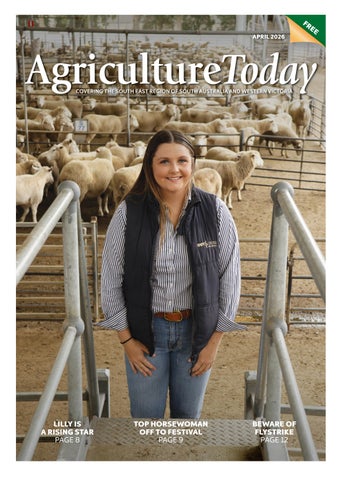
AT just 22 years of age Lilly Perkins has already achieved plenty in the world of agriculture and farming, working her way up to Sales Manager for Outcross Agri-Services.
Ms Perkins grew up in Heathmere jut outside Portland, Victoria, and despite not growing up on a farm, she soon developed a passion for agriculture.
“I grew up rurally but never really on a farm, my parents lived near Portland and we all had animals but never massive acreage,” Ms Perkins said.
“But ever since I was in school I knew that I wanted to work in agriculture, I had always been surrounded by it.”
Ms Perkins got her first job at just 16 years of age working on a dairy farm and since finishing Year 12 her career has really taken off, kickstarted by her studies at Longerenong College in Horsham.
In 2022 Perkins was awarded an Andrew Jack Memorial Agricultural Scholarship, allowing her to study and have many great experiences working all over Australia.
“I went and studied at Longerenong College and I did an Advanced Diploma of Agribusiness,” she said.
“That got my foot in the door, I met so many amazing people when I was up there and made so many great connections.
“In my second year of study I went up to the Northern Territory and did my work placement for a contracting company up there, I got to see a different side to the Ag industry.”
She also spent three months in Tasmania driving harvesters and tapping into different
The Border Watch
Address: Level 1 / 1 Commercial Street East, Mt Gambier SA 5290
Telephone: 08 8741 8170
Website: www.borderwatch.com.au
Hamilton Spectator
Address: 84 Gray Street, Hamilton, Vic 3300
Telephone: 03 5572 1011
Website: www.hamiltonspectator.com.au
Portland Observer
Address: 92 Percy Street, Portland, VIC 3305
Telephone: 03 5522 3000
Website: www.portlandobserver.com.au
CONTACT US
Editorial:
Email: editorial@agtoday.com.au
EDITORS:
Elisabeth Champion
E: elisabethchampion@tbwtoday.com.au
Marlene Punton
E: marlene.punton@portlandobserver.com.au
Advertising:
Email: advertising@agtoday.com.au
ADVERTISING CONSULTANTS
Leesa Cook
E: leesa.cook@portlandobserver.com.au
Sierra Laird
E: sierra.laird@portlandobserver.com.au
Alicia Galloway
E: alicia.galloway@hamiltonspectator.com.au
Shannon Benge
E: shannon.benge@hamiltonspectator.com.au
Christine Cock
E: christine.cock@tbwtoday.com.au
Christine Black
E: christine.black@tbwtoday.com.au
Josh Phelan
E: josh.phelan@tbwtoday.com.au
Published by SA Today Pty Ltd. ACN 644 311 937
sectors of the industry, before applying for a trainee manager job at Outcross and soon being promoted to Sales Manager.
Ms Perkins said trying everything has helped her learn quickly and thrust the 22-year-old into a sales manager role already.
“If I spoke to someone who was in my position after leaving Year 12, I would say just jump at every opportunity that is given to you,” she said.
“Even if you don’t think you will like it just give it a crack, you might learn some great things from it.
“When I went to the Northern Territory I had never strayed more than a couple of hours from home, so it was a massive step for me and it was amazing.”
Being awarded the scholarship in 2022 played a major part in opening up doors for Ms
Perkins and helping her progress through the ranks
“That scholarship helped me study at Longerenong College, so in the scheme of things that really got me to where I am today,” Ms Perkins said.
“Without going to Longy and getting the qualifications that I did, I would not be where I am today.”
No two days look the same for Ms Perkins in her role at Outcross Agri-Services, often travelling to sales all around the country.
“The morning of the sale I meet up with my team and we organise what we are going to do for the day,” she said.
“If it is a sheep sale we go out in teams and use scanners, our job is to keep up with sheep EID compliance in the sale yards.
“When we travel away, we travel as a team
and for a cattle sale we weigh the night before and scan, we make sure everything is good to go.”
She also does some work for Outcross Systems who have created their own software to use at saleyards, going around Australia training farmers.
“I go to places like Mount Gambier, Wagga Wagga, I do a bit of travelling to help people with that sort of thing (outcross systems),” Ms Perkins said.
“I am very happy where I am at the moment, but I would like to eventually travel internationally and see how they do things in the Agri world.
“That is something to work towards, I want to know where our produce goes and all of those sorts of things.”


THE South East will have a strong showing at one of Australia’s biggest bush festivals.
Limestone Coast horsemen and women will head to Corryong, Victoria for the Man from Snowy River Bush Festival.
The festival attracts thousands of people from across the nation and features a rodeo, various competitions, Aussie Bush Idol, bush poetry, whipcracking and a show and shine, among other things,
One local, Lynda Fields, will be competing in several events - the feature cutout and the Open Campdraft.
As one of the top horsewomen in the region, Ms Fields will be giving it her all, but win or lose, she was just keen to be at the event and take part.
“Not even about winning, it’s just about participating and being part of it, ribbons are just a bonus,” she said,
“We’re sort of really treading into unfamiliar territory, but we’re just gonna go and have fun and still get to ride and be part of it.”
She is also on the waitlist for the open Stockman’s Challenge, an event which would be made extra special, as she would be competing with the winner of the 2024 event, Slide Astride Cowboy.
“I applied to go in the stockman’s challenge, because I actually have the horse that won the ladies division two years ago,” she said.
“He’s got a fair bit of history there.
“I didn’t actually make the cut, and I’m currently sitting on the wait list.”

“The horse is going really well,” she said.
“We’re really excited to be part of that part.”
“I reckon he’s got a bit of a fanclub up there, that’s why I wanted to get him back there.
“He is quite famous in this world.
The pair may not be in the challenge but Ms Fields was delighted to be taking Slide Astride Cowboy back to the event.
“He’ll be back in his element.”
It will be a family affair, with her husband Wayne also attending, taking part in Riley’s Ride, a trail ride through bush and mountain scenery.
The ride honours legendary Upper Murray stockman Jack Riley and the part he played in the early days of the district.
The four-day ride traces his last journey.
Jack met Banjo
“It is quite a unique opportunity to be able to ride in that kind of country and then be part of the festival when they get back,” she said. Ms Fields is sponsored by Biolink 4 Plants and Animals.


A new Climate Council report finds record global levels of coal, oil and gas pollution is overtaking natural climate drivers like El Niño and La Niña – accelerating the “climate whiplash” phenomenon that pushes communities rapidly from one disaster to the next.
The report Breakneck Speed: Summer of Climate Whiplash warns that even a cooling La Niña couldn’t prevent record heat and catastrophic fires in Victoria this past summer. A Victorian summer of heat and floods (Dec 2025 – Feb 2026)
Despite La Niña conditions, Walpeup and Hopetoun recorded 48.9°C on January 27, 2026 - breaking Victoria’s previous temperature record set on Black Saturday in 2009.
Almost one third of Victoria recorded its highest January temperature on January 27, 2026.
Melbourne’s top temperature was 42.9°C. This city has experienced 11 days of at least 42.9°C since 2000 - the same number of such days it recorded across the entire previous century (1900-1999).
Mildura in Victoria only reached 45°C six times between 1946 and 1999 (54 years). Since 2000, the town has sweltered through
45°C a further 27 times (26 years).
A week after catastrophic fire weather warnings, communities along the Great Ocean Road saw cars washed out to sea in flash floods, before extreme heat returned 10 days later.
Climate Councillor, meteorologist and climate expert, Adjunct Professor Andrew Watkins said: “Climate change is now firmly behind the steering wheel of Australia’s temperatures. In fact 2025 started and ended in La Niña – which usually cools large parts of Australia - yet Victoria experienced a summer of dangerous fires and extreme heat.
“That tells us the baseline has shifted. The natural drivers we historically relied on are slipping behind climate change in the race to control our climate.
“Our hotter oceans and atmosphere mean more water evaporates into the sky than ever before. With more moisture in the atmosphere, storms produce more rain like the extreme rainfall and flash flooding in parts of Victoria this summer. Mount Cowley near Lorne recorded its highest daily summer rainfall total with 186 mm on January 16, shocking Great Ocean Road residents who had been under a catastrophic fire weather
warning a week earlier.
Climate Councillor and former NSW fire commissioner Greg Mullins said: “We used to think of catastrophic fire conditions as oncein-a-generation events. Now they’re arriving every decade.
“The accelerating extremes are stretching fire services, with Victorian firefighters called on to battle 200 fires in just one day this summer. We’re seeing communities hit by one disaster after the next, with little recovery time.”
Mr Mullins said Australians cannot afford any more coal and gas approvals, which effectively pour fuel on worsening fire seasons: “Disasters are costing Australians dearly, as this report notes, insurance companies paid out $4.5 billion per year on average between 2019 and 2024, more than double the average annual costs over the previous 30 years. These costs will continue to balloon unless governments stop supporting coal, oil and gas pollution and speed up the shift to clean energy.“
Climate Whiplash Events Across Australia (Dec 2025 – Feb 2026)
South Australia - Marree, near Kati ThandaLake Eyre, recorded five consecutive days above 48°C, including a new record high
of 49.8°C in January. Just over a week later, a two-day rain event dumped 10 times the town’s normal February monthly rainfall, followed a fortnight later by eight consecutive days of rain that cut the town off.
Northern Territory - Alice Springs recorded more than 30 summer days above 40°C (almost twice its average of 17), before intense rainfall triggered dangerous flash flooding on February 12.
Tasmania - Strong winds fanned almost 30 bushfires on December 4, destroying 19 homes on the east coast, with Hobart recording its windiest summer day (98kmh). Three weeks later, daily snow fell between December 23 and 26.
Western Australia - the Eyre HighwayPerth’s supply route to eastern states - closed due to fires in 45°C heat, only to be cut off again two days later by floodwaters.
* The Climate Council is a communityfunded climate change communications organisation. We provide authoritative, expert and evidence-based advice on climate change to journalists, policymakers, and the wider Australian community. For further information, go to: climatecouncil.org.au
RECENT widespread rainfall across parts of New South Wales, Queensland, Victoria and South Australia is providing cautious optimism for drought-affected farming communities.
Farmers have welcomed the break in dry conditions, with early signs of improved soil moisture and minor pasture response in some regions.
However, the situation is far from uniform.
Large areas remain in drought, and for many, one rainfall event will not be enough to change seasonal outlooks. In other pastoral regions, floodplains and low-lying areas, heavy falls have created new risks, with flash flooding, runoff and localised damage to fences, roads and infrastructure widely reported.
Rural Aid chief executive officer John Warlters said while the rain offers relief, farmers are remaining cautious.
“This rain is a welcome reprieve for many, but the heavy downpours in some areas
can create flash flooding and sudden access problems,” Mr Warlters said.
“It is a reminder that recovery is rarely straightforward.
Some communities are seeing relief, others are dealing with new challenges, and many are still waiting for their long-awaited rain.”
Throughout the prolonged drought, Rural Aid has provided practical and financial support to thousands of farming families, including hay drops, domestic water deliveries, mental health counselling and direct financial assistance.
“Our focus has always been to stand with farmers through the tough times,” Mr Warlters said.
“Whether it’s drought, flooding or the difficult months in between, Rural Aid will continue to support rural communities every step of the way.”
Rural Aid Counsellor Dorothy Crosby, based in Quorn SA, has been speaking di-
rectly with farmers across affected regions and says the emotional impact of this season remains complex.
“Farmers are telling me they feel relieved to finally see rain, but that relief is mixed with uncertainty,” Ms Crosby said.
“For some, it’s the first decent fall in a long time and it brings hope. For others, especially where the rain has been heavy, it’s created new worries around flooding, access and damage to infrastructure.”
Ms Crosby said the recent rain has left many farming families feeling quietly optimistic.
“Farmers are feeling hopeful and are looking to the forecast for more rain in the coming week to really build on what’s fallen.”
“While there’s still a long road ahead for many, this break in the season has lifted spirits and given farming families a much-needed sense of optimism.”
Rural Aid is urging farmers still experiencing drought, as well as those impacted
by flooding or infrastructure damage, to seek support. Assistance is available nationwide, and the organisation continues to monitor conditions closely as the situation evolves.
Farmers can access support now by calling 1300 327 624 or visiting www.ruralaid. org.au. Rural Aid is here to help.
As farming communities navigate the ongoing impacts of floods, fires, cyclones and prolonged drought, Rural Aid is also calling on Australians to back its Together with Farmers, Every Step of the Way Appeal.
Rural Aid’s disaster and recovery support is made possible through the generosity of individuals, businesses and corporate partners. Donations to the appeal help fund practical assistance, wellbeing support and essential services for farmers in need.
To donate and stand with farming families, visit www.everystep.ruralaid.org.au.
SOUTH Australia’s landscape boards are offering a free, state-wide series of carbon farming webinars to help primary producers, land managers, and First Nations groups understand how carbon farming could benefit their land and business.
Running from February until the start of May, the webinars build on the Introduction to Carbon Farming workshops delivered over the past 18 months.
Each session takes a deeper dive into specific carbon farming topics, exploring practical emissions reduction and carbon sequestration opportunities.
Recordings are being made available for people who are unable to attend the live event.
Carbon farming refers to land management practices that reduce greenhouse gas emissions and increase carbon storage in vegetation and soils.
Applied correctly, it can improve soil health and productivity, increase resilience to climate variability, reduce emissions of main greenhouse gases, and create opportunities to engage with emerging carbon and environmental markets.
The webinars are designed to help land managers understand what carbon farming is, how it works, and how it may fit best within their existing farming system.
The series covers a range of topics, including banks, finance and supply-chain perspectives, fertiliser efficiencies and low-emissions options, animal genetics and productivity, soil organic carbon, enteric methane management, revegetation opportunities and environmental markets.
Two sessions are tailored specifically for First Nations audiences in partnership with Aboriginal organisations, reflecting community interests and needs.
Each webinar is free and focuses on practi-
ANTHRAX is has been a cause of sudden death of livestock in Australia for the past 150 years.
Once an animal has died from Anthrax, the spores can survive in the soil for decades, waiting for the right set of environmental conditions to infect another animal.
Most districts in Victoria have experienced livestock deaths due to Anthrax.
Anthrax-related livestock deaths mostly occur in the warmer months, although history has shown they can occur at any time of year.
Therefore, Anthrax should be considered whenever there is any sudden death of livestock, particularly if blood is seen around the animal’s nose, mouth and anus.
At one time, veterinarians had to carry a microscope and examine a smear of specially stained blood to rapidly diagnose Anthrax.
This all changed with the development of pen-side ICT (immunochromatographic test) kits, which provide a quick, safe, and accurate means of diagnosing or excluding Anthrax when investigating cases of sudden death of livestock.
All private veterinarians who deal with livestock have free access to ICT kits and can investigate sudden deaths through subsidised disease investigations.
There are several reasons why it is advantageous to know whether an animal has died from Anthrax.
First, the best way of stopping further losses due to Anthrax is through early diagnosis, and the subsidised vaccination of everyone who has come into contact with the affected livestock.

improved testing for Anthrax. (File)
Secondly, the carcass of an animal that has died of Anthrax will remain a source of infection for future outbreaks if it isn’t disposed of correctly through incineration and the decontamination of its death site.
And finally, Anthrax is a zoonotic disease, meaning it can potentially infect humans. The exclusion of Anthrax will bring peace of mind both for yourself and your veterinarian when trying to find the real cause of the animal’s death.
Exclusion testing should be carried out within 48 hours of an animal’s death.
If you suspect a case of Anthrax, please contact your local veterinarian, or Agriculture Victoria Veterinary or Animal Health Officer or call the Emergency Animal Disease Hotline on 1800 675 888.
cal considerations, opportunities, and limitations to help participants navigate the carbon space with clarity and confidence.
The program is suitable for primary producers, land managers, First Nations Prescribed Bodies Corporate (PBCs), agricultural advisors, and other industry stakeholders.
Registrations are managed through Microsoft Teams webinars, and participants can attend individual sessions or multiple webinars across the series.
The free webinars are delivered with support from the Commonwealth of Australia through the Department of Climate Change, Energy, the Environment and Water under the Carbon Farming Outreach Program.
For newcomers, the Northern and Yorke Landscape Board podcast, What You Need to Know Now, offers three bite-sized episodes introducing carbon farming, carbon markets, and the Nature Repair Market.

NOW is the time to plan for emptying dairy effluent ponds to gain the best result from both its nutrient content and water.
Utilising effluent effectively could save money on synthetic fertilisers and boost pasture growth.
As long as the plants are growing, they can get a further kickstart with an effluent application and be ready to take advantage of follow up rain.
Effluent storage ponds are designed to contain effluent over winter, so must be emptied before the start of the wet period.
An effluent test is recommended before application to ensure appropriate application rates, as nutrient levels vary depending on several factors.
Consider the following when applying effluent:
Spread it on paddocks with lower soil fertility to avoid excessive nutrient build up.
• Conduct regular soil testing every two to four years to help target effluent and fertiliser applications more accurately. Rotate effluent application paddocks regularly to make the best use of nutrients contained in effluent and avoid overloading a small area.
• When applying effluent to new pasture or crops, wait until the plants are established, as effluent is often high in salts and nitrogen that can burn the seedlings.
• Avoid grazing paddocks until at least 21 days after an effluent application to reduce the risk of nitrate poisoning in animals.

To avoid metabolic problems, transition cows shouldn’t be grazed on high potassium paddocks, including paddocks where effluent has been applied.
• Young stock shouldn’t have access to adult stock areas or areas where effluent is stored or has been applied.
• Using the nutrients sitting in the effluent storage pond is likely to save money on fertilisers.
For further information on managing effluent, visit www.agriculture.vic.gov.au or call 136 186


WITH the current weather conditions, sheep producers should be aware conditions are ideal for flystrike.
Flystrike is a condition that costs the Australian sheep industry approximately $320 million annually, because of lost production, treatment costs and deaths.
Reducing the risk of flystrike has great benefits to the health and wellbeing of sheep – as well as their productivity.
The major fly responsible for flystrike in sheep is the green blowfly, Lucilia cuprina, which is believed to be the cause of 90 per cent of flystrike cases.
Lucilia cuprina begins to become active when temperatures are above 15 degrees celsius and is most active when temperatures are between 26 and 36 degrees and conditions are
calm.
Each female fly can have up to 300 viable offspring and with a 21-day life cycle when conditions are optimal, fly numbers can increase rapidly.
The fly is attracted to odour and moisture, so the risk of flystrike increases when there is regular consistent rainfall that keeps the sheep’s skin moist.
Sheep most susceptible to flystrike are those with breech wrinkles, long wool, dags, urine stain, fleece rot, dermatitis and/or wounds. Sheep that have been previously flystruck have a higher likelihood of being restruck.
The prevention of flystrike requires an integrated plan and includes the following:
Selection of sheep and marking of lambs to produce a flock with low susceptibility to flys-
trike, shearing and crutching timed before the peak flystrike risk period, correct use of preventative chemicals timed to give protection during the peak flystrike risk period, worm control and dietary management to help reduce the prevalence of dags, selection of open, windy, dry paddocks, and removal of infective material and carcasses that may attract flies.
If a flystruck sheep is found, the affected area should be clipped close to the skin and dressed to prevent reinfection, and the sheep should be moved to a hospital paddock to reduce the risk of infecting the rest of the flock.
Any maggots should be collected and killed to help reduce the build-up of fly populations.
For further advice contact a local veterinarian, rural merchandise reseller or Agriculture Victoria veterinary or animal health officer.
FOR many Australian farmers, achieving both sustainability and profitability can feel like a constant balancing act—but with the right tools and support, it’s not only possible, it’s within reach.
At Biolink 4 Plants and Animals, we believe that sustainability and profitability should go hand in hand.
Our range of microbial-based fertilisers, soil stimulants, and animal probiotics are designed to enhance soil health, boost crop and pasture yields, and support healthy animalsall while driving down input costs.
As farmers face increasing pressures from climate change, rising fertiliser costs, and the need for more efficient land management, Biolink 4 Plants and Animalsoffers a practical, results-driven solution. Our products use beneficial microbes to improve nutrient uptake, water retention, and soil structure.
By integrating Biolink™ products into your farm’s management system, you can reduce fertiliser usage by up to 50% without sacrificing yield - helping your farm become more profitable and sustainable in the long run.
Our microbial-based solutions not only promote healthy, nutrient-dense soil but also improve animal productivity. For instance, farmers who use our Opti-Gut and Loose Lick products have seen improvements like lambs being turned off 20 days earlier with less feed, thanks to enhanced nutrient uptake.
The Biolink™ System accelerates the process of soil regeneration, combining six potent microbial groups with humic fulvic acid to deliver

powerful results. With products like Biolink™ Bio-Hum Pellet, Bio-Hum Soil Drench or Launch, you can integrate this system seamlessly with your conventional fertiliser or Liquid fertiliser to optimise your farming operations—without compromising on sustainability. Discuss your challenges and explore how we can help you build a smarter, more sustainable farming future. For more information, visit www.biolink4plants.com.au
FOR South Australian employers, workers’ compensation is often viewed as something handled by insurers and claims agents. In practice, however, decisions made in this space can have lasting operational, financial and legal consequences for a business.
Employers who disengage from the process risk losing control over outcomes that directly affect their workforce and bottom line.
All SA employers must be insured with ReturnToWorkSA under the Return to Work Act 2014 (SA), covering income support, medical treatment and rehabilitation for injured workers.
Whilst ReturnToWorkSA’s claims agents make the day-to-day decisions, those decisions can influence staffing arrangements, return-to-work obligations and future premium costs for employers.
Employers should therefore remain informed, engaged and proactive in this process, particularly where there are genuine concerns about the legitimacy or impact of a claim.
Disputes frequently arise in the South Australian Employment Tribunal when a worker or employer challenges a decision by a claims agent. w
Importantly, if an employer does not formally participate in a dispute, the worker and ReturnToWorkSA can resolve it without the employer’s knowledge or consent.
This can leave an employer managing an accepted claim, return-to-work obligations and increased premium exposure without having had a voice in the outcome.
By filing a Notice to be Heard, employers can ensure they are involved in the process, receive relevant documents, attend conferences and prevent agreements being reached without their consent.
Early involvement also creates opportunities to manage income support exposure, address suitable employment obligations pragmatically and, in some cases, resolve disputes in a way that brings finality for both parties.
Employers have very little to lose, and a great deal to gain by taking an active role in workers’ compensation disputes.
If you have questions about managing a workers’ compensation claim, a dispute before the SAET, or your broader obligations under the Return to Work Act, Mellor Olsson’s Employment and Workplace Law team can help. We provide practical, strategic advice to help employers protect their interests and achieve workable outcomes.