
2026 ELC Primary Learning

Page 1


provided with the compliments of Xavier College For further information, please refer to pages 2, 3 & 85
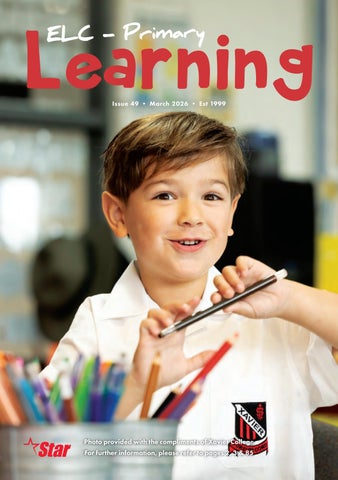
Photo

Xavier College Junior School

www.anglicarevic.org.au

ADDRESS

Enfield Dr, Bayswater VIC 3153 (03) 9729 2862

Principal Mr Bret Mottrom

BAYSWATER SOUTH PRIMARY SCHOOL

www.baysouthps.edu.au

Bayswater South is a co-educational Government School in the Eastern suburbs of Melbourne. One of the few truly bilingual primary schools in Victoria, we have a proud history of over 30 years of delivering a unique English/German bilingual program.

Our mission is to embrace diversity and develop global citizenship through a vibrant learning community. We do this using our three pillars – Bilingual Education, IB – Primary Years Programme and a schoolwide approach to Wellbeing; leading the way in best practice teaching and learning, with a focus on supporting the academic progress and personal development of each student.

This difference, or addition, to a standard Government school education, is what makes us stand out as a leading choice for your child’s education.

Why bilingual?

We strongly believe that every child deserves a bilingual education.

Language teachers and educational psychologists have long held the view that learning another language increases and enhances students’ deductive and problemsolving skills. Having frequent practice in working out meaning, making links, and drawing conclusions in the language class, enhances these skills in a broader sense, in other areas of the curriculum and in life in general. Knowledge of more than one language has long-term cultural, social and economic benefits. Tolerance, respect and cooperation are all improved through bilingual education, while being bilingual enhances future job prospects.

What is the IB – Primary Years Programme?

Bayswater South Primary School is proud to be an accredited IB World School offering the Primary Years Programme (PYP).

At Bayswater South we align our vision and mission with that of the IB, in which we strive to, ‘develop inquiring, knowledgeable

and caring young people who help to create a better and more peaceful world through intercultural understanding and respect’.

As a bilingual school, we are in the unique position within Australia to develop students who are multilingual, internationally minded and who are driven to take action in the local and global community.

Our school’s curriculum framework encompasses that of the Victorian Curriculum, the IB PYP Curriculum and Bilingual Education.

Wellbeing

At Bayswater South Primary School, we value student voice, student engagement and connectedness of students and their families from Foundation to Year 6. We are:

A connected community

Bayswater South Primary School fosters strong relationships with the local German community as well as other organisations and benefits from the support of a vibrant and engaged parent community. With the ongoing contributions from our parents and local partnerships, we have been able to provide playgrounds, learning spaces, Chaplaincy, Connect Groups and a newly formed ‘German Café’, with further development to follow.

Led by students

A highlight of life at Bayswater South includes the opportunity for all students from Foundation to Year 6, to lead the school. From SRC, to student-led assembly, to student input in their learning experiences, our students develop as team playing, confident young individuals, who live out our school values of Respect, Empathy, Honesty and Teamwork. We warmly invite you to take a tour of our school, to learn more about the benefits of an education at Bayswater South Primary School.

Belgrave South Primary School

EXCELLENCE in Learning. Growing Curious, Capable Learners in the Hills

For more than a century, Belgrave South Primary School has proudly served its local community, delivering high-quality education in the beautiful surrounds of Melbourne’s Dandenong Ranges. Set within a peaceful, semi-rural environment, the school offers families a warm, nurturing setting where children feel known, supported and inspired to thrive.

The school’s natural landscape is not simply a backdrop — it is an integral part of daily learning. Outdoor education, environmental awareness and sustainability are embedded across the curriculum, encouraging students to develop responsibility, resilience and a genuine connection to the world around them. Hands-on exploration fosters curiosity and supports the development of confident, capable learners.

At the heart of Belgrave South Primary School is a strong commitment to academic excellence. Literacy and numeracy form the foundation of learning, delivered through explicit teaching and carefully planned programs that focus on individual growth. Teachers work closely with students to understand their strengths and learning goals, ensuring each child is supported and challenged at the right level. Consistently strong student outcomes reflect this dedication to high standards.

Modern facilities and innovative learning spaces enhance classroom experiences. Students enjoy access to specialist environments including a Science and Inquiry Learning Centre and Maker Space, where they build critical and creative thinking skills through collaboration, experimentation and problem-solving. Technology is thoughtfully integrated to support and extend learning opportunities.

Education at Belgrave South extends well beyond core subjects. A broad and engaging curriculum includes Science and Digital Technologies, Creative and Performing Arts, Physical Education, Japanese and AUSLAN, Environmental Education, Hospitality and Horticulture, along with student leadership

These programs nurture creativity, teamwork, confidence and wellbeing, supporting the development of the whole child.

opportunities. These programs nurture creativity, teamwork, confidence and wellbeing, supporting the development of the whole child.

A defining feature of the school is its strong sense of community. Families are valued partners in learning and are warmly welcomed into school life through classroom involvement and community events. The Foundation Transition Program, beginning in late July, ensures new students feel confident and connected before starting school, supported by close relationships with local preschools.

With a clear focus on wellbeing, respectful relationships and high expectations, Belgrave South Primary School empowers students to become thoughtful learners, problem-solvers and compassionate members of their community.

Early Intervention for a Strong Start

THE early years of a child’s life lay the foundation for everything that follows. Long before the first school bell rings, children are developing the skills, confidence and curiosity that will shape their experience of primary school and beyond. In Australia, there is growing recognition that early intervention during the years before school is one of the most powerful ways to support children’s learning, wellbeing and long-term success.

Early intervention refers to identifying and supporting a child’s developmental needs as early as possible. This may include speech and language development, social and emotional skills, physical coordination, behaviour, or early literacy and numeracy. When support is provided early, children are more likely to start school feeling confident, capable and ready to learn.

Research consistently shows that the first five years of life are a period of rapid brain development. According to Australian early childhood experts, experiences during this time have a lasting impact on a child’s ability to learn, form relationships and manage emotions. Early intervention takes advantage of this crucial window, helping children build strong foundations before learning challenges become more difficult to address.

One of the key benefits of early intervention is its ability to support children in everyday settings. In Australia, this often happens through early learning centres, kindergartens, playgroups and community health services. Educators and professionals work alongside families to recognise early signs of developmental delay or learning difficulty and to put practical strategies in place. These supports are typically embedded in play-based learning, making them engaging and age-appropriate for young children.

Speech and language development is one area where early intervention can make a significant difference. Many Australian children experience speech or language delays in the preschool years. With early support, children can develop stronger

They are better equipped to participate in classroom activities, ask for help when needed and adapt to new environments.
This positive start can have a lasting influence on their academic journey.

communication skills, which are essential for reading, writing and forming friendships at school. Similarly, early support for social and emotional development can help children learn how to regulate emotions, follow routines and interact positively with peers; skills that are vital in a classroom environment.

Early intervention is not only about addressing challenges; it is also about strengthening a child’s confidence and sense of belonging. Children who feel supported early are more likely to approach learning with enthusiasm rather than anxiety. They are better equipped to participate in classroom activities, ask for help when needed and adapt to new environments. This positive start can have a lasting influence on their academic journey.

Families play a central role in early intervention. Australian parents and carers are often the first to notice changes in their child’s development. Access to clear information, trusted advice and supportive services empowers families to act early and with confidence. Whether through maternal and child health services, early childhood educators or allied health professionals, collaboration between families and professionals is key to achieving the best outcomes.

Importantly, early intervention benefits not just individual children, but the wider community. Children who receive timely support are more likely to succeed at school, maintain positive wellbeing and require fewer intensive supports later in life. From an Australian perspective, investing in early years support strengthens our education system and contributes to healthier, more inclusive communities.

As children prepare to transition into primary school, early intervention can help make that step smoother and more positive. Children who have developed strong communication, social and learning skills are better able to engage with the curriculum and build relationships with teachers and classmates. For families, this can mean greater peace of mind and confidence as their child begins their formal schooling journey.

Giving children the best start before primary school is one of the most valuable investments we can make. Early intervention

Children who have developed strong communication, social and learning skills are better able to engage with the curriculum and build relationships with teachers and classmates.

recognises that every child develops at their own pace and that timely support can make a lasting difference. By focusing on early identification, collaborative support and inclusive learning environments, Australia continues to move towards a future where every child has the opportunity to thrive from the very beginning.

Belle Vue Primary School

Belle

Vue Primary School:

A Confident Start in a Caring Community

CHOOSING the right primary school is one of the most important decisions families make as their child prepares for Prep. Parents want a school that delivers strong academic foundations while nurturing confidence, wellbeing and a genuine sense of belonging. Belle Vue Primary School offers that balance — a supportive, forward-thinking environment where children are encouraged to grow academically, socially and emotionally from day one.

Located in Melbourne’s leafy eastern suburbs, Belle Vue has earned a reputation for educational excellence grounded in a warm, child-centred approach. For families navigating the transition from kindergarten to primary school, the focus is clear: building confident learners who feel safe, capable and valued.

A

Smooth Transition to Prep

Starting school is a significant milestone, often accompanied by excitement and nerves. Belle Vue prioritises a calm and structured transition program designed to help children feel comfortable before their first official day.

Orientation sessions, classroom visits and opportunities to meet teachers and peers allow children to develop familiarity and a sense of belonging early.

Importantly, the school recognises that readiness extends beyond letters and numbers. Confidence, independence and emotional security are equally vital. By working closely with families and local early learning centres, teachers ensure each child’s strengths and needs are understood from the outset.

Strong Foundations for Lifelong Learning

Belle Vue places high-quality teaching at the centre of its approach. Literacy and numeracy are prioritised in the early years through structured, evidence-based programs that build essential skills step by step. Targeted instruction, regular assessment and smallgroup learning allow teachers to support and extend every student appropriately.

In literacy, students develop phonics

Belle Vue Primary School offers that balance — a supportive, forwardthinking environment where children are encouraged to grow academically, socially and emotionally from day one.

knowledge, reading fluency and comprehension strategies through purposeful, engaging lessons. In numeracy, hands-on tasks and problem-solving activities strengthen conceptual understanding. Learning is carefully scaffolded, ensuring children master foundational skills and build lasting confidence.

Inquiry learning is woven throughout the curriculum, encouraging curiosity and critical thinking. Whether exploring science, sustainability or creative writing, students are encouraged to question, collaborate and think deeply about the world around them.

Wellbeing

and Community at the Core

Academic success thrives in a positive, inclusive environment. Belle Vue embeds student wellbeing into everyday practice, explicitly teaching skills such as resilience, empathy and emotional regulation. Clear expectations and respectful relationships create a culture where children feel secure and supported.

Beyond the classroom, specialist programs in the arts, physical education and languages enrich learning and foster creativity.

Strong partnerships with families further strengthen the school community, ensuring open communication and shared commitment to each child’s progress.

A Quality Educational Environment for your Child

OPEN AFTERNOONS

3:30pm - 4:00pm

STORYTIME WITH OUR PRINCIPAL (School Library)

MARCH 20 AND FRIDAY MAY 8 3.30PM - 4.00PM

2026 PREP INFORMATION EVENING

Thursday 1 May 6.30pm – 7.30pm (Prep Room)

TERM 4 TRANSITIONS SESSIONS

Thursday November 5th 2.30pm – 3.15pm

Thursday November 12th 2.15pm – 3.15pm

Thursday November 19th 9.00am – 10.30am

Thursday November 26th (Full Day) 9.00am – 3pm

School tours available each week

(03) 9859 6123

20 Highview Road Balwyn North 3104

Belle.vue.ps@education.vic.gov.au

www.bellevueps.vic.edu.au

• Specialist programs (Italian, PE, Coding/Robotics, The Arts)

• Community focused school culture and environment

• Experienced staff

• Differentiated curriculum

• Students are challenged and supported to achieve success

DANCE classes in PAKENHAM

for 18 months+ to Adult

Where Movement Meets Learning

FOR young children, the first years of life are a time of incredible growth. It’s during these early years that children begin to develop not just academically, but emotionally, socially, and physically. While many parents focus on reading, writing, and numeracy as indicators of school readiness, there is growing recognition in Australia that movement and the arts play an equally vital role in early development. From dancing and drama to music and visual arts, these experiences help children build the skills they need to thrive both inside and outside the classroom.

The Power of Movement in Early Learning Movement is much more than play; it is a fundamental way young children explore the world. Activities such as dance, gymnastics, and simple games that involve running, jumping, or balancing help develop gross and fine motor skills, coordination, and spatial awareness. These physical skills are crucial for everyday tasks, from holding a pencil correctly to navigating playgrounds safely.

Research shows that regular physical activity also boosts cognitive development. In the early years, the brain is highly plastic, meaning it can adapt and grow quickly. Movement stimulates neural pathways, improves focus, and strengthens memory. For example, when children learn a new dance routine or participate in a structured sports activity, they are practising sequencing, pattern recognition, and problem-solving; all foundational skills for later learning in literacy and numeracy.

In Australia, schools and early learning centres are increasingly integrating movement into daily routines. Programs like Kindergym, Little Athletics, and local dance schools provide structured opportunities for children to develop these skills in safe, supportive environments. Beyond skill development, these activities also foster confidence, resilience, and a sense of achievement, which are essential for a positive school transition.

Arts and Creativity: Building the Whole Child

Alongside movement, the arts, such as music, painting, drama, and dance play a critical role in fostering imagination, emotional literacy,

Activities such as dance, gymnastics, and simple games that involve running, jumping, or balancing help develop gross and fine motor skills, coordination, and spatial awareness.

and social skills. When children engage in creative activities, they learn to express their ideas, emotions, and experiences in ways that words alone cannot capture.

Incorporating arts into the curriculum helps children develop empathy and collaboration. For instance, working together on a group mural or performing in a school play encourages children to communicate, negotiate, and appreciate different perspectives. These experiences lay the groundwork for strong social skills, which are just as important as academic abilities when starting primary school.

Moreover, arts engagement has been linked to enhanced cognitive development. Studies in Australia and overseas show that children involved in music education demonstrate improved memory, attention, and literacy skills. Rhythm, in particular, strengthens neural connections in the brain, which supports language development, a key component of school readiness.

Bridging Learning and Fun

One of the most compelling aspects of movement and arts is that they make learning fun and engaging. For young children, education is most effective when it feels like play. Activities that combine movement, music, and storytelling such as dance classes with a narrative or dramatised songs, allow children to explore concepts creatively while reinforcing essential skills.

Parents can support this at home by encouraging active play, dance sessions, and arts projects. Even simple activities, like drawing to music or creating dance routines in the living room, can stimulate cognitive, physical, and emotional growth. Community centres, libraries, and cultural institutions often offer programs for young children that blend creativity with social interaction, providing opportunities to practice new skills in a fun, social setting.

A Strong Foundation for School and Life

In the ELC to Primary journey, children are not just learning facts, they are learning how to learn. Movement and arts experiences help them develop self confidence, communication skills, and the ability to manage emotions, all of which are critical for success in primary school and beyond.

By valuing dance, sport, music, and creative expression, parents and educators give children more than just academic preparation; they provide the tools to navigate life with curiosity, resilience, and joy. These experiences help children feel capable, included, and excited about learning, setting the stage for a lifelong love of discovery.

As families prepare for the transition from

Parents can support this at home by encouraging active play, dance sessions, and arts projects.

early learning to primary school, it is important to remember that movement and the arts are not extras, they are essential. Dancing, singing, painting, and playing are more than leisure activities; they are building blocks for cognitive, emotional, and social development. By nurturing creativity and encouraging physical activity, parents, educators, and communities can ensure that children start school with confidence, skills, and a joyful sense of possibility.

The path to learning doesn’t just go through books and desks, it also moves, dances, sings, and paints. By embracing movement and the arts, we give children the best start for a bright, balanced, and successful school journey.

Scan the QR Code

From First Steps to First Day

FROM

First

Steps to First

Day:

Choosing the Right Start to your Child’s Journey

The transition from early learning to primary school is one of the most significant milestones in a child’s life.

For Australian families, it is a time of excitement, curiosity, and sometimes anxiety.

While early learning years are full of discovery and play, the move to a structured school environment introduces new routines, expectations and social dynamics. Choosing the right start and preparing your child for this transition can set the stage for a confident, positive and successful school experience.

Primary school readiness is not about teaching children to read or write before their time; it is about helping them feel capable, resilient and ready to engage with new challenges.

Children who feel supported during this stage are more likely to approach learning with enthusiasm, participate confidently in classroom activities, and build strong relationships with teachers and peers. Australian educators emphasise the importance of both emotional and academic preparation in the lead-up to the first school day.

One of the key aspects of preparing

The first day of primary school is more than just a milestone, it is the start of a new chapter in your child’s life.

for primary school is developing social and emotional skills. Children need to feel secure in new environments, manage their emotions, cooperate with others and navigate group dynamics.

High quality ELCs in Australia offer daily opportunities for children to practice these skills through play, collaborative tasks, and guided social interactions.

These experiences help children approach the first day of school with confidence, knowing they can communicate effectively, share, and problem solve with classmates.

Routines and independence are also crucial in easing the school transition. Primary school introduces a structured timetable, including set lesson times, lunch breaks and specific classroom responsibilities.

Children who have experienced consistent routines in early learning environments find it easier to adjust to these new expectations. Simple practices at home, such as packing their own bag, following daily schedules, and managing personal hygiene, can make a noticeable difference in a child’s confidence on their first day.

Familiarity with the school environment can significantly reduce anxiety. Many Australian schools and ELCs run orientation programs or transition sessions that allow children to explore classrooms, meet teachers, and become comfortable with school routines before the official start.

These sessions also provide an opportunity for families to ask questions, share information about their child’s needs, and form early connections with school staff.

The more familiar children are with the school environment, the more secure they feel on that pivotal first day.

Early academic experiences also play a role in preparing children for school. Foundational skills in literacy and numeracy such as recognising letters, numbers, shapes, and patterns can be developed through play, storytelling, games, and everyday conversations. Australian early learning frameworks encourage educators to integrate these concepts naturally, supporting curiosity and engagement rather than formal instruction. Children who have a positive early experience with learning feel more confident tackling classroom activities and new concepts when they start school.

Partnership between families and educators is another critical factor. Parents and carers are children’s first teachers and play a central role in the transition process.

Sharing insights about your child’s interests, routines, and personality helps teachers personalise support and create a welcoming environment. Open communication ensures that both home and school are aligned, giving children a consistent sense of security and encouragement.

Every child’s journey to primary school is unique. While some children may enter

school brimming with confidence, others may feel nervous or hesitant. High quality early learning experiences recognise these differences and provide support tailored to each child’s needs. Early intervention where necessary, social skill development, and encouragement of independence all contribute to a smoother transition.

The first day of primary school is more than just a milestone, it is the start of a new chapter in your child’s life. By choosing the right early learning experiences, fostering independence, practising routines, and nurturing social and emotional skills, Australian families can give their children the tools they need to approach school with confidence and excitement. The right start ensures that children not only adjust to school life but develop a lifelong love of learning, curiosity, and resilience.

From first steps in an ELC to stepping through the classroom doors on the first day of school, every experience counts. Thoughtful preparation, strong relationships, and supportive environments help children embrace this transition positively, setting the foundation for a rewarding and confident journey through primary school and beyond.

Haileybury

Haileybury Early Learning: a place where every child matters EVERY day at Haileybury’s Early Learning Centres (ELC), children are learning, discovering and building confidence in a supportive, nurturing environment.

The ELC is a leader in early childhood education, with a diverse team who speak 21 languages and actively share their expertise across the sector. Director of Early Learning, Lisa Christopher, is proud of her team’s commitment to excellence, reflected in the Centres’ ongoing ‘Exceeding’ ratings under the National Quality Standards.

She describes Haileybury’s approach as both unique and research driven. “The early learning experience provided at Haileybury is the result of many years of research and input from a highly professional team of educators,” she says.

The program is underpinned by deep knowledge of the Early Years Learning Framework and the Victorian Early Years Learning and Development Framework. It is further enriched by Haileybury’s Social Thinking program, which helps children recognise and regulate their emotions, and the Child Empowerment program, which promotes positive thinking, resilience and self-care.

For Early Childhood Educator and Specialist Physical Education Teacher Austin Chea, purpose is at the heart of his role. “My primary role is to create a nurturing environment where every child feels a strong sense of belonging and is supported to reach their full potential,” he says.

Austin’s passion began with a powerful insight. “I read that 90 per cent of a child’s brain develops in the first five years. It was a real lightbulb moment. The idea that I could help shape a person’s potential during that crucial period deeply resonated with me.”

Deputy Head of ELC (Keysborough), Eleni Kalfas, shares this dedication. “I have always felt a natural connection with young children, particularly those with additional needs. Creating a safe, nurturing environment where children feel empowered to express themselves and learn at their own pace is incredibly important to me,” she says.

She also values the strong sense of community at Haileybury. “There is a genuine

commitment to providing the very best for every child, every day.”

A typical day at the ELC is thoughtfully structured to foster independence and growth. Children participate in specialist programs including music, creative arts, environmental learning and physical education, alongside group and individual learning experiences. Play-based, hands-on learning remains central.

“Through games and activities, we seamlessly integrate vital skills like teamwork, sportsmanship and emotional regulation, all while they are having fun,” Austin explains.

Children are encouraged to explore their own interests and express their ideas. Murphy loves the sandpit, Leonardo enjoys the musical instruments, and Jaanvi treasures time with friends. By tailoring experiences to each child’s interests, learning becomes more meaningful. If a child is fascinated by construction, for example, blocks might be used to explore mathematical concepts.

“We offer a balance of structured and playbased learning experiences, tailored so each child can engage at their own pace and in ways that excite and inspire them,” Eleni says.

For educators, the most rewarding moments come from witnessing growth. “It could be something big, like a child climbing down the fireman’s pole unassisted for the first time, or something quieter, like proudly writing their own name,” Austin says.

Eleni agrees. “Every child deserves to be valued for who they are. I take pride in supporting them to discover their strengths, overcome challenges and build a strong foundation for future learning.”

Parents, too, notice the impact. One shared, “It has been wonderful to see their growth, confidence and excitement to learn each day. The supportive educators and engaging activities have truly made a positive impact.”

Lisa hopes every child leaves the ELC with “a sense of joy and wonder in learning and sharing new discoveries and knowledge.”

At Haileybury’s Early Learning Centres, every child is known, valued and supported, every single day.

To discover more about Haileybury visit www.haileybury.com.au

We are exploring theworld beyond the classroom.

HighvalePrimarySchoolprovidesacaring, safeandvibrantlearningenvironment whereeverystudentisvaluedasan individual.Wewelcomeandworkclosely withparentsandfamiliestosupport positivelearning,socialandphysical outcomesforeverystudent.

Ourschoolcommunityisrichin culturalandlanguagediversity, whichprovidesmanywonderful opportunitiesforauthentic learningaboutourlocal and globalenvironmentandfosters inclusivity.

OurSchoolValuesofRespect, Responsibility,Commitment,Honesty andIntegrity,providetheframeworkfor howweplayandworkwitheachother andaretaughtexplicitlyacrossthe school.

Wewelcomeyoutocontactouroffice on 98878000 tobookaschooltour withtheprincipal.

Wellknownasahighperforming,mediumsizedschool,ourevidencebased teachingpracticessupportalongtraditionofexcellentstudentoutcomesacross alllearningareasoftheVictorianCurriculum.Ourextracurricularopportunities andextensiveSpecialistProgramsupporthighengagementlevelsand achievementinlocal,stateandnationaleventsandcompetitions.Specialist ProgramsincludeSTEAM, PerformingArts,VisualArts,PhysicalEducationandtwo Languages,MandarinandGerman.

Exemplaryenglishandmathematicsresults

Strongwellbeingprogram

Enrichment,extensionandinterventionprograms

Innovativedigitaltechnologies

Comprehensivespecialistprogram

Instrumentalprogram,schoolchoirandschoolband

Preschooltopreptransitionprogram

www.highvaleps.vic.edu.au

Ready Steady Go Kids

Ready

Steady Go

Kids: Supercharge Your Childs Sporting Potential

I am delighted to introduce Australia’s largest multi-sport program for children aged 1.5 to 6 years. At Ready Steady Go Kids, we believe in the power of early childhood development. Our program, meticulously designed by paediatric physiotherapists and occupational therapists, aims to foster children’s gross and fine motor skills and instil a love for sports in a non-competitive environment.

One of the hallmarks of our program is its comprehensive approach to skill development. We expose children to 10 different sports, enabling them to acquire a broad range of skills. This diverse curriculum not only builds a solid foundation of sporting knowledge but also ensures continued interest and enthusiasm throughout the program. By offering this variety, we strive to nurture a lifelong love for physical activity.

Our program goes beyond sports training. We integrate basic counting and colour concepts into our classes, fostering cognitive development alongside physical skills. Through teamwork and sportsmanship, children learn the value of collaboration and fair play, while also building social skills that will benefit them in their future interactions. Our carefully designed activities also enhance listening skills and concentration, laying a strong groundwork for success in the

early school years.

At Ready Steady Go Kids, we understand the importance of individual attention. To ensure optimal learning outcomes, we maintain a low student-to-instructor ratio of 1:8, with class capacities limited to 16 children. This allows our dedicated instructors to provide personalized guidance and support to each child, tailoring the activities to their unique needs and abilities. We believe that this individualized attention fosters greater self-confidence, enhanced self-esteem, and a genuine sense of achievement, all of which contribute to the overall well-being of our young participants.

We pride ourselves on our unwavering commitment to delivering our program, come rain, hail, or shine. With our indoor facilities, we guarantee that every class will proceed as scheduled, regardless of inclement weather. We also offer multiple make-up classes at any one of our locations at any time should you ever be unable to attend a class. This reliability ensures that your child’s progress and development are never hindered, offering peace of mind to parents and a consistent learning environment for our eager participants.

Come and join us for a FREE TRIAL! Visit our website for more information at readysteadygokids.com.au

We areAustralia’s largest multi-sport program for1.5–6year olds!

• Learn the basics of 10 great sports

• Low child/coach ratios

• Physio-designed, structured & FUN! BOOK YOUR FREE TRIAL NOW!

Supporting Your Child’s Readiness

STARTING school is one of the most exciting and sometimes daunting milestones in a child’s life. Beyond learning the alphabet or numbers, readiness for school involves being socially confident, emotionally resilient, and academically prepared. In Australia, educators and early childhood experts emphasise that children thrive when families and early learning centres work together to nurture these three key areas before their first day of primary school.

Social Readiness: Building Connections and Confidence

Social skills form the foundation of a positive school experience. Children who can communicate, cooperate, and form friendships are better equipped to navigate classroom life. In early learning settings across Australia, play based activities provide natural opportunities for children to practice these skills. Sharing toys, taking turns, and collaborating on small projects teach children how to negotiate, resolve conflicts, and work as part of a team.

Parents and carers also play a crucial role in developing social readiness. Simple strategies, such as arranging playdates, encouraging group games, or involving

children in community activities, can help them feel comfortable interacting with peers. By fostering empathy, listening skills, and self-confidence at home, families can give children the tools they need to enter school feeling secure and connected.

Emotional Readiness: Cultivating Resilience and Self-Regulation

Emotional readiness is just as important as academic skills. Starting school can bring a mix of excitement, anxiety, and uncertainty. Children who can identify and manage their emotions, cope with changes, and seek support when needed are more likely to thrive in a school setting.

Early learning centres in Australia often focus on emotional development through routines, guided play, and reflective conversations. Children learn to recognise feelings, practise calming strategies, and develop a sense of independence. At home, parents can support this growth by discussing emotions openly, celebrating small achievements, and modelling healthy coping strategies. Encouraging children to try new activities, take manageable risks, and persevere through challenges also builds resilience, preparing them to face the ups and downs of school life.

Academic Readiness: A Foundation for Learning

Academic readiness does not mean pushing formal instruction before a child is ready. Instead, it involves nurturing curiosity, problem-solving, and early literacy and numeracy skills in an engaging and playful way. In Australian ELCs and kindergartens, educators integrate learning opportunities into everyday activities: reading stories, counting objects, exploring patterns, and experimenting with writing. These experiences build confidence, spark curiosity, and establish the foundation for later learning.

At home, parents can support academic readiness by encouraging storytelling, observing numbers in daily life, and providing opportunities for creative exploration. Activities like baking, gardening, or simple science experiments can teach children about measurement, sequencing, and observation, all while making learning fun and meaningful. Importantly, children who associate learning with enjoyment are more likely to approach school with enthusiasm and a positive mindset.

The Role of Partnerships Between Families and Educators

Supporting a child’s social, emotional, and academic readiness is most effective when families and educators work together. Open communication between parents and early learning professionals helps ensure that children receive consistent guidance, tailored support, and encouragement. Sharing insights about a child’s interests, strengths, and areas of challenge allows educators to personalise learning and provide targeted support where needed.

Australian early childhood frameworks, such as the Early Years Learning Framework (EYLF), emphasise collaborative approaches. By working in partnership, families and educators can create environments where children feel safe, understood, and inspired to explore, both socially and academically.

Preparing for a Smooth Transition to Primary School

Children who are supported in these three key areas are better equipped to transition confidently into primary school. Socially confident children can build friendships and participate in group learning. Emotionally resilient children can manage change, setbacks, and new challenges. Academically prepared children approach lessons with curiosity and a readiness to engage. Together, these skills ensure a positive start to school, setting the stage for lifelong learning and wellbeing.

Practical Steps for Families

Australian families can take simple, practical steps to support readiness:

Encourage play and collaboration: Arrange playdates, join community activities, and foster teamwork through games.

Model emotional regulation: Talk about feelings, celebrate achievements, and practise problem-solving.

Incorporate learning into daily life: Count objects, read together, explore nature, and encourage curiosity.

Build independence: Let children manage small tasks, like packing their bags or dressing themselves.

Maintain open communication: Share insights with educators to ensure consistent support at home and in early learning settings.

By focusing on social, emotional, and academic readiness, Australian families can give their children the best possible start to school. Children who feel supported, confident, and curious are not only more likely to succeed academically, but also to develop resilience, strong relationships, and a lifelong love of learning.

The journey to school is about more than just the first day, it’s about nurturing the whole child, empowering them to step into the classroom ready to explore, connect, and grow. With thoughtful guidance and partnership, families can ensure that their children enter primary school equipped to thrive socially, emotionally, and academically.

Welcome

TO SACRED HEART PRIMARY SCHOOL, PRESTON

On behalf of our wonderful community, I warmly welcome you to our school, where every child is known, valued and respected. At Sacred Heart, we are proud to be a welcoming, inclusive and nurturing community. Our motto, “Our students are at the heart of everything we do” guides every decision and shapes the way we teach, learn and build relationships. Grounded in the traditions of the Good Samaritan Sisters, who established Sacred Heart over 100 years ago, our school continues their legacy of faith, service and care.

We are a Foundation to Year 6 school that recognises each child is unique and learns best when teaching is explicit, engaging and responsive to their individual needs. Our dedicated Learning and Teaching team alongside our passionate teaching staff, ensures that every student’s academic, spiritual and social-emotional wellbeing is nurtured in alignment with the Victorian Curriculum.

We provide a safe, happy and engaging environment where student wellbeing is central. Our students are encouraged to grow as confident, curious and compassionate lifelong learners. Our programs promote excellence in English, Mathematics and all learning areas while also fostering creativity, inquiry and a love of learning through explicit teaching play based experiences and inquiry learning inspired by the Reggio Emilia philosophy.

Recognising the vital role families play in student success, we work closely with parents and specialists to ensure every child receives personalised support to thrive, including those with diverse learning needs. Contemporary

We provide a safe, happy and engaging environment where student wellbeing is central. Our students are truly at the heart of everything we do.

learning spaces, specialist Music, Italian, PE, Library and STEAM programs alongside opportunities for student leadership, allow each child to explore their talents and interests. Whole school performances and arts initiatives celebrate creativity, confidence and community, while our multicultural community ensures Gospel values are lived through action, service and respect.

I warmly invite you to visit Sacred Heart Primary School to experience our vibrant learning spaces, joyful school spirit and caring community. Seeing the school in action is the best way to understand how your child can thrive academically, socially and spiritually.

We look forward to welcoming your family to our school community and sharing your child’s learning journey with you.

SACRED HEART PRIMARY SCHOOL PRESTON

At Sacred Heart Primary School, Preston, we are a welcoming and inclusive Catholic community inspired by the Good Samaritan Sisters. For over 100 years, we have delivered a high-quality education grounded in faith, care and a strong sense of belonging. We are committed to educating the whole child; academically, spiritually, socially and emotionally. Our programs provide rigorous learning in English, Mathematics and all areas of the curriculum, complemented by a strong emphasis on wellbeing, creativity and curiosity. Student wellbeing and child safety remain central to our mission. We foster a safe and supportive environment where every child is known, valued and empowered to grow as a confident, compassionate and lifelong learner.

What Makes Us Special

At Sacred Heart we pride ourselves as a warm, inclusive multicultural community where every child is known, valued and supported to flourish.

• Strong focus on high-quality learning and teaching, with targeted intervention and extension programs from Foundation to Year 6

• Phonics based Intial Lit Program - Foundation & Year 1

• Discovery play-based learning inspired by Reggio Emilia, creating rich, engaging inquiry experiences

• Highly committed staff, dedicated to nurturing the whole childspiritually, academically, socially and emotionally

• Collaborative partnerships with families and specialists to support students with diverse learningand medical needs

• Contemporary learning spaces, including ourbeautiful library

• Specialist Music, Italian, PE and STEAM programs

• Opportunities for student voice and leadership

• A welcoming multicultural environment where Gospel values are lived through action, service and respect

Contact Us:

Email: office@shpreston.catholic.edu.au

Website: www.shpreston.catholic.edu.au

Social Media

• Whole school performance and Arts initiatives that celebrate creativity, confidence and community

1 Clifton Grove, Preston VIC 3072 • (03) 9487 1001

Facebook: facebook.com/SacredHeartPreston

Instagram: instagram.com/SacredHeartPreston hat

St Clare’s Primary School

EVERY school has a motto or mission statement that outlines how each member of the community can benefit from being part of the school community. St Clare’s Primary School, Officer, has the following school motto:

Faith leads to courage, wisdom and compassion

In order to live out this motto, all members of our community are asked to follow our school wide expectations which are Respect, Optimism, Courage, Kind and Safe – ROCKS. Our students follow these in their daily actions at school by doing their job, having a go, making positive choices, seeking help when needed, modelling and practising kindness and keeping themselves and others safe.

At St Clare’s these expectations are modelled and explicitly taught and reinforced in an ongoing way. Our student awards are based on living out ROCKS and we link these expectations to scriptures in the Bible. Our hope is that all members of our community will leave St Clare’s with our school wide expectations and our motto instilled in their minds as they go through life.

We look to nurture the holistic development of each child at our school. For the St Clare’s family, numeracy and literacy skills are core elements of education; but so is Religious Education – developing empathy, social justice and a strong moral compass. We encourage active play and healthy bodies; understanding other cultures through learning languages; and the confidence that comes with developing creativity through the performing and visual arts.

Student achievement is measured not only by academic growth but by each child’s emotional, social and spiritual wellbeing. Being part of faith-filled community instils our students with a sense of identity, a feeling of belonging and above all, a powerful sense of self-worth.

At St Clare’s our aim is to have each child reach their potential; to be a well-rounded individual - within a supportive and caring learning environment.

As part of the parish of St Patrick’s in

Pakenham, the school is on site with the Early Learning Centre and the Officer campus of St Francis Xavier College. This provides a seamless transition from early childhood to secondary education with state-of-the-art facilities.

Each learning space has been designed by education award-winning architects to provide a rich environment conducive to relevant, meaningful learning. Areas are spacious and well-resourced so as to meet the diverse needs of all learners. Our final stage of landscape and garden works recently completed includes a new playground and sports field.

Before your children even come to school, you, as parents, have taught them so much. They’ve learned to listen, to ask questions, to be filled with wonder, to say thank-you, to wash their hands, to pick up after themselves and to look out for each other.

Visit our website www.stclaresofficer. catholic.edu.au and tour our “virtual tour” to get a real feel for our school. School Tours are also available, please contact the school on 5940 6777 to book a time.

If you are looking to enrol for 2027 we ask that you contact us now as we are now accepting enrolments for next year.

For all enquires or to receive our enrolment documentation please phone 5940 6777 or email enrolments@stclaresofficer. catholic.edu.au

St Clare s Catholic Primary School

Please

St Clare

St Margarets Berwick Grammar

Nurturing inquisitive young learners

THE SMBG ELC caters for children aged three and four, introducing them to a daily learning rhythm that prepares them for their journey through the junior and senior schools.

“In the morning the children have a free choice of activities as they move through developmentally appropriate stations,” explains Sue Eden, the School’s Early Learning Director

“Then they have group time and the focus may be a maths game, music or dance for example. It is a time for them to share their ideas and learn together.

“They then head off for morning tea brought from home, after which they usually have outdoor play time to engage in gross motor activities which help with balance and co-ordination skills.

“Back inside, it’s more group time where we focus discussion on a unit of inquiry. The unit could be looking at the countries different families come from for example. We may look at the dance, music and landmarks of those different countries.”

After lunch, the children enjoy another outdoor play session, before working in small collaborative groups in the afternoon to improve their skills be it fine motor skills, maths or literacy.

In addition, the three-year-olds attend a music class once a week and the four-yearolds attend a music class as well as a physical education class. The four-year-olds also visit

the library once a week so they can borrow books and “feel like part of the wider school”.

The structure and philosophy of the ELC ensures the youngest SMBG students are confident, inquisitive learners ready for the challenges that lay ahead.

“We find that children thrive with structure,” said Sue.

“They know what to expect, they know what comes next, they feel safe and secure. They have options for personal choices which follow through on their interests, but there is a scaffold supporting their learning.”

Another framework that guides the ELC teaching and learning is the International Baccalaureate Primary Years Programme (PYP) which supports students in their units of inquiry so they learn with a global, futurefocussed outlook.

Embedded in that learning are terms like ‘principal’ and ‘commitment’ with which the students become familiar and are encouraged to integrate into their everyday lives.

“By talking about and integrating these concepts into their learning the children develop a firm understanding that commitment is doing something for a long time until it is finished and principled is sharing and co-operating with others,” explained Sue.

“They have a very strong grasp of what those words mean before they move through the school.”

St. Mary’s Parish Primary School

Williamstown

Our Place, St Mary’s

Open to all students.

• Victoria’s oldest Catholic School, established 1842

• Explicit Instruction used across the school

• Strong community and connections

• High Academic Standards School Tours are held throughout an individual tour with the School Principal.

Strathcona Girls School

From classroom to code: why girls must shape the age of AI

ARTIFICIAL intelligence is changing the world our children will step into, influencing everything from how we work to how decisions are made. Yet the future AI creates will only ever be as fair and inclusive as the people who shape it. With women still underrepresented in STEM and technology, schools like Strathcona Girls Grammar, have an important role to play in ensuring girls are not just users of new tools, but confident creators, critical thinkers and future leaders.

At Strathcona Girls Grammar, that commitment is brought to life through the CORAL Lab, a future-focused learning environment designed to build digital literacy and AI fluency across Years 7 to 12. From robotics and coding to virtual reality and artificial intelligence tools, the Lab brings emerging technologies into one collaborative space where learning is handson, applied and purposeful. Students are encouraged to explore, experiment and connect their learning to real-world contexts, rather than engaging with technology in isolation.

Central to the CORAL Lab is a strong focus on responsible and ethical use. Students learn to analyse AI outputs critically, understand limitations, and ask deeper questions about bias, privacy, authorship and accountability. In a world where technology increasingly influences real outcomes, students must learn not only how to build, but when to challenge

and when to ask, “Should we?”

The Lab also opens doors to authentic, future-facing opportunities. Through cocurricular programs and industry partnerships, students extend their learning beyond the classroom, participating in initiatives such as the Ferrari AI Challenge, powered by HP and Intel, alongside robotics clubs, hackathons, car simulations and innovation challenges. These experiences allow students to apply technical skills, collaborate under pressure, and develop the confidence to test ideas, fail forward and refine solutions, just as they would in realworld STEM environments.

The CORAL Lab is more than a physical space. It is an invitation for girls to experiment, question and lead, developing the clarity, confidence and ethical understanding needed to shape what comes next.

To learn more about Strathcona Girls Grammar and see the CORAL Lab in action, join us at our upcoming Open Morning on Wednesday 13 May, or book a personalised tour via our website or QR code.

Templestowe Valley PS

AT Templestowe Valley Primary School, we provide an innovative and aspirational curriculum that empowers and engages all students in their learning. English and Maths skills are taught every day in the classroom by dedicated teachers who have high standards and support each learner on their journey, no matter the starting point. STEM and Sustainability are key pillars at our school where the students learn about robotics, coding and have opportunities to not only look after the chickens and the kitchen garden but learn valuable life skills for the future. Extension programs are offered in Maths, English, STEM and Sport.

We take pride in our inclusive community of families, students and staff who work in collaboration to encourage our students to become self-motivated, successful and active global citizens. Each student is valued, listened to and supported in their learning experiences, which promote individual and team excellence and develop social responsibility. Student Voice and Agency is a key focus across the school.

Students entering Prep attend our KinderPrep Transition Program and engage with the teachers and their peers to provide a smooth transition into primary school. They work closely with our Year 6 students through our Buddy Program (Big Friend, Little Friend) and experience what it is like at school.

Our Information Night will be held at 6pm on Thursday 21 May. Please contact the office to register your attendance. Why us?

At Templestowe Valley Primary School, we encourage students to pursue their interests and strive for success both in and out of the classroom.

■ Whole School Production

■ Leadership opportunities (JSC, School Captains, Sustainability and Curriculum Leaders)

■ Interschool Sport, Swimming, Athletics and Cross Country

■ School Camping Program including optional overseas camp

■ Private Instrumental lessons

■ Choir (Valley Voices)

■ Valley TV

English and Maths skills are taught every day in the classroom by dedicated teachers who have high standards and support each learner on their journey, no matter the starting point.

■ After school basketball program (Valley Titans)

■ Incursions and excursions

■ Technology embedded in our learning

■ Excellent sporting facilities

■ OSHC (Out of School Hours Care) including Holiday Program

■ Sustainability Program

■ Lunchtime Clubs

■ P-6 Wellbeing Program

Specialist Programs

■ Visual Arts

■ Performing Arts

■ LOTE – Mandarin

■ Physical Education

■ STEM

■ Library Program

Book a Tour Today

Templestowe Valley Primary School

15 Birchwood Avenue Templestowe Lower VIC 3107

Tel: 03 8850 5777

Email: templestowe.valley.ps@education.vic. gov.au

Website: www.tempvalprimary.vic.edu.au

RESPECT - HONESTY - COLLABORATION

RESPONSIBILITY - LEARNING

• Bluearth Mindful Movement

• Social Emotional Learning

• The Zones of Regulation

• Canine Comprehension

• Art Therapy

• Speech Pathologist

• Occupational Therapist

• Specialised Literacy Intervention

• Numeracy Intervention

• Sounds Write Phonics Instruction

• Thiercare Before and After School Care

• The Smith Family Learning for Life Program

• Program partnerships with Brimbank City Council and Resilient Youth Australia

• Performing Arts, including whole school performances

Auslan - Australian Sign Language

• PE - incorporating Learn to Swim and Safety Swimming Programs, Bike Ed, whole school Athletics and Interschool Sports

• Visual and Media Arts

Stefanie Alexander Kitchen Garden Program

• STRIDE Student Leadership program

• ABC Music Instrumental Music Lessons

• Berry Street Educational Model

• Buddy Program, including partnerships with local kinders

• I can Imagination club

Early Learning Adventures

FOR many Australian parents, the years before primary school are filled with excitement, anticipation, and, often, questions: “Is my child ready? What should they be learning?” While there is no single formula for preparing a child for school, the early years are an invaluable time for learning through play, curiosity, and everyday experiences. Fostering a love for counting, reading, and exploration can set the foundation for a confident, enthusiastic start to primary school.

Counting: More Than Just Numbers

Numbers are everywhere in a young child’s world, from the steps they climb in the playground to the plates on the dinner table. Early numeracy is not just about memorising numbers; it is about developing a sense of quantity, patterns, and problem solving skills. Simple activities like counting cars on the street, sorting toys by size or colour, or even helping measure ingredients while baking can make numbers meaningful and fun.

Australian research consistently shows that children who engage in playful numeracy at home are better equipped to tackle maths in the classroom. Encouraging children to estimate, compare, and count during daily routines helps them develop confidence and curiosity with numbers. Even a casual trip to the local supermarket can become a learning adventure; asking a child to find two apples, compare prices, or estimate how many items fit in a bag introduces them to maths in a practical, enjoyable way.

Australian children benefit from diverse reading experiences. Picture books that reflect local animals, landscapes, and cultures can help children relate to stories while expanding their understanding of the world.

Reading: Opening Doors to Imagination

Reading before primary school is more than learning letters or memorising words, it’s about developing a lifelong love of stories, language, and self expression.

Parents play a critical role in nurturing early literacy skills by creating rich, language filled environments

Reading aloud to children, exploring picture books together, and talking about the stories’ characters and events helps build vocabulary, comprehension, and communication skills.

Australian children benefit from diverse reading experiences. Picture books that reflect local animals, landscapes, and cultures can help children relate to stories while expanding their understanding of the world. Storytelling doesn’t have to be limited to books. Encouraging children to invent their own stories, re-tell family experiences, or describe what they see on a walk in the park strengthens imagination and oral language skills.

Exploring: Learning Through Discovery

Exploration and play are at the heart of early learning. Whether it’s building a sandcastle, chasing frogs at a creek, or examining leaves in the backyard, children learn about cause and effect, problem solving, and the natural world. Australian families are fortunate to have access to a rich array of environments for discovery, from beaches and bushlands to urban parks and local libraries.

Encouraging exploration helps children develop independence, resilience, and social skills. Group activities, such as playdates or community programs, also allow children to learn cooperation and empathy. Even within the home, children can explore through arts and crafts, puzzles, or simple science experiments. These experiences encourage curiosity and teach that learning is an adventure, not just a classroom task.

Bridging Home and School

Preparing a child for primary school is about balance & nurturing skills while keeping learning enjoyable. The goal is not to pressure children with formal lessons, but to integrate counting, reading, and exploration into everyday experiences. Parents who model curiosity, celebrate successes, and show enthusiasm for learning help their children develop confidence and a positive attitude towards school.

In Victoria, many preschools and early learning centres actively support these skills through play based learning. Engaging with educators, attending library storytimes, or participating in local community programs can provide additional opportunities for children to practice literacy, numeracy, and social skills in a supportive environment.

Learning before primary school is about fostering curiosity, confidence, and a love of discovery. When children engage with numbers, words, and the world around them in playful and meaningful ways, they enter school ready not just to learn, but to thrive. Australian parents who embrace counting, reading, and exploring as everyday adventures give their children the most valuable gift: a joyful start to a lifelong learning journey.

Wantirna Primary School

A Nurturing and Inclusive Learning Community

AT Wantirna Primary School, we provide a nurturing and inclusive learning environment that fosters independence, confidence, and a strong sense of belonging. We are committed to developing socially responsible, resilient, and respectful learners equipped with the knowledge, skills, and attitudes essential for lifelong success.

Aligned with the Victorian Curriculum, our comprehensive program ensures a wellrounded education for every student. Through high-quality teaching, thoughtful assessment, and clear reporting, we deliver engaging learning experiences that inspire curiosity, challenge thinking, and promote joy in learning.

A Strong Academic Foundation

We place a strong emphasis on achievement in English and Mathematics, supported by meaningful partnerships between students, teachers, and families. We value parental involvement and encourage participation through classroom support, open days, excursions, and school events.

In addition to core learning areas, we offer specialist programs in:

■ STEM

■ The Arts

■ Physical Education

■ Cultural Studies

■ Auslan (Sign Language)

Our Before and After School Care Program supports busy families, operating daily from 7:00–8:45 am and 3:30–6:00 pm.

Community and Student Wellbeing Community connection is central to our school culture. Events such as Community Lunches and cross-age activities foster strong relationships and a sense of belonging across year levels.

During break times, students enjoy a variety of social and recreational opportunities, including gardening, imaginative play, and sporting competitions, Lego club and Student Leadership Activities.

Our dedicated staff ensure that every child feels valued, supported, and challenged in a positive and motivating environment that promotes both academic excellence and personal growth.

Why Choose Wantirna Primary School?

A Smaller School, Greater Individual Attention 120 Mountain Highway, Wantirna 3152

Our smaller school environment allows us to truly know each student. Teachers are able to understand every child’s unique strengths, challenges, and learning style, tailoring instruction to meet individual needs.

With fewer students:

■ There are fewer distractions and disruptions

■ Learning environments are calm and focused

■ Students feel safe and confident expressing themselves

■ Engagement and participation are enhanced

A Strong Sense of Belonging

We pride ourselves on our close-knit community. Students, families, and staff build meaningful relationships, creating a supportive and inclusive atmosphere.

Open communication and collaboration ensure that everyone is invested in the wellbeing and success of each child.

A Holistic Approach to Education

We believe education extends beyond academics. Alongside strong academic outcomes, we prioritise:

■ Social and emotional development

■ Character building

■ Empathy, compassion, and responsibility

Our goal is to nurture well-rounded individuals who are confident learners and socially conscious citizens.

Experience Wantirna Primary School

We invite prospective families to experience our school firsthand through a personalised tour.

Feelings Matter: How to Tackle First-Day Jitters the

Tackling the First Day Jitters

IT was a crisp, sunny morning and the magpies were singing happily in the trees along the school grounds. But inside little Mia’s tummy, there was a fluttering feeling she couldn’t quite explain. Today was her very first day of primary school, and even though she had been looking forward to it for weeks, she suddenly felt nervous.

“Are you ready, Mia?” Mum asked, helping her put on her school hat and tie her shoelaces.

“I… I think so,” Mia whispered, her voice a little shaky. She hugged her favourite soft toy, Wombat, tight.

Mia’s older brother, Lucas, who was in grade 5 overheard them and grinned. “I was nervous on my first day too,” he said. “I hid behind Mum and didn’t want to go in. But you know what? By lunchtime, I had made a new friend and was playing footy on the oval. You’ll see, it’s not scary at all.”

Still, Mia wasn’t so sure. As they walked to school, her tummy felt like a bouncy kangaroo, jumping up and down with worry. She noticed other kids walking past, some holding their parents’ hands tightly, some skipping along excitedly. She wondered if they were all feeling the same way.

When they reached the school gate, Mia’s heart beat faster. Her teacher, Mrs. Patel, was standing there with a big smile. She waved and called out, “Good morning, Mia! Welcome!”

Mia took a deep breath. She wanted to be brave, but her tummy still felt jumpy. Mum knelt down. “Remember, Mia, feelings are important. They tell us something about what’s going on inside. Being nervous just means you care about trying something new. That’s a good thing.”

Mia nodded slowly. She wanted to believe Mum, so she gave Wombat one more hug and stepped forward.

Inside the classroom, Mia noticed that she wasn’t the only one feeling nervous. Her new classmate, Toby, was holding onto his backpack straps tightly and looking around with wide eyes.

Mia remembered what Mum said: feelings

It was a crisp, sunny morning and the magpies were singing happily in the trees along the school grounds. But inside little Mia’s tummy, there was a fluttering feeling she couldn’t quite explain.

are important. So, she whispered to Wombat, “I feel nervous.” And then, because it made her feel a bit braver, she said it out loud to Toby.

“Me too,” Toby said. “I don’t know anyone here.”

Mrs. Patel smiled warmly. “You know, it’s okay to feel nervous. Sometimes saying it out loud helps. And you’re not alone. We all feel nervous sometimes.”

Mia felt a tiny bit better. Naming her feelings made them seem less scary. It was like taking the butterflies in her tummy and putting them in a little jar where she could see them, instead of letting them flutter all over the place.

Next, Mrs. Patel asked the children to sit in a circle on the soft mat. She explained, “Whenever we feel nervous or worried, a simple trick is to take slow, deep breaths. Breathe in like you’re smelling a flower, and breathe out like you’re blowing bubbles in the playground.”

Mia tried it. She breathed in slowly… and then blew out gently. She did it three times. Her tummy didn’t feel as jumpy. “I can do this,” she whispered.

Toby tried too, and soon, some other children joined in. The circle was quiet, except for the soft sound of little breaths in and out. Even the nervous feeling started to shrink a little.

After the breathing exercise, Mrs. Patel said it was time to find seats and start the morning activity. Mia felt her nerves coming back as she walked to her desk. But then she noticed a girl with a bright yellow headband smiling at her.

“Hi! I’m Zoe,” the girl said. “Do you want to sit next to me?”

Mia’s face lit up. “Yes, please!”

Just like that, she felt less alone. Making a friendly connection, even a small one, made her feel safer. She realised that even if some kids were nervous, there were also others ready to make friends.

The morning was filled with fun activities. The children drew pictures, listened to stories aand sang songs together. Each small task Mia completed made her feel a little braver.

When she finished colouring her picture, she held it up. “Look!” she said proudly.

Mrs. Patel clapped. “That’s wonderful, Mia! See how brave you are?”

Mia beamed. She realised that every little step she took, finding her desk, saying hello, colouring a picture, or singing a song, was a victory. She didn’t need to be fearless all at once; small successes counted just as much.

At recess, Mia wanted to join a game of netball on the playground, but she didn’t know all the rules. Her tummy started to flutter again.

Then she remembered what Mum said: it’s okay to ask for help.

“Can you show me how to play?” Mia asked the other kids.

“Sure!” said one of the children. “It’s easy. Watch me first.”

Soon, Mia was running, laughing, and even scoring a goal. She realised that asking for help didn’t make her weak, it made her brave.

At lunchtime, Mia sat with Mum when she came to pick her up. “How was your first day?” Mum asked.

Mia thought for a moment. “I was nervous at first, but then I made a friend, and I did some drawing, and I played netball. And I asked for

help when I needed it.” She paused. “It was actually fun.”

Mum smiled and gave her a big hug. “See? Feeling nervous is normal. Sharing how you feel and talking about it makes it easier to manage. And look at all the brave things you did today!”

Mia nodded. She still felt a little flutter in her tummy, but now it was the kind of flutter that made her excited, not scared.

Mia felt proud of herself. She had survived the first day of school, her tummy had flutters, but she had also laughed, learned, and made friends.

And Mia knew something very important: feelings matter. Being nervous or scared doesn’t mean you’re not brave. It just means you’re ready to start something new. And with a little courage, deep breaths, friendly faces, and asking for help when needed, every first day could turn into a great adventure.

Mia was ready for tomorrow, and the day after that, and all the days to come. Because she had learned that feelings aren’t something to hide. They are a guide, helping you grow, learn, and discover the wonderful world of primary school.

The End

William Ruthven Primary School

A Place Where Learning, Wellbeing and Belonging Come First

Choosing the right school for your child is one of the most important decisions a family makes. At William Ruthven Primary School, we understand the trust parents place in us, and we honour that responsibility by placing children at the centre of everything we do.

Located in the northern Melbourne suburb of Reservoir, William Ruthven Primary School is a welcoming, inclusive community where students are known, valued and supported to thrive. Our vision is to develop confident learners, who are resilient and well prepared for each stage of their education.

We hold high expectations for all students and provide a calm, safe and orderly learning environment where children feel secure, engaged and ready to learn. Visitors often comment on the positive atmosphere across the school—one built on clear routines, consistency and respectful relationships. These foundations allow students to focus on learning and to reach their full potential.

High-quality teaching sits at the heart of our school. English and Mathematics form the core of our learning program, supported by evidence-based teaching practices and a strong commitment to continual improvement. Just as our students learn every day, so too do our staff. Teachers work collaboratively, engage in ongoing professional learning, and participate in coaching and mentoring to ensure the best possible outcomes for every child.

Equally important is student wellbeing. We support children to grow socially and emotionally through programs such as Resilience, Rights and Respectful Relationships and The Resilience Project, helping students develop empathy, confidence and strong interpersonal skills. Our school values—Respect, Inclusion, Curiosity and Excellence—are lived each day and guide how we learn and work together.

Learning at William Ruthven is enriched through a diverse specialist program including Science and Robotics, Physical Education, Visual Arts, Performing Arts and Auslan, with students also benefiting from our dedicated STAR (Science, Technology, Arts and Robotics) Centre. A daily Breakfast Club further supports student wellbeing and readiness to learn.

We believe education works best when school and home partner together. By working closely with parents and carers, we ensure children are supported academically, socially, emotionally and physically.

William Ruthven Primary School is a small school with a big heart, currently supporting 138 students through a dedicated team of teachers, specialist staff and education support professionals. We warmly invite families to visit our school and experience daily life at William Ruthven Primary School firsthand.

To arrange a personal tour, please complete our tour booking form on our website or click on the QR Code in our ad. We would love to meet you and your child.

Making Friends and Finding Fun

STARTING school is an exciting milestone for both children and their families. It’s a time filled with firsts: first classroom, first teacher, and, most importantly, first friends. For many parents, one of the biggest questions is: “Will my child make friends easily?” Social skills are a child’s superpower, helping them navigate these new experiences, build confidence, and find joy in learning. Understanding how to nurture these skills early can set children up for years of success, both in the classroom and in life.

Social skills are much more than just knowing how to share toys or take turns. They are the foundation for emotional intelligence, communication, problem-solving, and resilience. Children who develop strong social skills are better able to understand others’ feelings, express their own emotions effectively, and navigate challenges that arise in group settings. For parents, fostering these abilities starts long before the first bell rings at primary school.

One of the simplest ways to support social development is through play. Play is not just fun; it’s a vital learning tool. Whether it’s imaginative play at home, building block towers with friends, or games at the local playground, children practice negotiation, cooperation, and empathy without even realising it. Encouraging playdates, small group activities, and opportunities for your child to mix with peers outside of structured classroom settings can strengthen these skills and prepare them for larger social environments like the classroom.

Another important element is modelling behaviour. Children are keen observers, and they learn social cues from watching adults interact. Demonstrating polite communication, active listening, and respectful problem solving teaches children how to respond in their own social situations. Even simple routines such as greeting neighbours, thanking shopkeepers, or sharing in family activities provide examples of effective social interactions. Parents who consciously role model these behaviours are giving their children a toolkit they can carry into school and beyond.

One of the simplest ways to support social development is through play. Play is not just fun; it’s a vital learning tool.

Confidence is also key. Children who feel confident in themselves are more likely to approach new peers and participate in group activities. Parents can nurture confidence by celebrating small achievements, encouraging independent problem solving, and gently supporting children through setbacks. It’s important to remember that mistakes and disagreements are part of learning social skills. When a child navigates conflict, whether it’s a disagreement over a toy or understanding classroom rules, they’re practising resilience and empathy, two core components of successful friendships.

Schools play a significant role in shaping social development. Early learning centres and primary schools offer structured opportunities for children to interact, collaborate, and build relationships. Teachers observe children in group activities, guiding them when misunderstandings arise and praising effective teamwork. Parents can complement this by communicating with teachers about their child’s social progress, creating a partnership that supports consistent learning between home and school.

Technology can also be a double edged sword when it comes to social development. While tablets and educational apps can support learning, excessive screen time may limit real world social interactions. Encourage activities that require face-toface communication and cooperative play. Even in a digital age, there’s no substitute for the lessons children learn when they negotiate, compromise, and share ideas in person.

For children starting mainstream primary school, social skills become particularly important. They are entering a structured environment with new outines, expectations, and a broader peer group. Social competence can influence how quickly a child settles into the classroom, forms friendships, and engages with learning. Early support from parents and educators can make this transition smoother and more enjoyable.

Ultimately, social skills are a superpower because they influence nearly every aspect of a child’s early experience in school. Children who can make friends, work in teams, and communicate effectively are better equipped to enjoy learning, adapt to new situations, and form lasting relationships. Parents who actively nurture these skills provide children with a lifelong advantage that extends far beyond the playground.

Making friends and having fun go hand in hand. When children feel socially

capable, they approach school with excitement rather than apprehension. They participate fully in learning, explore new ideas with confidence, and develop a sense of belonging that supports both academic and emotional growth. By investing in your child’s social skills today, you are giving them a superpower that will enrich their school years and beyond, helping them not only to make friends but also to enjoy the wonderful adventure of learning.

By intentionally supporting your child’s social skills through play, modeling, confidence building, and balanced social experiences, you are setting them up for more than just school success. You help them develop empathy, resilience, and the ability to form meaningful relationships that will last a lifetime. These early lessons create a foundation for emotional wellbeing, academic engagement, and a joyful sense of belonging. By nurturing social skills today, parents give children the tools not only to make friends but to thrive in every area of life.

Teaching Digital Safety Early

IN today’s digital world, children are growing up surrounded by screens, from tablets and computers to phones and smart devices. Even before starting primary school, many children are becoming familiar with online games, educational apps, and video content. While technology offers incredible learning opportunities, it also introduces new challenges, making cyber safety education a crucial part of early childhood development. By teaching young children safe online habits early, parents can ensure their children explore the digital world with confidence, responsibility, and security.

Why Cyber Safety Matters for Young Children

Research shows that children are spending more time online at younger ages. In Australia, studies indicate that children aged four to seven increasingly access devices independently, often for entertainment, learning, or communication. While these tools can enhance creativity, problem-solving, and literacy, they also expose children to risks such as inappropriate content, accidental sharing of personal information, or interactions with strangers online.

Early education about safe digital practices helps children develop awareness and boundaries before negative experiences occur. Teaching children to navigate the online world safely is just as important as teaching them to cross the road or look both ways; early habits build lifelong digital resilience.

Start Early: Age-Appropriate Cyber Safety

Even at the ELC stage, parents can begin instilling safe online habits in simple, ageappropriate ways. At this age, children are most receptive to learning through modelling and structured routines. Practical steps include:

Supervised screen time: Allow children to explore apps and educational content with guidance,gradually increasing independence as they demonstrate safe behaviours.

Discussing content: Talk about what they see online. Ask questions, encourage curiosity, and explain that not all content is real or safe.

Teaching boundaries: Introduce simple rules, like “ask a parent before clicking links” or “never share your name or address online.”

Parents can also make use of screen time recommendations from the Australian Department of Health, which suggest limiting recreational screen time for young children while focusing on high-quality, educational content.

Digital Literacy and Critical Thinking

Cyber safety is not just about restrictions; it’s about teaching digital literacy and critical thinking. Children should learn to distinguish between safe and unsafe online experiences. This can include:

Identifying trusted apps or websites.

Understanding the difference between real and pretend content.

Recognising friendly versus unfriendly behaviour online.

Early learning centres are increasingly introducing age-appropriate digital literacy programs, teaching children basic concepts of safe online use, respect, and kindness in a digital environment. These programs are often integrated into playful learning experiences, ensuring children understand safety without fear or confusion.

Modelling Safe Behaviour at Home

Parents are children’s first teachers, and modelling responsible digital habits is crucial. Simple actions can have a big impact:

Demonstrate safe browsing habits and explain why you avoid certain sites.

Show how to use privacy settings, passwords, and parental controls effectively.

Model respectful communication, explaining that the same manners used in person apply online.

Families can also create family tech rules, such as no devices during meals, regular device-free outdoor play, or shared digital check-ins. These routines reinforce healthy habits while promoting balance between screen time and physical activity.

Empowering Children with Confidence and Responsibility

Teaching cyber safety is about empowering children, not scaring them. Children who understand safe online practices develop confidence and independence. They learn to ask for help when uncertain, recognise potential risks, and make responsible choices, skills that are increasingly vital in a connected world.

Programs like Kids Helpline, eSafety Commissioner resources, and local library workshops provide Australian families with guidance and practical strategies for teaching digital safety.

These tools give parents the confidence to guide their children in exploring technology safely.

The Role of Schools and Communities

Early learning centres and primary schools in Australia are also vital partners in cyber safety education. Many schools implement programs that teach children about respectful communication, online etiquette, and privacy, reinforcing the messages children receive at home. Community initiatives, library programs, and parent workshops further support children’s

learning, creating a consistent and safe digital environment across home and school settings.

Technology is an integral part of modern life, and children who grow up learning to navigate it safely gain skills that will serve them throughout their education and beyond. Teaching young children safe online habits early equips them with critical thinking, awareness, and confidence, ensuring they can explore the digital world responsibly.

In Australia, parents, educators, and communities have access to a wealth of resources and programs to support cyber safety. By setting clear rules, modelling positive behaviour, and guiding children in age-appropriate ways, we can ensure children not only enjoy the benefits of technology but do so safely.

Safe online habits are not just about preventing harm, they are about building independence, responsibility, and strong digital citizenship from the very beginning. By helping children “click with care,” families are giving them the tools to thrive in a connected, digital world starting from the earliest years.

Victoria School Guides

Whether you are seeking information about a particular school in your area or are looking for a school for your child, then this site is for you.

Several frequently asked questions have been answered and if you have a question that hasn’t been addressed then send it to our team for their input.

Check out the many interesting stories on students and their achievements, while many other educational issues have also been featured.

Anglicare Victoria ........................................4 & 5

Bayswater South Primary School...............6 & 7

Belgrave Primary School ............................. 8 & 9

Belle Vue Primary School 12 & 13

Connect2care .........................................14 & 15

Dance Legacy .........................................16 & 17

Donvale Primary School .......................... 20 & 21

Early Intervention for a Strong Start ............................................10 & 11

Early Learning Adventures.....................64 & 65

Edinburgh College ..................................22 & 23

From First Steps to First Day ..................28 & 29

Geelong Baptist College.......................... 24 & 25

Gilson College ..........................................26 & 27

Haileybury 30 & 31

Highvale Primary School 32 & 33

Hume Anglican Grammar ......................34 & 35 Lakeside College ....................................36 & 37

Let’s Swim School ..................................38 & 39

Steady Go Kids ............................42 & 43

Redgum Steiner ......................................44 & 45

Sacred Heart Preston 48 & 49

St Brigids Catholic Primary Healesville 50 & 51

St Clares Primary School Officer 52 & 53

St Margarets Berwick Grammar 54, 55 & Back Page

St Mary’s Williamstown 56 & 57 Strathcona 58 & 59

Supporting Your Child’s Readiness 46 & 47

Tackling the First Day Jitters ................. 71 & 72

Teaching Digital Safety Early ................. 82 & 83 Templestowe Valley PS .......................... 60 & 61 University Park Primary School ..............62 & 63 Wantirna Primary School ........................66 & 67 Wesley College ........................................68 & 69

Where Movement Meets Learning 18 & 19

William Ruthven Primary School 74 & 75

Windermere 79, 80 & 81

Xavier College 2, 3, 84, 85 & Front page

Making Friends and Finding Fun 77 & 78 Nunawading College ..............................40 & 41

Turn static files into dynamic content formats.

Create a flipbook