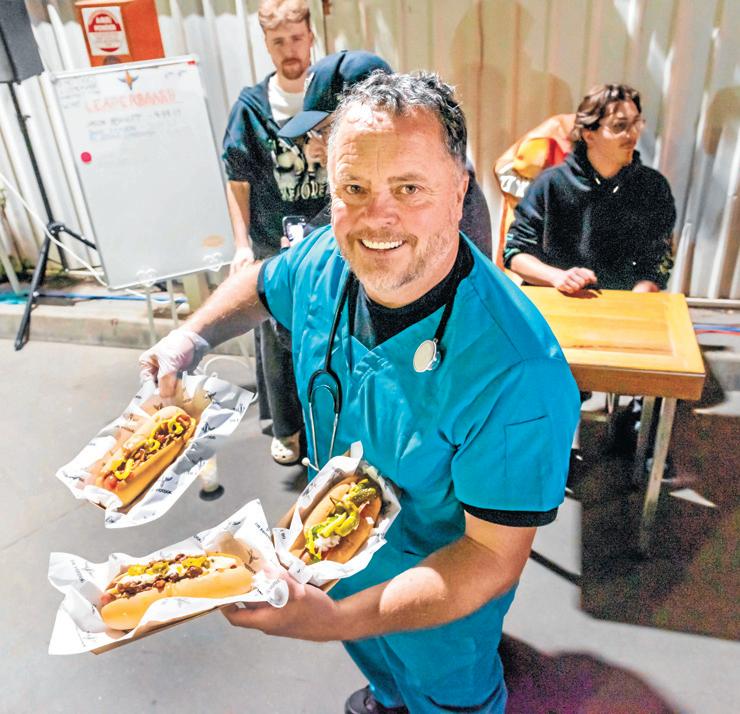
About 10 contestants took on Lynbrook’s first hot dog-eating competition, racing to finish three hot dogs and a lemonade.
Conor Traczewski won the inaugural Triple Bypass Challenge in just three minutes and 37 seconds, earning free hot dogs for a year.
Other competitors included Alex Brewer and former Casey councillor Damien Rosario.
Organiser Scott Watson said the event, held for National Hot Dog Day, would return even bigger next year.
12
Data centre looms
A residents group has called for transparency over a proposed $1.1 billion data centre in Clyde North.
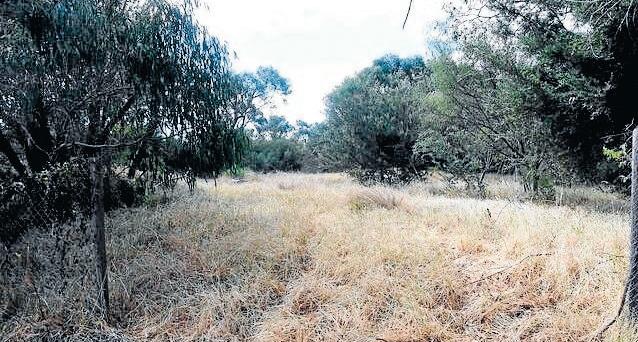
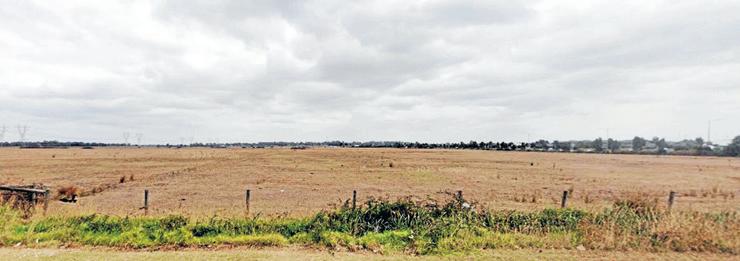
The facility - believed to be the first in Casey - would be built within a 53-hectare expanse of paddocks at 585 Berwick-Cranbourne Road.
The site is part of the Croskell Employment Precinct, but flanked by housing estates, including an early learning centre, and a retail precinct.
Data centres have been welcomed by state and federal governments as key digital and AI infrastructure, and have proliferated in neighbour-
hoods in Melbourne and other cities.
They have drawn a rising backlash due to concerns such as the facilities’ noise, backup generators, cooling systems, energy demand, construction impacts, and water consumption.
Despite the public interest, there are scant details about the application currently on Casey Council’s online planning register.
Under State Government planning requirements, the project is exempt from standard notice requirements and third-party appeal rights due to it being in an Urban Growth Zone.
Casey Residents and Ratepayers Association has called for “clear answers“ on the project.
“Our principal concern is whether a continuously operating industrial facility of this scale is appropriate in such close proximity to existing and future residential communities,” CRRA president Anthony Tassone said.
“A $1.1 billion development deserves a $1.1 billion level of scrutiny.”
Casey mayor Stefan Koomen said there was “strong community interest“ and “many residents have questions about what it could mean for our community“.
He said the council was committed to a “thorough, fair and transparent process that considers the impacts of this significant proposal and the best interests of our community“.
Recently the Federal Government announced national standards for AI, including that largescale data centres pay their “full share” for grid connection and “put at least as much energy into our grid as they take out of it”
FOR MORE ON THE STORY, TURN TO PAGE 8
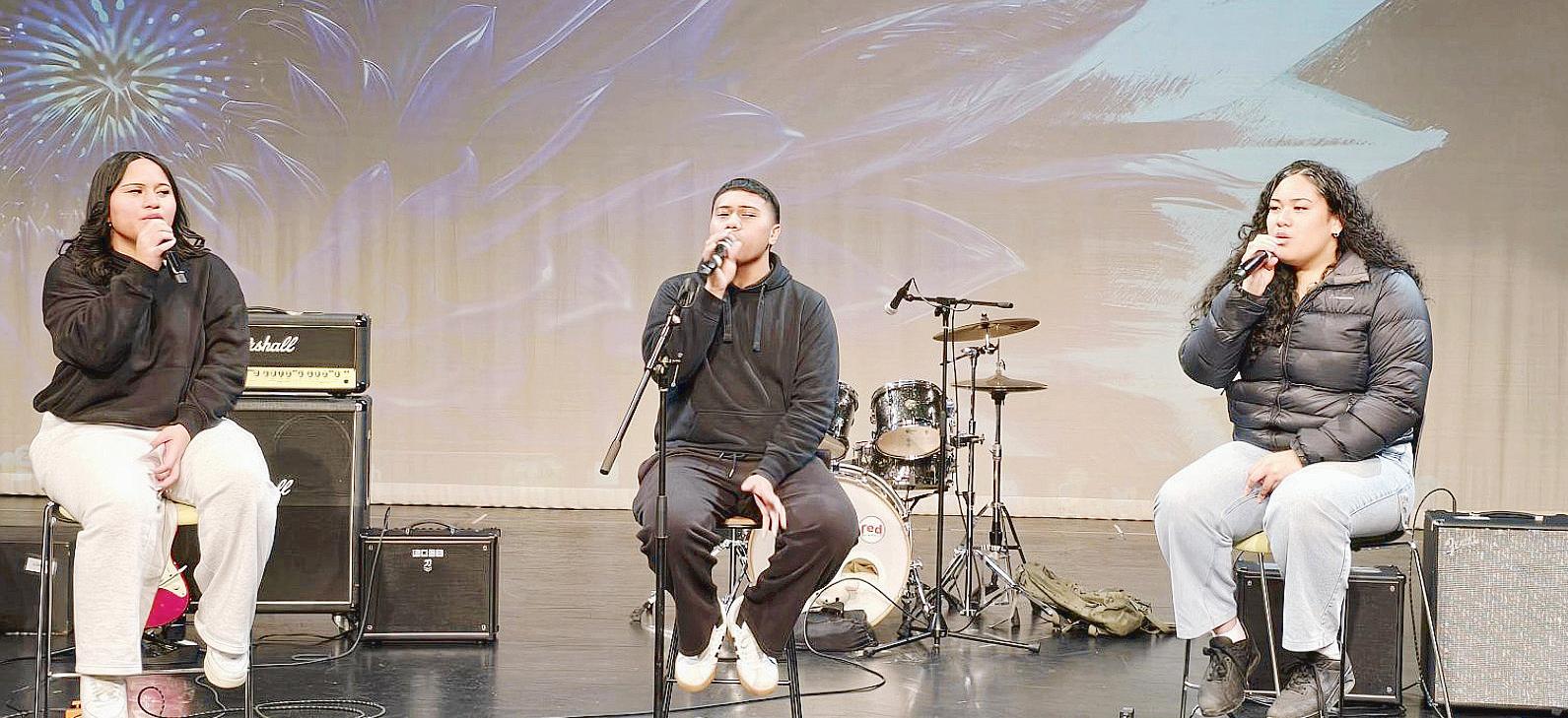
Cousins Alexis and Cruz warmed up the evening and became cheerleaders. (Rob Carew: 565233)
Second public education staff strike will proceed
By Jensy Callimootoo
A 24-hour statewide strike will go ahead today (Thursday, 23 July) after a majority of education union members have voted to reject the state’s recent offer.
Tens of thousands of teachers will walk off the job with the Australian Education Union (AEU) Victorian Branch announcing that 51.18 per cent of members voted against the government’s recent offer and therefore in favour of the planned strike.
Among the 50,677 AEU members who voted, 48.82 per cent voted in support of the most recent pay offer.
Disputes regarding pay and working conditions have continued for nearly 12 months, with Thursday’s strike marking the second to occur in four months.
A new agreement was put on the table last week on Friday 17 July, with the AEU Victorian president, Justin Mullaly, alleging that the state bypassed council members, instead going straight to employees and labelling it as an “anti-union” move.
The Joint Primary and Secondary Council later announced it would put the vote to the union members who would ultimately decide if the strike would go ahead or not.
The recent offer outlined a 28.3 per cent pay increase for teachers, principals and Education Support Staff (ESS) over a four year period.
Many are instead calling for a three year period. An increase of 12.75 per cent would begin in October of this year.
While the July offer addresses workload, members still argue that it is not enough to adequately alleviate the workload employees currently face.
The current offer cuts meeting hours from
80 hours to 40 hours a year. But real reductions in face-to-face teaching hours and more preparation time to reduce staff burnout is also being sought.
Ben Carroll MP, the Education Minister urged the union to back down on its promise to go ahead with the strike, arguing it would disrupt the learning of students and have adverse consequences to working parents.
But Mullaly said that frustration from public school teachers and staff have reached its peak, with the voting outcome sending an “undeniable message”.
“Premier Allan and Education Minister Ben Carroll, fix your public school funding mess and put a pay and conditions offer on the table that properly respects the work of AEU members,” Mullaly said.
Victorian members of the AEU will gather at Bourke Street Mark on Thursday morning at 10:30am for a rally and march to Victorian Parliament House.
Cranbourne teen honoured
By Violet Li
dition to Triple Zero call-taker Claire Murray.
“I was pretty calm,” Miley said.
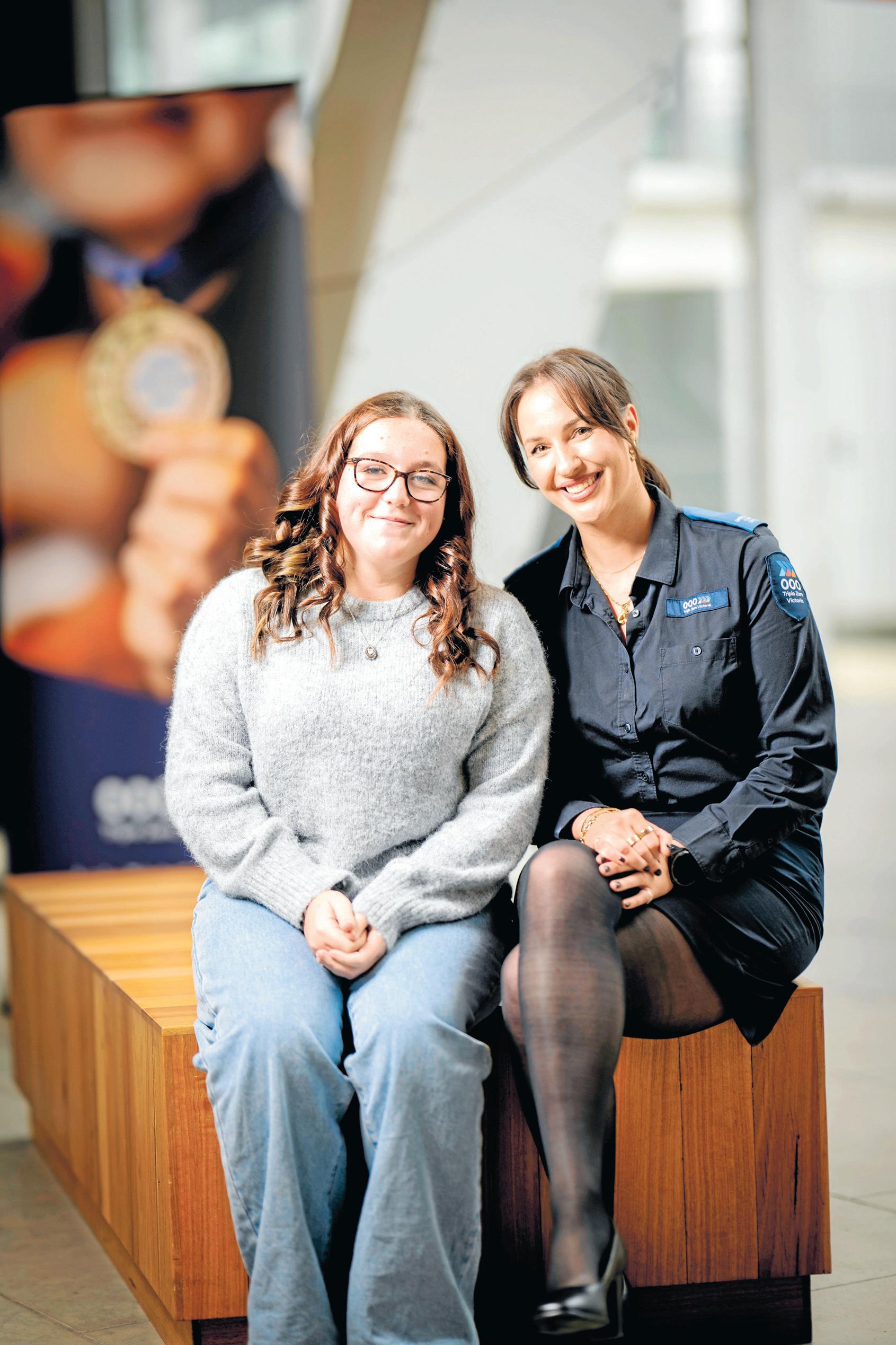
A Cranbourne teenager has been recognised for her calm and courageous response after calling Triple Zero when she and her mother came across a two-car crash last year.
Miley Nicholson received a medal at Triple Zero Victoria’s Junior Triple Zero Hero Awards at Melbourne Museum on 14 July.
“I was more distracted by asking them questions and listening to the lady than anything else.”
She remained on the phone and continued providing updates until Fire Rescue Victoria, police and paramedics arrived.
Miley, who was 13 at the time, was travelling home from the supermarket with her mother Skye in July last year when they came across the crash outside a local shopping centre.
Although several people had gathered at the scene, nobody had called for emergency assistance.
“We asked if anyone had called Triple Zero and they said no,” Miley recalled.
“Mum said, ‘You call Triple Zero and I’ll help with the traffic’, so I called and told the lady what had happened.”
Skye, who is a nurse, assessed the two drivers and helped redirect traffic away from the crash scene.
One driver appeared disoriented, while the other had suffered cuts to her face after being struck by an airbag.
Miley stayed near the disoriented driver and calmly relayed information about his con-
Miley and her mother stayed at the scene for about an hour.
Ms Murray later nominated Miley for the Junior Triple Zero Hero Award and met Miley and her family at the awards ceremony.
The family also heard a recording of Miley’s Triple Zero call for the first time.
Skye said she was proud of the way her daughter handled a stressful situation.
“A lot of people have trouble communicating in a crisis situation. They can shut down or get nervous, but Miley handled herself really well,” she said.
“She feels like she hasn’t done anything special, but she has, and she needs to understand that.”
Skye also thanked Ms Murray for asking clear questions and helping Miley understand what information emergency services needed.
“She was amazing, and it was really good to meet her,” she said.
Cranbourne teenager Miley Nicholson (left) received a medal at Triple Zero Victoria’s Junior Triple Zero Hero Awards at Melbourne Museum on 14 July. (Gavin Blue Photography)
AEU members have voted against the government’s most recent offer, with the strike going ahead on Thursday. (On file)
Panel backs homes near former landfill
By Violet Li
An independent planning panel has backed plans to build homes on farmland next to Cranbourne’s former Stevensons Road landfill.
The panel has recommended Casey Council approve the rezoning of about eight hectares at 39-45 and 40-46 Cyril Beechey Lane from farming to residential land.
The proposal attracted 17 submissions during public consultation, with 15 opposed.
What is the main concern and where does that come from?
The main concern was whether landfill gas could make the land unsafe for future residents.
In the submissions, residents warned that landfill gas could move unpredictably and said future safety should not rely on builders and landowners continuing to follow complex controls.
The 39-45 Cyril Beechey Lane sits immediately north of the former Stevensons Road landfill, while the 40-46 Cyril Beechey Lane is beside the former Cemetery Road waste transfer station.
The landfill closed in 2005 and was capped the following year, while the transfer station stopped operating in 2012.
Community concern was triggered by the experience of nearby Brookland Greens, where methane entered a home in 2008, prompting evacuations and later legal action.
The planning panel heard that the landfill still produces some levels of gas and contaminated liquid, known as leachate, as the buried waste
continues to break down.
A range of mitigation measures has been implemented.
A 2021 Landfill Gas Risk Assessment, commissioned by landowners Maclaw No.10 Pty Ltd and Brown Property Group, conducted landfill gas monitoring at the lands and found the generally low-level results of landfill gases.
The Assessment concluded that the Cyril Beechey Lane land had a “moderate” landfill gas risk but could be developed with special building protections, including concrete or waffle-pod floor slabs, ventilation underneath homes and sealed membranes designed to stop gas entering buildings.
Basements, lift shafts and other habitable underground areas would not be allowed.
An environmental auditor would also have to check that the protections had been correctly installed before people could move into the homes.
The requirements would be registered on the titles of all future properties through a legal agreement.
Why the panel backed the rezoning
The panel agreed the two properties must be treated as “potentially contaminated land” because gas and other pollution from the neighbouring landfill could have affected them.
A full environmental audit of the proposed housing land has still not been completed.
The panel said it would have been preferable to carry out the audit before rezoning because the site consists of only two parcels and there appeared to be little practical difficulty in assessing
them.
However, it accepted the audit could be delayed until before subdivision or construction because the landfill was already being monitored and managed, and a 2021 landfill gas assessment found the land could be made suitable for housing with strict protections.
The EPA initially advised in 2021 that a formal landfill gas audit would be needed if underground structures were allowed.
It said the existing gas assessment could be sufficient if the planning controls prohibited basements and similar structures.
The panel said the existing landfill gas management controls, combined with special building requirements, provided ‘reasonable confidence’ that the land could be developed safely.
What’s next step?
The panel’s report does not approve the rezoning.
Casey Council must now decide whether to adopt the amendment before sending it to the Planning Minister for final approval.
Mayor Cr Stefan Koomen said Councillors would now carefully review the Panel’s recommendation before deciding on the next steps.
“Councillors will formally consider the Panel’s report at a future Council Meeting before determining whether to adopt the amendment and seek final approval from the Minister for Planning,” he said.
“Councillors still advocate for a completed environmental audit before the amendment is next put forward to Councillors for consideration.”
Following reports of a rodent infestation at Village Cinemas Fountain Gate, patrons have now been advised that food services and in-cinema dining will not be available at its Gold Class facilities.
A pop-up notification on the Village Cinemas Website states that food services would be temporarily unavailable due to maintenance. No timeframe is given.
However, movie sessions will continue to operate.
Some customers who have booked in to see a film have also received communication from the centre.
One shared email from a customer states that as in-cinema dining is no longer available, customers can opt-in for a refund.
While the reason for maintenance is not outlined, many believe it may be due to the mice and rat sightings at the popular cinema complex over the last year.
As reported by this masthead earlier this week, many customers have filed reports to the Village Cinemas head office as well as Casey Council.
Patrons complained of rodents running over their legs and arm chairs during screenings, specifically in Gold Class.
A major concern outlined by patrons were safety and health worries due to food and drink services that are available.
Some customers have revealed they have cancelled their movie tickets or asked for transfer to another cinema altogether.
Coalition pledges to scrap purple bin
By Violet Li and Cam Lucadou-Wells
The Liberal-Nationals Coalition has pledged to scrap the State Government’s fourth purple bin mandate, if it’s elected in November’s election.
It comes after 50 of the state’s 79 councils have reportedly voiced opposition to the purple-lidded glass bin rollout.
The Coalition also announced it will look at opportunities to instead expand the popular Container Deposit Scheme, so it could recover more recyclable materials.
This is in line with councils calling for the CDS to cover a wider range of glass bottles, as an alternative to the purple bins.
Opposition local government spokesperson Bev McArthur said the fourth-bin mandate would impose unnecessary cost on Victorian households during increasing cost-of-living pressures.
“This unnecessary mandate is already driving up costs and diverting scarce resources away from the local services and infrastructure communities rely on every day,” she said.
“I have travelled the length and breadth of Victoria, and everywhere I went the message from councils and ratepayers was the same: scrap the mandate.”
Opposition environment spokesperson Nick McGowan said Victorians wanted better recycling outcomes, not more bins and bigger bills.
“The Liberals and Nationals will scrap the mandate and focus on practical measures that increase recycling without adding pressure to household budgets.”
When asked by Star News that if the State Government would still be committed to the purple bin mandate, a Victorian Government spokesperson said: “We’re making recycling as easyandconvenientaspossiblewhilealsokeeping valuable materials out of landfill.
“We continue to with councils on how to improve recycling in Victoria.”
Casey Council has signed contracts for the state-mandated rollout of purple-lidded glass bin, and it will be transitioning to a four-bin systemby1July2027despitecommunitypushback. The cost is expected to be approximately $5.9 million, with the Council offsetting $3 million.
Meanwhile, it has begun lobbying the State Government for greater flexibility in the rollout, including expanding the Container Deposit Scheme to include wine and spirit bottles as a lower-cost alternative.
Under the State Government’s waste reforms, councils are required to introduce a fourstream kerbside system comprising separate bins for general rubbish, mixed recycling, food and garden organics, and glass recycling.
A Casey spokesperson told Star News that the council takes “all public health and food safety matters seriously” and that they have been working the cinemas as well as Westfield Fountain Gate to address reports of rodent activity at the site.
“Following complaints received, Council’s contracted Environmental Health Officers undertook inspections and identified evidence of rodent activity,” said a spokesperson.
‘In response, Council communicated to site management corrective actions required to be put in place under the Food Act 1984 to manage potential public health risks.
“This included requirements to strengthen pest control measures, improve food storage practices and address broader site management issues.
“Council will continue to monitor the situation closely to ensure the issue is effectively addressed and community health and safety remains protected.”
All councils are expected to comply with the mandate by July 2027.
Councils that don’t comply with the State Government’s rollout deadline of 1 July 2027 were at risk of multiple $100,000 fines, according to Greater Dandenong Council.
Casey Residents and Ratepayers Association (CRRA) president Anthony Tassone said the announcement reinforced why CRRA had consistently called for flexibility rather than a onesize-fits-all approach.
“We call on the Casey Council to continue advocating for the greater flexibility it unanimously supported in May and to engage proactively with whichever government is elected to ensure the best possible outcome for our community,” he said.
“We also encourage all major political parties to clearly outline their position on Victoria’s kerbside recycling reforms ahead of the State election so residents can make informed decisions.”
The lands at 39-45 and 40-46 Cyril Beechey Lane in Cranbourne has been proposed to be rezoned from farming land to residential land. (FILE)
The Liberal-Nationals Coalition has pledged to scrap the State Government’s fourth purple bin mandate, if it’s elected in November’s election. (FILE)
How to ease cost-of-living
A recent Greater South East Melbourne (GSEM) survey found many households were struggling with the combined impact of rising grocery, housing, transport and energy costs, with some residents borrowing money to pay for essentials. Star News asked state MPs and candidates about what they’d do to tackle the cost-of-living stresses. Liberals, Greens and One Nation did not respond by deadline.
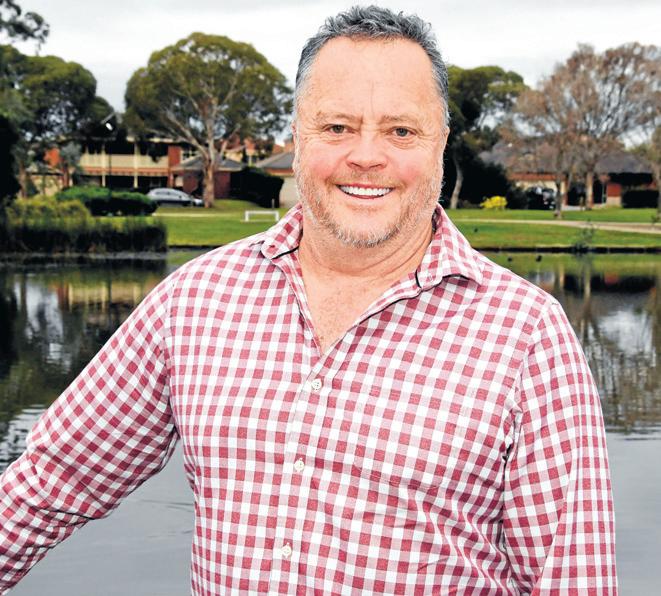
Families borrowing money to put food on the table should be a warning that Victoria needs more than short-term cost-of-living relief, Narre Warren South independent candidate Scott Watson said. (FILE)
Independent: Watson calls for community-led cost-of-living fixes
By Violet Li
Families borrowing money to put food on the table should be a warning that Victoria needs more than short-term cost-of-living relief, Narre Warren South independent candidate Scott Watson said.
Mr Watson, a small business owner in Lynbrook and also the long-time president of Lynbrook Residents Association, will run for the November Victorian Election, has launched a community consultation seeking local ideas to permanently reduce household expenses.
The consultation will help shape Mr Watson’s first discussion paper Cost Less Victoria.
Residents are being asked what practical changes the State Government could make to reduce household expenses and what money-saving ideas they already use that could benefit others.
“I want policy to be informed by the lived experience of the people it affects,” Mr Watson said.
He said the ideas submitted by residents would also be published so households could learn from each other.
Mr Watson said his policy focus would be on reducing recurring expenses rather than relying only on one-off payments.
Potential areas for reform included transport, energy, housing-related costs, government fees and inefficient administrative processes.
He said transport was one of the largest expenses for many outer-suburban households and was investigating ideas such as rewarding lower vehicle use, improving public transport incentives and assessing major projects by how much time and money they saved residents.
Mr Watson also pointed to the experience of alocalrenterwhoreportedlyhadtotakeunpaid leave from a casual job to wait at home while a contractor replaced a smoke alarm battery.
He said the safety requirement was important, but questioned whether the same outcome could be achieved without imposing unnecessary costs on renters.
Mr Watson praised local food relief and financial counselling organisations, including Back 2 Basics and Sikh Volunteers Australia, for helping families facing immediate hardship.
However,hesaidthegovernmentalsoneeded to address the underlying causes of financial pressure and homelessness.
Mr Watson said he would complete the consultation during the election campaign, publish its findings and use the results to advocate for practical and measurable reforms if elected.
“Good government should not be about who can shout the loudest,” he said.
“It should be about listening, following the evidence, and doing what is right for the community.”
Better-funded financial counselling and greater support for food-relief organisations would help Cranbourne households facing repeated financial hardship, South-Eastern Metropolitan MP Rachel Payne said.
Ms Payne, who is with Legalise Cannabis Victoria, said financial counselling providers should be properly funded.
“They can provide you with expert advice and practical solutions to managing the day-to-day and long-term financial management,” she said.
“Financial counsellors can also assist with making sure that any debts are consolidated and rates of payment are reasonable, to allow you to afford living costs.
“Financial counsellors are the experts and can help with those negotiations with banks and landlords.”
She said services such as South East Community Links could also connect residents with broader social support, as financial hardship often occurred alongside other challenges.
Better-funded financial counselling and greater support for food-relief organisations would help Cranbourne households facing repeated financial hardship, South-Eastern Metropolitan MP Rachel Payne said. (FILE)
Legalise Cannabis Victoria supported Financial Counselling Victoria’s unsuccessful 2025–’26 budget request for increased funding, Ms Payne pointed out.
The proposal included $911,619 over five years for a 10 per cent uplift to family-violence financial-counselling contracts, focused on edu-
Labor: Richards touts cost relief
By Violet Li
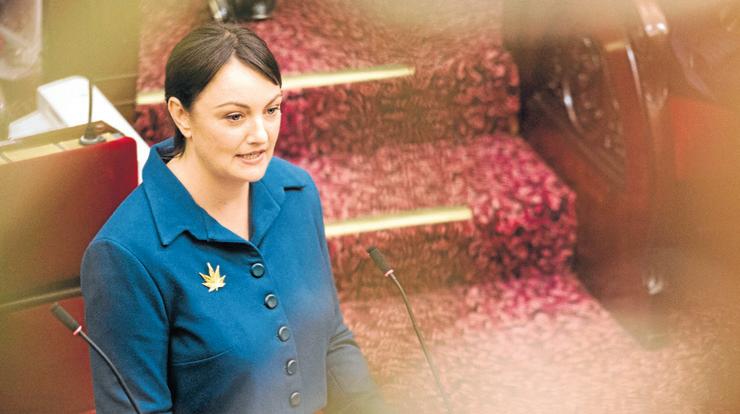
Cranbourne MP Pauline Richards said cheaper transport, free healthcare and expanded financial support are helping local families after a regional survey revealed widespread cost-ofliving stress.
The comments were made after the Greater South East Melbourne survey found nearly 45 per cent of respondents had accessed financial support during the past year, while many households reported struggling with food, housing, energy and transport costs.
Ms Richards, who is recontesting the seat of Cranbourne, acknowledged that families were doing it tough despite the south east’s economic strength.
“While the south-east region remains a driving force behind Victoria’s reputation as the innovation, growth and job creation capital of Australia, many families in the south-east are doing it tough,” she said.
“That’s why we’re putting money back in their pockets with 20 per cent off rego, half-price public transport, free weekend travel for seniors, and free public transport for under-18s.”
She also pointed to free school breakfasts, Free Kinder, Free TAFE, help with school uniforms and camps, and free dental care through the Smile Squad program.
Ms Richards said access to free healthcare closer to home could also help families avoid large outof-pocket costs.
“We’re also keeping healthcare local and free,” she said.
“Through our new Cranbourne Community
Cranbourne MP Pauline Richards said cheaper transport, free healthcare and expanded financial support are helping local families after a regional survey revealed widespread cost-of-living stress. (FILE)
Hospital, with a local Urgent Care Centre coming online later this year, and the 24/7 Victorian Virtual Emergency Department, families can see an emergency doctor, specialist or public dentist for free.”
She said the services could help residents avoid GP gap fees and long waits in hospital emergency departments.
The State Government has also funded an expansion of South East Community Links’ Bring Your Bills Day program, which provides financial support and counselling to residents struggling with household expenses.
Ms Richards said the south east remained central to Victoria’s economy, with one in four of the state’s manufacturing jobs located in the region and its population expected to reach two million by 2036.
Victorian Socialists: Call for cheaper groceries, lunches and public transport
Victorian Socialists have call for free public transport, and a price-cap on supermarket essentials and road tolls.
Cranbourne candidate Reem Yunis said short-term and long-term relief was needed, including free school lunches and bringing the privatised electricity system back into public hands.
“When we had the State Electricity Commission, electricity was much cheaper.
“Privatisation has only driven up costs because every company involved, from generation to transmission to retailing, takes their cut of profit.
“Essentials like this should be delivered by a public agency, not profit-seeking private corporations.”
Yunis also called for a government network of local distribution hubs for grocery essentials
– including in Cranbourne.
“The government could use its purchasing power to provide groceries at or near cost-price, while also bringing in revenue that would make the scheme relatively cost-neutral.
“A measure like this would also have the benefit of increasing competition against Woolworths and Coles, companies that use their massive market share to artificially inflate prices and boost profits.”
In the longer term, Yunis called for the building of more public housing to help bring down housing costs for everyone.
It would also ensure people in “extreme housing insecurity” don’t end up on the streets.
A state bank should also be created to provide “cut-price mortgage rates to working-class households” , Yunis said.
cation and engagement.
Ms Payne said she would continue pushing for greater funding.
She also called for the restoration of the Partners in Wellbeing program, which provided free and confidential financial, business and wellbeing support to small-business owners.
She said many small-business loans were tied to home mortgages, meaning struggling owners risked losing both their businesses and homes.
On food insecurity, Ms Payne pointed to recommendations from a parliamentary inquiry she participated in, including establishing a Victorian Food Security Strategy, appointing a dedicated Minister for Food and developing a school-meal program.
She said emergency food-relief organisations across the south east had reported dramatic increases in demand and could not be expected to address the problem alone.
“A whole-of-government approach is needed to food insecurity, not a reliance on emergency food-relief charities and not-for-profit organisations,” she said.
Family First: Cutting debt and taxes to ease cost-of-living
Family First state-election candidate Jane Foreman said households need “real relief from higher taxes, higher power bills and higher debt”
MsForeman,whoisrunningfortheSouth-Eastern Metropolitan Region, said one-off payments do not solve repeated hardship.
She would increase funding to food relief and financial counselling services as a “safety net” , though they weren’t the “real answer”
“If families keep needing help more than once, that tells you the problem is structural and the system is broken.”
She said the party would cut the state’s debt from $166 billion toward $80 billion, halving the $1 million per hour interest cost to save $4.3 billion per year.
“We would redirect that $4,3 billion to cut household taxes, levies, and charges, putting real money back into the pockets of families in Cranbourne and across Victoria.”
“This would require intense political will, but it is the fastest way to deliver measurable relief, while freeing up funding for practical services.”
She called for the end of “the burden of ideology” - such as “Net Zero nonsense” - to reduce energy prices.
“Lower energy prices matter because cheaper energy means lower costs across the board – for households, businesses, transport, food, manufacturing and everyday essentials.”
Jane Foreman, Family First
Borrowing to buy groceries
By Cam Lucadou-Wells
South East households are buckling under costof-living stress, with nearly 45 per cent needing support to make ends meet, according to a recent survey.
Greater South East Melbourne (GSEM) has unveiled its first ‘satisfaction survey’ that reveals people are struggling ‘under the radar’.
“Most commonly people are borrowing from family and friends and it’s not for luxuries but to pay for groceries so they can put food on the table,” GSEM chair Simon McKeon said.
“This is not a one-off hit. Almost 70 per cent of people who needed financial help in the past year needed it more than once, and more than a quarter needed it regularly.”
Two out of three people (67 per cent) were worried about the cost of groceries and bills.
Just over half of respondents (51 per cent) were stressed by rent or mortgage costs.
South East Community Links chief executive Peter McNamara said the survey reinforces what his service is seeing.
“Many people experiencing financial stress never appear in official statistics because they don’t access formal support services.
“Instead they’re borrowing money from family and friends, delaying paying bills, skipping meals, going without medication or choosing between heating their home and buying groceries.”
This shows at SECL’s Bring Your Bills events – where 79 per cent of participants are firsttime users of support services.
“This tells us there is a large group of people quietly struggling before they ask for help,” Mr McNamara said.
In 2024-’25, Bring Your Bills alleviated $12 million in debt. The following year, the debt relief tripled to $36 million – a “scale of unmet need” that is “alarming”, Mr McNamara said.
“What’s also telling is that 45 per cent of people seeking financial counselling support
through us are employed.
“This isn’t just an issue for people already known to the welfare system. It’s reaching working households.”
He said people were struggling with un-
affordable bills, not discretionary spending. Many were too ashamed or embarrassed to seek help, he said.
“We want the community to know they are not alone.
“We encourage people to seek help early and as often as they need it, including going directly to their bank or energy provider, not just community services, because there is far more support available than people realise.”
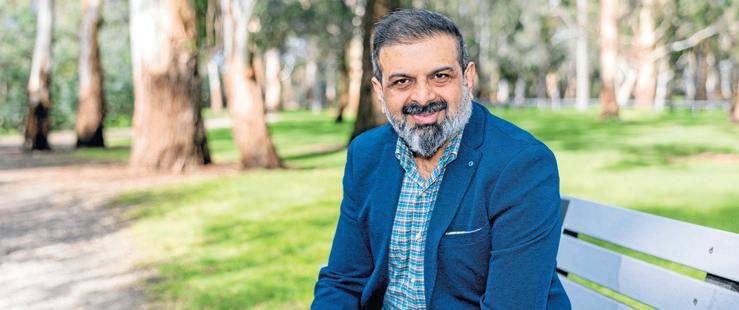
GSEM chair Simon McKeon says a recent survey shows many in the South East were struggling to cover groceries and bills. (Stewart Chambers: 505445)
Warning amid RSV
By Violet Li
A Cranbourne woman who spent 13 days in hospital after respiratory syncytial virus (RSV) triggered a severe asthma attack is urging older Australians not to dismiss the illness as “just a cold”
Caroline Bray first became unwell at work with a dry, crackly sore throat before her asthma began flaring almost immediately, much earlier than it usually would with a cold or flu.
Her symptoms quickly worsened to include fever, chills and severe wheezing.
She assumed that she had a common cold, but after several days, her asthma medication was no longer working and so she went to the emergency department.
A PCR test later confirmed RSV, and Ms Bray remained in hospital for 13 days.
“I wheezed for two weeks, 24/7,” she said.
“You could hear me wheezing from the other end of the house.”
She later developed an intense cough, at times coughing blood, and struggled to maintain her oxygen levels.
Ms Bray was placed on oxygen and treated with steroids and antibiotics after also developing
a chest infection.
As a lifelong severe asthmatic, Ms Bray said she feared the infection could send her to intensive care or become life-threatening
“For me, the scary part is I didn’t know how long I was going to be in hospital because I just kept saying another day, another day, and I was there for 13 days,” she said.
“And my lungs don’t cope well with infection. It’s just scary. Am I gonna end up in intensive care? Am I gonna die of asthma?
“You do heal a bit, and I guess that’s always my fear, I am a severe asthmatic, so I have to be very careful.
“I guess the scary part is the unknown. Plus, it’s just not nice not being able to breathe. It’s not pleasant.”
It took about five to six weeks for Ms Bray to recover, although she continued to experience lingering post-viral fatigue even after her lungs improved.
“I’m still utterly exhausted,” she said.
“The lungs are better, so I’m functioning, but I definitely have lingering exhaustion.”
Her experience comes as GSK Australia releases new research suggesting many older Aus-
tralians recognise RSV as serious but do not believe they are personally at high risk.
Among Australians aged 65 and over who were aware of RSV, 90 per cent considered it a serious condition, but only 38 per cent were very or extremely concerned about becoming sick themselves.
The survey also found only 5 per cent could correctly identify all seven facts about the virus included in the research, highlighting gaps in understanding.
RSV is a common and contagious respiratory virus that can cause coughing, tiredness, sore throat, congestion and body aches.
Although often mild, it can lead to pneumonia, hospitalisation and, in rare cases, respiratory failure or death, particularly among older adults and people with underlying health conditions.
More than 71,500 RSV notifications had been recorded nationally as of July 2026, with people aged 65 and over accounting for 19 per cent of cases, according to campaign information citing national surveillance data.
Ms Bray said she had previously thought RSV mainly affected babies.
“I didn’t even know older people get it, and it’s actually really serious,” she said.
“I’m middle aged. I’m not old, but it is serious.”
After her experience, she encouraged her elderly parents to discuss RSV protection with their healthcare providers.
“I think people just think it’s like a cold or flu,” she said.
“People underestimate it.”
There are three certainties in life: Death, taxes and change
OPINION
In the past weeks, Dad has been diagnosed with prostate cancer.
Within seconds of hearing the news, I looked across at him and asked, “Have you started writing your eulogy yet?”
The specialist laughed. Dad laughed. Saffal (my son) rolled his eyes. Welcome to our family.
A year ago, Dad (totally free of any ailments, not taking any prescribed medicine), informed us that it was really time to settle his affairs and final rites.
At 75 he felt the time was right.
To some people, that probably sounds morbid.
But in that moment, it wasn’t about death.
It was about perspective.
We all know there are conversations we avoid because they make us uncomfortable. Yet death is the one appointment every single one of us will eventually keep.
This Wednesday, Dad will undergo a biopsy at Monash Health.
We don’t yet know whether the cancer is confined to his prostate or whether it has spread.
Like every family waiting on results, we’re hopeful. We’re praying. And we’re incredibly grateful.
Grateful to his wonderful GP, who didn’t simply tick boxes during a routine check-up.
She noticed Dad’s PSA levels had suddenly risen and acted immediately.
Grateful for the specialists, nurses and staff who have moved with urgency and compassion. We often spend time criticising our systems when they fail us.
This week, I simply want to say thank you to the people working every day to give families like ours hope.
As unsettling as a diagnosis can be, it has also
reminded me of something Dad has been saying for as long as I can remember.
“There are only three certainties in life,” he’d say. “Death, taxes and change.” Usually with a cheeky grin.
The older I get, the more I realise he hasn’t been talking about death.
He was talking about life.
Growing up, my parents never pretended life would always be fair.
They never promised us we wouldn’t experience disappointment, grief or hardship.
Instead, they taught my sisters and I something far more valuable.
Live honestly. Stand up for those who cannot stand for themselves. Love all. Hate none.
Live a life of sewa - selfless service given without expecting recognition.
Accept that there are some things beyond your control, but never let that stop you controlling the one thing that always remains yours: how you choose to respond.
That doesn’t mean life is easy.
It doesn’t mean there aren’t tears, heartbreak or moments when you quietly ask, “Why us, why me?”
It simply means we don’t stay there. Every challenge becomes another opportunity to grow, to serve and to love a little deeper.
Perhaps that’s why I’ve never seen life as something to simply get through.
Whether I’ve been helping families purchase their first home, standing in front of Year 11 and 12 students talking about belonging and purpose, creating programs like Belonging in Casey, coaching young people on the netball court or writing this column each fortnight with Dad, the question has never really been, “What can I achieve?”
It’s always been, “What can I give?”
Our family has also been fortunate in anoth-
er way.
For many years, three generations lived under one roof.
Like every family, we laughed together, argued occasionally, celebrated milestones and navigated life’s challenges.
Last year our two munchkins flew the coop, as they should.
That’s what good parenting hopes for. But sharing a home with our elders taught us something increasingly rare in today’s busy world.
Time is the greatest gift we can give one another. Not expensive presents. Not another coffee mug for Father’s Day. Not another pair of socks at Christmas – red ones for dad!
Time.
A conversation over a cup of tea. Dinner around the table. Listening to the same stories, even when you’ve heard them a hundred times before.
One day, you’ll wish you could hear them just once more.
We spend so much of our lives planning careers, holidays, renovations and retirement.
Yet so few of us have the conversations that matter most.
Have you ever asked your parents what they want their final years to look like?
Or my son, (who’s had three heart attacks already), who gets what?
Do they want to be buried or cremated?
What music would they like played?
What stories do they hope their grandchildren remember?
Have you told the people you love why they matter to you while they’re still here to hear it?
Leave it to my son, Saffal, to take the conversation in an entirely different direction.
The other day he told me you can now have your ashes turned into fireworks.
Honestly... Sign me up.
If I’m going out, I may as well give everyone one last spectacular show.
Humour has a funny way of reminding us not to fear the inevitable but to embrace the time we have.
Because none of us knows how many Wednesdays we’ve got left.
This Wednesday, we’ll walk into Monash Hospital together. We’ll hope for the best. We’ll trust the doctors. We’ll take whatever comes next, one step at a time.
But regardless of the outcome, one thing is already certain. Dad has lived an extraordinary life.
Not because he’s sought fame or fortune.
But because he has spent a lifetime lifting others, speaking up for those without a voice, serving his community and leaving people better than he found them.
Google (YouTube) him, he’s extraordinary! As his daughter, I can’t think of a greater legacy than that.
Truth be told... our lives won’t ultimately be measured by how much money we earned, the titles we held or the possessions we accumulated.
They’ll be measured by the kindness we shared, the people we lifted, the time we gave those we loved, and whether the world is just a little better because we were here.
Fatal collision in Narre Warren
A woman has died following a collision in Narre Warren which occurred on Monday 13 July.
It is understood a red Hyundai sedan struck a pedestrian on Narre Warren North Road, near the Monash Freeway off ramp just before 10am.
The pedestrian, a 67-year-old Narre Warren woman, was taken to hospital where she later died on 15 July.
The driver of the Hyundai, a 74-year-old Cheltenham woman, stopped at the scene.
Casey Highway Patrol are investigating the circumstances of the collision.
Anyone who witnessed the incident is urged to contact Crime Stoppers on 1800 333 000 or visit crimestoppersvic.com.au.
Teens arrested
In other police news, two teenagers who were allegedly riding their electrical bikes erratically in Berwick on Sunday 19 July have been arrested.
Police observed dirt bikes speeding and performing wheelies along Soldiers Road.
The riders stopped at traffic lights and police attempted to approach them. One rider attempted to flee, taking off with a police member still hanging on to the rider.
The rider travelled into the intersection and lost control of the dirt bike causing it to fall to the ground. The other rider was removed from his bike without incident.
A 14-year-old boy from the Casey area was interviewed at the scene with his mother present and was released pending summons, expected to be charged.
The second rider, a 17-year-old boy also from the Casey area who attempted to flee was arrested and transported to the Narre Warren Police Station where he was criminally interviewed with his mother also present. He is expected to be charged as well.
Both teens will appear at a children’s court at a later date.
Both dirt bikes were impounded by police, each at a cost of $1120 where they will be held for a period of 30 days.
Cranbourne woman Caroline Bray spent 13 days in hospital after respiratory syncytial virus (RSV) triggered a severe asthma attack. (Supplied)
“Just do it!”
- Anastasia Oakes, Cranbourne North resident
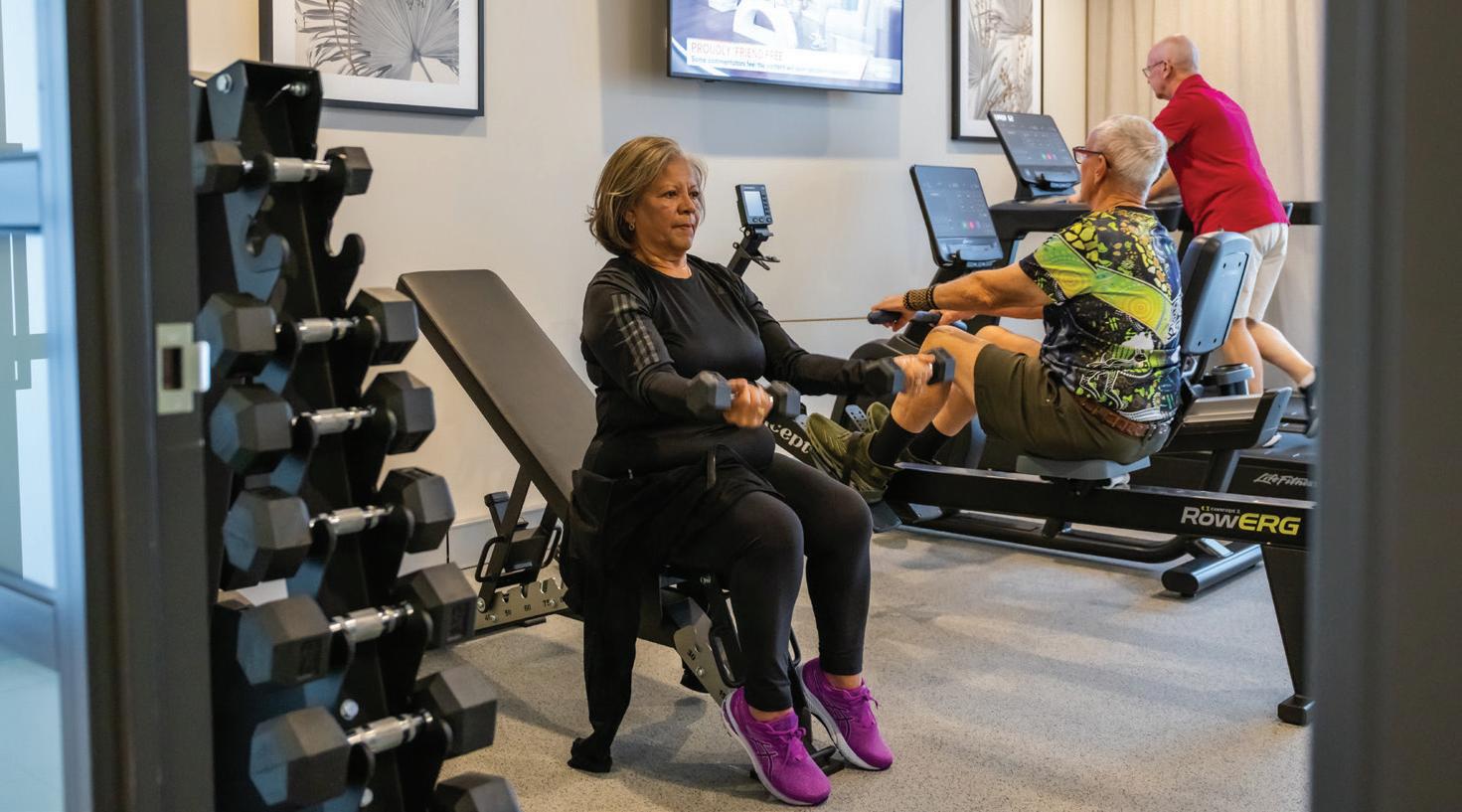
For Anastasia Oakes, choosing Summerset Cranbourne North was a “no brainer”. As a brand-new village, it offered something she valued straight away - homes that feel fresh, bright and beautifully designed, set within a safe and secure community.
Anastasia’s villa couldn’t be more perfectly located. With easy access to the village centre and its lively social hub, everything she needs is only a short stroll away.
Since moving in, life has opened up in all the right ways. With fewer worries and more freedom, she now spends her time doing the things she truly enjoys.
“I love the gym, because I like keeping fit. Happy hour is very inviting… there’s a lot of laughing!”
Book an appointment today
Open 7 days, 9am to 5pm
Summerset Cranbourne North 98 Mannavue Boulevard, Cranbourne North 03 7068 5642 | cranbourne.sales@summerset.com.au
The café is another favourite, where residents gather most mornings for a coffee and conversation, a simple pleasure that has quickly become part of daily life.
And for anyone considering making the move?
“Just do it!” she says.
With a range of homes available now*, you could be living the Summerset life sooner than you think. Book an appointment with our friendly team today and discover why Anastasia and so many others love calling Summerset Cranbourne North home.
Love the life you choose.
$1.1b data centre planned
By Cam Lucadou-Wells and Violet Li
A giant $1.1 billion data centre is being proposed in Clyde North, but residents say they are being left in the dark.
The proposed facility - believed to be the first in Casey - would be built within a 53-hectare expanse of paddocks at 585 Berwick-Cranbourne Road.
The site is part of the Croskell Employment Precinct, but flanked by nearby housing estates, including an early learning centre, and a retail precinct.
State and federal governments have welcomed data centres as key digital and AI infrastructure.
They have proliferated in neighbourhoods in Melbourne and other cities, but drawn a rising backlash over the facilities’ noise, backup generators, cooling systems, energy demand, construction impacts, and water consumption.
The proposal was lodged with City of Casey on 20 April, and the council is yet to make a decision on the application.
Despite the public interest, there are scant details about the application currently on Casey Council’s online planning register.
Under State Government planning requirements, the project is exempt from standard notice requirements and third-party appeal rights due to it being in an Urban Growth Zone.
Clyde North resident and objector Dayna Lynch said documents had been publicly available, but since been taken down.
“As a young homeowner, I chose to buy in Clyde North because of the vision for the area.
Anthony Tassone, of Casey Residents and Ratepayers Association, has called for scrutiny and transparency over the proposed $1.1b data centre. (Gary Sissons: 470334)
It was marketed as a family-focused community with parks, nature reserves, walking trails, schools, shopping centres, community spaces and places to build a future.
“I understand digital infrastructure is important, but developments of this scale should be located where they are compatible with surrounding land uses and do not undermine the long-term vision that attracted families like mine to the area in the first place. “
Casey Residents and Ratepayers Association called for “clear answers” , “rigorous planning scrutiny” , “greater transparency” and “meaningful community engagement”
“Our principal concern is whether a continuously operating industrial facility of this scale is appropriate in such close proximity to existing and future residential communities,” CRRA presi-
dent Anthony Tassone said.
“Data centres don’t operate from nine to five.
“They operate around the clock, every day of the year.
“A $1.1 billion development deserves a $1.1 billion level of scrutiny.”
Mr Tassone said “broad assurances” on how the impacts would be managed are “not enough’
“Any approval should be supported by detailed technical evidence, enforceable planning conditions, appropriate independent monitoring and clear mechanisms for addressing community concerns should impacts exceed expectations.”
He said the principle was the same as for the recently-rejected waste transfer station in Hampton Park.
“Council and the applicant must ensure residents have access to the full planning application documentation, plain-English information where appropriate, and genuine opportunities to participate in the planning process before any decision is made.”
The CRRA also wanted clear answers on the broader economic benefits, including the number of construction jobs and permanent jobs.
Casey mayor Stefan Koomen said there was “strong community interest” and “many residents have questions about what it could mean for our community”
He said the council was committed to a “thorough, fair and transparent process that considers the impacts of this significant proposal and the best interests of our community”
“At this stage, councillors have not been asked to make a decision on the application, and it
Police officer to run for Labor in Berwick seat
By Jensy Callimootoo
After 14 years serving with Victoria Police, Rana Khan has decided to take the political leap, becoming Labor’s candidate for Berwick ahead of the November state election.
At the top of his election agenda, backed by his policing experience, Khan says he will focus on crime, youth offending and advocating for stronger preventive measures.
The police officer will go on the ballot against current Berwick MP Brad Battin, who also has a policing background.
Battin has held the Berwick seat since 2022. Before that, he represented the seat of Gembrook from 2010. He served in the police force for six years before becoming a business owner and later moving to parliamentary work.
The Labor candidate says he hasn’t met his opposition yet, but that he believes it’s time “for a change” in Berwick.
“Being a current police officer and having more experience, I can focus more on these issues and come up with a better solution,” Khan
says.
“And I understand the area, I understand the solutions and I have dealt with these families here, I have dealt with the community here and I think it’s time for change.”
Khan, who joined Victoria Police in 2012 and has worked across Casey, Gippsland and Melbourne’s transit network, said frontline policing had given him firsthand insight into the challenges facing local families.
A Berwick resident for more than 10 years, Khan said crime remained a significant concern across the electorate but argued that long-term prevention should sit alongside strong policing.
“Crime has risen everywhere, especially youth offending,” he said.
“We can reduce crime, but we can’t get rid of crime. That’s why we need to prevent it instead of only going tough on the punishment side.”
He said early intervention through schools, youth engagement, sport and mental health support would play a central role in reducing offending, while also advocating for more frontline police by reducing administrative workloads.
Drawing on his experience attending family violence incidents, Khan said increased investment in specialist family violence units and support services was also needed.
“Most of our job is dealing with family violence,” he said.
“We need more funding for support services, counselling and prevention so police can focus on frontline work while families receive the help they need.”
Berwick’s crime rate over the last year has continued to rise, with 3447 incidents reported.
Many have highlighted the 1500 vacancies currently impacting the force and putting pressure on working officers.
But Khan says that while he recognises this as a concern, he believes that Labor’s recent initiative to hire hundreds of retired police officers to act as reservists will significantly address this problem.
“It removes the administrative roles that often take time away from officers being in the community,” he said.
Beyond law and order, Khan said improving
Clyde North man arrested for alleged role in firearm and drug manufacturing
A 34-year old Clyde North man alleged to have had a role in manufacturing firearms and drugs has been arrested and charged on several offences.
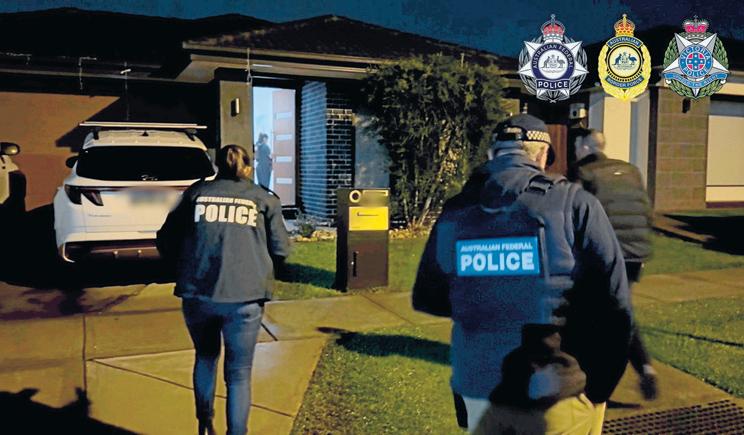
The Victorian Joint Organised Crime Taskforce (JOCTF) along with Victoria Police and the Australian Border Force (ABF) executed search warrants at addresses in Narre Warren and Clyde North on Thursday 16 July.
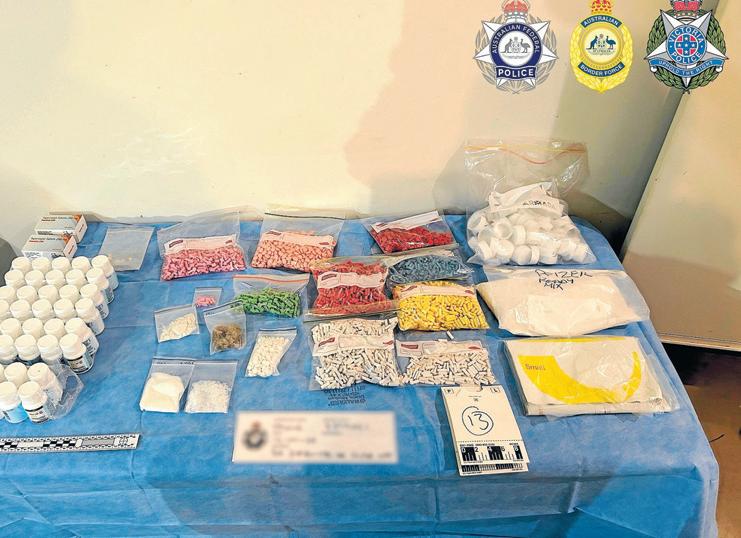
Investigators allegedly seized two fully assembled FGC-9 firearms, five partially assembled FGC-9 firearms, ammunition, three pill press machines, knuckle dusters and fraudulent identification documents as well as bank cards.
They also allegedly found more than $6500 in cash, components used in the manufacturing of weapons, a significant quantity of illicit pharmaceutical drugs and seven firearm magazines.
Three phones were seized which will now undergo further digital forensic analysis.
The man who did not hold a valid firearms’ licence, allegedly imported firearm components and specialised tools and equipment from overseas for the purpose of manufacturing firearms and illicit pharmaceutical drugs in Australia.
He was arrested and charged on several of-
fences including one count of committing an indictable offence while on bail as well as several counts for possession of drugs and firearms.
The man was remanded in custody and is expected to appear before the Melbourne Magistrates’ Court on Friday 17 July.
Australian Federal Police (AFP) Detective Superintendent Ray Imbriano said the investigation demonstrated the importance of intelligence-led policing and strong partnerships
across law enforcement agencies.
“Had authorities not disrupted this man’s alleged offending, dangerous weapons and harmful illicit drugs could have entered the black market and been used to facilitate further criminal activity,”Imbriano said.
“This investigation demonstrates the capabilities and the close collaboration between agencies under the Victorian JOCTF to prevent illicit firearms and illicit drugs from reaching our communities.”
would be inappropriate to form a view before all relevant information has been received.
“Councillors will shortly be briefed on the proposal and the planning process, including the next steps.
Cr Koomen said the council strongly supported greater policy guidance from State and Federal governments on this “relatively new and rapidly growing land use”
Recently the Federal Government announced national standards for AI, including that largescale data centres pay their “full share” for grid connection and “put at least as much energy into our grid as they take out of it”
There would also be rules to “minimise” water use and “maximise” energy efficiency, and to not compete with new housing.
The State Government approved a Precinct Structure Plan to provide new jobs and industrial land in Clyde North on 13 March this year, just over a month before the data centre application was lodged.
As of 22 July, the permit application PA26-0190 had received at least six objections.
social cohesion would be one of his priorities if elected.
Originally from Pakistan, the now father of two, migrated to Australia in 2001 and was recognised with the Victoria Police Multicultural Award in 2023 for his work supporting emerging communities.
Pushing back against recent divisive ideologies, he said Australia should embrace its multicultural identity while encouraging stronger connections between communities.
“We are all Australians,” he said.
“We have to represent everyone in the community.”
Khan said he would also advocate for improved public transport, including the sought after Clyde Rail Link.
Alkira student stabbed
An Alkira Secondary College student was stabbed near the school.
Police are investigating a stabbing in Cranbourne North on Monday 20 July.
It is understood a group of teenagers had an altercation before a boy was stabbed in a park on Sabel Drive about 3.20pm.
The 15-year-old boy was located with serious injuries and taken to hospital.
The group fled the scene on foot before police arrived.
A crime scene was set up, and officers were searching for the outstanding offenders.
A Department of Education spokesperson said: “An Alkira Secondary College student was assaulted in an incident that occurred outside the school and after school hours.
“The college is providing wellbeing support to those involved.”
The alleged offender is not a student at Alkira Secondary College.
Anyone who witnessed the incident, has dashcam/CCTV footage or information is urged to contact Crime Stoppers on 1800 333 000 or submit a confidential report online at www.crimestoppersvic.com.au
The proposed site for Casey’s first data centre at 585 Berwick-Cranbourne Road, Clyde North. (Google)
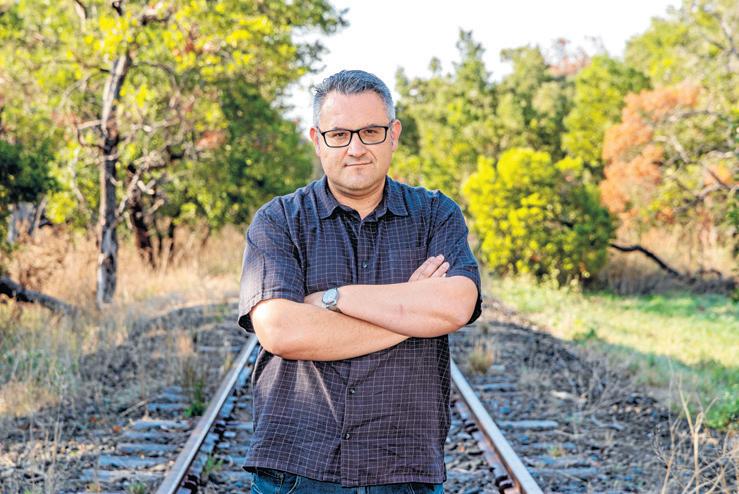
Rana Khan will contest the Berwick seat for the Australian Labor Party. (Gary Sissons: 567011)
Media provided by the AFP reveals the moment of arrest as well as what was found during the search warrant. (Supplied)
FOCUS ON … EDUCATION
Choosing schools: What matters most to your child?
Choosing the right school for your child is one of the most important decisions a parent can make.
For families, selecting a school that aligns with your child’s strengths, interests, and personality can set the foundation for lifelong learning and confidence. Focusing on what matters most to your child ensures they are engaged, supported, and inspired every day.
Schools across Victoria offer a wide range of programs designed to help children thrive academically and personally. Many provide smaller class sizes, specialist teachers, and tailored learning approaches that cater to individual needs.
Visiting schools, meeting staff, and exploring the curriculum can help parents understand how each school fosters curiosity, critical thinking, and a love of learning.
Academic support is only one part of the picture. Social and emotional development is equally important.
Children benefit from inclusive extracurricular activities; sports teams, music programs, arts workshops, and school clubs that encourage teamwork and friendship.
Schools often provide a variety of programs designed to help students build confidence, re-
silience, and a sense of belonging. Asking your child which activities excite them can help you choose a school where they will feel engaged and valued.
Health and wellbeing are also key considerations. Many schools offer pastoral care pro-
grams, mentoring, and support networks that help children navigate challenges, develop resilience, and thrive socially and emotionally.
Encouraging your child to participate in activities that promote wellbeing such as sports, arts, or leadership programs can enrich their school experience and support their growth.
Ultimately, listening to your child’s voice is essential. Involving them in conversations about their schooling, what makes them feel inspired, safe, and motivated, empowers them to take ownership of their learning journey. It also gives you insight into which schools are best equipped to nurture their talents and interests.
At the heart of every decision is one simple truth: your child’s happiness, learning, and sense of belonging matter most. Schools offer a wealth of programs, opportunities, and supportive environments to help children flourish academically, socially, and personally.
By focusing on what matters to your child, you’re not just choosing a school, you’re creating a foundation for a lifetime of possibilities.
Excellence on two campuses
St Peters College continues to set a remarkable standard for educational facilities in our local community, with its campuses in Cranbourne and Clyde North offering students an environment that truly supports both learning and personal growth.
From modern classrooms equipped with the latest technology to expansive sporting grounds that encourage active lifestyles, the College has clearly invested in creating spaces where students can thrive.
What stands out most is the balance between academic and extracurricular opportunities. Science labs, performing arts centres, and dedicated STEM spaces provide students with hands-on experiences that extend far beyond traditional learning. At the same time, well-maintained ovals, courts, and fitness facilities ensure physical education remains a priority.
Equally impressive are the welcoming communal areas that foster a strong sense of belonging. These thoughtfully designed spaces allow students to collaborate, socialise, and build lasting connections.
In a rapidly growing region like ours, having access to such high-quality educational infrastructure is something the entire community can be proud of. St Peters College is not just keeping pace with growth — it is helping shape the future by giving young people the tools and spaces they need to succeed.
For further information:
Clyde -
· (03) 5990 7777
· officecln@stpeters.vic.edu.au
Cranbourne -
· (03) 5990 7777
· officecra@stpeters.vic.edu.au
FOCUS ON … EDUCATION
Where every child is known
At St Therese’s Primary School, our vision is simple yet powerful: do all that you do with love. This underpins everything we do, creating a faithfilled, safe and welcoming community where every child is supported to flourish.
From the very first day, our students are warmly welcomed into a nurturing environment where meaningful relationships with staff and peers help them grow in confidence and connection. Our calm and respectful atmosphere allows students to thrive academically while also developing spiritually and socially - ensuring a truly holistic education.
We are proud of our diverse community and warmly welcome families from a wide range of cultural backgrounds. At St Therese’s, differences are celebrated and embraced. Students learn alongside one another with empathy and respect, building understanding and a strong sense of belonging.
In Literacy and Numeracy, our teachers use student data to personalise learning and support each child’s individual goals. In Religious Education, our inquiry-based approach encourages students to explore the Catholic tradition and scripture in ways that connect meaningfully to their lives, helping them grow in faith and understanding of God.
Our contemporary Junior and Middle Learning Neighbourhoods provide flexible learning spaces designed for collaboration and creativity. These modern environments include shared project areas and fully equipped kitchens, allowing students to engage in hands-on, real-world learning experiences.
Beyond the classroom, St Therese’s offers a rich range of specialist programs, including Visual and Media Arts, Performing Arts, Physical Education and Auslan. These opportunities allow students to discover their passions, build confidence and develop new skills in a support-
ive setting.
As a proud feeder school to St Peter’s College, we offer strong pathways into secondary education. Our close community links help ensure a smooth transition, so students feel confident, prepared and connected as they move on to the next stage of their learning journey.
Activities have crucial role
Extracurricular activities play a crucial role in the holistic development of school students. These activities, which encompass a wide range of interests and passions beyond the traditional academic curriculum, offer students numerous benefits that extend far beyond the classroom walls.
From boosting academic performance and fostering social skills to nurturing personal growth and building character, participation in extracurricular activities equips students with essential life skills and helps shape them into well-rounded individuals.
Thisarticleexploresthetransformativepower of extracurricular activities and highlights the manifold advantages they provide to school students.
Contrary to popular belief, engaging in extracurricular activities can have a positive impact on academic performance.
Research indicates that students involved in extracurriculars often exhibit higher levels of motivation, better time management skills, and improved organisational abilities.
Participation in activities such as debate clubs, science fairs, or mathematic competitions stimulates intellectual curiosity and enhances critical thinking and problem-solving skills. Students who engage in extracurriculars are more likely to develop discipline and perseverance, attributes that contribute to academic success.
These activities provide a practical application of concepts learned in the classroom, reinforcing academic knowledge and deepening understanding.
Extracurricular activities can also offer opportunities for mentorship and access to resources that extend beyond the school environment,furtherenrichingthelearningexperience.
Extracurricular activities provide an ideal platform for students to develop crucial social skills that are essential for their personal and professional lives.
Through teamwork, collaboration, and interaction with peers who share similar interests, students learn to communicate effectively, resolveconflicts,andbuildrelationships.Whether
it’s participating in team sports, joining a music ensemble, or working on a community service project, students gain exposure to diverse perspectives, fostering empathy and cultural sensitivity.
These activities also promote leadership skills, as students often assume roles of responsibility, such as team captains, club presidents, or project coordinators. By engaging in extracurricular activities, students develop self-confidence, assertiveness, and the ability to adapt to different social contexts, qualities that are vital for success in the future.
Extracurricular activities serve as fertile ground for personal growth and character building. These activities encourage students to explore their interests, discover their passions, and develop a sense of identity. Whether it’s pursuing a hobby like painting or learning a musical instrument, extracurriculars provide a creative outlet for self-expression, fostering a sense of fulfillment and purpose. Furthermore, these activities teach students resilience and perseverance, as they often face challenges and setbacks along the way.
Through practice, dedication, and the pursuit of excellence, students develop a growth mindset, embracing failure as an opportunity to learn and grow. Extracurricular activities also instil important values and virtues such as discipline, integrity, and teamwork. In sports, for example, students learn the value of fair play, respect for opponents, and the importance of teamwork to achieve common goals. In clubs and organisations, they learn to navigate responsibilities, manage time effectively, and develop organisational skills. These activities provide a platform for students to learn from mentors and role models, who impart valuable life lessons and guide them towards ethical decision-making.
Beyond the school years, the skills and values gained through extracurricular activities contribute to college admissions and career success. Participation in these activities demonstrates a commitment to personal growth, a willingness to step outside one’s comfort zone, and the ability to manage multiple responsibilities simultaneously.
As one of the smallest primary schools in the Cranbourne area, we pride ourselves on knowing every child by name. This close-knit environment ensures that each student feels truly seen, valued and supported every day.
If you are looking for a school where your child will be known, nurtured and inspired in their
learning, St Therese’s could be the perfect fit for your family. We invite you to experience our welcoming community and faith-filled approach to education. Contact us to arrange a personalised tour or to learn more about our enrolment process.
Enrol at St Therese’s Primary School - Where every child is known. (560305)
FOCUS ON … EDUCATION
College celebrates 40 years through the arts
Hampton Park Secondary College Celebrates 40 Years Through the Arts
As Hampton Park Secondary College celebrates its 40th anniversary, the school is reflecting on a rich history of creativity, performance and student achievement while looking ahead to an exciting future for the Performing Arts.
A highlight of this year’s celebrations is Replay, Rewind, an original production created by Hampton Park Secondary College students and staff.
The mystery-filled play follows a group of students who discover forgotten cassette tapes hidden beneath their school, uncovering stories from the past that connect generations.
The production celebrates storytelling, collaboration and the creativity that has been at the heart of the college for four decades.
The Performing Arts program continues to thrive beyond the stage. Our music space has recently undergone an exciting transformation, with new soundproofing installed by our dedicated maintenance team, creating high-quality rehearsal rooms where students can develop their skills and confidence.
Throughout the year, students have embraced every opportunity to perform.
Lunchtime performances have showcased the talent within our music program, while last term’s Talent Show highlighted the confidence and passion of students across a range of performing arts disciplines.
Later this term, our musicians will share their talentswithlocalprimaryschoolsthroughacom-
munity tour before finishing the year with the annual End of Year Performance Night. These opportunities reflect Hampton Park Secondary College’s ongoing commitment to nurturing creativity, confidence and collaboration through the arts.
As the college celebrates 40 years of educating and inspiring young people, the Performing Arts remain a vibrant part of school life, bringing students, families and the wider community together.
The community is warmly invited to cel-
ebrate this milestone by attending Replay, Rewind at hthe Rivergum Performing Arts Centre on Thursday 30 July and Friday 31 July at 6.00 pm, and experience the incredible talent of Hampton Park Secondary College students.
Hampton Park Secondary College celebrates 40 years through the arts.
Top dog devours challenge
By Violet Li
Lynbrook hosted its first hot dog-eating competition of the year on Wednesday 15 July.
About 10 contestants took the challenge to finish three hot dogs and a lemonade in the inaugural Triple Bypass Challenge.
The challenge was held at local business Dr Hot Dog to celebrate National Hot Dog Day.
Conor Traczewski dominated the contest, completing the meal in just three minutes and 37 seconds.
It was Conor’s first eating competition, but he said an “inhuman appetite” helped him claim the title.
His strategy was to maintain a steady pace without eating so quickly that he became sick.
“Just don’t eat too quickly and throw up,” he said.
“I got the pace down reasonably enough, and that was it.”
Asked whether it was his best record, Conor said: “It’s my only record.”
The winning performance earned him the Triple Bypass Challenge trophy and free hot dogs for a year, with one hot dog available each week for the next 52 weeks.
Alex Brewer completed the challenge in five minutes and 57 seconds after arriving at the event tired from work.
Alex said his main objective was to beat the time set by his friend Jason Bennett, who first took the challenge and finished everything in nine minutes and 59 seconds.
“That’s what I’ve been heading on to do today, and that’s what I’ve done,” he said.
“I’m proud of myself. I’ve taken my own win.”
Former Casey councillor Damien Rosario finished in nine minutes and 45 seconds.
Asked how he felt immediately afterwards, he replied: “Full.”
Damien admitted having a large lunch before the competition had been a mistake, but said he remained determined to finish the food and avoid looking “silly in front of the community”
He said he took part to support Dr Hot Dog owner Scott Watson and the local business, which he had been visiting regularly for several months.
Mr Watson, who has announced his independent candidacy to run in the November Victorian Election for the Narre Warren South seat, said the competition was inspired by National Hot Dog Day in the United States.
“We’ve got the business Dr Hot Dog, and we just had to get involved in it,” he said.
He thanked the competitors and spectators who attended and said the event would return.
“This is the first of many,” he said.
“We’ll continue to do this and make it better next year.”
The 9 to 5 feminist: Not alone in leaving it at the door
By Dalal Smiley, chief executive of Wellsprings for Women
Recently at Wellsprings for Women during a discussion on gender equality, a participant commented: “Oh yeah, I can say I am feminist, but from 9 to 5.
“When I get home, I leave the feminist at the door.”
And she was not alone.
This comment resonated with many of us, not only participants but also staff.
These few words revealed a reality that is often underestimated in mainstream discussions about gender equality.
As women from migrant and refugee backgrounds, feminism is rarely a straightforward identity or political position.
Instead, it is something we must constantly negotiate between different worlds.
In workplaces, educational settings, and community organisations, we may be encouraged to advocate for our rights, pursue independence, and challenge traditional gender roles.
Yet at home, we often navigate expectations shaped by culture, religion, family obligation, and intergenerational responsibility.
The assumption that empowerment looks the same for all women can create a new form of exclusion.
Western feminist narratives have historically centred individual freedom, personal autonomy, and independence as the primary
markers of liberation.
For many migrant and refugee women, however, identity is deeply connected to family and community.
Decisions are often made collectively rather than individually.
The challenge is not simply choosing between oppression and freedom, but balancing multiple loyalties, expectations, and cultural values.
This can place us in an impossible position.
If we embrace feminist ideals too openly, we may be perceived as rejecting our culture or family traditions.
If we prioritise family or community expectations, we risk being judged by mainstream society as lacking agency or failing to be sufficiently “empowered”.
In effect, we are asked to prove ourselves in two different worlds, each with its own set of demands.
At Wellsprings, we recently reviewed our vision of All Women Shaping their Own Lives and modified it to A World Where All Women Shape their Own Lives.
The distinction removed the onus we previously placed solely on the shoulders of women and contextualised the outcome within an enabling of equitable systems that value women’s work, attributes and contributions.
Women from migrant backgrounds are not a small minority in Australia.
They constitute 28.3 per cent of women in Australia, and nearly half have at least one
parent born overseas.
One national analysis found migrant women had an unemployment rate of 6.29 per cent, compared with 5.4 per cent for Australian women overall, and a labour force participation rate of 66.95 per cent compared with 78.94 per cent for migrant men.
Recent research found that more than 340,000 migrant and refugee women in Australia are working below their skill level, and migrant women are 20 per cent more likely than migrant men to have their skills underutilised.
Our brand of feminism is not absent when we return home; rather, it is adapted, negotiated, and sometimes concealed.
What appears to outsiders as contradiction is often a sophisticated form of resilience.
As migrant and refugee women we become experts at navigating competing expectations, while maintaining important relationships and cultural connections.
Too often, policy makers, service providers, and even feminist movements overlook this complexity.
Genuine inclusion requires moving beyond the notion that there is a single pathway to women’s empowerment.
It requires listening to the voices of women who live at the intersection of multiple identities and recognising that feminism itself must be broad enough to accommodate different cultural realities.
While Western feminism often celebrates
workplace participation and individual autonomy, as women we continue to shoulder the majority of family and caregiving responsibilities.
In Australia, women undertake more than nine additional hours of unpaid care work each week compared to men.
For migrant and refugee women, these responsibilities are often compounded by cultural expectations, language barriers, settlement pressures, and economic disadvantage.
When we tried at Wellsprings for Women a few years ago to establish a catering social enterprise, we ended up having to close it down due to the limited availability of women who were able to commit their time before 9am or after 3pm.
Even now, the type of work they look for is constrained by their caring responsibilities.
Our experiences as migrant and refugee women challenge us to rethink what feminism looks like in multicultural societies.
How successful has it been in creating systems that support women’s emancipation.
Empowerment is not always about leaving traditions behind.
Sometimes it is about creating space to question, reshape, and negotiate those traditions on one’s own terms.
For many of us, feminism may only be applicable from “9 to 5,” as we still continue to navigate very different realities once we return home.
Dr Hot Dog owner Scott Watson (left) with the Winner, Connor Traczewski (3m 37seconds). (Rob Carew: 565233)
Dr Hog Dog owner Scott Watson prepares for the next contestant.
Ex Casey councillor Damien Rosario gets a cheer from Alexis (left) and Cruz (right). Damien also sponsored three people to become contestants.
Jail over parking fines?
By Afraa Kori
The threat of imprisonment for unpaid parking fines and toll debts has sparked backlash across legal advocates and the local community.
A Victorian Government spokesperson said there are “no plans to lift the moratorium”
“Imprisonment is a last resort in Victoria’s fines system, and a warrant can only be ordered by a court,” the spokesperson said.
“If someone is struggling to pay a fine, we encourage them to reach out to the issuing agency or Fines Victoria as early as possible.
“Support is available, and there are ways for people to manage their fines in a way that takes their circumstances into account.”
South-East Monash Legal Service (SMLS) has joined many community legal centres, legal advocates and sector partners in calling on the Victorian Government to “permanently“ and “quickly” abolish imprisonment for unpaid parking fines and toll debts.
As a member of the Infringements Working Group, SMLS plans to send an open letter to the Attorney-General urging reform.
SMLS interim chief executive Ashleigh Newnham said their centre worked daily with people experiencing financial hardship, family violence, disability, mental illness and other significant challenges.
In their experience, people arrested for fine debt are “not refusing to take responsibility”
“For many people, the choice is not between paying a fine or not paying a fine,” Ms Newnham stressed.
“It is between paying a fine and paying the rent, buying groceries or meeting other essential needs.
“Imprisonment in these circumstances punishes vulnerability, deepens disadvantage and does nothing to address the underlying
causes of fine debt.
“No one should lose their freedom because they cannot afford to pay a fine.”
Senior solicitor Thu Nguyen from Pakenham’s Shine Lawyers said the government had a legitimate interest in enforcing fines and ensuring compliance with the law.
However, she believes punishment should be “proportionate” and the legal system should distinguish between people who are unwilling to comply with the law and those
Coffee for a good cause
By Jensy Callimootoo
A simple $2 coffee is changing lives at Every One Cafe in Cranbourne, where people living with disability are gaining real-world hospitality experience, confidence and pathways into employment. Operated by the Amstel Club, the not-for-profit training cafe was established in 2023 to provide free hospitality training in a genuine customer-facing environment.
Since opening, 32 participants have completed the program, with eight securing employment at the Amstel Club and another 10 finding jobs elsewhere.
Behind the incredible program is Jo Muir, Communications, Community and Inclusions Manager.
Jo’s goal was to create opportunities often unavailable to people living with a disability due to existing stigma when trying to find employment.
“We wanted to offer real-life hospitality training where people could build skills, confidence and experience in a working cafe,” she said.
“We don’t define our team members by their disability. We focus on what they can achieve.”
Jo ponders on one volunteer, 19-year-old Cody, who began learning barista skills before discovering a passion for the kitchen.
After progressing through the club’s bistro,
who are simply unable to pay.
If the current arrangements remain unchanged, she warned there is a risk that vulnerable people could become “trapped” in a cycle of debt, disadvantage and further interaction with the justice system.
“Imprisonment can have significant consequences, including loss of employment, disruption to housing and family relationships, and increased pressure on already stretched correctional resources.
“From a broader policy perspective, lawmakers may wish to consider whether those outcomes are proportionate to the underlying conduct and whether they achieve the intended objectives of the fines system.“
Residents took to Gazette social media to voice frustration over justice system priorities and bail laws.
Many critics said authorities should focus on “serious offences” such as home invasions, knife crime, car thefts, firebombings and attacks on police officers.
Mark Dalton said those were the “culprits” who should be facing jail.
“They are continually getting let out on bail, no matter how many times they offend and you want to jail people for not paying parking fines,” Ann Dunn added.
“Real criminals out on bail. This proves we have a revenue raising legal system. No justice,” Neetz Ki said.
Aimee Stockwell doubted the proposal would work, arguing prisons were already under pressure and the cost of incarceration would outweigh the value of an unpaid parking fine.
However, others supported the notion that people should face consequences for their actions.
“There needs to be repercussions for not paying fines. It’s the way it is in other states and Victoria should enforce it,” Brian Beardon said.
Cardinia Shire Council said motorists can request an internal review, nominate another driver, apply for payment exemptions or payment plans, or elect to have the matter heard in court.
If a parking infringement remains unpaid, within six months, Council refers the matter to Fines Victoria to manage further action.
Cody now works three days a week in the sports bar kitchen.
“His family were once told he would never work,” Jo said.
“Now he’s thriving and loving what he does.”
Volunteer Samuel Valavanis, who is vision impaired, has been part of Every One Cafe for 18 months after joining through an NDIS employment support program.
He said the experience had transformed his confidence.
“It’s made me much more confident, especially in a busy hospitality environment,” he said.
“I look forward to coming every week.”
Working across coffee-making, customer ser-
vice and food preparation, Sam said the program had also opened his eyes to a possible future career in hospitality.
“They teach us how to adapt, solve problems and build relationships with customers,” he said.
“I love chatting with people and getting to know regulars.”
The award-winning initiative recently received Community Clubs Victoria’s Mental and Social Wellbeing Award.
With every purchase supporting the wider community, with all cafe proceeds donated to charity.
This year, Every One Cafe has already raised more than $7,000 for the Cranbourne SES.
South-East Monash Legal Service (SMLS) CEO Ashleigh Newnham says imprisonment is unfair. (Stewart Chambers: 565114)
Manager Jo Muir with Samuel Valavanis who is vision-impaired at Every One Cafe. (Stewart Chambers:
Volunteers Jackson, Sam, Jayde, Tate and manager Jo.
Sam takes a coffee to a table of customers.
AOD’s waiting lists double
By Sahar Foladi
Victoria’s peak body representing alcohol and other drug (AOD) services has revealed unprecedented demand for treatment as its waiting lists grow.
The 8th sector demand survey by Victorian Alcohol and Drug Association (VAADA) reports that waiting lists have more than doubled since the Covid pandemic, as agencies implore for an additional $70 million funding.
On any day in May, 5122 people were waiting for AOD treatment in Victoria, according to the survey of 44 agencies, such as Windana, YSAS, Uniting, Anglicare, and the Better Health Network. This is 115 per cent more than in 2020 (2385 people)
Youth Support and Advocacy Service (YSAS) AOD south-east regional manager, Danny Alcock, has worked in alcohol and other drug services for
20 years with young people.
Wait times in the south east are six to eight weeks to be triaged and prioritised on a case-bycase basis.
“We’re probably seeing numbers increase largely due to the population increase,” Mr Alcock says.
“Percentages pretty much stay the same, but the problem is resources don’t follow population growth, and some of the complexities we’re now seeing - such as how young people access substances, and the new and emerging substances that are coming through that weren’t around 20 years ago, particularly synthetic opioids and nitazenes.”
Relapse and a decline in motivation to seek support during these wait times are a significant risk.
“Certainly, the demand far outweighs the supply as far as our resources are concerned.
“Their motivation for help can reduce because that window of motivation is often very short when people are seeking treatment, so if they don’t get it quickly, then often they’re not motivated anymore.
“So it’s really important for us to respond quickly when we get young people either referred, self-referred, or referred.”
Social media is a major player in substance promotion to young people, who wouldn’t have been exposed to this previously, according to Mr Alcock.
Funding allows a day program limited to the YSAS Dandenong site to support young people to interact and connect with services informally, triage them, engage in social activities, meet professionals, and seek crisis support.
VAADA’s CEO, Chris Christoforou says $70 million is needed to implement “a new system in response to these challenges,” to address current
demand, reduce waiting lists, and build capability supportive of additional people to access help to combat addiction.
He says rebuilding the AOD treatment system can’t be put off until 2030.
“Despite an increase in the number of AOD treatment places in Victoria over the last decade, AOD services are today being overwhelmed with demand, unable to meet requests for help with substance dependence in a timely manner.”
Between 2019-’23, 94 have died in unintended overdoses in Greater Dandenong – the third highest council area in the state behind Geelong and Brimbank, according to a recent Penington Institute paper.
In 2023, nearly 500 Victorians died from an unintended overdose – about two-and-a-half times the state annual road toll, which rose to 584 fatal overdoses in 2024.
Women-led businesses shine at empowering expo
The E-Girl Empowerment Community Expo transformed Lynbrook Community Centre into a vibrant hub of inspiration on Saturday 18 July, bringing together nearly 40 businesses, community organisations and local leaders to celebrate women in business and entrepreneurship.
Founded by Gertrude Sarvananthan and co-organised with Rubika De Silva, the event showcased the diversity of Casey’s multicultural community through stalls featuring health and wellbeing, education, fashion, beauty, handmade products, books, multicultural cuisine and community services.
According to Sarvananthan, a highlight of the expo was the number of women exhibiting their businesses for the first time.
The event provided a supportive environment where emerging entrepreneurs stood alongside established business owners, giving participants the confidence to share their ideas, products and talents with the wider community.
Rather than focusing on competition, the expo encouraged collaboration, with exhibitors exchanging ideas, building networks and exploring future partnerships.
Organisers said creating opportunities for women to connect and support one another was at the heart of the event’s mission.
The expo attracted strong community support, including federal and local politicians and community representatives recognising the importance of supporting women-led enterprises.
Behind the scenes, volunteers and organisers worked together to deliver an event that celebrated inclusion, leadership and opportunity.
Organisers also acknowledged the contribution of male volunteers, noting that empowering women is a shared community effort.
Speaking after the event, Sarvananthan said the greatest achievement was seeing women step forward with confidence and pursue their aspirations.
De Silva added that the expo was designed to be more than a marketplace, creating a welcoming space where women felt encouraged, valued and inspired to take the next step in their personal and professional journeys.
Newly announced Liberal candidate, Norliah Peterson and MP Phillip Pease.
Federal member for Bruce, Julian Hill. (Supplied)Founder and CEO of E-Girl Empowerment, Gertrude Sarvananthan.
Sharon Chibanda and Riyeko Mandala at the GoDigital stall. (Gary Sissons: 563129)
Casey Mayor Stefan Koomen and Deputy Mayor, Michelle Crowther. Judi Murray a Thermomix Consultant.
Refugees rise above despair
By Sahar Foladi
A powerful documentary We Are Not Powerless has stirred dialogue on the plight of refugees left stranded in Indonesia.
A humble turnout of Greater Dandenong residents was at the doco screening at The Castle in Dandenong on Sunday 12 July.
Many of them had undergone the painful and torturous journey of refugees in Indonesia now shaping Australian communities each in their own ways.
For them, the 90-minute documentary was pure nostalgia, re-visiting the same place, people, connections and emotions.
Hussain Sultani, who facilitated the screening, was one of the refugees in Indonesian town Cisarua.
In a bittersweet moment, he recognised the many connections in the film who were still stranded while he made it over the “other side” of the “invisible line.”
“I didn’t spend days but years of my life with every person in that film.
“I had experienced the bittersweet experience of bidding farewell to my own friends as I dropped them off at the airport after they’d received their visas to resettlement.
“You’d be happy for them but incredibly frustrated for yourself and the circumstances.
“You keep waiting and thinking that you’ll receive a call or update any time, every day or in a few months but that doesn’t happen at all.”
For others it was a confrontational and emotionally overwhelming experience, allowing silence to take over as they grappled with their reactions at the end of the screening.
The documentary follows snippets of Muzafar Ali’s beautiful life in Afghanistan, his family’s forced displacement to Indonesia in 2012, and resettlement in Australia.
BUSINESS PROFILE
But that’s the story of the almost 14,000 refugees currently stranded in Indonesia, half of them being Hazara refugees from Afghanistan.
The film captures the resilience of the refugee community in Cisarua in Indonesia’s West Java, where Muzafar eventually co-founded and established the first refugee-led school.
“The film is a small excerpt from our journey of displacement - generational displacement of five other generations,” Muzafar says.
“Some people transform their resentment into power and we saw that in Indonesia - which is captured in ‘We Are Not Powerless.
“It shows how refugees regroup themselves, despite the many (immigration) policies, their struggles, and the community who build themselves to be resilient.
“The aim wasn’t to show the establishment of schools but the refugee community’s identities, the community that we built as a result.”
Representatives of the Casey Cardinia for Refugee Group also walked away with a broader knowledge about the refugees’ circumstances in Indonesia and the ongoing work to support the first refugee-led school, Cisarua Refugee Learning Centre (CRLC).
“It was really amazing, they are so strong, so resilient. I had imagined little tiny schools on the floor,” Gwenyth said.
Another representative, Anne Jones says they want to screen the film all over the country.
The group says the rise in One Nation’s popularity, especially in Cardinia Shire is a worry and they’ll be watching very closely as they figure out how to counteract it.
They expressed the party’s policies and beliefs on immigration are a concern and “completely the opposite” of their stance.
Dr Lucy Fiske is an associate professor of Social and Political Sciences at University of Technology Sydney.
She has spent more than a decade working with the refugees in Indonesia, including the one in Cisarua, to observe their way of life, practices and strategies to survive without rights.
“The school is incredibly important - it helps transform the lost time of refugees waiting into productive time,” she says.
“It allows children and adults to develop skills and nurture their talents.
“It protects against the ravages of despair that can easily take root when people are stripped of their capacity to act.
“It builds trust and mutual support between refugees, and with non-refugees too. It is transformative.”
As a result of her observations, this led her to write on topics such as social and cultural transformations through displacement, transformation of lost time into migration capital, and education and human rights.
She has also published on Australian refugee politics and policies, immigration detention, asylum processes, human rights and community development. She also serves as Cisarua Learning’s board member.
Successful School Starters: A fair chance to learn
Every child deserves the support they need to succeed from day one. And that’s what Successful School Starters will do.
As we all know, ADHD and autism among children in Australia is soaring, leaving teachers struggling to cope with increasingly challenging classroom behaviour.
Poor student behaviour has contributed to Victoria’s teaching crisis, which saw approximately 35,000 teachers and supporters take to the streets of Melbourne during the largest teachers’ strike in Victorian history.
But the effects go far beyond the classroom. For families, the path to diagnosis is complex, time-consuming, and frustrating at the best of times.
Not to mention expensive, a cost which many families are not able to spare during this cost-of-
living crisis.
But the journey is worse for children who aren’t diagnosed.
As both a teacher and a mother of four, I un-
derstand the realities of this issue better than most.
I have worked with students across a full range of abilities and support needs.
When children aren’t diagnosed, symptoms and behaviours worsen, putting a strain on parents, educators, and families, and unfairly leading to poorer outcomes for the child.
The Liberals and Nationals Coalition recognise this. That’s why we have announced Successful Schools Starters.
This program will embed occupational therapists and speech pathologists within the existing Primary School Nursing Program.
These specialists will observe Victorian prep students in their first days of school, to:
· Help identify potential learning and developmental needs
· Provide advice to parents
· Guide families through the difficult stages of specialist assessment and diagnosis.
Moreover, students requiring further review and diagnosis will receive a $500 subsidy towards their initial specialist appointment.
In the classroom, Successful School Starters will:
· Enable appropriate learning adjustments to be put in place
· Create more effective classroom environments
· Improve learning outcomes
Because the earlier a child receives support, the better their opportunity to thrive and learn.
Ann-Marie Hermans MP, Liberal State Member for South Eastern Metropolitan Region
Ann-Marie Hermans MP, Liberal State Member for South Eastern Metropolitan Region.
ADVERTISEMENT
Hussain Sultani holds the mic alongside Nagina Zahra, pictured left, CRLC previous manager Khalil Payeez from Canada and Muzafar Ali. (Sahar Foladi: 566145)
All change at Rotary Club
By Jensy Callimootoo
The Rotary Club of Casey has hosted their annual changeover, with Sam Dennison becoming the club’s new president for the next year.
Celebrating a new year of leadership, more than 50 Rotarians, community leaders and local residents gathered at Lava Cafe & Restaurant in Berwick on the evening of Saturday 11 July.
As part of the event, outgoing president Jean Harrison was recognised for her contribution and welcomed Dennison as the 2026-27 president.
The Rotary Club is a volunteer-led organisation, dedicated to creating positive change through local and international projects, fundraising and hands-on service.
The ceremony was MC’d by Berwick MP Brad Battin and attended by District Governor Elect Murray Wilson.
Also in attendance was Past District Governor Colin Byron, Casey Cr Kim Ross, Berwick’s Rotary Club President Dianne Double, fellow Rotarians, past presidents and Paul Harris Fellows.
The Rotary Club of Casey says the past year was one of the club’s “most successful” , with members contributing tens of thousands of dollars to local charities and spending hundreds of hours volunteering across the region.
Some standout events highlighted by newlyappointed President Dennison include a sold-out
WHAT’S ON
Wilson Botanic Park tour
Uncover the fascinating history of the park, from its quarrying days to its transformation into the beautiful botanic park we know and love today. Starts at the Visitor Centre with tea, coffee and a biscuit before setting off on our journey.
• Saturday 25 July, 10.30am-11.30am at Wilson Botanic Park Berwick; $8. Bookings essential: 03 9705 5599 or wbpb@casey.vic.gov.au Tree Planting
Join City of Casey in planting 5000 plants this National Tree Day to help restore habitat. Bring along your waterbottles, gloves, dress for the weather. Closed toe shoes are mandatory. Please note this is a ticketed event. Limited walk-in spots may be available on the day, subject to capacity
• Sunday 26 July, 10am-1pm at Scarborough Avenue Reserve, Cranbourne West. Register at eventbrite.com.au/e/2026-city-of-casey-tree-plantingevent-tickets-1980844720883?aff=oddtdtcreator
Follow Your Recycling Tour
Hop on the bus and travel to Cleanaway’s materials recovery facility in Laverton and (hopefully) Cleanaway’s Recycling Education Centre in Hallam, before returning to Bunjil Place. For people over 16 only. Fully catered.
• Tuesday 28 July, 9am-4.30pm at Bunjil Place, Narre Warren; free event. Bookings required at events.humanitix.com/follow-your-recycling-tour1-2026-city-of-casey Healthy Cooking
This 4 week course is designed for those interested in learning about healthy eating on a budget in a fun and engaging way.
• Thursdays 10am-12.30pm, starting 30 July at Balla Balla Community Centre, 7–9 Selandra Blvd, Clyde North. Bookings/enrolments: in person, phone 5990 0900 between 9am-3pm or online at ballaballa.com.au/programs Morning Melodies
With Andrew Portelli (7 August). Also other activities that are available weekly include Monday line dancing, Tuesday dance with Eileen Hams, Wednesday indoor bowls, Thursday bingo, Saturday indoor bowls.
fundraiser which raised over $15,000 for victims of domestic violence.
As well as the Pakenham Antique & Collectable Fair, multiple community BBQs, international projects and a range of local service projects that brought people together while supporting important community causes.
As celebrations continued, local duo Renee Skye Music provided entertainment for attendees.
Outgoing president, Jean Harrison said that she was proud of her tenure and the members.
“This year has shown what can be achieved when people come together to serve their community.” she said.
“I’m incredibly proud of our members and grateful to everyone who helped us make such a positive impact.”
Dennison thanked Harrison for her contributions and looked forward to the year to come.
“Thanks to Jean and our members, our club has incredible momentum and I’m excited about what lies ahead,” he said.
“We’ll continue building on our strong foundation by welcoming new members collaborating more closely with local charities, businesses and neighbouring Rotary clubs and creating even greater opportunities to serve our community.
“Together, we can achieve far more than any one organisation can alone.”
• Friday 7 August 11am-3.30pm (Morning Melodies) at Cranbourne Senior Citizens Club, 1 Codrington St Cranbourne; $15 including lunch. Details/bookings: Marilyn, 0466 623 210. Berwick Half-Marathon
The Berwick Half features a flat 5.25-kilometre circuit with distances for the entire family - a halfmarathon run/walk, 10-kilometre run/walk, fun 5-kilometre run/walk, kids mile (1.6 km, 7-13 year olds), junior jog (400m, under 7s).
• Sunday 9 August, 7am-12pm at Berwick Springs Park, 46 Berwick Springs Promenade, Narre Warren South; $30-$85. Bookings: berwickhalf.com.au Still Life Drawing Workshop
Capture the way light falls on that beautiful bowl of fruit, a vase of flowers or your favourite tea cup. Learn (or brush up on) the basic tools of drawing in an inclusive and supportive environment with visual artist Jan Prislin-Planinc. For all skill levels and all paper and drawing materials supplied.
• Wednesday 12 August, 10.30am at Cranbourne West Library Lounge, 4 Flicka Blvd, Cranbourne; free. Bookings: events.connectedlibraries.org.au/ event?id=219225
VR Travel
Explore the world without the hassle of travelling. Using VR headsets, you can stroll the streets of Colombo, take in the sights of Beijing, and explore the vibrant landmarks of Delhi or visit any other city you wish to experience. For ages 15-plus.
• Thursday 13 August 10am-10.20am, 10.30am10.50am and 11am-11.20am at Endeavour Hills Library, 10 Raymond McMahon Boulevard, Endeavour Hills; free event. Bookings: events.connectedlibraries.org.au/event?id=215935
The Travelling Fruit & Vegetable Show (3-5 years)
Through music, puppets, storytelling, and sensory exploration, the event introduces children to a variety of fruits and vegetables in a fun and engaging way.
• Friday 21 August, 11.30am-12.15pm at Balla
Balla Community Centre, 7–9 Selandra Blvd, Clyde North. Bookings in person or 5990 0900 between 9am-3pm.
Mens Shed open day
Learn about Endeavour Hills Mens Shed with woodworking, music, copper work, free giveaways for kids, face painting. Donations accepted for items on display. Sausage sizzle, soft drinks available. Free tea and coffee.
• Saturday 22 August, 10am at Endeavour Hills Mens Shed, 289 Power Road, Endeavour Hills. Details: ehms.org.au
Spotting scams
Join this interactive session to learn about common scams and try to spot them with some fun quizzes. For ages 15-plus.
• Tuesday 25 August 2pm at Bunjil Place Library, Patrick Northeast Drive, Narre Warren; free event. Bookings: events.connectedlibraries.org.au/ event?id=243672
Adaptation Game
Try TAG – a cooperative climate resilience board game created by the City of Casey. Using maps of hypothetical floods, heatwaves and bushfires, players work together to respond to real-world challenges and explore how communities can prepare and protect their homes and neighbours. No gaming experience required.
• Monday 7 September, 1pm-2pm at Autumn Place Community Hub, Autumn Place, Doveton; free event. Bookings required: (03) 9792 7382 or autumnplacech@casey.vic.gov.au Pilates, Yoga, Zumba
Regular exercise has been shown to help boost energy levels and enhance your mood. It may also be associated with many other health benefits, including a reduced risk of chronic disease.
• Various days and times at Balla Balla Community Centre, 7–9 Selandra Blvd, Clyde North. Enrolments/bookings: in person, 5990 0900 between 9am-3pm or ballaballa.com.au/health-wellbeing/ Morning Melodies
Our featured entertainers will sing the songs you
know and love. Enjoy a cuppa, scone with jam and cream, make friends and have some fun.
• 2nd Tuesday each month at Balla Balla Community Centre, 7–9 Selandra Blvd, Clyde North. Bookings/enrolments: in person or phone 5990 0900 between 9am-3pm.
U3A Casey
Live, laugh, learn with 745 members and 100 classes on offer. Two new classes (recorder playing, Tuesdays) and (Casey Transition Street - environmental awareness, monthly on a Thursday). For seniors, retired or semi-retired.
• 19 Beldale Court, Berwick; membership $60/ year or $30/now-December. Details: u3aCasey. org.au
Endeavour Hills Men’s Shed
Just retired? Learn new skills and meet new people. Improve mental wellbeing. Have fun and enjoy good company.
• Mondays-Saturdays 10am-3pm at Sydney Pargeter Reserve, 289 Power Road, Endeavour Hills. Details: John, 9700 1810.
Games Days
Mahjong, whist and darts on second and fourth Fridays of the month (11am-2pm), line dancing on Thursdays (10am-12pm), carpet bowls on Mondays and Thursdays (1pm-3pm), garden group on Mondays (10am-12pm), cards on Saturdays (1pm), bingo first Wednesday of the month (1pm-2pm) and table tennis on Saturdays (9.30am-12pm). Social days are held every Wednesday 10am-2pm with a live entertainer from 1pm.
Cranbourne Chorale is recruiting for its non-auditioned adult community choir for mixed voices. Our repertoire is a mix of uplifting songs. Feel free to visit us without obligation, the first four sessions are free of charge.
• Wednesday rehearsals 7.30pm at The Factory, Building 5, 65 Berwick-Cranbourne Rd, Cranbourne East. Details: Jenny, 0438 358 032.
The new team: outgoing President Jean Harrison now secretary, Paul Rubens, Alf Reina, Jan Dillon, Peter Stillburn and Sam Dennison.
President Sam Dennison with outgoing President Jean Harrison. New President Sam Dennison and District Governor Elect, Murray Wilson. The Rotary Club of Casey’s new President, Sam Dennison. (Rob Carew: 563856)