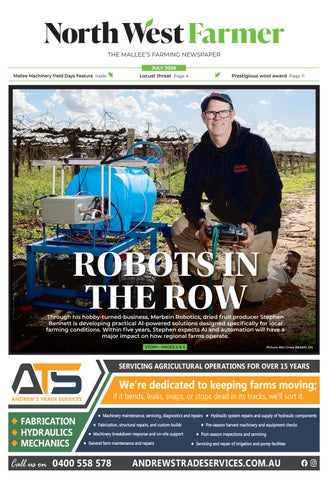
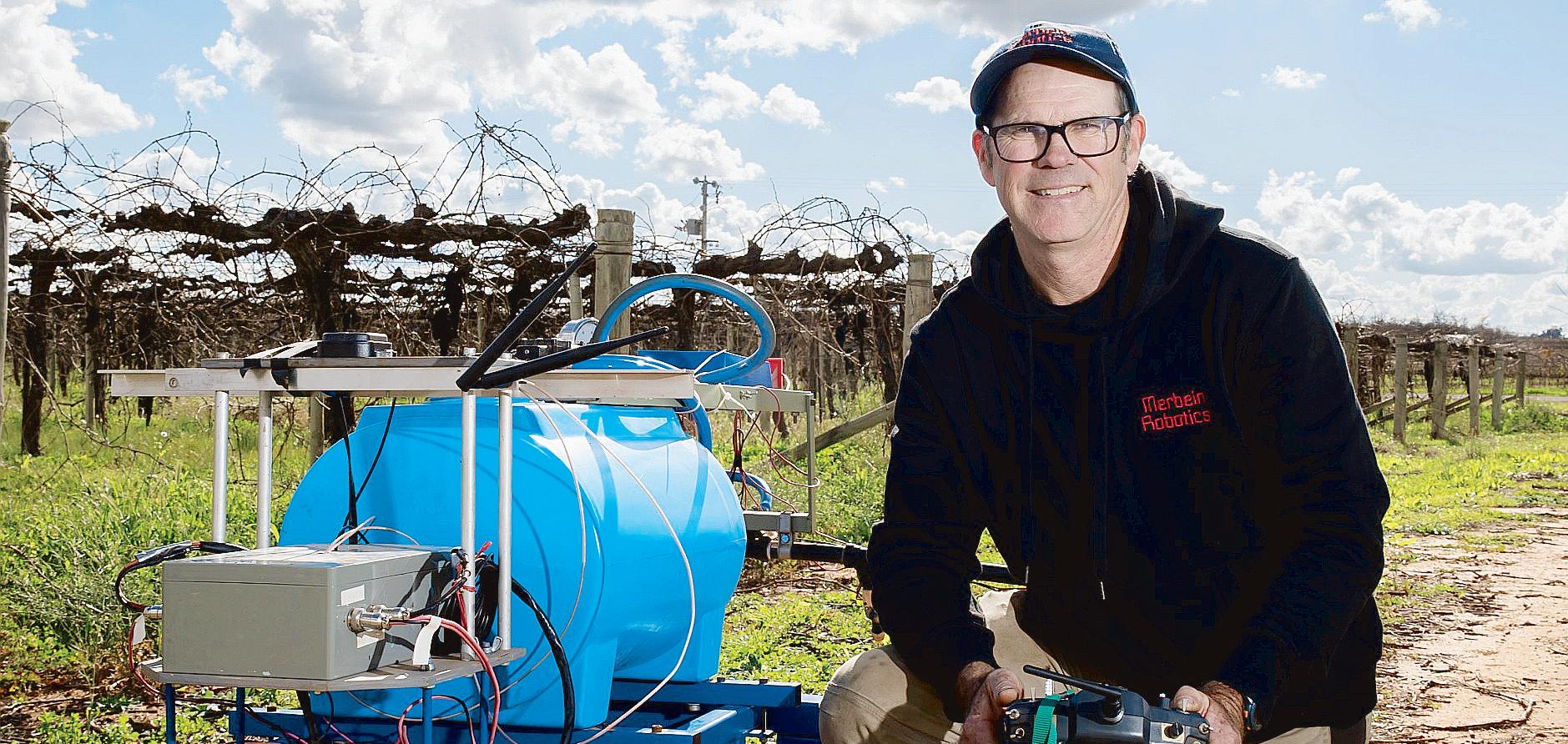
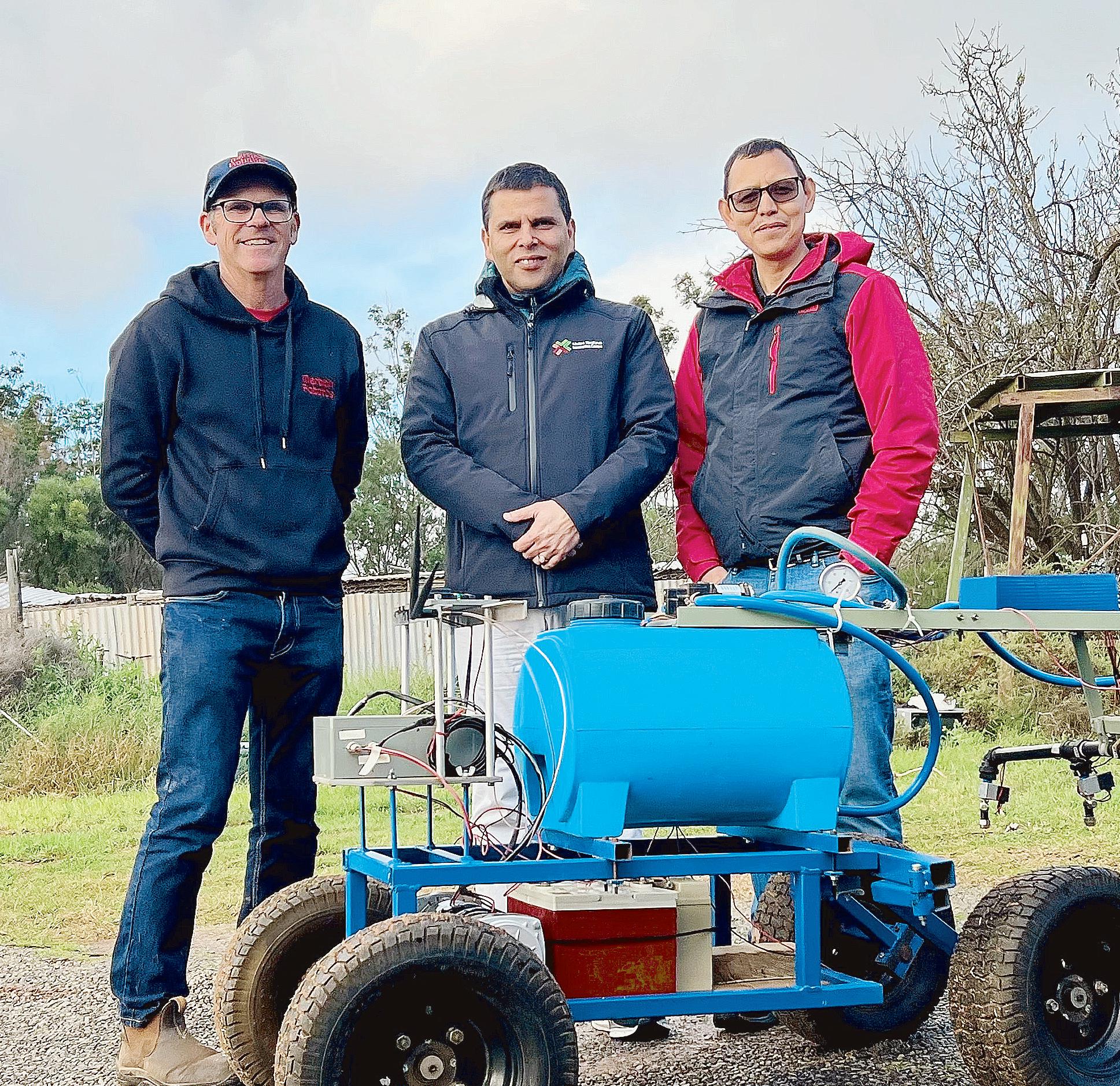
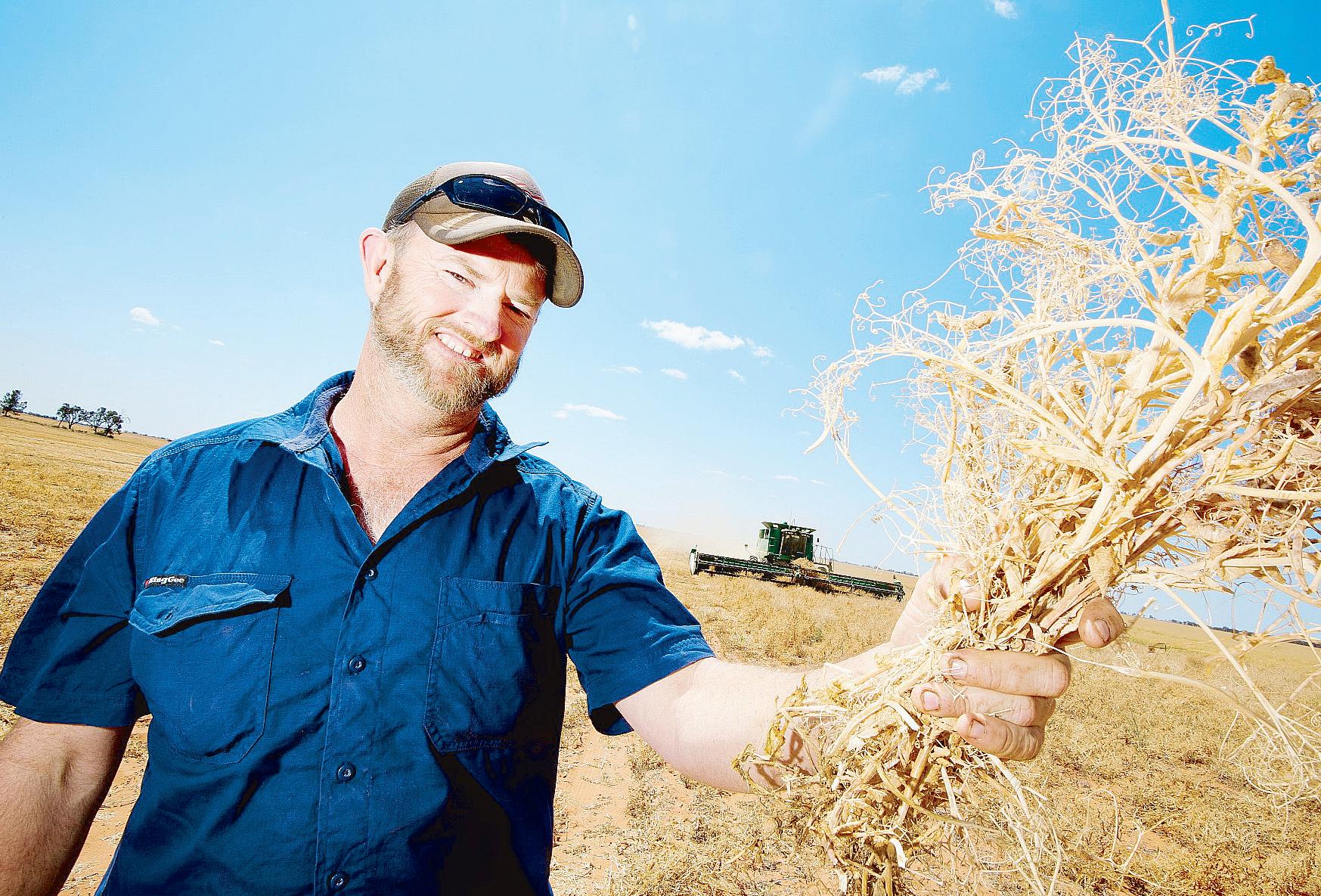
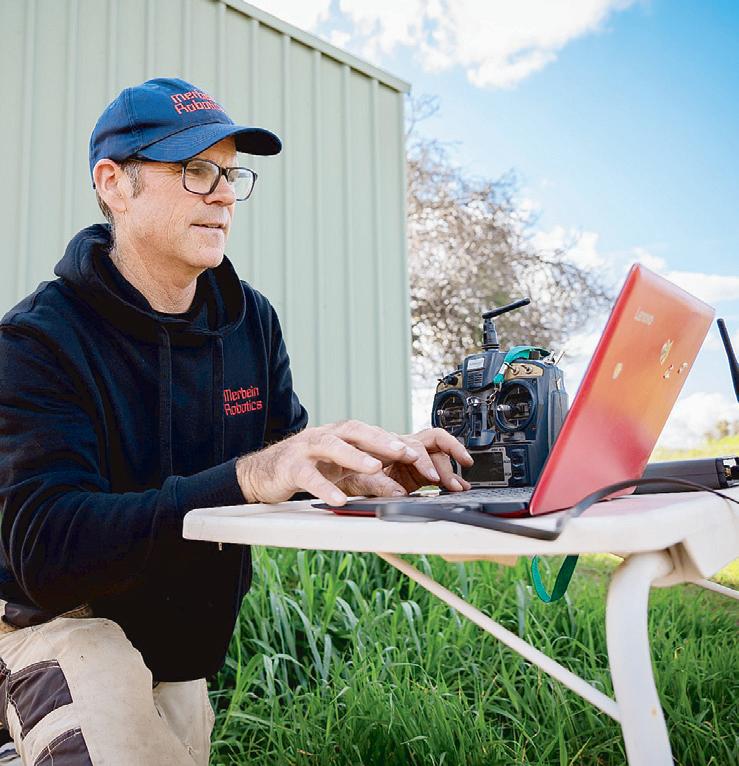
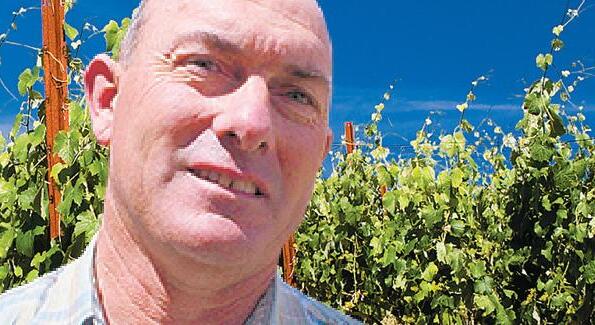
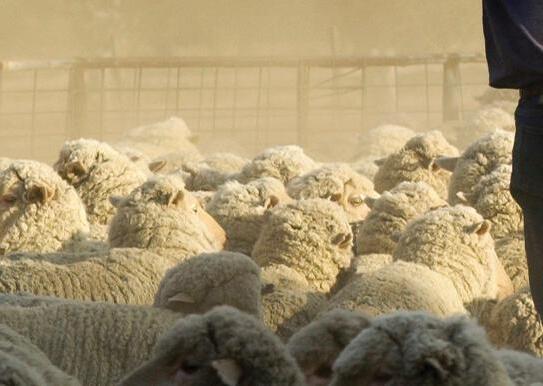
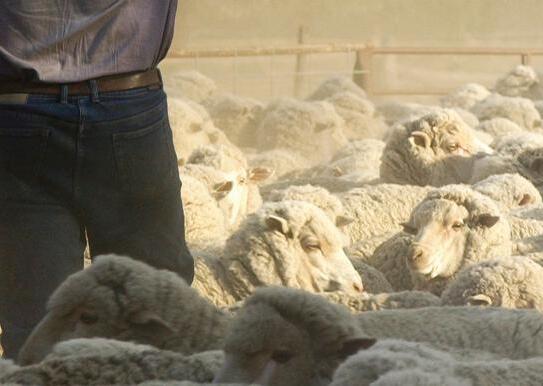
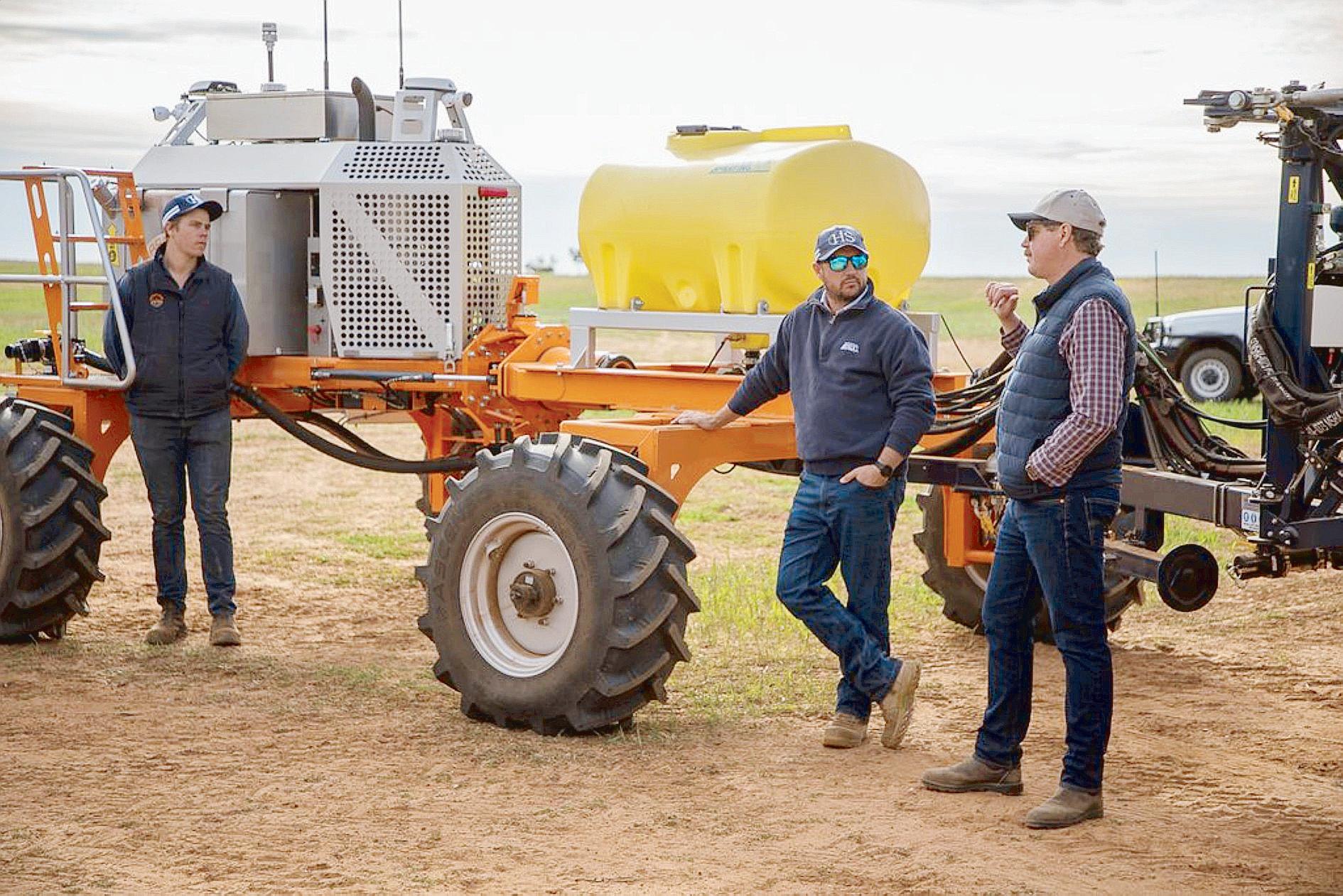
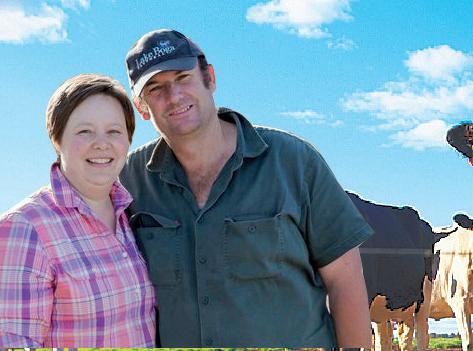
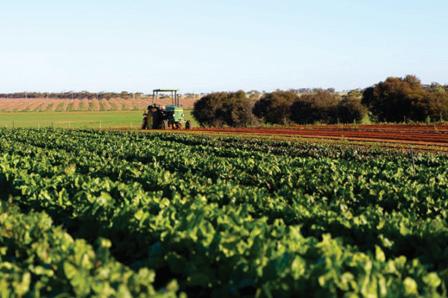
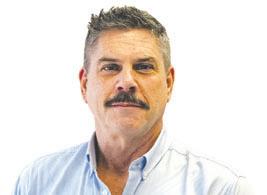
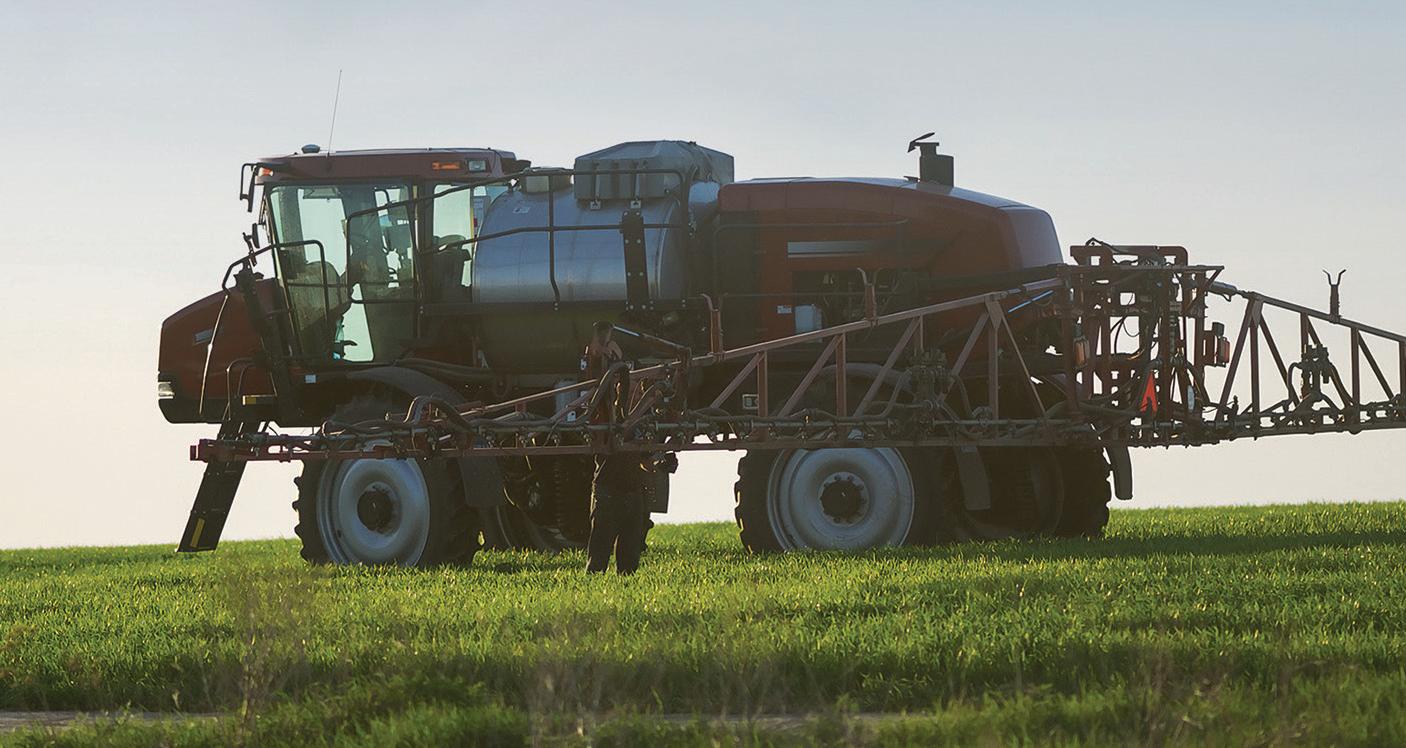
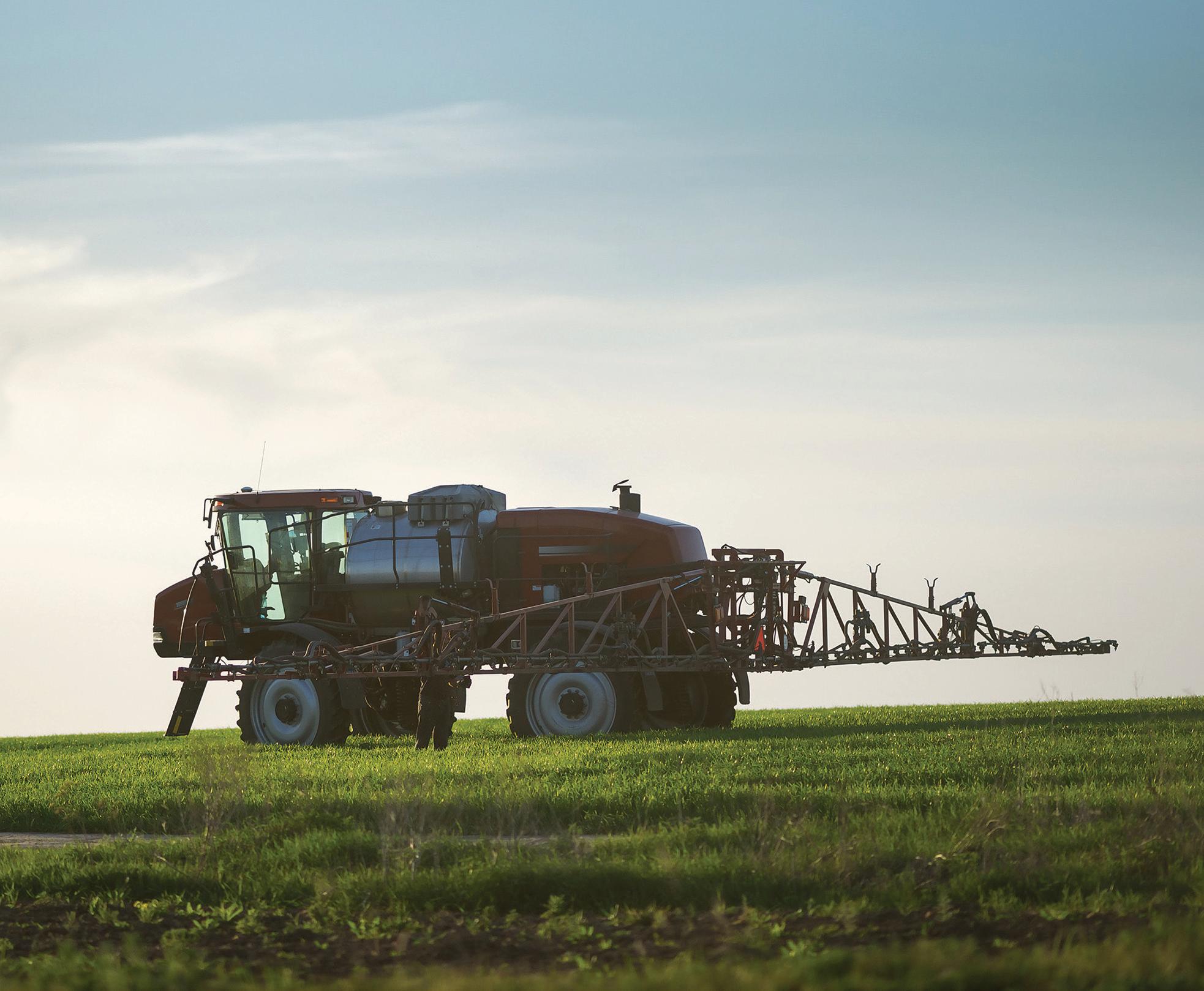
Through his hobby-turned-business, Merbein Robotics, dried fruit producer Stephen Bennett is developing practical AI-powered solutions designed specifically for local farming conditions. Within five years, Stephen expects AI and automation will have a major impact on how regional farms operate.
Picture: Ben Gross (564653_03)
ROBOTS IN THE ROWS
HOW MALLEE GROWERS ARE BUILDING THEIR OWN AI REVOLUTION.
Matt Elliott
THE SUN-DRENCHED plains of the Mallee and the highly productive horticultural blocks of Sunraysia are no strangers to innovation.
For generations, local citrus, viticulture, almond and broadacre producers have adapted to volatile water allocations, labour shortages and changing seasonal conditions. Today, a new revolution is emerging beneath orchard canopies, down vineyard alleys and across broadacre paddocks, driven by artificial intelligence, automation and advanced data analysis.
Visiting Sunraysia recently, Cornell University agricultural robotics expert Professor Manoj Karkee said local growers were already demonstrating a strong appetite for innovation. “Growers in this region have been advancing and innovating, and the level of effort they are putting into creating solutions, even in the complex space of robotics, is pre y unique and impressive,” he said.
Professor Karkee said opportunities existed in cropestimation,nutrientmanagement,pruning
and harvesting, but greater support was needed to help growers trial emerging technologies.
“More demonstrations on grower farms are needed, including creating dedicated testing farms where possible, learning from each other, and helping each other in the industry,“ he said.
When Merbein grower Stephen Bennett wanted to automate irrigation on his property, he didn’t hire a software engineer.
Instead, he turned to ChatGPT.
One of his most promising projects focuses on irrigation and fertigation management.
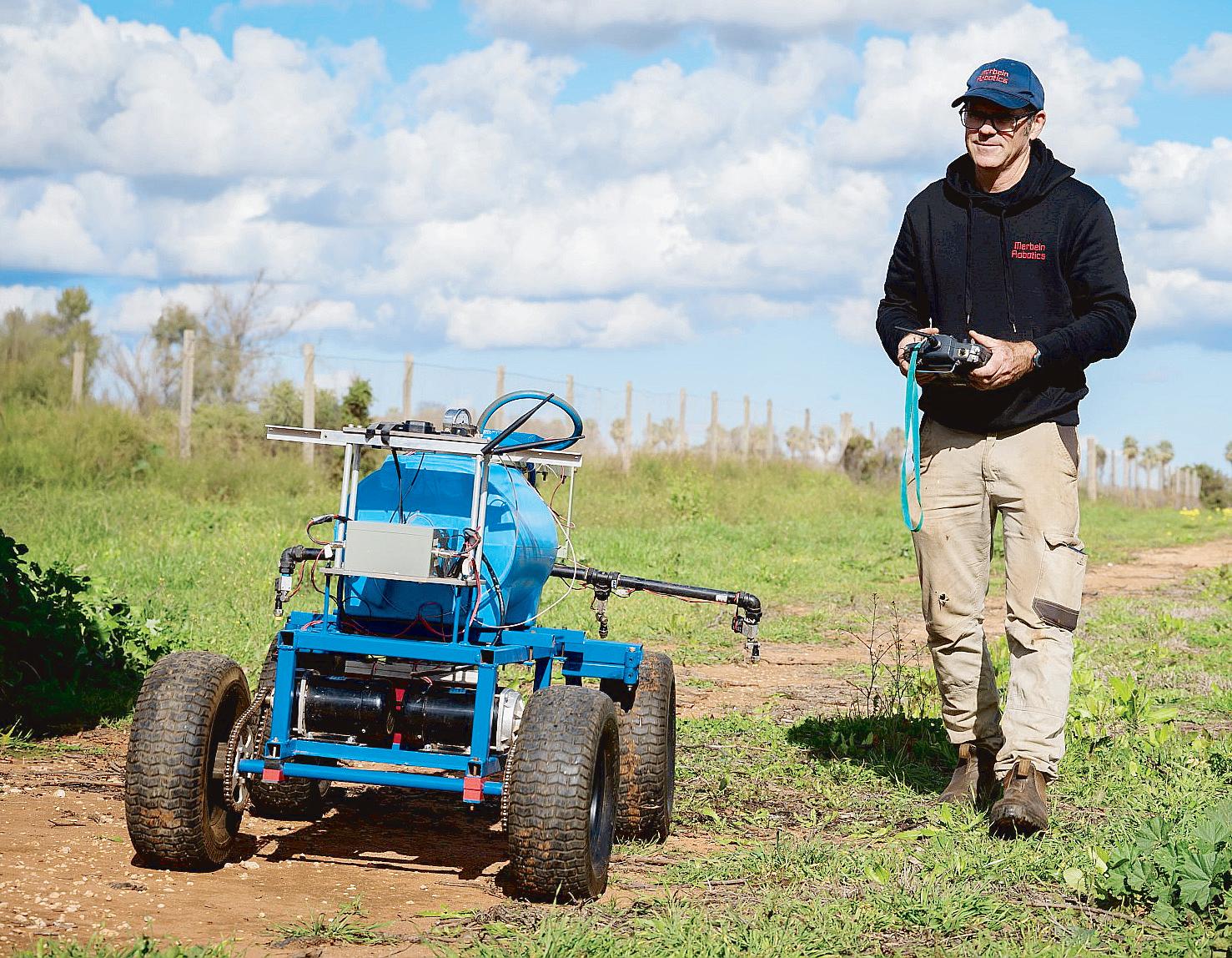
By entering hardware specifications into ChatGPT, Mr Bennett generated the code required to build a working prototype that recordsoperatinghoursandhelpsmanagewater and fertiliser.
“Turning it on in the middle of the night is the cheapest way to utilise power,” he said.
“We can do that now across a whole paddock but this will allow us to do individual patches.”
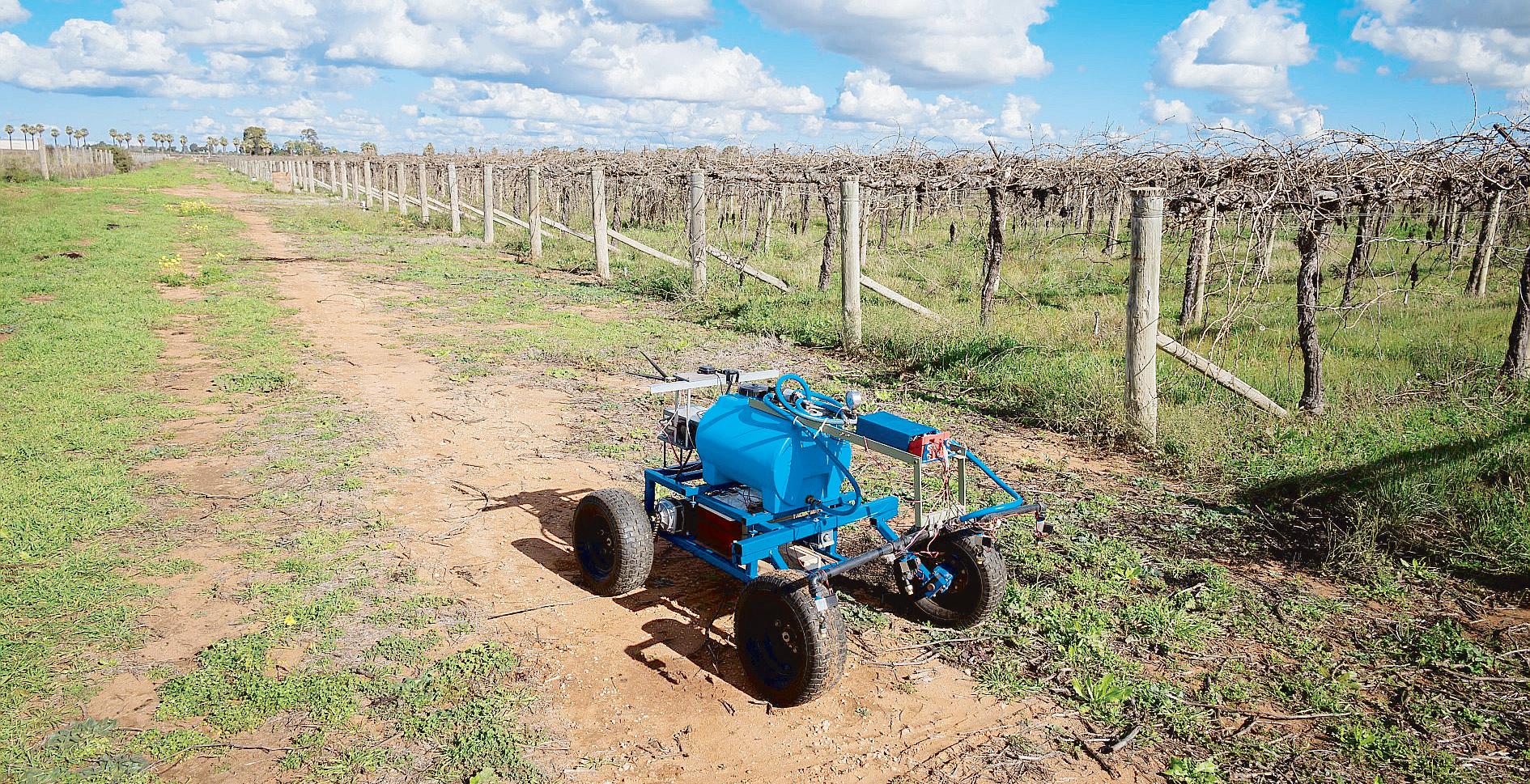
Mr Benne is also developing an autonomous weeding robot designed to reduce chemical use and minimise hours spent on a tractor.
“I accessed open-source software that is commonly used to operate drones and adapted it for use on rovers,” he said.
The robot uses highly accurate Real-Time
Kinematic (RTK) GPS technology and could eventuallybesharedwithothergrowersthrough an open-source model.
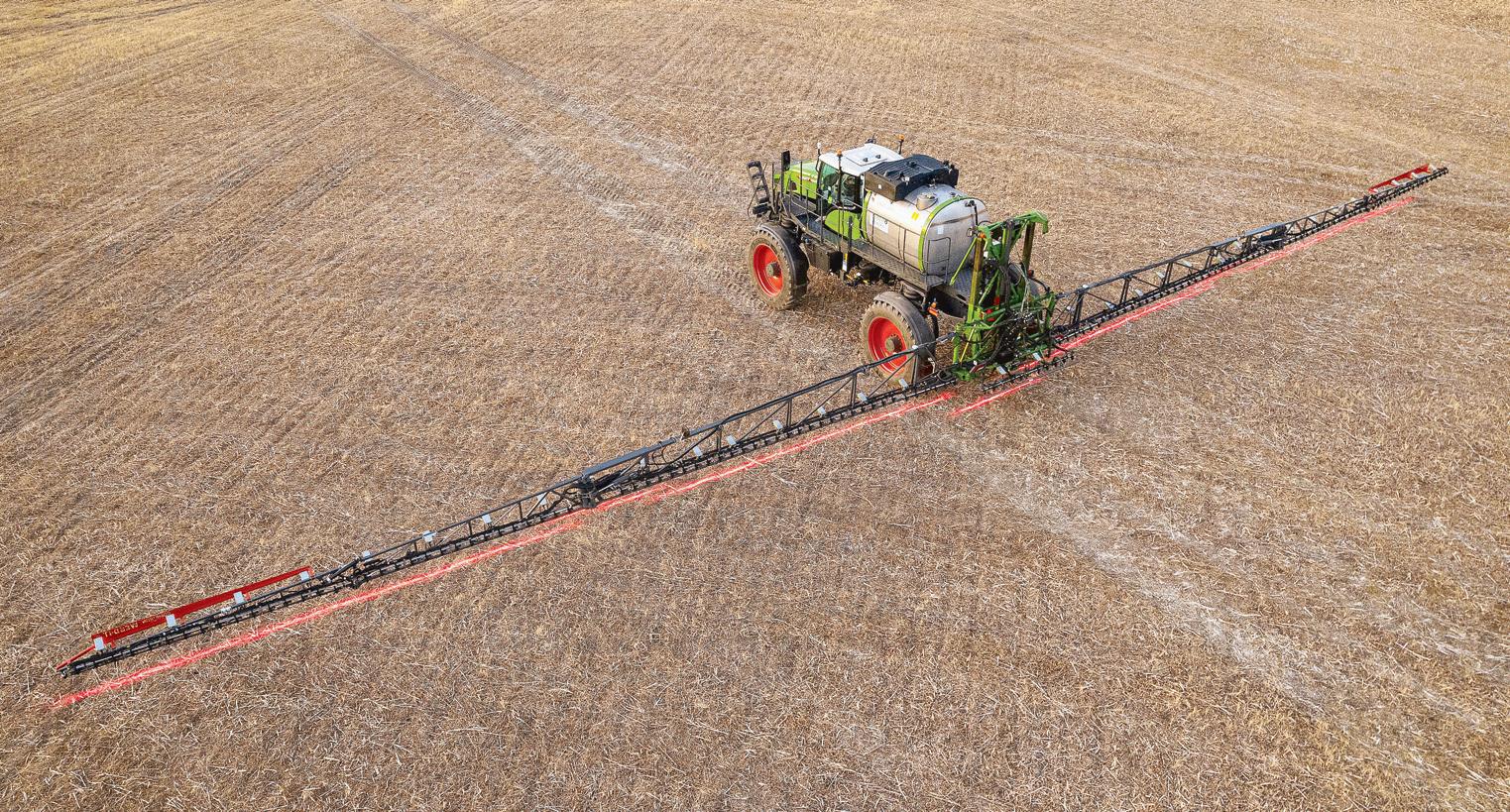
“Primarily what I want it to do is spray weeds, butI’dalsolikeittobeaspot-sprayingsystemfor anything green,” Mr Benne said.
“If we can get the timing right, hopefully it can create significant savings.”
Beyond spraying and irrigation, he is experimenting with AI-assisted moisture testing fordriedfruitandtriallingauto-steertechnology through tight vine rows.
The same trend is emerging across the northern Mallee, where Werrimull farmer Ian Arney is increasingly using AI to build resilience in a low-rainfall environment.
Managing input costs and predicting soil moisture across thousands of hectares remains a major challenge, driving greater use of digital mapping and data-driven decision-making.
“I use AI a lot to find information, particularly for problem solving,” Mr Arney said.
“Recently I was trying to work out why oil was splurting out of the hydraulics of a tractor. I used ChatGPT to diagnose the fault, which ultimately traced the problem back to a simple O-ring failure.”
“I then asked AI for the easiest way to replace
the O-rings and got a 20-second response with instructional videos.”
Mr Arney also uses AI to assess herbicide compatibility and spraying strategies.
“Google AI platform Gemini seems to be a bit more accurate when researching herbicides,” he said.
“Last week I was mixing eight different products to spray, so I asked Gemini whether it would be safe to store the mix overnight and use it in the morning.”
“Within seconds it advised against doing so, potentially saving me a lot of problems. Another search identified a mix that would work under certain circumstances and provided links for further information. All in less than 20 seconds. Just incredible.”
Producers in the Millewa are also monitoring automated machinery, including Farmbot systems linked via Starlink to run spray units around the clock.
“The intense summertime heat remains a problem, so night-time is the ideal time to spray and maintain appropriate pressure,” Mr Arney said.
“Spraying is a job I don’t enjoy, but the cost of some commercial technology is still a barrier when there are so many other capital costs.”
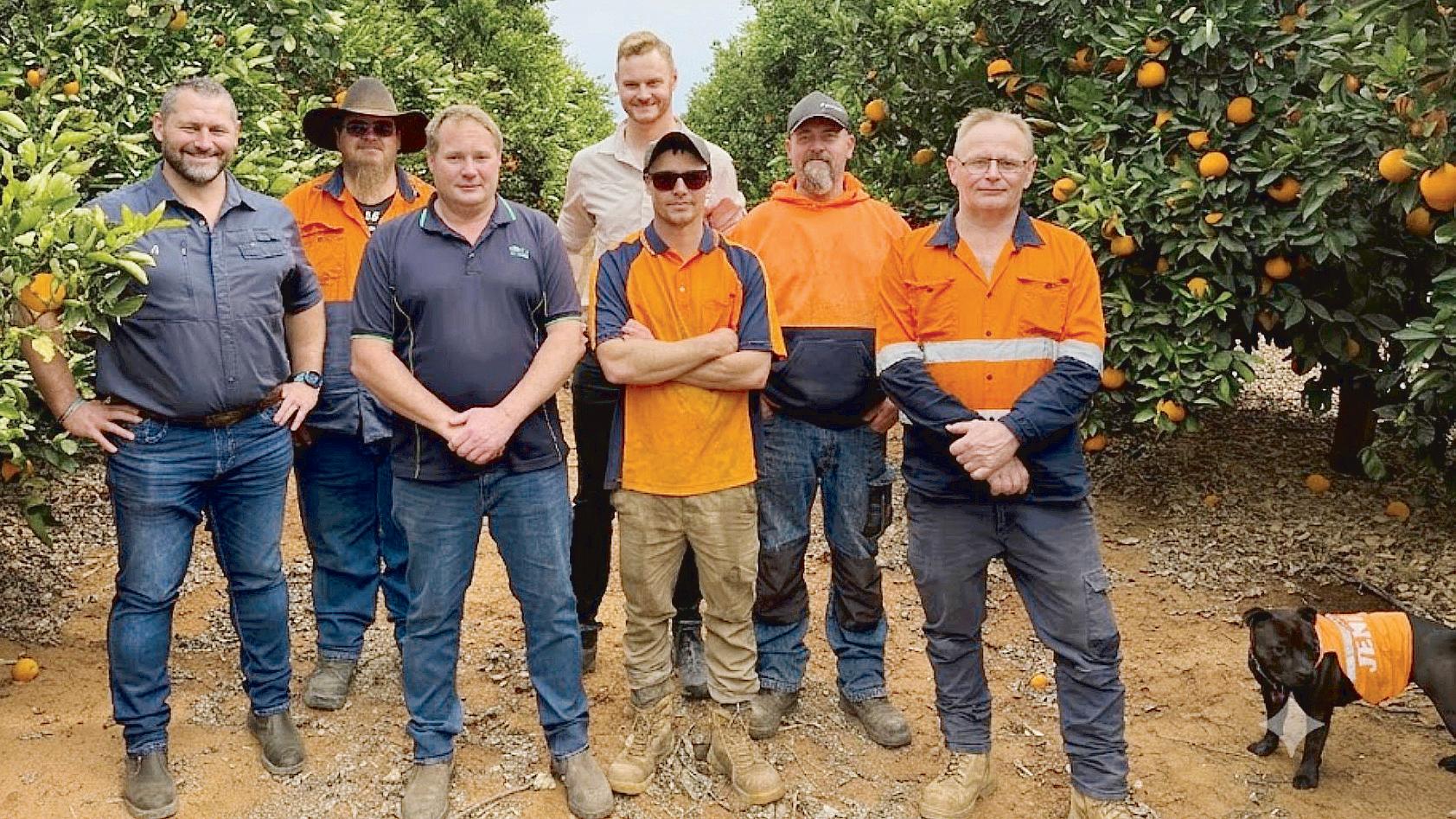
Dried fruit producer and Merbein Robotics owner Stephen Bennett, Professor Manoj Karkee and the University of Melbourne’s Associate Professor Jagannath Aryal with the autonomous robot Stephen built to assist with vineyard tasks. Picture: Supplied
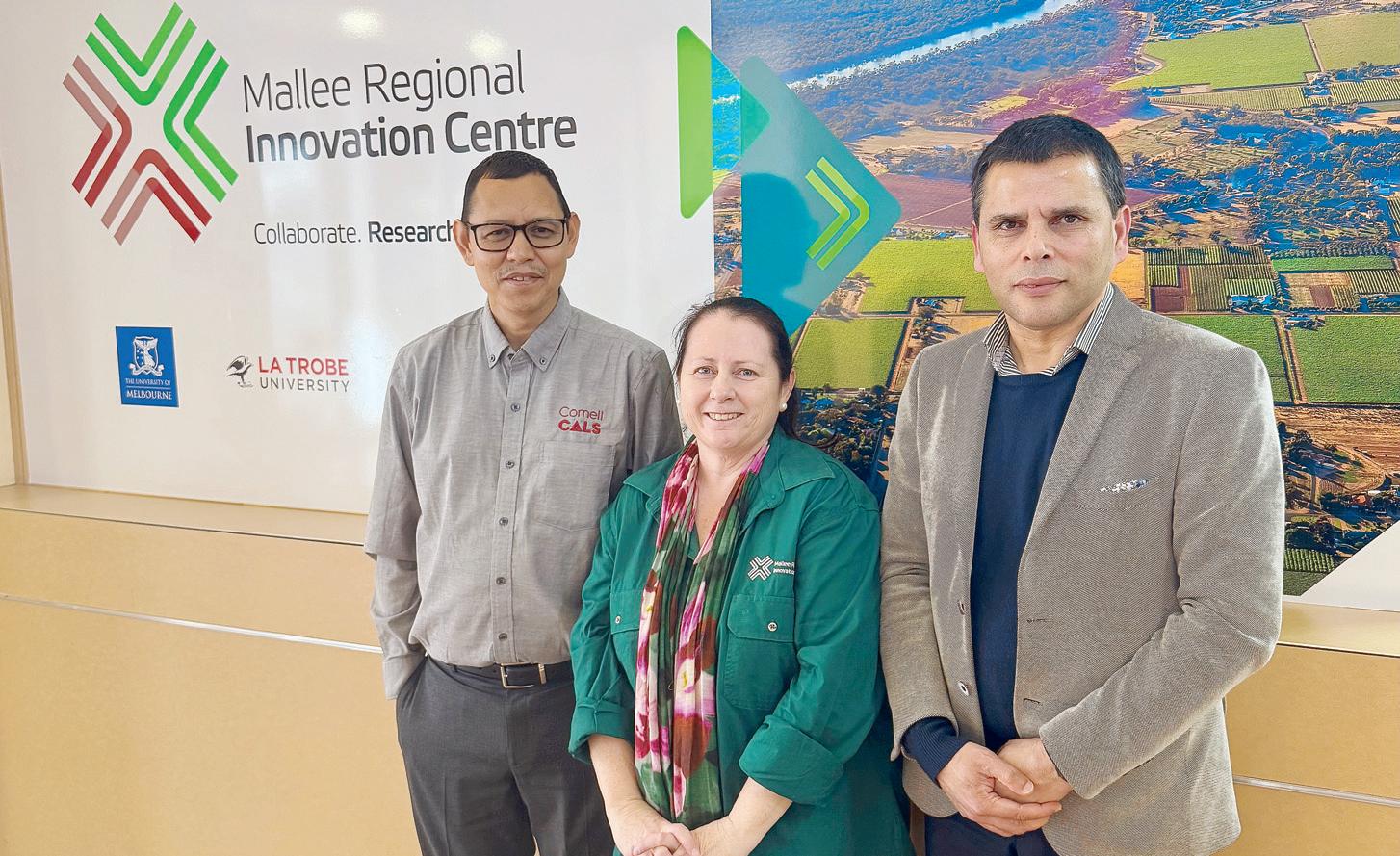
Cornell University’s Professor Manoj Karkee, MRIC CEO Rebecca Wells and the University of Melbourne’s Associate Professor Jagannath Aryal. Picture: Supplied
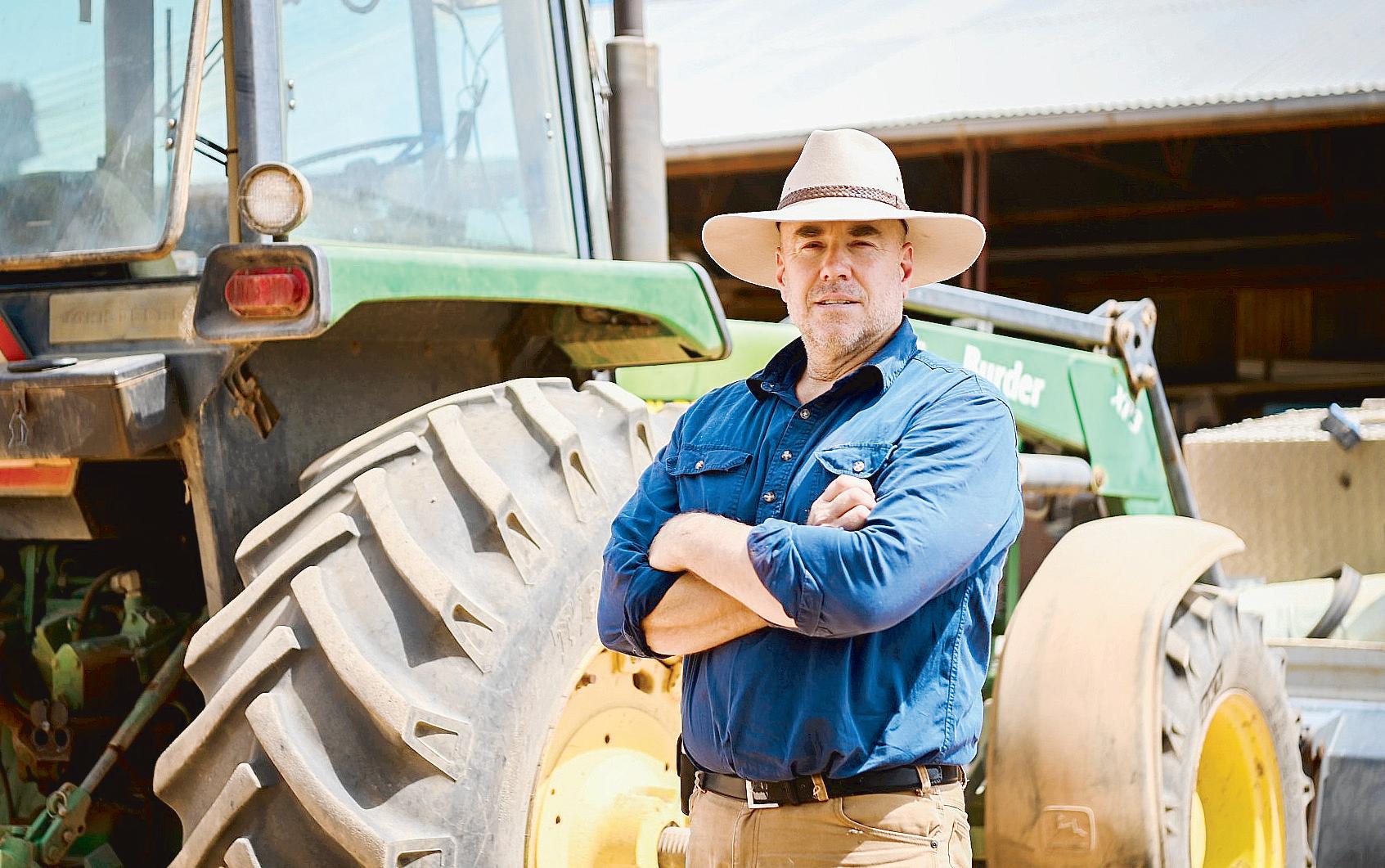
Werrimull farmer Ian Arney is increasingly using AI to solve day-today problems on his farm. Picture: File
Fellow Werrimull dryland farmer James O’Day uses AI to instantly analyse drone photography and mapping
While data is becoming increasingly important, Peter O’Donnell stressed that technology complements rather than replaces experience. Picture: Supplied
Fellow Werrimull dryland farmer James O’Day is also using AI to analyse drone imagery, mapping what he describes as “the green and the brown” of crop performance across his paddocks.
Looking ahead, he believes the next frontier lies in livestock management.
“That’swhereIseethingsgoing,”MrO’Daysaid.
“It will help us keep track of our sheep on big properties and get on top of problems before they spread.”
Executive director Peter O’Donnell said traditional yield-monitoring methods were no longer sufficient for modern orchard management.
“We manage a fair bit of the country on behalf of ourinvestors,includingalmonds,citrus,table grapes and avocados, and you simply can’t be standing in every block every day,” he said.
Partnering with global ag-tech company Aerobotics, Southern Cross Farms adopted an AI-powered yield intelligence platform that combines drone and satellite imagery with advanced analytics.
“They capture high-resolution imagery across
the blocks and the AI turns that into tree-level insights: tree counts, canopy size, plant health and water stress,” Mr O’Donnell said.
“So instead of walking an entire block, we can gauge how blocks are performing and make plans to solve the problems.”
Mr O’Donnell said the technology has improved yield forecasting, labour allocation and input management.
“The benefit is that we have measurable data,” he said.
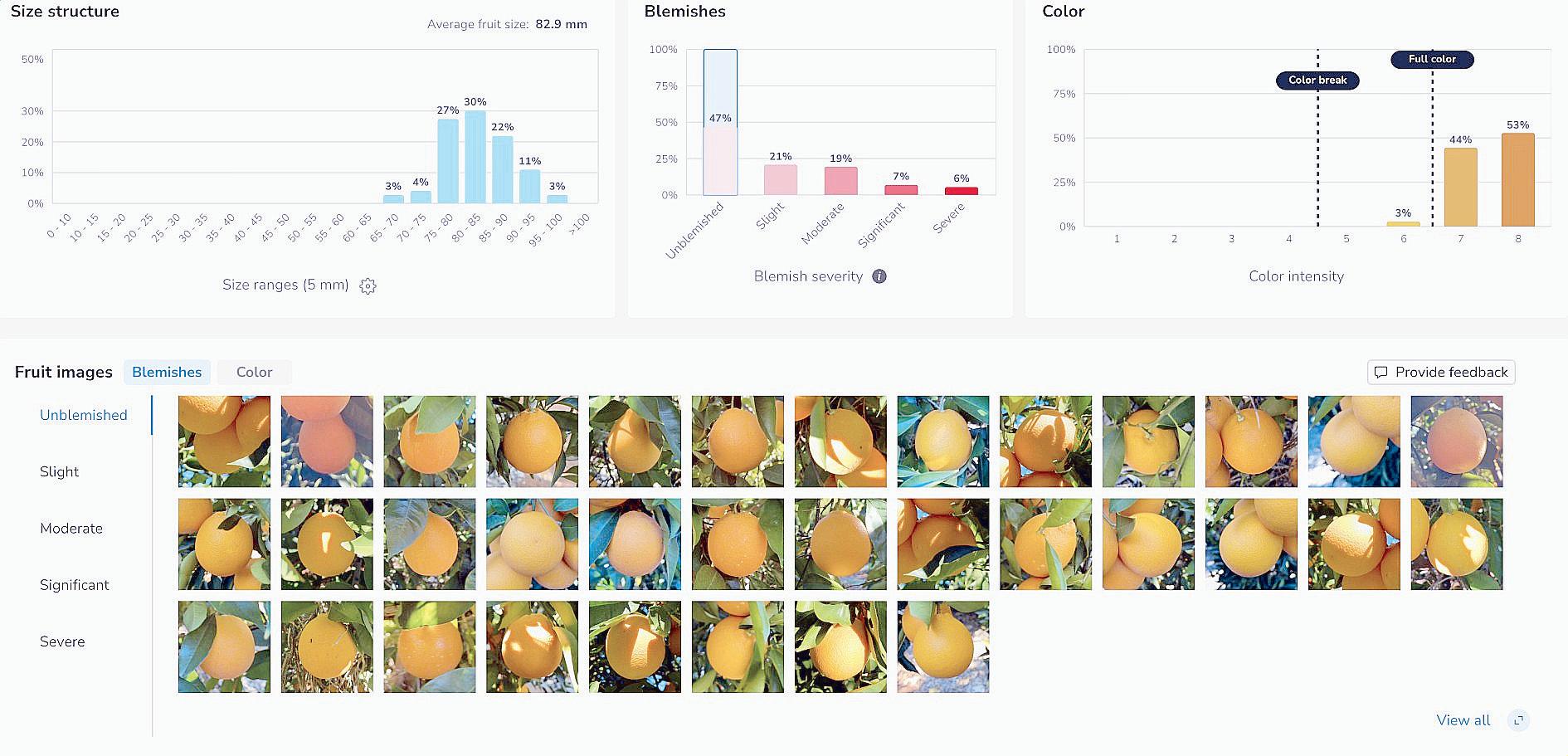
“By being able to measure things like fruit size we can respond with our programmes to increase or decrease applications and get closer to the ideal outcome for the fruit.”
Despite the growing role of technology, Mr O’Donnell believes experience remains essential.
“Experience still counts for a lot. It always will in this game,” he said.
Technology is also changing the way agronomists support growers.
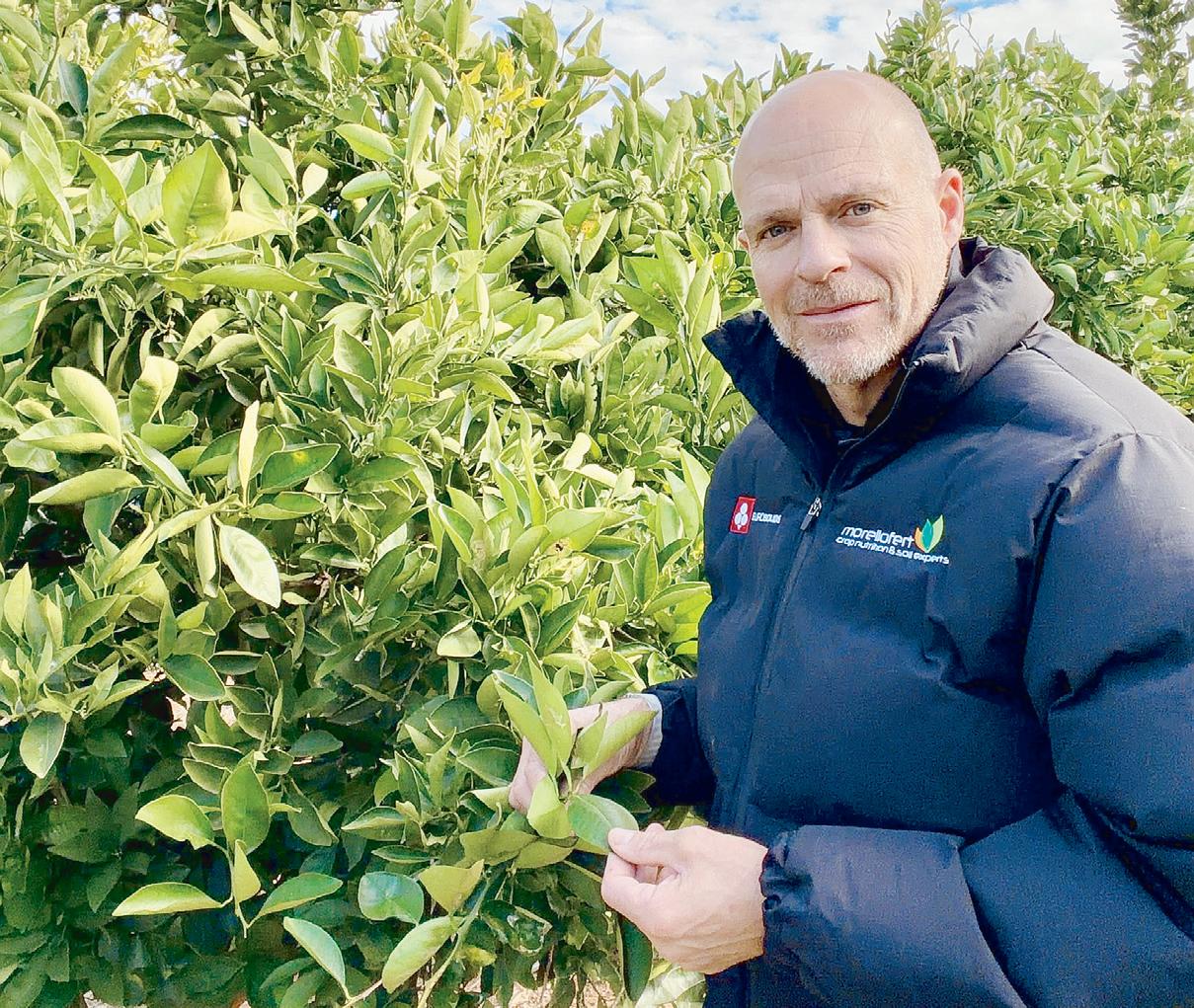
Morellofert managing director David Morello said AI was becoming an increasingly valuable decision-support tool that enhances rather than replaces human expertise.
“The data is powerful, but it still needs to be interpreted in the context of local conditions
Beyond spraying and irrigation, Mr Bennett is experimenting with nondestructive, AI-assisted moisture testing for dried fruit and has already begun trialling auto-steer technology to navigate tractors through tight vine rows without manual steering.
RIGHT: By entering hardware specifications into ChatGPT, Stephen Bennett generated the code needed to construct a fully functioning prototype for field testing. Picture: Ben Gross (564653_01)
LEFT: This TrueFruit grading, with a sample size of 400 fruits, is used for forecasting and growth tracking. Picture: Supplied
and the grower’s objectives.”
Partnering with European ag-tech providers xFarm Technologies and Klorofield, Morellofert combines satellite imagery, weather data and remote sensing into a single platform capable of mapping crop variability and helping tailor nutrition programs.
“Precision technologies help ensure that inputs are applied where they’re needed and when they’re needed. Be er information leads to be er decisions,” he said.
Mr Morello believes future opportunities will involve linking AI with soil science and microbiome analysis to better understand nutrient cycling and crop performance.
Despitethepotentialbenefits,hesaidadoption remained a challenge for some businesses.
“Thebiggestbarrierformyclientsisn’ttrusting the technology; it’s trusting that the benefit will be worth the investment,” he said.
Growers interested in exploring the practical applications of artificial intelligence will have the opportunity to learn from industry leaders later this month when La Trobe University, the Mallee Regional Innovation Centre and the Victoria Drought Hub host the AI Unlocked: From Hype to Hands-On forum.
ThemainforumonTuesday28Julywillexplore
the role of AI in business, work and decisionmaking, with Vince Warnock from the Mildura Wentworth Chamber of Commerce joining as emcee.
A site visit on Wednesday 29 July will offer a deeper dive into the role of technology and innovation on farms, including a visit to the SuniTAFE Smart Farm.
For Aerobotics Asia-Pacific manager Ben Sharpe, the future of agricultural technology is closely tied to the future of the region itself.
“Globally, Australia has been a leading country in ag-tech innovation, and we will continue down this path as growing conditions become tougher,” he said.
“Personally, being raised in Sunraysia and doing all my schooling here, I have a vested interest in seeing our region be the best it can be.”
Back on his Merbein property, Mr Bennett echoesthatregionaloptimism,expectingAIand automation to have a major impact on farming operations within the next five years.
“I think we are probably only beginning to scratch the surface,” he said.
“You’ve always got questions in your head. AI can at least give you some clues and provide a guide for how things are done.”
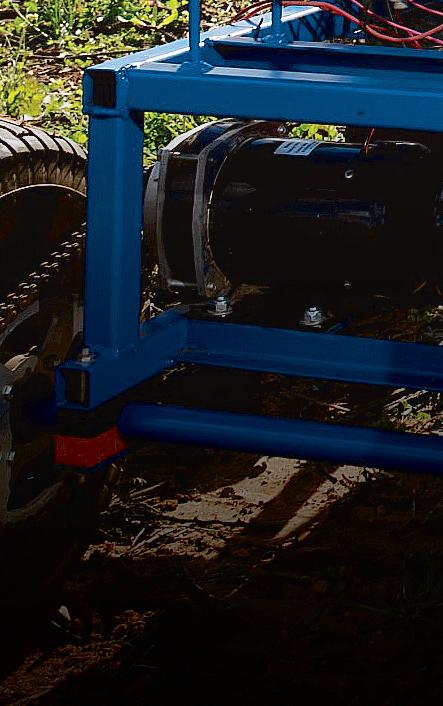
The robot uses highly accurate RTK (Real-Time Kinematic) GPS technology and could eventually be shared with other growers through an open-source model. Picture: Ben Gross (564653_05)
Picture: Ben Gross (564653_07)
David Morello, managing director of Morellofert, said artificial intelligence was becoming a valuable decision-support tool that enhances, rather than replaces, human expertise. Picture: Supplied
AFTER months of favourable breeding conditions, Australian plague locusts are once again threatening to descend on north-west Victoria, raising concerns for both farmers and landowners.
While they resemble the common grasshopper, Australian plague locusts are distinguished by their unique swarming behaviour, allowing them to multiply quickly, migrate over large distances, and consume tonnes of vegetation.
A single swarm of Australian plague locusts can contain tens of millions of the insects.
A swarm covering an area of two square kilometres has the potential to consume up to 20 tonnes of vegetation per day, ultimately stripping entire fields and leading to significant revenue loss
Road network crumbles Locust threat looms over north-west Victoria
THE Victorian Farmers Federation says the Victorian Coalition’s$5bfundingcommitmenttofixVictorian’s crumbling roads is a step in the right direction, but warns much more is needed to fix Victoria’s road network.
VFF president Ryan Milgate said the commitment recognised the deplorable state of Victoria’s road network and the urgent need for substantial investment to get them fixed.
“Any commitment to increase funding for road maintenanceandrebuildingissorelyneededandvery welcome,” Mr Milgate said.
“Farmers, transport operators and regional communities rely on safe, reliable roads every single day, and we’ve been calling for governments of all persuasions to reverse a generation of neglect and make fixing our road network a priority.”
TheVFFalsowelcomedtheCoalition’scommitment to establish Be er Roads Victoria, saying a dedicated bodyfocusedonroadmaintenancecouldhelprestore confidence in the state’s road network.
It is important however that the vast majority of the funding is actually used to fix our roads and not tied up in red-tape and middle management.
“There’s no glossing over that there’s a massive task ahead” Mr Milgate said.
“A dedicated Be er Roads Victoria is a positive step, butitmustoperatetransparently,provideclearpublic reporting on the condition of Victoria’s roads, and
for farmers if left unmanaged.
Native to north-western New South Wales and western Queensland, Australian plague locusts travel along hot northerly winds into northern Victoria, where adult females will seek out hardpacked soiled areas to lay their eggs.
While Victoria has avoided a significant plague locust epidemic since 2011, Victoria’s Plague Locust commissioner Dr Kyla Finlay said recent monitoring showed the agricultural pests have reached their highest numbers in 15 years.
“The primary risk area for locust egg laying is in north-west Victoria, particularly the Mallee, where activity has been most concentrated, with lower levels in the Swan Hill region, south to Warracknabeal and across parts of the NorthCentral region towards Echuca,” Dr Finlay said. With the peak of winter just around the corner,
VFF welcomed the Coalition’s funding commitment but warned it falls well short of fixing Victoria’s crumbling
deliver an honest plan to get them back on track.”
While welcoming this announcement, the VFF said the overall funding commitment still fell short of what regional stakeholders identified as necessary to reverse years of underinvestment.
“In April, the VFF joined with six regional advocacy organisationsrepresentinglocalgovernment,freight, transport and regional communities to call for an
DrFinlay said weather conditions over the coming weeks would play a key role in shaping the locust outlook for spring.
“Weather conditions in the coming weeks will influence the locust threat for Victoria in spring,” she said.
Dr Finlay is urging landowners to check their paddocks and report any signs of locusts.
“Landholders and public land managers are responsible for managing locusts on their land and are urged to report sightings to Agriculture Victoria to help track local population changes over time,” she said.
Spraying insecticides on the soil where eggs are laid is the most effective way to manage locusts.
The ideal time to control Australian plague locusts is two weeks after hatching, when the wingless nymphs are too young to fly.
additional $2 billion over four years for Victoria’s roads,” he said.
“That represented around a 50 per cent uplift on current funding levels and reflected the scale of the challenge before us.
“This commitment is a significant milestone in the advocacy of the VFF and our regional partners, but it still falls short of the investment needed to properly rebuild Victoria’s crumbling road network.”
Mr Milgate said keeping Victorians safe was nonnegotiable.
“Every Victorian depends on our road network, whether it’s getting children to school, moving freight, accessing healthcare or transporting food from farm to market,” he said.
Mr Milgate also encouraged regional motorists to support the VFF’s ‘regional road reporting blitz’ by reporting potholes and road hazards.
“The response has been overwhelming, and it goes to show how bad our roads have become.”
“Every report helps demonstrate the true condition of Victoria’s roads and strengthens the case for the investment our regional communities need.”
Report a pothole or dangerous stretch of road by calling 13 11 70, via the VicRoads website or the Snap Send Solve app.
“The more evidence we have, the stronger the case we can make to all sides of politics that Victoria’s roads need fixing,” Mr Milgate said.
Amy Hyde
The Victorian Government is delivering real help, right now with half price public transport for everyone, including concession card holders, from June 1st until January 1st 2027.
Taking pressure off the pump with half price trains, trams and buses in metro and regional Victoria, saving daily commuters over $850.
Learn more at transport.vic.gov.au
Rice industry to unite for refreshed Barham summit
Peter Bannan
THE nation’s rice industry will come together in Barham next month for a revamped Rice Connect 2026, with growers, industry leaders and key partners set to focus on the sector’s future through a shorter, more targeted event.
The Ricegrowers’ Association of Australia (RGA) has unveiled a refreshed two-day format forRiceConnect2026,tobeheldon13-14August, aimed at strengthening industry connections while delivering greater value for a endees.
RGA president Peter Herrmann said the streamlined program reflected a deliberate move towards a more focused and accessible
industry gathering.
“RiceConnect2026hasbeendesignedtobring the industry together to improve efficiency and impact,“ Mr Herrmann said.
“We’re creating a space where growers, partners and leaders can connect, share ideas and focus on what’s ahead for our industry.“
The event will open with the awards gala dinner, celebrating excellence, innovation and leadership across the Australian rice sector.
The gala dinner is expected to provide one of the event’s key networking opportunities while recognising the individuals and businesses helping drive the industry forward.
A ention will then turn to the Rice Connect
Summit, beginning with an industry breakfast before delegates take part in a streamlined program of discussions and industry insights.
The summit will also incorporate the RGA annual general meeting and member session, bringing growers together for a unified conversation about the future of the industry.
Mr Herrmann said the updated format built on the success of previous Rice Connect events while placing greater emphasis on quality engagement rather than the size of the conference.
“Rice Connect has already proven its value in bringing the industry together, and this next iteration is about refining that experience,“ he
said.
“Rather than a traditional multi-day conference, we’re concentrating the most important conversations into a shorter, more meaningful format.
“It’s about ensuring every session, every connection and every interaction delivers real value for growers and our broader industry.“
Welcome rain
WINTER is certainly with us, and the accompanying rain has been most welcome. The initial water allocation announcement of 29 per cent is pleasing and we would like the dams to keep rising to allow us to get it to 100 per cent of the water we own.
Machine pruning is progressing, with a considerable amount still to be completed.
The Aussie wine industry’s future is hanging in the balance with both wineries and growers wanting to stay in production and not wanting to be part of the cuts that are required to balance the supply/demand situation.
While many hectares are being removed or abandoned, government water buybacks for environmental allocations are increasing pressure on remaining irrigators through higher temporary water prices.
I’ve contacted several wineries about their fruit requirements for next season, and the responses so far have been… crickets.
In a year or so when wineries ring growers looking for fruit, the calls may well ring out. Snails are out and about in the wet, and to keep the ever-hungry ibises at bay, a few boxes marked Acme Bird Flu have been delivered.
On Monday, a medium-sized dragon landed on the roof of my tractor.
We had a chat and he - Darren - joked that he’d eaten a politician over the weekend.
His verdict was that the rumours are true: politicians are full of ..., and he was still hungry. Talk to your mates.
Picture:
WINE GRAPES with COLIN FREE
The rice industry will come together for a two-day conference in Bahram next month.
Almond industry plants to protect pollinators
By Almonds Australia chief executive Tim Jackson
NEWmappingof almondorchardsacrossAustralia
has revealed more than 25 per cent of all new trees planted in the past three years are self-fertile varieties.
These tree varieties reduce demand on pollination services from beekeepers, freeing up hives for other horticulture producers.
Itcomesatatimewhenbeekeepersandmanaged pollination services are under increasing pressure due to the arrival of varroa mite and the resulting demise of hives.
The almond industry works closely with the beekeeping industry, and is pleased to see this strategic, sustainable approach showing in the new mapping.
As an industry we have seen the pressure on the beekeeping industry building for years and have been keen to develop ways we can mitigate the issue and reduce the demand.
Self-fertile plantings now make up about 7.5 per cent of all plantings, up from two per cent in 2023. It shows the good work being done collectively in the industry to address issues well before varroa actually arrived.
The new mapping by LandIQ shows almond planting in general has increased over the past threeyears,from62,400hectaresto71,900hectares.
The increases in plantings are focussed in the Riverina, the Riverland and in Shepparton in Victoria’s Goulburn Valley, as horticulture producers recognise the increasing value in almonds as a sustainable, reliable crop.
The business model for almond production is sound.
It’s a high-value crop that’s nutritious, high in protein and has a long shelf life so there’s li le waste.
Over the years we have improved water use
dramatically, making Australian almond growers global leaders in water efficiency and sustainable production.
Now95percentof allorchardsusedripirrigation so there’s not a drop wasted.
And with these new self-fertile varieties coming on,therewillbelessandlessdemandonpollination services, which benefits all of agriculture.
The LandIQ mapping shows almond plantings have increased in Riverina, from 14,940 in 2023 to 19,030ha, and the Riverland where plantings have grown from 11,940 to 14,370.
Plantingsinwhatiscollectivelydefinedas“other regions” has increased, with plantings growing from 214ha to nearly 2000ha, being driven by new orchard plantings in Shepparton.
NSW Sunraysia plantings increased by 538ha to 8430 while over the border in Victoria, Sunraysia
decreased by about 200ha to 25,690.
Plantings in the Adelaide Plains dropped from 506 to 449, while Western Australia held steady at 818ha.
The growth in almonds is understandable. This is an industry that contributes more than $1.3 billion to the national economy in exports each year.
And at a local level, it’s a reliable crop that provides long-term employment for more than 10,000 people supporting regional and rural communities right across the almond growing regions in NSW, Victoria and South Australia.
Growers are optimistic about the future, with strongdemandfromdomesticandexportmarkets, particularly China and India, and the ongoing management of water will be one of the key issues for growers.
In January Land IQ’s Joel Kimmelshue, Almond Board of Australia’s Kim BurdenPayne and Land IQ’s Chris Stall travelled throughout Australia’s main almond growing regions ground truthing data for the spatial mapping project.
Weareproudof theachievementsthathavebeen made in the Murray-Darling Basin over the past 10 years.
Over the past decade we have halved the amount of water we use for food production, and we are producing more food.
We are comfortable with the 27 per cent of the water allocated to industry, and 73 per cent allocated to the environment.
Whatwenowwanttoseeiscertaintywithregards to water management.
Almond Insights is produced as part of the Almond Industry Statistics and Benchmarking project AL25003, which is funded by Hort Innovation using grower levies and contributions from the Australian Government.
The publication can be found on the Almond Board of Australia’s website.
RABBAIT®
Pindone
From one truck to trucking legend
Riordan ready to open Mallee Field Days
Peter Bannan
HE started with one truck. Now one of Australia’s biggest names in agribusiness will officially open the Mallee Machinery Field Days.
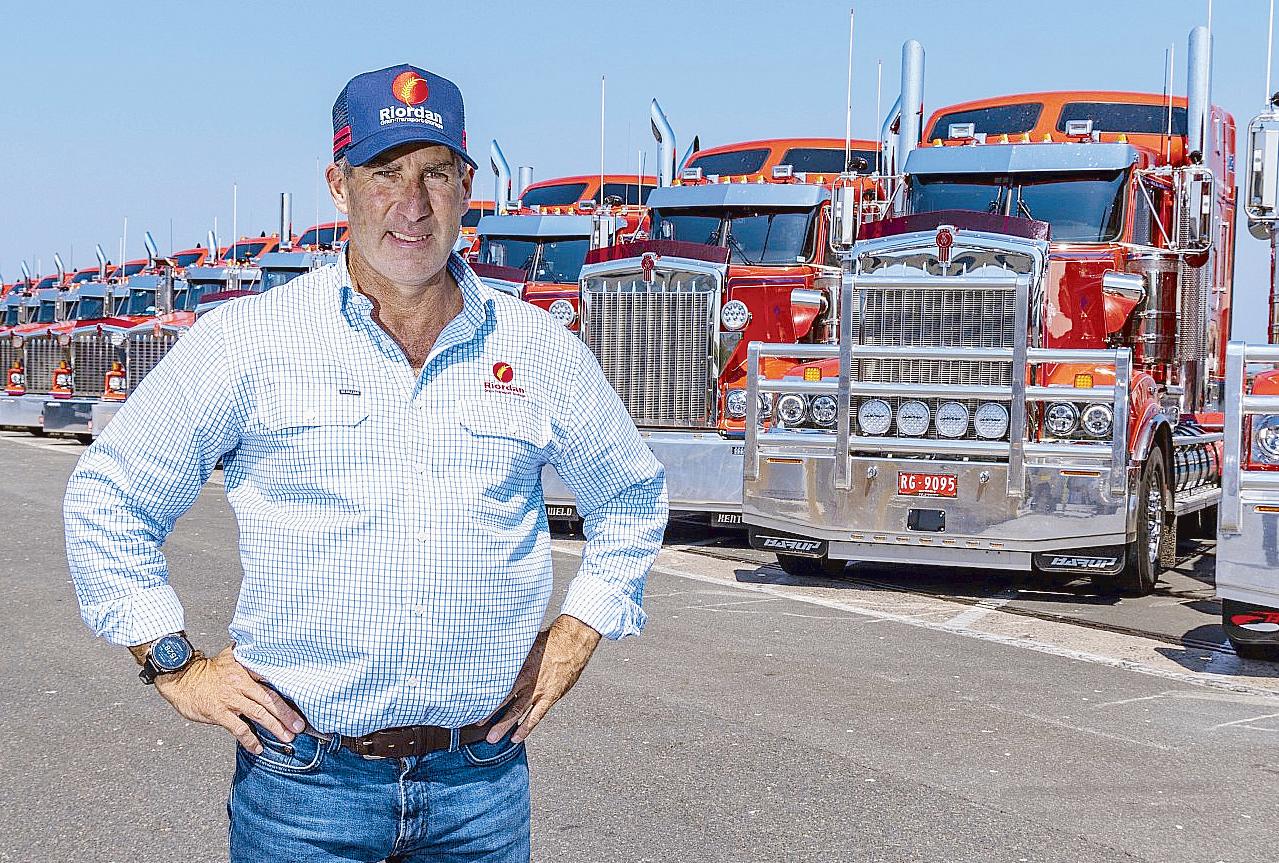
Fresh from being crowned the 2025 Kenworth Legend, Riordan Group managing director Jim Riordan will deliver the opening address at this year’s event, describing the invitation as “a great honour” after attending the field days for more than a quarter of a century.
Mr Riordan has been a regular at the Speed field days since 1999 and said its strong focus on broadacre cropping made it one of the most important events on the agricultural calendar.
“It’s focused generally on cropping, broadacre cropping, and that’s the business we’re involved in with buying grain and moving it off farm,” he said.
The family-owned Riordan Group began with a single tipper truck in Geelong in 1996, carting grain and fertiliser for local customers.
Nearly three decades later, it has grown into one of Australia’s leading privately owned agribusinesses, spanning grain marketing, transport, storage, bulk commodity handling and packing, with customers across Australia and around the world.
Mr Riordan said ensuring farmers had strong competition remained central to the company’s approach.
“It’s not enough about dominating, but we’re doing our fair share to make sure there’s competitive pricing for everyone,” he said.
“I think that’s the most important thing, that
farmers have got competition for their product and hopefully that equals as good a price as you can give them.”
His achievements were recognised last year when he received the prestigious Kenworth Legend Award at the Australian Trucking Association Conference in Adelaide, an honour recognising strength, perseverance and success in the trucking industry.
Mr Riordan admitted the recognition caught him by surprise.
“That was very unexpected. I think there’s a lot more people far more worthy, but they thought I was worthy of it and I greatly accepted,” he said.
“It was an honour.”
PACCAR Australia director of sales and marketing Michael Long said Mr Riordan embodied everything the award represented.
“Recognising an operator as a Kenworth Legend acknowledges someone whose commitment to the industry embodies the values of tenacity, spirit and getting in and getting the job done safely and reliably,” Mr Long said.
“Jim is a perfect Kenworth Legend and we are proud to be associated with the Riordan business.”
Despite the company’s growth, Mr Riordan said the industry’s biggest challenge was no longer finding good trucks or good people.
“The state of the roads is probably the biggest concern at the moment,” he said.
“We’ve got great trucks, great people. We just have to operate on horrendously poor infrastructure.”
He said deteriorating roads had pushed the company’s repair and maintenance costs up
by an estimated 25 to 30 per cent.
“It’s mainly suspension and tyres. It’s just very hard on equipment,” he said.
Mr Riordan said he continued to advocate for better road funding, arguing transport operators needed greater investment in regional infrastructure.
The Riordan Group now operates a fleet of about 35 Kenworth trucks, along with a small number of Scanias, and Mr Riordan said the company had remained fiercely loyal to the Australian-made brand.
“We’ve had Kenworths for 25 of the last 30 years of business. It’s served us really well,” he said.
Around a quarter of the company’s grain
collection work comes from the Mallee, depending on seasonal conditions.
“It varies from 25 to 30 per cent, depending on the rainfall and production,” he said.
Mr Riordan said opening this year’s field days held special significance because of his long association with the event and the region.
“I’ve been going there since 1999 and know a lot of people in the Mallee,” he said.
“It’s been a great journey with people out of the Mallee. We love doing business with them and it’s pretty important to us to be at those field days every year.
“I had it in my diary for 12 months, so I was locked in. It’s a great honour.”
Riordan Group managing director Jim Riordan will deliver the opening address at this year’s event.
Picture: Supplied
From humble beginnings
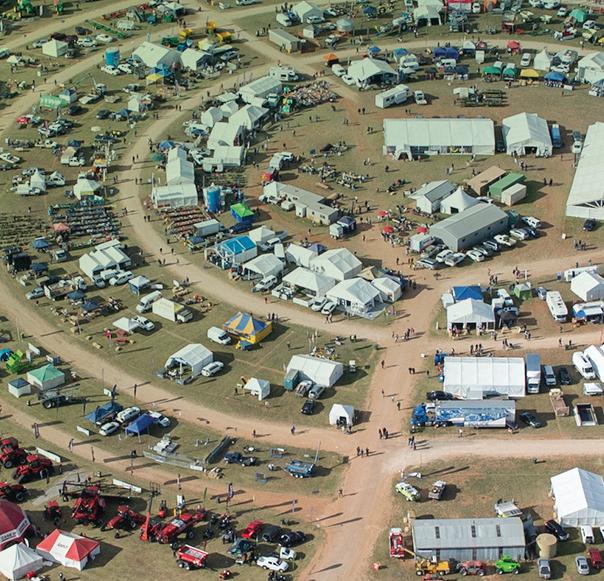
MOMENTUM is building for the Mallee Machinery Field Days as the Speed Lions Club gears up to deliver its 46th annual showcase.
With only weeks to go until the Mallee’s biggest agricultural event, secretary Matt Brady said the field days had continued to expand, driven by the commitment of the Speed Lions Club and the strong interest shown by exhibitors nationwide.
“This year we’ve seen a surge in enquiries from new exhibitors keen to bring the latest in agricultural innovation to Speed,” Mr Brady said, noting the site had once again reached full capacity.
New exhibitors include Sunraysia Trailers, Western Plains Motors, Aussie
Shade Sheds, Robuk Engineering, Eagle i Machinery and Gorjski.
The undercover business tent has also grown significantly, with Mr Brady confirming it has been extended by 10 metres to accommodate additional exhibitors.
The field days is also proving to be a destination for launching newly released equipment.
“We have around 20 new releases which will be showcased across the two days,” Mr Brady said.
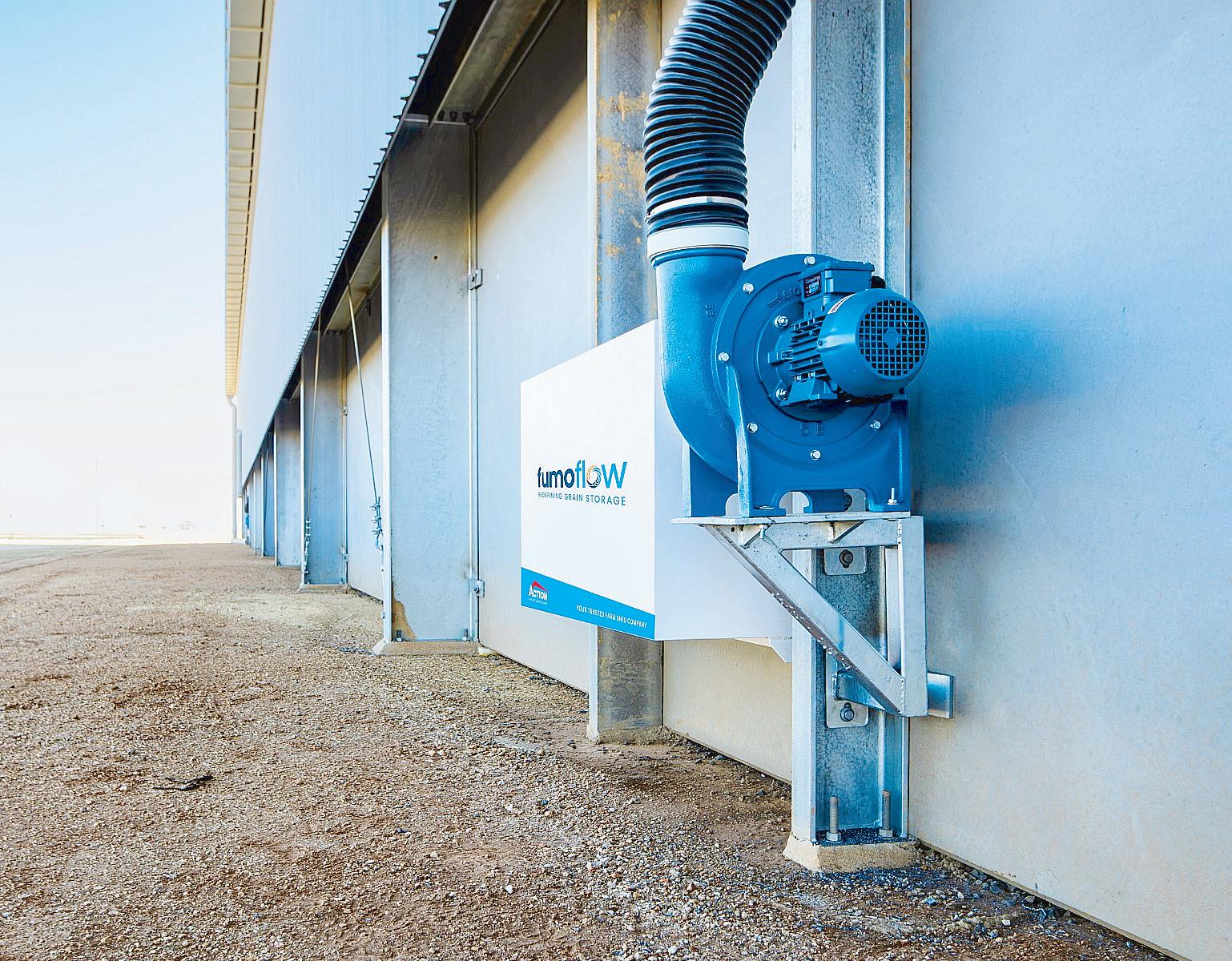
These include Action Steel’s Fumo Flow Grain Sheds, the Grain King 2026 chaser bin, and Boss Engineering’s autonomous sprayer.
Once again, the Speed Lions Club has invested in long-term improvements at the site, with a focus on catering.
New permanent sav stands have been erected thanks to the neighbouring revitalised Sea Lake Lions Club, and the catering shed has also received upgrades.
“It’s going to be an action-packed two days, with something for everyone,” Mr Brady said.
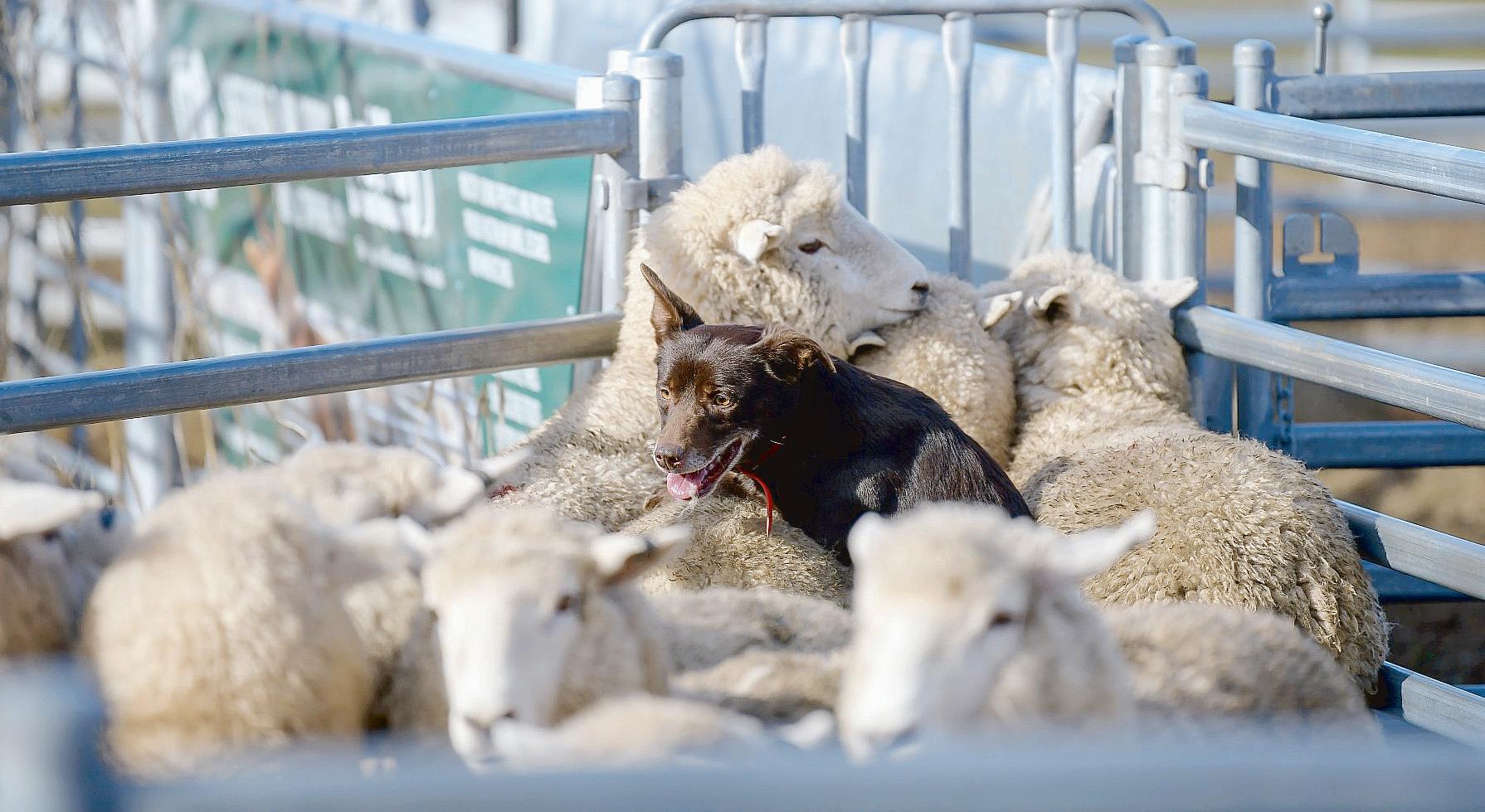
A highlight this year will be the introduction of the Yard Dog Trials, which will see working dogs and their handlers manoeuvring sheep through a series of obstacles, simulating everyday farm work.
Farmers are also encouraged to make the most of the free health and wellbeing checks
available at the field days.
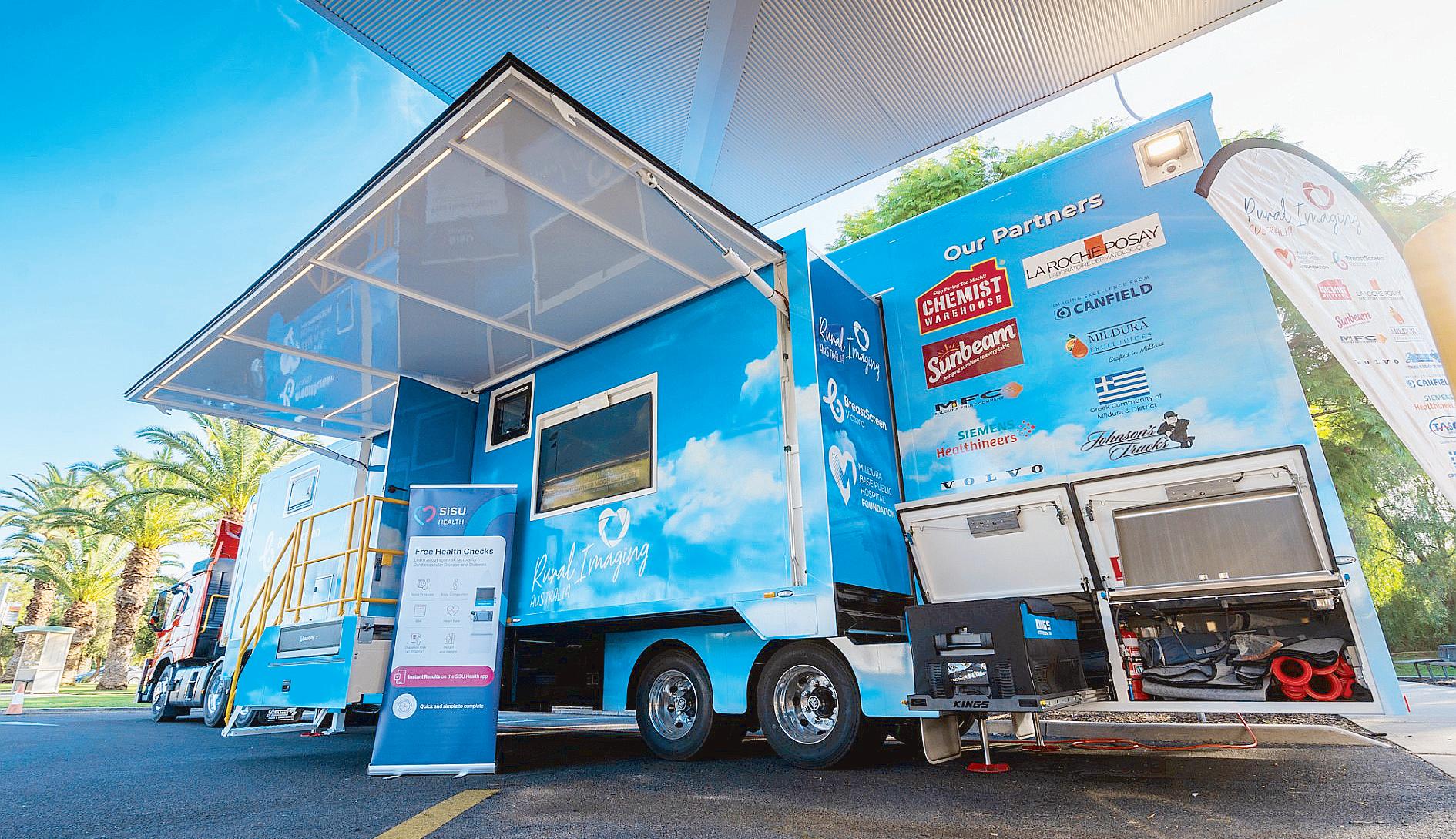
A lifesaving health screening truck will make its first appearance at this year’s event, bringing free preventative health checks directly to thousands of farmers and rural families.
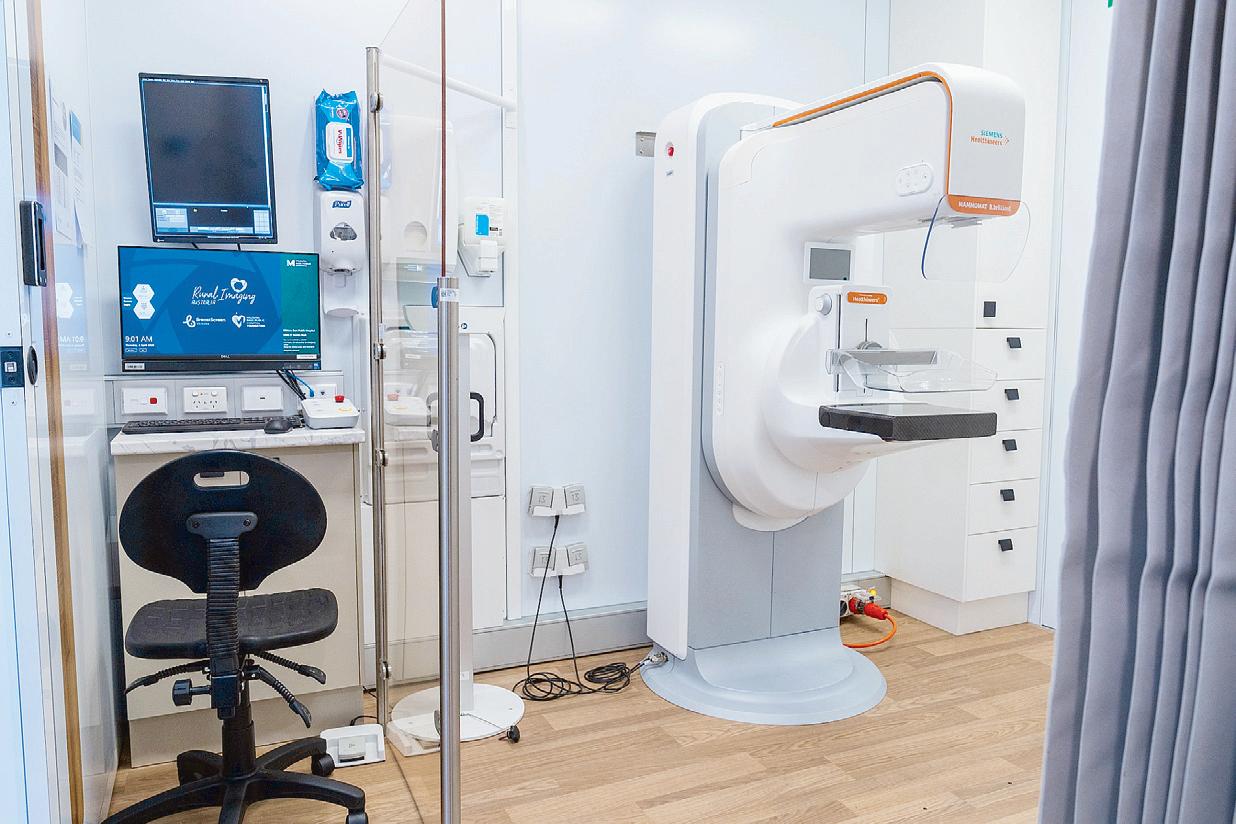
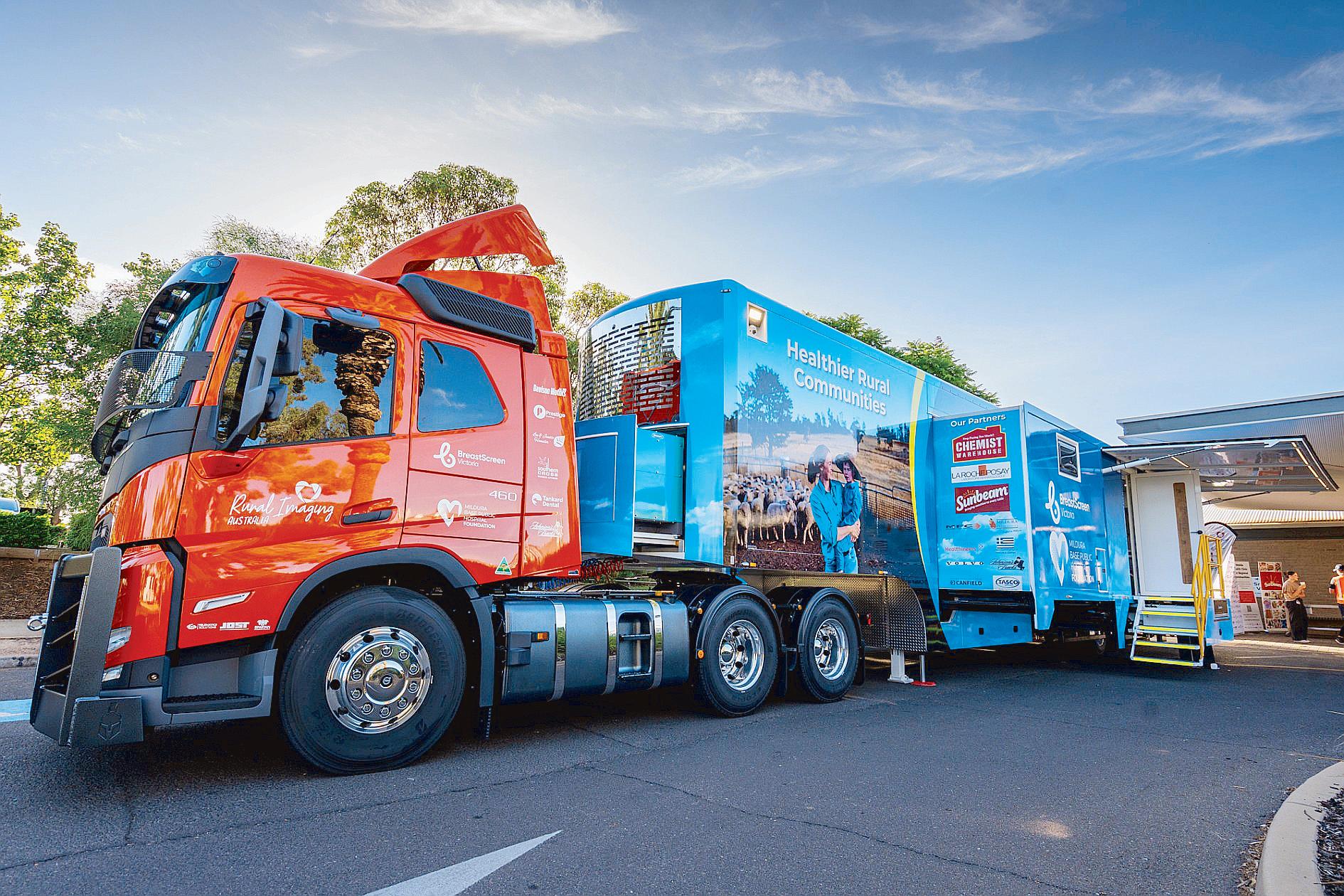
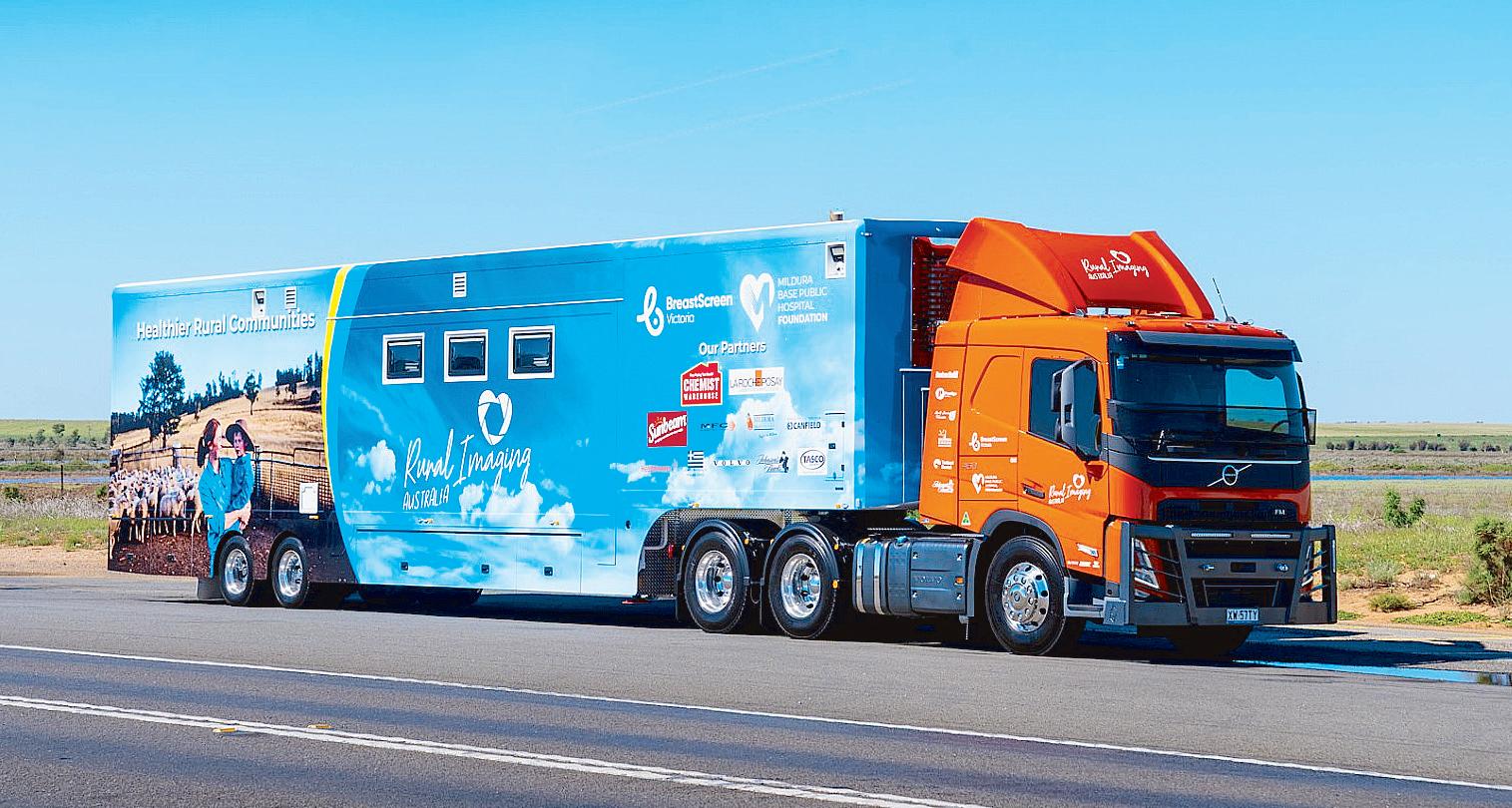
The $3.5 million multipurpose screening truck - funded by the Mildura Base Public Hospital Foundation and delivered through Mildura Base Public Hospital - has been added to the lineup to improve farm safety and wellbeing by making healthcare easier to access.
This year’s Mallee Machinery Field Days will take place on Wednesday, August 5 and Thursday, August 6.
Mallee Machinery Mallee FIELD DAYS
Health truck rolls into field days
Peter Bannan
A LIFESAVING health screening truck will make its first appearance at this year’s Mallee Machinery Field Days, bringing free preventative health checks directly to thousands of farmers and rural families.
The $3.5 million multipurpose screening truck, funded by the Mildura Base Public Hospital Foundation and delivered through Mildura Base Public Hospital, has been added to the field days lineup in a move aimed at improving farm safety and wellbeing by making healthcare easier to access.
The visit builds on the hospital’s mission to take healthcare directly into regional communities, removing barriers such as distance, transport and isolation that often prevent people from getting checked.
Mildura Base Public Hospital chief executive Terry Welch said bringing the truck to one of the region’s biggest agricultural events was an opportunity to connect with people who often put their own health last.
“The multipurpose screening truck was introduced to address the very real challenges people in our region face when accessing healthcare,” he said.
“Distance and transport limitations can all be barriers. We wanted to take healthcare directly to the community, meeting people where they are, so they can access timely screening and preventative care without needing to travel long distances.”
The truck has been purpose-built to deliver a range of preventative health services, with a
strong focus on early detection and improving long-term health outcomes.
“The truck is designed to deliver a range of preventative services,” Mr Welch said.
“This includes health screenings such as skin, breast and high-level cardiac and general health screening. It also provides health education and referrals to local services.”
Mr Welch said taking the service to events such as the Mallee Machinery Field Days was particularly important for farming communities, where busy workloads and long distances often delayed routine health checks.
“By bringing services directly into smaller towns and rural communities, the truck removes many of the traditional barriers to care,” he said.
“People can access screenings and advice locally, without the time and cost of travel. This not only improves convenience but also encourages earlier engagement with healthcare, which can lead to better long-term outcomes.”
The service has already received an overwhelmingly positive response from communities across north west Victoria.
“There’s a strong sense of appreciation that services are being brought closer to home,” Mr Welch said.
“Many people have told us they are more likely to engage with healthcare in this setting because it feels accessible and community-focused.”
The program also targets people most at risk of missing out on regular healthcare,
including those living in remote areas, older residents, Aboriginal and Torres Strait Islander communities, and people at risk of chronic illnesses such as skin and breast cancer and cardiac disease.
The screening truck operates on a rotating schedule across the region in partnership with local councils.
“We’re working closely with local groups and councils to plan routes that ensure we reach as many people as possible,” Mr Welch said.
While delivering healthcare across a vast region presents logistical challenges, including travel time and staffing, Mr Welch said careful planning and strong community partnerships were helping make the service a success.
He said the long-term vision was to expand both the scope and reach of the mobile service.
“This could include offering additional specialised services and increasing the frequency of visits,” he said.
“Our long-term goal is to build a flexible, responsive service that continues to adapt to the evolving health needs of our community.”
The truck’s debut at the Mallee Machinery Field Days is expected to give hundreds of farmers and rural visitors the chance to access potentially lifesaving health checks while attending one of the region’s biggest agricultural events, reinforcing the message that looking after personal health is just as important as looking after the farm.
Attendees will get a firsthand look at the new Mildura Base Public Hospital screening truck in action.
The Mildura Base Public Hospital screening truck will head to the Mallee Machinery Field Days for the first time.
The Mildura Base Public Hospital (MBPH) Foundation operates the $3.5 million mobile screening clinic designed to bring life-saving preventative care directly to regional communities.
The newly launched Mildura Base Public Hospital screening truck will head to Speed for the Mallee Machinery Field Days.
The purpose-built mobile clinic has been designed to deliver advanced skin, breast, and cardiac screening services directly to rural and remote communities.
Pictures: Rob Klarich
From paint to purpose
TAKE a seat and spark up a conversation, it might just help someone doing it tough…
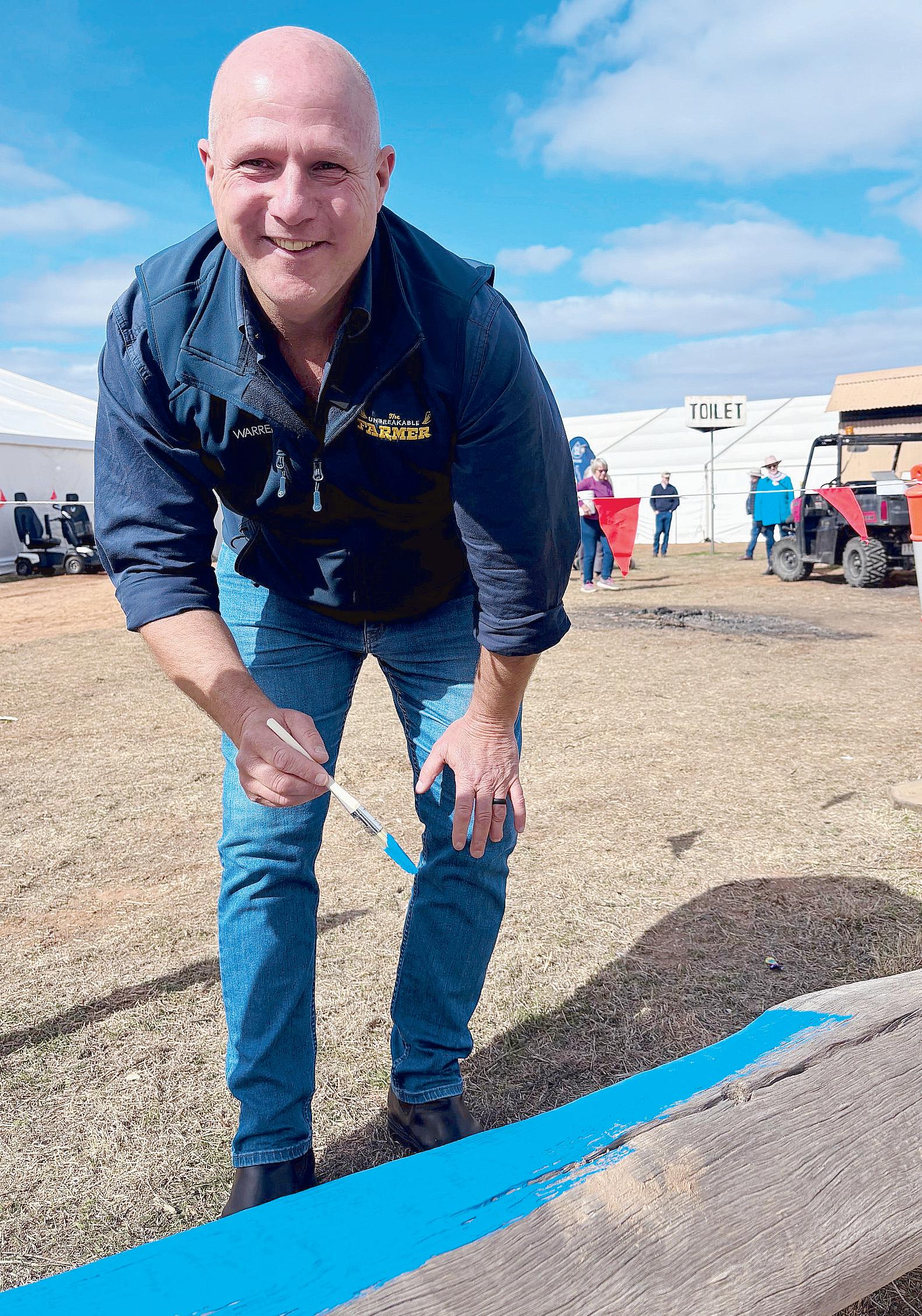
That’s the message The Unbreakable Farmer, Warren Davies is hoping people remember when they see the blue tree log in the main arena at this year’s Mallee Machinery Field Days.
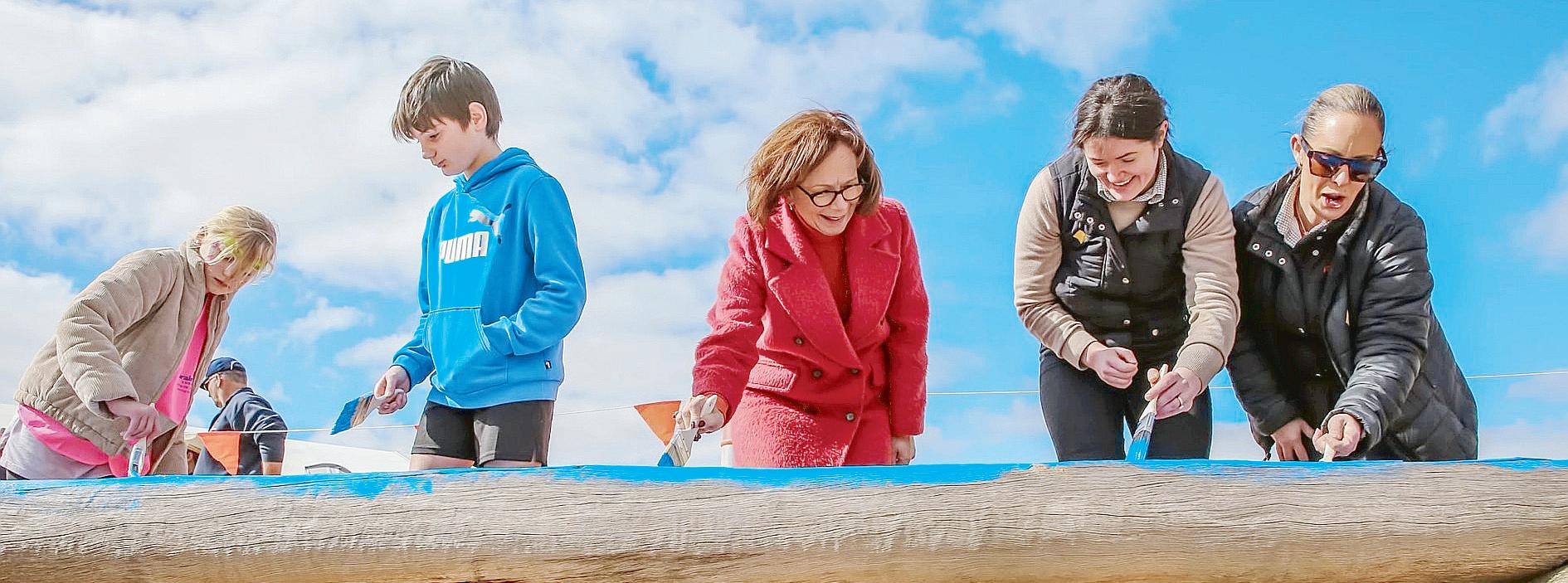
Now officially recognised as part of the Blue Tree Project, the log was painted last year in a community effort organised by Mr Davies when he attended the field days as a guest speaker on rural mental health.
The aim was to create a visual reminder that the right conversation at the right time can make a real difference to someone’s mental wellbeing.
“The seat is a lasting reminder of the importance of having conversations,” Mr Davies said.
“That might just mean checking in on someone if you haven’t seen them in a while, not just assuming they’re fine, and having a chat, particularly if people are doing it tough.”
Not only is the blue tree log an ongoing reminder, Mr Davies said the physical act of painting it alongside attendees at last year’s event also prompted some great conversations.
“You learn a lot about people when they’re standing next to you doing an activity like painting,” he said.
“It’s something that really brings people together.”
The blue tree log at Speed is one of 1634 blue trees now registered across the world after the mental health initiative commenced in regional Western Australia in 2019.
Each blue tree is a symbol of hope, a visual reminder and a conversation starter aimed at reducing the stigma around mental health, with trees now registered as far afield as South Africa, Europe, America, and even Russia.
Mallee Machinery Field Days president Chris Monaghan said the decision to take part in the Blue Tree project tied in well with the event’s aim of promoting rural health and wellbeing.
“We know this is an industry of highs and lows and there’s the potential for people to feel isolated and like they’re doing it all by themselves,” Mr Monaghan said.
“Sometimes it’s just a quiet word that makes all the difference and we’re proud to now have a visual reminder of the importance of looking after your mental health and checking in with your mates.”
This year’s Mallee Machinery Field Days will also see a continued focus on overall health and wellbeing courtesy of free skin checks, hearing checks, Shane Warne Legacy Health Checks and a range of other health initiatives.
Warren Davies kickstarted the Blue Tree Project in Speed at last year’s Mallee Machinery Field Days. Picture: Michelle Brady
Attendees, including Member for Mallee Anne Webster participated in the project. Picture: Phil Down
Local machinery for local conditions
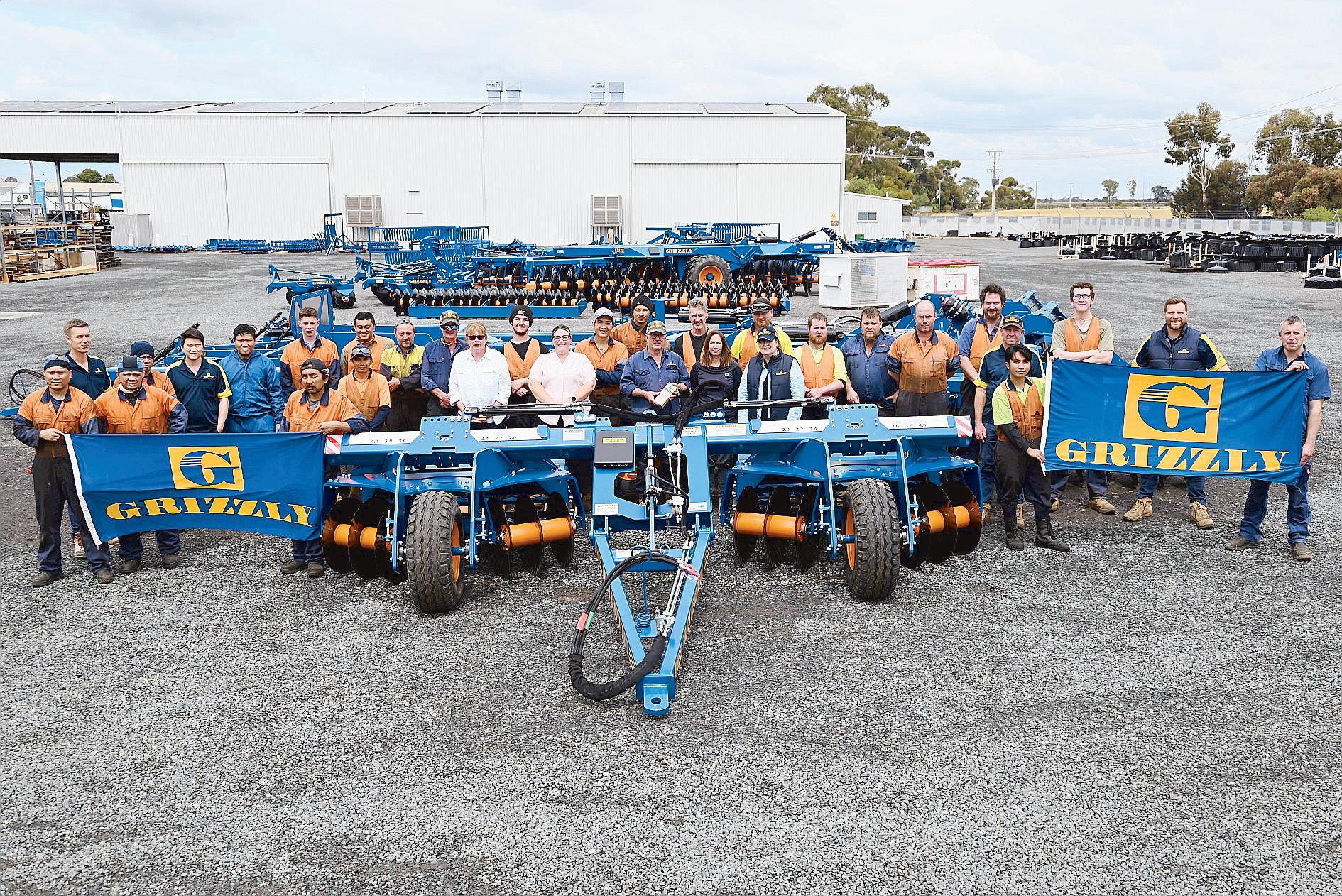
SPOT the true blue team from Grizzly, the homegrown farm technology experts, at the Mallee Machinery Field Days.
Family owned and operated since 1983, Grizzly has been designing and manufacturing machinery for Australian farmers, equipped to withstand the uniquely harsh Australian conditions.
Marketing manager Skye Poltrock said the field days gave visitors a valuable opportunity to explore the machinery up close while getting to know the business.
“Our key focus is always to keep innovating and listening to farmers’ requirements for machinery or innovation, because there is always a new challenge that we can help solve,” he said.
“We will have machines on display and representatives on hand.
“Mallee Machinery Field Days lets us interface with local farmers to solve local concerns.”
Mr Poltrock said the team enjoyed exhibiting at the field days.
“I think this field days is one of the best events of its kind in the country because of its isolation,” he said.
“A lot of people would say it’s a drawback, but it seems to draw out the best exhibitors and public, and I might be biased but the committee is the best field day committee in Australia too.”
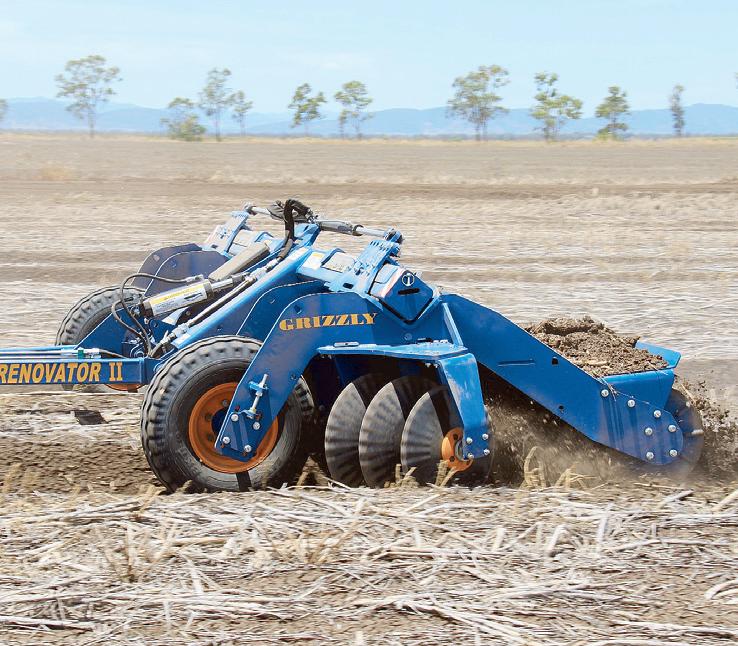
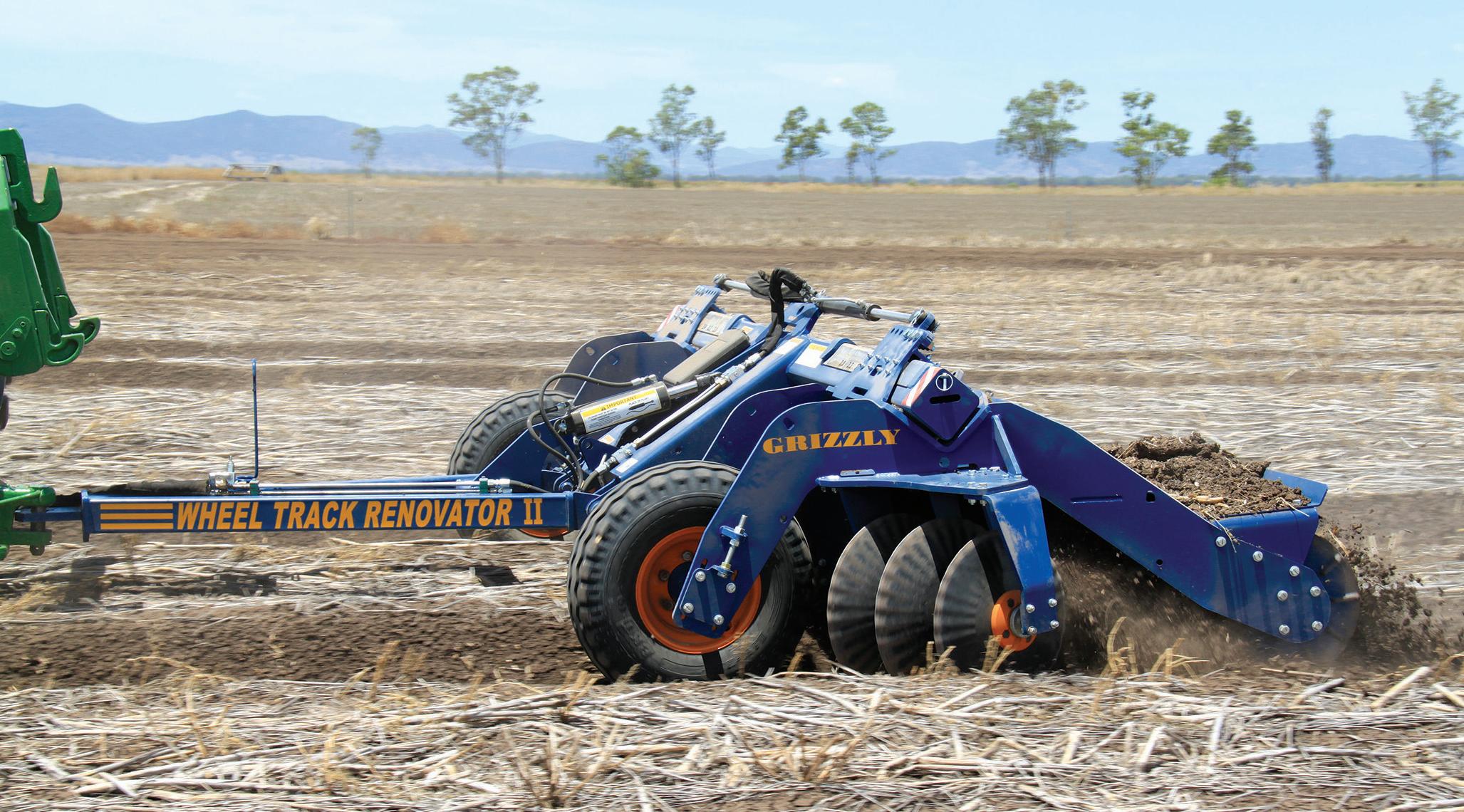
Among their wares, Grizzly will have the new Wheel Track Renovator II, which has been innovated to streamline operations and maximise efficiency while filling in wheel tracks left from spraying, harvesting, spreading and planting.
The feature updates from its predecessor are the trailed design and instant depth control.
“The Wheel Track Renovator II has wheels that run in the wheel track which set how deep the discs work and how much soil they bring into the track,” Mr Poltrock said.
“This instant adjusting allows for the perfect amount of soil to be brought back into the track in one pass, so the driver doesn’t have to look back and no adjustments need to be made from the tractor cab.
“We’ve designed it around the future, so should anyone have a driverless tractor the machine would be able to be used behind it with no inputs needed to be made by the driver once it’s in the field working.”
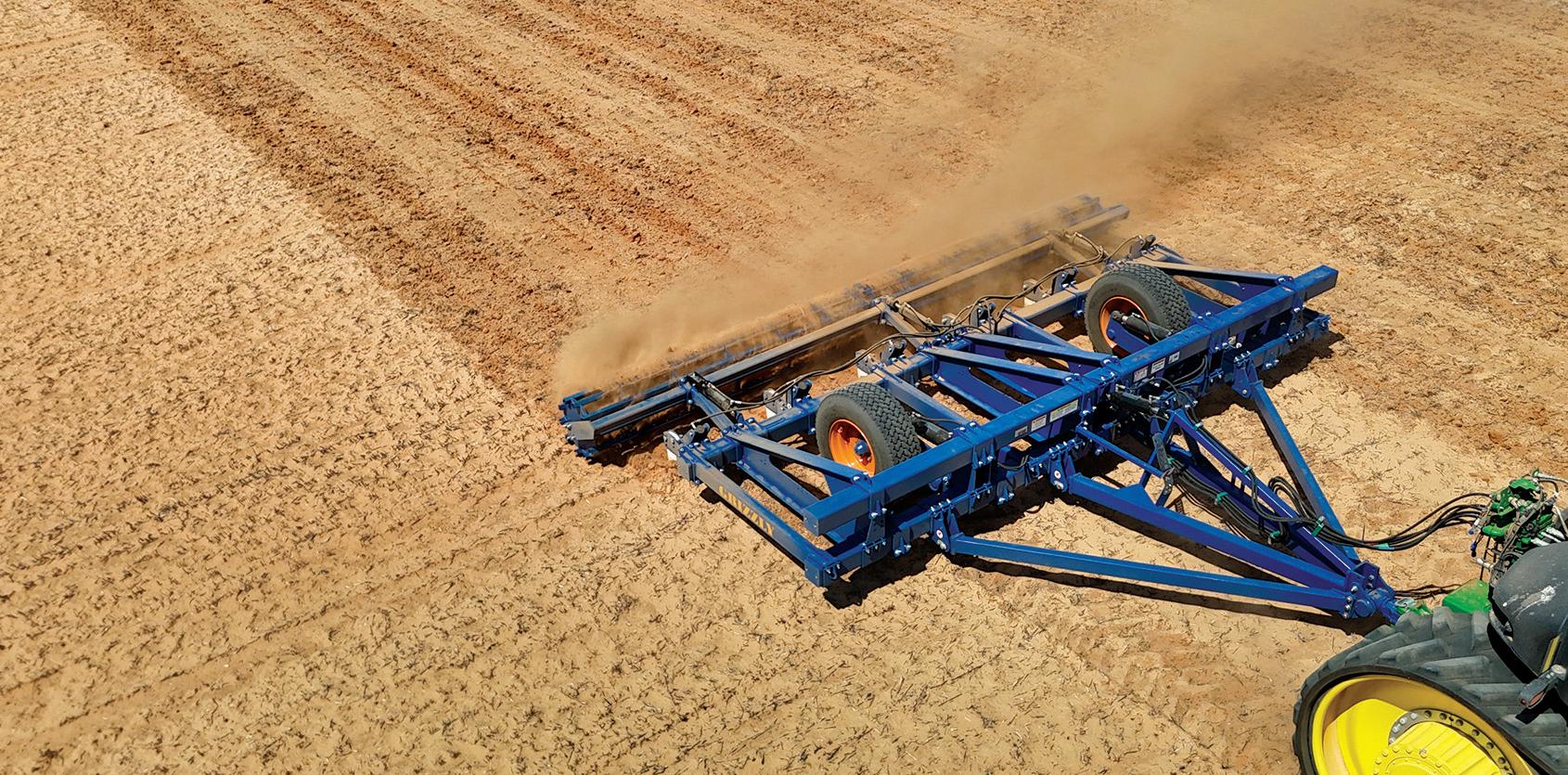
Also featured at the event will be the Crumble Roller, ranging from 1.8 metres to 12 metres wide to go behind any Grizzly offset or any other brand to leave a finer, more improved finish.
“It has a broad range of applications, and can be purchased to go behind any existing ploughs,” Mr Poltrock said.
The Deep Digger will also be on show, available for purchase in time to retain moisture for spring and optimise harvest.
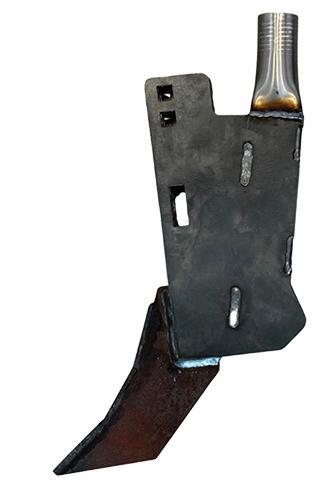
“The Deep Digger has a long tine that goes into the ground and breaks up the hard pan, minimising run-off, enabling the harvesting of moisture and rain from storms, and allowing for free-flowing soil structure for plants to grow their roots deep into moisture,” Mr Poltrock said.
“A lot of the time, spring comes in hot
Homegrown and homemade, Grizzly will be on site this year, ready with local knowledge and advice. Picture: Sam James
and dry, and unless plants are deep rooted, they fail to fulfill their potential due to shallow rooted plant cause from hard pans.”
Visit Grizzly at Mallee Machinery Field Days and explore their range, proudly made and manufactured in Swan Hill.
RIGHT: The Wheel Track Renovator II has introduced innovative new features. Picture: Supplied
Order now for delivery this summer!
WHEEL TRACK RENOVATOR II
The latest way to keep on top of your wheel tracks
• Hydraulic track width adjustment
• 15 – 25km/h operating speed
• Patent Pending
• Conforms to ground contours, hills,
• gullies, and varying track depths
JACK — THE RIPPER
• Hydraulic breakout or shear pin
• Straight shank or Curved tine tine
• Proven Mallee configuration
• Improves water infiltration and
• deeper root penetration
GRIZZLY is Australia’s leading manufacturer of disc ploughs and a proudly family-owned and operated company. Based in Swan Hill, Victoria, all GRIZZLY machinery is locally designed, manufactured, and supported to meet the demands of Australian farmers and conditions
A founding force steps back after 46 years
Peter Bannan
A LIFETIME in the fast lane of farming is slowing down, but Les Down still likes to keep up to speed.
Even after moving about 350 kilometres away from Speed and retiring from the family farm, the 86-year-old still keeps a close eye on the Mallee Machinery Field Days, the event he helped build into one of regional Australia’s biggest agricultural showcases.
This year’s field days will be the first in decades that Mr Down will not attend, marking the end of an extraordinary 46-year association with an event he proudly described as “a bit of a baby for me”.
“I put a lot of work into it,” he said.
“My physical health, my back, means I can’t do much more than ride around in my buggy and take the morning teas out to the gate team.”
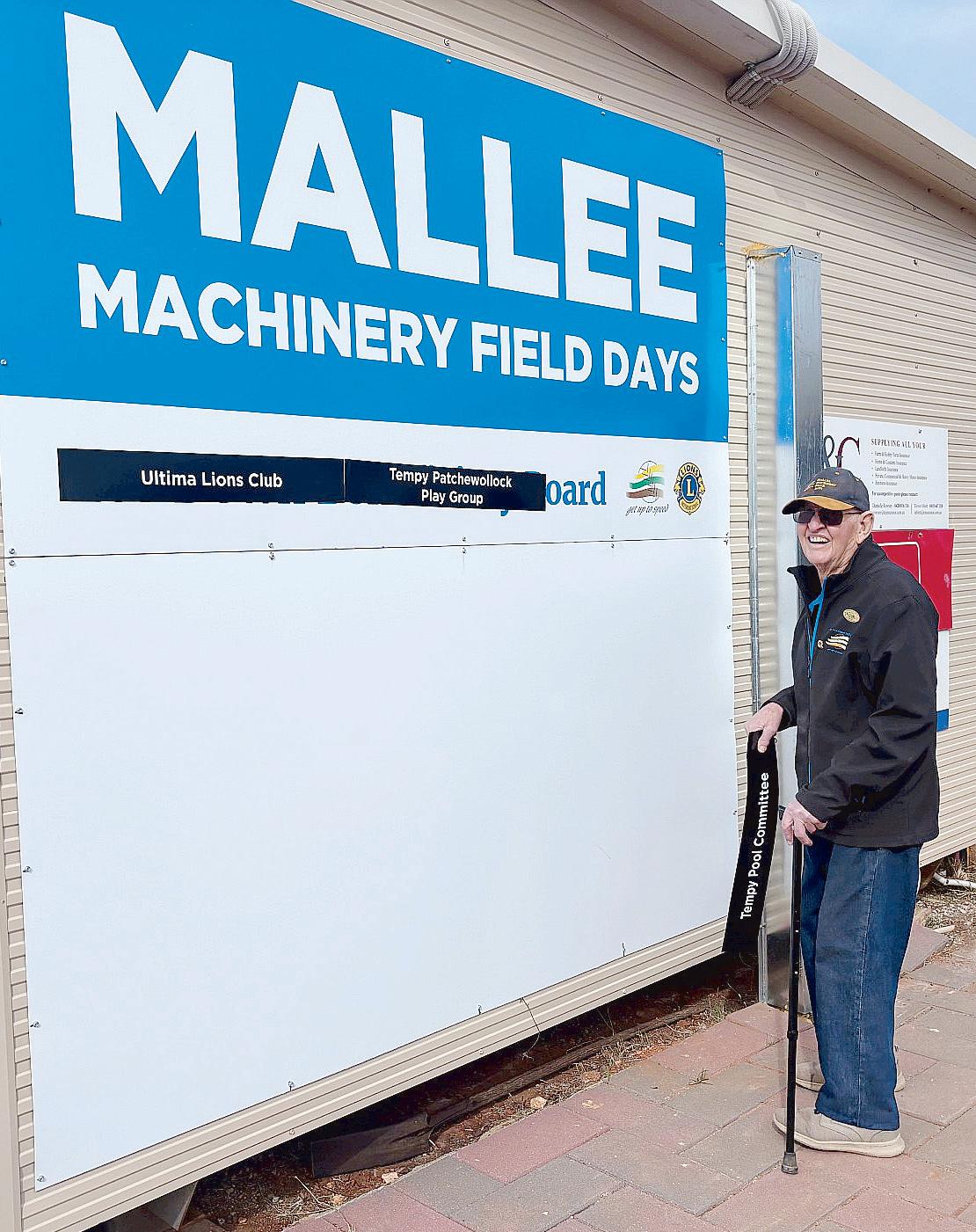
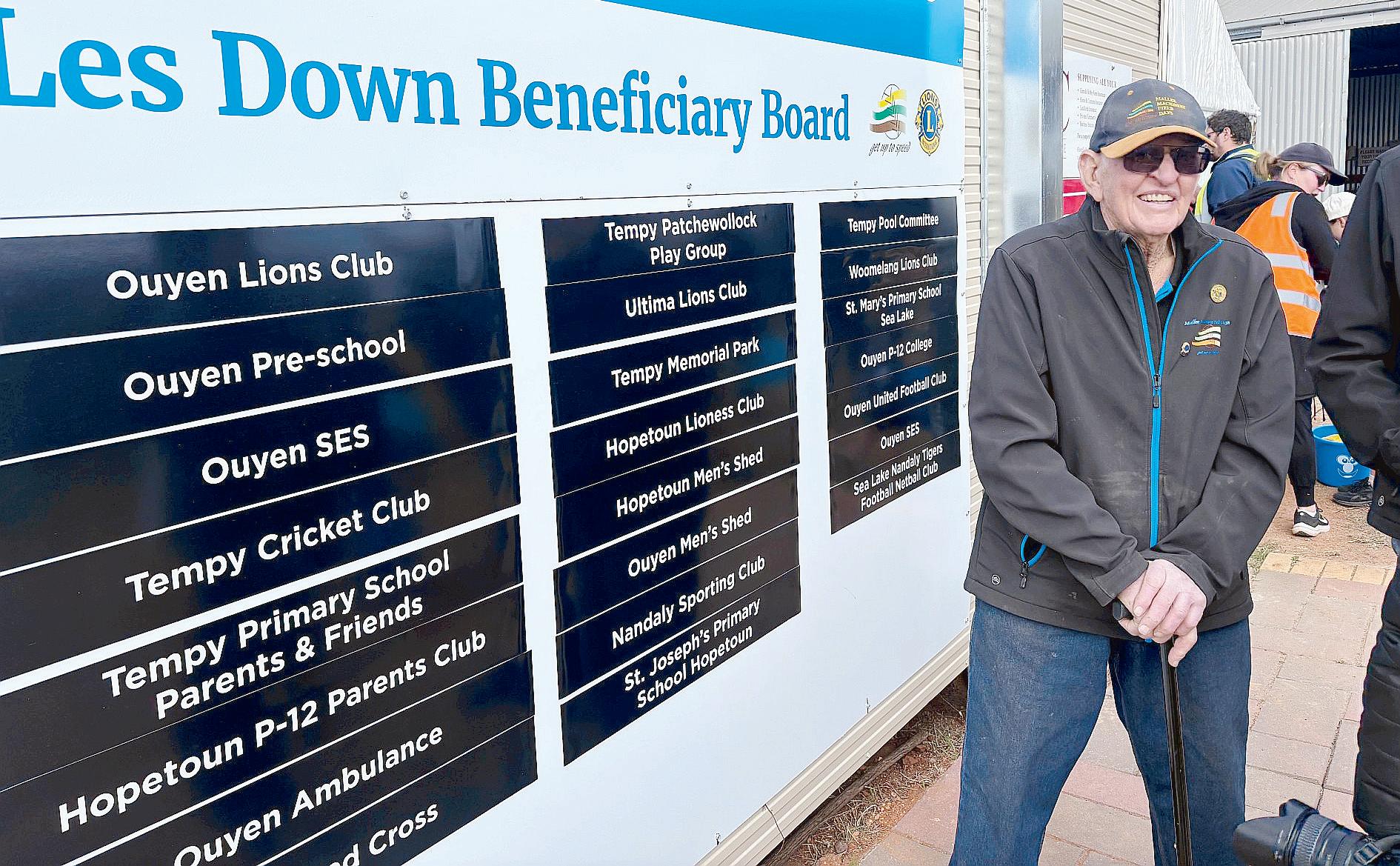
Last year, the field days committee recognised his contribution by unveiling the Les Down Beneficiary Board, a permanent tribute celebrating not only one of the event’s founding members, but also the community spirit that has underpinned the field days since day one.
The board lists the many local groups and organisations that benefit from the event every year, including SES volunteers, schools, Lions clubs, sporting clubs and a host of other community organisations.
For Mr Down, the honour was both humbling and humorous.
“I was amazed,” he said.
“Other people have been honoured by street names and things, and I thought, well, I might get a street, but I didn’t get a street. I got a board.”
The recognition was fitting for a man who has spent almost half-a-century helping ensure the field days gave back to the community as much as it supported agriculture.
Last year alone, about $40,000 was distributed to local groups through the event.
“We thank them for their work, but they get rewarded by what we give them,” Mr Down said.
“We handed out 40-odd thousand dollars last year, and that’s pretty good.”
Rather than simply donating money, Mr Down said the field days had always encouraged organisations to become involved.
“If you want to help us with the field days, you get something back,” he said.
“Some groups might spend a couple of days selling tickets or working around the grounds, but they might take home a couple of thousand dollars. That’s not bad money.”
Over the years, those contributions have also extended to hospitals and families facing hardship.
“We’ve been able to help people with their travels to Melbourne and support other organisations as well,” he said.
The generosity has grown alongside the event itself.
When the first Mallee Machinery Field Days was held, there were just 37 exhibitor sites. This year, organisers are expecting about 400.
“It has grown enormously,” Mr Down said.
“The first one had about 37 sites. I think we anticipate 400 this year.”
He has watched the machinery get bigger, the crowds get larger and the event become a key date on the agricultural calendar.
One memory that still makes him smile is seeing the size of modern harvesters.
“I looked at one and thought it was enormous,” he said.
“Then I walked around the corner and there was one just as big.”
Despite the massive price tags attached to today’s machinery, Mr Down said the field days remained as much about relationships as they were about sales.
“I always said people don’t just walk in and buy something on the spot,” he said. “They’ve usually done their homework beforehand and the field days help them make that final decision.”
That ability to bring farmers and dealers
together is one reason exhibitors continue returning year after year.
“They keep coming back,” he said.
“We’re always seeing new ones as well.”
The event’s success has also flowed well beyond the gates, delivering a welcome economic boost across the region.
Accommodation from Sea Lake to surrounding towns fills with exhibitors and visitors.
Years ago, while speaking with an Ouyen motel owner, Mr Down received a simple reminder of just how valuable the event had become.
“She said, ‘Let’s have the field days every week. It suits me,’” he recalled with a laugh.
While the distance from major centres means accommodation can be stretched, he believes people happily make the trip because the event has earned its reputation.
“People seem to come all the time,” he said.
“They’ll come down for the day and go back again.”
Although he has relocated and officially stepped away, farming remains close to his heart.
His son, Phil, now runs the family property and has continued contributing to improvements at the field days site, including work around the kitchen and other facilities.
Mr Down recently returned home to check on the farm and was delighted by what he saw.
“The crops are looking really, really good,” he said.
“I’ll always miss the farm.”
He has only missed one field days before, about 20 years ago while travelling around Western Australia with his wife.
This year will be different.
Instead of walking the rows of machinery and catching up with exhibitors, he will be following the event from afar.
His name may now sit proudly on the beneficiary board, but his greatest legacy is not the sign itself.
It’s the generations of volunteers, community groups and farming families who continue to benefit from an event that - thanks in no small part to Les Down - has never stopped giving back.
Last year, the field days committee recognised his contribution by unveiling the Les Down Beneficiary Board.
The board lists the many local groups and organisations that benefit from the event every year, including SES volunteers, schools, Lions clubs, sporting clubs and a host of other community organisations.
Action Steel launches FumoFlow in the Mallee
FOR more than three generations, Action Steel has been designing and building farm sheds for cropping and livestock enterprises across Australia.
The family business, based in regional Victoria, has built its reputation on manufacturing sheds that perform, backed by a smooth process from first enquiry through to handover.
This season, Action Steel has expanded beyond the shed itself.
FumoFlow is a patent-pending grain shed and fumigation system with recirculation and ventilation built in.
It is the first system of its kind, and the Mallee Machinery Field Days at Speed will be one of the first opportunities to hear directly from the Action Steel team about how it works.
FumoFlow is a grain shed with a builtin fumigation system, designed to give growers more control over every stage of the fumigation process.
Recirculation technology moves fumigant through the full grain mass from the point of introduction.
Once the fumigation period is complete, the system switches to ventilation mode, clearing the shed to safe re-entry levels faster than passive methods and without requiring staff to enter the shed to start the process.
FumoFlow was developed over 18 months in consultation with grain growers and leading fumigation contractors.
The brief was straightforward: build a system that delivers consistent, proven fumigant distribution and safer, faster
clearance, purpose-built into an Action Steel grain shed.
The patent-pending status reflects how genuinely new the approach is.
In March 2026, Action Steel ran its first full-scale commercial phosphine fumigation trial using FumoFlow, on a shed storing 5420 tonnes of wheat.
Twelve independent monitoring probes were placed at surface and floor level across the full grain stack and monitored over 15 days.
Two concentrations are widely recognised as effective fumigation targets: 550 ppm held for seven days to manage phosphineresistant insect strains, and 200 ppm held for 10 days to control susceptible populations across all life stages.
FumoFlow met both, across every probe location.
Concentration peaked at an average of 1068 ppm within 49 hours of introduction.
Not one probe dropped below either threshold during the required exposure window, including those at floor level and at the furthest edges of the grain stack.
After fumigation, the shed reached safe reentry levels in four days, with the ventilation cycle managed entirely from outside.
With tighter phosphine Workplace Exposure Limits coming into effect in December 2026, that speed and control matters.
It is a compliance advantage, not just an efficiency one.
The Action Steel team will be at site 98 for the full duration of the Mallee Machinery Field
FumoFlow is a grain shed with a built-in fumigation system, designed to give growers more control over every stage of the fumigation process, and will be launched at this year’s Mallee Machinery Field Days.
Days at Speed. Action Steel’s building consultants will
be available to discuss FumoFlow and their complete farm shed range.
FEATURING
Patent-pending fumigated grain sheds with recirculation and ventilation.
Eastern Spreaders is powering into Speed
Peter Bannan
BIG machines, trusted brands and oldfashioned service will again be on show when Eastern Spreaders rolls into this year’s Mallee Machinery Field Days.
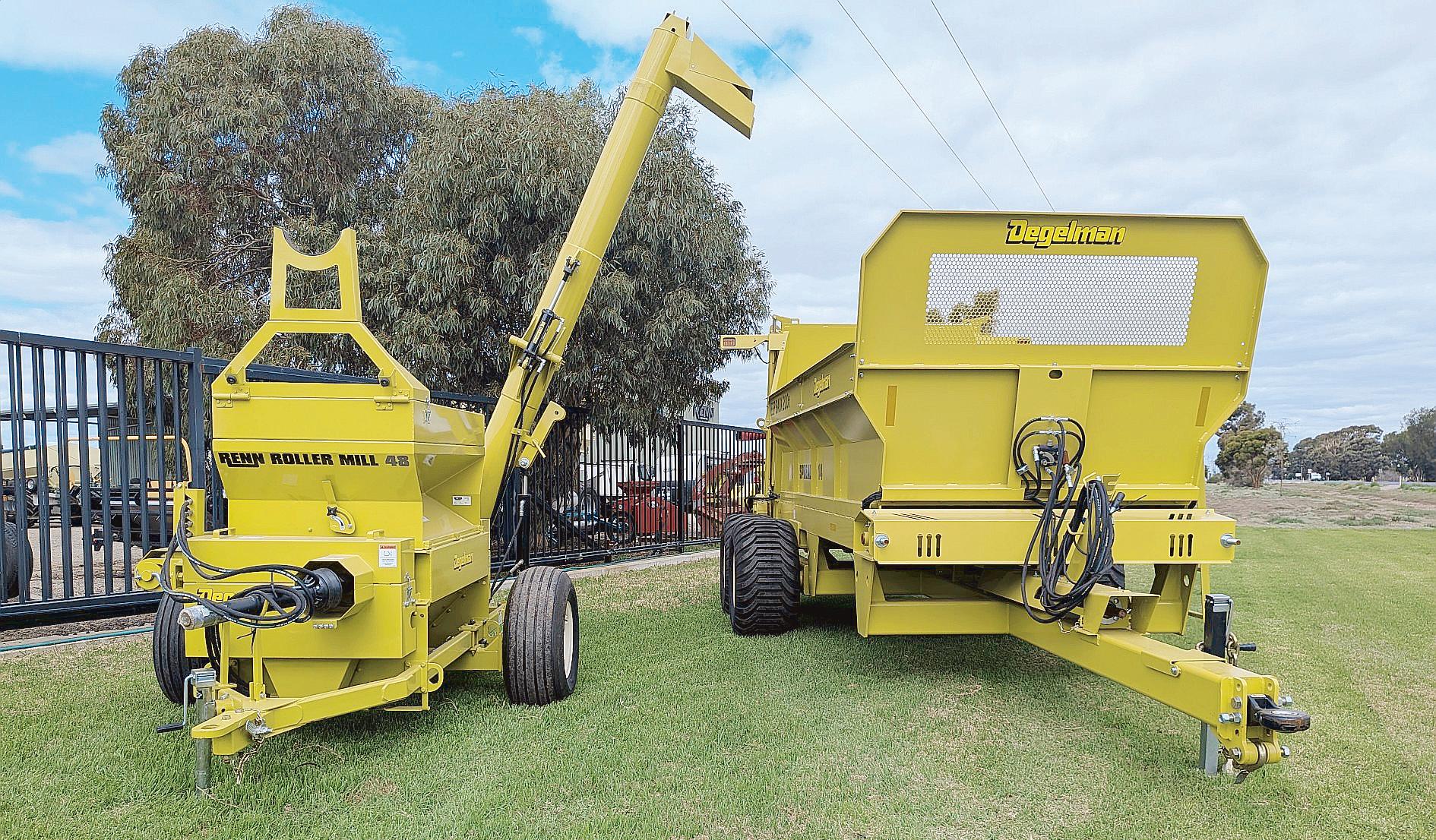
The family-owned business, which has become a familiar face at the annual event, will showcase a lineup of premium agricultural equipment, including NDE feed mixers, Degelman machinery and Marshall products, giving farmers the chance to get up close with some of the industry’s latest technology.
For owner Steve Freeman, however, the field days have always been about more than making sales.
“There’s probably a couple of reasons we keep coming back,” he said.
“One is to catch up with our clients, have a chat, and see what’s going on.
“The other, of course, is exposure, but not in the way people always think.
“You might not sell a machine off the site, but two or three years later someone who saw it here will come back and buy it. It’s about getting your product out there so people can see it and touch it.”
Mr Freeman said while the internet had changed the way people researched farm machinery, nothing replaced seeing equipment in person.
“A lot of people rely on technology and Dr Google, but there’s still a big group out there, and I’m one of them, who likes to sit in it, touch it, and really look at it up close,” he said.
“There’s only so much you can do on a
screen.”
Eastern Spreaders has grown dramatically since Mr Freeman joined his father in the family business in 1989.
What began as a three-person operation has expanded over the past 35 years into a team of about a dozen, servicing customers across Australia from South Australia through to Queensland.
The company is now the national distributor for respected Canadian brands NDE feed mixers and Degelman machinery, while also supplying
COUNTRY UNIVERSITIES CENTRE - MALLEE
Are you currently studying, or perhaps even thinking about
At CUC Mallee we offer a FREE safe, secure, study facility for students studying a Certificate III or higher at any Australian higher education institution.
When you study at CUC Mallee you have access to the following from 5am to midnight, 7 days a week:
Modern technology services
High speed internet
Desktop computers and BYO spaces
Printing & copying services
Video conferencing services
Exam and study rooms
Networking with fellow students
the Marshall range.
Despite its growth, Mr Freeman said customer service remained their biggest priority.
“We’ve just had a client call, they’d done a load cell on their mixer, and we didn’t have one in stock,” he said.
“So we’re flying one in. Because if you’re feeding cattle, especially in dairy, you can’t afford downtime.
“Their rations are critical, and they’ve got to know what’s going in to keep the mix. We do what we have to do to keep their machine going.”
Mr Freeman has watched agricultural machinery evolve dramatically over the decades.
“When I started in 1989, we didn’t have computers or load cells, none of that electronic stuff,” he said.
“Machines were basically like an old manual car. Now, it’s a different world.”
He said the industry had progressed from basic fertiliser spreaders to sophisticated machines equipped with GPS guidance, cloudbased variable rate mapping, weigh systems and fully computer-controlled spreading technology.
“Back then, GPS meant a $25,000 laptop glued to your dashboard. Now you can do more for a tenth of the price,” he said.
While technology had transformed farming, Mr Freeman said dependable backup remained just as important.
“If you break down, you need that part right now. We carry parts for everything we sell, and if we bring something new in, we make sure we’ve got the spares too,” he said.
“That’s just how we do it.”
Eastern Spreaders has become one of the longest-serving exhibitors at the Mallee Machinery Field Days, and Mr Freeman said the event continued to be one of the highlights of the agricultural calendar.
“We’ve been going for years. We’re one of the longest-standing exhibitors,” he said.
“It’s really well run, and they try to improve it every year. We’ve got a lot of clients in that area, so we enjoy getting back there.”
Course advice and employment support d
Academic, well-being and administrative support
the
A 48” RENN Roller Mill and a Degelman Bio Spreader. Picture: Supplied
Showcasing optical spot-spray solutions
WEED-IT Australia acknowledges the Australian Pesticides and Veterinary Medicines Authority’s (APVMA) announcement regarding new restrictions and stewardship requirements for paraquat and diquat herbicides.
WEED-IT is a pioneer, innovator and leading provider of precision optical spot spraying technology and remains focussed on helping Australian growers maximise productivity while reducing unnecessary chemical use.
WEED-IT Australia managing director Hamish McIntosh said the announcement highlighted the increasing importance of technologies that support chemical stewardship, operational efficiency, herbicide resistance management and sustainable farming practices.
“It also demonstrates the growing role precision agriculture technologies can play in helping growers meet both productivity and stewardship objectives” he said.
“The APVMA review recognises a specific pathway for optical spot spraying systems to apply paraquat and diquat at higher application rates than those now permitted for conventional blanket spraying.”
The previous maximum application rate for paraquat and diquat was 1150 grams of active ingredient per hectare.
This announcement introduces new application limits.
The maximum rate of application on paraquat and diquat will be 231 grams per hectare.
In fallow situations, rates of up to 770 grams per hectare may be used when applying through optical spot-spraying technology, provided no more than 30 per cent of the area is treated.
The Mallee Field Days will be an ideal forum for farmers to research and plan the use of technology in their future herbicide management.
“Paraquat and diquat are an integral part of many farmers’ weed management programs. These new restrictions will need to be managed effectively to allow ongoing use
of these chemicals and WEED-IT provides an immediate optical spot spraying solution that is proven in Australia over many years,” Mr McIntosh said.
“By targeting weeds and reducing unnecessary blanket application, precision spraying technologies can also support broader resistance management strategies while helping growers maximise the value of available chemistry.
“Paraquat is also a key part of doubleknock spraying for many farmers so optical spot spraying will now be required to achieve effective rates. WEED-IT offers the benefit of chlorophyll detection so sick weeds from the first pass are still detected and WEED-IT can also use the as-applied map from the first pass as a prescription map for the second pass.”
WEED-IT territory manager Mark Sloan will be on-site at the Mallee Field Days.
Mr Sloan said WEED-IT would continue working closely with growers, dealers and equipment manufacturers to deliver practical solutions that improve efficiency, reduce input costs and support long-term sustainability.
“Australian agriculture has a strong track record of innovation and adaptation,” Mr Sloan said.
“Precision spraying technologies are helping growers meet today’s challenges while preparing for the future.”
General enquiries
1300 659 961
difficulties and faults
1800 188 586 24hrs
info@gwmwater.org.au www.gwmwater.org.au
• Free water refill station
• Phone charging station
• Customer Portal support
• Provide your feedback on the Western Regional Sustainability Strategy We look forward to seeing you there!
WEED-IT territory manager Mark Sloan at a Mallee spray demonstration day using the autonomous machine earlier this year.
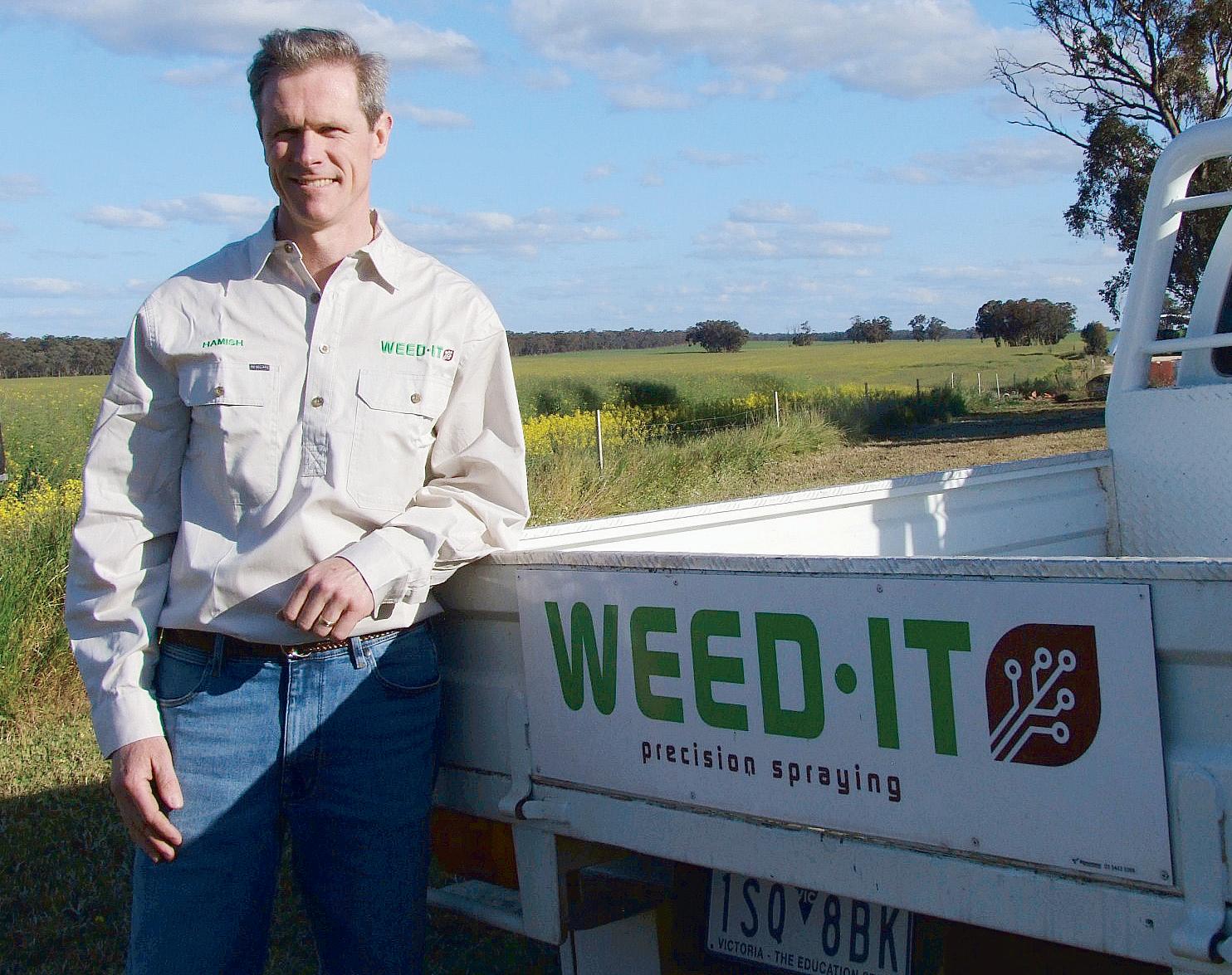
WEED-IT general manager Hamish McIntosh.
Precision spraying technology will become a more critical tool for farmers into the future.
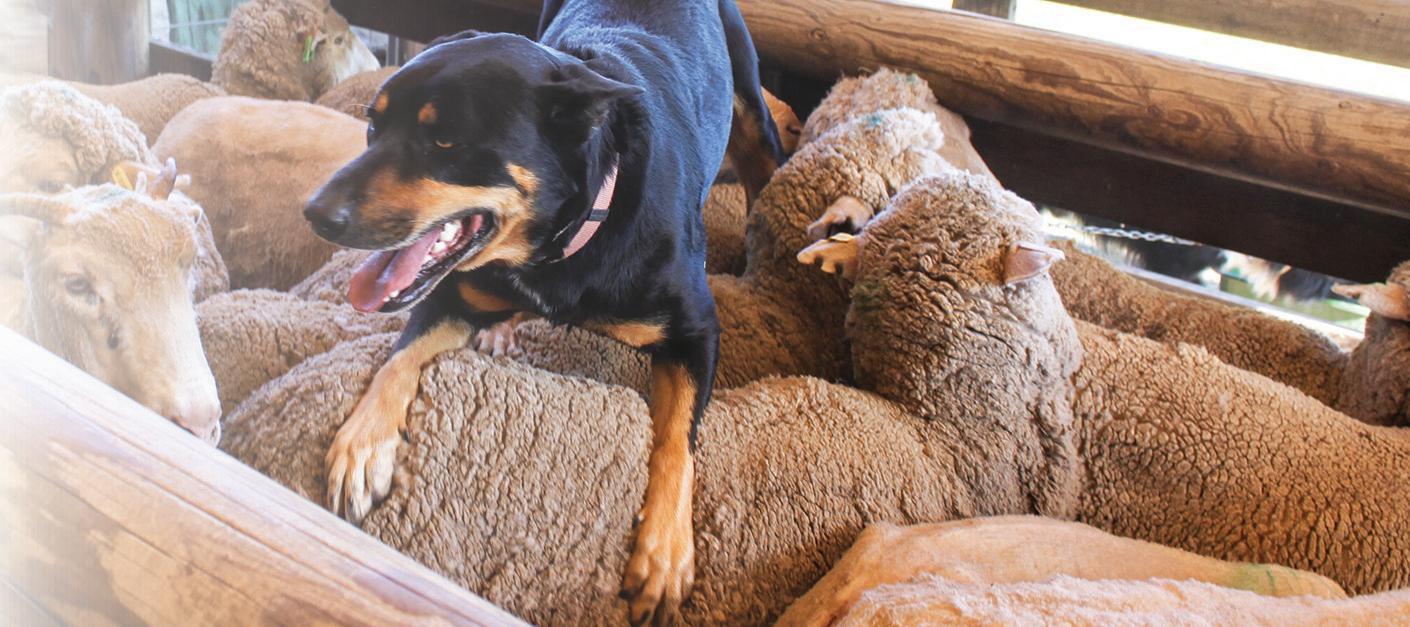
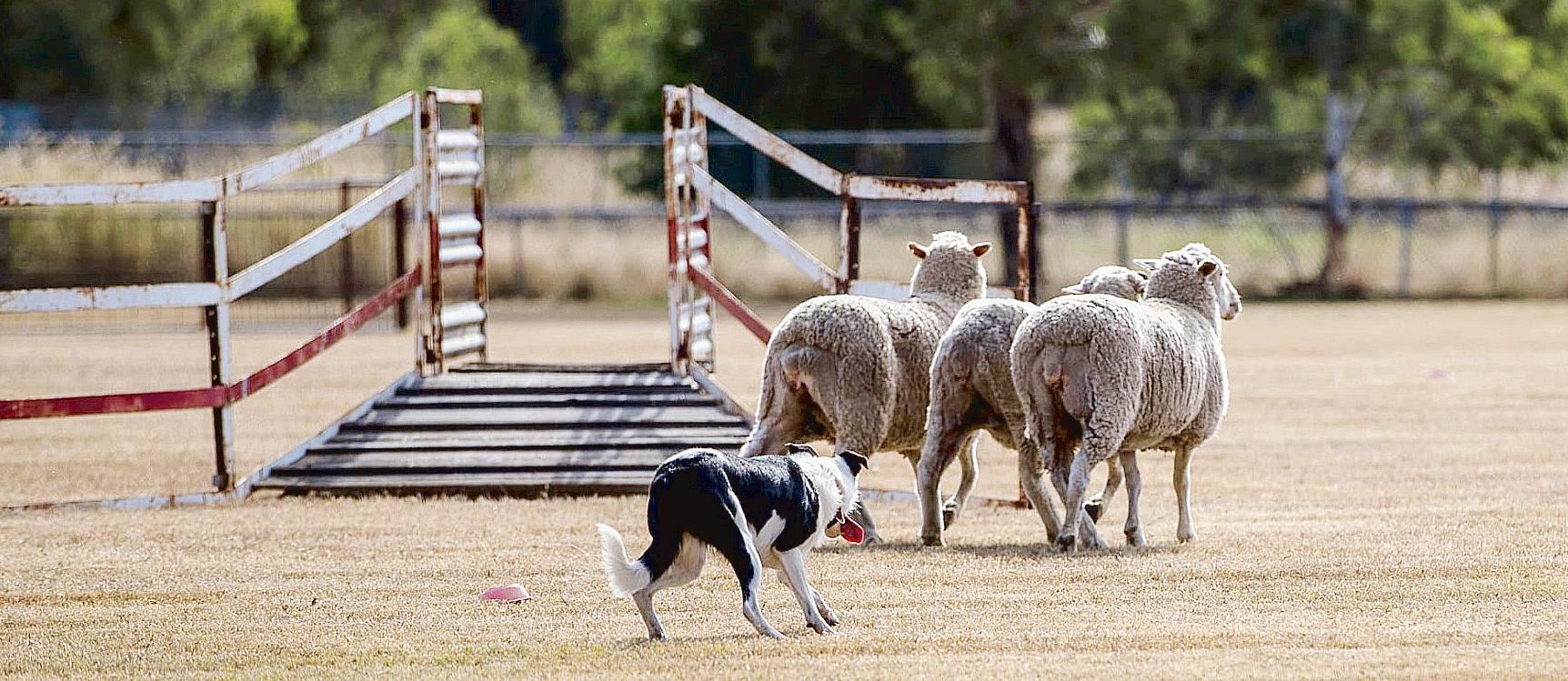
Expect plenty of action as working dogs are put through their paces at this year’s Mallee Machinery Field Days.
RIGHT: The sheep dog trials will be one to watch.
Working dogs are put to the test
THE latest and greatest equipment won’t be the only thing on display at this year’s Mallee Machinery Fields Days, with a new event set to showcase some of the best and brightest working dogs from the Mallee district and beyond.
The Yard Dog Trials are officially coming to this year’s field days and will see working dogs and their handlers manoeuvring sheep through a series of obstacles, simulating the work they would be doing on any given day on a farm.
David Lee of The Lee’s Working Dogs is the organiser of the event and said typical tasks included herding sheep in a yard, working a drenching race, cutting a set number of sheep from the group, and manoeuvring sheep onto a truck.
“It’s a great way to demonstrate the capability of the dogs and their handlers,” he said.
“These are real life situations that have been turned into a competition.”
Mr Lee said the event was likely to attract some of the best handlers and championship dogs from Victoria and even New South Wales to compete in categories including
Encourage, Maiden, Novice, Improver, and Open.
“It’s incredible to watch how amazing the experienced dogs and their handlers are,” Mr Lee said.
“To watch the best dogs in action is really something to see.”
But the competition isn’t just restricted to professionals and experienced handlers.
There will also be a Local Legends division, and anyone with a working dog is welcome to take part.
“If you love your working dog and they have a bit of skill, come try your hand,” Mr Lee said.
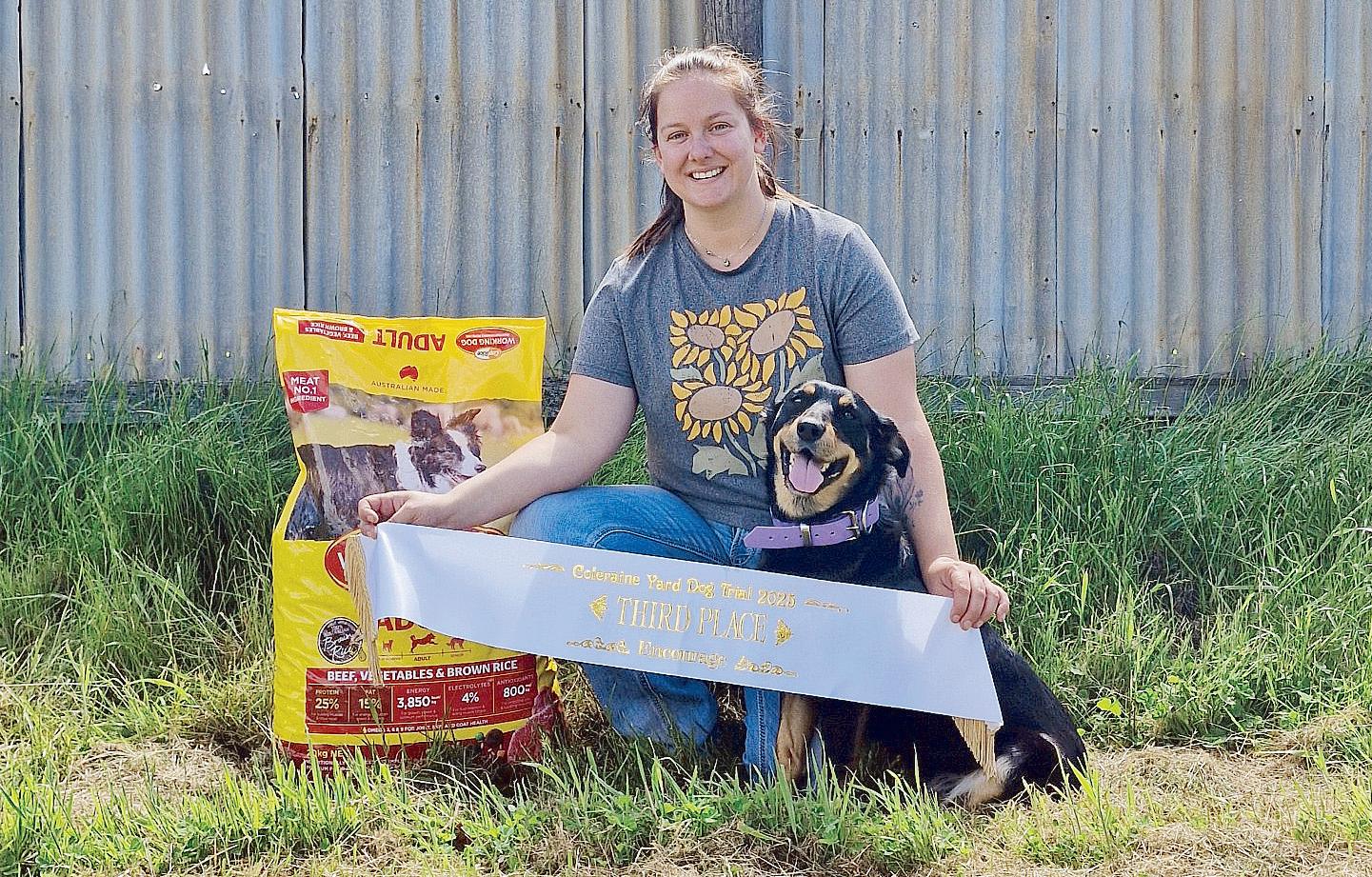
Among those competing is Angie Hay who started Yard Dog Trials with her Kelpie just over a year ago and picked up her first award shortly afterwards.
“I started training with David and his wife Sarah and entered my first trial in South Australia a few weeks later,” Ms Hay said.
“I happened to win an award and from then on, I was hooked on it, and now I go to trials whenever I can.”
Ms Hay will have two dogs competing at the Mallee Machinery Field Days, and she
Local expertise meets premium equipment
AS preparations ramp up for the Mallee Machinery Field Days, Stihl Shop Swan Hill is ready to help farmers, contractors, and landowners find the right tools to keep their properties running efficiently.
Backed by expert advice and a comprehensive range of premium outdoor power equipment, the locally owned business prides itself on matching customers with products suited to their individual needs, whether they’re managing a broadscale farm, lifestyle property, or residential backyard.
As the only elite-classified Stihl dealership in the Mallee, the business stocks the full Stihl range alongside more than 10 other leading outdoor power equipment brands.
In what will be Stihl Shop Swan Hill’s second appearance at the Mallee Machinery Field Days, team member Matthew King said he was looking forward to helping visitors find the right tool for the job.
“Last year’s highlight was meeting with customers directly,” he said.
“Allowing them to see all the gear and helping them out with finding the right equipment for their needs.”
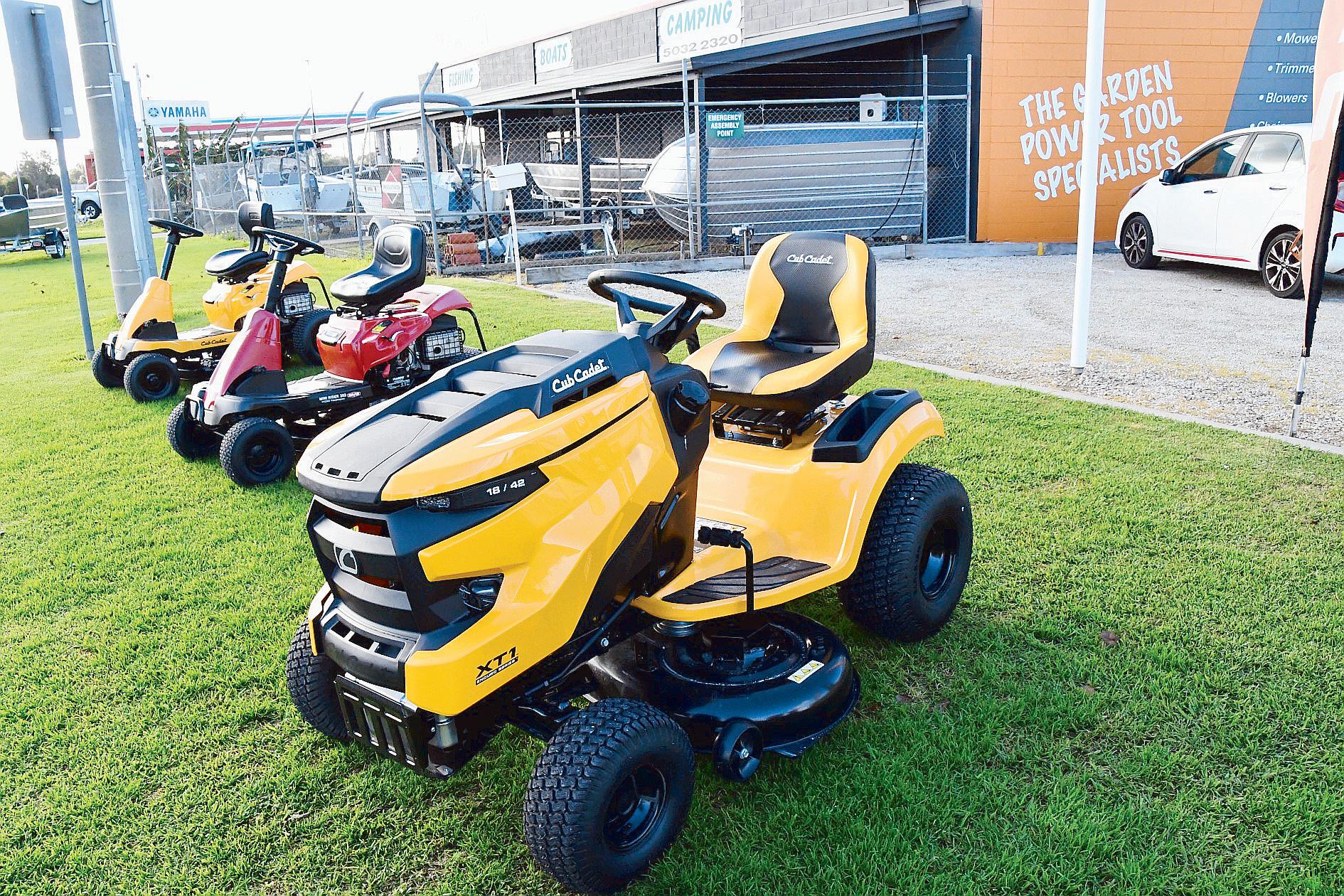
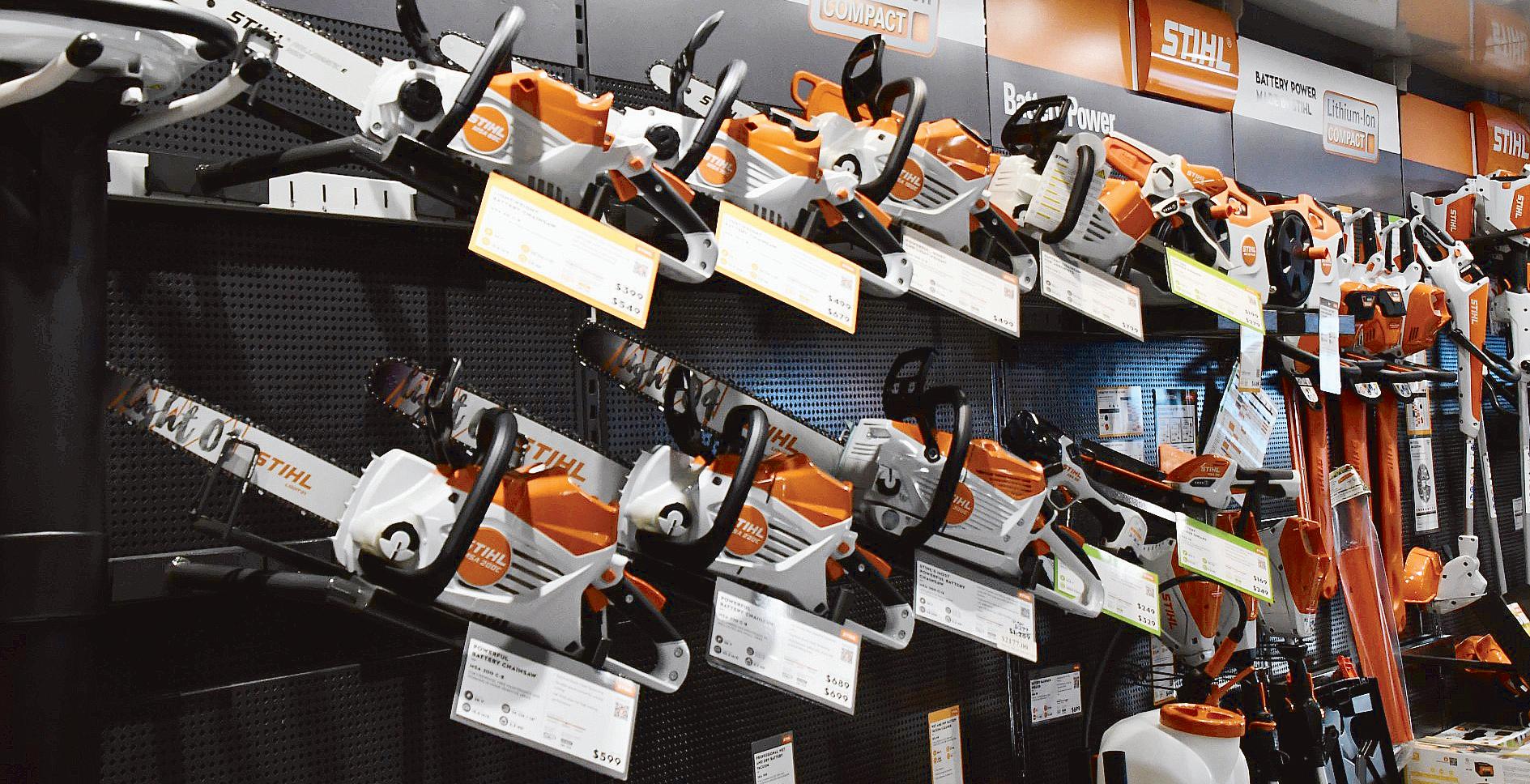
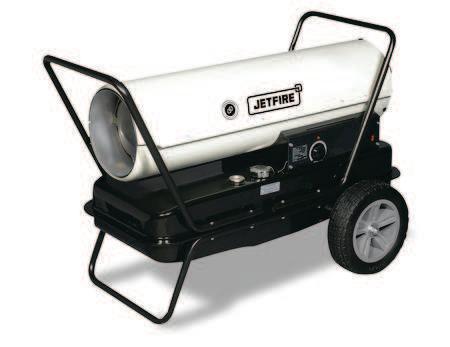
The team is set to showcase a wide selection of petrol and battery-powered equipment, including chainsaws, pressure washers, Jetfire heaters, and lawnmowers.
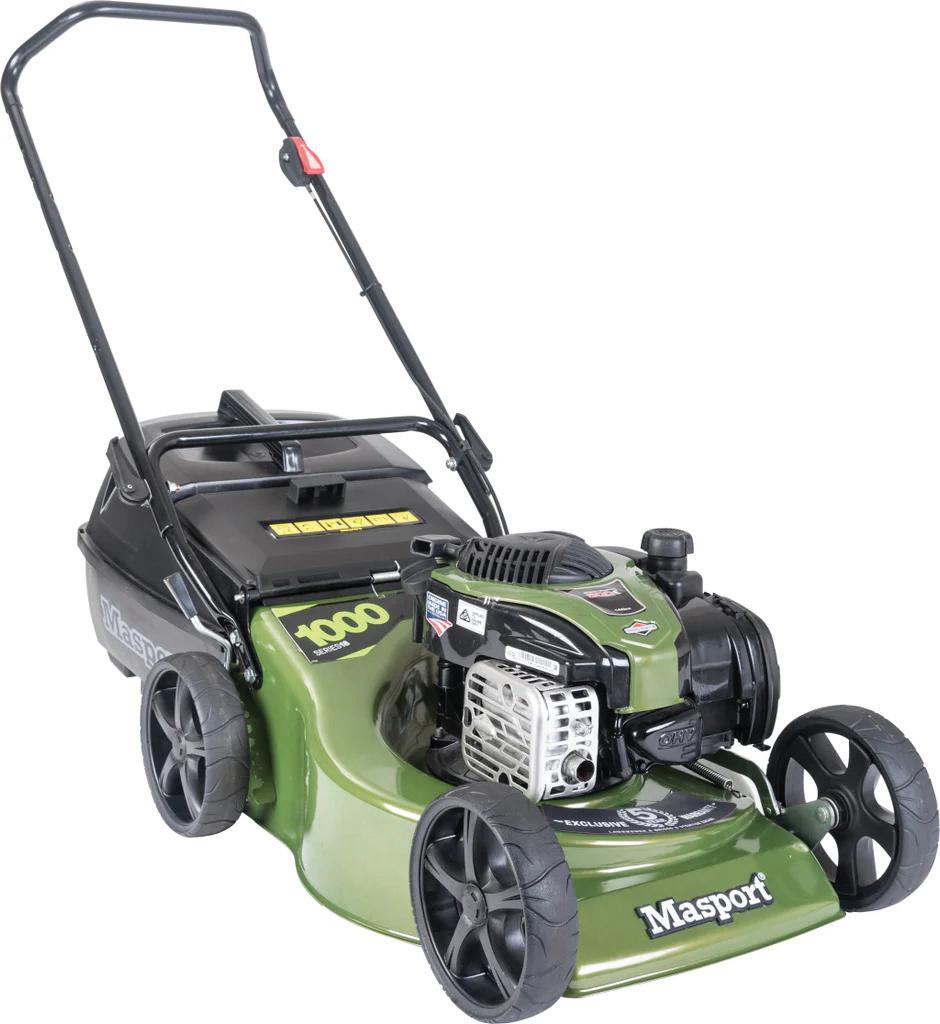
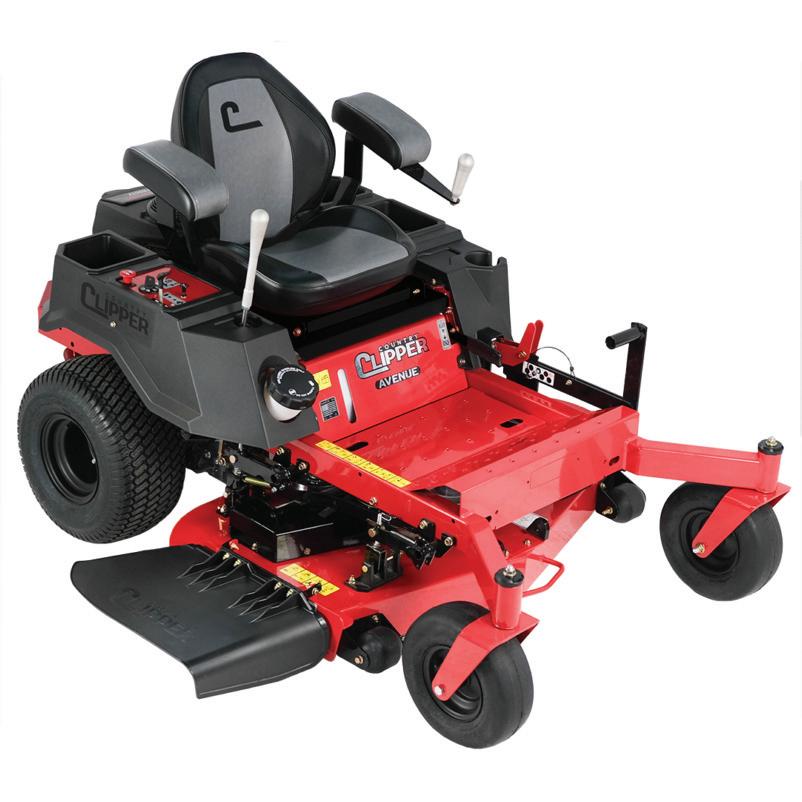
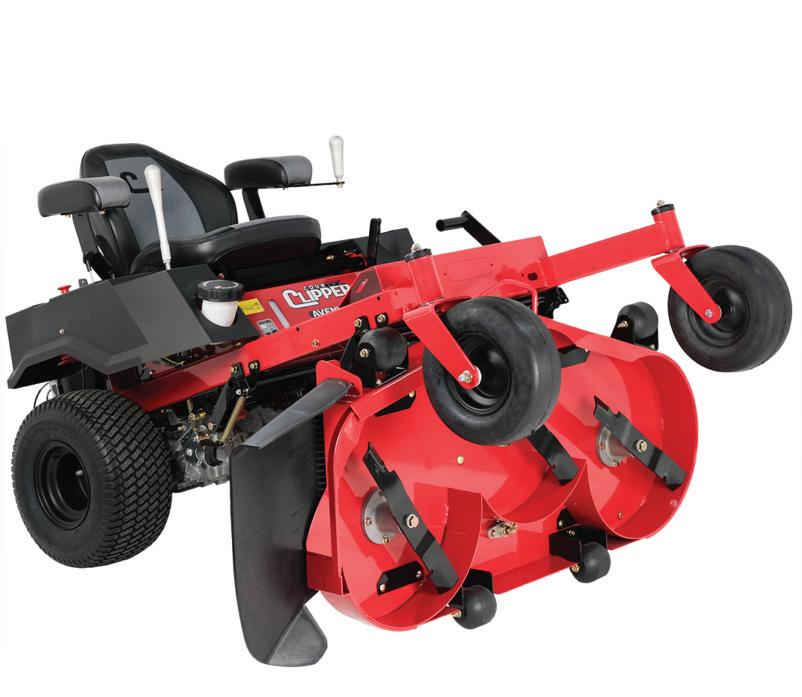
With an extensive collection of ride-on and push mowers, Stihl Shop Swan Hill is expecting their Country Clipper, Cub Cadet, and Victa lawnmowers to be popular.
Whether it’s maintaining a backyard, managing a lifestyle property, or keeping large areas under control, Stihl Shop Swan Hill has a mower solution to suit every need.
The Country Clipper range offers power and precision for larger properties, Cub Cadet delivers comfort and capability for ride-on mowing, while Victa continues its proud Australian legacy with dependable lawn care equipment trusted by generations.
Visitors to the Stihl Shop Swan Hill site will be treated to a range of products and services, as well as exclusive deals across the two-day event.
“We’ll have plenty of equipment with us,” Mr King said.
“We’ll also have some Field Days specials for our customers to make sure they walk away with the best deal possible.”
The locally-owned business stocks the full Stihl range alongside more than 10 other leading outdoor powerequipment brands.
Angie Hay has quickly caught the eye of judges, earning multiple awards after starting the sport last year.
encouraged other locals to take part as well.
“We’re hoping to get a few locals especially those who have done the training,” she said.
The Yard Dog Trials will take place on both August 5 and August 6 at the Mallee
Machinery Field Days.
Those looking to compete or simply try their hand in the event can find out more at the Victorian Yard Utility Farm Dog Association or reach out to The Lee’s Working Dogs for further information.
The team at Stihl Swan Hill will showcase a wide selection of mowers at the Mallee Machinery Field Days.
Sea Lake Lions roar back to life
Peter Bannan
THE Sea Lake Lions Club has staged a remarkable comeback, growing from the brink of collapse to a thriving community group ready to serve the region.
Just last year, the club was facing the prospect of folding, with only three or four ageing members left to keep the Lions legacy alive.
But a major membership drive has breathed new life into the organisation, with 23 locals stepping forward at the recent annual general meeting.
New president Paul Alan, who had only been in the role for two weeks, said the club’s revival was driven by a desire to ensure Sea Lake did not lose an important community service.
“It got to the stage where the existing members were getting older and they were looking at either folding or merging with another Lions Club,” Mr Alan said.
“A few of us got our heads together and decided we’d rather try and keep it going if we can.”
The refreshed club now boasts a diverse group of members ranging from 18 year olds through to people in their 50s, bringing a new energy and focus to the organisation.
Mr Alan said the club had worked hard to move away from the perception that Lions was only for older generations.
“We’ve tried to change it around to a younger group, make it a bit more social and a bit more appealing,” he said.
The renewed enthusiasm was highlighted earlier this year when the club supported a local family following a tragedy in Sea Lake.
Mr Alan said about 20 members came together to help with yard clean-up and other tasks, an experience that reinforced why the club needed to continue.
“We walked away from that feeling overwhelmed that we could help someone out in need,” he said.
“That’s when we started thinking, how can we keep this going? We need to keep this Lions Club going so we can continue helping the community.”
The Sea Lake Lions Club has already thrown its support behind neighbouring
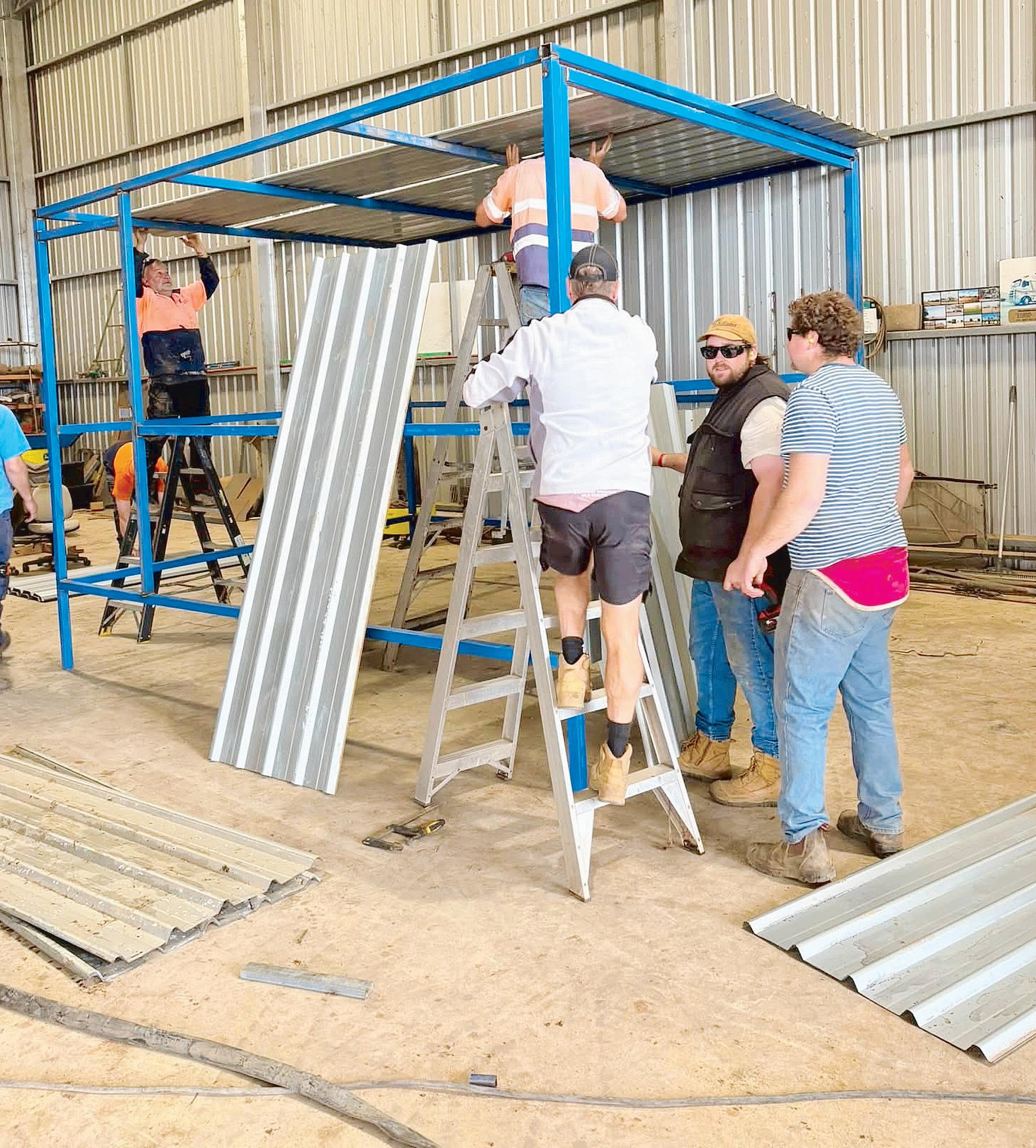
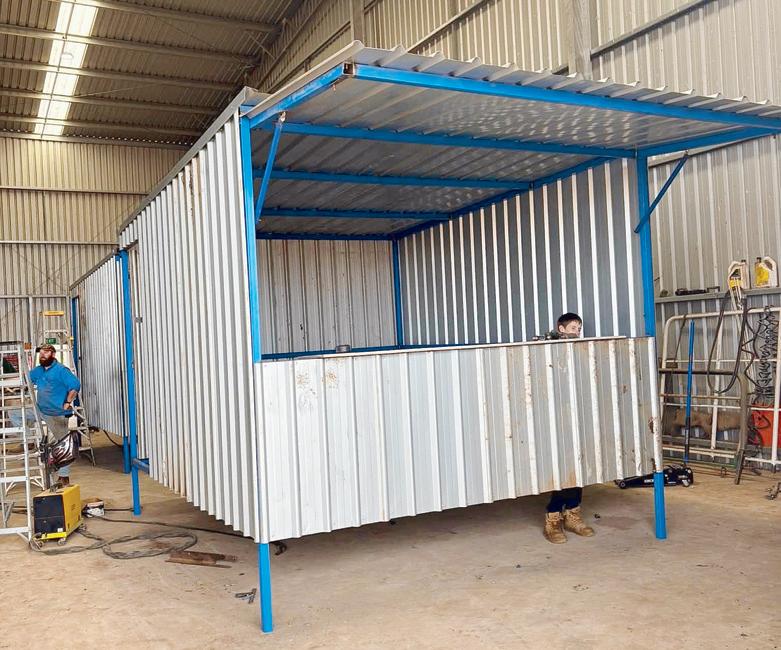
Speed Lions Club ahead of this year’s Mallee Machinery Field Days, building permanent sheds for the event’s popular sausage sizzle operations.
The club has traditionally helped run the sav tents at the field days, and this year will return to operating two cooking areas after previously scaling back to one.
A community working bee last weekend saw members construct two permanent threemetre by four-metre sheds, reducing the need for Speed Lions to hire and erect temporary tents every year.
“It makes our job easier doing our volunteer work there because it’s all set up and ready to go,” Mr Alan said.
“It helps Speed Lions by not having to set up and pack up a tent every year.”
More than 20 Sea Lake Lions volunteers will work across the two-day event, with many members also juggling commitments with other local organisations.
Mr Alan said the field days delivered significant benefits across the wider region, including Sea Lake.
“It also boosts our Sea Lake economy,” he said.
“We have people staying in local hotels and the caravan park, going down the street and spending money in town while they’re attending the field days.
“Local schools also use it as a major fundraiser, so it’s a pretty important thing to keep going.”
Looking ahead, Mr Alan said his goal for 2026 was to build enthusiasm, strengthen the club and create a sustainable future.
“I’m just trying to create a bit more enthusiasm into it, lift the morale of the whole Lions Club and make it a more fun, attractive club to join,” he said.
The club also hopes to establish a fundraising pool to provide financial assistance to community groups and people in need.
Mr Alan said the club’s doors remained open to anyone wanting to get involved.
“Male or female, we’re after more help,” he said.
“Whether you just want to help cook a barbecue or you want to be as involved as you can, everyone is welcome.”
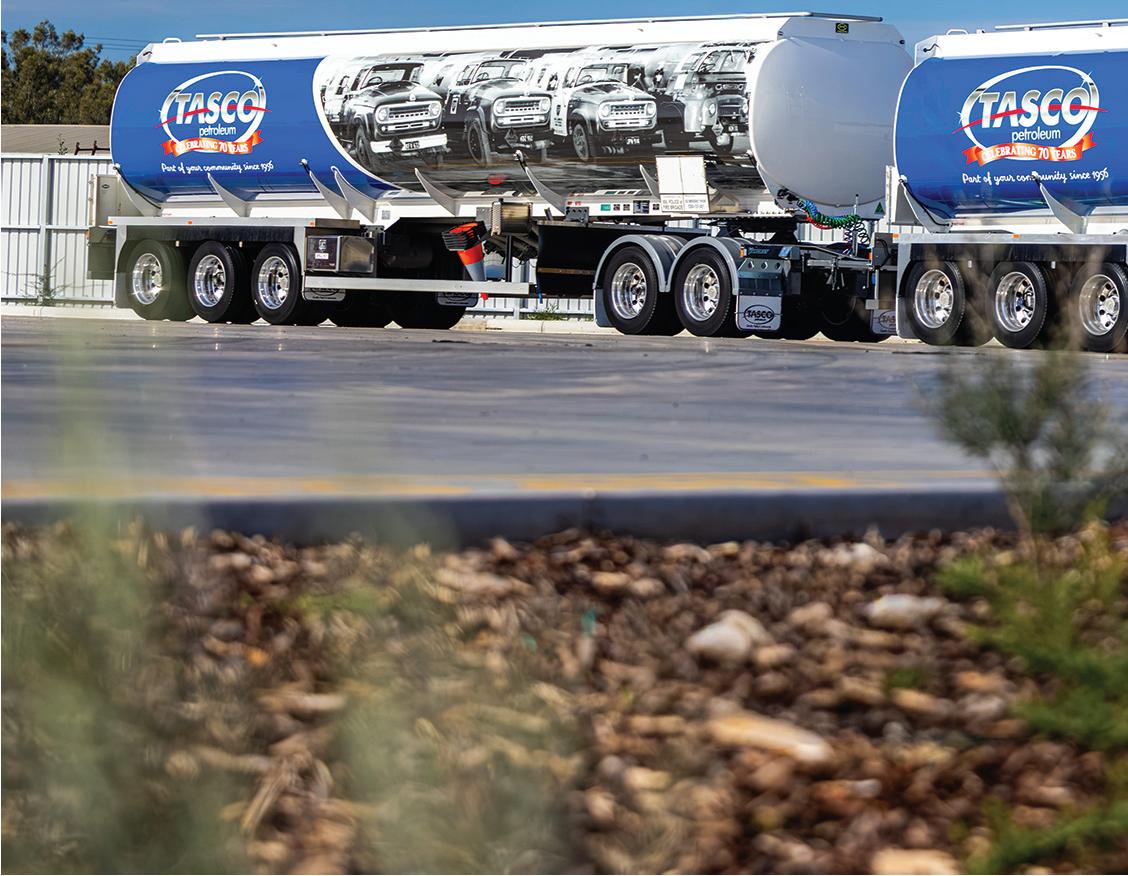
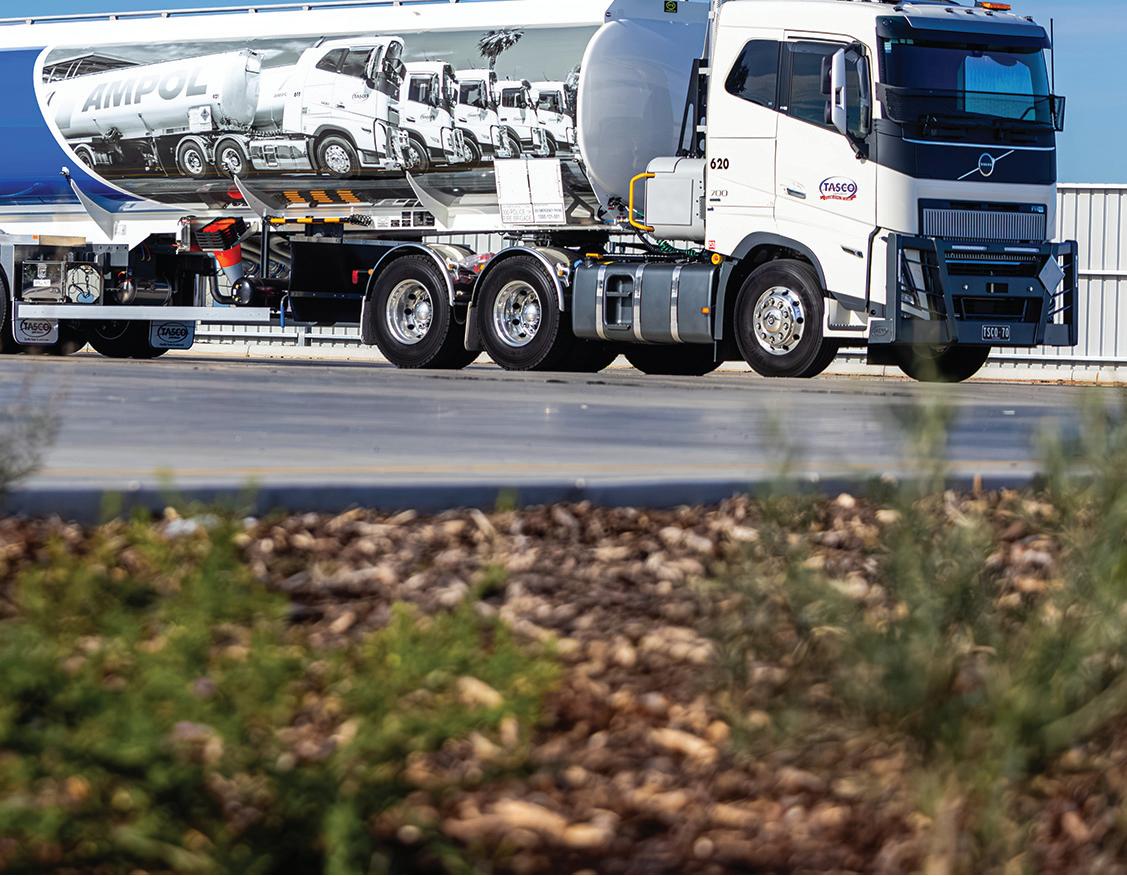
TASCO fuels 70 years of regional success
FROM a family-founded fuel business to one of regional Australia’s biggest independent distributors, TASCO Petroleum has reached a major milestone while staying true to its local roots.
For more than seven decades, TASCO Petroleum has been keeping regional communities moving, supplying the fuel and lubricants that power farms, businesses, industries and everyday life.
The company has built a trusted network across south-eastern Australia, while maintaining the values that have driven its success since 1956: reliability, integrity and a commitment to local communities.
TASCO Petroleum, formerly known as TASCO Inland, was established in 1995 through the merger of TASCO, formerly T&S Petroleum, a Mobil distributorship, and Mildura-based Inland Oil Pty Ltd, a former BP Australia distributorship.
Founded by Graham Lake, the merger brought together two respected regional businesses and created the foundations of the company’s future growth.
That growth continued through a series of strategic expansions, including the acquisition of Power Petroleum in 2006, a Mobil distributorship servicing north eastern Victoria and south eastern NSW.
In 2010, TASCO added a Caltex distributorship in Wagga Wagga before further expanding in 2016 by taking on the operations of several Caltex depots across Northern Victoria, Southern NSW and Renmark in South Australia.
Today, TASCO Petroleum operates more than 50 service stations and 19 wholesale depots across a vast regional footprint, including Robinvale, Swan Hill, Mildura, Sea Lake, Ouyen, Balranald, Bendigo, Benalla, Broken Hill, Bunnaloo, Bordertown, Leeton, Murray Bridge, Naracoorte, Serpentine, Shepparton, Urana, Wodonga,
Wagga Wagga and its newest retail outlet at Trentham Cliffs.
The company supplies quality diesel, petrol and a comprehensive range of bulk and packaged lubricants to a wide range of industries, including agriculture, mining, transport, construction, commercial operations and retail.
But despite its growth, TASCO said its greatest strength remained its people and the strong relationships built in the communities it served.
“Across every location, our people are at the heart of our success,” regional manager Dean Stanyer said.
“Our knowledgeable teams provide trusted advice, dependable service and access to a wide range of well-known fuel and lubricant brands.”
The company’s regional focus has remained a key part of its identity, with local teams providing practical solutions and service
backed by years of experience.
“We thrive on local service with local commitment,” Mr Stanyer said.
“We are committed to the communities we serve, providing reliable service and creating trusted partnerships.”
As it looked towards the future, TASCO Petroleum said it remained focused on investing in its people, infrastructure and regional communities to continue meeting the changing needs of customers.
“Wherever our customers are, and whenever they need us, our commitment remains unchanged,” Mr Stanyer said.
“To deliver quality fuel, trusted lubricant solutions and the reliable local service that has kept regional Australia moving for generations.”
TASCO Petroleum has also been a proud site holder at the Mallee Machinery Field Days for many years and will return this year.
Visitors are encouraged to drop by and meet the TASCO team at site 117.
New truck stop at Trentham
Cliffs. Picture: Ben Gross
Peter Bannan
RIGHT: Built for purpose, the stands will be used to sell savs, a Mallee Machinery Field Day’s favourite.
Members of the revitalised Sea Lake Lions Club have been constructing permanent fixtures to support the event.
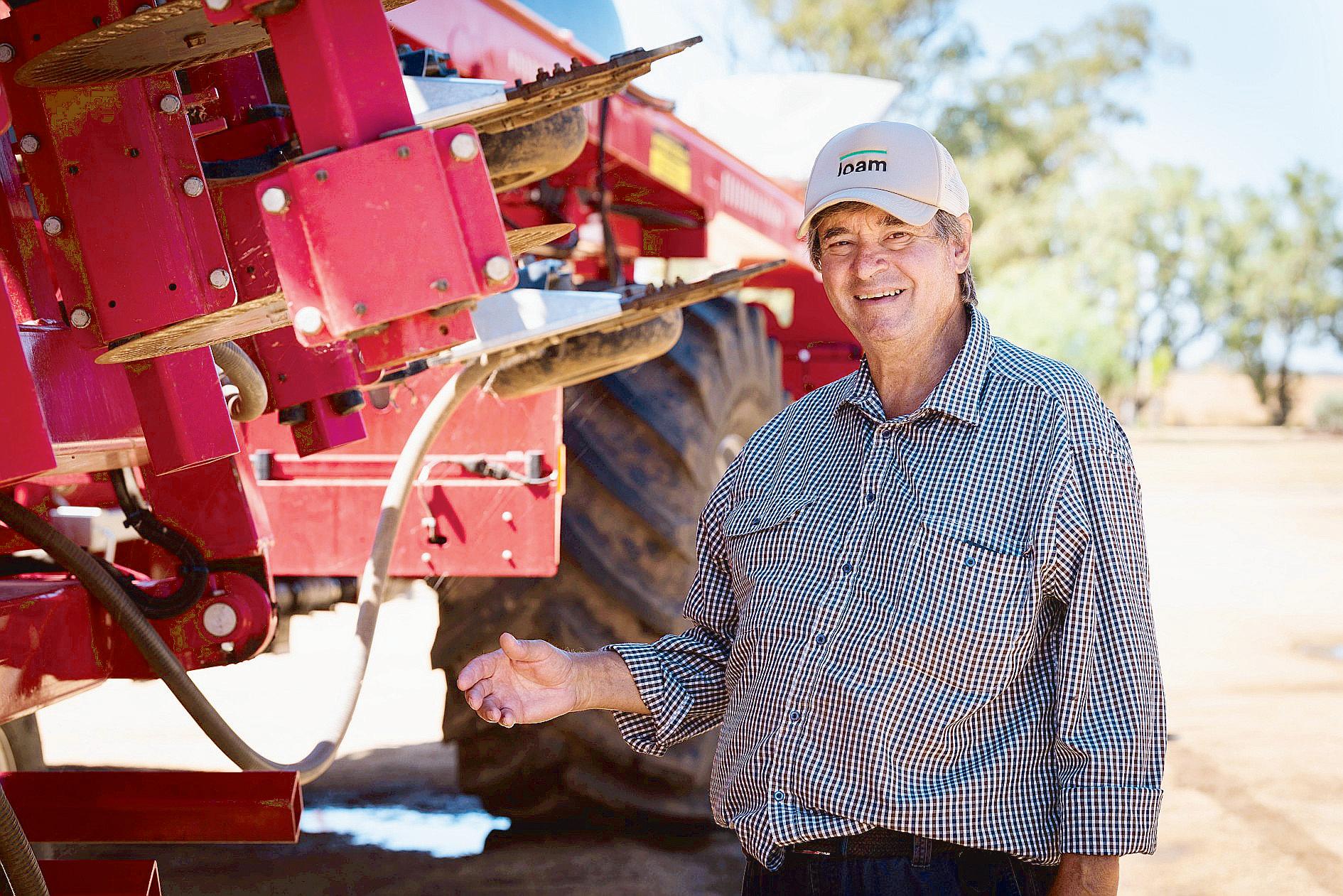
Wilkur trial opens door to soil carbon credits
VICTORIANbroadacregrowersmayfinally be on the cusp of entering Australia’s regulated carbon market, with new trial results from the state’s north pointing to a breakthrough that delivers both carbon gainsandmeasurableagronomicbenefits.
Australian agtech company Loam Bio has released first-year data from a 2025 wheat strip trial near Wilkur, where its CarbonBuilder fungal seed treatment was applied at commercial scale across 10 field-length strips - five treatment and five control - spanning just over 30 hectares.
Each plot measured 27.43 metres by 500 metres, allowing researchers to assess performanceunderreal-worldconditions.
Alongsidethesoilcarbonstory,thethirdparty agronomic results were notable in their own right: an 11 per cent lift in plant establishment, 14 per cent increase in tiller count, lower screenings (0.59 per cent compared with 0.67 per cent in the control), and a slight yield improvement of 0.2 per cent with no quality penalty despite the higher tiller numbers.
The company says the findings demonstrate a long-awaited pathway for broadacre farmers to access the regulated carbon market - a sector they have historically been locked out of - while improving crop performance at the same time.
The treatment is applied at seeding and is designed to build stable soil carbon, forming the basis for generating Australian Carbon Credit Units (ACCUs). That pathway is already being realised
across the border.
SteveNicholson,whorunsa4000-hectare cropping and grazing operation in NSW’s Central West, recently became the first broadacre grower in Australia to generate tradeable ACCUs using CarbonBuilder.
His project produced 4867 ACCUs across 881 hectares, cleared by the Clean Energy Regulator.
Nicholsondescribestheshiftas“growing two crops from the same paddock” - one above ground and one below.
The Wilkur trial is one of four underway in Victoria and part of a national network of 18 sites tailored to local conditions.
For Wimmera and Mallee growers, that meansthedataisemergingfrompaddocks and seasons they recognise - a key factor in assessing commercial viability.
For Victoria’s broadacre sector, the results amount to the clearest evidence yet that soil carbon cropping projects can operate at scale without removing productive land from rotation.
Rising ACCU demand under the Safeguard Mechanism, which compels large emi ers to buy offsets, adds further commercial weight.
Independent academic research has also validated Loam’s science, with Australian studies showing CarbonBuilder fungi can increase and stabilise soil carbon levels.
With trials expanding and early adopters already generating credits, the prospect of a new income stream - paired with improved crop performance - is now firmly on the radar for Victorian growers.
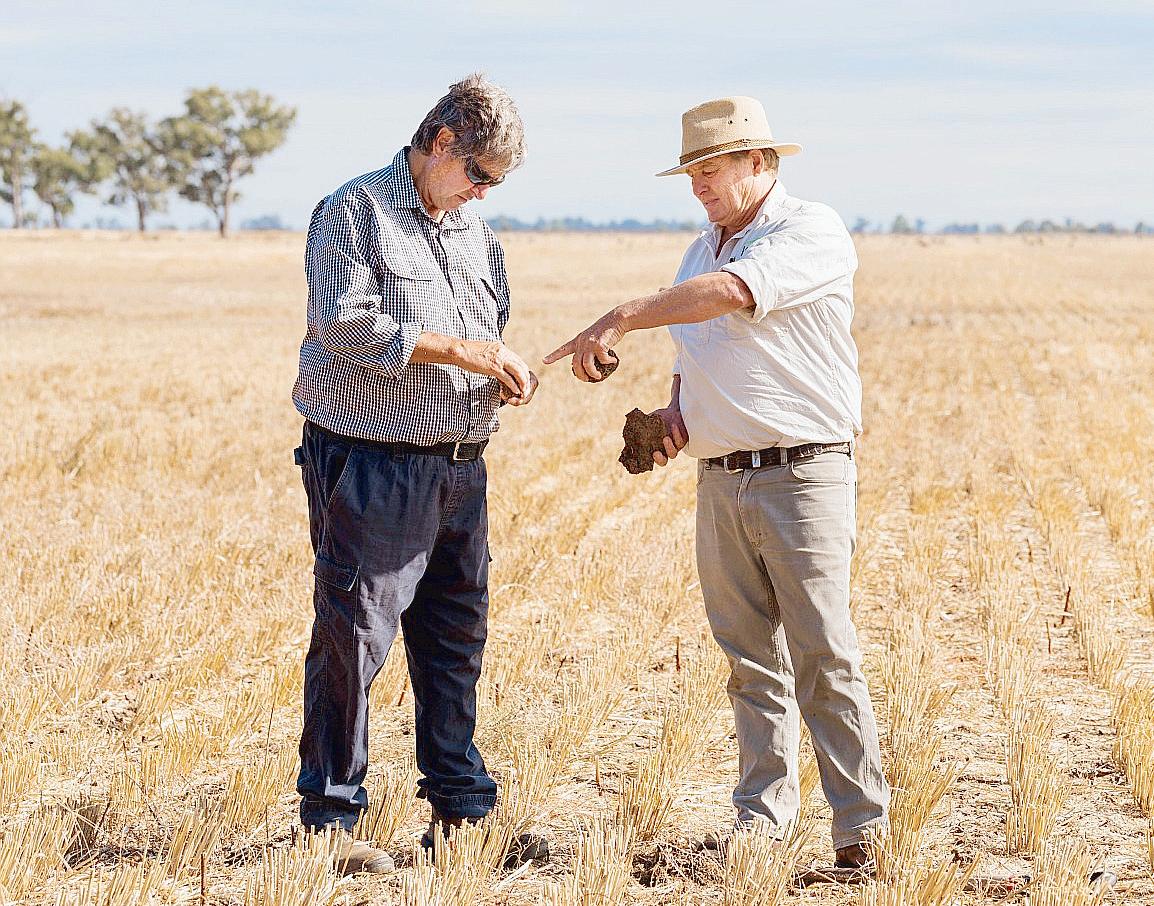
Farmer Steve Nicholson has become the first broadacre grower in Australia to generate tradeable ACCUs using CarbonBuilder.
LEFT: Steve Nicholson and Loam Bio co-founder Guy Webb inspect the paddock.
IHAVEneverbeenafanof winter,anditgetsworse as I get older.
Sally the prodigal farmer has returned from her world travels, and basically had a blast. Zimbabwe was a highlight.
She will be home for the school term, then off to New Zealand for the Grade 6 school camp, before headingoverseasagaintocompletethefinallegof her scholarship travel.
In less exciting news, the boys and I have returned from a couple of weeks at Sunshine Beach near Noosa.
At home, our river sport is something we jokingly call “not catching”, but Noosa proved far more productive. We fished multiple times and landed shovel-nosed sharks, bream, whiting and flathead.
I am the reigning mini golf family champion, although competition was tense.
I also hold the title of the most accomplished ice cream consumption technician.
I promised the boys I would go swimming in the surf with them and I did, once!
My favourite part was the family singalongs in the car.
It’s a bit unfair that I’m the one who sings the most, yet I’m also the only one who can’t hold a tune.
We may have had an altercation with a kangaroo onthewayhomeandourvancameoffsecondbest, so we left it at Dubbo and got a hire car for the rest of the way.
It wasn’t the best way to finish our holiday, but nobody was hurt.
As we came back into Swan Hill it was pouring withrain,freezingcoldandmiserable,prompting the question why did I come back?
But at least spring is now only a few weeks away.
Thenewpasteuriserisfinallydoingmostof what it’s told.
It has passed the shelf-life tests, and we have just one remaining hurdle with the homogeniser beforeitgoesintoproduction-hopefullyfollowed closely by the separator and the light milk.
But I’m done making promises; there’s so much egg on my face I’m basically an omele e.
The wet weather is great for the crops but posing quite a few logistical challenges for cows and farm machinery alike.
Farmers’egosareoftentiedtofat,healthy,happy cows, and it always feels like I’ve failed when the not-so-well mob grows.
But everyone is working as hard as they can in terrible conditions.
I’vealsodevelopedaseriouscaseof shedenvyfor those farmers with big sheds that can house their cows through the wet and the heat.
Maybe if I didn’t eat so many ice creams, I could afford one.
THE latest Australian Bureau of Statistics 2024–25 agricultural data highlighted the Swan Hill and broader Murray region among Australia’s top wine-producing areas, while almonds also continued their strong growth, reflecting horticulture’s importance to the local economy.
ABS head of agriculture statistics Trent Lind said wine grapes remained one of Australia’s major horticultural success stories, with the Swan Hill and Murray regions featuring regularly in the latest figures.
“Wine grapes were still one of the major horticultural crops and a success story for the Swan Hill and Murray region,“ Mr Lind said.
“Several of the Murray-Darling regions appeared among the top wine-producing areas nationally and wine grapes remain a success story for that region.“
Almond production also delivered another impressive result, increasing by almost 20 per cent nationally to a local value of $1.3 billion, highlighting the continued strength of an industry that plays a significant role across the Murray Valley.
Nationally, Australia’s agricultural sector recorded another bumper year, with winter broadacre crop production increasing by 20 per cent to 61.1 million tonnes, worth $22.5 billion.
Mr Lind said the diversity and resilience of Australian agriculture stood out in this year’s results.
One of the biggest success stories was chickpeas, with production soaring 275 per cent from about 546,000 tonnes in 2023–24 to 2.0 million tonnes in 2024–25.
Mr Lind said strong global demand and favourable seasonal conditions were key drivers behind the record harvest.
Wheat remained Australia’s largest winter crop, accounting for 57 per cent of total winter crop production.
Farmers sold 34.8 million tonnes of wheat during the year, an increase of 6.8 million tonnes, with the crop’s local value rising to $10.1 billion.
Together,wheat,barleyandcanolaaccounted for $18.7 billion, or 83 per cent of the total value of Australia’s winter crops.
While much of the country enjoyed favourable growing conditions, Mr Lind said parts of Victoria experienced reduced production because of drought and less favourable seasonal conditions, highlighting the challenges many growers continue to face.
ThelatestABSreleasealsomarksanotherstep in the agency’s modernisation of agricultural statistics, with faba beans and field peas included in the winter broadacre crop data for the first time.
The wet weather has posed a few logistical challenges for cows.
DAIRY with PAUL BETHUNE
ABS data highlights Swan Hill’s winegrowing strength amid wider industry pressures.
Prestigious wool award
Bevan Jones
A MACORNA farming family is celebrating a major achievement after taking out one of the wool industry’s most respected honours.
Greg and Cat Whinfield were named winners of the Elders Northern Wool Clip of the Year at an awards function in Deniliquin last month, recognising their commitment to producing a high-quality wool clip.
Adding to the achievement, the Whinfields were competing against some of the Riverina’s largest wool-growing operations.
Their wool was represented by Elders Swan Hill wool agent Andrew Williamson, whose support Greg said had played a significant role in the family’s success.
Mr Whinfield admi ed he was stunned when their names were announced.
“I was very surprised, so much so that I nearly had a heart a ack,” he laughed.
“It was a really nice surprise because it’s not just based on micron or the size of your clip. It’s about ge ing all the li le things right, how you class the wool, how you present it, all the paperwork at the end and making it easier for the people in Melbourne to test it, market it and hopefully achieve a be er price.
“We were thrilled and surprised, but this award belongs to the whole family, our shearing team and Andrew Williamson as well.”
MrWhinfieldsaidtherecognitionwasespecially rewarding given the effort that goes into producing a quality clip each year.
“It was a fantastic night and great to meet so many people who have been involved in the wool industry for a long time,” he said.
“It was a nice reward for everyone involved.”
Mr Whinfield said their focus had always been on producing the highest quality wool possible.
“Because we don’t produce a huge clip, we really have to concentrate on quality and ge ing all the li le details right,” he said.
“Andrew has helped us with those li le things
over many years and has been a tremendous support. We’re very grateful for everything he’s done.”
Mr Whinfield said maintaining consistent nutrition, careful timing and good management throughout the year helped produce stronger, cleaner wool free from vegetable matter and tender fibres.
“It’s about having a good plan and sticking to it,” he said.
Like many farming families, the Whinfields have also had to navigate significant challenges.
For their business, one of the biggest has been
water availability.
“We run both irrigation and dryland farming, so the Murray-Darling Basin Plan and water policy have been our biggest challenges,” Mr Whinfield said.
“Having access to affordable water is becoming increasingly difficult.”
Despitethosechallenges,hesaidhewasproudof what the family had been able to achieve.
“We might not produce huge volumes, but we’re proud of the quality of what we do. We just try to do the best we can with the circumstances we’re given.”
Mr Whinfield said one of the things he loved most about farming was that no two days were
ever the same.
“Presenting a really good clip of wool is always satisfying,” he said.
“The sheep certainly test us at times, but that’s farming. You expect challenges, and we’ve got good facilities and a great team around us.
“At the moment the season is looking good, wool quality is strong and prices are reasonable, so things are travelling well.”
Looking ahead, Mr Whinfield said one of his greatest joys was seeing the next generation continuing the family’s agricultural journey.
“Seeing our three boys involved in agriculture and watching them develop their own skills is something Cat and I are really proud of,” he said.
Duncan McKenzie, Andrew Williamson, Cat and Greg Whinfield and Sue McKenzie were delighted with the accolade. Picture: Supplied
LIVESTOCK REPORT
with Matt Rowlands
Livestock prices surge as the supply squeeze grips markets
SHEEP, lamb and cattle prices climbed sharply as tight supplies, strong buyer demand and widespread rain delivered a welcome winter windfall for producers.
Elders livestock agent Matt Rowlands said reduced yardings across Victoria and New South Wales showed there was little well-finished stock left for the remainder of winter.
The shortage was intensified by producers retaining store and feeder stock after rain improved seasonal conditions across a vast area.
“New-season sheep and sheep that have been shorn for a winter, August or early spring shearing have been retained due to the good season,” Mr Rowlands said.
“It is taking numbers out of supply, which is increasing the price. It is very positive at the moment.”
Mutton reached between $9.50 and $10 a kilogram at selected saleyards, delivering what Mr Rowlands described as a “fantastic result” for vendors who had held stock or were ready to sell surplus cast-for-age sheep.
Lamb prices also gained another $15 to $20 a head week on week during the previous fortnight.
Despite the high prices, buyers continued to pay a clear premium for well-presented stock that closely met their requirements.
Heavy lambs remained highly sought after, while fierce competition also developed for trade-weight lambs.
Mr Rowlands said many lambs bought earlier had been pushed to heavier weights in an effort to secure a margin, leaving fewer animals available in the trade-weight category.
Sucker lambs had also started appearing in New South Wales markets.
“They are not there in any great volume, but they are definitely there,” Mr Rowlands said.
“I think we will start to see more of them come on towards the back of July. Price is probably going to bring those lambs forward rather than them being at any great heavy weight.”
The cattle market also rebounded as rain slowed yardings and buyers chased a limited supply of quality stock.
Swan Hill yarded just under 300 head last week, with feeder and restocker demand helping
to underpin the market.
Buyers were aggressively pursuing lighter cattle suitable to return to the paddock, but supply remained tight as improved feed conditions encouraged producers to retain stock.
“So much feed is available over a large area, but we are also seeing the benefit for people who held stock through the autumn and went into winter,” Mr Rowlands said.
Producers offering feeder cattle weighing between 350kg and 450kg were being “really well rewarded”.
Finished trade and feeder cattle gained between 15 and 25 cents a kilogram at Swan Hill last week, with those rises flowing through to other saleyards this week.
Cow prices also rallied, reaching between $4.20 and $4.30 a kilogram for the better-quality cows destined for slaughter.
Restockers faced elevated prices, but Mr Rowlands said opportunities remained for buyers prepared to carefully examine store sales and online auctions.
“There are still gaps in the market,” he said.
“There is some value in putting lighter cattle away at a price where there is going to be a
margin into the spring or summertime.”
Advertising was expected to begin soon for the annual Wycheproof spring store sheep sales, which will again be held across October and November.
Mr Rowlands said producers interested in offering sheep through the major selling fixture should contact their local Elders representative.
“It is a yearly feature in the spring,” he said.
“It is a proven way of marketing sheep and attracting buyers to the sale.”
Good rainfall during June had fully saturated soil across a large part of Victoria, while a mild winter, sunshine and moderate temperatures continued to promote pasture growth.
Mr Rowlands said the conditions were adding weight to livestock and had producers well positioned for the months ahead.
“It is setting us up to have an early spring,” he said.
“The mild temperatures are still promoting growth, which is adding weight gain to stock and seeing them really push ahead.
“It sets us up for a really good spring, when we will be able to grow plenty of feed and finish livestock.”
• Outstanding 50sq home under roof encompassing open plan living, kitchen and dining; main bedroom plus ensuite, two bedrooms and office, double garage and inground pool.
• Combination of GMW pipeline irrigation water and town water to the property.
• Modern improvements include extensive shedding infrastructure as machinery storage and vegetable grading and packing facilities. Also, 18kw solar system, 30kva generator for emergency power backup, 21 pallet coolroom and large enclosed hay shed, intensive cattle feed pens.
• Maximise production using 17ha/42ac* permanent and 4ha/10ac* semi-permanent overhead irrigation on premium undulating red sandy loams. 158ac* potential development.
• Proven producer of quality and in demand vegetables during winter months using the local favoured winter climate. Asking Price: $3,300,000
Lambs sold reaching$378 at last weeks prime lamb sale.
Warnings Information at www.bom.gov.au/vic/warnings or Ph: 1300 659 210 (local call cost)
Mallee Forecast
Mallee
Partly cloudy. The chance of morning fog. Patches of morning frost near the New South Wales border. Light winds.
Saturday. Partly cloudy. The chance of morning fog. Light winds.
Wimmera
Partly cloudy. The chance of morning fog. Light winds.
Saturday. Cloudy. The chance of morning fog. Light winds.
Victoria
Areas of morning fog and frost, then a cool, dry and mostly sunny day with light winds tending northerly in the west.
Saturday. Areas of morning fog and frost, then a cool, dry and mostly sunny day with light winds tending northerly in the west.
After the frantic finish to the 2025/26 irrigation season, the new water year has commenced at a steadier pace. Widespread rainfall across the Southern Basin over the past few weeks has not only provided a welcome boost to sentiment but has also contributed to significant inflows into major storages.
Southern Basin storage levels are currently sitting at approximately 55%, compared to 59% at the same time last year, with further inflows expected to reach key storages over the coming days.
While some opening allocations bring welcome clarity for irrigators, others highlight the challenges that still lie ahead for Southern Basin water users.
Opening allocations have largely met expectations, with New South Wales Murray and Murrumbidgee High Security entitlements reaching 97% and 95% respectively. These early figures offer confidence to high-security users; however, general security entitlement holders remain in a holding pattern. These wetter conditions played an integral role in last Wednesday’s seasonal determination announcements. In the Goulburn system, as recently as mid-May there was genuine concern over the possibility of a 0% opening allocation. Instead, HRWS holders received an opening allocation of 15%, accompanied by a low spillrisk declaration, placing Goulburn irrigators in a favourable position ahead of the peak irrigation season.
In the Murray system, Victorian HRWS opened with a conservative allocation of 29%. However, following recent rainfall events and improving inflows into both Hume and Dartmouth storages, it is likely we will see a meaningful increase announced in the next seasonal determination update on 15 July.
The Goulburn to Murray Inter-Valley Trade (IVT) account opened on 2 July with just under 113 GL available. Notably, this was the first opening in recent years where the account was not oversubscribed, with only four unsuccessful applications. This raises an interesting question as to whether irrigators perceive carryover risk in the Goulburn to be too high, or whether other market factors are influencing trade behaviour.
Unfortunately,theoppositeoccurredintheAboveChoke to Below Choke trade opportunity. While just over 24 GL was made available, more than 43GL of applications were unsuccessful, highlighting continued demand for downstream trade opportunities.
Unlike most seasons, we have not seen the same urgency from Murrumbidgee water users to move allocation into the Murray system. Currently, approximately 92.7 GL of trade opportunity remains available for Murrumbidgee entitlement holders wishing to transfer water into the Murray. This will be critical information for Murray users should this transfer activity fail to materialise.
Weather Outlook: Mild but Increasingly Uncertain
The Bureau of Meteorology’s (BoM) long-range forecast for July to September suggests that, with El Niño now established, rainfall is likely to be below average across much of southern and eastern Australia. There is an
increased likelihood of unusually low rainfall across parts of the south-west and south-east during this period.
Nutrien Ag Solutions meteorologist Eric Snodgrass argues that, in the short term, Australia’s recent wet conditions are largely the result of earlier tropical moisture transport and basin-wide hydrological processes. Several winter fronts are also expected to continue delivering rainfall across southern Australia in the coming weeks.
However, the bigger story is the rapid development of what he believes could become a historically strong El Niño. The greatest drying risks are expected to emerge from August and persist through summer, making the remainder of 2026 increasingly uncertain for Australian agriculture.
Market Implications
Water markets will continue to be shaped by the classic supply-and-demand equation: rainfall, inflows, allocations and water-use. As a result, price movements are likely to remain highly sensitive to short-term changes in seasonal conditions.
Weather conditions are currently much better than many anticipated; however, the recent wet pattern should not create complacency. The moisture benefiting farms today may prove temporary, while the developing El Niño has the potential to significantly increase drought risk from late winter into summer.
For irrigators intending to participate in the market this season, it may be prudent to consider securing or hedgingaportionofwaterrequirementsearlytomanage the risk of price escalation later in the year.
At a time when uncertainty remains high and market movements can be swift, the value of informed decisionmaking cannot be overstated. Engaging with a trusted water broker can help irrigators develop and execute water strategies aligned with both operational needs and risk tolerance.
- Wendy Saunders Operations Manager Ruralco Water
Back row: Jon Armstrong, Grant Stoeckel, Phil Grahame, Jeff Milne. Front Row: Gokul Parambalath, Wendy Saunders, Allan Anderson.
The crew at Goodyear Curlewis Street have all your commercial tyre needs covered, from truck to tractor tyres and repairs – we do it all.
Stocking the biggest range of tyres in the area at competitive prices. With our on farm service truck, we have all your on site jobs and after hours call outs covered, we will keep you on the road or in the paddock.