
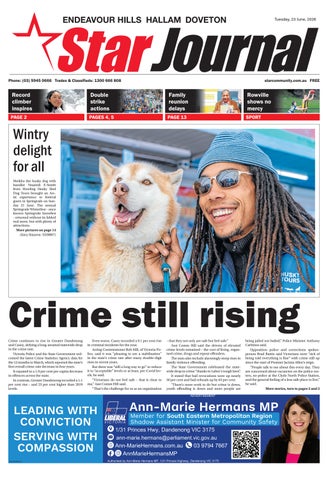
Meikho the husky dog with handler Nnamdi E-Smith from Howling Husky Sled Dog Tours brought an Arctic experience to festival goers in Springvale on Sunday 21 June. The annual Springvale Winterfest - once known Springvale Snowfest - returned without its fabled real snow, but with plenty of attractions.
More pictures on page 14 (Gary Sissons: 559887)





















Crime continues to rise in Greater Dandenong andCasey,defyingalong-awaitedstatewidedrop in the crime rate.
Victoria Police and the State Government welcomed the latest Crime Statistics Agency data for the12monthstoMarch,whichreportedthestate’s first overall crime-rate decrease in four years. It equated to a 1.9 per cent per capita decrease in offences across the state.
Incontrast,GreaterDandenongrecordeda1.1 per cent rise – and 23 per cent higher than 2019 levels.
Even worse, Casey recorded a 9.1 per cent rise in criminal incidents for the year.
Acting Commissioner Bob Hill, of Victoria Police, said it was “pleasing to see a stabilisation” in the state’s crime rate after many double-digit rises in recent years.
But there was “still a long way to go” to reduce it to “acceptable” levels or at least, pre-Covid levels, he said.
“Victorians do not feel safe – that is clear to me,” Asst Comm Hill said.
“That’s the challenge for us as an organisation

– that they not only are safe but feel safe.”
Asst Comm Hill said the drivers of elevated crime levels remained – the cost of living, organised crime, drugs and repeat offenders.
The stats also include alarmingly steep rises in family violence offending.
The State Government celebrated the statewidedropincrime“thankstoLabor’stoughlaws”
It stated that bail revocations were up nearly 50 per cent and bail refusals up by 63 per cent.
“There’s more work to do but crime is down, youth offending is down and more people are
being jailed not bailed,” Police Minister Anthony Carbines said.
Opposition police and corrections spokesperson Brad Battin said Victorians were “sick of being told everything is fine” with crime still up since the start of Premier Jacinta Allen’s reign.
“People talk to me about this every day. They are concerned about vacancies on the police rosters, no police at the Clyde North Police Station, and the general feeling of a less safe place to live,” he said.
More stories, turn to pages 2 and 3





By Sahar Foladi
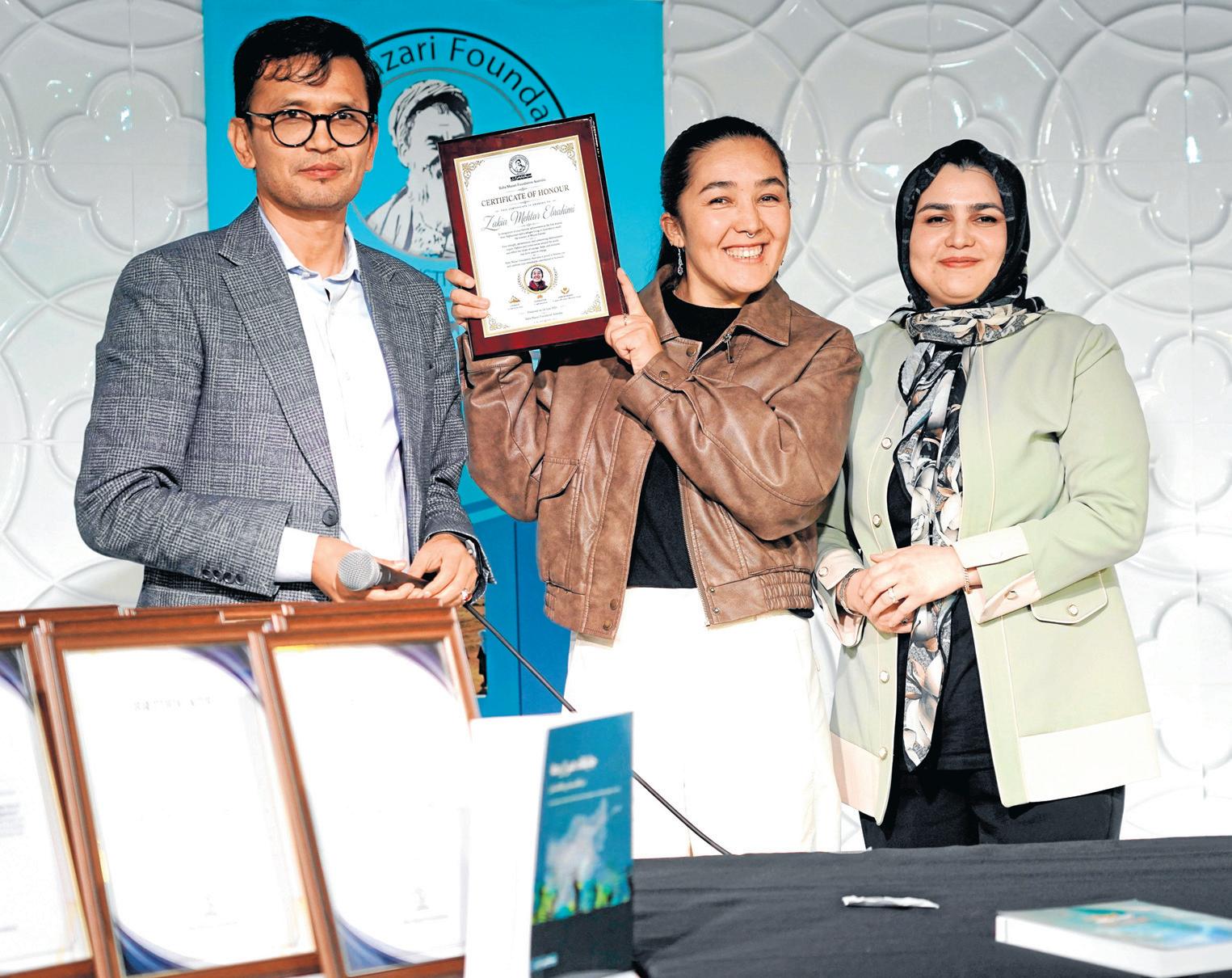
The Greater Dandenong community gathered to celebrate Zakia ‘River’ Ahmad, the first Hazara female from Afghanistan to summit Mt Everest.
The Melbourne resident and former refugee was internationally recognised by the diaspora Afghan community, media, TV news channels, becoming a social media star.
The celebrations were brought to the South East on 14-15 June by organisations like the Baba Mazari Foundation (BMF) and Victoria Afghan Australian Network (VAAN).
Ms Ahmad is the ambassador of the BMF’s ‘1000 Women 1000 Futures’ campaign to raise $200,000 for practical support to women in Afghanistan.
“I had this fire inside me. I was thinking about women back home in Afghanistan, and also about mental health, as I was suffering from mental health a lot,” she says of her ground-breaking climb.
“I thought I have to do different things.
“When I was very tired, cold, my body would tell me it won’t be able to do it anymore. But I kept telling myself, you have the chance to try, but women back home in Afghanistan, they don’t have this chance.
“That was my motivation to keep walking and get to the top.”
She dedicated her climb to mental health after she lost her brother to suicide, and to be the voice for the voiceless women of Afghanistan, to advocate for their education, work and basic human rights.
Before the Taliban took over, before she was forced to leave Afghanistan with her family and live as refugees in Delhi, India and then Australia, she grew up surrounded by the natural beauty of mountains in the Ghazni province, a predominantly Hazara neighbourhood.
With a great passion for education and books, little Zakia would travel two hours each way to and from school, almost 500 kilometres, no matter the circumstance or the weather.
She has been climbing ever since.
“I loved the school all the time, because of education and books. I love reading. I just wanted to be able to read more and to do different things.
“When I was in base camp, I kept telling my friends, it’s like my hometown.
“It was so rocky, hills, big mountains, rock and snow.”
Ms Ahmad became the symbol of hope for Afghan women as her social media was flooded with heartfelt messages from girls in Afghanistan.
She trained hard, five times a week, to run 26 kilometres in six hours at the gym from 4am.
The expensive quest cost $110,000 USD, while she raised $12,500 through GoFundMe, sponsors and organisations like the Baba
Mazari Foundation and VAAN.
“We believe if women are deprived of their basic human rights and education, that generation in the community won’t have a bright future,” CEO of BMF, Besmellah Rezaie says.
“She has brought collective pride for us, and as a community we have a collective conscious responsibility to support her endeavour. Through Zakia’s endeavour, we will be supporting the women of Afghanistan
“Many people ask how they should help the women. Well, we have a practical platform in front of us, they can support these programs, consider a donation, spread the word to their friends, colleagues and families.”
Women and girls in Afghanistan put their lives at risk to study quietly, in hidden spaces, underground schools and with the help of the diaspora outside the country. They also study online, striving for scholarships.
Together with BMF, Ms Ahmad aims to raise $200,000 to offer scholarships to universities to those eligible, including vocational training (handicrafts and e-commerce) and remote learning, underground and online schools to provide computers, internet access, electricity, and women-led learning circles, where women are empowered to teach, mentor and support one another.
“She wants the culture within our own communities to demonstrate that a woman can do it. Even with very little, they can achieve great things.”
Mr Rezaie is also a principal solicitor of Beena Rezaee (BR) Legal and Migration and a registered migration agent.
The local celebrations coincided with VAAN’s Refugee Week event, where Ms Ahmad was hosted as the special guest.
“It means a lot for the community as the first woman to summit Mt Everest from Afghanistan and from the diaspora here,” VAAN president Zabi Mazoori says.
“Everyone is very motivated that something as big as that can be achieved.”
Her summit coincided with peaceful protests by women in Afghanistan for education, which led to the Taliban opening fire at the crowd.
While the women and girls in Afghanistan have been stripped of their rights, including the right to education, they haven’t been stripped of their hope, dreams and resilience.
Now, she is preparing to summit 14 Peaks, zoned as the ‘death zone’. Each of the mountains rises over 8,000 metres above sea level in the Himalayas and Karakoram ranges of Asia.
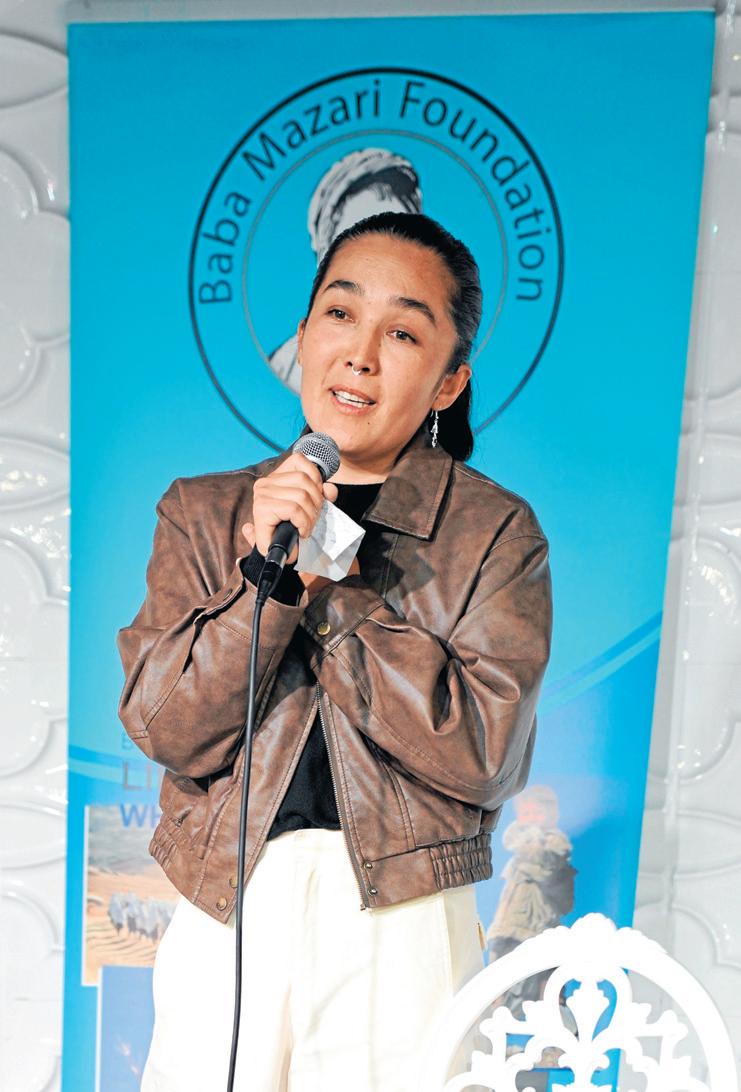

Human life cannot be sustained for extended periods, and climbing all 14 is mountaineering’s ultimate challenge. Fewer than 100 people in history have climbed the 8000-metre peaks.
By Violet Li
Burglary and break-ins jumped by 53 per cent in Berwick, and theft surged by 44 per cent in Hallam, as Casey’s latest crime figures show crime pressures spreading across major suburbs.
The latest Crime Statistics Agency Victoria figures for the year ending March 2026 have shown that Berwick recorded one of the most striking rises with burglary and break-ins up 53 per cent compared with the previous year, from 219 to 335.
Among its offence subgroups, the number of residential aggravated burglaries has increased by 113.6 per cent from 59 to 126, and non-residential non-aggravated burglaries by 80 per cent from 50 to 92.
The suburb also recorded a 22 per cent increase in theft, driven largely by motor vehicle thefts and thefts from motor vehicles.
Hallam also stood out in the latest figures, with theft rising by 44 per cent, with thefts from motor vehicles and thefts from a retail store accounting for much of the rise.
In Narre Warren, theft rose by 27.2 per cent, and in Cranbourne, 14.8 per cent.
Statewide, Victoria Police noted that aggravated home burglaries have steadily declined by 19.9 per cent.
However, they remain well above traditional levels for the State (23 per cent increase over the past three years).
Car thefts have stabilised year-on-year with only one per cent increase statewide, but the Victoria Police stated that the overall number is far too high (24,424) and is more than double what it was four years ago.
Berwick MP and Shadow Police Minister Brad Battin noted that there was a 9.1 per cent increase in crime in Casey and a 25 per cent increase in theft from a motor vehicle.
“People talk to me about this every day. They are concerned about vacancies on the police rosters, no police at the Clyde North Police Station, and the general feeling of a less safe place to live,” he said.
Mr Battin said if the Liberals are elected in the upcoming November State Election, they will deliver 3000 more police, break bail, face jail and real consequences for offenders.
“We will always put the victims’ rights first. Our plan will reduce crime,” he said.
The latest figures also show a broader increase in breaches of orders across Casey’s top five crime suburbs: Cranbourne, Berwick, Narre Warren, Hallam and Clyde North.
In Cranbourne, the breach of orders soared by 61 per cent from 262 to 422.
Clyde North has seen a 50 per cent increase in the same category from 132 to 199.
According to the Victoria Police, breaches of orders can include offences such as breaches of bail conditions, family violence
contraventions and other court-imposed orders.
Victoria Police said breaches of orders were one of the top three contributors to overall crime across the state in the year to March 2026, alongside theft from motor vehicles and assaults.
Police said the increase in breaches of orders reflected, in part, proactive police intervention, including the detection of bail breaches and family violence contraventions.
The statewide figures showed more than 625,000 criminal offences recorded in the 12 months to March 2026, a slight decrease of 0.2 per cent.
The crime rate, which takes population growth into account, fell by 1.9 per cent to 8690.8 offences per 100,000 people.
However, Victoria Police said overall crime remained 26 per cent higher than three years ago, with cost-of-living pressures, recidivism, organised crime, drugs and technology-enabled offending continuing to drive crime.
Minister for Police Anthony Carbines said there’s more work to do, but crime is down, youth offending is down, and more people are being jailed, not bailed.
“We give police what they need to keep Victorians safe – more powers, tougher laws and stronger consequences,” he said.
The Crime Statistics Agency (CSA) has released itsquarterlyfiguresfortheyearendinginMarch 2026 with crime in Casey rising by 9.1 per cent.
The newly released data covers the period of 1 April 2025 to 31 March 2026.
There were 23,284 criminal incidents in Casey, with the top offences being stealing from a motor vehicle, criminal damage, breach of family violence order and motor vehicle theft.
While the numbers have risen, the rate of criminal incidents has risen more slowly than that oflastyear,whichroseby22percentfromtheprevious year (2024).
Over 58 per cent remain unsolved, 15.6 per cent have no charges laid and 26.1 per cent have charges laid.
While other theft is one of the most common crimes, incidents have decreased from 2138 in March 2025 to 2035 in 2026.
Top location types include houses, driveways or public areas such as the street, footpath or lanes, shopping centre complexes.
Top suburbs are Cranbourne, Narre Warren, Berwick, Clyde North and Hallam.
Hallam recorded 1311 criminal incidents in 2026, taking the place of Hampton Park.
Serious assault of family violence incidents have risen to 763 cases. Along with incidents of common assault to 1148.
Motor vehicle theft has risen from 1272 incidents in 2025 to 1545 incidents in 2026.
Theftfromamotorvehiclehassignificantlyincreased by over 20 per cent to 4475 incidents.
By Cam Lucadou-Wells
Greater Dandenong has defied a statewide drop in the crime rate, with a slight rise, according to the latest official statistics released on 18 June.
Victoria Police and the State Government welcomed the latest Crime Statistics Agency data for the 12 months to March, which reported the first overall crime-rate decrease in four years.
It equated to a 1.9 per cent per capita decrease in offences across the state.
In contrast, Greater Dandenong recorded a 1.1 per cent rise – and 23 per cent higher than 2019 levels.
Acting Commissioner Bob Hill, of Victoria Police, said it was “pleasing to see a stabilisation” in the crime rate after many double-digit rises in recent years.
But there was “still a long way to go” to reduce it to “acceptable” levels or at least, preCovid levels, he said.
“Victorians do not feel safe – that is clear to me,” Asst Comm Hill said.
“That’s the challenge for us as an organisation – that they not only are safe but feel safe.”
Asst Comm Hill said the drivers of elevated crime levels remained – the cost of living, organised crime, drugs and repeat offenders.
In the latest stats, there were significant rises in the following offences in Greater Dandenong:
■Sexual offences (up 29 per cent).
■Bail offences (20 per cent).
■Car thefts (6 per cent).
■Cultivating drugs (19 per cent).
■Graffiti (17 per cent).
■Hoaxes (188 per cent).
■Begging (100 per cent).
There were alarmingly steep rises in family violence offending.
This included family violence order breaches up 31 per cent, family violence serious assaults (up 17 per cent), stalking (up 31 per cent), harassment (up 59 per cent) and threatening behaviour (up 31 per cent).
It comes as police recently highlighted a shortage of specialist family violence support
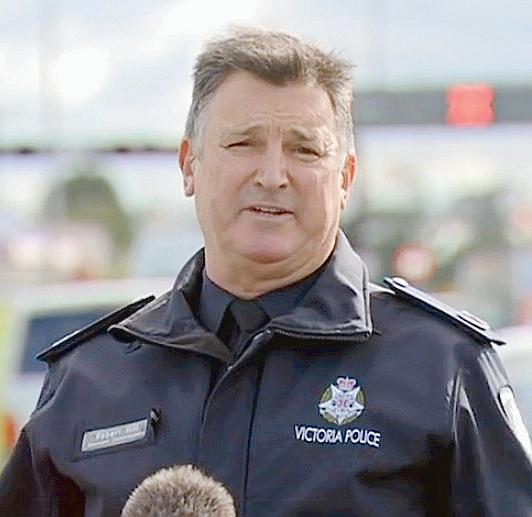
Assistant Commissioner Robert Hill says crime remains at an ‘unacceptable’ level.
workers in their South East ranks - just one to help victims and survivors across Casey, Cardinia and Greater Dandenong.
The Dandenong-based Family Violence Investigation Unit’s officer-in-charge Detective Senior Sergeant Jason Iles said the single worker was supporting one of Victoria’s fastest-growing
regions.
“One person dealing with three LGA areas is just not enough,” he said.
Over a seven-day period in April, the Dandenong family-violence division attended 85 callouts in Casey, 45 in Greater Dandenong and 31 in Cardinia.
By Afraa Kori
Police have revealed just one specialist family violence support worker is helping victims and survivors across Casey, Cardinia and Greater Dandenong.
Family Violence Investigation Unit officer-in-charge Detective Senior Sergeant Jason Iles said the single worker was supporting one of Victoria’s fastest-growing regions.
“One person dealing with three LGA areas is just not enough,” he said.
“We have an embedded Alexis worker at our office who is invaluable, and we would love to have another 10 of them.”
Based in Dandenong, the Family Violence Investigation Unit covers the three neighbouring councils and triages all reported family violence incidents, managing the most serious and complex cases.
The unit consists of one detective senior sergeant (Illes), three detective sergeants, 20 detectives, three intelligence analysts and one Alexis worker.
The worker is part of the Alexis Family Violence Response Model, which embeds specialist family violence practitioners within police units to provide immediate support to victim-survivors and help connect them with services such as emergency accommodation, financial assistance, security upgrades and other support.
Due to the shortage of alexi-workers, Sergeant Iles said police depend on external services to help victim-survivors escape cycles of violence, particularly where housing, financial hardship or other complex issues were involved.
The demand on external agencies was placing additional strain on an already stretched system.
“Other services are being understaffed and under-resourced, because we rely upon them a lot,” he said.
Recent data highlights the scale of demand across the region.
According to the Crime Statistics Agency, family violence remains unchanged in
Cardinia, with 1983 incidents and 1251 breaches of orders reported in December 2025.
In contrast, Casey recorded a 8.3 per cent increase, with family violence incidents rising to 6,735, alongside 3,846 breaches of intervention orders.
Greater Dandenong also saw family violence incidents increase by 6 per cent or 22,184 reports, while 1,947 breaches of intervention orders were recorded.
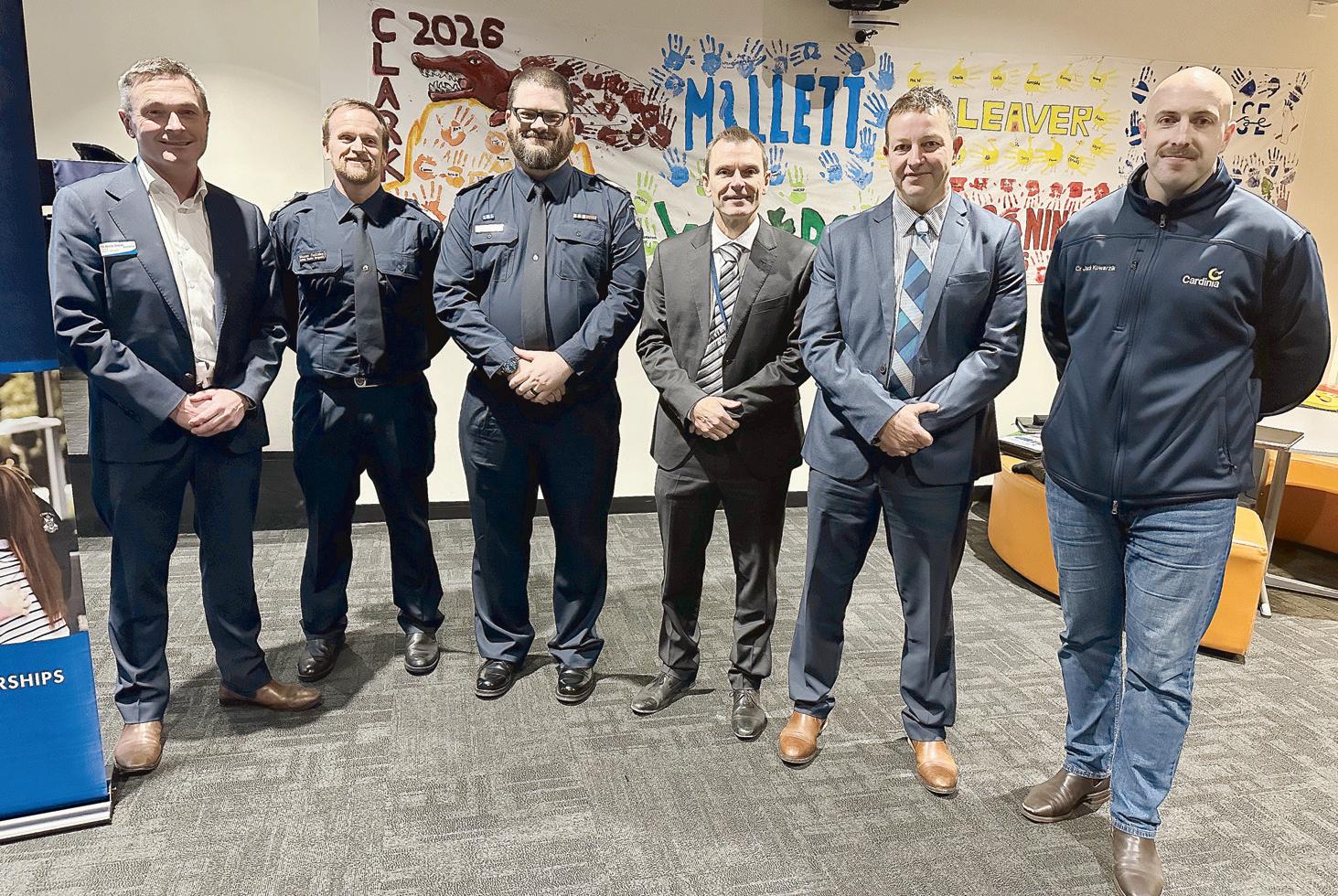
During the recent crime forum, Cardinia Shire councillor Jack Kowarzik questioned why the three LGA’s shared only one Alexis worker, given family violence remains the most common crime.
“We’re obviously trying to get more than one,” Sergeant Iles fired back at the councillor.
“It’s not a lack of trying that we haven’t got
any. That comes back to dollars and cents.
“Which is unfortunate, because it shouldn’t but that’s what it does. That’s what it boils down to.”
The gap has drawn criticism despite the Labor Government last year announcing a $1.5 million expansion of the Alexis Family Violence Response Model, part of its broader investment to embed specialist workers alongside police in Victoria Police Family Violence Investigation Units.
Sergeant Iles said Good Shepherd was one of the few organisations he knew of with two Alexi’s in the Southern Division core.
In order to better support victims and back police efforts in south east, he advised councils, those working in the family violence sector, and the wider community to advocate with external agencies.
They arrested 95 alleged perpetrators, and charged 58 of them with 290 family violence offences.
Meanwhile, the State Government celebrated the drop in crime “thanks to Labor’s tough laws”
It stated that bail revocations were up nearly 50 per cent and bail refusals up by 63 per cent.
“There’s more work to do but crime is down, youth offending is down and more people are being jailed not bailed,” Police Minister Anthony Carbines said.
Opposition police and corrections spokesperson Brad Battin said Victorians were “sick of being told everything is fine” with crime still up since the start of Premier Jacinta Allen’s reign.
“The numbers don’t lie. Under Jacinta Allan, crime is up, police shortages are getting worse and more Victorians are feeling unsafe.”
Statewide, the number of offences committed by children (12-17 years) dropped by 6 per cent in the latest 12 months.
However, they remain over-represented in serious and violent crime, according to police.
The trend was mirrored in Greater Dandenong, with juvenile offending down 2 per cent and offending by youths aged 18-24 down 4 per cent.
On the flip side, offending amongst adults aged 35-and-over in Greater Dandenong was up 19 per cent.
Asst Comm Hill said Victoria Police was making “positive steps” to meeting a target of reducing violent crime by 5 per cent a year – despite 1550 vacancies in police ranks.
Violent crime – apart from family violence - dropped in Greater Dandenong, with home aggravated burglaries down 14 per cent and aggravated robberies down by 29 per cent.
Locally, there were significant drops in:
■Arson offences (down 19 per cent).
■Non-residential aggravated burglaries (30 per cent).
■Retail thefts (22 per cent).
■Drug trafficking (36 per cent).
■Firearm offences (10 per cent).
■Prohibited weapon offences (7 per cent).
By Sahar Foladi
A request by Dandenong Market to remove a council representative from its board has been rejected by Greater Dandenong Council.
At a council meeting on 15 June, the council’s governance manager Sophie D’Rozario confirmed that Cr Rhonda Garad was “not recommended” to be removed from the board.
Ms D’Rozario said the council was also reviewing governance arrangements between the market board and the council, so to “mimic best practice”
Cr Garad said she had a “fruitful and productive” meeting with Greater Dandenong CEO Jacqui Weatherill, mayor Sophie Tan and Ms D’Rozario last week on the matter.
On 15 June, she sought public confirmation that the council would not endorse “the false associations” made against her.
Recently, the market barred Cr Garad from attending board meetings after she publicly raised market traders’ concerns at a council meeting on 20 April. This was followed by the board’s previous chair requesting the council remove Cr Garad from the board.
Affected traders have voiced opposition after being issued with notices-to-vacate ahead of revitalisation works at the market’s Bazaar section.
Traders were informed they could reapply for stalls as part of an Expression of Interest (EOI) process from June, and offers will be issued to traders in August.
Last month, councillors gave unanimous support for the council to formally clarify the responsibilities of the councillor representative, who acts as an observer in board meetings, as well as to clarify the governance and reporting arrangements of the councillor.
Greater Dandenong Council is the owner and sole shareholder of Dandenong Market Pty Ltd, which is run as an independent subsidiary company.
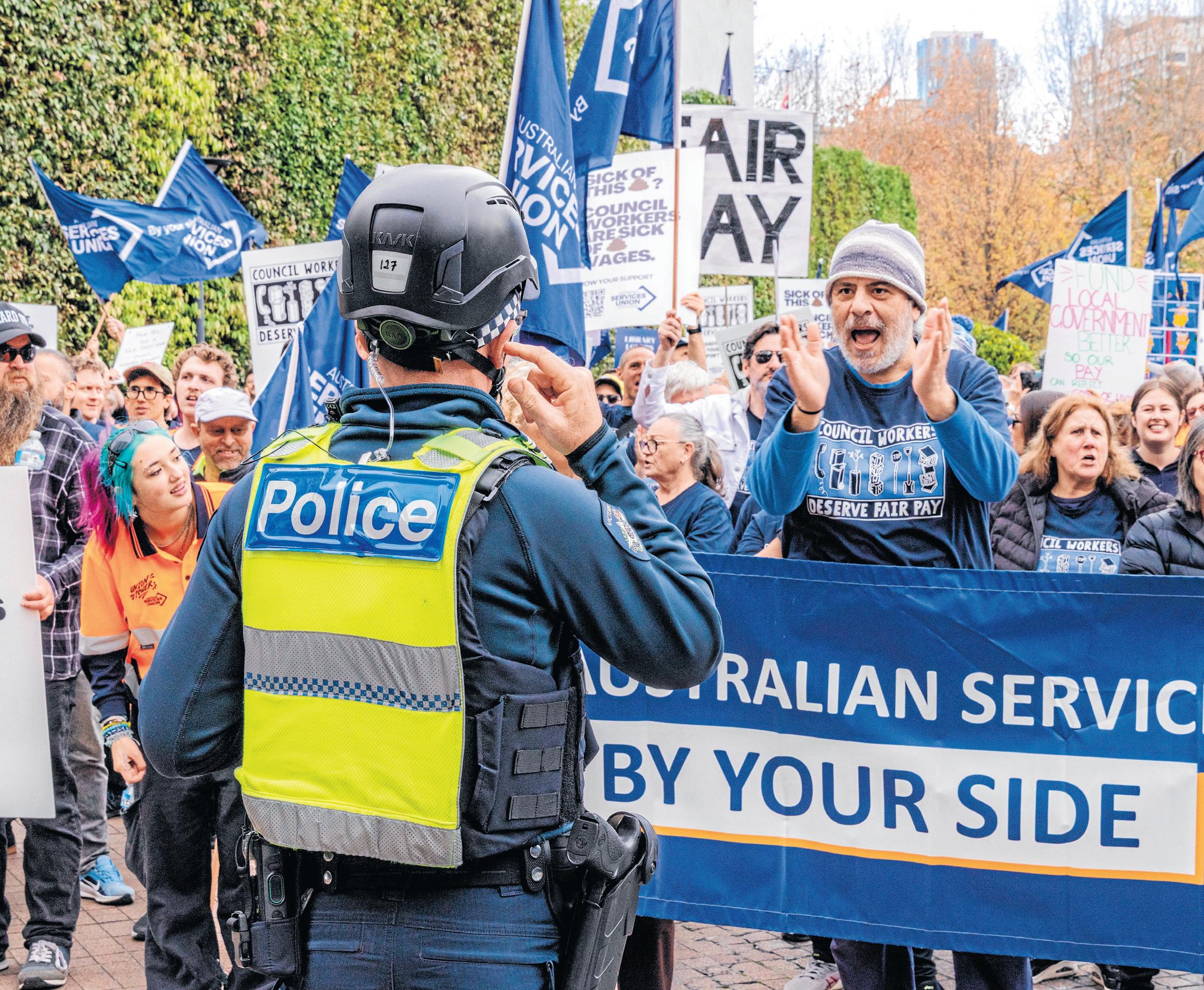
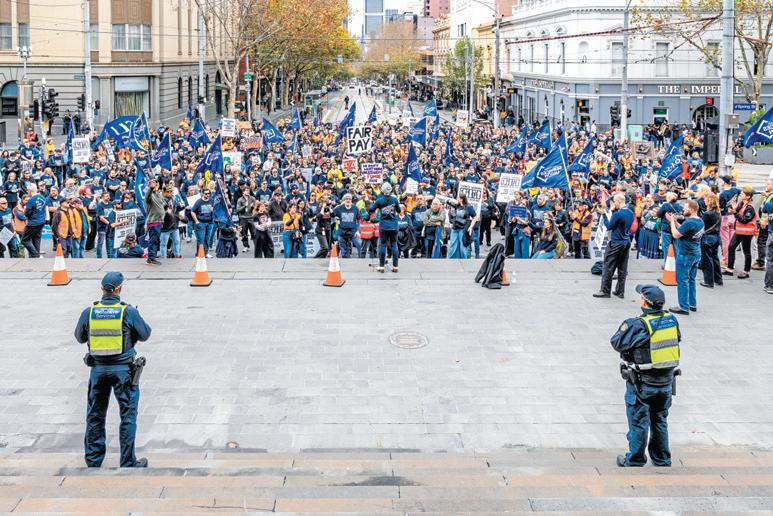
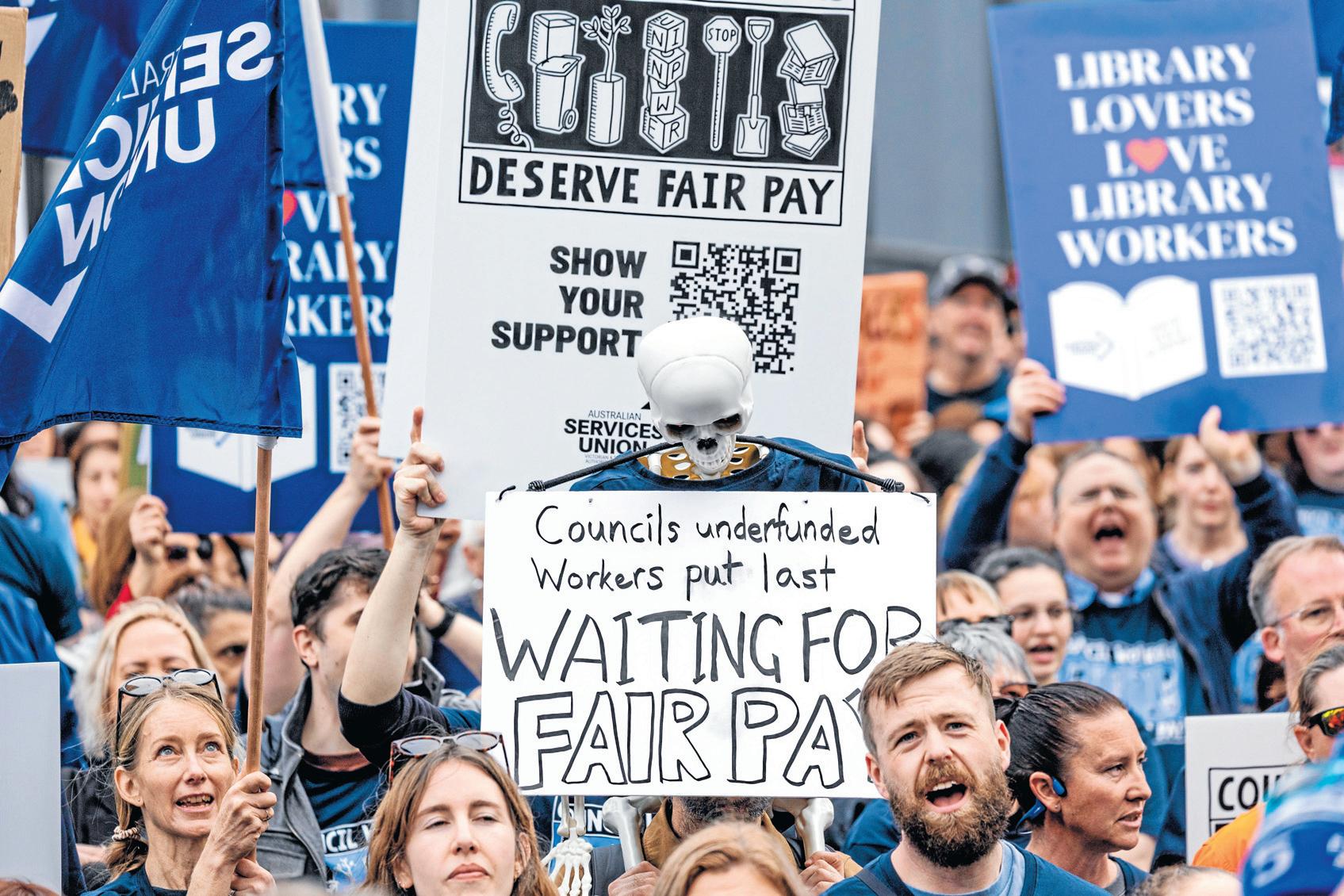
Workers from eight Melbourne councils, including Greater Dandenong, voted to reinstate wider-ranging work bans as part of an ongoing pay dispute.
Their latest action was a 24-hour strike and rally, in which workers marched from Trade Hall to the State Parliament on Wednesday 17 June.
As a result, Dandenong Library was shut for the day - and garbage collection, library services, road maintenance and other local government services were impacted across the other councils Melbourne, Darebin, Hobsons Bay, Hume, Maribyrnong, Merri-bek, and Yarra.
The multi-council dispute has dragged for six months, with the Australian Services Union demanding a 10 per cent wage rise in the first year and 4 per cent a year after that. Councils argue they are restricted by the State Government’s 2.75 per cent rate cap for 2026-’27.
Greater Dandenong Council staff, among the estimated 1500 crowd at the rally, say that’s not enough to survive in today’s economy.
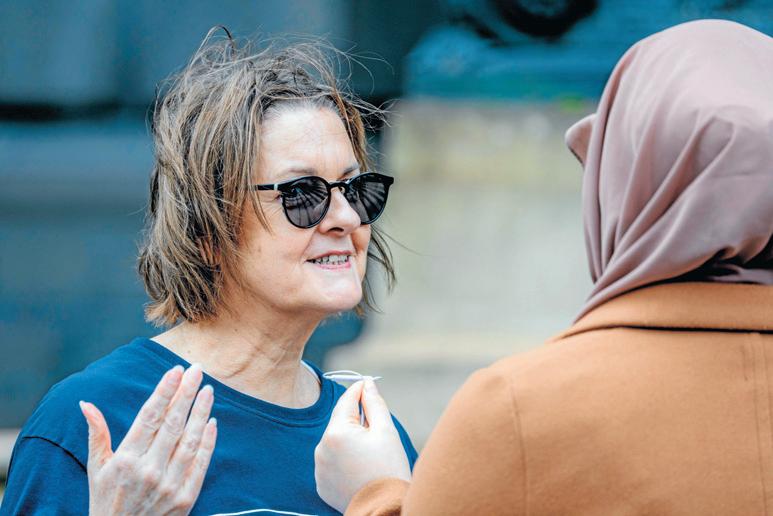
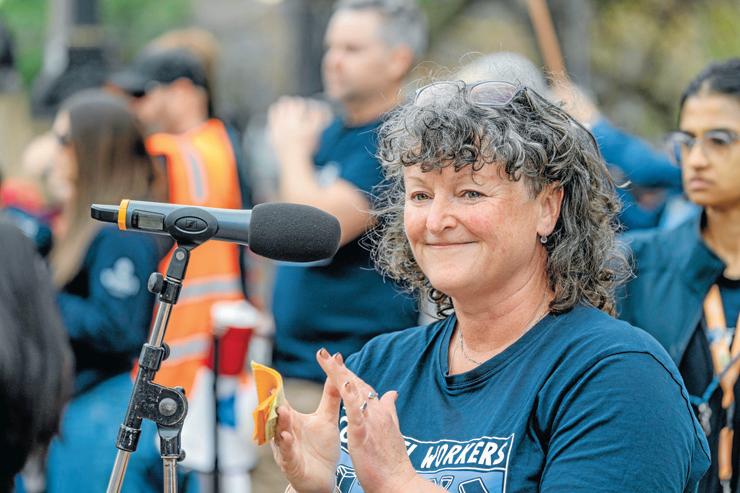
ASU delegate Fran McKechnie has worked with the Greater Dandenong Council’s advocacy team for 16 years and was forced to sell her apartment as she couldn’t keep up with the mortgage repayments.
“It was either my sanity or choosing between eating and putting the heater on,” she says.
“So for the security that I was working for - I’m in my 60s now - this is so debilitating.
“I thought I had security. I gave my all and I do every day for my council, for my beautiful community of Greater Dandenong.
“We are so proud. The staff at Greater Dandenong Council are hard-working and put our 100 per cent into everything.
“I heard somebody else say, we win awards for our work, and we’re not even seeing it in the conditions that we are offered, the pay that we are offered.”
It was a very frustrated crowd, more so than at their previous rally on 7 May.
The crowd marched from the State Library to Park Hyatt hotel, where council
CEOs had gathered for the LG Pro Annual Conference, Victoria’s largest specialist Local Government conference.
The building’s entrance was blocked by several Victoria Police cars as officers stood facing the protestors.
“It’s hard enough giving up a day’s pay to come here because it means so much but we do it because we’ve got our backs against the wall,” Ms McKechnie says.
“We’ve been in the corner so many years now.
“We’re not asking for the moon and the stars. We need to do more, we deserve it, and we are asking for a fair pay rise over the next four-year budget.”
The ASU argues that staff salaries can’t compete with inflation, despite a 11.2 per cent wage increase for Dandenong council workers between 2021-’25.
It argues that real wages have decreased by 7.3 per cent over that time.
Zoe Edwards, ASU’s deputy branch secretary, says councils should do their bit in coming to the table to make an offer.
“They are bargaining at the table, but we are yet to see substantial progress on any of our very simple conditions, and most critically on pay.
“That’s the most important issue for workers because their wages are going backwards in real terms.
“We are working to also put pressure on the State Government to deal with the underlying policy issues that we acknowledge are facing local government.
“But that doesn’t stop the councils from coming to the table, to bargain in good faith and to put a serious offer on the table.”
She confirmed that workers across the
eight councils voted to reinstate work bans from next week, after legal notices go out.
“It’s really regrettable. They do these jobs because they care about the community, but they have voted today to reinstate work bans.”
The work bans will impact Greater Dandenong’s street litter bin collection, sporting fields, mowing services, aged care services and libraries.
Library chutes will be closed, announcements over loudspeakers and flyers are also expected.
“So, we’re going to see increased activity in the community in Dandenong,” Ms Edwards says.
“You’ll see those aged care workers having conversations with their clients.”
Chris Stewart is a Monash resident who has worked in Greater Dandenong Council’s disability planning in community care for 37 years. She’s been a union delegate of 20 years.
With a visual and hearing impairment with a guide dog, Mr Stewart is well-known in the community and considered the most senior Greater Dandenong union delegate.
“I pay for services in Monash that seem to be going up all the time, but my wage in Greater Dandenong is not going up.
“Council’s cost of services is rising, but we’re not getting the associated pay increases.
“So, as an individual, my family feels that we’re going backwards.”
His three adult children also live with him at home in a bid to try and save up to buy a house and move out.
He wishes to secure the pay rise before he retires.
According to the State Government, the rate cap was in line with the Consumer Price Index for 2025-’26 – while the eight councils involved had a healthy surplus of at least 10 per cent of revenue at the end of the past financial year.
In the lead-up to the rally, Greater Dandenong chief executive Jacqui Weatherill said: “Our council is keen to get on with good faith bargaining and get to a new agreement as soon as possible.”

By Cam Lucadou-Wells and Afraa Kori
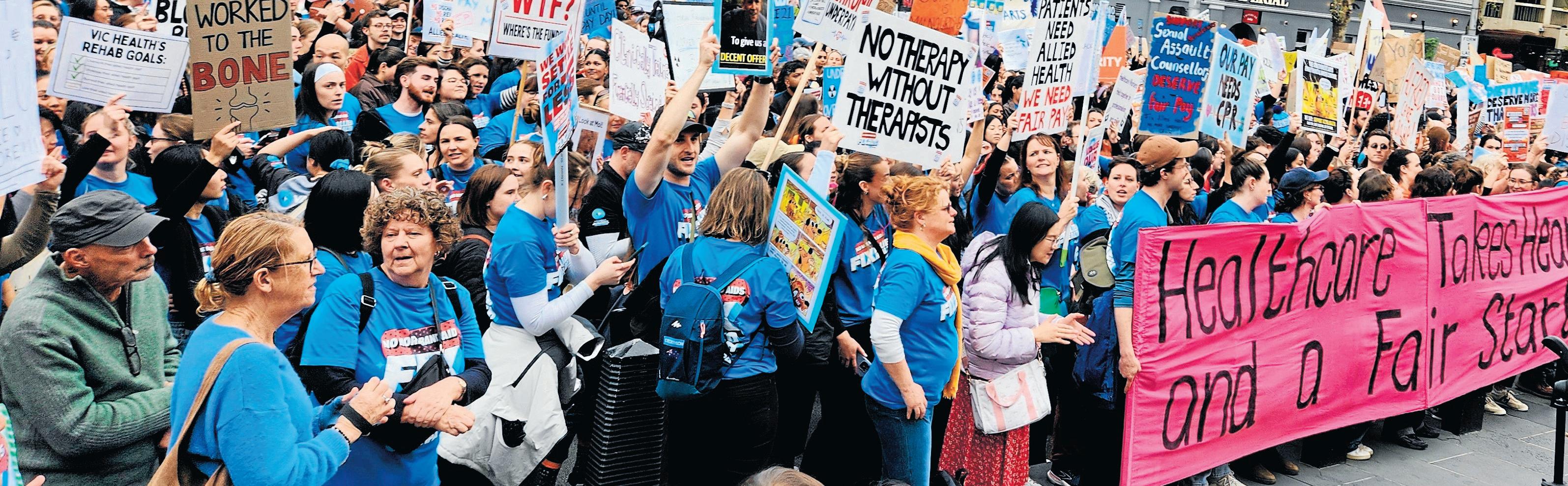
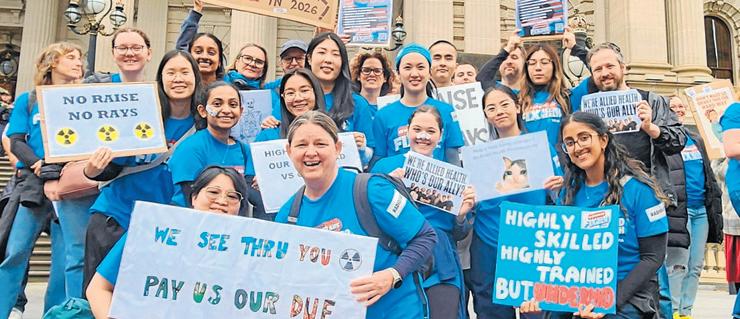
Monash Health workers were among an estimated 4000 allied health professionals at a public rally for better pay and conditions in Melbourne’s CBD on Tuesday 16 June.
Medical scientists, hospital pharmacists, psychologists, dietitians, radiographers and occupational therapists from across two unions went out on strike, seeking at least a 28 per cent wage rise over four years.
According to the HSU Victoria No.3 and No.4 union branches, it was the first time that the state’s allied health workforce had taken 24-hour strike action.
Hundreds of staff from the Monash Health network, including hospitals in Casey and Dandenong, reportedly joined the rally.
On display, were an array of witty placards and slogans such as “no more band aids: fix allied health” and “worked to the bone”
It follows a smaller rally of about 1000 members marching in a stop-work protest rally on 1
April.
Casey pharmacist delegate Chris Sharp said the second protest was necessary because the workforce had “completely lost trust” in the government’s willingness to treat them “fairly or take them seriously”
“After the April 1 action, we were strung along with ‘any day now’ promises every week for nine weeks,” he said.
He said workers were frustrated that a deal remained “six months overdue” , and disappointed that a post-April 1 offer had failed to meet expectations.
He said it ignored professional development costs, excluded proper reproductive health leave, and attempted to strip back long-standing weekend penalty arrangements.
“There is also hurt at being undervalued, balanced by optimism and determination as I watch this dispute bring my colleagues closer together,” Mr Sharp said.
“I expect my Government to treat us better than the worst cliche of a used-car salesperson.”
By Cam Lucadou-Wells
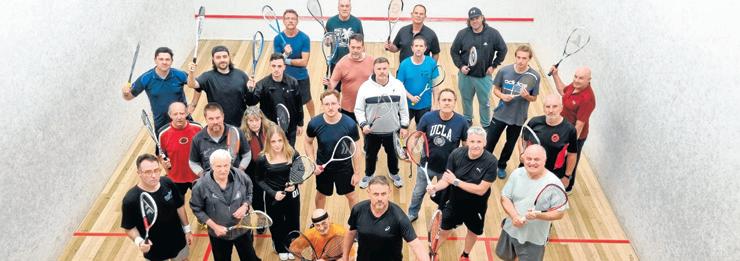
“Squashed” – that’s how squash player Terry Wilkinson feels after Greater Dandenong councillors batted away a public campaign to save the Dandenong Oasis courts.
Wilkinson and about 140 others signed a petition to call on the council to scrap its planned demolition of the last remaining squash courts in Greater Dandenong.
He’s part of a regular loyal group at Oasis, some in their 70s, who still play with youthful dexterity, vigour and joy.
“They just decided to squash us, to flick us aside,” Wilkinson said of the council decision.
“Their main reason seems to be the debt they have from this big (new Oasis) project.
“And we’re the ones that have to pay the price.”
On Monday 15 June, councillors voted down a proposal to spend up to $46,000 on a feasibility study into preserving the courts.
Cr Sean O’Reilly said the council shouldn’t give “false hope” nor waste money on a feasibility study when it knows the proposition is not “generally feasible”
The cash-strapped council – groaning under $28 million of interest payments in the next five years - “don’t have one dollar to spend” , he said.
Nor could it afford to run “two Oasis’s for perpetuity” , including the cost of renewing the ageing original Oasis building, he argued.
The decision will go to a re-vote at next month’s council meeting, after Cr Rhonda Garad lodged a rescission motion.
If the councillors’ vote stands, the squash courts and most of the 50-year-old Oasis building will be demolished – except for the table tennis hall.
Meanwhile, in late 2027, the replacement $122 million Oasis Aquatics and Wellbeing centre will open. But it will not have squash facilities.
Wilkinson noted the council was spending $25,000-plus to send six Greater Dandenong councillors and two officers to the Australian Local Government Association annual general assembly in Canberra this month.
Several councillors opposed to the feasibility study were going on the ALGA trip.
In contrast, Casey and Cardinia councils were sending just three representatives each.
“They seem to be quite happy to spend the public money on trips that probably only need one person per council,” Wilkinson said.
Deputy mayor Phillip Danh said the Oasis project, including demolition, had already been approved last year, after a comprehensive public consultation in 2019-‘21.
It didn’t need another layer of deliberations, he said.
“It’s time to see it through and make it happen.”
On the other hand, Cr Garad stated the courts’ estimated 13 per cent occupancy rate in January-mid May, including 108 individuals booking the facility, was misleadingly low.
She said up to eight players were using one of the six courts at a time. Many were away during the January period of the survey.
She said it was “arrogant” to “knock this on the head” , without a feasibility study to get the exact retention cost.
According to the council, the retention costs were unquantified at this stage, but upgrading the courts to “contemporary standards” would attract a “significantly higher cost”
The “ageing” Oasis building was in relatively “poor condition” and would also require renewal such as electricals within five-10 years, it stated.
Cr Lana Formoso said some of the information may not have been correct, when the council approved the squash courts’ demolition last year.
She said it was “good governance” to do further investigation, such as whether the courts could be partly re-purposed for a broader community use.
Most hospital pharmacists are women, and his members have been negotiating from an inappropriately low base rate since 2018 “simply because of their gender” , he said.
“The ‘for women’ Allan Government needs to actually act on its stated values.”
An HSU Victoria No.3 branch member from the South East said “hospitals are being plastered with posters and writings on walls to bring attention to our cause”
She said the 24-hour stop work was designed to disrupt non-urgent patient services, such as imaging, physio, occupational therapy and social work.
“We are in a tricky situation as health professionals.
“We are bound to cause minimal disruption to patients and there are plenty of exempt groups we have to keep seeing.”
Up until that point, work bans had included not scheduling patients, wearing union protest merchandise, and billing disruptions to “spread the word for our campaign”
The workers were part of either Health Services Union Victoria No.3 branch – otherwise known as Victorian Allied Health Professionals Association (VAHPA) – and the HSU Victoria No.4 branch comprising Medical Scientists Association of Victoria, Victorian Psychologists Association and Association of Hospital Pharmacists.
VAHPA Executive Officer Andrew Hewat said allied health professionals were the “engine room of our public hospitals”
“They test, treat, scan, diagnose, rehabilitate, and discharge patients. Yet, we remain the largely forgotten workforce.
“The Allan Government has offered nothing to address critical workforce shortages, dangerous workloads, or the years of gender undervaluation identified by the Fair Work Commission.”
Monash Health did not respond to Star News’s enquiry.
A Victorian government spokesperson reportedly told other media outlets that negotiations between the parties were continuing in good faith.
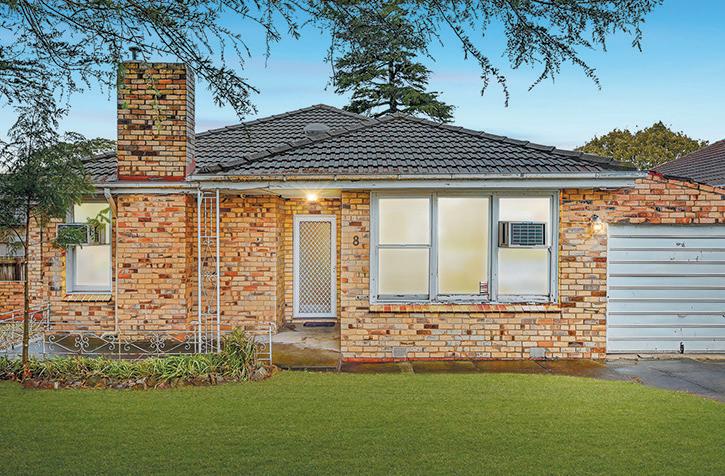


• Land: 681m2 • Parking: 1 garage space and 2 off-street parks
• Bedrooms: 3 • Toilets: 3 – There is no bathroom in the house
• Auction: 27th June 2026, 12pm at property address
• Terms of Sale: 10% deposit, balance 60 days
• Open Homes: Wednesday 17th: 4:40pm-5:00pm and Saturday 20th: 1:00pm - 1:30pm
Ray White Dandenong is proud to present this exciting opportunity to secure a solid brick veneer home with endless potential. Ideal for renovators, handymen, and savvy investors, this property is ready for a makeover. Roll up your sleeves, add your personal touch, and unlock the full potential of this home to create one of the standout properties in the neighbourhood. The home is perfect for all home buyers, astute investors, and developers looking to take advantage of this excellent opportunity and add to their portfolio. Sitting on a massive 681m2 of prime land, you have the option of retaining the existing home and developing 2 dwellings at the rear or demolish and rebuild up to 3 dwellings (S.T.C.A). The choice is yours!
Offering three spacious bedrooms, a generous living area, and a separate dining space adjoining the well-appointed kitchen. A central toilet, 3 toilets in total, and a dedicated laundry complete the practical and functional interior of this home. Step outside from the laundry to discover a huge, low-maintenance backyard, offering the perfect setting for entertaining family and friends all year round. With plenty of space for outdoor gatherings, children to play, or simply to relax, this impressive outdoor area can be enjoyed regardless of the season.
Features of this home include: dual occupancy potential (STCA), three spacious bedrooms, high ceilings, a well-equipped kitchen featuring a gas cooktop, electric oven, double sink, and tiled splashback, plus a single-car garage with multiple additional offstreet parking spaces. Offering comfort, functionality, and future potential, this property has plenty more to impress. When it comes to location, it doesn’t get much better than this. Just minutes away, you’ll find Dandenong Plaza and the bustling Dandenong Market, offering endless shopping, dining, and fresh produce options. Public transport is easily accessible with Dandenong Station and several bus routes nearby, while major roads such as Princes Highway and EastLink provide easy connectivity. The area is also well-serviced by quality schools, local parks, medical centres, and community facilities, making it a highly convenient and family-friendly location.
Don’t miss this chance to renovate, reap the rewards, and make it your own.
By Violet Li
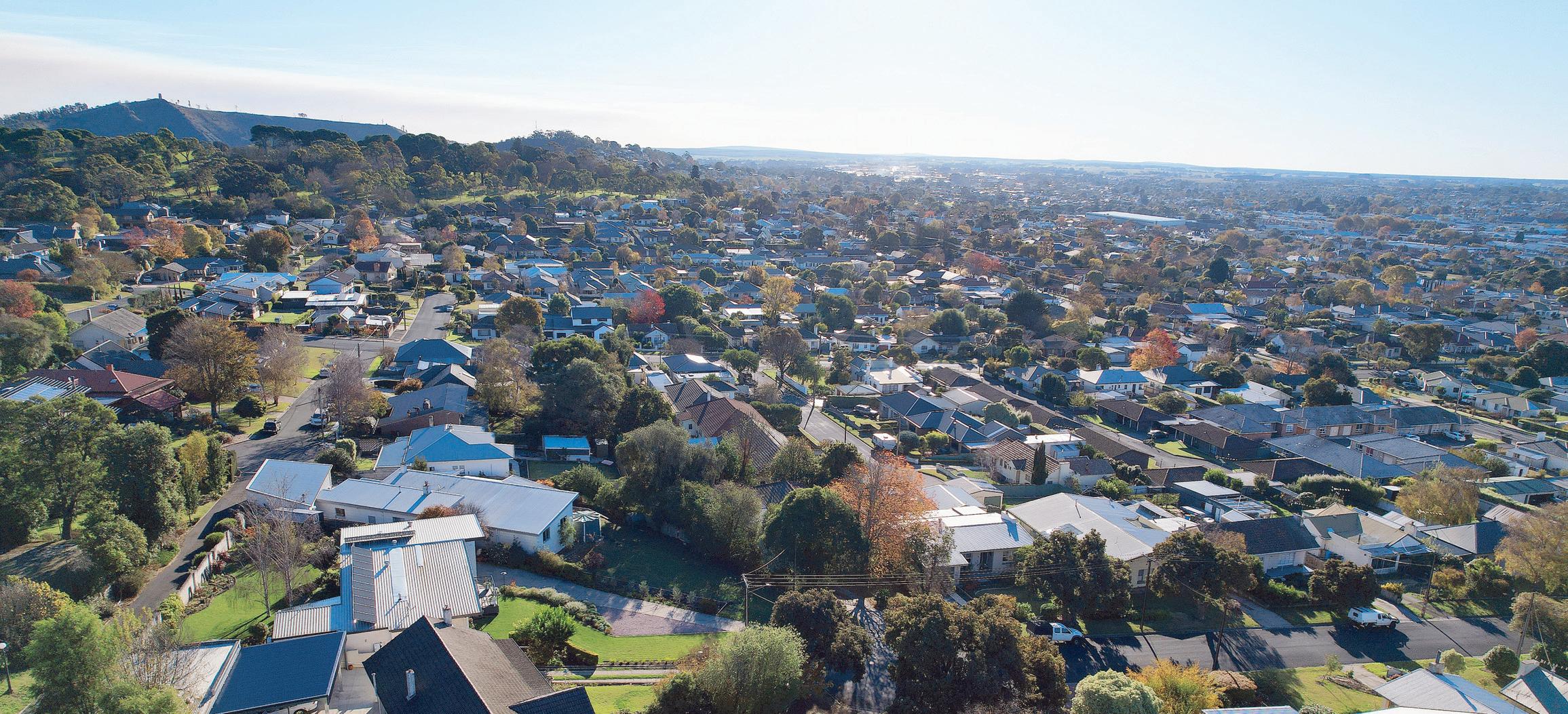
Casey Council will review its own lands for potential affordable housing sites by the end of November, under a strengthened policy designed to turn housing promises into measurable action.
At the 16 June Casey Council Meeting, councillors unanimously endorsed a new Affordable Housing Policy with an amendment by Cr Lynette Pereira.
The amendment requests that an Affordable Housing Implementation Plan be developed for the Council by 30 November 2026, including actions to increase affordable housing supply, opportunities to secure affordable housing through the planning system, consideration of social and crisis housing needs, and clear annual targets, performance measures and reporting arrangements to track progress in increasing affordable housing supply in Casey.
Councillors will also be briefed by the same date on council-owned land that may be suitable for affordable housing or partnership opportunities.
Cr Pereira said the focus on council-owned land and partnership opportunities was ‘groundbreaking’
“The fact of the matter is, people need housing, and not everyone can afford to just go into the open market. People can find themselves losing a job and being evicted, or being victims of family violence, all sorts of things,” she said at the meeting.
“It can happen to anyone. You can find yourself homeless at any time.
“We’re going to have increasing numbers of people who need homes. They’ve got to live somewhere. We’ve got to help alleviate this problem.
“And it’s not even going to be acceptable to not have these houses. We have to do it. We can’t have people living on the street and in parks.”
Mayor Cr Stefan Koomen also showed his support for identifying council-owned land for potential affordable housing.
“We have a lot of land, and this is not about giving land away. It’s a lot of land that’s just not used and hasn’t been used for so many years,” he said.
“The opportunity to utilise that in the short term and make the most of it and give to good without giving up the land, I think, is a great opportunity.”
A Community Engagement Summary Report on the draft policy also shows that about 66
per cent of the respondents supported the use of council lands.
A council officer report notes that the Council’s preferred approach for using its land would be through long-term leases, allowing the Council to retain ownership and reduce future financial risk.
Any proposed use of council land would still be subject to detailed financial assessment.
The amendment further requires six-monthly updates to councillors throughout the life of the policy, including progress on the implementation plan, housing outcomes achieved through planning, partnerships and council-led initiatives, and key opportunities, constraints and risks affecting delivery.
Cr Pereira said she added the amendment to make the policy “more robust”
She was concerned policies could otherwise “sit on a shelf” without a clear framework to drive action.
“I’m fearful that we’ve had policies in the past, and while it’s stated in the policy that work will be done, unless you have a proper framework around it, it’s a bit wishy-washy,” she said at the meeting.



“So, as a council, I want to make sure that we are progressing. We have proper reporting back, and we see progress. And at the end of all this, we actually see numbers of affordable housing, not just a tokenistic sort of couple of things.
“I want to see the growth. I want to see us reaching our targets.”
Cr Kim Ross, who voted for the entire policy, was the only councillor opposing the amendment itself.
She believed that the policy was already robust and that many outcomes would depend on partnerships and state government advocacy.
“There’s a lot of work that needs to be done prior to any actual homes being built,” she said at the meeting.
“I’m just a little bit concerned we’re raising expectations of residents in the short term above what we’ll be able to provide in the short term.”
Speaking later on the broader policy, Cr Ross said Casey’s biggest housing challenges included transitional housing for family violence victim-survivors, including young adults who could not live at home, insufficient housing stock for one- or two-person households, and social housing.
“In addressing this wicked problem, we do need partnerships. We need collaboration, not just with all levels of government, but with the private sector, superannuation, and private individuals,” she said.
The updated Affordable Housing Policy comes as Casey continues to grapple with worsening housing affordability.
A council officer report notes that the proportion of private rental properties affordable to low-income households had fallen to 28 per cent in December 2024, about one third of the level recorded in June 2020.
The report also says only 2.5 per cent of properties for purchase were affordable to low-income households in December 2024.
In 2021, an estimated 7421 Casey households had an unmet need for affordable housing, up from 5655 households in 2016.
Cr Dave Perry said the policy is just the first step, and implementation is much more important.
He said the implementation plan should be a public document and should include input from residents and community service organisations.
By Cam Lucadou-Wells
Casey Council has taken steps to purchase land for a long-sought ‘missing link’ trail in Narre Warren North – nine years after the landowner defied the council in scenes reminiscent of The Castle.
In 2017, John Foy fought off Casey’s attempt to compulsorily acquire his 12 hectares of home, gardens and habitat wetland at 191-195 Belgrave-Hallam Road for a planned soccer complex and shared-use trail.
But according to Casey, the land’s “owner” has recently approached the council to sell the land at “market value”
This time, the council is no longer interested in the whole site, nor in building sports fields there.
It has instead proposed negotiating for a 7.5-hectare portion of the site to secure the last ‘missing piece’ of a continuous shared-use trail alignment from Doveton to Lysterfield Park along Eumemmerring Creek.
For 20 years, the council had progressively acquired other land along the creek for the proposed trail, which would create a cycling, running and walking link into Lysterfield’s popular mountain bike trails and lakeside picnic areas.
Mr Foy’s flood-plain site - which abounds with kangaroos and waterbirds - is also seen as a crucial biodiversity corridor and important for water management.
On 16 June, councillors unanimously endorsed putting the proposed acquisition out to community consultation – with some commenting that it had been a “long time coming”
Casey mayor Stefan Koomen said the council could see potential community benefit in com-
pleting the missing link, but no decisions had been made.
“This land plays an important role in the broader trail corridor and securing it would help provide confidence in progressing this section into the future.”
There were more dramatic scenes at a council meeting in February 2017 when Casey Council sensationally backed down from a plan to compulsorily acquire the property.
Backed by a 9000-strong petition, media coverage and viral social media outrage, Mr Foy’s victory had shades of the famous movie The Castle. By that stage, even local soccer members were lobbying on the then-78-year-old widower’s behalf.
Casey’s then mayor Sam Aziz announced the council would “forever” abandon its plans.
“If you were my father or grandfather, I certainly wouldn’t want you to be in this position.
“I wanted to ensure that you were given free passage to go home and sleep peacefully, to know this is off the books and your property is not in our plans.”
Up to that point, Casey Council had been inquiring about Mr Foy’s property since 2002.
At one stage, he said he knocked back a council offer of $1.45 million for his land, insisting on protection of his pet dog cemetery and “all the little critters” inhabiting the wildlife lake and gardens he created over the past 35 years.
Star News understands that Mr Foy has been living in aged care since last November.
Community consultation is open until 16 July at the council’s Casey Conversations site.
By Dr Jamel Kaur Singh and Dya Singh
At the National Press Club, Senator Pauline Hanson declared that Australia should be a “monocultural” rather than multicultural society.
Truth be told... we’re not entirely sure which Australia she is talking about.
Because the Australia most of us live in is wonderfully messy, diverse and interconnected.
The doctor treating your child may have trained in India.
Your local cafe may be run by a Greek, Vietnamese or Lebanese family.
Your children’s classmates may speak another language at home.
Your neighbours may celebrate Eid, Diwali, Lunar New Year or Christmas.
And on Anzac Day, they all stand side by side, wearing a sprig of rosemary and remembering those who served this country. That is Australia.
The problem with this debate is that people often confuse ‘multiracial’ and ‘multicultural’ as though they are the same thing. They are not.
A multiracial society simply means people from different racial and ethnic backgrounds live in the same country.
A multicultural society means those people are also able to maintain and express aspects of their cultural heritage while participating fully as Australians.
Australia is already multiracial. That ship sailed a long time ago.
The real question is whether we become fearful of our diversity or intelligent in how we manage it. Because monoculturalism sounds simple un-
til you actually ask what it means.
Whose culture exactly?
First Nations culture?
British culture?
Irish culture?
Italian culture?
Greek culture?
Post-war Australian culture?
Modern Australian culture?
Australia has never been one thing. We’ve always been evolving.
Our food, music, sport, language and traditions have all been shaped by wave after wave of migration, adaptation and contribution.
It is easier to find the best Banh Mi as opposed to a good meat pie these days (though we still swear by our Balfours).
Even Christmas, now considered quintessentially Australian, looks very different here than it does in England.
Culture evolves. That’s what cultures do.
The answer is not to pretend difference doesn’t exist.
The answer is to create belonging that is bigger than our differences.
This is also where we often confuse assimilation with integration.
Assimilation expects people to abandon or forget their own culture and adopt one dominant way of being.
Integration is different. It means participating fully in Australian life, learning English so we can communicate effectively, respecting our laws and democratic values, and contributing to society, while still being able to celebrate and maintain aspects of our cultural heritage.
Australia has never asked people to stop being Greek, Italian, Chinese, Sikh or Sudanese. It has

asked them to become Australian too.
The Socceroos showed us exactly what that looks like.
The squad includes players from refugee backgrounds and families originating from all corners of the globe.
Some have parents born overseas. Some speak more than one language. Some practise different faiths.
Yet when they wear the green and gold, nobody asks where their grandparents came from.
Nobody questions whether they are Australian enough. The nation simply cheers.
Why?
Because they belong.
They represent something bigger than themselves.
Perhaps that is the lesson our politics keeps missing. Unity does not require uniformity. In fact, trying to force uniformity often creates exactly the divisions we claim to fear.
The more we insist that everyone must fit one mould, the more people retreat into their own corners and become defensive of their identity.
Fear creates division. Belonging creates unity.
This is why values-based education matters so much. We spend enormous amounts of time teaching literacy and numeracy, yet very little time teaching young people how to live together
in increasingly diverse societies.
How to disagree respectfully. How to navigate difference. How to build trust. How to develop pride in being Australian while also appreciating the stories that have shaped their families.
Programs like Belonging in Casey are small but important examples of what this can look like.
The Casey-wide competition invites young people to explore what belonging means to them and to celebrate both their diversity and their shared identity as Australians.
Because the future of Australia will not be determined by whether we celebrate our different cultural or religious festivals.
It will be determined by whether we can celebrate these things while still feeling part of this great nation.
The challenge before us is not choosing between multiculturalism and national identity.
The challenge is creating a stronger Australian identity that has room for all of us.
A confident nation does not fear diversity. A confident nation knows exactly who it is.
Perhaps the conversation Australia really needs is not whether we are multicultural.
That debate was settled generations ago. The real conversation is how we intentionally create belonging, civic responsibility and pride in being Australian. Because truth be told... Australia’s greatest strength has never been that we all look the same or celebrate the same things.
Our greatest strength is that despite our different stories, cultures and journeys, we still choose to stand under one flag and call ourselves Australians.
Our greatest strength is that somehow, despite all our differences, we still call ourselves Australians.
By Dalal Smiley, chief executive of Wellsprings for Women
Senator Pauline Hanson’s recent National Press Club address was a stark reminder of how easily fear can be weaponised in politics.
And how urgently Australia needs leadership grounded in human rights, racial equity, and social justice, not division.
Her speech attacked multiculturalism, dehumanised and demonised Muslim communities, dismissed transgender Australians, and framed migrants as a “crisis”
It represents a worldview fundamentally at odds with the inclusive, pluralistic nation we aspire to be.
But the problem on that stage did not begin and end with Senator Hanson.
It was compounded by the failure of the National Press Club and the journalists present to challenge, interrogate, or contextualise her most inflammatory claims.
In a moment that demanded moral clarity and journalistic courage, the questions at the Press Club failed to hold her to account and did not go far enough.
Senator Hanson’s speech did more than express an opinion.
It deployed a familiar and dangerous political tactic of othering.
By framing migrants, Muslims, and transgender people as threats to “Australian values,” she positions entire communities as problems to be solved rather than people deserving dignity and rights.
The National Press Club is not just a venue.
It is an institution that claims to uphold the highest standards of public interest journalism.
Yet during Hanson’s speech, those standards were conspicuously absent.
By giving Senator Hanson an unchallenged national platform, the Press Club allowed harmful narratives to be broadcast with the veneer of legitimacy.
A platform is not neutral; it confers authority.
Journalists had the opportunity to interrogate her claims about migrants, Muslims, and transgender people.
Instead, the questions largely skirted the harmful impact of her rhetoric.
When racism and dehumanisation go unchallenged, they are normalised.
The Press Club could have pressed Hanson on how her call for a “monocultural” Australia aligns with international human rights obligations.
It did not.
Silence in the face of discriminatory rhetoric
is not impartiality; it is complicity.
This is not an isolated incident.
Australian media has a long history of amplifying divisive voices under the guise of “balance” or “free speech”
But free speech does not mean freedom from scrutiny.
Journalism’s role is not to provide a megaphone; it is to provide context, challenge misinformation, and protect the public from harm.
Human rights frameworks, from the Universal Declaration of Human Rights to Australia’s own anti-discrimination laws, are built on the idea that every person is equal in dignity and worth.
Senator Hanson’s speech violates the spirit of these principles by suggesting that some cultures, religions, or identities are less legitimate
than others.
But when the press fails to challenge such rhetoric, it undermines these principles too.
Human rights are not upheld only by courts and parliaments. They are upheld by public discourse, by the media, and by the willingness of institutions to call out injustice.
We deserve leaders who build bridges, not walls. And we deserve journalists who hold them to that standard.
Senator Hanson’s speech may resonate with those who feel unheard or frustrated, but it offers no real solutions.
Instead, it deepens divides and undermines the shared values that allow us to live together with respect.
But the media’s failure to challenge her rhetoric is equally concerning.
Democracy depends on a press willing to confront harmful ideas, not simply broadcast them.
Australia can choose a different path, one rooted in justice, empathy, and human rights.
An Australia where we are mature enough as a nation to recognise and honour the unique status of First Nation People, the contributions of waves of migrants to this country, and the dignity of all creation.
That is the Australia worth defending.
By Andrew Gai
As Refugee Week begins, few stories capture its spirit better than that of Nestory Irankunda.
On Sunday afternoon, Irankunda scored the opening goal in the Socceroos’ 2–0 victory over Turkiye, helping Australia make a memorable start to its 2026 World Cup campaign.
It was a proud moment not only for the young footballer but for many Australians who saw their own journeys reflected in his success.
Born in a refugee camp in Tanzania after his family fled civil war in Burundi, Irankunda arrived in Australia as an infant.
Today, he wears the green and gold with pride, representing the country that gave his family safety, opportunity and a future.
Recently, I came across a social media post claiming that Irankunda’s story is not a refugee story but simply an Australian story. In my view, it is both.
Like the stories of thousands of refugees who now call Australia home, Irankunda’s journey is
one of resilience, hope and the pursuit of a better future.
It reflects the courage of families who have overcome extraordinary challenges in search of safety and opportunity.
At the same time, it is undeniably an Australian story.
Australia provided the environment in which a young boy born in a refugee camp could grow, thrive and ultimately represent his adopted nation on the world’s biggest sporting stage.
That is something worth celebrating during Refugee Week.
This World Cup also highlights another defining feature of modern Australia: our multiculturalism.
Australia is one of the world’s most successful multicultural nations.
People from more than 200 countries and cultural backgrounds have helped shape the country we know today.
Our diversity can be seen in our workplaces, schools, communities and, increasingly, in our
national sporting teams.
The current Socceroos squad is perhaps the clearest reflection yet of contemporary Australia.
Players with migrant and refugee backgrounds are helping drive the team’s success, bringing together different cultures, languages and experiences under one flag.
Their diversity is not a weakness to overcome; it is a strength to embrace.
Yet as we celebrate these achievements, it is impossible to ignore the increasingly negative rhetoric surrounding migration in some areas of public debate.
Too often, migrants and refugees are discussed as problems to be managed rather than people who contribute enormously to Australia’s success.
The reality is that migrants and refugees strengthen our nation every day.
They serve as doctors and nurses in our hospitals, care workers in our aged care facilities, teachers in our schools, business owners in our communities and volunteers in countless local
organisations.
Like every nation, Australia faces challenges. But migrants and refugees are not separate from those challenges – they are part of the solutions.
The Socceroos remind us of that.
Their success demonstrates what is possible when talent, opportunity and belonging come together.
They are representing not only Australia on the world stage but also the values that have helped make Australia one of the most successful multicultural societies in the world.
The Socceroos have already made us proud. They have shown determination, courage and the willingness to have a crack – the qualities Australians have long been admired for.
As their World Cup journey continues, one thing is certain – the nation is behind them.
Go Socceroos.
- Andrew Gai is a community advocate, recipient of a 2020 Holt Australia Day Award and a 2022 Victorian Refugee Achievement Award.
By Sahar Foladi
Greater Dandenong Council has reversed its initial approval of the purple glass bin as some councillors voiced support for an expanded Container Scheme Deposit program.
A report brought to the council on Monday 15 June recommended deferring the $3.6 million rollout of state government-mandated glass-recycling kerbside bins due to the “cost of living crisis”
The majority of councillors were in on the decision, like Rhonda Garad and Bob Milkovic who argued the glass recycling initiative was announced before the roll-out of the now popular CSD program.
It was argued that the glass-recycling plan should be halted to explore other pathways such as extending the CDS for a wider array of glass bottles.
“If you go to one of our deposit centres, you might have to wait 1-2 hours to be able to put your bottles in the deposit scheme because it’s so successful that people are lined up with bags and bags,” Cr Garad said.
“People are combing the bins of our city to find bottles because they’re collecting money for charity and other reasons.
“No one wants another bin, no one wants to have to find a place for another bin, no one wants to remember to put it out once a month.
“They need to reconsider this strategy and look at extending the CSD so we can implement glass, that is the best solution for us all.”
More than 30 other councils, including Kingston and Cardinia Shire, are calling for a review of the rollout and to consider the CSD instead.
Cr Milkovic argued the CSD is the most convenient and simplest way to dispose of recyclables without any contamination, which would instead cause the recycling to be dumped into landfill.
“To add yet another bin that is supposed to help recycling and the environment, only to be contaminated and carted to landfill, is not help-
ing anyone.
“It’s genuinely making our streets cleaner and safer by diverting the items from landfill into recycling, clean and untouched, not contaminated.
“Why double bill the residents or bill them more for something that might not have any effect whatsoever?”
Both agreed that the CSD is the best initiative brought forward by the Labor Government.
The deferment wouldn’t only save Greater Dandenong Council $3.6 million but also another $1.5 million per year on collecting and processing the glass.
However, city futures executive director Sanjay Manivasagasivam says the council would be at risk of multiple $100,000 fines from 1 July 2027 by the State Government.
“The recommendation is to defer these implementations, which gives us enough time to work with the State Government to get more information and advocate for getting further business case information so we can assess whether it’s necessary or not.”
Deputy mayor Phillip Danh and Greens-endorsed Cr Isabella Do instead took the long-term approach and were the only two to vote against the deferment.
Considering the looming deadline of 1 July 2027, both agreed it made sense to accept it.
“The original plan is better because it enabled us to look at the bigger picture, zoom out and plan for the long term not just in years but decades to come, especially for something as important as how our waste is managed,” Cr Danh said.
“The cost of our inaction today will be a cost to our residents tomorrow.”
The report also calls for Greater Dandenong to defer the state-mandated ‘opt-out’ model for Food and Garden Organics (FOGO) kerbside bins, saving about $500,000 on additional FOGO bins.
Currently, about 85 per cent of Greater Dandenong households with a kerbside waste collection have already ‘opted in’ for FOGO.
By Violet Li
Consultant fees at the Casey Council are set to more than double in the 2026-27 financial year, with the council to roll out a major new technology system.
The Council’s 2026-27 budget, which was endorsed at the June Council Meeting, shows that consultant costs are expected to rise by 124.2 per cent to about $19 million, mainly driven by “higher expected costs for consultants reflecting continued progression through the implementation stages of the enterprise resource planning system”
Casey Council has advised that it is moving its operating systems to TechnologyOne’s OneCouncil platform, an enterprise resource planning (ERP) system designed for local government.
The implementation is being delivered in two phases. Phase 1 was completed on 1 July 2025, while Phase 2 is underway and expected to be completed in 2027.
An ERP system is a large integrated technology platform that brings together core business functions into a single system, such as finance, HR, payroll, supply chain management, and asset management.
Council has also advised that the new platform will replace fragmented legacy systems and reduce manual processes, resulting in more streamlined operations.
The new system will create a single, consistent source of information across council services, allowing for faster decision-making, more efficient service delivery and improved visibility of works and programs.
The system will also include a new customer portal, which Council says responds to community feedback calling for more self-service options and easier ways for residents to interact with Council at times that suit them.
City of Casey chief executive officer Glenn Patterson said external consultants were needed because of the scale and complexity of the project.
ERP consultants are usually brought in to help design, configure and test the system, migrate
data from old platforms, connect different council functions, train staff and troubleshoot problems during the rollout.
“ERP implementations are complex, largescale, multi-year programs that require specialised technical and configuration expertise,” Mr Patterson said.
“External consultants have been engaged to provide some of that specialist expertise and additional delivery capacity, augmenting Council staff project resources who focus on designing the system to meet current and future service and community needs.
“The increase in consultant costs reflects the intensive delivery phase of the ERP program.
“As implementation is completed in late 2027 and the system transitions to business-as-usual operations, our engagement of external consultants will decrease.”
Big creativity comes in small packages as the Tiny Art Show returns to Connected Libraries.
Open to Connected Libraries members aged 16 and over, the free competition invites budding artists and experienced creatives alike to pick up a mini canvas from their local library, create a tiny masterpiece at home and return it to be part of a community exhibition.
Completed artworks will be displayed in each library, with community members invited to vote for their favourites. Two winners from each library will receive a creative art pack filled with supplies to inspire their next artistic adventure.
Connected Libraries Branch and Adult Programs manager Courtney Rushton said the Tiny Art Show is a wonderful opportunity for the community to get creative and keep busy in Winter.
“The Tiny Art Show is all about having fun and giving people the chance to express themselves through art,” she said.
“You don’t need to be a professional artist to take part. Everyone is welcome, and we’re always amazed by the creativity and imagination that our members bring to these tiny canvases.”
Participants can collect a free canvas from their local Connected Libraries location while stocks last and create their artwork at home.
Entries must be returned by Friday 14 August 2026.
Connected Libraries Chief Executive Officer, Beth Luppino, said the Tiny Art Show reflects the important role libraries play in fostering creativity and lifelong learning.
“Libraries are places where people can discover new interests, learn new skills and connect with others,” she said.
“The Tiny Art Show is a fantastic exam-


For more information, including competition details and terms and conditions, visit: connectedlibraries.org.au/tinyartshow.














Melbourne families are set to embrace the magic of winter when FROSTED – A Winter Spectacular arrives in Narre Warren this June and July, transforming the south-east into a festive wonderland unlike anything seen before. Running from June 19 to July 19 under the heated Big Top opposite Westfield Fountain Gate, the event promises a month of entertainment, creativity, and unforgettable family memories.
Designed especially for young families and children aged 10 and under, FROSTED brings
together the enchantment of Christmas and the excitement of winter in an immersive indoor experience. Guests will step into a frost-filled world featuring interactive attractions, live performances, themed activities, and plenty of opportunities to create lasting memories.
Among the highlights are PAW Patrol character meet-and-greets, live shows featuring favourite characters, winter-themed mini golf, an artificial ice-skating rink, inflatable play zones, creative craft activities, and the chance to meet


while families can enjoy a range of winterinspired food and drinks throughout the venue.
With general admission, VIP experiences, and family ticket packages available, the event has been designed to make the magic accessible to everyone. Organisers say the spectacular aims to deliver a heartwarming escape from the winter chill, combining festive fun with a unique indoor environment where imagination can flourish.


As Melbourne settles into the colder months, FROSTED offers a welcome opportunity for families to come together, celebrate the season, and enjoy a magical winter adventure close to home. Whether it’s skating, crafting, meeting beloved characters, or simply soaking up the atmosphere, visitors can expect an experience that truly captures the wonder of winter.
Find us on social media @frosted_awinterspectacular and secure your bookings now at www.frostedawinterspectacular.com.au




“Children’s theatre doesn’t get any better than this. This inspired array of Italian and Aboriginal artists is the perfect fusion of dance, art and breathtaking digital design.” - “Sunday Mail”
Looking for a school holiday experience that will spark your child’s imagination, curiosity and creativity?
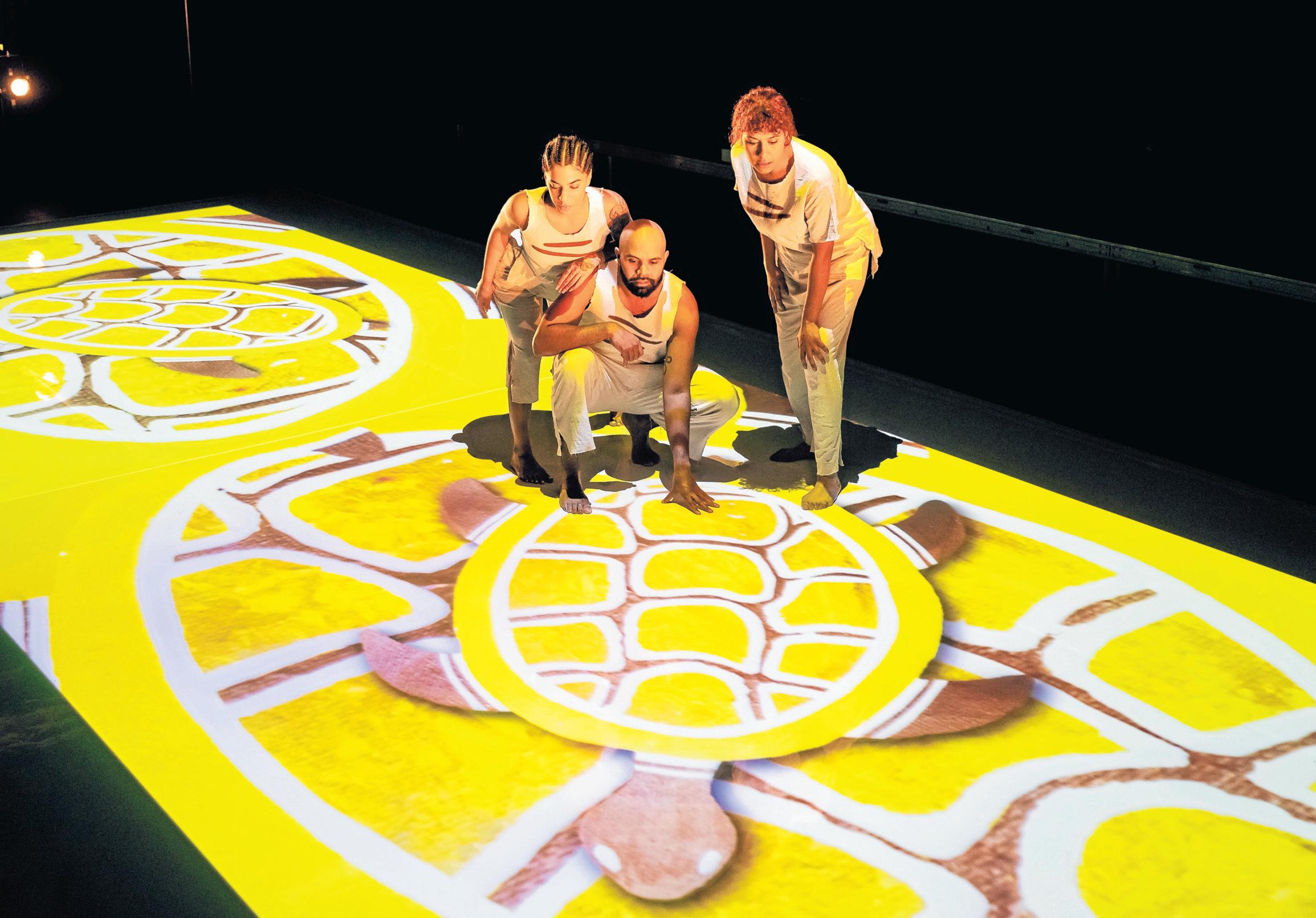
Saltbush is a captivating interactive theatre experience that invites children and their families on an unforgettable journey across Australia’s diverse landscapes and First Nations Countries. Combining storytelling, dance, music and cutting-edge digital technology, Saltbush transforms young audience members from spectators into active participants.
Saltbush follows the adventures of two friends and their spiritual guide, as they travel on foot across First Nations Countries, passing rivers, cities, desert, and the sea.
Using innovative sensors and infrared technology, children can move, play and interact directly with the performers and digital environments, creating a truly immersive experience unlike any other.
Performer Luke Currie-Richardson says one of the most rewarding aspects of the show is watching young audience members embrace the experience.
“I’ve been lucky to have a 15-year performance career that has taken me across the world and for me there’s nothing more rewarding than sharing Saltbush with the children of the world and teaching the next generation a tiny bit of Aboriginal culture and methodology. The openness and imagination our children have, allows them to embrace our culture and helps with reconciliation.”
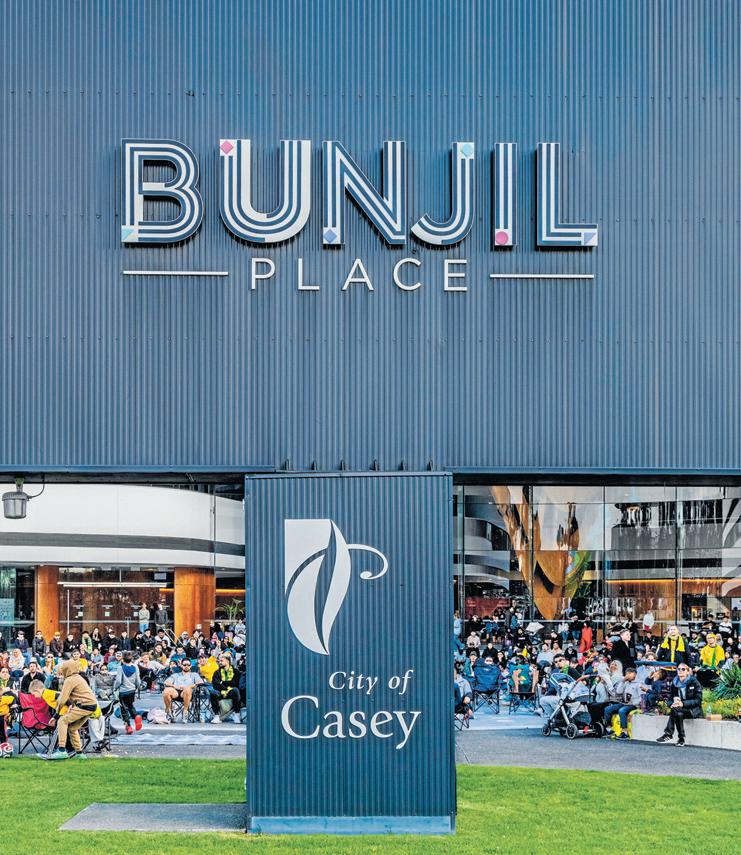
Beautiful, engaging and inspiring, Saltbush is a theatre experience that will leave children talking long after the curtain falls. Only showing at Bunjil Place these school holidays.
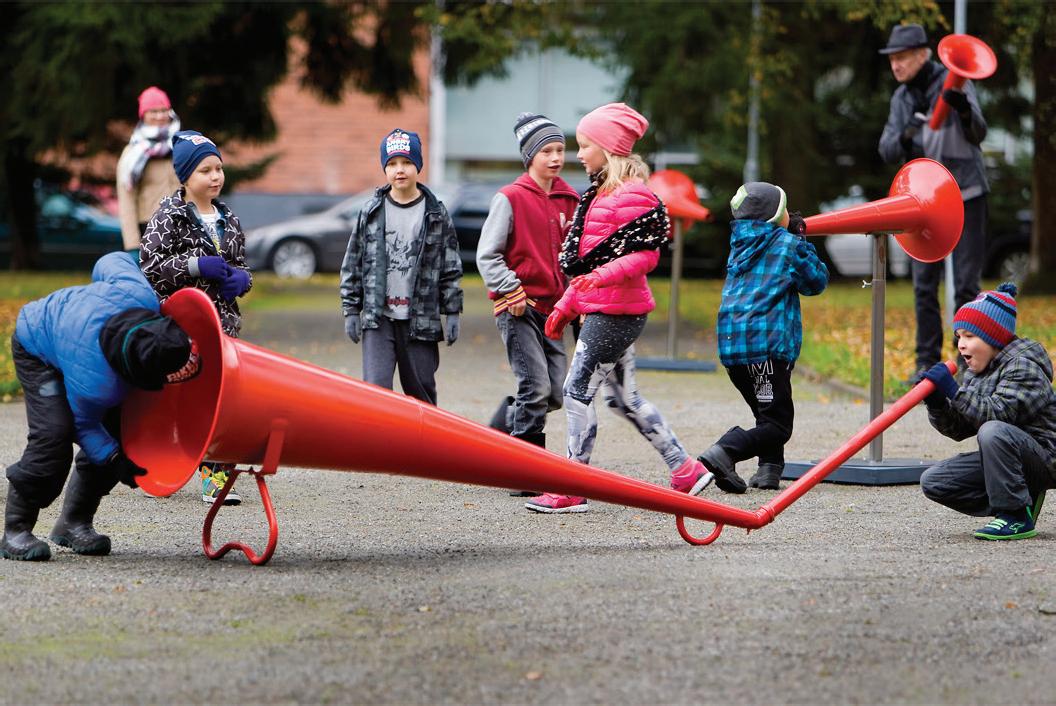

Across the school holidays, The Megaphone Project at Bunjil Place on Sat 27 June. Our Plaza will come alive with 25 megaphones for kids of all ages to explore, play and discover. Each megaphone has something different to hear – what will you learn?
Explore the full program of locations and dates across Casey on our website.


How
and The Gruffalo’s
By Cam Lucadou-Wells
They sound just like bagpipes and violins, but they’re not quite as you know them.
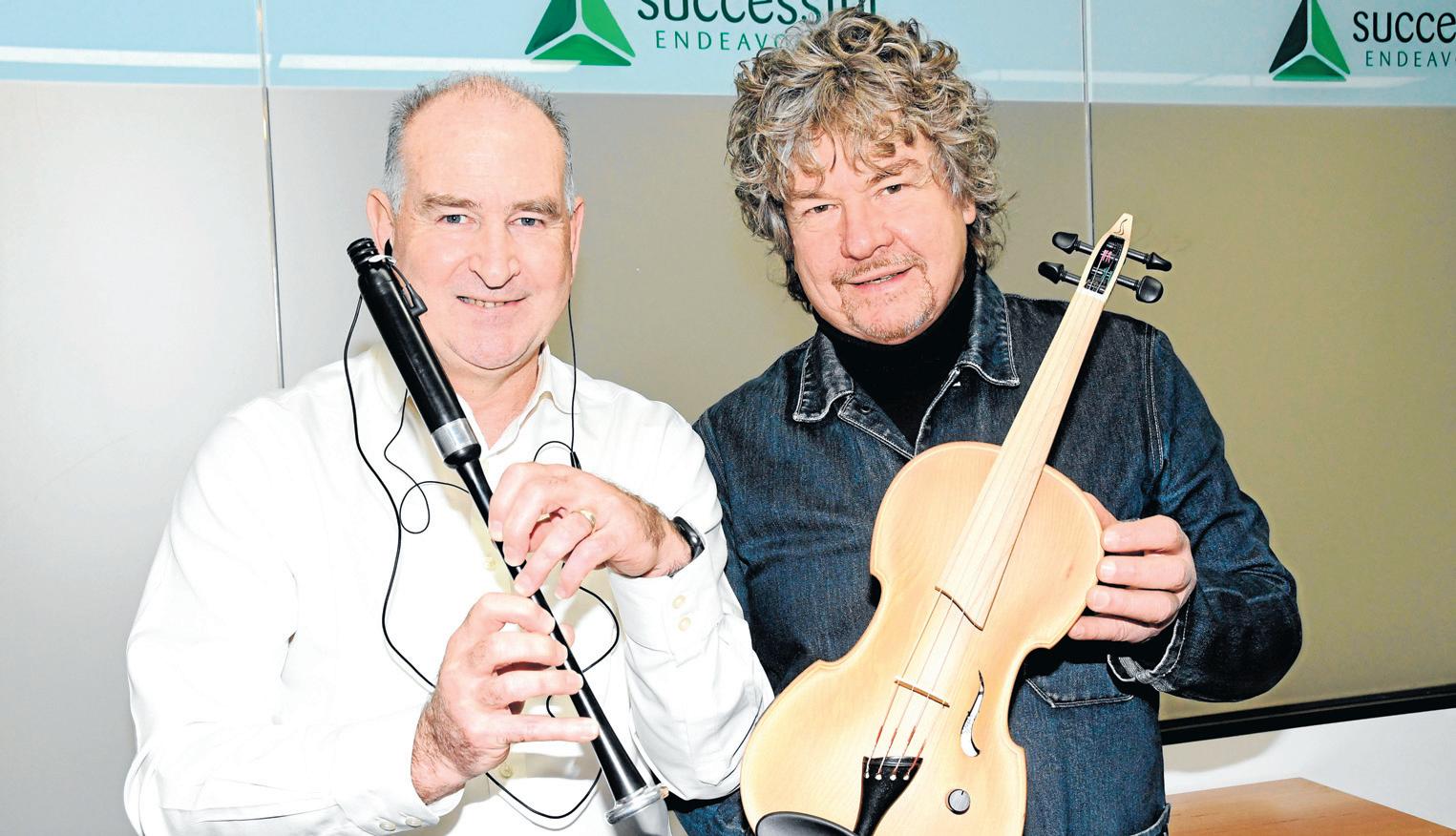
Dandenong South innovative manufacturer Successful Endeavours has helped to develop digital versions of traditional instruments for export around the world.
The key is to replicate an authentic sound, says Ray Keefe, managing director of Successful Endeavours.
“Part of the fun was translating the ‘it needs to sound like’ into ‘what on earth we do with the mathematical algorithms’ to then achieve that,” Keefe says.
“It has led to the world’s premium practice chanter, which can double as a recording and stage performance instrument as well.”
Keefe’s firm developed the bagpipe chanter for Australian company Blair Digital Bagpipes.
Playable with real keyholes, it reproduces the drones and birls of a Highland Bagpipe and Scottish Smallpipe.
It is being sold across the world including the bagpipes’ homeland of Scotland and even Antarctica.
Blair Bagpipes producer Murray Blair described it as a traditional instrument bundled with “cutting edge technology, advanced elec-
100 years ago
24 June 1926
Berwick Fire Brigade
The Country Fire Brigades Board has notified the Berwick Shire Council that the Berwick Fire Brigade will be registered at the next meeting. Cr MacGregor stated that the chief executive of the Board had visited Berwick recently and put Brigade members through a drill. He was satisfied with the water supply, as there seemed to be little difficulty in regard to the two-inch mains. Some residents thought the underwriters would not make any reduction in insurance premiums where there were two-inch mains. There were few two-inch mains in Berwick, and these were at the end of town, and there would be sufficient hose supplied to bring these dwellings into the scheme. Cr MacGregor said that after six months, the Board would take over the Brigade and the Underwriters’ Association would reduce the premiums.
50 years ago
24 June 1976
COUNCIL BACKS RAMPS PROJECT
Dandenong Council has supported a move to have ramps in buildings to help disabled people. Councillor Alan Carter told the Journal he brought the matter of ramps to the council’s
tronic design and professional audio”
“It’s much more than a single Scottish bagpipe, there’s nine different types of bagpipe sounds built in.”
attention following the Mayoral Reception held by the Mayor, Cr Jarvis and Mrs Jarvis, for members of the disabled organisations in the Peninsula and Dandenong. Cr Carter was among councillors who carried the disabled in their wheelchairs into the municipal offices for the reception. He said, “I found them a wonderful group of people, bright and cheerful and not looking for sympathy. They told me of their difficulties in getting their wheelchairs through turnstiles, getting over gutters and using toilets
Over time, the design was refined with accessories such as a digital pipe bag, digital tuner and audio cutoff pedal.
A great advantage is the compact design and volume controls – which mean they can be dis-
creetly practised at home or in public, without being overly loud or cumbersome.
Blair said the digital version was an important practice tool for people at home during the Covid pandemic, as well as for patients in hospital.
“It’s being used in classrooms, band halls, hospitals and on-stage including the Glasgow Royal Concert Hall.”
Keefe says there are good reasons to revive the dying art of playing music instruments – besides the sheer enjoyment and creative exercise.
He cites research that learning an instrument builds structures in the brain, making it more resilient against Alzheimer’s and dementia.
“Only 5 per cent of people today make their own music. Compared to 50 years ago when it was more like 30 per cent.”
Successful Endeavours has been also involved in creating a digital violin for Kyneton-based company Spur Violins.
The firm developed and manufactured preamplifier electronics for the violin, which is primarily targeting the US market.
“It turns out the violins just happen to be the instrument that builds more structure in the brain than any other,” Keefe says.
“(Albert) Einstein played on and used to get it out regularly when thinking through problems or even entertaining guests.”
Compiled by Dandenong and District Historical Society
when there are none specifically designed to cater for them in public buildings and railway stations. All they were asking was to have help in these matters with ramps and easy to accessible doors so they could go about their business in a fashion that did not worry others.” The motion to recommend inclusion of ramps and accessible entrance doors as a condition of future planning permits for surgeries and medical clinics was carried unanimously.
20 years ago
19 June 2006
Council strife
Greater Dandenong’s new interim CEO and chartered accountant, Bryan Payne, says the council is in financial strife and in danger of becoming insolvent. Mr Payne replaced Carl Wulff, who resigned last month. Mr Wulff was supposed to leave at the end of the month, but after a session involving councillors last Tuesday, he severed ties on Friday. Before his departure, Mr Wulff denied the council had liquidity problems and said Mr Payne’s comments were “ridiculous” and “irresponsible.” The draft budget, which was set to be voted on by councillors tonight, will be delayed by two weeks to allow Mr Payne to look through it and propose cuts. A council worker told the Journal there would
be job losses and cuts to services because of budget cuts. “The feeling between the councillors and the officers has got to the stage where the council is just unworkable. The morale in the place is terrible.”
5 years ago
22 June 2021
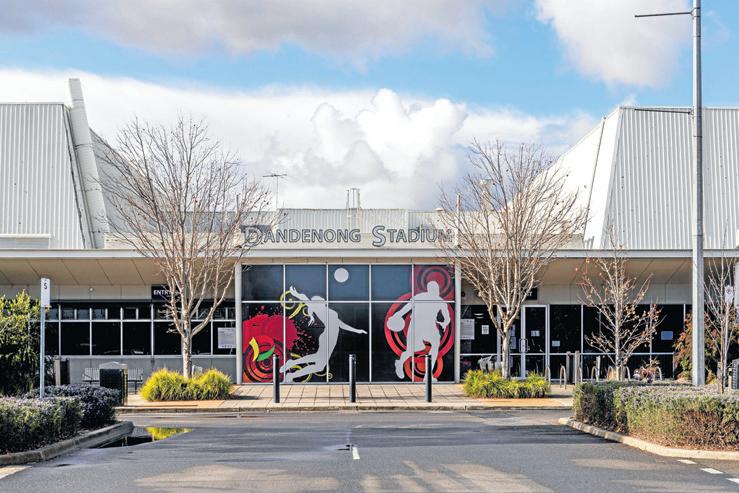
Council pool cash – splash City of Greater Dandenong will pour up to $2.1 million into a wholly-owned subsidiary company to oversee its pools and leisure centres in what critics are calling a “boys club.” South East Leisure Pty Ltd will manage Dandenong Basketball Stadium, Dandenong Oasis, Noble Park Aquatic Centre and Springers Leisure Centre. Its paid six-member board is headed by Steven Wright, a former Richmond Football Club CEO, and includes three directors with pre-existing ties to Greater Dandenong – one is Mick Jaensch, who is set to retire as council’s corporate services director. The appointments were delegated by councillors to the CEO, John Bennie. There was a selection process with more than 50 applications received for the advertised positions. Former councillor Maria Sampey said “few of the Board Members seem to have expertise in running aquatic centres. It’s jobs for the boys and a huge leg-up for Mick Janench.”


By Venerable Bandaraulpatha Gnanawimala, of Buddhist faith
Long before modern declarations of human rights, a revolutionary voice in ancient India challenged the core of social inequality.
Siddhartha Gautama, the Buddha, looked at a deeply divided caste system and proposed a radical truth: human equality is not a political concession, but a cosmic fact.
In a world where birth determined worth, Buddhism introduced a spiritual democracy.
The Buddha famously declared: “Not by birth is one an outcast; not by birth is one a Brahmin.
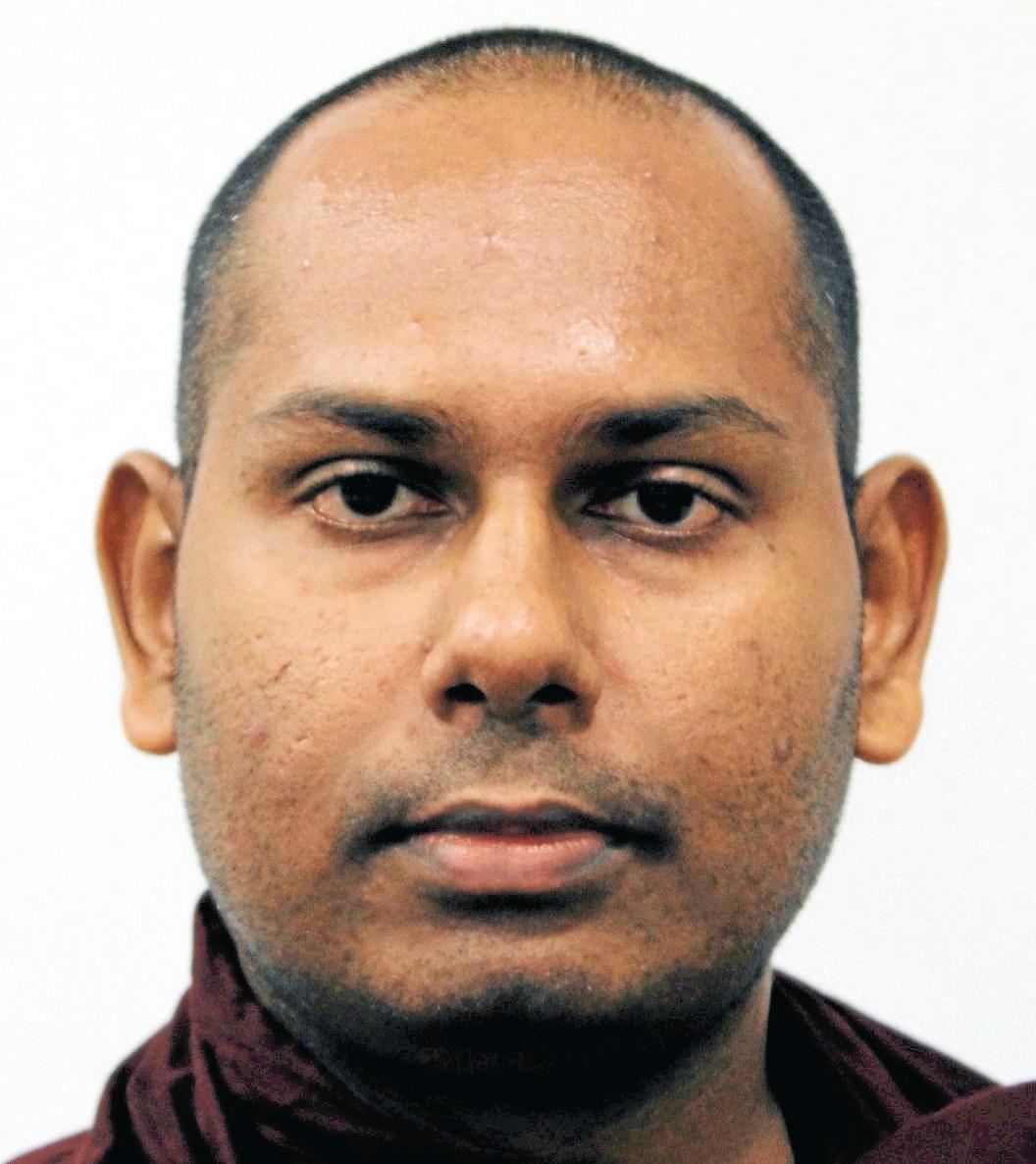
“By deed is one an outcast, by deed is one a Brahmin.”
This simple insight shifted the definition of
human value entirely from status to behaviour, directly dismantling the rigid social hierarchies of his era by insisting that spiritual and moral purity belong to no single group.
According to Buddhist philosophy, our shared equality stems from two core principles:
• Universal Potential: Every human being possesses the exact same capacity for awakening, wisdom, and compassion. Enlightenment does not care about gender, socio-economic status, or race.
• The Equaliser of Suffering (Dukkha): We are fundamentally equal because we all experience pain, aging, loss, and death. Because our vulnerability is identical, our need for kindness (Metta) is identical.
When people entered the early Buddhist monastic community (Sangha), they shed their social identities like rivers losing their names upon reaching the ocean.
Princes, warriors, and untouchables slept under the same trees, ate the same food, and held equal standing.
Furthermore, by establishing the Bhikkhuni (nuns) order, the Buddha broke contemporary taboos to explicitly affirm that women shared this identical capacity for highest liberation. Buddhist equality is deeply actionable. It demands that we look past the surfacelevel constructs that divide us—our nationalities, economic brackets, and identities—and recognise the shared human consciousness underneath.
If we are all interconnected parts of the same fabric, harming another human being through systemic bias or prejudice is ultimately an act of self-harm.
True equality isn’t achieved by making everyone the same; it is realised when we afford every individual the same dignity, realising that at our core, we are all just walking each other home.
Enquiries regarding the Interfaith Network, City of Greater Dandenong: administration@ interfaithnetwork.org.au
Visit - interfaithnetwork.org.au
By Sahar Foladi
An emotional vigil was held at Dandenong’s Harmony Square in solidarity with the people of Herat in Afghanistan in the face of the Taliban regime’s crackdown.
This comes after the Taliban reportedly opened fire on a peaceful protest in Herat, which killed and injured innocent civilians.
It sparked protests globally and a nationwide vigil on Sunday 14 June by the Australian diaspora from Afghanistan.
The vigil in Harmony Square held by the Hazara Cultural Association brought the community and supporters together, chanting ‘Women, Freedom and Life’
“(The Taliban) have been very discriminative of women, especially Hazara women, other ethnic groups and religious minorities so this has to end at some point,” Barat Batoor, the founder and president of the Hazara Cultural Association, says.
“We have gathered here to show our solidarity and also to call on the Australian government to put the strongest sanctions on the Taliban to hold them accountable for the atrocities and human rights abuses that are happening in Afghanistan.”
While the majority feel as though the world has forgotten Afghanistan and the women of Afghanistan, the vigil brought together a shared grief, pain and determination for freedom.
Taliban’s morality police detained an estimated 30 women and girls in a predominantly Hazara neighbourhood of Herat over alleged issues with their mode of dress, despite witnesses reporting women were covered.
When some residents held a peaceful protest chanting, ‘Work, Education, and Freedom,’ the Taliban unleashed violence, which killed an 11-year-old boy, according to the United Nations.
Dr Farkhondeh Akbari is a research fellow at the Centre of Excellence for the Elimination of Violence Against Women at Monash University.
She says the women’s peaceful protests have always been suppressed since the Taliban came to power and that the dress edicts don’t make up for the real reasons of their arrests.
“Some women were (wearing) that very blue burka that the Taliban are known to have implemented for women to wear.
“Part of (the arrests) are also very ethnically charged because they’re targeting women from predominantly Hazara neighbourhoods like Dasht-e-Barchi and Jebrail.
“All women of Afghanistan are affected by the Taliban’s gender apartheid policies, but the Hazara women are the victims of an intersectional ongoing violence, of ethnicity and gender to dishonour the community, to target and pressurise the community.”
The Australian Greens endorsed candidate for the upcoming State elections in November, Matthew Kirwan also attended the protest where he called on the Australian Government to recognise the Hazara genocide through the United Nations and through the G20 (global forum for international economic cooperation).
He also encouraged Albanese to “be an actual
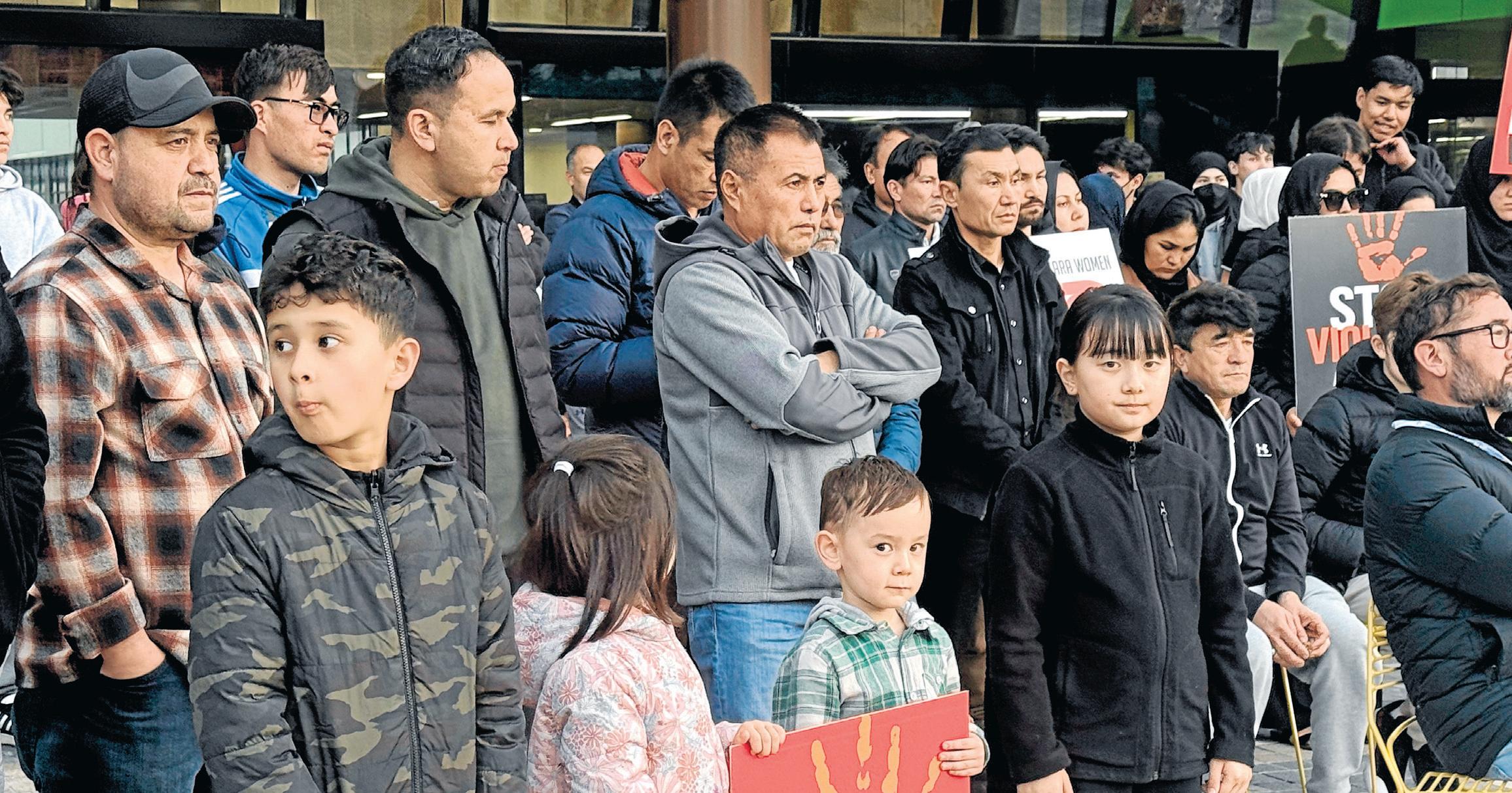
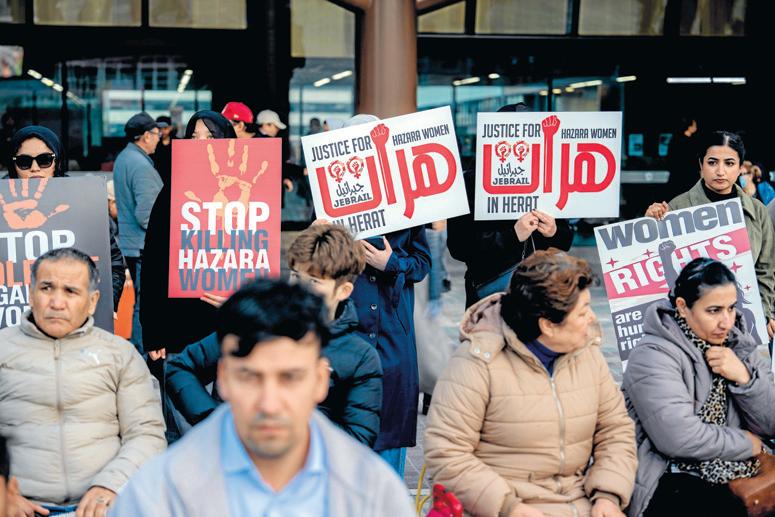
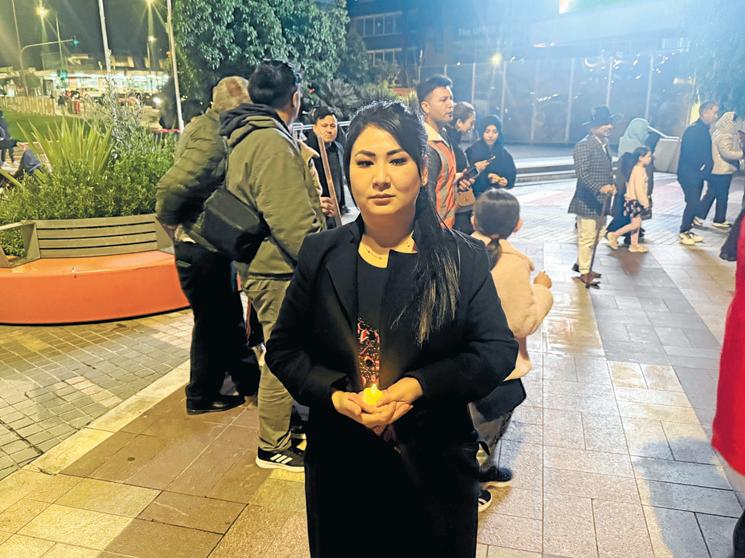
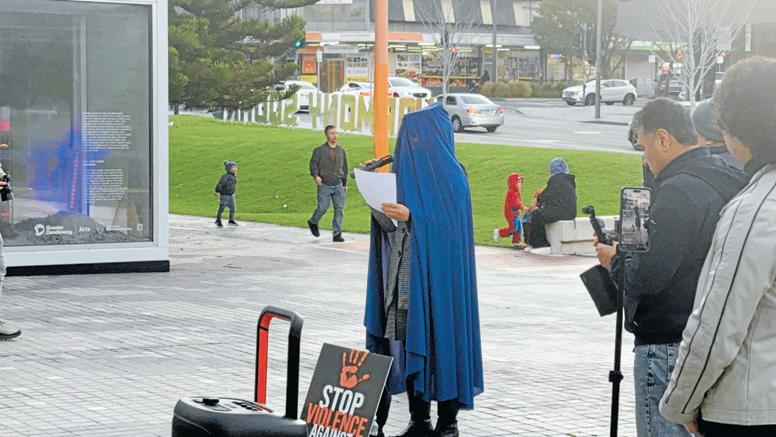
leader and getting the world to put pressure on Afghanistan to end the genocide”.
“I just think it’s appalling. The Hazara community has been in Australia for decades, their experiences have been well documented.
“The federal MPs know all about the Hazara genocide and have privately admitted that it’s a real issue and that women continue to be oppressed, denied education and are still being killed.
“The genocide is not an historical event, it’s continuing, but the federal government haven’t acted to recognise the genocide, and they should urgently do that.”
Tajik Council of Australia representatives also attended the vigil, saying this was a united stance for freedom.
Dr Akbari says Australia has provided “sym-
bolic” support rather than substantive support.
“Australia has not hosted a single girl from Afghanistan or given a scholarship to a single girl from Afghanistan in the last five years.
“That speaks volumes, because symbolically, even in the gender policy of the foreign minister, gender apartheid and women of Afghanistan top the webpage. But substantively, they haven’t committed much.”
She says the majority of the diaspora from Afghanistan in Greater Dandenong and across Victoria have set up organisations and NGOs in utmost secrecy from the Taliban, operating services like underground schools for girls, workshops and many other learning programs.
She co-leads an NGO running underground
By Cam Lucadou-Wells
Refugees waiting more than a decade for permanent residency are facing further long, costly waits to be reunited with their overseas partners and children.
Advocacy groups are calling for the Federal Government to reduce processing times and fees for family reunion visas for new settlers.
They also want more humanitarian places and wider pathways for family reunion.
Southern Migrant and Refugee Centre deputy chair Wicki Wickiramasingham – who heads human rights group Justice and Freedom for Ceylon Tamils - says visas for a partner and two children can cost about $20,000.
“This system forces people to choose between survival and family.
“No one should be priced out of being reunited with their children or partner.”
The three-year-plus delays for visa processing cause ongoing fear for their loved ones’ safety overseas, he argues.
“People have already waited 11 to 15 years for safety.
“They should not have to wait another decade to be reunited with their families.
“Without the support of close family, many refugees struggle to fully participate in work, edu-
cation and community life.
“Family reunion is essential – not optional –for rebuilding lives after displacement.”
Australia’s permanent migration program is set at 185,000 places for 2026-‘27, a number which has remained consistent since 2024-25, according to the Government.
This includes 52,460 for family visas – including 41,500 for partners and 3500 for children.
About 20,000 humanitarian visa places a year, including for family reunions, are also provided. Parents could also be granted temporary sponsored visas or visitor visas.
But demand far exceeds supply and causes long delays, Mr Wickiramasingham says.
In the broader migration system, 25 per cent of partner visa applicants wait more than three years for a decision, he says.
“People want to work, contribute and feel part of their community.
“But they cannot fully move forward while their loved ones remain behind.”
A Department of Home Affairs spokesperson said family migration was an important element which “contribute(s) to stronger social cohesion outcomes”
The Government “recognises … the impact that delays in visa processing can have on applicants and their loved ones”
“The Department assesses applications on a case-by-case basis.
“There are many factors that may impact the processing time of individual applications, including the quality and completeness of the applications, applicants’ responsiveness to requests for information and the complexity involved in assessing genuineness, character, health and security requirements.”
Wickramasingham also called for decisions on more than 700 people who were transferred from Nauru and Papua New Guinea detention centres to Australia for urgent medical treatment.
He estimates that about 200 are in the South East, languishing on temporary visas for more than a decade.
A Department of Home Affairs spokesperson said the group “temporarily residing in Australia under regional processing arrangements” does not have a “permanent settlement pathway in Australia”
“Transitory persons are encouraged to consider their options to depart Australia, either to a third country or return to their home country.”
Opposition home affairs and immigration spokesperson Jonno Duniam said cases should be processed “according to Australian law and on their individual merits”.
“Australia should meet its obligations to peo-
schools for girls but says no government official has approached her to provide any practical support.
Dr Akbari wants to see practical supports like an increase in the ‘Women at Risk’ visa category, for Australia to support all efforts on the codification of gender apartheid, and hold the Taliban accountable through the International Court of Justice (ICJ).
She recently published her book Non-State Actors in Diplomacy: Peace Settlements with the Taliban and the Khmer Rouge, building on her PhD thesis from 2021, which examined whether the Taliban can become a diplomatic actor capable of meaningful engagement in peace settlements in Afghanistan.
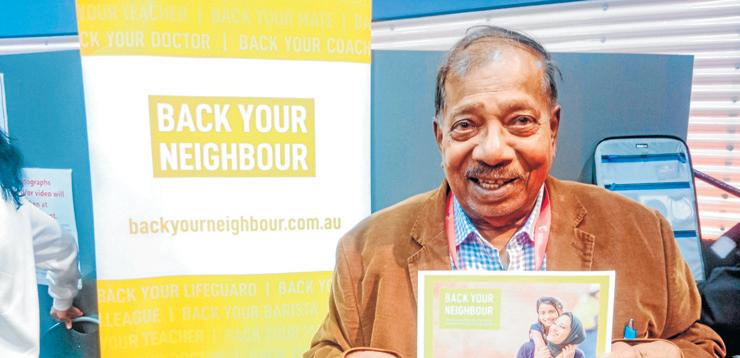
ple requiring medical care, but transfers here for medical treatment must not bypass any of the normal or established processes that lead to permanent settlement.
“Labor needs to explain how it intends to resolve these cases without weakening Australia’s border protection settings, encouraging people smugglers to restart their trade, or further adding to a migration system that is already under intense strain.”
He said the Coalition would restore temporary protection visas and safe haven enterprise visas as the “dominant forms of onshore protection” for unlawful arrivals.
This would tackle more than 70,000 “unlawful non-citizens” in Australia including people who had exhausted all legal avenues to remain.
“We would restore the policies of previous Coalition governments that very successfully stopped the boats.”
Springvale Winter Fest returned with its annual frosty carnival on Sunday 21 June.
The familiar neon lights, snow globes, husky dogs, rides, foods, cooking demonstrations and live entertainment lit up Buckingham Avenue.
In the absence of real snow, families frolicked in ‘snow globes’ filled with shredded white ribbons. The street’s archway also propelled ‘snow’ bubbles to drift across the crowds.
Among the highlights were an LED Lion and Dragon Dance in the evening.





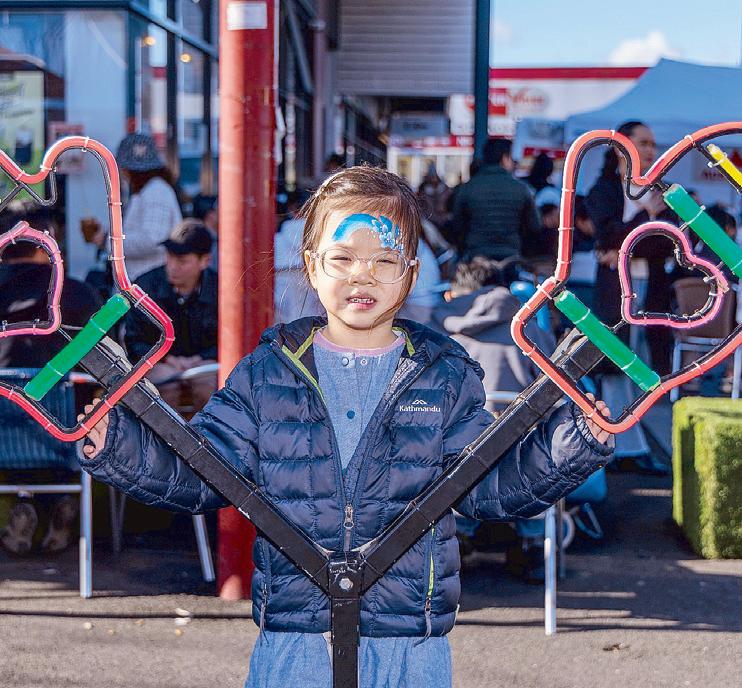
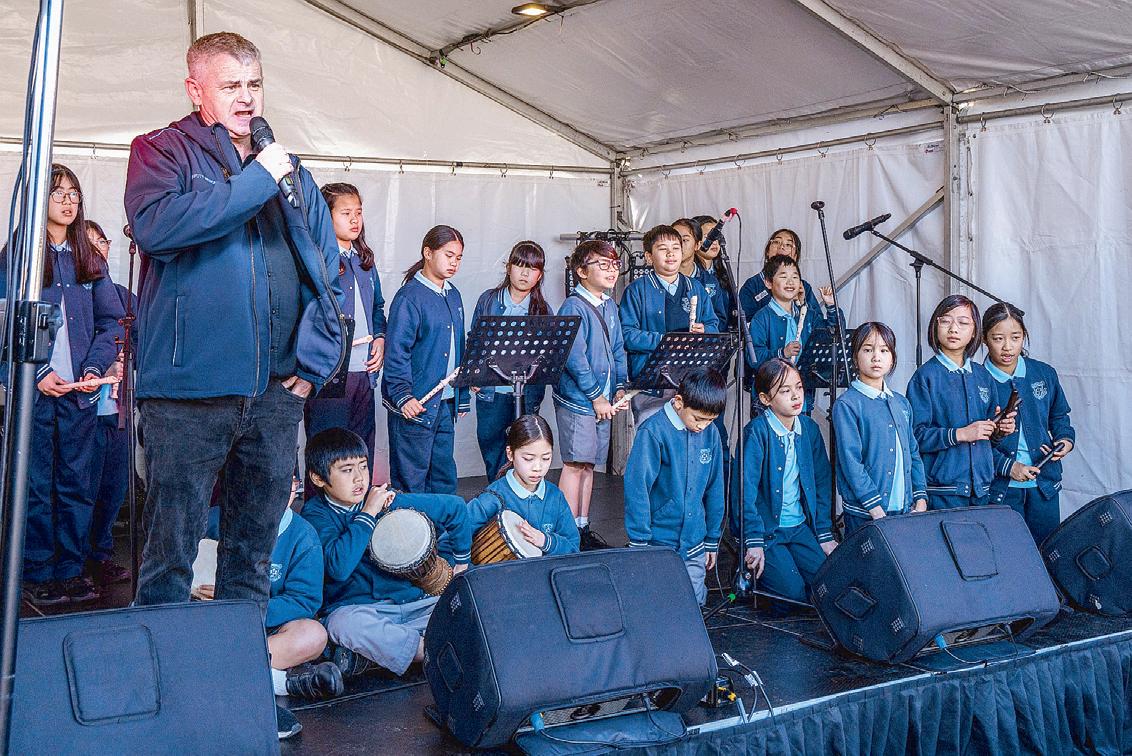

Students from six primary schools are digging in for the environment and biodiversity as part of Greater Dandenong Council’s One Tree Per Child program.
Across June and July, Grade 3 students are joining the council’s conservation team to revegetate the Dandenong Wetlands.
The sessions include a traditional Welcome to Country, a guided exploration of surrounding bushland and a ranger-led planting of indigenous species.
Each student is provided a small tree to take home and plant in their own garden.
Greater Dandenong mayor Sophie Tan said each tree planted would help increase our city’s canopy.
“Greater Dandenong has one of the lowest tree canopies in metropolitan Melbourne, and the One Tree Per Child program is just one way we are committed to improving the canopy and biodiversity in our city.”
“In 2016 the canopy covered only 9.9 per cent of our city, but sustained efforts have increased it to 14.6 per cent.
“Tree planting initiatives will help us reach our goal of 15 per cent by 2028.”
Cr Tan said climate change was a real issue for Greater Dandenong residents.
“It is shaping our lives, our health, our finances and the places we call home.
“We are working to take real action and increasing our tree canopy, which helps keep our streets, suburbs and houses cool, is an important step.”
The One Tree Per Child program operates across the globe and was established by National Tree Day co-founders (John Dee and Olivia Newton John).
It aims to have every child plant at least one tree before leaving school.


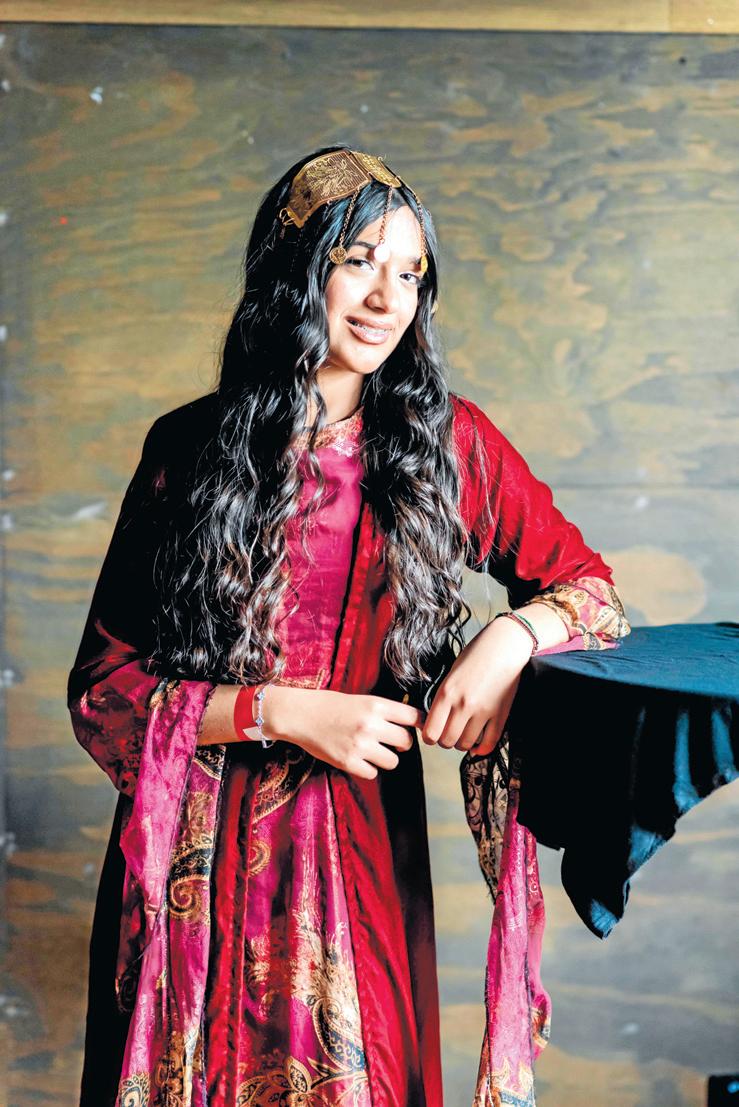

A showcase of stories and performances was part of a vibrant celebration of Refugee Week in Dandenong.
Southern Migrant and Refugee Centre hosted A Million Stories, One Community at The Castle on 13 June, with the aim of shared connection and learning.
It featured cultural displays, a Forest of Stories canvas, traditional Afghan tea, an Ethiopian coffee ceremony, and freestyle football and parkour.
On the catwalk for a multicultural fashion parade were models draped in Afghan, Nepalese, Sri Lankan, Kurdish, Burmese, Indian and South Sudanese garments.
Poignantly, DJ Maryam and Negin – a female DJ and young violinist, respectively from Herat, Afghanistan – performed on stage.
Three Afghan sisters also gave a powerful presentation The Journey of Hope.
This month, Taliban forces violently attacked a public protest in Herat, sparked by a crackdown on women’s dress code.
Also performing at The Castle were Bollywood singer Hazel Sharma, Narthanalaya Indian classical dance troupe and South Sudanese Nuer traditional dancers.
“Throughout the event, the stories shared reminded us that every journey matters,” the SMRC stated.
“Refugee Week reminds us that while every story is unique, together they create and connect the threads of one community.”
Dandenong MP Gabrielle Williams, South Eastern Metropolitan Region MP Lee Tarlamis and Greater Dandenong deputy mayor Phillip Danh attended.

Some of us catch public transport for a footy game or a night out. For many others, it’s an essential part of our daily commute.
But what do we do when the buses and trains we depend on are no longer safe?
Crime on public transport hit a 10-year high with criminal offences rising by 13 per cent in just the last year according to the latest data from the independent Crime Statistics Agency.
You may be tempted to brush this off and say that this only happens in the city.
Unfortunately, you would be very wrong.
Earlier this year, a local contacted me about a terrifying experience, involving an assault on a bus which resulted in a head injury.
The reality is that I hear these kinds of stories all the time now.
Since Jacinta Allan became Premier in September 2023, crime on public transport has doubled in our local area. The number of criminal offences have shot up by over 56 per cent in Casey and over 47 per cent in Cardinia.
At recent crime forums in the City of Casey, it also became apparent that nearly half of the
crimes befalling are currently not being reported as people feel it is futile to contact police. However, police have urged residents to report all crimes to increase local resources.
People can also call Crime Stoppers on 1800 333 000 if they wish to remain anonymous in their report.
Under Labor, we have less police, less PSOs at train stations and reduced hours at police stations. It’s not rocket science – if there are fewer police on the beat, crime will increase. This is no way to keep our community safe.
That is why, if elected in November the Liberals and Nationals will:
• Deliver 3,000 more police
• Reopen police stations
• Recruit 200 additional PSOs
So that every person gets home safely every day.
Ann-Marie Hermans MP
• State Member for South Eastern Metropolitan Region
• Shadow Assistant Minister for Community Safety
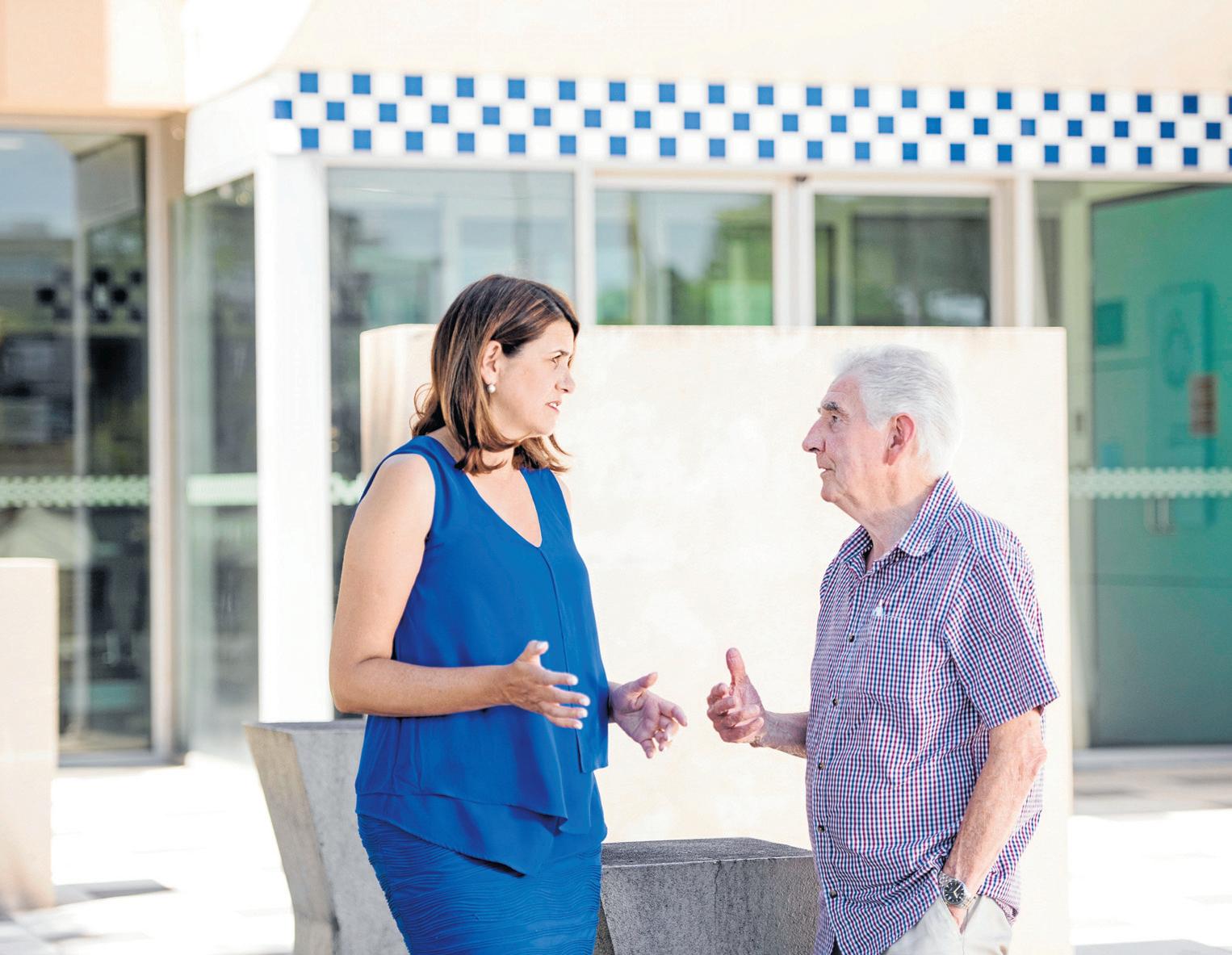































Pet Drawing
Try your hand at sketching your furry (or feathered) friend with facilitator Maroulla’s guidance, all materials provided, bring your own pet photos for reference. Or bring along your own art and craft projects such as painting, sewing, collage, or origami. All welcome.
• Wednesday, 24 June, 6.30pm-8pm at Springvale Library, 5 Hillcrest Grove, Springvale; free event.
Sewing Machine Basics
Hands-on intro to sewing machine basics, then create a stylish boxed, lined zipper pouch. For ages 16 years and older.
• Thursday 25 June, 1pm-4pm and 5.30pm8.30pm at Springvale Library, 5 Hillcrest Grove, Springvale; free event. Registration required at greaterdandenong-events.bookable. net.au/#!/event-detail/ev_3b84829c490544 a3a1f18597b35d2e96
Neighbourhood BBQ
Come along and bring a neighbour or two to our family friendly evening. Have fun and connect with others in a casual setting. Free sausage sizzle (halal options available) and free kids’ activities.
• – Thursday 25 June 4pm-6pm at Autumn Place Community Hub, Autumn Place, Doveton; free event.
Dried Flower Resin workshop
Create your own eco-friendly resin case using plant-based materials and sustainably sourced dried flowers. No experience needed, all materials provided. For ages 16-plus.
• Thursday 25 June, 6pm-7.30pm at Keysborough Community Hub, 10 Villiers Road, Keysborough; free event. Registration required at greaterdandenong-events.bookable.net.au/#!/event-detail/ ev_45dec6fc819c44c998e9a1aa03b10fcb
Play in the Plaza
Join the Festive Tribe for free fun, creative play every Tuesday, Friday and Saturday until 27 June. Includes an MO-scape and outdoor play zone. Ideal for young children, including preschoolers.
• Tuesdays, Fridays and Saturdays until 27 June at Palm Plaza, McCrae Street, 10am-2.30pm; free event. No bookings required.
The Megaphone Project Twenty-five giant megaphones in a range of
shapes and sizes will be travelling across Casey. Visitors are invited to explore, play and interact with the installation.
• – Saturday 27 June – Sunday 12 July, 10am4pm at various locations. Details: casey.vic. gov.au/events/megaphone-project
Gouache Painting
Using oil pastel and paper, learn how to use texture and vibrant colour to create a unique art piece to take home. For ages 12-25, all skill levels.
• Monday 29 June, 2.30pm-4pm at Springvale Library, 5 Hillcrest Grove, Springvale; free event. Registrations required at events.humanitix.com/winter-chills-july-school-holidays
Ice Skating
Embrace the winter chill with ice skating at O’Brien Icehouse. For ages 12-25, and beginners to confident skaters alike. Skate hire included. Bus pickup/drop-off points at Dandenong, Noble Park and Springvale.
• Tuesday 30 June, 12.30pm-2pm at O’Brien Ice Skating House, 105 Pearl River Road, Docklands; $20. Registrations required at events. humanitix.com/winter-chills-july-school-holidays
Extraordinary Stories school-holiday activities
A series of short, self-guided activities as part of the Extraordinary Stories exhibition. For children up to 12 years old and families.
• Wednesdays and Thursdays, 1-2 July and 8-9 July, drop in between 10am-2pm at Heritage Hill Museum and Historic Gardens, 66 McCrae Street, Dandenong; free, event. No registrations required.
K-pop Dance Workshop
Led by master instructor Kristie Ho from X-Dance Station. For both beginners and more experienced dancers, and ages 12-25.
• Wednesday 1 July, 1.30pm-3pm at Drum Theatre, 226 Lonsdale Street, Dandenong; free event. Registrations required at events.humanitix.com/winter-chills-july-school-holidays
Heritage Hill guided tour Hear captivating tales of the people who shaped Heritage Hill and discover how their lives intertwined with the growth of Dandenong.
• Thursday 2 July, 10.30am-11.30am at Heri-
tage Hill Museum and Historic Gardens, 66 McCrae Street, Dandenong; $5pp. Bookings required at greaterdandenong-events. bookable.net.au/#!/event-detail/ev_ bb570e95dd5d4379b41c3944a54de742
Laugh Your Socks Off
A topsy turvy circus show for ages 3-12 years. Presented by Carp Productions.
• Thursday 2 July, 2.30pm-3.30pm at Dandenong Library, 225 Lonsdale Street, Dandenong; free event. Registration required at greaterdandenong-events.bookable.net.au/#!/ event-detail/ev_4c54d230007b46af904b70 c06453484c
Indian Embroidery
Join us for a mindful stitching session on Kantha, a traditional Indian embroidery technique known for its simplicity, beauty and storytelling. For ages 16-plus.
• Thursday 2 July, 6.30pm-8pm at Springvale Library, 5 Hillcrest Grove, Springvale; free event. Registration required at greaterdandenongevents.bookable.net.au/#!/event-detail/ev_afa068529c3b46768bd346a366f0eb49
DJ Workshop
Curious about DJing or ready to level up? RIDDIM Studios will guide you through the decks, with something for everyone no matter your experience. For ages 12-25.
• Friday 3 July, 1pm-3pm at Walker Street Gallery andArtsCentre,cnrWalkerandRobinsonstreets, Dandenong; $5. Registrations required at events. humanitix.com/winter-chills-july-school-holidays
RSPCA Cat Safety Workshop
A practical and fun cat safety session designed for families with children. Meet an adorable feline friend, then learn how cats communicate, how to recognise when they need space and simple ways kids can interact safely and respectfully.
• Friday 3 July, 2.30pm-3.15pm at Springvale Library, 5 Hillcrest Grove, Springvale; free event. Registration required at greaterdandenongevents.bookable.net.au/#!/event-detail/ev_0 3883eb0085049d8b9d24553215430fd
Creative Writing Workshop
Explore ideas, create characters, and share your work in a supportive space. For ages 12-25 years old.
• Monday 6 July, 2.30pm-4pm at Dandenong
Library, 225 Lonsdale St, Dandenong; free event. Registrations required at events.humanitix.com/winter-chills-july-school-holidays
National Rugby League Holiday Clinic
A non-contact introduction to Rugby League for boys and girls aged 5-12 years.
• Tuesday 7 July, 10.30am-12pm at Alan Carter Pavilion, Greaves Reserve, Sinclair Road, Dandenong; free event. Registration required at surveymonkey.com/r/9FMGM6B
Rush HQ
Two hours of high-energy fun at Rush HQ, with trampolines, slides and bouldering to enjoy. Bus pick up and drop off points at Dandenong, Noble Park and Springvale. For ages 12-25.
• Tuesday 7 July, 12pm-2pm at Rush HQ, 39 S Corporate Ave, Rowville; $25. Registrations required at events.humanitix.com/winter-chillsjuly-school-holidays
Plaster Painting Workshop
Every child can design and paint their own unique plaster figurine to proudly take home. Presented by Jelly Bean Entertainment. For ages 6-12.
• Tuesday 7 July, 2.30pm-3.30pm at Dandenong Library, 225 Lonsdale Street, Dandenong; free event. Registration required at greaterdandenong-events.bookable.net.au/#!/event-detail/ ev_67b2e2c7369e4e08bf041316c90ad298
Soccer Clinic
Learn new skills, have some fun and play a game with Reclink Australia. Suitable for young people, all skill levels.
• Wednesday 8 July, 12pm-2pm at Ross Reserve Soccer Pitch, 9 Memorial Drive, Noble Park; free event. Registrations essential at events. humanitix.com/winter-chills-july-school-holidays
Pixel Pathways
Design and build your own maze runner game using retro 8-bit assets. Work in block coding, Python or JavaScript. Presented by Chisholm Institute. For ages 8-12.
• Wednesday 8 July, 2.30pm-4pm at Springvale Library, 5 Hillcrest Grove, Springvale; free event. Registration required at greaterdandenong-events.bookable.net.au/#!/event-detail/ ev_9fc94ae3431d429f8ceda0ed28499060










By David Nagel
Local bragging rights have been tucked away nicely for Rowville after the Hawks showed no mercy in an 18.13(121) to 9.3(57) victory over near-neighbour Noble Park at Seebeck Oval on Saturday.
The second-placed Hawks dominated the early stages of the match before weathering a Bulls’ comeback, either side of half-time, before kicking the last six goals to surge their way to a big win.
Rowville began the game well, with Mav Taylor kicking the opening six-pointer after finding way too much space, so close to goal.
Full-forward Lachlan Wynd then converted two set shots, capitalising on some great set-up play from Lachie McDonald and Matt Davey.
A late mark and goal from Bulls’ skipper Ben Marson cut the margin to a gettable 14 points at quarter time.
But the Hawks took control of proceedings at the start of the second term, kicking five unanswered goals to boot the advantage out to 45 points.
Max Bartlett was first to hit the scoreboard, 10 seconds into the second quarter, before Wynd brought up his third with another terrific set shot at goal.
Jonte Duffy then slotted a clever left-foot snap, before Bartlett kicked two in a minute to blow the margin beyond seven goals.
Bartlett first ran into an open goal before cleverly intercepting a defensive handball from the Bulls and kicking truly through the big sticks.
But full credit to the Bulls; they fought back well with the next five goals of the match.
Jay Verhagen started the revival with a strong forward-50 tackle on Seth Macdonald before Kevin Kean landed a set shot a short time later.
Verhagen then kicked the last goal of the first half after a strong mark; the Hawks leading 54-24 at the major break.
The Bulls continued their run at the beginning of the third with Charlie Schneider marking and playing on and running into an open goal.
The deficit was then remarkably cut back to 18 points when Liam O’Rourke calmly converted after a mark close to goal.
But the Hawks showed composure and steadied, kicking the next three to lock away the four points.
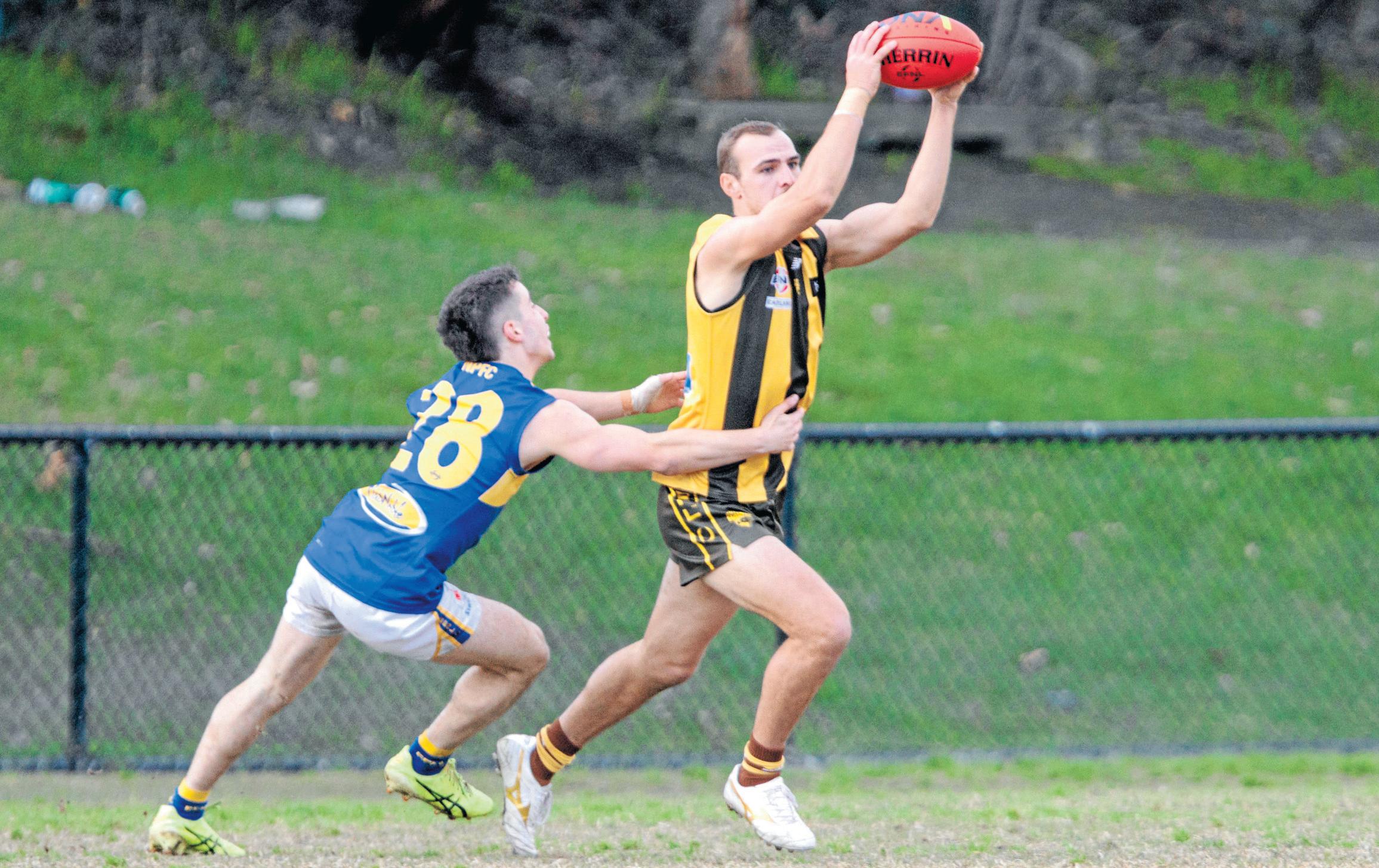
The Bulls did close to 25 points, early in the last; before the Hawks rattled on six unanswered goals to race away with the victory.
Wynd kicked a lot better than he has in recent times, ending with six for the afternoon, while three each to Bartlett and Macdonald helped guide the Hawks to success.
Lachie McDonald was terrific for the Hawks through the midfield, while Callum Verrell kept things nice and tidy in defence.
Schneider was effective for the Bulls up forward, ending the day with three goals, while O’Rourke and Verhagen were busy with two each.
The win sees Rowville a game clear in second
place, with a trip to eighth-placed South Croydon to come, while a winless Noble Park faces a huge game at home against ninth-placed South Belgrave.
Win, and the Bulls will join the Saints on one win each for the season, while a loss will see the long-time Premier Division stalwart become a short-priced favourite for relegation.
The biggest game of the Bulls’ season begins at Pat Wright Oval at 2.20pm this Saturday.
•EASTERNPREMIER
RESULTS R10: Rowville 18.13(121) def Noble Park 9.3(57), Blackburn 14.15(99) def Balwyn
10.14(74), South Belgrave 13.12(90) def by Berwick 14.18(102), Vermont 8.9(57) def by Doncaster East 12.6(78), East Ringwood 9.12(66) def by South Croydon 10.8(68).
LADDER: East Ringwood 36, Rowville 32, Doncaster East 28, Blackburn 24, Balwyn 22/ Berwick 20, Vermont 20, South Croydon 14, South Belgrave 4, Noble Park 0.
FIXTURE R11 (Saturday 27 June): Noble Park (10) v South Belgrave (9), South Croydon (8) v Rowville (2), Doncaster East (3) v Berwick (6), Vermont (7) v Blackburn (4), Balwyn (5) v East Ringwood (1).
By Blair Burns
Hampton Park took it right up to Narre Warren for three quarters in wet conditions at Kalora Park on Saturday night but it was the Magpies who prevailed by 38 points at the final siren, 12.11 (83) to 7.3 (45).
A huge crowd ventured to Kalora Park for a big Southern Division 1 clash between two old rivals and spectators were treated to a much more entertaining game than their previous encounter earlier in the year.
With Narre Warren missing some key personnel, the Redbacks made the most of their opportunities - they were up for the fight.
At three-quarter time, it was anyone’s game with the Magpies leading by just five points as Hampton Park had kicked accurately at the other end to keep them right in it.
But a dominant fourth term from the black and white, where they kicked six goals to one, saw them run away to survive a scare and remain in second spot on the ladder.
Julian Goerlitz was everywhere for Narre Warren, while Jye King was brilliant in defence for Hampton Park.
Dingley showed just how ruthless it can be as it thumped Springvale Districts by 141 points at Souter Reserve, 28.13 (181) to 6.4 (40).
It was a huge offensive display from the ladder-leader who put the foot down after quarter time to demolish the Demons.
At the first break, the Dingoes led by just six points but they kicked 24 goals to three after that and boosted their percentage.
Current Sandringham VFL player Jack Fer-
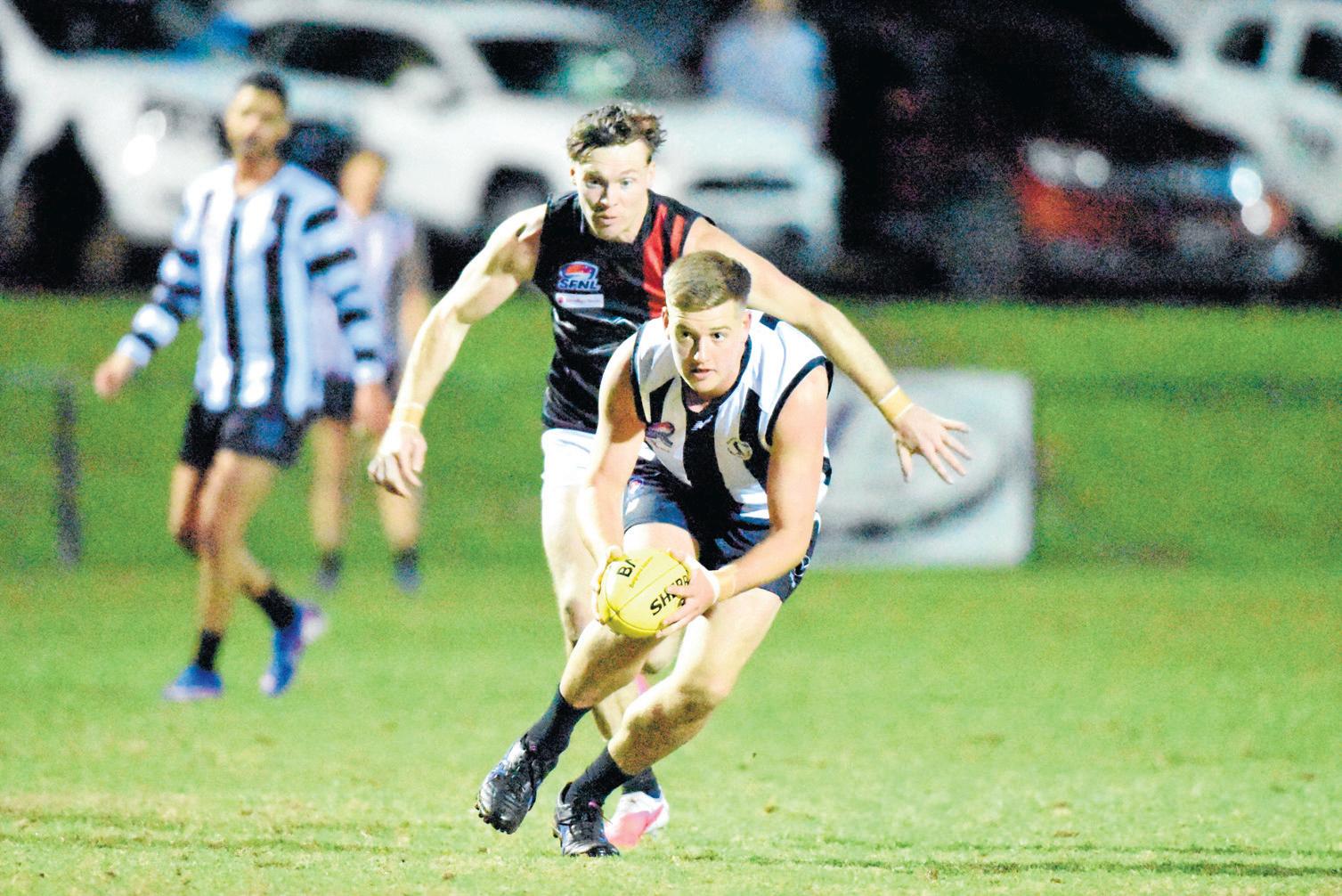
raro, former St Kilda player turned American punter Arryn Siposs and Nathan Taylor all kicked four goals each in the huge victory.
Murrumbeena won the eight-point match against Cranbourne as they made a big statement and staked an early claim for fifth spot with an impressive 54-point win, 16.9 (105) to 7.9 (51).
The Lions played their ground well and
came out of the blocks with some firepower, kicking six goals to one in the first term to set up the victory.
The Eagles, who have been hit hard with injury in recent weeks, have now lost two in a row by more than 40 points and will look to bounce back this weekend.
Castan Racunica has 38 goals for Bentleigh this season and cannot be stopped as he added
another five to his tally in a 77-point win over St Paul’s McKinnon, 20.19 (139) to 10.2 (62).
With 39 scoring shots to 12, the margin could’ve been far worse if the Bulldogs didn’t kick so straight, or if the Demons kicked straighter.
At quarter time, St Paul’s actually led 25-21 with Daniel Plotkin (four goals for the match) finding his range early.
But from that point on, it was all one-way traffic as Bentleigh kicked 6.8 to 1.0 in the second quarter - four of the six belonged to Racunica.
Port Melbourne went with reigning premier Cheltenham for a half, but the Rosellas’ class came to the fore in the second half as they put the foot down and won by 41 points, 14.11 (95) to 8.6 (54).
Some credit has to go to the winless Colts who fought hard with seven individual goalkickers, but they ultimately ran out of legs. Despite Cheltenham’s strong season with a 8-2 record, the team would’ve been out to do things a bit better against the Colts this time around after a narrow four-point escape in round one.
Ben McDonnell booted four goals in the win, while it was a good day to be a Davis as Max and Tom kicked three majors each.
By Justin Schwarze
Dandenong West remained firmly on top of the ladder with a domination of Doveton Eagles in round 11 of Southern Division 4.
The Westerners have scored 100 or more in every game but one this season, with their highpowered forward line producing yet again as Coren Giliam earned best on ground recognition by booting 10 goals.
Remmi Faulkner-Wood also slotted five, while Harry Lees put through two as Dandenong West ran riot at Greaves Reserve 24.11 (155) to 7.9 (51).
An entertaining game at Meade Reserve saw St John’s Old Collegians edge out Clayton in the dying moments 13.12 (90) to 13.9 (87).
The entire game was back and forth and had massive swings with the JOCs leading by 24 points at halftime before the hosts piled on seven goals in the third to take a 13-point buffer into the last change.
Benjamin Robson kicked the winner for the visitors on a day where he was a best on ground performer, while Clayton Emery booted four and Michael Ashman managed three.
Narre South’s big first quarter boosted it to a win over Moorabbin on the road.
The Saints came out of the gates blazing with seven unanswered first-quarter majors, leading 46-3 at quarter time.
From there, the game was almost even on the scoring front but the visitors rolled on from their blistering start to a 19.13 (127) to 10.9 (69) victory.
Nicholas Green put through three goals while seven other Saints kicked two each.
Ashwood was too good for Lyndale at Essex Heights Reserve with the Magpies asserting themselves from the first bounce.
The hosts’ inaccuracy allowed the Pumas to hang around, but the class of Ashwood eventually prevailed 14.19 (103) to 13.5 (83).
Ahmed Kandakji and Jaxon Knight each kicked bags of four for Lyndale but a three-goal efforts from Andrew Kaldawi, Matthew Simons and Maximus Sykes got the Magpies over the line.
The two Dandenong-based teams that sit
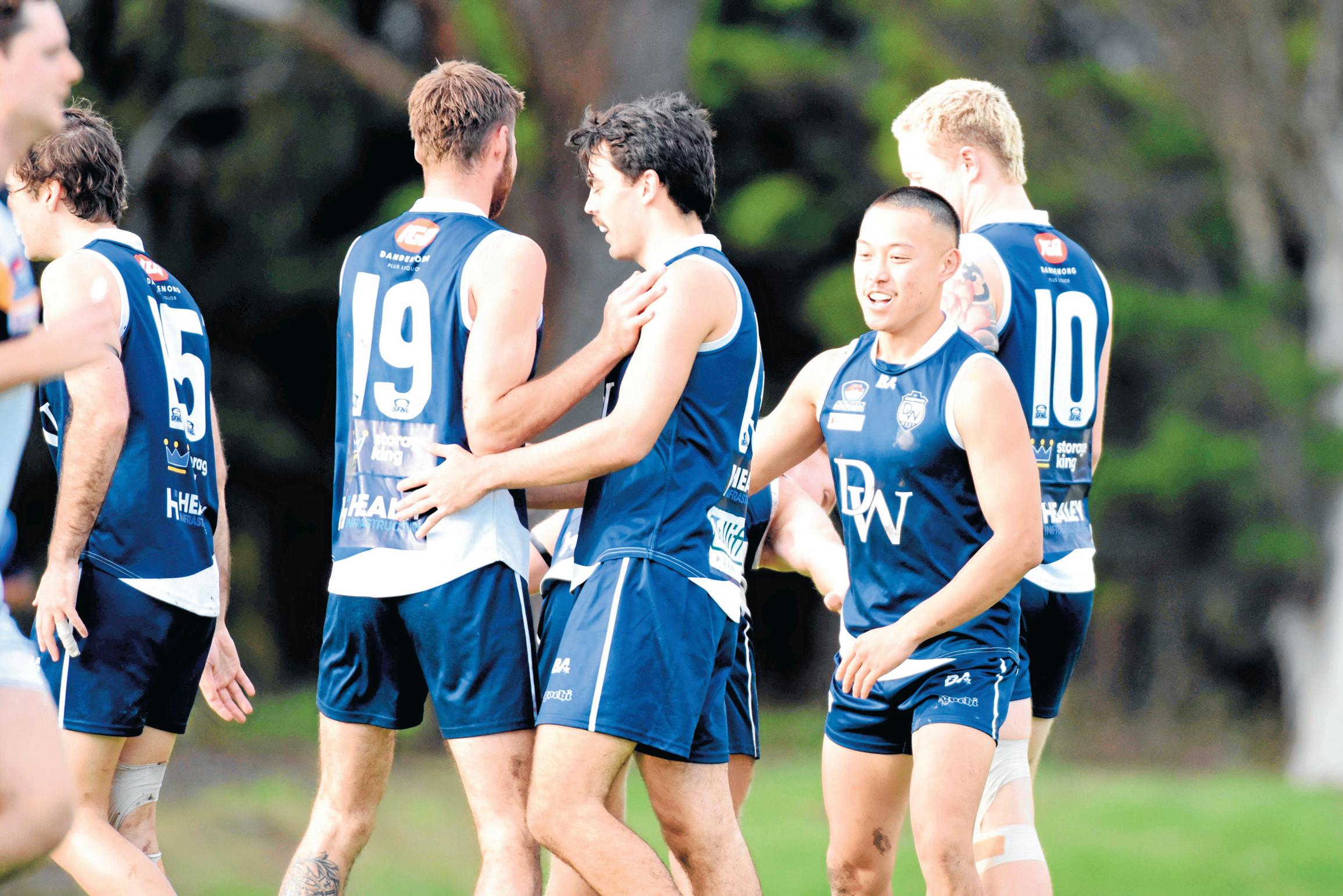
equal at the top of the ladder, St Johns Old Collegians (second) and Dandenong West (first) will meet at the JOC’s home ground at Thomas Carroll Reserve this Saturday.
• SOUTHERN4
RESULTSR11: Dandenong West 24.11 (155) def
By Justin Schwarze
One of the darkest days of the Dandenong Thunder Football Club occurred on Saturday as the team was embarrassed 11-0 against Avondale amidst a relegation battle in round 17 of the NPL.
The crushing defeat saw Thunder sink to second-bottom after dropping their fourth-straight game whilst still being four points away from safety.
Bruno Fornaroli opened the scoring for the Avengers with an easy finish from close range after some dreadful Dandenong defending, before keeper Jakeb Wiseman made a foolish mistake, challenging an attack outside the box and was subsequently shown red.
A few minutes later, Avondale drew a penalty which Fornaroli converted, followed by a brilliant finish right on halftime from Kristian Trajceski into the bottom right corner off a wonderful counter attack.
At halftime, it didn’t seem the score would get so out of hand despite the Avengers being well in control at 3-0 up.
George Ott made it 4-0 just after halftime before Patrick Flottman scored and made it five.
Fornaroli fired into the roof of the net in the 56th minute to complete his hat-trick and add further pain, followed by Blake Carpenter and Emlyn Wellsmore also hitting the scoresheet.
Ott then nailed his second before Fornaroli’s fourth brought the score to double-digits.
Finally, Ott cleaned up a keeper mistake and turned home a hat-trick of his own in the 83rd minute and the scoreline settled at 11-0.
It doesn’t get any easier for Thunder in round 18 as Dandenong faces second-placed Hume City at home.
Dandenong City was also defeated, putting itself in an early hole before attempting a comeback but ultimately going down 3-2 to Caroline Springs at City Vista Pavilion.
The hosts struck first through a brilliant ball into Joshua Whiteley, who squared it to Leo Mazis and he turned it in.

Luke Jonathan Lofts buried his shot in the 32nd minute to double the advantage before Mazis nailed his second and made it 3-0 heading into halftime.
Will Bower dragged one back in the second half with a marvellous cut back onto his left boot before finishing into the bottom left corner with a rocket from distance.
But Caroline Springs repelled any more comeback attempts, before George Lambadaridis fired home a powerful half volley into the back of the net in stoppage time. Unfortunately it was too little too late for City and the referee blew his whistle shortly after.
Dandenong sits in 10th, currently safe from the drop zone with a test against third-placed Avondale awaiting in round 18.
Doveton Eagles 7.9 (51), Clayton 13.9 (87) def by St John’s Old Collegians 13.12 (90), Moorabbin 10.9 (69) def by Narre South 19.13 (127), Ashwood 14.9 (103) def Lyndale 13.5 (83).
LADDER: Dandenong West, St John’s Old Collegians 40, Ashwood 28, Clayton 24, Narre
FIXTURE
By Justin Schwarze
The improvement in the second half of the season has been huge for the Dandenong Rangers Women as Jasyn Harvey’s side won its fourth game out of its last five by knocking off Frankston in round 11 of the NBL1 South.
The win was sparked by a massive second half in which the Rangers dominated defensively at home, holding the Blues to just 26 points across the final two quarters.
Dandenong opened the game with an eight-point quarter-time advantage before Frankston responded by taking the second 20-11 and swinging into a one-point halftime buffer.
But the Rangers held the visitors to just 20 percent shooting from two-point range in the third to roll and outscore the Blues 23-14 in the term.
And the fourth was more of the same as Dandenong forced six Frankston turnovers and locked down on defence to ride the momentum and win comfortably 81-63.
Adrianna Smith produced a full statline of 23 points, nine rebounds and five assists on 9/17 shooting while Imogen Rock provided 20 points and six steals.
Manuela Puoch flirted with a triple-double as she posted 15 points, 13 boards and six assists.
Dandenong moved up to 12th on the table with a record of 7-10.
The Rangers Men’s finals hopes are slipping away as they dropped their fourth out of their last five, this time to Frankston 95-86.
The first half was mostly controlled by Dandenong, but the Blues often went on runs to get back into the game.
The Rangers led by as many as 14 in the first but Frankston trimmed it back to four at quarter time.

win over Frankston. (Feilong001 Sports)
In the second, the hosts pushed back out to an 11-point lead before the Blues answered yet again and got within two at the main intermission.
Frankston came out with a point to prove in the third, taking the term 23-15 before gaining momentum in the fourth and closing out the result.
Joe Palmer gave his best efforts with 28 points and 14 rebounds on 8/15 shooting and he was supported well by Harry Froling’s 27 points and 10 boards.
The Rangers currently sit eighth at 9-8 with the finals race heating up. In round 12, a double-header awaits both outfits with a home matchup against Mount Gambier on Saturday before a visit to Melbourne on Sunday.