






















Peter Bannan
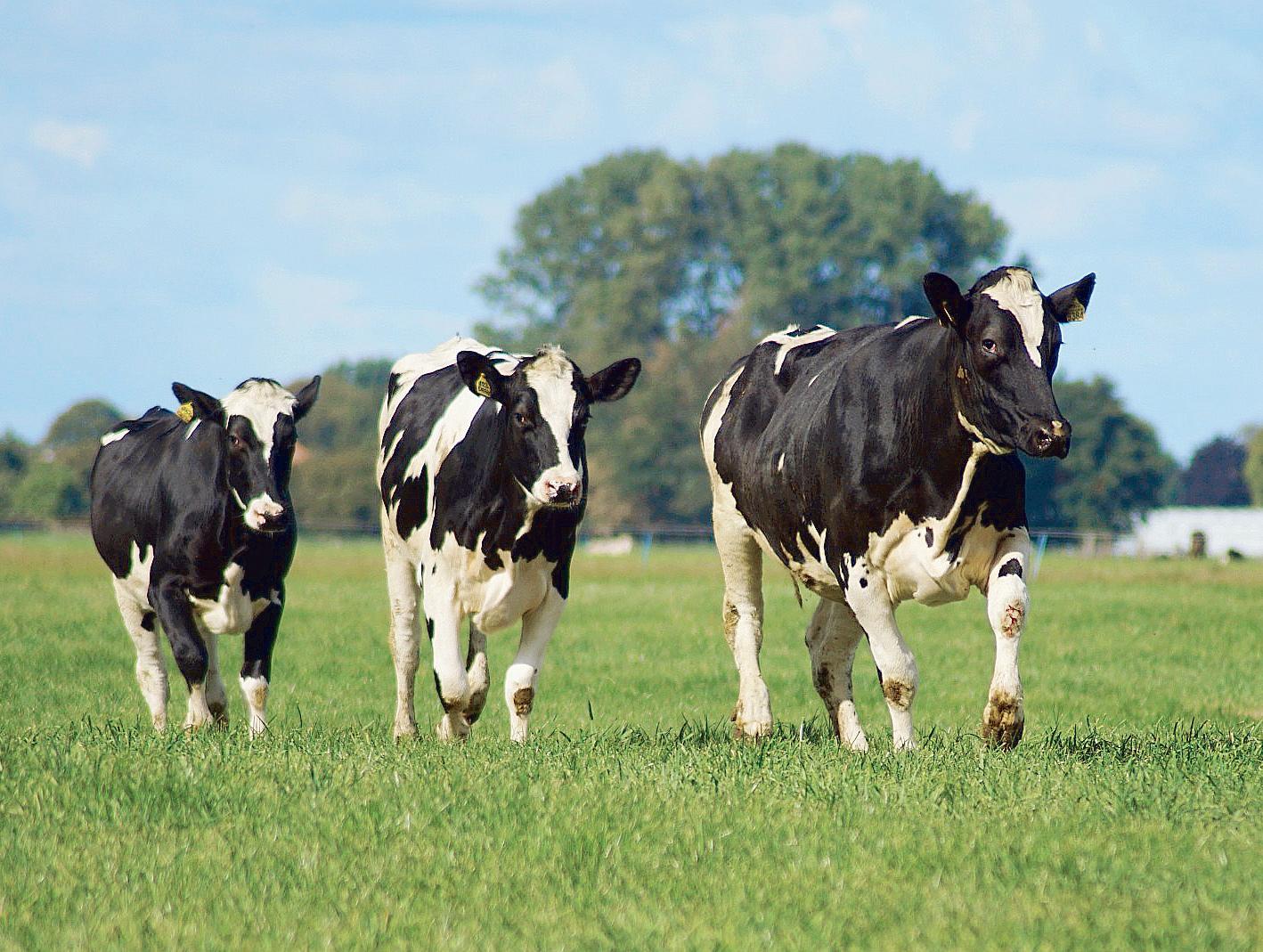
NORTHERN Victorian dairy farmer Andrew Leahysaidopeningmilkpriceshadstarted“low” and left many producers hoping processors would lift their offers before contracts were finalised later this month.
The Murrabit farmer said rising costs across fuel, fertiliser and water meant many dairy businesses were under pressure despite milk prices remaining similar to last year.
“They started off low, and we’ve seen our costs rise over the last 12 months,” Mr Leahy said.
“Fuelandfertilisercostshavegoneupandthat all impacts us.
“We’re hoping by the time the end of the month comes, they increase some more and give us a bit more confidence going into next season.”
Mr Leahy said the opening prices were not where farmers wanted them to be, although some producers had been able to negotiate stronger deals through milk supply groups.
He said farmers understood processors were also facing increasing costs and market pressures.
Bevan Jones
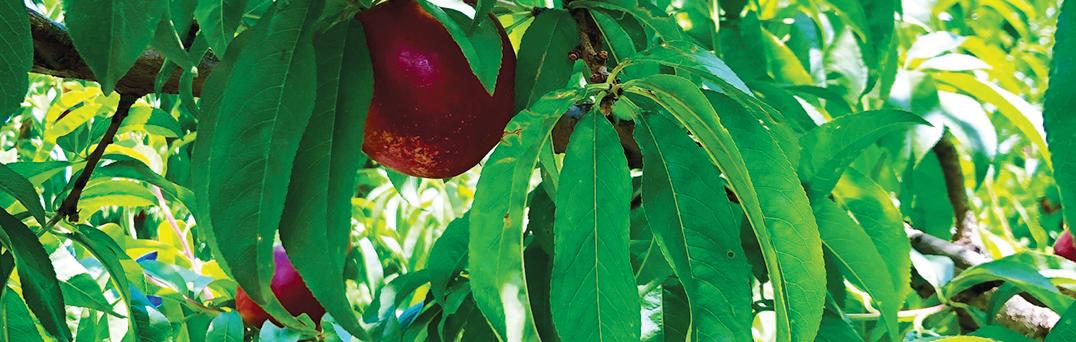
THE reputation of Swan Hill as one of Australia’s premier stone fruit regions was in the spotlight when industry leaders, growers and innovators gathered for the 2026 Summerfruit Australia Conference.
The one-day national conference was held at Marnong Estate in Mickleham, a racting around
“You have to see where they’re coming from because they can’t afford to pay what they don’t have,” he said.
“It’s everyone in the chain, I suppose.”
Mr Leahy said water would remain one of the biggest challenges facing northern Victorian dairy farmers next season.
“The price of temporary water is sitting reasonably high,” he said.
“For me personally, I spent probably another $100,000 on temporary water this year for the same amount of water.”
While he acknowledged the pressure on dairy businesses, Mr Leahy said he remained encouraged by the number of younger family members preparing to enter the industry.
Inagroupof sevendairyfarmsheworksclosely with,hesaidallhadsecondorthirdgenerations either already involved or preparing to return.
“My 19-year-old son has just gone to university to do agribusiness and his full intention is coming home,” he said.
“There is another generation there. I don’t think we’re in a growth phase, but I think we’re reasonably stable.”
However, labour shortages remained a significant challenge.
100 delegates from across Australia’s major growing regions.
Theconferenceprovidedavaluableopportunity to discuss the future of the summerfruit industry and the challenges and opportunities facing growers.
The event also highlighted the important role Swan Hill played within the sector.
Victoria produces around 75 per cent of Australia’s summerfruit crop, with the Swan Hill region contributing a significant share of that production.
Theareaisrenownedforproducinghigh-quality peaches, nectarines, plums and apricots that are sold throughout Australia and exported to markets around the world.
Summerfruit Australia industry development
Mr Leahy said finding workers was difficult and housing for employees was often even harder.
“Any time we put an ad out, accommodation is one of the first things they ask for,” he said.
Under the Dairy Code of Conduct, processors wererequiredtoannounceopeningmilkprices for the 2026-27 season by 1 June.
Among the major processors, Lactalis announcedaweightedaverageopeningpriceof $9.30perkilogramof milksolids,aheadof rivals Saputo Dairy Australia, which opened between $8.80 and $8.90/kgMS.
Bega Cheese announced a weighted average opening price of $9.04/kgMS.
In northern Victoria, Saputo opened at $6.21/ kgbu erfatand$12.42/kgprotein,whileLactalis announced $6.23/kg butterfat and $9.34/kg protein.
Bega Cheese opened at $5.76/kg bu erfat and $11.52/kg protein for non-exclusive agreements.
Processorsandfarmersnowhaveuntiltheend of June to finalise supply agreements.
The response from industry bodies ranged from disappointment to cautious optimism.
manager Jess Byrne said Swan Hill continued to be one of the industry’s most important growing regions,supportedbyastrongnetworkof growers and the highly regarded Swan Hill Summerfruit Association.
The region’s influence is further reflected through Summerfruit Australia chair Dean Morpeth, who lives and grows fruit in Swan Hill.
While the industry remains optimistic about the future, growers continue to face a range of challenges including rising production costs, labour shortages, water security concerns, changing environmental conditions and uncertainty in global markets.
However, industry leaders said growers have shown remarkable resilience in adapting to these pressures, with new technologies, improved


production systems and new fruit varieties helping to improve efficiency and maintain profitability.
MsByrnesaidinnovationwasamajorfocusof the conference, with growers given the opportunity to hear from experts and businesses developing technology that could help shape the future of Australian orchards.
Despite current challenges, Ms Byrne said there were significant opportunities for continued growth.
“There is a real opportunity for summerfruit to grow its market share both domestically and globally,” she said.
“If we continue producing high-quality fruit with a consistent eating experience, the value of our industry will continue to increase.”

Peter Bannan
VICTORIAN Farmers Federation United
Dairyfarmers Victoria president Bernie Free said the opening milk prices were inadequate given rising production costs.
“We’re extremely disappointed with initial openingmilkpricesatatimewhendairyfarmers are facing skyrocketing on-farm costs,” Mr Free said.
“Thispriceannouncementdoesn’tevenfactorin inflation or any of the costs of global instability.”
He warned that if prices did not improve, farmers could reduce production or leave the industry altogether.
“Less milk supply will put pressure on processors, as farmers consider their future moving forward,” he said.
Mr Free also urged farmers to carefully assess milk supply agreements rather than focusing solely on seasonal support payments offered by processors.
“What farmers need most is certainty,” he said. “A fair milk price contained within the milk supply agreement provides that certainty far more effectively than payments that sit outside the protections of the code.”
AustralianDairyFarmerspresidentBenBenne struck a more measured tone, describing the announced prices as a “conservative floor” and a starting point for negotiations.
“There’snofatinthesystematthemoment,”Mr Benne said.
“Processors are hurting too. We’re operating in a tight global environment and everyone in the supply chain needs to get a return.”
He pointed to ongoing conflict in the Middle East, volatile fuel and fertiliser costs, freight pressures,currencyfluctuationsandtheprospect of a strong El Niño as factors weighing on the industry.
“There’s a lot of uncertainty, and not a lot of comfort in the outlook right now,” he said. Processorsdefendedtheiropeningprices,citing volatile global markets and uncertainty.
Saputo Dairy Australia director of milk supply
and planning Kate Ryan said the company remained focused on supporting suppliers through flexible pricing options, rebates and incentives.
“We remain cautiously optimistic about improvements in some markets and will review our milk prices during the season as certainty across key markets and product categories improves,” she said.
Meanwhile,BurraFoodsannouncedanopening minimum farmgate milk price range of $8.90 to $9.40/kgMS.
Chief executive Stewart Carson said the range reflected both the challenges facing farmers and ongoing market volatility.

“We know many dairy farming businesses
are continuing to operate in a challenging environment, and this opening minimum price rangeisintendedtoprovideasolidstartingpoint for the season ahead,” he said.
MinchaWestdairyfarmerKalebQuinnsaidthe industry needed strong milk prices to remain viable.
“Happywiththepricesbutwe’dlovetoseeabit more due to the cost of inputs,” Mr Quinn said. “For us, we’ve been trying to be more resilient to the cost of everything by being more efficient on farm.”
For many northern Victorian dairy farmers, the next few weeks of negotiations may determine whethertheopeningpricesbecomeanacceptable starting point or a source of growing concern.


THE Victorian Farmers Federation has bolstered its leadership ranks, appointing three experienced industry figures to key roles as it prepares for what it says will be a pivotal year for Victorian agriculture.
The VFF formally announced the appointment of Jason Mellings as VFF grains president, Dusty Pascoe as VFF grains vice-president and Avril Hoganastheorganisation’sspecialskillsdirector on the VFF board.
The appointments bring together extensive industry knowledge, leadership experience and a shared commitment to ensuring Victorian agriculture remains productive, profitable and sustainable.
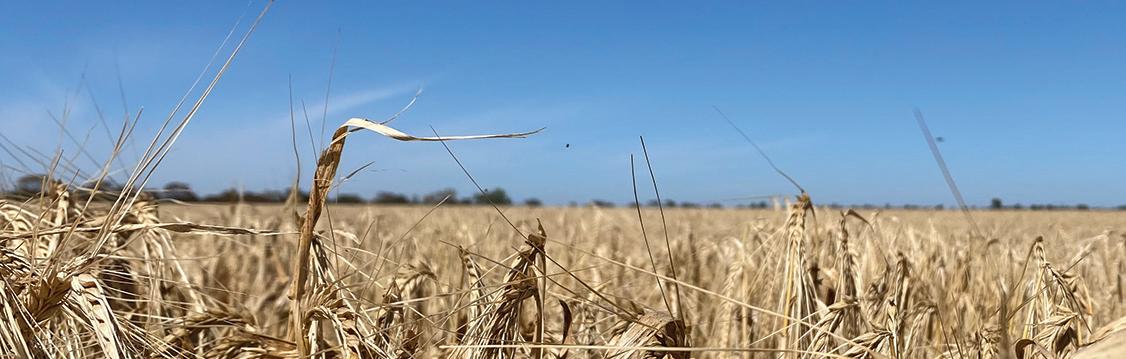
Asthenewly-electedpresidentof VFFgrains,Mr Mellings,fromCharlton,willleadthecommodity group during a critical period for Victoria’s grain industry.
Hewillberesponsibleforadvocatingonbehalf of grain growers and driving policy priorities aimed at supporting the sector’s long-term success.
Mr Pascoe joins the leadership team as vice-president, bringing strong industry experience and what the VFF described as a deep understanding of the opportunities and challengesfacinggrainproducersacrossthestate. Meanwhile, Ms Hogan has joined the VFF board as special skills director, adding significant expertise and strategic insight to the organisation’s governance. Her role will include a particular focus on commercial growth and marketing.
VFF president Ryan Milgate said the three appointmentswouldstrengthenthefederation’s abilitytorepresentfarmersanddeliveroutcomes for the industry, adding the appointments came at an important time for the sector.
“It’s a massive year for Victorian farmers and these additions to the VFF team strengthen our abilitytoensureweremainthevoiceof Victorian farmers,” Mr Milgate said.



























Peter Bannan
MALLEE farmers and exporters are facing steep increases in Commonwealth export charges after the Federal Government released its final export costrecoveryplans,promptingwarningsthechanges couldplacefurtherpressureonregionalagriculture.
The final Agricultural Exports Cost Recovery ImplementationStatementsconfirmedfeeincreases of upto384percentacrossseveralexportsectorsover coming years.
MemberforMalleeAnneWebstersaidtheincreases wouldaddtoagrowinglistof challengesconfronting agricultural producers across north-west Victoria.
“The very strong likelihood in Mallee, Sunraysia, the Wimmera, Grampians, Loddon and beyond is farmers simply won’t be able to export, and agriculture will further contract in our region,” Dr Webster said.
Under the new arrangements, annual meat export licence fees are set to rise from $345 to $1668 by 202930, an increase of 384 per cent.
Egg export fees will increase by 280 per cent, while livestock and dairy export fees will both rise by 184 per cent.
Horticultureandgrainexportchargesareexpected to increase by 183 per cent.
The changes will also affect inspection and certification costs.
Horticulture export authorised officer inspection fees will rise from $98 to $141 per 15-minute inspection period by 2029-30.
Annualhorticultureauthorisedofficerchargeswill increase from $983 to $2200 over four years, while horticulture tonnage charges are forecast to rise by about 78 per cent.
Peak industry body Ausveg previously warned that a recent survey found two in five growers were considering leaving the industry amid rising cost pressures.
For grain exporters, annual authorised officer charges and manually issued phytosanitary certificate fees will more than double over four years, increasing from $983 to $2210 and from $131 to $258 respectively.
Grain inspection charges will rise from $98 to $137 per 15-minute period, although grain tonnage chargeswillfallslightlyfrom14centsto12centsper tonne.
Dr Webster said the increases risked making Australian exports less competitive.
“Labor’s agricultural export fees have more than doubled or tripled in some sectors, making it harder to farm, harder to operate and now harder to export,” she said.
“Growers are telling me they are concerned many whoarestrugglingfinanciallywon’tbotherge ing certified, reducing the number who are exporting and therefore threatening the local industry if producers flood the local market and drive prices down.”
Dr Webster also questioned whether industry
would ultimately be paying for broader departmental costs.
“Agriculture Minister Julie Collins continually ignored questions on whether increased export fees will fund broader government costs, rather than just export services, as the government moves to a fully cost-recovered agriculture export model,” she said.
“The National Farmers’ Federation previously expressed concerns that increased fees may be used to unreasonably support the broader departmental cost base.”
Dr Webster said the fee increases were arriving at a difficult time for the sector.
“WhenyouconsiderthattheVictorianGovernment has increased truck licence and registration costs, while farmers and exporters are dealing with rising costs and growing uncertainty in international markets, the last thing they need is another increase in government charges.”
However, Ms Collins defended the changes, saying they were necessary to ensure export services remained sustainable and continued to support Australia’s growing agricultural trade.
“The updated fees and charges follow consultation withindustryandtakeintoaccountthegovernment’s decision to defer the phased transition to full cost recovery for agricultural export services for 12 months,” Ms Collins said.
Thetransitiontofullcostrecoveryhasbeenpushed
back until 1 July, 2027, with the government citing disruptions associated with conflict in the Middle East and broader global uncertainty.
Ms Collins said agricultural, fisheries and forestry exports were forecast to reach a record value of about $86 billion in 2025-26, supported by export certification and market access services delivered by the Department of Agriculture, Fisheries and Forestry.
Accordingtothegovernment,thecostof delivering those services exceeded the revenue recovered from industry in 16 of the past 20 years.
TheAlbaneseGovernmentprovided$138millionin supplementaryfundingbetween2023-24and2025-26 and has commi ed a further $57 million from 202627 to 2028-29 to support the transition to full cost recovery.
“Thisincludesanadditional$8.2millioncommi ed inthe2026-27Budgettosupportdeferringthephased transition to full cost recovery for 12 months,” Ms Collins said.
“The Albanese Labor Government will continue to work with Australia’s farmers and producers to deliver new and improved market access opportunities, and to safeguard the diversification of our trade.”
The fee increases are expected to be phased in over coming years as the government moves towards a fully cost-recovered export certification system.











season rain had delivered a full moisture profile across paddocks, supporting a stronger outlook for crops.
Picture: Louis Harrison
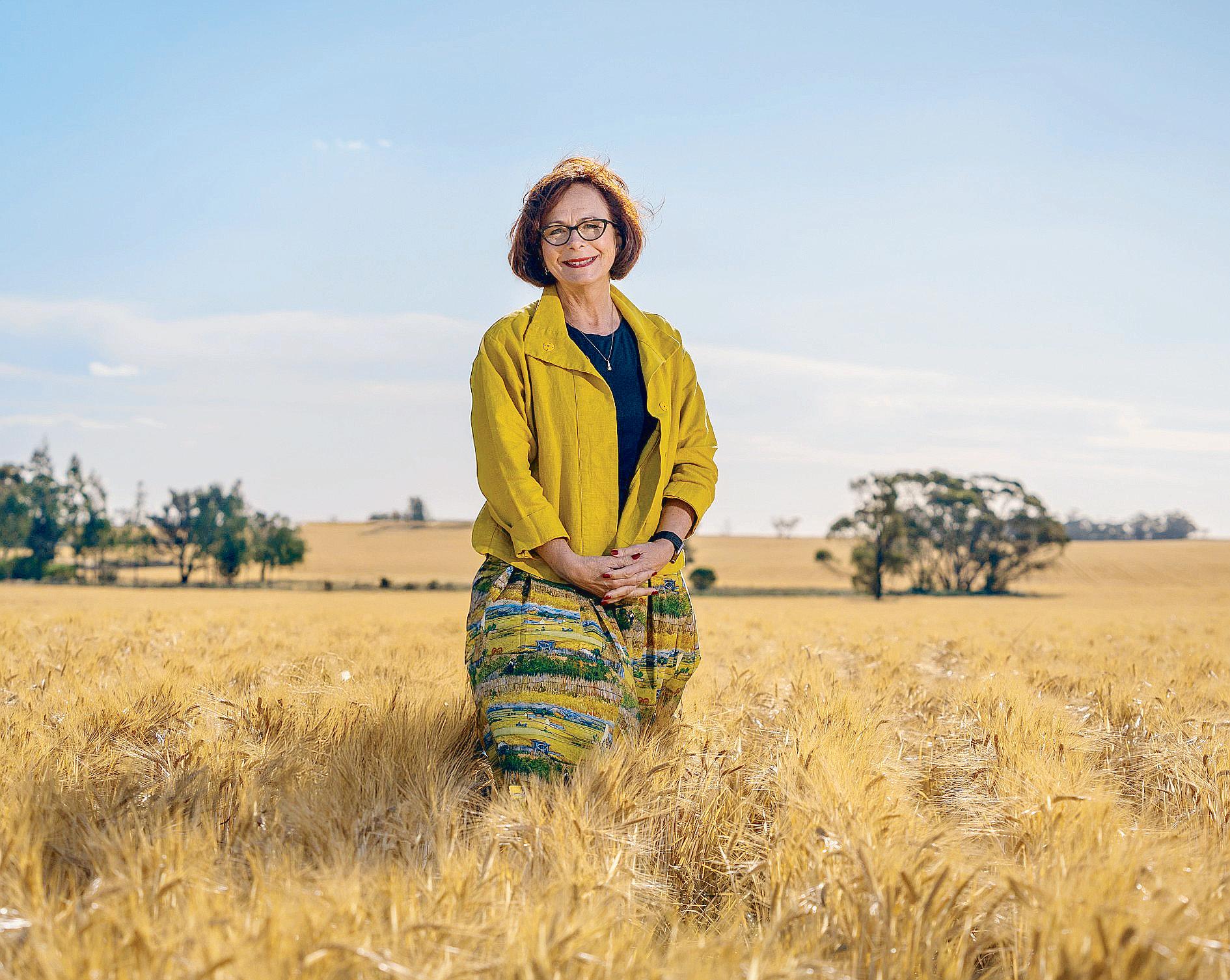
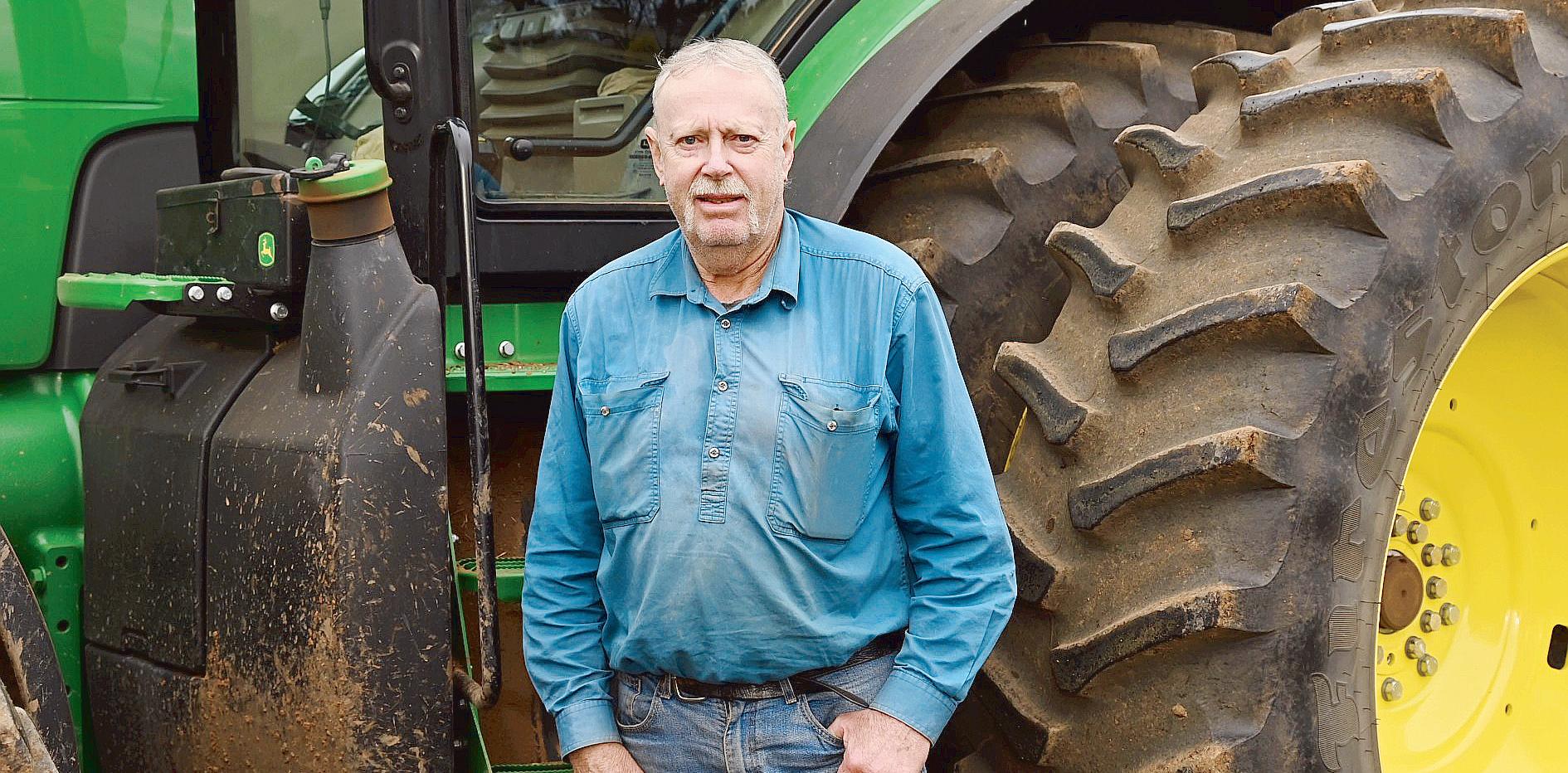
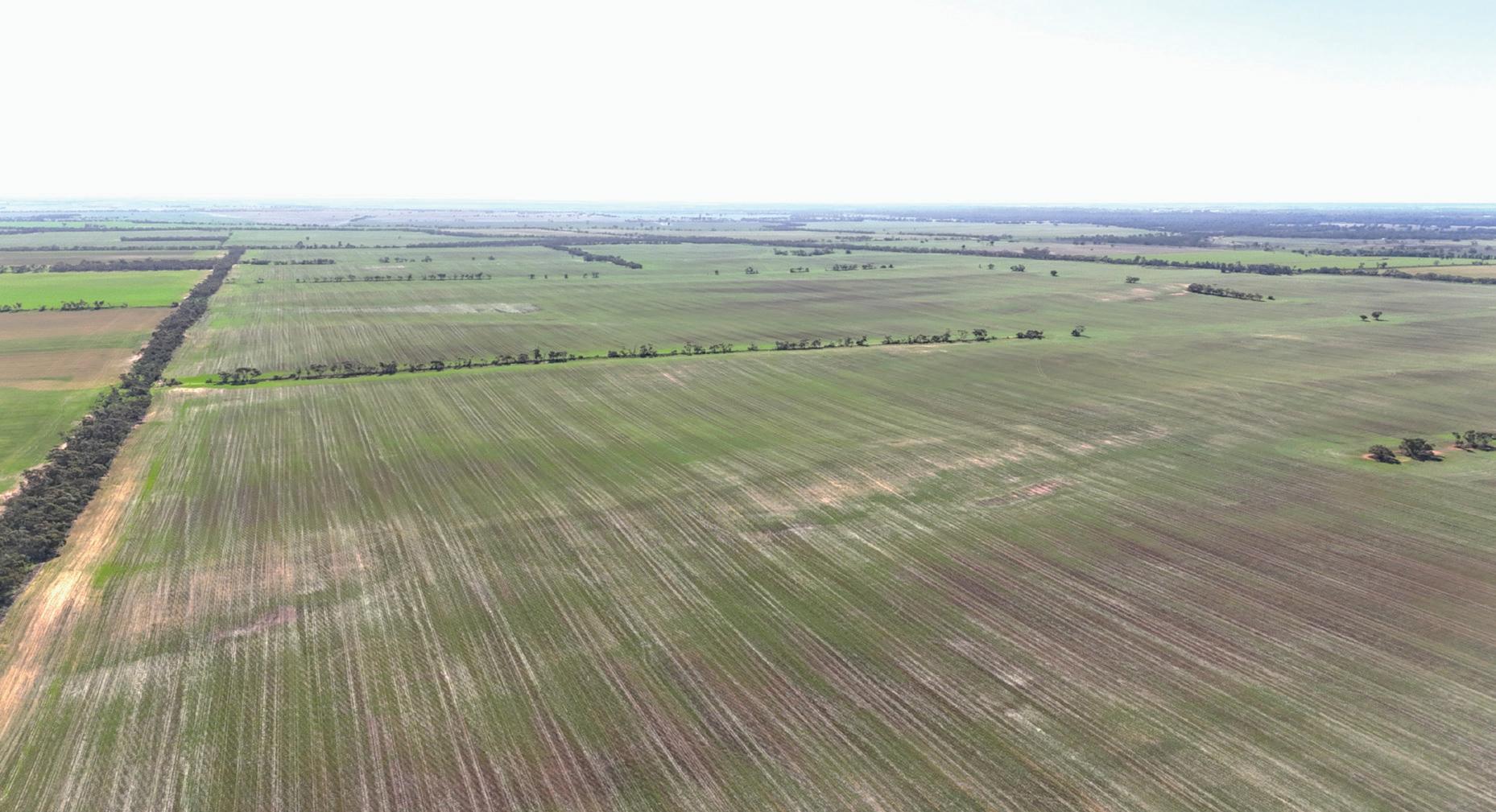
RECENT rainfall has put farms across the Mallee in a “fantastic position” as the sowing period wraps up.
Cannie Ridge farmer Gordon Benne said it’s been an “extremely wet start to the season”.
Seasonal shifts have brought higher rainfall across the region, with some areas receiving morethan100mmintheweeksafterChristmas and more than 16mm in the past month.
Mr Benne said the unseasonal early-season rainhadgivencropsa“fullprofileof moisture” and allowed them to establish strong root systems, making them less dependent on winter rainfall.
“Even if the rain cut off now, we’d be fine,” he said.
Canola, wheat, barley and lentils remain the dominant crops across the Lalbert area heading into the 2026–27 season.
Lentils are having a moment and are forecast to reach record production rates at 2.2 million

tonnes across Australia, with the Nipper variety being the most commonly sown in Lalbert.
Hay also remains “lucrative” for broadacre farms with prices expected to rise in line with the expected drier season and ongoing supplychain costs driving up rates.
Mr Benne said his cropping decisions came down to paddock rotations, global demands and having a “foot in each door”.
Despite local farmers enjoying a solid start to the season, the wider outlook continues to pose challenges.
The Australian Bureau of Agricultural and Resource Economics and Sciences (ABARES) has forecasted a fall of 21 per cent in winter crop production across Australia for 2026-27 in the June 2026 Crop Report, with the total value of crop production falling by eight per cent to $50.9 billion.
The value of canola is expected to fall by 19 per cent to $4.7 billion, barley is forecast to fall by 11 per cent to $4.5 billion and wheat is
expected to drop 18 per cent to $9.3 billion according to the ABARES Commodity Report for June 2026.
Australian grain prices are expected to rise, with dry conditions forecast across the eastern states and increased demand from the livestock sector as more animals move onto feed, despite a fall in production.
ABARES acting executive director David Galeano said the value of production remained resilient despite the Middle East conflict impacting input prices.
“We expect fertiliser and fuel input costs to remain elevated in 2026-27. Farm revenue is forecast to decline due to lower crop and livestock production volumes and lower prices received for livestock,” Mr Galeano said.
Australia sources about two thirds of its fertiliser supply from the Middle East, with supply impacted by the ongoing conflict in the Strait of Hormuz driving up urea prices earlier this year.
Fertiliser prices have fallen heading into
spreading and spraying, with the average price of urea being around $401 USD per tonne at the start of this month down from the peak of $720.25 USD per tonne in April according to Trading Economics.
ABARES has warned that higher fertiliser prices, coupled with uncertainty over farmers’ willingness to buy product for July–August topdressing, could have flow-on effects for yields.
Mr Benne said he was able to secure enough urea to top dress his crops and is currently spreading and spraying.
Decline in fuel prices has also given farmers some relief in terms of input costs.
Looking forward, the threat of mice and locust activity may soon return across Mallee farms.
Mr Benne said he and other farmers had spo edtheoddholewhilespreadingherbicide and urea, though it wasn’t yet cause for alarm. With crops performing well as the season begins, Mr Benne said a ention had shifted to the need for stronger prices.













By Almonds Australia chief executive Tim Jackson

AS WE head into the coldest time of the year, beekeepers are preparing for the nation’s largest annual movement of livestock next month.
The Australian almond pollination season has become an integral part of the business calendar for many beekeepers in eastern Australia.
They will drive 300,000 hives into orchards by late July.
All the deliveries will be done overnight and involve providing stocking rates of between five and six hives per hectare.
Bees from Queensland, NSW, Victoria and WA are trucked into orchards in late July just as the trees get set to blossom.
The industry needs five hives or 180,000 to 250,000 bees per hectare to pollinate the crop.
Cold weather or poor hive health can impact the effectiveness of the pollination process.
It is long hours and a lot of kilometres on the road, but the almond season sets up the hive strength before they move on to other pollination dependent crops or bushland sites specifically selected to generate strong spring honey flows.
This year the almond industry will be paying the beekeeping community in the vicinity of $60 million for their efforts during the four-week blossom phase.
It is the most lucrative pollination pay-day for the year and we often hear how it bank rolls a small beekeeper’s operation for the rest of the year.
Almond plantings cover just under 71,000 hectares across NSW Riverina, Victorian-NSW Murray Valley and Sunraysia, the Riverland of SA and north of Perth.
This footprint has grown by almost 5000 hectares on last year’s figure and highlights the importance of a viable beekeeping industry.
Theimportanceof healthybeesinalmondorchards has never been more widely acknowledged than in the current climate.
An increasing number of growers have embraced what are known as bee-friendly farming principles to enhance the health of the hives.
Extranativefloralresourcesareplantedonabu ing orchards and strips of canola are also planted to help diversify their bee diet during their stay.
It is estimated that bees will travel up to 10 km from the hive while foraging and have a lifespan of around 40 days.
Temperatures above 16 degrees Celsius (and no rain) are regarded as optimal bee flying conditions, so almond growers will measure the effectiveness of their pollination by calculating how many bee-flight hours have been available during blossom.
New technology to calculate effectiveness, measure hive health and treat hives on site is emerging across the world.
This will modernise beekeeping and provide stakeholderswithamuchhigherlevelof information around pre-arrival hive health and activity.
It wasn’t that long ago that honey production was the primary source of income for beekeepers, but the low price of imported honey has prompted many to reconsider the value of diversifying into pollination services.
The arrival of varroa mite has impacted hive health in eastern Australia.
The recent arrival of the chemical resistant strain of the mite has added yet another uncertainty to managing hives.
Extra work is involved in managing hives, but the resistant strain of the mite has limited the effectiveness of recommended miticide strips.
This is an emerging issue in northern NSW and southern Queensland where the resistant mite is most prevalent.
Hive losses are higher than expected in these regions.
It appears that despite the best endeavours of the most proficient beekeepers, the risk of reinfestation is now much higher until the feral European honey bee population is wiped out.
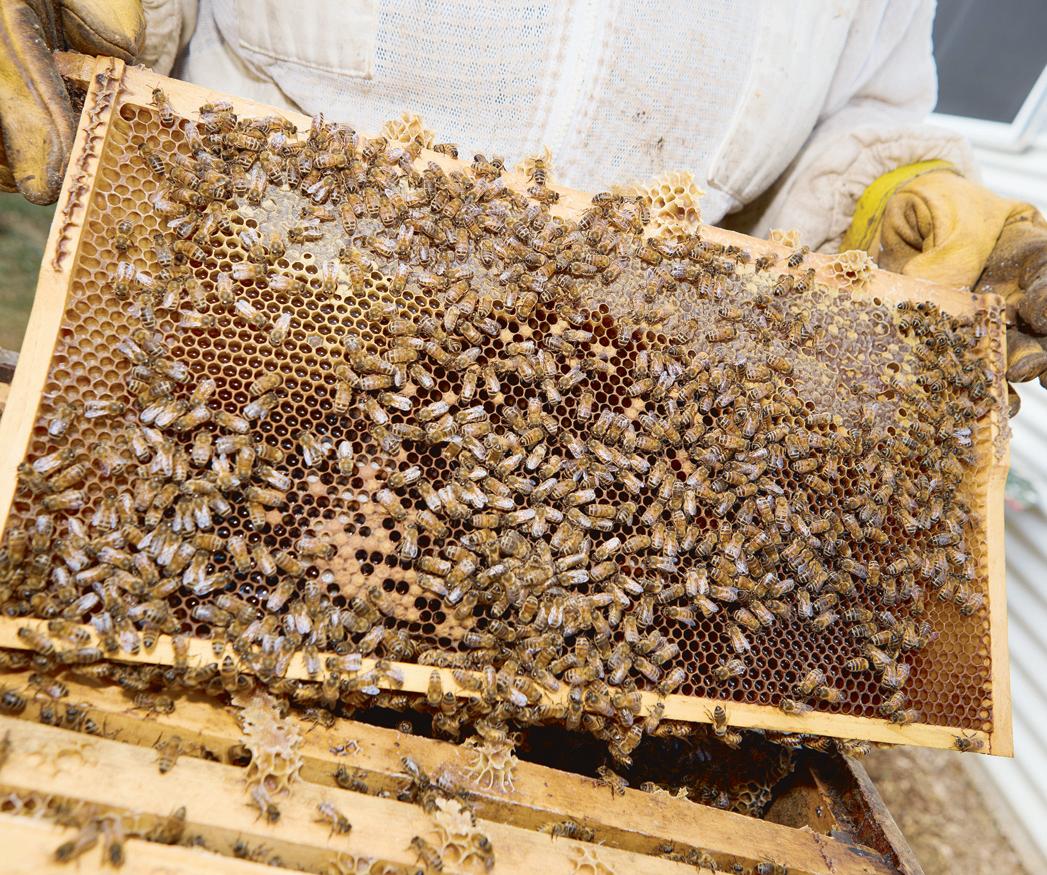
ABOVE: After a wet and prolonged harvest season, the almond industry is now turning its attention to the critical pollination period.
RIGHT: The arrival of chemical-resistant varroa mites is creating new challenges for beekeepers, reducing the effectiveness of some treatments and adding uncertainty to hive management in northern NSW and southern Queensland. Picture: Ljubica Vrankovic (472933_07)
•


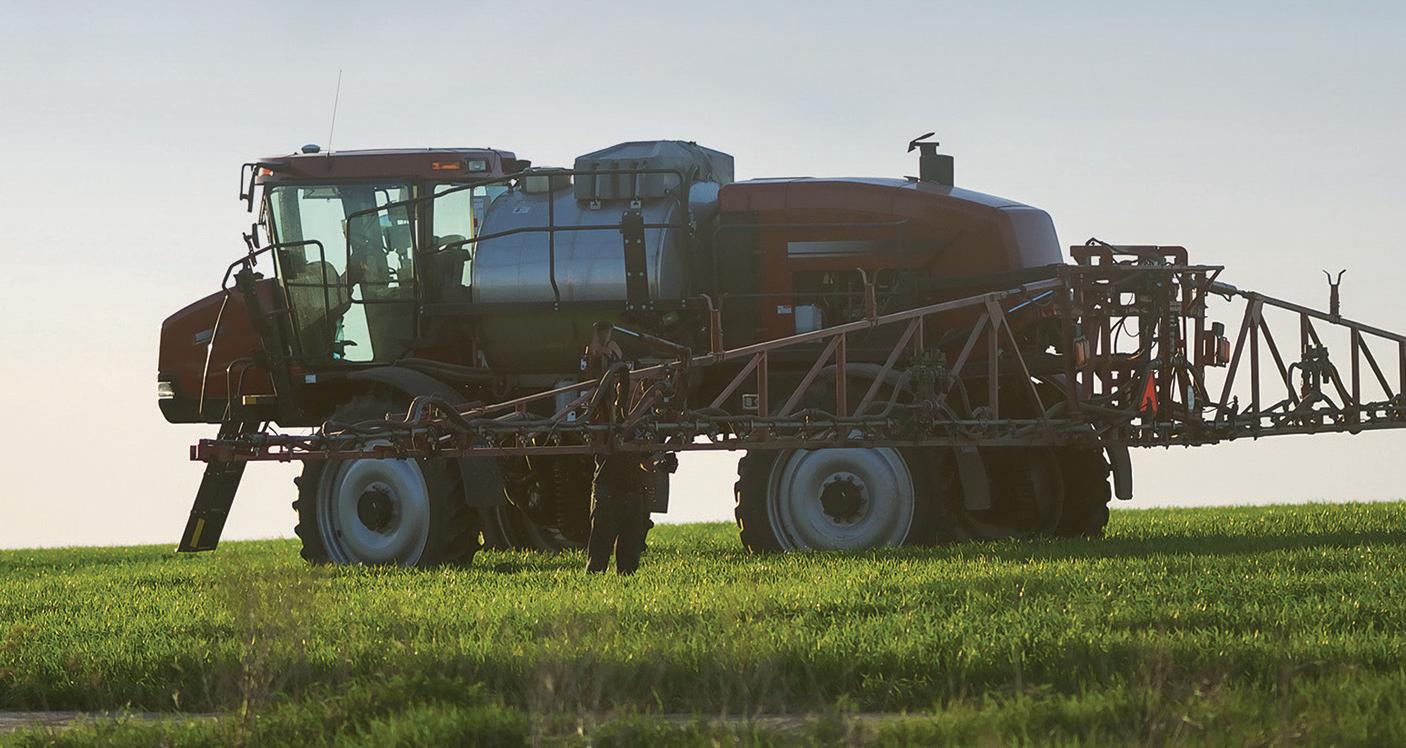

The crew at Goodyear Curlewis Street have all your commercial tyre needs covered, from truck to tractor tyres and repairs – we do it all.
Stocking the biggest range of tyres in the area at competitive prices. With our on farm service truck, we have all your on site jobs and after hours call outs covered, we will keep you on the road or in the paddock.






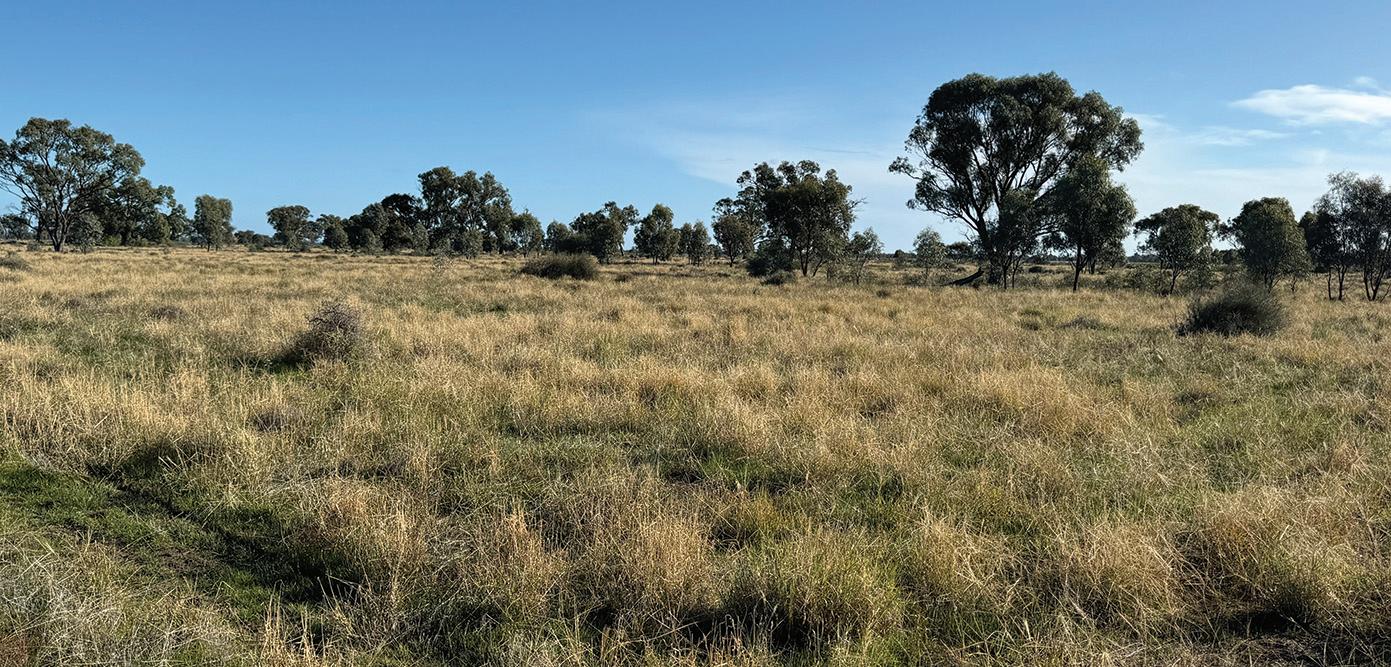
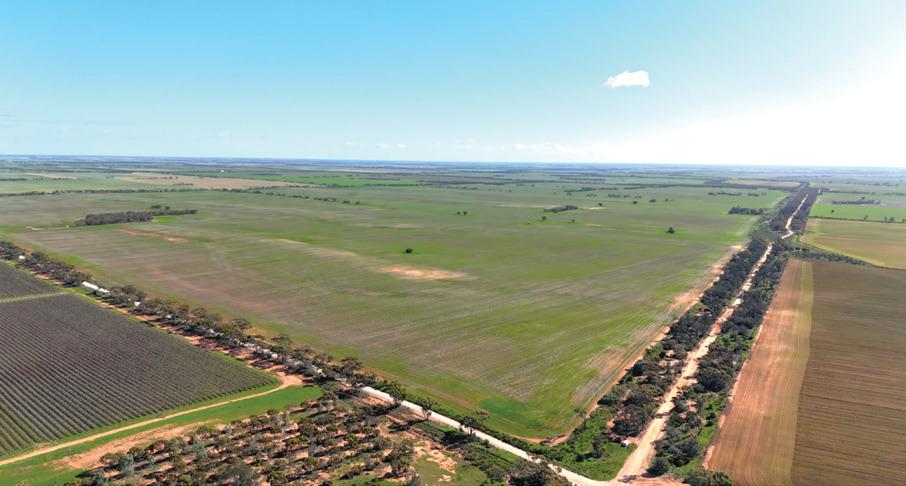
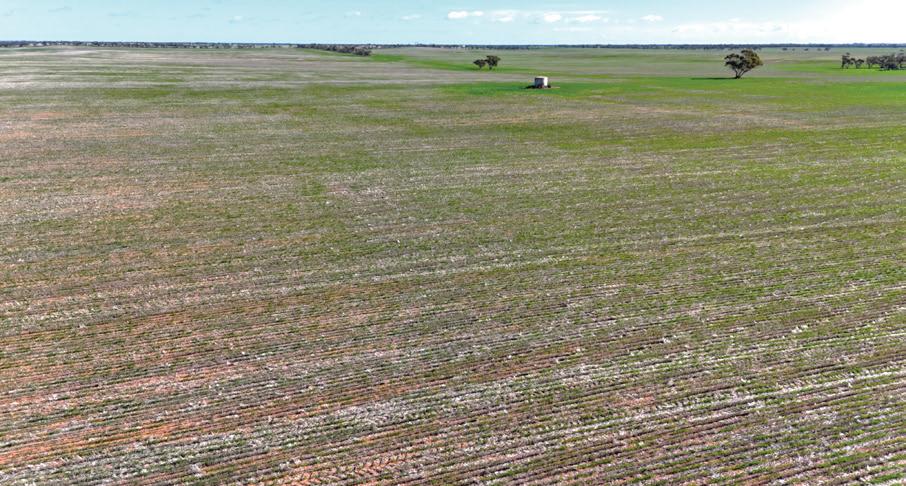
Agents Comments: Kings is an ideal breeding block, with excellent fencing and secure water.
Expression of interest to the selling agent by Friday 24th July 2026, by 10am
Terms: 10% deposit on signing, balance 60/90 days with immediate working possession.

O’Reilly M 0427 329 911 joreilly@brcagents.com.au

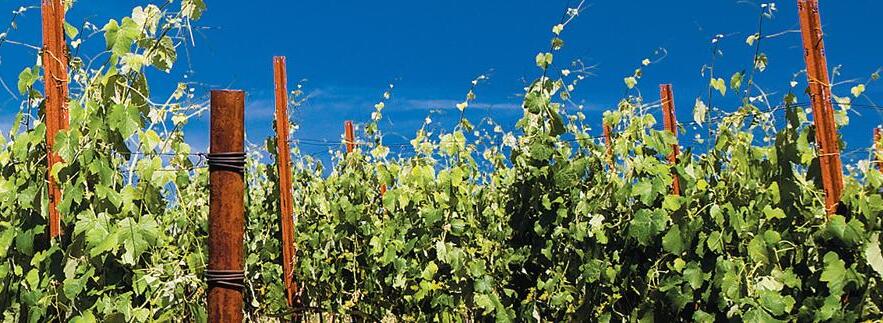
MACHINE pruning is the current task at hand over the next few months with a bit of weed spraying thrown in.
The cooler weather has led to a few passengers with me in the tractor.
Recently I had an ibis standing on the roof of the cabin peering in the front at some snails, while a wedgie was doing the same peering in the back window at a couple of lizards and a bunch of rabbits.
At a forum in Mildura recently I heard that we still have too much excess wine and although vineyards are being removed here and around the world, we still have a way to go to get back into a balanced position.
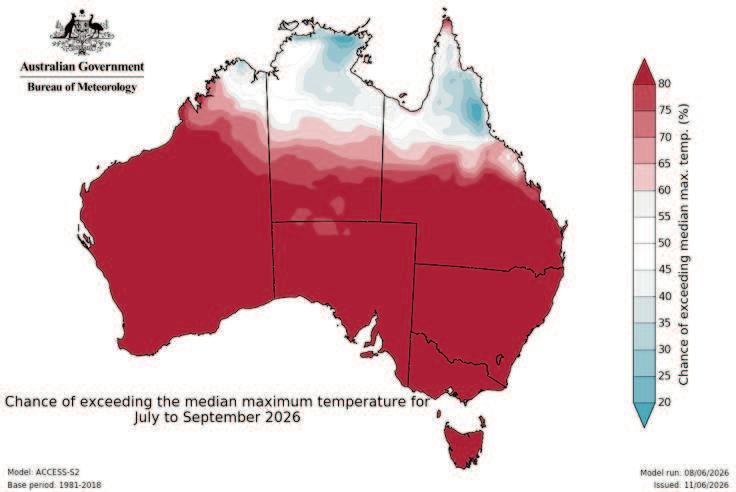
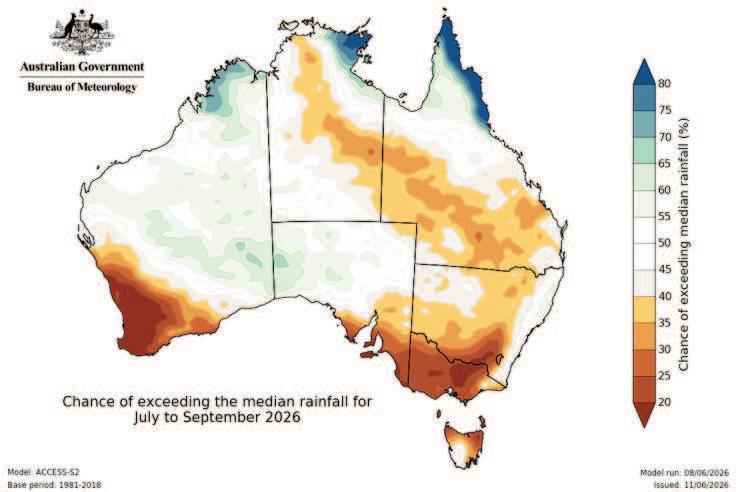
We will know before long if a possible El Niño forms later this year, causing drought conditions/water shortages and even higher temporary water prices.
This would sort Australia’s oversupply at a quicker rate.
I a ended a Goulburn Murray Water forum last week in Shepparton and it was a good chance to advise GMW directors of our issues relating to our aging district pipelines and drainage maintenance issues. I feel that some directors with government backgrounds, now working in roles with
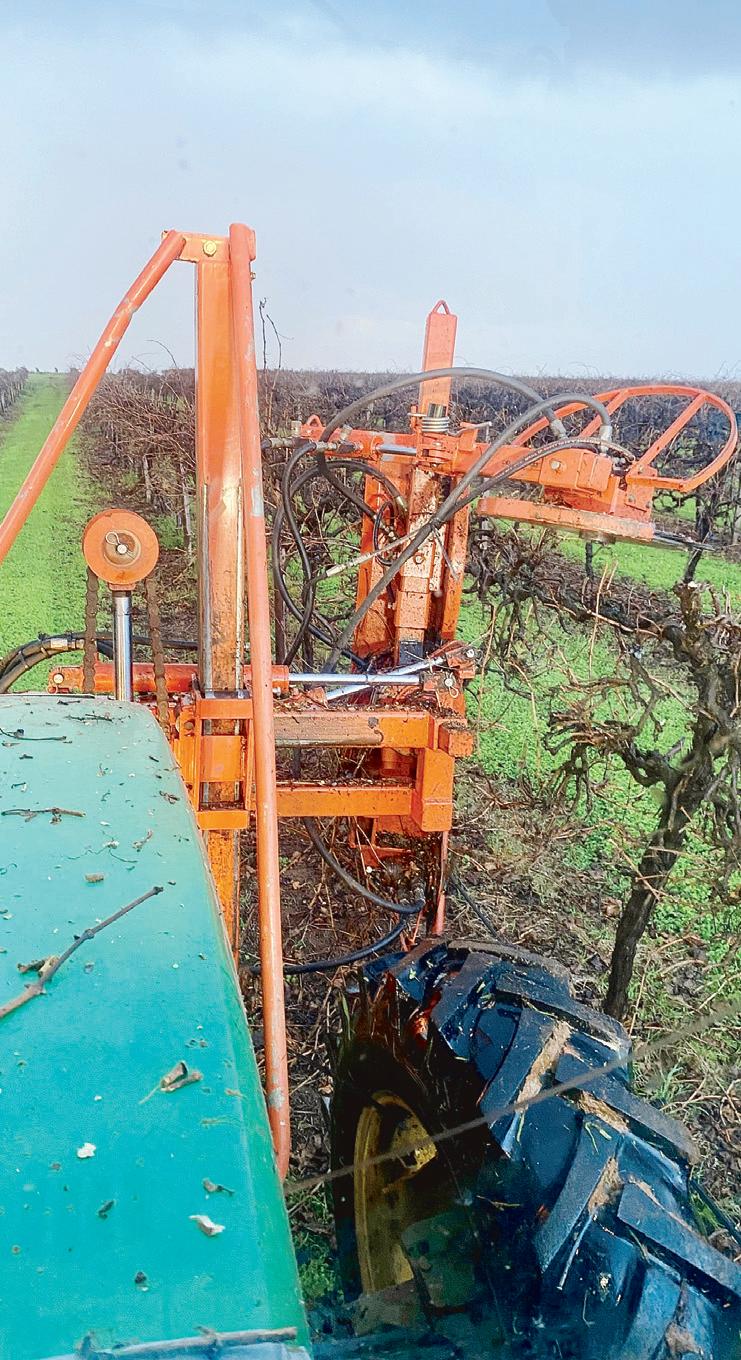
Winter pruning is taking place across the region.
greater personal liability, may be taking a more cautious approach.
Inmyview,thatcautioncouldbecontributing to more outsourcing and higher overall costs.
The creatures have embarked on their own soccer world cup, the orbs stitched up a couple of goal nets and there are plenty of old grapes around to use as soccer balls.
Most of the players are snails with a few lizards thrown in.
The umpire is a frog named Albo who is always getting in trouble for changing his mind and he’s always waving various coloured flags instead of red or yellow cards.
Talk to your mates.



with Matt Rowlands

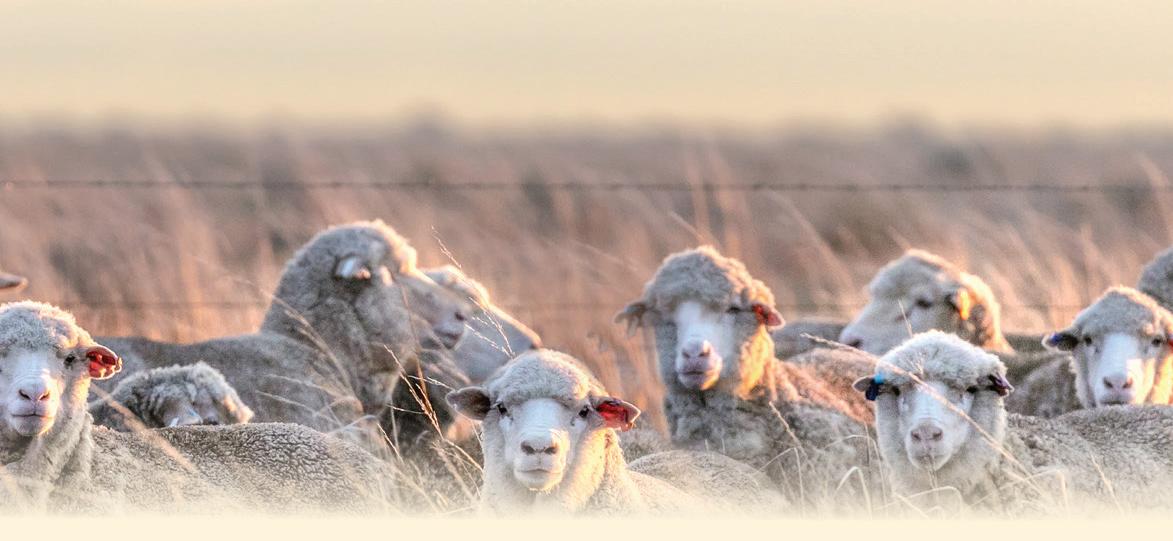
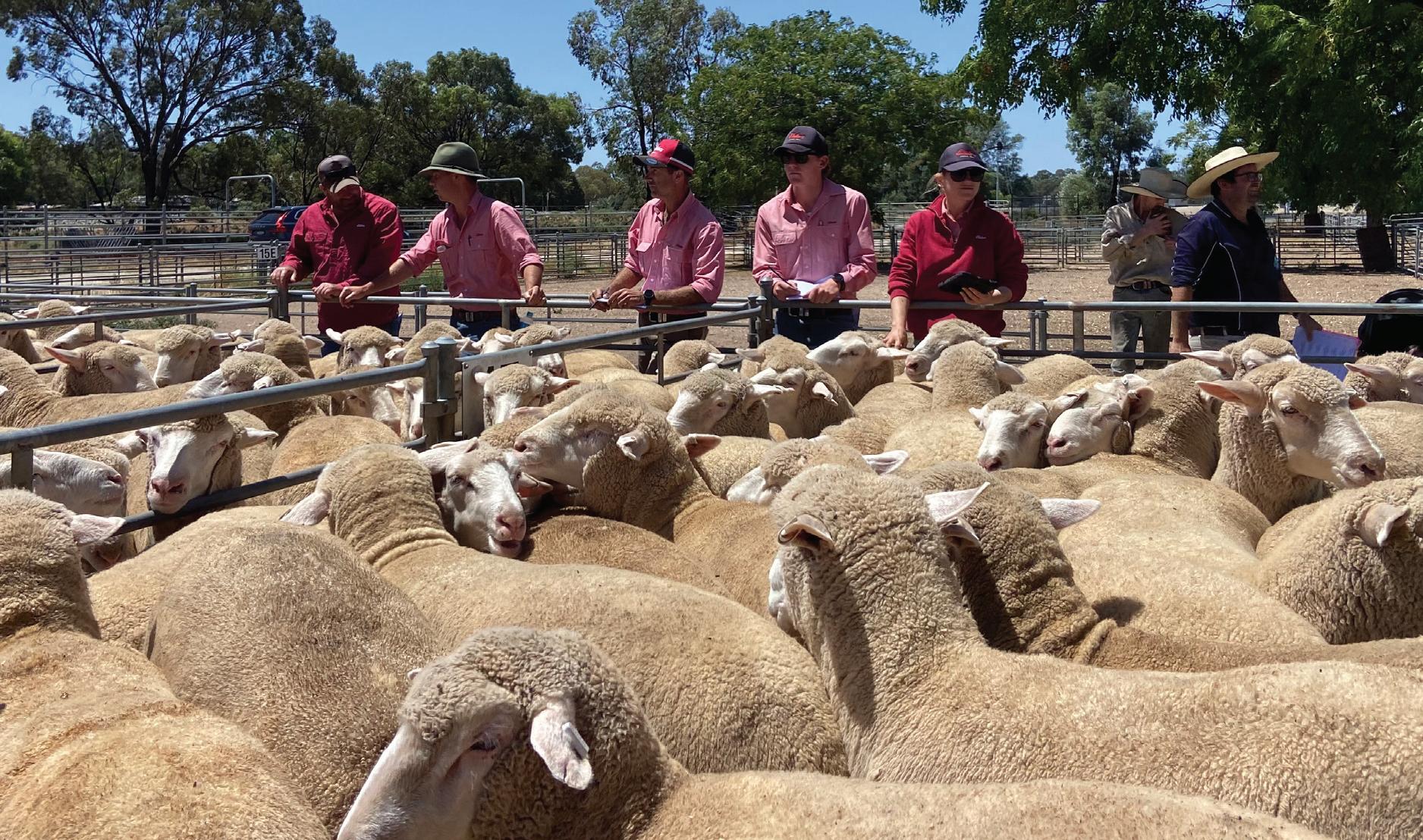
RECORD sheep and lamb prices have created a golden opportunity for breeders, but Elders livestock specialist Matt Rowlands says many producers risk leaving money on the table if they fail to adapt to major changes sweeping through the industry.
With lambs contracted at up to $12.80/kg and strong demand forecast to continue, Mr Rowlands said breeders needed to start thinking beyond simply selling stock and focus on marketing them strategically.
“It’s exciting the livestock markets are at these levels at the moment, but they can be better long term for breeders if they take action,” he said.
A tightening supply of quality stock suitable for export, domestic and restocking markets is helping drive strong prices, while abundant feed growth across many regions has boosted producer confidence to retain or purchase livestock.
Mr Rowlands said leading industry analysts and market economists were forecasting ongoing growth in global demand for protein, with expanding markets seeking Australian livestock products.
“Yes, there are signs of the potential for more upside in sheep and lamb markets for producers, there is also a need for forward planning of all livestock transactions from here if you’re a breeder,” he said.
“We have been through these similar price and season cycles before and protecting exposed capital outlay or potential gain also plays a role in a successful trade or marketing of livestock.”
While strong prices were attracting attention across the industry, Mr Rowlands believed breeders faced a greater challenge than simply deciding when to sell.
“To be honest, I believe some producers, especially those breeding livestock, may be at the greatest risk of missing the biggest transition in the livestock industry that we are going to see and it should worry them if they leave it on the table,” he said.
“Sheep and lamb are only being sold, not marketed.”
Mr Rowlands pointed to rapid expansion across intensive feeding and trading enterprises during the past 12 to 24 months, a trend expected to


continue into next year.
At the same time, he said more operators were increasingly viewing breeding livestock as a burden on other parts of their business or lifestyle.
“From the New England to the Mallee it’s the same story and into WA as well,” Mr Rowlands said.
“Look, price is definitely highly relevant for breeders of livestock. Of course it always drives decisions to take an educated view of outcomes and target markets, but in the big picture we have seen cycles come and go and even export markets stop overnight because of political decisions.
“So if for a moment you remove that relevance of the current record markets, what are you left with?
“You’re left with a product you sell and how it is marketed. That’s all of what you can really have control over.
“Price cycles are high and buyers are looking for supply. That’s fine. What happens when things move in the favour of the buyer and supply increases?”
Mr Rowlands said breeders had access to tools that could significantly influence the future
direction and profitability of their enterprises if they recognised the scale of change occurring within the industry.
“Breeders have tools available to them that could alter the future of their livestock business if they can recognise a big move unfolding in the industry,” he said.
“It’s recognisable producers are not being informed of the information that they should have.
“I would advocate to all those breeding lambs or producing self-replacing flocks that you need these tools to stay ahead of the industry, and having them will allow you to obtain results that safeguard your business and be at the forefront of our industry as it progresses.”
Mr Rowlands encouraged producers to attend local information nights planned for late July and early August, which he said would provide greater insight into opportunities available to sheep enterprises.
He also encouraged breeders to seek further information directly to better understand how emerging industry trends could affect their operations. Material Instruction: Breeders urged to capitalise on industry shift
Proven Performance Collective is proud to present PPC Merino Wether Trial in 2026
Are you a passionate Merino Breeder?
Are you looking for more feedback on your livestock production? Want to be part of the next chapter in the Merino industry and create more competition for your livestock?
If you are interested in taking part in a modern and exciting trial that’s shaped by producers for producers, please get in touch. Numbers are limited.
Contact Matt Rowlands 0447 818 304

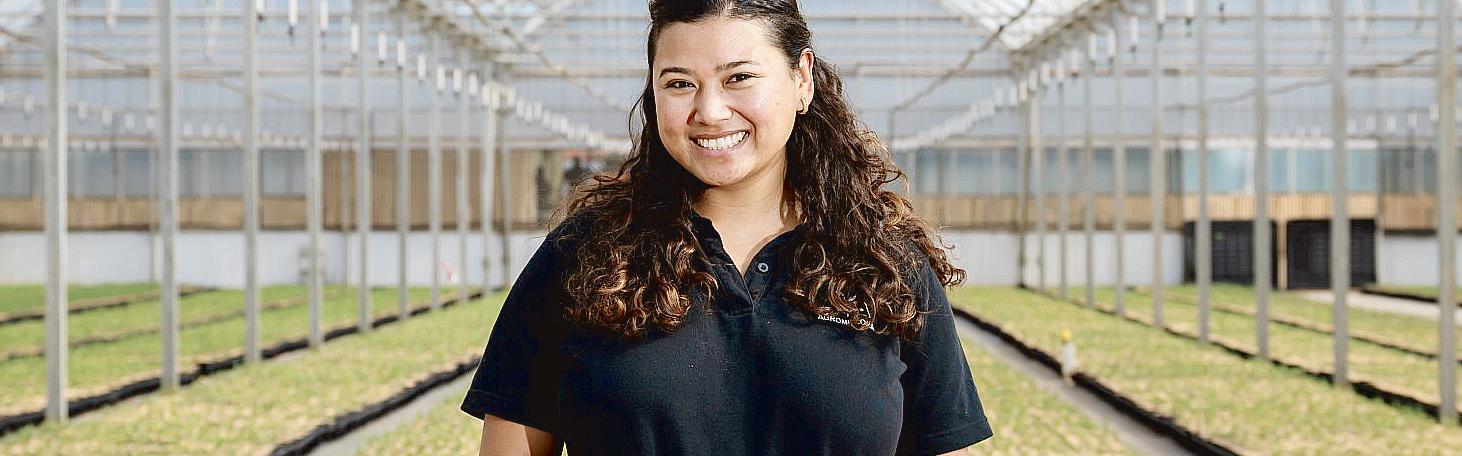
Born in Kathmandu, Nepal, Sophin Dahal studied agriculture and agronomy at Melbourne Polytechnic before pursuing a regional sponsorship pathway. She is now technical manager at Agromillora
in
helping lead production and the introduction of new horticultural varieties. Pictures: Ben Gross
Matt Elliott
TUCKED behind the Calder Highway between Irymple and Red Cliffs, about nine kilometres south of Mildura, Agromillora’s modest entrance gives little hint of the scale of the operation behind it.
An exposed wired gate opens onto a site where a weatherboard office, cramped, stuffy and functional, reflects a business focused on production rather than presentation.
SophinDahallaughswhena entionisdrawnto the rudimentary facilities.
“We’ve been planning to upgrade,” she said.
“Our staff keeps growing, so we’ve had no time.”
TheexpansiontakingplacebehindAgromillora’s gates mirrors Ms Dahal’s own journey from Kathmandu to regional Victoria.
Ms Dahal’s grandfather was a farmer, and although later generations pursued different careers, her connection to the land never disappeared.
She arrived in Melbourne in early 2017 as a 19-year-old eager to experience a different culture and learn from one of the world’s most advanced agricultural industries.
“The diversity completely blew my mind,” she said.
“I loved how multicultural and welcoming the city felt.”
The transition to Australia was difficult at first. Studying in Australia meant adjusting to a differenteducationsystem,independentlearning and an English-language academic environment. University was sometimes isolating as she adjusted and built new friendships.
At Melbourne Polytechnic, Ms Dahal completed a Bachelor of Agriculture and Technology, specialising in agribusiness and agronomy, while supportingherself throughcasualworkatHarvey Norman, Subway and Woolworths.
Alongside her studies, Ms Dahal was selected as a Victorian student ambassador, served as vice-president of Melbourne Polytechnic’s International Student Association, and received a study tour scholarship to Chile to study the wine industry.
Then, just as she completed her studies, the world changed.
“I graduated right at the beginning of Covid,” she said.
“To get my foot in the door, I had to take on severallow-payingjobsjusttogainexperienceand stay afloat,” she said.
She volunteered at CERES Community Environment Park in Coburg before securing her first entry-level position as a production operator with a plant tissue culture company in Melbourne’s outer south-east.
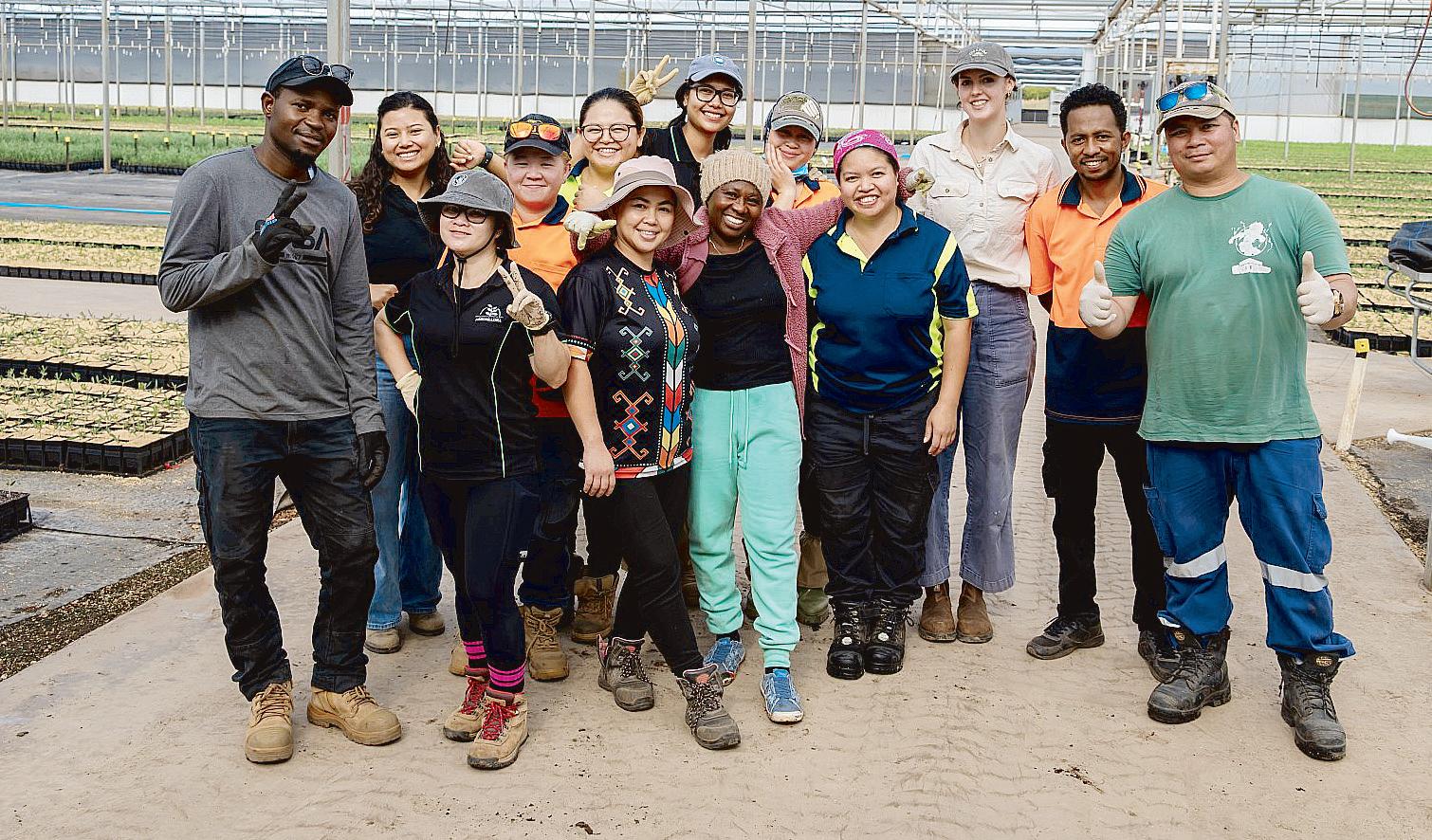
Managing director Simon Robb said the company’s growth was driven by its workforce and the range of skills within it. The team includes staff from Nepal, India, Tibet, China, Southeast Asia, Africa, Europe, South America and Australia. (552081_19)
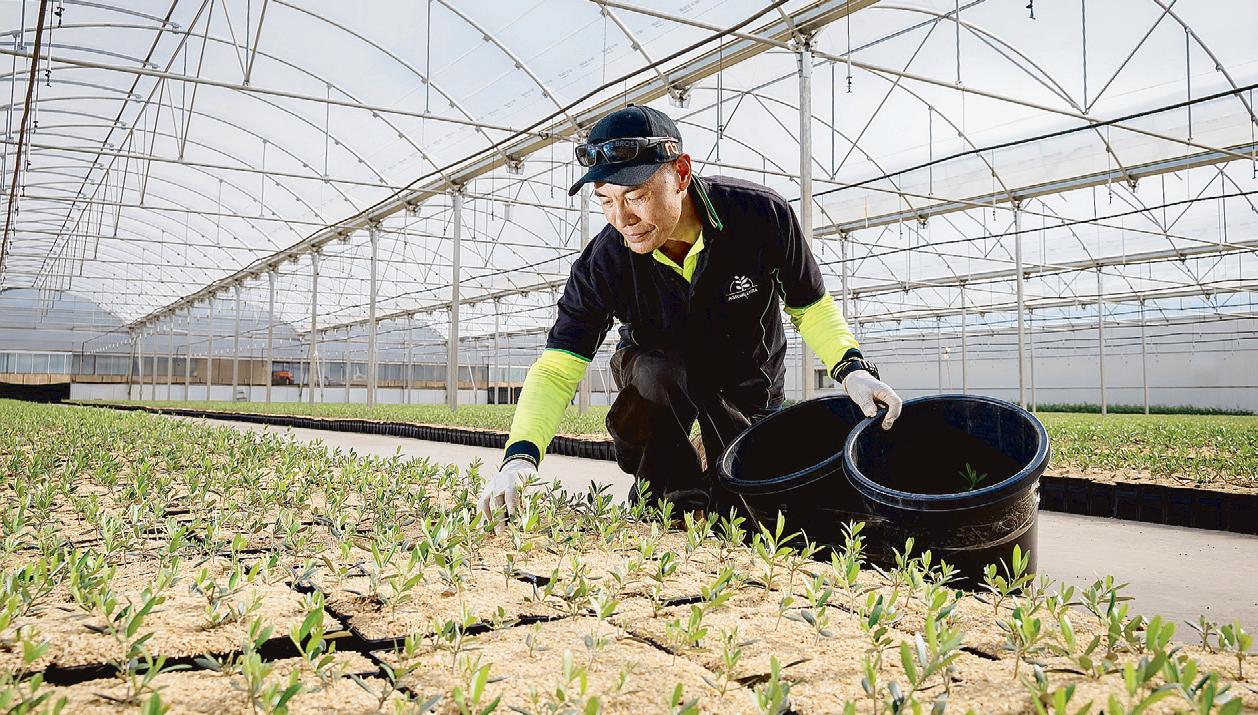
The work was monotonous, the contracts insecure and her visa status uncertain, but Ms Dahal said the experience proved invaluable.
She credits much of her work ethic and leadershipstyletoherparents,KumarandSunita, who built a freight business in Kathmandu from humble beginnings.
“I grew up in Nepal watching them build it from very li le into a well-established company,” she said.
“A lot of my childhood was spent around meetings, warehouses and conversations about the business.”
Kumar often took her on work trips, giving her early exposure to how relationships shape business.
“They always worked as a team,” she said.
“They were disciplined and hardworking, but what stood out most was how they treated their staff like family.”
As opportunities began reopening after the pandemic, Ms Dahal pursued a regional sponsorship pathway.
That search led her to Agromillora, a global nursery company, specialising in plant tissue culture and advanced propagation systems.
“When I was offered a position, I packed up my entire life into a small hatchback and drove sixand-a-half hours to Mildura,” she said.
Four years later, she is helping lead the production line she arrived to join as an entrylevel laboratory technician.
Managing director Simon Robb put Ms Dahal’s career progression down to her strong work ethic and drive, as well as her welcoming nature.
“Her accepting and open a itude helps foster a collaborativeandwelcomingenvironmentforthe team,whichhascontributedtosignificantgrowth while maintaining a strong human element within the business,” he said.
In her current role as technical manager, she oversees production planning, inventory management and the introduction of new horticultural varieties into Australia.
Ms Dahal’s rise through the ranks has come during a milestone year.
This year marks Agromillora’s 40th anniversary. Founded in Spain, the company produces more than90millionplantsayearthroughlaboratories and nurseries worldwide.
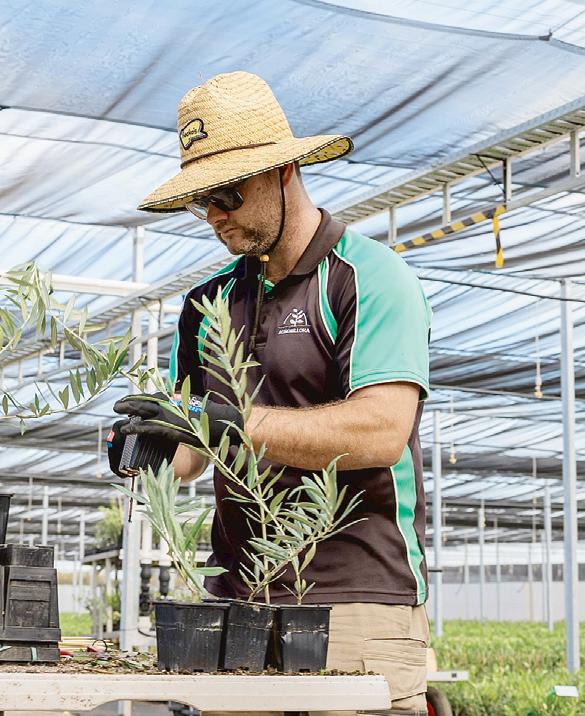
Inside Agromillora’s laboratories, plant tissue cultures develop under carefully controlled conditions, forming the foundation of young plants destined for orchards and vineyards across Australia.
Techniciansmovesteadilythroughsterilerooms and growing spaces, maintaining a constant rhythm of care and production.
The process, known as micropropagation, involves dividing and multiplying small sections
of plant material under sterile laboratory conditions.
That material is then supplied to orchards and vineyards across Australia and export markets as high-health plant stock.
Mr Robb said the company’s growth was driven by its workforce and the range of skills within it.
The team includes staff from Nepal, India, Tibet, China, Southeast Asia, Africa, Europe, South America and Australia.
“It’s a great and genuinely enjoyable place to work. Our diversity brings a unique energy to the nursery, whether it’s the music from around the world or the different perspectives people bring to their roles. We make a real effort to celebrate that diversity,” he said.
“Each quarter, we organise a team lunch where everyone brings a dish from their own culture, which turns into an incredible and diverse buffet.
It’s a chance for everyone to connect. Beyond that, each person contributes their own skills and experiences, and there’s a strong sense of teamwork and mutual respect. It’s a hardworking group, but also one that supports each other and takes pride in what we do together.”
Vine supervisor Tanner Payne said that diversity was clear in everyday work.
“It’s my fifth year at Agromillora,” he said.
“We’ve got fantastic teams. Everyone works well together.”
ForMsDahal,thatdiversityispartof whatmakes the workplace rewarding.
“You’re constantly learning from different cultures and different ways of thinking,” she said.
Her move to Mildura was initially daunting, but the community quickly embraced her.
An elderly couple, Paule e and Errol, in nearby Red Cliffs opened their home to her.
“They never made me feel like I was just a guest,” she said.
“They treated their home as my home.”
Since arriving in Mildura, Ms Dahal has immersedherself incommunitylife,volunteering with the Sunraysia Mallee Ethnic Communities Council, taking part in Thursday night cardio tennis at Red Cliffs Tennis Club and supporting training programs for workers participating in the PALM scheme.
“Sometimes people have years of practical experience but don’t feel confident because of language barriers,” she said.
“As a migrant myself, I understand that feeling.”
Ms Dahal’s story is similar to that of many colleagues working alongside her at Agromillora.
Among them is Nawang Sherpa.
Before arriving in Australia, Mr Sherpa spent seven years studying Buddhist philosophy in a monastery in South India and learned the traditional art of Thangka painting.
The experience shaped his outlook on life.
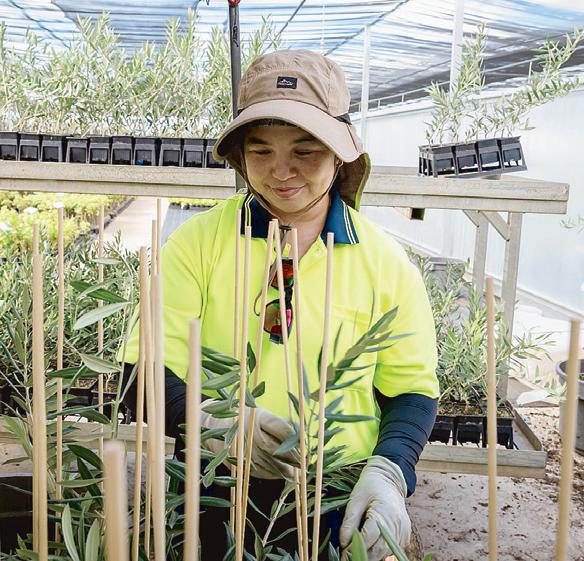
Inside Agromillora’s laboratories, plant tissue cultures develop under carefully controlled conditions, forming the foundation of young plants destined for orchards and vineyards across
“It taught me patience, discipline, humility and kindness,” he said.
“It also taught me that no work is too small.”
Mr Sherpa later arrived in Australia after maintaining a friendship with an Australian familyhemetinIndiamorethantwodecadesago.
A Tibetan friend working at Agromillora eventually encouraged him to move to Mildura.
At Agromillora, he works across multiple productionteams,assistingwithpo ing,grading, packing and nursery operations.
He has now spent several years in Sunraysia and says the region reminds him of the quieter places he has called home.
“There are fewer crowds, less traffic and it feels connected to nature,” he said.
Laboratory manager Amarjit Kaur was raised in an agricultural family in India, where she learned grafting, seed propagation and crop production from her father from an early age, before moving to Australia in 2008.
“I developed a strong interest in horticulture early on,” she said.
During breaks from her studies in Melbourne, Ms Kaur worked picking oranges in Leeton and completed pruning and vine work in Echuca, gaining first-hand experience in regional agriculture.
Today, she manages tissue culture operations at Agromillora.
Ms Kaur said regional Victoria offered the lifestyle she was seeking.
She enjoys gardening, visiting Kings Billabong and spending time along the Murray River.
“I like the peaceful environment and the independence,” she said.
Like Mr Sherpa, Ms Kaur hopes to remain in Australia long term.
As she moves through Agromillora’s expansive greenhouses, Ms Dahal pauses frequently to greet staff and chat as she passes.
She apologises for a section of ungraded plants nearby, then lifts a tray of young cherries beginning to take hold.
For a moment she lingers, before continuing through the rows, her eyes lighting up when she crosses paths with Mr Sherpa.
“We’ll have to show you Nawang’s art one day,” she says with a laugh, before stopping for a photograph with her “Tibetan brother.”
At 28, Ms Dahal now holds a key role in an emerging agricultural technology business in regional Victoria.
Despitehercareerprogressionandstrongtiesto Mildura, she says her long-term future will likely take her back to Nepal.
“It is very tempting to stay,” she said.
“I do love it here.”
“However, I think I will eventually return home to be with my family.”



Warnings Information at www.bom.gov.au/vic/warnings or Ph: 1300 659 210 (local call cost)
Mallee
Partly cloudy. High chance of showers, most likely in the morning and afternoon. Winds northerly 15 to 25 km/h turning westerly 20 to 30 km/h during the day.
Saturday. Cloudy. Medium chance of showers, most likely in the morning and afternoon. Light winds becoming southerly 15 to 20 km/h during the morning then becoming light during the afternoon.
Victoria
Mostly cloudy with isolated showers, more frequent about the northeast ranges and in the southwest. Showers falling as snow about the Alpine peaks. A cool to mild day with moderate to locally fresh northwesterly winds tending moderate westerly in the west.
7:35am5:21pm12:21pm12:11am 7:35am5:21pm12:46pm1:11am 7:35am5:21pm1:12pm2:11am

Chances
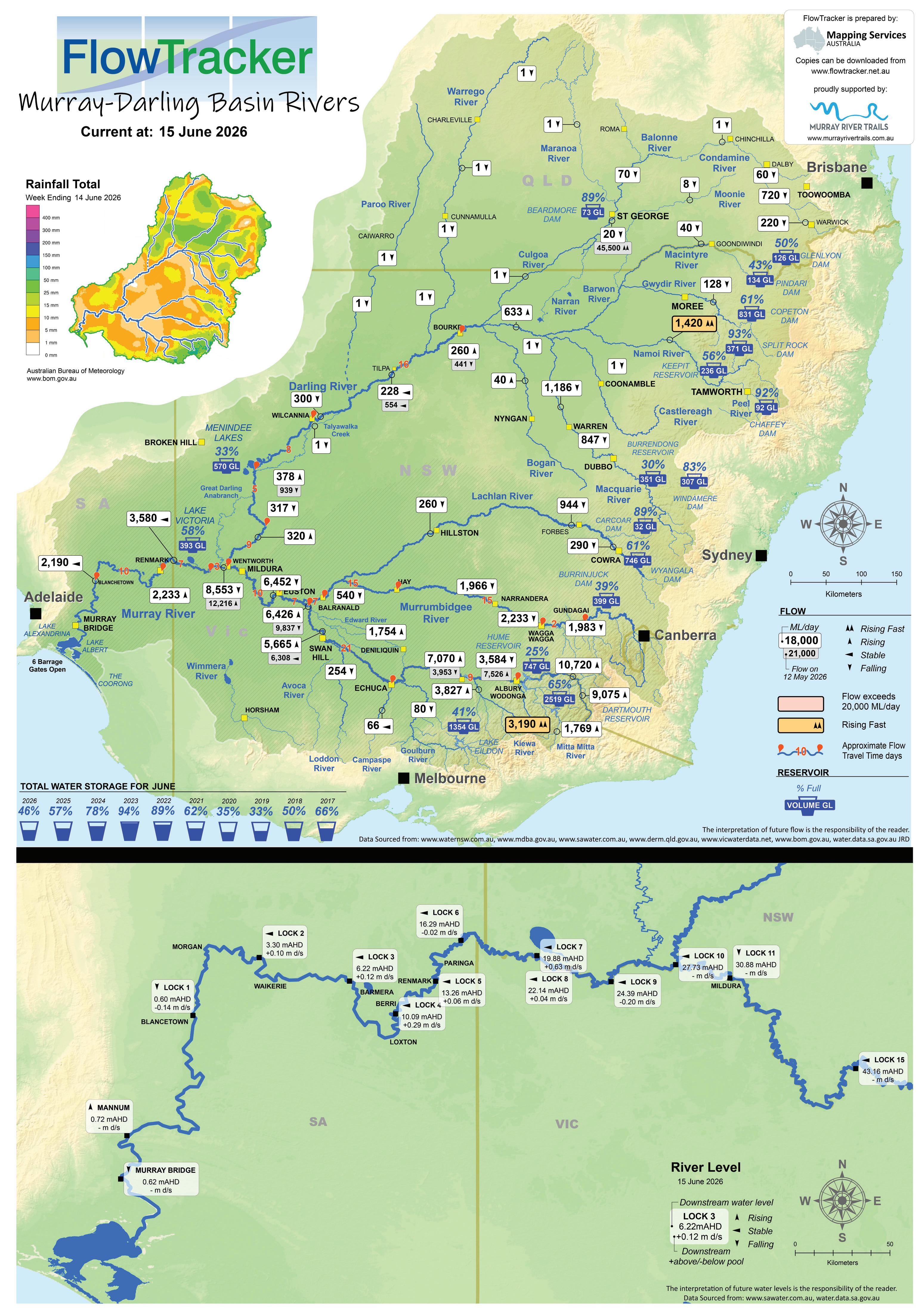
Capacity% FullCurrentChangeLast Year Dartmouth3,856,23266.42,561,97020,6622,649,101 Hume3,005,15729.2878,41662,6921,021,886 Eildon3,334,15842.21,406,07919,9241,949,638 Others1,421,54554.4773,701-8,375825,527 Total11,617,09248.45,620,16694,9036,446,152
Ruralco Water is pleased to announce the appointment of Grant Stoeckel as Water Broker, supporting clients across Sunraysia and Lower Murray.
Grant brings more than 20 year’s experience working with rural and regional communities, with a strong track record of building long-term relationships across key agricultural industries, including table and wine grapes, almonds, and citrus.
Prior to joining Ruralco Water, Grant spent many years in the insurance and broader business sector, supporting farming enterprises and regional businesses throughout Sunraysia. His extensive client service and commercial experience, combined with a practical, on-the-ground understanding of agriculture, enables him to provide considered advice and a genuinely relationship-driven approach.
More recently, Grant has also gained experience within the water industry through his work with Ruralco Water’s sistercompanytheWaterexchange,furtherstrengthening his understanding of water markets and the critical, time sensitive role water plays in supporting Australian agriculture.
Originally from a farming background on Kangaroo Island, Grant brings a deep appreciation for the role agriculture plays in regional communities. He holds a degree in International Business and Marketing from Edith Cowan University.
Ruralco Water General Manager Phil Grahame said Grant’s appointment reflects the business’s continued investment in supporting irrigators and regional clients.
“Grant’s depth of experience, local knowledge, and strong client relationships make him a valuable addition to the team. His understanding of both agriculture and water markets will ensure our clients continue to receive practical, informed support,” Mr Grahame said. Grant Stoeckel said he is looking forward to working closely with clients across the region.

“I’m excited to be joining Ruralco Water at a time when water management is front of mind for so many growers. Having worked closely with farming businesses throughout my career, I understand the challenges they’re facing and the importance of having the right support and advice in place. I’m looking forward to buildingstrongrelationshipsandhelpingclientsnavigate an increasingly complex water market,” Mr Stoeckel said. Ruralco Water continues to play a leading role in supporting irrigators through the evolving challenges of water security, market complexity, and policy reform.
The appointment of Grant Stoeckel reinforces our commitment to deepening client relationships, strengthening market expertise, and delivering informed, forward-thinking solutions across the Southern Basin. As industry dynamics continue to shift, Ruralco Water remains focused on equipping clients with the insight and capability needed to make confident, strategic water decisions.