






















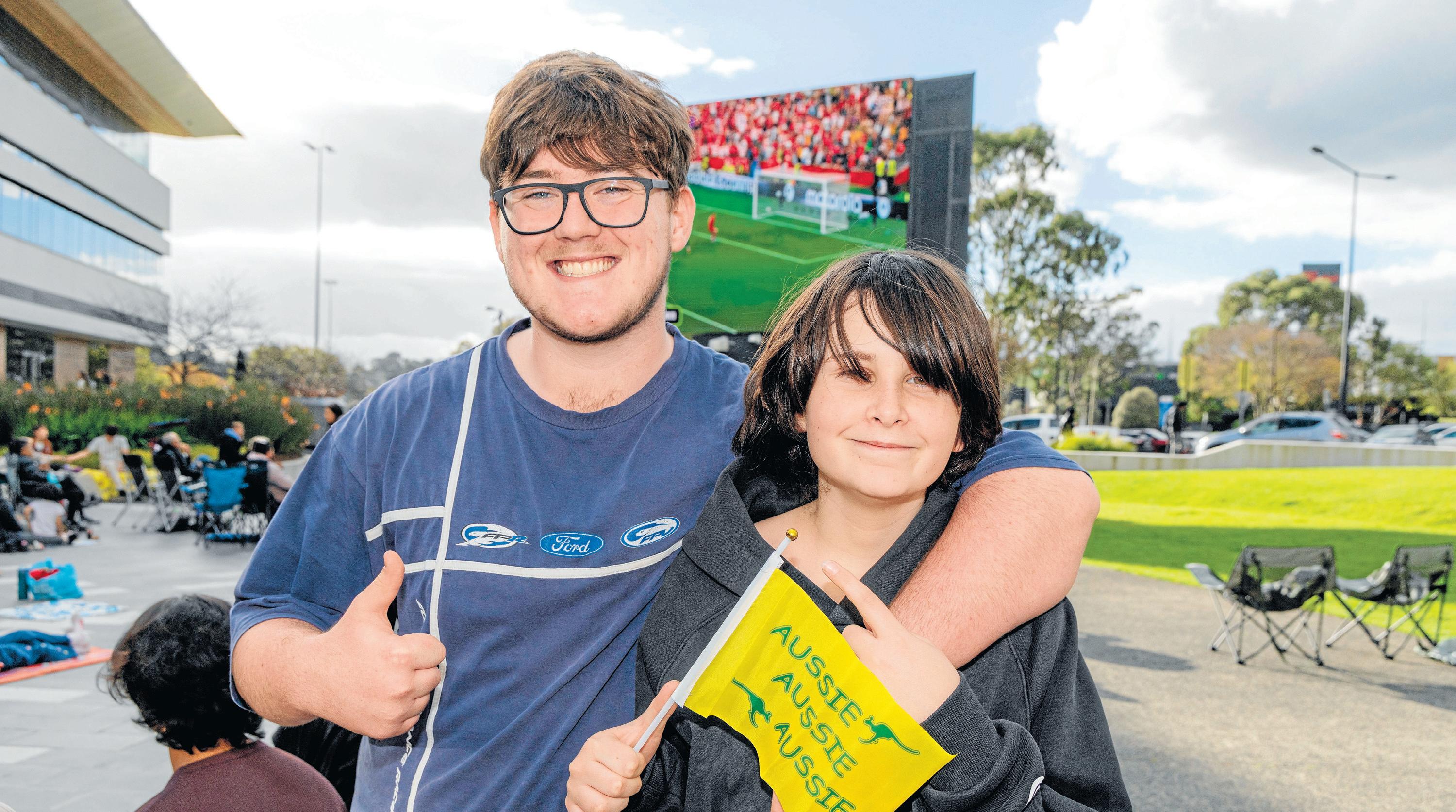
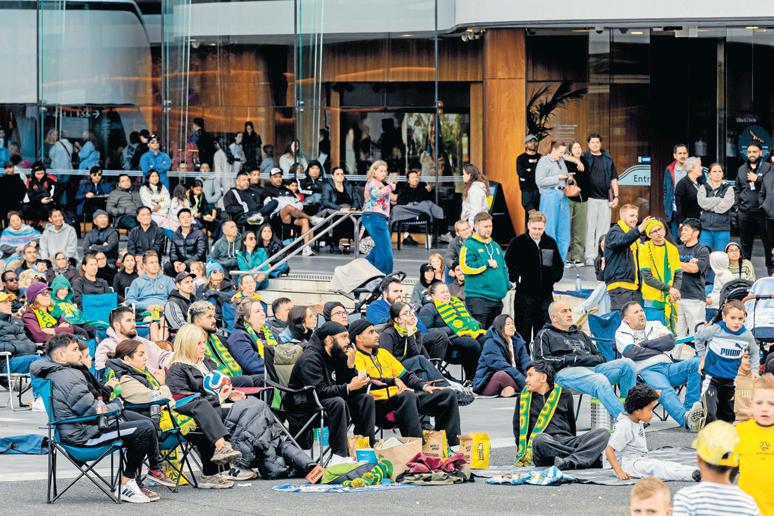
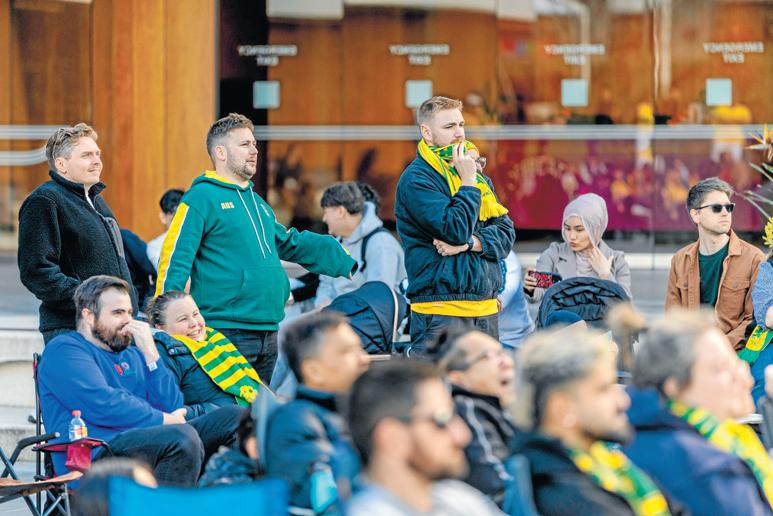
Casey residents rugged up at Bunjil Place on Sunday 14 June to watch the Socceroos begin their 2026 FIFA World Cup campaign against Turkey in Vancouver.
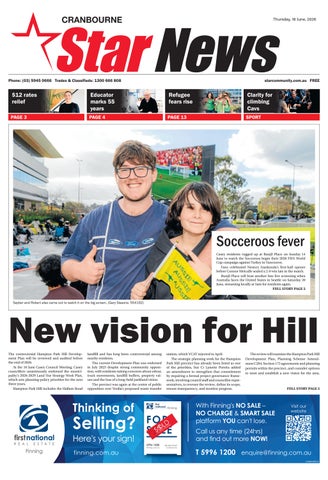
Casey residents rugged up at Bunjil Place on Sunday 14 June to watch the Socceroos begin their 2026 FIFA World Cup campaign against Turkey in Vancouver.
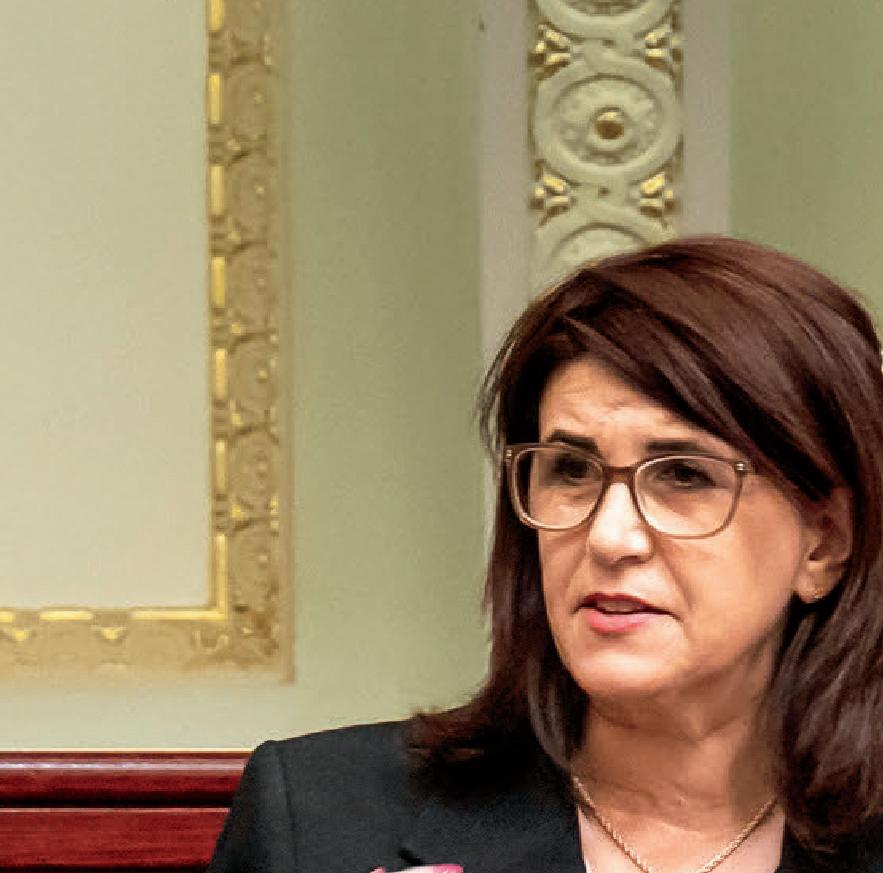
The controversial Hampton Park Hill Development Plan will be reviewed and audited before the end of 2026.
At the 16 June Casey Council Meeting, Casey councillors unanimously endorsed the municipality’s 2026-2029 Land Use Strategy Work Plan, which sets planning-policy priorities for the next three years.
The current Development Plan was endorsed in July 2023 despite strong community opposition, with residents raising concerns about odour, truck movements, landfill buffers, property values and the loss of a long-held parkland vision.
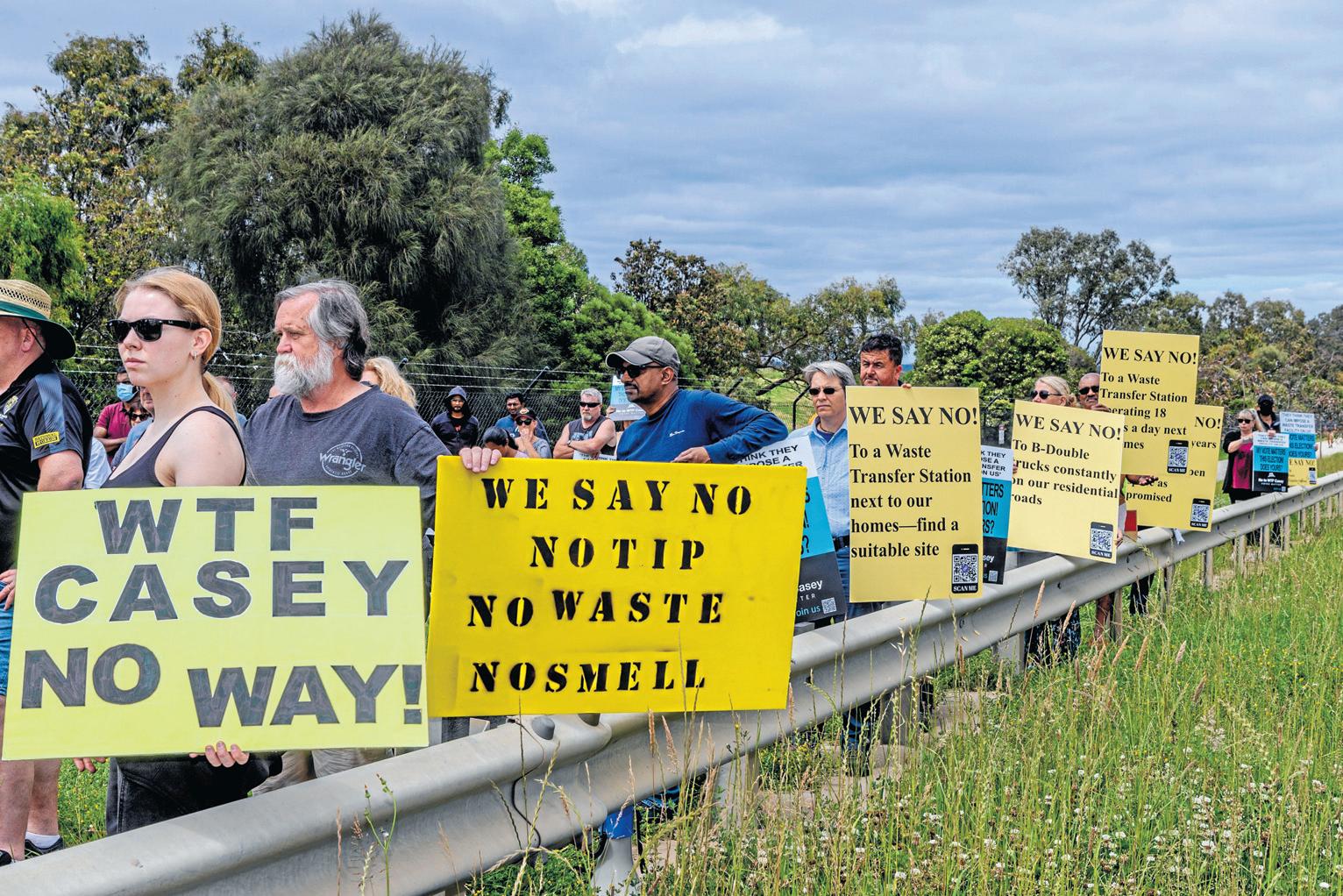
The precinct was again at the centre of public opposition over Veolia’s proposed waste transfer
Hampton Park Hill includes the Hallam Road landfill and has long been controversial among nearby residents.
station, which VCAT rejected in April.
The strategic planning work for the Hampton Park Hill precinct has already been listed as one of the priorities, but Cr Lynette Pereira added an amendment to strengthen that commitment by requiring a formal project governance framework, involving council staff and councillor representatives, to oversee the review, define its scope, ensure transparency, and monitor progress.


ThereviewwillexaminetheHamptonParkHill Development Plan, Planning Scheme Amendment C294, Section 173 agreements and planning permits within the precinct, and consider options to reset and establish a new vision for the

By Violet Li
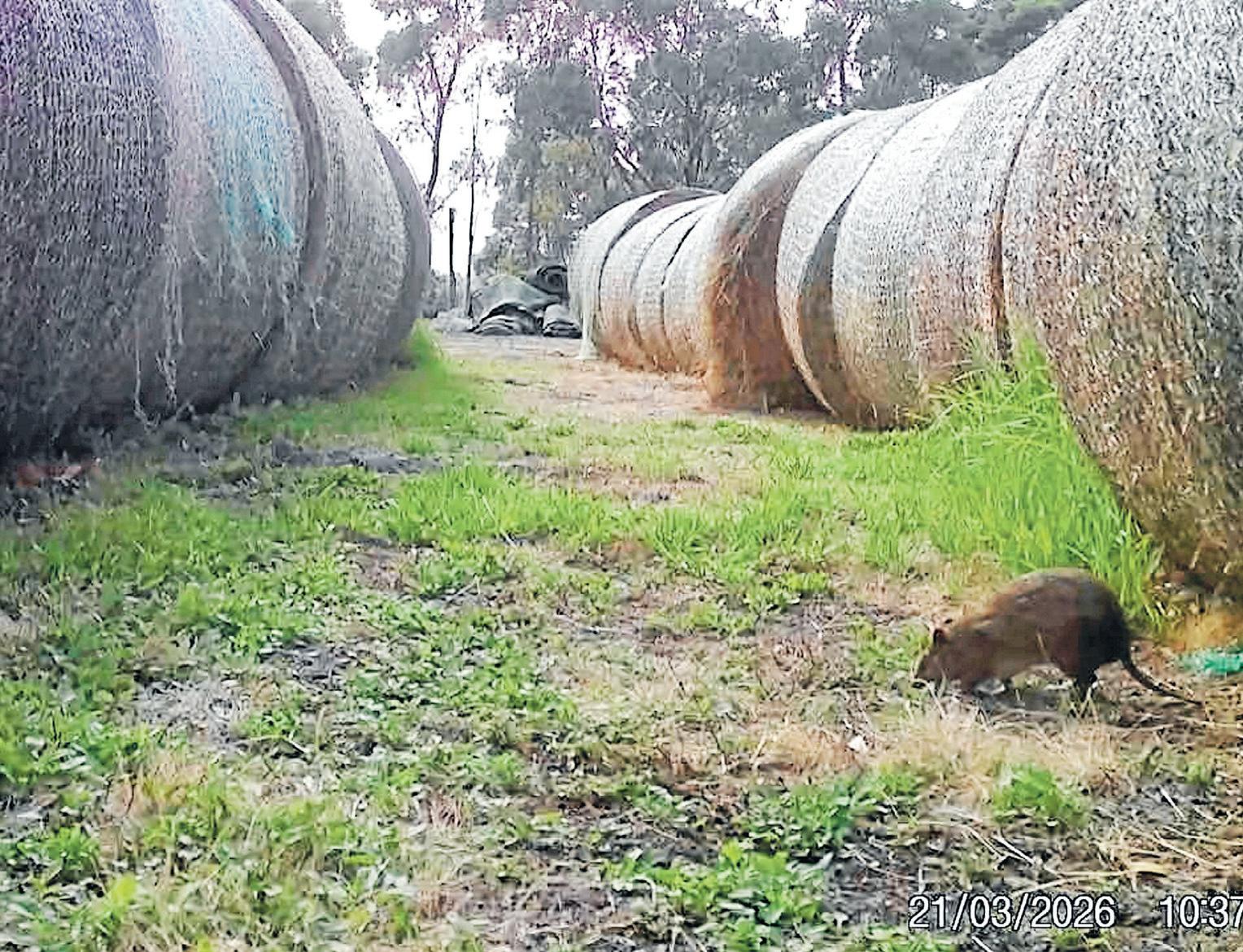
A community wildlife camera project in Casey South has detected the threatened Southern Brown Bandicoot on just three properties, while recording thousands of rabbits and hundreds of foxes.
The Bandicoot Buddies project, delivered by the Western Port Catchment Landcare Network (WPCLN) as part of the City of Casey’s Climate Action Living Lab, used wildlife cameras on 18 private properties and roadside reserves to better understand where the threatened species remains.
The project targeted properties between Cranbourne Botanic Gardens and the top of Western Port Bay, including areas around Pearcedale, Devon Meadows, Tooradin and Warneet, where there have been past bandicoot sightings.
WPCLN facilitator Janelle Cadd said the project was about connecting residents with the threatened species living in their own backyards.
“It was all about getting residents connected to the threatened species in their backyards and highlighting the importance of understanding the nature, both the vegetation and the threatened species,” she said.
Across the monitoring period, cameras recorded 37 Southern Brown Bandicoot detections.
Ms Cadd said bandicoots were found on three properties, with activity mainly around Warneet and areas connected to Cranbourne Botanic Gardens.
She said the results showed how important a suitable habitat was for the species.
“They need little shrubs and grasses,” she
said.
“If they don’t have homes, then they’ll be eaten by predators.”

The project also recorded 2202 rabbit detections across every monitored property and 482 fox detections across the majority of properties.
Ms Cadd said the figures showed the scale of the pest animal problem facing local wildlife.
“When you’ve got 482 foxes, it’s very hard to live an abundant life,” she said.
Ms Cadd also said that habitat destruction was another factor that led to the decline in the number of Southern Brown Bandicoots in the region.
“Some farmland can support if there is vegetation on the property. But, essentially, if you put a housing estate there, then they’re gonna struggle,” she said.
“You can modify areas with housing. A lot of bandicoots will actually live underneath houses if they’re on the stumps.”
Other wildlife detected included swamp rats, juvenile goshawks, copperhead snakes and deer.
Ms Cadd said all fauna records would be submitted to the Victorian Biodiversity Atlas, which is used by government agencies for biodiversity planning and environmental decision-making.
The project also involved three primary schools, with nearly 250 students taking part in classroom-based environmental education sessions. Students learned about Southern Brown Bandicoots, their habitat, food and shelter needs, and used remote sensing cameras as part of hands-on activities.
Ms Cadd said participating landholders would be connected with Casey Council biodiversity officers to support habitat improvements.
The project, which lasted a year and a half, received $20,000 funding from the City of Casey.

By Jensy Callimootoo
Gold and green scarves, camping chairs and warm blankets dotted the viewing area
open their 2026 FIFA World Cup journey.
The community screening attracted football fans of all ages, with families and friends settling in to cheer on Australia as they faced Turkey in Vancouver, Canada.
While temperatures reached a balmy 27
degrees in Vancouver, the winter chill in Melbourne did little to dampen spirits. Supporters rugged up and gathered around the big screen, creating a lively atmosphere throughout the match.
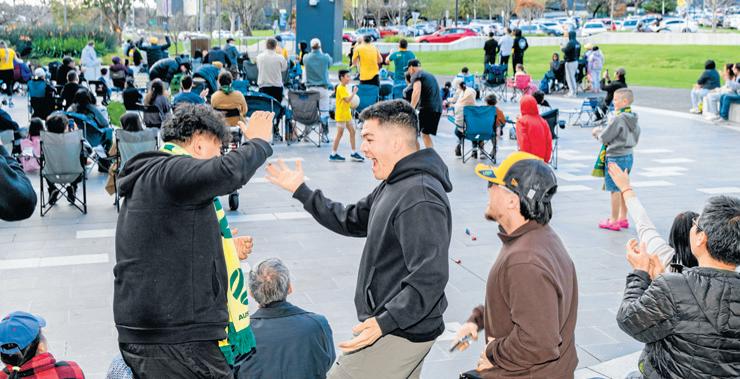
The crowd erupted in the 27th minute when rising star Nestory Irankunda found the back of the net, giving Australia an early lead and sparking celebrations across the viewing area.
Turkey continued to apply pressure, keeping fans on the edge of their seats, but Australia’s defence remained resolute. The Socceroos
sealed the result with less than 20 minutes remaining when Connor Metcalfe finished off a swift counterattack to take it to 2-0.
With excitement building across the country, here in Casey, football fans will have another opportunity to back the Socceroos when they take on the United States in Seattle on Saturday, 20 June. This will stream at 5am local time.
Bunjil Place will once again host a free live screening of the match, giving residents the chance to come together and support Australia on football’s biggest stage.
By Jensy
Casey Council will dip into their waste reserve to freeze ratepayer’s waste charges, saving households approximately $12.
During a lively debate at the June Council meeting, nine councillors voted for an alternative motion that would hold off on raising the waste service charge for the 2026/27 financial year.
In addition to the original council offset of $3 million, the freeze will reduce the current waste reserve from $1.7 million to $300,000.
The decision follows the state’s initiative to reform waste collection, mandating FOGO bins and a new glass-bin for all Victorians households. Councils are required to comply with these reforms by July 2027.
Deputy Mayor Michelle Crowther, introduced the notice of motion, arguing that “every dollar counts”
“The government has introduced unprecedented kerbside waste reforms this year and we need to help our community to counteract these costs,” she said
“As councillors we were very disappointed that we couldn’t revoke these kerbside costs, but what we can do is reduce the financial impact on our community in this upcoming year.”
Those who supported the waste charge freeze highlighted the impacts of cost of living to households, arguing that no matter how little the savings was, it was an opportunity to help residents now when they need it the most, they said.
Others, such as Cr Scott Dowling labelled the freeze as a “modest short term savings”
Four additional councillors, Cr Kim Ross, Cr Anthony Walter, Cr Gary Rowe and Cr Carolyn Eaves voted against the motion.
All cited the prospective concerns of shouldering more costs to ratepayers in the following financial year if circumstances were to change.
This includes geopolitical impacts to fuel costs, potential increase in EPA levies, contractual changes or further state reforms.
According to the chief financial officer, Melissa Baker, if this was the case, due to the waste charge freeze, the council would not have the sustainable reserve to buffer costs for ratepayers as they’ve done in the past.
Meaning additional costs to ratepayers may incur in the following financial year to recoup these unforeseen costs.
Cr Ross argued that supporting the freeze was ultimately an act of “tokenism” with attempts to amass “headlines” by making a political statement.
“Losing the buffer would be very poor financial management. Dipping into our current reserves would be like using your savings account to pay for your groceries on a weekly basis,” Cr Ross said.
Despite voting for the motion, Cr Pereira
emphasised her concerns of a “possible double hit” to ratepayers, arguing that the council was “capitulating” to external pressure regarding the reforms backlash.
She also cited the uncertainty surrounding the Hallam Road landfill in Hampton Park and how the future landfill levies will impact the council’s waste services.
It comes as neighbouring councils continue to take major steps to push back on the state’s waste reforms despite the looming mandate date.
Greater Dandenong Council, are among the 30 councils to call for a review of the glass-bin rollouts.
With councillors voting in favour of pushing back on the mandate and risking a state-instated fine of over $97,000.
Similarly, Cardinia Shire continues to push

the State Government to explore expanding the Container Deposit Scheme (CDS) to accept more varieties of glass such as wine and spirit bottles.
Cardinia also called on the government to release the glass bins’ business case to councils.
Anthony Tassone, President of Casey Residents and Ratepayers Association (CRRA) said that he welcomed the decision made by the council.
“$12 might seem modest, but every dollar during a cost of living crisis counts for some households and the principle behind the decision matters,” he said.
“Rather than retaining ratepayer funds in reserve where there is capacity to provide relief, Cr Crowther’s motion reflects a straightforward philosophy that, where possible, money should remain in residents’ pockets.”
Summerset Cranbourne North is redefining retirement living.
This is a village designed to help you get the most out of the years to come, with the reassurance that there is a residential aged care home onsite, if you need it.
Live independently in a thoughtfully designed two or three bedroom villa with spacious open-plan living and built-in safety features for peace of mind.
Our assisted living apartments offer the perfect balance of independence and support - ideal for those who value their autonomy but appreciate a helping hand.
Residents in our residential aged care home can enjoy comfort, privacy, and a true sense of community in thoughtfully designed care suites.
With independent and assisted living, as well as residential aged care suites all available now,* there has never been a better time to visit the village.
Join us at our next open day - we’d love to show you around.
Love the life you choose.
Winter warmer open day
Thursday 2 July, from 10am to 2pm
Summerset Cranbourne North 98 Mannavue Boulevard, Cranbourne North 03 7068 5642 | cranbourne.sales@summerset.com.au
By Violet Li
Cranbourne West Primary School is celebrating principal Andrew Bergmeier’s 55 years in education.
Turning 73 in July, Mr Bergmeier has spent a lifetime in education, from inner-city classrooms and small country schools to 26 years leading the Cranbourne West Primary School community.
“I knew from the age of 10 years old that I wanted to be a teacher. I was very lucky. I didn’t have to think about what I wanted to do with my life,” he said.
“I haven’t wanted to do anything else. I mean, why would you? You’ve got 600 beautiful children to look after, 80 staff, and some of these staff have been with me for the whole 25 years.”
Mr Bergmeier’s career began when he entered teachers’ college at 18, at a time when students on scholarships were effectively guaranteed work and their years of training counted towards their service.
His first posting was at Yarra Park Primary School, on the corner of Bridge Road and Hunt Road, a site that has since become luxury apartments.
He was there for only about six weeks before being sent to Collingwood, where his first full year of teaching was spent at Cromwell Street while the Collingwood Education Centre was being built.
The conditions were basic. He taught in a small classroom with no carpet, no heating and no cooling, while diggers moved past the window during the day.
When the new education centre opened, it followed one of the major teaching trends of the 1970s: open classrooms.
About 100 students and four teachers shared a large space divided into curriculum areas, with students rotating through English, Maths, general studies and general purpose.
The early years also taught him about the complexity of working with children from different backgrounds, including newly arrived students and families navigating difficult circumstances.
By the late 1970s, Mr Bergmeier moved to the former Chapel Road Primary School in Keysborough before taking up a small country school post at Wallacedale North, between Hamilton and Portland.
There, he taught at a school of just 26 children from Prep to Year 6.
In the mornings, a rural school aide taught the younger students. In the afternoons, Mr Bergmeier had the whole school.
The school came with all the realities of country life: tank water, septic sewerage, cleaning duties, wildlife, snakes in the yard, wasps and even a school possum whose tail would sometimes poke through a hole in the ceiling.
“The children just understood that that was the school possum,” he said.
“They just saw it as the school possum.”
After three years at Wallacedale North, Mr Bergmeier moved to Cardinia Primary School, then Devon Meadows Primary School, Clyde Primary School and Officer Primary School, where he became principal in 1995.
In 2000, he arrived at Cranbourne West Primary School.
The school had about the same number of students then as it does now, although enrolments later climbed to about 830 before gradually declining as new schools opened in the area.
While the numbers have changed over time, Mr Bergmeier said the biggest change in the school had been instilling their values into the community and instilling their values into the children.
“The overall aim has always been a quiet, purposeful learning environment,” he said.
“To achieve that, you have to have good teachers, you have to have a good vision. Our children have to understand what school behaviour is and our expectations around school behaviour.
“The community has responded really positively to that strong vision, values and our mission statement, which essentially is to provide the best learning environment for our children.
“That also means teachers and all staff really are committed to the children because they have to be our first priority.”
As part of the vision, the school has run a self-funded breakfast club for about 15 years

and supports families with excursions, uniforms and other school needs where it can.
Across his time at Cranbourne West, Mr Bergmeier has seen major changes in how children learn.
He said when he was at school, learning was often based on rote memorisation. Today, teachers need to compete with a world full of screens, images and constant distractions.
The school has introduced approaches such as Talk for Writing, a program developed in the United Kingdom that encourages students to build imagination and confidence before writing independently.
The school has also adapted its approaches to reading, numeracy and inquiry learning over time, including themed units that culminate in events such as community fund days, science expos and learning showcases.
In reflection, Mr Bergmeier said good teaching was never static.
“One thing I’ve learnt as an educator is that you’re never happy,” he said.
“As a teacher, you’re always trying to find the best way of doing things for the children. And you’re always getting frustrated if that doesn’t work.
“So often the harder you work at something, the easier you get. And when it doesn’t work in the way that you would like it to work, you start second-guessing yourself rather than just accepting the fact that sometimes you have to learn through failure. “Which is the reason why I’ve got a poster that says keep trying because every failure is a step towards success. But you never really give up. Why would you give up? I mean, that’d be silly.”
That determination has helped him through difficult periods in the job. He is open about the pressures faced by teachers and principals.
“It is one of the toughest jobs that you’re ever likely to have,” Mr Bergmeier said.
“When you’ve got 25 children every day in your class, every one of them with different learning needs, every one of them from different backgrounds.
“We don’t know what they’ve experienced that morning. They might have been in an abusive home, and Cranbourne West is one of the centres of family violence, and we face the results, the trauma from it every day.
“Every Monday is our worst day because the children come back from broken families, and they are just confused. But the parents, they do their best. They’re bringing up these kids. And generally, we find the parents are very supportive. Once they know what you’re trying to do, once they know what we’re trying to achieve, they will support us 100 per cent.”
His approach to difficult situations is built around listening.
When parents come to the school upset or angry, he said the first task is to hear them out, understand their child and work out what is really happening.
Often, he said, the issue is not only about school, but about pressures at home.
“You have to learn to listen,” Mr Bergmeier said.
Mr Bergmeier said follow-through was just as important. If a child or parent raises a problem, the school needs to respond.
The school also tries to make positive phone calls home, not just negative ones, so families hear when their child has done something well.
He said children often carry home the last thing that happened to them at school, so ending the day on a positive note matters.
That same care extends to staff.
Mr Bergmeier said a good leader needed to stay calm, even when dealing with pressure behind the scenes.
He believes in praising people publicly and handling difficult conversations privately.
He also wants staff to feel trusted and valued, particularly when family responsibilities arise.
“We really pride ourselves on our teachers because that’s where the difference is,” he said.
“A good teacher makes a huge difference in the child’s life. I think the research shows
that a good teacher can accelerate a child’s learning by eighteen months. A not-so-good teacher only accelerates a child’s learning by six months.
“And often it might not necessarily be the teacher’s fault. It might be our fault because we’re not showing them how to teach properly. And that’s part of our job is to provide them with the parameters and the research on how to teach.”
After 55 years, Mr Bergmeier is now preparing for the next stage of his career.
His plan is to remain full-time until the end of this year, before moving part-time in 2027 if arrangements are finalised.
He hopes that will give others the opportunity to step further into leadership and develop their own style.
“Succession planning is very important because being a principal is very complicated,” he said.
“It’s the 3am wake up call when there’s about half a dozen things running through your mind you can’t settle because these things are overriding.
“But they’re never as bad as when you actually get to school the next day. It’s just those dreams and nightmares that you have as part of the job. I think that happens in every principal’s life.
“I don’t think there’d be many principals who have an uninterrupted night’s sleep. It’s a little bit like when you’ve had your first child, you never sleep.”
Asked whether he had received awards during his career, Mr Bergmeier brushed off the idea.
“I’d be nothing without my staff. I’d be nothing without the children. I’d be nothing without the community,” he said.
“I’m just a person. I have ideas around what I believe a school should look like. I have ideas around looking after the children at all costs. I have ideas around helping parents where we can.”
By Violet Li
The controversial Hampton Park Hill Development Plan will be reviewed and audited by the end of 2026.
At the 16 June Casey Council Meeting, Casey councillors unanimously endorsed the municipality’s 2026-2029 Land Use Strategy Work Plan, which sets planning-policy priorities for the next three years.
The strategic planning work for the Hampton Park Hill precinct has already been listed as one of the priorities, but Cr Lynette Pereira added an amendment to require the Council to establish the project with “appropriate governance, including staff and councillor representatives, to establish the outcomes sought, scope of work, ensure transparency and accountability, and monitor progress”
The amendment also directs the project to focus, in the first instance, on a review and audit of the Hampton Park Hill Development Plan, Planning Scheme Amendment C294, Section 173 agreements and planning permits within the precinct to determine whether the current planning settings are still appropriate.
The amendment also asks the Council to consider options to “re-set and establish a new vision” for the precinct.
Council officers are required to report back to the Council by the end of 2026 with updates and recommendations.
Cr Pereira said at the meeting that Hampton Park Hill is a uniquely complex precinct that has had various long-term visions over the years, including from the original Parklands vision.
“It currently represents an intersection of economic infrastructure, industrial legacy and long-established residential neighbourhoods. Because this housing is well established, our primary responsibility is to ensure that the surrounding strategic settings are fully aligned with contemporary urban planning standards,” she said.
“Over time, we’ve seen growing complexity
in balancing the operational realities of the site with modern expectations regarding community amenity and environmental health. “Managing an area with established residential borders under legacy controls can create friction.
“And it has become clear that a thorough review is now needed to determine if our current strategic direction reflects that up-to-date thinking.”
Hampton Park Hill includes the Hallam Road landfill and is bound by Ormond Road and Central Road to the north, the transmission line easement to the east, Glasscocks Road to the south, and Hallam Road and the South Gippsland Highway to the west.
The current version of the Hampton Park Hill Development Plan was endorsed at the July 2023
Council Meeting by the then-administration-led council, despite significant community objection.
The plan serves as a framework to guide land use and development proposals in the precinct. It allows for the continuing operation of the existing landfill, future waste and resource recovery activities, public open spaces, and light industrial activities in the designated area.
For many nearby residents, the plan became another flashpoint after years of concern about odour and amenity impacts from the neighbouring Hallam Road landfill.
At the time, the draft Development Plan attracted 1068 submissions in 2022, and a Community Engagement Summary Report noted that 99 per cent of the submissions objected to the
draft with key areas of concern including odour hazards, truck and traffic hazards, loss of property values, landfill buffer impacts, inadequate community consultation, and Council’s previous empty commitment to restore the area to parkland.
In November 2024, shortly before elected councillors returned to Casey, Council approved under delegation a planning permit for a $27 million waste transfer station in the north-western part of the Hampton Park Hill, about 250 metres from the nearest residential dwelling.
The facility, proposed by Hallam Road landfill operator Veolia, would have accepted about 550,000 tonnes of municipal residual waste, construction and demolition waste, and commercial and industrial waste from the south east.
According to the Council, the permit application was assessed against the Hampton Park Hill Development Plan.
City of Casey chief executive officer Glenn Patterson told Star News then that they understood that the local community might be disappointed by the decision, but the Council’s role was to consider planning permit applications against relevant policies, development plans and legislation.
The community continued to fight the proposal, lodging more than 700 objections to the EPA Victoria during its assessment of Veolia’s development license application, which led to its rejection.
Residents had three rallies against the proposed facility, including one outside the State Parliament before a debate initiated by local Opposition MP Ann-Marie Hermans opposing the project.
Veolia later took the matter to VCAT, and VCAT eventually rejected the proposal in April this year.
Cr Pereira said that the review of planning work for the Hampton Park Hill precinct would examine whether legacy frameworks, including older development plans and associated agreements, remained appropriate, legally robust and aligned with current state and local planning policies, as well as community expectations.

On Sunday arvo, Australia came together. Millions of Australians cheered as the Socceroos took on Turkiye.
Living rooms were packed. Pubs were overflowing. Social media was awash with green and gold.
For a few brief hours, politics disappeared. Race disappeared. Religion disappeared.
We were simply Australians backing our team.
What many people may not realise is that the Socceroos squad itself tells the story of modern Australia.
Of the 26-player squad, four are refugees. Twenty-three have at least one parent born overseas. Some have roots in Europe, others in Africa, Asia and the Middle East.
Different faiths. Different languages. Different histories.
Yet not one person watching cared where their grandparents came from.
Why?
Because when they wear the green and gold, they belong.
Truth be told... perhaps that is the conversation Australia should be having.
Instead, we seem trapped in a never-ending argument about “immigrants”.
The problem is that most people no longer know what that word means.
An international student paying full university fees is not the same as a refugee arriving through a humanitarian program.
A skilled surgeon recruited to fill a workforce shortage is not the same as an asylum seeker.
A second, third or fourth-generation Australian whose family migrated decades ago is not the same as someone who arrived six months ago.
Yet increasingly, public debate lumps everyone together into one convenient category. Immigrant.
And if we’re being completely honest, what many people really mean is “someone who doesn’t look like me”.
That should concern all of us.
Because once we stop talking about policy and start talking about appearances, we’ve left the realm of problem-solving and entered the realm of prejudice.
Take the Indian community as an example.
Indians arriving in Australia do so as skilled migrants or full-fee-paying students. They receive little to no government support. They are doctors, engineers, IT specialists, accountants, nurses and business owners. They fill workforce shortages, pay taxes and contribute billions to the Australian economy.
Yet they are increasingly being portrayed as part of a broader migration “problem”.
The facts tell a different story.
Victoria’s prison population is approximately 7,000 inmates. Indian-born prisoners account for only 0.003% of that number.
Yet scroll through social media and you would think entire communities are responsible for the state’s crime issues.
This is what happens when anecdotes replace evidence.
It is also what happens when politicians find it easier to sell fear than facts.
Let’s be clear. Australians have every right to be concerned about housing affordability, infrastructure pressures and the cost of living. They have every right to ask whether migration numbers are sustainable and whether governments have planned adequately for growth.
Those are legitimate policy questions.
But they are very different from blaming people because of the colour of their skin.
Over the past decade Australia has become increasingly comfortable talking about immigration, yet increasingly uncomfortable

talking about belonging.
And the two are not the same thing.
Citizenship should mean something. So should commitment to Australia.
Work hard. Pay your taxes. Respect our laws. Contribute to your community. Participate in society. Leave the old conflicts behind and help build something better.
That is what Australians have always expected.
What frustrates us is that while politicians endlessly debate people arriving, very few talk about the people leaving.
Last year alone, hundreds of thousands of people departed Australia. Among them were doctors, engineers, nurses, teachers, data analysts and other highly skilled professionals.
People with options. People who looked at rising taxes, housing costs, crime concerns, declining education standards and declining social cohesion and decided their future might be elsewhere.
That should worry us far more than where somebody’s grandparents were born.
Because talent is mobile.
And if Australia becomes less attractive, the people we desperately need will simply leave.
Two years ago, while running for Casey Council elections, somebody wrote across one of my election signs: “Go back to your own country.”
I’ve often reflected on that comment.
Which country exactly?
England, where I was born?
Malaysia, where Dad was born?
Australia, where I’ve lived since I was four years old?
Australia, where I served in the Defence Force, pay taxes, raise my children and contribute to my community?
The truth is they weren’t talking about nationality.
They were talking about appearance.
And that is precisely why this conversation matters.
Because Australia is better than that.
The Australia I know is the Australia I saw on Sunday arvo.
An Australia that proudly backs a football team made up of refugees, migrants and multi-generational Australians without caring where any of them came from.
An Australia that judges people by their contribution, not their complexion.
Political parties have been successful in tapping into genuine frustration around housing, cost of living and social change.
Those frustrations are real.
But frustration should never become an excuse for division.
Nor should we confuse political slogans with practical solutions.
The answer to Australia’s challenges will not be found in turning neighbour against neighbour. It will not be found in reducing people to labels or blaming entire communities for systemic failures.
It will be found in better policy. Better planning. Better leadership.
And perhaps most importantly, a renewed commitment to what it actually means to be Australian.
Because truth be told... if we can stand shoulder to shoulder behind the green and gold, surely we can learn to stand shoulder to shoulder with one another.
By Andrew Gai
As Refugee Week begins, few stories capture its spirit better than that of Nestory Irankunda.
On Sunday afternoon, Irankunda scored the opening goal in the Socceroos’ 2–0 victory over Turkiye, helping Australia make a memorable start to its 2026 World Cup campaign.
It was a proud moment not only for the young footballer but for many Australians who saw their own journeys reflected in his success.
Born in a refugee camp in Tanzania after his family fled civil war in Burundi, Irankunda arrived in Australia as an infant.
Today, he wears the green and gold with pride, representing the country that gave his family safety, opportunity and a future.
Recently, I came across a social media post claiming that Irankunda’s story is not a refugee story but simply an Australian story. In my view, it is both.
Like the stories of thousands of refugees who now call Australia home, Irankunda’s journey is
one of resilience, hope and the pursuit of a better future.
It reflects the courage of families who have overcome extraordinary challenges in search of safety and opportunity.
At the same time, it is undeniably an Australian story.
Australia provided the environment in which a young boy born in a refugee camp could grow, thrive and ultimately represent his adopted nation on the world’s biggest sporting stage.
That is something worth celebrating during Refugee Week.
This World Cup also highlights another defining feature of modern Australia: our multiculturalism.
Australia is one of the world’s most successful multicultural nations.
People from more than 200 countries and cultural backgrounds have helped shape the country we know today.
Our diversity can be seen in our workplaces, schools, communities and, increasingly, in our
national sporting teams.
The current Socceroos squad is perhaps the clearest reflection yet of contemporary Australia.
Players with migrant and refugee backgrounds are helping drive the team’s success, bringing together different cultures, languages and experiences under one flag.
Their diversity is not a weakness to overcome; it is a strength to embrace.
Yet as we celebrate these achievements, it is impossible to ignore the increasingly negative rhetoric surrounding migration in some areas of public debate.
Too often, migrants and refugees are discussed as problems to be managed rather than people who contribute enormously to Australia’s success.
The reality is that migrants and refugees strengthen our nation every day.
They serve as doctors and nurses in our hospitals, care workers in our aged care facilities, teachers in our schools, business owners in our communities and volunteers in countless local
organisations.
Like every nation, Australia faces challenges. But migrants and refugees are not separate from those challenges – they are part of the solutions.
The Socceroos remind us of that. Their success demonstrates what is possible when talent, opportunity and belonging come together.
They are representing not only Australia on the world stage but also the values that have helped make Australia one of the most successful multicultural societies in the world.
The Socceroos have already made us proud. They have shown determination, courage and the willingness to have a crack – the qualities Australians have long been admired for.
As their World Cup journey continues, one thing is certain – the nation is behind them.
Go Socceroos.
- Andrew Gai is a community advocate, recipient of a 2020 Holt Australia Day Award and a 2022 Victorian Refugee Achievement Award.
A Cranbourne woman was left feeling queasy after uncovering her $1 million lottery win, admitting the overwhelming shock made her think she was going to throw up.
The Casey resident held one of the three division one winning entries nationally in Weekday Windfall draw 4714, drawn Wednesday 10 June 2026. Each division one winning entry scored a clean $1 million.
Lottery officials are also urging Victorian players to check their Weekday Windfall tickets after two mystery Victorians each scored $1 million in last night’s draw, but have yet to discover their wins and come forward.
One of the division one winning entries was purchased at Fairfield News & Lucky Lotto, 99-101 Station Street, Fairfield, while the other was bought at Korumburra Post Office, 30 Commercial Street, Korumburra.
The winning Cranbourne woman was completely oblivious to becoming an over-
night millionaire until an official from The Lott surprised her with the exciting news.
“You’ve got me a bit perplexed with what I’ve won!” she laughed.
“I haven’t had a moment to check my ticket! Oh sh**! You’re not one of my friends pranking me, are you? Are you sh****** me?
I think I’m going to throw up!
“Oh my goodness. I can’t wait to tell my husband, but I think I’ll wait for him to come home from work first! I don’t want him getting distracted by the news.
“My brain is a bit disconnected right now!”
With $1 million heading her way before the end of the financial year, the newly minted millionaire shared a couple of ideas in mind for her prize. Her winning 18-game QuickPick was purchased at Hunt Club Lotto, Shop R12 Hunt Club Village, 1S Linsell
Cranbourne East.
If you’re experiencing foot pain, there’s a good chance you’ve been diagnosed with a condition such as plantar fasciitis, Achilles tendinopathy, bunions, bursitis, arthritis, Morton’s neuroma, heel pain, or flat feet. While these conditions are common, they are also frequently misdiagnosed or mismanaged.
According to Dr. Paul Dowie, one of Australia’s most experienced musculoskeletal podiatrists with more than 25 years of experience treating foot, knee, and leg conditions, inaccurate diagnoses and ineffective treatment plans can significantly delay recovery.
Dr. Dowie highlighted 3 common reasons foot pain can persist:
1. Diagnostic Scans Are Misinterpreted Changes or irregularities seen on imaging scans are commonly misunderstood. For example, thickenedtissuesareoftenmistakenforinflammation, which can lead to treatments that target the wrong problem.
2. The Symptoms Are Treated, Not the Cause Many treatments focus solely on relieving pain rather than identifying why the pain developed in the first place. Without addressing contributing factors, relief is often temporary and the condition can return or continue to progress.
3. Biomechanics inexperience
The foot and lower limb are complex structures, so a thorough understanding of lower limb biomechanics is often critical to achieving lasting results, and this requires extensive studies and/or experience in this area.
Dr. Dowie believes it is important for people to know that most foot and leg conditions can be improved, including many complex, chronic, arthritic, and degenerative problems.
“Toooftenpeoplearetoldthattheirpainissimplyaresultofageingorwearandtear,andthatthey must learn to live with it,” says Dr. Dowie. “Others are led to believe that anti-inflammatory medications, cortisone injections, arthroscopies, or surgery are their only options. In many cases, that simply isn’t the case. The key is identifying what’s really driving the pain and then developing a treatment approach

Monash University has opened a public consultation process for the first major update to Australia’s national clinical guidelines for dementia in more than 10 years.
Commissioned by the Department of Health, Disability and Ageing in May 2024, the draft update aims to modernise clinical decisionmaking by incorporating a decade of medical advancements and shifting care strategies. The revision evaluates new therapies and diagnostic tools, such as blood-based biomarkers for protein detection and advanced brain imaging, alongside lifestyle interventions and non-medication strategies.
The guidelines address 15 high-priority clinical questions, ranging from physical and cognitive rehabilitation to more complex issues like deprescribing, driving assessments, and endof-life communication. Professor Velandai Sri-
kanth, co-chair of the update and Director of the National Centre for Healthy Ageing, noted that the landscape of dementia care has evolved significantly since 2016. He stated that the draft is designed to ensure healthcare professionals are equipped with current evidence to support their patients effectively.
To maintain a focus on patient needs, an 11-person Living Experience Advisory Group consisting of people living with dementia and their carers helped shape the draft. Professor Simon Bell, co-chair and Director of the Centre for Medicine Use and Safety, emphasised that the guidelines were developed with input from both those who provide and those who receive care.
Following the public consultation and review phase, the project will move toward implementation and dissemination across the healthcare sector.
Dementia currently affects approximately 425,000 Australians, a figure projected to rise to 1.1 million by 2065. While the condition is not considered a normal part of ageing, it represents a significant economic burden, with direct health and aged care spending reaching $4.7 billion annually. Indirect costs are expected to climb to $9 billion by 2036. Although the finalised framework is intended primarily for doctors, nurses, pharmacists, and allied health staff, it is also expected to serve as a resource for patients and the more than 100,000 carers nationwide to assist in making informed healthcare decisions. The draft guidelines are now available for review through the Monash University website at https://app.magicapp.org/#/guideline/ j97pAn






The Oakgrove Community Centre Board of governance, volunteers and staff are pleased to invite residents, families, carers, and community members to attend the Oakgrove Wellness Expo on:
Date: 27 June 2026. Time: 12:00 pm – 3:00 pm Venue: Oakgrove Community Centre
This special event will bring together a range of health, wellness, and community service providers, offering valuable information, resources, and support to help individuals lead healthier and more fulfilling lives.
Attendees will have the opportunity to:
· Meet local health and wellbeing professionals
· Explore community support services
· Attend informative presentations and guest speaker sessions
· Access health and wellness resources
· Connect with local organizations and community groups
Whether you are seeking information for yourself, a family member, or someone you care for, the Oakgrove Wellness Expo offers a welcoming environment to learn, connect, and discover services available within our community.
Admission is free and all community members are welcome.
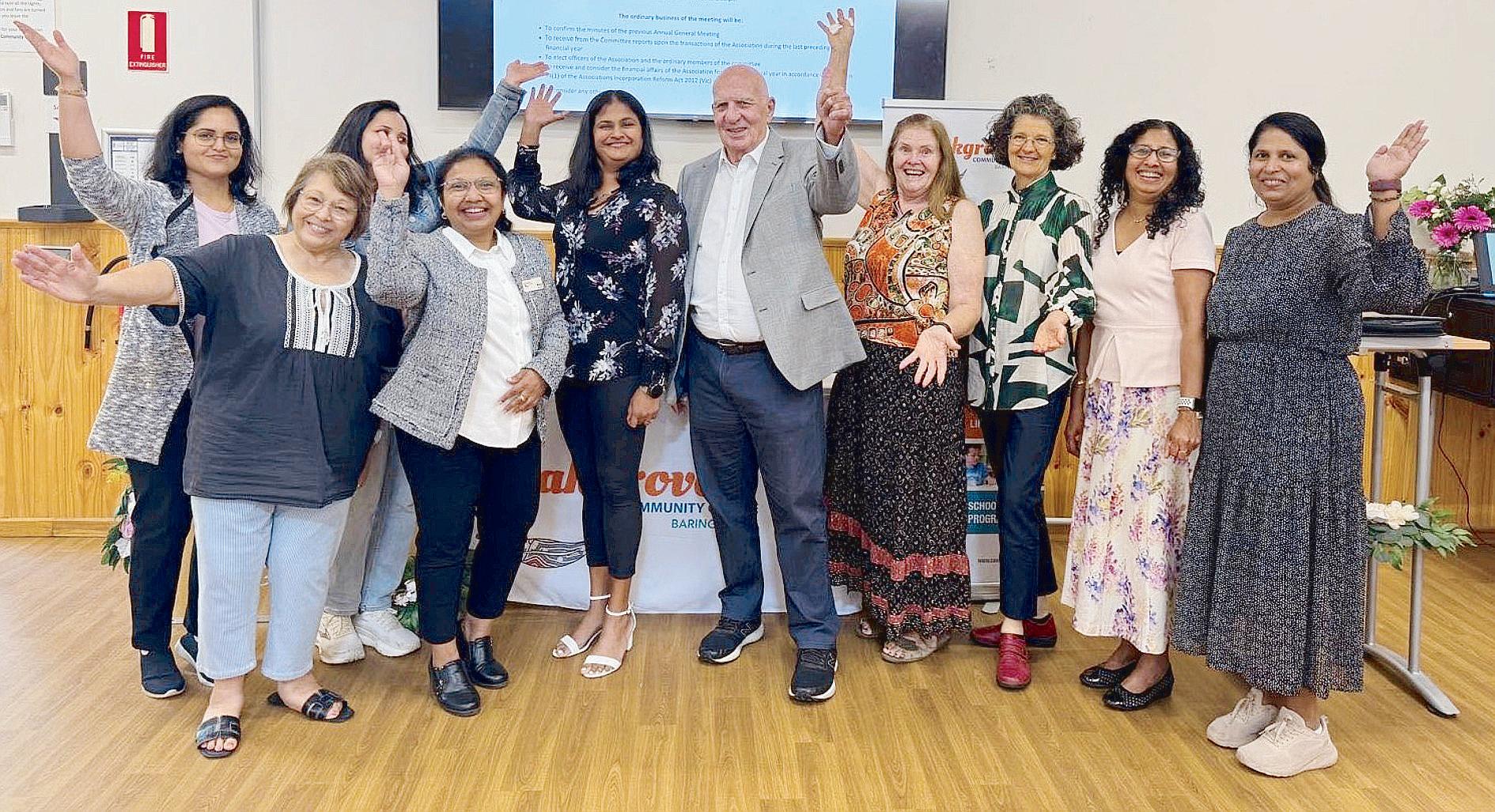
The Berwick Neighbourhood Centre is a welcoming, engaging community hub located across two locations in Berwick at 112 High St and Timbarra Way.
Offering an array of activities and programs for children to adults, catering for their needs and interests.
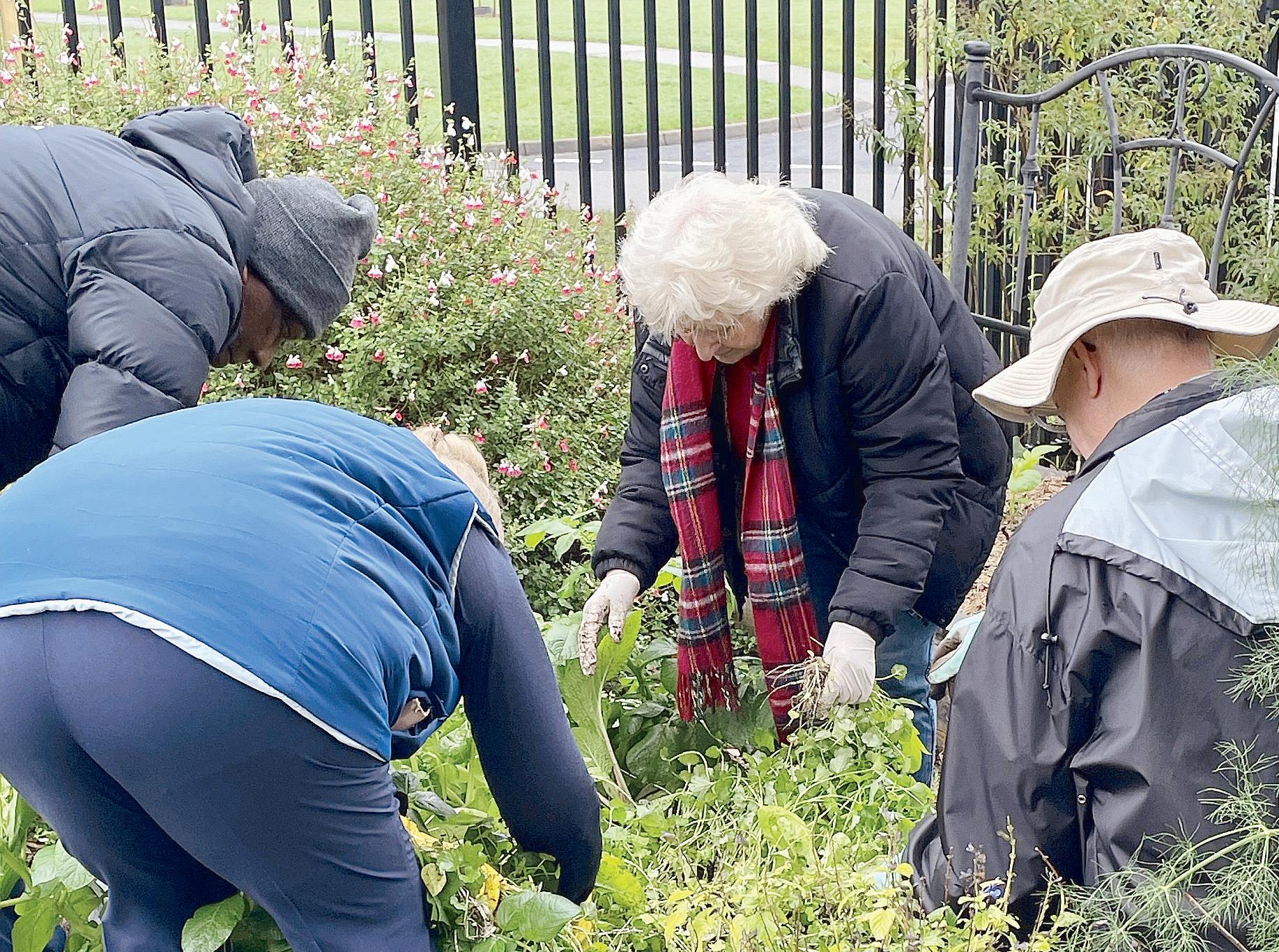
Feel free to reach out to the friendly staff, who can let you know more about what’s on offer which includes adult craft, exercise, gardening, social groups, information sessions, events, playgroups and childcare.
There is always something going on at the centre for you to explore. Come along and check out the Berwick neighbourhood centre to find, fun, friendship and belonging in your community.
Save the date for our upcoming community market on Thursday June 25th and our Enormous morning tea on the 27th August. Both will be great events.
For more details contact the centre on 9704 1863 or email admin@berwicknc.com.au We look forward to seeing you soon.
The Berwick
Saturday 27th June 12pm to 3pm










In an increasingly digital age, the importance of teaching students handwriting skills may seem diminished. However, the art of handwriting holds significant value that extends beyond mere practicality. The following explores the enduring importance of teaching student’s handwriting skills and highlights the cognitive, educational, and personal benefits associated with this fundamental form of communication.
Cognitive Development
Handwriting engages various cognitive processes, contributing to the development of fine motor skills, hand-eye coordination, and spatial awareness. The intricate movements required for forming letters and words stimulate neural connections in the brain, enhancing cognitive development. Research suggests that handwriting improves memory retention and information processing, as the physical act of writing reinforces learning and comprehension.
Communication and Expression
Handwriting offers a unique form of selfexpression and personal connection. It allows individuals to convey their thoughts, emotions, and ideas in a distinct and tangible manner. Handwriting can be more personal and intimate than typed text, as it reflects an individual’s personality, style, and individuality. The act of physically writing helps individuals connect with their thoughts, fostering creativity and a deeper understanding of the content being written.
Cognitive Engagement and Retention

Historical and Cultural Preservation
Handwriting carries historical and cultural significance. It connects us to our past, allowing us to decipher historical documents, letters, and manuscripts that were handwritten. By teaching students handwriting, we ensure the preservation of this valuable heritage. Handwriting enables individuals to appreciate the artistry and personal touch behind handwritten artifacts, fostering an understanding and respect for our shared history.
While digital technologies have become pervasive, there are still situations where handwriting remains practical and necessary.
Not all environments or circumstances allow for the use of digital devices, and being able to communicate effectively through handwriting ensures individuals can adapt to various situations. Handwritten notes, letters, and forms remain prevalent in many areas of life, such as personal correspondence, legal documents, and signatures.
Writing by hand enhances cognitive engagement and information retention. The physical act of writing engages multiple senses, including touch, sight, and kinesthetic awareness, resulting in a more immersive learning experience. Studies have shown that students who take notes by hand demonstrate improved comprehension and recall compared to those who rely solely on digital devices. Handwriting promotes active thinking, criticalanalysis,andtheorganisationofthoughts, leading to more effective learning and long-term memory retention.


Teaching handwriting skills is closely linked to
literacy development. As students learn to write, they simultaneously reinforce their reading skills, phonemic awareness, and understanding of language structure. Handwriting helps students recognise letter forms, letter-sound relationships, and word formation, ultimately supporting their overall literacy skills. It serves as a foundational step towards proficient reading and writing abilities.
Despite advancements in technology, teaching students handwriting skills remains essential for their cognitive, educational, and personal development. Handwriting engages cognitive processes, enhances communication and expression, promotes cognitive engagement and retention, supports literacy development, preserves historical and cultural connections, and maintains practical applications. The art of handwriting holds timeless value, fostering creativity, critical thinking, and a deeper connection to our thoughts and ideas.
By teaching handwriting, we equip students with a valuable skill that transcends the digital realm, empowering them to communicate effectively and express themselves authentically in an ever-evolving world.





























St Peters College continues to set a remarkable standard for educational facilities in our local community, with its campuses in Cranbourne and Clyde North offering students an environment that truly supports both learning and personal growth.
From modern classrooms equipped with the latest technology to expansive sporting grounds that encourage active lifestyles, the College has clearly invested in creating spaces where students can thrive.
What stands out most is the balance between academic and extracurricular opportunities. Science labs, performing arts centres, and dedicated STEM spaces provide students with hands-on experiences that extend far beyond traditional learning. At the same time, well-maintained ovals, courts, and fitness facilities ensure physical education remains a priority.
Equally impressive are the welcoming communal areas that foster a strong sense of belonging. These thoughtfully designed spaces allow students to collaborate, socialise, and build lasting connections.
In a rapidly growing region like ours, having access to such high-quality educational infrastructure is something the entire community can be proud of. St Peters College is not just keeping pace with growth — it is helping shape the future by giving young people the tools and spaces they need to succeed.
For further information:
Clyde· (03) 5990 7777
· officecln@stpeters.vic.edu.au
Cranbourne· (03) 5990 7777
· officecra@stpeters.vic.edu.au

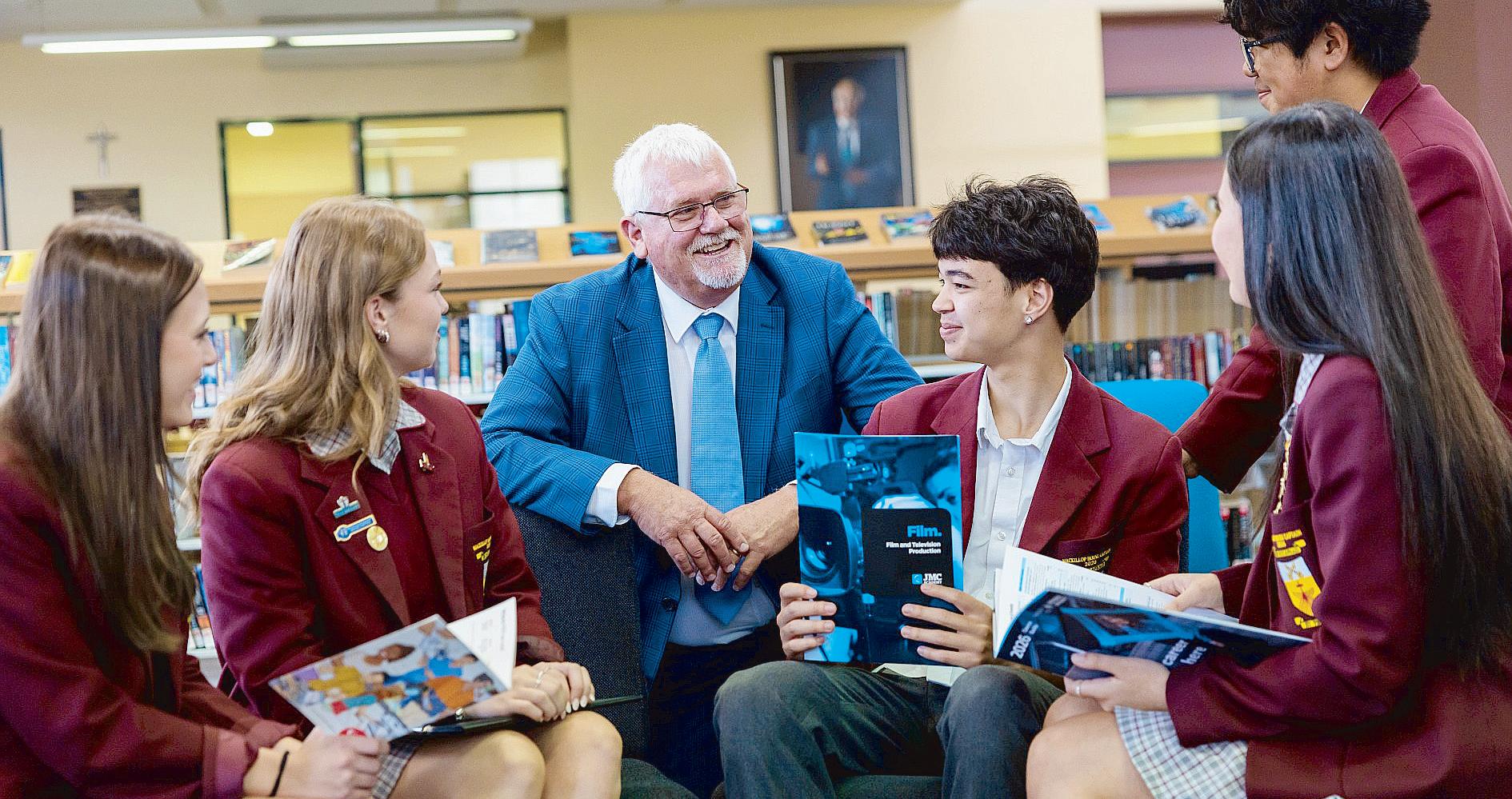
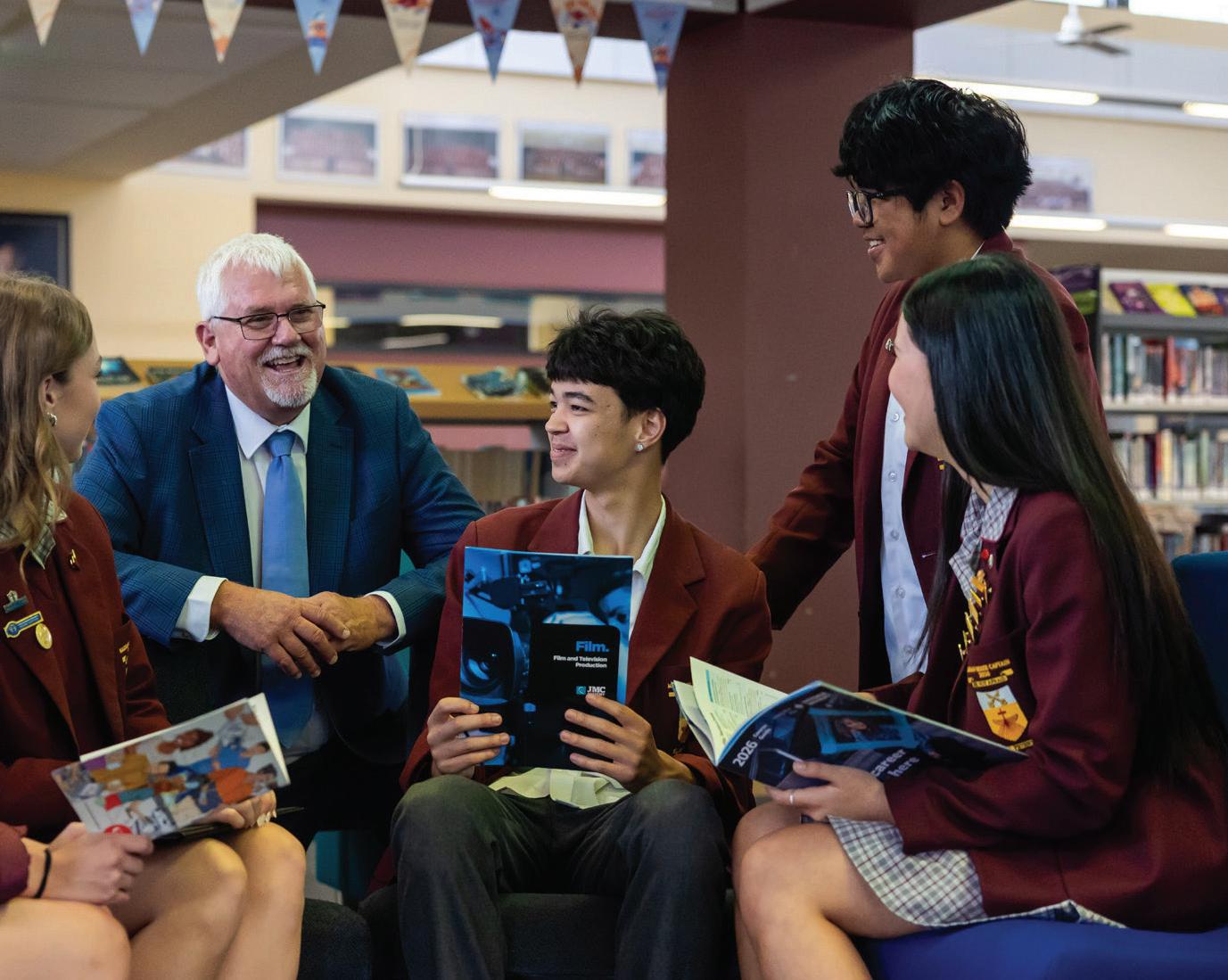




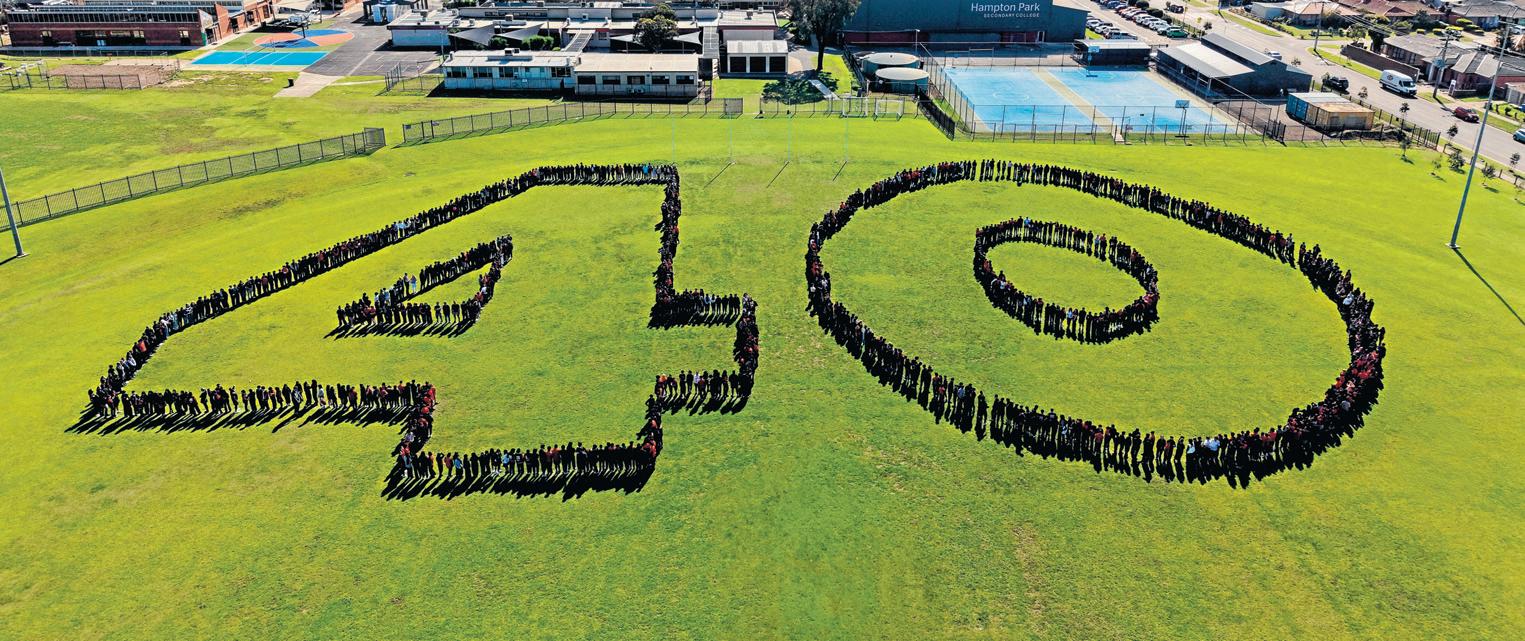
Discover Hampton Park Secondary College, a vibrant, inclusive community dedicated to nurturing confident, capable learners. We celebrate diversity and empower every student to reach their full potential. Our innovative environment combines academic excellence with specialized sporting academies, inspiring career pathways, and a strong focus on cultural pride.
Our modern STEM Centre provides innovative learning spaces that inspire creativity and handson learning in science, technology, engineering and mathematics. Our commitment to inclusion was recently recognised with the Secretary Marrung Award for Positive Climate for Learning, celebrating our outstanding support of First Nations students and families.
Our senior school has a proud record of academic success, empowering students to achieve their personal best and pursue their future pathways with confidence. With 99% of VCE students successfully completing their studies and 60% achieving an ATAR above 60, our results compare strongly with local secondary colleges. We proudly celebrated our VCE College Dux Estelle Foo Soo Chan,alongsideourVCEVocationalMajorCollege
Dux Ezekiel Tafu and Victorian Pathways Certificate College Dux Aditi Singh, whose outstanding achievements reflect the dedication, support and excellence that define learning at Hampton Park Secondary College.
Students can access Sporting Academies in Rugby League and Soccer, along with a variety of vocational pathways, providing valuable industry experience and career opportunities. Our partnership with Melbourne Victory FC also offers elite soccer training and development pathways.
Guided by our values of Respect, Learning and Working Together, Hampton Park Secondary College provides an inclusive, innovative and supportive environment where every student is empowered to succeed.
To support smooth transitions to high school, our Grade 5 Taster Days give primary students a taste of high school life, encouraging engagement and confidence.
Join us at Hampton Park Secondary College, where opportunity, diversity, and academic excellence come together to prepare students for success in a changing world.
At St Therese’s Primary School, our vision is simple yet powerful: do all that you do with love. This underpins everything we do, creating a faith-filled, safe and welcoming community where every child is supported to flourish.
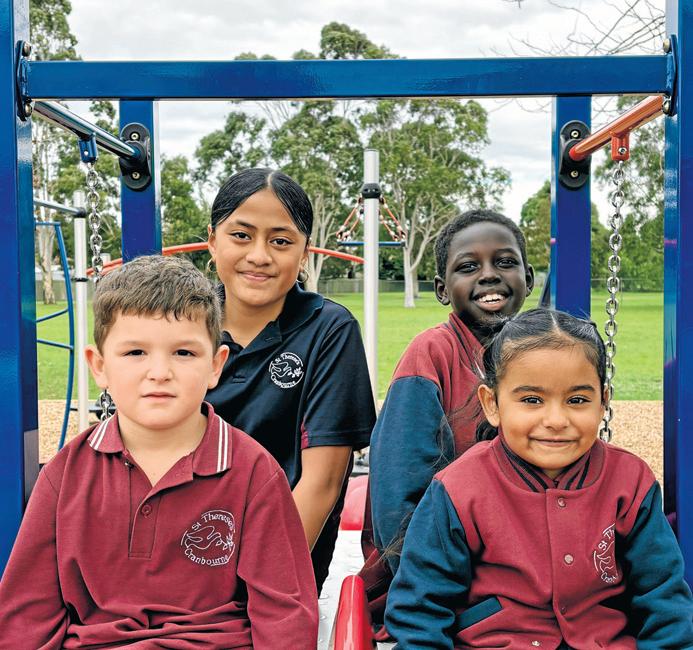
From the very first day, our students are warmly welcomed into a nurturing environment where meaningful relationships with staff and peers help them grow in confidence and connection. Our calm and respectful atmosphere allows students to thrive academically while also developing spiritually and socially - ensuring a truly holistic education.
We are proud of our diverse community and warmly welcome families from a wide range of cultural backgrounds. At St Therese’s, differences are celebrated and embraced. Students learn alongside one another with empathy and respect, building understanding and a strong sense of belonging.
In Literacy and Numeracy, our teachers use student data to personalise learning and support each child’s individual goals. In Religious Education, our inquiry-based approach encourages students to explore the Catholic tradition and scripture in ways that connect meaningfully to their lives, helping them grow in faith and understanding of God.
Our contemporary Junior and Middle Learning Neighbourhoods provide flexible learning spaces designed for collaboration and creativity. These modern environments include shared project areas and fully equipped kitchens, allowing students to engage in hands-on, real-world learning experiences.
Beyond the classroom, St Therese’s offers a rich range of specialist programs, including Visual and Media Arts, Performing Arts, Physical Education and Auslan. These opportunities allow students to discover their passions,
build confidence and develop new skills in a supportive setting.
As a proud feeder school to St Peter’s College, we offer strong pathways into secondary education. Our close community links help ensure a smooth transition, so students feel confident, prepared and connected as they move on to the next stage of their learning journey.
As one of the smallest primary schools in the Cranbourne area, we pride ourselves on knowing every child by name. This close-knit environment ensures that each student feels truly seen, valued and supported every day. If you are looking for a school where your child will be known, nurtured and inspired in their learning, St Therese’s could be the perfect fit for your family. We invite you to experience our welcoming community and faithfilled approach to education. Contact us to arrange a personalised tour or to learn more about our enrolment process.


































































































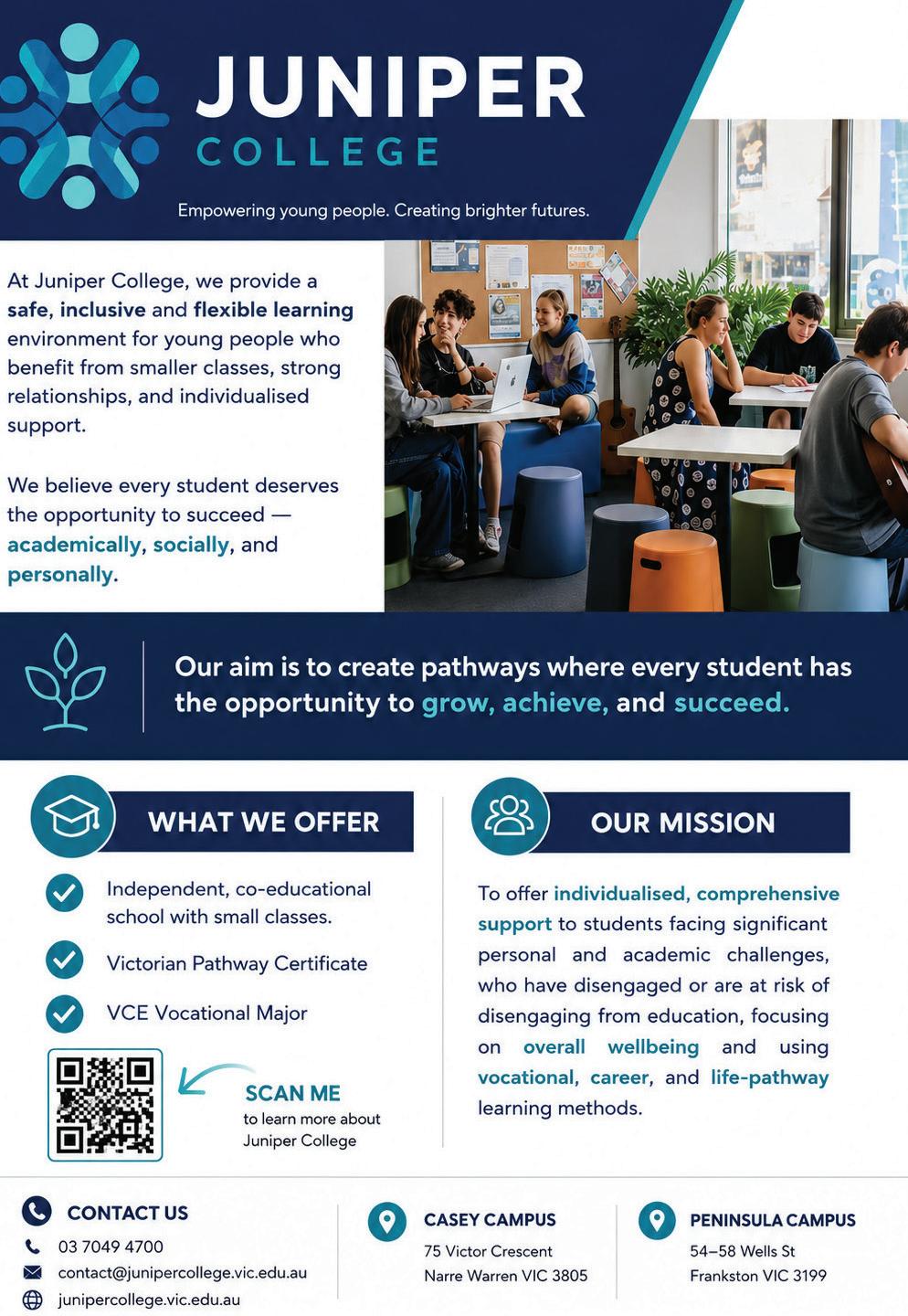
Juniper College is proud to open its brand-new campus on Victor Crescent, Narre Warren creating a purpose-built learning environment designed specifically for young people aged 15 to 19 who are seeking a different pathway to success.
Juniper College supports students who may have found mainstream schooling challenging or who are at risk of disengaging from education altogether. Many of our students come to us after experiencing barriers to learning, interruptions to their education, or circumstances that have made it difficult to thrive in a traditional school setting. At Juniper College, we recognise that every young person’s journey is unique, and we believe that past challenges should never define future opportunities.
Our college offers both the Victorian Certificate of Education Vocational Major (VCE VM) and the Victorian Pathways Certificate (VPC), providing practical, flexible and engaging pathways that focus on real-world skills, personal development and future employment or further training opportunities. These programs are designed to help students build confidence, develop independence and gain the knowledge and skills needed to transition successfully into adulthood.
The new Victor Crescent campus reflects our commitment to creating an environment where students feel welcome, valued and supported. The modern facilities have been thoughtfully designed to foster engagement and connection, with contemporary classrooms, collaborative learning spaces, technology-rich environments and dedicated wellbeing areas. The campus also provides flexible spaces that support different learning styles and encourage students to take ownership of their educational journey.
At Juniper College, relationships are at the heart of everything we do. We understand that students learn best when they feel safe, re-



spected and connected. Our staff take the time to build strong, positive relationships with students, helping them develop trust, confidence and a sense of belonging. We celebrate progress in all its forms and focus on recognising each student’s strengths and potential.
Our educational approach combines academic learning with practical experiences and vocational opportunities. Students participate in community projects, workplace learning and industry-focused activities that help them connect their education to meaningful future pathways. We place a strong emphasis on developing employability skills, communication, teamwork, problem-solving and resilience— qualities that will support students long after they leave school.
The name Juniper represents resilience, growth and the ability to flourish despite challenges. Like the juniper tree, which can thrive in difficult conditions, our students demonstrate remarkable strength and determination as they work towards their goals. Our role is to provide the support, encouragement and opportunities that allow them to grow and succeed.
The opening of the Victor Crescent campus marks an exciting milestone for our community. It represents more than a new building; it is a place of hope, opportunity and possibility. Juniper College is a place where young people can reconnect with education, build confidence in themselves and create positive futures. We are proud to provide a learning environment where every student is seen, supported and empowered to achieve success on their own terms.
For further information contact Juniper College 03 7049 4700 and junipercollege.vic. edu.au
Casey Campus, 75 Victor Crescent, Narre Warren Peninsula Campus, 54-58 Wells Street, Frankston

Extracurricular activities play a crucial role in the holistic development of school students. These activities, which encompass a wide range of interests and passions beyond the traditional academic curriculum, offer students numerous benefits that extend far beyond the classroom walls.
From boosting academic performance and fostering social skills to nurturing personal growth and building character, participation in extracurricular activities equips students with essential life skills and helps shape them into wellrounded individuals.



This article explores the transformative power of extracurricular activities and highlights the manifold advantages they provide to school students.
Contrary to popular belief, engaging in extracurricular activities can have a positive impact on academic performance.
Research indicates that students involved in extracurriculars often exhibit higher levels of motivation, better time management skills, and improved organisational abilities.
Participation in activities such as debate clubs, science fairs, or mathematic competitions stimulates intellectual curiosity and enhances critical thinking and problem-solving skills. Students who engage in extracurriculars are more likely to develop discipline and perseverance, attributes that contribute to academic success.
These activities provide a practical application of concepts learned in the classroom, reinforcing academic knowledge and deepening understanding.
Extracurricular activities can also offer opportunities for mentorship and access to resources that extend beyond the school environment, further enriching the learning experience.
Extracurricular activities provide an ideal platform for students to develop crucial social skills that are essential for their personal and professional lives.

instrument, extracurriculars provide a creative outlet for self-expression, fostering a sense of fulfillment and purpose. Furthermore, these activities teach students resilience and perseverance, as they often face challenges and setbacks along the way.
Through practice, dedication, and the pursuit of excellence, students develop a growth mindset, embracing failure as an opportunity to learn and grow. Extracurricular activities also instil important values and virtues such as discipline, integrity, and teamwork. In sports, for example, students learn the value of fair play, respect for opponents, and the importance of teamwork to achieve common goals. In clubs and organisations, they learn to navigate responsibilities, manage time effectively, and develop organisational skills. These activities provide a platform for students to learn from mentors and role models, who impart valuable life lessons and guide them towards ethical decision-making.

Toprovideindividualised,comprehensive supportthatpromotesoverallwell-being andempowerseverystudenttothrive.We celebrateneurodiversity,supportdiverse learningstyles,anddelivervocational, career,andlife-pathwaylearning opportunitiesthatbuildconfidence, capability,andpositivefutures.
Through teamwork, collaboration, and interaction with peers who share similar interests, students learn to communicate effectively, resolve conflicts, and build relationships. Whether it’s participating in team sports, joining a music ensemble, or working on a community service project, students gain exposure to diverse perspectives, fostering empathy and cultural sensitivity.
These activities also promote leadership skills, as students often assume roles of responsibility, such as team captains, club presidents, or project coordinators. By engaging in extracurricular activities, students develop self-confidence, assertiveness, and the ability to adapt to different social contexts, qualities that are vital for success in the future.
Extracurricular activities serve as fertile ground for personal growth and character building. These activities encourage students to explore their interests, discover their passions, and develop a sense of identity. Whether it’s pursuing a hobby like painting or learning a musical
Beyond the school years, the skills and values gained through extracurricular activities contribute to college admissions and career success. Participation in these activities demonstrates a commitment to personal growth, a willingness to step outside one’s comfort zone, and the ability to manage multiple responsibilities simultaneously.
Extracurricular activities offer students a myriad of benefits that extend far beyond the academic realm. From enhancing academic performance to fostering social skills and nurturing personal growth, these activities play a pivotal role in shaping well-rounded individuals. By participating in extracurriculars, students develop skills and qualities that prepare them for the challenges of the future, both academically and personally. It is imperative for educational institutions and parents alike to recognise and encourage the power of extracurricular activities, ensuring that students have ample opportunities to explore their interests, pursue their passions, and grow into confident and capable individuals.
By Cam Lucadou-Wells
Refugee and migrant communities are reporting rising anxiety due to the highly charged political debate on migration.
In April and May, migrant settlement agency AMES Australia surveyed 35 community leaders in 21 migrant and refugee groups about the rising anxiety levels.
In response, 91 per cent of the leaders thought the political narrative was fueling the fear.
The Middle East conflict (82 per cent), cost of living (71 per cent), finding meaningful work (42 per cent) and housing (46 per cent) were other factors.
Communities from Africa, China and the Middle East were the most worried about the political debate, AMES reported.
Most leaders reported higher anxiety levels than the general community, but on the other hand, their community members were generally happy with their lives in Australia.
South Sudanese community leader ‘Elizabeth’ , who responded to the AMES survey, said the migration debate was “scary”
“When we hear politicians talking about migrants in negative ways, we worry that we will not be welcome here in Australia,” she said.
“The rising cost-of-living is also a big issue in my community. And the rise in fuel prices has made this worse.”
AMES chief executive Melinda Collinson said the survey results showed the need to protect social cohesion and build relationships between communities.
“It’s clear there is stress building in some of our newest communities because of these factors.
“We all need to recognise this and do all we can to make sure everyone in Australia feels welcome and supported.”
In recent months, some political parties have blamed migration rates for greater road congestion, unaffordable housing and stagnating wages.
United Australia Party has pledged “zero immigration” (but for family reunions or workers for nationally-significant projects).
“We cannot take more people without collapsing our economy and social infrastructure” , its campaign material states.
One Nation has vowed to cut immigration by 570,000 people, and the Liberal-National Coalition has also promised to cut numbers.
At the same time, the Coalition and One Nation have pledged to restore temporary protection visas and to deport “illegal migrants”
The Coalition plans to refuse or cancel visas for people failing to uphold “Australian Values”
The Federal Government argues that it has
reduced net overseas migration by more than 45 per cent since a post-Covid peak in 2022.
During Refugee Week, AMES has released a list of ‘10 facts about refugees you should know’ It states that refugees contribute more to Australia’s economy than they receive from services.
Success stories include chef Luke Nguyen, science educator Karl Kruszelnicki, artist Mirka Mora, comedian Ahn Do and scientist Sir Gustav Nossal.
“While there are upfront settlement costs, over time this fuels growth, stimulates local economies, and helps offset the impacts of an aging population.
More than half are employed after one year, 70 per cent after four years.
‘Refugees are twice as likely to start a business than locally born people.”
They also fill labour shortages in the care industry, manufacturing, retail, hospitality, transport, tourism and education.
Australia accepts 20,000 refugees a year – one of the highest per capita in the world.
“They come to Australia not to take jobs and housing but because life in their homelands is untenable,” AMES stated.
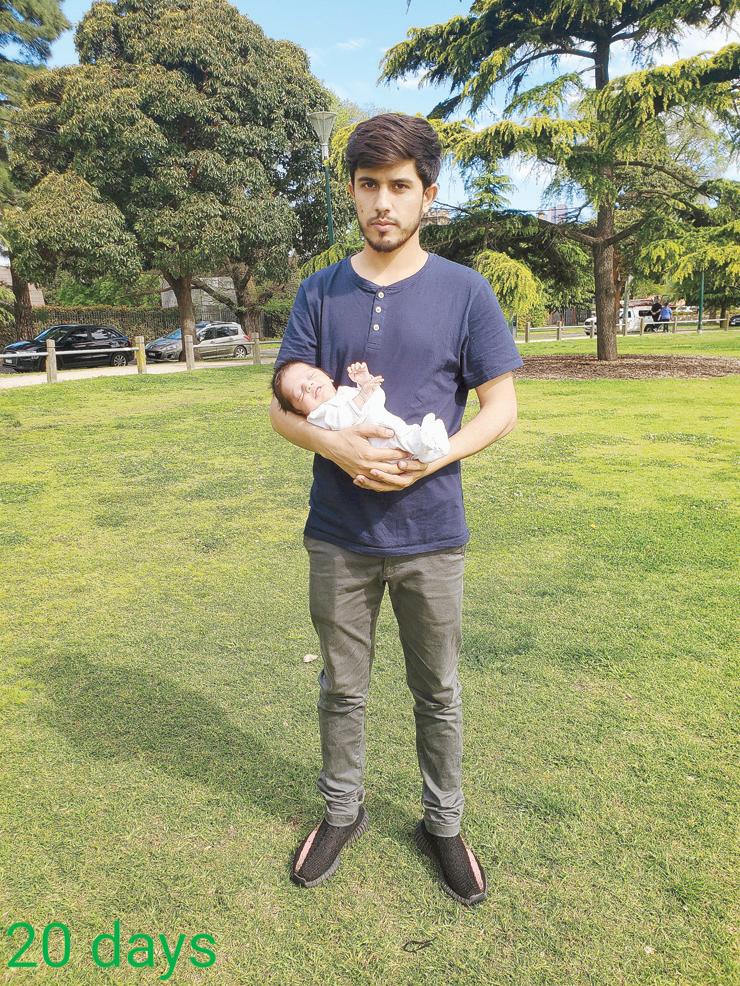
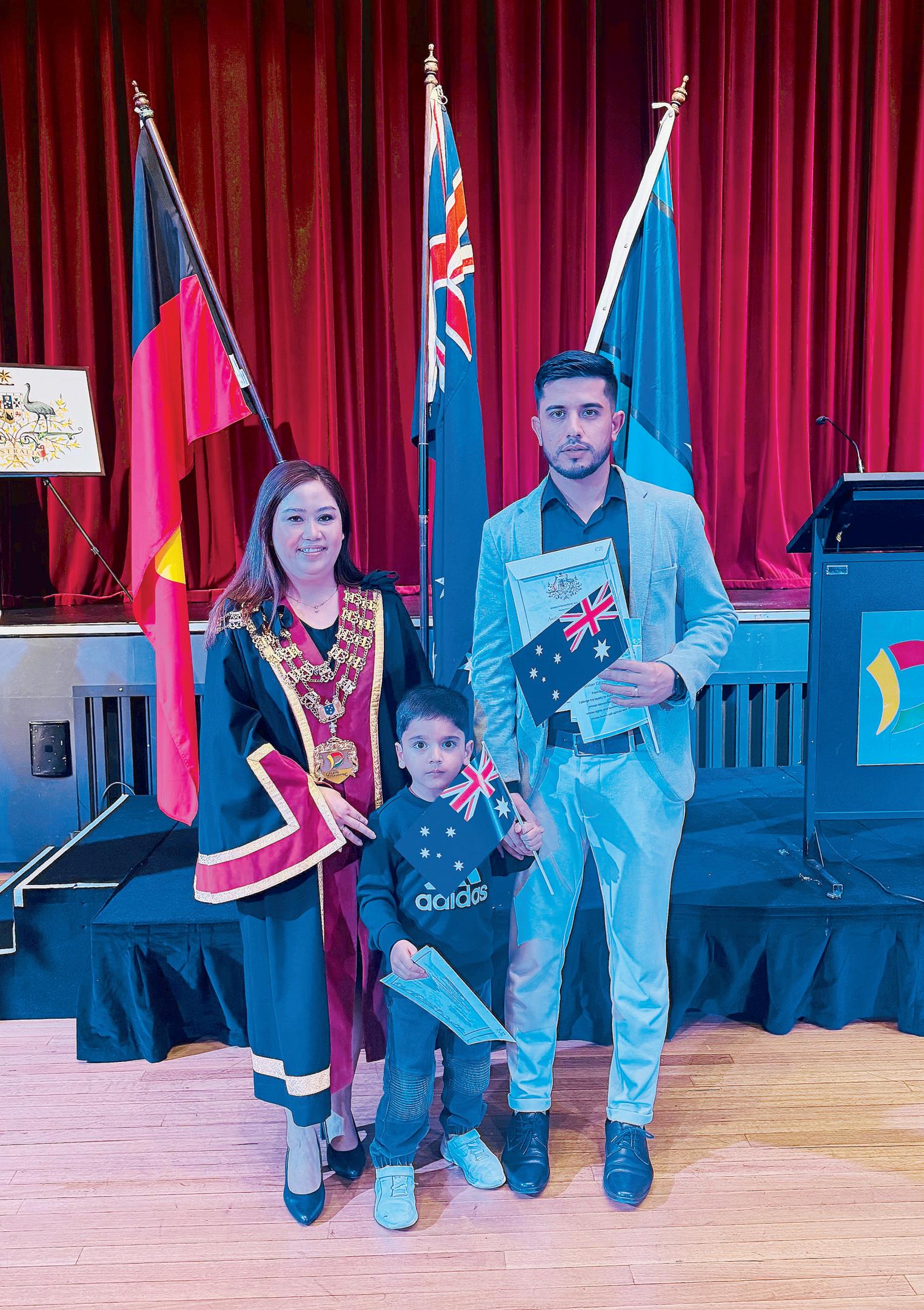
The first baby born among the cohort of Afghan refugees who were airlifted out of Kabul and resettled in Australia following the return to power of the Taliban in 2021 has become an Australian citizen.
Ibrahim, now almost 5, and his family, recently became citizens at a ceremony in Springvale.
His father Shafiq said it was a privilege for his family to become Australian citizens.
“We are very happy to become citizens of Australia. This country has given us new lives, and we want to show our gratitude,” Shafiq said.
He said the citizenship ceremony was life-affirming.
“It was a great experience. We now feel like Aussies,” he said.
Shafiq said he was also happy about the opportunities Ibrahim and his sister Mahsa, 2, would have in Australia.
“My son and daughter will be able to have a good education and follow their dreams while also contributing to Australian society,” he said. Ibrahim was born just a week after his parents arrived in Australia.
“Life is good for us in Australia. We are safe and healthy and doing well. Everything is OK,” Shafiq said.
Shafiq is working as a travel agent but hopes to resume his career in water engineering.
“I am working towards getting an engineering job but in the meantime, we are doing OK,” he said.
Ibrahim was born prematurely but safely in Melbourne’s Royal Women’s Hospital in September 2021 after his parents Shafiq and Amira made a short 2am dash to the hospital from their temporary accommodation in the inner city.
Shafiq recalled the drama of Ibrahim’s birth.
“It was 2am and we went to the hospital in a taxi. Ibrahim was premature but everything was OK. The Royal Women’s Hospital staff looked after us. We were very happy with the result,” Shafiq said.
Shafiq and Amira were among more than 120,000 people evacuated by military aircraft from Kabul International Airport between August 13 and 30 2021.
Led by the US, the operation also included the air forces of the UK, Australia, Germany, Canada, Korea, India and a host of European nations.
The couple spent a night at the Australian camp at the airport in Kabul before being flown to Dubai, where they spent a week. After two weeks of hotel quarantine in Brisbane, they arrived in Melbourne on September 13.
“We heard that there was a strong Afghan community he Melbourne, so we decided to
come here,” Shafiq said.
Shafiq said getting out of Afghanistan was a frightening ordeal.
“It was very scary getting out of Kabul. My wife, who was eight months into her pregnancy, fell into a drain outside the airport as we were trying to get in,” he said.
“I worked on contracts for the Australian Government. I was a site engineer with a logistical company that worked on projects for the embassy – doing work on septic tanks and repairing sewage infrastructure.
“Because of this we were in danger, and we were worried that if we stayed, the Taliban would come for us.
“I had applied for a visa and when it came by email, there was also a notification to come to the airport.
“We were told to go to the A/B gate. But it was very difficult. There were thousands of people trying to get in. It was very difficult for my wife; she fell into the drain water. I was very worried about her.
“But we were actually lucky because it only took us six or seven hours to get in – for most people it was two, three or four days. We were also lucky because the Australian soldiers helped us and checked everything,” Shafiq said.
“We heard that there was a strong Afghan community in Melbourne, so we decided to come here,” he said.
By Jensy Callimootoo
Pressure is mounting on the state government to reform Victoria’s Upper House voting system, as concerns grow over the potential exploitation of preference deals.
Renewed calls for Upper House electoral reform have been made after a popular farright commentator from Berwick announced plans to register a ‘Free Palestine Party’ and direct its preferences to conservative parties, highlighting concerns about the state’s group voting ticket (GVT).
Victoria is the only state parliament in Australia still using the GVT and the conversation surrounding its efficiency has long been discussed.
The GVT comes into play when a voter votes ‘above the line’ in the Upper House ballot, which allows the party they have voted for to allocate their preferences according to the registered list.
According to the Victorian Electoral Commission (VEC), in 2022 state election, 90.5 per cent of Upper House formal ballots were completed above the line.
The system prompts controversy as it typically allows for micro-parties to influence the subsequent election of candidates with very low primary votes.
For example, in 2022 Animal Justice Party’s Georgie Purcell was able to gain a seat despite obtaining only 1.51 percent of first preference votes.
Most recently, a far-right extremist, with close to 1 million subscribers, revealed to his YouTube subscribers that he would use this very system to help garner votes for One Nation.
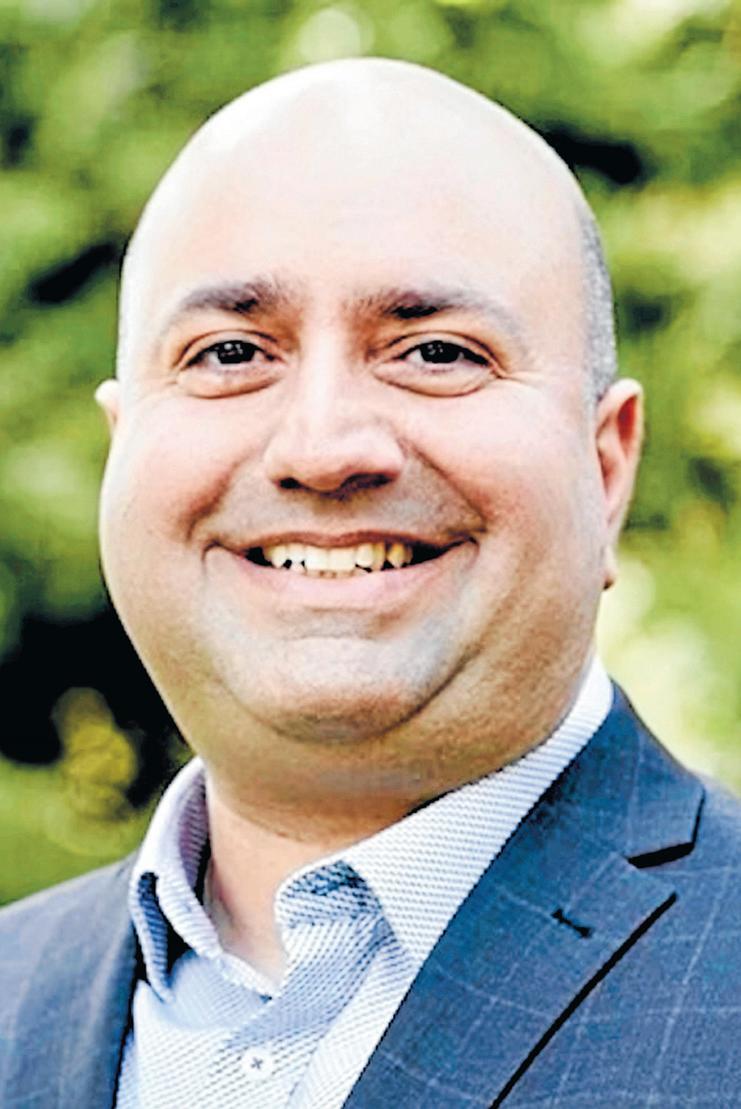
Australian-Israeli, Avraham Yemini applied to register a ‘Free Palestine Party’ from a Berwick address, in order to redirect progressive votes to the party, taking inspiration from anti-lockdown and anti-vaccine campaigner, Monica Smit’s ‘Save the Environmental Party’.
Despite attempting to take advantage of the system, in the same YouTube video shared in April, Yemini critiques the GVT, arguing that Labor may abolish the system after the November election following the apparent exploitation of the system.
Amanjit Gill, founder of City of Casey Transparency Advocate says the act of intentionally misleading voters is “totally indefensible”.
“Regardless of where anyone sits politically, left or right, I don’t think it’s okay to trick people, even if you disagree with them, even if you think they deserve it,” said Gill.
She also states that Yemini’s point of “trying to highlight the flaws” in the preferential voting system is an objective that she “does not buy”.
“I think that’s a really flimsy excuse. I think that what he’s doing is actually undermining the democratic process,” she said.
“I’m pretty firm in my view that every per-


son, no matter what side they’re on politically, is entitled to whatever information they need to be to make an informed decision at the ballot box.”
Monash University political expert, Zareh Ghazarian says that it’s possible these public tactics aim to intentionally force the state to eliminate the GVT before the November election.
Which in turn, may help conservative parties garner more seats — but also other minor parties.
“Whether they are intentional, whether they are trying to agitate for change… I think it does give us an indication that this is a live debate, this is something that people have been thinking about,” Ghazarian said.
“I think what we have seen in recent months and weeks across Australia really is a growing appetite by voters to support non-major parties like never before.
“Changing the voting system may not necessarily impact what people are thinking and in fact the current system may actually provide opportunities for smaller parties who could potentially not win a seat in other circumstances to win a seat.”
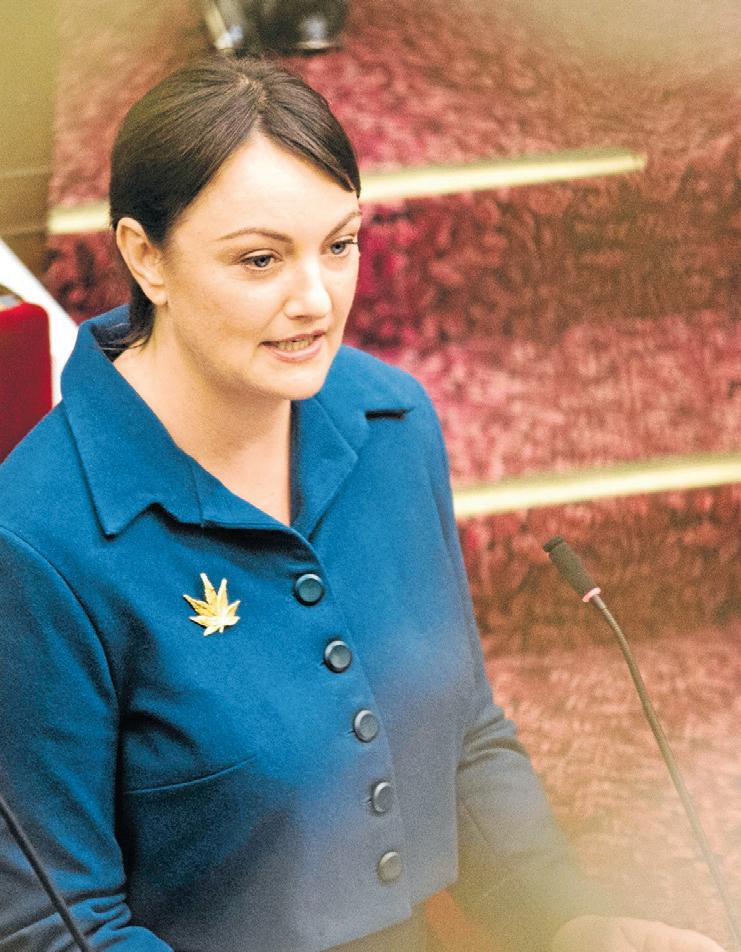
Rachel Payne, MP for South-Eastern Metro said that while she supports reforms to the current voting system in Victoria, there also needs to be broader amendments to the allocated eight voting regions.
“Only abolishing the GVTs without also reforming the regions is only doing half of the job of voting reform,” said the Legalise Cannabis MP.
“It will create confusion for voters and likely disadvantage smaller political parties, even though in 2022 minor parties received nearly a third of the first-preference vote in the last election.”
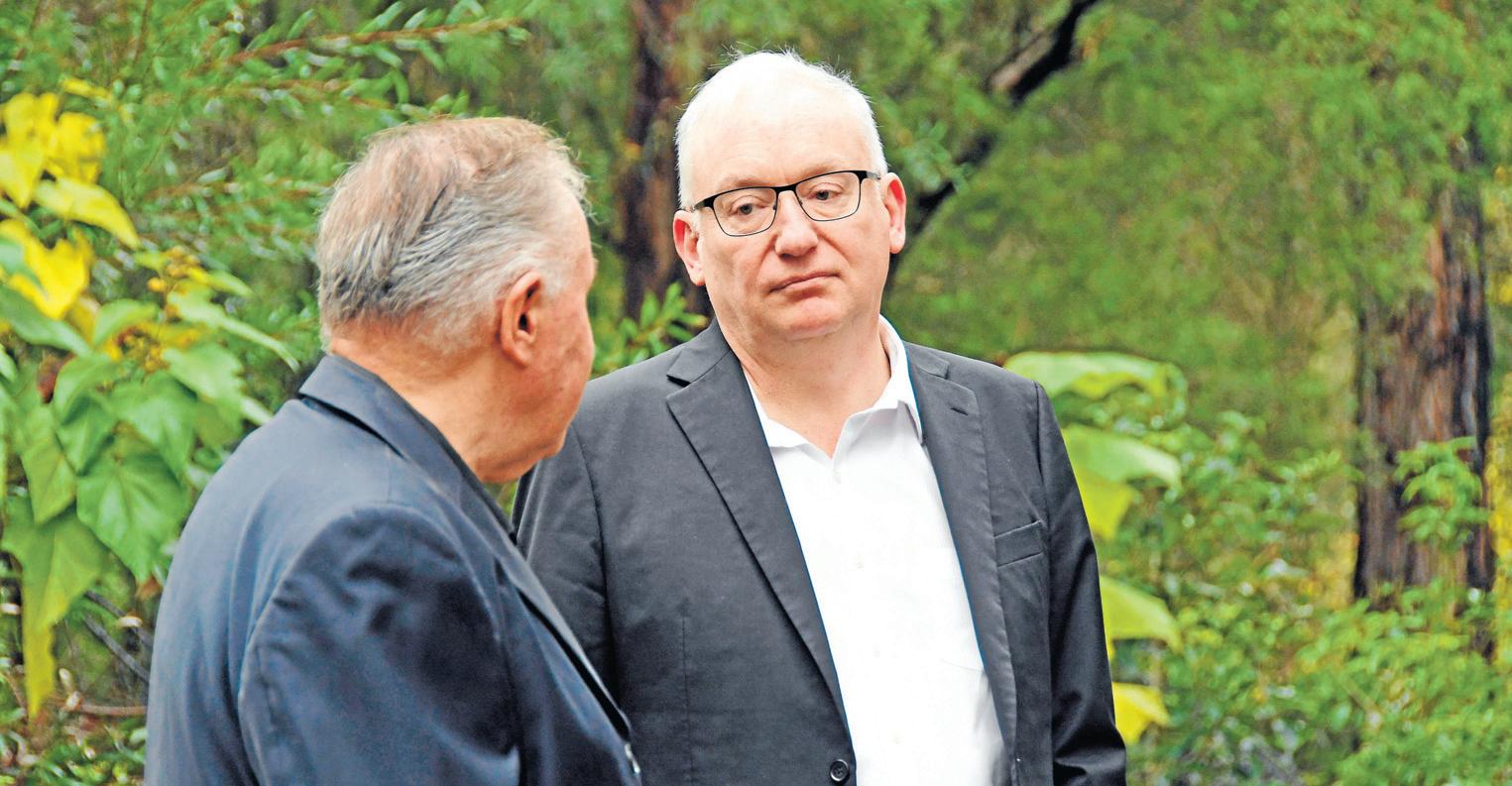
Matthew Kirwan, lead Greens candidate for the South-Eastern Metro region in the upcoming election said that he would like to see changes to the voting process before November, describing the GVT as a way to “rig the system”.
“The group voting ticket system has led to the election of candidates with primary votes of as little as 1% at the expense of parties that have over 8% primary vote, just because a backroom deal has been made, rather than the voter actively choosing who to support,” he said.
Similarly, Libertarian MP, David Limbrick who gained a seat with 3.56 per cent of primary votes last election said he supports broad reforms to the Upper House voting system.
Including a referendum to help Victorians decide and work in “conjunction with the 2028 local government election”.
In response to Yemini’s attempt to harvest votes, Payne is confident ‘dummy parties’ like the ‘Free Palestine Party’, will not receive VEC approval.
“My advice to voters is to always do your research and look into what policies each po-









litical party and candidate offer,” she said.
“There is no denying the system is broken and needs to be fixed, but rushing through partial reform to suit the needs of the major parties, I would argue, is not appropriate.
“Let the voters decide.”



By Afraa Kori
Police have revealed just one specialist family violence support worker is helping victims and survivors across Casey, Cardinia and Greater Dandenong.
Family Violence Investigation Unit officer-in-charge Detective Senior Sergeant Jason Iles said the single worker was supporting one of Victoria’s fastest-growing regions.
“One person dealing with three LGA areas is just not enough,” he said.
“We have an embedded Alexis worker at our office who is invaluable, and we would love to have another 10 of them.”
Based in Dandenong, the Family Violence Investigation Unit covers the three neighbouring councils and triages all reported family violence incidents, managing the most serious and complex cases.
The unit consists of one detective senior sergeant (Illes), three detective sergeants, 20 detectives, three intelligence analysts and one Alexis worker.
The worker is part of the Alexis Family Violence Response Model, which embeds specialist family violence practitioners within police units
to provide immediate support to victim-survivors and help connect them with services such as emergency accommodation, financial assistance, security upgrades and other support.
Due to the shortage of alexi-workers, Sergeant Iles said police depend on external services to help victim-survivors escape cycles of violence, particularly where housing, financial hardship or other complex issues were involved.
The demand on external agencies was placing additional strain on an already stretched system.
“Other services are being understaffed and under-resourced, because we rely upon them a lot,” he said.
Recent data highlights the scale of demand across the region.
According to the Crime Statistics Agency, family violence remains unchanged in Cardinia, with 1,983 incidents and 1,251 breaches of orders reported in December 2025.
In contrast, Casey recorded a 8.3 per cent increase, with family violence incidents rising to 6,735, alongside 3,846 breaches of intervention orders.
Greater Dandenong also saw family violence incidents increase by 6 per cent or 22,184 reports, while 1,947 breaches of intervention orders were
recorded.
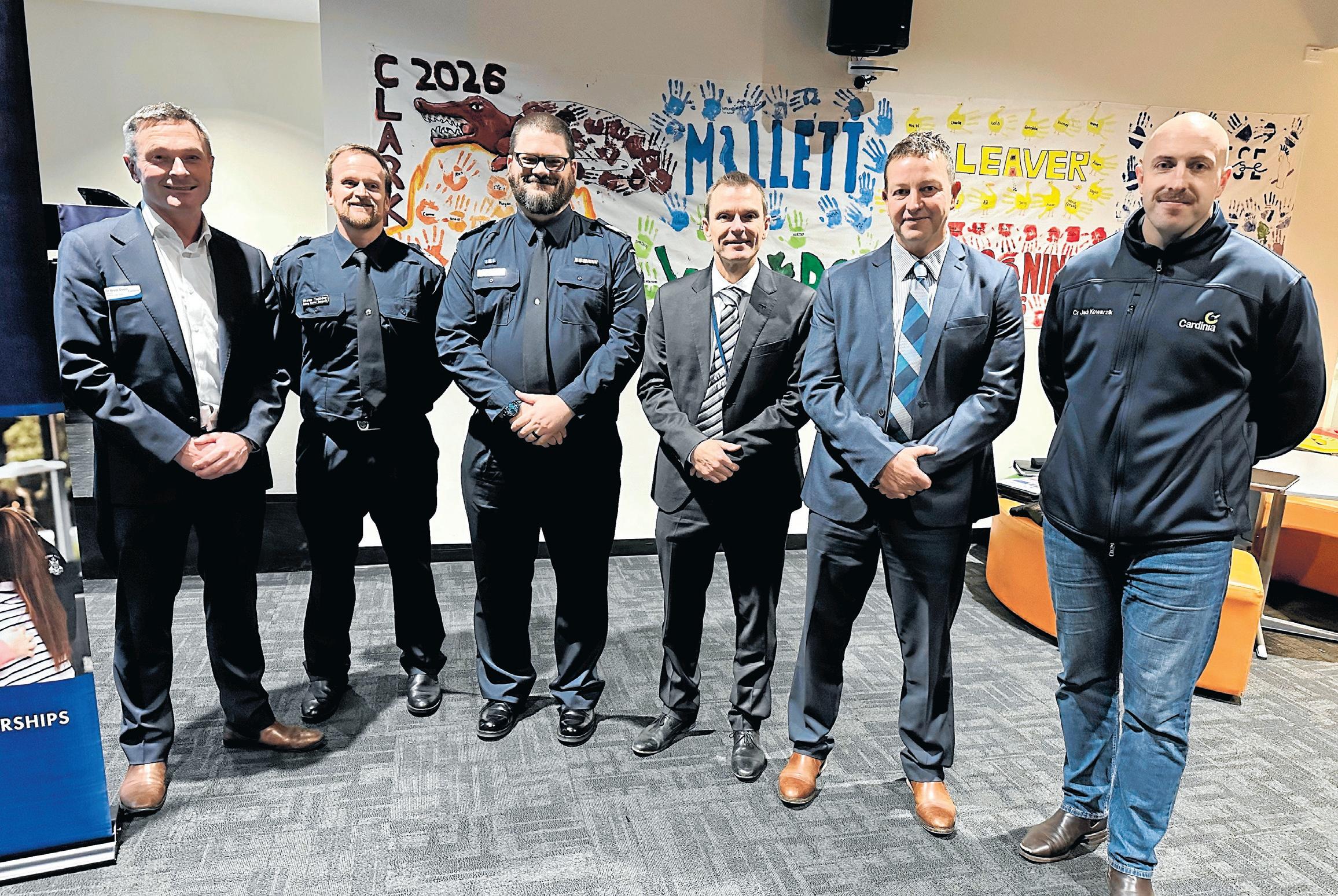
During the recent crime forum, Cardinia Shire councillor Jack Kowarzik questioned why the three LGA’s shared only one Alexis worker, given family violence remains the most common crime.
“We’re obviously trying to get more than one,”
Sergeant Iles fired back at the councillor.
“It’s not a lack of trying that we haven’t got any. That comes back to dollars and cents.
“Which is unfortunate, because it shouldn’t but that’s what it does. That’s what it boils down to.”
The gap has drawn criticism despite the Labor Government last year announcing a $1.5 million expansion of the Alexis Family Violence Response Model, part of its broader investment to embed specialist workers alongside police in Victoria Police Family Violence Investigation Units.
Sergeant Iles said Good Shepherd was one of the few organisations he knew of with two Alexi’s in the Southern Division core.
In order to better support victims and back police efforts in south east, he advised councils, those working in the family violence sector, and the wider community to advocate with external agencies.
By Cam Lucadou-Wells
Casey Council has taken steps to purchase land for a long-sought ‘missing link’ trail in Narre Warren North – nine years after the landowner defied the council in scenes reminiscent of The Castle.
In 2017, John Foy fought off Casey’s attempt to compulsorily acquire his 12 hectares of home, gardens and habitat wetland at 191-195 Belgrave-Hallam Road for a planned soccer complex and shared-use trail.
But according to Casey, the land’s “owner” has recently approached the council to sell the land at “market value”
This time, the council is no longer interested in the whole site, nor in building sports fields there.
It has instead proposed negotiating for a 7.5-hectare portion of the site to secure the last ‘missing piece’ of a continuous shared-use trail alignment from Doveton to Lysterfield Park along
Eumemmerring Creek.
For 20 years, the council had progressively acquired other land along the creek for the proposed trail, which would create a cycling, running and walking link into Lysterfield’s popular mountain bike trails and lakeside picnic areas.
Mr Foy’s flood-plain site - which abounds with kangaroos and waterbirds - is also seen as a crucial biodiversity corridor and important for water management.
On 16 June, councillors unanimously endorsed putting the proposed acquisition out to community consultation – with some commenting that it had been a “long time coming”
There were more dramatic scenes at a council meeting in February 2017 when Casey Council sensationally backed down from a plan to compulsorily acquire the property.
Backed by a 9000-strong petition, media coverage and viral social media outrage, Mr Foy’s victory had shades of the famous movie The Castle.
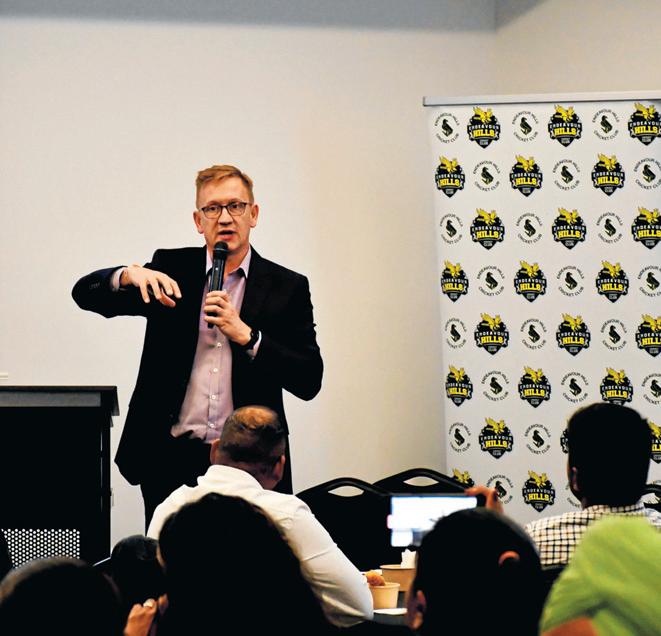
By Jensy Callimootoo
New and expectant parents in Casey will soon have access to free specialist mental health support, with the Federal Government announcing a new Perinatal Mental Health Centre for the city.
Assistant Minister for Mental Health and Suicide Prevention Emma McBride announced the new centre, which will be fully funded by the Commonwealth and operated by Gidget Foundation Australia.
The Casey facility is one of two new centres being established in Melbourne’s outer suburbs, alongside a second service in the Hume local government area in the city’s north-west. The centres will provide free psychological support for parents experiencing anxiety, depression and other mental health challenges during pregnancy and the first years of parenthood.
Eligible parents with a GP referral and Mental Health Care Plan (MHCP) will be able to access consultations with psychologists either face-to-face or through telehealth.
The announcement forms part of a $39.2 million federal investment to establish a network of 20 Perinatal Mental Health Centres across Australia.
Perinatal mental health concerns are a significant and growing health issue, with figures estimated that almost 100,000 Australians experience mental health difficulties during the perinatal period each year.
Approximately one in five women and one in 10 men experience anxiety or depression during pregnancy or after the birth of a child.
Bruce MP, Julian Hill, whose electorate covers part of the Casey region, said the centre would provide crucial support for local families.
“This new perinatal centre in the City of Casey will give local mums and dads the support they need when preparing to welcome a new addition to their family,” he said.
McBride said the new centres would help address gaps in access to care.
“Accessing support can be difficult for many new parents, particularly in rapidly growing outer suburban communities,” she said.
“The new Perinatal Mental Health Centres will give parents in Melbourne’s outer suburbs a welcoming place to access free mental health support and care.”
The Casey service is expected to support approximately 800 parents annually.
By that stage, even local soccer members were lobbying on the then-78-year-old widower’s behalf.
Casey’s then mayor Sam Aziz announced the council would “forever” abandon its plans.
“If you were my father or grandfather, I certainly wouldn’t want you to be in this position.
“I wanted to ensure that you were given free passage to go home and sleep peacefully, to know this is off the books and your property is not in our plans.”
Up to that point, Casey Council had been inquiring about Mr Foy’s property since 2002.
At one stage, he said he knocked back a council offer of $1.45 million for his land, insisting on protection of his pet dog cemetery and “all the little critters” inhabiting the wildlife lake and gardens he created over the past 35 years.
Star News understands that Mr Foy has been living in aged care since last November.
The announcement comes amid growing recognition of the importance of early intervention in perinatal mental health.
Untreated anxiety and depression during pregnancy and the postnatal period can affect not only parents but also infant development, family relationships and long-term health outcomes.
Local MP Cassandra Fernando welcomed the investment, describing it as particularly important in one of Australia’s fastest-growing family communities.
“In a growing community like Holt, where so many young families are building their lives, this is exactly the kind of care we need: local, accessible and backed by Medicare,” she said.
The Federal Government has not yet announced opening dates for the new centres, but both facilities are expected to become part of the national network currently being rolled out across the country.

































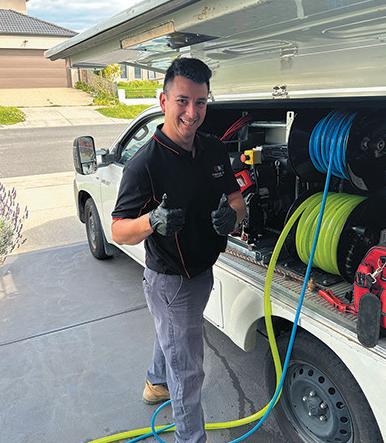





Casey will be in the spotlight at an upcoming NRL clash between Melbourne Storm and Canberra Raiders this month.
The 4th annual Casey Community Round on 21 June will start with a special citizenship ceremony at AAMI Park for 50 of Casey’s newest citizens.
Prior to the game, there will also family-friendly activities next door at Gosch’s Paddock, as well as food trucks along the walk to the stadium.
FIFA World Cup at Bunjil Place
Screened live on the Bunjil Place outdoor screen in all weather. Bring your own seating, rugs, and/ or picnic. No alcohol.
• daily until Sunday 19 July at Bunjil Place, Narre Warren; free entry. No registration required. Details: bunjilplace.com.au/news/fifa-world-cup-onbig-screen
Biodiversity Day at Myuna Farm
Come and celebrate International Day for Biodiversity. A train ride to wetlands, where you can meet flying foxes and watch them fly out at sunset. Frog calls and water bugs activities.
• Thursday 18 June, 4.30pm-6.30pm at Myuna Farm, Kidds Road, Doveton; free event. Bookings: trybooking.com/DLBDC
Gardening Together
Free gardening fun for dads, grandfathers and their children. Grow vegetables to eat, learn about insects, and have fun in the kids’ play garden. Bring hats, sunscreen and water bottles. All gardening tools and resources provided.
Casey mayor Stefan Koomen will be interviewed on-field prior to the game.
As part of the Round, Casey residents get a 20 per cent discount on tickets to the game.
The match kicks off at AAMI Park, Olympic Boulevard, Melbourne on Sunday 21 June, 4.05 pm.
• Saturday 20 June 10am-11.30am at Old Cheese Factory, Homestead Road, Berwick; free event. Bookings: trybooking.com/DIZAQ
The Swinging 60s
The choir Voices of Casey presents songs from the 1960’s. With guest singers from the Vocal Performance School. Elaborate afternoon tea included.
• Saturday 20 June 1pm at Hampton Park Baptist Church, 1 Orient Place, Hampton Park. Details: voicesofcasey@gmail.com
Family violence fundraiser
Rotary Club of Casey presents Unlocking Hope—a special fundraising event in support of RizeUp and their vital work empowering families impacted by domestic and family violence. Delicious food, with drinks at bar prices. Live music from guest artist Paul Hogan, lucky door prizes and silent auctions. Dress code: cocktail.
• Saturday 20 June, 7pm-11pm at Beaconsfield Club, Holm Park Reserve, 100 Beaconsfield-Emerald Road, Beaconsfield; $65pp. Bookings: trybook-
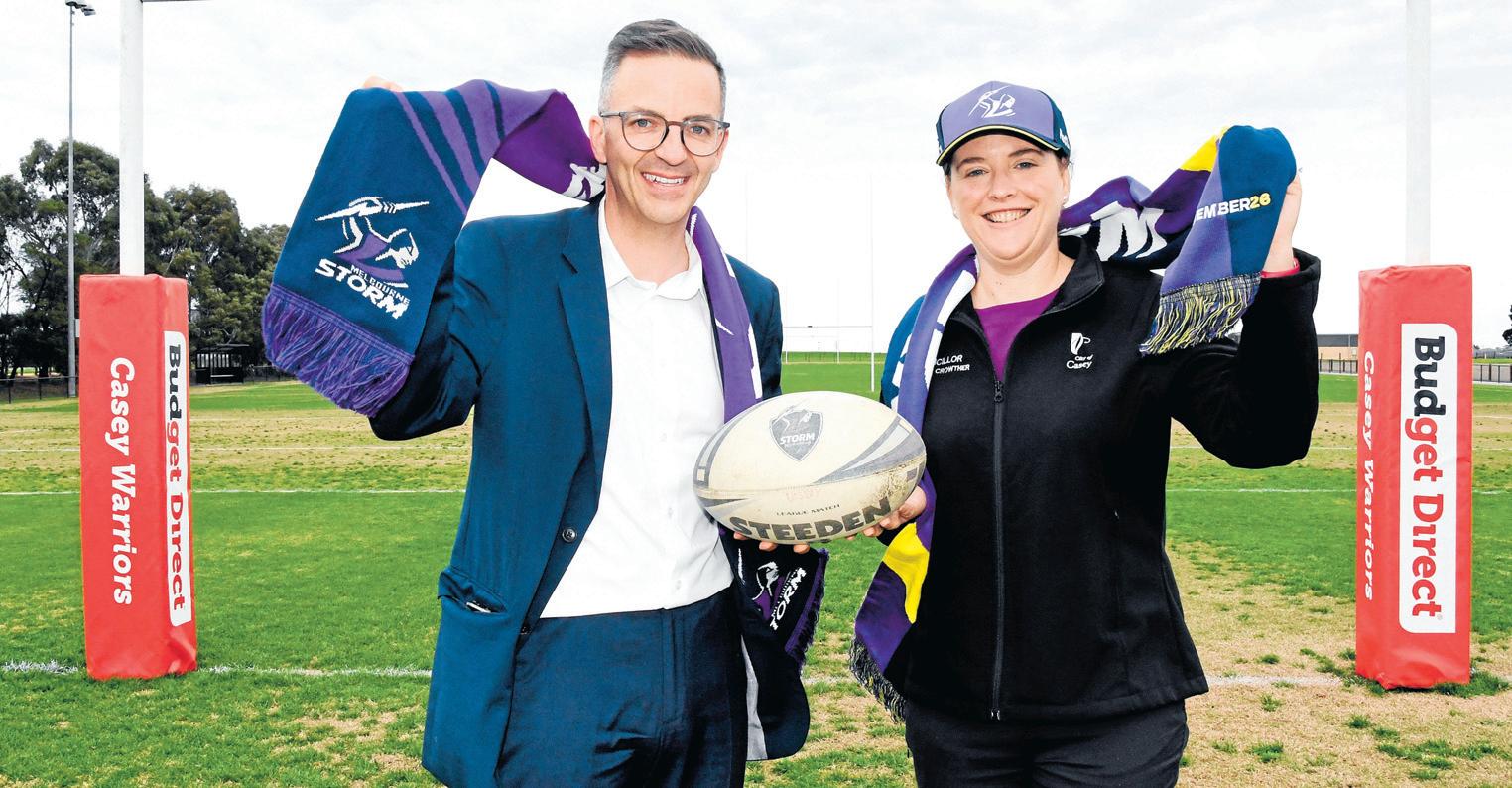
ing.com/events/1564861/sessions/6350052/ sections/3013983/tickets
Coastal Villages Dads Group
Catch-up with other dads, father figures and their kids. Just drop by to let your children play on the playground and have a chat with other local dads.
• Sunday 21 June 9am-11am at Pelican Cafe, 85 South Gippsland Highway, Tooradin; free event. Register at trybooking.com/DINTR International Yoga Day
Presented by Saathi Multicultural Association Of Australia. All levels are welcome.
• Sunday 21 June 2pm-3pm at Lynbrook Community Centre, 2 Harris Street, Lynbrook; free event. Bookings: trybooking.com/DKXUN Prepare for an emergency Learn practical tips to stay informed and prepared. Includes local emergency risks, how to access warnings and information, and emergency planning tools with a focus on accessibility and disability needs. Hosted by City of Casey’s emergency


management team. Light refreshments provided.
• Wednesday 24 June, 6pm-7pm at Lynbrook Community Centre, 2 Harris Street, Lynbrook; free event. Bookings essential by Tuesday 23 June at trybooking.com/events/landing/1591918
Rose Pruning Workshop
Hands-on workshop where you’ll learn the best times and techniques for pruning your roses. Practical tips on tackling pests and diseases. For beginners and green thumbs alike.
• Thursday 25 June 10am-12pm at Old Cheese Factory, Homestead Road, Berwick; $5. Bookings: events.humanitix.com/old-cheese-factory-rosepruning-workshop Neighbourhood BBQ
Come along and bring a neighbour or two to our family friendly evening. Have fun and connect with others in a casual setting. Free sausage sizzle (halal options available) and free kids’ activities.
• Thursday 25 June 4pm-6pm at Autumn Place Community Hub, Autumn Place, Doveton; free event.























By Justin Schwarze
The foundations have been set for one of the most promising starts to a season in Casey basketball history.
The Cavaliers Women sit fifth on the NBL1 South ladder after 10 rounds with a 10-5 record.
Casey has never played finals in either the men’s or women’s bracket since joining the competition, a mark that women’s head coach Joseph Turner looks to change this year.
“Casey as a club has been starved for success and really wants that success in the senior program,” he said.
“We’ve obviously established a very strong junior program over the last 10 years or so but the last piece of the puzzle is getting that senior success.
“It starts with the people and the families and the supporters of the club, they’ve been great with their support no matter what our results have been.
“Seeing those fans now getting to be rewarded with getting to see their teams perform and get some wins, I think it creates a positive vibe throughout the whole club from top to bottom.
“The learnings are that we can certainly compete with any team in the league, we can compete with the top teams and put ourselves in that mix, that’s certainly been a big confidence boost.
“We’ve had some other weeks and some other games where the learnings have been that in this league, there’s no easy games.
“Every single team is good, every team has good players and has good preparation and is well-coached.
“The South is a really challenging competition because week in and week out you’re playing tough teams.”
Casey opened the year on fire, winning 10 of its first 13 games before dropping a pair on the weekend, but the charge has brought a major sense of excitement around the club.
The Cavaliers Women have never finished above 10th in a season, so to be a win behind the top-four is a thrilling prospect.
Turner cited connection as a collective unit as the area where Casey has found success in.
“The most important part for us is chemistry and connection,” he said.
“That’s been the most important thing we’ve looked to build and that’s translated to our success.
“We talk about players having their piece of the puzzle and making sure all the pieces of the puzzle fit together.
“We’re certainly a team-oriented group, we want to play well as a team and with the group we have we’ve got a lot of weapons and a lot of dangerous playmakers and scorers on the court at all times.
“We know that we’ve got weapons all across the floor and that sort of helps us play together because we know if a defence is trying to take away one thing then we’ve got other people that can capitalise and step up.
“In a basketball sense, we do want to get out and run, we love getting out and running.
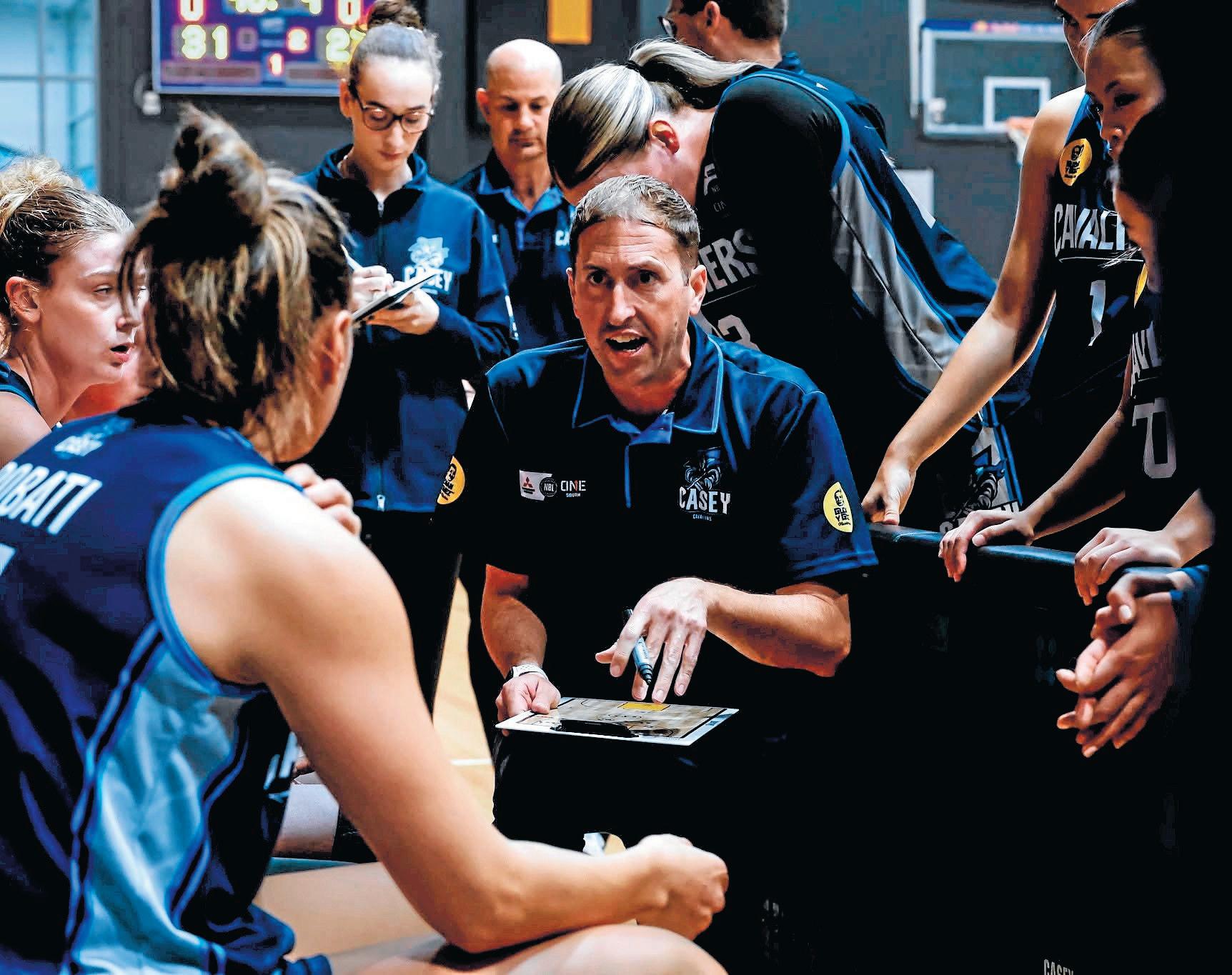
“We want to play at an exciting, fast pace but we also want to play together as a team and I think that translates defensively.”
Some massive offseason acquisitions have also provided plenty of impact, with none greater than Dallas Loughridge.
The Cavaliers poached Loughridge away from Dandenong to become the starting point guard, and she’s quickly established herself as an MVP candidate this season with averages of 24.3 points, 5.1 assists and 1.5 steals per game.
Casey also picked up superstar centre Samantha Bowman from the Townsville Flames in the North Conference.
Bowman has been elite on the interior, averaging a double-double with 15.3 points, 13.1 rebounds and 1.2 blocks per game this season.
“It’s really exciting to have players like that involved in the club not just for the on-court performance but just the overall impact,” Turner said of Bowman and Loughridge.
“They’re two of the most talented players in the league but their successes are built on their hard work and how much extra work they put in.
“Dallas is a player that I coached as a junior about 10 years ago and I was able to maintain a connection throughout her basketball journey and to see the player she’s grown into as one of the best point guards in Australia is really exciting to see.
“Sam came over as an import and when I was doing recruiting and research all I ever heard about her is that Sam’s just a winning player.
“She’s been a great addition and she’s got a great team-first mentality.”
Nyaduoth Lok and Sharne Robati fill out the wings, while Chelsea D’Angelo acts as a secondary on-baller at the other guard spot.
The bag is deep for Turner as his team’s versatility makes them lethal with no glaring weaknesses.
“For us, one of the big learnings is that we can
win in different ways,” he said.
“We’ve had games where we’ve shot the ball really well from three and that’s carried us, but we’ve also had games where the threes aren’t falling and we’ve been able to go inside.
“And we’ve had wins where we’ve got it done on defence, we’ve been able to lockdown.
“I thought our game against Melbourne (last week), when we were missing some key players, was our best defensive game of the year.”
While a potential first-ever finals berth is in the back of the mind, Turner and the Cavaliers remain focussed on keeping the standards high for the rest of the season.
“For us, the type of identity and culture we wanted to create was a culture where players are willing to come in and put in the extra work,” he said.
“Our success is going to be built on continuing to improve and get better.”
By Justin Schwarze
Casey had a poor weekend of results in round 10 of the NBL1 South, picking up just one win from four games.
The double-header started on the right note for the Cavaliers Men, who banked their fifthstraight win on Saturday night at home against Ballarat.
Casey’s offence was fluid and active all night, scoring 25 points or more in every quarter to roll to a 117-106 victory.
The Cavaliers shot 17/33 from downtown in a scorching hot shooting night, blowing away the Miners from behind the arc.
Tanner Krebs was the main culprit, knocking down seven triples on his way to 27 points and seven assists.
Ibrahima Diallo kept things ticking over on the inside with 23 points and eight rebounds
on 10/15 shooting.
Casey couldn’t replicate the barrage on Sunday, shooting just 39 percent from the floor as a team in a 78-67 loss to Keilor.
Jesse Ghee struggled with his efficiency but put up 17 points and nine rebounds in defeat.
Casey continues to hang around in the finals race, currently in seventh with a record of 9-6.
The Cavaliers Women dropped both contests, beginning with a 95-78 defeat at the hands of Ballarat.
It was a game of runs as Casey responded after going down big early and Ballarat led by just two at three-quarter time.
But the Miners caught fire in the final term, connecting on five threes to roll over the Cavaliers.
Dallas Loughridge scored a team-high 23 points.
On Sunday, a fourth-quarter meltdown proved costly as Keilor ran over Casey 84-73.
A low-scoring affair saw the Cavaliers claw out a four-point three-quarter time buffer, before the offence faltered in the final term and the Thunder took advantage.
Keilor scored 16 points in the paint and shot 69 percent from two-point range to blitz Casey in the quarter 27-12 and take the win.
Loughridge again led the scoring front with 24 points, while Samantha Bowman provided a double-double of 11 points and 12 boards.
Casey slipped to fifth after with the pair of losses at a record of 10-5.
Both outfits have double-headers again in round 11, travelling to face Diamond Valley on Saturday night before rolling out the welcome mat for Geelong on Sunday.

By Blair Burns
Hampton Park caused a big upset at Robert Booth Reserve on Saturday after defeating Cranbourne for the first time in well over a decade thanks to a Trent Thomas masterclass, winning 14.5 (89) to 6.13 (49).
The win snapped a five-game losing streak for coach Luke Bull’s side and gave them belief that they can register plenty more wins in the back end of the season.
“They (Cranbourne) obviously beat Dingley the week before, so they came into the game in good form; we want to build on that win now and get a few more under the belt,” he said.
“We just played our game and kept adding to the score and it was a convincing win in the end.
“It was Past Players Day and the twos had a really good win, celebrating Nathan Dawes’ 400th and then we followed suit, so everyone was happy.”
Both teams finished the game with 19 scoring shots but the margin was 40 points, the secondworst loss of the year for the Eagles who came into the game as strong favourites.
There was plenty of feeling in the contest with plenty of push and shove throughout the four quarters and no shortage of big tackles and hits.
It was the Redbacks’ second win of the season after defeating Port Melbourne Colts back in round three.
Good kicking is good football and for one of the first times this season, the Redbacks were really efficient in front of the big sticks.
The Eagles missed chances in the first two quarters with 1.9 up until half time, along with a number of other shots that were sprayed out on the full.
Despite having most of the play in the first half, the Eagles went into half time trailing by 16 points as Hampton Park made the most of its opportunities with 5.1.
When the second half rolled around, the Redbacks got on top and began to make Cranbourne pay for its inaccuracy.
And the player behind Hampton Park’s dominance was Thomas, with the Eagles having no answer for his smarts as he kicked almost seven goals in a half of footy.
The dangerous half-forward didn’t kick his first goal of the match until about 20 minutes into the second quarter before adding a second shortly after, heading into half time with two.
Thomas added another two in the third term, with Liam Scott kicking the other as Cranbourne desperately tried to hold on, also kicking three goals for the quarter.
But the last quarter saw the floodgates open and Thomas got off the chain even more than he already had, booting three goals and giving the
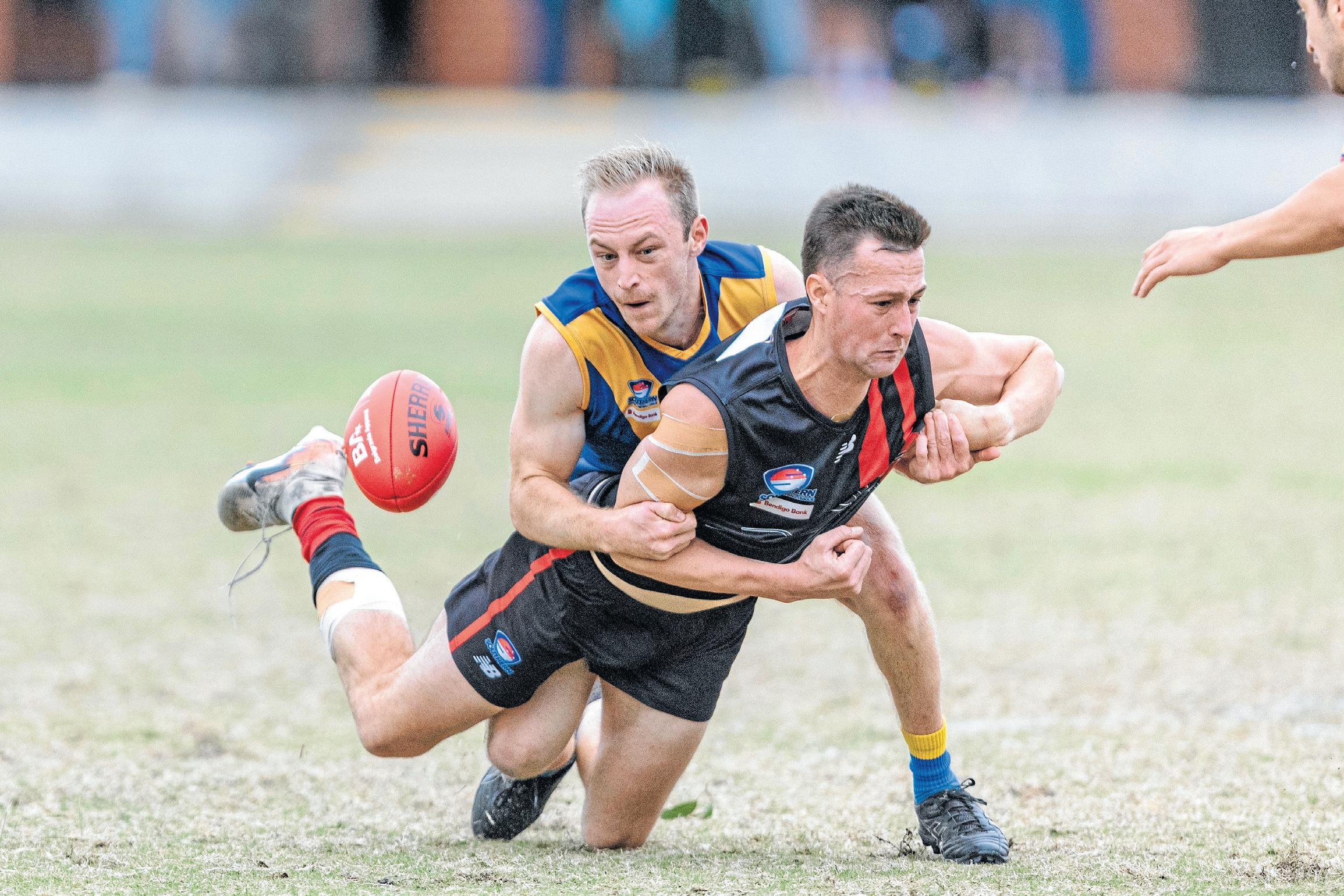
club legends something to cheer about as he finished with seven.
“Trent is obviously one of the best players in the comp at the moment and I am stoked to see him in such great form at the moment,” Bull said.
The final quarter was a demolition job as Hampton Park put the visiting Eagles to the sword to kick six goals to two, with a late set shot goal from Bull capping off the day.
Bull put the second-half ascendancy down to the midfield’s ability to get on top in the clearance battle and get the ball moving their way, as things shifted from the first half.
Cranbourne ruck Jake Stephens went down with injury, which saw Deakin Pereira begin to get on top in the ruck battle.
“We won a lot of centre clearances and we managed to have a good conversion rate when we went inside 50 – it was a lot higher than usual, so we got it in there and scored when we did,” Bull said.
With a lot of new players in the side including
Liam Hasler, who has been one of the Redbacks’ most consistent this season, the rest of the year was about building confidence, belief and synergy.
“If we are playing our best, we are more than capable,” Bull said.
“We will keep improving and want to get as many wins as we can before the end of the year and go from there.”
The Redbacks were not at full strength either, hoping to welcome back Makaio Haywood to the midfield this weekend.
On the flipside, it was a feeling of disappointment for Cranbourne, who would’ve seen this result as a big missed opportunity.
Will Nisbet continued his brilliant form for Cranbourne, as the young defender produced goal-saving smothers, intercepts and stayed composed to use the ball well by foot.
The absence of Marc Holt (illness) was felt up forward, with Trent Marotta (two goals) and Jye King going head-to-head in a good battle.
Cranbourne will look to bounce back this weekend against Murrumbeena and will hope to navigate the smaller ground at Murrumbeena Park to its advantage.
Angelo Soldatos will be looking for a strong response from his side, who needs to get back on the winners’ list this Saturday.
• SOUTHERNDIVISION1
Hampton Park Goals: Trent Thomas 7, Patrick Adair, Declan Brunell, Luke Bull, Josh Craig, Liam Hasler, Mason Hawkins, Liam Scott. Best: Trent Thomas, Mason Hawkins, Josh Stow, Heath Briggs, Jye King, Liam Hasler. Cranbourne Goals: Ryan Jones 3, Trent Marotta 2, Nicholas Darbyshire. Best: Mitch Lewis, Jake Stephens, Ryan Jones, Jarrod Hocking, Jake Hill, Will Nisbet.
By Blair Burns
TheSouthEastPrecinctNetballLeague(SEPNL) resumed after a couple of weeks off with Narre Warren winning big in the A grade competition against Berwick, 71-30.
It was another big statement from the Magpies as they quickly took the game away from the Wickers to continue a brilliant seven-game winning streak – undefeated up until this point.
Captain Chelsea Tonna led from the front and managed to help her team give Mercy Loelu some great looks in the goal ring to score 47 goals.
Loelu has proven a headache for defenders this season, using her strength in the ring and her efficient shooting to help Narre Warren post some big scores.
The Magpies have scored over 100 goals more than the next strongest offensive team and that has been largely led by Loelu, who now has 296 goals to her name after just seven matches.
Sister Grace Loelu scored 18 goals and has been a big inclusion when availability allows her to play for Narre Warren.
Mackenzie Holland and Mika Baram worked hard in the attacking third for Berwick, and capitalised on as many opportunities as possible.
But it was the Magpies who controlled the game all across the court and forced turnovers with some great defensive efforts.

After going down by 26 goals last time against Beaconsfield, Hampton Park was determined to respond and push back into the top three … and
the Redbacks did exactly that.
A big turnaround since the last encounter saw Hampton Park get a three-goal win at Rob-
ert Booth Reserve, 40-37, in what was a great day for the club.
Emily Pupuke has been hard to stop in the goal ring and has been the main scorer this season for her side, adding another 38 goals to her season tally.
Eagles captain Zara Treweek tried to inspire her team to a win, but it was to no avail as they were on the wrong side of the thrilling result.
It was a strong upset and has seen the ladder tighten up after eight rounds of play.
Narre Warren is the benchmark, undefeated and four wins clear on top of the ladder, but the next three teams are all on 12 points.
Beaconsfield has a strong percentage of 146.63 and sits second on the table, while Hampton Park pushed into third, now ahead of Berwick by percentage.
Cardinia Tigers are yet to win a game and had the bye on Saturday.
OTHERGRADES–SEPNL
BGRADE: Cardinia Tigers 34 def Berwick Springs 28, Narre Warren 56 def Berwick 30, Beaconsfield 47 def Hampton Park 46.
CGRADE: Narre Warren 37 def Berwick 34, Berwick Springs 36 def Cardinia Tigers 28, Hampton Park 32 def Beaconsfield 27.
DGRADE: Berwick 29 def Narre Warren 28, Cardinia Tigers 27 def Berwick Springs 18, Hampton Park 30 def Beaconsfield 28.