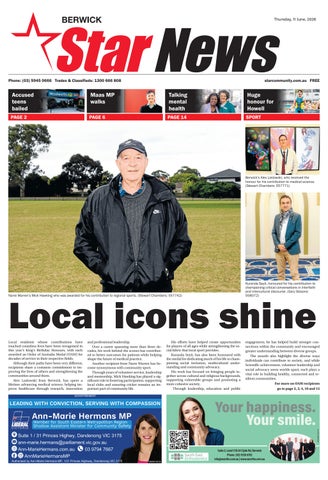
Local residents whose contributions have touched countless lives have been recognised in this year’s King’s Birthday Honours, with each awarded an Order of Australia Medal (OAM) for decades of service in their respective fields.
Although their paths have been very different, recipients share a common commitment to improving the lives of others and strengthening the communities around them.
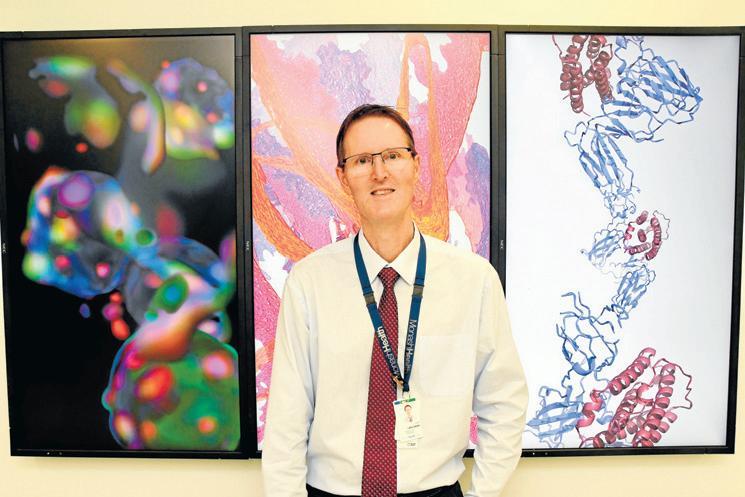
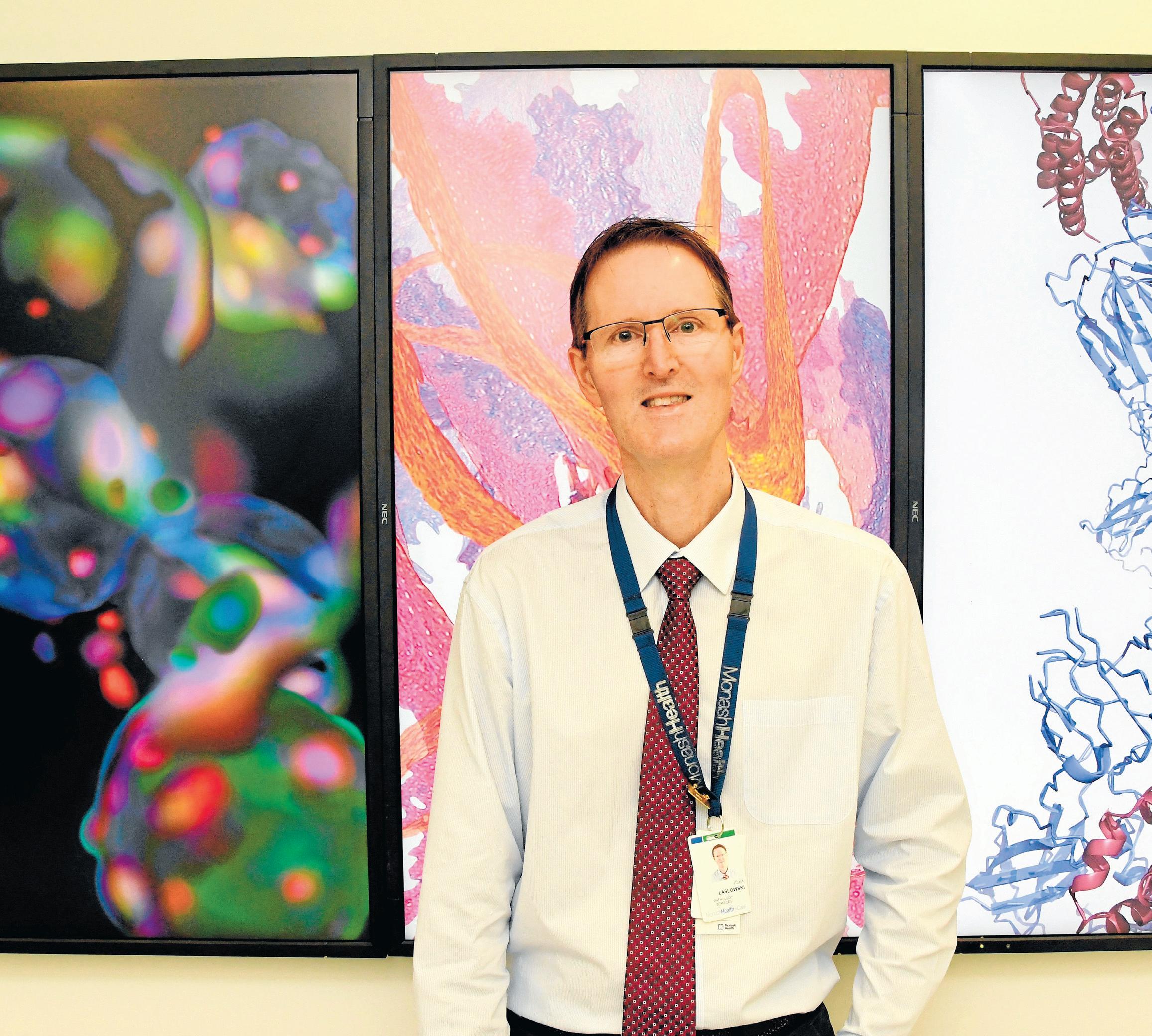
Alex Laslowski from Berwick, has spent a lifetime advancing medical science, helping improve healthcare through research, innovation and professional leadership.
Over a career spanning more than three decades, his work behind the scenes has contributed to better outcomes for patients while helping shape the future of medical practice.
Another recipient from Narre Warren has become synonymous with community sport.
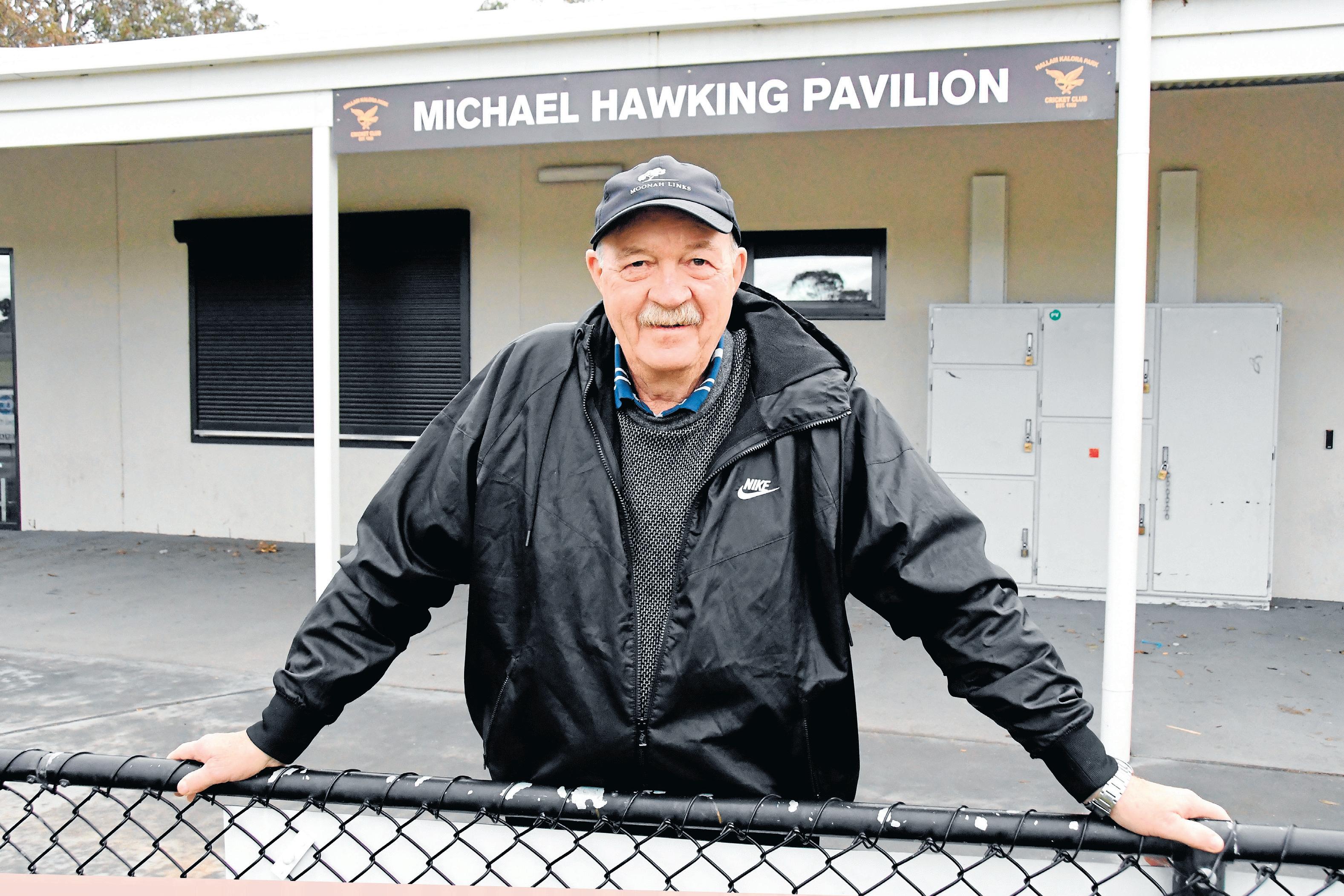
Through years of volunteer service, leadership and mentorship, Mick Hawking has played a significant role in fostering participation, supporting local clubs and ensuring cricket remains an important part of community life.
His efforts have helped create opportunities for players of all ages while strengthening the social fabric that local sport provides.
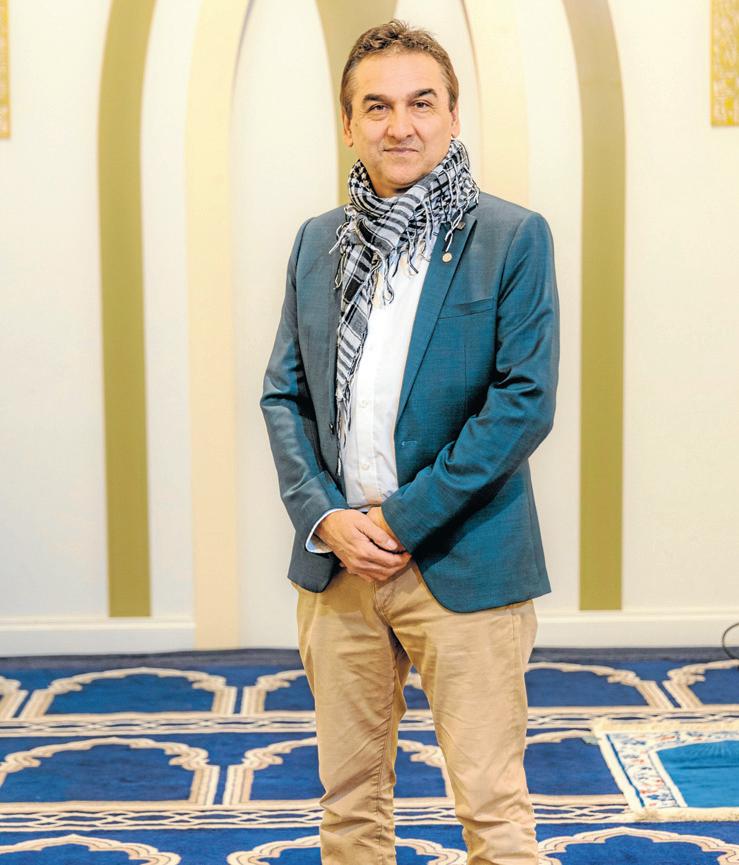
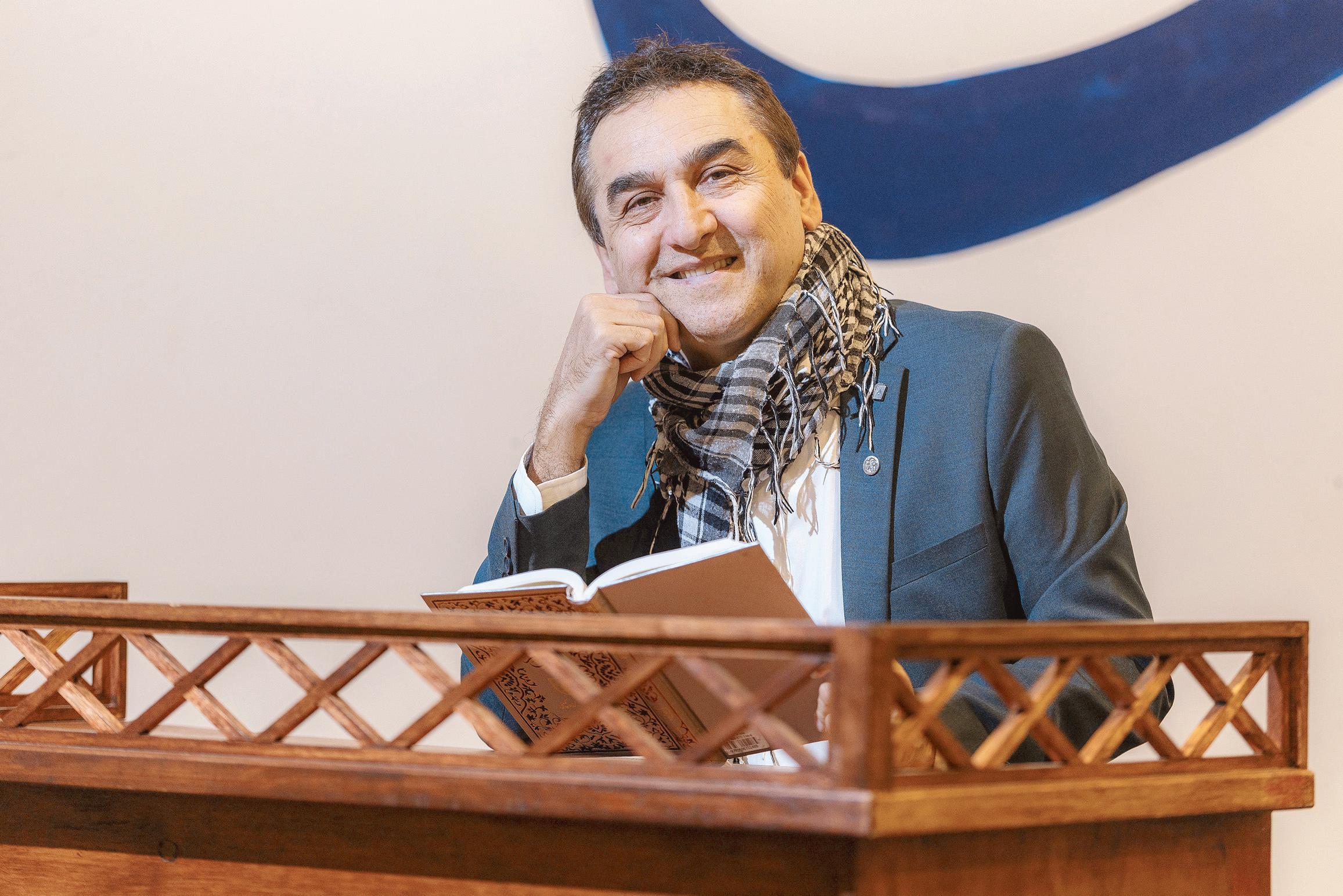
Kuranda Seyit, has also been honoured with the medal for dedicating much of his life to championing social inclusion, multicultural understanding and community advocacy.
His work has focused on bringing people together across cultural and religious backgrounds, supporting vulnerable groups and promoting a more cohesive society.
Through leadership, education and public
engagement, he has helped build stronger connections within the community and encouraged greater understanding between diverse groups.
The awards also highlight the diverse ways individuals can contribute to society, and while Scientific achievement, volunteer leadership and social advocacy seem worlds apart, each plays a vital role in building healthy, connected and resilient communities.
For more on OAM recipients go to page 2, 3, 4, 10 and 12
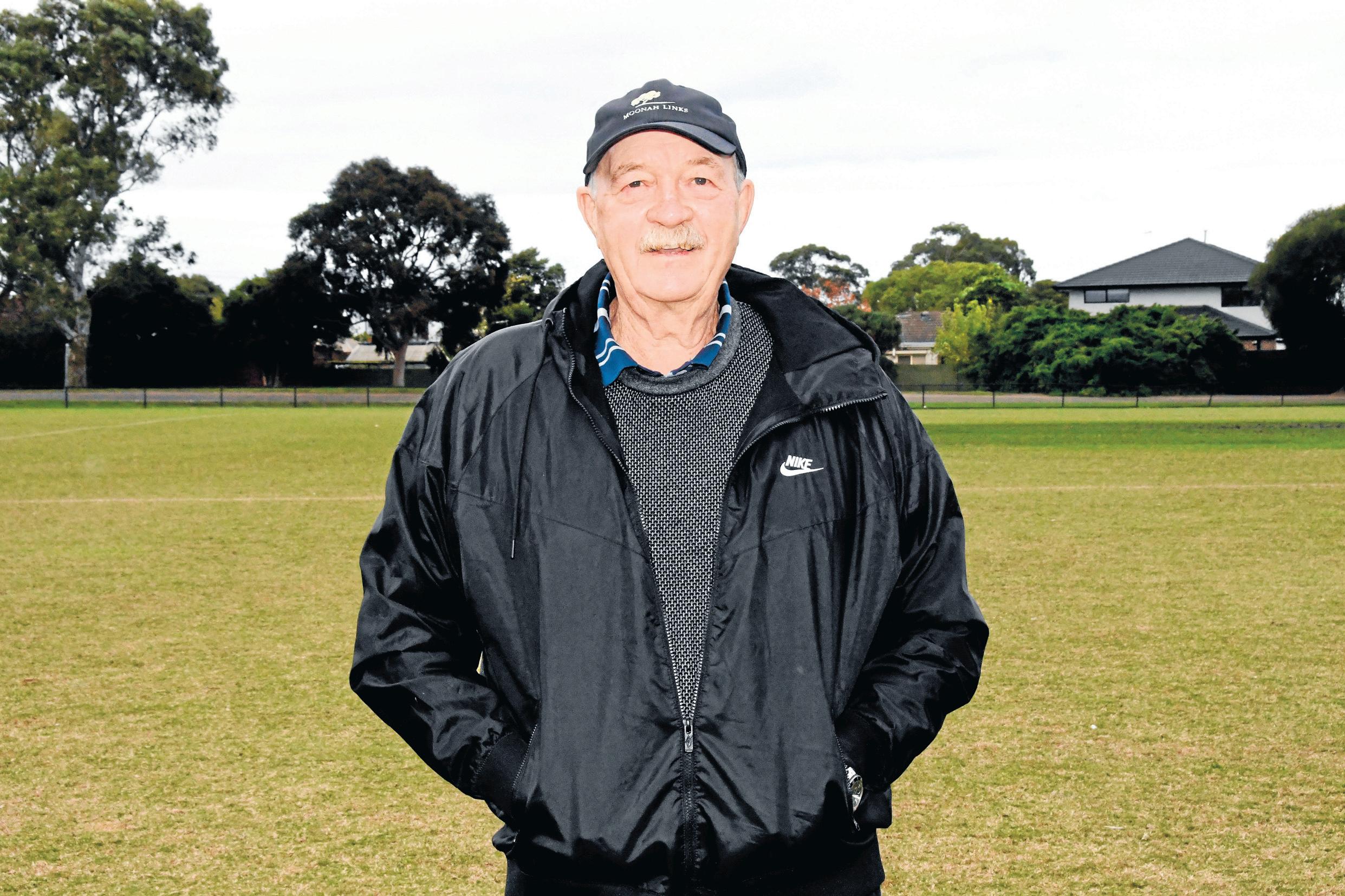
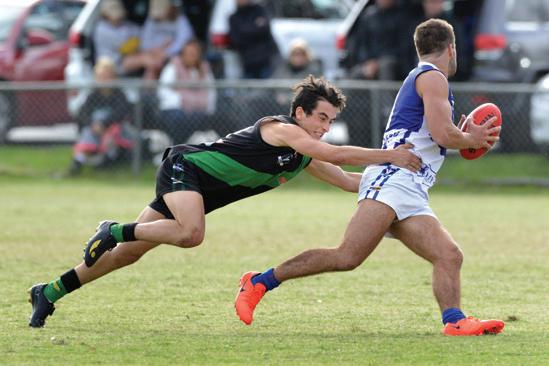
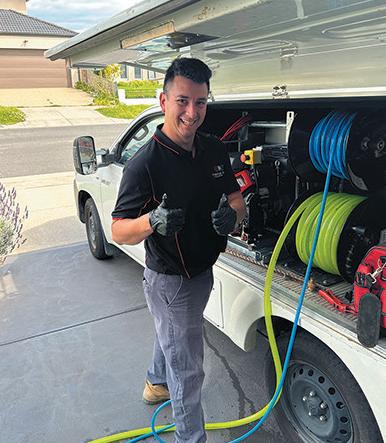
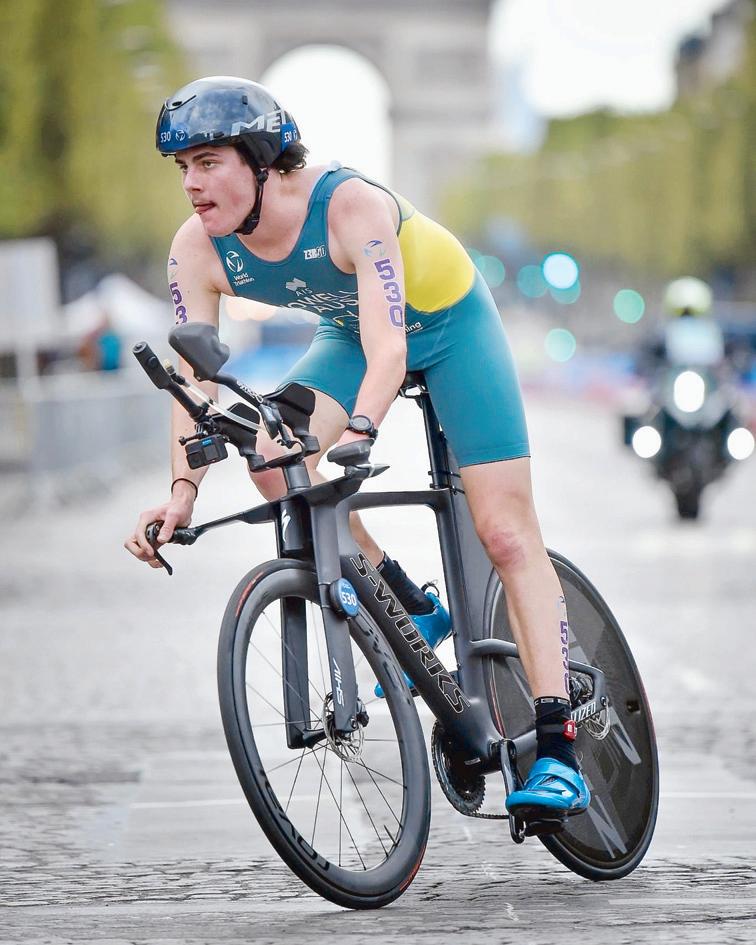
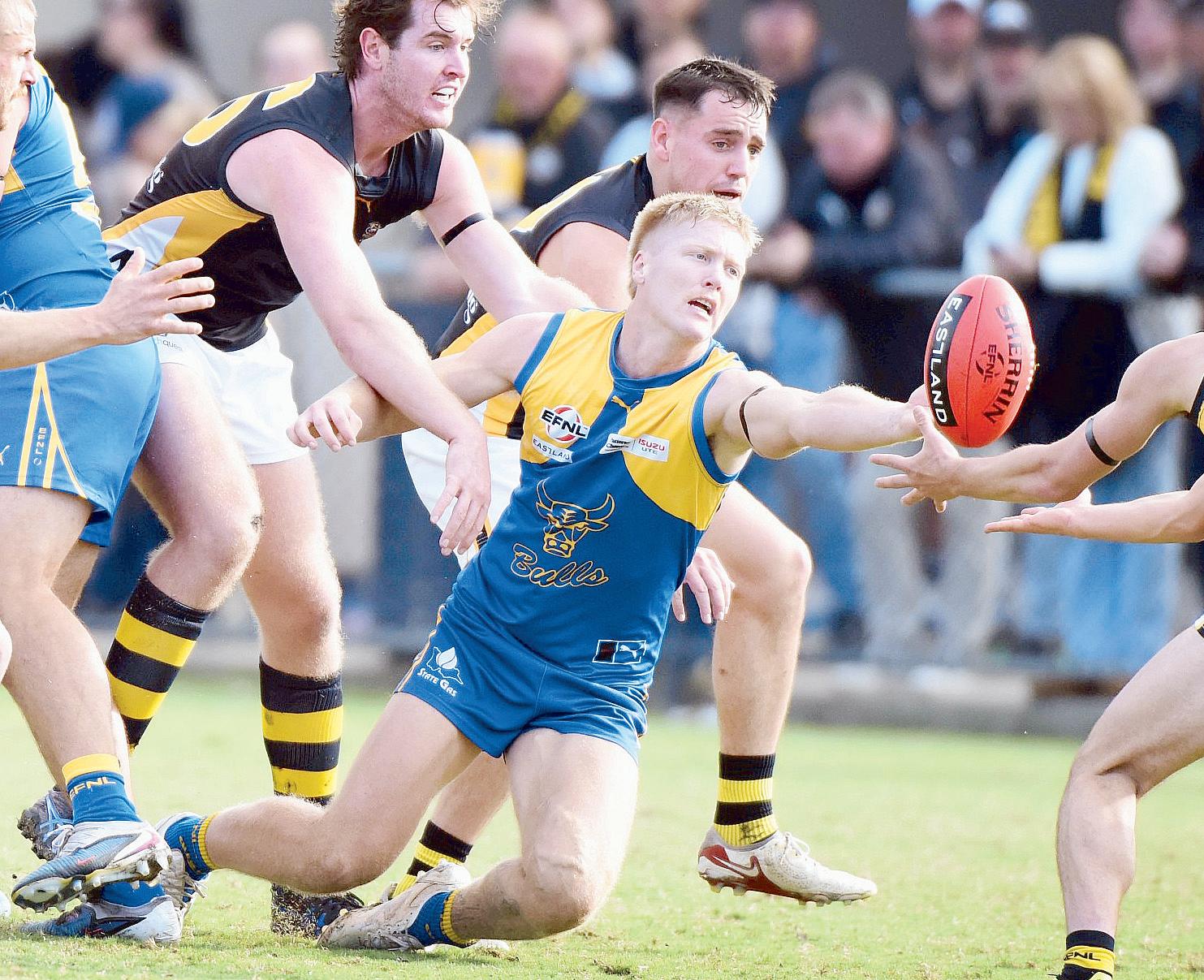
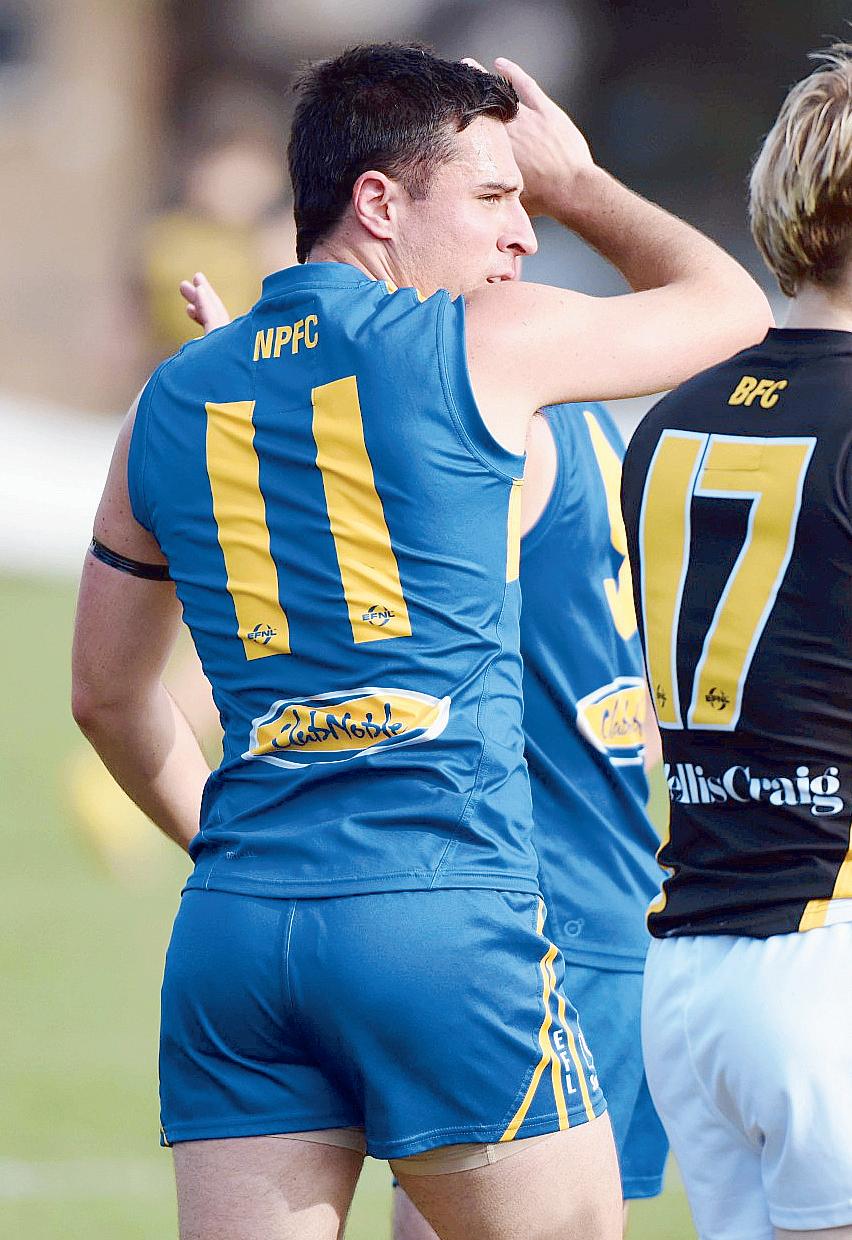
Narre Warren’s Mick Hawking who was awarded for his contribution to regional sports. (Stewart Chambers: 557742)
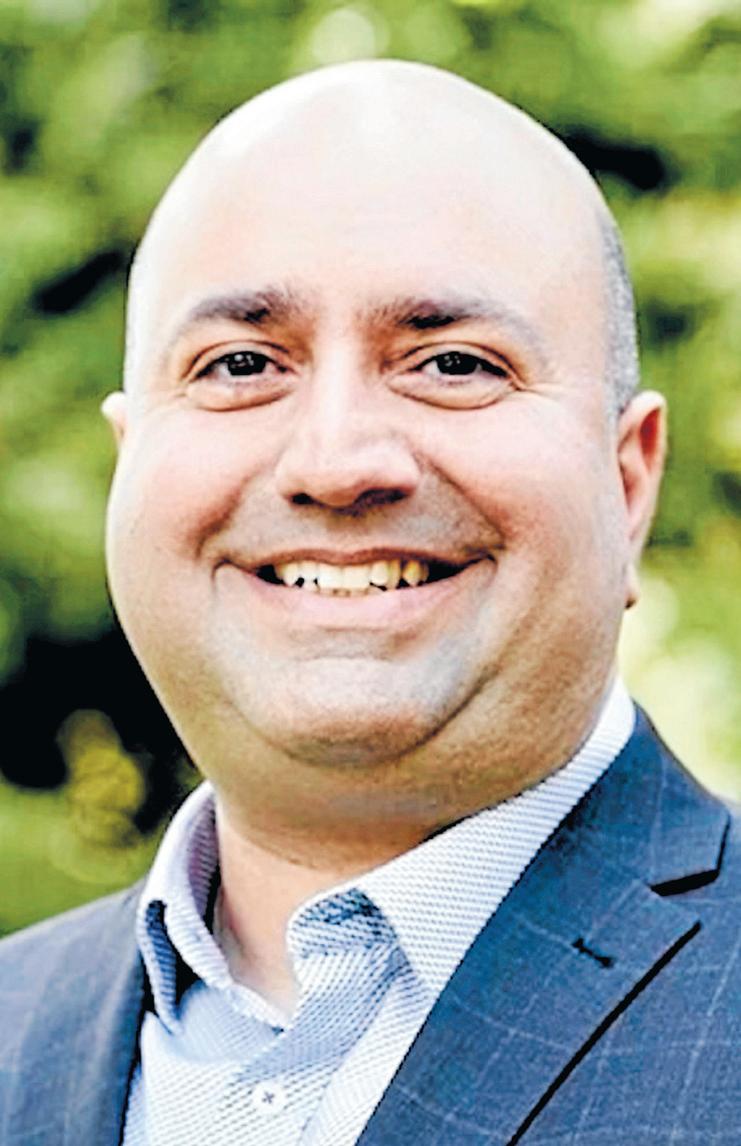
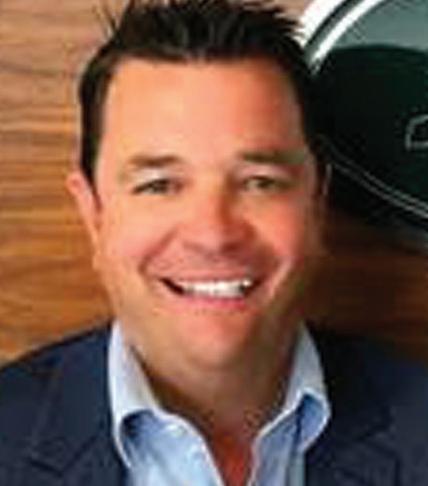
Berwick’s Alex Laslowski, who received the honour for his contribution to medical science. (Stewart Chambers: 557771)
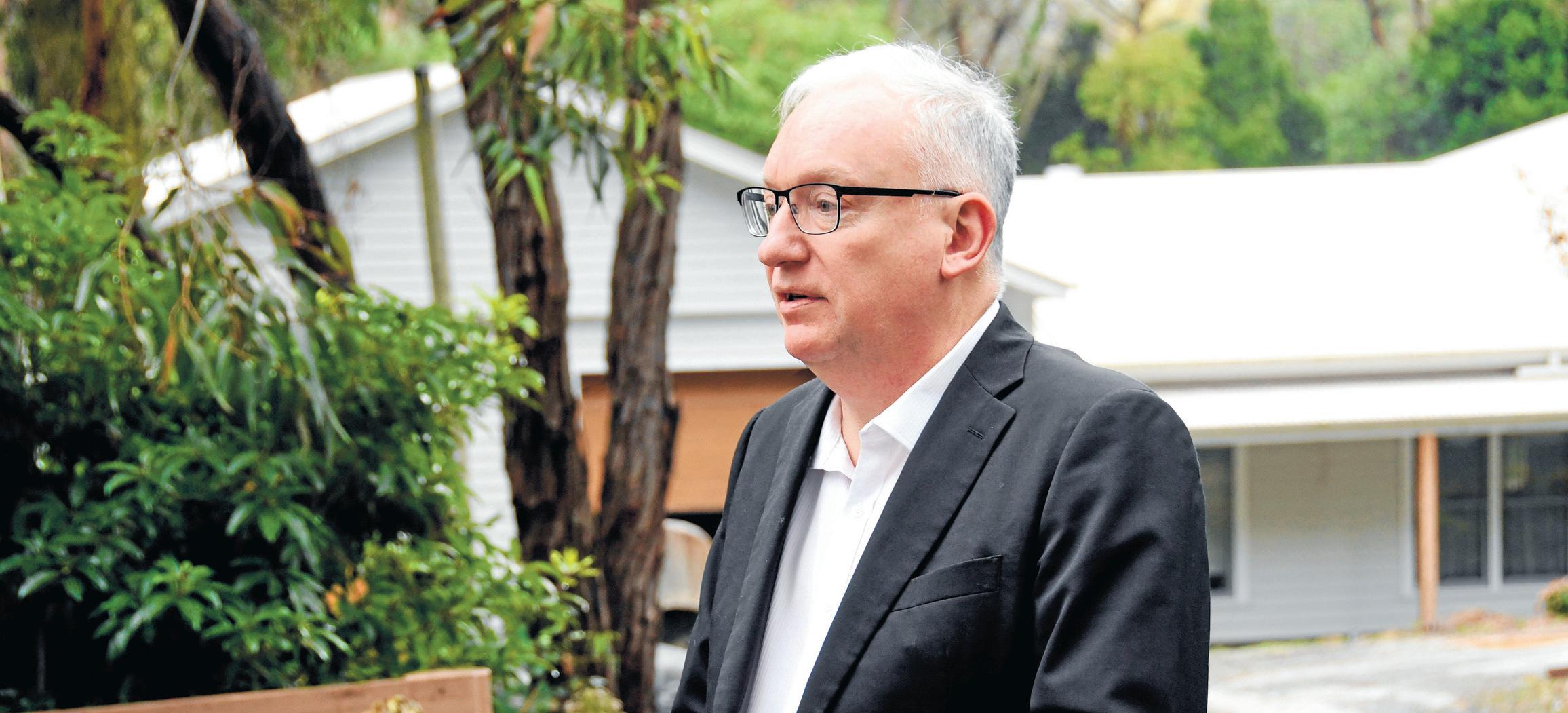
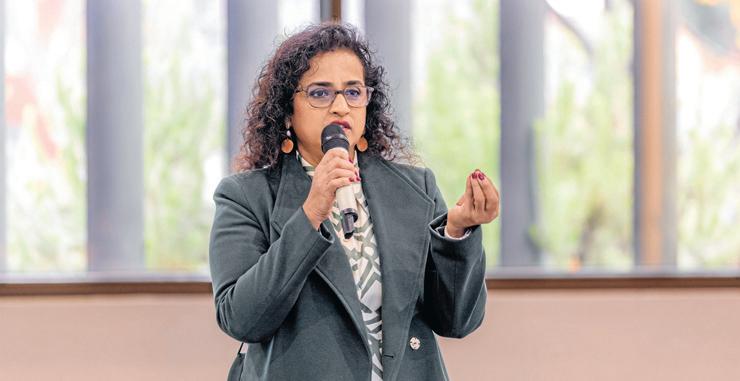
Kuranda Seyit, honoured for his contribution to championing critical conversations in interfaith and intercultural discourse. (Gary Sissons: 558072)
Lifetime of social justice
By Jensy Callimootoo
When Kuranda Seyfettin Seyit received a call from Canberra earlier this year, he assumed it was a routine call.
Instead, the call brought unexpected news, he had been selected to receive the Medal of the Order of Australia (OAM), recognising decades of service to multicultural communities in Victoria.
“I was very surprised,” he said.
“I thought maybe I hadn’t been successful because I’d heard nothing for so long. It was a pleasant surprise.”
While the honour acknowledges a remarkable career of community advocacy, leadership and social justice work, he is quick to shift the focus away from personal recognition and towards the people and causes that have shaped his journey.
Growing up as a young Muslim in Australia in the 1980s, Kuranda experienced firsthand the challenges faced by culturally diverse communities seeking acceptance.
Those experiences fostered a lifelong commitment to social justice, beginning with advocacy for refugees during Australia’s heated debates over asylum seekers in the early 2000s.
“We were going to Parliament House, meeting politicians and advocating for refugees,” he recalled.
“That was really where it all started.”
Following the September 11 attacks, his work took on renewed urgency.
As public scrutiny of Muslim communities intensified, he became a prominent voice promoting understanding and challenging stereotypes.
“I made it my goal to build better relationships between Muslims and the broader Australian community,” he said.
One of his most significant achievements emerged from that mission.
In 2002, he helped establish the Goodness and Kindness campaign, bringing together Muslims, Christians and Jews to foster interfaith understanding in schools across Australia.
Thousands of students participated, learning about common values shared across faith traditions.
The initiative culminated in a powerful visual statement: a giant patchwork quilt featuring messages of kindness written by schoolchildren.
The quilt was later draped across the front of Parliament House.
“That’s definitely one of the highlights of my community work,” he said.
Over the years, his focus expanded to mentoring the next generation of leaders.
Through leadership programs, international exchanges and youth development initiatives, he has worked with hundreds of young Australians, many of whom now occupy influential roles in law, community services and advocacy.
“There’s something very fulfilling about seeing young people develop into leaders who are making a positive contribution,” he said.
Today, he continues that work through leadership programs in Melbourne and through humanitarian initiatives that take young Australians overseas to participate in aid projects.
His recently established charitable branch, Islamic Care Global Aid, combines practical assistance with leadership development, helping participants gain a deeper understanding of global inequality and human suffering.
“We want young people to see these realities for themselves and develop empathy,” he said.
Despite ongoing challenges, including rising social tensions and Islamophobia, he remains optimistic about Australia’s future.
“We have to remain hopeful,” he said.
“Australia is a beautiful country because of its diversity. The different cultures here enrich the fabric of society.”
For Kuranda, the OAM is not the culmination of a career but a reminder of the work still to be done.
His focus remains unchanged, nurturing ethical leaders, breaking down misconceptions and building bridges between communities.
“Ultimately, it’s about creating a better society for everyone,” Kuranda says.
Teens bailed over alleged shopping centre armed affray
By Violet Li
Three 18-year-olds accused of an alleged armed affray that inflicted serious injuries on two teenagers at Selandra Rise Shopping Centre have been granted bail.
NavitojSingh,NavjapSinghandEmaanSekhton were released on bail after a hearing at Melbourne Magistrate’s Court on Tuesday 9 June, in which magistrate Brett Sonnet described the alleged offending as “egregious, brazen, outrageous” and “obviously serious in nature”
The court heard that at around 4pm on Sunday 31 May, the three Cranbourne East accused entered a physical altercation with two victims and a third party at the Clyde North shopping centre due to a year-long dispute between the two parties.
The Singh brothers carried a hockey stick and a baseball bat, and one of the alleged victims used an ASP baton, and the other carried a machete, but he didn’t use it.
The alleged assault left one victim with “pretty significant injuries”, including a fractured skull, bleeding on the brain, and no vision in his left eye, the prosecutor told the court. He’s essentially bedridden for the next month at least, and he requires 24-hour supervision in the next two to three months. The doctors have advised his parents that the best-case scenario for his left-eye injury may be to regain about 20 per cent of his vision.
The other alleged victim suffered a fractured right eye socket with a floating bone.
Mr Sonnet condemned the alleged offence multiple times, labelling it as “outrageous conduct”
“Who would have thought that you would go to a supermarket and during your browsing or shopping, the supermarket shops would shut
down because gangs of youths are fighting each other with weapons?” he said.
“Who would have thought that would occur in a modern society?
“That is no longer an isolated incident. It’s no longer exceptional. What was unusual, exceptional, and isolated has now become commonplace and prevalent.”
Mr Sonnet said that Sekhton had made relevant admissions in relation to the infliction of significant injuries to one victim, and the prosecution’s case against the Singh brothers rests primarily on complicity.
However, the magistrate placed significant weight on the fact that all three accused were 18 years old and had no criminal history.
He said he was required to consider that, if remanded, the accused could only be sent to
adult prison, not juvenile custody.
“As a consequence, that raises different issues, particularly in relation to vulnerability,” he said.
H said he took into account the seriousness of the alleged offending, the likely sentence, possible delay, the personal circumstances of each accused, and the support available through their families.
The court heard that Sekhton’s father, a fulltime bus driver, and his mother, a part-time aged care worker, moved to Australia in October 2024, and have lived in Cranbourne East ever since.
The father gave his evidence to the court, saying that his son was not working before the alleged offence and was supposed to start a TAFE course in July with the Singh brothers.
He said his son helped at home to take care of
his younger sister.
The family said they would have to reorganise their work hours to make sure someone was at home with Sekhton.
“If he wants to continue (his study) or wants to hunt for any job, he has to be very focused on what he is going to do, and he has to go and come back home safely,” he said.
The Singh brothers’ mother, who was overseas when her two sons engaged in the alleged offence, also gave evidence in court. She said they worked in her pizza shop five hours a day for seven days a week.
She said she would also make sure to supervise them through cameras when she was at another job in the morning.
The magistrate said the prosecution had failed to establish that the accused were an unacceptable risk, although he accepted they did present a risk.
He said strict bail conditions could manage that risk.
All three must report daily to police, surrender passports and other travel documents, not apply for new travel documents, not attend international departure points, not leave Australia, and not leave Victoria.
They must not contact prosecution witnesses, the informant, or the alleged victims.
The Singh brothers must not associate with Sekhton, and Sekhton must not associate with the Singh brothers.
A curfew from 10pm to 6am was imposed on the Singh brothers, unless they are in the company of their mother.
Sekhton was placed under a 9pm to 6am curfew, unless in the company of his father.
All three must present at the front door of their homes during curfew hours if requested by police and must not use alcohol or drugs.
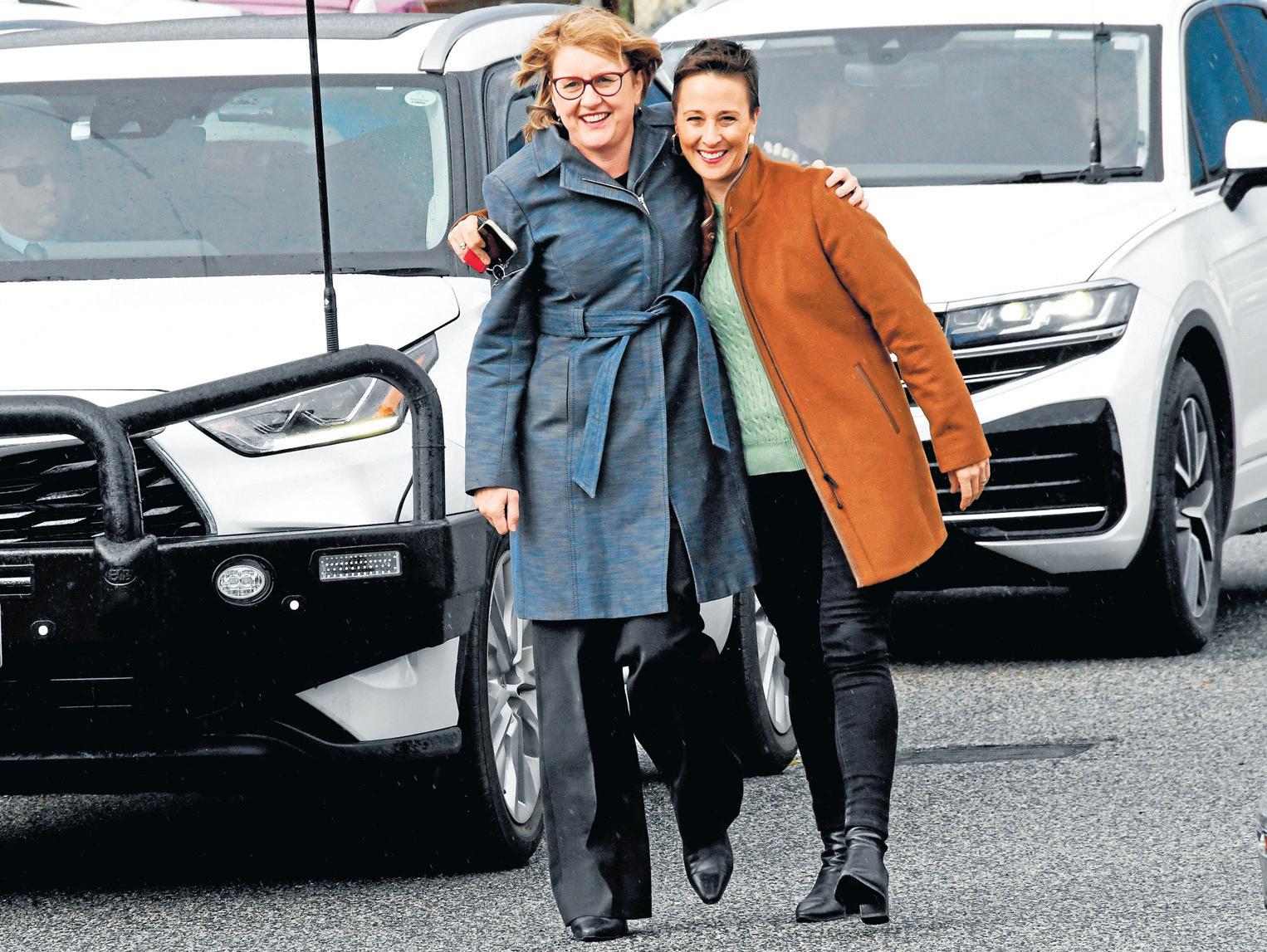
Kuranda Seyit OAM has been recognised for his advocacy for multicultural communities. (Gary Sissons: 558072)
Kuranda Seyit, second left, was writer-director of a tragi-comedic play in 2021 called Love in the Time of Corona. (Stewart Chambers: 231943)
Three 18-year-olds accused of inflicting serious injuries on two teenagers during an alleged armed affray at Selandra Rise Shopping Centre have been granted bail. (Google Maps)
Bowled over by OAM
By Cam Lucadou-Wells
A humble, tireless doyen of district cricket has been named as a Medallist of the Order of Australia (OAM) in the King’s Birthday Honour List.
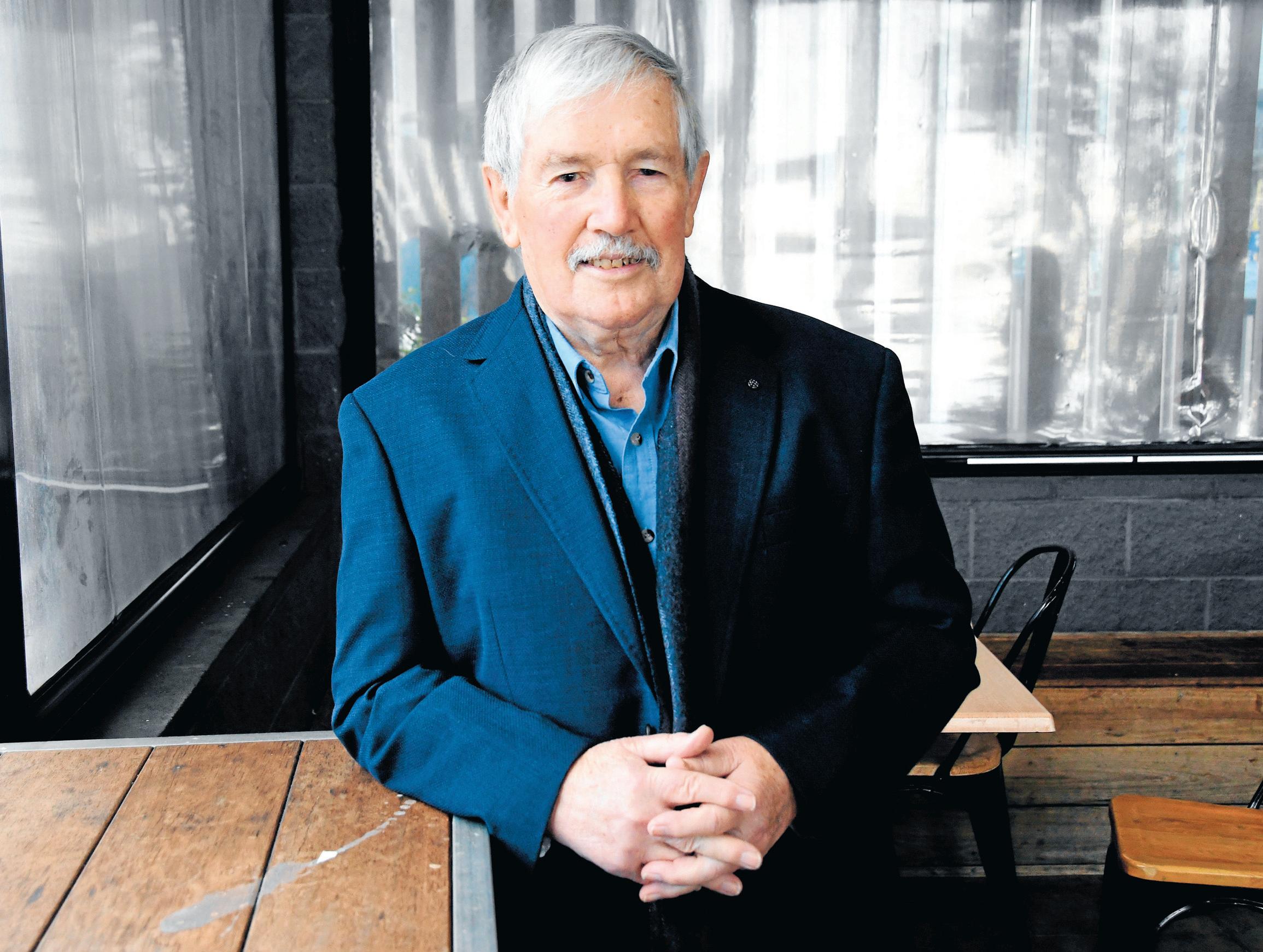
Mick Hawking, 74, of Narre Warren, a life member, long-time volunteer and leader at Dandenong District Cricket Association, said he was trying to absorb the new recognition.
“You never consider you’ll be one of those people. I don’t know how it sits with me.
“I’m not sure if I’m that pretentious to add the letters OAM after my name.”
DDCA life member Hawking was recently installed as a Legend in the association’s hall of fame – a rare, fitting accolade for its president of 18 years up until 2023.
He served on the DDCA executive committee for 28 years, including as vice president, chair of the association’s senior rules and permit committee and chair of the competition match committee.
Hawking was also a renowned fast bowler and servant of Hallam Kalora Park Cricket Club, where he was a Team of the Century member, life member, coach, president and chairman of selectors.
This year, his name was bestowed on the club’s pavilion at its Frawley Road home ground.
Being a cricket administrator has given Hawking many headaches, but also led him to work with great, talented people.
“Because you like the game so much, you like to continue in some capacity off the field.
“It’s all about the camaraderie and the people you work with and the achievements along the way.”
Some tough decisions had to be made – such as reducing Turf 1 and Turf 2 leagues from 12 teams to eight. It was done to ensure all teams played each other twice in a fairer competition.
“I can’t say it’s without stress. You’ve got to make a lot of decisions and try to ensure your decisions are for the whole association, not one or two clubs.
“That doesn’t satisfy everyone. Clubs are very parochial for their own outcomes.”
Hawking also introduced a ‘points’ system that rewarded teams that developed their own talent rather than poaching from overseas or other local clubs.
The DDCA also set up a junior academy, with a coaching panel tutoring 130 kids for eight weeks.
Some of the famous products included Test pace-bowling brothers James and Darren Pattinson from Doveton.
There’s also Victorian and Dandenong batting legend Warren Ayres and international bowler/commentator Damien Fleming from Springvale South.
“Junior development is the cornerstone to a club’s longevity. If you don’t pursue that, you’re playing a deadly game for your future.”
He’s also proud of the DDCA introducing
womens and girls competitions in DDCA. “It wasn’t easy at the start, but it was something we really wanted to happen. And it’s really paid off for us.”
In his time, Hawking has been a fierce advocate for local leagues, including the need for funding and support.
“Grass-roots cricket exists without anybody else, but Cricket Victoria or Cricket Australia don’t exist without grass-roots cricket.
“Where else are they going to get their players from?”
Cricket has been Hawking’s most enduring sports pursuit. But as a youth, football was his main priority.
At 17, the young centre-half-forward was recruited from home town Rutherglen by North Melbourne in the VFL.
Later he played as a fly-in for Penguin Football Club in north-west Tasmania and for Caulfield in the VFA.
Hawking was also coach and a football manager at VFA club Dandenong.
But when Dandenong “unjustifiably” lost its licence to compete in the VFA, that virtually ended his football involvement, he says.
“Dandenong spent a lot of money winning its 1991 premiership and it got into debt.
“So when the licences got handed out in the (restructured) VFA, we got squeezed out.”
Since the mid-1990s, Dandenong - once the mighty Redlegs - has only survived as the Under 18s franchise, the Stingrays.
More top honours across the region
Member of the Order of Australia (AM). Hewasrecognisedforsignificantservicetomedicaladministrationinexecutiveandgovernanceroles. Prof Stripp led the South East public hospital and
health service Monash Health in 2016-’23, as well as previously serving Alfred Health, Goulburn Valley Health and the Department of Human Services. He is currently group chief executive of the private Epworth HealthCare and an adjunct clinical professor at Monash University.
Meanwhile, Detective Inspector Dean Thomas, currently head of the Homicide Squad, was named as an Australian Police Medallist. He has led countless high-profile criminal investigations, including the fatal mushroom poisoning of three people at Leongatha in 2023 and the break-
As a cricketer, Hawking was happy to ply his craft at local level while pursuing a professional football career.
Even in the 1970s, football matches began encroaching on the start of cricket training – meaning it was difficult to play both at the highest level.
“At that stage, cricket was an enjoyable hobby. I just loved playing the game, loved the people I met, made lifelong friends.”
He most enjoys Test cricket, and hopes T20 is no more than a short-lived “trend” that is kept in its current place.
“I don’t know if T20 does much for the future of the game. It’s very popular with young kids and drives them to the sport.
“I just hope it doesn’t spell the end of Test cricket.”
He mused on the announced merger of Melbourne’s two BBL T20 sides, the Stars and the Renegades, with the possible sell-off of the spare franchise to Indian buyers. Putting on his hat as a forward-thinking administrator, he said it was a “reasonable idea”
“You can imagine how much of the Indian population would follow it.”
In 2000, Hawking was awarded an Australian Sports Medal. He is also a life member of Casey Radio, where he co-presented football and cricket shows for 30 years.
He remains on the board of Victoria Metropolitan Cricket Union and as vice-president at Dandenong Club.
through arrest of a man over the 1977 Easey Street murders.
Detective Inspector Thomas joined the force in 1987, working in Dandenong and Casey CIUs and in the Latrobe Valley where he served with the crime investigation unit and as local area commander.
Mick Hawking has been awarded an OAM for decades of volunteering as a regional sports administrator. (Stewart Chambers: 557742)
Medical scientist honoured
By Afraa Kori
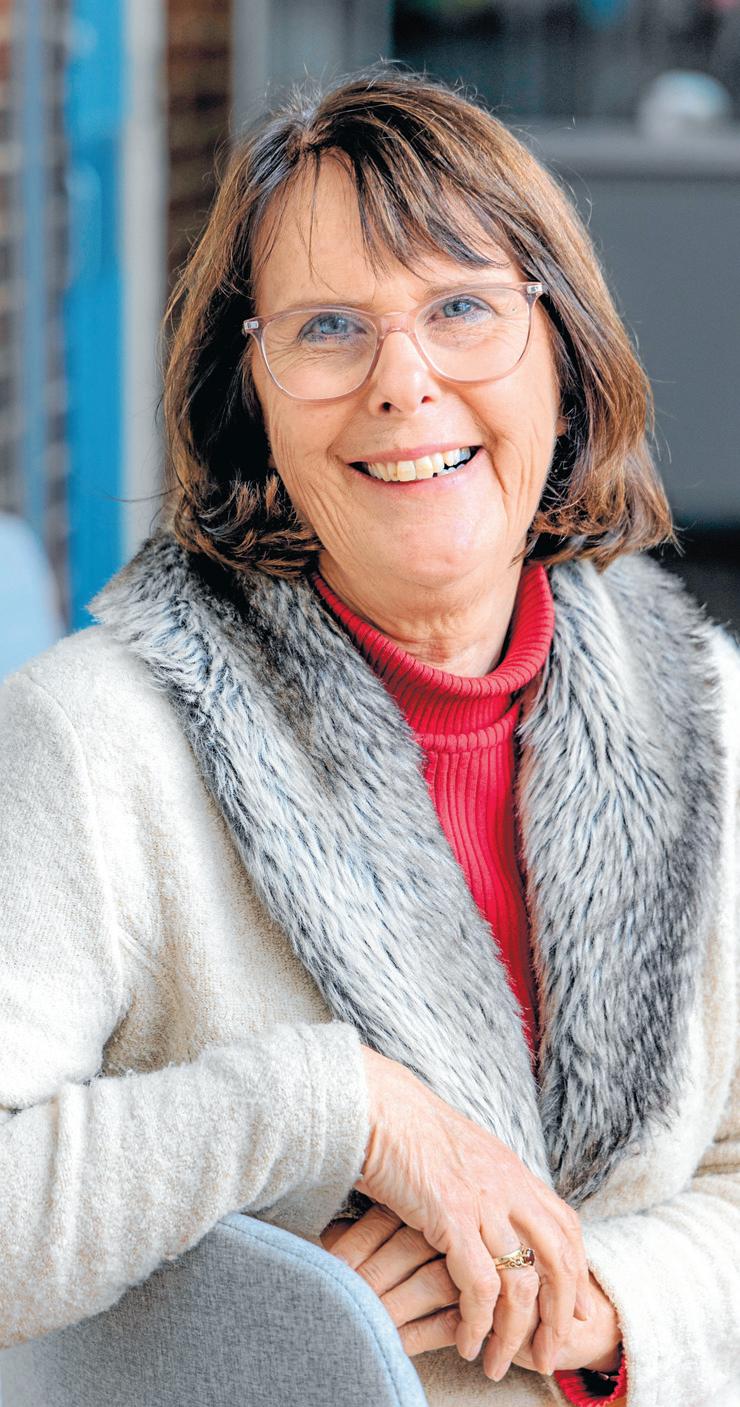
A Berwick medical scientist with 30 years’ experience, has received a Medal of the Order of Australia (OAM) as part of the King’s Birthday Honours.
Mr Alex Laslowski said the honour was a complete shock but a pleasant surprise.
“It was a lot of hard work, a lot of hours and years put into the field,” he said.
“It was just the love of the job that led to this moment.”
Despite the recognition, he said the award also reflected the sacrifices made by his family throughout his career.
“My wife is my rock because she’s always steered the ship straight at home. I owe a lot to her and her support through the years.”
While the OAM is his highest honour to date, Mr Laslowski has built a long record of recognition across his career.
He previously received the George Milsom Memorial Award, Jim Davis Memorial Award and Fellowship in Anatomical Pathology at Australian Institute of Medical Scientist.
He said it was a significant milestone when he became only the third person in anatomical pathology in around 30 years to achieve the fellowship.
Born and raised in Noble Park, he attended a state secondary school before completing a Bachelor of Medical Laboratory Science in Histopathology at RMIT.
He later had a full-circle moment when he began his career in the same hospital where he was born.
“I was born in Dandenong Hospital, which is ironic because that’s where my first job was in a laboratory,” he said.
“I’ve always had an aptitude, a desire to work in a hospital laboratory. That was sort of my dream job when I was growing up.”
Mr Laslowski describes himself as inquisitive by nature, with an investigative mindset and a strong eye for quality and detail.
These traits have driven his career in medical science and anatomical pathology.
“I’m always pushing the envelope to try and get the best out of everything we do, and there’s always continual improvement you can implement,” he said.
“I started off inquisitive. Over the years, I developed that knowledge, built on that knowledge, demonstrated that knowledge and shared that knowledge.”
Mr Laslowski worked at Monash Health since 1994, progressing from junior roles to senior Scientist and now Principal Scientist in Anatomical Pathology.
His career has included serving on patient safety advisory boards in America, mentoring future scientists, and marking professional examinations.
He is currently an examiner with the Australian Institute of Medical and Clinical Scientists, a technical assessor with the Royal College of Pathologists Australasia, and an assessor with the National Association of Testing Authorities.
He has also worked as an educator at RMIT, and served as an editor and committee member with Histology Group Victoria and the Victorian Perinatal Autopsy Services.
He has authored and co-authored several publications focused on reducing patient
safety risks in pathology laboratories, improving laboratory testing methods, and developing new approaches in histology practices.
Furthermore, he has delivered presentations at state and national seminars and conferences, covering topics including laboratory processing, quality control and stain identification in pathology.
For more than 20 years, he has worked as NATA, accrediting laboratories across the country to ISO 15189 health standards.
Much of his work has centred on challenging long-standing practices to improve patient outcomes.
“It’s changing a preconceived idea — how something has always been done for the past 40 to 60 years,” he said.
“How do you change people’s vision and change it for the better to make it safer for the
patient?”
He said there has been considerable success in doing so, with a clear understanding of the benefits often emerging once the reasoning is explained.
Among the biggest changes he has witnessed in the field are improvements in companion diagnostic testing and digital pathology.
The only gap that remains is the workforce, as community needs continue to grow and the volume of work increases, making it difficult to keep pace.
Looking ahead, he hopes to continue improving patient safety through digital pathology while also raising awareness of the critical role medical scientists play behind the scenes in hospitals.
“Medical Scientists are the people who per-
form the tests in the laboratory which drives patient treatment,” he stressed.
Mr Laslowski hopes to leave a legacy where people feel empowered to push boundaries and try new things.
While he understands times can be tough, he encourages others to follow their dreams. Outside of work, he values his downtime, enjoying simple things like coffee and cake at a cafe.
He also has a passion for travel and exploring different cultures, tying back to his “inquisitive nature”.
He has travelled extensively across Asia, Europe and the United States for both work and personal reasons. Next year he has plans to travel to South America.
OAM recipient Alex Laslowski, recognised for 30 years of service to medical science. (Stewart Chambers: 557771)
MP Maas won’t recontest upcoming state election
By Jensy Callimootoo
Gary Maas MP has announced he will not re-contest the seat of Narre Warren South at the November 2026 Victorian state election.
The Labor MP, who represented the electorate for the past eight years said he would not seek reelection citing “various reasons” for stepping aside, including his dedication to his two daughters.
The former lawyer and union worker, dampened accusations that he was resigning due to Labor’s significant drop in popularity in the polls.
“Those people can cry in their Wheaties when the papers say, ‘Labor’s historic fourth-term win’,” he told Star News.
While he remains confident in his party, Maas says that the last years have been “difficult”.
“Politics is hard and I gave it a really good crack for eight years,” he says.
“There’s a lot of toil it takes on your body. There’s a toil it takes, more importantly, on your family.”
His announcement marks the first formal declaration by a sitting MP in the South-Eastern Metropolitan region regarding their intentions for the upcoming state election.
In a statement released on Friday 5 June, Maas described his time in Parliament as “rewarding” and thanked Premier Jacinta Allan and former Premier Daniel Andrews for their support during his tenure.
He said he takes “great pride” in the improvements delivered to public transport, roads, schools, hospitals and other public infrastructure projects across the region.
Following the announcement, Premier Allan praised Maas for his contribution to the Labor movement.
“Gary has worked tirelessly for the labour movement,” she said.
“I want to thank Gary for his service to the Victorian Government, the Parliament, the labour movement and the community of Narre Warren South.”
For his district in Casey, a part of his tenure is marked by the renaming of Berwick Springs Lake, which continues to garner harsh objections from some members of the community.
In 2024, the lake was positioned to be officially gazetted under Guru Nanak Lake, referencing the founder of Sikhism. But many from the community opposed this change, arguing that no consultation was initiated by the state government or council.
Michael Ball, president of the Save Berwick Springs Lake community group, said the absence of Maas’ consultation or advocacy regarding the naming of the lake has left a stain on his terms.
“I have no doubt our issue at Berwick Springs along with the Hampton Park transfer station made Gary’s position untenable,” said Ball.
“He failed miserably as our representative to advocate for his community on the Berwick Springs renaming issue.”
Ball says the community who object to the name change are “ready to welcome the next candidate to the lion’s den”.
In addition to remarks from the community, a political rival has also released a pointed farewell.
Liberal MP, Ann-Marie Hermans wished Maas “all the best for the future”, but said that the community needed politicians who worked with the community.
Referencing both the Berwick Springs Lake and the Hampton Park Waste Transfer Station (WTS) in which Hermans was an active opposition.
Referencing the WTS, Scott Watson, president from Lynbrook Resident Association said that he thanks Maas for his “contribution to the local community”, but that many in the community felt their concerns were not “sufficiently reflected or championed at a parliamentary level”.
But Maas says that he is “proud” of the progress he’s been able to initiate in his dis-
trict.
“I wanted to represent working people in the outer South Eastern suburbs. And I feel as though I’ve been able to deliver for them for the last eight years,” he said.
“And I’m very proud of that. I’m very proud of our labour in the outer southeast to help that cohort.
“But when you’re in it, everyone will make a call.
“And that might be after four years, eight years, 16 years…. Who knows? But I’ve decided to make the call after eight years.
“Not many people get an opportunity to call it in themselves. I’ve done that.”
While Maas is proud of his tenure and the accomplishments, he also highlights a grim side of politics.
“There’s a nastiness that goes with online commentary,” he said.
“And I think that all that has now moved into real life nastiness.”
Born to Sri-Lankan migrant parents, Maas says that while people have a “right” to be angry, it now often bleeds into populist ideologies and racism.
“People have a right to be angry… but you don’t have to be racist to leaders in the community who have only entered public life to do the best that they can do regardless of which side of politics,” he said.
“How would you like it if your family was threatened because of the job that you do? And that’s what most of us do.
“People don’t know what they’re signing up for when they sign up for it. And it’s getting really toxic.
“So forgive me for stepping back, wanting to look after my girls as they become adults.”
And while he tells Star News that he acknowledges a “very small part” of him that is disappointed he couldn’t “stick around a bit longer”, he reiterates his family is “priority”.
When asked about his potential successor, Maas says he will do his best to steer and support them to win the seat.
But as he closes his chapter on politics, he hopes to re-explore his skills that have been long put on the back-burner.
Gary Maas will not seek re-election in November. (Supplied)
Bowling over concerns
By Jensy Callimootoo
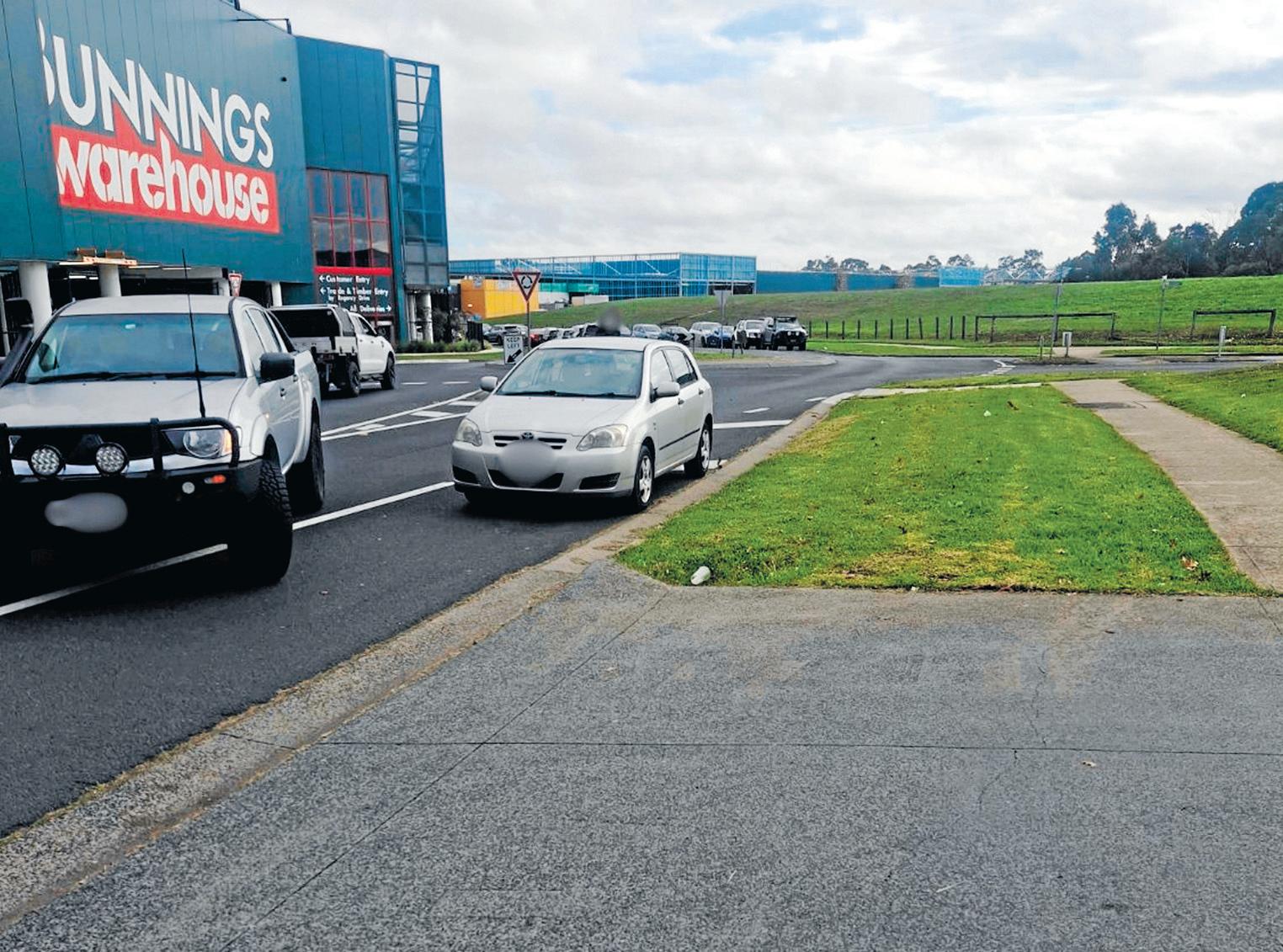
Fears of a potentially serious collision outside a popular Narre Warren bowling centre have prompted renewed calls for action, with a worker claiming repeated warnings to Casey Council about parking-related safety hazards have “gone largely unanswered”
Douglas Brisbane, who works at OZ TenPin in Narre Warren, says he has raised concerns with the council on multiple occasions regarding what he believes is an ongoing road safety issue outside the business.
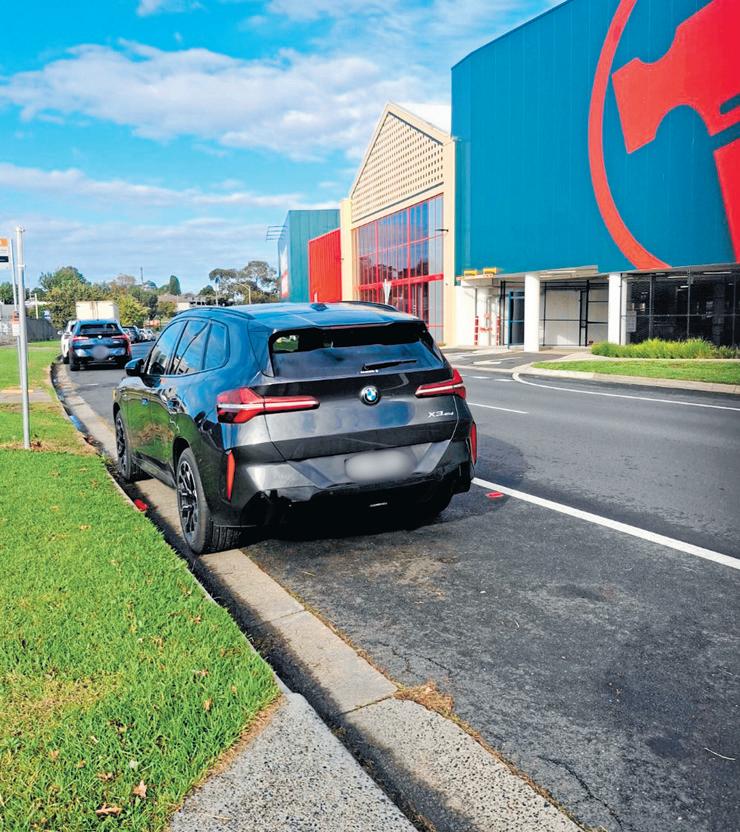
Brisbane claims he has made approximately eight complaints over the past eight months, warning that vehicles regularly park too close to the driveway entrance, creating difficulties for customers entering and exiting the site.
He says the positioning of parked cars can restrict visibility for drivers attempting to leave the premises, increasing the risk of an accident.
According to Brisbane, the issue is particularly noticeable during busy periods when customer traffic is higher.
He says motorists leaving the bowling centre often have limited view of approaching vehicles, forcing them to edge further into the roadway before they can safely see oncoming traffic.
“The visibility is significantly reduced when cars are parked near the driveway,” he said.
“People are trying to leave safely, but they can’t always see what’s coming.”
Brisbane said he contacted the council several times in an effort to have the matter addressed and was under the impression that a road safety assessment would be carried out.
However, he says he has not seen any evidence that such an assessment has taken place and remains concerned that the situation could eventually lead to a serious collision.
“I’m worried that it’s only a matter of time before somebody gets hurt,” he said.
In response to the concerns, Casey Council has disputed the number of complaints received.
Courtney Harrison, Casey’s Acting Manager of Connected Communities, said the council has received four complaints relating to parking issues near the premises since May 2025.
“Each complaint was investigated, with Council officers conducting patrols of the area,” Harrison said.
“During one patrol last year, a vehicle was issued an infringement under the Victorian Road Safety Rules 2017,” she said.
Ms Harrison said three additional patrols were subsequently undertaken; however, officers did not observe any illegally parked vehi-
cles during those inspections.
Manager of City Asset and Planning Keri New said the council would assess the matter before determining whether any changes were necessary.
“Before considering any changes such as line markings or parking restrictions, Council will undertake a detailed assessment of the site and the concerns raised,” she said.
The assessment will help determine whether additional measures are warranted to improve visibility and safety for motorists accessing the site.
Douglas Brisbane says that cars entering and existing the premises are often left with little or no visibility. (Supplied)
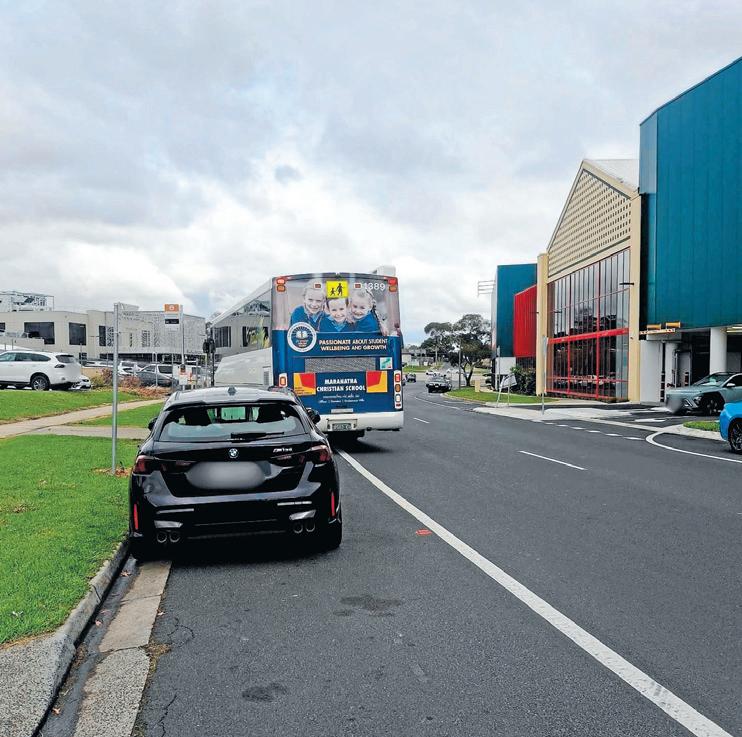
Buses also often have to navigate cars that park along the strip.
Douglas Brisbane calls on the council to enforce stricter parking regulations.
‘Critical weeks’ coming
By Jensy Callimootoo
Following MP Gary Maas’ political resignation late last week, experts caution that similar announcements may soon follow, with the major parties responding to a significant shift in the political sphere.
The Labor MP announced he would not be re-contesting the seat for Narre Warren South in the November election despite representing the electorate for the past eight years.
A candidate for the seat is yet to be announced, but higher-up, Premier Jacinta Allan’s seat may also be challenged — placing Labor in a precarious position.
Monash University political expert, Zareh Ghazarian says that the next few weeks are “critical”, as more sitting MPs, including the premier, will likely be tested.
The recent polls, which favour Liberals and One Nation, are putting pressure on Jacinta Allan’s leadership, says Ghazarian.
Despite this however, Labor members have displayed a united front, with the Premier and possible replacement, Dandenong MP Gabrielle Williams, brushing off questions regarding a change in leadership.
“This is probably Labor’s most challenging period in the last 12 years in Victoria,” Ghazarian said.
“It is now facing a resurgent opposition. It’s also finding itself within a broader climate where new and emerging political parties and challenges are circling.
“And all of that is happening at a time where there seems to be some internal division about the leadership position.
“So this is not where Labor would have liked to have been six months before an election.”
The impacts of a change in leadership could fracture Labor’s performance to a greater degree, with Ghazarian arguing that often voters desert parties that appear disunited.
“This is something that can potentially take an electoral toll. And as we’ve seen with the opposition in Victoria, whenever there has been disunity, disorganisation, voters have just turned away.”
Ghazarian says that Labor will most likely announce new candidates or replacements for electorates in the next few weeks.
This would give each candidate enough time to “build a profile in the community”.
“I’d expect over the next few weeks to really get a sense of who will remain and who’s
about to go and to give those candidates that opportunity to contest in the election,” he said.
The political scientist says each new or existing candidate will have to respond to a volatile political realm along with the harsh shift in sentiment within the broader Victorian population.
“I think that candidates who are going to contest the election can’t think back to what worked, 10, 16 or 20 years ago,” he said.
“There’s a lot that has changed and there is
Australian businesses urged to seize AI opportunity
Artificial intelligence is already helping Australian businesses improve customer service, lift productivity and support workers, but leaders say success depends on building confidence in how the technology is used.
At CommBank’s Accelerate AI event in Sydney, CEOs and founders said AI was moving from experimentation to practical use, with benefits emerging across retail, technology and professional services.
Bunnings is one example. Earlier this year, the retailer launched Buddy, an AI shopping assistant that helped 25,000 customers with DIY projects in a single week. It has also rolled out an AI chatbot for 50,000 staff across 400 stores nationwide.
Chief customer officer Rachael McVitty said Bunnings had taken a simple approach to building trust: customers always know when they are interacting with AI, the tool uses verified information, and people can still speak to a team member when needed.
At Canva, co-founder Cliff Obrecht gave ChatGPT an unorthodox test shortly after it launched: plan a global camel delivery service, including logistics, routing and turnaround times.
The model produced a complete operational
plan, despite the abstract challenge Obrecht expected would break the technology. At that moment, he knew what needed doing.
“If we weren’t going to disrupt ourselves, we were going to be disrupted,” he said of Canva’s approach to implementing AI into its operations.
While speakers pointed to growing use of AI across Australia, some noted the technology remains in its infancy.
“If the ultimate measure is impact, we are less than one per cent of the way in,” Seek founder and technology investor Paul Bassat said.
But that doesn’t mean people should wait for the technology to mature before adopting it.
“If you don’t adopt AI, almost certainly you will lose market share. And ultimately, you will go out of business.”
a lot that has changed in the political debate as well.
“And so what we’re seeing is that the idea of authenticity, the idea of being able to connect with voters on issues that they feel very strongly about is very important for candidates.
“So the candidates that can do that most effectively, will probably have a good chance of making the best impression.”
In terms of broader policies, Ghazarian says crime and cost of living are scopes where the two major parties are failing to connect to voters.
SPONSORED CONTENT
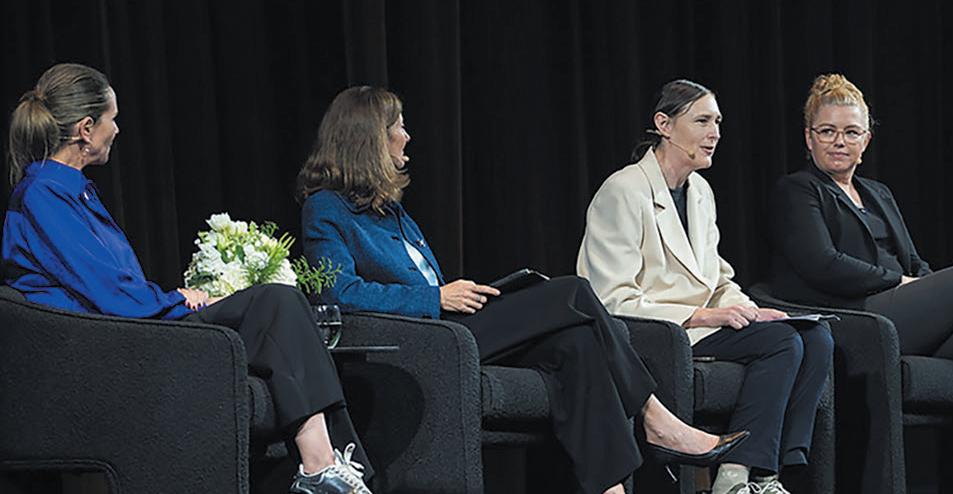
CommBank Accelerate AI: Mel Silva, Vice President and Managing Director, Google ANZ; Dr Nicole Gillespie, Chair of Trust and Professor of Management, University of Melbourne; Rachael McVitty, Chief Customer Officer, Bunnings; and Stephanie Crowe, Head Australian Cyber Security Centre
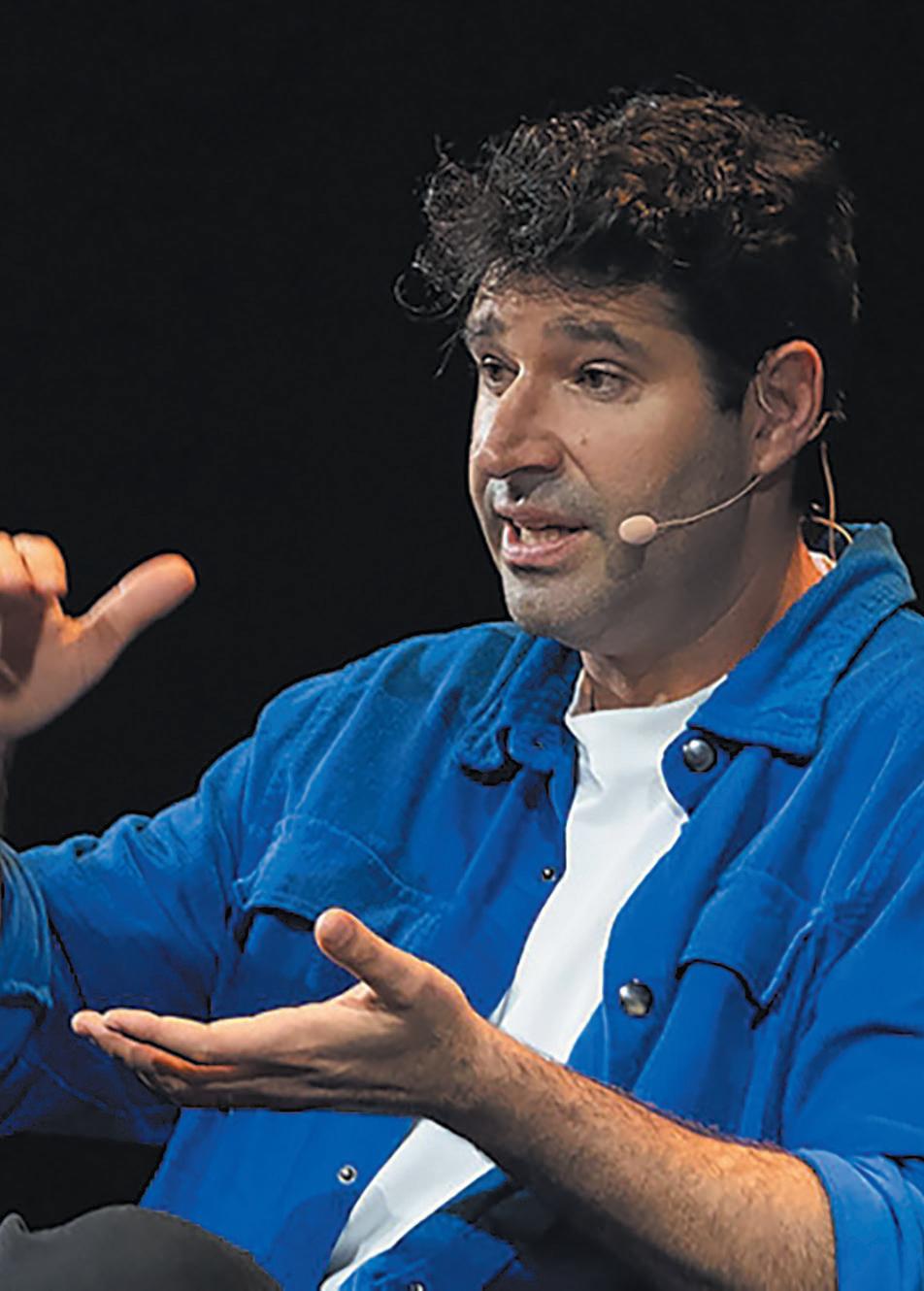
Canva CEO Cliff Obrecht at Accelerate AI 2026.
Premier Jacinta Allan with Dandenong MP Gabrielle Williams in 2025. (Stewart Chambers: 499654) Monash University political expert, Zareh Ghazarian. (Supplied)
The state of our State...
By Dr Jamel Kaur Singh and Dya Singh
As some of you know, I ran for Casey Council elections as part of the research component of my doctorate.
What began as an academic exercise quickly became something much deeper.
It gave me a genuine sense of what everyday Victorians are worried about and, more importantly, what they feel politicians are no longer listening to.
To this day, people still stop me in shopping centres, community events and cafes wanting to talk politics.
Interestingly, during the council elections, most of the concerns people raised were not actually council issues at all. They were State Government issues.
Crime. Housing. Health. Education. Cost of living.
And truth be told… people are worried.
Not just financially. Emotionally and socially too.
Victoria’s debt is now projected to push toward $200 billion in coming years. Put simply, that is roughly the equivalent of close to a million dollars an hour in interest and debt servicing.
Regardless of whether you are Labor, Liberal or somewhere in between, that should concern all of us.
Especially when Victorians are already among the most heavily taxed in the country.
At the same time, our hospitals are overwhelmed, ambulance wait times remain under pressure, housing affordability is worsening and communities across Melbourne’s outer suburbs increasingly talk about feeling unsafe.
Crime statistics tell part of the story. Social media pages in local communities are now flooded daily with CCTV footage, break-ins and neighbourhood alerts.
But perhaps the bigger issue is not simply crime itself.
It is the lack of accountability. It is the feeling of instability.
Because when people stop feeling safe - economically, socially or physically - fear begins shaping public behaviour and political decisions.
And fear changes democracies.
At the same time, Australia’s migration debate
has become far too simplistic and emotionally charged.
We keep lumping all migrants into one category as though they are all arriving under the same circumstances, with the same obligations and the same contributions.
That is simply not true.
International students, skilled migrants, refugees and asylum seekers all enter under completely different frameworks.
Most skilled migrants and international students receive very little government support.
They pay taxes, contribute economically, often pay significantly higher education fees and help sustain critical sectors of the economy.
Many work in healthcare, engineering, IT, aged care, construction and hospitality - industries Australia desperately needs.
Yet Australia lost hundreds of thousands of residents overseas in recent years, including highly skilled professionals relocating to places like Dubai, Singapore and elsewhere across Asia where taxes are lower, housing is more affordable and social cohesion often feels stronger.
Why?
Because talented people have options.
And if Australia becomes too expensive, too divided and too unstable, they leave.
That should concern us enormously.
Contrary to political slogans, migration itself is not the problem.
Citizenship and English fluency, however, should always be prominent criteria.
Not just access to Australia - commitment to Australia.
Work hard. Pay taxes. Participate. Integrate. Belong.
That social contract matters deeply because successful multicultural societies only work when people feel they are contributing to something larger than themselves.
This is where politics becomes complicated. Many Victorians feel politically homeless.
They are frustrated with the Government and Victoria’s growing debt, exhausted by bureaucracy and worried about crime and infrastructure pres-
sure.
But they are equally uncomfortable with divisive grievance politics and simplistic blame narratives.
And this is where parties like One Nation gain traction.
Truth be told… Pauline Hanson taps into real frustrations many Australians are genuinely feeling around housing, cost of living, migration and social cohesion.
Ignoring those concerns entirely would be intellectually dishonest.
But there is also an enormous difference between rhetoric and voting records.
When you actually examine parliamentary voting behaviour, the contradictions become harder to ignore.
Despite presenting itself as the voice of “ordinary Australians,” One Nation has repeatedly voted against policies relating to housing affordability measures, workers’ protections and industrial reforms.
Hanson opposed aspects of the Help to Buy housing scheme aimed at assisting first-home buyers.
One Nation has also voted against legislation relating to casual workers transitioning to permanency, industrial manslaughter protections and various workplace reforms designed to strengthen worker security.
Yet much of the public narrative suggests they are uniquely defending “working Australians”
That contradiction matters.
Because politics today has become increasingly performative.
Strong sound bites. Viral social media clips. Outrage-driven headlines.
But far less public attention is paid to how politicians actually vote when legislation reaches parliament.
Real connection requires us to confront real bias
By Dalal Smiley, chief executive of Wellsprings for Women
Australians have just experienced and participated in a National Reconciliation Week.
Wellsprings for Women staff, its board and volunteers were involved in learning about our role in reconciliation guided by our Reconciliation Action Plan - Reflect.
The article “Are we teaching cultural safety… or cultural fear?” (published in Star News) on Aboriginal and Torres Strait Islander patient engagement argues that specialised cultural training fosters “social anxiety” and “fear of offence” among non-Indigenous health practitioners.
They advocate for replacing distinct First Nations cultural safety frameworks with universal emotional intelligence and communication skills.
The core argument of the article shifts the focus of healthcare delivery from the safety of vulnerable patients to the emotional comfort of the dominant workforce.
Through an anti-racist lens, this framing prioritises white fragility over clinical safety.
In a colonised healthcare system, the discomfort of learning about privilege is a necessary part of unlearning bias.
Equating the discomfort of the practitioner with the structural harms experienced by First Nations patients minimises ongoing racial trauma.
True reconciliation requires strong relationship-building based on trust.
Trust cannot be established if practitioners refuse to confront the power imbalances and racial biases that directly impact patient care.
The article suggests that specialised First Nations healthcare training should be replaced by generic, universal life skills.
This argument relies on a colourblind approach that erases the unique political, historical, and legal status of First Nations people.
Treating cultural safety as generic communication overlooks specific issues such as intergenerational trauma, stolen generations, and institutional distrust caused by colonisation.
Universalism assumes an equal playing field, which directly undermines the concept of equity — providing specific resources and tailored care to meet specific needs.
The article argues that cultural safety training is an unnecessary barrier to human connection.
By advocating for a universalist approach, minimising documented institutional bias, and prioritising practitioner comfort, the article protects existing colonial structures.
Authentic reconciliation requires moving past universal “niceness” to actively dismantle institutional racism through specific, accountable, and self-determined First Nations cultural frameworks.
Effective healthcare requires recognising that intergenerational trauma, stemming from historical institutional control, profoundly im-
pacts current patient experiences and health outcomes.
A universal approach to communication is insufficient, as specialised training is necessary to prevent re-traumatisation and address the systemic distrust caused by historical injustices.
Owning our history as a nation, regardless of how long we have been in this country, means acknowledging past injustices and how they continue to impact on the present as evidenced in the disparity of health outcomes for First Nation people.
Reconciliation Week is an invitation to all of us to pause and think about what is still happening in this country at a community and institutional level that is hampering the equitable health outcomes for communities at risk of exclusion. And why?
And perhaps that is one of the biggest failures in modern democracy.
People are increasingly voting emotionally rather than structurally.
The increase in independent candidates reflects this frustration too.
Many Australians are searching for alternatives outside the major parties.
We are now even seeing discussions about independent “teal” MPs potentially banding together more formally because isolated independents often struggle to influence systemic change alone.
That is the reality of parliamentary politics.
An independent can advocate strongly, but without broader party support, they often become negotiators rather than decision-makers.
Policy becomes transactional - “you support this, and we support that”
Real structural reform usually requires numbers, organisation and influence within government itself.
Which is why many good people avoid politics altogether.
They do not want the scrutiny. The racism. The judgement. The toxicity.
So instead, they sit at dinner tables and complain while poorer-quality leadership fills the vacuum.
And perhaps that is the real danger.
Dad often says healthy societies are built when ordinary people still feel responsibility toward the collective whole.
That idea feels increasingly rare today.
Modern politics has become deeply individualistic. My taxes. My mortgage. My grievance. My identity. My fear.
But democracy cannot survive long-term if everyone votes purely for self-preservation.
Not blind nationalism. Not identity politics. Not endless outrage.
Just competent leadership, honest conversations and a genuine commitment to building a safer, fairer and more cohesive Victoria for everyone.
Because truth be told… the state of our State will not improve until politics becomes less about performance and more about stewardship.
Thanks given to Bail Justice
Congratulations and thanks to Wayne Smith and his unpaid job as a Bail Justice. It’s good to get an idea how the bail system works, considering all the negative reports.
Hard to believe that such an important job is unpaid.
A good interview by Afraa Kori. John Webb, Berwick
Drivers nabbed
More than 200 speeding drivers and 43 drug or drink drivers were nabbed in the South East during a police blitz on the King’s Birthday long weekend.
During Operation Regal, police officers detected 3311 speeding offences, 249 drink drivers and 144 drug drivers across Victoria.
The South East’s detection of 23 drug drivers, 20 drink drivers and 223 speeding drivers was roughly a tenth of the statewide totals.
There were also 11 seatbelt offences and 25 drivers using mobile phones in the region.
Police recorded seven serious injury collisions during the 5-8 June operation, but no fatalities in the South East. The crashes were caused by speeding, impaired drivers and disobeying traffic signals, according to police.
Elsewhere in Victoria, there were two fatal collisions – a 30-year-old female passenger in a collision at Stanhope and a 72-year-old male motorcyclist in a collision at Wangaratta South on Saturday 6 June.
A 17-year-old male motorcyclist was also killed in an off-road collision at Jeparit on Sunday afternoon.
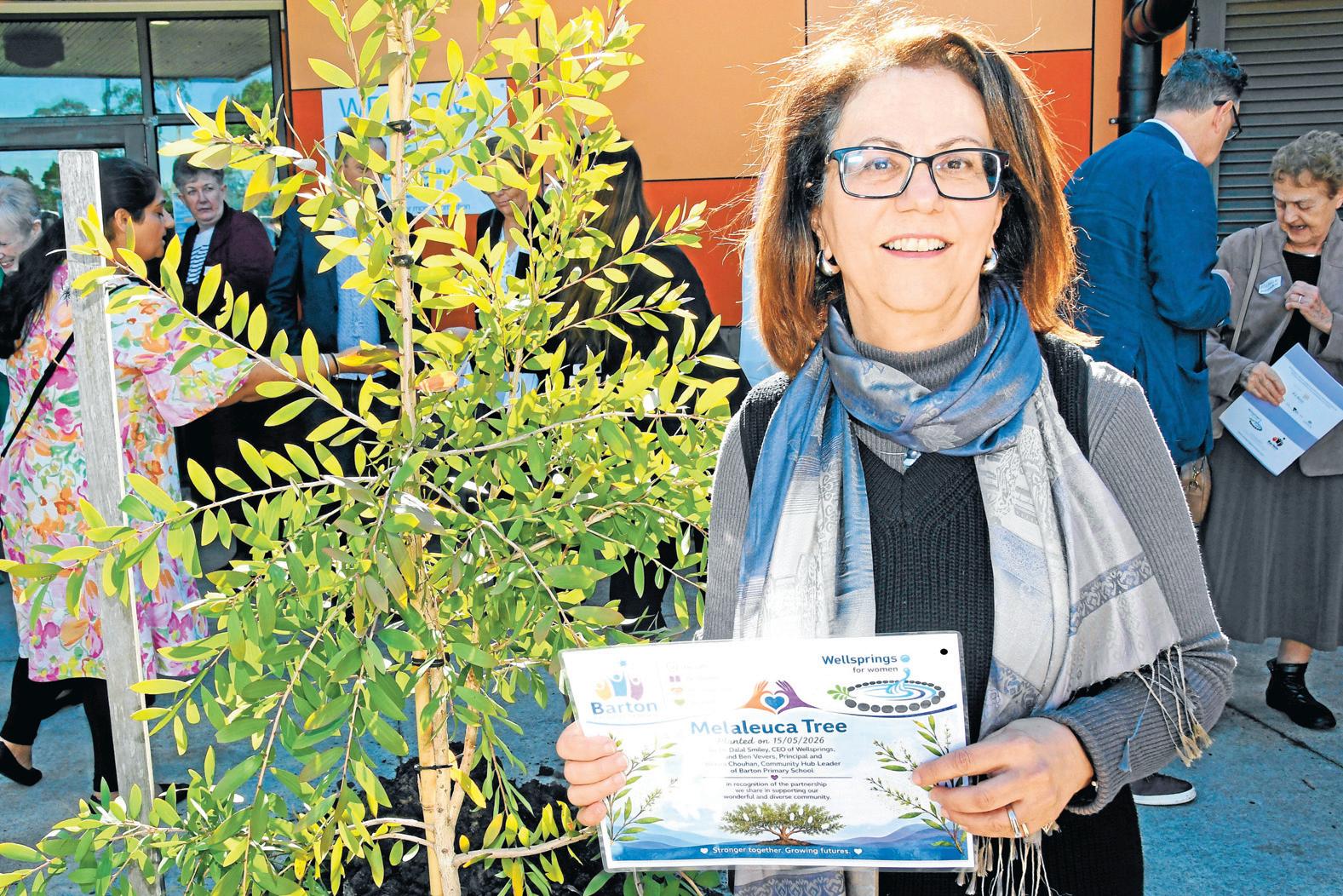
Dr Dalal Smiley, CEO of Wellsprings for Women. (Stewart Chambers: 553490)
Clyde extension progress
By Jensy Callimootoo
A motion has passed in the upper house to release all available documents related to the extension of the Cranbourne train line to Clyde, with support from Labor MPs.
Libertarian MP, David Limbrick moved the motion on Wednesday June 3, motioning for any prior documents between the state and commonwealth government to be tabled within eight weeks.
This includes information extending to all business cases and proposals, funding agreement, cost-benefit analysis, economic assessments and feasibility studies.
Limbrick said the proposed rail extension had been discussed for decades and argued that residents of Melbourne’s rapidly growing south-east deserved access to information underpinning decisions about the project.
“For nearly 30 years there has been discussion of extending the Cranbourne train line to Clyde,” he told Parliament.
“Deciding whether or not this is a project that should proceed is a discussion that would be better informed by seeing the actual work that has apparently been done to understand the costs, benefits and possible cost of the project.”
The motion is another endeavour to propel the developments of the Clyde rail extension. A service highly and long requested by Casey residents living in the growing outer corridors of the region.
The government did not oppose the documents request with South-Eastern Metro Labor MP, Michael Galea supporting the motion.
Galea highlighted the backing from his constituents for this rail extension project.
“At the outset I state that I am very pleased to be speaking in favour of this document’s motion and I very much look forward to the conversations that will ensue as a result,” Galea said.
He noted that the duplication of the Cranbourne line, completed in recent years, had been identified as a prerequisite for any future
extension to Clyde.
Mr Galea highlighted recent investments in the region, including the Metro Tunnel project, level crossing removals and expanded bus services, while acknowledging ongoing community interest in the rail extension.
But Limbrick told Star News that the recent metro tunnel developments are “no use to anybody” if locals have to use other forms of transport to utilise these services.
“Buses are better than nothing, but anyone who commutes knows that when buses replace trains, you are about to have a bad time,” he said.
The motion comes amid continued population growth in Clyde and Clyde North, among the fastest-growing communities in the City of
Casey.
Local campaigners have long argued that public transport infrastructure has failed to keep pace with residential development in the area.
Liberal MP Ann-Marie Hermans and MP Renee Heath also backed the motion, noting the government’s failed promises to extend the rail link.
Attention will now turn to whether previously undisclosed business cases or feasibility studies are released when the response is due later this year.
“These particular documents are from a federal report supplied to the state government, so it should be pretty easy for them to hand them over,” said Limbrick.
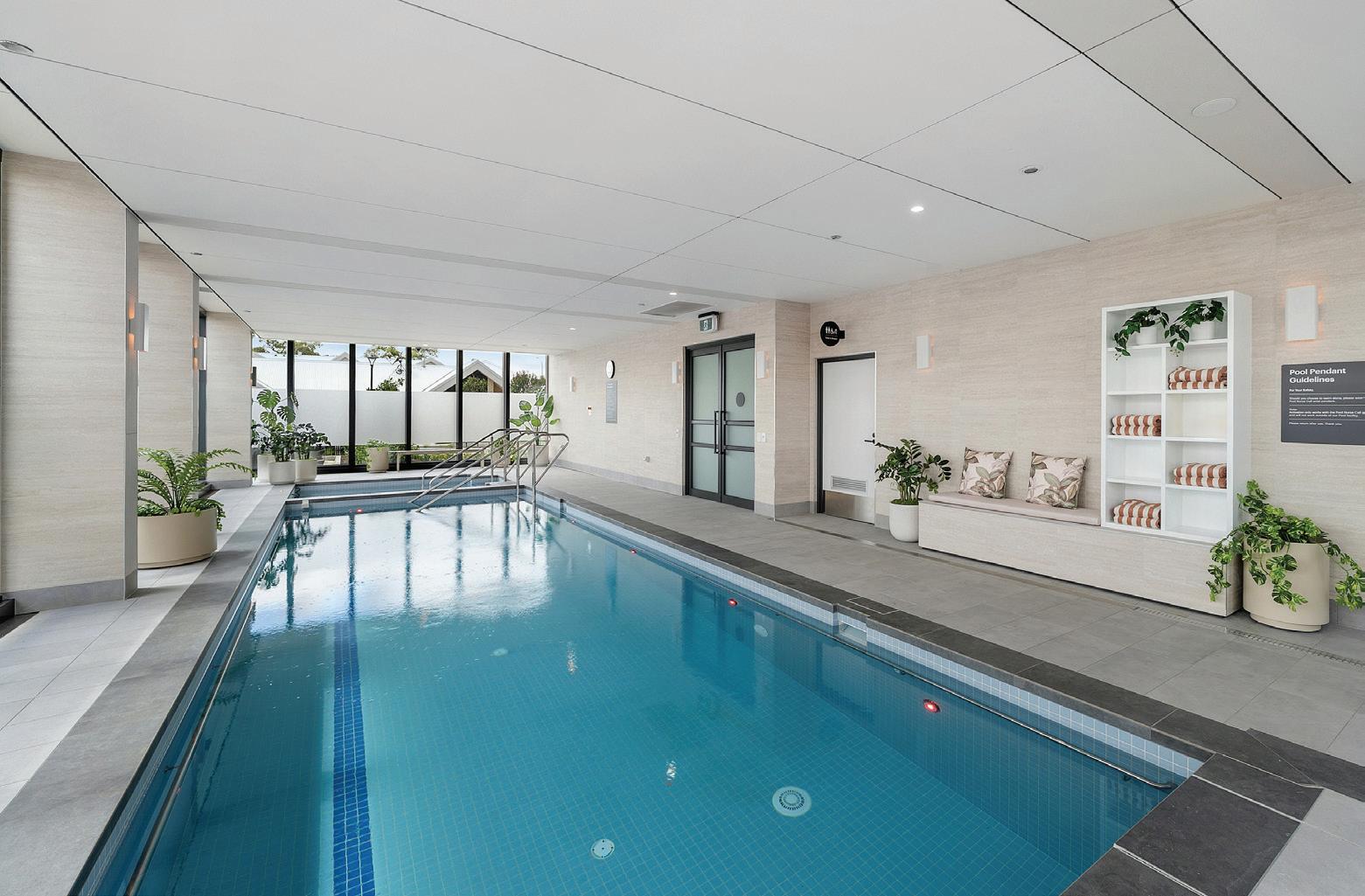
Summerset Cranbourne North is more than a retirement village.
Here, life is about doing more of what you love, and our brandnew village centre allows you to do just that. With resort-style facilities including a pool, spa, café, recreational bowling green, and so much more, every day offers new opportunities to relax, connect, and thrive.
Whether it’s catching up with friends over coffee, staying active in the gym, or enjoying a friendly game of pool, Summerset Cranbourne North is a place where you can truly feel at home.^
And if your needs change, you can have peace of mind knowing there is a residential aged care home onsite and you won’t need to move out of the village.*
Life doesn’t stop when you move into a Summerset village. It just gets better.
We are now open 7 days, so drop by anytime or book a tour - we’d love to show you around.
Love the life you choose.
Visit the village or book a tour
Open 7 days, 9am to 5pm Summerset Cranbourne North 98 Mannavue Boulevard, Cranbourne North 03 7068 5642 | cranbourne.sales@summerset.com.au
A motion to release documents related to the Clyde rail extension has been moved by David Limbrick MP. (On file)
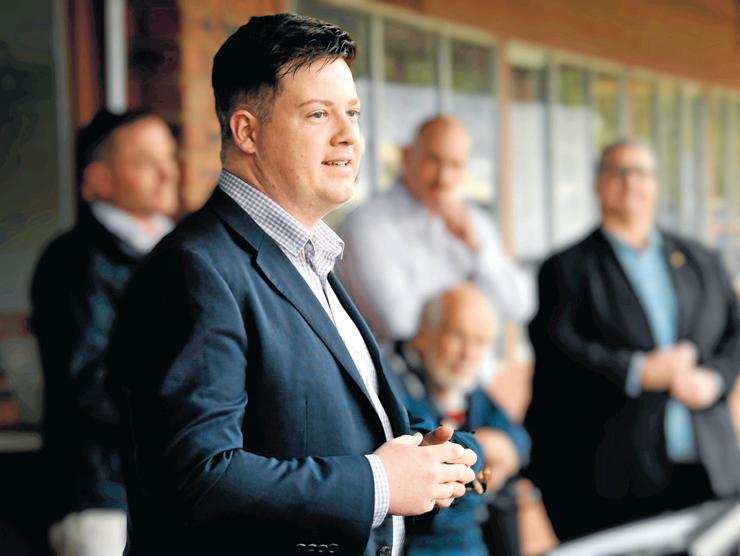
Labor MP Michael Galea supported the motion. (On file)
$100k proudly raised
By Violet Li
Backpacks 4 VIC Kids has raised almost $100,000 through its third Annual Giving Day appeal.
As of Tuesday 9 June, the Cranbourne Westbased charity raised $99,636, and it has a $200,000 target this year to support vulnerable babies, children and young people across Victoria.
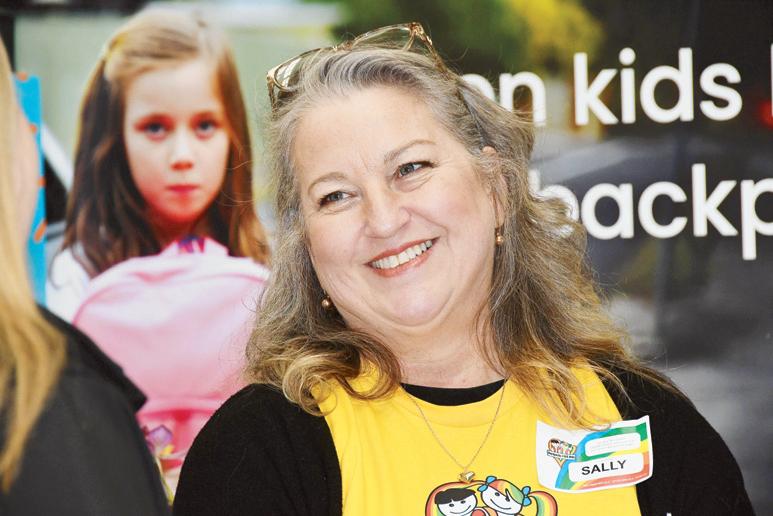
Founder and CEO Sally Beard shared that the charity had already raised $32,825 more than last year.
“We are absolutely overwhelmed by this community coming together to support our programs and so very grateful,” she said.
Ms Beard thanked the Phil Taylor Foundation ($30,000), APT Travel Group’s OneTomorrow Foundation ($10,000), which pledged to match the donation.
On the day, Ms Beard told supporters at the Giving Day event that demand for its crisis packs and material aid continued to grow, while costs were also rising sharply.
“That ($200,000 fundraising goal) is about one quarter of what we need to reach for the coming year’s targets and to be able to respond to all requests,” she said.
Backpacks 4 VIC Kids provides crisis packs and gift packs to children and young people in out-of-home care, emergency accommodation, domestic violence situations, homelessness and other crisis settings.
Ms Beard said the charity had come a long way since she started filling backpacks from her home in 2014.
“When I started filling backpacks at my home in February 2014, I truly thought I’d be packing around five or six of these a month,” she said.
“In the first year of delivery, with help from family and friends, we delivered 732 filled backpacks, wheelie suitcases and sports bags.”
Since then, the organisation has delivered more than 72,000 packs, along with 35,000 additional items such as portacots, car restraints and nappies.
Ms Beard said the total retail value of the items delivered to date was $15.5 million, with about 80 per cent donated, mostly by families and individuals in the community.
However, she said keeping up with demand was becoming increasingly difficult.
“The cost of doing exactly the same thing as we’ve done this year has risen by about 16 per
cent,” she said.
“And then because we want to do more, help more kids feel better, we need to raise that expenditure target even more.”
Ms Beard said the charity had also seen a change in the ages and clothing sizes being requested, with a growing number of teenagers needing support.
She said girls’ size 14 packs had increased by 46.7 per cent this year, while boys’ size 14 packs had increased by 29 per cent.
A recent conversation with an out-of-home care provider had also indicated more teenagers were entering care for the first time, compared with the usual higher number of toddlers and five to 10-year-olds.
“We can’t say for certain what is causing this, but we can say yes to all the requests to support these young people with both our My Essentials packs and our Youth Outreach packs,” Ms Beard said.
She also raised concerns about the financial pressure on foster and kinship carers.
“Payments are insufficient to cover not just the cost of the child but also the loss in income potential of the carers,” she said.
“Kinship carers are officially living below the poverty line in order to provide a safe home for their kin.”
Ms Beard said the charity was looking at new ways to meet rising need, including developing a hub-and-spoke model with five mini depots around Victoria.
The refurbished shipping containers would provide more accessible material aid, not only from Backpacks 4 VIC Kids but also from other charities in local areas.
Illegal firewood collection threatens local forests
By Carmela Mendoza
Crime Stoppers Victoria and the Conservation Regulator have launched the Illegal Firewood: The Cost is Wild campaign to address the emerging crime in the state’s forests.
This campaign supports the Conservation Regulator’s ongoing efforts, through its statewide initiative Taskforce Ironbark, to target organised crime syndicates destroying Victoria’s forests and national parks.
Content across Crime Stoppers Victoria’s social media platforms will direct Victorians to a campaign webpage with information on illegal firewood collection and how to report suspicious activity.
Illegal felling of large trees for firewood has been identified at Bow-Worrung State Forest, north of Stratford in eastern Gippsland.
Offenders had driven off the designated tracks and into the forest, targeting mature trees.
More than a dozen have been cut down, leaving large, exposed stumps and scattered wood debris.
The trees found in this forest are stringybark, a hardwood commonly used for firewood.
The cutting and targeting of this specific tree is consistent with illegal firewood collection.
Recent footage captured in the Bow-Worrung State Forest highlights the impact, showing an example of areas of native habitat left degraded.
Stringybark forests in this part of Gippsland provide habitat for a range of species including the greater glider, yellow-bellied glider and powerful owl.
Illegal firewood is impacting forests across the state, particularly parts of eastern Gippsland, north of Shepparton, in the Otways, and the Grampians.
Around 9,000 trees are illegally removed from Victorian forests and national parks each year.
Much of that timber is sold as firewood to unsuspecting buyers.
Since July last year, Taskforce investigations into illegal firewood collection have led to 54 charges heard, with offenders facing court convictions, fines and the seizure of trailers and chainsaws.
Legal firewood is typically sourced from plantations, commercial suppliers or private land with appropriate permits.
Crime Stoppers Victoria chief executive Stella Smith is encouraging Victorians to check their firewood has been legally sourced and report any suspicious activity.
“Saving money on cheap firewood is not worth contributing to the destruction of forests and wildlife habitat that should be protected for future generations,” Ms Smith said.
“If you do not know where your firewood has come from, you cannot be sure it has been sourced legally.
“People often think they are simply buying cheap firewood, but in some cases, they may be unknowingly supporting environmental crime or even organised crime.
“It is important to buy firewood from legal sellers because it ensures that the wood has been sourced legally and sustainably.
“It protects Victoria’s forests and native wildlife and it supports responsible businesses doing the right thing.
“It helps stop illegal operators profiting from environmental damage.”
Victorians are being encouraged to buy from reputable suppliers, ask where the firewood was sourced and request a receipt with a business name and ABN.
Victorian Environment Minister Enver Erdogan said many Victorians may not realise the role they play when purchasing unverified firewood.
“Our forests are home to unique wildlife and
ecosystems that have taken generations to grow. Illegal firewood collection by criminal operators destroys these shared spaces, stripping landscapes of beauty and habitat and impacting the experience for all Victorians,” Mr Erdogan said.
Acting Chief Conservation Regulator Callie Donaldson said community information plays an important role in identifying and disrupting illegal activity.
“We’re targeting criminal networks that are cutting down commercial quantities of trees in our forests,” Ms Donaldson said.
“By reporting suspicious firewood activity and choosing legally sourced firewood, the community can help us stop the damage being caused by illegal firewood operators,” Ms Donaldson said.
“These criminals are driven by profit, at the direct expense of our forests and the wildlife that rely on them.”
Suspicious behaviour, including chainsaws operating in forests late at night, or sellers unable to verify where the wood was sourced, can be reported anonymously to Crime Stoppers.
Reports relating the illegal take or sale of firewood can be made at crimestoppersvic.com.au or 1800 333 000
Casey Cr Melinda Ambros, Cr Jennifer Dizon, Sally Beard and Casey Mayor Cr Stefan Koomen.
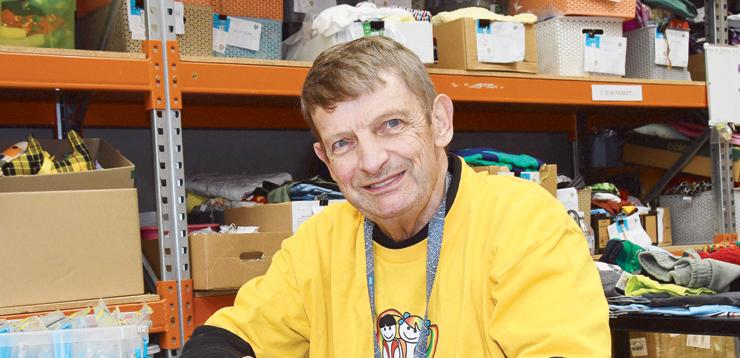
Jess on the Annual Giving Day.
Sally Beard, Founder and CEO of Backpacks 4 VIC Kids. (Stewart Chambers: 555907)
Trevor on the Annual Giving Day.
Narelle, Sarah and Bronwyn.
OUR COMMUNITY
Where community connects
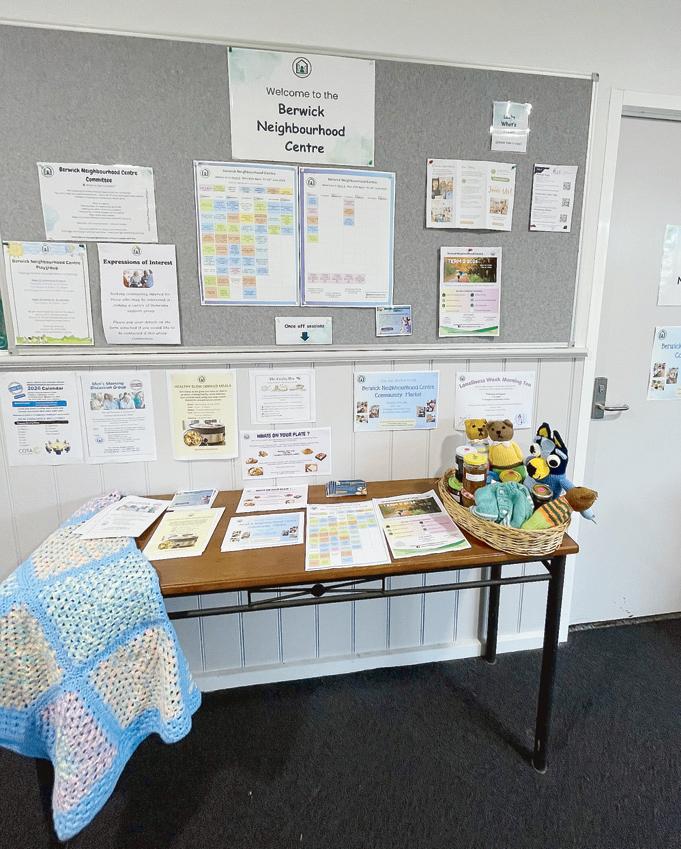
The Berwick Neighbourhood Centre is a welcoming, engaging community hub located across two locations in Berwick at 112 High St and Timbarra Way.
Offering an array of activities and programs for children to adults, catering for their needs and interests.
Feel free to reach out to the friendly staff, who can let you know more about what’s on offer which includes adult craft, exercise, gardening, social groups, information sessions, events, playgroups and childcare.
There is always something going on at the centre for you to explore. Come along and check out the Berwick neighbourhood centre to find, fun, friendship and belonging in your community.
Save the date for our upcoming community market on Thursday June 25th and our Enormous morning tea on the 27th August. Both will be great events.
For more details contact the centre on 9704 1863 or email admin@berwicknc.com.au We look forward to seeing you soon.
Your go-to local hub
We get it: life’s busy and your time is precious. That’s why Thompson Parkway is proud to be the local favourite for stress-free shopping, top-quality finds, and ultimate convenience. We reckon running errands should be a breeze, not a chore.
While Woolworths is at the heart of it all, serving up a massive range of fresh produce and everyday supermarket staples, there’s heaps more to explore. Our carefully chosen mix of specialty shops, boutique foodies, and diverse dining spots means there’s always something delicious and unique to discover every time you pop in.
We’ve completely taken the hassle out of the
weekly shop. Instead of driving all over town or battling chaotic car parks, Thompson Parkway brings your whole checklist together under one roof. Grab your morning coffee, stock up on fresh fruit and veggies, treat yourself to some beauty essentials, and sort out dinner, all in one easy trip with seamless parking right at the doorstep.
Open seven days a week to fit right in with your schedule, we’re here to make your week run that little bit smoother.
Thompson Parkway: Making everyday life beautifully simple.
Wellness Expo
The Oakgrove Community Centre Board of governance, volunteers and staff are pleased to invite residents, families, carers, and community members to attend the Oakgrove Wellness Expo on:
Date: 27 June 2026. Time: 12:00 pm – 3:00 pm
Venue: Oakgrove Community Centre
This special event will bring together a range of health, wellness, and community service providers, offering valuable information, resources, and support to help individuals lead healthier and more fulfilling lives.
Attendees will have the opportunity to:
• Meet local health and wellbeing professionals
• Explore community support services
• Attend informative presentations and guest speaker sessions
• Access health and wellness resources
• Connect with local organizations and community groups
Whether you are seeking information for yourself, a family member, or someone you care for, the Oakgrove Wellness Expo offers a welcoming environment to learn, connect, and discover services available within our community.
Admission is free and all community members are welcome.
Thompson Parkway is open seven days a week.
Oakgrove Community Centre Board of governance, volunteers and staff invite you to their Oakgrove Wellness Expo.
The Berwick Neighbourhood Centre offers an array of activities and programs for children to adults. 558858_01
Engineer veteran’s well deserved OAM
By Violet Li
Pearcedale engineer Robert Lehunt has been awarded a Medal of the Order of Australia (OAM) for more than 40 years of service to the pipe industry.
Mr Lehunt, who chairs several joint Australian and New Zealand Standards Committees that draw up codes of practice for plastics products, said he was flabbergasted when he found out about the award, and he first thought the call from Canberra was a prank.
“I was out in the workshop, and my phone went off. I didn’t recognise the number, but it had an 02 number, and it said Canberra City,” he recalled.
The man on the other end told him the Governor-General’s office had been trying to reach him because it had the wrong email address.
The caller then told Mr Lehunt that he had been recommended for an Order of Australia, and the award had been approved.
“I was sceptical about it, but he knew too much,” Mr Lehunt said.
“I had this nagging doubt. And he said, what are you going to do now?
“I said, well, tonight I’m going to sit down and have a Sauvignon Blanc, and I’m going to think about it.”
Mr Lehunt received the OAM in the General Division for service to the plastics industry in the 2026 King’s Birthday Honour List.
He has been involved with Standards Australia since about 1987 and has served on 11 committees responsible for 73 Australian and New Zealand standards.
He chairs the PL-006 Polyolefin Pipe Systems committee and the WS-028 Design and Installation of Buried and Fixed Pipes committee and has also been involved with the International Organisation for Standardisation’s TC138 committee for plastics pipes, fittings and valves.
He was also head of the Australian delegation to the ISO TC138 meeting held in Sydney and was named a Standards Hero in 2022.
Mr Lehunt said he was humbled by the recognition.
“I just felt so humbled that anybody could
think that what I do was worth an award,” he said.
To explain what he does, Mr Lehunt said: “When you go home and you turn the tap on, and the water comes out, that goes through a whole series of pipe systems and networks back up to dams and pump systems.
“What I do is I’m involved in the design of those pipelines, supervising the construction.
“We don’t do construction because we’re consulting engineers, so we would do quality assessment or quality assurance testing to make sure that everything conforms.”
His work covers water supply, gas, irrigation, mining sites and other pipe systems across Australia, New Zealand and Southeast Asia.
He has worked on projects connected to places including Mount Isa, the Pilbara and Papua New Guinea.
When asked if he could share any major projects he had worked on before, Mr Lehunt said much of the infrastructure he works on ends up underground and unnoticed, but that did not make it less important.
“If you took all that away, civilisation wouldn’t function,” he said.
“The only reason we can live in big cities like we do now is we’ve got this infrastructure to support us.
“If we didn’t have sanitation, you can’t live in a big city. The poor people in Gaza are finding out. They don’t have sanitation. They don’t have a water supply. And you can’t live.”
Mr Lehunt began his career after studying civil engineering at what is now Deakin University.
He later completed a master’s degree at Monash University and studied at Melbourne Business School.
He worked with VicRoads, private construction companies building dams and subdivisions, and manufacturers that made pipes before setting up his own company, LeHunt Consulting Engineers, in 1989.
He also works in forensic engineering, investigating failures when pipe systems go wrong.
“Engineering is a tedious sort of business in many ways because you have to assemble facts together,” Mr Lehunt said.
“It’s a little bit like when you were a kid and
So you’re a wise guy, Ray?
He may not be a firefighter, paramedic, or police officer, but Ray O’Leary certainly has an important role to play in society… putting a smile on your dial, after all laughter is the best medicine
Ray was able to spare some time from his busy tour schedule to chat with reporter Nick Sinis (a big fan of Ray’s) about his upcoming show at Bunjil Place, as well as the ins and outs of being a comedian.
Afteralmostadecadeofbeingintheindustry, Ray had quite an unlikely start.
“I used to work for New Zealand’s Department of Corrections. I had a day job and I was just very… I guess unfulfilled or frustrated,” he said.
“I didn’t enjoy waking up early in the morning to an alarm and going and doing this job.
you had a thousand-piece jigsaw puzzle. You put it out of the box, and eventually you get the edge bits, and then you’ve got a whole pile of stuff, and you try to put it all together.”
Mr Lehunt has also spent many years in training and education.
He helped develop a training package dealing with pipelines, installation and testing, which later grew into a national standard for qualifications.
Outside engineering, Mr Lehunt lives just outside Pearcedale, where he grows vegetables.
He said it was not a commercial farm, but during the growing season he could produce enough to supply his own household and the households of his three children.
He enjoys bottling and pickling produce.
“So far this year, I’ve made 62 jars of pickled cucumbers, sweet capsicums, and hot, hot chillies,” he said.
“You don’t waste food. You use food.
“You give someone something like that, and it’s been homegrown, it’s under control all the way through. And you’ve no idea how grateful people are for that.
“And I get fun out of it.”
When asked what advice he would give to young people considering engineering, Mr Lehunt said: “Do it.”
“I’ve got a motto on the calendar that sits in one of the smallest rooms in the house at the moment. And I think it’s George Bernard Shaw. And it says, don’t stop the people who are doing things,” he said.
“Let them do it… Engineering originally was a blokey thing. And then there’s been a current of female engineers coming through.
“If I were sitting down with Year 12 kids, I’d say, look, do it, especially girls, just go and do it.
“Now, you might get a degree in engineering. That doesn’t necessarily mean you will end up there at the end of your career. But it teaches you to think. It teaches you to solve problems and to do things. The other buzz I get out of it is that we actually build things. We make things. We’ve created things.”
The 81-year-old is still working and has no plans to stop.
“I’d go mad otherwise,” he said.
“I did always harbour the dream to do it and eventually I got to try at some point and I signed up for an open mic and have been gigging nonstop since then.”
Ray described his journey as a ‘career like anything else’ , starting out in open mics throughout Wellington and New Zealand.
MovingtoAucklandwouldfurthersolidifyhis rise, leading to an award and TV appearances.
But Australia would become home to much bigger opportunities.
“It’s a lot easier to tour around Australia, there’s just a lot more cities you can go to,” he said.
“I’ve also recently started to do more in the UK as well, I toured there earlier this year which was fun.”
As a nosey reporter, Ray was asked how he comes up with material and inspiration for his shows.
“I guess the answer is you sort of go around and live your life; someone will say something to you or you’ll see something and you get a spark of an idea,” he said.
“I like to work on a laptop and try write out as many thoughts on this idea you just had.
“A lot of it comes from real-world observations and situations, but then you have to hone it and go on stage and present it and see if they find it funny.”
Ray is also very meticulous about how he analyses his material, keeping it all in a spreadsheet and ‘rating’ how well each joke did.
“I record it and listen back. I keep the strong ones and cut the weak ones, so you sort of do a performance review and see which jokes are hitting the KPIs,” he said.
“A friend of mine once said it was good because I was trying to be as scientific as I could about art or I was taking as much of the art out as I could of doing an art.
“You do have to be a tough critic of yourself if you want to be a successful comedian.”
Ray is a familiar face on – Have You Been Paying Attention?, Thank God You’re Here, and Cheap Seats (which he also writes for).
He is looking forward to his upcoming show at Bunjil Place on June 26, which will be his third time performing at the venue.
Pearcedale engineer Robert Lehunt has been awarded a Medal of the Order of Australia (OAM) for more than 40 years of service to the pipe industry.
(Stewart Chambers: 557594)
Ray O’Leary will be performing at Bunjil Place in late June. (Supplied)
Making students shine
By Sahar Foladi
Cranbourne educator Jennifer (Jenny) Mackay, who created a system to transform the lives of thousands of students and their families, has been recognised with a Medal of the Order of Australia (OAM).
From her debut as a teacher in 1986 to assistant principal at Dandenong North Primary School (DNPS), where she served an incredible 36 years, she herself was confronted with a unique challenge at the school.
But now she says her “real OAM moment” came from the school’s achievement.
“When we got our first waves of Afghani refugees, I had to understand what they’re going through before you start to teach them.
“That really changed my outlook on how we could ensure not just a successful education but successful lives.
“Part of that became being involved with the family, understanding their stories, the difficulties they faced. Children go home to families - we need to ensure everything’s working for them,” she says.
“The Afghani wave of new arrivals awakened me - it’s not just teaching them English - you have to embrace people or they will become alienated in society.
“You can’t have people feeling alienated. It leads to a disconnect, resentment, and changes how our area of Dandenong could have been.”
By that time, the English as Additional Language (EAL) program was in full swing, but it wasn’t working because it wasn’t “rigorous enough”
The school developed three key programs, Reception, Transition and EAL, based on the students’ needs and not on the general EAL program.
With the amazing staff and teachers onboard, it worked.
“We had to be fairly innovative, we had to have more wellbeing people aligned with EAL and classroom teachers.
“Even though it was a small class, there were so many levels of language capability. I kept thinking this child’s been in EAL for five years, when will they access the mainstream curriculum? We have to hasten this.
“So, I thought if we had the new arrivals, who had no English, reading or writing, in an intensive program two hours a day, that would make a difference.”
Understanding the trauma, lack of facilities, education, and so much more, the school started a two-week introduction and tour for the student and their families about how to play on
First Nations voices heard and celebrated
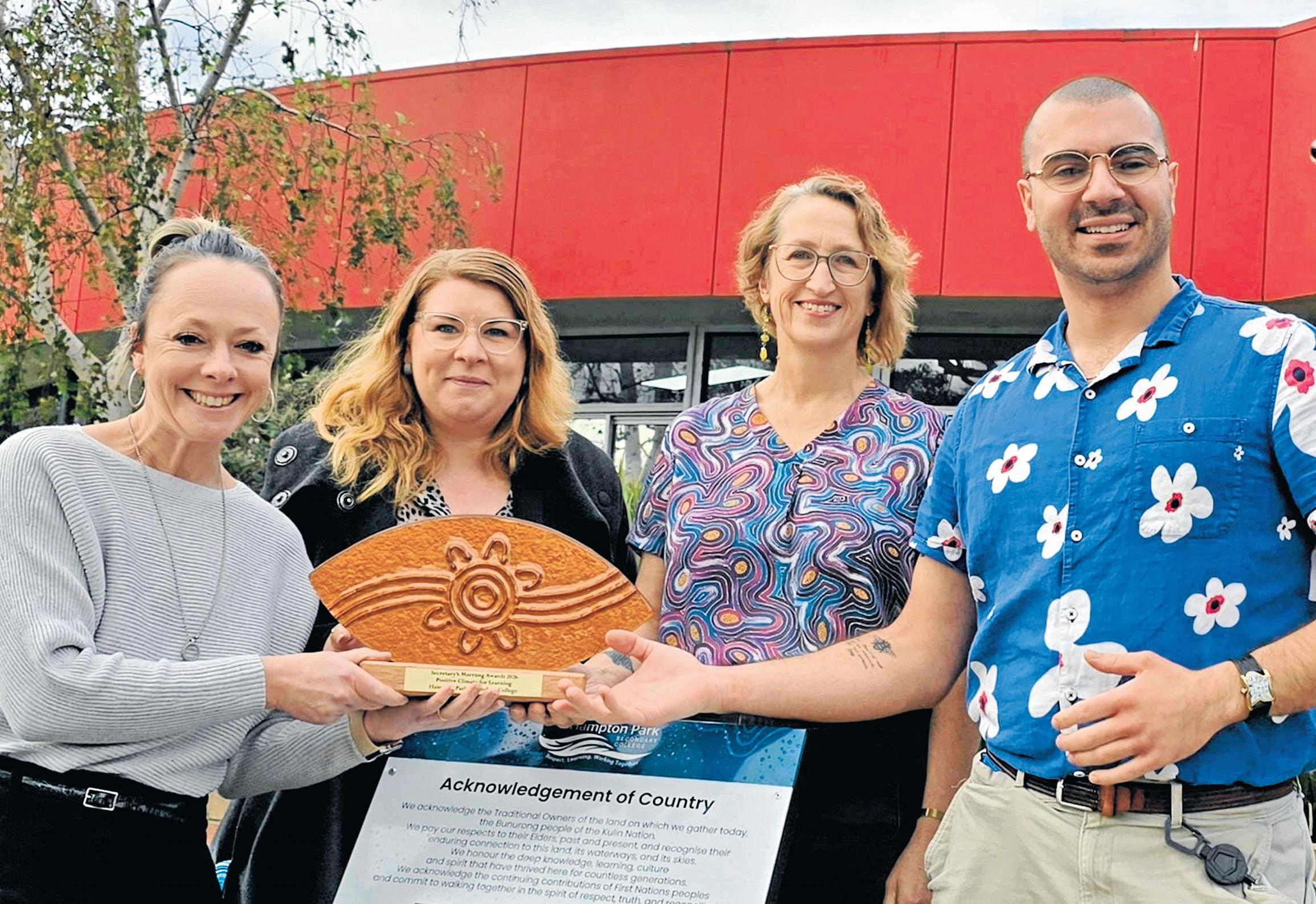
Four staff members at Hampton Park Secondary College have led an award-winning program in First Nations education and inclusion.
Last month, the team of assistant principal Kelly Krieg, teacher Miriam Fee, wellbeing officer Christian Haddad, and cultural diversity and community engagement coordinator Sally Carruthers took out the Secretary’s Marrung Award for Positive Climate for Learning 2026. They were lauded for their deep commitment to ensuring First Nations students and families felt seen, valued, respected and culturally safe.
“Their work extends beyond classrooms and events,” a college spokeperson stated.
“It is about building trust with families, listening to community voices, embedding Aboriginal perspectives throughout the school, and creating opportunities for students to proudly connect with their culture, history and identity every day.”
The team brought students, Elders, families and community together and created spaces where First Nations voices are celebrated.
“The recognition is a proud milestone for Hampton Park Secondary College and reflects the college’s determined commitment to walking alongside First Nations communities, honouring culture and creating lasting change through education.”
The Marrung Awards recognise Victorian educators making a meaningful difference in improving outcomes for Aboriginal and Torres Strait Islander students.
the playground, playground rules, games, and simple activities to assess the students’ capabilities.
In its reception and transition phases, students are taught terminology, foundational skills and other basic skills in literacy and mathematics that are also linked to their classroom activities to bring them up to speed with their level of work.
This led Ms Mackay to set up a rigorous evaluation program of each student, which proved the methods were working. In some cases, it also identified students with intellectual disabilities.
Prior to this data, students’ lack of academic growth was blamed on English language.
“What we found was the programs were so effective, the students were making such im-
provement, that when we left (retired), we were the only school that had 100 per cent of our students achieving well above in their learning growth in all levels.
“That’s huge when you consider many of the kids didn’t go to school. That was my OAM really, to see that’s what we’ve done.”
Ms Mackay, the teachers, staff and wider school community also embraced the wave of African refugees, who had a similar sense of trauma but were different in many respects. Such as involving mothers who arrived as refugees without their husbands because of the war and traumatic situations.
The reception program also supported students’ families through their wellbeing team. More mothers reached out to connect with support services, as they trusted the school environment.
At one point, the school community would take students to their medical appointments and set up a Mother’s Group to help inform and educate mothers on how to expressively read to their children, only to find out that some mothers couldn’t read or had limited reading skills.
Ms Mackay and her husband Kevin - who also has an OAM - served at DNPS for 36 years and 39 years respectively, their teaching careers
spanning 45 years and 60 years.
Whilst they’re retired, Kevin Mackay works at Emerson School Dandenong and Ms Mackay at Dandenong High School. She is implementing a similar method for teenagers as the school gains large influxes of teenagers without any English or with limited English as the Noble Park English Language School is at capacity.
“In Prep, children are messing their mums, but over here, suddenly adults aren’t important and it’s more about fitting in the peer groups.
“That’s an eye opener, they lost their old friendship group so they have to form a new one.”
Even in her new role at the high school, she encounters many of her ex-students who are excited to see her and sometimes, ask her for one of her handmade birthday cards.
“I just love education. I can’t just switch off, I feel I have a bit more to give.
“We have students, who have lost so much learning.
“If they’re coming in with no English in the first and second year, they struggle in maths because they don’t understand the instructions.
“By the time they understand they missed on the foundational skills, we’re patching them up with that.”
Jenny Mackay is recognised fro her incredible long withstanding contributions in education, students and their family’s lives. (Gary Sissons: 557267_05)
Jenny Mackay OAM, pictured right as Dandenong North Primary School principal, with then-principal and husband Kevin Mackay OAM and then-Education Minister Natalie Hutchins. (Gary Sissons: 304005)
Hampton Park Secondary College assistant principal Kelly Krieg, cultural diversity and community engagement
coordinatorSally Carruthers, teacher Miriam Fee and wellbeing officer Christian Haddad. (Supplied)
Raising vital awareness
By Jensy Callimootoo
E-Girl Empowerment hosted a meaningful and impactful event, calling awareness to mental health wellbeing for women and young girls in the City of Casey.
The Mental Wellness Awareness Event was hosted at Lynbrook Community Centre, bringing women together for an afternoon of education, inspiration, practical support and connection surrounding mental health and emotional wellbeing.
The event aimed to propel the conversations around women’s mental health and encourage the utilisation of practical tools and pathways to support women, while also reducing stigma.
Founder of E-Girl Empowerment, Gertrude Sarvananthan brought the event together with Project 61.
Sarvananthan said the purpose of the event was to create a safe and empowering environment where women feel seen, heard and supported.
“We know many women are silently carrying emotional burdens while trying to care for everyone else. We wanted to create a space where women could have honest conversations, feel supported, and walk away with practical tools and hope,” she said.
During the event, experts and experienced professionals shared their first-hand experiences, including women with professional mental health backgrounds and community support services.
Casey councillor, Kim Ross, who also works as a psychologist shared a poignant message on connection, holding things together and the importance of reaching out the other women rather than struggling alone.
Through the symbolism of buttons, Cr Ross encouraged women to prioritise small but im-
portant self-care habits to staying intertwined with community.
This includes taking short breaks, going for a walk, enjoying coffee with friends, exercising and creating moments of rest to support emotional wellbeing.
Ying Liu, a mental health nurse, articulated
an in-depth presentation helping women better understand common mental health challenges, signs of emotional distress, myths surrounding mental health and the journey to seeking community support.
Jim, who works within a Peer Support Group also delivered an impactful speech, sharing his lived experience of struggling with Obsessive Compulsive Disorder (OCD) and the barriers to overcoming the illness.
Caiying Joilin touched on the interlinks between mental health nutrition. Highlighting how the food choices influence our mood, focus, energy and emotional resilience.
The event was concluded with a crucial delivery from Aya T Thomas from Athenie’s Angel, who spoke on suicide awareness, prevention and support, while also sharing the charitable work being undertaken to support vulnerable individuals and families experiencing crisis and mental health challenges.
Attendees were also deeply moved by personal inspirational stories shared by Thushari and Meenal Lata , whose courage and honesty inspired many women in the room.
As well as Sarvananthan, the event was co-hosted with Rubika DeSilva, who both shared messages of encouragement and hope, reminding women of the importance of connection, community and seeking support during difficult seasons.
Sarvananthan says that the event reinforced an important message, “mental wellness matters and no woman should walk alone” , she said.
Ten arrested over alleged drug and firearm syndicate
Ten people have been arrested over their alleged involvement in a syndicate trafficking drugs, firearms and peptides across Melbourne and importing illicit tobacco.
Police from the Eastern Region Crime Squad executed 12 simultaneous search warrants across the CBD, southeastern and northern suburbs from 10am yesterday.
The searches uncovered more than 2kg of cocaine with an estimated potential street value of $500,000, thousands of vials of peptides, as well as steroids, approximately 80 cartons of illicit tobacco, cannabis, approximately $150,000 in cash suspected of being the proceeds of crime, a 3D printer and dozens of weapons.
36 firearms were seized in total, 17 of which are illicit, consisting of longarms, handguns and 3D printed firearms.
Ten people were arrested, six of them charged:
■- A 26-year-old Docklands man, charged with trafficking a large commercial quantity of cocaine, possess drug of dependence, prohibited person possess a firearm, possess unregistered handgun, dispose of a handgun, possess prohibited weapon, and possess property suspected of being proceeds of crime.
■- A 24-year-old Ferny Creek man, charged with 33 offences including, trafficking a large commercial quantity of cocaine, deal property suspected of being proceeds of crime, as well as extensive firearm offences including possess a traffickable quantity of firearms, prohibited person possess a firearm, possess an unregistered handgun, possess an unregistered longarm and possess ammunition.
■- A 58-year-old Ferny Creek man, charged with 13 offences including, trafficking a commercial quantity of cocaine, possess a traffickable quantity of unregistered firearms, possess an unregistered handgun, and possess an unregistered longarm.
■- A 23-year-old Officer man, charged with trafficking a large commercial quantity of cocaine, possess a traffickable quantity of firearms, dispose of a traffickable quantity of firearms, deal property suspected of being proceeds of crime, and four counts of prohibited person possess a firearm.
All four were remanded in custody to appear in Melbourne Magistrates’ Court.
A man and woman – both aged 31 from Berwick – were charged with possessing a traffickable quantity of firearms, prohibited weapons
and drugs of dependence. They were bailed to appear in Dandenong Magistrates’ Court on 17 December.
A 53-year-old woman and 54-year-old man –bothfromNarreWarrenNorth–wereinterviewed in relation to trafficking a drug of dependence, and manufacturing and trafficking firearms. Two men aged 41 and 45 from Pakenham and Endeavour Hills respectively were arrested in relation to possessing a drug of dependence. These four were released pending further enquiries. Further charges are expected to be laid. As investigations continue, anyone with information on drug or firearm trafficking is urged to contact Crime Stoppers on 1800 333 000 or online via www.crimestoppersvic.com.au. Reports can be made anonymously.
Founder of E-Girl Empowerment said that the event aimed to create a safe space emphasising the importance of women’s mental health.
The event attracted many women across Casey.
Those who came to the event listened attentively to first hand experiences regarding mental and emotional wellbeing.
Sajeewani Hopman speaking at the event.
Founder of E-Girl Empowerment Gertrude Sarvananthan speaking at the event.
BERWICK
TIP-STARS
WHAT’S ON
Berwick Farmers Market
Farm fresh fruit and veggies, open range ethical eggs, honey, baked goods, artisan breads, vegetable seedlings, ethically raised meats, jams and preserves, dairy, wine, nuts, ready to eat goods. No crafts.
• Saturday 13 June, 8am-12pm at Old Cheese Factory, Homestead Road, Berwick. Details: farmersmarketattheoldcheesefactory.org.au
Mens Fitness Boxing
Prioritise your health and try a beginner boxing class at the Library during Men’s Health Week 2026. Bring a towel and water bottle. Suitable for ages 18-plus, no boxing experience necessary.
• Saturday 13 June, 11.30am-12.30pm at Bunjil Place Library, 2 Patrick Northeast Drive, Narre Warren. Bookings: events.connectedlibraries.org.au/ event?id=220519
Far-Off Art Fair
Hands-on workshops, browse a curated artist market, and experience the space brought to life by the outgoing resident artists at Emerging Artist Hub.
• Saturday and Sunday, 13-14 June, 11am-3pm at Emerging Artist Hub, Narre Warren Mechanics Hall, 59 Webb Street, Narre Warren; free event. No bookings required.
SWAN Cobbers
Meet and chat with other father figures of children with a rare or undiagnosed genetic condition. In June, you and your children are invited to join us to plant some trees.
• Sunday 14 June 10am-11.30am at Edeys Run and Hallam Road Walkway playground, Hampton Park; free event. Bookings: trybooking.com/DIXKP
Biodiversity Day at Myuna Farm
Come and celebrate International Day for Biodiversity. A train ride to wetlands, where you can meet flying foxes and watch them fly out at sunset. Frog calls and water bugs activities.
Free gardening fun for dads, grandfathers and their children. Grow vegetables to eat, learn about insects, and have fun in the kids’ play garden. Bring hats, sunscreen and water bottles. All gardening tools and resources provided.
Trades & Services
• Saturday 20 June 10am-11.30am at Old Cheese Factory, Homestead Road, Berwick; free event. Bookings: trybooking.com/DIZAQ
The Swinging 60s
The choir Voices of Casey presents songs from the 1960’s. With guest singers from the Vocal Performance School. Elaborate afternoon tea included.
• Saturday 20 June 1pm at Hampton Park Baptist Church, 1 Orient Place, Hampton Park. Details: voicesofcasey@gmail.com
Family violence fundraiser
Rotary Club of Casey presents Unlocking Hope—a special fundraising event in support of RizeUp and their vital work empowering families impacted by domestic and family violence. Delicious food, with drinks at bar prices. Live music from guest artist Paul Hogan, lucky door prizes and silent auctions. Dress code: cocktail.
• Saturday 20 June, 7pm-11pm at Beaconsfield Club, Holm Park Reserve, 100 Beaconsfield-Emerald Road, Beaconsfield; $65pp. Bookings: trybooking.com/events/1564861/sessions/6350052/ sections/3013983/tickets
Coastal Villages Dads Group
Catch-up with other dads, father figures and their kids. Just drop by to let your children play on the playground and have a chat with other local dads.
• Sunday 21 June 9am-11am at Pelican Cafe, 85 South Gippsland Highway, Tooradin; free event. Register at trybooking.com/DINTR
International Yoga Day
Presented by Saathi Multicultural Association Of Australia. All levels are welcome.
• Sunday 21 June 2pm-3pm at Lynbrook Community Centre, 2 Harris Street, Lynbrook; free event. Bookings: trybooking.com/DKXUN
Rose Pruning Workshop
Hands-on workshop where you’ll learn the best times and techniques for pruning your roses. Practical tips on tackling pests and diseases. For beginners and green thumbs alike.
• Thursday 25 June 10am-12pm at Old Cheese Factory, Homestead Road, Berwick; $5. Bookings: events.humanitix.com/old-cheese-factory-rosepruning-workshop
Neighbourhood BBQ
Come along and bring a neighbour or two to our family friendly evening. Have fun and connect with
others in a casual setting. Free sausage sizzle (halal options available) and free kids’ activities.
• Thursday 25 June 4pm-6pm at Autumn Place Community Hub, Autumn Place, Doveton; free event.
First-time Dads Catch-up
For all first-time fathers who have a baby under 6 months of age. A great way to ask questions, get some inside tips, and find out that what you are going through is pretty normal.
• Saturday 27 June 9.30am-11am at Orana Community Place, 1 Fresco Place, Clyde North; free event. Bookings: eventbrite.com.au/e/dads-groupcommunity-catch-up-coffee-dads-playground-cityof-casey-tickets-1986393387093?aff=erellivmlt
Oracle Bone Script and Calligraphy
Learn about Oracle Bone Script, one of the earliest known forms of Chinese writing. You will also explore the history and the art of calligraphy with hands-on practice. All resources supplied. For ages 16-plus.
• Saturday 27 June 1pm-3pm at Cranbourne Library, Casey Complex, 65 Berwick-Cranbourne Road, Cranbourne; free event. Bookings: events. connectedlibraries.org.au/event?id=190169
The Megaphone Project Twenty-five giant megaphones in a range of shapes and sizes will be travelling across Casey. Visitors are invited to explore, play and interact with the installation.
• Saturday 27 June - Sunday 12 July, 10am-4pm at various locations. Details: casey.vic.gov.au/ events/megaphone-project Drag Bingo
Put on your glitter and sparkles and join us for some sassy and hilarious bingo fun with fabulous hosts Della Katessen and Miss Bobbee Pinn.
• Saturday 27 June, 6.30pm-9.30pm at Clyde Public Hall, 30 Railway Rd, Clyde; $5. Bookings: trybooking.com/events/landing/1566512
Light Up the Lane: Under the Neon
Sea
Smiths Lane is transformed into an immersive underwater world of neon light, a live mural, music, food and drinks.
• Saturday 27 June, 6pm-8pm at Banjo Park, 20I Grazing Way, Clyde North; free event. Bookings: eventbrite.com.au/e/
Family-friendly celebration of Aussie wildlife, craft, cubby houses, hands-on reptiles and live music. Cafe and sausage sizzle.
• Saturday 4 and 11 July, 5.30pm-8.30pm at Wilson Botanic Park Berwick; $8pp, children under 2 free. Bookings: events.humanitix.com/crafty-creatures-night-events
Crafty Creatures - Daytime Sessions
Creative craft stations, large-scale animal lanterns, immersive bush soundscapes and a fossil dig sandpit.
• Daily from 4 July-11 July, 9am-2pm at Wilson Botanic Park Berwick; $8 for ages 2-17, $2 supervising adults. Bookings: events.humanitix.com/ crafty-creatures-night-events
Clyde North Dad Squad
Soccer World Cup fun for dads, grandfathers, father figures and their children (under 7 years of age).
• Sunday 5 July, 11am-12.30pm at Orana Community Place, 16-18 Playwright St, Clyde North; free event. Bookings: trybooking.com/DLFWJ Brown Women Comedy Workshops
Eight-week stand-up comedy course for women of colour, created and delivered by Australian South Asian Centre (ASAC). Learn joke writing, storytelling, comedic structure, improvisation, stage presence and dealing with nerves. You’ll also get dedicated script coaching, peer feedback sessions. Finishes with a showcase performance in front of a live audience.
Cranbourne Senior Citizens Club Weekly activities: line dancing (Mondays 10am12pm), new vogue and old time dance (Tuesdays 1pm-3.30pm), carpet bowls (Weds and Sat 11.30am-2.30pm) and bingo (Thurs 10.30am2pm)
and Paralympian Jack Howell has enjoyed a strong career to date with incredible results...but one of his biggest achievements has come off the track.
Howell recently won the Young Athlete of the Year at the VicSport awards for his efforts during 2025.
Whilst he was in Japan competing and couldn’t be there on the night, Howell reflected humbly on the accomplishment.
“The previous award winners are a whole range of people but there’s the likes of Dylan Alcott and a few people of that stature as well,” he said.
“To be chucked into the hat amongst those sorts of names is pretty cool I would say.
“Additionally to that, as athletes we see medals and results as a good way to be recognised for our work, but an award like this just shows us that it’s not always about how well we do on the field of play.
“We can also impact the community in other ways and get recognised for it as well, it’s really great to get recognition.
“Every time you come across something that’s as special as this award you have to at least try and take a moment to try and reflect on what it actually means.”
His 2025 was about as dominant as it gets coming off his first Paralympic appearance in Paris in 2024.
Howell won two World Triathlon Para Series events in the year, one in Devonport and one in Italy.
He also collected a silver at a race in Japan, before rising to the moment at a home World Championships in Wollongong, securing a silver behind Chris Hammer, the 2024 Paris gold medallist.
These strong series of results ranked him as the number one athlete in his class, PTS5, by the time the year concluded.
Howell competes in this category due to being born with an absence of the hand and a shortening of the left arm, also known as symbrachydactyly.
But he wasn’t always competing in that classification, as it took a lengthy and frustrating process to even be able to compete.
“When I first put my name down and went to get internationally classified, I actually got NE which is not eligible,” Howell remembered.
“I had to wait two years through COVID and a lot of organisation to actually get classified again.
“Fortunately I did get through the process and now I’m racing internationally but from there, many para-athletes have gone through similar processes and we can’t control what that looks like.”
That, partnered with the low financial incentives in para-sport, forged a tricky path for Howell.
But now, the 22-year-old is one of the most respected athletes in his sport and a growing list of achievements is just the beginning.
And there’s been plenty of motivating factors for him to keep going.
“In my career I’ve spent a lot of time training with able-bodied triathletes so I really get a good understanding of what it takes, not only from their perspective but also from a para perspective,” he said.
“The triathlon community is what started the enjoyment and love for my sport.
“More recently, people like my coach Brendan (Sexton) are huge in my trajectory towards the bigger events.
“Him being an Olympic triathlete was crucial going into the Paris games and having his insight was pretty cool.”
Being named winner of the award brought some reflection upon Howell, and he looked back fondly on his journey so far.
There are many moments that he noted as defining in his career.
“The most prestigious among households is the Paralympics and making an Australian Paralympic team,” he reflected on his biggest achievement.
“Although at the race in Paris I was left just a bit short of a result I thought I was capable of doing, I still had an absolute ball and the experience was irreplaceable; my first Paralympics is something I’ll hold close to my heart.
“I was just happy enough that I got to spend
that time enjoying that process.
“Luckily for me, four weeks after the Paris race we had the World Championships and I managed to convert it into a second in Spain in 2024.
“That was a really good bounce back and it helped me mentally re-check in and realise that you’re allowed to have a bad race every now and then.
“It was good to prove to myself that I was capable of a good race.
“That really started the momentum for the past 18 months, which has been a few podiums, mostly on Australian soil, but then a few internationally.
“A major highlight of my career was at the World Championships last year in Australia, taking second place to the Paralympic champ of 2024.
“I was really happy with that and the cherry on top was I had lots of support and people came to watch from my extended family and friends that might not get to see me race at a world standard, so that was really amazing.”
With all of his success, there are two letters and two numbers stuck in his mind and at the forefront of his future thoughts as his next goal.
“The big one that stands forward is LA28,” Howell said.
“I’ve just got to stay hot-footed and keep rolling with the momentum that I’ve built and hopefully be able to produce a good result in LA.”
But for now, this award is some well-deserved recognition that hasn’t come in the form of a medal or ribbon.
It’s something that Howell noted as integral in reflecting on who he is as a person.
“Just being part of a group of awardees that has prior recognition and a lot of them have gone on to be very successful athletes or people in general, I’m extremely proud of that,” he reflected.
“I don’t think I spend enough time recognising maybe the impact that it’ll have or the person I could be, I think I’m caught up in the moment for good and bad reasons.
“I think I’d like to have a bit of humility and I don’t really change the way I am as a person and I think that’s worked over the years.
“To get recognition that I’m becoming a bit more of a mature athlete, I’d like to think that I’m a bit of a role model in the paratriathlete space, hopefully setting a really good example for everyone else.
“I pride myself in being a bit of a role model and showing people that
is cool.”
para-sport
Berwick paratriathlete Jack Howell was named Young Athlete of the Year for 2025. (World Triathlon)
Howell finished second in the World Championships last year, behind Chris Hammer (middle) and in front of Martin Schulz (right). (World Triathlon)
Jack Howell in action in a test event at the 2024 Paris Paralympic Games. (Supplied)
Howell ended 2025 as the number one ranked athlete in the PTS5 classification. (World Triathlon)
Bulls now in a bitter battle
By David Nagel
Noble Park’s long and fruitful existence in Eastern Premier Division football will hinge on its next three weeks of results after the Bulls remained winless with a 28-point loss to Balwyn on Saturday.
All eyes were focussed on Pat Wright Oval, with the Bulls hosting the Tigers in a standalone game; the only match played across the King’s Birthday weekend.
The Bulls challenged the Tigers until late in the third term, before three unanswered goalseither side of three-quarter time - led the visitors to a hard-fought 10.13(73) to 6.9(45) success that keeps them firmly entrenched in fourth place on the ladder.
The news is not so good for the Bulls, the only winless team in the competition; that now faces a crucial run of matches in a three-team relegation battle with South Croydon (8th) and South Belgrave (9th).
The Bulls host South Croydon this Saturday, before a tough match-up with near-neighbours Rowville in round 10.
It’s then back to Pat Wright Oval for a round-11 clash with South Belgrave.
If the Bulls lose both - against the Bulldogs and Saints - they can kiss their long-held Premier Division status goodbye.
Win one and they’re very much in the battle, while if they win both things are very much looking forward towards a positive outcome.
The Bulls began well on Saturday, with Jordan Marson piercing the big sticks after a down-thefield free kick.
The Bulls had a clear focus on maintaining possession, with lots of short kicks on a 45-angle.
Balwyn broke a 16-minute arm-wrestle when Isaiah Markovsky kicked a lovely goal on the run, but the Bulls took a six-point lead to quarter time after co-captain Lachie McDonnell kicked a clever one from stoppage.
Steven Slimming kicked a brilliant crumbing goal for Balwyn to open the second term, before the Marson brothers - Ben and Jordan - provided the highlight moment of the quarter.
Ben tapped a boundary throw-in straight into the hands of Jordan, who quickly snapped off his right boot to give the Bulls back the lead.
But Balwyn took a three-point lead to the major break after big-man Jack Boyd found himself way too loose inside forward 50.
The Bulls began the third quarter well, with Lachie Quaife finding Jordan Marson on the lead with a sizzling pass off his left boot.
Marson went back and converted, before Nathan Oakes answered for the Tigers just a minute later.
This one looked like going all the way down to the wire when Kevin Kean landed a big blow for Noble at the 13-minute mark of the third.
Kean’s brilliant kick from the boundary had seen the lead change three times in the third quarter alone.
But that would be Noble’s last six-pointer for 30 minutes of play as the Tigers gradually took control of the contest.
Inaccuracy doesn’t matter as Rays surge to success
By Blair Burns
It was business as usual for the Dandenong Stingrays in the Talent League Girls competition as they pushed into second spot on the ladder with a comprehensive round 10 victory over Oakleigh Chargers, 7.14 (56) to 2.2 (14).
It has been a strong start to the season for the Stingrays and coach Nathan Boyd has liked what he has seen so far.
“I would’ve expected and probably thought that we were going to be really competitive, but I have been pleasantly surprised with our ability to win in different ways,” he said.
“We had a couple of pretty strong wins early in the year and then we sort of had to grind out a couple of close ones.”
If the Stingrays kicked straight on Saturday against Oakleigh Chargers, the final margin could’ve been far bigger with exciting bottomager Annie Clish kicking 0.5 in what was otherwise a really strong game from the forward.
The first quarter was hard fought and both teams went goalless with Dandenong holding a narrow 3-1 lead early in the contest.
The second term followed suit and while the Stingrays slotted two goals, Oakleigh kicked one of its own and the game was still well and truly in the balance.
But Dandenong Stingrays coach Nathan Boyd would’ve been really impressed with what he saw from his group after half time.
Amelia Hamod was a strong target up forward and slotted two goals in the second half as the Dandenong midfield got on top around the contest.
Despite inaccuracy in the third quarter where the visitors kicked 2.5, they were well in control of the match at three-quarter time and sealed the game in the fourth with three goals to one.
Scarlett Marsh (23 disposals, six inside-50s) was the best performer in the win, while Shiloh Little dominated the ruck battle with five disposals and 24 hitouts.
Ella Bologa (17 disposals, six tackles) and Molly Reimers (24 disposals, six marks) were other players to impress on the day.
Sophie White was a notable absentee, instead getting the opportunity to represent Australia as part of the AFLW Academy, who played against the All Stars on Sunday at Kennedy Community Centre, Dingley.
Gippsland Power didn’t get the result they were after in their clash against North Territory Academy, as they went down 10.4 (64) to 4.8 (32) at TIO Stadium in Darwin.
Inaccuracy caused the side trouble all day and without midfielder Lily Milner, they were unable to get on top of their opposition.
Milner represented the All Stars on Sunday against the AFLW Academy.
Olivia Holmes was outstading for Gippsland in the loss, collecting 31 disposals and working hard all day.
Bonnie Williams and Grace Dillow each kicked a goal and had 18 disposals, while Acacia Sutton was the only multiple goalscorer for the Power with two majors.
Both teams will enjoy a week off as the Under-18 Championships take centre stage for the boys and girls.
Eynaud were rock-solid performers through the middle of the ground.
Goals to Harry Wood and Elliot Carlin gave the visitors the only back-to-back goals, to that point; and a handy eight-point lead.
The Bulls were still right in the mix, but late third-quarter goals to Kaleb Djordevic and Oakes; after the siren, saw the Tigers take a 20-point lead to the final change.
Any hopes of a Bulls revival were quickly squashed in the last, with Jack Tillig delivering a hammer-blow from close range.
Sam Glyde gave the Bulls a glimmer of hope before Wood kicked the sealer with a goal out the back of a pack.
The Bulls were super-competitive but had once again fallen short.
Jordan Marson was the Bulls only effective forward, ending the day with three; half of his team’s total, while McDonnell, Mitch Riordan and Nick
Callum Morgan was frugal in defence, while the Bulls would have been in all sorts of trouble early if not for the intercept marking of Jacob Noble at centre-half-back.
The Bulls have no choice but to lick their wounds and get busy on the track; with a crucial three weeks set to decide their fate.
Noble Park in the second-tier of Eastern…it just doesn’t sound right at all!
· EASTERN PREMIER
LADDER: East Ringwood 32, Rowville 24, Doncaster East 24, Balwyn 22, Berwick 16/ Blackburn 16, Vermont 16, South Croydon 6, South Belgrave 4, Noble Park 0.
FIXTURE R9: Noble Park (10) v South Croydon (8), Berwick (5) v Vermont (7), Balwyn (4) v Rowville (2), Blackburn (6) v South Belgrave (9), East Ringwood (1) v Doncaster East (3).
Shiloh Little competed well in the ruck for Dandenong Stingrays. (The Dilma Photography)
Jacob Noble repelled attack after attack for Noble Park against Balwyn. (Rob Carew: 557693)
Noble Park co-captain Lachie McDonnell celebrates his first-quarter goal that gave the Bulls back the lead. (557693)