






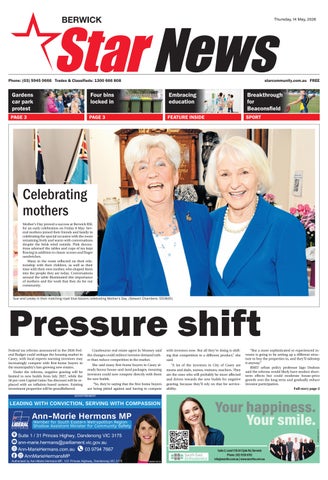
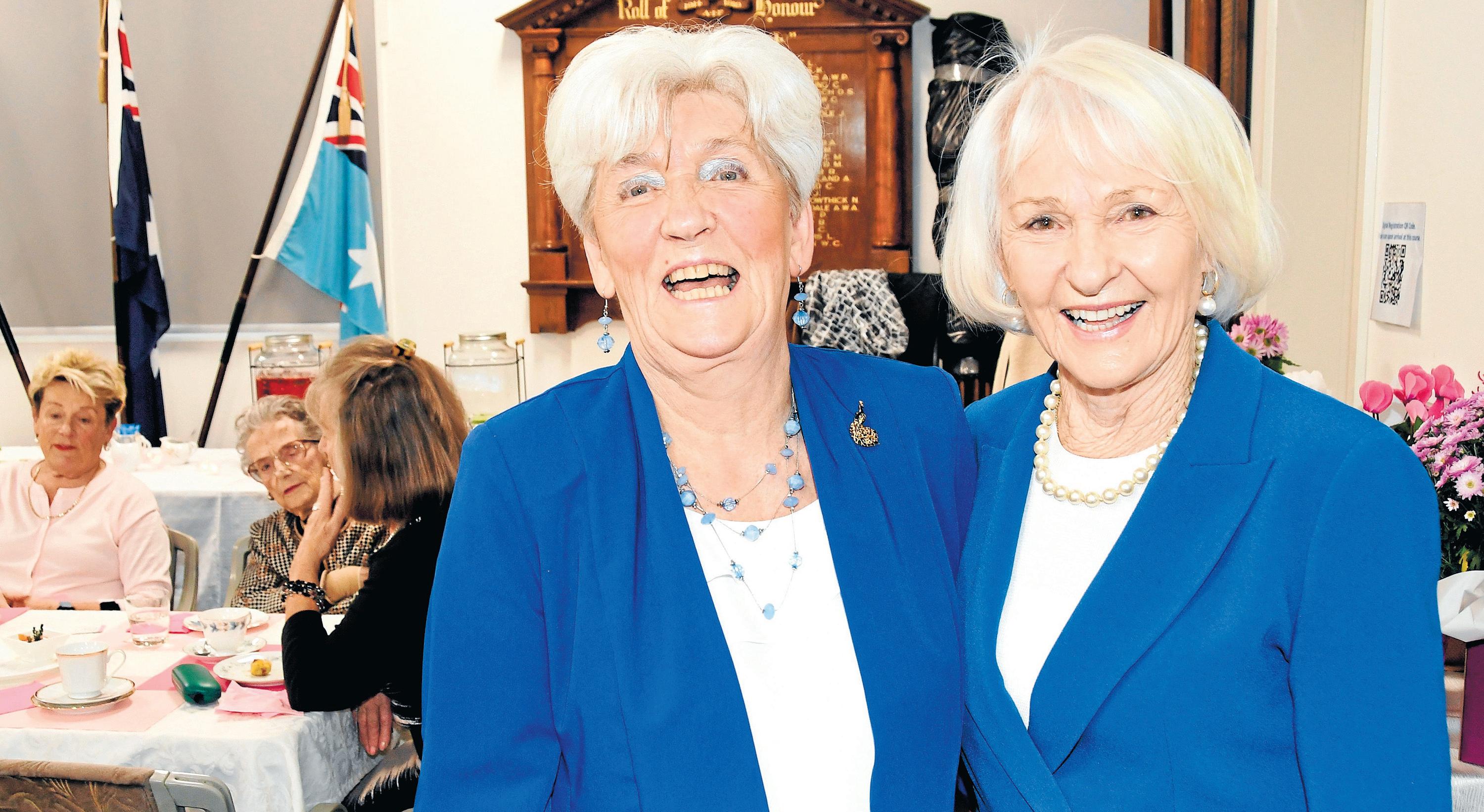
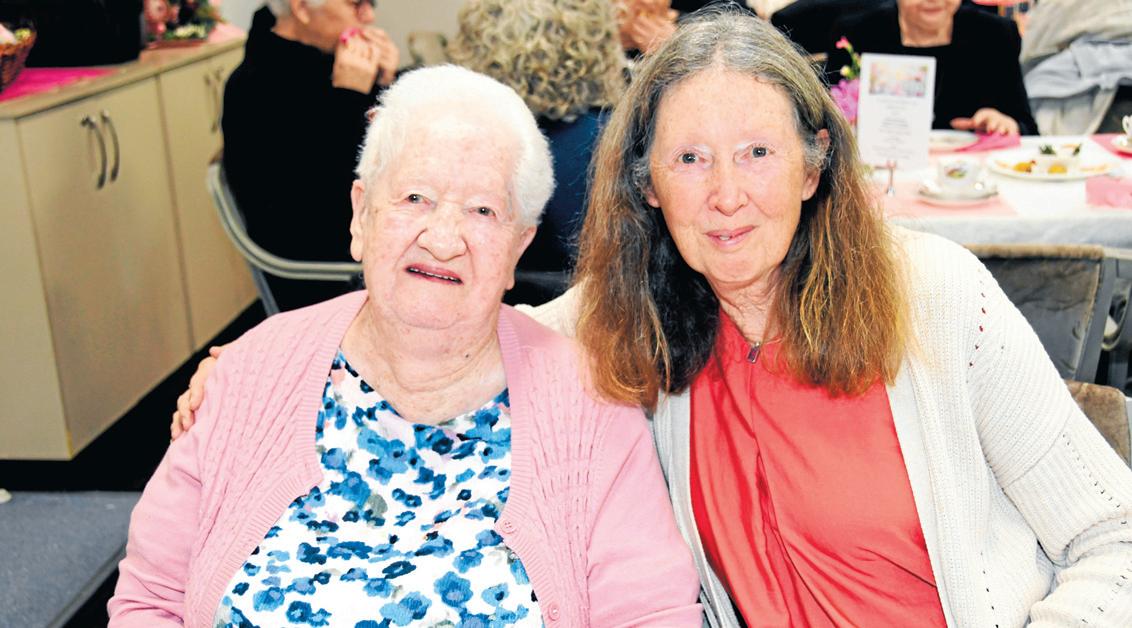
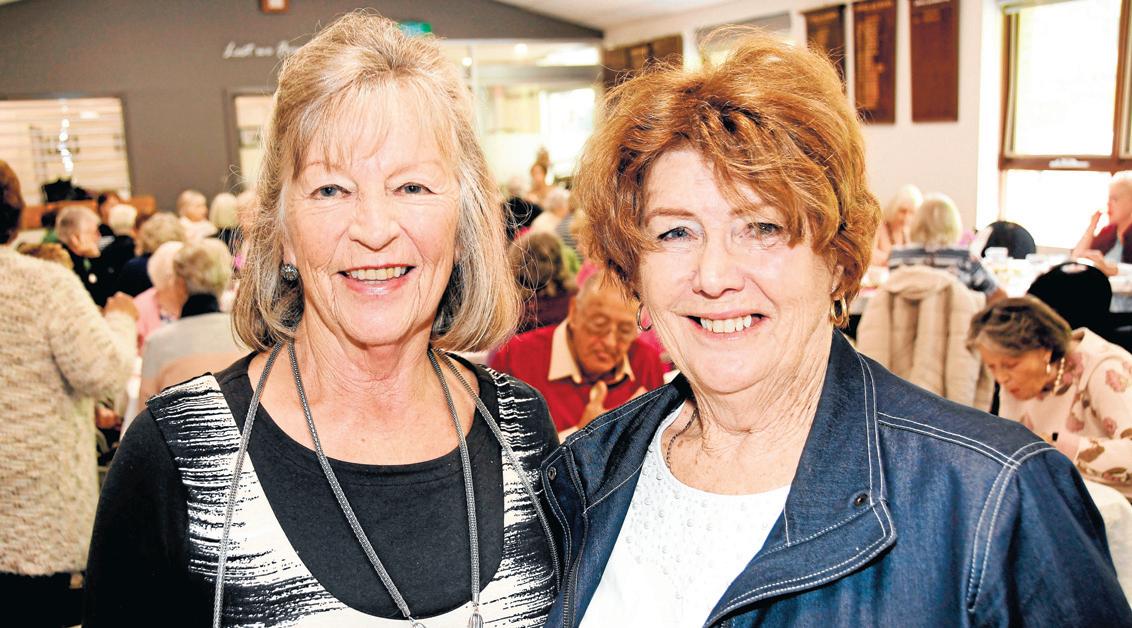
Mother’s Day proved a success at Berwick RSL for an early celebration on Friday 8 May. Several mothers joined their friends and family in celebrating the special occasion with the room remaining lively and warm with conversations despite the brisk wind outside. Pink decorations adorned the tables and cups of tea kept flowing in addition to classic scones and finger sandwiches.
Many in the room reflected on their relationship with their children, as well as their time with their own mother, who shaped them into the people they are today. Conversations around the table illuminated this importance of mothers and the work that they do for our community.









Federal tax reforms announced in the 2026 Federal Budget could reshape the housing market in Casey, with local experts warning investors may increasingly compete with first-home buyers in the municipality’s fast-growing new estates. Under the reforms, negative gearing will be limited to new builds from July 2027, while the 50 per cent Capital Gains Tax discount will be replaced with an inflation-based system. Existing investment properties will be grandfathered.

Cranbourne real estate agent Jo Mooney said the changes could redirect investor demand rather than reduce competition in the market.
She said many first-home buyers in Casey already favour house-and-land packages, meaning investors could now compete directly with them for new builds.
“So, they’re saying that the first home buyers are being pitted against and having to compete




with investors now. But all they’re doing is shifting that competition to a different product,” she said.
“A lot of the investors in City of Casey are mums and dads, nurses, trainees, teachers. They are the ones who will probably be more affected and driven towards the new builds for negative gearing, because they’ll rely on that for serviceability.
“But a more sophisticated or experienced investor is going to be setting up a different structure to buy the properties in, and they’ll sidestep it anyway.”
RMIT urban policy professor Jago Dodson said the reforms would likely have modest shortterm effects but could moderate house-price growth over the long term and gradually reduce investor participation.




By Jensy Callimootoo
Berwick real estate agent Cameron Knoll says the housing tax reforms are likely to reduce competition for people trying to buy their first home, but that as with any reforms, there will be “winners and losers”
“In theory the reforms should make it less competitive for first home buyers entering the market,” he said.
Knoll says the changes to tax, CGT and negative gearing are likely to “disincentivise” investors.
CGT is paid when a property is sold, with the gain being the increase in value since the purchase.
Changes to the CGT will see the government replacing the current 50 per cent CGT discount with a “discount based on inflation” and introducing a minimum 30 per cent tax on gains from 1 July 2027.
According to Knoll, if investors begin leaving the market, owner-occupiers may have a better chance of securing homes without competing against investors.
Jim Chalmers has announced sweeping overhauls to tax, negative gearing and the CGT, through a Budget that he says is the “most important and ambitious” yet. (Supplied)
“What we might see is investors leaving the market and first home buyers, if they’re looking to enter the market, hopefully they’re not competing with investors to try and purchase a home,” he said.
While that may benefit buyers, Knoll warned the reforms could create challenges for renters by reducing the number of available rental properties.
“If they’re selling investment properties and if owner occupiers are purchasing those properties, they’re no longer rental properties,” he said.
“That may see a decrease in the number of properties available for rent, which in turn would make rental prices more competitive and potentially increase.”
He said this could particularly affect affordability for renters and influence where people choose to live.
“It may mean that people need to look at their actual location of where they live and be strategic with that,” he said.
In growth areas such as Casey, where many developments attract first-home buyers, Knoll believes the reforms may also increase demand for land and subdivision opportunities.
“The new reforms incentivise new land developments and new builds because those types of investors, they’re exempt from the negative gearing reform,” he said.
“But what that will do is make land prices a premium.”
He said developers would need to weigh ris-
ing land costs against the financial benefits still available through negative gearing exemptions on new builds.
Reflecting on the broader impact of the reforms, he says the housing overhauls often produce unintended outcomes.
“The purpose of the reforms is generally to make housing more affordable and more accessible,” he said.
“But historically, what we’ve seen is when there have been reforms, it can have opposite effects.”
He added that while first-home buyers may benefit from less investor competition, renters could face tighter supply and rising prices.
“There’s always going to be a winner and a loser,” he said.
The Berwick agent expects the market to begin reacting well before the reforms officially take effect in July 2027, as investors reassess whether property ownership remains financially worthwhile.
By Violet Li
Federal tax reforms could push investors into direct competition with first-home buyers in Casey’s greenfield estates, a local real estate agent says.
Treasurer Jim Chalmers announced major tax reforms to negative gearing and the Capital Gains Tax (CGT) discount in the Federal Budget on 12 May, as the Government seeks to make housing more affordable for the younger generations.
Under the new rules, negative gearing will be limited to new builds from July 2027. Investors purchasing established homes after the budget night will no longer be able to deduct rental losses against wage income.
As for the CGT discount, the Government will replace the 50 per cent discount with a discount based on inflation and introduce a minimum 30 per cent tax on gains from 1 July 2027.
The CGT reforms will only apply to gains arising after 1 July 2027. Investors in new builds will be able to choose the 50 per cent CGT discount or the new arrangements.
Jo Mooney, director of Mooney & Co Estate Agents in Cranbourne, said the changes may shift investor demand rather than reduce competition in the housing market in the City of Casey.
“Basically, a lot of the younger first home buyers go down the road of house and land packages to avoid stamp duty. And they like shiny new houses. Once this comes into effect, they’re going to be in direct opposition with investors because negative gearing is still going to apply to new builds,” she said.
“So, they’re saying that the first home buyers are being pitted against and having to compete with investors now. But all they’re doing is shifting that competition to a different product.
“A lot of the investors in City of Casey are mums and dads, nurses, trainees, teachers. They are the ones who will probably be more affected and driven towards the new builds for negative gearing, because they’ll rely on that for serviceability.
“But a more sophisticated or experienced investor is going to be setting up a different structure to buy the properties in, and they’ll sidestep it anyway.”
According to a November 2024 report by REA Group’s realestate.com.au, more than half of Victoria’s first-home buyers chose new builds in the previous 12 months.
Another 2024 report by realestate.com.au found Clyde North ranked among the top suburbs attracting both investors and first-home buyers.
Casey remains one of Melbourne’s largest growth corridors, with extensive greenfield developments continuing across suburbs such as Clyde, Clyde North and Cranbourne East.
Ms Mooney said under the tax reform, the rents are going to go up.
“The key problem we’re going to have is that negative gearing is part of the calculation for

serviceability for an investor’s loan… If your serviceability is capped, then it restricts what you can put into the rental pool,” she said.
“Rents go up. It gets harder for first-home buyers to save a deposit…
“The problem under the new modelling is that the new builds are where tenants are going to be. The supply for tenants is going to be in newer areas away from amenities, so their liveability is going to be impacted.
“Because of that. We’re already seeing Clyde, Clyde North has much higher vacancy rates and dropping rental prices because of the supply of properties for rent in those pockets. So that will actually add more rental properties in that location, for instance. That puts pressure on rents to come down. But then it’s not going to map out for investors to provide them.”
Ms Mooney also said she did not believe the reforms addressed the underlying housing supply problem, arguing construction costs and labour shortages remained major barriers.
“I know people who have had to put their builds on hold. They’ve got land, but they’ve had to put their builds on hold because the building costs have gone up 30 per cent,” she said.
Ms Mooney said realistically, she doesn’t see a major change to the market cycle in the short to medium term now, though it’s going to come down to what the details are going to be once it goes through the parliament.
“The grandfathering for existing properties has made sure that there’s no cliff edge for investors to sell or make rash decisions,” she said.
Meanwhile, Ms Mooney expected Casey’s housing prices to continue rising in the long term, regardless of the reforms, given the historical growth.
Jago
Dodson, Professor of Urban Policy and Director of the Centre for Urban Research at
RMIT, said the reforms were likely to have only gradual effects rather than dramatic short-term market shifts.
“I think over the long term it’s likely to be substantial, but over the short term, it’s probably going to have relatively modest effects,” he said.
“That’s because there’s a bit of balance in the way the policy has been designed in the sense that there will be continuation of negative gearing for properties that are currently owned by investors… But over the long term, I would say a five-to-10-year period, one might expect that it will certainly moderate the growth in house prices. It will also mean that there are likely to be fewer investors in the housing market overall, and that in turn will likely benefit first home buyers because there will be less competition.”
However, he said, for areas with a high proportion of first-home buyers and competition for high capital growth housing like the City of Casey, the effect of these changes may not be especially extensive.
“The critical question is whether investors who are competing in the market with first home buyers will decide to reduce their participation in the market,” he said.
“The Government is maintaining access to negative gearing for new properties. It could be that there’s still a relatively high proportion of investor activity in the Casey area.
“I think the developers will be very sensitive to what impact these changes have on the prices that purchasers, whether they’re investors or first home buyers or even second or third home buyers, are prepared to pay for new properties.
“And they will likely adjust their prices to ensure that they’re able to sell the properties in the market.”
Professor Dodson didn’t believe that the re-

forms would sharply reduce rental supply.
“If an investor sells a rental property and it’s purchased by a first-home owner, that’s one property that’s taken out of the rental market,” he said.
“But if it’s a first-home owner household buying that property, then it takes a renter household out of the rental market and converts them into the home ownership market.
“I would expect it to broadly balance out because for the same number of houses, you’re basically just shifting people between tenure categories from the dwellings from one tenure category to another.”
Wayss chief executive Simon Ruth said the focus on housing and cost-of-living in the Budget would “help ease pressure for some households over time”.
“However, they won’t fully address what we’re seeing on the ground in Melbourne’s South East,” he said.
“Last year alone, more than 25,000 people accessed homelessness services in our region.
“We’re seeing increasing numbers of working families struggling to keep up with rising rents and everyday costs.”
Mr Ruth said “sustained investment” in social and affordable housing was needed to reduce homelessness.
Holt MP Cassandra Fernando said this Budget recognises that the housing market should work for people trying to buy a home, not just those building investment portfolios.
“These reforms are about restoring fairness and helping more Australians achieve the dream of home ownership,” she said.
According to the Labor’s estimation, these changes will assist an additional 75,000 people into their first home, while encouraging more housing construction.
Victorian Liberal Senator Sarah Henderson said the Government’s property-tax reforms would reduce the supply of homes by 35,000 over the decade, whilst increasing rents.
“The Budget confirms that living standards will go backwards again, confirming those with a typical mortgage are $32,000 a year worse off under Labor even after this Budget,” she said.
By Jensy Callimootoo
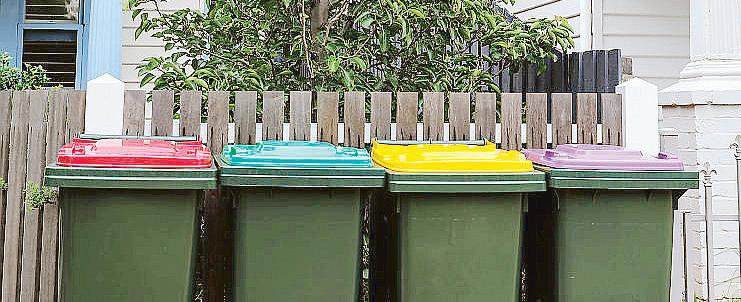
Casey Council has revealed contracts for the state-mandated kerbside waste reforms have been in place and that it will be transitioning to a four-bin system by 1 July 2027 despite community pushback.
On Friday 8 May, the council released an update on its $5.9 million kerbside waste changes, stating that it has planned for “this change for several years”
“In December 2023, Council formally endorsed the approach to implementing these State-mandated kerbside reforms, including the glass service,” it said in a media update.
“Since then, contracts for bin manufacture and delivery have been entered, and planning is well advanced.”
Despite the commitment to the reforms, the budget draft for the 2026/27 financial year or the Kerbside Waste Policy have not yet been approved by councillors, with both still currently open for the public feedback period.
The new reforms would implement a purple-lid glass bin with a four weekly collection frequency and the roll out of a compulsory Food Organics and Garden Organics (FOGO) bin.
Casey Council also revealed that in accor-
dance with these contractual obligations with waste manufacturers and delivery services, the kerbside reforms cannot “be paused or cancelled without exposing council to financial claims and additional costs.”
“Delaying also increases the risk of non-compliance with State legislation and potential enforcement action,” it said.
As the rollout takes place, ratepayers can expect an increase of 2.6 per cent to their Waste Charge for the next financial year. This encompasses all bin services.
While the cost is expected to be approximately $5.9 million, Casey Council will be offsetting $3 million. Which ultimately reduces the overall charge for ratepayers.
The transition to a four-bin system was first announced in 2022, with the Victorian Government mandating a separate glass recycling service for all households to be established, with councils to facilitate the program by 1 July 2027.
But while councils are legally required to comply with the state-directives, many have joined in a coalition that opposes the new kerbside reforms — including neighbouring councils, Greater Dandenong and Cardinia Shire.
They join the nearly 40 councils across Victoria that have pushed back on the mandate, many
arguing that cost pressures are already impacting many ratepayers and councils alike.
Greater Dandenong councillors are currently reviewing its approval. If it follows suit after Casey Council, implementation of the changes is expected to cost the council $3.6 million.
Cardinia Shire has also resisted the mandate on the basis of costs, delaying the rollout and joining a ‘Let’s be Clear on Glass’ campaign, with 36 other councils.
The campaign calls on the government to extend the timeline for the introduction of the glass-only bin, release the business case for kerbside glass recycling and prioritise the expansion of the Container Deposit Scheme (CDS) as an alternative.
Pushback from the community has also been longstanding on the reforms.
In September 2024, a community consultation period was facilitated. With many concerned about the financial burden, space constraints and the necessity of a glass-bin.
Casey Residents and Ratepayers Association (CRRA), previously also called on the council to enable an ‘opt-out’ option. Which would allow some flexibility for residents and households.
The council rejected this, but did not note the existent contractual obligations in place.
President of CRRA, Anthony Tassone, said that residents should have been consulted before the arrangement of the contracts.
“Residents are entitled to ask how contracts could already be committed before Council had finalised its kerbside waste policy and before the draft budget funding these reforms has even been formally adopted,” he said.
“This creates the perception that community consultation was occurring after major implementation decisions had effectively already been made.
“Casey residents still do not have clarity about the long-term ongoing costs of the purple lid bin system and whether these increased waste charges will continue well into the future.”

By Jensy Callimootoo
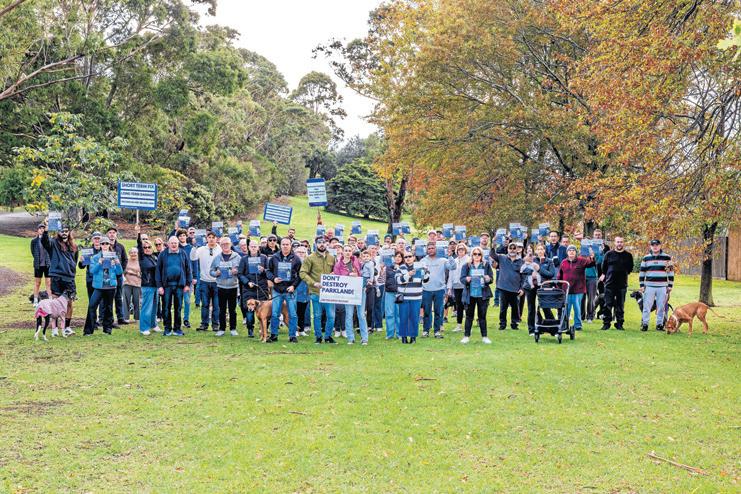
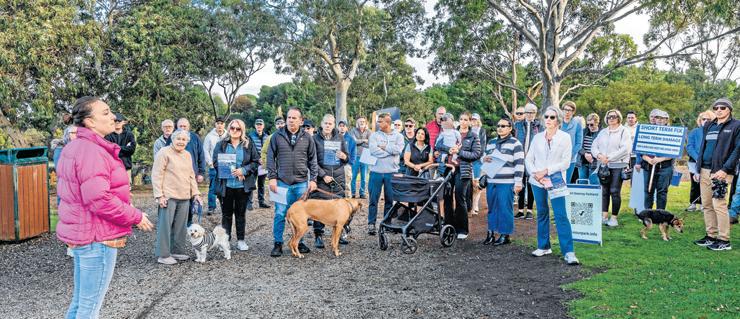
More than 80 residents have come together to protest the construction of a $310,000 overflow carpark at Wilson Botanic Park after it was approved by council last year.
Berwick residents gathered on Saturday morning (9 May) to stage a peaceful protest against the council’s decision to approve the overflow car park which would garner access via Kramer Drive, a residential street.
Protesters assembled near the proposed access point, where concerns were repeatedly raised about increased congestion and the effect additional vehicle movements would have on local amenity.
The move marks another step in the longstanding dispute over the proposed car park with residents arguing that Kramer Drive was never designed to accommodate large volumes of traffic associated with the public overflow carpark.
The issue gained momentum in 2025, leading to a public consultation period with the majority of residents opposing the developments.
On this basis, council officers recommended that it does not proceed with the carpark. But in December 2025 councillors, excluding Cr Dave
Perry, voted in favour of the carpark construction.
Councillors argued that the park had become particularly popular, with parking facilities not keeping pace with the growth — therefore they had to make a decision for the greater population.
Following this decision, residents further expressed concerns that these developments threaten the safety of their neighbourhood and raise serious concerns about traffic, pedestrian safety, environmental impacts and the long-term future of the surrounding residential streets.
On Saturday, they called on the council to reconsider the access arrangements and explore alternative traffic solutions that would avoid directing vehicles through Kramer Drive.
Previously, the group earmarked a depot site within the parkland as a potential site for the overflow carpark. However Casey Council has said it would not be an appropriate location.
Suggestions from residents included reviewing existing parking infrastructure, improving public transport access and investigating alternative entry points better suited to higher traffic volumes.
Co-organiser of the protest, Sophie Kuzakov said that the turnout was bolstered by the com-
munity’s rising anxieties on the matter.
“It was fantastic to see everyone coming together for a common cause,” Sophie said.
“There were residents from Quarry Hills, Brisbane Street and a couple of people who were just attending for the park run and joined in as they learnt more about what was happening.
“It’s clear that there are more than a “handful” of people as the council likes to explain.”
Tracy de Riter, co-header of the protest alongside Sophie, said that the “successful crowd” on Saturday highlighted the real concerns of this project.
“It was really quite overwhelming to see all the support,” said Tracy.
While Tracy and Sophie do not discount the need for a carpark, they say that growing visitor numbers should not come at the expense of nearby neighbourhoods.
Concerns have also been raised about potential environmental impacts, with some locals questioning whether the overflow parking area could affect nearby vegetation and wildlife habitats surrounding the parkland.
“We just need to halt this ridiculous notion of spending ratepayers’ money on a failed project,” said Tracy.
“And we want to retain the park, all of it in its entirety, not funnel cars up a residential narrow street and create more havoc for a project that is doomed to fail.”
Casey Cr Dave Perry, who voted against the carpark also attended the protest.
“The issue has not gone away and I can say the protestors were all locals with the view that this project will cost a lot of money and cause irreparable damage to the park and major issues on surrounding residential streets,” he said on a social media post following the protest.
Casey has ascertained that the overflow carpark is intended to help manage increasing visitation to Wilson Botanic Park during peak periods and major events with limited opening house.
However, for many residents living near Kramer Drive, the debate is far from over.
Locals say they will continue advocating for changes to the proposal until what they believe is a fairer and safer outcome is achieved for the community.
“We hope to be able to organise more of these and hopefully at some point the other councillors can
and listen and see for themselves the site and the numerous concerns the reports and the residents can give feedback,” said Sophie.
By Cam Lucadou-Wells
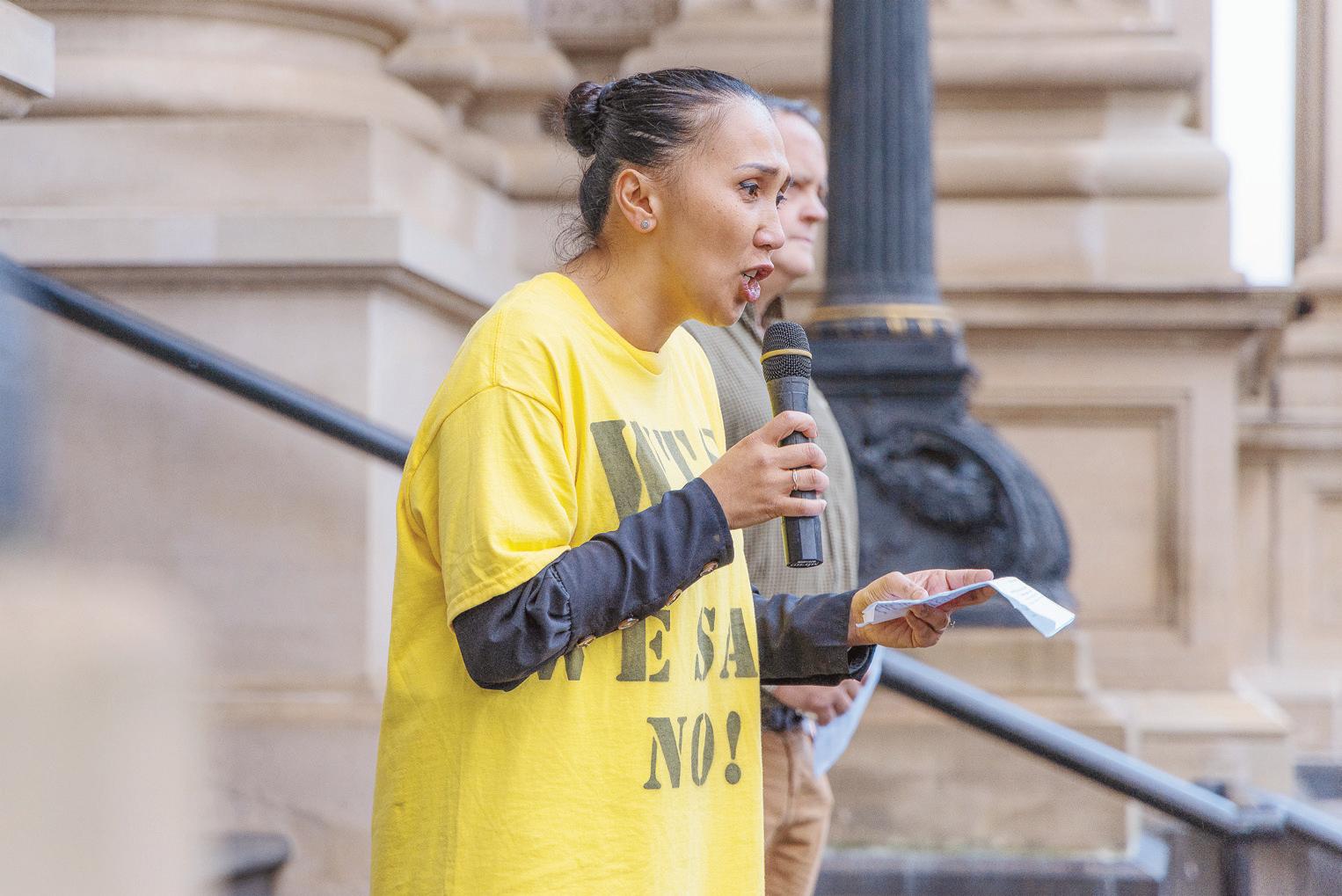
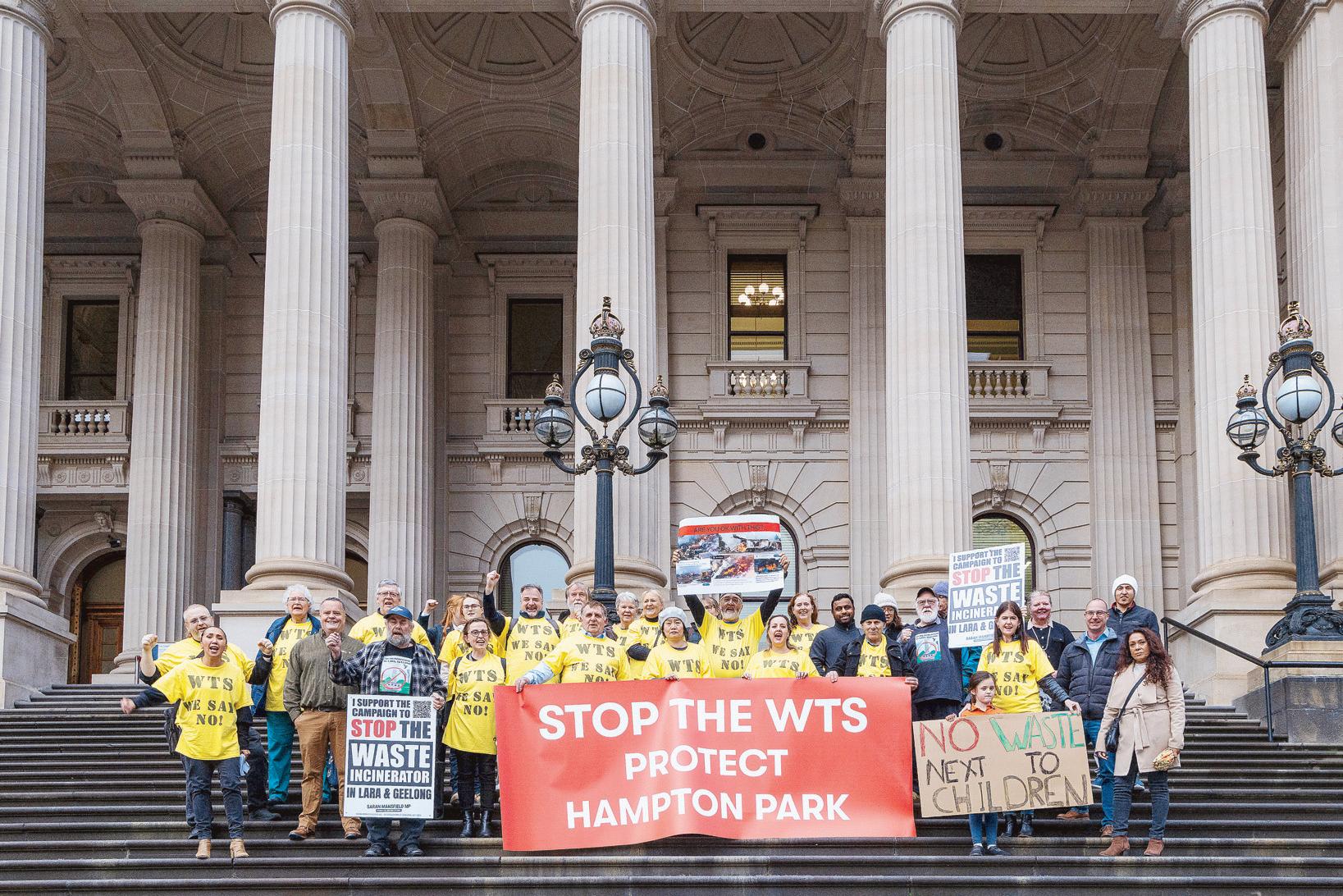
A residents group that won its fight against a proposed waste transfer station in Hampton Park say multicultural, low-income communities are unfairly carrying the state’s waste burden.
Lynbrook Residents Association member Vernadette Bilbao-Dickson told a waste-to-energy State Parliamentary inquiry on 8 May that community consultation on the WTS came late in the piece.
And when it arrived, the consultation was “deeply disappointing”, a “mere tick-a-box exercise” from Casey Council’s administrators – who ultimately approved a permit for the WTS.
The Veolia WTS was to collect and compress more than 500,000 tonnes of waste a year from nine South East councils for delivery to a WTE incinerator in Maryvale.
The station was proposed next to a soon-toexpire landfill and within 200 metres of homes.
Yet, despite more than 1000 objectors, Casey treated the project as “pre-determined” and bound by “state policy objectives” , Dickson said.
However the project faltered when Environment Protection Authority Victoria – and later VCAT - refused a development licence on human health grounds.
Dickson said the community shouldn’t have had to rely on such “late-stage intervention”. Such projects should be subjected to a comprehensive, independent Environmental Effects Statement before approvals are considered, she said.
“A consistent and critical issue is the lack of genuine, early and transparent community consultation.”
The highly-multicultural and low-socioeco-
nomic neighbourhood had already endured a noisy, dusty and smelly landfill on its doorstep for 25 years, Dickson said.
Similar demographies in Sunbury, Wollert and Dandenong South were targeted for WTE incinerators, she noted.
“Certain suburban communities are disproportionately relied on to carry Melbourne’s long
term waste burden,” Dickson said.
In her submission, Sue Lanigan told the inquiry that no incinerators were planned for affluent areas such as Toorak, Malvern or Berwick despite being “near to major waste-generating populations”.
Laningan, who represented residents near Dandenong South’s ‘offensive-industry’ zone
By Cam Lucadou-Wells
Melbourne’s South-East could be faced with a “huge problem” if a nine-council plan to divert municipal rubbish to a waste-to-energy incinerator fails, a parliamentary inquiry has heard.
Mick Cummins, chair of South-East Metropolitan Advanced Waste Processing (SEMAWP), warned on 8 May that a recent VCAT decision to reject a waste transfer station at Hampton Park had put the project in limbo.
An alternative site for the WTS must be found in the South East, or the project will cease, he said.
With the region’s last landfill at Hallam Road set to close as soon as mid-2027, this meant a “huge problem”
There will be no further landfills granted in the South East under Government policy, so the 400,000 tonnes of waste from 2 million South East residents will have to find a “home” sometime soon.
“It’s everyone’s problem, who lives, works and generates waste in South East Melbourne.”
Mr Cummins gave the warning before a State Upper House inquiry into Victoria’s adoption of waste-to-energy on 8 May.
Nine councils, including Greater Dandenong, Casey and Cardinia, have signed up to a 25-year ‘minimum-tonnage’ supply agreement with the SEMAWP consortium.
Up to 550,000 tonnes of their waste a year would have been handled at the Hampton Park WTS, then bulk-delivered to an Opal-Veolia waste-to-energy (WTE) incinerator in Maryvale.
The councils were legally entitled to “walk away” if the WTS wasn’t delivered, Mr Cummins said.
He said the project could be delayed up to two years, awaiting the selection and approval of an alternative WTS site.
Meanwhile, negotiations were underway between the parties to see whether it would get sorted or not. And whether councils were committed to staying in the agreement, Mr Cummins said.
Mr Cummins urged the state government to get engaged in finding a solution. The Maryvale incinerator - touted to deliver 450 ongoing jobs as the Yallourn coal power station closes in 2028won’t be viable without Melbourne’s South East.
Mr Cummins defended the secrecy of each council’s contract due to being “commercial-in-confidence” – to the bemusement of some of the inquiry’s MP members.
The 25-year, minimum-tonnage model was to give surety to the private operators, otherwise such facilities would not be built, he said.
Greens MP Sarah Mansfield questioned
whether it would reduce the incentive to reduce future waste, and Legalise Cannabis MP David Ettershank said such contracts had bankrupted parties in the US.
The tonnage amounts were a “conservative” estimate, while allowing for population growth, Mr Cummins said - “so low we should be able to confidently deliver that waste”
Mr Cummins said the minimum volumes were based on “all the things we know at the moment” such as FOGO, changing bin frequencies, and green waste diversion from red bins.
Mr Cummins said SEMAWP was “technology-agnostic” when it set out to find an advanced waste solution.
It needed to be “commercially viable” and “environmentally responsible”
Out of 32 EOIs received from around the world, SEMAWP found the only viable option was WTE – which released less greenhouse gases than landfill, he said.
On the topic of viability, No Northern Incinerator Wollert’s spokesperson Cath Rouse later told the inquiry that the Maryvale incinerator was approved in 2017 and still hadn’t been built.
Meanwhile, health researcher Marion Cincotta of the Anti-Incinerator Coalition told of the
said residents are angry that they again have to “fight for our health”
Shespokeonthenearby450-hectareheavy-industrial estate in Dandenong South, which includes an approved WTE incinerator and the state’s only prescribed-waste landfill – known as a “toxic waste dump”
There is no air monitoring of the estate, she told the inquiry. The nearest EPA air-quality station is two kilometres north, at Dandenong Showgrounds.
The air-testing station tests for six types of ‘toxins’ – but excludes most of the toxins present in burning plastic.
The yet-to-be-built Great Southern Waste Technologies WTE in Dandenong South was approved by the EPA in 2020.
Lanigan said the plant would consume up to 100,000 tonnes of waste a year, including significant amounts of plastic.
Toxic by-products include particulate matter, heavy metals, furans as well as dioxins, which even in small amounts were harmful to human health, she said. Many of the toxins were not subject to routine measuring or continuous monitoring, she submitted.
Lanigan called for a reduction in single-use plastics, such as in packaging, rather than building a WTE policy that depends on continual streams of waste.
In Victoria, 11 WTE incinerators have been granted a licence to operate. Seven of them are entitled to burn 2.35 million tonnes of waste a year. Her submission stated: “A circular economy reduces waste. Incinerators require it. Both policies cannot succeed at the same time.”

The City of Casey pledges to plant 25,000 trees and thousands more shrubs in the next two years. (On file)
Casey Council will aim to plant thousands of trees over the next two years through their climate initiative.
As part of their Greening Casey Plan, the council will be investing in large scale tree planting, which will amount to 25,000 trees in the next two years.
The investment will also account for 185,000 shrubs.
The City of Casey says that the 2026/27 Budget and Annual Action Plan has a special focus on climate action and environmental resilience in an effort to create a more sustainable future in Casey.
Mayor Stefan Koomen said the expanding green spaces and tree canopy across the city aims to create cooler, healthier and more liveable neighbourhoods.
health threat of cancer-causing dioxins created by burning plastics with chlorine.
The incinerators also produced small carbon particles (PM 2.5) which cause diabetes, asthma, miscarriage and cardiovascular disease, she said.
“Landfill is not a great look but these incinerators are much worse.”
The toxic solid waste or ‘ash’ would also require “high-level disposal”. Most likely this would be at the ‘Earthsure’ thermal treatment plant at the toxic waste dump at Taylors Road, Dandenong South.
It’s the only facility in Victoria that can accept waste of such toxicity, according to No Waste Incinerators in Lara & Greater Geelong Incorporated.
Victoria has granted seven WTE operator licences under a total cap of 2.35 million tonnes a year.
Outside of the cap are licences for a Maryvale incinerator and a Greater Southern Waste Technologies plant in Dandenong South, both of which have not been built.
Last month, a Government spokesperson didn’t comment on Star News’s enquiries on the future of the SEMAWP waste-to-energy project, nor on what contingencies were in place.
“These investments are about protecting our environment today and making sure Casey remains a great place to live for generations to come,” he said.
Other key climate action highlights in this council budget includes the continued advocacy for Green Streets, which prioritises canopy coverage in new estates as well as promoting education and engagement initiatives in classrooms.
Nearly $5 million will be invested in major greening, landscape and ecological projects. With priority areas in Cranbourne Botanic Gardens and the endangered Southern Brown Bandicoot Ecological Corridor in Botanic Ridge. It also includes a 7 per cent increase in climate investment to $4.46 million which supports climate planning through the Climate Resilient Casey Plan.
Capital works projects includes $974,000 to reduce emissions, manage flood risks and install batteries at community facilities.
The 2026/27 draft budget is now up for public exhibition with the community invited to review the documents and share their feedback. This feedback period will close on Thursday 14 May.
Toviewthedocumentandgivefeedback,goto conversations.casey.vic.gov.au/budget-2026-27
Four men including two from Clyde North have been charged after allegedly accessing and distributing ISIS propaganda online.
Australian Border Force (ABF) officers have arrested and charged two men, aged 19 and 29 from Clyde North and two men from Roxburgh Park with possession of violent extremist material (VEM) on 7 May 2026.
Under Section s474.45C, intentionally possessing or controlling VEM via the internet or other telecommunication services has a maximum penalty of five years’ imprisonment.
The men appeared at Melbourne Magistrates’ Court on 7 May, where three men were formally refused bail to re-appear at the same court on 8 May 2026.
The fourth was granted strict conditional bail and is expected to re-appear at the same court on 30 July 2026.
A fifth man, 21, was arrested at a Meadow Heights property and released pending further inquiries.
Investigations are ongoing, with assistance from the Victoria Joint Counter Terrorism Team (JCTT).
On 29 November 2024, ABF officers intercepted a then 20-year old Roxburgh Park man at Melbourne International Airport upon his return flight from Turkey.
Where officers conducted a routine examination of his luggage and mobile phone in which suspicious content was located. The matter was reported to the Australian Federal Police (AFP) and the phone was later seized for further examination.
As part of ongoing inquiries, on 1 June 2025, ABF officers intercepted a second Roxburgh Park man, now aged 21, at Melbourne International Airport and conducted a routine examination of his luggage ahead of his departure to Turkey.
During an examination of the man’s mobile phone, ABF officers located suspicious content. The phone was subsequently seized by the AFP for further examination.
It will be alleged forensic analysis of the devic-

es revealed the men had been sending, sharing and receiving suspected VEM, which included images and videos of previous terrorist attacks and other ISIS propaganda.
On Thursday 7 May 2026, as a result of the investigation, the AFP’s National Security Investigations (NSI) team in Victoria in collaboration with the AFP Tactical Response Team and Victoria Police, executed four search warrants at homes in the Melbourne suburbs of Clyde South, Roxburgh Park and Meadow Heights.
During the searches, investigators seized electronic devices and mobile phones, which will undergo forensic examination.
At one of the Roxburgh Park properties, an AFP firearm was unintentionally discharged. No one was injured.

By Cam Lucadou-Wells
Doveton Pool in the Park’s $19 million redevelopment is a step closer to full funding after a State Budget allocation of $500,000.
Dandenong MP Gabrielle Williams announced the funding on social media on Budget day.
Casey mayor Stefan Koomen said the State funding would help fully fund the project - a $3 million kid’s outdoor pool and waterslide, and the completion of the renewed 50-metre pool and new parkland as outlined in the council’s 2026-’27 draft budget.
“We won’t require any more additional funding – so we can deliver it in full,” Cr Koomen said.
“This is the best outcome for the people of Doveton.”
AFP Counter Terrorism Commander Paula Hudson said the NSI Team had moved to disrupt and intercept these individuals to keep the community safe.
“We allege these men were actively engaging in the sharing of this material inspired by ISIS, a terrorist organisation responsible for mass killings, and violent religious persecution,” Commander Hudson said.
“We know that intervening early helps to ensure individuals are disrupted before they reach the most serious levels of offending and prevent any potential for escalation to violence.
“The disruption sends a clear message – the AFP, together with our state, Commonwealth and international law enforcement partners are watching, and we will not tolerate any type of ha-
tred in our community.”
ABF Commander Operations Victoria Clinton Sims said this was another example of ABF officers’ integral role protecting Australia’s community.
“This operation demonstrates how intelligence and border capabilities are combined to identify individuals of concern and take coordinated action at the border and beyond,” Commander Sims said.
“Protecting Australia’s border is central to protecting our national security, and we will continue to work with our partners to disrupt terrorism-related activity wherever it emerges.”
If you suspect someone is being radicalised online or in person, call the National Security Hotline on 1800 123 400.


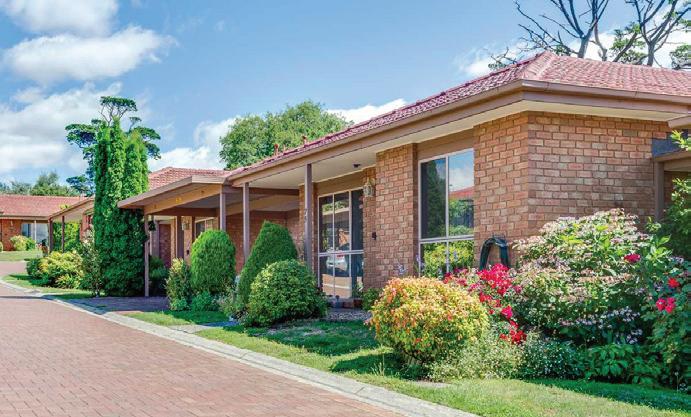
Millhaven Lodge has been part of Pakenham since 1926. We are a community-owned not-for-profit organisation whose mission is to provide our residents with flexible and individualised care.
As an organisation, we respect residents’ choices and understand the importance of maintaining their independence.
Millhaven Lodge has something that cannot be found anywhere else. It has a sense of community within a community where everyone can be themselves and receive the care and support they need.
Call us today to

The project includes $7.4 million of federal funding.
In 2021, Casey Council sparked public outroar with plans to demolish the 50-year-old pools and retain only parkland, .
A fierce public campaign to ‘Save Doveton Pool’ led to the council’s sharp reversal.
Opponents included Labor MPs Julian Hill and Gabrielle Williams, and Doveton-Eumemmerring Township Association which was led by Koomen prior to his election.
In other State Budget news, $200,000 was allocated for facility upgrades at Reema Reserve, Endeavour Hills.
Last year, councillors voted to add the kids’ pool, slide and all-year-round playground to the project. It brought the total cost to $19.1 million, with a $2.9 funding deficit to be filled in 2026-‘27. Currently, a replacement outdoor 50-metre pool with reduced depth as well as a new changeroom ‘village’ are under construction and expected to open in 2027.


A Longford man has been sentenced to two years and four months in jail for possessing and trafficking cannabis and possessing a firearm as a prohibited person.
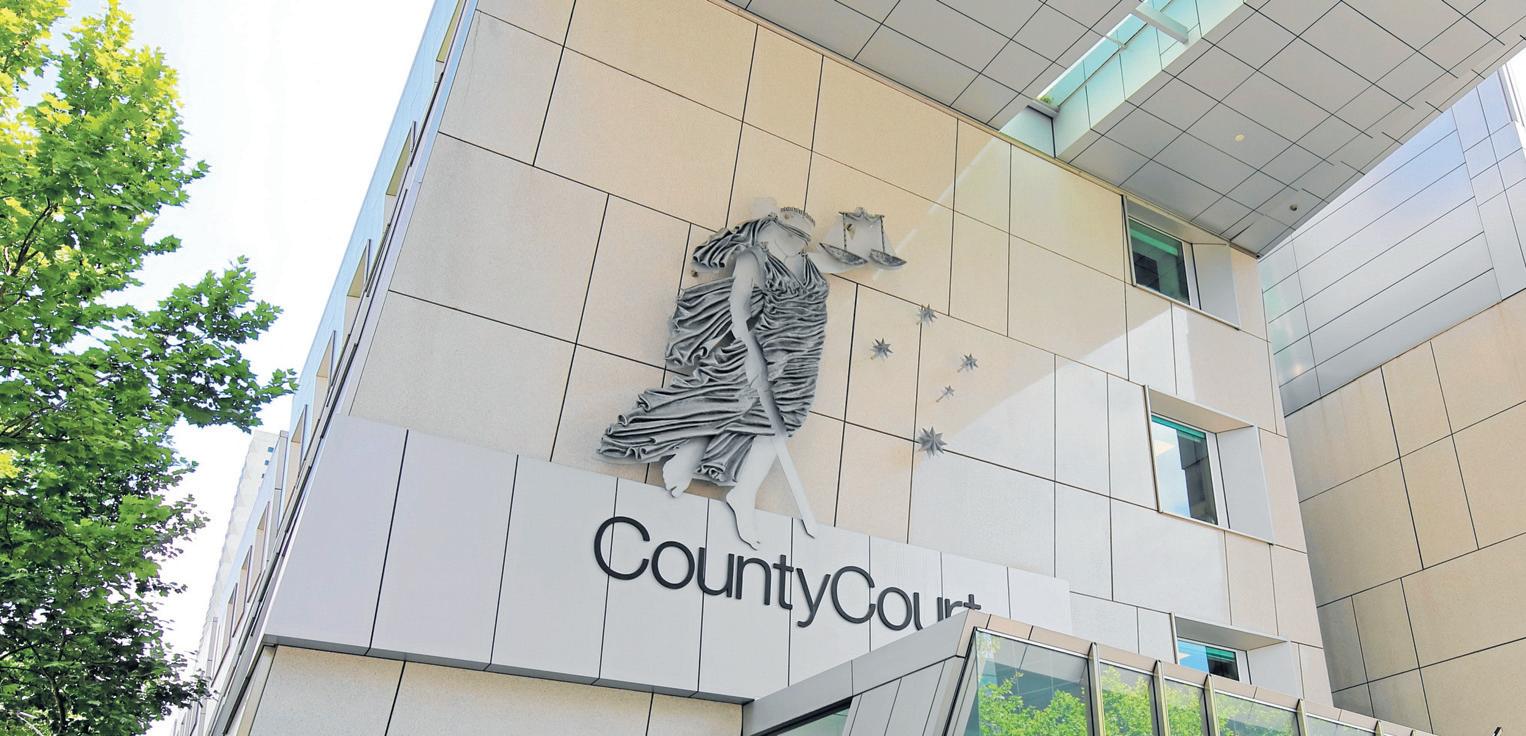
Osman Bayramovski, 38, who grew up in the Doveton and Dandenong area, pleaded guilty at the Victorian County Court.
Judge Martine Marich handed down the sentence on Friday 8 May, noting that the man has been the sole carer of his elderly mother since 2022.
Judge Marich also cited a previous imprisonment period in which Bayramovski served two years and four months in jail for dangerous driving that killed a 42-year-old driver in 2009.
It was noted that this has caused Post-Traumatic Stress Disorder (PTSD), escalating Bayramoksvi’s drug use.
In August 2023, police officers attended Bayramovski’s Longford property for an unrelated matter.
Police observed a greenhouse structure towards the rear of the property with several pedestal fans and ducted piping.
Upon further inspection, police found a padlocked cool room from which they believed they could smell cannabis.
Police located 99 plants in black pots, with 27 of those plants being cannabis weighing a total of 8.26 kilograms.
Further searches found 61 plastic bags containing dried cannabis weighing a total of 27.73 kilograms, with each bag containing approximately 1 pound of cannabis.
They also found two plastic bags containing dried cannabis weighing a total of 106.4 grams and a semi-automatic rifle, stored in a bag in the accused’s walk-in-robe.
They also found cartridge ammunition stored in a metal safe, as well as an extendable baton. At the time of the search warrant, Bayramovski was deemed as ‘prohibited’ from possessing a firearm, as not more than five years had expired since he was subject to a final family-violence intervention order.
Inside the breeding shed, 34 of the 45 plants found were cannabis, weighing a total of 1.42 kilograms. In addition to 176.2 grams of loose cannabis stems, branches and leaves.
Inside a drying room, officers found additional dried cannabis weighing a total of 2.77 kilograms. One year and four months will need to be served before he is eligible for parole.
Saturday 9 May 2026, Melbourne Town Hall was packed.
More than 2,000 people filled the historic building for Conversations at the Crossroads: Reclaiming Democracy Together - a sold-out event bringing together thinkers, academics, activists and everyday concerned Australians asking one urgent question:
What is happening to democracy?
And perhaps more importantly: What do we do next?
The event itself was extraordinary. Powerful speakers. Sharp humour. Deep reflection. Real solutions.
Professor Mark Rose, proud Gunditjmara man and educator, spoke with wisdom and larrikin honesty about history, belonging and the foundations Australia still needs to build. There was no bitterness. No blame. Just clarity.
A reminder that he himself was not legally recognised as a “person” in Australia until after the 1967 referendum.
That should stop us all in our tracks.
Natalie Kyriacou brought warmth, wit and environmental insight - comparing democracy to the natural world.
From the matriarchal wisdom of elephants to the collective decision-making of bees, she reminded us that healthy systems survive through cooperation, not domination.
Professor Gillian Triggs highlighted the uncomfortable reality that Australia remains one of the few modern democracies without a national Human Rights Act - and the dangers that that creates for vulnerable people when rights are left exposed to political cycles.
Professor Wendy Brown brought a powerful global lens to the conversation.
She unpacked how economic inequality, hyper-individualism and political distrust are slowly eroding democratic life across the West.
Her message was sobering but important: democracy does not simply collapse overnight - it

weakens gradually when societies lose their sense of shared responsibility and collective purpose.
Guiding the evening with calm authority and deep insight was Professor Joe Camilleri, President of Conversations at the Crossroads and moderator for the event.
Alongside his dedicated team, he created a space that felt less like a lecture and more like a genuine civic conversation - thoughtful, respectful and deeply needed in the current climate.
In a world increasingly driven by outrage and division, simply bringing 2000 people together to listen, reflect and engage respectfully was an achievement in itself.
Which leads us to Professor John Keane, who masterfully explained how democracies weaken - not usually through one dramatic collapse, but slowly, through distrust, disengagement and fear.
And perhaps that was the thread tying the entire event together.
Fear.
Truth be told… Australians are increasingly voting from fear, not vision.
Fear of economic insecurity. Fear of migration. Fear of cultural change. Fear of being left behind.
The federal election result in Farrer, where One Nation gained significant traction, reflects this broader anxiety.
Whether people agree with Pauline Hanson or not is almost beside the point.
The deeper question is: Why are people resonating with grievance politics in the first place?
Because when people feel unsafe - economically, socially or culturally - they retreat into

self-preservation. Self-preservation changes democracy.
Voting becomes less about: “What is best for Australia?” And more about: “What protects me?”
Perhaps this is the real crisis facing democracy.
Not Left versus Right. Not conservative versus progressive. But individualism versus collective responsibility.
We have built a society increasingly centred around: Me. My rights. My identity. My gain. My fear.
And somewhere along the way, we stopped asking: What strengthens the whole?
Other than First Nations peoples, we are all migrants or descendants of migrants.
Yet Australia often behaves as though belonging is a competition rather than a shared project.
There is an “all or nothing” mentality emerging in public discourse.
If someone speaks about multiculturalism, they are accused of ignoring national identity. If someone speaks about patriotism, they are accused of exclusion.
If someone questions systems, they are labelled divisive. But democracy cannot survive inside echo chambers.
Democracy requires nuance. Curiosity. Shared responsibility. And education.
That was perhaps the most confronting realisation from the event:
Democracy is not failing because people are evil. It is failing because we have not educated citizens deeply enough in how to live collectively.
We educate for jobs. For performance. For productivity. For self. But not nearly enough for: Belonging. Civic responsibility. Critical thinking. Cultural maturity. Shared humanity.
This is why values-based education matters. Programs like Belonging in Casey are small but important attempts to rebuild social fabric early - teaching young people how to navigate difference, contribute to community and think beyond
self-interests.
If we do not intentionally teach democratic values, social media algorithms will teach something else.
Usually: Outrage. Hatred. Divisiveness. Fear-mongering.
There was, however, one missing factor at Saturday’s event - more diversity. More younger voices. More everyday Australians outside academic and policy circles.
Because if democracy renewal stays confined to intellectual rooms, it will fail.
This conversation belongs in classrooms, sporting clubs, workplaces and dinner tables. Not just town halls.
Our political system itself also needs reflection.
Modern politics has become trapped in short election cycles and constant self-preservation. How do I get elected? How do I get re-elected? How do I avoid backlash?
Real long-term thinking struggles to survive in two- and four-year cycles dominated by polling and fear.
So, governments react instead of lead. Throwing money at symptoms while deeper fractures grow underneath.
Maybe the shift we need is philosophical.
From ROI - Return on Investment to ROH - Return on Humanity.
What if we measured success not only by economic growth, but by: Trust. Belonging. Mental wellbeing. Civic participation. Community resilience.
Because when people feel safe, they share more. They fear less. They become less tribal. More generous. More democratic.
As Dad often says: “A healthy society is one where people still look out for their mates.”
Simple words. But perhaps that is democracy at its core.
Not politics. People.
Truth be told… democracy will not be saved by louder politicians, but by better humans.
Berwick’s Wilson Botanic Park has been plagued by blue-green algae in its waterways, with treatment expected to be ongoing in the following weeks.
The park issued a warning on Monday 4 May, asking visitors to not make contact with the water due to possible health effects that may ensue.
According to Casey’s Manager of Sustainability and Waste, Michael Jansen, The “Blue-Green algae blooms” typically occur due to a combination of warm weather, increased sunlight, low water movement and elevated nutrient levels within the water.
“We encourage all visitors to avoid contact with the lake and to keep any pets away from the water while the algae is present, as some algae blooms can be harmful,” he said.
“Signs have been put in place around
the lake to help keep the community informed and safe.”
Some bloom species can produce toxins that may affect humans and animals through skin contact, inhalation or ingestion. Possible side effects may include skin irritation or rashes, mild respiratory effects and symptoms similar to hay-fever or gastroenteritis symptoms.
Pets are particularly at risk if they drink affected water.
The council is currently treating the lake with beneficial bacteria to improve the water quality, which will take approximately three weeks.
Depending on the weather, the lake will be closely monitored during this time, says Mr Jansen.
The City of Casey has welcomed the investment from the State Government as part of its 2026/27 Budget, but that more commitments are needed to keep up with the city’s growth.
Upgrades to roads, infrastructure and a boost to sports and health amenities are among the secured provisions.
Casey Mayor Stefan Koomen says that while the investments are a “step forward” which will support practical improvements for the largest municipality in Victoria, he highlights that “there is still more to be done”
“Casey is one of the fastest growing communities in Victoria, and our residents deserve infrastructure and services that keep pace with that growth,” Mayor Koomen said.
“We need meaningful, long-term investment in roads, community facilities, public transport and local services.
“Council remains committed to working with all levels of government and will continue
to strongly advocate for the infrastructure and services our community needs, so families can continue to live, work and thrive close to home.”
As part of its ‘Building a Better Casey’ advocacy campaign ahead of the State Budget and November state election, Casey outlined three main priorities for state-backed funding.
This included funding for better transport and roads, community infrastructure such as libraries and community hubs as well as the restoration of the Growing Suburbs Fund (GSF) which would bolster its capacity to support the community.
It continues to advocate for $50 million to investigate and improve bus services across Casey. As well as the development of the much-anticipated Clyde Rail Link, which would electrify the rail networks for many in Casey’s southern corridors.
Here’s a closer look at key investments and funding breakdowns across Casey:
- Resurfacing of Pound Road in Hampton Park
- $500,000 allocated toward the redevelopment of Doveton Pool in the Park to deliver a kids’ pool, waterslide and playground.
- Funding to repair, rebuild and resurface local roads, including the Monash Freeway and South Gippsland Freeway, helping address potholes and improve safety for road users.
- $200,000 allocated for facility upgrades at Reema Reserve, Endeavour Hills
Casey’s growing corridors are also in line for upgrades and expansions of some services as revealed by Cranbourne MP Pauline Richards. This includes:
- $34.63 million to Urgent Care Clinic at Cranbourne Community Hospital along with six new dialysis chairs
- $250,000 to Casey Warriors Club room upgrades
- $50,000 to Junction Village Playground
- New Bus routes for Junction Village, Botanic Ridge, and Livingstone Estate as part of the state’s $100 million bus network upgrades
- Unspecified investment for High Intensity Outside School Hours Care (OSHC) at Marnebek School in Cranbourne East
- Unspecified funding to operationalise a new SES unit in Devon Meadows to be delivered in 2027. This includes new equipment, vehicles, volunteer recruitment, administration and systems.
Casey Council has acknowledged the passing of former Mayor and councillor, Geoff Ablett, after his diagnosis of Motor Neurone Disease (MND).
Ablett served as a Casey Councillor for 12 years and mayor in 2008, 2013 and 2017.
Before that, he had a decorated sporting career as a VFL premiership player, including 202 games for Hawthorn and brief stints with Richmond and St Kilda before retiring from league football.
In the acknowledgement, Casey reflected on Ablett’s “strong” advocacy for transport as well as his role in championing investments in local sports in addition to his philanthropic work.
“He led key advocacy efforts to improve Casey’s road network and public transport,” said the release.
“And during his time on Council was involved in many significant milestones for the Casey com-
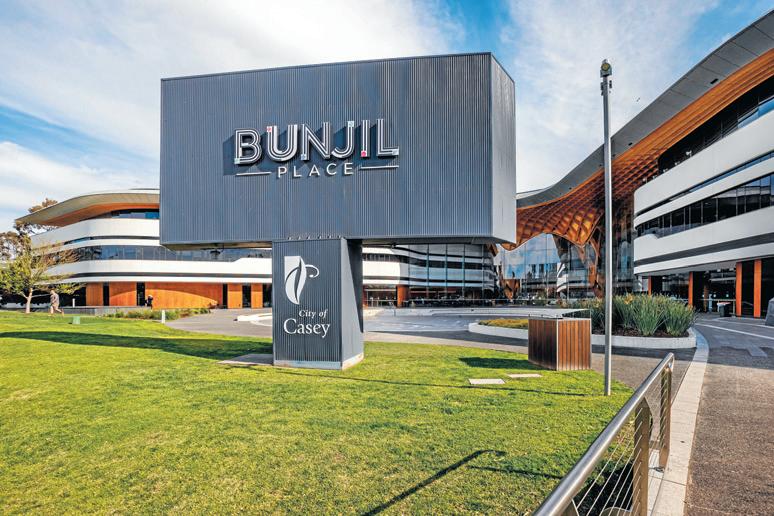
munity including the opening of Bunjil Place, Selandra Community Hub and Casey Stadium.”
“Geoff dedicated much of his life to serving the Casey community and will be remembered by many for his dedication and the work he delivered.”
In 2020, Ablett and his fellow councillors were dismissed after a Victorian Independent Broadbased Anti-corruption Commission (IBAC) launched an investigation into Casey and property developer John Woodman.
Mr Ablett received adverse findings in the IBAC report that he’d allegedly received significant payments and other financial benefits from Mr Woodman while promoting the developer’s interests at Casey.
He was ultimately not charged, while ex-mayor Sam Aziz and Woodman face criminal proceedings.

To the last, Mr Ablett steadfastly maintained his innocence.
In February, he told Star News that the stress surrounding the IBAC probe had taken a toll.
“There are several possibilities (of the contributing factor). Chemicals, stress. The IBAC was a lot,” he said.
“I’m still innocent today…There was no evidence. I wanted to put that I was wrongly accused, and I’m very disappointed.”
Ablett revealed in February this year, that he was diagnosed with MND just before Christmas 2025.
The diagnosis followed months of hospital stays and medical tests with doctors struggling to pinpoint the cause of his rapid physical decline.
At the time, Mr Ablett said he had spent about 12 months in and out of the hospital over the past 15 months.




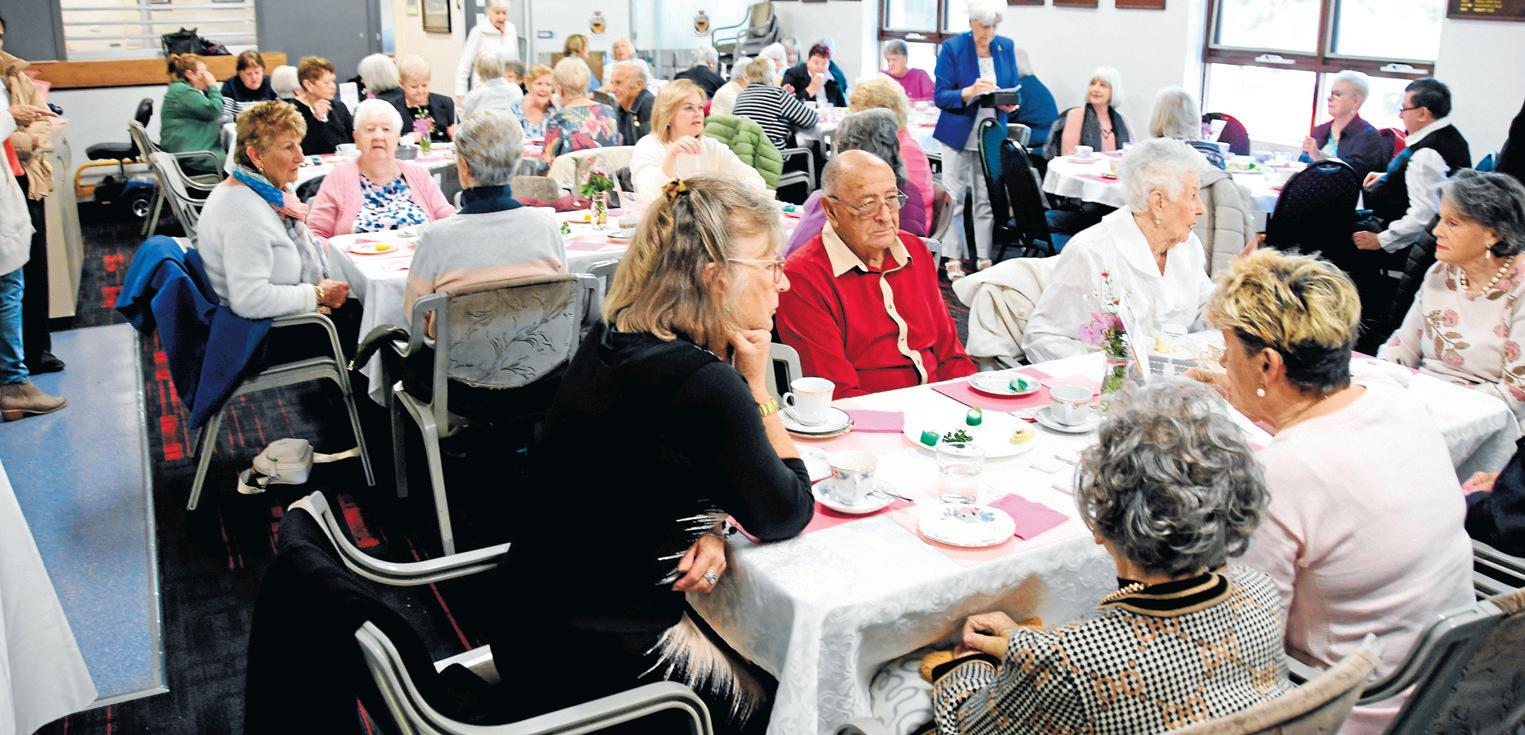
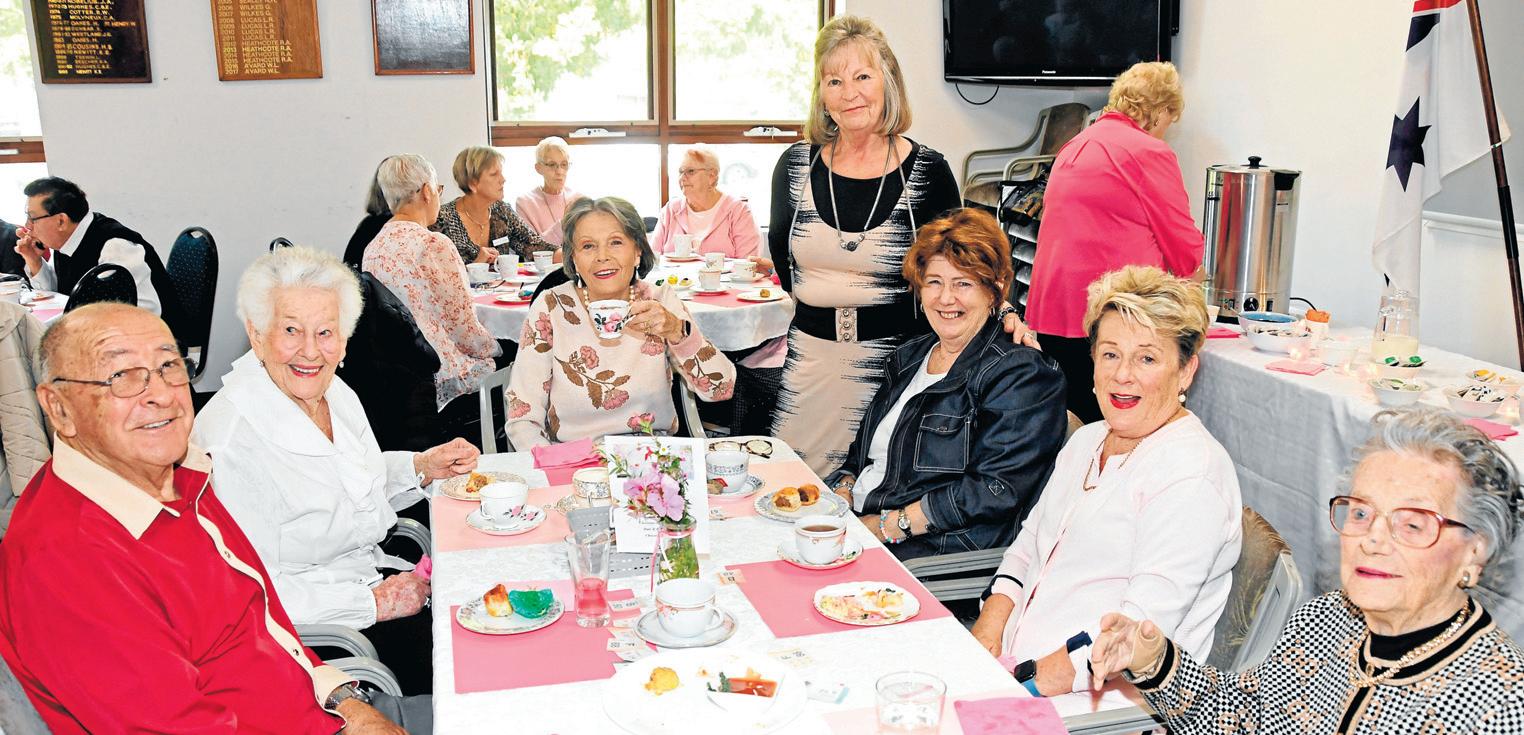
Berwick RSL celebrated Mother’s Day early this year with some local community members coming together to honour and appreciate the selfless contributions of mothers. The event was a heartwarming display of love and gratitude, as attendees paid tribute to the women who have shaped their lives. Adorned with beautiful decorations and filled with a warm atmosphere, the RSL provided a perfect setting for friends to gather and celebrate the special bond between mothers and their children.










Community Bank Beaconsfield is proud to offer this support to local University students for the first time, we encourage you to apply.
Bendigo Bank and its Community Bank network continue to demonstrate their commitment to supporting local communities, with the announcement of more than 320 scholarships awarded to students across Australia for 2026.
The nationwide scholarship initiative, one of the largest programs of its kind in the country, reflects the Bank’s ongoing dedication to helping students overcome financial barriers and pursue further education opportunities. An additional 160 students already receiving multi-year scholarships will also continue to receive support throughout the 2026 academic year.
Together, the scholarships represent an investment of more than $1.6 million, assisting students with essential costs including accommodation, travel, course fees and study materials. The program supports a wide range of educational pathways, from university degrees to vocational and TAFE studies.
Bendigo Bank Chair Vicki Carter said the pro-
gram highlights the Bank’s strong belief that education plays a vital role in building stronger communities and brighter futures.
“We understand the challenges many students, particularly those from regional and rural areas, face when pursuing further education,” Ms Carter said.
“Our scholarship program is a direct investment in their potential and in the future prosperity of the communities they call home.” Community Bank branches across Australia continue to play a significant role in delivering local support. Seventy Community Banks participated in the 2026 Scholarship Program, helping students pursue careers in fields including health, education, law and social sciences.
Since the program began in 2006, Bendigo Bank’s charitable arm, the Bendigo Bank Community Foundation, has provided more than $16.6 million in support to over 2,600 students nationwide.
For Community Bank Beaconsfield, the initiative reflects a long-standing commitment to empowering local people and strengthening regional communities through education, opportunity and investment in future generations.
With the opening of Bailey Nelson Optometrist Berwick, the Australian eyewear brand continues its commitment to delivering thoughtfully designed eyewear alongside accessible, patientfocused eye care.
Known for its modern frame designs, seasonal colour collections, and approachable in-store experience, Bailey Nelson has built a reputation for helping customers feel confident in both their vision and personal style.
Part of the brand’s appeal lies in its ability to combine fashion with function. From timeless everyday staples to fresh contemporary shapes, Bailey Nelson frames are designed to suit a wide range of faces, lifestyles, and personalities. The Berwick team believes eyewear should feel personal, not purely practical.
Alongside its curated eyewear offering, the new Berwick clinic provides Bulk Billed comprehensive primary eye-care services for the local community.
The practice offers routine eye examinations, children’s vision care, contact lens consultations, and support for ongoing visual health needs. The team takes a personalised approach to every appointment, recognising that no two patients, or prescriptions are the same.
Beyond the clinic, Bailey Nelson remains committed to supporting the communities surrounding its stores. From local partnerships including being a sponsor for the Berwick Netball Club, to donations for school raffles, and community events, the Berwick team hopes to become a familiar and trusted part of the neighbourhood.
As Bailey Nelson opens its doors in Berwick, the focus remains simple: delivering quality eye care, well-designed eyewear, and a welcoming experience for every patient who walks through the door.

Bailey Nelson Optometrist Berwick, 49 High St, Berwick, telephone (03) 9967 9894.















Recognising the significance of positive role models and personalised guidance, schools around the world are increasingly implementing mentoring initiatives.
Here we explore the importance of mentoring programs in schools, examining how they contribute to student success, foster a sense of belonging, and empower individuals to navigate the complexities of academic and personal growth.
Academic Success and Goal Achievement:
One of the key advantages of mentoring programs is the provision of personalised support.
Mentors work closely with students to understand their unique strengths, challenges, and learning styles. This personalised attention enhances academic performance by tailoring strategies to meet individual needs, fostering a sense of confidence and competence in students.
Mentoring programs empower students to set and pursue academic and personal goals.
Through regular discussions with their mentors, students can identify their aspirations, create action plans, and receive guidance on overcoming obstacles. This goal-setting process not only enhances academic achievement but also instills valuable life skills such as time management and perseverance.
Social and Emotional Well-Being:
Positive mentor-student relationships contribute significantly to the development of confidence and self-esteem. Mentors serve as supportive figures that encourage students to recognise and embrace their strengths, fostering a positive selfimage that extends beyond the academic realm.
The school environment can be socially challenging, especially for students facing issues such as peer pressure, bullying, or a sense of isolation. Mentors provide a reliable and empathetic ear, guiding students through these challenges, offer-
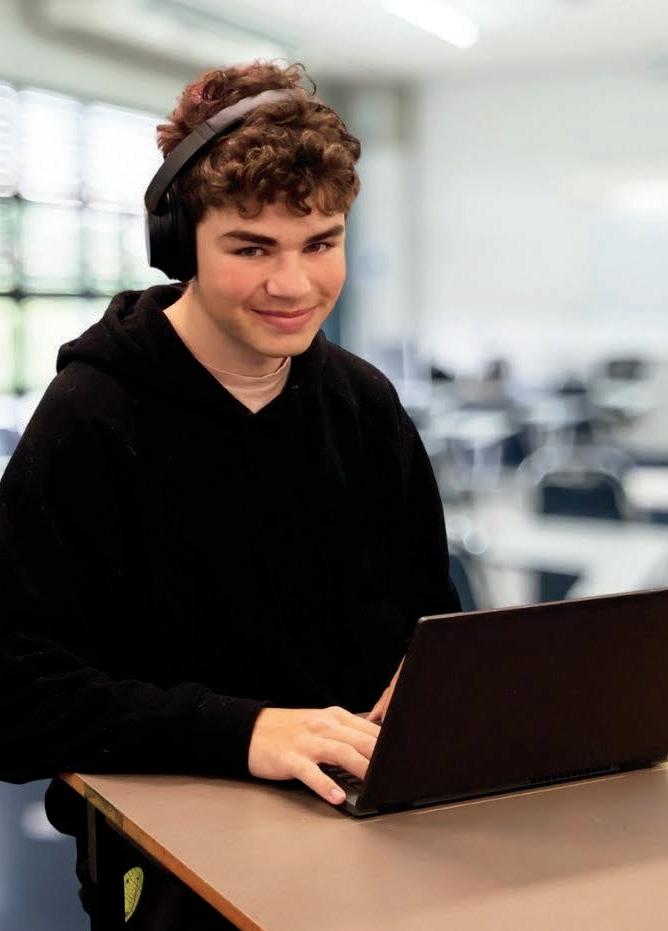

ing coping strategies, and helping them develop interpersonal skills crucial for healthy relationships.
Career Exploration and Skill Development:
Mentoring programs often include components focused on career exploration. Mentors can introduce students to a variety of career paths, share insights about their own professional journeys,


and provide guidance on educational pathways that align with students’ interests and goals.
Mentors play a vital role in nurturing the development of essential life skills, including communication, problem-solving, and critical thinking.
Through real-world discussions and hands-on experiences, students gain practical insights that extend beyond the classroom, preparing them for

future academic and professional endeavours. Sense of Belonging and Community:
Mentoring programs contribute to the creation of a supportive community within the school. The mentor-student relationship fosters a sense of belonging, as students feel valued and understood. This support network can be particularly crucial for students who may face challenges at home or in their personal lives.
Promoting Inclusivity:
Mentoring programs have the potential to promote inclusivity by pairing students with mentors who may share similar backgrounds or experiences. This connection helps bridge gaps and creates a more inclusive school environment where diversity is celebrated, and students feel acknowledged and accepted.
Resilience and Coping Skills:
Life is filled with challenges, and mentoring programs equip students with the resilience and coping skills necessary to navigate adversity. By fostering a growth mindset and providing strategies for overcoming setbacks, mentors empower students to face challenges with determination and a positive attitude.
The impact of positive mentor-student relationships extends far beyond the classroom, influencing students’ lifelong learning journeys and personal growth. By recognising the importance of mentorship and investing in these programs, schools create environments where students not only thrive academically but also develop the skills, resilience, and sense of community needed to navigate the complexities of life beyond the educational setting. As we continue to prioritise the holistic development of students, mentoring programs stand as invaluable tools for guiding the future leaders, thinkers, and contributors of our society.
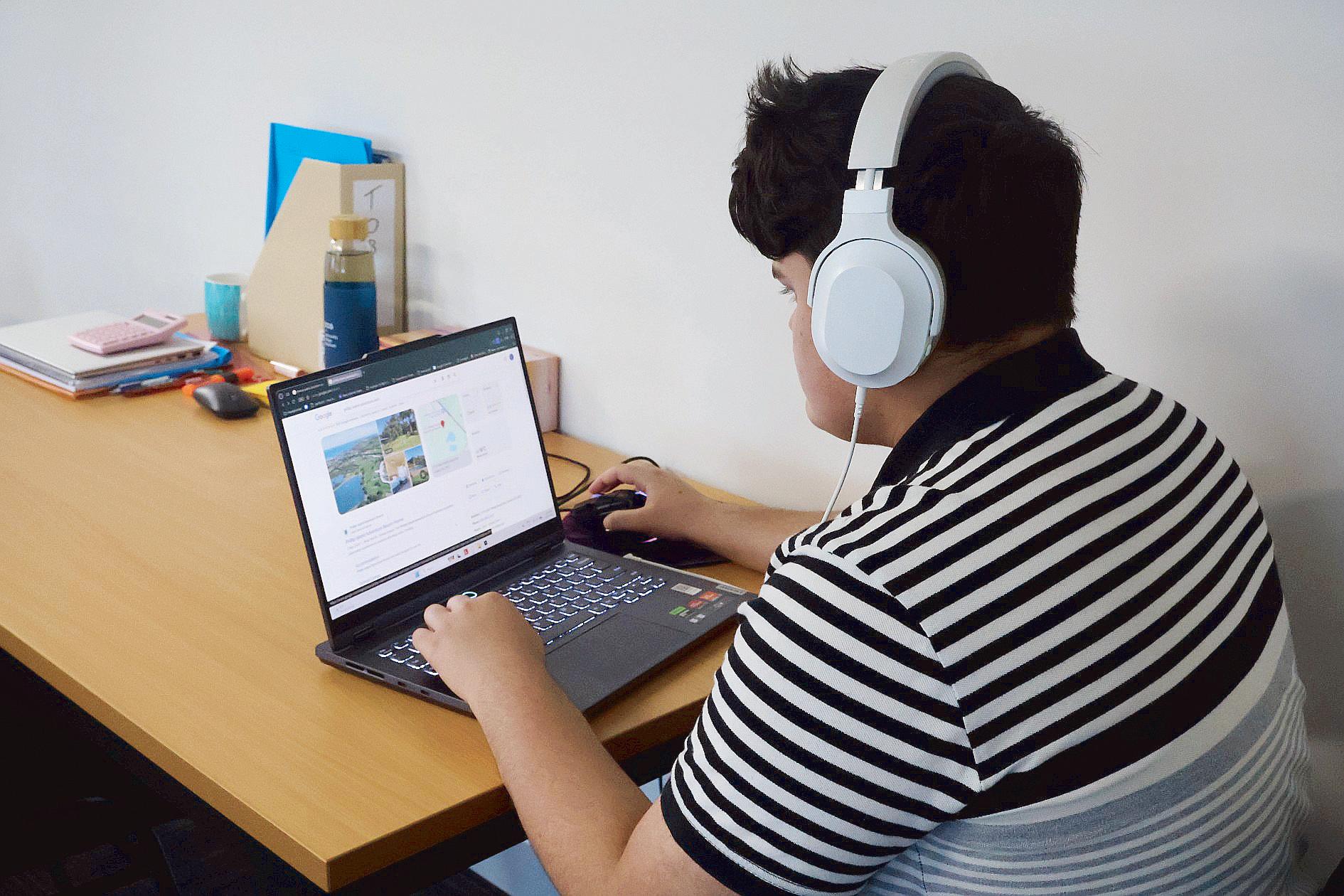
Introducing ECG Virtual Learning - Bringing Connection, Support, and Education to Your Doorstep.
Young people facing barriers to education will soon have a new pathway to reconnect and succeed, with ECG Secondary College (ECG) introducing ECG Virtual Learning for students in Years 9 -12, launching in 2026.
Designed for students who may find it difficult to access or engage with traditional school settings , or for those who prefer to learn from home , ECG Virtual Learning offers a flexible and supportive approach that meets young people where they are, both in their learning and in their lives.
“School not working? Not before you explore a different way to learn,” said Russel Praetz, Principal at ECG Secondary College.

ECG is known for placing students at the centre of education, delivering alternative pathways that prioritise wellbeing, build confidence, and support students to progress at their own pace. The Virtual Learning model extends this approach beyond the class-
room , increasing access for students across Gippsland and wider Victoria.
The program supports young people who experience challenges accessing mainstream education, are unable to regularly attend a physical campus, require greater flexibility in how and when they learn, feel socially disengaged, or would benefit from a more per sonalised learning environment.
Through ECG Virtual Learning, students will engage in structured online learning with qualified teachers, follow individualised learning plans, access ongoing wellbeing support, and remain connected in a safe, inclusive learning community.
“Every young person deserves the opportunity to succeed,” Mr Praetz said.
ECG is now inviting Expressions of Interest (EOIs) from students, families, and support organisations for the 2026 Term 3 intake. For more information , visit https://ecg.vic. edu.au/virtual -learning/ or contact 03 5622 6000.
In an increasingly digital age, the importance of teaching students handwriting skills may seem diminished. However, the art of handwriting holds significant value that extends beyond mere practicality. The following explores the enduring importance of teaching student’s handwriting skills and highlights the cognitive, educational, and personal benefits associated with this fundamental form of communication.
Cognitive Development
Handwriting engages various cognitive processes, contributing to the development of fine motor skills, hand-eye coordination, and spatial awareness. The intricate movements required for forming letters and words stimulate neural connections in the brain, enhancing cognitive development. Research suggests that handwriting improves memory retention and information processing, as the physical act of writing reinforces learning and comprehension.
Communication and Expression
Handwriting offers a unique form of self-expression and personal connection. It allows individuals to convey their thoughts, emotions, and ideas in a distinct and tangible manner. Handwriting can be more personal and intimate than typed text, as it reflects an individual’s personality, style, and individuality. The act of physically writing helps individuals connect with their thoughts, fostering creativity and a deeper understanding of the content being written.
Cognitive Engagement and Retention

writing abilities.
Historical and Cultural Preservation
Handwriting carries historical and cultural significance. It connects us to our past, allowing us to decipher historical documents, letters, and manuscripts that were handwritten. By teaching studentshandwriting,weensurethepreservation of this valuable heritage. Handwriting enables individuals to appreciate the artistry and personal touch behind handwritten artifacts, fostering an understandingandrespectforoursharedhistory.
Practical Applications
While digital technologies have become pervasive, there are still situations where handwriting remains practical and necessary. Not all environments or circumstances allow for the use of digital devices, and being able to communicate effectively through handwriting ensures individuals can adapt to various situations. Handwritten notes, letters, and forms remain prevalent in many areas of life, such as personal correspondence, legal documents, and signatures.
Literacy Development
Teaching handwriting skills is closely linked to
Writing by hand enhances cognitive engagement and information retention. The physical act of writing engages multiple senses, including touch, sight, and kinesthetic awareness, resulting in a more immersive learning experience. Studies have shown that students who take notes by hand demonstrate improved comprehension and recall compared to those who rely solely on digital devices. Handwriting promotes active thinking, critical analysis, and the organisation of thoughts, leading to more effective learning and long-term memory retention.
literacy development. As students learn to write, they simultaneously reinforce their reading skills, phonemic awareness, and understanding of language structure. Handwriting helps students recognise letter forms, letter-sound relationships, and word formation, ultimately supporting their overall literacy skills. It serves as a foundational step towards proficient reading and
Despite advancements in technology, teaching students handwriting skills remains essential for their cognitive, educational, and personal development. Handwriting engages cognitive processes, enhances communication and expression, promotes cognitive engagement and retention, supports literacy development, preserves historical and cultural connections, and maintains practical applications. The art of handwriting holds timeless value, fostering creativity, critical thinking, and a deeper connection to our thoughts and ideas. By teaching handwriting, we equip students with a valuable skill that transcends the digital realm, empowering them to communicate effectively and express themselves authentically in an ever-evolving world.








Six years ago, Principal Leanne Evans stood at the school gate, welcoming Clyde Grammar’s first Foundation students. This year, those students are now the inaugural Year 6 class, having grown alongside their school, each flourishing under Mrs Evans’ steady guidance.
As Clyde Grammar prepares to open its next major facility in preparation for their Senior School launch, Mrs Evans reflects on a journey marked by vision, heart, and a thriving school community.
“This is such a special year,” says Mrs Evans. “We are celebrating our first Year 6 cohort while being just months away from opening our Collaborative Learning Centre. These milestones are a testament to the strong community we’ve built together.”
The new centre will include classrooms, and a fully equipped gymnasium providing two full-sized courts, and a large assembly space. It’s a key piece of infrastructure supporting the school’s evolution, with planning for more state-of-the-art facilities currently underway.
Through this growth, Mrs Evans stays closely connected to students. Each fortnight, one student from the top scoring House has their name drawn at random and is invited to share lunch, a chat, and a card game with her.
“It’s a small but meaningful way to celebrate their efforts,” she says. “I love taking the time to chat to them, and learn what they are passionate about.”
With a strong focus on building resilience, Mrs Evans and her team encourage students to try new things, and to see mistakes as valuable learning opportunities. “That’s where the real growth happens,” she says.

As the school continues to evolve, she remains committed to nurturing learners who are confident, capable, and ready for life beyond the classroom.
110 Smiths Lane, Clyde North 3978
Reception: 03 8903 4500
enrolments@clydegrammar.vic.edu.au










Catholic Education Week in the Diocese of Sale
will be celebrated from 15-22 May 2026. Catholic schools will open their doors to the community offering Open Days and activities that showcase the rich learning and teaching taking place in schools every day.
This year’s theme, ‘Every school a home of peace’ , draws inspiration from the words of Jesus: “Peace I leave with you”, says the Lord, “my own peace I give you” . (John 14.27).
This theme invites school communities to reflect on the vital role that peace, hope and faith play in shaping lives and nurturing flourishing communities.
The theme, ‘Every school a home of peace’ , speaks directly to the mission of Catholic education. Catholic schools strive to be welcoming, inclusive, and supportive communities where students are nurtured to grow academically, spiritually, and socially.


A highlight of the week will be the Diocesan Catholic Education Week Mass, celebrated by the Bishop of Sale, Most Reverend Greg Bennet, on Wednesday 20 May at Nagle Catholic College, Bairnsdale.
During the celebration, student leaders from the 39 Catholic primary schools and seven Catholic secondary colleges across the Diocese will represent their communities by joining a procession with their school banners.
Mr Paul Velten, Executive Director of Diocese of Sale Catholic Education Limited (DOSCEL), speaks of Catholic Education Week as “an opportunity for families and community members to experience first-hand what makes Catholic schools special places. We warmly welcome families to contact their local Catholic school to learn more about tours and enrolment opportunities.”
During Catholic Education Week, schools will be sharing the message of peace in meaningful and creative ways. Some schools have created ‘Peace Walls’ featuring student artwork and reflections on what peace means within their school communities. Others are engaging in social justice initiatives and fundraising projects which demonstrate peace in action through service, compassion, and solidarity.
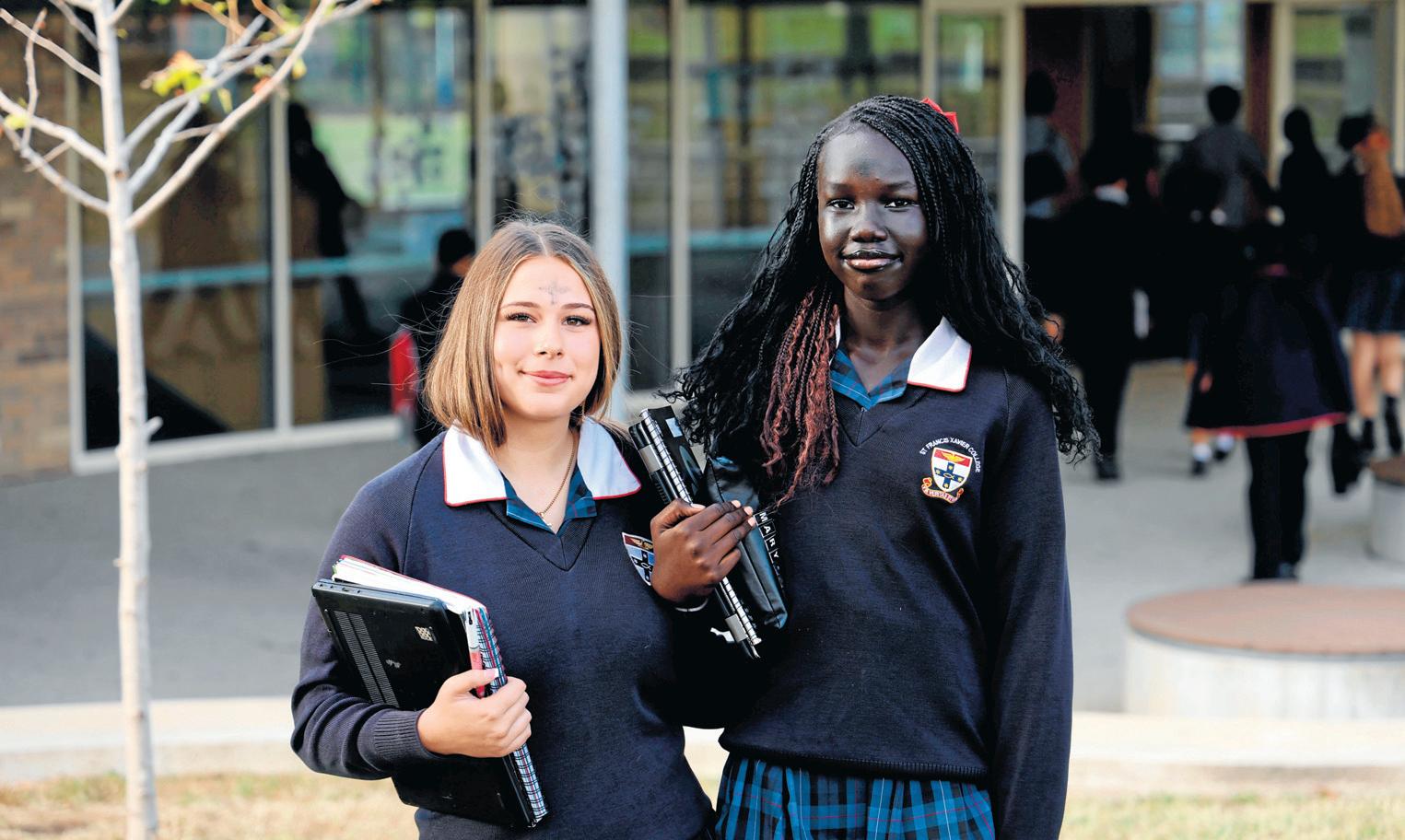







































St Francis Xavier College marks Education Week by celebrating an education grounded in faith, purpose and a deep commitment to human dignity. Inspired by the belief that every person is made in the image of God, the College fosters a culture where each student is valued, respected and supported to flourish.
Academic excellence remains central to this mission. Through a broad and engaging curriculum, alongside diverse senior pathways including university and vocational options, students are equipped with the knowledge and skills to navigate an increasingly complex world. Learning is both challenging and relevant, encouraging young people to think critically, act ethically and pursue futures that reflect their unique gifts.
Beyond the classroom, students are invited to grow as whole persons. Opportunities in the arts, sports, leadership and social justice initiatives nurture confidence, creativity and a sense of re-
sponsibility to others. These experiences, shaped by Gospel values, encourage students to become compassionate contributors to their communities.
St Francis Xavier College is committed to embracing diversity and actively working to eliminate practices and attitudes that exclude or disadvantage. As a child safe community, the wellbeing of every student is paramount. A strong pastoral framework ensures that students feel known, valued and supported, while partnerships with families help cultivate empathy, resilience and strength of character.
We acknowledge the Bunurong people as the Traditional Custodians of this land and pay respect to their elders past, present and emerging.
As we look ahead, the College remains dedicated to forming young people who are not only well-educated, but prepared to meet life’s challenges with faith, hope and purpose.


by Sahar Foladi
Child-like sex dolls were shockingly discovered for sale on multinational retailer Amazon’s website before they were taken down after Star Journal’s queries.
Almost 3000 emails were sent to Amazon by the grassroots campaigning movement, Collective Shout, which had discovered the sex dolls modelled on female toddlers and designed for male sexual use being offered on the platform.
Child-like sex dolls - and other child abuse material - are considered a Tier 2 Good, and importation into Australia is prohibited without specific permissions. Breaches can lead to a fine of up to $782,500, imprisonment for 10 years or both.
ItisanareaoffocusforAustralianBorderForce, which stopped close to 50 childlike sex dolls from entering the country.
Amazon says the products in question were in its US stores and removed after it conducted an investigation.
Its spokesperson said the protection of children and adolescents was a priority, and they require all products offered in stores to comply with the applicable regulations.
“We have strict policies and guidelines in the segment of adult products and we have always
strictly prohibited child pornography.
“This includes having express policies prohibiting the sale of sex dolls with child-like appearances, which all third-party sellers on our store must follow.
“We are investing heavily in tools and teams to continuously monitor our store and enforce the respect of our guidelines and policies.
“Third-party sellers who don’t will be subject to action, including removal of their account.”
Collective Shout campaign manager, Caitlin Roper slams Amazon’s response as inconsistent with their actions, saying it has “failed” to show “any actual commitment to child safeguarding”
“If our small team of five women working parttime, if we can find this stuff and new dolls every week, why can’t a billion-dollar company find them? Why can’t they actually fix the problem?”
She says the organisation has been flagging this type of product since 2018 and most recently sent almost 3000 emails in regard to the recent advertised products, but their concerns were dismissed.
“I think it’s either a low priority or that they are making enough money that they would rather continue to make the money,” Ms Roper said.
“It was just sort of a game of whack-a-mole. Now we’ve gone hard in the last six months, and
we’ve found all these different ways that sellers are engaging in deception, giving the dolls breasts to make them look like adult women, passing them off as adult women and then sending children (-sized dolls).
“We’ve also found this time that the sellers are advertising life-size action figures for cosplay and photography and art, but they’re literally the same sex dolls made by the same sex doll companies. Just advertised as being for something else.”
A Victorian government spokesperson urged anyone with information about the importation of child exploitation material including child-like sex dolls, to report it to Border Watch.
“This is sickening and completely unacceptable -- there is absolutely no place for anything that enables the exploitation of children.”
Ms Rogers says the retailing giant is profiting off “exploitation and dehumanisation of women.”
“If you look at the sex dolls and sex doll-related products they sell, it is so degrading and objectifying of women.
“ It’s things like either full body sex dolls in very pornographic poses or even just torsos ... with no head, no legs.”
Various customer reviews on Amazon website, some accompanied by photos, prove the dolls are
toddler-sized.
“About the size of my toddler … This should not be able to be sold,” one review read.
“I’m not sure how I feel about it looking like a child. A sex toy that’s a kid. It’s so small. If anyone sees this, I could go to jail.”
“It’s only 24 inches tall. That’s toddler size … It’s a baby. It’s pedo.”
The Australian Border Force stopped close to 50 childlike sex dolls from entering Australia between 1 July 2024 and 30 June 2025 after there was a “disturbing rise” in attempts to import objects, which triggered a nationwide crackdown.
A 51-year-old Bulleen man was charged in 2020 for importation of a child-like sex doll after ABF officers intercepted the parcel coming from China at the Melbourne International Mail Gateway Facility.
The item was declared as a mannequin instead.
Research by the Australian Institute of Criminology suggests the use of these dolls “may lead to increased child sex offences from viewing online child exploitation material to contact sexual offending”
“It may also desensitise the user from the potential harm that child sexual assault causes, given that such dolls give no emotional feedback.”
The Royal Botanic Gardens in Cranbourne has launched a new initiative to inspire and educate visitors on basic home gardening tips.
Through its new ‘How to Garden’ program, visitors will have the chance to develop their mastery in biodiversity and native plants.
The recently launched garden, features a selection of new plants, long seating benches, a teaching circle, fire pit and modern educational signage.
The designs were led by Andrew Laidlaw, an architect of over 25 years, who recently received the President’s award for an outstanding contribution to landscape architecture at the Australian Institute of Landscape Architects Victorian Awards.
Laidlaw says that the concept of the garden aims to underscore biodiversity, culinary and medicinal plants as well as the correct plant placement aimed to attract animals and insects.
This includes the endangered bandicoots, native bees, native birds and other wildlife.
Plants included in the garden extend to the Emu Bush which can be used as an antiseptic, Native Mint, used in tea and Eucalyptus, often used for essential oils.
“They can learn about microclimates and selecting the right plant for the right location, such as planting in shady areas or areas with root-laden soil,” Laidlaw said.
“They can also learn about traditional plant uses including their medicinal and culinary properties and see that these plants can be planted in the ground and spread throughout



the garden rather than just grown in raised gardens.
“Visitors are encouraged to touch and smell the plants in the garden for the full experience.”
Information and signs scattered around the garden contain gardening tips.
In addition to this, rooted in consultation with the Bunurong Council Aboriginal Corporation, visitors can also discover traditional plant uses and bush foods.
“Whether you are caring for a courtyard or a larger backyard, this garden will teach you the benefits of a native Australian garden and how to get the best from it,” Laidlaw said
“The fire pit with surrounding seating for up to 30 students, encourages people to connect with friends and family gathering spaces within their own backyards, just as First Peoples have done for millennia in yarning circles.”
The new gardening initiative can be found at the northern end of the Australian Garden at Royal Botanic Gardens Cranbourne, near the Ian Potter Lakeside Precinct and beside the Lakeside Kiosk.
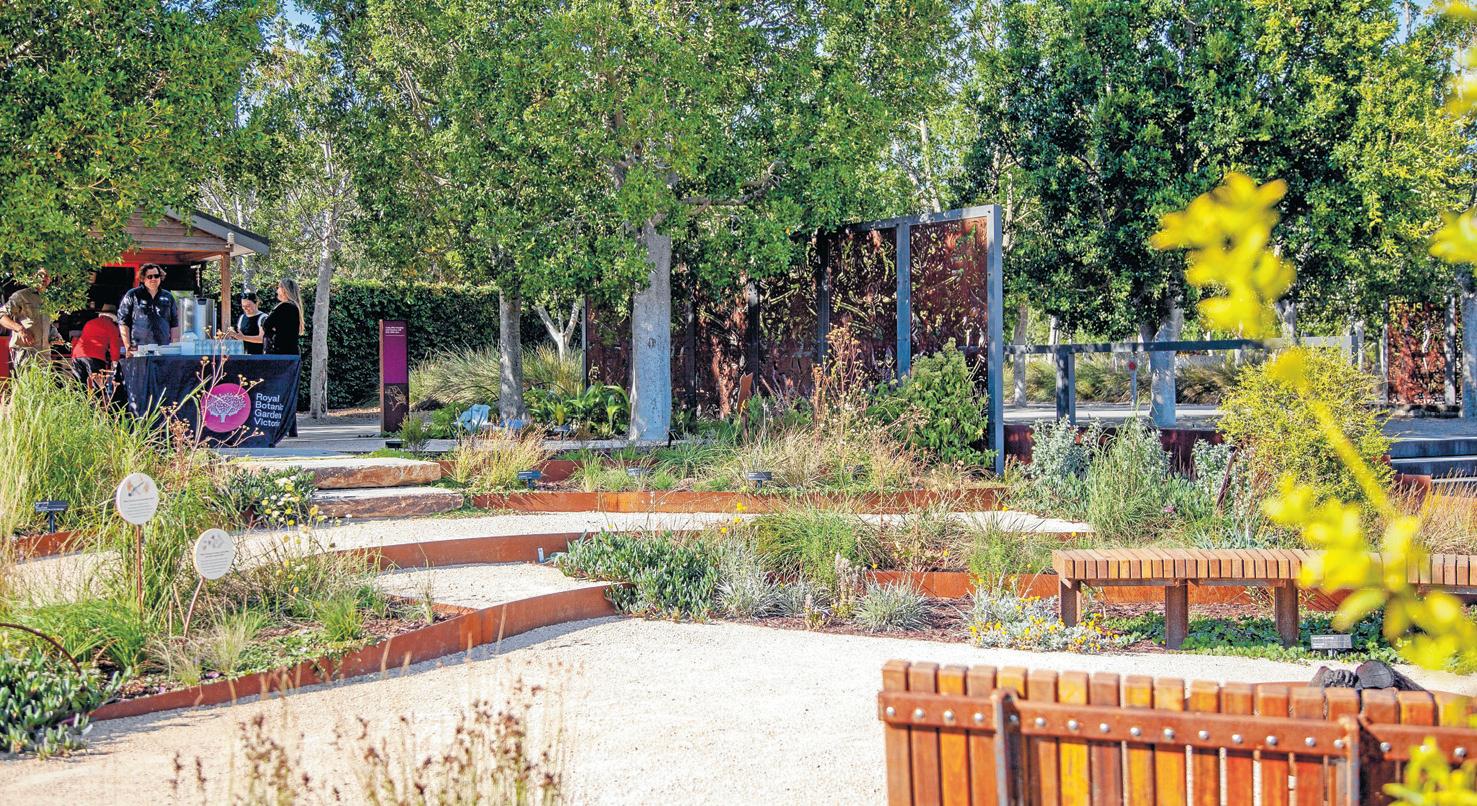
Andrew Laidlaw, architect of 25 years, designed the garden’s landscape. He recently received a president’s award for his outstanding contribution to landscape architecture.
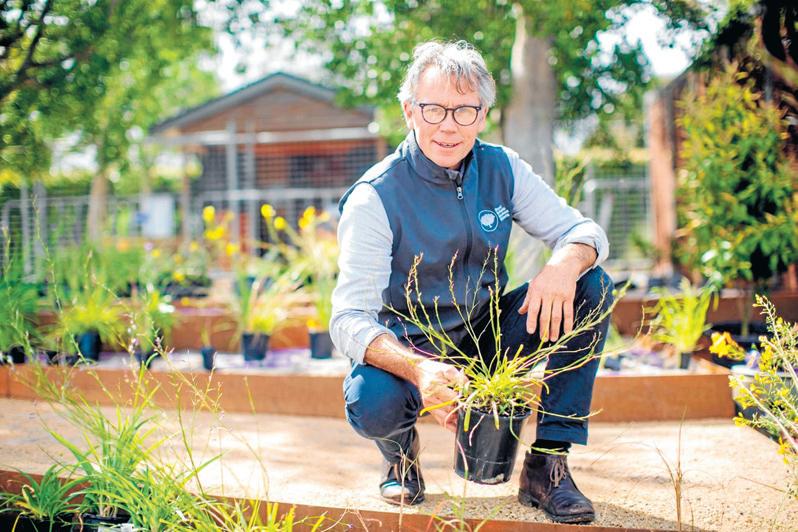















































































































































































































































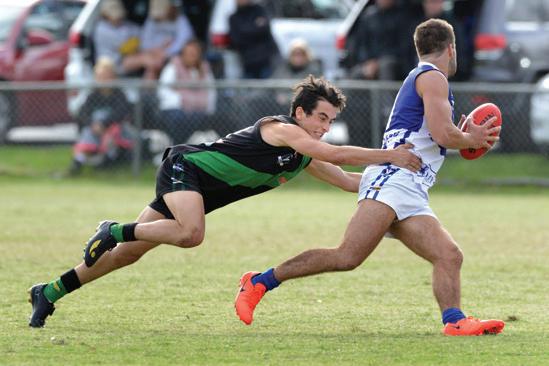













































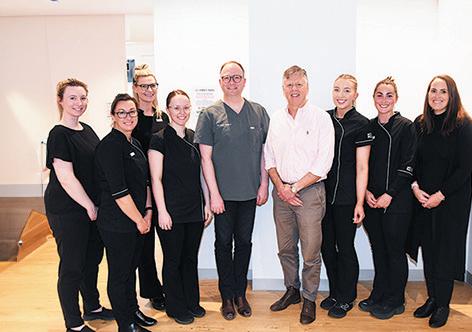





























Follow Your Waste Tour
Hop on the bus and follow your waste from Valoriza to Stevenson’s Road closed landfill, Veolia and Cleanaway Hallam Education Centre. Fully catered. Please note that this tour may include stairs, uneven ground, potentially slippery surfaces and indoor and outdoor venues. For ages 16-plus.
• Thursday 14 May 9am-4.30pm at Bunjil Place, Narre Warren; free event. Bookings: events.humanitix.com/follow-your-waste-tour-1-2026-cityof-casey Coffee for a Cause
During National Palliative Care Week (10–16 May), help fund Palliative Care South East’s services across the region. This can be done by attending 80VC Community Cafe and adding $1 to a coffee purchase,
• 10-16 May, 7am-3.30pm at 80VC Community Cafe, 80 Victor Crescent, Narre Warren. Forest by Polyglot Theatre
A new immersive show for children 4-10 and their families to explore their connection to forests.
• Saturday 16 May and Sunday 17 May 10.30am, 1pm and 3pm at Royal Botanic Gardens Cranbourne; $15/$15. Bookings essential at rbg.vic.gov.au/cranbourne-gardens/whats-oncranbourne/forest-by-polyglot-theatre/ Gardening Together
For all dads and grandfathers - bring your children and grandchildren (aged 3-6 years) for a morning of digging, planting, playing and getting dirty. Grow vegetables to eat, learn about insects, and have fun in the kids’ play garden. Please bring hats, sunscreen and water bottles. Gardening tools and resources provided.
• Saturday 16 May 10am-11.30am at Old Cheese Factory community gardens, 34 Homestead Road, Berwick. Bookings: trybooking.com/ events/landing/1528450?
FC26 Competition
Join us for a round of FC26 on the PS5 and score yourself some prizes as we celebrate Law Week 2026 at Bunjil Place Library. Connect with the teams from South-East Monash Legal Service and Casey Youth Services and share your views on legal issues that matter to you. Drop-in event, no bookings required. Suitable for ages 14-25.
• Monday 18 May 4pm-6pm at Bunjil Place



library, Narre Warren; free event.
Pancake Night
Clyde North Dad Squad invites dads, grandfathers and father figures to bring your children for free pancakes and fun. Most dietary requirements can be catered.
• Tuesday 19 May 7pm-8pm at Orana Community Place, 1 Fresco Place, Clyde North; free event. Bookings: https://www.trybooking.com/DLFTN
Wear Orange Wednesday
• WOW Day is the national day of recognition to say ‘thank you’ to SES volunteers. Wear orange, post a photo or video to socila media with hashtag #ThankYouSES, host orange-themed morning tea or donate to local SES units. Wednesday 20 May. Donate to Cranbourne SES unitathttps://square.link/u/tt2wsaeN?src=sheet
Biodiversity Day at Myuna Farm
Come and celebrate International Day for Biodiversity. A train ride to wetlands, where you can meet flying foxes and watch them fly out at sunset. Frog calls and water bugs activities.
• Thursday 21 May 4.30pm-6.30pm at Myuna Farm, Kidds Road, Doveton; free event. Bookings: trybooking.com/DLBDC
Cancer Council morning tea
National Seniors Australia Berwick hosts a social morning tea and fundraiser event for the Cancer Council.
• Wednesday 27 May 10am-12pm at The Old Shop, Old Cheese Factory, 34 Homestead Road, Berwick. Details: Jennifer, 0474 254 287
All In for Reconciliation
2026 National Reconciliation Week event featuring dance performance, storytelling and activities.
• Wednesday 27 May 4pm-6pm at Bunjil Place plaza, Narre Warren; free event.
Visible Mending Workshop
Bring along your ripped or moth-chomped woollen clothing, stretchy clothing, and woven clothing (jeans are ideal). We will also look at things like sashiko, embroidery and weaving mends. Light refreshments provided.
• Friday 29 May, 9.30am - 12pm at Good Food Emporium, Unit 15/430-440 Princes Hwy, Narre Warren; free event. Bookings: events.humanitix. com/visible-mending-workshop-29-5
VACCA Community Fundraiser
Reconciliation Week event and community fundraiser for Victorian Aboriginal Child and Community Agency with art by N’Dene Riley, family activities, food and raffle prizes. Hosted by Story House Early Learning Lynbrook.
• Monday 1 June 2.30pm-5.30pm at Lynbrook Community Centre, 2 Harris Street; free entry. Bookings: trybooking.com/DLLMG
Movie night with Cranbourne Dads’ Group
Bring your children for a movie, supper and meet other father figures. For all dads, grandfathers, father figures and their children. Suitable for children aged 6 years and under.
• Saturday 6 June, 6.30pm-8.30pm at Cranbourne West Community Hub, 4 Flicka Blvd, Cranbourne West; free event. Bookings: trybooking. com/DJYGF
Family violence fundraiser
Rotary Club of Casey presents Unlocking Hope—a special fundraising event in support of RizeUp and their vital work empowering families impacted by domestic and family violence. Delicious food, with drinks at bar prices. Live music from guest artist Paul Hogan, lucky door prizes and silent auctions. Dress code: cocktail. Saturday 20 June, 7pm-11pm at Beaconsfield Club, Holm Park Reserve, 100 Beaconsfield-Emerald Road, Beaconsfield; $65pp. Bookings: trybooking.com/events/1564861/sessions/6350052/sections/3013983/tickets Cranbourne Seniors Club
Devonshire Tea on Friday 22 May, 1.30pm-3.30pm; $10pp. Morning Melodies with Gavin Chatelier, first Friday of the month, 11am-3pm; $15 lunch included.
• 1 Codrington St, Cranbourne. Details: Marilyn, 0432 107 590 or facebook.com/ groups/487808127399953
Endeavour Hills Men’s Shed Just retired? Learn new skills and meet new people. Improve mental wellbeing. Have fun and enjoy good company.
• Mondays-Saturdays 10am-3pm at Sydney Pargeter Reserve, 289 Power Road, Endeavour Hills. Details: John, 9700 1810.
Games Days Mahjong, whist and darts on second and fourth
Fridays of the month (11am-2pm), line dancing on Thursdays (10am-12pm), carpet bowls on Mondays and Thursdays (1pm-3pm), garden group on Mondays (10am-12pm), cards on Saturdays (1pm), bingo first Wednesday of the month (1pm-2pm) and table tennis on Saturdays (9.30am-12pm). Social days are held every Wednesday 10am-2pm with a live entertainer from 1pm.
• Narre Warren Senior Citizens Club, 192/196 Centre Road, Narre Warren. Singers wanted Cranbourne Chorale is recruiting for its non-auditioned adult community choir for mixed voices. Our repertoire is a mix of uplifting songs. Feel free to visit us without obligation, the first four sessions are free of charge.
• Wednesday rehearsals 7.30pm at The Factory, Building 5, 65 Berwick-Cranbourne Rd, Cranbourne East. Details: Jenny, 0438 358 032. U3A Cranbourne
Three new classes for 2026 - mosaics with talented artist Tony Shannon (Tuesdays 12pm), beginner Italian with tutor Jan (Wednesdays 10am-12pm) and Italian study group with tutor Jan (Thursdays 12.30pm-2.30pm). New members over 50 welcome. Our membership fee is $55 per annum and you can join in as many classes as you wish.
• Details: u3acranbourne.org.au
Casual pickleball
Just turn up early to secure your place. All equipment supplied.
• Fridays 10am-11.30am and Sundays 10.30am11.30am at Olive Road sporting complex, Eumemmerring. All equipment supplied, $5.40 per session.
Weekly badminton
Adults welcome (Mondays 7pm-9pm) and ladies and retired (Wednesdays 12pm-2.30pm).
• Hallam Badminton Club, Frawley Road Recreation Reserve; $5.
Meditation and positive thinking
Learn how to make your mind your best friend through open-eyed meditation. Led by Bhavani Padmanabhan, these free sessions are open to all. Presented by Bakhtar Community Organisation and The Brahma Kumaris Organisation.
• Saturdays 2pm at 23-47 Gunns Road, Hallam. Registrations: 9703 2555 or 0403 551 596.



Want to place an ad but not sure where to start? Call our helpful classified team between 8:30am-5pm Mon-Fri for FREE advice!






























By David Nagel
A precious four premiership points have been packed in the kit bag and returned to Holm Park Reserve after Beaconsfield broke its 2026 duck with an 18-point away victory over Mooroolbark on Saturday.
There were no costly lapses for the Eagles this time around, who weathered a third-quarter revival from the Mustangs to score a 10.12(72) to 7.12(54) success.
The win brings about a timely pressure release for new coach Scott Kerr, with competitive performances across the opening four rounds ultimately amounting to nothing.
“Even opposition coaches have acknowledged that the scoreboard hasn’t really reflected the game in recent weeks,” Kerr said.
“The games have felt a lot tighter than they have been, and that’s being a young side and having those small lapses where the opposition capitalise and kick a couple; and those lapses add up.
“We’ve been competitive against some pretty good sides so getting the win on the weekend was huge.”
Losses by 35, 3, 28 and 34 points have hardly been disastrous; but a win was what was craved as the Eagles embarked on a mission at Mooroolbark Heights Reserve.
Hugh Beasley kicked the opening goal for the home side; their only six-pointer of the first half.
A brilliant running goal from Sam Merrick and epic long shot from Ethan Winterton, after a ruck infringement, saw the Eagles take a sevenpoint lead to quarter time.
Ali Zijai then opened the second quarter with a clever checkside from the boundary, before midfielder Hayden Brown converted a set shot after a superb forward-50 tackle.
Beaconsfield appeared to have more run on the outside, with Mitch Szybkowski and JayDe Varlet cutting the Mustangs to ribbons, and it was no surprise to see Szybkowski involved in the next goal.
A left-foot entry fell into the lap of Cooper Shipp, who calmly converted to set up a 26-point lead; 13 minutes into the second term.
The Mustangs then missed some chances, and when Kobe Shipp found his brother Cooper - right on the half-time siren – the Eagles had kicked out to a handy 29-point buffer at the major intermission.
The Eagles only lost control of this contest for 11 minutes; and it was the opening 11 minutes of the second half.
Jak Ryan caught Zijai unawares, winning a holding the ball free kick, before Billy Batten kicked a ripper goal off his left from stoppage.
And when Beasley kicked his second, another toe-poke out the back, the Mustangs were

back to a gettable 14 points.
Kerr’s growing tension would not have been eased when key forward Charlie Muley had a free kicked reversed after earning a set shot at goal.
But the Mustangs had fired their best shot; and the Eagles were about to return fire.
Two goals in the space of three minutes to Jesse Morton, midway through the third stanza, halted Mooroolbark’s momentum and proved crucial in the final washup.
The first came via a clever gather and finish from close range, while the second put the exclamation mark on some explosive end-to-end footy from the visitors.
The Eagles held a comfortable 25-point lead at the final break.
“We’ve been in moments like that in previous rounds and allowed the opposition to get a few
on us, but we’ve worked on some things on how to lock down and get things back on our terms,” Kerr explained.
“I was really pleased with how we dealt with that on the weekend and then the result goes our way.
“There were a lot of learnings over the first few games and I was super impressed with how the boys implemented those things and worked out a way to get it done.”
The final-quarter lead would not have felt comfortable for Kerr, especially after Alex Young cut the margin to 18 points, but goals to Jamie Roberts, after another sizzling pass from Kobe Shipp, and a set shot from Muley, his first for the match, shut the game down as a contest.
The Mustangs kicked two late consolation goals, including one on the final siren, but the Eagles had done enough for a very well-de-
served victory.
“The attitude of the guys across the first four rounds has been really good, they’ve remained really positive, they know we’re on the right path and understand where we’re at,” Kerr said.
“It’s great reward for effort; we enjoyed the win, we sang the song with gusto and there was a sense of relief in the room, but we can’t be satisfied and we need to keep working on the things we’ve been working on.”
The Eagles face a huge game this week on a road trip to bottom-placed Bayswater.
They’ve finally broken the drought…but now they need to hold serve.
“You look at ladder positions and it looks like a good opportunity, but we’re really focussed on us and our improvement and our journey as a footy side,” Kerr said.
“We need to maintain that focus now and hopefully get a win against Bayswater and keep that momentum going.
“The win on the weekend will really give us belief that we can win games of footy at this level with such a young group, but it’s very important that we keep the foot down and build on this momentum.”
Morton and Cooper Shipp kicked two each for the Eagles, on a super-tough day for forwards, while the visiting midfield was supreme.
Devon Smith and Kade De La Rue joined Brown, Varlet and Szybkowski in a winning combination between the arcs, while skipper Jake Bowd and Connor Mouat – an emerging leader in defence – provided some real impetus off half back.
Mouat’s ability to switch play and create space for the speedsters should not be undersold in this victory.
“He’s been huge, he’s done a mountain of work in the pre-season and put on a bit of size,” Kerr said.
“He’s just composed and he’s a big part of a back seven that have been really good for us this year.”
• EASTERNDIVISION1
RESULTS R5: Mooroolbark 7.12(54) def by Beaconsfield 10.12(72), Boronia 14.10(94) def Bayswater 10.6(66), Montrose 21.13(139) def Norwood 13.9(87), Park Orchards 22.15(147) def Mitcham 15.6(96), Wantirna South 6.13(49) def by North Ringwood 11.9(75).
LADDER: North Ringwood 16, Mitcham 16, Park Orchards 16, Wantirna South 16, Boronia 16, Mooroolbark 8, Montrose 8, Beaconsfield 4, Norwood 0, Bayswater 0.
FIXTURE R6: Bayswater (10) v Beaconsfield (8), Mitcham (2) v Mooroolbark (6), Montrose (7) v Boronia (5), North Ringwood (1) v Norwood (9), Park Orchards (3) v Wantirna South (4).
By Justin Schwarze
An entertaining match at Edwin Flack Oval saw East Ringwood come out victorious in an intriguing clash against Berwick in round five of the Eastern Premier Division.
The Wickers were aware it would take nothing short of their best to take down the perennial powerhouse Kangaroos, and they started on the right note with Ben Todd goaling from the opening centre clearance 15 seconds into the game.
Jai Neal then got his name onto the goalkicker’s list as he nailed a set shot from a free kick a couple of minutes later.
Sam Lowson responded for the visitors, making no mistakes from the pocket before Sam Woodward slotted Berwick’s third.
The rest of the term was all East Ringwood as the Kangaroos managed the next three to narrowly lead 26-22 at quarter time.
Josh Fox got the first of the second term for the visitors, grabbing his second goal after marking on the goalline and putting it through.
Berwick was clinical out of the next centre bounce, with Harry Canning spearing a leading Neal on the chest before Neal went back and slotted his second.

But Will MacRae got the last
And
Mitch
pegged one back for Berwick,
but it was answered by a goal from Blake Pearson at the other end, and East Ringwood extended its buffer to 63-43 at the last change.
The fourth was a shootout, started by Canning nailing one before Fox bagged his third.
It was then goal-for-goal going in the sequence of Neal, Fox, Walker and Ryan Webster for the Kangaroos.
Fox guided his fifth home at the 20-minute mark of the final term to push it out to 29 points, effectively ending the game, before late goals to Luke Nelson, May and a pair for Neal brought it back to a respectable 14.12 (96) to 11.15 (81) triumph for the visitors.
Neal was best on with a five-goal effort, while Caleb Van Oostveen, Matt Nelson and Ashton Williamson were the top performers around the ground.
Fox slotted five for the Kangaroos and Pearson was a major contributor.
The Wickers will be left to lick their wounds and prepare for a clash away at Noble Park this weekend.
The Bulls are currently winless, but it’s a fixture that has caused Berwick trouble as the Wickers haven’t won at Pat Wright Oval since 2023.
By Justin Schwarze
A mixed round six for Casey saw both outfits go 1-1 in the double-header fixture in the NBL1 South.
Two disastrous quarters from the Cavaliers Women led to Joseph Turner’s side being handed its second loss of the season in a 85-63 loss to Sandringham on Saturday.
Casey scored just 10 points in the first term and nine in the third, sinking any hope of a comeback as the Sabres built on their lead at Casey Stadium.
In fact, the visitors led for all but 13 seconds of the contest, which was the first 13 seconds when the score was 0-0.
The Cavaliers shot just 40 percent from the floor and turned the ball over 16 times in the defeat.
Dallas Loughridge was a shining light with 16 points and three assists on 5/10 shooting, but Sandringham skipper Kiara Wischer couldn’t be stopped with 22 points, 11 rebounds and five dimes.
Casey bounced back on Sunday to string together a four-quarter showing to knock off Waverley 80-65 on the road.
After the Falcons led by one at quarter time, the Cavaliers won every remaining quarter to hit the front and never look back.
It was a win once again sparked by the ‘Fantastic Five’ starters for coach Turner, as his starters were all in double-figures and scored 76 of Casey’s 80 points.
Loughridge was inefficient at 6/18 but she still posted 24 points, seven boards and four assists.
Sara Bowman owned the glass, hauling in 17 rebounds to notch a double-double with 10 points.
Sharne Robati scored 18 points on 60 percent shooting. The Cavs are still in the top four, sitting fourth with a 7-2 record.
Ibrahima Diallo’s game-saving block in the dying seconds helped the Men survive a massive scare against Sandringham on Saturday.
Casey held a seven-point buffer at halftime before pushing it out to 16 at three-quarter time to have a firm grasp on the contest.
But the Sabres stormed back furiously, tying it at 87 with two minutes to go when Malith Machar used great body positioning to bump Preston

Bungei off the spot and nail a mid-range jumper.
After a pair of Yuot Gai free throws put the hosts back in front, Kaylan Kitto drove down the lane and layed it in to tie the game.
Jesse Ghee took the lead for Casey with 27 seconds to go by absorbing contact and finishing strong at the rim and the visitors took a timeout.
And after some misses, Kyle Bowen cut down
the lane and went up to tie it and was denied as Diallo swatted his shot away to secure victory for the Cavaliers 93-92.
But on Sunday, Casey struggled mightily offensively and fell to Waverley 89-84.
Despite outscoring the Falcons by nine in the second half, the Cavaliers couldn’t recover from a 14-point halftime deficit. Casey is now 13th with four wins and five losses.
Both Cavaliers outfits have a double-header in round seven as they visit Nunawading on Saturday before playing Bendigo at Casey Stadium on Sunday. A hot patch of form has seen the Dandenong Rangers Women surge up the ladder by picking up its third win in five games.
The Rangers made light work of Kilsyth, showing the Cobras no mercy in a 97-51 rout at Dandenong Basketball Stadium on Saturday night.
The Rangers Kilsyth to just 11 points in both the third and fourth quarters, even leading by 50 points at one stage, before settling for the victory.
Adrianna Smith was the key for Dandenong as she scored 30 points on 11/17 shooting while providing eight rebounds, three assists and three steals. Holly Griffiths added 14 points and seven boards, while Marena Whittle made the most of some extended minutes as she finished with 12 points and four rebounds off the bench.
The men have fallen into a rough patch, dropping their third loss out of their last four games in a 96-81 defeat to Kilsyth.
The Cobras narrowly won the second 24-20 to lead by 14 at the main intermission.
The result became a wire-to-wire win for Kilsyth as the Rangers never led at any point of the contest. Dillon Stith flirted with a triple-double for the visitors, posting 24 points, 10 rebounds and seven steals.
Harry Froling was the best for Dandenong as he recorded 18 points and nine boards on 40 percent shooting. The Rangers have dropped to eighth on the ladder with a record of 5-4.
Both Dandenong outfits will pack their bags and head across Bass Strait to face the two Tasmanian teams in round seven.
It starts on Friday night against the Hobart Chargers, before facing the Northern Force on Saturday.
By Blair Burns
Narre
Warren maintained its undefeated status and its spot on top of the ladder after a strong 47-goal win against Cardinia Tigers in round five of the South East Precinct Netball League (SEPNL).
Credit goes to the Tigers who battled hard and prevented the scoreboard from looking much worse, the final result a 68-21 win to the Magpies.
The Magpies are gelling together nicely and have made it clear to the rest of the league that they are the early benchmark.
Having now played every team once, the only team which has come close to the black and white was Beaconsfield who fell short by just two goals.
Coach Kealeigh Brown said the weekend’s victory against Cardinia was a scrappy contest, but was pleased with the team’s start to the season.
“We’ve started the season surprisingly well and have shown off our fitness and pre-season training in games,” she said.
“For a young team and having only really seven of our selected A graders available until the recent round, the girls have combined well and everyone is dominating their positions.”
Some of the big inclusions to the Narre Warren A grade side were Corrina Emery and Jayda McConkey.
“We’ve recently welcomed Corrina back into the team after the birth of her baby boy in February and she has been a welcome inclusion that brings some maturity and composure down the defensive end,” Brown said.
“And we debuted Jayda McConkey as well, who has come back from a knee injury over the pre-season period.
“We’re now just reshaping combinations with those inclusions, but it’s great to have a majority of the team available now for games.”
Narre Warren shooter Mercy Loelu had an-

other day out, netting 40 goals in the 68-21 win, while sister Grace, who plays with Mornington, was able to play on permit for the Magpies due to fixture flexibility.
Loelu had great assistance from McConkey (16 goals) and Charli Lambert (eight goals).
Now the focus shifts to the match of the round, a top-of-the-table clash between Narre Warren and Beaconsfield this weekend.
“We’re ready to be pushed and excited for the challenge of versing some quality players and a quality team,” Brown said.
In the other match on Saturday, it was Beaconsfield who defeated Hampton Park 53-27 at
Holm Park Reserve.
Chloe Maas was brilliant for the Eagles and led all scorers with 28 goals for the game, while her captain Zara Treweek (13 goals) and Suzie Bourchier (12 goals) both had a great impact inside the goal ring.
It was a brilliant 12-0 run to start the match which set up the win for Beaconsfield, putting the Redbacks on the back foot from the first whistle despite another strong showing from Emily Pupuke (20 goals).
Berwick had the bye.
• SEPNL-OTHERGRADES
B GRADE: Beaconsfield 46 def Hampton Park 45, Berwick Springs 51 def Berwick 42, Narre Warren - bye.
C GRADE: Hampton Park 36 def Beaconsfield 23, Narre Warren 51 def Cardinia Tigers 16, Berwick 45 def Berwick Springs 31.
D GRADE: Hampton Park 39 def Beaconsfield 27, Berwick 35 def Berwick Springs 6, Narre Warren 47 def Cardinia Tigers 13.
A GRADE FIXTURE R6: Narre Warren v Beaconsfield at Kalora Park 3:05pm, Cardinia Tigers v Berwick at James Bathe 3:05pm, Hampton Park - Bye.