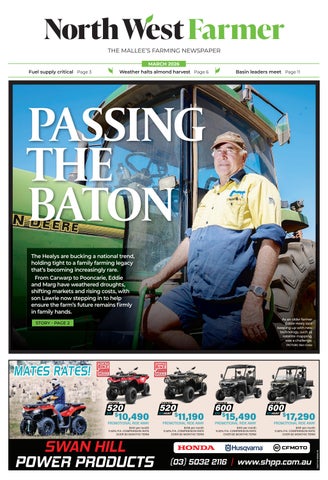
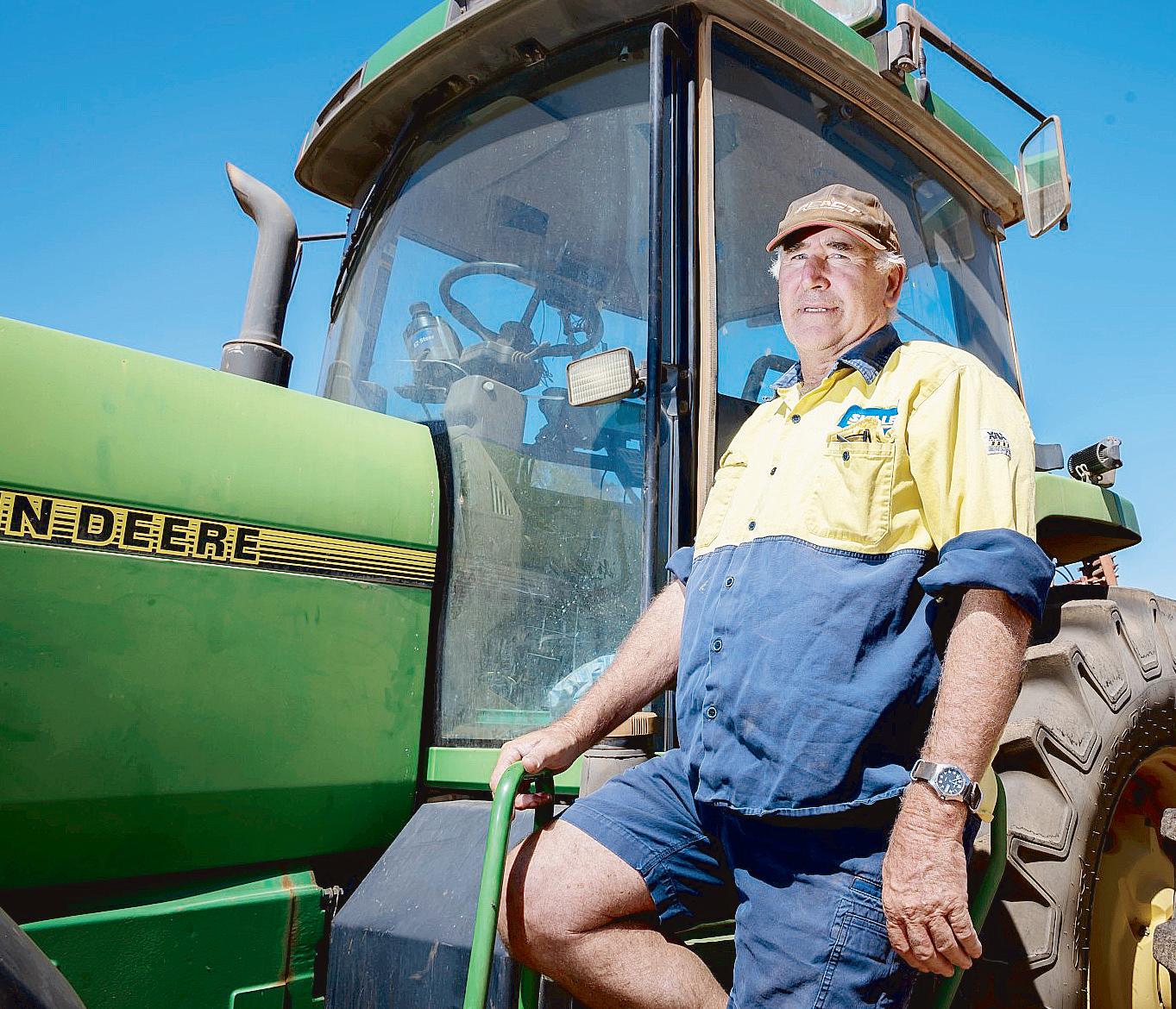
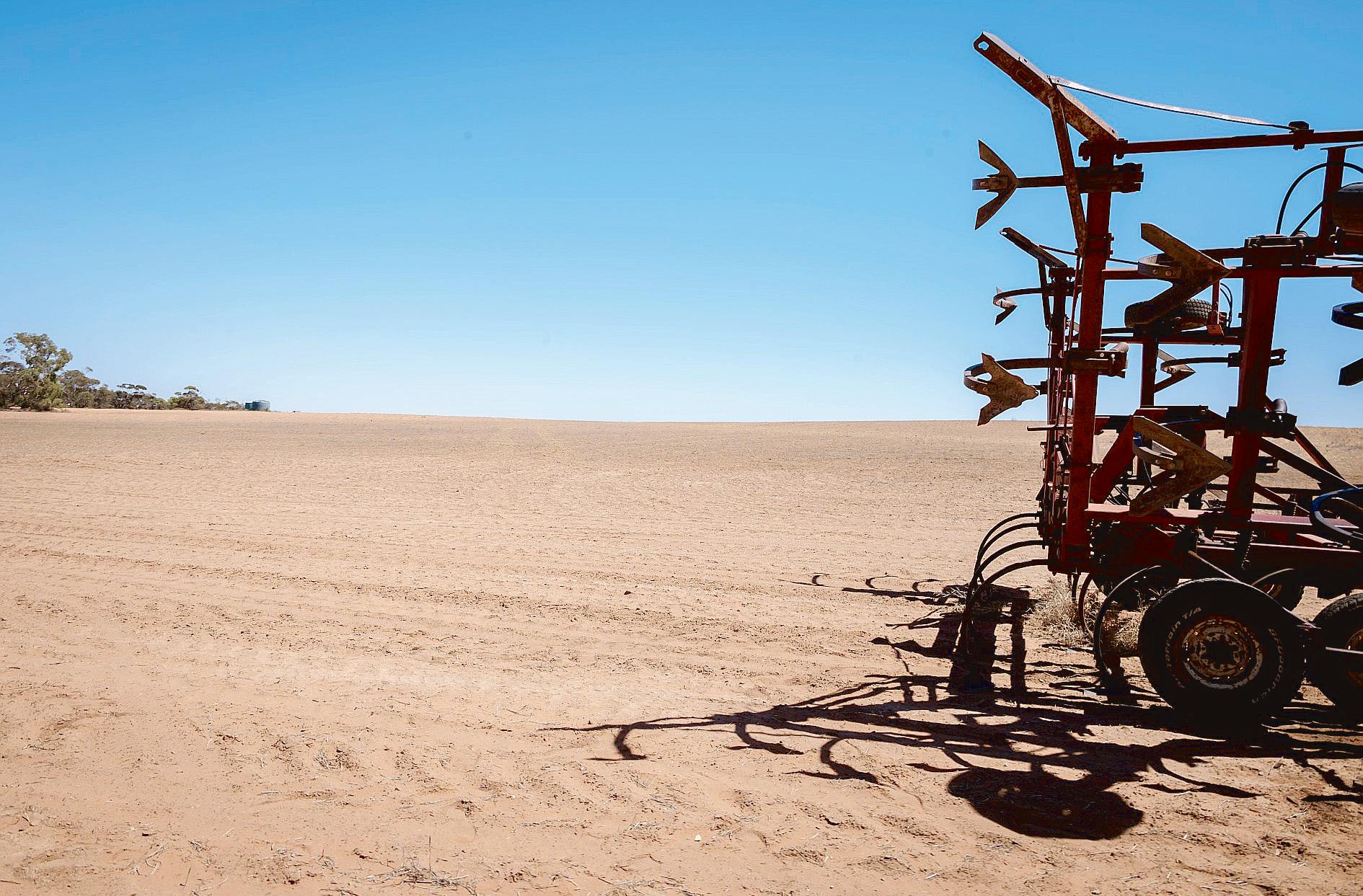
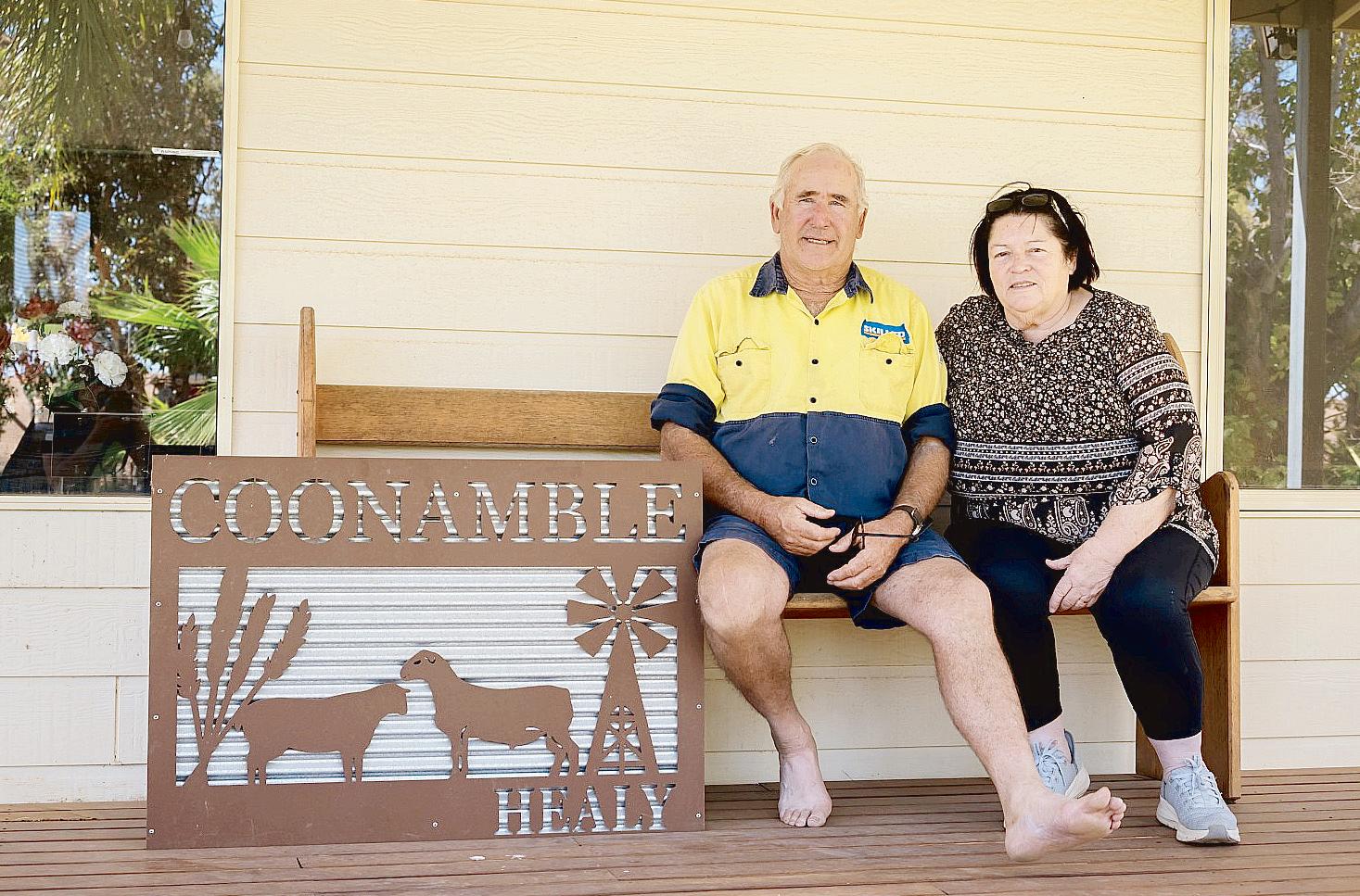
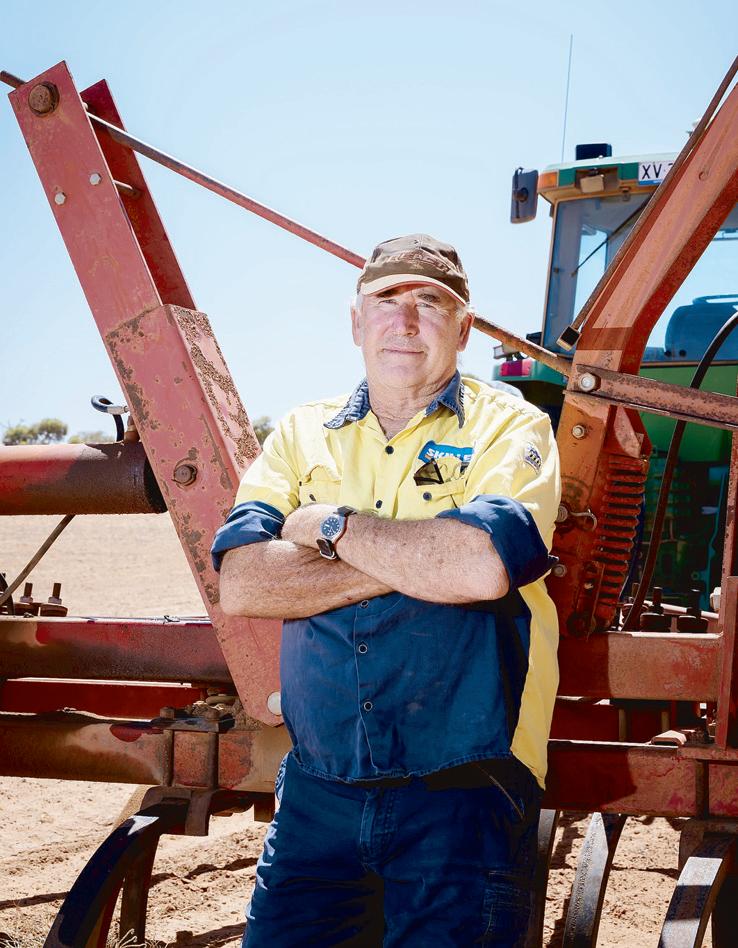
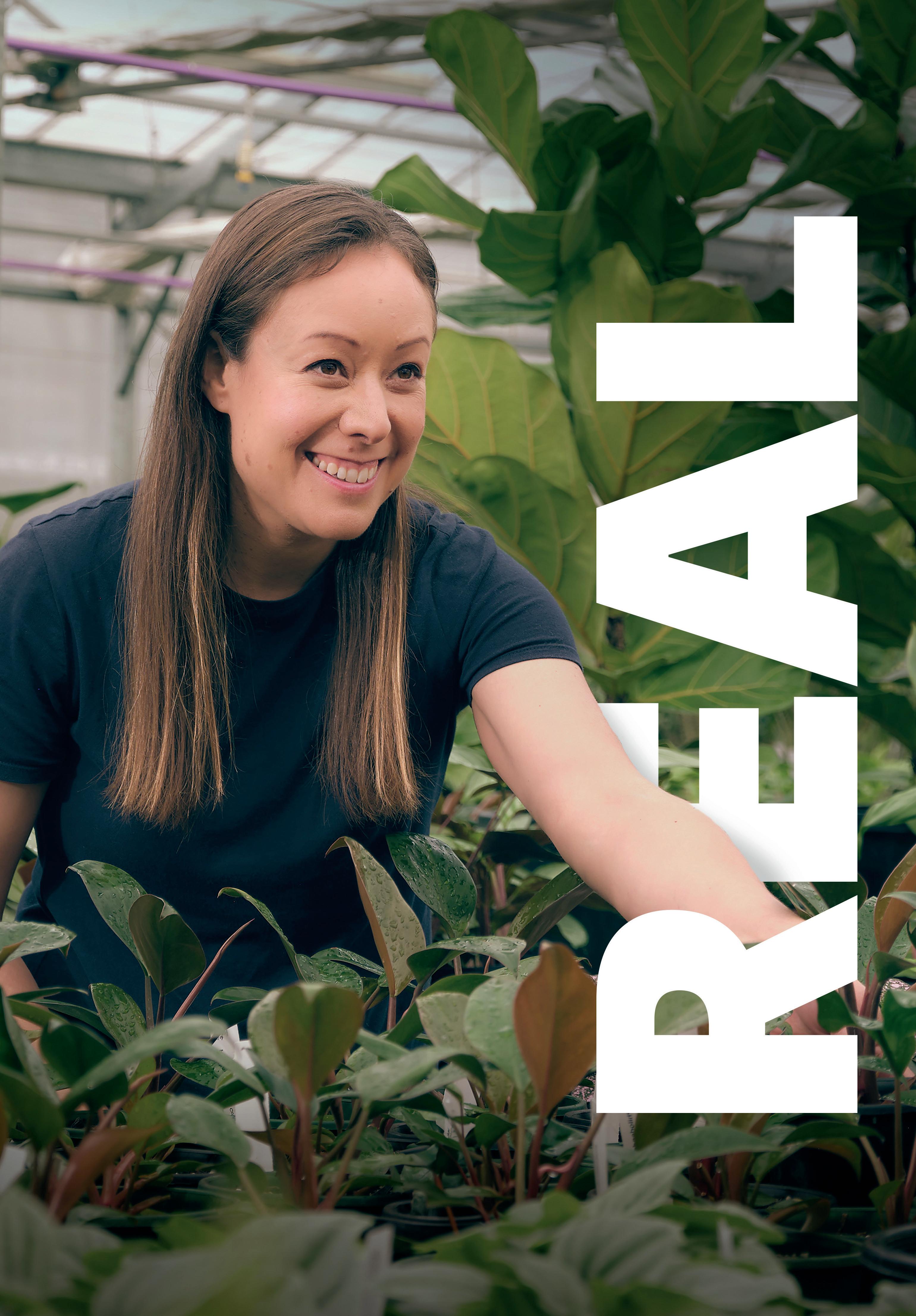
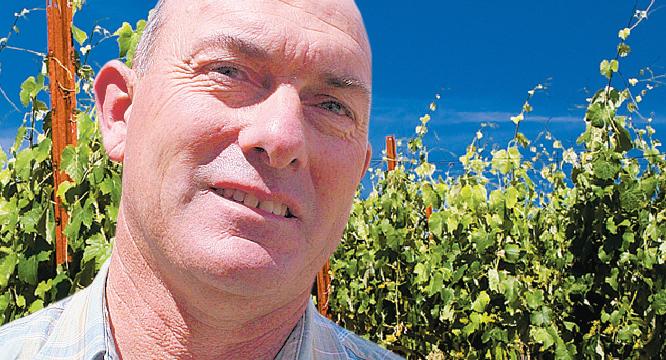
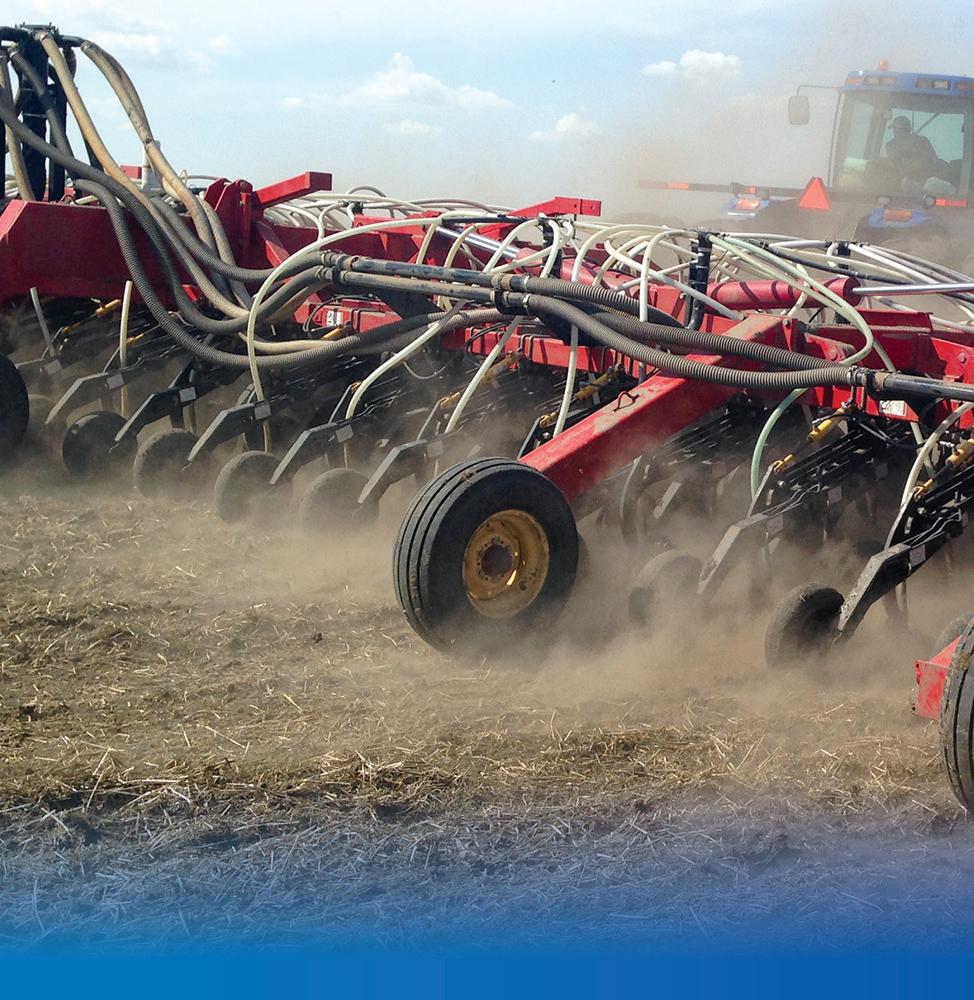
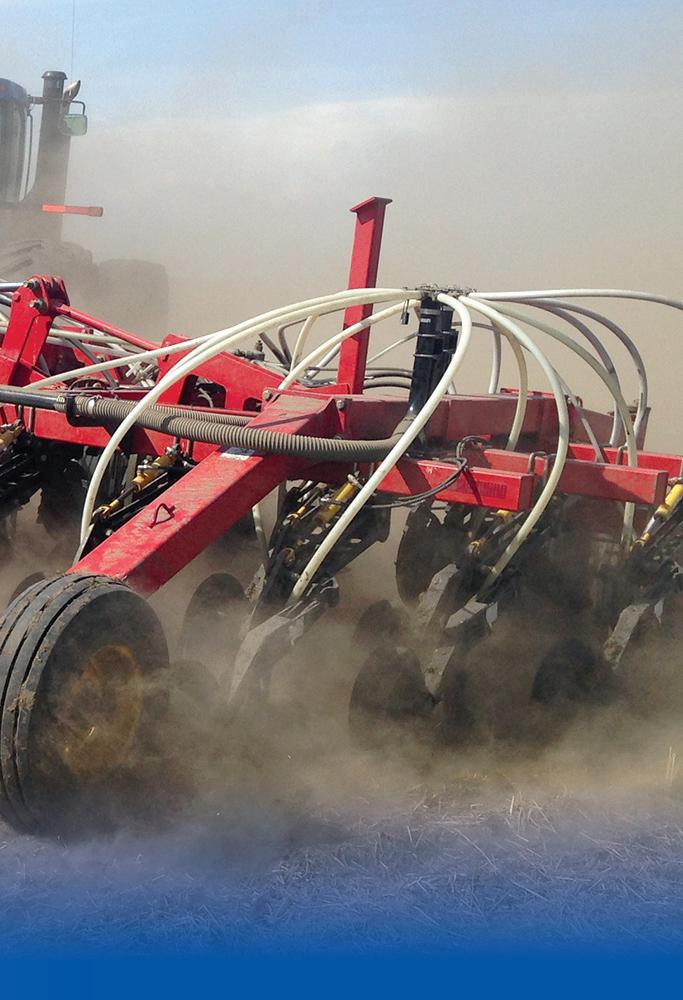
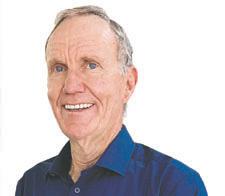
The Healys are bucking a national trend, holding tight to a family farming legacy that’s becoming increasingly rare. From Carwarp to Pooncarie, Eddie and Marg have weathered droughts, shifting markets and rising costs, with son Lawrie now stepping in to help ensure the farm’s future remains firmly in family hands.
Holding on to their heritage
Matt Elliott
TRADITIONAL family farms, passed down from generation to generation, are becoming rarer and rarer these days.
With the growth in corporate farming, greater diversity of employment options for young people in regional and metropolitan centres, and the inherent challenges of maintaining land and stock for profit, this trend is likely to continue.
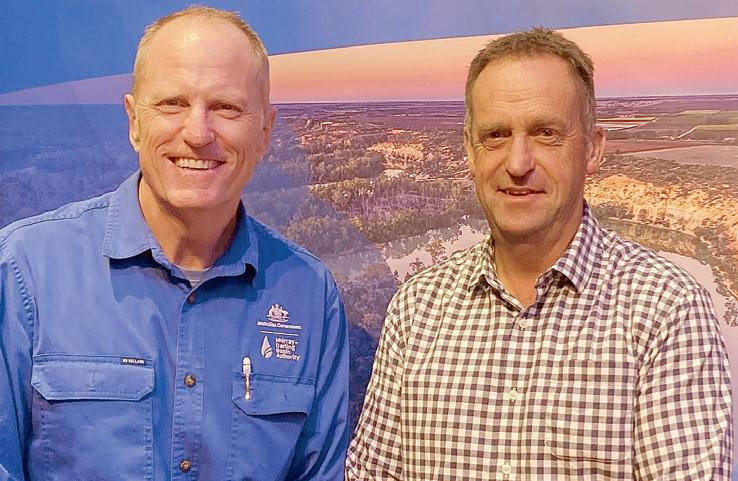
Eddie and Marg Healy, however, are proud to say that their farming legacy will continue, with their son Lawrie following in his father’s footsteps.
The Healy’s own various properties, including Coonamble Farm in Carwarp, about 40 kilometres from Mildura.
“We took over Coonamble about seven years ago,” Mr Healy said.
Born and raised on a farm in Walpeup, he’s no stranger to life on the land.
“We were looking to add another leg to our farms in Pooncarie, as well as Mount Dispersion near Euston, where we grow table grapes,” he said.
Mr Healy said water shortages, as well as a decline in demand and prices for grapes, made diversification essential.
He said growing wheat and running sheep had been tough going at times, although the good prices being offered for lamb were helpful.
“Sometimes I wonder why we crop. Like most Mallee farms, we experienced two years of drought, which wasn’t helpful,” Mr Healy noted in his typically dry, self-depreciating manner.
“Droughts create weeds when we direct drill to sow the crops, which is no good for the sheep.”
Despite this, Mr Healy said there were positives for owning land in the northwest, away from the regional centre of Mildura.
“We have 10,000 acres, which is a reasonable size, better than in town. It’s a bit stony in places but we get by,” he said. “The lambs have been good value too. We run about 1000 ewes and have been getting $180 to $200 per head.”
This profit made from livestock sales has been essential, as the price of wheat has stagnated despite growing costs.
“Over the past 30 to 40 years prices have stayed the same, but costs have tripled,” he said.
Another challenge for Mr Healy has been rapid changes in farming technology, although he is thankful for help from his savvy son.
“We are reliant on satellite navigation to keep our crop lines straight. Luckily Lawrie is only a phone call away,” he said.
Mr Healy said the Carwarp farming community could also be called upon to support each other throughout harvest.
Labour costs are increasing, while the number of young locals available and willing to work on the land are decreasing, meaning that many
communities are reliant on migrant workers.
However, Mr Healy said that wasn’t the case in Carwarp.
“There are a number of retired farmers who come and help out. They may have sold their farms but they’re not quite ready to cut ties with farming.”
On that topic, Mr Healy, at 75 years of age, says he still has a few years left.
“I think I’ll get to 80 and then move on, hopefully no longer than that,” he said with a chuckle.
Similarly, his wife, the evergreen Mrs Healy, isn’t quite ready to pack up the caravan and leave the farm behind just yet.
Born and raised at Annuello, 30 kilometres south of Robinvale, Mrs Healy is accustomed to rural farming life, while also dabbling in a range of occupational and community pursuits.
In addition to raising their children, Mrs Healy has taken on varied roles in nursing, first aid and mental health over the years, including
being a strong contributor in the restoration of the Pooncarie Health Centre, which opened in December 2025 thanks to a $100,000 grant from Crown Lands.
While doing her bit on the farm, Mrs Healy facilitates regular first aid courses to ensure that residents, including farmers, are not left stranded in the rural towns she frequents.
Despite the challenges of farming, she is optimistic that families like her own can continue to operate properties into the future.
Mrs Healy acknowledged that family farm operators were “up against it” but, in her typically resilient and upbeat manner, added “you do what you have to do.”
With children, and grandchildren, of her own now living in rural towns like Pooncarie, Mrs Healy said access to education and an understanding of the future needs of agriculture were vital if the next generation was to pursue farming independently.
“My kids were raised on the station before going to boarding school, which is something that you can only afford if your farm is successful,” she said.
Mrs Healy said she was optimistic that her grandchildren, and others, could stay on farms in the future, pointing to Pooncarie local, and former AFLW champion, Courtney Wakefield as an example of a young woman who has continued to work on her family’s sheep property at Top Hut.
“My grandchildren still love it on the farm. It would be great if they could stay there if that’s what they want to do,” she said.
However, Mrs Healy added that simply wanting to be a farmer was not enough to survive in modern farming, which required a diverse, constantly evolving skillset, with corporate farming and unfavourable government policies remaining a constant threat.
“Bush kids are more adaptable than town kids and they’ll need to be,” she said.
“To be successful they will need to be educated - not just as farmers but as accountants, as scientists and agronomists - who are able to adapt to changing conditions,” she said.
“The farming life is not an easy one, but it will always be needed. People need food, they need fibre, so we do serve an important role in the community.”
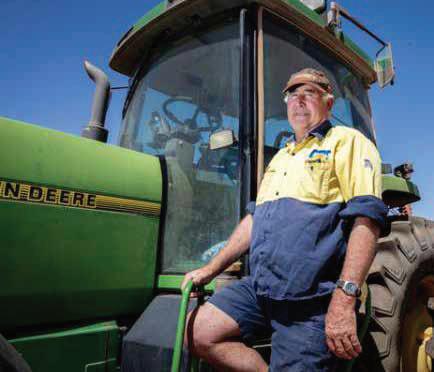
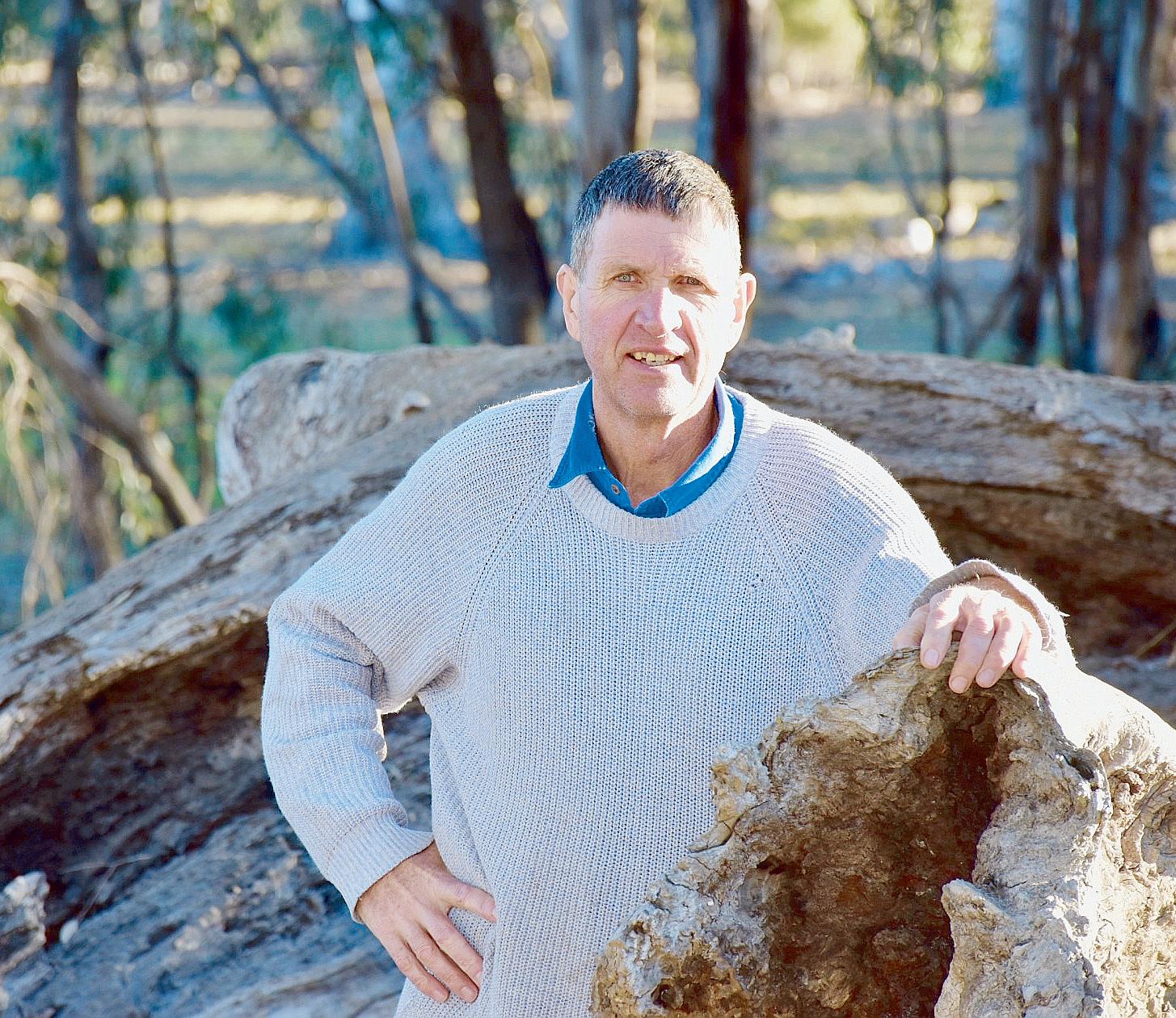
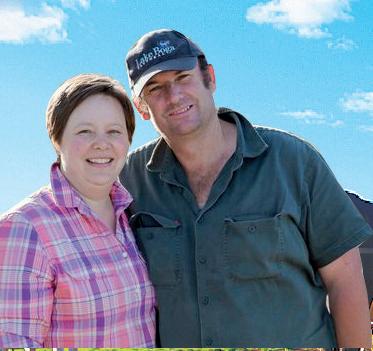
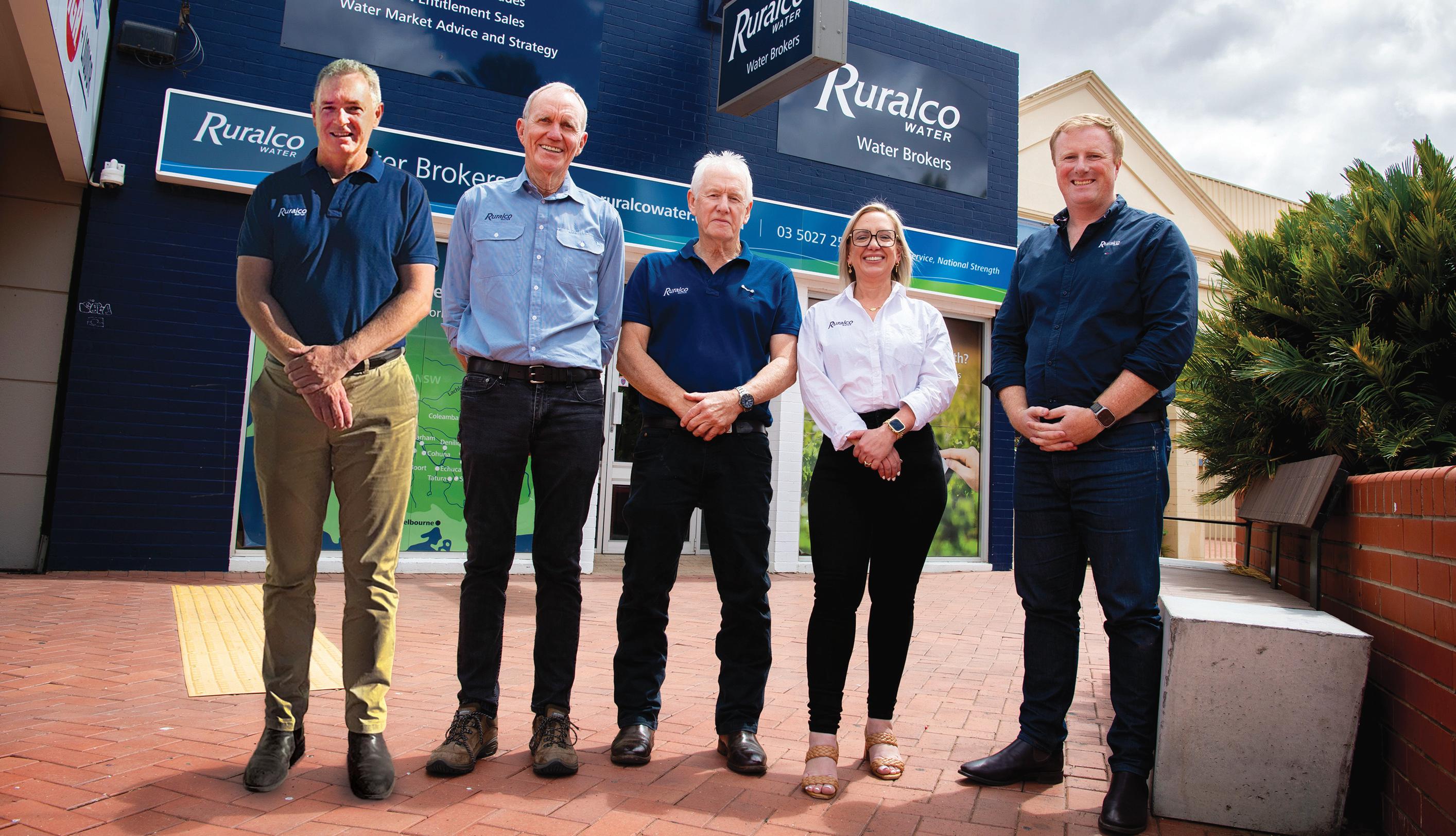
The Healy family owns and manages farms in Pooncarie and Mount Dispersion near Euston. Pictures: Ben Gross
Eddie and Marg Healy took over Coonamble Farm in Carwarp about seven years ago.
Dog’s Day Out arrives in the Mallee
Edmund Coleman
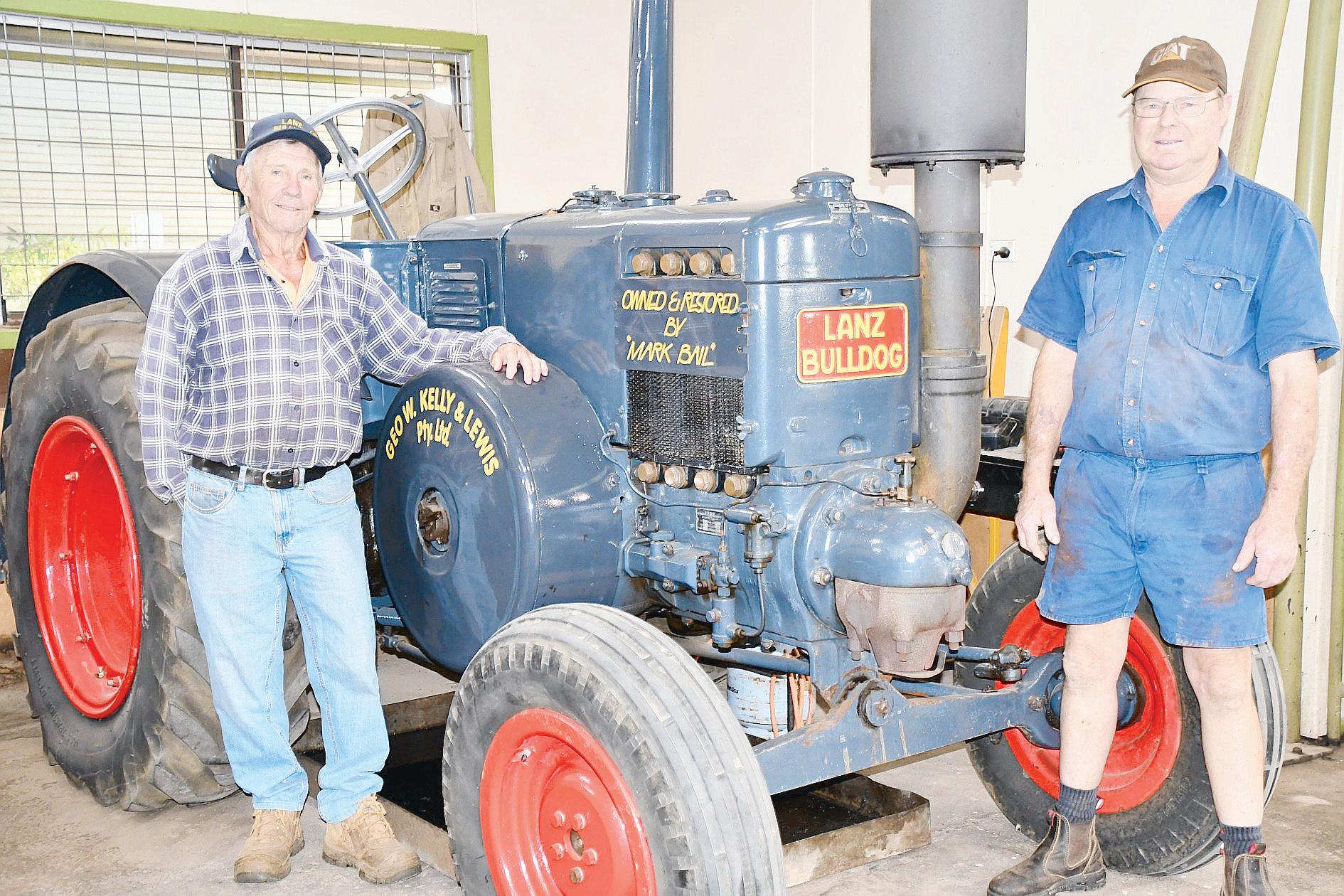
THE iconic spluttering rumble of Lanz Bulldog Tractors is set to roar across Swan Hill and Woorinen next month, when the Mallee Steam, Oil and Machinery Club hosts Dog’s Day Out –a vintage rally and Bulldog tractor pull.
The single-cylinder workhorse, described by enthusiasts as the Harley Davidson of farming machinery, changed global agricultural practices when it was first produced in Germany in 1921.
Arriving in Australia shortly thereafter, the Lanz Bulldog tractor proved a reliable and high-horsepower asset for broadacre Mallee farmers, and their “addictive” sound became part of the region’s character.
“As a kid I used to lay in bed and listen to the Bulldog tractors in the neighbouring farms on a winter’s night, and you could nearly pick the neighbour’s different tractors because they all sound a little bit different,” machinery club member Laurie Barber said.
“You could hear these things popping and banging all around the place, just like bloody Galahs singing in the morning, these tractors would make noise at night all across the Mallee.”
The Bulldogs earned their name from the hotbulb ignition device mounted on the front of the machine, which is heated with a blowtorch
before the steering wheel is removed to handcrank the engine.
Designed to run on crude oil, the machines were expensive to acquire but convenient and inexpensive to maintain.
“Probably as a three-year-old I used to go and
Fuel supply critical for farms
Peter Bannan
CITY dwellers are being urged to swap their cars forpublictransportandthegovernmenttomake public transport free as the fuel crisis lingers.
Victorian Farmers Federation president Brett Hosking said fuel shortages affect rural communities very differently to metropolitan households, where farming operations rely solely on critical fuel to grow their products.
“For most Victorians, a fuel shortage means cancelled plans, longer queues and a tighter weekly budget,” he said.
“For farmers, timing is everything.
“Farming runs on narrow weather windows, and if the tank is empty at the wrong moment you can’t just wait for prices to settle, you lose the opportunity, and sometimes the entire crop.
“Keeping farmers moving is in everyone’s interest.
watch my father light a fire under the front and get the steering wheel out,” Mr Barber said.
“They’ve got a real unique smell too, not like any other tractor.”
In the late 1950s, German Bulldog producer Lanz was bought out by John Deere and
“Victorian farmers grow almost a quarter of Australia’s food and feed millions more across the globe.”
The VFF said small changes in commuting behaviour across Melbourne could make a meaningful difference.
“If just one in five Victorian car commuters shifted to public transport, the fuel saved would be enough to plant roughly half of Australia’s wheat, barley, canola and lentil crop,” Mr Hosking said. “A little would go a long way.
“Even taking one or two trips a week on the train, tram or bus instead of driving can leave more fuel in the system for the jobs that keep
production of the iconic farming machine ceased in 1960.
A large number of Bulldogs were melted down to make munitions for the two world wars in Germany, where there’s a significant market for old or restored Bulldogs.
Mark Bail has helped restore a number of Bulldogs, and said while they would fetch a pretty price, it’s important to preserve Australian agricultural history.
The Mallee Steam, Oil and Machinery Club president also said a number of younger members in their 20s and 30s had joined the club due to their love for the iconic tractors
“Bulldogs just do it, don’t they?” he said.
Mr Bail said with a large number of Bulldogs coming from across the country for April’s pull, the event was sure to be a nostalgic spectacle of farming history.
“On Saturday night the tractor pull will be going under lights until 10pm, and it’ll be a good show – there’ll definitely be flames coming out of the tractors,” he said.
A street procession will take place in Swan Hill on Saturday, 11 April at 10.30am, with the tractor pull taking place that night at the Woorinen South Recreation Reserve.
Further events will also take place on Sunday, 12 April, with a wide range of other vintage engines, trucks, cars, motorbikes and memorabilia on display.
supermarket shelves stocked.
To encourage the switch in commuting behaviour, the VFF has called on the Victorian Government to make public transport free across Victoria until supply stabilises, and to run more services, more often, especially at peak times.
“When the dust settles, the government needs to take a good hard look at the numerous warnings they’ve ignored that’s left us in this predicament,” Mr Hosking said.
“For now, we’re asking for a helping hand to grow the food and make sure it gets to where it needs to go.”
Laurie Barber and Mark Bail in front of a restored Lanz Bulldog tractor. Picture: Edmund Coleman
Call for royal commission into water welcomed by irrigators
Peter Bannan
FARMING communities have backed a call for a federal Royal Commission into water, saying it is time to expose the “treachery, lies and shonky deals” behind the Murray-Darling Basin Plan.
Independent Member for Murray Helen Dalton has renewed her push for a Royal Commission, a move welcomed by irrigators who say rural communities have paid the price since the basin plan began in 2012.
Mrs Dalton in February successfully sought the support of NSW Parliament to seek a federal inquiry.
She also requested the New South Wales Government fully cooperate with a Royal Commission, including the compulsory production of all water modelling, data, licences, compliance records, enforcement actions and intergovernmental agreements.
Mrs Dalton said the Murray-Darling Basin Plan was one of the largest public policy interventions in Australian history.
“It involves billions of dollars of public money and affects millions of Australians, including farmers, Indigenous communities, rural towns, irrigation districts and downstream environments,” she said.
“When reform is that large, the standards must be simple. People must be able to see the evidence, understand the decisions and trust the accounting.
“Yet too often, decisions have felt murky to the communities most affected. Science and modelling are contested. Assumptions are disputed. Accountability is fragmented across jurisdictions. The deeper problem is that trust has broken down.
“Communities do not trust the process. Farmers do not trust the numbers, and the environmental outcomes are disputed. Governments do not trust stakeholders, and stakeholders do not trust governments.
“After massive water recovery and enormous disruption, environmental outcomes remain unclear in the eyes of many basin communities. We still see the fish kills - we have one today. We still see blue-green algae; they are all over the state. We still see river systems under stress.
“We oppose the Murray-Darling Basin Plan and further water buybacks in the absence of clear, independently verified economic, social and ecological outcomes.”
Southern Riverina Irrigators chair Peter McDonald said communities dependent on irrigation had faced years of uncertainty, falling allocation reliability, financial stress and rising costs.
“Helen Dalton has been fighting for water since she was elected and we wholeheartedly support her call for a Royal Commission,” Mr McDonald said. “The treachery, lies and shonky deals must be brought to light so they can be stopped once and for all and we can see a return to sensible and beneficial water management for our rural communities.”
The basin plan sits at the centre of water reform across the Murray-Darling system. But Mr McDonald said its impact since 2012 had stripped water away from productive agriculture and stable food production.
Cultural Diversity Week
Communities do not trust the process. Farmers do not trust the numbers, and the environmental outcomes are disputed. Governments do not trust stakeholders, and stakeholders do not trust governments.
He said the result had been distressed farmers, struggling rural communities, fewer job opportunities and shuttered shopfronts.
“In 2026 we have a review of the basin plan due and it would be perfect timing to line up a Royal Commission,” he said.
Mr McDonald said the Murray-Darling Basin Authority had for the first time publicly acknowledged that some environmental outcomes under the plan were unachievable.
He pointed to targets linked to the Coorong, the Lower Lakes and the Murray Mouth.
“So why are we still pushing ahead with buybacks and other reforms that ultimately rip the heart out of our rural communities, reduce productivity and negatively impact the future of our country?” he said.
Mr McDonald also raised concerns about who could buy and hold water.
“Anyone with a water access licence can invest in water, even if you live overseas and operate a super
fund,” he said.
He said the Commonwealth Environmental Water Holder now held more than $13 billion worth of water in what he described as an inflexible portfolio that generated little financial return and questionable environmental outcomes.
“As a nation we are losing billions of dollars a year in lost productivity and the basin environment in general is no better off than when we started,” Mr McDonald said.
“The Coorong is still dying and adding more and more water and wasting it out to sea is not fixing the problem.”
Mr McDonald said Australia needed to reconsider how it managed water on what he described as the driest habitable continent on Earth.
“We live on the driest habitable continent on Earth and we allow this to happen,” he said.
“There have been so many questionable decisions over time and we demand a stop to them all before it’s too late.”
Southern Riverina Irrigators chair Peter McDonald said communities dependent on irrigation had faced years of uncertainty. Picture: Supplied
Dairy industry reunites
VICTORIA’S dairy farmers will again be represented by a single body, following a reunification agreement.
The Victorian Farmers Federation confirmed that United Dairyfarmers of Victoria will resume as the sole dairy commodity group within its structure, ending a period of separate representation alongside Dairy Farmers Victoria.
The agreement follows months of discussions between the three groups to address concerns about resourcing and advocacy for the state’s dairy sector.
Under the new arrangements, UDV will operate within the VFF framework with dedicated staffing and budget support for dairy specific advocacy.
UDV acting president Ian Morris said farmers had called for unity.
“Dairy farmers have been clear that they want
one strong, united voice advocating on their behalf,” Mr Morris said.
“This reunification means Victorian dairy farmers will now have powerful representation at both the state level through the VFF, and nationally through our membership of Australian Dairy Farmers.”
DFV president Mark Billing said the outcome marked a new chapter for the industry, which produced 64 per cent of Australia’s milk.
“The concerns that led to the formation of DFV have been heard and addressed,” Mr Billing said.
The reunified body will operate as a commodity group within the VFF and contribute to broader agricultural policy.
DFV will step back from public advocacy and redirect its resources to industry initiatives such as farm safety and wellbeing projects, undertaken in memory of committee member Brad Collins, who died in a recent farm accident.
Victorian dairy farmers reunite under a single representative body, with United Dairyfarmers of Victoria returning as the sole dairy group within the VFF.
DAIRY
with PAUL BETHUNE
Sally returns from Japanese adventure
I am pretty excited for this week , actually just tomorrow evening specifically when Sally returns from her first globe trotting adventure.
Flying in from Osaka Japan, she’s been on farms, visiting monasteries, and meeting politicians and farmers from all around the world.
I have been home in charge of the wombats.
I’m not allowed to say I have been babysitting because they are hardly babies and also you can’t use that term when they’re your childrenapparently it’s commonly known as parenting.
I think I could have handled it if we hadn’t all - including me - come down with a gastro bug.
I told them all they had to cook one night each week, plus take turns to do the washing and other chores, and I managed to bluff them for the first week, but the wheels fell off in the second week.
I am so grateful for family and good friends that helped me out when the chips were down.
The farm needs Sally back as much as I do.
There’s baby calves to be looked after everywhere, and whilst we have a team, she’s the guru and the problem solver.
Six inches of rain at the start of a growing season in which we are short of irrigation water was a pretty remarkable occurrence.
Lots of clover struck and no ryegrass, which was weird given we had no summer rain to damage seed.
The disc seeder is on the go topping up ryegrass in paddocks and we are following it with irrigation before the new seedlings get moisture stressed.
We’re also hoping to have cows back out eating grass by the end of the month.
We had another pallet of chocolate milk which got lost in third party freight this week and therefore didn’t make its delivery deadline.
We wear the financial loss again but the bigger damage is reputational.
I really don’t want to get in the freight business, but that is where it’s heading.
Connecting rice industry
AUSTRALIA’S rice industry will converge on the Murray River town of Barham in August for a major new gathering aimed at strengthening connections across the sector.
The Ricegrowers’ Association of Australia has announced Rice Connect ’26, a refreshed and modernised industry event on 13-14 August.
Powered by the RGA, the event will bring together rice growers, researchers, partners and industry leaders for two days of discussion, recognition and networking.
“Rice Connect ’26 represents the next step in building a stronger, more connected Australian rice industry,” the RGA said.
“By bringing growers, researchers, partners and industry leaders together, the event will foster collaboration, highlight innovation and support longterm industry strength.”
Set along the banks of the Murray River, Barham was chosen as host thanks to its deep agricultural heritage and vibrant farming community.
The program will feature several key components, including the rice industry awards, the RGA annual general meeting, an industry breakfast, networking opportunities and presentations from keynote speakers.
Early bird registrations for Rice Connect ’26 will open on Wednesday, 25 March.
More information is available at the RGA website.
Wet weather halts harvest
By Almonds Australia chief executive Tim Jackson
IT’S been an eventful start to harvest for the almond industry.
Like all of agriculture in the region, Mother Nature and geo-political tensions have played a hand in providing extra challenges of late.
The extreme heat of late January has been followed with almost biblical rainfall and potential fuel shortages.
The deluge received across the Sunraysia recently - the Bureau of Meteorology figures show Mildura received 150mm in 36 hours (but gauge readings range drastically) – brought the almond harvest to a standstill.
While some growers were back in machinery in a matter of days after the big wet, others have had to wait significantly longer.
Almonds already on the ground had to be picked up, dried out and segregated before shaking could restart.
Growers and processors will be doing all they can to optimise the value of those early varieties caught up in the rain.
Some have invested a significant amount in drying technology, but nothing beats a warm dry environment to recondition a crop for hull and shelling.
While the timing of the rainfall could not have been worse and the sheer volume caught everyone by surprise, we recognise the need for rain across the region.
Two years of receiving less than half our annual average takes its toll.
It was difficult to stomach that while mopping up after such heavy rain, the price of water on the temporary market was still over $400 per megalitre.
The resilience demonstrated by those in
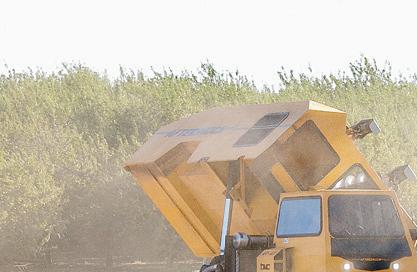
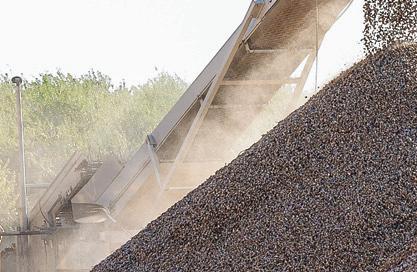
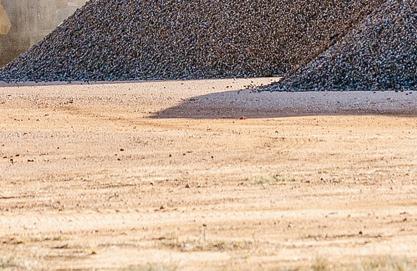
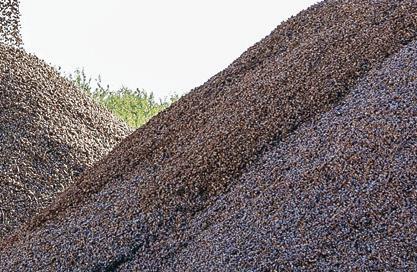
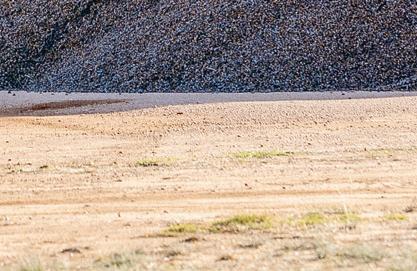
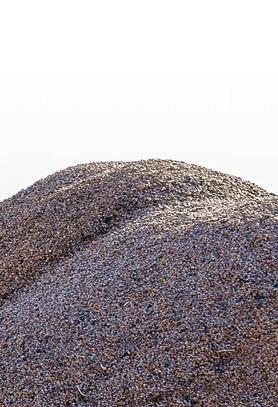
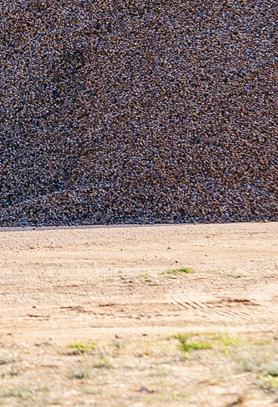
Once almonds are harvested, they are stockpiled on farm until they can be processed.
horticulture is to be admired.
We spend a year devoted to cultivating a crop and then face challenges that could impact our income at the last moment.
The Almond Board of Australia has a series of resources to help growers with wet harvests.
Fact sheets, videos and a podcast were developed in the early 2020s when La Nina created wet conditions.
The strategies recommended in these resources are still relevant today.
Head to almondboard.org.au and search for Adverse Weather at Harvest to find this information.
Our Industry Development Team is also available to help growers:
•
•
•
Josh Fielke - 0408 031 991
Deidre Jaensch - 0429 007 200
Peter Reynolds - 0459 301 734
Over the past fortnight the impact of the war in the Middle East has reached our region as well with fuel shortages being reported across regional Australia.
We have been asked to encourage growers who are having issues sourcing fuel to contact the Federal Government.
The uncertainty of fuel supply has farmers
rightly trying to secure supplies to complete harvest and the ABA is advocating for a far more co-ordinated approach to distributing fuel.
We would welcome agriculture production being a key consideration in enacting the Liquid Fuels Emergency Act so there is a long-term approach to manage the nation’s fuel stocks. It remains unclear how long the war will continue so taking a controlled approach to managing stocks should be adopted until there is great certainty of the supply.
The approach should also tackle the cost of fuel as current inflated prices will inevitably have a knock-on impact to on-farm viability and supply chain costs.
A taskforce has been established within the Department of Agriculture, Fisheries and Forestry to determine the extent of the issue and the locations that are impacted the most.
The taskforce can be contacted via email: CEMB@aff.gov.au.
The ABA is also eager to monitor the feedback provided, so please also include communications@australianalmonds.com.au on your emails to the taskforce.
Thiswillenableustobeawareoftheresponses submitted by the almond industry.
Photo: Supplied
Tanya Horticulture
Nationals push to protect prime farmland with new federal Bill
Peter Bannan
THE Nationals have moved to block taxpayer funding for energy and mining projects on Australia’s best farming land, unveiling a new Bill they say is vital to protect the nation’s food security.
Queensland Senator Matt Canavan last week introduced the Prime Agricultural Land Protection Bill 2026 in the Senate, following the tabling of the same legislation in the House of Representatives last week by NSW Nationals MP Alison Penfold.
The Bill was written by Shadow Minister for Regional Development Anne Webster after a surge of complaints from farmers in her Mallee electorate about the rapid rollout of mining and renewable energy projects on prime agricultural land.
The proposed law would ban Commonwealth funding for mining or energy developments that reduce the productivity of the nation’s best farmland or place it under foreign ownership.
Senator Canavan said the Bill “draws a line in the sand” against projects driven by what he called Labor’s “reckless all-renewables energy agenda”
“The Nationals in federal government will not support mining or energy projects that diminish Australia’s food security on our prime agricultural land,” he said.
“Transmission lines, wind turbines, solar farms, battery installations or critical minerals mines are unlikely to proceed at all, as they often depend on Commonwealth funding support.
“Take, for instance, renewable energy projects that rely on federal funding mechanisms like
the Capacity Investment Scheme and the Clean Energy Finance Corporation.”
Under the proposal, Australia would be mapped and classified into three land tiers: prime agricultural land, other agricultural land and marginal or unviable land.
Commonwealth funding would be banned for any project that reduces the productivity of prime agricultural land, designated as Tier 1, including projects such as transmission lines or mining operations.
Funding would also be blocked for projects that reduce the productivity of other agricultural land, known as Tier 2, or that fail to secure what the legislation calls “social licence” from local communities on Tier 1 and Tier 2 land.
Dr Webster said the Bill was born out of growing anger among farmers in her electorate, where energy and mining developments have sparked fears of forced land use changes and
poor rehabilitation outcomes.
“I dedicate the Prime Agricultural Land Protection Bill to Mallee’s farmers who have endured horrible treatment under the Allan and Albanese Labor governments,” she said.
The Mallee MP said she had travelled more than 1500 kilometres across her electorate in recent weeks, holding mobile office meetings in Pyramid Hill, Sea Lake, Lake Boga, Swan Hill, Nhill, Horsham and Natimuk.
“Everywhere residents asked me the same question: what are we doing to protect our best farming land?” she said.
“Well, the Prime Agricultural Land Protection Bill is it.”
Dr Webster said the legislation was based on existing farmland protection laws in New South Wales and Queensland and would use established mapping systems to determine land classifications.
Perfect storm for grape
The Bill would also require that farmers were not left worse off if government-backed projects impacted their properties.
“The Prime Agricultural Land Bill 2026 will ensure no Commonwealth Government leaves farmers worse off,” she said.
“For example, if a government-backed project cannot proceed without making a family home uninhabitable, farmers will be offered an acceptable substitute home.”
Dr Webster warned that poor rehabilitation outcomes and state government powers to force projects to proceed had left some farmers fearing they could be pushed off their land.
“Our food security, our farmers and regional economies are too important to be thrown under a bus for Labor’s political targets,” she said.
“Prime agricultural land doesn’t just happen. For generations farmers have cultivated, nurtured and preserved that soil. They have protected it from erosion and put their blood, sweat and tears into the ground that feeds and clothes our nation.”
She also warned that food supply pressures were growing amid global instability.
“When farmers are forced off their farms, when irrigation is switched off because Labor has eroded water rights, our food security is at risk,” Dr Webster said.
“During the pandemic supply chains were shaken to their core and now with a conflict in the Middle East more supply shocks are sure to occur. Food security is national security.”
The legislation would also establish a new independent referee, the Commonwealth Agriculture Commissioner, to resolve disputes under the Act and report to the Agriculture Minister.
THIS year is certainly testing ones resolve, excessive heat, high water costs, record low grape prices, 170mm of rain at the wrong time and now the fuel issue.
After eventually finding a home for most of our red varieties albeit at a horrible price, the potential extra freight charges from the high diesel prices may simply make it, not feasible.
While on a rant, our district drainage system that’s owned and unmaintained by Goulburn Murray Water is wasting us a lot of time and money.
The lack of maintenance of the drainage system has yet again led to serious water flow issues following recent rain events.
The excuse is always that there’s no money in the budget. Well, you’ll end up with far less if you continue the way you are.
We are about halfway through the grape harvest, and most yields have been lower than expected.
challenging season.
Harvest will go on for another few weeks with some later varieties ripening slowly.
After failing in two tennis final competitions, the racquet is now destined for the cupboard, along with the associated deep heat and other remedial concoctions.
It was great taking part and being with mates.
On the animal front, I had a good-sized snake in front of the slasher tractor two weeks ago. Last month the snails were all escaping the heat in the shed fridge, but with the recent storms, the power went out, and the fridge went from cold to hot quite quickly and soon became a sauna for the 5000-odd snails.
Once they pushed the fridge door open, they slowly escaped over the cement floor towards the rain-soaked lawn.
Talk to as many mates as you can.
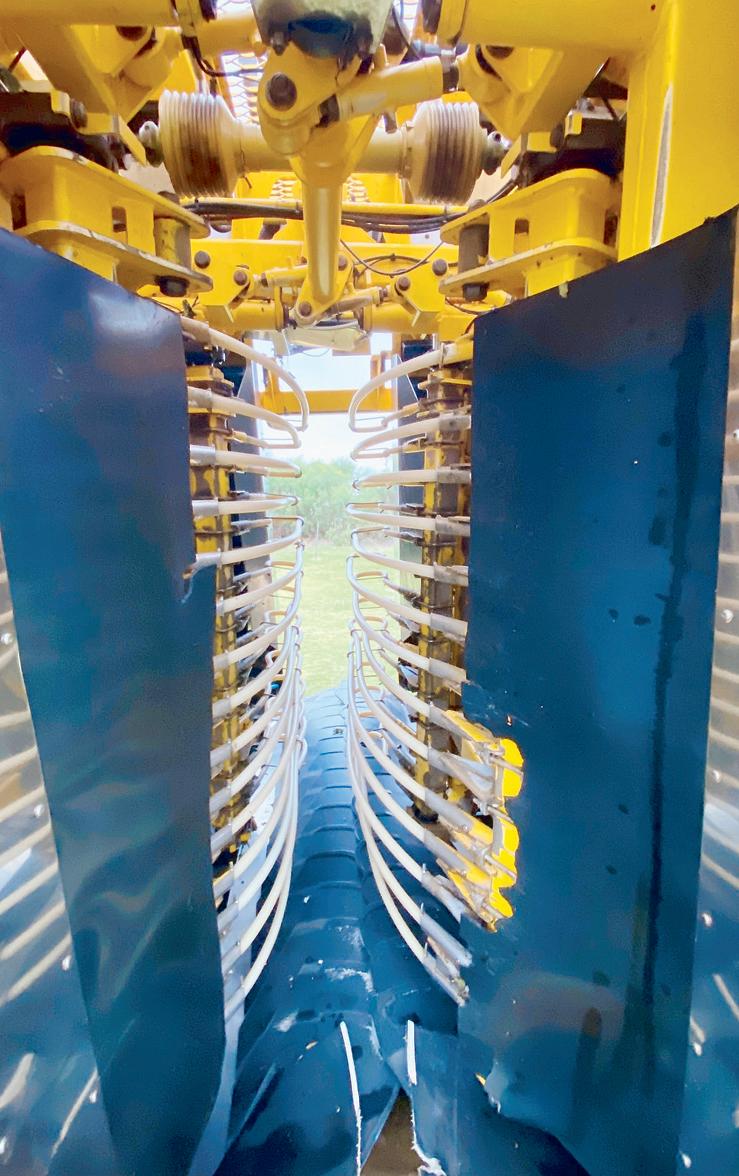
The grape harvester that straddles the vine row and shakes the fruit from the vines has been hard at work this month, despite the
WINE GRAPES with COLIN FREE
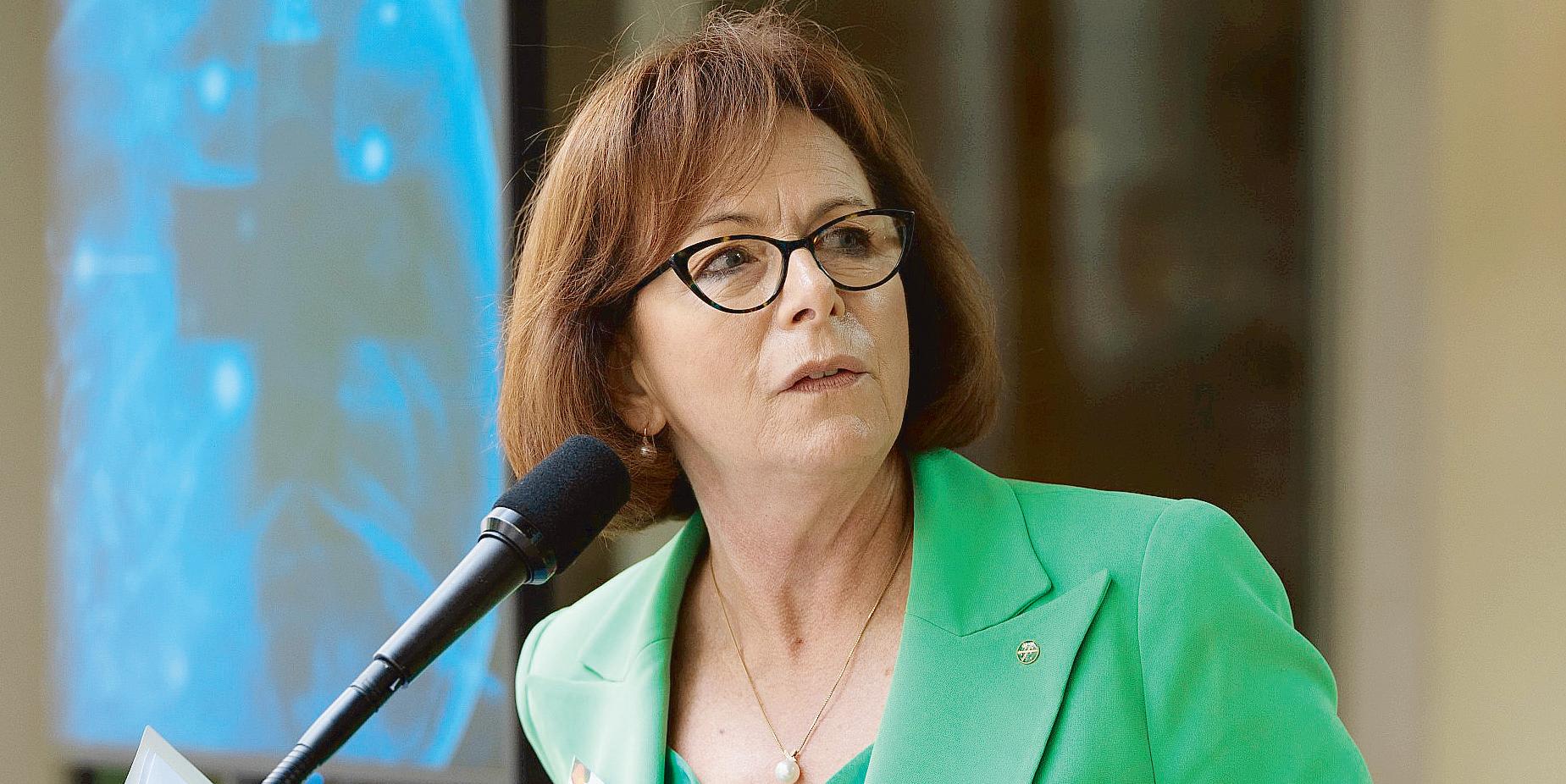
Member for Mallee Anne Webster. Picture: File
The crew at Goodyear Curlewis Street have all your commercial tyre needs covered, from truck to tractor tyres and repairs – we do it all.
Stocking the biggest range of tyres in the area at competitive prices. With our on farm service truck, we have all your on site jobs and after hours call outs covered, we will keep you on the road or in the paddock.
Basin leaders meet as water plan review looms
Peter Bannan
NEARLY 200 leaders from across the MurrayDarling Basin gathered in Brisbane last week to debate the future of water management, with northern Victorian councils warning food production and regional communities must remain central to the basin plan.
The Murray River Group of Councils sent a delegation to the Basin Leadership Summit, where representatives from environmental groups, farmers, academics and government agencies came together to discuss the once-in-a-decade review of the basin plan.
MRGC chairperson and Swan Hill Rural City Council Mayor Stuart King said the summit provided a rare chance for people with sharply different views to sit down together.
“The focus of the conference was the basin plan review, providing a rare and valuable opportunity for leaders with differing perspectives to engage, share insights, and build stronger relationships,” Councillor King said.
“The conversations were genuine and highly worthwhile.”
Cr King used the forum to highlight the critical role northern Victorian communities and irrigated agriculture played in supporting Australia’s food security and economic prosperity.
“The next version of the basin plan has to ensure that water resources are managed in a way that delivers environmental outcomes, supports thriving regional communities and secures sustainable food production in northern Victoria and that is what we are advocating for,” he said.
He said the summit reinforced the significance of the current review process.
“The summit was a timely reminder that the basin plan review is a once-in-a-decade opportunity to improve water management across the basin and learn from the past 14 years,” Cr King said, noting discussions at the conference showed strong support for shifting the basin plan’s focus toward measurable outcomes.
Murray-Darling Basin Authority chief executive Andrew McConville with MRGC chair Stuart King at the Basin Leadership Conference in Brisbane. Picture: Supplied
He also welcomed comments from MurrayDarling Basin Authority chief executive Andrew McConville, who acknowledged the official discussion paper may not have given enough attention to food production and basin communities.
“Conference discussions highlighted strong support for refocusing the Basin Plan on tangible outcomes,” Cr King said.
“I also welcomed comments from Andrew McConville acknowledging that the discussion paper could have placed greater emphasis on food production and basin communities, a perspective MRGC has long championed.”
The Murray River Group of Councils said it would continue pushing for basin communities to be placed at the heart of the revised plan.
“We need to restore confidence in our communities,” Cr King said.
“Our six councils along the Murray River in northern Victoria rely on the continued production of food for our economic sustainability, and to feed Australia and the world.”
“Likewise, we support the maintenance of healthy, working rivers and wetlands, which are essential for community wellbeing.”
Submissions for the basin plan review are open until 1 May.
CWA brings life skills program to the Mallee
Amy Hyde
A SURGE of community spirit swept through the Mallee when Country Women’s Association of Victoria president Jenny Nola attended the Murray Valley Conference earlier this month.
After visiting the Mildura branch for an AGM conference, Ms Nola called into Swan Hill to discuss community initiatives and the future of the CWA in the region.
With nearly 100 years of history behind them, the women of the CWA have cultivated a legacy that goes far beyond tea and scones.
“Everybody says, ‘Oh, you’re all about scones,’” Ms Nola said.
“Well, yes, we are about scones, but we’re far more than that. Scones are a brilliant way of helping us raise funds”.
With the primary purpose of supporting women, children, and families in need of support, the CWA advocates for the community through a range of statewide and national initiatives.
“We support vulnerable women, children, and families. We make stroke cushions and mastectomy cushions for women who have lopsided chests.
“We also hold lots of breakfast programs across the state, and sadly, we even do kindergarten breakfasts for the children who are coming to kindergarten without having food”
While supporting vulnerable communities has consistently been a priority for branches across Victoria, Ms Nola is actively looking for strategies to enhance the appeal to younger generations.
“Membership is always a really big priority for us,” she said.
“Not only would we like to retain members, but we want to open new branches in rural communities. A lot of our members work during the day, and one of the things that has happened in the last 10 years is that a lot of our branches are now night branches.”
Ms Nola said the night branches appealed to young women whose daytime commitments prevented them from attending regular meetings.
“We’ve got a young branch that is primarily young mums in their 30s,” she said.
“Having the nighttime meetings appeal to young women because they are able to fit it into their busy schedules”.
Branches across the state are hosting a wave of initiatives with a focus on equipping young people with the essential skills needed for the future.
“One of the other things that we do around the state, in various places, is teach kids how to do basic cooking, use leftovers to make a basic meal, and how to do little things like sew a button back on, or when the hem of your skirt or pants comes down - we teach them how to take it back up,” Ms Nola said.
“We have quite a few juniors that are learning basic crafts. They’re learning how to run a meeting, how to do an agenda. Because they’re really important skills for young people to know before they go out into the working life.”
Ms Nola said the CWA helped reduce social isolation, a challenge faced by many people in later life.
“The CWA as a whole, across the entire nation, is a really great way of preventing social isolation, and that’s a major problem in all communities”.
LIVESTOCK REPORT
with Matt Rowlands
Strong demand, shrinking supply li livestock markets
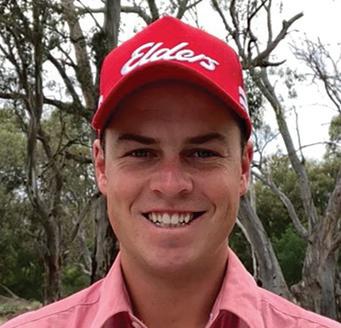
A TIGHTENING supply outlook and strong processor demand are driving renewed confidence across sheep and cattle markets, according to Elders livestock agent Matt Rowlands.
Mr Rowlands said both lamb and mutton markets recorded further gains during the past week, despite a dip in overall quality.
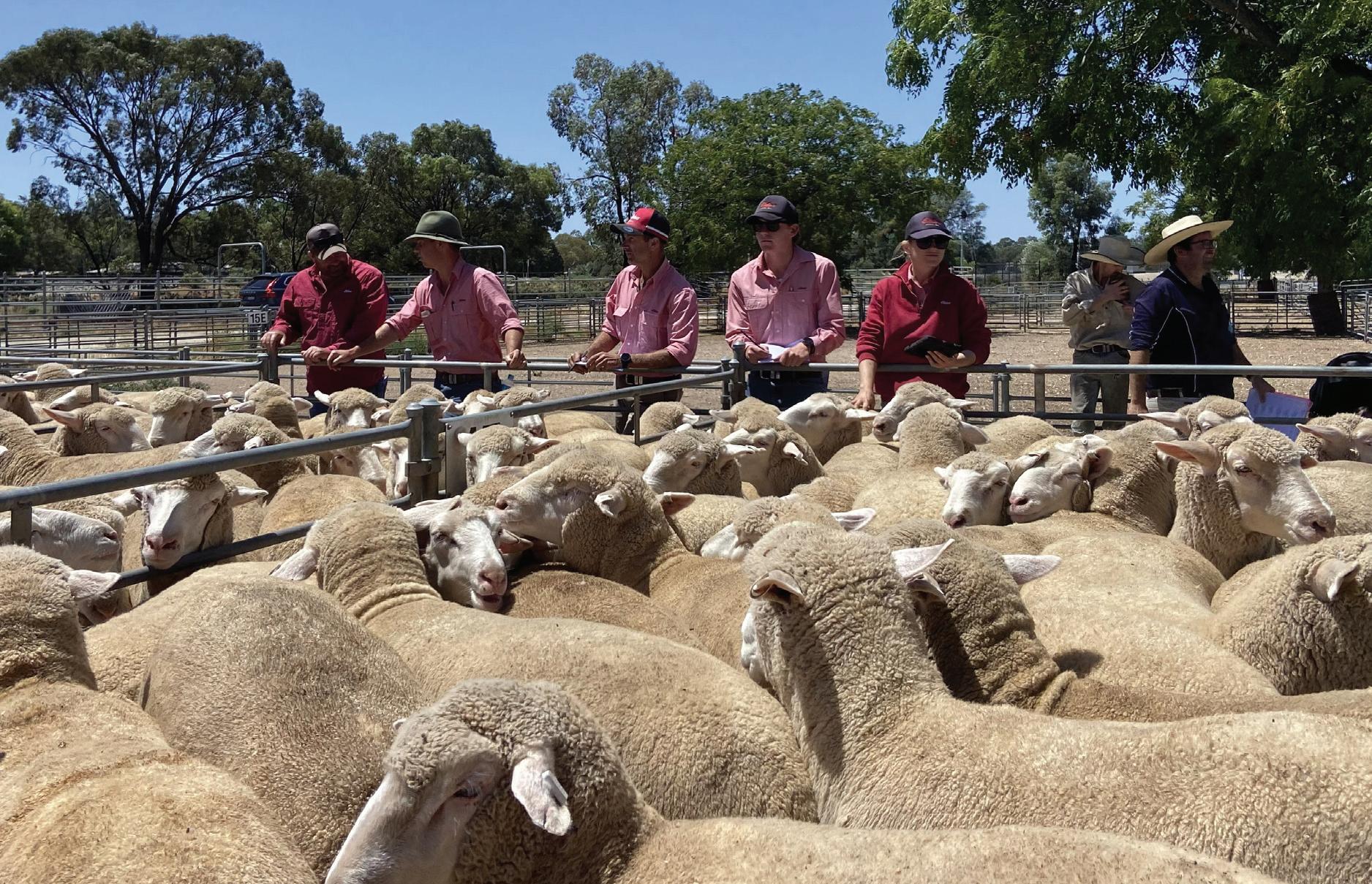
Around 14,000 lambs and 5000 sheep were yarded, with the reduced quality noticeable, but well-finished stock continued to command premium prices.
“Well-presented grain-fed or grain-assisted lambs over 24 kilograms are selling exceptionally well,” Mr Rowlans said.
“They’re making anywhere between $10.60 and $11.20 a kilo, which is very strong pricing.”
Buyer competition remained intense, Mr Rowlands said, with all major processors actively seeking stock.
The mutton market has also strengthened significantly in recent weeks.
“Heavy mutton is now achieving $7.80 to $8 a kilo, and lightweight mutton is between $8 and $8.50,” Mr Rowlands said.
Processors are increasingly focused on securing supply heading into late autumn and winter, amid concerns about future availability.
“The feedback we’re getting is they’re worried about numbers and being able to secure the quality lamb they want,” Mr Rowlands said.
“The same applies to mutton. Producers who can supply good quality, heavier stock will be wellrewarded.”
Store sheep markets are also presenting opportunities, with scanned-in-lamb Merino ewes selling between $270 and $350.
“They’re good breeding sheep leading into late autumn and winter,” Mr Rowlands said.
“There’s still a strong underlying market, and if we get some rain, there’s an opportunity to buy sheep now and look ahead six months into spring, where demand is likely to remain.”
While broader volatility has had some impact, Mr Rowlands said the sheep and lamb market remained resilient.
“What’s been lost in the light lamb trade has been picked up by buyers putting lambs back on feed for winter markets,” he said.
“We’ve seen prices for late-drop feeder lambs rise by $20 to $30, now sitting around $6 to $6.40 a kilo liveweight.”
Buyer competition remains strong, with all major processors actively seeking stock.
In the cattle sector, confidence is also building, with prices trending upward after a period of heavy supply.
“We’re starting to see real stability and an upward shift in the cattle market,” Mr Rowlands said.
“There’s been a lot of cattle sold through weaner sales across the eastern seaboard, as producers respond to patchy seasonal conditions.”
Mr Rowlands said improved rainfall in some regions had encouraged restocking, lifting demand at store sales from Tamworth and New England through to Yass and Mount Gambier, with further activity expected at Ballarat this week.
“Store cattle have risen anywhere from 30 to 60 cents a kilo in the past two to three weeks,” he said.
“That shows people have confidence in feed availability and the overall market outlook.”
Mr Rowlands said both feeder and backgrounding cattle were in demand heading into winter and early spring, with international volatility having little impact on the sector so far.
At this week’s sale, yardings are expected
to reach 600 to 700 head, with solid returns anticipated for both finished and feeder cattle.
“There’s also good opportunity for producers selling weaner calves or offloading dry cows,” Mr Rowlands said.
“Cow prices have lifted 20 to 30 cents, with heavy cows now trading between $3.70 and $4.20 a kilo.”
Rising diesel costs are adding another layer of consideration for producers, though transport availability remains stable.
“There aren’t transport shortages, but everyone is aware of the rising costs,” Mr Rowlands said.
“Transport operators won’t be able to absorb that, so it will be passed on.”
He said producers would need to factor higher freight costs into their marketing decisions.
“It just becomes part of forward planning,” he said.
“Producers need to think about what stock they’re selling, where they’re sending them, and how to target the best markets over the next 12 to 14 weeks to maximise returns.”
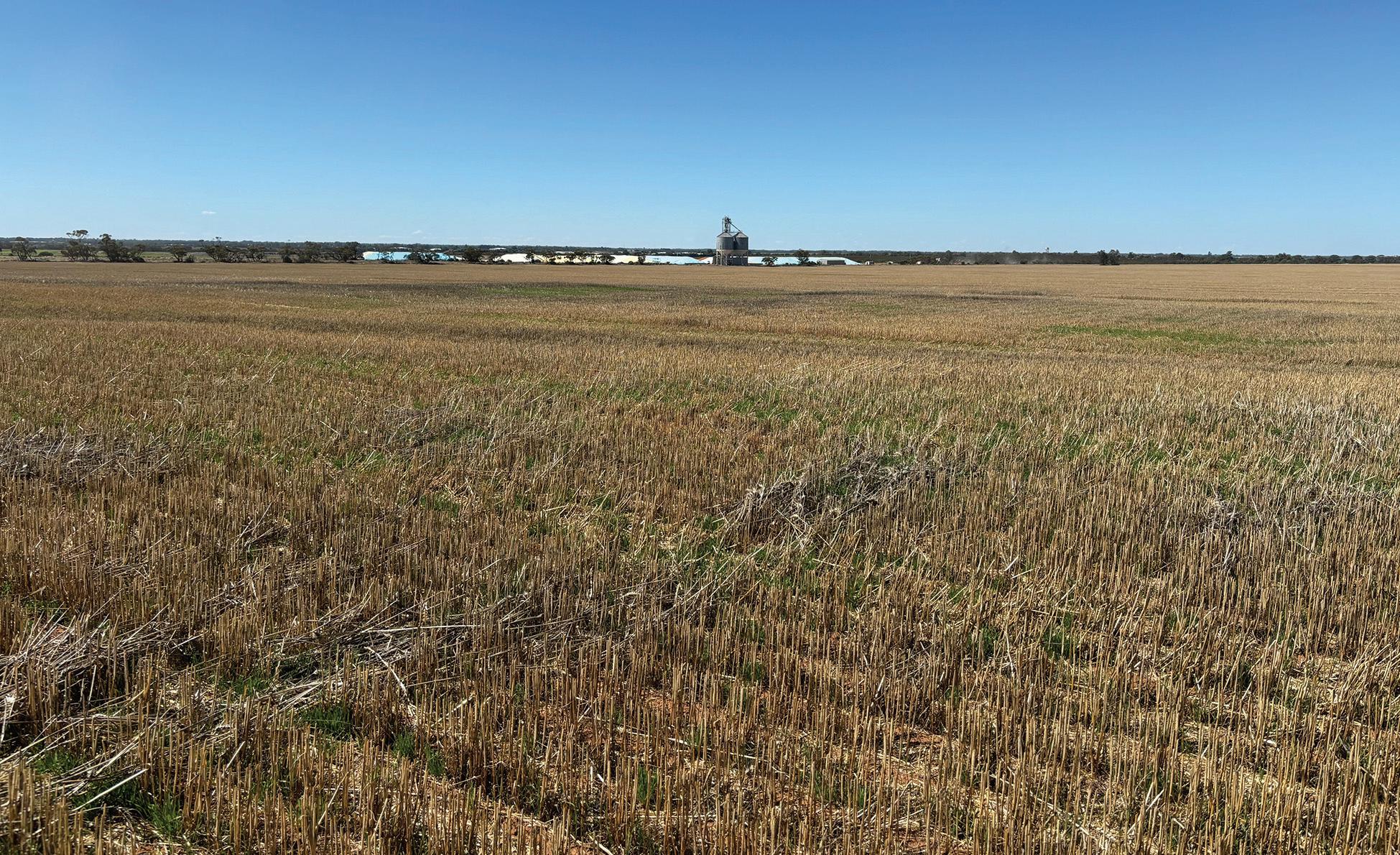
‘Curries’, Woorinen South VIC 258 hectares* / 637 acres*
Broadacre cropping adjoining major grain delivery site
• Undulating mallee loam producing high quality cereals, legumes and oilseed crops.
• GWM pipeline water connected. Adjoins Emerald grain delivery site at Woorinen.
• Future investment opportunity. All relevant approvals, licenses and permits secured to develop this asset to high value horticulture to Woorinen Irrigation District Scheme.
• Planned summer spraying by vendor. 10% deposit. Settlement 60 days. Immediate working access on signing.
Asking Price $1,376,000 ($2,160/acre*)
*approx
Warnings Information at www.bom.gov.au/vic/warnings or Ph: 1300 659 210 (local call cost)
Mallee Forecast
Mallee
Mostly sunny. Light winds. Saturday. Sunny. Light winds becoming southerly 15 to 20 km/h during the afternoon then becoming light during the evening.
Victoria
Partly cloudy with isolated showers about the east. A chance of morning fog south of the divide. A mild to warm day with maximum temperatures slightly above average. Light and variable winds tending south to southeasterly about the west.
Saturday. Isolated showers and storms about the east, mostly sunny and dry elsewhere. A mild to warm day with maximum temperatures slightly above average. Light to moderate south to southeasterly winds.
Sun and Moon
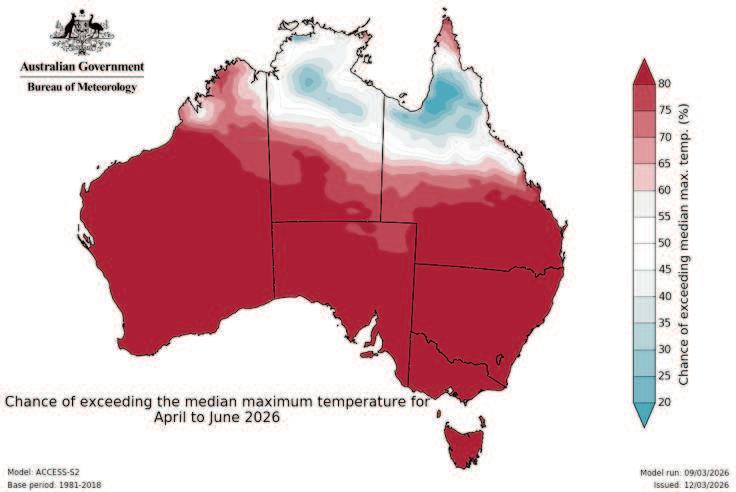
Chances of exceeding median maximum temperature.
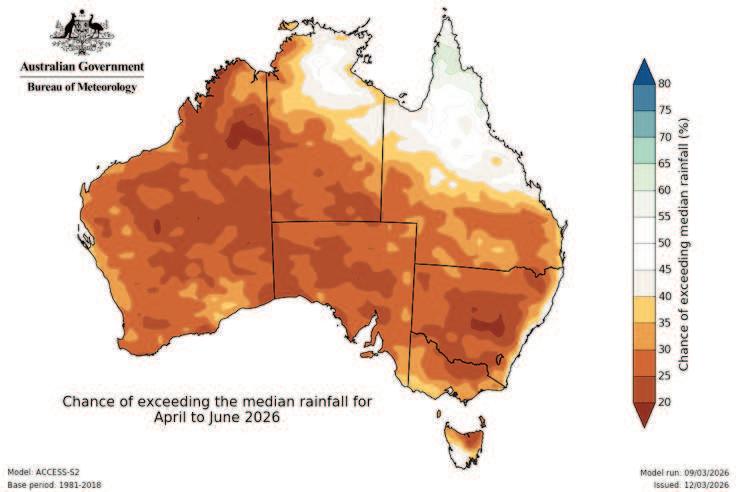
Chances of exceeding median rainfall.
Water Storages
Capacity% FullCurrentChangeLast Year Dartmouth3,856,23264.62,492,370-21,1363,224,347 Hume3,005,15726.8805,041-9,896829,944 Eildon3,334,15844.21,472,217-49,3062,278,628 Others1,421,54556.9808,448-5,753898,693 Total11,617,09248.05,578,076-86,0917,231,611
Water Uncertainty Builds Across Basin
Water levels in storages across the Murray-Darling Basin continue their seasonal decline, despite a notable rain event in late February. According to the Murray-Darling Basin Authority (MDBA), major storages in the Southern Basin now sit at just 44% capacity, a sharp contrast to the 55% recorded at thesametimelastyear.Thisdownwardtrendplaces current storage levels below the long-term average, raising concerns for water security into next season. While localised small rain events are occurring sporadically, theyhavenotbeensufficientto reverse the depletion. Without significant inflows into major storages, the outlook for the 2026-27 water season appears increasingly bleak.
The first seasonal allocation projections for the 2026-27 water season have now been released, providing a glimpse into what lies ahead. In Victoria, under an average inflow scenario, High Reliability Water Shares in the Goulburn and Murray systems are expected to start with low opening allocations. Predicting whether these entitlements will reach 100% is challenging, given the unpredictable nature of climate patterns. Unexpected weather fronts could alter this trajectory, but irrigators are advised to prepare for conservative allocations.
The situation in New South Wales is even more concerning. General Security holders in the Murrumbidgee and Murray systems are being cautionedtoanticipateeithernoopeningallocations or very low ones. While reserves are being held aside for High Security entitlements, it is also not clear if these will receive their usual full allocations or if it will be a gradual increase as the season progresses.
This level of uncertainty may not prompt immediate operational changes for all users, but without substantial rainfall to replenish storages, it could
lead to severe supply challenges next season. Historical data from the MDBA shows that similar low-allocation years, like 2019-20, resulted in water prices spiking, straining irrigated farming operations.
Asgrowersandirrigatorsnavigatethesepotential challenges, market trends indicate a growing reliance on carryover, leasing options, and forward allocation agreements to mitigate risk in the coming seasons.
WiththeriskofspillintheMurraysystemexpected to be around 35% and the Goulburn system at around 10%, carryover and parking strategies againsthigh-reliabilitywatersharesareincreasing in demand.
Despite these ongoing seasonal uncertainties, confidence in the permanent entitlement market appears to be rebounding. Buyers are showing renewed interest, actively acquiring water entitlements as part of their long-term strategies. If you need assistance with your trading requirements, our network of local brokers has the latest water market intelligence and is ready to assist you. Our brokers can provide tailored advice based on real-time data and regional insights. Contact us today to discuss how we can help safeguard your water security for the seasons ahead!