Australia’s National Local Government Newspaper
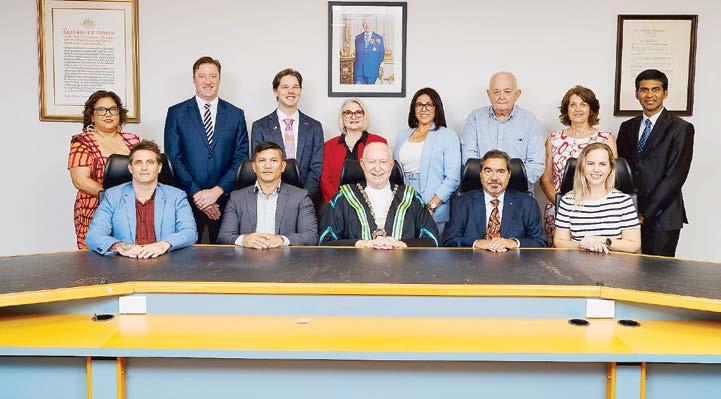
The six – along with the other seven re-elected members, form the 24th Council elected to represent the Darwin for the 2025-2029 term.
The 24th Council sees female represen-
tation across every ward and three elected members who identify as First Nation.
The group, including Lord Mayor Peter Styles were officially inaugurated at Darwin’s Civic Centre in mid-September.
ALGAhasstressedthatfuture-proofingcommunitiesforchangingclimateswasnowanationalpriorityfollowingthe FederalGovernment’sfirstNationalClimateRiskAssessment(NCRA)andNationalAdaptationPlan(NAP)
The Council peak body’s president Mayor Matt Burnett said the assessment underscores the importance of supporting councils in protecting communities from the changing climate
The NCRA outlined a sobering but important picture of the ways the changing climate is affecting Australia’s health systems, regional areas, infrastructure and the environment. The NCRA and the NAP also showed communities urgently need local adaptation action and solutions.
ALGA’s latest research highlighted that Australia’s councils are already delivering more than $400 million per year in projects to prepare their communities for the changing climate needs, and will invest about $2 billion in adaptation over the next five years.
“We welcome and are encouraged by the Government’s climate risk assessment that recognises local governments can play a key role in making communities and local infrastructure more sustainable and resilient,” Mayor Burnett said.
“Future-proofing communities from the changing climate continues to be a national priority, and Australia’s councils are leading the way by investing heavily in climate resilience solutions.
“Innovative councils are showing leader-
ship by planting trees to combat heat, providing community education for bushfires, coastal hazard management systems and upgrading stormwater systems and flood resilience programs.
“However climate-resilient infrastructure is expensive and takes time to build, so we need sustainable funding from the Government to implement long-term planning and adaptation now and into the future.
“We are calling for a new $400 million per year climate adaptation fund, to be distributed across all councils to provide local, place-based solutions to Australia’s changing climate.
Mayor Burnett said many councils are facing significant financial sustainability challenges, and we urgently need the Government to recommence the federal inquiry into local government sustainability.
“We are also calling for a return to one per cent of Commonwealth taxation revenue for local government over three years.”
The Bushfire Survivors for Climate Action also spoke out in response to the NCRA and have also called for more support for Local Governments in the face of the changing climate and increased risks.
BSCA have urged the Albanese Government
to set 2035 climate targets strong enough to save lives, and to fund the vast costs of climate adaptation by making coal and gas corporations pay a climate pollution levy.
The NCRA reports that on the current trajectory of emissions reduction the world will reach 2.7 degrees of warming by 2100. While climate change is already impacting Australians, the future impacts of climate change will be cascading, compounding and concurrent. The report shows that communities - particularly in the regions, outer suburbs and in northern Australia - will be impacted heavily in many ways (health, homes, insurance and infrastructure) and that climate change will disrupt our very way of life.
Dangerous fire weather days are projected to continue to become more frequent in southern and eastern areas parts of the country, with a longer fire season and the potential for more megafires. Bushfires were identified as key risks across all seven of the country’s ‘key systems’ including communities, defense and national security, economy, health and social support, infrastructure, primary industries (including food) and the natural environment.
“We greet this report with a mix of emotions: dread, relief and optimism. The report findings lay out in shocking black and white what our members know in their hearts from their own
bitter experience - that catastrophic climate change is unfolding now and will get much worse in the years to come.” said Serena Joyner, Chief Executive Officer of Bushfire Survivors for Climate Action.
“However we are also relieved that Australia can now have an honest conversation about the very real costs and consequences that climate change is bringing to this country. And with that comes optimism that we have the information and the opportunity to act quickly to lessen the worst impacts, and to dramatically increase funding to communities now to be better prepared for extreme weather and unnatural disasters.”
Bushfire Survivors for Climate Action, a nonpartisan, community organisation made up of bushfire survivors, firefighters and their families working together to call on leaders to take action on climate change, is part of an alliance calling on the Albanese Government to help pay the escalating damage bill faced by communities in Australia and neighbouring Pacific, by placing a climate pollution levy on coal and gas corporations. The alliance makes the case for raising up to $46 billion annually to fund essential local government and community-led climate adaptation investment across Australia and the Pacific.
Calls for funding increase
Future-proofing is once again catchcry following the release of the Federal Government’s first National Climate Risk Assessment (NCRA) and National Adaptation Plan (NAP). Unsurprisingly ALGA is once again calling for more funding for Local Governments. The voices for this funding are getting louder with an alliance of other groups including the non-partisan, community organisation Bushfire Survivors for Climate Action adding their voices. The alliance makes the case for raising up to $46 billion annually to fund essential local government and community-led climate adaptation investment not just across Australia but throughout the Pacific.
GOOD OIL..................................page 6
STAFF .....................................pages 8-9
Waratah-Wynyard Council is celebrating a historic national win, with The Gutteridge Guardians crowned champions of the 2025 Australasian Management Challenge. It’s onlythesecondtimeaTasmanianteamhastakenthetitleinthecompetition’snear30yearhistory.
Mayor Dr Mary Duniam said the result highlights the strength within Council and the community. “This isn’t just a Council achievement; it’s something our entire community can be proud of. It proves a regional Council from Tasmania’s North West can lead the nation.”
After winning the Tasmanian round earlier this year, the team competed in Perth against top contenders from Australia and New Zealand, claiming the overall title and Best Performing Team in a key risk management challenge.
Run by Local Government Professionals Australia, the Challenge builds leadership, problemsolving and teamwork—skills that directly enhance how Council serves the community. “We invest in growing our people because it delivers better ser-
Australia’s National Local Government Newspaper
Website: LGFocus.com.au
Noosa Office:
Telephone: (07) 5455 6946
Address:
36 Mary Street, Noosaville Qld 4566
Pakenham Office: Telephone: (03) 5945 0666
Address: 10 Army Road, Pakenham VIC 3810
Network with LG Focus twitter.com/@LGFocusau facebook.com/LocalGovernmentFocus
Editorial:
E: editorial@LGFocus.com.au
Advertising: E: advertising@LGFocus.com.au
Classifieds:
P: 1300 666 808
E: sales@NetworkClassifieds.com.au
EDITORIAL
Tania Phillips Journalist
E: tania.phillips@StarNewsGroup.com.au
ADVERTISING
Jacqueline Trewin Sales Executive
E: jacqueline.trewin@NoosaToday.com.au
P: 07 5292 5307
M: 0497 621 843
Brett Greene Sales Executive
E: brett.greene@NoosaToday.com.au
P: 07 5292 5302
M: 0407 711 139
Michelle Gibson Sales Manager
E: michelle.gibson@StarNewsGroup.com.au
P: 07 5292 5304
M: 0413 608 678
vices, stronger planning and smarter leadership for our region,” Mayor Duniam said.
“This win reflects the excellence of our staff and a culture that values learning and puts our community at the centre of everything we do.”
The team described the journey as “incredible” and thanked Council, colleagues and the community for their support.
Adding to the excitement, next year’s Australasian final will be hosted in Tasmania, giving the Guardians the chance to defend their title on home soil.
Council congratulates runner-up teams from City of Mandurah (WA) and City of Casey (VIC), and thanks LG Professionals Tasmania and JLT Australia for supporting the event.
Morethan500delegatesfromacrossWesternAustraliahavetakenpartinthisyear’s WALGA’s2025LocalGovernmentConvention(LGC25)atthePerthConventionand ExhibitionCentrefrom22-24September.
The theme for this year was Lean into Legacy – delving into how the decisions made today form the building blocks for tomorrow.
WALGA President Karen Chappel AM JP said the Local Government Convention brought together all Local Governments across the State and hoped each returned to their communities inspired, re-energised and ready to enact positive change.
“With a focus on reflective, current and future legacy, this year’s Convention explored how leaving a lasting, positive legacy as a Local Government means making choices that endure far beyond election cycles,” President Chappel said.
“WALGA’s Local Government Convention provides the opportunity for Elected Members, Suppliers, Council Officers, and key stakeholders to come together for a unique program of professional development, networking, and business opportunities.
“Thank you to LGIS, Civic Legal, the Department of Local Government, Industry Regulation and Safety (LGIRS), Western Australia Return, Recycle Renew (WARRRL), RSM Australia, Hi Drive, CCNA, Synergy and McArthur for making the Local Government Convention possible.”
LGx
5-6 November
Royal International Convention Centre, 600 Gregory Terrace, Brisbane City
LGx is where Queensland’s local government communicators come together to share ideas, sharpen their skills and spark new ways of thinking.
The 2025 LGX Conference will be held on 5-6 November at the Royal International Convention Centre in Brisbane.
Hear from inspiring speakers and explore fresh approaches to council comms. Take a look at the LGx 2025 program for more session information.
129th LGAQ Annual Conference
20 - 22 October
Gold Coast Convention and Exhibition Centre
The event will offer a full program of forums across the three days and will also include the Awards Ceremony and Gala Dinner – Supported
During the event Local Governments had the chance to engage directly with State Government Department and Agency Directors General and Chief Executive Officers on topics impacting their Local Government as part of the Heads of Agency session.
Other key sessions included a Mayors and Presidents forum, and keynote presentations from renowned futurist Dr Richard Hames and former Australian of the year and AFL great Adam Goodes.
The Icons Breakfast hosted Australian cricketing great Glenn McGrath AO, while breakout sessions focused on Electrification and Economic Development, along with an expert panel session on cooperation and Shared Services between Local Governments.
WALGA’s Annual General Meeting was also held, with each Member Local Government represented by two Voting Delegates. In addition to endorsing WALGA’s 2024-25 Annual Report, a number of key motions were debated and passed, including:
· Provision of medical services in remote and very remote Local Governments,
· Short-term accommodation solutions,
· Rating exemptions, and · The rateability of miscellaneous licenses.
WALGA will now prepare items on these motions to be considered by the Zones and State Council.
Delegates also heard from State and Federal representatives with addresses from Federal Assistant Minister for Climate Change and Energy and Federal Member for Fremantle Josh Wilson MP and State Leader of the Opposition Basil Zempilas.
WALGA’s State of Play was facilitated by State Political Editor of The West Australian Jessica Page, where former Local Government representatives Rhys Williams MLA, the Honourable Lauren Cayoun MLC, David Bolt MLA and Kirrilee Warr MLA spoke about their journeys and about current issues that matter most to the sector.
More than 80 exhibitors took part in the Convention Exhibition, which provides a unique opportunity for WALGA’s Preferred Suppliers and Convention delegates to meet, showcasing the latest innovations and technologies across the sector.
by Hastings Deering - Dinner theme/dress code: Surfs up–Beach Gala Get ready for a relaxed yet stylish evening. This year they have embraced the laidback charm of the Gold Coast with a touch of elegance.
NSW Mayoral Forum
31 October
28 Margaret Street, Sydney
Take a day to build on your knowledge, share and consider differing perspectives, discuss your experiences and support each other as leaders of your communities. An opportunity to meet and work together as mayors of local government, to build on your strong leadership foundations. Being on the frontline of the good, the bad and the ugly, only other mayors understand the challenges you face. This is a workshop to share, learn and build confidence.
NSW Human Resources Conference 2025
22-24 October
Swissotel Sydney
The HR Conference has been specially designed to provide practical strategies and invaluable insights needed to address key workforce challenges facing local government today.
Practical AI for local government
4 November Via Teams
Artificial Intelligence offers councils opportunities to improve efficiency, enhance citizen services, and unlock new insights. But success depends on ensuring the regulatory, ethical, and process foundations are right.
This free session – Practical AI for local government: Law, ethics, and rollouts – will provide local government leaders a clear roadmap for selecting, governing, and delivering AI projects that are legally compliant, ethically sound, and operationally successful. Registration open.
The West Australian Government has awarded $70,000 in grant funding to support communityorganisationsandlocalgovernmentsacrossWesternAustraliatocelebrate InternationalVolunteerDay.
Held on 5 December, International Volunteer Day is an opportunity to recognise and celebrate WA’s volunteers, and the vital role they play in building connected and inclusive communities.
This year’s grants program is supporting 74 volunteer-involving organisations and local governments to host volunteer-recognition events and activities such as award ceremonies, workshops, morning or afternoon teas to acknowledge WA’s many dedicated volunteers.
Some of the events and activities include: An Alice in Wonderland-themed morning tea by the Exmouth Toy Library; a traditional Australian barbeque dinner and animal-themed quiz by Kanyana Wildlife Rehabilitation Centre in Les-
murdie; a free live music sundowner by Investing In Our Youth in the South West; a sundowner to thank volunteers by Radio Margaret River Incorporated; an appreciation event by Umbrella Multicultural Community Care Services to celebrate volunteers from culturally and linguistically diverse and LGBTIQA+ communities; a community gathering featuring live music and a fleet blessing to pay tribute to volunteers and emergency service personnel by the Walpole Community Resource Telecentre; a public open afternoon at the Carnarvon Aquatic Centre; an afternoon tea and a kokedama-making workshop by the Kununurra Neighbourhood House; and a volunteer appreciation event to recognise diligence, generosity, and service across the
community by EverAbility Group Limited.
The activities will take place in the first week of December 2025.
Local Government and Volunteering Minister Hannah Beazley said she was thrilled to award the grants to celebrate Western Australia’s volunteers, and the special role they play in maintaining connected and inclusive communities.
“These grants are supporting 74 volunteering-involving organisations to host a fantastic variety of events and activities across the State, from the Kimberley to the Great Southern.
“International Volunteer Day is all about giving back to those who give so much to our communities.”
TheNSWGovernment’sFreshStartprogramhasreachedamajormilestonewith500 apprentices,traineesandcadetsnowonthetoolsworkinginNSWcouncils.
A landmark $252.2 million investment by Labor is helping councils employ an additional 1,300 apprentices, trainees, and cadets over the next six years in almost every corner of the state.
Since the program was announced last year councils have jumped at the chance to hire more young people in their communities.
More than 1,000 positions have been approved to start this year and 500 positions now officially filled, with the 500th recruit starting work at Dubbo Regional Council.
Minister for Local Government Ron Hoenig said more than 60 per cent of Fresh Start roles are in regional and rural councils, providing jobs in country towns so people don’t have to leave their communities to find work.
“I’m proud to part of a government that is investing in the future of local government and the future of NSW,” he said.
“Travelling around the state meeting with councils, I’ve seen firsthand how beneficial this program is for communities, especially in our regions.
“Reaching this milestone means 500 more people working in councils in their local communities.
“This landmark investment by the Minns Labor Government will help ensure the long-term sustainability of this vital workforce which provides the services and builds the infrastructure we rely on every day.”
He said the government was fully funding the wages of these recruits who are tending to our parks and public spaces, tinkering with garbage trucks, and helping plan our future towns and cities.
Recruits employed under the Fresh Start program are studying and learning on the job, while gaining a nationally accredited qualification.
Not only is the program providing a major boost to the delivery of essential local government services, it’s training up the next generation of council workers.
This is helping reverse the trend of councils outsourcing jobs to external contractors, giving young people reliable career pathways and ensuring more services are delivered in-house.
Councils have been recruiting for the jobs they need most in their communities, or where they have a skills shortage.
Among the 500 apprentices, trainees and cadets now working in councils includes: 44 Civil construction workers, 39 Gardeners, 39 Project/program administrators, 27 Early childhood educators, 23 Civil engineers, 23 Automotive mechanics, 21 Wastewater/Water plant operators, 9 WHS/Human Resources Professionals, 18 Sports Turf Trade Workers, 17 Urban and Regional Planners.
TheQueensland Governmentand 45ruralandremote councilshaveentered arenewedagreement tosupportastronger partnershipwhen workingtogetheron issuesaffectingthese communities.
The updated Rural and Remote Councils Compact was formally signed in Blackall in August.
The Compact supports better alignment between state and local government decision-making, with a focus on improved engagement, greater transparency, funding certainty and support to build council capability.
Minister for Local Government and Water Ann Leahy said the agreement recognised the unique challenges of rural and remote communities, and strengthened the partnership between the Crisafulli Government and Queensland’s councils.
“The Crisafulli Government acknowledges the vital work of Queensland’s councils in every corner of the State, especially in rural and remote communities,” Minister Leahy said.
“The renewed agreement is about listening to these councils and working with them so they can deliver the fresh start their communities deserve.
“We’re proud to be heading to Blackall to sign this important agreement, showing our support for regional Queensland,” Minister Leahy said.
Compact Guardians chair BlackallTambo Mayor Andrew ‘Marto’ Martin said the signing recognised the importance of rural and remote areas having a voice to Queensland Government.
“The Rural and Remote Councils Compact benefits both rural and remote communities and the State Government because it means there is a clear voice directly on the ground working hand in glove with the government on their plans and decisions that could impact our communities,” Mayor Martin said.
“The people of Queensland’s rural and remote regions are a sensible lot and giving them a voice directly to decision makers means we all end up with better outcomes.
“An issue that may not appear on the radar in William Street could be standing out as plain as day from Cameron Corner to the Cape, but unless you have a safeguard in place like the Rural and Remote Compact, it might not get raised in time to head off an unintended consequence.”
Local Government Association of Queensland President Mayor Matt Burnett said the agreement reinforced the voice of rural and remote Queensland communities, critical in Queensland, Australia’s most decentralised mainland State.
“The Guardians have an incredible track record of making sure rural and remote voices are heard by government and acted upon to improve liveability in communities across a vast part of our state,” Mayor Burnett said.
LGAQ Chief Executive Officer Alison Smith said the compact provided a vital voice for Queensland communities.
cent identify as having a disability, 39 per cent are female and 60 per
cent are male.
An additional 292 apprentices will join the ranks next year, with these positions approved in 73 councils under a third round of funding.
“We are pleased to see this initiative renewed, as its work to date has frequently focused on recognising that not every part of our state is the same, and that often a more bespoke response is needed for rural and remote communities in order to prevent unintended consequences,” Ms Smith said.
RedlandsCoastrecentlyhostedseniordisastermanagementprofessionalsfromeightQueenslandcouncils,including RedlandCityCouncil,aspartofanewskillsdevelopmentandexchangeprogram.
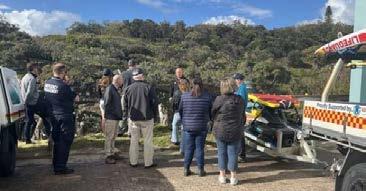
The training day on Minjerribah (North Stradbroke Island) was part of the Local Government Association of Queensland’s (LGAQ) Council to Council (C2C) Exchange Pilot, which was officially launched in August.
The program, which is funded by the RACQ Foundation, aims to help local government areas better prepare before disaster strikes.
Redland City Mayor and Local Disaster Management Group (LDMG) chair Jos Mitchell said the C2C pilot would improve officers’ skills so they could better lead disaster coordination in their communities, and better support response and post-event relief.
“We were incredibly grateful for the help we received from other councils during Tropical Cyclone Alfred in March,” the Mayor said.
“The LGAQ flew in staff from Townsville City Council, Mackay Regional Council and Douglas Shire Council to assist.
“The peer-to-peer learning through the C2C pilot will strengthen that support and bring extra capacity and professional development.
“It will prepare Redland City Council officers if they need to help another council in an
emergency; as well as familiarise other councils about Redlands City should we need their support again.”
As well as Redland City, the Mayor said the
delegation to
included representatives from Douglas Shire, Cairns Regional, Cook Shire, Cassowary Coast Regional, Townsville City, Scenic Rim Regional and Lockyer Valley
Regional councils, and officers from the LGAQ, RACQ and Queensland Police Service.
“While on the island, one of the things they got to see firsthand was the devastating sand erosion on Main Beach caused by the cyclone,” she said.
LGAQ Chief Executive Officer Alison Smith said the C2C program in essence was about Queenslanders helping Queenslanders.
“We activate our C2C program for councils every year when disaster hits, ensuring impacted councils are supported by local governments who can lend a hand with expertise and/ or equipment,” Ms Smith said.
“However, what this program is all about is helping councils in the off-season to be in the strongest position yet to be able to deal with the next disaster.
“C2C connects councils hit by disaster with councils ready to help – from engineers and recovery crews to comms and logistics.”
As part of the program, a senior disaster management professional from Redland City Council has also trained in several other Queensland council areas.
TheVictorianLocalGovernanceAssociation(VLGA),inpartnershipwiththeVictorianGovernment,isproudtobe launchingtheinauguralMaryRogersAwardsforwomeninlocalgovernment1October.
Named after Mary Rogers – the first woman to be elected to a Victorian Municipal Council (City of Richmond 1920-1925) - the annual Awards celebrate and acknowledge the significant contributions and achievements of women councillors as civic leaders in local government. They also serve as a platform to promote and advocate for the advancement of gender equality and focus on supporting women’s participation in local government and decision-making. Nominations are now open in the following Award Categories until Friday, 24 October at 5pm: Mary Rogers Award - Awarded to a current woman councillor, recognising their outstanding contribution as a civic leader in Victoria.
Emerging Woman Leader - Awarded to a
first term woman councillor who is demonstrating outstanding leadership.
Gender Equality Council Champion Award – Awarded to a Council in recognition of their work leading meaningful change in the gender equality space by supporting women’s participation in local government and decisionmaking.
VLGA CEO Kathryn Arndt said these Awards put a spotlight on the very important contribution women make to the local government sector and the importance of gender parity.
“Our vision is to see 50 per cent of women elected as councillors and mayors by the next local government election in 2028.”
“We know that diversity in the council chamber inevitably leads to strengthened and more informed decision making and good governance and contributes to the prevention of fraud and corruption in local government.”
The percentage of women elected in the 2024 local government elections remained unchanged from the previous term at 43 per cent.
Ms Arndt said the VLGA had a long and proud history of being a leader in the gender equality space, promoting the benefits of balanced gender representation and delivering high quality programs and resources which improve gender equality outcomes for the sector, including the VLGA’s acclaimed Local Women Leading Change (LWLC) program –which the VLGA has delivered for close to two
turn has a knock-on effect to their timeframes,” Mayor Miller said.
it as an attempt to circumvent councils in local decision making.
decades.
“We know our work is having a positive impact. Our election analysis shows that VLGA member councils had better outcomes when it came to gender representation than nonmember councils,” she said.
“The average number of women councillors at member councils is currently sitting at 46 per cent, compared to 38 per cent at nonmember councils.”
The Awards will be presented at a special presentation ceremony at Queens Hall, Parliament House in Melbourne on Thursday, 27 November 2025. For more information about the Mary Rogers Awards and to nominate visit the VLGA website.
ThepeakbodyforlocalgovernmentinNSWhasbroadlywelcomedchangestothestate’senvironmentalplanning legislation,announcedinmidSeptemberbytheMinnsGovernment. The Environmental Planning and Assessment Amendment (Planning System Reforms) Bill 2025 includes changes that will affect local development assessment and complying development processes, community participation and regional and local planning panels, as well as improving the government’s own approach to its development functions.
Local Government NSW (LGNSW) President Mayor Phyllis Miller OAM commended the NSW Government on its bipartisan approach to simplifying and streamlining the planning processes.
Mayor Miller said while the sector would be working through the detail of the legislation and providing further feedback, it was clear the proposed changes would address several key concerns long held by councils across the state.
“LGNSW supports genuine and sensible efforts to streamline planning regulation and contribute to increasing housing supply and diversity. We want to work with the government to ensure councils are supported to fulfill their assessment and broader planning responsibilities,” Mayor Miller said.
“Councils have been actively reviewing and improving their assessment processes with promising results, an outcome that Minister Scully recently acknowledged at a Budget Estimate hearing. But the local government sector has long held frustrations waiting for state agencies to provide advice on development applications and planning proposals, which in
“It’s therefore pleasing to see the introduction of the Development Control Authority (DCA), which will effectively act as a clearing house for NSW government concurrences. Previously, this clunky and inconsistent process frustrated both councils and the development sector alike and led to significant delays delivering planning and housing outcomes across the state”.
“We look forward to the government releasing the details of how the DCA will function, how it will report transparently on its performance, and ultimately how it will contribute to housing delivery in NSW,” Mayor Miller said.
“Other sensible changes promise to reduce the time and ratepayer money that councils will spend defending their planning decisions in the Land and Environment Court. We also commend the government on the inclusion of a new climate resilience object in the legislation. This is an acknowledgement of the critical need for the planning system to deliver development that responds to climate change and promote resilience to natural disasters – something that councils across the State have been doing and saying for decades,” Mayor Miller said.
On a less welcome note, the Bill also proposes to enshrine the Housing Delivery Authority (the HDA) as a permanent fixture in the NSW planning system. The introduction of the HDA in November 2024 was condemned at the time by the local government sector who saw
“While we acknowledge that since that time, we have received more information and data around the processes and performance of the HDA, it remains a concern for many councils feeling the impact and we will continue to provide feedback to the government.”
“The central concern is that major development proposals and ad hoc rezonings submitted to the HDA have no clear links to adopted plans and strategies that local communities have developed with their council,” said Mayor Miller.
“We urge the government and the HDA to continue to work more collaboratively with councils on all its State-led processes to ensure that growth and development is balanced and supported with the necessary infrastructure and if this bill passes we will be calling on the government to review the role of the HDA at the end of the Housing Accord period,” Mayor Miller said.
“And infrastructure remains the key – we need the State Government, and the Federal Government to step up on the direct funding and delivery of key infrastructure. There is simply no point in approving and building thousands and thousands of new homes if we don’t have the schools, the hospitals, the roads, the sports fields, community facilities and the sewerage and water infrastructure to support them.”
Mayor Miller says infrastructure delivery and the importance of completion are the two key
areas that LGNSW will continue to advocate on.
“We need the State to drive the development industry to actually deliver on approvals. Councils have an important role to play in the assessment and approval processes for new housing but we have zero control over whether those houses are ever actually built” she said. “That’s something that the development sector needs to improve on.”
Mayor Miller provided further comments on other key changes the legislation seeks to bring about. “Councils welcome the return of greater emphasis on local planning panels. with the removal of the Sydney District and regional planning panels and we look forward to more local voices being part of the planning process,” said Mayor Miller.
“Equally, we acknowledge the standardisation of one statewide community participation plan, but we call on the government to leave enough room for local conditions such as the lack of reliable internet and mobile coverage. It’s critical that a standardised plan is used to provide greater access to planning information rather than cut timeframes or reduce consultation opportunities generally.”
The proposed changes have been described as the most significant reform of NSW Planning Legislation in nearly 50 years. Mayor Miller said that given the magnitude of these wide-ranging changes, there needed to be robust, transparent and regular monitoring by the NSW Government of the outcomes of these reforms.
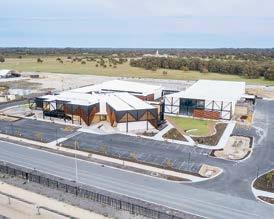
TheFoodInnovationPrecinctWesternAustralia(FIPWA)hasannouncedtheestablishmentoftheFIPWATechExchange, adedicatedinnovationhubtoaccelerateagriculturaltechnologytrialsandadoption,incollaborationwiththeIndia AustraliaRapidInnovationandStartupExpansion(RISE)Accelerator,whichisdeliveredbyCSIRO,Australia’snational scienceagency.
As part of this collaboration, the Tech Exchange will host and support four leading Indian agritech startups from the RISE Accelerator’s Agri-tech round – Upaj (real-time soil testing), NatureDots (digital twin technology for water bodies), Intello Labs (AI-driven grading of fruit and vegetables), and Urdhvam (borewell monitoring and recharge solutions) – to identify and implement pilot projects in Western Australia.
The initiative builds on FIPWA’s recent program successes, including the Beanstalk Agtech PropaGATE initiative which has attracted international agri-tech solutions to solve brewery wastewater challenges, the partnership with Australia Agritech to deploy advanced agricultural drones across WA farming systems, and the ongoing collaboration with DripAI to trial panels that produce clean water from air moisture.
The Tech Exchange will provide access to
local networks, office space, and industry engagement opportunities to fast-track the deployment and commercialisation of these innovations in WA’s agricultural sector.
Shire President Douglas McLarty said the Tech Exchange builds on the Shire of Murray’s strategic vision to position FIPWA as a gateway for global agricultural innovation.
“FIPWA is rapidly becoming a focal point for agritech excellence in Western Australia. The Tech Exchange gives us a platform to connect international innovators with local growers, researchers, and industry, ensuring we remain at the forefront of agricultural productivity and sustainability.”
Shire of Murray CEO Dean Unsworth highlighted the State-wide significance of the hub.
“This initiative is not only about bringing world-class technologies to our region, but also about creating long-term partnerships
that deliver real economic, environmental, and social benefits across WA. It reinforces the role of FIPWA as a State asset in advancing agrifood innovation.”
CSIRO’s RISE Accelerator Program Director James Robinson said the partnership with FIPWA offers high-value opportunities for Indian startups to establish a presence in Australia.
“The FIPWA Tech Exchange provides our RISE participants with an unrivalled landing pad, combining sector expertise, industry access, and local support. This connection ensures that promising innovations can be piloted in real-world conditions, speeding up their path to market in Australia.”
The four pilot projects currently being scoped are:
· NatureDots: developing a digital twin of Peel’s key water catchment assets to monitor
water quality and predict algal blooms.
· Upaj: validating rapid soil testing technology in collaboration with WA agricultural consultants.
· Intello Labs: testing AI-based grading for tomatoes, potatoes, and onions with local producers.
·
• Urdhvam - Jalstr: A smart monitoring and advisory tool for sustainable groundwater management on large farms
The FIPWA Tech Exchange will also serve as a showcase and demonstration site, enabling local industry to see emerging solutions in action. Together with recent achievements in agri-drone deployment, water-from-air innovation, and international agtech collaboration, these new technology pilots mark the next step in building sustained momentum for WA’s position as a leader in agricultural innovation.
TownsvilleCityCouncilhasresolvedtowritetotheMinisterforLocalGovernmentandWater–TheHonAnnLeahy MPrequestingthatapostalvotebeusedasamethodfortheirforth-comingby-election.
The Special Council meeting held in late September comes after suspended Mayor, Troy Thompson resigned on Friday, 26 September effective immediately.
Section 163 of the Local Government Act 2009 (LGA) requires the filling of the vacant office within two months after the office becomes vacant. The Minister will appoint the Electoral Commission Queensland (ECQ) to run a by-election.
A Townsville City Council spokesperson said while the by-election could be conducted as an in person election or a postal ballot,
Councillors made the decision based off three main factors, including voter fatigue, ease of attendance, and cost to ratepayers.
“In the space of 18 months Townsville residents have been to the polls three times, including the Local, State and Federal Government elections,” the spokesperson said.
“A postal ballot will help address voter fatigue by providing an easily accessible and convenient way for voters of all abilities to participate without having to attend polling stations in person.”
The spokesperson said during a time
where every dollar counted, a postal vote was likely to save ratepayers around $230,000.
“The estimated costs of the by-election provided by postal vote is still a significant cost at $760,000.” the spokesperson said.
“We know for our community that every dollar matters, this option is about making sure the most people participate in the democratic process in the most accessible way possible, while putting the least amount of strain on ratepayers,” the spokesperson said.
While Council has made the recommendation to the Minister that the vote take place
as a postal ballot, the Minister is required to refer the application to the electoral commissioner for the commissioner’s recommendation about whether the application should be approved.
Once receiving the commissioner’s recommendations, the Minister will then make a final decision on both the method of voting and the by-election date. In accordance with legislation the vacancy should be filled within two months. It is expected to be finalised by the end of November.
TheIndependentBroad-basedAnti-corruptionCommission(IBAC)hasreleasedthefindingsofitslatest‘perceptions ofcorruption’survey,whichanalysedresponsesfromVictorianmembersofParliament(MPs)andlocalgovernment councillors.
The results showed that most MPs (81 per cent) and councillors (68 per cent) who responded believe corruption is a problem in Victoria and more than half believe it is a problem among elected officials.
The results also revealed that 89 per cent of MPs and 57 per cent of councillors who responded believe their organisation is moderately or highly vulnerable to corruption.
The voluntary survey was sent to all Victorian MPs and councillors in March and April 2025, with 219 people participating including
27 MPs and 192 councillors.
IBAC Executive Director Prevention and Communication Dr Linda Timothy says this perception reinforces the importance of IBAC’s prevention and engagement activities.
“Hearing directly from MPs and councillors that the majority believe their organisations are vulnerable to corruption means IBAC has work to do strengthening corruption resistance in the public sector,” Dr Timothy said.
“Learning how they view their organisa-
tion’s corruption vulnerabilities, allows us to directly target those risk areas with support and prevention efforts.”
Ninety-six per cent of MPs who responded considered ‘inaction’, such as failing to report wrongdoing, the highest corruption and misconduct risk among their elected colleagues. 85 per cent of councillors who responded reported ‘favouritism or nepotism’ as the highest risk.
“We know that IBAC has more work to do in educating and empowering the public sec-
tor, including MPs and councillors, to build integrity practices and ensure when these behaviours are witnessed or suspected that they know what to do,” Dr Timothy said.
“The findings from this survey, and previous surveys, allow us to prioritise our efforts and reinforces where IBAC’s resources are best focused to help build Victoria’s integrity.”
For more information head to - ibac.vic.gov. au/victorian-perceptions-corruption-2025.
SydneyisoftendescribedasAustralia’spre-eminentglobalcity-diverse,talented,andeconomicallysignificant.Butit underperformsasaunifiedinnovationecosystem.
ROD BROWN

That is the view of Dr. John Howard (Acton Institute for Policy Research and Innovation, Sydney/Canberra) who has recently undertaken research on the issue. He notes that Sydney’s innovation assets are impressive - top-ranked universities, a vibrant tech sector, leading health precincts, and a rich pool of knowledge workers. However, in a comparative perspective, he says Sydney underperforms as a unified innovation ecosystem. It hasn’t yet achieved the coherence and collaborative intensity that define globally competitive innovation systems.
Assets without integration
Sydney’s innovation geography is based around its principal districts viz. Tech Central, Westmead, Macquarie Park, Randwick, Liverpool, Parramattaetc.Eachshowsdistinctivestrengths but they too often function in isolation, competing for attention, funding, and talent rather than acting as parts of a dynamic and interconnected metropolitan innovation ecosystem.
The lack of such an ecosystem limits the flow of knowledge, people, and capital, and undermines Sydney’s capacity to compete at the global frontier.
Howard’s recommendations include:
· Move Beyond Asset Aggregation to System Integration, by establishing a Metropolitan Systems Integrator - The Committee for Sydney is currently taking a lead via the Innovation District Alliance.
· Sharpen Specialisation and Global Branding i.e. ecosystems such as Quantum in Amsterdam, Boston life sciences.
· Embed Networked Infrastructure - investment should be targeted at projects that tangibly link people, firms, and ideas across Sydney.
· Foster trusted intermediaries.
· Address short-termism and political cycle thinking - world-class innovation takes decades to mature. Need long-term strategies, patient capital.
· Establish a Metropolitan Innovation Council or systems Integrator – to convene the actors and coordinate strategies.
· Incentivise and measure collaboration.
· Embed Global Benchmarking and Continuous Learning, including global innovation alliances.
· Commission an Innovation Ecosystem Review, benchmarking Sydney against leading international ecosystems.
Benchmarking
I’d suggest that politicians and policy-makers would do well to consider the benchmarking issue raised above. Why? Well, local and overseas investors in high technology sectors intuitively look for well-developed ecosystems. This means that benchmarking, and the ability to compare different cities, would be a particularly useful guide for investors. In this context, it would be particularly interesting to compare Sydney with Melbourne, where my hunch is that the latter might be ahead. And insights into the innovation niches that have been pursued in Brisbane, Perth and Adelaide in recent years would also be fascinating.
Collaboration
Howard’s recommendations for incentivising and measuring collaboration are very appropriate. The economic literature is replete with articles about the critical role of collaboration in economic development. But it’s amazing how we really don’t embrace it. Without getting too theoretical about it, government agencies - including local councils - are better-placed than the private sector to bring players to the table. It therefore follows that they need to employ people who are good at connecting with individuals and organisations to advance projects.

But the reality is that too many government staff don’t fit this profile – instead they are conservative, conforming and process-driven. This is not a criticism. It’s simply an observation, and I see it playing out daily here in Canberra. Very few public servants at the federal level are collaborative networkers these days, which means they’re loathe to tap the collaborative instincts of private sector players.
Specialisation & global branding
We tend to not appreciate that Australia has specialised ecosystems with global brands. Not huge numbers like in Europe or the USA, but enough to show the way. And it’s worth noting that each of them had a group of collaborative networkers to thank e.g. Maggie Beer, Wolf Blass etc. (Barossa Valley food/wine), Bruce Small (Gold Coast tourism), a succession of hospital administrators and scientists (Parkville medical precinct). They were invariably no-nonsense, outcomes-focused people.
Our specialised ecosystems have developed over decades with only a light dusting of formalised mechanisms, compared with the blueprint suggested by Howard. But it’s a complex world today - hence his proposed approach makes inherent sense.
Cairns’ quality roads
I was in Cairns recently, and the local economy appears, outwardly at least, to be bubbling along. An outstanding feature is the quality of its roads - smooth bitumen everywhere, no gravel, no potholes. Arguably the best in Australia, despite the humidity and high rainfall.
My travel party was thinking about the ‘how and why’.
One suggestion was that Cairns Regional Council has a good lobbying record, and plays to its relative remoteness when dealing with the feds and state Government. Indeed, I remember years ago a senior state bureaucrat saying that he drummed into his staff to never forget that Queensland has three zones – the north, central and south – and that any bureaucrat who forgot this would have a short career.
Another suggestion was that Cairns has had some big cyclones over the last twenty years (Abigail 2001, Larry 2006, Yasi 2011, Jasper 2023)

and that the federal/state recovery packages have funded the roadworks. This is plausible. Advice please from readers in FNQ. Universities under pressure Universities across the nation are under considerable financial pressure, largely due to federal tertiary policy changes. In the case of the Australian National University, I’m advised that the problem has been exacerbated by expenditure on new accommodation for overseas students who never materialised. But it’s deeper than that, and David Pocock (Federal Independent
MP) is doing a sterling job of investigating the ANU’s problems.
The consensus among my colleagues is that the big universities have been playing fast and loose for too long - huge salaries for senior administrators, falling standards of degrees, silly expenditure. Small example of the latter is the University of NSW sponsorship of GWS Aussie Rules.
Rod Brown is a Canberra-based lobbyist specialising in industry/regional development.Emailapdcockatoo@iprimus.com.au
Everycouncilknowsthefrustration:dedicatedteamsinvesttimeandeffortintoagrantapplication,onlytofallshort.It isn’talwaysaboutmerit.Strongprojectsstillgetoverlookedwhentheprocessbehindthemisstretched,inconsistent, ormissingthedatadecision-makersneed.
Today’s funding environment is tougher than ever. Compliance expectations are rising under the Commonwealth Grants Rules and Guidelines, state frameworks continue to evolve, and the competition for limited pools of funding has never been higher. For local governments, the stakes are clear: missed opportunities mean delayed infrastructure, services, and community outcomes.
So why do great councils miss out? Three common issues stand out:
Fragmented processes — Applications are often pulled together across multiple systems and spreadsheets. This creates duplication and increases the risk of errors.
Limited visibility — Without a clear view of all programs, lessons learned in one area rarely translate to others.
Difficulty proving outcomes — Even when grants are secured, councils struggle to show how funds translated into tangible community benefits.
“We’re often approached when a deadline’s looming, and by then, the groundwork hasn’t been done,” says Andrew Morris, Director of Morris Piper and a long-time strategic advisor to local councils and community organisations on grant strategy.
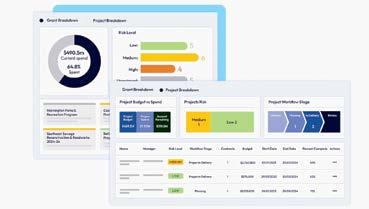
The solution isn’t about working harder. It’s about working smarter with the right systems in place. Councils that centralise their grant management create a secure, single source of truth that removes duplication, ensures applications are consistent, and keeps governance auditready from day one.
More importantly, this shift enables councils to focus on outcomes. With real-time data on where funding is going and what results it

is delivering, councils can demonstrate value not only to funding bodies but also to their own communities.
Future-focused councils are already rethinking how they approach grant management. By embedding digital tools and consistent governance across all programs, they are reducing risk, building capacity, and ultimately putting more successful projects on the ground.
According to Andrew, councils that consistently succeed at securing funding don’t just write great applications – they develop wellscoped, well-documented projects in advance that align with community priorities and council strategy.
With the right systems in place, councils can stop missing out — and start delivering more for their communities
To learn more about how councils are using SurePact to streamline their grant management and stay audit-ready, visit SurePact.com.







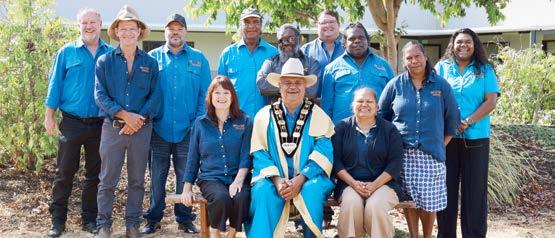
The Council held its official swearing-in ceremony, Thursday 25 September, at its inaugural Ordinary Meeting, marking the beginning of the fifth term of Council.
At the meeting, the new Council sat for the first time with its inaugural order of business to appoint Mayor and Deputy Mayor via election to lead the Council of thirteen (13) Elected Members (Councillors).
Councillor Tony Jack from the South West Gulf Ward was nominated as Mayor of Roper Gulf Regional Council by fellow Councillors.
The nomination was uncontested, and as such, Councillor Tony Jack was appointed as Mayor for the term of Council.
Councillor Helen Lee from the Nyirranggulung Ward was nominated as Deputy Mayor by fellow Councillors. This nomination was also uncontested, and as such, Councillor Helen Lee was appointed as Deputy Mayor.
Council subsequently resolved that the Deputy Mayor’s term to consist of the full term of Council (four years).
Mayor Tony Jack, who has previously served as Mayor, said he was honoured to continue in the role and to lead the new Council.
“I am very grateful for the opportunity to once again represent the Roper Gulf region, and thank my fellow Councillors for putting their trust in me,” Mayor Jack said.
“As Mayor, my focus will be on working closely with all Councillors, our Chief Executive Officer and the executive management team to ensure decisions are carried out across the region.
“Together, we will continue to improve and enhance the Roper Gulf region, support and advocate for our people, and deliver the best possible outcomes for our communities.”
Deputy Mayor Helen Lee, who has also previously held the Deputy Mayor position, said she was honoured to again be entrusted with the role.
“I look forward to continuing to support the Mayor and my fellow Councillors,” Deputy Mayor Lee said.
“My priority will be to ensure the voices of our communities are heard and reflected in Council’s work as we move forward together.”
Chief Executive Officer David Hurst congratulated Mayor Jack, Deputy Mayor Lee and all Councillors on their appointments.
“I look forward to continuing a strong collaboration between Councillors and the senior management team as we work together to deliver a sustainable and vibrant Roper Gulf region for our communities.” Mr. Hurst said.
The elected members of Council for the 2025–2029 term are: Never Never Ward: Councillor Sue Edwards, Councillor Des Barritt, Councillor Patricia Farrell; Numbulwar Numburindi Ward: Councillor Edwin Nunggumajbarr, Councillor Kathy-Anne; Numamurdirdi Nyirranggulung Ward: Deputy Mayor Helen Lee, Councillor John Dalywater, Councillor Preston Lee; South West Gulf Ward: Mayor Tony Jack, Councillor Ash Garner, Councillor Samuel Evans; Yugul Mangi Ward: • Councillor Melissa Andrews-Wurramarrba, one position vacant.
GreensCouncillorClareWillingtonisthenewdeputymayorofRandwick.
Cr Willington was elected to the position by her fellow councillors at a Council Meeting Tuesday 23 September 2025 replacing outgoing Deputy Mayor Marea Wilson.
She will serve as 2IC to Randwick Mayor Dylan Parker on one of Sydney’s oldest councils for the next 12 months.
Deputy Mayor Willington said she was deeply honoured to be elected and would work hard for the whole community.
“I want to thank my fellow councillors for their confidence and support. It’s a privilege to serve our community in this role.”
Cr Willington is a Clovelly resident, retired GP, teacher and WIRES volunteer. She is committed to protecting the natural and cultural heritage of the Randwick LGA, increasing tree canopy coverage and improving biodiversity.
“I look forward to working closely with my colleagues across the chamber to deliver positive outcomes for Randwick City. Together we can continue building a safe, sustainable and inclusive city for everyone.
“Randwick has a proud history of sustainability credentials including tree planting, water recycling and biodiversity conservation. I look forward to continuing and expanding on these important initiatives,” Deputy Mayor Willington said.
Randwick Mayor Dylan Parker congratu-
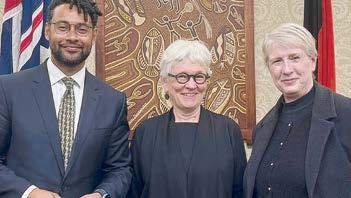
lated Cr Willington on her election.
“I congratulate Cr Willington on her election and I look forward to working with her for the betterment of our community.
“I would also like to thank and acknowledge outgoing deputy mayor Marea Wilson. Your support and commitment to our commu-
CrBrettNolanhasbeen electedasDeputy MayorofNarrabriShire forthenext12months followingavoteat Wednesday’sOrdinary CouncilMeeting.
Mayor Darrell Tiemens congratulated Cr Nolan on being awarded the role and said he looked forward to working with Cr Nolan as Deputy Mayor.
“I have absolutely no doubt that Cr Nolan will do a terrific job in the Deputy Mayor role,” Mayor Tiemens said.
“He is not just a great volunteer, he is an accomplished business operator and owner, great sportsman and well-known figure across Narrabri Shire.
“It is fantastic that Cr Nolan is also taking on such an important role within Council.”
Mayor Tiemens also recognised outgoing Deputy Mayor Cr Brett Dickinson (who elected not to nominate for the Deputy Mayor role) for his work during the past year.
“The role of Deputy Mayor role is often unrecognised, and it is very much a valuable role,” he said.
“I just want to personally thank Cr Dickinson for being such as a steadfast and constant support for me.
“Cr Dickinson elected not to stand for the Deputy Mayor position again as he wanted to give another Councillor a chance to take on the Deputy Mayor role,” Mayor Tiemens added.
“We really appreciate everything Cr Dickinson did in the role for me as Mayor and for Councillors, as well as Council staff.”
Councillor Green, who has been a councillor since 2021, works in the community-based women’s health services including health promotion, group work, community development and capacity building, counselling, and advocacy.
In a short speech to the Council after being invested in her robes of office, she paid tribute to her husband, saying he has been her rock and support.
“He has stood by me in all my years at work and in my council work. I could not have done this without his backing and encouragement,” she said.
“It is a great honour to be elected Deputy Mayor and I am looking forward to advocating for Liverpool during my term of office.
“From my experience in working with the community and key stakeholders, I have learned that listening, working cooperatively, and collaborating to solve complex problems leads to better outcomes.
“I am passionate about Liverpool’s bright future and will continue working to ensure that resources, opportunities, and benefits are shared equitably across our community,” she said.
nity over the past year has been commendable.”
Elections for deputy mayor at Randwick Council are undertaken by vote of Councillors every year, with the election for mayor typically occurring every two years. Mayor Dylan Parker was elected mayor on 8 October 2024.

Andrew Constance has been announced as Chief ExecutiveOfficerofCouncilfortheShoalhavenCouncil. MayorPatriciaWhitesaidMrConstancebroughtmore than18yearsofpublicserviceexperiencetotherole, including as the NSW Member for Bega from 2003 to 2021 and holding several senior ministerial portfolios suchasTreasurerofNSW,finance,transportandroads, industrialrelations,ageinganddisabilityservices.
“Andrew’s commitment to the Shoalhaven and his proven leadership make him an outstanding choice to guide our organisation,” said Mayor Patricia White.
“His deep understanding of regional issues, infrastructure, and community engagement positions him strongly to lead the Council into its next chapter,” Cr White said.
“We look forward to working with him to realise a bold vision for Shoalhaven — one that champions long-term financial sustainability while shaping a thriving, inclusive future for our entire community,” she said.
The appointment follows a comprehensive recruitment process led by Council and supported by independent advisors, Stephen Blackadder Consulting (SBC).
“We were incredibly impressed by the depth and diversity of talent that applied for the CEO role. After a rigorous and competitive selection process,
we’re confident that the successful candidate is the best possible choice,” said SBC Managing Director, Stephen Blackadder.
Mr Constance formally begins work this week, with Brian Barrett stepping away from the interim CEO role he has performed for the past two months.
“On behalf of Council, I want to extend our sincere thanks to Mr Barrett for his leadership over the past few months,” Cr White said.
“Stepping into the role during a challenging period, he’s made some tough but necessary decisions that have helped steady the organisation and set us on a clearer path forward. His commitment and professionalism have been greatly appreciated,” she said.
Local government sits at the heart of Australia’s circular economy transition, shaping the systems that most directly impact communities. At this year’s Waste Expo Australia 2025 (29 - 30 October, Melbourne Convention and Exhibition Centre), one of the most anticipated sessions will bring council leaders together to discuss practicalpathwaystowardamorecircularfuture.
The Circular Economy Panel will showcase how councils are reducing landfill reliance, improving procurement practices, and building resilient local supply chains. Case studies will highlight initiatives already delivering community benefits from organics diversion and advanced collection systems to innovative circular procurement policies that prioritise recycled materials.
Matt Genever, CEO of Sustainability Victoria, will open the conference for the third consecutive year, joined by Tony Circelli, Head of Recycling Victoria. Together, they will outline the policy and regulatory settings that underpin council-led circular economy action. “For local government leaders and the broader sector, Waste Expo Australia is an unparalleled opportunity to engage directly with the latest thinking,
innovation and partnerships driving Australia’s circular economy transition,” said Matt Genever.
The panel sits within a broader program of more than 110 speakers and 60+ hours of free content, alongside 140+ exhibitors showcasing solutions from Waste-to-Energy to organics processing. Councils will also benefit from direct access to government agencies in the Government Lounge, hosted by Sustainability Victoria, Recycling Victoria and EPA Victoria. For local governments, the session is both a knowledge sharing platform and a chance to shape the national conversation on circular economy leadership.
Waste Expo Australia 2025 is free to attend. Register now at www.wasteexpoaustralia. com.au

City of Darwin has officially sworn in 13 Elected Members, including Lord Mayor Peter Styles, forming the 24th Council who will represent the Darwin Municipality for the 20252029 term.
The Lord Mayor and 12 Councillors were inaugurated at Darwin’s Civic Centre in mid-September, with six new Elected Members joining a returning, re-elected seven.
Re-elected members include Ed Smelt and Peter Pangquee in the Chan Ward, Sam Weston and Mick Palmer in Lyons Ward, Jimmy Bouhoris in Richardson Ward and Sylvia Klonaris and Kim Farrar in Waters Ward.
This term also marks a milestone for City of Darwin, with Waters Ward Councillor Patrik Ralph becoming the youngest Elected Member in the city’s history. He is joined by other new Elected Members entering their first ever term, Julie Fraser, Nicole Brown, Shani Carson and Edwin Joseph. Three of the Elected Members identify as First Nations.
The 24th Council also sees female representation across each ward.
City of Darwin CEO Simone Saunders said the new council brought together a balance of experience and innovation, united in their commitment to working collaboratively on local priorities.
“Councillors will be engaging with residents to ensure community voices remain central to shaping the city’s future direction.”
“The new Council will continue to deliver on current strategies and projects while develop-

ing future initiatives that reflect the needs and aspirations of the municipality,” she said.
Lord Mayor Peter Styles said it was an honour to be sworn in.
“As I step into the new role, I am excited about the possibilities ahead. Together, we’ll make Darwin an even better place to live, work and raise families in.
“I can’t wait to get work - here’s to the future of our city,” Mr Styles said.
· Lord Mayor: Peter Styles.
· Chan Ward: Ed Smelt, Julie Fraser, Peter Pangquee.
· Lyons Ward: Sam Weston, Mick Palmer, Nicole Brown.
· Richardson Ward: Jimmy Bouhoris, Shani Carson, Edwin Joseph.
· Waters Ward: Sylvia Klonaris, Patrik Ralph, Kim Farrar.
ForthoseinHawksburydreamingofdigitisingoldfamilyphotosinstunningdetailorreadytolaunchtheirveryown podcastbutmissingthegear–it’stimetogetexcited.
A brand-new Technology Hub is coming to Hawkesbury Library- free to members.
Hawkesbury Library Service is due to start building works at the Central Library in Windsor early this month to transform its computer room into a modern Technology Hub, providing Hawkesbury Library members better access to IT facilities, improving technological, digital and production opportunities for all ages.
Backed by $200,000 in grant funding from the NSW Government under the Public Library Infrastructure Grant program, this project will see a complete redesign of the existing com-
puter room at the Central Library.
The current printing room will be transformed into an archive room and will include a powerful flatbed scanner that can be used for book scanning and additional functionality that will include transparency unit scans for negatives and slides and a video, cassette and DVD to digital converter.
The computer room will be remodelled to introduce a production room. It will be soundproof and will include a four-person podcasting kit that will include headphones and microphones. The computer room will be updated with new
furniture, have easy access to the photocopier and house eight public computers.
All the rooms will be able to be booked by the public.
These changes to infrastructure will offer the community new collaboration and learning opportunities, and access to professional archiving, production and printing services.
Hawkesbury Library members will have easier access to the library’s high-quality collections, enhanced connectivity and contemporary library functions such as podcast creation. Newtechnologyhubonitsway.
TheSunshineCoast’snewestculturalhubisofficiallyopen,withLibrary+Caloundra welcoming the community into a space designed to transform the way we use libraries.
After a lively celebration on Monday, September 22 at 1 Omrah Avenue, the multi-level facility is now ready for readers, creators and curious minds to explore.
Sunshine Coast Council Mayor Rosanna Natoli said the opening was the culmination of years of strategic planning, community consultation and a shared vision for the future of Caloundra.
“This completes the transformation of the former Caloundra Administration Building into a vibrant, inclusive and future-focused space, one that responds to the needs of a growing population and evolving community expectations,” Mayor Natoli said.
“This modern, purpose-built facility is designed to be more than just a library – it’s a dynamic hub with something for everyone: creative spaces and digital studios, places for kids to learn and play, venue spaces, and so many more ways for our community to collaborate and connect.
“Libraries support education, wellbeing and new opportunities for everyone, all while bringing us together and adapting to the needs of all.
“That’s what this building represents for our community. It’s a library, plus so much more.”

Library+ Caloundra is one of eight library branches provided by Sunshine Coast Council, along with two mobile libraries, a heritage library and eLibrary.
Division Two Councillor Terry Landsberg said the day marked a new chapter for Caloundra, with the library serving as a vital part of the Caloundra Community and Creative Hub.
“This facility reflects our community’s creativity, our commitment to sustainability, and our belief in the power of shared spaces,” Cr Landsberg said.
“This is a library first and books remain at the heart of the experience, but that’s just the beginning.
“I invite everyone in our community to come and see how you might use and enjoy this new space.
“While you’re here, there’s so much more to enjoy in the Caloundra CBD, from our beautiful
The library collections are spread across two levels, from page-turning fiction and children’s favourites to non-fiction and local history.
The kids’ zone is a standout feature, boasting an activity wall, vibrant play spaces and snug reading cubbies to spark creativity and curiosity in every corner.
Cr Landsberg said a bumper program in the coming weeks would help locals become familiar with the space and services.
“Guided tours, creative sessions and hands-on activities will showcase everything this next-generation library has to offer,” Cr Landsberg said.
Thisyear,Ku-ring-gaiLibraryiscelebratingits80thbirthday.Tocelebrate,theLibraryis sharing80imagesfromits80yearhistory,overaperiodof80daysonsocialmedia.
Gordon Library was the first municipal library in the metropolitan area to open after the Library Act 1939 was introduced. It officially opened on 24 November 1945 at the Council Chambers in Gordon.
Ku-ring-gai Mayor Christine Kay said Council was proud to continue the 80-year library service.
“Ku-ring-gai Library is a wonderful cultural asset for our community. It is more than just a place to borrow books and resources; it is a meeting place for so many in the community, providing opportunities for connection, creativity and learning,” Mayor Kay said.
“Today, Ku-ring-gai Library operates out of four branches: Gordon, Turramurra, Lindfield and St Ives. We also continue to operate a Home Library Service for patrons who are housebound due to illness or disability, ensuring that everyone in the community has access.”
Some of the moments captured in the images include staff at the first library branch, loan statistics from December 1945, children borrowing from the mobile library service in the late 1940s, the opening of Lindfield library in 1954, the introduction of children’s story time at all branches in 1980, fire damage at Turramurra library in 1985, construction of the current Gordon Library in 1993, the ‘knock and drop’ home delivery service during the COVID-19 pandemic, author visits and modern day library services.
The collection also includes photos from renowned photographer Max Dupain, who captured images of Wahroonga Library in 1952.
Ku-ring-ai Library will celebrate its 80th anniversary on 24 November 2025.
Ku-ring-gai Library timeline:
· 1944 – Ku-ring-gai Council adopts the Library Act 1939 (NSW)
· 1945 – Ku-ring-gai Library opens at Ku-ringgai Council Chambers in Gordon
· 1946 – Ku-ring-gai launches the first public library bookmobile in the state
· 1948 – East Roseville Library opens
· 1953 – Wahroonga Library opens, operated
from the cottage in Wahroonga Park
· 1954 – Lindfield Library opens
· 1961 – St Ives Library opens
· 1961 – Gordon Library moved from Council Chambers to temporary accommodation in Wade Lane, Gordon
· 1965 – Gordon Library moved from Wade Lane to the corner of Pearson and Park Avenues
· 1968 – Turramurra Library open
· 1980 – Ku-ring-gai Library introduces monthly storytime sessions at all branches
· 1980 – Housebound service commences, operating out of Gordon Library
· 1982 – Local History Service commences at Gordon Library
· 1985 – Fire at Turramurra library in May. Library reopens by November
· 1988 – Online public access catalogue computers introduced at Gordon Library
· 1993 – Opening of Gordon Library at its current site
· 2002 – Permanent Chinese Fiction collection introduced
· 2013 – Gordon Library refurbished and launch of eLibrary for books and magazines
· 2020/2021 – Knock & Drop service operates during the COVID-19 lockdowns
· 2023 – Library stops charging late fees and introduces library app

Murray’smuch-loved andonlypubliclibraryis setforarefurbishment thisyear,enhancing itsfunctionalityand communityappeal.
Thanks to a $200,000 grant from Community Bank Pinjarra (Bendigo Bank), the space at Murray Library can be reimagined to better suite the changing needs of a growing community. It will become brighter, more accessible and userfriendly thanks to a new layout, upgraded equipment, fresh coat of paint and decorative elements.
Shire President, Douglas McLarty said the library, which serves more than 36,000 visitors and 5,000 program participants per year, supports learning, creativity and connection – particularly for families, older residents and those experiencing disadvantage.
“The refurbishment responds to immediate needs by creating a more flexible and welcoming environment for our community,” said President McLarty.
“Upgrades will include updated shelving, relocation of the children’s space, additional study spaces, new furniture to support multi-generational activities, updated branding and signage, to name a few.”
“These upgrades will ensure the library remains a valued and inclusive space that continues to serve as a cornerstone of civic life in Murray. We would like to thank Community Bank Pinjarra for supporting this project,” added President McLarty.
“Banking with Community Bank Pinjarra is a powerful way to support your local community.
Every account opened and transaction made helps fund vital initiatives, like the $200,000 contribution to the Murray Library refurbishment. These kinds of partnerships are only possible because locals choose to bank with us. When you bank with Community Bank Pinjarra, you’re not just managing your money, you’re helping build a better, stronger Community,” said Branch Manager, Natalie Myers.
Upgrades will begin later this year.

OrangeCityCouncilhasrecognisedtheoutstandingeffortsoflocalresidents,businessesandcommunitygroupsin preservingthecity’suniquehistory,withwinnersannouncedatthe2025CulturalHeritageAwards.
The awards, a key action of Council’s Heritage Community Committee, celebrate excellence in conserving and adapting Orange’s heritage buildings and places.
Categories this year ranged from residential conservation to adaptive re-use of commercial buildings, with projects demonstrating the community’s strong commitment to safeguarding local character.
Orange Mayor Tony Mileto says the awards highlight the value of Orange’s built heritage and the pride the community takes in protecting it.
“Our city’s history is written not only in books, but in the homes, shopfronts and landmarks that shape Orange’s streetscapes. The Heritage Awards foster and encourage good conservation work, and tonight’s winners show just how much can be achieved with vision, care and dedication,” Cr Mileto said.
Heritage Community Committee Chair, Cr Gerald Power, says the awards play an important role in supporting Council’s broader heritage strategy.
“The Heritage Awards are more than recognition – they inspire others in the community to follow good conservation principles. Alongside Council’s Heritage Adviser and the Local Heritage Assistance Fund, the awards are helping to safeguard the city’s historic fabric for generations to come,” Cr Power said.
Over the past two decades, winners have included iconic landmarks such as Duntryleague, the Masonic Lodge, Kelly’s Hotel, and many heritage homes in Orange, Lucknow and Spring Hill. This year’s winners continue that tradition, showing that heritage can be both respected and reimagined.
2025 Heritage Awards – Winners
Restoration of a Residential Heritage Building: 156 McLachlan Street – Recognised for the
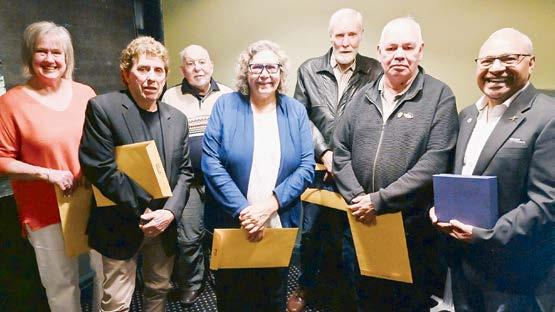
Nomineesfor‘IndividualorGroupcontributiontotheCulturalHeritageofOrange’award.
sensitive restoration of a residential property that retains original features and strengthens the heritage streetscape.
Adaptive Reuse of a Heritage Building: Dirty Janes – Awarded for a successful adaptive reuse project that gives new life to a historic structure.
Infill Development in a Heritage Area: The
LockyerValleyRegionalCounciliscallingonresidentsto jumponboardtherecyclingbandwagonandrenewtheir commitment to doing the right thing when it comes to wheretoplacetheirrubbish.
Lockyer Valley Regional Council Waste Portfolio Councillor Julie Reck said with landfill space continuing to decline, it is the simple habits that can have the most impact.
“We’re noticing a few recurring issues, such as residents bagging their recyclables.
“Other common mistakes include discarding bagged general waste, non-recyclable plastics, nappies and food scraps in the recycling bin.
“Recyclables should always be taken out of bags before being placed in the bin.
“Non-recyclable plastics, like soft plastics, must not go in the recycling bin—they belong in the red bin or in the collection bins some supermarkets provide.
“Let’s work together to reduce waste, build a sustainable environment and protect the future of the region.
“As with so many things, the environmental cost of waste only continues to increase and, as a Council, we’re putting it to households and businesses to sort their waste correctly.
“We understand people are time poor, but it’s so important to take advantage of the recycling services we have available in the region,” she said.
Other tips include:
• While paper towels might look recyclable, the fibres used to make them are too short to be turned into new paper products. That means they belong in the red bin (general waste). However, if your paper towels are free from oils, fats, or chemicals, you can toss them into your home compost instead!

Mac – Recognised for a new development that complements surrounding heritage character through sympathetic design and scale.
Best Heritage Treatment of a Commercial Building: The Metropolitan Hotel – Commended for works that enhance the building’s heritage significance and ensure its continued role in Or-
ange’s historic townscape.
Best individual or group contribution to the cultural heritage of Orange: Orange and District Historical Society – Emmco/Email/Electrolux Research Group – for researching and identifying photographs of Emmco, Email and Electrolux in Orange, 1946–2016
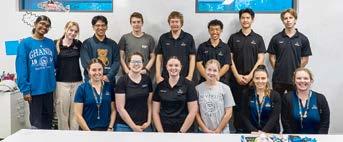
Young people aged 15 to 24 who have big ideas and want to make a difference in the community are encouragedtosubmitanExpressionofInterest(EOI) tojointhe2026GladstoneRegionYouthCouncil.
Gladstone Region Mayor Matt Burnett said the Gladstone Region Youth Council act as a formal advisory committee to Council on matters relating to young people within the region.
“Youth Councillors can raise issues that affect young people in our region, allowing them to bring these issues to Council’s attention and ultimately make the region a better place for future generations,” Mayor Burnett said.
gain skills that can help with future career ambitions.
“I was 25 when first elected to Council in 2000, so you’re never too young to make a difference in the community.”
Mayor Burnett added that young people from all corners of the region are encouraged to apply, not just those based in the greater Gladstone area.
“Every item we choose to recycle correctly reduces the overall costs to manage waste and means we all win in the long run,” Cr Reck said.
• Takeaway coffee cups are always a contentious item when it comes to recycling, and while you can recycle the lids, the cardboard cups are a no because of the waterproof plastic lining. A great option is to use reusable travel coffee cups to reduce waste.
“Whether you’re into sports, music, gaming, arts, tech, trades, studying at school, TAFE or university, or just passionate about your community, we want to hear your voice.
“The Youth Council allows young people to make new friends, build their confidence, be involved in local projects and events, and
“Travel assistance can be provided to Youth Council members to support their participation, while online tools such as video conferencing can also be used for members to dial into meetings,” he said.
“While in-person participation is preferred, we want to hear the opinions and voices of young people from a variety of locations within our region.”
ScenicRimRegionalCouncilhasrolledoutarangeofinitiativestoboostphysicaland mentalhealthacrossitsworkforce.
In line with commitment to staff wellbeing through programs that make a difference, Council has embraced The Resilience Project, encouraging employees to be the best they can be both at work and at home.
The Resilience Project explores evidencebased approaches to building resilience to develop and sustain positive mental health through the strategies of Gratitude, Empathy and Mindfulness (GEM) which can be practised as part of daily life.
Marking R U OK? Day on Thursday 11 September, Council hosted the Resilience Project’s Authentic Connection presentation, delivered live by Martin Heppell.
This livewire public speaker - who has notched up more than 1,700 appearances across Australia at schools, community groups, corporations and elite sporting organisations including the A-League AFL and NRL - focused on the benefits of individuals’ connection with themselves, others and nature, touching on emotional literacy and connected parenting.
With the aim of making R U OK? an everyday touchpoint, Council has also rolled out Mental Health awareness training for all staff, implemented Mental Health First Aid Officers and has a network of Mates in Construction Connectors as dedicated contacts for staff needing support through tough times. This is in addition to Council’s employee assistance program provider that offers eight streams of support to employees
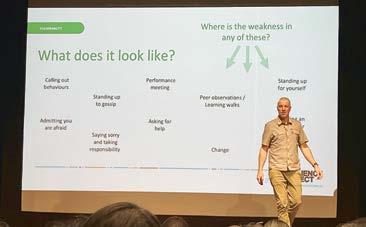
TheResilienceProject’sAuthenticConnectionpresentation,deliveredliveforScenicRim RegionalCouncilstaffbyMartinHeppellatTheCentreBeaudesertonRUOK?Day.
and their immediate family.
Council’s Wellbeing Calendar includes skin cancer checks for staff, cooking classes encouraging a healthier lifestyle, and the 10,000 steps challenge aimed at increasing physical activity. This Wellbeing Calendar focuses on implement-
ing the Five Ways To Wellbeing to improve mental health.
As part of the Wellbeing Program, employees can claim up to $200 reimbursement for sporting membership fees, encouraging staff to get active.
Camden Council demonstrated its commitment to youth wellbeing with its new initiative,SkateofMind–YouthFunDayforMentalHealth2025.
The event, which was held on Wednesday 1 October, 1-4pm, at the skate park at Julia Reserve Youth Precinct, combined physical activity, creativity and social connection with educational elements around mental health.
The Council-designed program integrated skateboarding workshops, music, sports activities, creative zones, and mindfulness sessions, creating a framework that addresses youth mental health, loneliness and the impact of drugs and alcohol.
By blending fun with support, Camden Council fostered an inclusive space where young residents, aged 12 to 25 years old, could build resilience and access health resources.
Mayor of Camden, Cr Ashleigh Cagney, said the event shone a spotlight on youth and

mental health loneliness.
“We wanted to increase awareness and break down those negative stigmas out there,” she said.
“Skate of Mind was about showing our young people that support is out there and that taking care of your wellbeing can be fun, social and inspiring.
“Everyone should be aware of what help and support there is available around them, and we are so lucky in Camden to be surrounded by some of the best.”
“I’m encouraging all those eligible to join us at this event. Come for the flips and tricks, stay for the laughs and connections – and drop your stress.”
The initiative demonstrated a growing trend among local councils to combine recreation with education, encouraging positive mental health practices through innovative, community-led approaches.
As part of Bundaberg Regional Council’s ongoing commitment to staff wellbeing and professionaldevelopment,anetworkoftrainedMentalHealthFirstAidOfficerscontinues tosupportcolleaguesacrosstheorganisation.Theseofficers-drawnfrombothindoor and outdoor teams - are equipped to assist employees experiencing mental health challenges,offeringconfidentialguidanceandreferralstoappropriateservices.
To complement this program, the Community, Sport and Cultural Development team recently hosted a vibrant R U OK? Day event in the local CBD park. Staff gathered for a relaxed lunchtime break featuring sweet treats, mental health resources and a friendly cornhole competition. The event encouraged genuine conversations and connection with teams from across Council joining in.
Additional activities including morning teas and barbeques were held across departments to mark the day and reinforce the importance of checking in with one another.
These initiatives reflect Council’s proactive approach to mental health, combining formal training with inclusive, peer-led engagement. Bundaberg Regional Council’s Mental Health First Aid team offers helpful tips on how to start meaningful conversations with those around them: R U OK? Day 2025 - YouTube
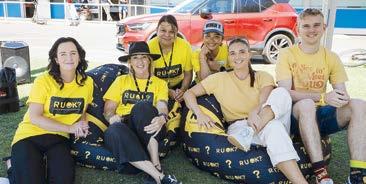
CityofMoretonBay CEOScottWatershas takenoutthe2025 ManageroftheYear awardattheLocal GovernmentManagers Association(LGMA) Conferenceforhis outstandingleadership andmanagement.
Awarded annually as part of LGMA’s commitment to leadership and management excellence in local government, the award is presented to a senior local government employee who has made an outstanding contribution to the positive growth of their council and community.
Since his appointment in 2023, Scott Waters has taken a visionary approach to preparing City of Moreton Bay for a population on track to reach one million in around 30 years. His focus on organisational transformation, culture and strategic engagement has positioned the organisation as one of the most progressive and future-focused councils in Australia.
In 2024, Scott Waters led a significant organisational change, shifting the organisational structure to a future and growthready model with a new framework built around four strategic groups - the Office of the CEO, City Administration, City Operations and City Futures.
The streamlined model has already improved efficiency and created stronger collaboration across the organisation. These structural changes have helped embed Waters’ forward-thinking vision and values-led leadership, reshaping how City of Moreton Bay operates and collaborates.
Scott Waters said he was humbled and appreciative to be awarded LGMA’s Manager of the Year Award and proudly thanked the team he leads.
“Everything that we do in Local Government is about serving our community, and to do this well, it starts with people. For me, with just over 15 years in Local Government, I feel tremendously lucky to have the team that I do here at City of Moreton Bay,” Mr Waters said.
“Achievements like this only happen when you have the many and varied parts of the business all working in the same direction - and at City of Moreton Bay, we’re in that position, thanks to our people.”
Mayor Peter Flannery said the award was a fitting acknowledgement of Scott Waters’ leadership.
“We’re extremely proud to see our CEO Scott Waters recognised as LGMA’s Manager of the Year for 2025. Scott has been pivotal in guiding City of Moreton Bay through a time of rapid change and growth, ensuring we are prepared for the future while staying focused on delivering for our community,” Mayor Flannery said.
“His approach has created a culture where staff feel supported, ideas are welcomed, and innovation is encouraged. That kind of leadership has positioned City of Moreton Bay as modern and future ready.”
“It’s a privilege to work alongside Scott as we continue to build a stronger and more connected City of Moreton Bay.”
Scott Waters’ award reflects not only his personal contribution but also the strong direction City of Moreton Bay is taking as it sets a benchmark for modern local government leadership.
Ku-ring-gaiCouncilhaspartneredwithcharityDressforSuccesstosupportwomenontheirpathtoemploymentand financialindependence.
Through professional clothing, career support and development tools, Dress for Success helps women build confidence and take the next step toward economic security.
Council is encouraging the Ku-ring-gai community to get behind the cause by donating high-quality, professional clothing and accessories during a month-long clothing drive.
Ku-ring-gai Mayor Christine Kay said the initiative was a practical and effective way to support women striving for independence and economic security.
“I encourage everyone to look inside their wardrobe, because even a single item could help a woman in need. I’ll be donating pieces from mine and together we can make a meaningful difference,” Mayor Kay said.
“You can help change a woman’s life with the gift of confidence. Your donation is more than clothing, it’s the first step toward opportunity, self-sufficiency and empowerment.”
Dress for Success supports women navigating vulnerable life stages, from preparing for interviews to re-entering the workforce. Through styling sessions, career mentoring, and ongoing programs, they help women build confidence and transform their lives.
Bec’sstory:“Itwassowonderful,sokind andreallyempowering.Igotthejobbutthe experiencemademefeellike,‘Yougotthis.’ Inowhavesomanyoptionsthatareperfect formynewjob-andI’veneverownedleather shoesbefore!”
Construction has started on the second stage of Liverpool’s Civic Place – a two-stage $600m urban renewal project to be known as the Helix Hub that standsasthecentrepieceofLiverpool’sevolutioninto avibrant,knowledge-basedcity.
Stage one, delivered by Built in partnership with Liverpool City Council, was successfully completed in late 2023. It features the multi award-winning public library, Yellamundie, Liverpool Council’s meeting chamber and office spaces and a University of Wollongong campus, scheduled to open in next year.
Stage two completes the regeneration of Liverpool Civic Place, delivering a dynamic mixed-use precinct. It includes an 85-key coliving building and a 16,500 sqm education and life sciences facility. Over 650 sqm will be dedicated to public realm, offering highquality open spaces for the community to enjoy.
Liverpool Mayor Ned Mannoun said when people talked about growth in Sydney, they often focused on the pressures.
“In Liverpool, we prefer to focus on what councils can achieve when vision meets delivery,” he said.
“We have broken ground on a 17-storey vertical university and life sciences building that will reshape our CBD. Eleven storeys will be dedicated to the University of Wollongong, five to life sciences research and innovation, and nine to co-living accommodation – all connected by retail, green space and new public links.
“The scale of the opportunity is enormous. Liverpool is already home to 255,000 people, projected to grow to 331,000 by 2041. One in five of our residents are universityaged. More than 12,000 local businesses contribute $13 billion to the economy and support over 100,000 jobs. This new facility will draw thousands of students, researchers and staff into the city every day, supporting restaurants, shops, housing, health services

BuiltDevelopmentDirectorJonoCottee, DavidMoncrieffMP,FederalMemberfor Hughes,DavidBorgerBusinessWestern Sydney,NedMannoun,Mayor,Liverpool CityCouncil,ProfessorG.Q.MaxLuAO, Vice-ChancellorandPresident,University ofWollongongandTinaAyyad,Memberfor Holsworthyceremoniallyturntheearthfor HelixHub’sconstructionstart.(Supplied LiverpoolCityCouncil)
and local services. It’s a multiplier effect that will be felt across the region.
“Liverpool is more than just a place to study. With thanks to the NSW Government for a $200,000 Special Entertainment Precinct grant, we are building the cultural and social infrastructure that makes a city truly liveable – live music, events, and vibrant spaces for thousands of new students and young people.
“This project shows what local councils can achieve when we plan boldly and partner effectively. Together with government, industry and the community, we are building not just a stronger Liverpool, but a stronger New South Wales.”
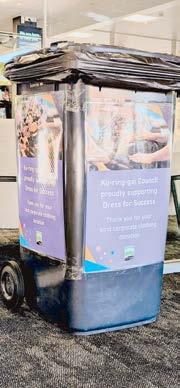


TheCommunitySafetySeriesreturnsthisOctobertoenhancethesafetyandwellbeing ofresidents.
Workshops, pop-up events and online subsidies are on offer this October for the City of Kwinana’s Community Safety Series.
The month-long Spring Community Safety Series is designed to give Kwinana residents the knowledge and tools to feel safer and more connected.
This year builds on last year’s success with a mix of workshops, information sessions, and hands-on activities covering everything from home security and emergency preparedness to road safety, online safety, and neighbourhood connection.
Mayor Peter Feasey said the Series was a chance to pick up practical tips, hear from local experts, talk with Police, and discover simple ways to look out for one another while strengthening our community spirit.
“This year, people can also take part in a survey to highlight the top three safety concerns in their suburb with the survey open from now until the end of October,” Mayor Feasey said. He said community safety was a top priority for Kwinana residents, as is identified in the City’s Strategic Community Plan.
“We invite you to have a free cuppa with your local Police face-to-face, get involved in the Bike Festival, or attend a Disaster Preparedness Forum to help you be ready for bushfire season
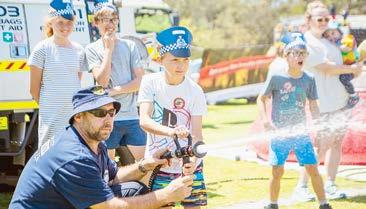
and other possible emergencies,” he said.
“We will also have CCTV subsidies on offer, and Secure PL8 running again to prevent the theft of license plates.
“Community safety is everyone’s responsibility, and it isn’t just about reducing crime on
the streets.
“It’s about being ready for emergencies, keeping an eye out for one another, improving road safety, and strengthening your home security, so as a City we are committed to improving people’s sense of security and safety,” he said.
Festivelights,lanternsandcolourfulrangolipatternsaresettotakeoverParramatta nextmonthfortheinauguralDiwaliFestivalofLightscompetition.
The annual five-day global festival of light is one of the major religious celebrations in Hinduism, Jainism and Sikhism.
City of Parramatta Lord Mayor Cr Martin Zaiter invited residents to decorate their homes, balconies or apartments with lights and decorations to celebrate Diwali from 18 until 23 October.
“Diwali is a festival that brings people together, no matter where they’re from, and we want to reflect that spirit in our neighbour-
Youngpeoplefrom HobsonsBayand aroundMelbourne’s westhadthechance toenjoyadayof music,creativityand communityspiritat YouthCon‘25.
The event featured at the Williamstown Town Hall on Friday 3 October, ran from 3pm to 7pm.
The smoke, vape, alcohol and drugfree event catered to young people from 12 to 25 years old, with plenty of activities to enjoy, including: • local live bands and performances • youth market • Melbourne clothes exchange • food stalls • zines workshop • youth art exhibition • photo booth • games • giveaways and more.
The event was created and delivered by Westside Studio Crew, a group of community minded young people, and is supported by Hobsons Bay City Council and its youth services team.
hoods and skylines,” Cr Zaiter said.
“This competition is about more than just colourful lights.
Parramatta is proudly home to one of the most diverse communities in Australia and we are thrilled to bring that joy to our streets during this vibrant festival.
“We’re proud to launch this competition as a new tradition for Parramatta and we can’t wait to see the incredible culture and colour on display.”
Residents simply need to submit photos of their exterior Diwali light display via Council’s website.
Entries opened on Monday 22 September and close on Sunday 19 October at 11:59pm and will be judged on visual appeal, creativity, use of traditional Diwali decorations and overall impact.
The Lord Mayor and Councillors will visit the winning property on Thursday 23 October to present the prize.
It’s time to start (or keep) collecting those scrunchable soft plastics. Wollongong City Council’s next drop-off is onSaturday25OctoberatRayRobinsonOval,Towradgi.
Residents are invited to collect and bring along clean, dry and empty soft plastic packaging — like plastic bags, snack and chip packets, pasta, bread and rice bags, cling and bubble wrap, mail sachets, and pet food bags—to be bailed up and recycled.
The free collection program is being coordinated by the Illawarra Shoalhaven Joint Organisation (ISJO), and supported by Soft Plastics Stewardship Australia, on behalf of member councils Kiama, Shellharbour, Shoalhaven and Wollongong.
Lord Mayor of Wollongong Councillor Tania Brown said residents have been asking for an avenue to recycle their soft plastics since the REDcycle program ended.
“That message was heard loud and clear through our waste strategy engagement and the successful soft plastic and cardboard events we held in December,” she said.
Cr Brown then laid down a challenge:
“Last year, residents brought us 814 kilograms of soft plastics over three days. Then, Shellharbour City Council collected 500 kilos in one day at Albion Park.
“We have more people, so I’d like to challenge Wollongong residents to help us raise the bar with a tonne, 1000 kilos, of soft plastics recycled!
“While this isn’t a permanent fix for soft plastics, ISJO and Wollongong City Council are
committed to working alongside residents and industry to reduce waste to landfill and create a greener future for the region.
“Get collecting and I’ll see you there on 25 October!”
ISJO Sustainability and Waste Manager Yvette Barrs explained the soft plastics will be baled and transported to iQRenew in Taree.
“The soft plastics will be recycled into highgrade plastic feedstock tailored to meet manufacturing specifications for a diverse range of products, including construction and agricultural products,” said Ms Barrs.
Formanyyoungpeople withbigideas,knowing wheretostartcanbe thehardestpart.
But a new City of Onkaparinga initiative is helping aspiring entrepreneurs find their footing in the business world.
The Future Makers Program, a free 8-week incubator for young people aged 13 to 25, provides hands-on business training, mentoring and real-world market experience.
Whether it’s tech, fashion, art, hospitality, photography or home decor, the program is designed to help young creatives and innovators turn their ideas into sustainable micro-businesses.
The program guides participants through the fundamentals, from ideation, market research and costing to marketing and launching.
Participants receive one-on-one mentoring, learn from guest speakers, and test their ideas in real-world settings.
Local entrepreneur and owner of Healthy Allsorts Vending, Michelle Gregory, helped Onkaparinga’s Youth team facilitate this year’s program.
For 15-year-old Jonathan, the program helped transform a childhood fascination with magic into a fully-fledged business, JC Magic Entertainment.
“I had ideas, but didn’t know how to put them into practice,” Jonathan said.
“I wanted to create the learning experience I wish I had, where students can ask questions, get accurate answers, and feel confident about learning it correctly from the start.”
Jonathan not only performs at events but offers group and private tutorials, initially focusing on homeschoolers.
For fellow program participant Emily, the journey started with a sewing machine.
“I’ve always struggled to find clothes that fit well, reflect my style, personality and values, whilst being affordable,” she said. “So, I used clothing I had already and turned them into something new.”
This DIY approach evolved into clothing label, Second Nature.
With a focus on upcycling, sustainability and handmade design, Second Nature pieces often feature embroidery, lino printing, painting and patchwork.
“My business is designed for creative dreamers; and people who value sustainability, individuality and craftsmanship.”
Emily says the Future Makers Program helped turn her creative passion into a business.
“The mentors and the group built me up, arming me with theorical and practical knowledge, and the confidence to start my business.”

foryoungpeopleaged 13to25.
InOctober2022,theShireofMerredinheldaribbon-cuttingceremonytore-openPioneerParkintheheartoftown.
This space underwent significant works to highlight views of Merredin’s pioneer history, including the Merredin Railway and Military Museums, and improve access and appeal through new car parking, recreational spaces, landscaping, and drainage.
Merredin’s bronze “Horse at Work” sculpture was protected during construction, then moved into pride of place within the park.
Pioneer Park is the new gateway to Merredin and formed the first stage of the larger $10.5 million CBD Redevelopment project, a vital boost for tourism and local businesses. However, there was one piece of the park’s revitalisation remaining: the refurbishment of the state heritage-listed Merredin Water Tower.
After five years of project development, the restoration works on this iconic landmark began in April 2024. Works included reinforcement of the wooden tower and metal tank to enhance structural integrity and safety, while preserving the tower’s aesthetic for historical accuracy. After receiving approval from the Heritage Council, painters also refreshed the iconic Kalgoorlie Bitter signage.
The Shire hosted a competition in June 2025 for five lucky residents and their plus ones to take in the views of the park and Merredin from the top of the Water Tower. In early September 2025, Merredin welcomed His Excellency the Honourable Chris Dawson AC APM, Governor of Western Australia, and Mrs Darrilyn Dawson, wife of the Governor. Part of the Governor’s tour
included a walk through Pioneer Park and a climb up the Water Tower.
The scaffolding was removed in late September and the final sealant applied to the wooden components. The Shire of Merredin looks forward to celebrating the completion of this incredible milestone with the community in the coming weeks.
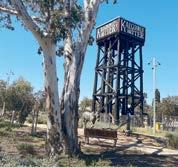
Waratah-Wynyard Council has opened a new sensory garden at the East Wynyard Foreshore—one of the final elementsofalong-termmasterplantotransformthewaterfrontintoanaccessible,community-centreddestination.
Purpose-built to engage sight, sound, smell, touch and taste, the garden offers therapeutic, educational and inclusive experiences. It is designed for children, older adults and people with sensory processing needs, providing a calm space for reflection, mental wellbeing and gentle connection with nature.
The project showcases the capability of Council’s in-house team, whose hands-on approach, from planting selection to communityfirst design, delivered the garden’s character and detail. External contractors completed the structural groundwork, concrete paths and shade-sail installation.
Funding was secured through the LGAT
Open Spaces Grant, which provided $100,000 specifically for the sensory garden at East Wynyard Foreshore.
Mayor Dr Mary Duniam said the space reflects local pride and practical inclusion.
“This sensory garden is more than just a beautiful space, it’s a symbol of what happens when local vision meets community care. Our Council works team has poured heart and soul into every detail, and the result is a garden that truly belongs to Wynyard.”
The garden is now open to the public, inviting residents and visitors to experience an immersive, restorative landscape by the water.
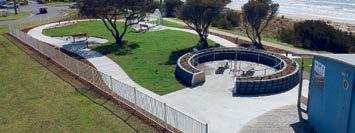
The Kangaroo Point Boardwalk – a spectacular one-kilometre elevated path through untouched mangroves and bushland intheHornsbyShire–wasofficiallyopenedearlierthisyearcreatingauniqueeco-tourismdestinationjust
This immersive experience, designed to provide walkers and cyclists with a safe and accessible connection along the foreshore between Kangaroo Point and Seymours Creek in Brooklyn, offers panoramic river views, tranquil rest areas, and an unforgettable escape into nature.
The boardwalk was constructed with a lowimpact, elevated design to carefully protect the surrounding saltmarsh, mangroves and intertidal environment. Along the way, shaded rest areas and benches invite walkers and riders to pause, take in sweeping river views, and enjoy the peaceful surroundings.
“This Kangaroo Point Boardwalk will take you on a journey through one of Sydney’s most spectacular, natural settings,” said Hornsby Shire Mayor Warren Waddell.
“It’s perfect for weekend cyclists, bushwalkers, families on an outdoor adventure, or anyone wanting to spend the day exploring Brooklyn’s cafes, scenic walks or nearby Dangar Island.
The Kangaroo Point Boardwalk will be a memorable highlight of your day out.”
The boardwalk was made possible through a funding grant of $5.07 million from Transport for NSW’s Get NSW Active program, and $307,500 from the Department of Planning, Housing and Infrastructure’s Metropolitan Greenspace Program, as well as Hornsby Shire Council funding.
Delivered by Council, the boardwalk is the final stage of a three-kilometre continuous walking and cycling route from Baden Powell Avenue in Brooklyn village to Kangaroo Point.
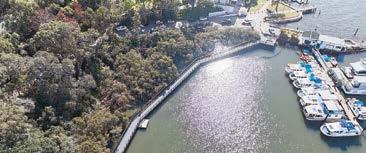
Anaerialviewofthenewwalkway.

LiverpoolCityCouncil’sStarrySariNightbroughtcolour,cultureandcommunityspirittotheheartofLiverpool.
The annual celebration of South Asian culture is now one of Sydney’s biggest multicultural block parties – and the numbers speak for themselves.
This year’s event brought 12,500 people to Liverpool’s CBD, generating around $600,000 for the local economy.
So far this year, Liverpool City Council’s festival program has already attracted over 260,000 visitors and generated a staggering $21.9 million for the local economy.
Liverpool Mayor Ned Mannoun said Events like Starry Sari Night show the very best of Liverpool.
“We might come from different backgrounds, but when we eat together, dance together, and celebrate together, we realise how much we have in common.
“People are voting with their feet and their wallets because they want to be part of something that unites us,” he said.
From dazzling saris and Bollywood beats to mouth-watering street food and family-friendly entertainment, Starry Sari Night is where Liverpool shines brightest.
George Street was transformed into a vibrant festival precinct bursting with colour, music and the irresistible smells of curries, sweets and snacks from across South Asia.
Starry Sari was made possible by sponsors Remitly and Liverpool Nissan and funding from the NSW Government through its Open Streets program and the Permit/Plug/Play pilot program.
It was a chance to enjoy a spectacular Sari Showcase on the runway, live music and dance that had the crowd moving, a Curry Cook-Off that spiced up the night, market stalls stacked with jewellery, fashion, and handmade treasures as well as family activities and




art workshops.
“Cultural events like Starry
are not just fun – they are vital,