For crying out loud
After a least a year of planning, Fraser Coast Mayor George Seymour has hailed the Ancient and Honourable Guild of Australian Town Criers Championships, held in Maryborough at the start of the month, as a major success.

Eleven competitors from throughout Australia took part in the one-day event before staying on to be part of the town’s annual Mary Poppins Festival.

“We were looking forward to it for a long time and we have been really excited that we could pair it with our Mary Poppins Festival,” Mayor Seymour said.
“They both went together really well.
“Maryborough with its beautiful architecture its culture and its history really lends itself to this time of event and the town criers all participated in the Mary Poppins Festival and added a lot of colour to it.”
Toowoomba’s Kevin Howarth was the big winner on the day.
Full story page 12
Disaster aid win
In a major win for local governments, the Federal Government announced fast-tracked payments totaling almost $1.8 billion to the majority of states under the State and Commonwealth-funded Disaster Recovery Funding Arrangements (DRFA).
ALGA president Cr Linda Scott said the government had listened to local government’s call for faster support and payments following unprecedented natural disasters over the past two years.
“In 2022 more than half of Australia’s 537 local government areas were impacted by fires, floods and cyclones, which destroyed homes, businesses, and our community infrastructure,” Cr Scott said.
“Two weeks ago, we met with the Prime Minister and key federal ministers at the first Australian Council of Local Government meeting in a decade and urged them to fast-track federal support that will enable us to more effectively rebuild our communities.
“We are thrilled the government has heard our call and responded with this once-off advance disaster recovery payment.
“This fast-tracked federal funding will play a key role in helping our disaster-impacted communities recover and rebuild.
“Councils are at the forefront of disaster recovery, but we can’t do it alone, and we greatly appreciate the support we receive from the Federal Government, and our state and territory governments.”
Minister for Regional Development, Local Government and Territories Kristy McBain said
the funding allocation was in response to calls from the states, local governments and peak bodies.
“During the Australian Council of Local Government conference in Canberra this month, mayors and council representatives were clear about the growing need for more upfront help, and I’m very pleased the Albanese Government has been able to deliver that so quickly,” Minister McBain said.
“Councils are on the frontline of disasters, and we need to ensure they are adequately supported both in planning for and recovering from disasters.”
Special Envoy for Disaster Recovery, Senator Tony Sheldon said the one-off advance payment would assist all levels of government to focus on community recovery.
“With many communities suffering from reoccurring disasters, it’s clear the financial burden is weighing on flood-impacted regions,” Senator Sheldon said.
“When I visit communities, undoubtedly the recovery workload, and the costs associated with that are creating challenges for local councils – they’re finding it particularly difficult to keep up with repairs to roads and other infrastructure such as bridges, culverts, levees, bike lanes and footpaths.
“The Albanese Government has listened to local councils, and in close partnership with the states, we will assist regions to access the support they need, when they need it.
“These payments have already been delivered to the states, and we’ve made it clear that we expect it to be hitting the ground quickly.
“I want to thank the states for taking up this offer and jointly recognising the real community need on the ground.
“Having safe and functional infrastructure is important, and we will continue to work with all levels of government to ensure that the assistance on offer is fit for purpose.”
The payments will help all levels of government get on with the massive job of repairing roads and essential public assets after years of disasters.
Since January 2022, jointly funded Disaster Recovery Funding Arrangements (DRFA) have been activated for 65 disasters in 332 unique Local Government Areas (LGA). This represents over 61 per cent of Australia’s 539 LGAs recognised by the National Emergency Management Agency (NEMA).
Advance payments totalling almost $1.8 billion will be paid to the majority of states under the State and Commonwealth funded DRFA. The funding program was offered to all disas-
ter-impacted states with reconstruction costs passing the threshold for Commonwealth contribution, with most accepting the offer.
Under the DRFA, payments are generally made after a state has submitted an audited claim for financial assistance, following reconstruction works. However, in the last two years there’s been compounding, concurrent natural disasters across every state in Australia, with recovery hampered by Covid and all the challenges that have come with it. In recognition of these exceptional circumstances, the Albanese Government is making these funds available upfront. The payments represent 40 per cent of the estimated amount the Albanese Government would contribute under the DRFA for 2021-22 and 2022-23.
There were 46 disasters declared in 2022, with 524 disaster support declarations over 316 local government areas in Australia, according to the National Emergency Management Agency (NEMA).
“Ultimately, timely investment in recovery helps all levels of government to save money in the long term,” Ms Scott said.
The advance payments will include $2,219,308,926 for NSW, $1,896,004,026 to Queensland, $107, 281,139 for South Australia, $12,200,917 for Tasmania and $234,756,069 to Western Australia.
National Local Government Newspaper JULY 2023
Australia’s
All together now - all the competitors in this year’s national town criers competition at Maryborough.
Picture: FRASER COAST COUNCIL
The loudest cry and overall winner Kevin Howarth from Toowoomba.
EDITORIAL DESK
Armed with knowledge
What an eye-opener it was to attend the IPWEA’s annual conference on the Gold Coast in June. It was interesting to see how important asset management is and how monitoring the condition of bridges and roads can save a council a lot of money in the future. What listening to the guest speakers brought home was how important it was for people in a council other than the engineers and accountants to have knowledge of asset management. It is good to see IPWEA offering a short online course for councillors, who may not have any background in engineering but are suddenly given stewardship over millions of dollars in assets, a chance to learn the basics and how to ask the right questions.
- Tania Phillips
INSIDE THIS EDITION
MAYOR PROFILE PAGE 4
THE GOOD OIL PAGE 7
NATIONAL PAGE 10
PARKS AND GARDENS PAGE 11
ASBESTOS
TRAINING PAGE 15
TECHNOLOGY PAGE 18
RURAL AND REGIONAL PAGES 20-21
METRO AND SUBURBAN PAGES 22-23
CONTACT US
A bumper line-up
The list of keynote speakers has grown for the Regenerative Agriculture Conference being held at the Margaret River HEART in September.
The two-day conference, delivered in partnership by the Shire of Augusta Margaret River (Shire) and the Department of Primary Industries and Regional Development (DPIRD), will see new additions Terry McCosker, Professor Lyn Abbott, David Montgomery (USA), Noongar and Thiin-Mah Warriyangka woman Heidi Mippy and Wadandi-Pibulmun cultural custodian Zac Webb join the list of expert speakers.
Also in the new line-up are specialist farmers from around Western Australia as well as other states, including Jake Ryan, Rod O’Bree, Tom Mitchell, Mitchell East, and Kristy Stewart (Victoria).
These international, national and regional keynote speakers will address the most promising farming approaches for producing healthy food, building soil carbon, increasing biodiversity and gaining resilience to climate change.
Shire President, Paula Cristoffanini said she is looking forward to the upcoming specialist conference.
“We look forward to welcoming this knowl-
edgeable group of speakers from far and wide into our shire, where we pride ourselves on sustainability across all industries. This is particularly true for agriculture, one of the biggest employing sectors in our shire and an impor-
tant part of our local identity,” Ms Cristoffanini said.
“This conference is a great chance to connect with a range of experts and to showcase our own home-grown regenerative agriculture examples.”
Full-day workshops and field trips will also be available either side of the conference.
Check out the full list of keynote speakers and further details and buy tickets from the Regenerative Agriculture Conference 2023 website now at regen2023.com.au

The shire and DPIRD are principal partners of the event. Conference partners include Perth NRM | RegenWA, South West NRM and Business Events Perth.
Mayor Cristoffanini said the shire was grateful for the invaluable contribution from the conference steering group which includes all conference partners plus local experts Lower Blackwood LCDC and Lower South West Growers Group.
Mixed results for Northern
The 2023 Local Government Community Satisfaction Survey results show a mixed response from Northern Grampians Shire residents, but the overall direction taken by the council is considered positive.
Australia’s National Local Government Newspaper
Website: LGFocus.com.au
Noosa Office:
Telephone: (07) 5455 6946
Address: 36 Mary Street, Noosaville Qld 4566 Pakenham Office:
Telephone: (03) 5945 0666
Address: 10 Army Road, Pakenham VIC 3810 Network with LG Focus twitter.com/@LGFocusau facebook.com/LocalGovernmentFocus
Editorial:
E: editorial@LGFocus.com.au
Advertising:
E: advertising@LGFocus.com.au
Classifieds:
P: 1300 666 808
E: sales@NetworkClassifieds.com.au

EDITORIAL
Tania Phillips Journalist
E: tania.phillips@StarNewsGroup.com.au
ADVERTISING
Phill Le Petit Sales Manager
E: phill.lepetit@StarNewsGroup.com.au
M: 0439 377 525
Louisa Kneller Sales Executive
E: louisa.kneller@StarNewsGroup.com.au
M: 0413 380 545
Published by Star News Group Pty Ltd ACN 005 848 108. Publisher Paul Thomas.
are estimates only. For our terms and conditions please visit LGFocus.com. au/terms-and-conditions/
The recently released 2023 Local Government Community Satisfaction Survey Report indicates a mixed response from residents across the shire but validates a strategic objective instigated by the council as a result of the previous Community Satisfaction Survey report and is reflective of the council’s ongoing commitment to St Arnaud.
Northern Grampians Shire Council is pleased with the results and acknowledges that there is still a great deal of work to be done.
Results of the survey were discussed at length during the shire’s July council meeting held on Monday 3 July in Stawell, with statistics showing that the council sits on par with the small rural grouping of councils across the state.
The councillors also agreed to pay for an additional question to be incorporated into the survey asking residents what council can do most to improve performance.
This will mean that residents will have the opportunity to highlight any of the issues or services the council covers, or it could be about something else altogether.
By offering this question to residents, the council hopes that they are providing a genuine and dedicated feedback pathway that is independent of the council.
Coordinated by the Department of Government Services on behalf of Victorian councils, the survey is a vital interface between the council and the community and provides insight into community views on the council’s overall performance, value for money in servic-
National Local Government Community Practice Event
7-8 August
Melbourne Town Hall
As part of National Homelessness Week, the Council of Capital City Lord Mayors and LG Professionals Australia will host the National Local Government Community of Practice event on Housing and Homelessness in Melbourne on 7-8 August 2023.
To be held at Melbourne Town Hall, the event will provide an opportunity to hear about the current political landscape and economic impacts on housing affordability and homelessness, as well as facilitating in-depth workshops to explore challenges and solu-
es and infrastructure, community consultation and engagement, decisions made in the interest of the community, customer service, local infrastructure, facilities, services and overall council direction.
“This year’s survey results are encouraging.
DIARY DATES
tions across the housing and homelessness sector.
ALGA’s 2023 National Local Roads, Transport and Infrastructure Congress
6-7 September
Canberra
Registrations are now open for ALGA’s 2023 National Local Roads, Transport and Infrastructure Congress in Canberra. This year’s Congress, with a broader focus on infrastructure, will be held in the Kambri Precinct at the Australian National University.
Local Government
The results in St Arnaud in particular are a great illustration of how the council has been able to use this survey as a tool to inform our operations going forward,” Northern Grampians Shire Mayor, Cr Kevin Erwin, said.

“Our commitment to community consultation and our effort to engage effectively with our community has begun to show at ground level. At a strategic level, the council decided to focus more on the St Arnaud township area, and we are starting to see dividends because of the actions taken by the council and council staff. We are now surveying quarterly, instead of once a year. This approach will allow us to gain further insights through the data this community satisfaction survey report offers us. For example, feelings within the community can be tracked over the year to see if our results are skewed by external events such as weather phenomena,” Cr Ewin continued.
“During the July council meeting, recommendations were put forward to continue to keep the balance of focus on Stawell and St Arnaud and to also consider how best to ensure that our smaller townships share equal focus.”
Northern Grampians Shire Council was graded above the State-wide average for overall direction and is performing in line with the small rural group of councils and the statewide average for councils in three of the four service areas evaluated.
The council intend to continue to work to keep their balance of focus between Stawell and St Arnaud while broadening their commitment to our smaller townships.
Queensland Conference
16 October
Gladstone Entertainment Centre.
Registration is now open for this year’s Local Government Queensland Conference.
LGNSW Human Resources Conference
10-12 October
Sydney
The Human Resources Conference has been specially designed to provide you with the practical strategies and invaluable insights needed to address key workforce challenges facing local government today.
2 LOCAL GOVERNMENT FOCUS July 2023 LGFOCUS.COM.AU
All
All significant errors will be corrected as soon as possible. Distribution numbers, areas and coverage
material is copyright to Star News Group Pty Ltd.
NEWS
Northern Grampians Shire Mayor, Cr Kevin Erwin.
Keynote speakers booked in for the conference.
Smart success
Community
2023 by
Smart Cities efforts.
The ICF is a global network connecting hundreds of cities and regions on five continents for collaboration on economic development and community development using digital technology.
Top7 Smart Communities are known to prioritise best practice in broadband connectivity, knowledge workforce, innovation, digital inclusion, sustainability, and advocacy.
The announcement was made by the global network at a conference in Canada’s Durham Region. Earlier this year the region was shortlisted as a semi-finalist and a Smart21 Community of 2023.
Each Top7 Community will be recognised at the ICF Global Summit in New York on 25 October. This event will also announce the city that has taken first place as the Top Smart Community. The City of Greater Geelong, alongside the Sunshine Coast was one of two Australian cities in the Global Top 7.
Geelong Mayor Trent Sullivan said the international recognition takes into account a diverse range of projects, delivered by a range of partners from across our municipality.
“The City of Greater Geelong, other levels of government, the education sector and private enterprise are absolutely delighted by the news that our city-region is a Top7 Smart Community,” Mayor Sullivan said.

“Our submission highlighted 11 initiatives and projects that improve digital access, empower the community, reduce the effects of climate change, support active transport and protect native species.
“Our community should feel proud to chart a new path that drives innovation and social and economic prosperity.”
Acting Geelong CEO Kaarina Phyland said that the recognition reflects the city’s commitment to building a stronger and more equitable community for all.
“Greater Geelong continues to work towards the best outcomes in sustainability, digital inclusion, youth development, citizen engagement and world-class manufacturing through tech, data and innovation,” Ms Phyland said.
“After being a 2022 International Smart City of the Year alongside Barcelona City, this Smart21 Community of 2023 award again demonstrates that the City of Greater Geelong is a leader in this space.”
Geelong jumped 67 spots in the Global Innovation Cities index in the past twelve months.
For information on the Smart21 Community of 2023, visit intelligentcommunity.org/top7_ announcements
Learn more about the City of Greater Geelong’s Smart Cities efforts at geelongaustralia. com.au/smartcity
Water work begins
Geelong
Mayor calls for legislative change
A spike in illegal copper theft from new housing estates, powerlines, and local sports clubs around SEQ has become so bad it’s causing blackouts in housing estates and public safety concerns where streets have gone dark.
Moreton Bay Mayor Peter Flannery said it’s not just the expense causing concern, it’s become a significant public safety risk and he has urged the State Government to act.
“While this is a statewide issue here in Moreton Bay we’ve seen a sharp spike in copper thefts at project sites like sporting field upgrades, street lighting projects, and even a train station that’s been hit five times in the last six weeks,” Mayor Flannery said.
“Some simple legislative changes could effectively end the resale market for stolen copper immediately, which will be much more effective than any amount of CCTV, deterrent devices, or stretching police, Energex, and council resources even further.
“Under the Second-Hand Dealers and Pawnbrokers Act 2003 thieves can take stolen copper to a pawn broker without proof of ID, receive a cash payment, and just walk away.
“It’s ludicrous, there’s no proper accounting or records here that police can follow-up on to track criminals down.
“Essentially this legislative oversight has enabled a black market, and we need to close that loophole immediately.”
Moreton Bay Council has asked the State Government to immediately amend the SecondHand Dealers and Pawnbrokers Act 2003, and bring Queensland into line with other states:
· Prohibit scrap metal dealers from paying cash for scrap metal;
· Require scrap metal dealers to report suspicious transactions to the police;
· Require scrap metal dealers to keep and maintain corresponding records of transactions for buying scrap metal, including details of the person selling the scrap metal; and
· Reflect contemporary comparable legislation in other jurisdictions (i.e. NSW Scrap Metal Industry Act 2016).
Senior Constable Jo Arthur said police relied on locals as their eyes and ears, urging residents to watch for suspicious activity when people look like they’re removing items from locations such as construction sites, sporting fields, rail corridors, road construction areas, energy and water supplies, and community venues.
“These are organised, cunning criminals who have become so emboldened some thefts
are happening in broad daylight,” she said.
“We’ve had reports of thieves dressing up as Energex or Powerlink crews, setting up orange traffic cones, and ripping the wire out of the ground in front of passers-by.
“We’ve even had reports of kids ripping up some wire and riding down the street with it attached to their bikes to strip it out of the ground.
“Honestly it’s a wonder someone hasn’t been killed yet, because they’re playing with live electrical wires.”
Deputy Mayor Jodie Shipway (Division Four) said it was an urgent problem and immediate action is needed.
“If you want to kill a hydra you’ve got to cut the head off at its source, that’s what we want,” she said.
“Across the border in NSW they’ve seen great success with changes they made to their
scrap metal act, by requiring scrap metal traders to be registered, prohibiting cash payments for scrap metal, forcing traders to record all transactions and also record the details of the person selling the scrap metal so police can track them down if need be.
“Queensland is the only state on the eastern seaboard that doesn’t have these measures in place.
“Obviously my first concern is for the safety of our residents and reliability of power to their homes, seeing blackouts in housing estates in 2023 due to copper theft is just ludicrous.
“Then of course there’s the ridiculous expense of replacing freshly laid copper wire because of some opportunistic idiots who don’t care about their community, this isn’t something ratepayers should be paying for.
“Frankly this situation cannot go on, and if we can end the problem with the stroke of a pen then let’s get that done.”
The $61.7 million project will deliver a suite of water infrastructure upgrades to safeguard water supply and boost drought resilience, funded in partnership between the Australian Government, the NSW Government and Parkes Shire Council.
Parkes Shire Mayor Ken Keith said the project was expected to be completed in 2025, with major construction on the pipeline expected to get underway later this year.
“This project will help the region grow and thrive,” the mayor said.
“We want to welcome more tourists and residents into Parkes Shire and this project is a key part of our long-term vision.
“We need to ensure a reliable supply of top-quality water for our residents and local businesses which will underpin our population and economic growth.”
Federal Infrastructure, Transport, Regional Development and Local Government Minister Catherine King said her government had contributed $11 million to the project.
“The Australian Government is proud to have committed $11 million to ensure this much-needed water infrastructure project becomes a reality, bolstering drinking water security for the Parkes and Peak Hill communities,” she said.

“Our government has an unwavering commitment to continuing to invest in Australia’s regions to create jobs, build opportunity and unlock economic growth and productivity.”
“It is the priority of the NSW Government to ensure regional communities have access to safe and secure water. The $22 million investment is instrumental in getting this key project started,” NSW Water Minister Rose Jackson said.
“This is one of the largest investments in water infrastructure in the Central West region this century and it’s great to see that work is underway to deliver a stronger and more resilient water network for Parkes and Peak Hill.
“We’re putting in 39 kilometres of new pipelines, two new pump stations, an upgraded Lachlan River pump station, a new pre-treatment plant at Eugowra Road and a new raw water storage lagoon at the Parkes Water Treatment Plant.
“We need to make sure we are doing everything we can to shore-up water security for the community, especially during dry periods.
The project will more than double Parkes’ current transfer capacity from the Lachlan River and bore fields, which is major win for the community as it will secure better access to safe, clean drinking water.”
LGFOCUS.COM.AU July 2023 LOCAL GOVERNMENT FOCUS 3
Moreton Bay Mayor Peter Flannery inspects sports fields where copper wire has been taken.
NEWS
Work has begun on one of the largest water infrastructure projects in New South Wales, with the Parkes-Peak Hill Water Supply Project designed to put the region in a stronger position to manage water in a drier climate.
The Sunshine Coast and Greater Geelong have both been named a Top Seven Smart
of
the Intelligent Community Forum (ICF) in recognition of the region’s
Mayor Trent Sullivan.
More yarning, less writing
Roper Gulf Regional Council would like to congratulate the ten individuals who graduated from their Certificate III in Community Services studies at the beginning of the month.
This was the first time this course was delivered using conversation between students and trainers and practical skills as evidence of knowledge rather than written course work.
The program was designed specifically for this cohort of students by Chris Berrett, the principal trainer at Bradford Institute of Advanced Education and Clare Cupitt, Programs Manager at Roper Gulf Regional Council.
“I think, in this country we need to get better at the way we educate and the way we present information to Aboriginal and Torres Strait Islander people, this program is an example of doing better,” Chris said.
“Not knowing the group, I started the program as we had it with workbooks, the first workshop was on managing stress in the workplace and I looked around and saw the stress on each of the students faces and realised things needed to change.
“My idea was more storytelling, more yarning, less writing, no writing if possible, making it a bit more relaxing so the students can share what they do and how they do it so I can make sure that it matches the requirements of the units of study.
“I presented the idea to the Bradford Institute and Clare, the Programs Manager at Roper Gulf and they both said go for it; I am so proud that all the students showed up every week, they gave it their all and it shows.”
The graduating class received their certificates in front of friends, family and Roper Gulf staff on Friday in a graduation ceremony thrown in their honour.

The knowledge and skills learnt in this certificate will allow Roper Gulf Regional Council staff to deliver higher quality customer services to individuals, groups and communities across the region Mayor Tony Jack said.
“This is just the start of our commitment to encouraging further education at Roper Gulf,
MAYOR PROFILE
Team
at an education.
we want to encourage all staff across the region to study and learn, and it’s really great to see a strong start to the process,” the Mayor said.
This new program and training delivery is a finalist in the Northern Territory Training Awards, which will be announced on 2 September 2023.
“We as council are so proud of the gradu-
Moreton
ating class for their hard work and dedication,” Roper Gulf Regional Council CEO Marc Gardner said.
“We thank the Bradford Institute and all staff involved for the initiative showed to ensure the education system is working with our communities, to continue our commitment to giving staff and community members the best chance
“Council is also proud to announce that after the success of this program we have another class of twenty students beginning this training later in the year.” Roper Gulf Regional Council would like to thank the National Indigenous Australians Agency (NIAA) for funding this program.
Bay working together
LG Focus catches up with Moreton Bay Mayor Peter Flannery this month.

What is your proudest career accomplishment?
I pride myself on being a Mayor who leads collaboratively to build relationships both internally and externally of council, to support us all working together as team Moreton Bay. I have enjoyed watching our current team of councillors grow in to a respectful team whose primary focus is to deliver positive outcomes for our community, while also being able to respect differences of opinion.
Successfully maintaining a healthy financial position for council with consistently decreasing levels of debt has been has been my proudest achievement for Moreton Bay through these last few turbulent years while contending with a global pandemic, devastating floods in 2022, and rising costs of construction.
Some of my key initiatives that we implemented early in this term of council have delivered for Moreton Bay, the first ever Regional Economic Development Strategy, and the first ever Leaders Forum bringing together all 27 elected members across our region from all three levels of government for encouraging discussions about the Moreton Bay Region. We have also confirmed an Olympic venue for The Mill Precinct in Petrie, and are continuing to achieve increasing investment attractive to our region, contributing to a growing local economy.
And finally, as Mayor of Moreton Bay, it would be remiss of me to not mention that our region is now home to the newest NRL team, the mighty Dolphins. Achieved with collective and ongoing advocacy, stakeholder engagement and partnerships, this will help to put Moreton Bay on the national map.
What makes your city/region special?
Ask any local and they’ll tell you that our natu-
ral beauty, lifestyle and affordability are unmatched. We’re close to the capital, close to beaches, close to mountains, and yet a young family can still afford a house here. We want to keep it that way, which is why we’re committed to ‘Going Green As We Grow’.
That means embracing sustainable technologies to support our booming population and also protecting an increasing amount of land from development, so that while we build houses for people we are also protecting habitat to house native wildlife. In fact, we’re aiming to keep 75 per cent of our region’s landmass as green space and 42 per cent of that area is to have native vegetation. We will literally become the lungs of SEQ by containing our urban footprint to 25 per cent of our region. This mis-
sion was inspired by overwhelming feedback from local residents about the importance of protecting native habitats in the face of surging population growth.
Fortunately we can look to our neighbours to learn from their mistakes and mimic their successes.
Our polycentric city plan will make Moreton Bay a city distinct from all others in SEQ. The plan will see a strategic deviation away from the traditional CBD model of a city, to create a network of linked business and residential areas surrounded by greenspace.
What are the key planning challenges facing your community?
Planning and building the critical infrastructure needed to support our rapidly growing region. We are one of the fastest growing council areas in Australia, with 11,000 people per year moving to our region.
As well as balancing the community expectation of preserving the character and aesthetic of the many villages and townships around our region in the face of our rapid population growth.
What are your key priorities for the upcoming review of the South East Queensland Regional Plan?
It’s very simple, it’s all about roads and transport in Moreton Bay. We don’t need more studies, we need action. Especially before Caboolture West comes online and 70,000 more people move here. By adding a second crossing over the North Pine River we would rectify this crippling chokepoint in South East Queensland’s road network, that not only impacts the daily commute of locals but is actually creating a productivity issue for our state in terms of transport and logistics. Currently you’d need a miracle to get through the Bald
Hills, Murrumba Downs, North Lakes and Deception Bay interchange without traffic. And we all know the problem with the Bruce Highway, especially at the interchanges near Burpengary, Morayfield and Caboolture. Additionally, our region is bisected by the north coast railway line (Sunshine Coast to Brisbane) which has seven open level crossings on key east-west traffic routes and a multitude of bridges and underpasses, none of which have been designed to accommodate the level of movement being forecast.
That means before the 2032 Olympics and Paralympics, Moreton Bay needs:
· The Bruce Highway Western Arterial Road
· Add a second crossing over the North Pine River.
· Replace seven railway level crossings with overpass infrastructure.
· Second access for The Mill precinct on to Dohles Rocks Rd.
If you could send one message to the planners of Queensland/Australia, what would it be?
Think outside the box, and look around the globe. We don’t need to reinvent the wheel here, but we do need to consider what modern Australia will look like. How will we move? How will we live? And if we’re ambitious, let’s dare to ask how can we push the boundaries of subtropical design standards to make cities like Singapore and Rio sit up and look to us an international leader. Other Olympic cities like London and Paris and Beijing were already established global destinations with recognisable brands, let’s use this decade to transform SEQ into a destination that will sit alongside these luminaries and define a new brand for our region. Let’s make sure visitors to SEQ leave overawed.
4 LOCAL GOVERNMENT FOCUS July 2023 LGFOCUS.COM.AU
Moreton Bay Mayor Peter Flannery.
NEWS
From left, Lloyd Mundul, Xavier Cooper, Lana Miller, Chris Berrett, Anne-Marie Ryan, Clare Cupitt, William Bush, Johnoleo Huddlestone and Harvey Duncan.
Baw Baw spotlighted
Baw Baw Shire Council deputy mayor Michael Leaney has advocated for interests in Melbourne’s fastest growing fringe regions at the Australian Local Government Association (ALGA) National General Assembly of Local Government 2023 in Canberra.
Over 1100 local government leaders from across Australia gathered in Canberra from 13 to 15 June for the assembly, which provides local governments an opportunity to speak directly to Federal Government and provide input into federal programs and policies that will support councils to build stronger communities.
Cr Leaney, the current chair of Peri Urban Councils Victoria, attended the assembly to advocate for greater investment and support for the five fastest growing regions on Melbourne’s fringe - Baw Baw, Bass Coast, Golden Plains, Moorabool and Surf Coast Shires.
Baw Baw Shire Council submitted a notice of motion calling on the Australian Government “to provide more critical infrastructure and services for fast growing peri-urban regions of Australia as it is important that the same amenity and effective connectivity – both digital and transport are readily available to community members that are moving from the city into peri-urban communities”.
A substantive motion calling on the government to “develop, prioritise and appropriately fund major infrastructure for communities in Australia’s rapidly growing urban fringe” was presented by Mitchell Shire Council and seconded by Cr Leaney.
It passed successfully without opposition.
The Australian Local Government Association Board will now consider the motions in forming its policy positions and advocacy priorities at a federal level.
Following the assembly, Cr Leaney participated in round table event for peri-urban councils from around Australia, which included members of the Sydney Peri Urban Network (SPUN) and fast-growing councils from Southeast Queensland.

Cr Leaney said it was a fantastic opportunity to meet with councillors from interstate.
“Through our discussion we concluded that fundamentally our regions are experiencing the same issues,” he said.
“Growth without adequate support; a loss of place and character; and the right to farm were some of the common themes we discussed.
“We all agreed we need to work more closely together to jointly advocate for support on
our shared challenges.”
Cr Leaney joined Mayor of Baw Baw Shire Cr Annemarie McCabe in attending the Australian Council Local Government (ACLG) Forum and Gala Dinner, an opportunity for local government leaders to meet and hear from federal leaders including Prime Minister Anthony Albanese, infrastructure, transport, regional development and local government minister Catherine King, regional development, local government and territories minister Kristy McBain and minister for Indigenous Australians Linda Burney.
Mayor McCabe said it was promising that the federal government has re-established the ACLG.
“It shows our nation’s leaders are committed to listening to the needs of local councils,” she said.
“We hope with sustained advocacy that the Federal Government will remedy the challenges high-growth councils face in eligibility and access to national funding schemes.
“We are often too big for regional funding schemes to make a difference, yet we are often ineligible or under-resourced to apply for urban funding programs.”
“You have to be in the room to influence change,” Cr Leaney said.
“It is so important that Baw Baw is visible and present at events like the National General Assembly. We haven’t got a hope of getting on the team if we don’t turn up to training.”
Cr Leaney will return to Canberra in August as part of a Peri Urban Council Victoria, delegation to Parliament House.
To learn more about Council’s advocacy priorities visit bawbawshire.vic.gov.au/Advocacy or email advocacy@bawbawshire.vic.gov.au
Tweed hosts NSW mayors and executives
Tweed Shire Council earlier this month played host to nine mayors from across NSW and their respective executive leaders as part of a program aimed at promoting and growing regional cities in the state

Regional Cities New South Wales (RCNSW) is an alliance of 15 regional cities from across the state. The alliance aims to grow regional cities in NSW through increased investment that will build productive, liveable and connected regions.
Regional cities attending the forum included Albury, Armidale, Bathurst, Dubbo, Goulburn, Lismore, Orange, Tamworth and Tweed.
Mayor of Tweed Shire Chris Cherry said it was an honour to host the first ever Regional Cities NSW delegation held outside of Sydney.
“Regional cities have always been the lifeblood of the state, but they really came to the fore during the recent COVID-19 pandemic where we saw people flocking to the regions as remote working arrangements became more achievable,” Cr Cherry said.
“This forum provides a great opportunity for us to explore and learn from each other, allowing us to better advocate for our remote communities moving forward.
“From a Tweed perspective, this is a fabulous opportunity for us to showcase our region to other mayors and general managers. We all deal with a lot of similar issues and this forum provides an opportunity for us to learn from each other.”
The visitors were taken on a tour of the Tweed starting at the Tweed Civic Centre before attending the new inclusive playground, Goorimahbah, at Jack Evans Boat Harbour, Tweed Heads followed by a site visit to inspect the upgrade of the Point Danger Lighthouse on the border between NSW and Queensland.
They headed down to the Tweed Coast with visits planned at the new Tweed Valley Hospital and proposed development at Kings Forest, before ending the tour in Murwillumbah for a visit to the Tweed section of the Northern Rivers Rail Trail and the Tweed Regional Gallery.
The delegation headed to Lismore on Thursday for a tour of places of significance in that area.
Cr Mathew Dickerson, Chair of Regional Cities New South Wales, said the role regional cities played as central community hubs was vital for the success of the State.
“Regional cities provide a vital central point for the community to access essential transport, health, business, employment and education and other services,” Cr Dickerson said.
“These services and infrastructure are accessed by local residents as well as those in surrounding towns and rural areas - strong regional cities create strong regions.
“These cities can also provide a liveable and affordable alternative to people and businesses seeking to escape the crushing congestion of Sydney. All RCNSW members have scalable infrastructure and services that can accommodate a growing population – meaning all RCNSW members are ready to take a
larger share of the state’s growing population.”
With a population of more than 97,000 people, the Tweed Shire was recently classified as a ‘Regional Strategic Area’, based on its proximity to the major centres of the Gold Coast and Brisbane as well as to Gold Coast Airport. It is among the largest employers and strongest growth areas in the Northern Rivers.
For more information on Regional Cities NSW, visit regionalcitiesnsw.org.au
LGFOCUS.COM.AU July 2023 LOCAL GOVERNMENT FOCUS 5 NEWS
Tweed Shire Council Recreation Planner Jodie Hewett points out some of the interesting features of the Tweed’s new inclusive playspace, Livvi’s Place at Goorimahbah Place of Stories, at Jack Evans Boat Harbour, Tweed Heads. The playspace recently took out first place in the 2023 Parks and Leisure Australia 2023 Regional Awards of Excellence for its innovative design aiding childhood development.
From left, Surf Coast Shire mayor Liz Patterson, Lockyer Valley regional council mayor Tanya Milligan, Wollondilly Shire deputy mayor Matthew Deeth, Bass Coast Shire deputy mayor Rochelle Halstead, Golden Plains Shire mayor Brett Cunningham, Bass Coast shire mayor Michael Whelan, Wollondilly Shire mayor Matt Gould, Scenic Rim regional council mayor Greg Christensen Baw Baw Shire deputy mayor Michael Leaney, Moorabool shire’s Moira Berry. Picture: SUPPLIED
Deputy bows out
Deputy Mayor Judy MacFarlane of the Never Never Ward has formally resigned from her position on the Roper Gulf Regional Council.
Judy MacFarlane was elected to council in 2012 as Deputy Mayor, was elected as Mayor in 2017 and again as Deputy Mayor in 2021.
During her term on council, Deputy Mayor MacFarlane drove continuous improvement of service delivery, worked with government agencies to develop strategies for all of their local communities and represented the Never Never Ward with passion.
“I would like to thank the residents of the Never Never Ward who put their trust in me to represent them on council,” she said in a statement.
“I am extremely honoured to have been elected for the past 11 years and I am grateful for the people I have met in this role and the friendships I have made.
“I would like to take this opportunity to thank my fellow councillors, council staff and all the groups and members of the region I have worked with during my time on the council.
“I wish everyone the very best for the future.”
Deputy Mayor MacFarlane was also a member of the Local Government Association of the Northern Territory (LGANT) Executive and represented the Council in Canberra.
Mayor Tony Jack was full of praise for the Deputy Mayor.
“Deputy Mayor MacFarlane undertook her role on council with extraordinary dedication, always going above and beyond for the people of our region,” he said.
“We are sad to see Judy resign but respect her decision and wish her the very best for future endeavours.”
CEO Marc Gardner thanked Judy for her support and for what she has accomplished during her term on council.
“Judy has been fundamental in seeing
Search for new CEO
Snowy Monaro councillors resolved to appoint McArthur Recruitment to lead the process to replace outgoing council Chief Executive Officer Peter Bascomb at the June Ordinary Council Meeting in Bombala in the middle of June.
McArthur’s bid for this important task was selected by councillors above submissions from several other prominent recruitment agencies, concluding the competitive EOI process council has undertaken.
McArthur Recruitment is one of Australia’s leading recruitment specialists, with decades of experience and expertise in filling senior vacancies within the public sector.
Councillors also determined the makeup of the interview panel at the meeting, with all councillors and a representative from McArthur to sit on the panel.
This is an important and consequential decision for council, with the CEO responsible for overseeing and managing the organisation’s operations from top to bottom.
New face at shire
positive change in council services and has overseen the growth and development of the council following on from the council amalgamations in 2008,” he said. “Furthermore, she led the organisation and our communities through the Covid-19 pandemic and various community natural disasters.
“Projects such as the multimillion dollar Rocky Creek Bridge at Borroloola, a wide range of road upgrades and the new ‘We of the Never Never’ statues in Mataranka.
“Judy has made a huge contribution not only to her home town and ward, but across
the entire Council and even influenced Australian and Northern Territory Government policy on various matters,” Mr Gardner said. Council will hold a by-election in the near future for the vacancy of the councillor position in the Never Never Ward and will arrange with the Northern Territory Electoral Commission to conduct the by-election. The councillors will vote for the Deputy Mayor’s vacant position at the Ordinary Meeting of Council on 23 August 2023.
In August 2021, the council had elected the Deputy Mayor position for a two-year term, which coincides with the meeting in August.
Former Shellharbour Council director Ms Melissa Boxall has settled into to a new job after being unanimously selected as the Temora Shire Council general manager.

Ms Boxall replaces long-serving former general manager, Mr Gary Lavelle PSM, who spent 28 years in the role. She is only the third general manager since Temora Shire’s formation in 1981.

Three internships up for grabs
The Shire of Carnarvon is hosting three internships through the McCusker Centre for Citizenship at The University of Western Australia.

The Shire of Carnarvon is proud to announce its partnership with the prestigious McCusker Centre for Citizenship at The University of Western Australia to provide valuable internship opportunities to three talented individuals. Through this collaboration, the shire aims to enhance its services, engage with the community more effectively, and develop innovative strategies to address the needs of its youth population.
Under this program, Rylee, Ben, and Erika have been selected to work closely with the shire in various capacities, each focusing on critical projects that align with the shire’s vision for a vibrant and inclusive community.
Rylee, an exceptional individual with a passion for youth development, has been actively contributing to the shire’s efforts in creating a Youth Respect Initiative. As one of the key deliverables in the shire’s Youth Strategy, this initiative aims to foster respect, resilience, and positive engagement among the young members of the community. Rylee’s commitment and dedication have been instrumental in shaping this initiative, which will undoubtedly have a lasting impact on the youth of Carnarvon.
Ben, interested in strategic project development, has been working diligently on the Stage 2 business case for funding the much-anticipated Youth Precinct. With his keen analytical skills and astute understanding of community needs through recent engagements, Ben has been instrumental in formulating a compelling case that highlights the immense value and benefits of a dedicated space for youth engagement. The shire is grateful for Ben’s contributions, which will greatly aid in securing the necessary funding for this vital community project.
Erika, a highly motivated intern with expertise in marketing and communications, has been assisting the Shire in developing an internal marketing strategy as part of its Corporate Business Plan. By leveraging her skills and knowledge, Erika is actively contributing to
the shire’s efforts to enhance its communication channels and engage more effectively with the community. Her insights and recommendations will play a pivotal role in establishing a robust marketing framework that aligns with the shire’s objectives and promotes meaningful connections with the residents of Carnarvon.
The Shire of Carnarvon expresses its sincere appreciation to the McCusker Centre for Citizenship and The University of Western Australia for their invaluable support in providing these internship opportunities. These collabo-
rations underscore the Shire’s commitment to investing in talented individuals and fostering partnerships that promote community growth and development.
The Shire of Carnarvon remains dedicated to creating a vibrant and prosperous future for its residents, and through initiatives like these internships, it continues to drive positive change. The contributions of Rylee, Ben, and Erika will undoubtedly leave a lasting impact on the Shire’s youth, infrastructure development, and communication strategies, respectively.
6 LOCAL GOVERNMENT FOCUS July 2023 LGFOCUS.COM.AU
Former Deputy Mayor Judy MacFarlane.
Newly appointed general manager at Temora Shire Council, Melissa Boxall commenced duties on 10 July. Ms Boxall is pictured here being welcomed by Temora Shire Mayor Rick Firman OAM.
NEWS
Enhancing Tassie vibe
THE GOOD OIL
ROD BROWN
So I was impressed when the opening of Novotel Devonport was recently reported in the national press. I rang to check if it’s introducing tourists to local produce such as Cape Grim and King Island beef, and seafood such as blue eye trevalla, ling, morwong, crayfish, etc. Well the answer was ‘sort of’ – their meat comes from a Launceston butcher but the seafood is imported because the restaurant is south-east Asian street-food and the chef ‘likes to be authentic’. Fair enough.
I checked some of the other restaurants –their local offering is mainly prawns and scallops, plus product from the mainland and overseas. The fish ‘n’ chip shops in Devonport, I’m reliably informed, sell fish of no identified source. But it’s mostly Hoki, the cheap stuff, or its cousin, Blue Grenadier. You can smell the stuff from three blocks away. It’s imported frozen in blocks from NZ and has a short shelf life, but it’s about 40 per cent cheaper than Australian species.

Where am I going with this? Well, I figure that Hoki is ruining our local regional brands!
The regional economic development literature emphasises that tourists mostly want three things, (i) interesting scenery and things to do, (ii) comfortable accommodation, and (iii) food and beverages from the immediate area wherever possible. And decent coffee!
The rationale of the latter is that tourists appreciate the mystique of local food and beverages. It’s a mental souvenir that defines their visit. Hoki doesn’t fit that mystique!
Hoki isn’t common in South Australia. Even
take-aways intuitively understand this - because local whiting and garfish are the main fare. Likewise in Victoria, it’s local snapper, flake and whiting.
I suspect it’s a tricky issue for places like Devonport because the food and beverage offerings are likely to be entrenched. And council staff prodding local businesses could create some blow-back. Might the solution be an external foodie like Rick Stein - or a softer version of Gordon Ramsay - advising restaurants? This could be married with a tourism marketing campaign at the state and local government level about ‘sensational seafood’ plus a collaborative alliance between the food outlets and their local seafood suppliers. However this is probably a medium-term agenda, because there could be resistance at present from food outlets because of the very tight margins.
Ukrainian refugee settlement
Last month in this column I criticised the feds about the difficulty in engaging with them on Ukrainian refugee settlement. My specific complaint was that I couldn’t find anyone to talk to about how to get councils properly involved.
I tried the Immigration Minister’s Office, and numerous part of the Department to no
avail. But weeks later I did get an email from a woman (no surname, no phone number or direct email address) in the Settlement Branch of the Department. She basically gave me the flick, and said to follow-up with its Humanitarian Settlement Program (HSP).
So I’m now passing details onto you dear readers. In brief, the HSP supports humanitarian entrants during their initial settlement and integration into Australian life.
The focus is on helping clients to learn English, gain employment and access education and training. Support includes airport reception, short-term accommodation, referral to mainstream and specialist support services, connections to local community groups and activities, assistance to find long-term accommodation, help to learn English, gain employment and access education and training.
I hope the HSP is living up to its charter. Meanwhile, the PR people in the Immigration Department need to lift their game by getting the Minister actively promoting the wonderful role that Australian communities can play in settling Ukrainian refugees. I’ve put the Immigration Department in my black book - to be avoided! I’m undoubtedly in its black book too.
Hubs and precincts
The various State Budgets have been highlighting all sorts of hubs and precincts.
In Victoria, there has been the opening of the Victorian Medtech Skills and Device Hub at St Vincent’s Hospital - 1000 industry training places and assistance for a dozen start-ups annually. The hub involves collaboration between three universities and the Aikenhead Centre for Medical Discovery. The hub will support local companies (e.g. Neo-Bionica and Synchron) to expand onshore manufacturing. This is a really good initiative. It can also hopefully address the longstanding practice of hospital purchasing officers favouring foreign medical equipment over local equivalents.
In Queensland, funding to support the Eagle Farm Robotics and Advanced Manufacturing Centre was announced, along with the Bohle Renewable Energy Centre at the TAFE Queensland Trade Training Centre in Townsville.
Meanwhile in Tasmania, its Budget refers to a $375 million commitment to the Macquarie Point Urban Renewal Precinct involving the new AFL stadium, high performance training, and broader arts, entertainment, etc. It seems to be modelled on the Sydney Cricket Ground Precinct.
The state governments’ interest in precincts and hubs is worth noting by local councils, especially those in regional areas, because they can help generate critical mass and stronger revenue streams in towns. For example, they could be pursuing a significant business or two to form the foundation for a precinct, which would then trigger interest from other businesses.
And there is a nice opportunity coming from the feds. It’s the new Regional Precincts Program, and the guidelines should be out when you’re reading this. It’s big dollars and hopefully it’s available to smallish communities. Please ring if this interests you.
Rod Brown is a Canberra-based lobbyist specialising in industry/regional development. Email apdcockatoo@iprimus.com.au
Course teaches councillors right questions
 By Tania Phillips
IPWEA head of education Jonathon Jones said the Infrastructure Asset Management Planning for Elected Members online course has become available this month and can completed in the comfort of the official’s own home.
“We’ve titled the program Infrastructure Asset Management planning for elected officials – we’ve long been the providers of manuals and information around infrastructure management,” he said.
“Over the past two years we’ve brought out a series of training programs we’ve put together into an educational pathway.
“We call that the IPWEA asset management pathway, which is a staged approach to development.
“One of the key issues facing infrastructure management in Australia and abroad is a lack of skills and lack of capacity to deal with the problem. We now have a series of educational programs to help address that.
“We’re finding with the take up of that and the measurement that we’re doing that we are being quite affective in that process.”
He said it was also very, very important that elected officials have an understanding of infrastructure management as well.
“Often undertaking a longer form course is not really an option for them,” he said.
“They need to have specific knowledge at a
certain level but really importantly they need to know how to ask the right questions and know what to look for.
“So we developed a micro credential, it’s a fully online course that will allow them to go in and learn at their own pace.
“They can do it at any time that they like but it’s really unpacking the importance of infrastructure asset management, what is it – so describing it as a practice. Who does it in the organisation and how do I know where to find it. And then how do I start to discover how it’s happening in my organisation.
“We talk a lot about the concept of stewardship – as an elected member – that individuals are sometimes the steward of multiple billions of dollars worth of assets but they don’t necessarily have the necessary preparation and training to be able to ask the right questions and look at the levels of service that their infrastructure assets are providing.
“They may not have the ability to also take a stewardship approach and make sure that the assets are sustainable into the future, for future generations.”
He said this had become even more important as councils start to look at things like future proofing.
“Elements such as climate change are important but intergenerational equity is important too – if we don’t maintain the assets that we’ve got in an appropriate way then they are
not going to be around for future generations and the bills are going to come in for new infrastructure,” he said.
“We all need know how to manage what we’ve already got.”
He said anyone could stand for council and suddenly that official could be in charge of what could be billions of dollars worth of assets.
“So this course is a great way for somebody to get across what their stewardship responsibility really is but also to start to give them the tools so they can become better stewards and understand their role fully,” he said.
“They can work with the teams within their organisations to understand how asset management is done at present but also to be the champion for improvement for asset management over the long term.
“It’s available through IPWEA and it’s a fully online course, anywhere you’ve got an internet connection you can access it.
“What we’ve been able to do is build a bite-sized course that gives an introduction to infrastructure asset management. It’s not going to tell you how to implement an asset management plan and do all of the data management and those sorts of things. What it will teach you to do is understand what you are being presented, understand what is happening within your organisation and be able to interpret reports. But really really important we
are arming you with the right sort of questions – knowing the sort of decisions you’re making and the down-stream impacts of those decisions.”
He said it is all set out in plain language.
“It’s designed for somebody who’s not an engineer and not an accountant,” he said.
“We have a body of knowledge about infrastructure asset management and its application internationally but this is really about what is the role of the elected official and that stewardship responsibility – how do we make them more affective at championing asset management.”
“We are hoping we can arm our elected officials with the right knowledge and tools to make them better stewards of the assets we all rely on. When asset management is done properly we all benefit, the entire community benefits.”
Infrastructure Asset Management Planning for
Elected Members Online Learning Program
· Duration: 3-4 hours
· Upon completion receive the Infrastructure Asset Management Planning for Elected Members Digital Badge – allowing you to showcase your achievement in your CV, via LinkedIn and on other social media platforms.
· Cost: Member: $250 + GST | Non-Member: $299 + GST
· Online Course: Available now
LGFOCUS.COM.AU July 2023 LOCAL GOVERNMENT FOCUS 7 NEWS
THE GOOD OIL
IPWEA used their annual conference, held on the Gold Coast in June, to announce a brand new online course aimed at helping elected officials understand asset management and learn to ask the right questions.
Devonport is a really nice regional city. Good streetscapes, an interesting arts vibe and good tourist attractions. It’s also where tourists on the Spirit of Tasmania disembark, looking to savour the delights of Tassie scenery, food and beverages.
Picture: VINO LI ON UNSPLASH
Register for conference
Registrations are now open for ALGA’s 2023 National Local Roads, Transport and Infrastructure Congress in Canberra from 6-7 September.
This year’s Congress, with a broader focus on infrastructure, will be held in the Kambri Precinct at the Australian National University.
With a theme of Building Communities that are Safer, Stronger, Smarter, the Congress
provides an opportunity to hear from industry leaders, researchers, councils, politicians and federal departments about the latest developments and opportunities in the roads, transport and infrastructure area. The wider the focus
of this year’s Congress will include sessions on waste and recycling, disaster mitigation, renewable energy, active transport, and using artificial intelligence to improve local liveability.
The event will also cover road funding,
Ideas shared at general assembly
More than 1100 local government leaders shared ideas and innovations about a range of issues and challenges at the 2023 Australian Local Government Association’s (ALGA) National General Assembly (NGA) in Canberra from 13-15 June.

The historic annual event attracted mayors, shire presidents and councillors from right across the country to consider how local governments can partner with the Federal Government to deliver a better future for Australian communities.
ALGA President Councillor Linda Scott said 2023 NGA was a major success, especially as local governments were the most trusted level of government, representing every corner of our nation.

“Meeting last week in Canberra, local governments effectively worked together to share new ideas to best support our communities, whilst speaking as one to the Prime Minister and Federal Government about how we can best partner together to achieve more for the public good,” Cr Scott said.
This year’s comprehensive program featured a wide range of speakers and issues, including how local governments were working with communities, and especially vulnerable members, to mitigate climate change, cost of living pressures and skyrocketing prices.

“Local governments are offering muchneeded cost of living relief, providing free and low-cost services such as libraries and meals on wheels, as well as open spaces, parks and playing fields.
“But our local governments can do so much more with the right support and effectively partner with the government to deliver on its key national priorities,” Cr Scott said.
“For decades, local governments across the nation have been leading climate action and reducing our carbon footprints. Sustainably funded, we have a major role to play in supporting the government to achieve its target of net zero emissions by 2050.”
Head to the ALGA website to read the NGA 2023 Communique which highlighted key outcomes and achievements from the annual conference.



A record 450 delegates also attended ALGA’s 2023 Regional Cooperation and Development Forum, making it the largest event to date.
heavy vehicle access reforms, road safety and other issues relevant to the 650,000 km of local roads we collectively manage. To find out more, view an outline of this year’s program, and register to attend visit roadscongress.com.au
Cutting edge solution
The first of its kind in the city, it will be used to mow areas that are either difficult or dangerous for people to mow, such as grassy embankments.
Warrnambool Mayor Cr Debbie Arnott said that the new mower would help improve safety while freeing up council staff to maintain other areas.

“Number one is the safety aspect. When you have steep embankments where it’s hard to operate a traditional mower, it means our workers that are looking after our beautiful park areas are working in a much safer environment. Above all we need to look after our workers,” she said.
“Then there is the productivity aspect. Embankments like the one on Grafton Road near the Japanese Gardens, for example, could take a team of four workers all morning to cut with brush cutters. Now, one person using the robo-mower can get it done in an hour, which frees up staff to go to other areas.
“We are a city that takes pride in the appearance of our public spaces, and with this piece of equipment we will be able to better maintain areas that were challenging to access before.”
Cr Arnott said council had investigated multiple sites throughout the municipality where the mower might be used.
“With technology moving on, something like the robo-mower has become a viable option to get the job done while keeping our staff safe,” she said.
“There are also some areas that will be planted out, removing the need for mowing in some areas. There’s a lot of diverse terrain throughout the municipality and we are looking at how we can keep our public spaces looking their best while looking after our staff.”
The mower, which is a McConnel Robocut S300, has been dubbed “Mo”.
8 LOCAL GOVERNMENT FOCUS July 2023 LGFOCUS.COM.AU
A remote-controlled robotic lawn mower is rolling out in Warrnambool.
NEWS
Mayor Debbie Arnott, Open Space Maintenance Supervisor Chris Meagher and Safety and Risk Coordinator Adam Williams.
Panel session – Building a stronger workforce. Pictures: COURTESY OF THE AUSTRALIAN LOCAL GOVERNMENT ASSOCIATION.
Federal Minister Catherine King, MP.
NGA keynote speaker comedian Jimmy Rees.
Attendees came from across the country.
ALGA President Linda Scott at the regional forum.
Large crowds gathered for the event.
Ukraine Ambassador keynote speech.
The conference was declared a major success.
LEVEL UP

MOTOR GRADER R R JOB SITE AUTOMATION


NEVER IDLE


LGFOCUS.COM.AU July 2023 LOCAL GOVERNMENT FOCUS 9 DEERE.COM.AU/SMARTGRADEMOTORGRADERS SCAN TO LEARN MORE
12615933-MS29-23
Plea for rural GPs

The Royal Australian College of General Practitioners (RACGP)


Australia to boost rural general practice care so
It comes following new data in a Nous Group report commissioned by the National Rural Health Alliance revealing that each person in rural Australia is missing out on nearly $850 a year of healthcare access (equating to a total annual rural health spending deficit of $6.5 billion).
RACGP Rural chair Associate Professor Michael Clements called for action.

“This report is yet another wake up call,” he said.


“A total annual rural health spending deficit of $6.5 billion simply is not good enough, and a key part of the solution lies in boosting general practice care.
“In many rural and particularly remote areas, it’s just not viable to run a practice. State and territory governments, especially in Queensland which has a less centralised population, must recognise this market failure and work with local communities, including councils, to ensure strong access to general practice care. This includes offering higher locum salaries as well as housing, and all the other benefits that can make a difference like support for spouse employment and childcare. Taken together, it can be enough to tempt a GP to move from a major city role and help a community in need.

“The Queensland Government should also follow Victoria’s lead and provide a financial boost for GPs to pursue general practice as a career. In addition, we must do more to cut red tape holding back international medical graduates from working in Australia. This is particularly important for rural and remote areas, which disproportionately rely on overseas doctors. So, let’s have a coordinated approached
to processing applications and greater support to attract and retain these doctors, otherwise they will simply take their skills to another country like Canada.
“Governments too should heed RACGP calls and facilitate more regional and rural placements for medical school students to encourage future doctors to live and work outside of major cities. Leaders must realise that you can’t be what you can’t see. One study, which looked at more than 2000 University of Queensland medical students who completed a six-week placement in a smaller rural community in their third year, found that 106 students chose to extend their rural placement.
Inclusion
Children and Young People with Disability

The students who also did two years of training in regional areas were seven times more likely to choose to work outside of a major city.”
Dr Clements said that many Australians may not be aware of the severity of health inequities in the bush.
“We have a healthcare divide in Australia,” he said.
“The data show that over seven million people in communities across Australia, which makes up almost a third of our total population, experience a greater burden from illness and early death and this is in part due to inadequate healthcare funding. People living in the bush are at a huge disadvantage due to poorer circumstances in terms of the social and economic determinants of health, higher costs of access and delivery of all healthcare and lack of service availability.
“If someone living outside of a major city experiences poor health, they are more likely to end up in hospital because they simply can’t access general practice care. This is a loselose situation for all concerned, because the patient ends up in a hospital bed with a health problem that could and should have been managed in a GP’s office and the strain on the hospital sector grows and grows.
“Let’s act to boost healthcare in the bush. As the alliance has pointed out, rural and remote communities are sick of governments tweaking around the edges and trials backed by funding that end after just a few years; we have had more pilots than a major airline. More must be done to address health disparities that leave many communities outside of major cities suffering inferior health outcomes.”
The Federal Government’s Inclusion Support Program helps children with additional needs access the services and support they need in their early years.
CYDA CEO Skye Kakoschke-Moore said that accessible and inclusive early childhood experiences are one of the surest and most sustainable pathways to an inclusive life.
“When all aspects of these experiences, including play, learning, care, education, and development, are inclusive of every child’s individual needs, they bring lifelong benefits to the child, their family, peers, and their community.
“Children and young people with disability face intersecting discrimination and exclusion from the earliest ages. This spans the early childhood education and care, medical and health service sector, and the community, all while they are also going through a significant and once in a lifetime developmental phase.
“This discrimination and exclusion can have lifelong impacts if not addressed early.”
Worker shortages hit WA, says IPA
Western Australia has been hit hardest by worker shortages according to Institute of Public Affairs Research Fellow Saxon Davidson.
“Job number one for Premier Cook is to fix Western Australia’s worst-in-the-nation worker shortage levels, which is stifling business performance and punishing customers,” Mr Davidson said.
The Institute of Public Affairs has released new research that shows Western Australia is the hardest hit by worker shortages, which is holding the state back in uncertain economic times.
Western Australia’s ‘Job Vacancy Crunch Rate’ (the number of job vacancies as a share of the working-age population not in the labour force) sits at 10 per cent, close to double states such as South Australia.
“We are calling on Premier Cook to lead the charge in National Cabinet to have discriminatory tax and red tape barriers that are preventing our pensioners, veterans, and students removed to alleviate this crisis and he deserves bipartisan support,” Mr Davidson said.
“According to the Australian Bureau of Statistics, there were 438,500 reported job vacancies nationwide in February 2023 and one quarter of businesses cannot find enough workers. In WA, there were almost 53,000 job vacancies, almost double the number prior to the COVID-19 pandemic.”
A recent survey by National Seniors revealed that 20 per cent of all pensioners would consider re-joining the workforce if tax and red tape barriers were eased. Currently only three per cent of pensioners in Australia work compared to one quarter in New Zealand, where tax and red tape penalties do not exist.

“If just one-in-five West Australian pensioners re-joined the workforce, the number of job


vacancies in the state would decrease by over 90 per cent,” said Mr Davidson.
“Removing unfair barriers on pensioners, veterans, and students is a no-regrets policy which will get more Australians who want to into work, more money into local economies, while increasing tax revenue, and providing a critical source of dignity and self-esteem to our most experienced Australians,” Mr Davidson said.

10 LOCAL GOVERNMENT FOCUS July 2023 LGFOCUS.COM.AU Read anywhere, anytime... SCAN the QR CODE ... Enjoy our online digital edition 12620658-RR29-23
Institute of Public Affairs Research Fellow Saxon Davidson.
Australia has welcomed the announcement made by Minister for Early Childhood Education
NATIONAL
Anne Aly for a $21.2 million investment to the government’s Inclusion Support Program.
has urged governments across
that no patients are left behind.
RACGP Rural chair Associate Professor Michael Clements.
Trail moves forward
Extensive community feedback, including requests for fencing, have been included in preliminary designs for the proposed Bethania to Logan Village Rail Trail.
Electronic gates, safety cameras, fencing and screening vegetation are among the added design elements after Logan City Council undertook a range of engagement activities – online and in-person – with concerned residents.
The engagement and input was beneficial in informing the preliminary design.
The 11.5km trail will feature three surfaces – concrete, asphalt and gravel – to accommodate walking, jogging, cycling and horse riding.
The 4km sealed section and gentle grades from Bethania Station to Dairy Creek Road will provide access for users of all abilities.
While most timber bridges were found to be significantly deteriorated by age and weather, the project will look for opportunities to pay respect to the corridor’s historical links when designing new crossings at various locations.
Additional features of the preliminary design include:
· Feature planting at key points such as Bethania Train Station, Logan River Lookout and Dairy Creek Road.
· Seating, shelters, water bubblers and bins,
including a dog waste bag dispenser.
· Bike and horse trailer parking at the Dairy Creek Road trail head.
The route will link with the popular Logan Village to Yarrabilba Rail Trail opened by council in 2021.
It is envisaged that the Rail Trail could eventually be extended to Jimboomba and Beaudesert and become a major regional tourism attraction.
City of Logan Mayor Darren Power said there would be recreational and economic benefits from the Rail Trail.
“This will be a fantastic drawcard for our city and provide opportunities for everyone to get out an enjoy our special open spaces and river outlooks,” Cr Power said.
“It was important we listened to the community in the planning stage, and I am pleased with the preliminary design that has been developed based on that important feedback.”
Division Four Councillor Laurie Koranski and the Mayor have written to local residents to thank them for their input to the project.
Garden refresh
Cr Koranski said council had consulted extensively with the local community and a range of other stakeholders, including cycling and horse-riding groups, before finalising the Rail Trail design.
“I understand council has undertaken more community engagement on this project than just about any roads project in its history,” Cr Koranski said.
“We have listened to what the community wanted on this, and that’s why we have included important elements to the design such as fencing, gates and more safety cameras near residential areas.”
The community will soon get a further opportunity to see the proposed preliminary design and provide feedback before construction, which is expected to begin late next year.
A Have Your Say survey last year indicated strong support for the trail, with more than 70 per cent of respondents saying they would use it.
Upgrades to much-loved park
A day after the 48th anniversary of the opening of Ruddock Park, Westleigh in honour of former shire president, the Hon Max Ruddock, an impressive suite of upgrades was officially unveiled by his son, current Hornsby Shire Mayor, the Hon Philip Ruddock AO.

Proudly funded by the NSW Government through the Public Spaces Legacy Program in association with Hornsby Shire Council, the unveiled works at the much-loved park include a new Learn-To-Ride play area, pathway upgrades, a basketball half court, new five-way swing, new seating and picnicking shelters, planting, lawn areas and an outdoor gym. The public open spaces created through the NSW Public Spaces Legacy Program will shape and connect communities for generations to come.
The works also include upgrades at Westleigh Tennis Club, located at the park, which feature refurbishments of the club house, public toilets including large accessible facilities with changing bench, a new roof, and the construction of a ramp and steps for building access.
Ruddock Park was opened on 28 June 1975 as a tribute to Max Ruddock’s role in the establishment of Westleigh and in recognition of his work as a councillor and former president of Hornsby Shire Council.
New tech to map ecosystems
Sunshine Coast Council and the University of the Sunshine Coast have joined forces to create a “world-first” ecosystem function mapping resource that anyone can use, as part of the joint Valuing the Sunshine Coast’s Natural Assets research project.
Extracting and bringing together data from a number of previous studies and reports, the Ecosystem Function Mapping and Reporting Tool shows the different ecosystem services for every location across the region and highlights “hot spots” that provide multiple services.
Ecosystem services are the benefits each type of ecosystem provides, including climate regulation, pollination, food supply, habitat and more.
These are vital for supporting both natural environments and people, so understanding their location and role will help inform and balance decisions that will benefit generations to come.
Governments, industry groups, businesses and community members will be able to access, learn from and use the data to investigate any location – from rainforests to floodplains and even built environments.
The tool also offers the option to overlay
The gardens of the Guyra Civic Administration Building will soon receive a fresh makeover thanks to a project initiated by the Guyra and Community Progress Association (GCPA) to improve the beautification of Bradley Street.
Council’s parks team is collaborating with the GCPA to extend the gardens and upgrade some of the landscaping to include the removal of some large shrubs, relocation of the roses and the introduction of perennial borders, spring bulbs and a new hydrangea garden along the southern wall of the civic administration building.
Member of the GCPA Barbara Ross has assisted the parks team on a landscaping theme that will thrive in the Guyra climate.
“This has been a wonderful collaboration with council who continue to demonstrate their commitment to working with community groups in Guyra to improve amenities and the beautification of the town,” said Barbara.

“I am excited about this project that will extend the already lovely gardens in and around the precinct that also includes the Guyra Neighbourhood Centre.
“The removal of the large shrubs at the front of the building will make way for small trees that will provide spring flowers and good autumn colour. Sadly the old roses along the path will be removed and replaced with a perennial border and spring bulbs as they have become quite woody and their thorns pose a threat to small children.”
Guyra residents have fond memories of the roses leading into the building, but rest assured the roses will be dug up, and if suitable for transplanting offered to the community.
Armidale Mayor Sam Coupland said the GCPA is continuing to do great things for the Guyra community and our collaboration with members is strong.
“The GCPA is a great example of the community putting their hand up to make things happen and share their passion for the Guyra region,” said mayor Coupland.
“Council will continue to support the GCPA and any other Guyra community group that is committed to enhancing and beautifying the town and surrounding villages.”
Visitors to the library and the council offices will also experience an improvement to the existing path to the building that can be slippery and will also undergo improvements for safety.
mapping from council and the State Government’s protected areas, planning scheme information and much more.
Project lead Dr Graham Ashford said the project team had already used the tool to fulfill requests from council staff, including information assisting advocacy and planning efforts for some of our major green spaces.
“The Ecosystem Function Mapping and Reporting Tool is the first and only such platform in operation anywhere in the world, to our knowledge,” Dr Ashford said.
Environment Portfolio Councillor Peter Cox said the research and mapping tool was already improving the way council made decisions by providing the “big picture” on the region’s ecosystem services.
“This is a fantastic addition to council’s decision-making toolkit, with potential applications across the organisation,” Cr Cox said.
“Up until this point, we’ve been able to
consider this information in a piecemeal way, rather than as a holistic system approach that provides a bird’s-eye view of our region.
“These are incredibly complex considerations that this research has been able to simplify to the point where they can be incorporated into decision making.”
Environment portfolio Councillor Maria Suarez said the tool could highlight valuable locations for conservation, inform planning and development decisions, or help understand the impacts of different scenarios.
“Council can use this tool alongside other considerations, including the specifics of a site: its health, fragmentation, its importance for endangered species, or benefits to the local community’s health and wellbeing,” Cr Suarez said.
The project was delivered through the Regional Partnership Agreement between council and UniSC, which supports research improving outcomes for a sustainable Sunshine Coast.
LGFOCUS.COM.AU July 2023 LOCAL GOVERNMENT FOCUS 11
Landscaping Guyra CAB with GCPA members.
PARKS AND GARDENS
At the ribbon cutting, Councillor Tania Salitra, Hornsby Shire Mayor Philip Ruddock AO and Councillor Janelle McIntosh.
Hydrogen pilot plan
The Gladstone Region will be home to another exciting renewable energy project following this month’s announcement that Rio Tinto
and Sumitomo Corporation will build an innovative hydrogen pilot plant aimed at lowering carbon emissions from the alumina refining process. Supported by the Federal Government’s Australian Renewable Energy Agency (ARENA), the project – the Yarwun Hydrogen Calcination Pilot Demonstration Program – will involve the construction of a hydrogen plant at Rio Tinto’s Yarwun refinery.
Gladstone Region Mayor Matt Burnett, who was in Japan on a Trade Mission with the Queensland Premier’s Delegation at the time of the announcement, welcomed the announcement from Rio Tinto and Sumitomo.
“This is another exciting step towards decarbonising the alumina production process and securing the future of Gladstone’s existing industries with new innovative partnerships,” Cr Burnett said.
“The Gladstone Region is set to become a renewable energy superpower, so to have Rio Tinto and Sumitomo invest in our region’s future, with the backing of the Australian Government through ARENA, is exactly what our 10-year Economic Transition Roadmap sets out to achieve.
“Today’s announcement also demonstrates how major industry, in particular Rio Tinto, is looking at ways to maintain Gladstone’s proud industrial heritage into a new decarbonised future.”
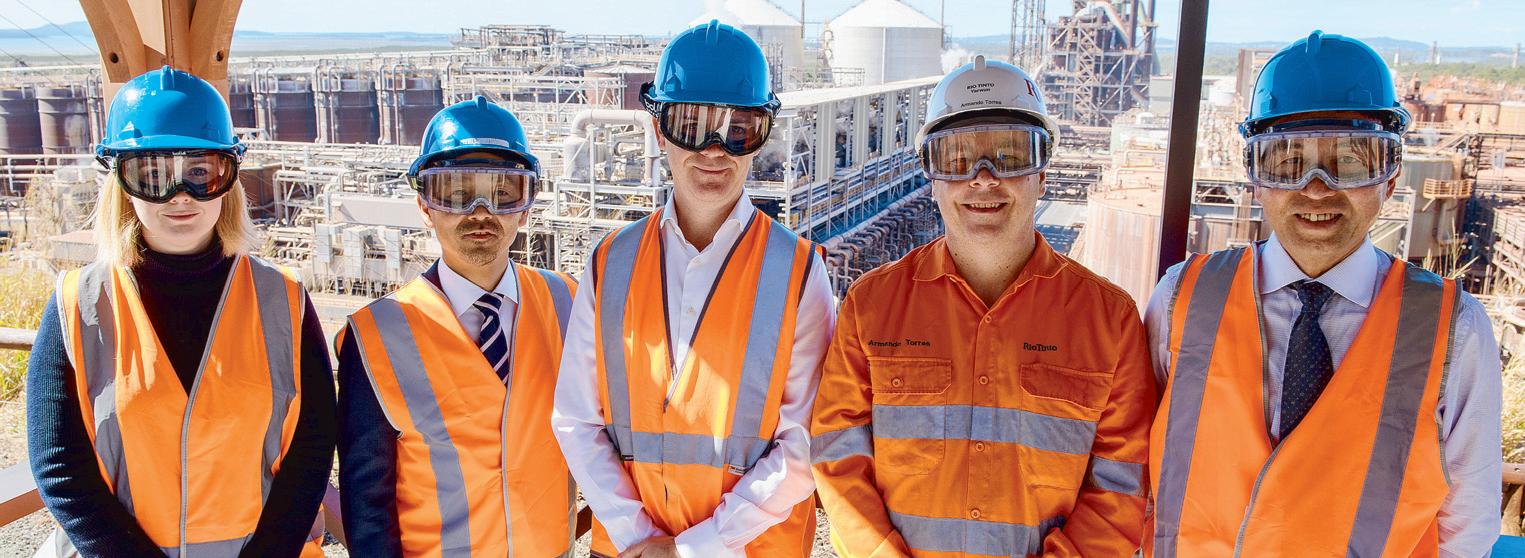
Gladstone Region Deputy Mayor Kahn Goodluck said, if successful, the Yarwun Hydrogen Calcination Pilot Demonstration Program could pave the way for adoption at a global scale.
“As advocates for the region, we are looking forward to seeing this project progress ahead of a projected opening in 2025,” Cr Goodluck said.
“Today’s announcement further emphasises that with the right support and investment, Gladstone can become a leader in renewables and clean industry, making our region an even greater place to live, learn, work and play.”
Growing regions
It provides grants of between $500,000 and $15 million to local government entities and not-for-profit organisations, for capital works projects that deliver community and economic infrastructure projects across regional and rural Australia.

“The Growing Regions Program stands in stark contrast to the discredited grants programs run by the Liberals and Nationals who ignored guidelines and proper process in favour of pork barrelling the schemes for their own electoral advantage,” Minister for Infrastructure, Transport, Regional Development and Local Government, Catherine King, said.
“We have been determined to provide something better for regional Australians.
“We have spent time working on guidelines that are merit based, transparent and fairer for regional Australians.
“The program will invest in critical regional infrastructure and community projects across regional and rural Australia through two $300 million funding rounds.”
The Growing Regions Program is now open for Expressions of Interest which is the first stage of a two stage process to ensure projects meet requirements.
“The Federal Government is a strong supporter of Regional Australia and I encourage regions eligible for the program to take advantage of the opportunity to put in an EOI for eligible projects.”
All council areas will be eligible for either the Growing Regions program, or the new Thriving Suburbs program announced in the May budget which will be open later this year.
Toowoomba’s town crier reigns supreme
Toowoomba Region Town Crier Kevin Howarth has added the title of Australian champion to his award list following a successful outing at the 1 July national Town Crier Championships at Maryborough in Queensland.


Mr Howarth also won the Loudest Cry at the championships with an ear-piercing cry that was recorded at more than 96 decibels, a little below his regular 100 decibel-plus range, but loud enough to drown out a chainsaw.
Mr Howarth’s success in the Champion of Champions event atoned for his second place in the same event at the 2022 championships hosted by Central Coast Council in New South Wales and in 2018 at Echuca-Moama.
Toowoomba Region Mayor Paul Antonio congratulated Mr Howarth for his performances at the national championships of the Ancient and Honourable Guild of Australian Town Criers that were held in conjunction with the Mary Poppins festival.
“Kevin is passionate about representing our region and has performed with distinction at many competitions,” Mayor Antonio said.
“He is a fine ambassador for our region and has left another lasting impression on the national stage. I’m especially pleased that he has won the Australian Champion of Champions title after coming so close in recent years.”
Mr Howarth said he was proud to represent the Toowoomba Region at the national championships.
“It is a friendly competition, but the criers take great pride in representing their home regions and performing across the weekend,” Mr Howarth said.
“There was a packed program with many events to enjoy at the Mary Poppins festival, where the criers made several appearances.
“I had an amazing time at Maryborough and took the chance to encourage people to visit our beautiful part of Queensland.”
Mr Howarth said he was thankful for the support of Council and good wishes from many people who have encouraged him
over the years.
“I was twice a UK number one DJ, and now I’m number one in Australia. It’s a relief and a great feeling,” Mr Howarth beamed.
Mr Howarth competed against 11 Town Criers from across the country.
The Criers each performed two cries, starting with a Home Cry promoting their home area, followed by a Host Cry, detailing aspects
of Maryborough and the Fraser Coast Region.
Winners
· Best Dressed Crier: 1st Judy Campbell.
· Best Scroll: 1st Tim Keith.
· Best Dressed Attendant: 1st Peter Campbell.
· Loudest Cry: 1st Kevin Howarth (96.0).
· Champion of Champions: 1st Kevin How-
them
arth, 2nd Judy Campbell, 3rd Stephen Clarke (65).
· Best Cry: 1st Judy Campbell, 2nd Kevin Howath, 3rd Lord Joseph McGrail-Bateup.
· Senior Section - Over 65 Years: 1st Bob Townshend, 2nd Tim Keith, 3rd James Carter. Conviviality Award, as voted by the Town Criers, Ken Ashford.
12 LOCAL GOVERNMENT FOCUS July 2023 LGFOCUS.COM.AU
Toowoomba’s Kevin Howarth.
Toowoomba’s Kevin Howarth is the loudest of
all. Picture courtesy of Fraser Coast Council.
NEWS
The Federal Government’s new $600 million Growing Regions Program is now open for expressions of interest.
Alana Barlow, National Hydrogen Commercialisation Manager, Sumitomo Australia; Ko Watanabe, General Manager, H2 Business Dept, Sumitomo; Darren Miller, CEO, ARENA; Armando Torres, Managing Director, Pacific Operations, Rio Tinto Aluminium; Yoshikazu Ishikawa, Managing Director, Sumitomo Australia.
Gladstone Deputy Mayor Kahn Goodluck; Tim McDougall, General Manager, Refinery Decarbonisation, Rio Tinto.
MOVE YOUR BUSINESS WITH TOYOTA HILUX

To find out more, visit your local Toyota Dealer or go to toyota.com.au/fleet

LHS 4x4 SR5 Double-Cab Pick-Up in Crystal Pearl accessorised with 18”alloy wheels, tub step, side steps, premium steel bull bar, roof racks,bike carrier and generic bike, body side mouldings (Black) and Black sports bar. All accessories sold separately.
RHS 4x4 SR5 Double-Cab Pick-Up in Silver Sky accessorised with 17” alloy wheels (Black), steel bull bar with full size light bar (light bar fitting kit and driving light harness sold separately), Black bonnet protector (matte tinted), headlamp covers, dash cam, side steps, roof racks with generic awning, slimline weathershields, snorkel, front recovery points (steel bull bar undershield – recovery point compatible, sold separately) and side rails. Accessories sold separately.
LGFOCUS.COM.AU July 2023 LOCAL GOVERNMENT FOCUS 13
Looking for a reliable and efficient vehicle to upgrade your business fleet? The Toyota HiLux is the ultimate workhorse, built to handle even the toughest jobs with ease, with advanced safety features, comfortable cabin and customisable options to consider. Equip your HiLux for work and play with our exclusive range of Toyota Genuine Accessories. Custom designed to enhance, protect and maintain your HiLux’s performance, quality and reliability. TOYOTA FOR BUSINESS An unbreakable connection since 1968 Scan to sign up for the latest insights from Toyota for Business
12615932-JC29-23
Bins for Blokes on map
Around one in every 10 Australian males live with incontinence and Sunshine Coast Council is doing its part to help them out.
In collaboration with the Continence Foundation, council has installed 102 male incontinence product disposal bins in public amenities across the region. Service Excellence Portfolio Councillor Winston Johnston said the initiative was part of the national Bins4Blokes campaign and aimed to provide greater comfort for men and boys living with incontinence.
“For males who live with incontinence, it can be difficult and stressful just to leave their homes and enjoy everyday activities,” Cr Johnston said.
“Division five resident, the late Mr Chris Gwynn, initially made myself and council aware of the urgent need for these facilities in our toilets.
“To ensure that all men can get out and about and enjoy our beautiful region in comfort, council installed incontinence product disposal bins in all of its public amenities in December 2021.

“This was part of the Continence Foundation BINS4Blokes campaign, which is an Australiawide awareness and advocacy campaign promoting the installation of incontinence product disposal bins in male public toilet facilities.
“We acknowledge the work of the Continence Foundation for bringing the BINS4Blokes campaign to our attention so that we can ensure we provide these bins at all public amenity locations across the region.”
To find out which public amenities are serviced by this new initiative, check out The National Public Toilet Map which is funded by the Australian Government Department of Health as part of the National Continence Program and is managed through the Continence Foundation of Australia.

This provides a mapping tool to identify the location of our public amenities, the services available, and times these facilities are open.
Climate Summit for Local
FOCUS ON CLIMATE SUMMIT
Climate Summit for Local Government
Australian local councils - and their communities - are at the forefront of dealing with the impacts of climate change, including fires, drought and floods.
They are also at the forefront of local climate solutions. From putting solar on rooftops and rolling out electric vehicle charging stations, councils are making huge inroads accelerating action on climate change and creating clean, healthy and resilient communities.
To supercharge climate action, the Cities Power Partnership is hosting a Climate Summit for Local Government. Set to bring together over 150 elected officials and chief executives from councils across the country, attendees will have the chance to identify key opportunities, inform practical actions, and inspire innovative climate action.


If you are a mayor, councillor or executive at an Australian local government looking to em-

bed climate action across your council operations, this event is for you.
You’ll hear from inspiring case studies and experts in topics like climate risk, clean transport, resilience, energy transformation, communications, community engagement and more. There will also be ample opportunity to network with council leaders, as well as connect with leading clean energy businesses in our exhibition space.
Hope to see you at our in person event at Storey Hall in Melbourne from September 6-8, 2023.
Go to citiespowerpartnership.org.au/ cppsummit-2023
14 LOCAL GOVERNMENT FOCUS July 2023 LGFOCUS.COM.AU
Government citiespowerpartnership.org.au You’re invited to Australia’s premier climate and clean energy event for elected officials and chief executives. Sept 6-8, 2023 | Melbourne Program and Events EV Showcase & Drive Day 2.5 days of learning & networking Plenaries, panels & breakouts Meet climate experts Awards Gala dinner City walking tours Use discount code COUNCILMAG to get $350.00 off your All-inclusive Regular Ticket. 12616664-RR29-23
Ramped toilet access.
NEWS
Bins for Blokes campaign.
Senator Jenny McAllister at Parliament House in Canberra, Thursday, 11 May, 2023. Senator McAllister will be guest speaker at this year’s conference. Picture: AAP IMAGE/LUKAS COCH
Asbestos risk in floods
It’s why Coates and Local Government NSW collaborated over the past year to develop a unique one-day course to train local government officers who, during the course of their work, may come into contact with asbestosrelated products.
“The value of public-private partnerships is critical when it comes to equipping people with the knowledge to keep themselves safe when faced with issues like asbestos in their line of work,” said Paul McDonough, RTO Manager, Coates.
Coates, more widely known for its leadership in equipment hire and solutions, is also a registered training organisation which has, to date, trained and certified more than 90,000 Aussie workers since 1996.
Last year it began working closely with LGNSW to determine how they could help local government officers understand what to do when faced with asbestos, a naturally occurring mineral fibre which was heavily used in Australian houses for insulation and fire-retardation until the mid-1980s. In 2003 asbestos use was banned in Australia but it’s estimated around one-third of homes in Australia still contain asbestos products.
“Exposure to asbestos was heightened last year with the state experiencing its wettest year on record; as flood waters rise, asbestos that may have been poorly disposed of or buried, or within detritus from damaged homes built prior to the mid-80s, could rise to the surface,” said McDonough.
The two organisations soon developed a unique one-day nationally recognised training course to help council workers across the state differentiate between the different kinds of asbestos, how to safely approach asbes-


tos, and take steps to manage that asbestos safely.
“Since we started the training course, 39 councils have signed up to the course with over 1,200 local government officers achieving
certification,” he said.
After the success of the training program in NSW, McDonough and Coates are looking to launch the training program nationally.
“Asbestos exposure remains a risk that isn’t
isolated to New South Wales, and the safety of our communities and local government officers is paramount,” he said. “This is one way we can help equip people with the knowledge to stay safe.”

With 27 years’ experience as a Registered Training Organisation (national provider no. 1402), Coates is an industry leader in delivering high-risk training for specialist situations for both the public and private sector.
From competency to inductions, our bespoke and contextualised training courses will help equip government workers with the knowledge to stay safe. hether it’s asbestos training or traffic control and even excavator operations –our unique courses have you covered.
LGFOCUS.COM.AU July 2023 LOCAL GOVERNMENT FOCUS 15
TRAINING
13 15 52 | coates.com.au
12615155-ET29-23 FOCUS ON ASBESTOS TRAINING
Coates looks to take unique local government asbestos training module national
Asbestos remains a significant issue in New South Wales. State-wide flooding last year increased the risk that asbestos –which was either poorly disposed of or within detritus from older, damaged homes – could re-surface.
Coates asbestos training.
New uses for old tyres
Old tyres are finding a new use thanks to a family-owned Victorian company which is now recycling them into products that make pathways, schools, sporting surfaces and community spaces safer.
The Coloured Recycle Group (CRG) have been making non-slip surfaces for more than 60 years. Initially using sand in the 60s, CRG has now developed a more sustainable and high-performing product using technology to recycle Australia’s used tyres into a non-slip surface.
Vincent Caddy’s father started the coating business in 1962 and 60 years later the business, which now includes a third generation of the family, is not only creating high-quality nonslip surfaces but also using recycled materials to increase the sustainability of their products.
CRG, is making non-slip surfaces using a rubber crumb from Australia’s used tyres. Vincent explains their Safe T Rubber coat can be applied to almost any building surface including concrete, asphalt, timber, metal, brick pavers and metal.
This makes it a highly versatile product and used in applications like pool surrounds, sporting surfaces, pathways, walkways, wet areas, workshops, and kitchens. And the fact that it comes in a range of colours is a real bonus.

Albion Primary School recently put Safe-T rubber coat to the test when it refurbished its basketball court. The results were a great looking basketball court that was safer to play on compared to the original bitumen court.

Marita, Albion Primary School’s Physical Education teacher, commented: “The surface not only looks good but feels fantastic underfoot. Students are able to stop and pivot without slipping, it is the perfect surface for netball or basketball.”
Marita felt the new surface also made it safer for the children playing on it, “if students do fall over the grazes are minimal compared to those happening on the old bitumen surface”.
The CRG rubber-non-slip surface is just one of the many Australian initiatives and products promoted by Tyre Stewardship Australia (TSA). TSA’s vision is for a circular economy for Australia’s used tyres and works to raise awareness of the value of tyre-derived materials and support opportunities for Australia to use products made from used tyres.
TSA CEO Lina Goodman says: “Each year almost 500,000 tyres reach the end of their life in Australia, this provides an opportunity for Australia to recover the valuable materials of our used tyres, making them available for Australian manufacturing, to become products that the Australian market can invest in and benefit from while supporting Australia’s circular economy.”
TSA has invested over $9 million into projects that innovate and increase the use of Australian tyre-derived materials. Rubber crumb in roads, permeable pavements, and sporting surfaces are all products that use tyre-derived materials and allow Australia to continue to derive benefits from our valuable resources by keeping them in the economy for longer.

Lina explains: “We’re losing out if we’re not prioritising products with end-of-life tyres in them. There are a raft of products that Local Governments can use in roads, parks and community facilities that can help them achieve their ESG goals, claim potential greenhouse gas emissions savings, and realising the benefits of the resources in old tyres creating higher performing products.”
Companies like Coloured Recycle Group recognise the benefits of recycled tyre-derived materials while remaining competitive with conventional products.
“We’ve always been in the coating business. My father started it up in 1962. We were coating with the sand that they used for making casting in the 60s, 70s and 80s and 90s. But in the 70s there were 4000 foundries in Australia making castings and today there are only six. All the castings were eventually moved overseas -throughout Asia. I am proud to say we are still operating out of Victoria,” said Vincent.
Needing to diversify, Vincent’s daughter’s suggested in 2003 that they use recycled glass bottles in bicycle and bus lanes. Building on that success, the company decided to look into using rubber from Australian recycled tyres. After about three years of research and development, Safe T Rubber colour coating was ready for market.
“I think we are the only people in the world who can colour coat down to 0.2 of a millimetre,” Vincent said.
“It’s only been in the past 12 months where we’ve been able to see how the Safe T Rubber is ticking all the boxes on ‘real world’ longevity, wear and tear and that sort of thing.
“And we only use Australian recycled tyres in the process, both in the binder, and is 100 per cent of the aggregate component of the product.
“It’s just the beginning as far as the rubber goes. Brisbane has something like 520km of bike lanes and walkways that they want us to help get ready for the Olympics. So, in conjunction with a partner company operating out of Brisbane, we have some trials underway and we are expecting excellent results.”
According to Vincent there are distinct advantages to using the rubber coating particularly when it comes to the weather.
“We found here in Victoria when we get hot days, though we don’t get many, you can’t walk on the concrete but the rubber doesn’t get as hot. The same in the cold it doesn’t get cold because rubber is such a great insulator.”
If you want to know more about how CRG’s Rubber Safe T coat could refurbish or create a new safer surface for your next project, get in touch with Vincent on 1800 223 274 to chat about a surface solution. And if you want to investigate other tyre derived product for your LGA , drop us a line at Getonboard@tyrestewardship.org.au
16 LOCAL GOVERNMENT
July 2023 LGFOCUS.COM.AU
FOCUS
Basketball courts benefit from the new surface.
FOCUS ON RECYCLING
From tyres to safety surfaces.

LGFOCUS.COM.AU July 2023 LOCAL GOVERNMENT FOCUS 17 12615241-AP29-23
Clarence Valley ups ante
Council team completes a year’s worth of bridge maintenance work in just six months.
Clarence Valley Council has upped the ante on its management of the $2 billion of local roads, bridges and water infrastructure in its care by taking on components of TechnologyOne’s Enterprise Asset Management Software as a Service (SaaS) solution.

With large areas affected by bushfires in the summer of 2019/2020 and others experiencing significant flooding in February 2022, the council recognised a growing need to better manage its assets.
According to Clarence Valley’s Finance and Systems Manager, Kate Maginnity: “We had a lot of separate systems for asset management and many paper-based or manual processes. It was time and resource intensive and prone to delays and errors.”
“To better manage community assets, we wanted a single source of truth. We needed to know what condition they were in, what we needed to do to maintain them for the future and what was the most efficient way of doing that,” she said.
After taking on TechnologyOne’s Asset Operations and Maintenance and Field App modules, the council has replaced manual paperwork with tablets that crew members take into the field. That not only reduces travel time for the crew but also allows the council to update field staff on job data, anytime, anywhere. This ensures community assets are regularly maintained so community members can continue to use them safely.
“We now have better visibility of our operations, which helps us be more effective and efficient. Within the first six months of having the new works system in place, the council bridge crew had completed their year-long maintenance inspection program, utilising maintenance schedules, defects and work orders to increase efficiency.
“They were able to take on more projects as a result,” said Ms Maginnity. Additionally, better project planning and the ability to bulk procure materials saw the bridge crew complete their allocation of bridge replacements in six months. This allowed the council to allocate more bridge replacements internally instead of using contractors, resulting in a reduction in costs.
Kate Maginnity says TechnologyOne’s broad local government experience was an asset too.

“For us, one of the key benefits of working with TechnologyOne was their experience in working with local governments. It gave us the confidence that, whatever the challenge was, it was likely that they had dealt with it before and could advise us,” she said.
TechnologyOne’s Chief Executive Officer, Ed Chung, said: “We understand technology and we understand the industry; we support hundreds of councils, knowing each one has priorities that are unique to their community. We’re constantly innovating, and over the last ten years have helped many councils digitally transform their operations to deliver for their community.”
18 LOCAL GOVERNMENT FOCUS July 2023 LGFOCUS.COM.AU 12619652-JC29-23 FOCUS ON TECHNOLOGY
Clarence Valley Council have upped the ante on infrastructure.
Mayors forum need
Waverley Mayor Paula Masselos is calling for a mayors’ roundtable with NSW Premier Chris Minns as a forum to factor in both local challenges and wider infrastructural issues - and help provide solutions.
“I applaud the Premier’s goal to increase affordable housing stock and it’s a goal many local councils share, including Waverley Council,” Mayor Masselos said.
“This forum can really help make practical, in perpetuity solutions a reality.”
On 15 June, Premier Minns officially announced a range of incentives for large private developments containing at least 15 per cent affordable housing, homes typically offered at 20-25 per cent below the market rate for 15 years, often managed by not-for-profits.
Mayor Masselos said it is important to focus on ways councils can be supported to provide long-term housing stock.
“The requirement that eligible developments only need to provide a proportion of their units as affordable housing for 15 years is not going to address the long-term requirements for such housing,” Mayor Masselos said.
“What Waverley Council proposes is funding would be provided to local councils to purchase
and manage affordable housing in perpetuity.”
Waverley Council currently owns 22 affordable housing units and 40 social housing units with many more owned privately or in partnership with Community Housing Providers.
“At Waverley Council, we understand high density living and this is the type of expertise and experience we can bring to the table as a local council,” Mayor Masselos said.
“Each area has its own challenges with Waverley Council itself having the second highest population density of any LGA in Australia with 7,490 people per square kilometre as compared to the Sydney average density of 2135 persons per sq km.
“What’s left of our affordable housing stock is being snapped up by developers, and is being replaced by small, overly expensive units that do not cater to the diverse housing needs of our community. So, we need to look at local solutions to meet those challenges.”
“At the same time, it’s not just about houses and apartments because we also need to factor in the infrastructure that supports those homes,” Mayor Masselos said. “Traffic congestion, schools and hospitals at capacity, and the capacity of sewerage systems are just some of the issues that need bigger picture planning capacity of state level government complemented with councils knowledge and understanding of the lived experience on the ground.”
Canarvon shire’s housing case
The successful endorsement of Business Case ‘Provision of Headworks to Trigger Worker Accommodation Developments’ is set to improve housing availability in the Shire of Carnarvon.

At the early July council meeting, Shire of Carnarvon President, Eddie Smith announced the successful endorsement of the business case.
Cr Smith said there was a need to address the chronic shortage of housing in the region, to attract essential workers, and trigger investment in service infrastructure in Carnarvon.
“We’re thrilled to have secured the necessary endorsement for this business case which aims to assist developers and unlock vital investment in the Shire to improve housing availability,” said Cr Smith.
A significant component of the business case focuses on the need for funding to support the provision of adequate headworks, including deep sewer connection, to encourage new developments, particularly worker accommodation.
The Shire of Carnarvon anticipates that this initiative will have far-reaching benefits
for the region, improving the availability of housing, reducing the cost of living, encouraging economic growth, and ensuring that adequate staffing levels exist for essential services, including healthcare, schools, and emergency services.
The Shire of Carnarvon has also committed to reviewing the project periodically to ensure that it remains relevant and responsive to the needs of the region.
“This is a dynamic document that recognises the changing landscape of the region and we’re committed to regular reviews of its content to ensure it accurately reflects changes to the environment,” said Cr Smith.
The Shire of Carnarvon CEO Andrea Selvey engaged with key stakeholders, via her participation on the Gascoyne Regional Housing Sub-Committee, to garner support for the initiative.

The Sub-Committee includes representa-
SA’s top score on homes
South Australia has topped the HIA Housing Scorecard aimed at increasing the housing supply, according to the group’s chief economist Tim Reardon.
tives from the Gascoyne Development Commission, Department of Planning Lands and Heritage, Water Corporation, Horizon Power, Department of Communities, Gascoyne Local Governments.
The Sub-Committee works collaboratively to resolve housing constraints across the Gascoyne region and is supportive of working with developers to trigger private investment into residential housing.
The business case is one of multiple initiatives the shire has partnered with the Gascoyne Development Commission to deliver on, which aims to build the next 100 houses in Carnarvon.
These projects progress a commitment we made in our Strategic Community Plan that our infrastructure, housing and amenities are high quality and accessible to ensure that “Carnarvon will be a place where our livelihoods are thriving”.
Outreach urgent in Byron Shire
Homelessness outreach is considered urgent on the Northern Rivers with Byron Shire’s street count numbers now the highest in NSW.
The annual NSW Street Count has found 300 people sleeping rough in the Byron Shire, a significant increase from 2021 (198 people) and 2022 (138 people). Note: The 2022 figure did not include people in Brunswick Heads or Mullumbimby because of extreme weather.
Council worked alongside the NSW Department of Communities and Justice to carry out the street count in the early hours of 23 and 24 February 2023.
The Byron Shire now has the highest number of people sleeping rough in the state, ahead of City of Sydney which recorded 277 rough sleepers.
“This is heartbreaking but not really a surprise given the housing emergency of the last few years, exacerbated by Covid and the floods,” Byron Shire Mayor, Michael Lyon said.
“We have an urgent and immediate need for assertive outreach services and supportive housing options in the Byron Shire,” Mayor Lyon said.
“We are hopeful that the NSW State Government can find money and resources to address the challenges facing some of the most vulnerable members in our community.
“We cannot solve homelessness without
more housing, it’s that simple,” he said.
While housing and homelessness is the responsibility of the NSW Government, Byron Shire Council has been actively working on local solutions to reduce the number of people experiencing homelessness in the shire.
Two Public Space Liaison officers walk the streets and dunes each week to help connect people sleeping rough with the services they need. Council has also created a communitybased Collaboration Project which aims to reduce and end rough sleeping.
Using data, including people’s individual circumstances and background information, the Collaboration Project is changing how local organisations work together to support people experiencing homelessness.
“Council is doing everything it can to generate more affordable housing in the shire,” Mayor Lyon said.
“We have introduced planning and development provisions that support affordable housing, such as rezoning of council-owned land to enable this use, and implementation of the affordable housing contributions policy and scheme to support the development of permanent affordable and diverse housing.”
Council will continue advocate to return short term rental housing (STRA) to long-term rental options for the community.
The Independent Planning Commission recently handed down its report and recommendations to the Minister for Planning, which supports council’s aim to find a way to return more affordable options to the long-term rental market.
Council is liaising with the Department of Planning and the Minister on the next steps in this process.
Social Futures CEO Tony Davies said investment in social housing and homelessness services is urgently needed.
“We urge the NSW Government to fund assertive outreach in the Byron Shire,” Mr Davies said.
“A program in Tweed has achieved strong results supporting people who are sleeping rough into stable accommodation and providing wrap around supports.
“These types of programs have a big impact on the lives of people sleeping rough.
“If we want to see change, we need greater investment in critical homelessness services and supportive housing options,” he said.
The HIA Housing Scorecard report presents analysis which ranks each of the eight states and territories based on the performance of 13 key residential building indicators against their decade average, covering detached and multi-unit building activity, renovations, housing finance and rates of overseas and interstate migration.
“South Australia has topped the list with strength across a number of leading indicators of building activity, including approvals of new work, expenditure on renovations and activity on the ground,” Mr Reardon said.
“This strong performance will be supported by policy changes announced in this year’s State Budget which included a reduction in stamp duty, the release of 25,000 blocks of land and an investment in public housing stock.
“Conditions for the residential building industry are undergoing a rebalancing as the market transitions from a record boom to the deepest trough in over a decade in 2024. As the industry progresses through this cycle, building activity in each region is starting to diverge.
“Queensland has maintained second place on this Scorecard on the back of strong renovations and multi-units activity. Queensland is continuing to attract a large number of interstate and international migrants which are supporting home building. Despite this level of migration, building activity in Queensland remains constrained by a shortage of skilled labour.
“The Australian Capital Territory took out third place in the Scorecard, supported by its multi-units and renovations sectors, along with the remarkable return of overseas migrants and students.
“Western Australia’s home building industry has faced significant capacity constraints. While it ranks fifth in this Scorecard report, the continued inflow of people from interstate and overseas provides its home building industry strong potential moving forward.
“New South Wales and Victoria have fallen down the list as the rise in the cash rate has adversely impacted these markets more significantly given their higher land costs. This will see activity in these regions slow more than the rest of Australia.
“Supporting new home building in these markets by reducing costs, attracting more investment and improving capacity are essential to ensure that an adequate supply of new homes commence construction,” Mr Reardon concluded.
LGFOCUS.COM.AU July 2023 LOCAL GOVERNMENT FOCUS 19
Victoria has fallen down the list on the HIA Housing Scorecard report.
FOCUS ON HOUSING
Mayor Paula Masselos.
Auction goes swimmingly
From school playground additions to bins turned into pot plants, there’s a wide range of ways locals have repurposed items salvaged from the Grafton Olympic Pool.

The items were auctioned in early June ahead of demolition of the site for the construction of the new Regional Aquatic Centre.

Twelve different people scored bargains on 46 lots sold, giving a second life to items otherwise destined for landfill.
“The reasons people secure items have ranged from the practical to the nostalgic,” Director Works and Civil Jamie Fleeting said.
“The highest priced items was $1350 for a 20,000 litre water tank, while others were snapped up for just a few dollars.
“In total we raised $8376, which will be funnelled back into the project. But more importantly, we have helped reduce the environmental impact of these items going into landfill.”
St Joseph’s Primary School in South Grafton will be the beneficiary of two of the fibreglass shade umbrellas. They were purchased for $224 by Grafton businessman Brett Nay, who has been engaged by the school to do some landscaping.

“The additions include a couple of outdoor learning areas, or yarning circles, and the umbrellas will provide a bit of shade for the kids,” Mr Nay said.
“They are going to be pressure cleaned, tidied up and repainted in the school colours.
“I tried to buy a few more things, such as the tables, for an outdoor barbecue area at another place I’ve got, but I was outbid.”
Meanwhile, some sentimental thinking from South Grafton real estate agent Allison Whaites has resulted in a number of items finding a new home at heritage-listed McKittrick House - originally the home of South Grafton’s first mayor (1897-98), J.T. McKittrick.

“I think the demolition of the old pool and building of a new pool is a big thing for the community, and I didn’t want to see these things go to waste,” Ms Whaites said.
“It’s part of the history of who we are.
“The house is at 47 Through Street, and the letterbox doesn’t have numbering, so the four and seven starting blocks will be going at the front of the house.
“Two lions at either side of the front of the house were stolen many years ago. They have now been replaced by the two bins, which are about 100 kilograms each and are now planter boxes for camellias. For six dollars, I thought they would be perfect for such a grand house.”
For $12, Ms Whaites secured all 350 metres of lane rope. But it’s the two reels that caught her attention.
“One will be turned into a big spit roast, and the other for passionfruit vines,” she said.
“I have given the lane ropes to a friend who will using the wiring for their front verandah, and the plastic for electric fencing on their property.”
Celebrating 150 years
Kingston District Council is celebrating its 150th birthday.
Monday, 3 July 2023 marked a special day in the history of the Kingston District Council, being 150 years since the formation of the council, previously named District Council of Lacepede.
The council was established in 1873, and changed its name to the Kingston District
Council on 1 July 2000.
To celebrate this milestone they took a trip down memory lane on their Facebook and Instagram pages. They had some special documents and photographs on display in their Visitor Information Outlet, located in the council building.
Pitch night benefits business innovation
The next generation of South West entrepreneurs will vie for a share of over $15,000 in seed funding as part of Warrnambool City Council, The Ideas Place pitch night on 20 July.
Each speaker will have five minutes to discuss their innovative business or product, with everyone encouraged to come along and support the creative spirit of our region.
Judges include Scott Wilkinson from Alderwood Speakers, Cheryl Steel from Bamstone and Grant Howland from Beyond Bank.
With a level of business and financial acumen crucial for any new business, Mr Howland said that he would be looking for a level of planning and forward thinking from the presenters.
“Have you done research on the product or the service that you are wishing to provide? Do you feel there is a need for it in the market and what does your first 12 months look like and do you have an end goal?” he said.
“Those are the questions I would come up with, with my finance head on.”
With a post-COVID shift to the regions and the normalisation of new technology, running a start-up business from South West Victoria is becoming more and more viable.

“It doesn’t matter the size of the town, if you’ve got the right product or service, you’ll prosper,” Mr Howland said.
“Our region is such a great place to live, and in a business sense, the world is getting smaller.
“The more entrepreneurs we have in our region that we can acknowledge, the more it will encourage forward thinking.
“We all think differently, and a lot of the great ideas come out of a simple needs, and it’s just about identifying that initial need.”
Celebrating 150 years.
20
2023 LGFOCUS.COM.AU
LOCAL GOVERNMENT FOCUS July
RURAL AND REGIONAL
The starting blocks have found some innovative new uses.
The lane rope reels will be repurposed into a spit roast and a passionfruit vine frame.
Director Works and Civil Jamie Fleeting with some of the salvaged pool items auctioned in June ahead of the demolition of the Grafton Olympic Pool.
Two of the umbrellas will provide shade at St Joseph’s Primary School in South Grafton.
Digital walking trail shows off heritage
A new Warwick digital CBD Heritage Walking Trail on the Southern Downs Regional Council’s official destination app is set to showcase the town’s heritage.
As one of Queensland’s earliest settlements, Warwick is home to some of the state’s most stunning architecture and many of the town’s magnificent heritage-listed buildings still stand proudly today.


The Warwick Town Hall, St George’s Masonic Centre, St Mary’s Catholic Church, St Mark’s Anglican Church and the Warwick Railway Complex are testament to Warwick’s rich history and the easiest way to locate and learn about the buildings that date-stamp intriguing moments in its timeline is to follow the new Warwick CBD Heritage Walking Trail on council’s official destination app.
Southern Downs Councillor Marco Gliori said the digital trail was an exciting addition to the growing number of online tourism resources available for visitors and locals to explore the region.
“Travel back in time and discover some of Warwick’s grandest heritage buildings with the new Warwick CBD Heritage Walking Trail,” Councillor Gliori said.
“The best way to find and admire all of this magnificent architecture is to download the official Southern Downs & Granite Belt App and start planning your next Southern Downs adventure today.
“Other trails on the app to help visitors and locals explore our wonderful region include the Dunny Dash Arty Trail, the Artistic Stanthorpe Walking Trail and the Artistic Warwick Walking Trail and council will continue to add to the app to put more information at our fingertips.”
Betty Wells has been volunteering at the Warwick Visitor Information Centre (VIC) for more than ten years.
She said the app made showcasing region’s treasures more accessible and is a great resource for VIC volunteers who are new to the region.
“Warwick’s first land sales occurred in 1850, and as the town became established, stone from local quarries was used to construct the many fine sandstone public and private buildings for which Warwick is justly famous.
“Then after 1900, a second building boom gave Warwick a legacy of many fine Federation-era timber and brick buildings,” Ms Wells said.
“If you are not a long-time resident, this knowledge is not readily available and the app now makes this part of our local history accessible to everyone.
“The Warwick CBD Heritage Walking Trail is 6.75 kilometres long and will take just under two hours walking time to complete, plus extra time to read the history and admire the craftsmanship. If the total distance is too far to cover on foot, explorers may prefer to jump in the car to look at some of the buildings that are furthest from town such as the Warwick National School, the National Hotel, the Warwick Railway Complex and Cloisters.”
Everything visitors and locals need to know to follow the Warwick CBD Heritage Walking Trail can be found on the Southern Downs and Granite Belt App which can be download for free from the App Store or Google Play.
Getting set for flood
The Shire of Carnarvon has appointed GHD as project manager for their flood preparedness project.
Shire of Carnarvon President, Eddie Smith said GHD had a strong track record in delivering infrastructure projects across Western Australia.
“We’re confident that they will assist the shire to ensure the Improving Flood Preparedness Project is delivered to a high standard in a timely and cost-effective manner,” he said.
A working group of three project partners has been established to implement the project, comprising the Shire of Carnarvon, Department of Primary Industries and Regional Development (DPIRD), and the Department of Water and Environmental Regulation (DWER). As part of the Gascoyne River Flood Modelling component of the Improving Flood Preparedness Project, aerial photography and survey (LiDAR) has been captured for Carnarvon and a corridor along the Gascoyne River extending approximately 60km upstream to Rocky Pool. The survey data will be converted into a digital elevation model, which is a three-dimesional representation of the land surface, for use in future stages of the project.
Consultants HARC are working on the hydrologic modelling component of the study. This involves assessing the rainfall and streamflow monitoring information from past events to understand how rainfall is converted to river flows in the Gascoyne River catchment. This modelling will then be used to predict river flows for future rainfall events of varying sizes. As project manager, GHD will oversee all aspects of the project, including construction, communications, and stakeholder management. The project will involve updated river modelling based on high quality contemporary technology, repairs to flood levees, and review of drainage systems, all of which aim to mitigate the impact of future flooding events.
The shire’s flood preparedness project was established following a flood event in February 2021, at which time DPIRD engaged GHD to inspect the flood levee systems and identify mitigation works and strategies that could improve the region’s flood preparedness.

This project shows the shire’s commitment to their Strategic Community Plan that ‘Our economy fosters investment and productivity in industries befitting Carnarvon’s physical and natural environment and that grow our horizons’.
GHD’s recommendations were utilised for the development of the shire’s Improving Flood Preparedness Project, and formed the basis of the funding application to address the first stages of completing flood preparedness works. The appointment of GHD as project manager follows an extensive search by the shire to find a suitable candidate.
Cr Smith said: “The shire embarked on a public tender process to appoint a project manager and invited expressions of interest from individual candidates. Ultimately, GHD were the successful applicant and come with significant insight into this vital project, given their initial involvement and extensive experience.”
LGFOCUS.COM.AU July 2023 LOCAL GOVERNMENT FOCUS 21
RURAL AND REGIONAL
GHD has been appointed as the project manager for the flood preparedness project at the Shire of Carnarvon.
Aberfoyle.
Picture: JOHANNA ZOLG
Warwick Post Ofice.
Warwick Town Hall.
Picture: CORY ROSSITER
National Hotel.
Picture: SCOTT RAWSTORNE
Hobart’s ‘the best’
Supporting the arts
The City of Adelaide has partnered with Arts South Australia to deliver new artistic grants to support the professional development of First Nations creatives.
A total of $100,000 will support six different groups and individuals as part of the First Nations Creative Career Grants, with each successful applicant to receive up to $20,000.
In addition to funding, recipients will receive support through mentorships to help develop leadership and career pathways.
The program is designed to increase participation and engagement from First Nations people in the city and establish new pathways for employment in the arts and cultural sector.
The evaluation process was led by First Nations leaders, who provided valuable cultural knowledge that will ensure funding outcomes are maximised for the community.

The six grant recipients chosen from 14 applications are:
· Adelaide Contemporary Experimental will employ three emerging South Australian First Nations artists to be mentored by queer Ngarigo Elder Peter Waples-Crowe as part of “Pride”, a Tarnanthi 2023 exhibition.
· Uniting Communities Inc. will enable emerging artist Raquel Larkin of Kokatha, Dieri, Arabana and Narungga descent to support First Nations artists from Uniting Communities’ Aboriginal drug and alcohol program and residential services to access the U City Art Studio to be part of community exhibitions.
· The Mill Incorporated will employ Kaurna, Narrunga and Ngarrindjeri dancer/producer Caleena Sansbury to deliver The Mill’s First Nations Dance Program in partnership with BlakDance (QLD) and Australian Dance Theatre (SA).
· Open Space Contemporary Arts will employ Narungga, Kaurna, Adnyamathana and Wirangu artist Jay Milera as their inaugural First Nations artist in residence.
· Edoardo Crismani, a South Australian based Wiradjuri writer, will receive support towards the 2023 Boundless Indigenous Writer’s Mentorship. Edoardo will be mentored by Wiradjuri writer, and Miles Franklin Literary Award–winning author, Tara June Winch.
· Gina Rings, a Kokatha multi-disciplinary performance artist will undertake professional development to advance her career as an emerging composer and sound designer.
Lord Mayor Jane Lomax Smith said this grant program was an important way to create jobs and strengthen career pathways for First Nations artists in the city.
“Through this program, council will be providing support to Aboriginal and Torres Strait Islander artists to continue to develop new work and grow careers in the arts,” said the Lord Mayor.
World-class internet
The City of Cockburn has taken another step in its ongoing support of local business in the region, becoming the first local government in Western Australia to co-invest in world-class digital connectivity for its thriving business community.
The city has provided nearly $80,000 to coinvest in the establishment of a NBN Co Business Fibre Zone (BFZ) in Cockburn Central.
This will benefit more than a thousand businesses in Cockburn Central, the emerging capital of the Perth southern metropolitan region, and sections of the neighbouring suburbs of Success, South Lake, Jandakot and Yangebup.
The project was announced by Federal Minister for Communications Hon Michelle Rowlands MP at the Cockburn Health and Community facility, a hub for health and medical businesses, in Cockburn Central on 4 July.
City of Cockburn Mayor Logan Howlett said the city was one of WA’s most expansive industrial and commercial epicentres, generating 4.6 per cent of regional exports across the state and the chosen location of
more than 9000 businesses.
“This is why we requested NBN Co establish a BFZ in the strategic hub of Cockburn Central,” Mayor Howlett said.
“The city is pleased to contribute nearly $80,000 to help establish the zone. This will provide businesses in Cockburn Central and sections of Success, South Lake, Jandakot and Yangebup access to top-tier business-grade fibre connectivity, to support the growth of this sought-after central mixed-use location.”
The new BFZ will cover an area of 8.4km2 and cater to more than 1200 individual businesses, many of whom are sole traders.
The city will now have five BFZs, including in Bibra Lake-Coogee, Henderson, Fremantle and O’Connor-Murdoch, serving about 70 per cent of businesses within its boundaries.
“This grant program was created to encourage First Nations led opportunities for professional development, intergenerational learning and employment opportunities in the arts sector.
“We hope it will expand the visibility of First Nations arts and cultural practices in the community and increase their participation in Adelaide’s thriving art scene and city life.”
The grants are joint funded by the City of Adelaide and Arts South Australia.
Minister for Arts Andrea Michaels said the Malinauskas Government was committed to supporting emerging South Australian First Nations artists.
“South Australia is renowned for its incredible artists, festivals and performances and it’s programs like this that support emerging artists to create new works, develop their skills and put on exhibitions and performances in the early stages of their careers.
“We have unique stories to tell here in South Australia and this program has been designed to shine a spotlight on our remarkable First Nations artists and display their work in the heart of our city.”
The First Nations Creative Career Grants has provided a total of $190,640 in funding for 12 different programs since 2020.
Acting Hobart Lord Mayor Helen Burnet said the recognition from such a respected travel publication is a great accolade for the City of Hobart.
“It is a massive achievement and testament to just how far Hobart has come in developing experiences, attractions and events that are unique, distinct and genuinely world class,” Cr Burnet said.
“Hobart is home to the most visited tourism attraction in the state, Salamanca Market, which saw over 450,000 visitors between April 2022 and March 2023. The market has been running for over 50 years, with more than 280 licenced market stallholders now operating at the market.
“Kunanyi/Mt Wellington is the second most popular tourist attraction, and the most popular natural attraction. It is estimated over 390,000 visitors a year, excluding locals, visit the mountain with approximately 65 per cent of visitors coming from interstate or international destinations.”
City Economy Portfolio Chair Alderman Louise Bloomfield said Hobart well and truly has what the rest of the world wants with every dollar spent by visitors to Hobart adding to our local economy.
“Ever since 2015, when Lonely Planet rated Tasmania as one of the top ten destinations in the world, tourist numbers have boomed on the island,” Cr Bloomfield said.
“Hobart is at the centre of what makes Tasmania special and is a thriving home for the best that our island has to offer. It is no wonder we have been recognised.
“In Hobart, you can experience pristine mountains, forests and waterways, engage with world-class art, indulge in gourmet food and wine, and be enveloped in the warmth and openness of friendly locals.”
Multi-unit dwelling green waste trial
The Best Waste Management Practices in Multi-Unit Dwellings project – which is being led by circular economy experts Reground –will involve collaborating with residents from six dwellings in the council area to trial the most efficient, impactful and cost-effective solutions to divert waste from landfill through increasing recycling rates and reducing contamination.
This project aims to establish sound foundations for ongoing best waste practices to roll out to other multi-unit dwellings in the future.
The six selected Maribyrnong properties will receive educational signage installations to encourage correct recycling practices, and five will also receive Food Organics and Garden Organics (FOGO) bins for the duration of the trial.
“The reduction of food waste from multi-
unit dwellings will help lower emissions of greenhouse gases, ultimately creating a healthier community for our residents,” Mayor, Cr Sarah Carter said.
“This trial will help council plan for an effective FOGO service for residents in these additional households in the future,” she added.
Lime-green lidded food and garden waste bins were rolled out to 21,000 stand-alone houses throughout the municipality during 2021 as part of the expansion of council’s green waste service.
The multi-unit dwelling trial supports the actions in Council’s Towards Zero Waste Strategy, a document that outlines our target for the diversion of all waste to landfill by 2040.
This project is funded by Sustainability Victoria on behalf of the State Government.
22 LOCAL GOVERNMENT FOCUS July 2023 LGFOCUS.COM.AU
Hobart has been crowned Best City in Australia, New Zealand and the South Pacific in recognition of its uniqueness and genuinely world class experiences by Travel + Leisure.
In addition to the ongoing rollout of Food Organics and Garden Organics (FOGO) to standalone houses, City of Maribyrnong Council is now partnering with nine other councils to trial the delivery of a FOGO service to multi-unit dwellings.
METRO AND SUBURBAN
Kurangk Listening, Kurang, Cooroy. The group received a grant back in 2021 and have a new project this time around.
Bay seeks city status
The Moreton Bay Region will soon undergo a classification change to become known as Moreton Bay City.
In order for a local government area to be declared a city, it must provide commercial, industrial, health and public sector services for the region.
Additionally, for the past three years, the area must have had a population of at least 25,000, a population of at least 15,000 in its urban centre, and a population density of at least 150 people for each square kilometre of its urban centre.
Deputy Premier and Minister for Local Government Steven Miles referred a request from the Moreton Bay Regional Council to the independent Local Government Change Commission for assessment last year. The Change Commission concluded its assessment and recommended the change proceed.
The Deputy Premier has recommend the change for consideration by Governor-inCouncil, with the change likely to take effect before the end of 2023.
“Living in Moreton Bay with my family, it’s easy to see why the region is booming,” Mr Miles said.
“The Moreton Bay Local Government Area is one of the fastest growing in the country with a population of more than 480,000. This is forecast to grow to close to 700,000 by 2041, a larger population than the state of Tasmania.
“It also has a larger population than several of Queensland’s seven ‘cities’, including Logan, Redland, Townsville, Mount Isa and Ipswich, and is only eclipsed in population by Brisbane and Gold Coast.
“Council met all the criteria for a name change set out in the Local Government legislation, and, after considering the Change Commission’s assessment, I agree with the change and have recommend to the Governor in Council for the change to take effect.
“Changing the name of the council will help put the region on the map, bringing with it more visitors and more jobs.
“It is the first time a Local Government Area has requested a reclassification under the current regulation.”
Mayor Peter Flannery said this was a coming of age moment for Moreton Bay.
“Moreton Bay will always be a ‘region’ but we’ve certainly outgrown our ‘Regional Council’ title with a population that’s already much larger than other cities like Canberra, Newcastle and Hobart,” he said.
“We have advocated for this change due to the size of Moreton Bay and also in recognition of our contribution to the SEQ economy.
“While this reclassification won’t have any major impact on the day-to-day lives of locals, it will be a gamechanger for us politically and for our business community.
“It puts us on equal footing to cities like Brisbane and the Gold Coast for investment, and helps us start to realise our potential as
Antarctic meet in Hobart
About 250 delegates descended on Hobart for the Council of Managers of National Antarctic Programs workshop, symposium, and annual general meeting in the final week of June.
Australia’s third largest council (by population).
“This announcement will also help us give more shape to our polycentric city vision, to strategically invest in the unique potential of our existing centres and townships, rather than funnelling all our resources into a single centralised CBD.
“I want to embrace our many existing communities and towns to spread opportunity and reduce traffic to one central location, to create Queensland’s first subtropical ‘polycentric city’ with many centres.
“This will create more job opportunities locally, better traffic flow, more greenspaces, and a better connection to our beautiful existing environment.
“And when I meet with federal politicians in Canberra to secure funding for our region, they won’t think of Moreton Bay is a backwater shire in rural Queensland.”
Dockers work closely for win-win
As the proud home of the Dockers Football Club, the City of Cockburn and the popular AFL and AFLW club have been working together for some time on a variety of shared projects.
Among these has been the hugely successful School Holidays Footy Splash event, a unique chance for local kids to meet Dockers players while enjoying the ARC’s aquatic attractions, in an easily accessible central location like Cockburn.
The agreement will enable the close partnership to expand on successful communityfocused programs already in place to enhance the lives of local families, give the community better access to the Dockers training oval and enable the expansion of community football opportunities.
City of Cockburn Mayor Logan Howlett said strong partnerships were the foundation of shared visions and outcomes that would improve the quality of life for locals and visitors to Cockburn alike.

“The MoU is a great opportunity and both the city and the Dockers have been working toward this goal for some time. It’s exciting to see some of the successful plans already executed and underway, with plenty more to come,” Mayor Howlett said.
The partners are preparing for a $12m expansion to Cockburn ARC due to kick-off in late 2023.
The expansion will include new changerooms for the Docker’s AFL Women’s team, spectator seating for up to 250 at the Docker’s Victor George Kailis Oval training ground at the ARC, a community changeroom with female and gender-neutral facilities, plus an extra 550sqm of gym floorspace to increase ARC’s membership capacity, along with 30-plus new job opportunities.
The city will contribute $6m with $2.85m coming from the Dockers, $2m from the State Government, and $650k from the WA Football Commission and the Australian Football League.

“We are extremely fortunate as a club to have meaningful and collaborative partnerships and our relationship with the City of Cockburn is a great example of that,” Dockers Chief Executive Officer Simon Garlick said.
“To place a sporting club, such as the Fremantle Dockers, within a shared community
facility is one the entire club and the greater region of Cockburn has welcomed since we arrived in 2017.
“We are located in a region of huge potential and opportunity, and the City of Cockburn are a progressive, innovative and visionary local government authority.
“We are so pleased that we are able to partner with the city on projects and initiatives that will provide significant outcomes for all stakeholders, including our local residents.”
COMNAP is an international association, formed in 1988, which brings together over 32 National Antarctic Programs from countries such as Argentina, France, Italy, Japan, Korea, New Zealand, UK, South Africa, and the USA, delivering and supporting scientific research in the Antarctic Treaty Area.
The 2023 Search and Rescue Workshop, annual general meeting, and symposium for COMNAP was held at the Hotel Grand Chancellor, Hobart from 23-29 June.
As the host nation, the Australian Antarctic Division (AAD), were the leading organisers of this year’s conference.
The City of Hobart’s working deepwater port right at our doorstep has facilitated its role as one of five cities in the world which provide a gateway for people to visit and work in Antarctica.
The other Antarctic Gateway Cities around the world are Christchurch in New Zealand, Cape Town in South Africa, Punta Arenas in Chile and Ushuaia in Argentina.
Hobart Lord Mayor Anna Reynolds said the importance of the Antarctic sector for Hobart should not be underestimated both culturally and economically.
It helps reap the state $160m a year and employs more than 950 people while Hobart is home to the highest concentration of Antarctic and marine scientists in the world.
“Australia’s international reputation as an Antarctic leader is heavily reliant and supported by Hobart’s role as a gateway city, and the concentration of Antarctic activity that occurs here,” Cr Reynolds said before the event.
“Australia is committed to collaborating with other Antarctic Gateway Cities to advance the collective care and management of Antarctica.
“The City of Hobart wants to build our Antarctic sector and make it an even more significant part of our economy.
“With future investment we can take advantage of our location, history and our reputation and grow Hobart as a centre of Antarctic excellence, in science, logistics, specialised polar products, medicine, policy and international Antarctic diplomacy.
“We will be proudly promoting that our specialist Institute for Marine and Antarctic Studies (IMAS) is number one for studying the Southern Ocean and Antarctica, we rank in the top 10 worldwide across various specialist fields including marine and freshwater biology, oceanography and fisheries and the University of Tasmania (UTAS) is also ranked number one for climate action.
“We are displaying new Antarctic Gateway City branding around the city and hosting a reception at Town Hall for delegates.
“This will provide an excellent opportunity for colleagues from other Antarctic gateway cities around the world to understand how important this sector is for Hobart.”
The city’s new Antarctic Gateway City branding was featured on banners around the city and Town Hall.
LGFOCUS.COM.AU July 2023 LOCAL GOVERNMENT FOCUS 23
This is what teamwork looks like! Front, from left, AFL Dockers defender Luke Ryan, Cockburn Mayor Logan Howlett, AFLW Dockers forward Aine Tighe; centre, Cockburn Ranger Philippa Thocolich, Cockburn Parks team member Dave Romanin; rear, CoSafe Officer Jason Latham, Cockburn ARC Member Relations Team Member Rebecca Harrison and Dockers CEO Simon Garlick.
METRO AND
The City of Cockburn and the Dockers Football Club have signed a Memorandum of Understanding (MoU) to formalise their successful partnership in a win-win for the local community.
SUBURBAN
Deputy Premier Steven Miles with Mayor Peter Flannery.
Prepping for emergencies
The AFAC23 powered by INTERSCHUTZ conference and exhibition in Brisbane is set to bring together distinguished scientists, policymakers, and frontline leaders from around the world. This event provides a crucial platform for the exchange of cutting-edge strategies in protecting communities, including the impact councils have on emergency services within the state.
Creating a sustainable future: the challenges and opportunities is the theme for AFAC23, the long-standing emergency management conference and exhibition, taking place from 22-25 August in Brisbane. Over the course of four days, more than 100 presenters will share best practices and research centered around safeguarding people, property, and communities in Queensland.
Organisational collaboration, organisational culture, preparing for future risks, workplace health and safety, asset protection, fire management, aerial response, first nations lessons, and more. This diverse range of discussions will empower council representatives and emergency management practitioners with the most current and informed approaches to enhance their roles in safeguarding Queensland communities.
Keynote speakers, such as Dr Jennifer Beverly, Assistant Professor in the Department of Renewable Resources at the University of Alberta; Oliver Costello from the Jagun Alliance Aboriginal Corporation; Nazir Afzal OBE, Chancellor of the University of Manchester; Jerry Grayson, Rescue Pilot, Drone Educator, Keynote Speaker, Web3 and Crypto Native, NFT Artist; Tonya Hoover, Deputy Fire Administrator at the US Fire Administration, FEMA; and Greg Leach AFSM, Commissioner of the Queensland Fire and Emergency Services, will share their expertise and insights to inspire attendees.
Four conferences will take place under one roof during AFAC23. The Australian Disaster


Resilience Conference, running over 23-24 August, will focus specifically on contemporary disaster resilience practice and research. Simultaneously, the Institution of Fire Engineers (IFE) Australia National Conference will address key issues facing the fire engineering community, with particular attention to the science and research aimed at keeping personnel safe.
Additionally, the Women and Firefighting Australasia (WAFA) Conference will concentrate on increasing the recruitment of women
to the fire and emergency services, addressing the low proportion of women in specialist and senior roles.
The AFAC23 exhibition, showcasing the future of emergency management innovation, will accompany the conference. Spanning 15,000 square metres of gross floorspace, the exhibition will feature a comprehensive range of emergency management-related exhibitors, including a strong contingent of international participants. Visitors to the event will have the opportunity to
view and experience the exhibition through the Demonstration Zone and Solution Theatre. AFAC23 will be held from 22-25 August 2023 at the Brisbane Convention and Exhibition Centre. This conference presents an invaluable opportunity for council representatives in Queensland to collaborate, learn, and contribute towards the safeguarding of people, property, and communities in the state.
For more information and to register for tickets, please visit afacconference.com.au


24 LOCAL GOVERNMENT
July 2023 LGFOCUS.COM.AU 12619573-FC29-23
FOCUS
NEWS
Emergency management conference set for Brisbane.
