Crowds flock to service
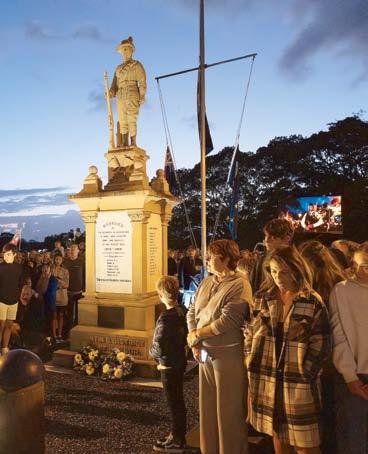
It’s quite humbling to see the number of people who attended the dawn service,” MC Robert Upham told the many thousands who turned up at Tewantin cenotaph as they did at services across Noosa on Anzac Day.
We are here for one purpose, to recognise and remember the service of those who gave their lives or willingly gave their health for the freedoms we enjoy today in this democratic country, Mr Upham said.
See more on Anzac Day services on pages 4 and 5


Noosa veterans are applauded as they march through Tewantin on Anzac Day. Picture: ROB MACCOLL

Bunya wars begin
By Phil Jarratt
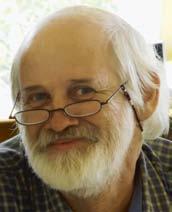
Ian Mackay, Noosa’s favourite bush poet and MaryValley environmental warrior, is not happy, Jan.


In fact, he tells Noosa Today from his Kenilworth property: “I’m really hot under the collar! And the reason is public vandalism – death by the chop of a number of recently planted bunya trees, part of an avenue on the Eumundi approach to Kenilworth.”

According to Ian, the Sunshine Coast Council planted the avenue of bunyas a couple of months ago in good faith in recognition of the importance of the bunya in local Aboriginal history, but failed to consult “influential locals”. An article in the Mary Valley Voice newspaper in March brought the disgruntlement of the few to more general attention, but blamed not the lack of consultation but rather the fact
that bunyas drop prickles and cones at certain times of the year.
Says Ian: “This objection is truly lame, as anyone walking alongside a well-used road is ill-advised to be doing so in bare feet. All those who have picked up roadside litter on CleanUp Australia Day will tell of broken glass, tin cans and more, lurking in the grass, often rendered even more dangerous by having been run over by the slasher or mower. Even an innocent hubcap after a couple of passes with the mower can become a lethal weapon.
“The wider world plainly does not share this paranoia for prickles. In pride of place in Queen’s Park in Maryborough, for example, is a large bunya tree reputed to have been planted by John Carne Bidwill after whom the plant was named. Presumably Maryborough residents and tourists have the sense to wear
shoes and to avoid walking under the truly majestic tree when the cones are falling. There are a number of bunya trees happily resident in the old botanical gardens in Brisbane too, and some at Government House, and a wonderful example in the grounds of Mapleton school. So no, prickles in feet and falling nuts are not valid reasons for the removal of the bunya avenue approach to Kenilworth.”
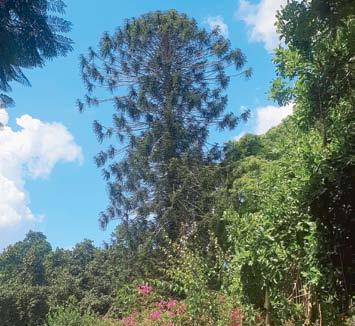
A new dimension entered the Kenilworth bunya war on the night of 3 April when eight of the newly-planted saplings were ripped out of the ground. “They got the posse up under cover of darkness,” says a disgusted Ian Mackay. “Bunyas to me aren’t just a tree with prickles and cones, I respect their enormous significance to our First Nations people who were here long before the residents protesting the planting. Hinkabooma (Kenilworth) was the heart of bunya country, and this avenue
planting is more than a nod to that enormous respect in which bunyas were held.”
At the very start of European settlement, bunya trees were in abundance in south-east Queensland. Andrew Petrie, Commissioner for Works in the Moreton Bay settlement and a prolific explorer was the first to bring back samples of the bunya and the first to recognise its significance to First Nations people. Bunya gatherings, both at Baroon Pocket and what is now called the Bunya Mountains, drew up to 5000 attendees, many travelling long distances to be there for the feasts, corroborees, trading and sharing of food, as well as arranging marriages and resolving issues of law. Former Noosa Library historian in residence Dr Ray Kerkove has written: “The Bunya Gathering was arguably the largest and most influential Indigenous gathering in Australia.”
Continued page 3
PAGE 17 PAGES 6-7 PAGE 3 Naked bid for legal status In the flow of life Noosa pays tribute Friday, 28 April, 2023 INSIDE PROPERTY 28 page liftout property guide Major Sponsor for 30 + YEARS 12601534-JW17-23 12497020-DL22-21
page 18
TV GUIDE pages 20-21,24-25
PROPERTY liftout
OPINION pages 27,31
COMMUNITY UPDATES page 33
LIVE pages 34-35
SPORT pages 38-43
Community support
By Margie Maccoll
Business operators at a Tewantin shopping strip impacted by a fire on Good Friday were buoyed by the community support they received at a fundraising event held last Sunday but still hold some concerns.
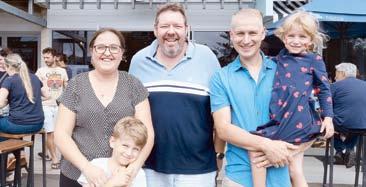
Bean Theory cafe owner Jennifer Mendes led the event to raise money to assist business owners who had been most affected by the fire.
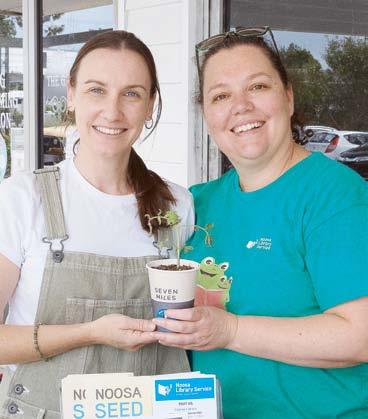
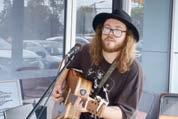
Other businesses and suppliers had donated goods and services toward the event and items for raffles held on the day and Noosa Council Library members provided activities. Musician and friend Jack Raymond was the first to put up his hand to offer help on the day, Jennifer said.
“It’s good to see the regular customers coming back to give support and there’s some new faces as well,” she said.
“I want to say thank you to the community and sponsors for the support and donations. I feel we’re being supported.”
Investigations are still ongoing into the suspicious fire that began in J and M Tobacco and Gift Store and affected the row of shops on the corner of Hilton Terrace and Earl Street.
Some businesses have been able to reopen, some have temporarily moved to other premises to operate and for others, which sustained significant damage, the return will take longer.
Jennifer said the fire had left some people fearful.
“We can see the police are doing a great job. It’s just a bit scary,” she said.
“We don’t want to come to work and be scared.”
Telephone: 07 5455 6946
Website: NoosaToday.com.au
Editorial:
Email: newsdesk@NoosaToday.com.au
Advertising:
Email: advertising@NoosaToday.com.au

Classifieds:
Phone: 1300 666 808
Email: sales@networkclassifieds.com.au
EDITORIAL
Phil Jarratt Journalist
E: phil.jarratt@NoosaToday.com.au
Margie Maccoll Journalist
E: margie.maccoll@NoosaToday.com.au

Abbey Cannan Journalist
E: abbey.cannan@NoosaToday.com.au
Erle Levey Journalist
E: erle.levey@NoosaToday.com.au
ADVERTISING
Simone Bell Advertising Manager
E: simone.bell@NoosaToday.com.au
Michelle Gibson Account Manager
E: michelle.gibson@NoosaToday.com.au
Karen Friend Media Sales Support
E: karen.friend@NoosaToday.com.au
DEADLINES
Advertising Bookings Friday 3pm
Is it time Noosa had a legal nudist beach?
Every other state in mainland Australia has legal optional clothing beaches, why doesn’t Queensland?
Nudism or naturism and moral perceptions of public nudity have been grappled with around the world.
In East Germany, for example, in keeping with its moral hardline, the communist regime tried to outlaw bathing with police fining and arresting bathers without bathers. But by the 1980s nudity was and continues to be widely practised.
At a popular nudist beach in Mexico nudists conceive nudism as a way of life but local acceptance is conditioned by the financial gain brought by tourists and they largely see it as a practice that outside the nudist space is morally unacceptable.
Nudists report feeling liberated without clothing and more at home, less constrained by fashion and conformity. They find the range of body shapes of naturists are more representative of the general population.
It’s an issue the Queensland Naturist Association aims to pursue.
In other happenings, anyone who attended an Anzac Day service would have seen the crowd around them. PostCovid the numbers of people returning to remember the sacrifice of those who paid the ultimate price in war and pay their respects was overwhelming.
- Margie Maccoll
2 NOOSA TODAY Friday, 28 April, 2023
Published by Star News Group Pty Ltd ACN 005 848 108. Publisher Paul Thomas. All material is copyright to Star News Group Pty Ltd. All significant errors will be corrected as soon as possible. Distribution numbers, areas and coverage are estimates only. For our terms and conditions please visit NoosaTodaycom.au/ terms-and-conditions/ INSIDE WEATHER
US
Classified Bookings Tuesday 10am
CONTACT
NEWS NOOSATODAY.COM.AU
Amy and Rach from Noosa Library Service.
Pictures: ROB MACCOLL
Jennifer and Jeffrey and children Adeline and Gabriel of Bean Theory cafe with Gary Roser (middle) from Noosaville Fish Market.
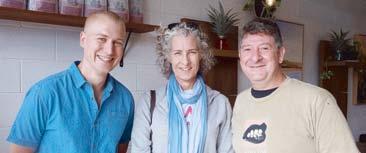
Geoffroy Marcq,Janne van der Walt and Paul Roets.
TODAY 18°-25° Shower or two Possible rainfall: 0 to 2 mm Chance of any rain: 70% SATURDAY 16°-25° Shower or two Possible rainfall: 0 to 1 mm Chance of any rain: 60% MONDAY 15°-27° Mostly
Chance of
SUNDAY
two
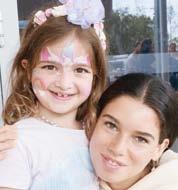
Heather Tysoe with PoppyMusician Jack Raymond performed for the event.
sunny
any rain: 20%
16°-27° Shower or
Possible rainfall: 0 to 3 mm Chance of any rain: 60% MAYOR CLARE
Legally nude cheeky move
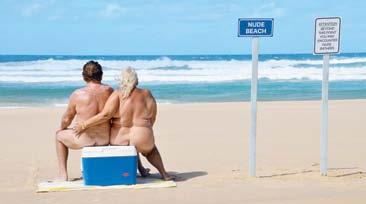
The Queensland Naturist Association (QNA) is calling for the legalisation of clothing optional status at Alexandria Bay following the recent fines issued by police for willful exposure.
“Alexandria Bay has a long history of being a popular spot for naturists and nudists, and it is time for the beach to be recognised as a legal clothing optional beach,” QNA president Rachael Freeman said.
“Alexandria Bay is one of the most picturesque beaches in Australia, and it has a long history of being a popular destination for naturists and nudists. “Over the years, the beach has attracted people from all walks of life, including families, couples, and individuals of all ages. However, the recent fines issued by the police for indecent exposure have left many naturists and nudists feeling frustrated and disappointed.”
Last week during a blitz on A-bay, which included the deployment of a drone across the beach and dunes, Noosa police issued fines for wilful exposure to 10 men and one woman.
Noosa Senior Sergeant Anthony Cowan said police were responding to complaints, mostly to Queensland Parks and Wildlife Service, not only of nudity but of lewd acts.
But Ms Freeman objected to the inference nudists were behaving badly. “Naturism and nudism is not about lewd behaviour, but about body acceptance and a connection with nature,” she said. “At QNA, we do not tolerate indecent behaviour, and we encourage everyone to respect each other’s boundaries.
“Unfortunately, lewd behaviour sometimes occurs at Alexandria Bay because it is not recognised as a legal clothing optional beach. A well-attended clothing optional beach deters unwanted elements and makes the beach a safer and more welcoming place for everyone.”
Ms Freeman said local naturists were aware of a man who had been visiting A-Bay recently and acting inappropriately and had chased him off.
“He was there on Sunday but he saw police and took off,” she said. “The police were
Bunya wars in Kenilworth
From page 1
Andrew Petrie’s representations to Governor Gipps in Sydney (Queensland being still part of NSW at the time) of the significance of the bunya trees and the bunya gatherings, led to the Bunya Proclamation of 1842, which stated in part: “His Excellency is pleased to direct that no Licences be granted for the occupation of any Lands within the said District in which the Bunya Tree is found. And notice is hereby given, that the several Crown Commissioners in the New England and Moreton Bay Districts have been instructed to remove any person who may be in an unauthorised occupation of Land whereon the said Bunya Trees are to be found. His Excellency has also directed that no Licences to cut Timber be granted within the said Districts.”
The Bunya Proclamation should have meant that bunya country would remain a sizeable reserve for First Nations people, but settlers eyed off the land and timber–getters eyed off the trees and thumbed their noses at the Bunya Proclamation, and by 1850 they had begun taking up land on bunya country around Kenilworth. And when Queensland became an independent colony in 1859, the proclamation was repealed.
As Ian Mackay notes: “Gipps was regarded as an enlightened governor but he more than ruffled the squattocracy, nowhere more so
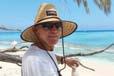
Ian Mackay.
than in his policy towards Aborigines, which was humane, practical, and courageous.”
None of which helps the eight little bunyas who have moved on to the spirit world, but Sunshine Coast Council has pledged to replace them and continue with the avenue of bunyas concept.

not looking at who was causing the problems. They got the wrong people.”
Ms Freeman said the nudists had long had a good working relationship with local police and were happy to report any problems to them.
In past years QNA has organised community events at A-Bay including the Nude Olympics which had surf lifesavers and police in attendance, but no clothing optional legalisation and complaints had caused the event that had attracted about 600 people to move to By-
ron Bay, she said.
Mainland states in Australia began legalising clothing optional beaches in 1975 with all but Queensland now boasting legal nudist beaches.
“That’s 48 years we’ve been trying to bet Queensland to catch up with the rest of the country,” said Ms Freeman who exalts the benefits of nudism.
“QNA has thousands of members who enjoy naturism and nudism, and we are a notfor-profit association that promotes body positivity, mental health, and healthy lifestyles in an inclusive environment,” she said.
“Naturists come in all shapes, sizes, ages, and backgrounds, including young and old, and many families.
“Studies have shown that naturism and nudism have a positive impact on body positivity and mental health. A study by the University of Central Florida found that naturists have higher levels of body satisfaction and self-esteem than non-naturists. Another study by the University of London found that naturists have a more positive body image and are more accepting of their bodies than non-naturists.”
Ms Freeman said QNA was calling on the government to recognise the benefits of naturism and nudism and legalise the clothing optional status at the southern end of Alexandria Bay where there was no through traffic and it would not infringe on walkers on national park trails.
Friday, 28 April, 2023 NOOSA TODAY 3 12601616-JW17-23
NOOSATODAY.COM.AU NEWS
30% OFF ALL LOUNGES
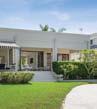
Maryborough’s splendid bunya.
Pictures: IAN MACKAY
Remembering their service
By Margie Maccoll

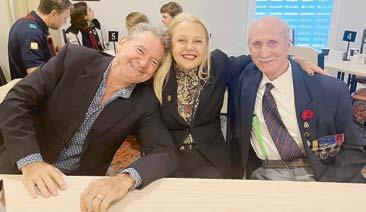
Veterans, like 100-year-old Keith Douglas Fitzpatrick, arrived in style, chauffeured by members of the Noosa Beach Classic Car Club, as they led the parade in Tewantin’s morning Anzac Day service on the 108th anniversary of the landing at Gallipoli.
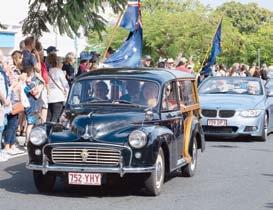
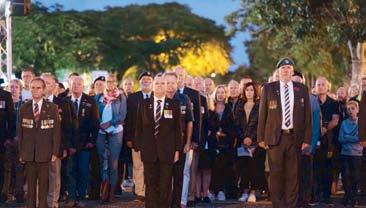
Thousands flanked Poinciana Avenue as the parade, that included veterans and school children, made its way to the beat of the impressive visiting New Zealand Veterans Band, to the cenotaph.
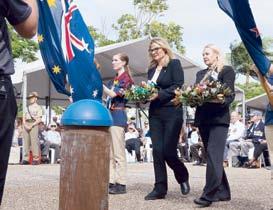
The ceremony was marked by moving speeches from special operations Captain Harrison Williams, Noosa MP Sandy Bolton and Noosa Mayor Clare Stewart.
It began with MC Bob Upham telling the crowd a little about retired Sergeant Major Fitzpatrick’s military service.
Born in 1923 Fitzpatrick signed on for service in 1941, underage, using his brother’s birth certificate and soon after headed to the Kokoda Track in PNG where he took part in
conflict between the Australian and Japanese forces, there losing his best mate, Vic Stewart. After WWII Fitzpatrick remained in the armed forces, served on the HMAS Sydney when it attended the coronation of Queen Elizabeth II, before training Vietnam veterans then retiring in 1965.
It was a different war that Captain Williams referred to in his speech but the same message of mateship and heroics that epitomise the Anzac spirit.
Williams showed the crowd a photo taken in 2005 of three smiling mates in an armed vehicle in Afghanistan.
As a serviceman he had searched for the meaning of Anzac Day and found it in the photo and story of the men in it.

All three men shared laughs, heroics and tales, Williams said. They were the finest operators, devoted to their mates and highly regarded. By 2013 all three, in different instances, had been killed in action.
They were three everyday Aussies who gave everything they had.
4 NOOSA TODAY Friday, 28 April, 2023 Noosa’s Only 100% Local & Independent Optometrists Catherine Tromp BAppSc (Optom) CertOcTher Owner & Principal Optometrist WANT TO KNOW MORE? CALL OR VISIT US AT NOOSA OPTICAL TODAY. 1 Lanyana Way Noosa Junction | noosaoptical.com.au | Ph 5447 3711 What makes us different? » MORE THAN JUST AN EYE TEST FOR GLASSES » FULL SERVICE & PROFESSIONAL EYE CARE THAT’S NOT ON THE CLOCK » NOOSA’S ONLY LOCALLY OWNED & OPERATED OPTOMETRIST » LONGEST ESTABLISHED PRACTICE IN NOOSA SINCE 1989 » LONG TERM SOLUTIONS TO PROVIDE BETTER VALUE Charlie Muecke BMedSc (VisSc) MOpt Optometrist 12565544-AV35-22 ANZAC DAY NOOSATODAY.COM.AU
A solemn moment at the Tewantin cenotaph.
Standing at attention for the national anthems.
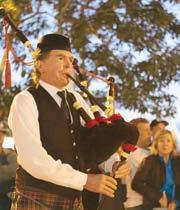
Veterans arrive in style thanks to the Noosa Beach Classic Car Club.Mayor Clare Stewart and Noosa MP Sandy Bolton lay wreaths.The Piper’s Lament is played by Don Drysdale.



Friday, 28 April, 2023 NOOSA TODAY 5 12572837-HC43-22 NOOSATODAY.COM.AU ANZAC DAY
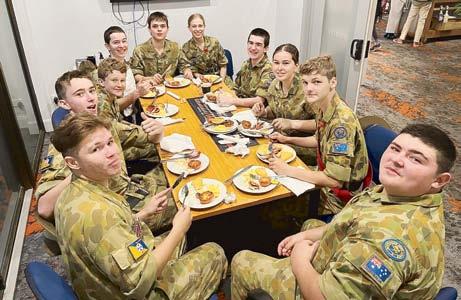
Cadets enjoying a meal at the Cooroy RSL.
Captain Harrison Williams addresses the crowd.
Pipers on parade.
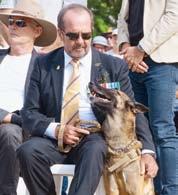
The Cooroy Anzac Day March leader for 2023.A devoted friend.
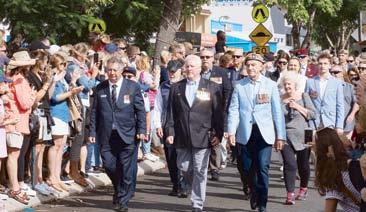
Crowds flank the street to watch the parade.
Noosa MP Sandy Bolton at the Cooroy RSL.
How Jack flows
By Phil Jarratt



Competitors who came from all over the surfing world for the three-day CoolumWedge festival in late March had no problems proclaiming it the “best bodysurfing event ever”.
If that’s the case, then Noosa could feasibly claim Tewantin planning consultant Jack Lewis as the “greatest bodysurfer ever”. Mildmannered Jack, 39, will no doubt cringe at that description, but he was the undisputed star of the three-day event, winning theWedge open men’s division in a thrilling final, helping steer local team Sun Coast Sea Otters to a comprehensive victory in the teams event and, most importantly, taking out the men’s International Body Surfing Association qualifier for the IBSA World Titles, to be held at Panic Point, Hawaii next March. Jack, along with local team-mates Lyla andTallow Crouch, will be hoping to spearhead the Australian contingent of eight men and four women in Hawaii.
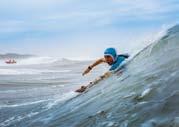
Says Coolum Wedge founder Darren Verrenkamp: “Jack’s main advantage is that he reads the wave like a surfboard rider does. He can see where the pockets of energy are, plus he’s 30 per cent faster than the next guy. And he’s very impressive to watch from the beach with his long emu arms.” Not sure about the emu arms, but Darren, a veteran bodysurfer himself, along with several other expert witnesses to the Wedge festival, place Jack and ironman Ky Kinsela a cut above the rest of the international field, with Jack just getting the edge on Ky.
But there’s a reason that Jack can read the ocean like a surfboard rider. He has been one all his life, riding all kinds of surfcraft at the requisite level of speed, power and flow, and quietly demolishing the gnarliest set waves whenever Noosa’s point breaks or the eastern beaches A-frames are firing. The scary thing about Jack Lewis, however, is that when you evaluate his extraordinary all-round waterman skills, you are only getting started.
Born and bred on the Gold Coast, Jack was swimming through the surf soon after he could walk, eventually becoming a surf club “Nipper of the Year” before moving onto surfboards and being invited to join the Burleigh Boardriders Club, where his wave-riding skills soon placed him in a class not far away from the turn of the century emerging elite, which included Mick Fanning, Joel Parkinson and others who would collect trophies like other people collect sea shells. But, unlike most of
his surfing peers, Jack never left behind the skill sets and the community values he had acquired during his nipper years.

Also a good student – don’t worry, he’s by no means perfect, loves a beer but I can’t see where he puts it – after high school Jack moved to Sydney to study for a science degree at University of NSW, making Maroubra on the city’s eastern beaches his surfing base. Not quite a Bra Boy, Jack joined the Maroubra Surfing As-

sociation and made sure he got his share of waves, but he was deeply focused on his studies. He recalls: “I started my degree as a physical geographer but two years in I worked out that you can study the environment all you want, but it’s what people are doing to it that is increasingly important, so I switched to human geography, which is about why people form groups and why we create governance structures to try and control what people do to their environment.”

6 NOOSA TODAY Friday, 28 April, 2023 BLINDS | SHUTTERS | AWNINGS | CURTAINS 7/1 Selkirk Drive, Noosaville QLD 4566 | 5473 0356 | sereneblinds.luxaflex.com.au 100% locally owned family business Serving Noosa and the Sunshine Coast. Proud distributors of Luxaflex® – the trusted name in Australian Window Coverings since 1954. Handcrafted quality, custom made to measure To view the latest in innovation & design, Visit the showroom or give us a call today! 12595771-SN13-23 NEWS NOOSATODAY.COM.AU
through
life
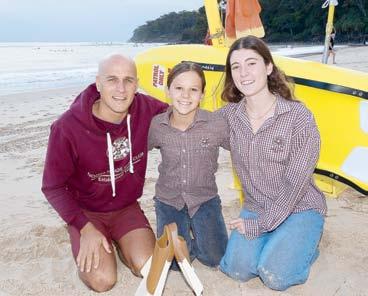
Bodysurf heroes Jack Lewis,Tallow (centre) and Lyla Crouch. Picture: ROB MACCOLLJack Lewis at Main Beach.
Picture: ROB MACCOLL
Lyla Crouch shows her style. Picture: SUPPLIED
After graduating, Jack took a gap year or two in New Zealand to surf and snowboard, met future wife Jess and finished up completing a master’s degree in planning at Otago University. Doing this course in 2004, he attended a two-week intensive on the Sunshine Coast, studying the likely impacts of a proposed amalgamation of local councils from a base in Caloundra, one of the local government areas, like Noosa, on a hit list for a boundaries review. For Jack, this was the start of an ongoing passion for finding out what’s happening at the community coalface, but the trip also reignited an early passion for surf trips to Noosa.
He says: “We went up to Noosa for a day and I borrowed a board and surfed Tea Tree, which I’d almost forgotten about. Walking through the national park to get to a perfect surf, I remembered why Noosa was a place I’d always thought I could make my home, where local governance seemed to work for the community’s benefit.”
Back in New Zealand, while writing up his report on the proposed amalgamation, Jack also applied for two jobs where he thought his qualifications could be put to good use. One was in Noosa, the other in Broome. Says Jack: “In the short term, Broome offered more adventure and more money, plus we wanted to thaw out! So Jess and I moved there for a year. I worked in town planning with Broome Shire Council at a time when mining interests were taking over, so there was a lot going on. With half the population Aboriginal, Indigenous issues were always in your face, which was a great experience, but it also showed me the underside of life in a frontier town.”
When they discovered that Jess was pregnant, the couple decided to make Noosa their home as soon as the Broome contract was completed. Says Jack: “It was 2008 by now and the Noosa council had been amalgamated, so I got a planning job with the Tewantin office of the Sunshine Coast Council. The community was very much divided over what had happened, and we got involved in that because the main reason we’d chosen Noosa to live was that its council did things differently, but now that was at risk. We’d been out of the picture for a year in Broome, but I had the background of having studied the amalgamation concept,

so we got right into the debates and all the rest of it. I loved it because I love governance.”
After de-amalgamation in 2013, Jack transferred to Noosa Council through its “putting the pieces back together” phase, before taking long service leave in 2017 and moving to Queenstown, NZ for a year. He recalls: “When I was doing my masters in New Zealand a decade earlier I spent a couple of weeks in a Maori community, looking at planning deci-
sions and their impacts on the culture, like how a storm water drain might interfere with a tribally significant waterway. When we went back to live in Queenstown I thought about all of that stuff again, and how we don’t really integrate those concerns into our planning here. There are so many thousands of years of Indigenous experience that we’re not even considering. I knew that the Kabi Kabi had been forcibly removed from Noosa to Cherbourg, so
when we came back I decided to go there and find out more about their culture.”
Thus began a relationship with the elders and children of Cherbourg that is ongoing, with Jack working with Noosa Heads Surf Club and local schools to host Kabi Kabi kids on country in Noosa. Says Jack: “We did a couple of water safety pool sessions with the kids up there to help them feel comfortable with us, and then started bringing them down to Noosa on day trips, just to get them familiar with the ocean and being on country. At least once a year we bring down grade three and four kids to discover the joys of the ocean and Noosa generally. It’s great to see them, and some of the elders who come with them redevelop a relationship with their home.”
These days Jack’s Pivotal Perspective consultancy takes a holistic approach to planning advice, while he and Jess and their growing family are heavily involved in community and environmental issues inTewantin and beyond. But he is a surfer first and foremost, and since that’s where we started, it’s where we shall end.

On a recent Saturday morning I found Jack talking story about bodysurfing with Darren Verrenkamp and rising young surf stars Lyla and Tallow Crouch. Said Lyla: “When you’re on a board you don’t feel the contours of the wave in the same way. That’s what I love about bodysurfing, and you can shut out all the unnecessary dramas of life.” Younger sister Tallow chimed in: “What I love about it is it’s just you alone in the water and you can block out the rest of the world and concentrate on riding the wave.”
Smiling and nodding his agreement, Jack closed out the conversation: “I always carry a pair of fins around in the truck, just in case. If I haven’t got time for a surf I’ll just jump out for a swim and catch a couple of waves. I enjoy competing in bodysurfing because it’s all about speed, power, glide, but I also love the culture. Bodysurfing is inclusive whereas surfing can often be exclusive. Sure, we’re going to Hawaii to compete, but really it’s all about just having fun in the ocean. Here in Noosa and Coolum it’s great to see bodysurfing coming back more as part of the surf life saving experience, because in a sense bodysurfing is the purest form of life saving.”
Friday, 28 April, 2023 NOOSA TODAY 7 Close to Noosa’s major shopping precinct, medical & commercial facilities • Secure community Quality built homes • • Social, like minded neighbours • Peace of mind for your family • Country Club Managers living onsite • Resort style facilities • Country Club boat, bus, hairdressing salon & so much more! Over 55s Country Club countryclubliving.com.au FREECALL 1800 461 505 NO STAMP DUTY OVER 80% SOLD! MOVE IN FROM SEPTEMBER FINAL APARTMENT BLOCK - VIEW DISPLAY TODAY! FROM $647,000 YOU’RE INVITED TO MORNING TEA Thursday May 18th 10am – 12pm Meet our residents and tour our Country Club facilities. Light refreshments provided. RSVP Essential by 15/05/23 noosadomain.com.au or call Brian Williams 0427 333 499 OPEN FOR INSPECTION Monday – Friday 10am – 4pm (or by private appointment call Brian Williams on 0427 333 499) 35 WALTER HAY DRIVE NOOSAVILLE QLD 4566 12601657-ET17-23
NOOSATODAY.COM.AU NEWS
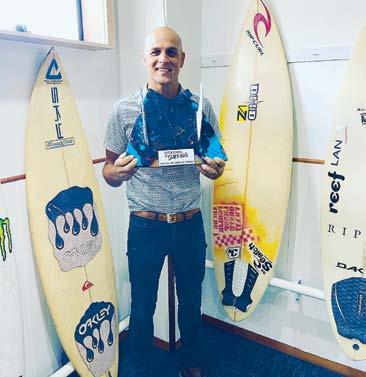
Jack shows off his perfect 10 trophy from Wedge 22.
Picture: SUPPLIED
Parking battle continues
By Margie Maccoll
Tewantin Noosa Lions Club are leading a fight against Noosa Council’s closure of the Noosa Heads Lions Park to holiday car parking as they put questions on notice to councillors and garner support through a petition.
But Lions Club members say voicing their opinion is “democracy in action” as they continue to maintain a “close and happy relationship” with council.
Last month Noosa councillors voted 4:3 to seek State Government approval to provide paid parking in Noosa Heads Lions Park only during the 2023 Easter and Christmas holidays, then to put its future use to the community for feedback.
The Lions club want council to reverse their decision and allow car parking to continue school holidays and long weekends while they “actively seek input from all involved parties as to the future of car parking, make an informed decision and support all of Noosa in a sensible move forward”.
Councillors said the use of the Noosa Heads Lions Park for car- parking was contrary to the Department of Re- sources park designation, the Noosa planning scheme, the Noosa Transport Strategy and the Noosa Design Principles.
Deputy Mayor FrankWilkie said with 14,000 vehicles accessing the Hastings Street precinct during peak periods, the 150-200 spaces offered in Lions Park don’t significantly improve supply or demand but do provide an incentive for motorists to enter the precinct, which increases congestion.
“The Lions Park will continue to be used for car parking, mostly by visitors from outside the shire, next Christmas and Easter (just gone),” Cr Wilkie said.
“During that time, there will be public consultation, possibly as part of the Destination Management Plan, to determine what we collectively want residents and visitors to experi-
ence in peak periods in our shire. How we use and respect our green spaces into the future will be a part of that question.”
The Lions Club which has operated car parking on the site for almost 20 years say they are providing a much needed service to the community and raising tens of thousands of dollars annually for local charities.
Over the Easter school holidays the Lions club collected more than 2300 signatures on a petition supporting the continuation of the car park and say their support for the car park was evident by people’s willingness to queue to sign the petition.
Club president Ian Glew said Tewantin Noosa Lions club have been parking cars in this park since December 2004 (close to 20 years) and the statistics spoke for themselves.
There were 15,500 cars parked in twelve months to Christmas – New year 2023 and 7,800 cars parked in the Christmas – New Year 2023 period alone, he said.
Ian said car parking has only operated for
10 weeks out of the 52 weeks of the year prior to council’s decision to increase access to the park for car parking during Covid when Tourism Noosa initiated a campaign to attract more drive tourists to the region to assist businesses during a difficult time.
Ian said the car parking provided ample vacant space in the park and around the BBQ areas for the public to enjoy for whatever activities they wanted and a family wanting to spend a day on the beach need parking to accommodate all their gear and equipment, finding it “extremely difficult” to carry on a bus.
“These points do speak for themselves and no one could possibly believe that removing car parking in Noosa Heads Lions Park will not increase traffic congestion,” Ian said.
The Lions Club last week put two questions to council’s Ordinary committee meeting.
In asking what the process was in reversing the motion to close the park to car parking, council acting CEO Larry Sengstock said a repeal or amendment of the motion would
need to be in accordance with the Local Government Act 2009 or the Local Government Regulation 2012.
He said notice of a repeal or amendment would need to be given to each councillor five days prior to a meeting at which the proposal was to be made and councillors could defer consideration of the motion for up to three months.
The Lions Club also asked council if it would continue to allow the park to be used by the Noosa Triathlon which uses it for bicycle parking and they would consider contradictory if the park is to be reverted to green space.
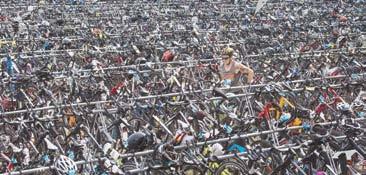
“Use of the Lions Park for the Noosa Tri event is not viewed as contradictory to the reserve purpose and will be allowed to continue,” Mr Sengstock said. “The State has previously advised utilisation of a reserve for recreation for carpark purposes is a use inconsistent with the reserve purpose in accordance with State Policy - Operational Policy Secondary use of trust land the Land Act.”
No move on land values despite impact of disasters
Noosa Mayor Clare Stewart says she was disappointed with the outcome of her meeting with Queensland’s Natural Resources Minister where she raised residents’ concerns about massive land valuation increases.
“Many in our community are still recovering from the devastating 2022 flood events so we put forward suggested solutions seeking the process to be reviewed to improve outcomes for councils and the community,” she said.
“This could involve the state collaborating closer with local councils on decisions to proceed with valuations and taking into account unprecedented situations impacting land valuations.”
Cr Stewart and Gympie Mayor Glen Hartwig ventured to Brisbane last week to meet Minister Scott Stewart to discuss the unprecedented consecutive land valuation increases.

As land valuations are used by councils to calculate rates in Queensland, councillors and residents are concerned about the impact the doubling of valuations in some part
of the shire will have.
“The Minister made it clear that there wasn’t much that could be done, however I encourage residents who feel aggrieved to lodge an objection to the Queensland Valuer Generals Office,” Cr Stewart said.
“It doesn’t make sense why we had to face another round of land valuations, particularly with the added pressure of the valuation occurring in an extremely volatile market.
“With the softening of property demand being experienced in the area, the state may need to subsequently reverse some of these increases in future years, indicating these increases may not have been necessary this year,” Cr Stewart said.
The average land valuation increase determined by the Queensland Valuer-General was 62 per cent.
But nearly 2000 properties across Noosa
were hit with an increase in valuation above 100 per cent, a further 400 had a 200 per cent jump and 15 properties are above 300%.
About 2000 properties in Noosa had a comparatively low valuation increase of under 30 per cent.
“It’s not just owners of properties in the more expensive areas facing increases, it’s homeowners right across the shire who have seen their land valuations jump,” Mayor Stewart said.
Cr Stewart said like the community, council is working in a heightened market with CPI at record levels.
“We are facing enormous challenges to keep rates increases below CPI levels and these valuations present even more difficulties for us to ensure equitable rating outcomes for every single property experiencing a valuation increase,” she said.
8 NOOSA TODAY Friday, 28 April, 2023 12513105-NG38-21
NEWS NOOSATODAY.COM.AU
Mayor Clare Stewart and Gympie Mayor Glen Hartwig outside Queensland Parliamentary Annexe.
Bikes parked in the Lions Park during the Noosa Triathlon.
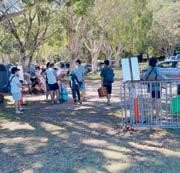
People queue in the Easter holidays to sign the Lions club car parking petition.




Friday, 28 April, 2023 NOOSA TODAY 9 Bank of Queensland Limited ABN 32 009 656 740 (BOQ) Australian Credit Licence Number 244616. T&Cs, fees, charges and eligibility & credit assessment criteria apply. Full T&Cs at any BOQ branch. Available to customers taking out a new home loan with BOQ, refinanced from another financial institution. Available on BOQ’s Clear Path, Economy or Fixed Rate home loan products. Not available for the refinance, restructure or switches of home loans within BOQ Group. Customers who have ever received a similar refinance cashback payment from BOQ will be ineligible for this offer. Cashback paid to the applicant’s BOQ transaction account within 30 days of the settlement date (if you don’t have a BOQ transaction account one must be opened). For multiple home loan applicants the BOQ account needs to be in the name of at least one of the home loan applicants and the cashback will be paid only once to the applicants jointly. Offer current as at 29/03/2023 and can be amended and/or withdrawn at any time without notice. Applicants should seek their own tax advice in relation to the receipt of cashback. Whatever your reason to refinance, make the switch today. 3,000 $ CASHBACK# RECEIVE Apply from 1/12/22 & settle within 120 days. Max LVR 80%. Min loan size $250k Refinanceyour homeloan Plussomereallygreatrates BOQ Noosa Dan Pertot, Owner-Manager 0435 870 605 Luke Hulcombe, Mobile Lending Manager 0437 534 227 Tim Sipp, Mobile Lending Manager 0418 500 521 Terri Morris, Mobile Lending Manager 0412 920 571 Dan Upton, Mobile Lending Manager 0499 491 010 12599368-KG14-23
Tale of a courageous life
By Margie Maccoll
Zsuzsanna Kalmar was just two years old when Nazi tanks rumbled into Budapest on 19 March 1944 to entrench the Nazi occupation of Hungary in what Winston Churchill described as“the greatest, most horrible crime ever committed in the history of the world”.
Adolf Eichmann, known as the ‘architect of the Holocaust’, immediately fired up the Nazi killing machine that had exterminated millions of European Jews and in just 56 days from 15 May to 9 July 1944, transported more than 437,000 Hungarian Jews to Auschwitz-Birkenau, most of whom were gassed upon arrival.
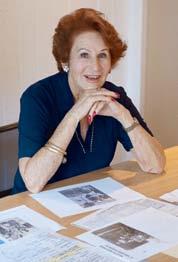
Zsuzsanna, who now lives in Noosa and is known as Suzi Smeed has recorded her extraordinary life in a book, co-written with journalist Terry Quinn, called The Courage to Care, A memoir of the Hungarian Holocaust.

It’s a story she shares with school children through The Courage to Care organisation in the hope “the story of the Holocaust will be passed on to future generations and the history not forgotten”.
From 1944 to 1949, Suzi and her family escaped death several times at the hands of both the Germans and the Russians who ‘liberated’ Hungary in early 1945 before imposing their own form of brutal oppression. Not practising Jews her parents even converted to catholicism to avoid persecution, to no avail.
Zsuzsiki was the daughter of Erzsebet and Laszlo Kalmar, a Jewish textile merchant in Budapest.Within weeks of the Nazis arrival Laszlo was in a slave labour battalion and she and her mother were in the small town of Papa, where her grandparents Jeno and Irma Halasz lived.
“On May 23rd 1944, my mother, grandparents and I were rounded up in Papa, Hungary and placed in a ghetto. My mother and I were smuggled out by a lay priest named Jonas Ochiny. After being reunited with my father, who escaped a Labour camp, we went into hiding,” Suzi said.
“In November 1944 as the Soviets were approaching Budapest, my parents sent me with former maids to friends in the countryside.”
Unknown to them heavy fighting in the countryside forced the maids to abandon the little girl at an orphanage (150km east of Budapest) that was later disbanded and she was hidden with six different families.
“In January 1945 with the Soviets occupying Budapest my parents set out on foot to find me.They found me on a farm, hidden in a barn where I slept in a wooden feed tub.”

“After returning to Budapest we waited on news of my grandparents. At the end of 1947 we had news that a friend had witnessed them being taken to the gas chambers,” Suzi said.
“My father applied for a visa to migrate to the USA.With a communist controlled government he was offered a chance to work in the USA leaving my mother and me behind. My father declined. After finding out there was a warrant for his arrest with the secret police we knew we had to escape. We were smuggled out of Budapest to Vienna in a postal van.
“We lived inVienna until a relative who had already migrated to Australia paid for our passage.
“The second time I visited Hungary on my 60th birthday, in Papa I found my name on the original Nazi list for deportation, a very emotional moment.”
Finally safe in Australia in 1949, Suzi struggled to adjust to her new life as a ‘reffo’.

Her father had nine pounds in his pocket when they arrived and they spoke no English.
They approached the Catholic Church which offered Suzi a place in a boarding school in Maitland which she described as “terrifying”.

In her adult life Suzi experienced two failed marriages and endured the death of her premature infant son.
She has also enjoyed a stint as a star of a TV shopping channel. As manager of the Strand Arcade in Sydney she was invited on to the Bernard King Show. She brought along merchandise from various shops and her one visit turned into a three-year television spot as Suzanne of the Strand.
At the age of 40, Suzi met her husband John Smeed, the man who would change her life.

Now in her eighties, Suzi volunteers with



Courage to Care to teach future generations about the lessons of the Holocaust to keep a light shining on anti-Semitism because... “history shows that it can easily escalate from bigotry to genocide if good people ignore bad things”.
“Courage to Care is an outstanding organisation that was change making for me,” she said. “In later life it feels that I am doing something of real value for the community,” she said.
Teachers have told her, her talks to pupils of her survival and return to live after the Holocaust have been a wonderful lesson to a young audience. One pupil described her story as “inspiring and encouraging”. “I know that I need to not judge others because I do not know what their past and present story is,” the student said.
“People need to realise it’s not that bad in Australia,” Suzi said.“It’s not how you start out, it’s how you finish up. It’s what you do with your life.”
With no recollection of her war time experiences Suzi said creating the book had been an extraordinary experience during which she had discovered more about the history of the period and of her family and it introduced her to some amazing people including the Ambassador of the State of Israel to Australia HE Amir Maimon who has written a forward in her book.
The Courage to Care by Suzi Smeed, published by Connor Court Publishing, will be launched in Noosa on Tuesday 2 May from 5.30-8.30pm at Noosa Boathouse, 194 Gympie Tce, Noosaville following the initial launch in Brisbane on Thursday 27 April at the Brisbane City Hall with radio presenter Alan Jones as MC. The book is available at Annies Books on Peregian, The BookShop at Caloundra and Brumby Sunstate Books.
10 NOOSA TODAY Friday, 28 April, 2023 81 Noosa Drive, IGA carpark level Noosa Junction Plaza book online: www noosadoctors com au SkinChecks, treatmentsandprocedures Ph: 5455 6693 Noosa’strustedskincancerteam Dr James Bricknell Dr Phil Keys Dr Hugo Pin 12597303-SM14-23 NOOSA MATS & RUGS 168 Eumundi Rd, Noosaville 4556 Ph: 5442 4899 | noosarugs.com.au noosarugsnoosarugs Follow us DESIGNER RUGS WOOL P.E.T INDOOR/OUTDOOR TRADITIONAL MODERN RUNNERS MATS Exciting new range of rugs and homewares HOME DECOR & LAMPS 12598553-AV15-23 NEWS NOOSATODAY.COM.AU
Courage to Care by Suzi Smeed
Suzi Smeed looks over photos and documents from her past. Picture: ROB MACCOLL
AUSTRALIAN MADE
QUALITY SCREENS & CURTAINS AT GREAT PRICES


FAST TURNAROUND ON LOCALLY MADE SHUTTERS
SCAN QR CODE TO MAKE AN APPOINTMENT WITH OUR SPECIALIST

Friday, 28 April, 2023 NOOSA TODAY 11 Limited liability 5 year warranty, Offer valid until 31/5/2023
12601612-KG17-23
Secret of wartime history
By John Mikkelsen
Australians have just celebrated Anzac Day and honoured those who fought and died in all fields of conflict, including World War II and the War in the Pacific, which came very close to home. But very few of us would be aware that a structure in the north Queensland bush which played an integral part in that victory 78 years ago was reduced to rubble in the name of progress back in 1957.
Noosa’s John Mikkelsen was just a kid but he was there the day the ground shook and history was obliterated in the blink of an eye. It’s recounted in this excerpt from his Amazon Books memoir, Don’t Call Me Nev
There was a loud rumble and the ground shook for a few seconds. Not far from our house, the concrete walls of Stuart Jail suddenly developed a few visible cracks and just a few miles away, some national history was obliterated in the blink of an eye.
Tropical thunderstorm? No, the skies over the bush village were clear. Earthquake? No, but a cloud of dust like a mini A- Bomb rose above the gum trees over to the southeast.
It was just the latest development in a massive land clearing project underway in 1957 to pave the way for construction of Glencore’s Copper Refinery on the outskirts of the small settlement near Townsville.
This was an area I often visited with my best mate Rover, the kelpie cross, and a couple of school pals, because it contained an amazing structure we liked to explore. But we had no idea of its historical significance or why it should have been preserved as a museum piece for the vital role it had played in defeating advancing Japanese forces in the Pacific.
Torches were a necessity to venture inside the old World War II bunker with its three feet thick reinforced concrete walls and roof. Back then, the pitch dark rooms provided allweather protection for herds of foraging goats, probably the occasional snake or goanna, and the odd adventurous boy. Another roofless underground structure nearby was filled with stagnant green water and dozens of breeding cane toads.
After I heard the explosion that day I decided to go and see for myself what the work crews and bulldozers had accomplished in the open bushland we knew so well.We waited until the workers had parked their heavy equipment and gone home or more likely to the Stuart Pub to quench their thirst after a hard day’s toil under a hot sun.
I hopped on my bike and rode out a few miles with Rover trotting alongside on the dirt road through acres of felled eucalypts and thorny china apple bushes, pushed into piles waiting to be burnt. There was one silver lining in all this destruction, but it carried a sting in its tail. My mates and I had found that some of the felled trees contained bee hives. The native bees provided risk-free honey for the taking, but their larger cousins still protected their hives fiercely, even though they had no chance of survival. Needless to say, we copped our share of stings trying to smoke them out with handfuls of burning grass just to get at the delicious honeycombs.
But I could hardly believe my eyes when I reached the old bunker; or what used to be
UNDER NEW MANAGEMENT
Our Services


Security Screens and Doors
Cooroora Screens and Blinds offer the highest quality products, with friendly service and competitive pricing guaranteed. Brian, Sam, and the team are committed to providing their customers with the best window covering and security solutions available.

of the price of progress on our once peaceful boyhood playground. A cement plant had also opened recently, close to the pristine Stewart Creek, and waste slurry was allowed to run off into a gully which flowed into the creek, polluting it for miles downstream with thick, grey deposits. The annual wet seasons and floods removed that and probably distributed it over Townsville Harbour, but in the dry season it would recur.
Maybe the Stuart I knew and loved then was about to change in ways I could only imagine, but as I looked at the piles of jagged concrete and tangled steel reinforcement, I had no comprehension of the significance of what had just been destroyed. The place had a fascinating clandestine war-time history, which I have just learned for the first time more than six decades later.
Quite possibly, it had helped us win the war and if things were different back then, it would probably have been restored to its former glory and preserved as a lasting memorial within the boundaries of the copper refinery. The refinery owners, Glencore, have also recognised its significance and belatedly erected a plaque in its place.
Back in March 1942, three years intoWorld War II, the secret bomb-proof bunker was constructed where the Townsville Copper Refinery now stands. It sheltered skilled Katakana (Kana) wireless operators providing essential intelligence which certainly contributed to Victory in the Pacific. Kana was a radio code based on Japanese writing.
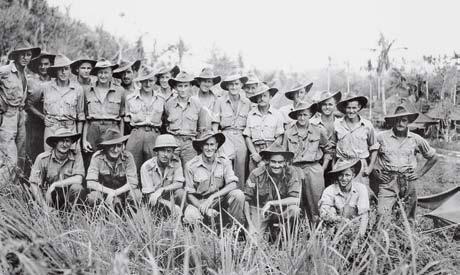
The Kana wireless operators intercepted Japanese messages to obtain vital intelligence informing the Allies of the timing and location of planned Japanese attacks..

Walls of the bunker were made of solid, me-
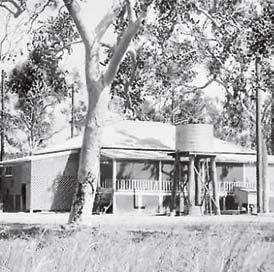
tre-thick, reinforced concrete and the building was camouflaged to resemble a Queenslander farmhouse. Outside walls were painted to replicate windows and doors, with a verandah and stilt posts completing the disguise. There was also a false roof, and rainwater tanks. A set of stairs led to a fake front door and the scene created could have fooled anyone passing even close by, let alone enemy air reconnaissance.
The bunker was also fully air-conditioned, a rarity back then. It was reportedly a highly functioning set-up featuring sophisticated equipment such as plotting and cipher tables, maps, typewriters, telephones, radio receivers and even teleprinters, all of which helped decipher the Japanese wireless codes to inform Allied forces.
But about 12 years after the war ended, the bunker was demolished to make way for construction of the Copper Refinery. In Glencore’s own words, it was obviously built to last, with a sizable quantity of gelignite required to bring it down. The force of the resulting explosion reportedly caused cracks in the outer walls of Stuart Creek Jail, several kilometers away. And thus, the former wartime headquarters of No. 1 Wireless Unit, one of two highly secret Allied Sigint (signal intelligence) organisations in the region, was consigned to history and oblivion.
In 2009, during the refinery’s 50th anniversary , the old bunker’s location was commemorated and the site identified with a plaque.
Who’d have guessed it? Not this kid, back on the day it was reduced to rubble! I hope they chased the other goats out before they blew it up.
John’s book can be found at amazon. com.au/John-Mikkelsen/e/B09RF3SNBD/ ref=aufs_dp_fta_dsk
& Quote 12559239-HC29-22
Measure Security Screens & Doors are our specialty



12 NOOSA TODAY Friday, 28 April, 2023 NEWS NOOSATODAY.COM.AU
The RAAF No. 1 Wireless Unit code breakers who operated out of the secret bunker.
12594644-SM11-23
The old secret World War II bunker at Stuart, expertly disguised as a Queenslander homestead.
Awnings Internal
Contact Brian today for a FREE Shutters 07 5485 1287 cooroorascreensandblinds@gmail.com 19a Factory St, Pomona
and external blinds
Community garden here
By Jim Fagan
Volunteers have taken a tract of land atWallace Park behind the Noosaville Library and the Leisure Centre and created a wonderland of fruit, vegetables, flowers, herbs and trees that make the garden a delight to nurture or just sit and enjoy.
Noosa Community Garden is now one year old and its committee thinks it is time to celebrate its extraordinary growth with an official opening on Sunday, May 7, at 11am.

“We just want to acknowledge Noosa Council, our friends, sponsors and the community for the support they’ve given us,” president, Junee Copeman, said when she and committee member, Erika Hackett, met Noosa Today.

She added the invitation to the opening which will start at 11am was also being extended to the public.
“We’re planning a barbecue along with many other activities including the planting of some significant and famous strawberries and having students from Sunshine Beach State School showcasing some micro herbs. There will be a treasure hunt for the children, a tasting table and plants for sale plus a raffle.
Said Erika: “When we started there was just a bare patch of land. Initially, we had help from students from the Australian Industry Trade College at Maroochydore.
“It was work experience for them to learn a skill and to spend some time out of the classroom. They were given jobs and the garden team helped them.
“Since then, our numbers have grown to 54 and there’s room for more. Our membership fee is $25 a year.

“We are hoping to get families involved.You don’t have to know anything about gardening. Anyone can come in and join us. Some schools have asked if they can bring their children along.”
The garden is quietly establishing a presence among the other community support centres at Wallace Park.
Erika said, “Men’s Shed members have been very generous with help. The Endeavour Group visits often and Noosaville Library has invited us to run workshops. Meals on Wheels save its kitchen scraps and the Leisure Centre donates coffee grounds from its cafe for the compost bin!”
The social side of the community garden is fostered just as much as the plants.
“Emphasis is on enjoying what you do when you come here,” said June. “We get together every Friday to garden as a group and each month on a Wednesday afternoon we celebrate our successes, bringing along something to share and to get to know each other a little bit more. We call it ‘Wine and Weed.’
“Gardening is fun. We wouldn’t want to come along and not have fun.”

Upgraded Cooroora trail
Visitors and locals alike will now be able to better enjoy the magnificent natural and cultural environment of the Tuchekoi National Park thanks to a $1.68 million upgrade of the Cooroora Trail.
The 10km track, formally known as Trail 5, which links Pomona to Cooran, was officially opened on Wednesday by Noosa Mayor, Clare Stewart, and Chief Executive Officer of the Queensland Reconstruction Authority (QRA), Major General (Retd) Jake Ellwood.
This shady trail winds through eucalypt forest and grazing land past the peaks of Mt Cooran and Mt Cooroora. Visitors can stop and have a break on the banks of Wirruna Drive Bushland Reserve Lake, or one of several bench seats along the path. The trail works well as a two-way journey with lunch options at both Cooran and Pomona.
Upgrade works included trail realignments, selective widening, resurfacing, drainage and new wayfinding and interpretive signage. Recycled asphalt was also applied to a small section of the trail susceptible to flooding to improve durability and reduce maintenance requirements.
Noosa Mayor, Clare Stewart, said the upgrade is the first project to come out of the Noosa Trails Masterplan and is designed to improve town connectivity, increase the use of the trails for educational and recreational use, drive tourism and enhance their effectiveness as fire breaks throughout the bushland.
“Whether you’re a walker, cyclist or equestrian enthusiast, the Noosa Biosphere Trail network offers a great way to keep fit, engage with nature, and enjoy the beautiful landscapes and cultural heritage of the region,” the Mayor said.
“The completion of the Cooroora Trail upgrade, which includes investment works at Pioneer Park, Cooran, Cooroora Mountain Park and Stan Topper Park, Pomona,
in addition to renewal of the Cooran horse yards, represents Noosa Council’s ongoing commitment to supporting our hinterland communities and local businesses.”
The project received $1.61 million in funding from the Australian and Queensland Governments’ Local Economic Recovery (LER) Program through Category D of the Disaster Recovery Funding Arrangements, which supports projects that improve the community’s resilience and economic recovery.
Major General (Retd) Ellwood, said the LER Program aims to support projects that contribute to local and regional economic and social recovery in areas most severely impacted by the 2019 Queensland Bushfires.
“It’s great to see projects like this that serve the community and enhance the resilience of the natural environment come to fruition,” Major General Ellwood said.
“The 2019 bushfires had a devastating effect on the bush tracks throughout the Noosa region, and to see the rebuilt Cooroora Trail reopen in all its glory is exactly what the LER Program was designed to achieve.”
Following the success of the Cooroora Trail, priority upgrades of Trail 7 (Yurol Trail) will follow later this year.
CELEBRATE CHEF BRET CAMERON'S NEW AUTUMN MENU WITH WITH OUR RECENTLY LAUNCHED BYO TUESDAY MID - WEEK AUTUMN SPECIAL NOOSABEACHHOUSE.COM.AU PH (07) 5449 4754 BYO TUESDAYS MOTHER'S DAY LUNCHEON | 14 MAY SCAN TO LEARN MORE 12602357-JW17-23 NOOSATODAY.COM.AU NEWS
Erika Hackett and June Copeman at Noosa Community Garden.
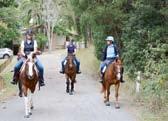
Horseriders, from left, Rhi Herron, Heidi Herron and Michelle Herron on the trail.
Foodies spotlight on May
By Erle Levey
GourMay, a celebration of food and produce from the Mary Valley, gets under way this weekend with an event that is clouded in mystery.
Artist and Artisan - Opera In The Shed, featuring Sydney soprano Donna Cain, starts the month-long festival ... in April, at a destination that has been kept secret.
Mary Valley Chamber of Commerce secretary Malcolm Oakley said the interest in GourMay had been building since it was launched in November.
“It’s been a wonderful achievement in terms of the community becoming involved and creating their own activities to be part of this month-long celebration of food in the region.
“Not only that, it makes people aware of the region on a year-round basis.


“So many people have got on board to support it, and not just the commercial ventures


but the swimming pool, rail trail, country club and the RSL Hall.
“The Mary Valley is about tourism, it’s about agriculture - and putting the two of them together to create Gourmay has been a no-brainer.
“The beauty is the Mary Valley being a long thin region following the Mary River with all the villages gathered along it.
“Virtually all have got involved in one way or another.’’
Imbil, being the centre geographically, will host most of the events with Festival Day on Saturday, 6 May, at the Rail Trail Park.
Kenilworth is holding a tasting festival towards the end of May.
Amamoor has Walking with the Macadamias later this month, in conjunction with the Macadamia Conservation Trust.
It tells the story of the wild macadamias and how all of the macadamias in the world can be traced back to this region.
Opening the festival on Sunday, 30 April, Artist and Artisan will be a bespoke music and slow food experience from 12pm hosted by Green Bowl Edifice.
Featuring naturally-sourced dishes presented throughout the afternoon, it will be highlighted by Donna Cain who learned piano from the age of six and music has been her passion ever since.
Other Week 1 events include a Photographic Exhibition Launch on Thursday, 4 April, at Imbil Community & Sports Club from 6pm.
Food of theValley, Farming, Production and Creation is the creative way in which photographers see the Valley and its close and enduring relationship with food.
Dingo CreekVineyard at Traveston will hold Vintners Lunches each Friday from 12pm. It will see curated local produce plates to share, matched with wines and presented by owners Doug and Michelle Tritton.
Friday, 5 May, will also see the opening of the art exhibition An Epicurean Delight by re-
nown artist Ian Mastin.
This will take place at 6pm at Art on Yabba in Imbil, and include an opera performance by actor and singer, Lincoln Scott.

“GourMay reminds us how important it is for the producers after coming back from a tough period of drought then flooding and Covid,’’ Malcolm said.
“That’s very important.
“People discovered the Mary Valley during Covid. They could drive here within the various lock-down boundaries set, and discover what is being produced here.
“In some ways MaryValley didn’t suffer that much due to it’s location during lockdownmany people being able to travel th 50km and 100km distances.
“Then to find all this fresh air, green hills, blue skies, and how easy it is to get around.’’
For further information, bookings: https:// www.maryvalleycountry.au/gourmay-2023. html
Wildlife Noosa receives much-needed donation
Commonwealth Bank Noosa branch has donated $500 to Wildlife Noosa as part of a nationwide community donation program.

As part of this, the bank has again pledged to donate a further $350,000 Australia-wide to recognise those organisations that make a difference to the communities in which they operate. Each Commonwealth Bank branch and customer-facing team has been allocated $500 to donate to causes important to their local community.
CommonwealthBank’sNoosabranchteam nominated two local community organisations as potential recipients for the donation.
Join
Between December and March, Noosa Branch customers, along with members of the local community, voted for which nominated community organisation they would like to support.

The runner-up community organisation then has the opportunity to participate in the next round of the donation program.
“This is one small way we can get behind our local organisations who continue to do good work within the community. Having our customers and the local community share in the voting process was a wonderful way to collectively recognise Wildlife Noosa,” Rhe-
ian Beresford,
“Wildlife Noosa makes such a valuable contribution to our community and they are planning on using the donation to assist with maintenance costs for the vehicles used to rescue the animals.We’re thrilled to be able to help them continue their great work.”
Be among the first to witness the transformation of the Marcoola branch exterior, as we reveal a captivating image shot by local photographer, Josh Whiting. This is an occasion you won’t want to miss. Mark your calendar and come raise a glass as we showcase our commitment to creativity, innovation, and community.

14 NOOSA TODAY Friday, 28 April, 2023 Call 0488 426 099 www.noosaantennasandsecurity.com.au • Digital antenna installation • Digital antenna repairs and maintenance • CCTV security camera installation & supply • CCTV security maintenance • Domestic & commercial • Fully licenced & Insured • Seniors’ discounts 12601846-MS17-23 Noosa’s Digital TV Antenna & CCTV Expert Advertising Features work! Contact Michelle Gibson michelle.gibson@noosatoday.com.au 5292 5304 Ask us if there is an upcoming advertising feature that suits your business. 12602479-JB17-23 Bendigo and Adelaide Bank Limited ABN 11 068 049 178, AFSL/Australian Credit Licence 237879 OUT_29236528, 19/04/2023 Community Bank Marcoola
us for the unveiling of Josh Whiting’s first photographic mural
When
Time 5.15pm -
Where 1/930 David Low Way, Marcoola YOU’RE INVITED RSVP by text 0492 970 507 12601433-HC17-23 At TK Noosa Shutters and Blinds our focus is supplying the highest quality indoor and outdoor blinds at the lowest price. When Quality, Reliability & Service Are The Key Factors 0409 899 244 | tknoosashutters.com.au Looking for the perfect Window Treatment? 12569721-AI40-22 NEWS NOOSATODAY.COM.AU
Thursday 4 May 2023
6.15pm
Commonwealth Bank Noosa Branch Manager said.
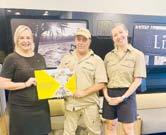
Rheian Beresford - CommBank Noosa Branch manager, William Watson - Wildlife Noosa founder, Victoria Brockfield - Wildlife Noosa.











Friday, 28 April, 2023 NOOSA TODAY 15 12 DAYS | 11 GUIDED TOURS | 1 COUNTRY SET SAIL JAN – MAY & AUG – DEC 2024; 2025 From $9,595pp in Standard stateroom SAVE up to $2,000 per couple Mediterranean Sea Red Sea Cairo Qena Luxor Edfu Esna Aswan Kom Ombo Petra Amman Jerusalem Bethlehem Dead Sea NILE – Cruise – Air • Overnight in Port JORDAN ISRAEL EGYPT Gulf of Tonkin South China Sea Gulf of Thailand CAMBODIA THAILAND VIETNAM Bangkok Hanoi Ha Long Bay Phnom Penh Tân Châu Sa Ðéc Ho Chi Minh City (Saigon) Cái Be Siem Reap Angkor Wat MEKONG MEKONG TONLE SAP LAKE Kampong Cham Mỹ Tho Cruise Air Motor Coach Overnight in Port Atlantic Ocean PORTUGAL SPAIN Porto Braga Régua Lamego Pinhão Barca d’Alva Vega de Terrón Salamanca Coimbra Lisbon Madrid DOURO RIVER Santiago de Compostela Barcelona – Cruise Motor Coach • Overnight in Port MAGNIFICENT MEKONG HANOI – HO CHI MINH CITY or vice versa 15 DAYS | 16 GUIDED TOURS | 2 COUNTRIES SET SAIL JAN – MAR & JUL – DEC 2024; 2025 From $6,795pp in French Balcony stateroom SAVE up to $2,000 per couple PORTUGAL’S RIVER OF GOLD LISBON – PORTO 10 DAYS | 8 GUIDED TOURS | 2 COUNTRIES SET SAIL MAR – DEC 2024; MAR – NOV 2025 From $5,995pp in Standard stateroom SAVE up to $2,000 per couple MEKONG, VIETNAM EXPLORE RIVERS OF THE WORLD 2025 voyages now open for sale *Conditions apply. Prices are per person, in Australian dollars, based on double occupancy, subject to availability, includes all advertised discounts and correct at time of printing. Guests are required to be fully vaccinated against COVID-19 at time of travel. Portugal’s River of Gold based on 08 November 2025 departure. Magnificent Mekong based on 12 August 2024 departure. Pharaohs & Pyramids based on 31 August 2025 departure. The additional $200 per couple saving applies to all new 2024 and 2025 River bookings only made between 03 April and 30 April 2023. All other offers are valid on new bookings made between 03 April and 29 May 2023 unless sold out prior. For full terms and conditions visit viking.com • Deluxe accommodation in riverview stateroom • Shore excursion in every port • Onboard meals and beverages, including wine, beer and soft drinks with lunch and dinner • Specialty coffee, tea and bottled water • Cultural Curriculum: lectures and performances of art, music, cooking, dance and history • Unlimited Wi-Fi • All onboard gratuities, port charges and taxes • No credit card surcharges • Industry-leading Health & Safety Program MOST AWARDED | VIKING INCLUSIVE VALUE LARGEST & MOST MODERN FLEET 138 747 VIKING.COM OR SEE YOUR LOCAL VIKING AGENT ENJOY, IT’S ALL INCLUDED OFFER ENDS SUNDAY OFFER ENDS SUNDAY – Book by 30 April 2023 and save an additional $200per couple on your 2024/2025 river voyage 12601395-JW17-23
Bookfest Noosa back
Bookfest Noosa run by Noosa Daybreak Rotary is on again at the Leisure Centre,Wallace Drive Noosaville from Friday 28 April to Sunday 30 April.
There will be tens of thousands for purchase and the proceeds will be dedicated to local projects including the homeless.
Noosa Daybreak president Ken Kipping said, “Bookfest Noosa is an annual event that the Club runs to raise funds to support projects in the local region.”
“This year we will focus on continuing our work with the homeless in the Noosa Shire and nearby surrounds.”
Previously funds raised from Bookfest have supported new treatments for suicidality, facilities for Noosa Coastguard, support for the local programs for the Salvation Army, research into treatments for Prostate Cancer.
Local organisations supported by Bookfest include Sunshine Butterflies,Hear and Say Centre, Noosa Surf Lifesaving Club, Childhood Cancer Support, Noosa Hospital, Sunshine Coast Rescue Helicopter, University of the Sunshine Coast, and a number of organisations providing support for youth in the Noosa region.
Support for flood relief has been a priority in recent years and significant contributions have been made to individuals and organisations affected by the floods in the Noosa Shire.
Mental health awareness and treatment has also been supported directly and in partnership with other Rotary Clubs and The University of the University of the Sunshine Coast Thompson Institute.

Funds raised by the strong local support
Long lunch for housing
The Tewantin-Noosa Branch of the Queensland Country Women’s Association (QCWA) is excited to announce their partnership with Share the Dignity for the upcoming Noosa long lunch on 4 May at Gusto Riverfront Restaurant, Noosaville.

to choose between buying food or buying sanitary products.
Bookfest Noosa will raise significant money from the sale of pre-loved books.
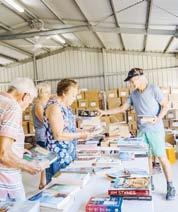


for Bookfest have through these partnerships encouraged many of the partners to contribute additional funds to support the local community.
Ken Kipping said, “I encourage all keen local readers and those that love their books to come along to Bookfest to buy from the huge range of books available on every conceivable topic.”
“All books have been thoroughly sorted and only the best quality books will be offered for sale at $3 each. Children’s books will be sold at $1.”
BOOKFEST NOOSA
QCWA president Leigh McCready said, “Our organisation has always been passionate about supporting women in need, and our partnership with Share the Dignity allows us to do just that in a very tangible way. We are thrilled to welcome Rochelle Courtenay, the founder of Share the Dignity, as our special guest speaker for the Noosa long lunch.”
Share the Dignity is a national charity that is dedicated to providing feminine hygiene products and other essential items to homeless women and women affected by domestic violence. The organisation has a mission to ensure that no woman ever has
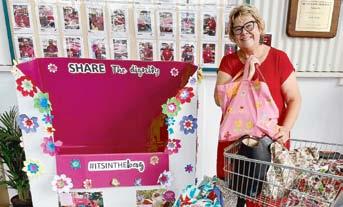
Ms McCready said, “We are inviting guests to bring sanitary items to donate, and all proceeds raised at the event will go towards our 2023 fundraising goal of creating housing for local women in need.”
“We know that homelessness and domestic violence are serious issues in our community, and there are many women who are suffering. So far, we have over $50,000 of funds we plan to contribute to additional housing for vulnerable older women in our community, with a goal of $100,000.”
Rochelle Courtenay, who founded Share the Dignity in 2015, is a passionate advocate for women’s rights and access to sanitary products.
Bookings available at: events.humanitix. com/share-the-dignity
16 NOOSA TODAY Friday, 28 April, 2023 12578110-HC50-22
• Quality pre-loved Books at Bargain Prices • Children’s Corner • Raffle Prize - $1,000 A COVID SAFE EVENT (read the titles from the top left onwards) FRI 28 April - SUN 30 April Daily 9am - 5pm AT THE NOOSA LEISURE CENTRE Wallace Drive, Noosaville SUPPORTING LOCAL HOMELESS & other Rotary Projects 12590528-AI16-23
NEWS NOOSATODAY.COM.AU
International Officer Robyn Shillington with donations for Share the Dignity.
Noosa pays tribute to mate


The Noosa community has paid tribute to popular local surfer and much-loved family member George Corkill, who unexpected passed away on Sunday 16 April.
FathertoDamianandJames,poptoGeorge, Tom, Billy, Jade and Luka, brother to Bill, Joan and Len, and loyal friend to so many; George has left family, friends, and community alike in complete shock, after very sadly yet peacefully passing at the age of just 65.
Having just reached a milestone of 33 years of complete bliss together last week, Julia, his beloved wife, describes their special union as one of most beautiful fairy tales.
“I just loved him more every day, we did everything together, we were inseparable, he was my soulmate,” Julia said.
As a successful artist and gallery owner, Julia often exhibited overseas and George was there by her side on many occasions.

He would joke that he was the packer, security, and courier. They were a great team, and he would always hang her work beautifully, as he did only two weeks ago in the Noosa Library, for its anniversary celebrations.
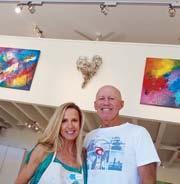
A special friend, Michael Gawthorn said, “They say behind every great man is a great woman, but for Julia, George was the great man behind her.” And Julia wholeheartedly agrees. He was her rock.
Growing up in Sydney, George enjoyed the first half of his life in Epping and the Northern Beaches, with a beautiful family, and love of nature and the beach.
Whilst working in the corporate world, George spent much of his free time surfing with special lifelong friends, who are still so close to this day, even though George moved to Noosa over 33 years ago, they will always have the strongest bond.
Mother’s Day

Sunday May 14th, FREE Barefoot Bowls and a complimentary glass of bubbles for Mum. Bookings Essential.

Tristan James is Elvis Presley

Spectacular 2 hr live performance. Saturday 3rd June from 5.30pm, book online at www.trybooking.com/CHASD or phone the club for details.
For many years George worked proudly for the Noosa Council, joining the group protest in Brisbane against amalgamation in 2007.
Whilst his roles were varied, as he was extremely multiskilled, his later position was in governance, which he really enjoyed.
His colleague Cliona described him as “a calm, funny, gentle, humble loyal and caring man”, sentiments shared by so many.
For George, the Noosa Council was like one big family, establishing very special friendships over the years.
George and Julia have been valued members of the Noosa community for 33 years.
Through their morning walks, talks and swims at Main Beach, they have got to know so many locals.
Walking along the boardwalk for the first time on Monday, Julia said she was so touched and overwhelmed with the outpouring of love
and support, that was showered her way, and which she thanks everyone with all her heart.
The reactions on faces, when they heard the news for the first time is a tribute to George’s popularity.
“George? Our George, but he was the fittest of us all?” one shocked friend said with disbelief. It was true George was so healthy, vital, and fit, which makes it all so hard to comprehend.
His surfing buddies at the river mouth will miss him greatly and are planning on a special paddle out this Friday morning (28 April) for family and friends who would like to participate, as a tribute to his life and legacy and to honour such a cherished and respected mate.
George’s absence will leave a great void in so many lives, but so much gratitude and fond memories of such an amazing man.
Friday, 28 April, 2023 NOOSA TODAY 17 12602303-AI17-23
Tewantin Noosa Bowls Club 65 Hilton Terrace, Tewantin • tewantinbowlsclub.com.au • 5449 7155 12601396-JW17-23 Live Music with Samuel Jordan
April 28th from 5:30pm $13 Lunch specials daily T’s & C’s apply ENTERTAINMENT
TEWANTIN NOOSA BOWLS CLUB
Friday
NOOSATODAY.COM.AU NEWS
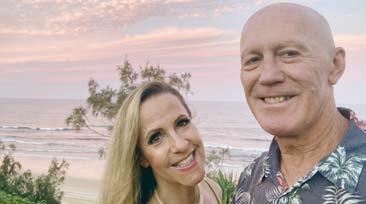
George Corkill enjoying the sunset with his wife of 33 years, Julia.
The Noosa community has paid tribute to George Corkill, who unexpected passed away on Sunday 16 April.
George would joke that he was the packer, security, and courier for Julia’s gallery exhibitions.
Mayor Clare
Noosa Mayor Clare Stewart

Rising costs hit bottom line
As many of you know, Council is currently midway through the development of its 202324 budget. The budget has been supported by the new Corporate Plan, which Council will be adopting this month. It not only sets strategic priorities for the 2024 budget, but also longerterm over the next 5 years through the next election term.
One of the key challenges facing Council’s budget next year (apart from land valuation increases) is the pressure of increasing prices. Whilst CPI last quarter was 7.7 per cent, and ABS are about to release updated figures this week, the goods and services that Council buys are unique compared to most households and businesses so are often subject to different price pressures. For instance, the cost of Council’s key supplies for fuels, asphalt, concrete and other building materials has increased well above 20 per cent over the last 12 months. Our certified agreement for staff wages being pegged to CPI also adds pressure to the budget.
Our record capital works program will continue to be a key feature of the 2024 budget, with many larger multi-year projects already underway leading into next year and are partfunded through significant State and Federal grants. These include the Garth Prowd bridge, sand erosion works at Noosa Woods dog beach, Ed Webb Park, sustainable transport initiatives, McKinnon Drive Sports Complex and upgrade of the Eumundi RoadWaste Management Facility
Added to the workload of the record capital

works program is the ongoing impacts from the March 2022 flood events. The total cost of the infrastructure repair works is anticipated to exceed $80 million, which includes the key works on Black Mountain road which is out to tender this week to source a supplier to undertake the construction later this year. Beyond the initial grant-funded road repair works, Council has also been successful in securing grants for various recovery and resilience pro-
grams during the 2024 financial year which will continue to support our community’s recovery efforts.
Once the draft budget has been prepared, Council will again seek community feedback on the draft budget during the last two weeks in May before it is finalised and adopted in June.
Council is already well-informed with setting budget priorities, following the very successful community engagement of its new Corporate Plan which saw over 1,000 responses late last year. Then more specific comments on the draft plan a few months ago.
Rest assured that as we continue through budget deliberations, I am advocating strongly for a back-to-basics approach. Let’s stick to core business as financial pressures are being faced across the board. I hope all councillors support me in this endeavour as we deliver a budget focused firmly on community with the notion that we must ‘save where we can to spend where we must’.
In regards to the Noosa Heads Lions Park, during the council debate, I, along with councillors Lorentson and Finzel, felt it was important to support the staff recommendation to approve the use of the greenspace for paid parking on a temporary basis for a further 12 months for all Queensland school holidays and long weekends. This would allow time for community consultation and allow us to discuss options with the Tewantin-Noosa Lions Club.
We all want the park returned to a green space, which it will be, but we wanted it to be
done in accordance with what our staff recommended. I respect that a majority of 4-3 vote at the council meeting opted to endorse the alternate decision.
For over 20 years, the Tewantin-Noosa Lions Club has continuously managed and operated the paid parking on Noosa Heads Lions Park on behalf of council with the revenue shared equally between council, to fund park refurbishment and traffic management costs, and the Lions for their charitable works.
Not only have Lions Club members worked 16,500 volunteer hours over the years running the paid parking, but let us not forget, that the paid parking is paid for by our tourists, who directly inject those funds into our community through the support of the Lions. The Lions Club’s 50 per cent share directly benefits the wider Noosa community through their activities and administration such as the installation of the all-abilities beach mat at Noosa Main Beach. Paid parking, by tourists, enabled things such as the beach mat to be purchased for our community.
The Lions Club has presented a petition to Noosa Council to keep the Noosa Heads Lions Park open for parking during all school holidays. In just 10 days, the Lions gathered 2315 signatures to support this position.
This group has done an amazing job and I thank them for all that they do for our community.
Until next month, Stay safe, Clare
12599974-JW16-23
NEWS NOOSATODAY.COM.AU
Noosa Mayor Clare Stewart
Great news for the country that won’t cost a cent
An open letter to Treasurer Jim Chalmers regarding the Budget
Dear Dr Chalmers, There’s a crisis in our country you can fix in your first budget, at no extra cost.
With the stroke of a pen you could help secure the future of critical regional news services, using money already allocated in the budget.
All you need to do is allocate a fairer percentage of the federal government’s advertising budget to local and regional news services, rather than spending almost all of it with corporate capital city media and foreign-owned digital platforms (which don’t produce any content or employ any journalists).

This can be achieved by simply adopting the Victorian Govt policy that mandates a weekly full page government advertisement in every regional and community paper.
Local and regional newspapers connect more than 80% of the country, but they get almost 0% of the government advertising spend.
In an era where false news spreads faster on social media than the truth does, trusted local news services reach more regional Australians than any other medium. And unlike other media, every government dollar spent with a local newspaper is also an investment in regional journalism jobs.
This shouldn’t be controversial.
A recent parliamentary inquiry recommended that a minimum of 20% of government print advertising should be placed with regional news services. A recent study conducted by Deakin University recommended the same thing. In fact, the Minister for Communications, Michelle Rowland, has been advocating for more regional newspaper advertising for many years.
We know there may be bigger budget issues, but this small policy change would be a simple and fair solution to a growing problem for regional Australia. A policy that ensures weekly federal government advertising is placed in regional newspapers would be great news for the country. And it won’t cost you a cent.
Yours sincerely,
You Tony Kendall
 Tony Kendall President Managing Director Country Press Australia Australian Community Media

 Andrew Manuel
Friday, 28 April, 2023 NOOSA TODAY 19
12602130-HC17-23
Authorised by A Manuel, 9 Howe Street Balaklava SA 5461
The Guide
the Dog house
10, Saturday, 6.30pm
Give “paws” for thought with this heartwarming, moving treat, returning with a new season of the British original. Complete with a litter of furry friends, it’s essentially a dating show for humans and mutts. Beware though: tonight’s offering is prime Kleenex material. Percy the cockapoo (pictured) is paired with young boys Oliver and Felix, whose parents are deaf. It’s hoped the he will be a welcome distraction, especially for Oliver, who has trouble sleeping because he worries about his mum and dad.

soCCer: a-league WoMen granD final

10 Bold, Sunday, 3pm
It’s a historic year for women’s soccer (or football, if you will) in Australia. With the Matildas recently scoring a landmark victory over England, breaking a 30-game winning streak ahead of the FIFA Women’s World Cup on home soil in July, there’s never been a better time to get behind the sport. In what could be another fairytale finish, Western United (pictured) will play in this year’s A-League Grand Final today, hoping to finish their debut season with the championship trophy in hand. Tara Rushton leads the coverage live from Sydney’s CommBank Stadium, with commentary from Robbie Thomson and former A-League star Grace Gill.
Friday, April 28
6.00 The Drum.
7.00 ABC News.
7.30 Gardening Australia. Hannah Moloney plants with her dad.
8.30 Traces. (Mal) The task facing McKinven is ever more daunting, especially now that his wife Azra is joining the investigation.
9.20 Miniseries: Miss Fisher And The Crypt Of Tears. (Mv, R) Part 2 of 2. Phryne and Jack find the third and most important Crypt treasure.
10.10 Aunty Donna’s Coffee Cafe. (Ml, R) Broden goes to a buck’s party.
10.35 ABC Late News.
10.55 Close To Me. (Madl, R)
11.45 Smother. (Mlv, R)
1.30 Rage. (MA15+adhlnsv)
6.00 Mastermind Australia. (PG)
6.30 SBS World News.
7.35 Wrecks That Changed The World: Scotland’s Sea Secrets. (Final, PG) Takes a look at shipwrecks.
8.30 Robson Green’s British Adventure: The River Towy And Abersoch. Part 1 of 4.
9.25 Exploring Northern Ireland. (PGas, R) Part 3 of 4.
10.20 SBS World News Late.
10.50 Darkness: Those Who Kill. (Mav)
11.45 Cheyenne & Lola. (MA15+l, R) 1.50 Romulus. (MA15+av) 3.40 Mastermind Australia. (R) 4.40 Bamay. (R) 5.00 NHK World English News Morning. 5.30 ANC Philippines The World Tonight.
Who Do You think You are?
SBS, Tuesday, 7.30pm
MasterChef australia

10, Monday, 7.30pm
While many cooks follow recipes dutifully, step-by-step, we all know those who can craft masterpieces from a closed recipe book, adding and substituting ingredients on the fly. The makers of MasterChefare surely in the latter category – deftly mixing classic flavours with new tastes for Fans&Favourites, making the kids happy with MasterChef Junior, and now keeping us on our toes with a short-yet-sweet Secrets &Surprisesseason. In tonight’s premiere, the contestants enter the kitchen hoping to earn one of this year’s 18 coveted aprons, and are immediately thrown in the deep end of the fryer when Jamie Oliver (pictured, second from left, with judges Andy Allen, Jock Zonfrillo and Melissa Leong) arrives to kick-start the competition.
Exquisitely researched and invariably fascinating, this deep dive into the genealogy of prominent Australians returns tonight, with this year’s line-up including Rhonda Burchmore, Peter Helliar and Derryn Hinch. Starting things off is Barry Humphries (pictured), the performer behind Dame Edna Everage and Sir Les Patterson. Confident he’s the most interesting person in his family tree, Humphries sets out to be proven wrong, explaining, “My mother used to say, in mixed company, ‘We don’t know where Barry came from…’ Well, I began to think, where did I come from?” He starts out by investigating an 18th-century royal scandal in his father’s family tree.

6.00 Seven Local News.
6.30 Seven News.
7.00 Better Homes And Gardens. Dr Harry Cooper tries to help a bulldog.
8.30 MOVIE: Angels & Demons. (2009, Mav, R) A professor and physicist race against time to find four kidnapped cardinals. Tom Hanks, Ewan McGregor, Ayelet Zurer.
11.15 To Be Advised.
12.15 What The Killer Did Next: Sian Roberts. (Mav, R)
1.15 Britain’s Busiest Airport: Heathrow. (PG, R)
2.00 Home Shopping. (R)
4.00 Million Dollar Minute. (R)
5.00 NBC Today.
6.00 Nine News.
7.00 A Current Affair.
7.30 Rugby League. NRL. Round 9. Brisbane Broncos v South Sydney Rabbitohs.
9.55 Golden Point. Post-match NRL wrap-up.
10.40 MOVIE: Beirut. (2018, MA15+alv, R)
A former US diplomat is called back into service. Jon Hamm.
12.40 Tipping Point. (PG, R)
1.30 TV Shop: Home Shopping. (R)
4.00 Postcards. (PG, R)
4.30 Global Shop. (R)
5.00 TV Shop: Home Shopping. (R)
5.30 Skippy The Bush Kangaroo. (R)
6.30 The Project. A look at the day’s news and events.
7.30 Bondi Rescue. (PGaln) Chappo sees a swimmer struggling.
8.30 Ambulance Australia. (Mal, R) Follows dispatchers and paramedics working for NSW Ambulance’s Sydney operations.
9.30 Territory Cops. (Mav, R) The constables focus on a major drug and alcohol issue affecting the community.
10.30 Ambulance Australia. (Madlv, R)
11.30 The Project. (R)
12.30 The Late Show With Stephen Colbert. (PG)
1.30 Home Shopping. (R)
20 NOOSA TODAY Friday, 28 April, 2023
ABC TV (2) SBS (3) SEVEN (7) TEN (5, 1) NINE (8, 9) 6.00 News Breakfast. 9.00 ABC News Mornings. 10.00 Great Southern Landscapes. (R) 10.30 The Pacific. (R) 11.00 Australia Remastered. (R) 12.00 ABC News At Noon. 1.00 Midsomer Murders. (Mv, R) 2.30 QI. (PG, R) 3.00 Escape From The City. (R) 4.00 Antiques Roadshow. (R) 5.00 Anh’s Brush With Fame. (PG, R) 5.30 Hard Quiz. (PG, R) 6.00 WorldWatch. 9.00 Destination Flavour China Bitesize. (R) 9.10 Legacy List. (PG, R) 10.15 Paddington Station 24/7. (PGal, R) 11.05 Icons. (Man, R) 12.00 WorldWatch. 2.00 Mastermind Aust. (R) 3.00 NITV News: Nula. 3.30 Destination Flavour China Bitesize. (R) 3.40 The Cook Up With Adam Liaw. (PG, R) 4.10 Royal Doctors: Treating the Monarchy. (PGa, R) 5.05 Jeopardy! (R) 5.30 Letters And Numbers. (R) 6.00 Sunrise. 9.00 The Morning Show. (PG) 11.30 Seven Morning News. 12.00 MOVIE: My Life As A Dead Girl. (2015, Masv, R) Cassandra Scerbo. 2.00 House Of Wellness. (PG) 3.00 The Chase. (R) 4.00 Seven News At 4. 5.00 The Chase Australia. Hosted by Larry Emdur. 6.00 Today. 9.00 Today Extra. (PG) 11.30 Morning News. 12.00 MOVIE: Love, Game, Match. (2022, PGa) 1.45 Garden Gurus Moments. (R) 2.00 Pointless. (PG) 3.00 Tipping Point. (PG, R) 4.00 Afternoon News. 4.30 Millionaire Hot Seat. (R) 5.30 WIN News. 6.00 The Talk. (PGa) 7.00 Farm To Fork. (PG, R) 7.30 GCBC. (R) 8.00 Everyday Gourmet. (R) 8.30 Ent. Tonight. 9.00 Judge Judy. (PG, R) 9.30 The Bold And The Beautiful. (PG, R) 10.00 Studio 10. (PG) 12.00 10 News First: Midday. 1.00 Dr Phil. (PGa, R) 2.00 I’m A Celebrity… Get Me Out Of Here! (PGals, R) 3.30 Judge Judy. (PG, R) 4.00 Good Chef Bad Chef. 4.30 The Bold And The Beautiful. (PG) 5.00 10 News First.
CONSUMER ADVICE (P) Pre-school (C) Children (PG) Parental Guidance Recommended (M) Mature Audiences (MA15+) Mature Audiences Only (AV15+) Extreme Adult Violence (R) Repeat (a) Adult themes (d) Drug references (h) Horror (s) Sex references (l) Language (m) Medical procedures (n) Nudity (v) Violence. 6am WorldWatch. 9.30 Shortland St. 11.00 Front Up. Noon Rise. 1.50 Rivals. 2.20 Nuts And Bolts. 2.50 Cyberwar. 3.20 BBC News At Ten. 3.50 ABC World News Tonight With David Muir. 4.15 PBS News. 5.15 Takeshi’s Castle Indonesia. 5.45 The Joy Of Painting With Bob Ross. 6.15 Forged In Fire. 7.05 Jeopardy! 7.35 8 Out Of 10 Cats Does Countdown. 8.30 Hoarders. 9.20 Sex Before The Internet. (Final) 10.15 Stuck. 11.30 VICE News Tonight. 12.25am United Shades Of America. 1.55 Point Blank: Gun Obsession. 2.50 NHK World English News. 5.00 Al Jazeera Newshour. 6am Home Shopping. 6.30 Escape To The Country. 7.30 RSPCA Animal Rescue. 8.00 Home Shopping. 8.30 Million Dollar Minute. 9.30 NBC Today. Noon Better Homes And Gardens. 1.00 House Of Wellness. 2.00 Discover With RAA Travel. 2.30 Australia’s Amazing Homes. 3.30 RSPCA Animal Rescue. 4.30 Better Homes And Gardens. 5.30 Escape To The Country. 6.30 Bargain Hunt. 7.30 Border Security: International. 8.30 Escape To The Country. 9.30 Impossible Builds. 10.30 Australia’s Amazing Homes. 11.30 Border Security: Int. 12.30am Escape To The Country. 2.30 Late Programs. 6am TV Shop: Home Shopping. 7.00 Creflo Dollar Ministries. 7.30 TV Shop: Home Shopping. 10.30 Pointless. 11.30 My Favorite Martian. Noon Days Of Our Lives. 12.55 The Young And The Restless. 1.50 Britain’s Best Home Cook. 3.00 One Star To Five Star. 3.30 MOVIE: The Bridal Path. (1959) 5.30 Dr Quinn, Medicine Woman. 6.30 Antiques Roadshow. 7.30 Escape To The Chateau. 8.30 MOVIE: This Is 40. (2012, MA15+) 11.10 MOVIE: Begin Again. (2013, M) 1.10am TV Shop: Home Shopping. 5.00 Joyce Meyer. 5.30 TV Shop: Home Shopping. 6am Home Shopping. 7.30 Infomercials. 8.00 Pooches At Play. 8.30 Exploring Off The Grid. 9.00 A-Leagues All Access. 9.30 Scorpion. 10.30 JAG. 12.30pm NCIS. 2.30 Scorpion. 3.30 Diagnosis Murder. 5.30 JAG. 7.30 Bull. 8.30 NCIS. 9.25 NCIS: Los Angeles. 10.20 Evil. 11.15 MacGyver. 12.15am Home Shopping. 2.15 Diagnosis Murder. 4.05 JAG. 10 BOLD (53, 12) 9GEM (81, 92) 7TWO (72) SBS VICELAND (31) 6am Children’s Programs. 5.20pm Pfffirates. 5.30 Kiri And Lou. 5.35 Interstellar Ella. 5.45 Hey Duggee. 5.55 Kangaroo Beach. 6.05 Octonauts. 6.20 Bluey. 6.30 Peter Rabbit. 6.40 Ben And Holly. 6.55 Shaun The Sheep. 7.05 Grace’s Amazing Machines. 7.20 Bluey. 7.30 Spicks And Specks. 8.00 Hard Quiz. 8.30 MOVIE: The Tracker. (2002, M) 10.00 Doctor Who. 10.50 Silent Witness. 11.45 Killing Eve. 12.30am High Fidelity. (Final) 1.00 Friday Night Dinner. 1.20 Louis Theroux: Miami Mega Jail. 2.20 ABC News Update. 2.25 Close. 5.05 Beep And Mort. 5.25 Pip And Posy. 5.35 Remy & Boo. 5.45 Late Programs. ABC TV PLUS (22) 6am Children’s Programs. Noon MOVIE: Despicable Me 2. (2013, PG) 2.00 Full House. 2.30 3rd Rock. 3.30 Raymond. 4.00 The Nanny. 5.00 Bewitched. 5.30 Transformers: Cyberverse. 5.40 MOVIE: Zoom. (2006, PG) 7.30 MOVIE: The Lego Movie. (2014, PG) 9.30 MOVIE: Central Intelligence. (2016, M) 11.40 Duncanville. 12.10am Love Island. 1.10 Below Deck Mediterranean. 2.00 Everybody Loves Raymond. 2.30 Full House. 3.00 Bakugan: Geogan Rising. 3.30 LEGO Friends: Girls On A Mission. 4.00 TV Shop: Home Shopping. 5.00 Pokémon Ultimate Journeys. 5.30 Yu-Gi-Oh! Sevens. 6am Mark Berg’s Fishing Addiction. 7.00 My Fishing Place. 7.30 Creek To Coast. 8.00 A Football Life. 9.00 America’s Game: The Super Bowl Champions. 10.00 NFL Draft. 1.30pm Pawn Stars. 2.00 Close Encounters Down Under. 3.00 Timbersports. 3.30 Pawn Stars South Africa. 4.00 Pawn Stars UK. 4.30 Shipping Wars. 5.00 Storage Wars: Texas. 5.30 American Restoration. 6.00 American Pickers. 7.00 AFL: Friday Night Countdown. 7.30 Football. AFL. Round 7. St Kilda v Port Adelaide. 10.30 AFL Post-Game Show. 11.00 Armchair Experts. Midnight MOVIE: Wilson. (2017, MA15+) 2.00 Late Programs. 9GO! (82, 93) 6am The Darkside. Continued. (2013, PG) 6.50 55 Steps. (2017, PG) 8.55 Little Men. (2016, PG) 10.30 A Translator. (2018, M, Spanish) 12.30pm The Best Offer. (2013, M) 2.55 The Movie Show. 3.25 Another Mother’s Son. (2017, PG) 5.20 The Lighthorsemen. (1987) 7.30 Red Sun. (1971, M) 9.35 Three Kings. (1999) 11.45 The Master. (2012, MA15+) 2.10am Seven Years In Tibet. (1997, M) 4.40 The Movie Show. 5.10 The Lighthorsemen. (1987) 6am The Late Show With Stephen Colbert. 7.00 Becker. 8.00 Seinfeld. 9.30 The King Of Queens. 10.30 The Middle. 11.30 Becker. 12.30pm Frasier. 1.30 Seinfeld. 3.00 The King Of Queens. 4.00 Becker. 5.00 Frasier. 6.00 Friends. 8.00 The Big Bang Theory. 9.30 Two And A Half Men. 10.30 Charmed. 11.30 Frasier. Midnight Home Shopping. 1.30 The Late Show With Stephen Colbert. 2.30 The Big Bang Theory. 3.30 Becker. 4.30 Home Shopping. 5.30 Infomercials. 10 PEACH (52, 11) 7MATE (74) SBS WORLD MOVIES (32) 6am Morning Programs. 10.00 Undiscovered Vistas. 10.50 Living By The Stars. 11.00 Going Places. Noon Stand Up And Be Counted: A NAIDOC Concert Special. 2.00 Shortland St. 2.30 The Cook Up. 3.00 Molly Of Denali. 3.25 Red Dirt Riders. 3.40 Aussie Bush Tales. 3.55 Seven Sacred Laws. 4.00 Grace Beside Me. 4.30 Spartakus And The Sun Beneath The Sea. 5.00 Our Stories. 5.30 NITV News: Nula. 6.00 Bamay. 6.40 Undiscovered Vistas. 7.30 MOVIE: Flight Of The Navigator. (1986) 9.05 MOVIE: Friday After Next. (2002) 10.35 Going Places. 11.35 Late Programs. N ITV (34)
PICK OF
WEEK
THE
QLD
Saturday, April 29
ABC TV (2) SBS (3)
6.00 Rage. (PG) 6.55 Rage Closer. (R) 7.00 Weekend Breakfast. 9.00 Rage. (PG) 12.00
ABC News At Noon. 12.30 Traces. (Mal, R) 1.15 Capital. (Ml, R) 2.05 The Durrells. (PG, R) 3.05 Grand Designs. (PG, R) 3.55 Landline. (R) 4.25

Scottish Vets Down Under. (PG, R) 4.50 The Dark Side Of The Universe. (R)
5.50 Great Australian Stuff: Home. (PG, R) Part 3 of 4.
6.50 Bluey. (R) Bluey and Bingo explore their holiday hotel room.
7.00 ABC News. A look at the top stories of the day.
7.30 The Royal Variety Performance 2022. (PG, R) Featuring a tribute to Queen Elizabeth II. From the Royal Albert Hall, London.
9.20 A Grand Royal Design. (R)
An inside look at a secret project that King Charles has been working on for over a decade, the purchase and ambitious restoration of Dumfries House, a rundown estate in one of the most deprived parts of the UK.
10.15 Miniseries: Ridley Road. (Mv, R) Part 2 of 4.
11.15 Fires. (Mal, R) Tash and Mott head to a beachside community.
12.10 Rage. (MA15+adhlnsv) Guest programmed by Jen Cloher.
6.00 WorldWatch. 9.00 J Schwanke’s Life In Bloom. (PG) 10.00 Britain’s Great Outdoors. (R) 11.00 The World From Above. (PGa, R) 12.00 WorldWatch. 2.00 Figure Skating.
ISU World Synchronised Championships.
Highlights. 4.00 Motorcycle Racing. FIM Superbike World Championship. Round 3.
Highlights. 5.00 Going Places. (R) 5.30 Walking Wartime England. (Premiere)
6.30 SBS World News.
7.30 The Wonders Of Europe: Alhambra, Treasure Of Andalusia. (PG) Part 4 of 4.
8.30 Kensington Palace: Behind Closed Doors. (PG, R) Part 1 of 2. Takes a look at Kensington Palace, the private home of the British royal family.
10.20 Lennon’s Last Weekend. (Mad, R) Takes a look at John Lennon’s final interview.
11.30 Outlander. (MA15+)
12.40 Germinal. (Mav)
1.45 Big Fat Quiz Of Everything. (Mls, R)
3.25 Mastermind Australia. (R)
4.30 Bamay. (R)
5.00 NHK World English News Morning. 5.15 France 24 Feature. 5.30 ANC Philippines The World Tonight.
SEVEN (7)
6.00 NBC Today. 7.00 Weekend Sunrise. 10.00 The Morning Show. (PG)
12.00 To Be Advised.
Sunday, April 30
6.30 Compass: Lottery Of Life. A look at the issue of organ donation.
7.00 ABC News. A look at the top stories of the day.
7.30 Grand Designs: Canterbury. Hosted by Kevin McCloud.
8.20 Midsomer Murders. (Ma) Part 3 of 4. Village tensions reach crisis point thanks to the popularity of a local artisan bakery and mill.
9.50 Close To Me. (Final, Mals)
Jo learns what happened to her.
10.40 MotherFatherSon. (Madlv, R) Twenty years of hurt come to a head.
11.40 Road To Now: Globalisation. (PG, R)
1.35 Rage. (MA15+adhlnsv)
3.05 The Heights. (PG, R)
5.00 Insiders. (R)
WorldWatch. 9.00 J Schwanke’s Life In Bloom. (PG) 10.00 Britain’s Great Outdoors. (R) 11.00 The World From Above. (PG, R) 12.00 WorldWatch. 1.00 Australian Superbike Championship. Round 3. 4.00 Cycling. UCI World Tour. Liege-Bastogne-Liege. Women’s race. Highlights. 4.30 Cycling. UCI World Tour. Liege-Bastogne-Liege. Men’s race. Highlights. 5.30
6.30 SBS World News.
7.30 Secrets Of The SabreToothed Tiger. (PG) A look at the sabre-toothed tiger.
8.30 The Andes Tragedy: 50 Years Later. Follows an expedition returning to the site of the crash of Uruguayan Air Force flight 571 in the Andes.
9.25 Elizabeth I And II: The Golden Queens. (R) Part 1 of 2.
11.15 The Queen’s Guard: A Year In Service. (Ml, R)
1.05 24 Hours In Emergency. (Mal, R) 2.00
The Buildings That Fought Hitler. (PG, R)
3.40 The Source. (Ma, R) 4.30 Mastermind Australia. (R) 5.00 NHK World English News
Morning. 5.15 France 24 Feature. 5.30 Al Jazeera News.
6.00 Seven News.
7.00 Border Security: Australia’s Front Line. (PG, R) A couple have a prohibited item.
7.30 MOVIE: Men In Black II. (2002, PGh, R) A secret agent, who specialises in policing aliens living covertly on Earth, enlists the help of a former partner. Tommy Lee Jones, Will Smith.
9.15 MOVIE: Deadpool 2. (2018, MA15+lv, R) Deadpool recruits a team to protect a young boy who is being targeted by a time travelling cyborg. Ryan Reynolds, Morena Baccarin, Josh Brolin.
11.40 To Be Advised.
12.40 Motor Racing. Supercars Championship. Round 3. Perth SuperSprint. Day 1. Highlights.
2.00 Home Shopping. (R)
4.00 Get Arty. (R)
5.00 House Of Wellness. (PG)
6.00 Nine News Saturday.
7.00 A Current Affair.
7.30 MOVIE: Harry Potter And The Prisoner Of Azkaban. (2004, PGhv, R)
Harry Potter learns that an escaped prisoner with ties to Voldemort is hunting him. Daniel Radcliffe, Rupert Grint.
10.15 MOVIE: Conan The Destroyer. (1984, Mv, R) A warrior embarks on a quest. Arnold Schwarzenegger, Grace Jones.
12.05 MOVIE: Nerve. (2016, Ma, R)
Players enter a dangerous interactive game. Emma Roberts.
1.50 9Honey Hacks. (R)
2.00 The Incredible Journey Presents. (PGa)
2.30 TV Shop: Home Shopping. (R)
4.30 Global Shop. (R)
5.00 TV Shop: Home Shopping. (R)
5.30 Helping Hands. (PG, R)
6.00 Bondi Rescue. (PGaln, R) Chappo sees a swimmer struggling.
6.30 The Dog House. (Return, PG) A Yorkshire terrier pair show size does not matter.
7.30 The Dog House Australia. (PG, R) Narrated by Dr Chris Brown.
8.30 Blue Bloods. (Mv) Jamie learns that Eddie’s friend’s restaurant may be a drug front. Frank questions a cop whose online profile features naked photos. Erin is accused of causing the suicide of a former colleague.
9.30 CSI: Vegas. (Mm) Medical examiner Sonya’s life is in jeopardy when she is exposed to a mysterious poison.
10.30 NCIS: Hawai’i. (Mv, R) Captain Milius returns to Hawai’i.
11.30 Fire Country. (Mv, R)
12.30 Home Shopping. (R) 5.00 Hour Of Power.
Morning Programs. 1pm Blokesworld. 1.30 Cool Cars With Dermott And Elise. 2.00 Motor Racing. Night Thunder. Krikke Boys Shootout. H’lights. 3.00 Rides Down Under: Workshop Wars.
E C’ship. Berlin ePrix. 5.00 About A Boy.
MOVIE: Smokey And The Bandit. (1977,
6.00 Seven News.
7.00 Farmer Wants A Wife. (PGl) Hosted by Samantha Armytage.
8.30 7NEWS Spotlight. An exclusive, special investigation.
9.30 The Latest: Seven News.
10.00 Born To Kill? Herbert Mullin. (MA15+av) A look at the case of Herbert Mullin.
11.00 Quantum Leap. (Ma) Ben leaps into a public defender.
12.00 Motor Racing. Supercars Championship. Round 3. Perth SuperSprint. Day 2. Highlights.
1.00 The Rookie. (Madv, R)
2.00 Home Shopping. (R)
3.30 Million Dollar Minute. (R)
4.00 NBC Today.
5.00 Seven Early News. 5.30 Sunrise.
6.00 Nine News Sunday.
7.00 LEGO Masters: Grand Masters. (PG)
8.40 60 Minutes. Current affairs program, investigating, analysing and uncovering the issues affecting all Australians.
9.40 Nine News Late. A look at the latest news and events.
10.10 Australian Crime Stories: Attack On Police HQ. (Malv, R) A look at the Russell Street bombing.
11.10 The First 48. (MA15+al)
12.00 Law & Order: Organized Crime. (MA15+adv, R)
12.50 The Garden Gurus. (R) 1.20 9Honey Hacks. (PG, R) 1.30 TV Shop: Home Shopping.
(R) 4.00 Believer’s Voice Of Victory. (PGa)
4.30 Take Two. (R) 5.00 News Early Edition.
5.30 Today.
6.30 The Sunday Project. A look at the day’s news.
7.30 I’m A Celebrity… Get Me Out Of Here! (Final, PGals) The top three celebrities receive a visit from their loved ones, before the King or Queen of the jungle is crowned.
9.00 The Last Last Late Late Show Special. In celebration of the last episode of TheLateLateShowWithJamesCorden Tom Cruise reunites with presenter James Corden for one final over-the-top sketch.
10.00 NCIS: Hawai’i. (Mav) NCIS Special Agent Jane Tennant is on a helicopter interrogating a suspect when it crashes.
11.00 The Sunday Project. (R) A look at the day’s news. 12.00 Home Shopping. (R)
CBS Mornings.
Friday, 28 April, 2023 NOOSA TODAY 21
1.30 Football. AFL. Round 7. Brisbane Lions v Fremantle. 4.30 Border Security: Australia’s Front Line. (PG, R) 5.00 Seven News At 5. 5.30 Creek To Coast. 6.00 Getaway. (PG, R) 6.30 A Current Affair. (R) 7.00 Weekend Today. 10.00 Today Extra: Saturday. (PG) 12.00 Destination WA. 12.30 The Pet Rescuers. (PG) 1.00 Living Proof. (PG) 1.30 LEGO Masters: Grand Masters. (PG, R) 4.30 The Garden Gurus. 5.00 News: First At Five. 5.30 Getaway. (PG) 6am Morning Programs. 7.30 Escape Fishing. (R) 8.00 Everyday Gourmet. (R) 8.30 What’s Up Down Under. (R) 9.00 Farm To Fork. (PG, R) 9.30 GCBC. (R) 10.00 St10. (PG) 12.00 I’m A Celebrity… Get Me Out Of Here! (PGals, R) 1.30 Jamie Oliver: Together. 2.40 Everyday Gourmet. (R) 3.00 What’s Up Down Under. 3.30 My Market Kitchen. (R) 4.00 Farm To Fork. (R) 4.30 Taste Of Aust. (R) 5.00 News.
6am WorldWatch. 9.30 Shortland St. 11.00 Front Up. Noon
To Eurovision 2020: The Winners. 2.10 Jeopardy!
WorldWatch. 4.30 MOVIE: Leave
Trace. (2018, PG) 6.30 RocKwiz Salutes The Legends. 7.35 Impossible Engineering. 8.30 Seeking Fire. 10.05 The Artist’s View. 10.30 Planet A. (Final) 11.25 Vikings. 1.15am MOVIE: Miles Ahead. (2015, M) 3.05 NHK World English News. 5.00 Al Jazeera. 6am Morning Programs. 11.00 House Of Wellness. Noon Horse Racing. SA Oaks Day, Queensland Guineas Day, Thoroughbred Club Race Day and Bookmakers Recognition Day. 5.00 Border Security: Int. 5.30 Animal Rescue. 6.00 Dog Patrol. 6.30 The Highland Vet. 7.30 The Yorkshire Vet. 8.30 Escape To The Country. 9.30 I Escaped To The Country. 10.30 Secrets Of Beautiful Gardens. 11.30 Late Programs. 6am Morning Programs. 10.30 Edgar Wallace Mysteries. 11.50 My Favorite Martian. 12.20pm MOVIE: Johnny You’re Wanted. (1956) 1.50 MOVIE: South Of Algiers. (1953) 3.45 MOVIE: Hawaii. (1966, PG) 7.00 Rugby Union. Super Rugby Pacific. Round 10. Queensland Reds v Western Force. 9.30 Super Rugby Pacific Post-Match. 9.45 MOVIE: Blown Away. (1994, M) 12.15am Late Programs. 6am Home Shopping. 7.00 Infomercials. 8.30 Home Shopping. 9.00 Destination Dessert. 10.00 Diagnosis Murder. Noon Escape Fishing With ET. 12.30 iFish. 1.00 Scorpion. 2.00 A-Leagues All Access. 2.30 Luxury Escapes. 3.00 JAG. 5.00 Escape Fishing With ET. 5.30 Reel Action. 6.00 JAG. 7.00 Soccer. A-League Men. Matchweek 26. Melbourne Victory v Brisbane Roar. 10.15 SEAL Team. 11.10 Late Programs. 7TWO (72) 6am Children’s Programs. 7.05pm Grace’s Amazing Machines. 7.20 Bluey. 7.30 Spicks And Specks. 8.00 Whose Line Is It Anyway? 8.20 Live At The Apollo. 9.10 Robot Wars. 10.10 Penn & Teller: Fool Us. 10.55 The Set. 11.30 Doctor Who. 12.15am QI. 12.45 Would I Lie To You? 1.15 The Young Offenders. 1.50 ABC News Update. 1.55 Close. 5.05 Beep And Mort. 5.25 Pip And Posy. 5.35 Late Programs. ABC TV PLUS (22) 6am Children’s Programs. 1.30pm MOVIE: Pokémon The Movie: Kyurem Vs The Sword Of Justice. (2012) 2.55 Motor Racing. Formula E C’ship. Berlin ePrix. 4.00 Motor Racing. Formula
5.30
PG) 7.30
9.30
Five.
Programs. 6am
Last Stop Garage. 4.30 Irish Pickers. 5.30 Storage Wars. 6.00 Pawn Stars. 6.30 AFL Pre-Game. 7.00 Football. AFL. Round 7. Melbourne v North Melbourne. 10.30 AFL PostGame. 11.00 Late Programs. 6am The Lighthorsemen. Continued. (1987, PG) 7.20 Forever Enthralled. (2008, PG, Mandarin) 10.00 Mum’s List. (2016, M) 11.55 Seven Years In Tibet. (1997, M) 2.25pm 55 Steps. (2017, PG) 4.30 The Truth. (2019, PG, French) 6.30 Breaker Morant. (1980, PG) 8.30 Jane Got A Gun. (2015, MA15+) 10.20 Piercing. (2018, MA15+) 11.50 Bol. (2011, MA15+, Urdu) 2.30am Late Programs. 6am The Late Show With Stephen Colbert. 7.00 The King Of Queens. 8.00 Frasier. 9.00 Becker. 10.00 Friends. 11.30 The King Of Queens. 12.30pm Frasier. 1.00 The Neighborhood. 2.00 The Big Bang Theory. 2.30 I’m A Celebrity… Get Me Out Of Here! 5.30 The Big Bang Theory. 10.15 Friends. 12.15am Shopping. 1.45 Stephen Colbert. 2.45 Mom. 3.35 Charmed. 4.30 Shopping. 5.30 Infomercials. 7MATE (74) 6am Morning Programs. 1.20pm Undiscovered Vistas. 2.10 Going Places. 3.10 Lagau Danalaig: An Island Life. 4.10 Always Was Always Will Be. 4.50 Bush Bands Bash. 5.50 Power To The People. 6.20 First People’s Kitchen. 6.50 News. 7.00 The Last Land: Gespe’gewa’gi. 7.30 Call Of The Baby Beluga. 8.30 Alone Australia. 9.30 MOVIE: Natural Born Killers. (1994, MA15+) 11.30 Late Programs. NITV (34)
Road
2.35
No
MOVIE: Fast & Furious. (2009, M)
MOVIE: Fast
(2011, M) Midnight Late
4.00
ABC TV (2) SBS (3) SEVEN (7) 6.00 Rage. (PG) 7.00 Weekend Breakfast. 9.00 Insiders. 10.00 Offsiders. 10.30 World This Week. (R) 11.00 Compass. (PGa, R) 11.30 Praise. 12.00 News. 12.30 Landline. 1.30 Gardening Aust. (R) 2.30 Prince Charles: Inside The Duchy Of Cornwall. (PG, R) 3.25 Miriam & Alan: Lost In Scotland. (PG, R) 4.15 Grand Designs New Zealand. (R) 5.00 Art Works. 5.30 Antiques Roadshow. 6.00
Walking
6.00 NBC Today. 7.00 Weekend Sunrise. 10.00 The Morning Show: Weekend. (PG) 12.00 House Of Wellness. (PG, R) 1.00 MOVIE: Wild Wild West. (1999, PGlsv, R) Will Smith, Kevin Kline. 3.10 Motorbike Cops. (PGa, R) 3.30 Border Security: Australia’s Front Line. (PG, R) 4.00 Better Homes And Gardens. (R) 5.00 Seven News At 5. 5.30 Weekender. 6.00 Drive TV. (R) 6.30 A Current Affair. (R) 7.00 Weekend Today. 10.00 Sports Sunday. (PG) 11.00 NRL Sunday Footy Show. (PG) 1.00 Bondi Lifeguard World Adventures. (PG, R) 1.30 LEGO Masters: Grand Masters. (PG, R) 3.00 Rugby League. NRL. Round 9. St George Illawarra Dragons v Canterbury Bulldogs. 6am Morning Programs. 8.00 Everyday Gourmet. (R) 8.30 Freshly Picked. (R) 9.00 Luca’s Key Ingredient. 9.30 Destination Dessert. (R) 10.00 St10. (PG) 12.00 I’m A Celebrity… Get Me Out Of Here! (PGals, R) 1.30 Bondi Rescue. (PG, R) 2.00 Luxury Escapes. (R) 2.30 My Market Kitchen. (R) 3.00 4x4 Adventures. (R) 4.00 Farm To Fork. (R) 4.30 Taste Of Aust. (R) 5.00 News.
Wartime England.
6am WorldWatch. 9.30 Shortland St. 11.00 Front Up. 12.05pm Curse Of Oak Island. 1.15 The Story Of. 2.05 Jeopardy! 3.45 WorldWatch. 4.10 Mastermind Aust. 6.40 Abandoned Engineering. 8.30 The Nine Lives Of Vince McMahon. 10.10 Drill Rap. 11.05 Over The Black Dot. 11.35 Yokayi Footy. 12.30am MOVIE: The Eight Hundred. (2020, MA15+) 3.10 Late Programs. 6am Morning Programs. 1pm The Outdoor Room. 1.30 The Great Australian Doorstep. 2.00 South Aussie With Cosi. 2.30 Animal Rescue. 3.00 The Yorkshire Vet. 5.00 Escape To The Country Revisits. 6.00 Escape To The Country. 7.00 Vicar Of Dibley. 8.00 Mrs Brown’s Boys. 9.10 Chris Tarrant’s Extreme Railways. 10.10 Billy Connolly’s Tracks Across America. 11.10 Late Programs. 6am Tomorrow’s World. 6.30 Amazing Facts Presents. 7.00 Leading The Way. 7.30 In Touch. 8.00 Beyond Today. 8.30 The Incredible Journey. 9.00 TV Shop. 10.00 The AFL Sunday Footy Show. Noon Getaway. 12.30 The Baron. 1.40 MOVIE: Agatha Christie’s The Mirror Crack’d. (1980, PG) 3.50 MOVIE: The Train. (1964, PG) 6.30 M*A*S*H. 8.30 MOVIE: Saving Private Ryan. (1998, MA15+) 11.50 Late Programs. 7TWO (72) 6am Children’s Programs. 7.20pm Bluey. 7.30 Spicks And Specks. 8.00 You Can’t Ask That. 8.30 Louis Theroux Interviews... 9.15 Louis Theroux: Return To The Most Hated Family. 10.20 A Wild Year On Earth. 11.05 Vera. 12.35am Long Lost Family: What Happened Next. (Final) 1.25 George Clarke’s Amazing Spaces. 2.10 Louis Theroux: Miami Mega Jail. 3.10 Late Programs. ABC TV PLUS (22) 6am Children’s Programs. 1.30pm Galavant. 2.00 The Bradshaw Bunch. 3.00 Top Chef. 4.10 Dance Moms. 5.10 About A Boy. 5.40 Children’s Programs. 5.50 MOVIE: Spy Kids 3-D: Game Over. (2003, PG) 7.30 MOVIE: Wonder Woman. (2017, M) 10.15 MOVIE: Lucy. (2014, MA15+) Midnight Top Chef. 1.10 Dance Moms. 2.00 The Bradshaw Bunch. 3.00 Power Rangers Dino Fury. 3.30 Late Programs. 6am Morning Programs. 11.30 Million Dollar Catch. Noon The Fishing Show By AFN. 1.00 ITM Fishing. (Return) 1.30 Fish Of The Day. 2.00 Fish’n Mates. 2.30 Step Outside. 3.00 Football. AFL. Round 7. Richmond v Gold Coast Suns. 6.00 Border Security: Int. 6.30 Border Security: America’s Front Line. 7.00 Border Security. 8.30 MOVIE: Captain America: Civil War. (2016, M) 11.30 Late Programs. 6am Breaker Morant. Continued. (1980, PG) 7.10 Amazonia. (2013, No dialogue) 8.40 Love And Friendship. (2016, PG) 10.20 Amarcord. (1973, M, Italian) 12.35pm Red Sun. (1971, M) 2.40 The Lighthorsemen. (1987, PG) 4.50 God Willing. (2015, PG, Italian) 6.25 Charade. (1963, PG) 8.30 Rendition. (2007, MA15+) 10.45 Léon: The Professional. (1994, MA15+) 1.10am Late Programs. 7MATE (74) 6am Morning Programs. 2.30pm Rugby Union. Ella 7s. Replay. 2.50 Football. NTFL. Women’s. Under 18s. Replay. 4.05 Football. NTFL. Men’s. Under 18s. Round 9. Darwin Buffaloes v Waratah. Replay. 5.20 The Whole Table. 6.20 News. 6.30 Wild West. 7.30 Asking For It. 8.30 MOVIE: Subjects Of Desire. (2021, MA15+) 10.15 MOVIE: Rurangi. (2020, M) 11.45 Late Programs. NITV (34) 6am Shopping. 7.00 Turning Point. 7.30 Key Of David. 8.00 Destination Dessert. 9.00 4x4 Adventures. 10.00 Escape Fishing. 11.00 Exploring Off The Grid. Noon JAG. 1.00 Pooches At Play. 1.30 I Fish. 2.00 What’s Up Down Under. 2.30 Waltzing Jimeoin. 3.00 Soccer. A-League Women. Grand final. 6.30 JAG. 7.30 NCIS. 10.20 MOVIE: The Matrix Revolutions. (2003, M) 12.55am Late Programs. 6am Friends. 7.30 The Middle. 8.30 The Big Bang Theory. 9.00 I’m A Celebrity… Get Me Out Of Here! Noon Friends. 3.30 The Middle. 5.00 The Neighborhood. 6.00 The Big Bang Theory. 9.00 Friends. Midnight Home Shopping. 1.30 The Last Last Late Late Show Special. 2.30 Come Dance With Me. 4.30 Home Shopping. SBS VICELAND (31) SBS WORLD MOVIES (32) SBS VICELAND (31) SBS WORLD MOVIES (32) TEN (5, 1) NINE (8, 9) 9GEM (81, 92) 9GO! (82, 93) TEN (5, 1) NINE (8, 9) 9GEM (81, 92) 9GO! (82, 93) 10 BOLD (53, 12) 10 PEACH (52, 11) 10 BOLD (53, 12) 10 PEACH (52, 11) ARE YOU EXPERIENCING POOR TV RECEPTION? Noosa Antennas & Security can diagnose and repair a wide range of antenna system issues. 12601848-AI17-23 Call Steven now on 0488 426 099
4.30
RIBBONCUTTOCELEBRATEUPGRADEDTRAIL
Communitygatherstocelebrate$1.68MupgradeofCoorooraTrail,whichlinks PomonaandCooraninNoosa’shinterland
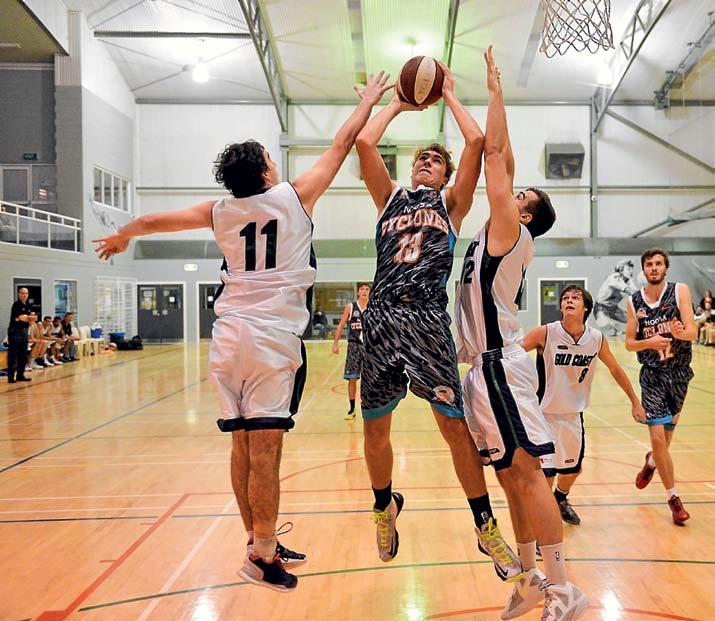
TheupgradedCoorooraTrail, whichlinksPomonatoCooran hasbeenofficiallyopenedby NoosaMayor,ClareStewart, andChiefExecutiveOfficerof theQueenslandReconstruction Authority(QRA),MajorGeneral (Retd)JakeEllwood.
Thecommunitygatheredtosee theribboncutandenjoythe magnificentTuchekoiNational
Parkthankstothe$1.68million trailupgrade.
WalkingenthusiastAndy Diamondsaidthenew10kmtrack providedbettersurfacingtosuit notonlywalkers,butalsocyclists andhorseriders.
“TheworkCouncilhasdoneto notonlywidenandresurfacethe trail,butalsotoincludebetter

wayfindingandeducational signageiswonderful.
“Theshadypathworkswell asatwo-wayjourneyoffering lunchoptionsatbothCooranand Pomona.OrI’mjustaskeento enjoyapicniconthebanksof WirrunaDriveBushlandReserve Lake,”hesaid.
Theprojectreceived$1.61million
infundingfromtheAustralian andQueenslandGovernments’ LocalEconomicRecovery(LER) ProgramthroughCategoryDof theDisasterRecoveryFunding Arrangements.
Followingthesuccessofthe CoorooraTrail,priorityupgrade ofTrail7(YurolTrail)willfollow laterthisyear.
22 NOOSA TODAY Friday, 28 April, 2023
BLACKGLOSSIESAHEAD
BobCarey(GlossyBob), inspiringSpencertophotograph andmonitortheglossies.
SpencercontactedCouncil advisingofthedangerofpuddles formingnearGrasstreeCourtby theshopswhenitrains.Glossies normallydrinkinwatering holes,butthey’resometimes opportunisticandwilldrinkin puddlesmakingthemvulnerable tobeinghitbycars.
Thetemporaryglossyblack cockatootrafficsignsarenow positionedateitherendofthe SunriseBeachshopsuntilthat sectionoftheroadisrepaired.
“Ithinkthesignshavemade peopleawaretheglossiesare there,andotherwildlifetoo. Councilreactedreallyquickly installingthem,”Spencersaid.
INBRIEF
Thanksforyour insights
NoosaCouncilhas thankedthecommunity fortheirfeedbackonthree engagementprojectsthat haverecentlywrappedup: thedraftWasteStrategy, theNoosaLocalHeritage Review,andthedraft EasternBeachesForeshore ManagementPlan.
Blackglossiesahead.That’sthe messagesharedonCouncil’s glossyblackcockatootrafficsigns bytheSunriseBeachshops.
Ingoodnewsfortheglossies(as affectionatelynamedbylocals), SpencerandMaxineHitchen havealreadynotedsomechanges indrivers’behavioursince theinstallationofthesignsin February.
Thissmallwinispartofthe ongoingeducationprocess andcomesasarelieftolocals whomonitorandadvocatefor preservationofNoosa’sglossy blackcockatoopopulation.
Council’scommitmenttoprotect localwildlifeisalsoreflectedin communityefforts.
12-year-oldSpencermetlocal glossyblackcockatooadvocate
“Wehavetopreservetheglossies sokidslikemeandfuture generationscanenjoythem. Habitatprotectionisthemost importantthingwecandoforour nativespecies,”heshared.
ThankstobothSpencerand MaxineworkingwithCouncil onthisimportantconservation initiative.Somewell-placed signageisdoingitspartinhelping securethefutureofourlocal glossyblackcockatoopopulation.
IMPROVEMENTSFORBIKERIDERS
DesignsupportssafercyclingatBeckmansRdroundabout
Haveyounoticedthe improvementsforbikeridersat theintersectionofCooroy-Noosa andBeckmansroads,Tewantin?
Thenewroundaboutdesigncaters forbikeridersofallskilllevels, withoff-roadrampsallowing youtostayclearofcirculating vehicles.
Onapproachtotheroundabout, cyclistshavetheoptiontostay ontheroadmovingwiththe flow oftraffic,ortransitiontooff-road bikepathswhichguideusers throughthebusyintersection, safelybackontotheroadagain. Bikeriderswantingtoturnright
canusethemid-sectioncrossing pointstomaketheirwaysafely through.Theserampsand crossingpointsareclearlymarked ingreen.
Inadditiontocyclelanes,bike ridersnotwishingtoenterthe roadnetworkcanusetheshared pedestrianpathways,providingan optiontosuiteveryone.
Thisroundaboutdesignprovides asaferenvironmentforall roadusersandisbecominga morecommonoptionacross Queensland.
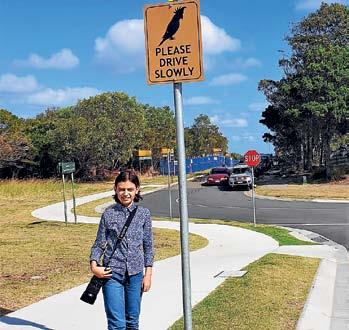
Roadsafetyiseveryone’s responsibility,pleaseremember
topayextraattentionwhen travellingthroughintersections.
Counciliscurrently analysingthefeedback andwillbesharingthe keythemesoffeedback withthecommunityinthe upcomingweeks.
Communityinputreceived ontheseprojectswillhelp shapeNoosa’sfuturewhile recognisingtheimportance ofourpast.Formore informationaboutthese projects,visityoursay. noosa.qld.gov.au.
BOOSTYOUR BUSINESS
ConnectwithourBusinessBoost advisorstohelpyouroperation growandthrive.
Council’sBusinessBoost programhasassembledagreat panelofspecialistswhocan providefreeadviceacrosskey businessfocusareas.
Notsurehowtoemploy additionalstaff?
Wantsomeadviceondigital marketingorsimplyachatabout businessplanning?Thenaccess thisfreeprogram.
MayisQueenslandSmall BusinessMonthsolovealocal andsupportNoosabusinesses. MoreinfoonCouncil’swebsite.
Friday, 28 April, 2023 NOOSA TODAY 23 noosa.qld.gov.au|Followus
GlossyblackcockatooadvocateSpencerHitchenwithnewsignageatSunriseBeachshops.
NewroundaboutatBeckmansRd.
Monday, May 1
6.00 The Drum.
7.00 ABC News.
7.30 7.30. Presented by Sarah Ferguson.
8.00 Australian Story. Presented by Leigh Sales.
8.30 Four Corners. Investigative journalism program exposing scandals, triggering inquiries, firing debate and confronting taboos.
9.15 Media Watch. (PG) Paul Barry takes a look at the latest issues affecting media consumers.
9.35 Q+A. Public affairs program.
10.35 India Now. (R)
11.10 ABC Late News.
11.25 The Business. (R)
11.40 Father Brown. (PG, R)
12.25 Miniseries: Ridley Road. (Mv, R)
1.25 Rage. (MA15+adhlnsv) 3.30 Antiques Roadshow. (R) 4.30 The Drum. (R) 5.30
7.30. (R)
6.00 Mastermind Australia.
(PG) Presented by Marc Fennell.
6.30 SBS World News.
7.35 The Secret Life Of Lighthouses: Boston Light. (PG) Part 3 of 3.
8.30 My Name Is Reeva: I Was Murdered By Oscar Pistorius. (M) Part 3 of 3. Follows Barry and June in the build up to their VOD meeting with Oscar.
9.25 Race For The Sky: Rise Of The Pioneers. (PG) Part 1 of 2. Traces developments in aviation, including the race to develop the first fighter plane.
10.25 SBS World News Late.
11.00 Reyka. (MA15+av) Reyka becomes suspicious of Hector.
12.00 Miss S. (PGv, R)
3.45 Mastermind Australia. (R)
4.45 Bamay. (R) 5.00 NHK World English News Morning. 5.30 ANC Philippines The World Tonight.
6.00 Seven Local News.
6.30 Seven News.
7.00 Home And Away. (PGs)
7.30 Farmer Wants A Wife. (PGl) Hosted by Samantha Armytage.
9.00 9-1-1. (Return, Ma) A dry thunderstorm rolls over Los Angeles, bringing a series of lightning strike emergencies for the 118.
10.00 9-1-1: Lone Star. (Return, Ma) Thunderstorms hit Austin.
11.00 The Latest: Seven News.
11.30 10 Years Younger In 10 Days. (PGa, R)
12.30 The Rookie. (Madv, R)
1.30 Kochie’s Business Builders. (R)
2.00 Home Shopping. (R)
4.00 NBC Today.
5.00 Seven Early News. 5.30 Sunrise.
Tuesday, May 2
6am God
Willing. Continued. (2015, PG, Italian) 6.35 The Truth. (2019, PG, French) 8.35 Mr. Holmes. (2015, PG) 10.30 The Kid From The Big Apple. (2016, M, Mandarin) 12.45pm Amazonia.
1.30pm Rides Down Under: Workshop Wars. 2.30 Motor Racing. Supercars Championship. Round 3. Perth SuperSprint. Day 1. Highlights. 3.30 Motor Racing. Supercars Championship. Round 3. Perth SuperSprint. Day 2. Highlights. 4.30 Counting Cars.
5.30 American Restoration. 6.00 American Pickers.
7.00 Pawn Stars. 7.30 Storage Wars. 8.30 MOVIE: U-571. (2000, M) 10.55 Late Programs.
6.00 Nine News.
7.00 A Current Affair.
7.30 LEGO Masters: Grand Masters. (PG) Hosted by Hamish Blake.
8.50 RPA. (PGm) When a young man’s first kidney transplant fails, he gets a second chance thanks to an offer from his sister.
9.50 Nine News Late. A look at the latest news and events.
10.20 100% Footy. (M) Features the latest rugby league news.
11.20 The Equalizer. (MA15+v, R)
12.10 Untold Crime Stories: The Disappearance Of Shannon Matthews. (Ma)
1.00 Hello SA. (PG)
1.30 TV Shop: Home Shopping. (R)
2.30 Global Shop. (R) 3.00 TV Shop: Home Shopping. (R) 4.00 Believer’s Voice Of Victory. (PGa) 4.30 A Current Affair. (R) 5.00 News Early Edition. 5.30 Today.
6.30 The Project. The hosts and guest panellists take a look at the day’s news, events and hot topics.
7.30 MasterChef Australia.
(Return, PGal) A fresh batch of talented and passionate amateur cooks compete to impress the judges.
9.15 Ghosts. (PGls) When teen ghost Stephanie, who lives in the attic, awakens to find that her crush Trevor is now dating Hetty, she decides to sabotage all the relationships at Woodstone.
9.45 FBI: Most Wanted. (Mav) The team must navigate the mistrust of authorities in a tight-knit Somali community in Minnesota.
11.30 The Project. (R) A look at the day’s news and events.
12.30 The Late Show With Stephen Colbert. (PG) Late-night talk show.
1.30 Home Shopping. (R)
4.30 CBS Mornings.
Part 4 of 4.
9.00 The Truth About Menopause With Myf Warhurst. Myf Warhurst learns about menopause.
10.00 Stuff The British Stole: The Crow Flies. (PG, R)
10.30 ABC Late News.
10.45 The Business. (R)
11.00 Four Corners. (R)
11.45 Media Watch. (PG, R) 12.05
MotherFatherSon. (Madlv, R) 1.05
Shakespeare And Hathaway. (Mv, R) 1.50 Rage. (MA15+adhlnsv) 3.30 Antiques Roadshow. (R) 4.30 The Drum. (R) 5.30
7.30. (R)
6.00 Mastermind Australia. (PG) Presented by Marc Fennell.
6.30 SBS World News.
7.30 Who Do You Think You Are? Barry Humphries. (Return) Barry Humphries explores his roots.
8.30 Insight. Kumi Taguchi takes a look at whether shifting gender roles left men without a sense of direction.
9.30 Dateline: Rat Hunters. Follows a group of local vigilantes and their dogs tackling New York City’s rat problem.
10.00 SBS World News Late.
10.30 Living Black. (R)
11.00 Manayek. (MA15+d)
11.55 Outlier. (Mal, R)
3.15 Mastermind Australia. (R) 4.15 Bamay. (R)
5.00 NHK World English News Morning. 5.30 ANC Philippines The World Tonight.
6.00 Seven Local News.
6.30 Seven News.
7.00 Home And Away. (PGs)
7.30 Cosentino: Decennium. (PGl) International magician and illusionist Cosentino presents his best acts of the last 10 years.
9.10 The Good Doctor. (Mam) A patient’s faith seems to cause Asher some skepticism in light of his own relationship with religion.
11.10 The Latest: Seven News.
11.40 Crime Investigation Australia: Most Infamous: The Backpacker Murders. (MA15+av, R) A look at the backpacker murders.
2.00 Home Shopping. (R)
4.00 NBC Today.
5.00 Seven Early News.
5.30 Sunrise.
6.00 Nine News.
7.00 A Current Affair.
7.30 LEGO Masters: Grand Masters. (PG) Hosted by Hamish Blake.
8.50 David Attenborough’s Frozen Planet II: Frozen Lands. (PGa) Explores the largest land-habitat on Earth, home to great Boreal forests and the barren tundra.
10.00 Nine News Late. A look at the latest news and events.
10.30 Chicago Med. (MA15+am)
11.25 Court Cam. (MA15+av)
11.50 Suspect Number 1. (Mlv, R)
12.40 Tipping Point. (PG, R)
1.30 TV Shop: Home Shopping. (R)
4.00 Believer’s Voice Of Victory. (PGa) 4.30
A Current Affair. (R)
5.30 Today.
News Early Edition.
6.30 The Project. The hosts and guest panellists take a look at the day’s news, events and hot topics.
7.30 MasterChef Australia. (PGa) Jamie Oliver is back for another day in the MasterChef Australia kitchen.
9.00 NCIS. (Mv) The NCIS team digs deep to investigate a US Navy lieutenant who is accused of trying to murder her husband but has no memory of the attack. Kasie navigates a potential medical scare.
11.00 The Project. (R) The hosts and guest panellists take a look at the day’s news, events and hot topics.
12.00 The Late Show With Stephen Colbert. (PG) Late-night talk show.
1.00 Home Shopping. (R)
4.30 CBS Mornings. Morning news and talk show.
24 NOOSA TODAY Friday, 28 April, 2023
ABC TV (2) SBS (3) SEVEN (7) 6.00 News Breakfast. 9.00 ABC News Mornings. 10.00 Landline. (R) 11.00 Antiques Roadshow. (R) 12.00 ABC News At Noon. 1.00 The China Century. (Mal, R) 2.00 The Day Will And Kate Got Married. (PG, R) 3.00 Escape From The City. (PG, R) 4.00 Antiques Roadshow. (R) 5.00 Anh’s Brush With Fame. (PG, R) 5.30 Hard Quiz. (PG, R) 6.00 WorldWatch. 9.00 Destination Flavour China Bitesize. (R) 9.20 Legacy List. (Final, R) 10.25 Paddington Station 24/7. (PGal, R) 11.15 Icons. (Malv, R) 12.10 WorldWatch. 1.00 Motor Racing. Hi-Tec Oils Super Series. Round 2. 4.00 Al Jazeera News Hour. 4.30 Ballroom Fit. (R) 4.35 The Cook Up With Adam Liaw. (PG, R) 5.05 Jeopardy! (R) 5.30 Letters And Numbers. (R) 6.00 Sunrise. 9.00 The Morning Show. (PG) 11.30 Seven Morning News. 12.00 To Be Advised. 1.30 Charles: The Monarch And The Man. (PG, R) 3.00 The Chase. 4.00 Seven News At 4. 5.00 The Chase Australia. 6.00 Today. 9.00 Today Extra. (PG) 11.30 Morning News. 12.00 LEGO Masters: Grand Masters. (PG, R) 1.45 9Honey Hacks. 2.00 Pointless. (PG) 3.00 Tipping Point. (PG) 4.00 Afternoon News. 4.30 Millionaire Hot Seat. 5.30 WIN News. 6.00 The Talk. (PGa) 7.00 Farm To Fork. (PG, R) 7.30 GCBC. (R) 8.00 Everyday Gourmet. (R) 8.30 Ent. Tonight. 9.00 Judge Judy. (PG, R) 9.30 Bold. (PG, R) 10.00 Studio 10. (PG) 12.00 10 News First: Midday. 1.00 Dr Phil. (PGal, R) 2.00 I’m A Celebrity… Get Me Out Of Here! (PGals, R) 3.30 Judge Judy. (PG, R) 4.00 Good Chef Bad Chef. 4.30 The Bold And The Beautiful. (PG) 5.00 10 News First.
6am WorldWatch. 9.30 Shortland St. 11.00 Front Up. Noon Curse Of Oak Island. 2.20 Lee Lin Chin’s Fashionista. 2.30 Insight. 3.30 WorldWatch. 5.15 Takeshi’s Castle Indonesia. 5.45 Joy Of Painting. 6.15 Forged In Fire. 7.05 Jeopardy! 7.35 8 Out Of 10 Cats. 8.30 Taskmaster. 10.25 Stacey Dooley: Kids Selling Drugs Online. 11.00 Cycling. UCI World Tour. EschbornFrankfurt. 103km. 1.25am Late Programs. 6am Shopping. 6.30 DVine Living. 7.00 The Great Australian Doorstep. 7.30 The Outdoor Room. 8.00 Shopping. 8.30 Million Dollar Minute. 9.30 NBC Today. 10.30 Better Homes. 1pm Business Builders. 1.30 Dog Patrol. 2.00 Weekender. 2.30 The Yorkshire Vet. 3.30 Animal Rescue. 4.30 Better Homes. 5.30 Escape To The Country. 6.30 Bargain Hunt. 7.30 Doc Martin. 8.30 Inspector Morse. 10.50 Late Programs. 6am TV Shop. 7.00 Creflo. 7.30 TV Shop. 9.30 Newstyle Direct. 10.00 Danoz. 10.30 Pointless. 11.30 Living Proof. Noon Days Of Our Lives. 12.55 The Young And The Restless. 1.50 Mend It For Money. (Premiere) 2.50 One Star To Five Star. 3.20 MOVIE: The Rebel. (1961) 5.30 Dr Quinn. 6.30 Antiques Roadshow. 7.30 Death In Paradise. 8.40 To Be Advised. 9.40 Law & Order: SVU. 10.40 Late Programs. 7TWO (72) 6am Children’s Programs. 7.05pm Grace’s Amazing Machines. 7.20 Bluey. 7.30 Spicks And Specks. 8.00 A Wild Year On Earth. (Final) 8.50 George Clarke’s Amazing Spaces. 9.40 Long Lost Family: What Happened Next. 10.25 Portlandia. 11.10 Escape From The City. 12.10am Ghosts. 12.40 Louis Theroux Interviews... 1.25 Black Mirror. 2.25 ABC News Update. 2.30 Close. 5.00 Buddi. 5.10 Late Programs. ABC TV PLUS (22) 6am Children’s Programs. Noon America’s Top Dog. 2.00 Full House. 2.30 3rd Rock. 3.30 Raymond. 4.00 The Nanny. 5.00 Bewitched. 5.30 I Dream Of Jeannie. 6.00 That ’70s Show. 7.00 Young Sheldon. 7.30 RBT. 8.30 MOVIE: The Town. (2010, MA15+) 11.00 Young Sheldon. 11.30 Duncanville. Midnight Love Island. 1.10 Below Deck Mediterranean. 2.00 Raymond. 2.30 Full House. 3.00 Late Programs.
6am Morning Programs.
(2013, No dialogue) 2.15 Breaker Morant. (1980, PG) 4.15 Love And Friendship. (2016, PG) 5.55 Late Bloomers. (2011, PG) 7.35 The Escape. (2017, M) 9.30 A Son. (2019, M, Arabic) 11.25 Late Programs. 7MATE (74) 6am Morning Programs. 2pm Shortland St. 2.30 The Cook Up. 3.00 Jarjums. 3.40 Aussie Bush Tales. 3.55 Seven Sacred Laws. 4.00 Grace Beside Me. 4.30 Spartakus And The Sun Beneath The Sea. 5.00 Our Stories. 5.30 APTN National News. 6.00 Bamay. 6.30 News. 6.40 Undiscovered Vistas. 7.30 Australia’s Health Revolution. 8.30 Living Black. 9.05 MOVIE: Tupaia’s Endeavour. (2019) 11.15 Late Programs. NITV (34)
ABC TV (2) SBS (3) SEVEN (7) 6.00 News Breakfast. 9.00 ABC News Mornings. 10.00 Foreign Correspondent. (R) 10.30 Outback Ringer. (PG, R) 11.00 Monty Don’s Japanese Gardens. (R) 12.00 ABC News At Noon. 1.00 Shakespeare And Hathaway. (Mv, R) 1.45 Gruen. (Ml, R) 2.30 Back Roads. (R) 3.00 Escape From The City. (R) 4.00 Antiques Roadshow. (R) 5.00 Anh’s Brush With Fame. (PG, R) 5.30 Hard Quiz. (PG, R) 6.00 WorldWatch. 9.00 Destination Flavour China Bitesize. (R) 9.10 Kill Off. (PGl, R) 9.25 Make Me A Dealer. (PG, R) 10.15 Paddington Station 24/7. (PGa, R) 11.05 Icons. (PG, R) 12.00 WorldWatch. 2.00 Secrets To Civilisation. (Mav, R) 3.00 Living Black. (R) 3.30 The Cook Up. (PG, R) 4.00 Birth Of Empire: The East India Company. (PG, R) 5.05 Jeopardy! (R) 5.30 Letters And Numbers. (R) 6.00 Sunrise. 9.00 The Morning Show. (PG) 11.30 Seven Morning News. 12.00 To Be Advised. 1.30 Motorbike Cops. (PGa, R) 2.00 Criminal Confessions: Largo, Florida. (Malv, R) 3.00 The Chase. 4.00 Seven News At 4. 5.00 The Chase Australia. 6.00 Today. 9.00 Today Extra. (PG) 11.30 Morning News. 12.00 LEGO Masters: Grand Masters. (PG, R) 1.30 Getaway. (PG, R) 2.00 Pointless. (PG) 3.00 Tipping Point. (PG) 4.00 Afternoon News. 4.30 Millionaire Hot Seat. 5.30 WIN News. 6.00 The Talk. (PGa) 7.00 Farm To Fork. (PG, R) 7.30 GCBC. (R) 8.00 Everyday Gourmet. (R) 8.30 Ent. Tonight. 9.00 Judge Judy. (PG, R) 9.30 The Bold And The Beautiful. (PG, R) 10.00 Studio 10. (PG) 12.00 10 News First: Midday. 1.00 Dr Phil. (Ml) 2.00 To Be Advised. 3.45 Entertainment Tonight. 4.00 Good Chef Bad Chef. 4.30 The Bold And The Beautiful. (PG) 5.00 10 News First. 6.00 The Drum. 7.00 ABC News. 7.30 7.30. 8.00 Great Australian Stuff: Play. (PG)
5.00
6am WorldWatch. 9.30 Shortland St. 11.00 Front Up. Noon Most Expensivest. 12.30 Curse Of Oak Island. 2.45 The Ice Cream Show. 3.15 WorldWatch. 5.15 Takeshi’s Castle Indonesia. 5.45 Joy Of Painting. 6.15 Forged In Fire. 7.05 Jeopardy! 7.35 8 Out Of 10 Cats Does Countdown. 8.30 One Night In... 9.25 The Tara Brown Story. 10.25 Alone Australia. 11.25 Hoarders. 12.15am Late Programs. 6am Morning Programs. 7.30 Animal Rescue. 8.00 Shopping. 8.30 Million Dollar Minute. 9.30 NBC Today. Noon Better Homes. 1.00 Escape To The Country. 2.00 Creek To Coast. 2.30 Air Crash Investigations. 3.30 Animal Rescue. 4.30 Better Homes. 5.30 Escape To The Country. 6.30 Bargain Hunt. 7.30 Call The Midwife. 8.30 The Inspector Lynley Mysteries. 10.30 Mighty Ships. 11.30 Late Programs. 6am TV Shop. 7.00 Creflo. 7.30 TV Shop. 9.30 Newstyle Direct. 10.00 TV Shop. 10.30 Pointless. 11.30 My Favorite Martian. Noon Days Of Our Lives. 12.55 The Young And The Restless. 1.50 Mend It For Money. 2.50 One Star To Five Star. 3.20 MOVIE: Fear Is The Key. (1972, PG) 5.30 Dr Quinn. 6.30 Antiques Roadshow. 7.30 New Tricks. 8.40 The Closer. 9.40 Rizzoli & Isles. 10.40 Major Crimes. 11.40 Late Programs. 7TWO (72) 6am Children’s Programs. 7.20pm Bluey. 7.30 Spicks And Specks. 8.00 Would I Lie To You? 9.00 Ghosts. 9.30 Kevin Can F*** Himself. (Premiere) 11.05 Aunty Donna’s Coffee Cafe. 11.30 Fisk. (Final) Midnight Portlandia. 12.45 Friday Night Dinner. 1.10 The Young Offenders. (Final) 1.40 Penn & Teller: Fool Us. 3.05 Whose Line Is It Anyway? 3.25 ABC News Update. 3.30 Close. 5.00 Late Programs. ABC TV PLUS (22) 6am Children’s Programs. Noon America’s Top Dog. 1.00 Raising Hope. 2.00 Full House. 2.30 3rd Rock. 3.30 Raymond. 4.00 The Nanny. 5.00 Bewitched. 5.30 I Dream Of Jeannie. 6.00 That ’70s Show. 7.00 Young Sheldon. 7.30 MOVIE: Happy Gilmore. (1996, M) 9.25 MOVIE: Ted 2. (2015, MA15+) 11.40 Young Sheldon. 12.05am Love Island. 1.10 Below Deck Mediterranean. 2.00 Late Programs. 6am Morning Programs. 11.35 MOVIE: The Towering Inferno. (1974, PG) 3pm Billy The Exterminator. 3.30 Pawn Stars Sth Africa. 4.00 Pawn Stars UK. 4.30 Storage Wars. 5.00 Storage Wars: TX. 5.30 American Restoration. 6.00 American Pickers. 7.00 Pawn Stars. 7.30 Outback Truckers. 8.30 Heavy Tow Truckers Down Under. 9.30 Aussie Salvage Squad. 10.30 Extreme Ice Railroad. 11.30 Late Programs. 6am Amazonia. Continued. (2013, No dialogue) 7.00 Late Bloomers. (2011, PG) 8.40 Charade. (1963, PG) 10.45 The Song Of Names. (2019, M) 12.50pm A Son. (2019, M, Arabic) 2.45 God Willing. (2015, PG, Italian) 4.20 Mr. Holmes. (2015, PG) 6.15 The Sound Of Silence. (2019, PG) 7.50 After Love. (2020, M) 9.30 Wildland. (2020, MA15+, Danish) 11.10 Late Programs. 7MATE (74) 6am Morning Programs. 1.30pm Artie: Our Tribute To A Legend. 2.00 Shortland St. 2.30 The Cook Up. 3.00 Jarjums. 3.55 Seven Sacred Laws. 4.00 Jarjums. 5.00 Our Stories. 5.30 Indian Country Today News. 6.00 Bamay. 6.30 News. 6.40 Kenya Wildlife Diaries. (Premiere) 7.30 Colonial Combat. 8.00 The Barber. 8.30 Over The Black Dot. 9.00 MOVIE: Blacula. (1972) 10.45 Late Programs. NITV (34) 6am Home Shopping. 7.00 Infomercials. 8.00 Pooches At Play. 8.30 Exploring Off The Grid. 9.00 Escape Fishing With ET. 9.30 Reel Action. 10.30 JAG. 12.30pm Diagnosis Murder. 1.30 Bull. 2.30 Scorpion. 3.30 Diagnosis Murder. 5.30 JAG. 7.30 Bull. 8.30 NCIS. 10.20 In The Dark. 11.15 Blue Bloods. 12.15am Home Shopping. 2.15 Diagnosis Murder. 4.05 JAG. 6am Friends. 8.00 The Big Bang Theory. 9.30 Friends. 1pm The Unicorn. 3.00 The King Of Queens. 4.00 Becker. 5.00 Frasier. 6.00 Friends. 8.00 The Big Bang Theory. 9.30 Seinfeld. 11.00 Frasier. Midnight Home Shopping. 1.30 Come Dance With Me. 3.30 The King Of Queens. 4.30 Home Shopping. 6am Home Shopping. 7.30 Infomercials. 8.00 Pooches At Play. 8.30 Exploring Off The Grid. 9.00 Escape Fishing With ET. 9.30 Scorpion. 10.30 JAG. 12.30pm Bull. 2.30 Scorpion. 3.30 Diagnosis Murder. 5.30 JAG. 7.30 Bull. 9.25 CSI: Vegas. 10.20 48 Hours. 11.15 SEAL Team. 12.15am Home Shopping. 2.15 Diagnosis Murder. 4.05 JAG. 6am The Late Show With Stephen Colbert. 7.00 Becker. 8.00 Seinfeld. 9.30 The King Of Queens. 10.30 The Unicorn. 11.30 Becker. 12.30pm Frasier. 1.30 Seinfeld. 3.00 The King Of Queens. 4.00 Becker. 5.00 Frasier. 6.00 Friends. 8.00 The Big Bang Theory. 9.30 Mom. 10.20 Becker. 11.10 Frasier. Midnight Shopping. 1.30 Stephen Colbert. 2.30 Two And A Half Men. 3.30 King Of Queens. 4.30 Late Programs. SBS VICELAND (31) SBS WORLD MOVIES (32) SBS VICELAND (31) SBS WORLD MOVIES (32) TEN (5, 1) NINE (8, 9) 9GEM (81, 92) 9GO! (82, 93) TEN (5, 1) NINE (8, 9) 9GEM (81, 92) 9GO! (82, 93) 10 BOLD (53, 12) 10 PEACH (52, 11) 10 BOLD (53, 12) 10 PEACH (52, 11) ARE YOU EXPERIENCING POOR TV RECEPTION? Noosa Antennas & Security can diagnose and repair a wide range of antenna system issues. 12601848-AI17-23 Call Steven now on 0488 426 099
Wednesday, May 3
6.00 Mastermind Australia. (PG) Presented by Marc Fennell.
6.30 SBS World News.
7.30 Alone Australia. (Mlw) Food is becoming a critical issue.
6.00 Seven Local News.
6.30 Seven News.
7.00 Home And Away. (PGs)
6.00 Nine News.
7.00 A Current Affair.
6.30 The Project. A look at the day’s news and events.
9.05 Aunty Donna’s Coffee Cafe. (MA15+l) Broden helps Mark kick his addiction.
9.30 QI. (PG) Hosted by Sandi Toksvig.
10.05 Staged. (Ml, R)
10.30 ABC Late News.
10.45 The Business. (R)
11.00 Frayed. (Mal, R)
11.50 Father Brown. (Mv, R) 12.35 Science Of Drugs With Richard Roxburgh. (MA15+ad, R)
1.30 Rage. (MA15+adhlnsv) 3.30 Antiques Roadshow. (R)
7.30. (R)
4.30 The Drum. (R) 5.30
Thursday, May 4
8.35 Brian Cox: How The Other Half Live. (M) Part 2 of 2. Brian Cox sets out to learn whether the American dream is a myth or a reality.
9.30 Rogue Heroes. (MA15+al) Captain Berge and his men from the Free French arrive in the desert to train with the SAS.
10.40 SBS World News Late.
11.10 Furia. (MA15+av) Ragna searches for Cato’s identity.
12.00 Unit One. (MA15+av, R)
4.15 Mastermind Australia. (R)
4.45 Bamay. (R)
5.00 NHK World English News Morning. 5.30 ANC Philippines The World Tonight.
7.30 The 1% Club. (PGls) Jim Jefferies hosts a game show where contestants must answer increasingly obscure questions.
8.35 Accused. (Mav) A teenager suspects foul play when he discovers his mother’s former hospice caretaker is dating his father.
10.35 The Latest: Seven News.
11.05 Crime Investigation Australia: Most Infamous: The Family Murders. (MA15+av, R) A look at the murder of six young men.
12.30 Absentia. (MA15+asv, R)
1.30 Britain’s Busiest Airport: Heathrow. (PG, R)
2.00 Home Shopping. (R)
4.00 NBC Today.
5.00 Seven Early News.
5.30 Sunrise.
7.30 Travel Guides. (PGl) The travel guides head to Malaysia.
8.30 MOVIE: Edge Of Tomorrow. (2014, Mlv, R) After being sent on a suicide mission to battle an alien menace, a man finds himself reliving the same day. Tom Cruise, Emily Blunt, Bill Paxton.
10.45 Nine News Late. A look at the latest news and events.
11.15 New Amsterdam. (Mdm) Max learns about the bequest office.
12.05 Ordinary Joe. (Final, Ma)
1.00 Postcards. (PG, R)
1.30 TV Shop: Home Shopping. (R)
2.30 Global Shop. (R)
3.00 TV Shop: Home Shopping. (R)
4.00 Believer’s Voice Of Victory. (PGa)
4.30 A Current Affair. (R)
5.00 News Early Edition. 5.30 Today.
7.30 MasterChef Australia. (PGa) There is a catch to the flavour bombs that Jamie Oliver has left behind for the contestants to cook with.
8.40 Law & Order: SVU. (Ma) The search for a suspect who is drugging women’s drinks leads the unit to Muncy’s brother.
9.40 Fire Country. (PGav) An internal investigator suspects Jake of being the serial arsonist who has been setting recent fires.
10.40 Bull. (Mv, R) Bull tries to bring down a drug lord.
11.30 The Project. (R) A look at the day’s news and events.
12.30 The Late Show With Stephen Colbert. (PG)
1.30 Home Shopping. (R)
4.30 CBS Mornings.
7.00 ABC News.
7.30 7.30. Presented by Sarah Ferguson.
8.00 Foreign Correspondent. (Final) International affairs program.
8.30 Grand Designs New Zealand. Tom Webster meets Tony Hodge who decided to build on a bush clad site on Waiheke Island.
9.20 Miriam & Alan: Lost In Scotland: Lost In Scotland. (Ml, R) Part 3 of 3.
10.05 Art Works. (R)
10.35 ABC Late News.
10.50 The Business. (R)
11.05 Great Australian Stuff. (PG, R)
12.05 Q+A. (R)
1.10 Rage. (MA15+adhlnsv) 3.30 Antiques Roadshow. (R) 4.30 The Drum. (R) 5.30
7.30. (R)
6.00 Mastermind Australia. (PG)
6.30 SBS World News.
7.35 The Murdochs: Empire Of Influence: Family Ties. (M) Rupert’s succession plans get upended.
8.30 Asking For It. (Malnsv) Part 3 of 3. Takes a look at what needs to be done to get the messaging right on consent education.
9.30 Miniseries: Conviction: The Case Of Stephen Lawrence. (MA15+) Part 3 of 3.
10.30 SBS World News Late.
11.00 Catch And Release. (Premiere, Mal)
11.50 Beneath The Surface. (MA15+ads, R)
4.25 Mastermind Australia. (R) 4.55 Destination Flavour Scandinavia Bitesize. (R)
5.00 NHK World English News Morning. 5.30 ANC Philippines The World Tonight.
6.00 Seven Local News.
6.30 Seven News.
7.00 Home And Away. (PG)
8.30 Britain’s Got Talent. (PG) Auditions continue as weird, wacky and wonderful acts compete in front of celebrity judges.
9.45 The Front Bar. (M) Hosts Mick Molloy, Sam Pang and Andy Maher take a lighter look at all things AFL.
10.45 The Latest: Seven News.
11.15 Fantasy Island. (Ma) Javier opens up to Roarke.
12.15 Black-ish. (PGa)
1.15 My France With Manu. (PG, R)
2.30 Home Shopping. (R)
4.00 NBC Today.
5.00 Seven Early News. 5.30 Sunrise.
6.00 Nine News.
7.00 A Current Affair.
7.30 RBT. (Ml, R) Follows the activities of police units.
8.30 Paramedics. (Mam, R) A flight paramedic responds to a crash where a single mum has gone off a bridge and into water.
9.30 Embarrassing Bodies. (MA15+dmns) Dr Anand Patel meets a 27-year-old mum.
10.30 Nine News Late.
11.00 A+E After Dark. (MA15+lm, R)
11.50 The First 48. (MA15+av, R) 12.40 Tipping Point. (PG, R) 1.30 TV Shop: Home Shopping. (R) 2.30 Global Shop. (R) 3.00 TV Shop:
Today.
6.30 The Project. A look at the day’s news and events.
7.30 MasterChef Australia. (PGa) Contestants must raid Shannon Bennett’s fridge to create the tastiest dish in 45 minutes.
8.40 The Bridge Australia. (Mls, R) Twelve strangers have 17 days to build 330m of bridge to an island, and claim a $250,000 prize.
10.10 Law & Order: SVU. (Masv, R) A popular fighter goes missing.
11.00 The Project. (R) A look at the day’s news and events.
12.00 The Late Show With Stephen Colbert. (PG)
1.00 Home Shopping. (R) 4.30 CBS Mornings.
Friday, 28 April, 2023 NOOSA TODAY 25
ABC TV (2) SBS (3) SEVEN (7) TEN (5, 1) NINE (8, 9) 6.00 News Breakfast. 9.00 ABC News Mornings. 10.00 Four Corners. (R) 10.45 Q+A. (R) 12.00 ABC News At Noon. 12.30 National Press Club Address. 1.40 Media Watch. (PG, R) 1.55 Short Cuts To Glory: Matt Okine Vs Food. (R) 2.30 Back Roads. (PG, R) 3.00 Escape From The City. (R) 4.00 Antiques Roadshow. (R) 5.00 Anh’s Brush With Fame. (PG, R) 5.30 Hard Quiz. (PG, R) 6.00 WorldWatch. 9.00 Destination Flavour China Bitesize. (R) 9.20 Make Me A Dealer. (PG, R) 10.10 Paddington Station 24/7. (PGa, R) 11.00 Icons. (Mav, R) 12.00 WorldWatch. 2.00 Dateline. (R) 2.30 Insight. (R) 3.30 The Cook Up With Adam Liaw. (PG, R) 4.00 Birth Of Empire: The East India Company. (PG, R) 5.05 Jeopardy! (R) 5.30 Letters And Numbers. (R) 6.00 Sunrise. 9.00 The Morning Show. (PG) 11.30 Seven Morning News. 12.00 MOVIE: Nightmare Tenant. (2018, Mv, R) 2.00 Criminal Confessions: Belmont County, Ohio. (Mlv, R) 3.00 The Chase. 4.00 Seven News At 4. 5.00 The Chase Australia. 6.00 Today. 9.00 Today Extra. (PG) 11.30 Morning News. 12.00 LEGO Masters: Grand Masters. (PG, R) 1.30 Destination WA. 2.00 Pointless. (PG) 3.00 Tipping Point. (PG) 4.00 Afternoon News. 4.30 Millionaire Hot Seat. 5.30 WIN News. 6.00 The Talk. (PGa) 7.00 Farm To Fork. (PG, R) 7.30 GCBC. (R) 8.00 Everyday Gourmet. (R) 8.30 Ent. Tonight. (R) 9.00 Judge Judy. (PG, R) 9.30 The Bold And The Beautiful. (PG, R) 10.00 Studio 10. (PG) 12.00 10 News First: Midday. 1.00 Dr Phil. (PGa) 2.00 To Be Advised. 3.30 Judge Judy. (PG, R) 4.00 Good Chef Bad Chef. 4.30 The Bold And The Beautiful. (PG) 5.00 10 News First. 6.00 The Drum. 7.00 ABC News. 7.30 7.30. 8.00 Hard Quiz. (PG) Presented by Tom Gleeson.
The Weekly With Charlie Pickering. (PG) A satirical news program.
8.30
6am WorldWatch. 9.30 Shortland St. 11.00 Front Up. Noon How To Rob A Bank. 12.50 Noisey. 1.45 Cook Up Bitesize. 1.50 Taskmaster Norway. 2.45 Cyberwar. 3.15 WorldWatch. 5.15 Takeshi’s Castle Indonesia. 5.45 Joy Of Painting. 6.15 Forged In Fire. 7.05 Jeopardy! 7.35 8 Out Of 10 Cats Does Countdown. 8.30 RocKwiz Salutes The Legends. 9.35 MOVIE: Blade Runner. (1982, MA15+) 11.40 Late Programs. 6am Home Shopping. 6.30 Escape To The Country. 7.30 RSPCA Animal Rescue. 8.00 Home Shopping. 8.30 Million Dollar Minute. 9.30 NBC Today. Noon Better Homes And Gardens. 1.00 Escape To The Country. 2.00 Sydney Weekender. 2.30 Mighty Ships. 3.30 RSPCA Animal Rescue. 4.30 Better Homes And Gardens. 5.30 Escape To The Country. 6.30 Bargain Hunt. 7.30 Heartbeat. 8.45 Foyle’s War. 10.55 Late Programs. 6am TV Shop. 7.00 Creflo Dollar Ministries. 7.30 TV Shop: Home Shopping. 10.30 Pointless. 11.30 My Favorite Martian. Noon Days Of Our Lives. 12.55 The Young And The Restless. 1.50 Mend It For Money. 2.50 One Star To Five Star. 3.20 MOVIE: I’m All Right Jack. (1959) 5.30 Dr Quinn, Medicine Woman. 6.30 Antiques Roadshow. 7.30 As Time Goes By. 8.50 Midsomer Murders. 10.50 Law & Order. 11.50 Late Programs. 9GEM (81, 92) 7TWO (72) SBS VICELAND (31) 6am Children’s Programs. 6.40pm Ben And Holly. 6.55 Shaun The Sheep. 7.05 Grace’s Amazing Machines. 7.20 Bluey. 7.30 Spicks And Specks. 8.00 Vera. 9.30 Silent Witness. (Final) 10.30 Killing Eve. 11.15 Black Mirror. 12.05am Portlandia. 12.55 MOVIE: The Tracker. (2002, M) 2.30 ABC News Update. 2.35 Close. 5.00 Buddi. 5.10 Book Hungry Bears. 5.20 Ana Pumpkin. 5.25 Bing. 5.35 Late Programs. ABC TV PLUS (22) 6am Children’s Programs. Noon America’s Top Dog. 1.00 Raising Hope. 2.00 Full House. 2.30 3rd Rock. 3.30 Raymond. 4.00 The Nanny. 5.00 Bewitched. 5.30 I Dream Of Jeannie. 6.00 That ’70s Show. 7.00 Young Sheldon. 7.30 MOVIE: Passengers. (2016, M) 9.45 MOVIE: V For Vendetta. (2005, MA15+) 12.30am Love Island. 1.30 Young Sheldon. 2.00 Raymond. 2.30 Full House. 3.00 Late Programs. 6am Morning Programs. 1pm Aussie Salvage Squad. 2.00 Heavy Tow Truckers Down Under. 3.00 Billy The Exterminator. 3.30 Pawn Stars Sth Africa. 4.00 Pawn Stars UK. 4.30 Storage Wars. 5.00 Storage Wars: TX. 5.30 American Restoration. 6.00 American Pickers. 7.00 Pawn Stars. 7.30 Highway Patrol. 8.30 Motorbike Cops. 9.30 Beach Cops. 10.30 Surveillance Oz. 11.00 Late Programs. 9GO! (82, 93) 6am Mr. Holmes. Continued. (2015, PG) 6.50 The Sound Of Silence. (2019, PG) 8.25 The Red Shoes. (1948, PG) 10.55 Bleed For This. (2016, M) 1.05pm The Escape. (2017, M) 3.00 The Movie Show. 3.30 Late Bloomers. (2011, PG) 5.10 Maudie. (2016, PG) 7.20 Little Women. (1994) 9.30 Wildlife. (2018, M) 11.30 The Savages. (2007, M) 1.35am Wildland. (2020, MA15+, Danish) 3.10 Late Programs. 7MATE (74) SBS WORLD MOVIES (32) 6am Morning Programs. 2pm Shortland St. 2.30 The Cook Up. 3.00 Jarjums. 3.40 Aussie Bush Tales. 3.55 Seven Sacred Laws. 4.00 Grace Beside Me. 4.30 Spartakus And The Sun Beneath The Sea. 5.00 Our Stories. 5.30 Te Ao With Moana. 6.00 Bamay. 6.30 News. 6.40 Kenya Wildlife Diaries. 7.30 Supreme Team. 8.30 Yokayi Footy. 9.30 Jordan Rides The Bus. 10.30 Inferno Without Borders. 11.30 Late Programs. NITV (34)
ABC TV (2) SBS (3) SEVEN (7) TEN (5, 1) NINE (8, 9) 6.00 News. 9.00 News. 10.00 Aust Story. (R) 10.30 That Pacific Sports Show. (R) 11.00 Enslaved. (PG, R) 12.00 News. 1.00 Hard Quiz. (PG, R) 1.30 The Weekly. (PG, R) 2.00 Shaun Micallef’s MAD AS HELL. (Madl, R) 2.30 Back Roads. (R) 3.00 Escape From The City. (R) 4.00 Antiques Roadshow. (R) 5.00 Anh’s Brush With Fame. (PG, R) 5.30 Hard Quiz. (PG, R) 6.00 WorldWatch. 9.10 Mother Tongue. 9.25 Make Me A Dealer. (R) 10.15 Paddington Station 24/7. (PGa, R) 11.05 Icons. (PGav, R) 12.00 WorldWatch. 2.00 Destination Flavour China Bitesize. (R) 2.10 Secrets To Civilisation. (PGav, R) 3.10 Mastermind Aust. (R) 3.40 The Cook Up. (PG, R) 4.10 Scenic Coastal Walks With Kate Humble. (PG, R) 5.05 Jeopardy! (PGl, R) 5.30 Letters And Numbers. (R) 6.00 Sunrise. 9.00 The Morning Show. (PG) 11.30 Seven Morning News. 12.00 MOVIE: The Good Mother. (2013, Madv, R) 2.00 Kochie’s Business Builders. 2.30 Border Security USA. (PG, R) 3.00 The Chase. (R) 4.00 Seven News At 4. 5.00 The Chase Australia. 6.00 Today. 9.00 Today Extra. (PG) 11.30 Morning News. 12.00 Travel Guides. (PGl, R) 1.00 RPA. (PGm, R) 2.00 Pointless. (PG) 3.00 Tipping Point. (PG) 4.00 Afternoon News. 4.30 Millionaire Hot Seat. 5.30 WIN News. 6.00 The Talk. (PGa) 7.00 Farm To Fork. (PG, R) 7.30 GCBC. (R) 8.00 Everyday Gourmet. (R) 8.30 Ent. Tonight. 9.00 Judge Judy. (PG, R) 9.30 Bold. (PG, R) 10.00 Studio 10. (PG) 12.00 10 News First: Midday. 1.00 Dr Phil. (PGa) 2.00 To Be Advised. 3.10 Entertainment Tonight. 3.30 Judge Judy. (PG, R) 4.00 Good Chef Bad Chef. 4.30 The Bold And The Beautiful. (PG) 5.00 10 News First.
Drum.
6.00 The
4.00
4.30
5.00
5.30
Home Shopping. (R)
Believer’s Voice Of Victory. (PGa)
A Current Affair. (R)
News Early Edition.
6am WorldWatch. 9.30 Shortland St. 11.00 Front Up. Noon Jeopardy! 3.20 WorldWatch. 5.15 Takeshi’s Castle Indonesia. 5.45 Joy Of Painting. 6.15 Forged In Fire. 7.05 Jeopardy! 7.35 8 Out Of 10 Cats Does Countdown. 8.30 The Curse Of Oak Island. 10.10 Rites Of Passage. 11.00 The UnXplained. 12.40am F*ck, That’s Delicious. 1.30 WWE Legends. 3.05 Late Programs. 6am Shopping. 6.30 Escape To The Country. 7.30 Animal Rescue. 8.00 Shopping. 8.30 Million Dollar Minute. 9.30 NBC Today. Noon Better Homes. 1.00 Escape To The Country. 2.00 South Aussie With Cosi. 2.30 Cities Of The Underworld. 3.30 Animal Rescue. 4.30 Better Homes. 5.30 Escape To The Country. 6.30 Bargain Hunt. 7.30 Father Brown. 8.30 Murdoch Mysteries. 9.30 Kavanagh QC. 11.15 Late Programs. 6am TV Shop. 7.00 Creflo. 7.30 TV Shop. 10.30 Pointless. 11.30 My Favorite Martian. Noon Days Of Our Lives. 12.55 The Young And The Restless. 1.50 Explore. 2.05 Mend It For Money. 3.05 One Star To Five Star. 3.35 MOVIE: The Lady Killers. (1955, PG) 5.30 Dr Quinn. 6.30 Antiques Roadshow. 7.30 Keeping Up Appearances. 8.40 Poirot. 10.40 Silent Witness. 12.50am Late Programs. 9GEM (81, 92) 7TWO (72) SBS VICELAND (31) 6am Children’s Programs. 7.20pm Bluey. 7.30 Spicks And Specks. 8.00 QI. 8.30 Penn & Teller: Fool Us. 9.15 Documentary Now! (Premiere) 10.00 Hard Quiz. 10.30 The Weekly. 11.00 Gruen. (Final) 11.40 Shaun Micallef’s MAD AS HELL. 12.10am Portlandia. 12.55 Doctor Who. 1.45 Would I Lie To You? 2.15 Louis Theroux: Return To The Most Hated Family. 3.15 Live At The Apollo. 4.00 Late Programs. ABC TV PLUS (22) 6am Children’s Programs. Noon Motor Racing. IndyCar Series. Indy Grand Prix of Alabama. H’lights. 1.00 Raising Hope. 2.00 Full House. 2.30 3rd Rock. 3.30 Raymond. 4.00 The Nanny. 5.00 Bewitched. 5.30 I Dream Of Jeannie. 6.00 That ’70s Show. 7.00 Young Sheldon. 7.30 Survivor 44. 8.30 MOVIE: I Am Legend. (2007, M) 10.30 Young Sheldon. 11.00 That ’70s Show. 11.30 Late Programs. 6am Morning Programs. 1pm Surveillance Oz. 2.00 Hellfire Heroes. 3.00 Billy The Exterminator. 3.30 Pawn Stars Sth Africa. 4.00 Pawn Stars UK. 4.30 Cool Cars With Dermott And Elise. 5.00 Ultimate Rides. 5.30 American Restoration. 6.00 American Pickers. 7.00 Pawn Stars. 7.30 Air Crash Investigations. 8.30 Close Encounters Down Under. 9.30 Motor MythBusters. 10.30 Carnage. 11.30 Late Programs. 9GO! (82, 93) 6am Selkie. Continued. (2000, PG) 6.30 Little Women. (1994) 8.40 Maudie. (2016, PG) 10.50 The Savages. (2007, M) 12.55pm After Love. (2020, M) 2.35 Ernest & Celestine. (2012, PG) 4.05 The Sound Of Silence. (2019, PG) 5.40 The Importance Of Being Earnest. (1952) 7.30 Husbands And Wives. (1992, M) 9.30 The Family. (2013, MA15+) 11.35 Late Programs. 7MATE (74) SBS WORLD MOVIES (32) 6am Morning Programs. 2pm Shortland St. 2.30 The Cook Up. 3.00 Jarjums. 3.40 Aussie Bush Tales. 3.55 Seven Sacred Laws. 4.00 Grace Beside Me. 4.30 Spartakus And The Sun Beneath The Sea. 5.00 Our Stories. 5.30 The 77 Percent. 6.00 Bamay. 6.30 News. 6.40 Kenya Wildlife Diaries. 7.30 Going Places With Ernie Dingo. 8.30 The Porter. 9.30 MOVIE: Blade Runner. (1982, MA15+) 11.40 Late Programs. NITV (34) 6am Home Shopping. 7.30 Infomercials. 8.00 Pooches At Play. 8.30 Exploring Off The Grid. 9.00 Escape Fishing With ET. 9.30 Scorpion. 10.30 JAG. 12.30pm Bull. 2.30 Scorpion. 3.30 Diagnosis Murder. 5.30 JAG. 7.30 Bull. 8.30 NCIS. 9.25 Hawaii Five-0. 10.20 Blue Bloods. 11.15 In The Dark. 12.15am Home Shopping. 2.15 Diagnosis Murder. 4.05 JAG. 10 BOLD (53, 12) 6am The Late Show With Stephen Colbert. 7.00 Becker. 8.00 Friends. 9.30 The King Of Queens. 10.30 The Unicorn. 11.30 The Big Bang Theory. 12.30pm Frasier. 1.30 The Middle. 3.00 The King Of Queens. 4.00 Becker. 5.00 Frasier. 6.00 Friends. 8.00 The Big Bang Theory. 9.20 Two And A Half Men. 11.00 Frasier. Midnight Shopping. 1.30 Stephen Colbert. 2.30 Charmed. 3.30 King Of Queens. 4.30 Shopping. 10 PEACH (52, 11) 6am Home Shopping. 7.30 Infomercials. 8.00 Pooches At Play. 8.30 Waltzing Jimeoin. 9.00 Escape Fishing With ET. 9.30 Scorpion. 10.30 JAG. 12.30pm Bull. 2.30 Scorpion. 3.30 Diagnosis Murder. 5.30 JAG. 7.30 Bull. 8.30 NCIS. 9.30 NCIS: New Orleans. 10.30 SEAL Team. 11.30 Evil. 12.30am Home Shopping. 2.00 Diagnosis Murder. 4.00 JAG. 10 BOLD (53, 12) 6am The Late Show With Stephen Colbert. 7.00 Becker. 8.00 Friends. 9.30 The King Of Queens. 10.30 The Big Bang Theory. 11.30 Becker. 12.30pm Frasier. 1.30 The Middle. 3.00 The King Of Queens. 4.00 Becker. 5.00 Frasier. 6.00 Friends. 8.00 The Big Bang Theory. 9.30 Seinfeld. 11.00 Frasier. Midnight Shopping. 1.30 Stephen Colbert. 2.30 The Middle. 3.30 King Of Queens. 4.30 Shopping. 10 PEACH (52, 11) ARE YOU EXPERIENCING POOR TV RECEPTION? Noosa Antennas & Security can diagnose and repair a wide range of antenna system issues. 12601848-AI17-23 Call Steven now on 0488 426 099
PUZZLES
To solve a Sudoku puzzle, every number from 1 to 9 must appear in: each of the nine vertical columns, each of the nine horizontal rows and each of the nine 3 x 3 boxes. Remember, no number can occur more than once in any row, column or box.
QUICK CROSSWORD
ACROSS
1 Region of South Africa (9)
6 Just (4)
10 Atmosphere (3)
11 Donated (11)
12 Before chapter one (9)
13 Grower of crops (6)

14 – Von Bismarck (4)
15 Islands of the central and southern Pacific (7)
20 From Stockholm, say (7)
21 List of dishes served (4)
25 The person who controls the game in certain sports (6)
26 Entered (8)
28 Open area of commercial dealings (11)
29 Snake (3)
30 Nerd (4)
31 Most pungent (9)
DECODER
DOWN
1 Small spoon (8)
WORDFIT
1 14
2 15
3 16
4 17
5 18
6 19
7 20
8 21
9 22
10 23
11 24
12 25
13 26 XV
12 345678910111213
9-LETTER WORD
983471562
524683791
197542836 859264173
265318947 341857629
716925384
672139458
476891253
768129534
591348672
319752468 154287396
825634917 682913745
easy medium hard
243576189
937465821
961472853
529764138
638591247
438796215 845319672
254983716 376825491
words: Very good 21 3 LETTERS AIM ALE AMP ASH ATE AYE BAR BET CUE DIP EAT EVE GAB GUT HEM ICE IDS KEN MRS ODE OUR THE TNT 4 LETTERS AMID BAUD BELT BEST BIDE BRAY CAPS GARB HEAL HOOT MOOT MOPS TEST TOMB USES
783156924 192647385
417238569
O N C H E 10 words: Good 15 Today’s Aim:
C E words: Excellent
5 LETTERS ABUSE ACUTE ADAPT ALPHA AMASS ASIDE ASSET AURAL BAKER BASIN BROTH DEVIL DOGMA EAGLE EASEL ELOPE ERECT GRACE ISLES ISSUE
ITCHY MARES MENUS METRE MOUTH NESTS ODOUR OLIVE OUSTS PAPAL RINSE RIOTS RIPEN ROMPS SCENT SLEPT SNAGS STEER STOKE TERSE THERE
TIRES TONNE UPPER USUAL WAGER 6 LETTERS CUTEST HANGAR OUTWIT SERIAL 7 LETTERS DREAMER EROSION IMPLORE
NOTICED ORPHANS PREPAYS 8 LETTERS DRAMATIC NURTURED PARAKEET THEATRES 11 LETTERS COPPERHEADS PREROGATIVE
1415 1617181920212223242526 B Y M O A J E L I N Q S H F W U D T C K P R Z X G V 28-04-23 Puzzles and pagination © Pagemasters | pagemasters.com
cere, cheer, chore, coerce, cohere, COHERENCE, cone, core, creche, crone, echo, encore, erne, hence, here, hereon, hero, heron, hone, ochre, once
26 NOOSA TODAY Friday, 28 April, 2023 KIM & ELIOT KRAUSE 0409 920 861 | TEAMKRAUSE@COUNTRYSIDENOOSA.COM.AU YOUR HINTERLAND SPECIALISTS 12589705-AA09-23 No. 130
130
130
No.
No.
Equestrians (6)
Arabic
Partner (9)
Bestowed (7) 18 Doable (8) 19 Quarter-circle (8) 22 A spice (6) 23 Thin (6) 24 Annul (6) 27 Primates (4)
2 Plane hubs (8) 3 Relief (6) 4 Declared (9) 5 Old stringed instrument (4) 7 Fall (6) 8
9
form of Abraham (7) 16
17
94 8
5 27
3 156 63 8947 341 872 169
43 6 easy 658 9387 975
61
89 25 26
76
medium 531
67
hard
No. 130
17
3
3
43 9
4
8
2
7
8 569 27 9713 5 9 1785 48
SUDOKU
Using the nine letters in the grid, how many words of four letters or more can you list? The centre letter must be included and each letter may only be used once. No colloquial or foreign words. No capitalised nouns, apostrophes or plural words ending in “s”. R E
On The Soapbox
Cooroy Area Residents Association president Rod Ritchie


Tourism Noosa’s new dawn
It’s true to say that “In Noosa, tourism is everyone’s business”, (Observations from TN, NT 21 April) but Cr. Lorentson reveals her industry bias when she goes on to suggest that tourism means we all have to take what the industry association serves up to us, and that Tourism Noosa (TN) is “best qualified and able to protect our destination”. Far from it.
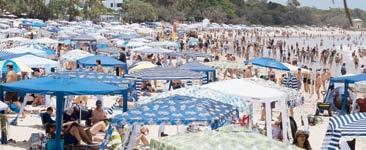
Cr Lorentson implies that it is expensive to get back lost experience and environment and to preserve these we need to “speak with one voice” or Noosa will “lose its brand”. Unfortunately, her suggestion that the one voice be TN because “we need to deliver a “co-ordinated and clear message to visitors” is preposterous, since the community is not getting a fair voice and it has no say on matters decided by the TN Board. Cr Lorentson, herself, is merely an observer there, and council doesn’t even have a say in board decisions, despite funding the association for decades.
With Covid came the abandoning of TN’s high value, low volume plan as interstate and international visitors dried up. The intrastate drive market was targeted, as it will be in the future if necessary. The past year has seen this market sector combine with returning interstate visitors to produce a visitor double whammy. It’s not surprising that the new funding agreement forTN insists on again targeting the high value, low volume visitor as the prime market moving forward, but TN has shown it’s adept at the pivot, which it will do again in the future, if necessary.
The Destination Management Plan (DMP), when completed, is now to be mandated as part of TN’s forward planning process. Currently it is being developed by a project control group that holds meetings in private and publishes no minutes. Meanwhile, the associated Destination Management Community Reference Group, with 19 members, is also not publishing public minutes, unlike the Tourism Management Working Group that met to discuss similar topics during the last council. We’ll wake up one day with yet another report asking us to have our say before it is included in council policy.
The directors of Tourism Noosa are obviously passionate about our environment and our economy, we all are, but Cr Lorentson, as
the lone council observer on the board, needs to step back and remember her responsibility to residents daily impacted by the traffic congestion, lowering residential amenity, the financial burden of tourism infrastructure to ratepayers, and the degradation of our natural assets, including our parks and river system. It appears there is no plan to limit visitor numbers now, and our future as residents will remain as planning daily trips around the whims of visitors. Meanwhile, we are continuing to be hit up for TN’s wages and admin costs, marketing expenses, a “free” bus service, and high tourism infrastructure costs at a time when badly needed local services are being loaded into budgets of years into the future.
We are not at all like Colorado; if we stop
NEW LOCATION NEW SHOWROOM
funding TN, the sky will not fall in. Like Byron Shire, a similar strong destination brand, visitors will continue to come here. In any case, our brand is more than as a destination, it’s a safe, attractive place to live, set in a carefully preserved natural environment. Noosa today is the result of very many years of diligent community advocacy, backed up by council staff who have built in safeguards to the strategic plans that have guided all planning decisions.
TN’s control of the Noosa Brand has proved to be a chimera, since it follows market trends and will chase whatever market it can, when it needs to. It could be argued that the destination is nowhere near as “classy” as it was, with newspaper headlines of street misbehaviour, including violence, petty theft and auto theft, become ever more shrill, It’s clear to me that Noosa’s “brand” was created by the community, and is certainly not a brand that needs TN protection. Tourists are fickle, they will go where they wish. Thinking we can corral them here with the right marketing is a myth. And, if this means residents and TN speak with different voices, so be it. It’s not a healthy situation to expect both parties to agree on everything.
The new TN Agreement has at last mandated enhanced reporting and governance after decades of opaque management; based on figures, sure, but not necessarily on what is best for the residents. It’s important that TN is now expected to engage in probity which, along with accountability, transparency and effectiveness, has been very often missing in action.
Adjustable Beds Bedroom Furniture Mattresses

Friday, 28 April, 2023 NOOSA TODAY 27
1/5 Gibson Road, Noosaville
12601716-AI17-23
NOOSATODAY.COM.AU OPINION
Holiday crowds on Noosa Main Beach
Kerryn is back home
After extensive caravanning adventures with her husband, Kerryn Vincart is excited to be home again and part of the Community Bank Tewantin-Noosa team as Branch Manager.
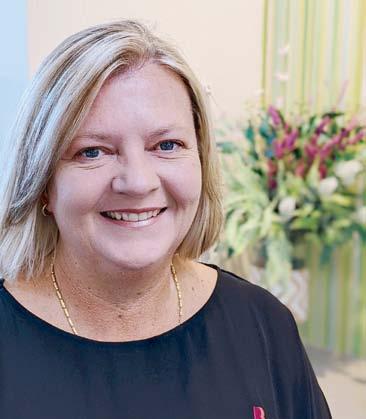
Some of you will recognise Kerryn from her extensive involvement with community groups and businesses all across the Coastwell with over 30 years experience in banking Kerryn is a familiar face on the coast.
If you have not met Kerryn - you will experience a true passion in helping you do what you do, to get more, be more and do more.
“The community banking model is fantastic,” says Kerryn, and has seen first hand around the country the positive impacts this model of choosing conscience banking provides.
“Giving back to local people and community simply by choosing to bank local impacts the lives of so many.
“What this branch has contributed back into local communities across the Tewantin Noosa shire over the last decades is phenomenal.”
If you are not a customer with us and care about local - come and say hi to the team and Kerryn.
With all the banking products you require, a feature packed banking app plus Kerryn and the team to deal with directly - how much easier can it be?


With high standards in customer serviceKerryn is a firm advocate in making banking simple for customers no matter the complexity of your banking needs.
Be it first home loan through to detailed trusts - Kerryn is across it all.
Maybe you want to know more about how you can hit the road for your next adventure - well Kerryn and the team can help you with that too.
Given Kerryn a call today at Tewantin Noosa on 07 5440 5289.
Olympian to share at event



The Cooroy Chamber of Commerce is proud to announce an exciting opportunity for local business leaders to learn from Olympian Matt Denny at a networking event focused on propelling through the highs and lows of business.
Matt Denny, who represented Australia in the discus throw at the Tokyo 2020 Olympics and narrowly missed out on a medal by just 0.05m, will share his insights on navigating the ups and downs of being an athlete and continuing to strive for personal bests.
Attendees can expect to hear about Matt’s experiences as an Olympian as well as the strategies he uses to overcome adversity and persevere.
Matt’s accomplishments include winning the national discus title with a throw of 60.47m and the hammer title with 68.44m in 2016, becoming just the second athlete in the near 100-year history of the event to achieve this feat and the first since Keith Pardon in 1953.
The event will take place on Wednesday 10 May, 5.30pm - 7.30pm at Cooroy State School.
The Cooroy Chamber of Commerce encourages local business leaders to take advantage of this unique opportunity to learn from a true champion and propel themselves through the highs and lows of their own business journeys.
your charming and cheeky hosts for this nostalgic night of entertainment as they pay tribute to the musical giants of the 1960’s - The Bee Gees, Simon & Garfunkel, Roy Orbison, Cliff Richard & The Shadows, Frankie Valli and many more!

The Robertson Brothers are

BANFF MOUNTAIN FILM FESTIVAL

The 2023 Banff Mountain Film Festival World Tour is a celebration of the mountain and adventure sport world. Sharing over 2 1/2 hours of the most exhilarating short films from explorers, runners, mountain bikers, skiers, paddlers and climbers from around the globe.

Wed 3 & Thurs 4 May 7.00pm| Tickets from $22.00
ROCKETMAN

With blindingly faithful recreations of Elton’s greatest hits, combined with his effortless melodic skills and his reputation as a virtuosic pianist, Greg’s likeness to the Rocketman himself has transformed him in to becoming one of the single most recognised Elton John performers in the world.
Sat 6 May 7.30pm | Tickets from $60.00
CHARLIE AND THE CHOCOLATE FACTORY
Good Shepherd Lutheran College Senior College Performing Arts presents Roald Dahl's 'Charlie and the Chocolate Factory', the perfect recipe for a delectable treat. Young Charlie Bucket and four other golden ticket winners will embark on a life-changing journey through Wonka's world.

Thurs - Sat 18-20 May 6.30pm plus 1.00pm Sat | Tickets from $25.00

Thurs 27 April 8.00pm | Tickets from $74.95 I
A classical concert of dramatic and energetic music from the Baroque period – 1600-1750 - by composers Johann Sebastian Bach, Antonio Vivaldi and Carl Philip Emmanuel Bach. Conducted by Kim Kirkman, and accompanied by an orchestra and five young professional singers.

Fri 26 May 7pm and Sat 27 May 2pm | All tickets $45.00

28 NOOSA TODAY Friday, 28 April, 2023 I I What's On @ WWW.THEJ.COM.AU The J Noosa | 60 Noosa Drive, Noosa Heads | Phone: 5329 6560 BOOK ONLINE - NO UNACCOMPANIED MINORS Join the mailing list on The J website to ensure you never miss a show @ The J I I
BROTHERS
VARIETY
ROBERTSON
1960'S
TV SHOW
back as
- NOOSA CHORALE 12601394-AA17-23 Subscribe to the Noosa Today Digital Edition FREE 12481922-SG07-21 Making a difference Major Sponsor for 28 years PAGE 34 PAGES 20-21 PAGE 14 Noosa High students top of the class Home on Hastings Street Trevor takes a country drive Friday, February, 2021 Peregian Nippers experienced their first mini-carnival for the year last Sunday as the fledgling surf club continues to build up its members. As the youngsters learn the skills they need to be safe in the surf and eventually learn to keep others safe, adult are signing up to become lifesavers and volunteers at the Peregian Beach Surf Club. For more on the nippers carnival see page 41 Nippers of Peregian INSIDE 24-page liftout Property Guide SUBSCRIBE to our DIGITAL EDITION It’s FREE noosatoday.com.au/subscribe FRINGE BRIGHTEN UP 2021 WITH A NEW LOOK... We specialise in styling and Colour Quarry quandary----Nippers of Peregian Scan this QR code to subscribe Or visit noosatoday.com.au/subscribe
MAGNIFICAT
BUSINESS NOOSATODAY.COM.AU
Kerryn Vincart is excited to be home again.
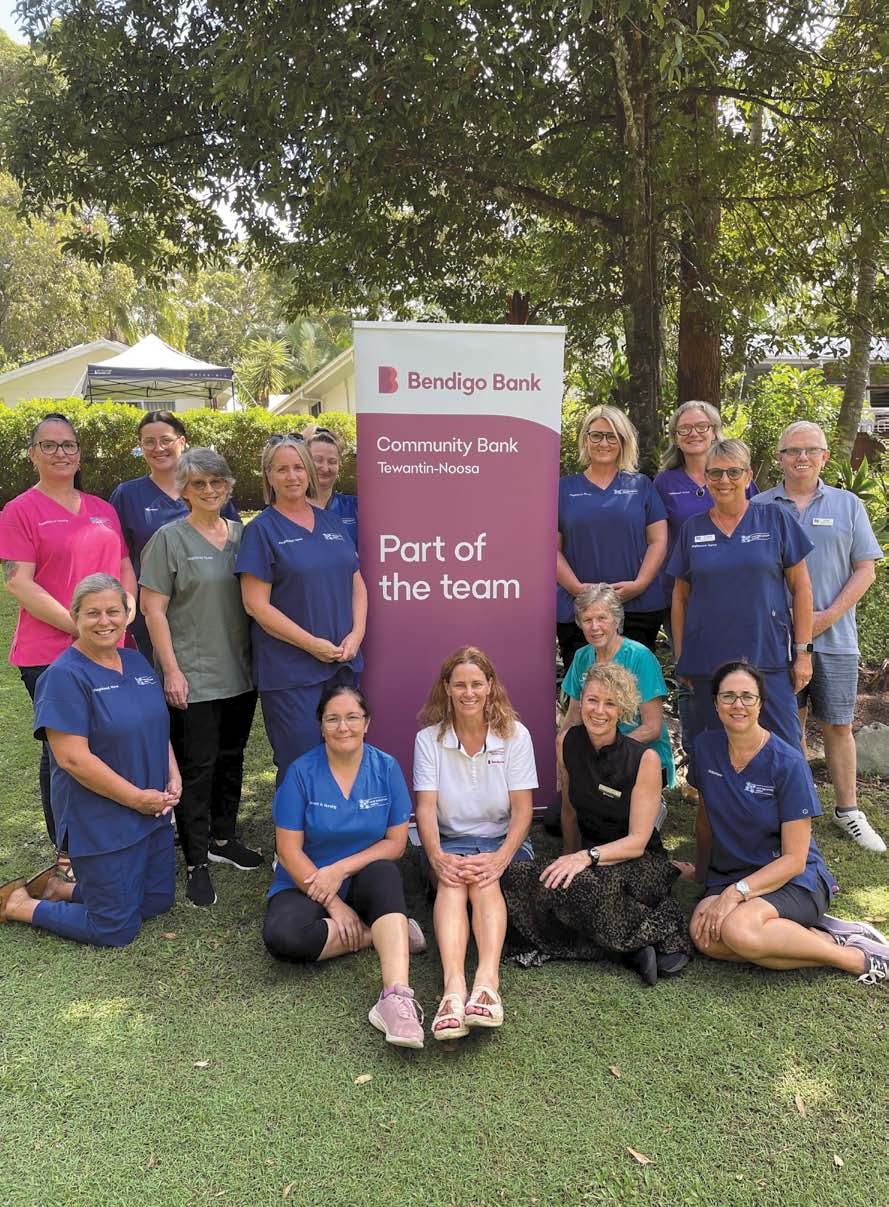
Friday, 28 April, 2023 NOOSA TODAY 29 Community Bank Tewantin-Noosa Making good things happen When you bank with us, proÞts pour into the community. $2,981,246 so far. Across Australia, Community Bank branches have invested $292 Million to help their communities thrive. A bank giving back sounds unusual. For us, itÕs business as usual. Find out more. Call us on 5440 5289 or search Bendigo Bank Tewantin. $2,981,246 Bendigo and Adelaide Bank Limited ABN 11 068 049 178, AFSL/Australian Credit Licence 237879 A1390563, OUT_29236504, 19/04/2023 12601426-SM17-23



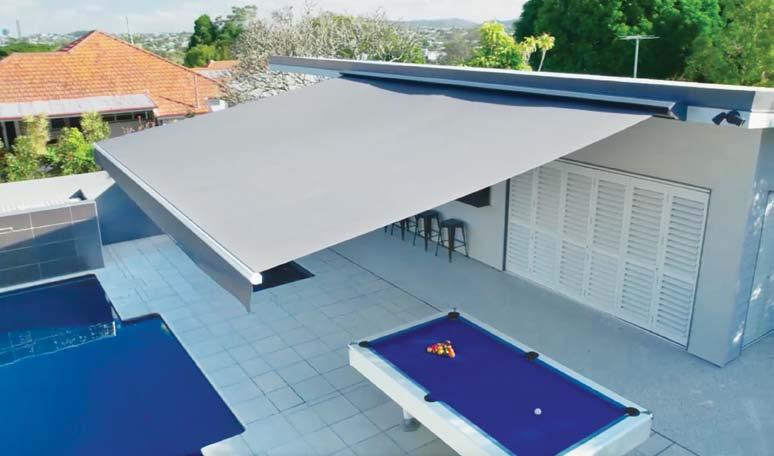
CURTAINS SHUTTERS ZIPSCREENS SECURITY SCREENS WHY FACTORY DIRECT? Professional service and advice at the best price. And as you see, we have a truly extensive range of shutters, awnings, blinds and curtains. Call and talk to one of your local, friendly team members today. CALL US TODAY ON 1300 077 125 | www.factorydirect.com.au Transform your indoor & outdoor spaces today! Offer valid until May 31st 2023. Excludes interest free finance. Winteristhetime tobuy&save! Awnings OFF45 S A L E E X T E N D E D • SA L E E X T E N D ED • S A L E E X T E N D E D • SA L E E X T E N D ED • SAL E E X T E N DED AND GREAT SAVINGS ON OUR WHOLE RANGE! SALE EXTENDED • SALE EXTENDED • SALE EXTENDED • SALE EXTENDED SHOPS INQLD BLIND & SHUTTER VOTEDBEST 12601952-ET17-23
Police response angers
I was angry when I read this response by Police as I was also there Sunday.
They use the excuse that they had a complaint.....do they have any evidence? Did they arrest the alleged perpetrator? NO! Of course they didn’t, they fined the good people of our community who paid their taxes (average age of us is 60 years young) all their lives, and are there to get some vitamin D.
There certainly wasn’t anyone carrying on, and everyone that goes there generally knows each other, at least by a familiar face. And we certainly don’t tolerant the unsubstantiated claim of lewd or disgusting behaviour. We would tell anyone like that to knock it off. Last time I recall this was about 7 years ago, and it was a serial pest well known to the police, and had mental health issues.
We would chase him off every time!
Did the police inform Noosa Today they deployed a drone above the dunes and tree line of the beach, where no member of the public walking past could possibly see a naturalist? If you ask me that behaviour is disgusting as opposed to the unsubstantiated, unproven claim of lewd behaviour!
And excellent result now the police have made the beaches safer so MORE young families can go swim at an unpatrolled surf beach.....after walking between 2km and 7 km to arrive there, I’m sure the little ones have been well hydrated before being encouraged to have a swim on a hot day in a beach know to have taken adults in the past.....I’m a father and grandfather, absolutely bonkers!!
And wait, this is still the same police I called 3 years ago to report a drug dealer was selling drugs in Noosa Lions Park to underage school students, including my 16 year old daughter? With the response ‘yeah we know who he is, its only weed’......give me a break!
These guys should stop wasting valuable resources and start doing their jobs to protect our community....blanket statements like ‘no more nudity’.......how about ‘no more drugs sold to our kids’????
Really annoyed - Local since 1977.
Rob, Noosa
Loss of era
When I first discovered Noosa in the summer of 1981, Alexandria Bay, Granite Bay and even behind the Noosa Spit was popular with people swimming and sunbathing nude, and hundreds of people were involved. More particularly nobody objected, or so it appeared! People also went openly nude at the Northern end of Sunshine Beach in those days. Alexandria Bay was the location of the annual Australian “Nude Olympics” when many people were attracted to Noosa for the event and everyone had a good time unfettered by clothing. It was the era of the Nationalist Queensland Government of Joh Bjelke-Petersen and Police Minister Russ Hinz, and when nude beaches were accepted in many European countries. They still are.
Then Noosa became more popular and prudish people started to make complaints to the sympathetic Queensland Labor Government who introduced a law banning nudity on all Queensland beaches; and so a few people exerted their will on the many! Queensland became the only state that did not have a designated nude beach and in 2017 the Nude Olympics was forced to move to New South Wales and South Australia.
I have to say though that I abhor the few men who practice sexual and lewd acts at Alexandria Bay which gives weight to the argument to the ban on nudity, and I do not know what the balanced answer to that is.Those men are the ones that should be prosecuted and not others behaving peacefully. Sadly it is the loss of an era!
J Smith Noosaville
Already a voice
Re both (MargaretWilkie’s recent letter and Peter Oakes follow up letter of recent times concerning The Voice) while they both may have a point I would prefer to bring things back to basics. The Australian Aboriginal society already have at least one and in some cases two voices to Parliament. The first one operates through a Corporation which as a lobby group properly registered on their behalf try to get improvements in a variety of conditions for the company and their workers so in that sense the aboriginal has a voice to Parliament. The other way that the Australian Aboriginal has a voice to Parliament is in the same way that most people have a voice to Parliament is by casting a vote for a candidate at election time. We may
LENSCAPE



not get the candidate that we voted for but they are still the person who should take your concerns back to Parliament. So you have at least one voice on the personal front. In conclusion if I were a cynic I would suggest that a clever strategist advised his leader that the Voice would bring in at least an extra 2 percent of votes at the next election without dipping into Party funds. But I am a non party aligned non cynic so I will not suggest any such thing.
Bob Noosaville
Charities missing out

Frank Wilkie’s opinion piece on 21 April on the decision by four of the seven Councillors to close the Lions Club temporary car parking at Lions Park in peak holiday time has deliberately left out the most important fact: the Lions Club have been operating the car park at Easter and Christmas holiday time for the last 20 years, not since the outbreak of Covid.
Let FrankWilkie tell Katie Rose Hospice, the Salvation Army and many other local charities that he and the other three Councillors will be denying them $60,000 per year in funding. Perhaps the Noosa Council administration might also like to know where they will get the $150,000 that they receive out of the tourists’ parking fees as well.
Jennifer Gleeson
Tewantin
People not Parking
Heartfelt thanks to our ‘Residents and Environment’ councillors, Deputy Mayor Wilkie and Crs Stockwell, Jurisevic and Wegener, for their votes to discontinue use of the Lions Park for car parking. After all, this was the agreement between the Council and the State Government in 2020.
Parking will still be available next Christmas and Easter holidays, with public consultation on use of the park in the future. The Noosa Chamber of Commerce may well like to see car parking in that location permanently, but why are Crs Stewart, Lorentson and Finzel so keen to support them on this?
These councillors should respect the vote that was taken at the council meeting and stop their campaign to overturn this decision, which was taken in the public interest.
Julia
Walkden
Cooroy
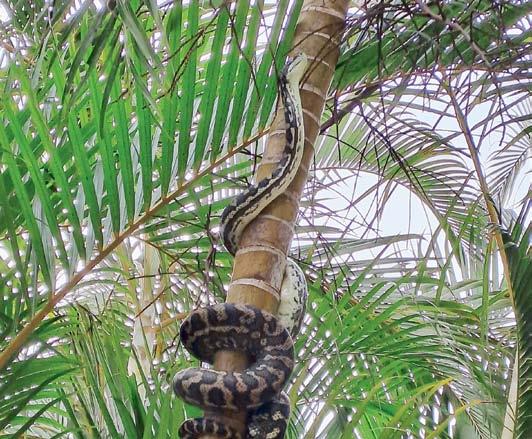
Friday, 28 April, 2023 NOOSA TODAY 31 noosafairshopping.com.au NoosaFairShoppingCentre @noosafairshoppingcentre Gift Card! Mother’s Day WIN A $200 10 Gift Cards to be WON! We’ll announce the winners on Monday 15th May at 10am Happy Mother’s Day Sunday 14th May You do not need to present at the draw to win. *See noosafairshopping.com.au for terms and conditions Simply send $30 at any participating specialty retailer (or accumulate same day receipts ) and scan the QR code to enter. *Excludes Coles purchases. 3 Lanyana Way Noosa Heads Q 4567 GIFT CARD 12601579-JC17-23
Sue Crane thanks all the people who helped this beautiful python safely cross Goodchap Street, Noosaville last Wednesday before she snapped this shot. It eventually made its way to the edge of Lake Doonella and disappeared into the mangroves, she said. If you have a Lenscape please email it to newsdesk@noosatoday.com.au
NOOSATODAY.COM.AU OPINION







32 NOOSA TODAY Friday, 28 April, 2023 TEWANTIN NOOSA RSL CLUB Serving the Community MEMORIAL AVE, TEWANTIN QLD / 07 5447 1766 / NOOSARSL.COM.AU MEMBERS DRAW MEMBERS DRAW WIN UP TO MEMBERS DRAW EVERY MONDAY & THURSDAY 6.30PM & 8.00PM! STARTS AT $5,000 JACKPOTS BY $500 EVERY DAY NOT CLAIMED SYDNEY HOTSHOTS - $39.00 SATURDAY 6th MAY BLACK SORROWS $45.00 SATURDAY 29th JULY FAULTY TOWERS $78.00 SATURDAY 16th SEPTEMBER DIGGERS BAR - 8pm FRIDAY 28th APRIL BISTRO - 8pm SATURDAY 29th APRIL BISTRO - 12noon SUNDAY 30th APRIL AROUND THE CLUB MARK MURPHY’S BOTTLESHOP SPECIALS Thursday 27th April to Thursday 11th May 12601618-JC17-23
Popular art prize goes wild
A competition that encourages young artists to go wild is calling for entries.
School-aged children from across Queensland are encouraged to submit their realistic native Australian plant or animal masterpiece to Sunshine Coast Council’s Wild HeART Student Art prize. Students can enter their artwork into one of three age categories for a chance to win a share of $3000 in prizes
before entries close on Sunday 16 July, 2023. Sunshine Coast Environmental Portfolio Councillor Maria Suarez said the competition aimed to foster young talent while creating awareness of Australia’s native plants and animals.
“Whether it’s an eastern curlew, brushtailed possum or a bunya pine – entries just need to realistically portray a native Australian
Email your community news to: NEWSDESK@NOOSATODAY.COM.AU
RSL WOMEN’S AUXILIARY
The next meeting of the Tewantin-Noosa RSL Women’s Auxiliary will be held on Friday 5 May, our outing on Thursday 11 May to The Apollonian Hotel leaves the RSL at 11am. Our birthday lunch is on Friday 2 June after our meeting. Please Phone Kay to book 5447 5042.
DENIM & COUNTRY FEST
Lifeline’s Cooroy Denim & Country sale of all things country from RM Williams and Akubras to denim clothing and leather jacket will be held from 29 April-1 May at Lifeline shop, 22 Maple St, Cooroy. Phone 5442 6464.
RED CROSS PICNIC
Picnic Amongst the Cars will be held on Sunday 28 May from 1pm. Music from Hot Peppers Jazz band, buffet of charcoal rotisserie meats and salads, BYO drinks. All proceeds to Red Cross programs. Tickets $60. Phone 0407 571 282.
BIGGEST MORNING TEA
The Sunny Fundraisers together with the Queensland Cancer Council invite you to the Biggest Morning Tea to be held at Hibiscus Retirement Resort, St Andrews Drive, Tewantin on Wednesday 24 May at 10am. There will be champagne on arrival followed by morning tea. Great Raffle Prizes. Tickets $25. Phone Annie for bookings on 0409385566.
COOROY POMONA LIONS CLUB
50TH.
Lions will hold an Open Day on Saturday 20 May to celebrate 50 years since inception. You are invited to drop in and see what this Lions Club does in our community. Our Bookshop will be open, all our equipment will be on display, our community hall will be open, and you will be able to see how varied our activities are. Drop in at 2 Mountain St, Pomona, between 10am and 2pm and share a free Lions sausage and a drink.
CHAMBER
COFFEE CATCHUP
A networking coffee morning is being held by the Noosa Chamber of Commerce at 7-8.30am on Friday 5 May at the Noosa Boathouse, 194 Gympie Terrace, Noosaville. Members and non-members are welcome. To attend please register at www.noosachamberofcommerce. com.au
SEWING NEWS
The Guilded Lilies Sewing Group will meet on Saturday 29 April at Masonic Hall, Moorindal St, Tewantin from 9am-3pm. Come along, meet new friends, learn new skills, enjoy the company of like minded people. All handcrafts welcome. On 27 May we are celebrating 25yrs together. Come along and help us celebrate. Phone Angela 0408068148.
GARDEN CLUB
The next meeting of the Tewantin Noosa Garden Club will be held at our new venue of the Tinbeerwah Hall on Monday 8 May at the new time of 1pm for 1.30 pm start. The Guest Speaker will be John Writer from Bees Noosa on all things Bees. Plant sales raffles afternoon tea. Guests welcome. For further information contact Len at 0417604889.
COMMUNITY GARDEN
The Noosa Community Garden is back in full swing. We garden every Friday from 7.30am, after harvest which we share amongst the gardeners, we enjoy a chat over a cuppa. Please contact June Copeman on 0412 384 848 for more information.
ARTS AND CRAFTS
Workshops:
Pen & Wash (beginners) with Lizzie Connor: four-week workshop commencing Tuesday 2 May, 9 am - noon.
Introduction to oil painting with Karen Osborn: Saturday & Sunday 6 & 7 May, 9.30 am - 4 pm.
Potter, Plates and Decal with Lindsay Nowoselsky: Saturday 20 May, 9 am - 1 pm.
Animals in pastel with Maxine Thompson: Saturday & Sunday 27 & 28 May, 9 am - 3 pm.
To book events phone 5474 1211, email create@noosaartsandcrafts. org.au or visit noosaartsandcrafts.org.au
VIEW CLUB
Noosaville Lunch time View Club supports the education of children year-round through The Smith Family Charity. Socially this welcoming club meets twice a month. On the second Thursday of the month we have a “Friendship Day” where we meet for lunch at various venues. On the fourth Thursday of each month we have our club meeting at the Tewantin RSL at 11.30am. At this meeting our club president talks about matters pertaining to our club, our Learning for Life Students that we support and later she welcomes a guest speaker, then lunch. For more information call Wendy Brooks on 0417 267 281
NOOSA PROBUS 2010
Noosa 2010 Combined PROBUS is a great club for retired men and women who love going on bus trips, having coffee, lunches, dinner outings, weekly walks, yoga, theatre, garden outings and an interesting monthly speaker. Meetings are held at the Tewantin Noosa Bowls Club, 65 Hilton Tce, Tewantin on the 2nd Tuesday of the month at 9am. For details phone Barbara on 0491 354 054.
MEET YOUR NOOSA JPS
The JPs in the community programme is a valuable voluntary community service actively operating here in Noosa. If you are a Justice of the Peace or Commissioner for Declarations living in our Noosa region and would like to volunteer your services a few hours a month at our JP signing centres or to just learn about the JPs in the Community programme, branch forums, workshops and social activities, please email Deb Davis at deborah.davis007@gmail. com
BEEF AND BURGUNDY CLUB
Noosa Beefsteak and Burgundy club meet on the third Wednesday evening of the month at a different local restaurant for good food, wine and fellowship. We invite couples or singles to join us. Further information contact John Dicker on 0414 323 266.
FABULOUS 60S PLUS
We welcome couples and singles to join us for morning coffee every Monday at Tewantin RSL from 10am and every Thursday at the Boathouse on the Noosa River from 10 am. Additionally, we have a monthly program of international dinner, a monthly Sunday lunch, monthly happy hour sunset drinks plus regular events like darts evening, live music, barefoot bowls and picnics etc. Contact Joan on 0419517869 for more details.
SUNSHINE SOCIAL CLUB
We meet for coffee every Saturday 10am at the Sunshine Beach Surf Club, where we plan our weekly lunches and picnics. Couples and singles most welcome. Please phone Noeline on 5474 5231 for details.
TOASTMASTERS
Do you have a message you would like to share with the world? Or maybe you’d like to improve your confidence when speaking in public. We are a supportive public speaking club dedicated to improving your confidence and creativity in a safe environment. Our meetings are every 2nd and 4th Mon- day of the month,
animal or plant,” she said. “Look for a species that you did not know was in your backyard or your favourite place, or one that you know very little about so you can explore and learn something new and amazing about the species you choose.”
Top tips for young artists: · be careful to choose a native Australian species, not an introduced species or pest.
· photographs from the internet may be used as reference material for the artwork but please do not copy another artist’s artwork. All entry instructions, forms, eligibility criteria and conditions are available under “see and do” at botanic-garden.sunshinecoast.qld. gov.au or by searching “Wildheart Student Art Prize”.
from 6.30-8.30pm at the CWA Hall, Tewantin. The first two visits are free. For more information contact noosatoastmasters@gmail.com
SENIORS CLUB
Tewantin Noosa National Seniors group meets at Tewantin RSL Club on the third Thursday of each month at 10.30am. We offer outings, social gatherings, information sharing and friendship. Morning tea is served and a variety of guest speakers share their knowledge. All welcome. Please contact Jenny Clarke on 0414 804 988 for more information.
SING FOR GOOD HEALTH
We sing beautiful, joyful easy to learn songs in a relaxed and fun atmosphere. We meet Tuesdays at 4 till 5.30pm at the CWA hall in Eumundi. All levels of ability accepted and no auditions. For more information call Joan on 0419 517 869.
JOIN NOOSA CHORALE
Do you love to sing? Why not join us in 2023? It is a non auditioned choir. No need to read music, although an advantage. We particularly need more tenors and basses. For more information visit noosachorale.org. au or email your interest or questions to us noosachorale@ gmail.com
TUNE
IN TO NOOSA FM
Tune in Noosa FM 101.3 or stream live on noosafm.org for local updates and Great Music for a Great Community. Noosa’s community radio station is committed to developing local talents.
TEWANTIN NOOSA PROBUS CLUB
Are you a retiree seeking new interests? New challenges? New friends? We offer all three and more at the Tewantin Noosa Probus Club. We meet at the RSL on the fourth Tuesday of the month at 10am for morning tea ($6). Meetings start at 10.30 with an interesting guest speaker. Following meetings, we have a game of trivia and most members stay on for lunch. During the month, we have walks by the river, barbecues, lunches, outings to places of interest, movie mornings and book club. We play mah-jong and rummikub - lessons are free. We invite you to join us. Phone Christine on 5442 7397 or visit probustewantinnoosa.au
LIONS VOLUNTEERS
Volunteers are wanted to join a small but dedicated group of Lions. We have two meetings a month of which one is a social gathering over a meal somewhere. We raise money for the local community and others by holding sausage sizzles. Supporting local events and the Noosa Triathlon. For more info call Joan 0418 794 730.
LIFE DRAWING
Life drawing every Tuesday morning at the Uniting Church hall, 41 Poinciana Ave, Tewantin, from 9am-12.30pm. A new model is available every week and cost is $25 per session. Beginners and established artists welcome. Just come and enjoy the challenge. Contact Giuliana De Witts for more info.julianadewitts@ gmail.com
PROBUS NOOSA RIVER
Looking for something to do? Our Club offers many activities: Art, Craft, Book Club, Canasta, Coffee Mornings, CreativeWriting, Golf, Lunch Outings, Mah-jong, Scrabble, Theatre(Local and Brisbane), Walking Trips, Ukulele and Wine Appreciation Nights. Monthly meetings are on the first Monday of each month at the Girraween Sports Complex Clubhouse (Entrance off roundabout adjacent Eenie Creek Rd and Langura St) at 9am. Please call 0410 687 639 for further details.
RED CROSS
Red Cross Tewantin-Noosa branch will hold
Tewantin- Noosa
Meals on Wheels
Weekly Roster for Tewantin- Noosa
Meals on Wheels beginning Monday 1 May.
Monday Drivers: CLOSED PUBLIC
HOLIDAY
Tuesday Drivers: Luc, Darryl, Tania and Friends, Margaret and Jill, Maddie, Driver needed F run, Barani and Peter, Amy, Simone, Donna
Kitchen: Georges, Mary
Wednesday Drivers: Martina, Trish and Karen, Alan and Cynthia, Darryl, Jan and Bryan, Paul, Driver needed G run, Kath and Melody, Simone, John and Helen, Julie L
Kitchen: Denise, Christine, Judi
Thursday Drivers: Kyle, Peter, Darryl, Driver needed D run, Margo and Jim, John E, Kerryn and Stuart, Martin, Martina, Sharon and Mal
Kitchen: Donal, Loz, Vicki, Sharon, Claire, Jerry
Friday Drivers: FROM 1 MAY, PERMANENT CLOSURE ON FRIDAYS
You can also check the roster on our website mealsonwheels-tewantinnoosa.org.au
If you are unavailable or can do an extra run, please phone the kitchen on 5449-7659.
We are looking for drivers and kitchen volunteers.
meetings on the third Friday of the monthly at 9.30am at the RSL Tewantin. All welcome. Contact Ena on 0413 235 098 for more information.
TEWANTIN NOOSA CWA
Our special guest at a lunch on 4 May at Gusto Restaurant is Rochelle Courtenay, founder of Share the Dignity charity, which distributes bags of sanitary products to assist disadvantaged women and girls. Bookings via https:// events.humanitix.com/share-the-dignity Please bring a bag with the products listed on the Share the Dignity website to support this cause. Enquiries
Jennifer 0409063738
CLASSICAL MUSIC GROUP
We meet in a private home in Noosaville every Thursday at 2pm and we either watch a Classical Music DVD or listen to a Classical Music CD. Why not give us a try? There is no charge but I ask for a $2 donation for morning coffee or tea and biscuits. For more information please ring Lyn on 5449 0537.
NORTH TEWANTIN BUSHCARE
Join the North Tewantin Bush Care Group of local volunteers every first and third Sunday of the month from 7.30-9.30am. We weed and plant along the river. It is light work and a lot of fun. All equipment is provided and an excellent morning tea follows. Grab a hat and come along. Ring 0432 384 596.
VOLUNTEERS NEEDED
Tewantin Noosa Meals on Wheels requiresmore volunteers for local deliveries and kitchen assistants. We provide a high standard of meals to those in our community requiring our service, which is only possible through the generosity of volunteers like you. As a volunteer driver, vouchers are available toward petrol costs. Contact the office on 5449 7659 or email tnmow@bigpond.com
Friday, 28 April, 2023 NOOSA TODAY 33 NOOSATODAY.COM.AU LIVE
NOOSATODAY.COM.AU COMMUNITY UPDATES
LIVE NOOSATODAY.COM.AU
The Banff Centre Mountain Film Festival World Tour will return to Noosa on 3-4 May, showcasing a curated selection of inspiring outdoor films.
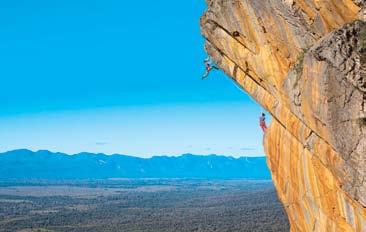
Known as the most prestigious mountain film festival in the world, films are selected out of as many as 400 entries from global filmmakers.
Touring around every state and territory in the country, this year’s epic adventure line up honours the core belief of the film festival to motivate, inspire and prove that life is what you make it.
Australian festival tour host, Jemima Robinson remarks on this years phenomenal films.
“Each year the bar is raised with incredible people going on the most daring, yet inspiring adventures,” she said.
“We’ll all be motivated to live life to the fullest as we watch amazing people do the impossible. Whether its gliding down the slopes with the world’s most creative freeskiers, or following a Sherpa family as they clean up Mount Everest during the Pandemic, or watching
French kayaker Nouria Newman prepare to become the first female to run a 30m waterfall, or cheering on a Brazilian engineer as he hopes to break the record for the world’s highest slackline walk.”

Each film has been carefully selected through a long process of voting from 400 films, down to 80 films that then screen at the nine day long film festival in Banff, Canada.
From this selection, a program of over two hours of thought-provoking films, with subject matter ranging from remote landscapes and cultures to adrenaline-packed action sports are selected by Mrs Robinson to tour Australia each April, May and June and are uniquely chosen for Australian audiences.
Featuring seven captivating films from adventurers around the globe, the 2023 World Tour is an exhilarating and provocative exploration of the adventure world. Give your adventure dreams more oxygen this year with a ticket to the 2023 Banff Mountain Film Festival World Tour.
Book tickets at banffaustralia.com.au/tickets/
See, feel, connect - a diverse exhibition
Sunshine Coast artists are diverse, plentiful and exceptionally talented, a fact evidenced by the stunning Local Artists - Local Content Art Prize 2023 exhibition, on show now at Caloundra Regional Gallery.
The exhibition an initiative of Friends Regional Gallery Caloundra Inc. showcases 40 established and emerging artists, each expressing their understanding of the environment either through painting, drawing, printmaking or sculpture.
It also gives visitors a unique opportunity to meet the artists, take part in a range of workshops and talks and get a deeper understanding of the works. A schedule of events is available on the gallery website.
Caloundra Regional Gallery Manager and Curator Jo Duke said that while the 40 finalist works were available to view online, a visit to the gallery was recommended to really appreciate the detail of the pieces on show.
“When viewed together, the works highlight the way our artists view, work and create in this region, from varied and unique natural landscapes, people and communities – all different ways to see, feel and connect.
“You will see artists who work with the more traditional mediums such as oil, acrylic, gouache on canvas through to works on paper including watercolours, prints and digital photography.

“Then there are the works by artists who work in 3D with clay, wood, resin, textiles and found objects, plus artists who combine the 2D with the 3D to create something totally unexpected, pushing ideas of perspective.”
Sunshine Coast Arts Portfolio Councillor Rick Baberowski congratulated all finalists and gave special mention to the winners, Benjamin Hedstrom of Peregian Springs for Creek Reflection I (Coolum), Tess Hagan of Mooloolah for Friday Knock-Offs and Cindy Mills of Tewantin for her work Sister Spirits.
Visitors to the gallery can also view the Local Student Art Prize exhibition comprising works from artists as young as six right through to 17 years.
Visit gallery.sunshinecoast.qld.gov.au or following @caloundraregionalgallery on facebook and Instagram.
Caloundra Regional Gallery is open from 10am, Tuesday to Sunday, and located at 22 Omrah Avenue, Caloundra.
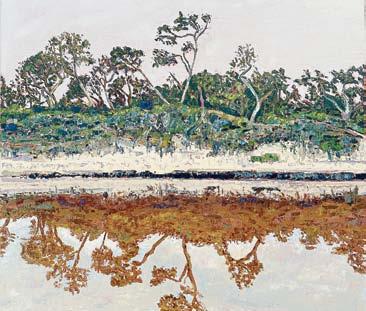
Tess Hagan’s Friday Knock-Offs
Expect the
unexpected at festival
Get ready to soak up the vibrant energy of the Sunshine Coast Chamber Music Festival as it returns for its third year.
Over the King’s Birthday long weekend from Friday 9 to Sunday 11 June, the festival will delight music enthusiasts with a range of bespoke events held in stunning natural locations and intimate venues across the Sunshine Coast.
This year’s program promises to be an innovative and immersive experience, blending contemporary and classical chamber music with site-specific, crossform, and cross-cultural elements.
It will bring for the first time ever in the same Festival three of Queensland’s finest chamber orchestras and ensembles – Camerata, the Southern Cross Soloists and Topology.
They are joined by a stunning array of world-class musicians and companies, including Alex Raineri, Chris Williams, the DeepBlue Orchestra, Zen Zen Zo Physical Theatre, the Beier-Griffin-Pollak Trio, and a stunning line-up of First Nations artists including Deline Briscoe, Emma Donovan, Fred Leone, and local Kabi Kabi songman Lyndon Davis.
Artistic Director Lynne Davies said, “Our 2023 festival provides visitors with a range of unforgettable and inspiring experiences by programming a worldclass line up of musicians and connecting them with the special places, people and the cultures of the Sunshine Coast region. My advice is The Sunshine Coast is the perfect location so pack your bag and join us for a long and luxurious weekend of music, sunshine, food and wine.”
Expect the unexpected as you are taken on a stunning journey through beautifully bespoke performances in natural landscapes.
34 NOOSA TODAY Friday, 28 April, 2023
Get ready to soak up the vibrant energy of the Sunshine Coast Chamber Music Festival as it returns for
Tickets on sale now via sccmf.com. au/program-2 third year.
its
Benjamin Hedstrom’s Creek Reflection I (Coolum)
Sister Spirits by Cindy Mills.
Banff Film Festival tours
The Banff Centre Mountain Film Festival World Tour will return to Noosa on 3 May.
Don Walker to perform in Eumundi
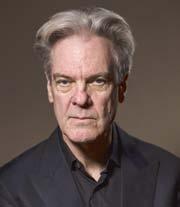
Legendary Australian singer-songwriter Don Walker will be taking to the stage with his band at The Imperial Hotel Eumundi on Friday 19 May, the first performance in the ‘Lighting in a Clear Blue Sky’ Australian East Coast Tour.
They will be supported by Melody Moko for what will be a seated show.
Don Walker is renowned as one of Australia’s best songwriters. With Cold Chisel, hewroteSaturdayNight,CheapWine,Standing on the Outside, FourWalls and Khe Sahn along with many others, and co-wrote Flame Trees.
He then recorded and toured, initially under the name Catfish; and with Tex, Don and Charlie (withTex Perkins and Charlie Owen) writing songs like Sitting At A Bar and HarryWas A Bad Bugger; and penned songs for many, including Slim Dusty’s Looking Forward, Looking Back.
Over the years Walker’s songs have been recorded by many, including Jeff Lang, Mick Harvey, Troy Cassar-Daley, Jimmy Little, Jimmy Barnes, Ian Moss, Anne Kirkpatrick and Missy Higgins.
‘Lighting in a Clear Blue Sky’ (to be released on 5 May) is Don Walker’s fourth solo album and his first studio album in 10 years. A solo effort as deep as the ocean and as dark as the night, with big bright flashes of musical light-

ning. It’s wondrous and tragic. It’s melancholic. It’s reflective. It’s dirty and bluesy and blue. Honest as a bee sting.
Recorded in Victoria over two days, it fea-
tures long-time bandmates and creative collaborators Garrett Costigan on pedal steel; Michael Vidale on bass; Hamish Stuart on drums and the late, great guitarist Roydon Payne, to whom Walker has dedicated the album. They were joined on backing vocals by the Harmonettes, Amanda Roff, Erica Dunn and Brigitte Hart.
Internationally acclaimed author, Trent Dalton, says it best, “The man’s music lives in me like myth. It resides in the same place in my brain where Buddy Holly’s last flight lives; or John’s big bite of Yoko’s apple; or Robert Johnson’s great Delta devil deal. Rosaline. Breakfast at Sweethearts. Standing on the Outside. Choirgirl. Saturday Night.”
“’I’ve got the song we’ll need to live,’ he sings on the very first line of the very first song. Turns out he’s got a whole album of them. Every one of them nourishing and sustaining; restorative and resurrective. He’s been listening again. And now, for the first time in years –like a fork of white lightning charged to split through your clear blue sky – the incomparable DonWalker is about to speak,” says Dalton.
Doors open at 8pm.
TICKETS: $60 (+booking fee) through Oztix.
18+ event
Maker’s Market brings together the artsy
Kim Wallace is one of the Sunshine Coast’s best known artists, so it’s no surprise when she decided to bring together local Makers for a twilight shopping market, businesses immediately jumped on board.
Kim is hosting the ‘Maker’s Market’ with the aim of showcasing and celebrating local creatives under the stars at Kim Wallace Studios.
“We are so lucky on the Sunshine Coast to be inspired by such a talented creative industry. My hope for the Makers Market is to provide an opportunity for the community to meet local Makers they perhaps don’t already know about, and support their businesses through a night of fun shopping, food, and entertainment.”
Around 20 Stallholders will be in attendance including Silverbeat Jewellery, Oaklab, FORM Furniture and Iris & Aura; cocktails and gins by Seabourne Distillery and live entertainment by Andrea Kirwin. The night will include giveaways and there are sure to be some great gift ideas in time for Mother’s Day. Little ones are also catered for with a designated craft table where they can practise their clay skills and take home their creations at no extra charge.
The rare opportunity to take a peek behind the scenes of Kim’s studio will also be open for guests to enjoy.
Kim Wallace at her Noosaville studio shop

Artist Ann Banks her creativity
By Jim Fagan
When Tewantin artist Ann Milland was four years old, she discovered the thrill of putting paint on paper and the image it created.
Today, after a lifetime of her work being shown at exhibitions in the UK, New Zealand, the Brisbane EKKA and, locally, Harbourside Gallery, Noosaville Library and now Bendigo Bank, she is still painting--and cherishing every moment.
“My grandfather was an artist and so was my mother. I’ve just gone on from there,” she told Noosa Today. “I did well at school and then I went to Eastbourne Art College in England which, frankly I thought was a waste of time.
“I remember running a bicycle into paint and then going over a piece of paper on the floor. It was fun but it wasn’t art and certainly not teaching you how to paint.
“I wanted the real thing.”
The new mural (currently being painted) alongside beautiful palm trees and festoon lights will transform the carpark space on the night.
While her own collection keeps her busy, one of Kim’s favourite things to do is collaborate with artists on joint projects. She generously provides space in her retail store to sell other Maker’s collections including jewellery, napery, art prints and Australian native floristry. She has also recently opened a creative workshop adjoining her studio called Maker’s Space where she is doing exactly that - providing a space for Artists to showcase their work.
“The Maker’s Space is a genuine way I can give back to an industry that has supported my own work and allowed me to grow.”
Kim has just released a collection with writer, artist and illustrator Renee Treml featuring her gorgeous hand drawn Australian animals in her signature scratchboard style. These will also be available for purchase on the night.
“It’s so incredible to bring our pieces to life with her work. It’s a very special collaboration I’m very proud of.”
The Maker’s Market is on Friday 5 May, 4-7pm at Kim Wallace Studios (10 Leo Alley Rd Noosaville). Street car parking available. Free Entry.
Since then, Ann (75) has studied drawing and painting in different media and twenty of her paintings are now being showcased at the Tewantin branch of Bendigo Bank in Poinciana Avenue.
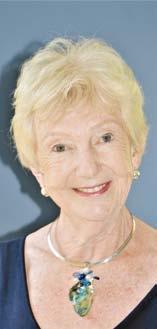
“I have a mix of charcoal, pastels, water colour and acrylic. A lot of them are of children which I really enjoy doing. They seem to create the most comment, maybe it’s because they are of little children on the beach.
“I like painting people with interesting faces. The more wrinkles the better!
“I enjoy painting. It takes you to another world with peace, harmony and colour. To be able to paint and to create beauty, gentleness and, at the same time, a variety of moods is extremely good for your wellbeing.”
Noosa has its share of unassuming volunteers and Ann, who came here to live 23 years ago, is one of them. She joined Story Dogs five years ago and with her dog, Billy, supports students at Tewantin State School who need extra help and encouragement with their reading.
She is also a driver at Noosa Hospital for those who require a courtesy buggy and, until recently, she was a volunteer helping patients in oncology.
Friday, 28 April, 2023 NOOSA TODAY 35 NOOSATODAY.COM.AU LIVE
Don Walker is renowned as one of Australia’s best songwriters.
Legendary Australian singer-songwriter Don Walker.
Kim Wallace is one of the Sunshine Coast’s best known artists.





























36 NOOSA TODAY Friday, 28 April, 2023 Your local paper has brought together local employers and local employees for generations... Call our Network Classifieds team on 1300 666 808 or email us sales@networkclassifieds.com.au 12550336-AV20-22 Real Estate section of Network Classifieds. Buy,Rent&Sellinour CONCRETING & LANDSCAPING ALL AREAS Ph Guy 0416 202 044 www.concretecontrol.com.au QBCC Lic no. 1129605 12453567-NG27-20 STRAIGHT UP CONSTRUCTION SERVICES Residential and Commercial straightupconstruction.com.au NOOSA RENOVATION BUILDER Ask about our bathroom package 0438 225 019 QBCC License No: 15322095 12600512-JW16-23 V Concrete Products & Services V Builders & Building Services Trades & Services section of Network Classifieds. Localprofessionalsinour WE FIX BATHROOMS Specialising in: - Leaking Showers - Waterproofing - Tile Rectification - Bathroom Refresh Ask us about our FREE in Home Assessments 3466 4982 www.aquashieldbathrooms.com.au QBCC: 150818838 12549451-NG19-22 12542136-SG12-22 07 5327 3422 | 0437 232 133 QBCC 15077736 www.SilkDesignConstruct.com Call Chris on 0408 068 341 Q BSA 1081269 www.facebook.com/cabinetinstallationsnoosa chris@cabinetinstallations.com.au Cabinet - Design Construct Install • Kitchen • Robes • Vanities • Laundry • Stone • 2pac • Melamine • Glass 12584605-AI05-23 V Bathroom & Kitchens V Cabinet Makers V Builders & Building Services 12506142-AV31-21 bewildered by your computer internet phone or ipad? 0413 802 075 Real Estate Buy,Rent&Sellinthe section of Network Classifieds. 12504370-JW29-21 Mrs Fixit Phone, iPad and computer tutoring Flat Pack Queen All handyman jobs done by me and deceased estate help Call Sasha 0412 501 576 V Computers Paul Best ANTENNA / TV TUNING Smart Tv Set UP & Advice Over 30 Years on the Coast For prompt service phone 0413 699 572 12450576-SG23-20 V Antennas Placing your classified advert is so easy... Phone: 1300 666 808 Email: sales@networkclassifieds.com.au (include your name, address and phone number) We accept payment by: VISA/MASTERCARD/EFTPOS/BANK TRANSFER (1.5% credit card processing fee applies. Cheques and money orders can be posted.) Deadline for all classifications is 3pm Tuesday. 12478399-CG03-21 Call 1300 666 808 From plumbers to pest control, carpet cleaning to building services, dry cleaning to computer repairs, lawn mowing and more, Network Classifieds has been connecting local businesses with the local community with our Trades and Services each week. Speak to our classified team and find out how easy it is to advertise. Start building your brand today and be seen every week in Network Classifieds Trades and Services. Grow your business with TRADES & SERVICES “As I only work in the Noosa Shire area, Noosa Today is the perfect way for my customers to locate me.” - Paul 12471195-SN48-20 Paul Best ANTENNA / TV TUNING Smart Tv Set UP & Advice Over 30 Years on the Coast For prompt service phone 0413 699 572 12450576-SG23-20 • Office Cleaning • Commercial Cleaning • Body Corporate Cleaning • Strata Cleaning • Retail Cleaning FREE QUOTES www.noosapropertyservices.com.au 1300 597 304 12588517-JW05-23 V Deadline V Trades Business Profile V Cleaning Services Trades & Services networkclassifieds.com.au
Proposed Development
to Establish a Food and Drink Outlet

Where: 14 - 16 Mary Street, Noosaville 4566 QLD




On: Lots 3 and 4 on RP 122928
Approval sought: ‘Other Change’ to Development Approval - Food and Drink Outlet Application ref: MCU18/0102








You may obtain a copy of the application and make a submission to: Noosa Shire Council Planning and Development Assessment 9 Pelican Street, Tewantin QLD 4565 mail@noosa.qld.gov.au (07) 5329 6500



notification requirements are in accordance with the Planning Act 2016



Friday, 28 April, 2023 NOOSA TODAY 37 Find your Local Specialist in our Professional Services section of Network Classifieds. ACREAGE MOWING Mow with a Pro Call Mates Rates Mowing Ask about our next day express service! 12559876-DL30-22 Julian 0402 630 687 V Mowing & Lawn Care We Take Care Of All Your Tree Needs LOCALLY OWNED AND OPERATED SPECIALISING IN ALL ASPECTS OF TREE CARE TREE REMOVAL AND PRUNING PALM REMOVAL | STUMP GRINDING TRUCK & CHIPPER | PROMPT & RELIABLE DIPLOMA CERT 5 IN ARBORICULTURE FULLY INSURED & LICENSED DAVE STUART 5449 0677 | 0405 183 645 info@protreesurgery.com.au ABN 16559426624 12452674-CG29-20 V Tree Lopping/Surgery JET BLAST CONCRETE CLEANING Driveways | Pool areas | Patios Building Soft Washing Concrete Sealing Ring Alfie for a FREE QUOTE: 0438 382 052 ABN 61415040800 12556741-NG26-22 Motoring section of Network Classifieds. Buy&Sellinour Family Owned & Operated PRESSURE CLEANING The professionals with the Cheapest Price! High Pressure Concrete Cleaning Removal of Grind, Dirt, Mold from Pathways, Driveways & Pavers House & Gutter Cleaning Fully Insured & Licensed From $88 Tony: 0421 159 419 - Noosa 10% Seniors Discount WATER RAT 12595698-MS12-23 V Pressure Cleaning 12453461-SG27-20 LICENSED BUILDERS ABN 54 127 511 817 QLD LIC NO 1127940 Phone : 1300 225 995 Email: joinery@prolinebuilders.com.au Web: www.prolinebuilders.com.au / Design / Custom Builds / Installation Proline Kitchens & Bathrooms V Kitchens � Ideal for general junk, green waste, backyard clean ups, furniture, whitegoods, office clutter � Every size bin for every occasion � Trucks that fit any driveway � Unbeatable value � Speedy service � 7 days skip hire included � Suburban discounts. Just ask us! Sunshine Coast’s Cheapest Skip Bins! 1300 550 442 speedybins.com.au 12463489-SN40-20 V Skip Bin Services Clear-Space 2-GO Rubbish Removal 0477 772 138 12582876-MS01-23 Servicing Noosa Shire for over 20 years � Taps & Toilets � Water Meter Leak Detection/Repair � Blocked sewer & stormwater � Sewer Jetter, Camera & Locator � Maintenance Plumbing � Hot Water Systems � Same Day Service PH: 07 5474 2481 / 0422 203 833 AQUAMAN PLUMBING 12588473-KG05-23 QBCC No: 1133457 aquamanplumbing@gmail.com
a submission
Change’
Development Approval
Make
from 28th April 2023 to 22nd May 2023 ‘Other
to the
12601563-SM17-23
Public
• Gutter Cleaning • Roof Cleaning • House Washing • Soft Washing • Solar Panel Cleaning • High Pressure Cleaning Residential & Commercial Fully Insured Rick 0468 764 712 www.zenpropertymaintenance.com.au 12517206-BL42-21
RUBBISH REMOVAL Julian: 0402 630 687 | julianslavin@hotmail.co.uk Ben: 0421 288 717 | benjaminslavin@hotmail.co.uk And Garden Clear Outs Big or small, we do it all! 12602201-FC17-23 NEED A PLUMBER WHO IS: Genuine? Reliable?? Offers Expert service at a reasonable price?? THEN LOOK NO FURTHER! We specialise in: - Hot Water Units Leak Detection - Blocked Drains Renovations - Maintenance Leaking Toilets - Dripping Taps Whatever your plumbing issue is, we’ll sort it out for you and do it right the first time! GUARANTEED! CALL 0484 564 796 www.perfectpipesplumbing.com.au 12483174-SG08-21 QBCC Lic 1295239 Pete’s Handyman & Maintenance Service No jobs too small - 7 days a week Mobile: 0412 858 765 1 2454037-SG28-20 V Home Maintenance Residential & Commercial Solar Privacy/Glare Frosting Anti-Graffiti & Security Films Locally Owned & Operated WWW.GREENGUARDWINDOWTINTING.COM.AU 0408 587 768 12450847-FA23-20 All Coast Drainage Family Owned & Operated BLOCKED DRAINAGE The Professionals with the Cheapest Price! BLOCKED SEWERS, TOILETS, STORM WATER AND SEPTIC TANK SOLUTIONS – SAME DAY SERVICE Install New Sewers & Storm Water Solutions Camera & Locating Leak Detection Call Tony - Noosa 0421 159 419 12595696-JC12-23 FIND IT – CLEAR IT – FIX IT QBCC: 727311 - Fully Insured SEWER RAT 10% Senior Discounts V Windows 12451783-FA25-20 Rubbish Removal Specialise in Household Rubbish Removals, including Furniture, Green Waste and site clean ups No job to small and are happy to give a no obligation free quote on all work Call Brad 0419 570 933 12421869-RC28-19 V Excavators V Rubbish Removal Your trusted local Noosa plumbers. Residential and Commercial plumbing maintenance specialists. 24/7 Emergency plumbing and gas service. Seniors discounts available. Ph: 0487 166 406 12600144-MS16-23 QBCC NO. 15193393 BUSH RAT TREE REMOVAL & STUMP GRINDING The professionals with the Cheapest Price! All Aspects of Tree Removal Stump Grinding Palm Trees & Golden Cane Removal Wood Chipping Fully Insured & Licensed Family Owned & Operated Tony: 0421 159 414 - Noosa 10% Seniors Discount 12595697-KG12-23 V Plumbing Decks Pergolas Stairs COAST RENOVATION QBCC Lic. 15331697 0497 568 501 12593761-AV10-23 Re-Roofs | Re-Gutters | Leak Detection Roof Screw Replacement | Gutter Guard Roof/Gutter Maintenance and Repairs Doug Wimberley… 0428 820 042 coastalroofandgutterservices@outlook.com.au QBCC - 1271750 12450778-LB23-20 JDC TREE SOLUTIONS • All Aspects of Tree Work • Stump Grinding • Family Owned & Operated • Fully Insured & Licensed • Diploma Cert 5 in Arboriculture Call Josh on 0434 400 156 12597742-AA14-23 FREE QUOTES ST PAINTING Shannon Thew •Interior/Exterior house & unit re-paints • Timber restoration Shannon 0421 428 824 Painting the Coast for 21 Years 12479412-JW06-12 QBCC 742765 V Tree Lopping/Surgery V Decks/Pergolas V Painters/Decorators V Roofing Trades & Services
MATES RATES
SPORT NOOSATODAY.COM.AU

The Tornadoes were the warm favourites on finals night at the Noosa Table Tennis Club. They had dominated proceedings during the rounds and were expected to prevail over their less credentialled rivals, the Magicians. However finals night at the club has a habit of being full of surprises. And so it proved to be. It was a night of mixed fortunes, the winner only known at the eleventh hour.
Early in the night saw the clash of two club heavyweights with Jonas Campbell taking out Steve Gardner 11-8, 14-12, 4-11, 11-9. This was the start of a run for the Magicians winning 8 of the next 11 matches to establish a handy 9-6 lead. In this run Rita Malik for the Magicians
had just got home against the better performing Joe Laffey, winning 9-11, 5-11, 11-6, 11-9, 13-11. However it was Martyn Clarke, the Jerkyll and Hyde of Noosa table tennis, who stopped the rot. He unexpectedly beat his eternal rival Jonas Campbell winning 11-8, 11-9, 5-11, 11-8.
The Tornadoes continued to drag themselves back into contention to make it 9 all. The tide had turned. The Tornadoes now looked to be in the box seat as the three remaining matches heavily favoured them. However the Tornadoes had not factored in
the upset of the night that was about to befall them.
And it was Rita Malik who again did the damage, doing the near impossible and taking the shine off Martyn Clarke’s earlier triumph winning 11-9. 11-9, 4-11, 4-11, 11-3. In the end the Magicians had one trick too many, ultimately prevailing 11-10 on the night.
Player of the match was Rita Malik who proved to be wafer-thing difference between the two teams.
Magicians John Jonas, Berhard, Rita, Wayne and Brenden
From sport to dancing or walks there’s plenty of ways to get active in Noosa.
WALKING GROUP
Noosa River Walk - Mondays 7am, meet near the bench near the Boathouse, on Gympie Terrace Noosaville - about 3.5km walking at your own pace, for as far as you like. Join us for a cuppa and chat afterwards if you wish.
Noosa National Park walk - Thursdays
7am, meet at the Noosa Surf Club (beachside) - about 5-6km walk at your own pace and for as far as you like. Join us for a cuppa and chat after. Call V for more information on 0418 462 340 or just turn up.We leave at 7am sharp.
MAGZ JAZZ

Increase strength, flexibility, energy and wellbeing with dance and exercise classes for adults. Learn fun new dance moves to inspired music. Keeps body moving, mind agile and spirit lifted.Tuesday mornings in Eumundi, 9.30-11am. Please contact Margaret 0425
269 988.
PLAY TENNIS
Fit tennis players required for singles and doubles play during the week and weekends. Squash and Tennis players needed Monday, Friday, Saturday, Sunday. Call Karen on 0412 485 411.
INDOOR BOWLS
Noosa Indoor Carpet Bowls Club would love to welcome new members to join us each Friday morning at the Leisure Centre in Wallace Drive, Noosaville. No experience necessary and lots of fun to be had. Play starts at 9am till 11am. Please contact Pam 0407 493 402.
NOOSA FOLK DANCERS
You’re invited to ‘Come and Try’ sessions, first one free. Experience traditional and modern, easy and moderate dances from countries around the world, on Fridays from 10am-11.45am at the Catholic Parish Hall, Moorindil Street, Tewantin. We are a unique
and welcoming group providing physical and social well-being through world dance. Phone Philippa on 0417 780 016 or just come along. Wear comfortable shoes.
TAP DANCING
Come and join the fabulous foot percussionists at the Uniting Church Hall, every Thursday from 5-6pm. This is an intermediate class suitable for those with some training. A beginner’s class is on Thursdays, from 2.15-3.15pm, please ring or just turn up. Phone Helen on 0448 621 788.
SUNDAY DANCE
Dance Lessons are on Sundays at Tewantin Masonic Hall, Moorindil St. Lessons begin with basic dance steps, Waltz, then old time, New Vogue, Ballroom Dances and a little Latin. We run through to 4pm. Lots of fun and dancing, including a 20 minute tea/coffee break to socialise. Singles or couples can attend. Call first or just rock up. Phone Andrew 0429 829 328 or visit andrewsclassdance.com
SOCIAL BALLROOM DANCING AT POMONA
Every Tuesday evening from 7 pm to 9.30 pm Pat and NormYoung organise a social evening at the Pomona Memorial School of Arts Hall. Cost is $4. It is a very enjoyable evening as Pat and Norm provide New Vogue as well as Old Time Dancing. Come and see if you will enjoy it or phone 0407 456 939.
PICKLEBALL
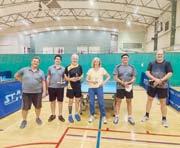
A sport for everybody. It’s fun, social, and easy to learn. All ages welcome. Come and try by contacting freelesson@noosapickleballclub. com and start something new today.
MOTORCYCLING
Motorcyclists around Noosa meet for a regular ride on the first Thursday of each month. Rides of about 200km start at 9am from Noosa, with a snack stop enroute. Thanks for your interest and we look forward to riding with you. Just email noosabonneville@optusnet. com.au for details of the next ride.
MACEY, Helmuth Joachim
12601296-MS17-23
COAD, Margaret Langley
Maggie passed away peacefully on 12 March 2023, at Noosaville.

Maggie was the elder daughter of Claire and Sylvester Slocombe (dcd), the sister of Elizabeth Craig and the mother of Rowan Langley Coad (dcd) and Martin James Coad. Privately cremated.
Happy memories and sadly missed.
A gathering of friends and family will be held on Saturday 29 April 2023, at 4.00pm, on the Noosa River at Hilton Esplanade opposite Sydney Street.
COOROY (Lake Mac donald) 92 Hoy Road, Saturday 29th April, 10am - 1pm. On
Findworklocallyinthe section of Network Classifieds.
V Contract & Tenders
INVITATION TO TENDER

Tender Title: Flood Reconstruction #359 Black Mountain RoadLandslide Remedial Works
Tender Number: CN00297
Tender Box Close: 12.00pm (AEST) 23 May 2023
Tenders are invited from suitably qualified and experienced respondents for reconstruction works on the landslide located on Black Mountain Road nearby property number 359 as described in more detail in Part 4 - Scope.
Two (2) site inspections are scheduled and all information regarding this Invitation to Tender and the site inspections may be downloaded from Council’s website
IMPORTANT: Tender documents including submission requirements are available on Council’s website under ‘Current Tenders’ via ‘Business > Tenders & Procurement’. All submissions must be electronically lodged.
www.noosa.qld.gov.au
NOOSA HEADS - Edgar Bennett Ave 2 bed, 2 bath modern unit, open plan living, private roof top terrace, views. Pool. Secure Parking. Available now ....................................$1000 pw
NOOSAVILLE - Wave Avenue 4 bed 2 bath 2 cars, air con, fully furnished, tv + internet incl, DLUG. Available now ....................................$1100 pw
NOOSAVILLE - Aspera Place 5 beds 2 bath, air con, TLUG,
V Wrecking
10 acresgarden and household items. Wide variety. SUNSHINE BEACH 46 Bryan Street. Sunday 30th April. 7am-10am. We have bikes, furniture, tv, sonos, homewares and much more! WANTED All Toyota, Nissan Patrols, VWs, excavators, bobcats, farm machinery, trucks, boats, L/cruisers, Hiluxs, Old Holdens and Fords. Any condition. $$$$$ paid. Ph: 0401 200 581 WE HAVE QUALIFIED TENANTS WAITING FOR A HOME.
pool, open plan living. Available 31.03.23 .............................$1450 pw 12599644-MS15-23 V Deaths ADVERTISE with us and get better results CALL 1300 666 808 V Garage Sales V Garage Sales V Wanted To Buy V To Let Real Estate Motoring
V Employment Real Estate Buy,Rent&Sellinthe section of Network Classifieds.
12602346-AP17-23
38 NOOSA TODAY Friday, 28 April, 2023 Motoring section of Network Classifieds. Sunshine Coast Car Buyers NEED TO SELL??? Your Car or Commercial If you have a surplus vehicle, can no longer drive or going O/S maybe I can help. NO RWC needed & I come to you! NO waiting around for people who don’t turn up. I’m a local motor dealer with 40 years experience. Call if you think I can help. Steve 0407 788 999 steve@buyriteautos.com.au NO Obligation - LMD 12461203-CG37-20 Phone: 1300 666 808 sales@networkclassifieds.com.au Place your Announcement Notice with us. V Motor Vehicles DISCRIMINATION IN ADVERTISING IS UNLAWFUL The Queensland Anti-Discrimination Act 1991 makes it unlawful for an advertiser to show any intention to discriminate on the basis of sex, pregnancy, race, age, marital status, political or religious belief or physical features, disability, lawful sexual activity/ sexual orientation, HIV/AIDS status or on the basis of being associated with a person with one of the above characteristics, unless covered by an exception under the Act. As Network Classifieds could be legally liable if an unlawful advertisement is printed, Network Classifieds will not accept advertisements that appear to break the law. For more information about discrimination in advertising, contact your legal advisers or the Queensland Human Rights Commission (QHRC).
12455964-SN31-20 Professional
WE ARE BACK! Noosa Eumundi Auto Wreckers • New Address • Same Phone Numbers • Same Great Service Call Ivan 0418 723 080 Still wanted: F trucks and other cars Ring for parts requirements Open Mon to Fri 9am-1pm 12509464-NG34-21
Employment
Helmuth died peacefully surrounded by family on Saturday 15th April, 2023. Darling husband, Schatz, Loving father, fun Opa, will be dearly missed.
DO YOU WANT YOUR PROPERTY RENTED? GIVE KELLIE DRINNAN A CALL 5447 3999
Announcements General Classifieds
Move and groove in Noosa with more ways to be active
Magicians have good spell
ROUND 9
WEEKLY

CELEBRITY TIPSTARS LEAGUE LADDER
Helen Hollingworth
Cooroy RSL

SHARKS EELS RABBITOHS RAIDERS


Phone 5447 6131 cooroyrsl.com.au

Michael
Liam Anlezark
SEA EAGLES PANTHERS ROOSTERS DRAGONS
Harcourts Property Centre Noosa


SHARKS EELS RABBITOHS DOLPHINS
SEA EAGLES PANTHERS WARRIORS DRAGONS


Phone: 07 3397 4280 mypropertycentre.com.au
Natasha Coughlan Noosa Exhaust & Mechanical
Si Smith Total Tools

www.totaltools/noosaville.com.au



Phone: 5350 2333
Dragons
Simon McAuliffe Noosa Mazda Noosa Hyundai GWM Noosa



noosamazda.com.au

noosahyundai.com.au

Phone: 07 5430 6100
Sharks Eels
Rabbitohs Raiders

Sea Eagles Panthers Roosters Dragons

Friday, 28 April, 2023 NOOSA TODAY 39 WEEK 9 The Driving Force Behind the Noosa Pirates! NoosaPirates.com.au 2023 Premier Club Partner 12601617-MS17-23 TEAM P W D L PD B PTS BRONCOS 8 7 0 1 96 0 14 SEAEAGLES7 4 1 2 12 1 11 PANTHERS 7 4 0 3 76 1 10 RABBITOHS8 5 0 3 52 0 10 SHARKS 7 4 0 3 44 0 10 STORM 8 5 0 3 24 0 10 WARRIORS 8 5 0 3 8 0 10 DOLPHINS 8 5 0 3 -10 0 10 ROOSTERS 7 4 0 3 -21 1 10 TITANS 7 3 0 4 -27 1 8 KNIGHTS 8 3 1 4 -5 0 7 EELS 8 3 0 5 3 0 6 DRAGONS 7 2 0 5 -23 1 6 COWBOYS 8 3 0 5 -30 0 6 RAIDERS 7 3 0 4 -42 1 6 BULLDOGS 8 3 0 5 -81 0 6 WESTSTIGERS7 0 0 7 -76 1 2 NRL
NRL QUALIFYING & ELIMINATION FINALS Panthers 27 - 8 Storm 20 - 28 Sharks 30 - 32 Roosters 14 - 30 SEMI FINALS Eels 40 - 4 Sharks 12 - 38 PRELIMINARY FINALS Cowboys Panthers GRAND FINAL Panthers 28 - 12 2022 FINALS WRAP UP NRL MEMBERSHIP EXPIRES ANNUALLY ON: 31 DECEMBER 2023 PIRATES SUPPORTER ANNUAL MEMBERSHIP GET ONBOARD TODAY! ENTRY TO ALL NOOSA PIRATES 2023 SEASON HOME GAMES AT PIRATE PARK TEWANTIN VALUED AT OVER $60 A BOTTLE OPENER KEY-RING VEHICLE BUMPER STICKER 10% OFF PIRATE MERCHANDISE $1 OFF ALL ALCOHOLIC BEVERAGES AT THE PIRATE PARK CLUBHOUSE RECIPROCAL ANNUAL MEMBERSHIP TO THE TEWANTIN NOOSA RSL (VALUED AT $11) PLUS…FIRST TO HEAR NEWS, SPONSOR OFFERS AND EVENTS FROM THE PIRATE SHIP CONTACT US ON MEMBERSHIPS@NOOSAPIRATES.COM.AU OR VISIT NOOSAPIRATES.COM.AU $35 allforjust Cowboys Eels Rabbitohs
Phone:
www.noosatoday.com.au
Sharks Eels Rabbitohs Raiders Sea Eagles Panthers
LEAGUE LADDER
Dolphins Sea Eagles Wests Tigers Roosters Dragons
0401 620 077
Simone Bell Noosa Today
Roosters
Cowboys Eels Rabbitohs Dolphins Titans Panthers Warriors Bulldogs noosaexhaust.com.au
Phone: 5449 7811
Sharks Eels Broncos Raiders Sea Eagles Panthers Warriors Dragons horizonwd.com.au Phone:
(07) 5474 3222
Doors
Anderson Horizon Windows &
30th April Thursday, April 27 SharksvsCowboys PointsBetStadium 7:50PM Friday, April 28 EelsvsKnights CommbankStadium,Sydney 6:00PM BroncosvsRabbitohs SuncorpStadium,Brisbane 8:00PM Saturday, April 29 RaidersvsDolphins McDonaldsPark,WaggaWagga 3:00PM SeaEaglesvsTitans 4PinesPark,Sydney 5:30PM PanthersvsWestsTigers CarringtonPark,Bathurst 7:35PM Sunday, April 30 WarriorsvsRoosters MtSmartStadium,Auckland 2:00PM DragonsvsBulldogs WINStadium,Wollongong 4:05PM BYESTORM
Thursday, 27th April - Sunday,
ROUND8 RESULTS MVM TOTAL GWMNOOSA 7 46 HORIZONWINDOWS &DOORS 6 3 45 COOROYRSL 8 43 HARCOURTSPROPERTY CENTRENOOSA 6 39 TOTALTOOLS 7 37 NOOSATODAY 5 37 NOOSAEXHAUST &MECHANICAL 5 27
MATEMATE
MATCHUP
Sunshine Butterflies tri
Sunshine Butterflies Disability Charity hosted their very own Sunshine Butterflies Triathlon for their forth consecutive year in a row at their 15-acre property ‘Our Backyard’ in Cooroibah.
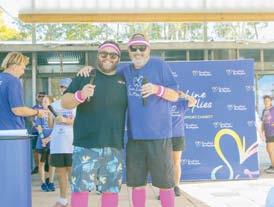
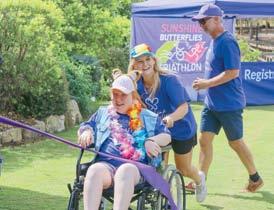

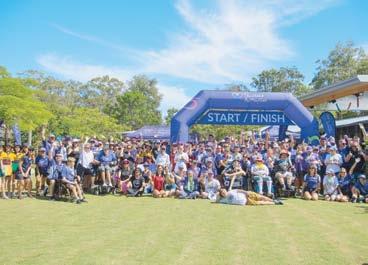
After the impact Covid-19 had on local sporting and Triathlon events in 2020, Sunshine Butterflies decided to put together their very own Triathlon for their members with disability.
This Tri has now grown into being such a huge part of the Sunshine Butterflies community and Noosa community.
Chief executive officer and founder Leanne Walsh said,“We are so proud to have been running this event for four years in a row.”
Sunshine Butterflies Triathlon is based on the traditional triathlon format, but with a twist.
People with disability took part in three inclusive events which included a run, a wheelchair ride and a water splash relay.
Sunshine Butterflies were thrilled to have special guest and MC for the day Nugget from Hot 91 who volunteered his time to be part of this event.
“We are just blown away by the support we have received this year from our partners, the local community, schools and of course all
Sunshine Butterflies members and staff,” Leanne said.
Sunshine Butterflies members came rushing through the finish line, with cheers and smiles all around.
“Watching our members run, ride, swim and seeing the looks of pride on their faces reminds us of the important work we do,” marketing and events coordinator Ali Kelly McCudden said.
This event was kindly sponsored by The June Canavan Foundation.
“We are so grateful to the June Canavan Foundation for making this day possible once again. We couldn’t do this without them,” Leanne said.
The local charity was supported by many individuals and groups on the day including: TewantinWoolworths Unity water volunteers, Sunshine Butterflies Partners Team Body Corporate, Stay Noosa, Harcourts, Ethical Brand co, Scott Harrison Media, The Noosa Tri Club, Good Shepherd Lutheran College and St Andrews Anglican College, Emu Holiday Hire.
The day was described by Sunshine Butterflies staff members as “one of those days that you don’t easily forget.”
Dolphins kick off with wins at all levels ... almost
By Jon Lewis
The Ray White Noosa Dolphins 2023 season got underway with eight wins and a draw across all senior and junior grades last weekend, with the A Grade enjoying a 38-7 victory against the Maroochydore Swans. Whilst the six tries to one victory was a convincing one on the scoreboard, Dolphins coach Paul Robson sees a lot of improvement is required if they are to feature at the back end of the season. “Our scrum and lineouts were solid, as were individual defensive efforts, but overall, it was not a good performance. We need to improve and have lots to work on,” Robson said. “Our game management was not where it needs to be as that is what wins us
those tight matches that we know are heading our way. Having said that, we did get the five points and that is what we aimed for. It was also gratifying to see three of our four A Grade debutants, Michael van Rooyan, Julian ScottDavies and Remmo van Rooyan, amongst the try scorers.”
Man of the match honour’s went to hard working lock Jonathan Davey with duel try scorer JimmyWilson-Bishop 2 points and Michael van Rooyan 1.
Friday night saw the Ray White Dolphins inaugural entry into the third-grade competition resulting in an impressive 47-0 victory over Caboolture. ‘This team is made up of our youngest and our oldest players with the like of Nat Forrest and Jake Serex leading way sup-
ported by their much younger charges’ coach Digger Munro said. ‘I set them a game plan and they stuck to it up against a much bigger and experienced opposition’ he added. Impressing on the night were man of the match Nat Forrest, Jake Serex and young guns Will Miller and Michael Cox.
This Friday, Munro’s senior side are at home with the Sunshine Beach match against Brothers kicking off at 6.45pm. New players, young and old looking to join the Friday night comp are encouraged to come along to training Thursday 5.30pm. Other matches this weekend see the A grade, Res Grade and Women heading to Caboolture on Saturday. Keep up to date with all the Dolphins news on Facebook.
40 NOOSA TODAY Friday, 28 April, 2023 SPORT NOOSATODAY.COM.AU
Member Kathryn with Sunshine Butterflies staff member.
Nugget from Hot 91 and Pittsy.
Member and staff member coming through the finish line.
Sunshine Butterflies group shot of members, staff, partners, schools and volunteers.
Dolphin captain Levi Shaw in action.
NOOSA AFC TIGER TALK


Women unveil their flag
By Julian Pitts
The Noosa Tigers Senior Women’s team will unveil their 2022 Premiership flag this Saturday in front of a huge crowd on ‘Sponsors Day’ at Rococo oval. The three heat champions will line up against fellow Sunshine Coast team Northshore from 4.45pm after our Senior Men’s teams have taken on the height of Brisbane Powerhouse Aspley.The Senior men went down fairly comfortably to arch rivals Maroochydore last Saturday to remain winless after the first month of the QAFL season.
The Reserves continued their unbeaten start to the season with a thrilling last gasp victory over the Roos whilst the undermanned and inexperienced Colts keep putting their hands up but to no avail!
Media Award Votes for the Maroochydore game were:
5. L.Dawson
4. A.Wilson
3. A.Laskey
2. C.Ogden
1. M.Johnston
Our Tiger Junior teams began their 2023 campaigns on Anzac Round last week (in the youth space) with some very pleasing results coming from both our boys and girls teams.
In particular, fantastic wins from our Division 1 U15 and U17 boys teams whilst our Division 2 U15 and U17 girls teams were convincing in victory also.
I had the pleasure of watching our U17 girls kick the biggest score they have kicked in two or three years having a comfortable win through terrific teamwork and contest at the footy.
Great also to see Club legend, life member and current Senior Women’s coach Peter
Trompf doing the field umpiring for the girls.
As mentioned earlier it’s Sponsors Day this Saturday which is always huge with four Senior Games from 9.30 am Saturday followed by a huge day on Sunday as our Under 9s and 11s join our youth teams with junior footy on Rococo oval from 9am - 5 pm.
Footys well and truly back!
Go Tigers
Dolphins juniors kick off season with mighty efforts
It was a great start to the season for Dolphins Juniors last weekend.
Under 9s
What a start to the year for the mighty Under-9s with a comfortable win against a sting USC Barbarians side. With a lot of familiar faces returning, it was the three new players, including CJ and Eden, getting us off to a fantastic start. Our Domino’s Pizza Player of the Match was new Kiwi import, Paddy, leading from the front.
The usuals stalwarts Henry and Jack worked hard in tight. Zach D provided some great service from the base of the ruck. It was Malik and Harry who then took over. Some superb length-of-the-field cover tackles over the line from Hugo really got the others going. Zach B and Stella were also on song. Hunter did some solid straight running.
Under 10s
The new season has dawned with an extra team, players being attracted to the Mighty Dolphins from all over the world. It was a cold, miserable, overcast day at Uni oval for the first game for both the under 10 Red and White teams.
The Reds, or maybe the Whites (still trying to work it out), were the first on the pad-
dock and the year started off with typically scintillating play by the lads and an early try to Ben. Conversions are allowed and they certainly add a new element of amusement to the game.We struggled a bit from the next
kick-off and let Uni in for a try.
From our kick-off we saw the first scrum of the year and the Dolphins exerted great pressure, alas a penalty undid all the good work to let Uni break out and score again. We saw another first – kicking in open play. Our first kick was a beauty seeing a 70-metre gain but we were unable to capitalise as the whistle went for the first break.
The next stanza saw a determined Mason burst down the side line, but this strong attacking move was countered by a lucky break and a length-of-the-field try to Uni. Down, but not out, Eric then shone in attack and scored under the posts. From the restart, a poor kick was made good by determined chasers resulting in a scrum to us. From the scrum, Emmerson made a 60-metre run down the side for a try taking us into the lead.
Into the fifth and final half the teams were level. Albie, our off-season player from the American Eagles, was tireless and willing in his first game of rugby. But both sides were tiring, but a final kick chase by Eric, at least 80 metres, saw him flick up the ball to Tom in support for the final try of the match. But the drama wasn’t over, the sideline conver-
sion was successful leading to a final score of 22-10 to the Dolphins.
Under 12s
This Saturday saw our Under 12s continue their pre-season with a competition-wide U12 bye week. The boys headed up to Gympie, to play two halves against different teams, Gympie and Eumundi.
Our first game was against Gympie, and although stuttering in the first few minutes the team managed to find its structure, and play some great running rugby, scoring three tries, but impressively not conceding any points.
The second game against Eumundi saw the boys soak up a lot of pressure early to then go on and score three tries, again not conceding any points. The stand-out moment in this game was fly half Will Stewart’s cross-field kick for flying winger James Smith to score in the corner.
There were some great performances, which will give the boys plenty of confidence going into next week’s home game against Brothers. Thank you to Gympie for hosting a number of Under-12 teams on Saturday. We look forward to seeing you again during the season.
9.30am 11.30am 2.00pm 4.45pm
Noosa Tigers Colts vs Aspley Hornets
Reserves vs
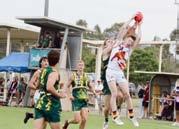
Friday, 28 April, 2023 NOOSA TODAY 41 27TH APRIL 2023 TO 3RD MAY 2023 Time HeightTime Height 1:33 PM 1.12 m 6:48 PM 0.85 m 4:18 PM 1.26 m 9:37 PM 0.89 m 5:38 PM 1.51 m 11:24 PM 0.77 m 12:25 PM 0.47 m 6:44 PM 1.77 m 3:13 PM 1.16 m 8:17 PM 0.9 m 5:02 PM 1.38 m 10:36 PM 0.84 m 6:11 PM 1.64 m 1:06 AM 1.63 m 8:28 AM 0.87 m 3:17 AM 1.6 m 10:22 AM 0.76 m 4:52 AM 1.67 m 11:27 AM 0.62 m 00:06 AM 0.7 m 6:06 AM 1.72 m 2:14 AM 1.6 m 9:35 AM 0.83 m 4:09 AM 1.63 m 10:57 AM 0.69 m 5:30 AM 1.7 m 11:56 AM 0.54 m THURS 27TH APRIL: SAT 29TH APRIL: MON 1ST MAY: WED 3RD MAY: FRI 28TH APRIL: SUN 30TH APRIL: TUES 2ND MAY: NOOSA WEATHER FORECAST THU 27TH APRIL: Light rain. Mostly cloudy. SAT 29TH APRIL: Cloudy. SUN 30TH APRIL: Thunderstorms. Cloudy. MON 1ST MAY: Partly cloudy. TUES 2ND MAY: Scattered clouds. WED 3RD MAY: Overcast. 24 / 20 °C 24 / 18 °C 24 / 17 °C 23 / 18 °C 28 / 17 °C 26 / 15 °C 25 / 13 °C FRI 28TH APRIL: Light rain. Broken clouds. 12601555-KG17-23
Noosa Tigers
Aspley Hornets Noosa Tigers Seniors vs Aspley Hornets Noosa Tigers Senior Women vs Northshore Sponsors Day
12602168-JB17-23
Saturday the 29th of April from 1pm @ Rococo Oval
This Saturday is Sponsor’s Day with four senior games from 9.30am.
Senior Men will take on Brisbane Powerhouse Aspley this Saturday.
NOOSATODAY.COM.AU NOOSA TIGERS
Senior men went down to arch rivals Maroochydore last Saturday.
U12s showed some great performances.
202103085735_1-SG12-21
Anzac Day fixture at home
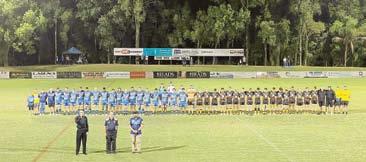
Once again, on 22 April the Noosa Pirates Rugby League Club hosted the traditional Anzac Day Rugby League Fixture at Pirate Park. Complete with invited dignities, old Diggers and the visiting Maroochydore and Caloundra Rugby League Clubs, plus the playing of the Last Post it was indeed a fine gesture of respect: respect to all those men and women who, down through the many conflicts served our great Nation.
After his welcome to all servicemen and women past and present, club President Liam Anlezark then spoke of what had been a day of entertaining football. “It was great to have our first home game for the 23 season at Pirate Park. It was a fantastic day of football with our juniors playing in the morning and then a full afternoon of senior football, on this our Anzac Day fixture.
The main game of the day Division 1 Pirates vs Maroochydore, saw Pirates go down 28-20. “Our team started the game really strong,” said coach Mick Duff, “hitting our marks and coming away with points. Unfortunately, errors and penalties late in the first half gave Maroochydore the lead going into half time.
The second half was for us a mixed game
with errors coming out of our own end. This was the difference that saw us go down 28-20. Our best player of the day was Rohan Messer scoring a great first half try and being held up over the line three more times. We now have a week off before taking on Kawana.”
The mistake rate deep in Pirates territory late in the first half, is something that their coaching staff is sure to address.
In Division 2, despite being up 10-0 at half time, Pirates against Caloundra, failed to control the game in the second half and paid the price going down 20-16. Concentration and ball control is sure to be on the agender for training sessions. “Their next game is sure to be a tough one when we travel away to play Stanley Rivers on Friday week,” said coach Danny Riddle.
In the U 19s against Caloundra Pirates went down 42-16 thus showing that it is going to be a long hard winter with a total rethink and attitude towards all aspects of their game. It was then up to the lady’s team, the Bendigo Community Bank Team, who showed a real gutsy effort in finishing their game with a 16 all draw against Caloundra.
“We played with a massive improvement
in our defence cutting our missed tackles by half. There can be no doubt that this was the big factor in our girls holding last season’s premiers to a draw.
To add to this great result, Emily Garrett and Maria Graf have gained selection in the Sunshine Coast Falcons: we will support both eagerly as we have a weekend off before playing Kawana. It’s important to bring consistency into our performance after this really positive step forward.” Coach Robert Burgin.

As per tradition, the fun game of the Pirates Greybeards (the Old Boys) played to a happy crowd against their opposition: and with guest members Emily Garrett and Kaylee running strong it was indeed a joyous occasion.
“The scoreboard results in our men’s games were not what we had hoped for,” said the club President Liam Anlezark. “However, a very big well done to our ladies who came from behind to hold last seasons premiers to a draw. A big crowd attended and a big thank you to all : greybeards, supporters and in particular our visitors Maroochydore Swans and Caloundra Sharks.”
Pickleball
The recent annual Noosa Pickleball Doubles
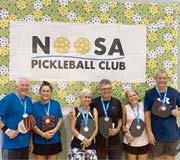
Tournament celebrated its fourth year and this popular event was attended by players from all over the country. A record number of 178 entrants, from all over the country registered to play. This club runs a very well organised event. Tournament Director Miriam Brace spent hundreds of hours preparing for the tightly scheduled two-day event: this resulted in a tournament that went off without a hitch.
The two-day carnival saw Saturday cater for Intermediate Players and Sunday for the Advanced.
Each player was guaranteed a minimum of 4 games in each event. Events included age / skill’s-based men’s, women’s and mixed doubles: with ages ranging from 26 to 77.
The tournament committee was pleased to be able to offer low entry fees, as well as souvenir gifts to every player.
Gold, Silver and Bronze medals were awarded to each of the 15 events. The event, which was held at the Noosa Leisure Centre, can only be described as a great success.
For a relatively new sport, to be running such successful events as this is indeed an outstanding advertisement for the future of the sport in Noosa and indeed the state.
Sunshine Coast veterans first to register for Games
Sunshine Coast veteran Nathan Tolman and his colleagues from Veteran Mentors have become the first team to register for Australia’s first Veteran Games to be held on the Gold Coast in September. Mr Tolman, 41, a former Infantry Warrant Officer who left the ADF last year after 22 years’ service which included two tours to Afghanistan and two to Iraq - who is also the founder of the Sunshine Coast chapter of the Association of Veteran Surfers - said it was a “no brainer” that Veteran Mentors would be involved in the Games.
“And that’s because when soldiers transition out of the ADF, they struggle with connection – to other veterans, and veteran and civilian organisations,” he said.
“So, what the Games are going to do is bring a lot of different organisations together and put a face to those organisations, and that’s important because people in general are reluctant to connect if they don’t know somebody, or something about that organisation.
“They are hesitant to take that first step, and by providing a friendly face, which is what the Games will be doing, we will get a better outcome for Veterans because it will increase the likelihood of them stepping through that door.”
The Veteran Mentors will be among about 300 teams to compete in the inaugural “Veteran Games”, officially launched on Saturday 22 April at the Gold Coast’s Currumbin RSL.
Organisers are planning for up to 2500 competitors – who will be required to pass a basic fitness test provided during the registration process - to participate in eight-
member teams at the event, which will be held over three-days at yet-to-be announced venues from September 29.
The Games will be open to former and current serving defence force personnel from across the nation, who’ll take part in military-themed activities including an obstacle course challenge, tug-of- war competition and other events that will test the teamwork and problem-solving expertise drawn directly from military training and combat scenarios. Organising the “Veteran Games” has been a long-time “mission” for former elite special forces officer and fifth-generation Veteran Heston Russell, a passionate advocate for Veteran support who knows all too well the mental health struggles experienced by many who have served in the ADF.
Mr Russell, who served in East Timor, Afghanistan, and Iraq, believes the “Veteran Games” will help fill a potentially deadly
“void” by bringing about cultural change for veterans.
“In the past few years alone, I’ve lost more mates to suicide than during my four deployments to Afghanistan,” Mr Russell said. “For many others, finding or accepting support has been an incredible challenge, creating a mental health crisis that has been worsened by our often splintered and isolated veteran community.
“South-East Queensland has been selected to stage the first “Veteran Games” because statistics show this to be the region with the highest concentration of ‘at risk’ Veterans, particularly those under the age of 40 years old,” Mr Russell said.
Mr Russell said the ongoing legacy was designed to provide year-round training and a “connection focus”, particularly during the periods following ANZAC Day, and prior to Remembrance Day.
“Already, there have been expressions of interest from more than 100 volunteers, and dozens of Veterans groups and organisations keen to enter teams or support in any other way they can,” Mr Russell said.
He said organisers, through the registered charity Veteran Support Force were looking to achieve outcomes at “minimum or no cost to the Veteran competitors in years to come”. Saturday’s launch commenced a public crowdfunding campaign via VeteranGames.com and the invitation for sponsors to join and support the launch of this inaugural event.
Mr Tolman, who was diagnosed with Post

Traumatic Stress Syndrome (PTSD) in 2020, started working with Veteran Mentors in April, 2022.
“Veteran Mentors is a group of ex-servicemen and women who share a common goal in helping the families and communities of Australia,” he said.

With their military background and armed with the lessons derived from operational deployments, the Veteran Mentors have developed a nine-day youth military program for high school students aged between 12-17 years.
The program is designed to enhance the lives of all participants by providing them with the tools they need to achieve success in life, and a positive role model.
“I’m so grateful that someone reached out to me to become part of this organisation, I remember I got so excited the first time I met with them and I’m still excited,” he said.
“I, for one, know how Veterans have each other’s back. The Army works in small teams, they keep a close eye on each other and help you get though (difficult circumstances), and that’s the same when you transition out. And that’s why the Veteran Games is such a welcome initiative.”
Mr Tolman said the Sunshine Coast chapter of the Association of Veteran Surfers, a not-for-profit organisation improving the health and well-being of the defence veteran community and their families through surfing, ocean therapy and mateship, would also be providing volunteers to assist during the three-day Veteran Games.
42 NOOSA TODAY Friday, 28 April, 2023
Heston Russell, Michael Humphreys Currumbin Palm Beach RSL, Peter Thorpe Currumbin Palm Beach RSL, Nathan Tolman Veteran Mentors.
SPORT NOOSATODAY.COM.AU Talking Sport Ron Lane
Bendigo Community Bank Pirates Senior Women drew against Caloundra.
Happy Winners of the Advanced Seniors Event.
Division 1 Pirates and Caloundra line up.
Life of Brine
Phil Jarratt - philjarratt.com

We will remember them
In terms of its dramatic effect on the WSL tour, the reintroduction of the mid-season cut has been an outstanding success.
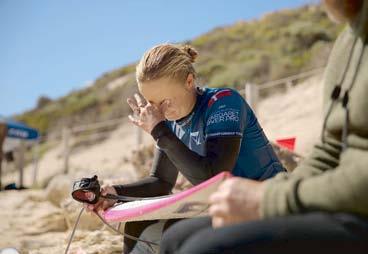
In the modern world of streaming platforms, I have no idea how you quantify that success in eyeballs viewing (no doubt others do) but if I may regress to a previous century when network television was a thing, I bet it’s rating its butt off! In human terms, however, some of the tragedies that play out as careers are smashed just as they are starting, and legends bow out not quite the way they would have anticipated, it’s almost unbearable to watch.
Okay, I’ll fess up. When the cameras caught Macy Callaghan tearing up and having to turn away during her post-heat interview after bowing out at the Margaret River Pro, I was doing the same on my lounge at Munna Point. Which is why, as I commemorate the fallen on the distant beaches of Prevelly on this Anzac Day eve, with the Margie’s Pro now on hold for finals day, but the damage already done, I want to start not with the GOAT but with the girls.
Our local girls, Sophie McCulloch and Isabella Nichols, Sophie from Alex way, Bella from Coolum and both USC graduates, have had to deal with cruel twists of fate in their short time on the big tour. Sophie, 24, shocked the world when she surfed out of her skin to win the final Challenger Series event at Haleiwa, Hawaii, last December to catapult her into the 2023 championship tour. But just a week or two later, shades of Burleigh’s Liam O’Brien the previous year, she tore her anterior talofibular ligament messing around in small waves at Snapper Rocks, requiring surgery and forcing her to miss the first two events of ’23 in Hawaii. With only five events before the mid-season cut, Sophie was up against it from the start, but she muscled out a fifth at Bells and was in with a chance if she could repeat or better that at Margaret River. She finished ninth, and bravely went back to the drawing board, which is the first Challenger at Snapper in a couple of weeks.
Bella, 25, scraped through her second year on tour in 2022 with an unlikely but thoroughly deserved win at Margaret River to beat the cut and register her only CT win so far. But boy, she looks the goods, another Steph in the making. This year, however, an audacious third at Bells was not enough to save her when she bowed out early at Margies.
NSW Central Coaster Macy Callaghan showed her true colours with an impressive third in Portugal earlier this year, but needed a solid result at Margies to make the cut, and it wasn’t to be when prodigy Caitlin Simmers, who kept her out of the final in Portugal, repeated the dose in WA.
Tour veteran Sally Fitzgibbons has looked in career-best form – or at least her best since 2011 when she clocked three WCT wins and finished runner-up to Carissa Moore for the world title – but the results have somehow eluded the ubiquitous Sal, probably the bestknown face of surfing in Australia. She went to WA needing a big result to stay on tour, and looked like she was going to get it, until Caroline Marks took her down in the afternoon chop.
The other girls will be at Snapper revitalized and ready to requalify through the Challenger Series. Sally, at 32, I’m not so sure. But she could do it, and I hope she does.
In the men’s draw there is, of course, no bigger story than Kelly Slater’s demise, predicted (not so bravely) in this column last week. After some lacklustre performances so far this year, amidst claims of lingering injuries etc etc, the 51-year-old went into Margaret River needing
a miracle, and, like Sally, he nearly pulled it off. I haven’t seen the GOAT surf this well with the jersey on since he broke all records by winning at Pipe last year.
Okay, I’m the fan from hell. For me the foam climbs and the 360-degree cuttie never get old, even though Kelly and I do. I’ve been lucky enough to watch him pull that stuff off from in the lineup and the channel at some of the best breaks in the world, and I’d love to see him keep doing it on my TV screen for another decade or so. But it ain’t gonna happen. The judges have grown too young to appreciate what we know is timeless genius.
If anyone had to whack the GOAT I’m glad it was Liam O’Brien who looks like a member of an ‘80s boy band from around the time Kelly hit the radar. So it was appropriate, but it was brutal. Typically, Kelly hasn’t called time yet, and if Snapper is pumping like it has been this week, he might even surf the Challenger. But
let’s not kid ourselves, it’s over.
On the other hand, it’s far from over for Newcastle’s Jackson Baker, who might have to start over at Snapper but is, for my money, the brightest ray of sunshine to emerge in the first half of tour ’23. Are there better surfers than him on tour? Well, yeah. At least 22 as it turns out. But does anyone put more heart and soul into every wave ridden? No.
A people’s pro turns up every couple of years. Think MattyWilko, orWade Carmichael. But J-Bakes could well be Matt Hoy’s illegitimate son, at last revealed.
The guy’s a gem, I’m going to follow his progress on the Challenger and can’t wait to see him back on the big tour.
FOOTNOTE: Noosa locals have been smashing the rest all over the place these past couple of weeks, with some outstanding performances in open and age divisions on both short and longboard. Full report with pics next week.
Friday, 28 April, 2023 NOOSA TODAY 43
NOOSATODAY.COM.AU SPORT
Sally Fitzgibbons reflects on a brilliant career and an uncertain future.
Pictures: WSL
Jacko Baker says farewell to the big tour,but not for long.
Bella Nichols shows the style that will bring her back.
Down but not out. Kelly Slater with resilience written all over his face.
Isabella Nichols takes a moment to digest the news that she is off tour.
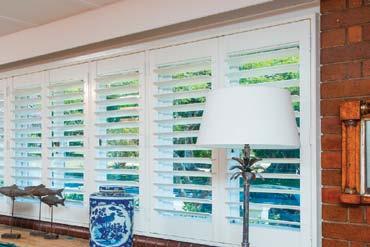
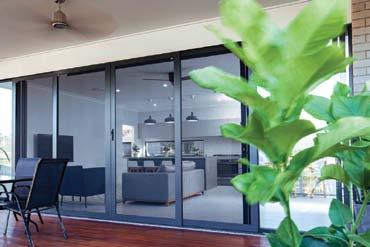
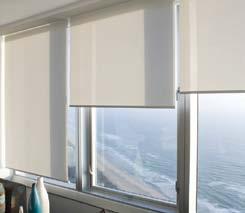









44 NOOSA TODAY Friday, 28 April, 2023 SERVICING ALL SUNSHINE COAST SUBURBS 12597302-AA14-23
PROPERTY
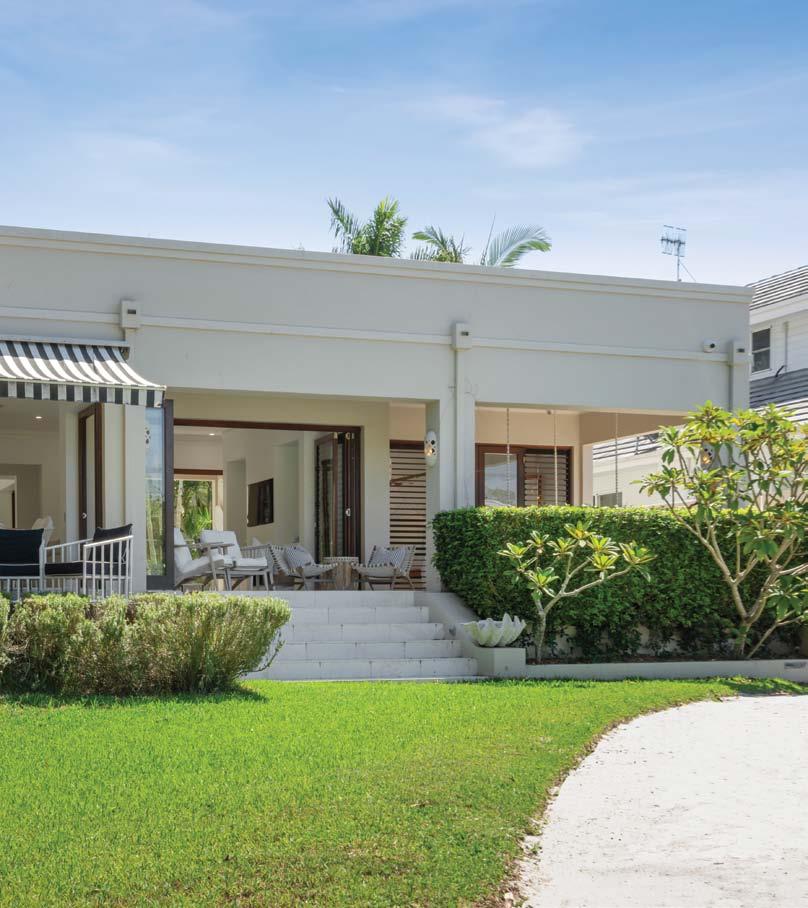
BUYERS ON A HIGH WITH NOOSA
PROPERTY MATTERS
DESPITE the headwinds of higher interest rates, there is no shortage of buyers for property in Noosa.
“Although median prices have softened over the past year, buyers are seeing this as an opportunity to purchase with a little less competition and with a little more choice,” leading Noosa principal Tom Offermann said.
“The residential buying activity has been across all areas - from country to beachfor people wanting to invest and also to live here permanently.
“Downturn, what downturn? They just want to live or invest here now.

“Our auction clearance rates are running at 85 percent with 12 of the past 14 selling.
“Last weekend was no exception with the sale under the hammer of the Tracy Russell-listed 16 Shearwater St, Peregian Beach, for $5.3m.”
Sixty people turned out to watch four bidders battling it out for ownership of the four-bedroom, four-bathroom beachfront residence.
A Queensland cattle farming family were thrilled with their family beach house and equally excited were the vendors who had purchased a property, also listed by Tracy, in Lorikeet Drive Peregian Beach, two months ago.
CONTEMPORARY HOME HAS APPEAL
It doesn’t have to be waterfront to attract interest. There has been widespread inquiry on a four-bedroom, two-bathroom, two-car house with pool at 7 Honey Myrtle Rd, Noosa Heads, that goes to auction Saturday, 29 April, at 12pm.
Peter TeWhata at Tom Offermann Real Estate said the property was “a cracker’’ with high ceilings, pool, good aspect, plenty of natural light and cross-flow ventilation. Interest has come from interstate, local and overseas … New Zealand in particular.
“People have been flying up from Sydney and Melbourne,’’ Peter said, “and driving up from Brisbane.

“It will suit a variety of buyers - from
young families to retirees.’’
A signature timber-and-glass door opens to an expansive hallway, almost 4m-high ceilings, picture windows and leisure space.
Beyond is a spacious open-plan living area that seamlessly connects to the dark blue pool centred in the courtyard.
The galley-style kitchen comes with stone-topped white cabinetry including island/breakfast bar, a gas cook-top, double dish drawers and a butler’s pantry.
The main bedroom suite comes with a terrace, walk-in robe, walk-in shower and a free-standing bath.
In the west wing are two carpeted bedrooms with walk-in robes. The fourth large bedroom poolside has a built-in robe and the three share a bathroom with separate toilet.
MID-WEEK AUCTION SUCCESS
The mid-week auction team of Jeanette and Mario Catalano at Hinternoosa have done it again.
The five-bedroom, two-bathroom house on 2ha with pool at 79 Pearsons Rd, Lake Macdonald, sold under the hammer for $1.5m after attracting a good turn-out and
five registered bidders on Wednesday, 19 April.
With dam and a great shed, the property also offered privacy yet within easy access of town.
Interest came from Sydney buyers who had already sold and looking to relocate, from Toowoomba and local.
The local buyer had been looking for a while and wanting to downsize but retain the privacy of a larger holding.
Jeanette and Hinternoosa colleague Kess Prior now have a character home on 4.46ha at Eerwah Vale listed which offers dramatic northerly views.
Listed at $1.395m, the split-level pole home at 631 Eumundi-Kenilworth Rd offers views stretching from Mt Tinbeerwah and Mt Cooroy to Mt Eerwah and Pt Glorious.
The three-bedroom, two-bathroom, two-car house has been immaculately renovated over the past year, Jeanette said, thanks to features such as hardwood timber floors and soaring exposed timber beam ceilings.
There is ducted air-conditioning throughout and a combustion fireplace in the open plan living area.
2 NOOSA TODAY | Friday, 28 April, 2023 noosatoday.com.au noosatoday.com.au Proudly Australian Owned & Independent CONTACT US Advertising (07) 5455 6946 advertising@noosatoday.com.au Simone Bell 0401 620 077 Classifieds 1300 666 808 Visit networkclassifieds.com.au Editorial newsdesk@noosatoday.com.au Published by Star News Group Pty Ltd ACN 005 848 108. Publisher/Managing Director, Paul Thomas. All material is copyright to Star News Group Pty Ltd. All significant errors will be corrected as soon as possible. For our terms and conditions please visit noosatoday.com.au/terms-and-conditions/ Get FREE News Updates, Breaking News, Digital Editions and Competitions delivered to your email inbox Visit noosatoday.com.au/subscribe SUBSCRIBE 12550379-AV21-22 3/100 Rene Street, Noosaville I info@blinkliving.com.au 5455 5015 I www.blinkliving.com.au Blink Living has the furniture solutions for you: ● Property styling to help you sell ● Home and holiday furniture packages ● Designer only furniture suppliers such as GlobeWest Visit our retail showroom in Noosaville for your complimentary one-on-one consult with an experienced designer. Open Mon to Fri 10am-4pm or by appointment. Free Property Styling Quote + 8 Weeks for the Price of 4 PAY-LATER property styling | design | furniture packages 12589308-MS06-23 PROPERTY NEWS
ERLE LEVEY
A five-bedroom, two-bathroom, six-car house, pool, on 2ha with dam, shed, at 79 Pearsons Rd, Lake Macdonald, sold under the hammer for $1.5m. 325449
An excited Tom Offermann Real Estate agent Tracy Russell at 16 Shearwater St, Peregian Beach.
LOCATION AND FUNCTIONALITY
Melanie Butcher at Laguna Real Estate has a four-bedroom, two-bathroom, two-car house with pool at 192 Shorehaven Dve, Noosa Waters, set for auction at 10am on Saturday, 6 May.
At the Noosa Heads end of Noosa Waters, the house offers huge living spaces and bedrooms, air-conditioning, loads of storage and low maintenance.
Tightly held for 20 years, there are raked ceilings throughout and a large kitchen with pantry overlooking the living areas.
The main bedroom on the upper level features a large ensuite and spacious walkin robe.
The remaining bedrooms on the lower level are convenient to the family bathroom.
As well as the double lock-up garage there is room room for the van or boat off street.
Laguna Real Estate colleague Anita Nichols has a three-bedroom, two-bathroom house with shed at 11 Weyba Park Dve, Noosa Heads, set for auction Saturday, 29 April, at 11.30am.
The large, single-level home features a renovated kitchen with walk-in pantry and open plan living/dining to the covered deck.
The fully-fenced 810sq m property has side access and a lockable 12m by 6m shed.
STYLE AND CHARACTER
It’s a classic Noosa Waters home that has
A four-bedroom, two-bathroom, two-car house with pool at 7 Honey Myrtle Rd, Noosa Heads, goes to auction Saturday, 29 April, at 12pm. 330604
been updated over the years.
One of the signature properties when the estate was released, the Lady Elliot is a four-bedroom, two-bathroom house with pool, office, at 10 Shorehaven Dve, and goes to auction Saturday, 29 April, at 10am.
Dean McLure at McLure Prestige said the pavilion-style house, on a 1026sq m corner block, was a masterpiece of timeless design and rich history.
“It boasts one of the most sought-after non-waterfront positions in the area.
“Lady Elliot was one of the very first show homes to be built in Shorehaven Drive, and it’s easy to see why it won two HIA Home of the Year awards for South East Queensland.’’
The four bedrooms are generously proportioned, each with built-in wardrobes and ceiling fans.
The main suite is particularly impressive, with its own private ensuite and a large walk-in wardrobe.

There are two separate living spacesone at the front with large windows and the second at the back that blends with the kitchen, dining and lounge areas.
The corner block provides potential to further develop the property, which is being used as investment with a high rental yield.
SINGLE-LEVEL LIVING
Tiffany Wilson at Tom Offermann Real Estate is seeing wide interest in a singlelevel four-bedroom, two-bathroom house
in Noosa Waters that goes to auction Saturday, 29 April, at 11am.
Offering low-maintenance living in an elevated position with an eye-catching streetscape, the house is attracting local inquiry but also from the wider Sunshine Coast region wanting to move to the Noosa community.
There are high ceilings, sliding doors that extend the living/dining spaces to outdoors and an undercover timber-decked terrace that stretches the width of the residence.
Timber plantation shutters give a very appealing resort-style ambience to the largest terrace.
AUCTION ACTION
WEDNESDAY, 19 April
Lake Macdonald
· 79 Pearsons Rd: 5bed, 2bath, 6car house on 2ha with pool, dam, shed, 1pm, Jeanette Catalano 0422 923 851 Mario Catalano 0400 613 879 Hinternoosa
SATURDAY, 22 April
Peregian Beach
· 16 Shearwater St: 4bed, 4bath, 2car house, pool, Tracy Russell 0413 319 579 Tom Offermann Real Estate. Four registered bidders. Sold at auction $5.3m
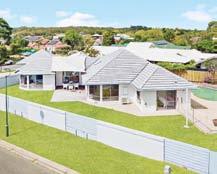
THURSDAY, 27 April
Noosa Heads
· 7316/5 Morning Dve: 1bed, 1bath, 1car apartment, 11am, Chris Miller 0412 894 542 Tom Offermann Real Estate
30%
four-bedroom, two-bathroom house with pool, office, at 10 Shorehaven Dve, Noosa Waters, goes to auction Saturday, 29 April, at 10am. 330604
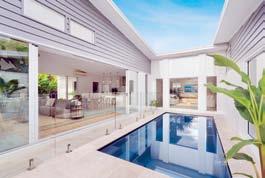
FRIDAY, 28 April
Noosa Heads
· 2/29 Allambi Rise: 3bed, 2bath, 2car penthouse apartment, pool, Chris Miller 0412 894 542 Jill Goode 0418 714 653 Tom Offermann Real Estate. Sold prior Noosaville
· 37 Mary St: Commercial 516sq m with building area of 211sq m plus 13sq m balcony, 12pm, Jesse Howitt 0468 495 640 Johnny Gooderham 0499 980 259 Colliers Sunshine Coast
SATURDAY, 29 April
Noosa Heads
· 11 Weyba Park Dve: 3bed, 2bath, 3car house, shed, 11.30am, Anita Nichols 0434 236 110 Laguna Real Estate
· 4/42 Hastings St: 3bed, 3bath, 1car apartment, 1pm, Jesse Stowers 0414 367 282 Tom Offermann Real Estate
· 7 Honey Myrtle Rd: 4bed, 2bath, 2car house, pool, 2pm, Peter TeWhata 0423 972 034 Tom Offermann Real Estate
Noosaville
· 16 Starboard Ave: 4bed, 2bath, 2car house, 11am, Tiffany Wilson 0468 922 519 Tom Offermann Real Estate
· 7 Dolphin Cres: 4bed, 4bath, 3car waterfront house, pool, 2pm, Eric Seetoo 0419 757 770 Tom Offermann Real Estate Noosa Waters
· 10 Shorehaven Dve: 4bed, office, 2bath, 2car house, pool, 10am, Dean McLure 0499 270 691 McLure Prestige. ●
noosatoday.com.au Friday, 28 April, 2023 | NOOSA TODAY 3
12601615-ET17-23 OFF ALL LOUNGES
A
A four-bedroom, two-bathroom, two-car house with pool at 192 Shorehaven Dve, Noosa Waters, is set for auction at 10am on Saturday, 6 May. 330604
11LITTLECOVEROAD, NOOSAHEADS
Picturethisspectacularaddressamereoneminuteto toes-in-the-whitesandofirresistibleLittleCoveBeach, sequesteredwithintheforeververdantNoosaNational Parkwithitsworld-classsurfbreaks,whilemoments awayalongtheboardwalksophisticatedHastingsStreet meetslaidbackNoosaMainBeachwithitsbeachside restaurants,onLagunaBay.
Easytoimaginethereinventionoftheultimatebeach house,indulgingeverypossiblepersonalextravagance, need,whimandnecessity,withaestheticexcellence throughoutontheelevatedcornersite,oneofonly fourvacantsitesleft inLittleCove.Itismuchcoveted, and finallynowavailableafter65yearsintheonefamily.
Auction Saturday13May10am
Agent LukeChen 0417600840 luke@offermann.com.au

Agent LaurenChen 0412672375 lauren@offermann.com.au

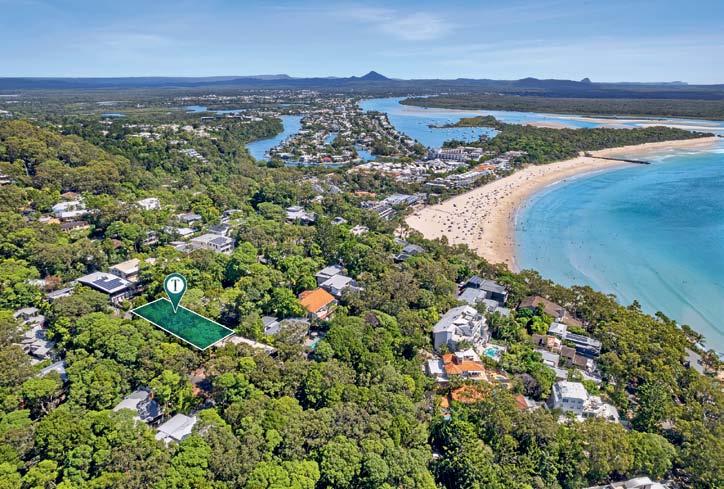
4 NOOSA TODAY | Friday, 28 April, 2023 noosatoday.com.au offermann.com.au NOOSA’SHOMEOFPRESTIGEPROPERTY
21/5QUAMBYPLACE, NOOSAHEADS
Lookingforthedefinitiveinvestment,arareand excitingchancetosecureasoundsliceofparadise whichhasbeentightlyheldbythesamefamilyfor 26-years?Slideawaythedoorstotheundercover privateterracewhichisfringedbygoldencanepalms andhedges.Stepontothelawnarea,dedicated outdoordiningspaces,sunloungesandbenchseating aroundtallswayingpalms.Itlooksidyllic,butthereis
somuchmoretothe180-degreesurrounds.Adjoining thelawnistheiridescentwhite-sandandturquoise waterofNoosaRiverforeshore.Itstretchesfrom theneighbouringparktothenortherlyborderofthe CulgoaPointBeachResort.
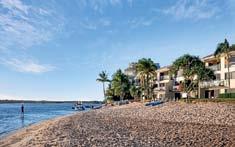
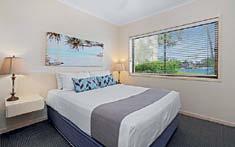
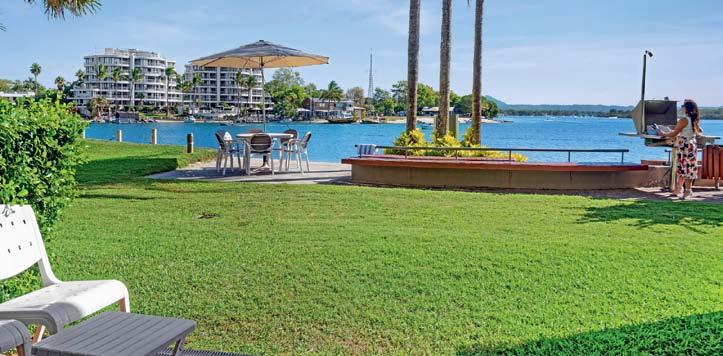
Auction Saturday20May12pm
View Saturday 1.00-1.30
A 2 B 2 C 1 D
Agent LaurenChen 0412672375

lauren@offermann.com.au

Agent LukeChen 0417600840
luke@offermann.com.au
noosatoday.com.au Friday, 28 April, 2023 | NOOSA TODAY 5 offermann.com.au NOOSA’SHOMEOFPRESTIGEPROPERTY
357DUKEROAD, DOONAN
Imagineanundisputedlystupendoussparklingjewel, ostensiblyperchedonaescarpmentwitha24-metre horizonpool,lookingoveragolfcourse,andexplosive viewsfromtheNoosaNationalParkHeadland, sweepingtheCoralSeaandeasternbeachestoCoolum andPointArkwright.
WithanodtoPalmSprings’MidCenturyModern design,admireendlessprodigioushighandmightywalls
ofglass,toppedwithalmostgravity-defyingspatial flat roofs,clerestoryceilingsandanundeniablesenseof pureindulgence.


Fashionedthroughoutwithcleverdesignresponses, thestunninglymajesticMagari,fromtheItalianwords ‘Iwish’,andameretwelveminutestoHastingsStreet, receivedtheNationalDesignExcellenceAwardin Australia’sprestigiousBDAAAwardsseveralyearsago.
A 4 B 3 C 14 D
Auction Saturday20May1pm
View Saturday 11.00-11.30
Agent NicHunter 0421785512 nic@offermann.com.au
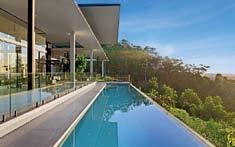

6 NOOSA TODAY | Friday, 28 April, 2023 noosatoday.com.au offermann.com.au NOOSA’SHOMEOFPRESTIGEPROPERTY
135COOROYMOUNTAINROAD, COOROYMOUNTAIN
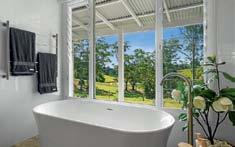
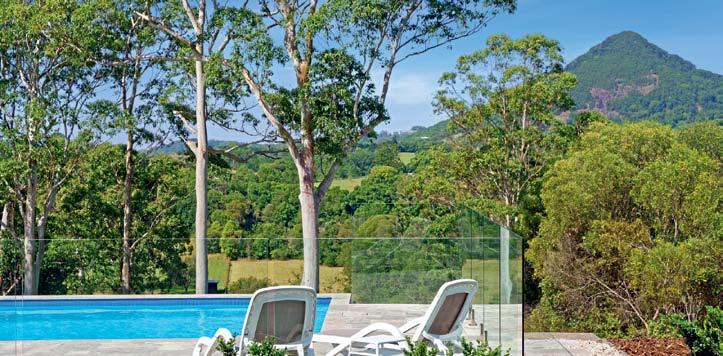
Admirethecountry-styleavenueandalongtheway sandstoneentrypostswithonebearingthename Carinya.Noticehowthegatesslideawayintooblivion revealingasweepinggranddrivewaywreathed withnature’sverdantbest,beforearrivingatthe porte-cochere.Poisedsublimelyonanidyllicknoll, Queenslander-inspired,78acreCarinyaEstatesoaks upendlessblueskiesandexudesundeniableluxury,
indisputableprivacyandbreathtakingincomparable everythingelseincludingthemajesticnaturalassetof MountCooroy.
Openthemassivecustomglasspivotdoor,checkout thespectacularpolishedcement flooringbeforeeyes are fixedforwardtothesuper-sizedtravertinetiled terrace,andluminescentpool,notjustcommensurate insize,butlooksasifithasbeeninplaceforever.
A 7 B 5 C 5 D
Price Guide$6.75M
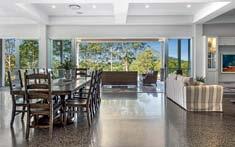
Agent CameronUrquhart 0411757570
cameron@offermann.com.au

noosatoday.com.au Friday, 28 April, 2023 | NOOSA TODAY 7 offermann.com.au NOOSA’SHOMEOFPRESTIGEPROPERTY
1/3DELORMESTREET, NOOSAHEADS
InthevibrantheartofNoosaHeads,whereeverything youneedisonlyashortwalkfromyourfrontdoor isaonce-in-a-lifetimeopportunity.Fromdiningand shopping,toentertainment,thereismuchtocaptivate inthisnaturallyquietpocketofwonderland.Be firstinlinefortheoff-the-planreleaseofDelorme ResidenceNumberOne,partofthe5-starduplex sitebyrenownedBlackwoodArchitecture&Design
anddevelopedbyCapitalPrudential.Bornofbeauty, meticulousdetailandcraftsmanship,theresultis aneffortlesslysophisticated2-levelresidence,with cleanlines,adedicationtocelebratingtheelements withharmonious flowbetweenindoor-outdoorliving, floor-to-ceilingdoorsembracingnaturallight,terraces, dazzlingpoolandanabidingdialoguewithnature.
Price $3.1M
Agent MichaelMcComas 0447263663 michael@offermann.com.au


8 NOOSA TODAY | Friday, 28 April, 2023 noosatoday.com.au offermann.com.au NOOSA’SHOMEOFPRESTIGEPROPERTY
A 4 B 3 C 2 D
16SANDALWOODCLOSE, MARCUSBEACH
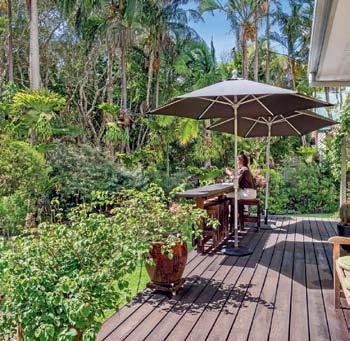
Happinessisbeingtakenbysurprise.Itisnotjustbeinginthemuchsought-after utopiaofMarcusBeach, fiveminutestotheglisteningwhitesand,inaculdesac withabackdropoftheNoosaNationalParkandlushstreetscapesbutbeinginawe ofanexoticfrontgardenreminiscentofapieceofMexico.
Lookatthehighceilings,andhownaturallightdrenchestheexpansivesunken loungethankstodoorsopeningtotheterrace.Thededicateddiningspacewitha walloftimbersashwindowsalsolooksouttotheterracewhichcontinuestowrap theeasternsideincludingtheover-generousleisurespace.Alfrescoatthehigh-top barcommunewithnativebirdlifeandbetotallyenamouredwiththeextentofthe landandhowthepaperbarksareadornedwithelkhorns.
Auction Saturday6May10am
View Saturday 11.00-11.30
87 - 89POINCIANAAVE, TEWANTIN
Agent TracyRussell 0413319879 tracy@offermann.com.au


Seizethemoment.WhenalandmarkcornersiteadjacenttotheTewantinbusiness, retailandcommunityhearthastwoQueenslander-styleliveablehousesalsooffices ofaformerpolicestation,builtonthe.24-hectaresite,itrepresentsanimmense andrareopportunityforbuilders,speculatorsdevelopersandentrepreneurs.
Locatedonthecorneralsoneartheroundaboutarenorth-facing87-89Poinciana AvenueTewantinandeast-facing10SidoniStreetTewantin.Thecombinedlandarea is2385m2andthezoningisCommunityFacilities.
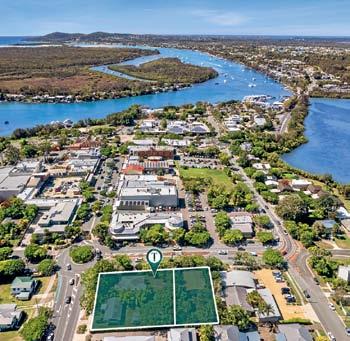
ExpressionsofInterest
Closes12May4pm
Price Expressionsof Interest
View Saturday 11.00-11.30
Agent TimMcSweeney 0411122331
tim@offermann.com.au
noosatoday.com.au Friday, 28 April, 2023 | NOOSA TODAY 9 offermann.com.au NOOSA’SHOMEOFPRESTIGEPROPERTY
A 7 B 3 C 5
A 4 B 2 C 2
ON THE COVER
PRESTIGE WATERFRONT PLAYGROUND WITH TIDAL BEACH
EMBRACING its plum corner address, the magnetism of an expansive residence on Hideaway Island with a tidal beach, is undoubtedly paradisal bliss.
Open the gate into the white stonepaved palm court, and easy to see why. Lanky Bahamas palms in integrated pots sway in the breeze, and bold statement timber and glass doors reveal a hallway with a collection sea shell artifacts displayed in style with lamps and a mirror.
Whispers of Palm Springs, an effortlessly chic take on mid-century modern design with a playful twist, are throughout, as are lofty ceilings and seemingly endless limestone floors, ensuring the perfect balance between contemporary coastal living, with a touch of glamour.
The emphasis on a white and blue aesthetic continues in the lofty-ceilinged living and dining spaces, where a sumptuous fabric-covered super-size sofa, rugs, Designer Boy artworks, gas fireplace, natural timber table, and dynamic white designer chairs take centre stage.
To top it off there are plantation shutters and glass louvres, plus slideaway doors open off the dining room to an alfresco terrace, and off the living is an undercover terrace - both perfect for entertaining. The adjoining terrace has a stunning hammock-inspired day bed. Whichever spot you choose it is a footstep or three to the lawn and water’s edge, plus long water views.
On the northside is a very private kidneyshaped pool with an undercover terrace for shade seekers and a backdrop of a creative wall with mirror insets.
Consummate entertainers will appreciate the Hampson’s-inspired galley-style kitchen, with stone-topped cabinetry including island/breakfast bar, look-at-me cane pendants and high end appliances including an integrated Liebherr refrigerator/freezer. If wood-fired pizzas and barbeques are on the menu, there’s a long adjoining terrace and courtyard with an outdoor kitchen.
There are four bedrooms with ensuite bathrooms and built-in robes. In the north wing the master suite, with a four-poster
HOME ESSENTIALS
Address: 7 Dolphin Crescent, NOOSAVILLE
king bed opens to the terrace and has long water views; the queen bedroom in the east wing; looks out to a courtyard and garden; and upstairs both the queen bedroom with Moroccan-style bedhead and timber shutters and the twin bedroom have small terraces overlooking the pool. Inbetween is a leisure zone with big bean-bag chairs and a Smart TV.
“The waterways around Hideaway Island play host to myriad bird life,” enthuses Tom Offermann Real Estate agent Eric Seetoo, “including ducks, egrets, herons, honeyeaters, kites, black swans, pelicans and cormorants.
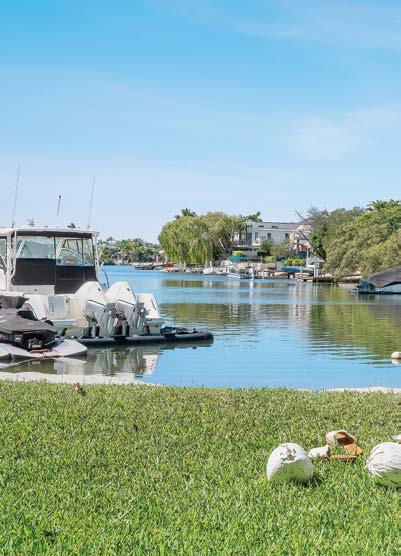
See them up-close when you launch the canoe and stand-up paddle board or when you take the boat out and cast a line for tailor and flathead. If you are inclined to more serious fishing, go to the open stretches of the Noosa River towards The Everglades.
“For those contemplating a serious investment opportunity, this prestigious property attracts the high-end visitor market, bookings are constantly back-toback, and it is precisely the natural beauty surrounds, which will continue to underpin and grow property values.”
Facts & Features:
· Land Area: 721m2; waterway cul-de-sac w tidal beach
· House Area: 329m2
· Pool: 6.8m x 3.1m; nth-facing & wall w/ mirror insets.
· Terraces: multiple incl abutting lawn & boat winch to/from water; alfresco living w outdoor kitchen/BBQ/wood burning pizza oven; 2 undercover second level off bedrooms.
· About: 3m high ceilings; white, blue, aqua & natural aesthetic w timber shutters/glass louvres/slide away doors; auto retractable blinds; accessories incl Designer Boys artworks, sea shell artifacts & rugs; open plan living & dining w gas fireplace & natural fabric-covered modular lounge, opens to alfresco on 3 sides incl 1 w hammock-inspired day bed; upstairs leisure space w Boss bean-bag chairs; 2 Smart TVs w cable channels; 4 bedrooms w ensuites, 3 w queen/twin & built-in robes & main w 4-poster king bed; laundry & powder room on ground level.
Description: 4 bedrooms, 4 bathrooms, 3 garage, pool
Inspect: Friday 2.00pm-2.30pm and Saturday 1.30pm
Auction: Saturday, 29 April, 2pm

Contact: Eric Seetoo 0419 757 770, TOM OFFERMANN REAL ESTATE

· Kitchen: Hampson’s inspired galley-style w stone-topped white 2-pac cabinetry incl island/breakfast bar; stone splashback; soft close drawers; designer pendants; integrated Liebherr fridge & freezer, Illve cooktop & oven, Fisher & Paykel dble dishdrawers; 3 garages incl 3rd w rear door to boat winch; aircon/ fans/security; exterior w outdoor shower; pandanus, Bahamas palms, golden canes & agaves.
· Inventory: fully inclusive to cater for backto-back high-end holiday market.
· Location: 2-way street access, quiet w locals only; easy walk to Quamby Place, Noosa River/Gympie Terrace; minutes to Hastings Street, Noosa Main Beach & Noosa National Park; 30 mins drive from Sunshine Coast domestic airport. ●
10 NOOSA TODAY | Friday, 28 April, 2023 noosatoday.com.au
noosatoday.com.au Friday, 28 April, 2023 | NOOSA TODAY 11
HOME FOCUS
HOLIDAY HEAVEN IS A RARE GEM
IN the heart of arguably Australia’s most famous cosmopolitan boulevard, across the street from Noosa Main Beach, surrounded by some of the best community and natural assets in the world, is the gem of low-rise chic apartments, the Emerald Resort.
The ultimate investment opportunity is a one-of-a-kind, 5-star, generously sized apartment with 3-bedrooms all with ensuites. A complete renovation, recently completed with designer sourced furniture, fixtures and accessories, takes luxe to the next level.
Named Pearl at The Emerald for good reason, and having a monochromatic aesthetic, bright white floor tiles and a sunny terrace, it sparkles with bright natural light. And because the location is on Hastings Street, so close to Laguna Bay, the air is tinged with salt and of course coffee.
The immaculate and very quiet holiday haven, which comes fully furnished, certainly abounds with personality in the open plan living and dining space and coalesces with outdoors. There are sinkinto grey fabric-covered sofas, a white dining table and chairs, plus pops of colour with cushions and art pieces including one featuring pearls to match the name at the entry. A barbeque and outdoor setting provides an alfresco dining option.
The galley-style on-trend kitchen with stone-topped cabinetry including an island/ breakfast bar has all the necessities needed including all the latest whizz-bang appliances any cook, even on holidays would relish.
Three bedrooms, all with ensuites and built-in robes, is also as rare a find as a three bedroom apartment on Hastings Street, making holidaying with friends a far more equable arrangement.
HOME ESSENTIALS
With an idyllic sub-tropical climate, a pristine environment, the Noosa National Park with its world-recognised surfing reserve nearby, the north-facing safe beach across the road, plus sophisticated Hasting’s Street’s bevy of famous restaurants, cafes, bars, art galleries and designer boutiques, this beautiful apartment supports a life well lived and a holiday well loved.
“What a top location for a pearler of an investment opportunity with everything at your fingertips,” comments Tom Offermann Real Estate agent Jesse Stowers, who is taking the apartment to auction on Saturday 29 April 2023. “This is quintessential Noosa Heads which attracts astute investors who are aware of the
town’s global reputation and the superb hands free income these investments produce”.
Facts & Features:
· Apartment Approx Area: 139m2
· About: located on level 2, front tower; lift access; recent total renovation incl designer sourced furniture, fixtures & accessories; monochromatic aesthetic; open plan living/dining - tiled throughout; grey fabric-covered sofas, pops of colour in artwork & accessories; white dining table w 6 chairs + undercover terrace 8m x 2.6mm w outdoor setting & BBQ; 3 bedrooms w ensuites & built-in robes; laundry w washer/dryer; aircon/fans
· Kitchen: galley style; stone topped cabinetry incl island/breakfast bar;
Westinghouse oven & cooktop, 2-door Fisher & Paykel fridge/freezer & Ariston dishwasher
· Inventory: fully inclusive for lucrative highend visitor market, walk in ready.
· Unrestricted Personal Use. Lock up, Live in or Let out for superb income.
· About Emerald Resort Noosa: 4.5 star; heated pool, sauna & spa for guests.
Professional onsite manager.
· Location: Opposite Noosa Main Beach, Laguna Bay & boardwalk to Noosa National Park & Surfing Reserve w coastal walking trails & 477ha of forest, bays & rocky coves; Rococo’s restaurant onsite ●
12 NOOSA TODAY | Friday, 28 April, 2023 noosatoday.com.au
Address: 4/42 Hastings Street, NOOSA HEADS Description: 3 bedrooms, 3 bathrooms, 1 garage Inspect: Sat, 29th Apr 12:30pm - 1:00pm Auction: Sat, 29th Apr 1:00pm Contact: Jesse Stowers 0414 367 282, TOM OFFERMANN REAL ESTATE
We are proud of our Reviews, Reputation, Integrity & Professionalism!
Shane McCauley
0403 646 930
Director and Principal
“WefoundShanetobeverypersonableandeasytotalk to.Hewasverysincereandknowledgeableandkept communicatingwithusthroughthewholeprocess.We wereextremelyhappywithhisserviceandthepricehe achievedonthesale.Wewoulddefinitelyrecommend himandusehisservicesagain.”
OurService
Gillian McCauley
0467 600 009
Principal and Licensed Sales Agent
“Gillianwassoprofessionalfromthetimeofourfirst contactupuntilsettlement.Herknowledgeofthereal estatemarketwasremarkableandshehadabuyerand acontractonmyapartmentwithinacoupleofweeks.I highlyrecommendGillianasa5starprofessionaland aboveallahelpfulandfriendlyagent.Iwouldengageher foranyfuturerealestatepurchases/sales.”


Brian Hayes 0414 840 212
brian.h@rwnoosa.com.au


“Fromtheoutset,Ifeltimmediatelycomfortable whenmeetingBrian-a‘real’estateagent. Flexiblewithalternatearrangements,excellent communicationandalwayscontactable.Great knowledgeofthepropertieshesells.Oneofthemost pleasantexperiencesI’vehadindealingwithfolkin theindustry.Highlyrecommended!”
Frank Milat
0438 528 148
Licensed Real Estate Agent
“FrankknowstheNoosa,andmorespecificallythe HastingsStmarketbetterthananyoneIhavecome across.Hehasactedforusseveraltimesandeachtime theoutcomehasbeenmorethanwecouldexpect.Heis professional,dedicated,knowledgeableandadelightto dealwith.”
Correen Mackay 0414 742 238
Licensed Real Estate Agent
“Correenwaswonderful;easytodealthroughand with,andachievedamostsatisfactorypriceforour property,inaveryshorttimeperiod.Ifallagents werelikeCorreen,agentswouldhaveafarbetter reputation,andtherewouldbeahigherlevelof trustintheprocessandrelationshipbetweenselleragents-buyer!”
Kym de Warren 0412 325 421
Sales Agent
“KymdeWarrenwasrecommendedtomeby afriendwhosoldpreviously.Whencontacting Kym,wearrangedadatetodiscussthesaleofmy Property.Kymmentionedshehadalistofpotential buyerswhowerelookingtopurchaseasinglelevel home.UponsigningtheR&WNoosasalecontract wehadabuyerwithinaweekandcompletedthe buyercontractandsale.Theentireprocesswas Professional&Seamless.”
Amanda Balding 0408 088 788
Licensed Real Estate Agent
“Fantasticareaknowledge,rightonthemarkwiththe priceestimation.Verythoroughwithpaperworketc.”
noosatoday.com.au Friday, 28 April, 2023 | NOOSA TODAY 13 Proudly Richardson&Wrench Noosa | 07 5447 4499 www.rwnoosa.com.au 23 Hastings Street, Noosa ‘Trusted Respected & Operating for Over 30 Years’
12601559-JC17-23
HOME FOCUS
STUNNING, UNIQUE AND PRIVATE ABODE
BORDERING Noosa National Park, you will discover Flagship Court. As soon as you step foot onto this private coastal abode, located in such a tightly held suburb, you will gain a quick understanding that Castaways Beach is one of Noosa’s best kept secrets, for obvious reasons, this close-knit community will tell you. A short three-minute walk via an underpass, will have you swimming in the glistening ocean.
The atmosphere of this beachside gem is characterised by a serene feeling of tranquillity and a bushland buzz. From the moment you enter through the front door, you’re already captivated by a spectacular four metre island bench top, this magnificent kitchen has on offer. Commanding the status ‘hero of this home’ you will spend endless days and nights, possibly decades entertaining family and friends alike. Ample cabinetry space and a six-burner gas cooktop, with quality appliances throughout will appease the inner chef within you.
Beautifully presented and immaculately maintained, an open floor plan between the kitchen and spacious living area, flows seamlessly. Light, bright with ample natural light and elevated window louvres surrounding the living area, integrate indoor and outdoor spaces. A true sense you’re lost in paradise.
Aesthetically pleasing to the eye, sparkling hardwood floors throughout the home, add natural beauty and warmth.
Meander passed the kitchen, to the left, you will find a convenient sizeable alcove, perfect as a study or turn into a butler’s pantry. A few more steps and voila a
HOME ESSENTIALS
second living area is upon you. Surrounding the second living area are three bedrooms. The master bedroom boasts a generous size ensuite and walk in robe. The remaining two bedrooms are also spacious in size and share a bathroom.
For those savvy buyers, where privacy is paramount, the outdoor entertaining area, with a very private sparkling inground swimming pool, will appease you.
Surrounding the entire home, are mature landscaped gardens including vegetable and herb patches. Next to the vegetable
Address: 11 Flagship Court, CASTAWAYS BEACH
garden is a structured wooden ‘pergola’, creating a private area for relaxation, perfect for reading a book in peace, while sipping on a cup of tea or your favourite tipple.
The large double garage contains a convenient sizable loft, currently used as an art studio. This would be perfect as an office or a children’s entertaining area.
This beachside abode caters towards families, professional couples or retirees looking to make that seaside change.
Castaways Beach is known as one of
Contact: Correen Mackay 0414 742 238 and Kym de Warren 0412 325 421, RICHARDSON & WRENCH
Noosa’s exclusive beachside estates, boasting superior homes.
A brief seven-minute drive, you can reach Hastings Street and Noosa Main Beach where you will discover a diverse selection of eclectic cafes, restaurants and exclusive boutiques to explore. For your convenience, all within a five -minute drive, you can visit Sunrise Beach, Sunshine Beach or Peregian Beach.
Flagship Court offers multiple walking tracks and access points to the beach via underpass. ●
14 NOOSA TODAY | Friday, 28 April, 2023 noosatoday.com.au
3 bedrooms, 2 bathrooms, 2 garage, pool Price: $1,790,000 Inspect: By appointment
Description:
NOOSA
RARITY FOR A SELECT FEW


Tallow Residences offer private and protected bushland tranquility with all the lifestyle advantages of living in the heart of Noosa. Due to demand the final six luxury, home-size apartments are available for sale. This truly is a once-in-life-time opportunity to secure your piece of this very rare and unique corner of Noosa.
To find out more, visit www.tallowresidences.com.au or call 1300 10 10 50 for more information. Display apartment open by appointment.

UNDER CONSTRUCTION 12601558-SM17-23

12600981-HC17-23
Rare Noosa Acreage

60 Glenridge Drive Cooroibah
Glenridge Estate comprises just seven acreage blocks measuring between 1.5 to 3 hectares, forming a private hideaway at the foot of Mt Tinbeerwah, just 15 minutes to Noosa.
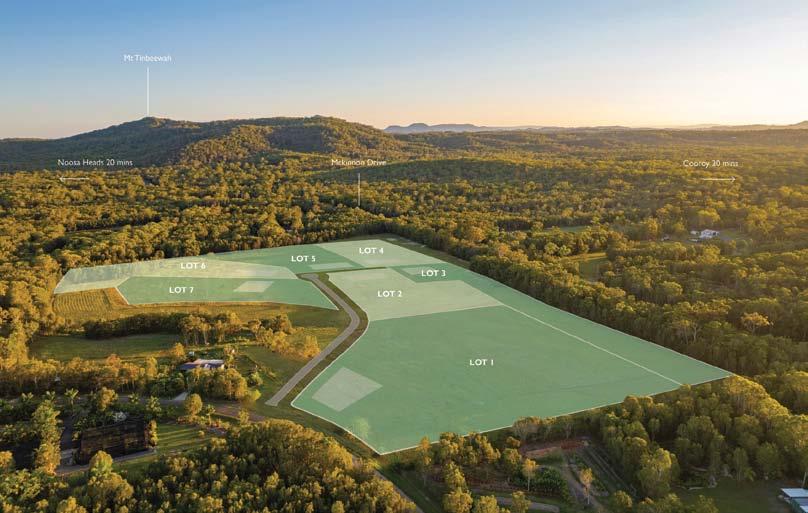
Glenridge represents a rare benchmark in Noosa property –sprawling acreage set in a natural pocket flanked by a green corridor of national parks, rainforests and lakes.
Land: 7 Acreage Blocks
Price: On Application
View: By Appointment
Contact:
Lindy McAskill 0439 839 899


Justin Sykes 0415 249 049

noosatoday.com.au Friday, 28 April, 2023 | NOOSA TODAY 17
12601542-SN17-23
OPPORTUNITY AWAITS
TIGHTLY held for 36 years by current owner, this property is located on a prime north-east facing corner block just 200 metres to the river in sought after Old Tewantin. This is an opportunity to invest in a blue chip piece of real estate to either landbank for assured capital gain or build your lifestyle masterpiece onsite taking advantage of aspect, dual street access and water view!
The two bedroom river shack is basically a “knock down” and the site is flat and with two street frontage it is easy to access in the build phase. Ideally, a double storey residence will be constructed to really maximise river views, arguably one of the best in the precinct. A water vista, abundant natural light, and gentle breezes will make living here so desirable and comfortable. Not only is it a short walk to the river, but it’s only 750 metres to town centre with retail, commercial and dining: the primary school is 550 metres away, Noosa Marina a 15 minute walk, and Tewantin’s glorious parks also a pleasant
HOME ESSENTIALS
stroll away. Gympie Terrace’s boutique riverfront dining is just a 5 minute drive, and it’s less than 15 minutes to Noosa Main Beach.
· Prime north east facing corner block
· Dual street frontage and access
· River views
· 2 bedroom “knock down” shack on site
· Custom design a riverside masterpiece
· Walk to town, primary school, parks, marina
Current owners have held for 36 years No fear of overcapitalising, blue chip locale! ●
Address: 66 Moorindil Street, TEWANTIN Description: 2 bedrooms, 1 bathrooms, Inspect: By appointment Auction: Saturday, 6 May, 10am
Contact: Lindy McAskill 0439 839 899 and Justin Sykes 0415 249 049, RAY WHITE - NOOSA RIVER
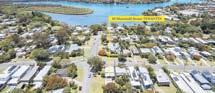




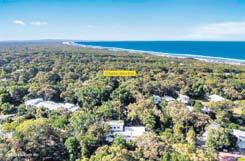
Address
alisa@hinternoosa.com.au
18 NOOSA TODAY | Friday, 28 April, 2023 noosatoday.com.au 12601683-JB17-23 0754477000,30MapleStreet,CooroyQLD 0754491186,777EumundiNoosaRoad,DoonanQLD POBox244CooroyQLD4563 hinternoosa.com.au ArchitectDesignedHomeon NoosaHinterlandAcreage
10PineTreeDriveWest,Lake
4 Bath 2 Car 2 Pool
5acres
Sat11:30-12:30pm auction
Macdonald Bed
Auction20thMayat2pmOnSite Land
View
AlisaWythes 0415111370
PROPERTY NEWS
SUNRISE PENTHOUSE – OCEAN VIEWS
THIS spacious penthouse in Costa Bella, offered to the market for the first time by original owner, showcases glorious ocean views from its expansive balconies, and its prized easterly aspect invites in an abundance of natural light whilst circulating gentle sea breezes throughout.
Across a generous 160m2 plus 45m2 alfresco space, it comprises three bedrooms, two bathrooms, office, new kitchen, open plan living/dining, three balconies, and separate laundry; size will surprise, it feels very open and incredibly liveable.
The apartment has recently undergone some upgrades including the stylish black and white kitchen with stone benches and soft close cabinetry, along with additional quality fixtures and fittings. Other features include ceiling fans, separate bath and shower in main bathroom, an exclusive balcony off master bedroom, high ceilings, dual vanities in powder room, and generous storage.
With easy-care tiling throughout,
HOME ESSENTIALS
maintenance is minimal, and there is a palpable Mediterranean ambience that is soothing and relaxing. The complex is located at the end of a cul-de-sac and fronting a leafy park, providing that perfect blend of green, white sand, and blue ocean! Costa Bella is a solidly built complex of 10 apartments with low body corporate fees, pet-friendly (stbca) and a sundrenched communal pool and terrace. Just 230-metres to the beach, you can see the ocean, hear the ocean, and almost touch the ocean from your balcony. This
truly is effortless beachside living. Not only is the beach literally just footsteps away, it’s only a short stroll to Chalet & Co for fabulous coffee and amazing food; and Duke Street dining and Sunshine Beach Surf Club, are also within walking distance - Noosa Junction is a five-minute drive and it’s only 10 minutes to Hastings Street.
One of the quieter locations so close to the beach - this will suit a variety of buyers from downsizing sea-changers, holidayhome investors, through to anyone really that loves the lifestyle and climate that
Sunrise Beach offers all-year around. Tightly held for obvious reasons - you will need to act quickly to become the second owner of this 10/9 Selene Street, Sunrise Beach…and it many well be many years before you would be willing to part with this, if ever.
· Penthouse opportunity - first time to market, stunning views
· 3 bedrooms + office, 2 bathrooms, stylish new stone kitchen
· Expansive alfresco living - 3 balconiesocean vista
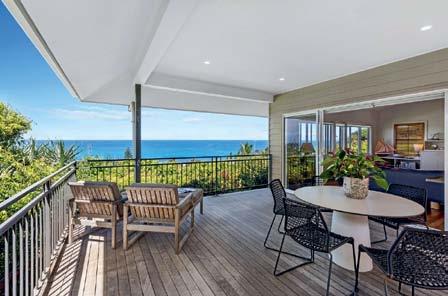
· Recently updated, well presented, ultracomfortable & spacious

· Easy-care tiled flooring, high ceilings, Mediterranean vibe
· Secure basement parking, sundrenched communal inground pool
· 230-metres to the beach + short walk to popular cafe
· Walking distance to Sunshine Beach Duke Street dining & surf club
· Same owner since complex was builtparticularly savvy buying! ●
Address: 10/9 Selene Street, SUNRISE BEACH Description: 3 bedrooms, 2 bathrooms, 1 garage, pool Price: On application Inspect: Saturday 29 April 10-10.45am
Contact: Rob Spencer 0408 710 556, SUNSHINE BEACH REAL ESTATE
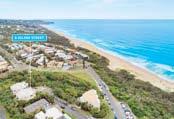
Thisarchitecturally-designedhome,showcasesabsolutely stunningwhitewateroceanviewstoSunshine’snorthern headland.
•Thedesigncomplementsthecoastallifestyle,spectacular oceanvista,anddesirableQueenslandclimate.
•RareopportunityincovetedEnterpriseStreet
•2separatelivingareas,hardwoodtimber floors,gorgeous casementwindows,plantationshutters
•50mtoshortcuttobeachaccess
noosatoday.com.au Friday, 28 April, 2023 | NOOSA TODAY 19 SUNSHINEBEACHREALESTATE NOOSABEACHSIDEBOUTIQUEREALTORS
VISITOUROFFICE 36DukeStreet,SunshineBeach,QLD4567 ORCALLUS(07)54472999 18ENTERPRISESTREET SUNSHINEBEACH
www.sunshinebeachrealestate.com.au
FORSALE Offersover $5.85M INSPECT CONTACT AGENT A 3 B 3 C 2 E AGENT KATHYWISE M:0407968300 ROBSPENCER M:0408710556
HOME FOCUS
BoreenPoint
Saturday29thApril
4.00-4.30pm17ToolaraStreet333$1,895,000Hinternoosa0415111370
CartersRidge
Saturday29thApril
12.30-1.15pm47HilaryRoad320OffersOver$1,500,000Hinternoosa0437346256
Cooran
Saturday29thApril
10.00-10.45am11BunderraWay126$1,150,000Hinternoosa0437346256
Cooroibah
Saturday29thApril
11.00-11.30am2CooroibahCrescent422PriceGuide$1.39MillionRichardson&WrenchNoosa54474499
11.00-11.30am410lakeCooroibahRoad212ExpressionsofInterestLagunaRealEstate0411328488
Wednesday3rdMay
11.00-11.30am410lakeCooroibahRoad212ExpressionsofInterestLagunaRealEstate0411328488
Cooroy
Saturday29thApril
9.30-10.00am19BartholomewCourt422OffersOver$1,295,000Hinternoosa0422923851
9.30-10.00am79StrakerDrive422ContactAgentHinternoosa0407730987
9.30-10.00am13StrakerDrive422$1,350,000Hinternoosa0415111370
10.30-11.15am6PonderosaDrive215OffersOver$1,095,000 Hinternoosa0435405656
10.30-11.00am2OlivineLane322OffersOver$799,000Hinternoosa0415111370
1.30-2.00pm9SwiftDrive320OffersOver$1,295,000Hinternoosa0415111370
Doonan
Saturday29thApril
10.00-10.30am15GidgeeCourt426BUYERSGUIDE$1,400,000Reed&Co.EstateAgents0409484159
11.00-11.30am357DukeRd4314AuctionTomOffermannRealEstate0421785512
11.00-11.30am84BotanicaCircuit426BYNEGOTIATIONReed& Co.EstateAgents0409484159
EerwahVale
Saturday29thApril
10.00-10.45am631EumundiKenilworthRd322$1,395,000Hinternoosa0422923851
Eumundi
Saturday29thApril
1.00-1.30pm49BallRoad533OffersOver$1,595,000Hinternoosa0422923851
LakeMacDonald
Saturday29thApril
9.00-9.45am10KamalaDrive523OffersOver$1,395,000Hinternoosa0404344399
11.30-12.30pm10PineTreeDriveWest422AuctionHinternoosa0415111370
2.30-3.00pm163CooroyMountainRoad646ContactagentHinternoosa0415111370
MarcusBeach
Saturday29thApril
11.00-11.30am16SandalwoodCl422AuctionTomOffermannRealEstate0413319879
12.00-12.30pm24HawthornGr312$1,585,000TomOffermannRealEstate0413319879
NoosaHeads
Thursday27thApril
10.30-11.00am7316/5MorwongDr111AuctionTomOffermannRealEstate0412894542
Friday28thApril
12.00-12.30pm104/5HastingsSt111$1,700,000TomOffermannRealEstate0417600840
4.00-4.45pm7/19WyandraStreet211EOIClosing29/4Century21ConollyHayGroup0418426065
Saturday29thApril
10.00-10.30am1/9AnglerSt221$975,000TomOffermannReal Estate0423726639
10.45-11.15am15/8SerenityClose332BYNEGOTIATIONReed& Co.EstateAgents0409446955
11.00-11.30am5/8SerenityCl332$3,200,000TomOffermann RealEstate0448966867
11.00-11.30am734/61NoosaSpringsDr432$2,790,000TomOffermannRealEstate0418980247
11.00-11.30am804/100ResortDrive221Offersfrom$980,000Century21ConollyHayGroup0411644254
11.00-11.45am7/19WyandraStreet211EOIClosing29/4Century21ConollyHayGroup0418426065
11.00-11.30am11WeybaParkDrive323AuctionLagunaRealEstate0434236110
11.00-11.30am6/16KatharinaStreet211PriceGuide$1.295MillionRichardson&WrenchNoosa54474499
11.15-12.00pm26WaranaStreet332AUCTIONReed&Co.Estate Agents0438695505
11.30-12.00pm7HoneyMyrtleRd422AuctionTomOffermannRealEstate0423972034
12.00-12.30pm313/2SedgelandDrive322ByNegotiationCentury21ConollyHayGroup0411644254
1.00-1.30pm7DolphinCres443AuctionTomOffermannRealEstate0419757770
2.00-2.30pm3/106NoosaParade221PriceGuide$2,100,000Century21ConollyHayGroup0413582670
Friday28thApril
11.00-11.30am13/187GympieTerrace211O/O$725,000ConsideredLagunaRealEstate0407379893
11.00-11.30am3/106NoosaParade221PriceGuide$2,100,000Century21ConollyHayGroup0413582670
12.00-12.30pm10/221GympieTerrace221O/O$1,300,000ConsideredLagunaRealEstate0407379893
1.00-1.30pm2/7WilliamStreet433EOIClosing4/5/2023Century21ConollyHayGroup0419676554
2.00-2.30pm7DolphinCres443AuctionTomOffermannRealEstate0419757770
Saturday29thApril
9.00-9.30am3/106NoosaParade221PriceGuide$2,100,000Century21ConollyHayGroup0413582670
9.30-10.30am39/67GibsonRoad211AuctionLagunaRealEstate0411328488
10.00-10.30am65LakeEntranceBlvd422PriceGuide$1.4MillionRichardson&WrenchNoosa54474499
10.00-10.30am2/22-24NannygaiStreet111O/O$620,000ConsideredLagunaRealEstate0434236110
10.00-10.30am2/7WilliamStreet433EOIClosing4/5/2023Century21ConollyHayGroup0419676554
10.30-11.00am16StarboardAve422AuctionTomOffermannRealEstate0468922519
10.30-11.00am14SilkwoodDrive422OFFERSOVER$900,000Reed&Co.EstateAgents0433641158
11.00-11.30am3/11MunnaCres211$945,000TomOffermannRealEstate0423726639
11.00-11.30am10/221GympieTerrace221O/O$1,300,000ConsideredLagunaRealEstate0407379893
12.30-1.00pm12/164NoosaParade211BYNEGOTIATIONReed&Co.EstateAgents0424610414
1.00-1.30pm5/5SylviaStreet111$680,000LagunaRealEstate0434236110
1.00-1.30pm5/2BarbadosCres211$1,200,000TomOffermann RealEstate0468922519
1.30-2.00pm7DolphinCres443AuctionTomOffermannRealEstate0419757770
Wednesday3rdMay
10.00-10.30am2/22-24NannygaiStreet111O/O$620,000ConsideredLagunaRealEstate0434236110
11.00-11.30am13/187GympieTerrace211O/O$725,000ConsideredLagunaRealEstate0407379893
12.00-12.30pm5/5SylviaStreet111$680,000LagunaRealEstate0434236110
1.00-1.30pm39/67GibsonRoad211AuctionLagunaRealEstate0411328488
NoosaWaters
Thursday27thApril
11.30-12.00pm3NeptuneCircuit334AUCTIONReed&Co.EstateAgents0433641158
Saturday29thApril
9.00-10.00am10ShorehavenDrive422AuctionMcLurePrestige0499270691
10.00-10.30am192ShorehavenDrive422AuctionLagunaReal Estate0407379893
10.00-10.30am17ShorehavenDrive423PRICEGUIDE$5,000,000Reed&Co.EstateAgents0409446955
11.00-11.30am46ShorehavenDr422$2,150,000TomOffermannRealEstate0447263663
11.00-11.30am40ThePeninsula432OffersFrom$5.8mMcLure Prestige0499270691
1.00-1.30pm72ShorehavenDrive422AuctionMcLurePrestige0499270691
PeregianBeach
Saturday29thApril
9.00-9.30am1GouldianCourt312EOIClosing25/4/2023Century21ConollyHayGroup0401807697
10.00-10.45am14LoriletStreet322OffersOver$2.9MCentury21ConollyHayGroup0422719041
10.00-10.45am3/16PelicanStreet322$2,300,000Century21ConollyHayGroup0401807697
SunriseBeach
Saturday29thApril
10.00-10.45am10/9SeleneStreet321ContactAgentSunshineBeachRealEstate0754472999
10.00-10.30am5/12AdvancePl311$950,000TomOffermannRealEstate0407708860
11.30-12.00pm9/2OreallaCrescent321PRICEGUIDE$1,700,000Reed&Co.EstateAgents0401212505
12.00-12.30pm56NetherbyRs42-ContactAgentTomOffermannRealEstate0411122331
2.00-2.30pm24NewfieldStreet532AUCTIONReed&Co.Estate Agents0438695505
Wednesday3rdMay
12.00-12.30pm24NewfieldStreet532AUCTIONReed&Co.EstateAgents0438695505
20 NOOSA TODAY | Friday, 28 April, 2023 noosatoday.com.au TimeAddress ABC PriceGuideAgent TimeAddress ABC PriceGuideAgent OPENHOMES
12.30-1.00pm5BlueGumRd422$1,275,000TomOffermannReal Estate0423972034 1.00-1.30pm511/6SedgelandDrive322BUYERSGUIDE$1,300,000Reed&Co.EstateAgents0438695505 1.00-1.30pm21/5QuambyPl221AuctionTomOffermannRealEstate0417600840 1.00-1.30pm21/5QuambyPl221AuctionTomOffermannRealEstate0417600840 Wednesday3rdMay 10.30-11.00am26WaranaStreet332AUCTIONReed&Co.Estate Agents0438695505 11.00-11.30am5/8SerenityCl332$3,200,000TomOffermann RealEstate0448966867 2.00-2.30pm511/6SedgelandDrive322BUYERSGUIDE$1,300,000Reed&Co.EstateAgents0438695505
Saturday29thApril 11.00-11.45am706a/61NoosaSpringsDr332$4.6mJoeLangleyRealEstate0417753961 11.00-11.30am734/61NoosaSpringsDr432$2,790,000TomOffermannRealEstate0418980247 12.00-12.45pm154/61NoosaSpringsDriv3221800000.00Joe LangleyRealEstate0419883499 Noosaville Thursday27thApril 10.30-11.00am16StarboardAve422AuctionTomOffermannRealEstate0468922519
12.30-1.00pm2214/15LakeviewRise322BUYERSGUIDE$2,150,000Reed&Co.EstateAgents0438695505 12.30-1.00pm4/42HastingsSt331AuctionTomOffermannRealEstate0414367282
NoosaSprings
SunshineBeach
Saturday29thApril
10.00-10.45am2/16SolwayDrive321ContactAgentSunshine BeachRealEstate0754472999
11.00-11.45am1/20WeybaStreet331ContactAgentCentury21ConollyHayGroup0422719041
11.00-11.45am1/21HendersonSt321ContactAgentSunshine BeachRealEstate0754472999
12.00-12.45pm6/21HendersonStreet221ContactAgentSunshineBeachRealEstate0754472999

12.00-12.30pm2/7WeybaSt221$1,695,000TomOffermannRealEstate0468922519
Tewantin
Thursday27thApril
3.00-3.45pm8TroonCourt412ByNegotiationCentury21ConollyHayGroup0411644254
Saturday29thApril
10.00-10.30am15GeorgeStreet422O/O$1,395,000ConsidereLagunaRealEstate0428711163
10.00-10.30am289MoorindilSt456$4,250,000TomOffermannRealEstate0413889130
10.00-11.00am51HooperCrescent322$1,050,000LagunaRealEstate0428711163
11.00-11.30am87-89PoincianaAve735ExpressionsofInterestTomOffermannRealEstate0411122331


11.00-11.30am3NoosaBanksDrive424O/O$1,585,000ConsideredLagunaRealEstate0491185774
12.00-12.30pm20/10BlakesleyStreet321AuctionLagunaRealEstate0407379893
12.00-12.30pm9FinneyCourt532+ContactAgentLagunaReal Estate0411328488
1.30-2.00pm8TroonCourt412ByNegotiationCentury21ConollyHayGroup0411644254
Wednesday3rdMay
11.00-11.30am3NoosaBanksDrive424O/O$1,585,000ConsideredLagunaRealEstate0491185774
12.00-12.30pm289MoorindilSt456$4,250,000TomOffermannRealEstate0413889130
12.00-12.30pm9FinneyCourt532+ContactAgentLagunaReal Estate0411328488
Tinbeerwah
Saturday29thApril
10.00-10.30am12SmithsRoad422OFFERSOVER$1,695,000Reed&Co.EstateAgents0438695505
Verrierdale
Saturday29thApril
12.00-12.30pm217-223PryorRoad745AUCTIONReed&Co.EstateAgents0409484159
WeybaDowns
Saturday29thApril
1.00-1.30pm200EumarellaRoad424$1,650,000LagunaRealEstate0411328488
Doonan
Saturday20thMay 1.00-1.30pm357DukeRd4314AuctionTomOffermannRealEstate0421785512
NoosaWaters
Thursday27thApril
12.00-12.30pm3NeptuneCircuit334AUCTIONReed&Co.EstateAgents0433641158

Saturday6thMay
9.30-10.00am192ShorehavenDrive422AuctionLagunaRealEstate0407379893
SunshineBeach
Saturday29thApril
12.00-12.30pm6ElandaStreet533Auction20/5/2023Century21ConollyHayGroup0438259956

Saturday20thMay
11.00-11.30am6ElandaStreet533AuctionCentury21ConollyHayGroup0438259956
Tewantin
Saturday20thMay
10.30-11.00am20/10BlakesleyStreet321AuctionLagunaRealEstate0407379893
noosatoday.com.au Friday, 28 April, 2023 | NOOSA TODAY 21 TimeAddress ABC PriceGuideAgent TimeAddress ABC PriceGuideAgent OPENHOMES
AuctionDiary
LakeMacDonald Saturday20thMay 2.00-2.00pm10PineTreeDriveWest422AuctionHinternoosa 0415111370 MarcusBeach Saturday6thMay 10.00-10.30am16SandalwoodCl422AuctionTomOffermannRealEstate0413319879 NoosaHeads Thursday27thApril 11.00-11.30am7316/5MorwongDr111AuctionTomOffermannRealEstate0412894542 Saturday29thApril 11.00-11.30am11WeybaParkDrive323AuctionLagunaRealEstate0434236110 12.00-12.30pm7HoneyMyrtleRd422AuctionTomOffermannRealEstate0423972034 1.00-1.30pm4/42HastingsSt331AuctionTomOffermannReal Estate0414367282 Saturday13thMay 10.00-10.30am11LittleCoveRd---AuctionTomOffermannRealEstate0417600840 Saturday20thMay 12.00-12.30pm21/5QuambyPl221AuctionTomOffermannReal Estate0417600840 Noosaville Saturday29thApril 11.00-11.30am16StarboardAve422AuctionTomOffermannRealEstate0468922519 2.00-2.30pm7DolphinCres443AuctionTomOffermannRealEstate0419757770 Saturday20thMay 1.00-1.30pm39/67GibsonRoad211AuctionLagunaRealEstate0411328488
Askyouragent-willmyhomebeseeninalocalnewspaperandonlinebyanengagedlocalaudience? facebook.com/NoosaToday noosatoday.com.au info@noosatoday.com.au **RPData:Propertiesthatcombinedprintandonlineadvertisingonaveragegeneratedahighersaleprice. 202210282125_1-MS46-22
Despiteallthedigitalpropertyhype,localslovereading theirlocalnewspapertofindlocalhomesjustlikeyours.
Localslovelocalproperty...































22 NOOSA TODAY | Friday, 28 April, 2023 noosatoday.com.au MARKETING QUEENSLANDSMULTIAWARDWINNINGAGENCY lagunarealestate.com.au
PRINCIPAL OlivierMillerMelanieButcher LICENSEE/SALES KellieDrinnan BDM
EmilyLang LICENSEE
RogerOmdahl AnnePowell SALES SALES SALES SALES SALES
ChrisForde ChrissieBaker AnitaNichols
PennyPoad HOLIDAYPM HOLIDAYPM HOLIDAYPM RomyMorrow MandyLovell PROPERTYMANAGER PROPERTYMANAGER ADMINISTRATOR MarnyMackay FelicityFarah SharrynWightley
GinaGould TianaBarnett PennyChoyce
TrevorJohnson
PatsyJohnson MARKETING CONTRACTSMANAGER
SALES RECEPTIONIST
JaneKeating HR/FINANCE
WarrenEvans SALES
RobNimmo SALES
DarrenPope PROPERTYMANAGER
LeighVercoe SALES
IsabellaHass RECEPTIONIST
RARE ABSOLUTE WATERFRONT
CAST your fishing line out directly from your deck and land your catch on the pure sandy beach in front.
This prime Noosa River front property takes in fabulous water views in three directions.
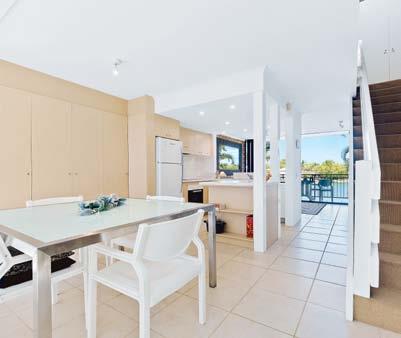
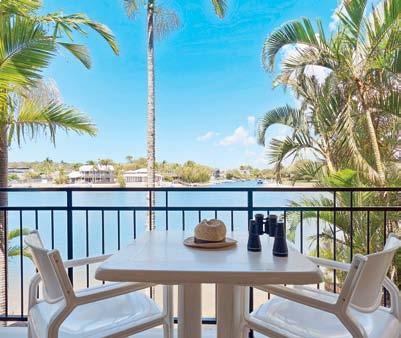
With only one neighbour and a pretty parkland adjacent this townhouse offers complete privacy.
Light filled and featuring high raked ceilings, creating a wonderful airflow throughout.
Offering two bedrooms, plus a third bed/living area which flows directly to the waterfront deck.
The kitchen and living areas are located on the mid level and take in extraordinary views.
Canoeing, boating fishing crabbing all from your waterfront deck, what a wonderful lifestyle.
An easy flat stroll to Hastings Street and Laguna Bay, with Ricky’s restaurant a mere 200 metres away.
Solid low maintenance construction, allowing for low body corporate fees.
Noosa Sound is highly regarded as one of Australia’s best performing real estate locations.
This is an opportunity to realise a brilliant lifestyle and investment in one exciting package! ●
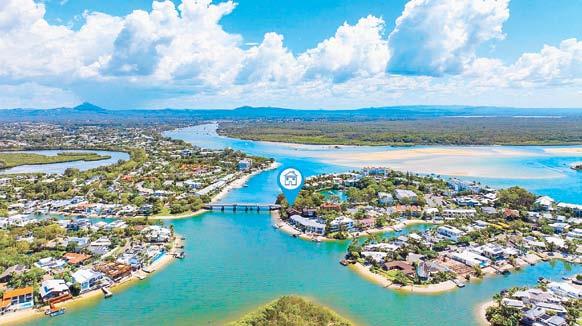
noosatoday.com.au Friday, 28 April, 2023 | NOOSA TODAY 23
HOME FOCUS HOME ESSENTIALS Address: 3/4 Peza Court, NOOSA HEADS Description: 3 bedrooms, 2 bathrooms Price: By Tender Closing 28 April at 5pm Inspect: By appointment Contact: Melanie Butcher 0407 379 893 and Olivier Miller 0419 472 071, LAGUNA REAL ESTATE
aUCTiOnOnsiTesaT20May11aM
Tewantin’s Premier Location 20/10BLakesLeysTreeT,TewanTin
3 A 2 B 1 C D

• Delightfulapartmentisinabeautifulwaterfrontcomplex
• Housesized,overoneeasylevel,generoussizedrooms
• Featuringrakedceilingsintheopenplanlivingandkitchen
• Stonebenchtopsandquality fixturesand fittingsthroughout
• Privatelylocatedwithinthisboutiquegatedcomplex
• Gardens,poolandthewaterfronteasilyaccessible
• Alift isoperativefromundercovercarparkingandstorage
• 100metrestoTewantinCBDandtheNoosaMarina
• Thisistheperfectdownsizer,lockandleaveorinvestment

www.lagunarealestate.com.au

aUCTiOn AuctionOnSiteSat20May11am
View Sat&Wed12-12.30pm
SnoozeYouLose!
5/5SYLviaStreet,NooSaviLLe
Melanie Butcher 0407379893


• 2bed,1bathunitlocatedontheGoldenMileofNoosaville
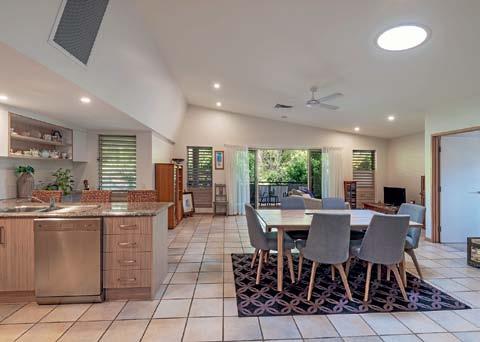
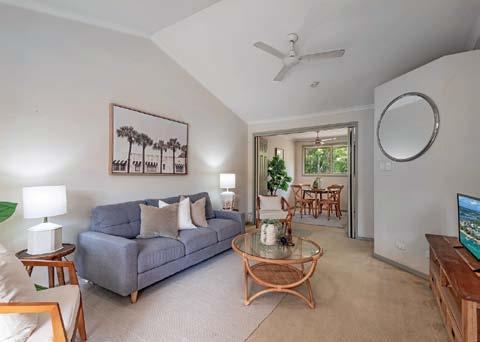
• StepstotheNoosaRiver,awayfromnoisebutclosetoaction
• Positionedinaquietcul-de-sac,small&privatecomplexofsix
• Frontandrearcourtyardswithpotentialtoexpand
• StrollGympieterrace,enjoythemyriadofcafes&restaurants
• Groundlevelunit,lowbodycorpfeeswithpetsonapproval
• Createapropertyinyourownstyleforverylittlecost&enjoy Noosa`slifestyle!
ForSaLe ContactAgent vieW Sat1-1.30pm
2 A 1 B 1 C D anitaNichols 0434236110

24 NOOSA TODAY | Friday, 28 April, 2023 noosatoday.com.au
GympieTerraceFrontRowPosition 10/221GympieTerrace,Noosaville
• StunningNoosaRiverviewshugesunnynorthfacingterrace
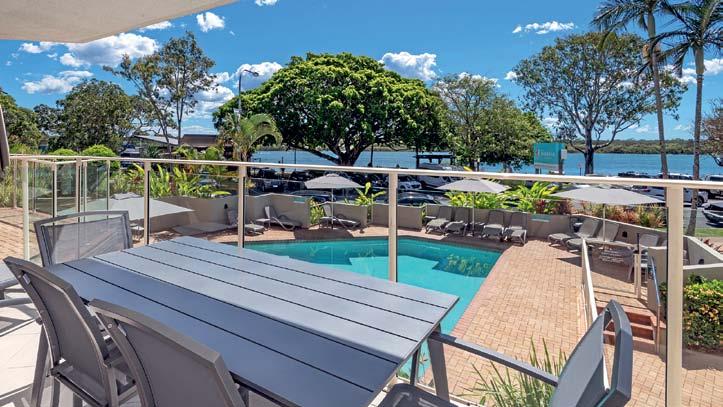
• Beautifullypresentedwithstylishfurnishingsincluded
• Largebedroomsattherearfortranquilsleepingaccommodation

• Hugekitchenoverlooksthelivingareasandacrosstotheriver
• Walktoanabundanceofexcitingeateries,cafesandbars
• Lovelysandyriver,beaches,idealforchildrenandwateractivities

• Expertonsitemanagementinplaceforpeaceofmind
• ThisisastandoutapartmentintheheartofdynamicNoosaville
noosatoday.com.au Friday, 28 April, 2023 | NOOSA TODAY 25
www.lagunarealestate.com.au
Forsale OffersOver$1,300,000 Considered vieW Fri12-12.30pm Sat11-11.30pm 2 A 2 B 1 C D melanieButcher 0407379893
NoosaWatersOpportunity
192ShOrehaveNDrive,NOOSaville
• AnarchitecturalhomeinaprimeNoosaWaterslocation
• Generouslyproportioned,hugelivingspacesandbedrooms
• Masteronupperlevelfeaturingensuiteandgenerouswalk-in
• Largekitchenwithpantryoverlookinglight-filledlivingareas
• Pool,air-conditioning,loadsofstorage,lowmaintenance

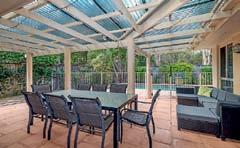
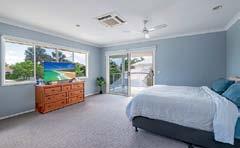
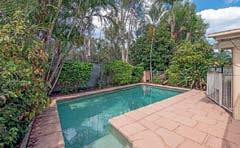
• Doublelockupgarage,roomforthevanorboatoff street
• StrolltoGympieTce,5minstoworldfamousNoosaMainBeach
• GreatopportunitytocapitaliseonanexcellentNoosaWaterslocation
26 NOOSA TODAY | Friday, 28 April, 2023 noosatoday.com.au
www.lagunarealestate.com.au
aUCTiON OnSiteSat6May10.00am vieW Sat10-10.30am 4 A 2 B 2 C D MelanieButcher 0407379893
aUCTiONONSiTeSaT6MaY10aM
ImmaculateNoosaBanksResidence
3NoosaBaNksDRIve,TewaNTIN
• PerfectNoosalifestyleononeeasylevel
• Generouscoveredalfrescoentertainmentareabesidepool
• Easyindoor/outdoor flowwithabsoluteprivacy
• 12x5shedidealforcamper,caravan,boat,homeoffice
• Fourcargaragingandtwoseparatedriveways
• 8.8kWsolarsystem,airconditioningandfans
• Establishedmanicuredtropicalgardenson1501sqm
• Fastidiouslymaintained-justmoveinandenjoy!
FoRsaLe OffersOver$1,585,000
Considered
vIew Sat11-11:30am
www.lagunarealestate.com.au

ChrissieBaker 0491185774

noosatoday.com.au Friday, 28 April, 2023 | NOOSA TODAY 27
4 A 2 B 4 C D
LakesideTranquillity
410LakeCooroibahroad,Cooroibah
• Ultimatewaterfrontlivingwithbreathtakingbeautyofthenaturalenvironment
• Arareopportunitytosecureyourownprivateacreagewithspectacularlakeviews
• Sunroom/bedroomandinternalatriumfeaturingtropicalplantsandwaterfeatures
• Catchthemorningsunfromtheeasternalfrescoandrelaxontherearpatio
• Positionedon5 flatacreswith90moflakefrontage,surroundedbynativeplants
• Aircon,fans,renderedexterior,5x10,000litrewatertanks,3waterpumps

• EnjoyaBBQlakesideorgrabakayakandventurefurtherdowntheNoosariver
• OnlyminutestoTewantin’smainshoppingprecinctandtheNoosaMarina
www.lagunarealestate.com.au
ChrisForde 0411328488

28 NOOSA TODAY | Friday, 28 April, 2023 noosatoday.com.au
ForSaLe ExpressionsofInterestClosing 11thMayat5pm VieW Sat&Wed11-11.30am 2 A 2 B 2 C
eoiCLoSing11ThMay5pM
