PAGE 40PAGES 6-7PAGE 4 treasureaHonouringTewantin boatrocksCartoonistthe uniteenthusiastsBike Friday, 19 August, 2022 INSIDE PROPERTYGuidePropertylift32-pageout Thinking of selling? You know who to call 12562922-JW33-22 12497020-DL22-21
Continued page 3
Locals know best
Continued page 8
“We realised very quickly that the information that we had in the science community did not match what the local community said. “That makes a lot of sense because scientists can’t be everywhere and animals behave differently in different places. The importance of local knowledge really came through from thatTheexperience.”correlation of local knowledge and scientific knowledge is part of a new approach to shark safety in Queensland. After more than 60 years of almost total reliance on outmoded shark nets and drumlines, the new plan embraces a broad palette of technologies like drones and smart drums, plus a new approach to awareness and education programs that emphasises sharks are not the enemy – when we go into the ocean we are sharing their space.Speaking to a diverse group of marine stakeholders, ocean user groups, tourism authorities and local politicians – most of who had a love of surfing in common – Dr Chin outlined the conventional science about why and where sharks bite and then challenged it with local knowledge from Byron and Ballina, adding Noosa elements from the group as he went.
By Phil Jarratt To her dad and family friends she’s the pocket rocket. To her mates at Karate Noosa she’s known as Speedy. To avoid confusion here let’s just call Sophia Innis national champion. Sophia, 13, from Peregian Springs, is one of a new breed of local sporting juniors winning national honours this month, from the dojos of Rockhampton to the surf beaches of Port Macquarie. But Sophia was first, winning individual gold and team silver at the Australian Karate Federation National Championship in Rockhampton over the first weekend of August, competing in her age group (12/13) and fighting in the under 42kg division. In addition to her gold medal in kumite (sparring), Sophia won a silver medal in teams’ kumite, and placed a respectable fourth in kata (forms) in this, her first competition at national level, following cancellations of the nationals during Covid. Not that Speedy let the grass grow under herShe’sfeet. consistently won gold for both kumite and kata at regional and state level over the past four years. Standing only 148cm tall and weighing just 32kgs, Sophia is invariably one of the smallest competitors in her age group but, according to coach Bryan Dukas, only hardens her resolve to be better at her craft.
winskarateNoosa’skidgold
Karate champion Sophia Innis. Picture: ROB MACCOLL
Listen to the locals, was the key message that came out of last week’s two-day SharkSmart workshop, hosted by the Noosa Biosphere ReserveFollowingFoundation.onfrom the first Noosa workshop last March, this one focused on fine-tuning messaging that combined local knowledge with scientific evidence in an attempt to increase awareness of real shark dangers, even in apparently benign waters like Noosa’s. Led by shark expert Dr Andrew Chin from the Centre for Sustainable Tropical Fisheries and Aquaculture at James Cook University, Townsville, the workshops were built around his relatively recent experience in community consultation in shark attack hot spots like Ballina and Byron Bay on the NSW northern rivers and Cid Harbour in the Whitsundays. “While the shark attacks at Cid Harbour were all related to diving and snorkelling and were exclusively tourists, I worked with the Byron and Ballina communities after they had a terrible run of shark incidents involving surfers, looking at the profound effects that had had on their communities, but also trying to get their perspective on what was safe and what wasn’t in local surf breaks,” Dr Chin told the workshop.


Noosa Show family passes Cupcakes are on for RSPCA Noosa RSPCA will host its annual Cupcake day on Saturday and this year will team it with a pop up $2 item op shop. There will be loads of bargains, books, pet goods, bric a brac and delicious cupcakes at the fundraiser for the shelter from 10am to 2pm at Hollett Road, Noosaville. If you missed a cupcake this week the friendly team would love to see you and are hoping to empty their sheds of all their past left over garage sale stock ready for the next big day in SausageDecembersizzle and drinks are also available. You may even find a new best friend. Visit RSPCA for the Cupcake Day on Saturday. NOOSATODAY.COM.AU Whether it’s the fresh air, healthy environment or positive attitude exuded in Noosa or something else entirely, it seems to be working wonders for Noosa youth who are excelling on many fronts. Just this week, singer Sari Abbott won the Country Showdown award at the Brisbane Ekka, following on from wins at the recent busking championship and Noosa Stars Alive.You can catch Sari performing next weekend at the Gympie Muster.Again this week we are featuring the successes of young people in various sports, including Sophia Innes who had a recent win in karate in the national championships.Whileonthe subject of sport, footy enthusiasts would be only too aware the finals for the season are coming up in the next week or two across the various codes, so good luck to all the Noosa teams.Inan international sporting claim, the push for Noosa to host coastal rowing in the 2032 Olympics is gaining more traction with the inaugural national championships being held here this weekend.It’llbesomething to see on the sea. If you’re near the river this weekend, look out for the yachts and other boats taking part in celebrations to mark the Noosa Yacht Club’s 25th anniversary. And don’t forget it’s Cupcake Day at the RSPCA on Saturday so drop in for some tasty treats and maybe meet your new best friend.
Noosa Beach Classic Car Club is set to host the rescheduled Car Show on Father’s Day, Sunday 4 September at Noosa District Sports Complex,TheTewantin.showis a perfect destination for the whole family to celebrate Father’s Day with live jazz provided by Plan B, competitions, face painting for the kids, trade stands, food stalls, give aways, hill climb race cars, future classics and old timer classic cars. Feel the saddle of an old time classic pushbike, hop onto an e-bike or just admire the sprinkling of vintage motorbikes. The club also hosts the well-known hill climb motor racing events each year. To celebrate the longevity of all major events, the car club is offering a great Father’s Day package to be won by one lucky dad! The package includes entry tickets for a family to the upcoming car show, a club merchandise package and the opportunity to enjoy the thrill of a passenger ride at the Summer
· When: Father’s Day, Sunday 4 September, 9.30am- 1.30pm.
Hill Climb in October. Main event sponsor, Laguna Real Estate, has generously added to the package with a connoisseur’s bottle of Lobster Reef Marlborough Sauvignon Blanc. The hill climb voucher and merchandise package can be collected at the car show from hill climb Collectgazebo.thebottle of wine from the Laguna stand.Winner drawn on Monday 29 August. To enter the competition, visit noosatoday. com.au/competitions
- Margaret Maccoll
· Where: Noosa District Sports Complex, Tewantin. · Cost: $12, kids free. For more information on the car show and hill climb visit noosacarclub.com.au It is not too late to enter your beloved classic in the show or race the hill.
Win a Noosa Hill package
2 NOOSA TODAY Friday, 19 August, 2022 TO BOOK CONTACT US ON: 3/240413noosa@studiopilates.com927880LanyanaWayNoosaJunction *T&C’s Apply. OPEN DAY ON 27TH AUGUST 2022 TRY OUR FREE ORIENTATION CLASSES AT OURMORE THAN JUST A WORKOUT 12561178-DL33-22 Telephone: 07 5455 6946 Email:Editorial:NoosaToday.com.auWebsite:newsdesk@NoosaToday.com.au Email:Advertising:advertising@NoosaToday.com.au Phone:Classifieds:1300 666 808 Email: sales@networkclassifieds.com.au PhilEDITORIALJarratt Journalist E: phil.jarratt@NoosaToday.com.au Margie Maccoll Journalist E: margie.maccoll@NoosaToday.com.au Abbey Cannan Journalist E: abbey.cannan@NoosaToday.com.au Erle Levey Journalist E: erle.levey@NoosaToday.com.au SimoneADVERTISINGBellAdvertising Manager E: simone.bell@NoosaToday.com.au Julia Stevens Account Manager E: julia.stevens@NoosaToday.com.au Karen Friend Media Sales Support E: karen.friend@NoosaToday.com.au AdvertisingDEADLINES Bookings Friday 3pm Classified Bookings Tuesday 10am Published by Star News Group Pty Ltd ACN 005 848 108. Publisher Paul Thomas. All material is copyright to Star News Group Pty Ltd. All significant errors will be corrected as soon as possible. Distribution numbers, areas and coverage are estimates only. For our terms and conditions please visit NoosaTodaycom.au/ terms-and-conditions/ TV GUIDE pages 22-27 PROPERTY .....................................liftout LETTERS page 32 LIVE pages 34-36 SPORT pages 41-46CONTACTWEATHERINSIDEUS TODAY 10°-25° ChanceSunny of any rain: 0% SUNDAY 11°-21° Partly Chancecloudyofany rain: 20% MONDAY 13°-21° Partly Chancecloudyofany rain: 20% SATURDAY 11°-23° ChanceSunny of any rain: 5% Win one of five family passes to the family favourite Noosa Show. Noosa Country Show were proud to have celebrated its 110th anniversary in 2019, but sadly, due to the Covid-19 pandemic and social distancing rules, they had to cancel the 2020 Show. In 2021, the team came back with the most successful Noosa Country Show ever. In 2022, they will continue the theme where town meets country, with some exciting changes along with traditional show favourites.Toenter, visit noosatoday.com.au/competitionsFormore information visit noosashowsociety.org.au
NEWS


By Ian Jobling
The Beach Sprint discipline is being proposed by World Rowing for inclusion in the 2028 Los Angeles Olympic Games, and this is the first national championship to be held in Australia for the discipline. Sculls, pairs and quads races will be organised by Rowing Australia with operational assistance from Rowing Queensland and Noosa’s local Coastal Rowing Club. Coastal rowing boats are broader than traditional rowing shells. The Beach Sprint races involve a head-tohead beach sprint of two crews over approximately 10-15 metres followed by a 250-metre slalom-course race to a buoy, a return leg of the same distance, and then a final sprint to the finish line. This, of course, means that the rowers must turn their crafts 180-degrees to return to the shoreline. The endurance format of the discipline also involves solos, doubles, and coxed quads over a distance of 4000 metres, which for Noosa would be from Main Beach to approximately 1st Point and return. “We are attracting membership from the wider rowing community with a number of new members maintaining joint membership with us and their flat water rowing clubs,” Mr Watson said.
“The best way to deal with the polarised views on dealing with the issues is to treat all of them with Meanwhile,respect.”theByron Bay and Ballina interactions have revealed a widespread commitment to accepting risk levels as a personal responsibility, something that is most likely replicated in Noosa’s surfing community.
Olympic rowing beckons
The inaugural Australian championships for Coastal Rowing, hosted by Rowing Australia and Rowing Queensland, start today at Noosa Beach-West and end on Sunday. Secretary of the Coastal Rowing Noosa, Peter Watson said “until now and without state and national competitions being available, Coastal Rowing Noosa has focussed on recreational and tour rowing with adult male and female rowers.With the advent of competition, we have reset our focus. We have set ourselves to attract a younger demographic for local and eliteAndcompetition.”elitecompetition
Coastal Rowing Noosa, with the support of Rowing Queensland, envisage the establishment of a centre for the development of a high-performance program to develop rowers for international competition. Noosa Main Beach is an ideal location for Coastal Rowing because it is north facing and is protected from the prevailing south-easterly winds, thereby providing excellent swells to test the skills of the rowers. In my role as honorary director of the Centre of Olympic and Paralympic Studies at the University of Queensland, it seems Noosa is well-placed to host the Coastal Rowing and Beach Sprint events at the 2032 Brisbane Olympics Games. Events commence on Thursday and Friday at 10am and 8am on Saturday and Sunday. The complete schedule may be sa.com/home/Noosativitykeenchairsformuploads/2022/08/2022-ACRBSC-Schedule.pdfat:rowingaustralia.com.au/wp-content/viewedThisisanopportunitytoseeaverydifferentofrowingfromthecomfortofyourbeachandwanderingsand.Readersmaybetoviewaspectsofthisexcitingrowingac-atyoutube.com/watch?v=udOirAdP1-MFurtherinformationaboutCoastalRowingisontheirwebsiteatcoastalrowingnoo(Dr Ian Jobling is honorary director of the University of Queensland Centre of Olympic and Paralympic Studies.)
Local knowledge makes a difference in shark safety
NEW STOCK IN STORE
In other words, based on local knowledge of their own waters and a basic grounding in the science of shark behaviour, individuals conduct their own risk assessment and then make a cost/benefit decision on whether to surf.“This underlines the importance of locally-packaged risk messaging, but the problem is exposing tourists to that message. Not that they wouldn’t be receptive, but getting it through to them when they’ve come for a short break is difficult,” Dr Chin said. Balancing shark safety messaging with positive tourism messages will always be a challenge, but based on five-year figures of sharks caught in drumlines and nets to 2020 made available at the SharkSmart workshop, people need to be informed rather than fearful. A total of 139 sharks were caught in drumlines and net, including 50 tiger sharks and 20 bull whalers.
Friday, 19 August, 2022 NOOSA TODAY 3
is highly likely very soon because Coastal Rowing will be an event at the 2026 Youth Olympic Games in Dakar in Senegal.World Rowing President, Jean-Christophe Rolland, has written to Rowing Australia stating: ‘’the beach sprints format is at the heart of our Olympic strategy to have coastal rowing included as a new discipline on the Olympic program for LA 2028 and Brisbane 2032.”
From page 1 For example, science and local knowledge agree that mistaken identity is a frequent cause of shark incidents, the movement of a seal in the water and a surfer on a board being one case of similarity. On the other hand, feeding is an uncom mon cause of shark attack, backed up by the small numbers of shark fatalities caused by being eaten as opposed to dying of blood loss. Baitfish and feeding activity rate high as risk factors in both the science and local knowledge, while the further offshore you are, it is agreed the higher the risk simply because help is further away. But the jury is still out on the advisability of staying out of the surf pre-dawn and at dusk.“The science on this is pretty variable,” Dr Chin“Somesaid.sharks hunt by day, some by night, often the same species in different places will be different in that regard. So we look at all of these things from a scientific and a local perspective and when both agree, then we know that the conclusion must be taken very seriously.”Other issues that Dr Chin and the SharkSmart program are examining include the traumatisation of coastal communi ties affected by frequent shark attacks, and the polarisation caused by people seeking solutions to attacks. “The impacts can be severe, and not just on family and friends of victims. It can have a major impact on tourism and the local economy, which is often when you get these polarising views on how to deal with it. “We believe the best way to deal with the trauma is to better understand the behaviour and ecology of these animals so that know more about their intentions, and can communicate safety messages accordingly.
12562206-SN32-22 NOOSATODAY.COM.AU NEWS
Dr Andrew Chin explains SharkSmart.
The Noosa team beaching their boat after training. Creagh Mecham coxing, Ann Harrap in stroke with team members Rachel Mecham, Karl Ellaway, Peter Agnew and Stefan Prystupa.


For more information, visit noosa.qld.gov. au/tewantin-bypass-1 Beckman’s Road roundabout opens.
Olive Donaldson unveiling the Centenary Mural at Tewantin Noosa RSL with Mick Reid and Adel Amin in 2020.
NEWS NOOSATODAY.COM.AU
12559219-JW29-22
New Beckmans Road roundabout opens
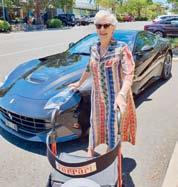
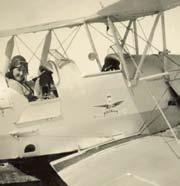
Julie McLaws surprises Olive Donaldson with a real Ferrari in 2020. Olive taking a flying lesson in 1946 in Teewah.
Noosa Council Mayor Clare Stewart said moving traffic onto the roundabout made room for the rest of works to be completed. “Work will now focus on the northern side of Cooroy-Noosa Road and converting the old section of Beckmans Road into a service road access for nearby residents,“ Cr Stewart said. “After that it’s the finishing touches, with landscaping, commissioning road lighting, line marking and signs. “I am looking forward to seeing this project finished, as I’m sure the community is too, and we thank everyone for their patience while this important project is completed.”
Sandy Bolton was thrilled that the first stage was nearing completion “As everyone is aware through the years of advocacy, this intersection was a well-documented accident hotspot,” Ms Bolton said. “To drive on the new roundabout this week was fabulous, and I congratulate Noosa Council in managing the build, and the Queensland Government, Minister Bailey and Department of Transport and Main Roads for the funding and support.
Olive was a true treasure
The long-awaited, new roundabout at the Cooroy-Noosa and Beckmans roads intersection has opened to one lane of traffic. Transport and Main Roads Minister Mark Bailey said the exciting milestone was an important step to transforming one of the region’s busiest local roads, as the final stages of construction on Stage 1 of the Tewantin Bypass“Thestarted.newroundabout has slowly taken shape next to the existing intersection as the project team managed challenging conditions,” Mr Bailey said. “The $9.81 million project has been funded by the Palaszczuk Government as part of the successful road stimulus package, so I’m pleased to see traffic now on the roundabout. “When complete, the full two lanes will be open to traffic. “Not only is this project improving safety and efficiency on the road, it will also help to get Queenslanders home safer and sooner by reducing congestion. “The on-road bike lanes and off-road pathways will also open when the project is finished, which is great news for local walkers andNoosacyclists.”MP
Ochre Medical Centre Noosa 24 Sunshine Beach 5343 1400 Dr Udaya Kumar has moved and is now practicing at Ochre Medical Centre Noosa, appointments now available.
Road, Noosa Heads P (07)
4 NOOSA TODAY Friday, 19 August, 2022 Our Services General practice • Childrens health • Men’s health • Women’s health • Accident clinic ATSI health • Chronic disease management • Minor procedures & surgery Skin cancer medicine & surgery • Sports medicine • Vaccinations Monday – Friday 8.30 - 5.00pm Download our Ochre Health App – to book, add to calendar, check in, see appointmentspast&moreorbookonlineat ochrehealth.com.au
Women’s Auxiliary life member, life subscriber to the RSL Sub Branch and well known community figure, Olive Joyce Donaldson, died on Tuesday 2 August.
The Noosa community has paid tribute to Tewantin treasure Olive Joyce Donaldson, who died on Tuesday 2 August at the age of 94. Olive was a well-loved community figure, known for her roles as a Women’s Auxiliary life member, life subscriber to the Tewantin Noosa RSL sub branch, and former Noosa Councillor. Olive was the daughter of William J Ross, one of the founders and a long term president of the RSL Sub Branch. She was a patron of the Women’s Auxiliary, having been involved with the organisation for more than 40 years. Olive enlisted in the RAAF for six months in 1951 and was also a Councillor at Noosa Council for many years. Olive’s first cousin, Trevor Clarey gave the eulogy at her funeral on Thursday 11 August at Drysdale Funeral Home, followed by her wake at the Diggers’ Bar. “What a legend,“ Trevor said. “What a Tewantin treasure she is. To describe Olive’s life, one has to be standing here in a coat of many colours. “Many of us gathered would have been taught swimming by Olive… Many gathered today would have been taught dancing and ballet in the old Tewantin RSL Hall. “Olive was a service lady, staunch monarchist and war widow. It is fair to say the magnificent Tewantin RSL Club of today would not exist but for Olive’s generosity.” Long-time Noosa resident Dean Harlow said Olive was a very close and dear friend. “I had known her since I was about five years old,“ Dean said. “I used to live beside her when she was in Ross’s Butcher Shop in Tewantin. It’s only in later years that I’ve become extremely close to her.“Gary Roper said Olive was a woman much ahead of her time. “She was a go-getter,“ Gary said. “When I first met her she was delivering meat out of the back of a utility. My family lived out at Sunshine Beach so they would home deliver meat to us. She was a smashing sort. When you were a young boy, you would take notice of these things and she was a very attractive and resourceful woman.“ He said Olive was a woman of the world. “She knew all about what was going on in the world and she had an opinion,“ Gary said. thoughtthanarea,coupleShe“Nomatterwhatyousay,itwon’tbeenough.wassovastthatyoucan’twrapitupinaofwords.InallmytimeintheNoosathere’snofemalethathasdonemoreOlive.Shewaslikealivingicon.Ialwaysshewasgoingtooutlivemeactually.“Shewentto94yearsandwasstillintelli-gentintheend.Ithinkshe’llgetthroughthepearlygatesnoworries.“GarysaidOliveshouldbeappreciatedforhercontributionstothearea.“ThereshouldbeastatueputupinthetownsomewhererecognisinghercontributiontoNoosa,“hesaid.
Picture: HERITAGE NOOSA
“Now all efforts are on securing funding for the remaining stages, with the business case expected to be finalised before end of year.”
By Abbey Cannan




·
By Abbey Cannan
·
By Abbey Cannan
·
· Deborah Campbell - Back on Track Counselling & Psychotherapy. The Wellbeing Forum is free of charge, with limited seats available. Morning tea and lunch will be provided. To register your attendance, visit trybooking.com/CBUHN
Tewantin Noosa RSL forum targets health and wellbeing
The Tewantin Noosa RSL Sub Branch will hold a free health and wellbeing forum at the Noosa Golf Course on Sunday 28 August from 9am to 4pm. The event is aimed at benefitting local veterans and emergency services personnel, where presenters will be discussing ways to increase health and wellbeing in different areas. The speakers will be looking at financial wellbeing, diet, psychological health, recovery science, and techniques to treat insomnia andTewantinyoga.
Noosa RSL Sub Branch president Michael Masters said the wellbeing of veterans and first responders was a priority to the sub branch. “This health and wellbeing forum will focus on positive, uplifting ways of enhancing veterans’ health – physically, emotionally and even financially,“ he said. Special guest, chef Matt Golinski will be giving a healthy cooking demonstration sourcing local, in season produce.
· Melissa Roberts - Nutrition & Wellness Coach.
Melissa Smith - Kookaburra Kids.
NOOSATODAY.COM.AU NEWS
Vietnam vet remembers
A Noosa veteran has recalled his chilling experience at war while paying respect to his mates who didn’t make it home forVietnamVeterans’ Day.Australians who served in the Vietnam War, including Tewantin Noosa Sub Branch’s Dean Harlow, have been honoured at ceremonies across Wide Bay on Thursday 18 August. Almost 60,000 Australians served in Vietnam, with 521 losing their lives in the war and some 3000 wounded. Noosa resident Dean Harlow spent 10 months in Vietnam from July 1969 to 7 May 1970, and recalled it as “quite a harrowing experience at times“. “I wasn’t in the regular army, I was conscripted into National Service,“ he said. “I was posted to an infantry battalion which was 6RAR and that’s where I spent my whole time in the country. “Like all the other Vietnam veterans, we were involved in a lot of skirmishes and contacts with the enemy. “Lives were lost and good mates went before our own eyes, which was a chilling experience, but we learnt a lot from that. “We learnt that life can be very short and you have to make the extreme most of it. “You go into it as a lad, I was only 20 years old, and you come out as a man after the experience.“Other fellows might have different tales to tell regarding the effect it had on them, but that was how I felt about it all. “The disappointing part was when we came home, all the mates you made were spread far and wide over the country, and unless they were close by, you lost contact. “Another one of the things that I’ll never forget is our involvement with the Vietnam War was to no end. When the Australians and Americans pulled out, it was just back to where it allMrstarted.“Harlow said Vietnam Veterans’ Day was a day of reflection for him. “It’s a day to remember the experiences, reflect upon memories, and give thanks to those who served,“ he said. “It’s the day where I stop and think of the close mates that I went through training with, and I came home, but they didn’t. I think of them on that day.“ Federal Wide Bay MP Llew O’Brien said the Vietnam War was the longest conflict in which Australians were involved in the 20th century. The first Australians arrived in South Vietnam in 1962 as Australian Army training team Vietnam members, leaving a decade later. “Vietnam \veterans are an important part of the ex-service community here in Wide Bay,“ he said. “We thank them for their service and courage and honour their bravery.” Department of Veterans Affairs data tells us 621 service pensioners, who likely have been in danger from hostile enemy forces, live in our Wide Bay communities with an average age of 75.62 years. “These veterans have had incredible experiences and have compelling recollections about their service and I encourage all Australians to engage with those who served in Vietnam in what were overwhelmingly challenging circumstances, and learn about our nation’s war history,“ Mr O’Brien said. Tewantin Noosa Sub Branch veteran Dean Harlow spent 10 months in Vietnam serving in the infantry battalion 6RAR.
Deborah Campbell from Back on Track Counselling & Psychotherapy said she would be discussing new research and therapy methods.“I’vebeen doing this work for over 30 years and the world of neuroscience is changing,“ Deborah said. “We know so much more about the neuroplasticity of the brain and it’s very exciting. “You’re never too old and it’s never too late to look at improving not just your wellbeing but your lifestyle as a whole. “I’m going to be sharing with the audience, when is a good time to reach out, ways of connecting with different therapists and other sources of support. “I want the participants on the day to be able to seek out and find the best matches for them in terms of improving their mental and overall wellbeing.“
Julie Bell - Moneycare Salvation Army.
· Lisa Abbott - Downward Dog Hot Yoga.
The IRC team: L to R Freya Simmonds, Chris Mallac, Nathan Carloss. Picture: ROB MACCOLL
Stephen Thompson - Livelife Pharmacy.
Friday, 19 August, 2022 NOOSA TODAY 5 12513105-NG38-21
Presenters include:
· Freya Simmonds & Chris Mallac - Integrated Rehab Centre.


The thought came back to me the other night when, following a glowing introduction, an old man with a shock of white hair, dressed in jeans and sandals, shuffled to the microphone at the front of the room and seemed to struggle with its operation. I use the term “old man” with the same sense of reverence used by Noel Pearson when he referred to Gough Whitlam, with the highest level of love and respect, as “this old man” in his beautiful eulogy. Being but a few years behind him, I don’t get to call Michael Leunig old with anything other than reverence. But in a way, the great cartoonist, poet and philosopher has always seen the world through the prism of a wisdom way beyond his years, and often completely beyond our comprehension. Except that it all made perfect sense, the duck, the moon, Mr Curly and Vasco Pyjama, the whole damn circus. It was the universe drawn small. As Barry Humphries wrote in 1975: “Leunig’s subjects are as ambitious as his technique is simple. World cataclysm, The Flood, loneliness, cruelty, lust and greed. Through these runs the vein of his compassion and humanity - his humour - illuminating many a darkling theme.” Or as the artist himself put it in 1992: “A cartoonist will create a standard figure - the Everyman, Everyperson image that becomes their messenger, their angel … In my case I create this character gradually over the years, this poor little wretched fool with big wide eyes, a bit of an innocent. He’s a bit genderless, a bit ageless — not quite human, more humanoid. A bit like a monkey or a foetus. But it’s a life spirit, you see, that people can trust. There’s no possible threat with this character. It can propose the most ridiculous things, or soft, touching little innocent things or it can be bawdy … People know it, know it can say anything and they always forgive it.”
Michael Leunig (second from left) with Write On The Coast directors Shelley Davidow, Paul Williams and Annie Grossman.
Picture: SUPPLIED The work unfolds.
12563782-AV33-22 NEWS NOOSATODAY.COM.AU
Proud
Michael Leunig, now 77, spoke to a packed room at the Peregian Beach Community House launch of the Write On The Coast literary“I’minstitute.sograteful to you all for coming and I hope I can make it worth your while.We’ll see. “I haven’t talked to a room of people for a long time but hopefully I’ll slip back into it. It’s been advertised as me talking to myself, but if at any time you want to proclaim something, go right Havingahead.”immediately won the audience with the humility of his cartoon humanoid, he then launches into his introduction to our region.“Ifirst came in 1963 when there wasn’t quite so much here. “I hitchhiked up with a friend, before all the development and it was so beautiful. I have great memories of travelling through Queensland with a rucksack on my back. “There was a family connection too, because my uncle was sent as a young man to Maroochydore to do his jungle warfare training before going off to New Guinea. I was curious about Uncle Cookie’s experience here because when I was little he’d sit with me and try to give me a little glass of beer while he told his stories.
By Phil Jarratt They say you should never meet your literary heroes for fear of disappointment, and I think there’s an element of truth in that, although the fault might lay with the expectations rather than the hero.
100% locally owned family business Serving Noosa and the Sunshine Coast. distributors of Luxaflex® – the trusted name in Australian Window Coverings since 1954. Handcrafted quality, custom made to measure
6 NOOSA TODAY Friday, 19 August, 2022 BLINDS | SHUTTERS | AWNINGS | CURTAINS VISIT THE SHOWROOM OR GIVE US A CALL TODAY! 7/1 Selkirk Drive, Noosaville QLD 4566 • Call (07) 5473 0356 • sereneblinds.luxaflex.com.au
Leunig gently rocks boat


Although he never moves from the general to the specific, Leunig seems to be referring to last year’s “cancellation” from The Age and Sydney Morning Herald over his “Tank Man” cartoon which they declined to publish. In it he juxtaposes the famous 1989 photo of the lone man defying the tanks on Tiananmen Square with a cartoon of a lone protestor in front of a loaded syringe. I don’t know if it was anti-vaxxer sentiment driving the cartoon or a more philosophical objection to mandates, but perhaps the bigger question is why ban it? It was by no means my favourite Leunig but it didn’t offend me as much as the racist undertones of some of the late, great Bill Leak’s work, which we were all given the opportunity to see andInjudge.Peregian Beach last Friday, Leunig softens the mood by placing himself in the context of history.“[When I started] it was the ‘60s and people were into rocking the boat. Now I think it’s rocking too violently, and I just try to steady it.”
In a moment he will delight us with his skill at “making marks” on paper, but first he offers a poem from his canon: Artist leave the world of art, Pack your goodies on a cart, Duck out through some tiny hole, Slip away and save your soul. Leave no footprints, don’t look back, Take the dark and dirty track. Cross the border, cross your heart: Freedom from the world of art. I love that. The morning after, still pondering other parts of Leunig’s “muddle”, I pick up the Saturday Sydney Morning Herald, as is my habit, and go straight to the back page of the Spectrum section to see if the old man still has it. I find a beautifully-drawn cartoon of the prime minister kissing a baby, then dropping it and running after being informed that it had been named after Julian Assange. Cruel, coarse, caustic, hilarious – I laughed like a Yes,drain.Leunig still has it, in spades. Leunig talks and makes marks at the same time. The work unfolds. Work in progress. Picture: ANNIE GROSSMAN
Friday, 19 August, 2022 NOOSA TODAY 7 Over55sCountryClub 35 Walter Hay Drive, Noosaville, Qld Contact Brian for an inspection today! FREECALL 1800 461 505 VILLA 2 $POA — Great Location 2 2 1 VILLA 100 $POA — Spacious Home 3 2 2 For Further Information Talk to Brian Williams 0427 333 499 NOSTAMPDUTY NOOSADOMAIN COUNTRYCLUB noosadomain.com.au • Eastern facing villa • Fully appointed kitchen • Open plan living area • Ducted reverse cycle a/c • Spacious dining • Landscaped backyard • 3 Generous bedrooms • Stone bench tops • Spacious living zones • Ample storage • Fully appointed kitchen • Portico & outdoor blinds • Reassurance for yourself and family • Independent, secure living • Great social connectivity • Private yet social & caring • Two onsite swimming pools • Gym & exercise area • Bowling green • Pet friendly • Onsite managers • Country Club bus • Resort style facilities • 24/7 emergency call system 12562857-DL33-22 NOOSATODAY.COM.AU NEWS “I always remember how enjoyable those times with him were. So I feel an affinity with thisIt’sarea.”typical of Leunig’s body of work over more than half a century that he uses a tiny splinter of childhood memory to conjure an image that fascinates but leaves you a little puzzled as to its true meaning. Over the long ramble that he later refers to as “my muddled talk”, he does this often, leaving a partly-formed idea suspended above us, just out of reach. Born in East Melbourne in June 1945, he was the son of a slaughterman, the second of fiveHischildren.website bio contends he “was educated at Footscray North Primary School and Maribyrnong High School, plus at various factory gates, street corners, kitchen tables, paddocks, rubbish tips, quarries, loopholes, puddles and abattoirs in Melbourne’s industrial western suburbs”, finding creative inspiration from “Enid Blyton, Arthur Mee, Phantom comics, The Book of Common Prayer, J.D. Salinger, Spike Milligan, Bruce Petty, Martin Sharp, Private Eye magazine and The Beatles”. Following his dad into the meatworks straight from school, Leunig is politicised by receiving his military conscription papers in 1965.We’re not sure how he dodged that bullet, but he finds fame – and later adulation – as a political cartoonist on the game-changing Nation Review at the start of the ‘70s. As a casual contributor to the Review who never missed an issue, I was amused, fascinated and puzzled by Leunig’s cartoons, never having seen anything quite like them. I remain, more or less, in this state. The list of Michael Leunig’s awards and achievements is very, very long, but since the cartoonist says he’s forgotten most of them because they are meaningless, let’s just mention that the National Trust declared him an “Australian living treasure” in 1999, which seems appropriate.“Iwanted to talk about the role of the artist in difficult times,” he said. “Actually, life is a difficult time. It’s not easy. As well as the honorary doctorates and so on, I’ve also been cancelled quite considerably. “It’s a big thing to have spent your whole working life offering things to your culture in a quite experimental way, but I think I’ve done it in good faith, made a few mistakes, offended a few people, not deliberately. That’s the nature of political cartooning, but you hurt people without intending to, and so you have to become more thoughtful about your own ideas.”


From page 1 Sophia, who had to fight a 60kg girl in the open teams division at the nationals, added, “The bigger girls are a bit slower, so it’s not too bad. You just have to watch your head. But I’ve never had a black eye or broken a bone.” Although it wasn’t her initial choice – she just tagged along with twin brother Seb and his mates - Sophia began her martial arts training at the age of six and started training seriously in Shotokan Karate in 2017 with classes at her school, St Andrews Anglican College, conducted by Bryan Dukas’s Karate Noosa. This led to her training at the Noosa dojo, and her passion developed from there.
Karate champion Sophia Innis. Pictures: ROB MACCOLL Sophia and her gold. Sophia with dad Norm Innis and coach Bryan Dukas.
Readers of Ron Lane’s sports columns in NoosaToday will be familiar with the profound influence that South African sensei Bryan Dukas has had on the Noosa karate community since his arrival six years ago, and Sophia is the perfect example. He said, “The big change came when she started training here in the dojo with the bulk of our students. That was a real turning point, and as she’s matured she’s taken it more seriously. “I was expecting big things from her at the nationals, to be honest. “We were hoping for a semi-final finish but when she got into the finals and beat the current Australian champion it was incredible. She’s extremely dedicated, never complains about long training sessions. “As a coach, I value the fact that she never questions what I’m teaching her, she trusts the process. In the coming couple of years I think she’ll be a fixture on the Australian team.” But the speedy pocket rocket is by no means a one-trick pony. “I have other sports too,” she said. “I surf and I’m good at running but I choose to do“I’mkarate.aperfectionist and karate is such a hard sport to learn that it challenges me all the time. Everything is really hard. “If you train every day there’s still so much you have to work on. Kumite is what I’m better at. That’s sparring for points. “Kata is harder because it’s about movements that you have to perform, like a dance. Kumite just came naturally to me. I guess in my spirit I’m a fighter.”
Having recently passed her first (of three) brown belt gradings, Sophia is hoping to achieve the coveted black belt grading next year, while also representing at the Shotokan World Championships in Tokyo in November 2023, and the Oceanic Championships and World Youth Games in 2024. Will there still be time for school? Sophia says: “Of course. It would be cool to go professional when I get older, but I want to study the science of the body when I go to university and maybe I’d become a karate instructor at the same time. I think I can combine my sporting and academic life.” I don’t doubt that for a second. As dad Norm Innis, a former chair of Surfing Australia says: “She trains four or five days a week, and if it was up to her, that would probably be seven days a week, twice a day. “But she never neglects her school work. There’s no pressure on her, she’s just doing what she loves.”
8 NOOSA TODAY Friday, 19 August, 2022 NEW RUGS AND HOMEWARES ARRIVING WEEKLY! 168 Eumundi Rd, Noosaville 4566 OPEN MON to FRI: 8:30am - 4:30pm | SAT: 8:30am - 2pm | 5442 4899 noosarugs@gmail.com | noosarugs.com.au | noosarugs NOOSA MATS & RUGS 12562412-JC32-22 PRINCIPAL TOUR 3:30 - 4:30pm Monday, 5 September 2022 at the G Block Undercover AreaTelephone:ExpectationsNurturingFamilyFocusSafe&HighTheArtsQualityTeachingEnvironmentalEducation(07)5472 6333 | 22 Caplick Way, Eumundi Qld 4562 admin@eumundiss.eq.edu.au | www.eumundiss.eq.edu.au An opportunity for parents of any year level to join us. Come and see what is great about our school! 12562963-AI33-2212557491-RC33-22 NEWS NOOSATODAY.COM.AU Noosa’s karate kid rules


Friday, 19 August, 2022 NOOSA TODAY 9 More vehicles in stock now and arriving daily, scan code for full list of current vehicles 2017 MITSUBISHI ASX LS AUTOMATIC 2WD URBAN SUV • Reverse Camera & Sensors • Bluetooth Connectivity • Cruise Control & Climate Control • 18” Alloys & Foglights ONLY 75,000km $22,990 DRIVE AWAY 2018 KIA SPORTAGE SI AUTOMATIC 2WD SUV • One Owner Ex-Lease • Bluetooth/App Connect for Nav • Reverse Camera & much more • Log books & History ONLY 112,000km $23,990 DRIVE AWAY 2016 TOYOTA LANDCRUISER PRADO GX AUTOMATIC TURBO DIESEL 4WD SUV • One Owner Ex-Gov’t • Reverse Camera/Tow-Bar • Alloy Bull-Bar & much more • Log books & History ONLY 79,000km $53,990 DRIVE AWAY 2017/18 PEUGEOT 308 ACTIVE AUTOMATIC TURBO HATCH • Navigation & Connectivity • Surround View Camera & Sensors • Cruise Control & Dual-Zone Climate • Collision Mitigation • Factory Warranty to 2023 ONLY 84,000km $19,590 DRIVE AWAY 2015 MAHINDRA PIK-UP DUAL CAB MANUAL TURBO DIESEL 4WD CAB CHASSIS • One Owner • Tow-Bar • Bull-Bar/Alloy drop-side Tray & much more • Log books & History ONLY 100,000km $22,990 DRIVE AWAY 2018 NISSAN X-TRAIL ST AUTOMATIC 2WD SUV • Proximity Locking & Push-Button Start • Reverse Camera & Sensors • Bluetooth & Cruise Control • Alloy Wheels & LED Running Lights ONLY 94,000km $25,990 DRIVE AWAY 2019 MITSUBISHI ECLIPSE CROSS LS AUTOMATIC TURBO 2WD SUV • One Owner/Ex-Corporate Fleet • Bluetooth/App Connect for Nav • Reverse Camera/Sensors & much more • Log books & History ONLY 49,000km $29,990 DRIVE AWAY 2019/20 HYUNDAI KONA ELECTRIC ELITE AUTOMATIC ELECTRIC 2WD SUV • Extended Range 557km per Charge • Navigation & Reverse Camera • Factory Battery Warranty to 2028! • Never pay for petrol again! ONLY 24,000km $54,990 DRIVE AWAY 2018 MITSUBISHI TRITON GLS TURBO DIESEL AUTOMATIC 4X4 DUALCAB • Smartphone Connectivity • Reverse Camera & Sensors • Dual-Zone Climate & Cruise Control • Alloy Wheels & LED Running Lights ONLY 103,000km $39,990 DRIVE AWAY 2016 TOYOTA HIACE LONG WHEELBASE AUTOMATIC VAN • One Owner Ex-Gov’t • Alloy Nudge-Bar with LED Light-Bar • Reverse Sensors & much more • Log books & History ONLY 115,000km $36,990 DRIVE AWAY 2017 VOLVO V40 D2 MOMENTUM AUTOMATIC TURBO DIESEL HATCHBACK • One Owner Ex-Lease • Bluetooth/Sat Nav • Reverse Camera/Dual Climate Control & much more • Log books & History ONLY 66,000km $28,990 DRIVE AWAY TOP DOLLAR PAID FOR YOUR CAR If you have a good vehicle you wish to sell we are always buying and will pay the best money for good cars! We pay more but sell for less than the big dealerships, come in for an obligation free valuation today 2018 TOYOTA COROLLA HYBRID AUTOMATIC HATCHBACK • One Owner Ex-Lease • Bluetooth/Sat Nav • Reverse Camera & much more • Log books & History ONLY 53,000km $29,990 DRIVE AWAY 12562840-AI33-22


Sunshine Coast Police are investigating recent social media reports that a number of dogs have died recently from possibly ingesting poison type substances after visiting the Point Cartwright and Buddina beach areas. Investigations are being undertaken into these reports and it is important that if you believe your dog has been affected that this matter is reported to police. Some symptoms that may indicate that your dog has ingested something poisonous include: · Vomiting. · Diarrhoea, possibly bloody.
· Baits or harmful substances (Animal Care and Protection Act 2001) states that a person must not, with the intention of injuring or killing an animal administer or feed the animal a substance the person is harmful or poisonous to the animal or lay a bait. Maximum penalty of 300 penalty units or 1 yearDogimprisonment.ownersareencouraged to report any incidents to police and if you have any information about the incidents to contact Policelink on 131 444 or Crime Stoppers on 1800 333 000. The RSPCA can also be contacted on 1300ANIMAL.
NEWS NOOSATODAY.COM.AU
Replacement of the Wahpunga Lane Bridge in Kin Kin is now completed, seven years after Noosa Council identified the need for it, and the bridge reopened to motorists last week. This is the second hinterland bridge to be replaced under the Bridges Renewal Program funded by the Australian Government and NoosaTheCouncil.Australian Government contributed $2 million to this project, which was matched by CouncilCouncilfunding.obtained funding for the bridge in 2019 and a two-lane bridge was mooted originally, but with increased costs, a one-lane bridge was Accordingconstructed.toRegional Development, Local Government and Territories Minister Kristy McBain, the Bridges Renewal Program funds the upgrade and replacement of bridges across Australia, to enhance access and improve travel through local communities. “This Hinterland bridges project will support local communities and holiday makers to travel in greater safety, and assist businesses to send and receive their products and services more efficiently,” Ms McBain said. “Another completed project means more families, tourists and other drivers getting home faster and safer.” Noosa Mayor Clare Stewart said more than $4.2 million had been spent on hinterland bridge infrastructure under the program, with the replacement of both the Tablelands Bridge B in Cooran andWahpunga Lane Bridge in Kin Kin.“Bridges are key pieces of infrastructure that keep our hinterland communities moving and we are really pleased to have the Wahpunga Lane Bridge reopen to motorists,” Cr Stewart“Constructionsaid. at this site was significantly impacted by the February and May flood events, extending the construction window beyond what was originally scheduled, and we thank the community for their patience with the additional period of traffic diversion. “The great news is that our hinterland communities have a new concrete bridge which is safer with guard rails along the edge, has improved road alignment, reduced maintenance costs and a design life of 100 years. The new bridge has an unrestricted weight limit, unlike its timber predecessor, making it accessible for the first time, for much larger trucks.“Work is also underway on a third hinterland bridge in Cooroy and Council expects the Cooroy Belli Creek Road Bridge replacement to be completed in late October, pending favourable weather and construction conditions,“ Cr Stewart said. “We again thank residents for their patience whilst this bridge is replaced with a new wider two-lane concrete bridge with added guard rails to provide better safety for motorists.”
Replacement bridge open
10 NOOSA TODAY Friday, 19 August, 2022 Call 5489 8022 or visit noosafamilydental.com.au Find us in Noosa Civic Professional Suites • New patients welcome • Caring, honest, family dentistry • Emergency appointments available daily • Call or book online for an appointment ... welcomes Dr Catriona MacRae OUR FAMILY IS GROWING Catriona is excited to return to Noosaville and ages,enjoysNoosapartbecomeoftheFamilyDentalteam.Catrionatreatingpatientsofallespeciallychildrenandisparticularlyinterestedinpreventativedentistry. 12563520-JC33-2212562200-JW33-22
· Cruelty offences (Animal Care and Protection Act 2001) which include killing an animal in an inhumane, causing it not to die quickly or to die in unreasonable pain. Maximum penalties of 2000 penalty units or 3 years’ imprisonment.
Cr Jurisevic, Mayor Stewart, Cr Finzel and Cr Wilkie at Wahpunga Lane Bridge, Kin Kin.
· High temperature. · Lethargic. · Rapid breathing. If investigations determine that these were intentional acts, there are a number of offences that relate to this matter which include the following: · Serious animal cruelty (s242 Criminal Code 1899) a person who, with the intention of inflicting severe pain or suffering, unlawfully kills, or causes serious injury or prolonged suffering to, an animal commits a crime. Maximum penalty—7 years’ imprisonment.
Sunshine Coast dog owners on alert for poisonings


Friday, 19 August, 2022 NOOSA TODAY 11 ZIPTRAKS20%OFF SPRING, CRANK AND MOTORISED. UP TO 8 METERS WIDE ON EXCLUSIVE MODEL. ALL 20%OFFCURTAINSFABRICS INCLUDES, SHEERS, LININGS, BLOCKOUTS AND LATEST DRAPERY UPSHUTTERSTO35%OFF Our “Vivid” shutter range 20 Year Warranty. ROLLER BLINDS UPTO 35% OFF Our Home Point range of fabrics. STAINLESSSCREENS10%OFF All doors and windows in standard colours. RETRACTABLE / OPERABLE ROOF SYSTEMS 20% OFF Wide range of colours, locally made REAL PRICES, REAL DISCOUNTS, TOP QUALITY PRODUCTS, PACKAGE DEAL DISCOUNTS COVERING THE COAST FROM GYMPIE TO CALOUNDRA. 100% OCALLY OWNED & OPERATED sales@noosascreens.com.au | www.noosascreens.com.au/noosa | “Locally owned and operated and manufactured” We promise to beat any competitors price on the condition that you provide us with a copy of the competitors so that we can verify that the product being offered is in fact identical. Installers fee of $55 applies to all orders under $1,000.00. Offer ends on the 31st August 2022 Call Our Showroom On Phone 5327 noosascreens.com.au/noosa3405SCREENS & CURTAINS QUALITY DESIGN | LOCAL MANUFACTURE AND SERVICE QUALITY DESIGN | LOCAL MANUFACTURE AND SERVICE Quality by Design SCREENS & CURTAINS 12561198-MS31-22


Ozharvest celebrates eight years and 2million meals.
Noosa Salvation Army Corps officer Matt Gluyas said they were so grateful for the wonderful work OzHarvest did to gather and distribute food to community centres across coast.“While we may live in paradise, we recognise there is so much pain among our community,“ he said. “The increasing financial pressures have seen more and more locals finding themselves accessing food support from the Salvos. It’s only because of the incredible work that OzHarvest does that we are able to support families at their point of need. We are indeed betterMicheletogether.“added that while food rescue was its core business, equally important was community outreach and education to advocate for reducing food waste in the home and in our community.“Wearealso engaged in other key education, outreach and advocacy programs that focus on changing attitudes and behaviours around food and food waste,“ she said. “These include school and community outreach, cooking programs and workshops, training around nutrition and healthy eating. We are always looking for community members to join our team of volunteers to help us not only get food to those most in need but to help us get that key message across - that wasting food wastes everything and we are each part of the solution to reducing food waste at home and in our community.“
12 NOOSA TODAY Friday, 19 August, 2022 anytimewithoutpriornotice.Otherrestrictionsmayapply.Seabournreservestherighttocorrecterrors.TobereadinconjunctionwiththeSeabournPassagecontractwww.seabourn.comwhichguestswillbeboundby.Whilstallinformaselectsailingsthatareoutsideofstandardpenaltyperiods.ReducedDepositamountsvarybyclassofship:OceanFleetSeabournOdyssey,SeabournSojourn,SeabournQuest,SeabournEncoreandSeabournOvationreduceddepositof*ALLALLPRICESSTATEDAREPERGUESTBASEDONDOUBLEOCCUPANCYANDPROMOCODENB.FARESINCLUDECRUISEFARE,TAXES,FEES&PORTEXPENSES.PricesareinAustraliandollars.Pricescorrectasof14Aug2022.tion SE256.3 Med terranean Sea PIRAEUS Haifa Kuşadasi Livadi Pátmos Rhodes Fethiye Paphos Mykonos Naousa Kos Marmaris Antalya Limassol GREECE & EASTERN MEDITERRANEAN 6 August 2023 & 3 September 2023 14 days | Seabourn Encore Roundtrip Piraeus (Athens) Veranda Suite From $9,199* pp twin share Price s based on 6 Aug 2023 Gregor & Lewis Bespoke Travel 4/16 Lanyana Way, NoosaHeadsP:5447 4666 E:noosa@gregorlewis.com au W: www.gregorlewis com.au Gregor & Lewis’s Kristen Cahill has recently returned from cruising Greece & Turkey with Seabourn. She would love to share her experience and book you on the great deal mentioned here. Seabourn’s Sail Away Event! When you book right now, you’ll receive a Complimentary Two-Category Veranda Suite Upgrade with a Reduced Deposit from $1000 per guest. Start planning your unforgettable Seabourn Moment. 12559638-DL18-22 NEWS NOOSATODAY.COM.AU Meals are harvesting hope OzHarvest began operations on the Sunshine Coast in August 2013 with a yellow army of three volunteers. In that first month the Chapter collected and redistributed 150kg of quality surplus food to three local charities - Noosa Salvation Army, Coolum Salvation Army andYou Turn. On this eight-year anniversary and more than 100 volunteers later, they proudly celebrate a major achievement - delivering more than two million meals to local community members in OzHarvestneed.Sunshine Coast and Gympie larlyoverremarkable14,000kgcharities,thanpartnerovertheGympie,fooddaysCoolumcatchmentthosefrom700thatfounderandcoordinatorMicheleLipnernotedsincestartingoperationsin2014,closetotonnesofsurplusfoodhadbeendivertedlandfillanddeliveredtoagencieshelpingwhoarefoodinsecure.“Ourbeginningswereveryhumble-aareathatincorporatedNoosatoandthreefooddonors.Inthoseearlyweredirected,onaverage,about400kgofeachmonthfromlandfill.“CurrentlywearelocatedasfarnorthasdownthecoasttoCaloundraandintoSunshineCoasthinterland.Weworkwith32fooddonors,includingournationalWoolworths,andprovidefoodtomore40localpartnersincludingchurches,schoolsandcommunitycentre.“Wenowrescueandredistributeaboutofsurplusfoodpermonth.Thisisaachievement.“Michelesaidaddressingfoodinsecuritythepastcoupleofyearshadbeenparticu-challenging.TheinitialandongoingimpactofCo-vid,therecentfloods,housingandeconomicstress,supplychainissuesandlocalcropdam-agefrominclementweatherhaveallimpactedondemandforOzHarvestservicesacrosstheregion.WiththeonsetofCovid,demandalmostdoubledovernight,shesaid.
While those numbers have dropped OzHarvest is still responding to demand levels that are 40 per cent above pre-Covid days with no relief in “Evensight.with these challenges, we are so proud that we have been able to support our community and distribute our food to those who are most in need,“ she said. “Whether in terms of our food relief efforts after Covid or our response to Gympie after the February floods to our ongoing food rescue activities with our partner agencies, we are out there seven days a week providing a valuable service to our community.“



Friday, 19 August, 2022 NOOSA TODAY 13 12562850-JC33-22


14 NOOSA TODAY ENGINEERED TIMBER WE OFFER A FULL RANGE OF FLOORING STYLE SOLUTIONS TO SUIT ALL BUDGETS. DESIGNED TO INSPIRE AND REFLECT THE STUNNING COAST LIFESTYLE. 12559228-AI29-22 NEWS NOOSATODAY.COM.AU
Angus Innes at Noosa Parks Association Friday forum.
By Margie Maccoll Barrister Angus Innes has for years combined his work in environmental law with his love of birds to curb, through legislation, the enormous toll of killing and trapping of migratory birds.Noosa is a destination point for migratory shorebirds on the East Asian-Australasian Flyway route flown annually to and from their breeding grounds above the Arctic Circle in Alaska and Siberia. In his talk at the last Noosa Parks Association Friday forum, Mr Innes spoke briefly about the killing and trapping of birds on that flyway, particularly in China and Indonesia, for food and the keeping of songbirds in cages. But his emphasis was on the carnage experienced annually on the East African-Eurasian Flyway with many of the 37 species of birds in the migration not only contending with natural predators and weather events but meeting their fate at the hands of humans in southern Mediterranean and northern African areas.
Hope for migratory birds
Migratory birds.
Mr Innes said when Italy passed laws making hunting of the birds more difficult, hunting holidays were established in Africa, attracting the hunters there. A variety of methods are used to capture the birds, Mr Innes said. They are shot, often just forManysport.are caught in nets, attracted to them with bird calls and decoy birds. Others are caught with snares and spring-loaded traps and some die horribly when glue is applied to treeFrombranches.2015 to 2020, Mr Innes was a member of theWildlife CrimeWorking Group of the European Network of Prosecutors for the Environment (ENPE) whose major priority was the vast illegal killing, trapping and trading of migratory birds (IKB) in the Mediterranean Region, the heart of the African-Eurasian FlyWay. Managing a team of prosecutors of environmental crime for the English and Welsh Environment Agency, he represented the working group at international conferences on the subject in Egypt, Malta and Crete and was awarded the MBE in 2011 for services “to the prevention of environmental crime”. Mr Innes said the Convention on the Conservation of Migratory Species of Wild Animals (CMS) had been working with countries through a UN treaty to address legislation, enforcement, publicity and education in an attempt to promote action at all levels. “The biggest challenge is needed at a social level,“ he “Theresaid.iscarnage but there is hope. There has been improvement. There are enforcement officers. Broadly speaking there’s an increasing environmental awareness.“
He said a document, called The Killing, that was compiled from research and statistics, to provide scientific validation to the issue, estimated conservative reports of 25 million birds killed each year with the countries contributing predominantly to the deaths being Italy, Malta, Cyprus and Egypt. Twenty million of those were songbirds, small birds, he said. To paint a picture of the situation, you have to look at the motives and methods and cultural traditions behind the killing, he said. “Hunting is ingrained in people. It’s hard for people in the country to detach themselves from“Ifit.the majority of people think nothing is wrong, it’s difficult to enforce legislation against it.“ In some countries including Cyprus and parts of France, dishes made from species of small birds are highly prized and fetch high prices in restaurants. In other countries, killing raptors is considered a rite of passage for a male and, in others, the keeping of songbirds in cages is common practice.
Mr Innes said concerns were raised by Birdlife International in the 20th century in response to environmentalists taking direct action through protests and agitation. The issue was taken up by the International Union for the Conservation of Nature (IUCN) and legislation was created and enforced to varying degrees in various countries.


HOT 91’s Nugget & Al will be broadcasting from 9am – 12 noon Lions Park, Gympie Terrace, Noosaville nyrc.com.au | (07) 5449 8602
Saturday, August 20 from 8am 8am to 9:30 Try rowing; Chance for people who may be interested in learning to row to come and meet members, learn what’s involved and give it a try. 9am to 12 noon HOT 91’s Nugget & Al broadcasting live. 9:30 to 10:30 Mini Club Regatta. Members regatta. 10:30 to 12:30 Try Sailing; Chance for people who may be interested in learning to sail to come and meet members, learn what’s involved and give it a try.
1.00pm Ferry vs Rowers Race from Noosa Boathouse to the Yacht Club. 1.30 to 2.30 Sailability demonstration. 2.30 to 4.30 Dinghy regatta. Mini races. DAY PROGRAM Wing foiling demonstration. On display for day will be Ergs (Rowing Machines) available for people to try. Rowers on hand to answer any questions. FREE Sausage Sizzle, FREE learn to row, FREE learn to sail, WIN bar & bistro vouchers, WIN sailing vouchers and WIN rowing vouchers. FREE lollies, drinks and games for the kids. Live music at 2pm with COL from Late for Woodstock PLUS… 12561601-JW33-22
NOOSA YACHT & ROWING CLUB OPEN DAY CELEBRATING 25 YEARS
Friday, 19 August, 2022 NOOSA TODAY 15


16 NOOSA TODAY Friday, 19 August, 2022 NO KIDS | NO CASINOS | VOTED WORLD’S BEST 138 747 VIKING.COM OR SEE YOUR LOCAL VIKING AGENT *Conditions apply. Prices are per person, in Australian dollars, based on double occupancy, subject to availability, includes all advertised discounts and correct at time of printing. Guests are required to be fully vaccinated against COVID-19 at time of travel. Secrets of South East Asia based on 18 March 2023 departure for Veranda Stateroom. Mediterranean Odyssey based on 02 July 2023 departure. Viking Homelands based on 03 May 2024 departure. These offers are valid on new bookings made between 05 August 2022 and 31 October 2022 unless sold out prior. For full terms and conditions visit viking.com SAVE $8,000 per couple MEDITERRANEAN ODYSSEY or vice versa 13 DAYS | 10 GUIDED TOURS | 6 COUNTRIES MAR – OCT 2023; APR – AUG 2024 in Veranda stateroom SAVE $3,400 per couple VIKING HOMELANDS STOCKHOLM – BERGEN or vice versa 15 DAYS | 11 GUIDED TOURS | 6 COUNTRIES SET SAIL APR – AUG 2023; MAY – AUG 2024 From $9,495pp in Veranda stateroom SAVE $3,000 per couple Stockholm B altic Sea North Sea Copenhagen Ålborg Mariehamn Stavanger Eidfjord BergenOslo Berlin (Warnemünde) Bornholm (Rønne) Gdańsk NORWAY SWEDEN FINLAND GERMANYPOLAND DENMARK CruiseOvernight in Port AdriaticSea Venice Dubrovnik IonianSea NaplesSplitFlorence/Pisa(Civitavecchia)Rome (Kérkyra)CorfuStromboli Volcano Strait Messinaof CROATIA GREECE N OvernightCruise in Port Semarang Java (Benoa)Bali INDONESIA ThGulfofailand SouthChinaSea JavaSea Ho Chi Minh City Koh(Nathon)SamuiSingapore THAILAND SINGAPORE VIETNAM 25TH ANNIVERSARY SALE Save up to $8,000 per couple on 2023 and 2024 ocean voyages BARCELONA, SPAIN ENJOY,IT’SALLINCLUDED • Private veranda stateroom with king-size bed • Guided excursion in each port of call • Onboard meals and beverages; including wine, beer and soft drinks with lunch and dinner • Specialty coffee, tea and bottled water • Complimentary 24-hour room service • Choice of 8 dining options — no charge for alternative dining venues • Culture Curriculum: Lectures and performances of music, art, dance, cooking and history • Access to LivNordic Spa facilities including sauna, hydrotherapy pool and Snow Grotto • All onboard gratuities, port charges and taxes • Unlimited Wi-Fi • No credit card surcharges • Industry-leading Health & Safety Program 12562869-AI33-22


Friday, 19 August, 2022 NOOSA TODAY 17 Award Winning Builder 0431 227 586 | csconstruction.com.au 12563270-AV34-22 NOOSATODAY.COM.AU MASTER BUILDER
The Noosa building company has been on the Sunshine Coast since 2002 and is owned and operated by the man himself, Chris Smith. His work attracts both local, interstate and overseas clientele, seeking holiday properties and permanent residences. During the recent Master Builders Awards held at the Novotel Sunshine Coast Resort, Chris collected the coveted BUSSQ Building Super President’s Award for their Tinbeerwah project, Australis, as well as the Langs Building Supplies trophy for Best Residential Bathroom, and Best Residential Pool for Kareela in Little Cove. “I feel incredibly honoured to win the President’s Award for quality craftsmanship, and I can show how talented the carpenters are that I have working for me,“ Chris said. “I’d also like to thank all the tradesmen that contributed to the building of this house and to the architect David Teeland from Sealand Architects for entrusting me to bring his vision to reality.“Thewinning project, Australis, is arranged in a series of interconnected pavilions that follow the natural topography, connecting the home to the beautiful native forest and surrounding landscape. The family home boasts big, sliding, glass doors and windows that open onto the greenery.The builders have used spotted gum wood on all cladding, decks, and exposed beams and flooring, for its bushfire resistant characteristics.A timber theme is carried throughout with blackbutt feature ceilings and solid oak joinery aligned with polished concrete floors. “Exceptional quality and attention to detail,“ the judges’ boasted. “This incredible home exudes rustic charm and is a credit to the team of exceptional trades that helped in bringing this vision to life.” Chris joined the building trade as an apprentice when he was 15 years old and has never looked back, gaining invaluable knowledge and experience in the last 30 years. As with any business, it takes time to build strong relationships, which Chris has managed to achieve with a number of architects and clients around the Sunshine Coast. “I now focus on building architecturally designed houses in and around the Sunshine Coast with client and builder relationship as a huge focus,“ Chris said. He believes that his relationship with architects has enabled him to succeed in a small town, working hard to ensure the initial vision is delivered with innovative materials, fixtures and fittings, installed with absolute attention to detail.Liaising with architects, engineers, building designers and interior designers, Chris and his team are able to build strong and trusting relationships with clients providing the highest standard of service throughout the construction process, adhering to timeframes and budgets.Every member of the team has vast experience in the delivery of extraordinary homes. “Our incredible team is infused with enthusiasm, positivity and a can-do attitude that makes working with us an enjoyable and rewarding experience,“ Chris said. “We believe in trust, integrity and customer service. Nothing is more important to us than the relationship we have with our team and clients.“Formore information, visit csconstruction. com.au or call 0431 227 586.
Australis is arranged in a series of interconnected pavilions that follow the natural topography.
Chris Smith Construction won a hat-trick at this year’s Master Builders Awards. A timber theme is carried throughout with blackbutt feature ceilings.
By Abbey Cannan His premium craftsmanship has set him apart, scoring Chris Smith Construction a hat-trick at this year’s Master Builders Sunshine Coast 2022 Housing & Construction Awards.
Hat-trick for Chris Smith


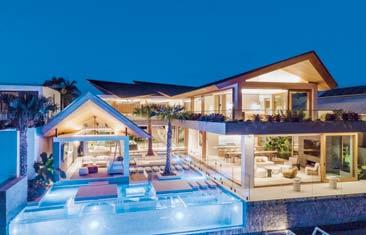
Noosa builder celebrates By Abbey Cannan Attention to detail is what scored a Noosa family business the top awards at this year’s Master Builders Sunshine Coast 2022 Housing & Construction Awards. At the heart of the company is Mick Devlin and his wife Sally, who started Braeden Constructions more than 25 years ago in Victoria. They moved to Noosa in 2001 with their children and set about making a mark on the local building industry. With endless prestigious awards under their belt and a sought-after reputation for quality, value and excellence, it’s safe to say the team has made its mark. In 2010, Braeden Constructions was the first Sunshine Coast builder to ever win the Master Builders Association’s National Builder of theTheyYear.went on to win the Master Builders Association Sunshine Coast House of the Year in 2009, 2010 and 2019. They have also won overall Home of the Year for Queensland in 2010, and in 2019. “We are very experienced at building custom homes,“ Braeden Constructions owner Mick Devlin said. That confidence comes from 38 years of experience in the construction industry. This year, Braeden Constructions won the Master Builders House of the Year over $2m dollars and then went on to win the prestigious 2022 Sunshine Coast House of the Year for a Noosa Heads project. Capturing waterfront views with an outdoor living feel, the Modern Thai House epitomises the Sunshine Coast lifestyle in a modern three-level home with timber highlights. “We would particularly like to thank our local tradesmen and suppliers who worked to such a high standard on the project,“ Sally said.“Chris Clout Design did an amazing job of designing the home. Chris and his team always amaze me with their designs that make the best use of the site, and set the benchmark of design possibilities. Also SCG Engineers from Noosa, as they are an integral part of the build. “Our guys who work for Braeden Constructions as carpenters Riley, Lachlan, Jarred, Matt and Jackson. They are the backbone of our company!“Andof course the wonderful owners who placed so much trust in Braeden to build the home during a very trying time of Covid when they were not able to visit the site regularly.“ Mick said the judging of the awards is based on quality, technical difficulty and value for money.“These are things that we always aim to deliver,” he said. “I enjoy building and enjoy the challenge of building these homes. Every job we do is different and has its own unique challenges and designs to “Workingtackle.closely, openly and honestly from an early stage with the design team and the clients is the best way to get a successful result.” He holds a reputation as a builder of the highest quality and integrity, but Mick’s attention to detail may have gone out the window when faced with making an on-stage awards speech.“Iforgot to mention my wife Sally the other night at the awards speeches. We are a great team. Without her, l would be lost,” Mick said. “Sally and I run the business together and we only take on a certain amount of jobs so that we’re in control of everything. We’re a small family business and we have great relationships with our clients because they trust us.“Braeden Constructions specialises in custom builds in the Sunshine Coast region and is renowned for making the absolute most of the natural assets of every block of land. Whether it’s a beach home looking at waves crashing on the headland, or a rural setting taking in the rolling landscape, Braeden designs can help you achieve your best outcome. For more information visit braedenconstructions.com.au or call Mick on 0418505117.
Braeden Constructions specialises in custom builds in the Sunshine Coast region.
18 NOOSA TODAY Friday, 19 August, 2022 Multi WinningAwardBuilders 0418 505 177 www.braedenconstructions.com.au Quality, Value, Experience, Local 12563698-ET34-22 MASTER BUILDER NOOSATODAY.COM.AU
Braeden Constructions won the 2022 Master Builders Sunshine Coast House of the Year for the Modern Thai House at Noosa Heads. The Modern Thai House epitomises the Sunshine Coast lifestyle in a modern threelevel home with timber highlights.




tionscations,home,andWithearlierworkextendingtotheopenplanlivingdesignsoftheNorthQueenslandTeewahBeachandotherbeachsidelo-Paulcanofferexperienceandsugges-tobenefityourhomeusingaspectsofthe natural environment and views. Where climate encourages the home environment to invite the natural breeze and incorporate outdoor entertaining areas; Paul has the qualifications and experience to provide decking solutions, landscaped areas, swimming pool construction and support for all your building requirements. For more information visit paulsaunderson.com.auTogetin touch, call 0412 282 270 or email saundo2@bigpond.com
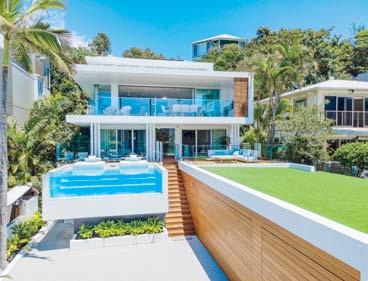
The Belmore Terrace project was carried out on an original 1989 dated home in Sunshine Beach.The master bedroom and ensuite takes stage at the highest level. The inspiring Chris Clout Design caters for 473 square metres of renovation.
In the much sought-after location of Sunshine Beach, an enviable view ensured the original dwelling could really showcase the 2022 age of modern beachside living. The inspiring Chris Clout Design caters for 473 square meters of renovation and new living areas providing the perfect setting for a buildWithchallenge.construction commencing only weeks prior to the on-set of Covid lockdowns in March 2020, labour hire was isolated within the existing staff to undertake demolition and carpentry works, ensuring the health, safety and continuation of the project. In undertaking renovation and rebuild, the scope of works demanded an unusual approach commencing from the top storey down to the ground floor enabling crane access. The master bedroom and ensuite takes stage at the highest level, showcasing an elegant bath weighing in at 150kg. This bathroom feature required a revisit to engineering, and with consultation, reinforced beams were foundThenecessary.improved living space at the second level offers a heartfelt welcome as the warmth of the timber floors balance, effortlessly with the cool clean lines of the oversized stone kitchen benchtop. This space is illuminated by natural light that bounces through from the ocean to the patio area showcasing the craftsmanship and care taken on this build project.
Top gong for superb reno
The sophisticated suspended, glass panel swimming pool and grassed rooftop completes the project demanding attention while offering an elite setting for the gathering of family and friends. As a member of the Master Builders, Paul has proven his ability and integrity as an established builder on the Sunshine Coast, receiving awards also in 2006, 2007 and 2009.
Friday, 19 August, 2022 NOOSA TODAY 19 PAUL SAUNDERSON BUILDING BUILDING HOMES THAT REFLECT THE SUNSHINE COAST LIFESTYLE 0412 282 paulsaunderson.com.au270 AWARD WINNING BUILDER WITH 40 PLUS YEARS EXPERIENCE IN THE INDUSTRY u New Homes u Renovations u Unit Renovations u Unit and ConstructionDuplex u Extensions u Swimming ConstructionPool u Landscaping 12563991-SN33-22 NOOSATODAY.COM.AU MASTER BUILDER
By Abbey Cannan With more than 30 years of providing quality services on the Sunshine Coast, Paul Saunderson Builders are no stranger to winning awards for their builds. At the recent Master Builders Sunshine Coast 2022 Housing & Construction Awards, the team took out the Home Renovation/Remodelling Project over $1 million Award for an incredible renovation in Sunshine Beach. The BelmoreTerrace project was carried out on an original 1989 home, set over three levels and transformed into a dazzling creation. “Our thanks to the homeowners who were a pleasure to work with,“ Paul Saunderson said. “Thanks to Chris Clout Design and our network of trade professionals who have been loyal and committed throughout the project. “Our team is honoured to have been recognised for the craftsmanship and commitment to the trade in this project.“




20 NOOSA TODAY Friday, 19 August, 2022 12562610-HC33-22 *Health Fund must cover at least half of the total amount to receive gap free dental. *Must be a minimum 6 months since your last check up. Please mention this offer when booking your appointment. NO GAP - Cleaning, Check up & X-rays for all Private Health Fund Members of (07) 5455 3577 Shop 5/1 Lanyana Way Noosa Heads QLD 4567 12563486-AV33-22
Morton cares
The Morton Dental team prides themselves on providing quality dental care to their valued Noosa and surrounds clientele.
Dental HealthWeek is a reminder of the importance of our teeth, with LoveYour Teeth being the theme for 2022.
The Dance Centre Peregian Springs (TDCPS) is an internationally recognised school and has brought Queensland and Peregian Springs to the attention of worldwide audiences.This annual showcase for their elite vocational students at The J Theatre will demonstrate their talents in classical ballet and contemporary style works. In Part 2, the students will be joined by ex-student and guest artist Alfie Shacklock, a pre-professional student appearing by kind permission of The Royal Ballet School London in Act 2 of the romantic ballet. Giselle. Alfie has also danced at the Royal Opera House in Covent garden. TDCPS has had winners and finalists of the Alana Haines Awards in New Zealand, finalists in the Fonteyn Awards (worldwide), multiple finalists and winners of the Jacqueline Morland Awards QLD, finalists and winners of BPAC Scholarships, finalists in The Australian Ballet Inaugural Scholarships.This year they have six vocational students with the Interstate and Invitee Programme of The Australian Ballet School and six students are in the Associate Programme of the Queensland Ballet. Performance Group students dance at community events such as aged care centres, schools and kindergartens, eisteddfods, an annual showcase at The J Theatre and the end of year concert. TDCPS annual Royal Academy of Dance results for recreational and vocational students are a majority of high distinction marks and their recreational students enjoy classes in classical ballet, lyrical and dance acro, contemporary release technique, strengthening, conditioning and stretching. TDCPS has been at the forefront of building a creative, happy, caring and family focused community at the Commercial Centre PeregianForSprings.tickets to the show on Monday 29 August at 6pm visit thej.com.au/stars-oftomorrow/ High achieving student Evie Wilson has scholarships to the Bolshoi Ballet, Royal Ballet School, Huston Ballet, and Dutch National Ballet. The students will be joined by ex-student and guest artist Alfie Shacklock.
There are numerous dentists in Noosa but Morton Dental would like to think that their friendly, relaxed, yet professional approach makes them stand out from the rest. Whether you are needing fillings, crowns, veneers or dentures, they are here to help. Their in-chair whitening is very popular andTheyaffordable.arecurrently offering a great special on preventative treatment and would love to hear from you to discuss these specials. For enquiries, call Lisa on 5455 3577.
New practice manager Lisa and senior dental assistant Amy beside the beautiful Jordyn.
Thismaintenance.isachievedby making sure to have your check up, clean and fluoride on a regular six monthly basis. Morton Dental has recently made some changes in the surgery and have had some experienced new staff come on board.
The Stars of tomorrow dance at The J Theatre
Love that they are strong and allow you to chew, love that your smile is bright, and you are proud to show it. We all hope to keep our teeth for life and as we all know, prevention is better than cure. That is why the team at Morton Dental encourages patients to keep up their general oral health
BUSINESS NOOSATODAY.COM.AU





Picture: TRAVIS MACFARLENE
By Abbey Cannan Noosa’s newest seafood restaurant is topnotch in supporting local fisheries and farmers to bring fresh produce to the table. Notch Bar and Restaurant can be found in the heart of the iconic, slightly Bohemian, Real Dining Precinct in Noosa Junction. Owner Kirk Dalgrin said the fit-out team recently finished the restaurant nicely with playful, modern touches. “The modern touches blend seamlessly, setting a contemporary scene for our food and beverage team’s outstanding selection of food and drinks, while presenting a whole new way of enjoying the Noosa dining experience,“ Kirk said. The Notch family is committed to buying and serving the best produce and seafood without compromising on quality or sustainability.“Theteam here are becoming more aware that sustainable fishing is at the very core of marine conservation,“ Kirk said. “If the oceans die, we die. I am really passionate about our children’s natural environment.“Thisisthe right way to progress, and we would love for you to join us by celebrating our local hospitality and produce.“
Notch Bar and Restaurant can be found in the heart of the iconic, slightly Bohemian, Real Dining Precinct in Noosa Junction.
Friday, 19 August, 2022 NOOSA TODAY 21 @Littleseedtheatrecompany September 23 & 24 The J Noosa Tickets available www.little-seed.com.auat: 12561025-DL33-22 NOTCH BAR AND RESTAURANT SERVING LOCAL SEAFOOD 14 Sunshine Beach Rd, Noosa Heads | (07) 5324 0090 notchnoosa.com LUNCH | DINNER | DRINKS 12562888-SN34-22
Heavy on local talent, Fame is headlined by Evie McDonald and Naire McDonald who are sharing the lead of Carmen Diaz, a headstrong, passionate performer who describes herself as “three times the talent and 10 times the fun.”
Seafood goes up a Notch
Little Seed’s production of Fame The Musical is the perfect excuse to don some neon, slip on your leg warmers and blast back to the ’80s. Fame The Musical will be on show at The J on Friday 23 and Saturday 24 September. “Fame is a vibrant, fun musical with a little bit of an edge to it,“ Little Seed’s creative director Johanna Wallace said. “I love that it gives our teenage performers the opportunity to play roles that are their own ages.“The musical also echoes the hopes and dreams of many of our own students who have the lights of Broadway in their sights and also dream of making it big.“
Notch is a perfect meeting spot and party venue, serving Signature Coffee and Noosa Tea, a great wine list, tap beer, artisan sandwiches and seafood lunches, freshly baked goods, Sunday breakfasts and nice evening meals. “Our premium seafood, without the sky high prices, is made possible as the chef deals directly with the local fishermen,“ Kirk“Wesaid.have Tin Can Bay prawns, spanner crab, scallops, Mooloolaba octopus, local reef oysters and Pelagic fish beautifully prepared and cooked. “I recommend everyone try the local calamari, served simply grilled with garlic butter.“Notch Noosa sends a big thank you to their fit-out crew, staff and suppliers. “We want to thank Hightide Electrical, R G Strategic Luke the Plumber, Brightworks, Sunrise Creative, Social Tap, Embassy Stone, Coverings, Lee Fishery, Galeru Farm, Mooloolaba River Fisheries, Tagigan Rd Produce, Noosa Seafoods, Markris Foods, Davo the Fisherman, Noosa Reds, Heads of Noosa, Diablo, Coopers Brewery, Gathered Wine, and Noosa Tea,“ Kirk said. Notch Bar and Restaurant acknowledges and pays respect to the past, present and future custodians and elders, and the continuation of cultural, spiritual and educational practices of First Nations People. To book a table visit notchnoosa.com or call 07 5324 0090. Find Notch Bar and Restaurant at 14 Sunshine Beach Rd, Noosa Heads.
NOOSATODAY.COM.AU BUSINESS PROFILE
Fame brings ‘80s to The J
Playing opposite Carmen is Jack Miller as Schlomo Metzenbaum, a quiet classical violinist who is setting up a rock band. Schlomo comes from a musical background but is fed up of the expectations to do well and wishes to rebel.Fordirector Johanna Wallace, musical director Connie Groves and choreographer Ellie Oster, it’s a labour of love and hard work fuelled by joy to work with the young and the talented.“Weare immensely proud of our cast and cannot wait to share their work with the local community. We have no doubt that some among our cast will reach for the heights of professional careers in the arts,” Ms Wallace said. Little Seed Theatre Company is proud to present Fame the Musical on Friday 23 and Saturday 24 September at 2pm and 7.30pm. For tickets, visit little-seed.com.au Fame featuring Nathan Habermas, Jack Miller, Evie McDonald, Mackenzie Lentern and Hannah Borham.


It’s comforting that over 10 seasons of grim discoveries (aka dead bodies), our titular protagonist hasn’t changed much, especially in her appearance. After countless murder cases, Detective Vera Stanhope (Brenda Blethyn, pictured) could be forgiven for being haunted by the horrors of her small, windswept town, turning up to work in track pants and gumboots. Instead, her olive-green trench coat and bucket hat live on. It’s one of the ways the charming series stays true to Ann Cleeves’ novels. In the season’s penultimate instalment, Vera investigates when the body of a medic, Dr Lucy Yo (Joyce Veheary), is found in the back of a burnt-out car. 9-1-1: lone star Seven, Monday, 9pm There’s nothing like a spot of therapy to really get to the nitty-gritty of a character. From the creators of AmericanHorrorStoryand Glee this fast-paced procedural serves up drama from a Texan fire, police and ambulance department, but lately an emotional blaze has been smoking inside firefighter Owen (Rob Lowe, pictured). This week, the troubled veteran of emergency situations finally opens up about his childhood, uncovering a hidden fear that is tested when the 126 gets a call involving a clown at a young boy’s birthday party. Grace (Sierra McClain) reaches out to a co-worker after a devastating emergency call.
22 NOOSA TODAY Friday, 19 August, 2022 Friday, August 19 ABC TV (2) SBS (3) SEVEN (7) TEN (5, 1)NINE (8, 9) 6.00 News Breakfast. 9.00 ABC News Mornings. 10.00 Q+A. (R) 11.05 Extraordinary Escapes. (PG, R) 12.00 ABC News At Noon. 1.00 The School That Tried To End Racism. (PG, R) 2.00 Grantchester. (Mv, R) 3.00 Escape From The City. (R) 4.00 Think Tank. (R) 5.00 Anh’s Brush With Fame. (PG, R) 5.30 Hard Quiz. (PG, R) 6.00 WorldWatch. 9.00 Babies: Their Wonderful World. (PG) 10.10 22 Kids And Counting. 11.00 Secret Cities. (PG) 12.00 BBC News At Ten. 12.30 ABC World News Tonight With David Muir. 1.00 PBS NewsHour. 2.00 Aliquam Dive Stories. (PG) 3.00 NITV News: Nula. 3.30 Destination Flavour China Bitesize. (R) 3.40 The Cook Up With Adam Liaw. (PG, R) 4.10 The Queen Mother. (R) 5.05 Jeopardy! (PG) 5.30 Letters And Numbers. (R) 6.00 Sunrise. 9.00 The Morning Show. (PG) 11.30 Seven Morning News. 12.00 MOVIE: Jesse Stone: Death In Paradise. (2006, Masv, R) 2.00 Criminal Confessions: Killer Friends. (Malv, R) 3.00 The Chase. (R) 4.00 Seven News At 4. 5.00 The Chase Australia. 6.00 Today. 9.00 Today Extra. (PG) 11.30 Morning News. 12.00 MOVIE: My Birthday Romance. (2020, PGa) 2.00 Pointless. (PG) 3.00 Tipping Point. (PG) 4.00 Afternoon News. 4.30 Millionaire Hot Seat. (R) 5.30 WIN News. 6.00 Entertainment Tonight. (R) 6.30 Good Chef Bad Chef. (R) 7.00 Judge Judy. (PG, R) 7.30 The Bold And The Beautiful. (R) 8.00 10 News First: Breakfast. 8.30 Studio 10. (PG) 12.00 Dr Phil. (PGa) 1.00 The Living Room. (R) 2.00 Entertainment Tonight. 2.30 Food Trail: South Africa. (R) 3.00 Judge Judy. (PG, R) 3.30 My Market Kitchen. 4.00 Everyday Gourmet With Justine Schofield. 4.30 The Bold And The Beautiful. 5.00 10 News First. 6.00 The Drum. 7.00 ABC News. 7.30 Gardening Australia. (Return) Tammy Huynh meets home hydroponic growers. 8.30 Baptiste. (Return, Malv) Julien Baptiste travels to Hungary to help the British Ambassador, Emma Chambers, find her missing family. 9.30 Doc Martin. (PG, R) Martin’s career hangs in the balance. 10.20 ABC Late News. 10.35 Shaun Micallef’s MAD AS HELL. (M, R) 11.05 Aftertaste. (Ml, R) 11.35 Rage. (MA15+adhlnsv) 6.00 The Cook Up With Adam Liaw. (PG) 6.30 SBS World News. 7.35 Lost Treasures Of Ancient Rome: Rome’s Sunken Secrets. (PG) 8.30 Ross Kemp: Shipwreck Treasure Hunter: Kaiser’s Sunken Fleet, The. (M) Part 2 of 4. 9.25 World’s Most Scenic Railway Journeys: Scotland. (PGa, R) Takes a look at the Highland Railway. 10.15 SBS World News Late. 10.45 Das Boot. (Mlnv, R) 12.55 Going Places With Ernie Dingo. (PGa, R) 2.25 Cycling. UCI World Tour. La Vuelta. Stage 1. 4.50 Destination Flavour Down Under Bitesize. (R) 5.00 NHK World English News Morning. 5.30 ANC Philippines The World Tonight. 6.00 Seven Local News. 6.30 Seven News. 7.00 Better Homes And Gardens. Joh, Adam and Charlie create a family backyard. 8.30 MOVIE: Father Of The Bride Part II. (1995, G, R) A father, already traumatised by his daughter’s marriage, is further shocked by news of her pregnancy. Steve Martin, Diane Keaton, Martin Short. 10.45 To Be Advised. 12.50 Harry’s Practice. (R) 1.20 Travel Oz. (PG, R) 2.00 Home Shopping. (R) 4.00 Million Dollar Minute. (R) 5.00 NBC Today. 6.00 Nine News. 7.00 A Current Affair. 7.30 Rugby League. NRL. Round 23. Brisbane Broncos v Melbourne Storm. From Suncorp Stadium, Brisbane. 9.55 Golden Point. A wrap-up of the Brisbane Broncos versus Melbourne Storm match, with NRL news and analysis. 10.35 MOVIE: Snowpiercer. (2013, MA15+adlv, R) Train passengers lead an uprising. Chris Evans, Jamie Bell. 1.05 Postcards. (PG, R) 1.30 TV Shop: Home Shopping. (R) 4.00 Take Two. (R) 4.30 Global Shop. (R) 5.00 TV Shop: Home Shopping. (R) 5.30 Skippy The Bush Kangaroo. (R) 6.30 The Project. The hosts and guest panellists take a look at the day’s news, events and hot topics. 7.30 The Living Room. Amanda Keller visits Robertson’s Big Potato. Dr Chris Brown and Miguel Maestre visit a buffalo farm. 8.30 To Be Advised. 10.30 Just For Laughs Australia. (Mals, R) Stand-up comedy performances featuring Sam Taunton, Jeff Green and Skit Box. 11.30 The Project. (R) A look at the day’s news and events. 12.30 The Late Show With Stephen Colbert. (PG) Late-night talk show. 1.30 Home Shopping. (R) 4.30 Infomercials. (PG, R) CONSUMER ADVICE (P) Pre-school (C) Children (PG) Parental Guidance Recommended (M) Mature Audiences (MA15+) Mature Audiences Only (AV15+) Extreme Adult Violence (R) Repeat (a) Adult themes (d) Drug references (h) Horror (s) Sex references (l) Language (m) Medical procedures (n) Nudity (v) Violence. 6am WorldWatch. 8.40 Abandoned. 9.30 Shortland St. 11.00 Beerland. Noon Tattoo Age. 12.55 Secrets Of America’s Shadow Government. 1.50 Planet A. 2.20 Huang’s World. 3.15 Feeding The Scrum. 3.45 ABC World News Tonight With David Muir. 4.15 PBS News. 5.15 Shortland St. 5.45 The Joy Of Painting With Bob Ross. 6.15 Forged In Fire. 7.05 Jeopardy! 7.35 8 Out Of 10 Cats Does Countdown. 8.30 Hoarders. 9.20 Adam Looking For Eve. (Return) 11.05 American Gods. 12.15am MOVIE: Scarface. (1983, MA15+) 3.25 NHK World English News. 5.00 Al Jazeera Newshour. 6am Home Shopping. 6.30 Travel Oz. 8.00 Harry’s Practice. 8.30 Million Dollar Minute. 9.30 NBC Today. Noon Escape To The Country. 1.00 Million Dollar Minute. 2.00 To Be Advised. 2.30 Sons And Daughters. 4.30 Emmerdale. 5.00 Coronation Street. 5.30 Escape To The Country. 6.30 Bargain Hunt. 7.30 Border Security: International. 8.30 Escape To The Country. 9.30 Billy Connolly: Great American Trail. 10.40 My Impossible House. 11.45 Border Security: Australia’s Front Line. 12.45am The Fine Art Auction. 4.00 To Be Advised. 5.30 Home Shopping. 6am TV Shop: Home Shopping. 7.00 Creflo Dollar Ministries. 7.30 TV Shop: Home Shopping. 10.30 Pointless. 11.30 My Favorite Martian. Noon Days Of Our Lives. 12.55 The Young And The Restless. 1.50 World’s Greatest Journeys. 2.50 Explore. 3.00 Antiques Roadshow. 3.30 MOVIE: Treasure Island. (1972) 5.30 Murder, She Wrote. 6.30 Antiques Roadshow. 7.30 Country House Hunters Australia. 8.30 MOVIE: The Green Mile. (1999, MA15+) 12.05am My Favorite Martian. 12.35 Antiques Roadshow. 1.00 TV Shop: Home Shopping. 5.00 Joyce Meyer. 5.30 TV Shop: Home Shopping. 6am Home Shopping. 6.30 Infomercials. 8.00 The Doctors. 9.00 Escape Fishing With ET. 9.30 Reel Action. 10.00 MacGyver. Noon The Code. 1.00 Blue Bloods. 3.00 Bondi Rescue. 3.30 The Love Boat. 4.30 Star Trek: The Next Generation. 5.30 MacGyver. 7.30 NCIS. 8.30 Blue Bloods. 10.20 Evil. 11.15 Star Trek: Discovery. 12.15am Home Shopping. 1.15 Infomercials. 1.45 Home Shopping. 2.15 The Code. 3.10 MacGyver. 5.00 The Doctors. 10 BOLD (53, 12) 9GEM (81, 92)7TWO (72)SBS VICELAND (31)6am Children’s Programs. 5.20pm School Of Roars. 5.30 Tish Tash. 5.35 PJ Masks. 5.50 Peppa Pig. 5.55 Nella The Princess Knight. 6.05 The Adventures Of Paddington. 6.20 Bluey. 6.25 Peter Rabbit. 6.45 Andy’s Prehistoric Adv. 7.00 Andy And The Band. 7.15 Obki. 7.20 Bluey. 7.30 Spicks And Specks. 8.00 Hard Quiz. 8.30 MOVIE: Booksmart. (2019, MA15+) 10.10 Doctor Who. 10.55 QI. 11.25 Red Dwarf. 11.55 Ross Noble: Stand Up Series. 12.25am GameFace. 1.40 ABC News Update. 1.45 Close. 5.00 Twirlywoos. 5.15 Hoot Hoot Go! 5.20 Pocoyo. 5.30 Guess How Much I Love You. 5.40 Late Programs. ABC TV PLUS (22)
PICK OF THE WEEK In the picture: Rachel Griffiths chats with acclaimed artist John Olsen for Great SouthernLandscapes Great southern landscapes ABC TV, Tuesday, 8pm Presenter Rachel Griffiths may be famous as a world-class actor, but the TotalControlstar is in her element in this art lovers’ series. After delving into Arthur Streeton’s work inspired by the Hawkesbury River and Clarice Beckett’s portrayal of Melbourne’s Luna Park, this week, Griffiths dons an akubra for a journey to the stunningly beautiful and other-worldly Kati Thanda-Lake Eyre in South Australia. She searches for the spot where John Olsen drew inspiration for his 1975 painting and has a lively chat with the artist in his home. On the banks of the lake, Griffiths also gets to know Martha Watts and Colleen Strangways, elders of the Arabana people.
6am Children’s Programs. Noon The Bionic Woman. 1.00 Buck Rogers. 2.00 Baywatch. 3.00 The Nanny. 3.30 3rd Rock From The Sun. 4.00 That ’70s Show. 4.30 Everybody Loves Raymond. 5.30 MOVIE: Uptown Girls. (2003, PG) 7.30 MOVIE: Mean Girls. (2004, M) 9.30 MOVIE: The DUFF. (2015, M) 11.30 Up All Night. Midnight Camp Getaway. 1.00 Southern Charm. 2.20 Surfing Australia TV. 2.50 Mike Tyson Mysteries. 3.00 Bakugan: Evolutions. 3.30 Ninjago: Masters Of Spinjitzu. 4.00 TV Shop: Home Shopping. 5.00 Pokémon The Series: Sun & Moon. 5.30 Rainbow Rangers. 6am ITM Fishing Show: Best Of The Best. 7.00 Merv Hughes Fishing. 7.30 Creek To Coast. 8.00 America’s Game: The Super Bowl Champions. 9.00 NFL 100 Greatest. 10.00 Pawn Stars. 11.00 American Pickers. Noon Demolition NZ. 1.00 Crazy On A Plane. 2.00 American Restoration. 3.00 Timbersports. 3.30 Pawn Stars UK. 4.00 Pawn Stars South Africa. 4.30 Aussie Lobster Men. 5.30 Storage Wars. 6.00 American Pickers. 7.00 AFL: Friday Night Countdown. 7.30 Football. AFL. Round 23. Brisbane Lions v Melbourne. 10.30 AFL Post-Game Show. 11.00 Late Programs. 9GO! (82, 93)6am The Fifth Element. Continued. (1997, PG) 8.00 Akira Kurosawa’s Dreams. (1990, PG, Japanese) 10.15 Transcendence. (2014, M) 12.25pm Maggie. (2015, M) 2.15 Jetsons: The Movie. (1990) 3.45 Bill. (2015, PG) 5.30 Capricorn One. (1978, PG) 7.45 Timecop. (1994, M) 9.30 Twelve Monkeys. (1995, M) 11.55 Marjorie Prime. (2017, M) 1.45am Just A Breath Away. (2018, M, French) 3.20 By The Grace Of God. (2018, M, French) 5.50 Capricorn One. (1978, PG) 6am The Late Show With Stephen Colbert. 7.00 Friends. 7.30 Seinfeld. 9.00 Becker. 10.00 The Middle. 11.30 The King Of Queens. 12.30pm Frasier. 1.30 Seinfeld. 3.00 The King Of Queens. 4.00 Becker. 5.00 Frasier. 6.00 Friends. 8.00 The Big Bang Theory. 9.30 Mom. 10.30 Charmed. 11.30 Frasier. Midnight Home Shopping. 12.30 Infomercials. 1.00 Home Shopping. 1.30 The Late Show With Stephen Colbert. 2.30 The Late Late Show With James Corden. 3.30 Becker. 4.30 Home Shopping. 5.30 Infomercials. 10 PEACH (52, 11) 7MATE (74)SBS WORLD MOVIES (32)6am Morning Programs. 9.10 Bushwhacked! 9.35 The Magic Canoe. 10.00 Undiscovered Vistas. 10.50 Road Open. 11.00 Going Places. Noon MOVIE: Jedda. (1955, PG) 1.30 Boy Nomad. 2.00 Shortland St. 2.30 Red Chef Revival. 3.00 Bushwhacked! 3.25 The Magic Canoe. 3.50 Wolf Joe. 4.00 Aussie Bush Tales. 4.10 Grace Beside Me. 4.35 Spartakus And The Sun Beneath The Sea. 5.00 Our Stories. 5.30 NITV News: Nula. 6.00 Bamay. 6.40 Undiscovered Vistas. 7.30 MOVIE: Frog Dreaming. (1986, PG) 9.10 Bedtime Stories. 9.20 Through The Wormhole With Morgan Freeman. 10.10 On The Road. 11.10 Late Programs. N ITV (34)
The Guide QLD
Vera ABC TV, Sunday, 8.30pm
World’s Most scenic railWay Journeys SBS, Saturday, 7.35pm Who would have thought that a humble yet beautiful doco series celebrating spectacular train journeys around the globe could be must-watch TV in 2022? Besides the fact that most of the world has been cooped up at home for years, there’s something meditative about drinking in the scenery from a train from destinations dotted across the world map. Tonight, a vintage luxury train, the NorthernBelle, chugs from Chester to Cardiff featuring the spectacular Cefn Viaduct, a choir, a castle and old steam engines. It’s wonderfully cathartic.



6.10 Extraordinary Escapes: Jessica Hynes. (PG, R) Hosted by Sandi Toksvig.
10.15
9.50 MOVIE: Here Out West. (2022, Malv, R) A baby is kidnapped from a western Sydney hospital by a desperate grandmother. Genevieve Lemon, Mia-Lore Bayeh, Christian Ravello. 11.30 Rage. (MA15+adhlnsv) Guest programmed by Orville Peck. 6.30 SBS World News. 7.35 World’s Most Scenic Railway Journeys: Welsh Borders. (PG) Narrated by Bill Nighy. 8.30 Secrets Of The Tower Of London. (PGav, R) Follows Yeoman Warders as they empty the Tower of London of tourists at the end of the day. 9.25 Gone Fishing With Mortimer & Whitehouse. (M) Paul Whitehouse and Bob Mortimer head to the River Tay in Scotland. 10.30 Cycling. UCI World Tour. La Vuelta. Stage 2. 1.50 Destination Flavour Down Under Bitesize. (R) 2.00 Unknown Amazon. (PGaw, R) 3.40 Food Safari Earth. (R) 4.40 Destination Flavour Down Under Bitesize. (R) 5.00 NHK World English News Morning. 5.15 France 24 Feature. 5.30 ANC Philippines The World Tonight. 6.00 Seven News. 7.00 Border Security: Australia’s Front Line. (PG, R) Officers know a male passenger is lying to them, they just need to work out what he is hiding.
8.20 Endeavour. (Mav, R) Part 3 of 3. When Endeavour is called to investigate what at first appears to be a freak accident at an all-female college, he uncovers a potential link with a series of incidents that he becomes convinced are foul play.
6am WorldWatch. 8.40 Abandoned. 9.30 Shortland St. 10.00 Basketball. WNBA. Playoffs. Noon Nirvanna. 1.25 Fubar: The Age Of The Computer. 1.50 Noisey. 2.40 Over The Black Dot. 3.10 Yokayi Footy. 4.05 WorldWatch. 5.30 Gone Fishing With Mortimer & Whitehouse. (Return) 6.35 Domino Masters. 7.30 Impossible Engineering. 8.30 Biography: KISStory. 10.00 Hoarders. 11.40 Late Programs. 6am Home Shopping. 8.30 Travel Oz. 10.00 Australia: The Story Of Us. 11.00 Weekender. 11.30 Creek To Coast. Noon Auction Squad. 2.00 Bargain Hunt. 3.00 Escape To The Country. 5.00 To Be Advised. 5.30 The Amazing Homemakers. 6.30 The Yorkshire Vet. 8.30 Escape To The Country. 11.30 The Yorkshire Vet. 12.30am Escape To The Country. 1.30 The Fine Art Auction. 4.30 Late Programs.
MOVIE: X-Men: Days Of Future Past. (2014, Mlv, R) With both mutants and humans facing extinction, Wolverine goes back in time to save the day. Hugh Jackman, James McAvoy. 12.45 Motor Racing. Supercars Championship. Round 9. Sandown SuperSprint. Day 1. Highlights. 2.00 Home Shopping. (R) 4.00 It’s Academic. (R) 5.00 Million Dollar Minute. (R) 6.00 Nine News Saturday. 7.00 Rugby League. NRL. Round 23. Sydney Roosters v Wests Tigers. 9.30 NRL Saturday Night Footy Post-Match. Post-match coverage and analysis of the NRL game between Sydney Roosters and Wests Tigers. 9.50 MOVIE: Be Cool. (2005, Mlv, R) A former mobster-turned-movie producer tires of the Hollywood scene and decides to enter the music industry. John Travolta, Uma Thurman, Vince Vaughn. 12.15 A+E After Dark. (Mm, R) A patient in emergency becomes agitated. 1.10 Tipping Point. (PG, R) Hosted by Ben Shephard. 2.00 TV Shop: Home Shopping. (R) 4.30 Global Shop. (R) Home shopping. 5.00 TV Shop: Home Shopping. (R) 5.30 Skippy The Bush Kangaroo. (R) 6.00 Luxury Escapes. Cameron Daddo heads to Queensland. 6.30 Wildlife Rescue Australia. (PGm) A bearded dragon undergoes surgery. 7.30 The Dog House Australia. (PGa, R) Follow the staff at the Animal Welfare League as they try to find the right fit for Keira the kelpie. 9.30 Ambulance. (Mad, R) Two emergency services cross over when a burglar breaks his leg fleeing the scene of the crime. The air ambulance attends to an urgent case involving a school student who may have fallen off a bridge. 10.30 To Be Advised. 11.30 NCIS. (M, R) The team investigates a petty officer’s murder. 1.30 Home Shopping. (R) 3.30 Infomercials. (PG, R) 5.00 Hour Of Power.
7.00 ABC News. Takes a look at today’s top stories and events as they unfold, with comprehensive analysis and reporting.
Friday,
NOOSA TODAY 23 Need A Massage? Call Now! 1800 440 440 Stop suffering from stress, tension, headaches, anxiety, stiff muscles and fatigue. · Enjoy a luxurious, professional full body massage in the comfort of your own home · Advanced optical sensors combined with intelligent bio-mapping for a customised massage · Hi-tech intelligent robotic hands deliver a 3D massage to melt away stress & tension · Multiple massage types including Shiatsu, Swedish & Thai Foot Massage *Call for Terms & Conditions Worth $249.00 TEBO Neck Massager Free 12562856-DL33-22
Saturday, August 20 ABC TV (2) SBS (3) SEVEN (7) 6.00 Rage. (PG) 7.00 Weekend Breakfast. 9.00 Rage. (PG) 12.00 ABC News At Noon. 12.30 Vera. (PG, R) 2.00 Midsomer Murders. (PG, R) 3.30 Great Southern Landscapes. (PG, R) 4.00 Spicks And Specks. (PG, R) 4.45 Landline. (R) 5.15 David ConquestAttenborough’sOfTheSkies.(R) 6.00 WorldWatch. 9.00 Cook Up With Adam Liaw Bitesize. (R) 9.10 Love Your Garden. (Final, PG) 10.05 Great Canal Journeys. (PG) 11.00 Paul O’Grady: For The Love Of Dogs. (PG) 12.00 WorldWatch. 2.00 Countdown To Qatar 2022. 3.05 Secrets Of The Angkor Empire. (PGaw, R) 4.00 Trail Towns. (PG, R) 4.30 Cycling. UCI World Tour. La Vuelta. Stage 1. Highlights. 5.30 Hell On Earth: WWII. (PG) 6.00 NBC Today. 7.00 Weekend Sunrise. 10.00 The Morning Show: Weekend. (PG) 12.00 Horse Racing. Winx Stakes Days. McMahon’s Dairy McKenzie Stakes. Saturday Raceday. 5.00 Seven News At 5. 5.30 Creek To Coast. A look at the latest in outdoor activities. 6.00 Getaway. (PG, R) 6.30 A Current Affair. (R) 7.00 Weekend Today. 10.00 Today Extra: Saturday. (PG) 12.00 Everything Outdoors. (R) 12.30 Animal Embassy. (R) 1.00 Arctic Vets. (PGm) 1.30 Driving Test. (PGl, R) 2.00 The Block. (PGl, R) 4.30 The Garden Gurus. (Return) 5.00 News: First At Five. 5.30 Getaway. (PG) 6am Morning Programs. 8.30 What’s Up Down Under. (PGa, R) 9.00 Australia By Design: Architecture. (PG, R) 9.30 St10. (PG) 12.00 My Market Kitchen. (R) 12.30 Living Room. (R) 1.30 Healthy Homes Aust. 2.00 Buy To Build. (Return) 2.30 Luxury Escapes. (R) 3.00 Everyday Gourmet. (R) 3.30 Farm To Fork. (PG, R) 4.00 Taste Of Aust. (R) 4.30 Food Trail: South Africa. 5.00 News.
7.30 Grantchester. (Mv) There is a murder at a local old folks’ home and two of its elderly residents have also gone missing.
6am Capricorn One. Continued. (1978, PG) 8.05 The Way. (2010, PG) 10.25 Canola. (2016, M, Korean) 12.35pm Just A Breath Away. (2018, M, French) 2.10 Walking On Sunshine. (2014, PG) 4.00 Storm Boy. (1976, PG) 5.35 Golden Kingdom. (2015, PG, Burmese) 7.30 Seven Years In Tibet. (1997) 10.00 Young And Beautiful. (2013, MA15+, French) 11.45 Late Programs.
6am The Late Show With Stephen Colbert. 7.00 The King Of Queens. 8.00 Frasier. 9.00 Becker. 10.00 Friends. Noon The King Of Queens. 1.00 Frasier. 1.30 To Be Advised. 4.30 Friends. 6.00 The Big Bang Theory. 10.15 Friends. 12.15am Home Shopping. 1.15 Infomercials. 1.45 Mom. 2.35 The Big Bang Theory. 3.30 Charmed. 4.30 Home Shopping. 7MATE (74)6am Morning Programs. 11.40 Undiscovered Vistas. 12.30pm NAIDOC Awards. 2.30 NAIDOC Award Winners. 2.50 Hockey. WA Men’s Field Hockey. Premier Division 1. 4.20 Hockey. WA Women’s Field Hockey. Premier Division 1. 5.50 Small Business Secrets. 6.20 Kriol Kitchen. 6.50 News. 7.00 The Casketeers. 7.30 First Australians. 8.30 The Wrestlers. 9.30 MOVIE: Jedda. (1955, PG) 11.00 Late Programs. NITV (34) Sunday, August 21 ABC TV (2) SBS (3) SEVEN (7) 6.00 Rage. (PG) 7.00 Weekend Breakfast. 9.00 Insiders. 10.00 Offsiders. 10.30 The World This Week. (R) 11.00 Compass. (PG, R) 11.30 Songs Of Praise. (R) 12.00 ABC News At Noon. 12.30 Landline. 1.30 Gardening Australia. (R) 2.30 Muster Dogs. (PG, R) 3.30 Rick Stein’s Road To Mexico. (PG, R) 4.30 Win The Week. (PG, R) 5.00 Art Works. (PG, R) 5.30 Antiques Pooches At Play. (R) 2.30 Luxury Escapes. (R) 3.00 Australia By Design: Innovations. (PG) 3.30 My Market Kitchen. (R) 4.00 Farm To Fork. (PG, R) 4.30 Taste Of Aust. (R) 5.00 News. 6.30 Compass: Archie Roach. (PG, R) An interview with the late Archie Roach. 7.00 ABC News Sunday. 7.40 Spicks And Specks. (PG) Music game show, featuring Tom Cardy, Jemma Rix, Nazeem Hussain and Danielle Walker. 8.30 Vera. (PGa) DCI Vera Stanhope investigates when the body of a popular local GP is found in the back of a burnt-out car.
Roadshow. (R) 6.00 WorldWatch. 9.00 Cook Up With Adam Liaw Bitesize. (R) 9.10 Love Your Home And Garden. (Premiere, PG) 10.05 Great Canal Journeys. (PG) 11.00 Paul O’Grady: For The Love Of Dogs. (PG) 12.00 WorldWatch. 1.00 Motorcycle Racing. ProMX Championship. Round 8. 4.00 Countdown To Qatar 2022. 4.30 Cycling. UCI World Tour. La Vuelta. Stage 2. Highlights. 5.30 Hell On Earth: WWII. (PG) 6.00 NBC Today. 7.00 Weekend Sunrise. 10.00 The Morning Show: Weekend. (PG) 12.00 To Be Advised. 1.50 MOVIE: Wild Wild West. (1999, PGlsv, R) Will Smith. 4.00 Better Homes And Gardens. (R) 5.00 Seven News At 5. 5.30 Weekender. 6.00 Arctic Vets. (PGm, R) 6.30 A Current Affair. 7.00 Weekend Today. 10.00 Sports Sunday. (PG) 11.00 NRL Sunday Footy Show. (PG) 1.00 The Block. (PGl, R) Hosted by Scott Cam. 3.00 Rugby League. NRL. Round 23. Newcastle Knights v Canberra Raiders. 6am Morning Programs. 7.30 Tomorrow’s World. (PGa) 8.00 GCBC. (R) 8.30 Living Room. (R) 9.30 St10. (PG) 12.00 Freshly Picked. (R) 12.30 Everyday Gourmet. (R) 12.50 To Be Advised. 2.00
7.30 MOVIE: Thor: Ragnarok. (2017, Mv, R) After Thor’s long-lost sister Hela returns, he finds himself banished to a remote garbage planet. Chris Hemsworth, Cate Blanchett, Tom Hiddleston.
6am Morning Programs. 10.00 Australia: The Story Of Us. 11.00 NBC Today. Noon Auction Squad. 1.00 The Great Australian Doorstep. 1.30 Discover With RAA Travel. 2.00 The Bowls Show. 3.00 South Aussie With Cosi. 3.30 My Italian Family. 4.00 Escape To The Country. 6.00 Cities Of The Underworld. 7.00 Border Security. 8.30 Chris Tarrant’s Extreme Railways. 9.30 Mighty Trains. 10.30 Train Truckers. 11.30 Late Programs. 6am Morning Programs. 8.30 The Incredible Journey. 9.00 TV Shop. 10.00 The AFL Sunday Footy Show. Noon My Favorite Martian. 12.30 The Baron. 1.30 MOVIE: Confession. (1955, PG) 3.25 MOVIE: Agatha Christie’s Murder On The Orient Express. (1974, PG) 6.00 Rugby League. NRL Women’s Premiership. Round 1. Newcastle Knights v Brisbane Broncos. 8.00 To Be Advised. 11.00 Late Programs. 7TWO (72)6am Children’s Programs. 7.10pm Shaun The Sheep. 7.20 Bluey. 7.30 Compass. 8.00 You Can’t Ask That. 8.40 Louis Theroux: Miami Mega Jail. 9.40 Australia’s Favourite Tree. 10.40 Civilisations. 11.40 MOVIE: Booksmart. (2019, MA15+) 1.20am George Clarke’s Amazing Spaces. 2.10 ABC News Update. 2.15 Close. 5.00 Clangers. 5.15 Hoot Hoot Go! 5.20 Sarah & Duck. 5.30 Late Programs. ABC TV PLUS (22) 6am Children’s Programs. 11.30 LEGO Friends Heartlake Stories: Fitting In. Noon Children’s Programs. 1.30 America’s Top Dog. 2.30 Top Chef. 3.30 Say Yes To The Dress: UK. 4.30 Full House. 5.30 To Be Advised. 7.30 MOVIE: Oblivion. (2013, M) 9.55 MOVIE: Aeon Flux. (2005, M) 11.40 Rise. 12.35am Below Deck. 2.30 Say Yes To The Dress: UK. 3.00 Power Rangers Dino Super. 3.30 Late Programs. 6am Morning Programs. 8.30 Shopping. 9.30 Blokesworld. 10.00 Big Angry Fish. 11.00 Oz Fish TV. 11.30 Step Outside. Noon Fishing Addiction. 1.00 Hook, Line And Sinker. 2.00 On The Fly. 2.30 AFL Pre-Game. 3.00 Football. AFL. Round 23. Carlton v Collingwood. 6.00 American Pickers. 7.00 MOVIE: Harry Potter And The Deathly Hallows: Part 1. (2010, PG) 9.50 MOVIE: Ender’s Game. (2013, M) 12.10am Late Programs. 6am Golden Kingdom. Continued. (2015, PG, Burmese) 6.55 Bill. (2015, PG) 8.40 Walking On Sunshine. (2014, PG) 10.30 Storm Boy. (1976, PG) 12.05pm Twelve Monkeys. (1995, M) 2.25 Capricorn One. (1978, PG) 4.40 Coming Home. (2014, PG, Mandarin) 6.40 Weekend At Bernie’s. (1989, PG) 8.30 Vice. (2018, MA15+) 10.55 The Blues Brothers. (1980, M) 1.20am Late Programs. 7MATE (74)6am Morning Programs. 1.30pm VICE Sports. 2.00 Away From Country. 3.00 Rugby League. NRL NT. 4.30 Rugby League. NRL. WA Womens First Grade Premiership League. 6.00 Elements. 6.30 News. 6.40 Natural Born Rebels. 7.40 Who Killed Malcolm X. 8.30 Muhammad And Larry. 9.30 Relentless: The Sylvia Scharper Story. 10.05 MOVIE: Dog Eat Dog. (2016, MA15+) 11.50 Late Programs. NITV (34) 6am Infomercials. 7.00 Turning Point With David Jeremiah. 7.30 Key Of David. 8.00 The Doctors. 9.00 Healthy Homes Australia. 10.00 Reel Action. 11.00 Pat Callinan’s 4x4 Adventures. Noon Scorpion. 2.00 Tough Tested. 3.00 The Offroad Adventure Show. 4.00 Roads Less Travelled. 4.30 Waltzing Jimeoin. 5.00 iFish. 5.30 Bondi Rescue. 6.30 MacGyver. 7.30 NCIS. 10.20 48 Hours. 11.15 Late Programs. 6am The Big Bang Theory. 10.00 Friends. 2pm The Middle. 3.00 Friends. 5.00 Shaun Micallef’s Brain Eisteddfod. 6.00 The Big Bang Theory. 10.30 Ghosts. 11.30 Friends. Midnight Home Shopping. 12.30 Infomercials. 1.00 Home Shopping. 1.30 MOVIE: Lucky You. (2007, PG) 4.00 The Big Bang Theory. 4.30 Home Shopping.
6am Morning Programs. 11.00 Beerland. Noon Polygamy: Three Wives, One Husband. 12.55 Vice Essentials Canada. 1.25 Reset. 1.55 VICE. 2.30 Marry Me, Marry My Family. 3.30 WorldWatch. 4.00 Insight. 5.00 The Pizza Show. 5.30 Life After People. 6.25 Scandinavian Star. (Final) 7.35 Abandoned Engineering. 8.30 The UnXplained. 9.20 MOVIE: White Boy Rick. (2018, MA15+) 11.20 Late Programs.
10.05 Miniseries: The War Of The Worlds. (Mav, R) Part 2 of 3. 11.00 The Capture. (Mlv, R) DI Carey doubts the truth about Shaun’s crime. 11.55 Fires. (Final, Mal, R) 12.50 Blasko. (Ml, R) 1.45 Rage. (MA15+adhlnsv) 4.00 Classic Countdown. (PG, R) 5.00 Insiders. (R) 6.30 SBS World News. 7.30 Nazis, Treasures And The Quest For Celts. (PG) Presented by Ardal O’Hanlon. 8.30 Revealed: The Hunt For Bin Laden. (M) An account of the hunt for the founder of al-Qaeda, Osama bin Laden. 10.05 Curse Of King Tut. (PGa, R) A look at Tutankhamun’s tomb. 11.00 Cycling. UCI World Tour. La Vuelta. Stage 3. 1.20 Going Places With Ernie Dingo. (R) 1.50 Destination Flavour Down Under Bitesize. (R) 2.00 Pandemic 2020. (Ma, R) 3.10 Food Safari Earth. (R) 4.40 Destination Flavour Down Under Bitesize. (R) 5.00 NHK World English News Morning. 5.15 France 24 Feature. 5.30 Al Jazeera News. 6.00 Seven News. 7.00 My Kitchen Rules. (PGl) Hosted by Manu Feildel and Matt Preston. 8.30 7NEWS Spotlight. Takes a look at an investigation. 9.30 Homicide: With Ron Iddles: Gary Adams. (Mav, R) After a 17-year-old goes missing, his mother asks former detective Ron Iddles to investigate the case. 10.35 Undercurrent: Real Murder Investigation: River Of Lies. (Malv, R) 11.35 Killer Tapes: Who Killed Sharon Birchwood? (Mav, R) 12.40 Motor Racing. Supercars Championship. Round 9. Sandown SuperSprint. Day 2. Highlights. 2.00 Home Shopping. (R) 3.30 Million Dollar Minute. (R) 4.00 NBC Today. 5.00 Seven Early News. 5.30 Sunrise. 6.00 Nine News Sunday. 7.00 The Block. (PGl) Hosted by Scott Cam. 8.30 60 Minutes. Current affairs program, investigating, analysing and uncovering the issues affecting all Australians. 9.30 Nine News Late. Takes a look at the latest news and events from Australia and around the world. 10.00 After The Verdict. (Mlv, R) Clara sees Heidi in a new light. 11.00 Suspect Number 1: Violent Strangers. (Mlv) Norwich CID investigate an assault. 11.50 First Responders. (Ma) 12.40 Tipping Point. (PG, R) 1.30 TV Shop: Home Shopping. (R) 4.00 Believer’s Voice Of Victory. (PGa) 4.30 Take Two. (R) 5.00 News Early Edition. 5.30 Today. 6.30 The Sunday Project. A look at the day’s news. 7.30 The Masked Singer Australia. Hosted by Osher Günsberg. 8.30 NCIS: Hawai’i. (Mv) When the NCIS team investigates the death of a US Navy engineer, it leads them to Maggie Shaw, Jane’s mentor and friend who has been kidnapped. A New Zealand intelligence officer arrives in Hawai’i. 9.30 FBI. (Mv, R) The team must investigate when the son of a retired FBI agent is kidnapped just blocks from home. 11.30 The Sunday Project. (R) 12.30 Home Shopping. (PG, R) 2.30 Infomercials. (PG, R) 4.30 CBS Mornings.
SBS VICELAND (31) SBS WORLD MOVIES (32) SBS VICELAND (31) SBS WORLD MOVIES (32) TEN (5, 1)NINE (8, 9) 9GEM (81, 92) 9GO! (82, 93) TEN (5, 1)NINE (8, 9) 9GEM (81, 92) 9GO! (82, 93) 10 BOLD (53, 12) 10 PEACH (52, 11) 10 BOLD (53, 12) 10 PEACH (52, 11) 19 August, 2022
6am Newstyle Direct. 6.30 TV Shop. 7.00 Leading The Way. 7.30 TV Shop. 8.00 Beyond Today. 8.30 TV Shop. 10.00 Explore. 10.10 Danger Man. 11.15 Edgar Wallace Mysteries. 12.35pm MOVIE: Odette. (1950, PG) 3.00 Rugby Union. Hospital Cup. Brothers v Bond University. 5.00 MOVIE: Khartoum. (1966) 7.30 MOVIE: Four Weddings And A Funeral. (1994, M) 9.55 MOVIE: Two Weeks Notice. (2002, PG) 11.55 Late Programs. 6am Home Shopping. 6.30 Infomercials. 9.00 The Doctors. 10.00 Pat Callinan’s 4x4 Adventures. 11.00 Australia By Design: Innovations. 11.30 Healthy Homes. Noon The Love Boat. 1.00 Star Trek: The Next Generation. 2.00 MacGyver. 4.00 Roads Less Travelled. 4.30 Waltzing Jimeoin. 5.00 Reel Action. 5.30 Scorpion. 7.30 NCIS. 8.30 NCIS: Los Angeles. 10.20 Blood And Treasure. 11.15 Late Programs. 7TWO (72)6am Children’s Programs. 7.10pm Shaun The Sheep. 7.20 Bluey. 7.30 Spicks And Specks. 8.00 QI. 8.30 Live From The BBC. 9.15 Sammy J. 9.20 The Stand Up Sketch Show. 9.45 Whose Line Is It Anyway? 10.10 Would I Lie To You? 10.40 Doctor Who. 11.25 Friday Night Dinner. 11.50 Brassic. 12.35am David Attenborough’s Galapagos. (Final) 1.30 Black Books. (Final) 1.55 Late Programs. ABC TV PLUS (22) 6am Children’s Programs. 1.30pm Raymond. 2.00 Motor Racing. Formula E C’ship. Seoul ePrix. H’lights. 3.05 Motor Racing. Formula E C’ship. Seoul ePrix. H’lights. 4.10 The Channel: The World’s Busiest Waterway. 5.10 Mr Mayor. 5.40 MOVIE: The Croods: A New Age. (2020, PG) 7.30 MOVIE: King Arthur: Legend Of The Sword. (2017, M) 10.00 MOVIE: Gods Of Egypt. (2016, M) 12.25am Late Programs. 6am Morning Programs. 11.00 On Tour With Allan Border. 11.30 Life Off Road. Noon Garage 41. 12.30 Timbersports. 1.00 Blokesworld. 1.30 Australia ReDiscovered. 2.00 Football. AFL. Round 23. North Melbourne v Gold Coast. 5.00 Storage Wars. 5.30 American Pickers. 6.30 AFL Pre-Game. 7.00 Football. AFL. Round 23. Essendon v Richmond. 10.30 AFL Post-Game. 11.00 Late Programs.


24 NOOSA TODAY Friday, 19 August, 2022
NoosaCouncildelivered arecord $35millioninprojectslastyear and overthenext12months, willembarkonanambitious$42 millioncapital worksprogram. InfrastructureDirectorLarry Sengstocksaysannualcapital worksprogramismadeupof twocomponentsbeingtheasset renewalprogramand workto upgradeor buildnewassets.
Despiteoperatingin areally challengingconstruction environment,fuelledbythe combinedforcesofmaterialand labourshortages,wearefocussed onensuringourinfrastructureis maintainedand deliveringnew assetstomeetthefutureneeds ofourcommunity,” saidMr. Sengstock.
BUILDINGBETTERINFRASTRUCTUREFORNOOSA Councilfocusedondeliveringnewassetstomeettheshire’sfutureneeds,despite constructionindustrychallengessuchasmaterialandlabourshortages.
INSET -Civil WorksteamwiththeCaterpillarsix-wheelgrader.
“Councilhasan existingasset basewhichmustbemaintainedto makesureassetscontinuetoserve thecommunityintothefuture. Thisrenewalprogram,including assetslikeourroadnetwork, makesupabout70percentof ourcapitalspend.Theremainder, muchofwhichisjointlyfunded withtheStateorFederal Governmentdeliversnewor upgradedassetstomeetgrowing needsofourcommunity. We alsocontinueto work throughthesubstantialdamage tocommunityinfrastructure fromrecentflood eventsand have requestedfundingfrom theQueenslandReconstruction Authority(QRA)to fast-trackthis process.


The TewantinBypasshasreached Stage 1constructionphase andtheNoosaBiosphere Trail betweenCooranandPomonais alsogettinganupgrade.
“TablelandsRoadBridge Bin Cooranand WahpungaLane BridgeinKinKinhave been replacedwithwiderandsafer concretestructureswith a100yeardesignlife.”
Butthebridgeprogramisnotjust aboutmakingourbridgesbetter formotorists. Delivery Co-ordinatorGarry Perfectsaidbridgescloserto ourcoastalcommunitiesalso providegreatpathwaysfor cyclistsandpedestrianstoaccess someofNoosa’smorepopular destinations. “Thenexttwobridgesinour worksschedulewillbeGarth ProwdBridgeinNoosaHeads andLakeDoonellaBridgein Tewantin. These busybridgeswillbe remediatedwith afocuson improvingsafetyformultiple userscrossingthebridgesand improvingconnectionsinto
BRIDGESCONNECTCOMMUNITIES DirectorInfrastructureServicesLarrySengstockonLakeDoonellaBridgein
INBRIEF Sportslover’s dream Amillion-dollarrevamp oftheMcKinnonDrive CommunitySport Facility is gatheringmomentum. Tendersclosenextweek fortheproject,which isjointlyfundedby Council,theQueensland Government,Australian GovernmentandCricket Australia. Workincludesfour changerooms,spectator existing pathways,trailupgradesandthe constructionofnewpathwaysand pathwaylinks. AccordingtoAidenFlannery, CouncilProjectManagerthe investmentof$2.8Minupgrades willimprove accessibilityfor Noosaresidentstomakeitmore attractive forvisitors.
“Ourpathwaynetworkand boardwalksareinlinefor arange ofrenewalworks,”saidMr. Flannery.
Friday, 19 August, 2022 NOOSA TODAY 25 noosa.qld.gov.au |Followus
“TheCooroyBelliCreekRoad BridgeinCooroyiscurrently beingreplacedwith awiderand saferconcretetwolanebridge. Constructionis expectedtobe completedinlateOctober,” he said. sharedpathways onapproachand departurefromthebridges,”Mr Perfectsaid. Tewantin.
amenities, areferees’room and alargeundercover multi-purposeareawith pickleballcourts. Alsoonthesportsradar isnewsof afunding applicationtoupgrade theNoosaDistrictSports Complex.Ourfundingis locked away andfurther talkswithgovernment officialswillhopefully securefurtherfunding. IMPROVINGBIKEAND WALKINGLINKS Makingitmoreaccessibleforresidentsandvisitors Theplanningforstrategicand localpathwayinfrastructurethat supports walkingand cyclingis underway,includingpedestrian improvementson
FUNDSFORSOLAR BATTERYSTUDY ACouncilfeasibilitystudy,under waynow,couldpave wayfor Noosa’sfirstcommunitybattery–aconcept,which wasfirstflagged withCouncilbyZENInc. “With asharedbattery,customers couldfeedthe excesssolartheir panelsgeneratebydayintothe battery,whichtheyallthendraw fromatnight,”CarbonReduction ProjectOfficerAnnieNolansaid. “Aswellassave customersthe costof buyingtheir ownbatteries, thegreateruseofthestored renewableenergyeasespressure onthenetwork.” MsNolansaidCouncil was followingcommunitybattery trialsunderwayelsewhere. bridgeaswellastraffic volumes andfuturedemand. “Overthepast12months, Councilhasdeliveredthefirsttwo offive bridgesfundedunderthe BridgesRenewalProgram,”Mr Sengstocksaid.
Theprojectsalsoincludeonand off-road wayfindingsignage andbikeparking facilitiesto accommodatethegrowing numberof cyclists. Intermsofinfrastructure,four pathwaysprojectshave already beendesignedandninepathways arescheduledforconstructionthis year.
Bridgeinfrastructureprovides essentiallinkageswithinNoosa’s roadandpathwaynetwork. Councilispartneringwiththe AustralianGovernmentthrough theBridgesRenewalProgram toeitherupgradeorreplacefive bridgesacrosstheshire. DirectorInfrastructureServices LarrySengstock,saidthebridge managementprogram extends thelifeof existingbridgesand isbasedonregulardetailed assessmentoftheconditionofthe
MajorprojectsincludetheNoosa Paradecorridorupgradewhichis alreadyinconstructionandNoosa Drive whichiscurrentlyindesign withcommunityconsultation scheduledincomingmonths.

26 NOOSA TODAY Friday, 19 August, 2022 Owned by locals, supporting locals, employing locals. Lot 4, Lionel Donovan Drive, Noosaville cricks.com.au54403600 12529948-NG02-22
R) 3.00 Escape From The City. (R) 4.00 Think Tank. (R) 4.55 Anh’s Brush With Fame. (PG, R) 5.25 Hard Quiz. (PG, R) 6.00 WorldWatch. 9.10 Inside The Modelling Agency. (Premiere, PG) 10.05 22 Kids And Counting. (PG) 11.00 Secret Cities. (PG) 12.00 WorldWatch. 2.10 Unknown Amazon. (Ml, R) 3.00 Going Places. (R) 3.30 Destination Flavour China Bitesize. (PG, R) 3.40 The Cook Up. (PG, R) 4.10 London’s Great Bridges. (R) 5.05 Jeopardy! 5.30 Letters And Numbers. (R) 6.00 Sunrise. 9.00 The Morning Show. (PG) 11.30 Seven Morning News. 12.00 MOVIE: Her Last Will. (2016, Madv, R) 2.00 Criminal ProfessionalConfessions:Suspect.(Malv, R) 3.00 The Chase. 4.00 Seven News At 4. 5.00 The Chase Australia. 6.00 Today. 9.00 Today Extra. (PG) 11.30 Morning News. 12.00 The Block. (PGl, R) 1.00 Emergency. (Mm, R) 2.00 Pointless. (PG) 3.00 Tipping Point. (PG) 4.00 Afternoon News. 4.30 Millionaire Hot Seat. 5.30 WIN News. 6.00 Ent. Tonight. (R) 6.30 GCBC. (R) 7.00 Judge Judy. (PG, R) 7.30 Bold. (R) 8.00 10 News First: Breakfast. 8.30 Studio 10. (PG) 12.00 Dr Phil. (PGa) 1.00 To Be Advised. 2.00 Entertainment Tonight. 2.30 Farm To Fork. (PG, R) 3.00 Judge Judy. (PG, R) 3.30 My Market Kitchen. 4.00 Everyday Gourmet With Justine Schofield. 4.30 The Bold And The Beautiful. 5.00 10 News First. 6.00 The Drum. 7.00 ABC News. 7.30 7.30.
Monday, August 22 ABC TV (2) SBS (3) SEVEN (7) 6.00 News Breakfast. 9.00 ABC News Mornings. 10.00 Landline. (R) 11.00 Antiques Roadshow. (R) 12.00 ABC News At Noon. (Return) 1.00 Rosehaven. (PG, R) 1.25 Vera. (PG, R) 3.00 Escape From The City. (R) 4.00 Think Tank. (R) 5.00 Anh’s Brush With Fame. (PG, R) 5.25 Hard Quiz. (PG, R) 6.00 WorldWatch. 9.00 Cook Up With Adam Liaw Bitesize. (R) 9.05 Babies: Their Wonderful World. (PG) 10.15 22 Kids And Counting. (PG) 11.10 Secret Cities. (PG) 12.10 WorldWatch. 2.10 Unknown Amazon. (PGaw, R) 3.00 Going Places. (PGa, R) 3.35 The Cook Up. (PG, R) 4.05 Jeopardy! 4.30 Letters And Numbers. (R) 5.00 Cycling. UCI World Tour. La Vuelta. Stage 3. Highlights. 6.00 Sunrise. 9.00 The Morning Show. (PG) 11.30 Seven Morning News. 12.00 MOVIE: My Daughter Must Live. (2014, Mav, R) 2.00 Criminal Confessions: Who Killed Little Mama? (Madlv, R) 3.00 The Chase. 4.00 Seven News At 4. 5.00 The Chase Australia. 6.00 Today. 9.00 Today Extra. (PG) 11.30 Morning News. 12.00 The Block. (PGl, R) 1.30 Getaway. (PG, R) 2.00 Pointless. (PG) 3.00 Tipping Point. (PG) 4.00 Afternoon News. 4.30 Millionaire Hot Seat. 5.30 WIN News. 6.00 Ent. Tonight. (R) 6.30 GCBC. (R) 7.00 Judge Judy. (PG, R) 7.30 Bold. (R) 8.00 10 News First: Breakfast. 8.30 Studio 10. (PG) 12.00 Dr Phil. (Md) 1.00 To Be Advised. 2.00 Entertainment Tonight. 2.30 Farm To Fork. (PG, R) 3.00 Judge Judy. (PG, R) 3.30 My Market Kitchen. 4.00 Everyday Gourmet With Justine Schofield. 4.30 The Bold And The Beautiful. 5.00 10 News First. 6.00 The Drum. 7.00 ABC News. 7.30 7.30. Presented by Sarah Ferguson. 8.00 Back Roads: Pinnaroo, South Australia. Kerry Staight travels to Pinnaroo. 8.30 Four Corners. Investigative journalism program that leads national debate and confronts issues that matter. 9.20 Media Watch. (PG) Hosted by Paul Barry. 9.35 China Tonight. A look at current affairs from China. 10.05 ABC Late News. Detailed coverage of the day’s events.
6am Morning Programs. 7.30 TV Shop. 9.30 Newstyle Direct. 10.00 Danoz. 10.30 Pointless. 11.30 My Favorite Martian. Noon Days Of Our Lives. 12.55 The Young And The Restless. 1.50 Death In Paradise. 3.00 Explore. 3.05 Antiques Roadshow. 3.35 MOVIE: Beautiful Stranger. (1954, PG) 5.30 Murder, She Wrote. 6.30 Antiques Roadshow. 7.30 New Tricks. 8.40 The Closer. 9.40 Rizzoli & Isles. 10.40 Late Programs. 7TWO (72)6am Children’s Programs. 7.15pm Obki. 7.20 Bluey. 7.30 Spicks And Specks. 8.00 Would I Lie To You? 8.30 Adam Hills: The Last Leg. 9.15 Friday Night Dinner. 9.40 Rosehaven. 10.05 Aftertaste. 10.35 Motherland. 11.05 Whose Line Is It Anyway? 11.30 Brassic. 12.15am Ross Noble: Stand Up Series. 12.45 The Stand Up Sketch Show. 1.10 Mock The Week. 1.40 ABC News Update. 1.45 Close. 5.00 Late Programs. ABC TV PLUS (22) 6am Children’s Programs. Noon The Bionic Woman. 1.00 Buck Rogers. 2.00 Baywatch. 3.00 The Nanny. 3.30 3rd Rock. 4.00 That ’70s Show. 4.30 Raymond. 5.30 The Nanny. 6.00 3rd Rock. 6.30 That ’70s Show. 7.00 Young Sheldon. 7.30 MOVIE: RoboCop. (2014, M) 9.50 MOVIE: RoboCop 2. (1990, MA15+) 12.10am 90 Day Fiance. 2.10 Snapped. 3.00 Bakugan: Armored Alliance. 3.30 Ninjago. 4.00 Late Programs. 6am Morning Programs. 10.00 Pawn Stars. 10.30 Storage Wars. 11.00 American Pickers. Noon Hellfire Heroes. 1.00 Boy To Man. 2.00 Big Easy Motors. 3.00 Shipping Wars. 3.30 Pawn Stars UK. 4.00 Pawn Stars Sth Africa. 4.30 Aussie Lobster Men. 5.30 Storage Wars. 6.00 American Pickers. 7.00 Pawn Stars. 7.30 Highway Patrol. 8.30 Outback Opal Hunters. 10.30 Jade Fever. 11.30 Late Programs. 6am Coming Home. Continued. (2014, PG, Mandarin) 7.00 Chalet Girl. (2011, PG) 8.55 Adam. (2019, PG, Arabic) 10.50 The Fog. (1980, M) 12.30pm The 15:17 To Paris. (2018, M) 2.10 Weekend At Bernie’s. (1989, PG) 4.00 Hotel Salvation. (2016, PG, Hindi) 5.55 Howard Lovecraft. (2016, PG) 7.30 Colossal. (2016, M) 9.30 Slate. (2020, MA15+, Korean) 11.25 Late Programs. 7MATE (74)6am Morning Programs. 2pm Shortland St. 2.30 Cooking Hawaiian Style. 3.00 Jarjums. 4.35 Spartakus And The Sun Beneath The Sea. 5.00 Our Stories. 5.30 Indian Country Today News. 6.00 Bamay. 6.30 News. 6.40 Undiscovered Vistas. 7.30 The Point. 8.00 Spirit Talker. 8.30 Over The Black Dot. 9.00 Feeding The Scrum. 9.30 Letterkenny. 10.00 The Crimson Rivers. 11.00 Late Programs.
TEN
10.20 The Business. (R) 10.40 Q+A. (R) 11.45 Vera. (PGa, R) 1.15 Stateless. (Mal, R) 2.10 Rage. (MA15+adhlnsv) 4.25 The Drum. (R) 5.25 7.30. (R) 6.00 The Cook Up With Adam Liaw. (PG) Hosted by Adam Liaw. 6.30 SBS World News. 7.30 Saving Lives At Sea. (M) The Rhyl crew encounters a strange call-out. 8.35 DNA Family Secrets. (PG) Stacey Dooley meets Liverpool-born Maureen, who is wondering if her father was an African American GI. 9.40 24 Hours In Emergency: Everybody Needs Somebody. (Ma, R) A 56-year-old is rushed to St George’s with an open ankle fracture after falling in her garden. 10.35 SBS World News Late. 11.05 Black Sands. (Final, MA15+av) 12.00 Outlander. (MA15+v, R) 1.05 Miss S. (Mv, R) 4.00 Food Safari Earth. (R) 5.00 NHK World English News Morning. 5.30 ANC Philippines The World Tonight. 6.00 Seven Local News. 6.30 Seven News. 7.00 Home And Away. (PGas) 7.30 My Kitchen Rules. (PG) Manu Feildel and Matt Preston are off to Queensland for Rosie and Hayley’s Instant Restaurant. 9.00 9-1-1: Lone Star. (Mav) Facing his anger management issues, Owen has a breakthrough in therapy. 10.00 S.W.A.T. (Malv) The team acts as a surveillance unit. 11.00 The Latest: Seven News. 11.30 Heartbreak Island Australia. (Mls) Hosted by Clinton Randell. 12.30 MOVIE: Menendez: Blood Brothers. (2017, MA15+asv, R) Myko Olivier. 2.30 Home Shopping. (R) 4.00 NBC Today. 5.00 Seven Early News. 5.30 Sunrise. 6.00 Nine News. 7.00 A Current Affair. 7.30 The Block. (PGl) Hosted by Scott Cam. 8.40 Emergency. (Mm) Andrew treats a young footballer showing signs of spinal and internal injuries after a hard tackle. 9.40 100% Footy. (M) Features the latest rugby league news, with exclusive insights from an expert panel. 10.40 Nine News Late. A look at the latest news and events. 11.10 Fortunate Son. (Premiere, Madv) 12.00 Emergence. (Mhv, R) 12.50 Hello SA. (PG) 1.20 Talking Honey. (PG, R) 1.30 TV Shop: Home Shopping. (R) 2.30 Global Shop. (R) 3.00 TV Shop: Home Shopping. (R) 4.00 Believer’s Voice Of Victory. (PGa) 4.30 A Current Affair. (R) 5.00 News Early Edition. 5.30 Today. 6.30 The Project. A look at the day’s news and events. 7.30 The Masked Singer Australia. Hosted by Osher Günsberg. 8.30 Have You Been Paying Attention? (Malns) Celebrity panellists compete to see who can remember the most about events of the week. 9.30 The Bridge Australia. Twelve strangers have 17 days to build 330m of bridge to an island, and claim a $250 000 prize. 11.00 The Project. (R) A look at the day’s news and events. 12.00 The Late Show With Stephen Colbert. (PG) 1.00 Home Shopping. (PG, R) 2.30 Infomercials. (PG, R) 3.00 Home Shopping. (PG, R) 4.30 CBS Mornings. 6am WorldWatch. 8.40 Abandoned. 9.30 Shortland St. 11.00 Beerland. Noon Border To Border. 12.30 Marry Me, Marry My Family. 1.30 Donkmaster. 2.00 Black Lives Matter: A Global Reckoning. 2.55 Dead Set On Life. 3.55 WorldWatch. 5.15 Shortland St. 5.45 Joy Of Painting. 6.15 Forged In Fire. 7.05 Jeopardy! 7.35 8 Out Of 10 Cats. 8.30 Dark Side Of The ‘90s. 9.25 PEN15. 10.25 Late Programs. 6am Shopping. 6.30 Life Off Road. 7.00 The Bowls Show. 8.00 Harry’s Practice. 8.30 Million Dollar Minute. 9.30 NBC Today. 10.30 To Be Advised. Noon Crazy On A Plane. 1.00 Million Dollar Minute. 2.00 Weekender. 2.30 Sons And Daughters. 4.30 Emmerdale. 5.00 Coronation Street. 5.30 Escape To The Country. 6.30 Bargain Hunt. 7.30 Doc Martin. 8.30 A Touch Of Frost. 10.15 Criminal Confessions. 11.15 Late Programs. 6am Morning Programs. 9.30 Newstyle Direct. 10.00 Danoz. 10.30 Pointless. 11.30 My Favorite Martian. Noon Days Of Our Lives. 12.55 The Young And The Restless. 1.50 World’s Greatest Cities. 2.50 Antiques Roadshow. 3.20 MOVIE: Murphy’s War. (1971, PG) 5.30 Murder, She Wrote. 6.30 Antiques Roadshow. 7.30 Death In Paradise. 8.40 Miniseries: Agatha Christie’s The ABC Murders. 10.40 Late Programs. 7TWO (72)6am Children’s Programs. 7.15pm Obki. 7.20 Bluey. 7.30 David Attenborough’s First Life. 8.30 George Clarke’s Amazing Spaces. 9.15 Restoration Australia. 10.15 Catalyst. 11.15 Adam Hills: The Last Leg. Midnight Penn & Teller: Fool Us. 12.40 Beyond The Towers. 1.40 Red Dwarf. 2.05 ABC News Update. 2.10 Close. 5.00 Clangers. 5.15 Hoot Hoot Go! 5.20 Sarah & Duck. 5.30 Late Programs. ABC TV PLUS (22) 6am Children’s Programs. Noon The Bionic Woman. 1.00 Buck Rogers. 2.00 Baywatch. 3.00 Full House. 3.30 Raymond. 5.30 The Nanny. 6.00 3rd Rock. 6.30 That ’70s Show. 7.00 Young Sheldon. 7.30 RBT. 8.30 MOVIE: The Rhythm Section. (2020, MA15+) 10.40 Young Sheldon. 11.05 Up All Night. 11.35 Raymond. 12.05am 90 Day Fiance. 2.00 Snapped. 2.50 Late Programs. 6am Morning Programs. 1pm Crazy On A Plane. 2.00 Leepu And Pitbull. 3.00 Motor Racing. Motorsport Aust Off Road C’ship. Can-Am Loveday 400. 3.30 Motor Racing. Supercars C’ship. Sandown SuperSprint. H’lights. 5.30 Storage Wars. 6.00 American Pickers. 7.00 Pawn Stars. 7.30 Full Custom Garage. 8.30 MOVIE: Die Hard 2. (1990, M) 11.00 Late Programs. 6am Morning Programs. 8.15 Weekend At Bernie’s. (1989, PG) 10.05 Coming Home. (2014, PG, Mandarin) 12.05pm The Eyes. (2020, M, Vietnamese) 2.00 Golden Kingdom. (2015, PG, Burmese) 3.55 Asterix At The Olympic Games. (2008, PG, French) 6.05 Chalet Girl. (2011, PG) 8.00 Grandma. (2015, M) 9.30 Triple Threat. (2019, MA15+) 11.20 Late Programs. 7MATE (74)6am Morning Programs. 1.30pm Elements. 2.00 Shortland St. 2.30 Cooking Hawaiian Style. 3.00 Jarjums. 4.35 Spartakus And The Sun Beneath The Sea. 5.00 Our Stories. 5.30 APTN National News. 6.00 Bamay. 6.40 News. 6.50 Undiscovered Vistas. 7.40 Through The Wormhole With Morgan Freeman. 8.30 Living Black. 9.00 Map To Paradise. 10.00 Atlanta. 10.35 Late Programs. NITV (34) Tuesday, August 23 ABC TV (2) SBS (3) SEVEN (7) 6.00 News Breakfast. 9.00 ABC News Mornings. 10.00 Foreign Correspondent. (R) 10.30 China Tonight. (R) 11.00 Australia’s Favourite Tree. (R) 12.00 ABC News At Noon. 1.00 Miniseries: The War Of The Worlds. (Mav, R) 1.55 The Durrells. (PG, 8.00 Great Landscapes:SouthernLakes. (PG) Rachel Griffiths heads to Lake Eyre. 8.30 Australia’s Favourite Tree. Part 2 of 2. 9.30 Science Of Drugs With Richard Roxburgh: Medicinal Mindbenders. (MA15+d) Part 2 of 4. 10.30 ABC Late News. 10.45 The Business. (R) 11.00 Four Corners. (R) 11.45 Media Watch. (PG, R) 12.05 The Capture. (Mlv, R) 1.00 Stateless. (Mlv, R) 1.55 The Durrells. (PG, R) 2.45 Rage. (MA15+adhlnsv) 4.25 The Drum. (R) 5.25 7.30. (R) 6.00 The Cook Up With Adam Liaw. (PG) 6.30 SBS World News. 7.30 Great Coastal Railway Journeys: Stirling To East Neuk. (PG) 8.30 Insight. (R) Presented by Kumi Taguchi. 9.30 Dateline: Love And Race In South Africa. Janice Peterson travels to South Africa. 10.00 SBS World News Late. 10.30 The Point. (R) 11.00 Cycling. UCI World Tour. La Vuelta. Stage 4. Vitoria-Gasteiz to Laguardia. 152.5km medium mountain stage. From Spain. 1.50 Destination Flavour Down Under Bitesize. (R) 2.00 La Unidad. (MA15+av, R) 3.55 Food Safari Earth. (R) 4.55 Destination Flavour Down Under Bitesize. (R) 5.00 NHK World English News Morning. 5.30 ANC Philippines The World Tonight. 6.00 Seven Local News. 6.30 Seven News. 7.00 Home And Away. (PGs) 7.30 My Kitchen Rules. (PGl) Adelaide’s foodies Nicky and Jose work hard to impress judges Manu Feildel and Matt Preston. 9.00 Harry Palmer: The Ipcress File. (Mav) Harry and Jean’s relationship intensifies when he chases Randall to Beirut, where he holds Dawson. 11.20 The Latest: Seven News. 11.50 Celebrity Obsessed: Steven Spielberg. (MA15+av, R) 12.50 The Jonathan Ross Show. (Mas, R) 2.00 Home Shopping. (R) 4.00 NBC Today. 5.00 Seven Early News. 5.30 Sunrise. 6.00 Nine News. 7.00 A Current Affair. 7.30 The Block. (PGl) Hosted by Scott Cam. 8.40 The Hundred With Andy Lee. Andy Lee is joined by a panel of comedians and 100 Aussies to explore the fun behind the facts. 9.40 My Feet Are Killing Me. (Mm) Vincent performs a delicate surgery when she treats a toddler born with 12 toes. 10.40 Nine News Late. 11.10 Law & Order: Organized Crime. (MA15+v) 11.55 Game Of Silence. (Ma) 12.45 Tipping Point. (PG, R) 1.30 TV Shop: Home Shopping. (R) 4.00 Believer’s Voice Of Victory. (PGa) 4.30 A Current Affair. (R) 5.00 News Early Edition. 5.30 Today. 6.30 The Project. A look at the day’s news and events. 7.30 The Masked Singer Australia. Hosted by Osher Günsberg. 8.30 The Cheap Seats. (Mal) Presenters Melanie Bracewell and Tim McDonald take a look at the week that was. 9.30 NCIS. (Mv, R) While pursuing a dangerous arms dealer, the team is shocked when Bishop is implicated in an old NSA leak. 10.30 NCIS: Los Angeles. (Mv, R) Admiral Kilbride makes Nell a serious offer. 11.30 The Project. (R) 12.30 The Late Show With Stephen Colbert. (PG) 1.30 Home Shopping. (PG, R) 3.30 Infomercials. (PG, R) 4.30 CBS Mornings. 6am WorldWatch. 8.40 Abandoned. 9.30 Shortland St. 11.00 Beerland. Noon VICE. 1.10 Hustle. 2.00 Chasing Famous. 2.50 Curse Of Oak Island. 3.35 Lee Lin Chin’s Fashionista. 3.45 WorldWatch. 5.15 Shortland St. 5.45 Joy Of Painting. 6.15 Forged In Fire. 7.05 Jeopardy! 7.35 8 Out Of 10 Cats. 8.30 Craig Charles: UFO Conspiracies. (Final) 9.25 Cocaine Trade Exposed: The Invisibles. 10.20 Late Programs.
(31) SBS WORLD MOVIES (32)
6am Home Shopping. 6.30 Travel Oz. 8.00 Harry’s Practice. 8.30 Million Dollar Minute. 9.30 NBC Today. Noon Crazy On A Plane. 1.00 Million Dollar Minute. 2.00 Creek To Coast. 2.30 Sons And Daughters. 4.30 Emmerdale. 5.00 Coronation Street. 5.30 Escape To The Country. 6.30 Bargain Hunt. 7.30 Rosemary & Thyme. 8.30 Judge John Deed. 10.30 Wild Bill. 11.30 Late Programs.
SBS VICELAND (31) SBS WORLD MOVIES (32) SBS
NITV (34) 6am Infomercials. 8.00 The Doctors. 9.00 Escape Fishing With ET. 9.30 Reel Action. 10.00 Tough Tested. 11.00 MacGyver. Noon NCIS: New Orleans. 1.00 Walker, Texas Ranger. 3.00 Bondi Rescue. 3.30 The Love Boat. 4.30 Star Trek: The Next Generation. 5.30 MacGyver. 7.30 NCIS. 10.20 Blue Bloods. 12.15am Shopping. 1.15 Infomercials. 1.45 Shopping. 2.15 L.A.’s Finest. 3.10 ST: Next Gen. 4.05 MacGyver. 6am The Big Bang Theory. 8.00 Friends. 10.00 The Middle. Noon Nancy Drew. 1.00 Charmed. 2.00 The Big Bang Theory. 3.00 The King Of Queens. 4.00 Becker. 5.00 Frasier. 6.00 Friends. 8.00 The Big Bang Theory. 9.30 Seinfeld. 11.00 Frasier. Midnight Home Shopping. 12.30 Infomercials. 1.30 The Late Show With Stephen Colbert. 2.30 James Corden. 3.30 King Of Queens. 4.30 Shopping. 6am Home Shopping. 6.30 Infomercials. 8.00 The Doctors. 9.00 Escape Fishing With ET. 9.30 Reel Action. 10.00 MacGyver. Noon NCIS: New Orleans. 1.00 Walker, Texas Ranger. 3.00 Bondi Rescue. 3.30 To Be Advised. 4.30 Star Trek: The Next Generation. 5.30 MacGyver. 7.30 NCIS. 8.30 Bull. 10.20 48 Hours. 12.15am Shopping. 1.15 Infomercials. 1.45 Shopping. 2.15 Late Programs. 6am The Late Show With Stephen Colbert. 7.00 The King Of Queens. 8.00 Seinfeld. 9.30 Becker. 10.30 The Middle. 11.00 Frasier. Noon This Is Us. 1.00 The Big Bang Theory. 1.30 Seinfeld. 3.00 The King Of Queens. 4.00 Becker. 5.00 Frasier. 6.00 Friends. 8.00 The Big Bang Theory. 9.30 Mom. 11.10 Frasier. Midnight Shopping. 12.30 Infomercials. 1.30 Stephen Colbert. 2.30 Late Programs. VICELAND TEN (5, 1)NINE (8, 9) 9GEM (81, 92) 9GO! (82, 93) (5, 1)NINE (8, 9) 9GEM (81, 92) 9GO! (82, 93) 10 BOLD (53, 12) 10 PEACH (52, 11) 10 BOLD (53, 12) 10 PEACH (52, 11)


7.00 ABC News. 7.30 7.30.
4.00 Think Tank.
9.30 Adam Hills: The Last Leg. (R) UK-based panel show. 10.15 ABC Late News. 10.30 The Business. (R) 10.45 Spicks And Specks. (PG, R) 11.35 Baptiste. (Malv, R) 12.35 Stateless. (Malv, R) 2.20 The Durrells. (PG, R) 3.05 Rage. (MA15+adhlnsv) 4.25 The Drum. (R) 5.25 7.30. (R) 6.00 The Cook Up With Adam Liaw. (PG) 6.30 SBS World News. 7.35 Tony Robinson’s History Of Britain: Edwardians. (PGal, R) Part 2 of 4. 8.30 Secret Scotland: Galloway And The South. (PGa, R) Susan Calman heads to a secret woodland in Galloway where she gets up close with some red squirrels. 9.20 The Stranger. (MA15+) Adam is desperate to find Corinne. 10.20 SBS World News Late. 10.50 Cycling. UCI World Tour. La Vuelta. Stage 5. 1.50 Destination Flavour Down Under Bitesize. (R) 2.00 Before We Die. (MA15+av, R) 3.50 Food Safari Earth. (R) 4.50 Destination Flavour Down Under Bitesize. (R) 5.00 NHK World English News Morning. 5.30 ANC Philippines The World Tonight. 6.00 Seven Local News. 6.30 Seven News. 7.00 Home And Away. (PGa) 7.30 Dogs Behaving (Very) Badly. (PG) Presented by Graeme Hall. 8.30 Martin Clunes: Islands Of The Pacific: South West Pacific. (PGa) Part 2 of 3. Martin Clunes climbs a volcano in Vanuatu and meets a tribe who worships Prince Philip. 9.40 Air Crash Investigation: Tragic Takeoffs. (PGa) Takes a look at the 2006 crash of Comair Flight 5191 into a wooded area in Kentucky. 10.40 The Latest: Seven News. 11.10 Chicago Fire. (Mav) 12.10 Reckoning. (MA15+av, R) 1.10 Travel Oz. (PG, R) 2.00 Home Shopping. (R) 4.00 NBC Today. 5.00 Seven Early News. 5.30 Sunrise. 6.00 Nine News. 7.00 A Current Affair. 7.30 The Block. (PGl) Hosted by Scott Cam. 8.40 After The Verdict. (Mv) Clara investigates a new suspect in the case of Belinda’s murder, her husband. 9.40 Family Law. (Mas) Abigail defends a woman with a gaming addiction after her husband sues her for custody of their children. 10.40 Nine News Late. 11.10 Chicago Med. (MA15+am, R) 12.00 Tipping Point. (PG, R) 12.50 Everything Outdoors. 1.15 9Honey: Queen Elizabeth. (PG) 1.30 TV Shop: Home Shopping. (R) 2.30 Global Shop. (R) 3.00 TV Shop: Home Shopping. (R) 4.00 Believer’s Voice Of Victory. (PGa) 4.30 A Current Affair. (R) 5.00 News Early Edition. 5.30 Today. 6.30 The Project. A look at the day’s news and events. 7.30 Shaun Micallef’s Brain Eisteddfod. Quiz show featuring schools. 8.30 Ghosts. (PGas) Sam and Jay travel to where Sam’s mother, Sheryl, died to see if she is a ghost. Sasappis divulges a secret to his fellow ghosts that he overheard Sam and Jay discussing. 9.30 Bull. (Mv, R) Bull assists Chunk as he represents a convict from his law school’s legal aid clinic. 10.30 Good Sam. (Ma) Rob connects with a patient. 11.30 The Project. (R) 12.30 The Late Show With Stephen Colbert. (PG) 1.30 Home Shopping. (PG, R) 3.30 Infomercials. (PG, R) 4.30 CBS Mornings. 6am WorldWatch. 8.40 States Of Undress. 9.30 Shortland St. 11.00 Beerland. (Final) 11.30 Counter Space. Noon The Source. 1.50 In My Own World. 2.45 Curse Of Oak Island. 3.30 Bamay. 3.50 WorldWatch. 5.15 Shortland St. 5.45 Joy Of Painting. 6.15 Forged In Fire. 7.05 Jeopardy! 7.35 8 Out Of 10 Cats Does Countdown. 8.30 Celebrity Letters And Numbers. 9.35 Glastonbury Festival. 11.45 Late Programs. 6am Home Shopping. 6.30 Travel Oz. 8.00 Harry’s Practice. 8.30 Million Dollar Minute. 9.30 NBC Today. Noon Bargain Hunt. 1.00 Million Dollar Minute. 2.00 RSPCA Animal Rescue. 2.30 Sons And Daughters. 4.30 Emmerdale. 5.00 Coronation Street. 5.30 Escape To The Country. 6.30 Bargain Hunt. 7.30 Heartbeat. 8.30 Lewis. 10.30 Miniseries: Bancroft. 11.30 Autopsy USA. 12.30am Late Programs. 6am TV Shop: Home Shopping. 7.00 Creflo Dollar Ministries. 7.30 TV Shop: Home Shopping. 10.30 Pointless. 11.30 My Favorite Martian. Noon Days Of Our Lives. 12.55 The Young And The Restless. 1.50 New Tricks. 3.00 Explore. 3.05 MOVIE: The Sound Barrier. (1952, PG) 5.30 Murder, She Wrote. 6.30 Antiques Roadshow. 7.30 As Time Goes By. 8.50 Midsomer Murders. 10.50 Chicago Fire. 11.50 Late Programs. 9GEM (81, 92)7TWO (72)SBS VICELAND (31)6am Children’s Programs. 7.15pm Obki. 7.20 Bluey. 7.30 Anh’s Brush With Fame. 8.00 Art Works. 8.30 Civilisations. 9.30 Great Southern Landscapes. 10.00 Beethoven Celebration Berlin. 11.45 Talking Heads. 12.15am Louis Theroux: Miami Mega Jail. 1.15 Catalyst. 2.15 ABC News Update. 2.20 Close. 5.00 Clangers. 5.15 Hoot Hoot Go! 5.20 Sarah & Duck. 5.30 Late Programs. ABC TV PLUS (22) 6am Children’s Programs. Noon The Bionic Woman. 1.00 Buck Rogers. 2.00 Motor Racing. IndyCar Series. Bommarito Automotive Group 500. H’lights. 3.00 The Nanny. 3.30 3rd Rock. 4.00 That ’70s Show. 4.30 Raymond. 5.30 The Nanny. 6.00 3rd Rock. 6.30 That ’70s Show. 7.00 Young Sheldon. 7.30 MOVIE: The Man From U.N.C.L.E. (2015, M) 9.50 To Be Advised. 11.50 Late Programs. 6am Morning Programs. 10.00 Pawn Stars. 10.30 Storage Wars. 11.00 American Pickers. Noon Hellfire Heroes. 1.00 Boy To Man. 2.00 Big Easy Motors. 3.00 Shipping Wars. 3.30 Pawn Stars UK. 4.00 Pawn Stars Sth Africa. 4.30 Aussie Lobster Men. 5.30 Storage Wars. 6.00 American Pickers. 7.00 Pawn Stars. 7.30 Family Guy. 8.00 American Dad! 8.30 MOVIE: The Dark Knight Rises. (2012, M) 11.50 Late Programs. 9GO! (82, 93)6am Hotel Salvation. Continued. (2016, PG, Hindi) 6.55 Howard Lovecraft. (2016, PG) 8.30 Asterix At The Olympic Games. (2008, PG, French) 10.40 Grandma. (2015, M) 12.10pm Ninja: Shadow Of A Tear. (2013, M) 1.55 Chalet Girl. (2011, PG) 3.50 Adam. (2019, PG, Arabic) 5.45 Sun Children. (2020, PG, Farsi) 7.30 A Translator. (2018, M, Spanish) 9.30 The Medallion. (2003, M) 11.05 Late Programs. 7MATE (74)SBS WORLD MOVIES (32)6am Morning Programs. 1.30pm The Kimberley Man. 2.00 Shortland St. 2.30 Cooking Hawaiian Style. 3.00 Jarjums. 4.35 Spartakus And The Sun Beneath The Sea. 5.00 Our Stories. 5.30 Te Ao With Moana. 6.00 Bamay. 6.30 News. 6.40 Undiscovered Vistas. 7.30 The Last Land: Gespe’gewa’gi. 8.30 Yokayi Footy. 9.25 Muhammad And Larry. 10.25 Relentless: The Sylvia Scharper Story. 11.00 Late Programs. NITV (34) Thursday, August 25 ABC TV (2) SBS (3) SEVEN (7) TEN (5, 1)NINE (8, (PG, (PG, MAD (M, (PG, City. (R) (PG, 10. (PG) Dr Phil. (PGa) Farm To Fork. (PG, Judge Judy. (PG, Drum. Sammy J. (PG) Presented by Sarah Ferguson. 8.00 Foreign Correspondent. International current affairs program. 8.30 Q+A. Public affairs program featuring Stan Grant and a panel of experts answering questions. 9.35 Courtney Act’s One Plus One. (Final) Courtney Act speaks to Tom Nash. 10.05 ABC Late News. Detailed coverage of the day’s events. 10.20 The Business. (R) 10.35 Australia’s Favourite Tree. (R) 11.35 Doc Martin. (PG, R) 12.25 Stateless. (Malsv, R) 2.20 The Durrells. (PG, R) 3.05 Rage. (MA15+adhlnsv) 4.25 The Drum. (R) 5.20 Sammy J. (PG, R) 5.25 7.30. (R) 6.00 The Cook Up With Adam Liaw. (PG) 6.30 SBS World News. 7.30 World’s Most Scenic River Journeys: The Yukon. (PG) 8.30 Scotland’s Sacred Islands With Ben Fogle: Northern Outer Hebrides. (R) Part 3 of 4. 9.30 Suspect. (MA15+) Danny looks for Maia. 10.30 SBS World News Late. 11.00 Cycling. UCI World Tour. La Vuelta. Stage 6. 1.50 Destination Flavour Down Under Bitesize. (R) 2.00 Tin Star. (MA15+v, R) 4.00 Food Safari Earth. (R) 4.30 Food Safari. (R) 5.00 NHK World English News Morning. 5.30 ANC Philippines The World Tonight. 6.00 Seven Local News. 6.30 Seven News. 7.00 Home And Away. (PGas) 8.30 Crime Investigation Australia: Almost A Perfect Murder – Bill And Pam. (MA15+adv, R) Takes a look at the 2000 murders of Pamela and Bill Weightman, who were found in the wreck of their car. 9.50 Police Strike Force. (Mad, R) Police pull off a major drug bust. 10.50 The Latest: Seven News. 11.20 The Front Bar. (M) Takes a lighter look at all things AFL. 12.20 Instant Hotel. (PG, R) 1.30 Harry’s Practice. (R) 2.00 Home Shopping. (R) 4.00 NBC Today. 5.00 Seven Early News. 5.30 Sunrise. 6.00 Nine News. 7.00 A Current Affair. 7.30 Rugby League. NRL. Round 24. Brisbane Broncos v Parramatta Eels. 9.50 Thursday Night Knock Off. Post-match NRL news and analysis. 10.35 Nine News Late. A look at the latest news and events. 11.05 The Equalizer. (MA15+v) Aunt Vi becomes a juror on a murder trial. 12.00 Murder For Hire: Doctor’s Orders. (MA15+al) 1.00 Getaway. (PG, R) 1.30 TV Shop: Home Shopping. (R) 2.30 Global Shop. (R) 3.00 TV Shop: Home Shopping. (R) 4.00 Believer’s Voice Of Victory. (PGa) 4.30 A Current Affair. (R) 5.00 News Early Edition. 5.30 Today. 6.30 The Project. A look at the day’s news and events. 7.30 The Dog House Australia. (PGa, R) Narrated by Dr Chris Brown. 8.30 Gogglebox Australia. (Return) TV fanatics open up their living rooms to reveal their reactions to popular and topical TV shows. 9.30 Law & Order: SVU. (Final, Ma) The team provides help and protection for a longtime domestic violence victim. 10.30 To Be Advised. 11.30 The Project. (R) 12.30 The Late Show With Stephen Colbert. (PG) 1.30 Home Shopping. (PG, R) 3.30 Infomercials. (PG, R) 4.30 CBS Mornings.
AS HELL.
9) 6.00 News Breakfast. 9.00 ABC News Mornings. 10.00 Back Roads. (R) 10.30 That Pacific Sports Show. (R) 11.00 Rick Stein’s Road To Mexico.
R) 2.00 The Durrells.
R) 5.00 Anh’s Brush With Fame. (PG, R) 5.25 Hard Quiz. (PG, R) 6.00 WorldWatch. 9.00 Inside The Modelling Agency. (PG) 9.55 Station: Trouble On The Tracks. 10.55 Vienna: Empire, Dynasty And Dream. 12.00 WorldWatch. 2.10 Unknown Amazon. (PGa, R) 3.00 Going Places. (R) 3.30 Destination Flavour China Bitesize. (R) 3.35 The Cook Up. (PG, R) 4.05 Jeopardy! 4.30 Letters And Numbers. (R) 5.00 Cycling. UCI World Tour. La Vuelta. Stage 5. Highlights. 6.00 Sunrise. 9.00 The Morning Show. (PG) 11.30 Seven Morning News. 12.00 MOVIE: Tempting Fate. (2019, M, R) 2.00 Kochie’s Business Builders. 2.30 Border Patrol. (PG, R) 3.00 The Chase. (R) 4.00 Seven News At 4. 5.00 The Chase Australia. 6.00 Today. 9.00 Today Extra. (PG) 11.30 Morning News. 12.00 The Block. (PGl, R) 1.00 After The Verdict. (Mv, R) 2.00 Pointless. (PG) 3.00 Tipping Point. (PG) 4.00 Afternoon News. 4.30 Millionaire Hot Seat. 5.30 WIN News. 6.00 Ent. Tonight. (R) 6.30 GCBC. (R) 7.00 Judge Judy. (PG, R) 7.30 Bold. (R) 8.00 10 News First: Breakfast. 8.30 Studio
R) 3.30 My Market Kitchen. 4.00 Everyday Gourmet With Justine Schofield. 4.30 The Bold And The Beautiful. 5.00 10 News First. 6.00 The
10 BOLD (53, 12) 6am The Late Show With Stephen Colbert. 7.00 Friends. 8.00 The King Of Queens. 9.00 Becker. 10.00 The Middle. 11.00 Frasier. Noon This Is Us. 1.00 Mom. 2.00 Becker. 3.00 The King Of Queens. 4.00 Becker. 5.00 Frasier. 6.00 Friends. 8.00 The Big Bang Theory. 11.00 Frasier. Midnight Shopping. 12.30 Infomercials. 1.00 Shopping. 1.30 Stephen Colbert. 2.30 Late Programs. 10 PEACH (52, 11) 6am Infomercials. 8.00 The Doctors. 9.00 Escape Fishing With ET. 9.30 Reel Action. 10.00 MacGyver. Noon The Code. 1.00 Hawaii Five-0. 3.00 Bondi Rescue. 3.30 The Love Boat. 4.30 Star Trek: The Next Generation. 5.30 MacGyver. 7.30 NCIS. 8.30 Bull. 10.30 Elementary. 11.30 48 Hours. 12.30am Shopping. 1.00 Infomercials. 1.30 Shopping. 2.00 Blood And Treasure. 3.00 ST: Next Gen. 4.00 MacGyver. 10 BOLD (53, 12) 6am The Late Show With Stephen Colbert. 7.00 Friends. 8.00 The King Of Queens. 9.00 Becker. 10.00 The Middle. 11.30 Friends. Noon The Living Room. 1.00 Frasier. 2.00 Becker. 3.00 The King Of Queens. 4.00 Becker. 5.00 Frasier. 6.00 Friends. 8.00 The Big Bang Theory. 9.30 Seinfeld. 11.00 Frasier. Midnight Shopping. 12.30 Infomercials. 1.30 Stephen Colbert. 2.30 Late Programs. 10 PEACH (52, 11) Friday, 19 August, 2022 NOOSA TODAY 27
R) 3.00 Escape From The
7MATE (74)SBS WORLD MOVIES (32)6am Morning Programs. 2pm Shortland St. 2.30 Cooking Hawaiian Style. 3.00 Jarjums. 3.50 Wolf Joe. 4.00 Aussie Bush Tales. 4.10 Grace Beside Me. 4.35 Spartakus And The Sun Beneath The Sea. 5.00 Our Stories. 5.30 The 77 Percent. 6.00 Bamay. 6.30 News. 6.40 Undiscovered Vistas. 7.30 Going Places With Ernie Dingo. 8.30 The Porter. (Premiere) 9.25 MOVIE: Roman J. Israel, Esq. (2017, M) 11.30 Late Programs.
6am WorldWatch. 8.40 States Of Undress. 9.30 Shortland St. 11.00 Counter Space. Noon Huang’s World. 1.40 One Star Reviews. 2.05 Munchies Guide To Wales. 2.55 Munchies Guide To Washington. 3.45 WorldWatch. 5.15 Shortland St. 5.45 Joy Of Painting. 6.15 Forged In Fire. 7.05 Jeopardy! 7.35 8 Out Of 10 Cats. 8.30 Curious Australia. 9.00 Ghost Planes And The Mystery Of Flight 370. 10.35 Late Programs. 6am Home Shopping. 6.30 Travel Oz. 8.00 Harry’s Practice. 8.30 Million Dollar Minute. 9.30 NBC Today. Noon Bargain Hunt. 1.00 Million Dollar Minute. 2.00 My Italian Family. 2.30 Sons And Daughters. 4.30 Emmerdale. 5.00 Coronation Street. 5.30 Escape To The Country. 6.30 Bargain Hunt. 7.30 Father Brown. 8.30 Murdoch Mysteries. 11.30 Father Brown. 12.30am Australia’s Deadliest. 1.00 Late Programs. 6am TV Shop. 7.00 Creflo. 7.30 TV Shop. 10.30 Pointless. 11.30 My Favorite Martian. Noon Days Of Our Lives. 12.55 The Young And The Restless. 1.50 As Time Goes By. 3.10 Antiques Roadshow. 3.40 MOVIE: Chase A Crooked Shadow. (1958, PG) 5.30 Murder, She Wrote. 6.30 Antiques Roadshow. 7.30 RBT. 8.30 Paramedics. 9.30 New Amsterdam. 10.30 Law & Order: S.V.U. 11.30 Late Programs. 9GEM (81, 92)7TWO (72)SBS VICELAND (31)6am Children’s Programs. 7.15pm Obki. 7.20 Bluey. 7.30 Spicks And Specks. 8.30 Would I Lie To You? 9.00 Shaun Micallef’s MAD AS HELL. 9.30 Win The Week. 10.00 Penn & Teller: Fool Us. 10.45 Mock The Week. 11.15 Doctor Who. 12.05am Live From The BBC. 12.50 Would I Lie To You? 1.20 ABC News Update. 1.25 Close. 5.00 Clangers. 5.15 Hoot Hoot Go! 5.20 Sarah & Duck. 5.30 Late Programs. ABC TV PLUS (22) 6am Children’s Programs. Noon The Bionic Woman. 1.00 Buck Rogers. 2.00 Baywatch. 3.00 The Nanny. 3.30 3rd Rock. 4.00 That ’70s Show. 4.30 Raymond. 5.30 The Nanny. 6.00 3rd Rock. 6.30 That ’70s Show. 7.00 Young Sheldon. 7.30 MOVIE: Tomb Raider. (2018, M) 9.45 MOVIE: Species. (1995, MA15+) 11.55 Young Sheldon. 12.20am 90 Day Fiance. 2.50 Late Programs. 6am Morning Programs. 1pm Boy To Man. 2.00 Big Easy Motors. 3.00 Shipping Wars. 3.30 Pawn Stars UK. 4.00 Pawn Stars Sth Africa. 4.30 Aussie Lobster Men. 5.30 Desert Collectors. 6.00 American Pickers. 7.00 Football. AFL Women’s. Round 1. Carlton v Collingwood. 9.00 Storage Wars. 9.30 American Pickers. 10.30 American Restoration. 11.00 Late Programs. 9GO! (82, 93)6am Adam. Continued. (2019, PG, Arabic) 6.55 Sun Children. (2020, PG, Farsi) 8.40 Hotel Salvation. (2016, PG, Hindi) 10.35 Colossal. (2016, M) 12.35pm Do Not Hesitate. (2021, M, Dutch) 2.20 Howard Lovecraft. (2016, PG) 3.55 White Lion. (2010, PG) 5.35 Hunt For The Wilderpeople. (2016, PG) 7.30 The Fisher King. (1991, M) 10.00 The Mask Of Zorro. (1998, M) 12.35am Late Programs.
12.00
9.00 Aftertaste. (Final, Ml) June skips out on the Wests again and wants to sell Jim out from under the family.
R) 12.00 ABC News At Noon. 1.00 Win The Week.
NITV (34) 6am Infomercials. 8.00 The Doctors. 9.00 Escape Fishing With ET. 9.30 Reel Action. 10.00 MacGyver. Noon NCIS: New Orleans. 1.00 Walker, Texas Ranger. 3.00 Bondi Rescue. 3.30 The Love Boat. 4.30 Star Trek: The Next Generation. 5.30 MacGyver. 7.30 NCIS. 8.30 Hawaii Five-0. 10.20 Blood And Treasure. 11.15 Evil. 12.15am Shopping. 1.15 Infomercials. 1.45 Shopping. 2.15 Late Programs.
Wednesday, August 24 ABC TV (2) SBS (3) SEVEN (7) TEN (5, 1)NINE (8, 9) 6.00 News Breakfast. 9.00 ABC News Mornings. 10.00 Four Corners. (R) 11.00 David Attenborough’s Conquest Of The Skies. (R) 12.00 ABC News At Noon. 12.30 National Press Club Address. 1.40 Media Watch. (PG, R) 2.00 The Durrells. (PG, R) 3.05 Escape From The City. (R) 4.00 Think Tank. (R) 5.00 Anh’s Brush With Fame. (PG, R) 5.30 Hard Quiz. (PG, R) 6.00 WorldWatch. 9.00 Cook Up With Adam Liaw Bitesize. (R) 9.10 Inside The Modelling Agency. (PG) 10.05 22 Kids And Counting. (PG) 11.00 Secret Cities. (PG) 12.00 WorldWatch. 2.00 Dateline. (R) 2.30 Insight. (R) 3.30 Destination Flavour China Bitesize. (R) 3.35 The Cook Up. (PG, R) 4.05 Jeopardy! 4.30 Letters And Numbers. (R) 5.00 Cycling. UCI World Tour. La Vuelta. Stage 4. Highlights. 6.00 Sunrise. 9.00 The Morning Show. (PG) 11.30 Seven Morning News. 12.00 MOVIE: I Am Elizabeth Smart. (2017, Mav, R) 2.00 World’s Deadliest: Hostile Hangouts. (Ml, R) 3.00 The Chase. (R) 4.00 Seven News At 4. 5.00 The Chase Australia. 6.00 Today. 9.00 Today Extra. (PG) 11.30 Morning News. 12.00 The Block. (PGl, R) 1.00 The Hundred With Andy Lee. (R) 2.00 Pointless. (PG) 3.00 Tipping Point. (PG) 4.00 Afternoon News. 4.30 Millionaire Hot Seat. 5.30 WIN News. 6.00 Ent. Tonight. (R) 6.30 GCBC. (R) 7.00 Judge Judy. (PG, R) 7.30 Bold. (R) 8.00 10 News First: Breakfast. 8.30 Studio 10. (PG) 12.00 Dr Phil. (PGadl) 1.00 To Be Advised. 2.00 Entertainment Tonight. 2.30 Farm To Fork. (PG, R) 3.00 Judge Judy. (PG, R) 3.30 My Market Kitchen. 4.00 Everyday Gourmet With Justine Schofield. 4.30 The Bold And The Beautiful. 5.00 10 News First. 6.00 The Drum. 7.00 ABC News. 7.30 7.30. Presented by Sarah Ferguson. 8.00 Win The Week. (PG) Hosted by Alex Lee. 8.30 Shaun Micallef’s MAD AS HELL. (M) Host Shaun Micallef presents a round-up of the important news stories.
1.00 To Be Advised. 2.00 Entertainment Tonight. 2.30
Owned by locals, supporting locals, employing locals. Lot 4, Lionel Donovan Drive, Noosaville 5440 3600 cricks.com.au 12529951-SN02-22
6.55
R) 3.00
R) 1.30 Shaun Micallef’s


28 NOOSA TODAY Friday, 19 August, 2022 No. 094 No. 094 No. 094 ACROSS 1 Withdraws (7) 5 Nostrum (7) 9 Visible features of an area (9) 10 Instruct (5) 11 Standards of perfection (6) 12 Resent someone’s pleasure or good fortune (8) 14 Structure in C programming language (6) 15 Impostor (4) 19 Solitary (4) 20 Burrow (6) 24 Contradictory or incongruous phrase (8) 25 Lessee (6) 27 Lift up (5) 28 Pathological self-admirer (9) 29 Observer (7) 30 Demolish (7) DOWN 1 Plant family that includes sage (6) 2 Core (US spel.) (6) 3 Godforsaken (8) 4 Blemish (4) 5 Keeping from happening (10) 6 Inherent qualities (6) 7 An ancient Semitic person (8) 8 Successfully attained (8) 13 Agent of sales (10) 16 Soon (8) 17 Sequence of songs (8) 18 Experienced people (8) 21 Stalin, Campbell and Conrad (6) 22 Leader of the X-Men (6) 23 Adhesive (6) 26 water (4)ofbodySmallstill PUZZLES QUICK DECODERCROSSWORD WORDFIT 9-LETTER WORD To solve a Sudoku puzzle, every number from 1 to 9 must appear in: each of the nine vertical columns, each of the nine horizontal rows and each of the nine 3 x 3 boxes. Remember, no number can occur more than once in any row, column or box. No. 094 71 38 21 8346 7 913 9 415 395 1 539 8 832 579 easy 6 418 5 6 781 98 5 14 69 23 49 62 1 632 1 medium 71 5 213 96 3 32 59 89 57 51 47 63 47 hard SUDOKU cere,creme,emcee,emerge,EMERGENCE,erne,gene,genre,germ, green,mere,merge,renege Using the nine letters in the grid, how many words of four letters or more can you list? The centre letter must be included and each letter may only be used once. No colloquial or foreign words. No capitalised nouns, apostrophes or plural words ending in “s”. C E R E G ME N E 6 words: Good 9 words: Very good 13 words: Excellent Today’s Aim: 3 LETTERS ALE ATE AVO BOO DEW ERA ERR FOE GET HEN IDS INS IRE IRK LIE ODE ORE PAW PEP SHY SIT TEE TIE WOW 4 LETTERS ACTS AIDE BAGS CEDE HERS IDLE IRKS LAGS MORE ODES SAPS SCAR SEES TEAK 5 LETTERS ABLER ADDED AGREE ALLOT APRON ARENA ATLAS AVAIL AWARE BASIC BELIE BUFFS COOEE CORAL CURSE DETER DOUSE EASES EERIE ELUDE FLEES GONNA GRITS HORSE IRATE LAWNS LEERS LOUSE MARIA METER NESTS OTTER PASTA RANGE RESTS RISER SEEDS SEEPS SLATE SLEEK STEEP STEER SWIGS SWIMS TASTE TEPEE TIPSY TOURS ULTRA YESES 6 LETTERS CASINO LAYERS SANDAL STRINE 7 LETTERS GRASSES INTENTS LEISURE NOWHERE UNLEASH WANDERS 8 LETTERS INTEREST NAUSEATE NINETEEN TAILGATE 12345678910111213 14151617181920212223242526 T Y J C R O B F U S M A N G X I L H Q D K Z P W E V 19-08-22Puzzles and pagination © Pagemasters | pagemasters.com 893241657 452316978 235197486 674589213 319874562 147628395 521763849 786952134 968435721 easy medium hard 475612398 712394856 657439182 291583467 846725913 924871635 368947521 539168274 183256749 639278154 275914683 796532841 847153269 413865792 182649537 521496378 968327415 354781926 1 14 7 20 2 15 8 21 3 16 9 22 4 17 10 23 5 18 11 24 6 19 12 25 13 26 WV 12562177-DL32-22

Friday, 19 August, 2022 NOOSA TODAY 29 naturesedgebuderim.com.au 25 OWEN CREEK ROAD, FOREST GLEN A new way of life. You deserve to enjoy a lifestyle that lets you live life on your terms. At Ingenia Lifestyle Nature’s Edge, you can own the home you’ve always wanted and fill your days doing the things you love in a community of people just like you. If you’re ready to write your next chapter, call 07 5406 7829. Keep any capital gainsmaintenanceLowliving No exit fees or stamp duty Free moneyup 12559855-DL33-22

A lot of water has passed under the bridge since artist Pam Walpole settled in the Sunshine Coast 20 years ago. All manner of group and solo exhibitions later, Pam’s commitment to her art is still alive and thriving, particularly when a huge space with soaring, unadulterated walls beckoned. Pam’s latest paintings have been inspired by the excessive amount of rainfall this past year. It started with a trickle was the beginning of a large body of drawings and canvases depicting the first trickle from underground springs seeping from Noosa National Park to the surface, to raging torrents of rivers bursting their banks and gouging new channels. We have all seen the changing patterns in the sand where the force of the water at inlets like Seaview Creek has eroded banks and changed course to reshape new sandbanks, and other beaches with exposed rocks once covered by metres of sand. Many of the works are portrayed from the air looking down upon outback areas and across vast spaces with spreading floodwaters. Others are small vignettes of ponds and creeks. Contemporary, bold and minimal in style, it is an exhibition and a space worth visiting for an artist who likes to paint large yet there are smaller intimate spaces for small works. Ca Gallery owners Joe and Erin’s ethos is for the contemporary art lover to view challenging works, and they are happy to take them through the stories behind the art of the artists they represent. Pam’s exhibition will run from 22 August to 12 September at ca Gallery, 5/43 Access Crescent, Coolum Beach with an official opening by Dr John Waldron on Saturday 27 August 4-6pm. All invited.
Alan Fox Rogers’ first novel, Wanderer, reflects these tumultuous times vicariously through the eyes of his hero Max, an affable and even more naïve boy-man who arrives with his family as his parents’ sole offspring in the still-country town of Brisbane, fresh from a middle-class English upbringing with his senior school years still ahead of him. Max’s journey lives up to his surname as he firstly finds his feet in Queensland’s thencorrupt capital during the infamous Joh era, latterly escaping the clutches of the equally corrupt local cops and marking out a pathway of discovery across the state and into the Territory and Top End. His growing capability with a camera germinates a budding career, while he meets and shares experiences with a diversity of characters on his part- hitchhiking and much-walking journey, from long-distance truckies to environmentalists to First Australians imparting their ancient wisdoms. Max’s sense of being an outsider ensures a non-judgmental openness to all his experiences – perhaps reflective of the author’s own youth. The narrative lulls the reader into a steady sense of Boys’ Own adventure punctuated with dark humour - until suddenly tragedy strikes in the most unexpected ways and moments.The sense of instant camaraderie on the road as Max encounters these characters is charming - but is it realistic today? Perhaps. Or is it nostalgia for the seemingly simpler, more innocent times of 50 years ago? Wanderer is an easy page-turner, a classic Australian yarn, that shows an understanding and an appreciation of the history, splendour and complexity of this vast land. It should be required reading for any city slicker choosing to venture out there. Fox Rogers is a well-known local figure, most recently employed as director of community services for Noosa Council.
Fox debuts his Wanderer
By Alan Lander
30 NOOSA TODAY Friday, 19 August, 2022 NOOSA: Shop 4, Seahaven Resort, 13 Hastings Street MAROOCHYDORE: Sunshine Plaza Shopping Centre T: (07) 5474 5871 T: 0432 230 461 Enjoy shopping online at www.unclegeorge.com.au 12562845-AI33-22
It started with a trickle for painter Pam Walpole
Alan Fox Rogers
Author, wildlife photographer and former mayor Tony Wellington will launch Wanderer at a morning tea at Noosa Library, Noosaville, on Saturday, August 27, where Tony and Fox will hold a wide-ranging conversation on themes from the book via video link. Copies of Wanderer can be purchased at Annie’s Books on Peregian, or online at alanfoxrogers.com
The decade of the 1970s was a time when Australia discarded some of the last vestiges of its own cultural naivety. The coming of progressive government through Gough Whitlam, oil shocks, the dismissal, Vietnam, and a growing concern for the nation’s huge but fragile environment were just some of the hallmarks of that decade.
LIVE NOOSATODAY.COM.AU


UNDER NEW MANAGEMENT Our Services Cooroora Screens and Blinds offer the highest quality products, with friendly service and competitive pricing guaranteed. Brian, Sam, and the team are committed to providing their customers with the best window covering and security solutions available. Contact Brian today for a FREE Measure & Quote Security Screens and Doors InternalAwningsand external blinds Shutters 07 5485 1287 cooroorascreensandblinds@gmail.com 12559239-HC29-22 12529416-JW01-22 12545193-DL15-22 DON’T LET THE COOLER WEATHER STOP SWIMMING!YOU 2/8 Selkirk Dr, Noosaville A stone’s throw away from Noosa Civic - just off Walter Hay Drive. Easy Parking. poolsidenoosa.com.au | 5449 7199 Poolside Noosa has a wide range of electric pool heaters and heat pumps available from their Noosa store, with expert staff to offer advice for your individual pool. We’ve been operating for over 30 years, and in that time, we’ve seen pool heating technology progress and become more affordable, and we have a thorough understanding of which types of pool heaters are suited to different pool types. Pop in and chat with our friendly team of pool experts today. 12555682-SN26-22 NOOSATODAY.COM.AU NEWS
Silver - how to spot fakes
The ADFAS year starts in March and ends in October.“Itisan extraordinary program. Our eight speakers are global professionals in their particular fields and, until the pandemic, they came from UK and American universities, significant art galleries and libraries. “We have been fortunate in having fabulous Australian speakers this year and last and we are looking forward to welcoming overseas experts again next year.” As well as promoting enjoyment of the arts, ADFAS members financially assist young local artists through monthly raffle proceeds. One of them is 17-year-old Alfie Shacklock, a former dance student of the Dance Centre Peregian Springs who is now in his second year at the Royal Ballet School in London. Another ballet dancer is 12-year-old Yamina Yehoshua, a current student at the Dance Centre. She has been accepted into Level 4 of the Queensland Ballet extension programme, and the third to receive a grant is percussionist Quinn Ramsey (19) who has completed his first year at the Queensland Conservatorium of Music.Juliasaid the group also intended supporting Sunshine Butterflies at the end of the year with a grant for art equipment for the young people with disabilities. “It is amazing what the Butterflies do. We have been out to a couple of their workshops. It is a joy to see.” ADFAS Noosa venue, St Mary’s Church, 17 William Street, Tewantin, 3.45pm for 4pm start followed by drinks and canapes. Visitors are welcome for a $25 fee. Bookings to membershipnoosaadfas@gmail.com ADFAS vice-chairman Julia Gamble.
By Jim Fagan British-born international expert and valuer on antique silver, Jolyon Warwick James, has appeared on the BBC’s Antiques Roadshow and been an advisor to museums, auction houses and the Australian Government. He now lives in Sydney and, on Saturday 20 August, he will be at ADFAS Noosa’s meeting to talk about why people fake silver and what forms of faking there are with illustrations of examples of well-known cases. Jolyon will speak on how hallmarking prevents fakes and for the members of ADFAS (Australian Decorative and Fine Arts Society, Noosa) it will be yet another informative and entertaining talk. Julia Gamble, is vice chairman and she told Noosa Today that she started attending ADFAS lectures more than 30 years ago in Brisbane and Melbourne before coming to Noosa. “I loved going. I would just sit there absorbed in the talks on art, silver, photography, famous moments in history and related fine arts topics. “ She said ADFAS was a not- for- profit organisation run entirely by volunteers. There are 36 societies in Australia and Noosa was incorporated in 2010, although for two years before that it had been affiliated to ADFAS Sunshine Coast at Buderim. “I was a member but it was difficult to attend regularly as it was an evening meeting and I didn’t fancy the drive home at night. “I resigned and I was approached to start our own society here. It has just blossomed from there.We have 115 members and we have room for a few more. Anyone is welcome. You don’t have to be an expert, few of us are.”


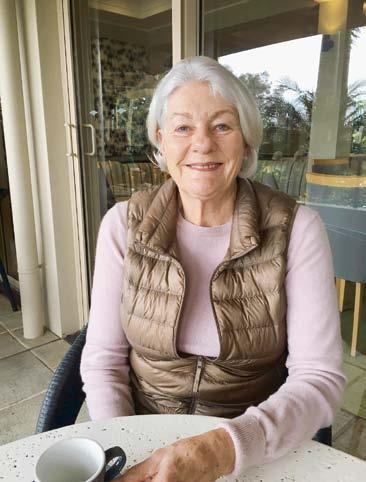
LETTERS NOOSATODAY.COM.AU More tree deaths I was reading in your paper about the tree deaths at Settlers Cove and I was wondering if your team are aware of the recent deaths of two large gum trees on the riverfront at Hilton Esplanade?Council has sent teams to cut down the dead trees so must be aware of the issue. These trees were very old and significant habitat trees right on the bank of the river. What is even more worrying is that surrounding trees are also looking like they are on their way out too. I feel this would be an issue of concern for all shire residents and worthy of investigation by your paper. Hopefully you agree, and can get to the bottom of what is killing these magnificent trees and what Council proposes to do to prevent further deaths and rectify this great loss.
Stan NoosaRyan,Heads Housing issues
It has been a very big couple of weeks for the region’s iconic tourism attraction, the Mary ValleyFirstly,Rattler.the heritage steam train service was included in the Best of Queensland Experiences Program for 2022, a program that “identifies and recognises experiences that best bring the Queensland story to life and consistently deliver an exceptional customer experience”. The program was developed by Tourism & Events Queensland in partnership with the state’s Regional Tourism Organisations, the Queensland Tourism Industry Council and the Department of Tourism, Innovation and Sport. The timing for the Rattler couldn’t have been better as it gained a starring role in the new season of UK Channel 5’s massively popular World’s Most Scenic Railway Journeys. The Rattler received a high profile in the Bill Nighy-narrated documentary that followed a rail journey along the Queensland coast. TheTV crew spent over two days filming the historic Rattler and the surrounding Gympie and MaryValley region, including the village of Amamoor. The episode featured an interview with Rattler steam train driver, Adrian Hurley, who also assists the organisation with training, assessments and coaching.
LENSCAPE
I have just read the practical suggestion of rate relief to release STAs to long term rental, but a lot of these properties are not budget, but more top end, not perfectly suited to the demand. Two weeks ago we advertised a basic two-bed one bathroom unit at $550 per week – 41 enquiries – this is the price level where the demand and need really is, not gourmet properties.Ifeel compelled to recycle a suggestion I made to a previous mayor. The problem is, it is State government, not local councils, who bear the responsibility to provide social housing. The old TAFE site in Tewantin is just over 11 hectares of usable land, lying unused. Still owned by the State Government, the sale to Noosa fell over several years ago. Access to a main road, bus services – in my mind, a very goodWhenoption.Iput the suggestion forward I was told the land was subject to an Aboriginal land claim. I personally was subject to a land claim in the Gold Coast Hinterland, arbitrary and not realistic, but I settled it with a donation of part of the land. It is not for me to comment on the validity of this claim, but settle the claim and move on. As an estate agency we deal with the issue of service workers being compelled to live in resorts constantly. I currently have two properties rented to business principals themselves to house their workers so they can maintain control over the problem of transient workers who are not looking as attractive applicants for the properties themselves. David NoosaGarwood, Turning to Quixote To enhance their scientific/ climate credentials, have the Federal LNP pollies taken Don Quixote’s (1612) musings about wind turbines as policy? “…… I intend to do battle with them and slay them……and the removal of so foul a brood off the face of the earth is a service God will bless”. Just asking. Margaret Wilkie, Peregian Beach Trust and beliefs CorrespondentWarrenWells (NT 12/08) raised an excellent question in his letter. How do we know what to believe? Most of us base our beliefs on the opinions of people who we think are experts, or at least knowledgeable, because very few of us are experts in the things that really matter, like economics, ecology, physics, law or climate change. It all boils down to who you are prepared to trust. Mr Wells holds that thinking about and challenging experts is a noble act.To that, I say, hogwash (just to be polite). Science, for example, by its very nature, subjects itself to intense scrutiny, not from average citizens, but from other experts in their fields. You cannot critically think about a subject in any meaningful way if you don’t already have a good grasp of the procedures and knowledge base and individual experience in that field. That’s why we should trust experts. Being an expert in a field requires years of study, consideration, experience, challenges, failures and enlightenment. I am sure Mr Wells is an expert in something about which he would be offended and condescending if I challengedChoosinghim.who to believe could depend on your ideology or who you last spoke to but it is much saner to choose what to believe based on a reading of many experts in that field to see what they think and what critical things they have to say about each other’s work. It is very unwise to trust newspaper articles or popular press coverage of the latest scientific contradictions. It is very rare that a single paper contradicting a widely held view will actually change things. That is because science depends on many concurring opinions, repetition of experiments and other independent conclusions.Theonemain attribute of science is that it has been dependable in making predictions. We were wise to stop producing DDT and CFCs and to stop mining asbestos and putting lead into paint and petrol, based on scientific advice.The predictions by climate scientists 50 years ago and since are coming true, and still, untrained and uneducated people want to think about it and challenge those predictions. That is not only ridiculous but potentially life threatening. Steve CooroyHall, Gary Fry was visiting Noosa from Ballarat, Victoria, when he captured this image of the river. If you have a Lenscape please email to newsdesk@noosatoday.com.au
The Mary Valley Rattler joins many of the world’s most famous rail journeys and was selected because of its rich history, and the spectacular landscape the train traverses. The program synopsis says: “It’s a chance to stop off and travel back in time. It was gold that brought the railways to Gympie, and the Mary Valley Rattler offers a chance to experience Queensland as it was in the pioneering days, as we join a train pulled by a 1920’s C17 loco, No967, one of 182 built in Queensland. It will pull us high into the Amamoor National Park where we’ll spend some time with one of Australia’s strangest beasts: the Duck Billed Platypus - a mammal that lays eggs”. Episodes of the World’s Most Scenic Railway Journeys attract over 1.7 million viewers in the UK alone, and the show will be broadcast throughout the world later in the year. SBS has broadcast previous series of the program in Australia. Mary Valley Rattler general manager Linda Barry said the recognition of the Rattler in the Best of Queensland Experiences Program and then on prime-time TV in the UK was important for promoting the attraction and the region to consumers and the travel industry both in Australia and internationally. “We are fortunate that by being a volunteerbased organisation there is massive passion in the way we deliver our tourism experience, and that was reflected in the World’s Most Scenic Railway Journeys episode,” she said. “We don’t take the Best of Queensland accreditation for granted. We are continually reviewing and upgrading our services to meet changing consumer demands, and this is precisely what the Best of Queensland Experiences Program assesses. “After the impact of floods and pandemic, the recognition and profile we have received over the past few weeks will play an important role in rebuilding the Mary Valley Rattler’s business as well as providing exposure for the Gympie region’s tourism attractions.” For more information, visit maryvalleyrattler.com.au/ Filming of the Rattler for World’s Most Scenic Railway Journeys show.
Mary Valley Rattler is one of state’s best experiences
32 NOOSA TODAY Friday, 19 August, 2022 Noosa Country Show callout for entrants Equestrian Events • STUD BEEF JUNIOR JUDGING & HANDLERS • GUINEA PIGS • HORTICULTURE • POULTRY • COOKERY • PHOTOGRAPHY • ART • STUD BEEF • FRUIT & VEG • CRAFT • JUNIOR (16 & UNDER) Close:Entries5pm7/9/22 Carole Clancy 07 5485 2331 or 0490 254 652 • noosashowsociety.org.au Noosa Country Show - Where Town meets Country 12562969-ET33-22 PLUS Check online for conditions of entry at noosashowsociety.org.au/schedules LIVE NOOSATODAY.COM.AU


NICA president Dr Jan Green said it was wonderful to be involved in the renewal of this key initiative once again. “NICA was involved in the design and installation of the first network of fishing line bins in Noosa Shire in 2004 but the distinct PVC bins have long since passed their usedby date.“Inrecent years we have observed a marked increase in injuries to wildlife from discarded fishing line along the Noosa River. It has been great to work in partnership with OzFish’s new Noosa chapter to develop and install a new purpose-built and fully recycled network to address this key issue”. “Given the increase in recreational fishing along the Noosa River its important we provide the community with a sustainable means to discard fishing line and tackle. This network addresses that need and we look forward to seeing how the community responds.”BenBroadfoot, President of OzFish Noosa Chapter and a keen recreational angler is proud of their achievement and of the collaboration between OzFish, NICA and Noosa Council.“Ithink every recreation fisher knows the importance of keeping waterways clean and free of “Withwaste.this program we highlight what we as anglers can do to help keep our fishing waste not only out of the waterway but more importantly away from any harm it can do to our precious wildlife.” “To be able to refresh the Noosa River fish inglinerecoverybinswiththisprojectandalso
work with BCF andTangaroa Blue with the Rig Recycling bins located in the Noosa BCF store, we really do have most bases covered for fish ing tackle waste disposal in Noosa.” For more information visit noosariver. com.au New fishing line bins beside Noosa River.
NOOSATODAY.COM.AU NEWS
On The Soapbox Noosa MP Sandy Bolton Estimates are for everyone
Old fishing line is better in the bin than in wildlife
So why is the recent Budget Estimates process so important, and why should we all be interested?It’sall about ramifications – to everyone –on how your funds are spent. For those who are unfamiliar with what may seem a dry subject, a quick overview. The operations of Parliament are a key part of how our Queensland democracy works, and its committees are an avenue to provide scrutiny and accountability of government, especially as Queensland does not have an Upper House, unlike other States. Committees handle inquiries, including on legislation before Parliament, and also Estimates Committee Hearings (Estimates) to scrutinise finer details within the State Budget. The current committee system comes from reforms that were undertaken in 2011. Ten years later in 2021, I was on a livestream panel with the architects of those changes, Judy Spence and Lawrence Springborg, as well Speaker Curtis Pitt , and we gave insights from our perspectives on the committee system, with the video available at governmentthetheprovethebecomingin-the-spotlight-parliamentary-committees/sandybolton.com/AsIhavesharedovertheyearssincefirstanMP,thecommitteesystemandEstimatesprocessneedtweaking,toim-itseffectiveness.SomeoftheissueswithcurrentsystemthatIhaveraisedincludelimitedtimeforadiversityofquestioning.Forexample,ina45-minutesession,non-membersreceivehalfofthat
For the list of questions as well responses of my Legal Affairs and Safety Committee, head to bit.ly/3dj10yy which also includes a link to the broadcast from that hearing. Once we have responses to our rerouted Questions on Notice, they will be added to that link. Until next month, something to contemplate. Any government at any level should have no reason to reject efforts for greater efficiency, as that adds to our sustainability. There should never be a reason to avoid transparency, as we are all grown ups and can handle the truth, even if we do not particularly like that truth.
time, after the Ministers’ opening remarks of six minutes are taken out, leaving 19 minutes. With the crossbench 17 per cent of the opposition, we receive 17 per cent of the time allocated, or just over three minutes. With the Minister allowed three minutes to answer each question, you can see how this may lead to only one question from the great diversity of the three parties and one independent that make up the crossbench. This is not a practical system at all and is why for a second year in a row I attempted to circumnavigate missing out by submitting Questions on Notice (QONs) to each Minister. Unsuccessfully, I might add. However, there are opportunities for change.TheCoaldrake Report (released in June), recommended expanding the oversight role of the committees, specifically that, “Integrity bodies independence be enhanced by involvement of parliamentary committees in setting their budgets and contributing to key appointments”. How this is done is important, hence my questions at the Legal Affairs and Safety Committee hearing regarding the role of Committees as key stakeholders in implementing the Coaldrake recommendations. Further, in response to a question on day one of Estimates, the Clerk of Parliament stated that parliamentary committees have not necessarily been discharging some of the things that were envisaged in the 2011 review, and that we have a long way to go regarding that accountability aspect and the work of committees. To think, I have only been saying this for some four-plus years? As I continue to request, the Committee of the Legislative Assembly (CLA) must review the Committee system. This should consider submissions put forward by myself and other MPs over the years, including current Opposition MPs, to address the flaws in what is ultimately our defacto Upper House. A review, plus the implementation of the Coaldrake recommendations, opens the door for greater transparency, accountability and efficiency, not only from governments and their processes, as well as us as MPs. Can I add in equity?AsIhave said previously in Parliament, we have nothing to lose and everything to gain, including by making Committee minutes public domain as a standard. As with Budget, there is always some good news to report back to you after Estimates time, as well some that do not pass the pub test in the many questions as to the whys. Whether it is funds spend on Wellcamp still sitting empty when we have an accommodations crisis, or misleading Queenslanders via those reply paid envelopes for postal vote applications being returned to a party rather than direct to the Electoral Commission of Queensland, being lawful does not make it OK and I always look to how these can be resolved. Our questions to all Ministers covered a broad range including a couple of my longstanding pushes such as for an audit of state land and Environmental Upgrade Agreements (EUA’s), which pleasingly now has added advocacy from our Council and hopefully the Local Government Association of Queensland. What is most frustrating is that these should not have taken the time they have to reach this stage (though the Minister’s response to my last QON some weeks ago gave a timeline of September for the EUA’s) and gives argument that there are some other processes that need tweaking, as efficient and timely responses save both time and taxpayer dollars. The questions I asked at my own Legal Affairs and Safety Committee live hearing included seeking clarification around funding for our coastguards after the Bluewater Review, and the ability of our emergency services ICT upgrade to connect in real time to the new early alert flood monitors that will be on our bridges. As well again, emergency domestic violence accommodations, resourcing for our hotspots, and prison transitional accommodation as examples.
Friday, 19 August, 2022 NOOSA TODAY 33
The Noosa Integrated Catchment Association (NICA) and OzFish Noosa Chapter, in partnership with Noosa Council, are pleased to announce the roll-out of new, purposebuilt and fully recycled fishing line recovery bins at popular locations along the Noosa River.The network of 30 bins, easily identified by their distinct Noosa-oriented styling, will enable recreational fishermen to dispose of fishing waste, line and tackle responsibly, removing the threat of entanglement and injury to our iconic marine wildlife.


Noosa Heads
34 NOOSA TODAY Friday, 19 August, 2022
· Hotter Than That, 5-5.45pm · Opening Ceremony, 5.45-6pm · Gypsy Jazz, 6-6.45pm
· Bookings, phone Neale 0418 339 930.
The Noosa Jazz Party is back.
· The Larrikins, 11.30am-2.30pm
· Bookings 5474 8080.
· Jazz at The J - The J, 60 Noosa Drive, Noosa Junction
Jon-Erik Kellso in concert - Majestic Theatre, 3 Factory St, Pomona, 1.30-4.30pm - Jon-Erik Kellso, Brett Iggulden, Paul Williams, John Reeves, Richard Stevens, Dave Burrows, Rod Andrew.
Noosa Jazz Party program
· Gipsy Jazz, 8-8.45pm
Lunch with Traditional Jazz - Lucio’s Italian Restaurant, Noosa Marina, 2 Parkyn Ct. Tewantin, 12-2pm - Brett Iggulden, Paul Williams, Chris Schnack, Peter Hooper, Richard Stevens, Rod Gilbert.
Sari Abbott heads to Gympie Muster after Ekka win
Noosa songstress Sari Abbott has taken out the biggest talent prize of The Ekka, winning the Country Showdown presented by Ringers Western Open section. This comes in the same week as the singer-songwriter charted on iTunes with the release of her third single, Too Much Space. “I was in shock because everyone was so amazing so it was hard to judge,” Sari said. “I was over the moon and it was surreal like, are you sure I’ve won?”
· Concert and Dinner with the Marina Concert Band at Harbour Wine Bar, 6.15-8pm - musicians from Riverboat Rhythms and Shuffle Syncopators plus Jo Bloomfield and Chris Ludowyk.
LIVE NOOSATODAY.COM.AU
·
· Riverboat Shuffle Sunset Cruise on two ferries - Riverboat Rhythms - Brett Iggulden, Paul Furniss, Richard Stevens, Peter Hooper.
SATURDAY 3 SEPTEMBER
MONDAY 29 AUGUST
Sari Abbott performing at the Ekka’s Stockman’s bar.
Lunch with Gypsy Jazz - Lucio’s Marina Italian Restaurant, Noosa Marina, 2 Parkyn Ct, Tewantin, 12-2pm - Ian Date, Nigel Date, George Washingmachine, Chris Ludowyk, John Reeves, Ian Smith. Bookings 5470 2331.
TUESDAY 30 AUGUST
Riverboat Shuffle and Harbour Wine Bar Concert & Dinner - Noosa Marina, 2 Parkyn Ct, Tewantin, 5-6pm.
· East Coast Frisco Jazz, 6-6.45pm
Inc.,
WEDNESDAY 31 AUGUST
· Hot Jazz on 52nd Street, 9-9.45pm
· Let’s Swing, 9-9.45pm
· Tickets for The Majestic Theatre and The J visit www.noosajazzclub.com/noosa-jazzparty/
· Dinner band - Fratellini Ristorante Italiano, 36 Duke St, Sunshine Beach, 6-8pm - Brett Iggulden, Paul Williams, Richard Stevens, Peter Hooper.
THURSDAY 1 SEPTEMBER ·
· Mr Morton and Mr Oliver, 7-7.45pm · He Sings Well, 8-8.45pm · Trombones Talking to You, 9-9.45pm
· Bookings 5470 2331. · Jazz at The J -The J, 60 Noosa Drive, Noosa Junction
· Fathers Day, Free Concert
· Shuffle Syncopators - Ian Smith, Paul Williams, Chris Schnack, Peter McCormick.
· 1920s Revisited, 6-6.45pm
· The Patron, 7-7.45 pm · East Coast Frisco Jazz, 8-8.45pm
SUNDAY 28 AUGUST
· 1920s Revisited, 6-6.45pm
·
· Dark Town Strutters, 7-7.45pm
Sari took home a cash prize, aTanglewood guitar, recording session, Gympie Muster performance and passes for 2023, photography package, paid performance at The 2023 Ekka, a Strike Bowling voucher package and a scholarship to the 2023 CMAA Academy of Country Music senior course in Tamworth. “This was my first time in the Country Showdown and I entered for the experience,” she“Isaid.enter talent searches because I know I’m going to meet people, connect with a different audience, hear different people perform, and catch up with people from Academy.”
· Bookings 5474 8080
· Apex Jazz, 5-5.45pm
· Bring On The Ladies, 8-8.45pm
·
Sari is a graduate of The Academy junior course which she attended in 2021 in Tamworth and cannot wait to experience the seniorBeforecourse.then, though, she will celebrate her 19th birthday at the Gympie Music Muster where she’s a finalist in the NAB Talent Search.“The Ekka win gives me some confidence, but I never go in expecting to win,” she said. “It’s not always a matter of who’s the best, it’s a matter of what the judges are after and I’m excited about being part of it. I was in the junior one in 2019 and I’d never performed on a stage like that, and it will be cool to meet a lot of people again.” Sari said she also gained experience from meeting and chatting with the senior talent search competitors last time, and was still connected with some of them on social media.“I appreciated being able to speak to the older artists and I want to make the most of the experience,” she said. Sari isn’t resting on her laurels, though, heading to the Gympie Music Muster next week where she is a finalist in the NAB Gympie Music Muster Talent Search senior section.
· Lions Park next to Noosa Yacht and Rowing Club, Gympie Terrace, Noosaville, 2-4.30pm
·
The Noosa Jazz Party celebrates its 30th anniversary this month and everyone is invited. Noosa Heads Jazz Club president Richard Stevens said the club was proud to bring Noosa the acclaimed services of Australia’s finest classic jazz musicians and world-renowned musicians from USA and Ireland. “They will transport you through the rich traditions of jazz with bands of musicians brought together by the festival,” he said. “We are excited about their coming together for this unique feast of exciting jazz performances in concert theatres, on sunset river cruises, in restaurants and bars and at a riverside park.”
Noosa Jazz Party Program of Events
Lunch with Gypsy Jazz - Miss Moneypenny’s, 6 Hastings St. Noosa Heads, 12-2pm - Ian Date, Nigel Date, Matt Eves , John Reeves, George Washingmachine. Bookings 5474 9999.
· Swing Jazz - Lucio’s Marina Italian Restaurant, Noosa Marina, 2 Parkyn Ct. Tewantin, 12-2pm - John Braben, Paul Furniss, Paul Williams, Geoff Power, Jo Bloomfield, Chris Schnack, Rod Andrew. Bookings 5470 2331.
·
· The Final Bash -The Jam All musicians left standing, 9-9.45pm. SUNDAY 4 SEPTEMBER
· Hot Jazz Club Of Noosa
Jazz at The J -The J, 60 Noosa Drive, Noosa Junction · The Emeralds, 5-5.45pm · Bix Pics, 6-6.45pm
Feature artist Jon-Erik Kellso, top jazz trumpeter from New York. A unique feast of exciting jazz performances every day from 28 August until 4 September at The Majestic, Pomona, The J, Noosa and on sunset river cruises, restaurants, bars and at a riverside park. Book now go to www.noosajazzclub.com or the QR Code. Jazz Club info@noosajazzclub.com
· Dinner band - Fratellini Ristorante Italiano, 36 Duke St, Sunshine Beach, 6-8pm - Brett Iggulden, Paul Williams, Richard Stevens, Peter Hooper.
or 0478 256 245 NOOSA JAZZ PARTY 12563590-HC33-22
· Pop-Up Band - The Boat House Gympie Terrace Noosaville
FRIDAY 2 SEPTEMBER
· The Legends: Sidney Bechet and Patsy Stevens, 5-5.45pm
· Jazz at The J - The J, 60 Noosa Drive, Noosa Junction
· Classics Swing, 7-7.45pm


· LIKE IT SAYS ON THE NAME TAG - written by Simon Denver Life as a single mum in the first quarter of the 21st century. Hopes and fears, trials and tribulations. Single mum? Single dad? Single parent?. Is that how we should define the 2.3m single parent households in Australia? Cast features Caitie Elliott.
Don’t Shortsmissshow
·
· THE LAW IS THE LAW - written by Simon DenverAsit says, the law is the law no matter what! A monologue performed by Joy Marshall.Formore information visit noosaartstheatre.org.au Maria Karambelas and Sue Sewell preparing for their production, The Grave Yard Shift. Jane Cullen gets into character for her show called Scammed.
Camping and caravan expo returns to Nambour
THE SECRET ORIGIN OF MOJO MAN - written byWalterWykes Another production from Little Seed theatre starring Callum Johnstone, Jack Miller and Naire MacDonald. Does young love succeed by his Mojo alone?
·
·
THE BRUSH OFF – written by Sue Sewell Cast includesTom Middleton, Sue Sewell, Jane Rivers and Jenni McCaul. A brush turkey has a rather impressive nest to rent and two possible renters check out his abode and talents.
If you’re planning to hit the road for a getaway, there’s no better place to start than Caravanning Queensland’s Let’s Go Sunshine Coast Caravan & Outdoor Expo from Friday 19 August to Sunday 21 August at the NambourFollowingShowgrounds.ahiatus in 2020 and 2021 due to Covid, one of the Sunshine Coast’s largest caravan, camping and outdoor events will return with more than 80 exhibitors showcasing an enormous range of caravans, camper trailers, motorhomes, campervans, gadgets and accessories for your next big road trip or weekendSunshinegetaway.Coast Council Division 10 Councillor David Law said caravanning was a terrific way to explore the region and venture further afield. “So I encourage everyone to get along to the Nambour Showgrounds from August 19 to August 21 to get some ideas and inspiration for your next holiday – whether it’s within our wonderful region, another part of Queensland or interstate,“ he said. Caravan Trade and Industries Association of Queensland chief executive officer Jason Plant said the Sunshine Coast had become one of Australia’s top destinations for caravan and camping visitors over recent years. “In addition to this, caravan sales within the Sunshine Coast region have doubled over the last 12 months,” Mr Plant said. The Let’s Go Sunshine Coast Caravan & Outdoor Expo is a family-friendly event that will include free activities like sheep dog trials, face painting and campfire cooking demonstrations with a side of bush poetry and ballads from Ranger Nick. The popular weight and towing masterclasses will be back again, providing travellers with vital information and tips from industry experts to ensure everyone hits the road on their next adventure safely and with confidence.Tickets:adults $14, concession $12, accompanied children free. For tickets or more information, visit door-expo/events/sunshine-coast-caravan-and-outcaravanqld.com.au/
Another fun annual event at Noosa Arts Theatre is a performance of several entertaining short plays all around the 10 minute mark. There will be two shows on 27 August, a matinee at 2pm and evening 7.30pm and on Sunday 28 August matinee only at 2pm. After the final show, the Audience Choice Award will be presented to the group who performed the best play. Here are some of the stories that will come to the stage in a mini format:
· SCAMMED – written and performed by Jane CullenLonely women are constantly being scammed by online dating sites. This is the story of one such woman’s journey.
THE GRAVE YARD SHIFT written by Catherine McKernan-Doris featuring Maria Karambelas and Sue Sewell. Two sisters on the phone discussing a murder ... so who did it?
NEXTYEAR THEN? - written by Burt Anurney Starring Kate Cullen and Marilyn Davies, as two old acting buddies getting together to decide on a play to perform for an upcoming competition. They spend time procrastinating and ruminating but when it comes to the crunch, something major stands in their way and this time it isn’t Covid.
Friday, 19 August, 2022 NOOSA TODAY 35 Memorial Avenue, Tewantin Phone 5447 1766 • www.noosarsl.com.au BOTTLESPECIALSSHOP VALID 19TH – 25TH AUGUST BISTRO PROMO KIDS EAT FREE – WEDNESDAY NIGHTS* *T&C’S APPLY! Bintang Pilsener 24 Pack Brand’s Laira Barrelman Wine Range Jacobs Creek Classic Wine Range Pure Blonde 24 Pack $45$5299 $18 $30 12562854-AI33-22 2 for 2 for NOOSATODAY.COM.AU LIVE
THE HISTORY OF WHY THE CHICKEN CROSSED THE ROAD - written by Jennye JamesSo why did the chicken cross the road? Come along and find out, I guess! Noosa’s own Little Seed theatre production featuring Eden Tregear and Fraser Mason.
·
·


PROBUS NOOSA RIVER Looking for something to do? Our club offers many activities, and these include art, craft, book club, canasta, coffee mornings, creative writing, golf, lunch outings, Mahjong, Scrab ble, theatre (local and Brisbane), walking trips, ukulele and wine appreciation nights.We meet on the first Monday of each month at the Girraween Sports Complex Clubhouse (entrance off roundabout adjacent Eenie Creek Rd and Langura St) starting at 9am. If any of these pique your interest please call 0410 687 639 for further details.
TOASTMASTERS Do you have a message you would like to share with the world? Or maybe you’d like to improve your confidence when speaking in public. We are a fun-loving, supportive public speaking club dedicated to improving your confidence and creativity in a safe environment. Our meetings are every 2nd and 4th Monday of the month, from 6.30-8.30pm at the CWA Hall, Tewantin. The first two visits are free so you can come see what we’re all about. For more information contact noosatoastmasters@ gmail.com
PICKLEBALL A sport for everybody. It’s fun, social, and easy to learn. All ages welcome. Come and try by contacting freelesson@noosapickleballclub. com and start something new today.
Permit reduction favoured
Roster for Meals Wheelson Weekly Roster for Tewantin- Noosa Meals on Wheels beginning Monday 22 August. Monday drivers: Tony, Darryl, driver needed Run C, Rod and Joan, Geoffrey, Rosemary, Alison, Lorraine, Jason, Robyn, Judy and Eileen.
DANCE LESSONS TEWANTIN Every Sunday from 12.30 at Tewantin Masonic Hall, 30 Moorindil St we start by teaching basic dance steps, waltz, then old time, New Vogue and ballroom dances running through to 4pm. Lots of fun and dancing, including a 20 minute tea/coffee break to socialise. Hope to see you there.Singles or couples can attend. Call first or just rock up. Phone Andrew 0429 829 328 or visit andrewsclassdance.com
BEEF AND BURGUNDY CLUB Noosa Beefsteak and Burgundy club meet on the third Wednesday evening of the month at a different local restaurant for good food, wine and fellowship. We invite couples or singles to join us. Further information contact John Dicker on 0414 323 266. NOOSAVILLE VIEW CLUB Are you new to to area and would like to meet like minded ladies twice a month for lunch and outings while raising money for disadvantaged children’s education with The Smith Family? Our luncheons are held on the fourth Thursday of every month at the Tewantin Noosa RSL. Our friendship days which include outings are held on the second Thursday of every month. Call Senka Thwaites on 0418 606 288 to find out more or to attend. FABULOUS 60S PLUS We welcome couples and singles to join us for morning coffee every Monday at the Wine Bar, Tewantin Marina from 10am and every Thursday at the Boathouse on the Noosa River. Additionally, we have a monthly program of interesting and fun activities. Contact Joan on 0419517869 for more deSUNSHINE SOCIAL CLUB We meet for coffee every Saturday 10am at the Sunshine Beach Surf Club, where we plan our weekly lunches and picnics. Couples and singles most welcome. Please phone Noeline on 5474 5231 for details.
Traffic and camping on Teewah Beach has been an ongoing advocacy for Noosa MP Sandy Bolton and the community for the past five years.Atthe end of 2021 a targeted Noosa electorate survey on this issue was released to previous camping and vehicle access permit holders, local businesses, tourism operators, local residents, First Nations’ and community organisations, universities and environment, wildlife and conservation groups. Seventy-five per cent of survey respondents were in favour of a reduction in the number of vehicle access permits issued during peak times for the Cooloola Recreation Area and TeewahAddressingBeach.poor behaviour, control of visitor numbers, protection of key environmental habitats such as turtle hatching areas and reviewing community impacts have all had progress, however, not enough. On 26 August Sandy Bolton, along with representatives from Queensland Parks and Wildlife Service (QPWS) and Queensland Police Service (QPS) will provide an update on this issue including future work in this space.Everyone is welcome at the NPA Environment Centre, 5 Wallace Drive, Noosaville on 26 August to understand the issues and future proposals for management of traffic and camping on Teewah Beach. The forum starts at 10:30am and morning tea is available at 1010.25am. Entry is $5 by tap and go at the door which includes morning tea/coffee. The organisers ask that masks are worn to protect the vulnerable in the audience. Join the bird observers at 8.30am in the carpark for interpretive birding. More information is available at parks.org.au/friday-environment-forum/noosa-
COMMUNITY UPDATES NOOSATODAY.COM.AU Email your community news to: NEWSDESK@NOOSATODAY.COM.AU
36 NOOSA TODAY Friday, 19 August, 2022
MOTORCYCLING Motorcyclists meet for a half-day ride on the first Thursday of each month leaving Noosa at 9am. Email noosabonneville@optusnet.com. au for details. Thanks for your interest and we look forward to riding with you.
LIVE NOOSATODAY.COM.AU
Teewah Beach traffic is an important issue.
Kitchen: Jo, Christine, Edda, Ruth. Wednesday drivers: Martina, Council, Darryl, Lis and Liz, Judith, Paul, Bronwyn and Nick, Evelyn and Mary, Roz, Simone and Chris, John and Helen, Victor. Kitchen: Denise, Martina, Christine. Thursday drivers: Zac, Darryl, Ray Z, Donna and Julie, driver needed Run E, Penny R, Barani and Peter, Martin, Martina, Sharon and Mal.
BOTANIC GARDEN WALK
Kitchen: Mary, Len, Geoff, Le-Anne. Tuesday drivers: Driver needed Run A, Darryl, Tania and friends, Penny, Denise, Nicki, Barani and Peter, Amy, Simone and Chris, Jennifer and Bill.
Kitchen: Lee, Donal, Jerry, Vicki, Loz, Claire. Friday drivers: Bruce, Lin, Lee, driver needed Run D, Zack, Sam and Kevin, Joy, Kevin, Julie B, Lesley, Victor. Kitchen: Geoff, Mary, Charlotte. You can also check the roster on our website onextraIfnoosa.org.aumealsonwheels-tewantin-youareunavailableorcandoanrun,pleasephonethekitchen54497659.
The Noosa bridge club is offering beginners lessons which will commence on 6 September and run for 8 weeks. The cost is $80 and the course will cover all the basic concepts of the bridge game, and you will play in each sessions as you learn. Once completed you will continue to play in supervised sessions.To register, or for more information call 54471341 or visit our website noosabridge.com RSL WOMEN’S AUXILIARY
The next meeting of the Tewantin-Noosa RSL Women’s Auxiliary will be held on Friday 2 September at theTewantin-Noosa RSL at 10.30am. All members and friends welcome. Phone Kay 5447 5042. SEWING NEWS
VOLUNTEERS NEEDED Tewantin Noosa Meals on Wheels requires more volunteers for local deliveries and kitchen assistants. We provide an extremely high standard of meals to those in our community requiring our service, which is only possible through the generosity of volunteers like you. As the demand for meals continues to grow, so does the need to obtain further volunteers for both the kitchen and for delivery to our clients. As a volunteer driver, vouchers are available toward petrol costs. Contact the office on 5449 7659 or email tnmow@bigpond.com
The Guilded Lilies Sewing Group will meet on Saturday 20 August at the Masonic Hall, Moorindal St, Tewantin from 9am-3pm.New members and visitors welcome.We do all sorts of sewing, hand and machine, dressmaking, quilting and embroidery ect. We are a friendly group and welcome new faces. Phone Angela 0408 068 148. COUNTRY MUSIC Yandina welcomes Sandy-Ann and Ian as guest artists at the ACMA country music concert on Sunday 21 August starting noon. A popular, professional duo, their lively performances are guaranteed to entertain you at the Hall of Fame, 24 Steggalls Road. Doors open 10.30am. Walk-ups welcome. Raffle and door prizes, BYO lunch, free tea and coffee. Entry $8. Phone 0437 191004. TAP DANCING Join in the fun every Thursday, 5-6 pm at the Uniting Church, corner of Poinciana Ave and Werin St - opposite the primary school. Ring Helen on 0449621788 or just turn up.
Join the Friends of the gardens for an hour’s guided walk 9am-10am on Sunday 21 August. The magnolia’s are in full bloom and there’s the promise of spring throughout the gardens. Meet at the large shelter shed close to the carpark. Wear sturdy shoes. Dogs on leashes welcome.For more information call 0412 053 281. BRIDGE LESSONS
TEWANTIN NOOSA PROBUS CLUB Are you seeking new friends, new skills, new interests? You can have all these and more by joining our Probus Club.We meet at the RSL in Tewantin on the fourth Tuesday of the month at 10am for morning tea ($5). At 10.30 we have an interesting guest speaker, followed by a brief meeting then a game of Trivia. Most members stay on for lunch. During the month, we enjoy walks by the Noosa river, regular lunches, movies, mahjong, visits to places of interest plus much more.We are currently seeking new members so we would love you to come and meet us. Phone Christine on 5442 7397 or visit probustewantinnoosa.au COMBINED PROBUS CLUB OF NOOSA Newly retired in Noosa Shire and looking for a club with vitality, different and fun events each month? Be involved in varied interest groups, a myriad of different events throughout the year, friendly meetings with a diverse range of speakers and friendships waiting to be made? We meet at the Noosa Golf Club on Cooroy Noosa Road in Tewantin first Monday each month at 9.30am. Phone Robyn 0419 342 522. PROBUS 2010 Noosa 2010 Combined Probus is a club for re- tired men and women who love going on bus trips, having coffee, lunches, dinner outings, weekly walks , yoga, theatre and garden outings as well as an interesting speaker each month. Meetings are held at Tewantin Noosa Bowls Club, 65 Hilton Tce, Tewantin on the second Tuesday of the month at 9am. For details phone Barbara on 0491 354 054.
COMMUNITY GARDEN Recently we relocated to the Wallace Park precinct. We invite you to come and join us every Friday when our gardeners meet at 8am till 11am. Afterwards enjoy a cuppa and chat. Wallace Park will provide a more suitable and bigger location for the garden with greater community exposure and community collaboration. We look forward to meeting you soon. Enquires: June Copeman 0412 384 848 OP SHOP NEEDS VOLUNTEERS Mingary Care Op Shop at Tewantin needs volunteers. Half and full day shifts are available at the op shop run to assist the palliative care charity. Call Carol for a chat on 0407471583. ARTS AND CRAFTS Learn to crochet workshops: One-to-one tu- ition with Janelle Turley for members and non-members - Wednesdays and Saturdays, 9.30-11.30am (booking required). Visit Noosa Arts & Crafts’ Eco Art Exhibition will run daily to Friday 26 August. All welcome. For more information please visit our website at: noosaartsandcrafts.org. au. High Tea & Art: A fun afternoon with Clare Riddington-Jones. No experience required. Materials & high tea provided. Sunday 28 August, 1-4pm (booking required). To book events phone 5474 1211, email create@noosaartsandcrafts. org.au or visit noosaartsandcrafts.org.au U3A NOOSA TALKS U3A Noosa Friday Talks are held at 1.30pm at U3A, 64 Poinciana Ave, Tewantin. Friday 19 August: Simon Klapish - Everything you wanted to know about your electricity prices Fridayexplained.30September: Paul Ryan - The Private and Communal Lives of Trees wSocial distancing requirements mean that numbers are limited. Admission will be on a first come, first served basis. Full details avail- able on U3A website u3anoosa.com. au/ or contact reception on 5440 5500. TEWANTIN NOOSA CWA Social morning meeting every Thursday from 9 -10.30am, BYO craft or hobby project or just have a cuppa and a chat. Next monthly evening meeting is on Wednesday 31 August from 5-7 pm at the CWA Hall in Poinciana Avenue, Tewantin. All visitors are welcome. An interesting local speaker is a guest at every meeting. Enquiries to Jennifer Gleeson 0409 063 738

Friday, 19 August, 2022 NOOSA TODAY 37 Tewantin Noosa RSL Serving the Community... • 3 Bars including Sports Bar with TAB • Keno • Bistro • Bottle Shop • Coffee Shop • Children’s Room • Biggest Gaming Room in Noosa • Free Courtesy Buses: Phone 5447 1766 to Book Great Entertainment … Great Promotions … Great Food Memorial Avenue, Tewantin Phone 5447 1766 www.noosarsl.com.au High Stakes Poker – Saturday Nights 5.30pm Registration, 6pm start $25 to play, $25 rebuy Trivia registrationSundaysfrom4.30pmstartsat5pm 12562852-HC33-22 Friday 19th of August: Red Rock Band, 8pm – 11pm Diggers Bar Free Show Saturday 20th of August: Uncle Salty, 8pm – 11pm Sunday 21st of August: Russell Davies, 12noon – 3pm Free Show Free Show RAFFLES! NEW MEMBERS PROMO Wednesday, Friday, Saturday & Sunday! Lots of Great Prizes to be won! Win up to $20,000!! Members draw jackpots weekly! From 5.30pm Wednesday & Friday From 11.30am Saturday & Sunday Starting amount $5,000 Full T&C’s Apply! Sunday 23rd of October: Choir Boys - 2pm Diggers Bar Tickets $45 per person ABBA Arrival Friday 11th of November, 8pm Diggers Bar Tickets $20 PP Scan to purchase tickets to show! Scan to purchase tickets to show!


38 NOOSA TODAY Friday, 19 August, 2022 CALL 1300 666 808 ADVERTISE with us and get better results 12528852-SG51-21 All Seasons LAWNMOWING + MAINTENANCEGARDEN FULLY QUALIFIED | INSURED | RESIDENTIAL | COMMERCIAL JOHN VAIL 0484 922 302 www.allseasonsgarden.com.auABN - 30 541 561 294 Find your Local Professionals in our Trades & Services section of Network Classifieds. V Garden Services 12501763-HC27-21 Call Brett 0424 932 222 SPECIALISING IN: FENCING • Decks • Pergolas • Awnings • Doors • Locks • Stairs • Gyprock Repairs • Screens • Gates • Handrails • General Repairs/Maintenance SUNRISE BEACH Carpentry & Maintenance Carpenter with 30yrs exp Competitive rates and prompt service 12524688-NG48-21 V CarpentersThe longer youtheadvertisecheaperyourad! Call 12506142-AV31-21 bewilderedbyyourcomputerinternetphoneoripad? 0413 802 075 NoticesGeneral section of Network Classifieds. 12451783-FA25-20 V Excavators12504370-JW29-21 Mrs Fixit Phone, iPad and computer tutoring Flat Pack Queen All handyman jobs done by me and deceased estate help Call Sasha 0412 501 576 V Computers Sell localit Needcash?WE FIX BATHROOMS Specialising in: - Leaking Showers - Waterproofing - Tile Rectification - Bathroom Refresh Ask us about our FREE in Home Assessments 3466 4982 www.aquashieldbathrooms.com.auQBCC: 150818838 12549451-NG19-22 V Bathroom & Kitchens Free Quotes 1300 597 304 • Move Out Cleaning • Window Cleaning • Carpet Cleaning • Office Cleaning • Commercial Cleaning • Body Corporate Cleaning NOOSA Property Services 12562524-ET32-22 ELECTRICAL SERVICES No Job Too Small Prompt Reliable Service All Types of Electrical Works 20+ Years Experience Matthew Levvey - 0431 122 noosa247electrical@gmail.com610 12537423-SG08-22Lic 86984 Call Chris on 0408 068 341 Q BSA 1081269 www.facebook.com/cabinetinstallationsnoosa chris@cabinetinstallations.com.au CabinetConstructDesignInstall 12450880-LB23-20 V ElectriciansV Cabinet Makers Paul Best ANTENNA / TV TUNING Smart Tv Set UP & Advice Over 30 Years on the Coast For prompt service phone 0413 699 572 12450576-SG23-20 V Antennas PAT’SCLEANINGWINDOW With over 30 years experience, there is nothing that Pat doesn’t know about window cleaning. Please call to arrange for an obligation FREE QUOTE - no job too big or small. Pat offers reliable, friendly and personal old fashioned service, so call now 0497 832 85112453808-SG28-20 GREENWARDS CLEANING Brighten your day the Greenwards way Residential Cleaning/Housekeeping Services Reliable Experienced Staff Environmentally Friendly Products Call 0456 199 271 | Clean@greenwards.com.au 12554692-JC24-22 PATIOS ~ CARPORTS ~ PERGOLAS Call for a FREE measure, design & quote www.coastalpatios.com.au 07 5437 9525 QBCC 15248523 12555771-JW26-22 Placing your classified advert is so easy... Phone: 1300 666 808 Email: sales@networkclassifieds.com.au (include your name, address and phone number) We accept payment by: VISA/MASTERCARD/EFTPOS/BANK TRANSFER (1.5% credit card processing fee applies. Cheques and money orders can be posted.) Deadline for all classifications is 3pm Tuesday. 12478399-CG03-21 12542136-SG12-22 07 5327 3422 | 0437 232 133 QBCC 15077736 www.SilkDesignConstruct.com V Deadline V Cleaning ServicesV Builders & Building Services V Decks/Pergolas Trades & Services networkclassifieds.com.au


Friday, 19 August, 2022 NOOSA TODAY 39 JET CONCRETEBLASTCLEANING Driveways | Pool areas | Patios Building Soft Washing Concrete Sealing Ring Alfie for a FREE QUOTE: 0438 382 052 ABN 61415040800 12556741-NG26-22 Phone: 1300 666 808 sales@networkclassifieds.com.au Place your Announcement Notice with us. � Ideal for general junk, green waste, backyard clean ups, furniture, whitegoods, office clutter � Every size bin for every occasion � Trucks that fit any driveway � Unbeatable value � Speedy service � 7 days skip hire included � Suburban discounts. Just ask us! Sunshine Coast’s Cheapest Skip Bins! 1300 550 442 speedybins.com.au 12463489-SN40-20 V Skip Bin Services 12453461-SG27-20LICENSED BUILDERS ABN 54 127 511 817 QLD LIC NO 1127940 Phone : 1300 225 995 Email:Web:joinery@prolinebuilders.com.auwww.prolinebuilders.com.au / Design / Custom Builds / Installation Proline Kitchens & Bathrooms Family Owned & Operated PRESSURE CLEANING The professionals with the Cheapest Price! • High Pressure Concrete Cleaning •Removal of Grind, Dirt, Mold from Pathways, Driveways & Pavers • From $88 Call Tony 0421 159 419 Tewantin 10% Seniors Discount WATER RAT 12518852-HC43-21 V Kitchens V Pressure Cleaning HOME MAINTENANCE Local Handyman - Noosa & Surrounds Call Peter: 0432 128 897 Free Quotes & Fully Insured 12450967-SG25-20 General Repairs Locks Small Deck Repairs & Recoats Painting Shower Hoses Hand Rails Mirrors & Artwork Manage Properties, Organise Quotes, Trade Repairs & Access Coastal Small Maintenance Services • GLASS POOL FENCING • BALUSTRADES • SHOWER SCREENS • MIRRORS • SECURITY SCREENS TEWANTIN GLASS Unit 6/4 Selkirk Drive, Noosaville PH: 5449 info@tewantinglass.com.au0888 12554522-JW24-22 www.tewantinglass.com.au All Coast Drainage Family Owned & Operated BLOCKED DRAINAGE The Professionals with the Cheapest Price! BLOCKED SEWERS, TOILETS, STORM WATER AND SEPTIC TANK SOLUTIONS – SAME DAY SERVICE • Install New Sewers & Storm Water Solutions • Camera & Locating • Leak Detection Call Tony Tewantin 0421 159 419 12531083-DL02-22 FIND IT – CLEAR IT – FIX IT QBCC: 727311 - Fully Insured SEWER RAT DiscountsSenior10% V Shower Screens & Repairs HATTEN, Ann of Peregian Springs. Passed away peacefully on Saturday 13th August 2022. Aged 86 years. Beloved Wife of Athol (dec’d). Adored and loving Mother of Terry, Peter, Michael, Lynette (dec’d), Sandra, Donna, Lisa, Shelley and their families. Much loved Grandmother and Great-Grandmother. Relatives and friends are invited to attend Ann’s funeral service to be held in the Gregson and Weight Chapel, 202 Eumundi-Noosa Rd, Noosaville on Tuesday 23rd August 2022, commencing at 11:00am then for the Tewantin RSL Cemetery. “Forever Loved” 12563688-DL33-22 Buy, Rent & Sell in our Real Estate section of Network Classifieds. NEED A PLUMBER WHO IS: Genuine? Reliable?? Offers Expert service at a reasonable price?? THEN LOOK NO FURTHER! We specialise in: - Hot Water Units Leak Detection - Blocked Drains Renovations - Maintenance Leaking Toilets - Dripping Taps Whatever your plumbing issue is, we’ll sort it out for you and do it right the first time! GUARANTEED! 0484CALL564 796 www.perfectpipesplumbing.com.au 12483174-SG08-21 QBCC Lic 1295239 Clear-Space!!2-GO 2-GO RUBBISH CLUTTER CLEARED – Fridges • Beds • Lounges etc. MON-FRI 6am-6pm | SAT morning by arrangement For Good Service & Free Quote CALL NOW 2-GO THE CLEAR CHOICE!! 0477 772 138 Residential & Commercial Anti-GraffitiFrostingPrivacy/GlareSolar& Security Films Locally Owned & Operated WWW.GREENGUARDWINDOWTINTING.COM.AU 0408 587 768 12450847-FA23-20 • Gutter Cleaning • Roof Cleaning • House Washing • Soft Washing • Solar Panel Cleaning • High Pressure Cleaning Residential & Commercial Fully Insured Rick 0468 764 712 www.zenpropertymaintenance.com.au 12517206-BL42-21 V Windows ACREAGE MOWING Mow with a Pro Call Mates Rates Mowing Ask about our next day express service! 12559876-DL30-22 Julian 0402 630 687 NOOSA - TEWANTIN HOME PLUMBING REPAIRS & INSTALLATIONS • HOT WATER SYSTEMS • TAPS TOILETS & FILTERS • LEAK DETECTIONS/REPAIR • DRAIN CAMERA • DRAINAGE SOLUTIONS • BLOCKED DRAINS PENSIONERS DISCOUNT Aquaman PH: 07 5474 2481 / 0422 203 833 12561571-HC31-22 V PlumbingPete’s Handyman & Maintenance Service No jobs too small - 7 days a week Mobile: 0412 858 765 1 2454037-SG28-20 V Home Maintenance FREE QUOTES ST PAINTING Shannon Thew •Interior/Exterior house & unit re-paints • Timber restoration 0421Shannon428824 Painting the Coast for 21 Years 12479412-JW06-12 QBCC 742765 We Take Care Of All Your Tree Needs LOCALLY OWNED AND OPERATED SPECIALISING IN ALL ASPECTS OF TREE CARE TREE REMOVAL AND PRUNING PALM REMOVAL | STUMP GRINDING TRUCK & CHIPPER | PROMPT & RELIABLE DIPLOMA CERT 5 IN ARBORICULTURE FULLY INSURED & LICENSED DAVE STUART 5449 0677 | 0405 183 645 info@protreesurgery.com.au ABN 16559426624 12452674-CG29-20 V Painters/Decorators Rubbish Removal Specialise in Household Rubbish includingRemovals,Furniture, Green Waste and site clean ups No job to small and are happy to give a no obligation free quote on all work Call Brad 0419 570 933 12421869-RC28-19 V Rubbish Removal JDC TREE SOLUTIONS Affordable Tree Removal All Aspects of Tree Work Stump Grinding Family Owned & Operated Fully Insured Call Josh on 0434 400 156 12526184-CG49-21 � Vacuumingguttersfrom the ground � We use the latest machinesvacuumequippedcamera � No Mess � Don’t risk water damage, vermin breeding or smell from dirty gutters � We also pressure wash driveways Fully Insured • Credit cards accepted Phone/Text 0438 100 485 brian@gutterwizards.com.au www.gutterwizards.com.au 12529970-CG53-21 Re-Roofs | Re-Gutters | Leak Detection Roof Screw Replacement | Gutter Guard Roof/Gutter Maintenance and Repairs Doug Wimberley… 0428 820 042 coastalroofandgutterservices@outlook.com.au QBCC - 1271750 12450778-LB23-20 MATES RATES MORE THAN MOWING Ben 0421 288 717 Julian 0402 630 687 Full Regular Garden Maintenance Packages available for: • Commercial • Body Corps • Resorts • Real Estate • Airbnb • Private Holiday Homes We currently service a huge number of Top Class Venues. Come join the best Team in Noosa. 12503323-AV28-21 BUSH RAT TREE REMOVAL & STUMP GRINDING The professionals with the Cheapest Price! • All Aspects of Tree Removal, Pruning & Hedges • Palm Trees & Golden Cane Removal • Land Care & Maintenance Family Owned & Operated Call Tony - Tewantin 0421 159 419 12518853-CG43-21 10% Seniors Discount V Tree Lopping/SurgeryV RoofingV Mowing & Lawn CareV Gutter Cleaning Trades & Services


40 NOOSA TODAY Friday, 19 August, 2022 CleanersDomesticWantedSunshineCoast Fast growing cleaning business looking for domestic Competitivecleaners.hourlyrate,uniformandcleaningproductsprovided.Flexiblehoursavailable. Contact Margo 0456 199 271 Buy & Sell in our Motoring section of Network Classifieds. V Positions Vacant Sunshine Coast Car Buyers NEED TO SELL??? Your Car or Commercial If you have a surplus vehicle, can no longer drive or going O/S maybe I can help. NO RWC needed & I come to you! NO waiting around for people who don’t turn up. I’m a local motor dealer with 40 years experience. Call if you think I can help. Steve 0407 788 999 steve@buyriteautos.com.au NO Obligation - LMD 12461203-CG37-20 V Motor VehiclesEmployment MotoringReal Estate section of Network Classifieds. Employment section of Network Classifieds. WE ARE BACK! Noosa Eumundi Auto Wreckers • New Address • Same Phone Numbers • Same Great Service Call Ivan 0418 723 080 Still wanted: F trucks and other cars Ring for parts requirements Open Mon to Fri 9am-1pm 12509464-NG34-21 V Wrecking 124 5885 1CG35 -2 0 NOW HIRING Due to the expansion of the business, reliable and experienced cleaners are required for an immediate start. No ABN required. Award rates paid, Super and travel. Penalty rates paid on weekend and public holidays. Please phone Brooke or email resume including contact details info@sparklingnoosa.com.autoContact:Brooke Mobile: 0405 523 492 Email: www.sparklingnoosa.com.auinfo@sparklingnoosa.com.auVisitourFacebookpage:sparklingnoosa/facebook CARS WANTED! Buying all Cars, 4WDs & Trucks. Car Removal. Paying cash for Toyota Landcruisers, Hilux Utes, Hiace Vans, Machinery, Tractor’s, Excavator’s ect. In any condition! Call 0467 069 427 Anytime! 12531850-JW03-22 V Wanted To Buy Wanted Mature men who believe in the magic of Christmas to play the role of Santa Claus in shopping centre locale. You must be jolly, physically fit, intriguing, and LOVE Christmas and children. Full training and costumes provided. MUST be available Nov /Dec and obtain a Police Clearance Certificate. Email info@jampromo.com.au or Call 0408 873 799 for more info. 12563031-LB33-22 Due to the retirement of a long-term staff member, we are seeking a person either in a full or part time capacity to work in in our Pool Shop here in Noosaville. Previous experience in a pool shop would be advantageous but not necessary as full training will be provided and the position can be tailored to suit the right person. If you think this offer might be of interest, please email your cv and a covering letter to manager@poolworldnoosa.com Retail Shop Assistant Position Available - Full or Part Time 12563421-JC34-22WE HAVE QUALIFIED TENANTS WAITING FOR A HOME. DO YOU WANT YOUR PROPERTY RENTED? GIVE KELLIE DRINNAN A CALL 5447 3999 NOOSAVILLE 3 bed, 2 bath fantastic duplex one street back from Noosa River. Large study/office, central kitchen, open plan living, pool, solar electricity. DLUG. Available Now ...……………………….$1000pw TEWANTIN 4 Bed, 2 bath family home, 2 living areas, central kitchen separate dining, fenced yard. DLUG. Available 15 September .......................$950pw 12563636-AI33-22 WANTED All Toyota, Nissan Patrols, VWs, excavators, bobcats, farm machinery, trucks, boats, L/cruisers, Hiluxs, Old Holdens and Fords. Any condition. $$$$$ paid. Ph: 0401 200 581 V Positions Vacant V Positions Vacant ADVERTISE with us and get better results 1300CALL666808 V To Let V Wanted To Buy Employment MotoringReal Estate SOCIAL SCENE NOOSATODAY.COM.AU Classic cycles cruise in Classic steel-framed bicycle enthusiasts based themselves at Noosa District Sports Complex at Tewantin over the weekend for the Gran Fondo, Noosa Classic bicycle festival. The riders explored the hinterland in a series of challenges from 65 to 160km before returning to the festival village for entertainment andAsrefreshments.partofthefestival, enthusiasts gathered at Noosa Marina on Saturday for a Show & Shine and Swap meet. Glen Creedy and Phil Murray discuss a 1900 classic bicycle at the Show. Pictures: ROB MACCOLLJennifer Gleeson and Nikita Gleeson at the Show & Shine & Swap meet. Peter McLennan and Shaun Krawitz talk bikes.Amanda and Sarah showcase Bowy productsSteve Nutt and Steve Dobson discuss bicycles. Roger Duffy and Jason Herriot check out a Malvern Star frame. Jo Stewart at the Show and Shine.




By Craig Jones Almost 200 gymnast took to the floor at the Sunshine Coast Regional Championships in preparation for the upcoming junior state championships.ThisyeartheCooroy Gymnastics Club took a record 26 athletes to compete in levels 3 - 6. The event, held at Maroochy Beach Gymnastics saw gymnasts from Deception Bay to Hervey Bay compete for regional championship awards as well as selection to the Sunshine Coast representative teams. The Cooroy gymnastics team won an impressive nine Sunshine Coast Championship titles and 15 medals in total. In addition to the medal haul, three athletes were selected to represent the Sunshine Coast in the Queensland Regional Challenge - Isabella Dean, Neve Bayldon and Anaya Dickson. Gymnasts will now prepare for the major competition of the year, the 2022 Queensland junior state championships. This year, 14 Cooroy girls have qualified to compete in Brisbane in September.
· Level 3 Open - Amelie Pennel: 1st beam, Emily Alizzi: 2nd floor.
· Level 5 Open - Isabella Dean: 1st beam, 1st floor and 1st all around, Neve Bayldon: 2nd vault, Polly Boyd: 3rd floor. Cooroy gymnasts dominate the podium. Cooroy gymnasts take home awards across the
12562921-MS33-22 NOOSATODAY.COM.AU SPORT Cooroy scoop the medals
Gymnastslevels. take a break after award-winning competition.
· Level 4 Open - Millie McTaggart: 1st uneven bars, 2nd beam and 2nd all around, Grace Henderson: 2nd uneven bars.
Tackle World Noosa Northern species showing up in Noosa local waters
·
With another week of cool temperatures and sunny days its been a case of watching the weather and timing your bar crossings for some great fishing. The swell has been present but holding around a metre. This has allowed for most offshore anglers to have a crack. North reef has been popular and for good reason. With more species than you can shake a stick at, anglers have been doing well on baits and lures. The usual run of cod, moses perch and sweetlip was overshadowed with some cracking spangled emperor and venus tusk fish. On the jig even an iron jaw job fish was caught which shows more northern species are showing up. There have also been some chunky kingfish and cobia showing up. All of this lined up with a run towards the full moon. Out wide around double island the sharks are making their presence known however the amberjack and longnose trevally continue to stretch arms. These fish are both great eating and although thought as poor table fish you may well be very surprised with the sweet flesh trevally offer. Bait anglers were doing well with pilchard, fresh strip baits of mac tuna and mullet on heavy paternoster rigs around 50lb. Lure anglers have a wide range of choices from jerk shad style soft plastics in deeper water with 2-3oz jig heads. Jigs have also been working well with the rear weighted Berkley skid jigs in 100 grams a popular choice. They come equipped with a single strong VMC hook so you need not change this. Combine this with a long length of Shimano Ocea leader and see what you can tempt. Surf fishing has seen some cracking dart to 45cm landed as well as some bream getting near 40cm’s in length. Both of these fish are exceptional fighters on lighter surf gear. Try to keep lines around 6-8 kg and a suitable rod like the Shimano Mikuro light surf. Tailor are plentiful around Bribie and are starting to push toward the coast so trips to Fraser should be planned soon. River fishing continues to see a continued run of trevally, flathead, bream, the odd chop per tailor and even jacks. With the river chang ing its course the usual holes and drop offs have seen them fill in with sand but new ones are always forming. Its always worth exploring the river around the turn of the tide as this can be a trigger for fish to feed. Using your sounder can really help you discover new spots to fish and those with live mapping can build up an accu rate map of the bottom. This not only helps you navigate, but find likely fish holding spots. Bait anglers have continued success with prawn and herring as well as mullet chunks for bream. If you are finding baits become picked off easily try switching to mullet. Lure anglers will find a huge array of options instore so be sure to ask us how the river is fishing and what colours are working best. If you are looking to get a cast net we can show you how to throw one and even spool your reel while you wait. Freshwater continues to be quiet with the cold air temps. If you are intending to fish the local dams, be sure to fish those areas that receive the most sunlight. The majority of fish are seeking out the warmth and this will boost their metabolism. Once you find the fish be sure to try small lures like 2-3inch grubs and use suspending lures in the smallest of sizes. Zerek tango shads or Jackall squirrels are great starting lures. Keep leaders light so these lures suspend for long periods of time as fish may be less aggressive and take longer to hit a lure. Don’t forget that Mary River cod are in closed season and snapper are back on the catch list as of Tuesday 16 August. Now, for all the latest information log onto fishingnoosa.com.au for up-to-date bar and fishing reports, don’t forget to drop into Tackle World Noosa, Noosa Boating and Outdoors and Northshore Bait & Tackle in Marcoola for all the right equipment, bait and advice to get you catching. Be sure to follow us on Facebook and remember, Tight Lines and Bent Spines!
Venus tusk fish from recent Cougar One trips to North Reef. Picture: FISHINGNOOSA.COM.AU
Level 3 Under - Neve Whitehill: 1st uneven bars, 1st beam, 1st floor and 1st all around.
Hook, Line and Sinker
Friday, 19 August, 2022 NOOSA TODAY 41 18TH AUG 2022 TO 24TH AUG 2022 Time HeightTime Height 6:56 PM 0.73 m 3:16 PM 1.45 m 9:50 PM 0.86 m 5:15 PM 1.61 m 11:56 PM 0.74 m 11:47 AM 0.48 m 6:34 PM 1.78 m 2:02 PM 1.42 m 8:17 PM 0.83 m 4:22 PM 1.52 m 11:05 PM 0.82 m 5:57 PM 1.7 m 6:21 AM 0.44 m 12:55 PM 1.43 m 1:31 AM 1.18 m 8:00 AM 0.57 m 4:04 AM 1.11 m 10:06 AM 0.58 m 00:35 AM 0.65 m 5:59 AM 1.22 m 00:39 AM 1.3 m 7:06 AM 0.51 m 2:43 AM 1.11 m 9:03 AM 0.59 m 5:09 AM 1.15 m 11:01 AM 0.54 m THURS 18TH AUGUST: SAT 20TH AUGUST: MON 22ND AUGUST: WED 24TH AUGUST: FRI 19TH AUGUST: SUN 21ST AUGUST: TUES 23RD AUGUST: NOOSA WEATHER FORECAST THU 18TH AUGUST Sunny. SAT 20TH AUGUST Sunny. SUN 21ST AUGUST Scattered clouds. MON 22ND AUGUST Showers late. Overcast. TUES 23RD AUGUST Partly cloudy. WED 24TH AUGUST Sunny. 22 / 9 °C 27 / 10 °C 21 / 10 °C 21 / 7 °C 20 / 15 °C 22 / 13 °C 21 / 10 °C FRI 19TH AUGUST Sunny.


Vets stableford: Div 1 – Kerry Davies 39, Mark Kelly 36, Scott Bennett 36; Div 2 – Matt Saun ders 41, Mark Woolway 40, Michael Lunney 38; Div 3 – James Henderson 39, John Cairns 37, Steve Paice 35c/b. Thursday 11 August
·
Women’s stableford: A grade – Tracy Whit bread 40, Allana Moore 39; B grade – Gail Stokes 41, Trish Corben 37; 9 holes: Lou Bow en 18, Barb Allen 17. Tuesday 9 August
Left or right, he’s good
Men’s stableford: James McCulloch 39, John Doggett 32, David McMartin 31; women’s: Rosemary Scarborough 36, Joanne Avonen 31, Lesley Little 29. TuesdayCOOROY9 August
Cameron was successfully playing team ten nis and practicing at a facility which catered for both tennis and golf, when it dawned on him that he preferred to play golf than tennis. He’d played the game at Middle Ridge when he was growing up in Toowoomba and was good enough to have trimmed his handicap to five while still a teenager. So Cameron secured an apprenticeship as a professional golfer, opted to pursue a career as a teaching pro rather than a tournament player, and settled down to a life of work and play in Europe.Years later, that decision would lead Cam eron on a path that would bring him to Noosa where, last week, he became a member of Pe ter Heiniger’s team of teaching professionals at Noosa Springs. It was a dream job for Cameron who was un able to find a position in the golf industry when he returned from Germany to Toowoomba 10 years ago, even though his European qualifica tions bridged to Australia. Undaunted, he went back to university, gained a commerce degree, became an accoun tant and eventually found himself teaching le gal studies at a Toowoomba high school. His first love, though, was always golf and he was regularly in touch with Middle Ridge and City – Toowoomba’s two golf clubs – asking to be remembered if a teaching position became available.Eventually one did. “It was great to be back at Middle Ridge where I’d played as a junior,” Cameron said. Later, he also coached at City Golf Club. But he and wife Maxine, a hair stylist, were keen to tackle new challenges and were con sidering moves to either Melbourne or Noosa, when the position opened up with Heiniger Golf at Noosa Springs. “It’s really good to be here,” he said. “I’m enjoying the lifestyle and meeting the members, and looking forward to building re lationships.”Cameron said he had always loved teaching golf.“It’s about the outcomes, I guess,” he said. “There’s nothing quite like teaching the right things to a player and seeing their enjoyment when they start hitting the ball well. “Sometimes you can see really quick im provement. I also love working with kids, help ing them improve their games,” he said. Dark day for Noosa in pennants Noosa/s A grade pennant team – champions in each of the past three years – crashed out of contention for this year’s title on Sunday when they were demolished by Maroochy River 6½½ in a one-sided semi- final. The shock result came only seven days after the powerful Noosa squad had thrashed Ma roochy River 5-2 in the final round of fixtures. And in another massive upset, unbeaten Headland went down 4-3 in the other semi-fi nal, setting up an unexpected final on Sunday between Maroochy River and Mt Coolum. In what turned out to be a dark day for Noosa, the club’s B grade team went down to Cooroy 6-1, while Gympie dominated against Nambour, winning 5-2. Sunday’s finals will be played at Headland, beginning at 7am. The junior Division 1 final, where Noosa Springs defends its title against a Maroochy River team, is scheduled for 9.30am. Full details are available at sunshinecoastgolf. org Home advantage in Millbrook Challenge It’s not quite the Ryder Cup, but the annual challenge between New Zealand’s Millbrook Golf Club and Noosa Springs is an international event that has become one of the highlights of the golfing calendar of both clubs. As is the case with many great ideas, the Millbrook Challenge was conceived over a few glasses of wine shared by an Australian and a Kiwi after a round of golf. It was early in 2007 that Noosa Springs’ Da vid Meldrum and Graeme Evans, from Mill brook in Arrowtown, near Queenstown on New Zealand’s South Island, agreed to canvass the idea of an annual cross-Tasman competition between members of the two clubs. The concept spread like wildfire and, in Au gust of that year, a team from Millbrook arrived at Noosa Springs for the first Millbrook Chal lenge.Itwas played over two days – the first featur ing a mixed 4BBB stableford event and the sec ond a single stableford competition contested by men and women. The top 10 scores from each club were counted to determine the win ner.Noosa Springs won that initial encounter, themansquadstablefordeventcombinedthedaysSprings.MillbrookshelvedMillbrookKevin–untilhomethroughouttoandin2018asquadfromNoosaSpringstrekkedArrowtown,onlytobebeatenbythehosts.Thecompetitionformathascontinuedtheyears,ashasthepracticeoftheteamalwaysclaimingthetrophy.Therewasabreakincompetitionfrom20142018,whenthechairmenofthetwoclubsNoosaSprings’JeffBarrettandMillbrook’sPeterson–resurrectedtheevent.In2019,hosted,andwon,thecompetition.Covidandtravelrestrictionssawtheeventuntilthismonth,whenateamfrombroughtthetrophybacktoNoosaHappily,theyleftitherewhentheyreturned.Thelocalswerefartoostrongoverthetwoandclaimedthetrophy,largelythrougheffortsofNoosaSprings’MikeAngus,whowithwifeDanatowinthe4BBBteamonthefirstday,thentooktheindividualwith35pointsonthesecond.Soattentionnowturnstonextyear,whenafromourshoreswillheadacrosstheTastoattempttobecomethefirstteamtowinMillbrookTrophyonforeignsoil.
Cameron Orford, a promising tennis player with a powerful right-hand serve, left Australia as a young man determined to make a living on the pro circuit in Europe. He returned a decade later as a left-handed golfThepro.remarkable transformation – from ten nis, which he played right-handed, to elite golf, where he’d always been a leftie – took place in Dortmund, Germany, a city better known for its beer and its soccer team than for producing tennis or golf stars.
PETER HEINIGER, of Heiniger Golf, is Noosa Springs’ head PGA teaching professional Get a grip on slicing TAKE THE TIP PETER HEINIGER
42 NOOSA TODAY Friday, 19 August, 2022
It’s no secret that most golfers have a slice problem and a lot of the time that slice can be simply attributed to a poor grip and not necessarily the golf swing. Quite often slicers have their two hands turned on the handle too far towards the hole, which is known as a weak grip. A weak grip delivers an open clubface to the ball at impact. Golfers are sometimes mislead by the arrows or lines on their handles when placing their hands on the club. Those arrows or lines are often there for cosmetic reasons or for ease of installation.Withaslicer’s grip, at the address position, golfers will see no knuckles on the outside of the top hand and then two on the outside of the bottom hand. Ideally to influence a draw it should be the opposite, where the two hands will turn away from the hole. It may feel strange at first as the club face will feel closed at address but, trust me, it’s worth persisting.Thecorrect grip should never be underestimated as many other problems can be corrected at the same time. It’s the only contact you have with the golf club, so it’s vital that your hands connect with the club correctly.
· Men’s stableford: John Mulquiney 33, Peter Heinz 32, Gary Webster 31; women’s: Diana Taylor 38, Dot George 30, Margot McKellar 27. Wednesday 10 August · Men’s stableford: A grade – John Betar 36, Jack Chalmers 35, Michael Pickering 33c/b, John Doggett 33c/b; B grade – David McMartin 36, Peter Kemp 33c/b, Darryl Dent 33, Vince Green 32c/b; women’s: A grade – Lorna Gib son 34, Tereza Holley 33, Rosie Randall 32; B grade – Rosemary Scarborough 36, Marlo Douglass 35, SusanWalker 33c/b. Thursday 11 August
Club MondayNOOSAcompetitions8August
Men’s stableford: A grade - Peter Schouten 41, Doug Oates 38, Chris Wilson 37; B grade – Paul Phillips 36c/b, Angus Thomson 36c/b, John Buchanan 36c/b; women’s: A grade –Dianne Hudson 42, Lee-Ann Hay 40, Fran McLaughlin 37; B grade – Marlo Douglass 40, Janet Dunn 38, Robyn Buchanan 37. Sunday 14 August
melHenmanThomasWomen’sstroke:Div1–KimGladman69,Tina70,WendyO’Hare71;Div2–Elaine72c/b,JocelynRabjohns72c/b,CarClark72.
9 holes: Kaye Bollen, Rosemary Perkins, Kevin Perkins & Raffi Sekzenian 27¼; Lionel Rich ards, Taqui Golf, Debbie Collinge & Jennifer Richards 27¾c/b; Joss Cooper, Kini Naugh ton, Philip Fortington & PB 27¾. Saturday 13 August
·
SPORT NOOSATODAY.COM.AU
Cooroy vets remember their history It’s nearly 20 years since Cooroy opened its second nine holes, but many of the club’s oldtimers clearly remember how the course used to beAndplayed.even if those memories may fade, the Cooroy veterans make sure the old nine-hole track is never entirely forgotten – at least for a couple of rounds a year. Three weeks ago the vets hosted the first round of the Foundation Members Old Course Challenge – a competition that began in 2017 and is decided by scores recorded on the course’s original nine holes. The second, and final, round was played last week. The original holes are one, two, three, four, five, six, 16, 17 and 18. All golfers play an 18-hole stableford com petition on the day, but separately record their scores for the nine old course holes on a second scorecard.Afterthe first round, Andrew Aves led with 23 points. But the winner, after second round scores were added, was James Henderson, who had rounds of 19 and 20 for an excellent aggre gate score of Remarkably,39. it was his second successive win in the event. And the 39 points he accumu lated over the full 18 holes on Wednesday was good enough for the C grade stableford prize. As well as preserving a bit of club nostalgia, the Old Course Challenge commemorates the efforts of foundation members Ed Otto and LionelWillett.Sadly,95-year-old Lionel couldn’t make it to the clubhouse, but was quick to pass on his best wishes to young James Henderson.
·
· Men’s stableford: A grade – Karl Gottschalk 40, Justin Smith 39, Joe Ottaway 38c/b, Andrew Watson 38c/b; B grade – Donald O’Donnell 41, Brian Hansen 39, Mark Ostwald 38, Bob Cox 37c/b; C grade – Greg Steele 43, Colin White 41, Mark Buckley 39, Grainger Mayfield 38c/b. Wednesday 10 August · Vets 4BBB aggregate stableford:Ted Burgess & John Duke 76, Jaro Cemy & John Humphreys 70c/b, Neal Moloney & John Kingston 70c/b. NOOSA MondaySPRINGS8August
Pin High Peter Owen
· Men’s stableford: A grade – Jack Chalmers 32c/b, David Geddes 32c/b, Jesse London 32c/b; B grade – Michael Hart 39, Robert Scar borough 36, Martin Cook 35; women’s: Janet Dunn 39, Susan Ellis 38, SusanWalker 32.
Cameron Orford – delighted to be teaching golf in Noosa.
· Men’s stableford: Ryley Martin 35, John Mul quiney 33, Peter Shortal 32; mixed Ambrose,
·
· Women’s stroke: Div 1 – Kim Gladman 68, Christine Michael 74,Wendy O’Hare 76; Div 2 – Carmel Clark 69, Elaine Henman 76, Aileen Morton 79. Wednesday 10 August
Tuesday 9 August
·


Harry and Louie were getting amongst it, the two young tyros are fearless and fit. Perry changed direction and passed it to Seb, he hit it on the burst and left the defenders for Baileydead.and Tyler threw themselves into the contest, their efforts in the clinches helped the team play their best.
U11s winning celebrations U10s Reds half time debrief U11s Will Stewart running it up. U9s Dolphins song celebration.
NOOSATODAY.COM.AU SPORT
A mixed bag for the RayWhite Noosa Dolphins last Saturday with the A Grade bowing out of the finals’ race, the women gaining immediate entry to grand final and the reserve grade heading to Saturday’s elimination final. While the 33-15 loss to Caloundra spelled the end of the race for A Grade, all was not lost in the eyes of Noosa coach Matt Buckland. “Saturday’s match was a tough day out that’s for sure, but it wasn’t through lack of trying. With a penalty try, and a length of the field intercept try contributing 14 points to the Caloundra tally, the score line does not reflect how close we were to progressing,“ he said. As he reflected on the year that was, Buckland was clearly proud of his young side and their“Theycommitment.cantruly hold their heads up high and be proud of what they have achieved as such a young group, most being in their very early 20s,“ he Buckland’ssaid.views were supported by Dolphins president Jerry Lewis who could see the potential that existed. “The team across the paddock has shown they have what it takes to lead the club back to premiership glory in coming years if they can stick together. They may have finished fourth, but there was only three points between fourth and second and experience will just galvanise that talent,“ he said. The reserve grade survived their first elimination test against Caboolture, cleverly executing a very precise game plan. “The Snakes are a very big and highly competitive side so I was very happy to see the way the boys stuck to our plan. The second half was particularly impressive, taking the half time 7 all lead and finishing ahead 26-17,“ coach Mark Winder said. Players impressing on the day included Dom McGarth, Lincoln Parsons and Sam Hasler.The team takes on Wynnum this Saturday with the victors heading into the grand final clash with University. While the men continue to fight for survival, the Dolphins women earned direct entry into the August 29 grand final with a defenceled 12-0 victory over the highly fancied and previously undefeated Nambour side. While an intercept try added to the A grade defeat, such a try by Bronte Langbridge started the points tally for the women with Queensland Country rep Dillyn Blackburn adding to the try count. Coach Damien Cogill pointed to his team’s relentless defence and strong set pieces as the foundation for the victory, despite the two yellow cards reducing their numbers in the secondImpressinghalf. Cogill were the hardworking props Rhiannon Zanelli and Ashleigh Wark along with the tenacious performance by half back Pearl Fitzgerald. But it was a last ditch tackle at fullback by Aqua Meaney that bought the wet crowd alive. “Not only was it try saving but potentially match-winning,“ said Cogill as he reflected on a great team effort. Saturday matches at Maroochydore see Noosa Reserve Grade take on Wynnum at 1.45pm.Keep up to date with all the news and team announcements on the Noosa Dolphins Facebook page.
Celebrating semi-final victory.
Friday, 19 August, 2022 NOOSA TODAY 43
of the first half. Some impressive individual play by Kai again this week. Oscar slotted into lock and was solid in attack. Some attacking flare by Max and Ryker also in another tight half. Patrick was our Domino’s Pizza Player of the Match with a solid few runs and involvement in defence. Great teamwork throughout, Reds. U10s Fins A resounding win by the Fins again, Over the Saints at Peregian. All the boys have worked hard on their ball distribution, on Saturday that hard work came to Marcusfruition.andAlby let the ball sing, out to Lennox who bagged three tries on the wing. Perry was a handful scoring a great solo try, his goal kicking exceptional, six from seven through the posts they did fly. The forwards in the middle set up the game, props Levi and Jack are getting stauncher game by game.
Mixed results for Dolphins
Great team work pays off on field for junior Dolphins
Under 14s by Toby Eller Noosa 36 defeated Caloundra 28 The Noosa Dolphins Under 14s had the home-ground advantage this week against Caloundra. Caloundra was the first to score back-to-back tries but Noosa was able to claw its way back into the game, scoring two quick tries soon afterwards. At the end of the first half Caloundra was up by a conversion. After a quick half-time chat from coach Roxy, the U14s came out onto the field for the second half with a different attitude to score a quick try off the kick-off, and piling on the pressure for Caloundra. There was a lot of back and forth during the second half but in the end Noosa finished on top. At the end of Round 14 we are now sitting third on the Under 14s ladder. Freddie Monahan was Domino’s Pizza Player of the Match. Under 12s by player Alex Bingham After a rough and dirty game of rugby, the Noosa Dolphins Under 12s came out on top over Matthew Flinders. The boys began strongly, making great tackles from our hardhitting players and the backs using the set plays they’ve worked on at training. The Dolphins took control pressuring the Flinders attack with a turnover leading to a try. After a few great plays, the Dolphins led at half-time, 17-0.The second half was a tough one. Flinders pushed through rucks pressuring the Dolphins. Still the Dolphins scored one more unconverted try, leading 22-0. Flinders pushed over two tries, 22-10. Both teams were fired up for the rest of the clash. Flinders scored the final try with the final score 22-17. The Dolphins U12s will finish fifth on the table out of nine teams. Domino’s Pizza Players of the Match were Chaise Coughlan and Eli Hammersley. Under 11s After another fast start, the U11s delivered in the wet conditions with an early try to Luke at home on Dolphins Oval. Not letting Sunshine Coast Grammar into the contest, the team was disciplined to maintain possession and territory to register a second try to William.While the team let in one runaway try to Grammar, the Dolphins U11s seemed to be in control of the match throughout the game. The second half brought another try to super speedy playmaker, Luke. Most improved players today Noah and Kade who ran hard all day, and Mac who straightened the attack. Big effort from all the forwards who drove hard at the breakdowns. Some great goalkicking as well. All the boys gave their all and played so well as a team, finishing the game 17-7 up. Under 10s U10s Reds – It was great to be home for the fenceshortlyJamesweek.sityWeRedsthisweekafteralongrunofawaygames.wereupagainstadeterminedUniver-outfitbutconfidencewashighafterlastWestartedstronglyafteraquicktrytointhecornerandthenwentinagainafter.Unihitbackaftersomelazyde-anditwasatightcontestfortherest
Max and Archie provided plenty of starch around the ground, tough and mobile their rugby talents are easy to expound. Seb was Domino’s Pizza Player of the Match, for his devastating run whom nobody couldPoemcatch.byFins coach Dylan Tasker. Under 9s It was a chill and windy morning for the longtheoffUniwereawaitedreturntotheDolphinsOval.Theboysgearedupforthereturnmatchagainstandcameoutfiring.Tomtookthekick-ontheflyandbeltedupfielddirectlyintoteethoftheUnidefence.Somegoodplay from Miller and slick hands from Hugo gave Emmerson the opening for a barging run where he carried five tacklers over the line for our first try. Uni then scored, but that just strengthened our team’s resolve. It was Eric’s turn to get amongst the tries with a huge run to score our second of the day, which he shortly followed up with the team’s third. At half-time it was 3-1 to the good guys. It was not long until Ben was back in business with a great try. Ben decided it was time to add to his try tally with another great run to touch down again. Hudson had been busy all day with some big runs up the centre, leading to a hat-trick of tries to Eric. No sooner did we get the ball than Hudson decided it was his turn and after some great work from Zac, Hudson was in for another try. To cap off the day, Mason went in for a brilliant try and the final score was 8-1. Every player was worthy of the Domino’s Pizza Player of the Match, but it was decided that a well-deserving Hudson would get the honour.


Ground improvements at Read Park now completed for improved viewing. The viewing platform before the improvements.
Media award votes: 1. J. Wallis. 2. E.Johnston. 3. A.Wilson. 4. J.Fitzpatrick. 5. T.Templeton.BoththeReserves and Colts recorded terrific wins last weekend and while their finals campaigns are over, they will head into this week full of confidence and keen to finish the season on a good note. Our all-conquering senior women’s team finished the home and away season on top and now have the week off this weekend before a huge home final the following weekend. Junior finals are all go with Noosa hosting the first week of the finals with all going extremely well. Two teams already straight through to the grand final with four teams playing preliminary finals this weekend. Best of luck to all. A wonderful under 8s/10s night on Friday night with plenty of onlookers enjoying watching the future of the Noosa Ti-
The junior sub-committee has things well underway for the coming season but is seeking parents or grandparents who would like to be involved with the junior club or maybe considering a coaching or managing role this season.
44 NOOSA TODAY Friday, 19 August, 2022 NOOSA TIGERS NOOSATODAY.COM.AU NOOSA AFC TIGER TALK 202103085735_1-SG12-21
Tigers lock in finals spot
gers Aussie Rules here in town. A big thank you to Nat Bergsma and Kylie McKenzie for their part played in our junior and youth footy that occurred last weekend. And a massive thank you to operations manager Jane Davis and Peter Thynne along with all those wonderful sponsors who just keep giving after a very successful mega auction day last Saturday - in fact to all involved. Good luck to all those representing the Noosa Tigers this weekend. Go Tigers Tiger women have a week off before the finals. Tiger Reserves and Colts recorded wins last weekend.
By Julian Pitts The Rococo Noosa Tigers have guaranteed themselves a finals spot in the very strong QAFL competition after a resounding physically bruising win over modern day rivals Wilston Grange last Saturday. A massive crowd showed up to watch the much improved Tigers under legendary coach Chris Rourke go from winless and stone motherless bottom of the ladder to a finals berth and maybe even a surprise packet. Other than Redlands, the Tigers have been super competitive with every other team in the six with no better pre-finals practise than facing Labrador on the Gold Coast this Saturday fromIn1pm.aday where well known ventriliquist Darren Carr had our luncheon guests in hysterics and past players turned out in their plenty, the Tigers didn’t Ex-Bulldogdisapoint.VFLskipper Josh Wallis was a standout in the tough conditions, forever winning the ball or putting it in a great spot for his teammate going forward. He just continually racked them up the entire day and was well supported by fellow on ballers Jai Fitzpatrick, Tommy Templeton and Captain Aaron Laskey. Small forward Ethan Johnston was scintillating up forward showing all the forward craft Ginninvan-style to an adoring Noosa audience.Aaron Wilson continued his great season bagging four goals up forward while down back, Lachy Flagg again showed why he was so sought after with Riley Buntain prominent in his favoured half of the field once again. A terrific win by the Tigers with some very exciting weeks ahead.
By Randall Woodley
The local cricket club, Tewantin-Noosa Thunder, is joining with Cricket Australia and Queensland Cricket to promote the game of cricket for females this season. And what a time to join in the fun after the Aussie women won the gold medal at the Commonwealth Games and were winners of the last World Cup. To launch this initiative the club is running a come and try day on Friday 19 August. The information and activity session will be held at the club’s grounds, Read Park, Tewantin from There4-5.30pm.willbeattendees from Queensland Cricket, local dignitaries and, of course, players from the club. The session is open to females of all ages, under 8 to over 60s and information will be issued regarding teams to join in with for the season.And please don’t think you can’t join because you haven’t played before, or it is some years since you bowled a ball. There will be intensive training before the season starts to bring your skills up to scratch. Fixtures Senior men’s fixtures (T20 matches) will start on Saturday 17 September for first grade and the following weekend for second and third grade. On 17 September, the Thunder boys will play the Nambour Cutters in the afternoon and face the Glasshouse Rangers in a night match on the same day. Both matches are at Read Park. Senior training Training has started on aThursday night with good roll ups. Registrations are still coming in but there is still room for more players, senior and juniors. The club is hoping to enter five senior teams this year which will require something like 80 available players for the season.Thefirst grade team, which won all three competition formats last season (T20, onedays and overall premiership) and went through the season undefeated, is keen to repeat the record-breaking performances again this year. At this stage it seems that the team will retain most of last seasons’ players but there are always some second graders knocking on theCaptainsdoor. of the grades will be appointed closer to the season opener in mid-September. Ground improvements The work extending the viewing area in front of the clubhouse is almost completed and this will be a great addition to the spectators and players viewing areas. Most of the work has been carried out by club volunteers under the direction of Ben Laughlin.Thenew sight screens for Dale Officer Oval should be installed soon.
The club needs coaches and managers for all age groups from our junior and master blasters up to the Under 17 team. Anyone volunteering would be well supported by the club and the age co-ordinators. No experienceContactnecessary.theclub if interested.
Thunder focuses on women’s cricket
Junior cricket
Tewantin-Noosa




It was also a good indication to note that on seven occasions despite not finishing amongst the medals, team members finished in the top 10.A major highlight for the Noosa team was that a team member Morney Plescia, represented the state as an official referee and during the tournament was upgraded to an A class referee. This was indeed a very good achievement for the Regardingclub.the official designation of the tournament, the World Karate Federation, an International recognised body was in charge, and the supervision of events was under the Australian Karate Federation.
Friday, 19 August, 2022 NOOSA TODAY 45 NOOSATODAY.COM.AU SPORT
More from the archives. Back in time, early days boat the Sir Thomas Hiley.
Sea Scouts celebrate 70 Noosa Sea Scouts are celebrating 70 years of Scouting in Noosa this weekend with a big weekend of activities at their Badger’s Wood headquarters and campsite in Noosaville. There will be a family camp for Joeys, Cubs, Scouts, Venturers and parents over the weekend of 20-21 August, with formal presentations and parade from noon on Sunday. Noosa Sea Scouts parent helper Ian Kaye promises plenty of fun and games, with a campfire sausage sizzle and and exhibition of 70 years of Scouting memorabilia. The formalities are for invited guests, former Scouts and members only, but the public is invited to join in the celebration through theBadgersafternoon.Wood, Noosa Sea Scout grounds, is at 11 Eumundi Rd. For more information about the Noosa Sea Scouts 70th, email 130176@scoutsqld.com.au
Talking Sport Ron Lane Track and field on the up
WSKF representatives at the Australian National Championships lead by Head Coach, Bryan Dukas.Noosa’s little athletes
The medal tally for Australia in the track and field events at the recent Commonwealth Games, 10 gold, 10 silver and four bronze is something in which we can take pride. These are the type of results that should give encouragement to all those who train and compete under the banner of Noosa Athletics. With a head coach such as Mick Hooper and the hard-working club officials, supported by more media attention, who knows what can be achieved by our athletics. According to coach Hooper, there are busy times ahead for our athletes. ‘’From 23 to 25 September, our senior athletes and our best school athletes, will travel to Townsville to compete in the North Queensland Championships. These championships continue to be the premier regional athletics championships in Australia. “For example, in 2021, over 700 athletes of all ages and abilities competed. Our athletes will be using this competition to try and secure an early season national qualifier for the Australian Championships to be held March 2023. “The school squad has been in training since early May and has been progressing nicely. They have now completed all the Noosa District carnivals for primary , secondary and independent schools and have 15 squad members qualified through to the Sunshine Coast regional track and field trials to be held at USC on 31 August and 1 September. “If successful at these trials, athletes will progress to the Queensland School Championships in Brisbane 11 to 16 October“. The new season for Nooses Athletics will start 16 September and Fair Play vouchers are now accepted on line. All are welcome to Come and Try Sessions to be conducted on 4 September from 11am to 1pm and again on 11 September, same time. Also, on 16 and 30 September, starting at 5pm, trials for new members only, will be held with an entrance fee of $10 per night. These trials will be held at Girraween Sports Complex, Eenie Creek Rd and Langura St. Noosa Heads. For more information, contact 0434121365.Withastrong athletic club in Noosa capped off by the annual Noosa Gift and well supported by media, this club should be starting to draw good crowds. We wish them well. And remember the Olympics are just around the corner. Karate At the recent Australian National Karate Championships held in Rockhampton, which is contested by state representative teams, eight members of our local club, Karate Noosa, were chosen to represent Queensland. Those chosen were Bianca Caddell Finn, Campbell Finn, Dempsey Finn, Sophia Innis, Flynn Noakes, Reilly Noakes, Lochlan Noakes and Dannica Starkey. It is interesting to note the strong family membership that is now taking part in the sport of karate. The results from the championships saw Karate Noosa members come home with a total of seven medals. In the women’s 45-55 yrs Kumite (sparring) Bianca Finn won bronze, Campbell Finn 11-12yrs male kumite won bronze, Sophia Innis children’s female won the silver in the Qld team kumite and gold in the female 42kg kumite. Reilly Noakes won silver in the 11-12 male children kumite 35 kg. And Dannica Starkey came home with two silver medals, in the cadets’ female open weight kumite, and the Qld team cadet Kumite. Karate Noosa’s head coach Bryan Dukas said “We were very happy with Qld teams results as the standard amongst the competitors was very high in both team and individual events. Also, it was good to see all styles represented. This is a good indication that the future of the sport in Australia is on the up.”
Rugby League On the weekend our local Pirates venture to Shark Park Caloundra was a day of mixed results. Our U18s stayed in finals contention with a close 12-10 nail biting victory over Caloundra, but the women’s team, despite a good first half against the Sharks couldn’t match the competition heavyweights in the second. In the Division 2A, our team kept their best till last which saw them hold the Sharks to a 10all draw. For a team that put in big time all season they were unlucky not to get a win. In the main game Pirates got off to a great start with early points and were looking ominous. However, an early injury and some unforced errors plus a more determined Sharks pack saw them go to the break with a 16-6 lead. Despite an uplift from Pirates in the second half, they failed to achieve the momentum to break Sharks Unfortunately,defence.their loss dispelled any chance for a finals berth for the 2022 season. All eyes now move to the last game at home this weekend at Pirate Park, where the Pirates take on Gympie Devils in the local battle of the northThederby.daywill also incorporate Ladies Day and the Old Boys/ Greybeards Day, with action from 3pm and the main game kick off at 6pm. A big turn up of the support group should make it a great day.


46 NOOSA TODAY Friday, 19 August, 2022 SPORT NOOSATODAY.COM.AU Life of Brine Phil Jarratt - philjarratt.com
Taylor Jensen in full flight at the Duct Tape. Picture: WSLSmooth as silk Kelis Kaleopa’a. Picture: WSL Landen’s perfect 10. Picture: SURFING AUSTRALIA Landen celebrates an Australian title. Champ Kirra Molnar gets chaired off the Picture:beach.NMC Kate Dwyer waited a while for this moment.Picture:NMC
FOOTNOTE: Sometimes timing is everything. I happened to be running an errand to the Noosa Surf Museum one day last week, right around lunchtime, when I stumbled into a test run for the kitchen of Nguyen Brothers Vietnamese restaurant, which is about to open on ground floor below the surf museum in the revamped convention centre building at Noosa Lakes Resort. I plonked myself down at a table full of tradies just as Yen Nguyen directed his staff to bring out a feast. Oh my … sensational! Unfortunately, your columnist repeated the mistake of fallen comrade Trevor Pepys and gobbled all the good stuff before remembering to take a picture. But this crisp and fragrant spring roll will give you the general idea. Can’t wait for this place to open officially.
We smash longboard nats
It seems like Noosa’s Landen Smales is hellbent on smashing the record books as he continues his climb to longboarding supremacy. Landen, 15, completely demoralised the opposition last week at the Australian Surf Festival at Port Macquarie in the junior logger division, scoring two perfect 10s in the semis before cruising to an easy win, then moved into slightly more vertical mode to take out the juniorWithlongboard.twoAustralian titles already under his belt, he could be forgiven for relaxing a bit against the big guys in the open men’s logger, but there’s certainly no shame in going down to the likes of Declan Wyton and Ben Considine.The scary thing about Landen is he’s just as good on a Remindsshortboard.meofJulianWilson at that age. He could take his surfing anywhere. But enough already about the ubiquitous Smales brood. Landen’s incredible performances at North Haven Beach were just part of a massive Noosa Mal Club search and destroy mission, with trophy rooms all over town straining under the weight of new gold. Noosa World Surfing Reserve president and high-ranking WSL pro Kirra Molnar also went excellent with a near-perfect nine to take out the final of the open women’s logger in some North Haven bombs and win her first Australian title, while Wally Allan also went into the excellent range a couple of times in dominating the over 40s senior men’s logger to win his first Australian title. To complete the Noosa trifecta, Kate Dwyer took out the women’s over 40s logger for her first national too. Young Mia Waite also deserves a special mention for making the finals of both junior longboard and logger. As I write, the super seniors are still at it with several Noosa surfers in the mix, so the count of Aussie champs isn’t necessarily over. Maybe our surfing councillors should start thinking about a ticker-tape parade down Hastings Street, with plenty of free beer for the champions and, of course, the media. Is this Harry’s world title? Meanwhile, across the Pacific pond, the Vans Duct Tape WSL US Longboard Open concluded after our last deadline in fairly lamentable conditions at Huntington Beach with California and Angourie’s three-time world champion Taylor Jensen taking out the men’s from Kaniela Stewart, and Hawaii’s Kelis Kaleopa’a beating three-times champ Honolua Blomfield to take the women’s. These results create some interesting scenarios for the 2022 WSL world longboard title, which will be decided at Malibu in early October. Under the WSL system this year, the championship will be decided on the best two results of the tour’s three stops – Manly, NSW, Huntington Beach and Malibu, both in California. With double points on offer at Malibu, and a 10-day window to catch an Indian summer swell at California’s best point break, it could be an exciting finish. Let’s take a look at the women’s first. Honno Blomfield is close to unbeatable with a win at Manly and a second at Huntington. Ke lis, who didn’t surf at Manly, would have to win again at Malibu, surfing backside, to win the title.There are probably mathematical possibil ities that she, and even Brazil’s Chloe Calmon could win the title without winning at Malibu but both would depend on Honno having an absolute shocker. I can’t see that happening. In the men’s, current ratings leader is Kani Stewart with a third and a second place, but the veteran Jensen, now 38, is tied with Noosa’s Harrison Roach in second, both sitting on a win and a ninth throwaway. I’ve seen both these guys surf their brains out in great Malibu, and a final between them in good conditions would be something for the ages. But first they have to get there, and both have been known to falter in early rounds. I would say Harrison is less likely to come unstuck at Malibu because he’s become more competitively focused with age, whereas until Huntington, Taylor had been a long time off theOnpodium.theother hand, Harry let the inexperienced Tosh Tudor take him out at Huntington. By the time this comes around, the shortboard WSL finals series will be done and dusted and this will be the last big event of the year. What better way for us to celebrate the imminent arrival of summer, than for Harry to bring his first world title home to Noosa. But no pressure.


Friday, 19 August, 2022 NOOSA TODAY 47 WEEK 23 The Driving Force Behind the Noosa Pirates! NoosaPirates.com.au 2022 Premier Club Partner FINAL HOME GAME OF THE SEASON Saturday, 20th August • Action starts at 1.30pm • Tickets still available for the Ladies Day VIP Marquee event. Inclusions: A Diablo Co. cocktail and grazing style platter • Lucky door prize • 3 hour house Prosecco/wine/beer beverage package • Live music from 1.30pm plus so much more! Check Noosa Pirates facebook page for more details INFOCOMETO NRL LEAGUE LADDER TEAM P W D L PD B PTS PANTHERS 21 18 0 3 298 1 38 COWBOYS 21 15 0 6 208 1 32 SHARKS 21 15 0 6 137 1 32 STORM 21 14 0 7 211 1 30 RABBITOHS 21 13 0 8 134 1 28 BRONCOS 21 13 0 8 69 1 28 EELS 21 13 0 8 28 1 28 ROOSTERS 21 12 0 9 121 1 26 RAIDERS 21 11 0 10 -31 1 24 SEAEAGLES 21 9 0 12 -28 1 20 DRAGONS 21 9 0 12-132 1 20 BULLDOGS 21 6 0 15-141 1 14 WARRIORS 21 6 0 15-213 1 14 KNIGHTS 21 6 0 15-252 1 14 TITANS 21 4 0 17-196 1 10 WESTSTIGERS21 4 0 17-213 1 10 ROUND 23 Thursday, August 18 - Sunday, August 21 Thursday, August 18 Rabbitohs vs Panthers Accor Stadium, Sydney 7:50 PM Friday, August 19 Cowboys vs Warriors QCB Stadium, Townsville 6:00 PM Broncos vs Storm Suncorp Stadium 7:55 PM Saturday, August 20 Eels vs Bulldogs CommBank Stadium, Sydney 3:00 PM Sea Eagles vs Sharks 4 Pines Park, Sydney 5:30 PM Roosters vs Wests Tigers Sydney Cricket Ground, Sydney 7:35 PM Sunday, August 21 Dragons vs Titans WIN Stadium, Wollongong 2:00 PM Knights vs Raiders McDonald Jones Stadium, Newcastle 4:05 PM NRL TIPSTARS 2022 ROUND 22RESULTSMVMTOTAL COOROY RSL 4 122 NOOSA HYUNDAI & NOOSA MAZDA 2 121 BENDIGO BANK5 121 CLUB PILATES 5 119 TOTAL TOOLS5 117 HORIZON WINDOWS & DOORS 6 114 TEWANTIN NOOSA RSL CLUB 7 113 STAY PROPERTY GROUP 3 112 ALL AREAS RENDERING 3 111 SEASONS IGA4 111 NOOSA EXHAUST & MECHANICAL 2 103 NOOSA TODAY 5 3 98 Mate vs Mate round – 3 points awarded for a win and 2 points for a draw Alastair Snell Club Pilates RABBITOHS COWBOYS BRONCOS EELS SHARKS ROOSTERS DRAGONS RAIDERS Phone: 0417 653 clubpilates.com.au/noosa808 Dale Cody Tewantin Noosa RSL Club RABBITOHS COWBOYS STORM EELS SHARKS ROOSTERS DRAGONS RAIDERS Phone: (07) 5447 noosarsl.com.au1766 WEEKLY MATCHUP MATEMATE Liam Anlezark & Liam Kennedy Stay Property staypropertygroup.comGroupPhone:54475277 EelsStormCowboysRabbitohs RaidersTitansRoostersSharks Matt Ladley All Areas https://allareasrendering.com.auRenderingPhone:0400092538 EelsStormCowboysRabbitohs RaidersTitansRoostersSharks Simon McAuliffe Noosa noosahyundai.com.aunoosamazda.com.auMazdaNoosaHyundaiPhone:0754306100 EelsStormCowboysPanthers RaidersDragonsRoostersSharks Simone Bell Noosa www.noosatoday.com.auTodayPhone:0439377525 EelsStormCowboysRabbitohs KnightsDragonsWestsSharksTigers Helen Hollingworth Cooroy RSL 25 Maple Street Phone:cooroyrsl.com.auCooroy54476131 EelsStormCowboysRabbitohs RaidersDragonsRoostersSharks Michael Anderson Horizon Windows & Phone:horizonwd.com.auDoors(07)54743222 EelsStormCowboysRabbitohs RaidersDragonsRoostersSharks Mark Gielis Bendigo Bankcommunity-bank-tewantin-noosa/bendigobank.com.au/branch/qld/TewantinPhone:(07)54405289 EelsStormCowboysRabbitohs RaidersTitansRoostersSharks 12562851-HC33-22 Natasha Coughlan Noosa Exhaust & noosaexhaust.com.auMechanicalPhone:54497811 BulldogsStormCowboysRabbitohs Sea RaidersDragonsRoostersEagles Si Smith Total www.totaltools/noosaville.com.auToolsPhone:53502333 EelsStormCowboysRabbitohs RaidersDragonsRoostersSharks Greg Weiss Seasons Phoneseasonsiga.com.auIGA0754472777 EelsBroncosCowboysPanthers RaidersTitansRoostersSharks


48 NOOSA TODAY Friday, 19 August, 2022 call 1300 303 391 for a complimentary measure and quote Servicing all Sunshine Coast suburbs *Conditions apply, selected materials and fabrics. Offer ends 31/08/22 or while stocks last. Electrician and Installation not included. 12562104-ET32-22


Exclusively marketed by PROPERTY


PROPERTY NEWS PROPERTY MATTERS
2 NOOSA TODAY | Friday, 19 August, 2022 noosatoday.com.au noosatoday.com.au IndependentAustralianProudlyOwned& CONTACT AdvertisingUS(07) 5455 advertising@noosatoday.com.au6946 Simone Bell 0401 620 077 Classifieds 1300 666 808 Visit networkclassifieds.com.au Editorial newsdesk@noosatoday.com.au Published by Star News Group Pty Ltd ACN 005 848 108. Publisher/Managing Director, Paul Thomas. All material is copyright to Star News Group Pty Ltd. All significant errors will be corrected as soon as possible. For our terms and conditions please noosatoday.com.au/terms-and-conditions/visit Get FREE News Updates, Breaking News, Digital Editions and Competitions delivered to your email inbox Visit noosatoday.com.au/subscribe SUBSCRIBE 12550379-AV21-22 3/100 Rene Street, Noosaville I info@blinkliving.com.au 5455 5015 I www.blinkliving.com.au Blink Living has the furniture solutions for you: ● Property styling to help you sell ● Home and holiday furniture packages ● Designer only furniture suppliers such as GlobeWest Visit our retail showroom in Noosaville for your complimentary one-on-one consult with an experienced designer. Open Mon to Fri 10am-4pm or by appointment. Free Property Styling Quote + 8 Weeks for the Price of 4 PAY-LATER property styling | design | furniture packages 12548789-JW19-22 THERE’S A LOT OF BLUE IN THE VIEW
IF there’s one thing that stands out about Little Cove it’s the immediate connection you have to the sheer beauty of the natural environment.Thetightly-held enclave backs onto Noosa National Park and has the blue waters of Laguna Bay at the doorstep. Then there’s the convenience of being able to walk down to Hastings St. Luke Chen of Tom Offermann Real Estate has a two-bedroom, one-bathroom apartment coming to auction this month in the highly-sought Cove Point complex. Perfectly positioned above First Point, the set of eight apartments are nestled on the ridge between Little Cove and Laguna Bay’s Main Beach. The apartment at 5/18 Park Rd, Noosa Heads, is a get-away location and listed for auction at 11am on Saturday, August 27. On the doorstep of Little Cove Beach and Noosa National Park, it features ERLE LEVEY
NOOSAVILLE ESCAPE Father and daughter team Luke and Lauren Chen of Tom Offermann Real Estate have listed a two-bedroom, one-bathroom apartment 150m from the Noosa River. The apartment 201/299 Weyba Rd, Noosaville, is listed at $629,000 and would appeal either as a holiday pad or the next place to call home. “Front row positions are usually top of the list,’’ Luke said, “but nowadays that’s something becoming more and more difficult to achieve without a considerable price-tag.’’Thisisthe opportunity to purchase in the golden triangle of Noosaville and still be close to the buzz of Gympie Tce. Al Rio is a single-level corner apartment providing privacy from the rest of the complex and amongst manicured gardens. It is open for inspection Saturday, August 20, from 12-12.30pm. SERENE SETTING Scott Cowley and Kelsie Melville of Noosa Estate Agents have a new listing in a soughtafter part of Noosa Heads. The three-bedroom, two-bathroom house with pool at 19 Sleepy Hollow Dve, Noosa Heads, has been launched with a price guide from $1,600,000.
A three-bedroom, two-bathroom house with pool at 19 Sleepy Hollow Dve, Noosa Heads, has been listed with a price guide from $1,600,000. 294075 A two-bedroom, one-bathroom apartment 201/299 Weyba Rd, Noosaville, is listed at $629,000. 294075
A two-bedroom, two-bathroom, one-car apartment at 5/18 Park Rd, Noosa Heads, is listed for auction at 11am on Saturday, August 27. 294075
raked ceilings, massive living spaces, and a thoughtful design that blends a cool coastal aesthetic with relaxed luxury. Disappearing sliding doors open to a wide terrace with filtered northerly views extending from Laguna Bay and Main Beach to the Coloured Sands. The large U-shaped, bright, white kitchen with stone bench tops and breakfast bar, has plenty of storage plus appliances. There is designer artwork, two leather sofas, marble-topped coffee table, also comfortable chairs around the glass-topped dining table. Off the hallway in the south-east wing are two bedrooms with built-in robes. Both bedrooms have national park-like outlook and access their own bathroom, one with a dedicated laundry space. “The apartment has been owned since 1988,’’ Luke said. “The location is first-class. “It’s such a good building and has the perfect vantage point ... private while looking down on First Point. “There are some trees in the view but there is a lot of blue. “The apartments are staggered up the rise so there is no-one above you - they are behind.’’Lukehas good interest … mainly from interstate and from Victoria in particular. The apartment has been stylishly updated and includes a Kelvinator two-door fridge; Westinghouse double oven plus fourhob cooktop, and Dishlex dishwasher. The 6.9m by 1.5m terrace comes with outdoor furniture, umbrella and barbecue. There is a residents/visitors-only pool that heats automatically if water temperature drops below 27 degrees.


NEW STOCK IN STORE
Tom
The beauty is it has a main bedroom or guest suite on the ground level, which is appealing to those wanting to downsize. It is mainly locals who know the area that have been through the open homes so far. Yet the townhouse is also proving attractive to those who want a bit more space, and the lay-out as well considering the easy access to the outdoor living. 10 Sunshine Beach 9/28 Duke St: 3bed, 2bath, 2car topfloor apartment, Adrian Reed 0409 446 955 Neal 0401 212 505 Reed & Co. Passed in, dealing with post-auction 20 August Noosa Heads Grant St: 2bed, 1bath, 1car house, 1pm, Peter TeWhata 0423 972 034 Offermann Real Estate. Sold Beach Henderson St: 2bed, 1bath, 1car apartment, 11am, Kathy Wise 0407 968 Beach Real Estate August 21 Noosaville Robert St: 5bed, 3bath, 2car house, pool, 11am, Dean McLure 0499 270 691 McLure Group three-bedroom, two-bathroom house with pool at 19 Sleepy Hollow Dve, Noosa Heads, has been listed with a price guide $1,600,000.
294075
noosatoday.com.au Friday, 19 August, 2022 | NOOSA TODAY 3
FRIDAY, August 26 Robyn Reid of Tom Offermann Real Estate has listed something a little bit out of the ordinary in Bluefin Ct, Noosaville. The four-bedroom, two-bathroom, two-car townhouse with pool at 2/65 Bluefin Ct, is set for auction at 1pm on Friday, August 26 “To get a four-bedroom apartment in Bluefin is a rarity,’’ Robyn said. “It’s a fabulous property ... private yet so close to everything.’’
Located in a boutique complex of only three, it is framed by lush, leafy tropical gardens, just a short stroll to village and beach. The stylishly renovated light-filled apartment with ocean views is being offered to the market for the first time sinceKathy1990.also has listed a two-bedroom, two-bathroom, one-car apartment at 4/2 Park Cres, Sunshine Beach. The north-facing apartment in the Parkshores building is in a central location on a prime corner leafy block Offering lifestyle, location and light, it is a 50-metre stroll to the sand and surf with no roads to cross. An end apartment tucked away on the eastern side, privacy and outlook are maximised; and the floor plan comprises private paved entry courtyard, well-equipped central kitchen, expansive open-plan living flowing out to a covered and open-air terrace.There is secure basement parking for one vehicle plus storage, with lift access up to apartment.Itisinimmaculate condition and the current owners have used it as their personal holiday home as well as a holiday rental for income; they are selling fully furnished, and features include airconditioning, ceiling fans, stainless steel appliances, security screens. From the covered terrace there are ocean glimpses as well as across the complex pool. “The great thing is it has a huge floorplan,’’ Kathy said, “... not just internally but externally as well, and you are right at street level.’’
Opposite Weyba Park, it is handy to Noosa Junction shopping, Noosa Farmers Markets and the Noosa River. The Weyba Park precinct is seeing a lot of rebuilding going on as people realise the value of its position. “It’s so central yet quiet,’’ Scott said. “There is no through traffic yet close to the shops and the river. “This is really easy living - all on one level and offering nice space “There has been an extension of the living area to the pool, as well as the big double carport and workshop. “This is a house with character. “People walk in and warm to it quickly.’’ Early interest has been interstate mingled in with locals.’’ No flood of properties coming to the market. as little as seen for sale in 20 years.The reality is would move if could but need to sell first. grid-locked.are seeing thei market having LIGHT, SEA AND SUNNY DAYS Kathy Wise at Sunshine Beach Real Estate reports that buyer inquiry this week has been from investors looking for a second home/apartment to come to during the winter months and buyers relocating here for lifestyle and work opportunities. Units in particular have been sought out with 27, two-bedroom units being sold in the past 12 months. For many, Sunshine Beach is a dream destination with a magic community vibe that allows them to completely unwind, relax and appreciate what is arguably the best of the Sunshine Coast.
interest SATURDAY,
prior Sunshine
The
· 3/9
12561199-AI31-22
SUNDAY,
● A
from
· 22
Darren
·
Quietly located in a sought-after leafy enclave, this immaculate home has been thoughtfully transformed with modern coastal living in mind. Spacious light-filled, open-plan living areas flow onto a generous entertainers deck through large glass sliding stacking doors.The north-facing deck is fully covered and overlooks the glistening in-ground pool with landscaped garden surrounds. A modern central kitchen has Bosch appliances, reconstituted stone bench tops and features a servery window to the outdoor entertaining area. The dining room sits adjacent to the kitchen and a second living area provides quiet space away from the family room.
There are three bedrooms - main overlooks the pool and has a private ensuite.Thetwo guest rooms have built-in robes, ceiling fans and share the second bathroom.Tropical gardens surround the home and the yards are fully fenced. Other features include a double carport with security gated access, large workshop or storage room, and internal laundry. Air-conditioning and new doors and windows have been fitted throughout.
AUCTION WEDNESDAY,ACTIONAugust
300 Sunshine
Kathy has the auction on Saturday at 11am of 3/9 Henderson St, that offers two bedrooms, one bathroom and secure onecarInterestparking.has been predominantly from Brisbane as well as interstate.
· 27


4 NOOSA TODAY | Friday, 19 August, 2022 noosatoday.com.au NO OSA’SHOMEOFPRESTIGEPROPERTYoffermann.com.au 2/65 BLUEFI NC OUR T NOOSAVILLE Whenit comes to emotionalappeal, rarityfactorand beautiful townhousesinacelocationssoclose to the NoosaRiver, covetedBluefin Courtholdsthe key Butwillthisfour-bedroomtreasurewith apooland generous terrace,makeittoauctiondayorbesold prior? Thedesigndemonstrateseffortlesslivingand total functionalityincludingthemastersuiteonthe groundfloor A 4 B 2 C 2 D Auction Friday 26August1pm View Saturday1.00-1.45& Wednesday12.00-12.45 Agent RobynReid 0418 144484


noosatoday.com.au Friday, 19 August, 2022 | NOOSA TODAY 5 NO OSA’SHOMEOFPRESTIGEPROPERTYoffermann.com.au 5/1 8P ARKROAD NOOSAHEADS The cachetofLittle Cove wherelustfulbeachesand glistening waters meetverdantnationalparkbushlandis unequivocal. Nestledontheridgeacrossfromthedresscircleof magicalLittle Cove Beach,itis astroll to thesandfrom aromanticgetaway,wheretheluminosityoftheocean ismatched by theinterior,asfreshasanearlymorning swimand walkalongthebeach. A 2 B 2 C 1 D Auction Saturday27August11am View Saturday10.00-10.30 Agent LukeChen 0417600840


6 NOOSA TODAY | Friday, 19 August, 2022 noosatoday.com.au NO OSA’SHOMEOFPRESTIGEPROPERTYoffermann.com.au 1/2 2AVO CET PA RADE PEREGIANBEACH If temptationssuchasmagical CoralSeaviews,salty breezes, waking to thesoundofthesurf,andsinking your toesinthesandinjustafew minutessound likeyou,thencheckoutthis PeregianBeachseaside residencefor ashoreinvestment.Thereare classic beachhousedesignattributes,suchas acurved roof line, rakedceilings, corrugatedfaçade,timberfloors,and amassivetimber terracewhichwraps two sides -the perfecthang-outspacetocatch coolsummerbreezes. A 3 B 3 C 2 D Auction Saturday3 September9am View Saturday& Wednesday11.00-11.30 Agent TracyRussell 0413 319879


noosatoday.com.au Friday, 19 August, 2022 | NOOSA TODAY 7 NO OSA’SHOMEOFPRESTIGEPROPERTYoffermann.com.au 31 SHIREDRIVE NOOSAVILLE Do youaspiretolivingandlovinglifein alarge,nearnew, veryprivatefamily residence,inanimmenselypopular Noosavilleestate close to parks, cycleand walkingtracks, schoolsandshops?Do youdreamofspendingsummer around apoolorpicturethekidsenjoyingmultiple leisurespacesindoors? Well,hereitis.A 4 B 2 C 2 D Price $1.55M View Saturday11.00-11.30 Agent JesseStowers 0414 367282


8 NOOSA TODAY | Friday, 19 August, 2022 noosatoday.com.au NO OSA’SHOMEOFPRESTIGEPROPERTYoffermann.com.au 40 PA RAKEETCRESCENT PEREGIANBEACH Thereissomuch to love aboutanoh-so coolbeach housenestledinbotanical-stylegardens.Itshrieks alfrescoliving everyday, except when youare surfing or walkingthedogat PeregianBeach,whichisjust 5-minutes away Adding afunelement to thetropicalambienceisa massiveterrace,dazzlingpooland cabana. Easyto see whyfamilyandfriendsenjoyithere! A 4 B 2 C 2 D Price $1.795M View Saturday12.00-12.30 Agent TracyRussell 0413 319879


noosatoday.com.au Friday, 19 August, 2022 | NOOSA TODAY 9 NO OSA’SHOMEOFPRESTIGEPROPERTYoffermann.com.au 5/1 2W ILLIAM ST REET NOOSAVILLE Elusivejoy isthedomainofthefortunatewhenthe locationisonly80m to theriver’sedge,andthequiet one-waystreet joins Gympie Terrace,with myriad restaurants, cafes,bars,and take-outs. Thesassytownhousehasgenerouslivingspaces, a coastal-inspiredaesthetic evocativeofsandyfeetand saltyair.Indoorsmorphsintoasunny-brightundercover terracethankstoslide-away plantationshutters A 4 B 2 C 2 D Price $1.475M View Saturday& Wednesday11.00-11.30 Agent JillGoode 0418 714653


Address: 1/22 Avocet Parade, PEREGIAN BEACH Description: 3 bedrooms, 3 bathrooms, 2 garage Inspect: Sat, 20th Aug 11:00am - 11:30am and Wed, 24th Aug 11:00am - 11:30am Auction: Sat, 3rd Sep 9:00am Contact: Tracy Russell 0413 319 879 and Mal Cox 0407 708 860, TOM OFFERMANN REAL ESTATE
PEREGIAN SEASIDE, THE PERFECT LIFESTYLE
Downstairs there is large 3rd bedroom with generous ensuite and a comfortable 2nd living area. A perfect space for teens or guests.Thereare solar panels, gas hot water and fabulous pull down see through shades for wind and rain; creating ideal conditions for year round entertaining. A pool, lawn area and outdoor shower are shared with the neighbouring duplex and the lock up garage has wall to wall storage cupboards, there is a large workshop at the rear of the garage providing ample room for all the toys or the perfect place to tinker if you wish. Idyllic year-round holidays or the perfect beach lifestyle are a no-brainer in this very popular location, albeit tightly held pocket, uniquely positioned near the ocean. “Peregian Beach for sage investors has never looked so appealing,” enthuse Tom Offermann Real Estate agents Mal Cox and Tracy Russell, who are taking the duplex to auction on Saturday 3rd September 2022. “This is such an exciting opportunity to be so close to the glistening white sand and surf“It’sbreaks.astroll to the nearest access on Peregian Esplanade and approx one kilometer to the thriving Peregian Beach Village.” ●
IF temptations such as magical Coral Sea views, salty breezes, waking to the sound of the surf, and sinking your toes in the sand in just a few minutes sound like you, then check out this Peregian Beach seaside residence for a shore investment. There are classic beach house design attributes, such as a curved roof line, raked ceilings, corrugated façade, timber floors, and a massive timber terrace which wraps two sides - the perfect hang-out space to catch cool summer breezes, check out the surf breaks and of course relax with sundowners and entertain friends.
HOME FOCUS HOME ESSENTIALS
Add over-sized spaces for one family or two over 2 levels. The spacious master suite is located conveniently on the upper level as well as a spacious 2nd bedroom that offers direct access to the back courtyard. The fully renovated family sized bathroom with bath is situated in a convenient location upstairs. The open plan living, and dining areas have sliders out to the generous deck and those ocean views. The kitchen has a gorgeous marble island/breakfast bar, and all the bells and whistles needed. There is also a well equipped built in outdoor kitchen with Weber, sink and wine fridge ideal for barbeques and casual lunches.
10 NOOSA TODAY | Friday, 19 August, 2022 noosatoday.com.au

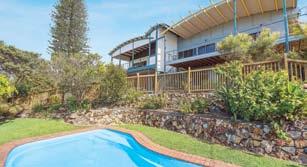


Facts & Features: House Size: 160m2 About: 1947 built free-standing w original polished timber floors throughout, stone stairs & walls; fireplace; aircon/fans; 3-levels w 3 bedrooms (1 x king, 1 x 2 singles, 1 x single), all w shutters & builtin robes; ensuite to master bedroom + family bathroom w bath, toilet, shower & laundry – all w white tiles; living area w 2 x large sofas, ottomans, flat screen digital TV & DVD + doors out to terrace w BBQ; VJ-profile internal doors; custom-made stair guards for small children; chandelier in stairwell; single garge+ visitor parking; roof replaced in 2020 Terraces: main 4.7m x 4.5m w awning poolside wraps dining, living and east-side to kitchen; rooftop 3.7m x 4.7m off 1st level; attic 2.3m x 6m used as storage Kitchen: at rear entrance w French windows; white VJ-profile cabinetry; Miele dishwasher; Samsung 2-door fridge; Electrolux oven + cooktop History credit Noosa Library: Alderly Cottage, also known as Annie, a 2-storey, shingle roofed, Tudor-inspired cottage designed & constructed using traditional methods, in 1947 by Harold (Harry) Davis & wartime friend Jaun (Jack) Carl Grummette. It was one of three built as part of Davis’ plan to construct a modern Tudor village on the 7-acres he had purchased in 1947 in Little Cove. The other two mock Tudor cottages were demolished by developers in the 1980s Alderly: Cottage w pool surrounded by gardens; outdoor shower Location: Walk to Little Cove through gardens via nearby Park Road boardwalk to Hastings Street, Noosa Main Beach & beachside restaurants; backdrop of rainforest w local birdlife & fauna incl koalas; doorstep to First Point & worldfamous Noosa National Park & surfing reserve ● HOME ESSENTIALS
COTTAGE BY THE SEA IN LITTLE COVE
SIMPLY cross Park Road and your toes would be in the white sandy beach, as well as being totally immersed in the sub-tropical surrounds of alluring Little Cove Beach where the glistening waters of Laguna Bay, meet the lush Noosa National Park. In-between and directly opposite the beach is a prized one-in-a-million unique cottage. It not only shrieks best-ever holidays, but potentially is a red-hot investment dream come true. The free-standing hidden treasure, located within the highly sought-after Alderly boutique complex, has entrances from both Park Road and Mitti Street. Imagine north-facing indoor/outdoor connectivity is via French doors to a dazzling pool and garden-side terrace. It almost wraps the entire cottage with alfresco options for entertaining or just fun in the sun after splashing around in the pool. Let’s not forget there’s also a rooftop terrace on the upper level with filtered views to Laguna Bay. Inside, the aesthetic is beach-chic with a monochromatic palette and superb original features such as polished timber floors and tactile stone walls. The living area has two generous-sized sofas, a dedicated dining space, and a combustion fire for those rare extra-cool nights. On the second level is a study with a desk for those who like to ‘stay connected’ or, as it is currently, a single bedroom. The king master suite has built-in robes, plantation shutters and a white tiled ensuite. The twin bedroom has built-in robes and access to a full bathroom with separate shower, sumptuous bathtub and laundry facilities. The bright sunny kitchen with French windows, white walls and VJ-profile cabinetry, plus all the essential appliances and accoutrements, has a barn door opening to a private courtyard. Enjoy the best of both worlds by having a stand-alone cottage in a gloriously maintained garden setting with today’s expectations of every contemporary necessity.
noosatoday.com.au Friday, 19 August, 2022 | NOOSA TODAY 11
HOME FOCUS
Address: 3/15 Mitti Street, NOOSA HEADS Description: 3 bedrooms, 2 bathrooms, 1 garage Price: $4.9M Inspect: By appointment Contact: Eric Seetoo 0419 757 770, TOM OFFERMANN REAL ESTATE
The path through the botanical-like tropical gardens leads to Park Road, which is just opposite the bay of Little Cove. Envisage taking the environmental-awardwinning boardwalk to the world-famous surfing reserve on the right or go left for a short stroll to Hastings Street, the heart of Noosa Heads. Along the way, drink in the views across Laguna Bay and beyond to the Noosa North Shore and Coloured Sands, and why not sit for a while, to admire the most brilliant sunsets. “This is a one-off opportunity to secure one of the most popular and certainly unique properties in this much soughtafter location,” extols Tom Offermann Real Estate agent Eric Seetoo. “It affords the convenience of Little Cove with everything wonderful to eat, see and experience, yet safe in the knowledge the investment is underpinned by a never-ending pool of future buyers, all seeking the same enviable financial success with a piece of Noosa Head’s hottest real estate.”


· Location: cul de sac; 850m Hastings Street & Noosa Main Beach; 15-mins walk to Noosa National Park & Surfing Reserve; Noosa Spit Recreation Re serve, Weyba Creek Bushland Reserve North & Weyba Creek Conservation Park; close to Noosa Sound restaurants & services + Noosa Village; 3-mins to Noosa Riverside Ravenwood Park and Culgoa Point; 35min drive to Sunshine Coast Airport w domestic/international connections; 105min drive to Brisbane International Airport.
● COVER
· About: 2 levels; wedge shape block; built 6 years ago; small cul de sac; dble timber framed glass panelled front door; Italian terrazzo tiles throughout; 7m high entry ceiling & skillion roof w 4.7m ceil ing over dining; 2 living areas, upstairs & downstairs; 5 carpeted bedrooms incl ground floor master suite w terrace ac cess + 2 additional w 1 ensuite bath room + upstairs 2 w built-in robes, family bathroom, sep WC + lounge/media room w terrace access
Facts & Features: · Land Size: 667m2 · House Size:420m2 · Pool/Terrace: 5.3m x 5.5m; under cover 3.9m x 7.3m; Merbau decking
MAGNETISM OF NOOSA SOUND - A STROLL TO BEACH
“With so many naturally beautiful assets, waves peeling off the point at Noosa National Park, idyllic yearround temperatures, the north-facing protected Noosa Main Beach, plus Quamby Place, Gympie Terrace also so close, the magnetism of the location is indisputable.”
Description: 5 bedrooms, 3 bathrooms, 3 garage, pool Price: $4.55m
ON THE
Inspect: By Appointment Contact: Nic Hunter 0421 785 512 and Mal Cox 0407 708 860, TOM OFFERMANN REAL ESTATE HOME ESSENTIALS
THE magnetism of an envy-inducing residence which evokes privacy and mystery from the cul de sac, located a mere 8-minute walk to Hastings Street and Noosa Main Beach, is undeniable. And there is no time like now to indulge in that Noosa Sound lifestyle. Open the oh-so-tall bespoke timberframed glass panelled doors of a classy yet serene sculptured form,step into a gallery-like foyer where natural light, thanks to a soaring ceiling and the atrium’s glass wall, dances over what appears to be endless glamorous Italian terrazzo floor tiles. Eyes are immediately drawn to the massive centerpiece of the residence – abundant use of plantation shutters in the open plan yet defined living and dining areas, which have the added benefit of a cathedral-style peak, while lanky disappearing doors on the south side, morph in a seamless fashion to outdoors. The covered terrace with Merbau decking, has integrated barbeque facilities, extends almost around the dazzling pool and the rear and side gardens are fringed with tropical plants. No matter the reason or the season, it certainly all adds immense entertainment value to the residence. Commensurate is the on-trend bright white, galley-style kitchen with stonetopped island and 2-pac cabinetry, a clear pane splashback looking out to the Bromeliad-dotted garden, plus the latest induction cooktop and double ovens. Additional bench space also an integrated dishwasher in the butler’s pantry will delight anyone channeling Nigella Lawson. For those seeking a slumber zone without stairs there will be sweet dreams in the north wing where the over-size master suite has a walk-in robe and muted mushroom-tiled ensuite, as well as access to the pool terrace. Also on this level are two additional bedrooms. One has a walkin robe and ensuite, the other has a builtin robe, customised cabinetry, is currently used as an office, and both have a garden outlook.Upstairs, a lounge/media room with a terrace, runs the width of the residence on the east side, and two king-size bedrooms in the north wing have built-in robes and share a family-size bathroom. Worth noting especially when boys’ toys and watercraft are part of coastal living, the triple garage with epoxy flooring has serious storage including a deep recess for say a jet ski also a high ceiling to accommodate a luxury boat such as a 6.4m high boat trailer. Need more? There is also ample off-street parking.
· Inventory: negotiable
Address: 10 Key Court NOOSA HEADS
“Location and lifestyle, modern and marvelous, are absolute key to everything here,” comment Tom Offermann Real Estate agents Nic Hunter and Mal Cox, “especially when you consider the residence is surrounded by muchadmired and sought-after multi-milliondollar contemporary residences on tightly held Noosa Sound, and it is so close to sophisticated Hastings Street with its myriad boutiques, cafes, beachside restaurants, bars and galleries.
12 NOOSA TODAY | Friday, 19 August, 2022 noosatoday.com.au
· Exterior: massive skillion roof over living area; atrium w giant bromeliads; outdoor shower; heat pump hot water system; irrigation system for gardens and lawn
· Kitchen: galley-style w clear glass pane splashback & garden outlook; 3m stonetopped island w 2-pac cabinetry, soft close drawers; AEG induction cooktop + dble oven; butler’s pantry w Bosch dish washer; outdoor kitchen w integrated BBQ


noosatoday.com.au Friday, 19 August, 2022 | NOOSA TODAY 13


14 NOOSA TODAY | Friday, 19 August, 2022 noosatoday.com.au Proudly Richardson&Wrench Noosa | 07 5447 4499 www.rwnoosa.com.au 23 Hastings Street, Noosa‘Trusted Respected & Operating for Over 30 Years’ SpringAuctions NOW IS THE TIME TO AUCTION WITH R&W ! Get in now while buyer interest still remains high and take advantage of our Spring auction campaign. Our experienced sales team have a proven track record of successful results. Timing is everything, don’t let this opportunity pass you by. Talk to us today. We are available 7 days a week. SOLD SOLD SOLD SOLD SOLD SOLD SOLD SOLD SOLD SOLD SOLD SOLD SOLD SOLD SOLD 12563106-SN33-22


noosatoday.com.au Friday, 19 August, 2022 | NOOSA TODAY 15 Proudly Richardson&Wrench Noosa | 07 5447 4499 www.rwnoosa.com.au 23 Hastings Street, Noosa‘The Best Reputation in Real Estate’ Richardson&Wrench - Meticulously presented single level custom built home - Built on an impressive elevated 630sqm corner block - North facing alfresco entertaining, garden shed, water tanks - Enormous double garage and multi vehicle off-street parking - Close to Schools, Main Beach & Noosa Junction Auction Wednesday 31 August 2pm Inspect By Appointment 14 Hollyhock Crescent, Noosa Heads 3 bed | 2 bath | 2 car | pool - Mid floor beachfront apartment with stunning ocean views - Fully furnished, ducted air conditioning throughout - Newly renovated complex includes new pool & onsite cafe - Secure onsite parking with lift access - Strong holiday income plus tax depreciation benefit Price Guide $4.15 Million Inspect By Appointment 214 ‘Netanya’ 71 Hastings Street Noosa Heads 1 bed | 1 bathFrank Milat 0438 528 148 Shane McCauley 0403 646 930 Rick 0411Daniel737767 AUCTION 12563171-HC33-22


NEXT-LEVEL LUXURY HINTERLAND HIDEAWAY
The lines between indoor and outdoor living are blurred with banks of 2.7m-high centre pivot doors that create an effortless connection with the patio. A bathroom, with a separate water closet, is also set in this section of the home with a covered walkway connecting to the bedroom wing. Both the bedrooms are a great size and have built-in robes including your primary bedroom with a builtin desk, its own entry and easy access to the second bathroom. Adding to the appeal of this one-of-akind home are the Daikin air-conditioning systems, the LED lighting and the custom internal doors and fixed glass. A fire pit awaits those cosy winter nights and there’s also 3-Phase power, a new water bore, 50,000l of rainwater storage and parking for up to eight vehicles. A separate and self-contained guest cabin is ready to accommodate loved ones and offers a bathroom, a kitchen and an outdoor lounge with a fire pit. The property is enveloped by nature with land for wildlife and passage for koalas, deer, kangaroos and wallabies. All this is set along a quiet cul-de-sac street just 10 minutes from the vibrant centre of Cooroy with attractions such as the Butter Factory Arts Centre, the 20 20 Gin Distillery and a multitude of cafes and restaurants to choose from. Nearby access to the Great Noosa Trail Walks, the Majestic theatre in Pomona and less than 20 minutes from Tewantin. Easy access to the M1 makes for a hassle-free commute and you’re also close to all the world-renowned attractions of Noosa Heads. ●
Address: 359 Old Tewantin Road, LAKE MACDONALD Description: 2 bedrooms, 2 bathrooms Price: On application Inspect: Saturday 10am-10.30am Contact: Melanie Primmer 0448 966 867, RICHARDSON & WRENCH
HOME FOCUS
16 NOOSA TODAY | Friday, 19 August, 2022 noosatoday.com.au
HOME ESSENTIALS
SAY goodbye to the hustle and bustle of daily life and escape to your very own piece of pristine paradise with this show-stopping haven. Architecturally designed to delight, this remarkable residence exudes style and sophistication and has been meticulously crafted for those who appreciate fine attention to detail and quality. You will live on a sprawling 9.96 acre heavily treed parcel with patches of rainforest, a rambling creek, an abundance of native wildlife and glimpses of the ocean to admire. The private and picture-perfect outlook will have you enthralled for hours on end while 1.5 to 2 acres have been cleared and are ready for you to enjoy. The custom-built primary residence is simply spectacular and has been tailored to embrace its natural surroundings. The unique floorplan boasts two oversized bedrooms and two bathrooms along with an abundance of living space where you can rest and recharge at the end of the day.For those who love to cook, the kitchen will be a culinary oasis complete with soft-close cabinetry, high-end Bosch and Euromaid appliances, sweeping benchtops and statement lighting. There’s also a combined laundry and butler’s pantry while the free-flowing layout ensures the eager chef never has to feel removed from the fun.From the kitchen, you can overlook the light-filled dining and lounge room where a soaring 5m ceiling towers overhead plus there are polished concrete floors, a custom-designed two-way fireplace and a bespoke daybed along one wall.


Address: 29/2 Noosa Drive, NOOSA HEADS Description: 3 bedrooms, 2 bathrooms, 1 garage Price: Price Guide $3.5 Million Inspect: By appointment Contact: Rick Daniel 0411 737 767 and Frank Milat 0438 528 148, RICHARDSON & WRENCH
noosatoday.com.au Friday, 19 August, 2022 | NOOSA TODAY 17
LUXURY APARTMENT WITH GREAT POSITION
HOME FOCUS
APARTMENT 29 Noosa Crest captures that spectacular north-facing panorama across Laguna Bay to Little Cove and the Noosa north shore, this luxury holiday apartment takes full advantage of a premium elevated position. Tastefully renovated this elegant apartment looks over the clean lawn and not other apartments, so you feel completely private and you will forget you are in a complex of anyThekind.stylish high end renovation captivates the sparkling blue ocean backdrop, while flowing contemporary design and cool sea breezes conspire to create a true coastal oasis that is perfectly suited to Noosa’s chic holiday lifestyle.
‘Noosa Crest Resort’ truly offers one of Noosa’s best positioned resorts - no need for a car here, just a quick stroll down a private boardwalk nature trail to the river, directly across the road from Hastings Street, Noosa’s Main beach and some of the best dining and shopping experiences on the Sunshine Coast.. You can come and go with privacy and ease without any parkingLightheadaches.filledyetprivate, this large apartment is adorned with sleek tiles and crisp neutral tones, finished with high quality fixtures. This is exceptional and flawless with immaculate finishes and a low maintenance, luxurious lifestyle. The spacious open plan living is a light-filled space with huge stacker doors opening onto a large entertaining terrace with glass panels where sweeping ocean and hinterland views infiltrate every aspect of your daily living. The centrally located, stylish gourmet kitchen is surely the focal point of the home with a Caesar stone island bench, glass splashback and Miele appliances. It consists of three large carpeted bedrooms all with built-ins, ceiling fans and featuring plantation shutters to give that coastal feeling. The master suite flows onto the terrace which also enjoys those incredible views and consists of a walk in robe and a generous size ensuite with his and hers Recreationsinks.and relaxation is the key to the continual success of Noosa Crest Resort, this prestigious position and professional onsite management team ensure great occupancy and repeat loyal guests. Owners can use the apartment throughout the year or use as an investment or a holiday lock-up and leave. Noosa Crest facilities include full size floodlit tennis court, sauna, two swimming pools, two heated spa’s and private access to Hastings Street. This stunning property is in a perfect position close to just about everything and everywhere you will want to be. This property is a must to inspect! ● HOME ESSENTIALS
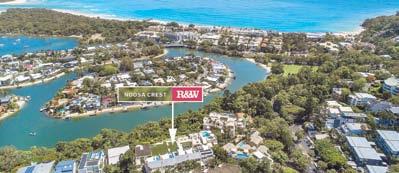


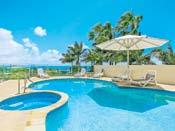
18 NOOSA TODAY | Friday, 19 August, 2022 noosatoday.com.au
●
· Powder room on the ground floor
· 5-minute drive to Hastings Street and Noosa Beach Council Rates: $1,997.32 p.a. approx. Rental Return: $900.00 per week approx. Body Corporate insurance for 2/53 Bluefin Crt, approx. $1800.00 per annum
Address: 2/53 Bluefin Court, NOOSAVILLE Description: 3 bedrooms, 2.5 bathrooms, 2 garage, pool Price: from $1,300,000 Inspect: Saturday, 20 August 12:00noon - 12:30pm
Contact: Sam Plummer - 0412 585 494 - sam@noosaestateagents.com and Angela Wood - 0407 147 521 - angela@noosaestateagents.com, NOOSA ESTATE AGENTS
· Kitchen with laminate benchtop, walk in pantry, 600mm gas cooktop, 600mm oven, and single draw dishwasher
· Single garage with internal access plus carport
PRIVACY AND CONVENIENCE ASSURED
· Tiles and carpet on the ground floor, carpeted on the upper level
· Upper-level master bedroom with air conditioner, ceiling fan, generous walk-in robe, ensuite and private balcony
· Spacious open plan living, sliding doors to the outdoor alfresco overlooking the plunge pool
· Separate laundry with storage
· Central bathroom with bath on upper level
· Pool - chlorinated saltwater plunge pool
· Compliant smoke alarms
· Quiet location, easy walk to river, shops & restaurants
· Quality duplex, cul-de-sac location
HOME FOCUS HOME ESSENTIALS
· Construction is concrete block rendered with tiled roof
· Ceiling fans through dining and living area plus split system air conditioner
· Private secure landscaped gardens
· Two guest bedrooms on upper level with ceiling fans and robes
LOCATED in the quiet residential enclave of Noosa Waters and yet conveniently located to all that Noosa has to offer, Bluefin Court is a perfect find. Open plan in design, with sliding doors opening out to the outdoor alfresco area and pool, offering plenty and/or room to sit, relax, unwind and or entertain your friends andThefamily.smart compact kitchen offers functionality and is well thought out, providing ample bench space, substantial cupboards, and drawers. There is a separate powder room located on the ground floor and internal entry to the single garage.Upstairs features include 3 generous bedrooms, master with ensuite, walk-in robe, ceiling fan, a reverse cycle split system, and sliding doors opening out to a private balcony. The other 2 guest bedrooms offer built-in robes and ceiling fans and serviced by the main bathroom. 2/53 Bluefin Court, is a flat level 800m walk to the ever-popular Gympie Terrace riverside hub offering chic cafe’s, buzzing bar scene and boutique shopping. Alternatively, a 10-minute walk to the Noosa Village Shopping Centre and a 5-minute drive to Noosa’s famous Hastings Street, Main Beach and National Park.


noosatoday.com.au Friday, 19 August, 2022 | NOOSA TODAY 19 SCOTT COWLEY 0414 544 420 Quietly located in a sought after leafy enclave, this immaculate home has been thoughtfully transformed with modern coastal living in mind. Spacious light filled open plan living areas, generous north facing entertainers deck, glistening in ground pool & central kitchen with a servery window to the outdoor entertaining. A second living area provides quiet space, the master bedroom overlooks the pool & two guest rooms have built-in robes & ceiling fans. Fully fenced yards are ideal for pets or children & provides security. Great location, close to Noosa Junction shopping, Hastings Street, Noosa Main Beach & the Noosa River. INSPECT SATURDAY 20TH AUGUST 12:00 - 12:30PM KELSIE MELVILLE 0424 904 301 PRICE GUIDE FROM $1,600,000 19 SLEEPY HOLLOW DRIVE, NOOSA HEADS NOOSAESTATEAGENTS.COM a 3 b 2 c 2 d 1 e 602M2 12563082-DL33-22


20 NOOSA TODAY | Friday, 19 August, 2022 noosatoday.com.au
In property marketing, the value of print advertising cannot be overstated. Some real estate agents are telling sellers all buyers (and potential sellers), will see the property on the Internet, but that is far from the truth. “Sellers are missing opportunities which could be costing them dearly” explained Tom Offermann, eponymous real estate company principal. “We gather an enormous amount of data which dramatically demonstrates how powerful print media is. The numbers at open houses can quadruple when an ad appears in Noosa Today, and the traffic to websites clearly spikes as readers head there for more information. Property editorials, auction results and up-to-the-minute stories in early general news, are also invaluable.”
“Add cost. Marketing is not the place to take shortcuts if you are aiming for a premium price, and advertising in the local newspaper is inexpensive. I feel sorry for property owners who have been advised to solely advertise on the web. It would be nice if it was that simple, but the truth is it is not. A lot of work goes into designing and running a comprehensive marketing campaign and agents who think web-only advertising is the quick fix, are taking risks with their client’s investment.”-TomOffermann
Don’t let
Tom Offermann Principal of Tom Offermann Real Estate
your home get lost in the digital noise Ask your agent - will my home be seen in a local newspaper and online by an engaged local audience? facebook.com/NoosaToday noosatoday.com.au info@noosatoday.com.au ** RP Data: Properties that combined print and online advertising on average generated a higher sale price. 12562144-JW33-22


Tallow Residences is both the embodiment and culmination of what has become one of Noosa’s most celebrated development precincts – Settler’s Cove. These stunning elevated apartments, set amongst natural bushland with views to Noosa Hill, showcase design excellence. Superb craftsmanship and exceptional finishes live up to Settler’s Cove benchmark in every aspect. Tallow Residences is your last opportunity to call this very special part of Noosa home. Visit www.tallowresidences.com.au or call 1300 10 10 50 Display apartment open by appointment. QUINTESSENTIALLY SETTLER’S COVE FIRST75%SOLDINRELEASE 12561994-DL32-22


22 NOOSA TODAY | Friday, 19 August, 2022 noosatoday.com.au 07 5447 7000 www.hinternoosa.com.au 30 Maple Street, Cooroy sold@hinternoosa.com.au *data sourced from Pricefinder (Based on a rolling 12 month period to July 2022) We are meeting new buyers every day who are on the search for their new home in the Noosa Hinterland. If you are thinking about selling or curious as to what your property may be worth, now is the ideal time to book in your free property appraisal with a Hinternoosa sales agent. Get in touch today on 07 5447 7000. Noosa Hinterland Property Growth Remains More Robust Than Other Major Markets Property markets around the country continue to cool off the back of rapidly rising interest rates, but new data shows there are a large number of suburbs still seeing growth in QLD and more specifically the Noosa Hinterland. Noosa Hinterland Growth Belli Park 71% Black Mountain 15.5% Cooroy 28.4% Cooroibah 44.5% Cooran 17% Pomona 22.7% Ridgewood 38.8% Tinbeerwah 19.6% Verrierdale 22.6% Weyba Downs 21.8% Doonan 40.8% Eumundi 66.6% Eerwah Vale 56.2% Lake Macdonald 33.5% Pinbarren 44.1% 12562928-MC33-22

IF you’ve been looking for a solid family home on a private, easy-care small acreage close to Cooroy, this lovely property ticks all the boxes. Set well back from the road, the acre of near-level land is fully usable, with a dog-fenced section perfect for the kids and pets to play. The brick home has been lovingly maintained, with lifestyle features including ducted air-conditioning and stylish plantation shutters. Living will be easy with spacious dining and lounge areas. Your family chef will appreciate the large Hamptons-inspired modern kitchen, with its stone benchtops, island bench, and Belling 900ml cooker with dual oven and gas cooktop. An elevated deck wrapping around two sides overlooks the lovely gardens and is the ideal place to share meals and drinks with family and friends. The generous master suite features a walk-in robe and ensuite, while the other three bedrooms have built-ins. The home is finished off with a double lockup garage, and a 2-bay, 9m x 7m shed provides further vehicle accommodation or space for your workshop or storage. Established, low maintenance gardens surround the property, which also includes a dam and pretty creek. Solar panels will help lower your power bills, and water should be plentiful with approx. 1 x 3000 and 2 x 1000-gallon rainwater tanks. Situated in a quiet neighbourhood, the property is four minutes’ drive to the heart of Cooroy with its schools, cafes, shops and public transport. Noosa Heads is just 21 minutes from your doorstep for beach days, national park walks and shopping or dining on Hastings Street. With nothing to do but move in, this fabulous property would suit families, investors, or anyone seeking a great home on small acreage. Arrange your inspection with our agents soon to avoid missing out.
noosatoday.com.au Friday, 19 August, 2022 | NOOSA TODAY 23 FOUND WE’LLPERFECTYOURPROPERTY?KEEPITTHATWAY. Need a Fresh Start and your Property Managed with Professional Service CALL PIP 0419 239 855 • LEANNE 0455 912 910 202109176011_1-HC39-21
● HOME FOCUS HOME ESSENTIALS Address: 18 Swift Drive, COOROY Description: 4 bedrooms, 2 bathrooms, 4 garage Price: Offers Over $1,100,000 Inspect: By appointment Contact: Kess Prior, 0404 344 399 - kess@hinternoosa.com.au, HINTERNOOSA
PRICE REDUCTION, MOTIVATED SELLER


HOME
● FOCUS HOME ESSENTIALS
Address: 36 Belmore Terrace, SUNSHINE BEACH Description: 4 bedrooms, 2 bathrooms, 1 garage Price: AUCTION 17TH OF SEPTEMBER | ON-SITE | 12 NOON Inspect: Contact Agent Contact: Mike Hay 0417 624 059, CENTURY 21 CONOLLY HAY GROUP
24 NOOSA TODAY | Friday, 19 August, 2022 noosatoday.com.au
ULTRA COOL BEACH HOUSE WITH VIEWS
THIS recently renovated abode exudes laid-back luxury and coastal style with shimmering ocean views. You will love living in this sought-after pocket of Sunshine Beach just moments from the vibrant village with boutique shops, cafes, restaurants and the water’s edge all at your fingertips.Theenviable North East aspect invite soft natural light and cooling sea breezes into the spacious multi-storey floorplan. Entry is via a private deck, with a storage cupboard for all your beach toys, while inside, you will find a central staircase that connects you to the upper level. Here, an open-plan kitchen and dining zone will be a favourite place to gather with loved ones as you flow freely out to the expansive deck where you can host guests and take in the outlook. On-trend flooring and crisp white walls enhance the contemporary appeal including in the sleek chef’s kitchen with stainless steel appliances, ample storage and waterfall-edge stone benchtops. Upstairs you will find two large bedrooms, including one with a built-in robe and another with a walk-in robe, a private balcony and ensuite access to the two-way mainDownstairs,bathroom.you will find two more bedrooms, both of which open to the outdoors, and one with a built-in sink and an attached two-way bathroom. There’s a ground-floor single garage, storage room and a family room where you can rest and recharge before moving outside to the second deck with views over the sparkling in-ground pool. Your new home goes on to include air-conditioning and ceiling fans, a single carport and driveway parking, landscaped gardens and so much more. All the glitz and glamour of Noosa Heads and Noosa Junction are only moments away and you’re also close to the Noosa National Park with walking tracks and pristine beaches to explore.Toview the property please contact Mike Hay 0417 624 059.


noosatoday.com.au Friday, 19 August, 2022 | NOOSA TODAY 25 5 22 BED BATH CARNOOSA NORTH SHORE 33 NOOSA RIVER DRIVE 07 5447 2451 century21noosa.com VIEW OPEN SATURDAY 11.00 AM - 12.00 PM OPEN WEDNESDAY 4.30 PM - 5.15 PM TREVOR MANGELS 0411 644 254 A BOATIE’S PARADISE SET ALONG NOOSA RIVER AUCTION DAVID CONOLLY 0438 259 956 FRIDAY 23RD OF ON-SITESEPTEMBER10.00AM• Five bedrooms, two bathrooms • 28.7m of deep-water frontage to Noosa River • Ample car parking on the grounds • Wrap around deck on upper-level • Fantastic river views and sunset • 1088sqm of riverfront land • A short boat ride to Tewantin CBD • Timber jetty • Concrete boat ramp • Dry dock 12562774-HC33-22


HOME FOCUS HOME ESSENTIALS Address:
· Live just 10 minutes from Tewantin and only 20 minutes from Noosa Heads ● 96 Clearview Drive, LAKE MACDONALD Price: By Negotiation Inspect: By appointment Sam Walker - 0400 730 457 and James Rigby - 0458 338 992, WALKER & RIGBY ESTATE AGENTS
· Gentle sloping 11,900sqm of vacant land by enveloped by lush mature trees with filtered views of Lake Cooroibah and the Noosa north shore.
LIVE AMONGST NATURE AND BUILD
Contact:
· Just moments from parks, Lake Macdonald and the vibrant hub of Cooroy
LIVE amongst nature and build your dream home on this idyllic, private block. An opportunity not to be missed. Welcome to 96 Clearview Drive Lake Macdonald, where you can build your hinterland hideaway on your very own piece of natural paradise. A virtual blank canvas to create the life of leisure you’ve always wanted.Thisis an exciting opportunity for you to own and live on a private picturesque parcel of land facing northeast towards Noosa North Shore, surrounded by a local forest reserve, with a dam waterway and rambling creek at the base of the block and an abundance of native wildlife. For horse lover’s you are located at the end of a quiet street which has direct access to the many horse trails in the local state forest which is a massive bonus, plus you are a short drive to the many other horse trails and riding area’s the Noosa hinterland has to offer. The gentle sloping 11,900sqm cleared and ready to build lot size is ideal for a wide range of home styles a double level home will take in the great breeze’s and filtered views of lake cooroibah and the Noosa north shore. The Rural Residential zoning will attract a wide range of buyers imagining a life closer to nature where you can take in the peaceful surrounds. The block has been cleared and is ready for you to enjoy and build the dream home and lifestyle you’ve always wanted (STCA). All this is set along a quiet cul-desac street on a scenic hinterland drive moments from Lake Macdonald and the Noosa Botanical Gardens, 10 minutes from the vibrant centre of Cooroy and less than 20 minutes from Tewantin. Easy access to the M1 makes for an easy commute and you’re also close to all the world-renowned attractions of Noosa Heads. To inspect this large unmissable block contact Sam Walker on 0400 730 457 or James Rigby on 0458 338 992 to arrange a site meeting and walk through. Standout features of this block: · Serene and private sanctuary ready to create the home of your dreams
· Build your family’s ideal home, raise animals and grow your own food
26 NOOSA TODAY | Friday, 19 August, 2022 noosatoday.com.au 221 12563312-HC33-22


· 4 bedrooms, 2 bathrooms, 2 living areas
noosatoday.com.au Friday, 19 August, 2022 | NOOSA TODAY 27 SUNSHINEBEACHREALESTATENOOSABEACHSIDEBOUTIQUEREALTORS www.sunshinebeachrealestate.com.auVISITOUROFFICE 36DukeStreet,SunshineBeach,QLD4567 ORCALLUS(07)54472999 3/9HENDERSONSTREET SUNSHINEBEACH AUCTIONTHISSATURDAY Unit 3“Nimoola”islocatedin aboutiquecomplexofonlythree, framedbylush,leafytropicalgardens,just ashortstrolltovillage andbeach,isthisstylishlyrenovatedlight-filledapartmentwith oceanviews. •Oceanviewsfromnorth-eastfacingbalcony •Stylishlyrenovatedlight-filledapartment •Elegantnewbathroom &kitchen •Boutiqueestablishedcomplexofonly3 AUCTION 20AUG22 11AMONSITE INSPECT FRI19AUG 1-1.45PM SAT20AUG 10-10.45am A 2 B 1 C 1 E AGENT KathyWise M:0407968300 EFFORTLESS, ELEGANT, EUMUNDI PLEASER THIS elegant contemporary home, built in 2015, is perfectly positioned on a fully fenced north-east facing corner block directly opposite a leafy nature reserve, to maximise natural light, elevation, gentle breezes, outlook, and privacy! Across a single level with a well designed floor plan to facilitate functional family-friendly living with good separation as well as communal space; the home comprises four bedrooms, two bathrooms, two separate living areas, central galley kitchen with walk-in pantry, covered northeast facing alfresco patio, separate laundry, and double lock up garage. Split system air-conditioning in master and main living, ceiling fans throughout, easy-care flooring, stone benches in kitchen, gas cooktop, separate bath and shower in main bathroom, built-in robes in three bedrooms and walk-in robe in master, plus tasteful modern decor - are all existing features of note. The 700m2 landscaped block is fully fenced with expansive grassy space for children and pets to play outdoors, as you keep a watchful eye on them over a cuppa on the patio - more sunshine, less screen time! There’s plenty of room to put in a pool and/or shed, if desired, and just like the inside, the outside is also low maintenance.Currentlytenanted until August 2023 and returning $650 per week, with an up-to-date rental appraisal now predicting $750 could be achieved - this is a solid, attractive investment to add to any portfolio. For those intending to occupy, you have plenty of time to pack, prepare, and sell your current property prior whilst planning the move, earning an income to pay down your mortgage in the meantime. Located in a whisper-quiet pocket on the outskirts of the delightful village of Eumundi, famous for its biweekly markets along with its historic buildings - this is a truly wonderful place to live and invest. From here all local amenities are within walking distance including rail to Brisbane, sporting fields/aquatic centre, parks including skatepark, local shops, and dining. Access to the Eumundi-Noosa Road connecting you to Noosa in 20 minutes, and access to the Bruce Highway taking you north or south - is just a few minutes’ Outstandingdrive. buyer in one of the most loved hinterland communities on the Sunshine Coast; invest in your slice.
· Contemporary home on fenced 700m2
Contact: Kathy Wise 0407 968 300, SUNSHINE BEACH REAL ESTATE
· Kitchen with gas cooktop and walk-in pantry
· Plenty of room for a pool and/or shed
· 20 min to Noosa, 90 mins to Brisbane ●
· Corner position, sunny north-east aspect
· Quick easy access to Bruce Highway
· Currently rented until August 2023
· Opposite leafy parkland in quiet cul-desac
· Walk to town, rail, parks, and markets
· DLUG, easy-care landscaped gardens
Address: 2 Brushbox Place, EUMUNDI Description: 4 bedrooms, 2 bathrooms, 2 garage Price: Offers over $960,000 Inspect: On application
HOME FOCUS HOME ESSENTIALS
· Covered alfresco entertaining patio


171EwartsRoad 862 Auction Wythes RealEstate0415111 370
BlackMountain Saturday20thAugust 10.00-10.30am
CoolumBeach Saturday20thAugust 11.00-11.30am
Saturday20thAugust 3.45 -4.15pm277ColesCreek Cooroibah Saturday20thAugust 12.00-12.30pm Friday19thAugust 10.00-10.30am 10.00-10.30am359OldTewantin
1Evans Road 322 OffersConsidered Wythes RealEstate0407730987
426 O/O$1,350,000 Wythes RealEstate0415111 370 Boreen Point
Road 312 O/O$899,000 Wythes RealEstate0415111 370
14/1BarraCrescent 221 ByNegotiation Walker &RigbyEstateAgents0400730457
11.00-11.45am849
Road 22 -Contact AgentRichardson &WrenchNoosa54474499 11.00-11.30am 192ForestAcresDrive 322 O/O$1,495,000 Wythes RealEstate0415111 370 2.15-2.45pm 12 HilltopCourt5 32 OffersOver$1,495,000 Hinternoosa0404344399 NoosaHeads Friday19thAugust 2.00-2.30pm 1722/5LakeviewRise 322 NEGFROM$3,375,000 Reed &Co.EstateAgents0438695505 3.30 -4.00pm37ViewlandDrive 432 AUCTION Reed &Co.EstateAgents0433641 158 Saturday20thAugust 10.00-10.30am5/18ParkRd 211 Auction TomOffermann RealEstate0417600 840 10.00-10.30am2232/15LakeviewRise 222 PRICEONREQUESTReed &Co.EstateAgents0438695505 10.30 -11.00am222/1AlbaClose 221 AUCTION Reed &Co.EstateAgents0409446955 11.00-11.30am839/100 ResortDrive 221 PriceGuide$1.2MillionRichardson &WrenchNoosa54474499 11.00-11.30am535/6 SedgelandDrive 322 NEGFROM$1,375,000 Reed &Co.EstateAgents0438695505 11.00-12.00pm 741/61NoosaSpringsDr 54 2+O/O$3,500,000 LianneWamsteeker Real Estate0411556730 11.15-11.45am20/8 SerenityClose 333 EXPRESSIONSOFINTERESTReed &Co.EstateAgents0409446955 12.00-12.30pm37ViewlandDrive 432 AUCTION Reed &Co.EstateAgents0433641 158 12.00-12.30pm 19 SleepyHollowDrive 322 PriceGuide$1,600,000 NoosaEstateAgents0424904301 1.00 -1.30pm27DavidStreet 754 BUYERSGUIDE$3,650,000 Reed &Co.EstateAgents0438695505 1.00 -1.45pm 13/10Serenity Close 332 By NegotiationCentury21ConollyHayGroup0438259956 1.00 -1.30pm 3CurrawongStreet 421 $1,400,000 NoosaEstateAgents0407 147521 1.00 -1.30pm2/28ViewlandDrive 221 Price Guide$995,000 Richardson &WrenchNoosa54474499 Sunday21stAugust 1.00 -1.30pm7/8QuambyPl 321 ContactAgent TomOffermann RealEstate0414367282 Wednesday24thAugust 12.00-12.30pm27DavidStreet 754 BUYERSGUIDE$3,650,000 Reed &Co.EstateAgents0438695505 NoosaNorthShore Saturday20thAugust 11.00-12.00pm33NoosaRiverDrive 522 Auction23/9/2022Century21ConollyHayGroup0411644254 Noosaville Thursday18thAugust 10.00-10.30am 10 &11/219Weyba Road 111 O/O$600,000 eachLaguna RealEstate0419332973 Friday19thAugust 10.00-10.30am 10 &11/219Weyba Road 111 O/O$600,000 eachLaguna RealEstate0419332973 12.00-12.30pm8/7HowardSt 221 Auction TomOffermann RealEstate0433237422 12.00-12.30pm201/299WeybaRd 211 $629,000 TomOffermann Real Estate0417600 840 12.00-12.30pm2/65BluefinCt 422 Auction TomOffermann Real Estate0418144484 3.00-3.30pm1/111 GympieTerrace 322 PRESENTREASONABLE OFFERS Reed &Co.EstateAgents0438695505 Saturday20thAugust 10.00-10.30am 5MizzenCourt4 22 Auction30thAugust,3PMNoosaEstateAgents0412585494 10.00-10.30am 10 CassiaCrt4 22 OffersOver$875,000 Hinternoosa0487401776 11.00-11.30am31ShireDr 422 $1,550,000 TomOffermann Real Estate0414367282 11.00-11.30am25 RoseAshCrescent 422 $875,000 Hinternoosa0422923851 11.00-11.30am 11/2DolphinCrescent 211 Auction10.00am27/8/2022Century21ConollyHayGroup0438259956 11.00-11.30am 183LakeWeybaDrive 322 Auction29thAugust,3PMNoosaEstateAgents0412585494 11.00-11.30am5/12WilliamSt 422 $1,475,000 TomOffermann RealEstate0418714 653 12.00-12.30pm8/7HowardSt 221 Auction TomOffermann RealEstate0433237422 12.00-12.30pm2/53BluefinCourt3 22 Pricefrom$1,300,000 NoosaEstateAgents0407 147521 12.00-12.30pm2/65BluefinCt 422 Auction TomOffermann RealEstate0418144484 12.30 -1.00pm2/36ElizabethStreet 322 By NegotiationCentury21ConollyHayGroup0410512 364 1.00 -1.30pm6/269Weyba Rd 221 Auction TomOffermann RealEstate0433237422 1.00 -1.30pm99/187GympieTce 321 O/O$785,000 ConsideredLaguna RealEstate0407379893 2.00-2.30pm1/111 GympieTerrace 322 PRESENTREASONABLEOFFERS Reed &Co.EstateAgents0438695505 Wednesday24thAugust 10.00-10.30am 5MizzenCourt4 22 Auction30thAugust,3PMNoosaEstateAgents0412585494 11.00-11.30am 183LakeWeybaDrive 322 Auction29thAugust,3PMNoosaEstateAgents0412585494 11.00-11.30am5/12WilliamSt 422 ContactAgent TomOffermann RealEstate0418714 653 12.00-12.30pm2/65BluefinCt 422 Auction TomOffermann RealEstate0418144484 Noosa Waters Saturday20thAugust 9.30 -10.00am40The Peninsula 432 BUYERSGUIDE$6,250,000 Reed &Co.EstateAgents0409446955 11.00-11.30am46ShipyardCircuit 524 AUCTION Reed &Co.EstateAgents0433641 158 11.00-11.30am 9SeacoveCourt4 22 ByNegotiationNoosaEstateAgents0424904301
18 BrushBoxLane 311 O/O$699,000 Wythes RealEstate0415111 370 LakeMacDonald Saturday20thAugust
7MorningDewClose 423 PriceGuide$1,690,000 Laguna RealEstate0411328488 Cooroy Saturday20thAugust 9.00-9.30am28WattleStreet 412 OffersConsidered Wythes RealEstate0407730987 1.00 -1.30pm 15 MyallStreet 320 OffersOver$799,000 Hinternoosa0422923851 Cooroy Mountain Sunday21stAugust 10.00-11.00am 163CooroyMountainRd 646 O/O$3,200,000 Wythes RealEstate0415111 370 Cootharaba Saturday20thAugust 12.00-12.30pm91Kildeys Road 323 OffersConsidered Wythes RealEstate0415111 370 Doonan Saturday20thAugust 10.00-10.30am276Beddington Road 43 10 PRICE ONREQUESTReed &Co.EstateAgents0409484 159 11.00-11.30am84BotanicaCircuit 426 BUYERSGUIDE$1,875,000 Reed &Co.EstateAgents0409484 159 11.00-11.45am41WattlebirdDrive 542 $2,500,000 Century21ConollyHayGroup0417776 361 12.30 -1.00pm943EumundiNoosa Road 63+5 $2,395,000 Laguna RealEstate0419332973 12.45 -1.30pm20Bowden Road 735 OffersOver$2,495,000 Hinternoosa0404344399 1.00 -1.30pm47 FoxtailRise 533 $1,850,000 neg Wythes RealEstate0414667 740 2.30 -3.00pm39MarnieCrescent 522 O/O$1,475,000 Wythes RealEstate0415111 370 Wednesday24thAugust 12.30 -1.00pm943EumundiNoosa Road 63+5 $2,395,000 Laguna RealEstate0419332973 Eerwah Vale Saturday20thAugust 11.30 -12.00pm29Gees Road 423 OffersOver$1,300,000 Hinternoosa0404344399 Eumundi Saturday20thAugust 11.00-11.45am49BallRd 531 $1,650,000 orN.O.Hinternoosa0487401776 Federal
9Orchard Avenue 211 Low-mid$1m Wythes RealEstate0415111 370 CartersRidge
10.00-10.30am649CooroyBelliCreekRd Saturday20thAugust 1.00 -1.30pm Saturday20thAugust
KenilworthSkyringCr 413 OffersOver$1,100,000 Hinternoosa0404344399
28 NOOSA TODAY | Friday, 19 August, 2022 noosatoday.com.au TimeAddress AB C PriceGuideAgent TimeAddress AB C Price GuideAgent OPENHOMES
Cooran Thursday18thAugust 11.00-12.00pm
ParkCrescent 221 ContactAgentSunshineBeachRealEstate0754472999 11.00-11.30am73WeybaStreet 211 $1,450,000 Laguna RealEstate0404473937 11.00-11.45am2/21 Pacific Avenue 322 ContactAgentSunshineBeachRealEstate0754472999 12.00-12.30pm9/28DukeStreet 322 OFFERS OVER $3,000,000 Reed &Co.EstateAgents0409446955 1.30 -2.00pm 194EdwardsStreet 311 $1,150,000 Century21ConollyHayGroup0411644254 2.00-2.45pm 18 MaherTerrace 632 ByNegotiationCentury21ConollyHayGroup0438259956 3.00-3.45pm 9WildflowerStreet 532 Auction 10.00am3/9/2002Century21ConollyHayGroup0438259956 Tewanti Saturday20thAugust 9.00-9.30am 16 BurgessDrive 422 OffersConsidered Wythes RealEstate0414667 740 10.00-10.30am289MoorindilSt 456 Auction TomOffermann RealEstate0413889 130 10.00-10.30am33HiltonEsp 323 $3,750,000 TomOffermann Real Estate0423972034 12.00-12.30pm 8ForestCourt3 22 ByNegotiationCentury21ConollyHayGroup0438259956 2.15-2.45pm24HiltonTerrace 433 Express SaleCentury21ConollyHayGroup0419676 554 Wednesday24thAugust 10.00-10.30am33HiltonEsp 323 $3,750,000 TomOffermann RealEstate0423972034 11.00-11.30am7/47DoonellaStreet 21+1 O/O$970,000 ConsideredLaguna Real Estate0419332973 12.00-12.30pm289MoorindilSt 456 AuctionTomOffermann Real Estate0413889 130 Auction Diary Cooran Thursday1stSeptember 11.00-12.00pm 171EwartsRoad 862 Thus1st September Wythes RealEstate0415111 370 NoosaHeads Saturday27thAugust 11.00-11.30am5/18ParkRd 221 Auction TomOffermann RealEstate0417600 840 Wednesday31stAugust 2.00-2.30pm 14 HollyhockCrescent 322 AuctionRichardson &WrenchNoosa54474499 Noosaville Friday26thAugust 1.00 -1.30pm2/65BluefinCt 422 Auction TomOffermann RealEstate0418144484 Monday29thAugust 3.00-3.30pm 183LakeWeybaDrive 322 Auction29thAugust,3PMNoosaEstateAgents0412585494 Tuesday30thAugust 3.00-3.30pm 5MizzenCourt4 22 Auction30thAugust,3PMNoosaEstateAgents0412585494 PeregianBeach Saturday3rdSeptember 9.00-9.30am1/22 AvocetPde 332 Auction TomOffermann RealEstate0413319 879 SunshineBeach Saturday20thAugust 10.00-10.45am3/9HendersonStreet 211 AuctionSunshineBeachRealEstate0754472999 wythes.com.au NoosaHinterland Market MythBusters! Tofind outwhatourexpertagentshave tosayaboutthesespeculations,scan the QRcode orvisit wythes.com.au
Saturday20thAugust 9.00-9.45am4/2
noosatoday.com.au Friday, 19 August, 2022 | NOOSA TODAY 29 TimeAddress AB C PriceGuideAgent TimeAddress AB C Price GuideAgent OPENHOMES PeregianBeach Saturday20thAugust 10.00-10.30am36PloverStreet 422 ByNegotiationCentury21ConollyHayGroup0410512 364 10.00-10.40am 11AOriole Ave5 32 $1,998,000 TomOffermann RealEstate0413319 879 11.00-11.30am1/22 AvocetPde 332 Auction TomOffermann RealEstate0413319 879 12.00-12.30pm40 ParakeetCres 422 $1,795,000 TomOffermann RealEstate0413319 879 1.00 -1.30pm2/20 JacanaStreet 211 ByNegotiation Walker &RigbyEstateAgents0400730457 1.00 -1.30pm1/20 JacanaStreet 211 ByNegotiationCentury21ConollyHayGroup0413582670 1.00 -1.30pm 6LyrebirdCrt4 43 $2,198,000 TomOffermann RealEstate0413319 879 Wednesday24thAugust 11.00-11.30am1/22 AvocetPde 332 Auction TomOffermann RealEstate0413319 879 PeregianSprings Saturday20thAugust 10.00-10.30am45BalgownieDrive 422 O/O$1,195,000 Wythes RealEstate0414667 740 11.30 -12.00pm59GainsboroughCrescent 422 O/Over$1,050,000 Wythes RealEstate0414667 740 12.00-12.30pm 4SandpiperPlace 422 Auction Walker &RigbyEstateAgents0400730457 Ridgewood Saturday20thAugust 10.00-10.45am21CarrooLane 74 12 OffersOver$3,000,000 Hinternoosa0404344399 SunriseBeach Saturday20thAugust 12.45 -1.15pm28/75David LowWay 211 BUYERSGUIDE$850,000 Reed &Co.EstateAgents0409446955 SunshineBeach Friday19thAugust 1.00 -1.45pm3/9HendersonStreet 211 AuctionSunshineBeachRealEstate0754472999 2.00-2.45pm 194EdwardsStreet 311 $1,150,000 Century21ConollyHayGroup0411644254

30 NOOSA TODAY | Friday, 19 August, 2022 noosatoday.com.au Islander ResortOpportunity 99/187GympIeTeRRace,NOOsavIlle FORsale O/O$785,000Considered vIeW Sat1-1.30pm 3 A 2 B 1 C D melanieButcher 0407379893 •QuietlylocatedinthepopularIslander Resort, strong returns •This large familysizedtownhousehassomethingfor everyone •Fullyfurnished,freshlypresentedand overlooking apool •Loadsofnaturallightwith rakedceilingsandseveralbalconies •Air conditioning,security, alockupgarage,privatecourtyard •Tennis courts,pools,saunas,spas,BBQs, games room,gym •OnvibrantGympie Terracewithanabundanceof restaurants •NoosaRiverofferssandybeachesandwateractivities •Talentedexperiencedonsitemanagerstotakecareof everything Despite all the digital property hype, locals love reading their local newspaper to find local homes just like yours. If your property does not appear in a TRUSTED local newspaper... you are missing a huge market of opportunity to achieve better RESULTS and price** for your property! Potential buyers of your property read our printed and digital newspaper editions as a trusted PROVEN source of LOCAL news. An ENGAGED, local audience of over 42,000* people. Print still helps drive better results and stronger outcomes for vendors. When selecting an agent to sell your biggest asset make sure they commit to marketing your home in the Noosa Today Property print and digital editions. Locals love local property... TRUSTED LOCAL ENGAGED PROVEN RESULTS Ask your agent - will my home be seen in a local newspaper and online by an engaged local audience? facebook.com/NoosaToday noosatoday.com.au info@noosatoday.com.au ** RP Data: Properties that combined print and online advertising on average generated a higher sale price. 12562106-ET32-22


MOTIVATED seller, priced to sell! This property with two houses in the Noosa Hinterland represents outstanding value! Entered via a sweeping driveway off Redwood Road, the gently sloping, picturesque land of just over 2.5 acres will appeal to those who enjoy all things rural, but want town facilities, river and Noosa beaches within an easy 10-15 minute drive.The large main house is set in an elevated position overlooking the stunning swimming pool and entertainment areas, and beyond to the spring fed dam with its ownThejetty.verandas and upstairs terrace of the home, and the large timber decks and paving around the pool offer a choice of areas to relax and soak up the beauty of this stunning location. The top level of the home offers an expansive open plan living area and a large state of the art kitchen showcasing thick bookended marble benchtops, a 900mm gas cooktop, and ample slide out storage. There is a bathroom with separate toilet and two bedrooms on this level, both enjoying the lovely rural views.
REAL ESTATE
● HOME FOCUS HOME ESSENTIALS Address:
noosatoday.com.au Friday, 19 August, 2022 | NOOSA TODAY 31
HOME ESSENTIALS
Contact: Penny Choyce 0418 987 466 and Anne Powell 0419 332 973, LAGUNA REAL ESTATE
bedrooms,
bathrooms,
HINTERLAND LIFESTYLE OPPORTUNITY
Inspect:
Address: 943 Eumundi Noosa Road, DOONAN Description: 6 bedrooms, 3 bathrooms, 5 garage, pool Price: $2,395,000 Inspect: Saturday and Wednesday, 12.30pm-1pm
Contact:
RIVERSIDE AND LOVING IT…
TEWANTIN Description:
TROPICAL and gracious in style, we present to you this Stephen Kidd designed residence, craftsman built to a high standard and in impeccable condition – a family home for the generations. Flowing over two levels of easy living with lift access, the home offers family and guests privacy and separation. First level incorporates a living room, kitchenette, 2 bedrooms, a bathroom and a media room, all with high ceilings. A covered patio offers a peaceful seating area for the morning cuppa and paper. Match your mood to the everchanging displays of river life. What a wonderful way to start the day! Take the lift to the next level to an open living and dining space with character cathedral ceilings and recently renovated kitchen boasting Miele appliances, soft close drawers, Caesarstone benchtops and generous storage. The master bedroom and ensuite plus separate powder room are on this level, emphasising the convenient detachment for families. Wander out to the sheltered balcony with its coveted northeast aspect and be mesmerised by the beautiful river views framed by eucalypts – simply one of the best views in the locality. Gorgeous brushbox floors are featured throughout; high and cathedral ceilings permit soft air flow, space and light. There is also ducted reverse cycle air conditioning, ceiling fans, solar HW and power, 2 carports, covered boat parking and a workshop. It’s an easy walk to Noosa Marina and Tewantin Village with a choice of numerous cafes, restaurants and boutique shopping; then just a 10 minute drive to relax on the pristine sands of Main Beach and enjoy all the cosmopolitan experiences of Hastings Street.“Runganunga” can be a priceless addition to your property portfolio, offering a charming riverside lifestyle in a unique location.Inspection can be arranged by private appointment. Simply call Warren on 0428 711 163 to arrange a time to suit. 33 Hilton Esplanade, 3 2 3 garage Price: $3,750,000 Saturday, 9am-9.45am Warren Evans 0428 711 163, LAGUNA
Downstairs is a large living room and wet bar, ideal for a pool table, a media room, or for the largest party! Two bedrooms, a bathroom and a laundry make this level ideal for visitors, extended family, or tenants.Thesecond house, with its own driveway and garage, is built in a modern architectural style, and offers complete privacy and separation from the main home. Perfect for extended family, or to earn an income from permanent tenants or Airbnb holiday accommodation. This house includes a stylish fully fitted kitchen, and two bedrooms, living area, and luxury bathroom. A fabulous private entertaining area to the rear includes a large inviting spa and an outdoor kitchen. In addition to ample vehicle garaging for both dwellings, there are two large well built sheds on the property, ideal for home office, hobbies or the home handyman, and a large tandem carport accessible from an second driveway off Eumundi Noosa Road. For the gardener, there are several timber-terraced gardens, and ample space to grow fruit trees. The home handyman who is looking for small projects could add even more value to the property by developing the land or the houses even further. There is so much to admire and enjoy about this property, and only an inspection will do it justice. ●


WearepleasedtoannouncetheNoosaProstate LunchFundraiserisnowsoldouthowever ifyou would liketo donate tothisfabulouscharity pleasedosointotheaccountbelow. Fundsreceivedgotowardsresearch,implementingawarenessand educationprogrammes whilst alsosupporting affectedfamilies. ProudlySponsoringthe ProudlySponsoringthe $250,000raisedatthe2018 &2019fundraiserevents ProstateCanceristhemostcommonly diagnosedcancerformeninAustralia NoosaProstateAssociation BankofQueensland BSB:124 101 ACCTNO:22893577 Reference:NPA2022(YourName) Formoreinfoemail:secretary@noosapa.com