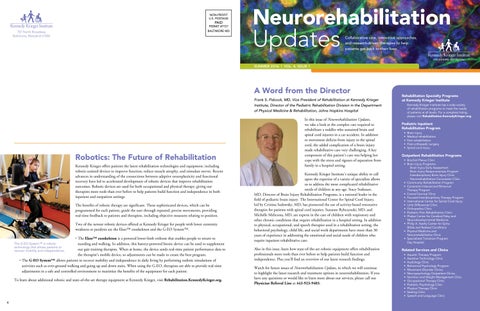
Complex Care for Toddler with Brain and Spinal Cord Injuries
In June, 2015, a car accident left the 2-year-old Sanayah with a severe spinal cord injury, brain hemorrhage, and a concussion. Although her spine was intact, the swelling—and the necrosis of the nerves that followed—left her paralyzed from the chest down. Kennedy Krieger brought together its renowned expertise in both brain injury and spinal cord injury to help Sanayah rehabilitate after her injuries.
Sanayah’s case was complex. Not only did she sustain spinal cord and traumatic brain injuries, but she also experienced respiratory complications. But it was Sanayah’s age that was perhaps the most challenging issue. Now 3 years old, she had the stubbornness one would expect of any toddler, and a limited ability to express her emotions or understand her medical situation. Sanayah had undergone significant trauma from the accident itself and the necessary interventions that followed. And it was hard to be separated from her mother, who was recovering from her own injuries in another hospital. Sanayah was understandably anxious, yet it was critical that she participate in the therapies needed for successful rehabilitation.
“Because we have such an excellent interdisciplinary approach, both the behavioral psychology and child life staff worked really closely with Sanayah,” says Michelle Melicosta, MD, Sanayah’s attending physician on the inpatient unit. Child life therapists helped Sanayah adjust to being in the hospital, while behavioral psychologists taught her, at an age-appropriate level, coping mechanisms she would need moving forward.
Much of Sanayah’s rehabilitation was spent undergoing intensive activity-based restorative therapy with functional electrical stimulation, designed to recover function and stimulate recovery of
“Children like Sanayah have the advantage of plasticity in their spinal cord and central nervous system because they’re still growing and developing.”
–Janet
Spinal Cord Injury
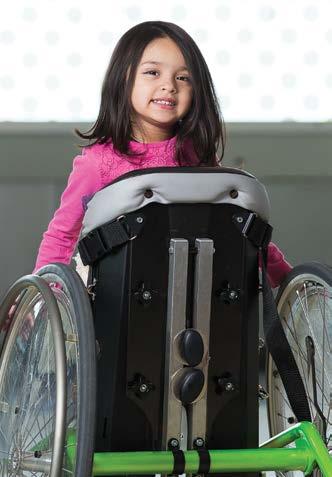
the nervous system, while maintaining muscle mass and improving strength. “Children like Sanayah have the advantage of plasticity in their spinal cord and central nervous system because they’re still growing and developing,” explains Janet Dean, pediatric nurse practitioner at Kennedy Krieger’s International Center for Spinal Cord Injury. Sanayah’s therapies included gait training, weight bearing exercises, and aquatic therapy. Dean says they push their patients harder than other centers might think a child can be pushed—up to five hours of therapy a day. But the experienced therapists are adept at making the hard work of therapy seem like play.
Sanayah now uses a mobile stander and is able to push her own wheelchair, which gives her the ability to explore her world, something that is important for her developing toddler cognition as well as her long-range independence. She has also improved the use of her upper extremities and can perform many activities of daily living independently.
Recovery from an injury like Sanayah’s is a marathon, not a sprint. Because of her age, the long-term impact of her traumatic brain injury may not be apparent until she’s progressed further in school. But Kennedy Krieger will be there with medical expertise, therapy, and support every moment along the way.

From Bench to Bedside
Kennedy Krieger’s clinicians and researchers are leaders in the worldwide effort to prevent and treat disorders of the brain, spinal cord, and musculoskeletal system. Our investigators continue to break new ground with innovative imaging technology, investigate critical areas, and develop new treatment models and therapies. Selected recent research includes:
Altered functional connectivity in children with mild to moderate TBI relates to motor control. Risen SR, Barber AD, Mostofsky SH, Suskauer SJ. J Pediatr Rehabil Med. 2015 Dec 1; 8(4):309-19. doi: 10.3233/PRM-150349. PMID: 26684071
Preliminary reliability and validity of a battery for assessing functional skills in children with Sturge-Weber syndrome. Reidy TG, Suskauer SJ, Bachur CD, McCulloch CE, Comi AM. Childs Nerv Syst. 2014 Dec; 30(12):2027-36. doi: 10.1007/s00381-0142573-6. Epub 2014 Oct 26. PMID: 25344741
Neurobehavioral Outcomes in Children After Out-of-Hospital Cardiac Arrest. Slomine BS, Silverstein FS, Christensen JR, Holubkov R, Page K, Dean JM, Moler FW; THAPCA Trial Group. Pediatrics. 2016 Mar 3. pii: peds.2015-3412. [Epub ahead of print] PMID: 26940987
Time to Follow Commands and Duration of Posttraumatic Amnesia Predict GOS-E Peds Scores 1 to 2 Years After TBI in Children Requiring Inpatient Rehabilitation. Davis KC, Slomine BS, Salorio CF, Suskauer SJ. J Head Trauma Rehabil. 2016 MarApr; 31(2):E39-47. doi: 10.1097/HTR.0000000000000159. PMID: 26098263
Prevalence and predictors of affective lability after paediatric traumatic brain injury. Vasa RA, Suskauer SJ, Thorn JM, Kalb L, Grados MA, Slomine BS, Salorio CF, Gerring JP. Brain Inj. 2015; 29(7-8):921-8. doi: 10.3109/02699052.2015.1005670. Epub 2015 May 7. PMID: 25950263
Therapeutic hypothermia after out-of-hospital cardiac arrest in children. Moler FW, Silverstein FS, Holubkov R, Slomine BS, Christensen JR, Nadkarni VM, Meert KL, Clark AE, Browning B, Pemberton VL, Page K, Shankaran S, Hutchison JS, Newth CJ, Bennett KS, Berger JT, Topjian A, Pineda JA, Koch JD,
Schleien CL, Dalton HJ, Ofori-Amanfo G, Goodman DM, Fink EL, McQuillen P, Zimmerman JJ, Thomas NJ, van der Jagt EW, Porter MB, Meyer MT, Harrison R, Pham N, Schwarz AJ, Nowak JE, Alten J, Wheeler DS, Bhalala US, Lidsky K, Lloyd E, Mathur M, Shah S, Wu T, Theodorou AA, Sanders RC Jr, Dean JM; THAPCA Trial Investigators. N Engl J Med. 2015 May 14; 372(20):1898-908. doi: 10.1056/NEJMoa1411480. Epub 2015 Apr 25. PMID: 25913022
Efficacy outcome selection in the therapeutic hypothermia after pediatric cardiac arrest trials. Holubkov R, Clark AE, Moler FW, Slomine BS, Christensen JR, Silverstein FS, Meert KL, Pollack MM, Dean JM. Pediatr Crit Care Med. 2015 Jan; 16(1):1-10. doi: 10.1097/PCC.0000000000000272. PMID: 25268768
Rebecca Martin, OTR/L, OTD; Paige Bourne, DPT; Scott Meyer, PTA; Cristina Sadowsky, MD. (2016, April). Evaluation of Metabolic Demands of FES-Assisted Exercise in Patients with Chronic Tetraplegia. Poster session presented at the American Spinal Injury Association Annual Meeting, Philadelphia, PA.
Liza V. McHugh, DPT; Ashley A. Miller, DPT. (2016, April). Facilitation of Voluntary Motor Activation Utilizing Transcutaneous Electrical Spinal Cord Stimulation in an Individual with MotorIncomplete Spinal Cord Injury: A Case Report. Poster session presented at the American Spinal Injury Association Annual Meeting, Philadelphia, PA.
For more information about research, studies, and clinical trials at Kennedy Krieger Institute, please visit KennedyKrieger.org/Research.
Kennedy Krieger Physician Named CARF Surveyor
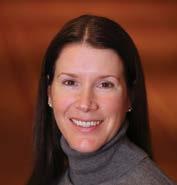
Melissa Trovato, MD, director of inpatient rehabilitation at Kennedy Krieger Institute, was appointed a CARF surveyor by CARF International in March, 2016. Dr. Trovato has been training under the guidance of CARF’s seasoned veteran surveyors for the past year.
Through accreditation, CARF assists service providers in improving the quality of their services, demonstrating value, and meeting internationally recognized organizational and program standards. CARF surveyors are professionals in their fields with primary employment at
CARF-accredited organizations, and are considered to be experts in administrative leadership, service oversight, and optimizing patient outcomes.
“As a CARF surveyor, I hope to not only share my experience with other similar facilities but also bring their best practices back to Kennedy Krieger and ultimately improve the care for our patients and families.”
Dean, pediatric nurse practitioner at Kennedy Krieger’s International Center for
For 3-year-old Sanayah, Kennedy Krieger brought together renowned expertise in both traumatic brain injury and spinal cord injury rehabilitation.
(Left) Occupational therapist Shannon Corbey making the hard work of therapy fun for Sanayah.
(Right) Nurse practitioner Janet Dean checks Sanayah’s deep tendon reflexes.
–Melissa Trovato, MD, Director of Inpatient Rehabilitation at Kennedy Krieger Institute