Clinical Connection
News, Updates and Support for Healthcare Professionals
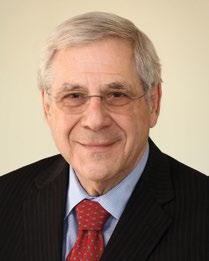
Dear Colleague,
At Kennedy Krieger Institute, we are committed to providing specialized medical and therapeutic care for children and young adults with disorders and injuries of the brain, spinal cord and musculoskeletal system. Our medical staff comprises hundreds of clinicians representing more than 80 specialty clinics and programs, and a staff of 2,500 dedicated employees provides your patients and their families with unique access to the latest in research and treatment for neurorehabilitation, behavioral disorders and other developmental disorders.
To ensure your patients receive the best care possible, we take a team approach, as appropriate, bringing together physicians, psychologists, therapists and other clinicians to address all of a patient’s needs. Our staff members work closely with you, and your patients and their families, to develop comprehensive and individualized treatment plans.
We offer care in a variety of settings, including a specialty pediatric hospital and outpatient centers that see more than 24,000 patients a year, day treatment services, and home- and community-based programs. We now have outpatient locations in Odenton and Columbia, Md., in addition to our Baltimore locations, to offer added convenience for your patients and their families.
Enclosed is a copy of Potential magazine, which contains inspiring stories from around the Institute. We appreciate your trust in referring patients to us, and we value your input. Please call us at 443-923-9403 or email us at FindASpecialist@KennedyKrieger.org to get in touch.
I am retiring from my positions as president and CEO this summer, and Dr. Bradley Schlaggar will take the helm. It’s been an honor to lead Kennedy Krieger for the past 30 years. Thank you for your support.
Sincerely,
Gary W. Goldstein, MD President and CEO
INSIDE THIS ISSUE:
• Expert Treatment for Children and Adolescents With ARFID
• Developmental and Behavioral Disorders: Bridging the Gap
• How Community Violence Impacts Youth—A Student Perspective
• Study Finds Reduced Brain Size in Children With ADHD Symptoms
REFERRING YOUR PATIENTS
To support the needs of physicians and healthcare professionals, our care management team is available to provide information on appropriate clinical programs, handle referrals, obtain consultations with Institute specialists, and schedule appointments for patients and families.
Call 443-923-9403 to reach our Physician Referral Line, or visit KennedyKrieger.org/Referrals for information and resources for physicians and healthcare professionals.
For general information, visit KennedyKrieger.org or call 1-888-554-2080.
OUR CULTURE OF CARE
Kennedy Krieger Institute recognizes and respects the rights of patients and their families and treats them with courtesy and dignity. Kennedy Krieger Institute provides care that preserves cultural, psychosocial, spiritual and personal values, beliefs and preferences. Care is free from discrimination based on age, race, ethnicity, religion, culture, language, physical or mental disability, socioeconomic status, sex, sexual orientation, and gender identity or expression, including transgender. We encourage patients and families to become active partners in their care by asking questions, seeking resources and advocating for the services and support they need. © 2018 Kennedy Krieger Institute 6/2018
Students Raise Awareness About Community Violence Impact on Baltimore Youth

Today’s children live in a world where violence, bullying and traumatic events are very real threats to their health and well-being. From school shootings and human trafficking to community violence and family issues, traumatic events can have lasting impacts on children.
Kennedy Krieger Institute’s Center for Child and Family Traumatic Stress offers interdisciplinary, evidencebased therapies to treat and support children and their families to mitigate the effects of traumatic stress. This past March, students from Kennedy Krieger’s youth trauma program premiered two compelling short films they created to address the personal impact of violence in their communities. The students created these compelling works while participating in a youth therapy program at Kennedy Krieger. Through these films, young people came together and used their voices to become part of the movement to end community violence.
Visit KennedyKrieger.org/ TraumaticStressCenter to view the films.
Bridging the Gap in Healthcare for Children With Developmental and Behavioral Disorders
Approximately 13 percent of children in the United States have a developmental disorder, and studies indicate that as many as 20 percent of children have emotional or behavioral disorders. Many children present with behavioral disturbances in early childhood and are referred to specialists for diagnosis and management. Long waiting lists to see specialists and the long distances many families must travel in order to see specialists pose obstacles for families trying to get care for their children, especially for those in rural communities and underserved populations.
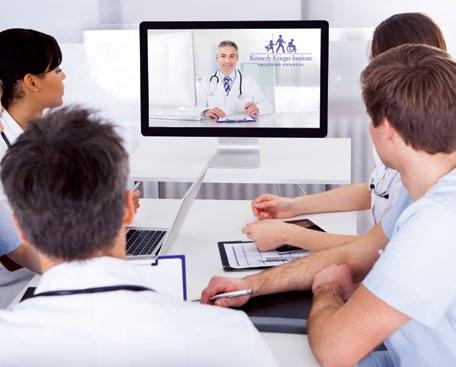
To address the shortage of behavioral and developmental specialists who evaluate and manage children in Maryland, Kennedy Krieger Institute has created a grantfunded collaborative for training medical professionals to identify and treat childhood developmental, emotional and behavioral issues. The program, called the Kennedy Krieger Institute Network for Early Childhood Telehealth, intends to transform participating pediatric primary care and school-based health center clinicians into local experts.
Weekly virtual training clinics are hosted by an interdisciplinary team of Kennedy Krieger clinicians, and are attended by primary care and school-based clinicians from healthcare centers in rural and underserved areas of Maryland. Through guided practice and didactic learning, the program fosters participants’ increased knowledge and comfort in implementing evidence-based screening, evaluation practices and officebased interventions within their communities.
To date, Kennedy Krieger has held 40 training clinics, each one with didactic and case-based learning sessions. So far, the clinics have saved about 10,000 miles of patient travel, and the didactics have provided more than 180 CME hours for our community partners.
Contact Dr. Mary Leppert (Leppert@KennedyKrieger.org) or Janna Steinberg (SteinbergJ@KennedyKrieger.org) for more information about this program.
707 North Broadway
Baltimore, Maryland 21205
PATIENT CARE PROGRAMS & SERVICES
Specialty Pediatric Hospital
Feeding Disorders
Neurobehavioral Unit (NBU)
Rehabilitation Unit—brain injury, complex medical, pain management, post-orthopedic surgery and spinal cord injury
Outpatient Centers, Programs and Services
International Adoption Clinic
Aquatic Therapy Program
Assistive Technology Clinic
Audiology Clinic
Center for Autism and Related Disorders
Barth Syndrome Clinic
Behavior Management Clinic
Bone Disorders Program
Brachial Plexus Clinic
Center for Brain Injury Recovery
Phelps Center for Cerebral Palsy and Neurodevelopmental Medicine
Child and Family Support Center
Child and Family Therapy Clinic
Community Rehabilitation Program
Concussion Clinic
Constraint-Induced and Bimanual Therapy Program
Cranial Cervical Clinic
Deafness-Related Evaluations Clinic
Center for Development and Learning
Pediatric Developmental Disabilities Clinic
Down Syndrome Clinic and Research Center
Pediatric Epilepsy and Neuropsychiatry Program
Pediatric Feeding Disorders Program
Focused Interdisciplinary Therapy Program
Fragile X Clinic
Healthy Lifestyles Therapy Program
Infant Neurodevelopmental Center
Moser Center for Leukodystrophies
Limb Differences Clinic
Military Behavioral Health Services
Center for Genetic Muscle Disorders
Neurobehavioral Unit Outpatient Program
Neurology and Neurogenetics Clinic
Clinical Neurophysiology Clinic and Laboratory
Neuropsychology Outpatient Clinics
Specialized Transition Program Neurorehabilitation Day Hospital
Nutrition Clinic
Occupational Therapy Clinic
Orthopedic Clinic
Osteogenesis Imperfecta Clinic
Pain Rehabilitation Program
Physical Therapy Clinic
Psychiatric Mental Health Program
Pediatric Psychology Program
Rehabilitation Clinic
Seating Clinic
Sickle Cell Neurodevelopmental Clinic
Sleep Disorders Clinic and Laboratory
Speech and Language Clinic
Philip A. Keelty Center for Spina Bifida and Related Conditions
International Center for Spinal Cord Injury
Hunter Nelson Sturge-Weber Center
Center for Child and Family Traumatic Stress
Tuberous Sclerosis Clinic
Weight Management Program
Continuums of Care
Continuums allow patients to be seen through all stages of care, including in 24-hour inpatient programs, day treatment, home- and community-based services, and outpatient programs. They include Pediatric Feeding Disorders, Neurobehavioral Disorders and Pediatric Rehabilitation (brain injury, complex medical, pain management, post-orthopedic surgery and spinal cord injury).