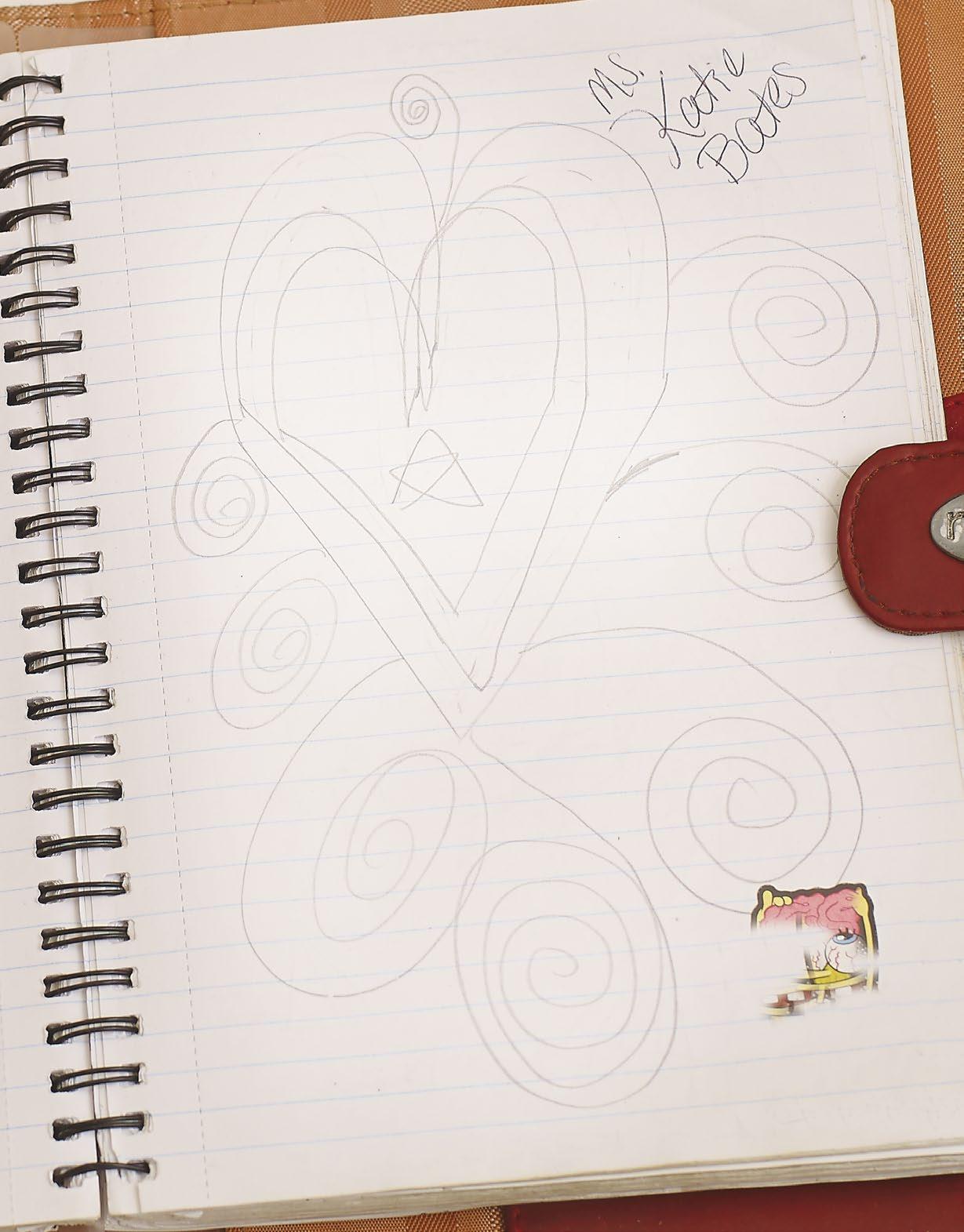
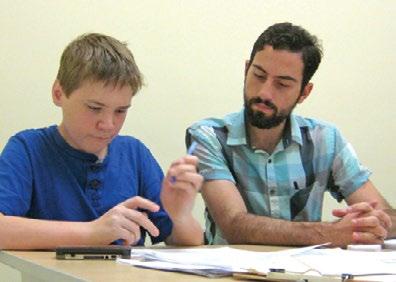
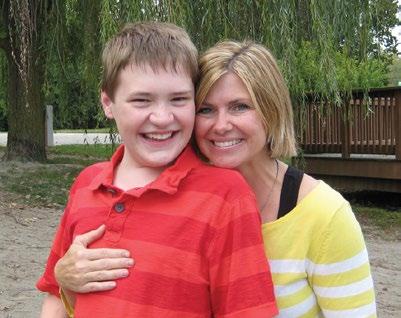
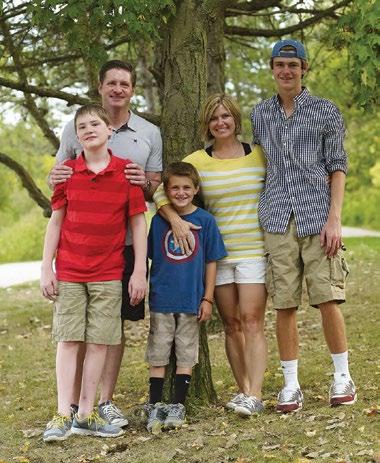
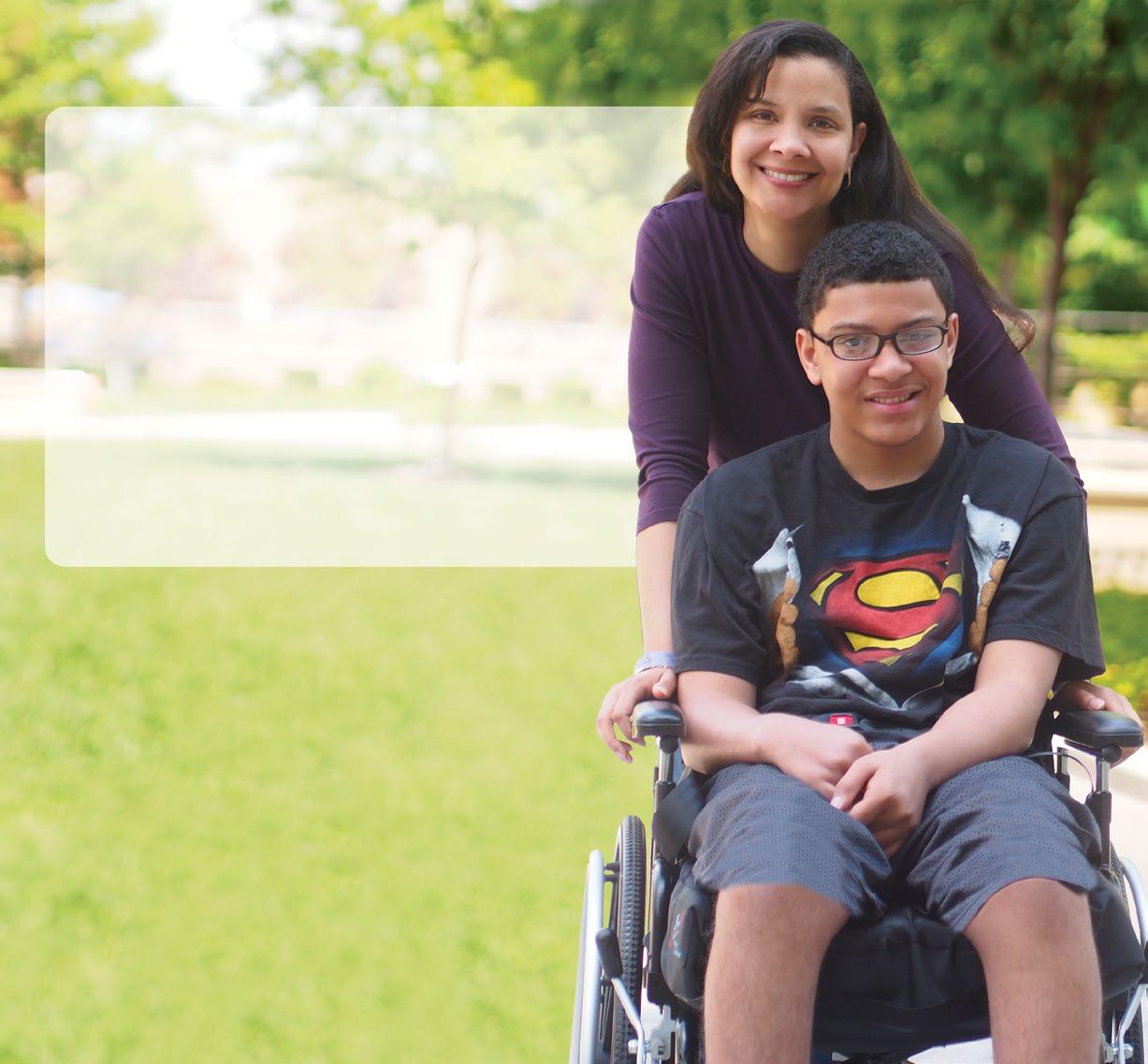
I was lucky enough to meet DeVante—a shy, reserved student with autism spectrum disorder—during my first year as an assistant teacher at Kennedy Krieger High School. During my first week, DeVante approached me with his head down and in a soft voice, he asked me to sign his “autograph book.” Timidly, DeVante explained that signing the book authorized him to share drawings with that person throughout the school year. I was eager to get to know all of the students, so of course I said yes! This marked the beginning of learning exactly who DeVante is and who he wants to be. DeVante started breaking out of his shell and gaining more confidence through his unique way of sending drawings to teachers. I was immediately impressed by his willingness to try something unconventional. Through his drawings, I also noticed DeVante’s methodical nature, which helped him to follow through with every task. DeVante came a long way in a few short years. In the school’s student-run businesses, DeVante initially chose tasks with few interactions with his co-workers and customers. Over time, I noticed that DeVante would naturally step in to help customers or struggling co-workers.
Soon, DeVante became our student manager, and learned to defuse multiple situations.
One day, a student was nervous about being a cashier in the school store for the first time. DeVante immediately stepped in and calmly explained, “I used to get upset every time I had to do something new too, but look at me now. Now I can change positions whenever I am needed, and soon you will be able to do that too. How about I switch with you?” I was in awe of how he knew exactly what to say. Students always responded well to DeVante, so much so that they began asking DeVante for his autograph.
My proudest moment came when DeVante asked if he could meet with me and his other teachers to discuss his plans after graduation. DeVante came prepared with notes and questions so he could make a detailed plan for after graduation. We work on this with all of our students, but I had never seen a student take the initiative and begin to map out a plan on their own. This is why I know DeVante has a bright future ahead of him.
Part of being a teacher is to help students you’ve come to know well graduate and move on. Each year you send one group off, hoping you’ve given them the tools to succeed in the working world. And then you welcome in a new group. The greatest gift and the greatest sadness is watching our students move on each year. Watching DeVante grow into the person he is today has truly inspired me and continues to motivate me in my job every day.
Katie Cascio (formerly Katie Bates) is a special education teacher at Kennedy Krieger High School. DeVante graduated and plans to attend Prince George’s Community College.
and
(above) DeVante’s autograph book
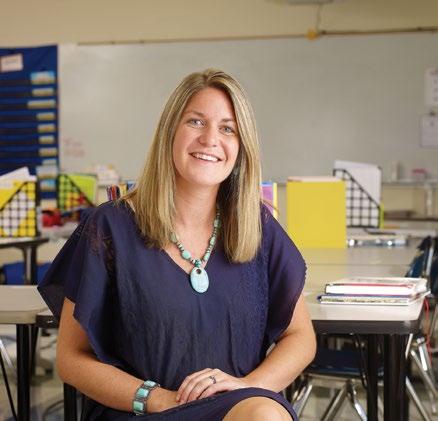
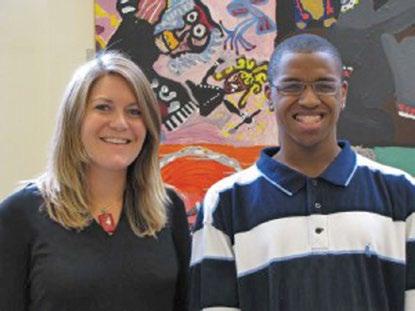
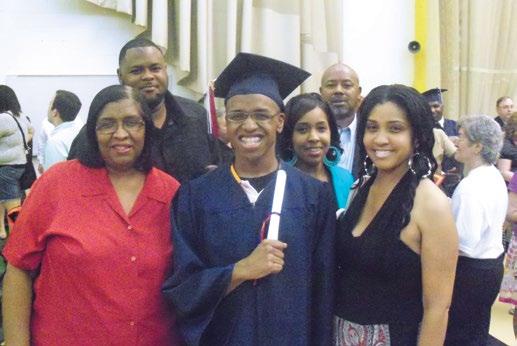
Katie Cascio. (right) Katie Cascio and DeVante Capers. (bottom) DeVante at graduation with his family. Pictured (L to R) Row 1: DeVante’s mother, Diana Moten; DeVante; sister Gerri Moten. Row 2: brother Kevin Capers; sister Gina Moten; and father, William Capers.
After cancer and chemotherapy left her so fragile doctors said she might never walk again, Perry found her strength with the help of Kennedy Krieger’s Specialized Transition Program.
At the tender age of 13, Perry Zimmerman has already battled a lifetime’s worth of illnesses. Born with retinoblastoma, a type of eye cancer, Perry developed a related brain tumor at age two that doctors did not expect her to survive. For the Zimmerman family, watching their two-year-old daughter go through chemotherapy was heartwrenching, but when it was over, Perry emerged cancer-free.
For several years, cancer remained a distant, long-ago memory, until one morning two years ago, Perry complained about a lump on her left thigh, and showed her mother. “The second I saw it, I knew what it was,” her mother, Anne Zimmerman, recalls. An MRI showed a large tumor. For the third time, Perry had cancer—this time, osteosarcoma.
Limb-sparing surgery removed the tumor, but because it was so large, surgeons had to reconstruct her leg. She wore a cast from waist to toe for three months, and doctors said she might never walk again. The surgery and nine months of chemotherapy took their toll, leaving her body ravaged and her bones weak.
Everything She Needed All in One Place
For patients like Perry who have gone through surgery and chemotherapy, their struggle does not end when the cancer is gone. They still face fatigue, weakness, pain, immobility, and low bone density, and need months of rehabilitation to recover.
Despite the multitude of rehabilitation facilities near the family’s home in Manhattan, none of them could offer the intensive five-day-a-week rehabilitation therapy Perry needed. “She just wasn’t getting what she needed in New York, and I knew it,” says Zimmerman. So they temporarily relocated to Maryland, so Perry could receive treatment at Kennedy Krieger’s Specialized Transition Program (STP).
“STP really is a unique day program,” says Katlyn Recchia, Perry’s physical therapist. “It’s set up as a school day, but kids also receive three to four hours of intensive physical, occupational, and speech therapy, along with neuropsychology. To have that in such an intensive format allows kids like Perry, who have such great challenges, the opportunity to progress at their own speed.”
When she arrived at Kennedy Krieger, Perry was fragile, weighing only 45 pounds, and in a wheelchair. She couldn’t move or bear any weight on her leg, and had lost nearly all muscle tone, recalls Recchia.
Keeping Up With School
In between therapy, Kennedy Krieger teachers continued her schooling, so she wouldn’t fall behind. Kids recovering from all types of injuries or conditions are grouped together in a classroom, but each has an individualized school curriculum and therapy regimen.
“The educational piece here in an outpatient setting is unique,” says Perry’s teacher at STP, Ali Adler. “Since teachers are employed by Kennedy Krieger and not a school system, we have the flexibility to implement individualized curriculums. For Perry, I was able to implement the curriculum for the school she would be attending upon discharge…We try to simulate as much of a normal school day as possible to help ensure a smooth reentry into school.”
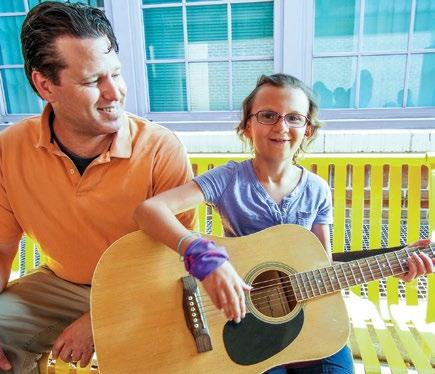
Assistant teacher Brandt Dunn, who most days can be found wielding a guitar and singing songs to the kids, brought a little bit of whimsy to the classroom. “He made the whole experience fun for Perry,” says Zimmerman. And Perry also made an impression on Dunn. In honor of Perry, he cut and donated his long hair to make real-hair wigs for others with cancer.
Intensive daily physical therapy helped Perry transition from a wheelchair to a walker, and rebuild muscle that was lost. Weight-bearing exercises helped strengthen her muscles and bones, and electrical stimulation helped re-teach her muscles how to work again. A series of casts and braces helped give Perry the ability to extend her leg.
“It was great to learn about Kennedy Krieger’s rehabilitation program. There was no similar hospital in New York where you could get physical therapy several times a day and patient care, and at the same time, learn and follow a school curriculum.”
Through it all, Perry kept working hard. When setbacks occurred— Perry broke both an ankle and a wrist—therapists adjusted her regimen and kept her moving forward. “She had fallen so many times at home that she had a fear about movement,” says Recchia. “She learned to trust me and the other therapists when we said, ‘You are going to be okay if you take this step.’ She worked incredibly hard and was very brave.”
Dunn says he is inspired almost every day by the kids who come to STP. He sees kids recovering from all types of accidents, brain injuries, surgeries, and cancers in his classroom. “I tell the kids all the time, ‘You guys are way tougher than I am,’” he says. As for Perry, he says, “She’s always been tough, but now she’s stronger, more confident, and vocal…I’ve seen so much growth in Perry.”
Taking it All in Stride
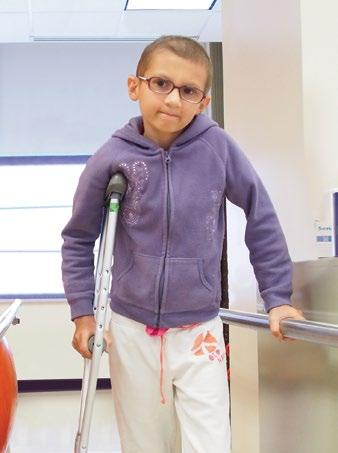
Slowly, Perry progressed from not being able to put any weight on her leg to walking with a walker, to crutches, and finally, to taking her first steps unassisted. For Perry and her family, walking was a monumental feat. “You have to realize how hard it is to get someone to walk again,” says Perry’s mom.
“They got her walking and that was her goal.”
“To her, it is just so freeing to be able to walk around carrying something instead of crutches taking up her hands,” she adds. “She’s proud and happy.”
In August, the family returned to New York with a home program to follow. And despite her medical problems over the past two years, Perry has not fallen behind on her schoolwork and will return to her same school with all of her friends, making it as seamless a transition as possible.
“Coming to Kennedy Krieger was worth the travel and relocation,” says Zimmerman. “It’s so amazing to see how far she’s come.”
Kristina Rolfes
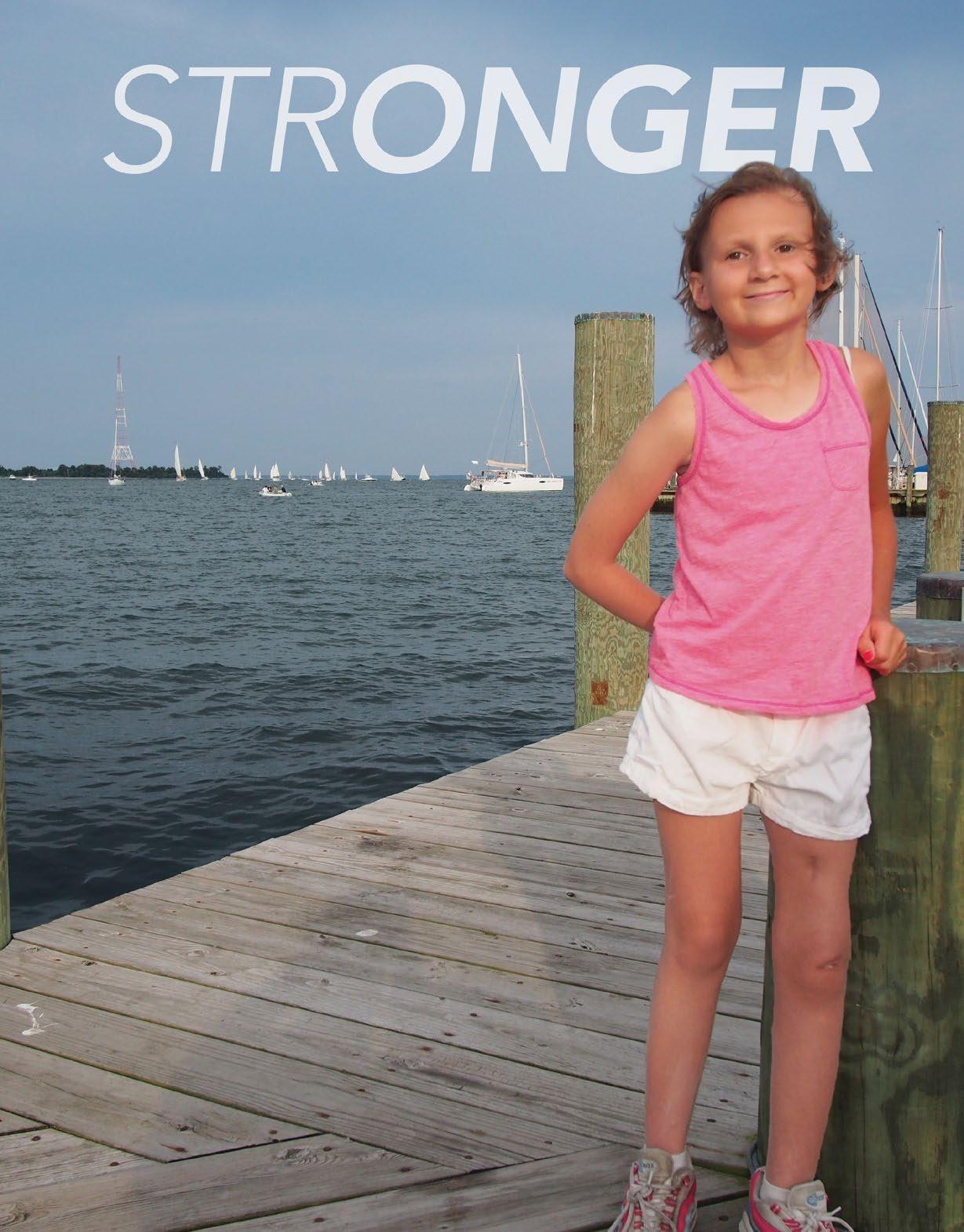
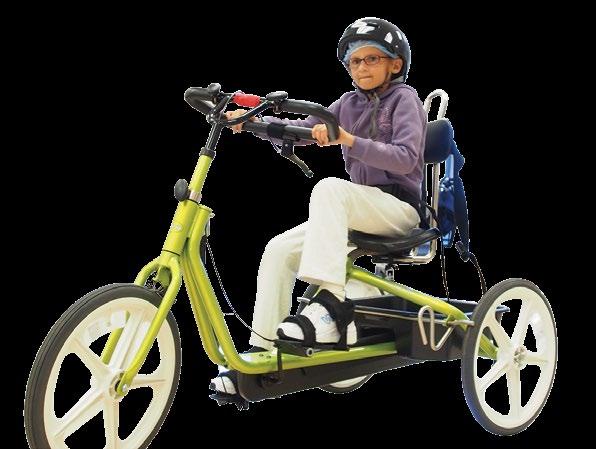
(above) Intensive physical therapy and educational instruction helped Perry recover without falling behind in school. Assistant teacher Brandt Dunn made the classroom fun.
(opposite) Perry in Annapolis after rehabilitation.
Understanding Chronic Pain
What’s different about Kennedy Krieger, Dr. Ward says, is its integrated approach to treating pain. Patients are evaluated and treated by an interdisciplinary team, including specialists in rehabilitation medicine, education, neuropsychology, therapeutic recreation, psychiatry, and occupational, physical, and behavioral therapy. The team not only addresses the underlying biological basis of the pain, but also teaches patients and their caregivers the tools they need to cope through behavior therapy.
“Behavior therapy is ideal for helping patients like Katie cope with their pain and their anxiety about pain, so they can do the challenging work of rehabilitation,” explains Keith Slifer, PhD, director of the Pediatric Psychology Consultation Program. By setting achievable short-term goals for patients, therapists help patients gain confidence as they develop better tolerance and regain physical conditioning. This approach reinforces small successes, instills a sense of hopefulness, and challenges the individual to work hard to return to their typical activities. “We help patients reset the focus from what they can’t do to what they can do,” says Dr. Slifer.
One of the techniques therapists use is biofeedback—using instruments to measure physiological responses, such as brainwaves, heart function, breathing, muscle activity, and skin temperature. When patients implement cognitive and behavioral coping strategies, they can see themselves calming down on the computer screen, reestablishing a sense of control over their physiology.
For Katie, guided imagery helped her cope with the pain. “I imagine I’m with my horse Piper or doing other things, and it helps me be okay with the pain,” she says. “When it gets really bad I’ll stop and listen to a CD and focus on the music, and it resets where I am. My whole brain takes a break for a second.”
With her physical therapist, Katie gradually began rebuilding the muscle she had lost while in a wheelchair. She used desensitization techniques to learn to put weight on her foot, and soon moved on to walking with crutches, and then with a cane.
Getting Her Life Back
When her parents visited her, they were thrilled with her progress. “When she saw us coming down the hallway, she got up out of her wheelchair and was walking,” recalls Gary Bickford, Katie’s father. “By the second week, she said, ‘I’m done with the wheelchair. I’m done with the crutches. I don’t need these anymore.’” The bright light was back in her eyes and the smile back on her face. Katie’s parents met with the team to learn how they could help Katie learn to not focus on the pain. “It’s hard because when my only baby says ‘I hurt,’ I want to hold her and make sure she’s okay, says ML. “But what I really need to do is help her focus on something else—not deny that she’s in pain, but not focus on it.” With the help of her therapists, Katie learned how to better communicate what she was feeling, and her parents learned how to respond to her.
When she had progressed enough to be discharged, Katie was armed with the coping techniques she had learned to help get back to the life she knew before the pain. When summer came, she was at the beach with her friends every day like any other teenager. And in the fall, Katie was able to go back to school, participate in activities like JROTC, and even ride her horse again. The highlight of her year was going to the prom with her new boyfriend. Although she still feels pain sometimes, Katie is able to cope with it, and it no longer rules her life. Now she has time to focus on more important things, like being a teenager.
“I definitely feel Kennedy Krieger gave me my life back. I couldn’t ask for anything more.” n Kristina Rolfes
“The quality of staff at Kennedy Krieger was amazing. They’re like angels. There is no way I can put into words how wonderful a relationship they made with Katie, and how well they were able to motivate her and turn her around.
–ML Bickford, Katie’s mother
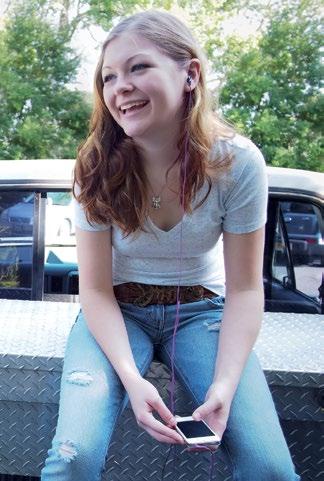
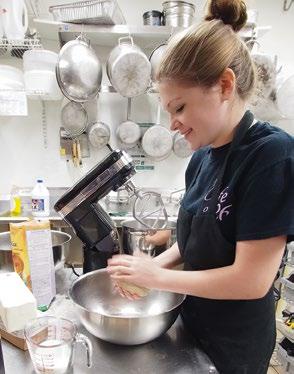
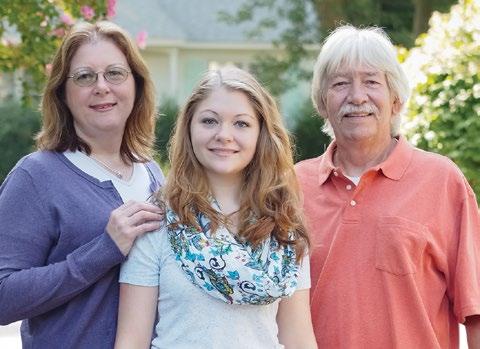
(Pictured top to bottom, left to right) Katie, 18, after her recovery from debilitating pain: enjoying some tunes; with her new pickup truck, Dixie; working as a baker at Café on 26 in Ocean View, DE; with her parents, ML and Gary Bickford.
The ComeBaCk
k id
The Neurobehavioral Unit at Kennedy Krieger helps turn around a young boy with self-injurious and aggressive behavior.
The NBU takes an interdisciplinary approach to treatment, relying on input from behavior analysts, psychiatrists, pediatricians, neurologists, nurses, social workers, and speech and language pathologists. “Our interdisciplinary team is outstanding because we work so well with one another, and the range of services we’re able to provide patients and their families is very comprehensive as a result,” says Louis Hagopian, PhD, program director of the NBU.
“The staff was phenomenal. They made us feel at ease… They didn’t downplay how hard it was for us and they didn’t make pie-in-the-sky promises, but they were clearly very confident in what they do and very professional.”
–Chrissy McNair
The decision to send their 9-year-old son more than 1,000 miles away from home for five months was not an easy one for the McNairs. “I’d never been away from Luke before,” says Chrissy. “But we didn’t see that we had any other options. It was either that or medicate him to the point he wasn’t himself anymore.”
In April 2009, Chrissy, her husband, Matt, and Luke arrived at Kennedy Krieger after a horrible trip from Nebraska to Maryland, during which Luke screamed and hit his parents the entire flight. “If there was any doubt that we were doing the right thing, the flight out confirmed everything,” says Chrissy. When they arrived at Kennedy Krieger, the staff greeted them and took Luke off for evaluation while his parents met with various therapists. “That first day I cried the whole day,” says Chrissy. “The staff was phenomenal. They made us feel at ease…They didn’t downplay how hard it was for us and they didn’t make pie-in-the-sky promises, but they were clearly very confident in what they do and very professional. By the time I left a few days later, I felt like he was in really good hands.”
The McNairs flew out to visit Luke almost every week, making 20 trips to Baltimore in five months, thanks to frequent-flier miles and grant money from some autism groups in Nebraska. And every night, Luke called home at bedtime to say goodnight.
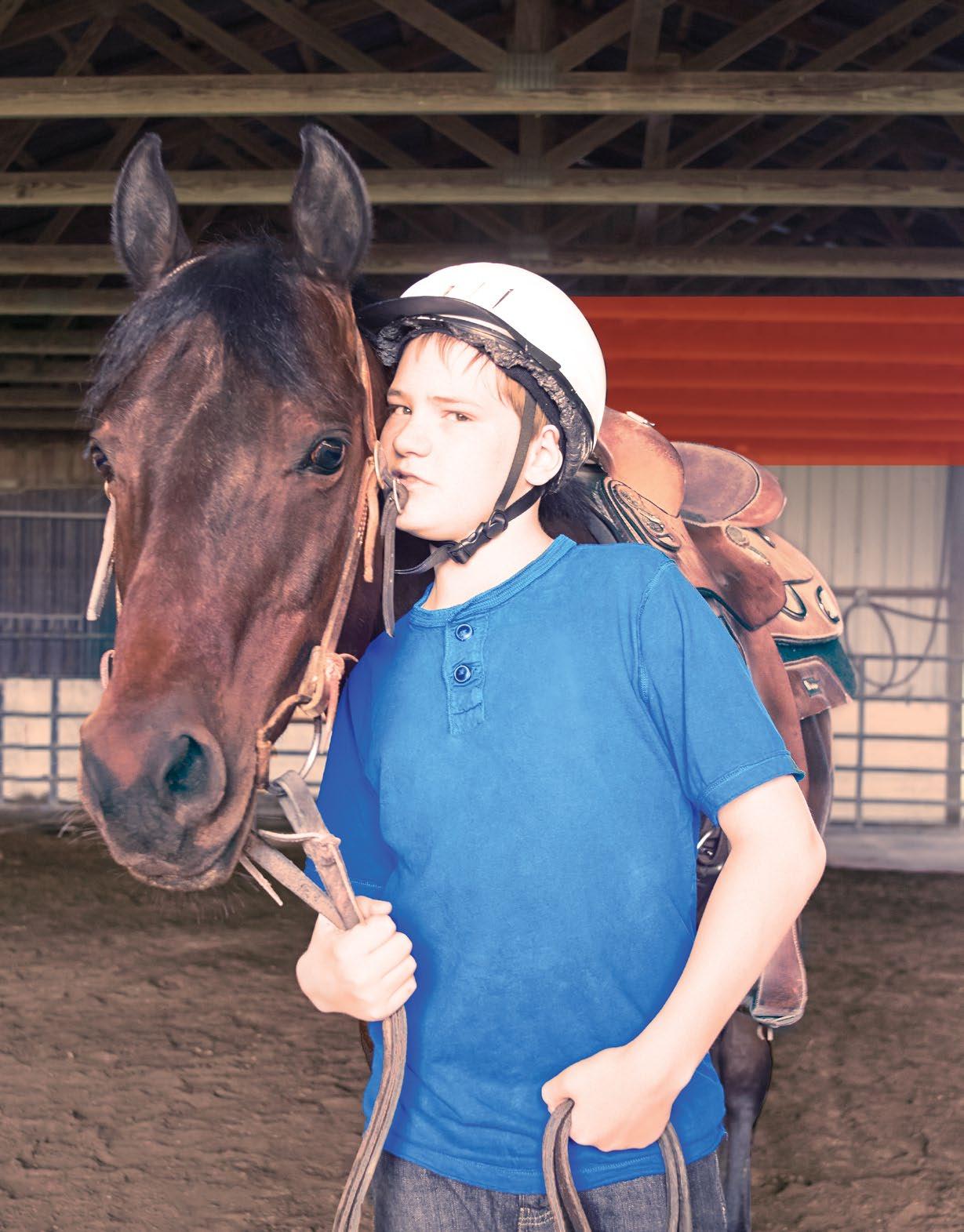
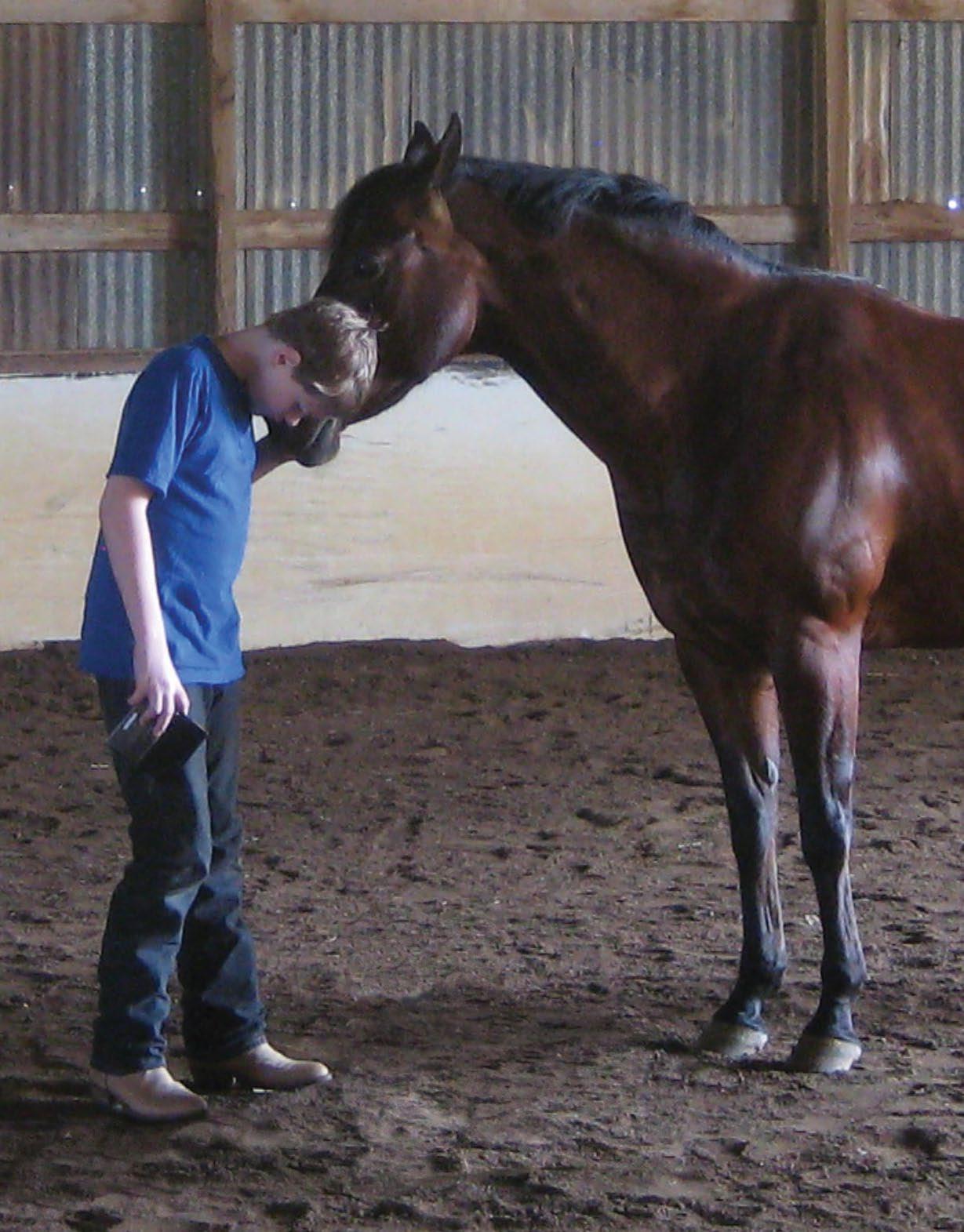
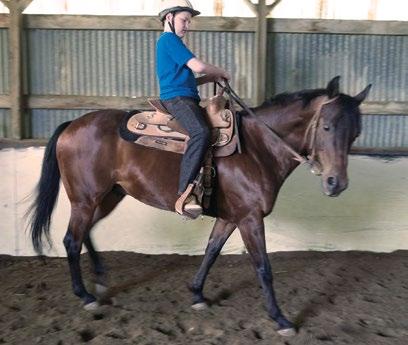
after spending five months in intensive inpatient neurobehavioral treatment, Luke is now back to horseback riding and enjoying life again.
The Power of Rewards
During the first several weeks of his stay, Luke’s behavior was assessed under safe conditions to identify the triggers for his problem behavior. When he arrived at the NBU, Luke was engaging in self-injurious or aggressive behaviors more than 400 times a day. The following weeks were spent eliminating those triggers and teaching him new skills, including how to more appropriately get what he wants. “We used a token economy with Luke to help him learn to control his behavior,” explains Dr. Kahng. If he did not engage in aggressive behaviors, he would earn tokens that he could trade in for access to preferred activities or outings, like being able to play a favorite video game or go out to a fast-food restaurant.
Luke’s NBU treatment team also implemented a levels system for him, explains his mother. When he was not having aggression, he was on Level 3, and was rewarded with attention and access to things he wanted. Any sign of aggression sent Luke to Level 2, where he lost access to his preferred things and did not receive a lot of positive reinforcement. If his behavior worsened to the extent that there was risk for injury, he would reach Level 1, and his parents or caregivers would have to use physical means to keep him safe. Another key to the levels system was earning rewards at several very specific times each day—for example, 10 a.m., not “after breakfast”—which appealed to Luke’s need for order and routine. This behavioral treatment, in combination with medication, greatly improved his behavior and mood.
Four years later, Chrissy says the systems implemented at Kennedy Krieger still work. “The principles of what we learned there, we still do.” Over time, the family has been able to relax the behavioral plan somewhat. They no longer need to train babysitters and everyone who works with Luke on the three-step prompting system, and Luke no longer needs to receive his rewards immediately or at very specific times. While pleased with her son’s progress, Chrissy is careful with her word choice: “He’s not cured—he’s always going to struggle with this stuff—but he’s changed.” >>
continued on page 10
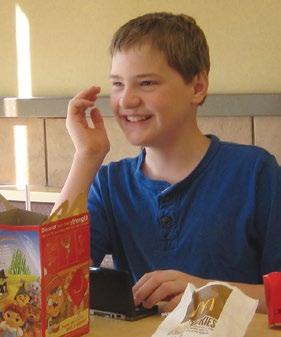
Luke enjoying lunch and his favorite video game.
Luke with his teacher now, Mr. George Rieger.
continued from page 9
Common symptoms of a pediatric feeding disorder:
• An abrupt change in eating habits lasting longer than 30 days
• Delayed development of the skill set necessary to self-feed or consume higher textures
Early diagnosis and treatment are extremely important when it comes to a feeding disorder. The longer it is left untreated, the more complex it can become—in extreme cases, children may need a feeding tube. Feeding disorders can also lead to serious complications from nutritional deficiencies, such as anemia. Undernourished children are also at risk for developmental delays, including the inability to crawl, walk, and talk, which could lead to oral, motor, and sensory problems.
• Weight loss or failure to gain appropriate weight
• Choking/coughing during meals
• Unexplained fatigue, loss of energy
• Disruptive behavior during mealtime
Since there is no common cause or symptom that is characteristic of all pediatric feeding disorders, each case is unique with varying challenges to effective treatment. Both biological and social interactions need to be individually addressed for each child during diagnosis and when developing an appropriate treatment program. Kennedy Krieger’s Pediatric Feeding Disorders Program takes an interdisciplinary approach. A team of professionals with
expertise in many specialties—from leaders in pediatrics to behavioral psychology and speech pathology—works together to help each child modify behavior, build motor skills, and treat associated medical conditions.
“It’s not a one-size-fits-all model,” explains Dr. Girolami. “Our team of leading professionals addresses the many causes of feeding disorders and their associated complications so we can give the child and family the best care available.”
Part of the child’s care involves training for the family by every member of the child’s treatment team. “The goal is that when the family leaves, they’re self-sufficient to do the meals and introduce new foods, and to trouble-shoot any problems that may come up,” says the medical director of the program, Eric Levey, MD. “I’d say 80 to 90 percent of the time, families continue to make progress without any additional help on a regular basis.”
For the many families whose children have emerged from the program no longer saddled by feeding disorders, the program has made a profound difference in their daily lives. “Every parent wants their child to be able to sit at a table and eat a meal together as a family,” says Dr. Levey. And thanks to the feeding disorders program, many more families will be able to do just that this Thanksgiving.
To learn more about feeding disorders and treatment options, visit feedingdisorders.kennedykrieger.org.
continued from page 8
Luke, whose aggressive behaviors reduced from 400+ a day to less than nine, is happy 90 percent of the time now, says his mother.
a Complete 180
Dr. Kahng says the McNairs are an outstanding example of the importance of training caregivers to continue the behavioral plan once a child is sent home from the NBU. “We can change the behavior on our unit, but if it doesn’t transfer to home, that’s basically a failure,” he says. “Our goal is to teach parents to be the expert in their child’s behavioral treatment. That’s a crucial role in their success.”
Chrissy says that while the decision to send Luke to Kennedy Krieger was difficult, she would do it again 100 times over given the “complete 180” she saw in Luke’s behavior. “It used to be, 90 percent of the time he was upset and 10 percent of the time he was happy—his normal self,” she says. Now, it’s reversed. A couple weeks after he left the NBU and went back home, Luke was down from 400+ aggressive behaviors a day to less than nine. These days, he has even fewer. And when he does get upset now, the episodes are much less intense than they used to be, says his mother. “He’s just a 10-times-better version of himself than he was before.” n Abigail Green
To learn more about the neurobehavioral Unit and treatment options, visit kennedykrieger.org/ neurobehavioral-continuum.
The McNair family (pictured left to right): Luke; his father, Matt; brother Marcus; mother, Chrissy; and brother Jackson.
Sturge-Weber Syndrome and Port-Wine Stain Birthmarks:
Identifying the Cause, Pursuing the
Cure
Researchers at Kennedy Krieger recently announced the groundbreaking discovery of the genetic mutation that causes Sturge-Weber syndrome and port-wine stai n birt hmarks.
After almost fifteen years of study, Anne Comi, MD, director of the Institute’s Hunter Nelson Sturge-Weber Center, and Jonathan Pevsner, PhD, director of Bioinformatics, confirmed their original hypothesis: the syndrome and the birthmark are caused by the same somatic mutation (an alteration in DNA that occurs after conception) now known to be in the GNAQ gene.
The discovery is important news for individuals and families affected by the syndrome, a neurological and skin disorder associated with the port-wine birthmark and with glaucoma, seizures, intellectual impairment, and weakness on one or both sides of the body. For the first time, parents can be assured that their child’s Sturge-Weber syndrome (SWS) was not caused by an injury sustained during pregnancy. “There is nothing the mother or the family did or did not do to cause SWS,” Dr. Comi says.
By establishing this genetic mutation as the cause of SWS, researchers also have proven that SWS is not an inherited condition.
“We don’t know exactly why SWS happens in some individuals and not others,” Dr. Comi explains. “Somatic mutations occur at random throughout the lifetime of an individual in a localized area of the body. We think this particular alteration occurs in the first trimester of fetal development.”
Dr. Pevsner’s laboratory employed whole genome sequencing, a technology that allows examination of the billions of nucleotide pairs that form DNA, to identify the
mutation. Affected tissue and unaffected tissue and blood samples from individuals with SWS were analyzed.
Matt Shirley, then a graduate student in the Pevsner lab, was able to identify one somatic mutation common to affected samples.
The study, published in May 2013 in the New England Journal of Medicine, represents a turning point, Dr. Pevsner says. “We suspected for decades that a somatic mutation was the cause of Sturge-Weber syndrome and port-wine birthmarks, but the technology to test that theory did not exist—until now. The advancements associated with whole genome sequencing and the development of nextgeneration sequencing tools finally allowed us to test and prove the hypothesis.”
Sturge-Weber syndrome is rare, affecting approximately one in 20,000 births, while port-wine stain birthmarks are more common, affecting approximately one million individuals in the United States. Current treatment options for children with SWS are limited, but include medications to reduce the likelihood of seizures and strokelike episodes, eye drops or surgery to manage glaucoma, and physical rehabilitation.
With this new finding, much optimism surrounds future clinical trials. “We have real hope that in the next five to ten years—perhaps sooner, perhaps a little longer—there will be new treatments developed to inhibit the overactivation of those pathways,” Dr. Comi said. “We hope to move quickly toward targeted therapies, offering families the promise of new treatments for the first time.” n Martie Callaghan
For patients with Sturge-Weber syndrome, like Madisynn Rodriguez (left), the discovery offers hope for new targeted therapies.
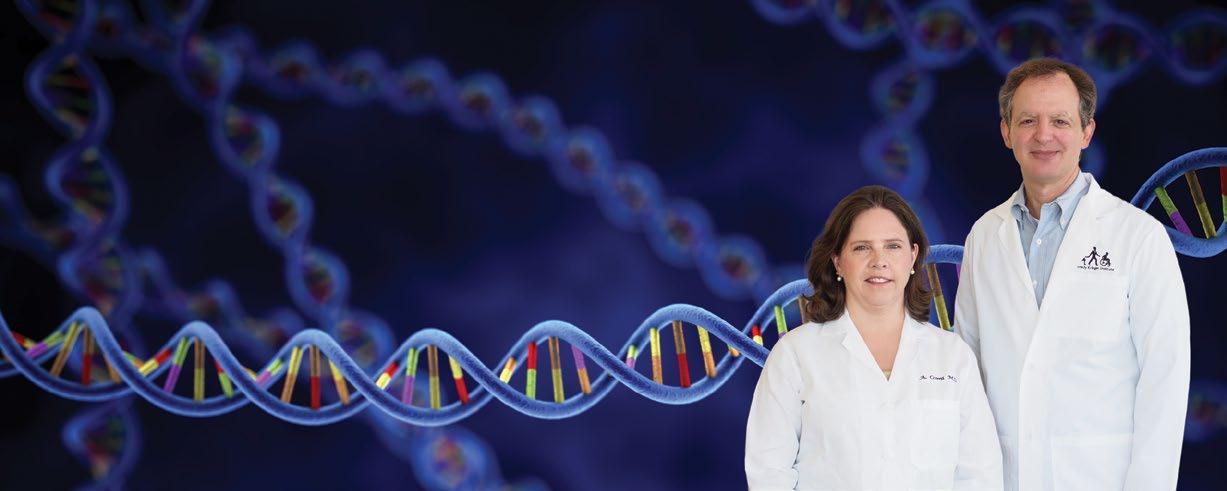
Anne Comi, MD and Jonathan Pevsner, PhD
In My Own Words: Marshall Garber
“I went from having no idea I could stand to realizing that my aspirations and my hopes and dreams could be fulfilled.”
Marshall Garber is a patient at Kennedy Krieger’s International Center for Spinal Cord Injury.
Afew years ago, I developed a mass on my spinal cord that left me paralyzed. My family sought out the best place to help me, which was Kennedy Krieger. Going into treatment, I didn’t have any intention of forming a family there, but in a way, I did. Multiple people at Kennedy Krieger had an impact on me, but Dr. Becker has been one of the most influential people in my recovery.
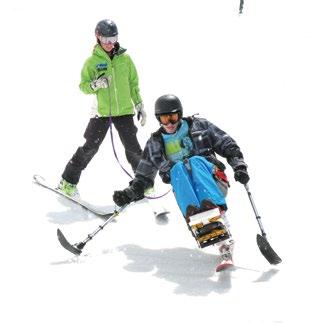
During an adaptive ski trip to Colorado that Dr. Becker arranged for patients, I told him that I had come to terms with the knowledge that I would never walk again. The next day, I had a test done as part of a study Dr. Becker was working on, and he told me that my muscles were strong enough to stand. I didn’t believe him, but he said, “Let’s try it.” He helped me up and then let go, and I stood free. It blew my mind away. I started crying like a baby. I was so overwhelmed, because I had no idea any of that was going to happen. I’ll never forget it. I went from having no idea I could stand to realizing that my aspirations and my hopes and dreams could be fulfilled. Everyone has been saying from the beginning, “You gotta get there.” He showed me I’m there.
That ski trip had such an amazing impact on me. It took a couple of days to figure out how to ski, but once I had it down, it was like riding a bike. It was the fastest and farthest I’ve gone without wheels in as long as I can remember. The freedom was just incredible, and the scenery was
so beautiful. The speed of going down the mountain and the adrenaline from knowing I was skiing... it was one of the best experiences of my life. My core muscles were pushed in ways that they hadn’t been before. It felt so good to be able to conquer that mountain. I was just so overwhelmed with how awesome that place was—it’s hard to put into words. I really fell in love with Colorado.
Since the ski trip, I’ve been able to work at a level much greater. I can feel and move my legs, and just recently, I’ve gained the ability to do some walking. If I hadn’t gone on the trip, I don’t think I would know right now that I could stand or walk.
I’m not sure what the future will hold, because there are so many options. For the time being, I want to focus on therapy, so I can get back on my feet. I want to study photography in college, hopefully in Colorado. I don’t know where I’m going to end up, but I know I’m going to be moving forward.
give the gift of Potential
By donating to Kennedy Krieger, you can make a difference in the lives of children with developmental disorders and injuries. Your donation enables us to pursue groundbreaking research, provide leading-edge treatment and therapies, and offer high-quality education and community programs for children with special needs to help them achieve their potential. Your gift truly transforms lives.
No matter what your age or financial resources, you can support Kennedy Krieger. There are so many ways to give!
n Give monthly as a Partner in Potential
n Donate in honor or memory of someone
n Set up a charitable gift annuity or other life income gift
n Include Kennedy Krieger in your will as a charitable bequest
n Give through your retirement plan or life insurance policy
n Attend one of our special events, or host one of your own your suPPort is thE kEy to unloCking a Child’s PotEntial.
“When I think about what I want to leave behind at the end of my life, I think first of the needs of children. Inspired by my nephew Tommy, I have chosen to support research in developmental disorders in hopes that those children with the greatest needs may enjoy happy and productive lives.”