
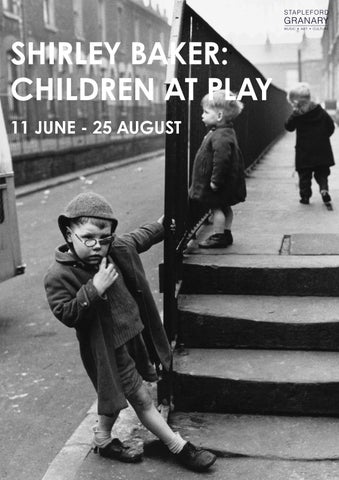
11 JUNE - 25 AUGUST
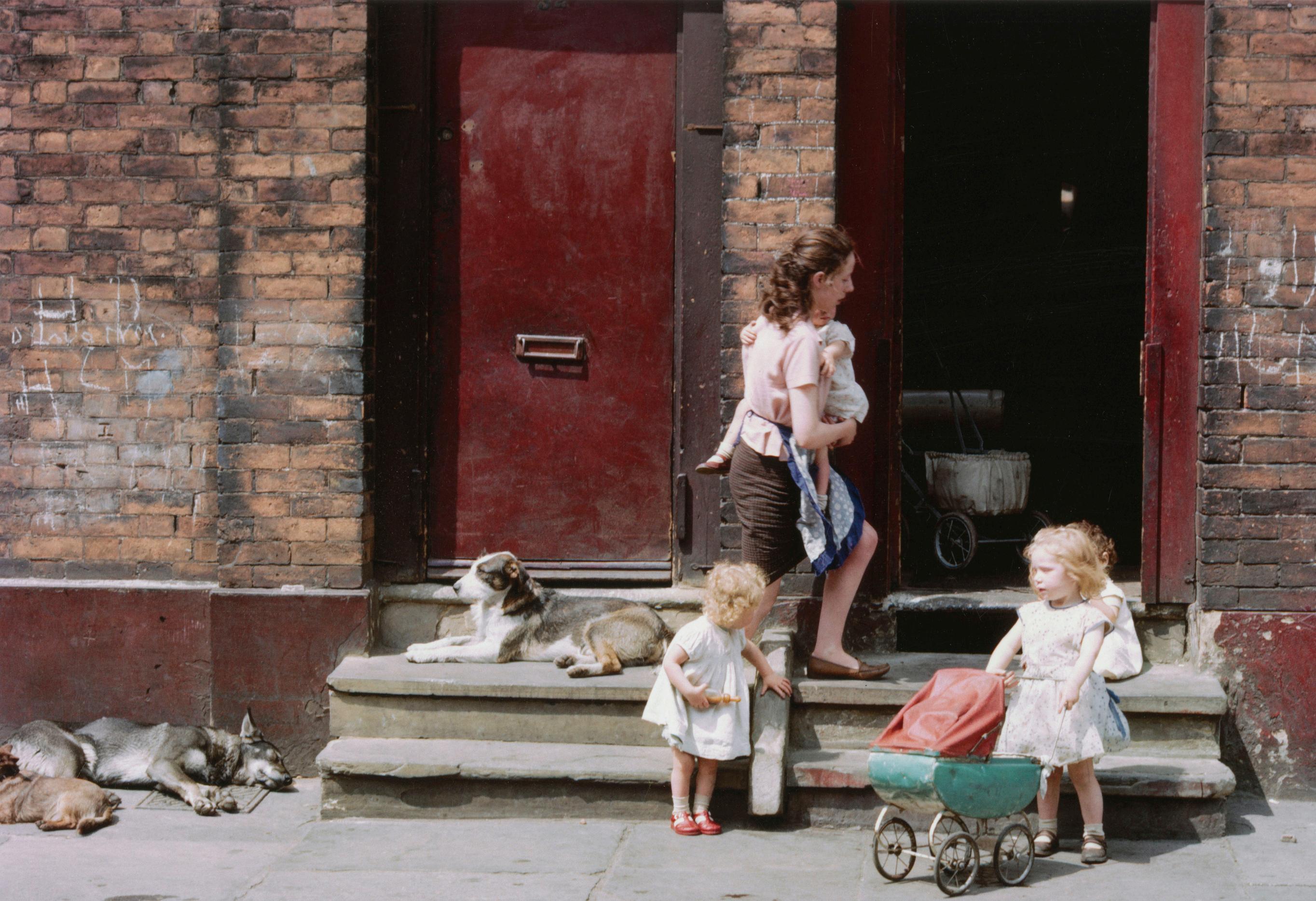
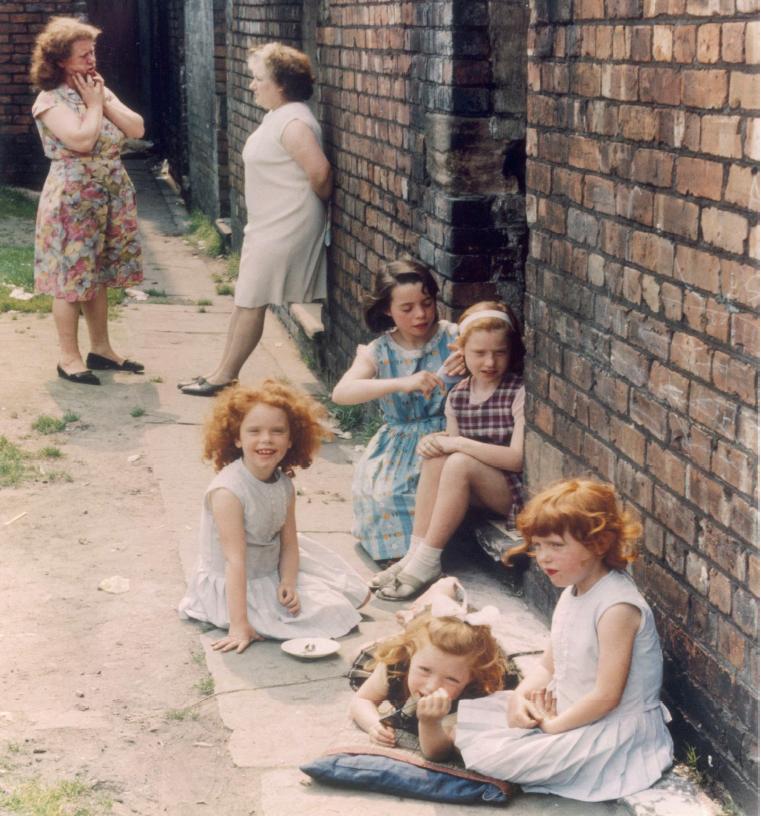
Front cover image: Salford 1964
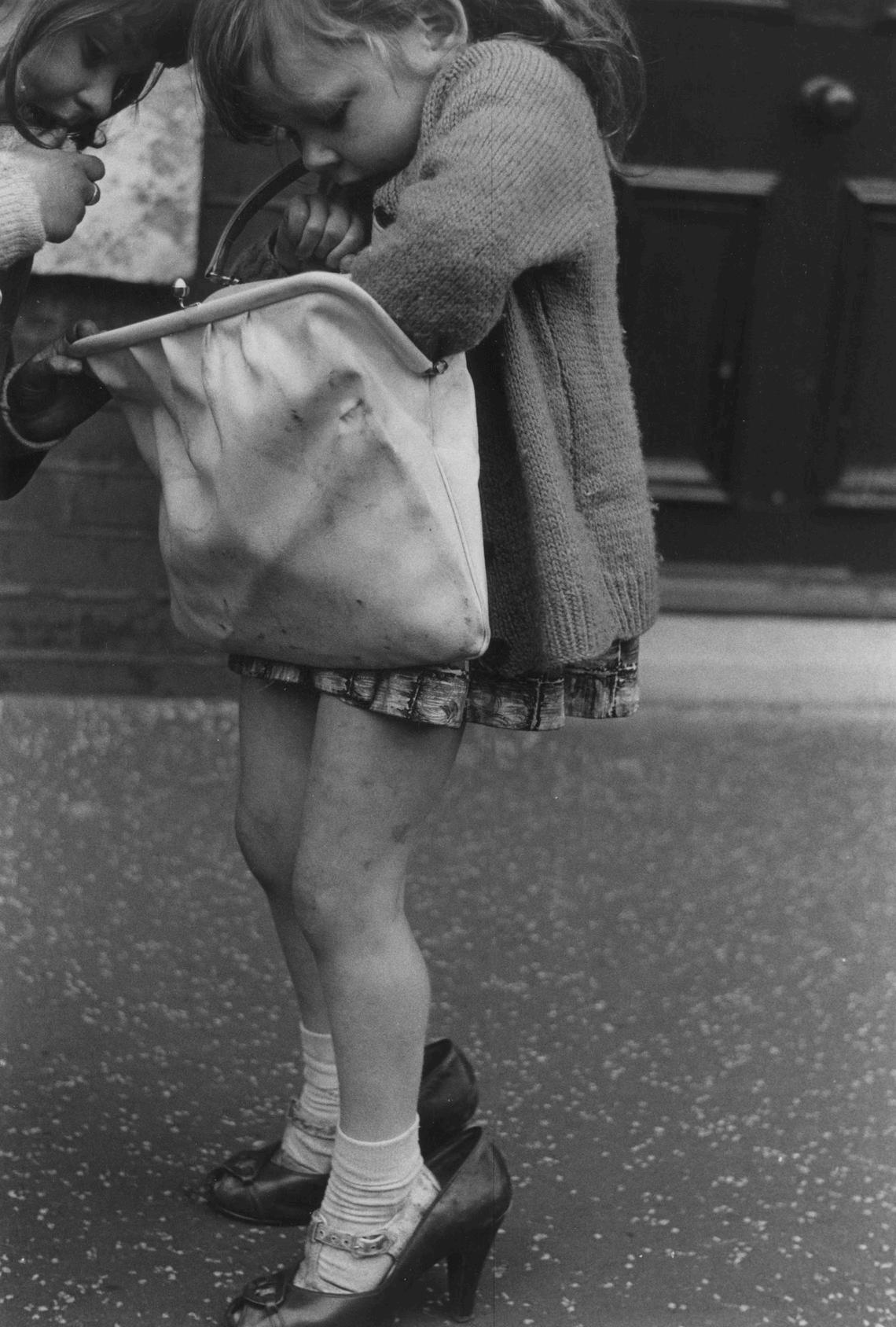
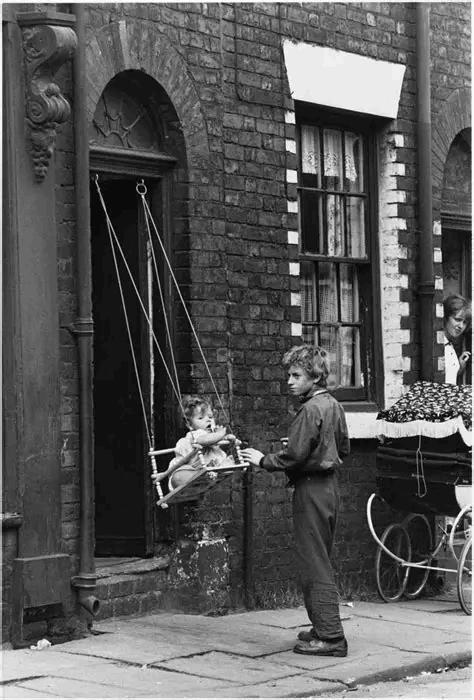
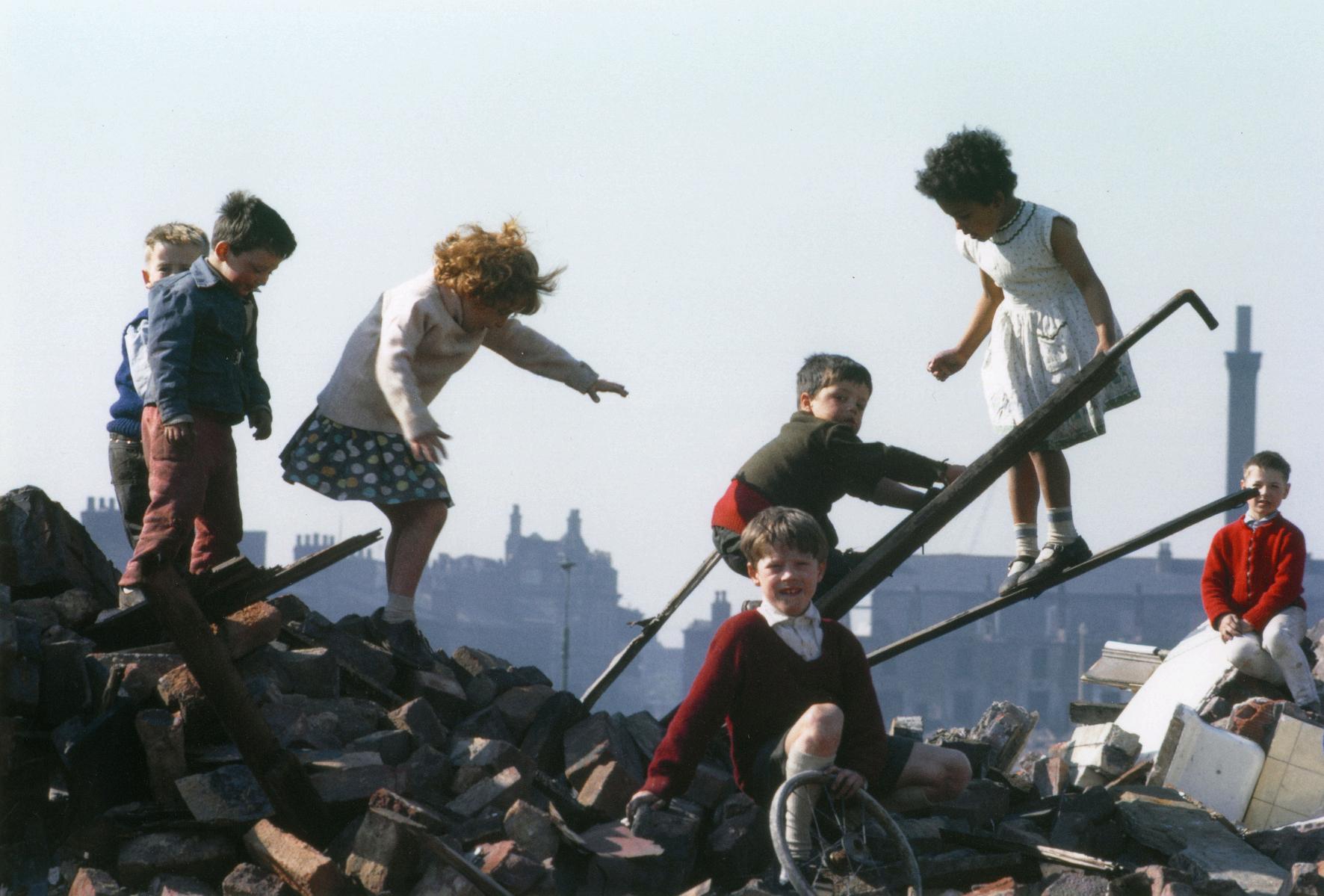
Inside page image: Manchester 1965
Shirley Baker (1932-2014) is thought to be the only woman practising street photography in Britain during the post-war era: a pioneering, humanist photographer, who documented the destruction and resilience of communities under siege, whilst conveying her compassion, empathy and indignation for the plight of her subjects
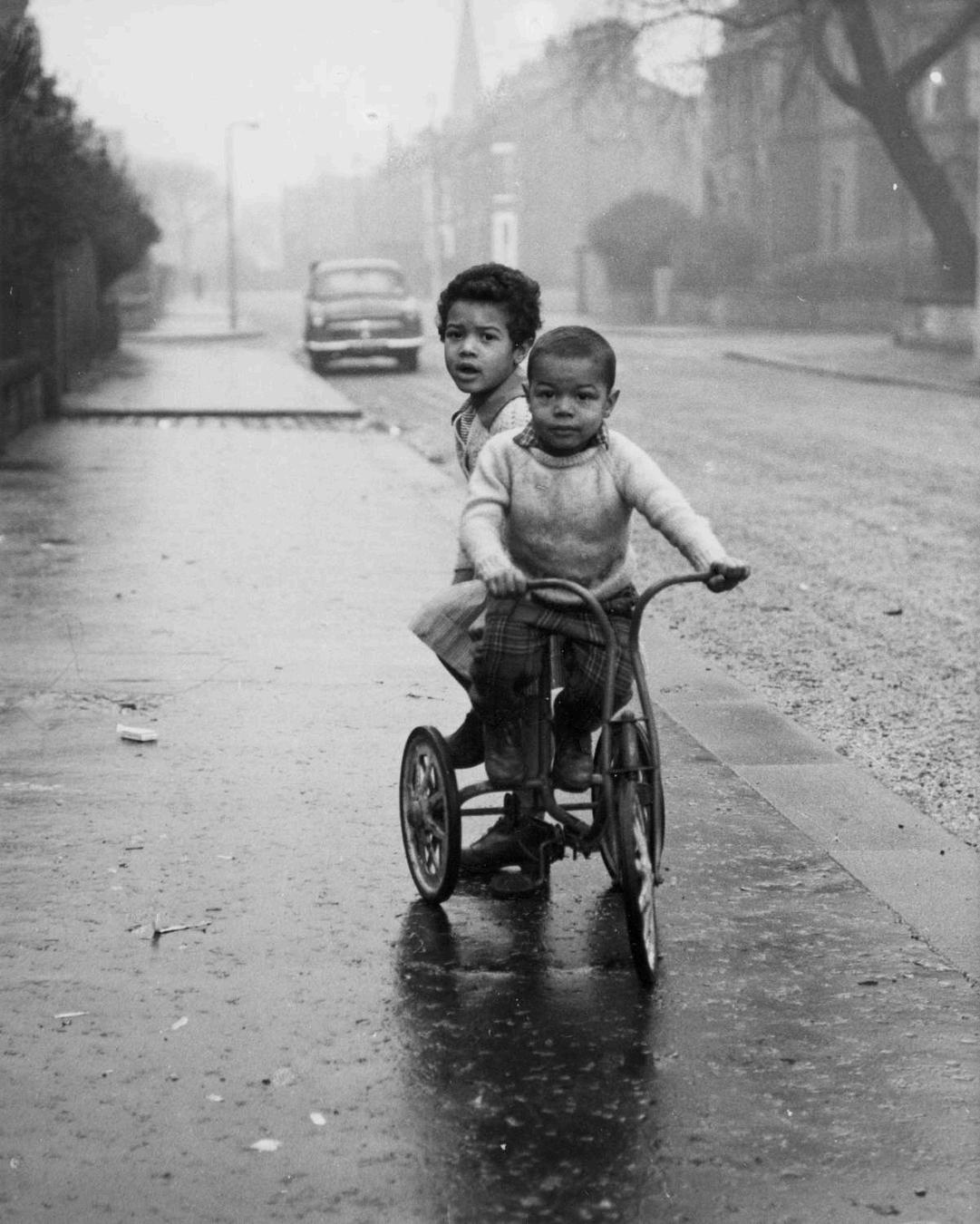
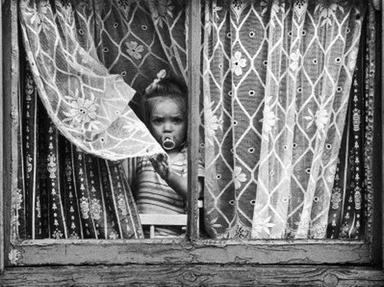
This exhibition consists of 39 vintage gelatin silver and chromogenic prints, taken and hand-printed by Shirley Baker between 1960 and 1973, focussing on depictions of children at play amidst the urban clearance programmes of inner city Manchester and Salford.
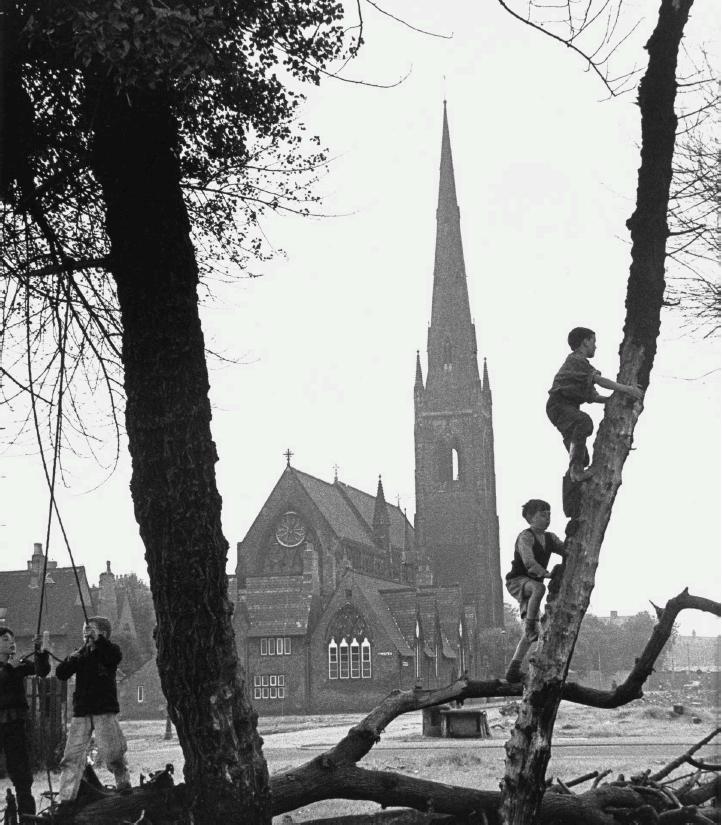
Children have always made playgrounds out of every nook and cranny, street and alley, puddle, pile of bricks and derelict building. In the middle of the 20th century, there were fewer cars on the roads, and urban streets were a canvas for chalk-drawn hopscotch, a court for skipping games, a parking space for rows of babies in prams, and a pitch for football matches Streets were territorial spaces to fight over and conquer; places to exercise democratic instincts and organisational skills, to sort out disputes, take the knocks and carry on. ‘Playing out’ was a daily norm and for many children, especially those in cramped terraced houses, the street was a place free from adult intervention where they could create their own games, rules and rituals.
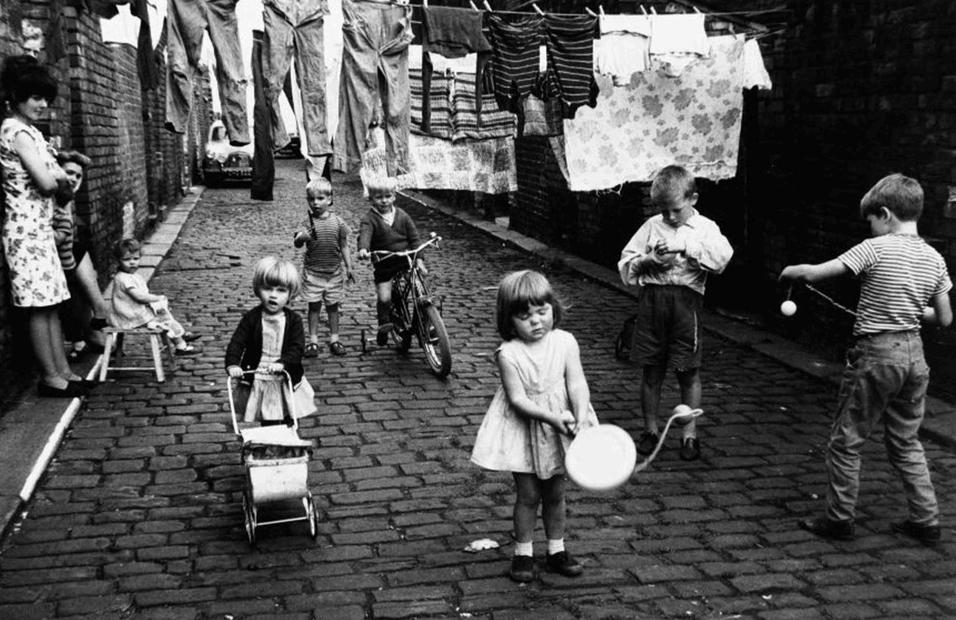
These were the scenarios that fascinated Shirley Baker, which she captured in tender, playful and candid photographs of post-war street life in Manchester and Salford. Taken during the late afternoon, working fathers are absent, mothers are washing, cleaning and cooking; and children, home from school, are at play. There is a scarcity of toys, but an abundance of invention and adventure, cheeky smiles and robust games. Baker’s photographs of children at play capture the palpable sense of support, collaboration and solidarity of the working class community.
Shirley Baker roamed the streets of Manchester and Salford with her camera from 1960 to 1973. During this period, Britain saw rapid social, economical and cultural change. When Baker went back to Hulme and Moss Side thirty years later, she found nothing of the former street life. In her diary, she notes with flat resignation the ‘new industry, the employment for most of the women… the televisions, computers, cafes, restaurants, leisure centres and image conscious children’.
Most of all, she noticed that no-one was out on the streets. Over one generation, children’s play had begun to shift from outdoors to indoors. As well as the increase in traffic, children’s territory the places where children might visit independently, such as parks was shrinking.
‘How easy it is now to look back with nostalgia to the community life and the quaintness of the good old days’, Baker wrote ‘But it is just as easy to forget the other side of the coin… the leaking roofs, running taps, the mould on the walls, the smell of rows of outside lavatories… the fact that there was no hot water, no baths in the houses and the many discomforts associated with the lack of amenities that are taken for granted today’.
Most of Shirley Baker’s photographs are taken in black and white, as was the norm for serious documentary photography in Britain at the time. They highlight the patterns and textures, lines and perspective of the built environment. But her colour photographs bring elements like graffiti and peeling paintwork to the fore, with cheerful, punchy energy that would be lost in black and white. The street is both her focus and her frame: a microcosm of bricks, slates, lampsposts, flagstones and cobbles in which everyday life is played out. She rarely notes the names of the streets; her concern is not with specifics, but with change.
Shirley Baker was born in Lancashire in 1932 The family home was in the affluent middle class suburb of Kersal, North Salford. Her father ran a successful furniture and cabinet manufacturing business, and her mother was a milliner who loved acting. The parents passed on their artistic nature and independence to their two twin daughters; Barbara would go on to study fashion, and Shirley was fascinated by photography from a very early age. She recalls the smell of the bellows of her mother’s Coronet folding camera (which the children were not allowed to touch) and being presented with a Box Brownie camera for her 10th birthday.
The family moved to Prestwich, and Shirley Baker became head of Stand Grammar School’s photographic society. At the age of 18, with qualifications in chemistry, physics, scripture and art, she enrolled at the Manchester Municipal College of Technology to undertake a City and Guilds in Pure Photography. In the 1950s, photography was still largely regarded as a technical subject, not an art form, and the course gave her solid, if artistically dry, technical foundation. Baker’s desire to work in photography was a bold one for a young woman; the course was dominated by men, and she found the environment hostile.
On graduating, she found work photographing industrial equipment at CEG (a small electrical firm), Courtaulds (the fabric manufacturers) and British Aerospace. Following her marriage in 1957 to Anthony Levy, a doctor, the couple moved to London. Baker undertook a year-long course in medical photography and refined her skill as an in-house photographer at Pendlebury Children's Hospital She harboured an ambition to work as a freelance photographer for The Manchester Guardian, and whilst her pictures were occasionally published, she was never credited, and it is likely that her gender stood in the way of a career in press photography.
From 1960 - 1970, Shirley Baker worked as a teacher at Salford School of Art where she encouraged students to see the potential in photography, sending them out into the streets to explore a more spontaneous, candid approach. Although she didn’t particularly enjoy teaching, the ten year period was productive. The security of the job combined with part-time hours opened up the idea of taking photographs as ‘investigations’ without having to sell them. ‘It was the slice-of–life pictures of Cartier-Bresson that inspired me, and what I aspired to make’, she wrote. She decided to become in her own words a ‘free spirited photographic recorder’, driven by personal curiosity and a need to comprehend the social world around her
Shirley Baker laid down the foundations for her new artistic trajectory; there would be no briefs and no deadlines. She would go where she liked, and take the pictures she wanted to take. Lou Stoppard, in her book ‘Shirley Baker’, described Baker’s work as ‘delightfully untainted’ , suggesting that she might have benefitted artistically from her independence and the lack of influence and feedback from other photographers, editors or curators.
Baker began to take street photographs of Manchester and Salford at the start of the 1960s. In the mid-20th century, Manchester had the second-highest number of condemned homes in the UK, just behind Liverpool. Built rapidly during the Industrial Revolution, many of these densely packed houses had outside toilets, no indoor plumbing, and severe issues with damp and overcrowding. The urban clearance programme one of the largest in Europe, which had begun before World War II was aggressively accelerated in 1955. Over 20 years, some 1 3 million homes were demolished, uprooting thousands of working class families from inner-city neighbourhoods such as Hulme and Moss Side, and relocating them to ‘overspill estates’ on outer farmland or hastily built high-rise flats.
Shirley Baker empathised deeply. Her motivation was ‘anger’, 'sadness’ and ‘sympathy’. There is a recurring despondancy in her words (‘I wanted to do something, but what could I do?’) alongside elements of doubt about the purpose, usefulness and outcomes of photography in these circumstances. ‘I did know that fundamental changes were taking place… and nobody seemed to be interested in recording the face of the people or anything in their lives’, she wrote in the introduction to ‘Street Photographs: Manchester and Salford’. ‘People were turfed out of their homes. Some squatted in old buildings, trying to hang onto the life that they knew... I decided to go out onto the streets, capturing this upheaval, photographing people I came across’
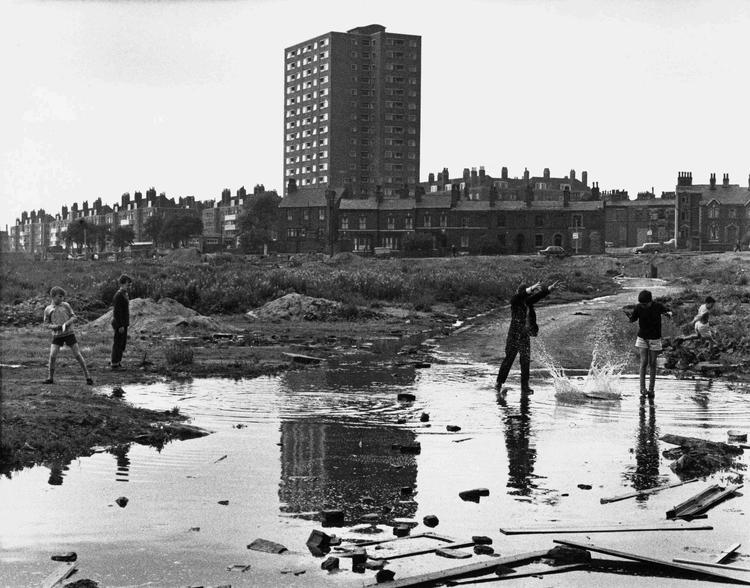
In the photographs, we see the clash of old and new. In one picture, boys throw rocks into a large puddle in an area of wasteland; behind them, there is a ribbon of abandoned and crumbling Victorian terraces, whilst a tower block emerges in the distance, ominously reflected in the water.
Image: Manchester 1966
In other images, children are seen playing energetically in the remains of demolished houses. Many of Shirley Baker’s photographs are reminiscent of a city under siege, with boarded up windows, black smoke and demolition dust clouding the air Elderly people refuse to leave, peering out from doorways or windows. Lou Stoppard observes that Baker had ‘a clear respect for her subjects yet also a penetrative gaze that could veer, deliciously, toward irony… [her images] make no attempt to gloss over a gritty street, a collapsing community, the spread of poverty’ .
Shirley Baker felt sympathy for the planners too, who hoped that their high-rise designs with libraries, banks, pubs and shops would form the basis of a better life for residents. ‘We tried to help them make Salford as good as it could be’, said Percy Johnson-Marshall, who was one of the architect planners employed by Salford Council to work on the design and construction of Ellor Street (a redevelopment of Pendleton) in the 1960s The planners were presented with swathes of cleared land, and told to completely rethink the spaces with an aim to rehouse 200 people per acre. Their solutions were to make the pedestrian areas as large as possible with ‘slender, pencil-like’ buildings for living, interspersed with schools and other community buildings. ‘The key elements of our comprehensive plan never emerged’, said Marshall. ‘The civic buildings were all cut and taken out. We were hoping to have some really fine public buildings.’
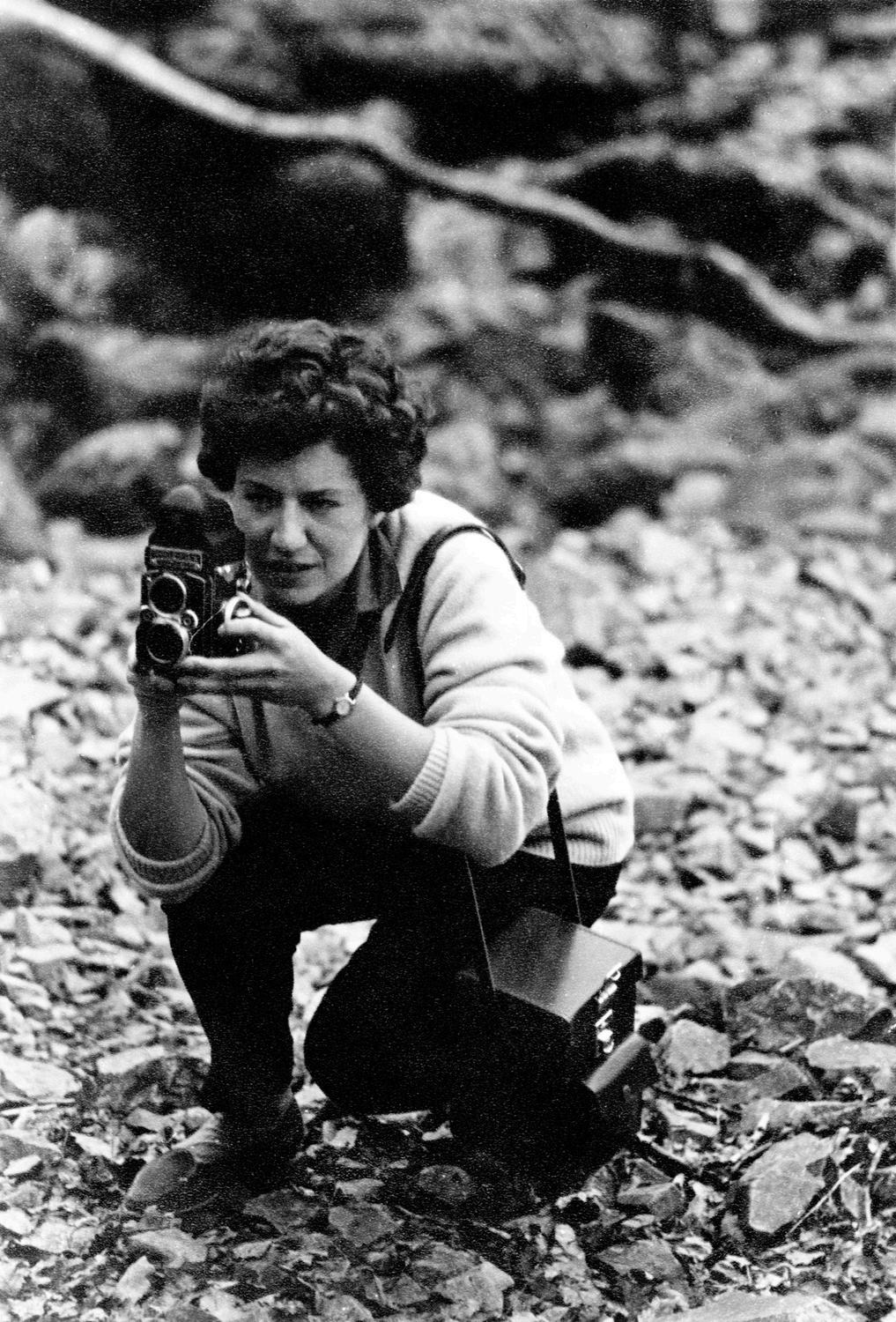
Shirley’s contact sheets show her practice of following her subjects around until she found the composition she wanted. These are unhurried photographs, not spur of the moment snapshots If she stumbled upon a backdrop that particularly appealed, she would wait for hours for the right person to appear in the frame. ‘I never posed people in my pictures’, she wrote, ‘but sometimes the children posed themselves when they spotted the camera. I like to photograph their spontaneous reactions and often they would climb all over me begging to have their photos taken so it was difficult to get far enough away to focus the camera. After a while most people relaxed and seemed to forget I was there at all.’
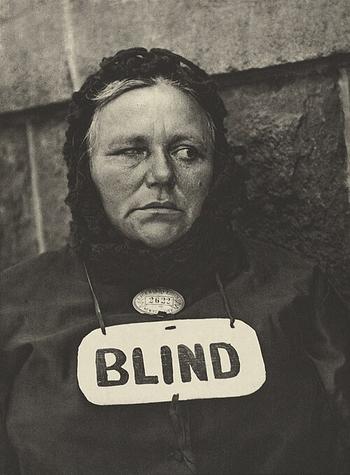
The ethics of street photography has been a subject of debate from the earliest days of the genre. Paul Strand’s 1916 photograph Blind Woman has been central to the canon of street photography since it first appeared in Camera Work in 1917. Strand, arguably the greatest of the American progressive, modernist photographers, said that although the picture had ‘enormous social meaning and impact, it grew out of a very clear desire to solve a problem’ That problem which was primarily technical and formal was; ‘How do you photograph people in the streets without their being aware of it?’
The importance of Blind Woman in the subsequent history of American photography cannot be underestimated. Praised for its power, directness and indispensability to a photographic tradition of moral witnessing, the picture also presents photographic morality as a shifting relationship between curious seeing and defensive recognition. In Blind Woman, provocative parallels between the subject and the street photographer emerge. Both the photographer and the woman are in public, and both are seeking contact with others in ways that those others might find uncomfortable; charitable selling for one (the woman wears a New York City pedlar’s license badge), candid photography for the other. Both the woman and photographer share the status of limited visibility in the street to authenticate their roles; street photographers often treat their subject as if they were ‘blind’ to the photographer.
To take his photographs, Strand fitted a fake lens to the side of his camera. The camera's actual lens poked out from underneath his arm. In this way he photographed his subjects at right angles, hoping that they would be unaware they were being observed. Later he used a more sophisticated mechanism; a right-angle prism attached to the lens so he could face in one direction while photographing in another His subjects were everyday urban workers and
marginalised people, including pedlars and European immigrants on New York’s Lower East Side. As Strand admitted, this kind of surreptitious photography was contentious; there was always the possibility that he would be challenged either by the people he photographed or by a bystander.
Street photography blossomed in New York City during the first half of the 20th century. Blind Woman was the picture that ‘charged up’ (in Strand’s words) a generation of American photographers whose pictures are unsurpassed in their lustre, compositional rigour and strange humanity. One of the first to be ‘charged up’ was a young Walker Evans (1903-1975). He described Blind Woman as ‘strong and real… a little bit shocking… brutal’ . Like Strand, Evans also devised an undercover method to take elegant crystal-clear images on the New York subway without people being aware of what he was doing. He strapped a 35mm Contax camera to his chest under his coat, with the lens poking through his buttons.
Paul Strand never questioned the morality of what he was doing. He never felt that he was exploiting anyone in his attempts to give something to the world. Yet he also admitted seeking a certain quality derived from the fact that the person didn't know they were being photographed His pictures are often blown up and cropped so that faces fill the frame and unlike Shirley Baker’s photographs there is no background to situate people in a social space. The intrusion feels more palpable, and the act of selection more deliberate. Against a backdrop of increasingly invasive amateur photography, undetected voyeurism, and exploitable commercial photographs, Strand sought to differentiate his practice through his ‘serious’ motives.
Shirley Baker, from an affluent area and a middle-class family, has the eye of an outsider looking in. Despite her continued presence in the streets of Manchester and Salford, she never established a rapport with the families or entered their homes, for fear of intrusion or complicating things. The doorstep is the physical and symbolic threshold throughout her body of work. In an interview with Val Williams (Life Story interview 1992, quoted in Anna Douglas’ doctoral thesis), Shirley Baker is asked; ‘did it feel like entering into a foreign country, or did it feel like your place?’ Baker replies: ‘I mean, I didn’t live there, so I cannot pretend to be a part of it, but in a sense I did feel it was my place, and I became very, very involved with it But quite often you see things in a different kind of a way when it’s not absolutely a part of you’.
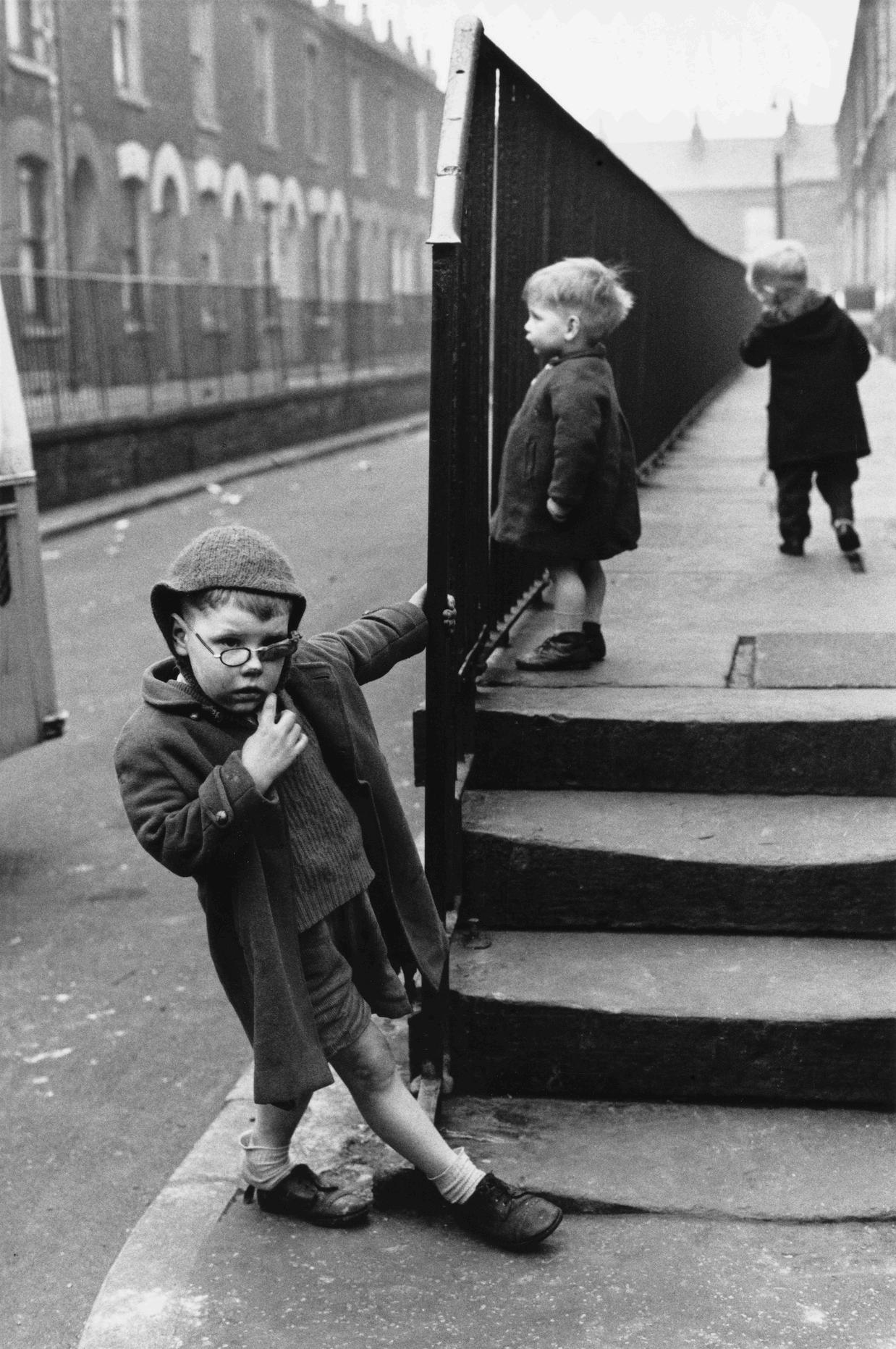
When curator and researcher Anna Douglas ran workshops encouraging the children (now adults) in Shirley Baker’s photographs to come forward and talk about their experiences, many expressed affection for the photographs, gratitude to the photographer for making the work, and, in some cases, real pride at being ‘part of history’ . Their clear recollections of being photographed also shed light on Baker’s methods. Although Baker claims not to pose people, the personal narratives tell a different story. One particular example is the ‘three Williamson brothers’ Derek Williamson (the oldest brother at the front with the patch on his eye, below right) recalled that Shirley Baker had put him and his two siblings into position by bribing them with ice-cream. ‘Then’ , writes Anna Douglas, ‘the picture fell into place. Only just legible to the left of Derek’s shoulder is the back end of the ice-cream van. In fact, there was another picture, which now made sense: an image featuring a young stylish woman surrounded by a gaggle of toddlers, buying an ice-cream from the very same van. There was Derek, behind the small crowd of children, almost edited out of the picture frame, unmistakable in his home-made knitted balaclava helmet and glasses, longingly looking on’.
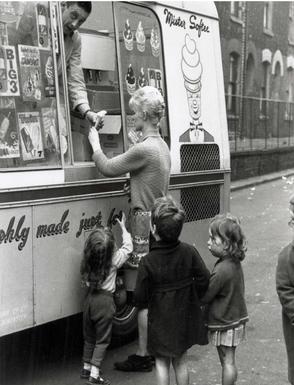
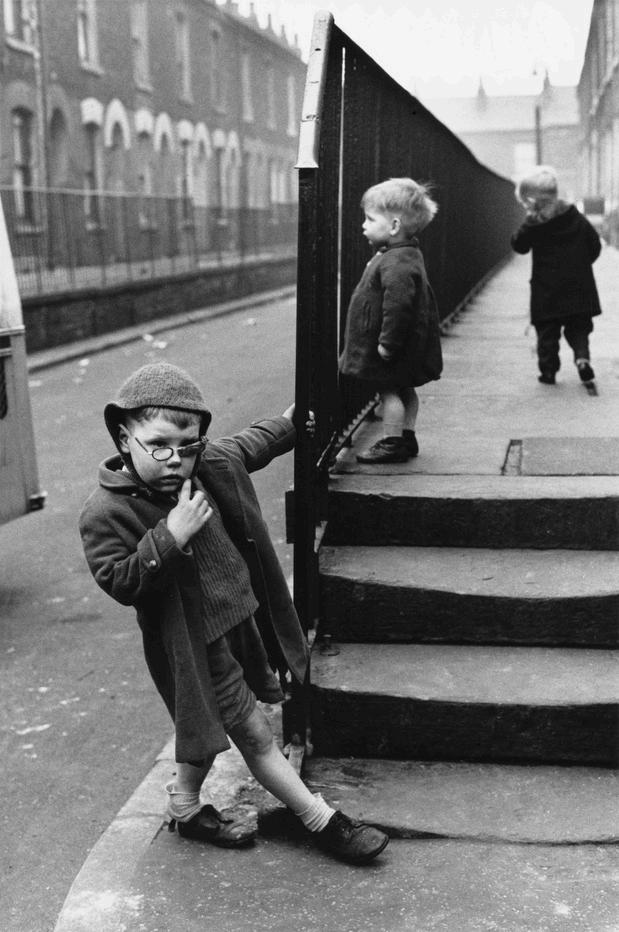
Baker’s decision to create two pictures out of one scene changes the context of each quite dramatically. The lure of ice cream has been removed from the picture of the Williamson brothers; they appear savvy, unsupervised and streetwise beyond their years, in comparison to the more homely scene of toddlers waiting for a treat from their mother.
Shirley Baker never tried to hide her camera (‘I like to watch people not as a snooper with a hidden camera, but as a member of the public like anyone else on the street.’) But the question of who is telling whose story is no less relevant today; if anything, it has taken on greater urgency. It raises issues of uneven power dynamics; there is an assumption that the person with the camera has greater influence and agency than the person in the picture. There is potential for misrepresentation, whether intended or subconscious. But equally, this line of questioning can also suggest that an outsider's perspective is not valid, or that the view of an ‘insider’ is representative of an entire community. Shirley Baker was not oblivious to this She understood the camera as a ‘kind of personal truth’ from the vantage point of the photographer. The photographic moment is all her own. She wrote; ‘these are my pictures, they are the observations of one person and they tell only a fraction of the story’.
By the end of the 1980s, Shirley Baker's work was relatively well-known in the North West. In 1986, Here Yesterday, Gone Today (Street photographs, Manchester and Salford) opened at Salford Art Gallery and toured nationally. Her work was included in group exhibitions, and her photographs even found their way into popular culture on flyers for club nights and record covers for local bands. In 1989, Bloodaxe Books approached her about a publication. The resulting ‘Street Photographs’ sold very well, marketed primarily ‘to the people who lived, or had lived in the places’ Anna Douglas reasons that the local emphasis of the marketing strategy explains why both the book and photographer received no national critical or curatorial attention.
Wide acclaim for Shirley Baker as an important figure in British documentary photography came later. In 2000, her street photographs were shown again, alongside paintings by Salford-born artist L. S. Lowry and Humphrey Spender, in an exhibition to celebrate the opening of the Lowry Centre in Salford. Shirley Barker died shortly before her 2015 quasi-retrospective at The Photographers’ Gallery in London. Called Shirley Baker: Women and Children; and Loitering Men, it was curated by Anna Douglas and was one of the gallery’s most highly attended exhibitions The first and second editions of the accompanying book sold out before the end of the show, and the exhibition toured to Madrid (2016) and Manchester Art Gallery (2017).
In 2016, Anna Douglas curated a second Shirley Baker show for Photofusion. On the Beach was an exhibition of Shirley’s lesser known work from the 1970s, juxtaposing pictures of the experience of being on holiday in Blackpool and the South of France. There have been five posthumous books, which brought her work to wider attention, and in 2023, the Shirley Baker Estate welcomed the documentary film Shirley Baker: Life Through A Lens written by John West and directed by Jason Figgis, with screenings in Manchester and London.
Throughout the 1960s and 1970s Shirley Baker often submitted her work to the Manchester Guardian, Amateur Photographer, Cheshire Life, The Lady and various travel magazines. Her street scenes were used by various council departments for public information exhibitions. Her archive is also full of letters that she sent to publishers, editors, institutions, trying to promote her work through books, journals and exhibitions, each filed next to its rejection. Lou Stoppard suggests that Baker’s work was ‘geographically pigeonholed’ and she was seen ‘simply as a postwar documentary photographer of a restless period of change in Northern life, rather than the complex artist that she was’.
Thanks to the ongoing interest of curators and publishers, the research and successful exhibitions of Anna Douglas, and the dedication of Shirley’s daughter Nan Levy, who has kindly loaned this exhibition to Stapleford Granary, Shirley Baker’s legacy continues to grow ‘I do think Shirley’s work was appreciated during her life’ says Nan. ‘She had photographs exhibited in the Tate and the Louvre. Mum was a very private and independent person she did things by herself in her own way. She once said to me that she didn’t know how anyone could work nine-to-five, and that she could only work when she was inspired.’ It is a distinction that profoundly differentiates Baker from her subjects. But Shirley Baker knew this; and she was militant to her cause. She believed in humanity, and her time was spent realising her conviction, pressing the shutter at the exact moment she felt could best bear witness. Her photographs are no mere history lesson. Their themes childhood, community and place are experiential ones, which resonate far beyond the time in which they were taken. They inspire contemporary thought, evoke emotion, memory, and different interpretations, and provide audiences with the opportunity for self-recognition.
‘We cannot relive the past any more than we can revive the dead, but to dismiss photography or any other record as valueless, robs us of the chance to learn from earlier times so that we might better understand the present and prepare for the future. After all, what is history if it is not an imagined past, a collection of facts, which we can only view and interpret in the light of our own experiences?’
- Shirley Baker, 2012 (quoted by Anna Douglas)

This in-house publication has been created to accompany Shirley Baker: Children at Play exhibition at Stapleford Granary, 11 June - 25 August 2026
Collection of photographs owned and selected by Nan Levy.
Photographs in this booklet supplied by Nan Levy and used for non-commercial educational purposes
Blind Woman by Paul Strand, public domain via Wikimedia Commons
Booklet author, Kate Romano
Booklet design, Jess Henry
© The Association for Cultural Exchange
Back cover image: Shirley Baker