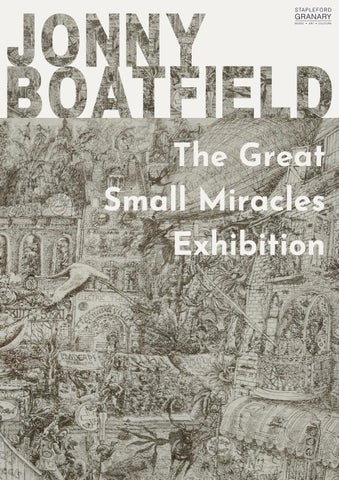
Widely heralded as one of the UK’s finest draughtsmen, Jonny Boatfield's extraordinary body of work straddles illustration, cartoon and theatre. He draws daily, with a dip pen and ink on old envelopes, greaseproof paper, food bags, scrap cardboard and record covers, with no prior plan or decision making The resulting images are instinctive, fluid and unconstrained
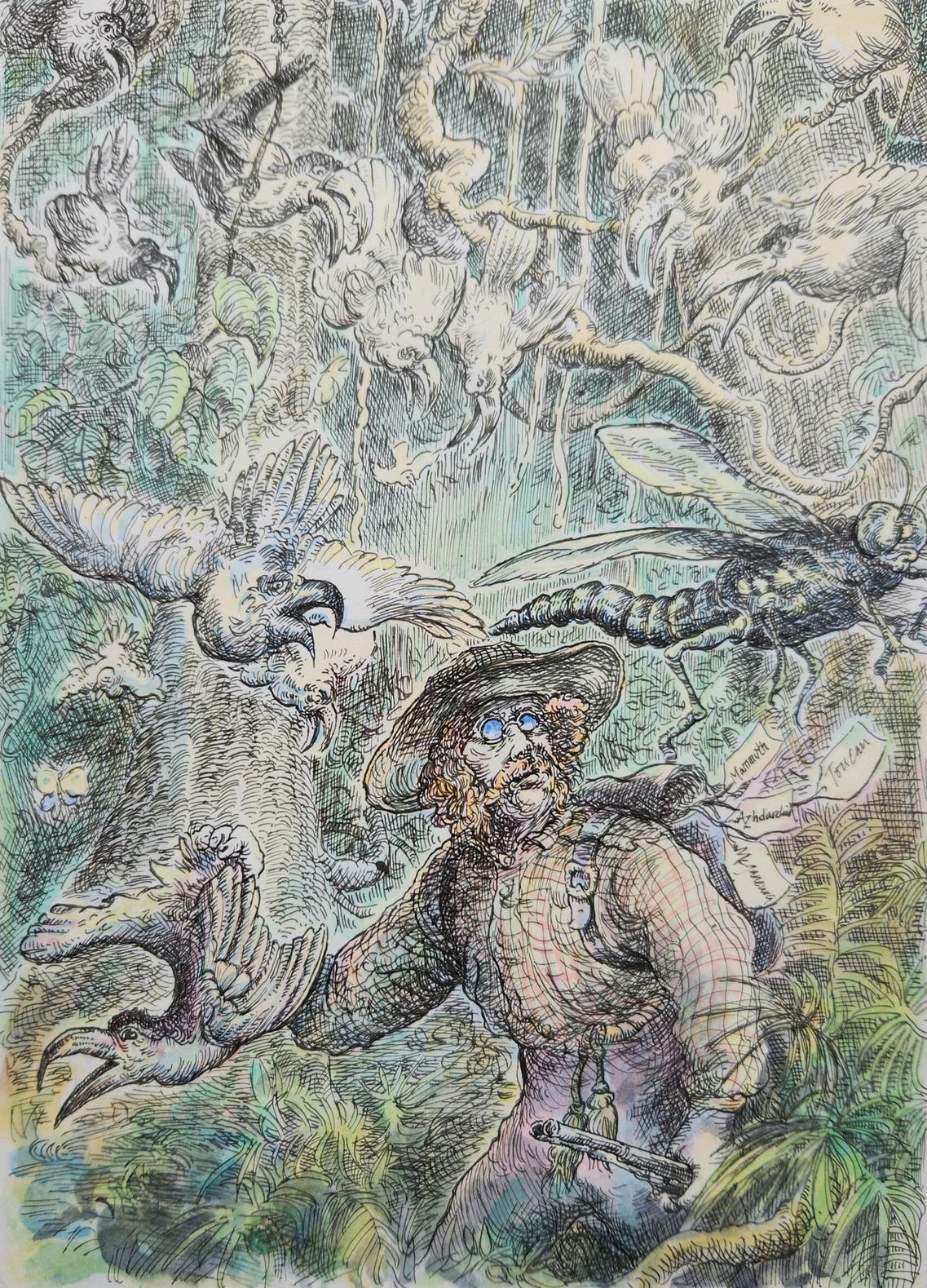
This exhibition includes around 30 framed original drawings, plus paper theatres, three-dimensional work and sketches. Though the subject matter varies considerably, his pictures all share edge-to-edge paper coverage and a distinctive colour and textural palette, ranging from monochrome through faded watercolourwash pastels to heavily varnished patinas Anachronistic motifs run through the pictures; mythical creatures, hot air balloons, historical figures, space rockets, robots, animals (living and extinct), music, flags, aliens and astronauts. His complex, unwieldy melodramatic ‘plots’ are not designed to be unravelled, and not especially coordinated into any philosophy. The villains and heroes in his pictures are all of us, and he depicts a light-humoured side to evil, alongside an infectious delight in the endless creation of small miracles
Graduating from The Royal College Of Art in 1984, Jonny Boatfield won the Creative Futures Illustrator of the Year competition (1986) held in London and Amsterdam. He has created installations for the Barbican, the International Book Festival, the Museum of London, Welsh National Opera, Royal Museum of Scotland, the DO Lectures in Wales and the End of the Road Festival His strikingly detailed artwork has been published in picture books and he has been an active workshop leader in the national Big Draw movement since its conception.
In conversation with Jonny Boatfield
List of works
Kate Romano writes about the extraordinary world of Jonny Boatfield; draughtsman, illustrator and inventor.
too much going on here’. Others get it immediately, and take what they want from the drawings I can give people an outline , or some sort of basic description, but that’s not really the point. For me , ideas just happen, and they expand, and I have to dislodge them onto the paper ’ .
Drawing, or the dislodging of ideas, is an all-encompassing obsession for Jonny. Widely heralded as being one of the UK’s finest draughtsmen, he’s also one of the least well-known ‘A prodigious neo-baroque talent’ wrote Jonathan Glancey in The Independent. 'A visual feast , a maelstrom of the world’ enthused art director Mark Reddy, comparing the experience of coming across Jonny Boatfield’s work to ‘discovering the Dead Sea Scrolls for yourself’ . Dan Fern, Head of the Royal College of Art Illustration Department observed: ‘He should be designing sets for the Royal Opera or National Theatre , but he's too busy producing work to spend time promoting it’
Jonny draws every day. Ideas spill on to the paper - any paper - with the rapid pace and spontaneity of a doodle. He draws on old envelopes, brown paper, food bags, scrap cardboard, record covers. His drawings are instinctive, fluid and unconstrained. They are born and live on the page, with no prior plan or decision. ‘I always feel I'm catching up with myself’ says Jonny. ‘Sometimes I have an idea in mind when I begin, but then the picture takes over , makes its own demands , and I have to go with that. The drawing itself matters , but it's not the main thing. The drive is to put across an idea or atmosphere; to let the ideas jump up out of
the paper, sing and dance. When I see a blank sheet of paper, my fingers start itching and I just want to scribble all over it so there is no white showing at the end. I would love to take everything off the walls in my house and just draw all over them I’ll probably do it one day ’
He’s a self-taught artist, largely as a result of attending schools with no art on the curriculum. After moving from school to school in the Far East, he settled at Salisbury Cathedral School as a boarder. ‘Once again, there were no art lessons , but once a month a parent used to come in and we’d do art in a tower on Cathedral Close I used to make models that fell apart I found a report from her years later which said 'I am convinced that Jonny has no artistic talent whatsoever’.’
But his next school offered an opportunity. In 1974, art lessons became part of the school curriculum. Jonny was 15. ‘My teacher was Griff , a young man who had trained at the Royal College. Griff wasn’t a great teacher , but he built , with his own hands , an art shack for us , like a shed We all helped him He put a massive piece of paper, a dip pen and a bottle of ink in front of me and said ‘draw something’. I drew a dragon. It was very detailed and it took me around two months , and it was at that point that I knew what I wanted to do: draw incredibly detailed pictures. Griff never tried to actively teach me anything; he just did his own paintings, and we all got on with our own thing’ .
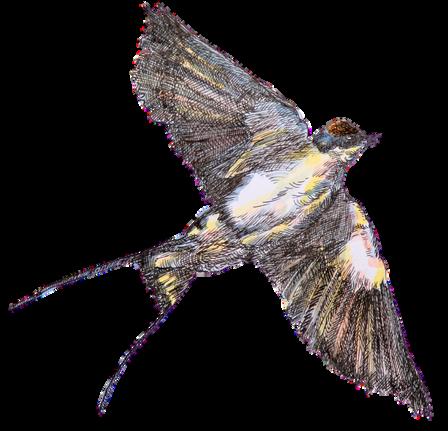
A close look - a really close look - at Jonny’s art is like stepping into a cabinet of curiosities. Anachronistic motifs run through the pictures; mythical creatures, hot air balloons, historical figures, space rockets, robots, animals (living and extinct), music, flags, aliens and astronauts. He recalls beloved childhood trips to the Haw Par Villa (or Tiger Balm Gardens) in Singapore as a strong influence. Somewhere between a theme park and a bizarre melange, visitor attractions included the Ten Gates of Hell, statues of historic and fabled figures set alongside modern life, an eight-foot sculpture of Mickey Mouse (‘with his legs too thin’), an eighty foot gorilla, and a graveyard of old broken sculptures, disembodied plaster limbs and discarded ancient gods. ‘You cannot imagine such a place’ says Jonny. ‘I used to drag my mother back there , again and again’ .
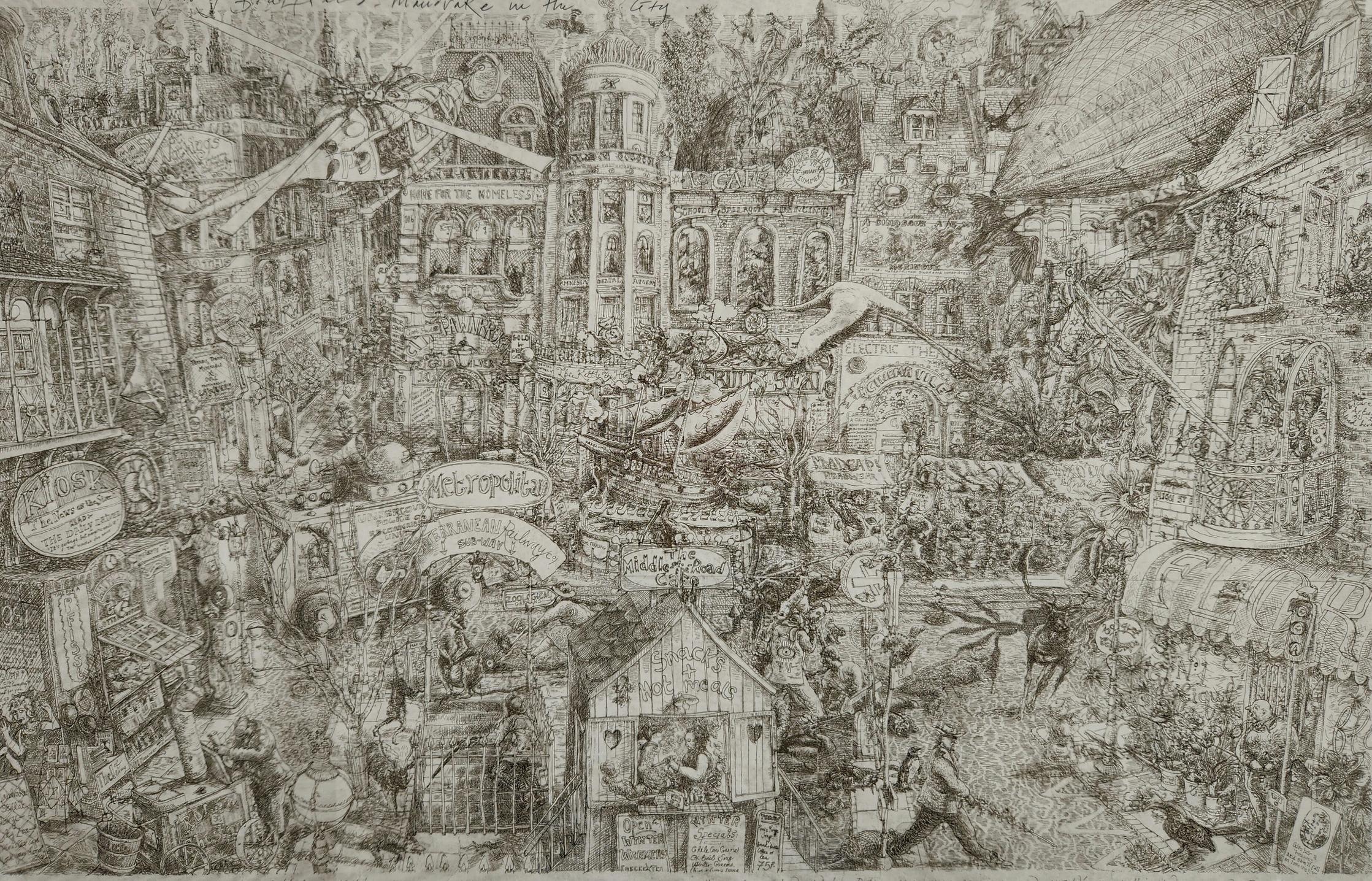
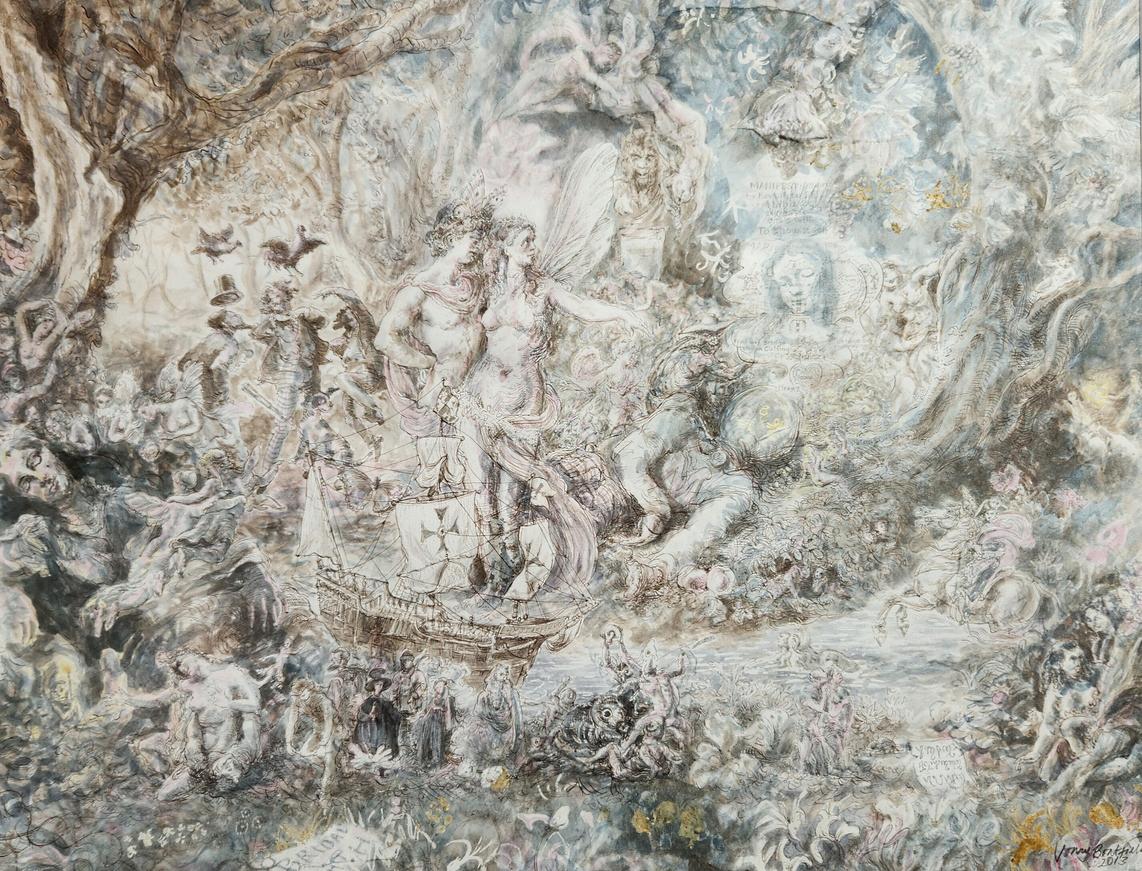
There’s nostalgia for the Industrial Revolution too His pictures are full of machines, inventions, and architecture from the Great Exhibitions; iconographies of modernism created to express the spirit of an emerging era. The combination of meticulous tiny detail and the sheer quantity of visual information in his work is intoxicating. Some of the smallest drawings (such as A Musical Compendium) need a magnifying glass, or extremely good eyesight, to decipher the intricate features Other pictures, such as Midsummer Manifestation, conjure up a dreamlike fairy-tale Victoriana. ‘It’s a sort of homage to Richard ‘Dickie’ Doyle, uncle of Conan’ says Jonny. ‘My grandmother had a book of his original colour sketches which I used to pour over as a child’ .
Though the subject matter varies considerably, his pictures all share edge-toedge paper coverage, with compressed ideas jostling for space, and a distinctive colour and textural palette, ranging from monochrome through faded watercolour-wash pastels to heavily varnished patinas. ‘Each picture has a language’ Jonny says ‘A certain rhythm, rhyme and reason emerges, and that’s because I’m literally drawing off the top of my head’ . He uses a dip pen with a very hard nib. ‘They
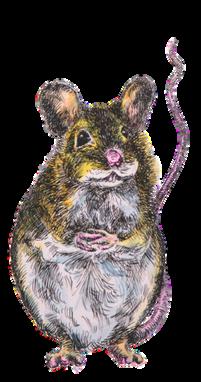
are difficult to find and I might get through 5 or 6 in one large drawing because I put too much pressure on the pen Greaseproof paper is lovely to draw on; it’s like drawing on water… the nib doesn’t scratch or splatter’ . It is curiously reminiscent of Swiss micro-script writer Robert Walser’s ‘Bleistiftgebiet’, or ‘pencil region’ - a phrase that suggests a different geography, and the hallucinatory movements of the pencil to create scattered, fragmented stories.
There’s also something distinctively English about Jonny’s drawings ‘I grew up in Cyprus’ he explains, ‘and we lived in the Far East. My father was in the army and we followed him to Malaysia and Singapore. My mother was a great fan of English children’s books , so when we were living abroad I was reading A Child’s Christmas in Wales [Dylan Thomas] and Orlando the Marmalade Cat and all these ultra-English books which have become indelibly etched in my mind. I have this vivid childhood memory of standing by the plastic white Christmas tree in Singapore, watching the snow fall. But that came from the books; snow never fell in Singapore. My idea of England is a mythical place. I had never been there , but the myth of England has remained part of my vocabulary. It’s England, subverted. It’s a culture , but not the reality. Coming to England is disappointing compared to the images that you hold inside you; my arcane emotional attachment to England comes from picture books’
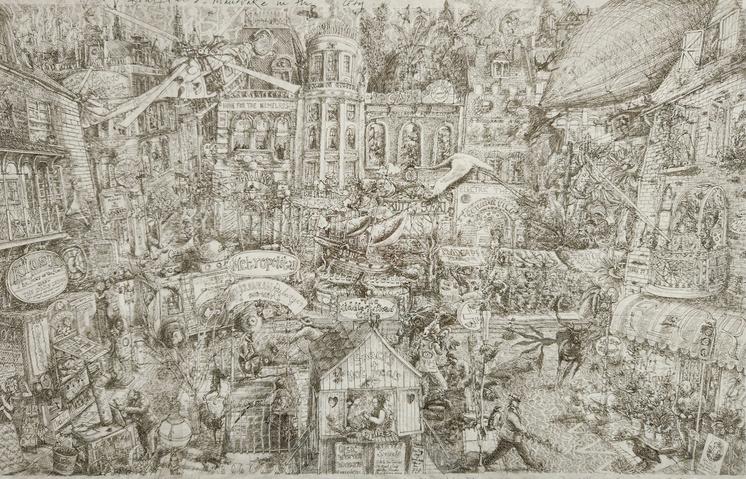
Children’s television from the 1970s fed his sense of wonder and invention (the eccentric, unfiltered Michael Bentine’s Potty Time was a favourite), along with a life-long love of the whimsical drawings, humour, and elaborate kinetic sculptures of Rowland Emett. He is influenced and inspired by the sharp minds and sharp pens of cartoonists who expose vanity, inanity and mediocrity; Saul Steinberg, his friend Steven Appleby, and Peter Brookes (‘a marvellous brain for ideas’). Jonny is equally adept at detecting social canker, and many of his pictures have a Dickensian tone which emanates from his mixture of realistic accuracy and unrestrained fantasy. In Mandrake In The City, the news on the street is ‘the daily drivel’ (’it’s garbage, but everyone reads it’) sold by a slumped paper seller overcome by fumes from a ruptured pipe and a petrol pump; the High Street is full of pawnbrokers, debt collectors, homeless shelters (‘no beds’). His complex, unwieldy melodramatic ‘plots’ are not designed to be unravelled, and not especially coordinated into any philosophy. They are, like Dickens, more concerned with the diversities of the world instead of unities. The villains are all of us and he depicts a light-humoured side of evil. The Jonny
Boatfield spirit is that of a Punch and Judy showman, who is not opposed to whacking his little figures unmercifully, or taking a swipe from the sidelines
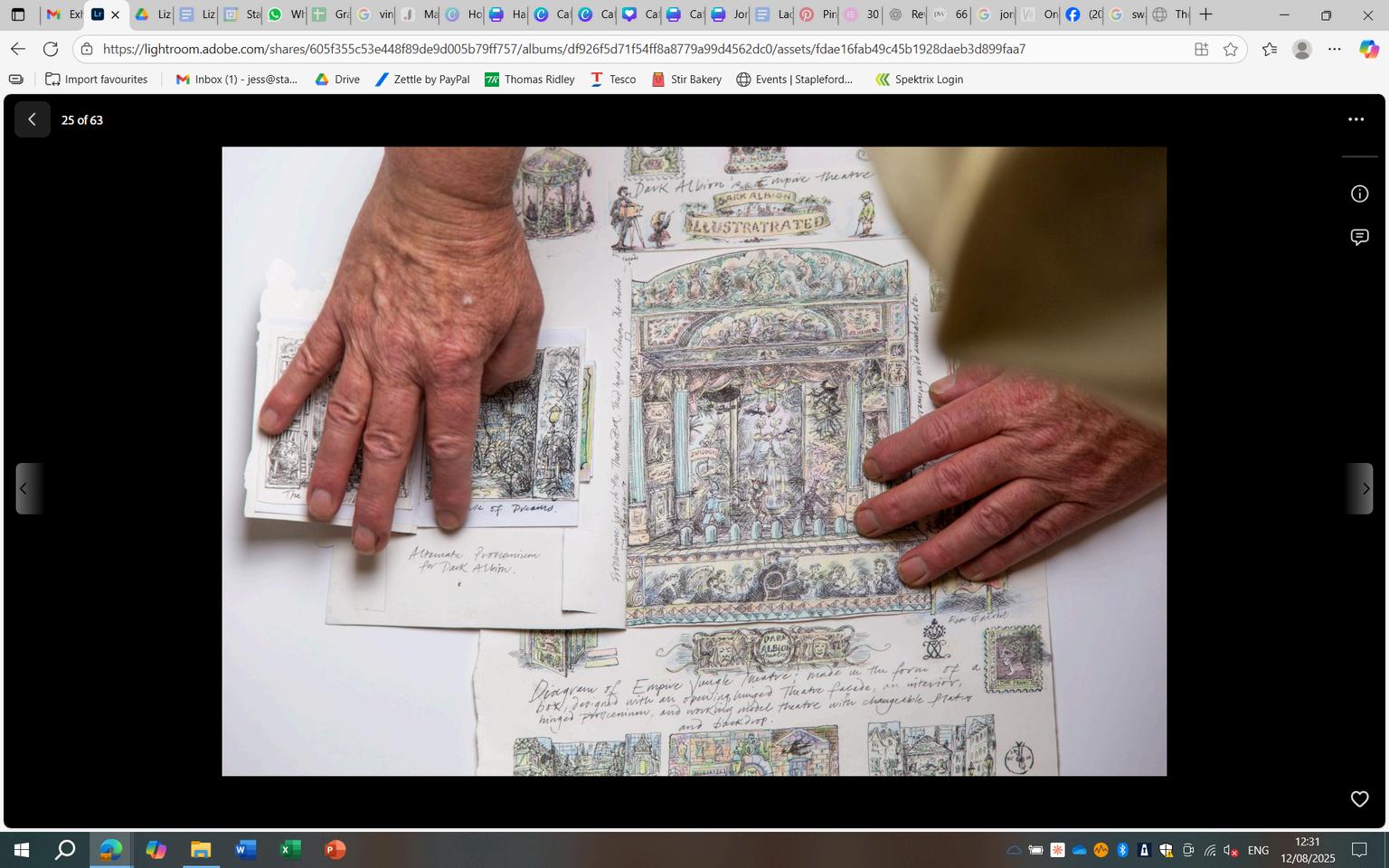
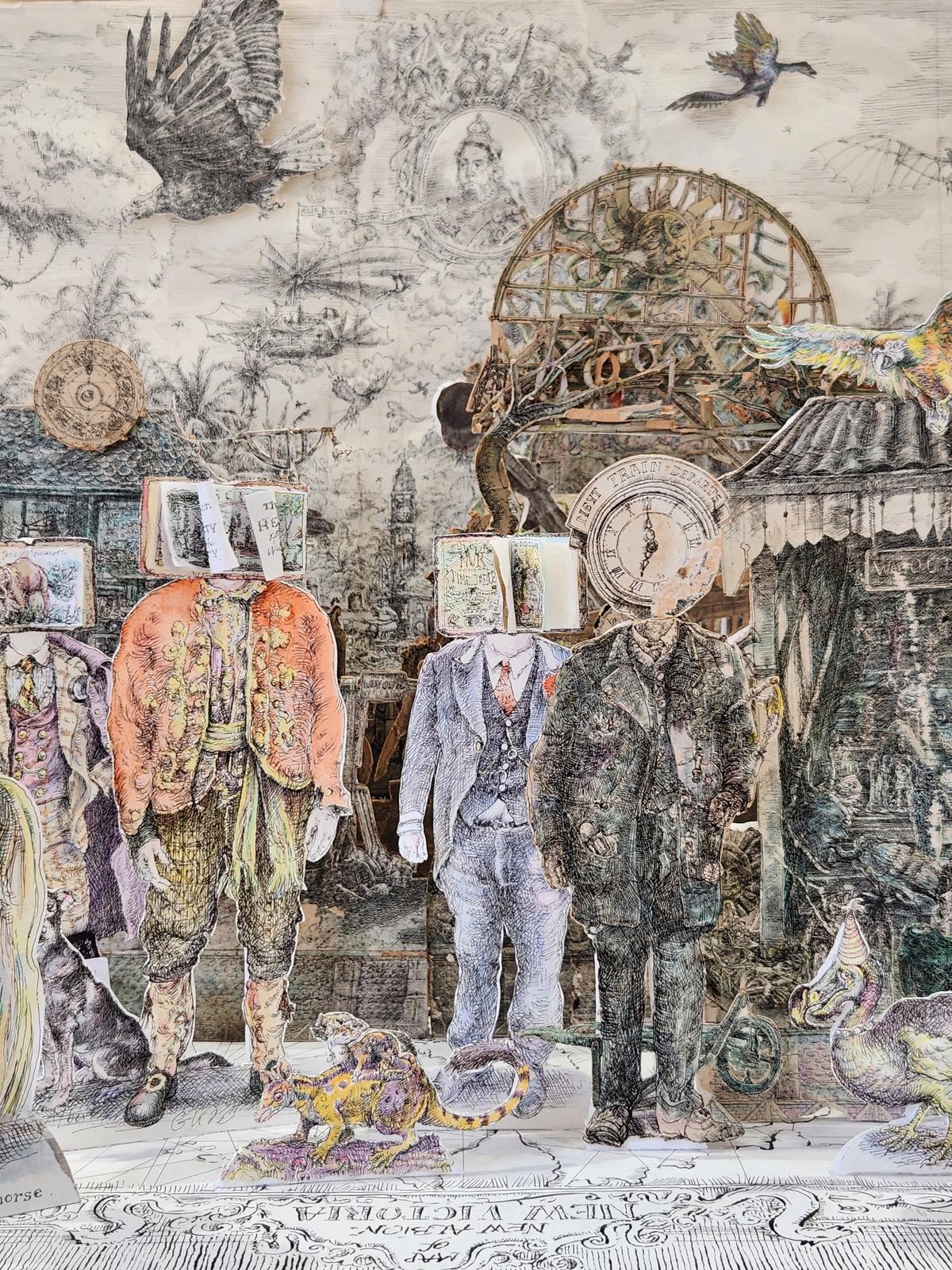
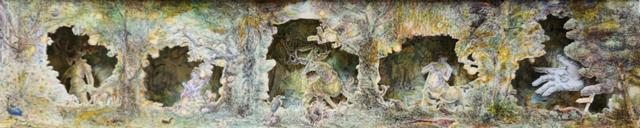
Jonny Boatfield's current preoccupation is shown in our exhibition as an Open Theatre; a three-dimensional set design for a graphic novel called Young England which has been gestating for a long time. 'The model making enables me to solidify things' he explains. 'It stops me re-naming and re-storying and reshaping things in my head It's a self-inflicted pause that means I can progress ' Young England was a Victorian era Tory political party, who looked to Benjamin Disraeli for inspiration. 'It's quite a musical title' he says. 'It encapsulates a culture' . Sketches show book-headed and clock-headed Victorian characters who appear to have stepped out of a paper theatre. There’s a full cast of theatrical characters and costumes, all with their own back story. The historic protagonist has been exiled to a far-off future island in the Philippines, where it is the year 2025. ‘I’ve put the positive side of the Victorians into the book’ he says. ‘The sense of impossible ambition and extraordinary ideas which we saw in the Great Exhibitions , mixed with their awful repressive bigotry. I think that the resulting explosion of Victoriana and modern ways is fascinating’ .
As with all Jonny Boatfield’s work, Young England embraces a world in flux; incongruous yet interrelated elements, dates, geographies and disciplines, leading to connections that can feel modern and relevant. ‘Just think’ he says, ‘the steam engine was the most radical machine ever built - clean , low emission; we could all have been driving steam powered cars today if the world had shaped up differently’ . And then, just as it seems that a contemporary sustainability philosophy might be emerging, his mind takes an unexpected leap; ‘it would be great to make a computer which ran on string, and pots and pans… ’ and another small miracle is born.
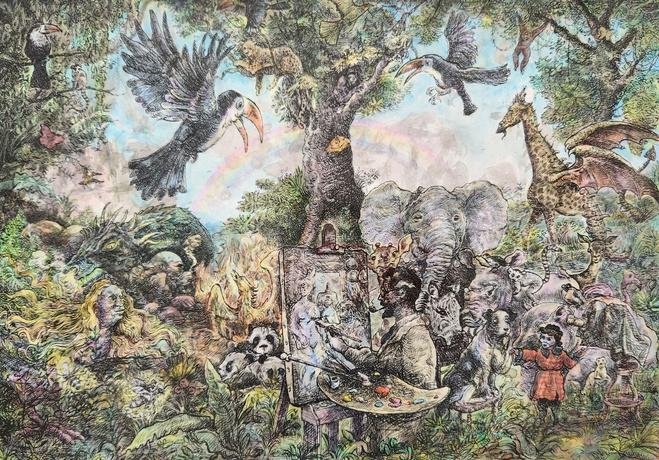
1. It Looks Like Rain, 2023
Pen Ink and Watercolour on Paper
41 x 53cm
£675.00
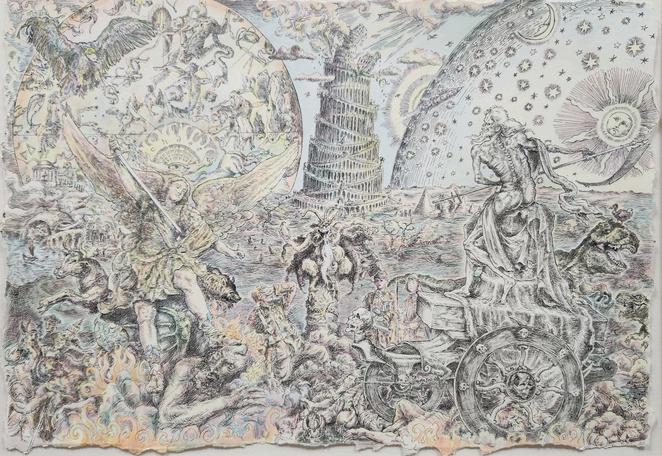
4. Mythology, 2023
Pen Ink and Watercolour on Handmade Paper
57 x 78cm
£1,75000
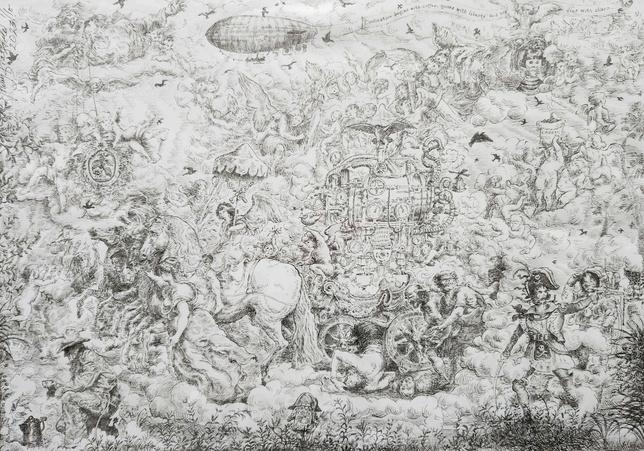
7 Revolution In A Coffee Bean, 2024
Pen Ink and Watercolour on Paper
52 x 69cm
£975.00
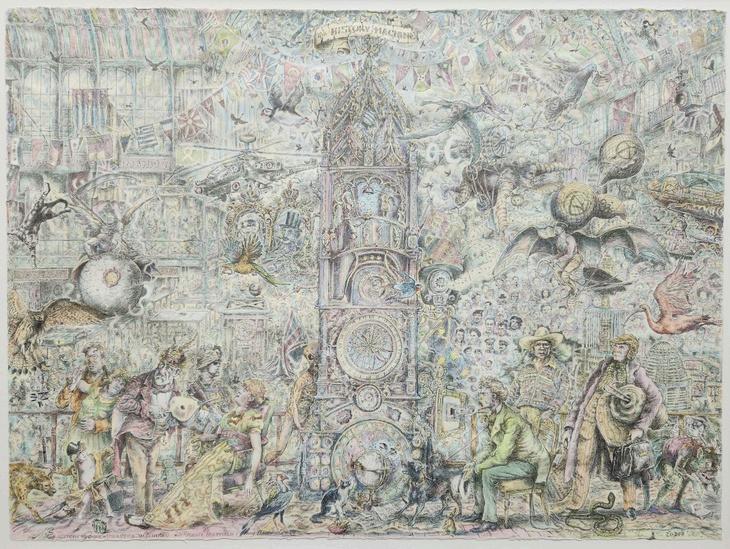
10 The History Machine, The Great Small Miracles Exhibition, 2024
Pen Ink and Watercolour on Handmade Paper
68 x 86cm
£2,750.00
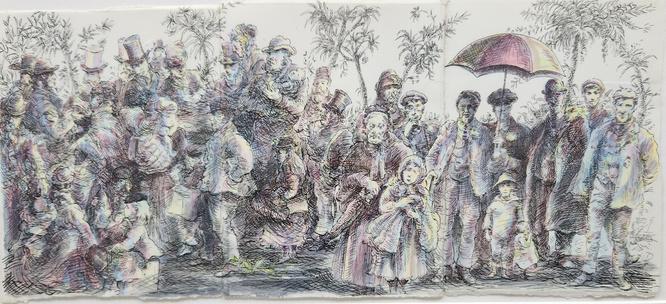
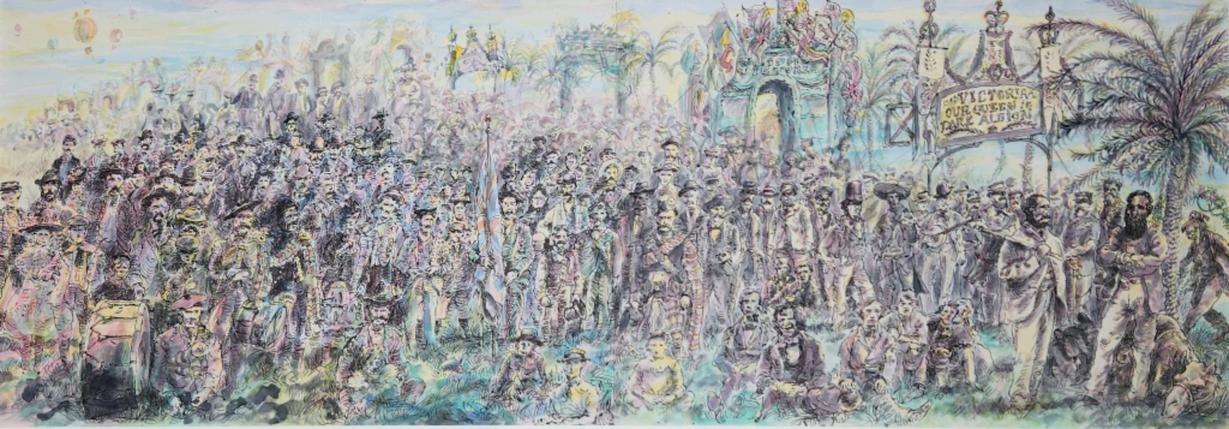
2 Waiting For Victoria, 2021
Pen Ink and Watercolour on Handmade Paper
32 x 55cm
£54500
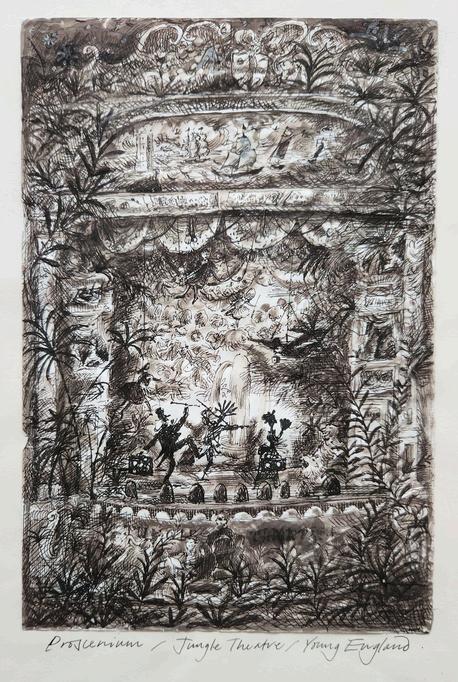
5. The Empire Theatre (Young England), 2022
Pen Ink on Bristol Board
36 x 49cm
£57500
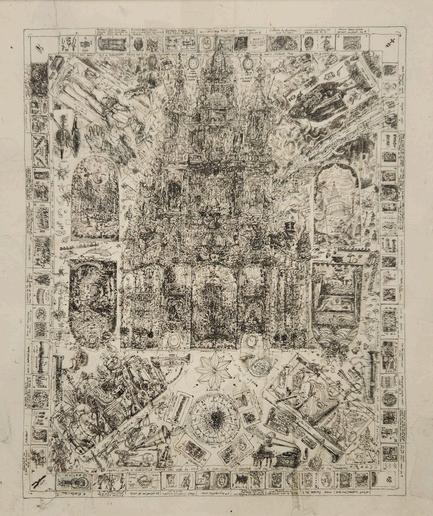
8 A Musical Compendium, 1999
Pen Ink on Paper Bag
56 x 51cm
N.F.S
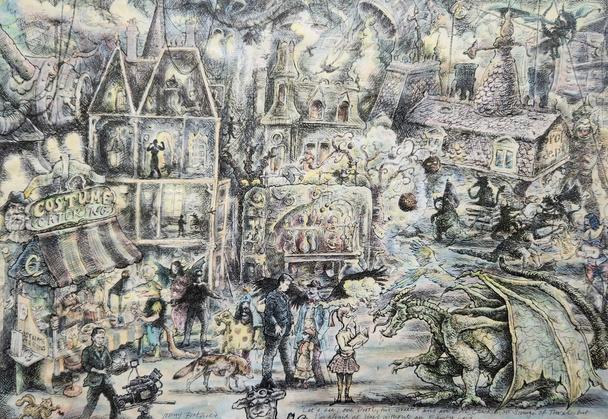
11 The Scourge of Thral, 2014
Pen Ink and Watercolour on paper
56 x 74cm
£920.00
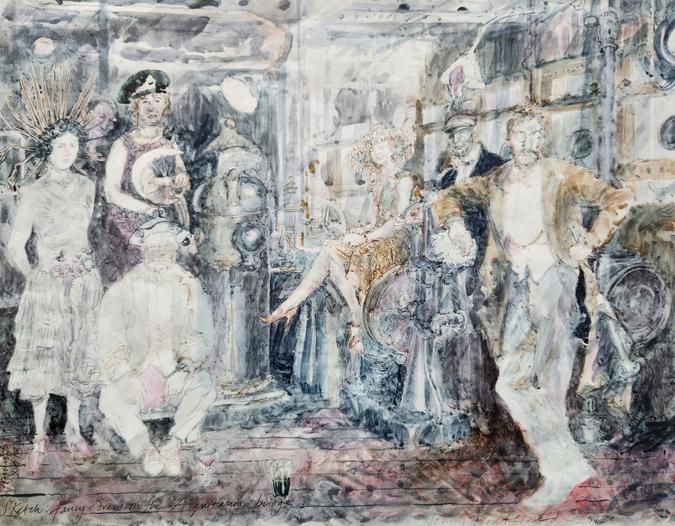
3 The Last Costume Party, 2019
Pen Ink and Watercolour on Magazine Paper
56 x 67cm
£72500
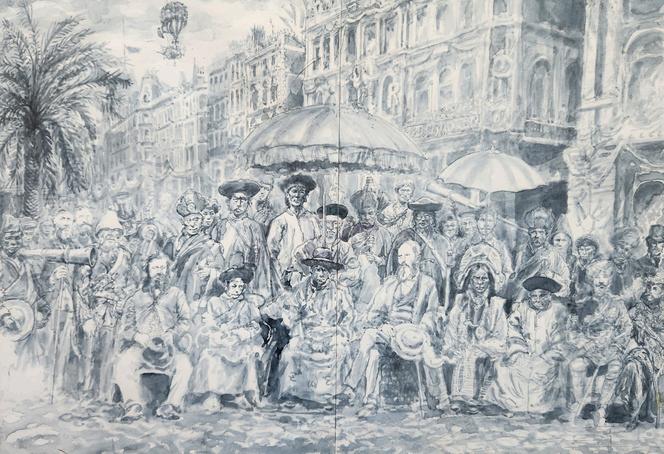
6. The Delegation (Young England), 2022
Brush and Watercolour on Paper
45 x 72cm
£75000
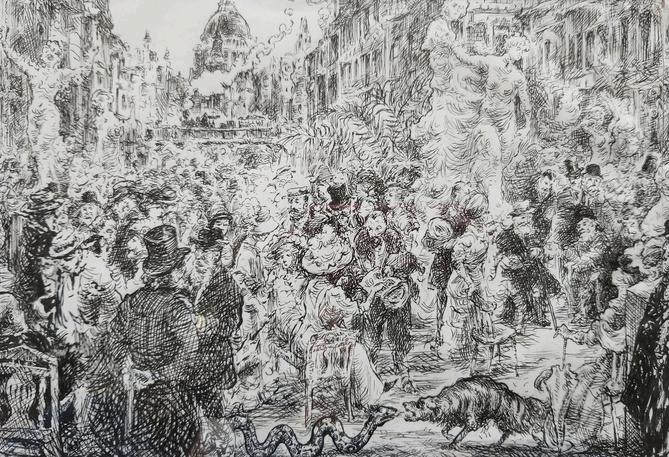
9 Dog and Serpent (Young England), 2025
Pen Ink on Sketchbook Paper
35 x 43cm
£54500
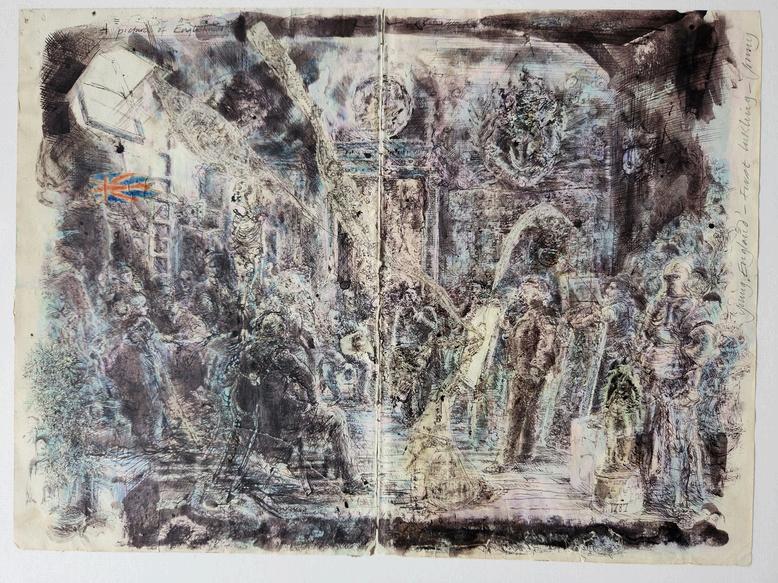
12 The Observatorium (Young England), 2016
Pen Ink and Watercolour on Sketchbook Paper
52 x 64cm
£525.00
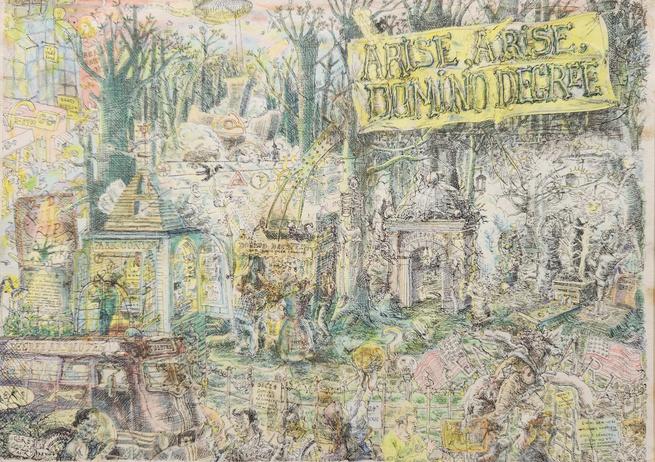
13 Arise! Arise! Domino Decree, 1983
Pen Ink and Watercolour on Paper
39 x 49cm NFS
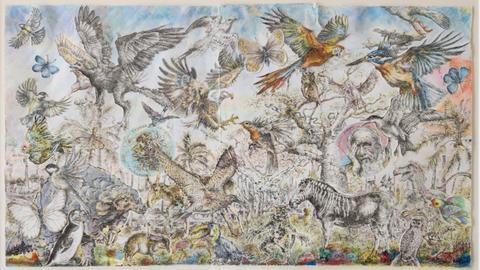
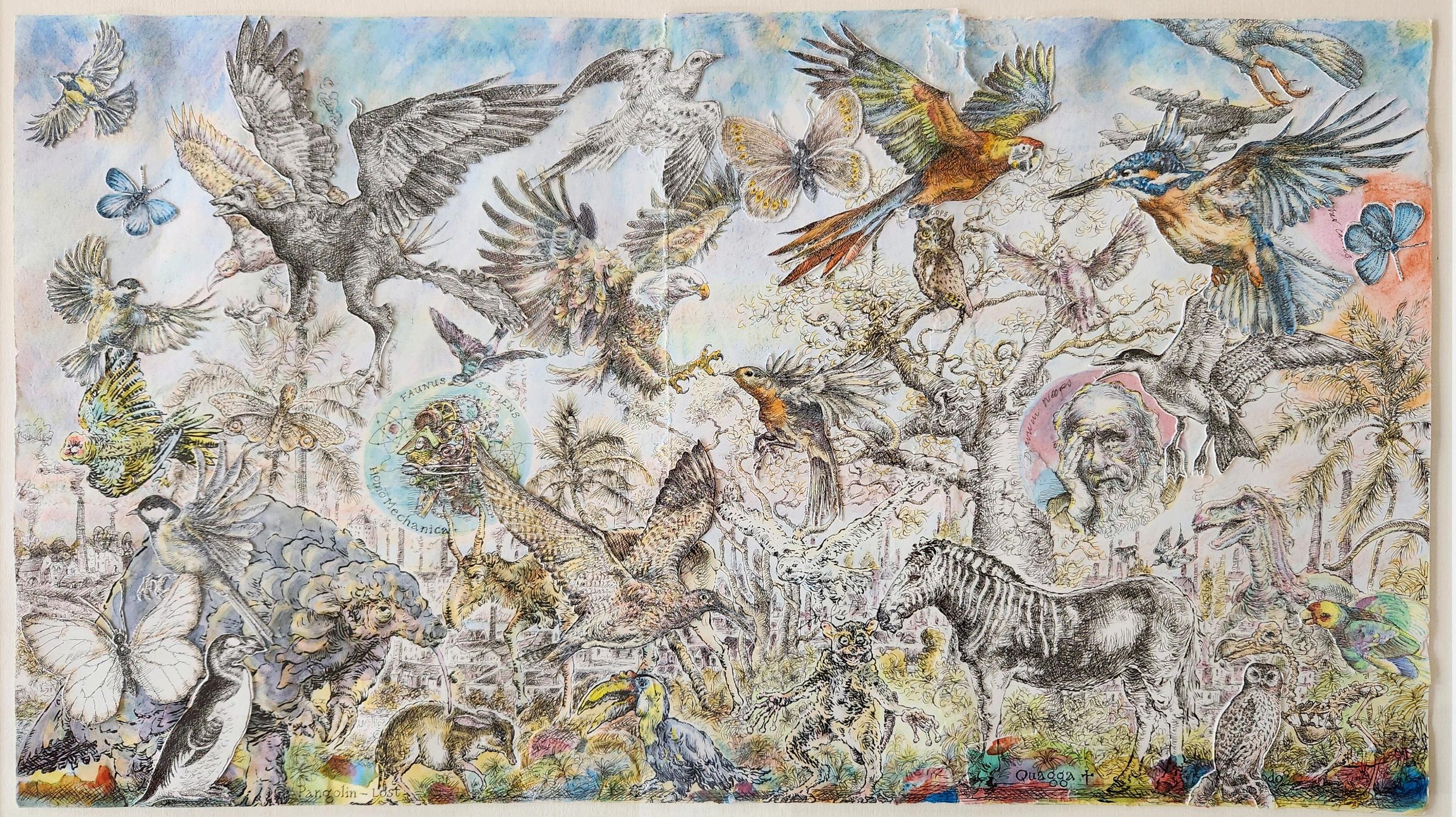
16. Darwin Weeps, 2025
Pen Ink and Watercolour and Collage on Bristol Board
35 x 63cm
£1,520.00
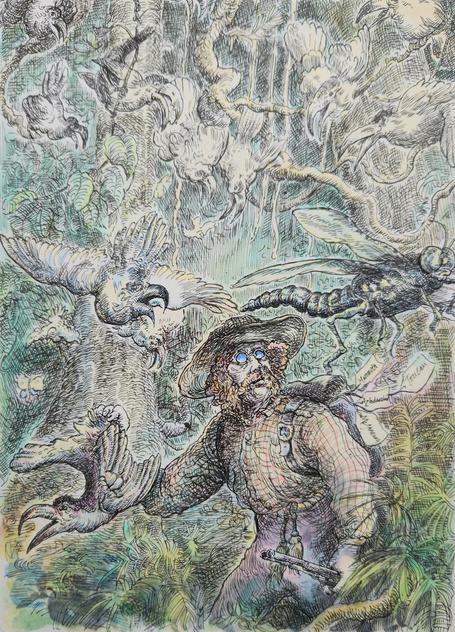
19 The Collector (Young England), 2023
Pen Ink and Watercolour on Bristol Board
42 x 33cm
£525.00
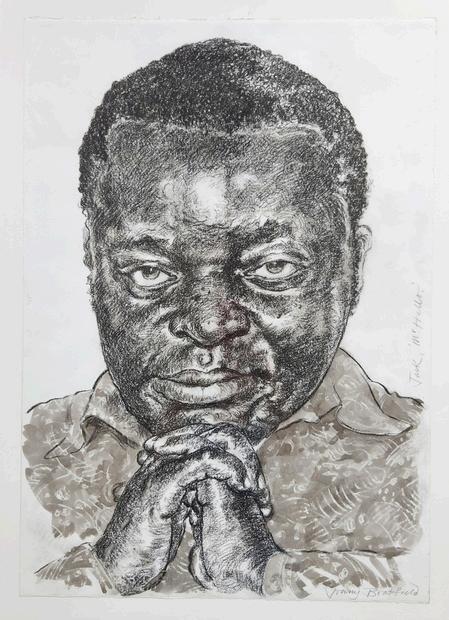
14 Mr Hello, refugee portrait, 2012
Pen Ink, Brush and Wax Resist on Handmade Paper
68 x 86cm NFS
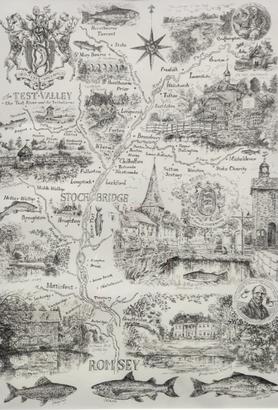
17. The Test Valley Map, 2018 Pen Ink on Handmade Paper
64 x 80cm NFS
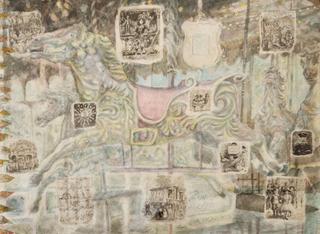
20
95 x 75cm
£1,250.00
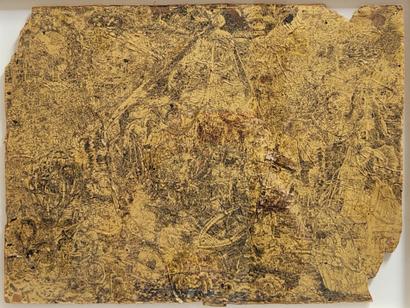
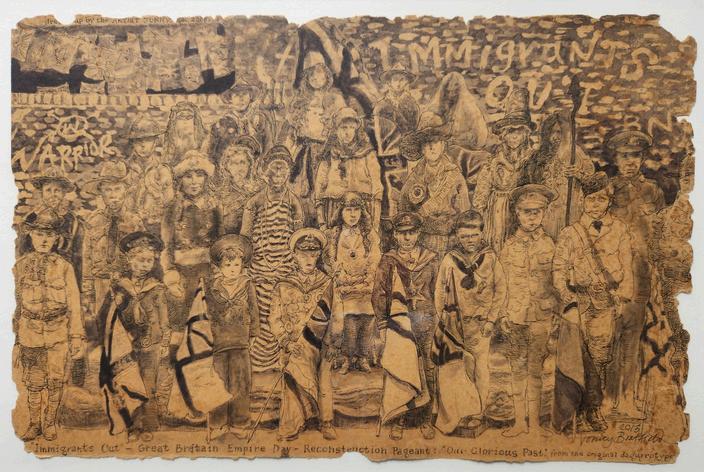
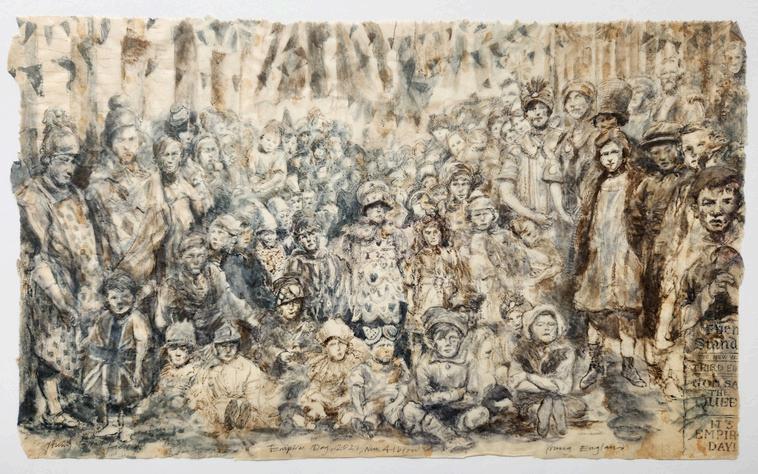
15 Empire Day 2, 2020
Pen Ink and Brush on Vellum Paper
52 x 76cm
£1,115.00
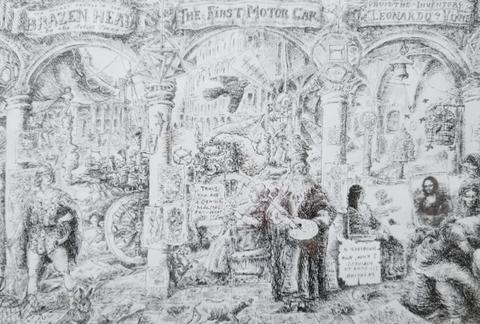
18. The Fairytale of Leonardo, 2006 Print
54 x 40 NFS
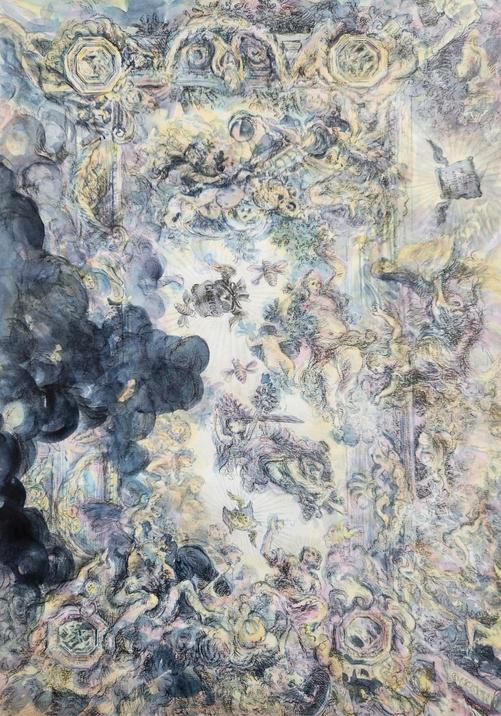
21 Obscure Baroque, 2023
Pen Ink and Watercolour on Paper
55 x 74cm
£545.00
52 x 67cm
60
£400
£1,20000
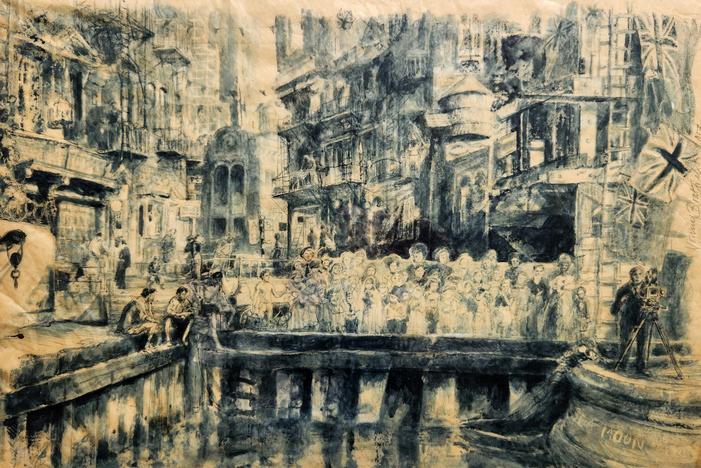
25 Apparitions in the Old City, 2009
Brush and Watercolour on Greaseproof Paper
54 x 76cm
£1,750.00
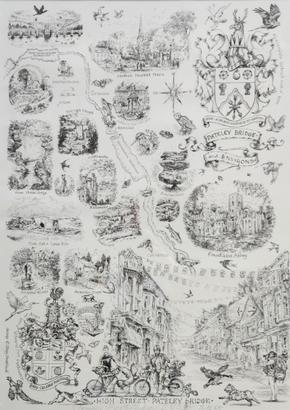
28. Upper Nidderdale Map, 2025 Pen Ink on Handmade Paper
56 x 73cm NFS
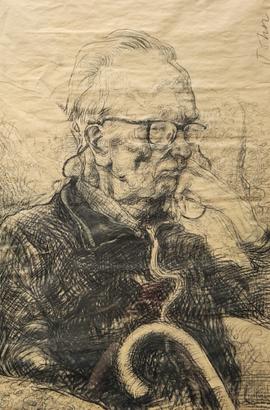
26 John, portrait from elderly persons home, 2011
Charcoal on Newsprint Paper
52 x 66cm NFS
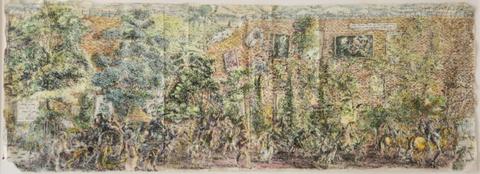
29. Exodus,
44 x 94cm
£1,25000

27 Midsummer Manifestation, 2012
Pen Ink and Watercolour on Watercolour Paper
17 x 65cm
£3,500.00
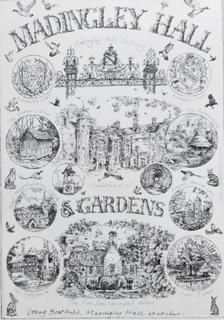
30. Madingley Hall and Gardens, 2020 Pen Ink on Handmade Paper
45 x 65cm NFS
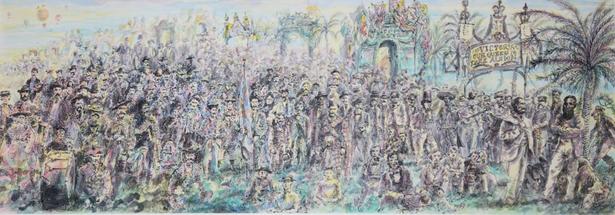
31 Waiting for the Queen, 2025
Pen Ink and Watercolour on Sketchbook Paper
93 x 39cm
£1,200
32.
17 x 67 x 5cm
£1,10000
This in-house publication has been designed to accompany The Great Small Miracles Exhibition by Jonny Boatfield, 2025 The Association for Cultural Exchange