Fanny Wale - a companion guide

Page 1


FANNY WALE

A COMPANION GUIDE

THE ASSOCIATION FOR CULTURAL EXCHANGEæ ¡Ÿ¡¤

WWWåSTAPLEFORDGRANARYåORGåUK

Author M booklet designç Kate

This inhouse publication was written to complement the print exhibition and book launch of Fanny Wales Record of Shelford Parva

On the trail of Fanny Wale: Welcome to the family

General Sir Charles Wale

On the trail of Fanny Wale: Studio Cottage

England in 1851: the Industrial Revolution

Edwardian Life

The Golden Age of the Diary On the trail of Fanny Wale: The art of Fanny Wale

Image credits

Fanny Wale sketches used throughout from A Record of Shelford Parva with kind permission of Cambridge Antiquarian Society

Page 4 Portrait of General Sir Sir Charles Wale, by John Eckstein, Public Domain

Page 11 William Hogarth The Fellow Apprentices at their Looms from Industry and Idleness, I , Public Domain

Page 11 George John Pinwell The Old Couple and the Clock, Public Domain

Page 11 Arthur Boyd Houghton Illustration from ‘North Coast and other Poems’ Public Domain

Page 11 Frederick Walker Broken Victuals, Public Domain

Notes

Page 1 Little Shelford Online History www.littleshelfordhistory.com

Page 6 Cambridge University Economies Past website www.economiespast.org

Page 12 The Studio at Post Office Terrace: surviving negatives from Post Office Terrace Studio can be viewed here www.fadingimages.uk/POT1.asp

Introduction

This booklet was written as a companion guide to the second edition ÷Galileo Publishersæ ¡Ÿ¡¤ø of Fanny Wales beautifully illustrated Record of Shelford Parva.

Falling somewhere between a historyæ a journal and an artists sketch bookæ Fanny Wale created her exquisite § page volume over a period of    yearsæ between  ¨Ÿ§ and  ¨ ¨å After Fanny died in  ¨¢¥æ her niece Norah Powell presented the manuscript to the County Archives ÷now the Cambridgeshire Archivesø where it is currently keptå Norah touchingly retained a photographic copy of it bound up in wooden boards which she would loan to newcomers to the villageå In ¡Ÿ ¡æ with support from the Heritage Lottery Fundæ villager David Martin and Little Shelford Local History Society made the book widely available onlineæ and through a first printed edition of ¢ŸŸ copieså

Like the ¡Ÿ ¡ publicationæ the new edition is a facsimile reproductionå Its exciting to consult original workè when we hold personal texts from the past in our handsæ they make an impression even before we know what they sayæ by the lookæ the feelæ the heft of the paperæ the style of the handwriting ÷rather like a tone of voiceøæ and by the way these things suggest the writers care or hasteæ depth or surfaceå

Journals and personal histories have their limitations tooå Though Fanny was clearly concerned with accuracy and took great pains to make annotated corrections to her workæ we need to keep in mind that we are encountering one persons perspective of a place and the events that happened in itå Yet these first impressions countæ because they tend to get superseded by the collectively agreed verdict of historyå

This accompanying booklet is by no means an expert authorityå I am not a historianæ nor a resident of Little Shelfordæ and this is not a fully comprehensive studyè I find more in Fanny Wales Record of Shelford Parva each time I look at itå Its a response to my own curiosityç who was Fanny Waleì Why did she create the bookì What does it tell us about society thenæ and nowì The shape of the booklet follows my chronological discoveryæ with additional contextual historical asideså Thanks and acknowledgements are due to the late Graham Chinneræ who documented much of the Wale family history ÷accessible on the Little Shelford Local History websiteø and to Jimmy Altham and Jane Lagesse for generously sharing their Wale family knowledgeè to Simon Davies who reconstructed the Wale family history treeæ and to David Martin who first brought this project to my attentionæ and back into the heart of Little Shelfordå

On the trail of Fanny Wale

Welcome to the family

‘Landed gentry’ said Jane Lagesseæ pouring the teaæ and deftly summarising her ancestral family in two wordså Were meeting in the studio of the Wale family Studio Cottage on Whittlesford Road on a glorious spring dayæ talking about Little Shelfords most prominent historical familyå Surrounded by the trappings of domestic life  booksæ lettersæ photographs  its easy to imagine generations of the Wale family gathered round the table in this sunbathed spotæ exchanging stories and local gossip over tea and cakeå

Jimmy Altham broadly agreeså ‘It's true that the family did have land and money’ he says ‘but they ran into hard times too. And there were many daughters who needed dowries…’

Fanny was one of those many daughtersæ though she remained unmarriedå Sheæ Jane and Jimmy share a common relative in General Sir Charles Wale ÷ ¦¥¢  §£¤ø ûsee page £üå He was Fannys grandfatheræ and is also Jimmy and Janes greatæ greatæ great grandfatheræ by a separate line of marriageå This makes Fanny their first cousin, thrice removed. It’s clear how much the connection means to Jimmy and Jane, who talk with deep affection about their family legacyå

The Wale family history quite possibly dates back to Norman timesæ to a Baron de Wahul who lived in Odell Castle ÷Bedfordshireø during a time when Odell Village was also called Wahull or Wadehelleå Through the medieval periodæ the family was prosperous and well connectedæ but the Wale family presence in Little Shelford becomes prominent in the  §th and  ¨th centurieså The Old Shelford Houseæ situated at the junction of what is now Bridge Lane and Whittlesford Roadæ was the Tudor development of a medieval hallhouseæ modernised in Georgian style by Thomas Wale ÷bå ¦Ÿ ø in the  ¦¥Ÿså By  § ¤æ his sonæ General Sir Charles Waleæ held around ¢§Ÿ acres of land in Little Shelfordå Old Shelford House was partially demolished in  §¤¡ and a new Gothic style houseæ known at the time as the New Hall or Shelford Houseæ was built by Fannys fatheræ Robert Gregory Waleæ about  ŸŸ metres north of the current Wale Recreation Groundå ÷It was destroyed by fire in  ¨¡¨øå

Fanny Wale was born in  §¤ æ the eldest of Colonel Robert Gregory Wales seven childrenè five girls and two boyså She was born in a time when British society and economics were undergoing a major shake upå Power and influence were shifting dramatically from the rural areas to citiesè the share of agriculture in national production was fast diminishingæ and industry surgedæ driven by the new middle classå Colonel Robert Gregory Wale had undertaken his rebuild of Shelford Hall in  §¤Ÿæ just when Parliament was repealing the Corn Lawså Cheaper untaxed grain from America and Australia began pouring into the UKå For the majority of peopleæ this meant that a loaf of bread was affordable againæ but for wealthy rural landowners who relied on rental income it was catastrophicå Robert had no tenants to farm his land and his income plummetedå In  §¥¨æ Fannys mother died ÷Fanny was  § years old at the timeø and Robert was struggling to make ends meetå With some tough choices to makeæ he started to sell off propertyæ and he rented out Shelford Hallå In  §§¤æ he took his unmarried childrenæ including Fannyæ to live with him in Hall Farmhouse on High Streetå

At Jimmy and Janes we pour over Walianaæ as Jimmy affectionately calls itå There are thick yellowing family photo albumsæ filled with idealised images of comfortable family life set against backdrops of large houses and decorative gardenså We flick through pictures of partiesæ theatre and fancy dressè stiffly posed formal gatherings alongside more relaxed and spontaneous groupingsæ allæ no doubtæ modelled on the mother of the nation Queen Victoria and her nine childrenå

Jimmy has a selection of Victorian miniature Wale family pocket books ÷belowøæ immaculately scribed with microscopic handwritten textså They include household budgetsæ to do lists and tallies of things which clearly held interest to the writerå Jimmy brings out a large boxè inside is an exquisite Victorian wedding dress beautifully embellished with laceæ embroidery and shimmering Jewel Beetle wing casesæ still iridescent after all this timeæ and testimony to the wealth of the familyå ÷It belonged to Adelaide, our great grandmother’ says Jimmyøå As we make our way through the memorabiliaæ Jimmy and Jane throw in scattered snippets of family historyè stories of trading venturesæ clandestine marriageæ huntingæ fishing and travelæ layabout sons and gallant soldiersæ misfortune and broken heartsæ generosity and legacyå

General Sir Charles Wale

From a young ageæ Charles had a thirst for adventureå At  ¥æ he begged his father to let him join a team of American military trawlers and threatened to kill himself if his father refusedå And so it was that on Christmas Day  ¦¦¨æ Charles Waleæ with barely a months trainingæ found himself aboard a troop transportæ bound for Jamaicaå He led a distinguished military career and was father to twelve children from three wiveså

Fanny Wale seems to have been quite entranced by her paternal grandfatherå On page ¥ æ of her book she quotes an eyewitness account of her ¤¡ year old grandfather  now with a medal and title  and his third brideæ

Henrietta Brentæ returning to Little Shelford in  § ¤å General Sir Charles Wale was driving a smart curricleæ and beside him was his elegant bride in a fashionable black velvet Redingote ÷a long dress coatøæ a Rubens hat with

John Eckstein  ¦¢¤ 

Portrait of General Sir Sir Charles Waleæ

plumesæ and very long gauntlet gloveså Five year old Isabella ÷Little Bellø dashes excitedly out from the welcoming throng to greet themå

Despite his military achievementsæ Ecksteins painting of Charles in  § ¤ shows a thoughtfulæ contemplative personalityå In retirement he cultivated antiquarianæ intellectual pursuitså He was interested in the history of his villageæ and he gathered documentary and ephemeral material relating to itå His old rambling house was full of cupboards and on his deathæ they were found to be stuffed with his collectionså In the upheavals that followedæ most of these were dispersed or destroyedå

On the trail of Fanny Wale

Studio Cottage

Around  §¥Ÿæ Colonel Robert Gregory Wale extended and fitted out Studio Cottage as a library and lecture room for village useå He provided booksæ stationeryæ lamps and heating and gave lectures himself which seem to have been popularæ especially amongst his tenantså From  §¨¤ to  ¨Ÿ§ the sisters followed this exampleæ Francesca producing playsæ readings and concertsæ Mildred teaching craftworkæ and Fanny giving drawing lessonså They followed their father s benevolent role of a squire in Little Shelford explains Jimmyå This room was also known as the Evening Schoolå after the classes taught hereä The windows at the far end are exactly in line with the church spireå which is

appropriate because the room was also used as a Sunday Schoolä ä

Fanny dedicates page 46 of her Record of Shelford Parva to Studio Cottageå She describes how the two rooms were made into one larger room with a wooden partitionæ how technical lessons inwoodcarvingæbentironworkædrawing and basketwork took place alongside theatricalsæ concertsæ dancesæ jumble salesæ cooking classes and cricket luncheså She records that the space was used for penny readings for an audience of a hundred peopleæ and as a SundaySchoolfor£¡boysand£Ÿgirlså

What is remarkable is the small si~e of the combined roomså By todays standardsætheywouldfeelcrowdedwith ¤Ÿ peopleå Jimmy agreeså But look at the step he saysæ and points to the entrance to the room we are sitting inå A significant dip in the stoneæ worn and polished by thousands of feetæ is testimony to the vibrant past of this modestroomå

ENGLAND IN 1851 THE INDUSTRIAL REVOLUTION

Fanny Wale was just three months old when the Great Exhibition in Hyde Park opened in May  §¤ å Ostensibly a showcase for nations of the worldæ the Crystal Palaceæ a  ¨ acre marvel of iron and glassæ was a physical hymn of praise for British industryå For a whileæ Britain was the workshop of the worldå

Britain was the first society in history to escape from agriculturallybased economieså The Industrial Revolution had an enormous effect on all British peopleæ from the working classes to the landed nobilityå In the Shelfords in  §¤ æ §Ÿ¨Ÿ? of the working population were in the Tertiary sector ÷or servicesøå Agricultural work represented just Ÿ¤? of the working populationå With a population of around  ŸŸŸæ the Shelfords were a servicedriven manufacturingdominated societyæ and representative of the general populationå

As the economy shifted from countryside to cityæ those with titles and ancestral homes had to adapt in response to new laws and increasing taxeså For someæ this meant downsi~ingæ simplifying lifeæ and ÷like Charles Waleø selling off propertieså Others married wealthy foreign heirs or heiresses to quickly inject cash into waning estatesæ and some successfully invested in industries such as coal mining and railway constructionå But those who owned land in London and other city centres grew even wealthier from rental incomeè the price of land in the country fell as city housing prices skyrocketedå Aristocratic landowners became landlordsæ selling houses and flats on a leasehold basisæ a historical legacy which is prevalent today resulting in some of Britains wealthiest familieså

Data from Cambridge University

EDWARDIAN LIFE

Edward the Sevenths reignè lasted only a short nine years and is regarded by some people of later generations as a golden age  an age with some relaxation of morals and some removal of tabooså combined with an affluence that enabled a great number of people to live very comfortably and enjoy social life and the artsä A pleasant life was within many people s reach ä

After the long conservative Victorian periodæ the Edwardian era offered a breath of fresh airå It was a leisurelyæ prosperous and peaceful timeæ when the rich were not ashamed to live a conspicuous life filled with garden parties and pleasant summer afternoonså Society still conformed to a strict class systemå The tone of upperclass society was set by Edward VII himselfæ a man who lived life to the fullæ enjoying a richæ alcoholdrenched dietæ an addiction to smoking and a string of mistresseså To enable an upperclass life of luxuryæ workingclass Edwardians found employment as maidsæ kitchen assistantsæ housekeepersæ footmen or butlerså

A woman in  ¨ŸŸ could now have a day out aloneå She could go to town on a trainæ shop in a department storeæ see a matinee and have tea with a friendå The increased availability of all these things  travelæ retailæ theatre and womenfriendly places to have tea  and their interconnectionæ resulted in dramatic changes to societyå

Easier travel wasnt just limited to the wealthyå The enterprising Thomas Cook began to organise cheap excursions to the Great Exhibition and the working class began to travelå Daytrips became commonplace and leisure turned into an industry with ordinary people determined to visit galleriesæ exhibitionsæ concerts and theatre showså

The desire to travel and explore was linked to better communications and rising levels of literacyè people were generally more aware of what was going onå Newspapers expanded exponentiallyæ thanks to faster printing and cheaper paper productionå The popular press was boomingæ with stories of actors and musicians splashed across the pageså Newspapers kept fashionconscious Edwardians uptodateæ and workingclass women could dress in the latest stylesæ tooæ because the massproduction methods that were pioneered during the Industrial Revolution had slashed the prices of clothing

To an extent the Edwardian period hovered between two worldsè sensibility and sentiment still characterised societyæ informed by attitudes inherited from former generationså But these ways of thinking and behaving found a different type of expression in a new age of expanding populationæ spreading industrialisationæ increased urbanisationæ mobility and middleclass wealthå

Baroness Susan Tweedsmuiræ The Edwardian Ladyæ  ¨¥¥

THE GOLDEN AGE OF THE DIARY

Village historian Graham Chinner suggests that it is no coincidence that Fanny Wale began her manuscript in  ¨Ÿ§æ around the time her sister Mildred married Royal Academician Colonel Thomas Woodæ who might have encouraged her to pursue and commit to a creative projectå But the idea of the book had probably been gestating for a long timeæ perhaps in line with nostalgic feelings she experienced as change accelerated in the villageå On the frontispieceæ she has drawn an idyllic picture of the Kings Mill complete with waterwheel ÷before the  §¨Ÿs conversion to steam powerøå Children splash in the wateræ alongside farmyard ducks and a horse and cart comes into viewå A small steam train crossing a bridge hints at the changing times threatening this gentle sceneå At the bottom of the pageæ Fanny Wale writes the following conjoined coupletç

In Shelford s vale the millwheel once plied its busy lay But now in the dark prison it sleeps dull life away

In her  ¨¥¥ bookæ The Edwardian Ladyå writer Baroness Susan Tweedsmuir ÷ §§¡   ¨¦¦ø looks back on the period with insightæ affection and detached bemusementå I realise now just how much people in Edwardian times thought that things would always go on just as they always had done she writeså The middle aged and the old handed out a great deal of advice to the young from their own experienceå often with disastrous resultså or if not disastrouså singularly useless in a world which was rapidly changing ä

Perhaps Fanny had kept a diaryæ and creating her Record of Shelford Parva was a natural progressionì The nineteenth century was the golden age of the diary says Peter Gayå For children and young womenæ diary keeping and journal writing was encouraged as a disciplineæ like music practiceå Diaries were mostly full of mundane daily repetitions and were often referred to in order to check a date or a detail ÷a particularly hot dayæ a birthdayæ a snow stormøæ family accountsæ bills and milestones ÷birthdaysæ marriagesæ giftsøå Journalsæ in contrast to the pocket diaryæ were an expansive formatæ with more space for writingå Many women in the eighteenth and nineteenth centuries kept both journals and diarieså They tended to be aristocrats or gentryè women who had time to pursue their interestså

On the trail of Fanny Wale

THE ART OF FANNY WALE

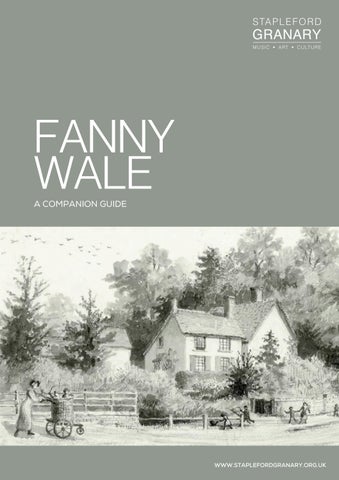
It is the quality and quantity of the paintings and sketches which make Fanny Wales book so distinctiveå Page after pageæ we see carefully observed and thoughtfully framed imagesè delicateæ innocent and charming sketches of a bygone ageå Nature studies are prevalent throughoutæ alongside careful copies of existing watercoloursæ mapsæ and intricate borderså Fanny Wale was a visual journalist of the everyday and a master of the domesticæ capturing delightful little details such as the three sons of General Sir Charles Wale being taken to school in an upright wicker basket to stop them running into the river ÷as seen on the front cover of this bookletøå

The idea of an illustrated history would no doubt have felt both familiar and aspirational to Fanny Waleæ who grew up in a time when richly pictorial books were becoming increasingly popularå Many of the finest were produced either by a single artist working in two mediaæ such as William Thackerayæ Edward Learæ or Beatrix Potteræ or by collaborators such as Charles Dickens and Hablot Knight Browne ÷known by his pen name Phi~ø or Lewis Carroll and John Tennielå

Books were becoming more extensively ornamented tooå The influence of William Hogarth ÷ ¥¨¦ ¦¥£ø was keenly felt and long lastingå Illustrations such as this one ÷rightøæ often demonstrated a complex interplay of images within the picture spaceæ and included mapsæ postersæ texts and symbols as framing devices which added additional commentary to the characters and situations they depictedå Publishers increased the numbers of head and tailpiecesæ decorative dividers and printers ornaments such as initials and borderså

The Fellow Apprentices at their Looms from Industry and Idleness, I  William Hogarth

The mass produced Christmas giftbooks of the late  §ŸŸs were admired for their visual splendourå Light in literary contentæ they were designed to be looked at rather than readå They contained some of the most accomplished black and white designs of the periodå Artists included John Guille Millais ÷also a naturalist and gardeneræ who illustrated for Trollopeøè George Pinwellæ who excelled in rural themesæ idylls and lyrical scenesè the contemplativeæ meditative images of Frederick Walker ÷who illustrated for Dickens and Thackeryøè and Arthur Boyd Houghton ÷ §¢¥¦¤ø one of the most distinguished illustrators of the mid  ¨th centuryæ and who enjoyed a status comparable to that of the PreRaphaeliteså

Arthur Boyd Houghton Illustration from ‘North Coast and other Poems’
George John Pinwell
The Old Couple and the Clock
Frederick Walker Broken Victuals

There are three particularly striking and fine portraits ÷below and rightø in Fanny Wales bookå These are photographs of watercolours which Fanny paintedå They illustrate social class and daily lifeè she has painted her figures as sentimentalæ piousæ studiousæ respectableæ honestæ dutifulæ and religiouså John Everettæ the clerk and sexton of All Saints Church is shown deep in contemplative private reading ÷below leftøå Miss Eli~abeth Finch ÷below rightø is depicted at her house in Church Streetè she and her sister were the first Sunday School teachers in Little Shelfordå

Fanny Wale notes that the photograph of the John Everett painting was taken by ÷Johnø Palmer Clarkeå Clarke ran a very successful photography business between cå  §¨£   ¨¢£ from Post Office Terrace Studio ÷St Andrews Streetæ Cambridgeæ now the entrance to Lion Yardøæ a building leased to a series of photographerså Palmer Clarkes work included superb portraiture and interior shots of college chapels and academic departmentså

The third portrait ÷belowø is of Charles Geeæ a plumber and painteræ and his ÷secondø wife who was a nurse to the Wale family childrenå He ga~es through the windowæ and she stares directly aheadæ her hand resting on the tea pot as if about to pourå Despite their physical proximityæ they seem united more by circumstance and the things around themæ than they are by one anothers presenceå It is a powerful portrait that makes the viewer feel as if they have intruded on a personal or difficult momentå

On the trail of Fanny Wale

Sounds, words & stories

Fanny Wales Record of Shelford Parva grew from the rituals of diary keepingæ a need to pass the timeæ a love of drawingæ a desire to educateæ an ear for local gossip and a lingering nostalgia for the pastå It paints a characterful picture of Edwardian social history and  in that it reveals something about her and her talents  it is also a form of autobiographyå

‘ She clearly had an interest in music and the book opens with strong sonic intentionsè the frontispiece is captioned with an epitaphlike statementç In Memory of the Sounds of Shelford Parvaå The upper half of the page is beautifully illustrated with    ringing bellsè she has detailed the tenor Earl of Southampton bell ÷presented to Little Shelford Church by the Earl in  ¥ ¡ø and a curfew bellå A little set of chimes tinkles in the top left hand cornerå Among the branches are a mixed flock of distinctively vocal birdsè wood pigeonsæ barn owlsæ thrushesæ blackbirdsæ swiftsæ a whitethroat and a woodpeckerå

On page  æ stylised music notation swirls in circular cloudy patterns around the borderå On page  Ÿ Fanny Wale decorates the frame with a fully and accurately notated single line melody ÷see belowøå There is a text at the bottom of the pageæ Tennysons Flow down, cold rivulet, credited as a Quartette by Amps, organist at Ely. This is surely William Amps ÷ §¡£   ¨ Ÿø bornæ educated and died in Cambridgeæ played the organ at Peterhouseæ Kings and Christs and conducted the Cambridge University Musical Societyå He was known as a composer of part songså The Tennyson text fits the melody wellæ and it is very likely that Fanny has copied it directly from Amps vocal scoreå

After thatæ musical references are scantæ but page ¤§æ a nostalgicæ reminiscent entry about Old Shelford Hall is worthy of noteå Around the border runs a song with a single line of music with a text about Remembranceå The melody of the music has the potential to fit the wordsæ but it is incorrectly barred with rhythmic inaccuracies and the stresses of the strong beats fall on the wrong wordså Perhaps in this case she attempted to notate what was in her headæ rather than copying it downì

Fanny Wales writing is mostly descriptive rather than analyticalæ prosaic rather than poeticå She endorses natureæ and the abundance of good trees and plants in Shelford meet with her approvalå Throughout the bookæ she applauds pollarded elmså a clipped privet hedgeå a charming gardenå tall Irish yewså oxeye daisieså good walnut treesä thick hedges and grass borderså scotch firså a fine oak å She laments the loss of trees blown down in galesæ and the old ways of farmingå She mourns ÷with a little melodramaø the unused Durnford ÷Dernfordø Flour Millæ its merry wheel now doomed to perpetual silence in its gloomy dank caveå a sad type of so many human lives which begin with useful energy and end by force of circumstances in premature gloom ä

Though the Edwardian penchant for detail and list making constitutes much of the bookæ the most characterful and lively entries are her excursions into storieså We read about the bodysnatchers of the unprotected Wale family graves in the mausoleum and the servants of the Pallivicini Manor houseæ who found a burglar hiding in a coffinå She brings historical figures to life through a physical detail or a strange quirkè Mrs Anselæ who had a face very much like the poet Dante and she could recite ¢ž hymns from memory ÷p¦¡ø and the mathematician who was riddled with lifelong guilt over his treatment of ducks ÷p¦§ø.

She particularly elaborates on news and hearsay concerned with murderæ death and injuryè and her succinct summaries are a compound of subtly expressed voyeurismæ gossip and dry humourå Her economy of styleæ void of description or emotionæ often has quite a shocking effect on the readerå

In Fannys own wordsæ here are a few of the more unforgettable and remarkable stories of her village neighboursç

In the cottages behind Durnford Mill lived one of the miller s workmen named James Brandä He and his wife had two sons who lived to manhood and nine daughterså seven of whom died young from typhoid feverä His final catastrophe was losing his arm in the machinery that ground the cornä When he walked into his cottage without an armå his wife cried out oh what will become of me and the children and Brand said to a friendç that hurt me more than anything ä A subscription was raised which provided the poor man with a very good cork arm but he either could not or would not use itä The only work therefore he could do was leaf sweepingä p12

‘A man called Rider who was a bootmaker and his wife lived a short time on one of these cottagesä He told such dreadful stories that people were afraid to go to bedç he bewitched the bees of Mrs Priorç she tried to hive them ŸŸ times and only succeeded when she threatened to burn themä p70

‘An old woman was supposed to be a witch because she made a bonfire in her yard in the middle of the nightå and boiled some horseshoes and old bits of rusty ironä The neighbours asked a magistrate to have her burned alive because she had bewitched a farmers churn and the butter would not comeå but of course that could not be done in Ÿ¦£¡ä p15

WritingabouttheresidentsoftheterracedEastEndworkerscottagesattheendof WhittlesfordRoad:

‘He is a good worker and a fine looking manç unfortunately he suffers from epileptic fits owing to a fall from his donkey when he was quite youngè They had nine daughtersç ¦ of them died of typhoid fever for the ¢ roomed cottage was below the river level and often flooded three foot deepä p72

An old Mrs Garter who lived in one of these cottages possessed only one tooth of extraordinary lengthç she said an ~at hath not enogt te dewä p72

Wale watching Take a walk around Little Shelford

Please note that some of these sites are private residencies and are listed here for information and observation only

the Wale family (privately owned).

Blennie’s Patch are allotments at the end of Garden Fields, Little Shelford. They are named after Blennie Powell (d. 1984) who originally owned the land and gave it to the village for a nominal sum. The Powells raised four children in Little Shelford, including Blennie and his sister Norah,who gifted Fanny’s book to the Cambridgeshire Archives (see introduction).

Wale Obelisk on Maggots Mount, Shelford Rd, Harston. The obelisk was erected in 1739 to the memory of Mr Gregory Wale by his friend James Church. They met regularly here on horseback and agreed that whoever should live the longest would erect a memorial to their friendship on this high ground overlooking the parish.

A Record of Shelford Parva, p11

King’s Flour Mill at Shelford Magna in 1870

STAPLEFORD GRANARY IS OWNED AND OPERATED BY THE ASSOCIATION FOR CULTURAL EXCHANGE

REGISTERED CHARITY 279567

Turn static files into dynamic content formats.

Create a flipbook