COLOUR FOROURYOUNGERVISITORS

HELLO COLOUR-LOVERS!


My favourite colour is.....................................................
How does your favourite colour make you feel?
Can you think of three things that are the same colour as your favourite colour?
Can you think of a fruit orvegetable that is the same colour as your favourite colour?
Look around you: can you see three shades of your favourite colour?
I love this colour because.................................................
THIS IS A VERY COLOURFUL EXHIBITION
In art, colour is often descriptive; it shows us the colour of the object that the artist is painting, such as a yellow flower or a green leaf
In the early 1900s, some artists started experimenting with non-representational colours. They stopped mixing paint to match what they could see, and started to use it straight from the tube. They realised that they could make their colours seem brighter by putting oranges next to blues, and yellows next to violets. They could use these striking colours not just to represent the world, but to express emotions
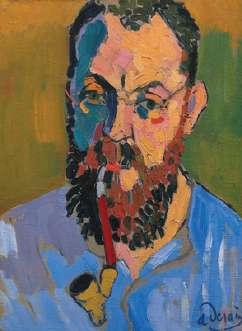
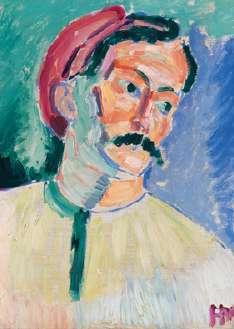

TIn the summer of 1905, two artists, Henri Matisse and André Derain, visited the quiet fishing town of Collioure in the south of France, to paint the views of boats in the harbour, the fish market and the mountains.
They even painted one another! Here are their portraits
Can you see how Matisse uses bright blue, orange and green to paint Derain’s hair and face?
The two artists were very excited by their use of vibrant colour This new way of painting felt free and expressive, and it was to change the future of art forever!
Later, Henri Matisse and André Derain showed the paintings they had created at the Salon d'Automne annual exhibition in Paris.
The art critic Louis Vauxcelles was shocked!
He saw brightly coloured works of art where nature had been painted in vibrant colours and smeared onto the canvas with forceful brushstrokes There were purple mountains, sunny fields saturated with fiery reds, and green shadows on human faces He called the artists ‘les fauves’ or wild beasts.
The name stuck, and we now call this style of non-representational colour Fauvism Since then, artists have often used colour that is unrelated to the way that things appear in the real world.
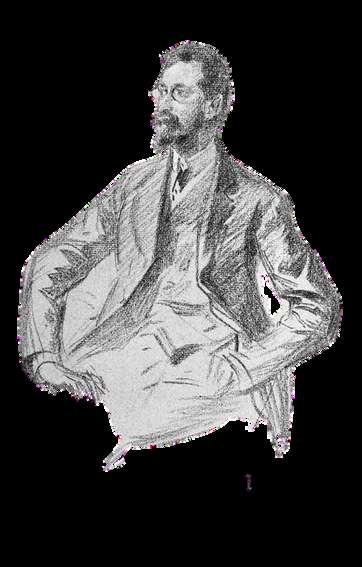
Henri Matisse by André Derain
André Derain by Henri Matisse


Can you draw some very colourful pictures IN A FAUVIST STYLE, like Henri Matisse and André Derain?
Why am I green, blue and orange?
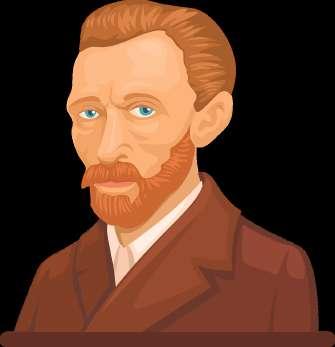
Vincent van Gogh Shades of Yellow
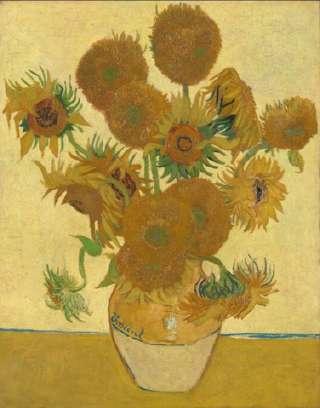
You won’t find any pictures byVincent van Gogh in Stapleford Granary; they are some of the most famous paintings in the world! But we can learn a lot from van Gogh about how artists use colour.You might have seen pictures of van Gogh’s Sunflowers. He painted them for a room in a yellow house he was renting in the sunny town of Arles in France.
Vincent van Gogh is often associated with the colour yellow For him, yellow represented life, happiness and sunshine
In 1888 he described the landscape as:
He could see ALL those shades of yellow in the land!
‘tones of gold of every shade, green-gold, yellow-gold, red-gold, ditto bronze, copper, in short from lemon yellow to the dull yellow colour of, say, a pile of threshed grain’
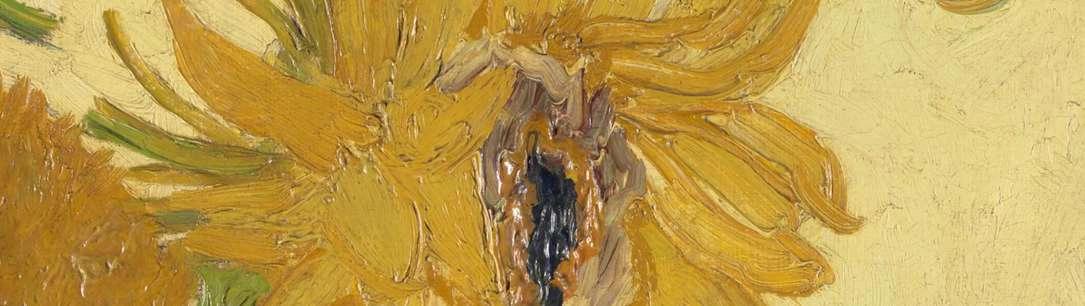
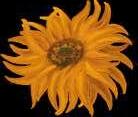
Here are some of the many shades of yellow that Vincent van Gogh used in his Sunflowers:



Van Gogh built up his colours in several layers, using different brush strokes and thicknesses Some of the flowers are withering, but the yellow colour makes everything seem cheerful, warm and full of life. Perhaps the painting is more about the colour yellow than it is about the sunflowers?
COLOUR & EMOTION
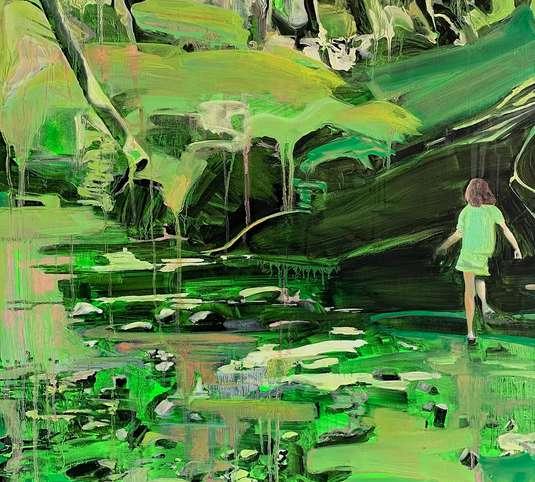
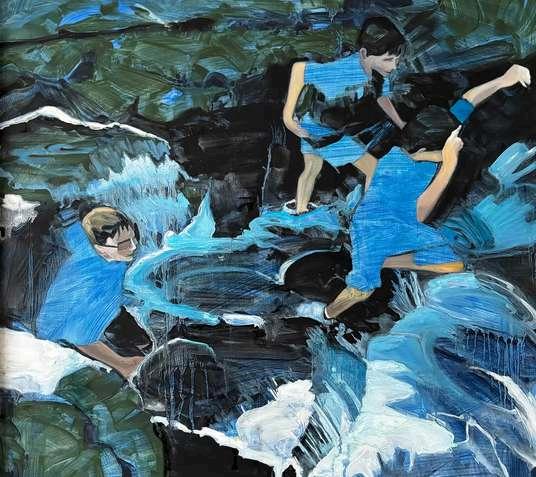
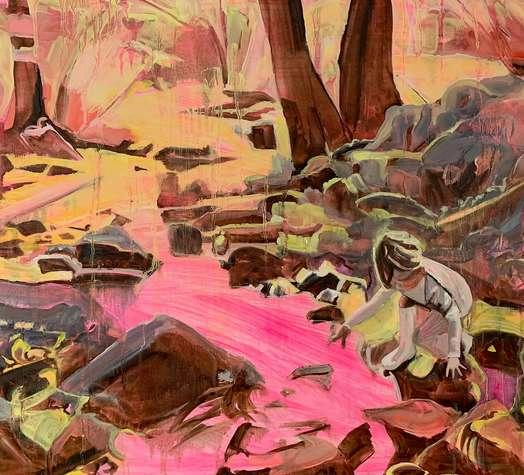
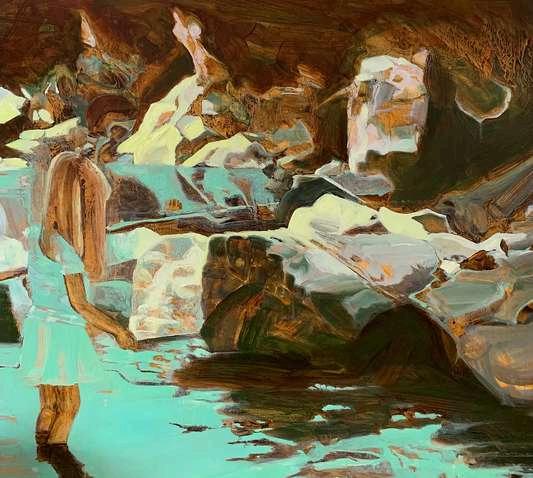
hese pictures by Helen Latham in the exhibition?
All these scenes are pictures of children playing in streams
But the colours are not natural; they are artificial.
Do the paintings look old or new?
Do you think the children are aware of the strange colours?
Do the places look familiar or do they look strange and alien?
Do these places look peaceful? Scary? Threatening? Exciting?
If you had to step into one of the pictures, which one would you step into and why?
Which one would you NOT want to step into?
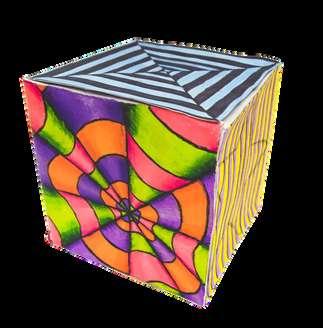
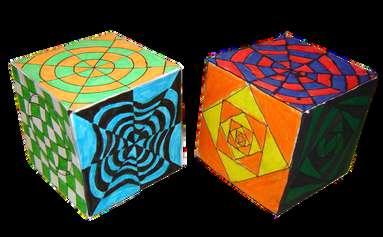
Colour the patterns, cut out the cube and stick it together! Or use the template to create your own designs

We’ve sp
Never mind: you make littl
Add eyes, arms, leg
What does each colou


Granary is wholly owned and operated by The Association for Cultural Exchange, registered charity 279567
Stapleford