Irregular Verbs I be [bI:]
II
III
was [wAx], were [wE:] been [bI:n]
become [bi9kym] became [bi9keim]
become [bi9kym]
begin [bi9gin]
began [bi9gBn]
begun [bi9gyn]
blow [blCU]
blew [blu:]
blown [blCUn]
break [breik]
broke [br3Uk]
broken [9br3UkCn]
bring [briN]
brought [brc:t]
brought [brc:t]
buy [bai]
bought [bc:t]
bought [bc:t]
catch [kBtS]
caught [kc:t]
caught [kc:t]
choose [tSu:x]
chose [tS3Ux]
chosen [9tS3Uxn]
come [kym]
came [keim]
come [kym]
cut [kyt]
cut [kyt]
cut [kyt]
do [du:]
did [did]
done [dyn]
drink [driNk]
drank [drBNk]
drunk [dryNk]
drive [draiv]
drove [drCUv]
driven [9drivn]
eat [I:t]
ate [et]
eaten [9I:tn]
fall [fc:l]
fell [fel]
fallen [9fc:lCn]
feel [fI:l]
felt [felt]
felt [felt]
find [faind]
found [faUnd]
found [faUnd]
fly [flai]
fle [flu:]
flo
get [get]
got [gAt]
got [gAt]
give [giv]
gave [geiv]
given [9givn]
go [g3U]
went [went]
gone [gAn]
hang [h2N]
hung [hyN]
hung [hyN]
have [hBv]
had [hBd]
had [hBd]
[flCUn]
(неправильні дієслова) I
II
III
hold [h3Uld]
held [held]
held [held]
know [n3U]
knew [nju:]
known [n3Un]
learn [lE:n]
learnt [lE:nt]
learnt [lE:nt]
leave [lI:v]
left [left]
left [left]
lose [lu:x]
lost [lAst]
lost [lAst]
make [meik]
made [meid]
made [meid]
meet [mI:t]
met [met]
met [met]
read [rI:d]
read [red]
read [red]
ride [raid]
rode [rCUd]
ridden [ridn]
run [ryn]
ran [rBn]
run [ryn]
say [sei]
said [sed]
said [sed]
see [sI:]
saw [sc:]
seen [sI:n]
sell [sel]
sold [sCUld]
sold [sCUld]
send [send]
sent [sent]
sent [sent]
sing [siN]
sang [sBN]
sung [syN]
speak [spI:k]
spoke [spCUk]
spoken [9sp3UkCn]
swim [swim]
swam [swBm]
swum [swym]
take [teik]
took [tUk]
taken [9teikCn]
teach [tI:tSJJ]
taught [tc:t]
taught [tc:t]
throw [Q8r3U]
threw [8ru:]
thrown [G8r3Un]
wake [weik]
woke [wCUk]
woken [9wCUkCn]
wear [weC]
wore [wc:]
worn [wc:n]
win [win]
won [wyn]
won [wyn]
write [rait]
wrote [r3Ut]
written [9ritn]
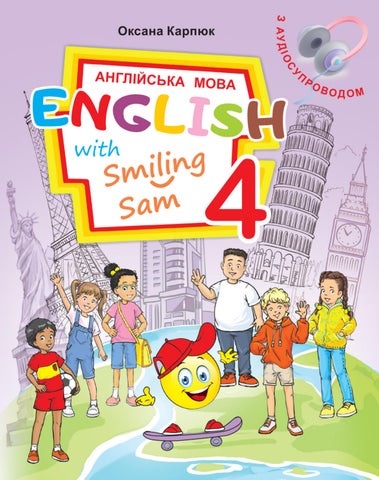
Оксана Карпюк
АНГЛІЙ СЬ КА МОВА Підручник для 4 класу закладів загальної середньої освіти (з аудіосупроводом)
Oksana Karpyuk
E N G LІS H A textbook for the fourth form of secondary schools (with audio support)
Рекомендовано Міністерством освіти і науки України
Тернопіль Видавництво Астон 2026
УДК 811.111(075.2) К26
Рекомендовано Міністерством освіти і науки України (наказ МОН України від 20.08.2025 № 1164) Видано за кошти державного бюджету. Продаж заборонено.
Аудіосупровід за QR-кодом
або за покликанням https://cutt.ly/ftlVLso9
Інтерактивний електронний додаток за QR-кодом
або за покликанням https://cutt.ly/3tbsHfvk
К 26 Карпюк О. Д. Англійська мова : підручник для 4 класу закладів загальної середньої освіти (з аудіосупроводом). — Тернопіль : Видавництво Астон, 2026. — 144 с. : іл. ISBN 978-617-8744-09-0 Підручник розроблено згідно з Державним стандартом початкової освіти на основі авторської концепції позитивної мотивації та креативного іншомовного навчання молодших школярів. Книга містить матеріал, передбачений для 4 класу Типовою освітньою програмою, розробленою під керівництвом Савченко О. Я. Діяльнісний підхід та комунікативно-ігрова методика забезпечуються характером завдань підручника з аудіосупроводом та іншими компонентами до нього. УДК 811.111(075.2)
ISBN 978-617-8744-09-0
© О. Д. Карпюк, 2026 © ТзОВ “Видавництво Астон”, 2026
Hello, dear friends! Nice to see you again! I say hello to your mums and pas, to your brothers and sisters … to your friends! How did you spend your summer holidays? Did you make new friends? Look! This is your new English textbook. You can learn English together with your classmates. I am always happy to help! Good luck with your English! Yours, Smiling Sam
Hello, I’m Smiling Sam. Remember me?
Увага! Завдання підручника, позначені цими символами, передбачають письмове виконання учнем/ученицею в окремому робочому зошиті.
3
CONTENTS PAGES 6-11
12-31
32-51
52-69
70-87
UNIT
STRUCTURES Where is Sam from? Starter He is from the USA. ‘HELLO AGAIN!’ What’s in the backpack? She loves board games / skipping. A. 1 always wins the game. Who plays chess? Does he like playing tennis? Are they IT’S having breakfast? They are playing games. MY LIFE What are they doing? Where do you live? What’s your address? I live at … . There is a kitchen on the left. 2 Is there a fridge in the kitchen? Where is MY the food shop? It’s next to the gallery. My HOMEPLACE school is in School Street. 3 LET’S CELEBRATE!
4 HEALTH AND BODY CARE
88-105
5 THE WORLD OF NATURE
106-123
6 ON THE MOVE
124-135 136-143
Self-Checks Vocabulary
Will you help me to decorate my room? — Yes, I will. / No, I won’t. I need some eggs. Anything else? How much milk do you need? How many lemons have you got? How much is it? How much are they? What’s the matter with you? I’ve got a stomach ache. I feel sick. How often / long should I brush my teeth? You should eat healthy food. What should you do to keep fit? Stay in bed. Must I go to school? Does your leg hurt? When I have a cold, I drink a lot of tea.
LANGUAGE IN FOCUS
Possessive pronouns Adverbs of frequency Present Simple Present Continuous There is / There are
Future Simple Countable and uncountable nouns Imperative mood Modals: must, should
I saw a beautiful view. They didn’t play Past Simple snowballs yesterday. Did she sledge Adjectives: degrees of yesterday morning? — Yes, she did. / No, she comparison didn’t. It’s hotter in summer than in spring. How-questions The Sahara is the largest desert in the world. Which life is more interesting: the life in the country or in a town? How long / high is it? I would like a ticket, please. Is he coming Would like by train or by bus? We need to find the Wh-questions information desk. It’s over there. When Object pronouns did he travel to the seaside? Where do Adverbs of frequency airplanes fly? When does the train arrive, Adverbials of place please? It leaves at 11 o’clock.
� self-awareness � intercultural awareness � communication � collaboration
READING & WRITING Personal information.
LISTENING & SPEAKING Meeting and greeting people. Introducing friends / classmates. Identifying the names of the countries. Hobbies and collections. Spending time Asking and answering about hobbies / clubs in a theme park. Favourite sports. School / interests. Commenting on actions and game events. Reading membership cards. Writing activities. Asking and answering about favourite personal information. Writing a friendly films / cartoons / characters. Listening for e-mail. information. Sharing information. At home. My street. My neighbourhood. Asking and answering about the address / flat My town. Reading a description of a house / house. Listening for information. Asking and / flat. Reading and writing riddles about answering about some places in the street / furniture. Writing about a dream room. town. Finding locations on the map. Listening to Reading and writing advertisements. and following directions. Reading and following instructions. Holidays and traditions in Britain and Asking and answering about holidays and Ukraine. Birthday parties. Reading and traditions. Planning a birthday party. writing invitations. Reading and writing Preparing / Buying a present. Buying food. birthday cards. Writing a shopping list. Listening to and singing songs. Listening for Writing informational sentences. information. Sharing information. Reading an information text. Reading Asking and answering about health. Giving and and writing recipes for a healthy life. receiving some advice. A visit to a doctor. Health Advertisements. Reading and following problems solving. Telling and acting out stories. instructions on first aid. Reading stories. Playing the Health Bingo. Listening to and Writing e-mails. Making a health poster. following instructions. Partner interviews. Discussing poems. Discussing and applying information. Reading about the weather. Reading a friendly e-mail. Reading an information text. Reading and writing a description of a place. Writing information about animals. Writing questions.
Listening to and singing songs about winter. Weather talks. Asking and answering about places on Earth. Describing nature. Talking about animals. Describing places / animals. Asking for information. Sharing information.
Reading an information text. Travelling experience. Reading and writing instructions on travelling. Reading timetables. Visiting interesting places. Airports and railway stations. My favourite way of travelling.
Choosing means of transport. Asking and answering about the places you visit. Planning a trip. Getting information. Talks at the ticket office. Describing a trip. Discussing and applying information. Making decisions and choices.
� active listening � thinking skills � creativity � digital skills
Lesson
1
Start
er
HELLO AGAIN! 1
Listen and repeat the chant.
Listen,
read
Open
and
shut.
Take some glue.
6
or
repeat.
Cut, cut, cut.
Stick, stick, stick.
Lesson
2
sing a song.
Play a trick.
Draw a tree.
3
1
Say the chant and mime.
copy the words.
English is fun for you and me.
Look and say.
This is me. My name is … . My surname is … . I am from … . I am … (years old). I am a pupil.
7
Lesson
2
1
Read. His name is Ben. His surname is Lee. He is from London. He is ten. He is a pupil.
Look! Her name is … His name is …
2
Ask and answer in pairs. What’s … name? What’s … surname?
3
She is … He is …
Where’s … from? How old is …?
What’s … job?
her his she he
Interview your classmate. What’s your ...? Where are you from?
4
8
Write about Tina.
Name: Tina Surname: Green From: London Age: 10 Job: a pupil
... ... ... ... ...
Lesson
1
3
Look, read and say.
What’s in the backpack?
This is Ben’s backpack. What has he got in it?
He’s got a … This is Tina’s backpack. What has she got in it?
2
3
She’s got a …
Play the game in pairs. Choose one of the backpacks. Look at the picture. Then close your eyes. Tell your partner what there is in the backpack. Win1 a point2 for each thing you remember! How many points have you got? Make word cards for your classroom.
� Make some word cards. � Write the names of things in your classroom. � Stick each word card on or near the object3. � Teach the words to your class. to win — вигравати 2a point — бал, очко 3 an object [^^9Abdzikt] — предмет
Point to the clock, please.
1
9
Lesson
4
1
Look, listen and say.
Bob: Hello. My name is Bob. Ted: Hello, Bob. I’m Ted. This is my friend Julie. Bob: Hello, Julie. Nice to meet you. Julie: Hi, Bob. Nice to meet you too.
2
Listen, copy and fill in.
Alison: … . My … is Alison. Jane: …, Alison. …’m Jane. This is my … Mark. Alison: …, Mark. Nice to … you. Mark: …, Alison. … to meet you too.
3 4
Have a talk in three. A: Hello. My name is … . B: Hello, … . I’m … . This is my friend … . A: Hello, … . Nice to meet you. C: Hi, … . Nice to meet you too. Introduce your partner to the class.
His name is Taras.
10
� Work with a partner. Ask them some questions. � Write down the answers. Introduce your partner to the class. What’s your name? How do you spell your name? How old are you? What colours do you like? Have you got any brothers or sisters? … name is … . … is … years old. … likes ... and … (colours). … has got … brothers and … sisters.
Lesson
1
5
Listen and repeat the names of the countries. Meet friends around the world.
THE USA
UKRAINE
SPAIN
Oksana
FRANCE
Sam
Marie
Carlos The UK
Elliot
THE NETHERLANDS
GERMANY
Bruno
Helga
Kyra
2
Look and say where the children are from.
3
Read and role-play.
4
Sam is from the USA.
Imagine1 you are meeting a new friend. Choose one of the children above and make a name card. Tell your partner about your new friend.
Name: Age: Country: Likes:
Role-play in pairs. Imagine your partner is your new friend from another country. Make up a talk.
What’s your favourite …?
Hi! What’s your name? Where are you from?
to imagine — уявляти
1
ITALY
Do you like …? Let’s play!
11
Unit
1 IT’S MY LIFE 1
Listen and say if the sentences are true or false. (See the audio script on flyleaf #2.) 1 Rosie’s favourite toy is a doll. 2 Steve’s favourite sport is football. 3 Dorian’s favourite toy is a computer game. 4 Ann’s favourite comic is Tom and Jerry. 5 Martin’s favourite toy is a helicopter.
It’s true. It’s false.
2
Listen again and match.
a
b Steve
Rosie
c
Dorian
d
e Ann
3
Martin
Ask two classmates about their favourites. Copy and fill in the table.
What’s your favourite toy (colour, sport, computer game …)? Name
4 12
Toy
Colour
Write about your favourites.
My favourite … … …
Sport
Computer Game
Lesson We like games. Our favourite game is chess. They play computer games. Their computer games are new.
1
2
Look! we they
our their
Listen, read and name the kids’ favourite games. Sashko and Ivanko are from Ukraine. Their favourite game is chess. Chess is a board game.
Arturo and Paula are from Italy. They like playing a computer game about SpongeBob. SpongeBob is a cartoon hero. He lives in the sea. Arturo always wins the game. Wanda is from the USA. She loves skipping. Here’s her favourite skipping chant: Teddy bear, teddy bear, touch your nose, Teddy bear, teddy bear, touch your toes. Teddy bear, teddy bear, touch the ground. Teddy bear, teddy bear, turn around. Greg, Kim and Helen are from England. Their favourite game is Snakes and Ladders. Snakes and Ladders started from an old Indian board game. Players move their counters1 up the ladders and down the snakes. a counter [^^9kaUnt3] — фішка
1
13
Lesson
2
2
Ask and answer in pairs. 1 Who loves skipping? 2 Where does SpongeBob live? 3 Who plays chess? 4 What is Greg, Kim and Helen’s favourite game?
3
Tell the class about your favourite game.
My favourite game is … It is about … Players …
4 14
Copy and fill in ‘their’ or ‘our’. 1 My friends like sport. … favourite sport is football. 2 We’re in Year Four. … teacher is a woman. 3 There are 36 pupils in Bill and Nick’s classroom. ... classroom is big. 4 We go to Winding School. … school is old.
Lesson
3
Look!
� Do you listen to music every afternoon? — Yes, I do. � Do you play computer games in the morning? — No, I don’t.
1
do not = don’t
a) Look at the words and say what they mean.
Always
I always have cocoa before going to bed. I never drink coffee.
Usually Often Sometimes Never
b) Complete the sentences about уou.
2
before [^^bi9fc:] — до after [^^94:ft3] — після
I always … in the morning. I usually … in the afternoon. I often … before1 school. I sometimes … after2 school. I never … in the evening.
Ask and answer in pairs. 1 Do you always have breakfast? 2 Do you wash your face in the morning? 3 Do you always wake up early3? 4 Do you play computer games after school? 5 Do you sometimes forget4 to do your homework? 6 Do you sometimes help your mum in the kitchen? 7 Do you study every day? 8 Do you watch TV every day? early [9E:l7] — рано to forget [^^f39get] — забувати
1
3
2
4
15
Lesson
3
3
Read and say which sentences are true for you.
1 I play volleyball. 2 I don’t like mornings. 3 I don’t listen to rap music. 4 I help in the kitchen.
4
5 I don’t read books about magic. 6 I watch videos every Saturday. 7 I don’t play computer games. 8 I like English.
Listen to your classmates. Fill in their names. Do you play volleyball? 1 Max plays volleyball. 2 … doesn’t like mornings. 3 … doesn’t listen to rap music. 4 … helps in the kitchen.
5
Yes, I do. 5 … doesn’t read books about magic. 6 … watches videos every Saturday. 7 … doesn’t play computer games. 8 … likes English.
Listen and sing. Saturday is fun. Saturday is great. I’m never tired. I get up very late1. Saturday, Saturday … Sunday is super. Sunday is cool. I don’t do my homework. I don’t go to school. Sunday, Sunday …
16
late [leit] — пізно
1
Saturday and Sunday Are my favourite days. All I ever do Is watch TV and play games. Saturday, Sunday …
Lesson Does he like playing tennis? Yes, he does. Does she read books? No, she doesn’t.
4
Look! does not = doesn’t
1
Look at the table. Аsk and answer in pairs. NAME
LIKES
DISLIKES
Ron
hockey
painting
Tom & Bob
stamps
skating
Mary & Vira
books
riding bikes
Linda
dolls
cars
Paul
sledging
books
2
Example: A: Does Ron like hockey? B: Yes, he does. A: Does he like painting? B: No, he doesn’t.
Copy the table. Ask and answer in pairs. Yes
No
1 Do you wake up early on Sunday? 2 Do you have a big breakfast? 3 Do you read books about magic? 4 Do you watch films on TV? 5 Do you do your homework after school? 6 Do you visit your friends? 7 Do you go to McDonald’s? 8 Do you play computer games every day?
3
Write a report about your classmate.
Mark doesn‛t wake up early on Sunday. He has a big breakfast…
17
Lesson
5
1
Match the names of the clubs to their pictures. 6 table tennis club 7 yoga club 8 tennis club 9 drama club
1 chess club 2 karate club 3 fitness club 4 basketball club 5 computer club
2
Look at the membership1 cards. Then say.
CHESS CLUB Fay is 38. He goes to the chess club. name Fay Lee He is good at playing chess. age
DRAMA CLUB name
38
YOGA CLUB
name Sally Red age
40
age
Jane Wells 62
TENNIS CLUB name
COMPUTER CLUB name
age
age
Alison Lewis 33
John Black 38
3
Tell the class about your friends’ hobbies.
4
Do your project. a) Write about you and your family’s hobbies. b) Draw a picture or stick a photo. c) Make a poster.
This is me. My name is … . I‛m … (years old). This is my dad / mum etc. He / She is good at …
18
membership [9memb31i p] — членство
1
Lesson
1
2
6
Listen and read. be fond of I’m fond of dancing. Ted is fond of sport. We are fond of painting. join a club I am fond of music and I am going to join the Music Club. Do you want to join the Sports Club? different different places, different jobs. There are different clubs in our school. They are Dancing Club, Drama Club and Music Club. be interested in Ann is interested in nature studies. She knows a lot about animals and plants. Ann isn’t interested in sport. What are you interested in? Look. Then listen and say. Teacher: Let’s have a talk about your hobbies. Sam: Hobbies? Teacher: Hobby is what you like doing.
3 4
* * * Teacher: Look, children! There are different clubs at our school this year: dancing, painting, history… Ann: Can I join the Dancing Club? Teacher: Yes, of course. What is your hobby, Pam? Pam: I am fond of painting. Teacher: Great! And what about you, Tom? Tom: I am interested in history. Act out. Match and say.
1 I go to the Dancing Club. 2 I am interested in maths. 3 I don’t usually watch football matches. 4 Skating is my favourite sport.
a I like doing sums. b I don’t like football. c I’m good at dancing. d I am good at skating.
19
Lesson
7
1
badge
2
Listen, point and repeat.
coin
stamp
Italy– Italian
Canada– Canadian
Germany– German
France– French
Look. Then listen and say. Speaker: Good afternoon! This is School News Programme. Today we’ve got a School Hobby Fair. Children from different classes present their collections. This is Mary Woodcraft. She collects dolls. Tell us about your collection, Mary. Mary: Well, here is my collection. There are dolls from different countries in it. I’ve got one English doll, two German, one Ukrainian, one Canadian, and three French dolls. My favourite is the Italian doll. Speaker: Oh, your Italian doll is really very beautiful!
3 20
Listen and read. � invitation, collection, nation, nationality � glass, class, fast � fridge, porridge, badge to collect — a collector � hare, chair, hair, fair to act — an actor � me, these, scene, Pete, theme
Lesson to collect to collect dolls, to collect coins, to collect stamps. My friend collects badges. I collect stickers. What do you collect? collection a collection of dolls, a collection of masks. I have got a big collection of postcards. Have you got any collection? collector a good collector, collectors from different countries. Ann is not a good collector: her collection is small. Is Bob a coin collector? theme the theme of the lesson, the theme of the collection. What is the theme of Mary’s stamp collection? to present to present a project, to present a collection. The collectors present their collections on different themes today. fair Art Fair, Flowers and Vegetables Fair. This year the Handicraft Fair is in the hall of our school. Children are going to perform their works at the fair.
4
Play the guessing game.
5
Write a letter to your penfriend.
7
A: Have you got a collection of ...? B: Yes, I have. / No, I haven’t. A: Are you fond of collecting ...? B: Yes, I am. / No, I am not. A: Do you collect ...? B: Yes, I do. / No, I don’t. A: Are you a ... collector? B: Yes, I am. / No, I am not. A: Are you interested in collecting ...? B: Yes, I am. / No, I am not.
Tell him/her about:
� the things you are fond of � your favourite subject at school � the things you like doing at home � the collection you have got � the club you go to or are going to join � your favourite sport and sportsman
Dear Ann, My name is ... I am fond of ... My favourite subject is Maths. I like ... ... ... ...
21
Lesson
8
I am playing a game. He is reading a book. She is dancing.
1
You are singing. We are clapping. They are jumping.
Look!
Look. Then listen and say.
Kate: Hello, guys! Are you playing Snakes and Ladders? Vicky: Yes, we are. We’re climbing up the ladders and moving down the snakes. It’s a great game! Kate: Can I play the game, too? Bill: Not now, Kate. I’m clicking on the snake and … here we go! Vicky: Are we walking in the park? Bill: No, we are not. We are walking in the jungle! Vicky, be careful!
2
Ask and answer in pairs. 1 Are Vicky and Bill playing Snakes and Ladders? 2 Are they moving down the ladders? 3 Is Kate watching TV? 4 Are Vicky and Bill walking in the park now? 5 Is Kate walking in the jungle?
3 22
Fill in the blanks.
is am are
1 Ivanko ... having breakfast. 2 My friends ... playing football.
3 I ... listening to music. 4 Oksana ... reading a book.
Lesson
Look! Am I walking in the jungle?
— Yes, I am. — No, I am not.
I am not walking in the jungle now.
9
Is he / she playing a computer game?
— Yes, he / she is. — No, he / she is not. He / She isn’t playing a computer game now. Are they playing football? They are not playing football.
1
— Are you dancing? — No, I am not. — Are you skating? — Yes, I am!
Listen and sing.
I’m singing. I’m singing, Singing like a star. I’m playing. I’m playing, Playing the guitar. I’m dancing. I’m dancing, Dancing to rock and roll.
3
are not = aren’t
Play the mime game.
play in the snow, play tennis, listen to music, have breakfast, play a computer game, do sums, go to bed, do homework, ski
2
— Yes, they are. — No, they aren’t.
I’m playing. I’m playing, Playing basketball. I’m clapping. I’m clapping, Clapping: clap, clap, clap. I’m snapping. I’m snapping, Snapping: snap, snap, snap.
Act out the talk from task 1 on page 22 in three.
23
Lesson
10
Look! What is Bill doing? — He is cleaning his room. What is Kate doing? — She is making a cake. What are you doing? — I am watching TV. What are they doing? — They are playing games.
1
a) Ask and answer in pairs. Do you like watching films? What is your favourite one? What is it about?
Are you watching a film now? What are you doing?
b) Look. Then listen and say. Nick: Hi, Bill! What are you doing? Bill: I’m watching a film. Nick: What is it about? Bill: It’s about four children: Lucy, Edmund, Susan and Peter. They are brothers and sisters. Nick: What is this girl doing? Bill: She is opening a magic wardrobe and walking into Narnia. It is a magic country with magic animals. Nick: And who is that lion? Bill: That’s the King of Narnia, Aslan. Nick: And who is this woman? Bill: This is the White Witch. She is beautiful, but she is bad. Nick: Can the children help the animals? Bill: Let’s watch the film!
2 24
Act out in pairs.
Lesson
1
Complete the rap below with the lines (a–e).
a
Yes, she is Cinderella. c
d
b
11
I am flying on a broom.
But what are they doing in a lorry?
Is he a prince?
e
Are you looking for the treasure?
Are you a witch? Are you flying on a broom? Yes, I am a witch. ......................................... b Meet me in the spooky1 room. Is she Cinderella? Is she running from the ball? ......................................... She is running from the ball. She lost her shoe somewhere2 in the hall. ......................................... Is he looking for the shoe? Yes, he is a prince. He is looking for the shoe. Don’t worry, Cinderella, he will marry3 you. Are you pirates? ......................................... Yes, we are pirates. We are looking for the treasure4. Money, jewels5 — what a pleasure! Are they dwarfs? Are they reading a story? Yes, they are dwarfs. They are reading a story. .........................................
2
Listen to the rap above and check.
spooky — моторошний 4 treasure [^^9trez3] — скарб 1
3 somewhere — десь to marry — одружуватися 5 a jewel [^^9dzu:3l] — коштовність 2
25
Lesson
11
3
Ask and answer about the text in task 1. for pupil A
Are Is
you she he we they
looking for the shoe? flying on a broom? looking for the treasure? reading a story? running from the ball? for pupil B
Yes,
4
I she he we they
am is are
Listen, mime and sing. I am playing a team game. I am watching my TV. I am acting in a school show. I am climbing a green tree. Lots of things I do and act, Have and make, Read and take… So many things I watch and see. They are all Good for me!
26
looking for the treasure. reading a story. flying оn a broom. running from the ball. looking for the shoe.
Lesson
STORY TIME
12
Listen, point and repeat.
1
pirate
2
ghost
dinosaur
drive a bumper car
ride a roller coaster
desert island
d listen. Then read.
Look at the picture on page 28 an
In M a g ic la n d
land. Some boys are riding a gic Ma in e tim od go a g vin ha is y Everybod ie! er car. Look at Uncle Phil and Ronn mp bu a g vin dri are ls gir o Tw ur. dinosa g so exciting! But Ronnie is not havin is It r. ste coa ler rol a ing rid are ey Th fun at all! He looks so scared. 1 h Snow White. And Susan? She wit s nd ha g kin sha is e Sh a! sic Jes Look at p. g and Luke! They are on a pirate shi Gre at k Loo m. the of oto ph a ing is tak d look . There is treasure hidden there. An nd isla t ser de the to ing go are ey Th ybe r house. He is talking to a ghost. Ma at Elliot! He is in front of the horro ry ... the ghost is telling him a spooky sto
3
1
Ask and answer in pairs. a roller coaster now? 1 Are Uncle Phil and Ronnie riding ow White now? 2 Is Jessica shaking hands with Sn 3 Is Susan drinking lemonade now?
to shake hands — тиснути руку
27
Lesson
12
w? 4 Is Elliot singing with a witch no treasure now? 5 Are Greg and Luke looking for the
4
28
Read and play the mime game. a reporter. Copy each sentence are You d. lan gic Ma in is ss cla r Imagine you ssmates in each line. Read the cla r you of s me na the ite wr d an below mime the action they hear. sentences, your classmates should a) … is eating an ice cream. b) … is dancing with a pirate. re. c) … and … are looking for the treasu d) … is drinking lemonade. e) … and … are singing with a witch. f) … is driving a bumper car. r. g) … and … are riding a roller coaste h) … is going to a desert island. . i) … is shaking hands with a ghost j) … and … are riding dinosaurs. k) … is taking photos.
REVISION 1
Lessons
13-14
Interview your classmate. 1 Where are you from? 2 What do you like doing? 3 What are you good at? 4 What are you fond of? 5 Who / What is your favourite sportsman / team? 6 Are you interested in collecting? If yes (якщо так), what do you collect?
2
a) Tell the class about what you do after school. I always … I often …
I sometimes … I never …
b) Listen to your classmates. c) Speak about one of your classmates.
3
Match. Then ask and answer in pairs. 1 Are you fond 2 Is he good 3 Have you got a collection 4 Is he interested 5 Is she a good
of badges? in maths? at swimming? collector? of collecting stamps?
4
Imagine you are on a desert island now. Write out the true sentences. I’m watching TV. I’m looking for the treasure. I’m fishing. I’m driving a bumper car.
I’m not watching TV. I’m not looking for the treasure. I’m not fishing. I’m not driving a bumper car.
29
Lessons
13-14 5
Read and name the sports English boys and girls do.
SOME THIN GS ND OF O F E R A H S I L G N THE E
The English are a sports nation. Lots of English people do different sports and are fond of playing sports games. You know that English boys like playing football and hockey. But do you know what games English girls like to play? In England girls usually play netball. They play hockey, too! Many schools have got their sports teams. There are different clubs for boys and girls in England. Parents often go to their children’s schools to see their children’s work. Some of the schools have fairs. Pupils perform their art or project works there. Many schools perform concerts and plays at the end of the school year.
6
Say if the sentences are true or false.
Number 1. False. No, they don’t.
30
1 English girls like playing football. 2 The English are a sports nation. 3 English boys like playing football and hockey. 4 English girls don’t play netball. 5 Parents don’t go to their children’s schools. 6 Parents perform their art or project works at fairs. 7 Many schools have got their sports teams. 8 Many schools perform concerts and plays.
7
Have a talk about your favourite sports and games in pairs.
Into Your Portfolio 1
Lesson
15
Read the e-mail. Help Linda to write her answer.
Linda Johnson Tetianka Moroz
Dear Linda, I’m OK. And how are you? I still collect little teddy bears. I keep them in a big box under my bed. I sometimes ride a bike. I go to music school and play the guitar. But I don’t like it much. I want to join our dancing club at school. What do you usually do after school? Have you got a hobby?
2
Do a survey. Write and present your report. Steve
collecting things doing sport
Rose
Bob
Nancy
Tom
painting music computer games reading
Go to Self-Check on pp. 124-125
To From
My name is Ron. I am fond of reading. My classmates have got different hobbies. Steve likes doing sport. Rose is interested in collecting dolls. Bob‛s hobby is playing computer games. Nancy is fond of music. Tom is fond of music, too.
31
Unit
2 MY HOMEPLACE 1
Listen and read.
My home is in London. What is London? It is a big city. I live at 10 Green Street. My street is very nice. There are not many cars in my street. I live in a house. My house is blue and it is not very big. The front door is red. The rooms in my house are small. My room is small, too. It is always messy, but I like it.
2
Ask and answer in pairs.
Look!
1 Where is Vicky’s home? 2 What colour is Vicky’s house? 3 What colour is the front door? 4 Is Vicky’s house very big? 5 Is Vicky’s room big or small?
Vicky lives at 10
city
Green Street.
the address = number + name of the street
town
3 4 32
Have a talk. A: Where do you live? B: I live in a small town (big city/village). A: What’s your address? B: I live at … Say where your partner lives. Then write where you live. … lives in … He/She lives at … Street.
I live in a … I live at … … Street.
Lesson
1
balcony
2
Listen, point and repeat.
block of flats
flat
yard
flowerbed
Look! upstairs
There is a garage in the house. There is a car in the garage.
downstairs behind
2
Look and read.
OUR HOUSE This is our house. It is big. We have got a balcony. There is a green garden behind the house. We like to walk in it. There is a small yard in front of our house. There is a nice flowerbed on the left side of the house. There is a garage on the right. We have got our car in it. We like our house.
3
4 kitchen
Choose and complete. 1 This is our ... . 2 We have got a ... . 3 There is a garden ... . 4 There is a flowerbed ... . 5 There is a garage ... .
a) house b) flat a) car b) balcony in our house a) in front of the house b) behind the house a) on the left b) on the right a) in the yard b) on the right
Tell the class about your house / flat.
bedroom balcony
There is a … in my house / flat. toilet
bathroom
living room
33
Lesson
3
1 cupboard
Listen, point and repeat. gas cooker
fridge
dining room
dishwasher washing machine
2
Read and guess.
3
Write two riddles for your classmates.
4
Complete the sentences about your home.
1 You cook on it. 2 You wash your clothes in it. 3 You put your food into it. 4 You wash your face and hands in it. 5 You put your cups and plates into it. 6 You eat in this room.
It is a room. It starts with the letter … It is in the … It starts with the letter …
washbasin
Look! There are four chairs in the kitchen. There are two beds in my bedroom.
There is a … and there are … in my living room. There is a … and there are … in my kitchen. … ... ... in my bathroom. … ... ... in my bedroom.
34
Look! Is there a fridge in the kitchen? Yes, there is. / No, there isn’t.
1
Are there posters on the wall? Yes, there are. / No, there aren’t.
Lesson
4
Listen, point and repeat.
mirror
bunk beds
wardrobe
2
Look, listen and say what room you can’t see in the picture.
3
Read about the house.
curtains
a) My house is big. There are four rooms downstairs — a hall, a living room, a dining room and a kitchen. There are two bedrooms and a bathroom upstairs on the first floor. Father and I have got a special room there. Mother calls it the Shock Room. There is a big black wardrobe there, two old desks and a big old toy box, and there are a lot of posters on the wall. That’s my favourite room.
35
Lesson
4
b) In the living room there is an orange sofa and two chairs. There is a TV set on the cupboard. There is a big green carpet on the floor. There are two pictures on the wall. There is a big brown table and six chairs in the dining room. There is an old cupboard there, too. There is a clock on the wall. There is a cooker, a fridge and a sink1 in the kitchen. We’ve got a dishwasher, too.
4
Ask and answer in pairs.
Yes, there are. No, there aren’t.
5
1 Are there four chairs in the dining room? Yes, there is. 2 Are there two chairs in the sitting room? 3 Is there a big table in the kitchen? 4 Are there two desks in the Shock Room? No, there isn’t. 5 Is there a hall downstairs?
Copy at least three questions from task 4. Write the answers. Read and say.
6
There are ... rooms in my flat / house. My favourite room is ... . There is ... in the living room. ... ... ...
Play the guessing game.
7
A: Is there … in your bathroom? B: Yes, there is. / No, there isn’t. A: Are there …? B: …
36
This is Janet. She is from England. She wants to know about your flat / house. Tell her about it.
a sink — раковина
1
Lesson
1
5
Listen and sing. I have got a house And a pretty yard. You can see a mouse, A kitten and dog Bard. I’ve got a big bedroom With two beds in it, And one red armchair In which I can sit.
2
Ask and answer in pairs.
� Is there a garage in the house? � Is there a garden behind the house? � Are there any pets in the house?
3
� Is there a fridge in the kitchen? � Are there birds in the house? � Is there a blue armchair in the yard?
Listen, point and repeat. in the corner between
in the middle (of)
4 5
I have got a kitchen Where I can cook. And there are two fridges Where I keep food. Do you like my garden And the flowerbed? Welcome to my house – I’ll be very glad!
Listen and read. Then draw. I like my kitchen. The walls are pink. There is a fridge on the left and a cupboard on the right. There is a sink in the corner. There is a gas cooker between the sink and the cupboard. There is a table and there are four stools1 in the middle of the kitchen. Complete the sentences.
In my living room there is a …, there is a … and there are … In my kitchen … In my bathroom … In my bedroom … My favourite room is … because there … in it. a stool [stu:l] — табуретка
1
37
Lesson
6
Is your room small? Is it tidy? Do you share it with your brother / sister? Listen about other children’s rooms and compare them with your room. (See the audio script on flyleaf #2.)
1
Pam
David
Mia
Dario
2
38
Ask and answer in pairs. 1 Is Dario’s room tidy? 2 Is there a sofa in Pam’s room? 3 Is there a wardrobe in David’s room? 4 Are there many dolls in Mia’s room? 5 Are there any dolls in Pam’s room? 6 Are there curtains in Mia’s room?
Lesson
3
4
5
Say if the sentences are true or false. 1 There is a wardrobe in Pam’s room. 2 There is just one book on Dario’s shelf. 3 There is a carpet in Mia’s room. 4 There is a desk in David’s room. 5 There are a lot of drawings in David’s room.
6
Ask and answer about your house / flat. A: Have you got a house / flat? B: Yes, I have. / No, I haven’t. A: Is there … in your house / flat? B: Yes, there is. / No, there isn’t. A: Are there ...? B: Yes, there are. / No, there aren’t.
Play the game. 1 Draw a picture of a room. Don’t show it to your partner. 2 Describe the room to your partner, for example: There is a table on the right. 3 He / She must draw a picture of that room, too. 4 Compare the pictures.
39
Lesson
7
1
Listen and read.
restaurant to eat in a restaurant. Let’s have dinner in a restaurant. My uncle usually has dinner in a restaurant. They cook well in this restaurant. bakery to go to the bakery. We usually buy bread at the bakery. There are many kinds of bread in the bakery. greengrocery to buy lemons at the greengrocery. In this greengrocery you can buy many vegetables and fruit. neighbour to have nice neighbours. He is our nearest neighbour: he lives next door. I like my neighbours because they are friendly people.
2
Look, listen and read.
IN MY STREET I am Ian. Let me tell you about my street. It is not very long. There are some shops in the street and a lot of trees. There is a baker’s shop with fresh bread and a greengrocer’s with fresh fruit and vegetables. I go to the supermarket every day. It is next to my house. It is not a busy street so we ride our bikes there. There are no tall buildings there, just family houses and small blocks of flats. I have nice neighbours. I love my street very much.
3
Ask and answer in pairs. 1 Is Ian’s street busy? 2 Are there any shops there? 3 Where is the supermarket? 4 Are there any tall buildings there? 5 Ian likes his street. Why?
40
Lesson
8
Listen, point and repeat.
1
gallery
T H E AT R E
theatre
2
circus
museum
CINEMA
cinema
Look. Then listen and say. Vicky: Bill, meet Peter. He is my cousin from York.
Bill: Hi, Peter! Peter: Hello, Bill! Vicky: Peter wants to have a walk round the city. Peter: Is there a museum near here? Bill: No, there isn’t. But there is a nice circus in the street. Peter: Really? Are there any animals in the circus? Bill: Yes, of course. Peter: Great! Can we go there? Bill: Sure.
3
Act out in three.
4
Ask and answer in pairs.
greengrocery restaurant
cinema
gallery
theatre
bakery
supermarket
Is there a … in the town?
Yes, there is. / No, there isn’t.
circus
41
Lesson
9
1
bus stop
post office
2
Look. Then listen and say.
3 4
42
Listen, point and repeat.
bank
police station
opposite
Vicky: Look, Peter. This is my street. Peter: It’s very long. Where is the food shop? Vicky: It’s next to the gallery. Peter: And where is the gallery? Vicky: The gallery is down the street. Peter: What is this beautiful building in front of us? Vicky: It’s a restaurant. Peter: Is there a theatre in the street? Vicky: No, there isn’t. But there are two cinemas down the street. Act out in pairs. Look at the map on page 45. Fill in the words from the box.
between the post office and 1 The museum is _____________ the police station. 2 The school is ... the library. 3 The post office is ... of Park Street and River Street. 4 The circus is ... of the theatre.
between behind next on the left on the right opposite at the corner
Lesson
9
5 The school is ... the cinema and the swimming pool. 6 The hospital is ... to the post office. 7 The bank is ... the library ... of the bus stop.
5
Look at the map. Complete.
This is my home town. My school is in School Street. It is opposite the ... . My mum is a shop assistant. She works at the ... . It is between the ... and the museum. My dad is a cook. He works in ... Street. His restaurant is opposite the ... . My favourite place is the zoo. It is in ... Road. It is between the ... and the ... . In my home town there is also a big theatre. It is next to the ... and opposite the ... . I like my home town very much.
43
Lesson
10
1
Listen, point and repeat.
underground double-decker
bridge
statue
2
The British Museum
44
fountain
a) Look and listen. Then read.
LONDON
The Thames Tower Bridge
castle
London is a big city. It’s in England. There is a river in London. It’s called the Thames. There are a lot of bridges over the Thames. The Tower Bridge is very old and very famous. There is a big park in London. It’s called Hyde Park. You can do a lot of things there. You can walk, run, ride a bike or ride a horse. There are a lot of old buildings and museums in London. The British Museum is very famous. There are a lot of cars and buses in the streets of London. London’s taxis are black and London’s buses are red. What are these Hyde Park big buses called? Double-deckers, of course. There are also trains that go under the streets. This place is called the Underground. The trains there are very fast.
Lesson
10
b) Name the transport.
3
4
Listen and sing.
Complete. 1 London is a big c... . 2 The Thames is a r... . 3 Tower B... is old and famous. 4 In Hyde P... you can do a lot of things. You can run, walk or ride a b... . 5 The place where trains go under the streets is called the U... .
The Song of People (after Lois Lenski)
Sing a song of people Walking fast or slow; People in the city, Up and down they go. People going shopping, People on the bus; People passing, passing, Next to and in front of us.
Sing a song of people Who like to come and go; Sing of city people You see but never know! You see but never know ...
People on the metro, Underneath1 the ground; People driving taxis Round and round and round ... underneath [^^0ynd39nI:8] — під (чимось)
1
45
Lessons
11-12 1
T I M Y R E O T S Look, point and read.
neighbourhood
skyscraper
where Oscar is. Look and listen. Then read and say m. The team’s looking for Melanie, Lolly and Jasmine are a tea course, the boys are helping, a missing pet, Lolly’s cat Oscar. Of is at home too. Only David is not helping. He because he is ill. park, behind They are looking everywhere: in the car. They the church ... But they can’t find Os with Lolly’s have got a lot of pictures of Oscar telephone number. ‘‘We can put the pictures on our boys can put school and the skyscrapers. And you on the family the pictures on the post office and houses,’’ says Melanie. ‘‘OK, master!’’ Luka is laughing. ‘‘Stop kidding! This is serious.’’ sure he’s Lolly is sad. ‘‘I must find Oscar. I’m hungry, thirsty and scared.’’ most popular ‘‘Don’t worry, Lolly! He is now the y is looking cat in our neighbourhood. Everybod for him.’’
2
46
Lessons
11-12
Jasmine. ‘‘I’m sure we can find Oscar,’’ says all And now, there are pictures of Oscar ool over the neighbourhood. On the sch 1 lice door, at the shop … even at the po station. are They are all tired. It’s late and they going home now. rried. Lolly is in her room. She is really wo really lost?” “Oh, Oscar … where are you? Are you “Miaow …” she can hear. And there he is, in Lolly’s bed. this time. “Oscar! You’ve been in my bed all 2 You naughty cat!” Lolly is not worried any more. ? She is only a little angry. And Oscar by. Look at him. He is sleeping like a ba
Ask and answer in pairs.
3
1 Who is Oscar? 2 Who is sad? Why? 3 Who is hungry and thirsty? 4 Why isn’t David helping?
5 Who is worried? 6 Who is tired? 7 Why is Lolly angry?
3 lete on your own. Talk about Oscar’s adventure . Comp is ... . The boys and The boys are ... . Only David ... . He is Lolly’s ... . The the girls have got a lot of ... . There lly ... . But Oscar is pictures of Oscar are ... . Lolly is rea d now Lolly is ... . hiding ... . He is sleeping like ... . An
4 1
even [^^9I:vn] — навіть
naughty [^^9nc:tI] — неслухняний а 3 an adventure [^^3d9vent13] — пригод
2
47
REVISION
Lessons
13-14
Listen and say if the sentences are true or false. (See the audio script on flyleaf #2.)
1
False. She isn’t four. She is five.
2
1 Sandy is four. 2 Sandy is fond of playing with dolls. 3 Sandy has got a new toy car for her doll. 4 There isn’t a table in the doll’s kitchen. 5 There is some toy food in the fridge. 6 There is some meat and fish for dinner. 7 There isn’t any soup and it is a big problem. 8 Sandy can cook some soup on the cooker. 9 Sandy likes her new toy kitchen very much.
Ask and answer about your house / flat. A: Have you got a house / flat? B: Yes, I have. / No, I have not. A: Is there … in your house / flat? B: Yes, there is. / No, there isn’t. A: Are there ...? B: Yes, there are. / No, there are not.
3
48
Write out the sentences which are true for you. 1 I live in a flat. / I live in a house. 2 I share my room with my brother (sister). / I am alone in my room. 3 My room is tidy. / My room is not very tidy. 4 My mum gets upset when she sees my room. / My mum never gets upset about my room. 5 I tidy up my room every week. / I tidy up my room only when my mum tells me to.
4
Write about your bathroom.
Lessons
5
13-14
Read. Then match.
People in Britain live in different places — in cities, towns or villages. Cities have many people and many tall buildings where people work or live. In towns there are not as many people as in cities. And there are not so many tall buildings. People live in houses or blocks of flats. There aren’t so many people in villages. And there are no tall buildings at all. Gardening is the most favourite hobby in Britain. The British plant different beautiful trees and flowers in their gardens near their houses. That’s why they are very beautiful and colourful, especially in spring. People are very friendly and helpful in their neighbourhoods. They love each other and are always ready to help. city
town
a
6
village
b
c
Make up sentences.
A toy shop A pet shop A sweet shop A park A supermarket A greengrocery A bakery
is a place where you can
buy lollipops. play. buy bread. lollipop get a pet. buy fruit and vegetables. buy toys. go shopping.
49
Lessons
13-14 7
Look, read and guess. 1 It is between the bank and the post office. It is the ...
8 9
10 50
SPORT CLUB
2 It is opposite the bus stop. It is the ... 3 It is behind the museum. It is the ... 4 It is next to the sweet shop. It is the ... 5 It is in front of the restaurant. It is the ... 6 It is behind the theatre. It is the ... 7 It is opposite the post office. It is the ...
Listen and point to the right places in the picture. (See the audio script on flyleaf #2.) Match to make up true sentences. 1 Nick’s house is ... 2 The bakery is ... 3 The pet shop is ... 4 The sweet shop is ... 5 The toy shop is ...
a) opposite Nick’s house. b) on the left side of the pet shop. c) on the right side of the pet shop. d) between the video rental and the bakery. e) next to the supermarket.
Ask and answer in pairs. A: Is there a school in Park Street? B: Yes, there is. / No, there isn’t. A: Where is the …? B: It is …
Into Your Portfolio Read the advertisements1. Make your own advertisement.
� two bedrooms � a balcony � a popular block of flats � in front of the park � two years old
� three bedrooms � a big hall � a dining room � two bathrooms � a garden and a garage � six years old
2-bedroom flat
3-bedroom house
2
15
a) Read about a child’s dream room2.
Go to Self-Check on pp. 126-127
1
Lesson
This is my dream room. I love music and films. There are music posters and stickers on the wa ll. I’ve got lots of posters, a computer and the Inter net. I can watch films. There are lots of toys in my room. There are dolls, puzzles and board games. I can play in my room a ll day. b) Imagine your dream room. Draw and write about it. Use these words and phrases: � This is my … � In my dream room there are … � There are lots of … � I love … � And I’ve got … � I can … an advertisement [^3^ d9vE:tism3nt] — оголошення, реклама
1
a dream room — кімната мрії
2
51
Unit
3 LET’S CELEBRATE! 1
2
3 4 52
Listen, point and repeat.
Easter
Mother’s Day
St Nicholas Day
St Valentine’s Day
Christmas Day
Look. Then listen and say.
New Year
Mrs Wills: What is your favourite month, Ann? Ann: My favourite month is December. Christmas is in December. Mrs Wills: What do you like about Christmas? Ann: I like a Christmas tree, Santa Claus, carols and presents. Jane: And I want to tell you about my favourite holiday. I like St Valentine’s Day. Mrs Wills: When is it? Jane: It is in February. Mrs Wills: Why do you like it? Jane: It is very romantic. Act out. Ask and answer in pairs. A: What is your favourite holiday? B: … A: Why do you like it? B: …
Lesson
1
pillow
2
visit
find
Jane: She finds presents under her pillow on this day. Bill: Under the pillow? Jane: Yes, St Nicholas comes at night and visits kids. He puts presents under their pillows. Jim, Ann, Bill: Wow!
Say if the sentences are true or false.
1 Jane has got an e-mail from Ukraine. 2 Her friend is writing about her dog. 3 Tania’s favourite holiday is Easter.
4
4 St Nicholas Day is in December. 5 Tania finds presents under the table. 6 St Nicholas visits kids.
Listen and sing. Oh, St Nicholas, come and see How good children we can be. Bring us presents — we’ll be very glad. So, let’s go early to bed!
a gift — подарунок
1
celebrate
Look. Then listen and say. Jane: I say, I have got an e-mail from Tania. She is my friend from Ukraine. Ann: What is she writing? Jane: She is writing about her favourite holiday. Bill: What is it? Jane: It is St Nicholas Day. Jim: When is it? Jane: It is in December. Ann: Why does she like it?
3
2
Listen, point and repeat.
well-bred — вихований
2
We’re nice and polite — Visit our house at night. Our pillows are waiting for gifts1. We are good and well-bred2 kids!
53
Lesson
3
1
Listen, point and repeat.
stocking
2
fireplace
list
Listen and read. hang I usually hang Christmas toys on my Christmas tree. British children hang their stockings above the fireplace. tradition a good tradition, an old tradition, English traditions, Ukrainian traditions. My family has traditions.
The Night Before Christmas The night before Christmas En
glish children hang their stockings ab ove the fireplace. This is a tradition . They think that Santa Claus co mes at night. He has got a big bag with Christmas presents. He puts pr esents into kids’ stockings. Children lik e to write letters to Santa Claus be fore Christmas. They tell him what presents they like.
3 54
Choose and complete. 1 English children hang their stockings … . a) on the door b) above the fireplace
c) on the bed
Lesson 2 Santa Claus has got … . a) a Christmas tree b) a big bag c) a big stocking 3 Santa Claus puts presents … . a) into the cupboard b) under the pillow c) into the stocking 4 ... like to write letters to Santa Claus. a) Parents b) Children c) Pets 5 They tell him what … they like. a) presents b) traditions c) holidays
4
3
Match and say. in their stockings, above the fireplace. 1 St Nicholas visits … 2 English children find their presents … 3 Santa Claus brings presents to … 4 Ukrainian children find their presents … 5 Ukrainian children write letters to … 6 English children write letters to …
English children. under the pillows. Santa Claus. Ukrainian children. St Nicholas.
5
Listen and sing. Bells are ringing, Children are singing, All is merry and bright. Hang your stockings And say your prayers ‘Cause Santa Claus is coming tonight. He is making a list, And checking it twice. He wants to find out Who is naughty And who is nice.
55
Lesson
4
1
Look. Then listen and say.
It is Monday. It is 7 o’clock. I usually get up at 7 o’clock on weekdays. On Saturday I will get up at 9 o’clock. It is my birthday on Saturday. I will get presents on Saturday.
Look! I You He She
56
We You They
2
Listen and read.
3
Match. Then write.
will go to the party
tomorrow. next week. next month. next Monday.
JIM’S PARTY It’s Friday. It is Jim’s birthday tomorrow. He will be 9. Jim will have a party on Sunday. He has got an idea: it will be a fancy-dress1 party. He will invite2 his friends Jane, Bill and Ann to his party. Jane will be Molly-the-Monkey. Ann will be Fanny-the-Fox. Bill will be Samthe-Snake. And Jim will be Uncle Upton. It will be funny.
a) Molly-the-Monkey. b) Sam-the-Snake. c) a fancy-dress party. d) Jim’s birthday tomorrow. e) Uncle Upton. f) his friends. g) Fanny-the-Fox.
1 It is … 2 Jim will have … 3 Jim will invite … 4 Jim will be … 5 Bill will be … 6 Ann will be … 7 Jane will be … fancy-dress — костюмований
1
to invite [^^in9vait] — запрошувати
2
Lesson
Will
1
I we you he she they
will not = won’t
5
will. will not.
Listen and read. — Will you bake a cake? — Yes, I will. — Will they celebrate their granny’s birthday next week? — Yes, they will.
2
Yes, No,
go to school tomorrow?
I we you he she they
Look!
— Will I go shopping? — Yes, you will.
— Will he tidy up his room tomorrow? — No, he will not. He will be at school tomorrow.
Look. Then listen and say. Jim: It is my birthday on Saturday. I will be nine. Will you come to my birthday party? Jane: Of course, I will. Jim: Will you help me to decorate my room tomorrow? Jane: Yes, I will. Jim: See you. Jane: Bye-bye. Jane: Hi, Bill! You know, it is Jim’s birthday on Saturday. Bill: Oh! Jane: Will you go with me to buy a present for Jim? Bill: Yes, I will!
3
Act out.
57
Lesson
6
1
Listen, point and repeat.
60 sixty
2
3
4
58
20
30
40
70
80
90 100
twenty
seventy
thirty
eighty
forty
ninety
50 fifty
(one) hundred
Listen and read. A birthday is a special day for my family. We usually have birthday parties. My mum has her birthday in February. She will be 30. My father’s birthday is in March. He will be 35. My granny Liz will be 70 in May. My grandad Paul has his birthday in August. He will be 70, too. My granny Emily will be 50 in June. My grandad Sam will celebrate his birthday in July. He will be 60. And my birthday is next week! I will have a lot of presents. My mum will cook a birthday cake. My dad will make a special dinner. It will be a great party! Fill in the blanks.
1 Ann will celebrate her birthday next week. 2 She will have a … party. 3 Ann’s grandparents will come to … their granddaughter’s birthday. 4 It will be a … day. celebrate, special, birthday, 5 Ann will … her friends, too. presents, invite, next 6 The girl will get a lot of … . Ask and answer in pairs. A: Will Mr Black be 60? B: No, he will not. He will be 50. A: …? B: …
50
40
90
80
Mr Black
Mrs Simson
Mr Brown
Mrs Smith
Lesson
1
apple pie
2
7
Listen, point and repeat.
flour
fridge
go shopping
Look. Then listen and say. Bill: Hi, Vicky! You know, it is Nick’s birthday on Saturday. Vicky: Oh, really? I have got an idea! I’ll make an apple pie on his birthday. Will you help? Bill: Of course, I will. Vicky: Come tomorrow and we’ll see. ***
Vicky: Well, there is some butter. There are some apples. There is some flour. Oh, I need some eggs. Will you go shopping, Bill? Bill: Of course, I will. Vicky: Get some eggs and some milk, please.
3
Make up questions. Ask and answer in pairs.
Will
I you he she we they
Will you go shopping?
4
sing Christmas carols? make New Year decorations? write a letter? make an apple pie? go shopping? get presents? Yes, I will. / No, I won’t.
Act out the talk from task 2 in pairs.
59
Lesson
8
1
Listen, point and repeat.
bar
2
pack Listen and read. a bar of chocolate a jar of jam
3
jar
bag
a pack of butter a bag of flour
carton
a bottle of water a carton of juice
Read and compare.
There is some chocolate. There is some butter.
4
60
bottle
There are 3 bars of chocolate. There are 2 packs of butter.
There is some milk. There are 4 bottles of milk.
Look. Then listen and say. Shop assistant: Can I help you? Bill: Yes, please. I need a pack of eggs. Shop assistant: That’s five pounds. Anything else? Bill: Well, I need a bottle of milk, too. Shop assistant: One pound and 50 pence. Bill: Here you are. Shop assistant: Here is your pack of eggs and a bottle of milk. Bill: Thank you.
5
Act out in pairs.
£1 (pound)
50p (pence)
Lesson
1
9
Look. Then listen and say. Nick: How many balloons will we need? Mother: I think 10 balloons will be OK. How many guests are going to come? Nick: Well, Bill and Vicky … Mother: How much juice will you need? Nick: 2 litres. Mother: Will you need some ice cream?
Nick: Yes, please. Mother: How much ice cream will you need? Nick: Let me think … One kilo will be good.
Nick: I need some bananas. Shop assistant: How many bananas do you need? Nick: Five bananas, please. How much are they? Shop assistant: They are 50p. Nick: Here you are. — How many eggs have you got? — I’ve got ten eggs. — How many apples have you got? — I’ve got five apples.
2
Look!
— How much milk have you got? — I’ve got a litre of milk. — How much flour have you got? — I’ve got half a kilo of flour.
Ask and answer in pairs.
How much How many
3
50
bananas tomatoes lemonade sugar mushrooms popcorn butter cherries
Act out the talk from task 1.
will you need? I’ll need
ten … . a litre of ... . a kilo of ... .
61
Lesson
10
1
Listen and read. money You need some money for shopping. I’ve got some money for presents. How much money do you need? — I need 20 pounds. How much is it? How much are they? A: What a nice camera! How much is it? A: I need five oranges, B: It is £50. please. How much A: And how much is this photo album? are they? B: It is £5 and 50p. B: They are £2.
2
Look, listen and say. Then act out in pairs.
3
Play the game.
Kate: Good morning! Shop assistant: Good morning. Can I help you? Kate: Can I have this postcard, please? How much is it? Shop assistant: It’s 40 pence. Kate: Thank you. Here you are. Shop assistant: Thanks. Bye. Kate: Bye.
Make a shop in class. 1 Cut out the money from the Activity Book. 2 Bring some toys, books and school things. 3 Stick on the prices. 4 Play shop in class.
4
Listen and say the rhyme.
A bear and a bunny Have much money. They go to the shop For carrots and honey.
62
Shopping When the bear and the bunny Ask for some carrots and honey, The man in the shop Says, “Where is your money?”
strange [^^streindz]— дивно
1
How strange1 and funny! They really have money — And that’s how they buy Their carrots and honey.
Lesson
1
“Happy birthday and many happy returns of the day!”1 the English usually say to a man or woman on this day. Friends write greetings on birthday cards and give presents.
2
3
11
Match.
1
A birthday is a special day for a person. It is a personal holiday, but people like to be with their friends and their family on this day. That’s why they make up birthday parties.
At a birthday party there is always a cake with candles on the table. Count the candles or read the number and you will know how old the person is!
3
Choose and complete. 1 A birthday is a … day for a person. a) personal b) happy c) special 2 “Happy birthday and many …!” they say. a) happy days b) happy returns of the day c) nice presents 3 Friends write … on birthday cards. a) rhymes b) stories c) greetings 4 Count the … and you will know how old the person is. a) balloons b) candles on the cake c) birthday presents Tell the class about your birthday.
My family puts a lot of presents near my bed. We always have a beautiful birthday cake. Мany happy returns [ri9tE:n] of the day! — Многії літа!
1
2
We always eat special food. We invite many guests.
63
T I M Y E R O ST
Lesson
12
1
Look and listen. Then read.
2
1
ing Bill: I love birthday parties. I love eat ts. a birthday cake, sweets and biscui sents, Vicky: I love birthday cards and pre too.
Nick’s mother: Here’s Nick’s birthday cake. Look at the candles. You know, in my family we put an extra candle for good luck.
4
3
Nick: My mum’s from Canada. In Canada parents put butter on their children’s noses for good luck.
2
64
Bill: Ha-ha! I can’t wait to see you with butter on your nose!
Ask and answer in pairs. 1 Who loves birthday parties? od luck? 2 What does Nick’s family do for go good luck? 3 What do parents in Canada do for
Lesson sweets cakes biscuits packs
3
12
Look!
candles eggs balloons mushrooms
glasses oranges sandwiches boxes
child — children
Match.
THURS
DAY
7:00
b
c
a
e
d
and a cake for the party. 1 There are some biscuits, popcorn seven o’clock. 2 There is a party on Thursday at 3 Nick is ten years old today. 4 There are three children. k’s cake. 5 There are eleven candles on Nic
4 5
r.
Act out the talk from task 1 in fou . Write a list. Ask and answer in pairs
For my party I need: I need some balloons and a pizza. I need ...
a cake ... ... ...
How many / much … do you need?
65
R E VI S I O N
Lessons
13-14 1
Read. British and American people often make promises for the new year. They call them New Year’s resolutions. Here is the letter frоm Polly, a British girl of 10 years old.
The New Year is coming. What do you usually do at this time? Tania
It’s time for resolutions. I often make them but I don’t always keep to them. These are my resolutions for the next year. � I will do morning exercises. � I won’t be late for school. � I will be nice to my younger brother. � I will help my mum about the house. My parents made their resolutions, too. My mum won’t eat sweets, cakes and bread. My dad will jog in the park every day. What about you, Tania? Do you make New Year’s resolutions? Best wishes and Happy New Year!
2
66
Polly Maypoll
Ask and answer in pairs.
3
1 What is the resolution? 2 Will Polly help her mum to make New Year’s resolutions? 3 What will Polly do next year? 4 What is her mum’s resolution? 5 What will her father do? 6 Do the Ukrainians make New Year’s resolutions? Write a list of your New Year’s resolutions.
Lessons
4
13-14
Have a talk. Will you …? Will you … on this day?
Yes, I will. / No, I won’t. Yes, I will. I will … / No, I won’t. I will not …
celebrate Christmas, write an e-mail, make decorations, make a cake, put presents under the New Year tree / into stockings, invite friends, write greeting cards, dance around the Christmas tree, sing carols, write a letter to St Nicholas, have a fancy-dress party
5
Look, read and fill in.
There ... some jam.
There ... some juice.
There are ... bags of flour.
There ... some flour.
There ... 2 jars of jam.
There ... 5 cartons of juice.
6
Match the sentences to the people.
WHO SAYS IT Thanks.
?
Here you are.
Can I help you?
It’s 50p.
Can I have this mug, please? Ann
How much is it?
Shop assistant
67
Lessons
13-14 7
Read and role-play in pairs.
SHOPPING LIST a bottle of juice a carton of mi lk a pack of tea a bag of potatoes a jar of tomatoes a bar of choco late some sweets two lemons
8
You are in a food shop. You’ve got a shopping list. Talk to your classmate. He / She is a shop assistant. A: Can I help you? B: Yes, please. I need … A: That’s … Anything else? B: Well, I need … A: … B: Here you are. A: Here is your … B: Thank you.
Listen and sing. Oranges, pears and apples ... How much are they? Oranges, pears and apples ... Are they cheap1 today? What about bananas? How much are they? What about bananas? Are they cheap today?
I want 12 bananas. They are cheap today. I want 12 bananas. How much are they?
68
Chorus: You can have bananas. They are cheap today. You can have bananas. It’s not much to pay.
You’ll have 12 bananas: They are cheap today. Twelve for 48 pence. But who is to pay ...?2
cheap [t1I:p] — дешевий But who is to pay? — Але хто заплатить?
1
2
Oranges, pears and apples ... Are ready today. Six for sixty-six pence. It’s too much to pay.
12
4 8 p
ence
as n a n a b
Into Your Portfolio 1
Lesson
15
Read, then ask and answer in pairs. e-mail
Hi guys, I want to invite you to my birthday party on Tuesday, the 15th of May. Meet me at Old Cowboy Place at 3:00 pm. We will ride horses, play outside and feed the animals. We will eat hamburgers. I will 1 Whose birthday will it be? have a big cake with candles, too. 2 When is the birthday party? Please come. Don’t forget to wear 3 What will his friends do? a hat. Hope to see you. 4 What will they eat? Sam 5 What will they wear?
2 3
Imagine you will have a birthday party soon. Write a letter to your penfriend about what you will have for your party.
Look and write the invitation to your birthday party.
Go to Self-Check on pp. 128-129
To Bob, Mary, Mike, Sally, Victor From Sam Subject Birthday Party
Y T R A P Y A D H T R I B A M A YJ P Food, g
Brin as. m pyja
To
nd of April When: Monday, the 22 Time: 8:00 pm Redwood Street Where: My house, 6B From: Diana
games, music and fun a ll night!
69
Unit
4 HEALTH AND BODY CARE 1
Look and guess about Lizzy.
1 Where does Lizzy live? 2 What has Lizzy got in her garden? 3 What does Lizzy write? 4 What does Lizzy send to the best children’s homes?
2
Listen and read. Then check. Lizzy lives in a small house with a big garden. She has got a lot of fruit in her garden. Every Sunday she sells the fruit at the food fair. Lizzy has got a secret hobby. She writes recipes for a healthy life. Why does she do that? Well, she knows some children who need help. And how does she help? She writes the recipes as letters. Then she sends the letters to the children’s homes and waits for the results. The results are always good because the children want to win Lizzy’s health medal! Lizzy is always happy when she sends the medals to the best children’s homes.
3 1
70
Read Lizzy’s letters.
2 To Jamie: ands Wash your h ! Don‛t before meals y hands. eat with dirt
To Tommy: Eat fruit and vegetables more often! They give you vitamins.
3 To Mary: Don‛t skip breakfast! It‛s the most important meal.
Lesson
4
To Annie: Brush your teeth three times a d ay! It keeps the dentist awa y.
4
5
To Lindsay: Don‛t eat sweets before meals! They come after meals.
6
To Peter: Do sport! It‛s good for your body!
1
Match and write. 1 dirty
4 healthy
homes
medal
2 health
5 food
fair
hobby
3 children’s
6 secret
hands
life
5
Correct the sentences and say.
6
Ask and answer in pairs.
1 Don’t brush your teeth three times a day! 2 Skip breakfast! 3 Don’t do sport! 4 Don’t wash your hands before meals! 5 Eat sweets before meals! 6 Don’t eat fruit and vegetables more often!
1 Do you eat fruit and vegetables? 2 Do you brush your teeth three times a day? 3 Do you have breakfast every day? 4 Do you eat sweets before meals? 5 Do you wash your hands before meals? 6 Do you do sport?
Healthy Lifestyle
71
Lesson
2
1
Talk about your eating habits1. I often / sometimes / never eat (drink) …
2
apples, hamburgers, milk, chocolate, water, cola, lollipops, spinach
Listen to your partner. Then tell the class about his/her eating habits.
3
Look and say in pairs.
I think milk is good for your teeth.
I think sweets are bad for your teeth.
4
Listen and do. (See the audio script on flyleaf #2.)
5
Make new commands for your friends. Then write. back, knees, fingers, legs, eyes, arms, toes Stretch Touch Roll
6
your ...
Read and answer.
People who watch too much TV are called ‘couch potatoes’. Too much TV or computer use is not good for your health. Your body needs action — walking, jogging, aerobics, fitness training, mountain climbing, swimming, u do � What do yo karate, football, basketball etc. for your body?
72
a habit [^^9h2bit] — звичка
1
Lesson
1
Read. Then ask and answer in pairs.
Dear Friends, Every pupil in our school can join our
JOIN U
S!
3
KEEP FIT CLUB
You don’t need special clothes — d trainers. you may come in your tracksuit an d move. It’s fun! We put on your favourite music an s and Fridays, 4.00 — 4.30.
The club meets on Tuesdays, Thursday
1 Is the club for one class only? 2 Do you need special clothes? 3 What do they listen to while they do exercises? 4 What time does it start? 5 What time does it finish?
2
Have a talk about a club at your school or in your town/village.
� What’s the name of the club? � Who can join it? � What can you do there?
� Do you need special clothes? � Do you like it? Why (not)?
73
Lesson
3
3
Match.
You should eat good food to stay healthy.
1 Early to bed, early to rise, Makes a person healthy and wise.
You should get a good sleep.
2 Exercise can make you strong. It can be fun and won’t take long.
Wash your hands before you eat. Keep yourself both clean and neat.
You should take care . of your teeth
3
You should wash often to stay healthy.
4 An apple a day keeps the doctor away.
Brush your teeth and did you hear? See your dentist every year.
74
You should do morning exercises.
5
4
Write your recipe for a healthy life.
Lesson
1
Say what you should do to have beautiful and strong teeth.
2
Listen and say how often you should go to a dentist. (See the audio script on flyleaf #2.)
3
4
4
Ask and answer in pairs. 1 How often should you brush your teeth? 2 How long should you brush them? 3 What sort of brush should you choose? 4 How often should you change it? 5 What should you eat to keep your teeth healthy? Read the proverb1 and say how you understand it.
G o o d h e a l t h i s a b o v e w e al t
5
Read and answer.
Aid means help. If2 you cut your finger, wash it and put a plaster on it. Every night take the plaster off. Put a new plaster on in the morning. You should keep your cut clean. If the cut is serious, go to see a doctor. a proverb [^^9prAvE:b] — прислів’я
1
h.
if — якщо
2
� How do you give first aid if your friend cuts his/her finger?
75
Lesson
5
1
Listen, point and repeat.
stomach ache
cough
2
headache
cold
toothache
sore throat
high temperature
broken leg
Look. Then listen and say.
Mum: What’s the matter with you? Are you OK? Goldilocks: I’m not OK. Mum: Let’s see. Hmm. You are hot. You’ve got a temperature. Goldilocks: I’ve got a headache, too. Mum: Why don’t you go to bed? Goldilocks: I can’t go to bed. I’ve got a stomach ache and I feel sick.
76
Lesson
5
Mum: Oh, dear! Let’s call the doctor! Goldilocks: No, not the doctor. I’m scared. Mum: Don’t worry! Doctor Jones is really nice.
3
Read the dialogue again and say if the sentences are true or false. 1 Goldilocks is at home. 2 She is fine. 3 She’s got a temperature. 4 She’s got a headache and a stomach ache. 5 She wants to see the doctor.
4
Guess what the sentences mean.
Let’s call the doctor!
What’s the matter with you?
I’ve got a temperature.
I feel sick.
5
Act out the talk from task 2 in pairs.
77
Lesson
6
1
Look and listen. Then read. A: Ouch! B: What’s the matter with you? A: I’ve got a stomach ache. B: Let’s call the doctor.
A: What’s the matter with you? B: I’ve got a headache. A: Go to sleep.
2 3
A: I’ve got a temperature, mum. B: Stay in bed! A: What’s the matter? B: I’ve got a toothache. A: Go to the dentist’s.
Act out in pairs.
Copy and fill in the table. P RO B L E M
H E LP
headache stomach ache temperature toothache
4
Match. Then ask and answer in pairs. What do you do when you have got …? When I have got …, ... .
78
a headache � a stomach ache � a sore throat � a toothache � a cold � a broken leg �
� I don’t walk. � I go to sleep. � I stay in bed and take my temperature. � I drink warm tea with honey. � I don’t eat or drink anything. I call the doctor. � I go to the dentist’s.
Lesson
1
7
Listen and put the dialogue in order. Then act out. (See the audio script on flyleaf #2.) Doctor: Open your mouth. Patient: Should I go to school tomorrow? Doctor: Do you have a sore throat, too?
2 3
Patient: Good morning, doctor.
Patient: I have a headache.
Doctor: No, stay at home and drink a lot of warm tea.
Doctor: Good morning, Bob. What’s the matter with you?
Patient: Yes, I do.
Patient: AAAAA ...
Doctor: Next, please.
Doctor: Well, it’s nothing serious. Just a cold.
Match and write. 1 A vet 2 A dentist 3 A doctor 4 A patient
Guess who usually says these sentences. A doctor, a dentist or both?
1 Stay in bed for a few days. 2 I need to pull out that tooth. 3 Take this medicine twice a day.
4
4 Come again next week for a check-up. 5 I’ll put a cast1 on your broken leg. 6 Open your mouth wide.
Practise with your partner.
to put a cast [^^k4:st] — накладати гіпс
1
� helps ill people. � helps you when your tooth hurts. � needs help from a doctor or a dentist. � helps ill animals.
You: What’s the matter with you? Partner: I’ve got a … (problem) You: … (help) Partner: And what’s the matter with you? You: I’ve got a … (problem) Partner: … (help)
79
Lesson
8
1
Look and read. Guess what the words mean.
I’ve got a runny nose.
2
towel
Ask and answer in pairs. 1 Who has got a cold? 2 What’s the matter with David’s throat? 3 Has he got a runny nose? 4 What’s the matter with his head? 5 Does David sneeze1? 6 Does Dr Fox cough? Choose and tell the class what you usually do. 1 When I have got a cold, I drink a lot of … . a) cola b) milk c) tea 2 When I have got a headache, I ... . a) put a wet towel on my head b) go to a silent place c) go to sleep 3 When I have got a runny nose, I ... . a) use a hanky b) don’t use anything c) use a paper tissue 4 When I stay in bed, I ... . a) read books b) listen to music c) watch TV
5
80
hanky
Listen and say who has got a runny nose. (See the audio script on flyleaf #2.)
3
4
paper tissues
Match. Then write. 1 I’ve got a sore throat. 2 I think I’ve got a temperature. 3 I’ve got a runny nose. 4 I cough a lot. to sneeze [^^snI:x] — чхати
1
Here’s a paper tissue. Here’s some warm tea. Here’s some honey. Here’s the thermometer.
Lesson
1
Read and guess what these words mean.
9
give medicine, catch a cold, have the flu, have a bad tooth TAKE CARE OF YOUR HEALTH When you feel ill, your mother calls in a doctor. The doctor gives you some medicine. You’ll get better and be in good health. In cold seasons many people catch colds. A bad cold is called flu. When you have got the flu, you can give it to other people around you. So, you must stay at home and drink warm tea. When you have got a bad tooth, you go to the dentist’s. Try to keep fit. Then you’ll be in good health. You should do sport and stay outdoors every day. You should eat a lot of fruit and vegetables and other healthy food.
2
3
Ask and answer in pairs. � When does your mother call in a doctor? � Why should you take medicine when you are ill? � When do people catch flu? � Is your health very good, good, poor or bad? � Where do you go when you have got a bad tooth? � What should you do to keep fit? Fill in. cold, headache, fit, doctor, healthy, flu, feels, care, medicine
My friend ... ill. He is hot and has a ... . We call in a ... . My friend is lucky — it isn’t ... . He has a ... . The doctor gives him some ... and says my friend should stay in bed. Then the doctor tells us that we should take special ... of our health when it is winter. We should keep ...: do morning exercises and eat ... food.
4
Write an e-mail to your friend about a time you get ill. � How do you feel? � What do you do?
81
Lessons
10-11 1
T I M Y R E O ST Look and listen. Then read. is in bed. It’s Wednesday afternoon, but Luka r homework? Dad: Luka, why aren’t you doing you . You have school tomorrow morning Luka: But I can’t. I don’t feel good. Dad: What’s the matter? ool tomorrow. Luka: I think I’m ill. I can’t go to sch n. Dad: We must visit your doctor the Luka: But ... serious. Dad: No buts. Maybe it’s something
Luka and his dad go to the doctor’s. The waiting room is full of kids. Doctor: Does Luka have a high temperature? Dad: No, he doesn’t. Doctor: Does he cough a lot? Dad: No, he doesn’t. a Doctor: Tell me Luka! Do you have headache? Luka: No, I don’t. e? Doctor: Do you have a stomach ach Luka: No, I don’t. a Doctor: This is unusual. Do you have Maths test tomorrow? Luka: Yes, I do. How do you know?
82
Lessons
10-11
the matter is. Doctor: Well, ... I think I know what Luka: What? test. Two hours Doctor: Your illness is called a Maths r. of learning will help you get bette orrow, dad? Luka: Hmm. Must I go to school tom Dad: You’ve heard the doctor ... The next day at school ... Tom: How strange! It’s already 8.15 and Mr Southgate is not here. David: Really! He is never late.
r, Teacher: Hello, children! Your teache Mr Southgate, is ill. I’m Ms Young and I am your teacher today. ! Luka: Cool! There is no test. Ha-ha r Teacher: Please take a piece of pape and a pencil. We are doing Mr Southgate’s Maths test. Ready? Luka: Oh, no. I can’t believe it. 1 Luka is disappointed . 2 It is not his lucky day.
Ask and answer in pairs.
2
� Who must visit the doctor? � Who is ill? � Why is it Luka’s unlucky day? 1
бути to be disappointed [^^0dis39pcintid] —
розчарованим
2
lucky — вдалий
83
Lessons
10-11
3
Choose and complete.
1 It’s ... . a) Thursday afternoon
b) Sunday afternoon
c) Wednesday afternoon
2 Luka is in ... . d b) bed a) hospital because he doesn’t feel goo him to his … . 3 He thinks he is ill. His dad takes cle a) doctor b) police off icer c) un
c) the bathroom
4 The waiting room is full of … . a) doctors b) animals c) kids rature, but he has … . 5 Luka doesn’t have a high tempe c) a headache a) a toothache b) a Maths test … can help Luka get better. 6 The doctor thinks two hours of ing a) learning b) sleeping c) swimm 7 Luka must go to … tomorrow. a) hospital b) school c) the zoo cause he is ... . 8 Mr Southgate is not at school be a) lost b) sleepy c) ill 1 ey are writing ... . 9 They have a supply teacher . Th a) a test b) a story c) an e-mail 10 In the end, Luka is ... . a) disappointed b) happy
three. Talk about Luka’s unusual illness in
4 5
Act out the story in groups. 1
84
c) excited
ь, який підміняє іншого
a supply [^^s39plai] teacher — учител
REVISION
1 2
Lessons
12-13
Have a talk in three. 1 What should you do when you catch a cold? 2 What shouldn’t you do to keep your teeth healthy? 3 What should you do to keep fit? Look at the picture and match.
a broken arm a sore throat a headache a cold a sore knee a toothache
2
3
1
4
5
3
a stomach ache
6
7
Look at the picture again. Guess who is saying these sentences. Say the correct number. Don’t touch it! It’s broken!
Ouch! My knee is sore.
It’s sore. Bring me a cup of warm tea.
Too much chocolate. Now my tooth hurts.
I don’t feel well. My head hurts so much. That food was terrible! I feel sick now.
Achoo! I need a tissue.
85
Lessons
12-13
4
5
� in a doctor � sick � for help � fit � first aid � a stomach ache � a leg � medicine � a finger � ill � a cold
Read and say which doctor’s advice1 is true. 1 2 3 4
Don’t get on buses and trams. Walk, walk and walk. Go to bed after midnight. Eat once a day. It is enough. Don’t skip your breakfast. You need energy for the whole day. 5 White chocolate makes your teeth white. 6 Eat fruit at least once a day. 7 Too cold or too hot drinks are bad for your teeth. 8 Playing computer games makes your fingers strong. 9 Brush your teeth three times in the evening. 10 Wash your hands after every meal. Play the game.
6
86
Match and say. to have � to catch � to ask � to cut � to break � to give � to call � to feel � to keep � to look � to take �
� Remember the commands from lesson 2. � Make ten command cards. � Let your partner draw a card and do what it says. � After that, change roles. advice [^^3d9vais] — порада
1
Into Your Portfolio 1
Lesson
14
Play the Health Bingo. cold, earache, toothache, bad leg, headache, dentist, doctor, stomach ache, medicine
Go to Self-Check on pp. 130-131
1 Write the words from the box into each square in the order you like. 2 Make up cards as markers (pictures) of the words. 3 Take turns with a partner. Take a card and say what it shows. 4 When the word is on your Bingo card, put the marker on that square. 5 The first person with three markers in a row wins.
e
ch a h
ac
m
sto
eg dl
ba
ne
i dic
me
2
e
a
st nti e d
d col
a oth
he
ch da
tor
c do
e
ch
to
he
e
c ara
Make your health poster. 1 Work in a small group. Share the ideas of how to keep fit. 2 Write down some good ideas. 3 Make a poster. Draw some pictures. 4 Show your poster in class.
87
Unit
5 THE WORLD OF NATURE 1
Listen, point and repeat.
snowflakes
ski
2
skate
play snowballs
sledge
Listen and read.
New Message
To From
Bill Taras
Subject
Weather
Hello, Bill! Winter came to Ukraine yesterday! I looked through the window in the morning. I saw a beautiful picture outdoors. It was snowy. The ground was white, the trees were white. Even windows had beautiful snowflakes outside. My friends and I made a funny snowman in front of the house. We played snowballs after school, too. We are going to sledge and ski in the park next weekend. What is the weather like in London? Is there much snow? Best wishes to you!
88
make a snowman
Lessons
3
1-2
Complete. 1 Winter came … 2 Taras wrote … 3 He looked through … 4 He saw …
5 Windows had … 6 He made … and played … with his friends. 7 They are going to …
Look! + I / You / He / She / We / They played football yesterday. — I / You / He / She / We / They did not play football last Saturday. ? Did I / you / he / she / we / they play football last month? — Yes, I / you / he / she / we / they did. — No, I / you / he / she / we / they did not.
4
Help Bill to answer.
did not = didn’t
New Message
To From
Taras Bill
Subject
Weather
Dear Taras, thank you for … It isn’t … There is no … It is … There are …
5
Listen and sing. We are happy boys and girls! We can play together: Make a snowman, play snowballs In cold, snowy weather.
Refrain: Sing a song of winter. Come out and play! Dance around a snowman — Be happy all day!
89
Lessons
3-4
1
Look. Then listen and say.
say — said write — wrote
Bill: Wow! It’s colder in Ukraine than in England. Kate: What did you say? Bill: I said it’s colder in Ukraine than in here. But the weather is sunnier. Look! Taras wrote it was snowing in Kyiv yesterday. Kate: Wow! It’s nicer than in London. There is so much snow! I like sledging and skiing in snowy weather! I dream I’ll make a snowman one day … Bill: … and I’ll play snowballs with Nick and Vicky. cold | colder than
Look!
It’s nicer than in London. It’s hotter in summer than in spring. It’s sunnier in Ukraine than in England.
90
2
Read and choose.
3
Complete.
1 It’s (warmer/colder) in spring than in winter. 2 It’s (warmer/colder) in Ukraine than in England. 3 It’s (nicer/wetter) in England than in Ukraine. 4 It’s (sunnier/cloudier) in July than in April. 5 January is (shorter/longer) than February. 6 The sea is (warmer/colder) in summer than in spring. warm – warmer short – …
… – nicer cold – …
… – sunnier wet – …
… – hotter big – …
Lessons
4
Fill in the words from task 3.
5
Have a talk.
1 In August it’s … than in May. 2 In autumn it’s … than in summer. 3 Kyiv is … than Rivne. 4 Nights are … in December than in June. 5 Which month is …? February or March? 6 Winter is … in Ukraine than in England. 7 I like snowy weather. It is … than rainy weather. 8 It’s … in spring than in autumn.
A: What is your favourite season? B: I like … . It is …er than in … . I can … and …
6
3-4
A: What season don’t you like? B: I don’t like … . A: Why? B: It is …er and …er in … than in … .
Listen and sing. ‘It’s nicer in spring,’ The Easter bells ring. We can enjoy sunny days! ‘The grass is greener!’ Let’s listen to singers — The birds who tell me this. The days are longer. The sun is stronger. Spring has come. Oh, Lord! Let’s dance together In warmer weather. We say our thanks to God!
91
Lessons
5-6
1
Listen, point and repeat.
poles
Earth
ocean
2
Listen and read.
3
Look. Then listen and say.
desert
tropical forest
dry The ground is dry because it doesn’t rain here. Put on your raincoat and take an umbrella to stay dry. plant Flowers and trees are plants. I like growing plants. There are some beautiful plants in my granny’s garden. I have to water plants in dry weather in summer.
Vicky: What are you reading, Nick? Nick: A book about different places on Earth. Bill: What places? Nick: The coldest, the driest … Vicky: Oh, really? What is the driest place on Earth? Nick: A desert, of course. Bill: I saw a film about the Sahara. It’s in Africa. And it is the largest desert in the world! Vicky: What is this in the picture? Nick: It is a tropical forest. It is often called a rainforest. Vicky: Oh, there are so many interesting plants in it!
92
Lessons
The Sahara is the largest desert in the world. Winter is the coldest season of the year. The Dnieper is the biggest river in Ukraine.
4
5
5-6
Look!
cold | the coldest
large cold big
the largest the coldest the biggest
Choose and write. 1 Summer is (warmer / the warmest) season. 2 My favourite (desert / dessert) is fruit cake. 3 It is often very hot in the (desert / dessert). 4 Deserts are (drier / the driest) places on Earth. 5 Oceans are (the largest / larger) places of water. 6 Autumn is (wetter / the wettest) season. 7 A giraffe is (taller / the tallest) than an elephant. Make up true sentences about Ukraine. the biggest river, the highest mountain, the shortest month, the sunniest season, the happiest holiday
6
Example: the largest city. Kyiv is the largest city in Ukraine. Complete. 1 Nick reads a book about … 2 The driest place on Earth is … 3 The Sahara Desert is … 4 Tropical forests are often called … 5 There are many interesting …
93
Lessons
7-8
1
Listen, point and repeat. North top (Arctic) bottom (Antarctic)
South
polar bear
2
penguin
camel
Listen and read. land There are lands of ice and snow on the top and at the bottom of the Earth. There are beautiful lands with wonderful fields and mountains, green trees, blue lakes and rivers in Ukraine. destroy Strong winds destroyed the house: we have to build a new one. Dry, windy weather destroyed some plants in our garden.
3
94
seal
ice
Match the texts to the pictures. 1 They are the driest places on Earth. It usually doesn’t rain there. The Sahara is like an ocean of sand. To travel in the desert you need ‘the ship of the desert’ or the camel. The camel can travel in the desert for ten days without1 food or water. After that it gets very hungry and only eats and drinks for days. 2 The biggest rainforests are in South America. The rainforest is a hot and wet place. It often rains there. There are many tall trees and different plants in the rainforest. There are a lot of animals there because there is a lot of food for them. Every year these forests are becoming smaller and smaller because people cut down2 trees to sell wood. When people destroy the forest, they also destroy many plants’ and animals’ homes. without [^^wi9qaUt] — без
1
to cut down — вирубувати
2
Lessons 3 The top and the bottom of the world are the coldest places on Earth. They are lands of ice and snow. But some animals live there. The Arctic is home to polar bears and they love its frosty, windy weather. Winter is the happiest time for the bears because that is the time when they catch seals. For penguins the Antarctic is the nicest place in the world.
4
Make up true sentences. There are a lot of animals in the rainforest Rainforests are becoming smaller Winter is the happiest time for polar bears
5
7-8
because
people destroy them. that is the time when they catch seals. there is a lot of food for them there.
Choose and complete. 1 The desert is like … . a) the ship of the world b) an ocean of sand c) the bottom of the world 2 The camel can travel in … for ten days without food and water. a) the Arctic b) the tropical forest c) the desert 3 There are many … in the rainforest. a) penguins and seals b) different plants c) farms and roads 4 The top and the bottom of the world are the … places on Earth. a) driest b) coldest c) wettest 5 For penguins … is the nicest place in the world. a) South America b) Africa c) the Antarctic 6 Polar bears and seals live … of the world that is called the Arctic. a) at the bottom b) at the top c) in the driest place
95
T I Y M R E O T S
Lesson
9
1
Listen, point and repeat. roof
garden
mouse goose — geese
mice sheep — sheep
2
farmhouse
Look and listen. Then read. Mother: Nick, we are going to Aunt Lisa and Uncle Fred this weekend. They invited us to visit their farmhouse. Nick: A farmhouse? Do they live in the country? Mother: Well, they bought a farm and moved to the country. Nick: When did they buy it?
96
Lesson
9
d roof. mhouse. It was ugly and had a ba far old an ht ug bo y the r yea t Las Mother: the farm. walls and changed many things on They made a new roof, painted the re? Nick: Do they have any animals the Mother: Of course, they do. Nick: Oh, it’s interesting!
3
Match. Then complete.
old, dirty, ugly, difficult, angry,
boring, sad, cold
, warm, beautiful, kind
an easy, interesting, new, happy, cle
new now. Example: The house was old. — It is The floor was dirty. — It is … now. The work was difficult. — ... My teacher was angry. — ... The lesson was boring. — ... My friend was sad yesterday. — ... It was a cold day. — ... The building was ugly. — ...
4
Act out the story in pairs.
97
Lessons
10-11
1
Listen, point and repeat.
field
2
3
98
drive a car
fat
thin
Listen and read. comfortable a comfortable armchair, in a comfortable car. I like sitting on a comfortable sofa. They have got a comfortable house. easy easy task. Can you help me to do this task? — Of course, I can. It is easy. difficult It is not easy. = It is difficult. It is difficult work. — I cannot do it well. I am not good at Maths — it is difficult for me. dangerous a dangerous animal, a dangerous place. The lion is a dangerous animal. I am afraid of big dogs. They can be dangerous. a) Look and listen. Find out what was changed on the farm.
Lessons
b) Read and say why the animals’ life is better now.
UNCLE FRED’S FARM
10-11
The farmhouse is painted and it looks nicer. The flowers are more beautiful. The tractor is more useful. Farmer Fred drives it and works in the fields. In the vegetable garden there are lots of vegetables. Fred’s wife Lisa cooks them for dinner. The cows are cleaner. They are happier and give a lot of milk. Fred sells it and he also makes cheese. The dog’s life is better and more interesting. He plays with Fred’s son Tim. He eats better food. He’s not so thin any more. He is fatter. The chicken house has got a new roof and it is more comfortable. The chickens are warmer and they aren’t afraid of the fox any more. They give more eggs, so that farmer Fred and his family can have fresh eggs for breakfast in the morning. There is a big cat on the farm now and the mice are afraid. Life is also worse for the fox. It is not so fat and it is hungry. It hasn’t got chicken for dinner any more. beautiful | more beautiful than
Look!
The flowers are more beautiful than before. The dog eats better food. good Life is worse for the fox. bad
4
better worse
Complete.
nicer (nice). 1 The house looks ________ 2 The cows are … (clean). 3 The garden is … (beautiful). 4 The roof is … (new). 5 The farmhouse is … (comfortable). 6 The tractor is … (useful). 7 Life is … for the fox (bad). 8 The dog’s life is … (good).
99
Lessons
10-11 5
Fill in the words from the text. THE HAPPY FARM 1 The … … is more comfortable. 2 The … are more beautiful. 3 The … of the mice is more dangerous and difficult. 4 The … are cleaner and happier. 5 The … is more useful now. 6 The … is nicer. It’s painted and has got a new roof. 7 … is worse for the fox. It is thinner than before. 8 The dog’s … is better now. It is fatter than before.
6
7
100
Read and choose. 1 The new farm is (more beautiful / uglier) than the old farm. 2 The chicken house is (more uncomfortable / more comfortable) now. 3 The dog’s life is (more boring / more interesting) now. 4 His food is (better / worse). 5 The mice have got (more difficult / easier) life. 6 The fox’s life is (better / worse). Ask and answer in pairs. 1 Which is more interesting, life in the country or in a town? 2 Which is more difficult, cooking or working in the fields? 3 Which is lovelier, a puppy or a small rabbit? 4 Which is more dangerous, riding a bike or driving a tractor? 5 Which is more pleasant, playing outside or watching TV at home all day? 6 Which is better, fresh milk or fresh lemonade? 7 Which is worse, being hungry or being thirsty? 8 Which is more comfortable, living in a flat or in a family house?
Lesson
1
12
Listen, point and repeat.
chimpanzee
tongue great white shark
owl
chameleon lizard
insect
2
Listen and read. strange a strange insect, a strange woman, to be in a strange place. The chameleon is a strange animal with unusual skin. Mr Black lives an unusual life: he works at night and sleeps in the daytime. He is a strange man. intelligent an intelligent man, an intelligent girl. Jim can do difficult sums — he is very intelligent. The dolphin is one of the most intelligent animals on Earth. interesting | the most interesting
Look!
The chameleon is the most interesting lizard in the world. It is the best actor. the best good People are the worst enemies of chimps. bad the worst
3
a) Fill in. becomes, catches, changes, doesn’t
1 It is the most interesting lizard in the world. It is the best actor. It … the colour of its skin like actors change clothes. It … look very pretty. It lives in Africa. It can be brown, green, yellow, black, blue and white. When it is calm, it is green. It … yellow because it is angry but this is not all. It can climb trees. It has got a strange tail and funny eyes. It can move one eye left, and the other right. It eats insects. It … them with a very long tongue. Its tongue is longer than its body.
101
Lesson
12
catches, moves, sleeps, doesn’t
2 It … sleep at night like other birds. It … during the day and hunts at night. It has got very large eyes to see better in the dark. It can’t move its eyes, so it … its neck. It flies without making any noise. It … mice, lizards and other small animals. eat, don’t, untidy, live
3 They are the most intelligent of all animals. They are like men. They … in African tropical forests in small family groups. They … fruit, leaves, ants and other things. Sometimes they are … and naughty. They love learning and playing. People like them because they are funny. They … like life in zoos because family and friends are important to them. don’t, live, swim
4 They are called white but they have got a grey back. They are the best hunters in the sea. They look like very big fish. Some are eight metres long. They … alone. They have got long tails and … very fast, 25 kilometres per hour. They have got very sharp teeth. They eat big fish and seals. Many people think they are the most dangerous animals of all. People are afraid of them when they go swimming, but they … often attack people. b) Read and guess the animals.
4
Match.
1 Where does the chameleon live? 2 When does the owl hunt? 3 What does the owl eat? 4 Why has the owl got big eyes? 5 How does the chameleon catch insects?
At night. Mice and other small animals. To see better in the dark. With a long tongue.
102
In Africa.
REVISION 1
Lessons
13-14
Make up questions to the sentences. Ask and answer in pairs. 1 They are the driest places on Earth. Example:
What are the driest places on Earth? Deserts are. They are the driest places on Earth.
2 It is the largest desert in the world. 3 It is the continent with the biggest tropical forests. 4 They are the coldest places on Earth. 5 It is the happiest season for polar bears. 6 It is the nicest place in the world for penguins.
2
Read and have a talk in groups. Imagine that you are
a in a desert. b at one of the poles. c in a rainforest.
— What is the weather like? What are you wearing? — What do you see? What do you hear? — What do you need to stay alive1 in this place?
3
Make up questions to match the answers. About the chameleon: 1 What …? — It eats insects. 2 Why …? — Because it’s angry. About the owl: — Without making any noise. 1 How …? 2 When …? — During the day. to stay alive [^^39laiv] — вижити
1
103
Lessons
13-14
About the chimp: 1 What …? — Learning and playing. 2 Why …? — Because they love freedom. About the shark: 1 What …? — Big fish and seals. 2 How often …? — Rarely.
4
Read and choose.
5
Use the words from the box to compare domestic1 animals.
1 The poles are (colder / the coldest) places on Earth. 2 Winter is (the happiest / happier) time for polar bears in the Arctic. 3 The biggest tropical forests (on the world / in the world) are in South America. 4 The Dnieper is (the biggest / bigger) river in Ukraine.
shorter, faster, thinner, more interesting, longer, fatter, more intelligent, more beautiful
6
104
Say which of the animals is: the biggest the most dangerous the fastest the most interesting the best the longest the strangest the worst the funniest the most intelligent domestic [^^d39mestik] — свійський
1
Into Your Portfolio
15
Present your favourite animal. � What is your favourite animal? Why? � Is it big or small? � Is it beautiful or ugly? � Is it friendly or dangerous? � What do you know about its life?
Go to Self-Check on pp. 132-133
1
Lesson
1
2
3
4
2
Write the description of an animal you like. Ask the class to guess the animal.
105
Unit
6 ON THE MOVE by plane
Look!
by train by boat
by car
1
2
106
by taxi
on foot
Listen and read. to travel to travel to the south, to travel by train, to travel around Ukraine. Jim likes travelling by plane. My family usually travels by car. Are you going to travel on holidays? to stay to stay with friends, to stay at granny’s, to stay in the mountains, to stay for a weekend. We stayed at the hotel for a week. Where are you going to stay on your summer holidays? trip to be on a trip. We are on our trip to Scotland. Have a nice trip! Look and have a talk in pairs. Example: A: Terry and Mike are travelling by bus. B: No, they aren’t. They are going by taxi. 1 Ann is travelling by train. 2 Terry and Mike are travelling by car. 3 Jenny is going by plane. 4 Nick is travelling by bus. 5 Bob and Alice are going by boat. 6 Polly is travelling by taxi.
Lessons
1-2
LONDON Jenny
NEW YORK Ann
LIVERPOOL Nick
PARIS Polly
GLASGOW Bob and Alice OXFORD Terry and Mike
3
Say what kind of travelling is: � the fastest � more comfortable � the most exciting � more interesting
� the most pleasant � nicer � the slowest
Taxi is the fastest transport in the city. Travelling by train is more comfortable than travelling by bus.
107
Lesson
3
1
Make up sentences.
Last summer
2
my friends the Browns my parents and I
travelled to
the seaside the mountains the river Paris
by
Do a survey. Then draw a graph. Do you go to school by bus?
No, I don’t.
Do you ride a bike to school?
Yes, I do.
3
Listen and say the rhyme.
T R A IN S Over the mountains, Over the plains1, Over the rivers Here come the trains. Carrying passengers, Carrying mail Over the country Here come the trains.
108
a plain — рівнина
1
... ... ... ...
Lessons
1
2
4-5
Listen and read.
arrive to arrive at a place (station, theatre, museum) but to arrive in a city or town. The train arrived at the station at 7 o’clock. My uncle arrived in London in the morning. leave to leave home, to leave the station. The train leaves at 5. When does the train number 177 leave for London? platform The train number 38 to Oxford leaves from platform 3 at 7:30. Which platform does the train to London leave from? information desk Where is the information desk? If you need any information, you may get it at the information desk. Look. Then listen and say.
Mother: Your grandpa is going to visit us tomorrow. Vicky: Hooray! Is he going to come by train or by bus? Mother: By train. He asked me to meet him at the railway station at 3 o’clock.
Mother: I think we need the information desk here. Vicky: I can see it! Look! It’s over there.
109
Lessons
4-5
Mother: When does the train from Liverpool arrive, please? Woman: At 3:15, madam. Mother: Which platform? Woman: Platform four. Mother: Thank you. I — me he — him she — her it — it
3
4 5
110
Look! we — us you — you they — them
Say if the sentences are true or false. 1 Vicky’s grandpa is going to visit them next weekend. 2 Her grandpa is going to come by taxi. 3 Vicky and her mum are going to meet their grandpa at 3 o’clock. 4 They are looking for the information desk. 5 The train arrives at 4:15. 6 It arrives at platform 3. Make up sentences. The train The plane The bus The car
arrived didn’t arrive
in at
London platform 7 the railway station Kyiv
by
Change the underlined words into ‘him’, ‘her’, ‘them’ or ‘it’. 1 I can see my friends in this photo. 2 Let’s meet Aunt Meg at the railway station. 3 Look! I can see Bob on that bus. 4 Help your mother to do shopping. 5 I asked my parents to buy me a pet. 6 Fred is looking for his pet.
... ... ... ...
Lessons
1
6-7
Listen, point and repeat.
ticket
2
passenger
suitcase
Listen and read.
WHY TO TRAVEL? If you like a change, travelling is the best way to be in different places and meet different people. When you travel, you can see and learn lots of new things. There are many travel agencies which can help people to choose a place and means of transport. Agencies buy tickets, book hotels and do all the papers for a trip. When you have tickets for some kind of transport, you are a passenger. Then you have to pack1 your suitcase. Take some clothes and personal things. Don’t forget a camera to take pictures of some interesting sights of a city or beautiful views of nature. It is always pleasant to watch the photos of some happy moments of your life!
3
Choose and complete. 1 Travelling is the best way to … . a) meet famous people b) learn lots of new things c) visit friends to pack — пакувати
1
Look!
� to travel � to
on business for pleasure
get to know learn
new things
111
Lessons
6-7
2 Travel agencies help people to … . a) choose a place and means of transport b) meet different people c) learn lots of new things 3 When you have your tickets, you are a … . a) traveller b) passenger c) travel agent 4 When you pack your suitcase, … . a) ask the travel agent for help b) take only warm clothes c) take some clothes and personal things 5 If you take a camera, you can … . a) enjoy photos after your trip b) make a present c) put it into your suitcase
4
5
112
Fill in ‘on’, ‘for’ or ‘by’. on business ____ by plane. 1 Liz always travels ____ 2 His parents often travel … pleasure. 3 Mary likes travelling … foot. 4 Travelling … boat is my favourite kind of travelling. 5 Last summer we went to the seaside … car. 6 My father is very busy. He often travels … business. 7 Do you like travelling … business or … pleasure? Have a talk about travelling. 1 Do you agree that the best way to study nature is to travel? 2 Why do people travel when they are on their holidays? 3 Who can help to arrange everything for your trip? 4 What means of transport can you travel by? 5 What do you have to do before your trip? 6 Why do people take cameras? 7 Why do they take photos?
Lessons
1
8-9
Listen, point and repeat.
luggage
ticket office
timetable board
airport bus station
2
Role-play in pairs. A is a passenger who wants to get some information. B is a clerk at the information desk. B answers A’s questions.
TRAIN TO
LEAVES
PLATFORM
ARRIVES
Oxford
4:00
4
4:15
Liverpool
7:15
3
3:30
Paris
9:55
6
12:05
Kyiv
12:00
2
7:10
Berlin Lviv
1:40 3:30
1
5:45
7
6:50
Example: A: When does the train to Kyiv leave? B: It leaves at 12:00. A: When does the train to … arrive? B: It arrives in … at … .
113
Lessons
8-9 3
Match to make up a dialogue.
AT THE TICKET OFFICE
A: I would like a ticket to London, please. A: In the evening. A: When does the train leave? A: Excellent. And when does it arrive in London? A: OK. How much is the ticket? A: Thank you.
B: At 7:30 pm. B: Just a minute, please. I think the train number 57 is the best for you. B: When are you going to leave? B: At 9 pm. B: Have a nice trip! B: £9.
I would like a ticket to London, please.
When are you going to leave?
4 5
114
Act out in pairs. Read and make up questions with the words in brackets. Example: — Dan is going to go to Egypt by plane. (How) — How is Dan going to go to Egypt? 1 Their train arrived in London 5 minutes ago. (When) 2 We are going to go to France by boat. (How) 3 The train number 51 leaves for Paris at 5 o’clock. (When) 4 We bought the tickets at the ticket office. (Where) 5 There is a waiting hall at the station. (What) 6 Mary and her mother went by bus. (Who)
Lesson
1
10
Listen, point and repeat.
tram
2
trolleybus
Look. Then listen and say.
Vicky: Hi, Nick. What are you reading? Nick: I am reading an e-mail from my American uncle. Vicky: Does he live in the USA? Nick: Yes, he does. He lives in New York. He invites me to visit him. Vicky: Oh really? How are you going to get there? Nick: By plane, of course! Vicky: My mum and I went by plane to Greece last summer … Nick: Oh, do you know how we can get to the airport? Vicky: You can take a taxi. Or you can go there by underground. It is cheaper. Nick: Thank you, Vicky.
3
Choose and complete. 1 Nick’s uncle lives in … . a) England b) the USA c) France 2 The cheapest way to get to the airport is to go there by … . a) train b) underground c) taxi 3 Nick is going to get to New York by … . a) train b) taxi c) plane 4 Vicky went to Greece by … . a) plane b) train c) car
4
Ask and answer in pairs. How can we get to the railway station? You can take a … Or you can catch a …
115
Lesson
11
1
2
Look. Then listen and say. Ann: Hello, friends! Jane: Hello! Jim and Bill: Hi, Ann! Ann: Guess what!1 Next week my family and I are having a guest. Jane: A guest? Where from? Ann: From Ukraine. Jim: Wow! Is it Taras? Ann: Yes! Right you are!2 Can you help me to plan his stay here? Bill: Of course, we can. Jane and Jim: Certainly! Ann: OK, then let’s go to my house and draw a plan. Act out in four.
3
Ask and answer in pairs. 1 Who is going to visit Ann? 2 Where is he from? 3 What is Ann asking her friends to do for her? 4 Do Ann’s friends agree to help her? 5 Where are they going to draw a plan?
4
Listen, point and repeat.
the London Eye
116
Piccadilly Circus
Guess what! — Знаєте що?
1
Right you are! — Точно!
2
Madame Tussauds museum
Lesson
11
the Houses of Parliament
5
open-top bus
Oxford Street
Use the map and complete the sentences with the places from task 4. Work in pairs.
Madame Tussauds museum will be an I think ____________________________________ interesting place to visit. We can take an … from there and go down … . We can get to … by bus. Then we can go to the … by underground. After that we can walk over the bridge to the … and watch London from above.
117
Lesson
12
1
2
T I M Y R E O T S Listen and read. my dad when he goes miss a) to miss somebody. I miss me when I don’t somewhere. My grandparents miss visit them; train. I never miss b) to miss a lesson, to miss a bus / ssed our bus. my lessons. We got up late and mi Now we must wait for another one. ed to go quickly. need I am late for my school, I ne and some cola. I need some money to buy a cake What do you need to feel happy? tforms at railway railway station There are many pla station. stations. I need a taxi to the railway lway station? What is the shortest way to the rai Look and listen. Then read. Jane: Mum, who was on the phone? Mother: Your grandpa from Wales. Jane: Oh, really? What did he say? y missed us a lot. Mother: He said that he and grann So, they are going to come. ? Jane: Hooray! When are they coming Mother: Tomorrow. s1 or by train? Jane: Are they coming by coach bu m at Mother: By train. We are meeting the the railway station at 5:00 pm. with you? Jane: Mum, may I go to the station Mother: Of course, dear. You may. 1
118
a coach [^^k3Ut1] bus — міжміський
автобус
Lesson
12
* * * d Father: Well, I think we need to fin the information desk. Jane: Oh, I can see it. It’s over there. Mother: Hello! When does the train from Wales arrive, please? Clerk: At 5:10 pm, madam. Father: Which platform? Clerk: Platform three. Father and Mother: Thank you! Clerk: You are welcome!
3
se.
Say if the sentences are true or fal
1 Jane’s granny was on the phone. ts. 2 Jane’s mother missed her paren by train. 3 Jane’s grandparents are coming ndparents at the station. 4 Jane doesn’t want to meet her gra ormation desk. 5 Jane’s father wants to find the inf 7 pm. 6 The train from Wales arrives at 7 The train arrives at platform 3.
4
Listen and say the rhyme. Cars and buses, trains and planes Can take us to any place. 3 We can also use a bike ort is a good way nsp tra y An 2 Or just1 go on a hike . But tastes differ, people say. 4 So, if you’re keen on trips , 5 ! Pack your things and go. Be quick
1
just — просто to go on a hike — іти в похід
2
a good way — хороший спосіб 4 to be keen on trips — полюбляти подорожі
3
5
Be quick [^^kwik]! — Хутко!
119
REVISION
Lessons
13-14 1
Look, point and say.
Example: Some people go by … Some go by …
2
Ask and answer in pairs. Did you travel by … last summer? Yes, I did. / No, I didn’t.
120
Lessons
3
Read the letter and say if the statements (1-5) are true or false.
13-14
Hello, Bill! Ukraine is a big and beautiful country. Many people visit Ukraine to see the cities and nature. Kyiv is the capital. It has old churches and a big river. Lviv is in the west. It is famous for its history and tasty coffee. Odesa is in the south, near the sea. People go there to swim and relax. The Carpathian Mountains are good for hiking and skiing. Trains and buses are cheap and easy to use. Travelling in Ukraine is fun and interesting. People are friendly and happy to help tourists. Bye, Taras
1 Kyiv is the capital of Ukraine. 2 Lviv is famous for its beautiful beaches. 3 Odesa is a city near the sea. 4 The Carpathian Mountains are good for skiing. 5 Trains and buses in Ukraine are expensive.
4
Read the letter again and choose the correct answer. 1 What is the capital of Ukraine? a) Lviv b) Kyiv c) Odesa 2 What is Lviv famous for? a) beaches b) coffee and history c) skiing 3 Where can people swim and relax? a) Kyiv b) the Carpathians c) Odesa
121
Lessons
13-14
5
Read and say what there is in the airport.
This is Heathrow1 Airport. It is the busiest2 airport in Europe3. Airplanes fly from Heathrow to more than 180 cities in 80 different countries. There are over 64 million passengers in the airport every year. There are many information desks in the airport. There are two post offices and many shops. There are toilets and showers and many restaurants. There is also a Visitors’ Centre.
6
Read and choose. 1 Airplanes fly from Heathrow to over one hundred and eighty (cities / countries). 2 Airplanes fly to (eight / eighty) countries. 3 There are over (seventy-four / sixty-four) million passengers in the airport every year. 4 There are (many / a few) shops and restaurants.
7
Make up true sentences. Then write. a plane in the street. in the sea. a bus at the bus stop. a boat I can see in the sky. a bike on the river. a car in the yard. a ship Heathrow [^^0hI:O9rCU] — Хітроу (аеропорт у Лондоні) the busiest — найзавантаженіший (роботою, людьми) 3 Europe [^^9jU3r3p] — Європа 1 2
122
Into Your Portfolio 1
Lesson
15
Read and say what you think of this way of travelling.
New Message
To From
Alice Tom
Subject
My bike
2
Write an e-mail to your friend. Tell him/her about your plans for summer holidays.
3
Make a poster about your favourite way of travelling.
Go to Self-Check on pp. 134-135
I like my bike best of all. I can ride it to any place in the city I want. I don’t need any money to ride my bike. When I ride it, I can stop in any place. I can feel the wind blowing to my face. The only problem is that I can’t ride my bike in winter. It’s very cold and there’s snow on the ground.
a) Think of your happy moments when you travel. � Who do you like to travel with? � What transport do you prefer? � Why do you like this way of travelling? � What do you like to do when you travel? � Where do you want to travel to? b) Draw pictures or stick photos. Make captions and labels. c) Present your poster in class and tell your classmates about your favourite way of travelling.
123
Self-Check 1 GRAMMAR AND VOCABULARY
1
2
Choose and complete. Score: /6 1 This is Pete. He is ... friend. a) his b) her c) my 2 Jack has got a dog. It is ... dog. a) their b) his c) her 3 Anna likes bananas. They are ... favourite fruit. a) her b) our c) their 4 Tom and Tim live in a big house. It is ... house. a) his b) their c) our 5 We read a lot. This is ... library. a) our b) my c) their 6 Tina and Helga like sport. ... favourite sport is volleyball. a) Her b) Our c) Their Complete the sentences with the words from the box.
Score:
1 There are many ... clubs in our school. 2 Mike is ... swimming. 3 Linda is going to ... the Sports Club. 4 I have a big ... of stamps. 5 My friend Tim collects ... 6 We are going to ... our collection of badges at the fair.
сollection, join, fond of, present, different, coins
/6
COMMUNICATION
3 124
Put the words into the correct order to make sentences. 1 I/skipping/now/am. 2 riding/is/He/bike/a. 3 Helen/her/book/reading/isn’t.
Score:
/6
4 they/Are/football/playing? 5 Ted/Sam/and/Are/TV/watching? 6 aren’t/bedroom/your/cleaning/You.
4
Match. 1 Do you like games? 2 Who loves dancing? 3 Where does Ivanko live? 4 Does Mary play computer games? 5 Do you have Maths on Mondays? 6 Do they go to the swimming pool?
Score:
/6
Kate does. No, she doesn’t. No, we don’t. We have Maths on Wednesdays and Fridays. He lives in Zhytomyr. Yes, they do. Yes, I do.
Total Score:
/ 24
Would you like to have more practice? Use your Online Application for Unit 1.
N OW I CAN meet and greet people introduce friends name countries have a talk about hobbies, clubs and interests use ‘our’, ‘their’, ‘his’ and ‘her’ write a letter to a penfriend
125
Self-Check 2 GRAMMAR AND VOCABULARY
1
Choose and complete.
/6
1 Tower ... is in London. a) Underground b) Bridge 2 Double-deckers are ... . a) buses b) taxis 3 I never ... a bike in the street. a) am riding b) ride 4 There … a red sofa in Jack’s living room. a) is b) are 5 Next to a table, … two bookcases where I keep my books. a) there are b) there is 6 I often … in this park with my friends. a) play b) am playing
2
Look and say what you see in the pictures.
1
2 c __ __ y
4
126
Score:
/6
3 t __ __ n
5 f __ __ t
Score:
b __ __ __ __ __ __ g
6 b __ __ __ __ e
y __ __ d
COMMUNICATION
3
Look at the picture and answer the questions.
1 Is this a dining room? 2 What room is it? 3 Is there a gas cooker?
Score:
/6
4 Are there cupboards on the wall? 5 Is there a washing machine? 6 Are there any bunk beds? Total Score:
/ 18
Would you like to have more practice? Use your Online Application for Unit 2.
N OW I CAN ask and answer questions about the address/flat/house name places in a street or town compare rooms make an advertisement use ‘there is’ and ‘there are’ write about a dream room
127
Self-Check 3 GRAMMAR AND VOCABULARY
1
Complete the sentences with the words from the box.
Score:
/6
celebrate, next, much, tomorrow, many, will 1 How ... sugar will you need for this cake? 2 I always ... my birthday with my family and friends. 3 How ... cherries have you got? 4 Will you go to the party ... month? 5 It’s Linda’s birthday ... She will be 10. 6 Bill ... tidy his room tomorrow.
2
128
Look at the pictures and name the holidays.
1
2
3
4
5
6
Score:
/6
COMMUNICATION
3
Put the words into the correct order to make sentences.
Score:
/6
Score:
/6
Total Score:
/ 24
1 Lily/my/tomorrow/grandpa/visit/will. 2 will/cinema/He/go/at/o’clock/six/the/to. 3 Will/come/you/party/on/to/my/Sunday? 4 cook/week/next/will/Jane/not. 5 next/Will/go/London/to/Bill/month/Ben/and? 6 won’t/TV/watch/We/weekend/next.
4
Put the sentences into the correct order to make a dialogue. ____ Yes, please. I need some milk. ____ How many? ____ Hello. Can I help you? ____ How much milk do you need? ____ Four. ____ Two litres. I also need some tomatoes.
Would you like to have more practice? Use your Online Application for Unit 3.
N OW I CAN talk about holidays and traditions plan a party ask and answer questions about food, using ‘how much’/‘how many’ describe a favourite holiday create a birthday card write an invitation to a party
129
Self-Check 4 GRAMMAR AND VOCABULARY
1
Fill in ‘should’ or ‘shouldn’t’.
/6
1 You have got a cold. You ... stay in bed! 2 You ... eat too many sweets or your stomach will hurt. 3 You ... drink a lot of water. 4 You have got the flu. You ... go outside! 5 You ... brush your teeth every day. 6 You ... wash your hands before eating lunch.
2
130
Score:
Look at the pictures and name the illnesses.
1
2
3
4
5
6
7
8
Score:
/8
3
Complete the sentences with the words from the box.
Score:
/6
stomach, medicine, towel, fit, bad tooth, paper tissues 1 Take care of your teeth — you don’t want a ..., do you? 2 Jim is so wet! Give him a ... 3 Do sport and you will be ... 4 You are ill. I will give you some ... 5 Eat healthy food and you won’t have a ... ache. 6 I have a runny nose. Can you give me some ..., please? COMMUNICATION
4
Put the words into the correct order to make sentences.
Score:
/6
Total Score:
/ 26
1 flu/has/Ann/got/the. 2 bed/I/staying/am/in/today. 3 care/teeth/Take/your/of! 4 some/Please/medicine/me/give. 5 dad/got/My/has/a/nose/runny. 6 drink/I/of/water/lot/a.
Would you like to have more practice? Use your Online Application for Unit 4.
NOW I CAN ask and answer questions about health give advice, using ‘should’/‘shouldn’t’ act out a dialogue follow instructions on first aid make a health poster write an e-mail to a friend
131
Self-Check 5 GRAMMAR AND VOCABULARY
132
1
Put the verbs in brackets into the Past Simple.
2
Match the words to the pictures.
Score:
/6
Score:
/ 10
1 I (write) ... him a letter yesterday. 2 (go) ... Tom ... to the club last weekend? 3 Sam (not see) ... Claire last Saturday. 4 They (play) ... with their dog two days ago. 5 (say) ... Vicky and Nick ... anything to you? 6 We (not drive) ... our car last month.
1 a goose 2 a lizard 3 a penguin 4 a great white shark 5 Earth 6 a camel 7 sheep 8 an insect 9 ice 10 an owl
3
Complete.
Score:
/6
1 This book is (interesting) ... than that one. 2 You look (nice) ... in this dress than in those jeans. 3 This is (beautiful) ... garden in our neighbourhood. 4 Kelly’s computer is (bad) ... than Bill’s. 5 Our classroom is (good) ... one in school. 6 The Antarctic is (cold) ... place on the planet. COMMUNICATION
4
Put the sentences into the correct order to make a text.
Score:
/6
Total Score:
/ 28
____ He has got a lot of cows and sheep. ____ I have an uncle, John. ____ My uncle’s farm is very interesting. ____ I like to play with them. ____ He has also got two dogs. ____ He lives in a big farmhouse.
Would you like to have more practice? Use your Online Application for Unit 5.
N OW I CAN talk about the weather ask and answer questions about places on Earth describe nature speak about likes/dislikes make comparisons write a description of a place
133
Self-Check 6 GRAMMAR AND VOCABULARY
1
Complete.
2
Complete the sentences with the words from the box.
1 I want you to sing with (I) ... 2 Dave told (she) ... about the party. 3 Your mother gave (you) ... some biscuits. 4 Leila talked to (we) ... yesterday. 5 Rick and Pam showed (he) ... their new car. 6 Jill walked in the park with (they) ... 7 You gave me your camera. I love (it) ... 8 Mary is good at history. I’m very bad at (it) ...
Score:
/8
Score:
/ 10
miss, timetable board, railway station, information desk, ticket office, platform, luggage, arrives, trip, travel 1 I always ... by plane when I go to Italy. 2 The train ... at 2 pm today. 3 Please help me with my ..., sir. 4 I will look at the ... to check when our train arrives. 5 We will go to the ... to get two tickets to London. 6 Our ... to Los Angeles last month was great! 7 Sarah went to the ... to ask about the timetable. 8 Our train is at ... number 6. 9 Hurry up! I don’t want to ... our plane! 10 Go to the ... if you want to travel by train. COMMUNICATION
3 134
Look at the picture and make six sentences, as in the example. Sue is travelling to New York by plane.
Score:
/6
LONDON Tom
LIVERPOOL Leila
NEW YORK Sue OXFORD Nick
CAMBRIDGE Ann
SOUTHAMPTON Robert
PARK Paul and Wendy
Total Score:
/ 24
Would you like to have more practice? Use your Online Application for Unit 6.
N OW I CAN compare different kinds of travelling ask and answer questions about places people visit have a talk at the ticket office describe a trip use subject and object pronouns write an e-mail about plans for the summer
135
VOCABULARY STARTER about [^^39baUt] про backpack [^^9b2kp2k] рюкзак choose [^^t1u:x] вибирати country [^^9kyntrI] країна France [fr4:ns] Франція from [^^frAm] з (про походження) Germany [9dzE:m3n7] Німеччина glue [glu:] клей imagine [^i^ 9m2dzin] уявляти introduce [^^0intr39dju:s] представляти Italy [9it3l7] Італія job [^d^ zAb] робота, професія London [9lynd3n] Лондон new [^^nju:] новий point [^^pcint] бал, очко say [^^sei] говорити, сказати shut [^^1Yyt] закривати, зачиняти Spain [spein] Іспанія stick [stik] приклеювати surname [^^9sE:neim] прізвище take [^^teik] брати teach [^^tI:t1] навчати tell [^^tel] розказувати the Netherlands [9neq3l3ndx] Нідерланди the UK [0ju: 9kei] Сполучене Королівство the USA [0ju: es 9ei] США
136
trick [trik] жарт, витівка play a trick зіграти жарт Ukraine [ju:9krein] Україна what [wAt] який, що where [^^we3] де Where are you from? Звідки ти? win [^^win] вигравати word [^^wE:d] слово work [^^wE:k] робота; працювати world [^^wE:ld] світ write [^^rait] писати UNIT 1 act [^^2kt] грати роль act out розігрувати роль action [^^92k1n] дія, рухи afternoon [^^04:ft39nuL:n] час після полудня always [9c:lweix] завжди animal [^^92niml] тварина badge [^^b2dz] значок ball [^^bc:l] бал be fond of [fAnd] захоплюватися be interested in [9intr3stid] цікавитися below [^^bi9l3U] унизу, нижче board game [9bc:d geim] настільна гра breakfast [^^9brekf3st] сніданок broom [bru:m] мітла bumper car [9bymp3 k4:] машина на автодромі
Canada [^^9k2n3d3] Канада Canadian [^^k39neidI3n] канадський careful [^^9ke3fl] уважний, обережний cartoon [^^k4:9tu:n] мультфільм chess [t1es] шахи Cinderella [0sind39rel3] Попелюшка club [^^klyb] клуб coin [^^kcin] монета collect [k39lekt] збирати, колекціонувати collection [k39lek1n] колекція collector [k39lekt3] колекціонер(-ка) come [^^kym] приходити comic [^^9kAmik] комікс complete [^^k3m9plI:t] завершувати concert [^^9kAns3t] концерт different [^^9difr3nt] різний dinosaur [9dain3sc:] динозавр drink [dri6k] пити drive [draiv] водити машину dwarf [^^dwc:f] гном eat [^^I:t] їсти England [^^9i6gl3nd] Англія evening [^^9I:vni6] вечір exciting [ik9saiti6] захопливий, привабливий
fair [fe3] виставка, ярмарок false [^^fc:ls] помилковий favourite [^^9feiv3rit] улюблений; улюблена річ fitness [9fitn3s] фітнес fly [^^flai] літати French [^^frent1] французький front [^^frynt] перед; передній in front of попереду German [^^9dzE:m3n] німецький ghost [g3Ust] привид great [^^greit] чудовий; чудово guitar [^^gi9t4:] гітара hidden [^^9hidn] схований hobby [9hAb7] хобі, захоплення hockey [9hAk7] хокей horror [9hAr3] жах horror house будинок жахів (атракціон) house [^^haUs] будинок, житло island [9ail3nd] острів desert island [0dex3t 9ail3nd] безлюдний острів Italian [^^i9t2lI3n] італійський join [^^dzcin] приєднуватися karate [k39r4:t7] карате know [^^n3U] знати ladder [9l2d3] драбина
life [^^laif] життя line [^^lain] рядок live [^^liv] жити, мешкати look [lUk] дивитися look for шукати lorry [9lAr7] вантажний автомобіль magic [^^9m2dzik] магія; чарівний make [^^meik] робити, виготовляти many [^^9menI] багато marry [^^9m2rI] одружуватися match [^^m2t1] матч (спорт.); підбирати money [^^9mynI] гроші netball [9netbc:l] нетбол never [9nev3] ніколи now [^^naU] зараз often [^^9Afn] часто our [^^9aU3] наш paint [^^peint] займатися живописом people [^^9pI:pl] люди perform [^^p39fc:m] виконувати, демонструвати photo [^^9f3Ut3U] фотографія take a photo фотографувати pirate [^^9pair3t] пірат plant [^^pl4:nt] рослина; саджати pleasure [^^9plez3] насолода, задоволення present [^^pri9xent] представляти
report [^^ri9pc:t] звіт reporter [^^ri9pc:t3] кореспондент(-ка) ride [^^raid] кататися roller coaster [^^9r3Ul3 k3Ust3] американські гірки (атракціон) sea [^^sI:] море see [^^sI:] бачити sentence [^^9sent3ns] речення scared [^^ske3d] наляканий skate [^^skeit] кататися на ковзанах ski [^^skI:] їхати на лижах sledge [^^sledz] кататися на санках small [^^smc:l] малий, невеликий snap [^^sn2p] клацати sometimes [^^9sYymtaimx] іноді somewhere [^^9symwe3] десь spooky [^^9spuLL:kI] моторошний stamp [st2mp] поштова марка study [^^9stydI] учитися, вивчати subject [^^9sybdzikt] предмет, тема sum [^^sym] приклад (арифметичний) do sums розв’язувати приклади survey [^^9sE:vei] опитування talk [^^tc:k] розмова; розмовляти
137
task [^^t4:sk] завдання team [tI:m] команда; командний their [^^qe3] їхній theme [^^87:m] тема they [^^qei] вони true [^^tru:] правильний, правдивий under [^^9ynd3] під usually [^^9ju:zu3l7] звичайно walk [^^wc:k] прогулянка пішки; гуляти want [^^wAnt] хотіти, бажати wardrobe [^^9wc:dr3Ub] шафа для одягу watch [^^wAt1] дивитися we [wI:] ми witch [^^wit1] відьма, чарівниця worry [^9^ wyrI] хвилювати(ся) year [^^ji3] рік yoga [^^9j3Ug3] йога UNIT 2 address [^^39dres] адреса a lot of [^^lAt] багато angry [^^926grI] сердитий bakery [^^9beik3r7] пекарнякрамниця balcony [^^9b2lk3n7] балкон bank [^^b26k] банк because [^^bi9k3x] тому що behind [^^bi9haind] позаду between [^^bi9tw7:n] між bridge [^^bridz] міст British [^^9briti1] британський the British британці
138
building [^^9bildi6] будівля bunk beds [9by6k bedx] двоярусне ліжко bus stop [^^9bys stAp] автобусна зупинка busy [^^9bixI] гамірний (про вулицю), зайнятий buy [^^bai] купувати call [^k ^ c:l] кликати, називати castle [^^9k4:sl] замок, палац church [^^t1E:t1] церква cinema [^^9sin3m3] кінотеатр circus [^^9sE:k3s] цирк city [^^9sitI] місто, велике місто compare [^^k3m9pe3] порівнювати cook [kUk] кухар(-ка); готувати їжу cooker [^^9kUk3] кухонна плита gas cooker газова плита corner [^^9kc:n3] кут cupboard [^^9kyb3d] шафа, буфет curtain [^^9kE:tn] штора describe [^^di9skraib] описувати dining room [^^9daini6 ru:m] їдальня dishwasher [^^9di1wA13] посудомийна машина door [^^dc:] двері double-decker [0dybl 9dek3] двоповерховий автобус downstairs [0daUn9ste3x] унизу, на нижньому поверсі
dream [^^drI:m] мрія dream room кімната мрії famous [^^9feim3s] знаменитий fast [^^f4:st] швидкий; швидко first [^^fE:st] перший flat [^^fl2t] квартира block of flats багатоквартирний будинок floor [^^flc:] підлога, поверх flowerbed [^^9flaU3bed] клумба food [^^fu:d] їжа fountain [^^9faUnt3n] фонтан fresh [^^fre1] свіжий fridge [fridz] холодильник friendly [^^9frendlI] дружній fruit [^^fru:t] фрукт, фрукти gallery [^^9g2l3rI] галерея garage [^^9g2r4:z] гараж garden [^^9g4:dn] сад greengrocery [9grI:ngr3Us3rI] магазин свіжих овочів і фруктів guess [^^ges] відгадувати helpful [^^9helpfl] готовий допомогти hide [^^haid] ховатися hospital [^^9hAspitl] лікарня hungry [^^9hy6grI] голодний kitchen [9kit1in] кухня library [9laibr3rI] бібліотека lollipop [^^9lAlIpAp] льодяник на паличці long [^l^ A6] довгий, тривалий messy [^^9mesI] безладний
middle [^^9midl] середина in the middle (of) посередині mirror [^^9mir3] дзеркало museum [^^mju9xI:3m] музей neighbour [^9^ neib3] сусід(-ка) neighbourhood [^^9neib3hUd] район, квартал next to [^^9nekst t3] поряд з opposite [^^9Ap3xit] навпроти phrase [^^freix] вираз police station [^^p39lI:s stei1n] поліцейський відділок post office [^^9p3Ust Afis] поштове відділення pretty [^^9pritI] милий puzzle [^^9pyxl] пазл (гра) restaurant [^^9restrAnt] ресторан round [raUnd] навколо sad [^^s2d] засмучений serious [^^9si3rI3s] серйозний, важливий shop [^^1Ap] магазин shop assistant [^^91Ap 3sist3nt] продавець, продавчиня short [^^1c:t] короткий, низький side [^^said] бік sink [^^si6k] раковина sitting room [^^9siti6 ru:m] вітальня skyscraper [^^9skaiskrei p3] хмарочос slow [sl3U] повільний; повільно special [^^9spe1l] особливий
statue [^^9st2t1u:] статуя street [^^strI:t] вулиця sure [^1^ U3] упевнений; звісно surgery [^^9sE:dz3rI] операційна tall [^^tc:l] високий than [^^q2n] ніж (при порівнянні) theatre [^^98i3t3] театр the Thames [temx] Темза thirsty [^^98E:stI] спраглий tidy [^^9taidI] охайний tidy up прибирати tower [^^9taU3] вежа town [^^taUn] місто, містечко train [^^trein] поїзд underground [9ynd3graUnd] метро upstairs [0yp9ste3x] нагорі, на верхньому поверсі vegetable [^^9vedzt3bl] овоч village [^^9vilidz] село wall [^^wc:l] стіна washbasin [^^9wA1beisn] умивальник washing machine [^^9wA1i6 m31I:n] пральна машина welcome [^^9welk3m] вітати гостя yard [^^j4:d] двір, подвір’я UNIT 3 above [^^39byv] над, вище air [^^e3] провітрювати anything [^^9enI8i6] щонебудь apple pie [02pl 9pai] яблучний пиріг
bag [^^b2g] мішок, торба bake [^^beik] пекти, випікати bar [^b^ 4:] плитка (шоколаду) bell [^^bel] дзвін birthday [^^9bE:8dei] день народження biscuit [^^9biskit] печиво bottle [^^9bAtl] пляшка bring [^^bri6] приносити butter [^^9byt3] масло camera [^^9k2mr3] фотоапарат candle [^^9k@2ndl] свічка carol [9k2r3l] різдвяний гімн, колядка carton [9k4:tn] картонна коробка (упаковка) celebrate [^^9selibreit] святкувати child [^^t1aild] дитина children [^^9t1ildr3n] діти Christmas Day [0krism3s 9dei] Різдво decorate [^^9dek3reit] прикрашати Easter [^^9I:st3] Великдень extra [^^9ekstr3] додатковий fancy-dress [^^0f2nsI 9dres] костюмований find [^^faind] знаходити find out дізнатися fireplace [^^9fai3pleis] камін flour [^^9flaU3] борошно funny [^^9fynI] смішний, кумедний get [^^get] отримувати get up вставати з ліжка
139
give [^^giv] давати go shopping ходити по магазинах greeting [^^9grI:ti6] вітання guest [^^gest] гість, гостя hang [^^h26] вішати holiday [^^9hAl3dei] свято honey [9hynI] мед hope [^^h3Up] сподіватися how many [^^9menI] скільки (зі злічуваними іменниками) how much [^^myt1] скільки (з незлічуваними іменниками) invitation [^^0invi9tei1n] запрошення jar [dz4:] банка kid [^^kid] дитина letter [^^9let3] лист list [^^list] список luck [^^lyk] успіх Good luck! Хай щастить! month [^^myn8] місяць Mother’s Day [^^9myq3x dei] День матері mug [^^myg] кухоль mushroom [^^9my1rUm] гриб need [^^nI:d] мати потребу в чому-небудь New Year [^^0nju: 9ji3] Новий рік next [^^nekst] наступний outside [0aYUt9said] зовні, на вулиці pack [^^p2k] пакет, упаковка parent [^^9pe3r3nt] батько, мати
140
party [^^9p4:tI] вечірка pay [^^pei] платити, заплатити pear [^^pe3] груша (плід) pence [^^pens] пенс (британська монета) person [^^9pE:sn] людина personal [^^9pE:s3nl] особистий pillow [^^9pil3U] подушка polite [^^p39lait] ввічливий, чемний postcard [^^9p3Ustk4:d] поштова листівка pound [^^paUnd] фунт стерлінгів prayer [pre3] молитва ready [^^9redI] готовий; підготовлений really [9rI:3lI] справді resolution [0rexC9lu:Sn] обіцянка New Year’s resolution новорічна обіцянка ring [^^ri6] дзвонити romantic [^^r3U9m2ntik] романтичний Santa Claus [^^9s2nt3 klc:x] Санта Клаус St [^^snt] святий (скорочення від Saint) St Nicholas Day [^^snt 9nik3l3s dei] День святого Миколая St Valentine’s Day [^^snt 9v2l3ntainx dei] День святого Валентина stocking [^^9stAki6] панчоха
sweet [^^swI:t] льодяник, цукерка think [^^8i6k] думати tomorrow [^^t39mAr3U] завтра tonight [^^t39nait] сьогодні увечері tradition [^^tr39di1n] традиція twice [^^twais] двічі Ukrainian [^^ju:9kreinI3n] українець, українка; український visit [^^9vixit] відвідувати wait [^^weit] чекати wear [^^we3] носити (одяг) week [^^wI:k] тиждень who [^^hu:] хто wish [^^wi1] бажання; бажати UNIT 4 aid [^^eid] допомога be full of [^^fUl] з великою кількістю чого-небудь better [^^9bet3] кращий; краще body [^^9bAdI] тіло broken [^9^ br3Uk3n] зламаний brush [^b^ ry1] чистити щіткою care [^^ke3] турбота, догляд take care (of) дбати (про) catch [^^k2t1] ловити catch a cold підхопити застуду change [^^t1eindz] міняти check-up [^^9t1ek yp] огляд (мед.)
clean [klI:n] чистий clothes [^^kl3Uqx] одяг correct [^^k39rekt] правильний couch potato [^^9kaUt1 p3teit3U] який невідривно дивиться телевізор cough [^^kAf] кашель; кашляти cut [^^kyt] поріз; порізати dirty [^^9dE:tI] брудний doctor [^^9dAktC] лікар(-ка) call a doctor викликати лікаря earache [^^9i3reik] біль у вусі end [^^end] кінець exercise [^^9eks3saix] фізична зарядка, вправа feel [^^fI:l] відчувати, почувати себе feel sick [^^sik] відчувати нудоту flu [^^flu:] грип get [get] ставати get better кращати (про самопочуття) hanky [^^9h26kI] носовичок headache [^^9hedeik] головний біль health [helO] здоров’я healthy [^^9helOI] здоровий hear [hi3] чути hurt [^^hE:t] боліти get hurt поранитися ill [^^il] хворий illness [^^9iln3s] хвороба
important [^^im9pc:tnt] важливий jogging [^^9dzAgi6] біг підтюпцем keep [^^KkI:p] тримати, зберігати keep fit підтримувати добру фізичну форму knee [^^nI:] коліно lifestyle [^^9laifstail] спосіб життя meal [mI:l] прийом їжі medicine [^^9medsn] ліки mouth [maU8] рот must [^^myst] повинен neat [nI:t] охайний, акуратний outdoors [^^0aUt9dcL:x] надворі patient [^9^ pei1nt] пацієнт(-ка) piece [^^pI:s] штука, шматок pull out [^^9pUl aUt] виривати recipe [^^9res3pI] рецепт rise [^^raix] вставати після сну roll [^r^ 3Ul] крутити, обертати runny [^^9rynI] мокрий (про ніс) runny nose нежить sell [^^sel] продавати send [^^send] надсилати should [1Ud] слід, потрібно skip [^^ski p] пропускати sleep [^^slI:p] спати some [^^sym] деякі; трохи sore [^^sc:] запалений, хворий
sore throat біль у горлі spoon [^^spu:n] ложка square [^^skwe3] квадрат stay [^^stei] залишатися stomach ache [^^9stym3k eik] біль у шлунку stretch [^^stret1] розтягувати strong [^^strA6] міцний, сильний suddenly [^^9syd3nlI] раптом teeth [^^tI:8] зуби temperature [^^9tempr3t13] температура terrible [^^9ter3bl] жахливий thermometer [^^839mAmit3] термометр throat [^^8r3Ut] горло time [^^taim] час, раз tissue [^^9ti1u:] паперова серветка toothache [^^9tu:8eik] зубний біль touch [^^tyt1] торкатися towel [^^9taU3l] рушник tracksuit [^^9tr2ksu:t] спортивний костюм trainers [^^9trein3x] кросівки try [^^trai] намагатися turn [^^tE:n] черга take turns робити щонебудь по черзі unlucky [^^yn9lykI] невдалий unusual [yn9ju:zu3l] незвичайний waiting room [^^9weiti6 ru:m] приймальня (у лікаря) warm [^^wc:m] теплий
141
wealth [wel8] багатство wide [^^waid] широко wise [^^waix] мудрий yesterday [9jest3dei] учора UNIT 5 actor [^^92kt3] актор alone [^^39l3Un] поодинці ant [^^2nt] мураха back [^^b2k] спина be afraid (of) [^^39freid] боятися beautiful [9bju:tifl] гарний best [^^best] найкращий boring [^^9bc:ri6] нудний bottom [^^9bAt3m] низ, дно camel [9k2ml] верблюд chameleon [^^k39mI:lI3n] хамелеон chimpanzee [^^0t1imp2n9xI:] шимпанзе cloudy [^^9klaUdI] хмарний cold [^^k3Uld] холодний comfortable [^^9kymft3bl] зручний dangerous [^^9deindz3r3s] небезпечний desert [^^9dex3t] пустеля destroy [^^di9strci] руйнувати difficult [^^9difik3lt] важкий, складний dream [^^drI:m] мріяти dry [^^drai] сухий Earth [^^E:8] Земля easy [^^9I:xI] легкий, простий enjoy [^^in9dzci] насолоджуватися
142
farmhouse [^^9f4:mhaUs] житловий будинок на фермі fat [^^f2t] товстий, гладкий field [^^fI:ld] поле forest [^^9fArist] ліс freedom [^^9frI:d3m] свобода God [gAd] Бог ground [^^graUnd] земля grow [^^gr3U] вирощувати high [^^hai] високий hot [^^hAt] спекотний hunt [^^hynt] полювати ice [^^ais] лід insect [^^9insekt] комаха intelligent [^^in9telidz3nt] розумний interesting [^^9intr3sti6] цікавий land [^^l2nd] земля, країна large [^^l4:dz] великий lizard [^^9lix3d] ящірка Lord [^^lc:d] Господь move [^^mu:v] рухати, переїжджати neck [^^nek] шия noise [^^ncix] шум North [^^nc:8] північ ocean [^^93U1n] океан owl [^^aUl] сова penguin [^^9pe6gwin] пінгвін polar bear [9PPJKp3Ul3 be3] білий ведмідь pole [^^p3Ul] полюс rainforest [^^9reinfArist] тропічний ліс rarely [9re3lI] рідко river [^^9riv3] ріка
roof [^^ru:f] дах sand [^^s2nd] пісок seal [^^sI:l] тюлень season [^^9sI:xn] пора року shark [^^14:k] акула sharp [^^14:p] гострий sheep [^^1I:p] вівця, вівці skin [^^skin] шкіра snowball [^^9sn3Ubc:l] сніжка snowflake [^^9sn3Ufleik] сніжинка snowy [^^9sn3UI] сніжний South [^^saU8] південь strange [^^streindz] дивний sunny [9synI] сонячний tail [^^teil] хвіст thin [^^8in] тонкий, худий together [^^t39geq3] разом tongue [^^ty6] язик top [^^tAp] вершина, верхівка travel [^^9tr2vl] подорожувати tropical [^^9trApikl] тропічний ugly [^^9yglI] огидний useful [^^9ju:sfl] корисний weather [^^9weq3] погода wet [^^wet] мокрий which [^^wit1] який worse [^^wE:s] гірший; гірше UNIT 6 agency [^^9eidz3nsI] агентство agree [39grIL:] погоджуватися airport [^^9e3pc:t] аеропорт
arrange [^^39reindz] улаштовувати arrive [^^39raiv] прибувати board [^^bc:d] борт (корабля) boat [^^b3Ut] човен, корабель book [^^bUk] бронювати (кімнату в готелі) breathe [^^brI:q] дихати bus station [^^9bys stei1n] автовокзал caption [9k2p1n] заголовок certainly [^^9sE:tnlI] неодмінно clerk [^^kl4:k] клерк Egypt [^^9I:dzi pt] Єгипет excellent [^^9eks3l3nt] чудовий foot [^^fUt] стопа on foot пішки get to (a place) прибувати (куди-небудь) get to know знайомитися з Greece [^^grI:s] Греція her [^^hE:] її, їй him [^^him] його, йому information desk [^^0inf39mei1n desk] довідкове бюро label [9leibl] позначка learn [^^lE:n] дізнаватися leave [^^lI:v] іти, відходити, залишати luggage [^^9lygidz] багаж me [^^mI:] мене, мені means [^^mI:nx] засіб means of transport транспортний засіб
miss [^^mis] скучати, пропускати mountain [^^9maYUnt3n] гора nature [^^9neit13] природа open-top [^^03Up3n 9tAp] який з відкритим верхом pack [^^p2k] пакувати passenger [^^9p2sindz3] пасажир(-ка) Piccadilly Circus [^^0pik3dilI 9sE:k3s] площа Пікаділлі plane [^^plein] літак platform [9pl2tfc:m] платформа railway station [^^9reilwei stei1n] залізничний вокзал seaside [^^9sI:said] морське узбережжя sight [^^sait] визначне місце suitcase [^^9su:tkeis] валіза sunbathe [^^9synbeiq] засмагати taste [^^teist] смак the Houses of Parliament [^^0haUxix 3v 9p4:l3m3nt] будівля парламенту в Лондоні the London Eye [^^0lynd3n 9ai] Лондонське Око them [^^qem] їх thing [^^8i6] річ ticket [^^9tikit] квиток ticket office квиткова каса timetable [9taimteibl] розклад
tram [^^tr2m] трамвай travel on business / for pleasure подорожувати у справах / задля задоволення trip [^^tri p] подорож trolleybus [^^9trAlIbys] тролейбус us [ys] нас view [^^vju:] вид, панорама waiting hall [^^9weiti6 hcL:l] зал очікування (на вокзалі) Wales [^^weilx] Уельс way [^^wei] шлях, спосіб
143
Навчальне видання Карпюк Оксана Дмитрівна
Англійська мова Підручник для 4 класу закладів загальної середньої освіти (з аудіосупроводом) Англійською та українською мовами Видано за кошти державного бюджету. Продаж заборонено. Підручник відповідає Державним санітарним нормам і правилам “Гігієнічні вимоги до друкованої продукції для дітей”. Редакторка Богдана Зіник Художниця Олена Волошинська Дизайн і комп’ютерне верстання Андрія Костишина Формат 84х108 1/16. Умовн. друк. арк. 15,12. Обл.-вид. арк. 9,8. Тираж 91285 прим. ТзОВ “Видавництво Астон”, 46006, м. Тернопіль, вул. Гайова, 8. Свідоцтво про внесення до Державного реєстру суб’єктів видавничої справи ТР № 28 від 09.06.2005. Віддруковано згідно з наданим оригінал-макетом у ТОВ “ЗахідноУкраїнська Книжкова Фабрика”, www.zukf.com.ua
Audio UNIT 1 Lesson 1 task 1 Rosie: My favourite toy is a little doll. Steve: I haven’t got a lot of toys but I’ve got a lot of friends. We play football or basketball. My favourite sport is basketball. Dorian: Well, my favourite toy is my computer. I’ve got a lot of computer games and we play them after school. My mum isn’t happy about it. She says, ‘Go out and play!’ Ann: I haven’t got a lot of toys but I’ve got a lot of books and comics. My favourite comic is Asterix and Obelix. Martin: My favourite toy is this plane. I want to be a pilot. UNIT 2 Lesson 6 task 1 David’s room is tidy. There is a bed on the left, there is a wardrobe on the right and a desk under the window. There are a lot of drawings on the wall: dogs, footballers, aeroplanes and a girl. Pam’s room is small. There is a big bookcase on the left, a sofa under
the window and a big desk in the corner. There is a computer on the desk. There are a lot of computer games on the desk. Mia’s room is very special. Everything in the room is pink. There is a pink carpet in the middle of the room. There is a pink bed on the left and a pink shelf on the right. There are ten Barbie dolls on the shelf. There are pink curtains on the window. Dario’s room is untidy. He shares his room with a younger brother. There are a lot of toys on the bunk bed and a lot of toys on the floor. There is a poster on the wall and a big book about dogs on the shelf. UNIT 2 Lessons 13-14 task 1 Sandy is five. She doesn’t go to school. Sandy likes playing with dolls. Sandy has got a new toy kitchen today. The kitchen is nice. There is a table, a cupboard, a cooker and a fridge. There are two chairs in it, too. Look! There is some toy food in the fridge. There are some toy eggs, oranges, apples and hot dogs. But there aren’t any
potatoes. There aren’t any cucumbers or tomatoes. Sandy’s dolls can cook food in the kitchen. Well, they can have some eggs and fruit for breakfast. For dinner they can have some meat or fish. But there isn’t any soup in the fridge! Is it a problem? No, it isn’t. Sandy can make some soup on the cooker for her dolls. UNIT 2 Lessons 13-14 task 8 Nick: I live in Park Street. It is small, but there are some interesting places to see. There are two parks in my street. I like parks because there I can play with my friends. It is not difficult to find my house. It is between the bakery and the sport club. I go to the bakery every day after school because you can buy delicious doughnuts there. Next to the bakery there is a supermarket. And then, just opposite my house, there is Uncle Phil’s pet shop. There you can see all kinds of pets. I like Molly, the little monkey best. On the left side of the pet shop there is a toy shop. They
Scripts have got a big collection of robots there. On the right side of the pet shop there is a sweet shop. There you can buy the best lollipops in town. It is great to live in Park Street, isn’t it? UNIT 4 Lesson 2 task 4 Pam goes to fitness training every Tuesday and Thursday. There they jump, run, stretch their arms and legs and roll their body. ‘It makes me feel healthy,’ Pam says. Let’s see how they do it. Mr Muscle: Jump three times! Hands up! Stretch your body! Stretch your neck! Roll your head! Roll your shoulders! Roll your body! Touch your back! Touch your toes! Now touch the ceiling! Look! Everybody is jumping. Up, up, up. Everybody is stretching their body. Stretch, stretch, stretch. Everybody is rolling their head. Everybody is rolling their shoulders. Roll, roll, roll.
Everybody is touching their back. Everybody is touching their toes. Ugh, ugh, we can’t do it. UNIT 4 Lesson 4 task 2 You should brush your teeth two or three times a day for five minutes. Choose a good toothbrush. It shouldn’t be very hard. You should change your toothbrush every three months. Sweets and sugar are very bad for your teeth. You should eat fruit. And remember! You should go to a dentist twice a year. UNIT 4 Lesson 7 task 1 Doctor: Next, please. Patient: Good morning, doctor. Doctor: Good morning, Bob. What’s the matter with you? Patient: I have a headache. Doctor: Do you have a sore throat, too? Patient: Yes, I do. Doctor: Open your mouth. Patient: AAAAA ... Doctor: Well, it’s nothing serious. Just a cold. Patient: Should I go to school tomorrow?
Doctor: No, stay at home and drink a lot of warm tea. UNIT 4 Lesson 8 task 2 David is ill today. He is not feeling well. Are you sometimes ill? Are you well today? Read about poor David. Are you sorry for him? David has got a bad cold. He has got a runny nose. He sneezes a lot. He coughs a lot. He has got a sore throat. And he has got a headache. Poor David! Doctor: How are you today, David? David: Not too well, Doctor Fox. Doctor: Let me see your throat. Say ‘Ahh!’ David: Aaaaah! Doctor: Have you got a headache? David: Yes, I have. Doctor: Do you sneeze? David: Atishoo …Yes, I do. Doctor: Do you cough? David: Yes, I do. Doctor: Here’s a syrup for you, son. Drink a lot of tea and in three days you’ll be like new.