
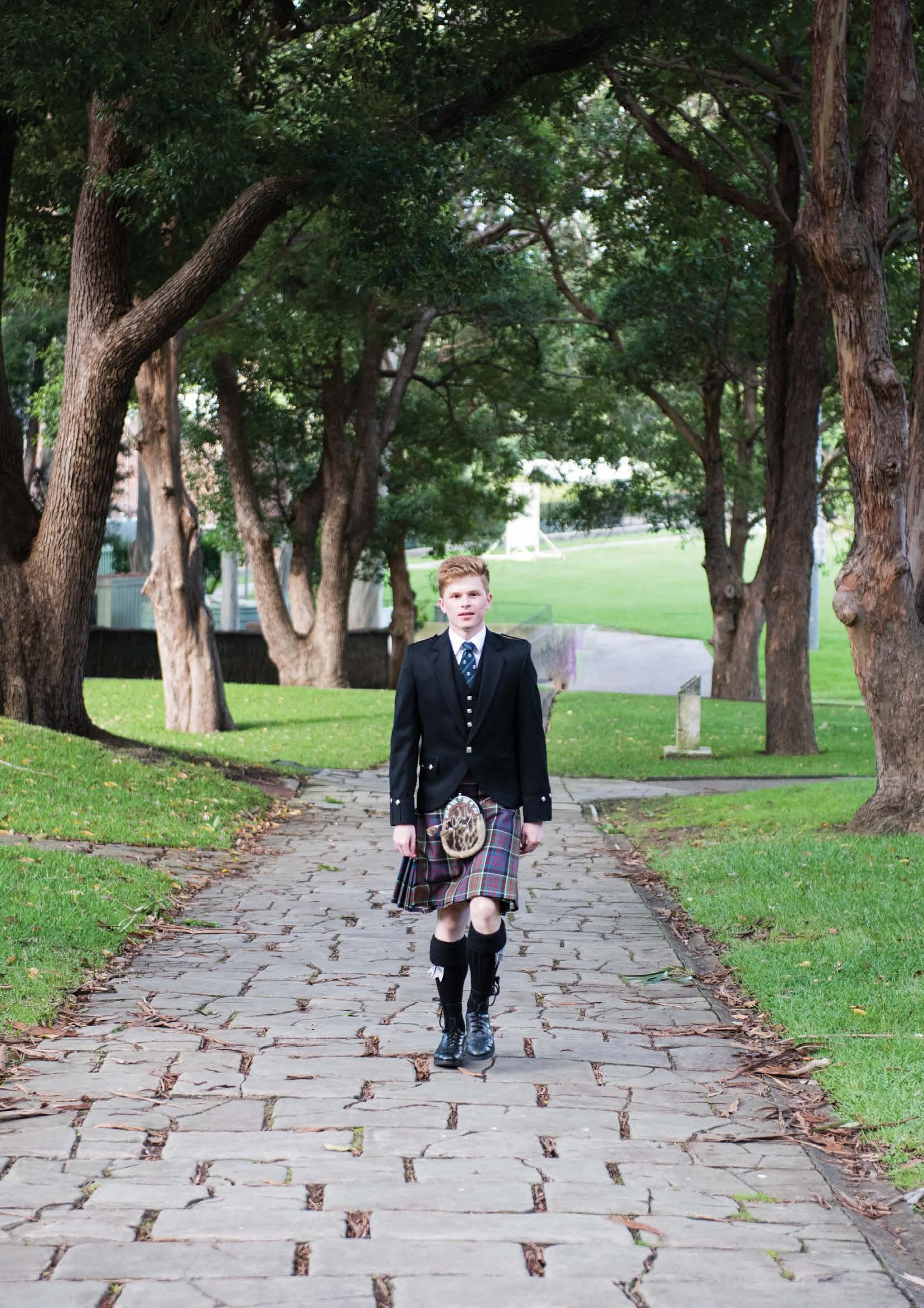
What ANZAC Day means to Millennials
For some, ANZAC Day is an emotional day dedicated to rising in the dark and paying respects to our veterans. For others it entails a sleep in and attending a service at a more civilised hour, such as the one held at St Andrew’s at 11am. For many it includes an excuse to go the pub and have a drink in honour of those who fought. And for others it is a valid reason to pig out on biscuits! Whatever the reason, there is no denying that ANZAC Day holds great significance for our age group and it has not lost any degree of recognition or appreciation with the Millennial generation.
Much more than just a day off work and university, this day holds a special place in the heart of young ones as we thank those who came before us and fought for the lives we are privileged to live today. We appreciate this sense of collective unity, especially with the tumultuous changes we have grown accustomed to seeing in our world every day. Acknowledging the need for and thanking Australian troops today is more relevant than ever, as is recognising the need to band together and be thankful for our safe home in Australia.
B ard with the Rev
Rev Dr Gareth Clayton OAM, Chaplain
Contrary to popular belief regarding the isolation of servicemen and women, veterans and those serving in Australian defence forces in any form are a tangible aspect of the lives of Millennials. While we may have chosen to pursue a different path, of living at St Andrew’s and studying at university, nearly all of us would know young ones who took advantage of some of the many exceptional opportunities offered by our country to work, study and serve. It is this degree of closeness that makes ANZAC Day all the more real for young ones, so that we have not only our older relatives and friends to thank for everything they do for our country, but also the mates and school comrades whom we have known for years. As a collective cohort we strive to continue the sense of support that is rallied on ANZAC Day, as well as make sure it is felt throughout the rest of the year. At our age we have so much to be thankful for but we must not forget where it all starts – a safe home in which we have been protected for as long as we can remember. ANZAC Day is our best chance to convey this thankfulness.
Hilary Shannon (Fr 2015)
Like the writer of the Letter to the Hebrews “... we have this large crowd of witnesses around us...” (12:1)
Again, like the writer in Hebrews we are encouraged to run with determination the race that lies before us (the next 150 years) looking to JESUS on whom our FAITH depends from BEGINNING to END. BUT like that very old saying,
150 Years – the remarkable journey of St Andrew’s College. It’s not much use looking ahead, UNLESS YOU WALK THAT WAY.

Editorial
Fiona
Alana
Lauren
Hilary
Penny Ryan
Matthew Duchesne
Drew’s Photography Club
From the Chair and Bird
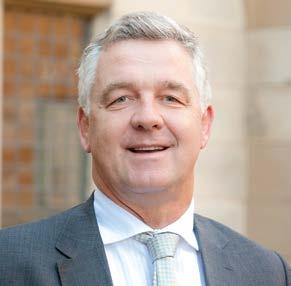
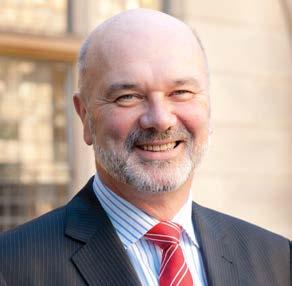
Welcome to our special Sesquicentenary edition of Blue & White.
St Andrew’s College was founded, 150 years ago, with the passing of the Act to Incorporate St Andrew’s College, which received royal assent on 12 December 1867. This, along with the philanthropic support of 1,462 benefactors, laid the foundations for our College.
With a busy start to the year, we have held a wide range of events for our students, alumni and their families, from our Family Fun Day through to the inaugural Spaces In between, which brought together our community, including scientists, entrepreneurs and
musicians, to share, discuss and deliberate on their passions and achievements (see page 17).
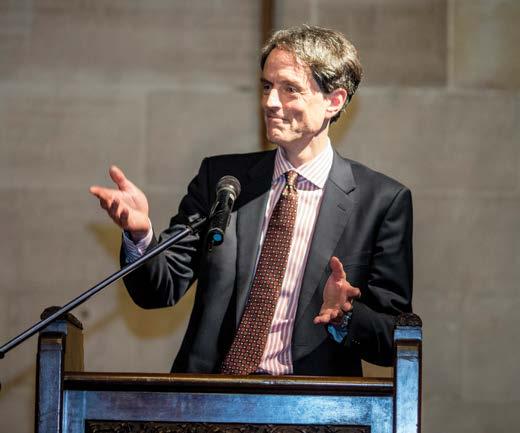
This year’s Annual Lecture was delivered by Associate Professor Rufus Black, who is the Master of our sister college in Melbourne, Ormond College. His lecture, The Role of College in the 21st Century Australian University, outlined his vision for the relationship between colleges and their universities. Of particular note was the value colleges can provide in partnership with their universities to deliver the high level of pastoral, academic, sporting and cultural experiences that are offered by many global universities, particularly in these challenging times for higher education. You can read Associate Professor Black’s speech in more detail on page 4.
Our Sesquicentenary also marks 15 years since women were first admitted to College. Following in the footsteps, those first women in 2002, we celebrated that milestone at our first Formal Dinner in Semester 1 (see page 7). While many alumni held grave concerns about the effect co-residency would have at St Andrew’s, we are proud to honour the women who have helped the College develop into the thriving community it is today.
As we look towards the next 150 years, the Council is considering the many opportunities and challenges we will face in the coming years. Utmost in Council’s mind
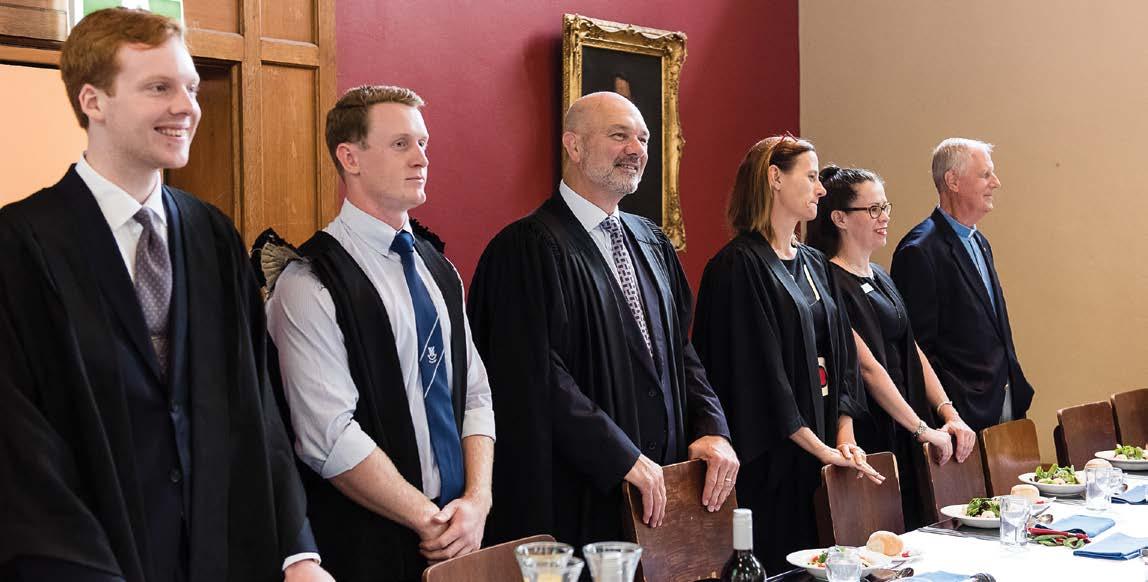
L–R: Post Graduate Alex Wright, Senior Student Lachlan Mactier, Principal Wayne Erickson, Vice-Principal Hester Wilson, Director of Advancement Fiona McQueen and College Chaplain Gareth Clayton welcome the 2017 Freshers and their parents for lunch.
is how, together, we can continue to provide our students with an experience that is relevant and supportive, whilst allowing them to maintain their independence on their journey towards adulthood.
As the cost of university increases, many families now face the challenge of providing their children with an opportunity to attend a world class university. This is particularly a challenge for students from regional, rural and remote Australia who have the additional burden of finding a home in Sydney whilst they study. We are seeking to address this ongoing issue, distributing $1.5M to 150 scholarship recipients, two thirds of whom could not otherwise afford to live at College without this fee relief.
The New Building linking Thyne and Reid will also go some way to address this issue by increasing the number of places at College by 88 rooms. We have submitted the Design Application to the City of Sydney Council and are planning to commence construction in November. We anticipate completing the building in time for Semester 1 2019.
In support of increasing access to St Andrew’s over the next 150 years, this year we have launched a Sesquicentenary campaign so that together we can give more students the opportunity to experience the unique experience that St Andrew’s provides, irrespective of where they come from or their financial circumstances. In consultation with our community, the College Council has identified two priorities that will allow us to further develop a world class experience for more students: scholarships and the Thyne Reid Development. Similar to the Hanks Building
campaign, we will provide benefactors with naming opportunities for bedrooms, tutorial spaces and other common facilities within the new Link Building. If you would like more information about how you can support our students, please contact Fiona McQueen, whose contact details you will find on page 15.
We are grateful to you, our community, for your ongoing feedback, input and philanthropic support for these initiatives. As always, we are dependent on you to help us to achieve our plans.
Charlie Taylor SS 1985 Chair of Council
Wayne Erickson Principal
Chair and Bird
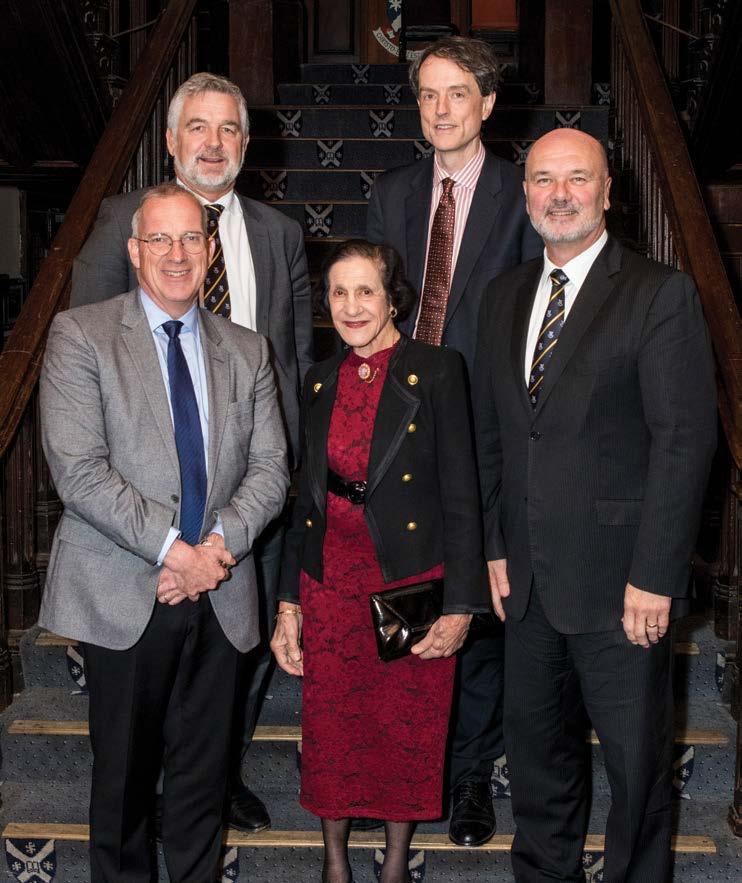
L–R: Sydney University Vice Chancellor Dr Michael Spence, Chair of Council Charlie Taylor, Dame Marie Bashir, Associate Professor Rufus Black and Principal Wayne Erickson at the Sesquicentenary Lecture.
The Role of the College in the 21st Century University
The friendship between our two institutions has been as long and personal as our common heritage in the Scottish Presbyterian communities of colonial Australia. The connections have been many and warm.
In the years since St Andrew’s founding, our two colleges have turned the educational oxymoron of a Scottish university residential college into a thriving model that has much to offer the future of Australian higher education.
That there is something different about the model of St Andrew’s and Ormond as colleges is hinted at in the reference we still make to our origins. St Andrew’s description of itself, which you have made prominent in this 150th year, speaks of a College ‘Born of the Scottish Enlightenment’. In a similar vein at Ormond we talk about our foundations being in ‘the values of the Scottish Enlightenment’.
These are very different roots to colleges with Church of England foundations. While the Anglican Colleges of the Universities of Sydney and Melbourne had a clear model to follow in the institutions of Oxford and Cambridge, the Presbyterians were never just going to transplant that vision.
Where England had Oxford and Cambridge, between 1410 and 1593 Scotland had developed four great universities – St Andrews, Glasgow, Aberdeen and Edinburgh. With the coming of the Reformation these universities evolved a culture that enabled a freer and more radical exploration than was possible south of the border. In time they would become cradles of the Enlightenment and Scotland would produce what, with few rivals, was the most educated population in Europe.
These Scottish institutions were very different to those of Oxford or Cambridge. Three distinctions stand out: they were open and not sectarian; they were progressive; and they were accessible with a system of bursaries to assist poor students.
The educational model that enabled these values was a lecture based one in notable contrast to the Oxbridge tutorial system.
Our two colleges offer a model that could be of great value to the future of higher education in Australia. I would identify four characteristics, whether either of our colleges or others have these qualities today is probably for others to judge, but that we or other colleges could have these characteristics is a matter of choice. Those characteristics are: that these are in the fullest sense place based collegiate learning communities; that they have a distinct educational agenda just as the Scottish founders of St Andrews and Ormond had that was born of their Presbyterian and Scottish enlightenment origins; that they have a nature, capability and commitment to work in partnership with their universities to create an integrated educational offering while maintaining their own educational agenda; and that as private institutions they are accessible in ways that work with the models of access of state based universities.
So what then does this model have to offer the future of higher education?
The first is the power of being part of a community of requirement. Done well, a student being a part of well-defined and intensive high-talent community is an education in itself. There is a requirement to determine how your identity works in relation to the values set by the community, to work with the diversity from every form of intellectual, economic and social background to ethnicity, to navigate the complex personal politics of organisations of up to 500 people, to understand the subtle social rules of institutional life and to live respectfully in domestic intimacy with people you are coming to know. What sets a college apart is that people have made a choice to live in this community as an integral part of their life rather than to attend it for a transactional exchange.
The second is the role of student government. Central to the concept of what college is about is the role of student self government. It enables young people to take on the responsibilities of making communities work and managing activities often at scales they will not have to do again until well into their careers.
Finally, colleges have programs explicitly designed to address the wider human development, from educationally focused programs on leadership, ethics or problem solving through to life skills from time management to meditation. Universities of today are not resourced to provide such offerings and students commonly lack the pre existing trust‑based relationships that greatly facilitate people getting the most out of such activities.
More than strengthening the system of today, colleges offer universities an important strategic hedge against even larger and longer term forces.
Most Australian universities would like to remain place based institutions. Without fundamental
change in their mode of delivering education it is not obvious how, over the long run, they will remain place based aspirations. The notion of the lecture as good pedagogy belongs long in the past and without naturally gifted or well trained educators who have reason to care deeply about teaching, there is a limited future for tutorials that are larger than many school classes.
Another possibility is for colleges to be stronger about the educational philosophy with which they approach the university. They can create a distinctive way of going to university. This would see the university’s offering more as a platform out of which you can construct a more focused offering. Today we are starting to envisage Ormond being a home for those interested in a genuinely liberal arts and sciences education where there is commitment to making the whole of the western canon available to students rather than the canon minus virtually everything to do with western religious thought and minus anything incompatible with various ideological renderings of it.
To achieve this, you need the Australian college model that our Scottish Presbyterian founders imagined. All of these models are premised on the idea that colleges are not entirely self-sufficient places but places that succeed through their educational partnership with their university and that they have a distinctive education point of view and capacity independently to deliver on it. Only together in the unique hybrid that began with the founding of St Andrew’s College 150 years ago can the true potential of higher education in Australia be realised.
Rufus Black
Master,
Ormond College, The University of Melbourne
Read the full lecture at standrewscollege.edu.au/the sesquicentenary lecture
Sesquicentenary Commencement Dinner
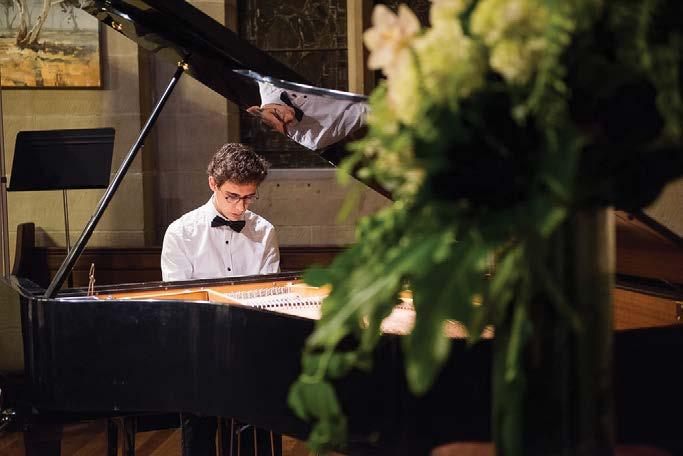
On 22 February 2017, it was only fitting that current students, alumni, staff and the wider St Andrew’s community gathered in the Chapel, which was the College’s Dining Hall until 1960, to celebrate the Commencement of our 150th Year.
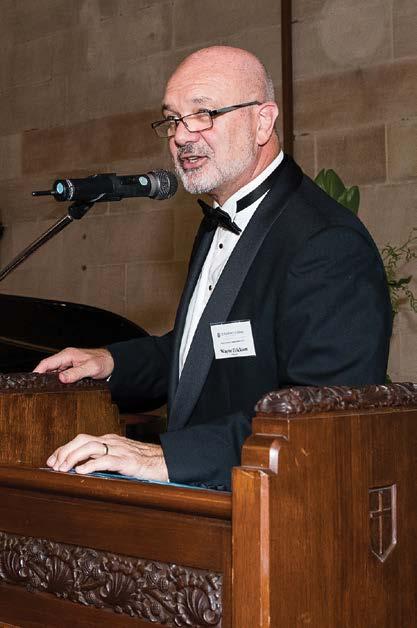
The formal celebrations began with a warm welcome from Principal Wayne Erickson, followed by Grace led by Rev. Elaine Farmer, before Professor Ian Jack took to the stage to focus on the significance of the anniversary with a short History of the College. Acknowledging
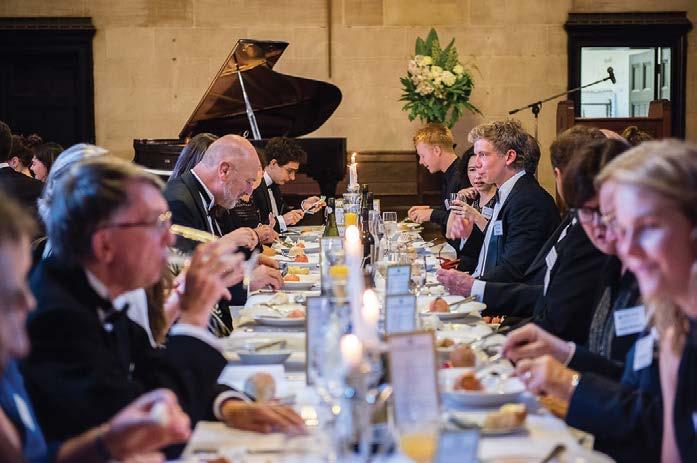
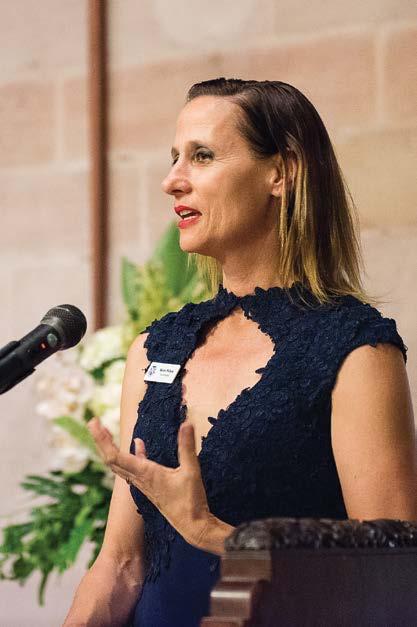
our roots in the Scottish Enlightenment, Professor Jack highlighted St Andrew’s continuing commitment to excellence and focus on remaining distinctive and inclusive.
Councillor Sasha Kovic (Fr 2005) outlined our current vision: for Andrew’s to be a world-class experience in Australia’s leading University College, then asked the audience to Look to the Future and envisage what St Andrew’s and the world at large, would look like in 150 years…
Read the full review and view the photo gallery at standrews150.com.au/launch dinner
15 Years of Women in College
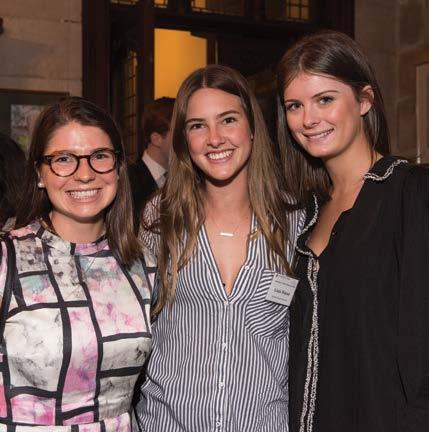
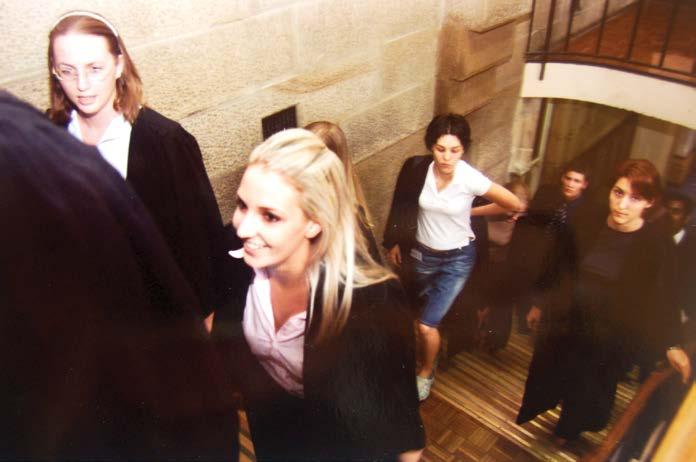
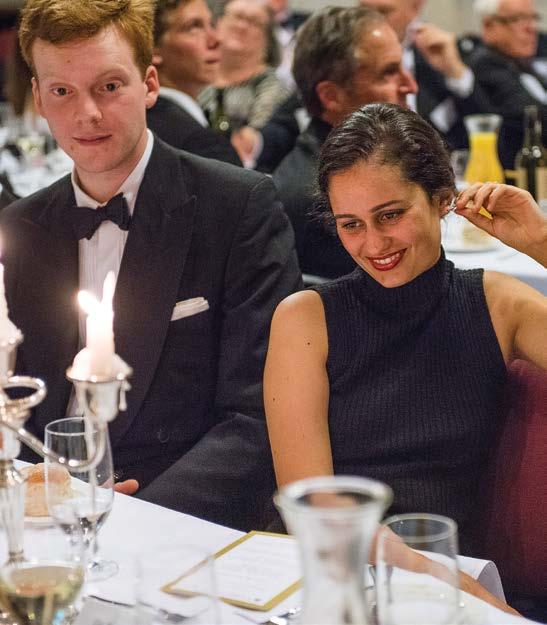
Monday 6 March saw the celebration of a proud and exciting milestone for College: 15 years of co residential living. While the presence of females may now seem to be an aspect of Drew’s that doesn’t involve a second thought, the active change that was the admission of the
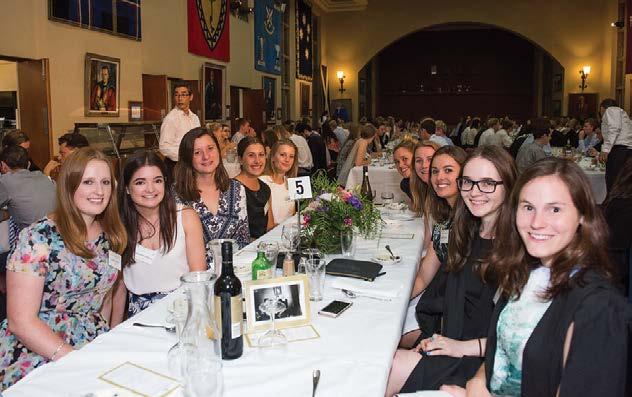
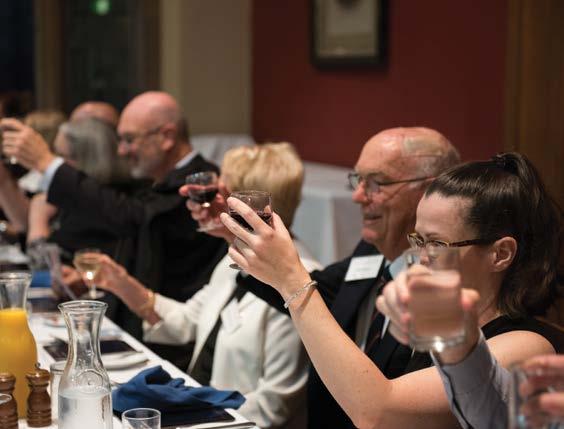
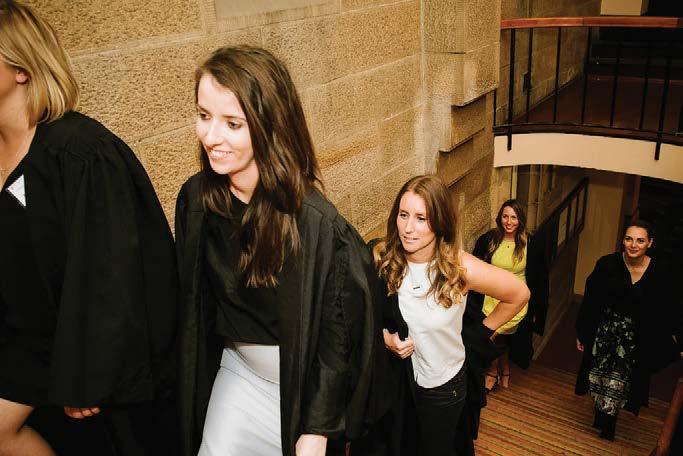
first women back in 2002 held a great deal of significance for the College. The final decision was reached in 2001, and in 2002 the first fifty women residents set foot in St Andrew’s. On Monday we were privileged to hear from four outstanding speakers who stood at the forefront of this transition, each of whom enlightened the crowd with a bit of Drew’s history and the part he or she played in female leadership at College. The road paved by the first women at Andrew’s is a legacy that female residents now work hard to uphold, proudly continuing to be participants of active change at College…
Hilary Shannon (Fr 2015)
Read the full review and view the photo gallery at standrews150.com.au/women s dinner
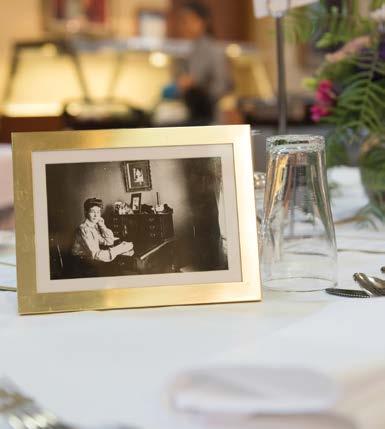
The first photo taken of Women in College in 2002 and a reenactment created at the 15 Years of Women Dinner.
From the Archives
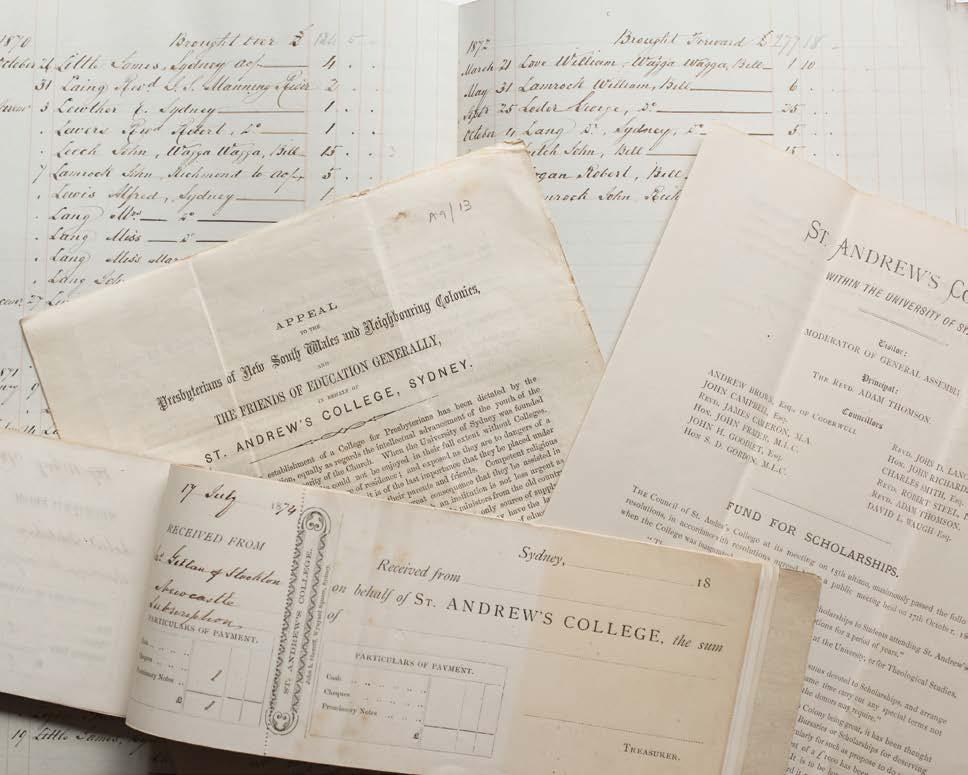
In the years following 1868 the College had to raise at least £10,000 (the equivalent of more than a million modern dollars) to qualify for a matching loan from the New South Wales government. The College Archives contains a very rich collection of data about how this substantial sum was raised. This photograph shows the original appeal to Presbyterians and ‘the friends of education generally’, written in 1868 by the Revd William Purves, the chairman of the planning committee for the new College. As Purves said, “If the wealthy will give as God has prospered them and those of moderate means what they will never miss, the necessary sum will be raised”. And so it was. Above this appeal are two pages of the magisterial summary of all the donations. Under 1870 it shows the moneys given by the wife and daughters of the Revd Dr John Dunmore Lang and in 1872 the £5 promised by Dr Lang
himself. The stubs of the receipt books survive to check the summary: the £1 given by a Newcastle man in July 1874 is shown.
Purves had also promised that “the sons of the very poorest will obtain, without any charge, the best education which the country affords”. In 1874, when the College was about to be built, the Principal, the Revd Adam Thomson, sent out an appeal for similar generosity to provide for scholarships to assist deserving but needy students, the 1874 document is on the right. A bequest had already provided over $100,000 for scholarships. Adam Thomson argued the indispensability of such funds, ‘the expense connected with University Education in this Colony being great’. It is no less great 143 years later and Thomson’s appeal is no less urgent.
The Archives contains objects as well as documents. The earliest artefact is the silver trowel with which the foundation stone of the College was laid on 9 May 1874. It was wielded by the Moderator of the General Assembly of the reunited Presbyterian Church. The Moderator in 1874 was John Kinross, the minister at Kiama who had been elected first Principal of Andrew’s in February 1872, but had declined the appointment. Adam Thomson, who then accepted the Principalship, had been the first Moderator of the reunited church in 1865. After Thomson’s untimely death, he was succeeded in 1875 by John Kinross, who ruled the College until 1901.

So the trowel encapsulates a great deal of the prehistory, creation and consolidation of the College in the reign of Queen Victoria.
There was no University in Queensland until 1911, so the University of Sydney was the natural provider of tertiary study for Queenslanders throughout the Victorian
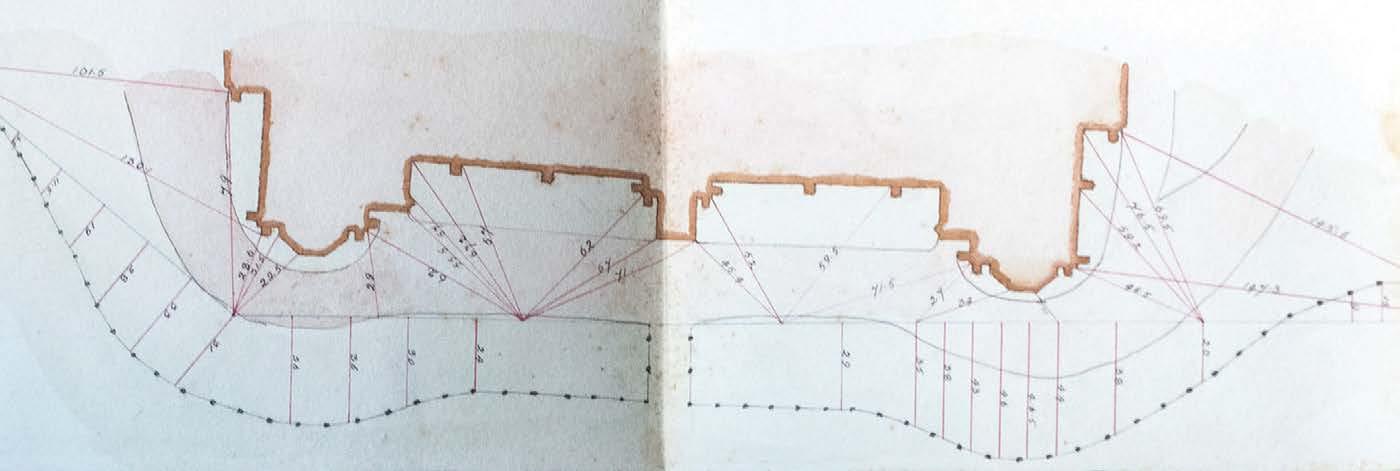
and Edwardian periods. The Sydney Colleges welcomed many young people from Queensland. John Bradfield was one of those, a brilliant student from a poor family, a scholarship boy who had become dux of Ipswich Grammar School. He came to Sydney to study Engineering and was resident in St Andrew’s for three years from 1886 until 1888. In his second year, one of his assignments was to do a measured ‘Survey of St Andrew’s College Grounds’. Young Bradfield presented his meticulous survey in a red leather bound notebook, which has survived in the College archives. This page shows the footprint of the long frontage of the Main Building and the contours of the incline and steps leading down into the Glen.
Graduating with first-class honours and the University medal in 1889, Bradfield commenced a remarkable career. From 1903 onwards, he was a vigorous proselytiser for the erection of a bridge spanning Sydney Harbour and he produced several possible designs. He supervised the completion of the present bridge in 1932 and the approach road was named the Bradfield Highway in his honour.
Professor Ian Jack
A Fantastic Family Fun Fair!
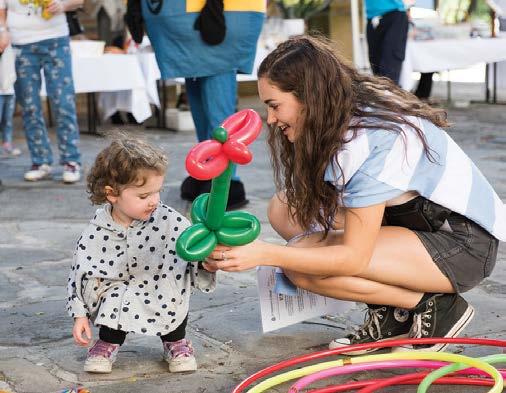
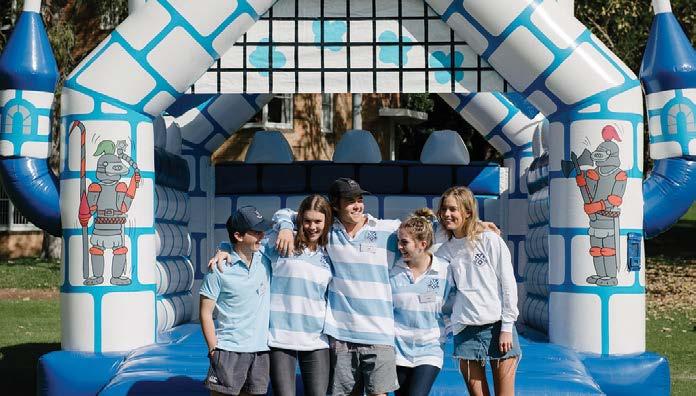
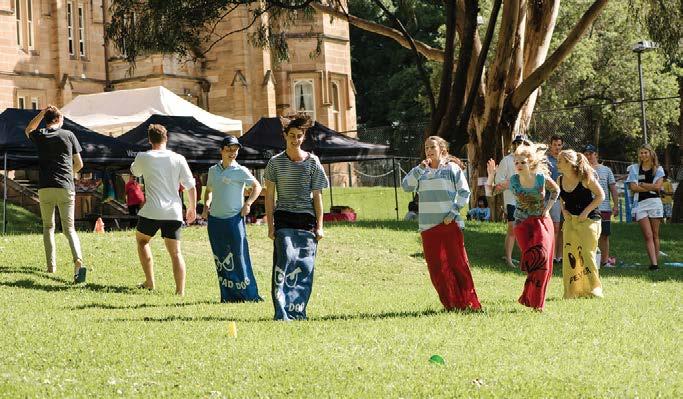
St Andrew’s continued its sesquicentenary celebrations on 30 April by hosting our first Family Fun Fair! The Glen, the Bailey and the Oval were transformed with the addition of stalls, rides, games, animals and everything in between. Our College was full of high spirits and happy people enjoying the wide range of activities on offer for all age groups.
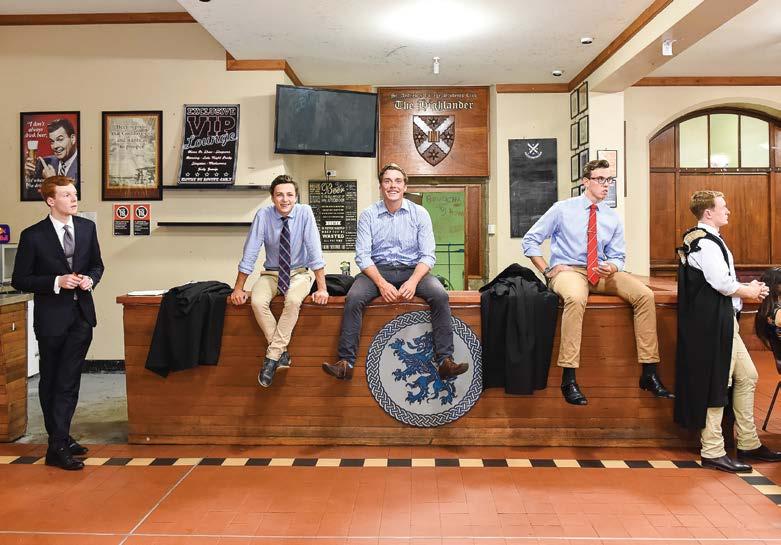
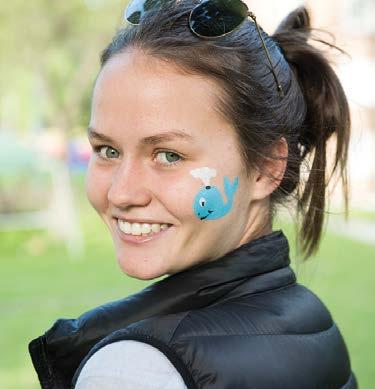
With a petting zoo, three jumping castles, bubble soccer, face painting, a magician and much more, St Andrew’s was transformed into a paradise for both the young and young at heart. We residents certainly found this to be a pleasant change from old and boring university students! And while the kids were positively spoiled for choice there was certainly something for all age groups. Older girls could look at some trendy bikinis on sale at one of the stalls, or get an inexpensive quality manicure at another.
And of course the adults were not forgotten with the Highlander setting up a pop up stall selling cold ones all day long. Other means of treating your appetite included a sausage sizzle, fairy floss, Dutch pancakes, smoothies, and much more.
This event was a huge success in terms of opening up our doors to the friends and families of residents, alumni, and most importantly the wider community! It was truly so special to show our 150 year old home to such a wide scope of people, we really hope to do it again! A huge thank you and well-done must go to the entire team, which consisted of Drew’s staff as well as student volunteers, who made this event such a winner.
Hilary Shannon (Fr 2015)
The full review can be read at standrewscollegeblog.wordpress.com/blog/


Scholars Gather for Soirée
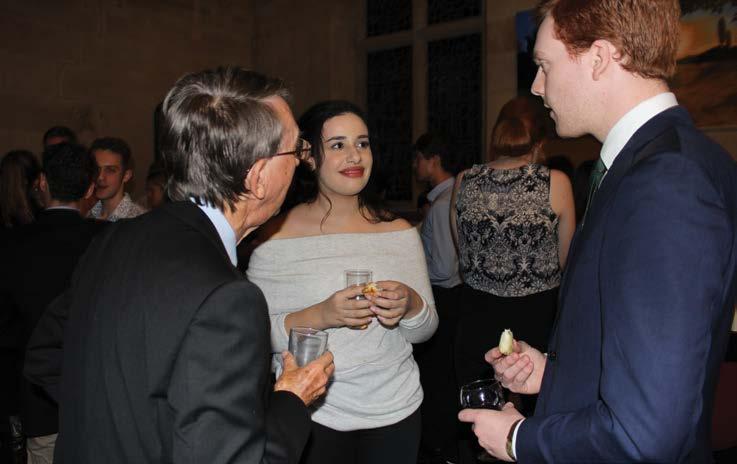
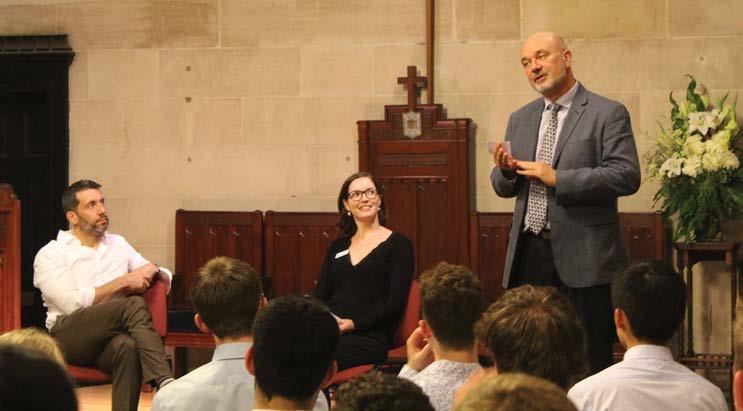
On Tuesday 23 May, the St Andrew’s’ ‘Life of the Mind’ activities continued with the Scholars’ Soirée. This is a relatively new event in the academic calendar, a night consisting of mingling over drinks and canapés followed by an interactive and informative session with a guest speaker. The event is a significant addition to the ‘Life of the Mind’ initiative, which focuses on the importance of intellectual pursuit in College.
This year’s guest speaker was the impressive Professor Michael Biercuk, a quantum physicist and innovator with a wide range of achievements under his belt. Senior Tutor Ellie Howes began the discussion by facilitating questions enabling the audience to become familiarised with his background. He explained his scientific path through the Universities of Pennsylvania and Harvard, and as a college of course we couldn’t help but also inquire into his social endeavours in these institutions!
Michael explained that after countless other scientific ventures, a high-calibre and high investment physics industry drew him to Australia where he is now in research at the new Sydney University Nano Science building. Michael explained his fascinating research that allows he and his team to trap single atoms, take photos of them, and manipulate their internal state.
In the latter half of the discussion, broader (non science) questions were encouraged and some vibrant discussion took place. The audience enjoyed hearing about Michael’s love of expensive watches, jujitsu, his interesting motivation methods and of course his sound advice: centring around the notion: Do what you love, but recognise that whatever you love will undoubtedly involve some work.
This kind of exposure is incredibly valuable to St Andrew’s students and is an initiative that cannot be taken for granted. We are so lucky to hear from such talented individuals from all walks of life, and it is important for us to take the lessons we learn on board as we move forward.
The ‘Life of the Mind’ week commenced with the outstanding Gala Concert on Sunday and continued with the University and Schools Chapel Service and Dinner on Thursday. It will conclude with the Annual Lecture, which will discuss the place of a college in a 21st century university.
Hilary Shannon (Fr 2015)
The full review can be viewed at standrewscollegeblog.wordpress.com/blog/
Holding the Mirror in 2017
Building on our ongoing commitment to ensuring a safe and positive culture at St Andrew’s and in anticipation of the Broderick Review, St Andrew’s undertook an internal review of our culture: Holding the Mirror. Holding the Mirror gave students, alumni, parents and friends of St Andrew’s the chance to discuss and reflect on their experiences of culture at St Andrew’s via surveys and small group forums. Seeking a solution focused approach, we wanted to ensure that it was more than a chance to talk, and this has translated into action. As a result there have been a number of initiatives for 2017.
Student Leadership Training
The Students’ Club has embraced the feedback from Holding the Mirror. As a result, the annual mentor and leadership training – which all students must undertake in order to be eligible for leadership positions within College – has incorporated the feedback to ensure that all student leaders have the knowledge and skills to model and pass on those skills to their mentees. This allows all student members to have the skills to create a positive community. Cultural Diversity Project
In 2017, the College launched its new Cultural Diversity Project (CDP) to work with the Students’ Club to increase awareness of and to embrace diversity and inclusion at College.
This initiative includes the creation of a six member Cultural Diversity Project Team who:
• Are appointed from various communities from within the student community. The CDP Team aims to ensure that all voices within the Students’ Club have the chance to be heard, and alternative points of view considered and embraced within the Students’ Club and in its decision making processes. Their role is to support students to engage with diversity and inclusion at College to ensure that:
• Groups or individuals within College can confidentially seek formal or informal advice or assistance with issues regarding diversity and inclusion within College. The Team can provide appropriate advice and support to manage these issues in a timely and sensitive manner.
• College policies and procedures are appropriate and that College Members are given the information and backing to wholeheartedly embrace diversity and inclusion.
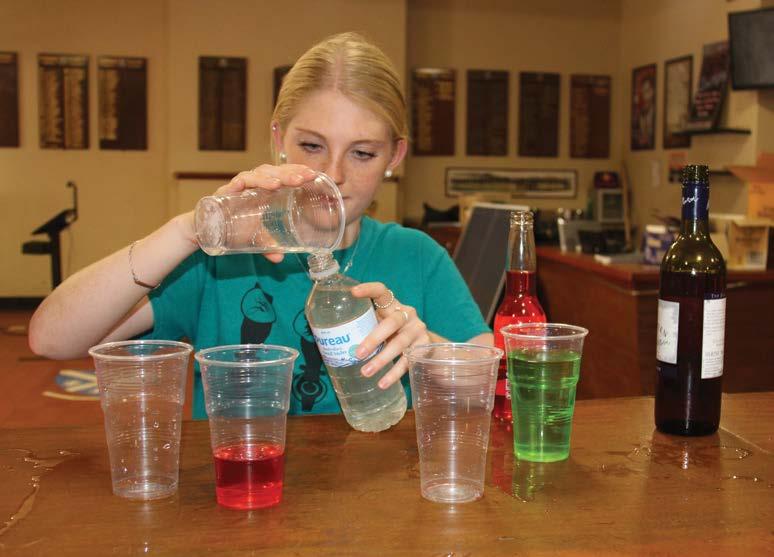
Students learnt about standard drink measurements during O Week.
• They can provide an alternative point of view and advice to the Students’ Club Executive – the House Committee – based on the understanding of the College Policies and a diverse interpretation of College culture.
• As an independent Team within the Students’ Club, they can work with the House Committee and College staff to assess and revise College Policies and the intrinsic culture of College. In doing so, the CDP Team are simply addressing the groundswell culture for embracing diversity.
• They can offer support, independent of the House Committee, to niche groups and those with concerns about the culture of the college, freeing the House Committee to continue with their important role of managing the day to day running of the Students’ Club.
Review of Policies and Procedures
There was a general view within the Students’ Club that while all students were aware of the policies, not many had read them, or knew where to find them. In addition, the language of the policies was seen to be out of date.
Based on feedback, the College has undertaken an in depth review to ensure that the policies and procedures related to student behaviour are relevant, accessible and easy to find. This review commenced during the summer break with the House Committee, CDP Team and Dean Team, who provide frontline pastoral care, agreeing to make the policies accessible by updating them in line with the College’s and Students’ Clubs values.
In addition, we have created a number of supporting documents and leaflets and
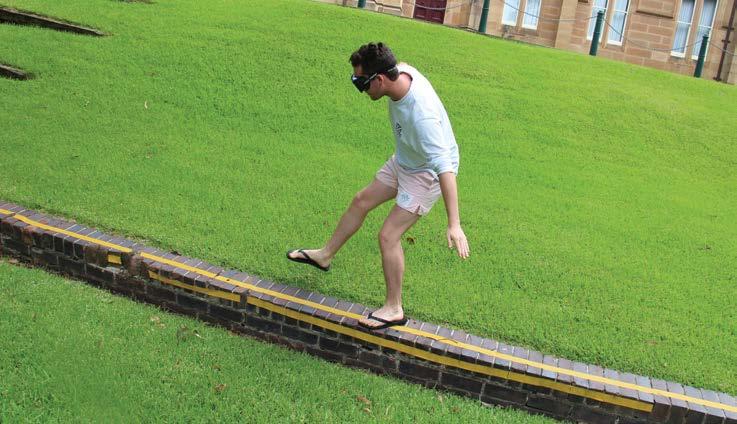
Students wore ‘beer goggles’ to help understand how alcohol can affect their coordination.
clearly delineated the processes for seeking help on any matter, including making a complaint about inappropriate behaviour. This information is available on the website policy.standrewscollege.edu.au with an interactive flow chart and series of information leaflets. Students have been strongly engaged and consulted throughout the review and a number of student leaders have undertaken additional training to ensure that they have the skills they need to support their peers in the event of a complaint. All student members have attended information sessions to ensure they have an understanding of the polices and how to seek help.
All staff members have undertaken training to ensure that they too are able to appropriately guide and assist students when required. These documents are living drafts that will be reviewed and updated on an ongoing basis to ensure that they continue to meet the needs of our community.
As a result we are better able to ensure that our community is safe and secure for everyone.
Dr Hester Wilson Vice Principal & Director of College Life
Harper Master Plan –Thyne Reid Development
In our Sesquicentenary, we are excited to commence the first stage of the Harper Master Plan with the development of the new Link Building to create a new undergraduate precinct between Thyne and Reid.
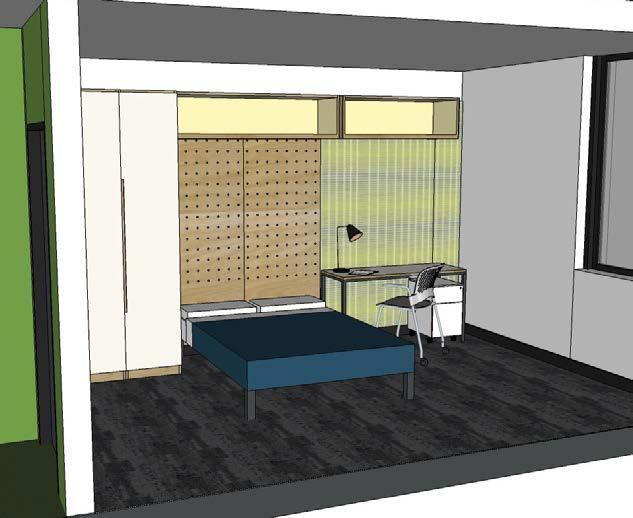
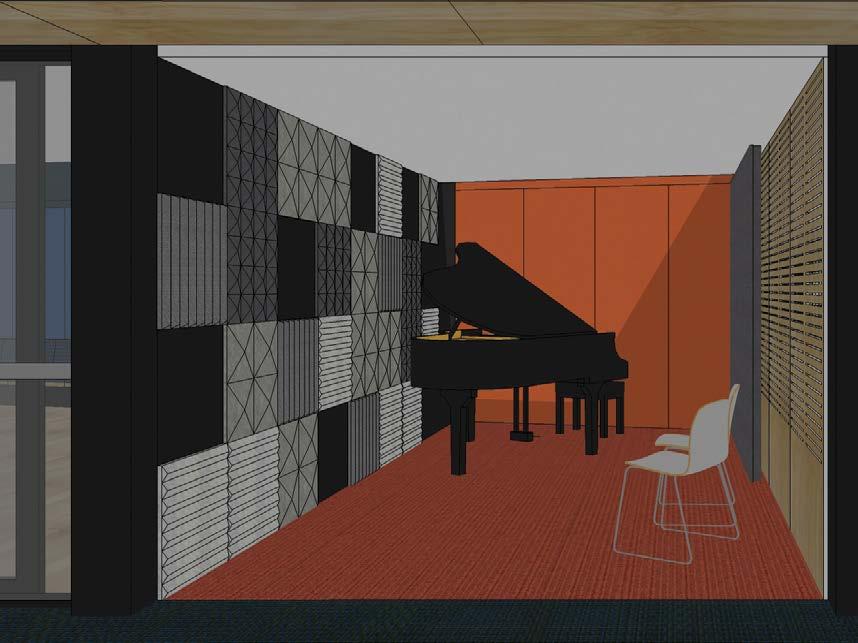
With more than 80 new single and ensuite bedrooms, this precinct will provide additional rooms to cater to a variety of our students’ needs. To retain senior undergraduates at College in their fourth and fifth years, there will be new 4 and 5 bedroom apartments which will allow independent living at College. The project will also include much needed tutorial rooms, music rehearsal rooms, a gym and common areas for social activities. The Glen – the space between Thyne and Reid Buildings – will be landscaped to create an outdoor area for formal and social activities.
The new bedrooms will be included in the room draw, meaning that the Students’ Club will continue to manage this important
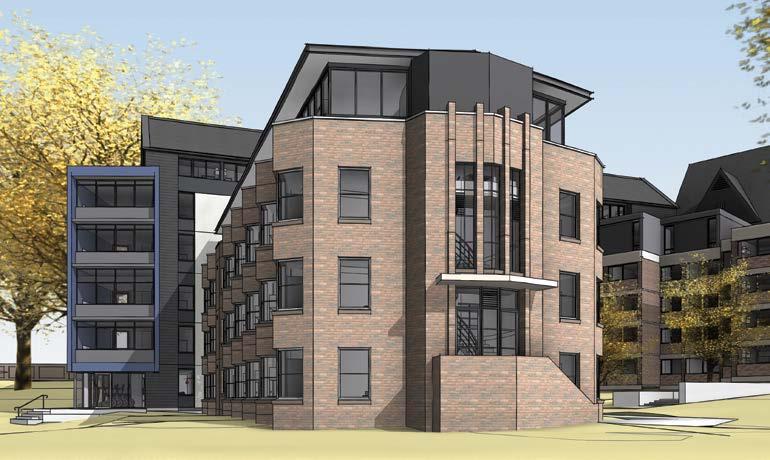
aspect of College life. As the newest rooms in College, they will most likely go to senior undergraduates and Freshers will continue to live in the Main Building.
The interior concept design for both the new building and the refurbishment of the Reid bedrooms is being developed by AJC’s interior design team in consultation with students and the College Life team.
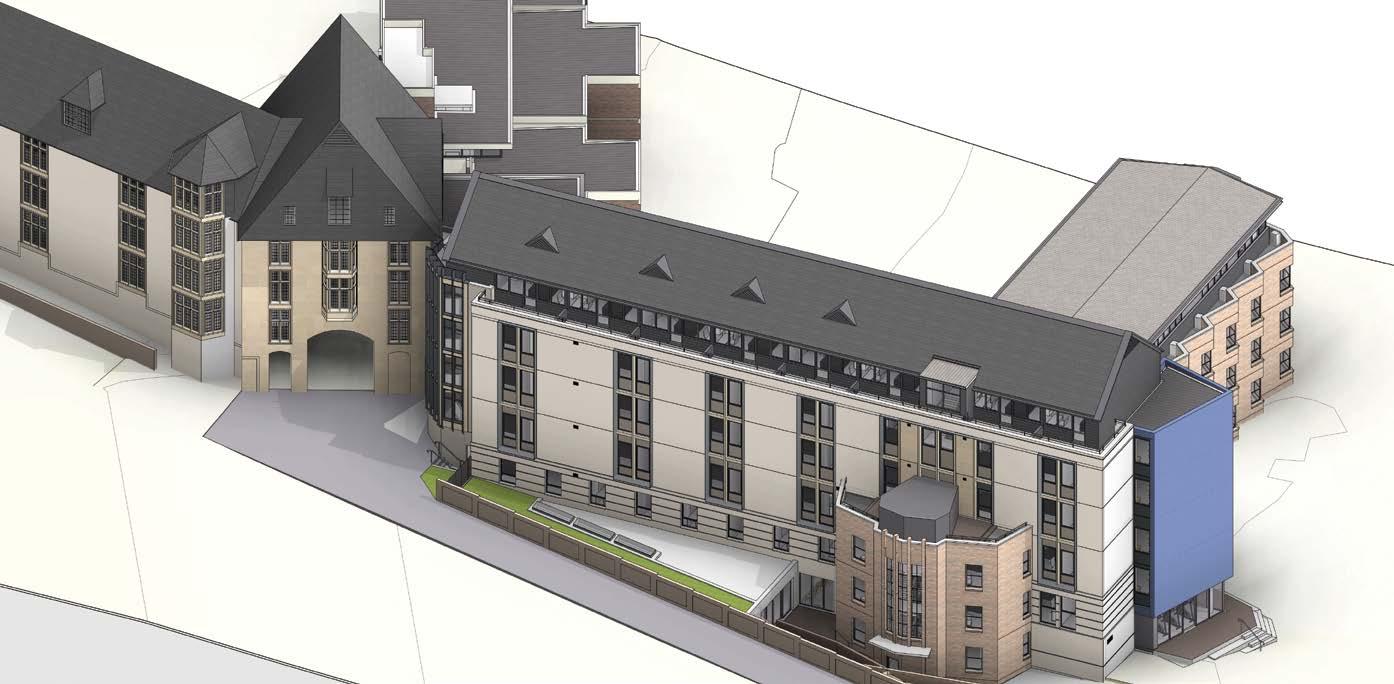
New Link joining Reid with Thyne and Hanks Buildings.
Reid Building with additional floor and apartments (left).
The overall cost of the Thyne Reid development is approximately $33M and, as such, will be undertaken in a number of stages, the first being the development of the Link and full refurbishment of the Reid Building. This first stage will cost $25M, will add approximately 70 new bedrooms and, on the ground floor, the additional college life facilities. Later stages will include a fifth level of bedrooms on the Reid Building, completing the building, and new rooms in Thyne to create an attractive new Bailey façade.
Thanks to the philanthropic support of our early benefactors and prudent financial management, we currently have approximately $12M in our reserves for future funding and contingencies. With these funds and a strong cash flow, the College is able to seek debt funding. While the College is unable to use its land or buildings as collateral, our cash flow and reserves put us in a strong position to be able to secure a loan.
Amongst these plans for new development, existing College facilities have not been forgotten. This year we will work with students and an interior design team to develop a plan
to refurbish the bedrooms in the Main Building, blending the best of the heritage aspects with our students’ 21st century needs. The kitchen will also undergo a complete refurbishment over the 2017–18 summer holidays in anticipation of the increased number of students in College: its first since it opened in 1960.
For more information about our development plans, please contact Fiona McQueen, Director of Advancement, on T: +61 2 9565 7303 or E: advancement@standrewscollege.edu.au.
The Design Application for the Thyne Reid Development is estimated to take 6 months to be approved by the City of Sydney and the first stage 15 months to complete:
DA to the City of Sydney lodged March 2017
Anticipated DA Approval by the City of Sydney Council September 2017
Construction Starts November 2017
Opening of the Link Building February 2019
A typical bedroom in the Link Building.
Thyne Reid Link Music Room.
Meet Seda Hamoud
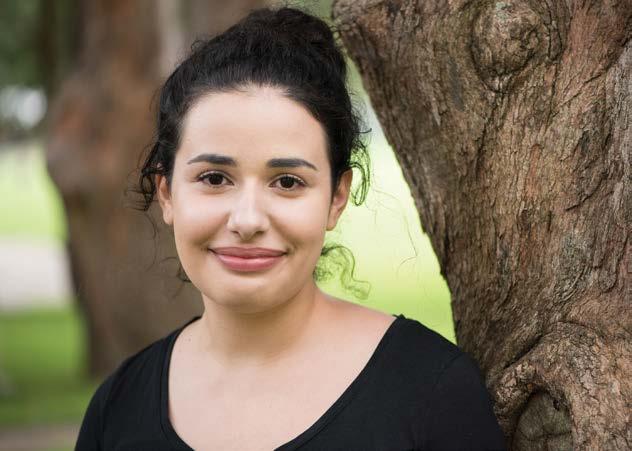
Seda Hamoud
St Andrew’s Scholar (Fr 2017)
Seda Hamoud is one of our 2017 St Andrew’s Scholars. She is studying a combined Bachelor of Commerce/Bachelor of Laws, and considers it an ‘immense honour’ to be part of the Scholars program. During her time in College, she plans to get involved with debating, writing, drama and sport. She also looks forward to engaging with the College’s numerous philanthropic initiatives.
However, Seda’s greatest passion revolves around environmental initiatives and she is committed to creating change both within College and outside of it. Her biggest achievement to date was receiving one of Australia’s most prestigious environmental honours, ‘NSW Young Sustainability Champion.’ Having led her school’s environmental club for years, this effort grew into running congresses for hundreds of Sydney school students with opportunities to give speeches on national and international platforms.
We spoke to Seda about her plans for incorporating her passion for the planet into life at St Andrew’s.
Where did your interest in the environment come from?
It registered as an important endeavour early on in high school. My continued passion resides in cognisance of the social, political and economic impacts that issues such as climate change and resource depletion are poised to have.
How will you be incorporating this passion into your College life?
I am hoping to create a more environmentally conscientious community with like minded students, through small things like superfluous wastage, as well as providing students with opportunities to volunteer in community wide environmental initiatives. As a fresher, there is the obvious challenge of lacking the experience to bring about substantial change, and that’s why the fact that so many older students have registered interest is so encouraging.
What have you enjoyed most since you moved into College?
My favourite experience has been the Claymore discussion group. Discussing issues so culturally pertinent in such a welcoming environment has been enthralling, especially given its lively, argumentative nature. I am most looking forward to developing life long friendships, which I already see the start of with my third floor Vaucluse family. I would like to thank the College community for being so welcoming; St Andrew’s is a very exciting place to live, and if my time thus far is anything to go by, the year is set to be both rousing and fruitful.
To learn more about the St Andrew’s Scholars program, and for information on applying for our 2018 intake, please visit standrewscollege.edu.au/st andrews scholars/
The Spaces In-between: Life of the Mind Week 2017
On the afternoon of Sunday 20 May the Chapel hosted an afternoon of talks from St Andrew’s most inspired thinkers. The panels consisted of alumni and friends of College, (who are also leading researchers and practitioners in their field) and were facilitated by a current student or staff member with a special interest in the subject being presented.
Our College mission is to support our students through their transition to adulthood with a breadth of intellectual, spiritual, cultural and social experiences such as a critical examination of authority, tradition and convention, embracing public discourse, freedom of expression and the toleration of diverse viewpoints. Aligning with these principles of the Scottish Enlightenment, The Spaces In between brought our community together to talk about their passions and areas of intellectual interest and success – in addition to the sport and other cultural successes we often celebrate.
The first session was chaired by Elly Howse, Senior Tutor at SAC and a PhD Candidate in the School of Public Health, where her research focuses on the health behaviours of young adults. ‘Transitions to Adulthood’ was a fascinating insight into a timely topic for both current students and parents, posing the question: What makes an adult different to a child or adolescent? Debra Maher, the Solicitor in Charge of Children’s Legal Service at Legal Aid
NSW, spoke about juvenile offenders and the age in which a child can be guilty of a criminal offence. Professor Caroline Hunt, Professor of Psychology in the Faculty of Science, then explained that the human brain isn’t fully formed until the age of 25 and the implications this has on the decisions of our youth.
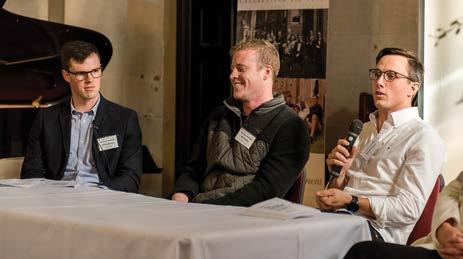
The second was about Entrepreneurship, facilitated by Will McNamara (Fr 2012), our current Dean of Students, a 6th year medical student at UNSW and a budding entrepreneur. Will is the founder of Ossyx, a medical startup focused on lower limb injuries in the athletic and military population. Will was joined by his business partner Ben Lindsay, who has also created GoRepp, which provides a service as a software for online businesses. Friend of the College Margaret Mackenzie also joined the panel to share her knowledge of 35 years in consumer goods – buying, retail and wholesale. Will, Ben and Margaret spoke about the challenges involved in starting a business and the need for a thick skin, sharing a number of humorous stories about setbacks and wins.
Nick Harrington (Fr 2010) then brought a not for-profit approach, speaking about The Manjeri School Project, where he works in Uganda building exceptional sustainable schools that serve the most disadvantaged children...
The full review is available at standrews150.com.au/the spaces in between
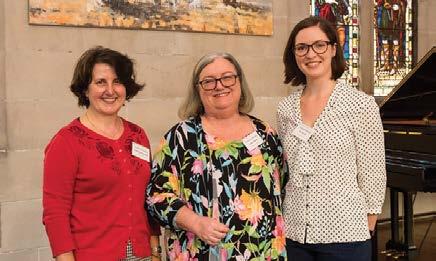
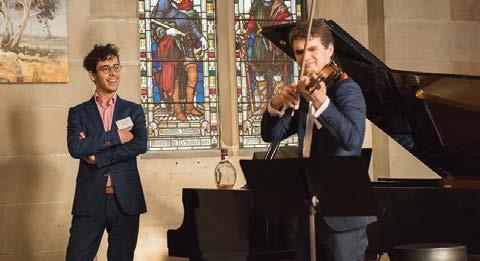
L–R: William McNamara, Ben Lindsay & Nick Harrington; Margaret Mackenzie, Debra Maher & Elly Howse; Will Cesta & Ben Adler.
Rawson Report
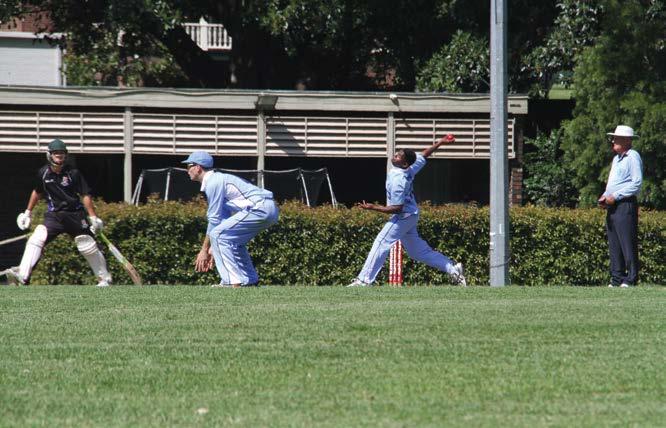
Andrew’s men delivered outstanding results in the Rawson competitions this year so far, victorious in the Cricket, Swimming and Rowing.
Our Rugby team defeated St John’s and Wesley in Rounds 1 and 2, with the final against St Paul’s scheduled for June but postponed until 1 August due to inclement weather.
We look forward to sharing the outcome of this campaign in the second semester.
Palladian Cup
The depth of our performing arts talent has again been remarkable.
We enjoyed great success in Palladian Solo Vocal, placing first and second thanks to stunning pieces by Rachel Jeffreson (Fr 2016) and fresher Tiana Young.
Palladian Solo Drama saw St Andrew’s Scholar Nick Jackman (Fr 2015) placing first, displaying great skill in a very impressive piece.
Minami Takahashi (Fr 2014) was awarded first place in the Solo Instrumental with a supremely accomplished performance on the trombone.
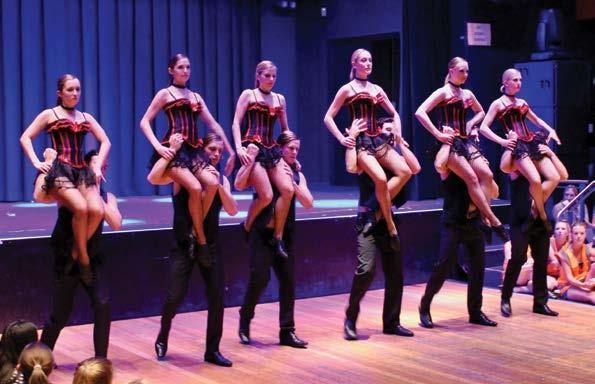
One of the favourites on the Intercol calendar, Palladian Dance saw our College claim silver. It was a highly commendable effort in this semester’s Palladian events, one that we hope to replicate next semester.
Rosebowl Report
Some terrific results in Semester 1, with Andrew’s women winning the Netball and Swimming, as well as an undefeated Hockey campaign. We also placed second in the Rowing.
This year also saw the introduction of the Mixed VIII Rowing, for which Andrew’s claimed the inaugural victory.

We had great performances all around with tenacity and commitment evident in each competition.
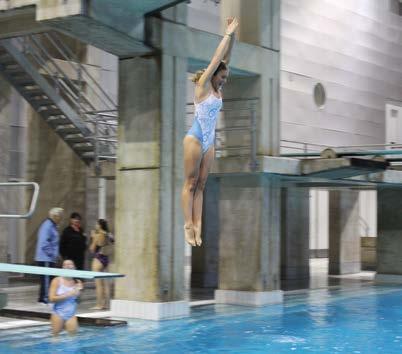

College Blog
Each semester, a current student takes on the role of College Blogger. They write reports and reviews of various events throughout the semester, providing great insight into College life through the eyes of a student. We encourage you to visit the blog here: standrewscollegeblog.wordpress.com
College’s Community Service Project
Reaching out to help serve our local community
Isobel McCalman and Celso Milne (both Fr 2016) are our 2017 Community Service secretaries. Carrying on last year’s great work initiated by George Stribling (Fr 2015), one of their projects involves assisting One Meal, where students go to Wentworth Park in Glebe and help serve meals to homeless people in the area. There has been a great response from the Students’ Club with nearly fifty of our men and women participating so far this year. It is a perfect fit for giving back in a hands on way in the local University of Sydney area.
“This is our most engaging community service activity currently, and I’m really proud of the enthusiasm we’ve had there. It is quite a humbling experience for those involved,” says Isobel, who is keen to continue this each Sunday night throughout the academic year.
Coming up shortly is the next Australian Red Cross blood drive. A Red25 group has been registered with a significant proportion of students expressing interest in participating in June. Red25 is a giving program that works towards ensuring at least 25% of Australia’s blood donations are secured.
This year, their major fundraising focus is the Sydney Children’s Hospital Foundation. Current College merchandise includes the SCHF logo, with a percentage of the proceeds being donated to the Foundation. The recent Mother’s Dinner, an event enjoyed annually by students, parents and carers, was geared towards the SCHF with some impressive fundraising taking place.
‘We had a guest speaker join us, who was amazing,” recounts Isobel. “And one of our
“This is our most engaging community service activity currently, and I’m really proud of the
enthusiasm
we’ve
had there.
It is quite a humbling experience for those involved.”
students, Robert Meek, had his own initiative selling cocktails prior to the event, which itself raised over $400 for the Foundation.”
With other potential plans set to involve AIME amongst other deserving organisations, we look forward to sharing the continued progress in the community service domain at St Andrew’s College.
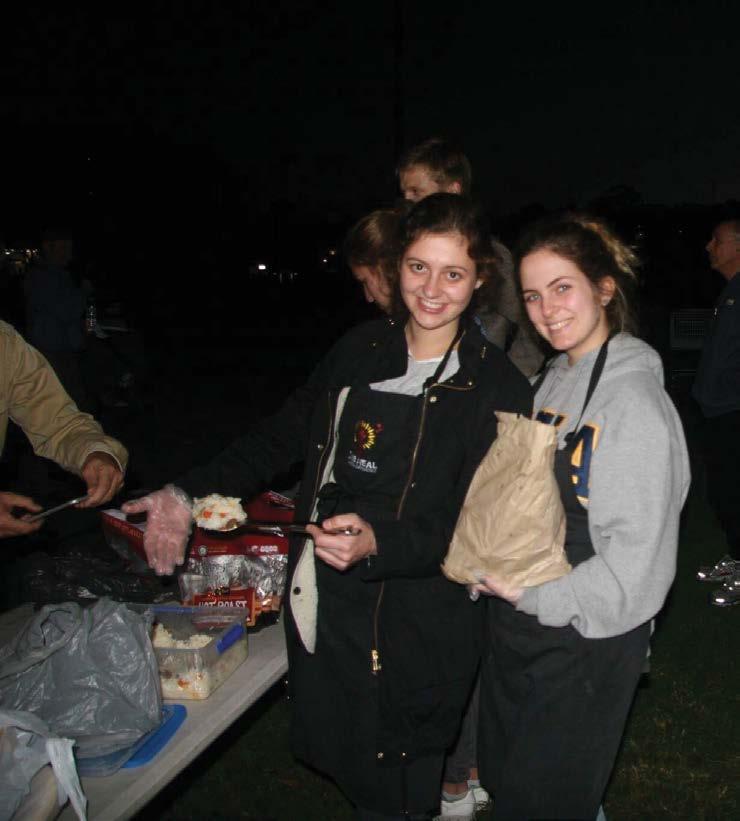
Isabella Cesta and Aubrey Wood assisting at One Meal.
Alumni and Parents Events
Parents Events
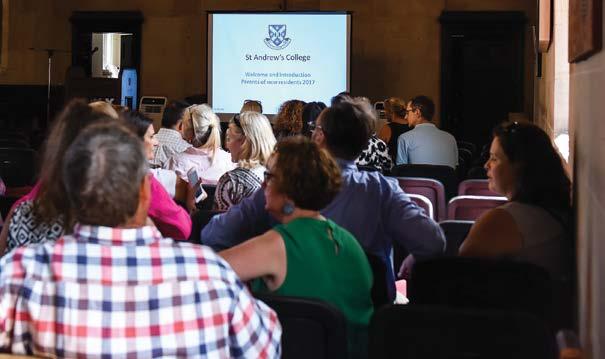
As part of our welcome to Freshers on Tuesday 28 February, we hosted a tour of College and an afternoon of introductory lectures for parents
Regional Events
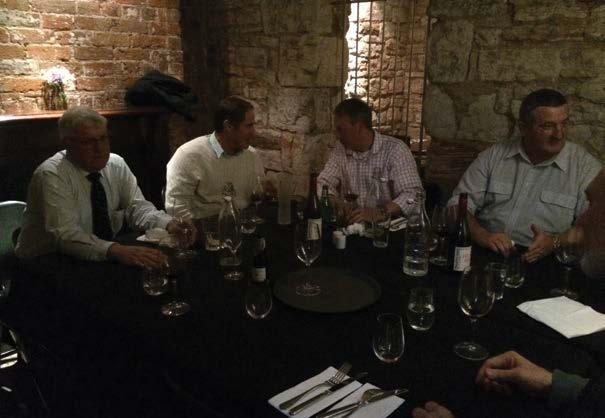
In addition to our special Sesquicentenary events, the Principal took the opportunity to host a number of events during his annual visit to schools in regional NSW and Canberra through April and May. This is always a terrific opportunity for alumni and
covering the history of St Andrew’s and an overview of the College’s academic, pastoral care, cultural and sports programs. This event gives new parents a chance to experience St Andrew’s and learn more about their sons’ and daughters’ College experience.
parents to meet the Principal, and each other, to receive an update on College and provide us with valuable feedback about our plans for the future.
Thanks to Dan Bisa, Mike Sutherland, David Carraro and David Bell for helping us to organise these terrific gatherings.
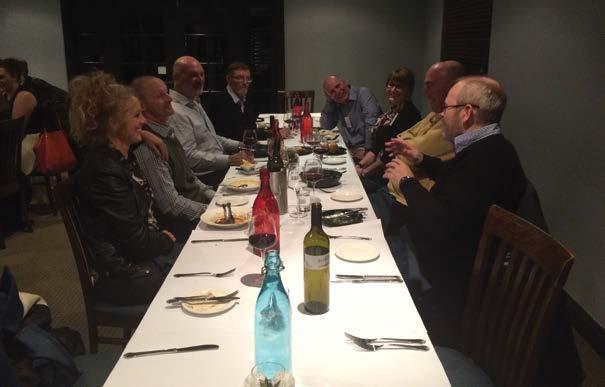
Dubbo Reunion with Geoff Wise, Mike Sutherland, Rohan Wilson and Tim Vail.
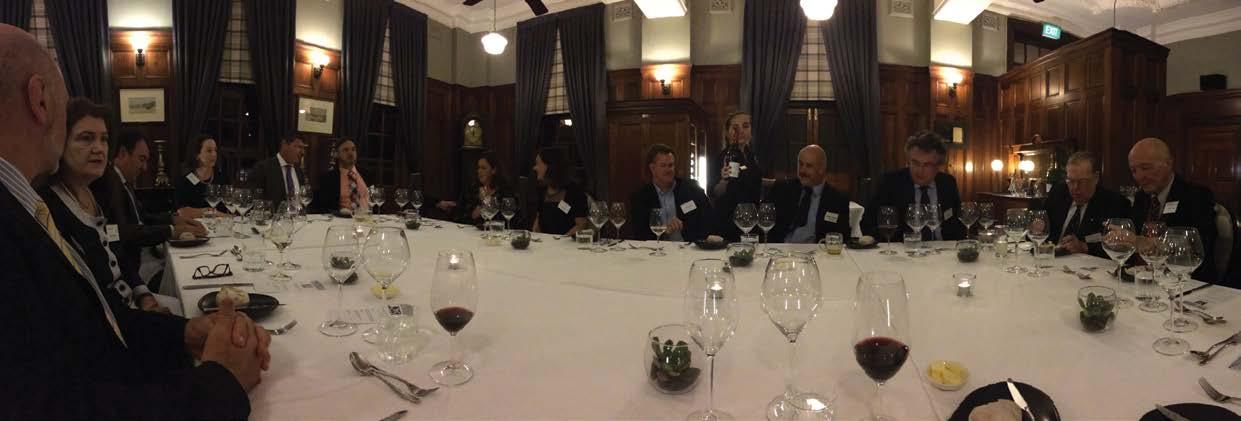
Orange Reunion with Su & Marty Roebuck, Wayne Erickson, Evan Sergeant, Geoff & Fiona Haywood, Geoff Millar and Dan Fock.
Alumni and parents gathered in the main Dining Room at the Newcastle Club.
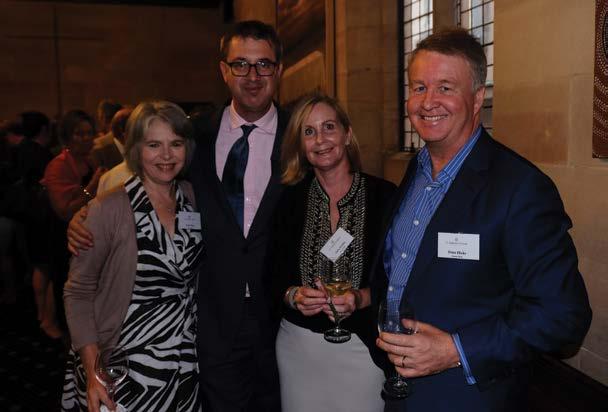
In March we once again hosted a Cocktail Function for parents. This informal event gives our guests the opportunity to come to St Andrew’s to meet fellow parents, the Principal and Chair of Council.
Judy Hicks, Nicholas & Julia Holder, and Peter Hicks at the Parents Cocktail Function in March.
Obituaries
The College has learned of the following deaths in our community. Our sympathy is extended to the families of these alumni.
Dr Montagu Beesley (Fr 1954)
Mr Jock Alexander MacKinnon (Fr 1950)
Dr Robert John Oakeshott (Fr 1952)
Mr Mark Lidwill Powell (Fr 1961)
Rev Dr James Thomas Rigney (Fr 1978)
Dr Gordon Clarence Stuckey (Fr 1943)
Dr Malcom Trafford Walker (Fr 1951)
If you know of any other deaths in our community, please do not hesitate to contact us.
Contact us on T: (02) 9565 7302 E: alumni@standrewscollege.edu.au
James Thomas Rigney
Born in Katoomba in the Blue Mountains to Ernest and Jean, James excelled at his studies, graduating as Dux of his school, Katoomba High School. He went on to gain scholarships at Sydney, Oxford and Cambridge Universities.
While studying at the University of Sydney, James lived at St Andrew’s College from 1978 until 1980. During his time he was President of DramSoc and an editor of the Andrewsman. James returned to College in 2010 as a member of the St Andrew’s College Council.
James met Anna whilst working as a Senior Resident at the Women’s College and at this time was also received into the Anglican Church at Christ Church St Lawrence, Railway Square.
James studied courses in English and Theology at Oxford and Cambridge and married Anna on his birthday in 1991. Their daughter Cressida was born in 1994. James trained for ordination
at Westcott House, Cambridge, and was ordained deacon in 2001 and priest in 2002 at Ely Cathedral.
Over the course of his academic career James earned BA (Hons) Sydney, MA (Hons) Sydney, DPhil Oxford, BA (Hons) Cambridge and PhD
Cambridge. In addition he received a Diploma of Librarianship and Information Science from Charles Sturt University.
In his positions in Newcastle, James was perhaps most proud of the development of a series of quiet mornings which allowed people to experience a depth of engagement with the word of God that many said was entirely new to them. He was also inaugural Rector of the Newcastle Chapter of the Society of Catholic Priests and the Provincial Australian Rector until 2013.
In Brisbane, James was able to draw on his extensive experience in residential colleges. Students have said that they found him calm, approachable and witty.
James was preparing to take up a position as Senior Tutor at St Paul’s College and was enthusiastic to be able to focus on academia again.
“Students... found him calm, approachable and witty.”
James was passionately interested in books and sharing the joy of learning with young people. James was a spiritual figure whose pastoral skill was noted and excellence in preaching appreciated and whose theological depth was well known.
RSVP for Alumni Dinner & Annual Golf Day
RSVP Date: Monday 20 November 2017
Book online via:
www.standrewscollege.edu.au/conferences events/events 2/
Complete and mail to: St Andrew’s College, 19 Carillon Avenue NEWTOWN NSW 2042
Email your scanned form to: alumni@standrewscollege.edu.au or advanceservices@standrewscollege.edu.au
Book by phone with your credit card: 02 9565 7302 or 02 8594 8248
Your Name & Fresher Year:
Partner’s Name:
Address:
Telephone:
Email:
Dietary requirements:
Payment
Cheque (payable to St Andrew’s College)
EFT Bank: NAB BSB: 082-057 Account: 509015248
(Please use the following reference: Annual Dinner <Your Surname Fr yr>)
Visa MasterCard
Yes, I/we will be attending the Annual Golf Day on Friday 24 November 2017
Please group me with My Year Group or Name:
Yes, I/we will be attending the Annual Dinner on Saturday 25 November 2017
Please seat me with My Year Group or Name:
I/We send our apologies for this function I would like to purchase:
Thursday / Friday / Saturday night at $60
I would like to renew my membership for: 1 year @ $40 or 10 years @ $395
I would like to support the Alumni Society Scholarship with a gift of:
I authorise payment of $ _______ Name on Card:
Card No:
Expiry: / CCV:
Signature: Date:
RSVP for Sesquicentenary Cocktail Function & Great Hall Gala Dinner
RSVP Date: Monday 4 September 2017
Book online via: www.standrewscollege.edu.au/conferences events/events 2/ Complete and mail to: St Andrew’s College, 19 Carillon Avenue NEWTOWN NSW 2042
Email your scanned form to: events@standrewscollege.edu.au Book by phone with your credit card: 02 9565 7330
Your Name & Fresher Year:
Partner’s Name:
Address:
Telephone:
Email:
Dietary requirements:
Payment
Cheque (payable to St Andrew’s College)
EFT Bank: NAB BSB: 082-057 Account: 509015248
(Please use the following reference: Gala <Your Surname Fr yr>)
Visa MasterCard
Yes, I/we will be attending the Cocktail Function & Gala Dinner on Saturday 16 September 2017
Please group me with My Year Group or Name:
Yes, I/we will be attending the Gala Dinner ONLY on Saturday 16 September 2017
Please seat me with My Year Group or Name:
Yes, I/we will be attending the Cocktail Function ONLY on Saturday 16 September 2017
Please seat me with My Year Group or Name:
I/We send our apologies for this function I would like to purchase: ______ Cocktail Function & Gala Dinner Tickets @ $220 $ _______ ______ Gala Dinner ONLY Tickets @ $200 $ _______ ______ Cocktail Function ONLY Tickets @ $100 $ _______
I authorise payment of $ _______ Name on Card:
Card No:
Expiry: / CCV:
Signature: Date:
Annual Dinner & Annual Golf Day 2017
The President and Committee of the St Andrew’s College Alumni Society warmly invite you to join them for the Annual Dinner and Annual Golf Day.
Including Reunions for:
1952 – 65 Year Reunion
1957 – 60 Year Reunion
1962 – 55 Year Reunion
1967 – 50 Year Reunion (Contact Geoff Cohen or Alan Blanch)
1972 – 45 Year Reunion
1977 – 40 Year Reunion
1982 – 35 Year Reunion (Contact Sandy Biddulph)
1987 – 25 Year Reunion (Contact James Dixon, Angus Ward, Dougal Gordon, Alex Nock or Ian Smith)
1997 – 20 Year Reunion (Contact Brad Wheaton)
2002 – 15 Year Reunion
2007 – 10 Year Reunion (Contact Sean Hubert)
2012 – 5 Year Reunion (Contact Brendan Pryke)
Sesquicentenary
Golf Day
Date: Friday 24 November 2017
Time: 1.30pm Tee Off; 5.30pm Post Game Drinks
Tickets: $100 incl green fees, cart and post‑game snacks
Venue: Moore Park Golf Club Cnr Anzac Pde & Cleveland St, Moore Park
Dress: Collared Shirt (No Denim)
Annual Dinner
Date: Saturday 25 November 2017
Time: 6:30pm AGM; 7 Pre-Dinner Drinks; 7:30pm Dinner
Tickets: $125 full; $115 SACAS Members; $90 for 2006–2015 freshers
Accommodation: $60 per night
Dress: Black Tie
RSVP by: Monday 20 November 2017
Enquiries: Hannah Atwell T: 02 9565 7302
E: alumni@standrewscollege.edu.au
Diana Mania T: 02 8594 8248
E: advanceservices@standrewscollege.edu.au
Cocktail Function & Great Hall Gala Dinner
The Principal and Council of St Andrew’s College invite you to join them in celebration of our Sesquicentenary at this special event. Join us on the Quadrangle Lawns at The University of Sydney for a Pre-Dinner Cocktail Party followed by The Sesquicentenary Gala Dinner in the Great Hall.
Pre-Dinner Cocktail Function
Date: Saturday 16 September 2017
Time: 6–7.30pm
Tickets: $100
Dress: Black Tie
Venue: Quadrangle Lawn 1, The University of Sydney, Science Rd, Camperdown
Ticket price for both events: $220
RSVP by: Monday 4 September 2017
Great Hall Gala Dinner
Date: Saturday 16 September 2017
Time: 7.30pm
Tickets: $200
Dress: Black Tie
Venue: The Great Hall, The University of Sydney, Science Rd, Camperdown
Enquiries: Lauren Ribbon T: 02 9565 7330 E: events@standrewscollege.edu.au
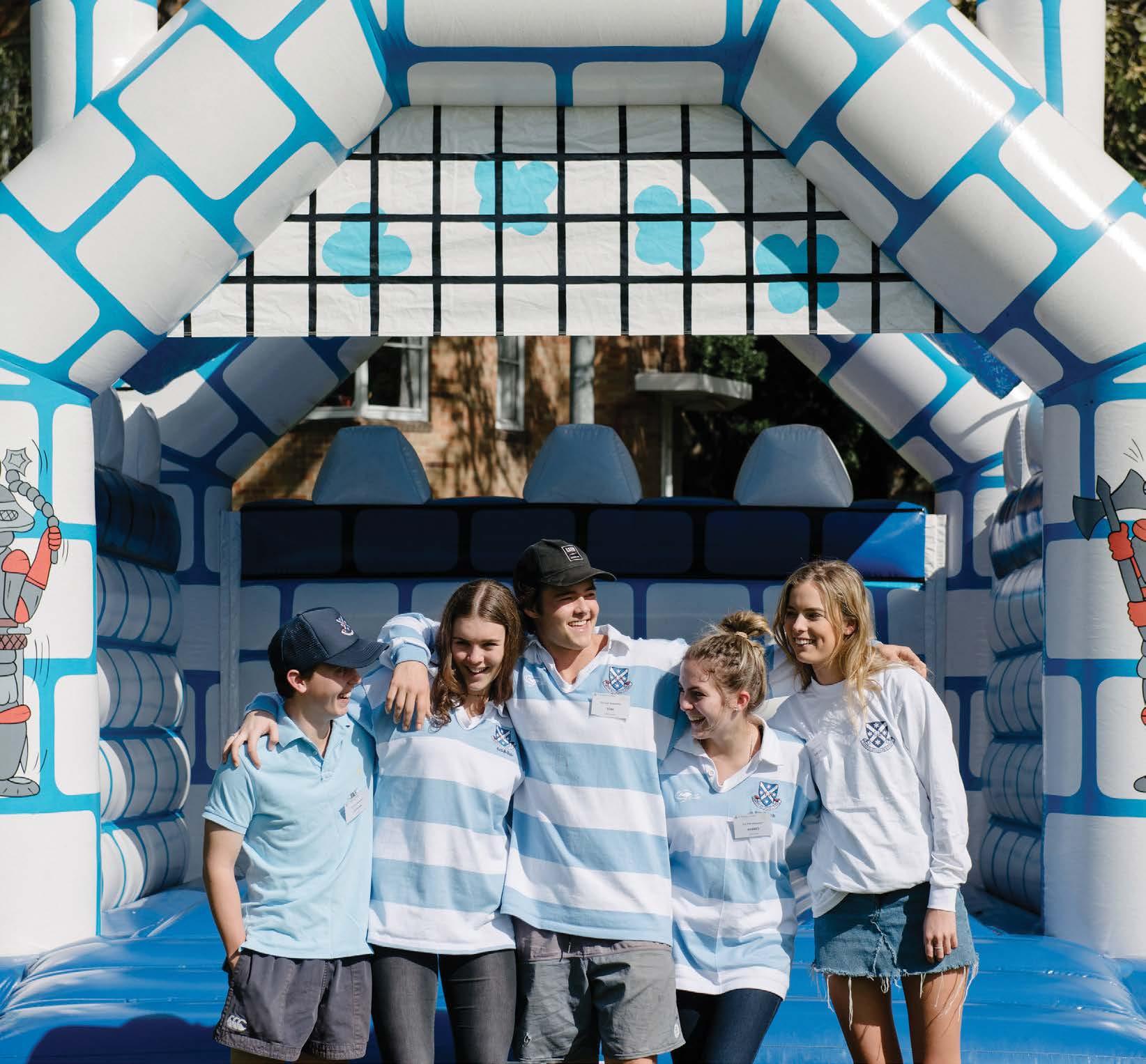
Sesquicentenary Family Fun Fair Volunteers: Lachlan Barrett, Charlotte Hines, Thomas Cattana, Aubrey Wood and Caroline Gunning.