
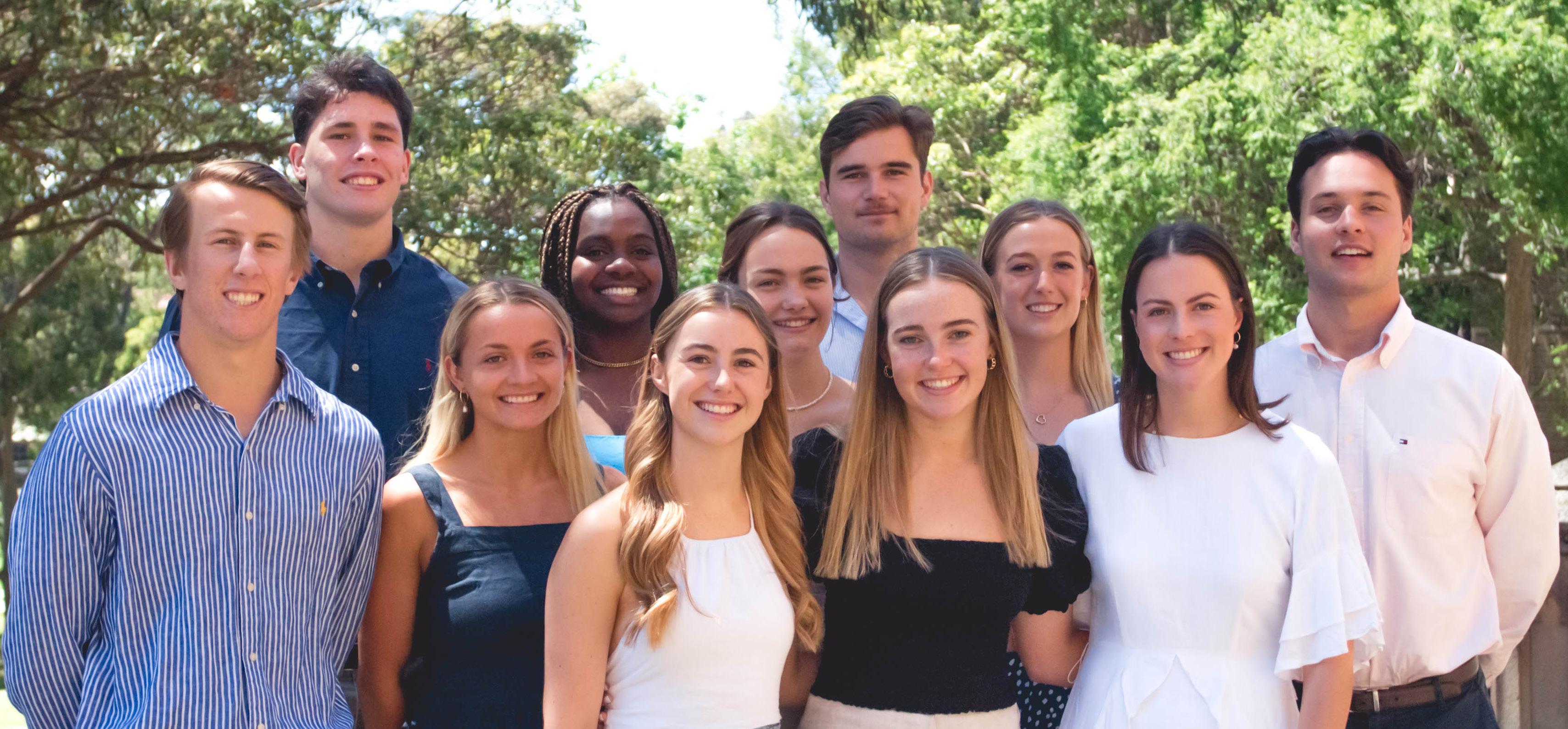

The incoming House Committee was democratically elected by members of the Students’ Club on Friday 15 October 2021.
“As Senior Student, I look forward to leading the Students’ Club through a year of excellence, independence, enjoyment, and inclusivity. With our very capable House Committee, the Students’ Club is sure to maintain its unique identity and legacy, as cultural renewal continues to be effected in 2022. As we head into our 20th year as a co-residential college, I also look forward to seeing the positive impact that our allfemale executive team will have on the College.”
Elisabeth Woodcock (Fr 2020)
Senior Student-Elect 2022
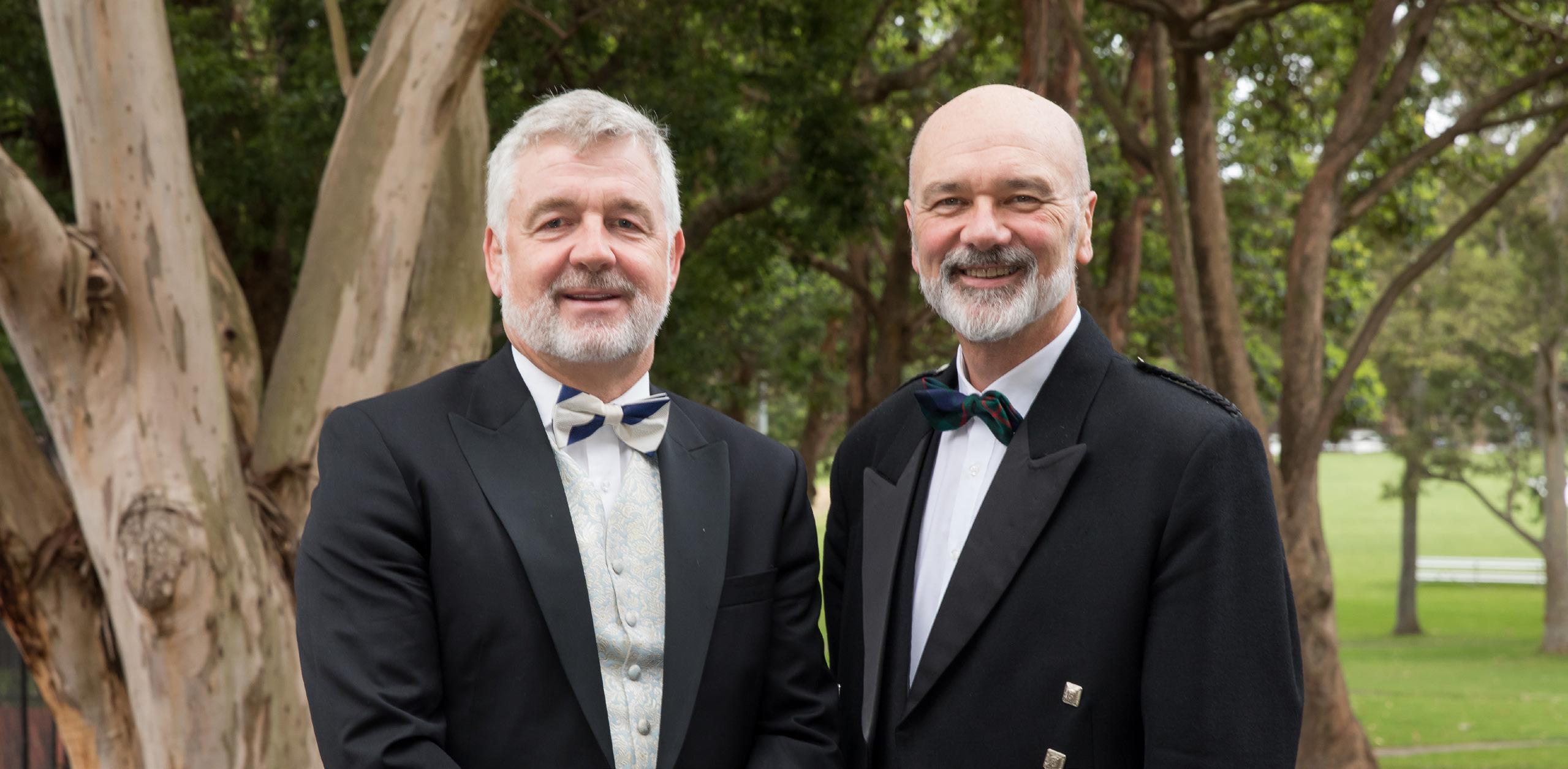
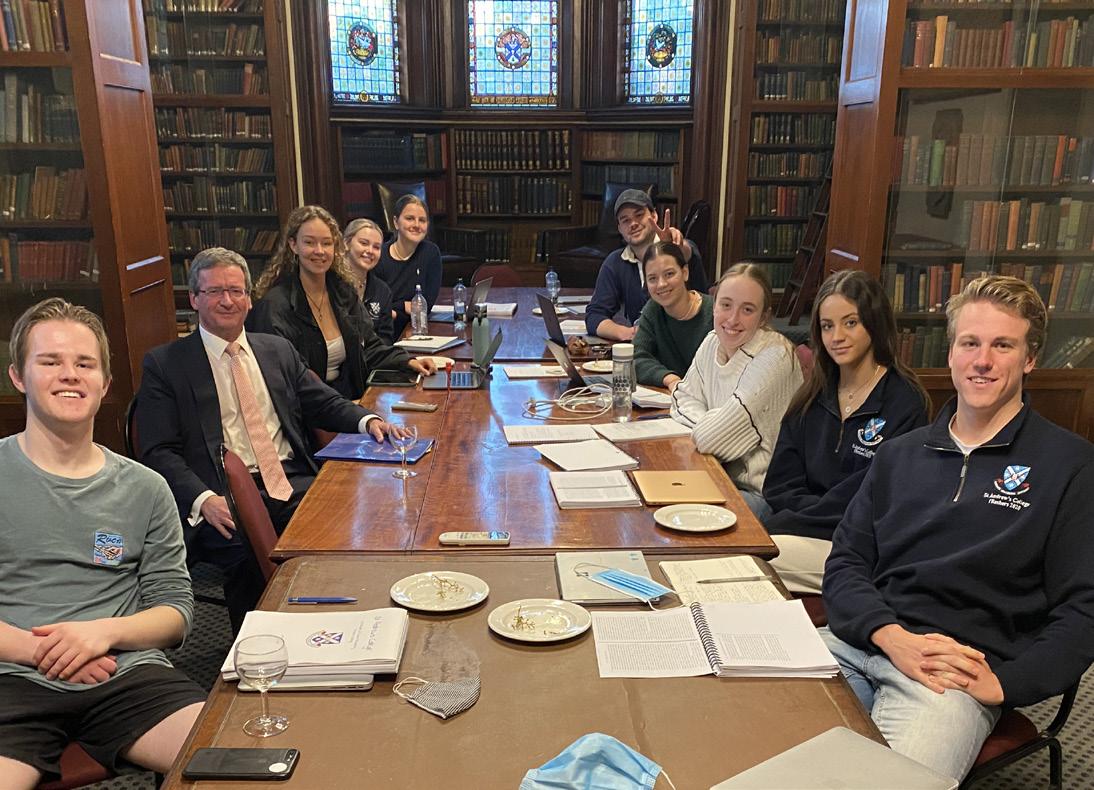
We are pleased to introduce the following students (pictured) and their newly elected roles for 2022:
Senior Student: Elisabeth Woodcock
Honorary Secretary: Pamela Murphy
Honorary Treasurer: Hannah Westhuizen
Honorary Assistant Treasurer: Aidan Wearne
Rawson Representative: Drew Sellers
Rosebowl Representative: Charlotte Haling
Intercol Representative: Lucinda Gillis
Intercol Representative: Hugo Hayman
Cultural Representative: Onyinye Nwamadi
Social Secretary: Patrick Mahony
Alumni Secretary: Emily Prickett
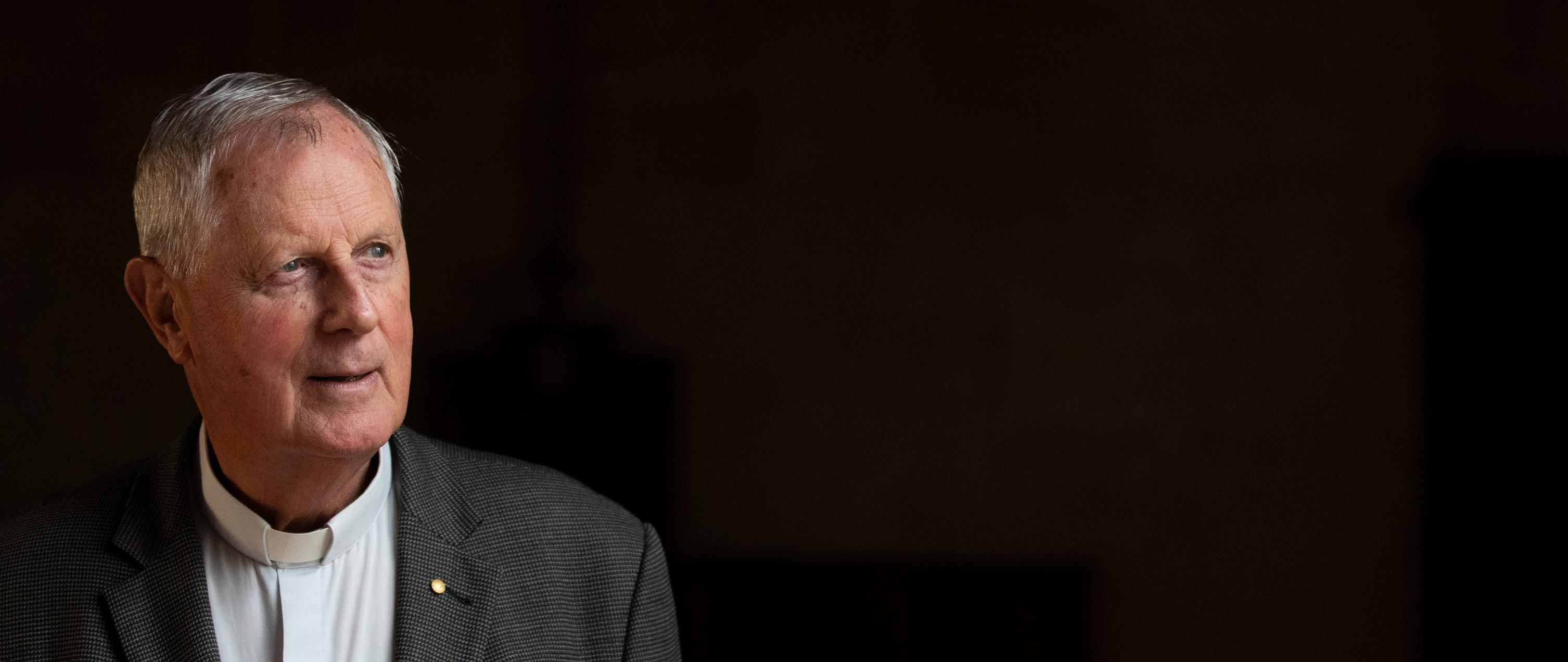
A TEST of CHARACTER – dealing with the pandemic.
The character of St Andrew's is at its best when, as St Paul observes, "our deep desire and hope is that we shall never fail in our duty, but that at all times and especially right now, we shall be full of courage" (Philippians 1: 20 TEV) and then this gentle reminder, "help carry one another's burdens" (Galatians 6: 2 TEV)
For CHRIST, the COLLEGE and EACH OTHER.
Rev Dr Gareth Clayton OAM, Chaplain
From the Chair & Bird
From our Student Leaders
Education & Student Life Update
Semester 2 has been action packed; our Chair & Bird discuss the College’s progress.
A number of new Capital Works Projects are being planned to upgrade the facilties at the College.
The second iteration of the CDPS Course took place during the winter break.
We share two stories from our community: a special anniversary and a welcome you could not forget!
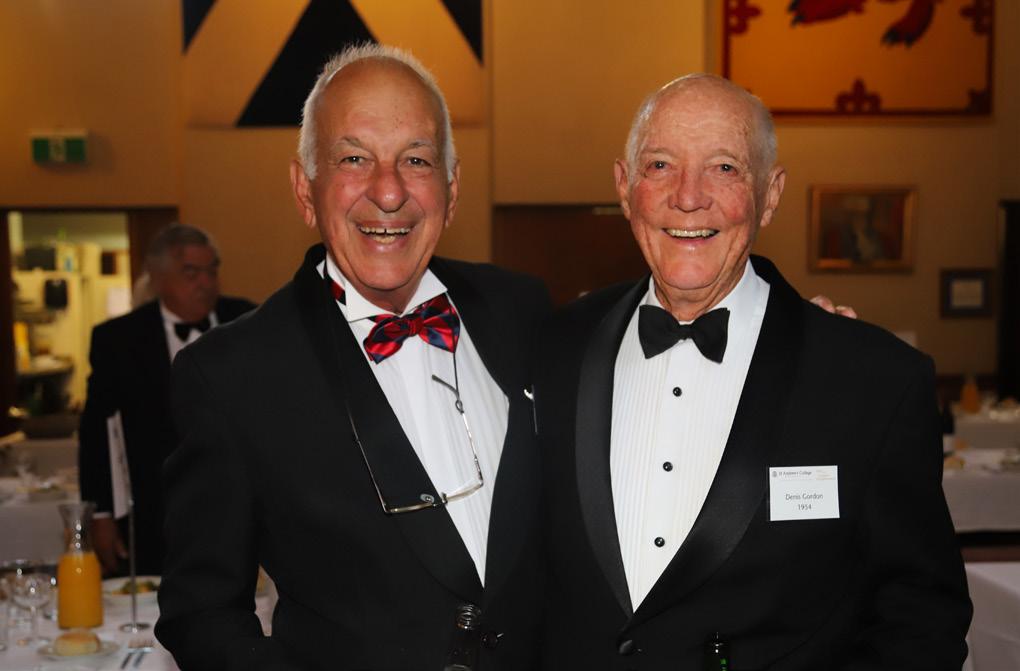
We catch up with two of our alumni Iona Main and Denis Gordon.
Harper Master Plan Update
Farewell to Chair of Council, Charlie Taylor
Celebrating 20 Years of Women in 2022
Ongoing Cultural Change at St Andrew's
Reconciliation Action Plan
DramSoc Report
Certificate of Cross-Disciplinary Problem Solving
Pre-Tertiary Mentoring Program
Drew's News: An Ode to the Roar of the Crowd
Creative Arts Program
Palladian Report
Rawson & Rosebowl Reports
Winter Olympian: James Matheson
From the Archives
Where are they now?
Community Events
Philanthropy Update
Re-Introducing the Jill Dougan Archives
From the Society Awards, Achievements & Obituaries
Blue & White is published twice a year by the College Advancement and Marketing teams for the St Andrew’s College community. We wish to thank all of our student photographers for their contributions.
Editorial
Hannah Atwell
Pauline Tulloch
Andrea Mavros
Matthew Duchesne
Neon Fan (Fr 2020)
Zoe Kemp (Fr 2020)
Nick Reynolds (Fr 2021)
Charlie Stuart (Fr 2020)
Euro Ruangvanish (Fr 2019)
After such a promising start to Semester 1 when our students were able to participate in a wealth of collegial events, we were again faced with a lockdown situation in late June. This time, however, we were able to keep College open, albeit through a COVID-safe ‘lens’. The College’s multilayered approach to COVID-19 planning based on risk, NSW Government advice and case numbers worked extremely well to allow us to provide education, leadership and personal development opportunities throughout the period.
The Certificate of Cross-Disciplinary Problem Solving is designed to help students become better thinkers in realworld situations, and this was highlighted very effectively by the three-phase ‘road map’ out of lockdown developed by students during the winter course and subsequently adopted by Council. The plan provided different levels of opportunity for students to enjoy College life safely through the different phases of lockdown. Read more about this and other Education & Student Life initiatives on pages 7, 16 and 18.
None of these opportunities would have been possible without the dedication of our College community. We would like to thank all of our staff who worked so diligently throughout this period to provide essential services to our students and keep everyone in our community safe. We would particularly like to thank those front-line operational staff who moved onsite and lived in College to ensure continuity of service. A huge thanks also to Vice Principal,
Dr Hester Wilson; Director of Operations, Ian Smith; the Student Executive; House Committee; and all the Pastoral Care Leaders for their leadership of College’s COVID-19 response.
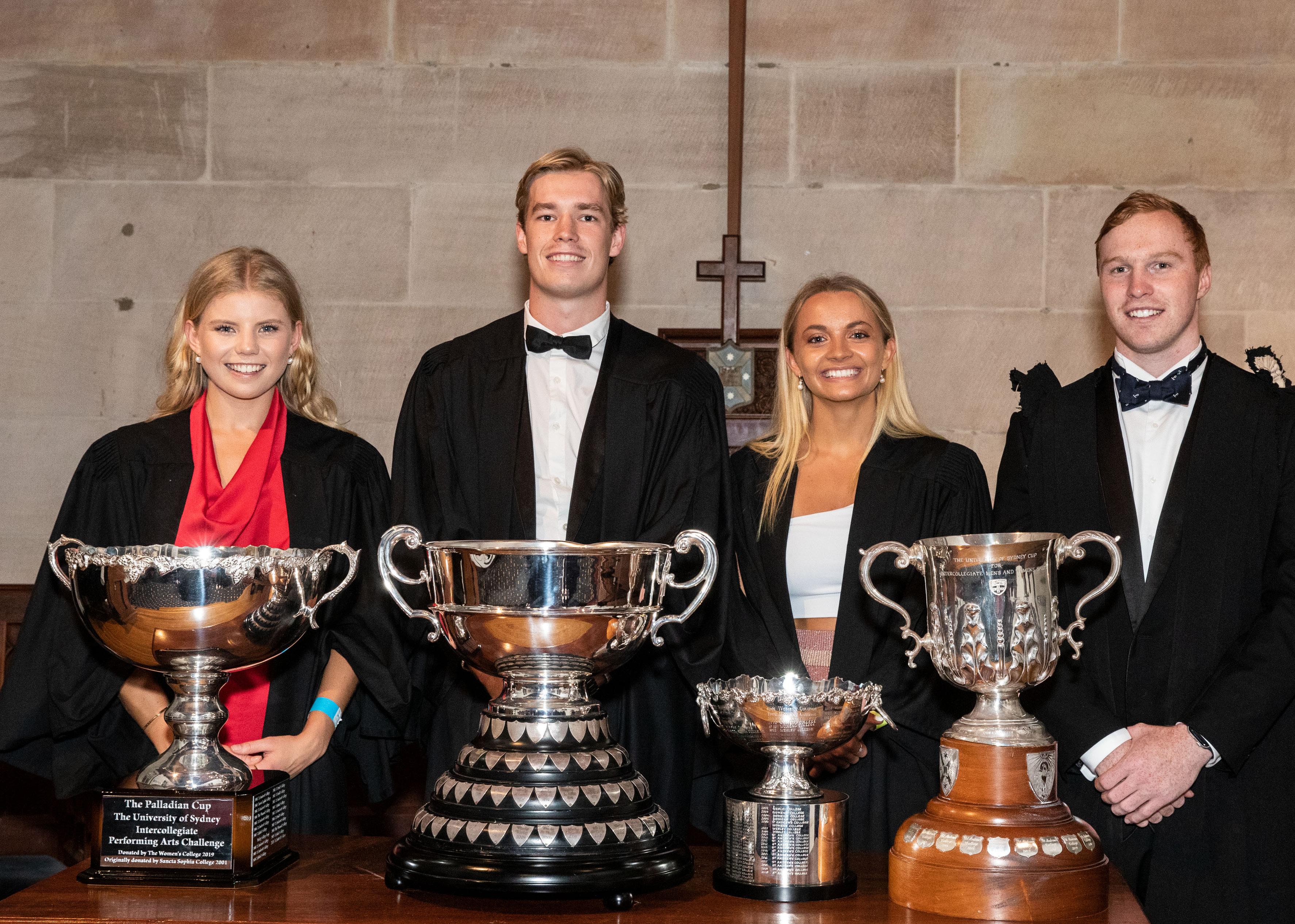
Thankfully, in the latter half of Semester 2, we were able to enjoy a plethora of Rawson, Rosebowl, Palladian and social events in a five-week period. As a result of this dedication and effort, all four Intercol cups are back in St Andrew’s College for another year! While the events took place with modifications, there was no limit on the athletic skills and creative talents on display. We are grateful to Sydney University Sport & Fitness and the University Student Union Programs Team for their excellent organisation and keeping us all COVID safe during the events. See pages 23 and 24 for more details.
We are even more pleased than usual to bring you updates on the College’s highly successful DramSoc production on page 15, as well as the Creative Arts Program and details of our Lockdown Art Project on page 22.
We look forward to a year-long program of activities to celebrate 20 years of undergraduate women in College and mark our progress as a community during 2022. See page 12 for more details.
While our calendar of alumni events was also curtailed, those events which did take place were even more meaningful. We
had a record turnout for the SACAS Annual Golf Day – and our first ever Virtual Founders & Benefactors Event (which was a gin and whisky tasting) was a resounding success. From page 26 you can read about recent alumni profiles, events and achievements.
This year has seen an incredible level of support from our community with more than $1.1 million raised in new gifts and pledges, and more than $110,000 raised for meanstested scholarships as part of our Annual Giving Appeal. We thank everyone for their extremely generous support. Read more on page 36.
We hope to welcome you all back to campus again during 2022 and wish you a safe and healthy festive break in the meantime.
A personal note from the Chair
Earlier this year, we announced that our Principal will be retiring in March 2023. The process of recruitment for his replacement is almost complete and College will be announcing his successor soon.
I would like to take this opportunity to announce my sincere thanks to Wayne for his exceptional stewardship of College since 2008. This includes some quite exceptional times which we could never have foreseen, but through which we emerged stronger and more resilient. I have enjoyed immensely working with Wayne and wish him a welldeserved long and happy retirement after what I’m sure will be another successful year.
I would also like to wish all the best to the new Chair of Council, Sasha Kovic (Fr 2005). Sasha been an exceptional Councillor for the past six years, and it is most fitting that we have, for the first time, a female Chair as we enter into our celebrations of 20 Years of Undergraduate Women in 2022.
I am excited that with our new building, a growing scholarships program and exceptional education programs we can offer an enhanced St Andrew’s College experience for a further 90 residential students and 60 non-residential students, including many talented students who could not attend without bursary assistance. If only we could find a way to provide an Andrew’s community like experience to the many university undergraduates who want it. My hope is that St Andrew’s can work with the other colleges and the universities in Sydney to substantially increase access to a
college community experience, potentially utilising under used university accommodation.
The demand for places in our beloved College is stronger than ever, and I leave confident in the knowledge that we will continue to uphold our great traditions while also embracing all the new and exciting opportunities for our students and our community.
Charlie Taylor (Fr 1982, SS 1985) Chair of Council, 2014 - 2022
A personal note from the Bird
A hearty ‘well done’ to all the students who worked so hard to bring home all four Intercol Cups in 2021, once again. The fact that Intercollegiate Sport won the Vice Chancellor’s Participation Award last year demonstrates the importance of intercol activity as a stabilising centrepiece of our return to life after COVID.
My congratulations to Sasha Kovic (Fr 2005) on her new role as Chair of Council. I look forward to working with her to drive forward our plans for College for 2022 and beyond. I’m sure that our new Chair and all-female student executive will lead an exciting program of events and celebrations of 20 Years of Undergraduate Women next year – along with the many other developments we have in store.
Charlie Taylor finishes a hugely successful term as Chair of Council early next year. Over the last eight years, Charlie has been instrumental in leading Council and College through many changes, challenges and successes.
Charlie has contributed significantly to all areas of College life, from activating the Harper Master Plan, which enabled the greatest increase in student numbers in our history; to leading the way in raising funds for scholarships to facilitate a more diverse student body; raising the standard in academic achievements and overseeing major cultural change. His own personal philanthropic gifts will also leave their imprint on the fabric of the College and our students for many years to come. Please see pages 10 and 11 where you can read Charlie’s extensive achievements in more detail.
Wayne Erickson Principal
2021 certainly came with its challenges across the year, however the students did what they do best and embraced experiences as they came. Semester 1 was a success for the College in all areas through our cultural, sporting and academic pursuits. We would again like to congratulate all the teams and individuals that represented our College in Semester 1 that have truly made our community proud through your passion and contributions. Semester 1 set a high bar for Semester 2, proving even more challenges with the prolonged COVID-19 lockdown in Sydney, causing Palladian and sporting competitions to be modified.
Despite the lockdown restrictions, the College student body worked hard to ensure we experienced an element of ordinary life. With the success of the Certificate of CrossDisciplinary Problem Solving in August, we saw 25 students embark on the three week intensive course working with Charlie Taylor, Josh Dowse and barristers, lawyers, and philosophers to tackle some of the world’s problems. We would like to extend our thanks to the Director of Education & Student Life, Will Cesta, and his team for making this opportunity possible during a period of unpredictability. With this commencement of the semester, students embraced modified events including paint and sip events run fortnightly by Pastoral Care Leaders until restrictions allowed us to somewhat return to normal life again.
From 11 October, we saw the introduction of community sports and Palladian events along with many of the social events to make up for earlier in the semester. With a jampacked five weeks, we were able to experience a delayed Father’s Day Dinner, Formal and Valedictory, with many smaller social, sporting, cultural and charity events in between. As of 15 October, we saw the newly elected Executive and House Committee start to flourish in their positions in preparation of 2022. We are incredibly proud of the elected leadership team and have no doubt they will be able to confidently lead and tackle any challenges 2022 may throw at them.
With our final year drawing to a close, we are thankful to celebrate it in style over the last few weeks with our friends at College and it has been evident to us now that these friendships will last beyond our College years. We are grateful for the support of the broader St Andrew’s community during this unpredictable semester and want to extend our thanks to the parents, staff and students for making the St Andrew’s experience possible. We believe it shows the success of our College that there are countless thank yous and achievements to be able to fit in one short article. On that note, we want to express our gratitude to be able to lead such a talented, compassionate and ambitious group of students at St Andrew’s throughout 2021.
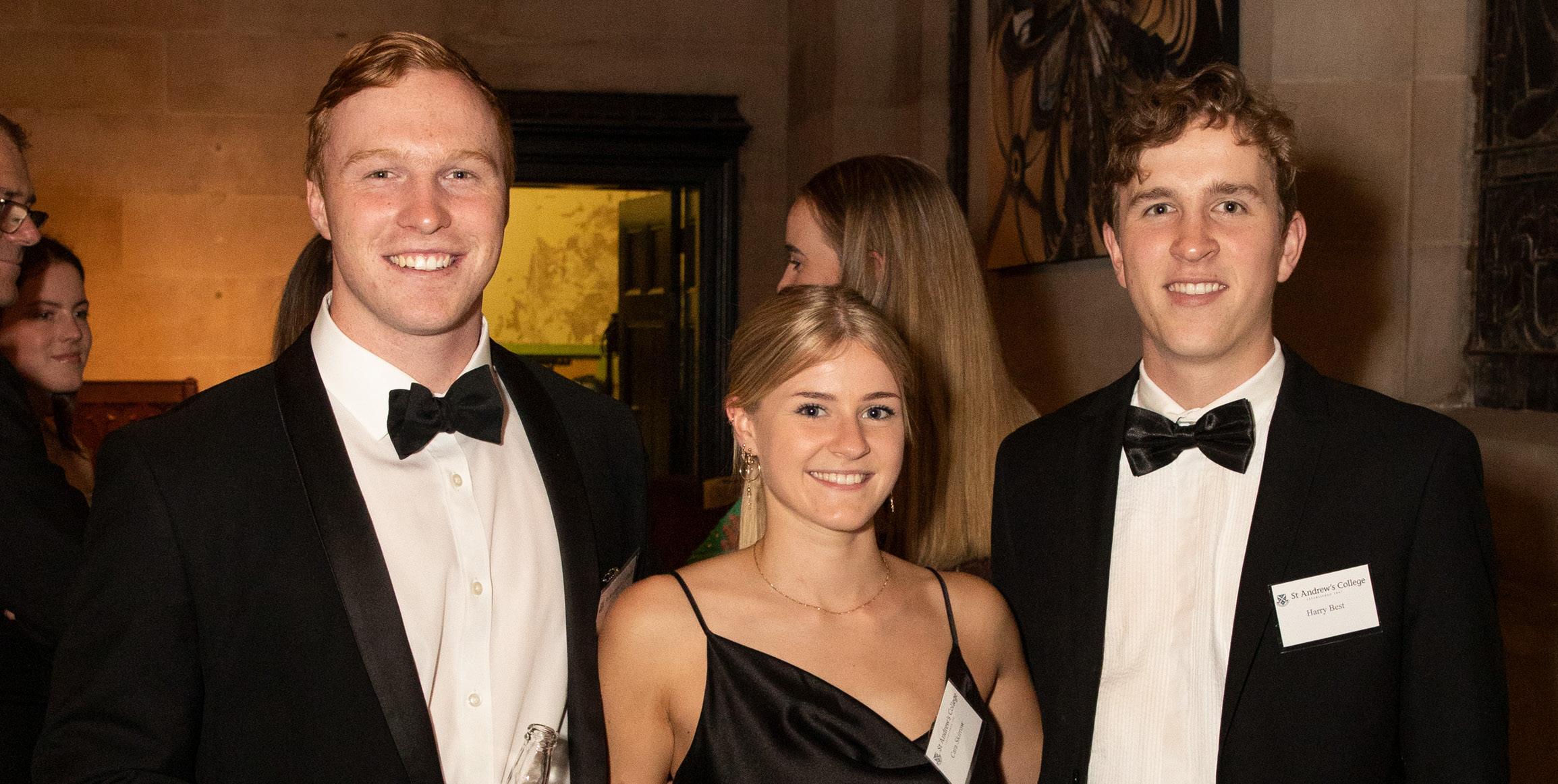
Digby Cooke Cara Skirrow Harry Best Senior Student Honorary Secretary Honorary Treasurer
In my last update, I paid tribute to Zoom and other online platforms that have offered a path to some semblance of normality over the last two years. Without them, we would have been hard-pressed to run leadership seminars, subject tutorials, rehearsals, jam sessions, and so on.
Given our community’s strong preference for in-person engagement, I expected my previous article to be a final ode to digital engagement; video calls would, I predicted, slip into the background of College life once more. I even contemplated titles for the present article ('Farewell Zoom' and 'In-Person Again' were on the shortlist). But that plan, like so many plans of Australia’s educational institutions, businesses, and individuals, was thwarted by the rapid spread of the Delta variant of COVID-19 earlier this year.
As the Delta variant swept across the state, Zoom re-emerged as our saviour once more, allowing tens of programs – some of which you will read about in the forthcoming pages – to proceed. Our students participated in online music rehearsals (which contributed to our win in the Palladian Cup), online gym classes run by Taylor Scholars, online tutorials, and even an expanded online Leadership Program. They also gave back to the wider community by mentoring students as part of our Pre-Tertiary Mentoring Program.
We then experienced the joys of transitioning steadily out of the Zoomiverse. We explored a hybrid model in which students gathered in a large space (on the basis that they were members of a whole-of-college 'bubble') while the
faces of external facilitators were projected on a screen. This hybrid format enabled students to feel the social energy of an in-person gathering while keeping the 'College bubble' intact. It was used with great effect in the Professional Development Program, providing an opportunity for industry leaders in medicine, finance, law, education and other professional disciplines to meet our students from the comfort of their own homes.
But there have also been programs, events and other experiences that have taken place Zoom-free. There were 25 students able to complete our Certificate of CrossDisciplinary Problem Solving (colloquially referred to as the 'lockdown bubble course', over the winter break in accordance with the education provisions of the Public Health Orders in operation at the time. You can also read about some of the events and Students’ Club initiatives that were squeezed into the final weeks of the semester. I am hopeful that students have found some time to study notwithstanding a very intense calendar of events, and that their stellar Semester 1 academic results (three marks shy of a distinction average across the College) will be replicated.
Finally, I would like to acknowledge the hard work of our staff and students, who did a remarkable job of being resourceful, buoying spirits, and ensuring that College life remained vibrant in Semester 2.
Will Cesta Director of Education & Student Life

Following the completion of the Thyne Reid Link Building in February 2020, the College Council has included a number of smaller projects into the 2021 – 2025 Strategy. These include closing out the Public Art Project, a façade upgrade to the Thyne Building, and the refurbishment of Gillespie Hall and the remaining student bedrooms located in Main Building.
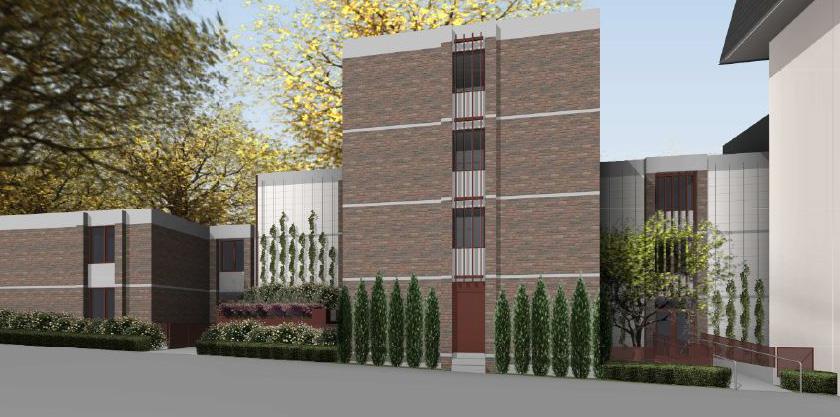
The long-standing ambition to provide a facelift to the Baileyfacing façade of Thyne has achieved DA approval. Whilst heritage restrictions do not allow the fabric of the building to be amended, this project will incorporate landscaping elements to soften the harshness of the brutalist 1960s architecture. This project will take place over this coming summer break.
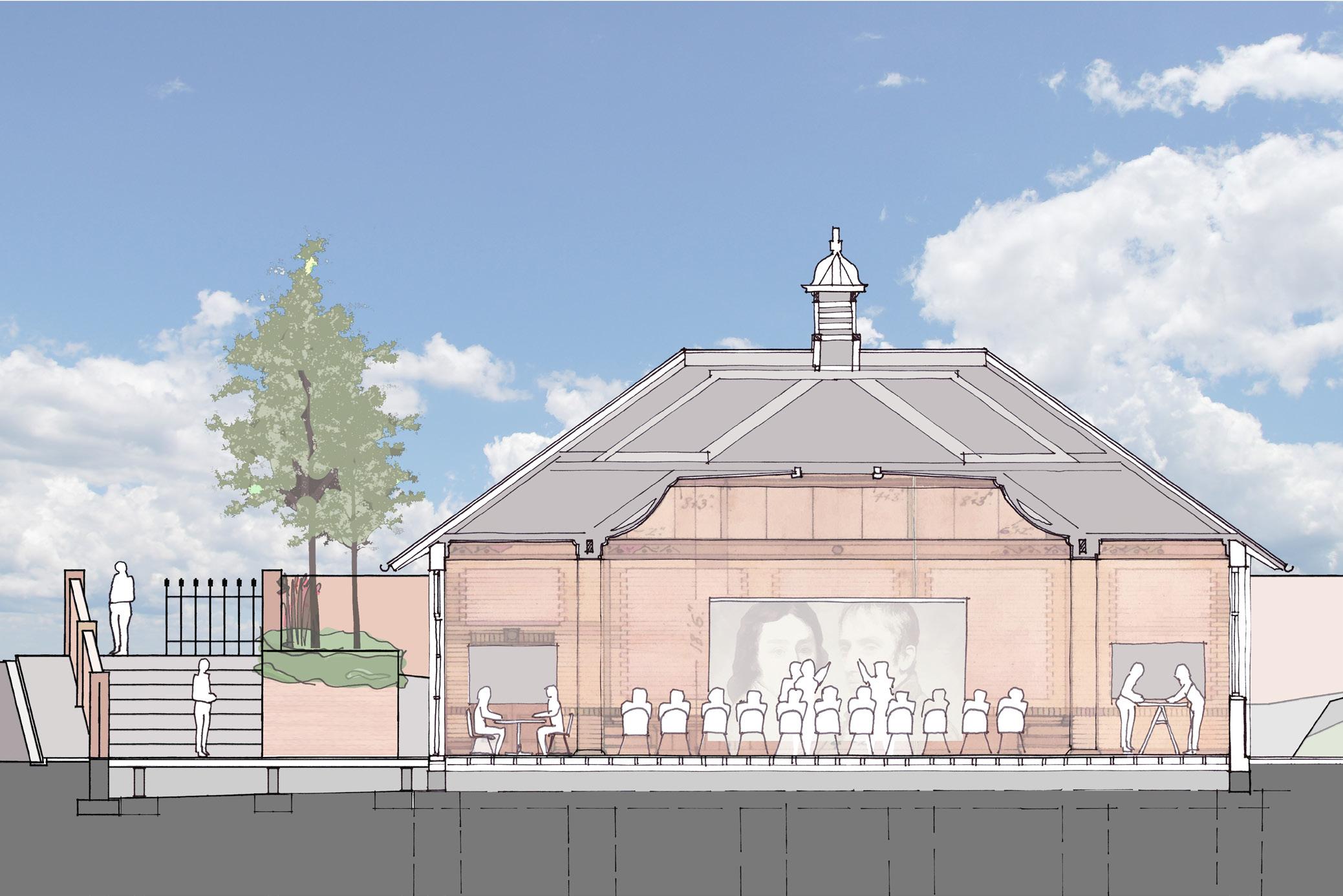
Planning ahead for the introduction of the future School of Humanities and Social Sciences and the growing need for more teaching and learning spaces on campus, the Major Works Committee have selected a concept design prepared by Architects AJ+C to revitalise the interiors of the underutilised Gillespie Hall located on the corner of Western Ave and Cadigal Lane. This work will remove a section of wall to finally activate and formalise the University-facing address of the College campus. These multi-purpose facilities will include teaching and learning space, audio visual technology, breakout spaces for students and a new kitchen and bathrooms.
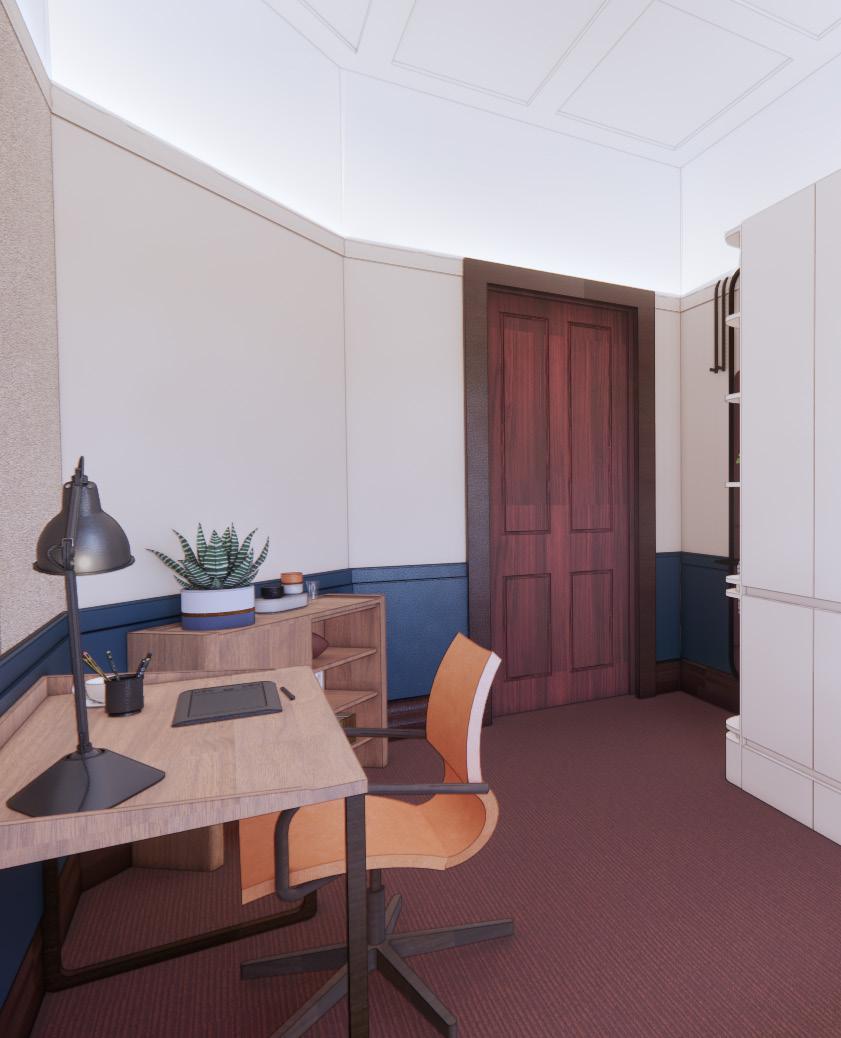
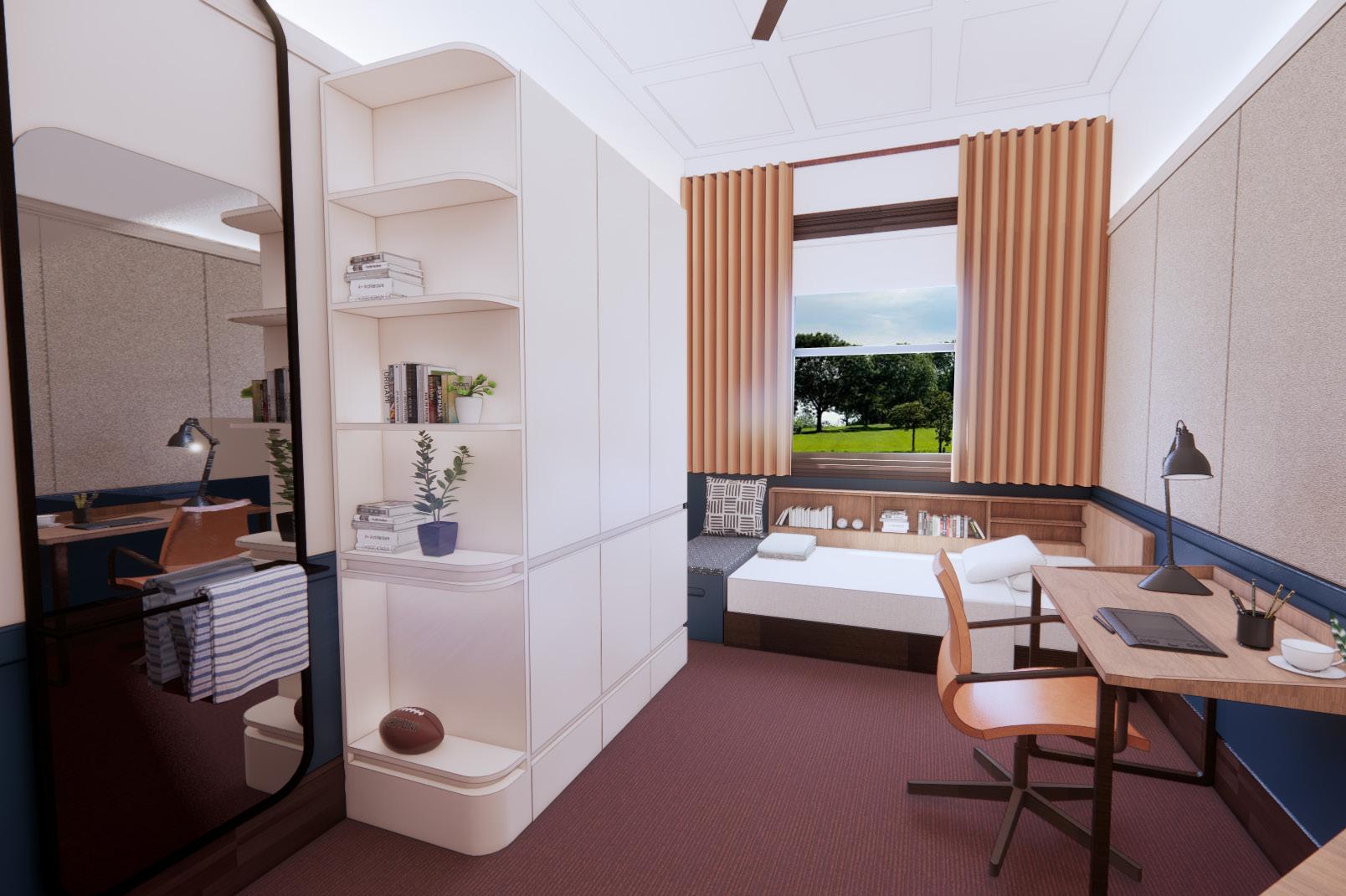
The College is excited to have commenced planning the refurbishment of the remaining 30% of bedrooms yet to be refreshed over a six year period. The heritage bedrooms within Main Building will be revitalised with a concept design (see image right) that allows students to enjoy modern amenity in a respectful tribute to the vision of our founding fathers.
This final element of the TRL Project has been impacted by the COVID pandemic, with a revised opening date of March 2022 now anticipated. As described in the previous issue of Blue & White, artists Michael Snape and Agatha GotheSnape have collaborated with landscape architects FJMT to produce a thought-provoking sculptural element nestled within a reflective garden aspect. Having now received DA approval, this launch will pleasingly coincide with the College’s 20 years of undergratuate women celebrations in 2022.
If you have any questions or are interested in supporting any of these upcoming projects, please get in touch with the College. We look forward to keeping you updated as they each progress.
Ian Smith Director of Operations
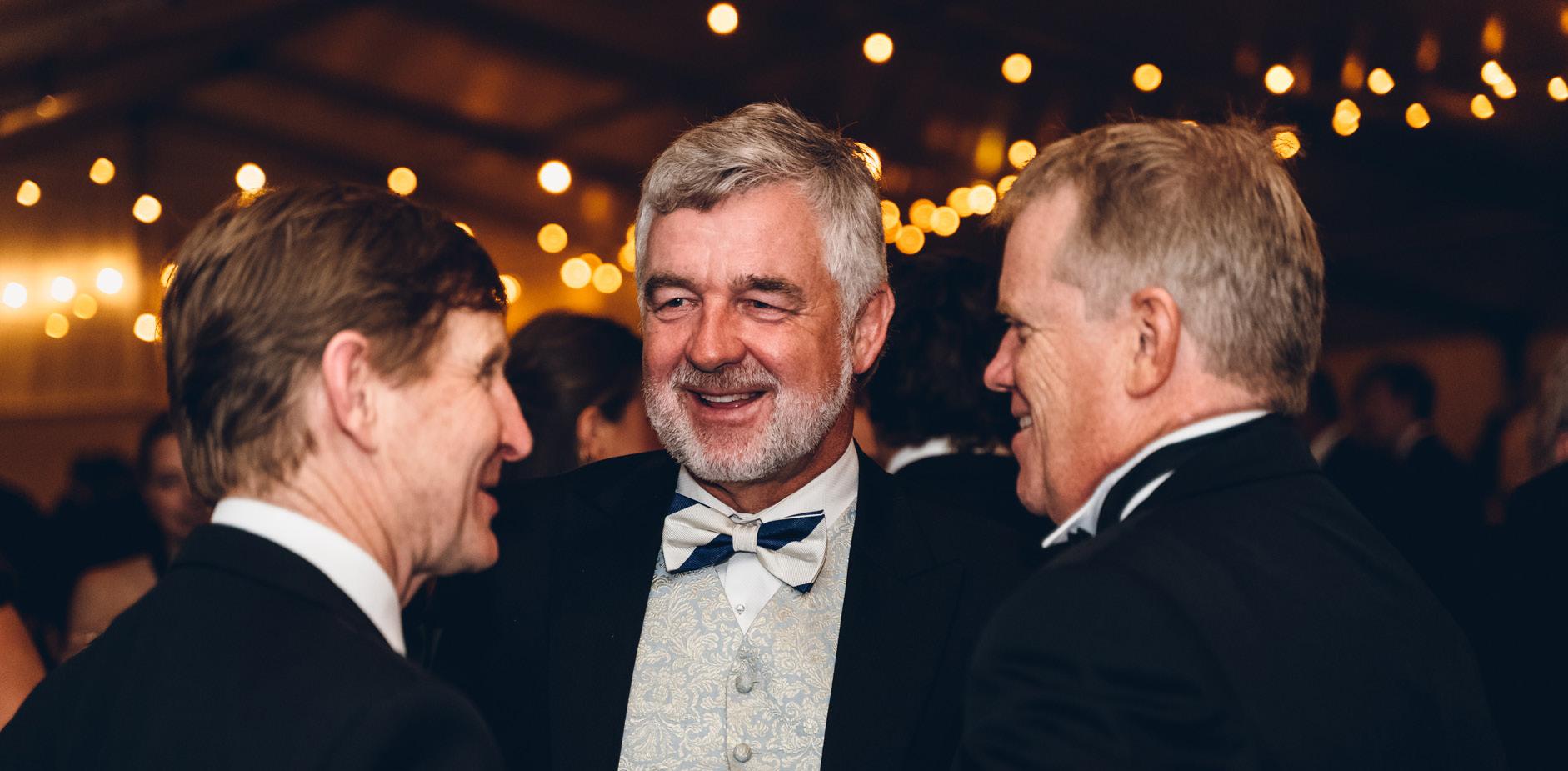
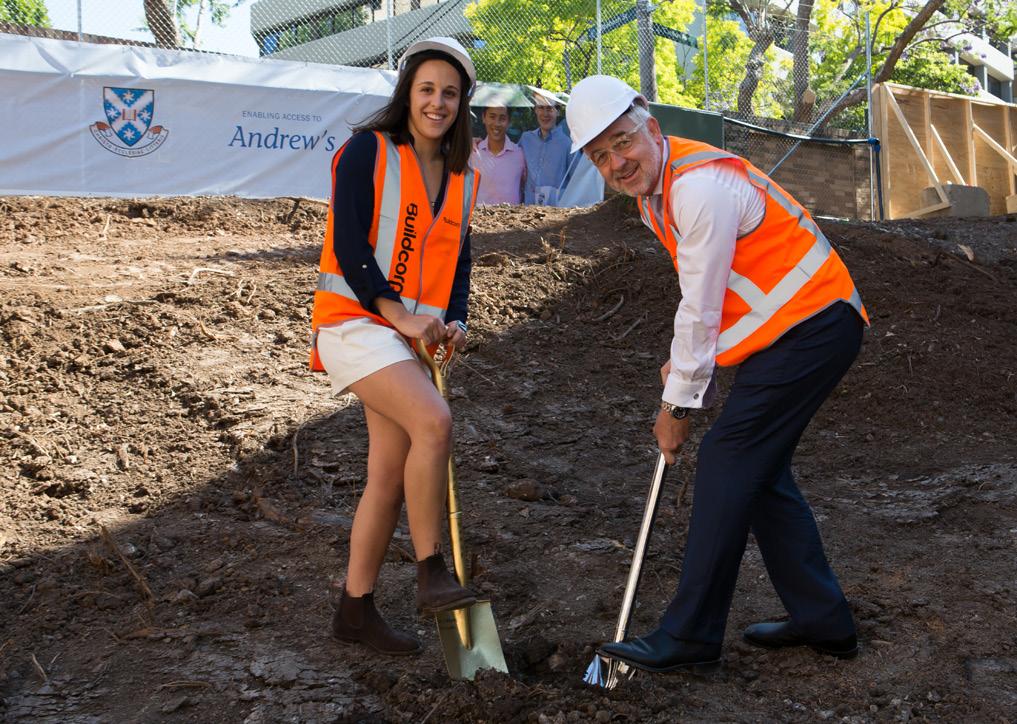
After eight years as Chair, and nine years as a Councillor, Charlie Taylor will step down from Council in February 2022. Charlie leaves behind a huge legacy in the long and noble tradition that has gone before him. During a period of enormous change – through cultural renewal, a pandemic, the heightened expectation of academic success, and the frustrations of our inability to meet demand for student places – Charlie has led the Council in challenging assumptions and orthodoxies, and steered the College to its pre-eminent position in the sector.
Charlie came to College as a Fresher in 1982 as a recipient of a Middle Scholarship and quickly became involved in a wide range of activities. He was the first year representative on the Students’ Club House Committee and represented St Andrew’s in Rawson Rugby, Tennis, Basketball and Swimming. In his second year, he was the Secretary of the magazine subcommittee and edited the College magazine with JJ Dowse. He also acted in the DramSoc production of ‘Night Must Fall’ and was on the Tennis subcommittee. In 1985 he was elected to the position of Senior Student and also was awarded an Andrew’s Scholarship. He became President of the Students’ Club in 1986, and also served as Vice President in 1987, his final year when he graduated LLB (Hons) and BEc (Hons).
During his tenure as Chair of Council, which began in 2014, Charlie activated the Harper Master Plan and helped to drive
the Major Works Committee to deliver the refurbishment of all bedrooms in Thyne and Reid Buildings, a major kitchen renovation and the new Thyne Reid Link Building which added 85 new bedrooms, three new tutorial rooms, four new music rooms, a large common room, kitchenette, laundry and state-of-the-art gym to the campus. Subsequently we have enjoyed the largest increase in residential numbers in College history. Currently in development are the Thyne façade upgrade, the Gillespie Hall renovation and the Main Building bedroom refurbishment plan.
As Chair of Council and Deputy Chair of the Foundation, Charlie has been a key figure in the engagement of the alumni and friends community, and in raising the vital funds for the Campaign to Enable Access to Andrew’s via more scholarships and more bedrooms, the current focus of our Philanthropy Program. He has closely supported the Advancement team, providing them with strategic ideas and insights and acting as a sounding board, and has played a key role in stewarding our donors and supporters both on a personal level and from a Council perspective. All of which has led to the growth of the Advancement Program at St Andrew’s College to where it is today.
Philanthropy has always been close to Charlie’s heart and he has led the way with his own philanthropic endeavours which include:
• Funding of the Taylor Scholarships program. This flagship
initiative has now been running for six years and has supported more than 60 student projects to improve the lives of College residents and the wider community. All the projects are proposed by students, who are then supported to bring their ideas to fruition over the course of an academic year. Examples include 86 students taking part in a charity run to raise more than $13,000 for the Children’s Cancer Institute; a Walkleyaward winning investigative journalist speaking to the students about the patterns and hallmarks of domestic violence; and ‘fortnightly fortnight’, a student-led mental health initiative which was so successful it has now become embedded into the College’s curriculum.
• Providing the principal gift for the Charlie Taylor Gym in the Thyne Reid Link Building – an exceptional facility fully equipped with weights, cardio and circuit areas –and one of the most popular student areas in College!
• Leading the ‘Senior Students’ Corridor Appeal’ – which raised more than $600,000 for new bedrooms on the top floor of the Reid building as part of the Thyne Reid Link Development.
• Growing the total amount of bursaries and scholarship support from $482,000 to $2 million per annum, in a range of academic, creative and means-tested awards.
• He has also become a member of the 1867 Circle and is a Patron level member of the St Andrew’s College Foundation.
Charlie has driven Council’s embrace of a renewed role for College in offering academic courses and the implementation of a minimum academic attainment for all residents. He personally led the faculty delivering the successful Certificate of Cross-Disciplinary Problem Solving, offering many critical thinking and networking opportunities for high-achieving students. Under Charlie’s stewardship, Council approved a new Pre-Tertiary Mentoring Program which connects high school students, those in rural and regional areas in particular, with current St Andrew’s College students. Additionally, College’s new free, online HSC Exam Preparation Workshops were delivered to more than 550 school pupils in 2021.
The College has actively sought to enact cultural change through Council, staff and student leaders for many years, particularly since the decision to introduce undergraduate women was made in 2001. In recent years, Cultural Reform was added as a permanent addition to the Council’s agenda, and $150,000 per annum was added to the College Life Budget
to ensure sufficient funding to implement recommendations. Cultural renewal remains a priority for Council into the future. Council’s collaborative approach to working alongside the Students’ Club has created an outstanding student experience, and an exceptional opportunity for students to develop their leadership skills and manage a vast array of responsibilities. The benefit of this collaborative approach was brought into stark relief when College faced the unprecedented challenges of the COVID-19 pandemic in 2020 and 2021. With Council, staff and students working together, we rose masterfully to the challenges and emerged stronger than ever. Our community remains firmly intact and our traditions, events and heritage more valued than ever.
From a Principal’s perspective, I could not have hoped for a more supportive relationship with a Chair; Charlie was always highly-attuned to the strength of complementarity in this leadership relationship, and our time together has been the most rewarding in my professional career.
Charlie was at the helm in our sesquicentenary year in 2017 as we celebrated 150 years with a series of high profile events, lectures and communications. Now, as Charlie passes the baton over to Sasha Kovic, and we celebrate 20 years of undergraduate women in College in 2022, he leaves St Andrew’s in an excellent position to face the future with vigour and optimism.
Please join with me in raising a metaphorical glass of the best Scotch to toast Charlie, thank him for his sterling years of service to St Andrew’s College and wish him good health.
Wayne Erickson Principal
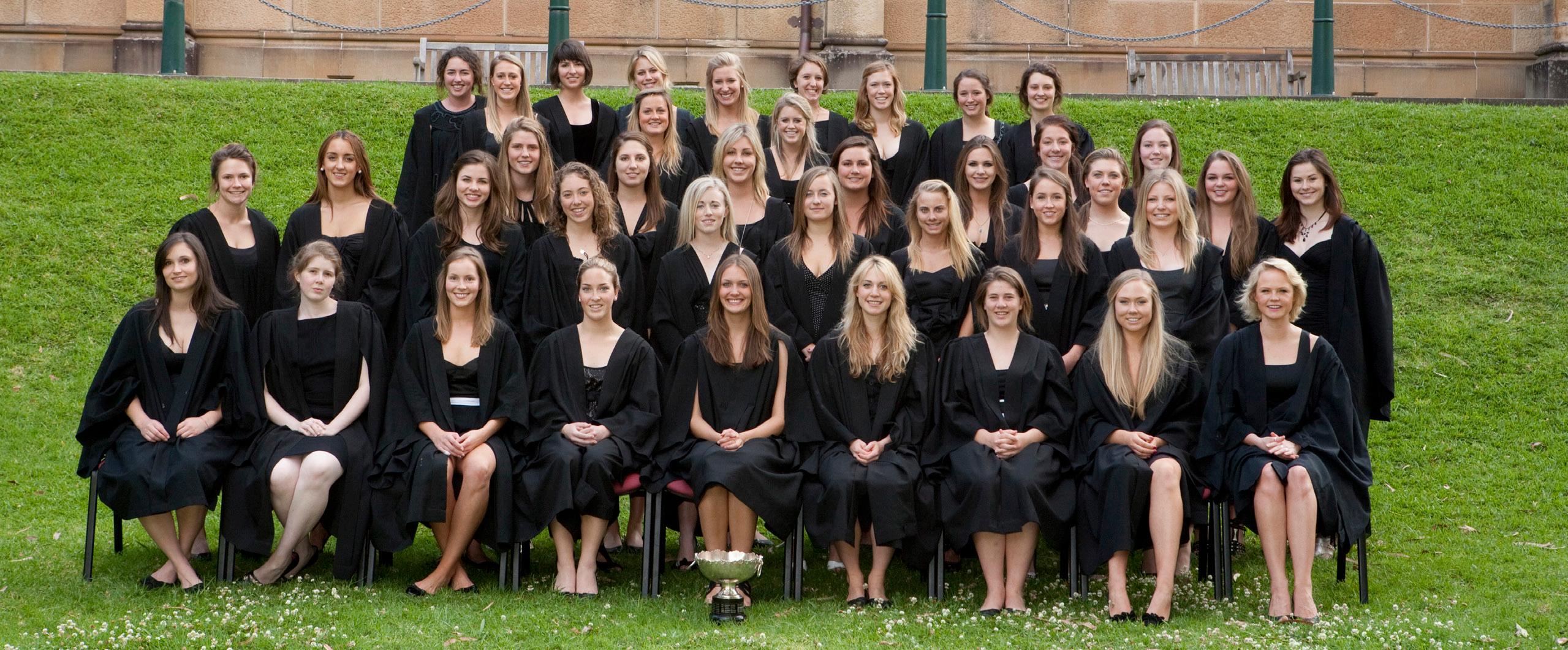
Women have always been a part of St Andrew’s College. In the past, this was as staff members, wives, family, mothers, friends and donors. Some postgraduate women entered College and in 1999, the Act of Parliament that underlies the establishment of College was updated and confirmed. In 2002, the first undergraduate women entered College as full undergraduate residential members and began a time of great change in College. It may seem hard to imagine how monumental this change was for many College members and friends.
St Andrew’s has been enriched by embracing this diversity and now it is difficult to imagine a College without all genders today. As a College member since 2003, I have seen firsthand how the inclusion of women at St Andrew's has shaped and irrevocably changed the fabric of the College, building on its already extraordinary history to create a place that is inclusive, equitable and forward looking.
The equal participation of women in all aspects of College has led to long standing and repeated excellence in sport and creative arts. Women have also contributed to excellent academic results, and have been, and continue to be, fine leaders within our community. In 2022, we see a fully female student executive for Students’ Club for the second time and welcome our first female Chair of College Council.
Next year, the College intends to celebrate and mark the milestone of 20 years of undergraduate women in College. A Steering Committee has been formed to plan a schedule of activities and events to acknowledge our progress as a community. There will be a formal launch of celebrations in late March and many of our existing programs and events
will also take on the theme for the year and reflect the focus on 20 years of undergraduate women. We have begun conducting profile interviews with our female alumnae, as well as collecting relevant historical and archival materials from the past 20 years, and will be sharing these throughout the year on our various digital platforms as well as in this publication.
We are also pleased to announce a new means-tested scholarship that will allow a young woman in 2022 the opportunity to realise her full potential at university and College. The Council has agreed to fund the scholarship for its first year in 2022, and our goal is to raise $250,000 in philanthropic gifts in order to endow it for the future. Once endowed, the value of the scholarship awarded will be $12,500 per year. It will be a means-tested scholarship, whereby the recipient will have demonstrated leadership ability and/or potential and have capacity to contribute to the College in a positive way, and for whom being at College will have a positive impact on them as well.
We understand that there may be some alumnae who may not have enjoyed their time in College and we seek to give them the opportunity to share this with us, in the hope that we can continue to improve our community. We also know that many of our College community will want to celebrate, that many will want to return to College, and you will be warmly welcomed at the many different activities planned throughout the year. We look forward to celebrating this important milestone in 2022 with you.
Dr Hester Wilson Vice Principal
It is my great pleasure to share some of the work St Andrew’s College staff and students have been doing to understand and refine our culture. 'Cultural reflection' and 'cultural change' have been on the Andrew’s agenda for quite some time and critically examining and refining culture is no longer something we do periodically, but something we proactively do on an ongoing basis.
Our mission is simple in theory: we want to preserve the cultural richness and traditions that make the college experience so memorable and life-changing for students, while ensuring that everything that takes place within our walls is in alignment with contemporary community standards and values.
Across the tertiary sector, there have been different views expressed on how such alignment should be achieved. Some institutions restrict university-aged students and revoke some of the adult privileges that attach to being 18, in a bid to mitigate risk. For example, some organisations operate with the view that dry colleges and curfews are the best ways of regulating culture.
The philosophy at St Andrew’s College offers a different view. Our students are not boarding school students. We believe that it is the College’s responsibility to facilitate opportunities for young, often impressionable high school leavers to reflect on and challenge – not tacitly assimilate – negative cultures. This could be framed as 'preparing the student for the road, not the road for the student’.
Our approach has two core elements. First, we work collaboratively with students to define our cultural goals and design programs with the potential to achieve these goals. And second, we engage relatable people – including trained students – to run our programs. The power of peerled training should not, in our experience, be underestimated!
In Semester 2, the Education & Student Life team launched an initiative that was co-designed with the student leaders and expanded our existing Leadership Program by adding 'cultural competency modules' to it. One new session entailed trained student leaders running workshops for their peers on challenging scenarios that might arise in College. Another involved getting a youth organisation called 'Elephant Ed' to run small-group, interactive workshops on the consent reforms being rolled out in NSW. We also heard from Jess Hill (author and presenter of the SBS series, Look What You Made Me Do), on gendered violence, and Ashley Gurney on excessive drinking.
What all of our sessions have in common is what they are not: box-ticking exercises. We hope that each program this year provoked reflection and, in many cases, changed hearts and minds.
Will Cesta Director of Education & Student Life
We acknowledge the traditional owners of the land on which St Andrew’s College stands, the Gadigal people of the Eora Nation, and pay our respects to elders past and present who have exchanged knowledge for the benefit of all. We also pay our respects to all Aboriginal peoples and acknowledge their enduring connection to land, air and waters.
St Andrew’s College sits on the traditional lands of the Gadigal people of the Eora Nation. The grounds of the College site have been a ‘sit down place’ for local Aboriginal people for millennia – a place of meeting, of cultural exchange and learning. In developing St Andrew’s College’s inaugural Reconciliation Action Plan (RAP), we seek to understand and reflect on our current practices and programs in order to be able to provide a culturally safe and inclusive experience for all our Aboriginal and Torres Strait Islander College members: staff, students, and alumni.
We want to stand witness to the wrongs of the past and provide a place for people to share their knowledge and advance the tenets of reconciliation. The College Council’s current five-year strategy includes a clear objective to focus on increasing the number of Aboriginal and Torres Strait Islander students attending College and then to assist them to achieve their academic goals. There is also a wish to ensure our College community can work together to build an annual program of culturally appropriate events that is both inward and outward looking, to acknowledge the past, present, and future lived experiences of Aboriginal and Torres Strait Islander peoples. We want to understand and embrace the diversity and learnings they bring to all in College.
In order to undertake our RAP, the College has formed a RAP working group of staff, students and alumni with strong Aboriginal and Torres Strait Islander representation. This group will lead the reflection phase of our RAP to ensure culturally sensitive and appropriate changes can occur that embed and reflect the needs of our indigenous community. Moving forward, in 2022 the College plans to acknowledge and run events for Sorry Day, Reconciliation Action Week and NAIDOC week; and work to ensure that other College events are culturally sensitive and incorporate indigenous culture wherever relevant and possible.
The support structures needed will also be identified and built to allow each of our Aboriginal and Torres Strait Islander members to know and feel that College is a safe and

inclusive space for them and for all our community. We will seek to involve all members of our community in knowledge sharing and understanding throughout this ongoing process. If you would like more information and/ or to be involved in the College's RAP, please contact the College via: principalassist@standrewscollege.edu.au / T: 02 9565 7300.
Dr Hester Wilson Vice Principal
The above painting of a goanna is by Alan Madden, storyteller and Gadigal Elder and the artist, Darren Cooper. It was commissioned by St Andrew's College, and currently hangs in the Principal's office. The text reads:
“Long ago in the dream time a giant gan came over the blue mountains to make hes home where Sydney harbour, when the heads was a wall. The giant gan scratched out all the river and bays you see today before he broke the wall where the sea rushed in and filled all the harbour bays and rivers!"
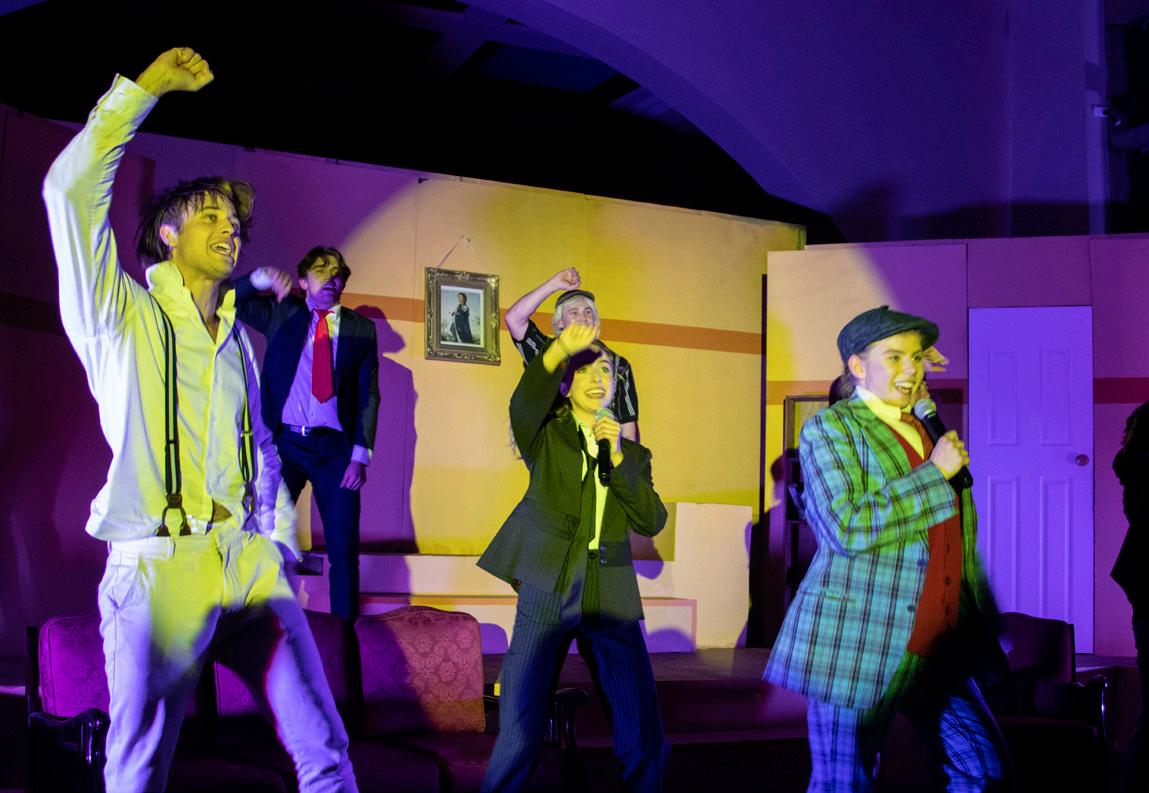
This year, the St Andrew’s College Dramatic Society (DramSoc) performed Richard Bean’s award-winning comedy, One Man, Two Guvnors, which is an adaptation of Carlo Goldoni’s 1746 comedy, The Servant of Two Masters, and was first performed at the National Theatre in London in 2011. Set in 1960s Brighton, the play is a witty slapstick comedy which enabled every cast member to explore their inner misfit.
So you might ask, how exactly does one man manage to serve two Guvnors? There’s no doubt that Alice Litchfield and the cast of this year's production did an incredible job portraying the variety of the challenges of working for two bosses (getting ironing done, sorting out their mail, organising dinner, making sure they never meet each other) whilst captivating the audience.
The play was directed by Sam Reckling (Fr 2020) and the cast consisted of lead Alice Litchfield (Fr 2019) along with Charlotte McDonald (Fr 2021), Jeremy Elliot (Fr 2020), Sam Reckling, Ben Emmett (Fr 2021), Annabelle Richens (Fr 2021), Onyinye Nwamadi (Fr 2020), Patrick Flannery (Fr 2020), Amelia Warbuton (Fr 2021), Oscar Cheal (Fr 2020), Charlie Stuart (Fr 2020) and Rob Abadee (Fr 2020).
A special mention must go out to Oscar Cheal, Deuchar Dight (Fr 2019) and the entire stage construction team who spent countless hours constructing DramSoc’s largest stage ever.
I would also like to give a big thanks to the members of the alumni community for their generous donations towards costume and construction costs.
Rehearsing during Sydney’s toughest lockdown, the journey began over Zoom and involved a steamy practice under the sun on St Andrew’s Oval to keep things in line with the COVID-19 restrictions in place at the time. The curtains lifted just seven weeks later and the three evening performances were celebrated in true theatre style; with the audience dusting off their tuxedos and tiaras. Right from the get-go the cast put in long hours and should be extremely proud of the calibre of their performance. Their commitment was clear and their talent unquestionable.
Sam Reckling (Fr 2020)
DramSoc Director 2021


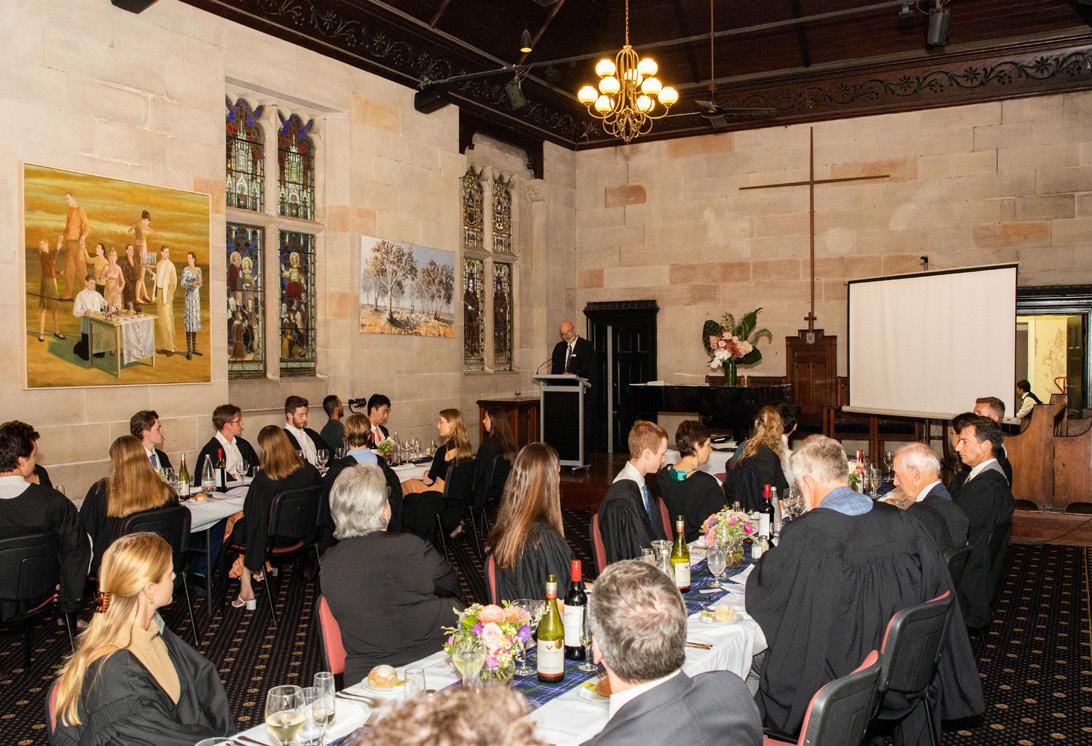
Late last year, St Andrew’s College decided to run its first formal educational program – as distinct from shortform offerings like subject tutorials – in 50 years. Our new Certificate of Cross-Disciplinary Problem Solving promised to be a contemporary re-imagination of the rich educational experiences offered by the College’s School of Theology until the 1970s. The course was envisaged as a zero-compromise, four-week intensive that included small group tutorials (1:6) and only engaged Australia’s finest professors and industry leaders to teach. It would teach philosophy, politics and economics ('PPE') on the one hand, and professional skills (especially problem-solving) on the other, challenging the idea that studying the humanities and preparing for professional life are mutually exclusive endeavours. To our delight, this vision came to fruition in the summer of 2021, and our 25 inaugural students enjoyed their experience very much. After the success of our pilot, we began planning our second iteration of the course, convinced that 'doing a repeat' during the winter break would be a piece of cake.
By April, we had mapped out our plans for the sequel. Contributors to our first course – including Council members Charlie Taylor (Fr 1982), Sasha Kovic (Fr 2005), Ian Jackman SC (Fr 1981), Josh Dowse (Fr 1982) and friend of the College, Robert McLean – agreed to be involved again, while some new contributors jumped on board. Current parent and barrister, Louise Clegg, agreed to run a scintillating course on freedom, democracy and society, while two of the University of Sydney’s finest academics, Dr Jason Chin (Faculty of Law) and Dr Sebastian Sequoiah-Grayson (Faculty of Arts & Social Sciences), agreed to run interdisciplinary modules on how psychology research can be harnessed to address cognitive bias in judicial decision-making, and how ethical problemsolving frameworks can be brought to bear on real-world problems. Current parent, Libby Davidson (General Counsel and Sustainability Director at Lion) also joined the faculty, agreeing to speak on one of the most fascinating political and economic challenges – and opportunities – of our time: sustainability. Young alumni Xavier Eales (Barrenjoey) and Sean Stuart (Aurora Funds) also put up their hands to do some teaching. What could go wrong?
As usual, the pandemic found a way to intervene and complicate matters. After much discussion, it was decided that we should ensure that the pandemic would not adversely affect educational opportunities of our students; and if we could run the course safely and within the bounds
of the public health orders, we should proceed. Our next question was whether the students were still interested in our offering. Many of them were interstate or in rural Australia, relatively unafflicted by the restrictions sweeping Greater Sydney. After a phone survey with all 25 successful course applicants, we learned that not a single student intended to miss the opportunity, and so we proceeded. After days of poring over NSW regulations, assessing the square meterage of our teaching venues, coordinating mandatory COVID-19 testing, and debating internal policy matters ('Should students be allowed to leave the College grounds for exercise?'), we had a modified, COVID-safe (and compliant!) course to launch.
The students in the 'course bubble' worked with us on what will go down as one of the most memorable educational experiences in the history of the College. The tricky circumstances did not stop the students from tackling fascinating problems with numerous political, economic, ethical and business dimensions (like using artificial intelligence to regulate social media content and how to speed up reconciliation). To our delight, the evaluation survey yielded even better feedback than we received for the first course.
So, what’s next? We are presently in evaluation and planning mode. We are looking at what we can improve, and figuring out how we can offer this experience to more students. There are many opportunities worth exploring: offering lower-intensity courses during the semester, offering more advanced courses for graduates of the Certificate of CrossDisciplinary Problem Solving, and perhaps making a version of our program accessible to the University of Sydney’s scholars who are not residents of St Andrew’s. In any case, we are convinced that running courses will henceforth be central to the mission of St Andrew’s College, and we hope that some of the 'industrial scale' education providers will take heed of the proven benefits of small-scale, face-to-face learning.
As always, we would be delighted to hear from alumni or parents interested in becoming involved with this project!
Will Cesta Director of Education & Student Life
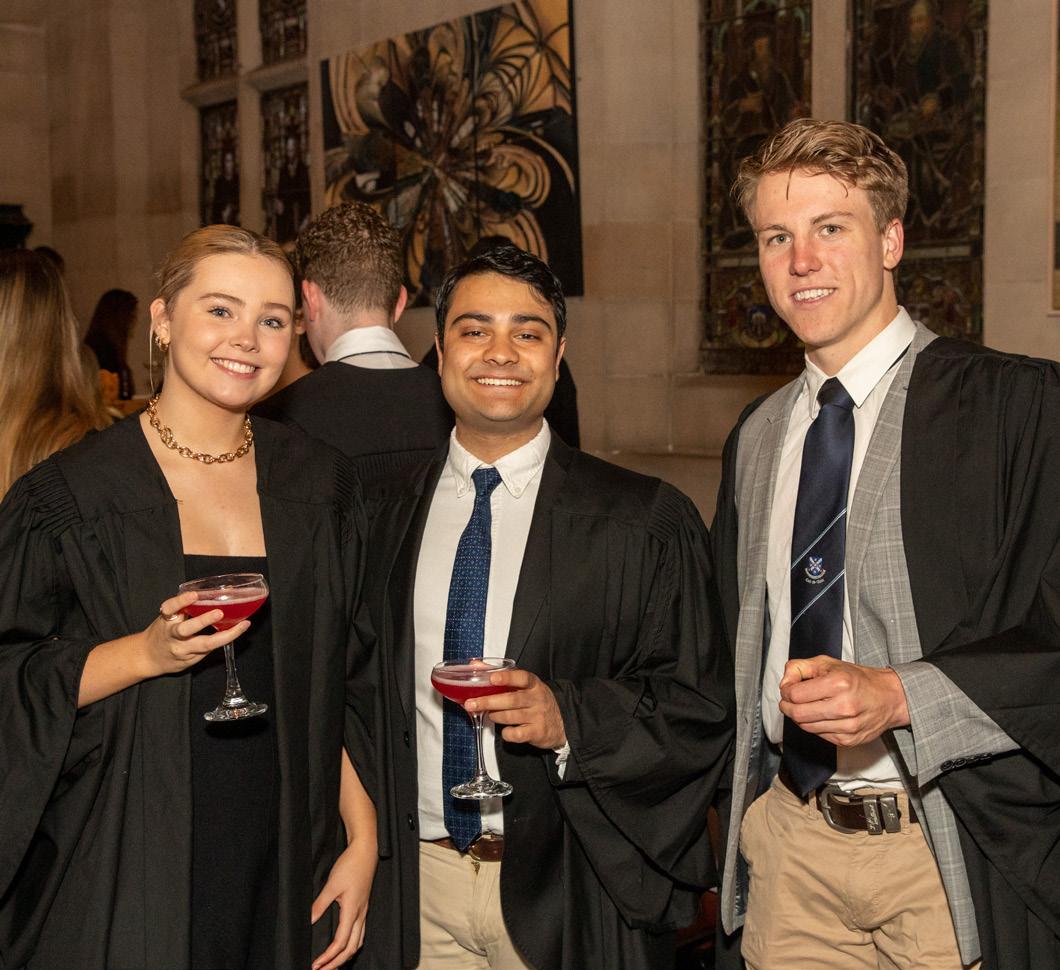
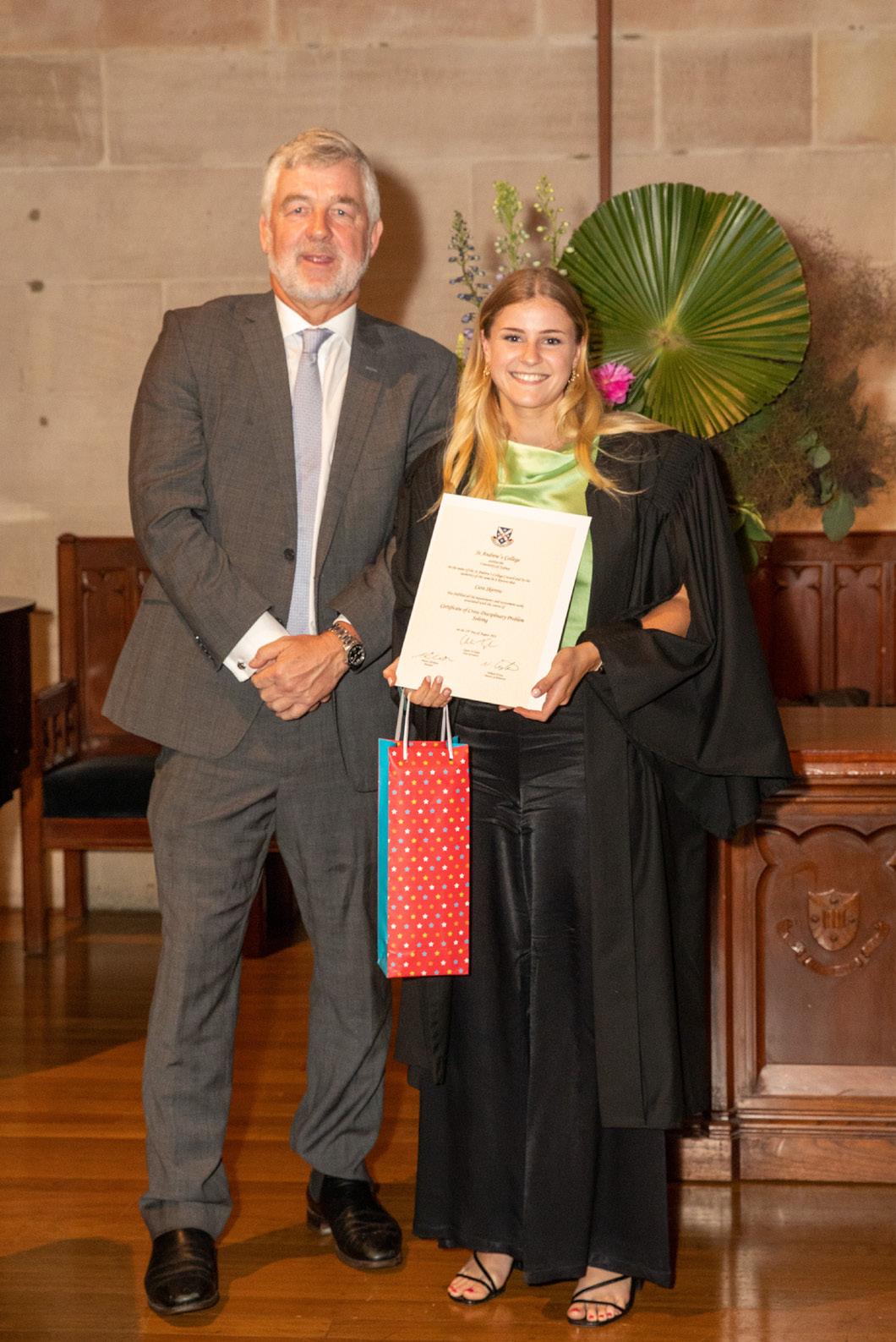
In the midst of the 2020 COVID-19 lockdown, the College launched a new initiative called the ‘Pre-Tertiary Mentoring Program’. This program partnered St Andrew’s College students with HSC students around Australia, and Androvians offered advice on how to prepare for the HSC and define their post-school goals. The initial program was so well received that the College decided to run it again this year. The program reflects the College’s deep commitment to helping high school students — especially those living in regional Australia — achieve their goals and release their tertiary aspirations.
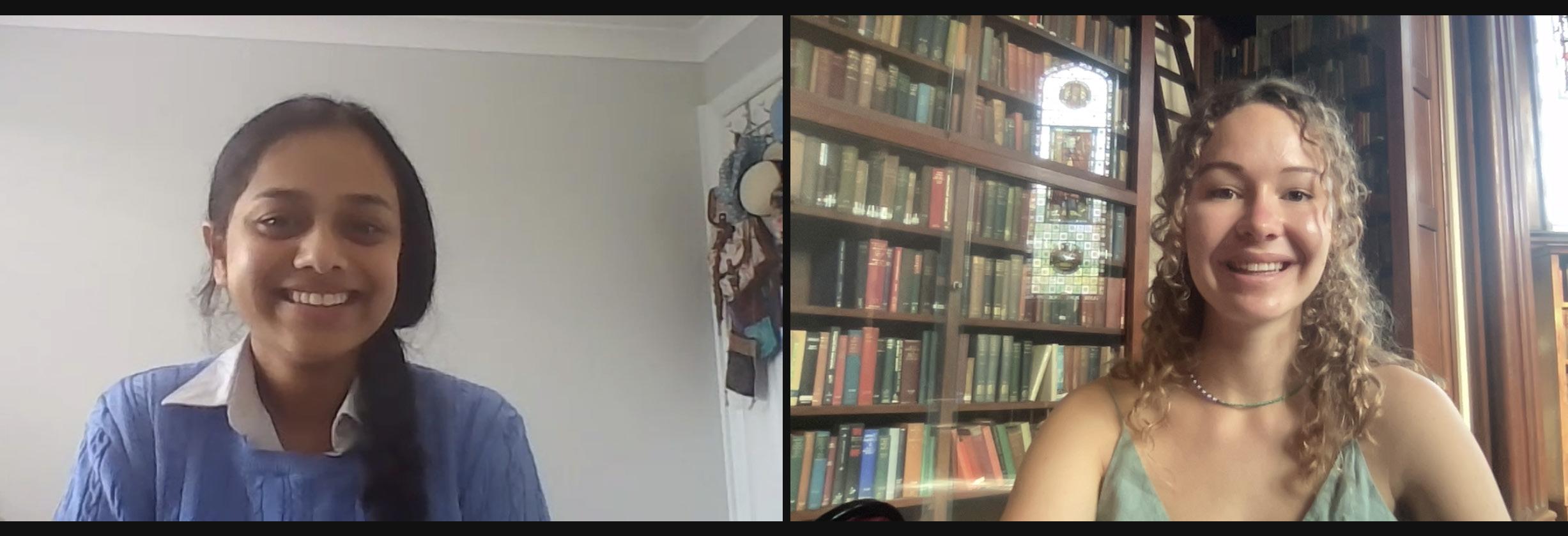
In this article, we caught up with one of the Mentors, Faith Roche (Fr 2021), and her Mentee, Simi Atluri (current Year 12 student), to understand the impact the program had on the lives of mentors and mentees.
Could you please tell us a little bit about yourself?
Faith: As a Queensland girl, I was raised on the beaches of the Sunshine Coast and moved to Sydney at the beginning of the year to chase big thinking and dreaming. I’m currently studying a double degree in law and science, majoring in agriculture. Sydney has provided me with the opportunity to find the intersection between my value systems, passions and beliefs (rooted in my home: family, nature, and the Sunny Coast community) and driven, tangible action.
Simi: I am currently studying for my HSC and go to a school in Bathurst, located in regional NSW. I’m feeling rather anxious as my school journey comes to an end, as I have spent the majority of my life at the same school in the same town. I am passionate about ancient history and astronomy. In the future, I hope to be doing what I love and am passionate about!
Why did you decide to be a part of the program?
Faith: Mentoring is such a unique platform on which to connect with someone, particularly a stranger. It’s a really raw, genuine process, and the nature of the program (the mentee being in the middle of Year 12) means you get to witness exploration and progress on a weekly basis, which is quite beautiful. Mentorship is an investment in both yourself and the other person, and having benefitted from mentorship in the past, I was looking forward to supporting someone in the role.
Simi: My teacher recommended the program to me after I asked her for resources in regard to university options. The prospect of navigating and planning for university was daunting especially as both of my parents went to a university in India and were therefore unable to help. Having grown up in a relatively small regional community, I’ve always loved seeking out new experiences and meeting people. In Year 12, I was eager to connect with someone who is at university who has already been through it all so this program ticked all of the boxes!
What was learnt from the mentoring experience?
Faith: One of the things I am reminded about is that uncertainty is universal. Even Simi, a structured, thoughtful person with clearly defined goals and ventures, wakes up each day and gets to just figure it out. None of us know our road ahead and nobody knows what they’re doing 100% of the time, and I think that’s the beauty of it.
Simi: I learnt a lot of things that I don’t think I would’ve been exposed to had I not participated in this program. In the mentoring sessions with Faith, we covered what colleges are (and how they all differ), how to structure my study notes
(Faith made me realise that I had to make some radical changes to my study notes!) and how university courses are structured.
How do you describe your mentoring relationship with (Faith/Simi)?
Faith: I almost felt like I had my job done for me! Simi is grounded, focused, and honest, and so often when I suggested something, she had already implemented it. Our relationship transformed from one of logistical support (universities, degrees, studying) to support in a personal capacity.
Simi: Awesome! Faith is always super warm and I feel comfortable talking to her about everything, even if it’s just a rant about how terrible my week was. She was very knowledgeable and took the time to explain everything that I was curious to know about, including various university course and entry pathways.
Would you consider being a part of the program again?
Faith: Without a doubt. I’d specifically love to be a part of this program again next year.
Simi: Of course! I would love to pass down the knowledge that I gained through the mentoring program and the chaotic year that is Year 12. I’d love to be a mentor to someone who is similar in age and is willing to be open-minded to try new ways of thinking and learning. Also, it’s just lovely to chat with a person removed from your life that can provide an objective standpoint.
What do you want to say to your mentor/mentee?
Faith: Nothing that hasn’t already been said: I am so incredibly proud of you and the way you’ve handled this year. You’ve got such a grounded nature, and so I can’t wait to see you combine that with the drive and passion of university and the rest of your life. It’s been an absolute pleasure getting to know you. Please don’t be a stranger — text me with updates, and know that I’d always be down for a coffee when you’re in Sydney.
Simi: Thank you so much for taking the time to get to know me. You gave me invaluable advice and I’m glad that I made a friend. You are wonderful to lean on for support and I wish you the very best in your endeavours in the world of agriculture and law!
From 30 September until 9 October, the Education & Student Life Department ran a free, online program for HSC and International Baccalaureate (IB) students.
The seven-part program was designed to provide Year 12 students with strategies to prepare for their final exams. The program was open to all Year 12 students (not just those who wish to study in Sydney or attend a residential college).
Facilitators were St Andrew's College students who attained an ATAR of higher than 99 – and they were keen to share their secrets and tips with Year 12s.
The College has always been – and will remain – committed to providing students, whether at school or university, with educational opportunities that will enrich their lives. We are also aware that the College is in a unique position to give back: our students, most of them who went through the COVID-19 Year 12 experience in 2020 themselves, have a fervent desire to give back to the community. Thanks to these students, the program was a big success – we had over 550 free tickets reserved for the seven sessions, and the feedback received from the school community was excellent. The College hopes to continue providing similar opportunities to Year 12s in 2022.
Topics covered in the workshops included:
• Exam preparation techniques
• Memorisation and study techniques
• Time-management skills
• Tips for STEM, English and Maths
• IB exam preparation
If you would like more information about our Pre-Tertiary Education Programs, please get in touch with the College's Education & Student Life team.
Minami Takahashi Pre-Tertiary
Studies Program Manager

It's 16 February 2020. The crowd slowly trickles into ANZ Stadium as Fire Fight Australia begins. The concert, organised by Celeste Barber in response to Australia’s catastrophic bushfires, promises to be one of the biggest events in Australia’s history.
The ten-hour long event begins with Australian singers performing for the diehards. The crowd slowly warms up, hardly less than a quarter-full, but buzzing with a quiet excitement. As more people start to filter into the 100,000seat stadium, the set list begins to heat up. The beers and hot chips are beginning to flow as Australian icon Delta Goodrem enters the stage with a rousing rendition of The Seekers’ 'I am Australian' draped in both the Union Jack and the First Nations flag. Although the crowd is barely half-full at this point, they swing in unison as Goodrem heads to the piano to sing her smash hit 'Wings'.
The energy is well and truly palpable when Daryl Braithwaite hits the stage to sing the unofficial Australian anthem, 'The Horses'. The crowd may still be barely half-full, but the fervent chants give the stadium life.
As the sun goes down, the stadium starts to gain some life. As it begins to fill, the arena begins to shake, with rock legend Alice Cooper playing in the twilight of the day. In the last moments of light and with the crowd full and ready to
rock, 5 Seconds of Summer bring down the house, making all the teenagers in the crowd scream. But, it’s the next act that the crowd is waiting for. As darkness hits, out comes Queen and Adam Lambert fresh off a sell-out show from the night before. Playing their iconic Live Aid set for only the second time in history, the crowd is electric, all 75,000 people in the stadium knowing they are witnessing something historic. Little did they know how historic it would be.
Thinking back on the occasion now, it seems foreign and almost a little eerie to picture stadiums filled to the brim with over 75,000 people. The idea of looking up and seeing thousands of fans watching a band at the height of their powers seems like such a distant memory. We have become so used to watching concerts from our homes, often with celebrities performing from lockdown themselves. Even now, as a sense of normality has returned around the world, the shadow of social distancing has always loomed large and had an ever-pervasive presence, with crowds lacking the energy that they had before. Shows played by the biggest stars in the biggest arenas feel ever so slightly devoid of energy, even if they are mostly at capacity. Perhaps, in some ways, we have forgotten what it means to enjoy ourselves.
We have seen a similar thing in sporting stadiums. Sport was suspended for much of 2020, only resuming as leagues began to understand the nature of the virus. However, even
when sport returned it was largely played without crowds, being produced solely for TV. During the US Open Tennis Championships, all that could be heard after each point was the squeak of the players' shoes, and perhaps the clap of the players' coaches. Soon, broadcasters realised that some crowd noise was necessary so they introduced artificial crowd sound. But, it sounded nothing like the real thing. And the empty stands were a sad sight; a far cry from the beauty of full stands seen in Australia just nine months earlier.
One of the most incredible atmospheres I have ever witnessed was just before the lockdown at the ATP Cup in Sydney. Australia was playing Great Britain for their first home tie in Sydney in the new tournament. Nick Kyrgios quickly dispatched Cameron Norrie before Dan Evans won a battle against Alex De Minaur to level the tie. Australia’s fate came down to the doubles. To everyone’s surprise, Kyrgios and De Minaur were chosen over Australia’s doubles players to play against Britain’s top doubles team. It was a tight, topsy-turvy match, but eventually Australia sealed the tie.
More than the result, the atmosphere was electric. Screams and chants whenever Australia won a point and dead silence whenever the Brits fought back. It was everything that a patriarchal sports fan could ever wish for. The ATP Cup was most notable for its involvement of the crowd. Novak Djokovic, who is known for often battling against the crowd, found himself playing with an incredibly vocal Serbian contingent behind him in Sydney. All of a sudden, it was his opponents who had to deal with the crowd pressure. And they cracked. But that was the beauty of the game. The crowd brought a live element to the matches; they interacted with the players and created an atmosphere. That is what we missed during lockdown.
Even things we take for granted were missing. One day, I switched on an audience-less Q&A on ABC. It was then when I realised just how important the audience was. The audience provides an atmosphere even when we do not even think we need it. As we become increasingly surrounded by technology, the audience becomes a part of our being.
So, as Australia begins to open up, we may be able to experience the feeling of observing or being in a crowd once more. The euphoria of seeing waves of people rise all around, the power of an audience willing on a performer or an athlete. It’s something we have so desperately missed over the last few years. Perhaps we will never reach the
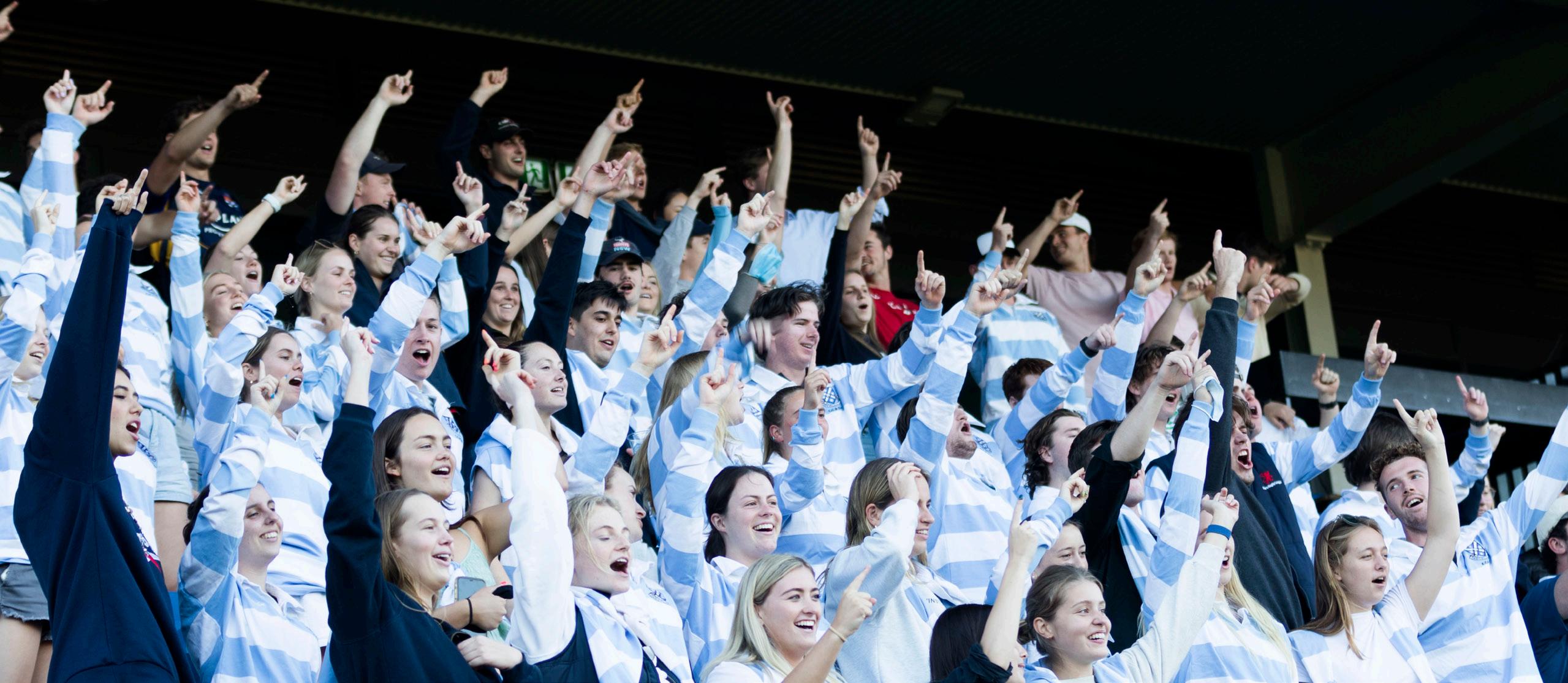
heights of Fire Fight just before the lockdown. But more likely, as time goes on, we will recover and soon the fire will be back in the crowd, breathing life back into everyone in sight. We’ve seen this much closer to home as well. Whilst we have been fortunate enough to continue to compete in Rosebowl, Rawson and Palladian events over the past two years, there has undoubtedly been an air of apprehension around some of the events. The Rawson Rugby final earlier in the year was one of the most electric atmospheres I have seen in the past two years. The University grandstands were filled to the brim as Drew’s and Paul’s sat side-by-side, barely at arm’s length, jostling to see who could create the most raucous noise with passionate and intense chants. To me, this encapsulated everything that we have missed over the past few years: sport and audience participation as a vehicle to come together and enjoy something as a community.
Contrast this to some of the indoor Palladian events where, understandably, it was less feasible to have a crowd. Whilst Drew’s still managed to take home the crown in both years, there’s no doubt that the performers (myself included) lost a little bit of energy performing to an empty room. The reason is both music and sport are a form of expression, entertainment for the crowd. If that engagement is lost, it makes both activities feel slightly hollow, even meaningless. It’s going to be quite the experience to get back in front of crowds next year.
Kiran Gupta (Fr 2019) Drew's News Editor 2021

By June in the Creative Arts department, the year we hoped would look different was threatening to look remarkably similar. At least this year, our familiarity with the necessary technology meant that the transition from in-person rehearsals to Zoom ran smoothly, and the College’s creative artists could turn their attention to other projects. Despite singing being the most heavily limited activity, it was a joy to discover three new vocal ensembles up and running at College. Two of these are directed by Taylor Scholar Lily Harper (Fr 2017), and the third is a welcome revival of the all-male a cappella ensemble, led by Matthew Hingston (Fr 2021), brother of the group’s founder, Peter (Fr 2013).
We have run a strong Palladian campaign, and while there is more detail in the Palladian Report, this semester I do want to acknowledge the strength of our candidates in visual art, instrumental ensemble, debating, vocal ensemble and drama. The student leadership across all our ensembles and fields of art in 2021 has been genuinely impressive and collegiate, all held together by the 2021 Cultural Secretary, Alice Litchfield (Fr 2019).
This semester has also seen a number of new arts initiatives. The Principal’s Prizes underwent significant revision by the Education & Student Life team and student leaders, emerging as the Ian Jack Prize for New Creative Work. This revamped prize will award more students across a greater diversity of creative media and allow the whole College community to be part of the process. My special thanks to Wayne Erickson for suggesting the change of name to honour Professor Ian Jack, who I hope would have approved this testament to what he brought to College.
The final project for Creative Arts this semester is the launch of the Lockdown Art Project. This curated book and accompanying YouTube channel, curated by Artist in Residence Amala Groom, myself, and Programs Manager Nicole McKay, is a chance for students to receive feedback on their creative projects. Ultimately, the project will provide a way for students to see their work published and shared in a way that gives them a tangible memento of a difficult, and ultimately life-changing, couple of years in our collective history.
Dr Sarah Penicka-Smith Head of Creative Arts

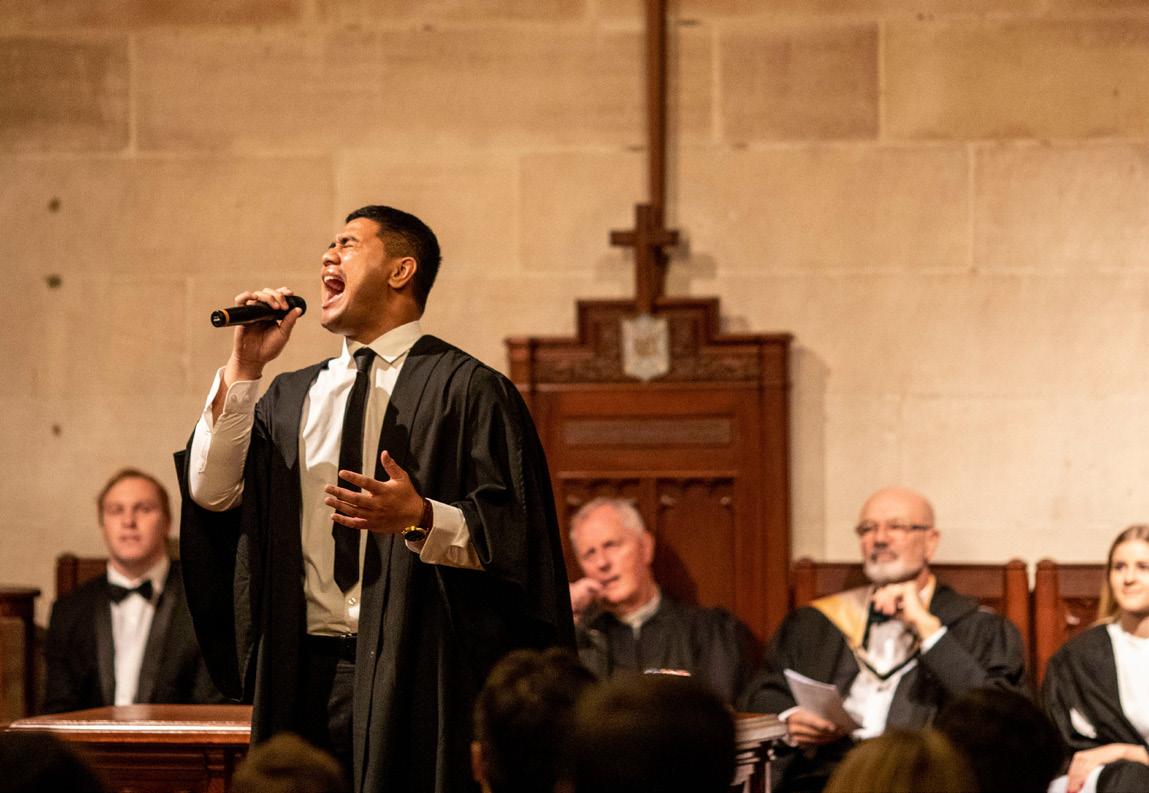

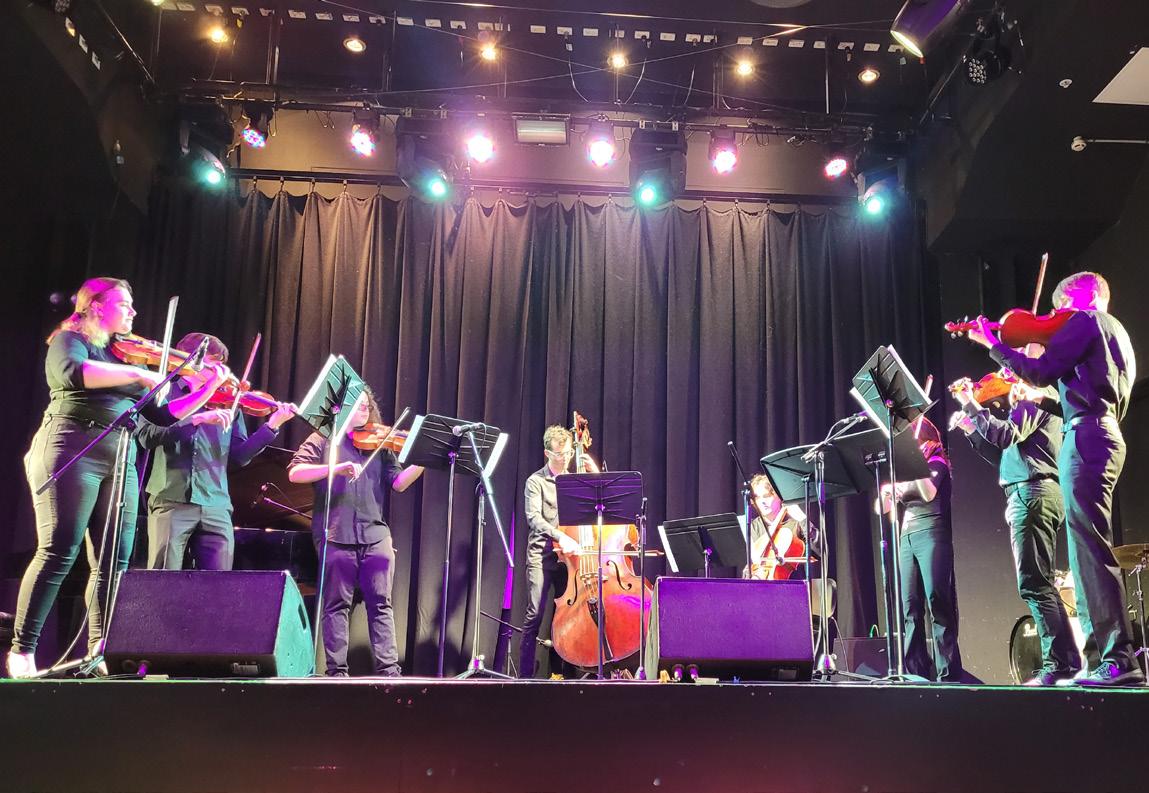
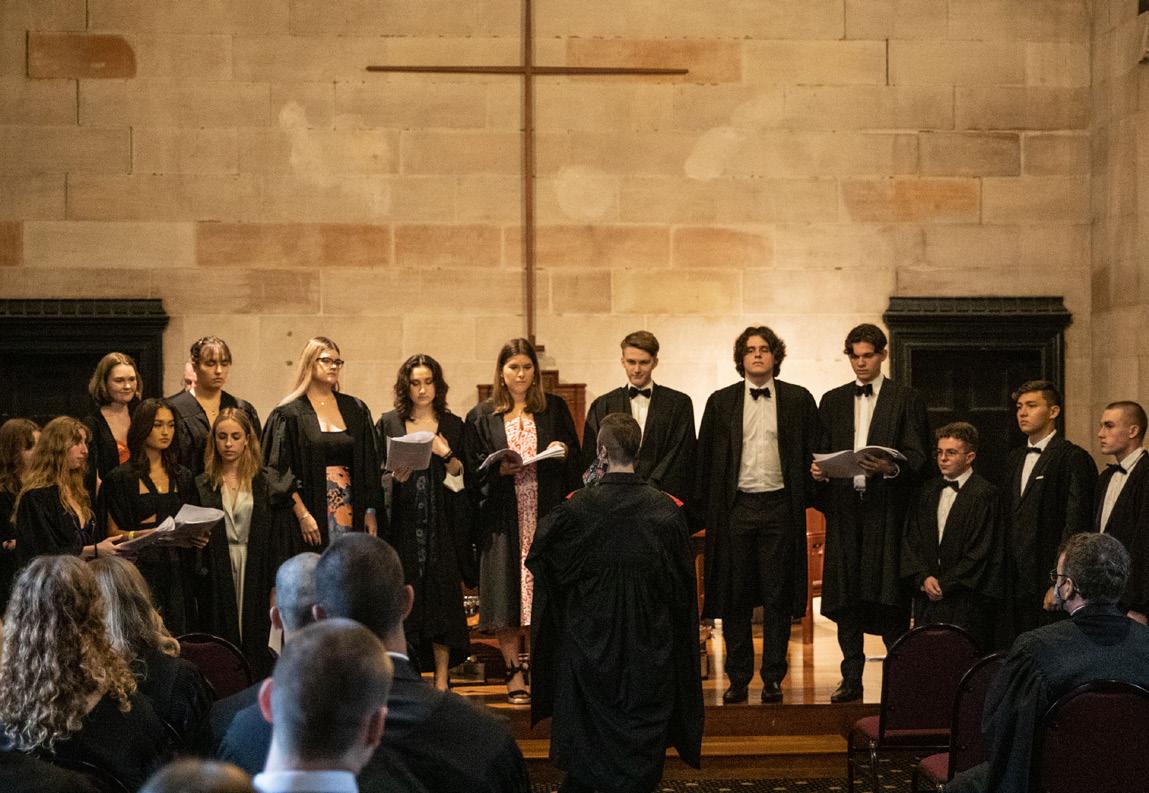
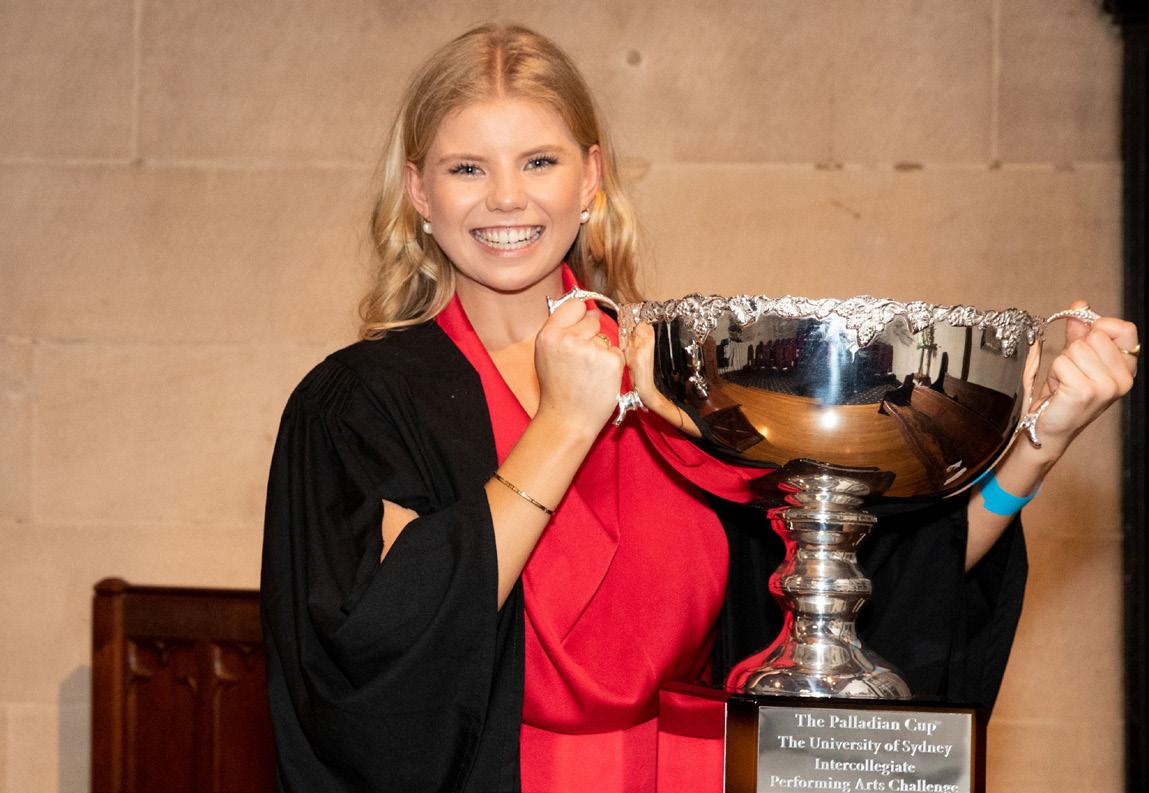
After achieving three wins, two second places and one third place in Semester 1, St Andrew’s was in a solid position coming into Semester 2. The competition began with Palladian Art. There were strong submissions from our students, Penny Butler and Clementine Paradice, but the talent from other colleges unfortunately meant we came away without a place.
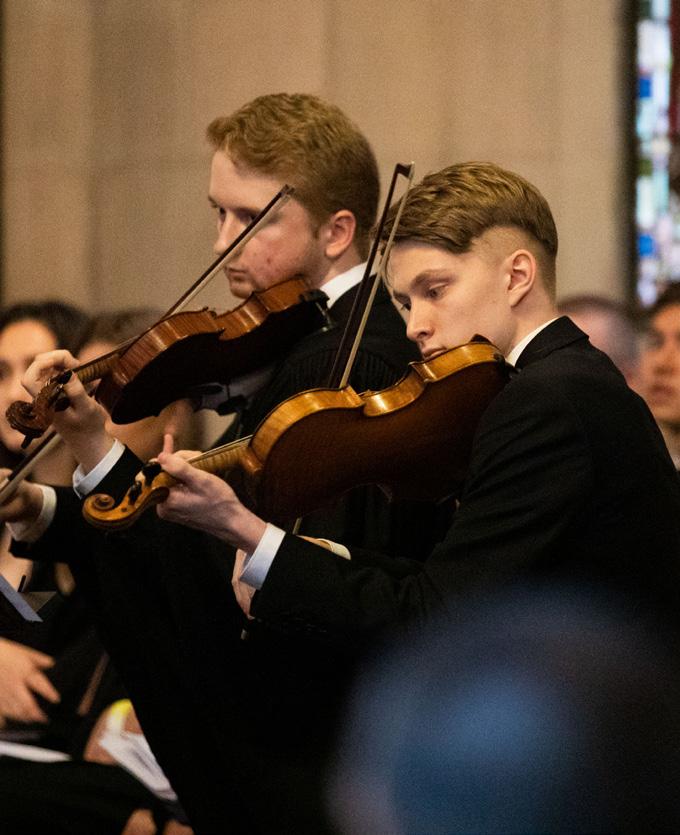
Group Instrumental was next and the hard work of our fabulous musicians paid off. Our trio of Ariana Ricci, Adrian Whitehall and Neon Fan performed an extremely polished rendition of 'Mendelssohn Piano Trio No. 1 – 1st Movement' and were rightfully awarded first place. The St Andrew’s 'Chemble' consisting of Sophie Hoskins-Murphy, Will Carraro, Jules Vahl, Jackson Boden, Ariana Ricci, Tom Carraro, James Carraro and Adrian Whitehall gave an energetic performance of Dobbantos’ 'Fourth Movement of Veress’ Four Transylvanian Dances' and achieved second place.
For the Group Drama, our performers did an excellent job preparing pieces in the same week of their DramSoc production. Alice Litchfield, Charlotte MacDonald and Annabelle Richens performed an excerpt from Wendy Harmer’s, What’s the Matter with Mary Jane. Originally a one-woman play, the trio rewrote the script as a group piece and did a fantastic job harnessing the complex emotion of eating disorders. Our second group consisted of Alice Litchfield, Sam Reckling and Charlotte MacDonald who performed a melange of the script of Richard Bean’s One Man, Two Guvnors, creating a hilarious piece of well-timed comedy. This performance came away with third place and the girls were awarded highly commended.
The final event was the Group Vocal, and with our rival college St John’s only three points behind us, the tensions were high. The St Andrew’s Choir performed a dynamic arrangement of Paul Simon’s 'Bridge Over Troubled Water' (arr. Kirby Shaw). Our second group was the Boys’ Choir performed an acapella version of the beautifully delicate 'Irish Blessing' by James Moore, arr. Matthias Schmitt. The boys were awarded third place which saw St Andrew’s win the Palladian cup for the 11th time! A special thanks to all the Palladian secretaries, as well as Dr Sarah PenickaSmith, for their hard work in the Arts this year.
Alice Litchfield (Fr 2019)
Cultural Representative 2021
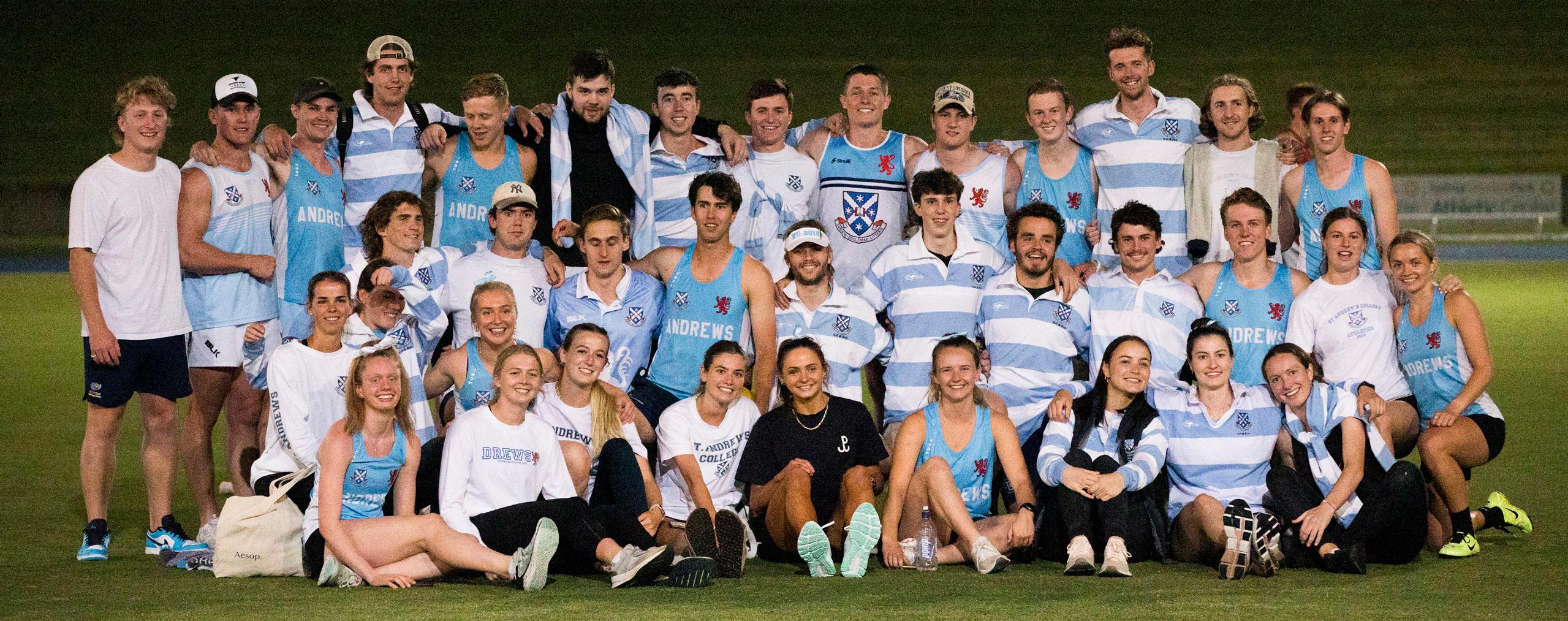
Once again, St Andrew’s played an outstanding year of sport, despite the lockdown causing the whole calendar of Semester 2 sports to be packed into one month.
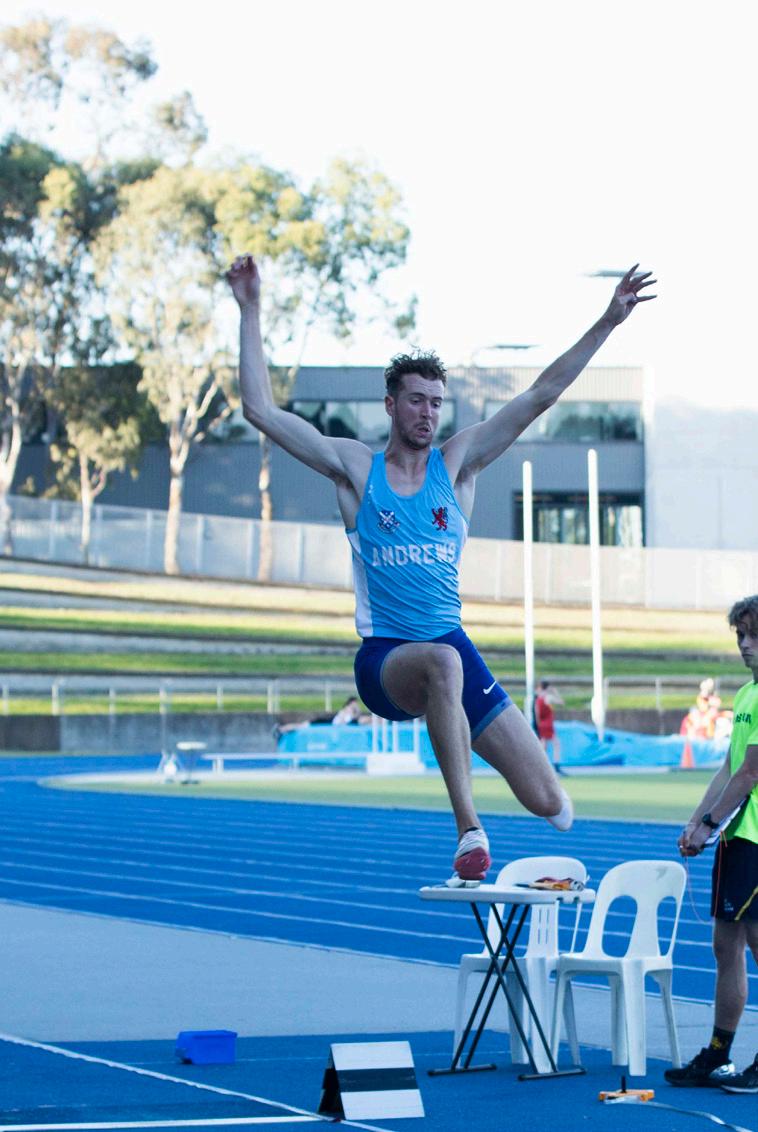
The Soccer team kicked off the campaign, and after beating Wesley College and St John’s, the final game against St Paul’s was the decider. St Andrew’s dominated in possession throughout the match, but the game ended in a draw. It was an impressive and important effort by the Soccer team to tie first for the Rawson Soccer Cup. The Athletics team performed valiantly and came second to St Paul’s by only three points. The men were superior in long jump, high jump and triple jump, winning all three and were also impressive in the 100 and 400m. The Rawson Rowing team trained for a total of ten weeks, including five weeks before the initial regatta was postponed. An impressive show of dedication from the team, leading to the team placing second.
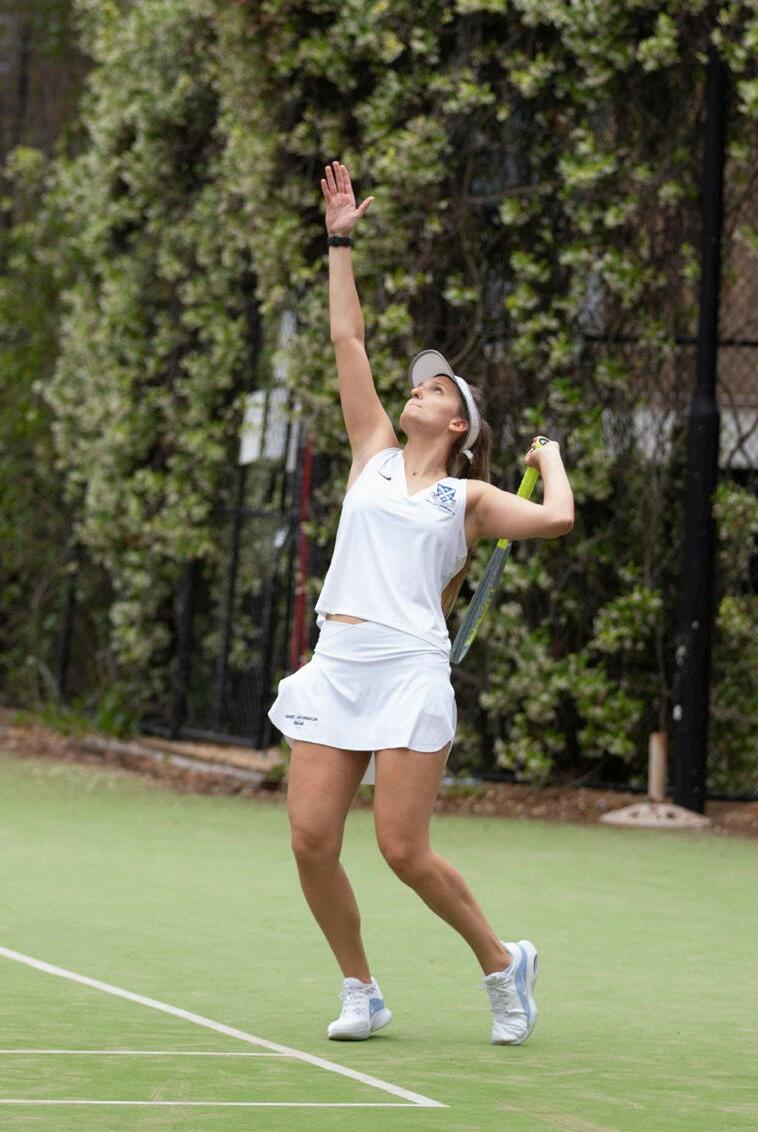
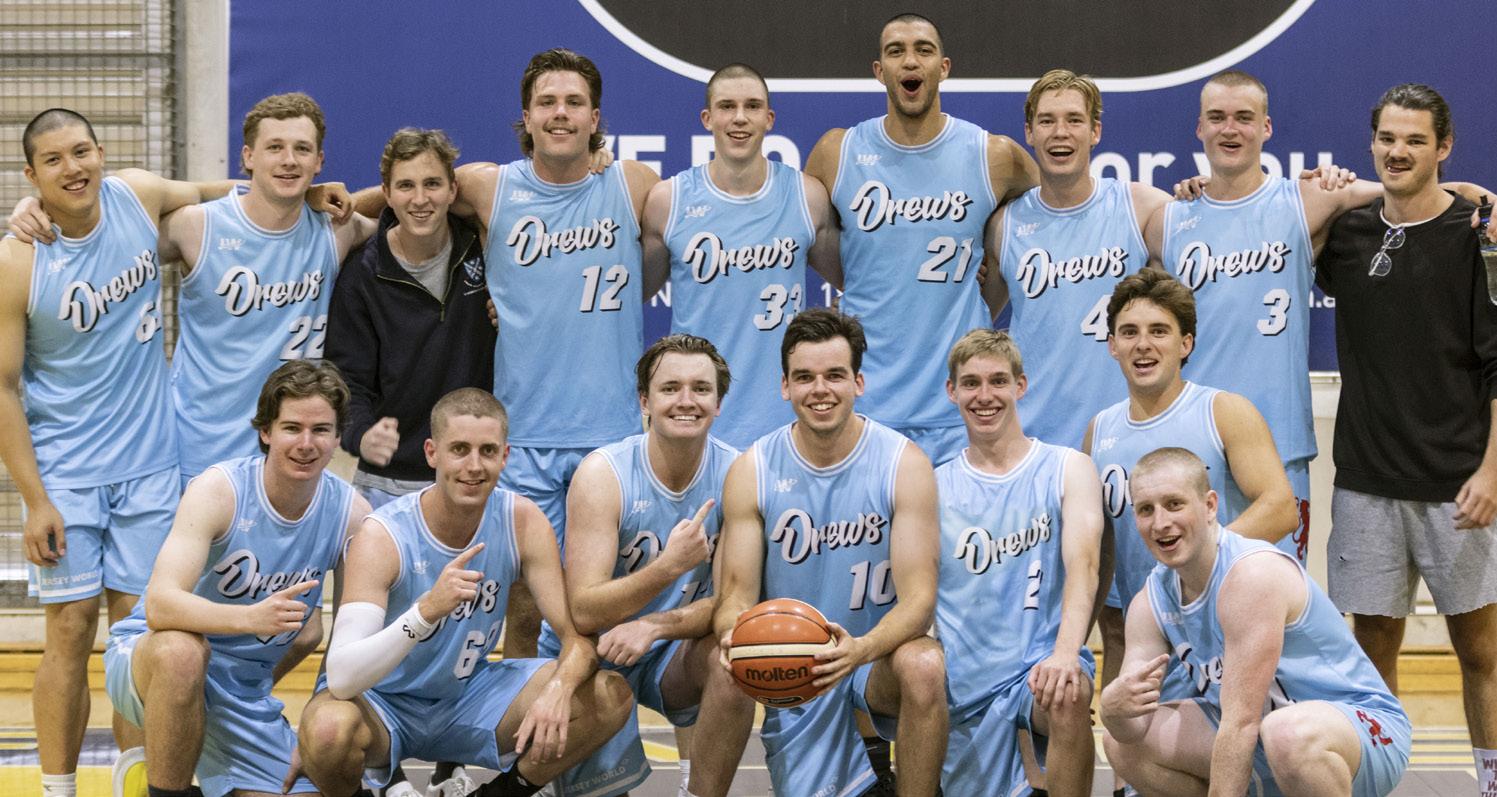
The Basketball team steered us to victory when they smashed St Paul’s 20-7, then drew with St John’s. This meant the last game was a ‘must win’. The team beat the reigning Rawson Basketball champions Wesley with a score of 26-14. The Tennis team secured the Rawson Cup for St Andrew’s with a spectacular performance, the men dominating their single match opponents. With the final St Andrew’s vs St Paul’s game being washed out, St Andrew's was the only team to have won both of their matches.
Congratulations to all the Rawson players and secretaries – the dedication and commitment you have shown is the reason that the Rawson Cup returned to St Andrew’s in 2021.
Harry Mitchell (Fr 2018)
Rawson Representative 2021
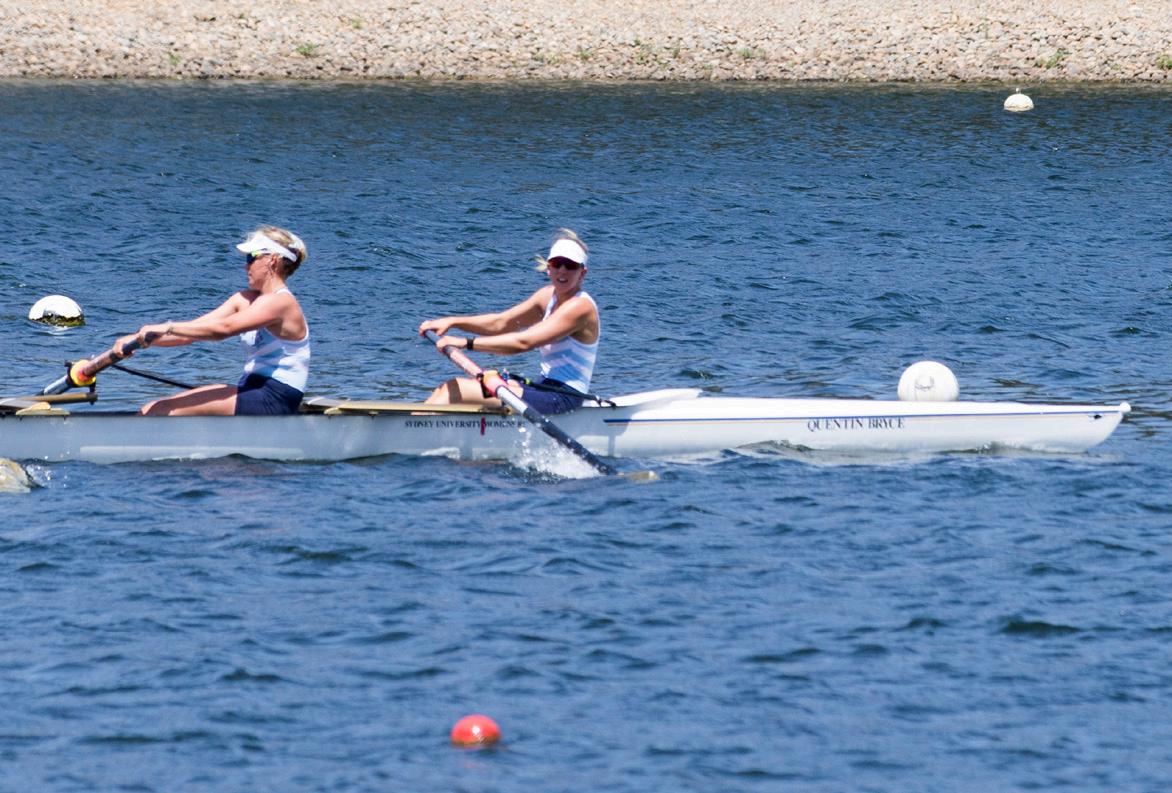
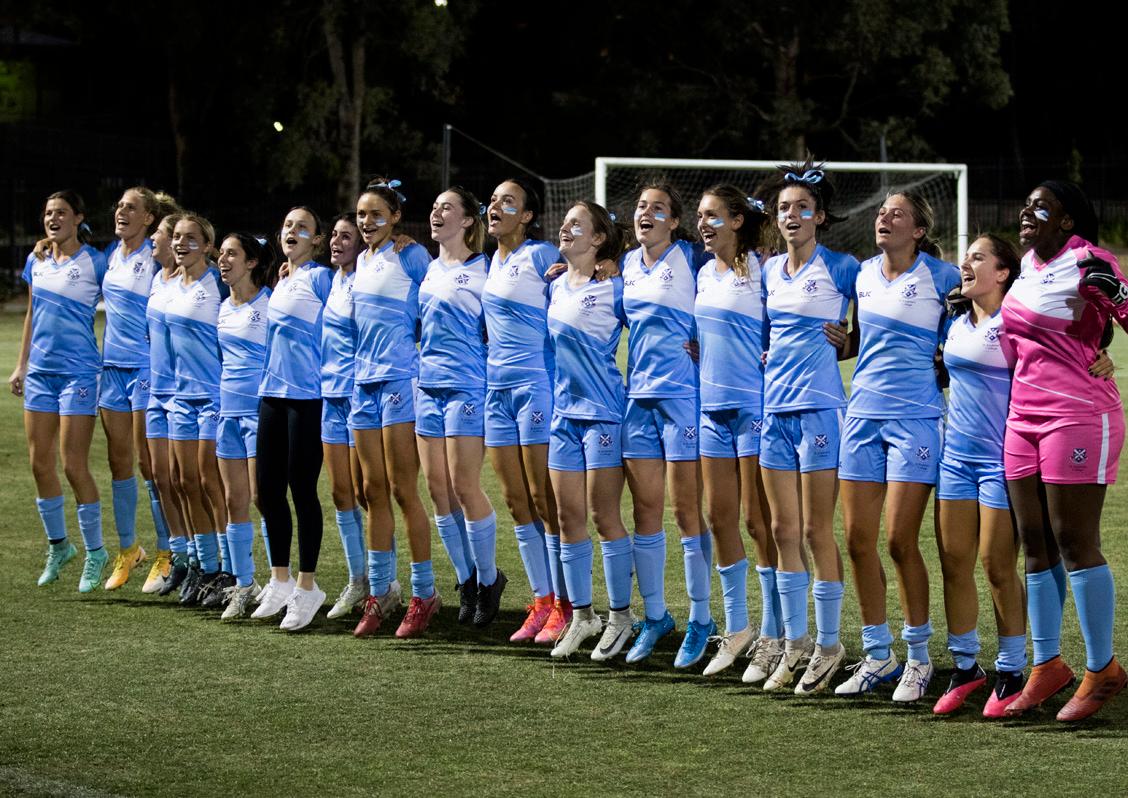
The St Andrew’s women have retained the Rosebowl again in 2021 after a highly successful Semester 2 campaign. With the condensed schedule, this was a huge task for everyone involved, particularly some of our St Andrew’s women who appeared in more than one sporting team.
The campaign began with soccer, where St Andrew's kicked off with a stellar 6-0 win against Sancta. We remained undefeated throughout, and finished first overall after an extremely competitive 1-0 final win against Wesley College. Athletics followed and we continued to prevail, winning the 200m, long jump, 1500m, 3000m, javelin, discus and shot put events. We also proved impressive in the 100m and 4 x 100m relay, which put St Andrew's in overall first place with a massive 200 points.
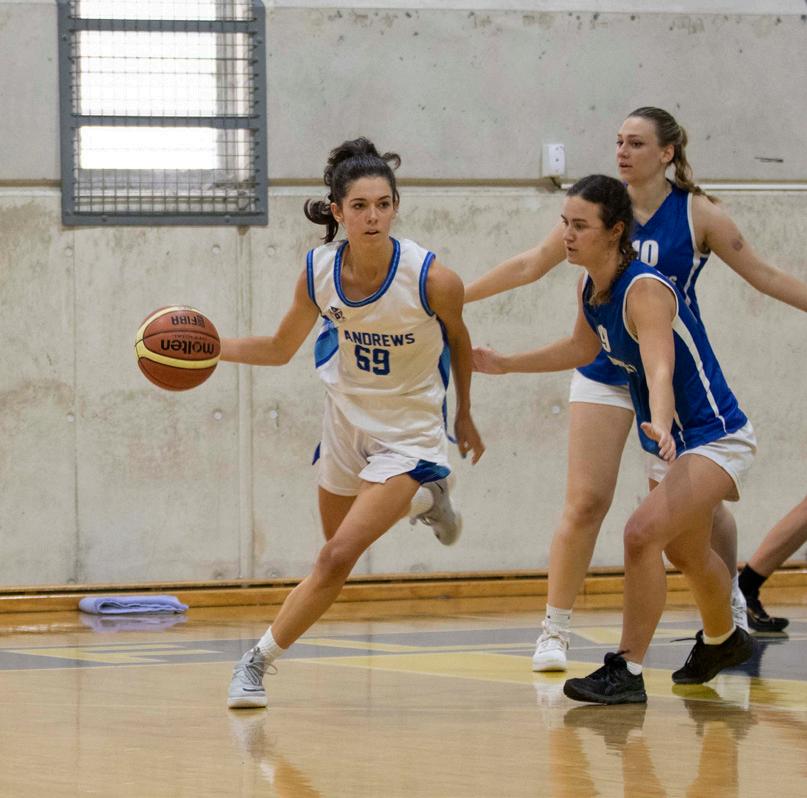
In the same week, the Rosebowl Rowing VIII travelled to the International Regatta Centre in Penrith to compete. Conditions were extremely undesirable with enormous winds and choppy water but the women still managed to take the win by at least four boat lengths. Months of preparation from our basketball team proved advantageous. The women were undefeated in all games, beating St John’s 18-12 in the final.
Tennis was the final sport of the year and along with COVID-19, it came with its own unique challenges. Unfortunately, most of the games were cancelled due to rain, but the games that went ahead were played with great skill and determination. I would like to thank all the women involved for their commitment to the Rosebowl campaign amidst what has been an extremely busy semester.
Annie Miller (Fr 2018)
Rosebowl Representative 2021


James Matheson (Fr 2014) is a competitive freestyle mogul skier and has been a member of the Australian Mogul Ski Team for a number of years. He competed at the PyeongChang 2018 Winter Olympics as well as the 2013 and 2019 World Cup Championships in Utah. When he isn't busy training or competing, the University of Sydney graduate is hosting his own podcast, The Athlete Collective, during which he interviews other elite athletes and discusses what makes them tick. We caught up with James to find out how his preparation is going and to wish him luck for the upcoming competition season.
How would you define mogul skiing to someone who has not heard of it? And do you consider yourself a bit of a daredevil?
Mogul skiing is basically the type of skiing everyone hates to do! Put simply, it involves lots of bumps and jumps that look terrible for your knees and back. One of the reasons I love the sport is because it combines all components of skiing into one package – skiing technique, aerial tricks and speed. It is a judged sport, so those three components all add up to a score out of 100.
I guess I could be described as a daredevil, but moguls itself is a very calculated sport that involves years of repetition and training. You maybe need to be a little crazy to start the sport, but after that it’s very similar to other elite skill-level sports.
When we last interviewed you in 2018, you told us that your short-term goal was to compete in the 2019 World Cup Championships in Deer Valley, Utah, USA, which you have achieved. Congratulations! Can you tell us what it was like to compete there? And what, if anything you will do differently at the upcoming 2021–22 FIS Freestyle Ski World Cup?
Deer Valley, Utah is known as the mecca of mogul skiing. To be able to compete there is always an honor. If someone wanted to watch a live event one day, I always recommend Deer Valley – they have 10,000+ spectators with the event lit up for night skiing – it’s electrifying!
The upcoming World Cup Tour is all about qualifying for the Beijing 2022 Olympics in February. Unlike some other sports, we qualify for the Olympic Games over multiple events. To qualify for Beijing, an athlete needs to be ranked in the top 30 in the world after these events. My aim will of course be to compete at the best of my ability, but qualifying for my second Olympics will always be in the back of my mind this season.
Could you tell us about your training regimen and preparation in the lead up to the upcoming World Cup and Winter Olympics and how you manage to keep motivated –especially throughout the past two years of the pandemic?
As everyone across the nation experienced in their own way, the pandemic was also a major disruption for us. Given we are a winter sport from Australia, our training schedule is characterised by travel chasing the snow. With that obviously being limited due to COVID restrictions, we had to come up with some innovative ways of keeping our development progressing. One of these is a training facility in Brisbane, known as a water jump. As the name suggests, we can practice aerial maneuvers off plastic ramps into water. This allows us to build skills without the risk of falling on snow and to train in the off months. We did get some funny looks in Brisbane with our ski gear though, I must say!
Overall, we as a team are better prepared than ever and hopefully it shows in our performance in the Olympics. I’m extremely lucky to be a part of an amazing team, the Olympic Winter Institute of Australia, who were able to navigate the uncertain past two years amazingly well. When you’re surrounded by world class athletes and support staff, motivation is never an issue. One thing I will always take with me from sport is the importance of a high-level team.

With this group, even the roadblocks of a global pandemic were manageable and a testament to everyone involved.
What are you most looking forward to about the upcoming World Championship season and the Winter Olympics?
What will be your biggest challenge?
This will be my last year competing as a professional athlete, so I will just be taking it all in and enjoying it! Knowing this is the end provides a level of clarity that is quite unique. It is a clarity of focus that is hard to replicate under other circumstances. The biggest challenge will be ensuring I qualify my spot for the Games and making it there in one piece! The pandemic also poses some challenges for us as a team, so this Olympics will not be the same as my experience at the 2018 Games in Korea. Watching the Summer Games in Tokyo gave us a good indication of what it will be like competing under COVID restrictions.
When and where will you be competing so we can follow your journey?
I will be competing in multiple World Cup events from 6 December to 17 January, as well as the Beijing Olympics in early February. Moguls is the first event of the Games so you should not miss it! If you want to follow my journey, my Instagram is a great place to do that (@jamesmatheson333).
What’s in store for you next, after the winter ski season?
As I mentioned, this is my last season competing as a professional athlete. Once I return from the Games, I will be starting work as an analyst at Deloitte, within their Payments
Advisory team. While it’s sad to close the chapter on this part of my life, I’m extremely excited to start a new journey and be a beginner again!
We thank James for taking time out of his busy schedule to answer our questions and will be cheering him on throughout December, January and hopefully February!
CONGRATULATIONS TO OUR SUMMER OLYMPIANS
We would like to extend a huge congratulations to our 2021 Summer Olympians! Rohan Browning (Fr 2016), Hannah Buckling (Fr 2010) and Jaime Ryan (Fr 2013), are three incredible St Andrew's alumni who competed against the world's best at the 2020 Tokyo Olympic Games this past July and August.
Sprinter Rohan Browning ran 10.01 (and a new PB) to win his 100m heat. The whole country was behind him and he ended up placing fifth in his semi-final heat, just missing out in a spot in the finals. Long-time water polo player Hannah Buckling competed in her second Summer Olympics this year as a member of the Australian Waterpolo Team, the 'Aussie Stingers'. They came away with 5th place in the women’s tournament. And Jaime Ryan, competitive sailor and also a second time Olympian, competed in the 49erFX event, finishing 13th in the field of 21 alongside her crewmate Tess Lloyd. We are so proud to call them all Androvians!
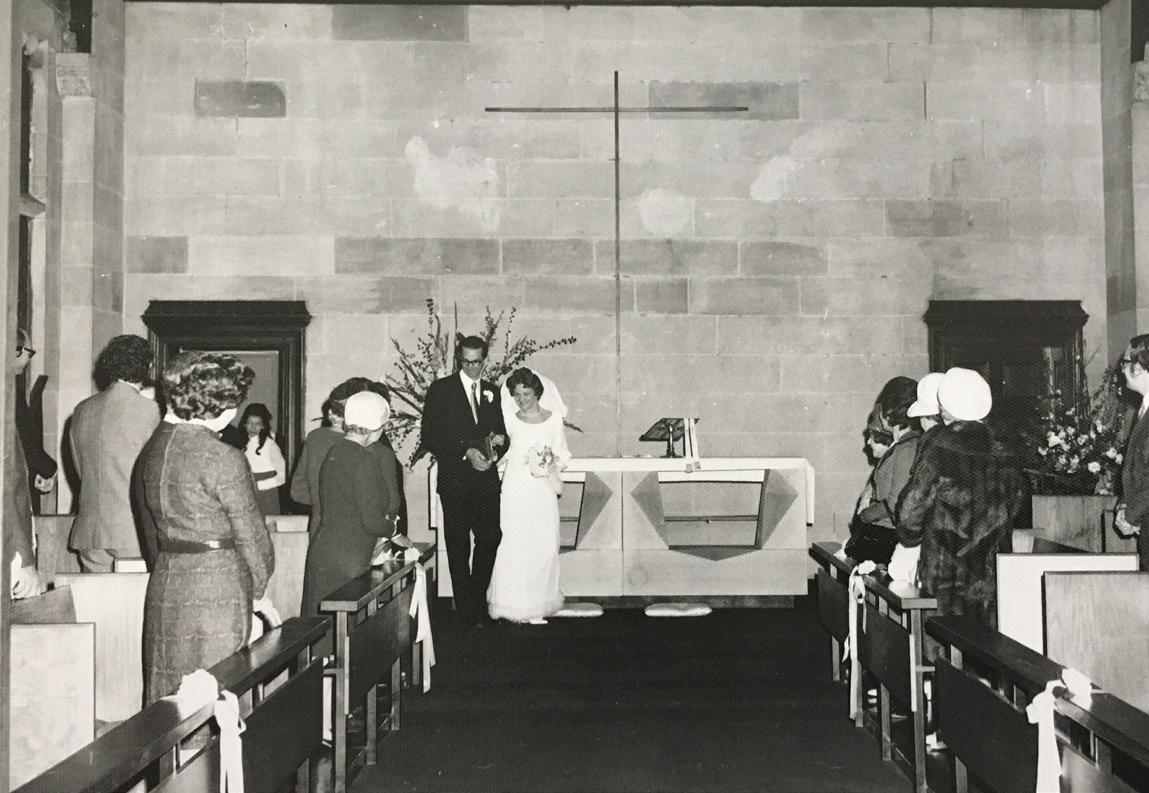
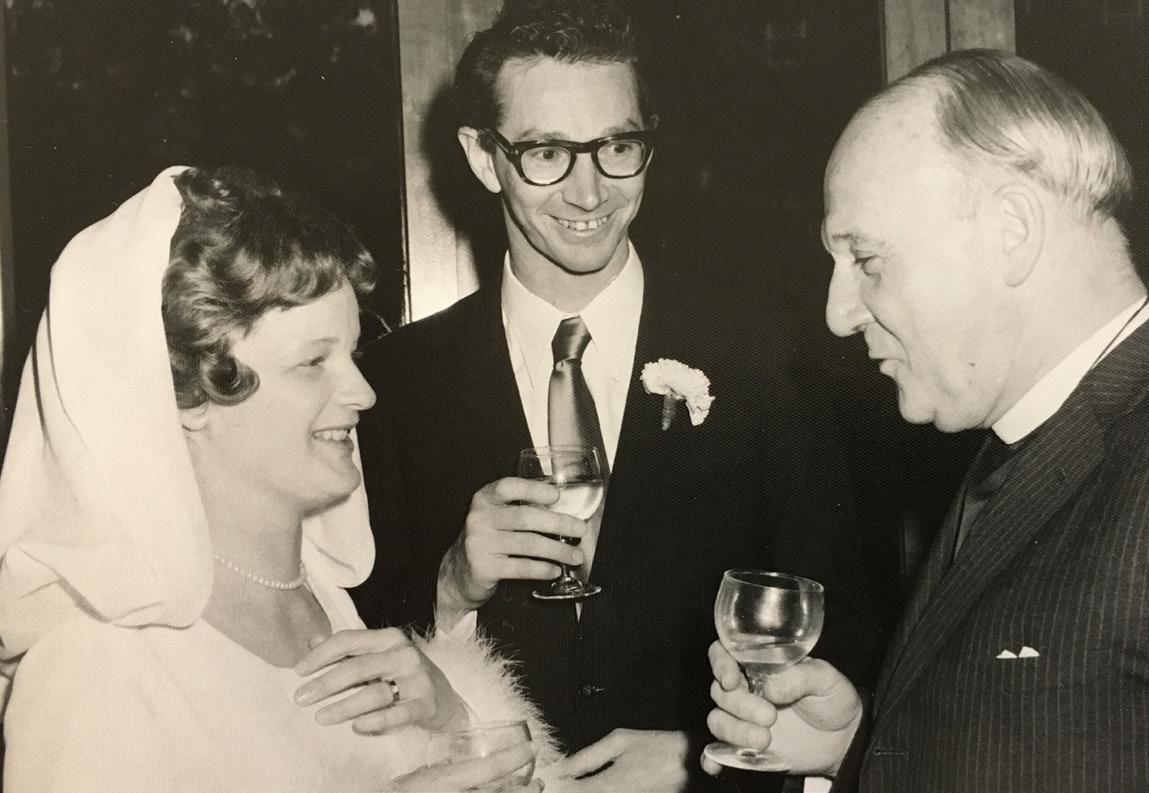
Some may call it fate or luck when John Ball met Pamela (Pam) Birchmeier at St Andrew’s College 50 years ago. Fast forward to the present day and the couple are celebrating their golden anniversary!
John and Pam formed an integral part of the College community during their time here from 1969–1971. Pam began tutoring at the College from 1969–1971 in histology and embryology, whilst John tutored from 1970–1971 in law, particularly real property, contracts and constitutional law. Pam made history at the College being the first woman to dine at the High Table whilst John became a member of the Senior Common Room in 1970.
It was in March 1971 when tutorials recommenced and the semester was underway when John and Pam connected for the first time. Pam’s post-dinner tutorial had been cancelled because the students were celebrating the College’s victory in the Rawson Cricket Cup Competition. The Principal at the time insisted she stay for dinner and was welcome to go to the Senior Common Room for the usual post-prandial coffee, port and conversation. It was at this point she noticed the keen interest of one of those leaving for the Common Room, John Ball. He was very interested in not only offering Pam her coffee and port, but also striking up a conversation.
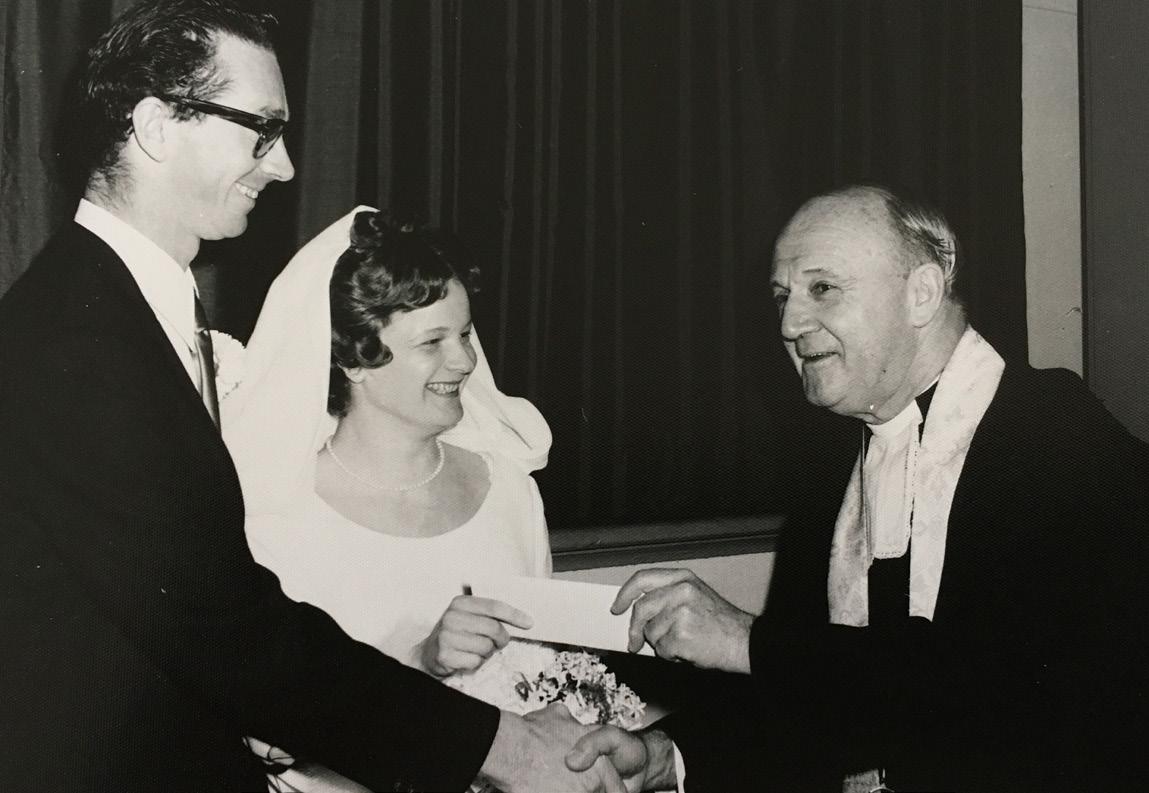
It is at this point that the rest is history! John and Pam were married on Saturday 31 July 1971 in the Chapel at St Andrew’s College by the Principal at the time, Reverend Alan A. Dougan. Following their union, the pair moved to England for a year where John completed a postgraduate Diploma in Comparative Legal Studies at Downing College, Cambridge. When they returned to Sydney, they resided in the home they purchased prior to moving overseas and continue to live there. They raised their three children in this home and have welcomed their six grandchildren.
The couple’s connection to the College continues to live on with their grandson, Finn Ball, who is currently residing at College. We sincerely appreciate Finn making us aware of his grandparent’s significant milestone! We would also like to congratulate John and Pam on their 50th Wedding Anniversary. We will be forever grateful for their contributions to the Andrew’s community and hope they both remember their time at College fondly, not only because they met one another here, but also for the lasting friendships and memories it has provided.
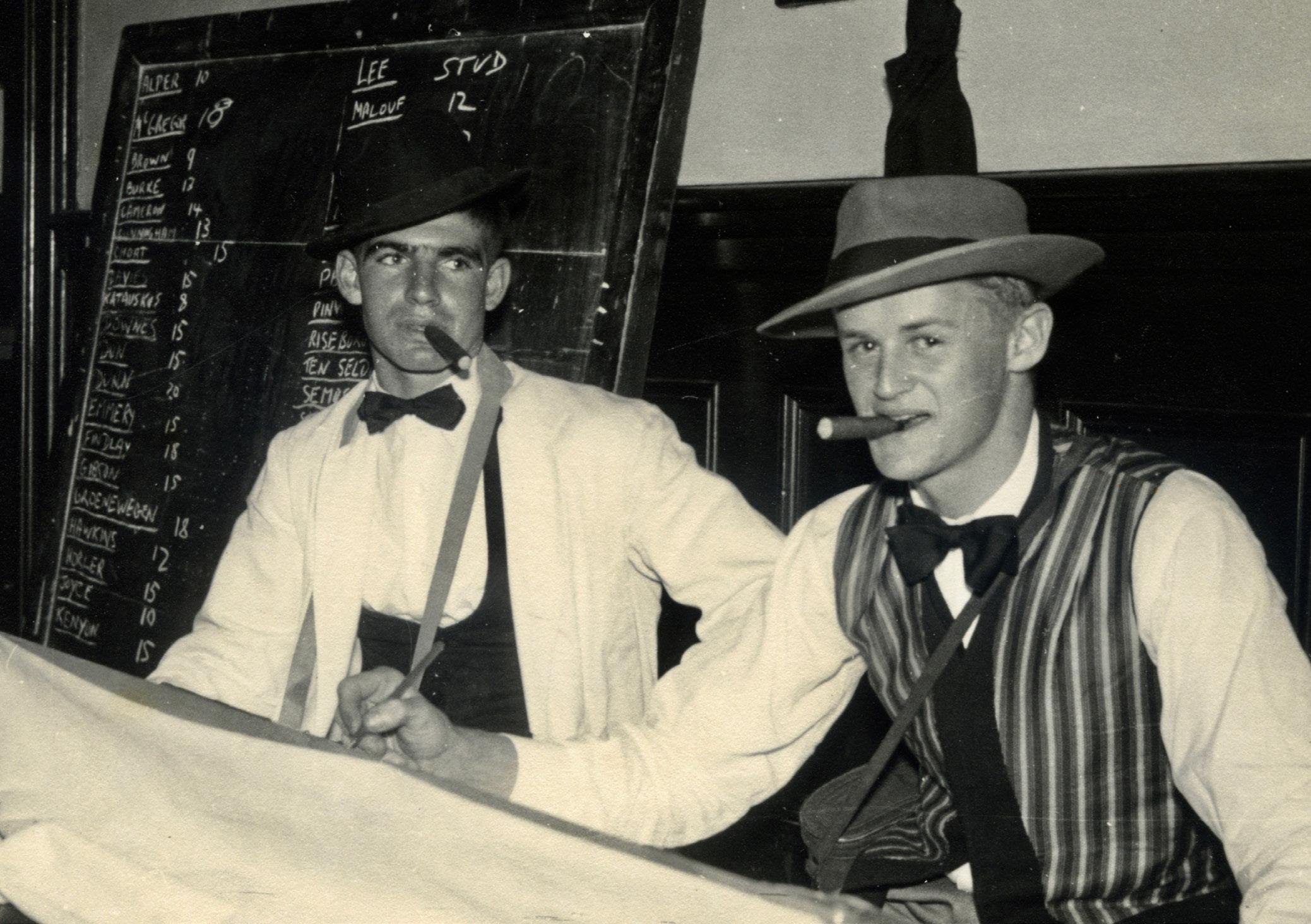
Some 65 years ago, there was a different set of events and activities as part of the welcome freshers received when they came to College. This particular welcome event was a footrace known as the Steeplechase Handicap, which all new freshers were required to compete in.
The race saw them start at College where they took a lap around the university block from the College front gate, down Carillon Avenue, left into City Road to Broadway and Parramatta Road, past Sancta Sophia College and left into Missenden Road and back to College, navigating whatever obstacles lay in their paths. The ladies of Sancta Sophia were aware of the event and as the freshers passed their College they were showered with a mystery liquid mixture.
The Steeplechase Handicap event was the subject of (questionably legal?) betting by the College Seniors and Bill Firth-Smith (Fr 1955) mentions that a 'book' was run by Colin Davidson (Fr 1954) with the late Dick
Whitfeld (Fr 1954). Colin Davidson recalls an incident that happened just before his time at College in 1949.
"The College Seniors sometimes got up to some skulduggery and on one famous occasion, John and Alec Shand (who were identical twins) were competing as Freshers. Some of the Seniors secreted one of them in a car before the race started and he was driven to the front of the race as it neared its completion. He eventually won, no doubt bringing a favourable result to those who had gambled on his winning!!"
Needless to say, times and traditions change and things are different at College today, but we appreciate alumni sharing their stories with the College so we can learn about our history and shape its future.
Hannah Atwell Director of Advancement
1 Colin Davidson and Dick Whitfeld featuring the ‘bookmaker’s bag’ which belonged to Bill Deverall’s (Fr 1956) father who was a leading bookmaker at the time
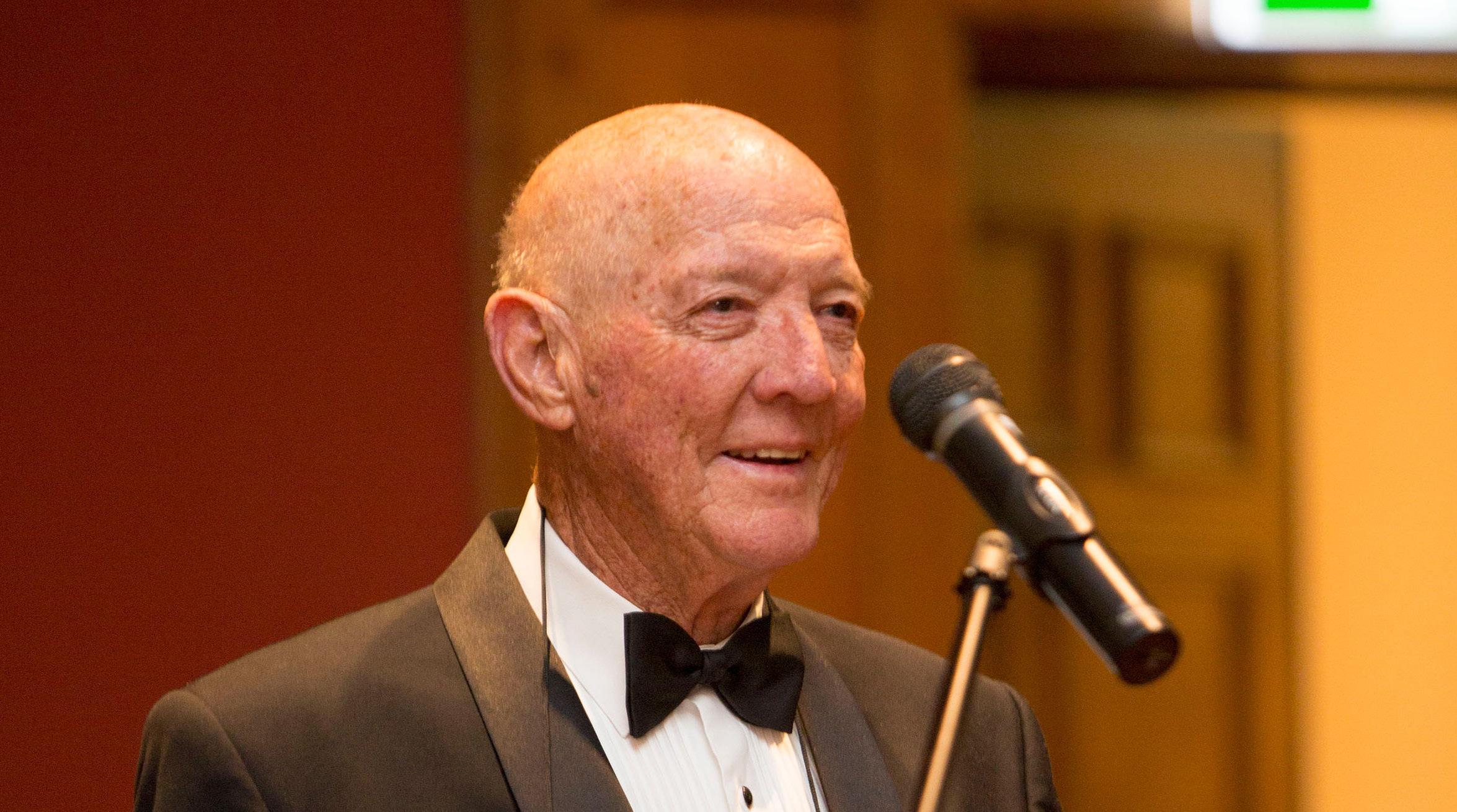
Dr Denis Gordon (Fr 1954) recently retired as General Practitioner up in Belmont, NSW. He loved what he did, performing more than half a million consultations (amongst other things) during his working life. Denis continues to have a strong connection to St Andrew’s College – he regularly returns to the College for his fresher year reunion lunch, takes part in the Annual Golf Day and has had the honour of saying first grace at the Alumni Society’s Annual Dinner more than once!
Please tell us a bit more about yourself – where are you originally from and where did you grow up?
I was born and raised in Belmont, NSW. My parents settled there in 1936, the year I was born. Dad was a General Practitioner. I attended Belmont Primary School and Newcastle Boys’ High School. Whilst at high school I enjoyed playing football, cricket and swimming. Outside of school, I enjoyed the local swimming club. We trained in the open Belmont Baths and Lake Macquarie, no matter the conditions or weather! I also enjoyed going to Pony Club; my mother was an excellent rider.
Why did you choose to reside at St Andrew’s College?
My mother booked me for interviews at Drew’s and Paul’s. Drew’s was first and the Principal accepted me and I saw no
reason for any further interviews.
What parts of College life were you involved in?
I very much enjoyed the social aspects of College – formals, informals, Open Nights and participating in the Swimming and Golf teams. I was three-time, Intercollegiate Scratch Golf Champion for St Andrew’s, for which there was a Perpetual Trophy – which now cannot be found! The Intercollegiate Golf Championships were played at The Australian, Royal Sydney and Monash. I also enjoyed friendships and activities with students from the other colleges.
What would you say was the best thing you remember about your time at College as a student?
My friends from College are still very much part of my life. We had great tutorials in College, interaction and assistance within one’s own group, and the senior students were greatly appreciated.
College and university was quite different in your time. What are the main changes that stand out to you today for better or worse?
Worse…Abolishment of Commonwealth & Teachers College Scholarships for University Education has left great financial debt for today’s undergraduates. The uncertainty of
guaranteed employment was never the case in the 1950s–1960s. We also had longer stays during my time which gave a greater dimension and sense of continuity within College. Better…Present standard of College accommodation, including food; Myriad of extracurricular activities, opportunities, enhances College life; college scholarships give opportunities for many to have lives enhanced, horizons broadened; Large numbers of ex-servicemen returning from WW ll were still in College when I was a Fresher. They added a wonderful dimension of service, discipline and camaraderie to College life for us younger fellows to admire and emulate.
How did St Andrew’s College help you achieve your goals in your career and/or your life?
The quality of friends, together with our common goal to succeed and to be proud of our College and being St Andrew’s men. The standards and ethics learned from College life also set us in good stead with loyalty and commitment in our professions and for life. You learn invaluable lessons whilst living in College, whilst also forming standards, lifelong friendships and a broad understanding of all levels of society, cultures and beliefs.
What was your favourite thing about being GP?
It was great working with my father, my younger brother, Richard and briefly Richard’s wife. I was able to make use of the changes and improvements in Medical Science over the 56 years I practiced. Some of the changes were absolutely unbelievable. I enjoyed practicing in my hometown, among those I knew so well. In latter years, I was still treating people with whom I’d commenced kindergarten with at Belmont School. My wife Robin and I followed my parents’ involvement in the Belmont community as workers and patrons of many groups. I was the Hon. Medico for 15 years
for our local rugby league team and for 50-plus years the Hon. Medico for our local Swansea-Belmont Surf Club.
You still attend many College events. What motivates you to stay involved with the College after all this time?
It’s a great opportunity to be with friends and to keep up with College progression. We appreciate the hospitality extended to us and the interest in us, by the College. We hope we can continue to be part of the St Andrew’s community.
What are you reading/watching/or listening to now that you would recommend to others?
I enjoy listening to ABC radio Classic FM or playing 12inch vinyl classical records whilst exercising. I also enjoy watching TV, particularly, British 'whodunnits', old sitcoms and period productions. I’ve also been revisiting books from my childhood and delighting in their humour – A.A. Milne’s Winnie the Pooh, Damon Runyon’s Runyon on Broadway and Conan Doyle’s Sherlock Holmes in addition to golf books.
What words of advice would you give to young Androvians, especially those who are looking to enter into a career in medicine?
Do your best. Don’t let it get you down – just soldier on to the end and enjoy College whilst you’re there. Enjoy your work when days of study are over. It is a great job and a worthwhile profession.
Is there anything else we should ask you about or you would like to add?
Wise words, from my dear Mother. She said,"Great to follow your chosen career path, but it is more important you choose more carefully your partner for life... as you can always change your job!"
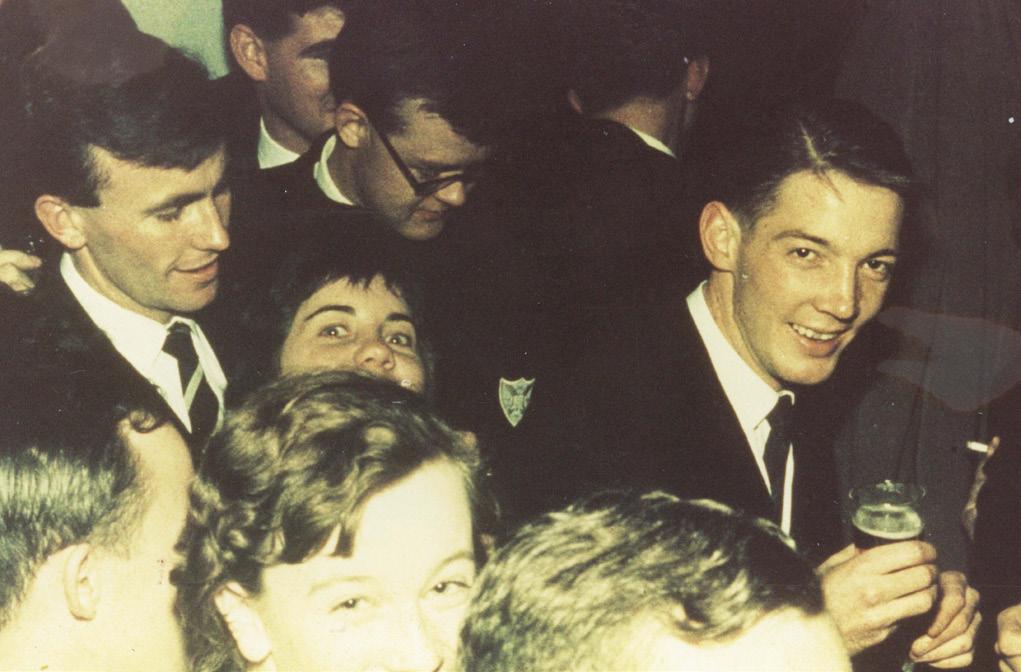

Iona Main (Fr 2010) is the Political and Government Affairs Adviser, Australian Consulate-General, New York. Prior to working in the US, Iona spent four years at the Department of the Prime Minister and Cabinet in Canberra, during which time she participated in exciting official events and summits around the world. She shares with us what motivated her to work in the public sector, gives us insight into her work in diplomacy and offers some advice for those who aspire to study or work overseas.
Please tell us a bit more about yourself – where are you originally from and where did you grow up?
I was born in Paris, but mostly grew up in Sydney and went to North Sydney Girls’ High School.
Why did you choose to reside at St Andrew’s College?
When I left school, I had never heard of college and didn’t know anyone who had lived at one. During my gap year, friends who had gone straight to university but were still living with their parents told me how fun college seemed and suggested that I apply! I knew moving back home after a year of backpacking around the world wasn’t going to cut it for me, so Drew's seemed like a perfect way to have new experiences while at uni.
What parts of College life were you involved in?
I didn’t take on any leadership roles at College – I was more of a 'joiner' and mostly got into the social side of things. I was a B-lane swimmer, a frequent but hopeless tennis court regular and an occasional chamber music cellist – we can’t all be heroes!
What led you to pursue a career in the public sector and particularly in international relations?
It might sound cliché, but I have always been motivated to leave a positive mark on the world and I also like feeling that my work is important! At uni, I decided on a whim to study Indonesian and fully exploited the Drew's tutorial program (which gave me a one-on-one tutor, an incredible arrangement that may have changed by now!) and later spent a year on exchange in Indonesia. Through that fun but challenging experience, I grew interested in Australia’s international relationships – the good, the bad and the ugly – and felt I could have a positive impact on them.
Could you elaborate on your role and the different projects you worked on while you worked at the Department of the Prime Minister and Cabinet, first as a graduate and then as a foreign policy adviser?
In the International Division, we were responsible for the Prime Minister’s international engagement through meetings with other leaders, official trips overseas and participation in summits like the G20. I wrote briefs advising the PM what topics to discuss, and the policy and protocol details for those meetings. For a year, I was part of the team that planned and delivered the ASEAN-Australia Special Summit, which was the first gathering of the Australian PM and their Southeast Asian counterparts ever hosted on Australian soil. Another highlight was attending the APEC Summit in Papua New Guinea, where I got to travel in a RAAF plane with ten Pacific Island leaders and we got a fighter jet escort into Port Moresby!
What were your motivations for going on to study a Master in Public Affairs at Princeton?
After four amazing years at the Prime Minister’s department and a surprisingly fun time living in Canberra, I decided it was time for the next adventure. Regressing to being a student again and taking time to learn something new seemed like a perfect way to see out my twenties. Princeton was kind enough to give me a big scholarship, so it was the obvious choice.
Could you tell us a bit more about what you do in your current role as the Political and Government Affairs Advisor at the Australian Consulate-General in New York?
Graduating from Princeton, I was really keen to stay on in the US as the pandemic had taken away many of my opportunities to explore the country. Joining the Australian Consulate-General in New York has been an incredible chance to be on the 'front side' of diplomacy: connecting with people, building networks and reporting on policy and political issues relevant to Australia. In September, we hosted Australia’s Prime Minister, Foreign Minister and Defence Minister in New York all at once, which was crazy but fun – President Biden was coincidentally staying in the same hotel and it was very cool to see the Secret Service in action and up close.
What is it like living and working in the United States? What are the key differences for you compared to Australia?
I love it. I am lucky to have both American and Australian friends here, and overall our two countries aren’t all that different. My experience in Princeton and New York City is only a narrow glimpse into the culture here, but I have found Americans to be more politically correct than Australians, and
sometimes less forthcoming in sharing their true thoughts on things. My boyfriend is from Darwin, so I always assumed Americans would find his accent harder to understand, but it turns out I use a lot of expressions when I talk and they often don’t translate!
Do you have any advice for people looking to move overseas? Are there any key tips or steps people should take before making the move?
Now is 100% the time to do it – the world is back in action and ready to explore as soon as Australia’s borders open! If you’re considering studying overseas, definitely investigate what scholarships are available as there are lots of sources of funding once you know where to look. And don’t underestimate the value of loose connections as you hunt for jobs and get set up in a new country – I’ve found the Drew's and broader University of Sydney networks really helpful.
What are you reading, watching or listening to at the moment that you’d recommend?
I read a lot and am currently loving How to Hide an Empire by Daniel Immerwahr. It’s about how America came to be so dominant through sneaky colonisation. It’s a nerdy foreign policy book, but I’m into it.
Do you have any words of advice to young Androvians thinking of pursuing a career in the public sector?
Canberra is a lot better than most people give it credit for, so don’t be put off! There are definitely public policy opportunities elsewhere, but Canberra is really the heart – think of it as basically a country town with a high concentration of smart, interesting people who want to do something impactful. Graduate programs are a great way to get a foot in the door straight out of uni and once you’re in the public service it’s quite easy to move into the areas that interest you most. I am so lucky to have been able to pursue my interest in international relations into a career in foreign policy, and while I don’t know what will come next it has been a great ride so far.
We thank Iona and Denis for taking the time to chat to us. You can read more 'Where are they now?' stories about our alumni on the College's website.
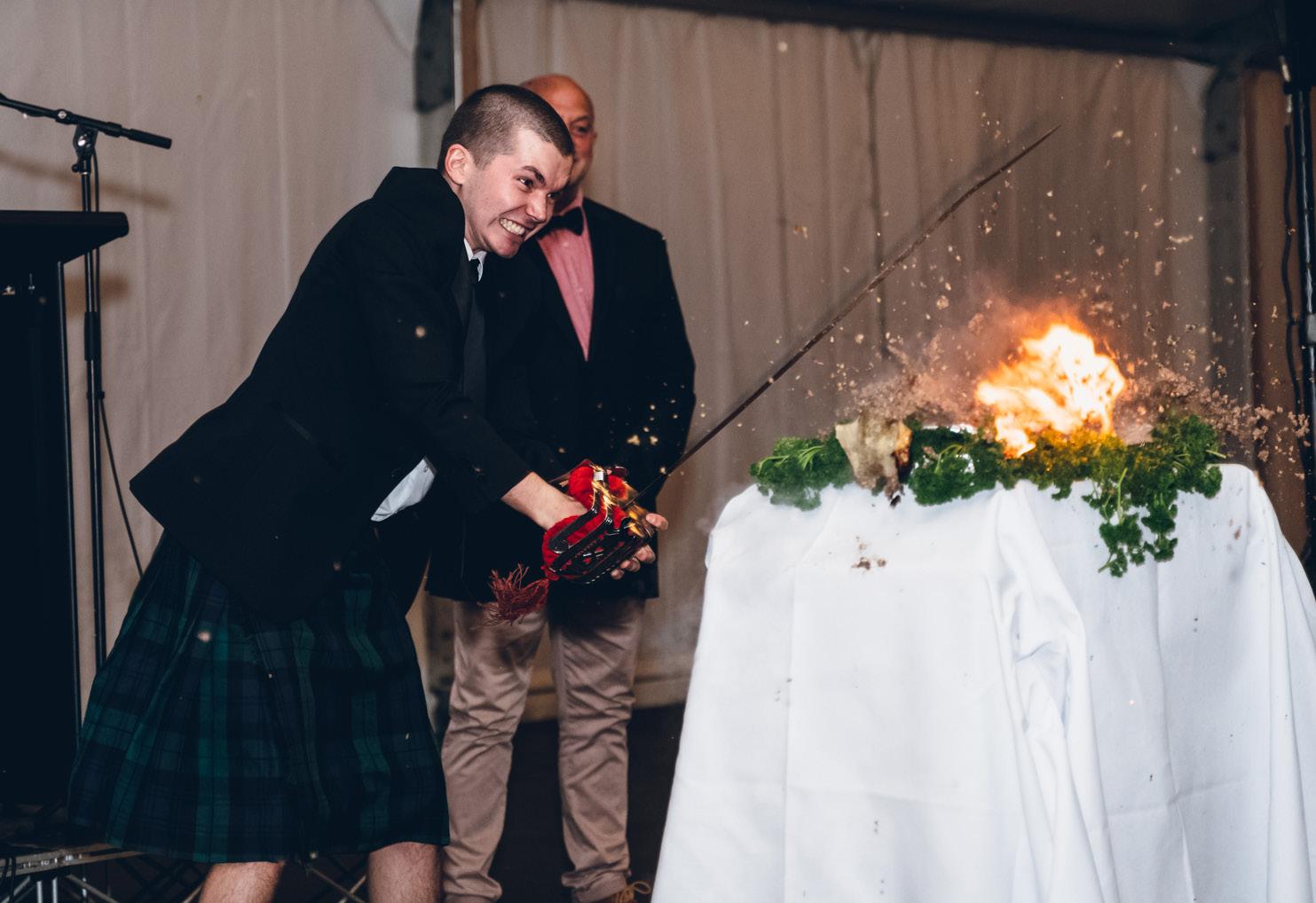
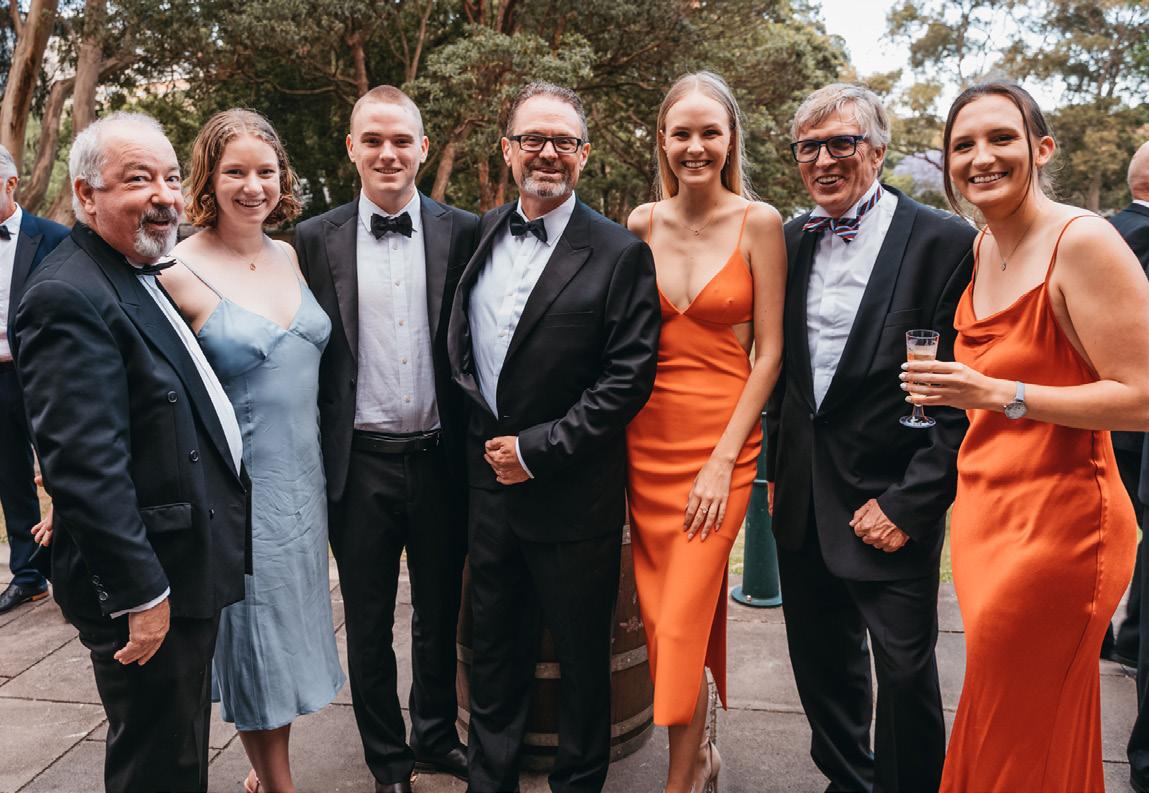
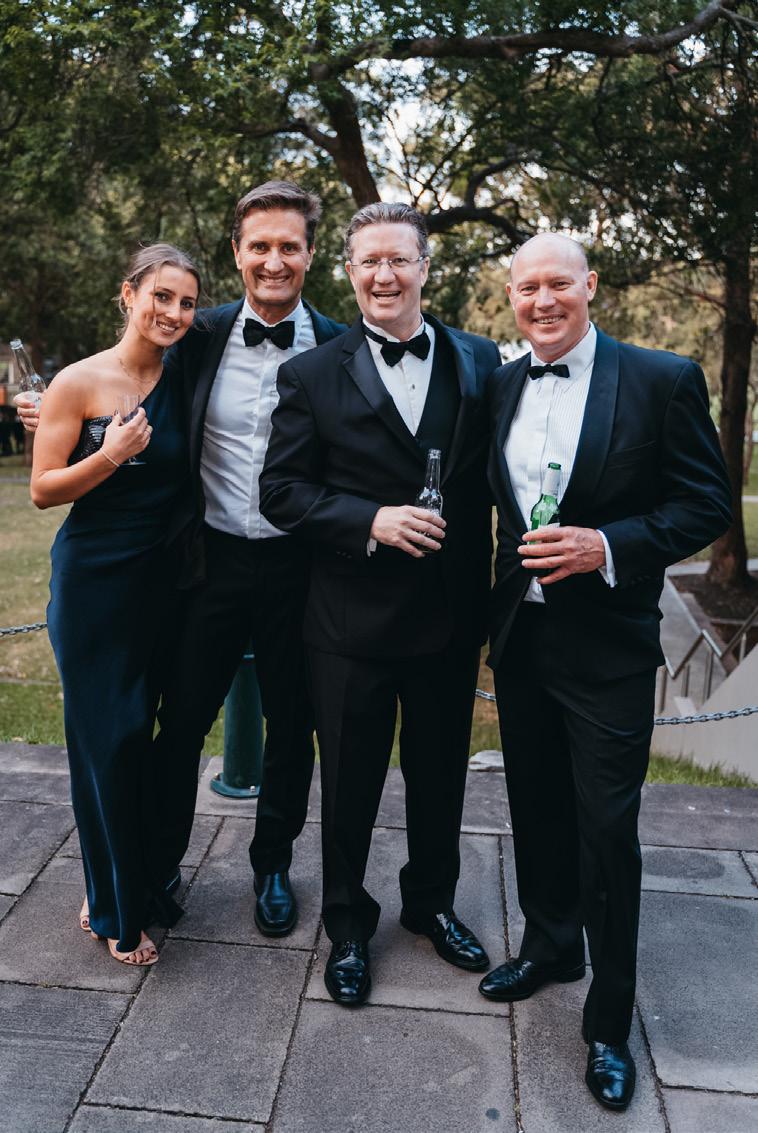
The Father's Day Dinner was at last held on Saturday 6 November. The event was postponed from a scheduled September date due to COVID-19 and was almost cancelled again on the new date due to a COVID case. Thankfully, the evening was well worth the wait! The black tie occasion saw 400 students and their fathers in attendance. The occasion started off with pre-drinks on the Forecourt in front of Main Building, before the many guests moved down to a marquee on the College Oval. Dinner was accompanied by the traditional Ode to Haggis, which was given by Ben Emmett (Fr 2021). The evening's Master of Ceremonies was Jeremy Elliot (Fr 2020) and speakers included George Head (Fr 2019) and his father, Gary Head.
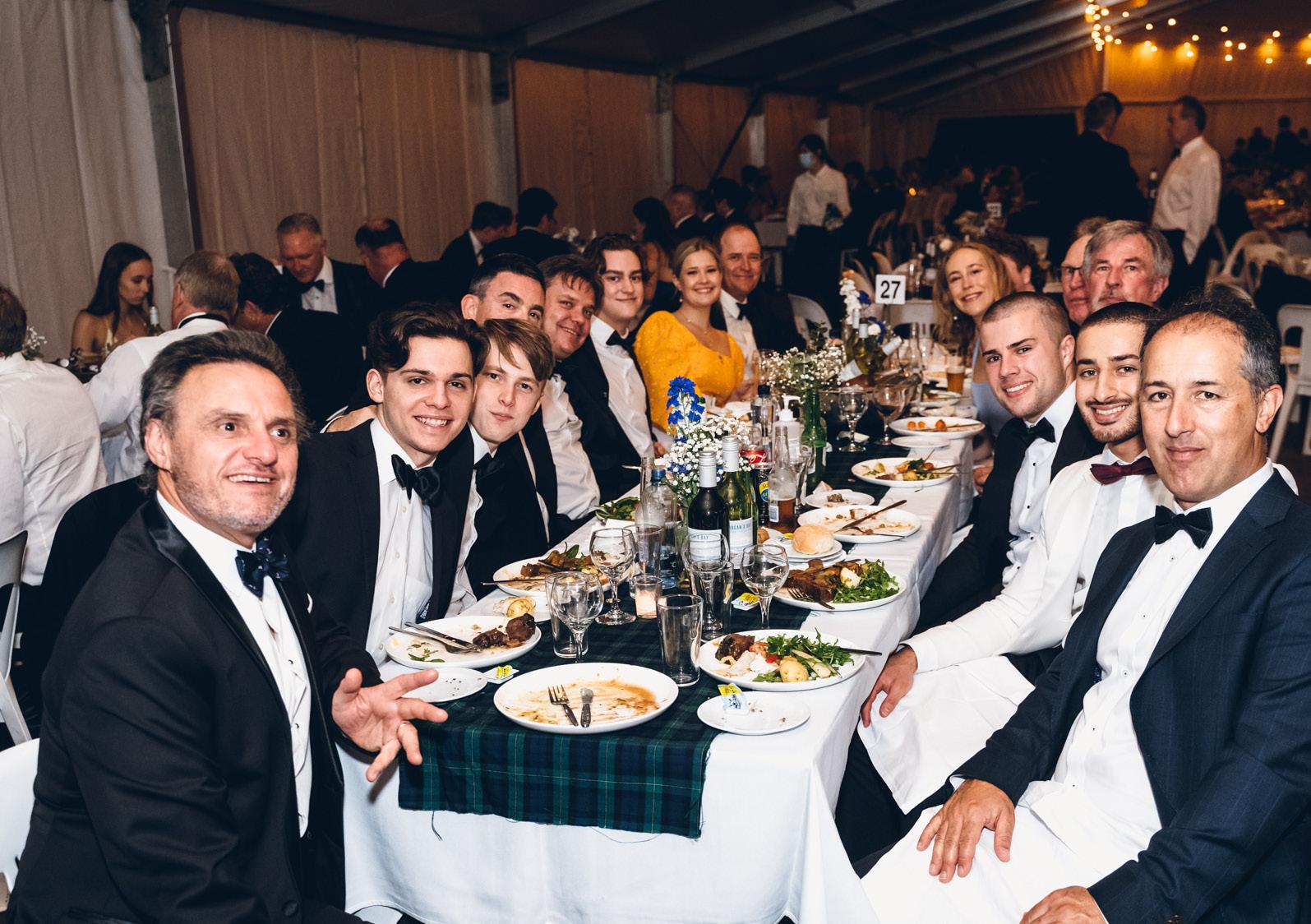
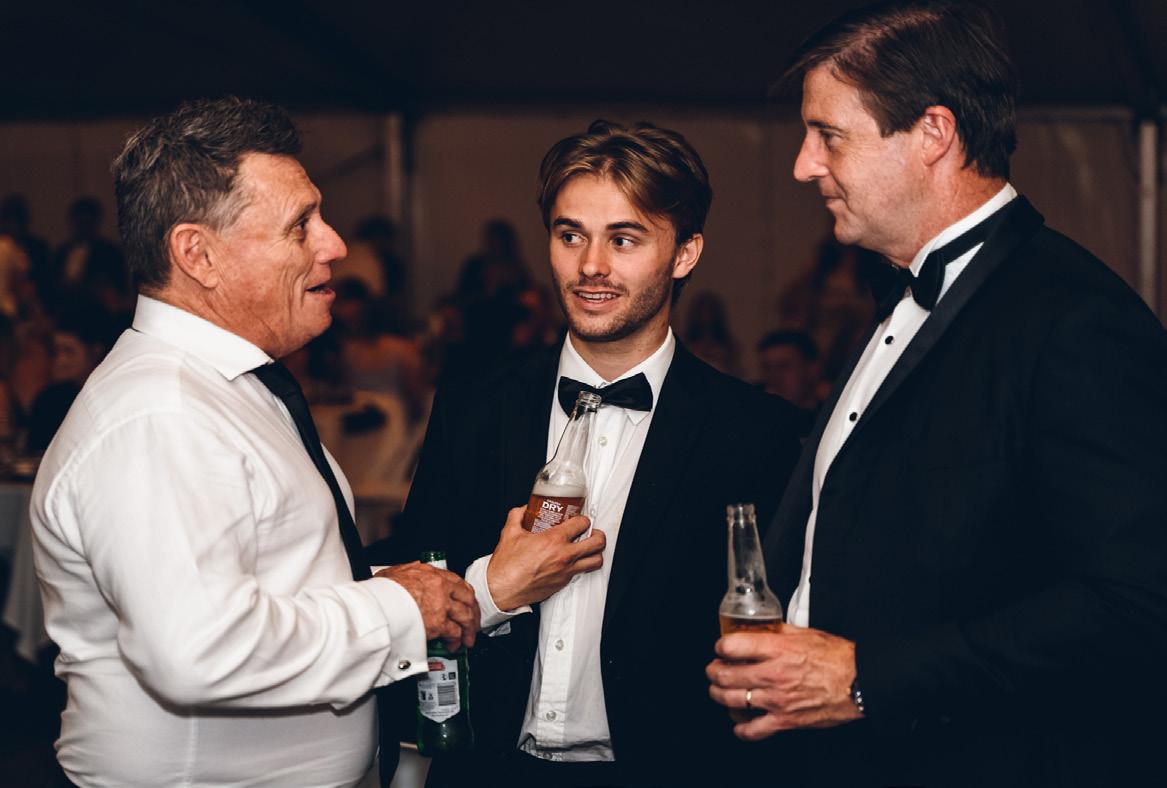
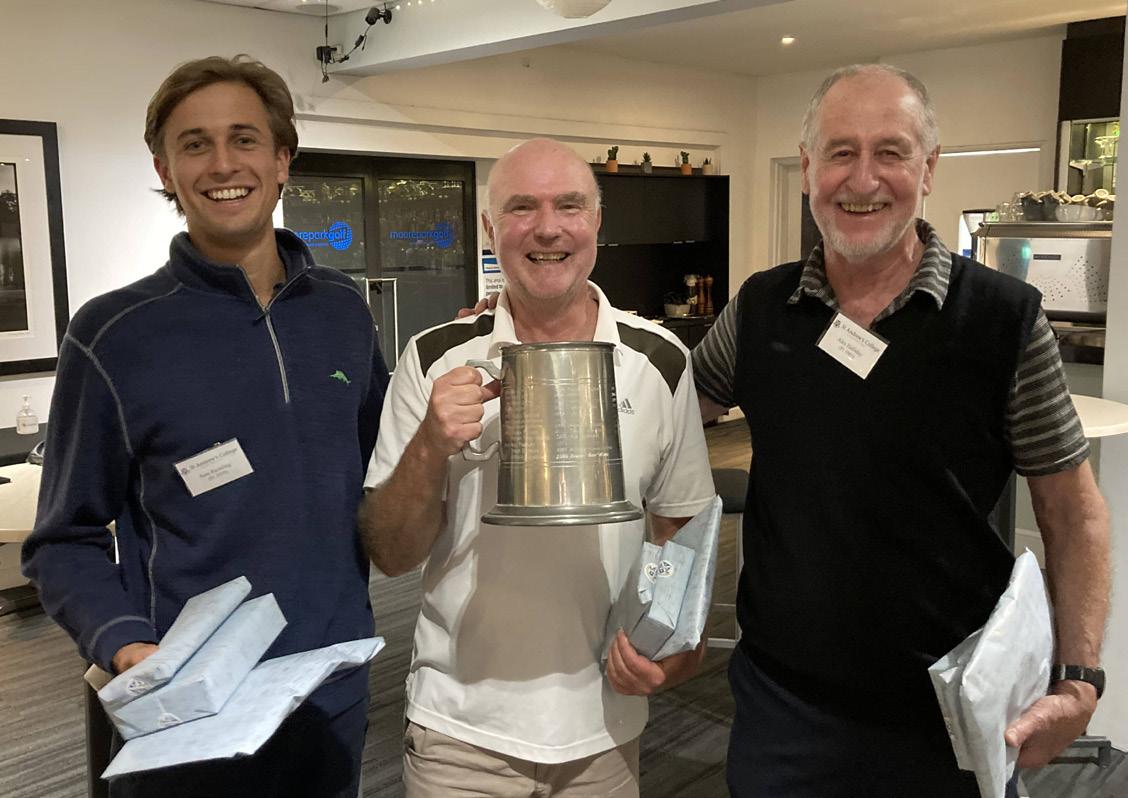
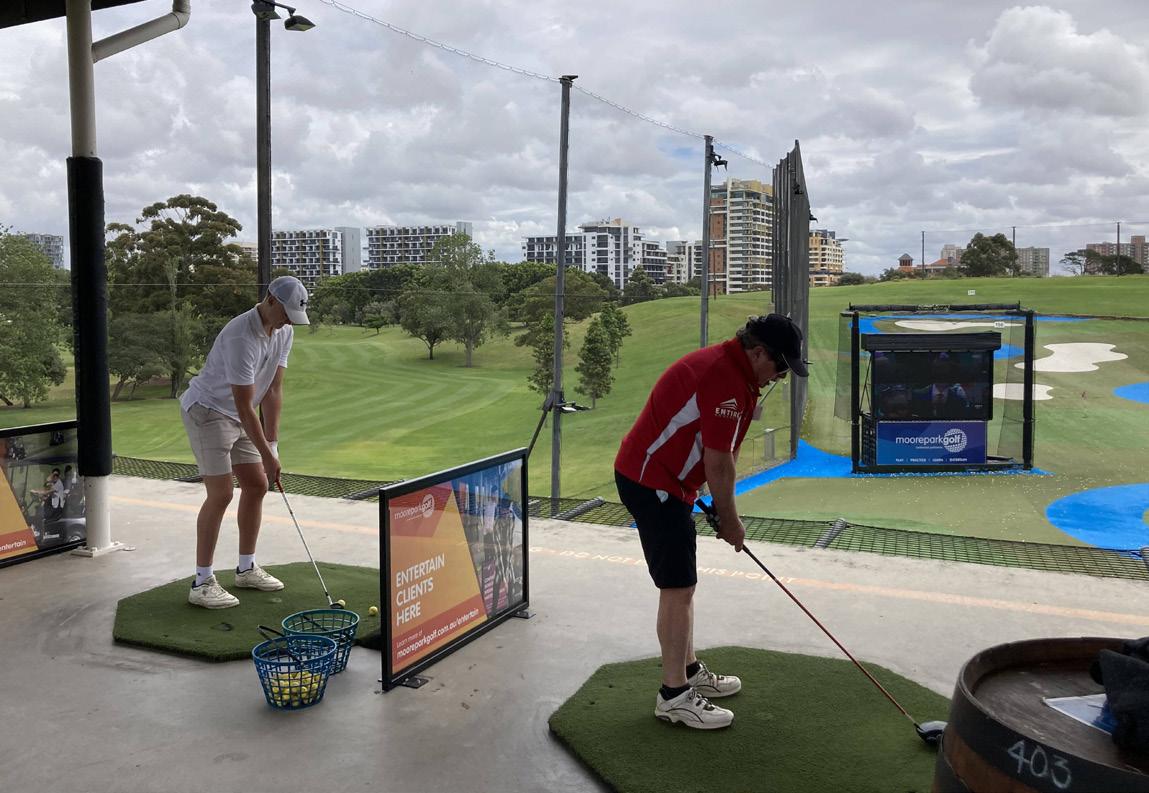
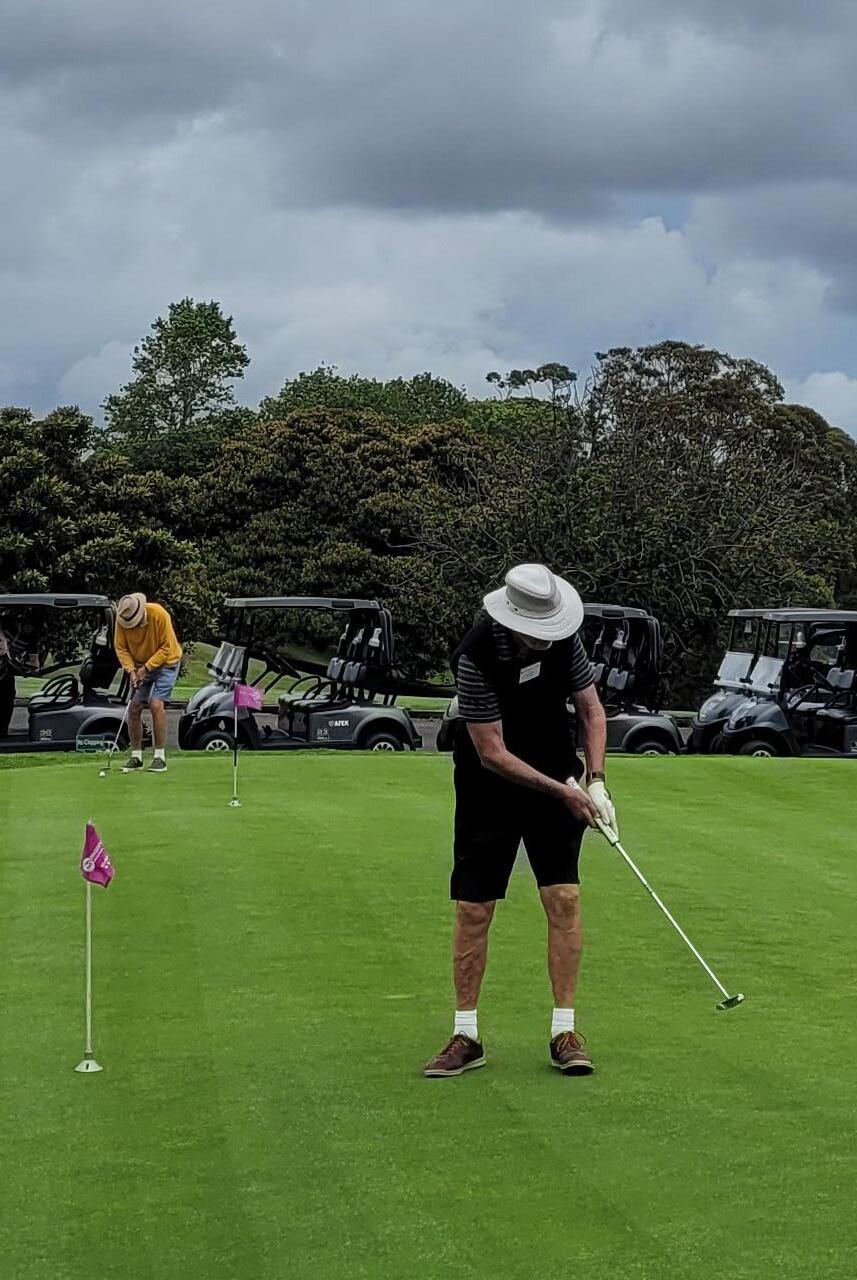
This year saw our highest attendance for the SACAS Annual Golf Day yet. For the second year running, we invited parents and current students to join alumni at this event. Despite a wet weather forecast, we had a record 42 players at Moore Park Golf – and the rain held off for the occasion! Our golfers spent the afternoon on lovely 18-hole course, before enjoying a well-deserved dinner along with drinks at the Park View Bar. Congratulations to Greg Bligh (Fr 1980) for taking out the win this year, whilst honourable mentions go to Alex Halliday (Fr 1965) and current student Sam Reckling (Fr 2020) who tied for second place. Thank you to everyone who attended, we hope to welcome you all back again in 2022.
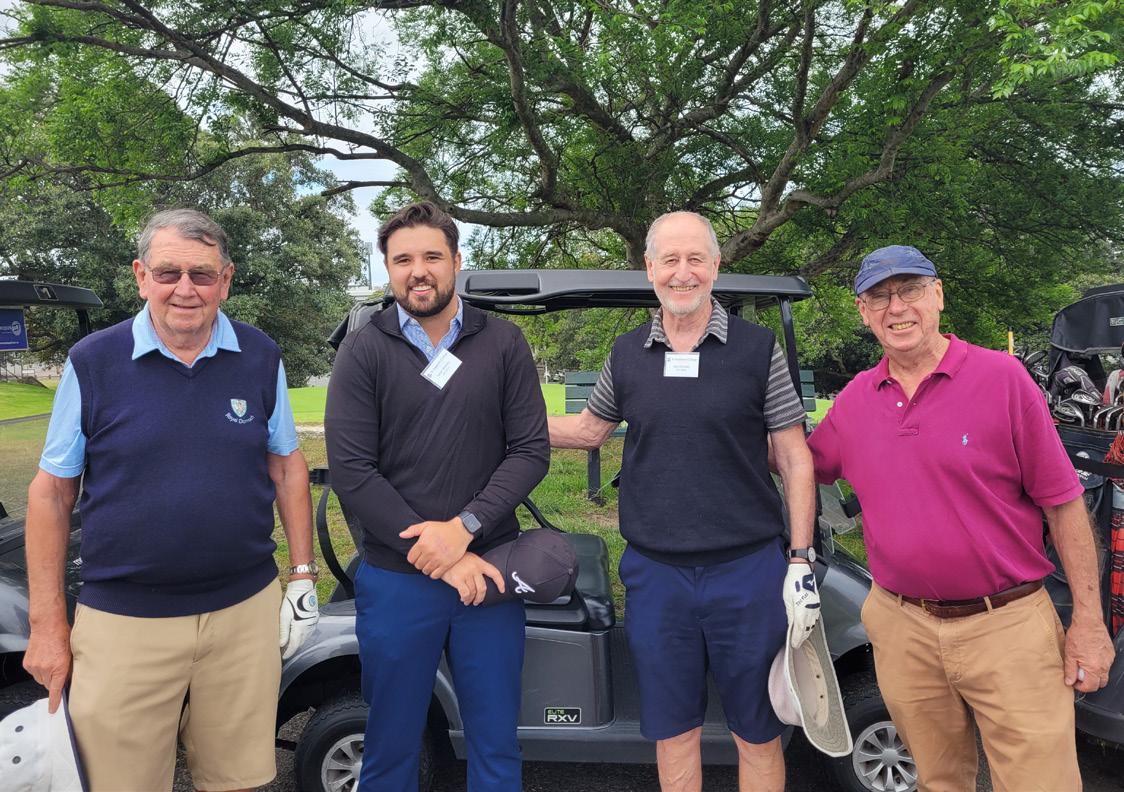
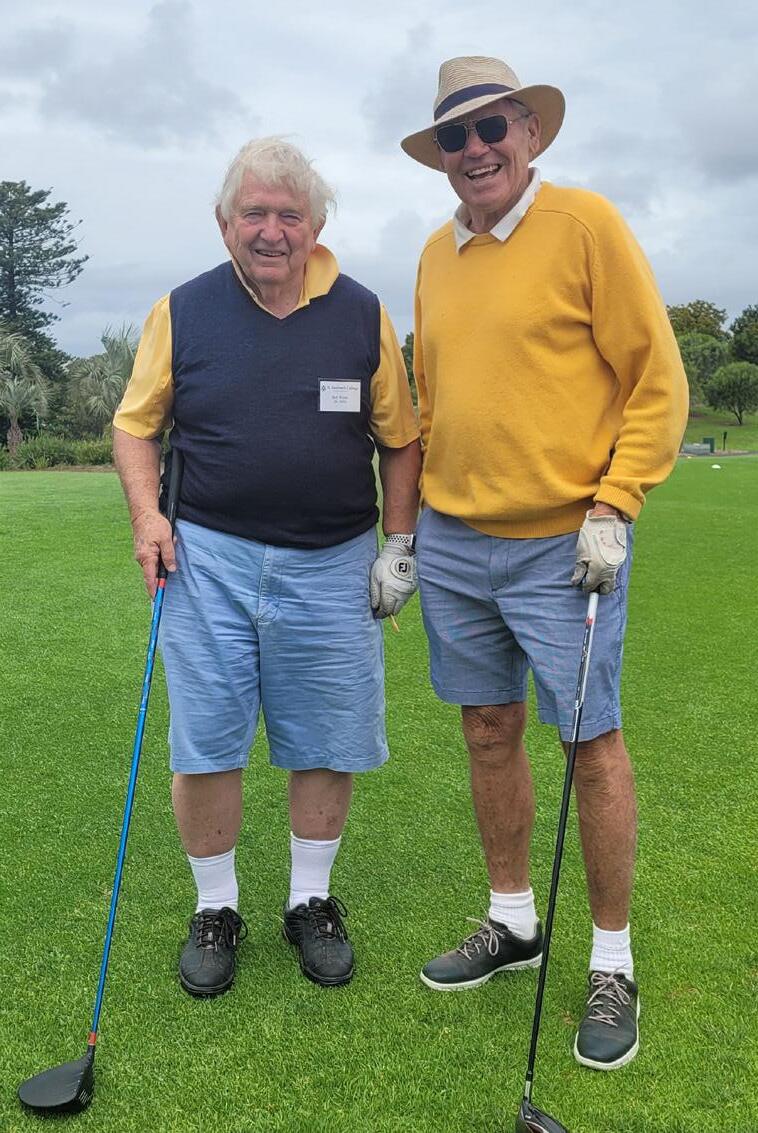
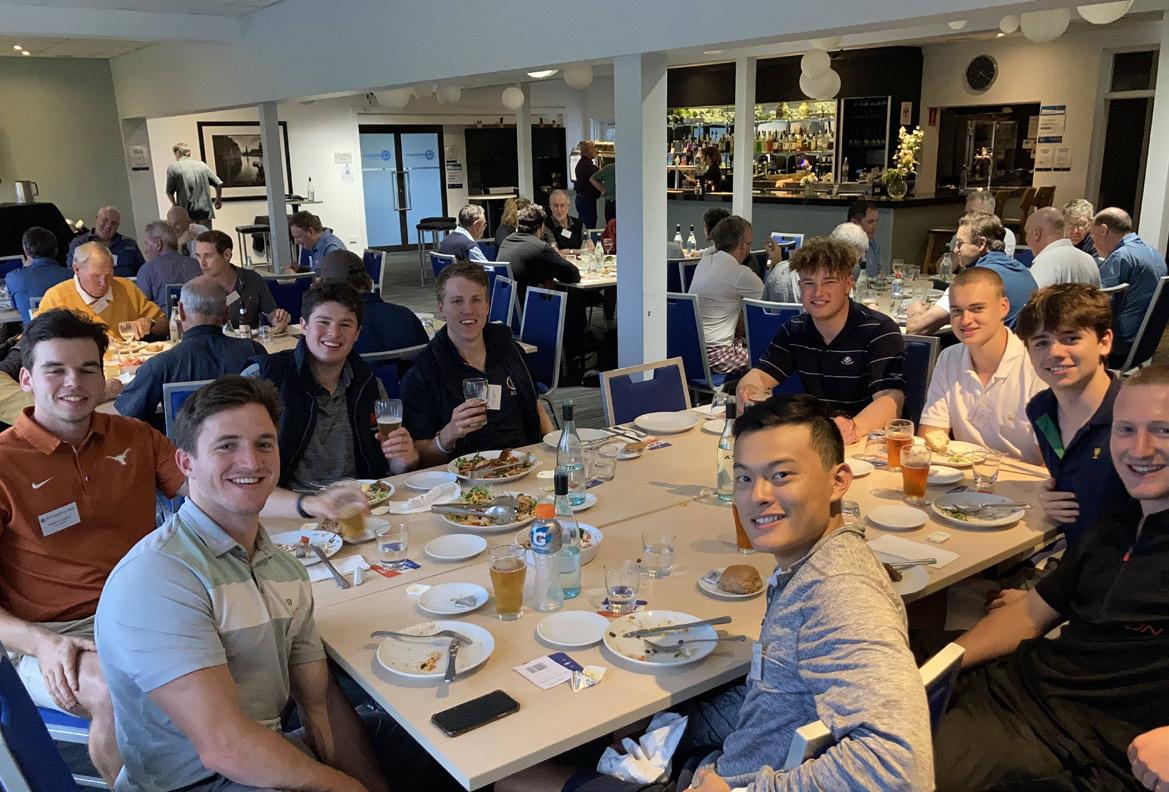
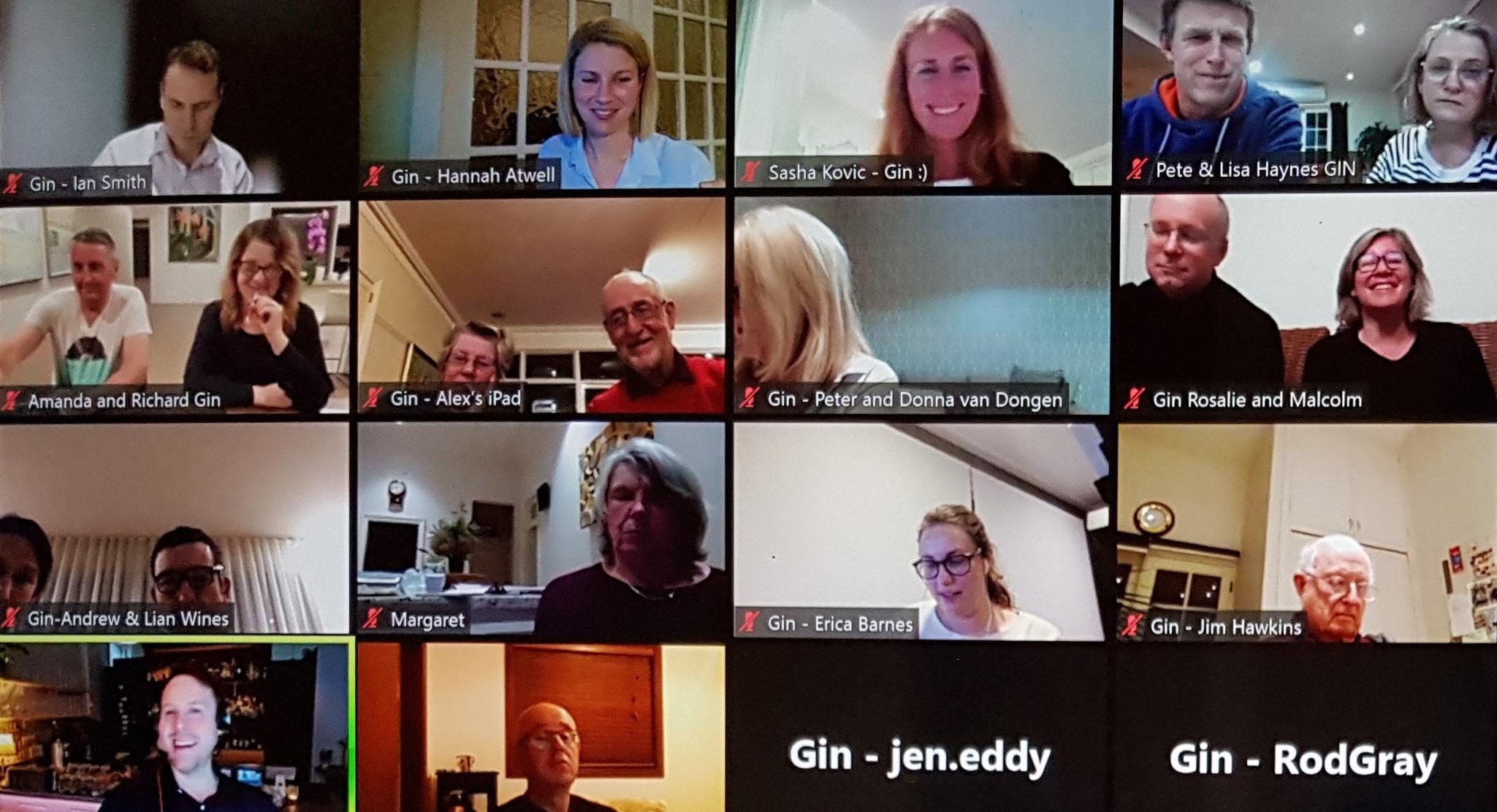
During October, whilst in lockdown, we hosted our first ever Virtual Founders & Benefactors event in place of our usual in-person chapel service and dinner. We did not want to miss out on the chance to catch up with our donors and say thank you, so in collaboration with Box Bar (Australia’s first dedicated digital bar) we hosted a virtual gin and whisky tasting via Zoom instead. Our guests were treated to their choice of a gin or whisky tasting box complete with garnishes, and guided through the tasting by the experts from Box Bar. There was also the opportunity to hear from the Principal and members of College Council. We hope that all attendees enjoyed the evening, and perhaps left with a new favourite gin or whisky.
This year has seen an incredible level of support from our community. More than 150 donors made new gifts and pledges that when combined, total over $1.1 million. The Annual Giving Appeal focused on raising means-tested scholarships for Indigenous students, students from rural and regional areas and government school backgrounds. We’ve received wonderful support and raised over $113,000 for these scholarships. Because of our community’s support, we will be able to give more students the College experience in 2022.
We have also been working with a number of alumni, parents and friends of the College to establish a number of new named, means-tested scholarships in 2021. St Andrew’s Rural & Regional Scholarship is the first endowed fund of its kind on the St Andrew’s College Foundation. We thank all of them for their incredibly generous support.
We also know that philanthropy comes in all shapes and sizes and our community is also incredibly generous with their time. Thank you to all of the alumni, parents and friends of the College who have taken part in the various Professional Development Programs for our students this year. It would not be possible to run these important programs for our students this year without your participation. Thank you as well to the Alumni Society and Young Alumni Committees for all of their help in bringing our community together and supporting the Advancement team.
You can read more about the progress of the Philanthropy Program in our Annual Philanthropy Report, which will be published in the first half of 2022. If you would like information before then or have questions about making a gift or a bequest, please do not hesitate to get in touch.
Hannah Atwell Director of Advancement
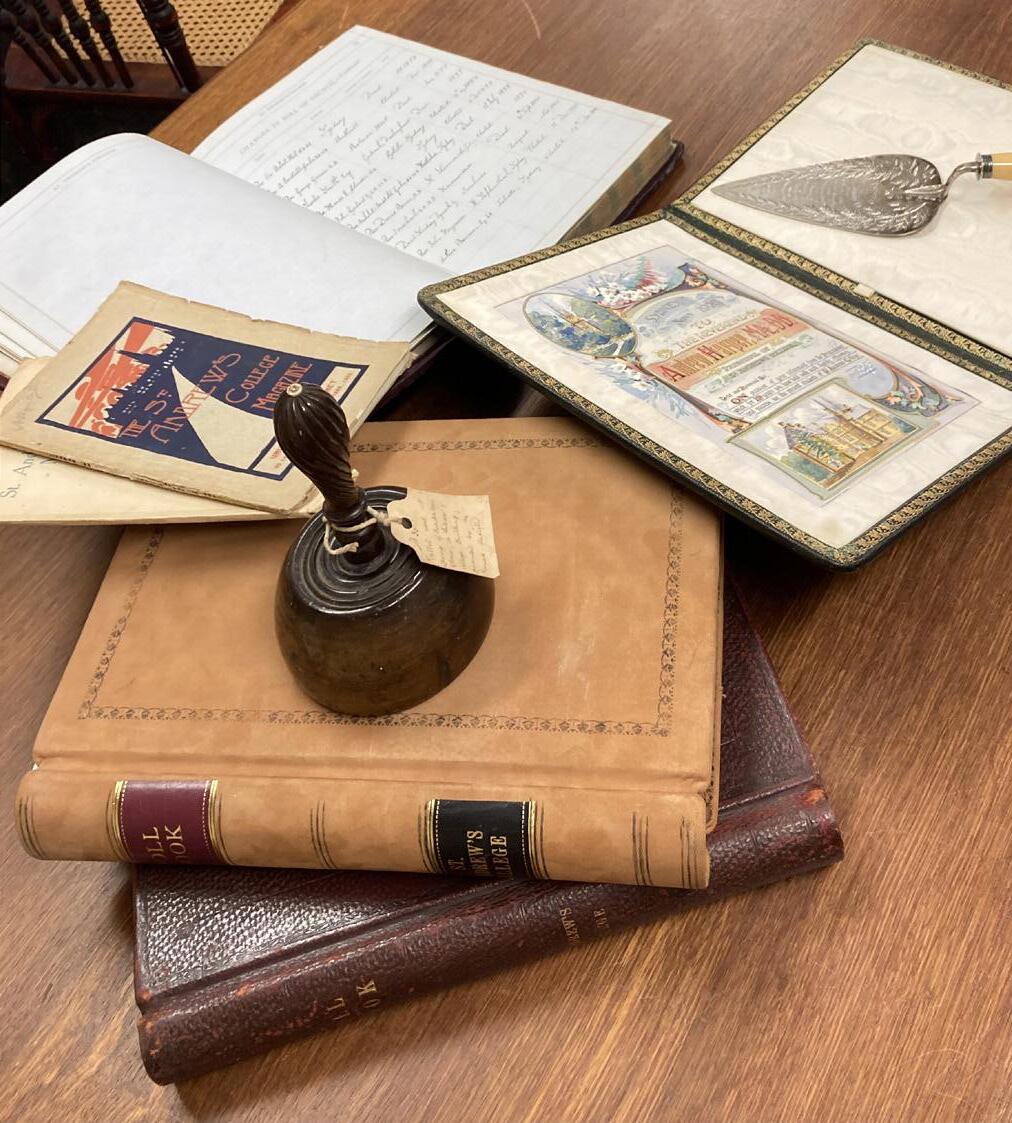
The space and facilities known as the Jill Dougan Archives at St Andrew’s College were generously donated by Tom Yim (Fr 1966) to acknowledge the role played by Jill Dougan in support of her husband, the Reverend Alan Dougan who was Principal of St Andrew’s College from 1957–1974. Alan Dougan was a popular Principal and throughout his tenure at the College he enjoyed the unfailing support of his wife Jill, who was much loved and appreciated by the student body.
The late Professor Ian Jack was the custodian and Archivist of this space for many years until his passing, and thanks to his work and those who came before him, the St Andrew’s Archives currently hold a good collection of important documents, photographs, objects and artworks that combined form a rich history of the College. In Professor Jack’s absence, we have been very fortunate to have the assistance of Acting Archivist and Teaching Fellow, Alex Wright (Fr 2015) to access and manage the Archives when necessary in the last few years and I sincerely thank him for his time and efforts.
Moving forward, I am delighted to share that the College’s collections will be actively managed with the help of a professionally trained Archivist who is working on campus in the Jill Dougan Archives two days per week. Our new
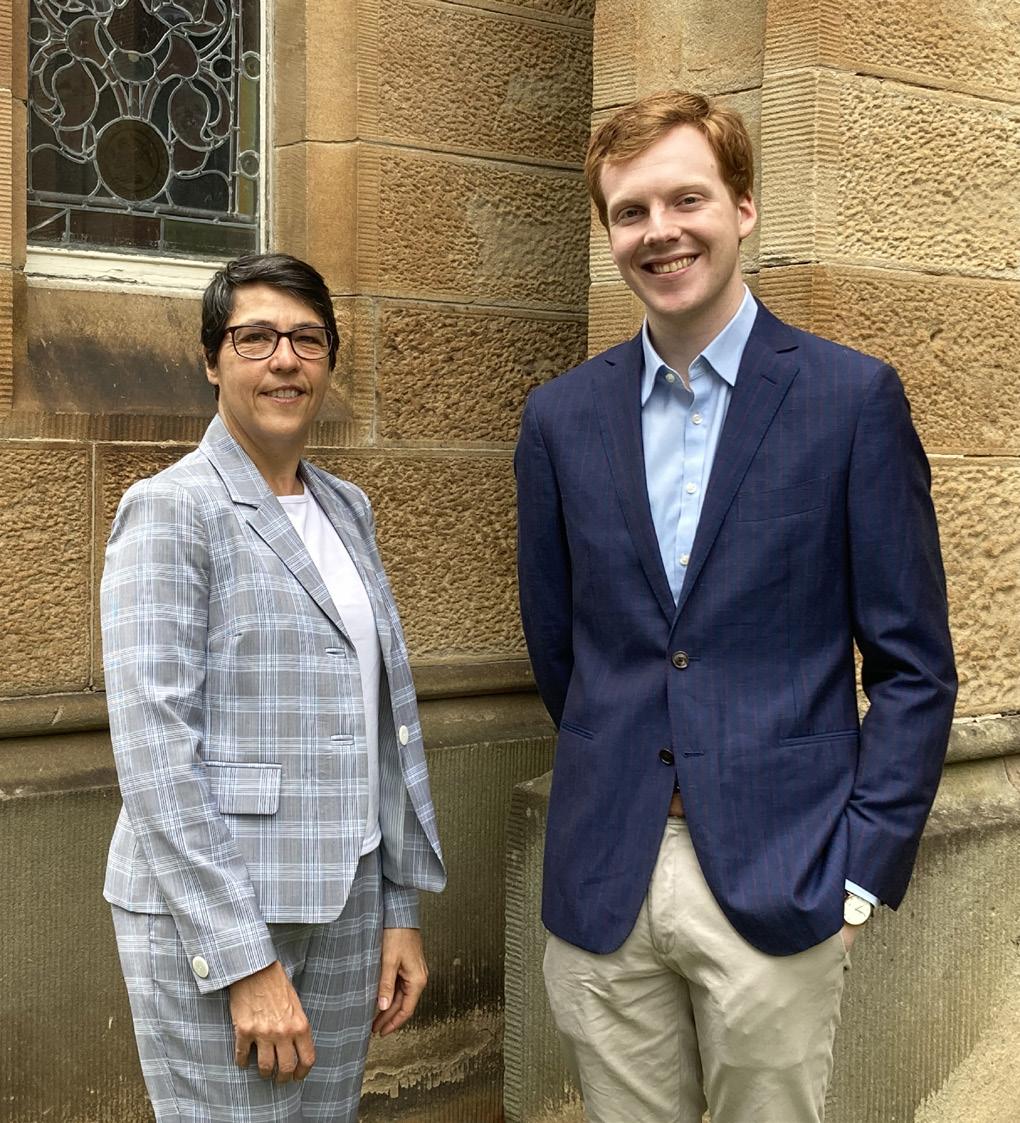
Archivist, Tracy Bradford, is a highly experienced and professional trained archivist who has worked with the City of Sydney, The State Library of NSW, Department of Aboriginal Affairs, NSW Department of Lands and Sydney Dance Company in the past, and also currently does work with Kincoppal Rose Bay School, St John’s College and Sancta Sophia College.
Tracy has already been working on a number of enquiries relating to the Archives and assisting with information for Obituaries, Alumni Profiles, Blue & White stories and Council events. In preparation for our celebration of 20 years of undergraduate women at College, Tracy has also been busy researching key events and activities relating to the years leading up to this important milestone. We are excited to see what interesting stories, photos and materials she is able to discover and help us share with our community.
If you have any St Andrew's College related memorabilia, photographs or items that you wish to share or donate to the College Archives, please get in touch via: archives@standrewscollege.edu.au / +61 2 9565 7300.
Hannah Atwell Director of Advancement
1 Some of the items stored in the Archives - St Andrew's College magazines, Council notebooks with handwritten notes, beautifully illustrated commemorative certificates, and objects used on special occasions 2 New Archivist Tracy Bradford and Teaching Fellow, Alex Wright

The Alumni Society's activities have again been curtailed this year by the COVID-19 pandemic.
A significant disappointment was the cancellation of the Annual Dinner for the second year in a row. As we know, reunion years look forward to catching up with their fresher mates at that dinner, but are hopeful that we will be able to host a bumper celebration next year for all reunion years in 2020, 2021 and 2022! Please keep an eye out for a save the date email with more details in the new year.
We are also looking forward to the recommencement of all of our usual face to face events in 2022 and particularly those new events that will happen in association with the celebration of 20 years of undergraduate women in College.
During the last year we as an Alumni Society have:
• Held a facilitated strategy day of the Committee to help cultivate and harness the incredible goodwill that many alumni have towards the College. One particular initiative from that day that the Alumni Society is actively exploring is the introduction of an Alumni mentoring platform. We hope to tell you more about this in the coming year.
• Made our last remaining instalment of our pledge towards the construction of the TRL Building. The Society has now contributed $50,000 for this purpose with a specific request that the money was to be spent by the College in consultation with the Senior Student towards the fit out of the common spaces of the new building.
• Funded four Alumni Society Scholarships and provided a small grant for our three Olympian Alumni attending the Tokyo Olympics.
• Continued to advocate for opportunities for rural and remote students to have the benefit of a College education.
• Held a well-attended Alumni Golf Day and helped support a number of alumni and community events and gatherings including the Rawson Rugby Finals event and the Young Alumni Social Drinks
• Supported the College and the Students' Club in various ways as they have grappled with the pandemic and associated disruptions.
A vote of thanks is owed to the Alumni Society Committee members for their contribution this year and also the College staff, and particularly the members of the Advancement Office headed by the Director of Advancement, Hannah Atwell, for their support of Alumni Society activities and events.
Special mention and thanks must go to retiring committee members Sasha Kovic and Katherine Suttor who both contributed significantly while on committee. We also congratulate Sasha Kovic on her appointment to Chair of Council, taking over from Charlie Taylor who has been impressive in the role over the past eight years.
We are also pleased to welcome four new committee members who were elected at the recent SACAS Annual General Meeting in November. We look forward to Jhoshan Jothilingam (Fr 2002), Emma German (Fr 2006), Bec Harper (Fr 2007) and Angus Pulver (Fr 2013) contributing to the Alumni Society Committee and the activites and programs on offer for alumni moving forward. Both the Alumni Society Committee and the Young Alumni Committee have met in December to discuss their plans for 2022 and we are looking forward to offering a variety of ways to stay connected with St Andrew's next year.
Alex Rhydderch (Fr 1994, SS 1997) President of the Alumni Society
The College would like to congratulate the following alumni on their awards and achievements so far in 2021:
Queen's Birthday Honours:
Dr Andrew K Hewish (Fr 1988)
For services to the Arts, in recognition of his role as founder and Executive Director of the Centre for Recent Drawing.
2021 Cricket Book of the Year / the Cricket Society & MCC Book of the Year 2021
Congratulations to Ashley Gray (Fr 1985) who was awarded the 2021 Cricket Society Book of the Year award at the Telegraph Sports Book Awards in London for his book The Unforgiven: Missionaries or Mercenaries? Cricket Book of the Year recognises the very best cricket writing across all forms. Later this year he won the 2021 Cricket Society and the MCC (Marylebone Cricket Club) Book of the Year Award. The competition, run by the Cricket Society and in partnership with the MCC, is highly regarded by writers and publishers.
Clare Wheeler makes 'Matildas' debut
Congratulations to Clare Wheeler (Fr 2017) who made her international debut with the 'Matildas' in a friendly match against the Republic of Ireland in Dublin on 22 September. Clare joined her current club, Fortuna Hjørring, the 11-time Danish Champions, earlier this year.
Australian satellites take off with Space-X
Iver Cairns (Fr 1979) who is a Professor in Space Physics at the University of Sydney, led the team responsible for the successful launch of the CUAVA-1 in September, an Australian designed and built satellite, onboard a SpaceX rocket from the Kennedy Space Centre at Cape Canaveral in Florida. The satellites are headed towards the International Space Station before they will start their orbit around Earth, gathering valuable data for use in future space exploration.
Jennifer Jackett is awarded the Joan Uhr Prize
Congratulations to Jennifer Jackett (Fr 2008) who was jointly awarded the Joan Uhr Prize for her outstanding research focused on addressing public policy challenges, engaging across academia, the Australian Public Service and through the news media. The Australian National University awards the prestigious Joan Uhr Prize annually to the Sir Roland Wilson Foundation PhD scholar who has made the greatest contribution to public policy in the past year, particularly through strengthening the links between the Australian Public Service and ANU.

The College has learned of the following deaths in our community. Our sympathies are extended to their families.
Dr Robert Sowerby (Bob) Armstrong (Senior Tutor 1963-1967)
Mr Jan Slack-Smith (Fr 1950)
Mr Alan Anthony Munro (Tony) Edwards (Fr 1952)
Dr Lindon Michael Harper Wing (1961)
Mr Brien Michael Gilmore (Fr 1969)
If you know of any other recent deaths in our community, please contact:
E: alumni@standrewscollege.edu.au
T: +61 2 9565 7302