
Sustainability Review 2025 Stalatube Group

INTRODUCTION
For more than 50 years, Stalatube has focused on building durable solutions, long-term partnerships, and trust Sustainability has been embedded in our values since the 1970s, and we have consistently been a frontrunner in our industry
This Sustainability Review represents an important next step forward for us: it is the first time in our history that we have brought our sustainability work together in a single, transparent report
While Stalatube is not subject to the EU’s Corporate Sustainability Reporting Directive (CSRD), we have chosen to voluntarily report on sustainability to promote transparency Sustainability is not a compliance exercise for us – it is a business driver Using the European Sustainability Reporting Standards (ESRS) as a reference, this report reflects our ambition to lead our industry with responsibility, performance, and transparency
Our approach to sustainability is practical and impact-driven We focus on what matters most: reducing emissions across the value chain, advancing circular economy solutions, investing in our people, and operating with integrity High-strength, long-lasting stainless steel solutions, science-based climate targets, and a strong, people-centred culture are at the core of how we create value for our customers and society
This first Sustainability Review is a starting point We will continue to strengthen our sustainability work step by step – guided by our strategy, supported by our partners, and driven by the goal of building a more sustainable future for Stalatube and our customers
For Stalatube, sustainability is not an obligation – it is a source of strength
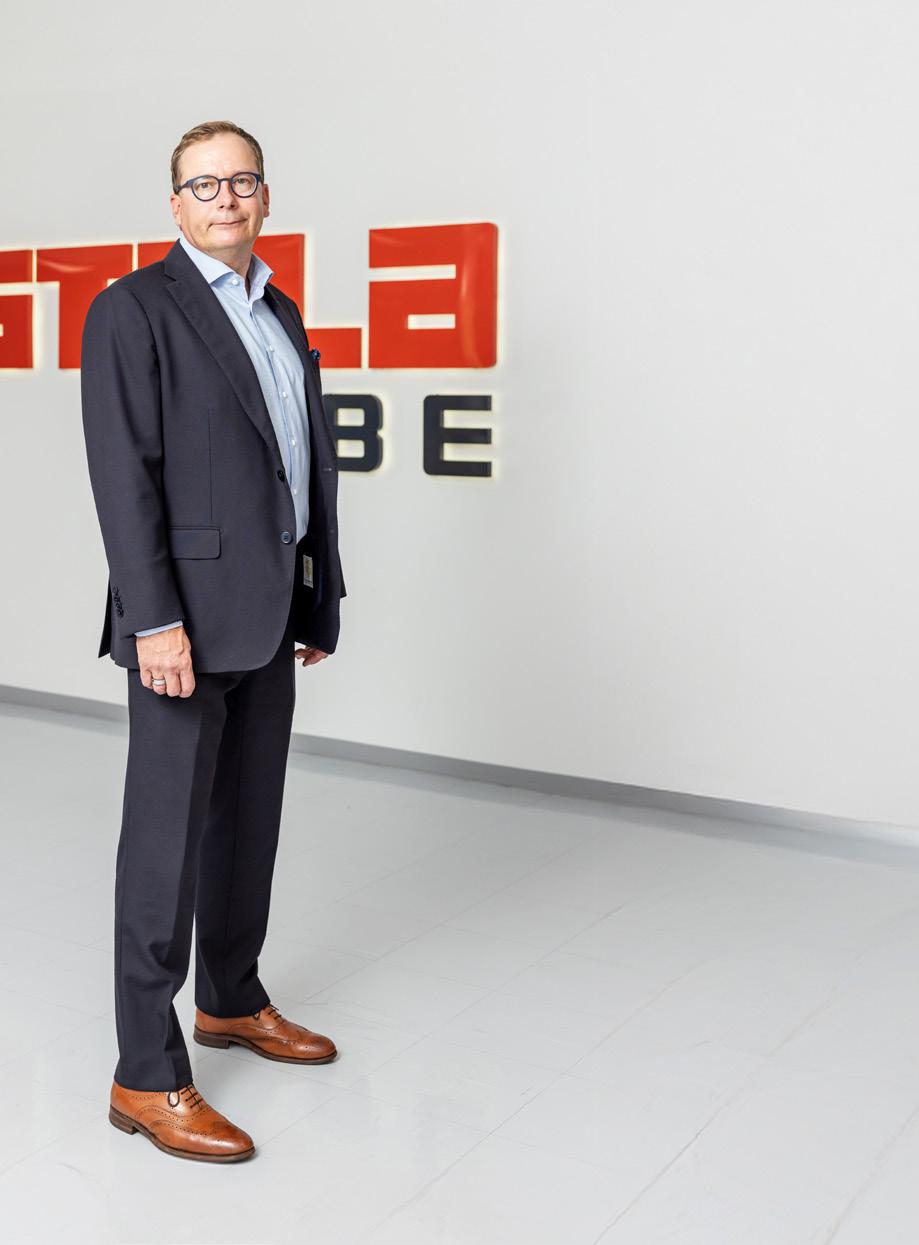
Sami Packalén, CEO Stalatube Group
OUR MISSION
The world’s leading sustainable and customer-oriented manufacturer of high-strength stainless steel hollow sections and the world’s leading supplier of high-strength products in the transport industry.
OUR VISION
Stalatube is the best stainless solutions provider in its branch.
OUR VALUES
• Value-added services to our partners and customers
• Honesty
• Yes we can
• Harmonious relationship with nature, society and individuals
• Family entrepreneurship
• Profitability
GENERAL DISCLOSURES
Basis for Preparation
General Basis for Preparation of the Sustainability Review
Stalatube Group’s sustainability review for the financial year 2025 has been prepared in accordance with the reporting requirements and framework of the European Sustainability Reporting Standards (ESRS) The report has been prepared by the Group’s parent company, Stalatube Oy, and covers the Stalatube Group as a whole, corresponding to the scope of the consolidated financial statements The data in this report covers the period from 1 January to 31 December 2025
The content of the reporting is based on a double materiality assessment, the results of which were approved by The Board of Directors in September 2024 In addition to the company’s own operations, the assessment included mapping and evaluating sustainability impacts, risks, and opportunities across the upstream and downstream value chain For material topics in the value chain, the reporting covers the required disclosures in accordance with the standards The outcome of the materiality assessment is reviewed annually, and the content of the reporting is updated accordingly This is Stalatube’s first sustainability review
Sustainability Risk and Impact Management
We recognize that managing sustainability risks is an essential part of sustainable business and long-term value creation The objective of our risk management is to identify and address the company’s sustainability impacts by strengthening positive impacts and preventing negative ones Our objectives for identifying sustainability impacts are described in publicly available policy documents, and the identification process covers both our own operations and the upstream and downstream value chains
GOV-1, GOV-2, GOV-4
Sustainability Risk and Impact Management
We manage sustainability risks as part of strategic risk management The purpose is to identify, assess and manage factors that may affect our business or cause significant environmental and social impacts These impacts are identified through various sources such as stakeholder feedback, assessments by management and experts, and reviews of the value chain The basis of the materiality assessment is used to evaluate the scale and materiality of impacts Assessment work is continuous, and impacts are regularly reviewed between The Management Team and process owners Impacts are documented
Responsibility for managing sustainability risks lies with The Management Team together with the EQHS organization After identification, risks and mitigation measures are addressed with the responsible topic owners The mitigation hierarchy is applied in managing negative impacts: first, we seek to prevent negative impacts to the extent possible; if prevention is not fully possible, we aim to limit the extent of the impact; as a last resort, we restore or remediate negative impacts The effectiveness of mitigation measures is evaluated through reassessments
Roles of Governance Bodies and Sustainability Data
The highest governance body for sustainability matters at Stalatube is The Board of Directors, which guides and supervises the company’s executive management The Board’s main duties are described in the company’s governance principles
The Board meets six times per year and, when necessary, more frequently to address both standing agenda items and topics defined in the annual cycle Progress in sustainability work is discussed in at least two meetings per year The most significant business risks and their financial impacts are reviewed at every meeting
The Board approves the company’s Code of Conduct, the strategic sustainability development plan and targets (Roadmap), and sustainability-related policies
The Management Team is responsible for implementing operational activities The Management Team meets regularly and addresses sustainability topics as needed The CEO is responsible for implementing the sustainability targets approved by the Board across the company Functional leaders and process owners are responsible for assessing and monitoring sustainability impacts, risks and opportunities within their areas of responsibility, as well as for related management actions Progress against targets and management actions is monitored collectively by The Management Team on a quarterly basis Reviews of key metrics and the need for corrective actions are assessed quarterly
The EQHS Manager reports to The Board on material sustainability-related impacts, risks and opportunities The EQHS Manager presents the strategic sustainability development plan and targets (Roadmap) to The Management Team and The Board for approval

Strategy, Business Model and Value Chain
Vision
Stalatube is the world’s leading sustainable and customer-oriented manufacturer of highstrength stainless steel hollow sections and the world’s leading supplier of high-strength products in the transport industry
Strategy and Business Model
Our strategy is based on sustainable, customer-centric and competitive manufacturing, where climate change mitigation, resource efficiency and customer focus are key objectives We are committed to the Science Based Targets initiative and have set emission reduction targets aligned with the Paris Agreement and the 1 5°C pathway Our strategy includes investments in material and energy efficiency, the use of fossil-free energy sources, and increased use of recycled materials
Our business model is based on developing and manufacturing high-quality stainless steel products Our products serve the needs of industry and infrastructure, and their long service life and maintenance-free characteristics support sustainable development We manufacture high-strength stainless steel hollow sections and fabricated products used, among others, in the bus industry and demanding structural applications We also provide expert services, including materials engineering support and optimization of product solutions Our customers include bus industry operators, construction and infrastructure companies, and industrial component manufacturers that value sustainability, strength, and durability
Sustainability is integrated into product development: we develop solutions that reduce our customers’ material needs and lower their carbon footprint basis Reviews of key metrics and the need for corrective actions are assessed quarterly
INPUTS OUTPUTS
Raw Materials stainless steel, energy (electricity and heat), water, chemicals, and packaging materials
Our strategic objectives support this overall approach:
• Grow as the world’s leading supplier of high-strength stainless steel hollow sections
• Grow as the world’s leading supplier of high-strength products in the bus industry Creating a new, lighter body concept for bus body manufacturers enables up to a 30 % weight reduction compared to traditional body structures
• Become the world’s most responsible and cleanest manufacturer of hollow sections, and leverage sustainability work at the business level (setting SBTi targets for 2021–2050; producing sustainability communication content for marketing)
• Customer orientation in everything we do
• A great workplace and the best employer in the region
• Skilled and motivated employees
• Continuous development of productivity and profitability
• Safety in all operations
• Competitive and responsible global sourcing that meets our sustainability objectives
These objectives guide investments, product development and people development, and they are aligned with the principles of sustainable business
Finished Products hollow sections and fabricated products, side streams (material losses, recyclable materials), and emissions (GHG)
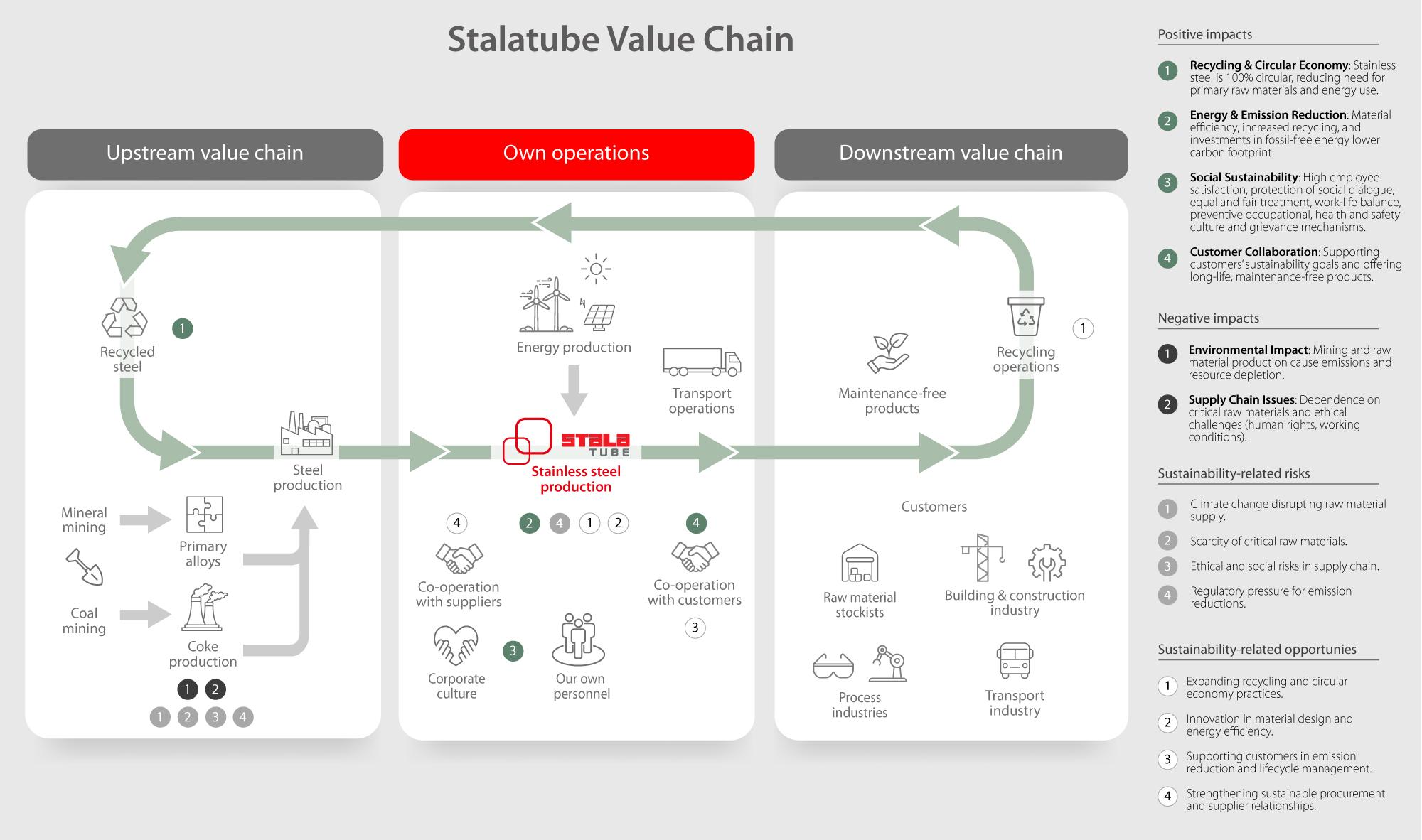
Value Chain Description
Our value chain covers raw material procurement, our own production, and customer solutions The most significant environmental impacts occur upstream, particularly in raw material production, energy use in our production facilities, and transportation We manage these through supplier cooperation, emission reduction targets, and energy efficiency programs Downstream, we focus on customer solutions that support lowcarbon outcomes
Upstream activities, such as mineral extraction and primary alloy production, consume energy and natural resources, while the use of recycled steel reduces the need for primary raw materials The steel industry’s value chain faces climate risks, emissions, dependence on critical raw materials, and ethical challenges, including labor conditions and human rights On the positive side, stainless steel is fully recyclable, and our company culture and supplier relationships support sustainable sourcing and collaboration
Our own operations focus on employee well-being and equality by providing development opportunities, fair compensation, flexible work arrangements, and a safe working environment, supporting high satisfaction and secure employment Corporate culture and partnerships promote sustainable sourcing and collaboration In manufacturing, material efficiency and increased recycling rates reduce the use of primary raw materials and lower the carbon footprint, while energy efficiency and the use of fossil-free energy support emission reduction targets We monitor transport emissions and are committed to climate change mitigation and circular economy principles
Downstream, products are distributed to customers and used in their applications We support customers’ sustainability goals through maintenance-free products, lifecycle management, and engagement in sustainable practices Recycling products and collecting scrap steel enable resource reuse and reduce the need for primary raw materials
Stalatube is the world’s leading sustainable and customer-oriented manufacturer of high-strength stainless steel hollow sections and the world’s leading supplier of high-strength products in the transport industry


Key Sustainability Targets
Climate change
E1 Climate change
Resources and circular economy
E5 Circular economy
• Climate change mitigation by reducing emissions from own operations and the value chain
• Energy efficiency and energy sources
• The most responsible and cleanest manufacturer of hollow sections
• Scope 1–3 emissions
• Energy intensity
Skilled and motivated employees
A great workplace and the best employer in the region
Health and safety
S1 Own workforce
Corporate culture
G1 Business conduct
• Employee competence, skills development and training opportunities
• High retention rate
• Target of zero accidents and a safe working environment
• Fostering corporate culture
• High employee satisfaction rate
• Customer satisfaction
• Responsible procurement practices
Responsible procurement
G1 Business conduct
• Recycled content of steel raw material
• Low-emission end product
• Scope 1+2: 1580 t CO2e
• Scope 3: 42860 t CO2e
• Energy intensity improvement:
• 9 5 % / year
• 20 5 % / 3 years
• 93 %
• Emission factor of the end product
• EN 1 4301/1 4307: 1 61 t CO2e/t
• EN 1 4003: 1 3 t CO2e/t
• EN 1 4404: 1 83 t CO2e/t
• EN 1 4571: 1 74 t CO2e/t
• EN 1 4162: 1 68 t CO2e/t
• Average hours of training per employee / year
• Employee attendance in annual development discussions
• Employee retention
• Lost time incident frequency rate (LTIFR) • 19 h
• Employee satisfaction (employee experience survey result average) *
• Net Promoter Score (NPS)
• Sustainability criteria (minimum requirements) for suppliers
• Sustainability profiling of suppliers
• Monitoring actions (audits, etc )
• Criteria created and implemented in the procurement process
• 80 % of purchases
• Paris Agreement–aligned 2030 target; carbon neutrality by 2050
• Min 75 %
• End product: lowest emission factor on the market
• Responsible procurement practices fulfilling our policy commitments
• No reported major violations in the value chain
* The content and methodology for calculating this figure are described in section G1.
Stakeholder Interests and Views
We actively engage in dialogue with our key stakeholders Representatives of our stakeholders also participated in the double materiality assessment The table below describes our key stakeholder groups, their sustainability-related expectations, the forms of stakeholder communication, and how the management of these expectations is integrated into our business model and strategy
Employees
Customers & partners
• Clear mission and strategy and sustainable financial situation
• Secure employment
• Fair and equal treatment and management
• Safe and healthy working environment
• Fair and motivating rewarding
• Training and development
• Work-life balance
• Compliance
• Customer and business understanding
• Technical value of products
• Honest dialogue
• Functional technical solutions
• Long lifecycle
• Training and skill development
• Achieving sustainable development
• Compliance with regulations and sustainability
• Continuity of profitable business
• Sustainable and profitable revenue growth
• Product development
Owners
Suppliers, subcontractors & contractors
• Compliance with accounting requirements
• Mission and strategy
• Liquidity
• Long-term partnership
• Open and proactive communication
• Co-operation, feedback and support to enable product development
• Sustainability, risk management
• Shared emission targets
• Employee satisfaction survey
• Development and 1 to 1 discussions
• Co-operation Committee
• Occupational Health & Safety Committee
• Exit interviews
• Training feedback
• Whistleblowing channel
• SpeakUp channel
• Annual customer satisfaction survey
+ Falcony feedback (reclamations) The analysis of feedback is done in management review
• ESG survey
• Email communication to sales contact
• HubSpot/marketing
• Trade fairs presence
• Whistleblowing channel
• Annual strategy meeting (Board and Management team)
• Board thematic meetings with the process owner present
• One-to-one discussions between the CEO and the Owner (Chairman of the Board)
• Regular meeting with raw-material suppliers
• Meetings with sub suppliers as needed
• Audits by yearly audit plan
• Questionnaires to suppliers and possibility to send feedback
• Whistleblowing channel
• Intranet
• Monthly and weekly info meetings & recordings
• Teams channels
• Info screens
• Development and 1 to 1 discussions
• Co-operation Committee
• Occupational Health & Safety Committee
• Salesframe marketing & technical info
• Sales visits & trainings
• Webinars
• SBA newsletters
• Social media
• YouTube
• Trade fairs presence
• Employee satisfaction survey overall rating 4 09/5 in 2025
• Employee retention rate 97 % in 2025
• Monthly and weekly info meetings held according to schedule
• Annual strategy meeting (Board and Management team)
• Board thematic meetings with the process owner present
• One-to-one discussions between the CEO and the Owner (Chairman of the Board)
• Regular meeting with raw-material suppliers
• Meetings with sub suppliers as needed
• Audits by yearly audit plan
• Customer feedback to sales contacts is not reported collectively
• Internal weekly sales meeting held to manage priority customer needs
• Customer survey in 2025
• Strategy revision in 2025
• Feedback in one-to-one meetings
• Meetings with sub suppliers as planned
• Audits by yearly audit plan
Identifying and Assessing Impacts, Risks, and Opportunities
Our materiality assessment process was structured into several phases: mapping the sustainability context, assessing ESRS sustainability topics and engaging stakeholders, providing a more detailed description and evaluation of sustainability impacts, risks and opportunities relevant to the company in accordance with the ESRS standards, and finally setting the materiality threshold by management
The main objective of the materiality assessment was to identify and evaluate the risks and opportunities that could have a material impact on the implementation of our strategy and the achievement of our objectives, as well as our material impacts on society and the environment
During the sustainability context mapping phase, we identified Stalatube’s key stakeholders, mapped our value chains and their most significant actors, and assessed the impacts of our operations on the environment, society, and our most important stakeholders We also reviewed sustainability impacts typical of our industry When assessing impacts across our operations and value chain and defining the topics, we considered our strategy description, sustainability roadmap, code of ethics, identified business-related megatrends, international sourcing, and geographical specificities of our operations and their impacts The mapping and identification work was carried out through workshops involving The Management Team and representatives from across functions
The second phase involved engaging our key stakeholders Our own employees, customers, and suppliers were identified as the most critical stakeholder groups Surveys were sent to all employees, key customers, and our largest suppliers The results of the stakeholder surveys and stakeholder expectations were taken into account when evaluating sustainability impacts, risks, and opportunities
In the third phase, we described and assessed in more detail the impacts related to sustainability matters as well as the associated financial risks and opportunities
Sustainability topics were evaluated in terms of how they may affect our financial performance and development, and which of them create or erode company value
Sustainability topics and the materiality of related impacts, risks and opportunities were assessed based on the following criteria:
IMPACTS
Severity and likelihood (potential)
RISKS OR OPPORTUNITIES

Scale and likelihood (potential)
Climate change adaptation
Material Impacts, Risks, and Opportunities
Based on the double materiality assessment, the following sustainability topics were identified as the most material:
• E1 Climate change: climate change mitigation, energy use, and energy sources
• E5 Circular economy: resource use, inputs and outputs
• S1 Own workforce: working conditions, social dialogue, health and safety, training and skills development, DEI
• G1 Business conduct: corporate culture and supplier relationships
Climate change may raise raw material costs and limit availability, but resilient supply chains and low-carbon solutions offer competitive advantage and growth Risk, opportunity
GHG-emissions from operations, raw materials and logistics contribute to climate change Impact
Customers increasingly prefer suppliers with credible climate targets and low-carbon solutions Opportunity
Climate change mitigation
Optimised designs and lighter products enable customers to reduce their carbon footprint Opportunity
Climate-related regulation, increasing regulation creates additional compliance requirements and resource needs Risk
Energy
Energy-intensive production and fluctuating energy prices affect cost competitiveness Impact, risk
Topic Why this topic is material to Stalatube Topic Resource inflows
High recycled content reduces upstream emissions and supports circular economy objectives Impact, opportunity
Optimised product design reduces material use and resource intensity Impact, opportunity
Fluctuations in steel availability and prices may impact competitiveness and cash flow Risk Resource outflows
High-performance solutions increase resource efficiency and sustainability benefits for customers Opportunity
Full recycling of stainless steel scrap supports circularity and reduces waste Impact
The table below presents the material impacts, risks, and opportunities for each sustainability topic In addition, more detailed descriptions of the content of implications, risks, and opportunities are provided for each topic area
Working conditions
Secure and long-term employments are essential due to specialised production methods and accumulated know-how Impact, opportunity
Employee experience directly affects recruitment, employee engagement and retention and business continuity Risk, opportunity
Health and safety Safe working conditions are critical for employee well-being, operational continuity and trust
Training and skills development
Diversity and equal treatment
Freedom of association, social dialogue, employees’ participation rights
Impact, risk, opportunity
Skilled and motivated employees are a prerequisite for executing strategy and maintaining competitiveness Risk, opportunity
Fair, equal, and transparent employment practices support trust, compliance and high employee retention Impact, opportunity
We respect employees’ right to freely associate, join trade unions, engage in collective bargaining, and participate in open, constructive discussions with management We ensure working conditions comply with the law and industry regulations Impact, opportunity
Corporate culture and sustainable business
Corporate culture and ethics, ethical business conduct supports long-term performance, trust and employeeen engagement Impact, opportunity
ESG performance and access to financing, sustainability performance increasingly influences access to financing and growth opportunities Risk, opportunity
Whistleblower and grievance mechanisms, effective channels enable early detection of misconduct and strengthen transparency Impact, opportunity
Compliance and integrity, strong compliance reduces the risk of misconduct, corruption and reputational damage Impact, risk
Management of relationships with suppliers
Sustainable sourcing and supplier conduct, supplier sustainability assessments help manage supply chain risks Impact, risk, opportunity
S1 Own Workforce, Key Material Topics
Topic Why this topic is material to Stalatube IRO
E1 Climate Change, Key Material Topics
Topic Why this topic is material to Stalatube IRO
G1 Business Conduct, Key Material Topics
Topic Why this topic is material to Stalatube IRO
E5 Resource Use and Circular Economy, Key Material Topics
ENVIRONMENT
Climate Change
Material Impacts, Risks, and Opportunities
Stalatube has identified several material climate change–related impacts, risks, and opportunities that influence our strategy and business model These have been assessed across the entire value chain, with particular focus on raw material sourcing, production processes, and greenhouse gas emissions The assessment followed the double materiality principle, considering both Stalatube’s environmental impacts and the financial risks and opportunities arising from climate change
As a result of the assessment, eight material climate-related impacts, risks, and opportunities (IRO) were identified These primarily relate to the availability and carbon intensity of raw materials, energy consumption, emissions across the value chain, and regulatory developments The assessment is updated when significant changes occur in Stalatube’s operating environment or value chain
From an adaptation perspective, climate change poses a key risk for Stalatube, particularly regarding the availability and pricing of stainless steel A warming climate, regulatory changes, and increasing competition for low-emission raw materials may lead to supply disruptions and higher costs To manage these risks, we conduct systematic supplier assessments and maintain regular dialogue with suppliers to ensure security of supply and anticipate regulatory developments A resilient value chain also creates an opportunity for Stalatube to strengthen its competitive position
From a mitigation perspective, climate change is closely linked to Stalatube’s Scope 1, 2, and 3 greenhouse gas emissions, the majority of which arise from raw material production and transportation We aim to reduce emissions through targeted measures across our own operations and the supply chain We are committed to emission reductions through the ScienceBased Targets initiative (SBTi) Lighter, durable, and fully recyclable stainless steel solutions enable Stalatube’s customers to reduce their carbon footprint
Increasing regulatory requirements for upstream operators may lead to additional obligations and higher resource needs We continuously monitor climate-related regulatory developments and collaborate with suppliers and partners to respond to new requirements This proactive approach supports Stalatube’s longterm competitiveness while contributing to climate change mitigation
Energy consumption is a significant factor affecting both environmental impacts and costs, as Stalatube’s manufacturing processes are energy-intensive We invest in energy-efficient buildings, machinery, and production solutions to reduce the emission intensity of our operations The transition to fossilfree energy plays a key role in reducing Scope 2 emissions and supporting the wider energy transition Contracts for fossil-free energy have been in force at Stalatube’s Finnish site since the beginning of 2025 Stalatube has also invested long term in own solar energy generation, and through energy efficiency actions and increased number of solar energy panels, the contribution of solar energy to total consumption has grown markedly

E1 Climate Change
Climate change adaptation
Climate change mitigation
The impact of global warming on the production and availability of steel raw materials, increased competition for raw materials, and rising costs
Cost impacts and the opportunity for improved business performance and growth if our value chain is resilient
Greenhouse gas emissions from our operations (Scope 1, 2 and 3), including emissions from raw material production and the transportation of raw materials and finished products, contribute to climate change
Positive differentiation and increased business as customers choose suppliers that prioritize climate change mitigation
Enabling customers to achieve a lower carbon footprint through lighter products and optimized product solutions, supporting business growth
Increasing regulatory requirements for upstream operators may entail additional obligations and greater resource needs
Risk Opportunity
Impact
Energy
Energy-intensive manufacturing, high energy consumption, and unpredictable or rising energy prices
The Nordic countries have sufficient energy availability
Transition to fossil-free energy supports fossil-free energy production and reduces our Scope 2 emissions and emission factor
Opportunity
We prepare for potential challenges in material availability through systematic supplier management, evaluation, and analysis, including regular supplier surveys and audits We also actively monitor regulatory developments
We conduct GHG accounting, commit to emission reductions through the Science Based Targets initiative (SBTi), manage suppliers, collaborate across the value chain, and identify emission-reduction opportunities
We conduct GHG accounting, advance our SBTi commitment, manage suppliers, and communicate our climate actions
Opportunity
This topic is included in our strategy and guides our actions
Impact, risk
We monitor regulatory developments and cooperate closely with our suppliers
Impact, risk
We reduce energy intensity and Scope 2 emissions through facility systems and the efficient use of machinery and raw materials
Opportunity
Contracts for fossil-free energy have been signed for our Finnish site and have been in force since January 2025
Transition Plan for Climate Change Mitigation
Stalatube is committed to climate change mitigation and has joined the Science Based Targets initiative (SBTi) We have submitted our near-term and net-zero targets for validation Our target is to reduce Scope 1 and 2 emissions by 42 % by 2030 from the 2021 baseline In addition, we aim to reduce Scope 3 emissions by 52% per produced tonne by 2030, relative to the 2021 baseline Stalatube’s long-term objective is to achieve net-zero emissions by reducing Scope 1, 2, and 3 emissions by 90 % by 2050 from the 2021 baseline
Stalatube’s transition plan includes improvements in material and energy efficiency We are committed to reducing emissions intensity annually and improving energy efficiency We are increasing the share of fossil-free energy and developing processes to support the transition towards low-carbon production
The reduction of Scope 1 emissions is achieved through the gradual electrification of Stalatube-managed vehicles, including forklifts and company cars, and by phasing out fossil fuels
One concrete measure to reduce Scope 2 emissions is the transition to cleaner energy sources
For Scope 3 emissions, we focus particularly on reducing the emissions intensity of raw materials and transportation Stalatube gathers information on suppliers’ emission reduction plans and establishes strategic partnerships with suppliers that support the green transition of steel production and the use of lower-emission raw materials
Transportation modes are optimized through improved load factors and return shipments Freight forwarders provide annual transportation emissions reports, and changes in emissions are monitored through calculations Lower-emission transportation options are prioritized whenever feasible
Scope 3 tCO₂e: All indirect emissions (not included in scope 2) that occur in the value chain of the reporting company, including both upstream and downstream emissions
Stalatubes’ near-term emission target
Policies
Stalatube’s environmental policy defines principles related to responsible resource use
stainless steel by targeting a minimum of 75 % recycled steel content in products and by providing information on product recyclability area, as recycled materials significantly reduce indirect emissions
The share of fossil-free energy is continuously growing
Stalatube emphasizes material and energy efficiency throughout production and aims to minimize waste production scrap to the recycling loop as new raw material
Policy / Document
Strategy
Sustainable Procurement Policy
Environmental Policy
Detailed Description
Strategy combines vision and mission with concrete goals, such as promoting the lowest carbon footprint in the market
Prioritise low-emission raw material suppliers and guide the sustainability of the supply chain
Guides emission reduction, material efficiency (production processes), energy efficiency, and the proportion of recycled raw materials
Energy Consumption and Mix
In 2025 the company’s total electricity consumption amounted to 4,672 MWh, of which 8 % was sourced from renewable energy (solar) and 87 % was fossile free This total energy consumption accounts for 100 % of the annual production volume
We continue to develop energy consumption monitoring, and energy efficiency has been improved through targeted technical improvements These include the ongoing development of building automation systems, intelligent ventilation control linked to production lines, and the gradual phase-out of internal combustion forklifts Two electric forklifts have been introduced, resulting in annual fuel savings of approximately 25,000 liters

Additional investments include heat recovery from welding lines, the installation of new heat production sources (three air-to-water heat pumps installed), and optimizing their utilization to increase overall energy efficiency across the entire facility
From 2025 onwards, fossil-free electricity has been used at Stalatube’s Lahti site in Finland, supporting the reduction of energy-related emissions
Stalatube has invested in own solar energy generation, and through energy efficiency and increased solar energy production, the share of total energy consumption in Finland was over 9 % In the peak month, solar energy generation was almost 60 % of the total consumption
District Heating Consumption
Resource Use and Circular Economy
Material Impacts, Risks, and Opportunities
In our materiality assessment, the starting point was the analysis of resource inflows, such as raw materials, and resource outflows, including final products and side streams The focus was on the analysis of material sourcing as well as the realized and potential sustainability impacts of the final products, including related risks and opportunities The most significant resource inflows are raw materials (stainless steel) and energy (electricity and heat) Water, chemicals, and packaging materials play a smaller role in procurement volumes
E5 Resource Use and Circular Economy
Resource inflows, including resource use
Resource outflows related to products and services
The most significant outflows are final products, such as hollow sections and structural products In addition, side streams are generated, including production scrap and emissions Below, we describe Stalatube’s principles, actions, and targets related to promoting sustainability in the areas of resource use and the circular economy
Steel sourcing channels support the sustainability of the industry Impact
A share of recycled steel in suppliers’ supply chains reduces emissions from raw materials Opportunity
Procurement of steel from Finland and Europe lowers the emission factor of Stalatube’s products, reduces transportrelated emissions, and facilitates comparability with other industry players Opportunity
Limited availability of raw materials and rising prices may weaken competitiveness, particularly if emissions or costs increase Risk
Investing in product design and high-technology solutions reduces consumption and enables a positive carbon handprint for customers Impact, opportunity
Increasing the use of stainless steel with high recycled content reduces the need for primary raw materials and reduces product emissions Impact
Recycling stainless steel supports the circular economy and the reuse of resources Impact
We manage and assess suppliers, with a focus on sustainability and circular economy practices
We set minimum requirements for recycling rates, and we monitor supplier reporting annually
We calculate and document emission impacts annually, comparing results between different suppliers
We calculate and document emission impacts annually as part of supplier management and market monitoring
We develop optimized, customer-centric products, specialization in selected solutions and materials We use manufacturing technologies that enable high efficiency in material and resource use, thereby reduce emissions
We set minimum requirements for recycling rates, and monitor supplier reporting annually, supported by continuos monitoring and collaboration with suppliers
Our processes are developed to enable efficient material use and minimize waste We recycle our materials
Policies
Stalatube’s Environmental Policy outlines the principles governing resource use We ensure a minimum recycled steel content of 75 % in our products Our objective is to increase the share of recycled steel by promoting the circular economy of stainless steel and by providing information on the recyclability of our products
We focus on efficient use of materials and aim to reduce waste generated in production One hundred percent of production scrap is returned for recycling as new raw material
We monitor and manage the use of hazardous substances to prevent potential harm to the environment and to employees Hazardous auxiliary substances are replaced whenever possible, and any hazardous substances used are collected and handled in a way that prevents adverse impacts
All these policies have been approved by board, which is the highest authority

Policy / Document Detailed Description
Strategy
Sustainable Procurement Policy
Environmental Policy
Strategy combines vision and mission with concrete goals, such as, ensuring sustainable procurement and promoting lowest carbon footprint in market
Defines general sourcing operating principles, sustainable and traceable material sourcing
Guides resource efficiency, promotes circular economy, and also supports and improves material circulation
E5-2, E5-3, E5-4
Actions and Resources
To achieve our target of increasing recycled content and to ensure the promised minimum level, we collect information on recycled content when selecting steel suppliers The recycled content values of all suppliers are reviewed annually We monitor the amount of recycled steel used in production in real time and can react if needed
Targets
Resource Inflows
The most material resource inputs for the Group’s operations are stainless steel as a raw material, energy (electricity and heat), mentioned in E1), water, chemicals, and packaging materials
All production scrap is collected and sorted by steel grade to enable the most efficient recycling possible We monitor scrap volumes monthly and aim to reduce them through production methods, machinery development, and production planning
We manage auxiliary substances and chemicals used in our operations to ensure proper handling and disposal We maintain a chemical register and follow manufacturers’ instructions regarding use, storage, protective measures, and disposal All chemicals used in production are collected, labeled, and delivered to professional operators for further treatment
Resource Outflows
Stalatube’s business is based on the development and manufacture of highquality, durable, high-strength stainless steel hollow sections and structural products Our products are used, for example, in the bus industry and demanding structural applications where durability and safety are critical The final products serve industrial and infrastructure needs, and their long life cycle and maintenance-free nature support sustainable development Stainless steel is 100 % recyclable at the end of its life cycle
Sustainability is integrated into product development Lighter but stronger structures reduce material use and lower emissions related to transportation and installation For example, a new body structure concept for bus bodies enables up to 30 % weight reduction, reducing life-cycle emissions We offer value-added services to our customers by improving their material efficiency through technical consulting and optimized product solutions
Customization and lighter yet stronger structures reduce material demand and transportation and installation-related emissions All production scrap is directed to recycling, supporting a closed material loop Stainless steel is maintenance-free and does not require coatings, which minimizes waste streams and environmental risks All products are 100 % recyclable, ensuring no material loss at the end of life Using recycled steel significantly reduces emissions in steel production Primary raw material extraction and processing are emission intensive Increasing recycled steel content reduces the need for primary raw materials and lowers emissions from steel manufacturing, making stainless steel a valuable and desirable material
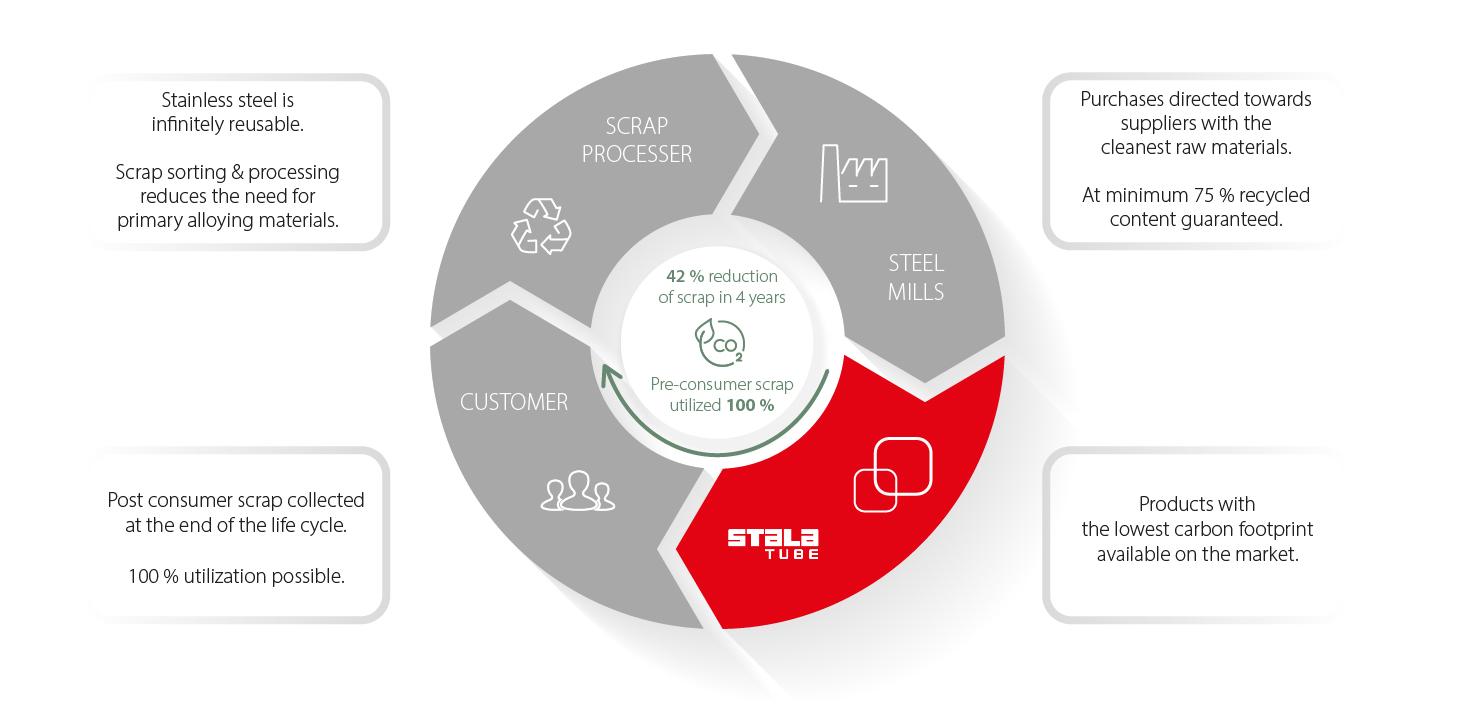
Stainless Steel Circular Ecosystem
Product Features

Stainless steel tubes and profiles (square and rectangular tubes, profiles, and I-beams) with high yield and tensile strength, corrosion and fire resistance, and good elongation The materials used are austenitic, ferritic, duplex, and Lean Duplex grades Our products are used in the transport equipment, energy, construction, and process industries
Circular Economy and Waste Management
All products are 100 % recyclable, meaning that no material is lost at the end of its life cycle; instead, it is fully recyclable and returned to its raw material form In terms of material efficiency, we tailor our products to each customer and offer lighter but stronger material options that reduce the overall material requirement All production scrap is sent for recycling The target for recycled content in purchased steel is at least 75 %
The products are maintenance-free, meaning they do not require coatings This means they do not contain harmful or toxic chemicals or paints that need to be maintained and renewed at regular intervals
Own Workforce SOCIAL
Material Impacts, Risks, and Opportunities
Our workforce consists of diverse individuals who achieve outstanding results by working together Our company has a long history and a strong corporate culture, centered around us, the Stalatube employees Our skilled and enthusiastic employees make Stalatube successful as a company At Stalatube, everyone continuously contributes to making the company and its culture even better To constantly improve our employee experience and employer brand, we engage in ongoing dialogue with all employees and encourage everyone to openly and courageously present suggestions for development and improvement and share their feedback
Stakeholder feedback highlights the importance of continued investments in a secure financial foundation, secure employment, fair and equal working practices related to compensation, flexible working hours, social dialogue, freedom of association, workers’ rights, and collective bargaining, as well as health and safety These efforts are essential for strengthening employee satisfaction, improving financial performance, and supporting employee retention and the recruitment of new talent
We recognize securing a skilled and motivated workforce and maintaining a high employee retention rate as essential to the company’s long-term competitiveness Continuous development of employee competencies remains a prerequisite for achieving our profitability and strategic objectives Given that our production methods are highly specialized and require hands-on learning, insufficient availability of qualified personnel would limit our ability to execute strategy, pursue new business opportunities, or fulfill customer needs
S1 Own Workforce
Working conditions
Health and Safety
Secure and long-term employments, strong employee experience, and flexible working arrangements are key to high employee retention, recruitment, and operational efficiency Experience-based knowledge accumulated over time supports our specialized production methods and competitiveness Work–life balance further strengthens employee wellbeing and employer attractiveness Shift and night work enable continuous production but require careful management due to shift workers’ health impacts
Investing in occupational health and safety reduces accidents and absences, strengthens employee wellbeing, and prevents financial losses Neglecting safety increases accident risks and harms both wellbeing and company’s financial performance In contrast, well-managed safety and healthy working conditions improve job satisfaction, support recruitment, and enhance overall company performance
Impact, risk, opportunity
Training and skills development
Diversity and equal treatment
Our unique business and production methods require practical, experience-based learning, making skilled and knowledgeable personnel essential for maintaining competitiveness and executing our strategy Limited future labor availability and insufficient expertise could hinder order intake, weaken business performance, and jeopardise strategic progress At the same time, continuous training and skills development remains critical for our profitability and longterm market leadership
We uphold fair and equal treatment in all aspects of work and enforce a zero-tolerance policy for harassment or inappropriate behaviour, ensuring a safe and healthy work community Actions to promote diversity and equal treatment are implemented in accordance with our Equality and Non-Discrimination Plan
Impact, risk, opportunity
We support secure and long-term employments through competitive salaries, systematic HR practices, and continuous training and skills development We strengthen the employee experience via open communication, participation, and regular surveys Flexible working arrangements, including flexible hours, remote work, working hous bank, and individual solutions, support work–life balance and employee retention We ensure proper induction for shift and night work, monitor their health impacts with occupational health care, and provide wellbeing support as needed
We ensure a safe workplace through systematic safety management, including ISO 45001 practices, a zero-accident target, continuous improvement, a strong safety culture, and preventive practices, supported by occupational health care, wellbeing services, and through training
We invest in continuous training and skills development, and structured onboarding, while systematically monitoring employee retention and future competence needs Strengthening expertise is essential for achieving profitability targets and securing longterm market leadership through a skilled workforce
Risk, opportunity
Freedom of association and employee participation rights
Impact, opportunity
All our employees have the right to associate and join trade unions and be represented This increases trust and supports a functional work community Impact
Fair and equal treatment is upheld in all interactions, recruitment process, working conditions, compensation and career development Policies are reviewed regularly Employees and managers receive training Confidential reporting channels are in place, and whistleblowers are protected Employee surveys support monitoring, and implementation of the Equality and Non-Discrimination Plan is reviewed on an ongoing basis
We respect employees’ rights to freely associate, join trade unions, engage in collective bargaining, and participate in open, constructive discussions with management We ensure that all working conditions comply with legal and industry requirements
Policies and Actions
Labor and human rights
Stalatube’s Labor and Human Rights Policy is part of our broader commitment to sustainability We are committed to supporting and promoting labor and human rights in every aspect of our operations We recognize that respect for these rights is a fundamental requirement for sustainable development and responsible business conduct
The Labor and Human Rights Policy is supported and complemented by other company policies and internal guidelines, including HR, data protection, occupational health and safety, whistleblowing, and procurement policies, as well as detailed implementation guidelines These documents provide detailed guidance on implementing human rights principles in daily operations We set and regularly review measurable targets to monitor the effectiveness of these policies
Furthermore, our participation in the United Nations Global Compact reflects our ongoing commitment to conducting business in an ethical, sustainable, and environmentally responsible manner, with particular attention to the principles of labour and human rights, the environment, and anti-corruption
We maintain zero tolerance for human trafficking, forced labor, bonded labor, slavery or any form of modern slavery and child labor We follow the minimum working age requirement, which aligns with ILO conventions, and protect young workers (those above the minimum age but under 18) We prohibit practices such as limiting employees’ mobility, imposing unreasonable recruitment fees, seizing identity documents, or withholding pay
Our DEI Policy supports the development of a work community in which all members are treated with respect We do not tolerate inappropriate behaviour, discrimination, or harassment
The DEI Policy commits all personnel to promoting equality and non-discrimination - We do not discriminate against anyone based on race, nationality, gender, religion, disability, sexual orientation, political opinions, or any other characteristic unrelated to their work We do not tolerate any form of harassment, exploitation, or sexually or culturally inappropriate behaviour
Fair and equal treatment is upheld in all our processes and operations such as recruitment, working conditions, compensation, training and career development We ensure that our working conditions exceed legal or industry-specific requirements and align with the principles of non-discrimination This applies to all forms of employment, including fixedterm and part-time employees
Moreover, everyone has both the right and the obligation to intervene in any inappropriate conduct, bullying, harassment, or discrimination they observe Such unacceptable behaviour must be reported without delay
Stalatube commits to and adheres to the following legal and regulatory frameworks:
UN Universal Declaration of Human Rights ILO Declaration on Fundamental Principles and Rights at Work
OECD Guidelines for Multinational Enterprises
UN Guiding Principles on Business and Human Rights (UNGP)
Applicable national legislation in countries of operation

Secure Employments
We strive to ensure the profitability of our business, as this supports the stability of employments As a rule, we enter into permanent employment contracts A large proportion of our employees have worked in the company for 10–15 years or even 20–25 years Employee well-being and satisfaction are therefore vital to us Most of our employees work full-time Opportunities to transition to part-time retirement or reduced working hours are assessed on a case-by-case basis, taking into account the individual’s ability to cope at work as well as the need to support a healthy work–life balance Fixed-term employment contracts are concluded when necessary, for example, in project work, temporary substitutions, internships, or summer jobs
Working Hours
In line with our Working Hours Policy, each employee’s employment contract specifies the regular working hours to be followed The standard threshold for full-time work is typically 40 hours per week In some countries, flexible working hours are available in accordance with local legislation and/or collective bargaining agreements The purpose of flexible working hours is to align work with fluctuating workloads better and to provide employees with the opportunity to balance work and personal needs more flexibly
Employees who work beyond the standard hourly limit (up to a maximum of 48 hours per week, excluding emergencies) are entitled to overtime compensation in accordance with the applicable local collective bargaining agreement or labor legislation Overtime is voluntary, and all overtime must be approved in advance by the employee’s line manager
Employee wellbeing and the ability to cope at work are essential to us When needed, working hours and flexibility arrangements take into account different family situations, ageing employees, and others in varying life circumstances We maintain a positive attitude toward family leave and its use, and we ensure that employees continue to receive essential workplace information even during family or other types of extended leave For employees returning from family leave or other extended leave, we offer re-onboarding and/or training
White-collar employees have access to flexible working hours Partial remote work (approximately 50 % of working hours, depending on the role) is generally available to all white-collar employees In Finland, blue-collar employees use a shift-swapping system and a working hours bank
We have established a guideline that, as a rule, we do not employ individuals under the age of 18 The only exception is in Finland, where we offer a summer internship program organized by the Employers’ Union, for a limited number of individuals aged at least 15 The program lasts for 2 weeks or 10 working days The working hours during the summer internship period is 6 hours per day, 30 hours per week, which is below the maximum limit for the young employees in the local collective bargaining agreement
Social Dialogue, Freedom of Association, Workers’ Rights, and Collective Bargaining
In line with our Employee Relations Policy, and Labor and Human Rights Policy, we are committed to promoting and safeguarding social dialogue as part of fair working practices

This includes the right of employees and their representatives to freely associate, join trade unions, engage in collective bargaining, and participate in open, constructive discussions with management The Employees elect their own representatives for the local collaboration committees in accordance with collective agreements and/or legislation, with each term lasting typically two (in Finland) or four (in Poland) years Our continuous target is that 100 % of the workforce is covered by employee representatives in countries with at least 20 employees We actively support inclusive communication channels and ensure that no one is subjected to retaliation or discrimination for participating in social dialogue activities
Fair Compensation
We pay adequate remuneration, and salaries are paid in a timely manner, which enhances employees' sense of security at work Competitive compensation supports employee retention, strengthens employee satisfaction, and facilitates the recruitment of new talent Our Performance Management Policy is designed to encourage open and transparent communication about job expectations, performance, and compensation
Stalatube’s Compensation and Benefits Policy outlines that our goal is to ensure all employees receive wages that exceed local minimum wage and living wage benchmarks Our goal is also to conduct annual reviews of wage levels to ensure they keep pace with inflation, changes in the cost of living, and market trends, and to adjust wages accordingly We strive to reduce wage disparity by promoting fair compensation practices and supporting employees’ financial wellbeing at all levels of the organization Analyses are conducted by comparing country-specific employee wages with the respective living wage levels in each country In 2025 100 % of the employees are paid over the living wage
S1-1, S1-3, S1-12
Training and Skills Development
We aim to employ the best talent In line with our Training and Development Policy, we are committed to fostering a company culture that enables the professional and personal growth of our employees and their career advancement Career opportunities are offered based on individual skills, performance, and the requirements of the role
For the company’s success, the onboarding program for new employees must be designed to support its critical functions and processes Every person starting in a new role is provided with both a role-specific and a general induction program The purpose of our comprehensive onboarding program is to ensure the success of each new Stalatube employee by familiarizing them with our organization, its functions, guidelines, and their own role from day one It is in our interest to ensure that employees adopt their new tasks and responsibilities as quickly as possible, creating a foundation for early success in their employment
All employees are encouraged to participate in training that strengthens their skills, enhances their performance, and supports long-term career development We ensure that training is inclusive, meaningful, and easily accessible We promote internal mobility and competence development as part of our commitment to decent work and equal opportunities for all
All employees have access to the necessary skills, knowledge, and resources to perform their roles effectively, align with the organization’s strategy and targets, and promote personal and professional development
Percentage of Employees Who Attended Annual Development Discussions

Training and skills development (S1-12) is calculated by collecting and aggregating data on employee training during the reporting period.
Pay Equity and Total Annual Remuneration
We ensure equal pay for all employees and regularly review compensation practices to monitor gender and pay gaps Our target is to achieve zero gender pay gap We provide a competitive and fair benefits package that supports employees’ health, financial security, and work–life balance
Total annual remuneration ratio includes all operating countries When comparing the ratio of the highest-paid individual’s total annual compensation to the median of total annual compensation, the calculation of the median excludes individuals who started or left during the reporting year, those who were on extended leave of over three months during the reporting year, and the salary of the highest-paid individual To calculate the total annual remuneration ratio, we use data obtained from payroll and financial systems The data includes salaries, short-term and long-term incentives, and fringe benefits
* The gender pay gap defined as the difference in average pay levels between female and male employees, expressed as a percentage of the average pay level of male employees
** The annual total remuneration ratio of the highest-paid individual to the median annual total remuneration for all employees (excluding the highest-paid individual)

Health and Safety Metrics
Occupational Health and Safety
We are committed to providing a healthy and safe working environment for employees, contractors, and visitors, as well as to continuously developing our ISO 45001-certified occupational health and safety management system and complying with applicable legislation Our goal is an accident-free workplace, supported by systematic risk identification, preventive measures, and continuous improvement
Occupational health and safety risks, including preparedness and emergency risks, are identified as part of comprehensive risk management When risks cannot be fully eliminated, their impacts are mitigated through appropriate protective and emergency equipment A strong preventive safety culture is built on clear roles and responsibilities, adherence to instructions, and active reporting of accidents, hazards, and near misses, all of which are addressed through corrective and preventive actions Induction and guidance ensure safety for both employees and external parties
Employee wellbeing is a key priority We work closely with occupational health care to manage workloads, support ergonomic working methods, and promote physical and mental wellbeing Maintaining a healthy work–life balance is essential, and in Finland, we complement occupational health care with health insurance and mental wellbeing support services Wellbeing coaching has been available to all Group personnel during the reporting period
Processes to Remediate Impact
We are committed to open communication between employees and employer representatives We provide opportunities for employees to give feedback and suggestions on workplace development initiatives to enhance employee engagement The Employees elect their own representatives for the local collaboration committees in accordance with collective bargaining agreements and/or legislation, with each term lasting typically two (in Finland) or four (in Poland) years
In every situation, we strive to act responsibly, in compliance with the law, and in accordance with our company’s ethical values If any shortcomings or concerns arise in our operations, we want to be informed Employees are encouraged to provide feedback or concerns through established channels We actively ensure that no one is subjected to retaliation or discrimination for participating in social dialogue activities or raising concerns

The Dialogue Committee (Co-operation Committee) and the Health and Safety Committees meet regularly (min 4 times a year) to review essential company matters and discuss the future outlook
The primary role of the Dialogue Committee is to foster workplace development, using tools such as the Workplace Development Plan and the Equality and Non-Discrimination Plan An annual contract is made between the employer and the employees’ representatives regarding the activities of the Dialogue Committee and the matters to be addressed in the regular meetings
The Health and Safety Committee meetings address issues related to occupational health and safety, including trends in accidents and hazardous situations, as well as related tasks A primary responsibility of the committee is to monitor the implementation and development of safety within the company and to support and facilitate the execution of development projects
The Employer’s decision-making requires that they first consult their employees on the matter, i e
• Concluding agreements suspending the application of labour law provisions
• Granting consent to the monitoring of sanitary facilities
• Concluding agreements on the application of less favourable employment conditions for employees
• Concluding agreements on the introduction of an interrupted working time
• specifying a list of hazardous jobs for employees working at night
The rights and obligations of the employer and employee are specified in the Work Regulations
Finland
Poland
Channels to Raise Concerns
We provide confidential reporting channels for our employees and external stakeholders for reporting compliance concerns or legal issues All reports are handled with strict confidentiality and investigated thoroughly We are committed to ensuring that whistleblowers are fully protected against retaliation in accordance with applicable legislation When violations or concerns are identified through our reporting channels or due diligence processes, we commit to:
• Promptly investigating the matter
• Taking immediate action to stop ongoing violations
• Implementing preventive and corrective measures and actions to prevent recurrence
• Providing or cooperating in remediation for affected parties
• Reviewing and updating our processes to address systemic issues

SpeakUp is our internal reporting channel available on the intranet
It provides employees with the opportunity to raise employmentrelated concerns confidentially and, where desired, anonymously
The channel is maintained by the HR team, which handles all reports confidentially and as promptly as possible
The SpeakUp channel was introduced in 2025

Whistleblowing Channel
Our Whistleblowing channel is available on our website and is accessible to employees as well as external stakeholders It enables the reporting of suspected misconduct or violations of applicable legislation, the UN Guiding Principles on Business, Labor and Human Rights, our Code of Conduct, or other policies and values Reports may be submitted confidentially and anonymously
In addition to formal reporting channels, employees may raise concerns directly with their line manager or the HR team This option supports open dialogue and enables early identification and resolution of issues through regular management and HR processes
The Whistleblowing channel was introduced in 2023
SpeakUp
Direct Contact
S1-5, S1-6, S-10, S1-14
Characteristics of the Employees
Number of Own Employees (Headcount) by Gender
Social Protection
In all countries of operation, social protection is provided in accordance with statutory legislation.
All employees are entitled to parental leave.

Workforce Composition and Demographics
Most of our employees are in permanent employment Agency workers are used to support short-term operational needs In addition to balancing factory capacity, temporary agency workers are also used to streamline the recruitment process for production and warehouse tasks
Gender Distribution in Management and Top Management
We are committed to promoting gender equality and advancing diversity, equity, and inclusion across Stalatube We monitor gender diversity at both the leadership and workforce levels and have set longterm targets to support balanced representation
We have set a target for women to represent 30 % of top management Top management includes midand top-level positions and excludes members of the Board of Directors
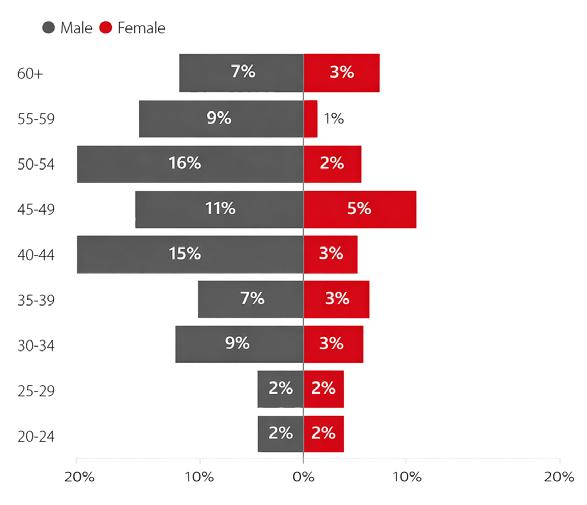
The average age of the personnel is 46 years The age distribution is described below
Gender Distribution in Total and Office Workforce
Women represent a minority of our total workforce and are primarily employed in office-based roles Currently, we have no women in blue-collar positions, as typically no female candidates apply for open production roles
We have set a target for women to represent 50 % of the office workforce, and the current level suggests we are close to achieving it
GOVERNANCE
Business Conduct
Material Impacts, Risks, and Opportunities
Stalatube’s strategy and business model are based on sustainable and ethical practices that support long-term performance and stakeholder trust We prioritise a strong corporate culture and ethical operating principles that promote employee engagement and transparency ESG performance is an integral part of our strategy, as it significantly impacts access to financing and future growth opportunities
We have implemented effective reporting and complaint channels that enable early detection of misconduct and increase transparency We adhere to strict compliance and integrity principles that reduce the risk of corruption, misconduct, and reputational damage In addition, we ensure sustainable procurement and supplier responsibility through systematic assessments, which support supply chain risk management and responsible growth
G1 Business Conduct
Corporate culture and sustainable business practices
Customer satisfaction
Sustainable marketing and transparent, truthful communication help our customers make choices aligned with our strategy, strengthen trust, and increase customer satisfaction and loyalty
Employee satisfaction
A good employee experience reflects the success of corporate culture; employee well-being and engagement affect productivity and reputation Poor corporate culture may lead to low employee satisfaction, negatively impacting business
Access to financing
ESG performance and commitment to sustainability influence access to financing and its cost; weak responsibility may increase costs In the short term, lack of financing has limited impact, but growth and development require funding
Protection of whistleblowers
A legally required whistleblower channel increases trust and transparency The channel enables early detection and correction of misconduct
International commitments and strengthening the company’s sustainability profile
Commitment to sustainability enhances competitive advantage and company profile
Ethical business principles
Clear guidelines reduce misconduct and support sustainability
Opportunity
We conduct regular customer surveys, processing and further developing customer feedback
Risk, opportunity
We carry out semi-annual employee surveys and development discussions, supporting continuous improvement of corporate culture
Risk, opportunity
We prepare sustainability reporting and ESG assessments, alongside the development of investor communication
Impact, opportunity
We maintain a reliable reporting channel through an external provider, supported by employee training and transparent processes
Opportunity
Impact, opportunity
We integrate the UN Global Compact (UNGC) principles into business, with annual EcoVadis assessment and continuous improvement actions
We provide regular training and update guidelines ensuring compliance and best practices
Relationships with suppliers
Relationships with suppliers, raw material suppliers and freight forwarders are key partners in promoting sustainability Risk in unethical practices, e g , poor working conditions in the supply chain Sustainable, international procurement and supplier sustainability assessment Impact in on local entrepreneurs, we support their business by purchasing services
Impact, risk
We conduct supplier ESG assessments, updating contract terms and including sustainability assessments as part of audits
Business Conduct Policies and Corporate Culture
Stalatube has a long history and a strong corporate culture with people at its core We provide all employees with equal opportunities for professional development and for contributing to the company’s direction and culture While we operate internationally, Stalatube remains deeply rooted locally, and its Finnish heritage is an integral part of our identity and corporate culture
Stalatube’s values underpin and guide our corporate culture These values are defined by the owners and management team, approved by the Board of Directors, and embraced across the organisation We introduce our values and corporate culture to all new employees during onboarding Maintaining a strong corporate culture is a key priority for Stalatube, particularly in supporting employee satisfaction and ensuring the long-term availability of a skilled workforce We strive to foster a people-centred culture in which everyone has a genuine opportunity to contribute and influence
The Management Team regularly addresses corporate culture in its meetings, assessing its implementation and identifying actions required to sustain and strengthen it Stalatube’s values and corporate culture closely align with the company’s strategy, which emphasises building a strong employer brand Responsibility for the company’s culture and values is shared jointly by The Management Team and the CEO
We assess our corporate culture and job satisfaction through an employee satisfaction survey conducted twice a year The Board of Directors also reviews the results Our target average for job satisfaction is at least 4 out of 5 Job satisfaction is one of our key performance indicators, monitored by management, and the results are communicated to personnel monthly In 2025, our job satisfaction score was 4 09, based on the average of responses from surveys conducted that year The survey is distributed to all Stalatube employees twice annually
Through our annual employee survey, we assess employee satisfaction across key areas, including leadership, working atmosphere, opportunities to influence, fair and equal treatment, recognition, opportunities for skills and career development, and support for competence development and career paths The survey results are reviewed by HR and individual teams, and improvement actions to enhance job satisfaction are proposed The Management Team decides on the actions to be implemented
We continuously develop our employee experience and employer brand Together with our employees, we have defined the cornerstones of our culture in line with our values and identified areas for further development We collaborate to plan concrete measures to strengthen our everyday culture, and our external employer branding reflects the outcomes of this internal work
Sustainable marketing is an integral part of Stalatube’s customer relationship management and strategy Its objective is to provide customers with transparent and reliable information that supports informed decision-making and promotes sustainable growth and economic development Sustainable marketing strengthens trust, supports customers in making responsible choices, differentiates Stalatube from competitors, and enhances customer loyalty This, in turn, improves customer satisfaction and reinforces long-term customer relationships
We regularly monitor customer experience through surveys, and the results, together with the Net Promoter Score (NPS), guide the development of our products, services, and communications This ensures that our marketing activities support both business objectives and sustainability principles

Stalatube has established a Code of Conduct that applies to all employees The Code of Conduct is reviewed as part of the onboarding process, and regular training sessions are provided for all personnel The most recent training sessions were held in September 2025, and additional training is provided whenever the guidelines are updated
The Code of Conduct covers, among others, the following areas:
• anti-corruption and anti-bribery,
• prevention of money laundering,
• human rights,
• health and safety,
• equal treatment and pay,
• prevention of bullying and harassment, and
• reporting channels for suspected misconduct
Procurement and sales have been identified as the internal functions most exposed to corruption and bribery risks Employee awareness and understanding of corruption and bribery prevention have been strengthened, and an Anti-Corruption and Anti-Bribery Policy and related guidelines have been established In September 2025, general training was provided to all employees, along with targeted training for the sales function During the training, mechanisms for identifying corruption and bribery risks were reviewed and are outlined in the Anti-Corruption and Anti-Bribery Policy
In 2025, no cases of corruption or bribery, or violations of laws on combating corruption or bribery were identified, and no convictions or fines were imposed
Whistleblowing
We operate a confidential Whistleblowing Channel managed by an independent external service provider to ensure impartiality and data security The channel allows employees and other stakeholders to report suspected or observed misconduct or activities that may violate European Union or national legislation, the Whistleblower Protection Act, our Code of Conduct, or the Group’s values and policies
Reports should be submitted without delay if there is a suspicion of unlawful conduct, misconduct, or actions contrary to the public interest Reports can be made anonymously, and all submissions are handled with strict confidentiality and investigated thoroughly We are committed to protecting whistleblowers against any form of retaliation in accordance with applicable legislation
Standards and Sustainability Guidelines
We supply all our products in compliance with applicable requirements and standards, and we continuously improve product quality in close cooperation with our customers Our quality management system is certified to the international ISO 9001 standard We are also certified according to the environmental standard ISO 14001 and the occupational health and safety standard ISO 45001 In addition, we hold ISO 3834-2 certification for welding quality management and EN 1090-1 certification
As part of our commitment to sustainable and responsible business practices, Stalatube has integrated the Ten Principles of the United Nations Global Compact into its strategies and operations We are committed to respecting human and labour rights, protecting the environment, preventing corruption, and contributing to broader societal goals
Demonstrating our commitment to society, our people, and the environment, we conduct a comprehensive annual assessment of our sustainability practices through EcoVadis The EcoVadis assessment covers 21 sustainability criteria across four core themes: Environment, Labour and Human Rights, Ethics, and Sustainable Procurement In our first assessment, completed in December 2024, we were awarded an EcoVadis Silver Medal The assessment will be renewed in the beginning of 2026
We are committed to reducing greenhouse gas emissions through the Science Based Targets initiative
Reporting and Ratings
Stalatube follows recognised standards and guidelines to continuously improve our sustainability performance and provide transparent insight into our progress
Science-Based Targets
By committing to the Science Based Targets initiative, we ensure that our climate targets are science-based and consistent with a 1 5°C pathway
We support the UN Global Compact
By supporting the UN Global Compact, we align our operations and values with its ten principles related to human rights, labour standards, environmental protection, and anti-corruption
EcoVadis
EcoVadis enables transparent assessment of our sustainability performance and continuous improvement across environmental, social, ethical, and sustainable procurement practices, offering valuable insight for both our customers and us
Stalatube currently holds an EcoVadis Silver Medal
Spotlight: EcoVadis Sustainability Rating
EcoVadis is one of the world’s leading providers of sustainability ratings, assessing companies’ environmental, social, and ethical performance across global value chains Its methodology is based on internationally recognised standards and evaluates companies across four key areas: Environment, Labour and Human Rights, Ethics, and Sustainable Procurement
EcoVadis assessments provide transparent and comparable insights into sustainability performance, supporting continuous improvement and responsible business practices The evaluation is based on documented policies, actions, and measurable results, enabling both companies and their stakeholders to track progress over time
Stalatube has been awarded an EcoVadis Silver Medal, reflecting our commitment to responsible business practices and continuous improvement across environmental, social, and governance topics The EcoVadis assessment supports our sustainability development by identifying strengths, areas for improvement, and opportunities to enhance our performance further
Relationships with Suppliers
1. Strategic starting point
Procurement models and processes
Supplier assessment and scoring
Statutory obligations and sustainability
Risk management
Monitoring and reporting
Strategic Starting Point
Our procurement and supplier management are aligned with our strategy, which emphasises competitive global sourcing to support the achievement of our sustainability objectives
In line with these principles, a Sustainable Procurement Policy has been established and is reviewed annually; the latest update was completed in 12/2025 The policy defines procurement principles, sustainability criteria, procurement-related risks, and supplier management The most significant risks are identified and assessed annually as part of procurement target setting
Overall, our supplier management model includes policies, risk management, audits, and regular assessments to ensure compliance with legal requirements and to achieve and promote our environmental and social requirements
Procurement Models and Processes
Supplier management is documented in the process covering supplier data management and the entire procure-to-pay process In addition, we operate an annual cycle that includes:
• general operating principles applicable to all suppliers,
• supplier-specific annual calendars, and
• quarterly recording and monitoring of supplier delivery reliability targets, lead times, disruptions, and delivery performance
The annual cycle is updated each year and includes procurement objectives and concrete actions to achieve them
Supplier Assessment, Scoring,
Statutory Obligations, and Sustainability
Supplier performance is assessed annually based on documented criteria The assessment includes scoring related to quality, ESG, and service capability The results are used in supplier evaluation, approval, and the continuous development of supplier management Supplier management practices are described in a separate document
All steel suppliers undergo sustainability profiling every two years based on an ESG assessment The assessment questionnaire, which forms one of the key inputs, is sent to all new suppliers and to existing suppliers every two years The assessment is conducted through a questionnaire and a desktop audit
The assessment covers the following areas:
• ISO 9001, 14001 & 45001; certification or compliance with standards
• Suppliers must follow fair labor practices, respect human rights, and uphold ethical business standards aligned with the UN Guiding Principles and the Universal Declaration of Human Rights
• Ethical working conditions, social sustainability (we prohibit any form of forced labour, child labour, or human rights violations)
• Environmental targets (reduction of emissions, percentage of recycled steel, sustainability program)
Otherwise, the compliance of raw material suppliers is ensured through an annual statutory compliance questionnaire (RoHS, REACH, CMRT, EMRT, sanctions, radiation safety) and annual audits conducted in accordance with the audit programme The audit scope is based on the requirements of ISO 9001, ISO 14001, and ISO 45001 standards
No new or existing supplier is approved without the required statutory documentation In addition, suppliers must meet the requirements of the ESG questionnaire At present, we do not have a supplier-specific Code of Conduct; however, our objective over the coming years is for all suppliers to sign or otherwise align with Stalatube’s Code of Conduct
Monitoring and Reporting
Results are monitored through Power BI, monthly reviews, and management reviews Key metrics monitored include, for example:
• emissions of purchased steel raw materials,
• share of recycled steel, and
• delivery reliability
The final list of approved suppliers is confirmed during the management review

Development of Sustainability
The company places strong emphasis on supplier management and on ensuring a high share of recycled content in purchased raw materials Our target is a minimum of 75 % recycled steel, with the most recent achievement exceeding 90 % In addition, we monitor raw-material emission factors and calculate Scope 3 supply-chain emissions annually
A key objective of supplier management is the regular ESG assessment and scoring of suppliers Furthermore, an essential goal for the coming years is that all suppliers sign or otherwise align with Stalatube’s Code of Conduct
In 2025, training was provided for the procurement team, with a focus on collaboration with suppliers to enhance their sustainability performance