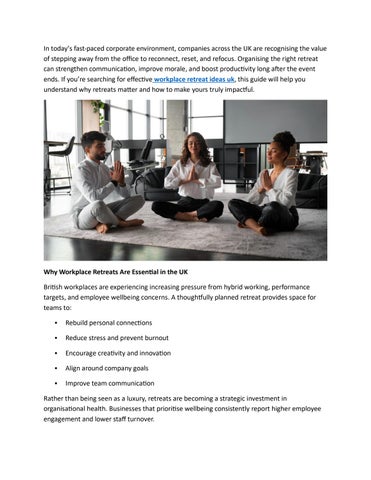
In today’s fast-paced corporate environment, companies across the UK are recognising the value of stepping away from the office to reconnect, reset, and refocus. Organising the right retreat can strengthen communication, improve morale, and boost productivity long after the event ends. If you’re searching for effective workplace retreat ideas uk, this guide will help you understand why retreats matter and how to make yours truly impactful.
Why Workplace Retreats Are Essential in the UK
British workplaces are experiencing increasing pressure from hybrid working, performance targets, and employee wellbeing concerns. A thoughtfully planned retreat provides space for teams to:
Rebuild personal connections
Reduce stress and prevent burnout
Encourage creativity and innovation
Align around company goals
Improve team communication
Rather than being seen as a luxury, retreats are becoming a strategic investment in organisational health. Businesses that prioritise wellbeing consistently report higher employee engagement and lower staff turnover.
What Makes a Successful Workplace Retreat?
Not all retreats deliver lasting results. A successful retreat blends structured development with restorative experiences. The key components often include:
1. Wellbeing-Focused Activities
Incorporating mindfulness, breathwork, yoga, or guided reflection allows employees to decompress. These practices improve focus and emotional resilience essential skills in today’s demanding work culture.
2. Purposeful Team Building
Move beyond traditional icebreakers. Activities should encourage trust, communication, and collaboration in meaningful ways. Outdoor challenges, creative workshops, and facilitated discussions work particularly well.
3. Clear Business Objectives
A retreat shouldn’t feel like time away without direction. Whether it’s strategic planning, leadership development, or cultural alignment, having defined outcomes ensures the experience adds measurable value.
4. Inspiring Location
The UK offers beautiful countryside settings, coastal escapes, and rural estates that provide the perfect backdrop for reflection and connection. Natural surroundings enhance relaxation and creativity.
Popular Workplace Retreat Ideas in the UK
If you’re planning your next event, here are some proven retreat concepts that work exceptionally well for UK-based teams:
Wellness & Mindfulness Retreats
Ideal for reducing burnout and supporting mental health. These retreats include guided meditation, stress management workshops, digital detox sessions, and nature walks.
Leadership Development Retreats
Designed for management teams and emerging leaders. These focus on emotional intelligence, communication skills, and strategic thinking in a relaxed but structured environment.
Creative Thinking Retreats
Perfect for marketing, innovation, or product teams. Activities such as brainstorming workshops, problem-solving sessions, and collaborative exercises help unlock new ideas.
Outdoor & Nature-Based Retreats
From countryside hikes to equine-assisted learning experiences, outdoor retreats help teams reconnect with themselves and each other away from screens and office walls.
The Growing Demand for Wellbeing-Led Retreats
Across the UK, organisations are increasingly aware that employee wellbeing directly impacts performance. The CIPD consistently reports that stress remains one of the leading causes of workplace absence. Retreats focused on mental clarity and resilience provide practical tools employees can use long after returning to work.
A wellbeing-led approach doesn’t mean sacrificing business outcomes. In fact, it strengthens them. When teams feel valued and supported, productivity and collaboration naturally improve.
Why Choose Stables Wellbeing?
When considering providers for workplace retreats, experience and authenticity matter. Stables Wellbeing specialises in delivering tailored retreat experiences designed to improve team cohesion and individual resilience.
What sets Stables Wellbeing apart is their integrated approach:
Expert facilitators with corporate and wellbeing backgrounds
Customisable programmes aligned with business goals
Peaceful UK countryside settings
Evidence-based wellbeing techniques
Practical takeaways teams can implement immediately
Rather than offering generic team-building days, Stables Wellbeing designs immersive experiences that balance reflection, development, and connection.
How a Retreat Impacts Long-Term Performance
Many businesses hesitate to invest in retreats due to concerns about cost or time away from work. However, the long-term returns often outweigh the initial investment. A well-executed retreat can lead to:
Reduced absenteeism
Improved staff retention
Stronger leadership skills
Better cross-department collaboration
Enhanced problem-solving capability
Employees who feel heard, supported, and aligned with company values are more engaged and motivated. Retreats create the space needed for these outcomes to develop naturally.
Planning Tips for UK Companies
If you’re considering organising a retreat, keep these planning principles in mind:
1. Define your objective first – Is your goal stress reduction, strategic alignment, or leadership growth?
2. Choose a specialist provider – Work with experts who understand both wellbeing and business performance.
3. Balance structure and downtime – Over-scheduling reduces impact.
4. Gather feedback afterwards – Use insights to measure ROI and improve future events.
5. Follow up – Reinforce retreat learning with ongoing initiatives back in the workplace.
Investing in Your Team’s Future
In a competitive UK business landscape, companies that prioritise their people stand out. Retreats are no longer just a perk they are a strategic tool for sustainable growth.
If you’re exploring proven and impactful workplace retreat ideas uk, partnering with a specialist provider can transform your team’s experience. With a tailored approach that blends wellbeing and professional development, Stables Wellbeing helps organisations create meaningful, results-driven retreats.
The right retreat doesn’t just offer a break from work it builds stronger teams, clearer thinking, and healthier workplaces for the long term.