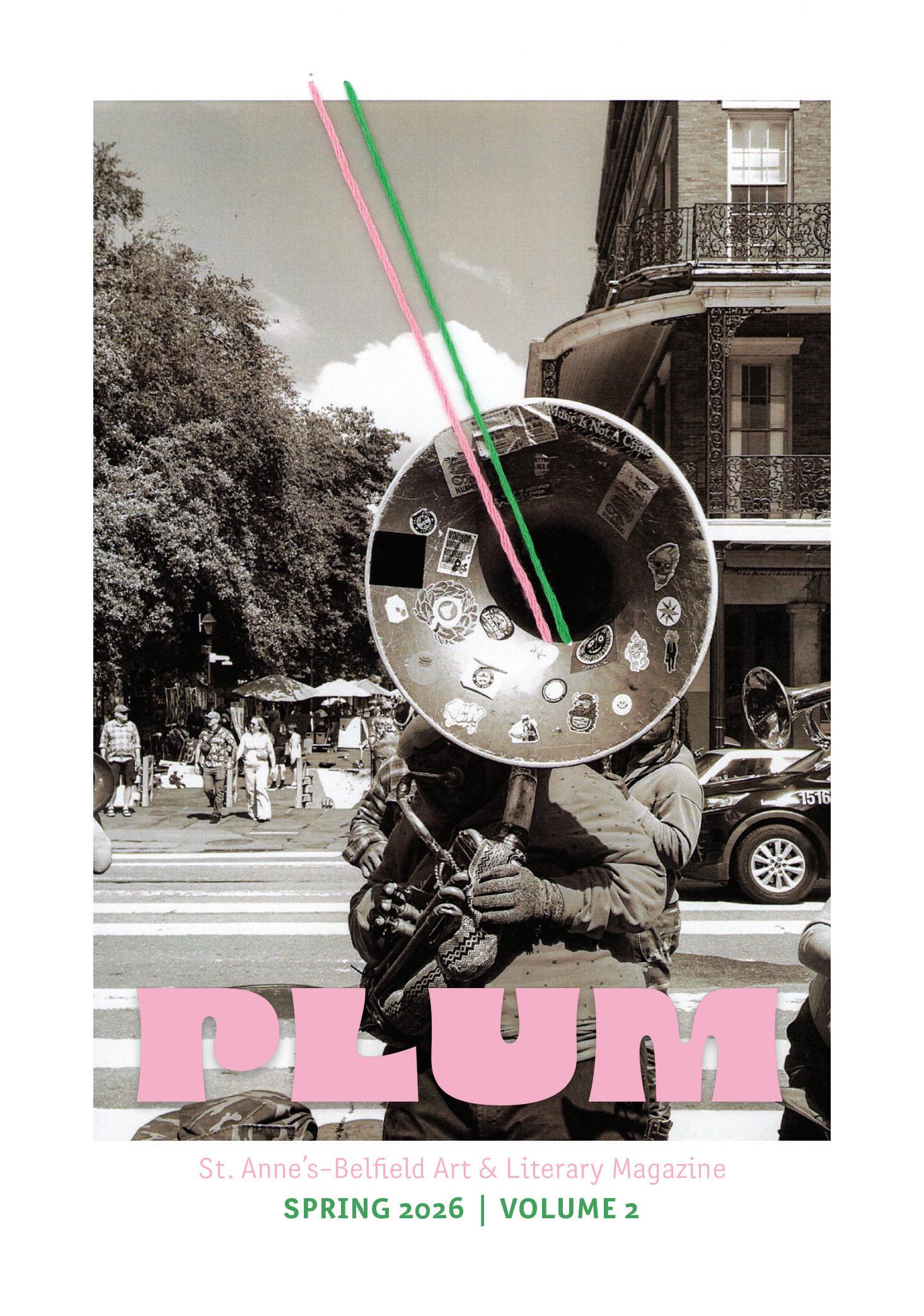

St. Anne’s - Belfield Art & Literary Magazine
St. Anne’s - Belfield Art & Literary Magazine
SPRING 2026 | VOLUME 2
to the second annual edition of PLUM.
With the ever constant bustle of work and the way we tend to go through our days, blindly hurrying to check the next thing off our ‘to-do’ list, art can easily fall from view. Throughout this year, our staff has collected work that we feel demands a moment of your attention. From pottery to poetry, art created in class to art done completely outside of school, competition winners to anonymous submissions, PLUM spans every kind of artist St. Anne’s-Belfield School supports. Other than the new cover, style, and format, this year’s edition is also larger than last year’s and features our longest prose pieces yet.
Thank you to everyone who submitted their work; we hope to see more of you in the future. Another thank you to the Arts Boosters for their sponsorship and help with the school’s artistic endeavors. Like last year, one piece of prose and one visual piece have been chosen as this year’s Art Booster Nominations. Congratulations to Ani Fairbanks ‘26 and Alaja Gough ‘26 for receiving the highlights of this year’s edition.

EXECUTIVE STAFF
Josephine Carter ’27
Ani Fairbanks ’26
Nori Zhang ’27
STAFF
Angel Chen ’27
Kate Cheng ’26
Frances Lawson ’27
Pinky Qin ’29
FACULTY ADVISORS
Mr. James Mattise ’10
Mr. Frank Phillips
FACULTY CONTRIBUTORS
Ms. Susan Brodie
Mr. Jacob Stoner ’11
Mr. James Zunka ’00
Cover Credit: Lexi Lemoine ’28
Anonymous: 11, 28, 48
Marina Ashton ‘26: 78
Coco Balette ‘27: 27, 74
Beacon Bassett-Taurel ‘28: 45
Seton Bohac ‘28: 65
Hadley Booth ‘26: 45
Jayden Brown ‘27: 70
Zoe Burruss ‘26: 34
Josephine Carter ‘27: 14
Angel Chen ‘27: 33
Anni Chen ‘26: 81
Kate Cheng ‘26: 35, 79
Hero Cobb ‘28: 30
Sara Craig ‘26: 41
Miranda del Angel Hernandez ‘26: 58
Zanahla Demars ‘28: 59
Zaria Demars ‘29: 66
Keira Druzgal ‘26: 80
Ella Edelberg-Moore ‘28: 56
Mason Eubanks ‘28: 54
Ani Fairbanks ‘26: 8, 51, 53, 55, 69
Summer Fields ‘29: 33, 58
Leah Flores-Galdamez ‘28: 40
Wyatt Foster ‘28: 29
Chase Gavin ‘28: 32
Penelope Geiger ‘26: 28
Austin George ‘28: 47
Sofia Gingerich ‘29: 31
Alaja Gough ‘26: 9, 16, 31, 72
Walker Grabowski ‘29: 64
Lofton Graves ‘29: 65, 66
Cate Gwathmey ‘29: 44, 68
Margaret Hanley ‘27: 59
Haven Hendricks ‘29: 21
Bear Henyon ‘28: 47
Ellie Hickey ‘29: 42, 75
Laura Hickey ‘29: 66
Keller Hinkson ‘27: 26
Royce Howard ‘28: 25
Axel Iturbe ‘26: 24
Mira Jackson ‘26: 34
Zuck Jiao ‘26: 71
Giada Johnston ‘27: 66
Nora Jordan ‘29: 53, 56
Tucker Kamalsky ‘27: 29, 57, 69
Gincy King ‘29: 66
Stuart King ‘26: 75
Sawyer Kinley ‘28: 58
Easton Kostelink ‘29: 60
Frances Lawson ‘27: 19, 76
Sebastian Laza ‘26: 49
Annie Leahy ‘26: 54
Lexi Lemoine ‘28: Cover, 4, 5
Liam Maher ‘28: 73
Nolan McIntire ‘27: 68
Carli Meney ‘27: 41
Charlotte Miller ‘27: 21, 60
Aaron Mills-Koonce ‘28: 54
Violet Moore ‘28: 61
Damion Parham ‘27: 41
Finn Parlee ‘27: 41, 71
Anastasiia Pestova ‘27: 62
Cai Prinzbach ‘28: 55
Pinky Qin ‘29: 10
Margaret Ragsdale ‘29: 62
Lucy Rannigan ‘29: 51
Caroline Reilly ‘26: 81
Graydon Rogers ‘29: 22
Clara Roosen ‘27: 38
Landon Ross ‘27: 39
Ginny Rowe ‘26: 62
Jonah Rubin ‘29: 54
Dylan Russell ‘28: 48, 75
Sarah Sanders ‘26: 78
Alvaro Serrano Alvarez de Espejo ‘28: 61
Mady Shifflett ‘27: 51
Chapin Smith ‘26: 76
Charlie Smith ‘28: 37
Ella Smith ‘29: 23, 66
Chloe Snead ‘29: 17, 39
Jack Sopata ‘28: 69
Leah Stacy ‘26: 22
Yatie Stokes ‘27: 30
Anna Tang ‘27: 63
Parker Thomas ‘28: 40, 76
Cooper Thurston ‘29: 16
Annie Tran ‘27: 29, 52
Sarah Trebour ‘28: 52
Ella Grace Wade ‘28: 65
Sylas Walden ‘27: 57
Emily Wells ‘29: 66
Wallace Williams ‘29: 66
Hasler Yancey ‘26: 67, 80
Nori Zhang ‘27: 15, 68, 73, 77
Olivia Zhang ‘28: 61
Joanna Zheng ‘29: 50
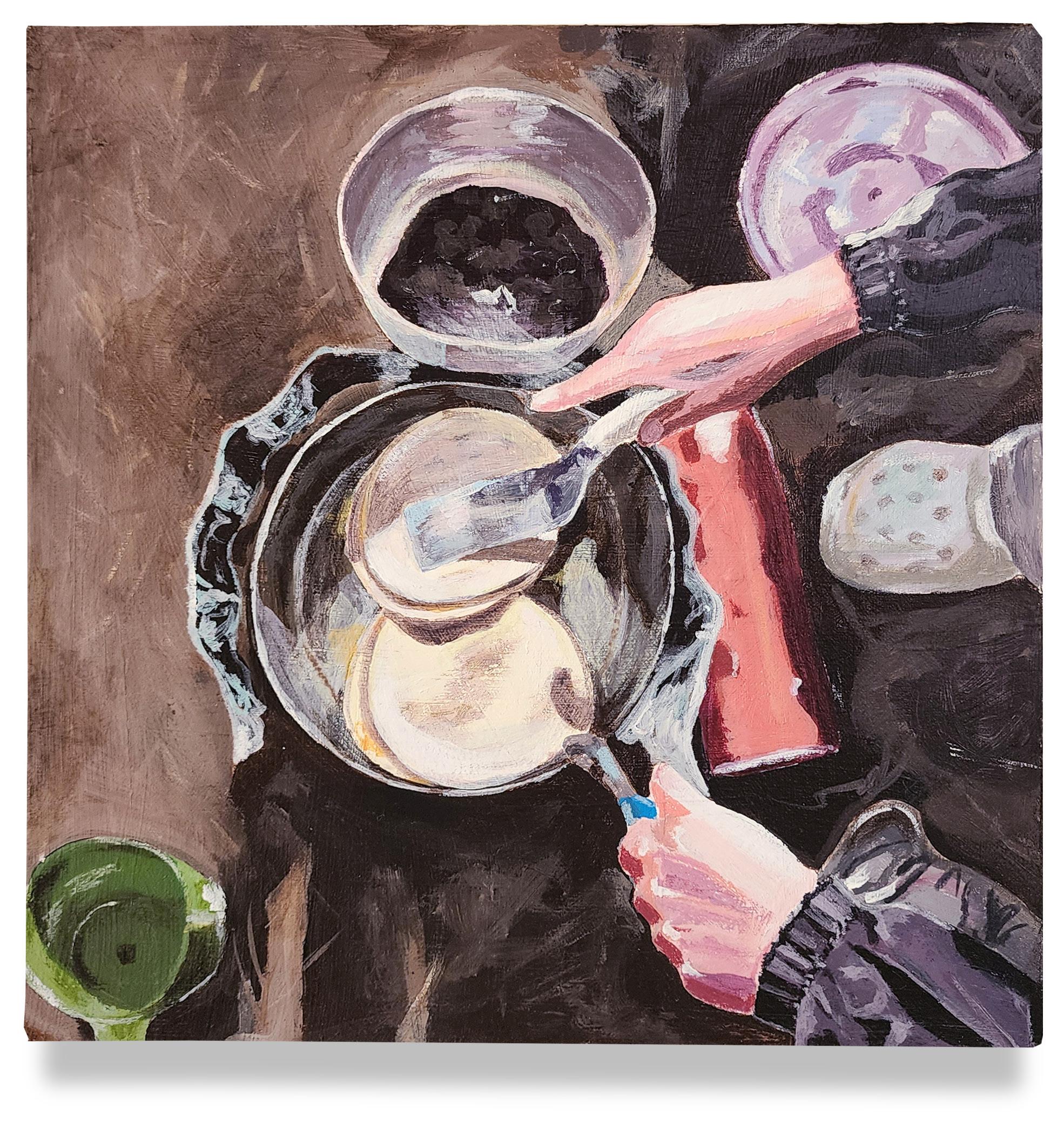
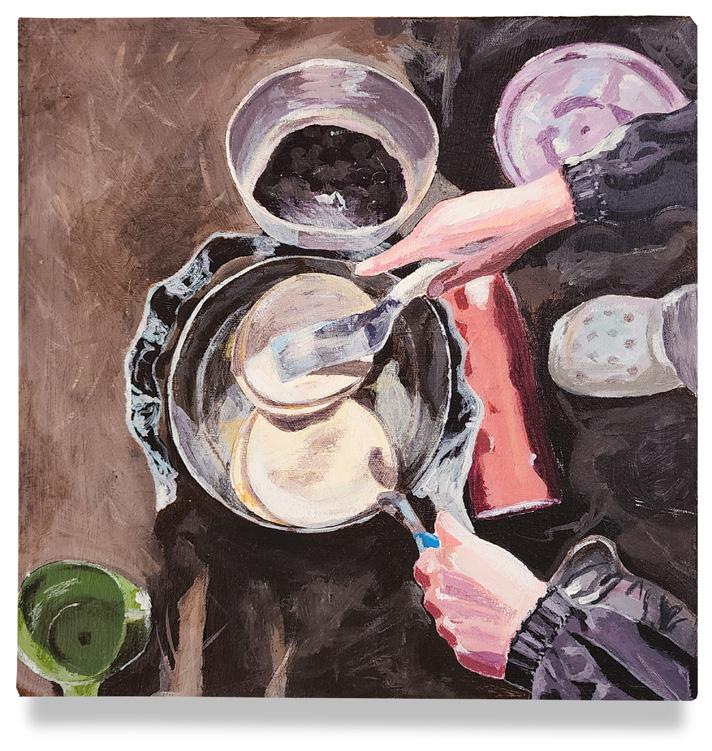
Ani Fairbanks ’26, “Field Kitchen”
I selected this painting because it has a strong sense of immediacy and intimacy, which I think makes for a successful painting. I was impressed that a young artist captured these elements.
The cropped overhead view turns an ordinary domestic moment into something visually active and slightly ambiguous. I was also drawn to the contrast between the dark ground and the pale bowls, hands, and utensils, as well as the way the composition moves diagonally across the surface. Also a mature move.
It reminded me loosely of painters like Bonnard, Vuillard, and even Munch. They too elevated quiet domestic scenes into something rich and psychologically charged. There is also something of Matisse here, flattening of space and the way color and shape carry the composition.
What I liked most is that the painting feels observational without being overly literal. It has enough abstraction to hold attention beyond the subject matter. It captures a small, everyday ritual in a way that feels personal, active, and alive.
Arts Boosters Member
Luke Diiorio P. ’33, ’35, ’38
Alaja Gough’s poem quickly transports us to the comfort of nature, and to the rhythmic patterns of beginnings and endings that persist around us. That spring will come is a fundamental certainty in nature, reflecting our own cycles of growth and decay and growth again, even if the blooms are unexpected or uneven. Spring does not happen suddenly or perfectly. But, just as the forests and gardens are enriched by their seasons, Gough urges us to lean closer into the quiet miracles around us and finally learn how to bloom ourselves. Gough quotes from a poem by Pat Mora about how spending time in nature can help us to overcome anxiety: “this earth, my home. / taking a deep breath, i gather myself. i bring what i am.” These are beautiful words to carry us through until the next spring.
Arts Boosters President
Nicole Snyder P. ’31
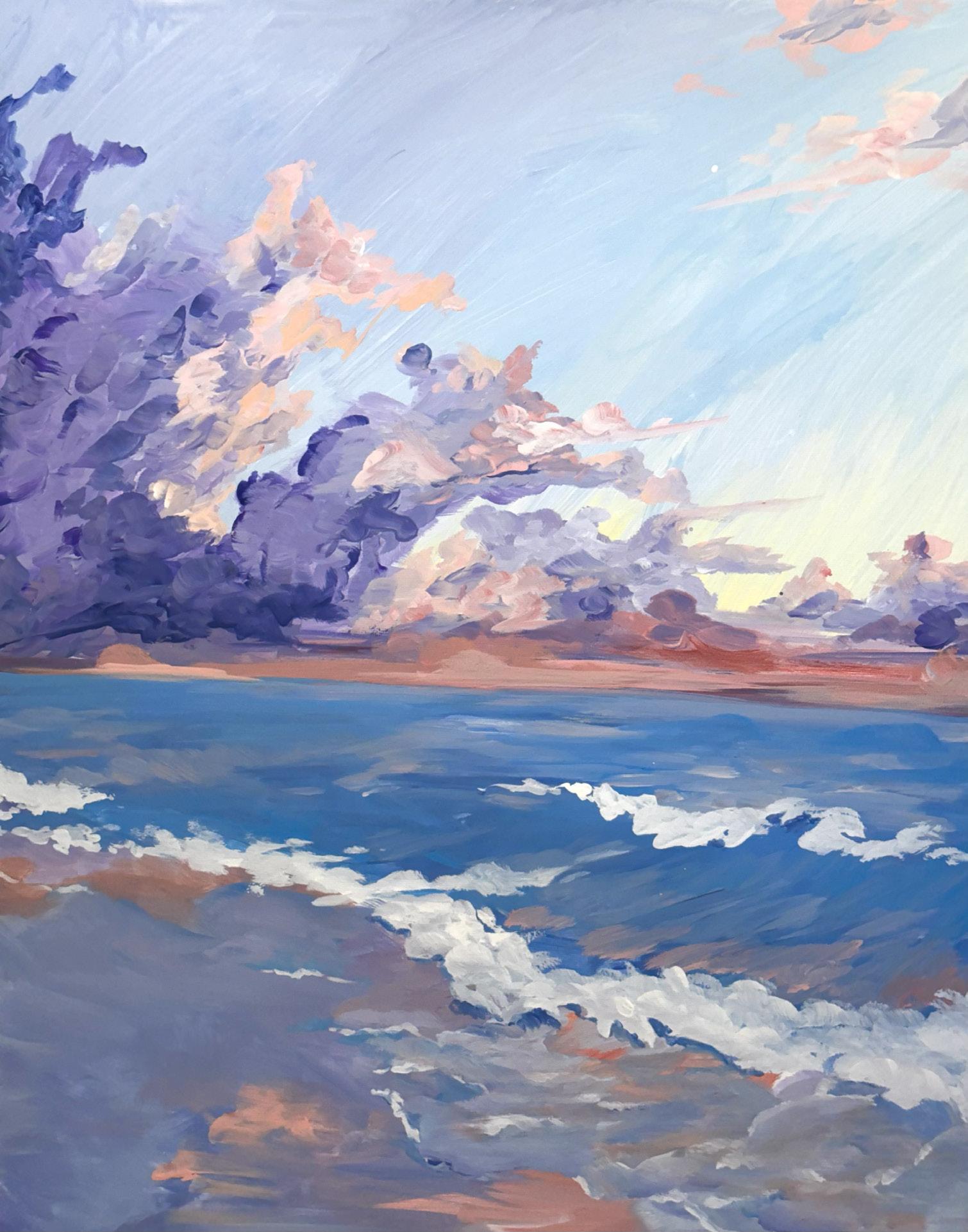
i did not always notice, the quiet language of the earth. how the wind speaks, or how the soil remembers. once, i stood at a distance, unsure of where i fit between pavement and petals, between noise and stillness. but something in me shifted. slowly, the ground thawed. a softness returned and a will to stay. and now, i feel it. this blooming.
not sudden, not loud, but steady and sure, like spring unfolding one petal at a time.
Alaja Gough ‘26
i’ve grown into it [this earth, my home.] into the rhythm of things that do not rush, yet never stop becoming. i now lean closer, into the quiet miracle of life starting to begin again.
just like spring, i am not perfect in my bloom. some petals are uneven, still unfolding, some still unsure of their place.
but i am here, growing anyway. [taking a deep breath, i gather myself. i bring what i am] i have learned to love nature as it blooms, and in doing so, i have finally learned how to bloom myself.
Anonymous ‘26
Water trickles somewhere beyond my feet
Rushes down the river
Grinding away at the granite turning gneiss and gabbro into dust
Somewhere bird calls trumpet above the crashing waves
Somewhere crickets chirp their wings together
And underneath the water minnows flash in lines of silver stone
And underneath each stone, mayflies shelter themselves from the minnows
And underneath the force of the current they rip at strands of algae flowing, dissolving
And underneath the river, slowly seeping in, phosphates and nitrogens, replenish the massacred photoautotrophs
Sunlight reaches below the surface, presses a warm comfort to the growing
Hidden within their intensity, the rays disperse, painting the colors of the forest
Golden-blue shadows, brown grit and lemon-soda sand
520nm, 600nm, 580nm
The kind of aquamarine where the sea and the sky blur together over a cloudy coast
But not clouds of contamination, saturated clouds that soon bring new life
Swim in it, the heavy rainfall of ancestors
Let it kiss your face the way they were never able
And let it fall through your soles until it reaches your descendents below
Breathe in and fill your lungs with their last breaths
Tethered over the running water
The weight of the mother earth squarely upon your shoulders
It goes where you cannot follow, slipping further downstream
Snaking, bending, bowing, turning, forever out of reach
A winding highway road that spirals along the mountainside
Now, feel those same spirals tearing across your palm
Solemn oaths bleed freely from your life lines
Each tear of blood rejoining the earth as it flows
It, too, has somewhere it must be, something that draws it onward
Do you feel it pulling you, too?
So distant
it blends into the boundless and blurred horizon
So near it penetrates each valve of your heart as nameless emotions plunge into your mind
This uninvited presence lives in your body, down to your very fingertips
Feel the ecstasy dilate your veins, feel the grief consume your eyes
They who will come after you, do not let them forget who came before you
Never let them forget this moment, the ones who have yet to feel
Even while you feel them surging up from the river pushing through your skin
Even while you feel them fluttering in the wind, whispering along your body
Pulsing like a light from a distant star, burning in search of a distant truth
It mimics the pulsing of your heart, the burning of your body always barely sustaining homeostasis
It’s a struggle, isn’t it? This life. Does it fill your marrow with rage?
Does it tighten your muscles in terror?
Breathe. Listen to the water as it turns and tumbles around the bend
Breathe. Listen to the air as it fills and rustles into your lungs
Now are you still angry?
Angry?
Are you still frightened?
Are you still confused, or maybe stunned, or moved, breathless?
Are you still breathing?
Or are you all these things at once?
Breathe.
Listen to the birds harmonizing with the opening of your alveoli
They spread like the branches of some great tree, and close again like the shuttering of clams
They exist in the perfect balance of some water-surfactant-mix, a drop more and you drown, a drop less and you suffocate, the air never even able to reach a single leaf on that great tree
Cracks splinter into rows on the crust of the dry earth below Cracks that now separate human nations and segregate the animal kingdom Cracks that sow lines of division between you and them, everything and you
Millions have died for those cracks, on those cracks, but they would have died anyway
Just not so soon.
Not so needlessly.
Not for a fight that was never theirs to begin with
Do you think they screamed?
Do you think they cried?
Do you think they laughed?
Do you think they said nothing at all?
Or did they do all these things at once?
Are you still breathing?
Why does it even matter if their last breath was so long ago?
Hold them in your memory as long as you can, pass their story along
Trace and then retrace that pathway in your brain until their memory becomes a movie repeating within the walls of your skull.
When you walk that pathway what is it made of?
It will be a challenge to walk but you must remember
Remember each stumble, each pain, each joy, each insignificant moment, each moment that completed too fast
Be careful.
Memories have a tendency to swallow you whole. And once a memory has you, you may never be able to return to now
Accept it, do not run from it.
And like water flowing down a creek let it pass beyond you, towards the next, and the next.
Are you still breathing?
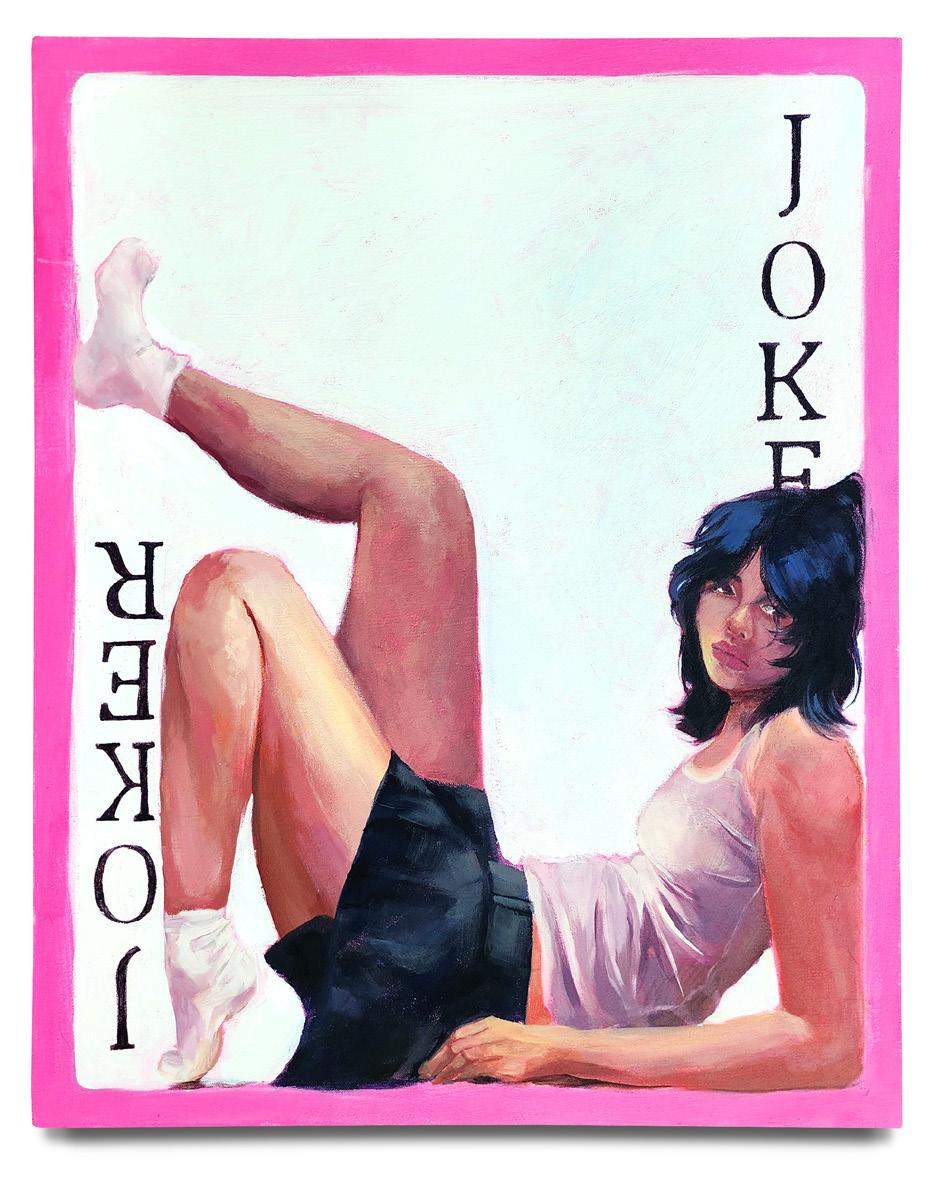
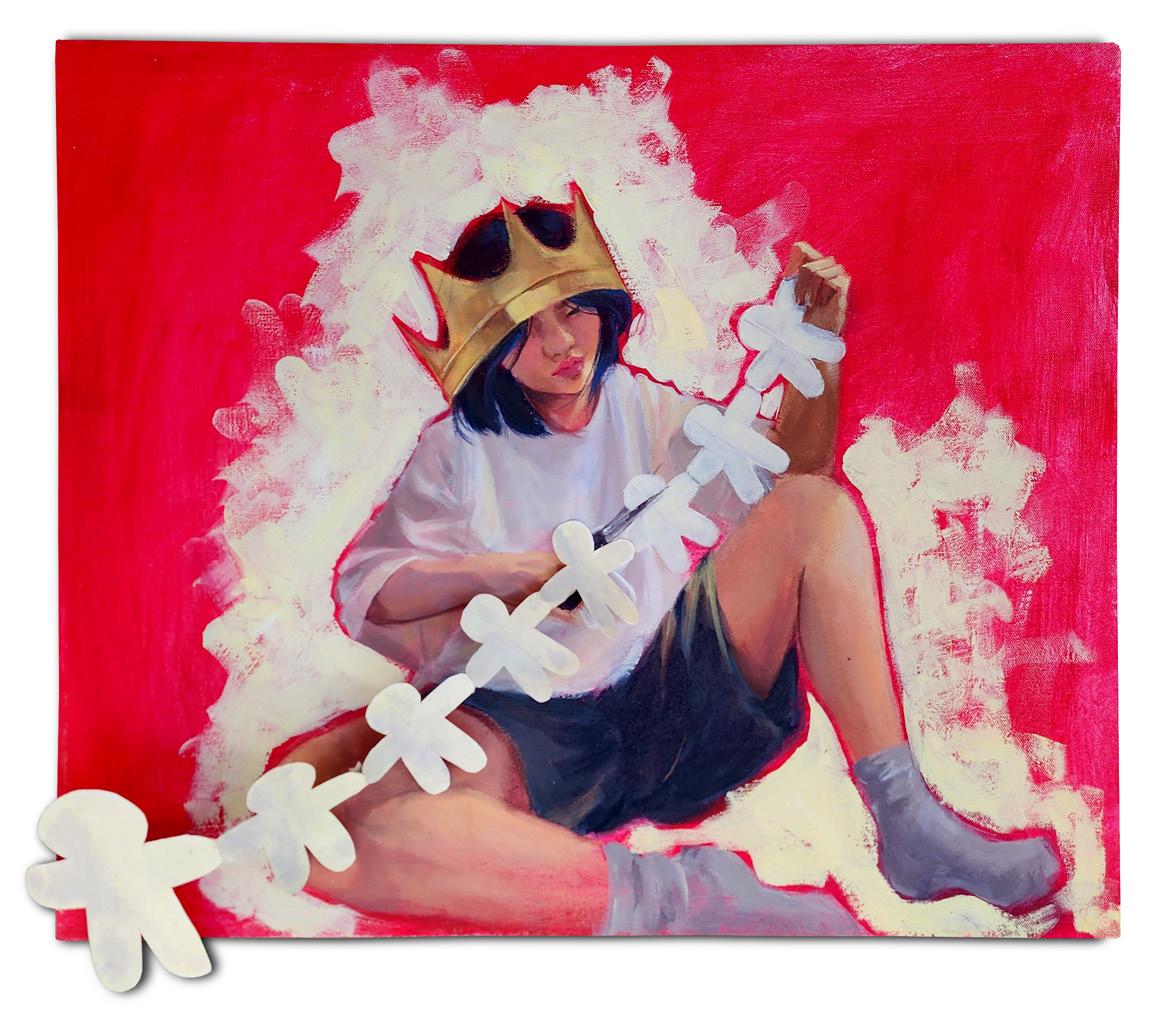
Alaja Gough ‘26
to look at nature is to begin a journey outward. to listen to it is to journey inward. in between looking and listening, a path grows. a convention begins. a seed is planted. every living thing becomes both a guide and destination. in this exchange, there is reciprocity: nature gives you understanding, when you give it your attention. and in doing so, you grasp how the world and self are no longer separate, but now speaking in the same breath. and when this happens, reach beyond and start the journey with others.
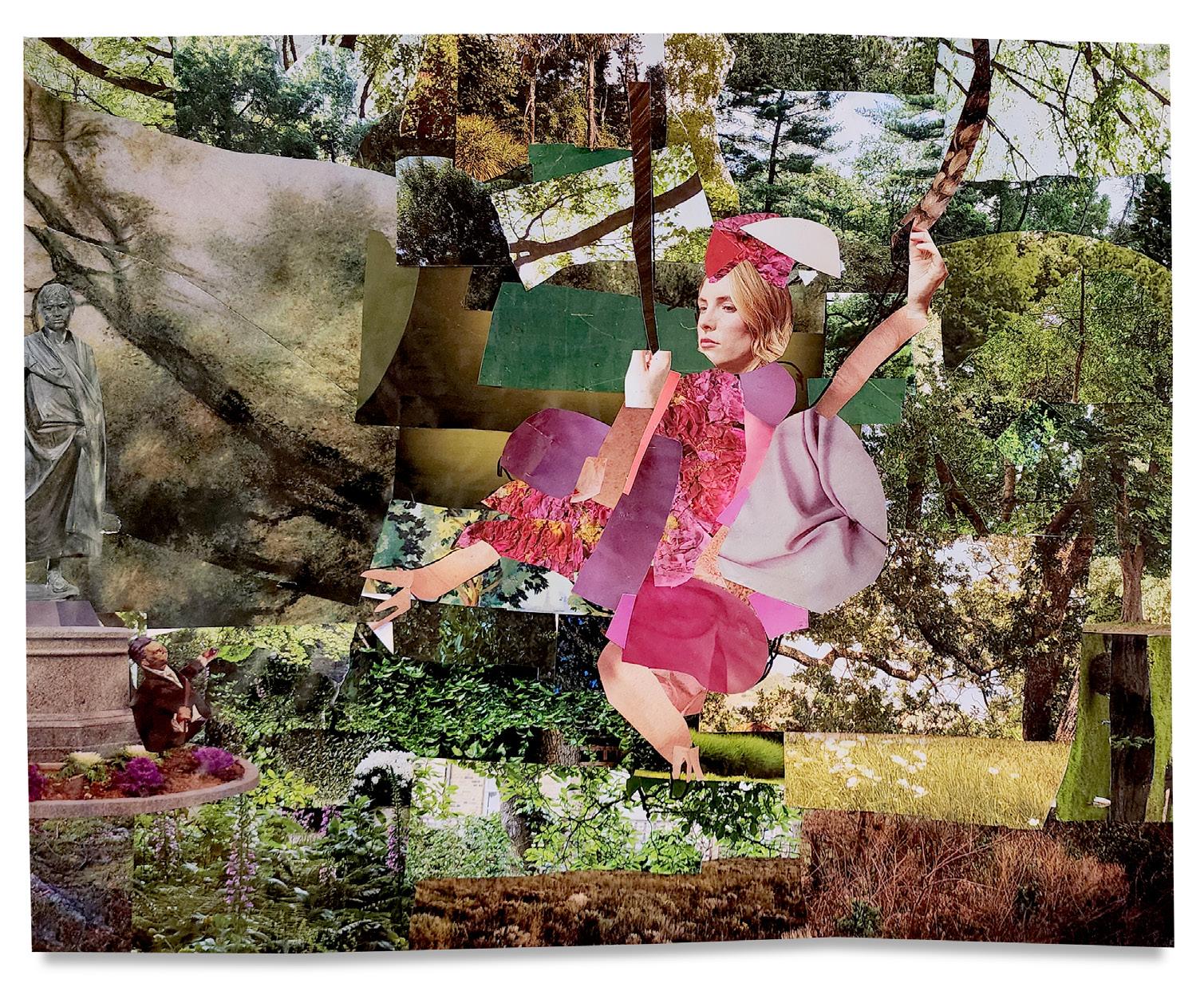
Chloe Snead ‘29
The sun was beautiful. Half of the hill was green and the other yellow. The sun was reaching for midday, all sleepy and golden. The grass was anchored in the ground as the valley was anchored between the mountains. Out of all the places I had lived, this one was my favorite. I looked down at my stockings, dirtier than they should have been. The air was crisp, so I needed the extra warmth. It was my birthday, and I felt like it was good to break the rules sometimes. I heard my Ma calling from the house. I felt kind of free, running back to the house, able to breathe all the fresh air in the world. Winter was finally curving into spring. I saw my sister waiting at the door. A smile tugged at my mouth. I could already smell the delicacy. I saw my Ma at the kitchen table, her hands busy making everything perfect like she always did. The food beneath her gentle hands was my favorite, sugar pie. Her brown hair was pulled into her usual bun, streaked with gray. She told me it was almost ready. I was happy just looking at the pie, knowing the trip to town they must have made to get the sugar. I hugged Ma from behind. My younger sister, Belle, came to stand beside me. A birthday for me was a pretty good day for her. She was only 14. My Ma eyed me, a cheeky grin. I smiled and giggled like I would have if I were a baby. Ma always talked about how she missed how we were when we were younger. It was unfortunate knowing that Pa was missing out. He was buying new supplies for the spring season in town. But my sister, my mom, and I had good fun. My sister started bouncing up and down beside me; I could tell she wanted me to ask for my present. I grabbed her arm to stop her. I wanted to savor the moment, but I also wanted to see my surprise. Ma caught on and went to the bedroom. I felt like my mouth couldn’t smile any wider. I sat in the rocking chair. Ma came in with the box. It was so beautiful; I couldn’t wait to see it every year. I had seen this box every year for 16 years. It was crème, a gentle spray of baby-blue flowers accenting the top. A slightly yellowed pink ribbon wrapped fondly over its edges, softening it. It was about the size of a small hay square. It had been with us for every birthday without fail, through travel and home. Ma gently settled it in my lap, so I knew I needed to be careful. I heard scuffles and a tiny heart-aching squeak. I looked up in surprise; Ma and Belle were laughing. I pulled the pink ribbon and lifted the top. Its fur was so midnight black he could have been a lump of coal. China-green eyes, straight from the sea itself. Ma told me he was a boy; I already knew. I lifted him into my arms, his whole body started vibrating as he purred. I knew I wanted his name to be Chester. Ma asked if I liked him. Of course, I loved him. I hugged Ma.
It was later at dinner when things started going wrong. The sun was at its full height. Chester hadn’t left my arms; he was so small and rumply. We were all sitting at the table, the pie nearly gone. We were not so cruel as to leave none for Pa, though. So full from our meal, we lapsed into silence, the heat from the stove making us heavy-lidded. It was the best birthday I had ever had. Ma’s spoon clattered to the plate. Chester jumped a little. I asked Ma what was wrong. She said she was feeling a little under the weather and was going to take a rest. I was immediately concerned. I put Chester into the birthday box, he immediately started falling asleep. I ran over to Ma, taking her weathered hand into mine. Her blue eyes were half-slit with fatigue. I suddenly knew Ma had been pretending not to be sick all day. For me. I felt guilty. I glanced at Belle. It was like a sinking ship. We guided Ma to bed, tucking her into the quilts. Belle heated water on the stove, handing the cup of tea to me. I sat beside Ma on the bed. I suddenly saw her shake. I looked in alarm at Belle. I asked Ma if she was alright. She had no response. I placed a hand on her forehead. It was hot. She had the chills. Her breath sped up and, by the look on her face, was pained. Her eyes flew open, hard. I understood she was trying not to let fear into her voice, but I still heard it. Fear spiked in my chest, sour and bitter. She looked at me, clutching my hand while
a violent chill shook her. She asked me plainly to get Pa. That was when I really got scared. I put more blankets onto Ma while Belle held the tea to her lips; she sipped. I cupped Ma’s cheek and smoothed her clenched brow with my thumb. My birthday—it seemed somehow my fault for getting Ma sick. Pa was all the way in town; fear slid from my stomach to the back of my tongue, adrenaline mixing with it. I swallowed the bile. I took a deep breath. I got off the bed gently. I walked over to Belle; we both shook with fear. I told Belle to keep Ma drinking the tea. I told her to bolt the door and where the gun was. I told her to tend the fire. I told her to keep safe. I knew I needed to go to town. It didn’t feel real when I left the house; it was like a dream.
I made sure Chester was sleeping when I closed the door, Bella locking it behind me. The sun, so beautiful earlier, now seemed like a judging thing... so bright, glaring down at everything. I was thankful it wasn’t hot but slightly chilly. I ran to the stable, my boots hitting the ground like a heartbeat. It was thankfully shady and dark inside, but I knew I would have to go back into the sun. It was my horse that gave me hope for Ma, his steady feet ready to take me. I could almost cry at the sound of his steady breath. I saddled him and tightened the stirrups hastily. I knew the way to town; I had traveled it every Sunday to church. I sent a prayer to God for my Ma. I reached forward as I pushed the door open in front of us: me and my horse, Clover, against the world. Clover seemed to sense my emotions, all tangled and tense. The trip to town was about eighteen miles. The wind picked up immediately as I kicked Clover into a canter. I whispered in his ear, already apologizing for how much I would have to push him. If I pushed Clover, it would take about three hours. Tears brimmed in my eyes, a mixture of pain and dust. There was no road at this point, just the familiar trodden path of horses before us. As we crested the hill, we reached the road; civilization grew nearer. The dull beat of thuds as my body became less and less graceful, losing form because of fatigue, slowed me. A never-ending drum. I dug my heels into Clover as he too lost energy. But I couldn’t slow. I didn’t know what sickness had overtaken Ma, but whatever it was, it was fast and fierce. I had to be faster and fiercer. Golden sun reflecting off straws of grass blurred around the edges of my vision. I was almost there. The sun had dropped and weakened. I suddenly missed its judging light; darkness was much worse. My stomach tightened with fear. In the distance I saw the blurring image of town. It was a quivering mirage. Clover could see the light at the end of the tunnel too; he quickened his speed. People milled about, leaving town. I slowed Clover as we entered. It was small, not more than seven buildings, all whitewashed and otherwise bare, facing each other across a red dirt road that ended with a church. My heart was in my throat. People looked at me. I tried to find a face I knew, jumping off Clover. I felt like a young, flushed, incapable girl as I hurried to a couple and asked them where Pa was. They claimed not to know him.
“Violet?”
The voice made me heady with relief. I knew it was Pa. I called out to him as he came out of the general store. I rushed toward his familiar frame, Clover following behind. The words came out quickly as I explained that Ma was sick. His face was weathered but strong, strong brown eyes, and a strong heart. I told him her symptoms. He told me it was pneumonia. The old man’s friend.
We rushed to the whitewashed building holding supplies and, if we were lucky, a doctor. Pa kissed me on the cheek quickly. He told me to find rest for Clover and then head back home. He told me that Ma would be alright, that I would be alright, and that everything would be okay. I nodded uselessly. He knew I could take care of myself. I guessed it really was truly my birthday.
I guided Clover to a trough of water resting to the side of the building. I saw Pa and a man—a doctor—jump into Pa’s wagon at the entrance of town. I would follow them later, when Clover had gotten water. I would only slow them down now. Relief coursed through my bones, but I was not out of the woods. I thought of Ma and Belle. I prayed, dear Lord, that Belle was alright. I tried not to think about the fading of her sweet and restless smile if Ma didn’t... I refused to finish the thought. I thought about her: my gentle mother. She had raised both Belle and me, teaching us all sorts of things: arithmetic, baking, sewing, games, and most importantly, how to love one another. I thought about how only that morning my life had not seemed touched by any paralyzing fear. I rested my hand against Clover’s sweat-covered flank; it rose and fell. The sun had further sunk, dangerously near the ground. Its light still shone yellow, though it would soon fade to orange. A decided chill had set in; my fear and adrenaline had frozen with it. All that was left was even more painful. Like the ticking of a clock you cannot see, only by midnight would it tell the time. People had left town now. They had shut their doors and windows. I got back on Clover; he trotted comfortably. He was unaware that I knew I would get home after nightfall. I wondered what kind of home I would return to. I wished I had brought something to wrap myself in, something to protect me from the hills. The hills were so wild and free they weren’t protective like the branches of trees.
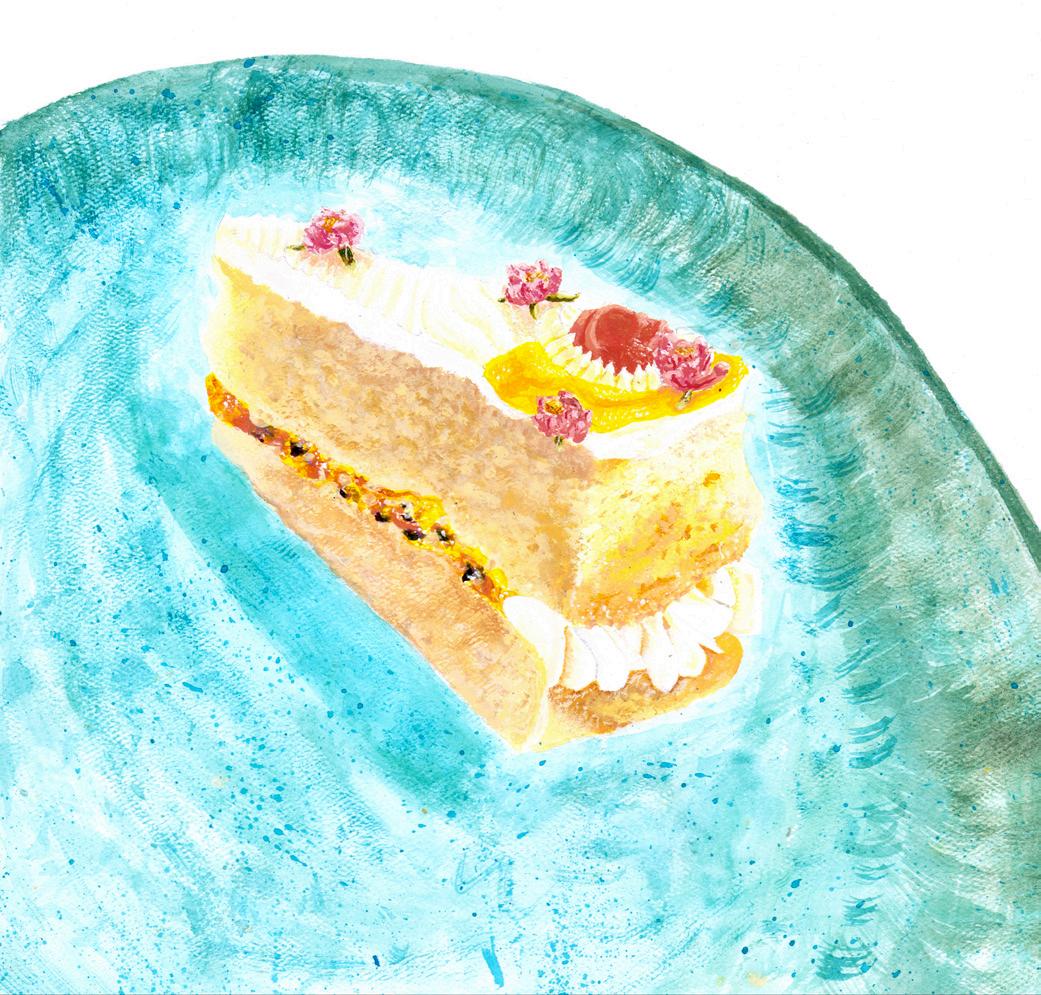
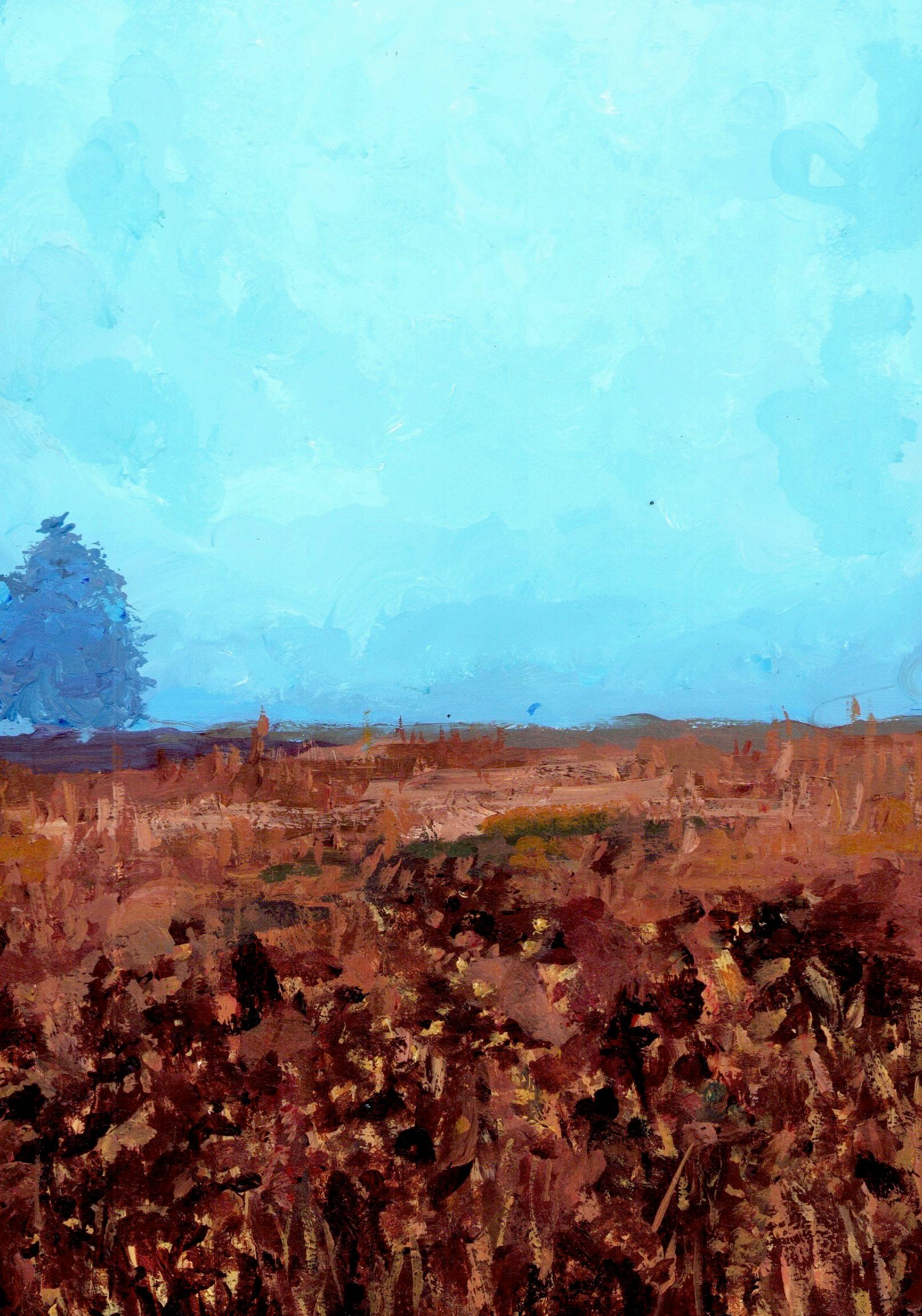
Painting by Frances Lawson ’27
Clover was steady beneath me; he made me feel safe. I was seventeen, after all. I could handle myself. The day had faded and night was closing in, all purple smudge and wind. I couldn’t see very well in front of me, partly because tears made everything blurry. They came down harder when I saw the box of light coming from the window of my house. Clover galloped the rest of the way. I ripped off his riding gear and shoved a pile of hay and a sloshing bucket of water into his stall as I ran from the stable to the house. It was a short stretch of patchy grass and dirt. The air was dusk-chilly in my lungs and mouth as I heaved gulps of air. I paused a moment before the door.
I burst through. The first thing I saw was Chester. My baby Chester. I bundled his tiny form in my arms. The air was warm and dry in the house. I rushed to Ma’s room, quietly opening the door. She lay pale in the bed, her lips drawing rattled breaths. The doctor, Pa, and Belle stood looking over her. Pa and Belle came over to me quickly, consoling me and telling me how brave I was. I just wanted to know about Ma. Pa said things were looking hopeful. After all she was strong—but that it would take a week to be able to tell. The clock kept ticking. It had to wait.
They kept talking. I hugged Belle and Pa. Belle started crying. It was heart-wrenching.
She almost never cried. I held back my tears. I had to be strong. I had to be strong for Belle. Her soft brown hair smelled sweet against my shaking breaths. I held her to my shoulder as I went to Ma, sleeping fitfully. I held her hand. It was hot. Hot was better than cold. I stayed there for a while with Ma in my hand, Belle on my shoulder, and Pa right behind me. The doctor gave us some pain medicine, told us to give lots of water and warmth, and to keep watch on her. I didn’t know what the medicine was. I didn’t particularly like the man, shrewd-faced. I could only hope for Ma.
The house was silent, and all I could hear was the clock. All I could feel was Chester purring to cheer me up. All I could see was the stove burning in front of me, my eyes glazing over and stinging when I closed them, my eyelids sticky. All I could do was wait. I had been waiting for days, Ma never getting better or worse. Silent, hot suffering. The afternoon ticked by with the clock in my mind… When would it strike midnight or noon?
Belle ran out of Ma’s room. My stomach plummeted. I looked at her face, which would tell everything. Her dark eyes shone.
“Ma’s fever broke. I think she’s gonna be alright, Violet.” She immediately broke down into tears.
The clock struck midnight. It was the end of time. It was time to be free. I ran over to Belle, clutching her in my arms, Chester circling around our legs. “You did it,” Belle said, looking up at me in admiration. I told her she had kept watch and saved Ma too. I crept into Ma’s room. She was propped up. Her eyes were blue. They were tired, but blue. I held her hand; she squeezed it in gratitude. No words were needed.
“I love you, Ma.”
I thanked God. It truly was the best birthday.

Charlotte Miller ‘27
When the sun stops shining, I will stop loving
I will stop memorizing your memory
And stop breathing your beauty I will forget how you smile
And let go of your weight
I will become someone else
And my heart will no longer beat for you
I will fall asleep
And my dreams will not contain you
But the sun keeps shining, so I will keep loving
Leah Stacy ‘26
Small little ways through the forest remnants of rambling life. tracks under leaves, under branches. Ever-changing impermanence. through seasons, winter, spring, summer, autumn rivers dry and leaves fall. Past water lays a thin layer Just below future comings and pours, into the river downstream, carrying onto its next venture. Fallen leaves make way for new life, younglings that soon will spread into a canopy of calm fortitude, Still through time, but swaying in the moment. Coming and going, just as the algal blooms waver through the seasons, and new paths proceed over old ones in the ever-changing soil.
Mr. Bob Clark, Director of Religious Life
Rooted deeply in the community life of the school, student Chapel sermons reflect a unique genre, combining personal narrative, spoken word, intellectual depth, and spiritual and philosophical exploration. Unlike most school assignments, seniors freely choose to write and deliver sermons at Upper School Chapel along with thematically integrating selections for music, readings, and prayer. In this way, Chapel sermons provide an interdisciplinary approach to meaning-making, to the perennial quest exemplified in Ivan Ilych’s question in Tolstoy’s novella: “How should I then live?” If you want to discover hope within the class of 2026, these sermons are a gateway.
Axel Iturbe ‘26
Walking into my Amama’s apartment, the smells of the best food in the world fill my nostrils; ajo, perejil, y vino blanco all cooking together on the stove-top. Relieved, I take a deep breath. The long journey is finally over: a two-hour drive followed by a seven-hour flight, and then another three-hour drive to arrive in the capital of an autonomous region in the Pyrenees mountains along the Spain-France border. My Amama, my Basque grandmother, has been preparing for weeks, making all the meals we’ll eat during our visit. Every time we arrive, my favorite dish awaits: merluza en salsa verde, a flaky, white fish in a creamy green sauce, served with fresh bread and a side of velvety béchamel-filled croquetas that warm the soul and relax the body like a deep sigh. I unpack, and as I hear my Aita yell, “Bazkaltzera!” I know it’s time to feast.
I sit down at the table, untie my napkin from the wooden cylinder with my initials painted on it, and relish the ultimate comfort food. In Spanish and Basque culture, dining is an experience, not a chore. Bottles of wine, rounds of appetizers, entrees, and rich cheeses for dessert turn a meal into a celebration. Some of my favorite conversations have happened during sobremesa, the time after a meal when everyone lingers talking around the table. I’ve learned countless life lessons listening to my elders and their friends during those long, loud, passionate conversations. It’s a magical time. You sit present, surrounded by those you love, without any rush. Although I have few memories of my late Aitite, which is Basque for Grandpa, one lesson he taught me always resonates: to slow down and truly savor the meal and the moments around it. That lesson, and all the others I’ve learned at the table, have become key parts of my identity, which I have been lucky to embrace. The importance of presence, patience, and shared time, I carry with me everywhere. But to go back further, some parts of our identity come to us by
happenstance, by our family, or by birthplace.
I was born in Melilla, a small autonomous Spanish city located on the northern coast of Africa, a place I’ve never returned to since. My parents have always promised that I could return for my 18th birthday and graduation from high school, a kind of symbolic homecoming. For years, Melilla felt like a magical place I would one day unlock, a part of my identity waiting to be discovered.
That image began to crack when I watched the film Adú, directed by Salvador Calvo, with my Amama. I saw African migrants scaling barbed-wire fences, desperately trying to cross into Europe through the very city where I was born. Melilla wasn’t just my birthplace; it was a gateway for some, a barrier for others. I realized how lucky I was to be born into a family with different passports, opportunities, and the ability to move across continents. I started to rethink what it meant to be “from” a place I knew nothing about. For years, I would tell people I was from Melilla, but I didn’t really know what that meant - to me or the world. It wasn’t until I grew older that I realized how complex Melilla’s history is: a border city, part-European, part-African, partSpanish, part-Moroccan, part-Catholic, partMuslim. In some ways, it reflects exactly how I have always felt: existing in the in-between. My identity has always been layered. My dad’s Basque; my mom’s American with Jewish roots, and by the time I turned six, we had already moved six times across Spain and the U.S. for my dad’s basketball career and transition to education. As a child, I never had a fixed definition of home. Instead, I grew up with two passports, three languages, and a sense that I lived somewhere between cultures, between worlds. At first, I didn’t want to embrace that complexity. Like most kids, I just wanted to fit in. But finding my home here at St. Anne’s-Belfield as a faculty kid made it
clear I stood out. My name, my background, my stories, they didn’t match anyone else’s. Over time, though, I stopped hiding those differences. I started owning them. I began to see my cultural identity not as something I had to explain, but something I could celebrate. My family gave me gifts I didn’t always notice: a love of travel, an appreciation for food and other cultures, fluency in two languages, and a global perspective. This in-betweenness has shaped the way I approach life, especially relationships.
Being bilingual has helped me connect with people from different backgrounds. Growing up surrounded by students from dozens of countries in our boarding program deepened my curiosity about others. Like the dinners at my Amama’s table, I loved listening to stories and learning about students coming from China, Canada, North Carolina, and beyond. As a little kid, each night at dinner connected me to my new home. It affirmed my understanding that everyone brings something valuable to the table, especially the courage that it takes to move away from your home.
While writing my tenth-grade sermon in Mr. Webster’s humanities class, a quote always stuck out to me: “You can have more than one home. You can carry your roots with you and decide where they grow” (Henning Mankell).
Mankell captures something I’ve spent years learning. Home isn’t a fixed address. It isn’t a passport or a language or a flag. Home is something you build. In the relationships you invest in, the tables you choose to sit at, and the presence you bring to the people around you. When I return to Melilla later this year, it won’t be about discovering a birthplace; it will be about honoring the journey that has helped me claim all the homes I come from.
I think about Charlottesville and St. Anne’s-Belfield. I think about the thirteen years I’ve spent here, the people in this room, the conversations that have shaped who I am. This school has become one of my homes, not
because it was familiar from the start, but because I let it be.
I think about my Amama’s table, and how it wasn’t really about the food, although the food is really good. It’s about what the food represented: the time, the intention, the willingness to be fully present with the people in front of you. My Aitite taught me to slow down and savor. I think what he was really saying was: don’t miss the moment you’re in by always looking for the next one.
That’s something I want to carry with me for the rest of my life. I don’t know where I’ll end up, but I know that the version of home I’m looking for isn’t a place on a map. It’s a feeling I’ve already experienced: at a table in northern Spain, in the hallways of this school, hanging out with my friends and having deep conversations, in the middle of a basketball game surrounded by teammates who feel like brothers. Home is built in moments of genuine connection. It grows wherever and whenever we choose to show up fully.
Wherever you come from, however layered or complicated or hard to explain your story is, that is not a weakness. It is the most interesting thing about you. The differences you’ve been tempted to hide are the very things that allow you to connect with the world. Own them. Bring them to the table.
And when you find yourself somewhere new: a new school, a new city, a new chapter in your life, or in the complicated space “in-between,” don’t wait for it to feel like home. Make it one.
Royce Howard ’28
Across large swaths, for many years. My son came along to keep me company and witness my confusion. they‘re hiding,
The word filled me with animal panic. He saw.
That’s why the universe is silent, Everyone’s hiding.
There was no stranger place than here. Nothing at all is the same.
Maybe it’s entirely natural, maybe it isn’t. What do you mean?
All human history answered that one.
He’s still angry.
He is still depressed.
I’d be concerned if he weren’t upset, these days. Nothing at all is the same.
She used to get angry. She got depressed. A lot.
A losing battle
He’d kept her Ecstasy.
The black clouds he’d sunk into either blackness or stars. break up into wisps of cirrus.
Peace came over him now, as if all would be well now, whatever the outcome.
I needed to know what she was saying.
But I was afraid the question might make me look crazy. Or I was too afraid of the answer to ask.
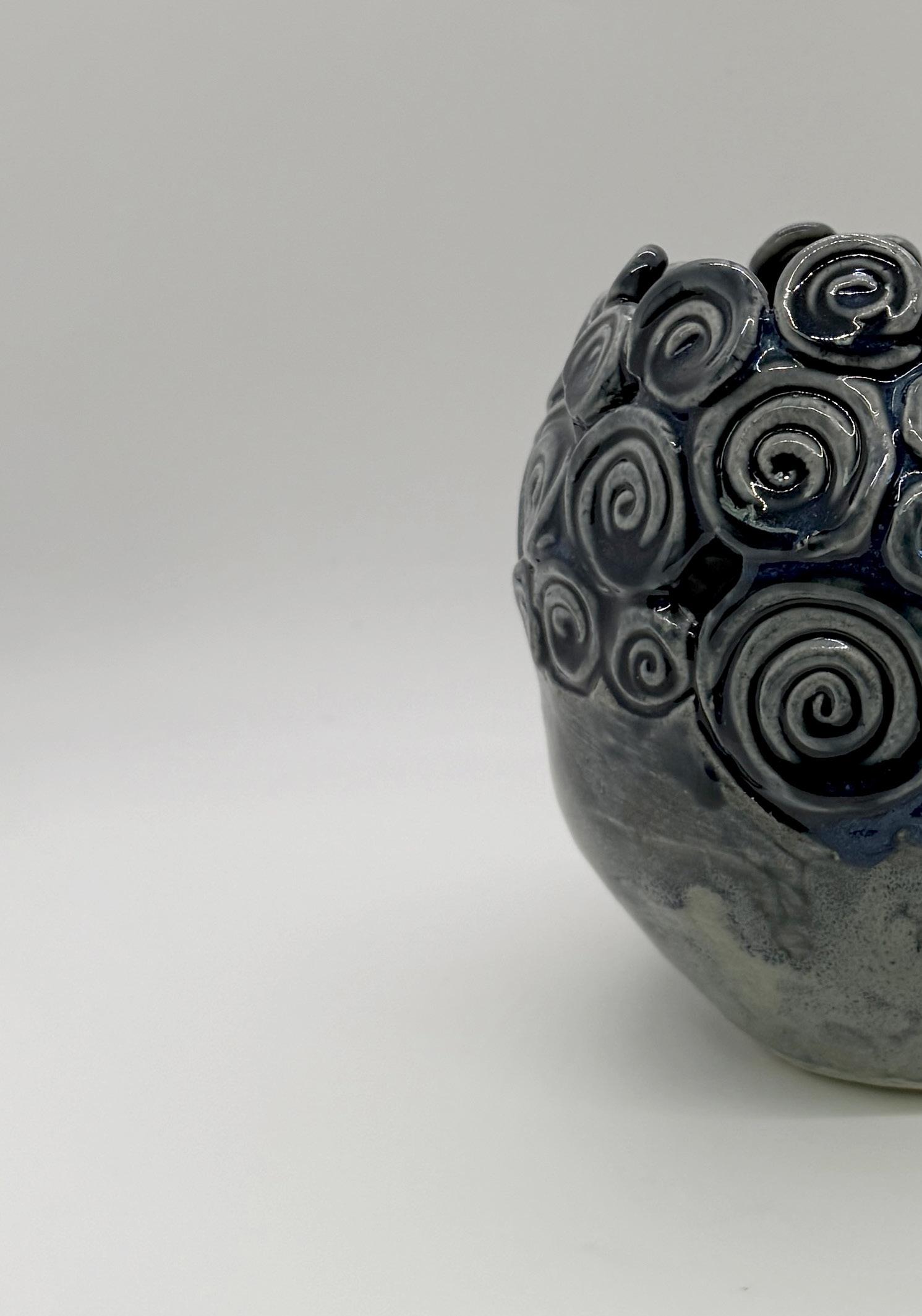
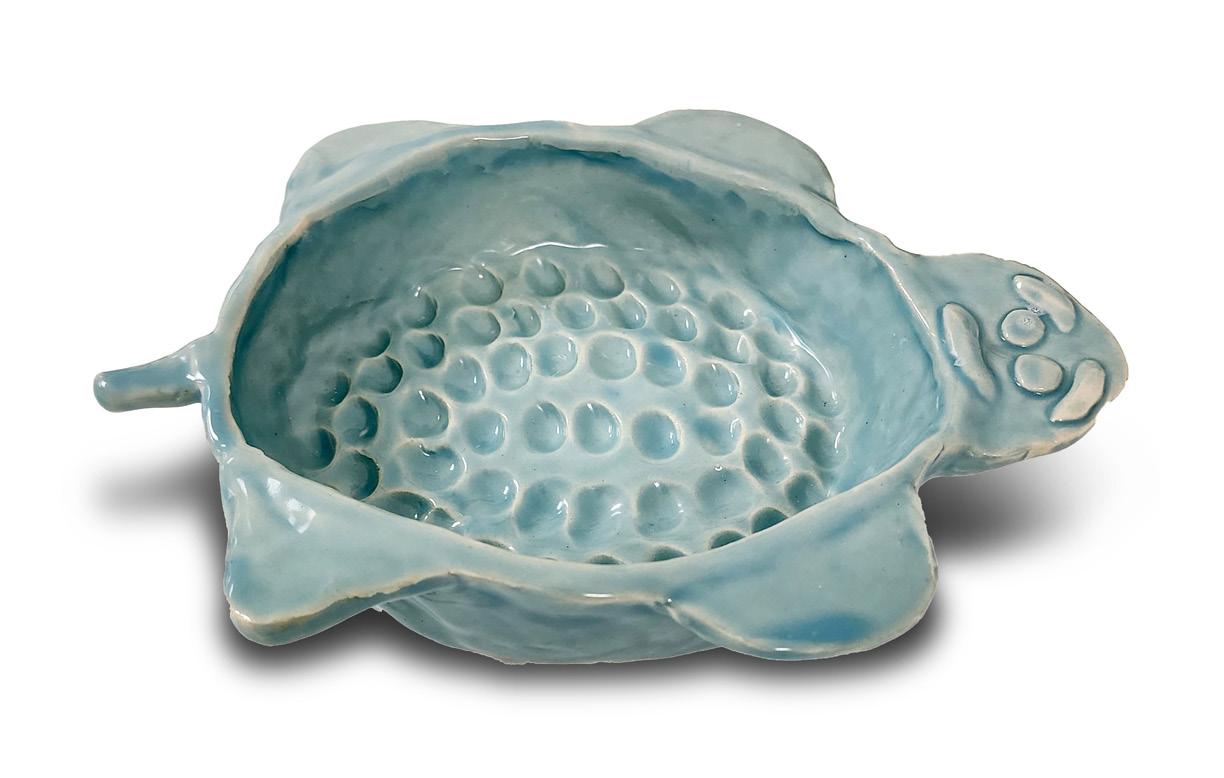
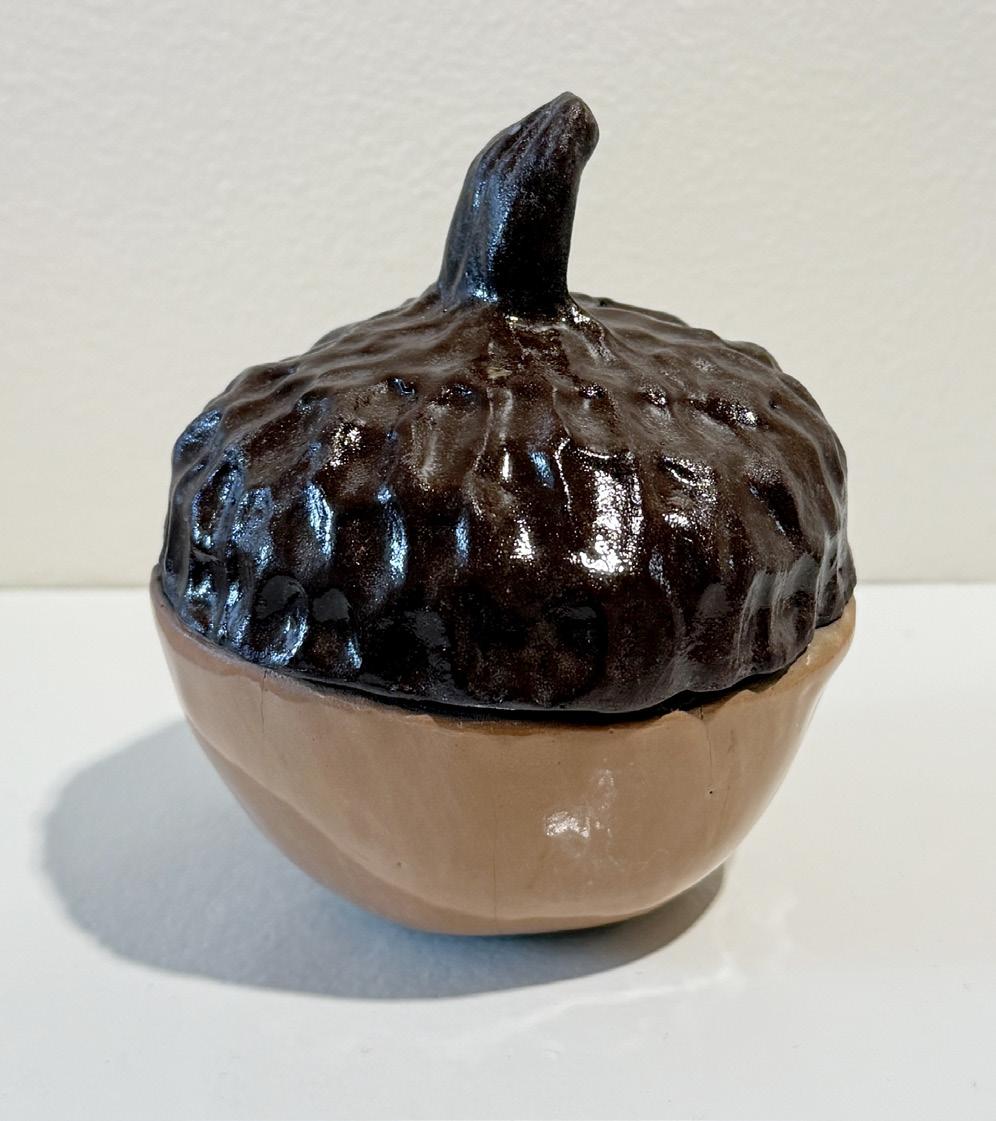
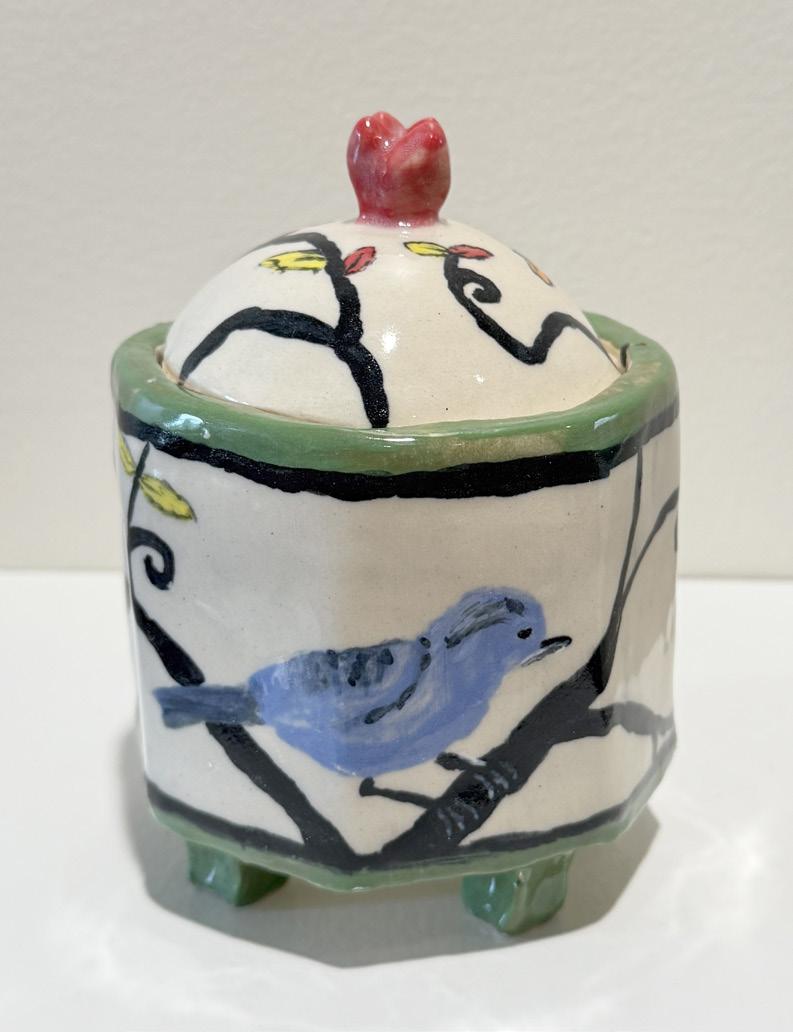
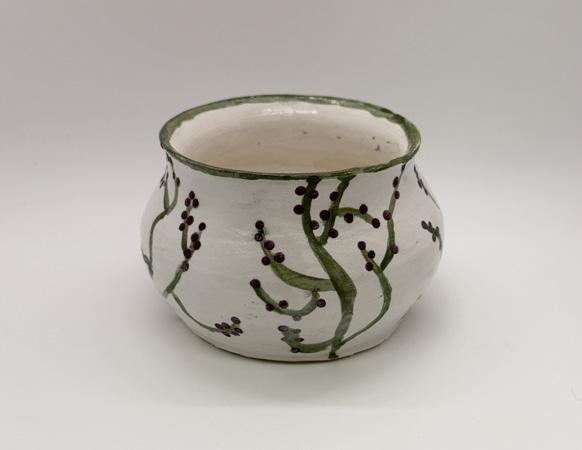
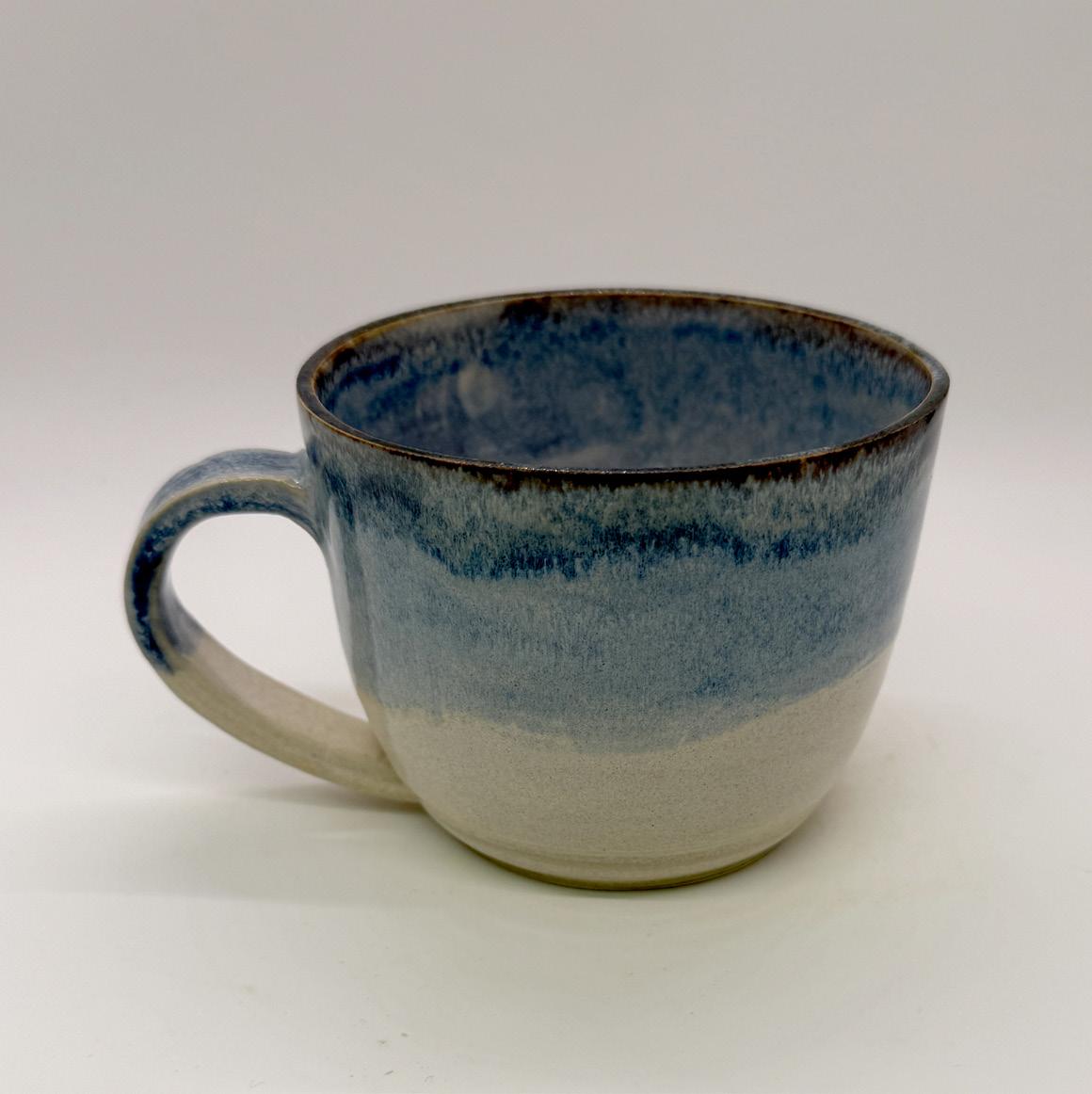
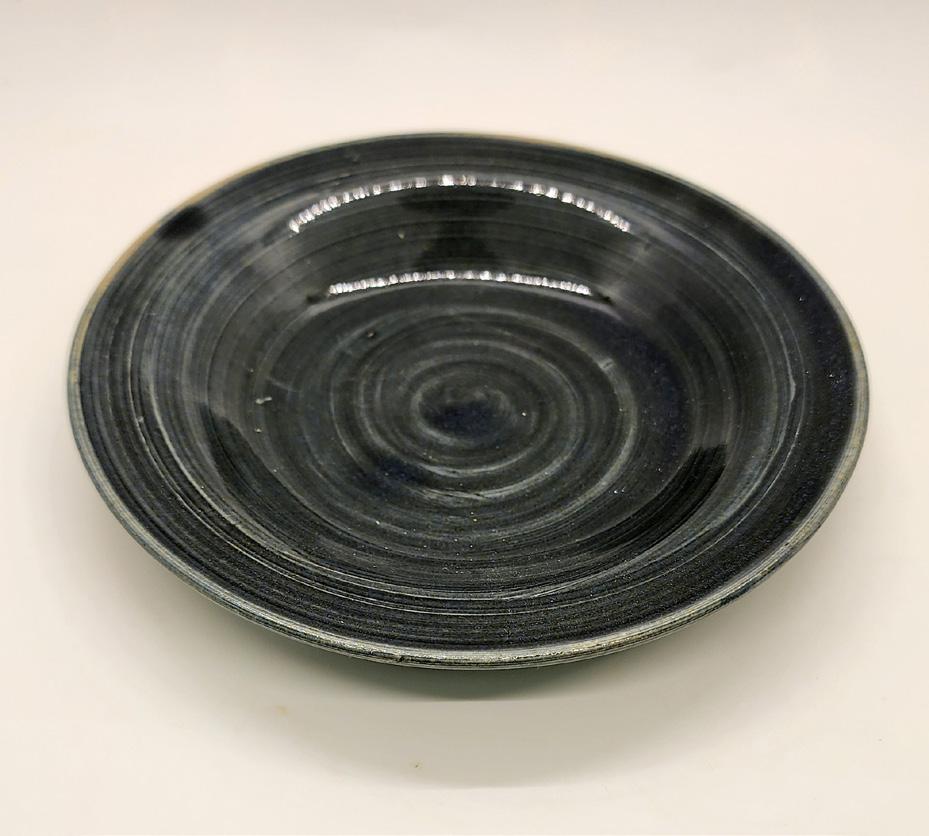
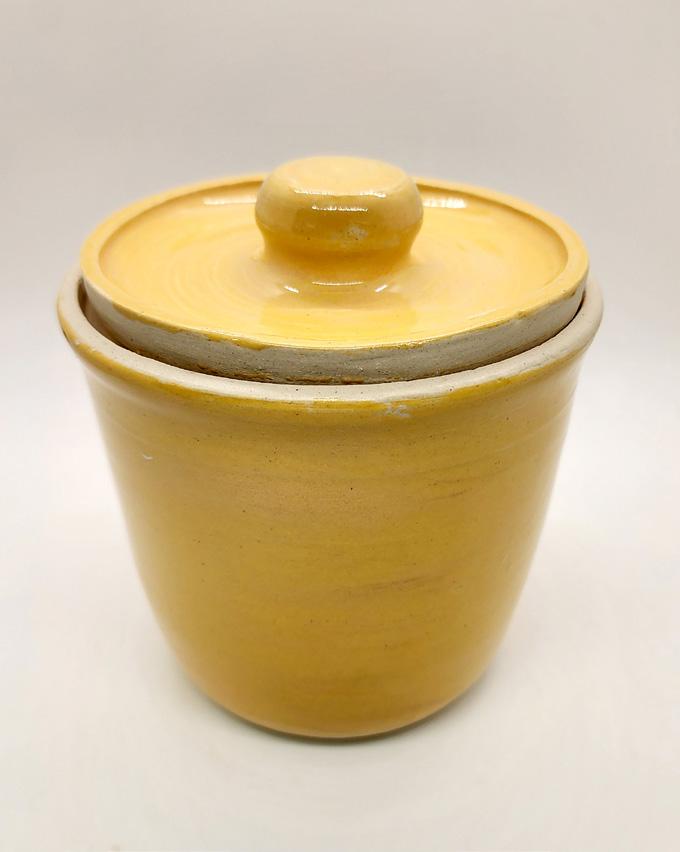
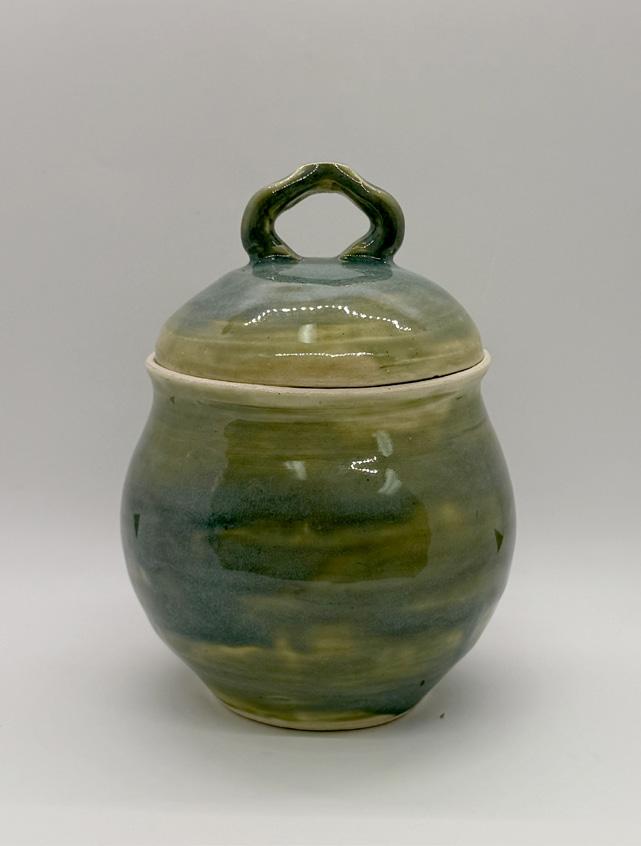
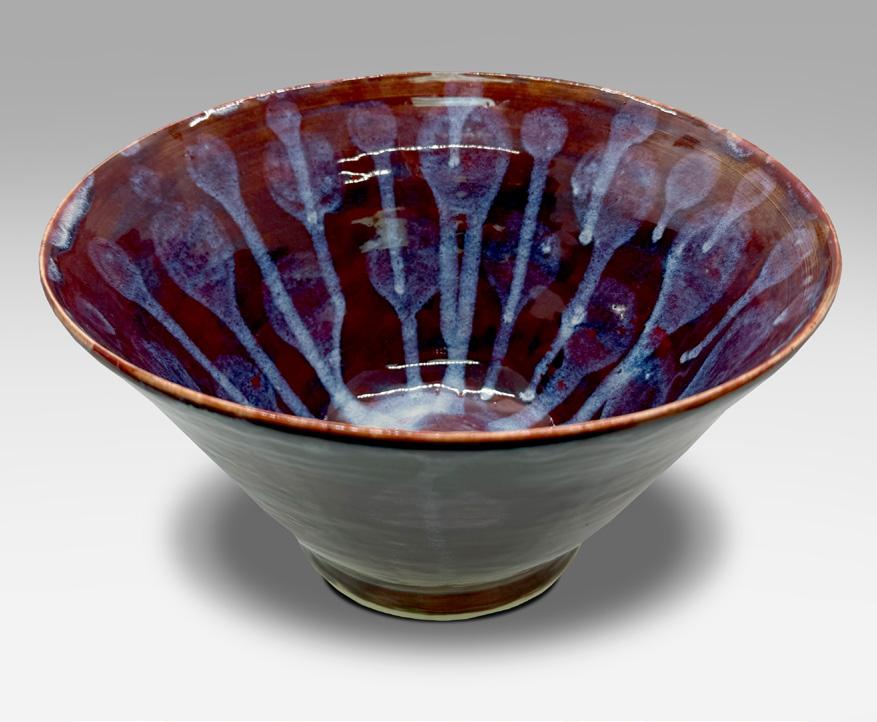
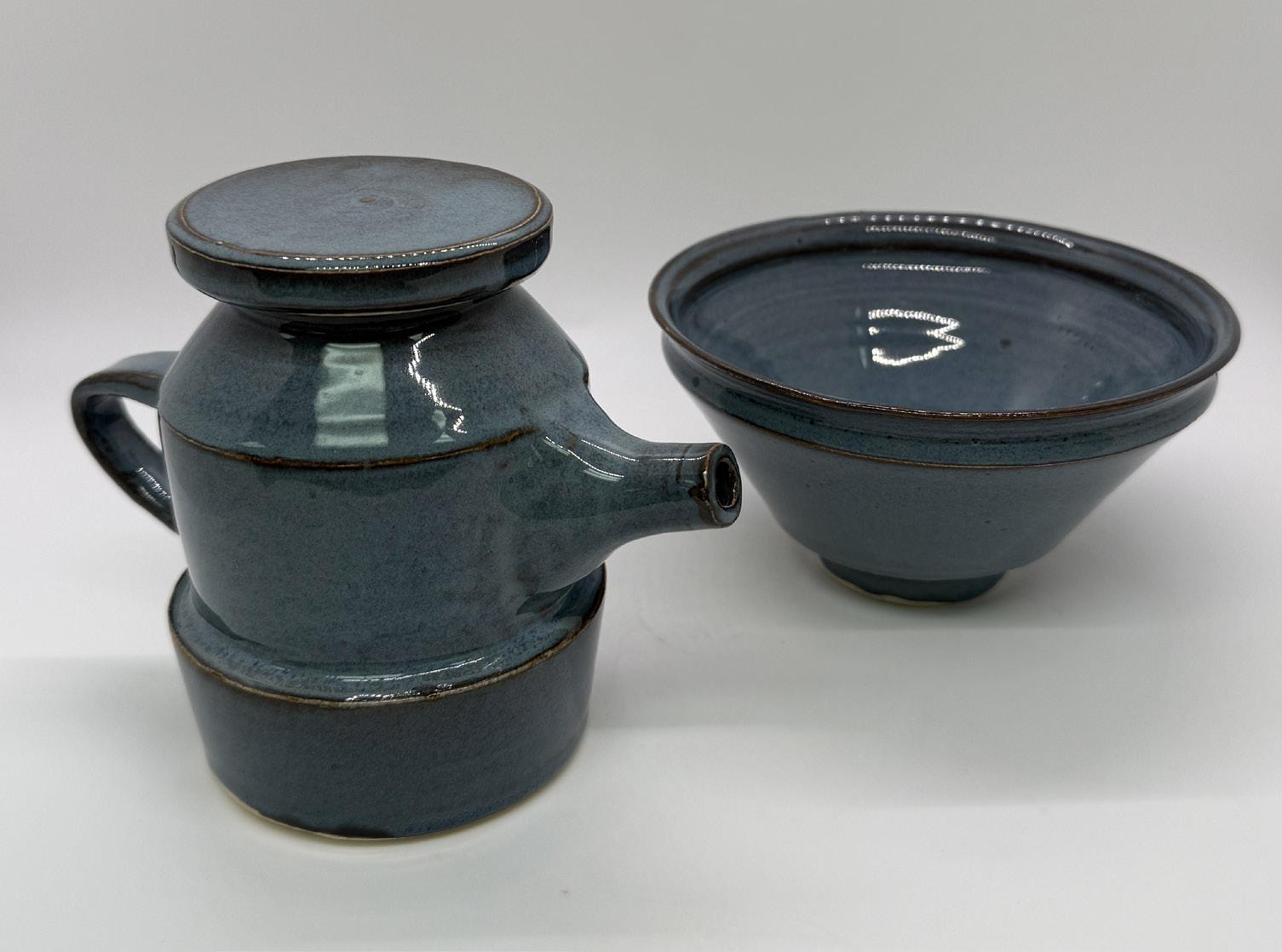
Ceramic Vessel by Penelope Geiger ’26
Alaja Gough ‘26
[once the world was perfect, and we were happy in that world. then we took it for granted.]
the ground now cracks. the sky turns black. the water is fatal, and the air now polluted.
humans aren’t accepting. humans aren’t listening. humans aren’t looking.
[the worlds asks, as it asks daily: And what can you make, can you do, to change my deep-broken, fractured? ]
i answer: I will change the world to listen.
[Partially inspired by a quote from Pablo Picasso]
The photographer captures the beauty in a frozen moment… shaped by light, angle, timing.
The mirror gifts an animated reflection… a crowded constellation of fine features.
The painter reimagines the essence of the soul… The master of blending what is seen with what’s felt.
A patchwork of perspectives we all admire, Each filter speaks in its own way… Yet none can encapsulate the whole of you— None, other than yourself.
Because at the end of the day, it’s simply you, yourself, your thoughts, your memories…
orbiting your mind like blown glitter in a breeze and in this gravity—vast and veiled, a garden grows.
Rooted in this hidden mycelium, starry vehemence burns up above. Then, breaks a celestial spilling—a cloudburst of chimeras— or perhaps the passions and dreams, that have followed you all this way.
Yonder, shadows shimmer on glassy ponds, harboring companions whose faces grow nebulous.
Then, nostalgic white florals- jasmine, calla lilies, tuberose breathe the soft petrichor of a distant season…
a euphoria you can’t return to, yet refuse to release.
What is seen of one’s appearance… Perhaps, a glance stolen as two walk by is only a fraction, a hint, a piece.
Of spirit, of passion, of past and such perception.
The human soul: an uncaptured marvel, a complexity such as a nebula, still unfolding.
Beyond the grasp of any frame, Beyond the reach of any reflection, Beyond the limits of any painter,
lies this plexus only you can map… Because no one knows the depth of the garden better than you.
And no one else holds the key to its gate.
Kate Cheng ‘26
I.
The water was perilously cold.
The sight of water would invade our eyes, And the taste of water would invade our bowels And unstring our bones And we would know
Water is almost nothing, after all. It is conspicuously different from air only in its tendency To flood And founder And drown.
II.
He was a dutiful and industrious worker, and Bound to rise.
But all the same, it was then that she loved him best, A rambling house surrounded by peonies and rose bushes, Roses—red roses, And pink wild roses.
III.
It was he Foundered coat and drowned sleeves and Marbled lips and marble fingers
And eyes flooded with the deep water that gleamed down beneath the reach of light. Always reminded of pictures, images, in places where images never were, In marble, In the blue net of veins.
IV.
The tables and chairs and cupboards and doors
Had been painted a rich white, Layer on layer, year after year, But now the last layer had ripened to the yellow of turning cream. Everywhere the paint was chipped and marred.
Everything is left where it was And the spirit passes on,
Just as the wind in the orchard picks up the leaves from the ground They were leaves that had been through the winter,
Some of them worn to a net of veins.
There were scraps of paper among them, crisp and strained
From their mingling in the cold brown liquors of decay and regeneration, And on these scraps there were sometimes words
Another, which had been the flap of an envelope, Had a penciled message in anonymous hand: I think of you.
A basket of sheets to hang in the spring sunlight, Wearing her widow’s black,
Performing the rituals of the ordinary as an act of faith.
V.
Time and air and sunlight bore wave and wave of shock, And she would feel that sharp loneliness she had felt
Every long evening since she was a child. It was the kind of loneliness that made Clocks seem slow and loud And made voices sound
Like voices across water.
Every sorrow suggests a thousand songs, And every song recalls a thousand sorrows, Like a difficult memory, Or a ghost.
How many times had she waked in the morning to find him gone?
For why do our thoughts turn to some gesture of a hand, The fall of a sleeve,
Some corner of a room on a particular anonymous afternoon, Even when we are asleep
When do our senses know anything so utterly as when we lack it?
What are all these fragments for, why must we be left,
The survivors picking among flotsam, Among the small, unnoticed, unvalued clutter
That was all that remained when they vanished.
Lot’s wife was salt and barren,
Because she was full of loss and mourning, and looked back.
But here rare flowers would gleam in her hair,
And on her breast, And in her hands,
And there would be children all around her,
And they would forgive her, eagerly and lavishly, for turning away,
Though she never asked to be forgiven.
Though her hands were ice and did not touch them,
She would be more than mother to them,
She so calm,
So still,
And they such wild and orphan things.
For to wish for a hand on one’s hair is all but to feel it
Though we dream and hardly know it, Longing, like an angel, fosters us, smooths our hair, and brings us wild strawberries.
Someone is living there.
Someone has pruned the apple trees and taken out the dead ones
And restrung the clothesline and patched the shed roof.
Someone plants sunflowers and giant dahlias
At the foot of the garden.
Why do we conspire
When our fruitless desire
Cannot be known
But by God alone
It is not life’s goal
To fathom the soul
But to be raptured
With white pearls
And frosting swirls
To capture life on its twiny thread
Remembering the path we tread
And so our silver collection is gold
The light of the setting sun on the field
The moon shivering on the water
The swell of curiosity
Is nothing but docility
In the arc of life
As the rainbow is never half a circle
Every breath you will take will stay
God will take you the rest of the way
Leah Flores-Galdamez ‘28
A little girl in a ballet class
Is like a delicate flower
In a field of thrones
Tears dry from not getting the lead role as Clara
Innocent, they all were
Her mom signed her up for ballet
“Adios hija”
“Adios mama”
She felt bad for her daughter who couldn’t shine
Couldn’t because she didn’t fit the ‘standard’
She deserved to shine
Like all the other porcelain dolls on that big stage
A little girl in ballet class has dreams
But some must walk on a tightrope of glass, to reach prima ballerina as her mama would say
“Adios hija”
“Adios mom”
So she tied her hair
Put on her stockings that cover her leg hair
Makeup that wasn’t her shade
And pretended she was someone else
All she wanted was to be one of the ‘good ones’
Not suspicious
Or different
Just ‘normal’
“Adios Hija” “Bye mama”
Tight tutus can hurt your back after a long day of the silence in the studio
Seeing yourself stand out like an ugly duckling in a room of swans can crush the little pride you have
Mom drove her up that paved parking lot to the studio that was her second home
She grabbed her things and was ready to go out into the void of tutus and dances with no true meaning
“Adios hija te amo” “Bye mom”
Hadley Booth
’26
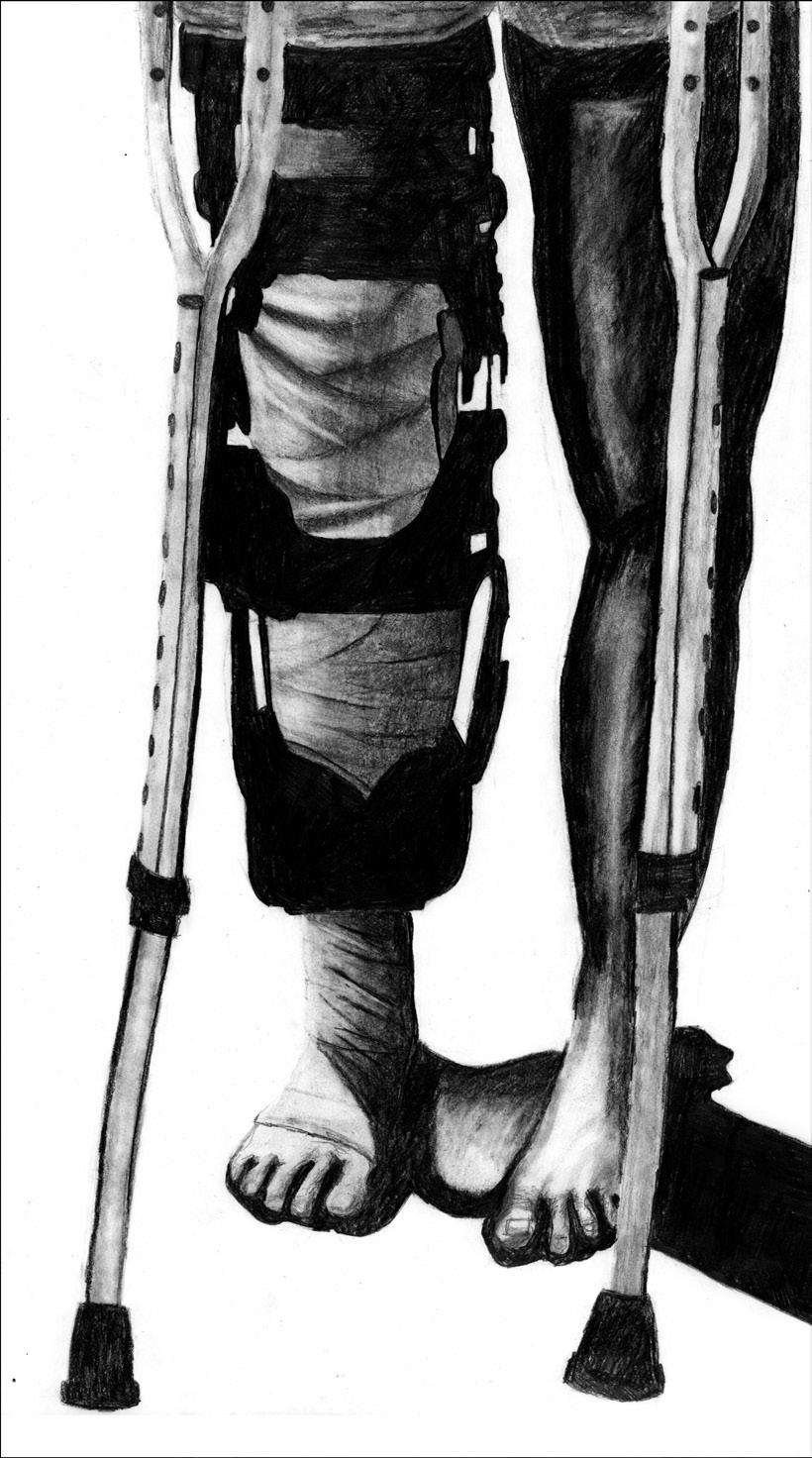
Sitting under the beating sun, I feel the green, artificial roughness under me. The yelling, the whistles, and the chaos of practice blur together as I drift into my own thoughts. Suddenly, I snap out of it, peel myself off the turf, grab my crutches, and start putzing around for the remaining hour. Although most may assume this is lacrosse practice, it’s actually a part of my seasonal job, managing the football team.
Stepping into this role came at a time of deep uncertainty. Just a week after knee surgery, I hobbled into the CCC to chat with Mrs. Blake about possibly managing the football team. I’m sure it was a confusing request: Why football? Why not a sport like field hockey or volleyball? But there was a story behind the choice, stretching far before the injury in front of me.
Tracing back 14 years, I can still feel the dewy Louisiana air engulfing me as I played along the sidelines of my brother’s blistering-hot youth football games. I still see his small, determined frame trying his best to pass the defense. I envied him. But in this deep admiration, a seed of love for football took root. Coming home from those morning games, my memory goes to our living room hearing the Florida State warchant echoing for the first time. I didn’t know it then, but these memories were quietly but consistently shaping me.
After moving to Springfield, Virginia, the pattern continued: I sat on the sidelines, watching my brother play, adoring the sport simply because Peyton loved it. My big brother’s passion became mine.
Then came Charlottesville and the chance to play on my brother’s Middle School flag football team. After years on the sideline, stepping onto the field felt like entering a world I had only watched from afar. Even though I still spent most of the games on the sidelines— playing only for the minimum equal playing time minutes—I didn’t care. For the first time, my
football experiences belonged to me. Those early experiences, from the post-practice mishap that resulted into stitches in my lip to the pre-game flag football oath I recited with kid-level seriousness, were shaping me in ways I didn’t understand. Eventually, life pulled me toward lacrosse, and I left football behind without understanding how much of me it held.
Over time, lacrosse became not just something I did, but something I was. When I looked in the mirror, all I saw staring back was “the lacrosse player.” And without noticing it, I began tying my worth to that single reflection which became destructive when it was forcefully taken away.
Seven years later, I found myself back at another beginning. Lying on an operating table after two traumatic kneecap dislocations, I was facing a new future. For the first time, I had to look myself in the mirror and admit that I didn’t who I was without lacrosse. When that identity disappeared, it felt like the ground shifted underneath me. I wasn’t sure where my value came from, and I felt like I had to piece together a new understanding of who I was. So, I turned to the one constant I knew: my family. They helped me step back from the mirror and begin searching for a purpose that wasn’t tied to a sport, but to deeper things like service, character, and becoming someone I was proud to look back in the mirror at. In this search, I remembered that my brother’s football season started in the coming weeks. Beneath this, I felt something familiar—an old love, buried beneath years of new commitments and growing up, that I didn’t realize was still there. I needed purpose. I needed direction. I needed a new experience. So, I signed up to manage the football team. This choice became more than a distraction, it became a foothold in a moment when I felt like my identity was slipping away.
Now, three years later, I’ve gained a kind of insight into football that a normal spectator never sees. My favorite moment is our pre-game locker room ritual. After the hype music stops and the coaches come in, everyone gathers in a circle, kneels, bows their heads, and says the Lord’s prayer, which Tyson recited. Then, Coach Paquette—our defensive coordinator— reads “The Man in the Glass” by Peter Dale Wimbrow Sr., which Mason and Will shared earlier. This tradition has been part of STAB football since 1997, because it speaks to something deeper than sports. The line that has continuously struck me since the first time I heard it is: “For it isn’t your father, or mother, or wife / Whose judgment upon you must pass / The fellow whose verdict counts most in your life / Is the one staring back from the glass.” That truth hit me hard. We’re constantly surrounded by expectations from others, but at the end of the day, every voice fades except one: the voice of the person in the mirror. That person who knows whether you gave your effort honestly, showed kindness when it wasn’t required, or lived in a way that aligns with who you want to be.
That realization changed me. It taught me that being your best self isn’t about perfection—it’s about showing up fully for the things that matter, whether that’s the bond of football or the commitment I give to lacrosse. It’s also about filling your cup in ways that draw you closer to the person God created you to be. I’ve said Lord’s Prayer since the Lower School, but I never paused to think about the phrase: “give us this day our daily bread.” Only recently have I realized that our “daily bread” is the nourishment we receive from serving others even in tiny, everyday acts. It’s the nourishment of belonging to something bigger than yourself.
As a manager, this service manifests into the simplest things: “Ms. Booth! Do you have a towel?” “HBooth, can you pass me a water?” “Hadley, can we listen to Jon Pardi in practice today?” “Can you grab my jersey from the locker room?” “Can you help me tie my shoe?” “Where’s my mouthguard?” Answering these endless questions can be a challenge; managing isn’t particularly glamorous. But being immersed in this environment every day drives me.
If you want to understand why, watch the lineman next time you see a game. They battle in the trenches play after play, but when the whistle blows, they help each other up—even
their opponents—and reset for the next down. That culture and shared respect is why football means so much to me.
Managing isn’t about the endless errands and tasks. It’s about connection and service. Serving others fills my cup and makes me proud of who I’m becoming. It’s taught me that identity is shaped far more by how we treat people than by anything listed on a scoreboard or stat sheet. And in that daily service, I’ve rediscovered something I didn’t realize I’d lost—my love for football. Now when I look in the mirror, I don’t see the old, singular identity of “lacrosse player.” I see something fuller: a blend of the young girl who fell in love with football years ago, the manager who shows up for others, and the person learning to grow through adversity. My hope is that when I look in the mirror years from now, I can see even more: someone who gave her best, who brought joy where she could, and who reflected the love God calls us to show.
As I close, I want to urge you to reflect: How are you serving the person staring back at you from the glass? What choices can you make to become someone you’re proud to face each day? What needs to change to bring you closer to joy not regret? Find those things. Make those changes. Because long after the noise around you fades, the verdict that matters most is the one from the person staring back from the glass.
Anonymous ‘26
[Inspired by “Feeding Worms” by Danusha Lameris]
How do the roots remember?
How do they sing to the earth?
Not by being alone.
Fungal networks let each root be interconnected with another.
Connection cultivates gratitude. That is how the roots sing.
Sebastian Laza ’26
Nine years ago, in 2017, I was forced to sit in front of the TV and watch the Unite the Right rally in Charlottesville. My 9-yearold self was confused at what I saw and at what a state of emergency was, but nothing confused me more than what I was watching. My parents, having grown up in Romania under Communist control, had always made a point of not sheltering me from the difficult parts of history or unsavory current events. So I watched the entire broadcast up until the dispersal. My dad then said that the real violence would begin soon, since the police would not be able to control all of the people who had left the vicinity. This was my first encounter with the forces of hatred and discrimination that exist and persist within the United States to this day, and I did not know how to handle them. Having all of my family history in a completely different country, the experience was jarring because it was my first encounter with my new history, a history being created in front of my eyes. As writer and civil rights activist James Baldwin says, “To accept one’s past - one’s history - is not the same thing as drowning in it. An invented past can never be used; it cracks and crumbles under the pressures of life like clay in a season of drought,” (Baldwin 81). I relegated these events to the back of my mind and hid them there, and I refused to believe that they would be attached to me for the rest of my life. According to Baldwin, I was drowning in my history, unable to accept that something like this could happen “here.”
It was not until last year in American Studies that I was forced to confront this past again. Now older and more equipped to handle it, I learned more about what I saw and the forces in American history that led to the events that led to the death of Heather Heyer and the malicious wounding of countless others. A farright white supremacist gathering took place called the Unite the Right Rally in downtown
Charlottesville. These people were protesting the removal of the statue of a confederate general and were met with counterprotestors who wished for the statue’s removal. These actions were not just about a statue but about a wider movement to preserve white supremacist figures like General Lee. What we experienced showcased the need for us to reflect inward and address hate because it was in our country and our hometown. These questions are not unique to us or our time. Jesus truly believed and spread the idea that what makes someone a good and righteous person is their ability to love anyone and everyone, regardless of how they look, identify, or believe. As a Christian, I have struggled with my perception that Christianity has become more politicized and the true teaching of Jesus has been drowned out by a dogma that teaches Christians to hate instead of to love. I feel deeply troubled that my beliefs in God and the teachings of Jesus have been co-opted to spread hate within the country I live in, and it’s made me falter in my beliefs. I am not the first person who has had a crisis of faith in the face of adversity. Spiritual leaders can provide guidance through the uncertainty and advice on how to move forward. Pope Francis, the first Jesuit pope and the first pope to come from Latin America, said, “We must prepare ourselves for the spiritual combat. This is important. It is impossible to preach the Gospel without this spiritual battle, a daily battle against sadness, against bitterness, against pessimism, a daily battle!” (Pope Francis). Even though Pope Francis uses strong language like “spiritual combat,” he is not referring to people or any political group. Pope Francis says to non-violently battle against the forces of the world that seek to make you lose hope and to hold on to your beliefs in the goodness of people and the ability of the world to get better. He wants us to keep believing in Jesus’ message to love others and to be kind.
Turning to scripture, I find wisdom in the words of Matthew, who warns us that violence begets violence. When Jesus is arrested the night before his crucifixion, Peter
takes his sword: “Then saith Jesus unto him, Put up again thy sword into its place: for all they that take the sword shall perish with the sword,” (Matthew 26:52). Just as those who live by the sword die by it, so do those that spread hate live more hateful lives. I believe that hate is equivalent to violence and that those who hate others do violence to others. But hate doesn’t just hurt others, it damages the hateful’s soul. The more hate one experiences, the more it makes them resistant to love and being loved by others. It’s tempting to give in to despair and to lose hope that hate can be defeated. It’s reassuring and scary to me that humanity has struggled with the same problems for thousands of years. Are we that different from Cain and Abel? It’s our contradiction that we are capable of loving others deeply, and at the same time, we are capable of unspeakable acts.
Jesus used the parable of the Good Samaritan to support the idea that help often comes from unexpected places. When the merchant is wounded on the side of the street, the listeners expect him to be helped up by the Judeans, but Jesus purposefully subverts our expectations and shows the merchant being helped instead by a Samaritan. Jesus used the political situation at the time to better aid with his telling of the story, since Samaritans were viewed as traitors by the people he would tell the story to. Jesus was trying to show that these rivalries were, in the end, fictitious and that people are capable of doing good acts regardless of who they are. The Roman State would end up killing Jesus for spreading these messages, which further goes to show how the political realities of the time affected Jesus and were affected by him. He was not an idle
observer but an active participant within the system he was born into, and would use the context at the time to give his stories greater depth and meaning. Like how the Good Samaritan was expected to be uncaring and the Judeans to be helpful.
Oftentimes in history, the worst moments are reflected upon because our failures give us a warning and an opportunity to grow. Reflecting upon our past should influence how we wish to shape our future. The events that took place in Charlottesville 9 years ago give us the opportunity to imagine a future 9 years from now that is better for everyone, regardless of who they are. Throughout high school, I’ve felt like the events of the world have happened to me without any ability to influence them because I was too young to vote or have a voice loud enough to affect change. I wrongfully believed that by ignoring the happenings in the world, they would leave me alone, but whether I paid attention or not, they still happened, except now I have the ability to cast a vote for something I believe in. Underclassmen, while you cannot vote,
there is much you can do by paying attention because the more informed you are, the better you get to define your own beliefs instead of letting others define them for you. The more you stay informed, the more able you are to fight against hate because hate thrives on lies. The foundation of hate relies on the lie that the hateful tell themselves: that someone else is undeserving of the respect and dignity they offer themselves. The event I saw as a 9-year-old and later revisited last year taught me that hate persists, but so does love, and that everyone should make an effort to reject hate and embrace loving everyone as Jesus would. Within scripture, I was able to find guidance on how to process what took place in Charlottesville and gained a wider perspective on things. Scripture continues to stay valuable in the modern world because it gives context to what we see and perennial guidance on how to properly respond. It’s Jesus’s message to love everyone, and Pope Francis’s message to not lose hope, and I hope that everyone here can stay loving and hopeful through difficult times.
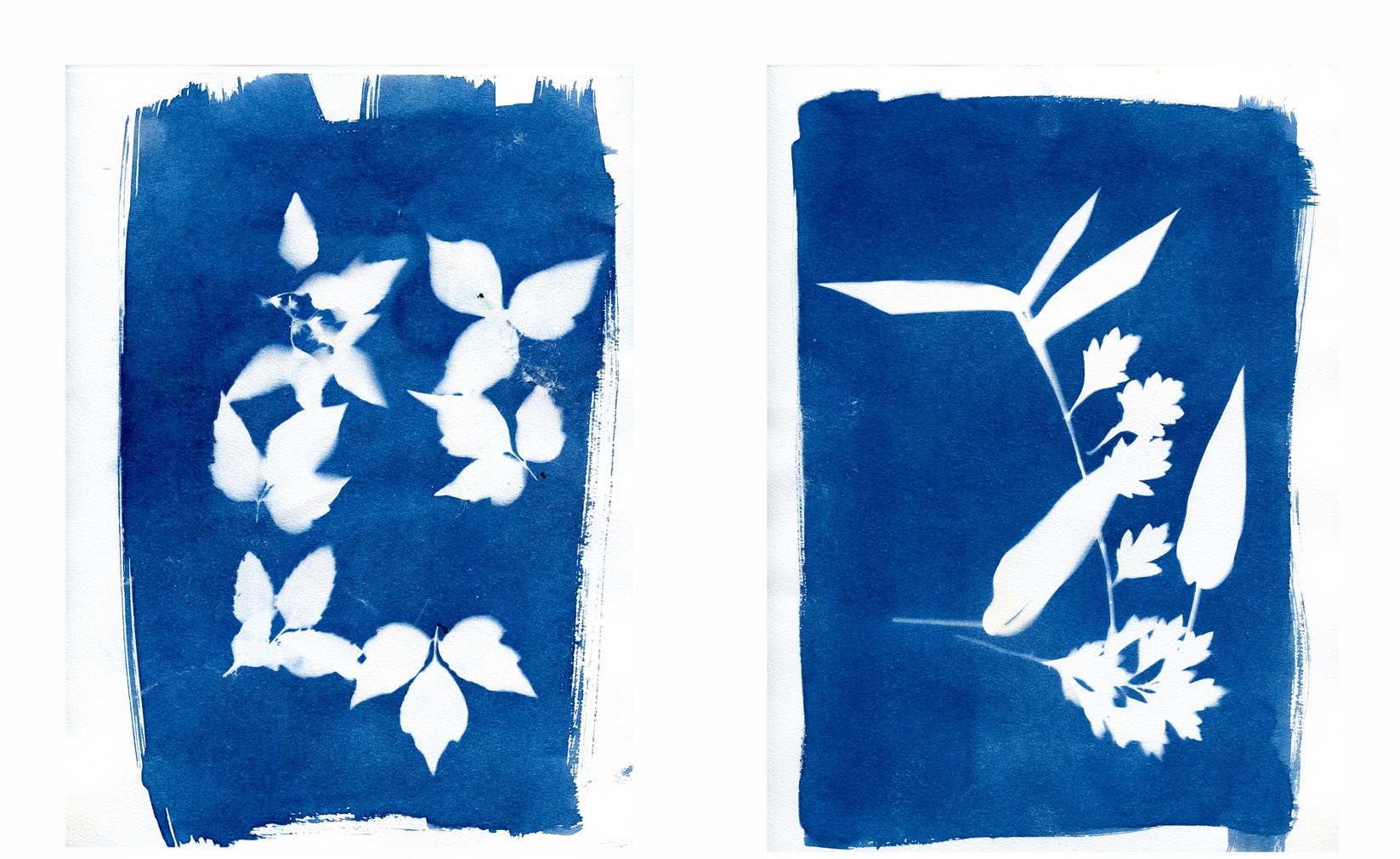
Ani Fairbanks ’26
The trees are still bare.
Not quite ready to bloom and grow. I’m with the trees.
I’m not quite ready. To move on, To grow, To leave the familiar.
But spring is coming, and It will happen.
Hopefully slowly & softly.
“The
water flows but the river stay sthe same. I’d like to stay this age.”
Aaron Mills-Koonce ’28
“old memories that slowly start fading away” Mason Eubanks ’28
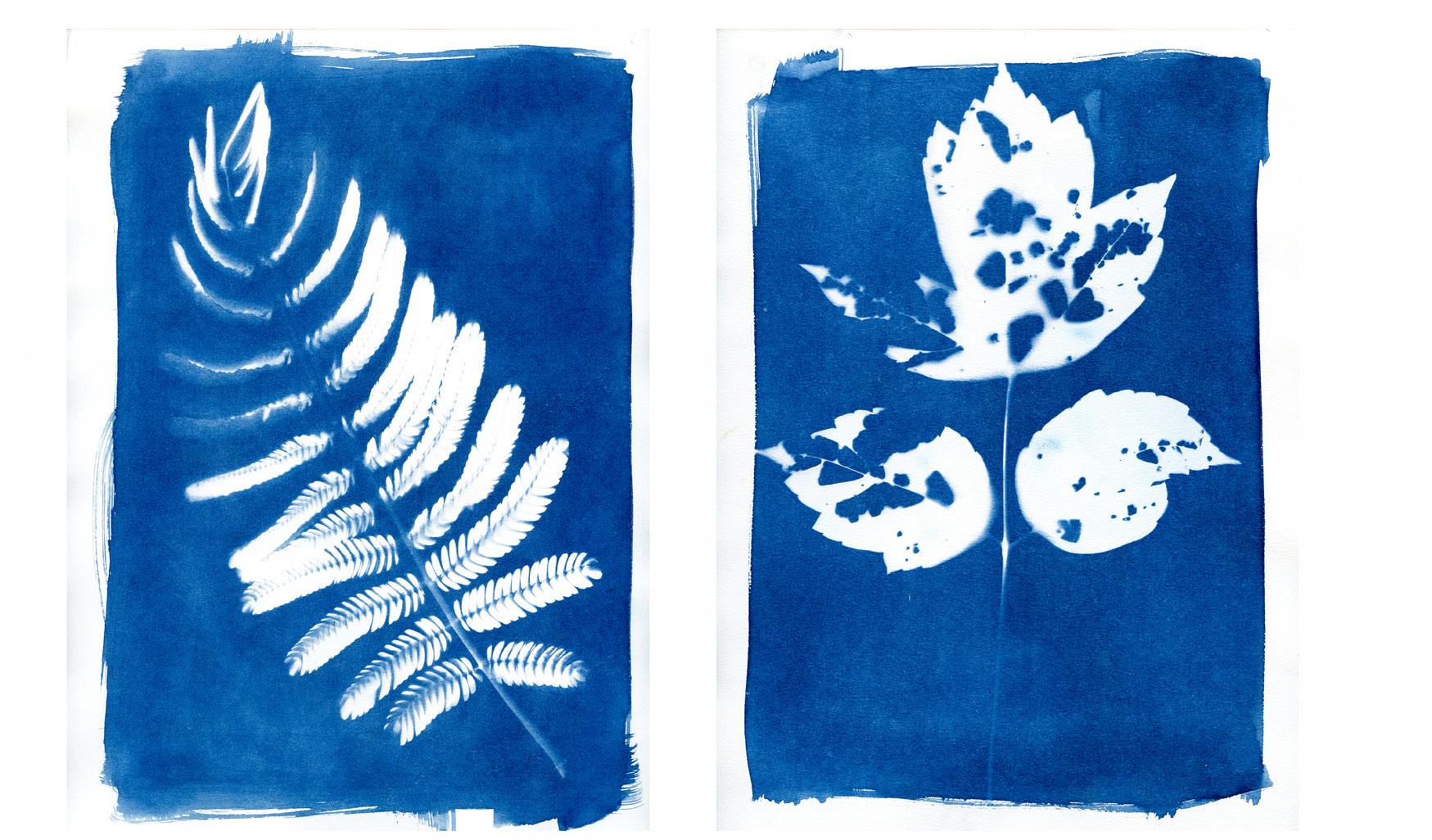
“nature preserved in history” Jonah Rubin ’29
“washing away layers of ourselves” Annie Leahy ’26
Ani Fairbanks ‘26
She preps the dirt, plants the seeds, waters, and they grow. Then the real ceremony starts: Picking the seeds off the dead flowers. Each flower holds dozens of seeds. Which she harvests instead of buying new ones. She does this for hours and hours. Almost every day.
As the sun is setting. In her PJs.
If you time your walk right, she’ll place seeds into your palms. To plant in your yard.
And once shared, the beauty of the zinnias grows.
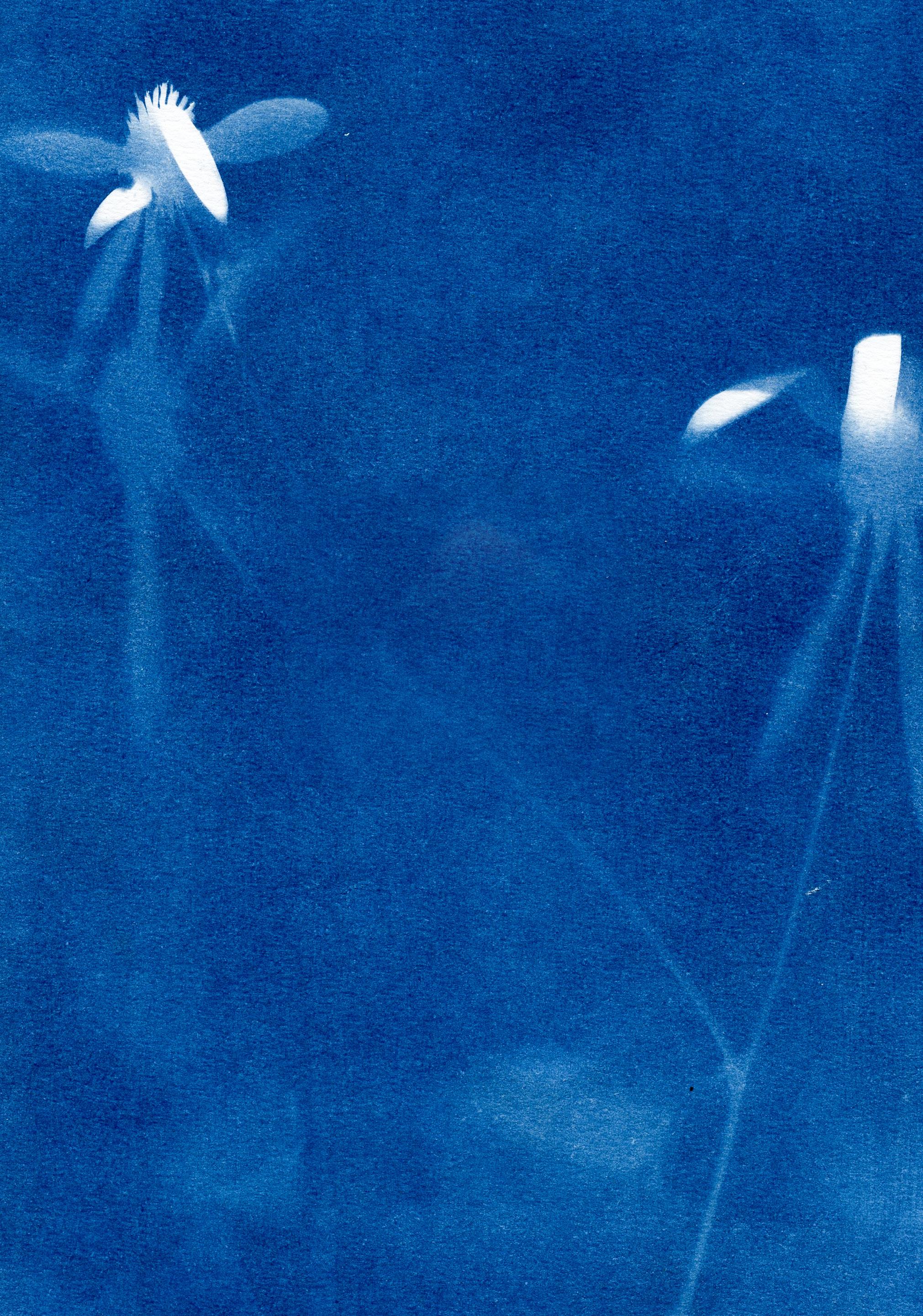
“catch a memory”
Cai Prinzbach ’28
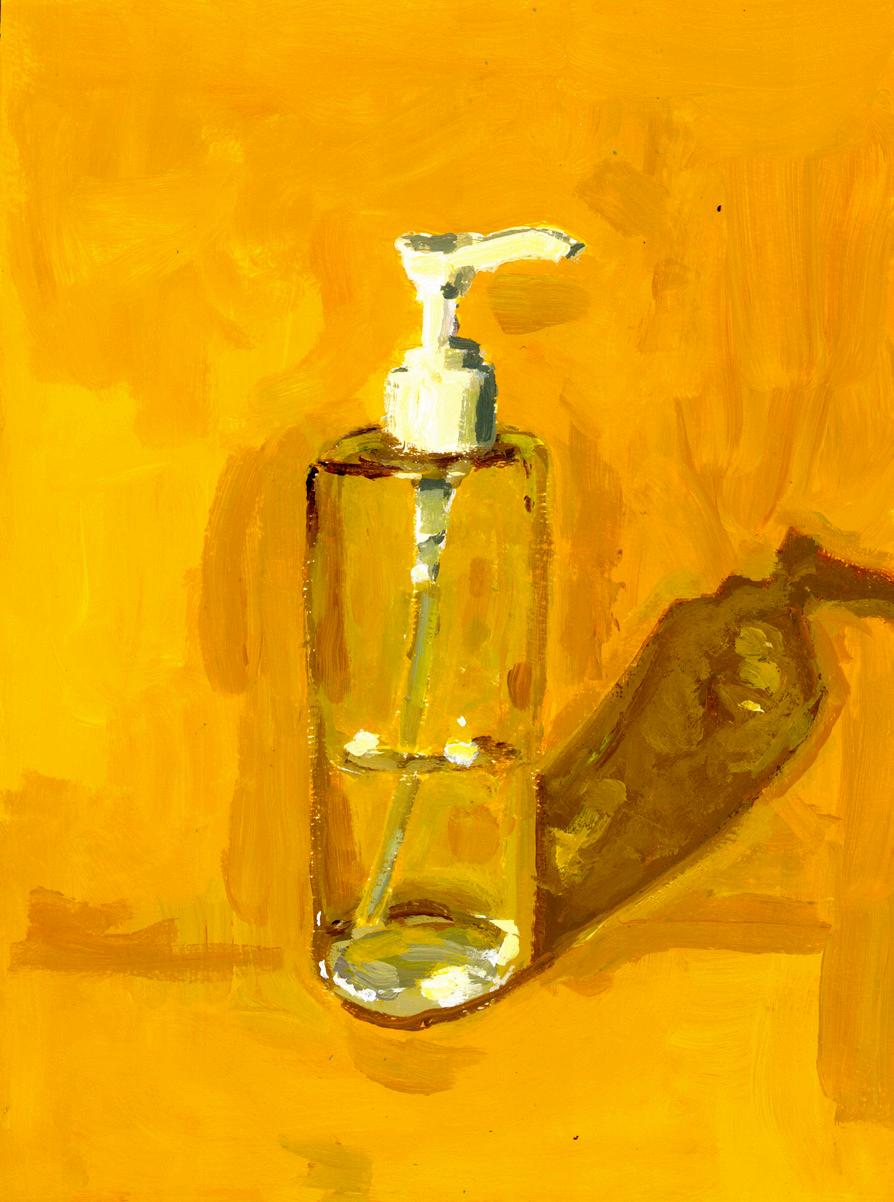
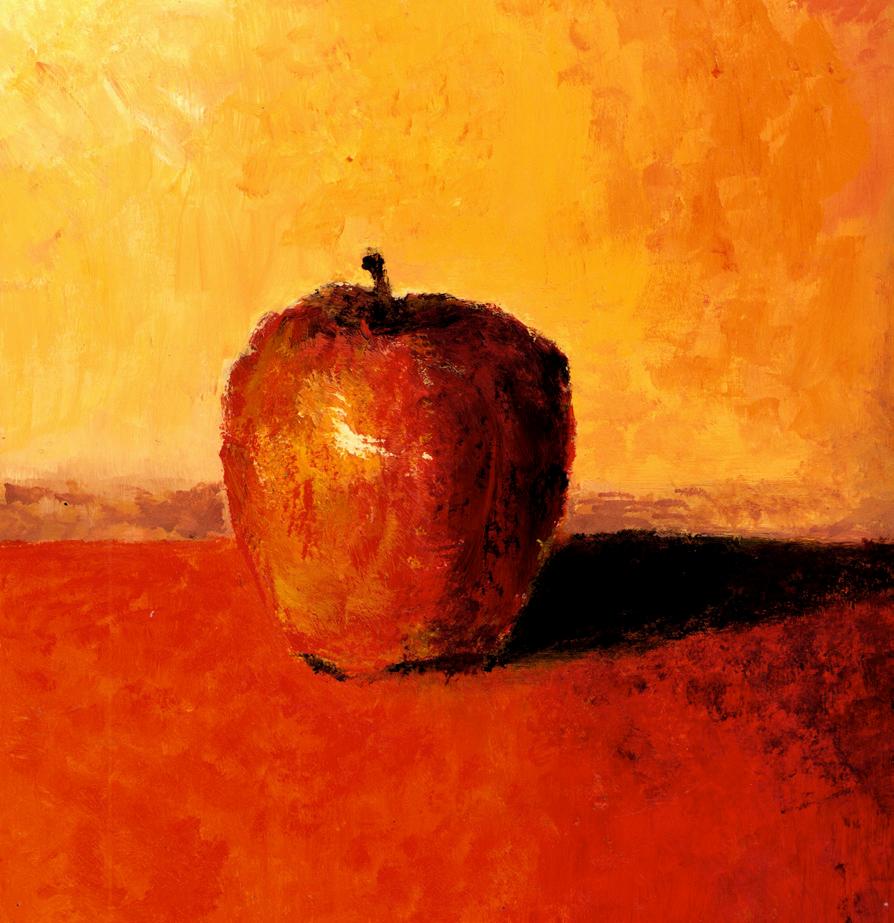
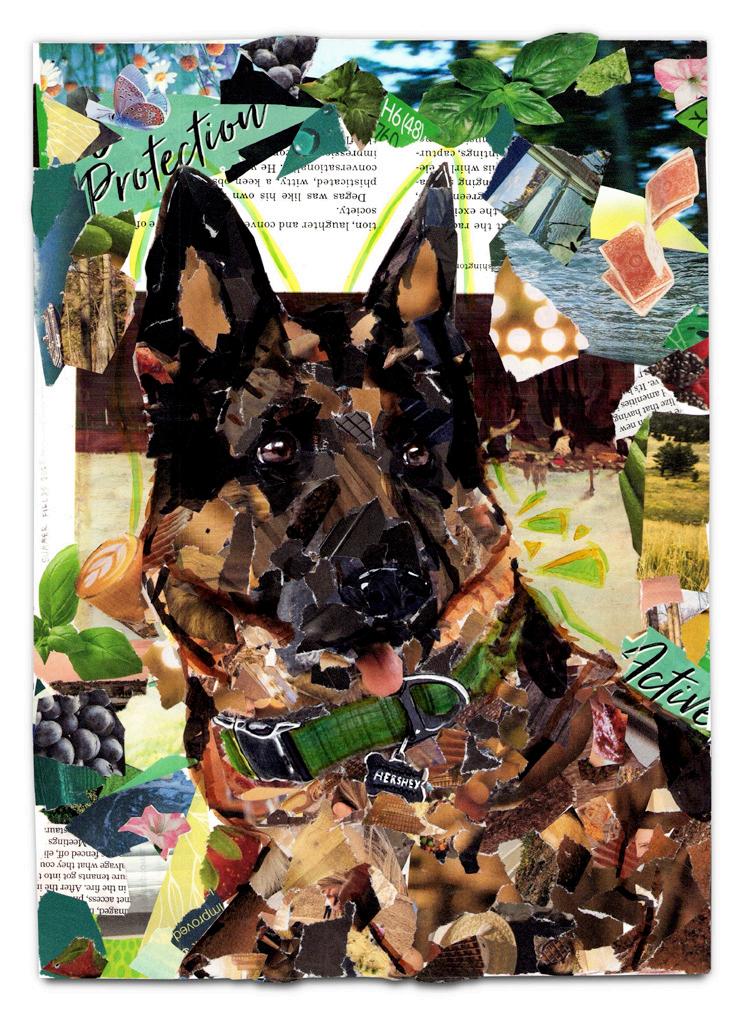
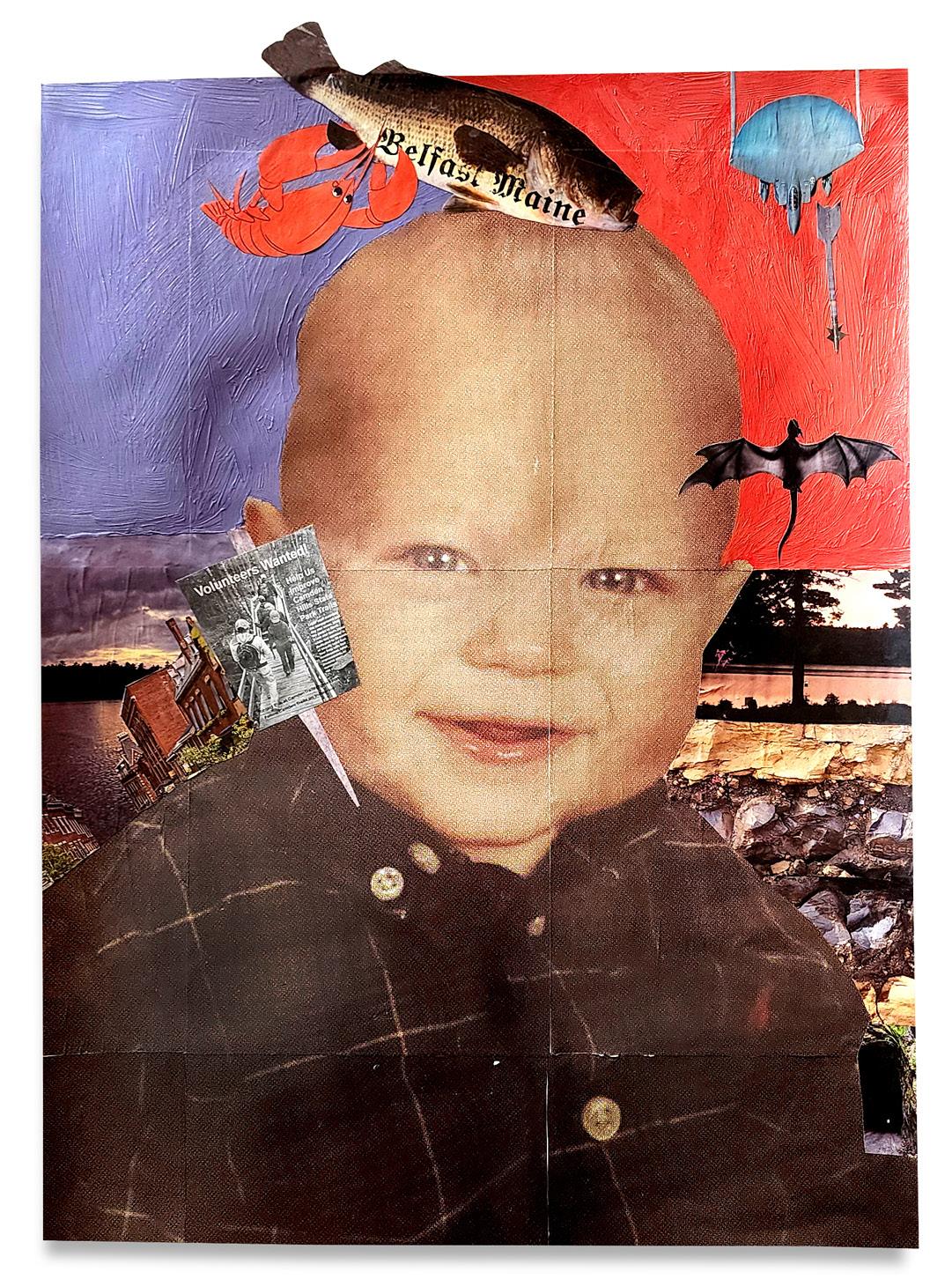
Charlotte Miller ’27
Love is a thing with talons that latches to the soul and flocks from the blue above to respite in my stole and between the knits of scarf I’ll find Lovethe feathered thing hidden For what did the talons leave behindbut a feverish love I am ridden!
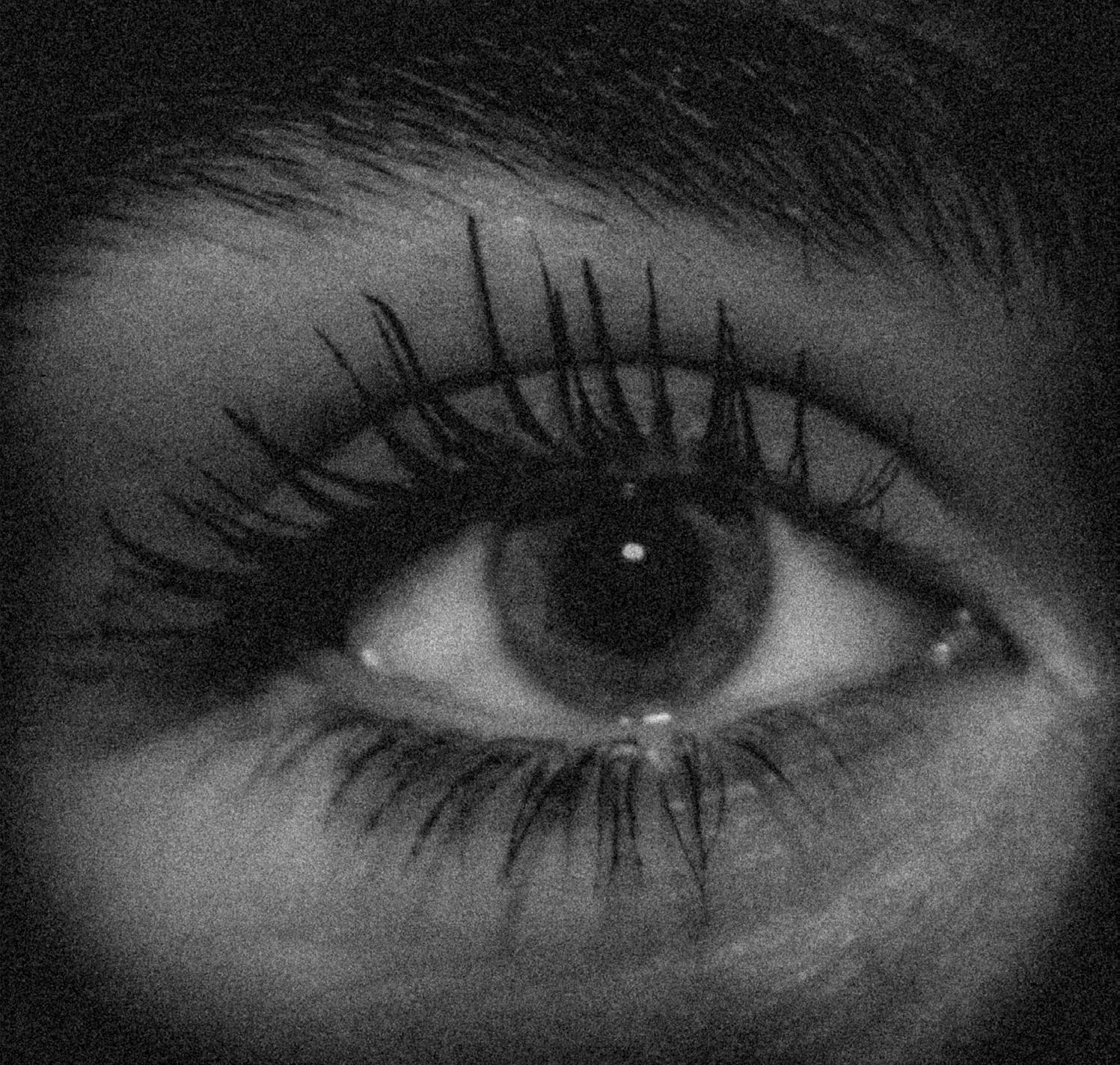
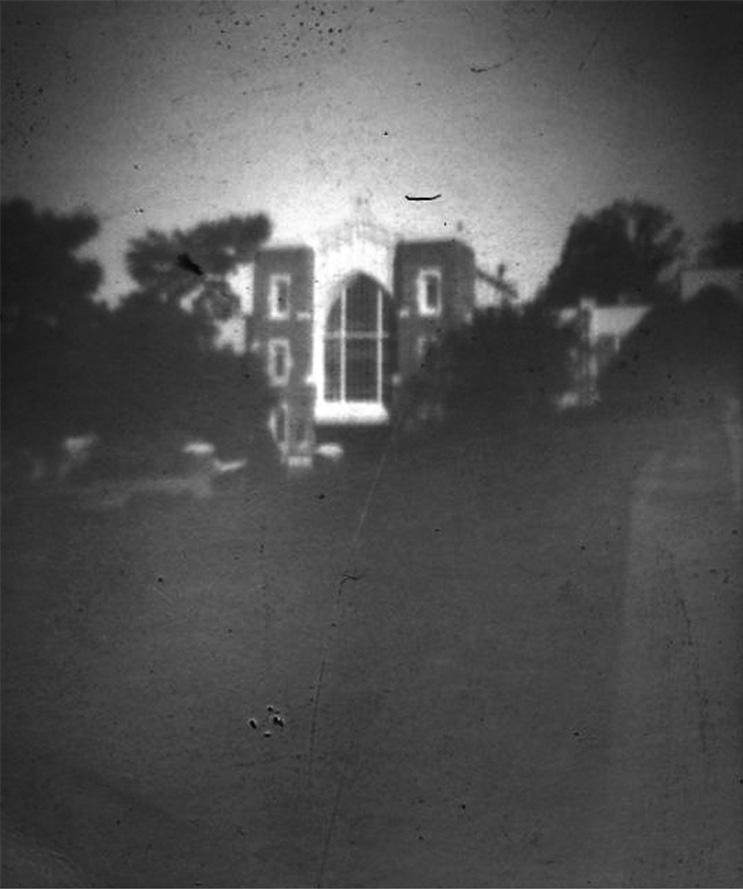
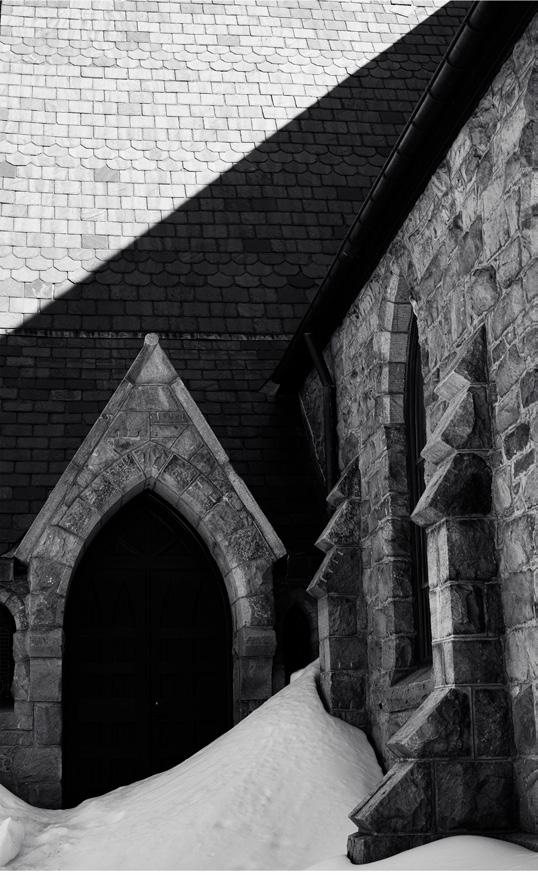
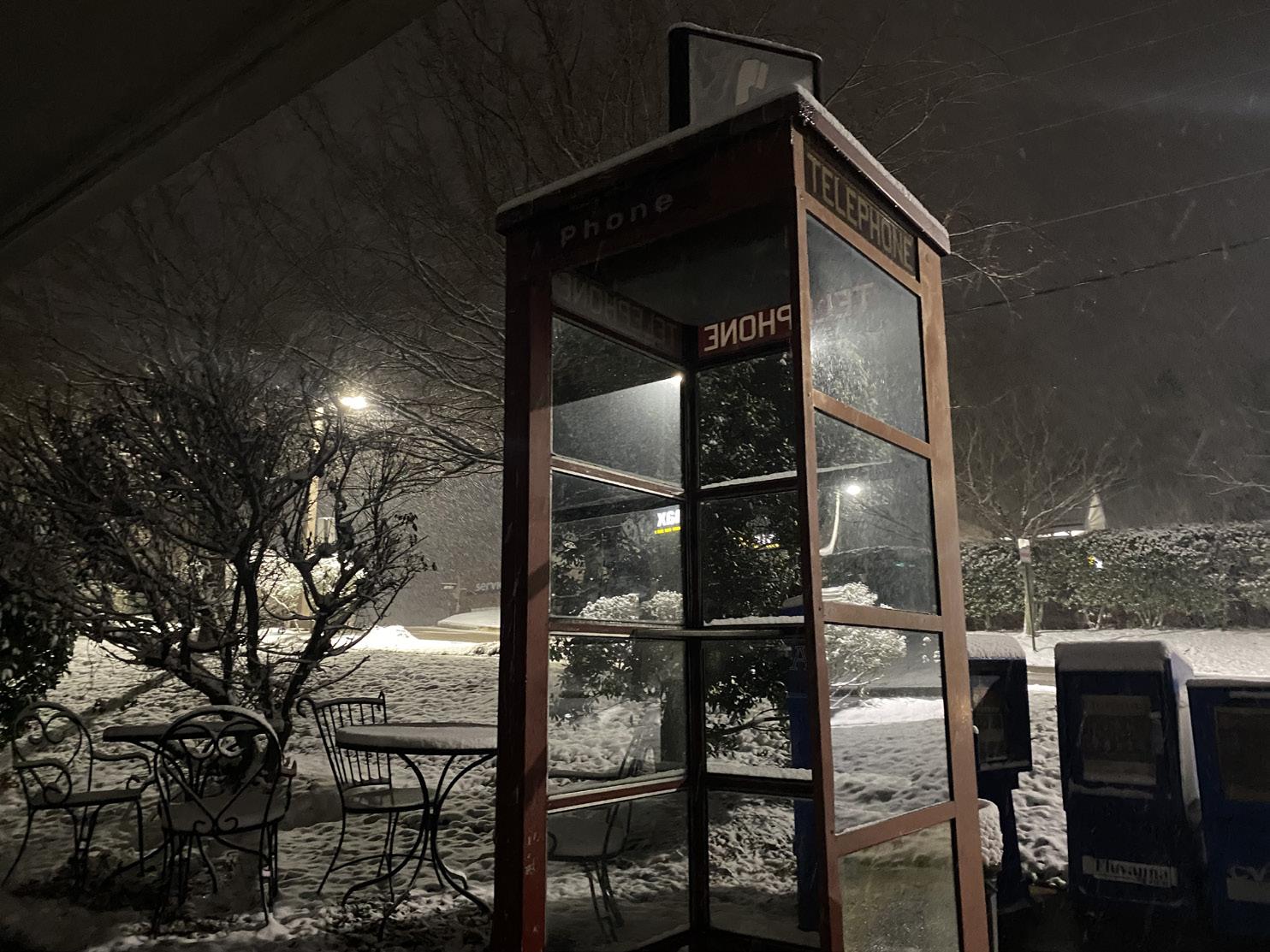
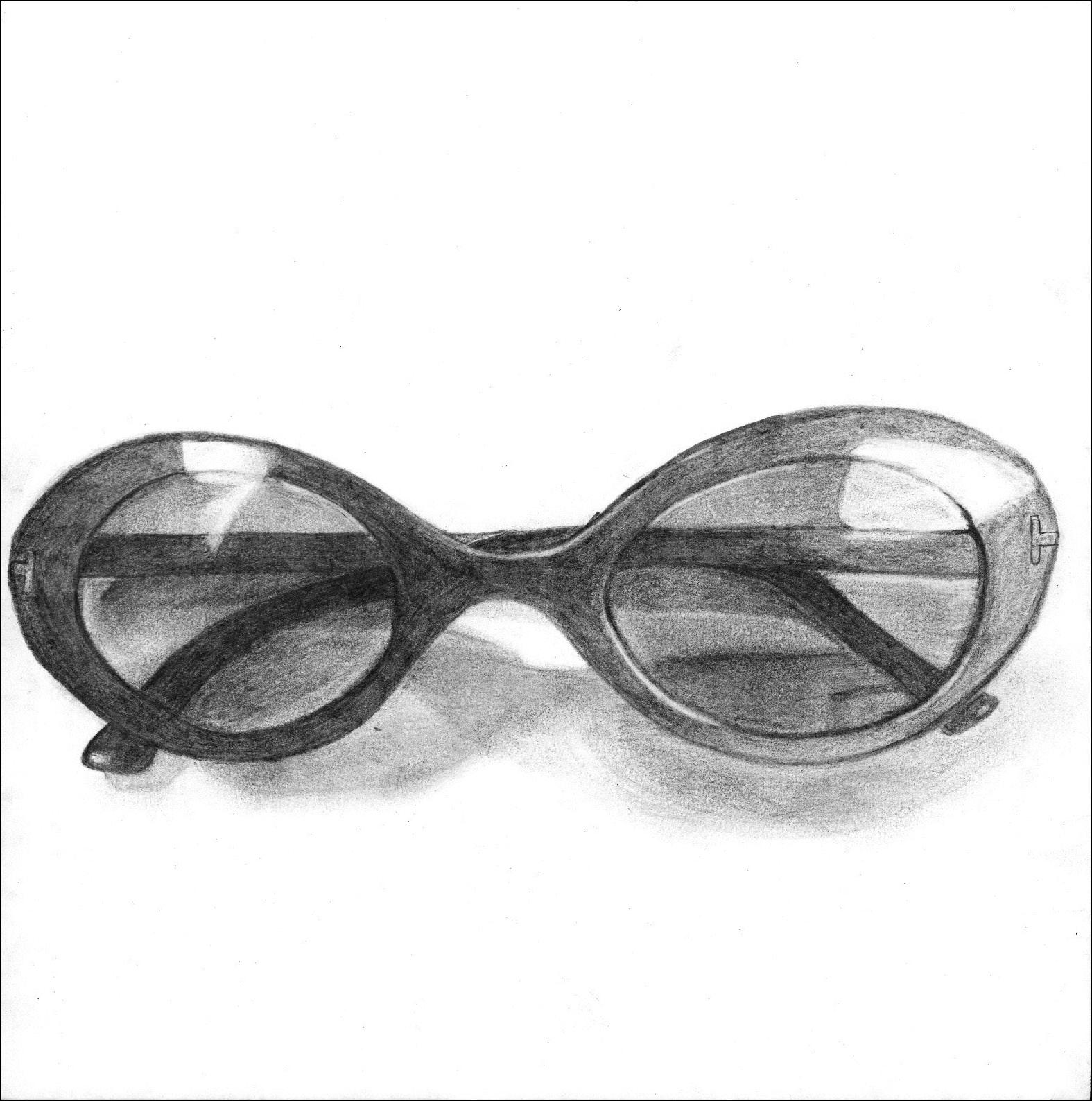
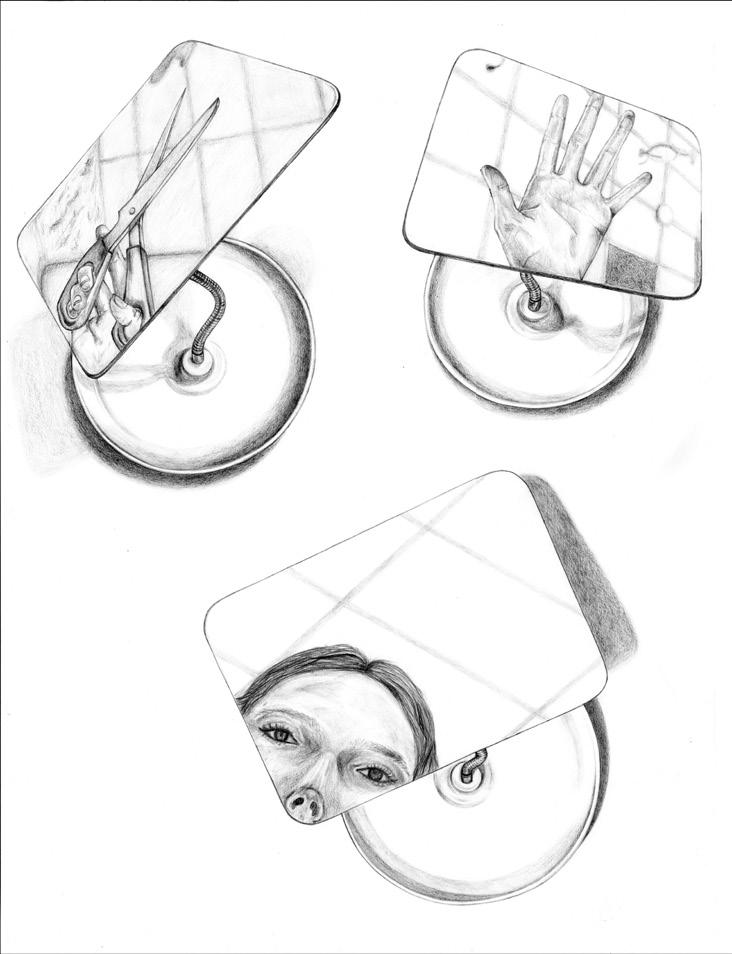
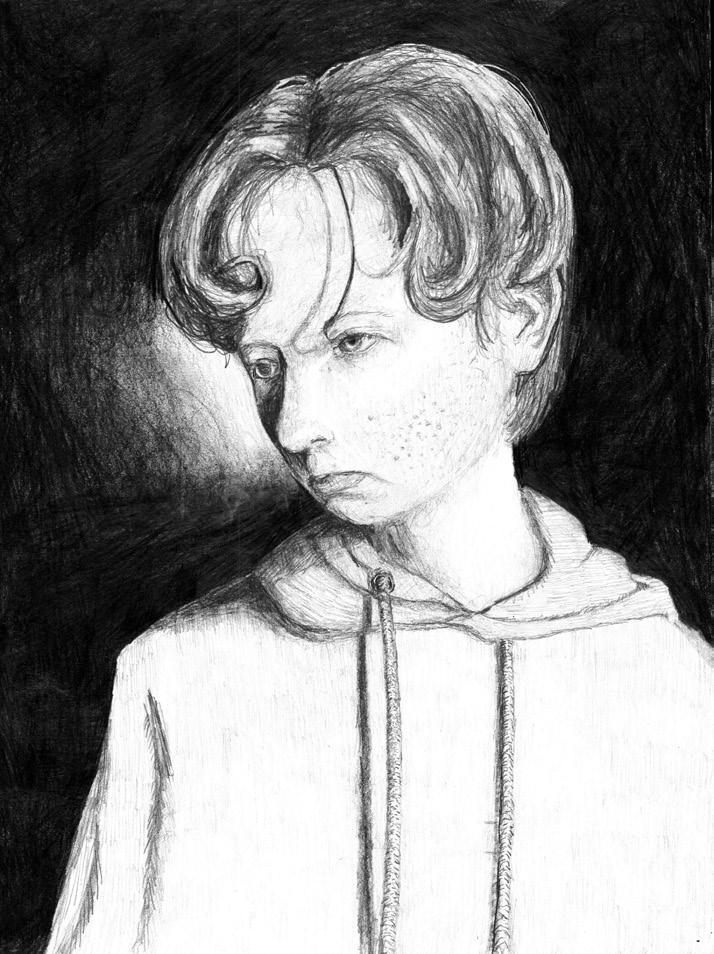
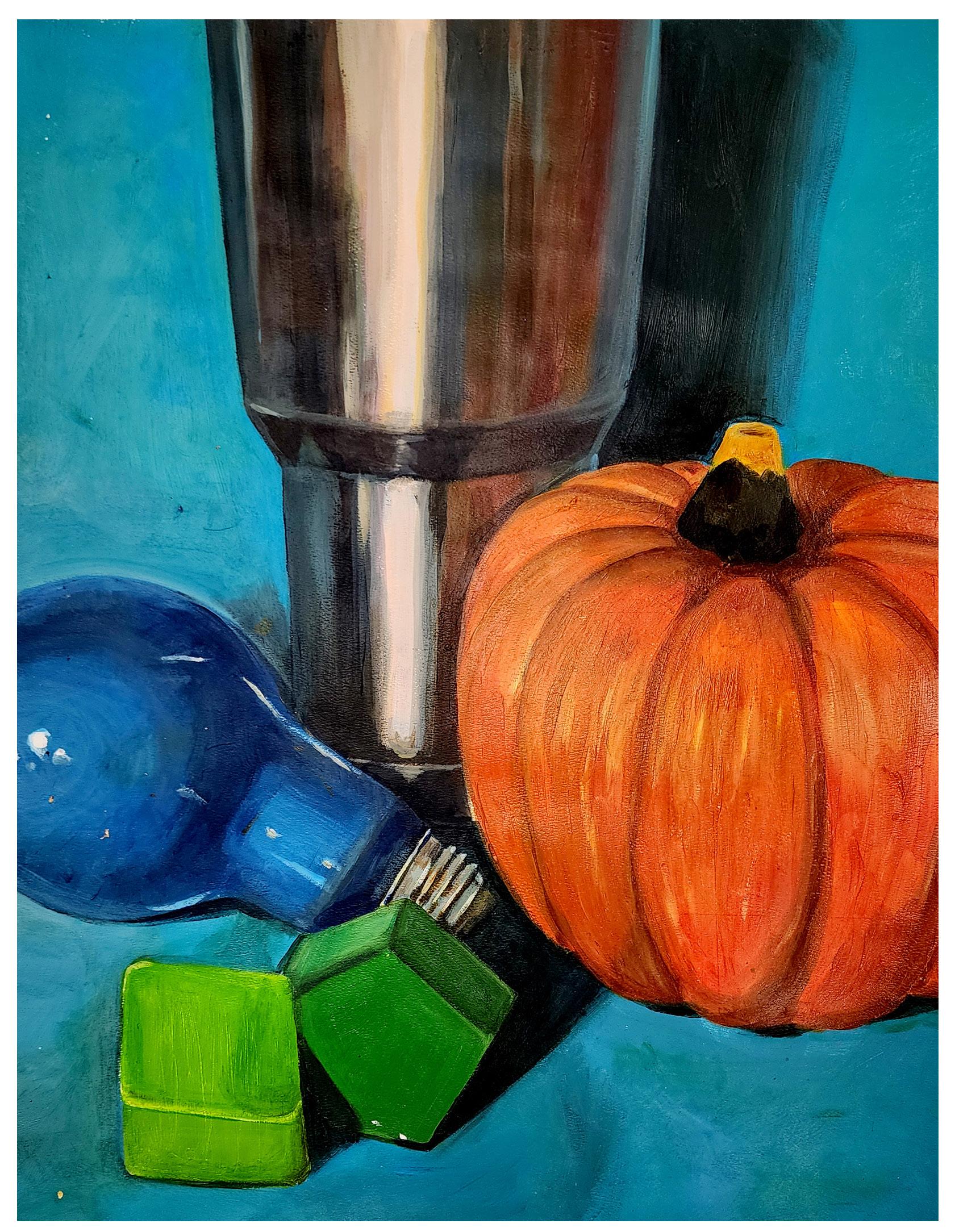
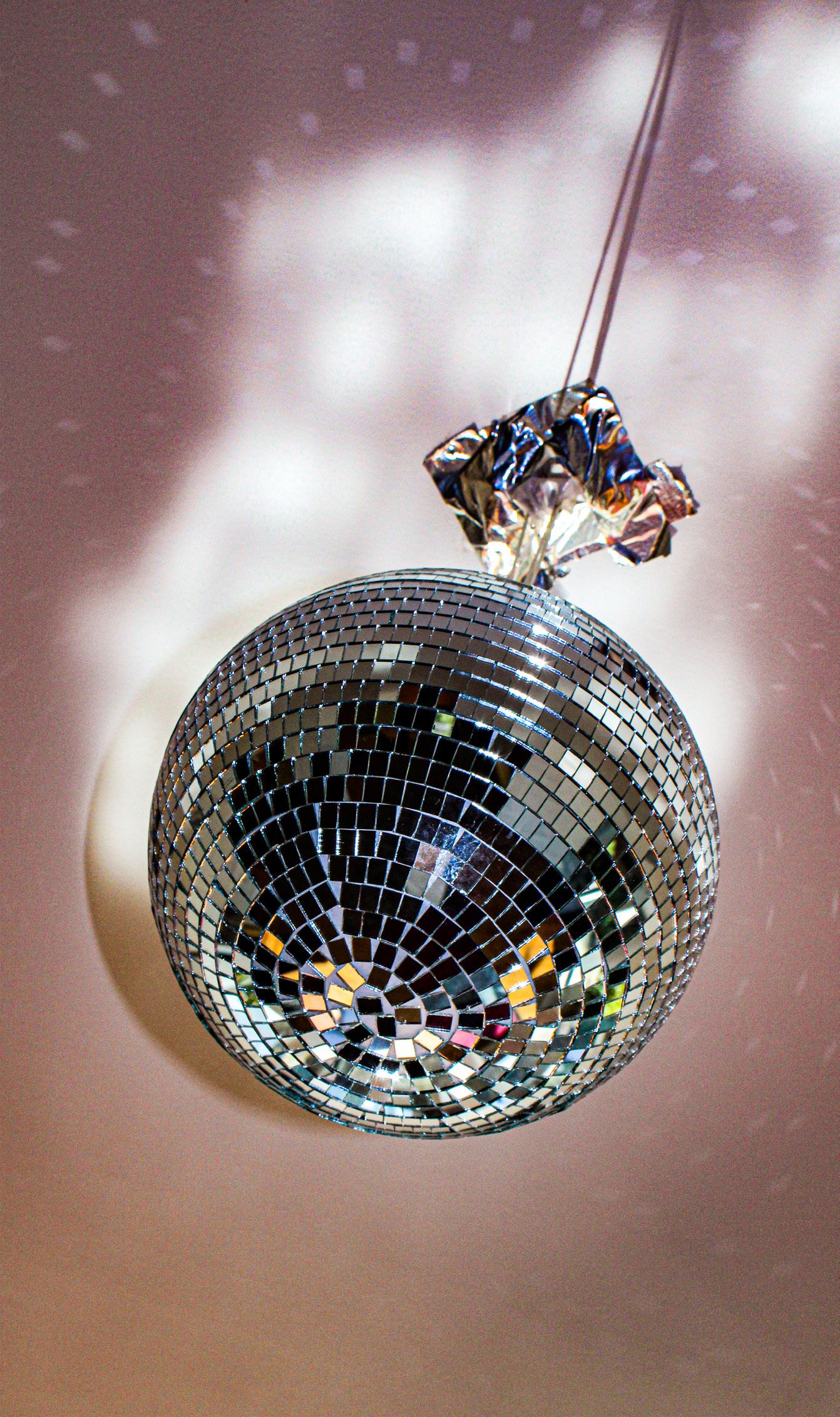
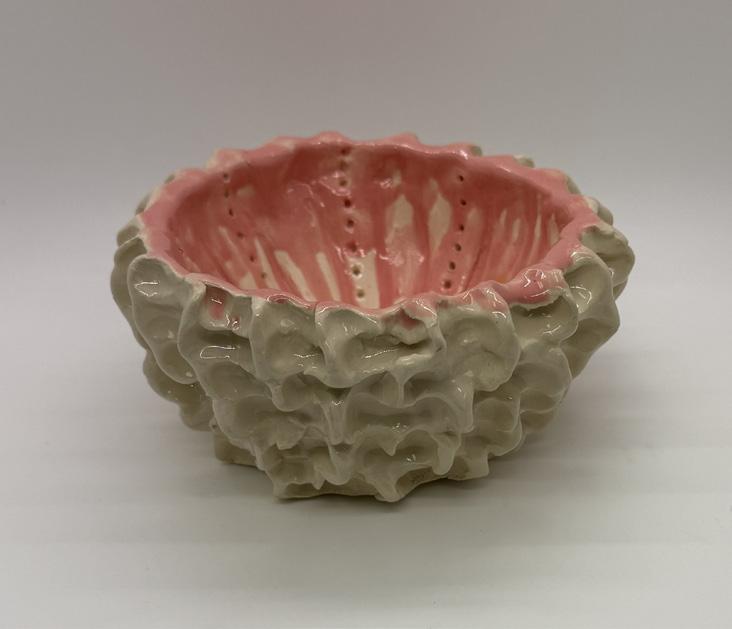
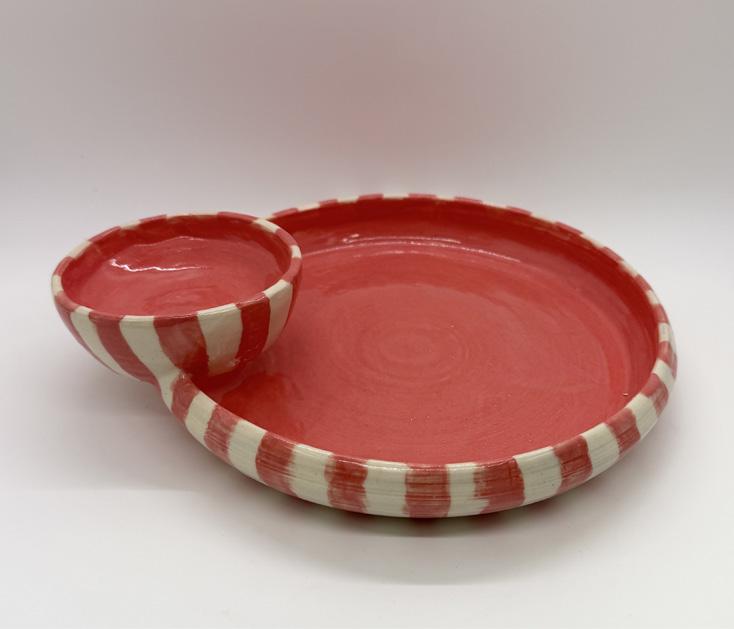
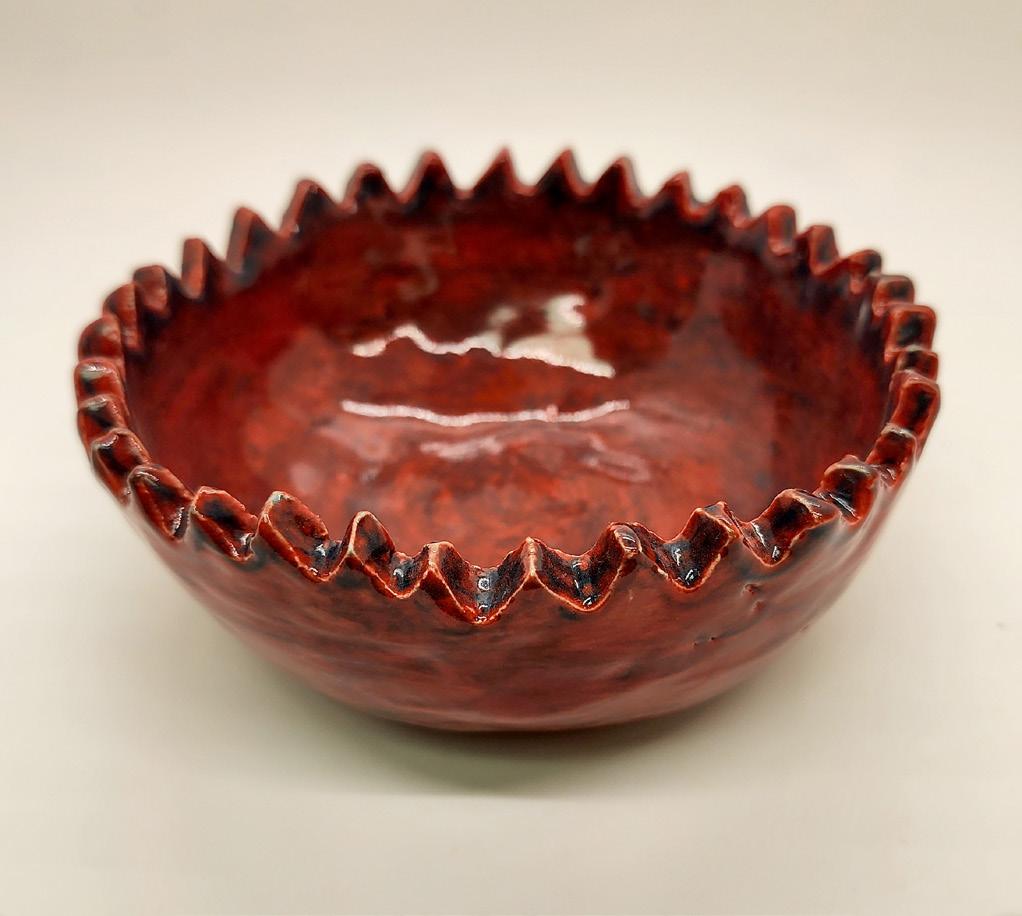
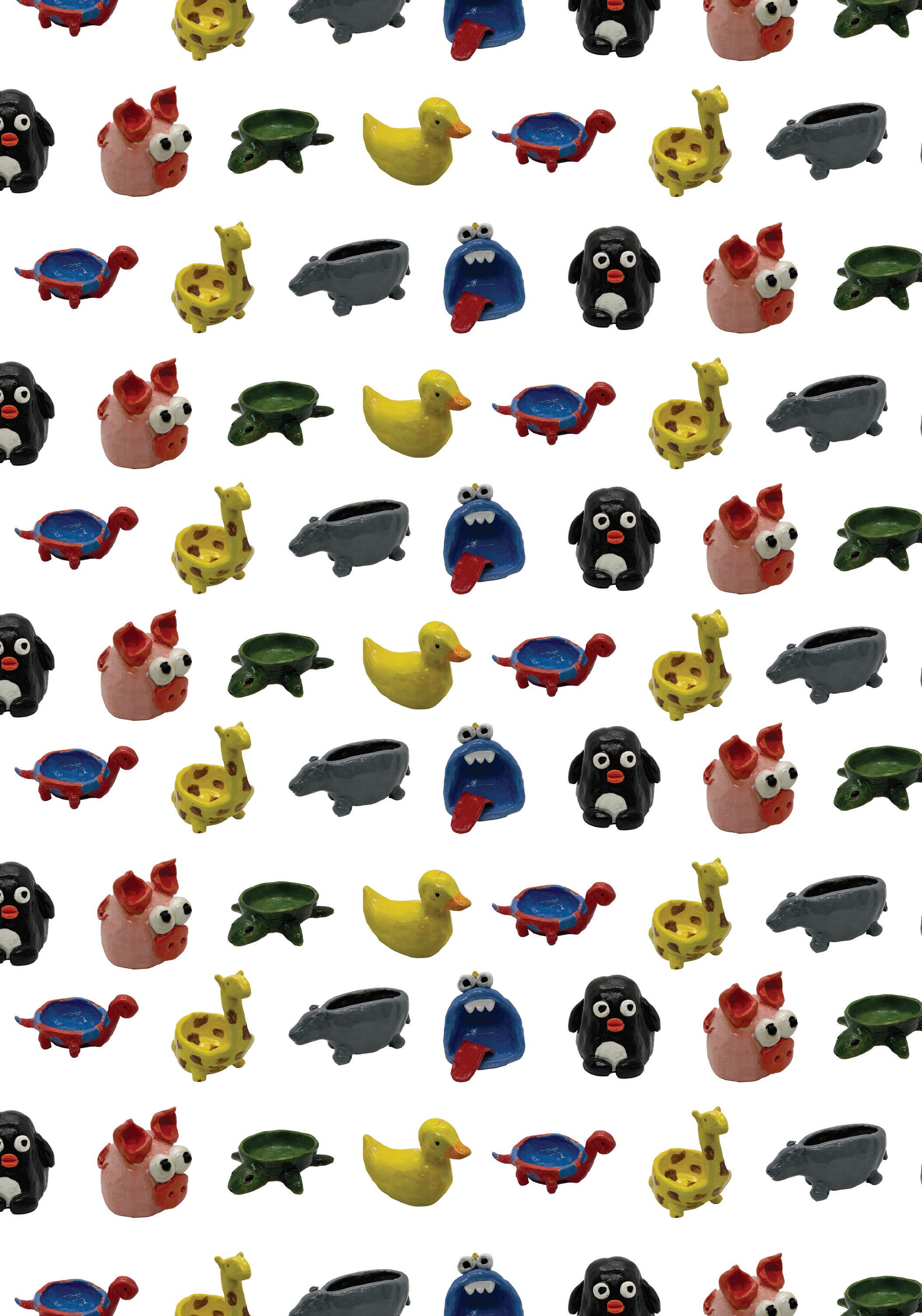
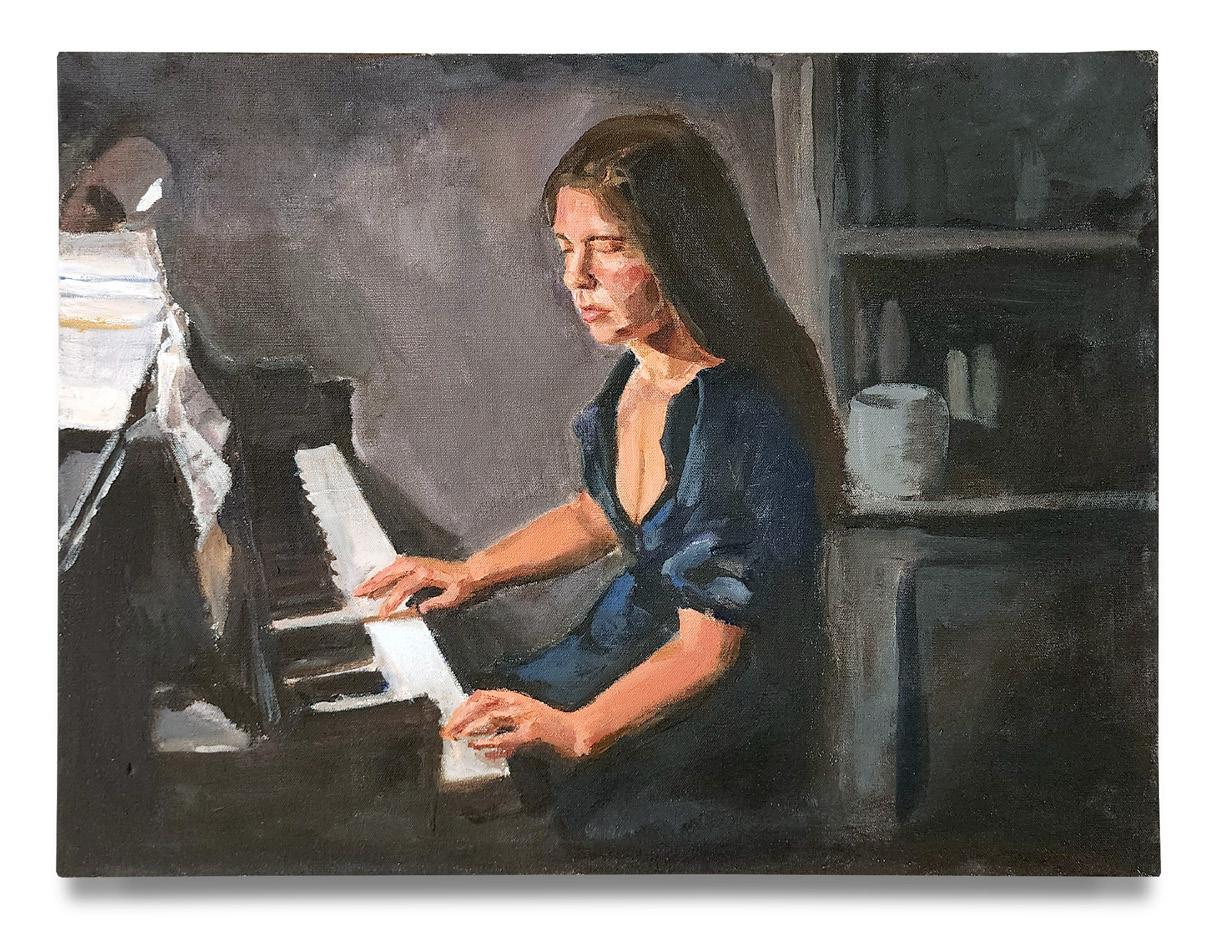
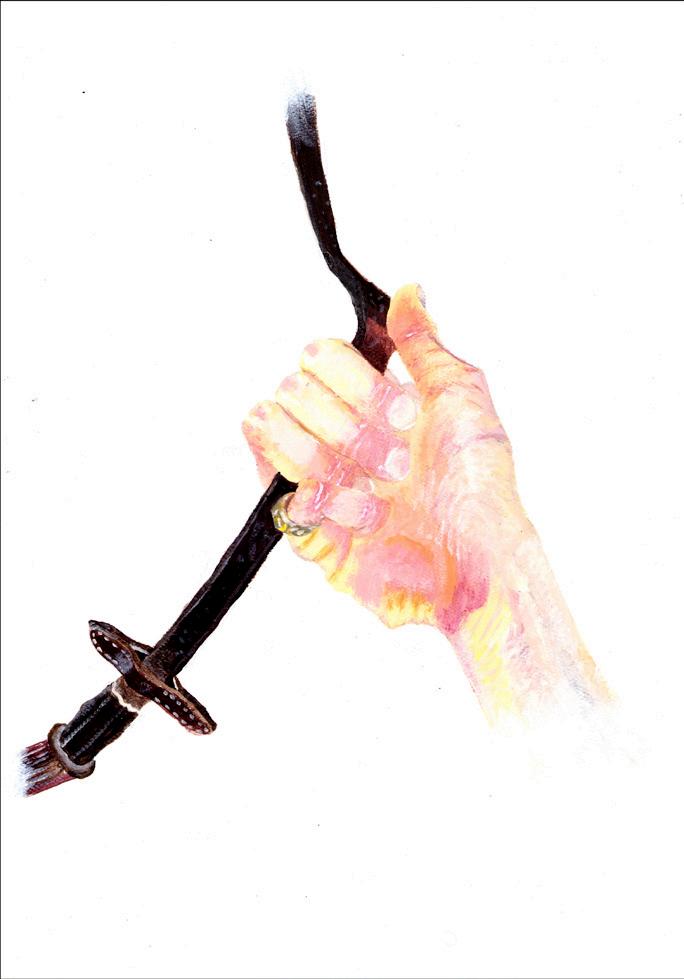
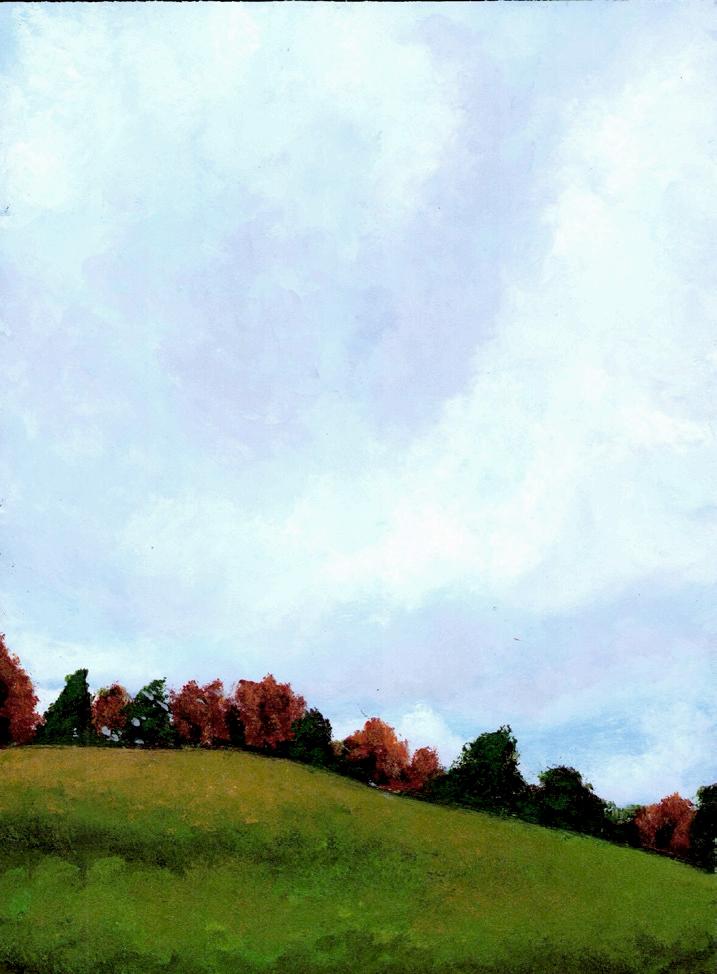
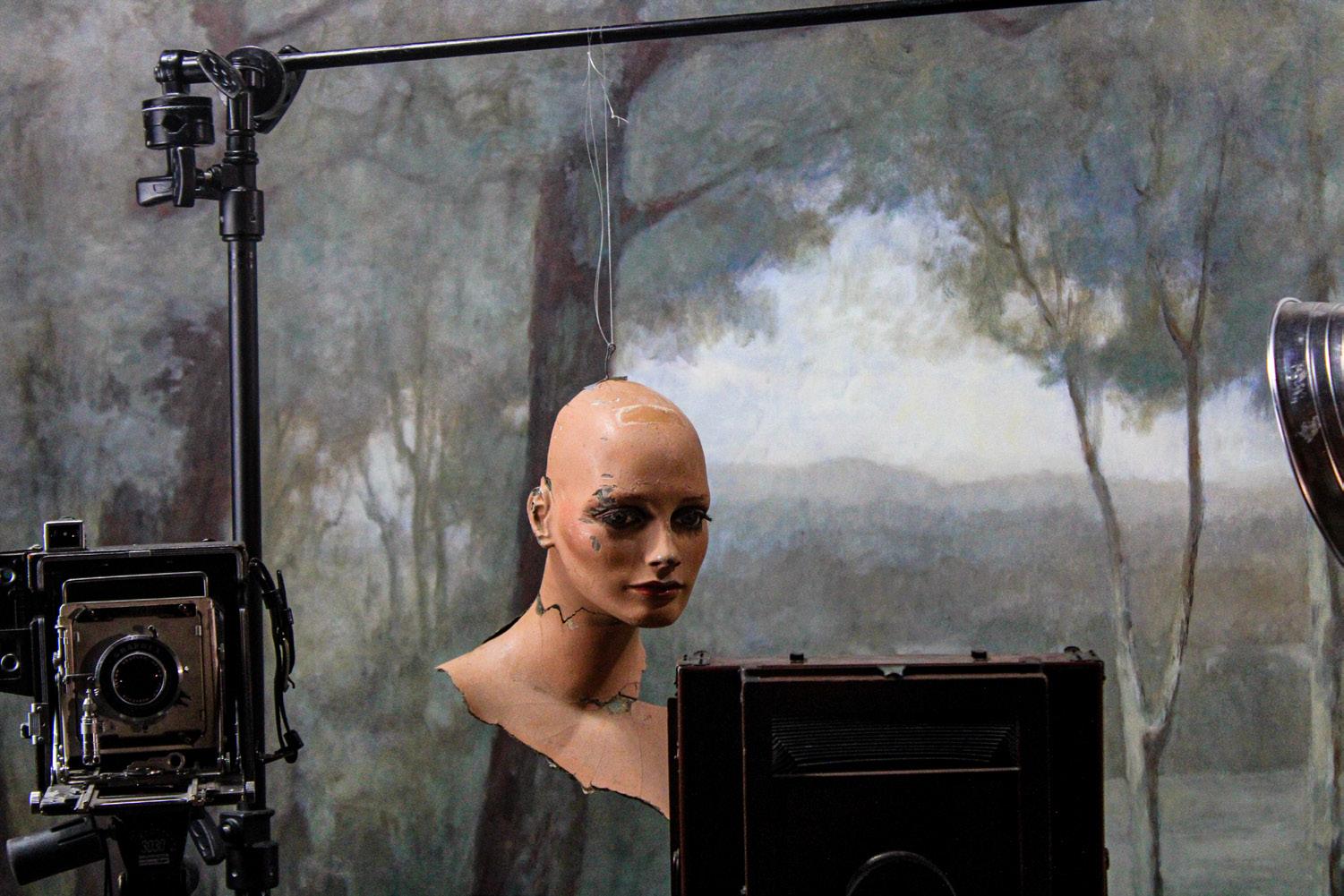
Work from our students doesn’t just live within the walls of our buildings; many students have had their pieces selected to be hung in the McGuffey Art Center among the art of other outstanding students from schools in our area. Works by our student body have also been a part of zine selections and the Scholastic Art & Writing Competition, with pieces enjoyed all over the country. The following pages celebrate these outstanding artists.


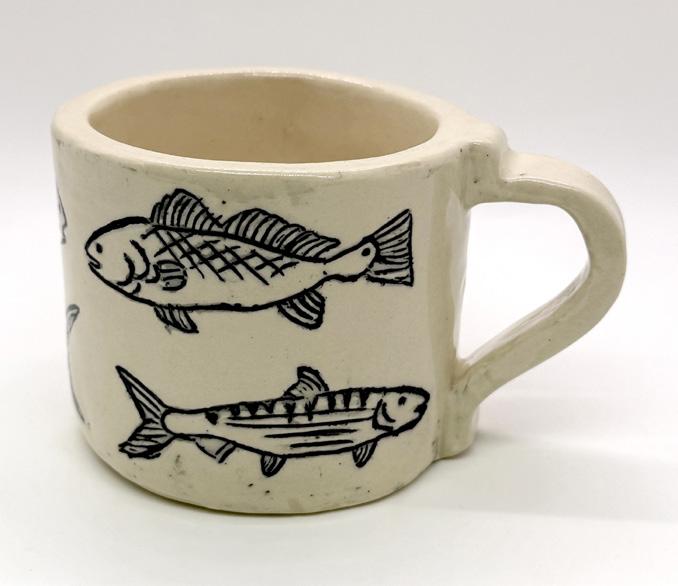
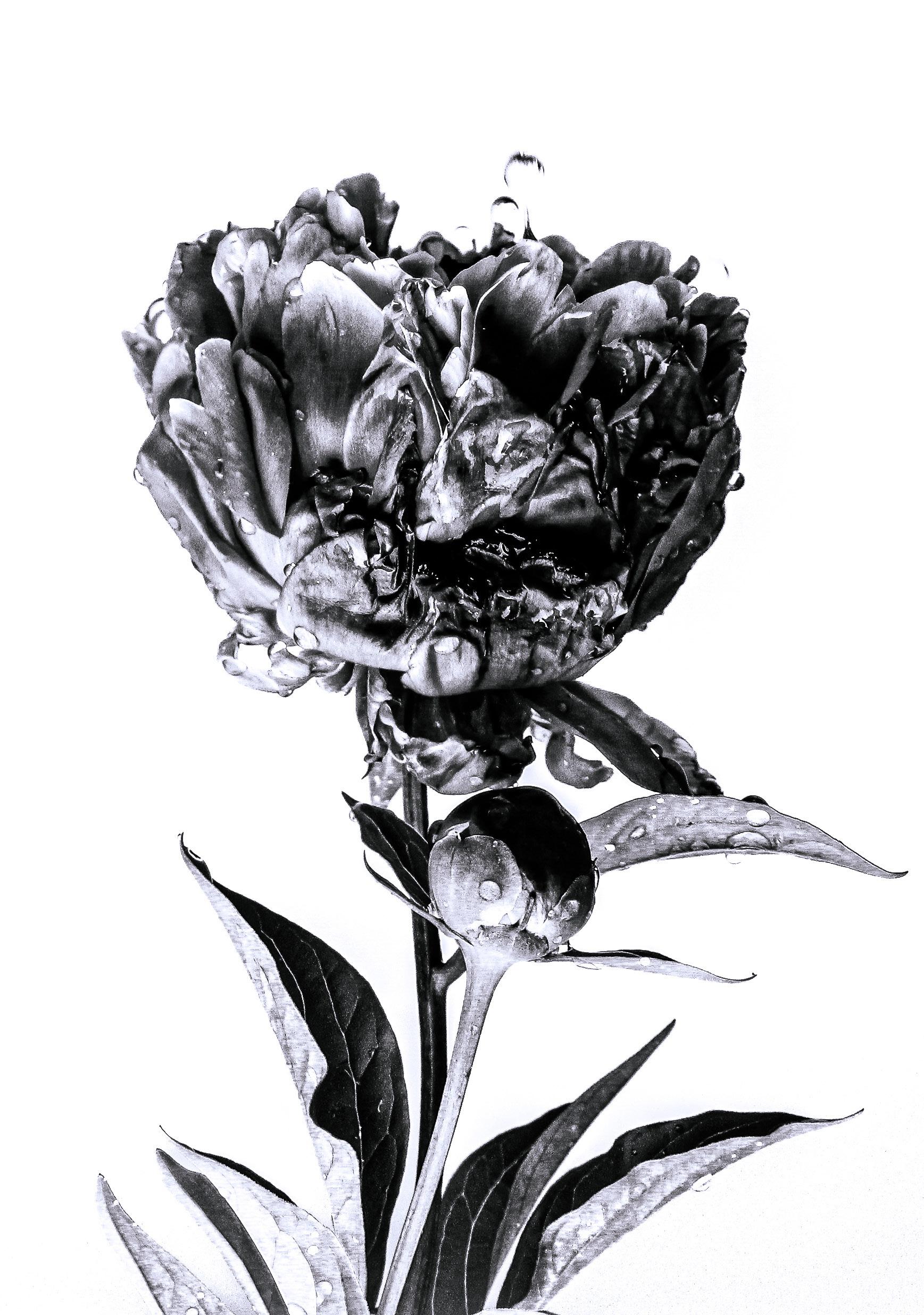
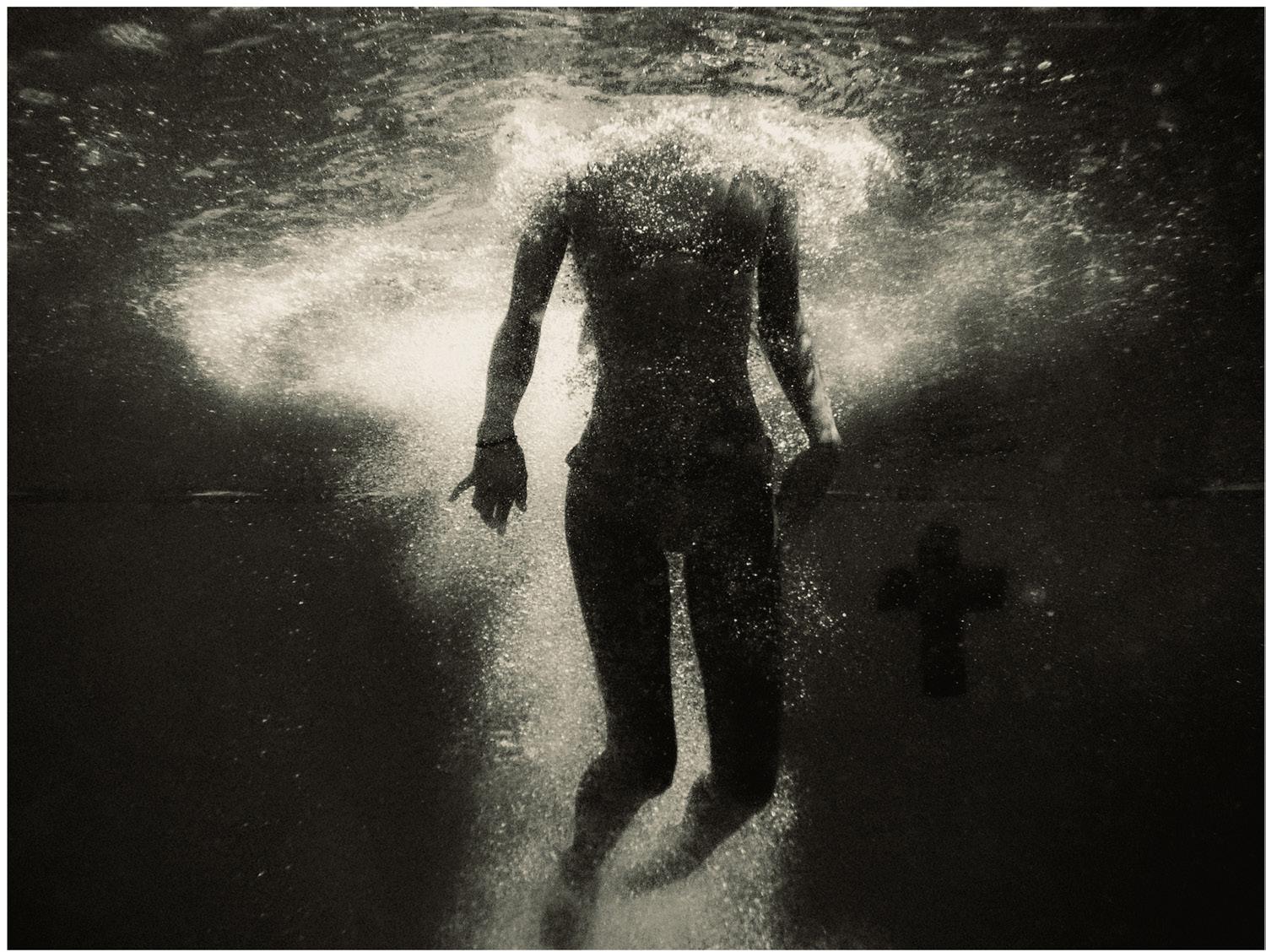
Regional Gold KeyRegional Gold Key McGuffey Selection
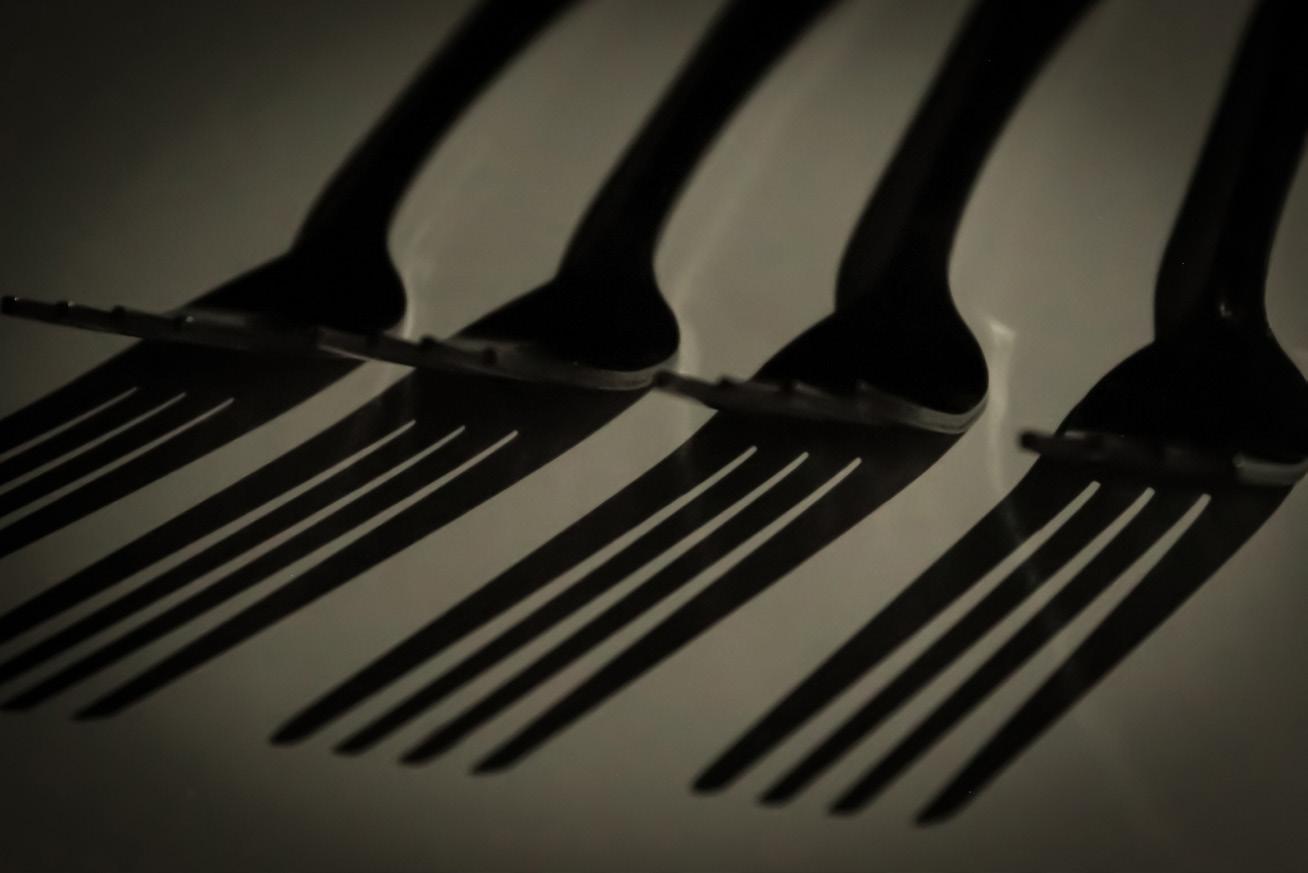
Key Regional
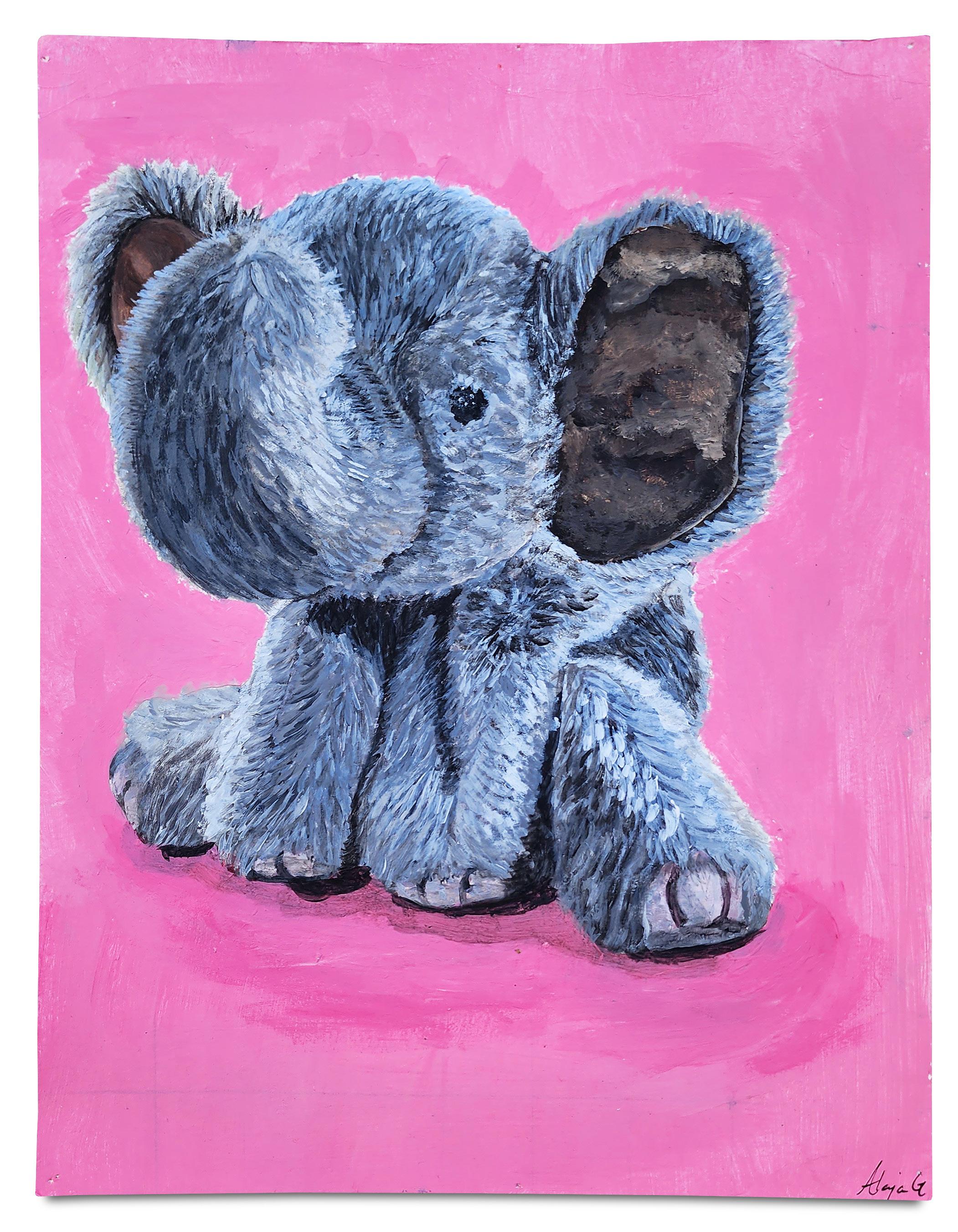

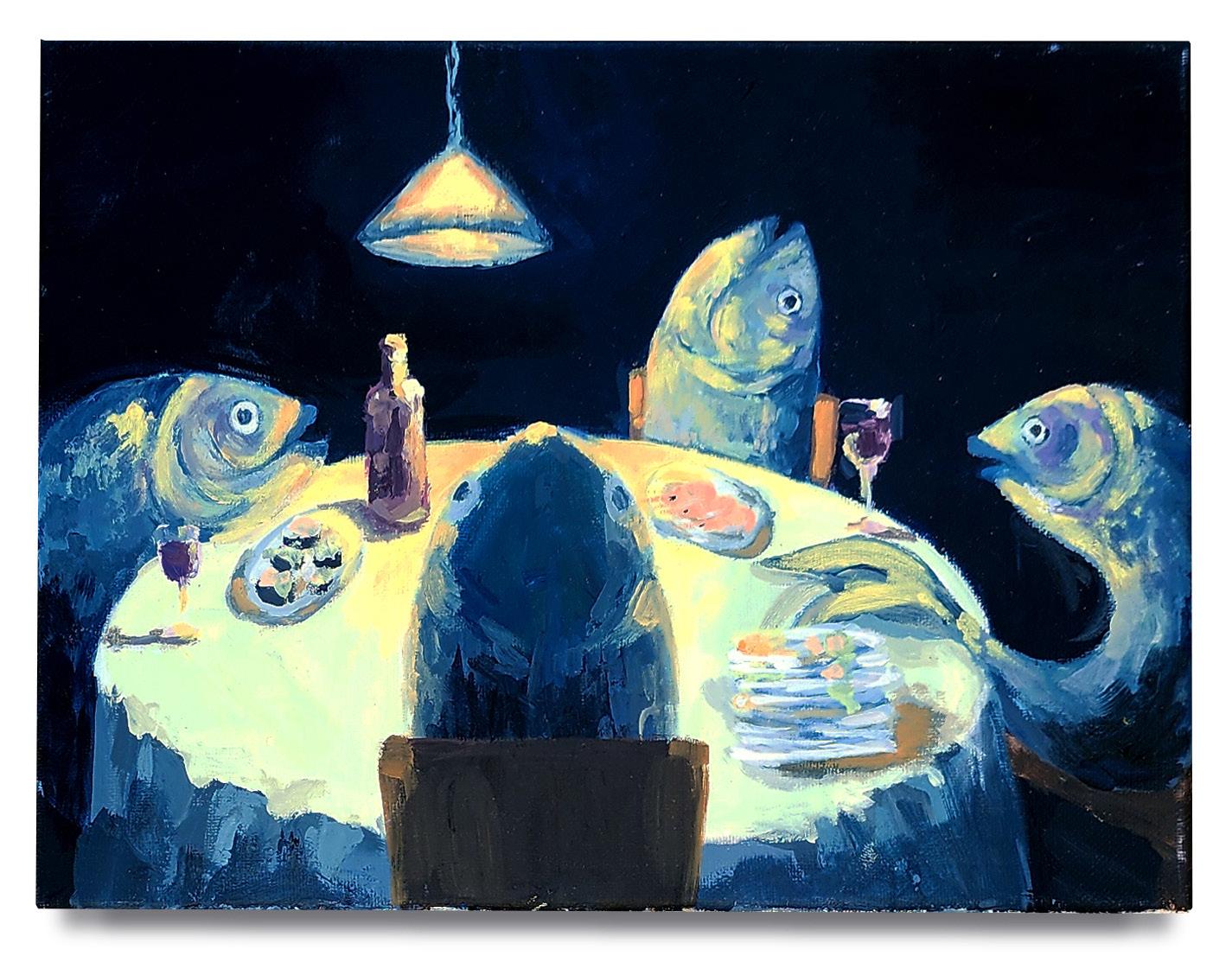
Regional Honorable Mention
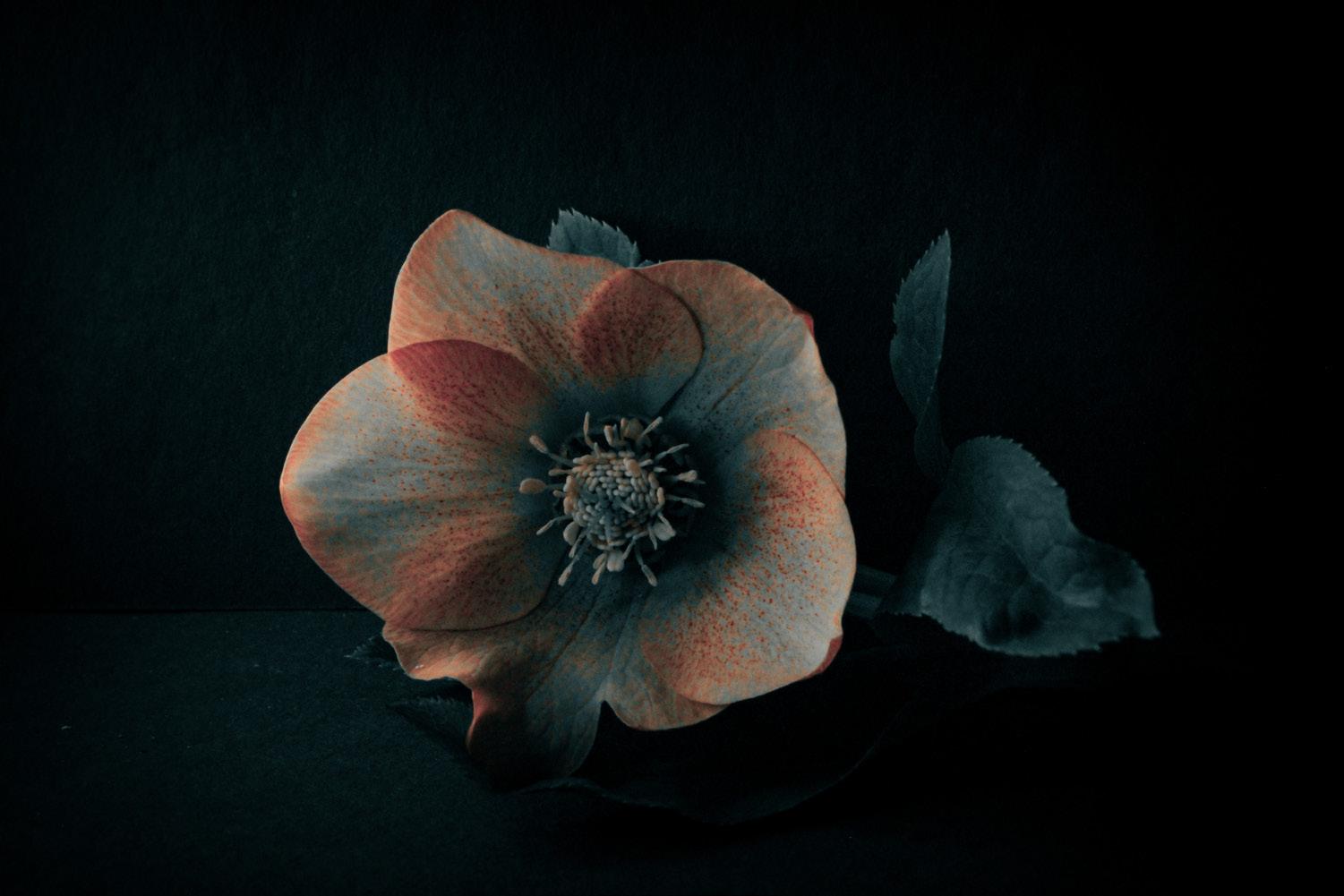
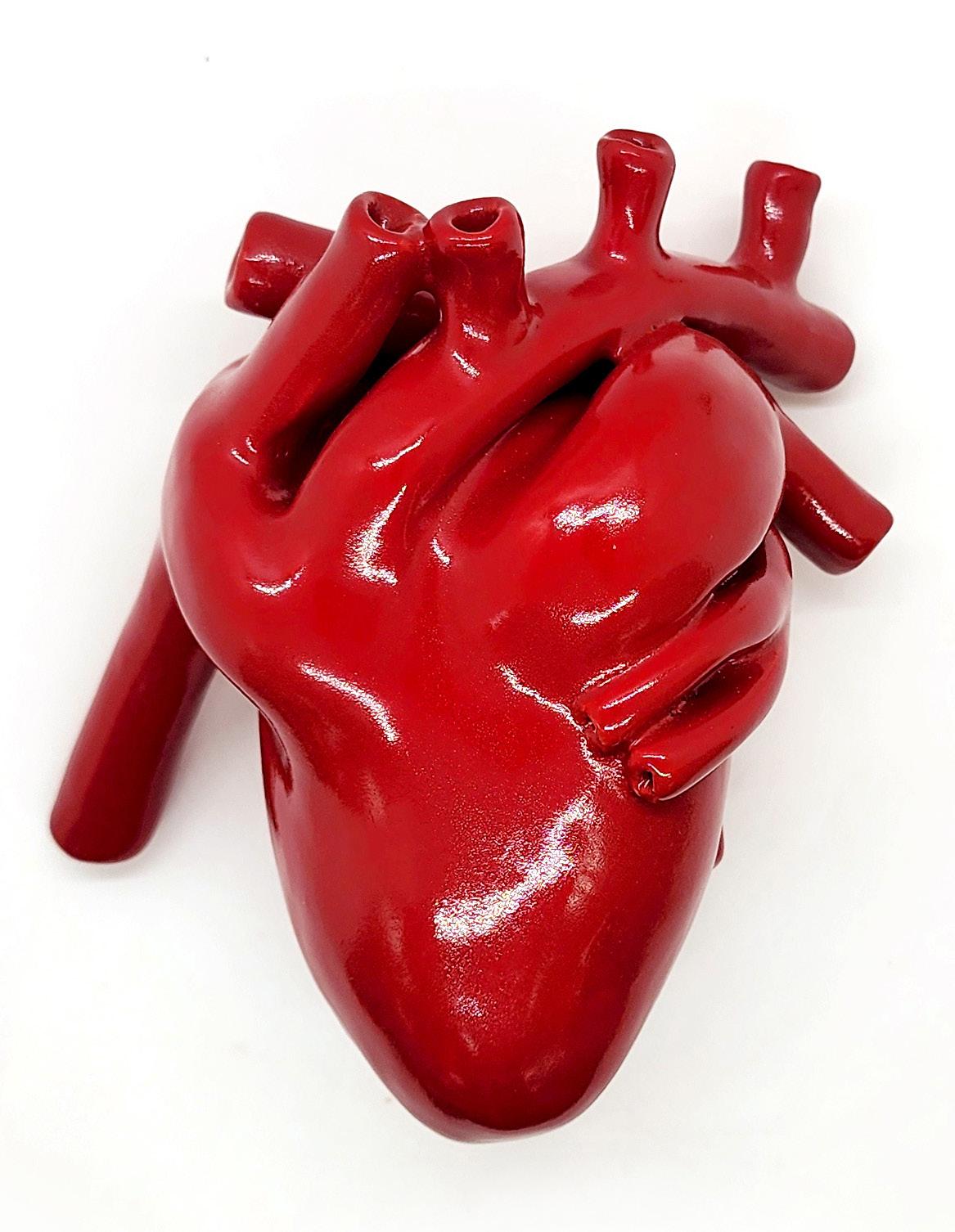
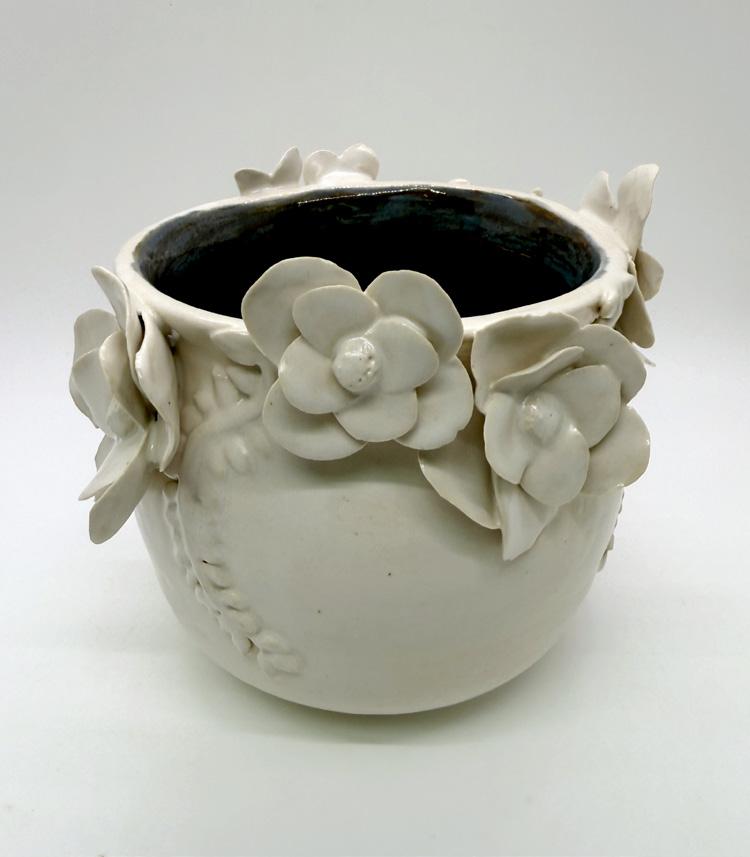
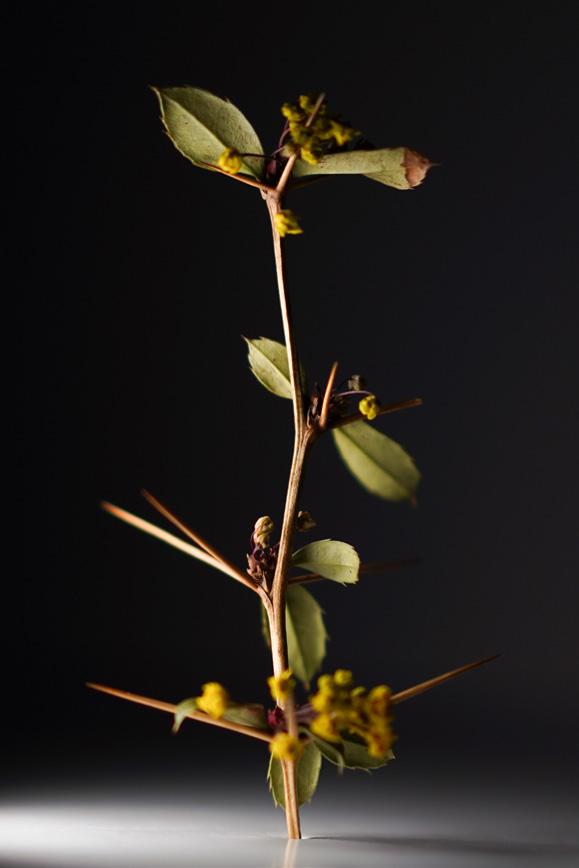

Sarah Sanders ’26
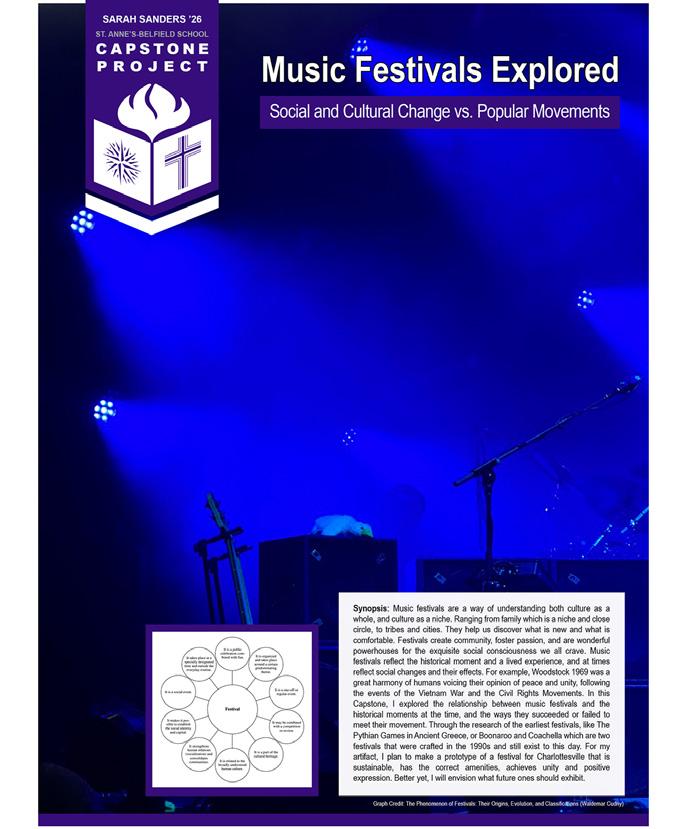
Music festivals are a way of understanding both culture as a whole, and culture as a niche. Ranging from family which is a niche and close circle, to tribes and cities. They help us discover what is new and what is comfortable. Festivals create community, foster passion, and are wonderful powerhouses for the exquisite social consciousness we all crave. Music festivals reflect the historical moment and a lived experience, and at times reflect social changes and their effects. For example, Woodstock 1969 was a great harmony of humans voicing their opinion of peace and unity, following the events of the Vietnam War and the Civil Rights Movements. In this Capstone, I explored the relationship between music festivals and the historical moments at the time, and the ways they succeeded or failed to meet their movement. Through the research of the earliest festivals, like The Pythian Games in Ancient Greece, or Boonaroo and Coachella which are two festivals that were crafted in the 1990s and still exist to this day. For my artifact, I plan to make a prototype of a festival for Charlottesville that is sustainable, has the correct amenities, achieves unity and positive expression. Better yet, I will envision what future ones should exhibit.
Marina Ashton ’26
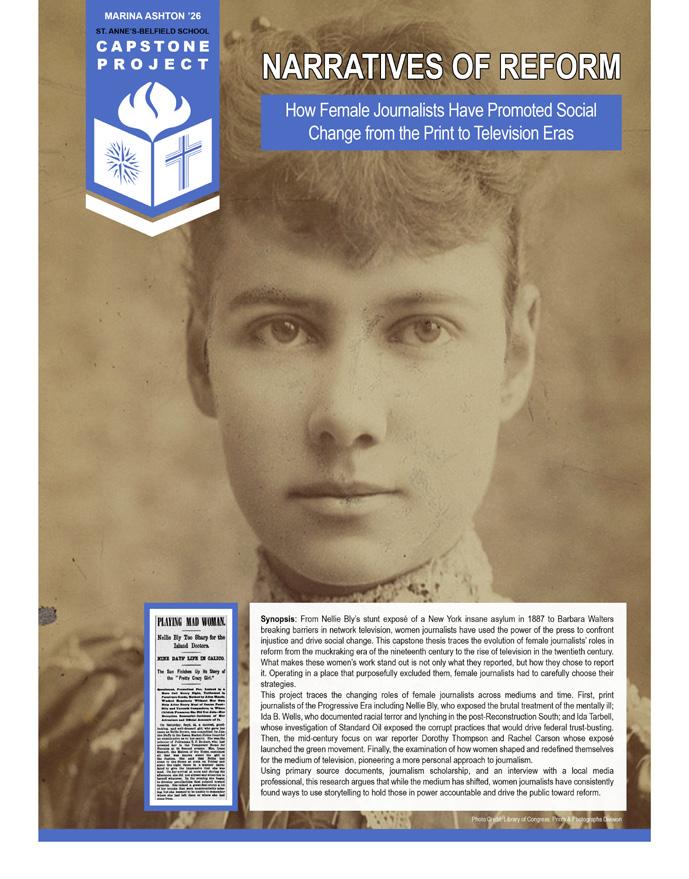
From Nellie Bly’s stunt exposé of a New York insane asylum in 1887 to Barbara Walters breaking barriers in network television, women journalists have used the power of the press to confront injustice and drive social change. This capstone thesis traces the evolution of female journalists’ roles in reform from the muckraking era of the nineteenth century to the rise of television in the twentieth century. What makes these women’s work stand out is not only what they reported, but how they chose to report it. Operating in a place that purposefully excluded them, female journalists had to carefully choose their strategies.
This project traces the changing roles of female journalists across mediums and time. First, print journalists of the Progressive Era including Nellie Bly, who exposed the brutal treatment of the mentally ill; Ida B. Wells, who documented racial terror and lynching in the post-Reconstruction South; and Ida Tarbell, whose investigation of Standard Oil exposed the corrupt practices that would drive federal trust-busting. Then, the mid-century focus on war reporter Dorothy Thompson and Rachel Carson whose exposé launched the green movement. Finally, the examination of how women shaped and redefined themselves for the medium of television, pioneering a more personal approach to journalism.
Using primary source documents, journalism scholarship, and an interview with a local media professional, this research argues that while the medium has shifted, women journalists have consistently found ways to use storytelling to hold those in power accountable and drive the public toward reform.
Kate Cheng ’26
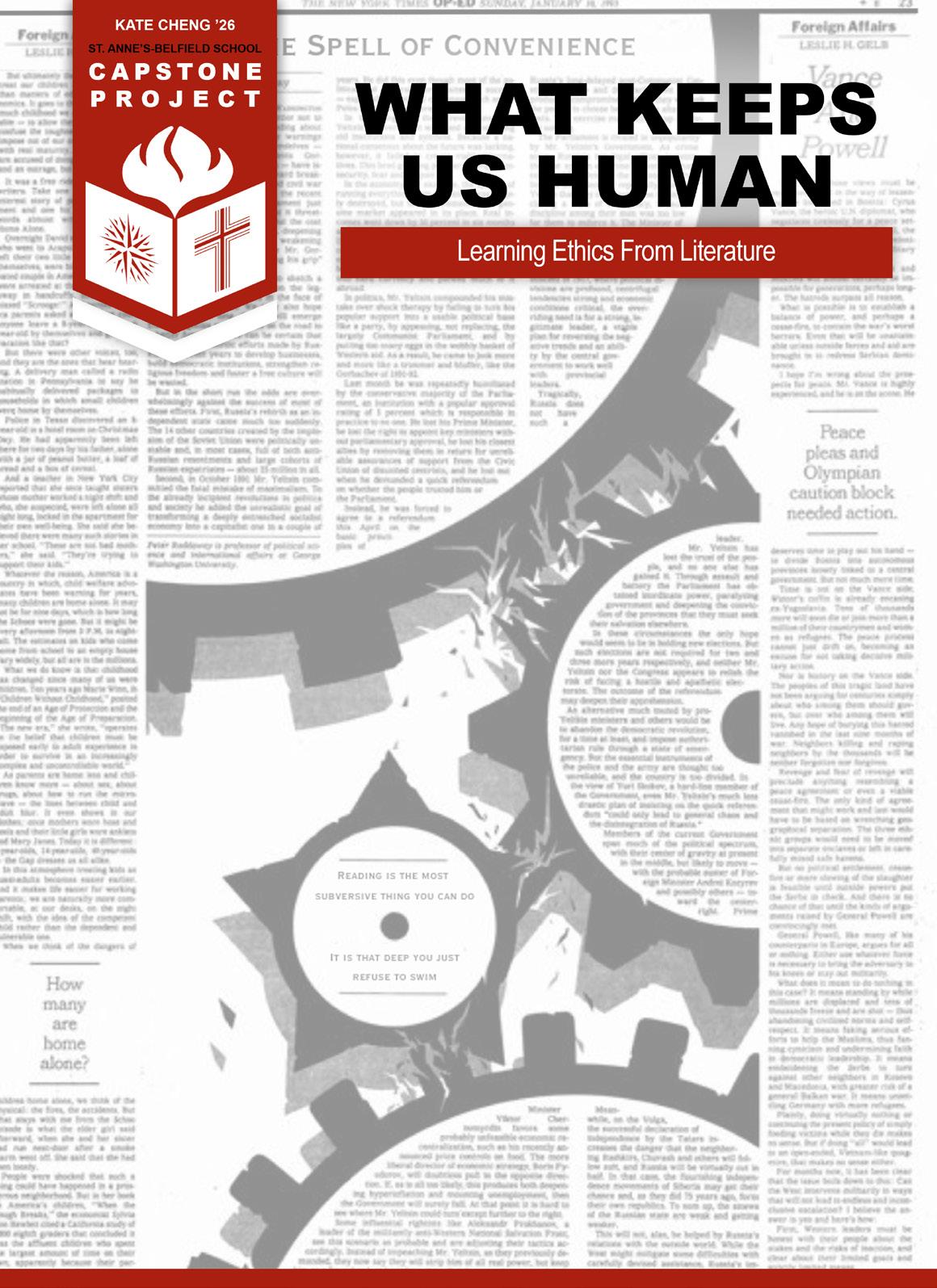
My study’s essential question was: How can studying the humanities make people better equipped to debate the ethical questions of the digital age? I wanted to reaffirm the importance of developing humanities “skills”—such as the ability to interpret and analyze texts, cultivate human empathy, think critically and contextualize information, and develop media literacy—especially in an age where it’s getting easier and easier to speak past each other. The bulk of my research included a deep-dive into the current scholarly opinions regarding the state of the humanities, the benefits of the field for growing more ethical students, and looked into the implications of various technological developments, like the increasing use of AI in education and society. In addition, I read several relevant novels and created ideas for lesson plans that I could include in a hypothetical literature course, where students could discover for themselves the importance of the humanities and build a strong background in exploring ethical questions. Through my Capstone I’ve better understood current attitudes surrounding education, technology, and what it means to be human, as well as grown my appreciation for how the humanities can help us become stronger intellectual and moral individuals.
Keira Druzgal ’26
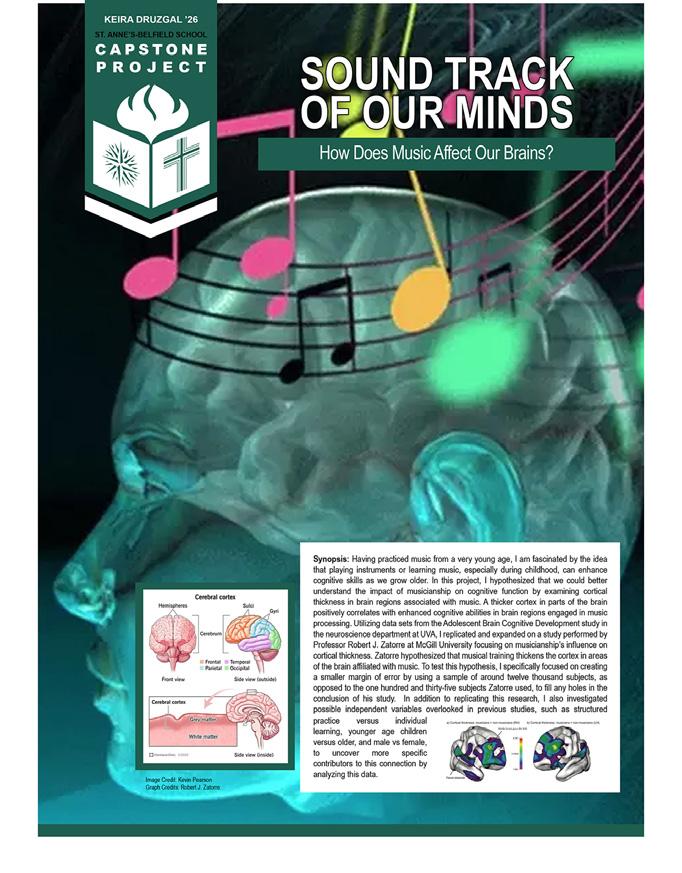
Having practiced music from a very young age, I am fascinated by the idea that playing instruments or learning music, especially during childhood, can enhance cognitive skills as we grow older. In this project, I hypothesized that we could better understand the impact of musicianship on cognitive function by examining cortical thickness in brain regions associated with music. A thicker cortex in parts of the brain positively correlates with enhanced cognitive abilities in brain regions engaged in music processing. Utilizing data sets from the Adolescent Brain Cognitive Development study in the neuroscience department at UVA, I replicated and expanded on a study performed by Professor Robert J. Zatorre at McGill University focusing on musicianship’s influence on cortical thickness. Zatorre hypothesized that musical training thickens the cortex in areas of the brain affiliated with music. To test this hypothesis, I specifically focused on creating a smaller margin of error by using a sample of around twelve thousand subjects, as opposed to the one hundred and thirty-five subjects Zatorre used, to fill any holes in the conclusion of his study. In addition to replicating this research, I also investigated possible independent variables overlooked in previous studies, such as structured practice versus individual learning, younger age children versus older, and male vs female, to uncover more specific contributors to this connection by analyzing this data.
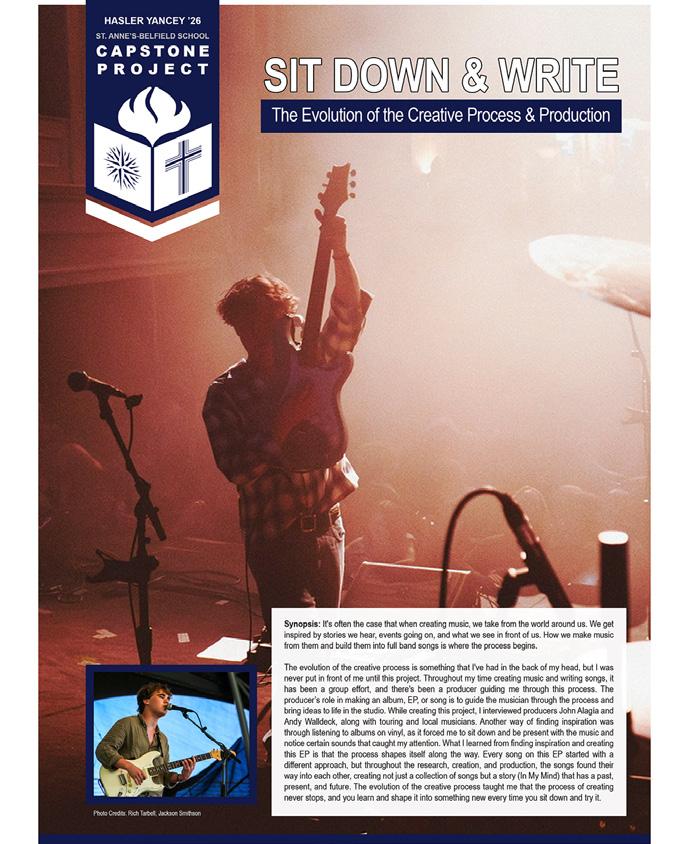
It’s often the case that when creating music, we take from the world around us. We get inspired by stories we hear, events going on, and what we see in front of us. How we make music from them and build them into full band songs is where the process begins.
The evolution of the creative process is something that I’ve had in the back of my head, but I was never put in front of me until this project. Throughout my time creating music and writing songs, it has been a group effort, and there’s been a producer guiding me through this process. The producer’s role in making an album, EP, or song is to guide the musician through the process and bring ideas to life in the studio. While creating this project, I interviewed producers John Alagía and Andy Walldeck, along with touring and local musicians. Another way of finding inspiration was through listening to albums on vinyl, as it forced me to sit down and be present with the music and notice certain sounds that caught my attention. What I learned from finding inspiration and creating this EP is that the process shapes itself along the way. Every song on this EP started with a different approach, but throughout the research, creation, and production, the songs found their way into each other, creating not just a collection of songs but a story (In My Mind) that has a past, present, and future. The evolution of the creative process taught me that the process of creating never stops, and you learn and shape it into something new every time you sit down and try it.
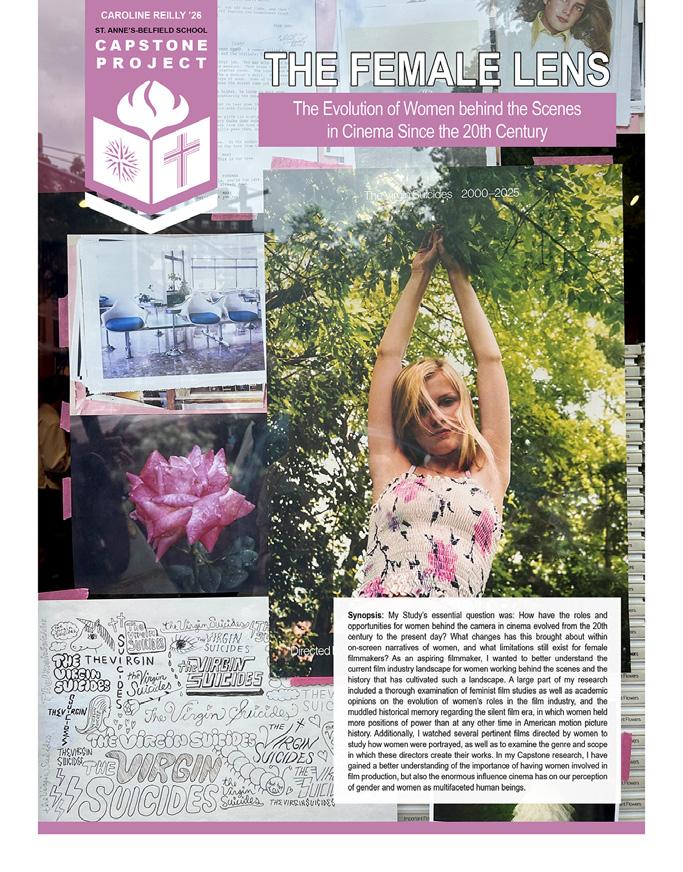
My Study’s essential question was: How have the roles and opportunities for women behind the camera in cinema evolved from the 20th century to the present day? What changes has this brought about within on-screen narratives of women, and what limitations still exist for female filmmakers? As an aspiring filmmaker, I wanted to better understand the current film industry landscape for women working behind the scenes and the history that has cultivated such a landscape. A large part of my research included a thorough examination of feminist film studies as well as academic opinions on the evolution of women’s roles in the film industry, and the muddled historical memory regarding the silent film era, in which women held more positions of power than at any other time in American motion picture history. Additionally, I watched several pertinent films directed by women to study how women were portrayed, as well as to examine the genre and scope in which these directors create their works. In my Capstone research, I have gained a better understanding of the importance of having women involved in film production, but also the enormous influence cinema has on our perception of gender and women as multifaceted human beings.
Anni
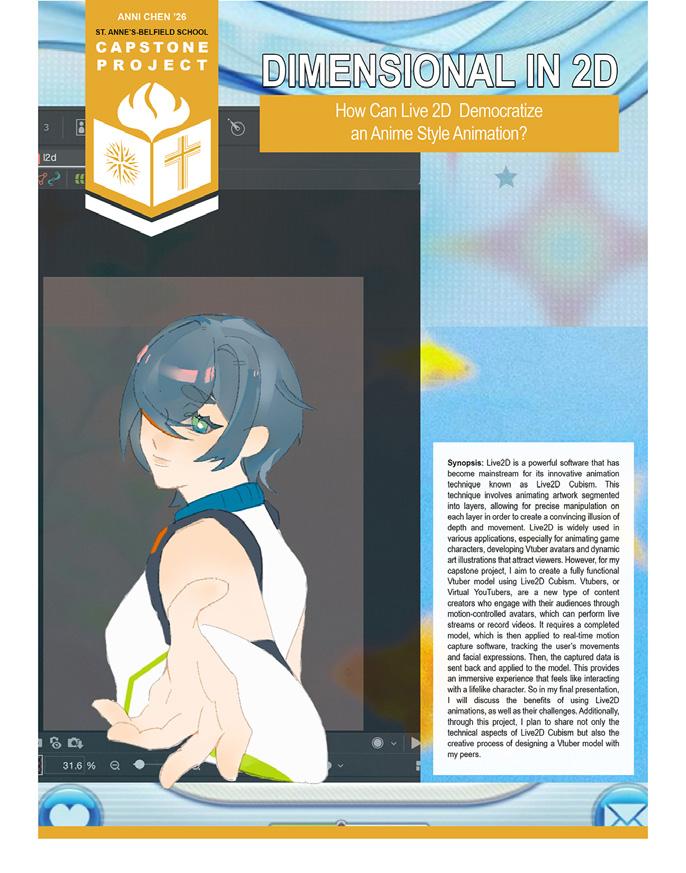
Live2D is a powerful software that has become mainstream for its innovative animation technique known as Live2D Cubism. This technique involves animating artwork segmented into layers, allowing for precise manipulation on each layer in order to create a convincing illusion of depth and movement. Live2D is widely used in various applications, especially for animating game characters, developing Vtuber avatars and dynamic art illustrations that attract viewers. However, for my capstone project, I aim to create a fully functional Vtuber model using Live2D Cubism. Vtubers, or Virtual YouTubers, are a new type of content creators who engage with their audiences through motion-controlled avatars, which can perform live streams or record videos. It requires a completed model, which is then applied to real-time motion capture software, tracking the user’s movements and facial expressions. Then, the captured data is sent back and applied to the model. This provides an immersive experience that feels like interacting with a lifelike character. So in my final presentation, I will discuss the benefits of using Live2D animations, as well as their challenges. Additionally, through this project, I plan to share not only the technical aspects of Live2D Cubism but also the creative process of designing a Vtuber model with my peers.
The print version of PLUM Spring 2026 Volume 2 was funded by the St. Anne’s-Belfield Arts Boosters.
To learn more about the Arts Boosters, please scan the QR Code below.

Anne’s-Belfield School | 2132 Ivy Road | Charlottesville, VA 22903