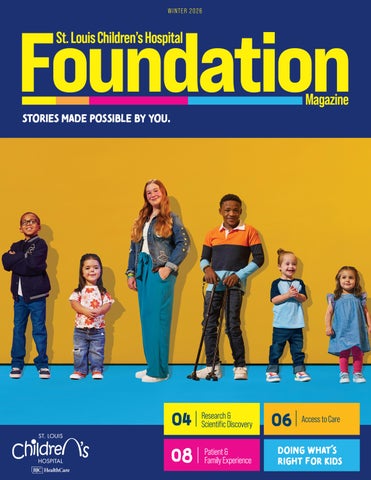
St. Louis Children's Hospital Magazine: Winter 2026
Editor: Janelle Ammel | Janelle.Ammel@bjc.org
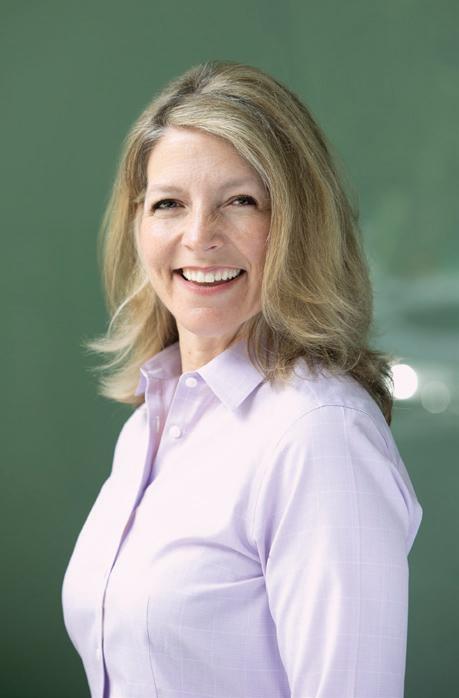
Tanya L. Waskiewicz
Chief Development Officer, St. Louis Children’s Hospital
Dear Friends,
Welcome to 2026! I hope your 2025 was as productive as ours was. We received the big news that U.S. News & World Report again recognized St. Louis Children’s Hospital and its physician partners at WashU Medicine among America’s Best Children’s Hospitals, ranking St. Louis Children’s No. 1 in Missouri and No. 3 in the Midwest region.
The Foundation also spent months preparing for the launch of I Am Proof, a new philanthropic campaign created to highlight the powerful role donor support plays in the exceptional care we deliver. The historic campaign has privately raised $335 million toward its $400 million goal. Philanthropy helps fund research that leads to better diagnoses and treatments, programs that support families during long hospital
stays, equipment and technology that elevate the standard of care, and community outreach initiatives that expand access to care.
I Am Proof features real St. Louis Children’s patients, WashU Medicine physicians, and donors captured in authentic moments across our hospital. These are the very kids, physicians, and community members who inspire us every day. This campaign, which is currently being shared across the greater St. Louis region, demonstrates how philanthropy strengthens patient care and research and connects our community more deeply to our mission.
As always, we are grateful for our donors who are sharing why they donate to further the hospital’s mission and create better outcomes for kids and families—now and in the future.
Warm Regards,
Tanya L. Waskiewicz Chief Development Officer
St. Louis Children’s Hospital
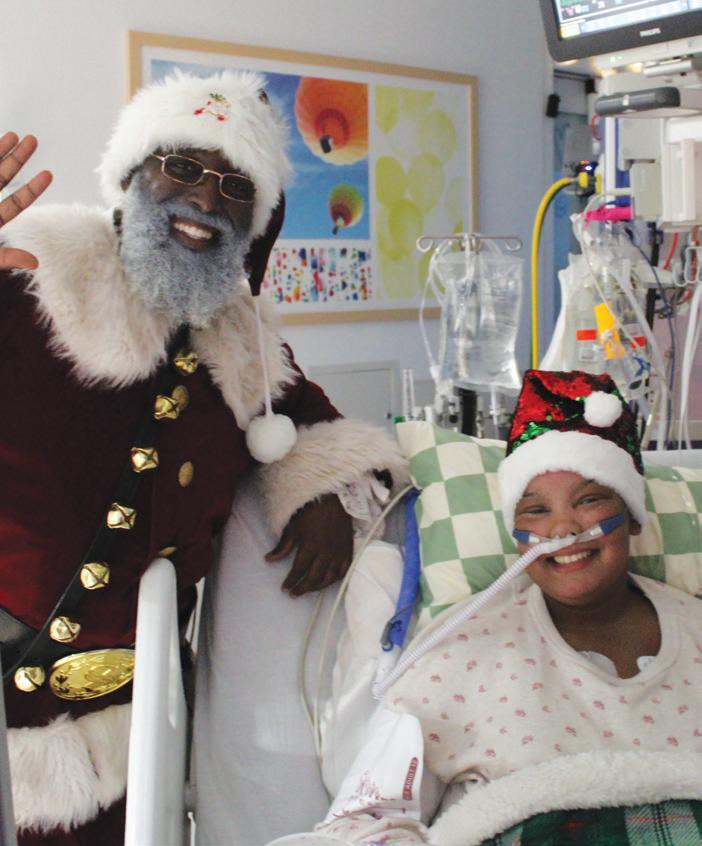
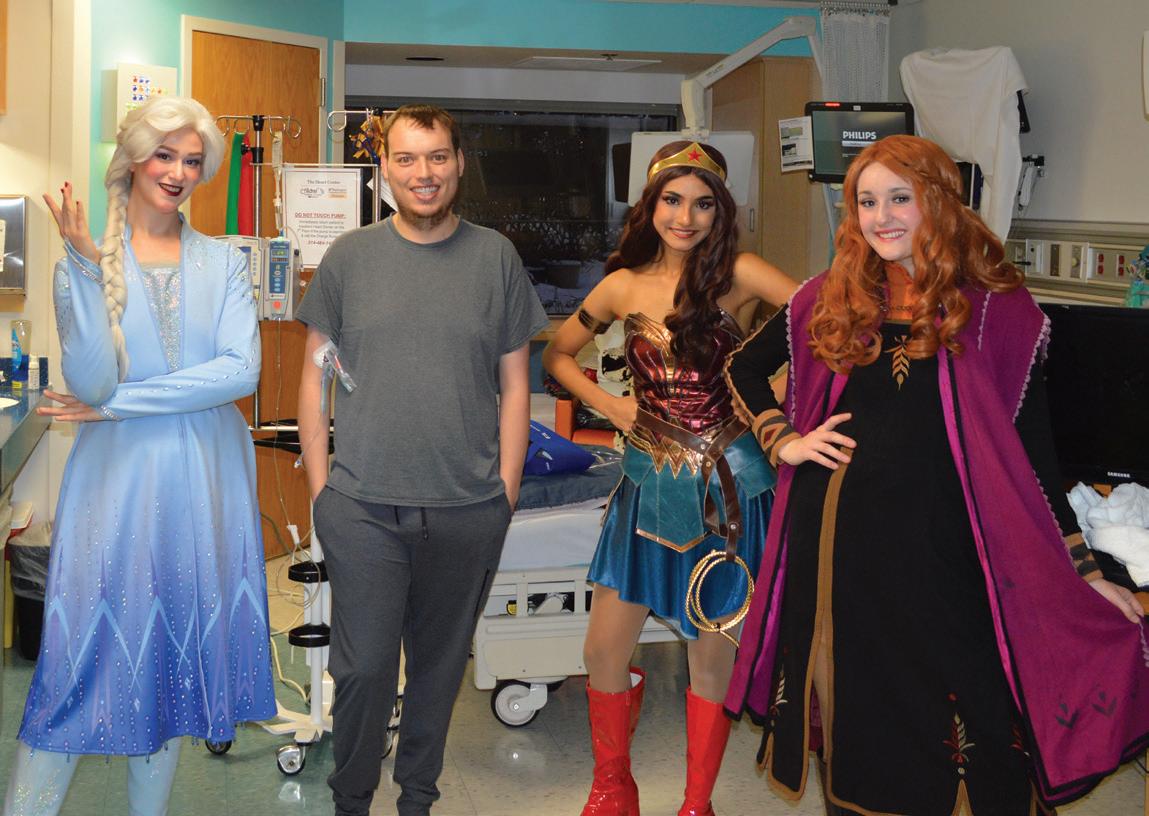
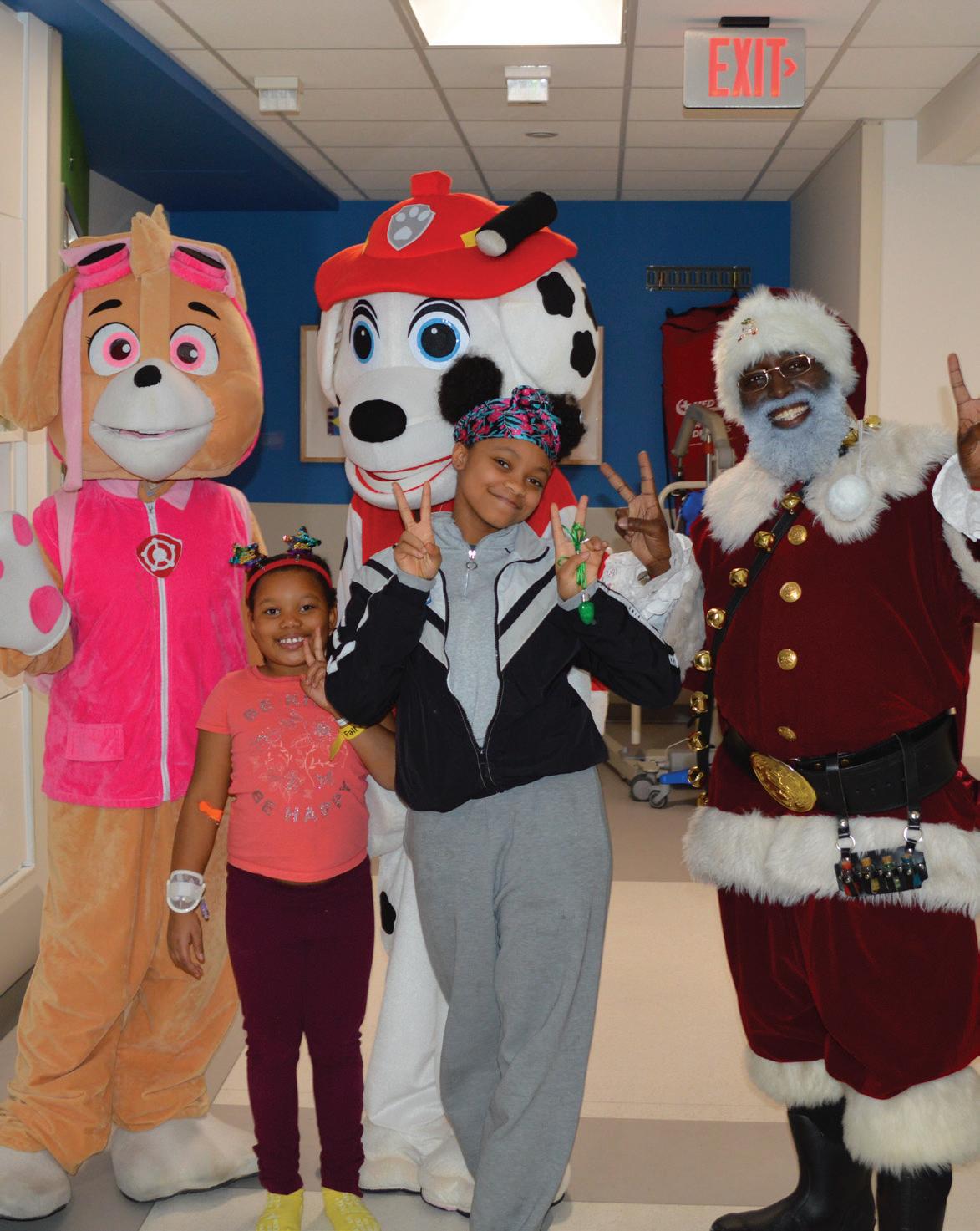
The holiday season was buzzing with several donor-funded events at St. Louis Children’s Hospital. Love Light, sponsored by Gardner Capital, started the season’s festivities with character visits, entertainment, and the turning on of the holiday lights. Patients and families were also able to shop at Snowflake Village and Amazon Holiday Shop, pop-up stores where patients and families found perfect gifts for loved ones.
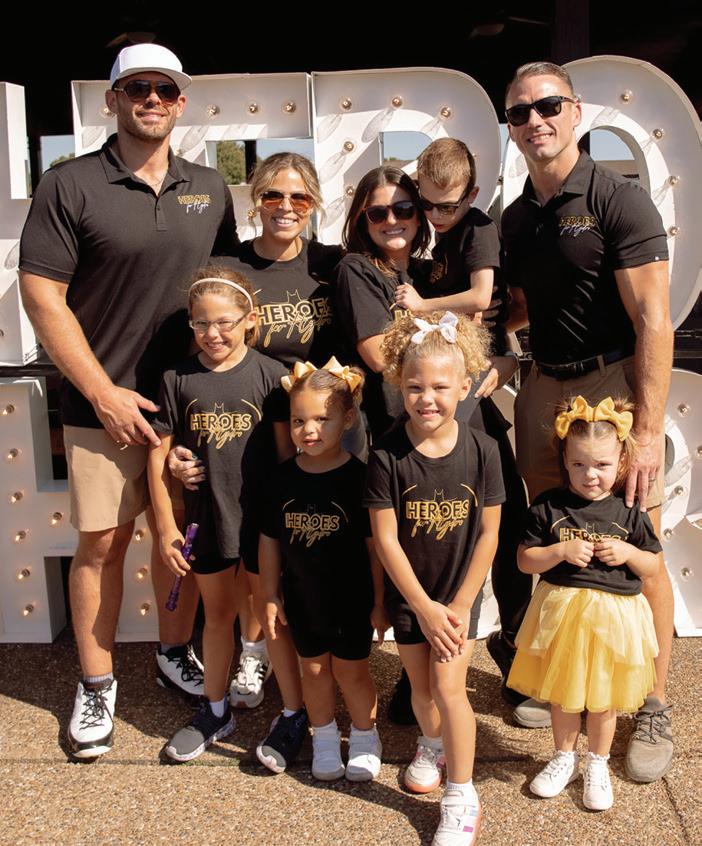
The fifth annual Heroes for Hydro Golf Tournament was held in October and raised $88,000 in support of pediatric neurosurgery at St. Louis Children’s. This event was started in honor of Bennett, who was born premature in 2018 and diagnosed with hydrocephalus. He has endured 13 surgeries at St. Louis Children’s, and his family supports the hospital through this annual fundraiser.
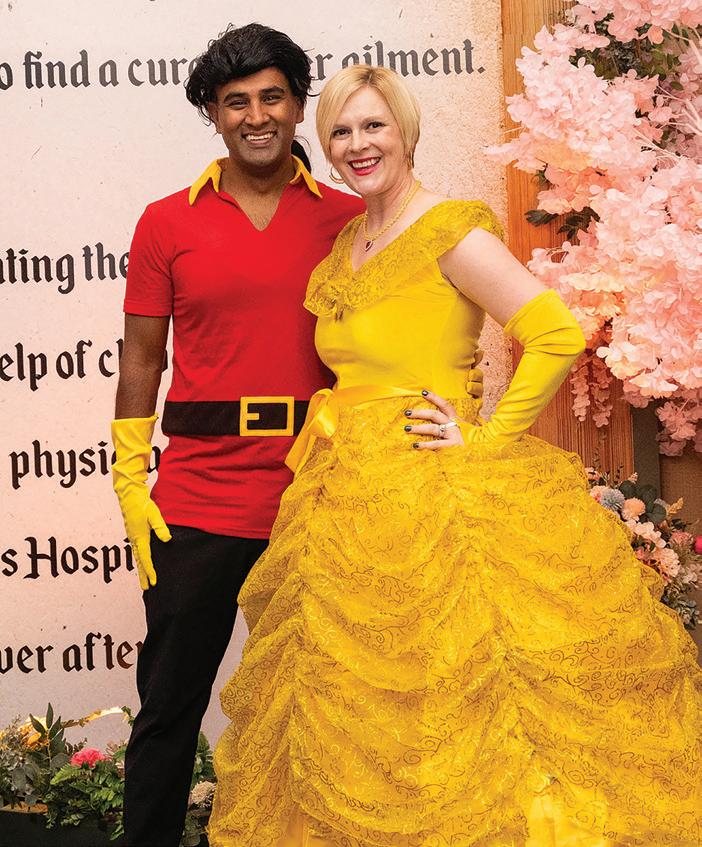
Play Date, the signature gala benefiting St. Louis Children’s Hospital, was held in November at the Four Seasons Hotel
St. Louis. The theme was Once Upon a Time, and attendees were whisked away into a fairytale storybook adventure. The 12th annual event raised more than $560,000 for research being conducted by the Children’s Discovery Institute, featured TLR8 genetic research and treatments, and highlighted St. Louis Children’s Hospital patient Clementine and her family.
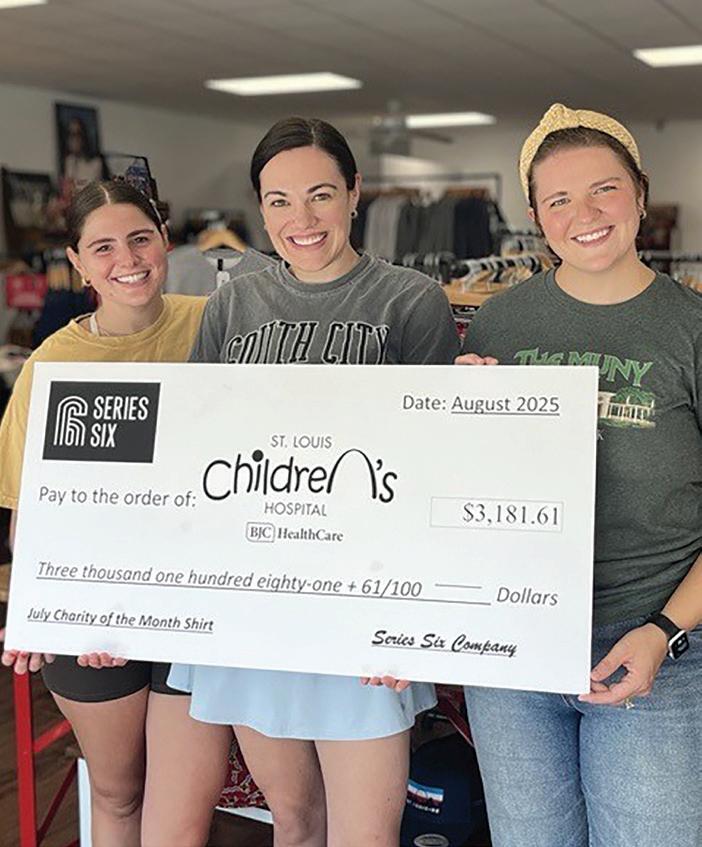
Series Six Company, a St. Louis-based apparel company, designed a limitededition shirt for St. Louis Children’s Hospital this past summer. As the charity shirt of the month, 100% of the proceeds help ensure patients receive essential care, services, and support. Sales from the shirt raised $3,181 for the area of greatest need, which allows flexible funding where it is needed most.
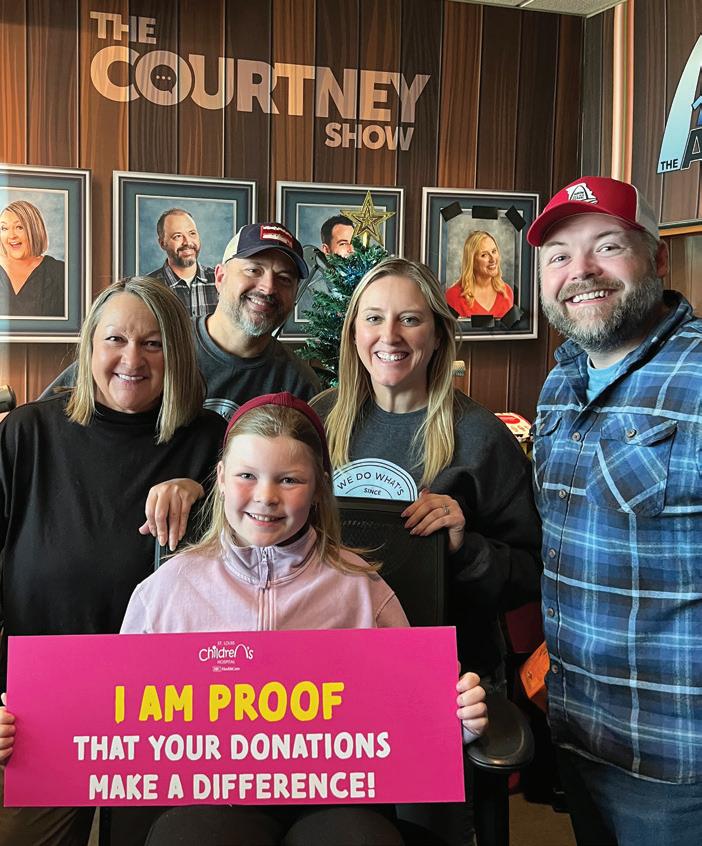
On December 5, 2025, 106.5 The Arch and The Courtney Show held their third annual radiothon to support St. Louis Children’s Hospital. The radiothon raised $64,198 in a mere 12 hours. Special thanks to Hall of Fame sportscaster and St. Louis native Joe Buck, who generously offered a $20,000 matching gift. It was a day of fun at the radio station with on-air visits from hospital leaders and some special patients and families.
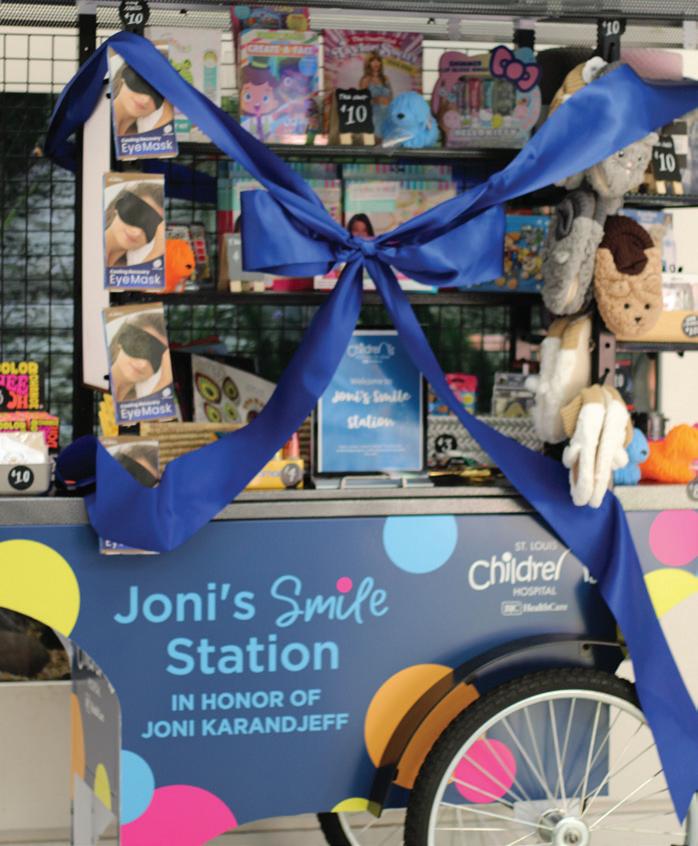
Inspired by beloved hospital volunteer Joni Karandjeff, who spent more than 11,000 hours working in the hospital gift shop, the Joni Smile Station continues her legacy. This pop-up shop offers cheerful gifts and toys for purchase to brighten patients’ days and spread smiles throughout the hospital.
Solving the Rarest Cases When Time Matters Most
The identification of INFLTR8 is changing the future for children with life-threatening genetic immune disorders
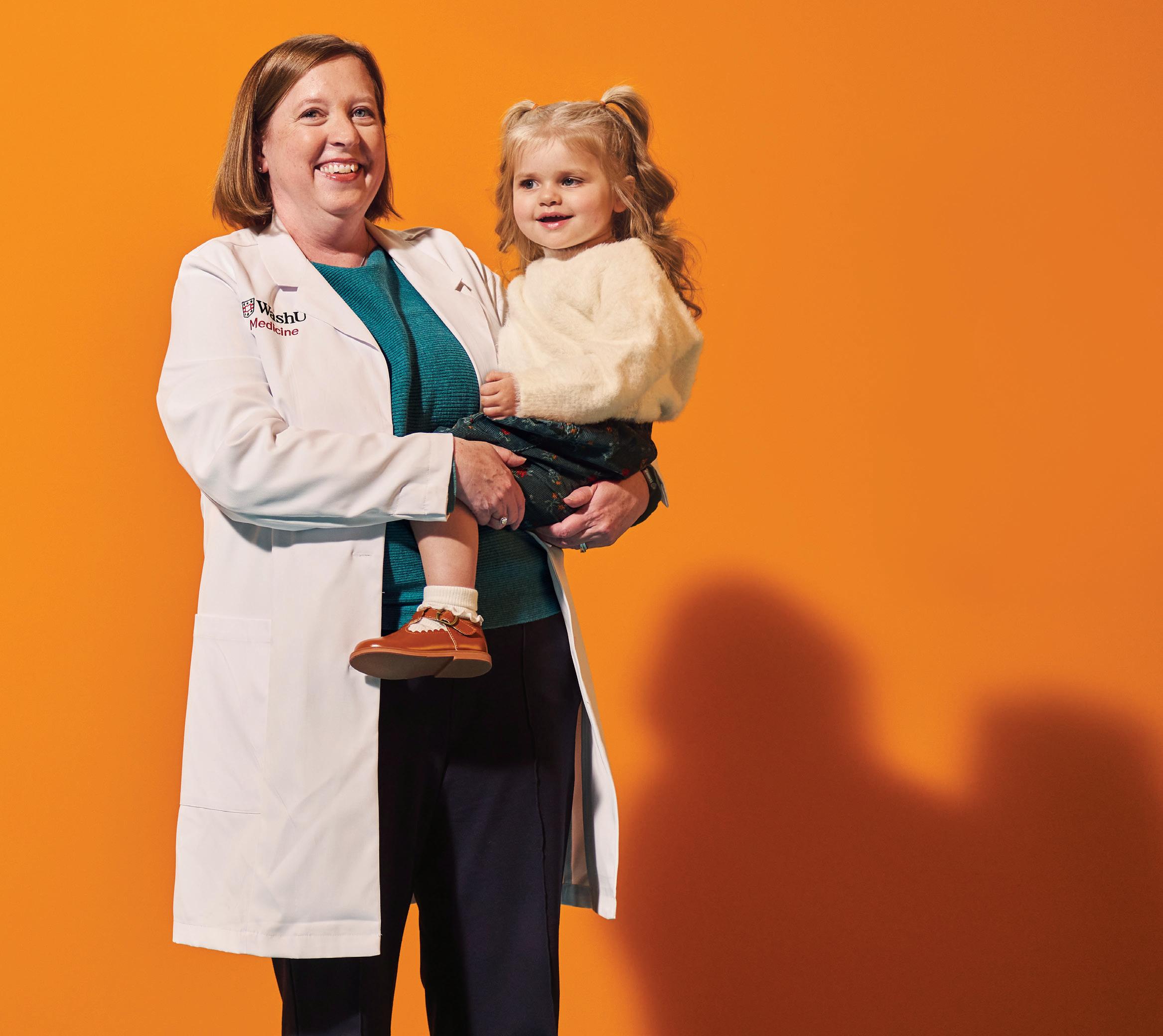
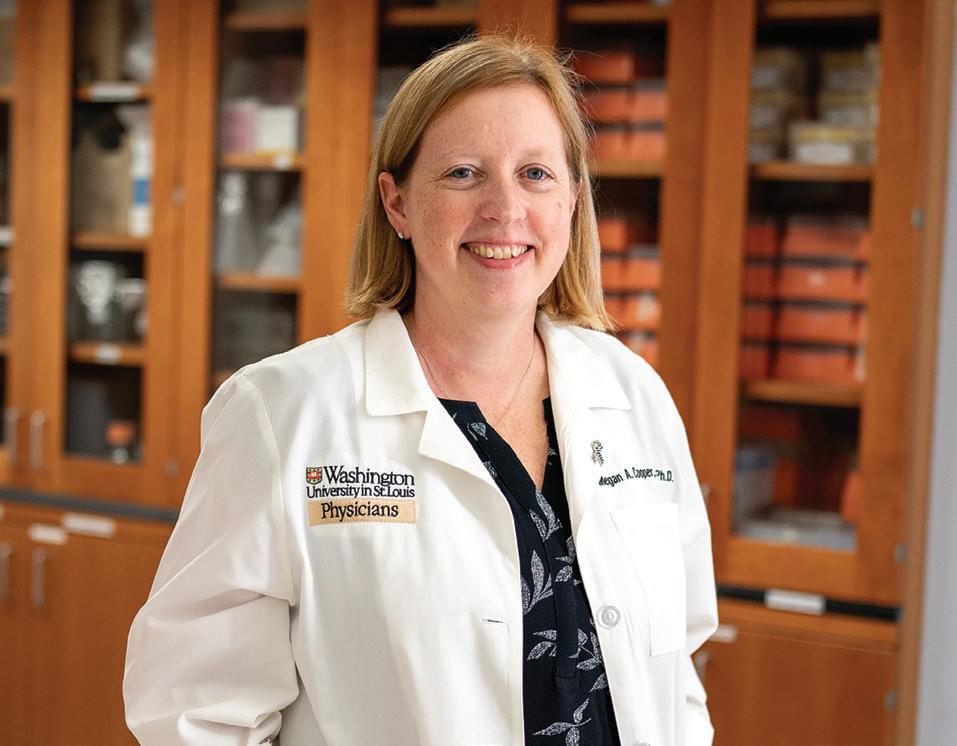
Dr. Cooper worked tirelessly to discover a rare mutation that was identified in patient Clementine just a few years later.
For children with rare or undiagnosed diseases, the wait is exhausting—both mentally and physically. They endure endless tests and treatments without answers, while their bodies and spirits grow weary in the search for what’s wrong. But WashU Medicine immunologist Megan A. Cooper, MD, PhD, who treats patients at St. Louis Children’s Hospital, works tirelessly to reduce the wait. Dr. Cooper specializes in diagnosing and treating rare genetic diseases affecting the immune system and collaborates with pediatric specialists worldwide to try to solve their most puzzling cases.
One of Dr. Cooper’s most significant discoveries came several years ago. Her team began studying two young boys who kept getting serious infections, had
swollen organs, and were often hospitalized. In 2021, they discovered the cause—a rare immune disorder linked to a gene called TLR8. This gene normally helps the body fight germs, but in these kids, it was overactive, causing too much inflammation and confusion in the immune system. They later found four more boys with the same problem—six in total— all with severe immune issues that led to enlarged organs, blood disorders, and, in some cases, death.
The big question was why were all the identified patients males? Since the TLR8 gene is found on the X chromosome, doctors thought girls might be protected because they have two X chromosomes and can “balance out” the problem. This was the first known immune disorder associated with the TLR8 gene, leading to high activity of the TLR8 protein. Most of the boys had something called mosaicism, meaning only some of their cells carried the mutation—which makes the disease even harder to detect.
In 2021, Dr. Cooper hypothesized that females could be affected by this overactive gene, but at the time, she hadn’t found any cases to prove it. And while she went on to identify three more patients with the disease, Dr. Cooper had no idea that two years later, the 10th patient identified—a baby named Clementine—would not only be a female but would eventually come to St. Louis Children’s for treatment.
Part of Clementine’s journey included uncertainty from her genetic test results—no one knew her condition could even happen in girls. She developed the disease earlier than anyone else, and the genetic change was in all her cells. The next earliest case didn’t show up until around age 1, while Clementine started showing symptoms shortly after birth.
Today, the disease is known as INFLTR8 (pronounced infiltrate), and the acronym stands for inflammation, neutropenia, bone marrow failure, and lymphoproliferation caused by TLR8.
St. Louis Children’s and WashU Medicine have treated three patients, including Clementine, out of the 10 total. The only known treatment at this time is a bone marrow transplant. Because the gene is only expressed in the immune system, giving patients a new immune system eliminates this through donor bone marrow. All the patients had tried multiple other therapies, but nothing else led to remission of the disease.
Dr. Cooper strongly believes that it’s her team’s responsibility to publicize information on INFLTR8 to other physicians around the world. Because of the disease’s newness, it can take time for physicians to
The Center for Pediatric Immunology is one of only a handful of institutions worldwide to serve as both a research center focused on uncovering how these diseases affect the body and as an access point for multidisciplinary care for patients with rare immunebased diseases. The way forward is through innovative, collaborative science.
confirm an accurate diagnosis. Unfortunately, initial discovery research is difficult to fund. However, once discoveries are made, physicianscientists can apply for funding from traditional sources like the National Institutes of Health (NIH). Dr. Cooper emphasizes the importance of having access to flexible funds and the right resources in place to pursue new research as patients come to St. Louis Children’s. “If a disease has never been discovered before, then we can’t have funding in place already!”
Thanks to generous donor gifts, the Center for Pediatric Immunology within the Children’s Discovery Institute, a collaboration between St. Louis Children’s Hospital, its Foundation, and WashU Medicine, is continuing to make rare disease discoveries with Dr. Cooper as its director. The Center is changing the approach to identifying and treating genetic conditions that weaken the immune system from birth—and is drawing patients from across the country and around the world.
If you would like to help St. Louis Children’s deliver new breakthroughs sooner and identify new research avenues faster, make a gift at StLouisChildrens.org/Give
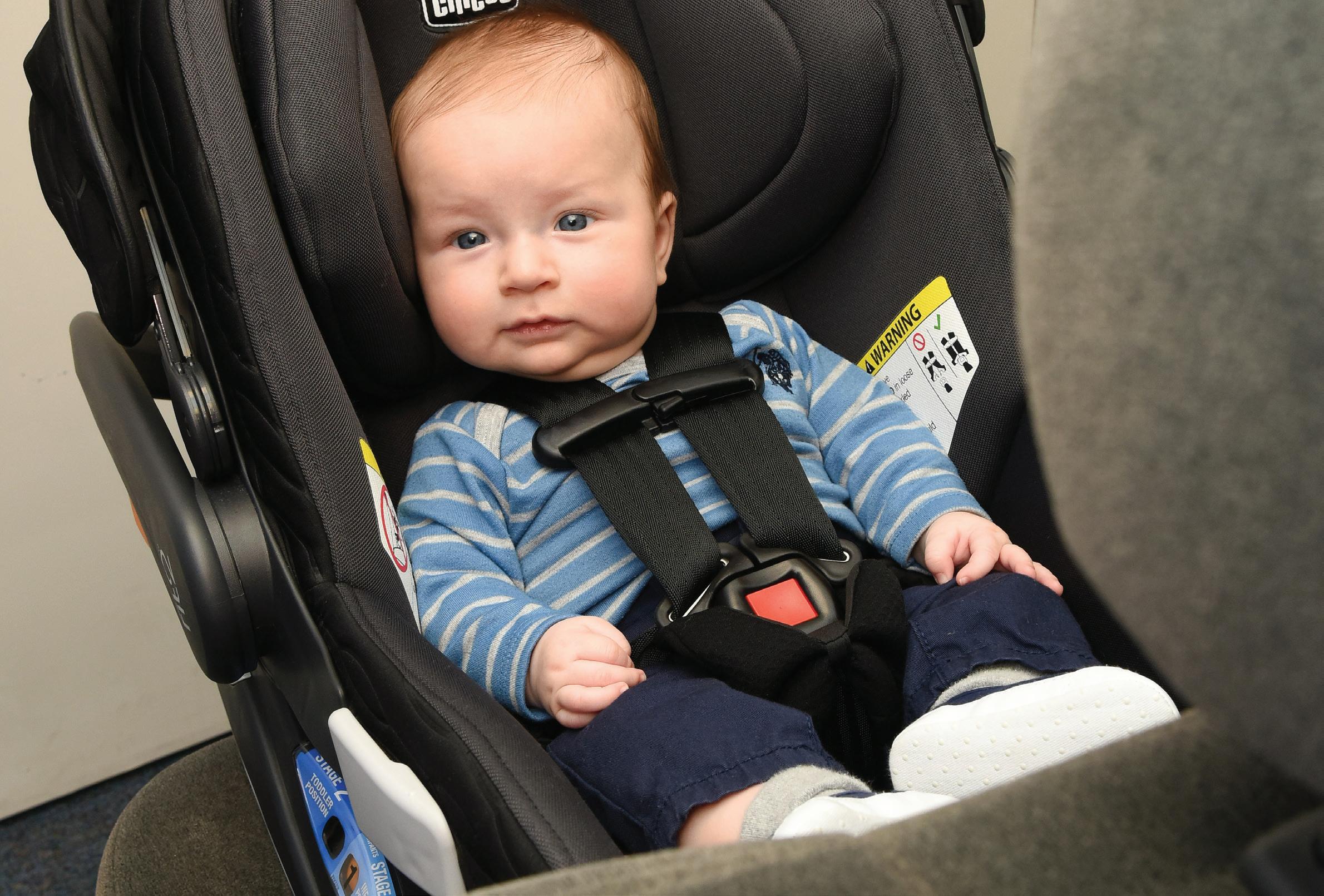
Car seats and booster seats provide protection for infants and children in a crash, yet car crashes are a leading cause of death for children ages 1 to 13, according to the National Highway Traffic Safety Administration.
Latches, Locks, and lifesaving Impact
Donor support keeps families safe through injury prevention education
Every parent shares one goal: keeping their kid safe. At St. Louis Children’s Hospital, that goal becomes a reality every day thanks to donor generosity. Because of donor-funded programs like Safety Stop, families are getting the help they need to prevent life-altering injuries and tragedies before they happen. From education on car seats and firearm safety to helmets, home safety, and safe sleep education, donor support is saving lives.
Car crashes remain a leading cause of injury for children. With nearly every child riding as a passenger in a vehicle, the risk of injury is significant. That’s why certified child passenger safety technicians (CPSTs) at St. Louis Children’s Hospital work tirelessly to ensure every child is buckled safely in a legitimate, correctly installed car seat. In 2025 alone, CPSTs inspected 3,381 car seats and found that 842 of them were being used incorrectly.
Even more alarming is the rise in counterfeit car seats—fake, unsafe products sold online that fail to meet safety standards. Parents may unknowingly purchase these products as a cost-saving measure or on easy-order websites. According to Brittany, a CPST and lead public health educator at St. Louis Children’s, Safety Stop is seeing a rise in counterfeit car seats. She emphasizes that it’s critical to never use one of these items because they will not hold up in a vehicle crash and will put your child in danger.
To help families identify these fake products, she recommends parents check for the Federal Motor Vehicle Safety Standard (FMVSS) label, attached chest clips, and a product manual and registration card. Misspellings, missing stickers, and thin harnesses can be red flags. She also urges parents to purchase directly from the manufacturer or another authorized retailer.
In addition to a visual inspection, the technicians also perform functional testing and review a recall and history check to make sure the seat is safe and not expired or included in any recalls. They also demonstrate proper installation and proper harnessing and guide caregivers through the process so they feel confident if they need to do it correctly at home. At St. Louis Children’s, the need for this service is vast. While many regional programs average approximately 14 safety seat inspections each week, St. Louis Children’s often completes an average of 15 per day—a testament to the ongoing need for donor support and safety education.
Firearm and vehicle-related injuries and deaths are both major safety concerns for children and teens according to the Centers for Disease Control (CDC). St. Louis Children’s Hospital and its outreach sites are working to change that by providing free, noquestions-asked gun locks, which are available in person or by mail, to ensure firearms are stored securely and out of a child’s reach. Other safety consultations provided by Safety Stop include bike helmet and swaddle and crib safety, as well as general home safety with water safety instruction to prevent drownings.
The impact of Safety Stop is proof that donor support saves lives—keeping children across our community safe, healthy, and strong.
How to spot a fake car seat:
• Missing or incorrect FMVSS safety label
• Thin harness straps or missing chest clip
• No instruction manual or registration card
• Misspelled labels or poor-quality stickers
• Unauthorized third-party sellers
In 2025 there were...
4,336 total Safety Stop appointments, serving 6,630 individuals
842 misused car seats corrected and 1,414 new properly installed car seats
78 home safety consultations with water safety instruction conducted 1,099 helmet fittings
231 safe sleep consultations
Help St. Louis Children’s continue to provide injury prevention resources and education. Make a gift today at StLouisChildrens.org/Give.
Against All Odds: Clementine’s Unimaginable
Journey to healing
An ultra-rare mutation couldn’t stop Clementine’s family from finding the care—and the cure—she needed
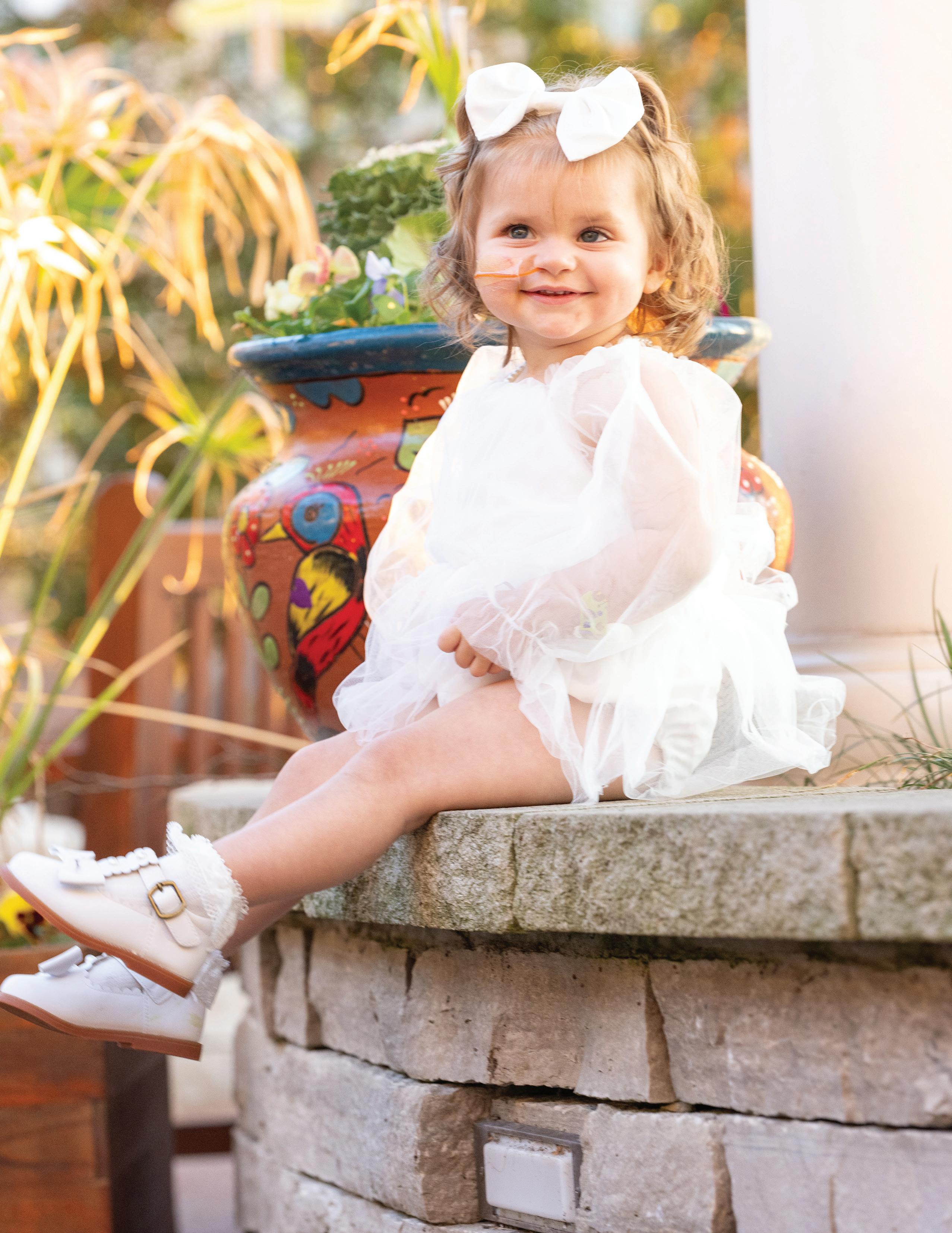
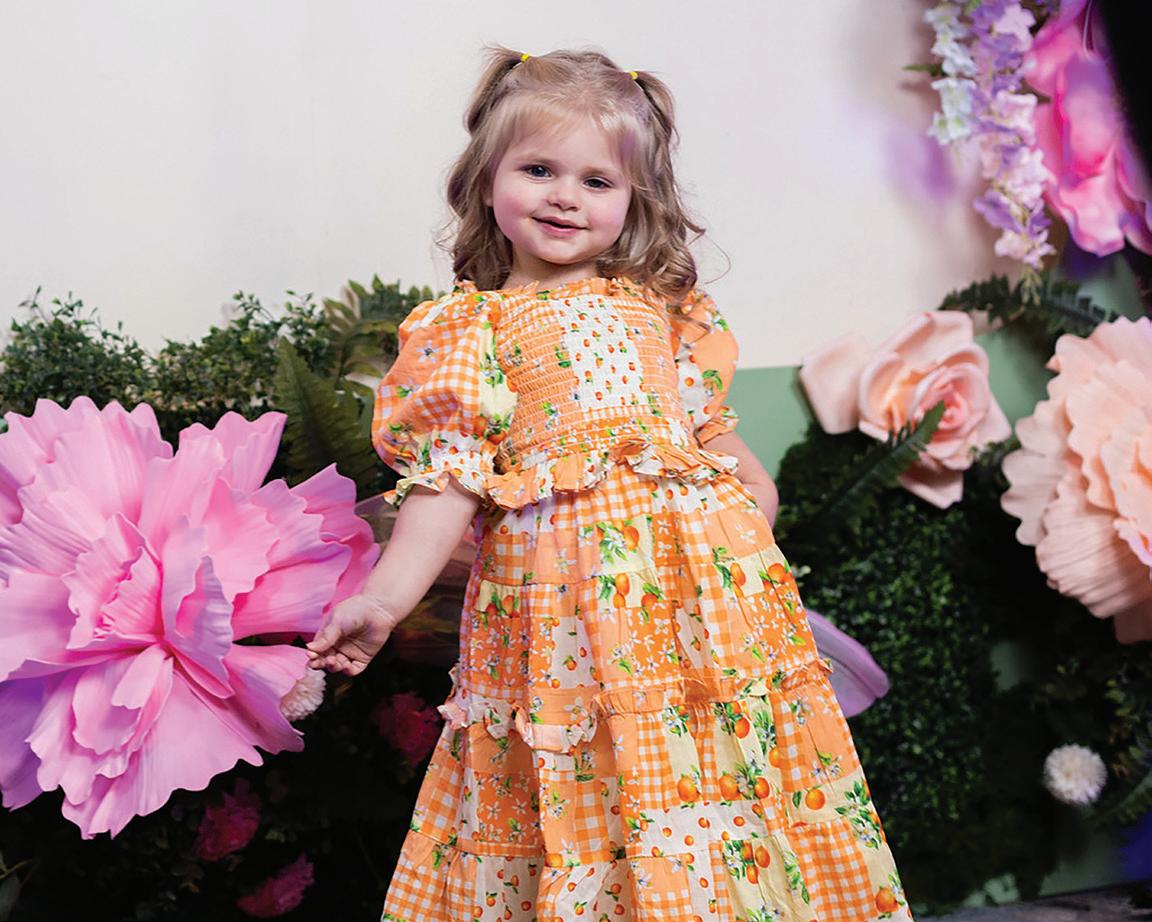
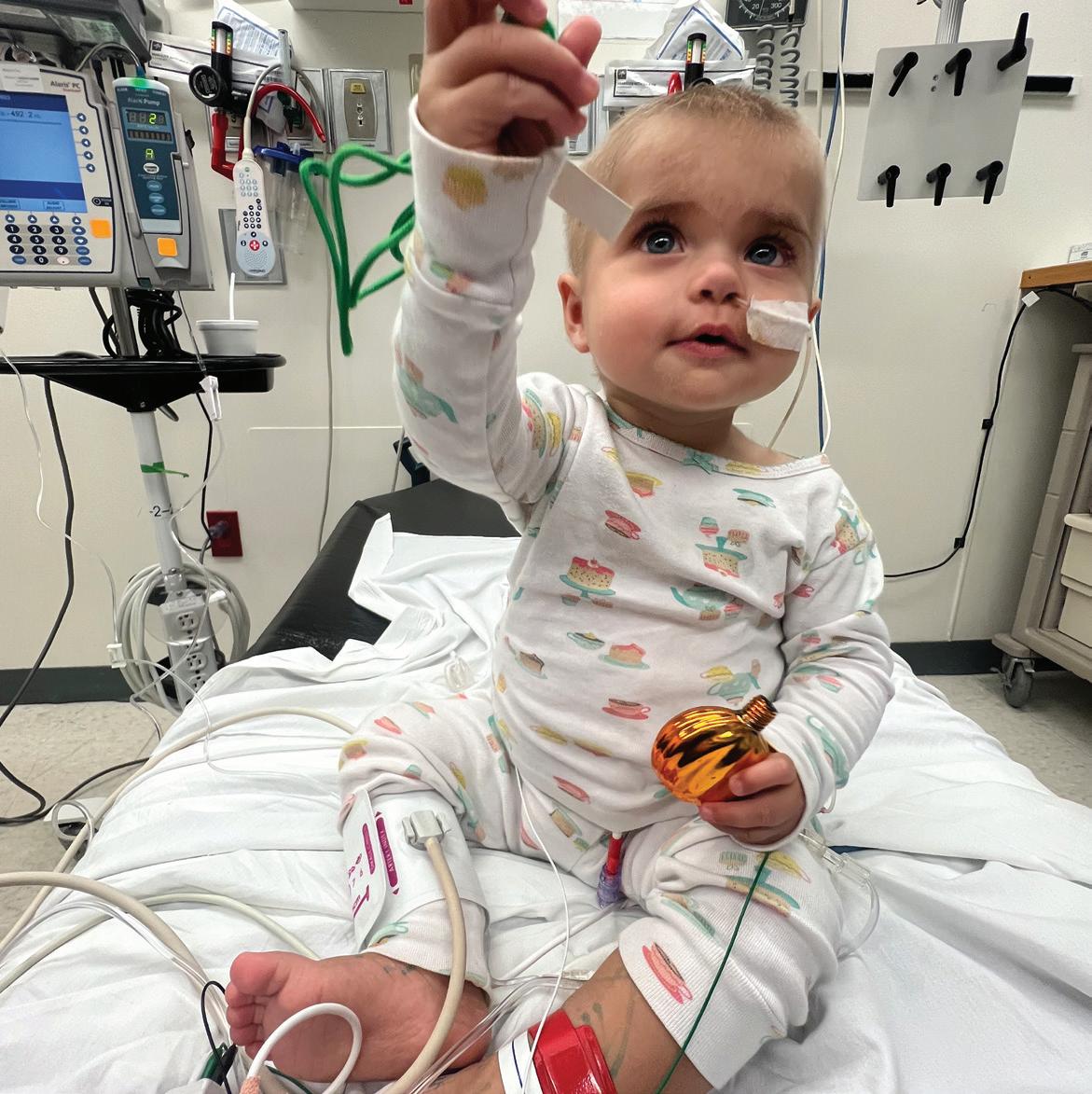
One in a billion—so rare, it almost seems impossible. But for 3-year-old Clementine, that number is more than a statistic. It defines her battle with a disease so rare her diagnosis was first thought impossible. And true to form, Clementine keeps proving that the impossible can become reality.
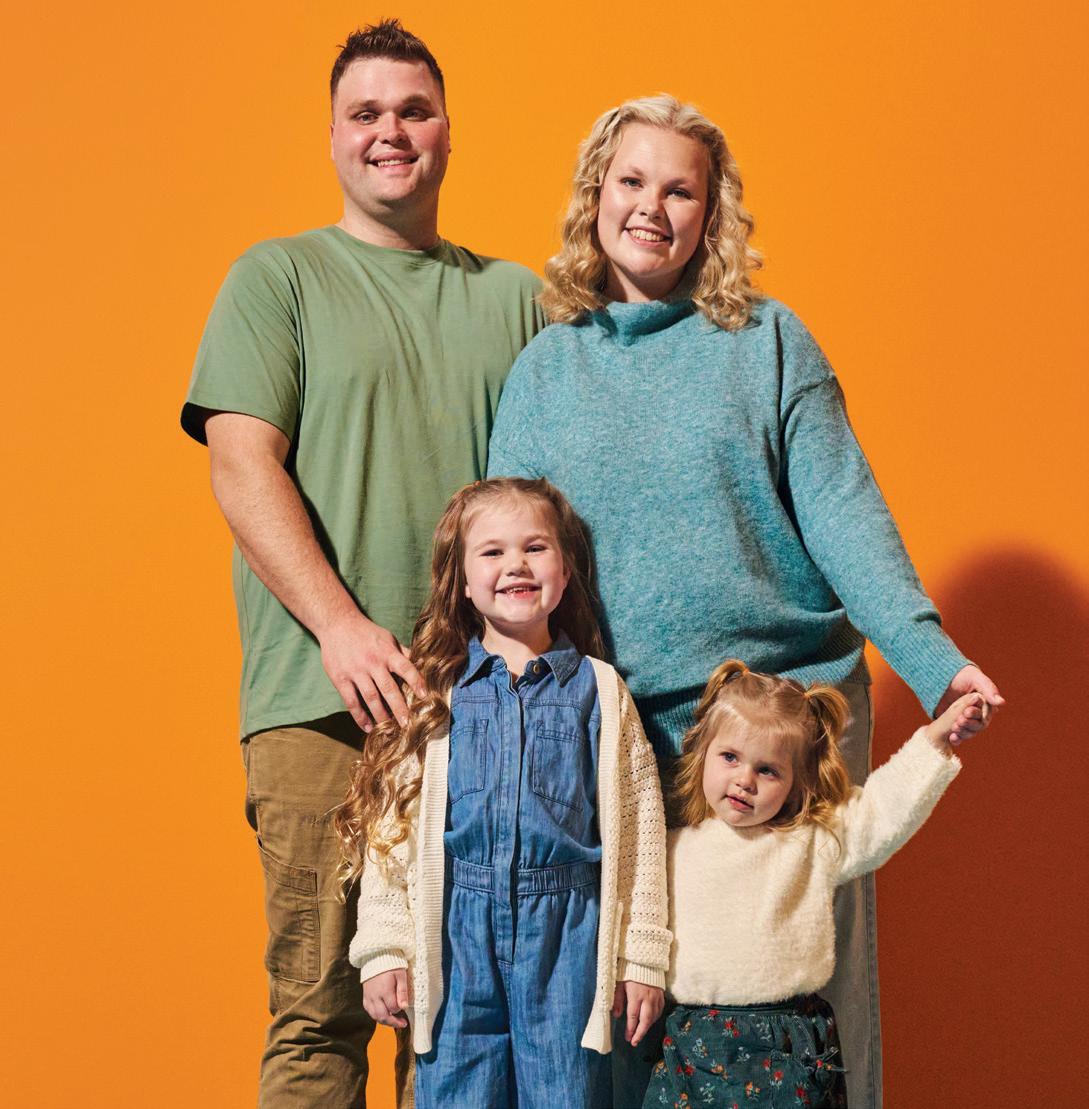
Clementine’s mom and dad, Tanner and Tim, learned their unborn baby had a small abdominal cyst about halfway through the pregnancy. After a smooth delivery in their hometown of Pittsburgh, Pennsylvania, and subsequent surgery at their local children’s hospital, the family settled in at home. But shortly after that, Tanner started to get a sick feeling that her baby was dying. She kept it to herself until, one day, Tanner’s mom asked if she thought there was something wrong with Clementine.
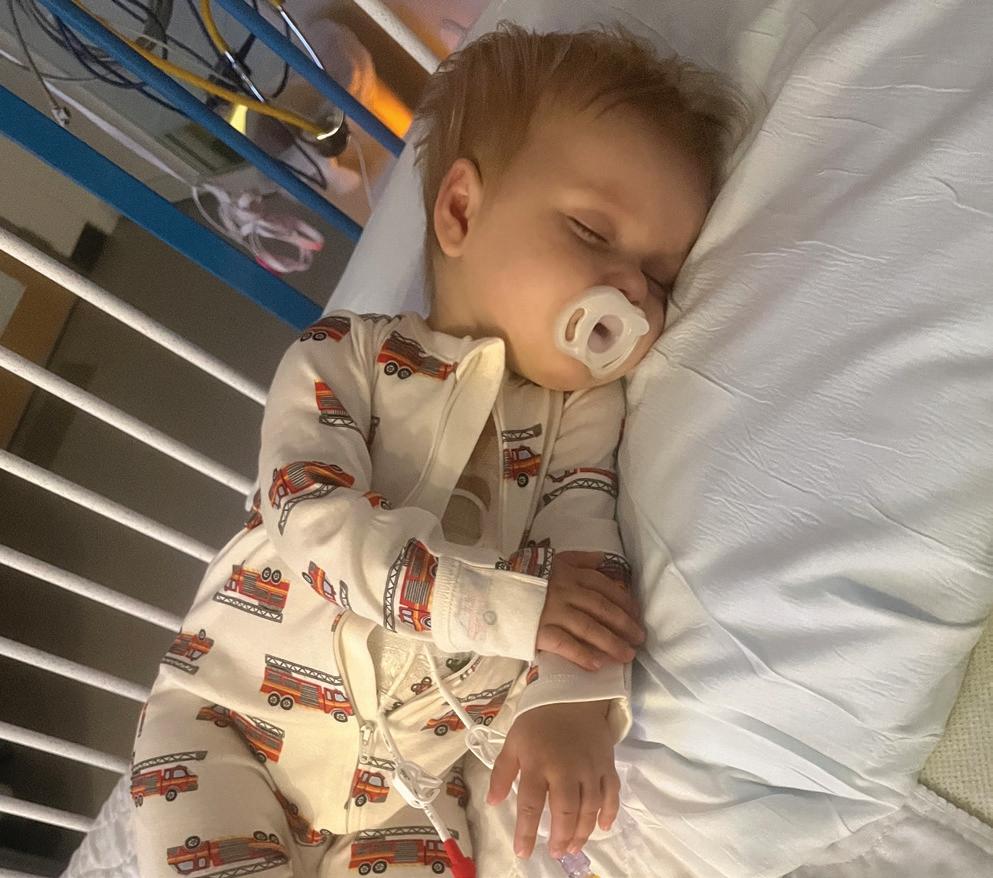
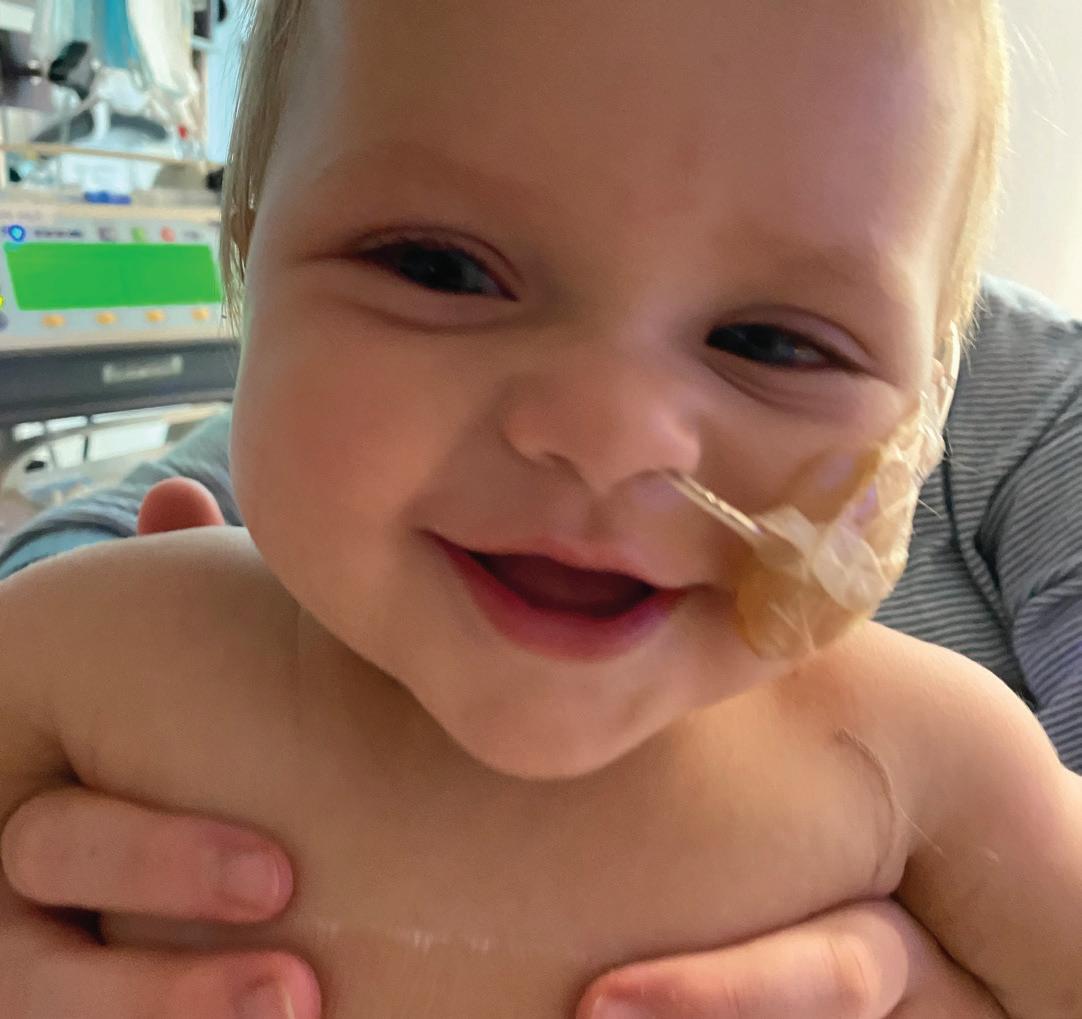
After a trip to the pediatrician, they returned to their local children’s hospital for further testing. A complete blood count (CBC) panel revealed shocking news. Clementine had a dangerously low hemoglobin level and was rushed to the newborn intensive care unit where she received three blood transfusions that night. The hematologist said Clementine would eventually outgrow her problems. The family felt like they were at a standstill. They weren’t any closer to figuring out what was wrong with their baby, and their medical team wasn’t providing the care they needed.
Clementine’s pediatrician encouraged Tanner to seek a second opinion. The family traveled to Children’s Hospital of Philadelphia to meet with Julia Warren, MD, PhD, who had come to Philadelphia from WashU Medicine and St. Louis Children’s Hospital.
Despite several trips to Philadelphia, the family still had no clear answers. Dr. Warren, puzzled, suggested a lengthy genetic test not covered by insurance. Then Tanner realized they were already awaiting results from the same test ordered in Pittsburgh. Stuck in limbo as they awaited results, the family felt helpless, as Clementine required blood transfusions every two weeks.
Right before St. Patrick’s Day, the hospital called to say it had received the results. Her single genetic mutation was to the TLR8 gene, which plays a fundamental role in activating the immune system to fight viruses such as influenza. The geneticist continued to say that while she had this mutation, it wasn’t causing her medical problems because the condition only affected males.
The family was crushed. Tanner sent the results to Dr. Warren to share that they were still seeking the same thing so many families were—a diagnosis for their child that could lead to treatment or even a cure.
A few days later, Tanner’s phone rang. It was Dr. Warren with these words, “The TLR8 is what will kill her.” Dr. Warren went on to explain that while there were only nine other documented cases in the world, and Clementine was the first female, she has spoken with one of the leading researchers of this genetic mutation at WashU Medicine and St. Louis Children’s Hospital, Megan Cooper, MD, PhD. They discussed Clementine’s condition, including her symptoms, and confirmed the shocking answer that she had a one in a billion genetic mutation that was slowly killing her.
Not
only was Clementine the first female to be diagnosed with this condition, but she was also the youngest. Just five of the other nine were still living.
Clementine’s only chance at a healthy future was a bone marrow transplant. Tanner was ready to pack up her family for Philadelphia when Dr. Warren encouraged her to meet with WashU Medicine pediatric hematologist-oncologist Jeff Bednarski, MD, PhD, at Siteman Kids at St. Louis Children’s Hospital. He had previously performed a bone marrow transplant on one of the patients with the same mutation. Tanner was soon convinced that St. Louis Children’s would give her daughter the best chance at the life she and Tim had envisioned.
Once the family was able to wrap their heads around what was to come, they sprang into action. The family told everyone they could to join the donor registry in hopes that someone would be the match Clementine needed. Several months later, they finally received the news that a donor had been found.
Parent’s Perspective
It’s crazy to look back and see how far our family has come since Clementine came into our lives. I don’t think our family would have made it if it weren’t for the doctors and staff we met along the way, including Dr. Jeff Bednarski and Dr. Megan Cooper. I will forever be grateful for the care we received at St. Louis Children’s Hospital and our WashU Medicine physicians. I’m being honest when I say I just wanted to be home with our family in Pittsburgh. No one wants to pack up their lives and drive more than 600 miles to a new place where their family knows no one and yet has to trust everyone with the life of their very sick baby. But I’m so glad we did. No one wants to be stuck in the hospital, but St. Louis Children’s Hospital donors help support those “extras,” including the Olson Family Garden to get some fresh air and the Center for Families, which let my husband and me grab a snack and cup of coffee, or just take a few minutes for us to regroup. There were so many ups and downs during our more than a year in St. Louis, but Dr. B never let us give up hope. Clementine is now thriving, and for that we will always be grateful.
The family drove 615 miles to St. Louis in early July 2023 planning to be there for a few months. A bone marrow transplant isn’t easy, and it isn’t quick. First, the patient’s immune system is suppressed, and chemotherapy is administered. Then several weeks later, the transplant occurs, and the patient continues to stay in the hospital to recover. Meanwhile, the care team at Siteman Kids at St. Louis Children’s Hospital is managing nausea, vomiting, and increased risk of infection. Clementine stayed at St. Louis Children’s Hospital for a month after her transplant while being monitored by her care team.
After Clementine was discharged, Dr. Bednarski and her care team continued to closely monitor her. Unfortunately, her body was taking longer to respond to her new donor cells, and she was still receiving blood transfusions. Finally, after more than three months, Clementine was considered fully engrafted—the point when a transplant recipient’s new stem cells are successfully producing healthy new blood cells in the bone marrow.
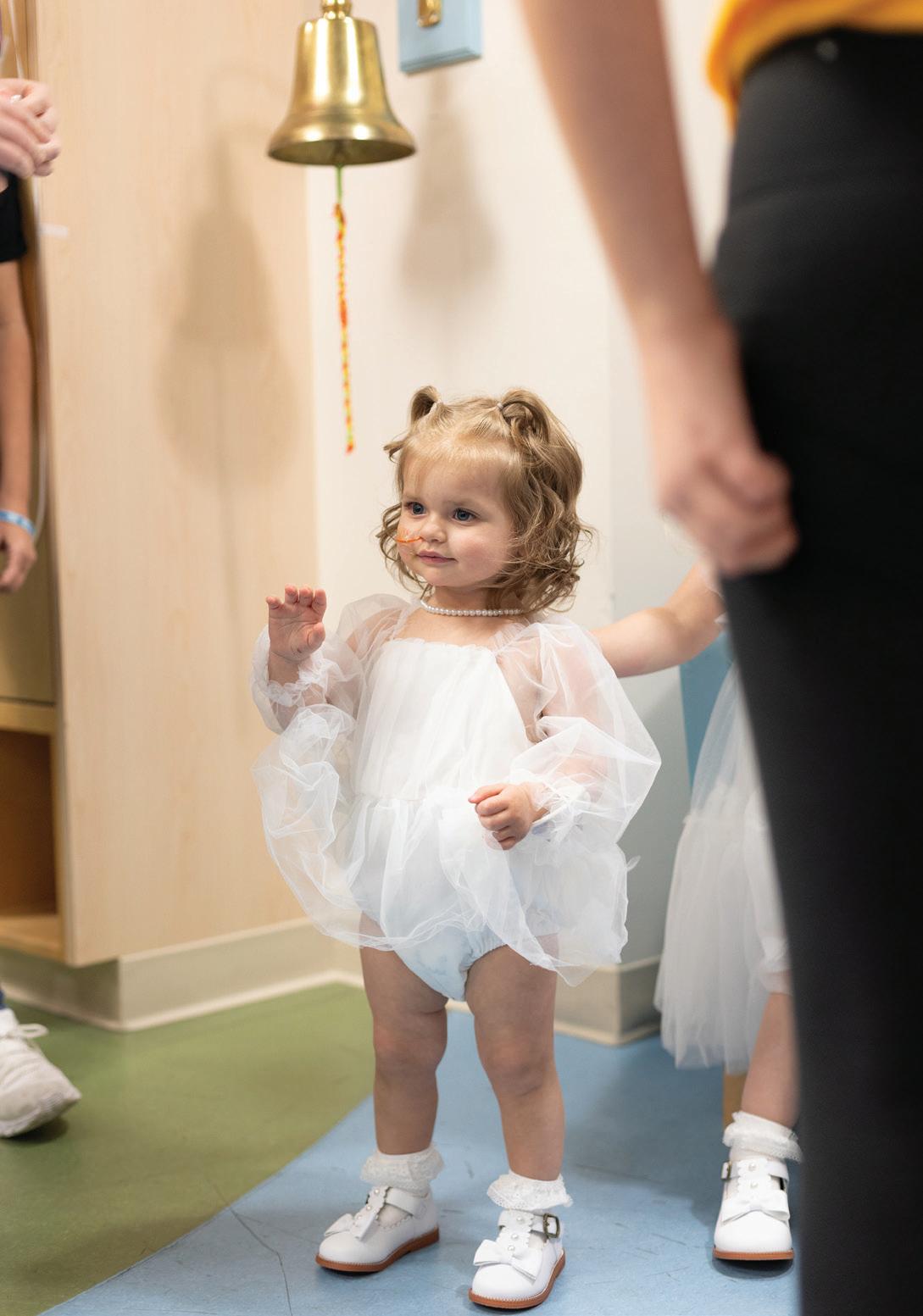
For patients, the experience of “ringing the bell” signifies the completion of a tough medical journey and the start of the rest of their lives. For many months, no one knew if Clementine would get there. Her road to recovery was scary and challenging, but slowly, with the help of the team at St. Louis Children’s, she fought through every obstacle. On November 7, 2024, Clementine was ready to ring the bell. Her bone marrow transplant was successful, and they could go home after more than a year living in St. Louis.
The family continues to travel from Pittsburgh to St. Louis every two months to monitor Clementine’s recovery, an important step so she can live a long and disease-free life. From an “impossible” diagnosis to ringing the bell, Clementine has defied every odd in her path. She’s proof that world-class care, groundbreaking research, and donor generosity come together to create miracles. Clementine is living proof that hope lives here.
Scan the QR Code to meet Clementine and watch her journey from diagnosis through treatment.
A Legacy of Light for Four Decades
Lifelong love for children turns pain from losing a child to purpose
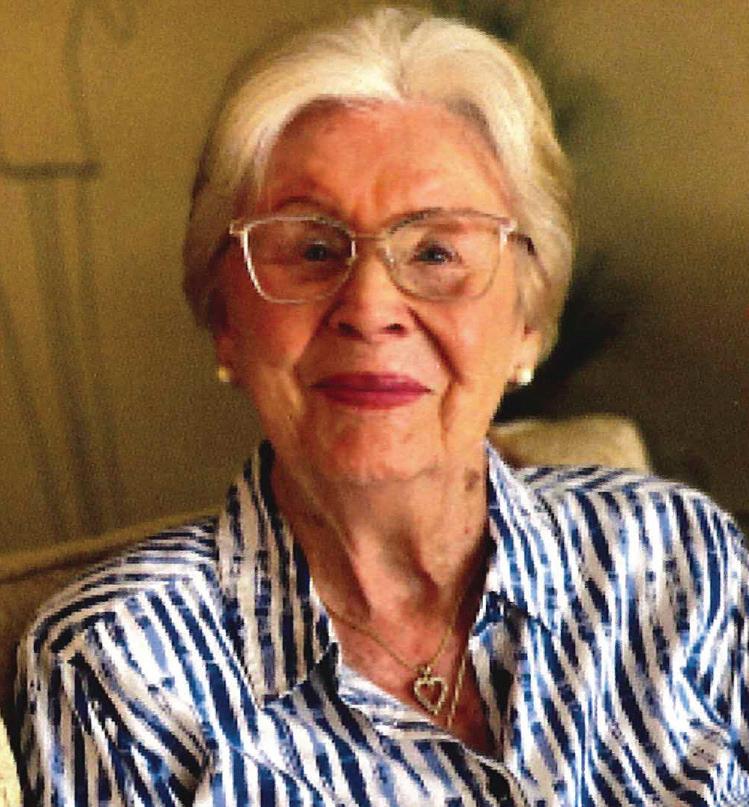
When Jenny Wood and her husband moved to St. Louis to raise their family, she never imagined that one day she would leave behind a legacy shining brightly each winter. And when the 98-year-old thinks of the fondest memories in her life, she attributes many of them to St. Louis Children’s Hospital. Born in Indiana, she and her husband, Woody, moved to St. Louis and raised their two children, Steven and Patricia. Unfortunately, Steven passed away at the age of 22. Her son loved helping other kids, and after losing him, Jenny said she knew she had to do something for children. His passing prompted Jenny to get involved with St. Louis Children’s Hospital Auxiliary.
Her first volunteer role was in the gift shop, but she quickly learned she was better suited for patient-family interactions in the various hospital clinics. Jenny loved getting to know the kids and the families and wanted to do something spectacular. Her involvement soon grew into a leadership role, and she approached the Auxiliary’s Board of Directors to pitch an idea for a holiday light festival and was initially turned down. She persevered and presented the idea a second time the following year, when she was granted permission to proceed.
In 1983, Love Light was brought to life. Woody’s company sent a cherry picker and crew to help hang lights outside the hospital. He also asked the hospital staff to create a giant switch for the lighting ceremony—the same switch still used to light up the hospital 43 years later. Jenny called in every favor she could that first year to make the event a success, including reaching out to a friend at a local TV station to spread the word to local musicians who could perform free of charge. Love Light became a cherished holiday tradition, and Jenny and Woody had truly created something magical for the St. Louis Children’s patients and families.
Even after Jenny and Woody moved to Florida, she stayed involved. A lifetime member of the Friends of St. Louis Children’s Hospital, she knew that leaving St. Louis didn’t mean walking away from a place that had given her so much joy. After much discussion, the Woods decided to commit a charitable bequest to the St. Louis Children’s Hospital Foundation that will establish the Jean and Maurice Wood Music Therapy Endowment. “I hope it does a little bit of good,” Jenny says about the gift she and Woody, who passed away in 2014, made to ensure they would leave a lasting impact beyond their lifetimes.
For Jenny, every time she thinks of St. Louis Children’s, her heart fills up. She encourages others to make a planned gift before it’s too late. “I hope people who get to know St. Louis Children’s will feel the same way that we did.” Jenny is grateful that Love Light and her time at St. Louis Children’s gave her purpose, and giving back is her way of saying thank you.
To help more patients and their families with a planned gift, visit StLouisChildrensLegacy.org
A Hallway of Hope
Shining a light on the generosity and innovation that power world-class pediatric care at St. Louis Children’s Hospital
At St. Louis Children’s Hospital, every hallway holds many stories. These intense journeys of courage, compassion, and unselfishness are part of what distinguishes the expert care patients receive daily. Now, a new Donor Recognition Hall brings those stories to life in a vibrant, interactive space. Donors are instrumental in empowering St. Louis Children’s Hospital to fulfill its commitment to improving the health and well-being of children in the community and beyond. The Donor Recognition Hall celebrates the generous gifts that allow the investment in cutting-edge medical technologies, support and expand vital community programs, and offer patients world-class care.
Inspired by parks and the outdoors, and featuring iconic St. Louis elements, the Donor Recognition Hall is a place of wonder and welcome for patient families and visitors. Overhead LED sky panels change with the time of day, while children explore an interactive alcove highlighting the St. Louis community. Large video panels share moving imagery of the Olson Family Garden. The Donor Recognition Hall celebrates the support received from many types of donors, including those who make annual and planned gifts, corporate partners, community groups, and those whose cumulative giving totals $1 million and greater. Donor, patient, and caregiver stories highlight the many remarkable people who are part of the St. Louis Children’s Hospital community.
The Donor Recognition Hall is more than a space. It is a reflection of gratitude, innovation, and partnership that celebrates the generosity that ensures that St. Louis Children’s Hospital can fulfill its mission to do what’s right for kids. Families passing through the space at St. Louis Children’s will see and feel the community standing beside them, where generosity creates a space of healing discovery.
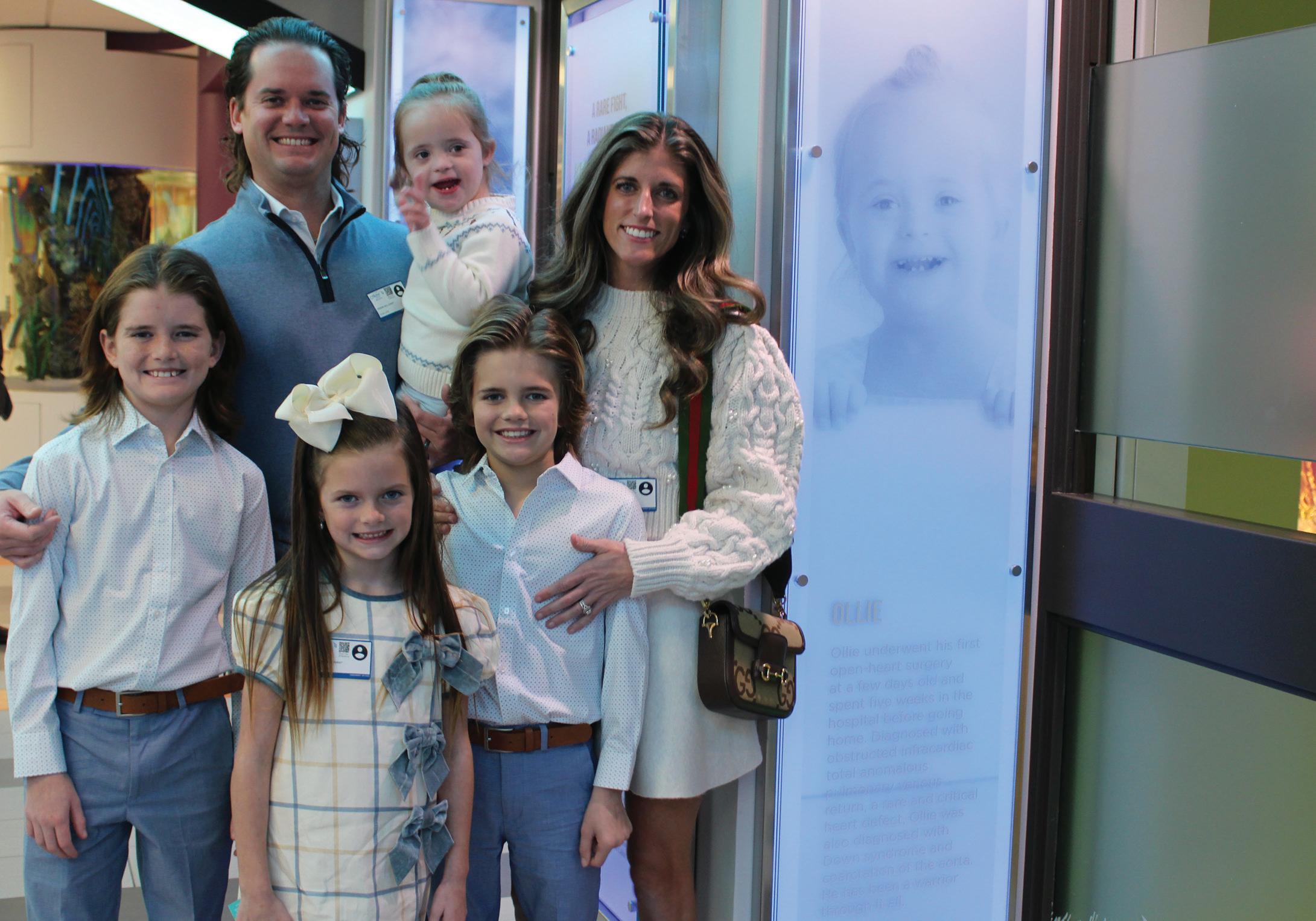
Patient Ollie and his family, who are generous donors, attended the event to see Ollie’s story in the new Donor Recognition Hall.
Board Member Q&A
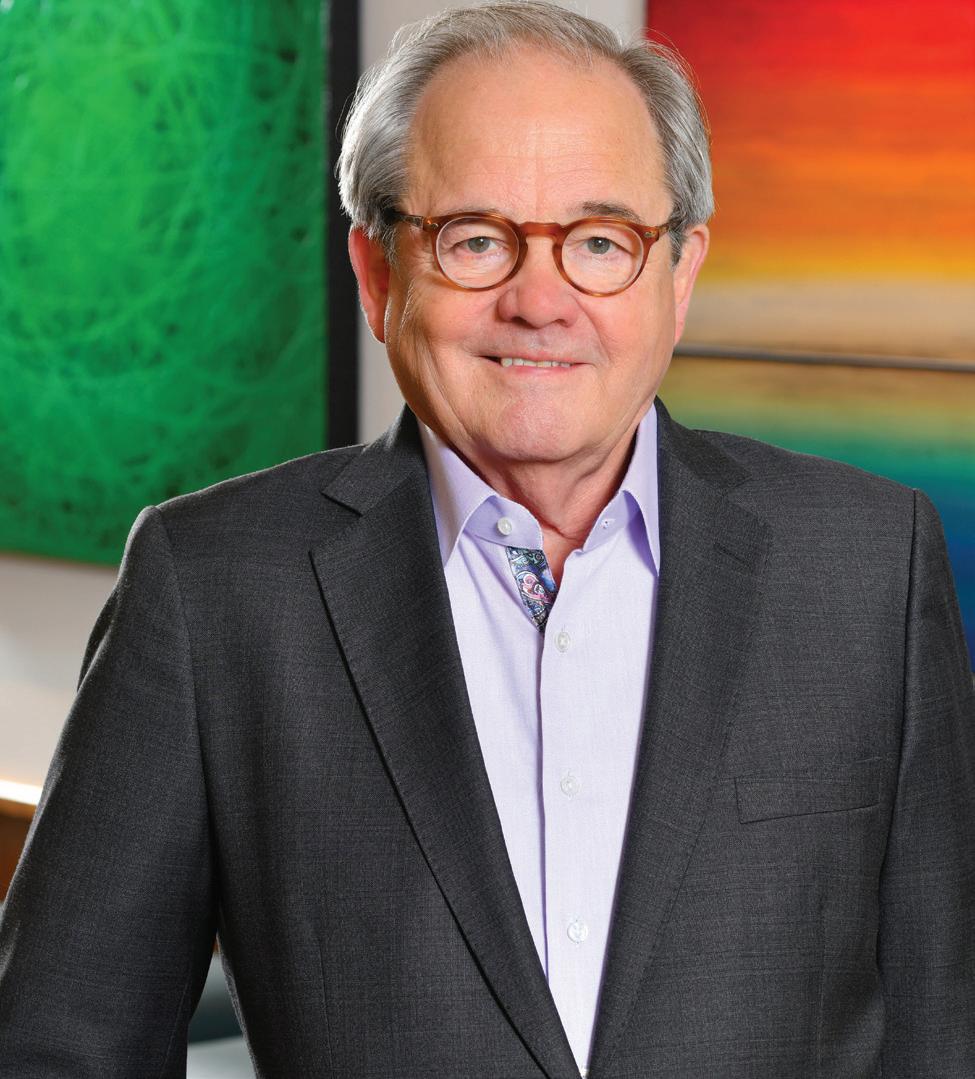
Dale Cammon, company chairman of Cammon Company, joined the board in 1993, the same year the Foundation began.
Q: Why did you say yes to joining the Foundation Board?
A: Then-St. Louis Children’s Hospital President Alan Brass and I brainstormed about the formation of the Foundation for about two years before it came into existence. So having helped to conceive and birth the baby, there was no going back relative to serving on the Foundation Board.
Q: How do your values and passions align with the Foundation?
A: We represent “Foundational” support for an institution that sits at the very top of its peers around the world. At best, there are less than a handful of institutions in St. Louis that can make the same boast in terms of being best in the world. To be here in the simple, flyover, modest Midwest and yet sit on top of the world as we support the work at St. Louis Children’s Hospital is very inspiring and gratifying. Individually, in our respective endeavors, we as board members all strive to be the best at what we do. So when as Foundation Board members we bring that collective mindset to our work for the Foundation, there is no limit to what we can accomplish. And what we do accomplish not only benefits kids in St. Louis but also benefits kids around the world.
Q: What inspires you as a Board member?
A: In the last 32 years, no one person or institution has done more to ENVISION, EMPOWER, AND EXECUTE the mission of St. Louis Children’s Hospital to do what’s right for kids than the Foundation. I do not see that changing in the next 30 years.
Q: What do you love about St. Louis?
A: Despite many flaws and shortcomings, St. Louis remains an incredible place to raise a family and eat great food! And one of the world’s great zoos is FREE! Two of our daughters who spent a decade or more in Colorado returned to St. Louis to raise their families.
Q: What has impressed you or surprised you most about the
Foundation?
A: I don’t think I have ever been surprised by the accomplishments of the Foundation—The Children’s Discovery Institute, Healthy Kids Express, Joe Buck Imaging Center, and the entryway from the parking garage, to name a few—that have been brought about by my dedicated colleagues on the Foundation over the years.
When we started 30+ years ago, we had $25 million when our peers like Boston Children’s, Children’s Hospital of Philadelphia, and Seattle Children’s had a BILLION dollars. While we still pale in numbers by comparison to them, we have a half BILLION dollars in assets, and we have delivered more than a BILLION dollars to various aspects of the St. Louis Children’s mission. I am impressed with that track record.
Q: What would people be surprised to know about you?
A: My nerdy hobby of rock polishing or rock tumbling. You can take a very ordinary, even ugly-looking rock, and after days of been banged against other rocks and tumbled over and over in grit, out comes a beautiful gem. Not a bad life lesson. Hard knocks and grit can become polish for all of us.
The Table Is Set for the Last Time—But
the
Impact
Lives On
Childhood-themed finale charms guests at last Table Tops Spring Event
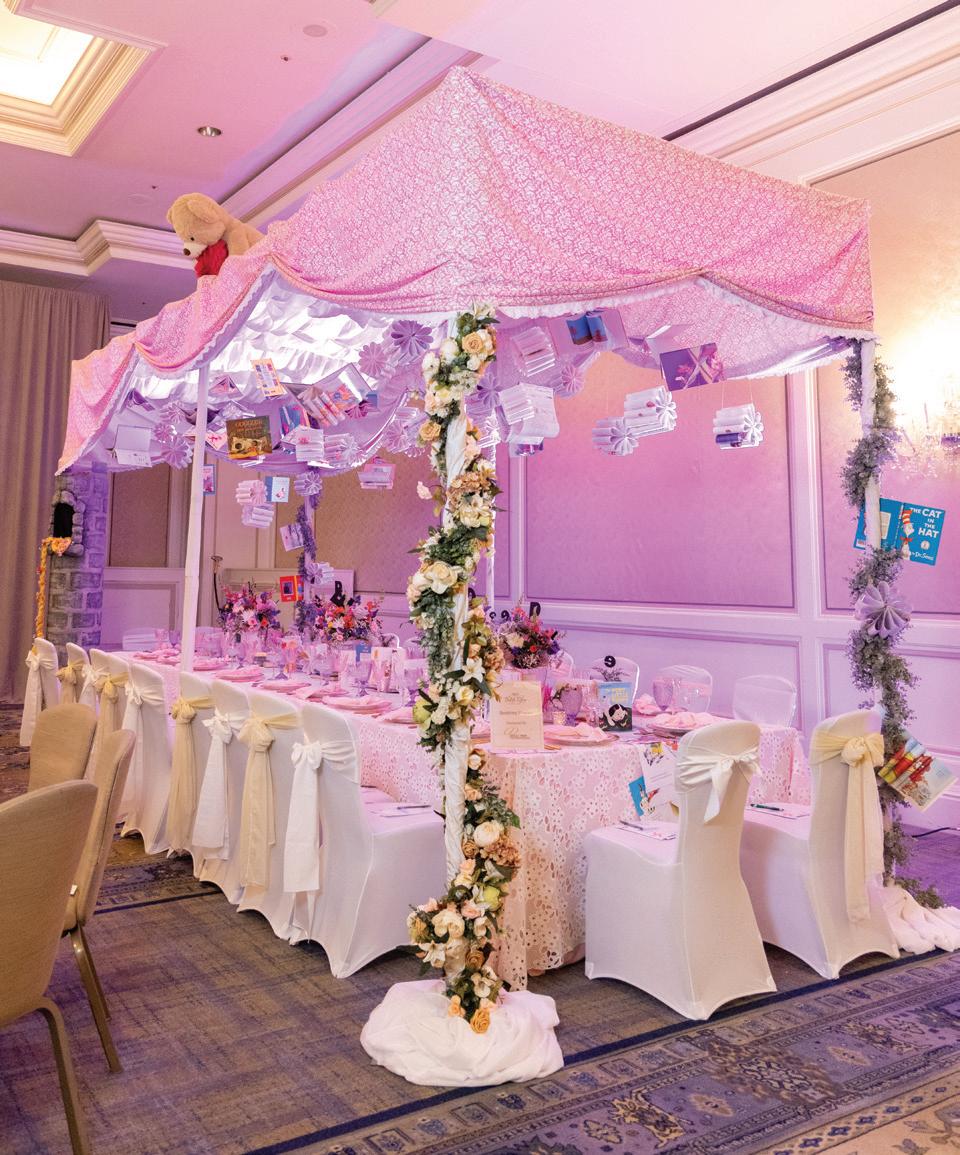
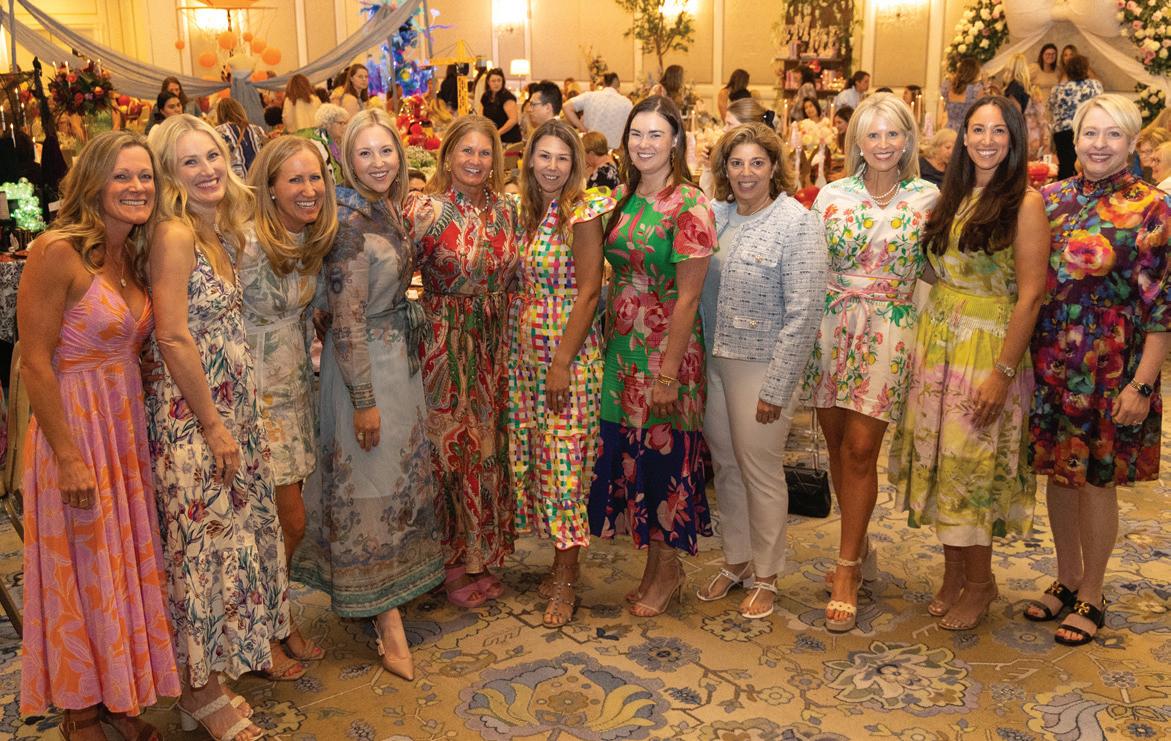
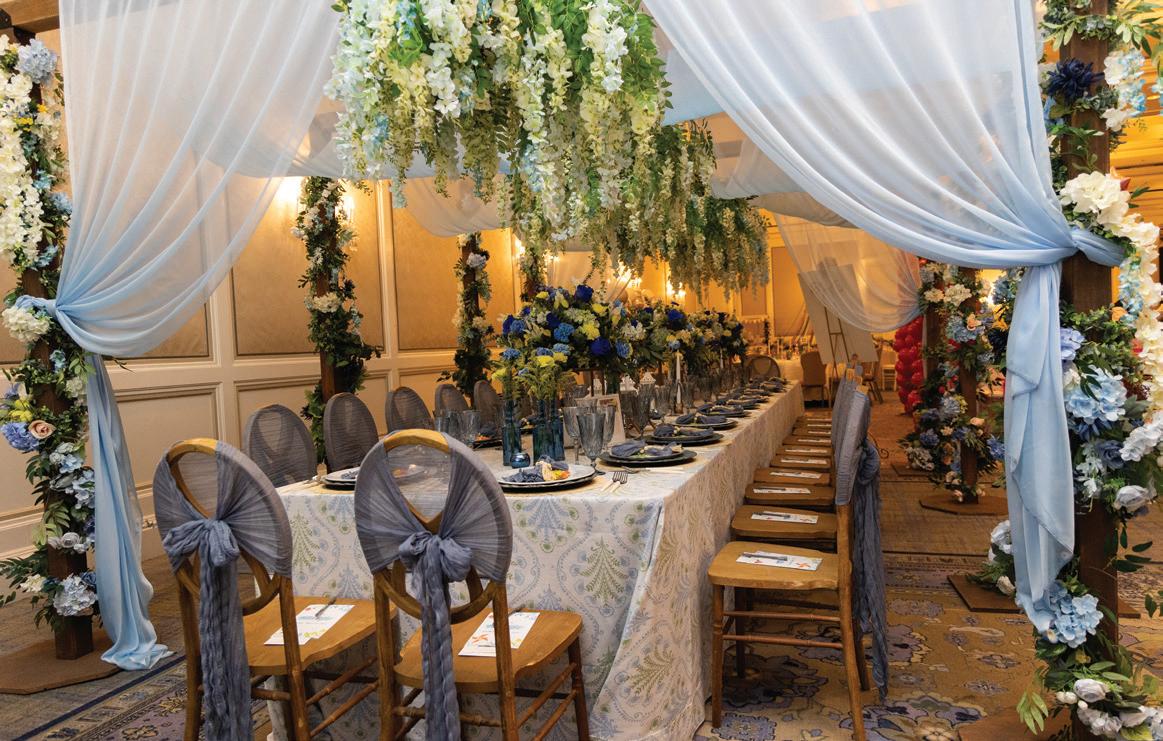
Each year, guests enjoyed strolling through the ballroom admiring the elaborate and detailed table designs.
For the past 22 years, supporters of St. Louis Children’s Hospital have flocked to the Ritz-Carlton, St. Louis for the beloved Table Tops Spring Event. The one-of-a-kind event treats attendees to cocktails and boutique shopping before moving into the ballroom to view gorgeous tablescapes created by local florists, event designers, and storefronts. In 2025, the event took its final bow—and delivered a farewell as unforgettable as its legacy.
Each year’s theme brought excitement, and storybooks, fairytales, and children’s songs have all been featured. In 2025, the theme was childhood, and designers were inspired to create their displays influenced by the St. Louis Children’s Champions
favorite things. Harry Potter, Paris, and the Golden State Warriors graced tables this year along with countless flowers, candles, and balloons. The event sold out as past guests came from across the country to celebrate the end of an era and give Table Tops the sendoff it deserved.
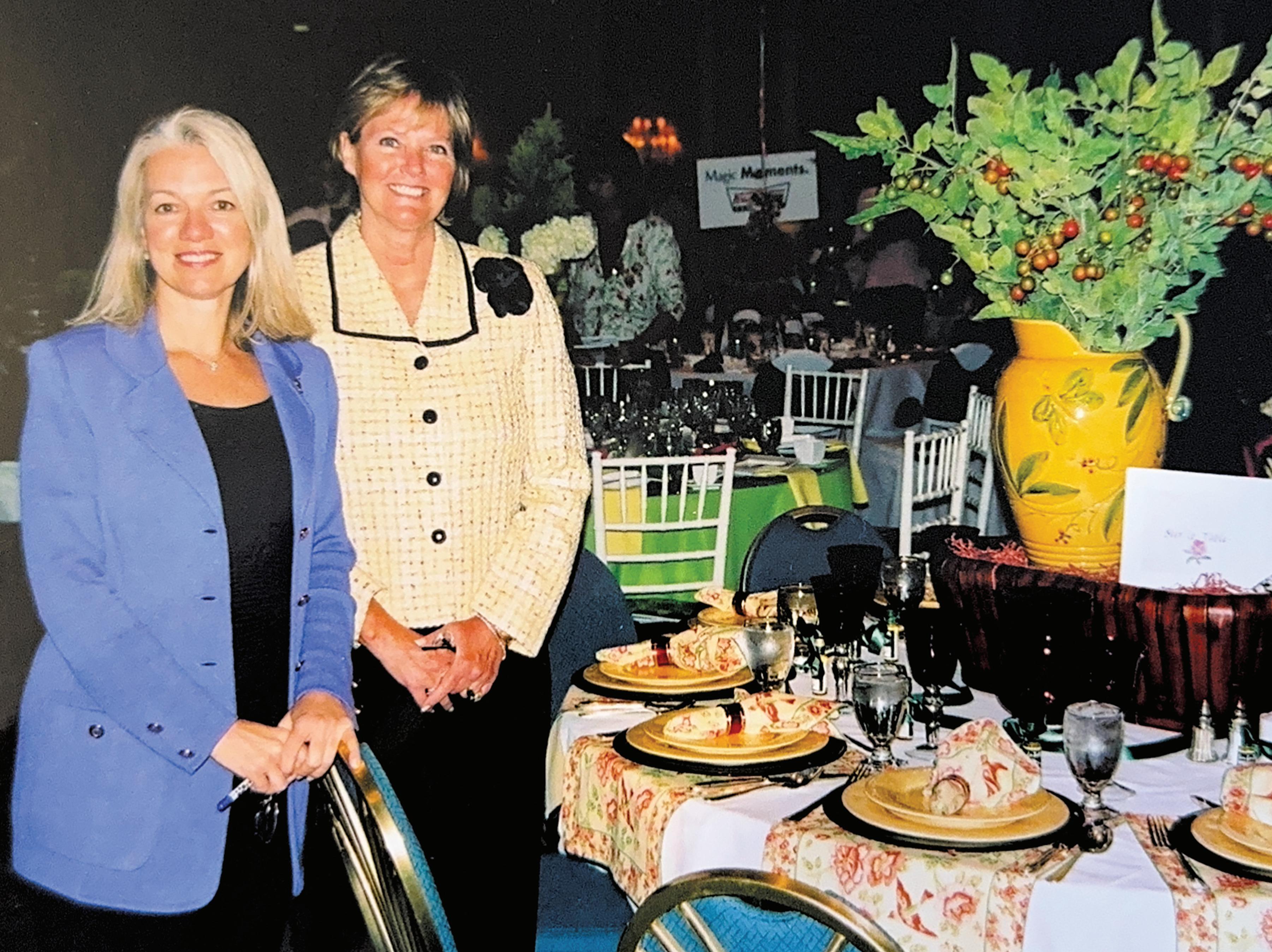
Founded by Sally Ledbetter and Kathy Pope and carried forward by the Friends of St. Louis Children’s Hospital, the event raised $2.6 million for St. Louis Children’s Hospital over its 22 years. More than 5,300 guests attended during its remarkable run. Thanks to the time, talent, and generosity of Table Tops supporters, vital programs and family-centered services continue to thrive and give even the sickest kids the chance to be kids.
To be one of the first to learn about Foundation happenings, make sure to sign up for our emails at StLouisChildrens.org/Sign-up-Newsletters or scan the QR Code.