2026 Summer Reading | One-Pager Project Saint Joseph Academy English Language Arts Department | 7 th through 12 th grade
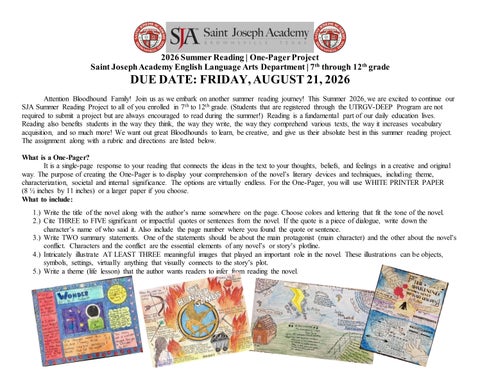
DUE DATE: FRIDAY, AUGUST 21, 2026 Attention Bloodhound Family! Join us as we embark on another summer reading journey! This Summer 2026, we are excited to continue our SJA Summer Reading Project to all of you enrolled in 7th to 12th grade. (Students that are registered through the UTRGV-DEEP Program are not required to submit a project but are always encouraged to read during the summer!) Reading is a fundamental part of our daily education lives. Reading also benefits students in the way they think, the way they write, the way they comprehend various texts, the way it increases vocabulary acquisition, and so much more! We want out great Bloodhounds to learn, be creative, and give us their absolute best in this summer reading project. The assignment along with a rubric and directions are listed below. What is a One-Pager? It is a single-page response to your reading that connects the ideas in the text to your thoughts, beliefs, and feelings in a creative and original way. The purpose of creating the One-Pager is to display your comprehension of the novel’s literary devices and techniques, including theme, characterization, societal and internal significance. The options are virtually endless. For the One-Pager, you will use WHITE PRINTER PAPER (8 ½ inches by 11 inches) or a larger paper if you choose. What to include: 1.) Write the title of the novel along with the author’s name somewhere on the page. Choose colors and lettering that fit the tone of the novel. 2.) Cite THREE to FIVE significant or impactful quotes or sentences from the novel. If the quote is a piece of dialogue, write down the character’s name of who said it. Also include the page number where you found the quote or sentence. 3.) Write TWO summary statements. One of the statements should be about the main protagonist (main character) and the other about the novel’s conflict. Characters and the conflict are the essential elements of any novel’s or story’s plotline. 4.) Intricately illustrate AT LEAST THREE meaningful images that played an important role in the novel. These illustrations can be objects, symbols, settings, virtually anything that visually connects to the story’s plot. 5.) Write a theme (life lesson) that the author wants readers to infer from reading the novel.