
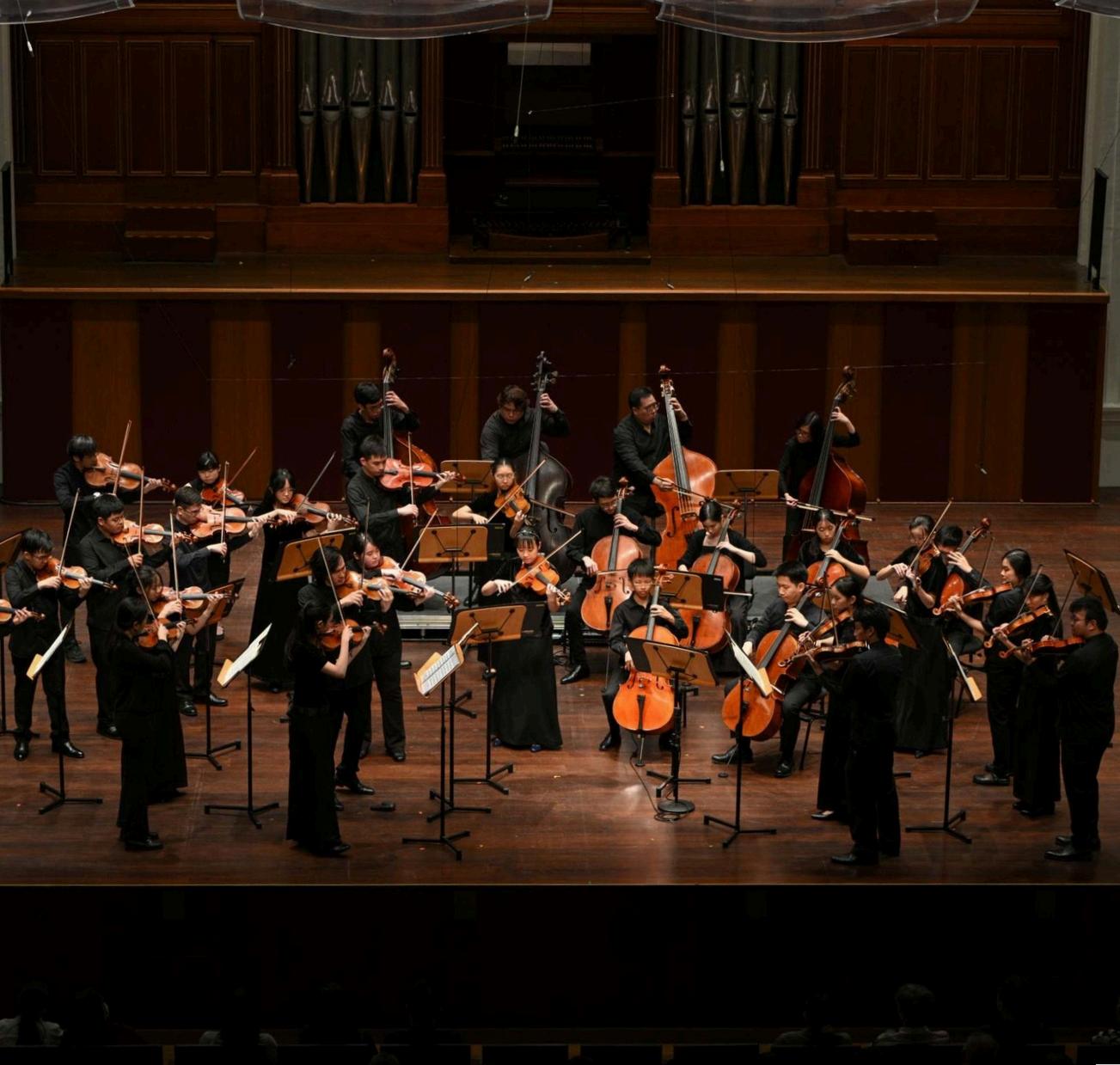
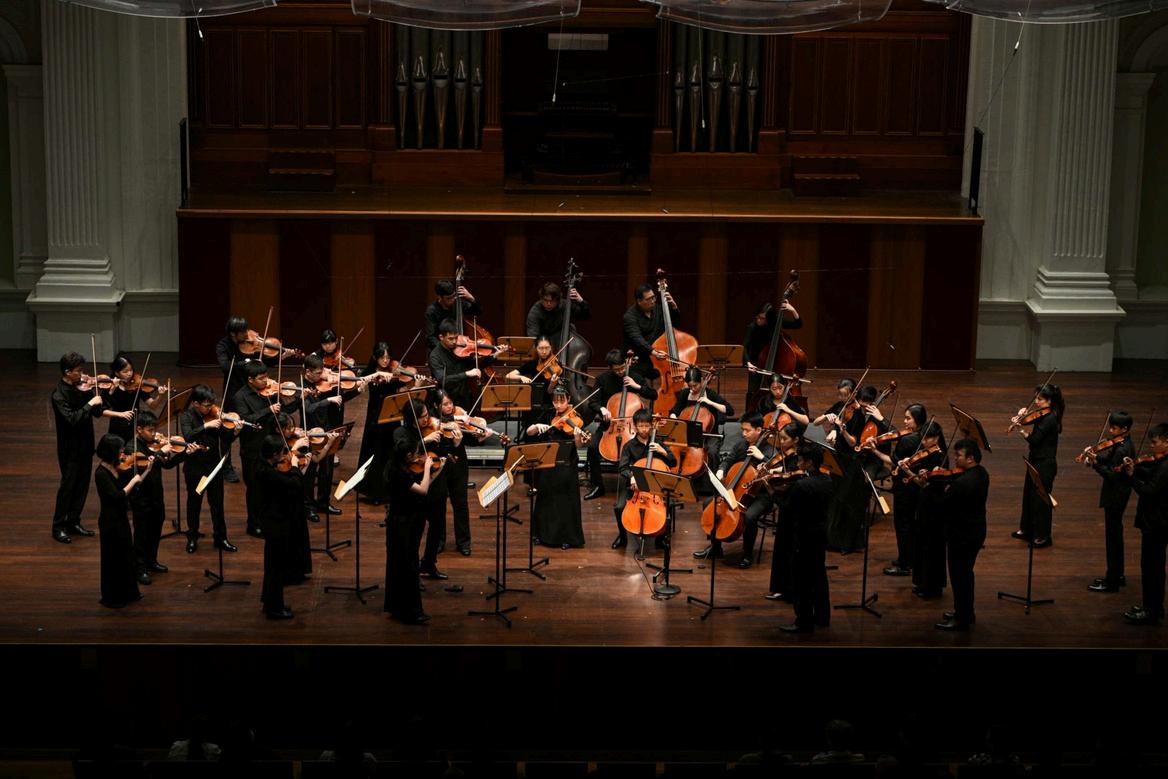
Over the past three years, we have been privileged to have ten brilliant young musicians perform as soloists, and over 60 young musicians play “side-by-side” with our chamber orchestra musicians.
This year, for the side-by-side segments, we are stretching young musicians with a complete symphony, with parts for winds, in Schubert's effervescent Symphony No. 5. We are also delighted to welcome Cathy Chen Xi as soloist, who won her age category at the 2025 Hengqin International Mozart Competition.
Performing without a conductor is a special experience for the young musicians. It requires exceptional alertness and attention, with personal “ownership” of their parts from all involved.
Resound Collective is grateful for the on-going support of the Singapore National Youth Orchestra, which helps to make this experience av each year to SNYO and non-SNYO mu
Mervin Beng Founder / Chairman Resound Collective Limited
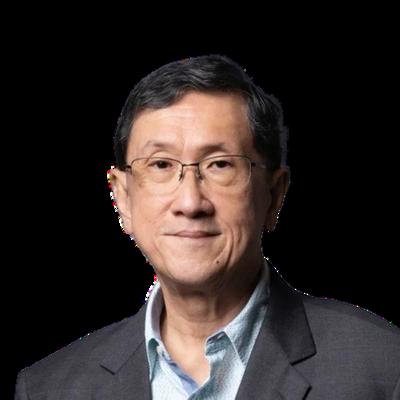
It is my pleasure to welcome you to Prodigious 2026! Now in its third edition, this very special partnership between SNYO and Resound Collective has become an important platform that challenges and inspires young musicians, and I am truly heartened to witness their remarkable growth.
What makes this project unique is the opportunity for SNYO musicians to play side-by-side with Resound Collective members. This format, along with performing without a conductor, gives them firsthand insight into professional standards, helping them refine their musical instincts and confidence. It also encourages deeper musical ownership, heightened listening, and a more profound engagement with the score and ensemble. These are invaluable skills that shape not only stronger performers but also more thoughtful and responsive musicians.
We also warmly welcome the non-SNYO musicians joining us for this project! We hope this shared experience will be fruitful for all, fostering a spirit of collaborative music-making that extends well beyond the concert.
This year, we are particularly proud to celebrate one of SNYO’s very own, Cathy Chen Xi, as a featured soloist. It is incredibly moving for us to see our musicians shine on this platform, and we are delighted to support her in this milestone.
We are very appreciative of Resound Collective for their continued partnership in nurturing the next generation of musicians. This collaboration strongly supports SNYO’s mission of developing young talent by providing meaningful, high-level performance experiences that inspire artistic growth, resilience, and a lifelong passion for music.
On behalf of SNYO and the wider Singapore Symphony Group, I extend my warmest congratulations to all performers and wish you a joyful concert ex
Kenneth K CEO Singapore
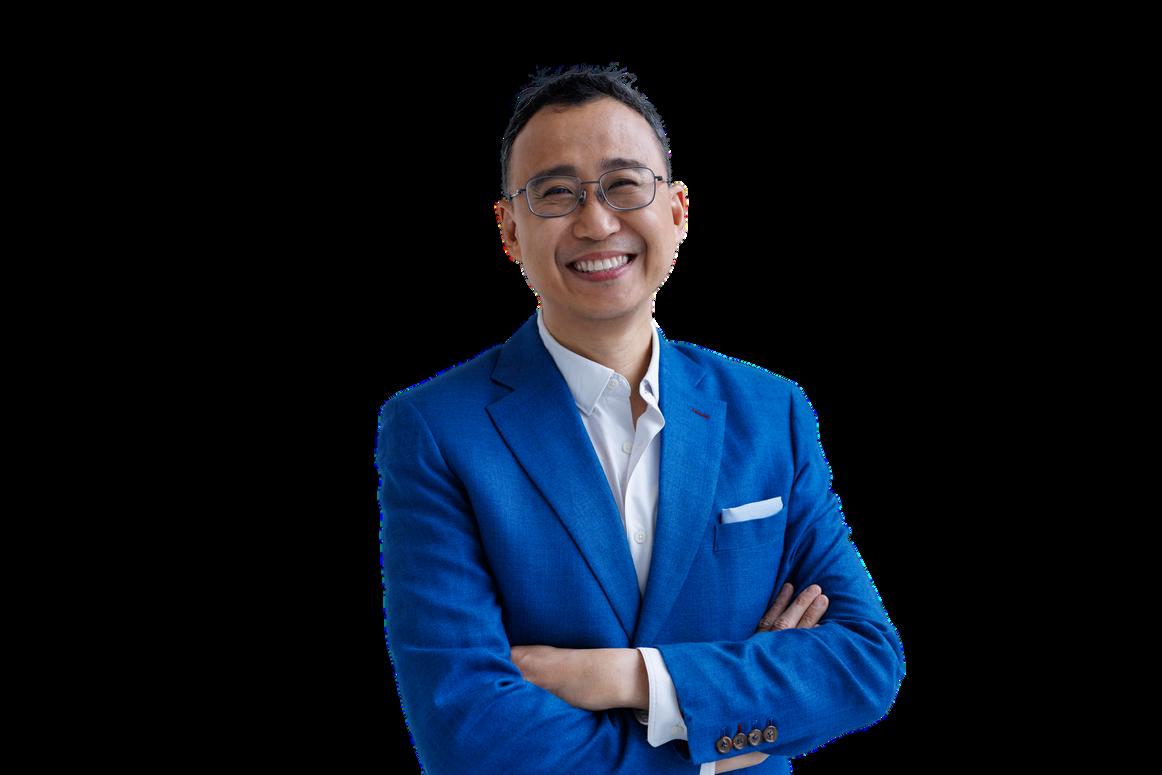
The Prodigious concert series, started in 2024, aims to showcase exceptionally talented Singaporeans and give them the opportunity of playing solo with re:Sound, without a conductor. This was later expanded to include a “side-byside” component, where young musicians sit with re:Sound musicians to experience the focus, commitment and satisfaction that comes from rehearsing and performing in a conductorless chamber orchestra.

Orawa
Violin Concerto No. 4, K. 218
I. Allegro
II. Andante cantabile
III. Rondeau: Andante Grazioso
Intermission
Symphony No. 5 in B-flat major, D. 485
I. Allegro
II. Andante con moto
III. Menuetto. Allegro molto
IV. Finale. Allegro vivace
Programme duration105 min (incl. 20 min intermission)
“Orawa is the only piece in whic I wouldn’t change a single note, though I have looked at it many times... What is achieved in it is what I strive for - to be the best possible Kilar.”
- Wojciech Kilar
(1932-2013)

Even if you may not recognise the name of Polish composer Wojciech Kilar(1932-2013), you might have heard his music in Hollywood films The Pianist, City of Angels and Bram Stoker’s Dracula.
When not writing for films, Kilar’s music often celebrates the landscape and heritage of Poland. His music blends the traditional and the experimental, and he is known as one of Poland’s founding members of the avant-garde music scene.
For Kilar, who had a difficult early life due to the Second World War and later the martial law imposed in Poland, he sought refuge in God and nature, particularly the Monastery of Jasna Góra and in the Tatra mountains.
He often climbed the peaks of Kościelec and Czerwone Wierchy, and immersed himself in the music of the Goral (Podhale highlander) bands. The mountain landscape, the emotions aroused by contact with the mountains, the folklore, as well as the soundscapes he experienced inspired him to write four symphonic works that would later come to be known as the ‘Tatra Suite’.
Completed in 1986, Orawa is the final work of the Tatra Suite and was originally written for 15 strings. The name “Orawa” is a mountainous region in Carpathian region of the Polish-Slovak border, and in the composition, Kilar references the rhythms and melodies of traditional Podhale music.
The music is somewhat written in the style of minimalism, with different textures, timbres and changing dynamics written over underlying repeated melodic and rhythmic patterns. Orawa is Kilar’s most famous work; and due to its popularity, different arrangements of it exist, including one for string orchestra which will be performed at tonight’s concert.
Notes by Natalie Ng (c) 2026
(1756-1791)
I. Allegro
II. Andante cantabile
III. Rondeau: Andante Grazioso
In 1756 Leopold Mozart had two babies: the publication of his violin treatise, and his son, Wolfgang Amadeus Mozart. Mozart was about seven years old in 1763 when he attempted (quite successfully) to play the second violin part in a string quartet, without having learnt the violin at all. A month later, he was performing on both the violin and harpsichord in the Salzburg court.
Throughout the 1770s, Mozart appeared as violin soloist in various cities in Germany, even writing in a letter to his father that he ‘played as if i were the greatest fiddler in all of Europe.” Leopold Mozart wrote back, pointing out that ‘many people do not even know that you play the violin, since you have been known from childhood as a keyboard player”. Shortly after, Mozart gave up the violin in favour of the keyboard, and picked up the viola for playing chamber music - perhaps to spite his father.
His five violin concertos were written during the mid-1770s, pre-dating his first significant piano concerto (K. 271). Although written within a short span of a few years, Mozart’s compositional maturity can be traced throughout the five concertos. The Fourth opens with a trumpet-like fanfare theme from the orchestra in unison; and the strings answer with a whimsical little tune. When the solo violin enters, it takes the main theme and plays it in a high register, almost in mockery of it. It then continues to elaborate on the various themes, remaining elegant and graceful in its lines.
The second movement, as most Mozartian second movements go, is melodious and reflective, repeating the theme without a development section in the middle. The finale seems to have a split personality: the first is a well-mannered dance, and the second an energetic jig. Rapid passagework and double-stops co-exist, the ‘drone’ of the soloist’s lowest string meant to represent the sound of a hand-cranked hurdygurdy. Both themes are finally juxtaposed, showing off Mozart’s compositional genius in combining seemingly disparate themes: or perhaps, they were not so different to begin with.
Notes by Natalie Ng (c) 2026
I. Allegro
II. Andante con moto
III. Menuetto. Allegro molto
IV. Finale. Allegro vivace (1797-1828)
“As from afar the magic notes of Mozart’s music still gently haunt me…Thus does our soul retain these fair impressions, which no time, no circumstances can efface, and they lighten our existence. They show us in the darkness of this life a bright, clear, lovely distance, for which we hope with confidence. O Mozart, immortal Mozart, how many, oh how endlessly many such comforting perceptions of a brighter and better life hast thou brought to our souls!”
At the time of writing this in his diary in June 1816, Schubert was 19, and had dropped out of school three years earlier to focus on music, and had to teach to earn his keep. Mozart had been dead for 25 years, but his music was still and young composers aspired to write like him: following the rules, but keeping the music fresh and unexpected.
Beethoven had already composed eight of his symphonies by then, but it would be a while more before Schubert appreciated the genius of Beethoven.
Schubert had made the acquaintance of the Austrian poet and actor Franz von Schober just the year before, and Schober had introduced Schubert to influential people as well as provided lodgings for Schubert so he could focus on his music and not have to teach. After moving into Schober’s residence, Schubert stopped teaching entirely.
Many compare Schubert’s Fifth Symphony with Mozart’s 40th - both share the same instrumentation, omitting clarinets, timpani and trumpets from the scoring. In a departure from the style of his earlier symphonies, Schubert begins the symphony with an Allegro instead of a slower tempo.
The music mirrors Mozart’s 40th: energetic and charmingly effervescent, in the typical Classical style. The Andante con moto which follows is lilting, and we see the quintessential Schubertian trait of smoothly modulating to distant keys.
The Menuetto third movement begins in G minor, and is contrasted with a waltz-like trio in G major. One might notice some similarities with Mozart’s Minuet from his 40th Symphony, but Schubert puts his own spin on the music. Ending off the symphony is the brilliant Allegro vivace, which scurries by and doesn’t let up until the final cadence.
This symphony was premiered shortly after its composition in a private setting, but Schubert never got to hear this symphony publicly performed as it was only published 60 years after his death.
Notes by Natalie Ng (c) 2026
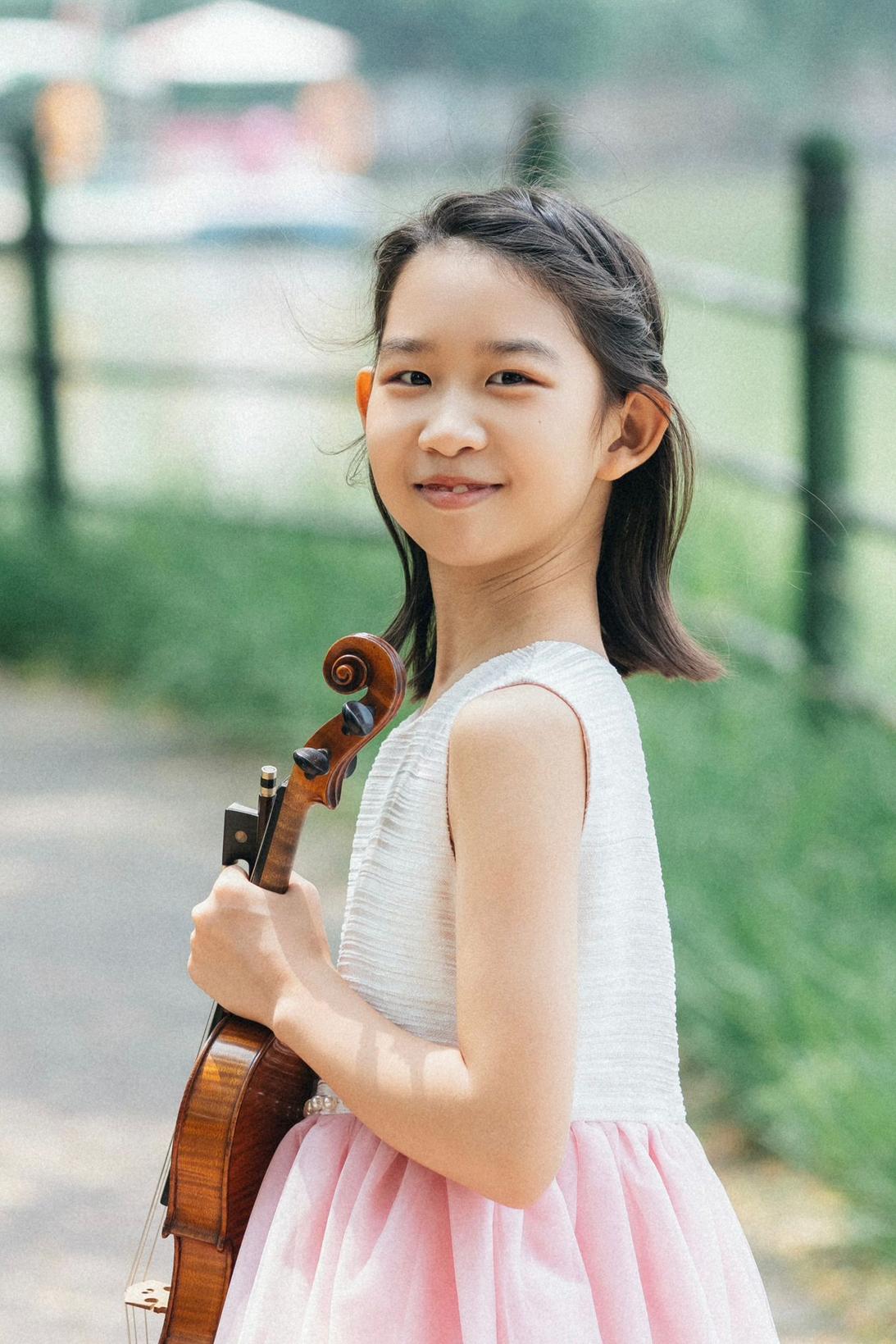
Cathy began her violin studies at the age of five at the Nanyang Academy of Fine Arts School of Young Talents under Ms. Ye Lin. Since then, she has developed into a young musician of notable promise, distinguished in both national and international competitions.
In 2025, she received First Prize (Violin Category A) d h Y J P i h H i
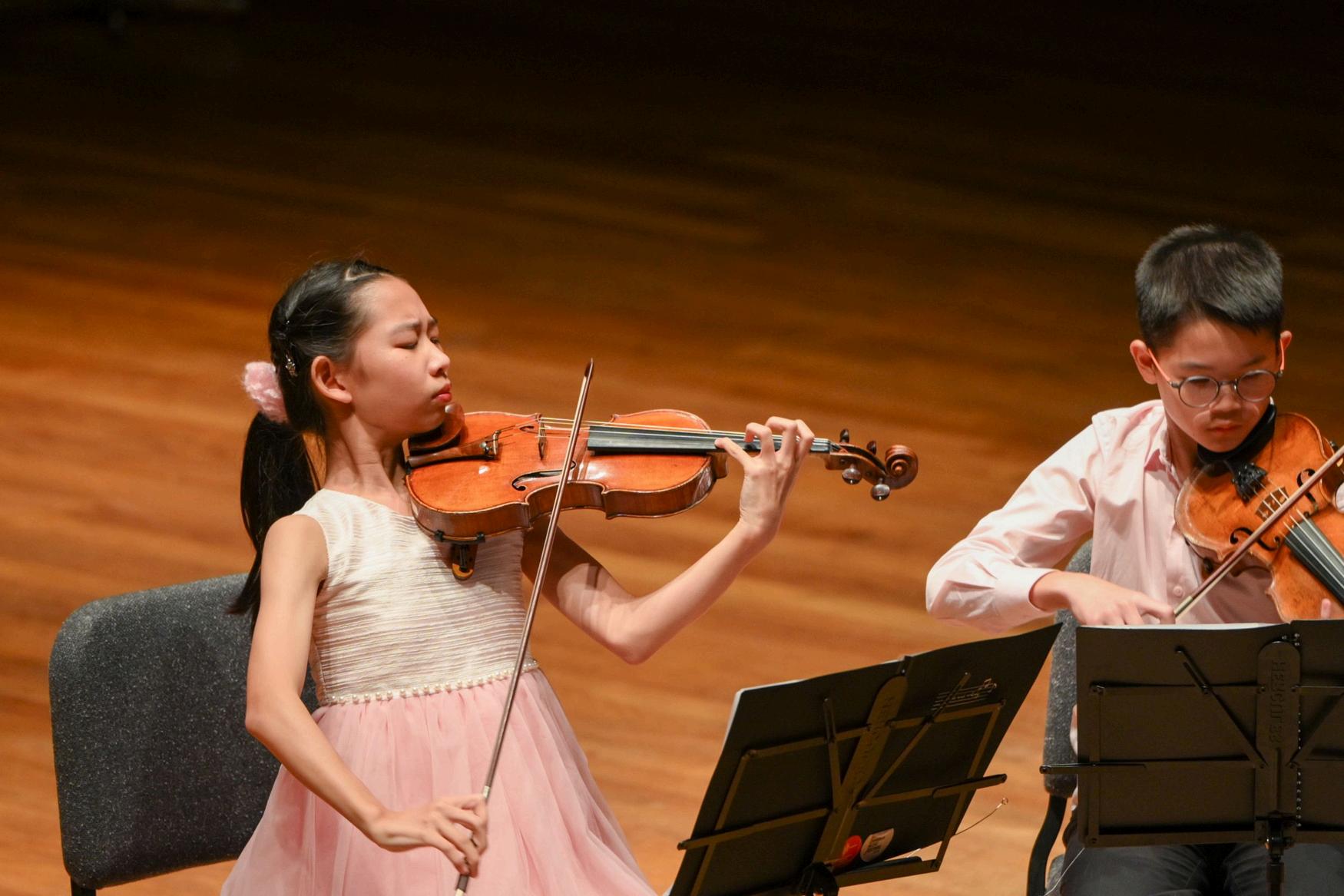
Her earlier achievements include prizes at the Arthur Grumiaux International Violin Competition (2023), the Singapore National Piano and Violin Competition (2023), and the Christopher & Rosy Ho Music Competition (2023).
As a soloist, she has appeared with the Salzburg Chamber Soloists at the Hengqin Mozart Competition, with the Accademia d’Archi Arrigoni at the Piccolo Violino Magico International Competition in Italy, as well as with local ensembles including the Singapore Youth Philharmonic Orchestra (SYPO) and the Kids Philharmonic Elite Soloist Ensemble.
Alongside her solo work, Cathy is an active orchestral and chamber musician. She was a member of SYPO until 2024 and is currently a member of the Singapore National Youth Orchestra (SNYO). She has also taken part in the Singapore Chamber Music Festival with friends recently.
Cathy performs on a 1746 Sanctus Seraphin violin generously loaned by Rin Collection, and uses Dynamo Solo strings provided by ThomastikInfeld.

Yang Shuxiang (Mozart, Schubert)
Kim Kyu Ri (Kilar)
VIOLIN
Allison Chng *
Alyssa Low *
Elliot Lim *
Flora Chen
Gerard Chia
Jeegy Tosakul
Jesper Tai *
Julia Sheu *
Komila Izatulloyeva
Lee En Yen (Joshua) *
Li Claire *
Lim Hao Wei
Lim Jing Rui *
Loh Wei Ken
Matthew Chiu *
Neville Ang
Ng Rui-Yi *
Rebecca Oh *
Richard Zhu *
Sarah-Anne Chan *
Tang Tee Tong
Tason Hang *
Ng Wei Ping
Yam Kai Yan, Hailey *
Yijing Leng *
VIOLIN SOLOIST (Mozart)
Cathy Chen Xi
VIOLA
Jonathan Lee #
Chang Zi Yi *
Chen Yuchen *
Eh Ywa *
Jeremy Chiew
Judy Tay
Kaden Khew *
Rachelle Amelia Tan *
Thantakorn Lakanasirorat
Yeo Jan Wea
CELLO
Lin Juan #
Cho Hang Oh
Grace Chee *
Ji Yuanjun *
Lloyd Loh *
Loh Hsiao Shan
Madeline Grace Sim *
Theophilus Tan
BASS
Chee Jun Hong #
Denzel Wong *
Dinah Hew
Kuek Jia Xin
Lee Yan Yu *
FLUTE
Rachel Ho #
OBOE
Alyssa Yam #
Leow Ruiqing
BASSOON
Kee Ruihan #
William Jiang *
HORN
Alan Kartik #
Amira Qistina *
Joey Aston
# Principal
* Side-by-Side musicians
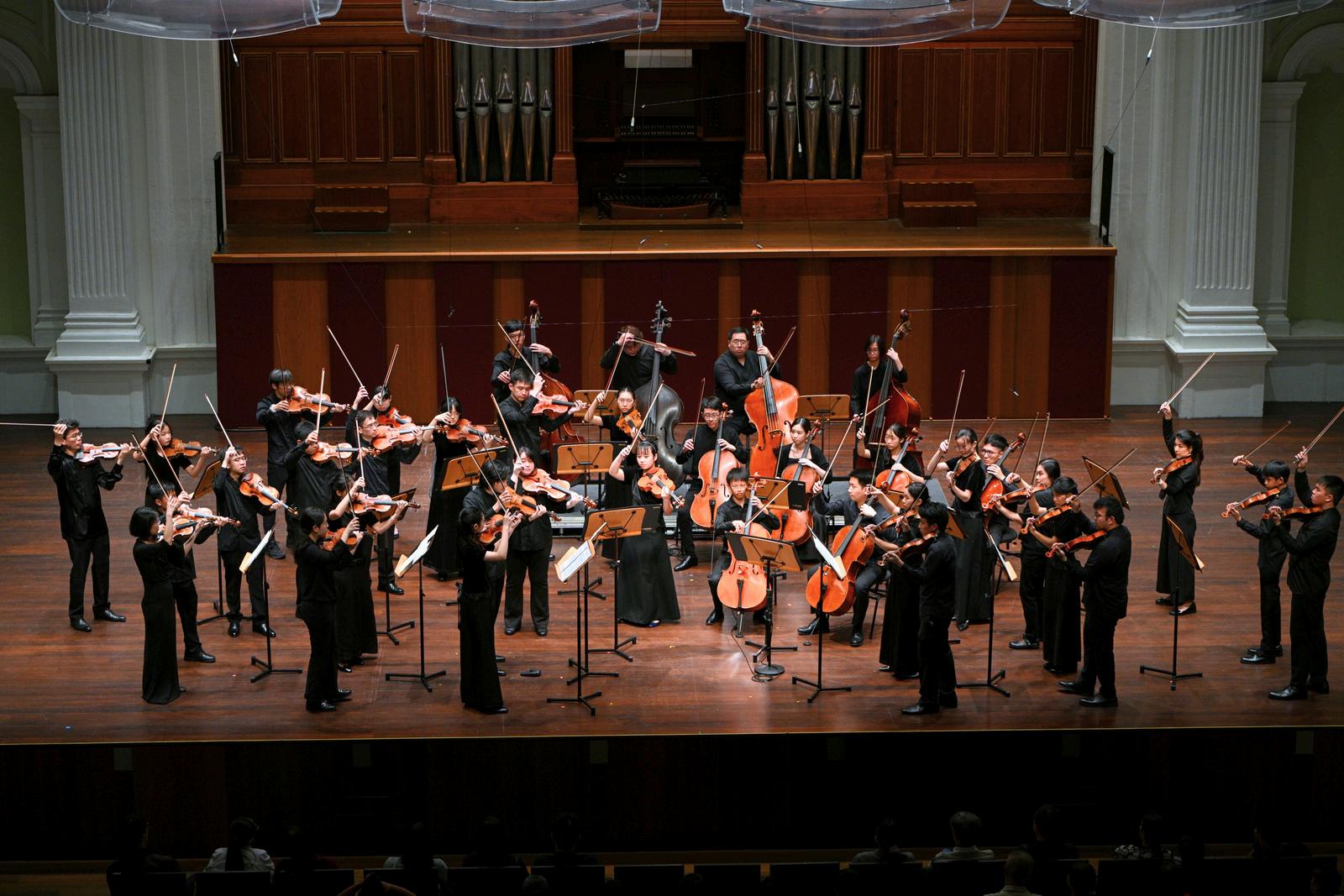
Resound Collective Limited is a Singapore-based musicians’ collective and registered charity that promotes music for small orchestra and chamber ensembles. The company organises re:Sound, the first professional chamber orchestra in the country, and the Concordia Quartet, which made its debut in February 2020.
Members of the collective are conservatory-trained music majors, most of whom have attained post-graduate training around the world. They are among Singapore’s most talented and dedicated musicians, who share the vision of enriching the classical music landscape by performing at the highest level.
Resound Collective Limited is a registered charity under the Charities Act, Singapore and has been accorded IPC (Institution of a Public Character) status from 16 August 2024 to 15 February 2027. Resound Collective Limited is supported by the National Arts Council, Singapore under its Major Company Grant scheme from 1 April 2025 to 31 March 2027.
Mervin Beng – Chairman
Dominic Heng – Vice-Chairman
Chan Yoong Han
Ching Kah Pick Lena
Daniel Heng
Lee Huei Min
Tan Beng Ti
Adrian Chiang
Kim Kyu Ri
Linda Kan
Natalie Ng
Olive Kan
Samantha Marie Chan
Yang Shuxiang
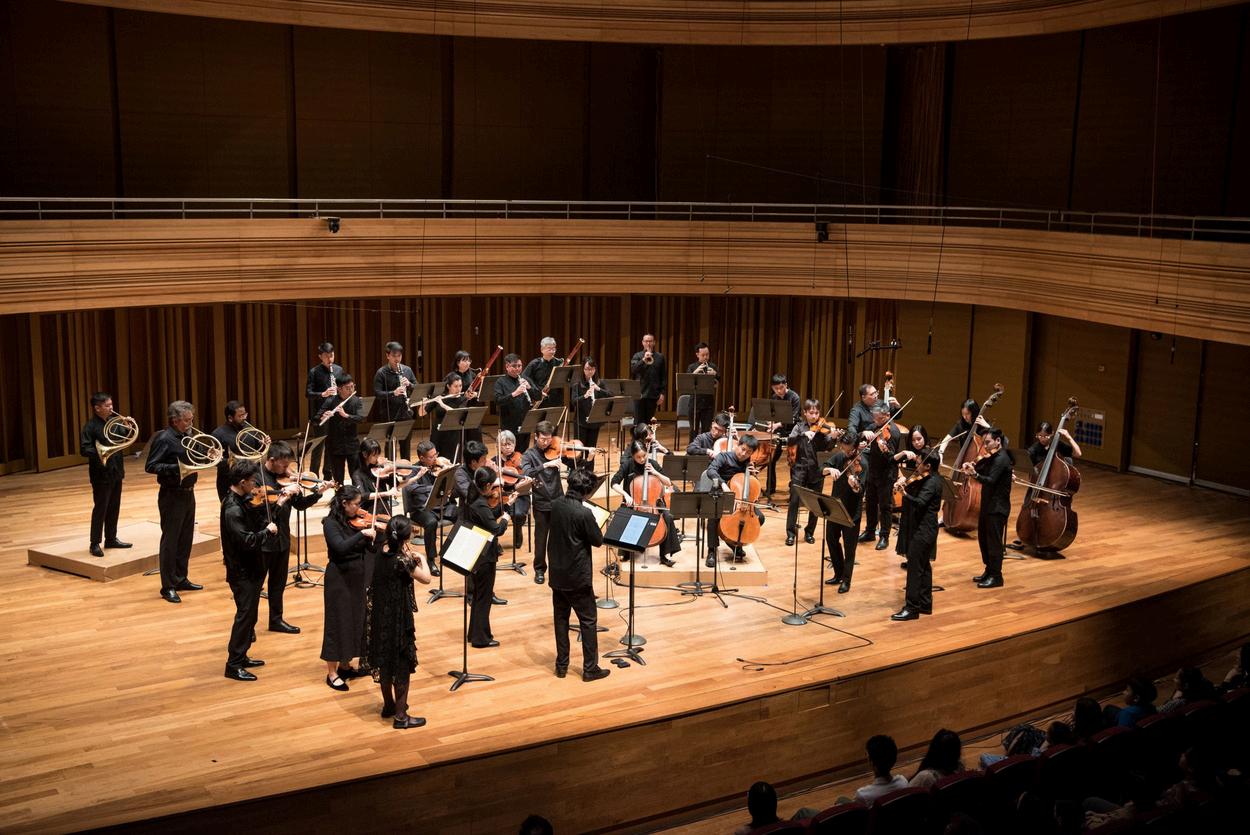
re:Sound in Qin Li-Wei Returns, 30 August 2025
Resound Collective gratefully acknowledges the support of the following donors: Donors & Sponsors
View Webpage
Resound Collective Limited is a non-profit musicians’ collective that promotes music for small ensembles, from a string quartet to chamber orchestra. It has been supported by well-wishers, music lovers and a range of institutions. This includes the National Arts Council, Yong Siew Toh Conservatory of Music, Singapore Symphony Orchestra and a range of other foundations in Singapore.
To keep going, we appreciate your continuous support as we bring you more exciting programmes ahead. We look towards your generous support.
Donations may be made via Cheque to RESOUND COLLECTIVE LTD or via PayNow, via UEN: 201631412H, Resound Collective Limited

Resound Collective Limited is a Singapore registered charity with an Institution of a Public Character (IPC) status from 16 August 2024 to 15 February 2027. All donations above S$50 are eligible for 250% tax deduction.
Please send an email to linda.kan@resoundcollective.org with your name, NRIC/FIN/UEN, contact information, and the amount donated, so that we can send you an acknowledgement and receipt.
As required by the Inland Revenue Authority of Singapore, all donors will need to provide their NRIC/FIN/UEN in order to be given tax deductions on the donations.
Resound Collective Limited is a registered charity and an Institution of a Public Character (IPC) under the Charities Act, Singapore - UEN: 201631412H
We wish to express our heartfelt appreciation to SNYO for their support of the Prodigious series.

We also thank all who have contributed in one way or another, in making this concert a success, including the support of the Cultural Matching Fund.
Resound Collective Limited is supported by the National Arts Council, Singapore under its Major Company Grant scheme from 1 April 2025 to 31 March 2027.


Thank you for taking time to attend this concert by re:Sound. To help us better understand our audience, please take a few minutes to answer this short survey.
Thank you very much!
Visit this URL https://tiny.cc/resoundsurvey
https://resoundcollective.org
https://facebook.com/resoundcollectivepage
https://instagram.com/resoundcollective https://youtube.com/resoundcollective