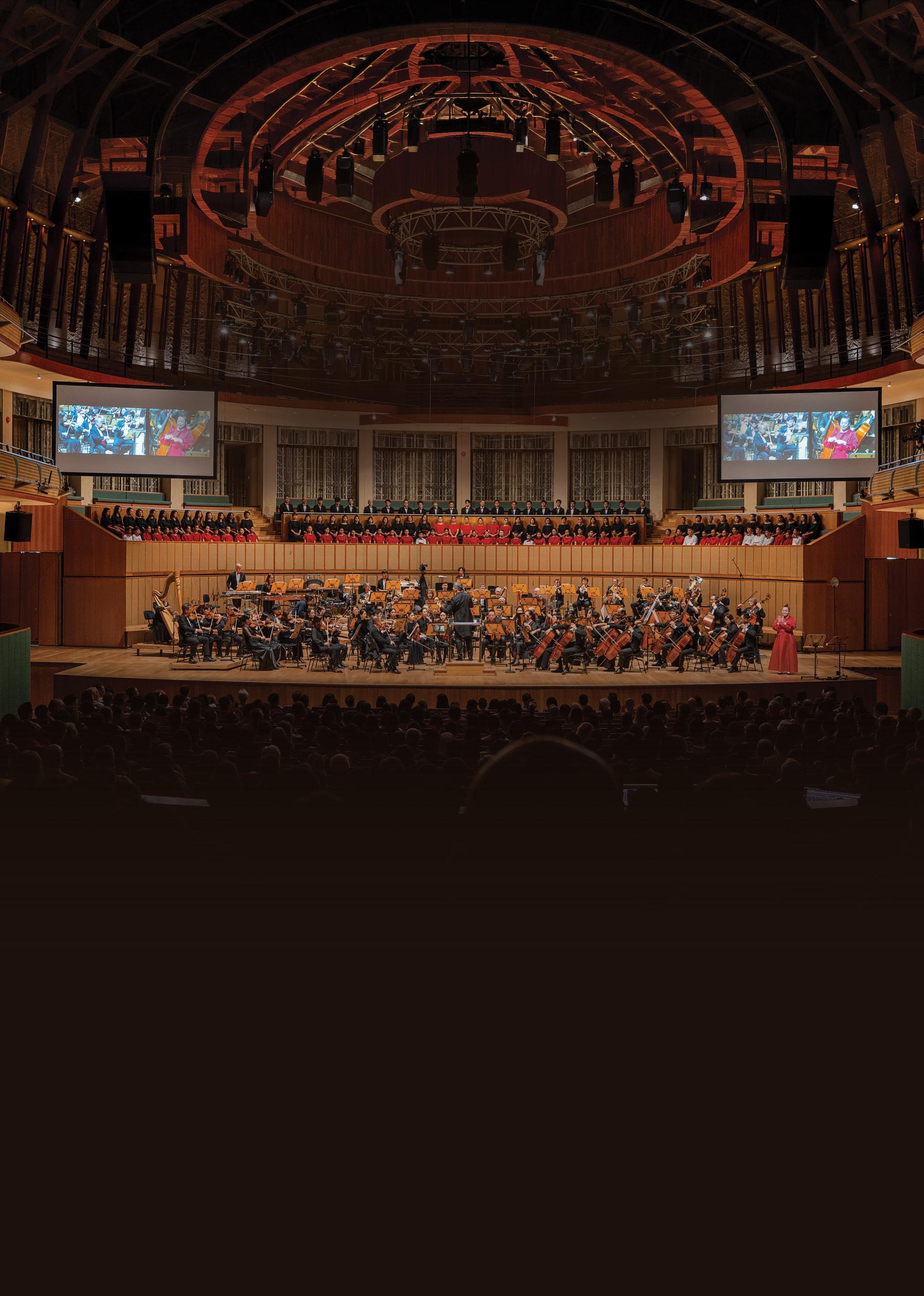
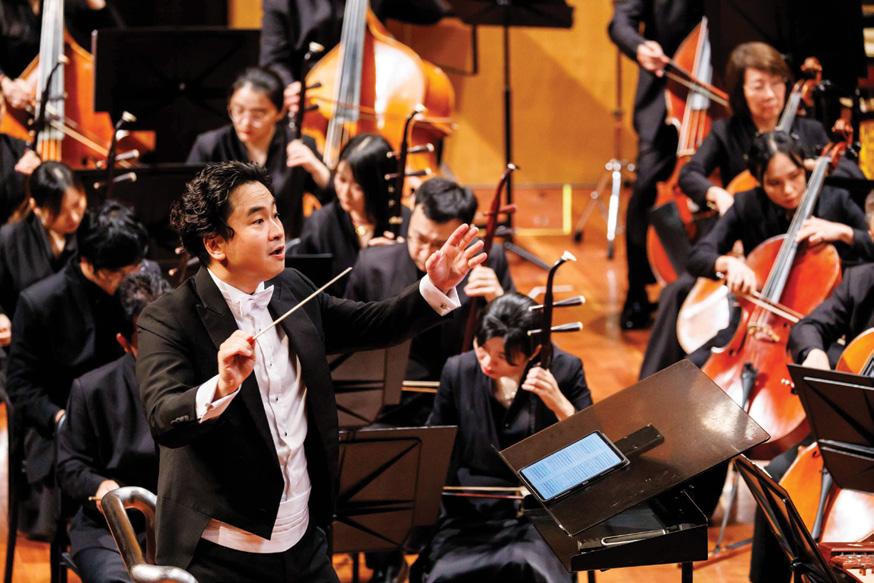
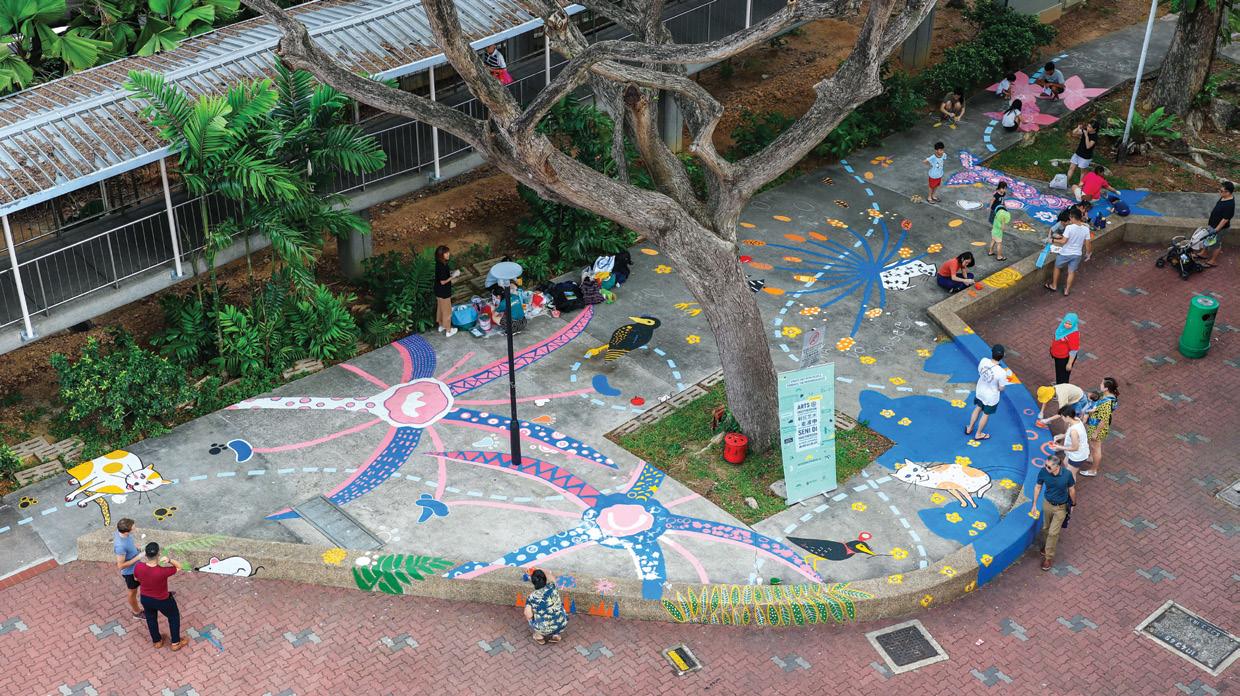
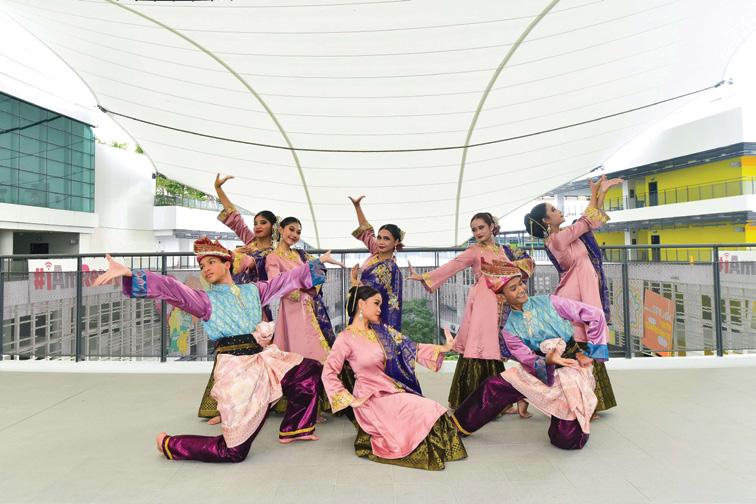
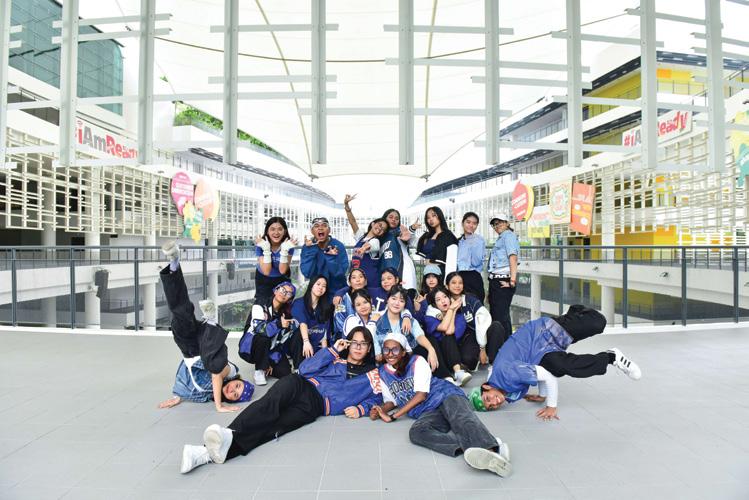
The Singapore Symphony Group actively commissions and performs works by Singaporean composers, reflecting our nation’s stories and heritage through music.


Scan the QR code to donate now, or write to development@sso.org.sg for more details.
Singapore tax residents are eligible for 250% tax deduction.
This year’s SSO National Day Concert on 15 August 2026 features four new commissions by local composers – one of which is A Singapore Suite by Low Peng Guan, selected through an open Call for Compositions held earlier this year.
Your gift supports such vital platforms for young emerging composers, and enables us to continue championing local voices while building a lasting library of our nation’s music for future generations.
16
24
Hannu Lintu Inaugural Series:
Gil Shaham and Mahler 5
Fri & Sat, 17 & 18 Jul 2026
Esplanade Concert Hall
Hannu Lintu Inaugural Series:
Zarathustra and Bluebeard’s Castle
Fri, 24 Jul 2026
Esplanade Concert Hall
30
Marc-André Hamelin & Sebastian Weigle – Brahms Piano Concerto 2
Thu, 6 Aug 2026
Esplanade Concert Hall
For the enjoyment of all patrons during the concert:
Please switch off or silence all electronic devices.
Please minimise noises during performance. If unavoidable, wait for a loud section in the music.
No photography, video or audio recording is allowed when artists are performing.
Non-flash photography is allowed only during bows and applause when no performance is taking place.
Go green. Digital programme books are available on www.sso.org.sg.
Photographs and videos will be taken at these events, in which you may appear. These may be published on the SSO’s publicity channels and materials. By attending the event, you consent to the use of these photographs and videos for the foregoing purposes.
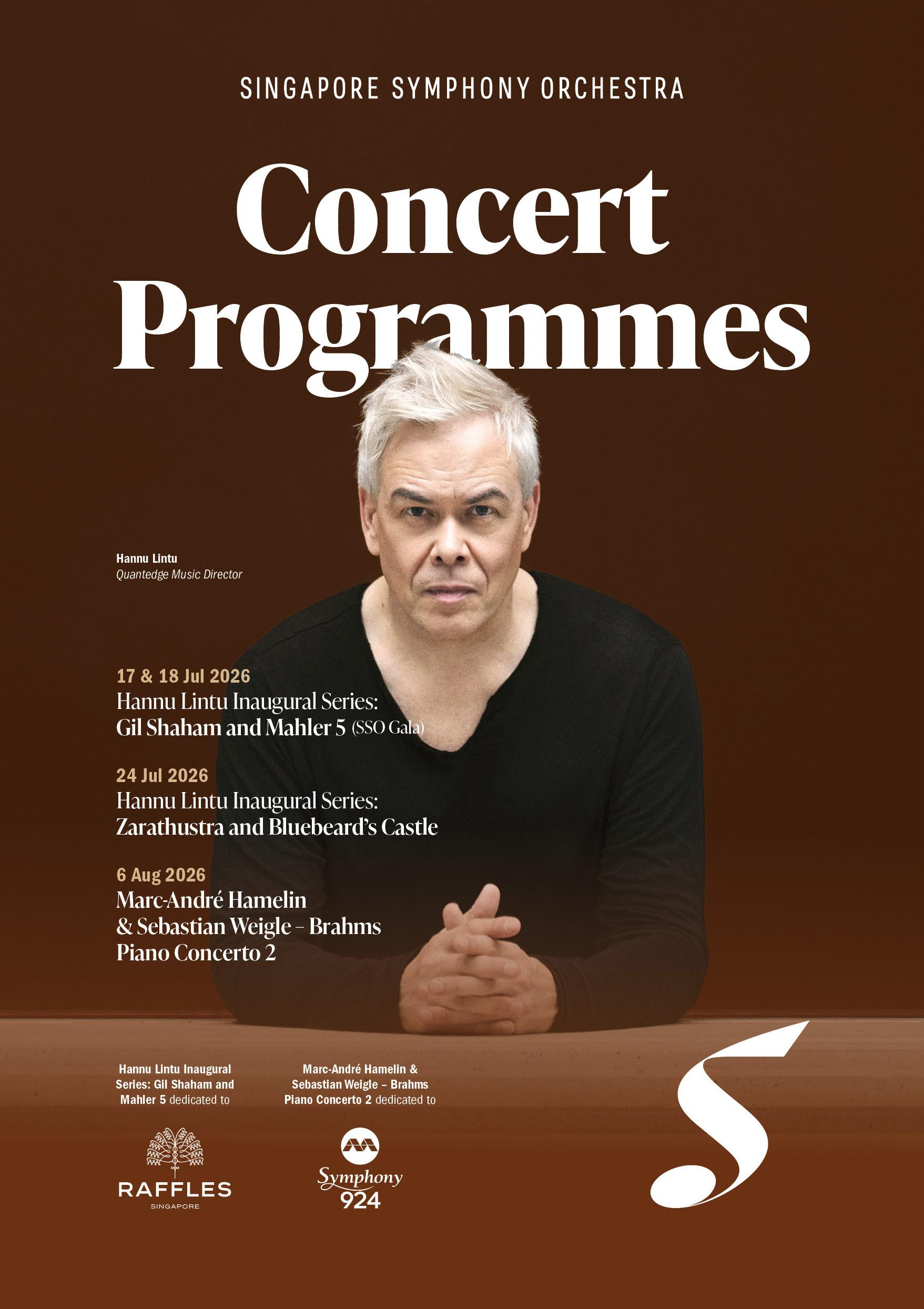
Cover photo: Hannu Lintu © Crispian Chan
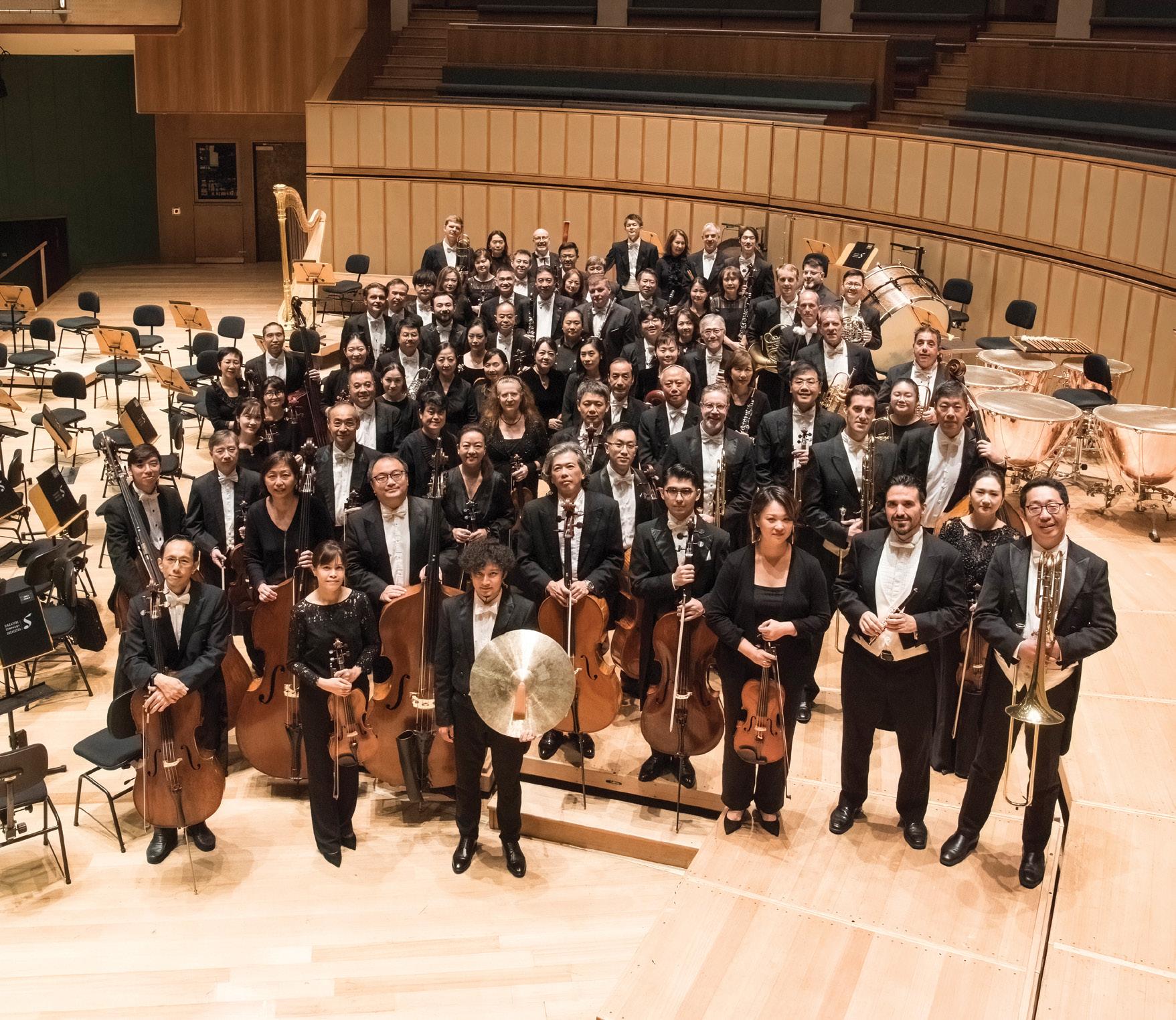
Since its founding in 1979, the Singapore Symphony Orchestra (SSO) has been Singapore’s flagship orchestra, touching lives through classical music and providing the heartbeat of the cultural scene with its calendar of events.
In addition to its subscription series concerts, the orchestra is well-loved for its outdoor and community appearances, and its significant role educating the young people of Singapore through its school programmes. The SSO has also earned an international reputation for its orchestral virtuosity, having garnered sterling reviews for its overseas tours and many successful recordings. In 2021, the SSO clinched third place in the prestigious Orchestra of the Year Award by Gramophone. In 2022, BBC Music Magazine named the SSO as one of the 23 best orchestras in the world.
The SSO is led by Finnish conductor Hannu Lintu, the fourth Music Director in the orchestra’s history after Choo Hoey (1979–1996), Lan Shui (1997–2019) and Hans Graf (2020–2026).
The orchestra performs over 60 concerts a year, and its versatile repertoire spans all-time favourites and orchestral masterpieces to exciting cutting-edge premieres. Bridging the musical traditions of East and West, Singaporean and Asian musicians and composers are regularly showcased in the concert season. The SSO makes its performing home at the 1,800-seat state-ofthe-art Esplanade Concert Hall. More intimate works, as well as community performances take place at the 673-seat Victoria Concert Hall, the Home of the SSO.
Beyond Singapore, the SSO has performed in Europe, Asia, Australia and the United States. In the 2024/25 season, the SSO performed to full houses at Asia Orchestra Week in Kyoto, Japan, and made its “dazzling – and true-blue – Down Under debut” (Limelight) in Sydney, Melbourne and Brisbane. In May 2016, the SSO was invited
to perform at the Dresden Music Festival and the Prague Spring International Music Festival. This successful five-city tour of Germany and Prague also included the SSO’s second performance at the Berlin Philharmonie. In 2014, the SSO’s debut at the 120th BBC Proms in London received praise in major UK newspapers The Guardian and The Telegraph. The SSO has also performed in China on multiple occasions.
The SSO has released more than 50 recordings, with over 30 on the BIS label. Recent critically acclaimed albums include A Hero’s Life (OUR Recordings), Symbiosis – Tribute to Bill Evans (Pentatone) and a complete Mozart Violin Concerto cycle with Singaporean violinist Chloe Chua conducted by Hans Graf (Pentatone). The SSO also leads the revival and recording of significant works such as Kozłowski’s Requiem and violin concertos by Robert Russell Bennett and Vernon Duke.
The SSO has collaborated with such great artists as Vladimir Ashkenazy, Gustavo Dudamel, Charles Dutoit, Joe Hisaishi, Neeme Järvi, Lorin Maazel, Martha Argerich, Diana Damrau, Janine Jansen, Leonidas Kavakos, Lang Lang, Yo-Yo Ma, Mischa Maisky, Gil Shaham, Daniil Trifonov and Krystian Zimerman.
The SSO is part of the Singapore Symphony Group, which also manages the Singapore Symphony Choruses, the Singapore National Youth Orchestra, the Singapore International Piano Festival and the biennial National Piano & Violin Competition.
The Group’s vision is to be a leading arts organisation that engages, inspires and reflects Singapore through musical excellence. Our mission is to create memorable shared experiences with music. Through the SSO and its affiliated performing groups, we spread the love for music, nurture talent and enrich our diverse communities.
Markus Gundermann Co-Principal (Guest)
Qing Li Co-Principal (Guest)
Sayuri Kuru Associate Principal
Bobur Eshpulatov
Nikolai Koval*
Hai-Won Kwok
Margit Saur
Shao Tao Tao
Reina Teo
Wu Man Yun*
Xu Jueyi*
Hannu Lintu
Quantedge Music Director
Nathanaël Iselin
Associate Conductor
Lan Shui
Conductor Laureate
Hans Graf
Conductor Laureate
Eudenice Palaruan Choral Director
Wong Lai Foon Choirmaster
Ellissa Sayampanathan
Assistant Choral Conductor
First Violin
Andrew Beer Concertmaster, GK Goh Chair
Chan Yoong-Han1 Acting Associate Concertmaster
Cao Can*
Duan Yu Ling
Foo Say Ming
Jin Li
Kong Xianlong
Cindy Lee
Renyu Martin Peh
Karen Tan
William Tan
Wei Zhe
Ye Lin*
Zhang Si Jing
Yin Shu Zhan*
Zhao Tian
Viola
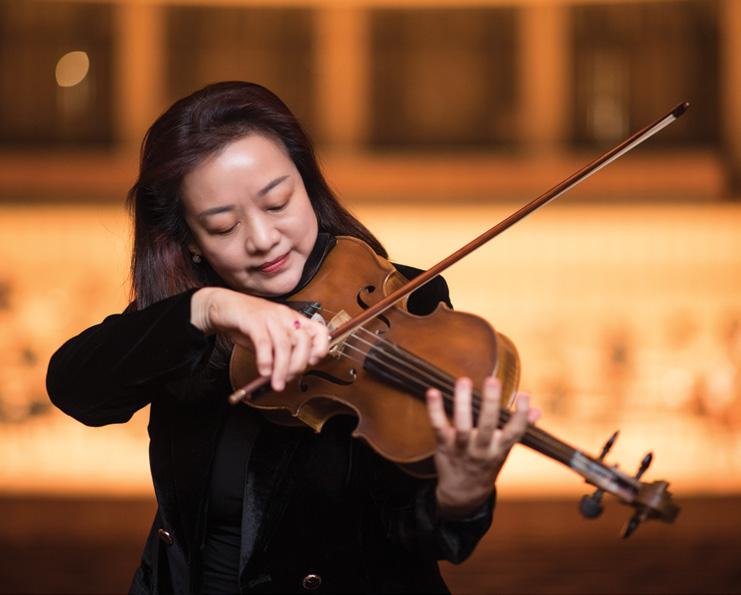
Manchin Zhang Principal, Tan Jiew Cheng Chair
Guan Qi Associate Principal
Gu Bing Jie* Assistant Principal
Chen Li
Marietta Ku
Luo Biao
Julia Park
Shui Bing
Janice Tsai
Dandan Wang
Yang Shi Li
Cello
Ng Pei-Sian Principal, The HEAD Foundation Chair
Yu Jing Associate Principal
Guo Hao Assistant Principal
Chan Wei Shing
Christopher Mui
Jamshid Saydikarimov
Song Woon Teng
Wang Yan
Wu Dai Dai
Zhao Yu Er
Joan Perarnau Garriga Principal (Visiting)
Yang Zheng Yi Associate Principal
Karen Yeo Assistant Principal
Po-Yu Fang
Victor Lee
Jacek Mirucki
Wang Xu
Flute
Jin Ta Principal, Stephen Riady Chair
Evgueni Brokmiller Associate Principal
Roberto Alvarez
Miao Shanshan
Piccolo
Roberto Alvarez Assistant Principal
Oboe
Rachel Walker Principal
Pan Yun Associate Principal
Simon Emes^
Carolyn Hollier
Elaine Yeo
Cor Anglais
Elaine Yeo Associate Principal
Clarinet
Chiang Yung-Yuan Principal
Li Xin Associate Principal
Liu Yoko
Tang Xiao Ping
Bass Clarinet
Tang Xiao Ping Assistant Principal
Bassoon
Guo Siping Principal
Liu Chang Associate Principal
Christoph Wichert
Zhao Ying Xue
Contrabassoon
Zhao Ying Xue Assistant Principal
Details correct at the time of printing and subject to change. * ^ 1
Horn
Austin Larson Principal
Marc-Antoine Robillard Associate Principal
Thossaporn Sombat^ Associate Principal
Bryan Chong
Gao Jian
Hoang Van Hoc
Trumpet
Jon Paul Dante Principal
David Smith Associate Principal
Lau Wen Rong
Nuttakamon Supattranont
Allen Meek Principal
Damian Patti Associate Principal
Samuel Armstrong
Wang Wei Assistant Principal
Tomoki Natsume Principal
Timpani
Christian Schiøler Principal
Mario Choo
Percussion
Jonathan Fox Principal
Mark Suter Associate Principal
Mario Choo
Harp
Gulnara Mashurova Principal
With deep appreciation to the Rin Collection for their generous loan of string instruments. Musician on annual contract.
Chan Yoong-Han performs on a David Tecchler, Fecit Roma An. D. 1700, courtesy of Mr G K Goh. Musicians listed alphabetically by family name rotate their seats on a per programme basis.
Hannu Lintu Inaugural Series: Gil Shaham and Mahler 5 17 & 18 Jul 2026
First Violin
Seow Jin Chong
Yew Shan
Second Violin
Lee Shi Mei
Yvonne Lee
Viola
Joelle Hsu
Double Bass
Guennadi Mouzyka
Horn
Liu Yang Guest Associate Principal
Lewis Lim
Percussion
Tan Pei Jie
Harp
Vanessa Jazzy
Piano Beatrice Lin
Hannu Lintu Inaugural Series: Zarathustra and Bluebeard’s Castle 24 Jul 2026
First Violin
Lim Shue Churn
Seow Jin Chong
Second Violin
Wilford Goh
Lee Shi Mei
Yvonne Lee
Viola
Torsten Tiebout Guest Principal
Joelle Hsu
Patcharaphan Khumprakob
Double Bass
Ma Li Ming
Oboe
Hu Qiuzi Guest Associate Principal
Horn
Grzegorz Curyla
Jaben Sim
Trumpet
Lertkiat Chongjirajitra
Tuba
Henrique Costa
Harp
Vanessa Jazzy
Celesta
Beatrice Lin
Organ
Koh Jia Hwei
Marc-André Hamelin & Sebastian Weigle – Brahms Piano Concerto 2
6 Aug 2026
First Violin
Lim Shue Churn
Second Violin
Jeongyeon Im Guest Principal
Seow Jin Chong
Yew Shan
Ikuko Takahashi
Viola
Torsten Tiebout Guest Principal
Patcharaphan Khumprakob
Double Bass
Guennadi Mouzyka


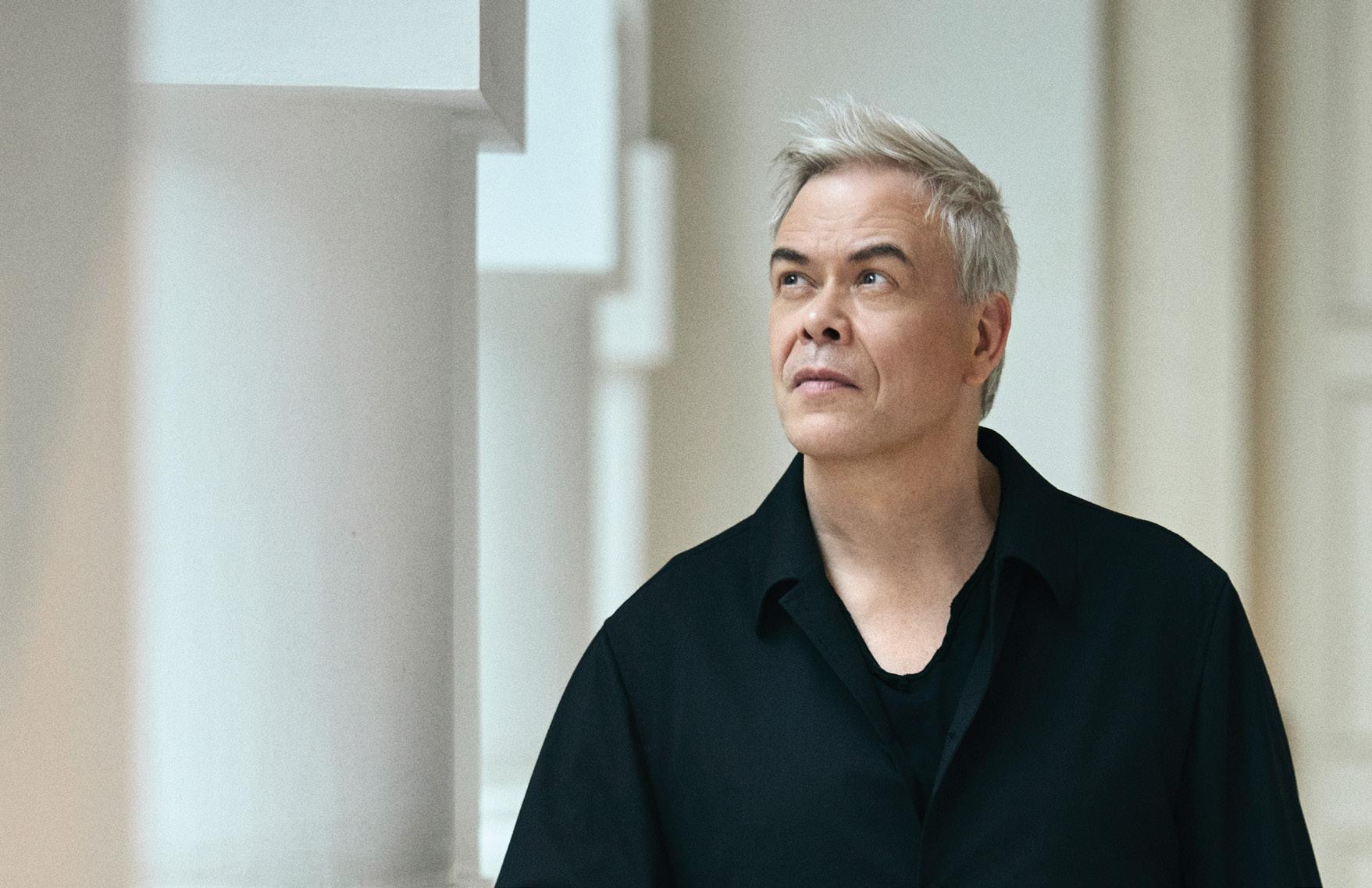
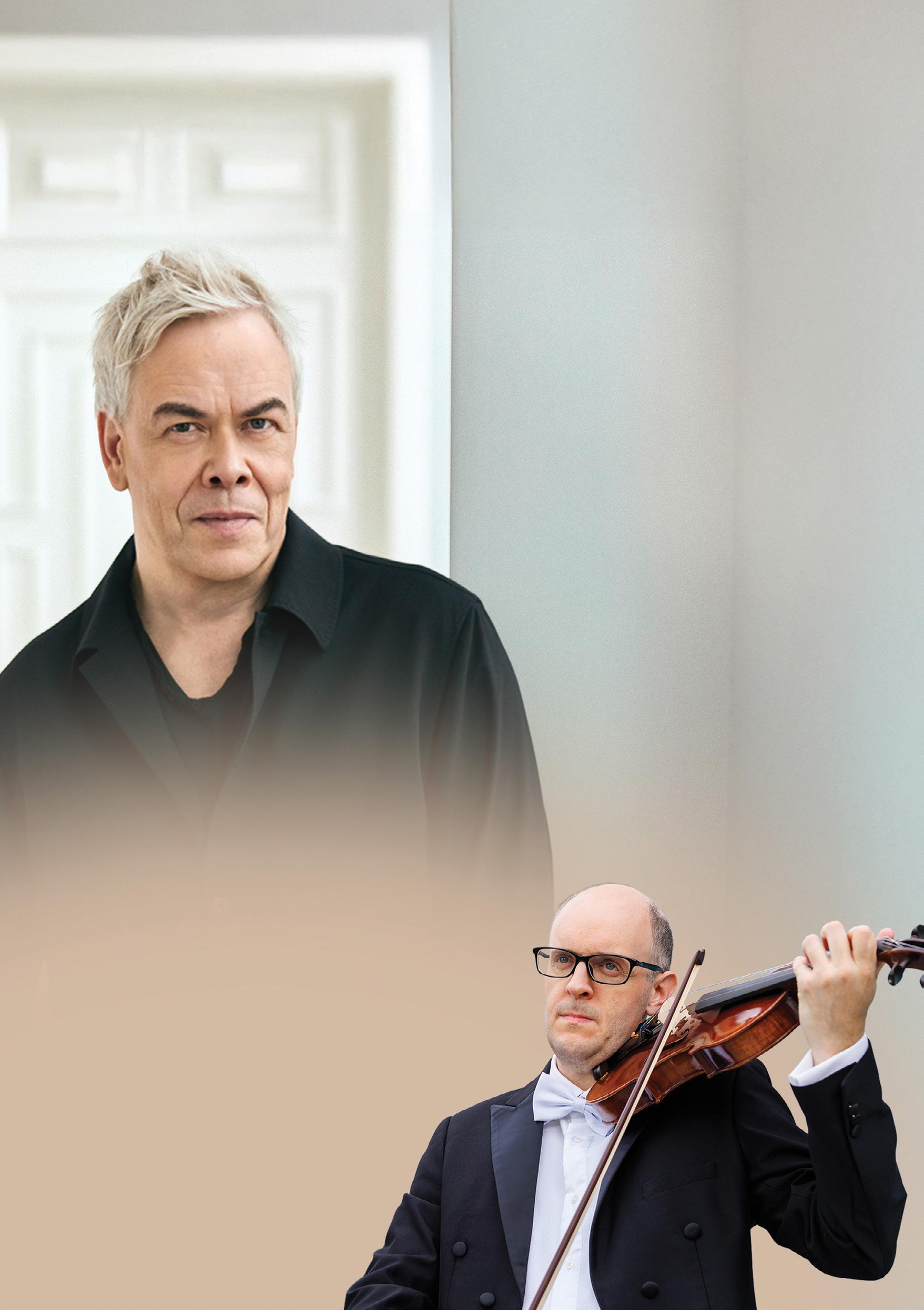
Hannu Lintu continues to maintain his reputation as one of the world’s finest conductors. From this season, Lintu leads the Singapore Symphony Orchestra as its Quantedge Music Director, and continues his tenures as Music Director of Orquestra Gulbenkian, Artistic Partner of the Lahti Symphony Orchestra, and Artistic Director of the International Sibelius Festival.
2026/27 appearances include returns to the Netherlands, Seoul, and Hong Kong Phiharmonics, the Minnesota Orchestra, and the Atlanta Symphony, as well as a debut with the Tonhalle Orchester Zürich.
Symphonic highlights of recent years have seen Lintu conduct the Chicago Symphony, New York Philharmonic, Berliner Philharmoniker, Cleveland Orchestra, Bavarian Radio Symphony Orchestra, Orchestre National de Radio France, Boston Symphony Orchestra, Swedish Radio Symphony Orchestra, BBC Symphony, Deutsches SymphonieOrchester Berlin, and London Philharmonic. He continues to enjoy relationships with many of the orchestras in his native Finland including
the Finnish Radio Symphony and Tampere Philharmonic orchestras – of whom he is a former Chief Conductor.
As an expert in both operatic as well as symphonic repertoire, Lintu’s recent opera highlights have included the world premiere of Sebastian Fagerlund’s The Morning Star at Finnish National Opera, Enescu’s Oedipe at Bregenz Festspiele, Wagner’s Der fliegende Holländer at Opera de Paris and Debussy’s Pelléas et Mélisande at Bayerische Staatsoper, as well as multiple productions at Finnish National Opera and Ballet, including a multiseason Ring Cycle, Poulenc’s Dialogues des Carmélites, Strauss’ Elektra, and Mozart’s Don Giovanni.
Lintu studied cello and piano at the Sibelius Academy, where he also later studied conducting with Jorma Panula. He participated in masterclasses with Myung-Whun Chung at L’Accademia Musicale Chigiana in Siena, Italy, and took first prize at the Nordic Conducting Competition in Bergen in 1994.
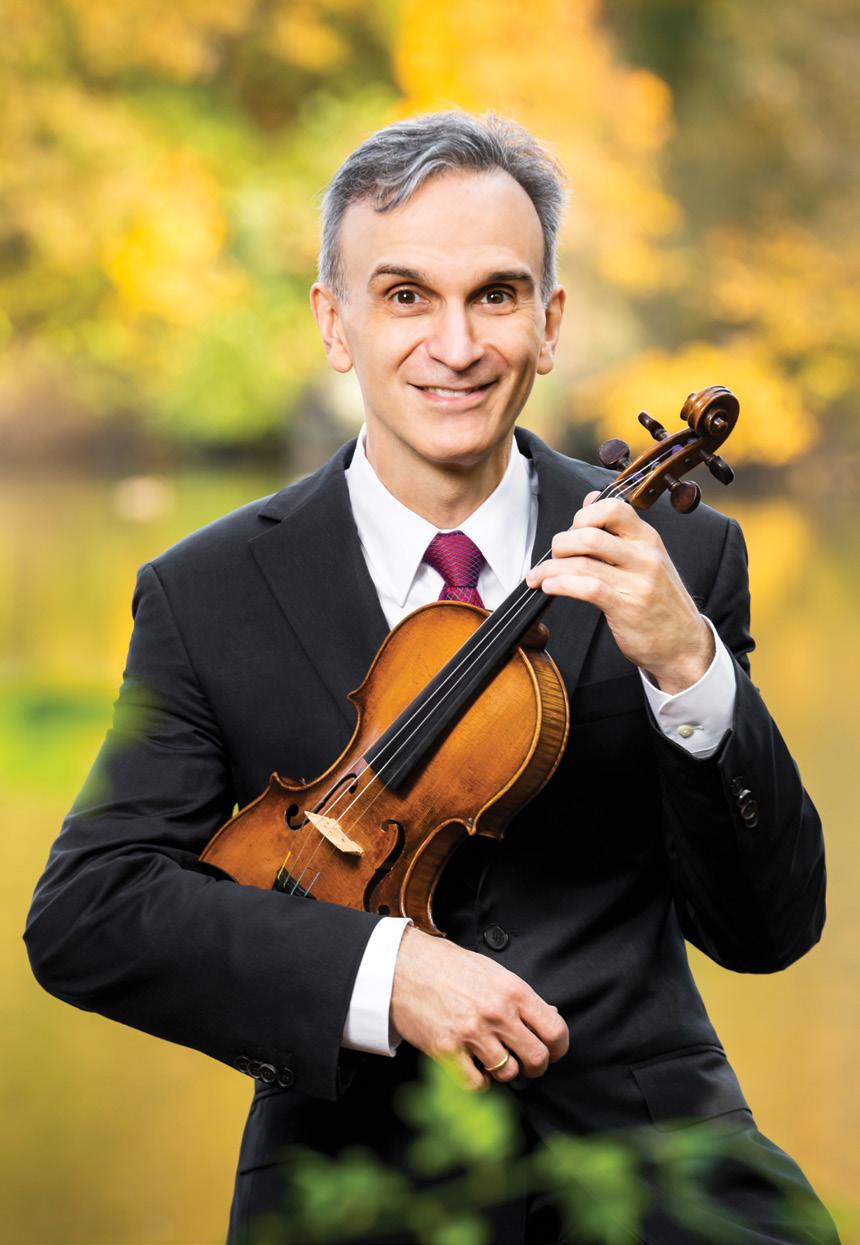
Gil Shaham is one of the foremost violinists of our time; his flawless technique combined with his inimitable warmth and generosity of spirit has solidified his renown as an American master. He is sought-after throughout the world for concerto appearances with leading orchestras and conductors, and regularly gives recitals and appears with ensembles on the world’s great concert stages and at the most prestigious festivals.
Highlights of recent years include a recording and performances of J.S. Bach’s complete sonatas and partitas for solo violin and recitals with his long-time duo partner, pianist Akira Eguchi. He regularly appears with the Berlin Philharmonic, Boston, Chicago, and San Francisco Symphonies, the Israel Philharmonic, Los Angeles Philharmonic, New York Philharmonic, Orchestre de Paris, and in multi-year residencies with the Orchestras of Montreal, Stuttgart and Singapore.
Gil Shaham has more than two dozen concerto and solo CDs to his name, earning multiple GRAMMYs, a Grand Prix du Disque, Diapason d’Or, and Gramophone Editor’s Choice. Many of these recordings appear on Canary Classics, the label he founded in 2004. His 2016 recording 1930s Violin Concertos Vol. 2 as well as his 2021 recording of Beethoven and Brahms Concertos with The Knights were nominated for GRAMMY Awards.
Gil Shaham was awarded an Avery Fisher Career Grant in 1990, and in 2008 he received the coveted Avery Fisher Prize. In 2012, he was named “Instrumentalist of the Year” by Musical America. He plays the 1699 “Countess Polignac” Stradivarius and performs on an Antonio Stradivari violin, Cremona c1719, with the assistance of Rare Violins In Consortium, Artists and Benefactors Collaborative. He lives in New York City with his wife, violinist Adele Anthony, and their three children.
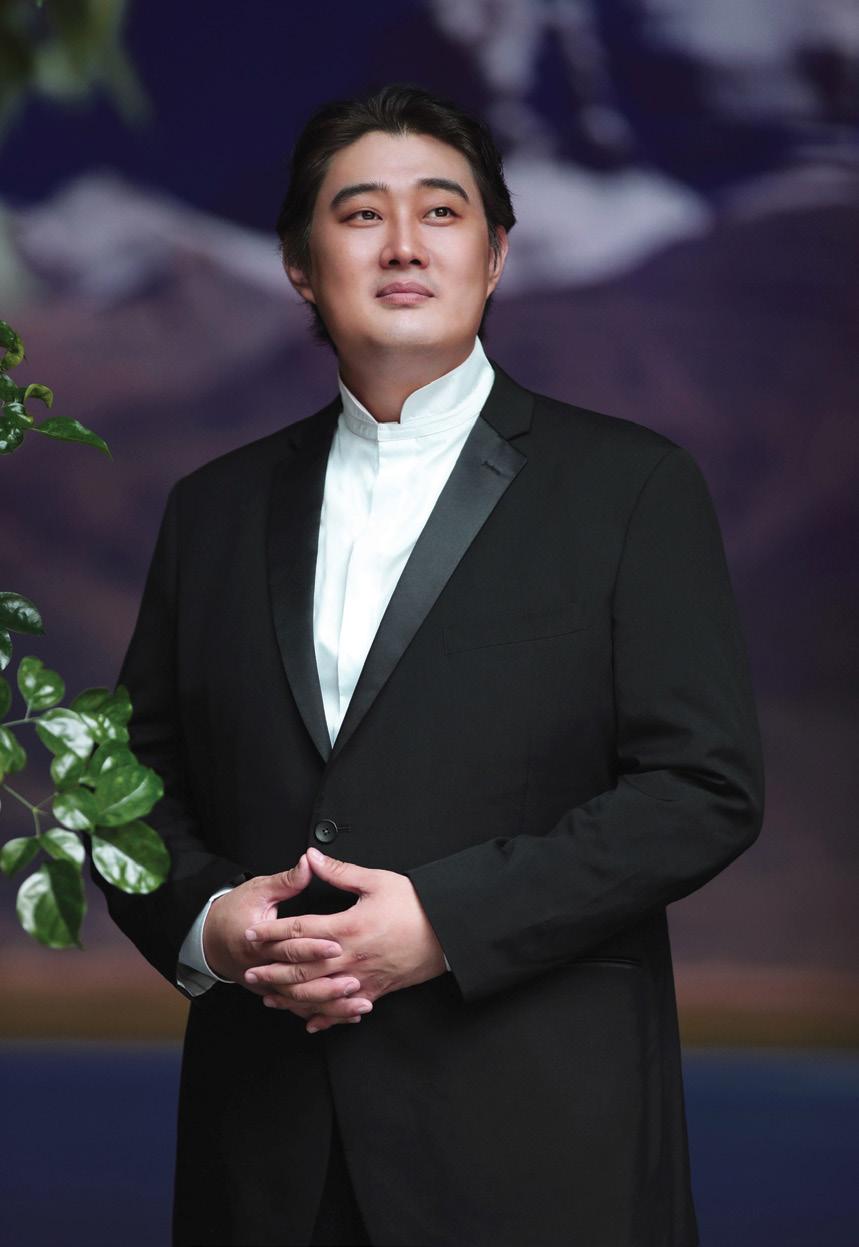
After winning the BBC Cardiff Singer of the World Competition in 2007, Shenyang’s career was launched with acclaim for interpretations of Mozart, Rossini, and Handel and in recent years, Beethoven, Strauss, and Wagner.
Shenyang’s affinity for Wagner has been demonstrated in performances as Gunther (Götterdämmerung) with Hong Kong Philharmonic Orchestra under Jaap van Zweden, Klingsor (Parsifal) at La Monnaie under Alain Altinoglu, Heerrufer (Lohengrin) at Opéra national de Paris under Alexander Soddy, and Kurwenal (Tristan und Isolde) at Glyndebourne Festival under Robin Ticciati. His portrayal of Wotan (Das Rheingold) with Guangzhou Symphony Orchestra, and his debut in Die Walküre as part of Bayreuth in Shanghai under Xu Zhong, further confirm his growing stature in this repertoire. Other highlights include Don Pizarro (Fidelio) with Los Angeles Philharmonic under Gustavo Dudamel and Tonhalle-Orchester Zürich under Paavo Järvi, and Jochanaan (Salome) with Polish National Radio Symphony Orchestra under Alexander Liebreich.
Concert highlights include Beethoven, Symphony No. 9 with Philadelphia Orchestra under Yannick Nézet-Séguin, and New York Philharmonic under Alan Gilbert, Verdi’s Requiem with Orchestre National de Lyon under Simone Young and at Bergen International Festival under Ed Gardner, Brahms’ Ein deutsches Requiem with Boston Symphony Orchestra under Andris Nelsons, and Berlioz’s Roméo et Juliette with Berliner Philharmoniker under Daniel Harding.
In 2025/26, Shenyang debuted Amonasro (Aida) at Washington National Opera under Kwamé Ryan, performed Kullervo with London Philharmonic Orchestra under Robin Ticciati and Puccini’s Messa di Gloria with Orquestra Sinfônica do Estado de São Paulo and Thierry Fischer. Next season, Shenyang joins Hong Kong Philharmonic Orchestra and Tarmo Peltokoski for Mahler Symphony No. 8.
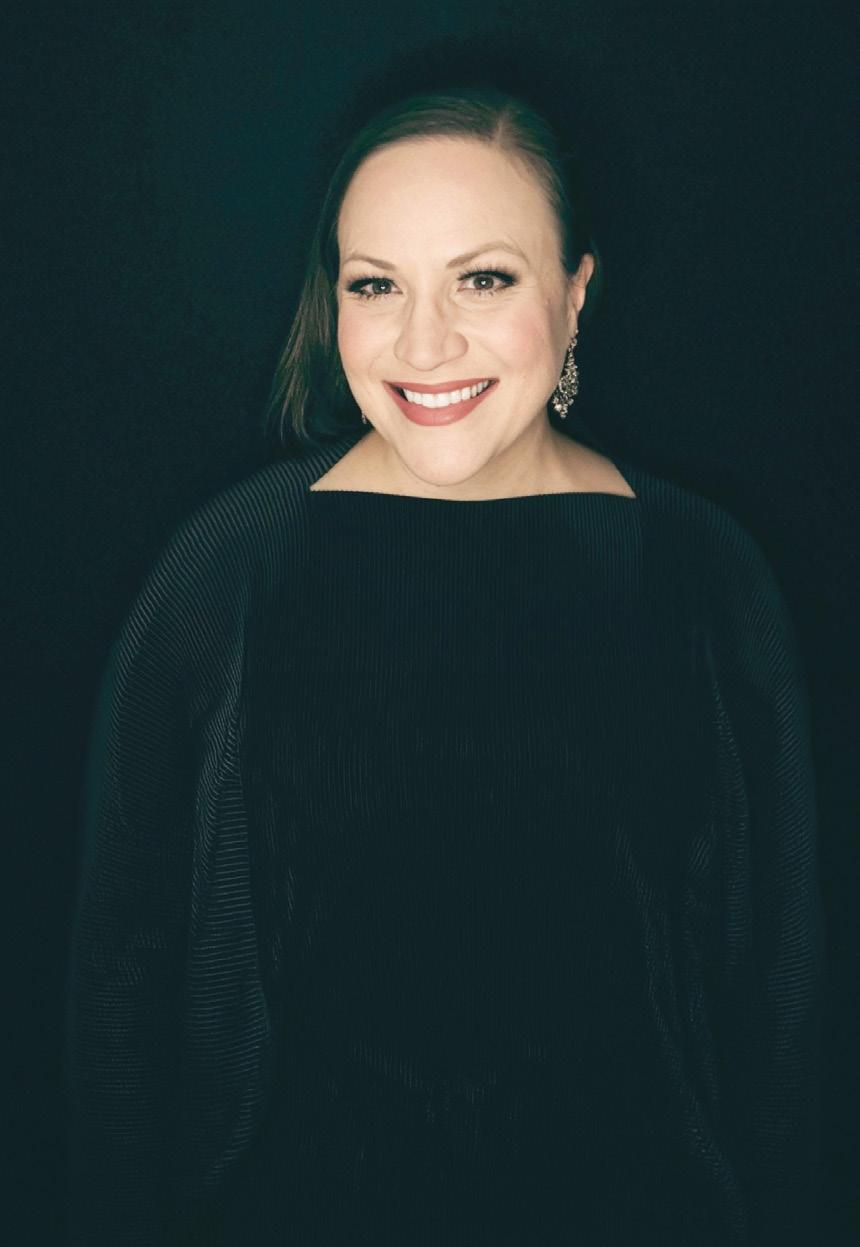
Recognised as one of the most important voices of her generation, esteemed mezzo-soprano Jennifer Johnston has established a formidable reputation as a preeminent interpreter of Mahler, Wagner, Britten, Beethoven, and Elgar.
Highlights of recent seasons include Judith (Duke Bluebeard’s Castle) with Oslo Philharmonic and with English National Opera, as well as role debuts as Ježibaba (Rusalka) for Den Norske Opera and Fricka (Das Rheingold and Die Walküre) with the Sinfonieorchester Wuppertal. Mahler’s works have been a central feature of Johnston’s career, with key performances including Royal Concertgebouw Orchestra under Klaus Mäkelä, Wiener Philharmoniker under Franz Welser-Möst, Bayerisches Staatsorchester under Kirill Petrenko, Prague Philharmonic Orchestra under Semyon Bychkov, Cleveland Orchestra under Klaus Mäkelä, and with Royal Liverpool Philharmonic Orchestra under Domingo Hindoyan.
Upcoming engagements include Judith (Duke Bluebeard’s Castle) with the Royal Concertgebouw Orchestra on tour under Klaus Mäkelä, Mahler Symphony No. 8 with Orchestre de Paris, and Mahler Symphony No. 3 with Orquesta y Coro de la Comunidad de Madrid, Bremer Philharmoniker and National Arts Centre Orchestra Ottawa.
A former BBC New Generation Artist and graduate of Cambridge University and the Royal College of Music, Johnston was awarded the Royal Philharmonic Society Singer Award in 2021.
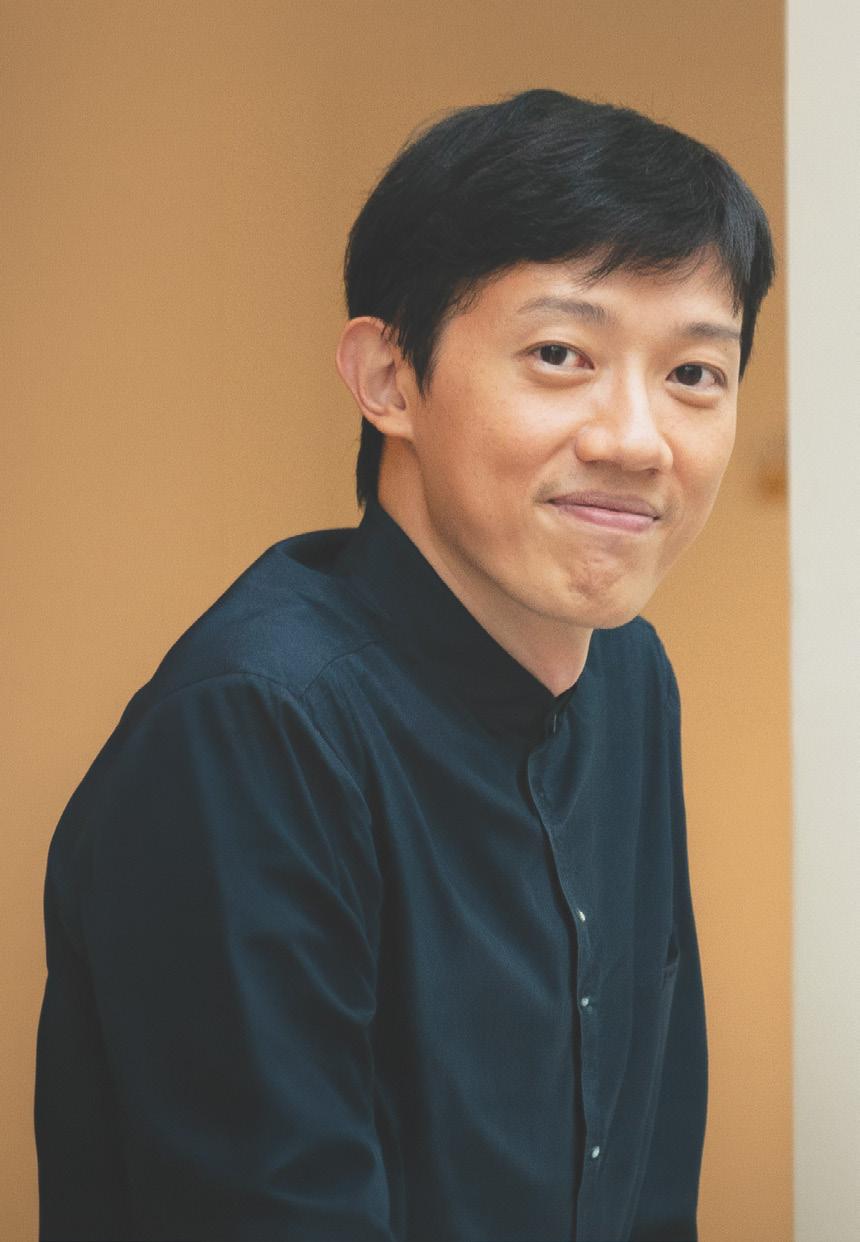
Gabriel is an acclaimed lighting designer based in Singapore. Graduating from the Hong Kong Academy for Performing Arts with First Class Honours in Lighting Design, supported by the NAC Overseas Bursary and the Strand Lighting Scholarship, he was conferred the Young Artist Award in 2019 for his artistic excellence and contribution to Singapore’s performing arts scene. A chameleon of a designer, Gabriel is well-versed in lighting for the theatre, dance, music concerts, sporting and live national broadcast events.
Signature theatre designs include Shakespeare in the Park: Macbeth (2025), A Midsummer Night’s Dream (2023), Julius Caesar, Romeo & Juliet, The Tempest, The LKY Musical (Singapore Repertory Theatre), The Crab Flower Club 2022 (Toy Factory Productions), and Every Brilliant Thing (The Fingers Players).
Music lighting design credits include Ravel’s Spain (Singapore Symphony Orchestra), Pipa Virtuoso, Wu Man, in Borderlands (SIFA 2016), Eight, Stories from an Island City, Mind the Music, Heirlooms and Forefathers (The Teng Ensemble), SCO 25th Anniversary Virtuoso Series I, II, III, Rhapsodies of Spring (Singapore Chinese Orchestra), The Origins Cipher, Nine Songs, Soul Journey Ten Years, (Siong Leng Musical Association), the South East Asian Tour of Sound of Wisdom - Heal and Sound of Peace (IMMPAC) and prolific Taiwanese singer A-Lin’s A Link with Passengers World Tour in Singapore.
Gabriel also goes by the moniker Linesmith (www.linesmith.net) authorised directly by Vectorworks Headquarters based in Washington for conducting training of the Vectorworks software, the leading drafting solution for Entertainment and Performing Arts technical design.

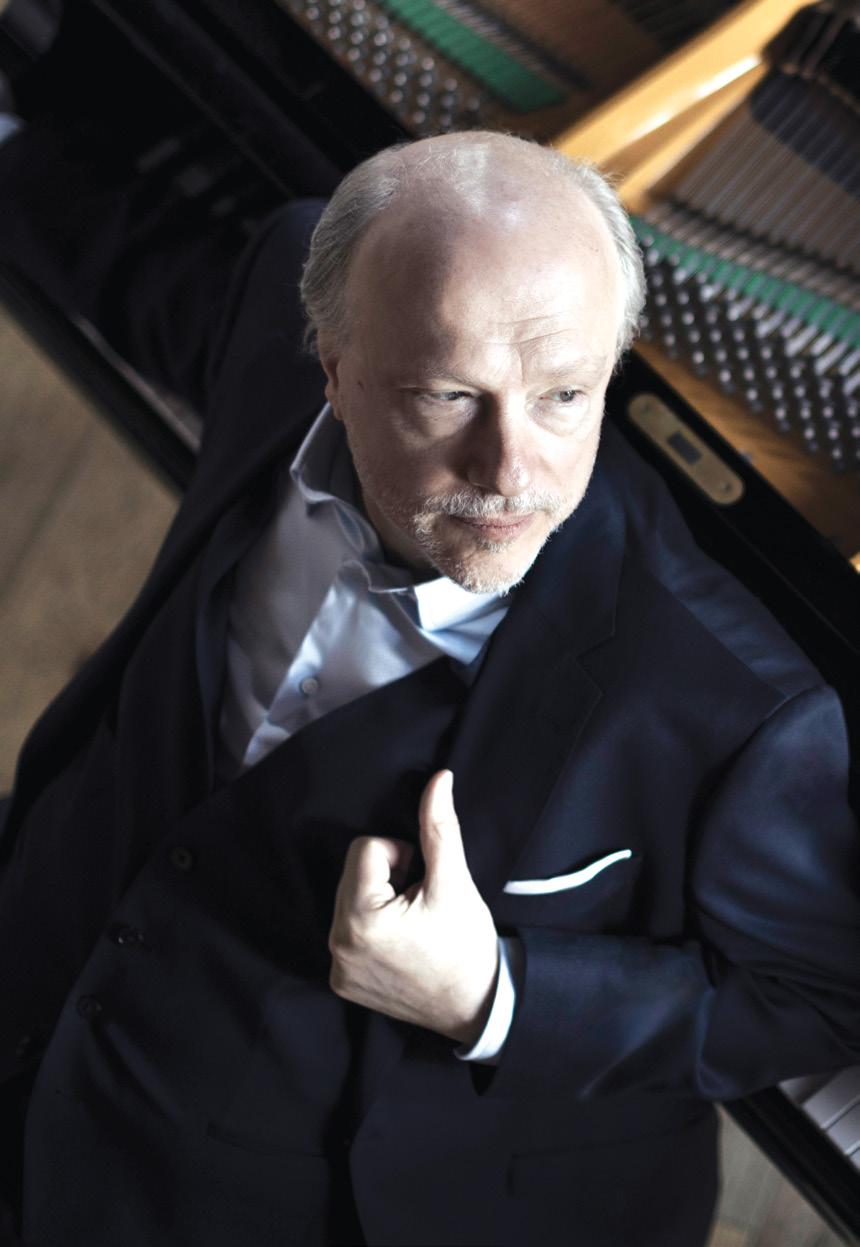
Marc-André Hamelin & Sebastian Weigle
conductor
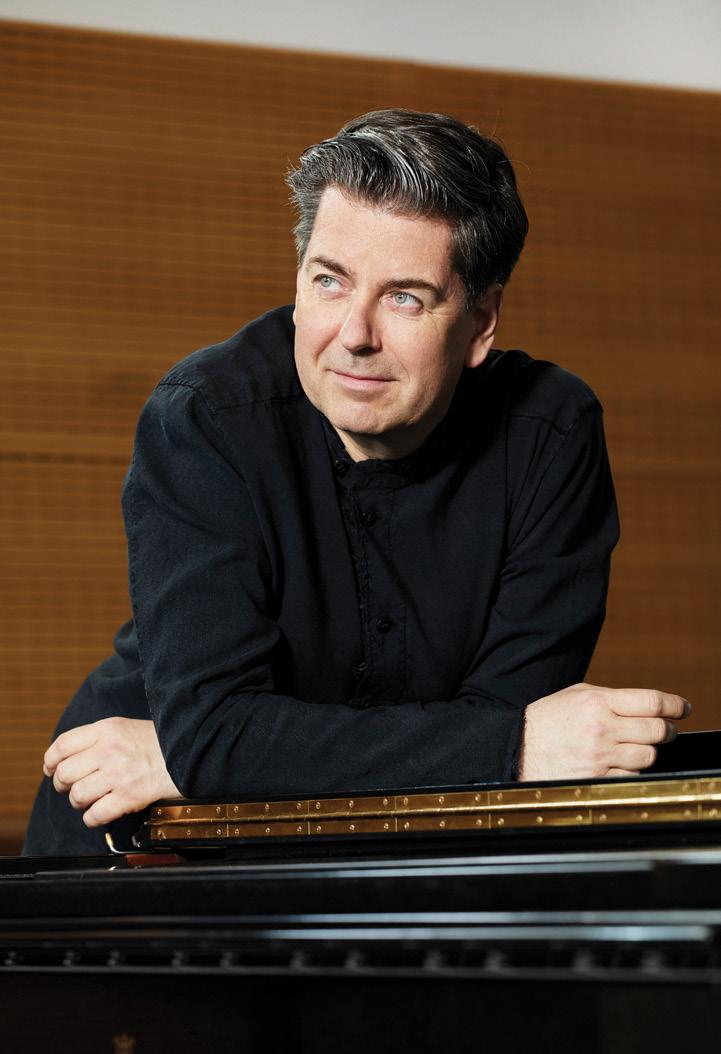
Since the 2019 season, Sebastian Weigle has served as Chief Conductor of the Yomiuri Nippon Symphony Orchestra in Tokyo, where he has made a significant impact with concert performances of Alban Berg’s Wozzeck and a highly acclaimed European tour featuring works by Rachmaninov, Tchaikovsky, and Beethoven. Most recently, he made his debut with both the Berlin Philharmonic and the Frankfurt Radio Symphony Orchestra.
In the 2025/26 season, further concert invitations will take him to the RundfunkSinfonieorchester Berlin, the Hungarian National Philharmonic, the Graz Philharmonic, the Stuttgart Philharmonic, and the Frankfurt Museum concerts. He will also make debut appearances with the Dallas Symphony Orchestra and the Singapore Symphony Orchestra.
He returns to the Bavarian State Opera after the highly acclaimed new production of Strauss’s Die Liebe der Danae and will take over the musical direction of Parsifal in spring 2026, as well as concert engagements with the Bavarian State Orchestra. Other major opera engagements take him to the Vienna State Opera with Salome
Weigle’s career has taken him to numerous renowned houses, including the state operas in Berlin, Munich, Dresden, Hamburg, and Vienna, as well as to Zurich, Tokyo, and the Metropolitan Opera in New York. As a conductor, he has worked with leading orchestras such as the radio orchestras in Berlin, Munich, Vienna, and Stuttgart, the Vienna and Bamberg Symphony Orchestras, the major Scandinavian orchestras, and internationally in Tokyo, Chicago, and Melbourne.
Born in Berlin, Sebastian Weigle studied horn, piano, and conducting at the Hanns Eisler Academy of Music. He was Chief Conductor at the Gran Teatre del Liceu in Barcelona (2004–2009) and also served as General Music Director of Oper Frankfurt (2008–2023).
Marc-André Hamelin & Sebastian Weigle
Pianist Marc-André Hamelin, a “performer of near-superhuman technical prowess” (The New York Times), is known worldwide for his unrivaled blend of consummate musicianship. He continues to amass praise for his brilliant technique in the great works of the repertoire, and for his intrepid exploration of the rarities of the 19th, 20th, and 21st centuries. He regularly performs around the globe with the leading orchestras and conductors of our time, and gives recitals at major concert venues and festivals worldwide. His 2026/27 season spans North America, Europe, and Asia, featuring a full schedule of orchestral, recital, and chamber music performances.
An exclusive artist with Hyperion Records, Hamelin has released over 90 albums. Hamelin is the recipient of seven Juno Awards, eleven Grammy nominations, the Jean Gimbel Lane Prize from Northwestern University, and the Paul de Hueck and Norman Walford Career Achievement Award.

Fri & Sat, 17 & 18 Jul 2026
Esplanade Concert Hall
Singapore Symphony Orchestra
Hannu Lintu conductor
Gil Shaham violin*
Andrew Beer concertmaster
Tan Chan Boon
Après l'Odyssée 《守护》
W ith support from Vanessa & Darren Iloste 19 mins
ASIAN PREMIERE
Mason Bates Nomad Concerto* 27 mins
Intermission 20 mins
Mahler
Symphony No. 5 in C-sharp minor 68 mins
Concert Duration: approximately 2 hrs 25 mins (including 20 mins intermission)
Check-in to tonight’s concert
Scan this QR code with the Singapore Symphony Mobile App.

Post-Concert Survey (18 Jul only)
To help us improve your concert experience, we invite you to participate in our survey. After the concert, be the first 120 to show proof of survey completion at the foyer, level 1, to receive a gift.
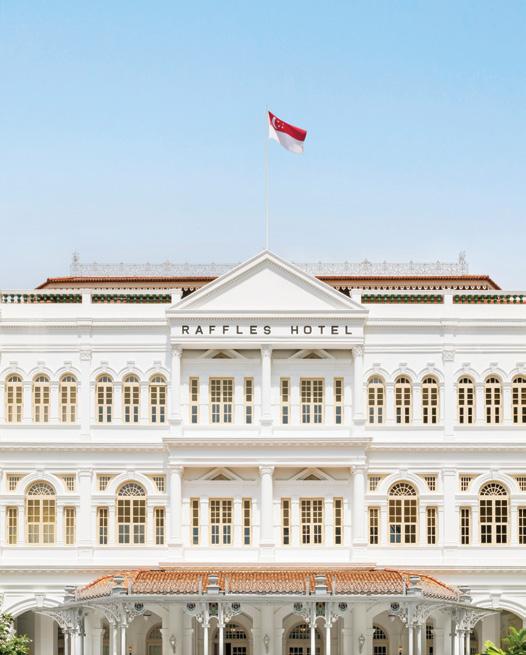
Dear Guests,
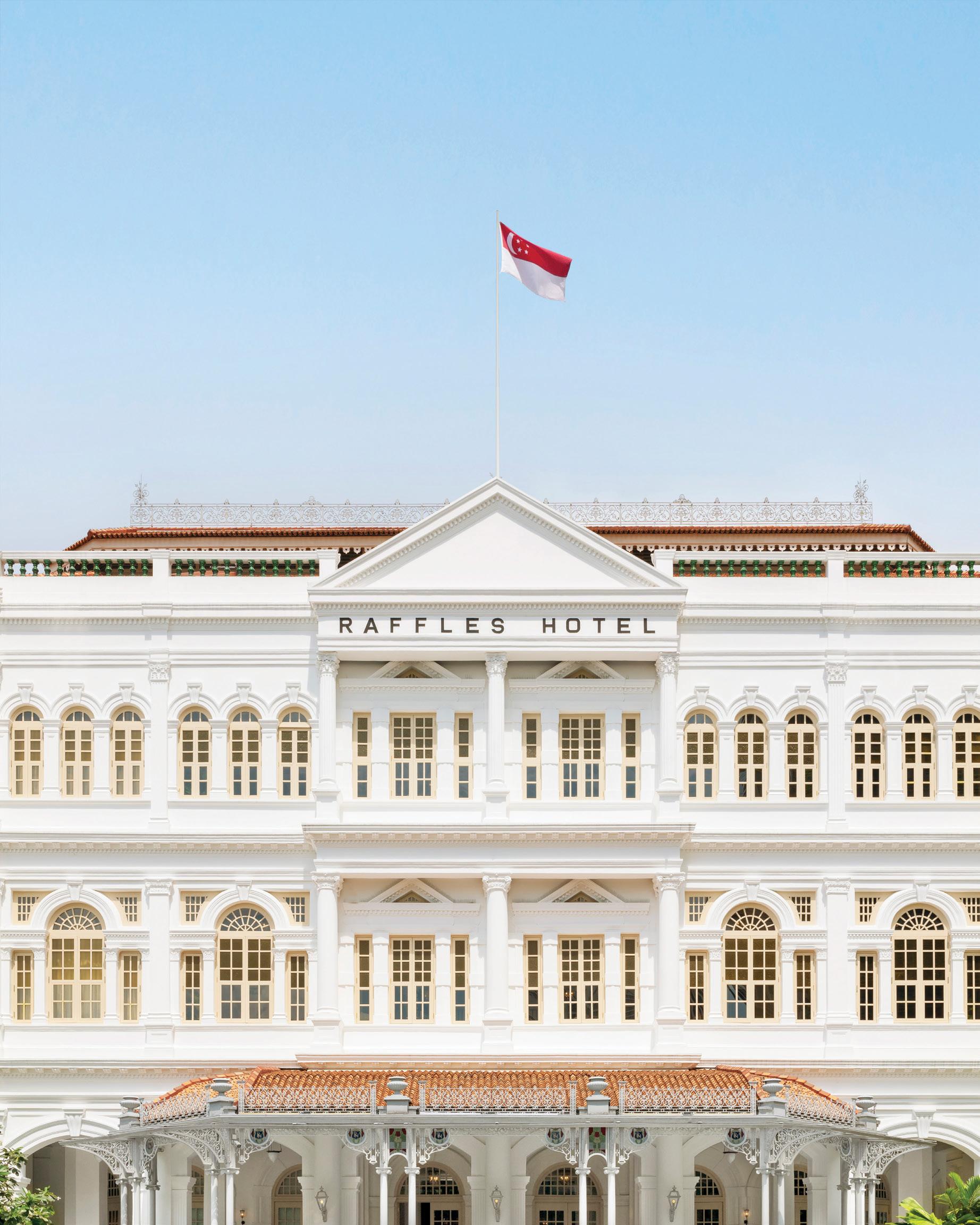
We are honoured to continue our partnership with the Singapore Symphony Orchestra as the Official Hotel Partner for the 2026/27 season. This ongoing collaboration reflects a shared commitment to excellence, heritage and the creation of meaningful experiences that resonate long after the final note has been played. As we welcome this new season, it is our pleasure to join you in celebrating another year of inspiring performances and memorable musical experiences.
Music has a remarkable ability to bring people together, transcending cultures, generations and backgrounds through shared moments of inspiration and discovery. As Singapore continues to grow as a vibrant cultural destination, the arts remain an essential part of our identity, enriching our communities and fostering meaningful connections.
As we embark on another season together, we would like to extend our sincere appreciation to the musicians, conductors, guest artists and dedicated members of the Singapore Symphony Orchestra team. Their passion, artistry and unwavering commitment continue to inspire audiences and contribute significantly to Singapore’s cultural landscape. Behind every performance is an extraordinary collective effort and we are deeply grateful for the dedication that makes each season possible.
Over the years, our partnership has created opportunities to celebrate music both within the concert hall and beyond. Through special collaborations, unique experiences and community engagement, we have witnessed the enduring power of music to connect people and create lasting memories.
We hope each performance offers moments of wonder, reflection and connection. May the music inspire new perspectives, evoke cherished memories and create experiences that stay with you long after the curtain falls.
Raffles Hotel Singapore
b. 1965
Après l'Odyssée (“After the Odyssey”)《守护》(2025)
With support from Vanessa & Darren Iloste
The title I gave to the first movement of my Seventh Symphony “守护” (2025), carries a dual meaning. Beyond the idea of guardianship and stewardship that underpins the entire symphony, it also reflects the fact that this work was composed after Symphony No. 6, Odyssée /长征 (2022).
If the Sixth Symphony was a huge voyage through human conquered the pandemic, with adversity and perseverance, then the Seventh Symphony contemplate what follows the journey – the responsibility to safeguard what has been found cherished, and entrusted to us.
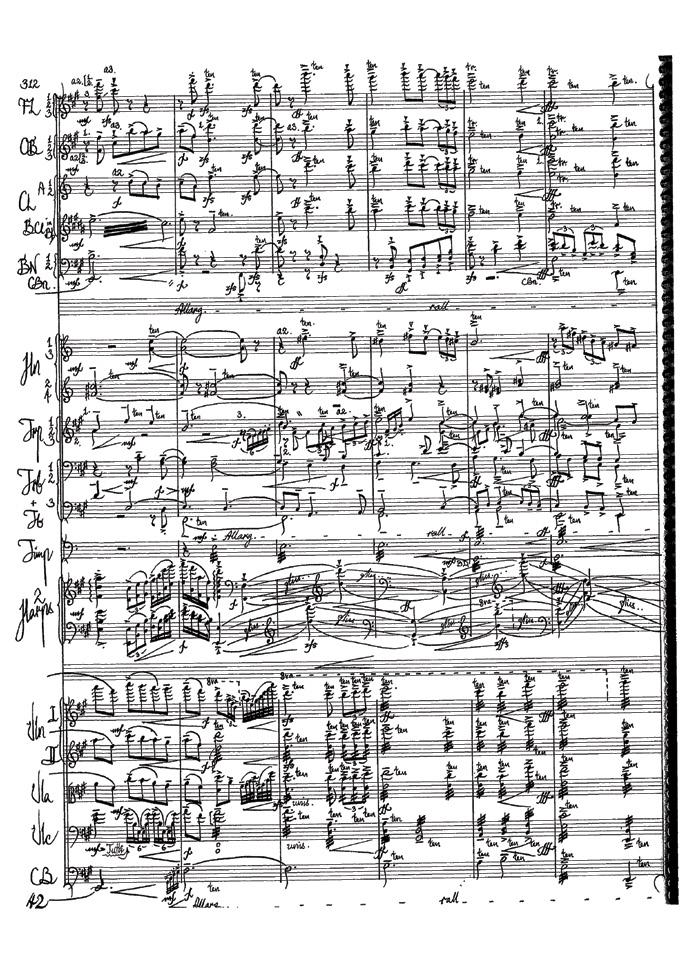
Written in sonata form, the first of a fourmovement symphony opens with a bright and affirmative first subject in A major. This theme embodies the spirit of guardianship—of our Earth, our home, the environment, those around us, and a broader sense of universal compassion. After a substantial exclamatory gesture, the atmosphere darkens. In contrast, the second subject appears in D minor, gradually emerging through contrapuntal writing. Beginning softly, it intensifies toward a sudden, dramatic climax before a transitional passage, built from elements of both subjects and coloured in shades of grey, leads into the Development section.
The woodwinds enter first with the opening portion of the first subject, the strings subsequently reinforce and expand the consequent phrases. This alternating process continues in a series of transformations, eventually reaching the first major peak of the movement and leading directly into the development of the second subject.
The second subject undergoes increasingly intense transformations, moving through Locrian and Phrygian modes, then moves through echoing double-semitones and passages based on the diminished scale. This culminates in the climax of the development which is simultaneously the Recapitulation of the first subject.
Following an even larger exclamatory gesture, the second subject reappears in major. It gradually evolves into pentatonic incorporating contrapuntally with inversions of its consequent phrase. Throughout the recapitulation, the second subject is presented in a bright and optimistic light, eventually growing into the largest climax of the entire movement.
A brief coda follows. Fragments of the minormode second subject are combined with material from the first subject. After several questioning gestures, the music once again turns toward the major mode and concludes the movement gently, warmly, and with quiet assurance.
Après l’Odyssée deliberately avoids extensive development and transformation. Instead, it maintains a degree of restraint, preparing the way for the thematic material of the second and third movements. These ideas will ultimately be united and brought to full fruition in the fourth movement, culminating in a radiant and triumphant conclusion to the symphony.
Instrumentation
3 flutes (1 doubling on piccolo), 3 oboes (1 doubling on cor anglais), 3 clarinets (1 doubling on E-flat clarinet, 1 doubling on bass clarinet), 2 bassoons, contrabassoon, 4 horns, 3 trumpets, 3 trombones, tuba, timpani, percussion (tam-tam, bass drum), 2 harps, strings
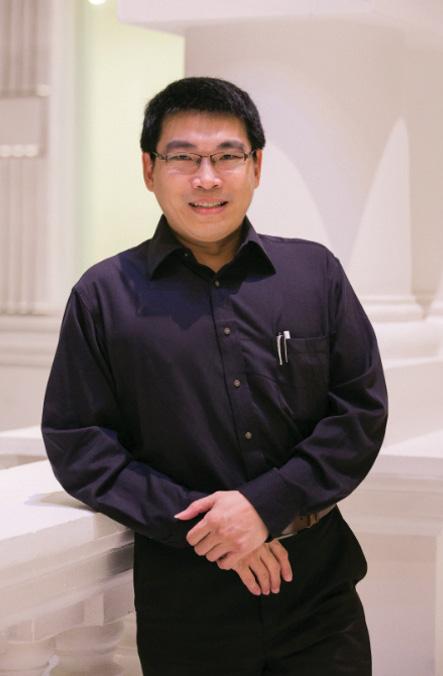
French-trained Tan Chan Boon started composing at age 12, as well as conducting at 16. He studied composition with Leong Yoon Pin, Jacques Castérède, Michel Merlet, and conducting with Shalom Ronly-Riklis, Richard Schumacher and Leonard Bernstein.
Recipient of various awards, Tan was made a Chevalier dan's l'Ordre des Arts et des Lettres by the French Government in 2008.
His main works include seven Symphonies: No. 1 “Aurore” (1986-89), No. 2 “Genèse” (1989-95), No. 3 “Eden” (2002-04), No. 4 “Déluge” (2004-05), No. 5 “Exodus” (2015), No. 6 “Odyssée” (2022), No. 7 “守护 ” (2025), Symphonic Poems, and other orchestral and chamber works.
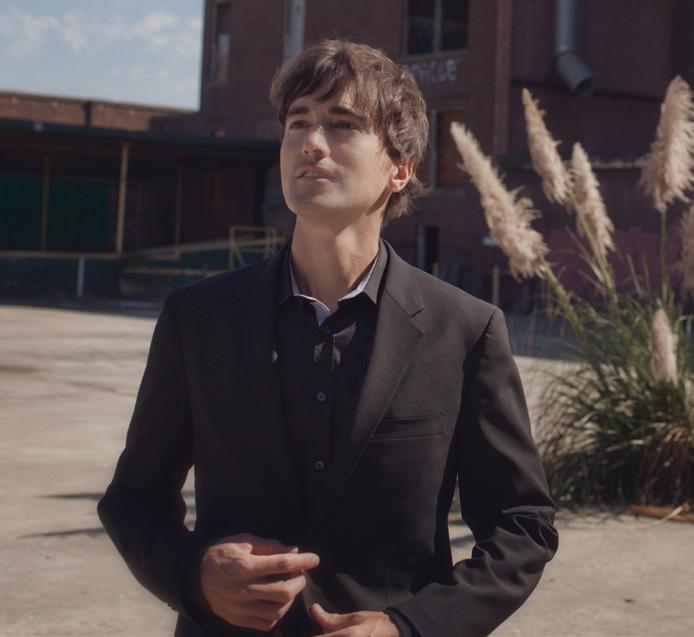
b. 1977
Nomad Concerto (2023)
Song of the balloon man
Magician at the bazaar
Desert vision: oasis
Le jazz manouche
Nomad Concerto explores the mysterious and soulful music of the wanderer. Envisioned to showcase the legendary Old World sound of Gil Shaham, the concerto is informed by a diverse range of traveling cultures from Eastern Europe to the Middle East. In the same way that nomadic music have continually reimagined themselves, the many styles informing the concerto are swirled together into a unique soundworld.
The concerto’s opening movement imagines an old balloon seller wandering through a village as he sings a doleful tune, which is gradually picked up by the villagers. The music draws from a variety of elements of the European Roma, with the soloist sometimes using a strumming pizzicato effect suggestive of mandolin. The movement is followed by the short, scherzo-like ‘magician at the bazaar’ showcasing quicksilver violin figuration that the orchestra transforms into shimmering and gossamer textures.
Over haunting orchestral expanses depicting the vast deserts of the Middle East, the Jewish folk tune “Ani Ma’amin” unfolds in “Desert vision: oasis.” The movement’s heaviness temporarily brightens at the vision of a sparkling oasis. A propulsive finale is animated by the ‘minor swing’ of 1930s jazz clubs, as epitomized by the legendary Django Reinhardt of the ‘manouche’ clan.
Instrumentation
solo violin, 2 flutes (doubling piccolos and alto flute), 2 oboes (1 doubling cor anglais), 2 clarinets, 2 bassoons, contrabassoon, 4 horns, 3 trumpets, 2 trombones, bass trombone, timpani, percussion (triangle, suspended cymbal, finger cymbals, tam-tam, Thai gong, snare drum, bass drum, bongos, drum set, bell tree, castanets, crotales, glockenspiel, rute, shaker, tambourine, vibraphone, wood block, djembe), harp, piano, strings
World Premiere 26 Jan 2024, Philadelphia
Hannu Lintu Inaugural Series: Gil Shaham and Mahler 5 | 17 & 18 Jul 2026
1860 – 1911
Symphony No. 5 in C-sharp minor (1902)
Part I
Trauermarsch Wie ein Kondukt (Death March: like a funeral procession) Stürmisch bewegt. Mit größter Vehemenz (Turbulent. With great vehemence)
Part II
Scherzo: Kräftig, nicht zu schnell (Strong, but not too fast) III
Part III
Adagietto: Sehr langsam (Very Slow)
Rondo-Finale: Allegro – Allegro giocoso. Frisch (Fast – Fast and playful. Fresh)
Mahler’s Fifth Symphony marked a new beginning in his career. He turned away from the song- and voice-focused style of his earlier symphonies and fully immersed himself in creating symphonies of instrumental brilliance and virtuosity. Across his Fifth to Seventh Symphonies, he achieved a new level of compositional mastery, with greater emphasis on instrumental colour and counterpoint (where two or more musical lines are played simultaneously), resulting in a triptych of highly sophisticated and challenging, yet very rewarding, works to perform. Maestro Lintu has remarked that much of contemporary orchestral music has its roots in these three symphonies. Fittingly, we begin his tenure as the fourth Music Director of the Singapore Symphony Orchestra with this work.
Beethoven’s seminal Fifth Symphony established the course of symphonic odysseys for the next century, with its journey from darkness to light. Here, Mahler reframes this idea, writing a symphony about darkness and light.
Mahler groups the five movements into the three parts shown above. This allows him to explore similar musical themes in very different ways across the symphony. There is also a clear journey across the predominant sound of each
part: the first part is dominated by the brass and percussion, the second by the horns and woodwinds, and the third by the strings.
Funeral marches occur in each of Mahler’s symphonies, and the first movement opens with a determined and militaristic fanfare, with Mahler tipping his hat to Beethoven’s famous short-shortshort-long rhythm. This is met by a mournful dirge led by sorrowful strings and weeping woodwinds. Its ceremonial formality is broken by a sudden interruption, marked by Mahler as “Suddenly faster, Passionate, Wild”, as Mahler whips the orchestra into a sonic frenzy, before the regular trod of the cortège returns, but this soon morphs into a type of macabre tango before the trumpet call returns.
The second movement is almost the opposite of the first: all decorum is cast aside in an eruption of passion and intensity underpins this sonata-form movement, with a slow lament at its centre. Mahler contrasts the first fiery theme with an elegiac second theme (introduced in the preceding movement) and puts both through an exhaustive workout. Later in the movement, the second theme is transformed into an achingly passionate form that brings the intensity to greater heights. All this energy collapses as the
music runs out of steam. Mahler tries to revive momentum, until the trumpets step in with a gleaming chorale that offers a vision of paradise. This is but a brief glimpse, as the woodwinds bring us back to the emotional inferno before the music seemingly collapses with a thud.
Mahler continues exploring dualities in the scherzo, placing an unusual concerto-like solo passage for the horn at the centre of the symphony, and juxtaposing the ländler (a heavy rural dance with clapping and stamping) with the waltz (a more sophisticated urban dance). Mahler described the scherzo as “an expression of extraordinary strength. It is mankind in the full brightness of day, at the zenith of life.” The ländler dominates, evoking a simpler yet exuberant life in the countryside, with horn calls echoing across mountains and valleys.
After all the drama, excitement, and strength of the first two parts, Mahler reduces the orchestra to just the strings and harp in the Adagietto. Programme annotator Michael Steinberg wrote that it conveyed the essence of Mahler’s heartache and melodic style. The conductor Willem Mengelberg, one of Mahler’s closest friends, shared that this movement was Gustav Mahler’s declaration of love for Alma.
A solo horn brings us into the Rondo-Finale, where the woodwinds present several themes that follow. Strings continue to dominate the soundscape as Mahler alternates between lyrical and virtuosic fugal sections. Themes from previous movements are transformed almost beyond recognition: the second movement’s chorale is turned into a sprightly tune for the violins, while the Adagietto’s longing melodies are recalled in an almost flippant manner. Towards the end, the trumpet-led chorale is recalled in its original form yet extended even further, building to a triumphal climax, before a virtuoso, boisterous coda brings the symphony to a close with a shout of laughter.
Instrumentation
4 flutes (all doubling on piccolos), 3 oboes (1 doubling on cor anglais), 3 clarinets (1 doubling on E-flat clarinet, 1 doubling on bass clarinet), 3 bassoons (1 doubling on contrabassoon), 6 horns, 4 trumpets, 3 trombones, tuba, timpani, percussion (triangle, cymbals, suspended cymbal, tam-tam, snare drum, bass drum, bass drum with cymbals, glockenspiel, whip), harp, strings
World Premiere 18 Oct 1904, Cologne
First performed by SSO 15 Sep 1989
Notes by Christopher Cheong | Christopher heads the SSO’s artistic planning and administration team.

Fri, 24 Jul 2026
Esplanade Concert Hall
Singapore Symphony Orchestra
Hannu Lintu conductor
Shenyang bass-baritone (Bluebeard)*
Jennifer Johnston mezzo-soprano (Judith)*
Gabriel Chan lighting designer
Andrew Beer concertmaster
Michael Huang surtitles
Gábor Takács-Nagy prologue narrator
R. Strauss
Also sprach Zarathustra, Op. 30 33 mins
Intermission 20 mins
Bartók
Duke Bluebeard’s Castle*
56 mins
Concert Duration: approximately 2 hrs (including 20 mins intermission)
Check-in to tonight’s concert
Scan this QR code with the Singapore Symphony Mobile App.
by Nietzsche
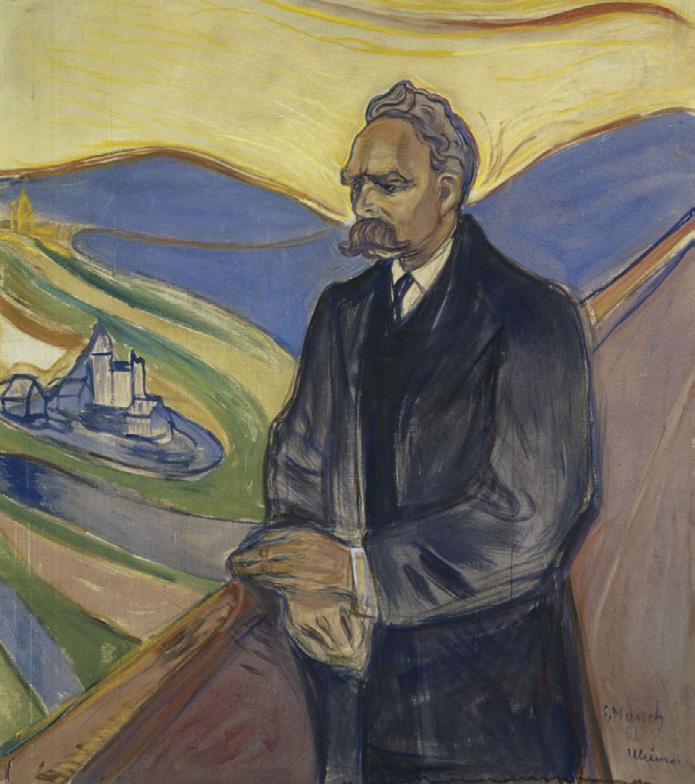
When Zarathustra was thirty years old, he left his homeland and the lake of his homeland and went up into the mountains. Here he enjoyed his intelligence and his solitude and did not weary of them for ten years. Finally, however, his heart was changed – and one morning he arose with the dawn, stepped before the sun and addressed it thus:
– Thus began Zarathustra’s descent. Hannu
I want to give and distribute gifts until the wise ones among mankind have once again grown happy in their folly, and poor in their wealth.
For that purpose I must descend into the deep: as you do in the evening when you go beneath the sea and bring light to the underworld, you abounding star!
I must, like you, be submerged, or ‘perish’, as those men say to whom I wish to descend. So bless me, you calm eye, who can look upon even far too great good fortune without envy.
Bless the goblet that wants to run over, so that the water flows from it in a golden stream and bears the reflection of your rapture everywhere!
Behold! This goblet wants to become empty again, and Zarathustra wants to become a human being again.”
“You mighty star! What happiness would be yours if you did not have those for whom you shine? For ten years you have been coming up here to my cave: you would have been sated with your light and this path if it were not for me, my eagle and my serpent.
But we awaited you each morning, took your overabundance from you and blessed you for it.
Behold! I am tired of my wisdom, like a bee that has gathered too much honey; I have need of outstretched hands.
1864 – 1949
Also sprach Zarathustra, Op. 30 (1896)
Einleitung (Introduction)
Von den Hinterweltlern (Of the Backworldsmen)
Von der großen Sehnsucht (Of the Great Longing)
Von den Freuden und Leidenschaften
(Of Joys and Passions)
Das Grablied (The Song of the Grave)
In addition to being a philosopher, Friedrich Nietzsche was also a pianist and amateur composer, and had a love-hate relationship with the composer Richard Wagner. His best-known work, Also sprach Zarathustra (1883–1885), has been set to music by many composers, including Mahler (Third Symphony), and Delius (A Mass of Life).
It is in Zarathustra that most of Nietzsche’s famous ideas appear, “God is Dead,” the “Will to Power,” and the “Übermensch” (Overman). Nietzsche challenged human existence and aspiration, viewing them as fuelling an endless cycle of self-glorification, and claimed that humanity’s achievements, morality, religion, and the arts, are mere distractions from an underlying banality, from which the Übermensch would lead mankind beyond this eternal recurrence.
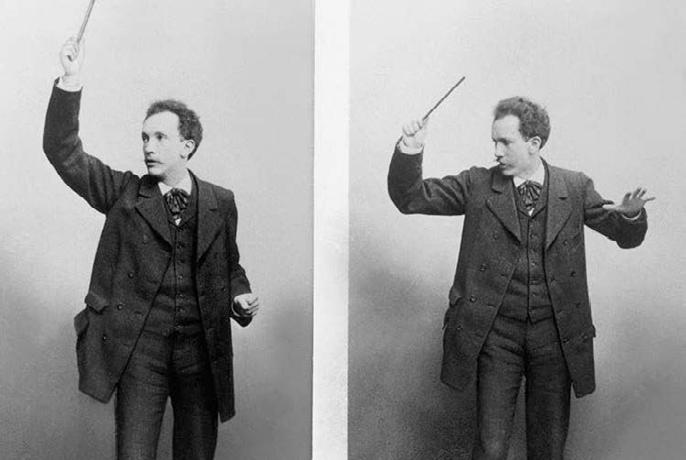
From this vast four-volume treatise, Strauss chose one theme as the basis for his tone poem. He explained that he did not intend to write philosophical music or portray Nietzsche’s work directly, but rather to convey musically the evolution of the human race from its origins, through religious and scientific development, to Nietzsche’s idea of the Übermensch as merely “the starting point” for the musical expression of emotion.
Von der Wissenschaft (Of Science and Learning)
Der Genesende (The Convalescent)
Das Tanzlied (The Dance-Song)
Nachtwandlerlied (Song of the Night Wanderer)
Since its premiere in Frankfurt in 1896, Zarathustra has been frequently performed worldwide. At its Hungarian premiere, it made a lasting impression on the young Béla Bartók, who later recalled being struck “as by a flash of lightning,” finding in it a way forward that led him to throw himself into studying Strauss’s scores and composing again.
Strauss described Zarathustra as an alternation between two remote keys: C major, representing nature and the universe, and B major, representing humanity. He depicts eight chapters from Nietzsche’s work, also wanting to express Zarathustra’s inability to find satisfaction in religion, science, or humour when confronted with the enigma of nature.
Strauss placed Nietzsche’s prologue to Zarathustra before the score, as he awakens and addresses the rising sun. The famous opening then commences, depicting a great Sunrise
The first section concerns the backworldsmen, depicting man in his most primitive state who, according to Nietzsche, places his faith in the promise of an afterlife, rather than try to find fulfilment in this life. The Gregorian Credo melody sounds in the horns, symbolising traditional
religion, before the strings divide into sixteen parts to craft a yearning hymn built in of the great longing. Strauss depicts mankind’s “inquiring mind” to move beyond mere superstition, and the organ’s Magnificat melody is quickly and symbolically banished, before we are plunged into of pleasures and passions, with turbulent, tempestuous emotions leaping and crashing.
The oboe, solo violin and solo cello come to the forefront in the song of the grave, mourning lost youth but reaffirming man’s will to survive. A twelve-tone fugue begins in the basses and cellos, rising gradually and taking flight briefly in of science and learning, celebrating human knowledge and intellectual accomplishment. The fugue builds into a huge climax in the convalescent as Zarathustra collapses from exhaustion, but is soon healed and restored amid twittering bird calls and heralding trumpets.
Strauss pays homage to his illustrious namesake, Johann Strauss Jr (no relation of his), the Waltz-King, with a magnificent Dance-Song. The concertmaster and his associate lead an intoxicating orchestral waltz, in which Zarathustra (whom Nietzsche also described as a dancer) sings of the capricious nature of wisdom and the caprice of life. High spirits abound as the harps and glockenspiel add a sprinkling of stardust around the swooping violins, building to an ecstatic climax.
The bell tolls twelve times for midnight, and Strauss dispels the glitter, bringing us to the ethereal Night-Wanderer’s Song, far removed from the gleaming sunrise. The violins usher in the gentle coda in B major, magically echoed by the winds. The cellos and basses repeatedly interrupt with a low C pizzicato, and have the last word. It is a symbol of both the irreconcilable relationship between man and nature, and of nature’s enduring presence both before and after mankind.
Instrumentation piccolo, 3 flutes (1 doubling on piccolo), 3 oboes, cor anglais, 2 clarinets, E-flat clarinet, bass clarinet, 3 bassoons, contrabassoon, 6 horns, 4 trumpets, 3 trombones, 2 tubas, timpani, percussion (triangle, chimes, cymbals, suspended cymbal, bass drum, glockenspiel), 2 harps, organ, strings
World Premiere 27 Nov 1896
First performed by SSO 15 Sep 1995
Notes by Christopher Cheong | Christopher heads the SSO’s artistic planning and administration team.
Hannu Lintu Inaugural Series: Zarathustra and Bluebeard’s Castle | 24
Béla Bartók 1881 – 1945
Duke Bluebeard’s Castle (1911)
“Once upon a time… Where did this happen? Outside or within?” The boundary between stage and spectator dissolves as Duke Bluebeard’s Castle pulls us into fairytale horror. Rooted in Symbolism, Bartók’s sole opera adopts Béla Balázs’s Hungarian libretto, which originated from the Bluebeard legend first recorded by Charles Perrault in 1697. Bluebeard gives his new wife the keys to his castle but forbids one locked chamber; she enters regardless and finds the bodies of his murdered former wives. In Maurice Maeterlinck’s retelling Ariane et Barbe-Bleu (1899), the structure expands into seven doors.
The castle is a psychological metaphor: Bluebeard’s past and secrecy, and Judith’s desire to know and redeem him. Inspired by Hungarian folk ballads, Balázs’s libretto breathes in continuous eight-syllable lines. Bartók’s wordsetting creates a hypnotic, incantatory flow, with the occasional asymmetrical rhythm.
Shrouded in a slow, pentatonic melody, the pair enter the gates. Bluebeard invites Judith to reconsider, but she has already absorbed the castle’s F-sharp minor world, colouring it with a brighter Mixolydian mode. Judith notices the walls appear to weep yet remains resolute. From this point, the pair diverge in intention and tonality: Judith fantasises about warmth and total revelation, but Bluebeard answers her A with A-flat.
The First Door (Torture Chamber) opens with a cavernous sigh. A red light floods the stage as xylophone and high woodwinds reveal instruments of torture. The ‘blood motif’—a jarring minor second—appears for the first of many times throughout the opera. Opening the Second
Door (Armoury), brass fanfares and aggressive contours depict weapons. Judith’s confidence grows as Bluebeard’s resistance begins to soften.
Celesta and harps create a radiant texture of jewels and gold beyond the Third Door (Treasury). Judith interprets this as evidence of Bluebeard’s love and generosity. A more expansive orchestral palette and a brighter Lydian inflection accompany the Fourth Door (Garden). There emerges a pattern of associating major-key qualities with the doors Bluebeard is willing to have opened. Yet even here, the flowers and clouds are stained by the recurring blood motif.
The Fifth Door (Bluebeard’s Domains) heralds the opera’s dramatic apex. A vast, chorale-like texture, crowned by the organ, erupts into a radiant C major. Its tritone relationship with the opening’s F-sharp intensifies the sense of rupture. Bluebeard attempts to hold the relationship at this moment of grandeur and fascination. Staring stiffly and absent-mindedly at his kingdom, Judith searches for the ever-pervasive signs of blood. As the mood dampens, they each begin to sing against the orchestra’s metre.
The Sixth Door (Lake of Tears) reveals a hollowed orchestral texture in which harp and celesta shimmer over muted strings. Judith takes on non-lyrical qualities, her pitch material circling G with ascents to successively higher peaks as she disentangles from Bluebeard’s embrace. Behind the Seventh Door stand Bluebeard’s three former wives, preserved in a timeless state: Ladies of Dawn, Noon, and Evening. Judith becomes the Lady of Night and is compelled to join them. Tonally, the music returns to the opening’s F-sharp darkness and cantabile string
melody. His final words, ‘Henceforth all will be darkness, darkness, darkness’, seal the work in perpetual night.
The opera’s central tension—widely understood as the irreconcilability between men and women— echoed aspects of Bartók’s own life. In 1910, following his marriage, he wrote to Frederick Delius: “I am very much alone here, apart from my one friend, Kodály.” Yet his wife Márta Ziegler remained steadfast through years of war and hardship, supporting his work in multiple ways. Their marriage ended in divorce in 1923. A century later, we could perhaps transcend gendered interpretations of Bluebeard’s legend to consider a more fundamental truth: the impossibility of fully knowing another person.
First performed by SSO 8 Sep 1995 (Ildikó Komlósi, mezzo-soprano, Kolos Kováts, bass) Hannu Lintu Inaugural Series:
Instrumentation
bass-baritone, mezzo-soprano, 4 flutes (2 doubling on piccolos), 2 oboes, cor anglais, 3 clarinets (2 doubling on E-flat clarinets, 1 doubling on bass clarinet), 4 bassoons (1 doubling on contrabassoon), 4 horns, 4 trumpets, 4 trombones, tuba, timpani, percussion (triangle, cymbals, suspended cymbal, tam-tam, snare drum, bass drum, xylophone), 2 harps, celesta, organ, strings
World Premiere 24 May 1918, Budapest
Notes by See Ning Hui | See Ning Hui is a pianist, researcher, and lecturer passionate about integrating music by lesser-known composers. www.ninghuisee.com

Thu, 6 Aug 2026
Esplanade Concert Hall
Singapore Symphony Orchestra
Sebastian Weigle conductor
Marc-André Hamelin piano*
Andrew Beer concertmaster
Brahms
Piano Concerto No. 2 in B-flat major, Op. 83*
46 mins
Intermission 20 mins
Dvořák
Symphony No. 7 in D minor, Op. 70 35 mins
Concert Duration: approximately 2 hrs (including 20 mins intermission) Dedicated
Check-in to tonight’s concert
Scan this QR code with the Singapore Symphony Mobile App.
1833 – 1897
Piano Concerto No. 2 in B-flat major, Op. 83 (1881)
I II III
IV
Allegro non troppo
Allegro appassionato
Andante
Allegretto grazioso
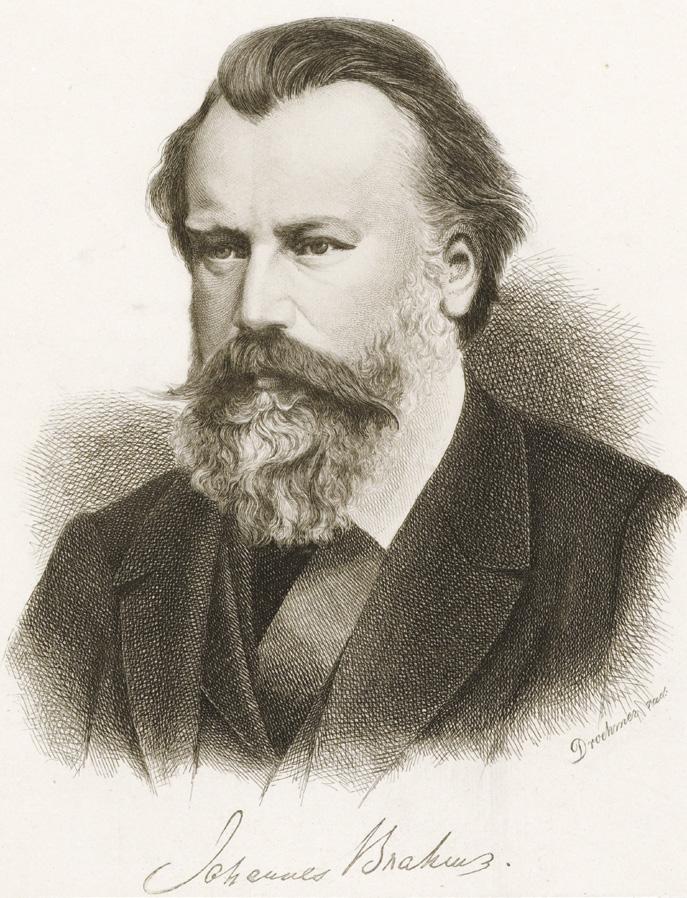
Brahms in 1882. Portrait by Hermann Dröhmer.
The Leipzig premiere of Johannes Brahms’s First Piano Concerto was famously disastrous at best. Brahms determined in the wake of that 1859 concert that “a second one will sound very different,” in his letter to his good friend and violinist, Joseph Joachim. It took Brahms a good twenty or so years before he attempted to write his second piano concerto. During these two decades, his output included the variations on themes by Handel, Haydn and Paganini; numerous chamber works; and over a hundred
songs and some large-scale choral pieces. In this time, he also underwent a few personal breakthroughs, finally finding the confidence to step out of the great Beethoven’s shadow and write a second symphony, as well as the Violin Concerto in D major in collaboration with Joachim.
“a tiny, tiny piano concerto with a tiny, tiny wisp of a scherzo”
By the time he wrote the Piano Concerto No. 2 in B-flat major, Op. 83, Brahms was a middleaged, bearded introvert who had matured in his composition style and was known for writing poignant, emotional works. In a letter to close friend and musical confidante Elisabeth von Herzogenberg, he described in jest that he had just finished “a tiny, tiny piano concerto with a tiny, tiny wisp of a scherzo”. His confidence of success in the work is shown in his dedication of it to “dear friend and teacher Eduard Marxsen”, with whom he had studied when he was seven years of age.
A single, solo horn innocently opens the Allegro non troppo first movement, overlapped by the piano from the depths, echoing the last few notes poetically. After a short commentary by the woodwinds and strings in this chorale style, the solo piano asserts itself with a long passage while
the orchestra remains silent. A dramatic cadenza is followed by the opening theme returning triumphantly via the orchestra. The movement unfurls with thoughtful musical conversations between the piano and the orchestra; whenever things are getting too heated, the opening theme presents itself in various guises to soothe and placate. When the horn call returns for the final section, the piano tinkles above it mysteriously and picks up where the conversation left off at the beginning. Where there was an outburst before, the piano and orchestra continue civilly and lyrically instead. The movement ends in a celebratory mood: trills in the piano while the orchestra restates the theme for the final time, and three strong chords.
From the first few seconds of the Allegro appassionato scherzo, it is clear that Brahms’s “tiny, tiny wisp of a scherzo” is anything but. Set in the key of D minor, the mood is tempestuous and dramatic, full of a pent-up energy that is wild and almost relentless. The violins introduce a yearning theme before the drama returns. Suddenly, we are in the key of D major and seem to have timetravelled back to the Baroque period for a while in the trio section. When the D minor section returns, the roles reverse: orchestra takes the lead and the piano follows.
The spirit of chamber music is most apparent in the Andante. Not unlike the long oboe solo in the slow movement of his Violin Concerto, Brahms bestows a solo cello the privilege this time, with a charming melody that he later turned into a lied with an equally charming title Immer leise wird mein Schlummer (“My Sleep Grows Ever More Gentle”). The piano never tries to steal the melody from the cello, and when it enters, it creates an obscure, dreamy sound world with shifting harmonies. Brahms achieves an ethereal, otherworldly quality with transparent scoring until the solo cello brings the music back into home territory, continuing the conversation in an intimate setting.
The Allegretto grazioso finale is a playful rondo that has the piano and orchestra tossing out memorable themes with a Mozartian wit. Brahms throws in Hungarian melodies and touches of Gypsy music, ending the movement with a brilliant tarantella based on the rondo’s opening theme.
With this concerto, Brahms opened up a new possibility of a symphonic concerto: a hybrid between both genres where the orchestra and soloist are so closely integrated that it is impossible for one part to do without the other.
Instrumentation
solo piano, 2 flutes (1 doubling on piccolo), 2 oboes, 2 clarinets, 2 bassoons, 4 horns, 2 trumpets, timpani, strings
World Premiere 9 Nov 1881, Budapest
First performed by SSO 1 Feb 1980 (Bernard Ringeissen, piano)
Allegro maestoso
Poco adagio
Scherzo: Vivace
Finale: Allegro
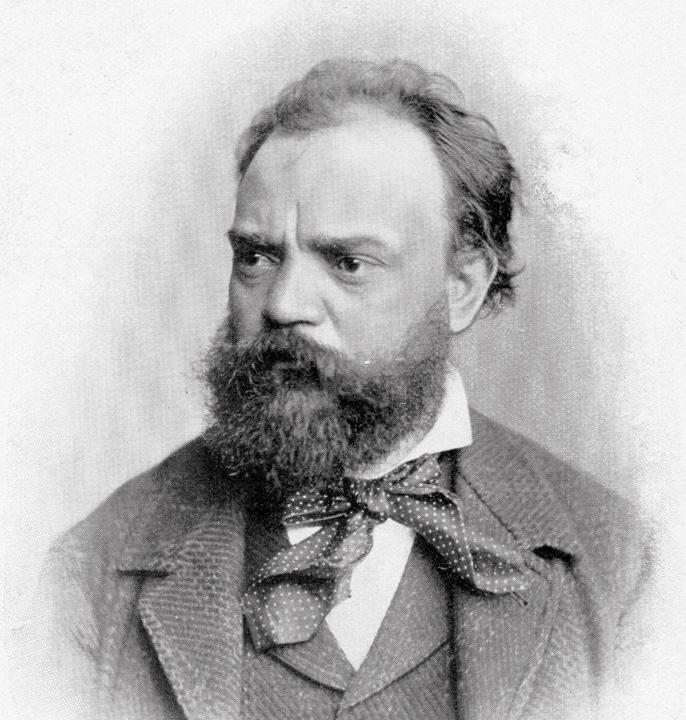
Born on 8 September 1841 in Nelahozeves near Prague, Antonín Leopold Dvořák famously incorporated folk elements into his symphonic compositions. At age six, Dvořák began studying the violin and later took organ and piano lessons. When the Czech composer was a young boy, a train station was built across the street from his home, igniting his passion for trains which provided inspiration for his compositions, including one of his most renowned symphonies.
Commissioned by the Royal Philharmonic Society in London, Dvořák began working on the D minor symphony in early 1885. During a daily walk to the Prague railway station, the composer witnessed a train arriving from abroad. Alighting the train were a group of Czech patriots coming to Prague to attend a musical event in support of the struggling Czech nation. Inspired, Dvořák decided to write the symphony upholding the Czech identity. Shortly after he began, he wrote to a friend: “I am now busy with this symphony for London, and wherever I go I can think of nothing else. God grant that this Czech music will move the world!!”
Opening with a rumbling theme in the cello, the Allegro sets the aggressive, dark mood for the whole symphony. The theme is echoed in the clarinet, followed by tremolos in the strings section. It then turns into a lively ensemble, with arpeggios, scales, and lilting violin melodies. Throughout the movement, the mood shifts from
stormy chords to lyrical melodies that eventually leads to the low rumbling D notes heard in the beginning, now in pianissimo.
The second movement, the Poco adagio, opens in F major with a tender, hymn-like theme presented by clarinets and bassoons over pizzicato strings. This principal melody unfolds in long, arching phrases with folk-song simplicity. The music changes into darker minor keys in the development, where deep harmonies intensify the emotions. An oboe solo emerges above trembling strings, leading to a brass climax in fortissimo before the opening theme returns, now supported by the full orchestra, concluding with hushed strings and woodwinds in peaceful resolution.
The Scherzo in D minor is much more lively than the previous two movements. Erupting with fierce rhythmic energy driven by syncopated accents, sharp dynamic contrasts and aggressive sforzandos create an almost Beethovenian intensity. The main Scherzo theme features a distinctive dotted rhythm heard across all instruments in the orchestra, with brass punctuations adding dramatic weight. The contrasting Trio section shifts to a gentler, more lyrical character in G major, with floating woodwind melodies. Before long, the Scherzo returns, propelling the piece to the last movement.
Like the first movement, the Finale is an Allegro in D minor. Ranking among the most dramatic symphonic movements Dvořák has written, it opens with an angry, dotted theme in D minor. The second theme gives melodic contrast in F major, though with remnants of the darker mood still lingering. Brass fanfares and swirling string passages build to a coda that transforms the minor-key struggle into an enthusiastic D major triumph.
Instrumentation
2 flutes (1 doubling on piccolo), 2 oboes, 2 clarinets, 2 bassoons, 4 horns, 2 trumpets, 3 trombones, timpani, strings
World Premiere 22 Apr 1885, London
First performed by SSO 31 Oct 1980
to the 10th grade and
We would like to express our deepest appreciation to the following individuals and organisations who support our mission to create memorable shared experiences with music in the past year. Without your support, it would be impossible for the SSO to continue to strive for artistic excellence and touch the hearts of audiences.
Patron Sponsor
Tote Board Group
(Tote Board, Singapore Pools & Singapore Turf Club)
Maestro Circle
Mr & Mrs Goh Yew Lin
Stephen Riady Foundation
Temasek Foundation
The HEAD Foundation
Anonymous
Concertmaster Circle
Bowen Enterprises Pte Ltd
Dr & Mrs Antoine & Christina Firmenich
Elaine and Eduardo Saverin Foundation Ltd
Kris Foundation
Mr Christopher & Mrs Rosy Ho
Anonymous (2)
Symphony Circle
DBS Bank Ltd
De Miguel Solaguren Family
Doris Sohmen-Pao
Dr Thomas & Mrs Mary Zuellig
Hao Glory Family Foundation
Indosuez Wealth Management
Madeleine Cheok & Wong Hong Ching
Ms Paige Parker & Mr Jim Rogers
Anonymous (2)
Andrew & Stephanie Vigar
Andy, Raymond, Bubble & Breton Tan
Cara & Tamara Chang
Colin Lee
Dr Geh Min
Far East Organization
Farhana Sharmeen
Geoffrey & Ai Ai Wong
Geraldine Choong & Dennis Au
Mavis Lim Geck Chin
Miriam & Merle Hinrich
Neo Group Limited
Patek Philippe Southeast Asia
Paul & Lena Ng
Priscylla Shaw
Prof Chan Heng Chee
UOB
Yao Hsiao Tung
Yong Ying-I Anonymous
Adsec Singapore Pte Ltd
Ayesha Aziz Khan
Azeeza Aziz Khan
Bernard Ryan & Michael Rowe
Bernhard Michael Steiner
BinjaiTree
Blossom Hing
C & L Fund
Cavazos Tinajero Family
Chen Xiaoyan
Chloe Lee En Yi & Family
Chuin Wei Yap
Colin & Janet Leong
Daniel Choo & Family
Devika & Sanjiv Misra
Dorian Goh & Rathi Ho
Dr & Mrs Adrian Koh
Dr & Mrs Choy Khai Meng
Dr June & Peter Sheren
Dr Karen Soh
Dr Kevin T Yap
Dr Kieron Lim
Eva & Nilay Patel
Frans & Marie-Pierre Mol
Geraldine Lim & Lim Him Chuan
Goh Swee Chen
Guy Hentsch & Geoffrey Yu
Hemal & Paritosh Thakore
Hong Leong Foundation
JCCI Singapore Foundation
Jonathan Stona
Joy & Han Li Toh
Julien Willeme
Kae Fujii & Laurent Proutiere
Kenneth Kwok
Kris Foundation - Lim Kang Ning
Krishnan Family
Lee Hsien Loong
Leong Wai Leng
Liew Wei Li
Lito & Kim Camacho
Marina Bay Sands
Matthew L & Kenneth K
Mr & Mrs Choo Chiau Beng
Mr Tony & Mrs Melanie Chew
Pavilion Capital
PCS Pte Ltd
Prima Limited
Prof Gralf & Silvia Sieghold
Robert & Vivian Chandran
Sameer Sain
Shanghai Tunnel Engineering (Singapore) Pte Ltd
Sing Lun Group
Tan Chin Tuan Foundation
Tan Meng Cheng Ivan
Tiffany Lim
Timothy & Selena Hia
Tower Capital Asia
Vanessa & Darren Iloste
Wendy Yap
Anonymous (7)
Seranade Donors
Aadarsh Baijal
Adrian Chua
Ang Jian Zhong
Anthony & Chloe Tan from ACE Team Foundation
Anthony Tay
Bloomberg Singapore Pte Ltd
Brown-Forman
Chloé & Romain de Laubier
Clarissa Chow
Claudia & Henning Figge
Cubeassociate Pte Ltd
Dr Victor Lim
D-Y Lin
Embassy of France in Singapore
Francoise Mei
G L Wee
Grace Fu
Hartley & Hong Lynn Clay
Isaiah & Suwei K
Jesher Loi
John & Eliza Bittleston
John & Pauline Foo
Kenneth Kan
Kim Hae Hyun & Heo Soomin
Adeline Ang
Aileen Tang
Amy Lin
Belinda Koh
Benedict Teo
Benito Ting
Benjamin Ma
Bettina Lieske
Chan Ah Khim
Charles Robertson
Charmaine Lim
Cheng Eng Aun
Choo Lim
Clara Lim-Tan
Craig McTurk
David Chan & Sarah Chan
David Leung
Dr June Goh
Dr Peter Chew
Evelyn Chin
Faith Chia
Hwang Chih Ming
In memory of Timothy Kok Tse En
Jazz Chong & Edmund Ng
Jeanne Lee
Jennifer & Alexander Chan
Jennifer Lee
Lai Siu Chiu
Lau Leok Yee
Lee Yeow Wee David
Lilian Loke
Liwen & Steven Holmes
Lorinne Kon
Madeleine Lee
Maisy Koh
Marcelo V Achoa & Silvia Bordoni
Meng
Michael Brenninkmeijer
Mr & Mrs Ong Kong Hong
Nicole & Edoardo Prina
Patricia Lim
Prof Arnoud De Meyer
Prof Cham Tao Soon
Ruyters Audrey
Suzanne Lim
Tan Wan Chi
Tantallon Capital Advisors Pte Ltd
The Linh Tinh Family
Wayne & Kim Giap Khoo
Xinyi Ong
Anonymous (3)
Jerry Gwee
Jinny Wong
Julian & Jane Tan
Julian & Sandra Chang
Julien Brousseau
Kasch Kimmy Kimberly
Kirk Tay
Kok Leong Lim
Kris Wiluan
Lawrence & Celeste Basapa
Martin Siah & Wendy Long
Michael & Katherin Puhaindran
Mr & Mrs Tan Soo Nan
Naserah Tyebally
Pierre Colignon
Ren QiMei
Ronald & Janet Stride
Sam & Claire Loh
Soh Leng Wan
Tang See Chim
Wang Pei Zhong
Warburg Pincus Singapore Pte Ltd
Winston Hauw
Wong Yan Lei Grace
Zheng HongBo
Anonymous (12)
A T Teo
A.R.
Adi F & Hui Shi
Ahn Sehwan
Aileen Teo
Akihiro Nemoto
Alexey Filimonov
Alvin Lim Cheng Hin
Alwyn Loy Suan Mao
Andre Francis Maniam
Andrew & Jacqueline Tan
Andrew Cheong
Ang Hui Tiong Eugene
Ang Quek Kaifeng
Ang Seow Long
April Mak
Aw Jia Yu
Bella Gan
Brenda Ang
Bryan Carmichael
Casey Tan Khai Hee
Cham Gee Len
Chang Chee Pey
Chen H W
Cheng Sok Theng
Chong David
Chong Mi-Li Pamela
Chong Sien Thye Albert
Chong, Wai Ying Ruby
Christopher Chen Li Hsian
Chua Saw Lan
Cindy
Claire & Ian Jones
Colin Lang
Cynthia Chee
D Cheong
Daniel Yong
DCP
Deborah Chee
Denis Tenchurin
Denise Wong
Derek Lim HK
Doris Song
Dr & Mrs Winson Lay
Dr Anne-Marie Schleich
Dr Chong Shin Min
Dr Lien Boon Hua
Dr Norman Lee
Dr Tan Lay Kok
Dr Tashiya Mirando
Dr Teo Kien Boon
Dr Wong Hin Yan
Dr Yap Zhu Li
Edith & Sean Lim
Emma Lexi Ng
Ernest Khoo
Esther Fang
Gallery NaWei Pte Ltd
Gan Chee Yen
Ghislain Olagne
Giles Tan Ming Yee
Goh Chiu Gak
Goh Jun Yi
Hans Michael Brandes
Heinrich Grafe
Henry & Tiffany
Herman Felani MY
Ho Jun Yi & Family
In loving memory of Jasper
Irina Piano
James Tan Teng Chuan
JAR Wealth Management Pte Ltd
Jason & Jennifer Chew
Jay Ganapathy
Jeanie Cheah
Jean-Pierre Felenbok
Jessica Tan
Jiang Wenzhu
Jiyeon Kang
Joanne Lim
Johannes Yap & Family
Joseph Wolpin
Joseph Yoong
K Goh & Family
Keith Goh
Kelvin Ho
Kelvin Wong
Khoo Ken Hui
Khor Cheng Kian
Kianyew
Koh Ruizhi
Kyra Teo
Laurent Ye
Lee Sian Ching
Leonard Augustine Choo
Li Danqi & Liu Yi
Lily Low
Lim Boon Kong Andrew
Lim Shue Churn
Lim Yin Yin, Jaime
Lim Yuin Wen
Low Boon Hon
Low Eng Huat Peter
Maggie Dong
Manski-Nankervis Jo-Anne Elizabeth
Marcel Smit & Hanneke Verbeek
Marian Goh
Mark Cranfield
Mark Wang & Gloria Guo
Maxim Yanchenko
Michelle & Eric Anziani
Michelle Loh
Michelle Tan & Soo Yixin
Michelle Tay
Min Tan
Minwei
Mr & Mrs Jeremy Ee
Mr & Mrs Kevin
Mr & Mrs Pont
Mr Gareth Tan & Dr Roweena Yip
msm-productions
Ng Shien
Ngiam Shih Chun
Nguyen Quoc Khanh & Vu Phuong Nhi
Nicolas Pascale Rouveyre
Nikki Padilla & Sebastian L. Sohn
Nishioka Hiroyuki
Nomura Singapore Limited
Nurture With Love Suzuki Music School
Ong Chee Siong
Ong Wee Shiang
Parthesh Gulawani
Patricia Ho
Pauline Ang
Prof Goh Suat Hong
Prof Gungwu Wang
Robert Khan & Co Pte Ltd
Ryan Tan
Sangeeta Razu
See Chai Geok
Seo Miju & Lee Sung Uk
Serene Yeo
Shermin Teh
Siveraman K Pillai
Stephanie Hsiao Yu Lee
SY Lee
Tan Kok Huan
Tan Yi Bin
Teo Eng Chai
Terence Wu and Cheryl Lim
The McCann Family
Tiffany Choong & Shang Thong Kai
Timothy Leong
Tom Szetu
Trina Liang
TseTsean
Tsou Lei Shirley
Victor Huang Kuan Kai
Victor Ow
Viktor & Sonja Leendertz
Virna Machado-Ashish Goyal
Vivien Goh
Voon S Leong
Wang Lei & Gao Bo
Wendy Leong Marnyi
Wennie Wong
Wicky Wong
Wong Lai Foon
Xiao Li
Xu Yixin
Yang Tian
YC Chen
Yee Deng Tan
Yong Chuk Kwin
Yong Ning & Candice Foo
Yong Seow Kin
Zhai, Yuxiang
Zhihong Chen
Zhu Yulin
Anonymous (37)
This list reflects donations that were made from 1 Jul 2025 to 30 Jun 2026. We would like to express our sincere thanks to donors whose names were inadvertently left out at print time.
The Singapore Symphony Group is a charity and a not-for-profit organisation. Singapore tax-payers may qualify for 250% tax deduction for donations made. You can support us by donating at www.sso.org.sg/donate or www.giving.sg/sso










4
4
While SSO is supported partially by funding from the Singapore government, a significant part can only be unlocked as matching grants when we receive donations from the public. If you are in a position to do so, please consider making a donation to support your orchestra –Build the future by giving in the present.
As a valued donor of the SSO, you will receive many benefits.
We provide our Corporate Donors with impressive entertainment and significant branding opportunities. Through our tailored packages, corporates may benefit from:
• Publicity and hospitality opportunities at an SSO concert or your private event,
• Acknowledgement and mentions in SSO’s key publicity channels,
• National Arts Council (NAC) Patron of the Arts nominations,
• Tax benefits.
Packages start at $10,000 and can be tailored to your company’s branding needs.
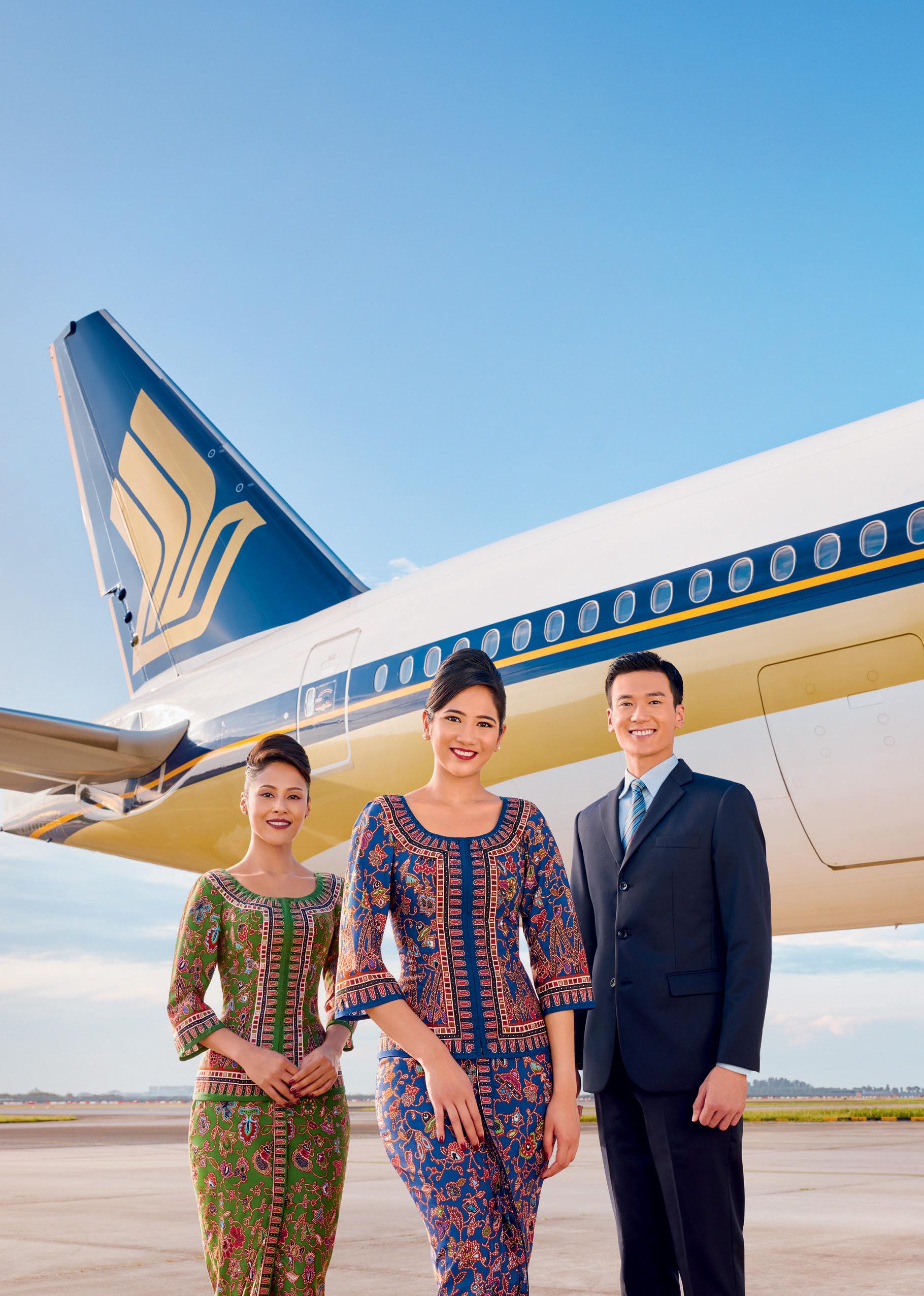
We partner with various corporates through tailored in-kind sponsorship and exchange of services. Current and recent partnerships include Official Hotel, Official Airline, and we offer other exciting titles.
For more details, please write to Sarah Wee at sarah.wee@sso.org.sg

SSO Concertmaster GK Goh Chair
Established in July 2017, the SSO Concertmaster, GK Goh Chair honours Mr Goh Geok Khim, and celebrates his enduring contribution to Singapore’s cultural landscape. We extend our gratitude to the Family and Friends of Mr Goh, and especially to Mr and Mrs Goh Yew Lin, for their generosity. The position is held by Andrew Beer.
We recognise major gifts that help sustain the future of the Singapore Symphony Group. The recognition includes naming of a position in the SSO or in our affiliated performing groups such as the Singapore
In January 2025, the SSO Quantedge Music Director position was named in recognition of a major donation by an anonymous donor. The position is held by Maestro Hannu Lintu.
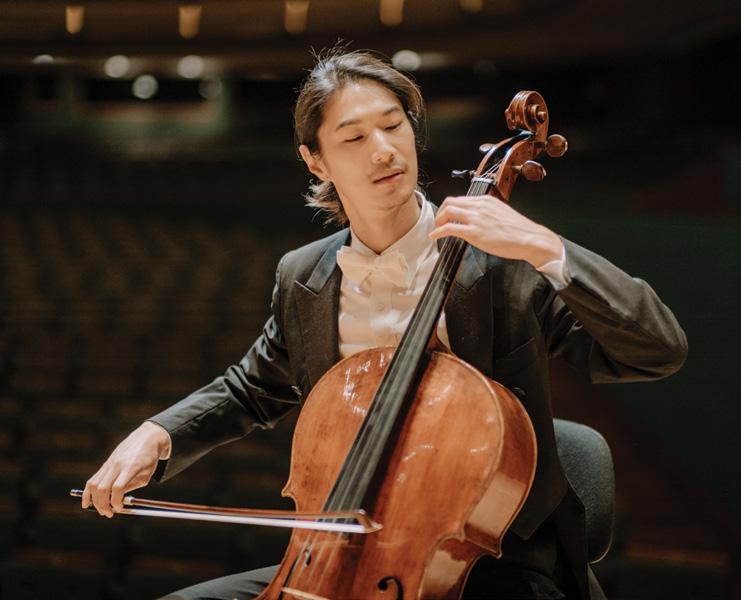
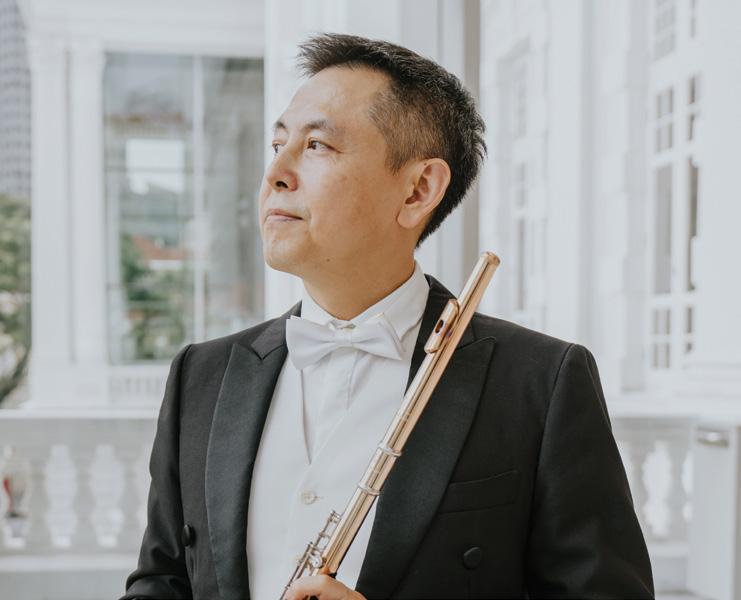
SSO Principal Cello The HEAD Foundation Chair
In recognition of a generous gift from The HEAD Foundation, we announced the naming of our Principal Cello, The HEAD Foundation Chair in November 2019. The position is currently held by Principal Cellist Ng Pei-Sian.
SSO Principal Flute Stephen Riady Chair
In recognition of a generous gift from Dr Stephen Riady, we announced in May 2022 the naming of our Principal Flute, Stephen Riady Chair. The position is currently held by our Principal Flutist Jin Ta
SSO Principal Viola Tan Jiew Cheng Chair
In recognition of a generous gift from the Estate of Tan Jiew Cheng, we announced in February 2024 the naming of our Principal Viola, Tan Jiew Cheng Chair. The position is currently held by our Principal Violist Manchin Zhang
Chair
Goh Yew Lin
Chang Chee Pey
Chng Kai Fong
Andress Goh
Kenneth Kwok
Clara Lim-Tan
Jesher Loi
Lynette Pang
Prof Qin Li-Wei
Jovi Seet
Farhana Sharmeen
Doris Sohmen-Pao
Prof Peter Tornquist
Geoffrey Wong
Andrew Yeo Khirn Hin
Executive & Nominating Committee
Goh Yew Lin (Chair)
Chng Kai Fong
Lynette Pang
Geoffrey Wong
SSO Council
Alan Chan (Chair)
Odile Benjamin
Prof Chan Heng Chee
Prof Arnoud De Meyer
Dr Geh Min
Heinrich Grafe
Khoo Boon Hui
Liew Wei Li
Lim Mei
Sanjiv Misra
Paige Parker
Dr Stephen Riady
Priscylla Shaw
Prof Gralf Sieghold
Prof Bernard Tan
Dr Tan Chin Nam
Wee Ee Cheong
Yong Ying-I
Human Resources Committee
Doris Sohmen-Pao (Chair)
Jesher Loi
Prof Qin Li-Wei
Heinrich Grafe*
Carmen Wee*
Finance & Investment Committee
Geoffrey Wong (Chair)
Andress Goh
Chua Keng Hong*
Alex Lee*
Development Committee
Prof Chan Heng Chee (Chair)
Odile Benjamin
Dr Geh Min
Heinrich Grafe
Khoo Boon Hui
Lim Mei
Leonard Ong
Paige Parker
Priscylla Shaw
Dr Tan Chin Nam
Audit & Risk Committee
Jovi Seet (Chair)
Prof Peter Tornquist
Andrew Yeo Khirn Hin
Ryan Siek*
Community & Youth Engagement Committee
Clara Lim-Tan (Chair)
Chang Chee Pey
Farhana Sharmeen
Asst Prof Kat Agres*
Cecilia Pang*
*co-opted member
Symphony Ball Committee
Paige Parker (Chair)
Celeste Basapa
Geoffrey Wong
Kris Tan
Joy Tan
Dr Karen Soh
Kim Camacho
Lim Kang Ning
Farhana Sharmeen
SSO Musicians’ Committee
Hoang Van Hoc
Austin Larson
Li Xin
Christopher Mui
David Smith
Elaine Yeo
Zhao Tian
Chief Executive Officer
Kenneth Kwok
Deputy CEO
Programmes & Production
Kok Tse Wei
CEO Office
Shirin Foo
Musriah Bte Md Salleh
Organisation Development
Lillian Yin
Artistic Planning
Christopher Cheong (Head)
Artistic Administration
Jodie Chiang
Terrence Wong
Jocelyn Cheng
Michelle Yeo
Operations
Ernest Khoo (Head)
Library
Wong Yi Wen
Cheng Yee Ki
Ng Yi Xiu
Orchestra Management
Chia Jit Min (Head)
Kelvin Chua
Charlotte Tan
Production Management
Noraihan Bte Nordin
Nazem Redzuan
Leong Shan Yi
Asyiq Iqmal
Khairi Edzhairee
Benjamin Chiau
Syed Muhammad Idris Bin Ramli
Deputy CEO
Patrons & Corporate Services
Jenny Ang
Community Impact
Community Engagement
Kua Li Leng (Head)
Whitney Tan
Lynnette Chng
Chua Xu Yang
Darren Siah
Choral Programmes
Kua Li Leng (Head)
Lu Heng
Chang Hai Wen
Mimi Syaahira
Jasmine Khaliesah Bte Yuraimi
Singapore National Youth Orchestra
Ramu Thiruyanam (Head)
Tang Ya Yun
Tan Sing Yee
Ridha Ridza
ABRSM
Patricia Yee
Lai Li-Yng
Joong Siow Chong
Freddie Loh
Corporate Services
Finance, IT & Facilities
Rick Ong (Head)
Alan Ong
Goh Hoey Fen
Loh Chin Huat
Md Zailani Bin Md Said
Human Resources & Administration
Valeria Tan (Head)
Janice Yeo
Fionn Tan
Netty Diyanah Bte Osman
Patrons
Development
Chelsea Zhao (Head)
Nikki Chuang
Sarah Wee
Samantha Lim
Eunice Salanga
Kevin Yeoh
Audience & Communications
Cindy Lim (Head)
COMMUNICATIONS
Ong Shu Chen
Elizabeth Low
Tan Li Ying
SOCIAL MEDIA & CONTENT
Nikki Loke
Chia Han-Leon
Jana Loh
Iylia Jamaludin
Hong Shu Hui
Kashmira Kasmuri
MARKETING
Myrtle Lee
Carrie Woo
DATA & DIGITAL PROJECTS
Calista Lee
Lim Wen Jie
CUSTOMER EXPERIENCE
Randy Teo
Dacia Cheang
Joy Tagore

8 Aug 2026
Victoria Concert Hall
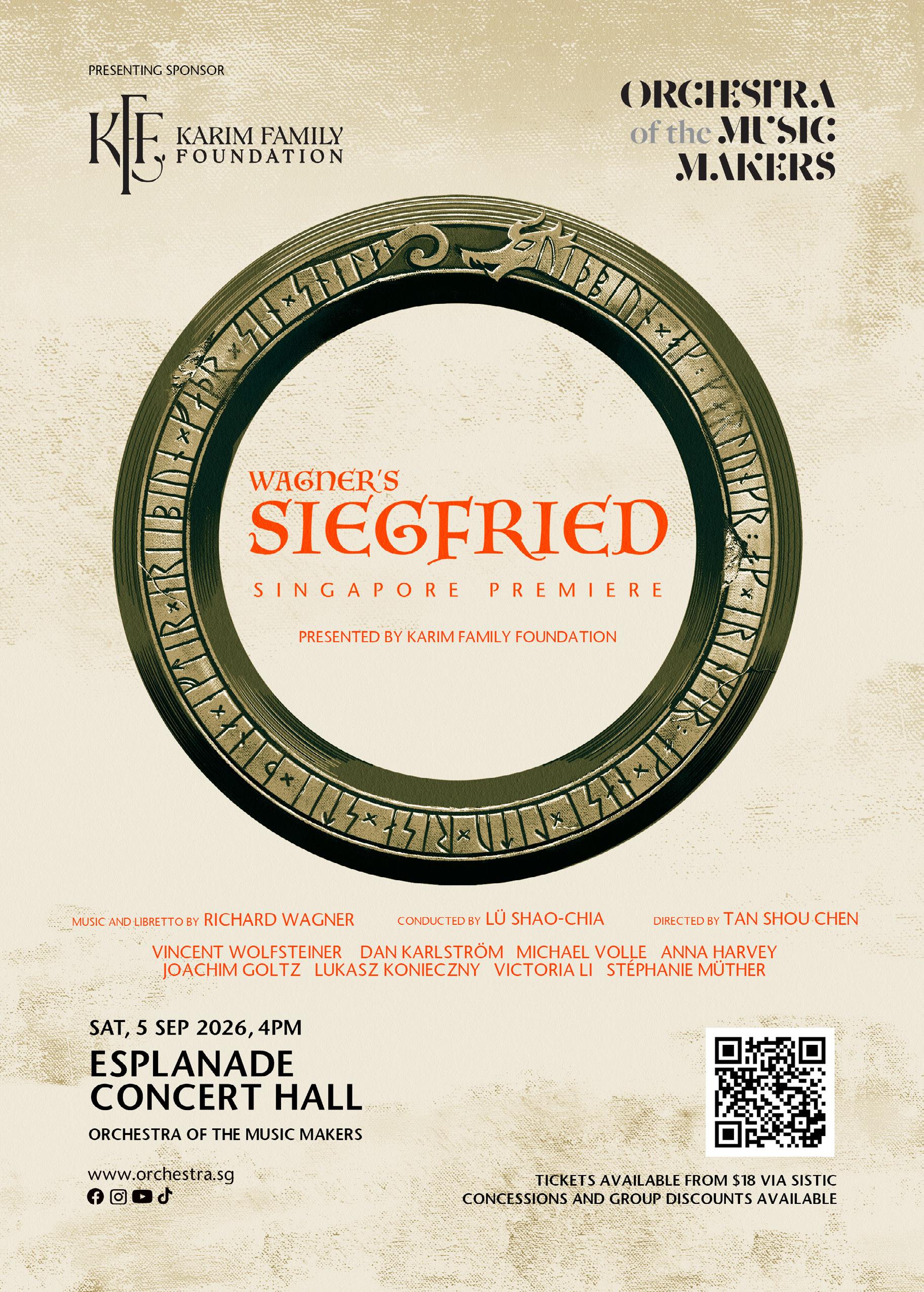
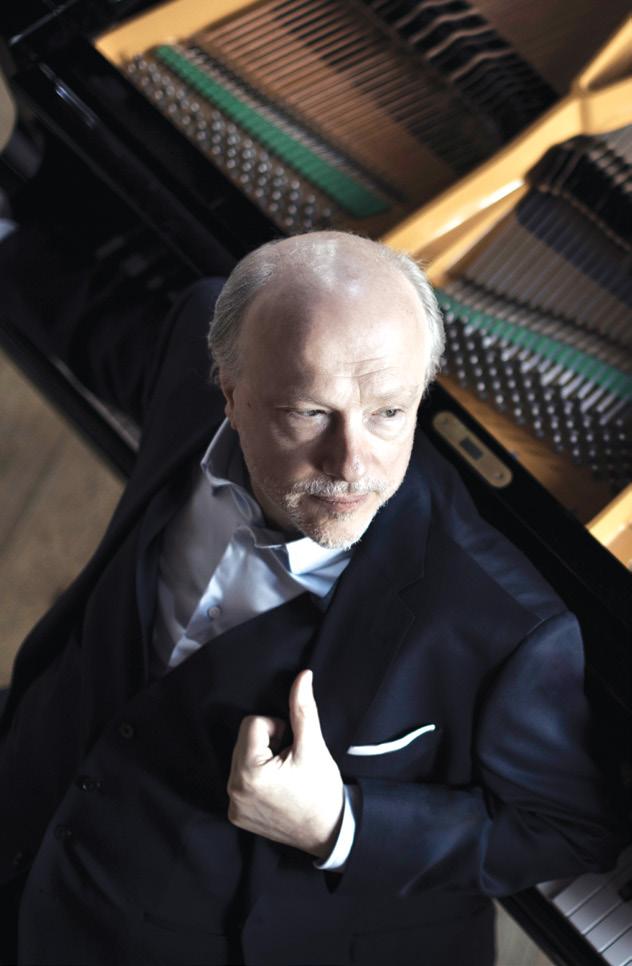
SSO Chamber Series: The Trout Quintet and Brahms with Marc-André Hamelin
Horn Trio in E-flat major, Op. 40
Schubert
Piano Quintet in A major, D. 667 “Trout”
Tickets from $20. Brahms
21 & 22 Aug 2026
Esplanade Theatre
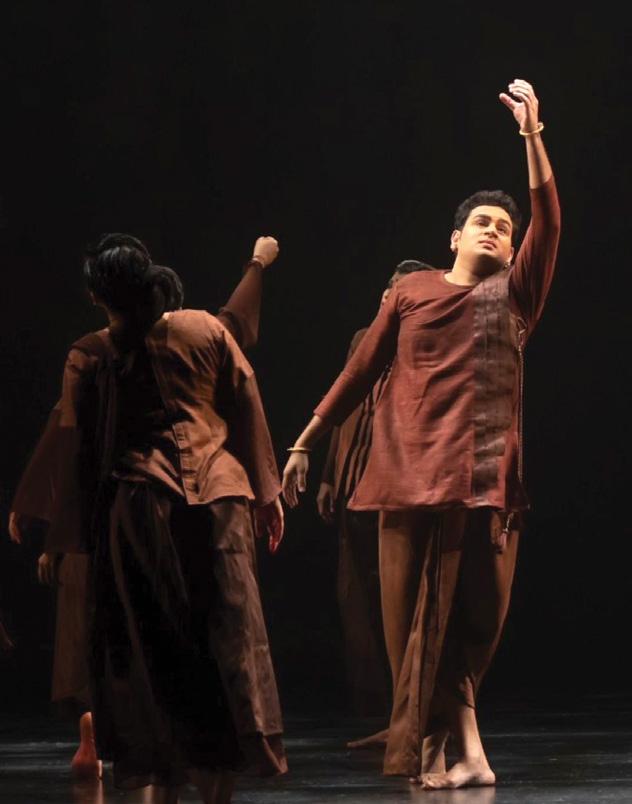
Apsaras Dance Company proudly presents Agápe, a multidisciplinary work exploring the beauty of human relationships. Led by Artistic Director Aravinth Kumarasamy, Agápe also features conductor Joshua Tan, choreographer and guest dancer Rama Vaidyanathan, principal dancer Mohanapriyan Thavarajah, music composer Dr Rajkumar Bharathi, music arranger and director Sai Shravanam, costume design - MOHA by Priyan, set designer Wong Chee Wai, and dramaturg Lim How Ngean.
Tickets from $30
PATRON SPONSOR
MATCHED BY





The vision of the Singapore Symphony Group is to be a leading arts organisation that engages, inspires and reflects Singapore through musical excellence. Our mission is to create memorable shared experiences with music. Through the SSO and its affiliated performing groups, we spread the love for music, nurture talent and enrich our diverse communities. The Singapore Symphony Orchestra is a charity and not-for-profit organisation. You can support us by donating at www.sso.org.sg/donate.