28
35
From the New World
Fri, 16 Jan 2026
Esplanade Concert Hall
Earth and The Planets + Elgar’s Cello Concerto
Thu & Fri, 22 & 23 Jan 2026
Esplanade Concert Hall
Esplanade Concert Hall 20
Pictures at an Exhibition / Bertrand Chamayou & Pierre Bleuse
Fri & Sat, 30 & 31 Jan 2026
For the enjoyment of all patrons during the concert:
Please switch off or silence all electronic devices.
Please minimise noises during performance. If unavoidable, wait for a loud section in the music.
No photography, video or audio recording is allowed when artists are performing.
Non-flash photography is allowed only during bows and applause when no performance is taking place.
Go green. Digital programme books are available on www.sso.org.sg.
Photographs and videos will be taken at these events, in which you may appear. These may be published on the SSO’s publicity channels and materials. By attending the event, you consent to the use of these photographs and videos for the foregoing purposes.
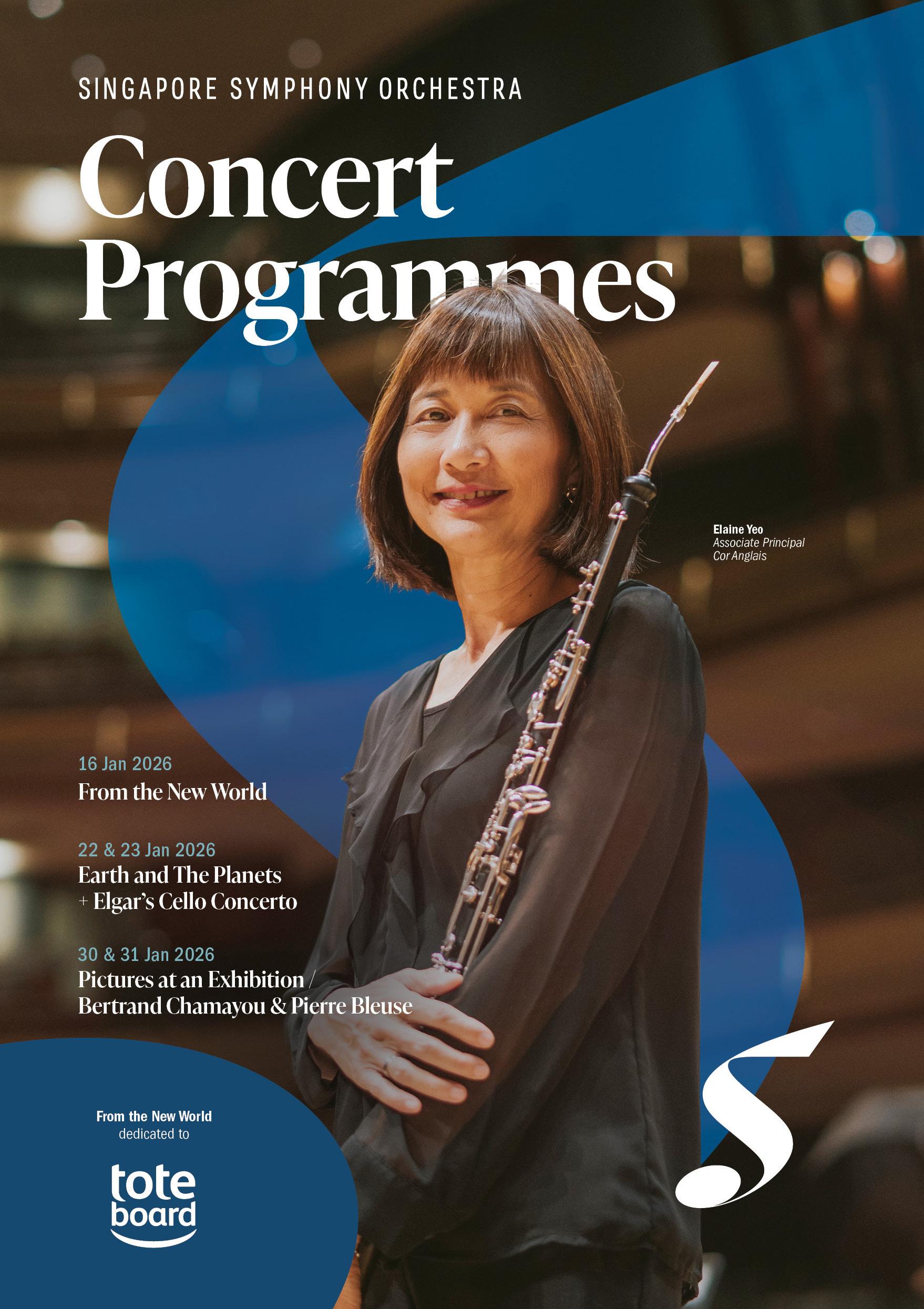
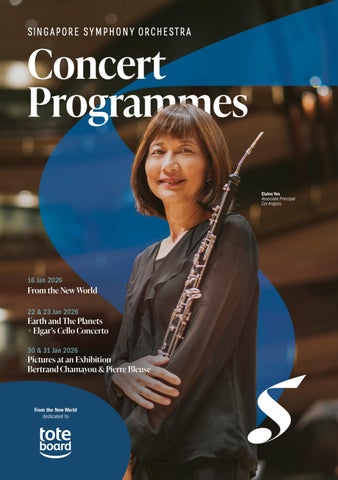
Cover photo: Elaine Yeo © Sloth Creatives
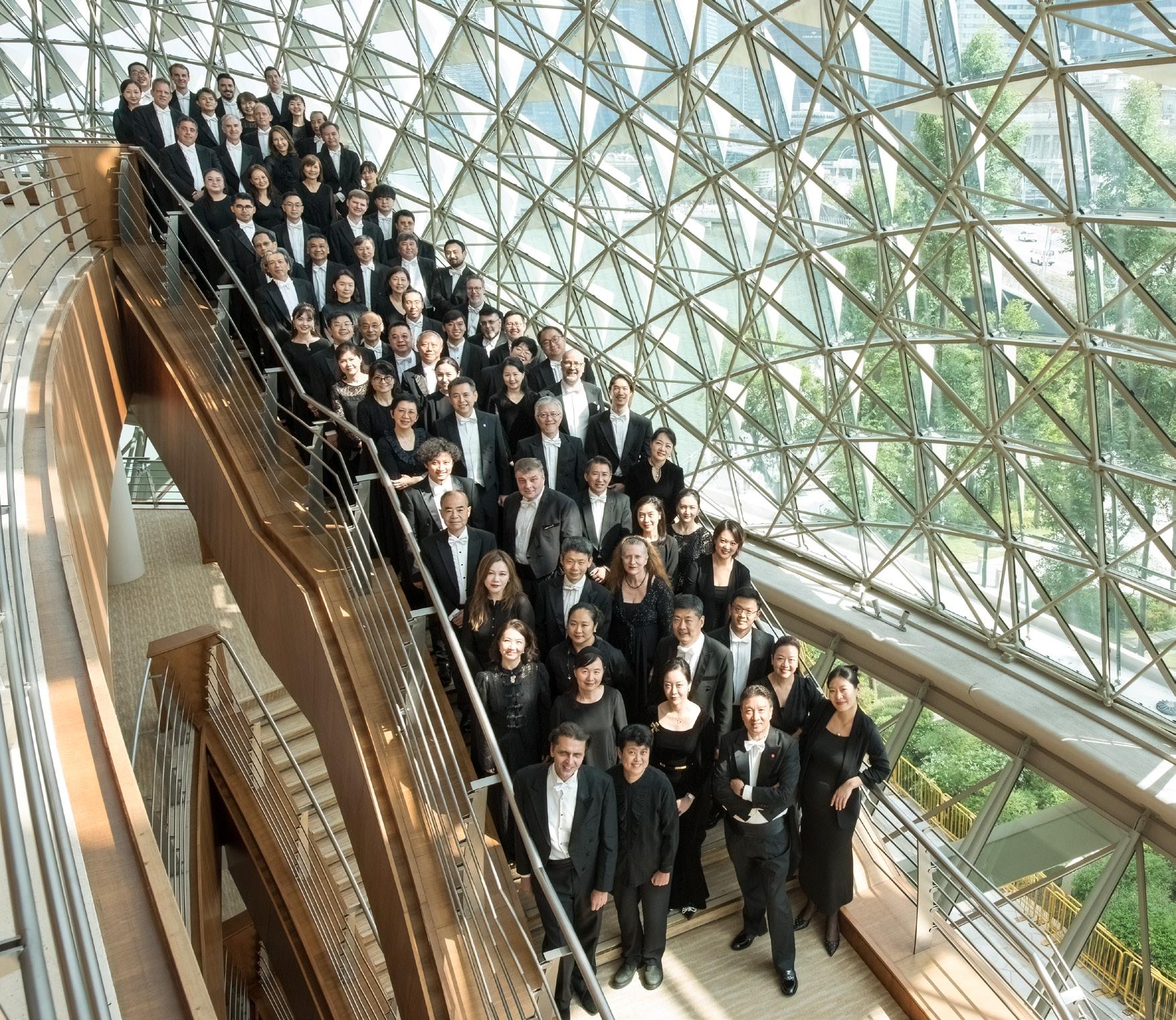
The orchestra performs over 60 concerts a year, and its versatile repertoire spans alltime favourites and orchestral masterpieces to exciting cutting-edge premieres. Bridging the musical traditions of East and West, Singaporean and Asian musicians and composers are regularly showcased in the concert season. The SSO makes its performing home at the 1,800-seat state-of-the-art Esplanade Concert Hall. More intimate works, as well as community performances take place at the 673-seat Victoria Concert Hall, the Home of the SSO.
Since its founding in 1979, the Singapore Symphony Orchestra (SSO) has been Singapore’s flagship orchestra, touching lives through classical music and providing the heartbeat of the cultural scene with its 44week calendar of events.
In addition to its subscription series concerts, the orchestra is well-loved for its outdoor and community appearances, and its significant role educating the young people of Singapore through its school programmes. The SSO has also earned an international reputation for its orchestral virtuosity, having garnered sterling reviews for its overseas tours and many successful recordings. In 2021, the SSO clinched third place in the prestigious Orchestra of the Year Award by Gramophone. In 2022, BBC Music Magazine named the SSO as one of the 23 best orchestras in the world.
From the 2026/27 season, the SSO will be led by Finnish conductor Hannu Lintu, the fourth Music Director in the orchestra’s history after Choo Hoey (1979–1996), Lan Shui (1997–2019) and Hans Graf (2020–2026).
Beyond Singapore, the SSO has performed in Europe, Asia, Australia and the United States. In the 2024/25 season, the SSO performed to full houses at Asia Orchestra Week in Kyoto, Japan, and made its “dazzling – and true-blue – Down Under debut” (Limelight) in Sydney, Melbourne and Brisbane. In May 2016, the SSO was invited to perform at the Dresden Music Festival and the Prague Spring International Music Festival. This successful five-city tour of Germany and Prague also included the SSO’s second performance at the Berlin Philharmonie. In 2014, the SSO’s debut at the 120th BBC Proms in London received praise in major UK newspapers The Guardian and The Telegraph. The SSO has also performed in China on multiple occasions.
The SSO has released more than 50 recordings, with over 30 on the BIS label. Recent critically acclaimed albums include Herrmann’s Wuthering Heights (Chandos) and Scriabin – Poems of Ecstasy and Fire (BIS).
A complete Mozart Violin Concerto cycle with Singaporean violinist Chloe Chua conducted by Hans Graf is released in 2025 on Pentatone.
The SSO also leads the revival and recording of significant works such as Kozłowski’s Requiem, Ogerman’s Symbiosis (after Bill Evans) and violin concertos by Robert Russell Bennett and Vernon Duke.
The SSO has collaborated with such great artists as Vladimir Ashkenazy, Gustavo Dudamel, Charles Dutoit, Joe Hisaishi, Neeme Järvi, Lorin Maazel, Martha Argerich, Diana Damrau, Janine Jansen, Leonidas Kavakos, Lang Lang, Yo-Yo Ma, Mischa Maisky, Gil Shaham, Daniil Trifonov and Krystian Zimerman.
The SSO is part of the Singapore Symphony Group, which also manages the Singapore Symphony Choruses, the Singapore National Youth Orchestra, the Singapore International Piano Festival and the biennial National Piano & Violin Competition.
The Group’s vision is to be a leading arts organization that engages, inspires and reflects Singapore through musical excellence. Our mission is to create memorable shared experiences with music. Through the SSO and its affiliated performing groups, we spread the love for music, nurture talent and enrich our diverse communities.
Sayuri Kuru Associate Principal
Nikolai Koval*
Hai-Won Kwok
Renyu Martin Peh^
Margit Saur
Shao Tao Tao
Wu Man Yun*
Xu Jueyi*
Yin Shu Zhan*
Zhao Tian
Hans Graf
Quantedge Music Director
Rodolfo Barráez
Associate Conductor
Lan Shui
Conductor Laureate
Eudenice Palaruan Choral Director
Wong Lai Foon Choirmaster
Ellissa Sayampanathan
Assistant Choral Conductor
(Position vacant) Concertmaster, GK Goh Chair
David Coucheron Co-Principal Guest Concertmaster
Kevin Lin Co-Principal Guest Concertmaster
Chan Yoong-Han1 Assistant Principal
Cao Can*
Duan Yu Ling
Foo Say Ming
Jin Li
Kong Xianlong
Cindy Lee
Karen Tan
William Tan
Wei Zhe
Ye Lin*
Zhang Si Jing
Manchin Zhang Principal, Tan Jiew Cheng Chair
Guan Qi Associate Principal
Gu Bing Jie* Assistant Principal
Chen Li
Marietta Ku
Luo Biao
Julia Park
Shui Bing
Janice Tsai
Dandan Wang
Yang Shi Li
Ng Pei-Sian Principal, The HEAD Foundation Chair
Yu Jing Associate Principal
Guo Hao Assistant Principal
Chan Wei Shing
Christopher Mui
Jamshid Saydikarimov
Song Woon Teng
Wang Yan
Wu Dai Dai
Zhao Yu Er
Yang Zheng Yi Acting Principal
Karen Yeo Assistant Principal
Po-Yu Fang
Victor Lee
Jacek Mirucki
Wang Xu
Jin Ta Principal, Stephen Riady Chair
Evgueni Brokmiller Associate Principal
Roberto Alvarez
Miao Shanshan
Piccolo
Roberto Alvarez Assistant Principal
Oboe
Rachel Walker Principal
Pan Yun Associate Principal
Simon Emes^
Carolyn Hollier
Elaine Yeo
Cor Anglais
Elaine Yeo Associate Principal
Clarinet
Ma Yue Principal
Li Xin Associate Principal
Liu Yoko
Tang Xiao Ping
Bass Clarinet
Tang Xiao Ping Assistant Principal
Bassoon
Guo Siping Principal
Liu Chang Associate Principal
Christoph Wichert
Zhao Ying Xue
Contrabassoon
Zhao Ying Xue Assistant Principal
Horn
Austin Larson Principal
Gao Jian Associate Principal
Jamie Hersch Associate Principal
Marc-Antoine Robillard Associate Principal
Bryan Chong
Hoang Van Hoc
Trumpet
Jon Paul Dante Principal
David Smith Associate Principal
Lau Wen Rong
Nuttakamon Supattranont
Allen Meek Principal
Damian Patti Associate Principal
Samuel Armstrong
Bass Trombone
Wang Wei Assistant Principal
Tomoki Natsume Principal
Christian Schiøler Principal
Mario Choo
Jonathan Fox Principal
Mark Suter Associate Principal
Mario Choo
Lim Meng Keh
Harp
Gulnara Mashurova Principal
With deep appreciation to the Rin Collection for their generous loan of string instruments. Musician on annual contract.
Chan Yoong-Han performs on a David Tecchler, Fecit Roma An. D. 1700, courtesy of Mr G K Goh. Musicians listed alphabetically by family name rotate their seats on a per programme basis.
From the New World 16 Jan 2026
First Violin
Chen Dawei
Lim Shue Churn
Yew Shan
Second Violin
Holger Grohs
Guest Principal
Bobur Eshpulatov
Lee Shi Mei
Yvonne Lee
Ikuko Takahashi
Viola
Joelle Hsu
Patcharaphan Khumprakob
Double Bass
Olga Alexandrova Guennadi Mouzyka
Earth and The Planets + Elgar’s Cello Concerto
22 & 23 Jan 2026
First Violin
Lee Shi Mei
Lim Shue Churn
Yew Shan
Second Violin
Holger Grohs
Guest Principal
Wilford Goh
Yvonne Lee
Ikuko Takahashi
V iola
Ho Qian Hui
Patcharaphan Khumprakob
Erlene Koh
Double Bass
William Cole
Guest Principal
Guennadi Mouzyka
Clarinet
Liu Yan Guest Principal
Horn
Will Gao
Eric Yen
Percussion
Benjamin Boo
Julia Tan
Pictures at an Exhibition / Bertrand Chamayou & Pierre Bleuse
30 & 31 Jan 2026
First Violin
Chen Dawei
Bobur Eshpulatov
Lim Shue Churn
Second Violin
Zhao Yingna
Guest Principal
Wilford Goh
Yvonne Lee
Ikuko Takahashi
V iola
Ho Qian Hui
Patcharaphan Khumprakob
Double Bass
William Cole
Guest Principal
Guennadi Mouzyka
Alto Saxophone
Samuel Phua
Horn
Russell Bonifede
Luke Chong
Jaben Sim
Eric Yen
Trumpet
Huang Shan
Trombone
Toh Chang Hui
Harp
Charmaine Teo
Organ
Joanna Paul
Celesta Aya Sako
Voice of Child
Nadia Hajadi
Elizabeth Chern
Pan Yueling
Percussion
Cheong Kah Yiong
Brian Maloney
Julia Tan
Tan Pei Jie
Gary Wain
Harp
Charmaine Teo
Piano/Celesta
Beatrice Lin Principal
Celesta
Aya Sako
conductor
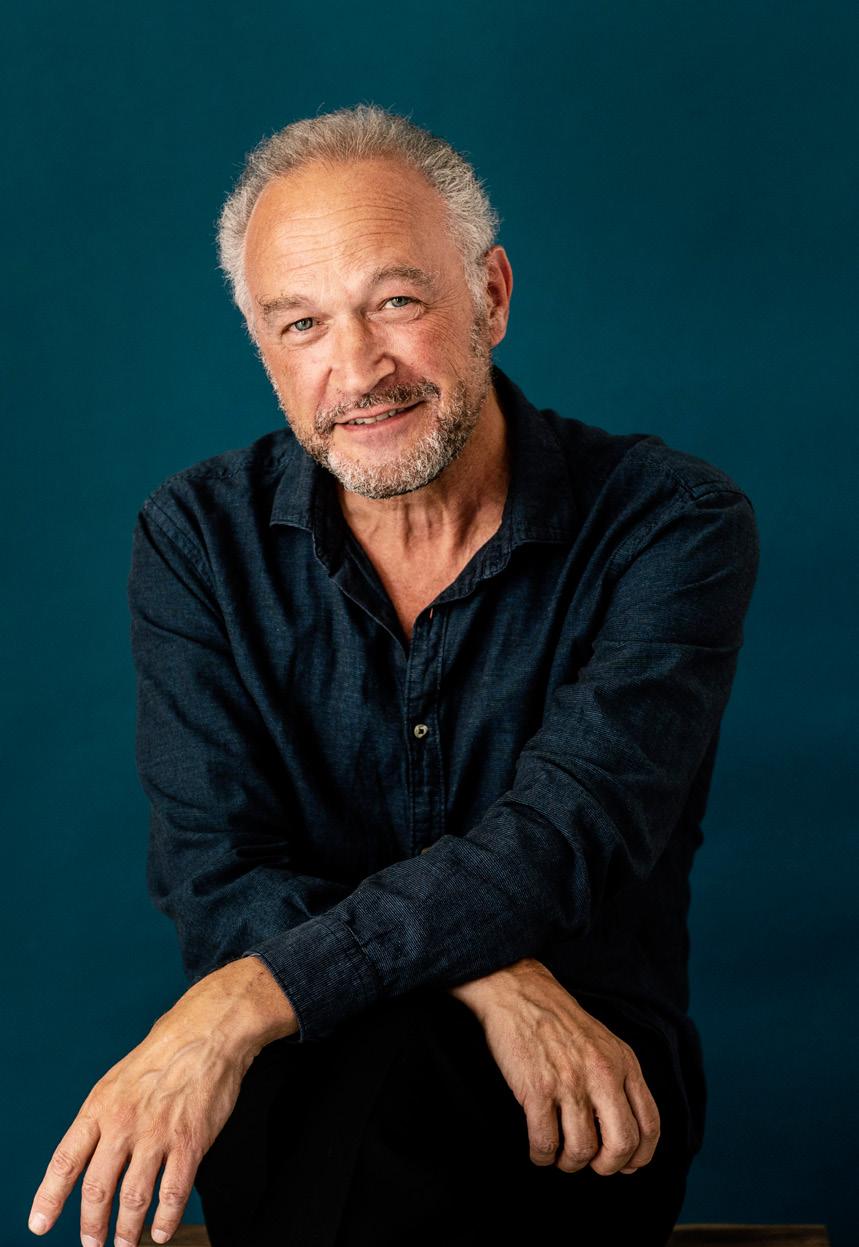
Kolja Blacher studied at the Juilliard School in New York with Dorothy DeLay and later with Sándor Végh in Salzburg. His repertoire spans works for solo violin from Bach to Berio, the great violin concertos of the classical and romantic periods, as well as contemporary pieces for violin and orchestra by Magnus Lindberg, Kurt Weill, Hans Werner Henze, and Bernd Alois Zimmermann.
Blacher has performed worldwide with many leading orchestras, and a major focus of his artistic activity over the past ten years has been the increasingly in-demand “play-conduct” format. With this, he made appearances as soloist and conductor with the Melbourne Symphony Orchestra, Taiwan Philharmonic Orchestra, Stuttgart Chamber Orchestra, Jerusalem Symphony Orchestra, Dresden Philharmonic, Bochum Symphony Orchestra, and the Orchestra of the Komische Oper Berlin, among others.
He also regularly conducts in long-term collaborations with orchestras such as the Norrlands Opera, South Denmark Philharmonic, Staatsphilharmonie Rheinland-Pfalz, Orchestra Sinfonica di Milano, Carlo Felice Genova, Taiwan National Symphony, Osaka Philharmonic, Kanagawa Philharmonic Orchestra, Bochum Symphony Orchestra, Tallinn Chamber Orchestra, Kuopio Symphony Orchestra, among many others.
Kolja Blacher has released numerous award-winning recordings (including the Diapason d’Or), among them collaborations with Claudio Abbado, with whom he shared a longstanding artistic partnership from their time together with the Berlin Philharmonic and the Lucerne Festival Orchestra.
Following his professorship in Hamburg, he accepted a position at the Hochschule für Musik “Hanns Eisler” in Berlin. Blacher grew up in Berlin, where he still lives with his family. He also served as concertmaster of the Berlin Philharmonic for six years before fully devoting himself to his solo career.
Kolja Blacher plays a 1730 Stradivarius violin, generously loaned to him by Mrs. Kimiko Powers.
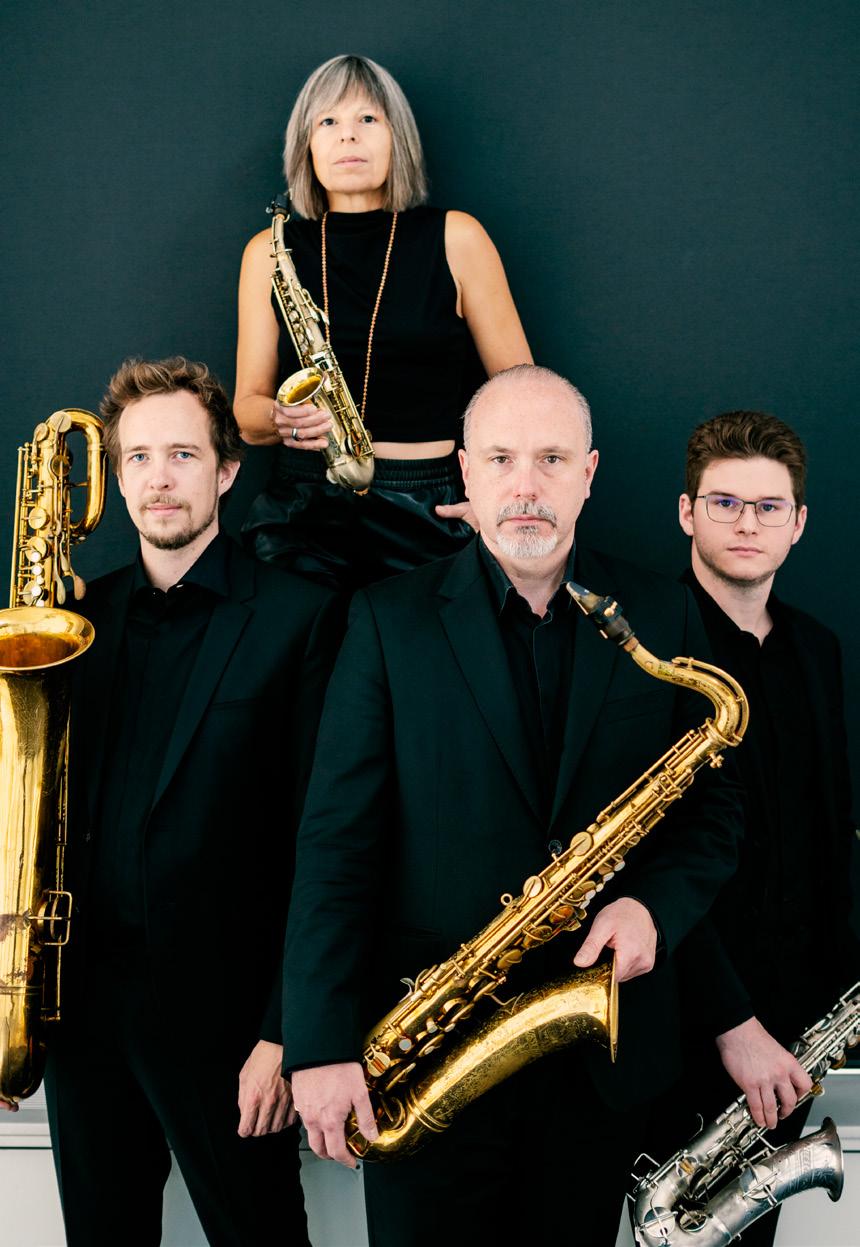
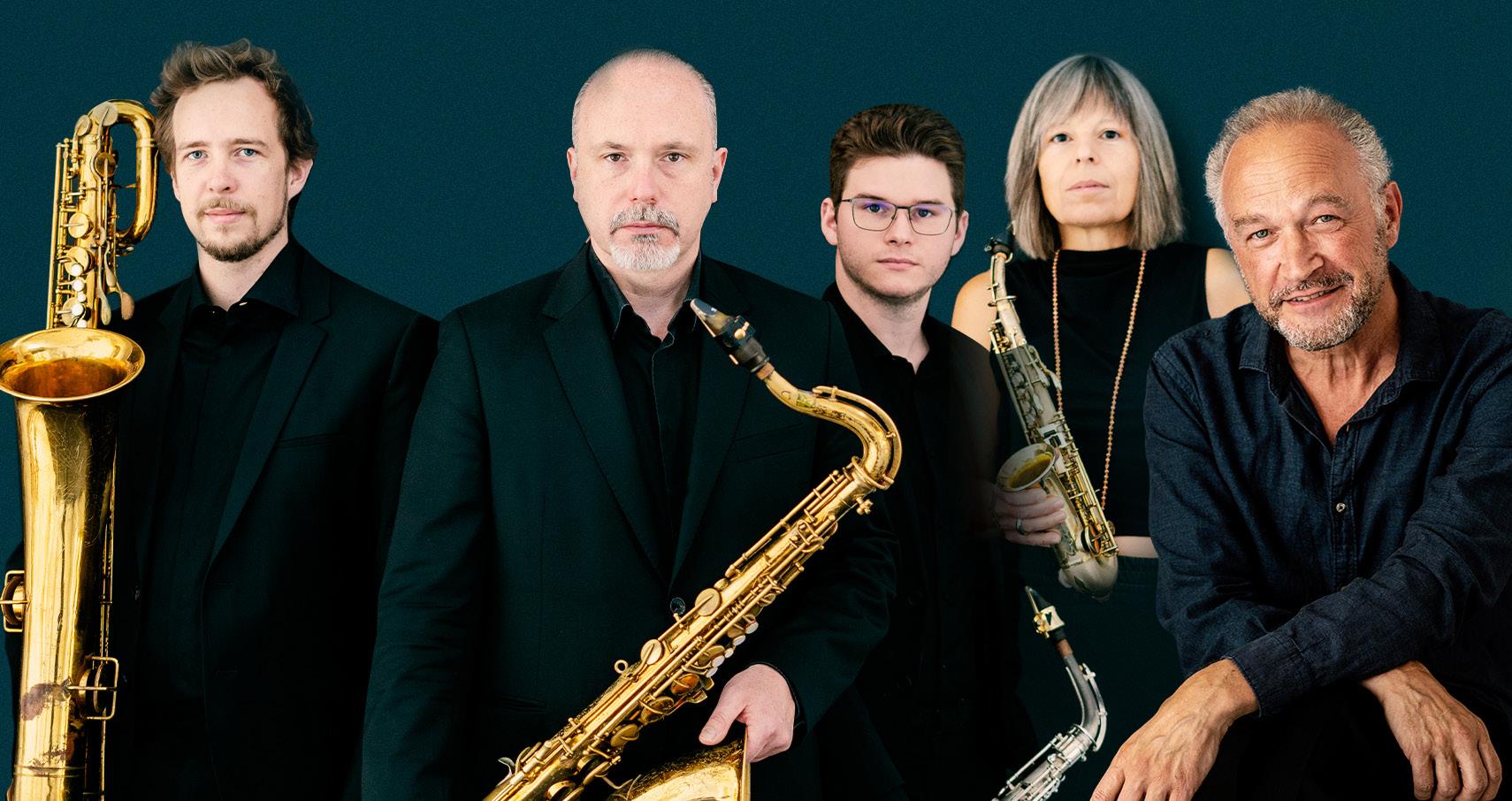
Since its formation in 1969, the Raschèr Saxophone Quartet has appeared regularly at the major concert halls in Europe, Asia and the U.S. The ensemble carries on a tradition established in the 1930’s by the pioneer of the classical saxophone and founding member of the quartet Sigurd Raschèr, who animated many composers to write music especially for him. In a similar fashion, the quartet has inspired over 300 composers to dedicate music to them. All of these composers have shared an enthusiasm for the four musicians’ unique homogeneous tone quality, virtuosity and dynamic interpretation of new and old music.
Numerous composers have been fascinated with the combination of the Raschèrs and orchestra, which has resulted in more than 40 new works for that combination as well as invitations from many of the world’s leading orchestras. In addition to the Raschèr Quartet’s numerous solo recitals and collaborations with the world’s leading orchestras, the Quartet has performed with many various instrumental and vocal combinations.
The Raschèr Quartet is a musical democracy. Therefore, in contrast to many other chamber ensembles, the quartet has no leader.
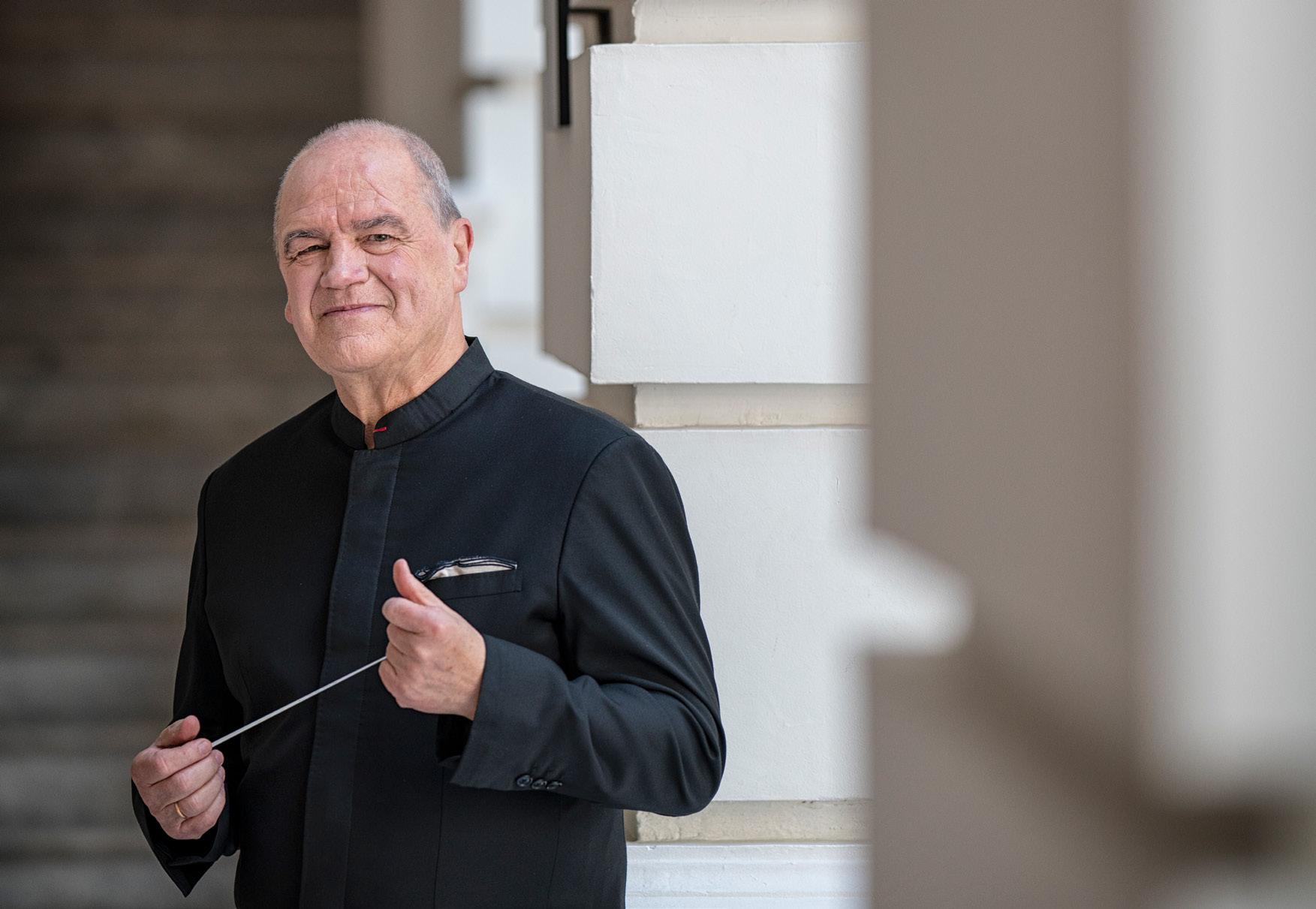

Armed with a spirit of musical curiosity and discovery, creative programming and his commanding presence on stage, Austrian conductor Hans Graf has raised orchestras to new heights while winning audiences young and old alike. With Hans Graf, the Singapore Symphony Orchestra (SSO) has achieved “a brave new world of music-making under inspired direction” (The Straits Times) since his appointment as Chief Conductor in the 2020/21 season, followed by five outstanding seasons as Music Director. Hans Graf’s farewell season in 2025/26 celebrates his remarkable achievements with his being named the SSO’s first Quantedge Music Director.
Graf was formerly Music Director of the Houston Symphony, Calgary Philharmonic, Orchestre National Bordeaux Aquitaine, Basque National Orchestra and Mozarteum
Orchestra Salzburg. He is a frequent guest with major orchestras and opera houses worldwide, receiving the Österreichischer Musiktheaterpreis award at the famed Vienna Volksoper in 2014.
Hans Graf’s discography includes extensive surveys of Mozart, Schubert and Dutilleux, as well as a GRAMMY and ECHO Klassik award-winning recording of Berg’s Wozzeck With the Singapore Symphony, Graf has recorded works by Paul von Klenau, Mozart, Stravinsky and his own edition of Kozłowski’s Requiem.
Hans Graf is Professor Emeritus at the Universität Mozarteum, Salzburg, and a recipient of the Chevalier de l'Ordre de la Légion d’Honneur (France) and the Grand Decoration of Honour (Austria).
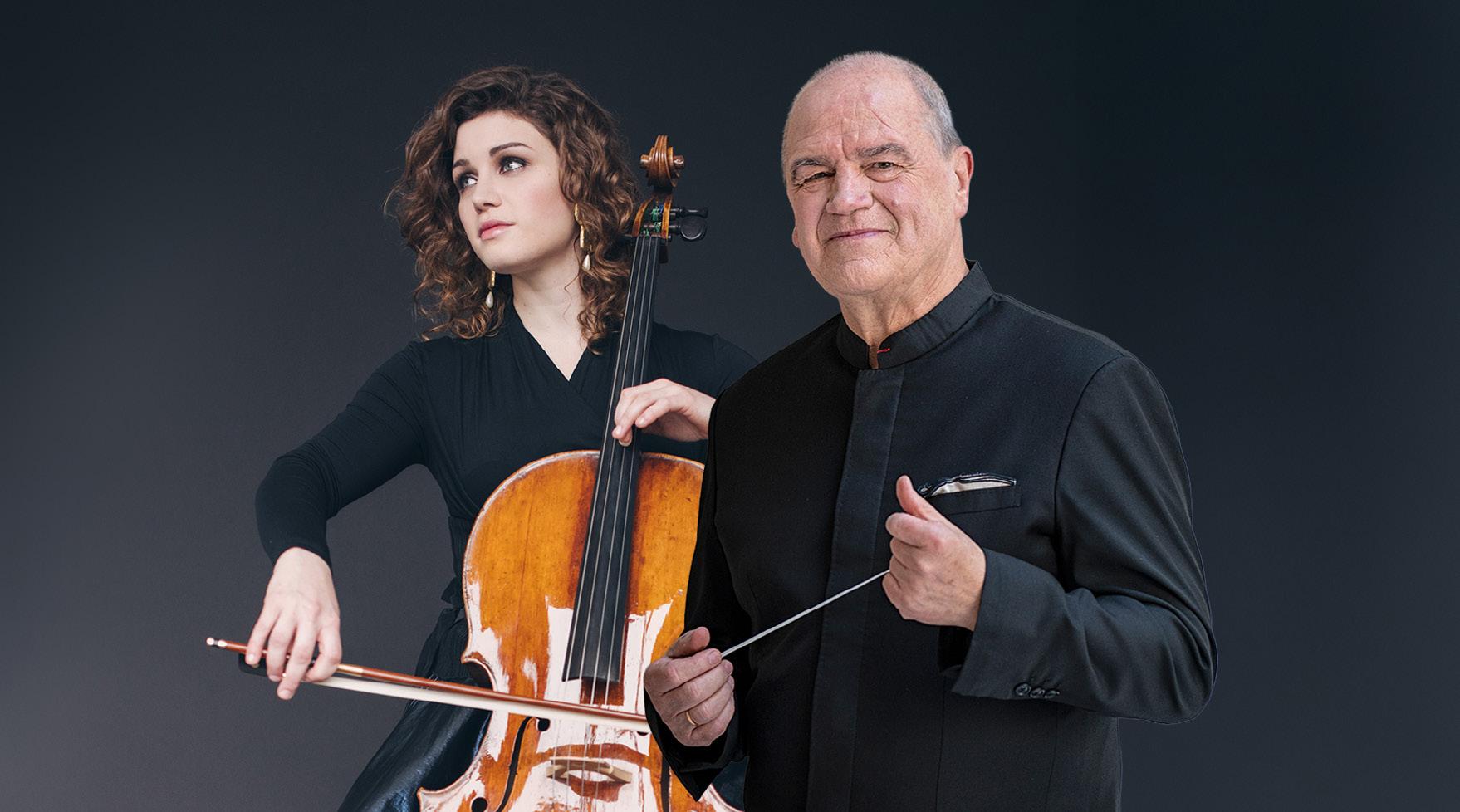
Naturalness and warmth, vitality, and the courage to take risks: These qualities are often used to describe Julia Hagen’s playing. The young cellist from Salzburg is just as convincing as a soloist with orchestra as she is in recital or in numerous chamber music constellations alongside prominent partners. She combines technical mastery with high artistic standards and a direct, communicative approach to music-making.
Julia Hagen was awarded the UBS Young Artist Award in 2024, which included a concert with the Vienna Philharmonic under the baton of Christian Thielemann at the Lucerne Festival. In 2025, she returned to the Lucerne Festival as a soloist – this time with the Orchestre Philharmonique de Radio France and Mirga Gražinytė-Tyla.
At the Vienna Musikverein, Julia Hagen will be featured as “Artist in Focus” during the 2025/26 season, performing Dvořák’s Cello Concerto with the Bamberg Symphony Orchestra under the baton of Jakub Hrůša, in a recital with Sir András Schiff, and in two piano trio programs.
Julia Hagen is a regular guest at the Salzburg Festival, the Schubertiade, the Heidelberg Spring Festival, and the Festival de Pâques in Aix-en-Provence. As a soloist, she performs with major orchestras, including the Cleveland Orchestra, the Frankfurt Radio Symphony Orchestra, the London Philharmonic Orchestra, the Orquesta Nacional de España, and the Vienna Symphony Orchestra. She works with conductors such as Alain Altinoglu, Elim Chan, Thomas Guggeis, Paavo Järvi, Andrés OrozcoEstrada and Petr Popelka.
Julia Hagen plays a cello by Francesco Ruggieri (Cremona, 1684) which has been made available to her privately.
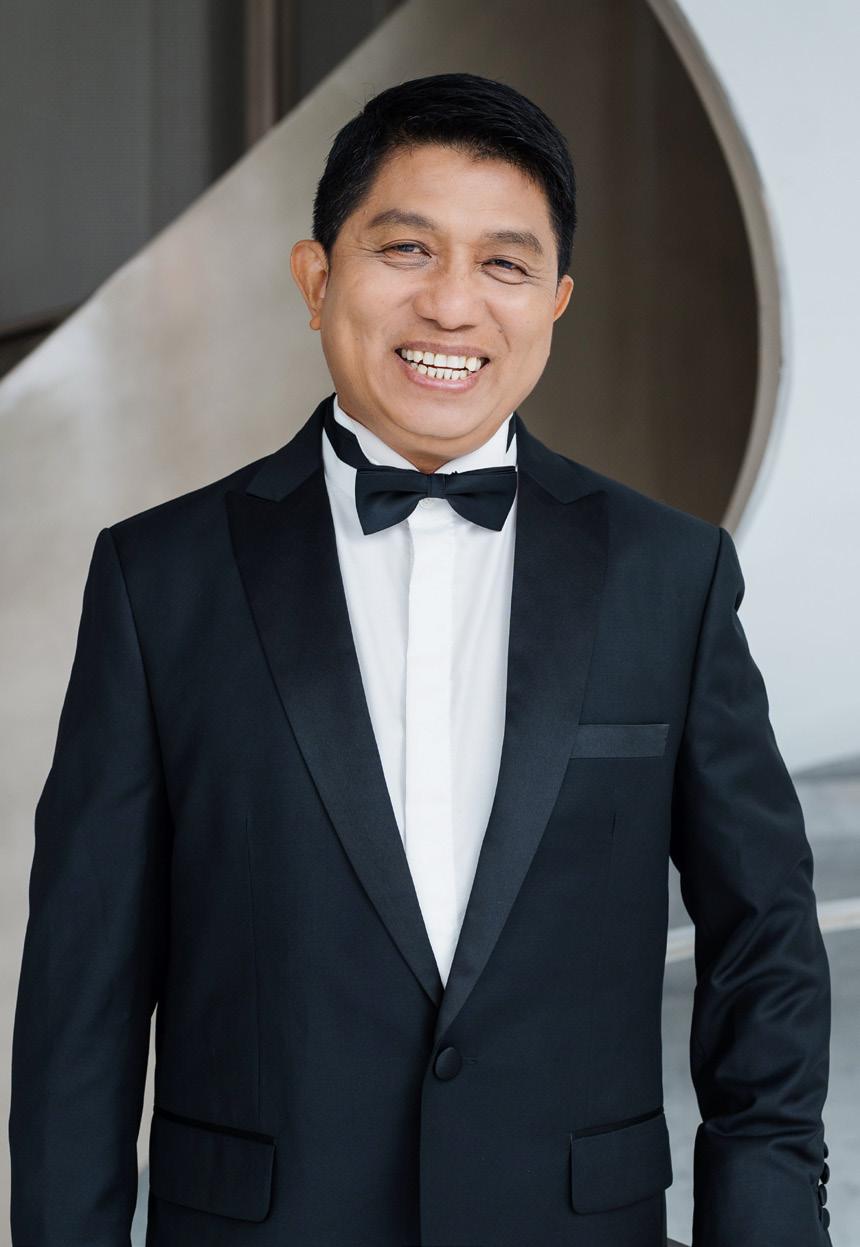
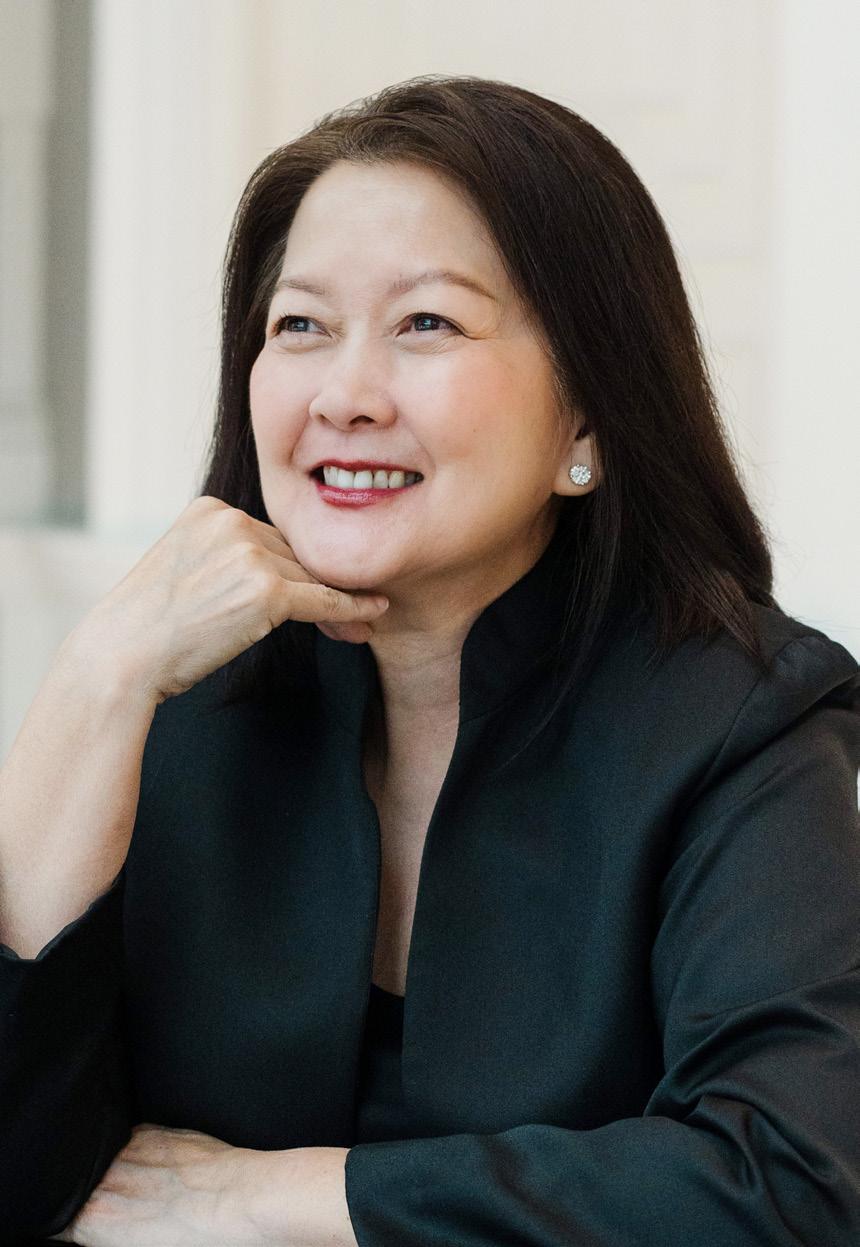
Eudenice Palaruan studied at the University of the Philippines College of Music, majoring in composition and choral conducting. He took further training in choral conducting at the Berliner Kirchenmusikschule, Germany. He graduated doctor of musical arts at St. Paul University Manila.
He was a singer, resident composer/arranger, and assistant choirmaster of the Philippine Madrigal Singers. In addition, he performed with the Berlin Spandauer Kantorei, the World Youth Choir, and sang countertenor with the Berlin Monteverdichor.
In addition, he was the principal conductor of the San Miguel Master Chorale. For years, he has been the resident conductor of the International Bamboo Organ Festival, where he performed and recorded significant selections of Latin-American baroque music. With his active involvement in the choralization of Philippine and other Asian indigenous music, he premiered a substantial volume of new Asian choral works. In addition, he was often invited to give lectures on non-Western vocal aesthetics.
Eudenice also arranges for the SSO choruses and the SSC community outreach programmes. In addition, the SSO choruses have premiered new choral works written by local composers and arrangers in Singapore under his direction.
He taught composition and choral conducting in institutions such as the University of the Philippines College of Music, the Asian Institute for Liturgy and Music, and St. Paul University College of Music and the Performing Arts. In addition, he teaches at the Singapore Bible College School of Church Music and directs the SBC Chorale. Eudenice is often invited to adjudicate in international composition competitions and give masterclasses in choral conducting.
Wong Lai Foon has been a driving force behind the development and growth of the Singapore Symphony Children’s Choir (SSCC) since its inception in 2006. Appointed Choirmaster in 2015 and armed with a mission to nurture young voices and inspire choral excellence, she led in the expansion of the SSCC’s training programme to include six preparatory ensembles, as well as the formation of the Singapore Symphony Youth Choir in 2016.
With repertoire ranging from Baroque to opera to contemporary and popular music, she has directed the SSCC and SSYC in a wide array of concerts, often receiving praise for the choirs’ beautiful tone and sensitivity. She has prepared the choirs in collaborations with renowned conductors and performers such as Stephen Layton, The King’s Singers, and Sofi Jeanin and la Maîtrise de Radio France. The SSCC has also had the distinction of being invited to perform at state functions.
Wong has commissioned and premiered treble choir works by local composers and has also arranged for the SSCC and SSYC. Her efforts to educate and inspire singers extend into the community through workshops, talks, as well as adjudicator, chorus-master and guestconductor roles. Some ensembles that she has worked with include The Philharmonic Chamber Choir, Singapore Symphony Chorus, Singapore Lyric Opera, Hallelujah Singers, and Methodist Festival Choir. She holds a master’s degree in choral conducting from Westminster Choir College, USA.
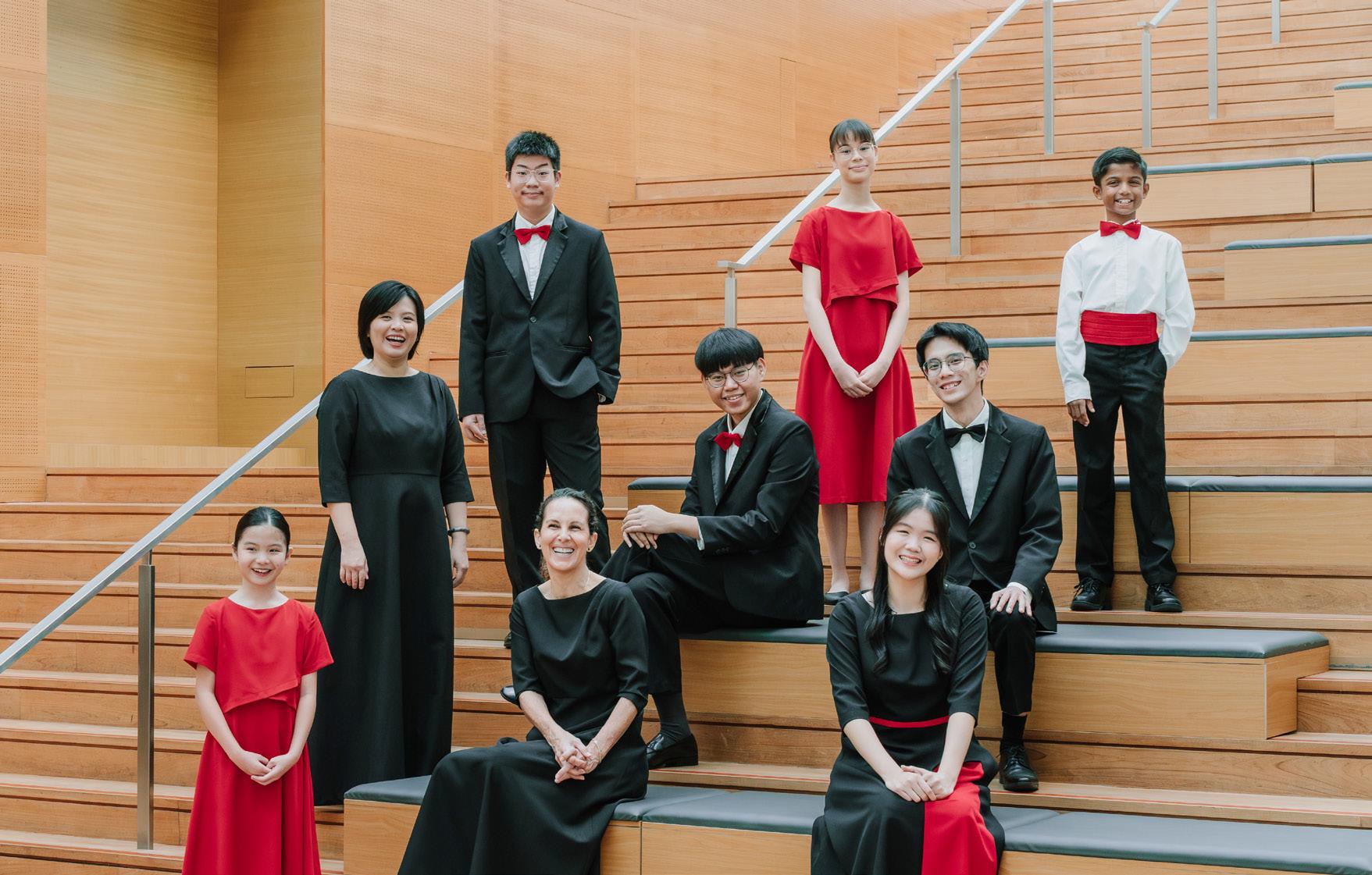
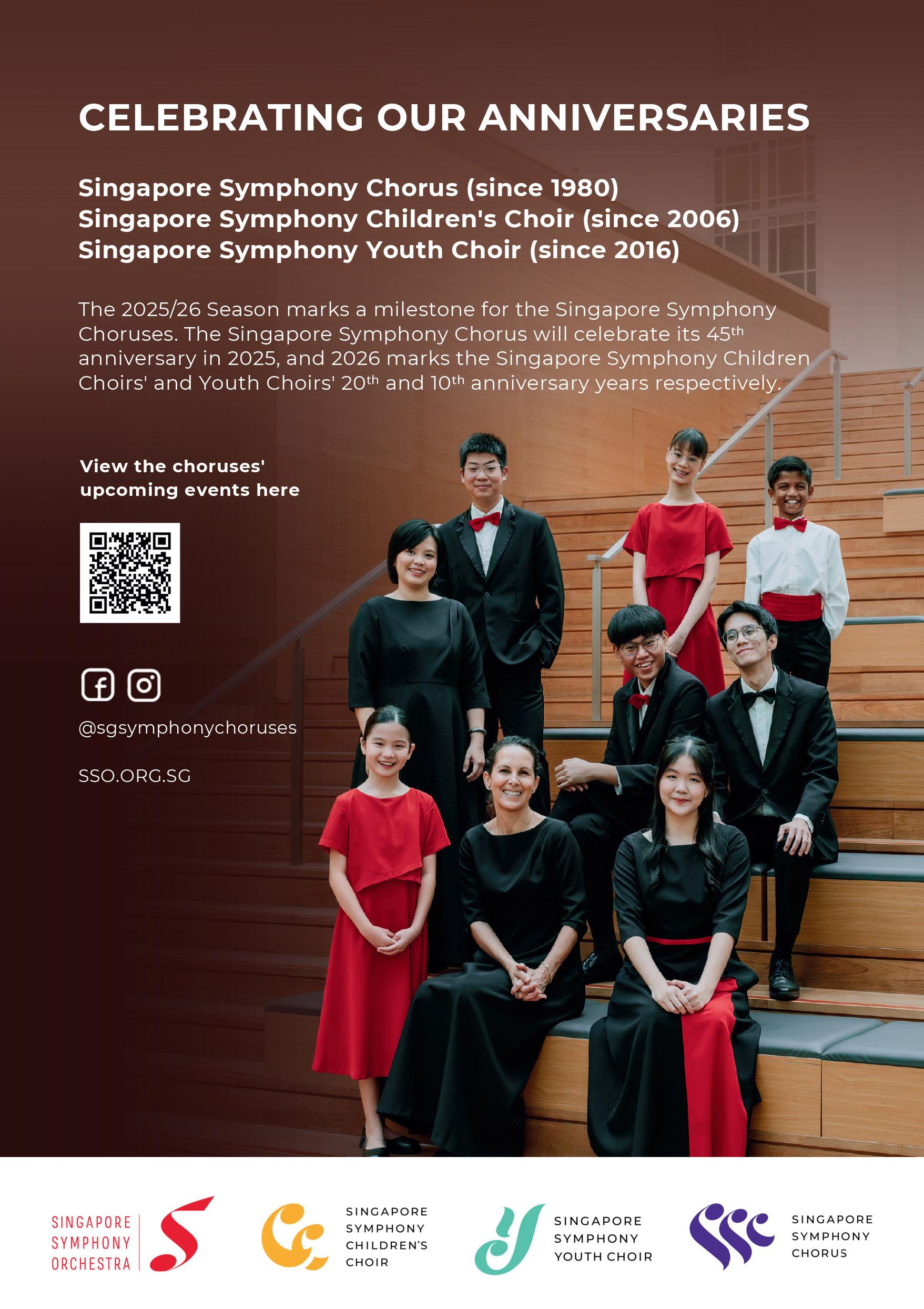
United by a shared passion for music, the Singapore Symphony Choruses welcome voices of all ages into a dynamic community devoted to choral artistry. The Singapore Symphony Choruses – comprising the Singapore Symphony Chorus (SSC), the Youth Choir (SSYC), and the Children’s Choir (SSCC), offer singers of all ages a unique journey from training to world-class performance.
Rooted in holistic development, the Choruses cultivate artistry, discipline, and character while providing exceptional opportunities to perform major symphonic works with the Singapore Symphony Orchestra and collaborate with distinguished conductors, soloists, and orchestras.
Their diverse repertoire spans grand orchestral masterpieces and intimate a cappella works, ranging from Renaissance classics to contemporary compositions. This rich musical breadth ensures choristers experience a transformative journey, grounded in passion and excellence, setting the Singapore Symphony Choruses apart as a premier forcein choral music.
Earth and The Planets + Elgar’s Cello Concerto | 22 & 23 Jan 2026
Earth and The Planets + Elgar’s Cello Concerto
22 & 23 Jan 2026
Singapore Symphony Chorus
Soprano
Karen Aw
Josephine Budiana
Janice Chee
Alexis Chen
Chia Gin Gin
Elizabeth Daniel
Julie Demange Wodtke
Grace Goh
Vivien Heng
Kaitlyn Kim
Selina Kwek
Rachel Lam
Lee Shei Gee
Sun Lee
Jacqueline Liew
Aidah Lim
Liang Xinyu
Lin Wei
Ng Bee Kay
Ng Wing Kei Tracy
Shireen Sanbhnani
Sarah Santhana
Bessie Segarra
Andrea Yenny Sjah
Nelia Soelistia
Stacey Sisi Wang
Vivienne Tan
Sarah Tang
Sachiko Tomimori
Gladys Torrado
Wang Yu-Ann
Singapore Symphony Youth Choir
Soprano
Cham Li Teng
Halyn Cho
Goh Chen Xi
Jocelyne Harefa
Emily Hia
Rachael Jong
Laura Lee
Melina Leong
Emma Lee-Goh
Giselle Lim
Ng Yi Poh
Teryn Rim
Desiree Seng
Samyukta Sounderamann
Tan Caewyn
Carine Tan
Christabelle Tan
Janelle Tan
Jasmine Towndrow
Raeanne Wong
Chloe Zhou
Alto
Grace Angel
Chan Mei Yoke
Joy Chen
Chng Xin Bei
Marie Amelie McKeand
Joanna Deakin
Dieh Xin Xin
Truly Hutapea
Susan Kurniawati
Dorothy Lee-Teh
Wendy Lim
Shoumin Low
Sharon Low
H. Debbie Min
Sylwia Mirucka
Ng Beng Choo
Ng Sheh Feng*
Natividad Solaguren
Ena Su
Ratna Sutantio
Elsie Tan
Tan Seow Yen
Rina Ushioda
Wang Jiunwen
Nadine Yap
Elizabeth Yeo
*Choral Associate
Alto
Megan Fung
Elizabeth Goh
Trinetra Kumarasan
Zoe Li
Zachary Lim
Ong Sherlyn
Suri Rao
Emily Tan
Tan Yuqing
Tan Yulin
conductor
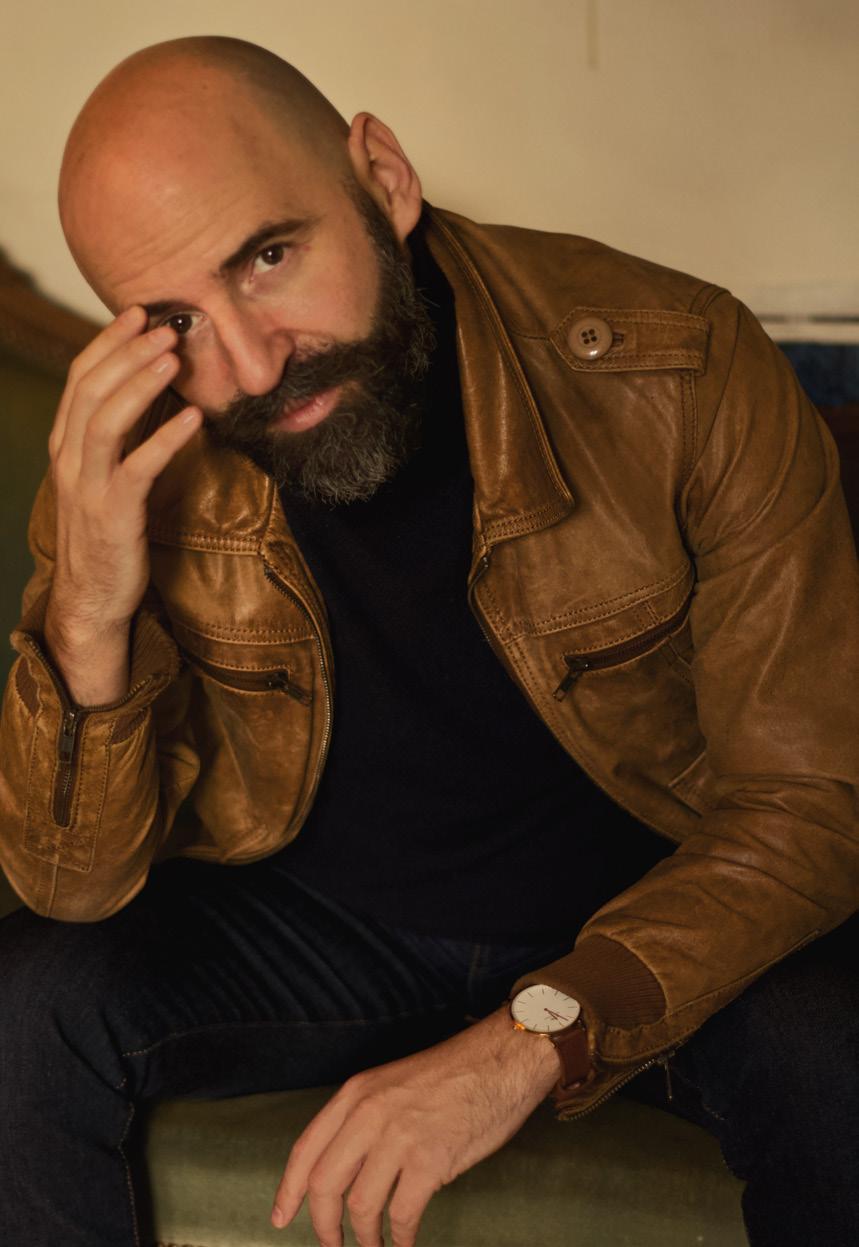
Music Director of the prestigious Ensemble intercontemporain and the Odense Symphony Orchestra, where he has held the position since 2021, Pierre Bleuse also serves as Artistic Director of the Pablo Casals Festival in Prades.
Pierre Bleuse opened his 2025/26 season with the Ensemble intercontemporain at the prestigious BBC Proms in the summer of 2025, followed by the Ravel Festival in Saint-Jean-deLuz and the season opening at the Philharmonie de Paris. This season also marks his debuts with several leading orchestras, including the Swedish Radio Symphony, the Finnish Radio Symphony, Hamburg’s NDR Elbphilharmonie Orchester, Stuttgart’s SWR Symphonieorchester alongside his long-time collaborator Sol Gabetta, and the Auckland Philharmonia in New Zealand. He will also return to the São Paulo Symphony Orchestra for two subscription weeks, and returns to the City of Birmingham Symphony Orchestra, Singapore Symphony, and Amsterdam’s legendary Concertgebouw for his debut with the Netherlands Philharmonic Orchestra.
A key figure in contemporary creation, he conducted Hèctor Parra’s opera Orgia at Barcelona’s Gran Teatre del Liceu in 2024, followed by the Ensemble intercontemporain at Festival d’Aix-en-Provence. In 2025, Bleuse launched the centenary celebrations of Pierre Boulez at the Philharmonie de Paris with a landmark performance of his masterpiece, Répons.
A highly sought-after French conductor, Bleuse collaborates regularly with major international ensembles. He also works regularly with leading international soloists including Joyce DiDonato, Karita Mattila, Patricia Kopatchinskaja, Pierre-Laurent Aimard, Sol Gabetta, Bertrand Chamayou, Emmanuel Pahud, and Renaud and Gautier Capuçon.
Pierre Bleuse studied conducting with Jorma Panula in Finland and Laurent Gay at the Haute École de Musique in Geneva.
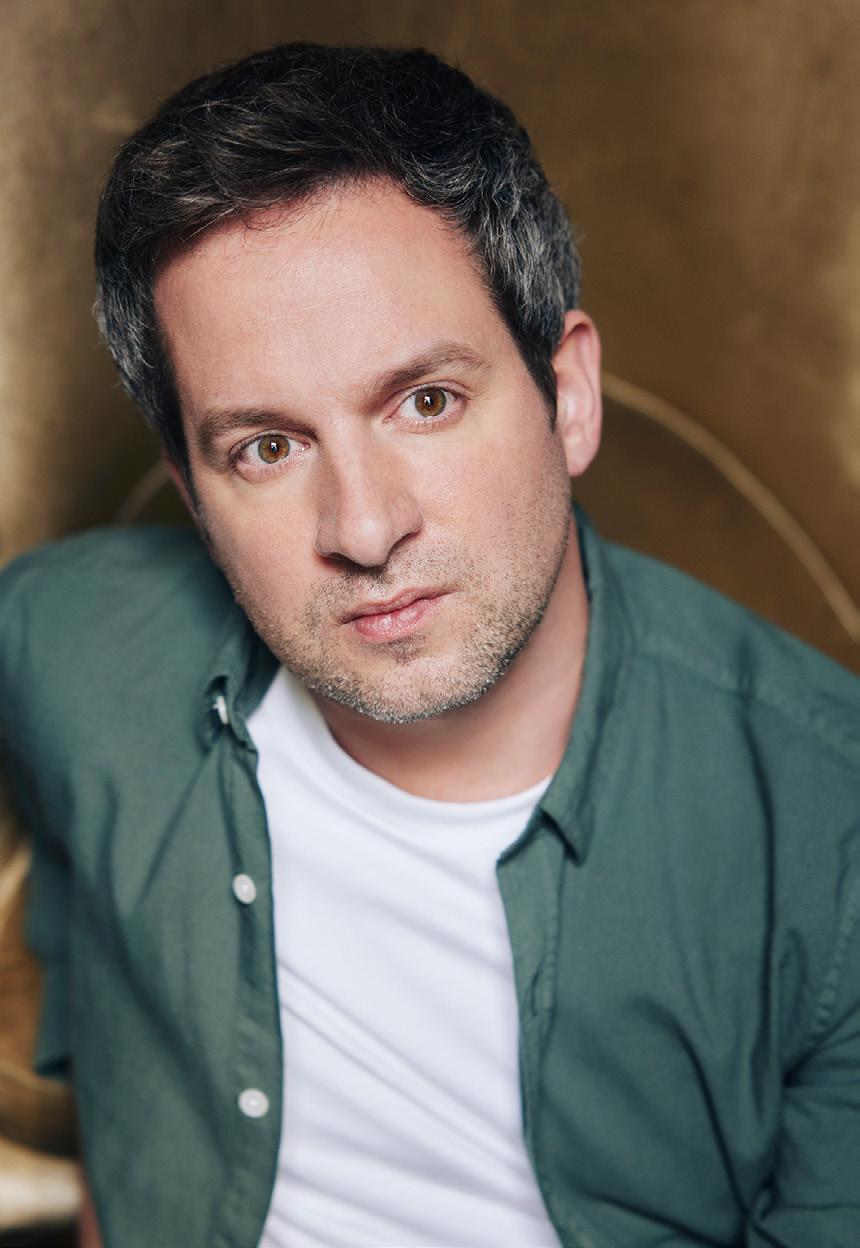
Bertrand Chamayou is one of today’s most strikingly brilliant pianists, recognised for his revelatory performances at once powerfully virtuosic, imaginative and breathtakingly beautiful. A leading interpreter of French music, his vast repertoire includes major bodies of work such as the complete piano works of Ravel, Liszt’s Etudes and Années de pèlerinage, and Messiaen’s Vingt regards sur l’enfantJésus. At the same time the French pianist possesses a deep passion for new music, having worked with composers including Pierre Boulez, Henri Dutilleux, György Kurtág, Thomas Adès, Bryce Dessner and Michael Jarrell.
Chamayou performs at the highest level, appearing regularly at the world’s most prestigious concert halls and festivals, from Philharmonie de Paris, Wigmore Hall, Théâtre des Champs Elysées, Elbphilharmonie, Berlin Philharmonie and Concertgebouw Amsterdam, to Lucerne Festival, Salzburg Festival, New York’s Mostly Mozart and Suntory Hall Tokyo. He has performed with the world’s finest orchestras, including New York Philharmonic, Cleveland Orchestra, Leipzig’s Gewandhausorchester, Orchestre de Paris, London Philharmonic Orchestra, Staatskapelle Berlin, Wiener Symphoniker, Tonhalle Orchestre Zurich, Orchestra dell’Accademia Nazionale di Santa Cecilia, NHK Symphony Orchestra, and has shared the stage with Pierre Boulez, Semyon Bychkov, Philippe Herreweghe, Herbert Blomstedt, Sir Antonio Pappano and Elim Chan.
Since 2021, Chamayou has been co-Artistic Director of Festival Ravel, the major new international festival celebrating Maurice Ravel, situated in France’s Basque country.
Fri, 16 Jan 2026
Esplanade Concert Hall
Singapore Symphony Orchestra
Kolja Blacher conductor
Raschèr Saxophone Quartet*
Kevin Lin Co-Principal Guest Concertmaster

Orchestra-Variations on a Theme of Paganini
16 mins
Quadriga – 10 Dream Sequences for Saxophone Quartet*
25 mins
Dedicated to
Check-in to tonight’s concert Scan this QR code with the Singapore Symphony Mobile App.
WORLD PREMIERE SSO COMMISSION
Intermission
20 mins
“From the New World” 40 mins Dvořák
Symphony No. 9 in E minor, Op. 95
Concert Duration: approximately 2 hrs (including 20 mins intermission)
1903 – 1975
Orchestra-Variations on a Theme of Paganini (1947)
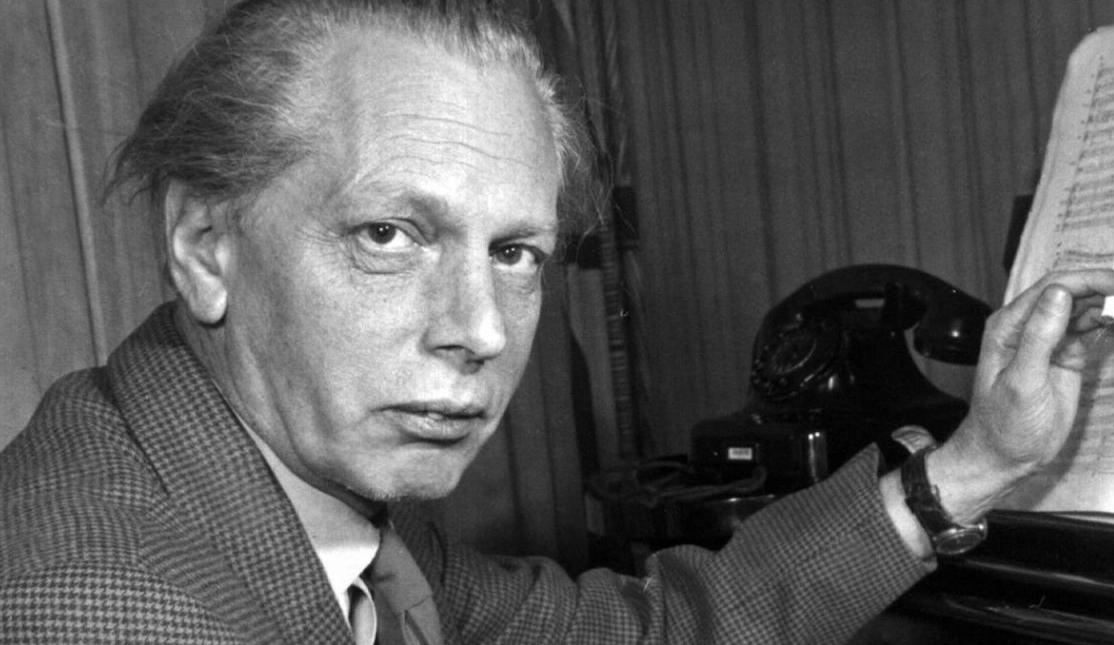
Blacher’s Orchestra-Variations on a Theme of Paganini is a work that is not nearly as wellknown as it should be, taking for its inspiration the theme from Niccolò Paganini’s famous 24th Caprice for solo violin. This Caprice has been the subject of numerous variations, including those by Brahms, Schumann, Rachmaninoff, Liszt and Lutosławski. Blacher’s jazzed-up take begins very familiarly on solo violin, before growing into a veritable concerto for orchestra taking the listener through 16 brilliant variations.
The Italian violin virtuoso and composer Paganini needs no introduction, having been a massive superstar in his lifetime, touring Europe nonstop and playing to consistently full halls, intentionally cultivating an edgy image that included whiffs of scandal and the
occult, increasing public interest. The German composer Boris Blacher, on the other hand, is less of a household name, and his story is rather interesting.
In 1903, Russia was still Imperial Russia and China was still the Qing Empire, and Manchuria was a region of the China that had significant numbers of Russians settled in it. The Amur river forms a natural border between the two empires, and many Russians and Eastern Europeans crossed it, developing the economy and industrialisation of Manchuria, making some towns and cities such as Harbin more Russian and Ukrainian than Manchu or Han Chinese.
It was in this Russophone milieu that Boris Blacher was born in 1903 in the town of
Newchwang (today’s Yingkou city) near Mukden (today’s Shenyang, Liaoning) to Eduard Leopold Blacher, who had RussoAsian-Estonian roots and worked for a bank, and Helene Anna Blacher, who was of German descent. In 1914, the family moved to Irkutsk in Siberian Russia, but left after the 1917 revolution, finding refuge among the anti-Bolshevik ‘White Russians’ in Harbin. In 1922 the young Boris, accompanied by his mother, went to Berlin to study architecture. Perhaps having found his calling, he enrolled at the Berlin Hochschule für Musik (Berlin High School for Music). His talent in arranging popular and film music helped him pay the bills as a student, and he was eventually appointed a teacher of composition at the Dresden Conservatory in 1938 with the support of Austrian conductor Karl Böhm. Unfortunately, his music was labelled as degenerate by the rising National Socialists and he lost his teaching post in 1939—his being one-quarter Jewish did not endear him to the regime, but his being stateless spared him from being enlisted into military service. Following the war, he became a leading composer and teacher in the new musical establishment, becoming a professor at the Berlin Musikhochschule in 1948 and director in 1953, a post he would hold till 1970. He died in 1975 at the age of 72, leaving behind four children including our guest conductor tonight, Kolja Blacher.
Blacher’s musical output includes 12 operas, ten ballets, 50 orchestral works, oratorios and concerti, numerous choral works and music for voices and instruments, chamber music, and at least a dozen electronic compositions. Musically, he stands somewhat alone, neither part of the later Romantic nor the earlier Modernist camps, but he uses rhythm boldly, playing with time signatures and harmonies – his jazzy syncopations were among the
elements that earned him the ‘degenerate’ label from the Nazis, and later compositions use chords that recall Blacher’s liking for the Glenn Miller sound of the 1940s.
Instrumentation
3 flutes (1 doubling on piccolo), 2 oboes, cor anglais, 3 clarinets (1 doubling on bass clarinet), 3 bassoons (1 doubling on contrabassoon), 4 horns, 3 trumpets, 3 trombones, tuba, timpani, strings
World Premiere 27 Nov 1947, Leipzig
First performed by SSO 1 Sep 1995
b. 1973
Quadriga – 10 Dream Sequences for Saxophone Quartet (2025)
Paranoma Free Fall La Chasse
The Quadriga in ancient Greece and Rome is the two-wheel chariot pulled by four horses side by side. In classical mythology, it is the chariot of the gods and the heroes – a symbol of triumph. Helios the Greek god of the sun, and Apollo the Roman god of light are often depicted driving a quadriga across the arch of the sky, bringing forth daylight and dispersing the night.
For years I have been fascinated by the logic and narratives of dreams. While dreams often feel logical and consequential as long as we are asleep, they may appear strangely erratic and capricious once we awake and try to remember.
My music takes place in the state right between: not quite awake, not quite asleep on the verge between dream and reality. This piece consist of ten short pieces, separate movements or “dream sequences” – each with their own short narrative, all of which form a larger one together.
It appears to be a triumphant rise, a journey out of darkness towards the light. But we cannot tell if it is real. For in the world of half-dream, nothing is completely clear,
Notes by the composer, Søren Nils Eichberg
nothing is straight-forward or one-directional –like in our lives.
Instrumentation
Saxophone Quartet, 2 flutes, 2 oboes, 2 clarinets (1 doubling on bass clarinet), bassoon, contrabassoon, 2 horns, 2 trumpets, trombone, bass trombone, timpani, percussion (triangle, chimes, suspended cymbal, snare drum, anvil, crotales), strings
1841 – 1904
Symphony No. 9 in E minor, Op. 95 “From the New World” (1893)
Largo Molto vivace Allegro con fuoco I II III IV
Adagio – Allegro molto
While being one of the most popularly performed symphonies, Dvořák’s New World Symphony is a bit of an unexpected work. The Czech composer Antonín Dvořák grounded his own music in Czech folk tradition and yet produced one of the most iconic pieces of “American” music. How did this happen?
In 1892, Dvořák arrived in New York on the invitation of Jeanette Thurber, wife of a millionaire green-grocer and a patroness of the arts, to take up a post at the National Conservatory, recently founded by Thurber to create a distinctly ‘American’ musical voice. Paid 25 times his previous salary, Dvořák was able to spend the next nine months teaching, researching, and composing. Convinced the ‘authentic’ voice of American music lay in Native Indian and Black music, he studied both. While he relied on published editions of “Native Indian” music (filtered through the ears of white editors), he managed to hear black music closer to the source, even getting a black conservatory student to sing and play for him. Started in late 1892 and finished in May 1893, the result was a composition that was a major triumph from its first performance on 16 December 1893.
While utilising no actual themes from American music, Dvořák consciously modelled his melodies on American ones – the flute solo in the first movement is suspiciously
like the Black spiritual Swing Low, Sweet Chariot. The heart of the symphony is the Largo second movement, where the principal theme, presented on cor anglais, evokes nostalgia and tenderness. Dvořák said this movement, later performed at the funerals of presidents Roosevelt and Ford, was inspired by Minnehaha’s funeral scene in Longfellow’s Song of Hiawatha. It sounds almost like a folk song, and indeed a set of words Goin’ Home was later attached to it.
The scherzo third movement was allegedly inspired by Native Indian dance rituals from the Song of Hiawatha but musically is thoroughly Bohemian. The final movement with the march theme seems to bring us back to Central Europe, veering as it does between moments of Brahms and Wagner.
The development brings us material from the previous movements, giving us a recap of what went before, but Dvořák has one last surprise up his sleeve. Right before the final chords, there is a brief walking bass that to modern ears sounds unmistakably like ragtime. Had Dvořák even managed to hear the jazz movement in its infancy?
Instrumentation
2 flutes (1 doubling on piccolo), 2 oboes, cor anglais, 2 clarinets, 2 bassoons, 4 horns, 2 trumpets, 3 trombones, tuba, timpani, triangle, cymbals, strings
World Premiere 16 Dec 1893, New York
First performed by SSO 23 Aug 1979
Notes (Blacher and Dvořák) by Edward C. Yong | A writer, editor, and teacher of dead languages, Edward plays lute and early guitars, sings bass, and runs an early music group. Like his dog, he is very much food-motivated.

Thu & Fri, 22 & 23 Jan 2026
Esplanade Concert Hall
Singapore Symphony Orchestra
Treble Voices of the Singapore
Symphony Chorus and Youth Choir
Hans Graf Quantedge Music Director
Eudenice Palaruan Choral Director
Wong Lai Foon Choirmaster
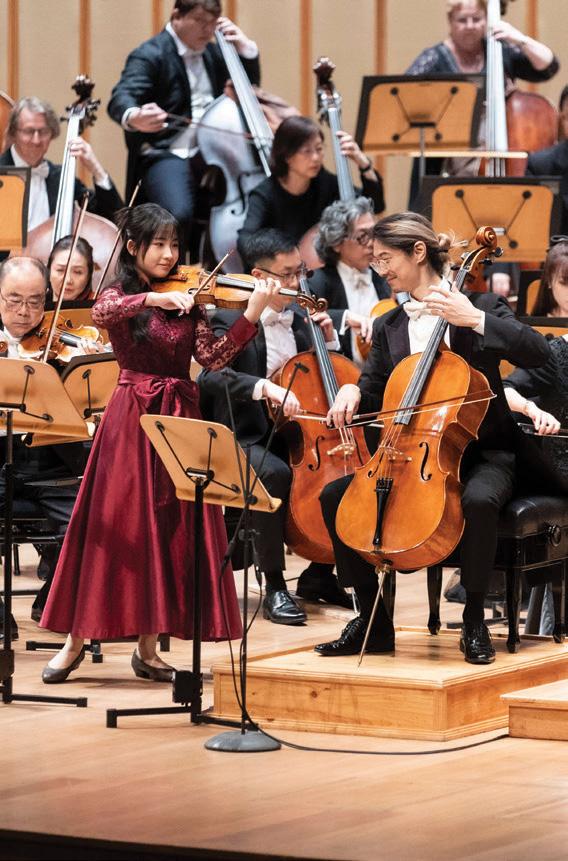
Julia Hagen cello*
Kevin Lin Co-Principal Guest Concertmaster

Elgar
Cello Concerto in E minor, Op. 85* 30 mins

Post-Concert Survey (23 Jan only)
To help us improve your concert experience, we invite you to participate in our survey. After the concert, be the first 120 to show proof of survey completion at the foyer, level 1, to receive a gift.
Check-in to tonight’s concert
Scan this QR code with the Singapore Symphony Mobile App. Intermission
The Planets, Op. 32
Concert Duration: approximately 2 hrs (including 20 mins intermission)
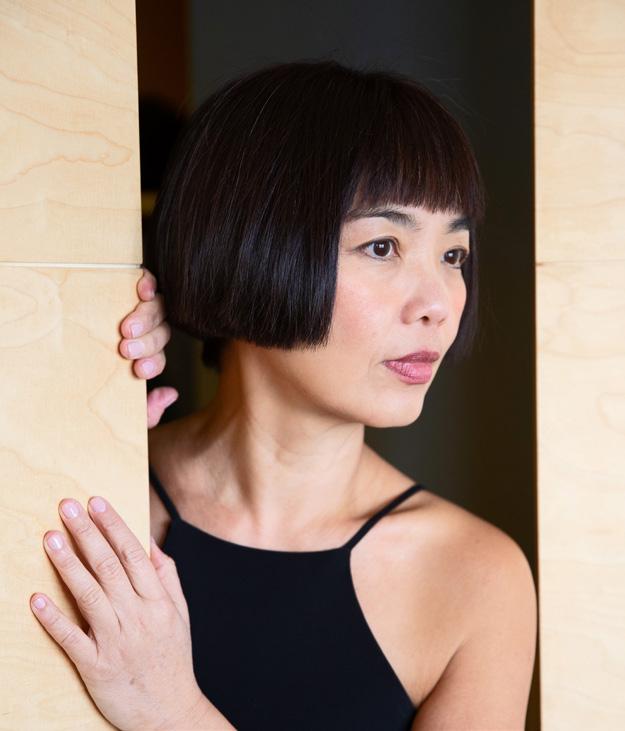
Award-winning composer Joyce Beetuan Koh writes concert music, collaborates on dance projects, composes for film, and creates sound installations and multimedia productions. Her music engages the intellect and elicits the senses. Underpinning her creative impulse is a fascination with architectural structures and scientific theories. Nuanced by her Asian sensibilities, her language is abstract and self-contained.
Versatile and collaborative, Joyce has extensive experience working across acoustic and electronic media with musicians, choreographers, theatremakers, artists, writers, philosophers, filmmakers, and architects. Her creative output is regularly featured at international festivals and concert series and presented at galleries and museums, notably at Singapore Arts Festival, Melbourne Arts Festival, Proms UK, BBC Radio Concert Series, Biennale Musiques France,
44th International Festival of Films on Art in Montréal, Tieranatomisches Theatre Berlin, BASE Milan, etc.
Highlights of two large-scale works include Kohnomos, a sound installation-music instrument shaped like a sailing mast that beckons the player-musician to sail in the sea of dark matter sonically, and A Micropolyphonic Stage, a pair of benches situated along an art trail called 'Benchmarks' by the Singapore River, that embraces the sitter for mindful contemplation.
She is a laureate of the Institut français, Cité Internationale des Arts Paris 2023 programme awarded by the French Culture Ministry. She is Associate Dean of Research Division at the Nanyang Academy of Fine Arts, University of Arts Singapore. https://www.jbtkoh.net/
b. 1968
Earth (2025)
When the Singapore Symphony Orchestra approached me to write a work titled Earth for a programme featuring Holst’s The Planets, I was thrilled. At the same time, I was intrigued by the creative challenge of referencing Holst’s music while maintaining my individual musical language.
Holst famously omitted Earth in the orchestral suite, The Planets, because it held no astrological significance. Instead, he focused on the other seven planets, exploring their astrological characteristics rather than their scientific properties, as reflected in their evocative subtitles.
I have conceived my Earth as a journey that begins with the Earth itself, expands through our solar system, and propels into the mysterious cosmos. The work unfolds in six stages, each traversing pillars of chords that build, evolve, and transform in varying orchestral timbral shades, with durational organisation following the golden ratio.
Stage 1 (Au seuil du temps / At the threshold of time) erupts into being with the glorious sonorities of tubular bells, giving rise to a musical adventure of phrases navigating through instrumental colours in Stage 2 (S'ouvre l'aventure éphémère / An ephemeral adventure unleashes). Stage 3 (Les yeux s'allument / The eyes glow) establishes the pivot chord, the Sun, from which my version of the solar system begins. Flowing into Stage 4 (La Sensualité, entendre / Hear, O Sensuality), I integrate musical citations from Holst into the fabric of my music. Notably, I mapped the entrances of each planetary citation proportionally to their respective distances from the Sun in astronomical units. As the last planet
of my solar system approaches, I feel compelled to venture into the Kuiper Belt and beyond. Stage 5 (Épanouir le profond / The profound blossoms) proposes new chords for the dwarf planets in the Belt: Pluto, Haumea, Makemake, and Eris, culminating in a massive chord spanning seven octaves that evokes a sense of infinity in Stage 6 (L'inconnu, au-delà / Beyond the Unknown).
On an additional note, I have envisioned Earth as part of my six-movement symphonic cycle (in the making), built around the golden ratio of 1.6180, with each movement highlighting a less commonly featured orchestral instrument. In 2018, the SSO commissioned a five-minute work, which I assigned as the fourth movement of the cycle. Entitled ONE, this work centres on the triangle. Now, I have added Earth, featuring tubular bells, the sixth and final movement of the cycle, ZERO.
Earth-ZERO is dedicated to my mother.
Voice of Child, flute, piccolo, alto flute, 2 oboes, cor anglais, 2 clarinets, bass clarinet, 2 bassoons, contrabassoon, 6 horns, 3 trumpets, 2 trombones, bass trombone, tuba, timpani, percussion (chimes, wind chimes, cymbals, gongs, crotales, glockenspiel, marimba), harp, celesta, strings
Cello Concerto in E minor, Op. 85 (1919) 1857 – 1934
Adagio – Moderato Lento – Allegro molto I II
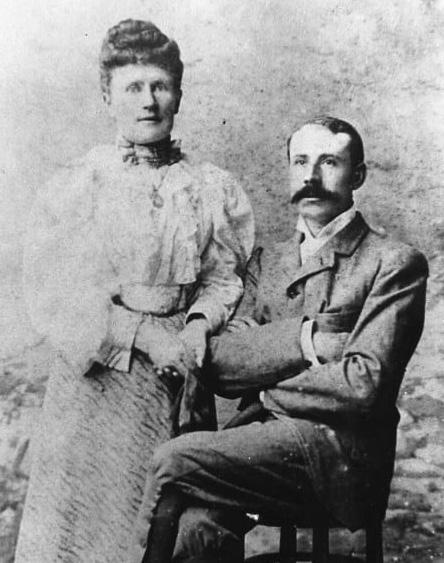
In 1918, the British composer Sir Edward William Elgar was, along with the rest of Europe, shattered by the Great War that had just ended – the state of affairs inherited from the 19th century had been altered permanently and beyond belief. On top of this, his wife Alice was suffering from lung cancer. Out of this specific time of despair came a work that ranks among the most timeless – the Cello Concerto in E minor, Op. 85.
Who was Lady Elgar? She was born Caroline Alice Roberts in 1848 in Bhuj, Gujarat, then part of British India. Educated in England, Alice became a published writer, her output included
Adagio Allegro – Moderato – Allegro, ma non troppo
poems, a novel in two volumes, and much more, while being fluent in German, Italian, French, and Spanish. Alice’s relationship with Edward began when she took up piano accompaniment lessons from him when they were both at Worcestershire.
Unlike most concerti, which have an orchestral introduction, this begins with an Adagio played intensely on the solo cello, so intensely sorrowful that one hardly notices the orchestral accompaniment which appears at first almost like sympathetic resonance. With the following Lento, the solo continues playing, searching futilely, like a man desperately grabbing whatever comes to hand in a darkened room, almost all through the movement. Its personal, intense, and intimate pain supported by various combinations of instruments, with only the barest punctuations by the whole orchestra. Perhaps one can see in the music the difficulties Elgar had in courting Alice, who was eight years his senior, and whose passionately Anglican family not only disapproved of his devout Catholicism but considered him of a lower and therefore unsuitable social class. The movement concludes with a scherzo that starts slow but builds sinister momentum.
The third movement Adagio brings us closer to Elgar’s signature serene style, with a long Romantic melody spun out on a grand scale, passionate radiance settling into prayerful serenity. Alice Roberts became Mrs Edward Elgar in 1889, and after a brief Catholic
ceremony, an exchange of gifts occurred: she presented him with her poem The Wind at Dawn, and he gave her a piece for piano and violin, the now famous Salut d’Amour. In their 30 years together, she was his business manager, social secretary, counsellor, and even ruled score paper for his orchestral works. The happy summer of 1919 was to be the couple’s last together, spent in the Sussex countryside, and we see the peaceful summer afternoon sunshine in the music.
Though traditionally a light and cheery form, Elgar gives us a wistfully sad but powerful rondo as the final movement. Alice was by Elgar’s side at the premiere in October 1919, but died the following April. Along with her, something of Elgar’s creativity died, and he wrote nothing of major consequence till his death. Perhaps later in life, he looked back to happier days and relived them, the way the cello solo reprises the anguish from the opening movement before the concerto ends.
Instrumentation
solo cello, 2 flutes (1 doubling on piccolo), 2 oboes, 2 clarinets, 2 bassoons, 4 horns, 2 trumpets, 2 trombones, bass trombone, tuba, timpani, strings
World Premiere 27 Oct 1919, London
First performed by SSO 12 Jan 1990 (Raphael Wallfisch, cello)
Notes by Edward C. Yong | A writer, editor, and teacher of dead languages, Edward plays lute and early guitars, sings bass, and runs an early music group. Like his dog, he is very much food-motivated.
The Planets, Op. 32 (1917) 1874 – 1934
Mars, the Bringer of War
Venus, the Bringer of Peace
Mercury, the Winged Messenger
Jupiter, the Bringer of Jollity
Saturn, the Bringer of Old Age
Uranus, the Magician
Neptune, the Mystic
Since ancient times, we have studied the stars and planets. It began as a way for us to understand the world: directions, seasons, and cycles of time. But we also looked to the skies to understand ourselves: our personalities and fortunes, dictated by the celestial bodies.
In 1913, Gustav Holst fell into this rabbithole of astrology. He wrote, “recently the character of each planet suggested lots to me, and I have been studying astrology fairly closely.” Four years later, this materialised as The Planets: a set of seven orchestral mood pictures, each depicting personality traits associated with its planet. Beyond their individual characters, Holst also saw The Planets as a continuous journey: starting in strife, moving through joy and struggle, before reaching serenity.
The journey begins with Mars, the Bringer of War. Propelled by an unrelenting ostinato, it simmers potently before exploding into a battle march. At its devastating climax, dissonant chords cry out with anguish. A frenzy of running notes begins, only to screech to a halt. Fractured beyond recognition, the ostinato is pounded out a final time, collapsing into the last note.
A solitary horn emerges from the chaos of Mars, and a chorus of woodwinds answer. Calm and pastoral, this is Venus, the Bringer of Peace. Alternating chords rock back and forth like gentle waves. Where Mars showed the orchestra’s strength, Venus demonstrates its delicateness.
Mercury, the Winged Messenger is also light and airy, but in a different way. Flitting between different keys, running notes leap between instruments, creating a kaleidoscope of colours. The effect created is a constant current of movement.
Jupiter, the Bringer of Jollity bursts to life with a flurry of activity from violins and woodwinds. First, an energetic brass theme asserts itself. Next is a rustic folk dance, then a noble, hymn-like tune. After the sections recur with variations, the music accelerates to a celebratory coda.
Saturn, the Bringer of Old Age begins with flutes intoning alternating chords. This harkens back to Venus, but now the sound is hollow and tense. A long dragging line unfolds, morphing into a trudging march, before the alternating chords return as the furious tolling of bells. But everything fades away, bringing us
to a place beyond time. The long line ascends peacefully amidst cascading arpeggios, with the bells ringing softly in the distance.
But the resolution in Saturn is short-lived. A four-note motif blares out, jumpstarting Uranus, the Magician. This motif is everpresent in this cheeky, dance-like movement. At its climax, the music evaporates after a massive organ glissando, leaving just the motif, plucked by a harp. Suddenly, the blaring opening crashes back in, and it seems doomed for a catastrophic end like Mars. But this time, the chaos dissipates, leaving the harp to echo the motif one last, mysterious time.
We heard hints of the mystical in the endings of Saturn and Uranus, but it is fully expressed in our destination: Neptune, the Mystic. Trembling strings, glistening harps, and twinkling celesta fill the slowly alternating harmonies with suspense.
The true magic begins midway through. As the music climbs upwards, unseen voices mingle with the sound of the orchestra. The orchestra gradually drops out, leaving the invisible chorus behind. They sing two alternating chords over and over, until (in Holst’s own words) “the sound is lost in the distance”.
Female chorus, 4 flutes (2 doubling on piccolos, 1 doubling on alto flute), 3 oboes (1 doubling on bass oboe), cor anglais, 3 clarinets, bass clarinet, 3 bassoons, contrabassoon, 6 horns, 4 trumpets, 2 trombones, bass trombone, euphonium, tuba, 2 timpani, percussion (triangle, chimes, cymbals, tam-tam, snare drum, bass drum, glockenspiel, tambourine, xylophone), 2 harps, celesta, organ, strings
World Premiere
29 Sep 1918, London
First performed by SSO 10 Oct 1997
Notes by Isaac Tah | When not distracted by the cello, piano, and occasional arts-and-crafts project, Isaac is cheerfully making some progress on a
Fri & Sat, 30 & 31 Jan 2026
Esplanade Concert Hall
Singapore Symphony Orchestra
Pierre Bleuse conductor
Bertrand Chamayou piano*
Kevin Lin Co-Principal Guest Concertmaster

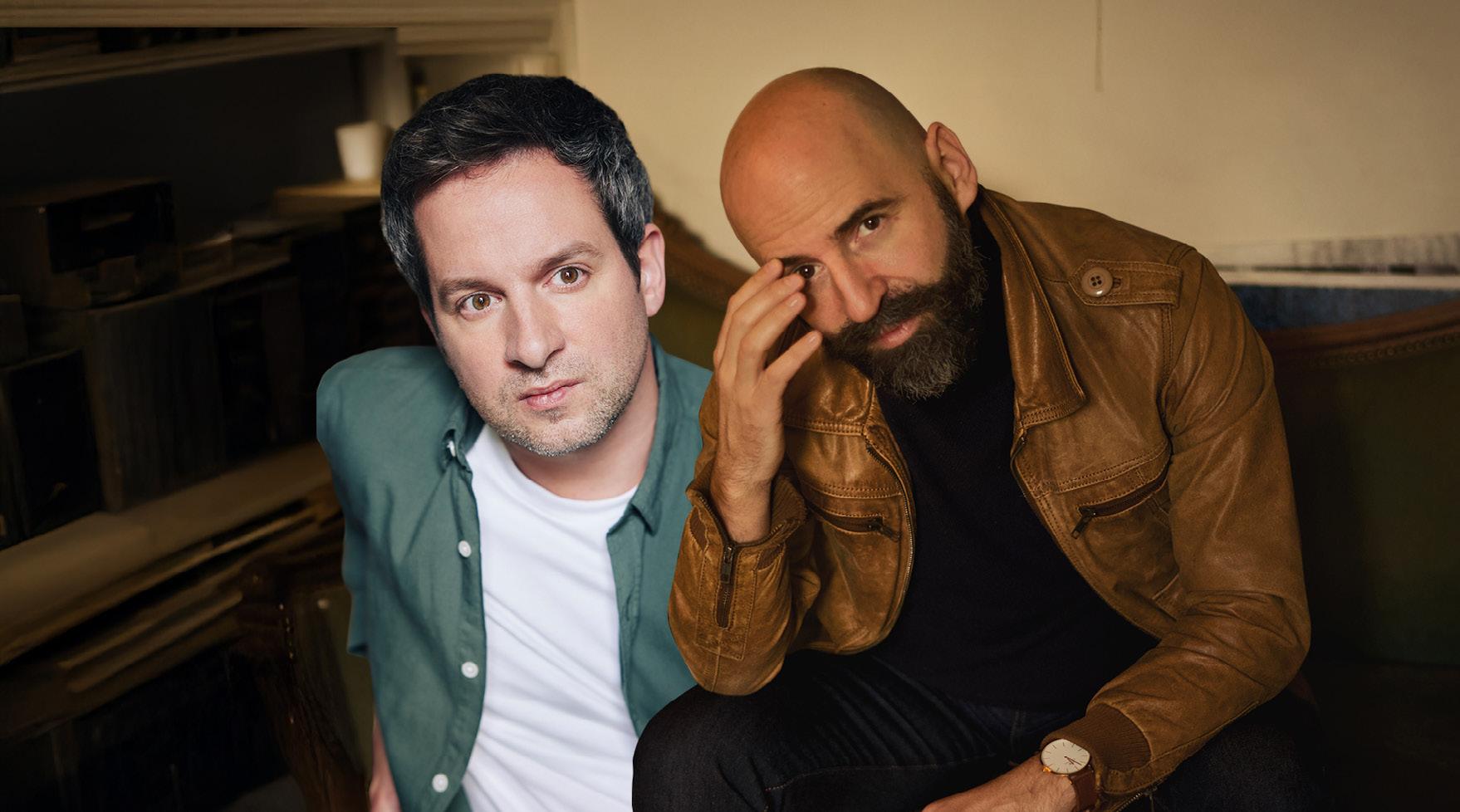
Prokofiev
Scythian Suite, Op. 20 20 mins
Liszt
Piano Concerto No. 1 in E-flat major* 19 mins
Intermission 20 mins
Pictures at an Exhibition (orch. Ravel) 35 mins Mussorgsky
Concert Duration: approximately 1 hr 50 mins (including 20 mins intermission)
Check-in to tonight’s concert
Scan this QR code with the Singapore Symphony Mobile App.
1891 – 1953
Scythian Suite, Op. 20 (1915)
I II
The Adoration of Vélèss and Ala
The Hostile God and Dance of the Dark Spirits
Prokofiev first met with ballet impresario Sergei Diaghilev in London in 1914. Already notorious for what his teachers called “violations of good musical manners”, the 23-year-old astonished Diaghilev by tearing through his own piano concerto. Diaghilev urged Prokofiev to write something ‘Russian’ for the Ballet Russes. Together with symbolist poet Sergei Gorodetsky, Prokofiev concocted an artificial mythology foisted on the real Scythians: a nomadic people active between the 8th–2nd centuries BCE in what is now modern Ukraine, Southern Russia, and Kazakhstan. They were known for their exceptional horsemanship and elaborate goldwork.
The resulting ballet, Ala and Lolli, tells of the sun god Vélèss and his daughter Ala, abducted by the underworld god Chuzhbog and rescued by the mortal hero Lolli. Prokofiev hoped the work might rival Stravinsky’s Rite of Spring, which proved its undoing. When he played the score to Diaghilev, it was dismissed as “a St Petersburg fabrication”, “just music”, and even “very bad”.
Unwilling to waste good material, Prokofiev salvaged the music as the Scythian Suite. The Adoration of Vélèss and Ala opens in a blaze of brass and percussion, its hectic energy broadening into a ritual procession. After the tumult subsides, a sensuous flute and harp melody unfurls over murmuring strings. The Hostile God and Dance of the Dark Spirits launches right into an aggressive, stomping dance. A frantic string fugato and a bizarre, skeletal episode for woodwind and tuned percussion follow, before the dance explodes again in an uninhibited climax.
Night offers the work’s sole oasis of calm: whispered upper strings, woodwind lines and celesta sonorities create an otherworldly aura. A brief eruption of
Night
The Glorious Departure of Lolli and the Cortège of the Sun
brass menace interrupts the stillness, but the music returns to its ethereal opening.
The Glorious Departure of Lolli and the Cortège of the Sun begins with scurrying lower strings and martial rhythms that build towards luminous textures for woodwind, brass, harp and percussion for a blazing sunrise.
The premiere made its mark in the history of musical scandals. Glazunov stormed out before the end; the timpanist broke his drumskin (which Prokofiev kept as a souvenir); and one musician, half-deafened by the trombones, complained: “Only because I have a sick wife and three children was I willing to submit to this hell”. The organiser of the concert, Alexander Siloti, on the other hand, was delighted at the audience’s torment and paced the back of the hall shouting, “A slap in the face! A slap in the face!”
Instrumentation
3 flutes (1 doubling on alto flute), piccolo, 3 oboes, cor anglais, 3 clarinets (1 doubling on E-flat clarinet), bass clarinet, 3 bassoons, contrabassoon, 8 horns, 4 trumpets (1 doubling on piccolo trumpet, 1 doubling on alto trumpet), 4 trombones, tuba, timpani, percussion (triangle, 2 pairs of cymbals, tam-tam, snare drum, bass drum, glockenspiel, tambourine, xylophone), 2 harps, piano, celesta, strings
World Premiere
29 Jan 1916, St. Petersburg
First performed by SSO
28 Jan 2011
1811 – 1886
Piano Concerto No. 1 in E-flat major (published 1856)
Allegro maestoso Quasi adagio I II
Allegretto vivace – Allegro animato Allegro marziale animato III IV
The Piano Concerto in E-flat belongs to the moment when Liszt, having set aside his life as a touring virtuoso in 1847, settled in Weimar to devote himself to “self-composure and composition”. The Concerto had grown slowly: sketched in the 1830s, orchestrated in 1849 with help from the young Joachim Raff, revised in 1853, and premiered in February 1855 with Liszt at the keyboard and Berlioz conducting.
Novel in form, it fuses four traditional movements into a single uninterrupted work, exemplifying Liszt’s mastery of thematic transformation. In the Allegro maestoso, the opening motif, introduced by the strings, plays a structural role throughout. It is answered by octaves on the solo piano which lead into a rhapsodic cadenza. Liszt’s transformations quickly emerge, as what begins as a heroic gesture becomes something lyrical, playful, or triumphant. The soloist’s writing is muscular and incisive, full of abrupt contrasts, yet always tethered to the opening motif.
The music then yields to the Quasi adagio, a tender reverie in B major. Muted strings and warm orchestral colour lend a nocturnal atmosphere over which the piano unfolds long-breathed, improvisatory lines. Liszt’s gift for intimacy shines through as quasi-recitative phrases blossom into more expansive lyricism, and the concerto’s chamber-like qualities emerge.
The Allegretto vivace–Allegro animato introduces soft triangle rhythms, a pointillistic element that caused critic Eduard Hanslick to unfairly dub the piece “the triangle concerto”, a jibe that shadowed its reception for decades. The opening motif returns first as a pianistic echo and then with full orchestral
force, while woodwind glimpses recall the earlier Adagio. As for the Allegro marziale animato, Liszt offered his thoughts about its musical form: “This binding and rounding off a piece at its close is a technique I have made my own, but it is justified by the musical form. The trombones and basses take up the second part of the adagio’s motif. The piano passage that comes after this is the motif just played in the adagio by flute and clarinet. The final passage is a variation and major mode development of the scherzo’s motif. At last, the very first theme comes in with a trill accompaniment, to conclude the whole”.
The Concerto now stands as a hallmark of Lisztian innovation, a work that unites pianistic bravura with the then-novel idea of a unified movementcycle, and rewards repeated listening as its transformational craft reveals itself.
solo piano, 2 flutes, piccolo, 2 oboes, 2 clarinets, 2 bassoons, 2 horns, 2 trumpets, 3 trombones, timpani, percussion (triangle, cymbals), strings
World Premiere 17 Feb 1855, Weimar
First performed by SSO 21 Mar 1980 (Liu Shikun, piano)
Notes (Prokofiev and Liszt) by See Ning Hui | See Ning Hui is a pianist, researcher, and educator passionate about integrating underrepresented composers’ music. She is an adjunct lecturer at UAS-NAFA. Upcoming engagements can be found on www.ninghuisee.com.
1839 – 1881
Pictures at an Exhibition (1874, orch. Maurice Ravel in 1922)
Promenade
Gnomus
Promenade
The Old Castle Promenade
Tuileries
Bydło
Promenade
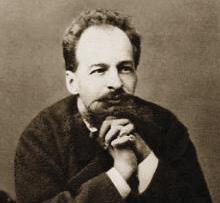
Mussorgsky’s most well-known work has French composer Maurice Ravel (1875–1937) to thank for its lasting legacy. Originally conceived as a suite of ten piano pieces plus a common “Promenade” theme that returns in variation, it is quite fair to say that pianists play it mostly because of the incredible fame of Ravel’s orchestration.
The idea for the piece stems from the paintings of Mussorgsky’s friend Viktor Hartmann, who was also an architect and designer and, like Mussorgsky and the rest of the Mighty Handful, fully committed to the search for an intrinsically
Ballet of the Unhatched Chicks
Samuel Goldenberg and Schmuÿle
The Market at Limoges
Catacombs
– Cum mortuis in lingua mortua
The Hut on Fowl’s Legs (Baba Yaga)
The Great Gate of Kiev
Russian art, away from Westernising influences (especially German and Italian dominance in Russian music circles). Hartmann gave Mussorgsky two of the paintings that would eventually make their way into Pictures, and was a great lover of Mussorgsky’s music. His early death at 39 rocked the Russian art and music world, and, at a consequent exhibition in his memory, Mussorgsky saw the paintings that would eventually become immortalised in this set of miniatures.
Ravel’s use of solo trumpet for the very opening Promenade, echoing into the concert hall, is a very direct depiction of people walking into an exhibition space. His orchestral mastery brings to life Hartmann’s Ballet of the Unhatched Chicks with chattering winds and strings, shivery tremolos plague Cum mortuis in lingua mortua (“With the dead in a dead language”), and very seriously illustrate the strangeness of the legendary Baba Yaga’s hut on chicken’s legs. In between all these, the returning Promenade theme is dressed in different colours, reflecting a milling crowd’s various thoughts. The grand ending of The Bogatyr Gate (“The Great Gate of Kiev”) is a chest-thumping celebration for which Ravel provides orchestral bombast to match.
A little description of each movement follows:
Promenade: A grand opening fanfare, with crowds to match.
Gmonus: An awkward dwarf, painted with outbursts and irregular rhythms.
The Old Castle: A troubadour sings in the grounds with a mournful sound.
Tuileries: Children play in the famous Parisian gardens.
Bydło: The heavy tread of a Polish oxcart.
Ballet of the Unhatched Chicks: A representation of a costume for a children’s ballet.
Samuel Goldenberg and Schmuÿle: Two Jewish men, one rich and one poor.
The Market at Limoges: Country folk chatter cheerfully at the market.
Catacombs: Dissonant bell sounds echo through the eerie darkness.
Cum mortuis in lingua mortua: The rattle of bones and the whisper of wind…
The Hut on Fowl’s Legs: Baba Yaga’s bewitched hut and her cackles while she hunts.
The Great Gate of Kiev: The great gate of Kyiv, inspired by Hartmann’s sketch for a proposed city gate.
Instrumentation
3 flutes (2 doubling on piccolos), 3 oboes (1 doubling on cor anglais), 2 clarinets, bass clarinet, alto saxophone, 2 bassoons, contrabassoon, 4 horns, 3 trumpets, 3 trombones, tuba, timpani, percussion (triangle, chimes, cymbals, suspended cymbal, tam-tam, snare drum, bass drum, glockenspiel, ratchet, whip, xylophone), 2 harps, celesta, strings
World Premiere 19 Oct 1922 (Ravel’s orchestration)
First performed by SSO 11 Mar 1983
Notes by Thomas Ang | Thomas Ang is a pianist at the Royal Opera House, where he rehearses and plays for operas and ballets. He also specialises in the music of Medtner and Kapustin. www.thomasang.com
We would like to express our deepest appreciation to the following individuals and organisations who support our mission to create memorable shared experiences with music in the past year. Without your support, it would be impossible for the SSO to continue to strive for artistic excellence and touch the hearts of audiences.
PATRON SPONSOR
Tote Board Group
(Tote Board, Singapore Pools & Singapore Turf Club)
MAESTRO CIRCLE
Mr & Mrs Goh Yew Lin
Stephen Riady Foundation
Temasek Foundation
The HEAD Foundation
Anonymous
CONCERTMASTER CIRCLE
Andreas & Doris Sohmen-Pao
Bowen Enterprises Pte Ltd
Christopher & Rosy Ho
DBS Bank Ltd
Dr & Mrs Antoine & Christina Firmenich
Mind the Gap 200 Fund
Anonymous (2)
S YMPHONY CIRCLE
Christopher Fussner
De Miguel Solaguren Family
Dr Thomas & Mrs Mary Zuellig
Jacqueline Yeh
Kris Foundation
Madeleine Cheok & Wong Hong Ching
Ms Paige Parker & Mr Jim Rogers
Anonymous (2)
Andy, Raymond, Bubble & Breton Tan
Bernard Ryan & Michael Rowe
Cara & Tamara Chang
Colin Lee
Dr Geh Min
Elaine and Eduardo Saverin Foundation Ltd
Eva & Nilay Patel
Far East Organization
Frans & Marie-Pierre Mol
Geoffrey & Ai Ai Wong
Geraldine Choong & Dennis Au
Holywell Foundation Limited
Kenneth Kwok
Mavis Lim Geck Chin
Miriam & Merle Hinrich
Neo Group Limited
Patek Philippe Southeast Asia
Prof Chan Heng Chee
Robert & Vivian Chandran
UOB
Yong Ying-I
Alan Chan
Anthony & Chloe Tan from ACE Team Foundation
Azeeza Aziz Khan
BinjaiTree
Blossom Hing
Cavazos Tinajero Family
Chloe Lee En Yi & Family
Colin & Janet Leong
Devika & Sanjiv Misra
Dorian Goh & Rathi Ho
Dr Karen Soh
Dr Kevin T Yap
Dr Kieron Lim
Embassy of France in Singapore
Farhana Sharmeen
Geraldine Lim & Lim Him Chuan
Guy Hentsch & Geoffrey Yu
Hastens
Hong Leong Foundation
Indosuez Wealth Management
JCCI Singapore Foundation
John & Eliza Bittleston
Jonathan Stona
Joy & Han Li Toh
Kevin & Carrie Burke
Krishnan Family
Kris Foundation - Ms Lim Kang Ning
Leong Wai Leng
LGT Bank (Singapore) Ltd
Lito & Kim Camacho
LOY Contemporary Art Gallery
Marina Bay Sands
Martin Siah & Wendy Long
Mr & Mrs Choo Chiau Beng
Mr & Mrs Mak Hoe Kit
Mr Xu & Mrs Cairong Ren
Mrs Hemal & Mr Paritosh Thakore
MTM Skincare Pte Ltd
NSL LTD
Paul & Lena Ng
PCS Pte Ltd
Poh Khim Hong
Prima Limited
Priscylla Shaw
Prof Gralf & Silvia Sieghold
Sameer Sain
Tan Meng Cheng Ivan
The Anjuman & Aziz Charitable Trust
Tony & Melanie Chew
Tower Capital Asia
V3 Wellness Pte Ltd
Vanessa & Darren Iloste
Watson Farley & Williams LLP
ZDR Investments
Anonymous (5)
Aadarsh Baijal
Anthony Tay
Bloomberg Singapore Pte Ltd
Chuin Wei Yap
Dr & Mrs Choy Khai Meng
Dr June & Peter Sheren
D-Y Lin
Francoise Mei
G L Wee
Goh Swee Chen
Grace Fu
Hartley & Hong Lynn Clay
Isaiah & Suwei
Jesher Loi
Jocelyn Kum
RHAPSODY PATRONS
Adrian TL Chua
Aileen Tang
Ang Jian Zhong
Belinda Koh
Benedict Teo
Benito Ting
Benjamin Ma
Bettina Lieske
Chan Ah Khim
Charles Robertson
Charmaine Lim
Cheng Eng Aun
Choo Lim
Clara Lim-Tan
Claudia & Henning Figge
David Chan & Sarah Chan
David Leung
Dr Jade Kua
John & Pauline Foo
Kenneth Kan
Keppel
Kim Hae Hyun & Heo Soomin
Kris Wiluan
Lai Siu Chiu
Lau Leok Yee
Lee Ming San
Lee Yeow Wee David
Liwen & Steven Holmes
Lorinne Kon
Madeleine Lee
Maisy Koh
Marcelo V Achoa & Silvia Bordoni Meng
Michael Brenninkmeijer
Mr & Mrs Ong Kong Hong
Nicole & Edoardo Prina
Paterson Lau & Pauline Tan
Pierre Colignon
Prof Arnoud De Meyer
Prof Cham Tao Soon
Tan Wan Chi
Tantallon Capital Advisors
Pte Ltd
The Linh Tinh Family
Wayne & Kim Giap Khoo
Anonymous (4)
Dr Peter Chew
Dr Victor Lim
Evelyn Chin
Faith Chia
Gin & Doug
Hwang Chih Ming
Ian & Freda Rickword
In memory of Timothy Kok Tse En
Jeanne Lee
Jennifer & Alexander Chan
Jennifer Lee
Jenny Zhu Huimin
Jerry Gwee
Jinny Wong
Julian & Jane Tan
Julien Brousseau
Kasch Kimmy Kimberly
Kirk Tay
Kok Leong Lim
Lee Hyunsun
Natalia & Alex Galinovskii
Patricia Lim
Sam & Claire Loh
SC & WY Leong
Singapore Pools (Private) Limited
Suzanne Lim
Tang See Chim
Valerie Thean
Winston & Valerie Kwek
Winston Hauw
Wong Yan Lei Grace
Xinyi Ong
Anonymous (7)
A T Teo
A.R.
Adeline Ang
Adi F & Hui Shi
Akihiro Nemoto
Alexey Filimonov
Alwyn Loy Suan Mao
Andrew Cheong
Ang Seow Long
April Mak
Aw Jia Yu
Brenda Ang
Bryan Carmichael
Casey Tan Khai Hee
Chang Chee Pey
Chen H W
Chong David
Chong Mi-Li Pamela
Chong Sien Thye Albert
Chong, Wai Ying Ruby
Christopher Chen Li Hsian
Cindy
Claire & Ian Jones
Clarissa Chow
Colin Lang
Cynthia Chee
D Cheong
D.N.C.H
Daniel Yong
DCP
Debby Lim
Deborah Chee
Deepa Chatrath
Denis Tenchurin
Derek Lim HK
Dr & Mrs Winson Lay
Dr Anne-Marie Schleich
Dr Chong Shin Min
Dr Kong Tze Yean & Cristina Prado
Dr Lien Boon Hua
Dr Norman Lee
Dr Rebecca Dent & Dr Greg Jakubowski
Dr Tan Lay Kok
Dr Teo Kien Boon
Dr Wong Hin Yan
Dr Yap Zhu Li
Edith & Sean Lim
Emma Lexi Ng
Ernest Khoo
Esther Fang
Gan Chee Yen
Ghislain Olagne
Giles Tan Ming Yee
Goh Chiu Gak
Goh Jun Yi
Heinrich Grafe
Henry & Tiffany
Herman Felani MY
Ho Jun Yi & Family
In loving memory of Jasper Irina Piano
Janek Schergen
Jason & Jennifer Chew
Jay Ganapathy
Jeanie Cheah
Jean-Pierre Felenbok
Jessica Cheam
Jiang Wenzhu
Joanne Lim
Johannes Yap & Family
Joseph Wolpin
Joseph Yoong
K Goh & Family
Kadir Satar
Kelvin Ho
Kelvin Wong
Khoo Ken Hui
Khor Cheng Kian
Kianyew
Koh Ruizhi
Lele Chen & Hans Yeh
Leonard Augustine Choo
Li Danqi & Liu Yi
Lily Low
Lim Boon Kong Andrew
Lim Shue Churn
Lim Yin Yin, Jaime
Lim Yuin Wen
Lisa Lee
Low Boon Hon
Maggie Dong
Manski-Nankervis Jo-Anne Elizabeth
Marcel & Melissa Xu
Marcel Smit & Hanneke Verbeek
Marian Goh
Mark Cranfield
Maxim Yanchenko
Michael & Katherin Puhaindran
Michelle & Eric Anziani
Michelle Loh
Michelle Tan & Soo Yixin
Min Tan
Minwei
Mr & Mrs Jeremy Ee
Mr & Mrs Kevin
msm-productions
Naserah Tyebally
Ng Shien
Ngiam Shih Chun
Nguyen Quoc Khanh & Vu Phuong Nhi
Nicolas Pascale Rouveyre
Nicole Ng
Nicole Padilla & Sebastian Sohn
Nishioka Hiroyuki
Nurture With Love Suzuki Music School
Ong Chee Siong
Ong Wee Shiang
Parthesh Gulawani
Patrick Lee
Pauline Ang
Prof Goh Suat Hong
Prof Gungwu Wang
Richard Hartung
Robert Khan & Co Pte Ltd
Ronald & Janet Stride
Sandra Tsao
Sangeeta Razu
See Chai Geok
Serene Yeo
Shamim Chowdhury
Shermin Teh
Siveraman K Pillai
Soh Leng Wan
SY Lee
Sylvie Gleises
Tan Kok Huan
Tan Yi Bin
Teo Eng Chai
Teo Wee Poh
The McCann Family
Tiffany Choong & Shang Thong Kai
Timothy Leong
Ting Tay
Tom Szetu
TseTsean
Tsou Lei Shirley
Victor Huang Kuan Kai
Viktor & Sonja Leendertz
Virna Machado-Ashish Goyal
Vivien Goh
Voon S Leong
Wang Lei & Gao Bo
Wang Pei Zhong
Wendy Leong Marnyi
Wennie Wong
Wicky Wong
Wong Lai Foon
Xiao Li
Xu Yixin
Yang Tian
YC Chen
Yee Deng Tan
Yong Chuk Kwin
Yong Ning & Candice Foo
Yong Seow Kin
Zeng Qiao Jia
Zhai, Yuxiang
Zhu Yulin
Anonymous (40)







Concert booklets and website
Patron of the Arts Nomination
Invitation to special events
4
As a valued patron of the SSO, you will receive many benefits. How can you help?
While SSO is supported partially by funding from the Singapore government, a significant part can only be unlocked as matching grants when we receive donations from the public. If you are in a position to do so, please consider making a donation to support your orchestra – Build the future by giving in the present.
We provide our Corporate Patrons with impressive entertainment and significant branding opportunities. Through our tailored packages, corporates may benefit from:
• Publicity and hospitality opportunities at an SSO concert or your private event,
• Acknowledgement and mentions in SSO’s key publicity channels,
• National Arts Council (NAC) Patron of the Arts nominations,
• Tax benefits.
Packages start at $10,000 and can be tailored to your company’s branding needs.
We partner with various corporates through tailored in-kind sponsorship and exchange of services. Current and recent partnerships include Official Hotel, Official Airline, and we offer other exciting titles.
For more details, please write to Sarah Wee at sarah.wee@sso.org.sg
We recognise major gifts that help sustain the future of the Singapore Symphony Group. The recognition includes naming of a position in the SSO or in our affiliated performance groups such as the Singapore National Youth Orchestra and the Singapore Symphony Choruses.
F or more information, please write to Chelsea Zhao at chelsea.zhao@sso.org.sg
SSO Concertmaster l GK Goh Chair
In July 2017, the SSO established the GK Goh Chair for the Concertmaster. Mr Goh Geok Khim and his family have been long-time supporters of the national orchestra. We are grateful for the donations from his family and friends towards this Chair, especially Mr and Mrs Goh Yew Lin for their most generous contribution.
Mr Igor Yuzefovich was the inaugural GK Goh Concertmaster Chair. The position is currently vacant.
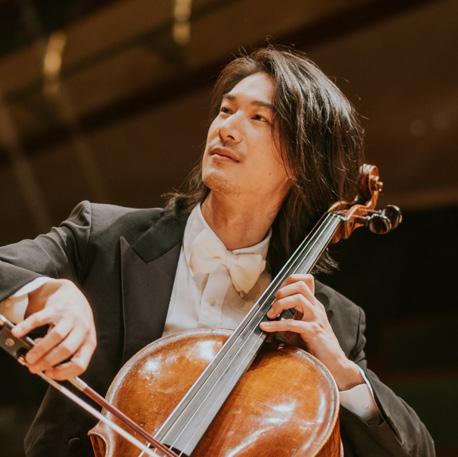
SSO Principal Cello
The Head Foundation Chair
In recognition of a generous gift from The HEAD Foundation, we announced the naming of our Principal Cello, “The HEAD Foundation Chair” in November 2019. The Chair is currently held by Principal Cellist Ng Pei-Sian.
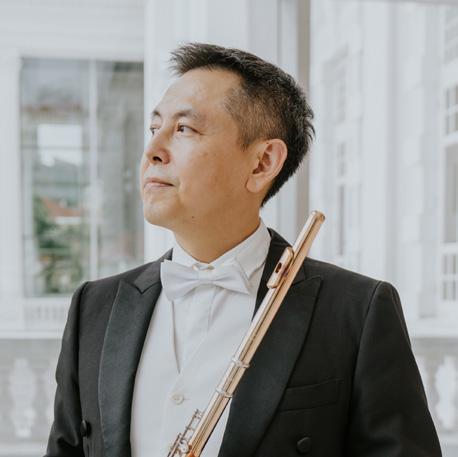
SSO Principal Flute
Stephen Riady Chair
In recognition of a generous gift from Dr Stephen Riady, we announced in May 2022 the naming of our Principal Flute, “Stephen Riady Chair”. The position is currently held by our Principal Flutist Jin Ta.
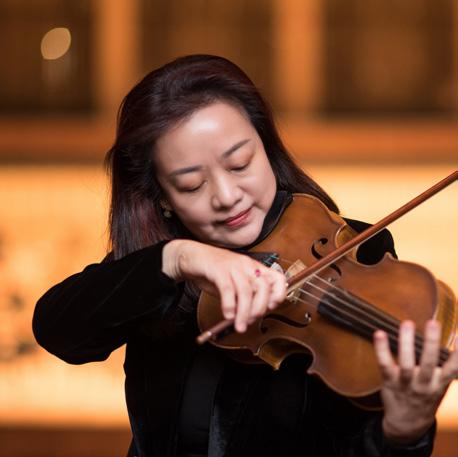
SSO Principal Viola
Tan Jiew Cheng Chair
In recognition of a generous gift from the Estate of Tan Jiew Cheng, we announced in February 2024 the naming of our Principal Viola, “Tan Jiew Cheng Chair”. The position is currently held by our Principal Violist Manchin Zhang.
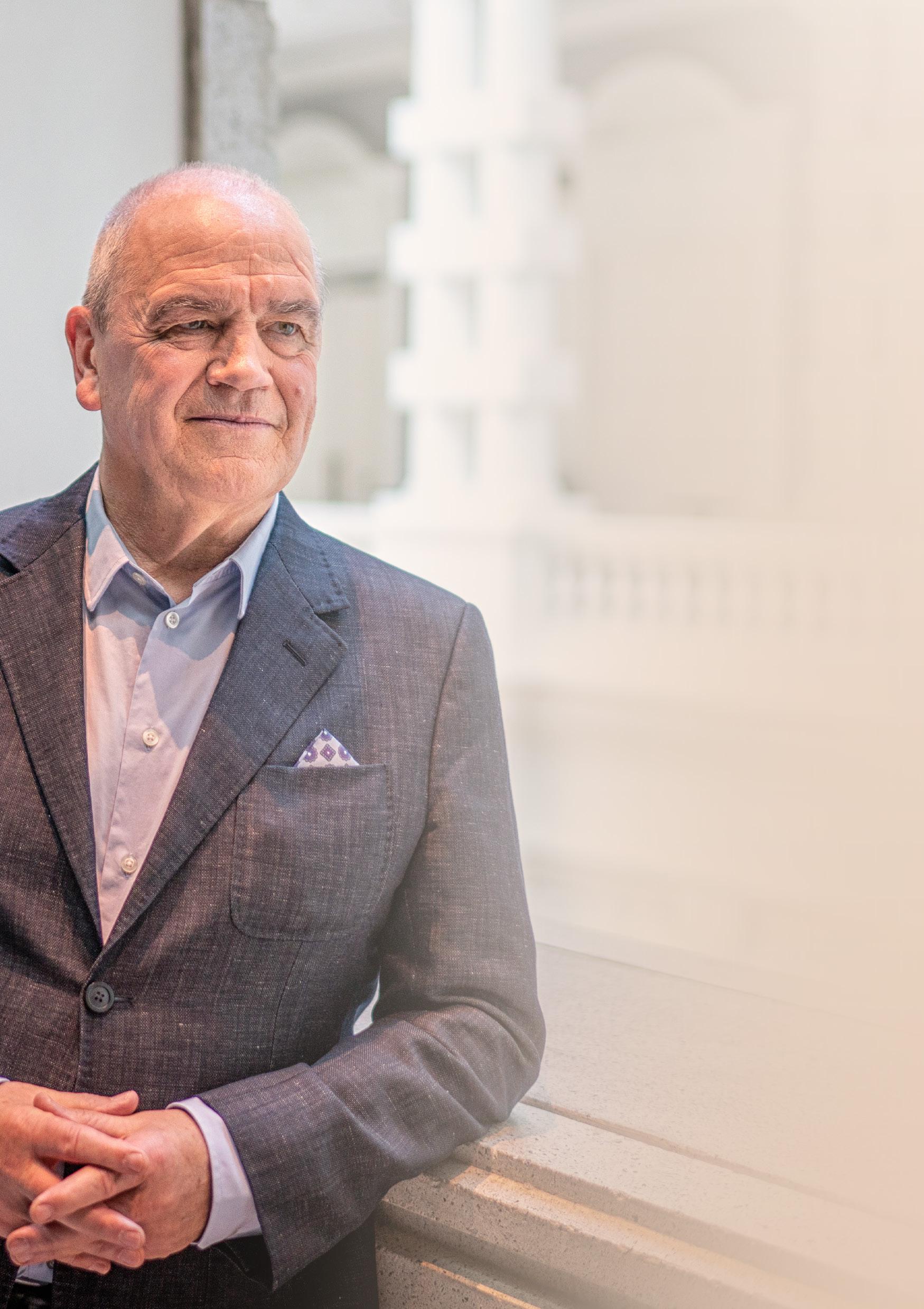
The SSO is delighted to announce the naming of the “Quantedge Music Director” position, currently held by Maestro Hans Graf.
With his spirit of musical exploration, innovative programming, and captivating stage presence, Maestro Graf has consistently inspired audiences and elevated orchestras to new heights. We are deeply grateful for his continued leadership as Chief Conductor in the 2020/21 season and Music Director since the 2022/23 season.
We extend our sincerest gratitude to our anonymous donor for this generous gift of $3 million to mark SG60.

Chair
Goh Yew Lin
Board of Directors
Chang Chee Pey
Chng Kai Fong
Andress Goh
Kenneth Kwok
Clara Lim-Tan
Jesher Loi
Lynette Pang
Prof Qin Li-Wei
Jovi Seet
Farhana Sharmeen
Doris Sohmen-Pao
Prof Peter Tornquist
Geoffrey Wong
Andrew Yeo Khirn Hin
EXECUTIVE & NOMINATING COMMITTEE
Goh Yew Lin (Chair)
Chng Kai Fong
Lynette Pang
Geoffrey Wong
SSO Council
Alan Chan (Chair)
Odile Benjamin
Prof Chan Heng Chee
Prof Arnoud De Meyer
Dr Geh Min
Heinrich Grafe
Khoo Boon Hui
Liew Wei Li
Lim Mei
Sanjiv Misra
Paige Parker
Dr Stephen Riady
Priscylla Shaw
Prof Gralf Sieghold
Prof Bernard Tan
Dr Tan Chin Nam
Wee Ee Cheong
Yong Ying-I
HUMAN RESOURCES COMMITTEE
Doris Sohmen-Pao (Chair)
Jesher Loi
Prof Qin Li-Wei
Heinrich Grafe*
Carmen Wee*
FINANCE & INVESTMENT COMMITTEE
Geoffrey Wong (Chair)
Andress Goh
Chua Keng Hong*
Alex Lee*
DEVELOPMENT COMMITTEE
Prof Chan Heng Chee (Chair)
Dr Geh Min
Heinrich Grafe
Khoo Boon Hui
Paige Parker
Priscylla Shaw
Dr Tan Chin Nam
Odile Benjamin
Lim Mei
AUDIT & RISK COMMITTEE
Jovi Seet (Chair)
Prof Peter Tornquist
Andrew Yeo Khirn Hin
Ryan Siek*
COMMUNITY & YOUTH ENGAGEMENT COMMITTEE
Clara Lim-Tan (Chair)
Chang Chee Pey
Farhana Sharmeen
Asst Prof Kat Agres*
Cecilia Pang*
*co-opted member
Symphony Ball Committee
Paige Parker (Chair)
Celeste Basapa
Geoffrey Wong
Kris Tan
Joy Tan
Dr Karen Soh
Kim Camacho
Lim Kang Ning
Farhana Sharmeen
SSO Musicians’ Committee
Hoang Van Hoc
Austin Larson
Li Xin
Christopher Mui
David Smith
Elaine Yeo
Zhao Tian
Chief Executive Officer
Kenneth Kwok
Deputy CEO
Programmes & Production
Kok Tse Wei
CEO OFFICE
Shirin Foo
Musriah Bte Md Salleh
ORGANISATION DEVELOPMENT
Lillian Yin
A rtistic Planning
Christopher Cheong (Head)
A RTISTIC ADMINISTRATION
Jodie Chiang
Terrence Wong
Jocelyn Cheng
Michelle Yeo
Operations
Ernest Khoo (Head)
L IBRARY
Wong Yi Wen
Cheng Yee Ki
Ng Yi Xiu
ORCHESTRA MANAGEMENT
Chia Jit Min (Head)
Kelvin Chua
P RODUCTION MANAGEMENT
Noraihan Bte Nordin
Nazem Redzuan
Leong Shan Yi
Asyiq Iqmal
Khairi Edzhairee
Benjamin Chiau
Syed Muhammad Idris Bin Ramli
DIGITAL PRODUCTION
Avik Chari
Deputy CEO
Patrons & Corporate Services
Jenny Ang
Community Impact
COMMUNITY ENGAGEMENT
Kua Li Leng (Head)
Whitney Tan
Lynnette Chng
Chua Xu Yang
Darren Siah
C HORAL PROGRAMMES
Kua Li Leng (Head)
Lu Heng
Chang Hai Wen
Mimi Syaahira
SINGAPORE NATIONAL
YOUTH ORCHESTRA
Ramu Thiruyanam (Head)
Tang Ya Yun
Tan Sing Yee
Ridha Ridza
ABRSM
Patricia Yee
Lai Li-Yng
Joong Siow Chong
Freddie Loh
Corporate Services
F INANCE, IT & FACILITIES
Rick Ong (Head)
Alan Ong
Goh Hoey Fen
Loh Chin Huat
Md Zailani Bin Md Said
HUMAN RESOURCES & ADMINISTRATION
Valeria Tan (Head)
Janice Yeo
Fionn Tan
Netty Diyanah Bte Osman
D EVELOPMENT
Chelsea Zhao (Head)
Nikki Chuang
Sarah Wee
Samantha Lim
Eunice Salanga
Kevin Yeoh
C OMMUNICATIONS, DIGITAL & MARKETING
Cindy Lim (Head)
Communications
Ong Shu Chen
Nikki Loke
Elizabeth Low
Data & Digital Projects
Calista Lee
Lim Wen Jie
Marketing & Content
Chia Han-Leon
Hong Shu Hui
Myrtle Lee
Jana Loh
Kashmira Kasmuri
Carrie Woo
CUSTOMER EXPERIENCE
Randy Teo
Dacia Cheang
Joy Tagore
7 Feb
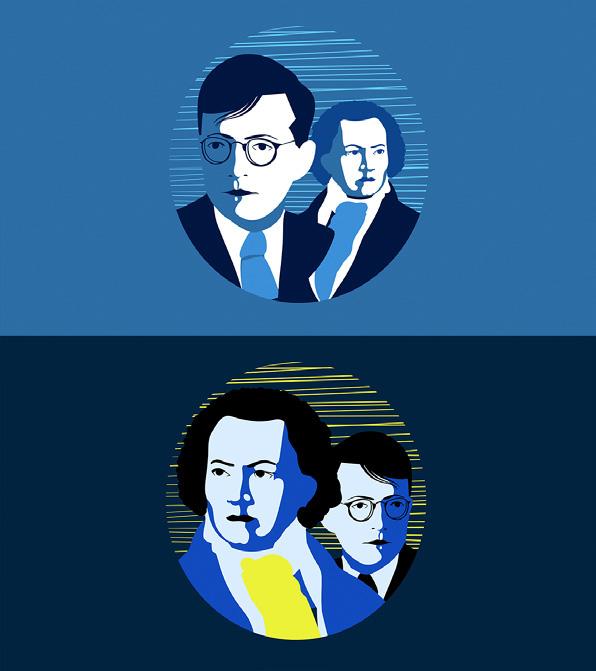
SSO Chamber Series: DSCH: Shostakovich and Beethoven
SSO Chamber Series: BTVN: Beethoven and Shostakovich 8 Feb
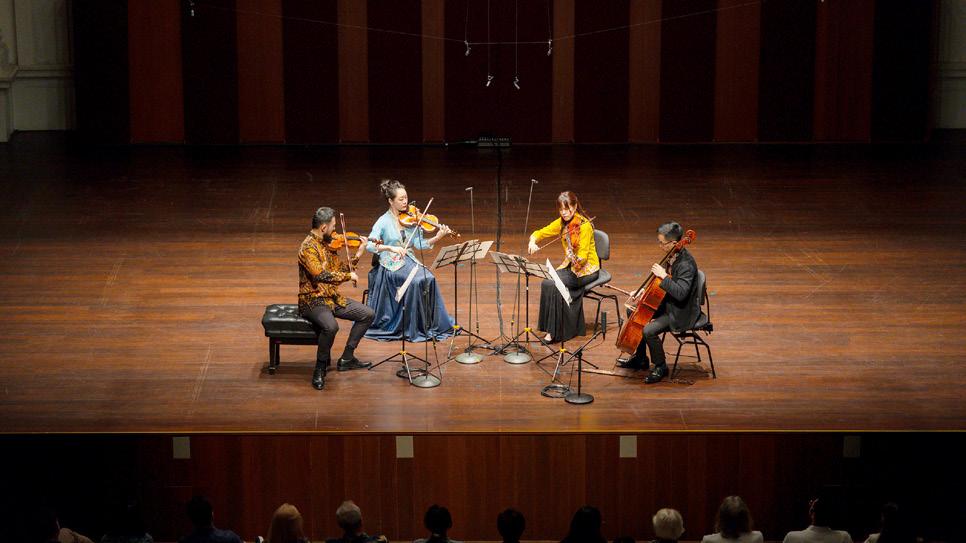
Beethoven and Shostakovich – two giants among composers whose names and music have commanded respect since their time, well past the two centuries and 50 years respectively since their passing. Renowned for their ability to harness titanic sounds from orchestras, they are also masters of invoking symphonic gravitas from the smallest of ensembles. Hear for yourself in these one-hour recitals performed by musicians of the Singapore Symphony Orchestra.
SSO Chamber Series: Quartets Two By Two 8 Mar
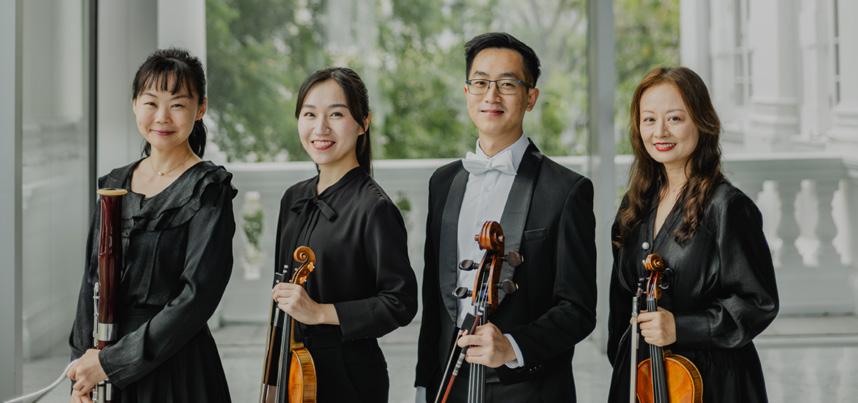
In this relaxed one-hour programme at the Esplanade’s new Black Room, take an intimate look into the heart and soul of the string quartet by the father of the genre, Joseph Haydn, and prolific Singaporean composer Chen Zhangyi. Excerpts performed by musicians of the Singapore Symphony will be interspersed with introductions by Chen Zhangyi himself.
Want to know more?
Scan here for more information

The Victoria Concert Hall has been a home for music, memories, and meaningful moments for generations.
Adopt a seat and be part of history by donating to the SSO Endowment Fund.
Your gift helps secure the future of our nation’s orchestra, so we can continue creating memorable shared musical experiences for years to come.
Seats are available for adoption in donation tiers of $8,000, $15,000 and $25,000, with various patron benefits.